



Jake McKibbin
-
Posts
2,450 -
Joined
-
Last visited
-
Days Won
6
Content Type
Profiles
Forums
Blogs
Events
News
2026 Milwaukee Brewers Top Prospects Ranking
Milwaukee Brewers Videos
2022 Milwaukee Brewers Draft Picks
Milwaukee Brewers Free Agent & Trade Rumors, Notes, & Tidbits
Guides & Resources
2023 Milwaukee Brewers Draft Picks
2024 Milwaukee Brewers Draft Picks
The Milwaukee Brewers Players Project
2025 Milwaukee Brewers Draft Pick Tracker
2026 Milwaukee Brewers Draft Tracker: Picks & Bonuses
Store
Downloads
Gallery
Everything posted by Jake McKibbin
-
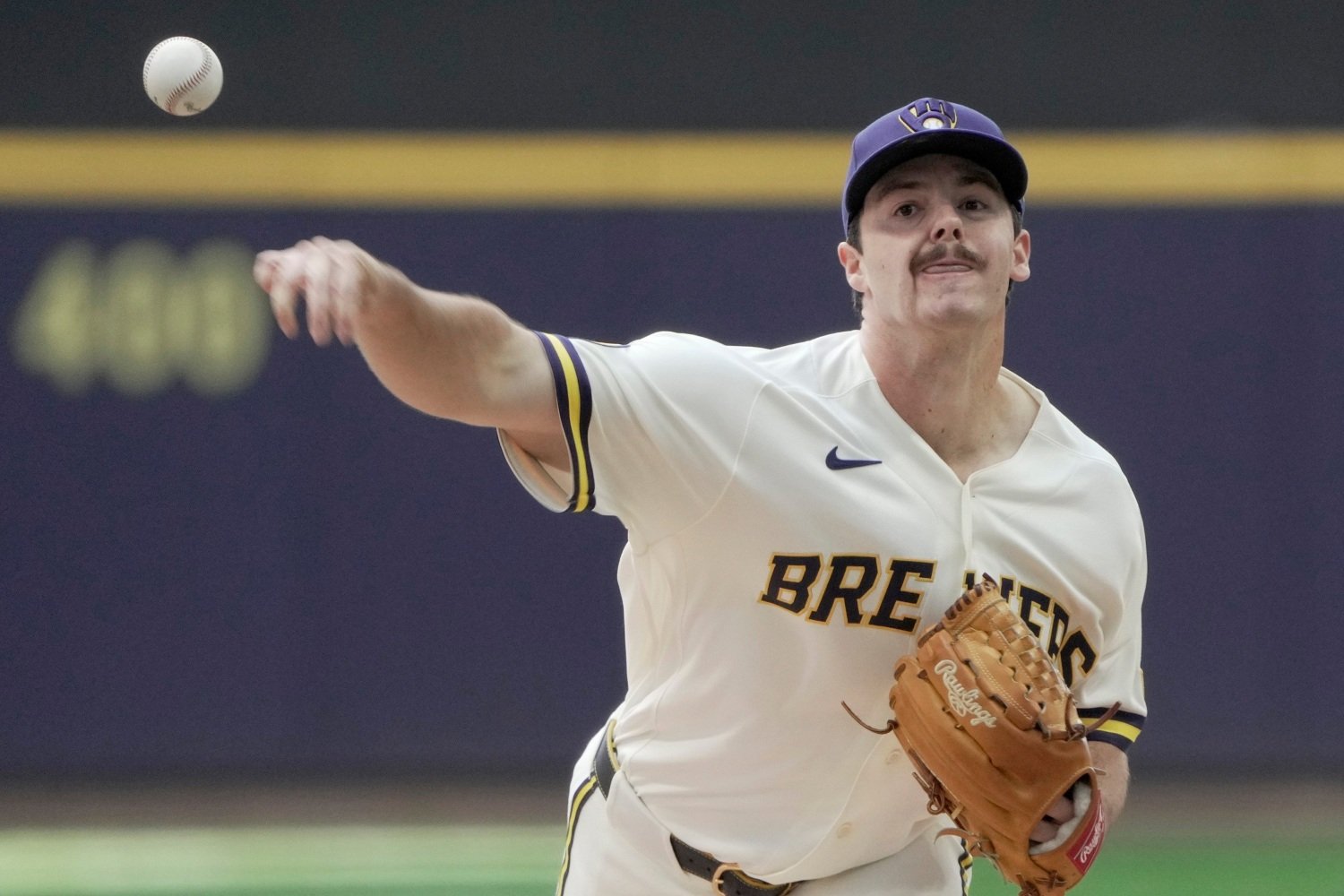 The Brewers have emerged as one of baseball's most aggressive contenders, but adding another impact starter could be the move that cements their World Series aspirations. Two intriguing trade possibilities stand out: Joe Ryan and Reid Detmers. Landing either pitcher would likely require Milwaukee to part with one of its top young arms, Logan Henderson, creating a difficult decision that could reshape the club's rotation now and for years to come. When healthy, Henderson has been undeniably effective on the mound. He's managed a 2.97 FIP alongside a 3.05 ERA in his 38 innings so far this season. The innings are the downside, because while Henderson has flashed that top-of-the-rotation upside, he hasn't been on the field long enough to really tap into that over a longer stretch. The upside with Henderson is the bulldog mentality, plus a unique changeup and a deceptive fastball. As two-pitch combinations go, that one has been electric so far. While the fastball averages just 93 MPH, the approach angle and induced vertical break from his low release point combine to make it feel as though the pitch is rising when it enters the hitting zone. That's a very difficult feeling to get on top of, and he's been very successful when keeping it at the top of the zone. To back that up, Henderson's high-spin changeup has been a weak-contact, high-swing-and-miss offering that's terrorized hitters. It isn't getting hit hard, and it's a real out pitch with two strikes. Beyond the fastball and changeup, the rest of Henderson's arsenal remains a work in progress. The shape on his cutter isn't great, especially for his lower arm angle, but it does provide a bridge between his four-seam and changeup. The occasional slurve rates out well from a stuff perspective, but it doesn't blend all that well with his primary pitches and he's struggled to command it at all, giving up some loud contact over the heart of the plate. With more innings, Henderson could very well improve his feel for the cutter and slurve, but there might be some concerns about getting to those innings. Pat Murphy mentioned that Henderson does see his stuff diminish from 70-80 pitches onward in an outing, and that's not helped by his reliance on his two primary offerings. Compounding that is that, when he gets hit, he gets hit hard. Henderson owns the record of the hardest-hit baseball in history coming against him, and we've seen several times this season some fly balls reaching the upper deck and just barely being foul. When hitters line him up, the contact gets loud, and that perhaps suggests some regression is on the cards. In some ways, he offers an apt comparison with Drew Rasmussen, who's succeeding with the Tampa Bay Rays over the last two years but faced a myriad of injuries that held him back after the Brewers traded him away for Willy Adames in 2021. Rasmussen has learned to induce weak contact with the best of them, but so far, we can't say the same of Henderson. Henderson could very well be a No. 2 or No. 3 starter over the next five or six years, if he can stay healthy and further develop his arsenal. There's a big ceiling there as a player who gets swing-and-miss in the strike zone and is comfortable going after hitters. On the other hand, the Brewers can use Henderson to acquire a more reliable arm to cover multiple playoff runs. He's a valuable trade chip because of the results and the two strong pitches, plus the team control remaining. If Milwaukee decides to capitalize on that value, two starting pitchers stand out as particularly compelling targets: Joe Ryan Joe Ryan is one of the top 20 starting pitchers in baseball by fWAR since the start of 2024. Like Henderson's, his fastball can get hit hard when he misses his locations, but he's consistently shown the kind of strong command that avoids that issue. Relying on a low arm slot and a great vertical approach angle, his fastball generates a lot of swing-and-miss up in the strike zone, and he has a complete arsenal operating behind it. Ryan gave up six home runs in his last start. (That's not a typo, but it's also not usually that much of an issue for him.) Despite that, he has a 3.38 ERA and 3.41 FIP this season, and has the ability to dominate teams for 7+ innings. He has a genuine six-pitch mix headlined by the fastball/sweeper combination. His splitter and sinker keep hitters from sitting on the four-seamer too much, while the knuckle-curve adds more depth than his sweeper. He has the seventh-best strikeout-minus-walk percentage (K-BB%) since 2024, so hitters have to beat him. Usually, they don't. Under control through 2027, Joe Ryan has a chance to help the Brewers in multiple competitive seasons, and multiple playoff races. He's the type of arm that can go against anyone as the second or third starter in a playoff rotation, and his arsenal variety lets him go deeper and perhaps have more coverage if one pitch isn't coming out right on the day. He's also got the benefit of more big-game experience. Think of him as a xross between Henderson and Freddy Peralta, with more of each's strengths and fewer of their weaknesses. Reid Detmers While Ryan offers the higher floor, Detmers represents the higher-upside gamble after taking a significant step forward in 2026. Detmers has one of the biggest velocity differentials in baseball between his fastball and curveball, and has broken out in a big way this season after being relegated to a bullpen role in 2025. His breaking balls, by run value, lead all of baseball, and the movement profiles are beautiful. While the velocity has (as usual) dipped since returning to the rotation, Detmers is showcasing a lower arm slot this season, and although it doesn't grade out as well, I think I like the movement profile more from this slot on his fastball. Detmers is quite effective at finding the upper third of the strike zone, and has managed to mitigate some of the damage that may come if he loses that command into the lower quadrants of the zone, but he's also well-protected by the rest of his arsenal. If a hitter is sitting on the fastball and swinging early, they're going to be very susceptible to his curveball, which tunnels well before breaking late and violently downward. The slider and changeup tunnel even better, as you'd expect for pitches with less break. The slider dips downward more than would be typical for his arm angle, helping him get underneath bats with more regularity. If you'd like to see for yourself in the graphic below, proMix+ defines how well a pitch follows another in terms of arsenal variety, proMatch+ rates how well they tunnel off one another, and proMax+ combines the two. Detmers's entire arsenal has great separation, and that plays strongly off the back of his fastball if he can establish it. Detmers is under team control for one more year than Ryan, reaching free agency at the end of 2028. He doesn't have the same track record that Ryan does, but he's taken a real jump in 2026, and with big questions about the Angels player development system, you have to wonder if the H&H Car Wash could find a few further incremental gains. Ryan is the safer acquisition, thanks to his longer track record and proven durability. Detmers may possess the higher developmental ceiling, particularly if Milwaukee believes it can unlock another level from his arsenal. The decision ultimately comes down to whether the Brewers prioritize certainty or upside, a debate that could also be applied to Henderson's capabilities. It also comes down, of course, to whether the asking price for one turns out to be significantly higher or lower than for the other. It might well be that the strength of the second piece in a deal for either pitcher headlined by Henderson would determine the level of Milwaukee's interest in them. Trading Henderson would mean surrendering six years of affordable upside for a pitcher who's more playoff-ready today. Whether that gamble is worthwhile depends on how aggressively Milwaukee wants to chase a championship over the next two or three seasons. Henderson has shown he can compete when he's on the field. That doesn't negate some underlying concerns about his arsenal mix, which affects his ability to go deeper into games, or his health. The Brewers could use his recent performance to headline a trade for either Joe Ryan or Reid Detmers. Should they? Let us know your thoughts in the comments below!
- 36 comments
-
- 1
-

-
- logan henderson
- joe ryan
- (and 2 more)
-
Image courtesy of © Mark Hoffman/Milwaukee Journal Sentinel / USA TODAY NETWORK via Imagn Images The Brewers have emerged as one of baseball's most aggressive contenders, but adding another impact starter could be the move that cements their World Series aspirations. Two intriguing trade possibilities stand out: Joe Ryan and Reid Detmers. Landing either pitcher would likely require Milwaukee to part with one of its top young arms, Logan Henderson, creating a difficult decision that could reshape the club's rotation now and for years to come. When healthy, Henderson has been undeniably effective on the mound. He's managed a 2.97 FIP alongside a 3.05 ERA in his 38 innings so far this season. The innings are the downside, because while Henderson has flashed that top-of-the-rotation upside, he hasn't been on the field long enough to really tap into that over a longer stretch. The upside with Henderson is the bulldog mentality, plus a unique changeup and a deceptive fastball. As two-pitch combinations go, that one has been electric so far. While the fastball averages just 93 MPH, the approach angle and induced vertical break from his low release point combine to make it feel as though the pitch is rising when it enters the hitting zone. That's a very difficult feeling to get on top of, and he's been very successful when keeping it at the top of the zone. To back that up, Henderson's high-spin changeup has been a weak-contact, high-swing-and-miss offering that's terrorized hitters. It isn't getting hit hard, and it's a real out pitch with two strikes. Beyond the fastball and changeup, the rest of Henderson's arsenal remains a work in progress. The shape on his cutter isn't great, especially for his lower arm angle, but it does provide a bridge between his four-seam and changeup. The occasional slurve rates out well from a stuff perspective, but it doesn't blend all that well with his primary pitches and he's struggled to command it at all, giving up some loud contact over the heart of the plate. With more innings, Henderson could very well improve his feel for the cutter and slurve, but there might be some concerns about getting to those innings. Pat Murphy mentioned that Henderson does see his stuff diminish from 70-80 pitches onward in an outing, and that's not helped by his reliance on his two primary offerings. Compounding that is that, when he gets hit, he gets hit hard. Henderson owns the record of the hardest-hit baseball in history coming against him, and we've seen several times this season some fly balls reaching the upper deck and just barely being foul. When hitters line him up, the contact gets loud, and that perhaps suggests some regression is on the cards. In some ways, he offers an apt comparison with Drew Rasmussen, who's succeeding with the Tampa Bay Rays over the last two years but faced a myriad of injuries that held him back after the Brewers traded him away for Willy Adames in 2021. Rasmussen has learned to induce weak contact with the best of them, but so far, we can't say the same of Henderson. Henderson could very well be a No. 2 or No. 3 starter over the next five or six years, if he can stay healthy and further develop his arsenal. There's a big ceiling there as a player who gets swing-and-miss in the strike zone and is comfortable going after hitters. On the other hand, the Brewers can use Henderson to acquire a more reliable arm to cover multiple playoff runs. He's a valuable trade chip because of the results and the two strong pitches, plus the team control remaining. If Milwaukee decides to capitalize on that value, two starting pitchers stand out as particularly compelling targets: Joe Ryan Joe Ryan is one of the top 20 starting pitchers in baseball by fWAR since the start of 2024. Like Henderson's, his fastball can get hit hard when he misses his locations, but he's consistently shown the kind of strong command that avoids that issue. Relying on a low arm slot and a great vertical approach angle, his fastball generates a lot of swing-and-miss up in the strike zone, and he has a complete arsenal operating behind it. Ryan gave up six home runs in his last start. (That's not a typo, but it's also not usually that much of an issue for him.) Despite that, he has a 3.38 ERA and 3.41 FIP this season, and has the ability to dominate teams for 7+ innings. He has a genuine six-pitch mix headlined by the fastball/sweeper combination. His splitter and sinker keep hitters from sitting on the four-seamer too much, while the knuckle-curve adds more depth than his sweeper. He has the seventh-best strikeout-minus-walk percentage (K-BB%) since 2024, so hitters have to beat him. Usually, they don't. Under control through 2027, Joe Ryan has a chance to help the Brewers in multiple competitive seasons, and multiple playoff races. He's the type of arm that can go against anyone as the second or third starter in a playoff rotation, and his arsenal variety lets him go deeper and perhaps have more coverage if one pitch isn't coming out right on the day. He's also got the benefit of more big-game experience. Think of him as a xross between Henderson and Freddy Peralta, with more of each's strengths and fewer of their weaknesses. Reid Detmers While Ryan offers the higher floor, Detmers represents the higher-upside gamble after taking a significant step forward in 2026. Detmers has one of the biggest velocity differentials in baseball between his fastball and curveball, and has broken out in a big way this season after being relegated to a bullpen role in 2025. His breaking balls, by run value, lead all of baseball, and the movement profiles are beautiful. While the velocity has (as usual) dipped since returning to the rotation, Detmers is showcasing a lower arm slot this season, and although it doesn't grade out as well, I think I like the movement profile more from this slot on his fastball. Detmers is quite effective at finding the upper third of the strike zone, and has managed to mitigate some of the damage that may come if he loses that command into the lower quadrants of the zone, but he's also well-protected by the rest of his arsenal. If a hitter is sitting on the fastball and swinging early, they're going to be very susceptible to his curveball, which tunnels well before breaking late and violently downward. The slider and changeup tunnel even better, as you'd expect for pitches with less break. The slider dips downward more than would be typical for his arm angle, helping him get underneath bats with more regularity. If you'd like to see for yourself in the graphic below, proMix+ defines how well a pitch follows another in terms of arsenal variety, proMatch+ rates how well they tunnel off one another, and proMax+ combines the two. Detmers's entire arsenal has great separation, and that plays strongly off the back of his fastball if he can establish it. Detmers is under team control for one more year than Ryan, reaching free agency at the end of 2028. He doesn't have the same track record that Ryan does, but he's taken a real jump in 2026, and with big questions about the Angels player development system, you have to wonder if the H&H Car Wash could find a few further incremental gains. Ryan is the safer acquisition, thanks to his longer track record and proven durability. Detmers may possess the higher developmental ceiling, particularly if Milwaukee believes it can unlock another level from his arsenal. The decision ultimately comes down to whether the Brewers prioritize certainty or upside, a debate that could also be applied to Henderson's capabilities. It also comes down, of course, to whether the asking price for one turns out to be significantly higher or lower than for the other. It might well be that the strength of the second piece in a deal for either pitcher headlined by Henderson would determine the level of Milwaukee's interest in them. Trading Henderson would mean surrendering six years of affordable upside for a pitcher who's more playoff-ready today. Whether that gamble is worthwhile depends on how aggressively Milwaukee wants to chase a championship over the next two or three seasons. Henderson has shown he can compete when he's on the field. That doesn't negate some underlying concerns about his arsenal mix, which affects his ability to go deeper into games, or his health. The Brewers could use his recent performance to headline a trade for either Joe Ryan or Reid Detmers. Should they? Let us know your thoughts in the comments below! View full article
-
Image courtesy of © Mark J. Rebilas-Imagn Images Nothing in this world comes free, and the MLB trade deadline is getting more expensive by the year. Since the league's expansion to six playoff teams, more teams are in contention to scrape into the playoffs than ever before, meaning more buyers and fewer sellers. Those teams typically have fewer coveted assets than their league-leading counterparts, so the frenzy surrounding those few impact players who hit the market is intense. For a Milwaukee Brewers front office that prides itself on finding value, that's been a tough sell. They're always very careful not to overpay for those acquisitions. They've been a bridesmaid more than a bride, finishing second-best to the Dodgers and Diamondbacks, respectively, in the Jack Flaherty (2024) sweepstakes and the Eugenio Suárez (2025) chase. Both were considered splashes, but the Brewers didn't quite pull the trigger. In some ways, that's worked out well. Garrett Mitchell has been surging in July, after finally garnering enough playing time to iron out his swing-and-miss problems. He was a key part of what the Tigers wanted for Flaherty, and the Brewers couldn't quite pull the trigger there. Whether Flaherty would have changed Milwaukee's postseason fortunes is impossible to know, but the Brewers are certainly glad they held onto Mitchell. Healthy at last, the former first-round pick has emerged as one of the club's most productive hitters in 2026 Suárez also struggled after the All-Star break in 2025, hitting under .200 with an OPS below .700 after being acquired. Perhaps a bullet dodged. Regardless, Milwaukee enters this deadline with one of baseball's deepest farm systems—particularly on the infield—giving the front office the flexibility to pursue upgrades without completely emptying the cupboard. The simple answer is that almost anyone could be discussed. The lone exception is Jesús Made, who should only be available in conversations involving a truly elite, controllable star—think Bobby Witt Jr.-caliber talent. Assuming that scenario never materializes, here's how Milwaukee's trade assets break down by tier. Controllable Impact players (e.g. Joe Ryan, Byron Buxton) Now, that would be a splash. The Brewers would be getting a player controllable for a year and a half who could either head up a rotation and dominate a playoff game, or someone who adds fearsome thump to the lineup. Trades like this do not come cheap, but the Brewers have the assets to make it without using Made. This is the only situation in which the Brewers would or should consider moving some of their high-upside, high-floor prospects, who are placing extremely well in prospect rankings at present. Two such names spring to mind: Luis Peña and Josh Adamczewski. Peña is the No. 2 Brewers prospect, per our Brewer Fanatic rankings; he placed 16th in Just Baseball's top 100 list. With 70-grade speed, a 60-grade hit tool, and improving defense with some thump (if a little too often on the ground), Peña combines one of the highest floors in the system with legitimate All-Star upside. He would probably be paired with Jesús Made at Double-A, but for a string of health issues early in the season, and at just 19 years old, there's a lot yet to uncover for him. Adamczewski was a 15th-round pick in 2023 and has gone from strength to strength, with an exceptionally sweet swing, great plate discipline and some real power he's just beginnng to tap into. Since his promotion to Double-A, Brewer Fanatic's No. 6 prospect is hitting .319/.404/.516 with a 17% strikeout rate and an 11.5% walk rate. He's looked very comfortable making the biggest step-up in the minor leagues, and has looked solid in left field to help his cause. Jeferson Quero is perhaps the only other name that could be thrown out here, if only for the positional need for the Brewers. William Contreras is headed into his final season of team control next year, and could even be traded before then. As such, the Brewers may want to hold onto their top catching prospect. Quero earns rave reviews for how he handles a pitching staff. He's a great receiver and blocker, and his pop times have improved this year to control the running game. Pairing positional uncertainty for the Brewers at catcher with Quero's defensive capabilities, his quality-of-contact metrics at Triple-A, and the general scarcity of high-quality catchers who can help on both sides of the runs ledger and are MLB-ready, you can make a case for Quero to be in this same tier. Headliners for an Impact Rental, or Support Characters In a Multi-Year Impact Trade (e.g. Casey Mize, Kevin Gausman) Landing an impact rental at the trade deadline typically requires a premium prospect, and acquiring a controllable player under contract beyond this season requires more than just one top prospect. Fortunately for the Brewers, they have several highly regarded prospects—particularly at positions where the organization has notable depth—who could headline a deal or serve as a premium secondary piece. Some are enjoying breakout seasons, while others continue to carry significant value because of their pedigree and long-term upside. Regardless of their current production, these are the prospects rival clubs will likely target in trade discussions. At first base (or potentially third base) are Blake Burke and Andrew Fischer, who have emerged as two of the Southern League's premier power hitters—although they generate that production in very different ways. Burke records higher exit velocities and better contact rates, although he has a proclivity to chase more than would be ideal. He's on a heater at the moment, with several 115+ mph balls in July alone, and has surpassed 20 homers at the Double-A level. Fischer has more swing-and-miss, but with a more patient approach at the plate. Absolutely crushing fastballs of all shapes and velocities, his air pull and hard-hit rates are incredible, but he does need to make contact more often. He was expected to see some regression at Double A, but that hasn't been the case yet. Despite his 34% strikeout rate, Fischer's 41.3% air-pull rate and consistent hard contact are fuelling his output with a 1.077 OPS at Double-A and 1.106 OPS across the season with almost 30 home runs. He may get found out at a higher level, but if Fischer can trim the swing-and-miss even marginally, the offensive ceiling is enormous. On the left side of the infield is Jett Williams, Brewer Fanatic's No. 10 prospect, whose slow start to the season at Triple-A didn't align with expectations and has seen him tumble down prospect rankings. Acquired in the Freddy Peralta trade, Williams is a versatile defensive option with 70-grade wheels. He limits swings and misses. He has solid strike zone discipline and more thump than you would expect from his frame. He's struggled to tap into it since joining the Brewers organization, but Williams would be a coveted piece in a bigger deal. He's also still been crushing left-handers at Triple-A as you can see below: In the outfield, Braylon Payne would have the kind of helium to headline a trade. With some hot, hot wheels and good coverage (albeit with developing routes) in center field, Payne was initially drafted in the first round as a slap hitter and elite center-field defender. He's hit 18 home runs this year, but a slightly rigid swing has led to some higher-than-ideal strikeouts, with a 29.5% rate at High-A. Payne is just 19 years old, with a lot of time to develop. He's a high-ceiling prospect with the chance to make a roster on his defense and his speed alone, if the reads continue to improve. Pitching-wise, two names stand out: Tyson Hardin and Bishop Letson. Hardin has been at Triple-A for most of the season, with three fastballs that miss barrels; a deadly sweeper; and a changeup that's come on a lot in 2026. He's someone the Brewers may have in their minds as rotation depth this year, and as a genuine rotation option for 2027 and beyond, which may make him difficult to part with unless a really high-end pitcher is coming back their way. Hardin's fastballs don't grade out brilliantly in Stuff+ models, but they're very deceptive, with an identical release point across his arsenal and a flat vertical approach angle on his four-seamer that brings good swing and miss at the top of the zone. Most importantly, he misses barrels, limits walks and has consistently gotten results at every level of the minor leagues. Letson is one of the system's favorite arms among public pitch models, with a high-IVB fastball averaging 97 mph in spring; an electric sweeper at 84 mph; and a solid changeup paired with a cutter. Letson hasn't performed as well as we may have expected this year, experiencing some command issues and home run problems with a ball that seems to be different from the 2025 baseball. However, he's been trending upward since June and there will be a host of teams interested in his upside. Players Who Need A New Home There are several players who may have had more trade value in the past, but at the present, they just look ready to be surpassed by others in the Brewers system. Tyler Black has spent parts of three seasons in Triple-A without establishing a clear defensive position or showing enough power to force his way into Milwaukee's lineup. Milwaukee's treatment shows their hand: they don't view Black as part of their long-term plans. Another organization may be more willing to give him everyday at-bats, particularly in left field or at first base. Brock Wilken was surging this time last year, with 18 home runs at the halfway point for Double-A Biloxi. Sadly, a knee injury in the celebration of their first-half championship put a Triple-A promotion on pause, and he hasn't found his stride this season. A key indicator in how a team views a prospect is how often they play, and where in the lineup they hit. Neither sign has been positive for Wilken over the last two months. The Brewers have built one of baseball's deepest farm systems, giving them the rare ability to pursue impact talent without mortgaging their future. Whether Matt Arnold ultimately cashes in that prospect capital remains to be seen, but Milwaukee has no shortage of pieces capable of anchoring significant trades. Even beyond the names discussed here, players such as Brady Ebel, Alexander Frias, Handelfry Encarnacion, Josiah Ragsdale, Marco Dinges, Josh Knoth and Bryce Meccage illustrate just how much talent remains in the pipeline. If the Brewers decide to make a splash, they'll have more than enough ammunition to do it. It's also important to recognize different teams will want to address different positional weaknesses and have different views on a variety of prospects. Finding the ideal trade partner isn't easy, especially with so many sharks swirling the chum in the water, and that competitive sphere will make it tough on the Brewers. Still, they have the chips to push in, if they're willing, to meet almost any need a team may have. Can you see any of these players being moved at the deadline? Do you have more untouchables than I do? Let me know your thoughts in the comments below! View full article
- 2 replies
-
- 3
-
-
- luis pena
- josh adamczewksi
- (and 4 more)
-
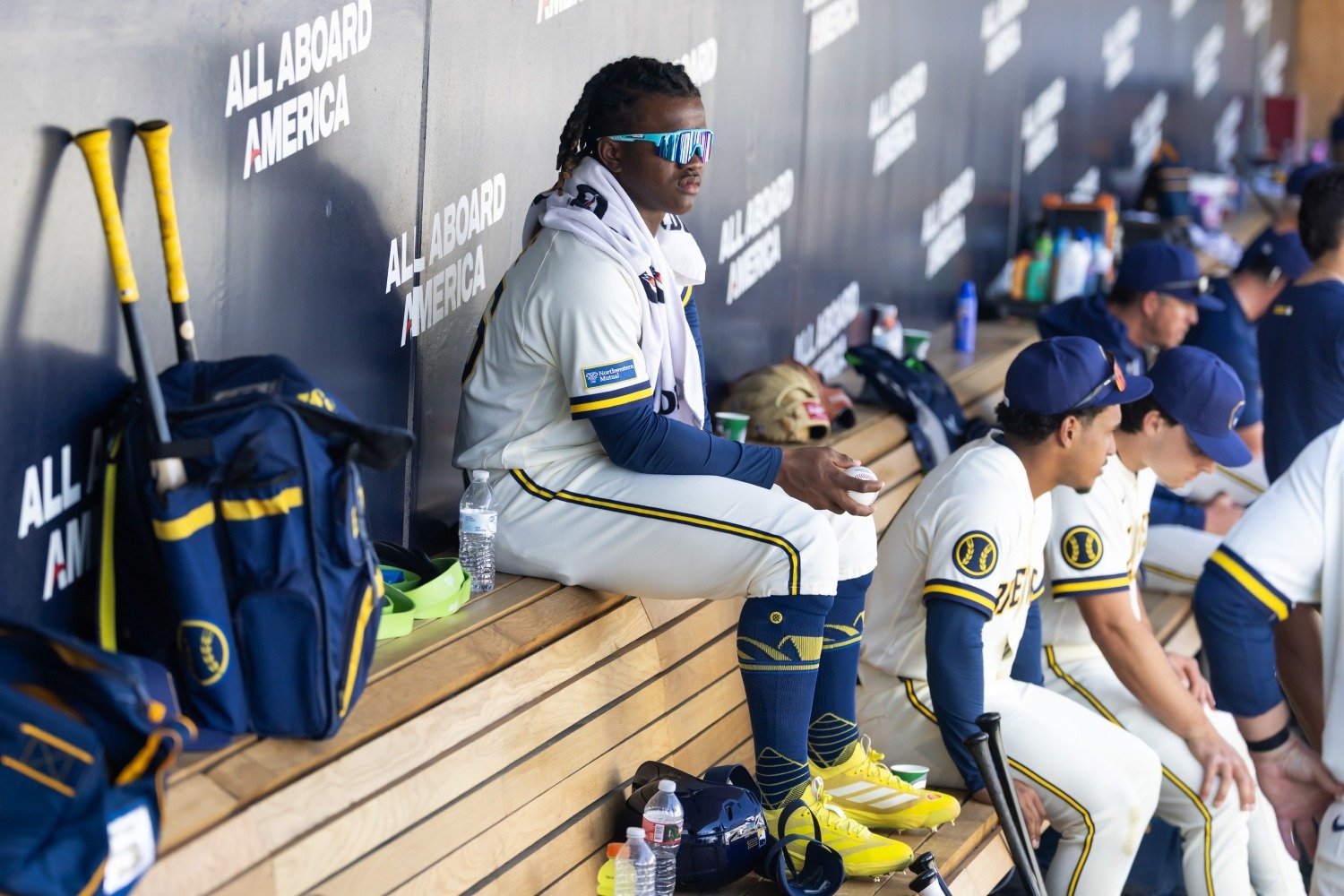 Nothing in this world comes free, and the MLB trade deadline is getting more expensive by the year. Since the league's expansion to six playoff teams, more teams are in contention to scrape into the playoffs than ever before, meaning more buyers and fewer sellers. Those teams typically have fewer coveted assets than their league-leading counterparts, so the frenzy surrounding those few impact players who hit the market is intense. For a Milwaukee Brewers front office that prides itself on finding value, that's been a tough sell. They're always very careful not to overpay for those acquisitions. They've been a bridesmaid more than a bride, finishing second-best to the Dodgers and Diamondbacks, respectively, in the Jack Flaherty (2024) sweepstakes and the Eugenio Suárez (2025) chase. Both were considered splashes, but the Brewers didn't quite pull the trigger. In some ways, that's worked out well. Garrett Mitchell has been surging in July, after finally garnering enough playing time to iron out his swing-and-miss problems. He was a key part of what the Tigers wanted for Flaherty, and the Brewers couldn't quite pull the trigger there. Whether Flaherty would have changed Milwaukee's postseason fortunes is impossible to know, but the Brewers are certainly glad they held onto Mitchell. Healthy at last, the former first-round pick has emerged as one of the club's most productive hitters in 2026 Suárez also struggled after the All-Star break in 2025, hitting under .200 with an OPS below .700 after being acquired. Perhaps a bullet dodged. Regardless, Milwaukee enters this deadline with one of baseball's deepest farm systems—particularly on the infield—giving the front office the flexibility to pursue upgrades without completely emptying the cupboard. The simple answer is that almost anyone could be discussed. The lone exception is Jesús Made, who should only be available in conversations involving a truly elite, controllable star—think Bobby Witt Jr.-caliber talent. Assuming that scenario never materializes, here's how Milwaukee's trade assets break down by tier. Controllable Impact players (e.g. Joe Ryan, Byron Buxton) Now, that would be a splash. The Brewers would be getting a player controllable for a year and a half who could either head up a rotation and dominate a playoff game, or someone who adds fearsome thump to the lineup. Trades like this do not come cheap, but the Brewers have the assets to make it without using Made. This is the only situation in which the Brewers would or should consider moving some of their high-upside, high-floor prospects, who are placing extremely well in prospect rankings at present. Two such names spring to mind: Luis Peña and Josh Adamczewski. Peña is the No. 2 Brewers prospect, per our Brewer Fanatic rankings; he placed 16th in Just Baseball's top 100 list. With 70-grade speed, a 60-grade hit tool, and improving defense with some thump (if a little too often on the ground), Peña combines one of the highest floors in the system with legitimate All-Star upside. He would probably be paired with Jesús Made at Double-A, but for a string of health issues early in the season, and at just 19 years old, there's a lot yet to uncover for him. Adamczewski was a 15th-round pick in 2023 and has gone from strength to strength, with an exceptionally sweet swing, great plate discipline and some real power he's just beginnng to tap into. Since his promotion to Double-A, Brewer Fanatic's No. 6 prospect is hitting .319/.404/.516 with a 17% strikeout rate and an 11.5% walk rate. He's looked very comfortable making the biggest step-up in the minor leagues, and has looked solid in left field to help his cause. Jeferson Quero is perhaps the only other name that could be thrown out here, if only for the positional need for the Brewers. William Contreras is headed into his final season of team control next year, and could even be traded before then. As such, the Brewers may want to hold onto their top catching prospect. Quero earns rave reviews for how he handles a pitching staff. He's a great receiver and blocker, and his pop times have improved this year to control the running game. Pairing positional uncertainty for the Brewers at catcher with Quero's defensive capabilities, his quality-of-contact metrics at Triple-A, and the general scarcity of high-quality catchers who can help on both sides of the runs ledger and are MLB-ready, you can make a case for Quero to be in this same tier. Headliners for an Impact Rental, or Support Characters In a Multi-Year Impact Trade (e.g. Casey Mize, Kevin Gausman) Landing an impact rental at the trade deadline typically requires a premium prospect, and acquiring a controllable player under contract beyond this season requires more than just one top prospect. Fortunately for the Brewers, they have several highly regarded prospects—particularly at positions where the organization has notable depth—who could headline a deal or serve as a premium secondary piece. Some are enjoying breakout seasons, while others continue to carry significant value because of their pedigree and long-term upside. Regardless of their current production, these are the prospects rival clubs will likely target in trade discussions. At first base (or potentially third base) are Blake Burke and Andrew Fischer, who have emerged as two of the Southern League's premier power hitters—although they generate that production in very different ways. Burke records higher exit velocities and better contact rates, although he has a proclivity to chase more than would be ideal. He's on a heater at the moment, with several 115+ mph balls in July alone, and has surpassed 20 homers at the Double-A level. Fischer has more swing-and-miss, but with a more patient approach at the plate. Absolutely crushing fastballs of all shapes and velocities, his air pull and hard-hit rates are incredible, but he does need to make contact more often. He was expected to see some regression at Double A, but that hasn't been the case yet. Despite his 34% strikeout rate, Fischer's 41.3% air-pull rate and consistent hard contact are fuelling his output with a 1.077 OPS at Double-A and 1.106 OPS across the season with almost 30 home runs. He may get found out at a higher level, but if Fischer can trim the swing-and-miss even marginally, the offensive ceiling is enormous. On the left side of the infield is Jett Williams, Brewer Fanatic's No. 10 prospect, whose slow start to the season at Triple-A didn't align with expectations and has seen him tumble down prospect rankings. Acquired in the Freddy Peralta trade, Williams is a versatile defensive option with 70-grade wheels. He limits swings and misses. He has solid strike zone discipline and more thump than you would expect from his frame. He's struggled to tap into it since joining the Brewers organization, but Williams would be a coveted piece in a bigger deal. He's also still been crushing left-handers at Triple-A as you can see below: In the outfield, Braylon Payne would have the kind of helium to headline a trade. With some hot, hot wheels and good coverage (albeit with developing routes) in center field, Payne was initially drafted in the first round as a slap hitter and elite center-field defender. He's hit 18 home runs this year, but a slightly rigid swing has led to some higher-than-ideal strikeouts, with a 29.5% rate at High-A. Payne is just 19 years old, with a lot of time to develop. He's a high-ceiling prospect with the chance to make a roster on his defense and his speed alone, if the reads continue to improve. Pitching-wise, two names stand out: Tyson Hardin and Bishop Letson. Hardin has been at Triple-A for most of the season, with three fastballs that miss barrels; a deadly sweeper; and a changeup that's come on a lot in 2026. He's someone the Brewers may have in their minds as rotation depth this year, and as a genuine rotation option for 2027 and beyond, which may make him difficult to part with unless a really high-end pitcher is coming back their way. Hardin's fastballs don't grade out brilliantly in Stuff+ models, but they're very deceptive, with an identical release point across his arsenal and a flat vertical approach angle on his four-seamer that brings good swing and miss at the top of the zone. Most importantly, he misses barrels, limits walks and has consistently gotten results at every level of the minor leagues. Letson is one of the system's favorite arms among public pitch models, with a high-IVB fastball averaging 97 mph in spring; an electric sweeper at 84 mph; and a solid changeup paired with a cutter. Letson hasn't performed as well as we may have expected this year, experiencing some command issues and home run problems with a ball that seems to be different from the 2025 baseball. However, he's been trending upward since June and there will be a host of teams interested in his upside. Players Who Need A New Home There are several players who may have had more trade value in the past, but at the present, they just look ready to be surpassed by others in the Brewers system. Tyler Black has spent parts of three seasons in Triple-A without establishing a clear defensive position or showing enough power to force his way into Milwaukee's lineup. Milwaukee's treatment shows their hand: they don't view Black as part of their long-term plans. Another organization may be more willing to give him everyday at-bats, particularly in left field or at first base. Brock Wilken was surging this time last year, with 18 home runs at the halfway point for Double-A Biloxi. Sadly, a knee injury in the celebration of their first-half championship put a Triple-A promotion on pause, and he hasn't found his stride this season. A key indicator in how a team views a prospect is how often they play, and where in the lineup they hit. Neither sign has been positive for Wilken over the last two months. The Brewers have built one of baseball's deepest farm systems, giving them the rare ability to pursue impact talent without mortgaging their future. Whether Matt Arnold ultimately cashes in that prospect capital remains to be seen, but Milwaukee has no shortage of pieces capable of anchoring significant trades. Even beyond the names discussed here, players such as Brady Ebel, Alexander Frias, Handelfry Encarnacion, Josiah Ragsdale, Marco Dinges, Josh Knoth and Bryce Meccage illustrate just how much talent remains in the pipeline. If the Brewers decide to make a splash, they'll have more than enough ammunition to do it. It's also important to recognize different teams will want to address different positional weaknesses and have different views on a variety of prospects. Finding the ideal trade partner isn't easy, especially with so many sharks swirling the chum in the water, and that competitive sphere will make it tough on the Brewers. Still, they have the chips to push in, if they're willing, to meet almost any need a team may have. Can you see any of these players being moved at the deadline? Do you have more untouchables than I do? Let me know your thoughts in the comments below!
- 2 comments
-
- 3
-
-
- luis pena
- josh adamczewksi
- (and 4 more)
-
I can understand most of this Harold, fair point! I would suggest perhaps looking at trades for starting pitchers last year, even ones with prior pedigree struggling in year, as Wilken and O'Rae just aren't going to cut it without another bigger prospect in there, but they could be 2/3 pieces in a deal. I'm also not sure on Peralta. The smaller strike zone at the top I initially thought had really impacted him, but the fastball has actually played quite well despite that. his pitch usage has hardly changed in % terms, in fact its nearly identical which is impressive, but the re's been a lot of hard contact on those breaking pitches which have been far too often over the heart of the plate, and the changeup has had a little less whiff. I just can't work out if he's been unlucky or taken a real step back under the new rules
-
It depends the type of vet. I'm really sold on the idea of someone you feel comfortable with in the playoffs, and if everyone stays healthy, two of those three guys will be in the pen at least in a playoff series. If it's a vet you feel comfortable in a win or go home playoff game, absolutely!
- 10 replies
-
- 2
-
-
- luke weaver
- antonio senzatela
- (and 2 more)
-
Absolutely, he's a real buy low candidate with a proven track record, he adds something different to the rest of the Brewers pen and I don't think I've heard anyone else mentioning him. His last few games haven't gone to plan, but the under the radar-ness screams 2023-2025 Brewers trade deadline I don't think for a reliever any of these guys will be top prospect cost, but Weaver will probably be a fringe top 100 arm to acquire, and maybe an organisational 8/12/20 sort of trade? That's not specific to those players, but just general idea as to what he's maybe cost given the control next year, but obviously at $11m too
- 10 replies
-
- 1
-
-
- luke weaver
- antonio senzatela
- (and 2 more)
-
3 Solutions to Milwaukee Brewers' Biggest Trade Deadline Need
Jake McKibbin posted an article in Brewers
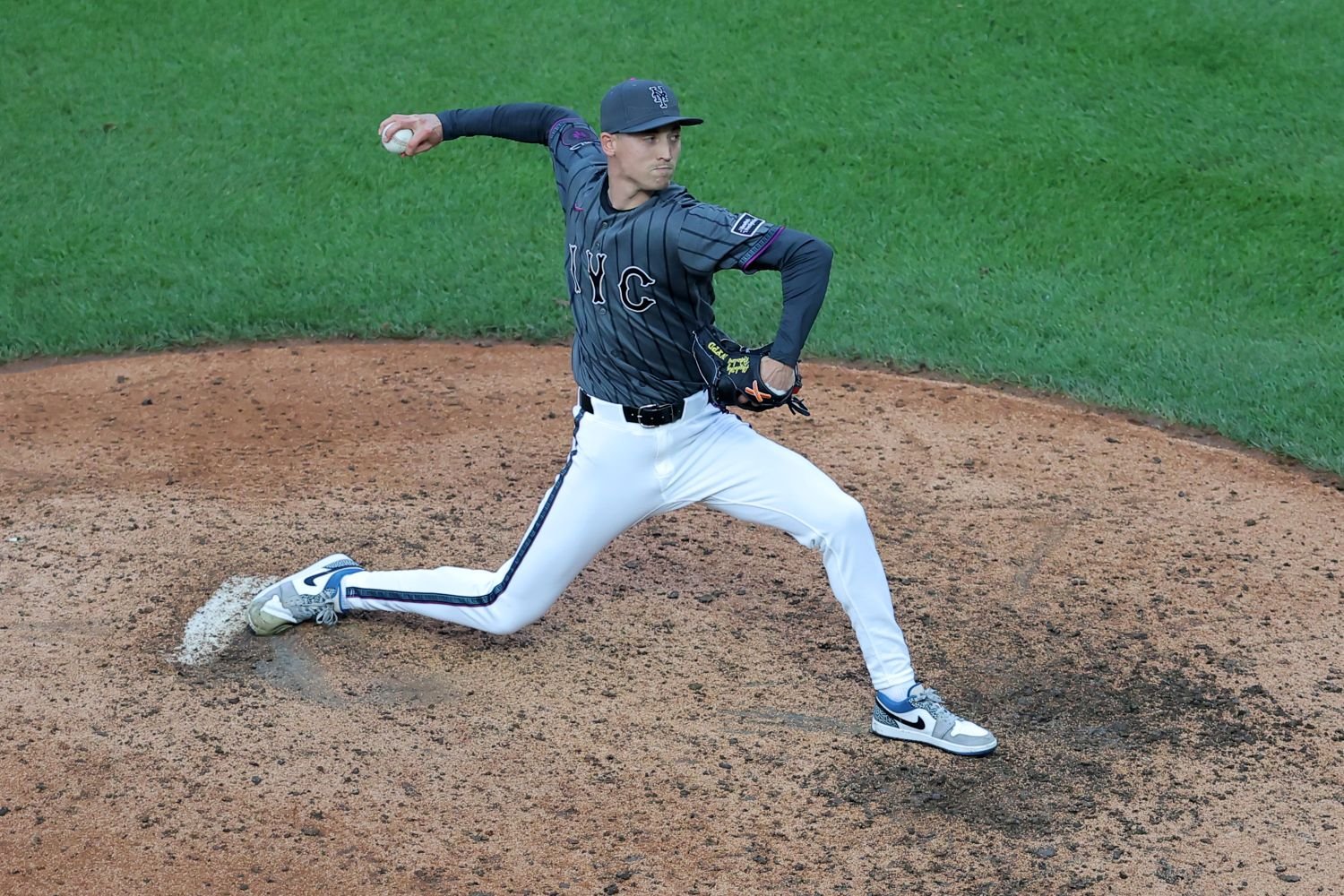 The bullpen has been a source of pride for the Milwaukee Brewers across their recent run of division dominance. Since 2018, they've had Corey Knebel, Josh Hader, Devin Williams, Jeremy Jeffress, Trevor Megill and Abner Uribe for long stretches of team control, and it's made Milwaukee one of the toughest teams in the league against which to come from behind. This season, however, things are looking shakier. Aaron Ashby is finding the strike zone less than ever. Chad Patrick has lost the feel for his cutter. Jared Koenig has lost his velocity—and his very place on the roster. Grant Anderson has held his own, but is more of a middle-relief arm than a truly dominant one. The Brewers are lacking one or two playoff-calibre arms for (perhaps) the first time since 2018, and that could hurt them in October. They're one injury to Trevor Megill or Abner Uribe away from having very little reliable quality in the bullpen; that's something they should be looking to address this month. While typically the Brewers dab around the edges at the deadline, often gambling on health (which hasn't worked out so well of late) or taking more middling arms, they should be looking for an arm they can trust in a big-game situation. They should target someone who wouldn't be out of place covering multiple roles, but who has upside akin to what Megill, Uribe, and the best version of Ashby offer. They may have to get comfortable with a slight overpay in this situation. The market is condensed; few teams view themselves as truly out of contention. As of right now, only seven teams are 6 or more games back of the Wild Card spots in each league: Cincinnati Reds San Francisco Giants Colorado Rockies New York Mets Los Angeles Angels Oakland/Sacramento/Wherever-they-are-now A's Kansas City Royals None of these teams have gotten where they are today with extremely effective pitching departments, but that doesn't mean there aren't some very interesting candidates. More options may emerge should the race for the playoffs gain more separation, with teams like the Padres, Astros, Blue Jays and Tigers all in limbo at the moment, and with some bigger pieces to covet. For now, though, let's take a look at the biggest relievers available from the seven teams realistically out of playoff contention. 1. Luke Weaver - New York Mets On all the teams definitely in trade mode, Luke Weaver is the biggest available prize. He's pitched in big playoff games for the Yankees, putting up a 1.76 ERA in 15 innings during their 2024 run to the World Series, and he's been lights-out this season. Using a high release point, Weaver averages 19" of induced vertical break on his four-seam fastball, though that's about average for his slot. The plus point is his command of the pitch, which approaches elite territory, and hitters have slugged just .242 against it this year. He complements the 95-MPH fastball with a 90-MPH cutter/slider and an 88-MPH changeup that's the prize of the bunch. Both secondaries have 30%+ whiff rates this season, with diverse movement that allows him to be essentially platoon-neutral. The 0.82 WHIP says it all. This is a 2.02 ERA that's well-earned, and Weaver is very comfortable producing in October. He is under club control next year as well, and won't come cheap, but the Brewers could do with additional bullpen reinforcement next year, too. Overall, of any pitchers on the market, this is the one who screams "closer" in October. Tough to hit, limits free passes, and swing-and-miss when he wants it: he's a reliable arm that can immediately turn the Brewers pen from "okay" to "Okayyyyyyyyyy!" 2. Antonio Senzatela - Colorado Rockies It's about time people stopped referring to Senzatela as "under-the-radar". Everyone in baseball has seen how effective the Rockies' former starter has been this year, and more so, he's doing it in a very Brewers-y way. Senzatela has added a harder cutter to his repertoire, which has removed some of the pressure on his four-seamer. As a result, his three-fastball mix has overpowered hitters, and that's all coming while pitching half of his game in Coors Field. If you want someone with a big fastball, capable of covering multiple innings while also looking comfortable closing out games, Senzatela might be the most coveted asset on the market. Using PitchProfiler's comparison graphic, we can see just how much his pitch usage has changed since last year: Having even close to average fastball stuff+ ratings is impressive, given where he's pitching, but the cutter has been more than just a swing-and-miss pitch. It's missed barrels repeatedly; the average exit velocity against it of just 84.4 mph is telling. Senzatela's contract contains a club option for next year—albeit an expensive one, at $14 million. The other interesting part of this is the Rockies front office. Not the strongest outfit in terms of analytics, what they search for in a return may be less rational or explainable. Each front office will evaluate a player differently, and this is a new group that seems to be a bit more competent than its predecessor, but the Rockies are still on any list of the handful of teams you'd most like to trade with, all else being equal. Senzatela will be traded this season. He looks primed for a big role in the postseason. Will it be with the Milwaukee Brewers? 3. Matt Strahm - Kansas City Royals For the final pick, in the absence of truly top-shelf relievers among the teams who are out of contention, why not look at someone with depleted value at present but with stronger underlying metrics and a history of performance that belies his first half this year? Former Phillies reliever Matt Strahm has a fun ERA of 7.24 with the Royals this season, but while he's lost a tick of velocity on the fastball, it's not enough to suggest this level of regression. Unlike Weaver and Senzatela, Strahm represents more of a rebound candidate than a finished product, The four-seamer/slider combo from a low left-handed arm slot would add something new to the Brewers pen. They lack a left-handed sidearmer akin to Grant Anderson. Strahm also gets real outlier movement on the fastball from his release height, and it was one of the best fastballs from a relief pitcher by run value from 2023-2025. Losing a tick of velocity shouldn't have made it regress this much; this feels salvegeable. In metric form, he's averaging 17" of induced vertical break and 13.5" of run from a 29° arm slot, which is almost unheard of. That combination creates unusually difficult angles for hitters, particularly against left-handed batters, and results in a lot of hitters getting underneath the ball and/or getting jammed. He's still managing contact well on the four-seamer and generating swing-and-miss when he wants it, and there's been no change in how often he finds the strike zone, but his slider has regressed. There may be an obvious reason why. Again, we're using Jeremy Maschino's pitcher comparison model: In 2025, Strahm was using his cutter often as a bridge pitch, and barely threw his changeup. It made his slider more difficult to pick out of the hand compared with the cutter, and both pitches did a great job of managing contact. This season, with the addition of the changeup, Strahm's fastball is playing better, but the slider has been hit hard. There is a location element to this, too. Strahm has left a lot of sliders up and over the middle of the plate compared to last season, when he dotted the outside corner to right-handers almost with impunity. Command will play as big a role as any pitch change, and I should point out that while Strahm has an ERA of 7.24, his expected ERA is below 4.00, so there has been an element of bad luck in there. Strahm would be more of a bet on past performance, but his funky release point, deceptive delivery and ability to mitigate hard contact could be invaluable in the playoffs—especially against dangerous left-handed hitters. Could he be a good buy-low option for the Brewers? What do you think of my rankings? Would you have added any other players from these seven teams that fit the criteria of a trusted October arm? let us know your thoughts in the comments below! Also, do check out our 2026 trade deadline symposium of potentially available players here!
- 10 comments
-
- 1
-
-
- luke weaver
- antonio senzatela
- (and 2 more)
-
Image courtesy of © Brad Penner-Imagn Images The bullpen has been a source of pride for the Milwaukee Brewers across their recent run of division dominance. Since 2018, they've had Corey Knebel, Josh Hader, Devin Williams, Jeremy Jeffress, Trevor Megill and Abner Uribe for long stretches of team control, and it's made Milwaukee one of the toughest teams in the league against which to come from behind. This season, however, things are looking shakier. Aaron Ashby is finding the strike zone less than ever. Chad Patrick has lost the feel for his cutter. Jared Koenig has lost his velocity—and his very place on the roster. Grant Anderson has held his own, but is more of a middle-relief arm than a truly dominant one. The Brewers are lacking one or two playoff-calibre arms for (perhaps) the first time since 2018, and that could hurt them in October. They're one injury to Trevor Megill or Abner Uribe away from having very little reliable quality in the bullpen; that's something they should be looking to address this month. While typically the Brewers dab around the edges at the deadline, often gambling on health (which hasn't worked out so well of late) or taking more middling arms, they should be looking for an arm they can trust in a big-game situation. They should target someone who wouldn't be out of place covering multiple roles, but who has upside akin to what Megill, Uribe, and the best version of Ashby offer. They may have to get comfortable with a slight overpay in this situation. The market is condensed; few teams view themselves as truly out of contention. As of right now, only seven teams are 6 or more games back of the Wild Card spots in each league: Cincinnati Reds San Francisco Giants Colorado Rockies New York Mets Los Angeles Angels Oakland/Sacramento/Wherever-they-are-now A's Kansas City Royals None of these teams have gotten where they are today with extremely effective pitching departments, but that doesn't mean there aren't some very interesting candidates. More options may emerge should the race for the playoffs gain more separation, with teams like the Padres, Astros, Blue Jays and Tigers all in limbo at the moment, and with some bigger pieces to covet. For now, though, let's take a look at the biggest relievers available from the seven teams realistically out of playoff contention. 1. Luke Weaver - New York Mets On all the teams definitely in trade mode, Luke Weaver is the biggest available prize. He's pitched in big playoff games for the Yankees, putting up a 1.76 ERA in 15 innings during their 2024 run to the World Series, and he's been lights-out this season. Using a high release point, Weaver averages 19" of induced vertical break on his four-seam fastball, though that's about average for his slot. The plus point is his command of the pitch, which approaches elite territory, and hitters have slugged just .242 against it this year. He complements the 95-MPH fastball with a 90-MPH cutter/slider and an 88-MPH changeup that's the prize of the bunch. Both secondaries have 30%+ whiff rates this season, with diverse movement that allows him to be essentially platoon-neutral. The 0.82 WHIP says it all. This is a 2.02 ERA that's well-earned, and Weaver is very comfortable producing in October. He is under club control next year as well, and won't come cheap, but the Brewers could do with additional bullpen reinforcement next year, too. Overall, of any pitchers on the market, this is the one who screams "closer" in October. Tough to hit, limits free passes, and swing-and-miss when he wants it: he's a reliable arm that can immediately turn the Brewers pen from "okay" to "Okayyyyyyyyyy!" 2. Antonio Senzatela - Colorado Rockies It's about time people stopped referring to Senzatela as "under-the-radar". Everyone in baseball has seen how effective the Rockies' former starter has been this year, and more so, he's doing it in a very Brewers-y way. Senzatela has added a harder cutter to his repertoire, which has removed some of the pressure on his four-seamer. As a result, his three-fastball mix has overpowered hitters, and that's all coming while pitching half of his game in Coors Field. If you want someone with a big fastball, capable of covering multiple innings while also looking comfortable closing out games, Senzatela might be the most coveted asset on the market. Using PitchProfiler's comparison graphic, we can see just how much his pitch usage has changed since last year: Having even close to average fastball stuff+ ratings is impressive, given where he's pitching, but the cutter has been more than just a swing-and-miss pitch. It's missed barrels repeatedly; the average exit velocity against it of just 84.4 mph is telling. Senzatela's contract contains a club option for next year—albeit an expensive one, at $14 million. The other interesting part of this is the Rockies front office. Not the strongest outfit in terms of analytics, what they search for in a return may be less rational or explainable. Each front office will evaluate a player differently, and this is a new group that seems to be a bit more competent than its predecessor, but the Rockies are still on any list of the handful of teams you'd most like to trade with, all else being equal. Senzatela will be traded this season. He looks primed for a big role in the postseason. Will it be with the Milwaukee Brewers? 3. Matt Strahm - Kansas City Royals For the final pick, in the absence of truly top-shelf relievers among the teams who are out of contention, why not look at someone with depleted value at present but with stronger underlying metrics and a history of performance that belies his first half this year? Former Phillies reliever Matt Strahm has a fun ERA of 7.24 with the Royals this season, but while he's lost a tick of velocity on the fastball, it's not enough to suggest this level of regression. Unlike Weaver and Senzatela, Strahm represents more of a rebound candidate than a finished product, The four-seamer/slider combo from a low left-handed arm slot would add something new to the Brewers pen. They lack a left-handed sidearmer akin to Grant Anderson. Strahm also gets real outlier movement on the fastball from his release height, and it was one of the best fastballs from a relief pitcher by run value from 2023-2025. Losing a tick of velocity shouldn't have made it regress this much; this feels salvegeable. In metric form, he's averaging 17" of induced vertical break and 13.5" of run from a 29° arm slot, which is almost unheard of. That combination creates unusually difficult angles for hitters, particularly against left-handed batters, and results in a lot of hitters getting underneath the ball and/or getting jammed. He's still managing contact well on the four-seamer and generating swing-and-miss when he wants it, and there's been no change in how often he finds the strike zone, but his slider has regressed. There may be an obvious reason why. Again, we're using Jeremy Maschino's pitcher comparison model: In 2025, Strahm was using his cutter often as a bridge pitch, and barely threw his changeup. It made his slider more difficult to pick out of the hand compared with the cutter, and both pitches did a great job of managing contact. This season, with the addition of the changeup, Strahm's fastball is playing better, but the slider has been hit hard. There is a location element to this, too. Strahm has left a lot of sliders up and over the middle of the plate compared to last season, when he dotted the outside corner to right-handers almost with impunity. Command will play as big a role as any pitch change, and I should point out that while Strahm has an ERA of 7.24, his expected ERA is below 4.00, so there has been an element of bad luck in there. Strahm would be more of a bet on past performance, but his funky release point, deceptive delivery and ability to mitigate hard contact could be invaluable in the playoffs—especially against dangerous left-handed hitters. Could he be a good buy-low option for the Brewers? What do you think of my rankings? Would you have added any other players from these seven teams that fit the criteria of a trusted October arm? let us know your thoughts in the comments below! Also, do check out our 2026 trade deadline symposium of potentially available players here! View full article
-
Image courtesy of © Mark J. Rebilas-Imagn Images Aaron Ashby has one of the strangest arsenals in the majors, and hitters have looked as uncomfortable against him as they have against just about anyone else. He threw 66 2/3 innings last year, often in multi-inning relief, to the tune of a 2.16 ERA with some of the bendiest pitches you'll see. Ashby has no trouble moving the baseball both ways, a rare commodity. Pitchers usually have a supination or pronation bias that makes it hard for them to move the ball significantly to one side. At high velocity. It's tantalising how close to perfect his pitch mix is from a sheer stuff perspective. One of his biggest strengths is his ground-ball rate. A pitcher who can generate both strikeouts and ground balls at above-average rates has a lot of advantages in modern baseball, and that pair of skills has been a key factor in Ashby being "effectively wild". Keeping the ball on the ground, Ashby has always been capable of inducing a double play, so even if a hitter does get a free pass, he has a chance to wipe that runner out with a single pitch. That's key, because so far this season, Ashby's ground-ball rate on his primary fastball has decreased sharply. That's directly tied to his results. It's also something the Brewers seem to value, as Abner Uribe, Ashby and Ángel Zerpa all placed top 10 among relief pitchers in double plays induced in 2025. How Ashby maximized his arsenal is quite different from the traditional methods. The first big difference is his extension, which ranks among the lowest in baseball. With hurlers like Jacob Misiorowski, getting as close to the hitter as possible before releasing the baseball allows the velocity to play up, while also giving the ball less time for gravity to affect it and cause it to drop. That's a key difference here. Where someone leaning on a four-seam fastball wants to create as much "rise" as possible, a pitcher with a true sinker (not a two-seam fastball, but a genuine bowling-ball sinker) would want the ball to drop as much as possible to get below the barrel of the bat. This same principle applies to breaking pitches and off-speed pitches, trying to get them dropping at as steep a rate as possible by the time it reaches the plate. You can see in the graph below how the shorter a pitcher's stride is, the steeper their vertical approach angle is on a sinker. (Ashby is highlighted.) The correlation in the graph above isn't quite as exaggerated as I would have thought. It's distorted slightly by the amalgamation of two seamers and sinker fastballs into one pitch category. I dare say if they were separated, the line of best fit would be even steeper here, and a more direct correlation. There are some nuances within this. Ideally, you want that downward movement to be as steep as possible when it reaches the plate, but also to be breaking as late as possible, or at least at a similar time to the rest of a pitcher's arsenal. It creates extra deception, and prohibits a hitter from aligning his barrel to the pitch mid-swing. Has his Sinker Changed Shapes? Ashby's velocity allows him to manage the reduced "perceived velocity" (how fast the pitch actually looks to a hitter, due to the extension) that comes from him releasing the ball over a foot farther from home plate than the MLB average, and lets his raw movement come to the fore. With each of those pitches having a foot further to travel before reaching home plate, the movement he generates is exaggerated. Again, if we refer to the graph above, Ashby is considerably below the line of best fit; his vertical approach angle (VAA) is -0.69° steeper than an expected offering from his extension and release point. That might not sound like much, but it's significant, when the goal is to square the round ball on a round bat. Fast-forward to this year, however, and that VAA has dropped slightly, to -0.60° vs expected—not a massive change, but a notable one. If we compare Ashby's pitch shapes to last year, two small differences are perhaps combining to limit the drop Ashby is getting on his sinker: While Ashby's release height is the same distance from the ground, he's actually striding a little closer to home plate, with his extension jumping from 5.3 ft to 5.5 ft this year. Extending farther down the mound would lower the release height, but this has been offset by Ashby throwing from a slightly higher arm slot. A few degrees of difference here and there aren't usually anything to worry about, but combine the increased extension with the higher arm angle, and you have aslightly less heavy sinker. That being said, these aren't massive changes. Ashby is getting less vertical drop on his fastball this year, but it's not necessarily because his angle has changed. Instead, let's take a look at the seam-shifted wake, or non-magnus movement on the pitch (if you'd like to understand this phenomenon a little more, I covered the types of movement a baseball has this winter, here): Pitch Profiler does a fabulous job of separating spin-related movement from non-spin related movement. The shaded circles are where a pitch would be expected to move based on the release traits and characteristics, while the circle outline is where the pitch actually moved. As you can see with Aaron Ashby, both his sinker and changeup drop significantly more than expected. The sinker dropped 4.6" in 2025 more than expected while the changeup dropped 4.9" more than expected. If you want to know why Aaron Ashby has historically been so effective with his sinker, that's the primary reason right there. Good luck elevating either of those two pitches with any regularity. Fast-forward to this year, and the seam-shifted wake has reduced the drop he's getting on both of these pitches. This calculation accounts for his change in arm angle, and still suggests that Ashby has lost just shy of an inch of seam-shifted wake "drop" in 2026. Again, that may not sound like much, but it's the difference between a barrel and a ground ball. Is Fatigue Hurting Ashby? These little changes have reduced Ashby's effectiveness slightly this year. He can find ways to stop hitters from sitting on his sinker, whether that means more early-count curveballs (one of the most taken pitches in the league for a first-pitch strike) or mixing in more changeups to keep hitters off the speed of his sinker. The problem is that he's also been struggling to command his entire arsenal this year. Ashby's "edge" percentage—the share of his pitches thrown on the edges of the strike zone—has dropped from 43% to 38%, and hitters are making a lot more contact in zone. His in-zone swing-and-miss rate this season is less than 12%. On top of that, he's throwing just 43% of pitches inside the strike zone this year, compared to 50% last year. Hitters are being patient with him, working counts, and Ashby has struggled to find the zone often enough to counteract this approach. While we may think this is fatigue, actually, it's been a consistent problem in 2026, and wasn't an issue at all in 2025 with a steady 60% in-zone rate on his sinker and a 55% in-zone rate on his changeup. Looking at the year-on-year changes: Ashby isn't establishing his sinker as well in 2026, and he's keeping the changeup out of the strike zone at an alarming rate compared to his career norms, which is one of the pitches best suited to protecting his fastball. So in short, Ashby's made some small changes that are having a big impact in 2026: He's got more extension and a higher arm angle; these are both affecting his vertical drop on the sinker. He's not getting the same seam-shifted wake from his new release point, again leading to less vertical drop than he's previously been getting Most critically, Ashby has lost both control and command of his pitches. He's finding the zone less with his sinker and changeup, two pitches he relied upon to protect each other, and it's letting hitters see the sinker more and wait on it, creating less ground balls than usual. How Ashby approaches the second half of 2026 will be fascinating. Can he find the command needed to lead the bullpen through October? Or will he continue to be up and down, with flashes of brilliance interspersed with flashes of mediocrity? This one factor could go a long way toward determining the Brewers' success or failure this season. View full article
-
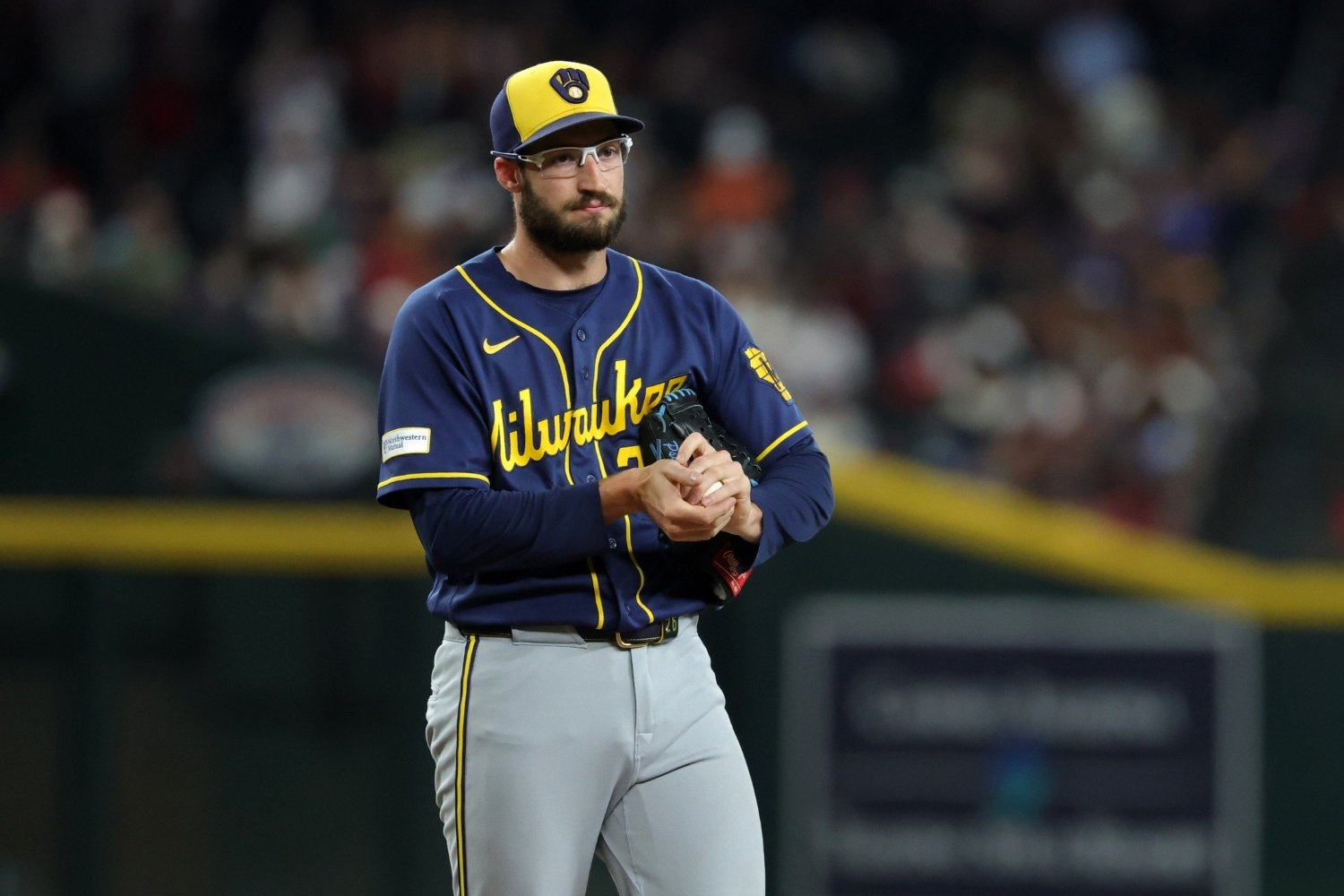 Aaron Ashby has one of the strangest arsenals in the majors, and hitters have looked as uncomfortable against him as they have against just about anyone else. He threw 66 2/3 innings last year, often in multi-inning relief, to the tune of a 2.16 ERA with some of the bendiest pitches you'll see. Ashby has no trouble moving the baseball both ways, a rare commodity. Pitchers usually have a supination or pronation bias that makes it hard for them to move the ball significantly to one side. At high velocity. It's tantalising how close to perfect his pitch mix is from a sheer stuff perspective. One of his biggest strengths is his ground-ball rate. A pitcher who can generate both strikeouts and ground balls at above-average rates has a lot of advantages in modern baseball, and that pair of skills has been a key factor in Ashby being "effectively wild". Keeping the ball on the ground, Ashby has always been capable of inducing a double play, so even if a hitter does get a free pass, he has a chance to wipe that runner out with a single pitch. That's key, because so far this season, Ashby's ground-ball rate on his primary fastball has decreased sharply. That's directly tied to his results. It's also something the Brewers seem to value, as Abner Uribe, Ashby and Ángel Zerpa all placed top 10 among relief pitchers in double plays induced in 2025. How Ashby maximized his arsenal is quite different from the traditional methods. The first big difference is his extension, which ranks among the lowest in baseball. With hurlers like Jacob Misiorowski, getting as close to the hitter as possible before releasing the baseball allows the velocity to play up, while also giving the ball less time for gravity to affect it and cause it to drop. That's a key difference here. Where someone leaning on a four-seam fastball wants to create as much "rise" as possible, a pitcher with a true sinker (not a two-seam fastball, but a genuine bowling-ball sinker) would want the ball to drop as much as possible to get below the barrel of the bat. This same principle applies to breaking pitches and off-speed pitches, trying to get them dropping at as steep a rate as possible by the time it reaches the plate. You can see in the graph below how the shorter a pitcher's stride is, the steeper their vertical approach angle is on a sinker. (Ashby is highlighted.) The correlation in the graph above isn't quite as exaggerated as I would have thought. It's distorted slightly by the amalgamation of two seamers and sinker fastballs into one pitch category. I dare say if they were separated, the line of best fit would be even steeper here, and a more direct correlation. There are some nuances within this. Ideally, you want that downward movement to be as steep as possible when it reaches the plate, but also to be breaking as late as possible, or at least at a similar time to the rest of a pitcher's arsenal. It creates extra deception, and prohibits a hitter from aligning his barrel to the pitch mid-swing. Has his Sinker Changed Shapes? Ashby's velocity allows him to manage the reduced "perceived velocity" (how fast the pitch actually looks to a hitter, due to the extension) that comes from him releasing the ball over a foot farther from home plate than the MLB average, and lets his raw movement come to the fore. With each of those pitches having a foot further to travel before reaching home plate, the movement he generates is exaggerated. Again, if we refer to the graph above, Ashby is considerably below the line of best fit; his vertical approach angle (VAA) is -0.69° steeper than an expected offering from his extension and release point. That might not sound like much, but it's significant, when the goal is to square the round ball on a round bat. Fast-forward to this year, however, and that VAA has dropped slightly, to -0.60° vs expected—not a massive change, but a notable one. If we compare Ashby's pitch shapes to last year, two small differences are perhaps combining to limit the drop Ashby is getting on his sinker: While Ashby's release height is the same distance from the ground, he's actually striding a little closer to home plate, with his extension jumping from 5.3 ft to 5.5 ft this year. Extending farther down the mound would lower the release height, but this has been offset by Ashby throwing from a slightly higher arm slot. A few degrees of difference here and there aren't usually anything to worry about, but combine the increased extension with the higher arm angle, and you have aslightly less heavy sinker. That being said, these aren't massive changes. Ashby is getting less vertical drop on his fastball this year, but it's not necessarily because his angle has changed. Instead, let's take a look at the seam-shifted wake, or non-magnus movement on the pitch (if you'd like to understand this phenomenon a little more, I covered the types of movement a baseball has this winter, here): Pitch Profiler does a fabulous job of separating spin-related movement from non-spin related movement. The shaded circles are where a pitch would be expected to move based on the release traits and characteristics, while the circle outline is where the pitch actually moved. As you can see with Aaron Ashby, both his sinker and changeup drop significantly more than expected. The sinker dropped 4.6" in 2025 more than expected while the changeup dropped 4.9" more than expected. If you want to know why Aaron Ashby has historically been so effective with his sinker, that's the primary reason right there. Good luck elevating either of those two pitches with any regularity. Fast-forward to this year, and the seam-shifted wake has reduced the drop he's getting on both of these pitches. This calculation accounts for his change in arm angle, and still suggests that Ashby has lost just shy of an inch of seam-shifted wake "drop" in 2026. Again, that may not sound like much, but it's the difference between a barrel and a ground ball. Is Fatigue Hurting Ashby? These little changes have reduced Ashby's effectiveness slightly this year. He can find ways to stop hitters from sitting on his sinker, whether that means more early-count curveballs (one of the most taken pitches in the league for a first-pitch strike) or mixing in more changeups to keep hitters off the speed of his sinker. The problem is that he's also been struggling to command his entire arsenal this year. Ashby's "edge" percentage—the share of his pitches thrown on the edges of the strike zone—has dropped from 43% to 38%, and hitters are making a lot more contact in zone. His in-zone swing-and-miss rate this season is less than 12%. On top of that, he's throwing just 43% of pitches inside the strike zone this year, compared to 50% last year. Hitters are being patient with him, working counts, and Ashby has struggled to find the zone often enough to counteract this approach. While we may think this is fatigue, actually, it's been a consistent problem in 2026, and wasn't an issue at all in 2025 with a steady 60% in-zone rate on his sinker and a 55% in-zone rate on his changeup. Looking at the year-on-year changes: Ashby isn't establishing his sinker as well in 2026, and he's keeping the changeup out of the strike zone at an alarming rate compared to his career norms, which is one of the pitches best suited to protecting his fastball. So in short, Ashby's made some small changes that are having a big impact in 2026: He's got more extension and a higher arm angle; these are both affecting his vertical drop on the sinker. He's not getting the same seam-shifted wake from his new release point, again leading to less vertical drop than he's previously been getting Most critically, Ashby has lost both control and command of his pitches. He's finding the zone less with his sinker and changeup, two pitches he relied upon to protect each other, and it's letting hitters see the sinker more and wait on it, creating less ground balls than usual. How Ashby approaches the second half of 2026 will be fascinating. Can he find the command needed to lead the bullpen through October? Or will he continue to be up and down, with flashes of brilliance interspersed with flashes of mediocrity? This one factor could go a long way toward determining the Brewers' success or failure this season.
 -
I think that's now 17 rain related reschedules/cancelled games for Biloxi. That's insane in terms of development loss for players, reorganising pitching schedules and the lost in game learnings of players like Made
-
Image courtesy of © Katie Stratman-Imagn Images Jake Bauers has been a potent force all season in the Brewers lineup, almost single-handedly carrying them through the first month of the season. His 139 wRC+ estimates his offensive production to be 39% better than a league-average hitter, and he currently leads the Brewers in home runs. It's tough to be disappointed in those numbers, but the Brewers have seen that production dip in June as pitchers have changed their approach to Bauers. If we isolate him to the last two weeks of games (which include two games in Las Vegas), Bauers has slashed just .161/.297/.258, with a 40.5% strikeout rate. Now, every hitter goes through some peaks and troughs, but there are some areas in which Bauers needs to adjust to how he's being attacked. The first thing we can see clearly is that pitchers are pitching around him more often. The volume of pitches inside the strike zone that he's faced has decreased dramatically in June, and that shouldn't be a surprise. Teams are well aware of his threat in a lineup starved of consistent power, and they're not letting Bauers be the one to beat them. Below is the month-by-month percentage of pitches faced by Bauers inside the strike zone across all counts: He dropped from 55.8% of fastballs in May landing inside the zone to a mere 47.2% of them so far in June, with similar reductions in zone rate for breaking stuff. Bauers has been crushing fastballs this season to the tune of a .314 batting average and .579 slugging percentage, so it's no surprise that pitchers are trying to keep these away from the danger zone. The reduced production over the last two weeks isn't because he's chasing these fastballs, however. in fact, it's quite the opposite, Bauers has become too passive, trying to balance doing damage with avoiding the chase rates that can cause him to swing and miss excessively. If we compare Bauers's performance in June to date against his April/May form, there are some glaring differences: The in-zone swing rate is the lowest in baseball over this time, and that's the opposite of what you want from a player you're relying on to contribute some raw slugging numbers. He's taking a lot of pitches. He isn't chasing, and he's getting on base via the walk at an astonishing clip. He's also still showing remarkable quality of contact numbers. It's just that he doesn't seem to be targeting that contact all too often this month, going a little into his shell. The other thing pitchers are doing a great job of is preventing Bauers from pulling the ball in the air. While he doesn't need that air pull to clear the fences with regularity, and his willingness to drive the ball to the opposite field has been a growth point this season, it's still the primary source of his power. Even bat speed superfreaks find most of their extra-base hits on the pull side. That being said, for Bauers, it's still about striking a balance with his approach at the plate. It's when he uncorks a swing that might need a little more nuance. For example, pitchers are throwing him just 37.5% of pitches inside the strike zone when he gets into a three-ball count. They're not concerned with walking him, and he knows it. However, they're not as concerned with throwing such strikes early in the count, throwing 55% of pitches inside the zone in 0-0 counts, more than they did in May. They're gambling that Bauers, like all Brewers hitters, will be in auto-take mode in a 3-0 count, and that he'll be pretty passive at the front end of the at-bat, too. So Bauers has some leverage in counts with no strikes, and he's getting pitches to hit. Deeper into the at-bat, they're just avoiding the zone at all costs. The problem is, the Brewers slugger is currently swinging more often in deeper counts than he is early, so he's missing his opportunity on those pitches that are there to hit. I'm not suggesting Bauers should swing out of his shoes in every hitter's count, but he's shown enough consistent thump this year that his approach can be centered around more than a prayer to be walked. Bauers is enough of a threat that he's no longer getting pitches to hit in the counts he's previously targeted. It might be that he now has to search elsewhere for those pitches, and be more aggressive early in the at-bat. That, or the Brewers need to engineer some lineup support around him to scare teams off putting a runner on base for free. Either way, it will be fascinating to see how Bauers adjusts to how teams are approaching him. View full article
-
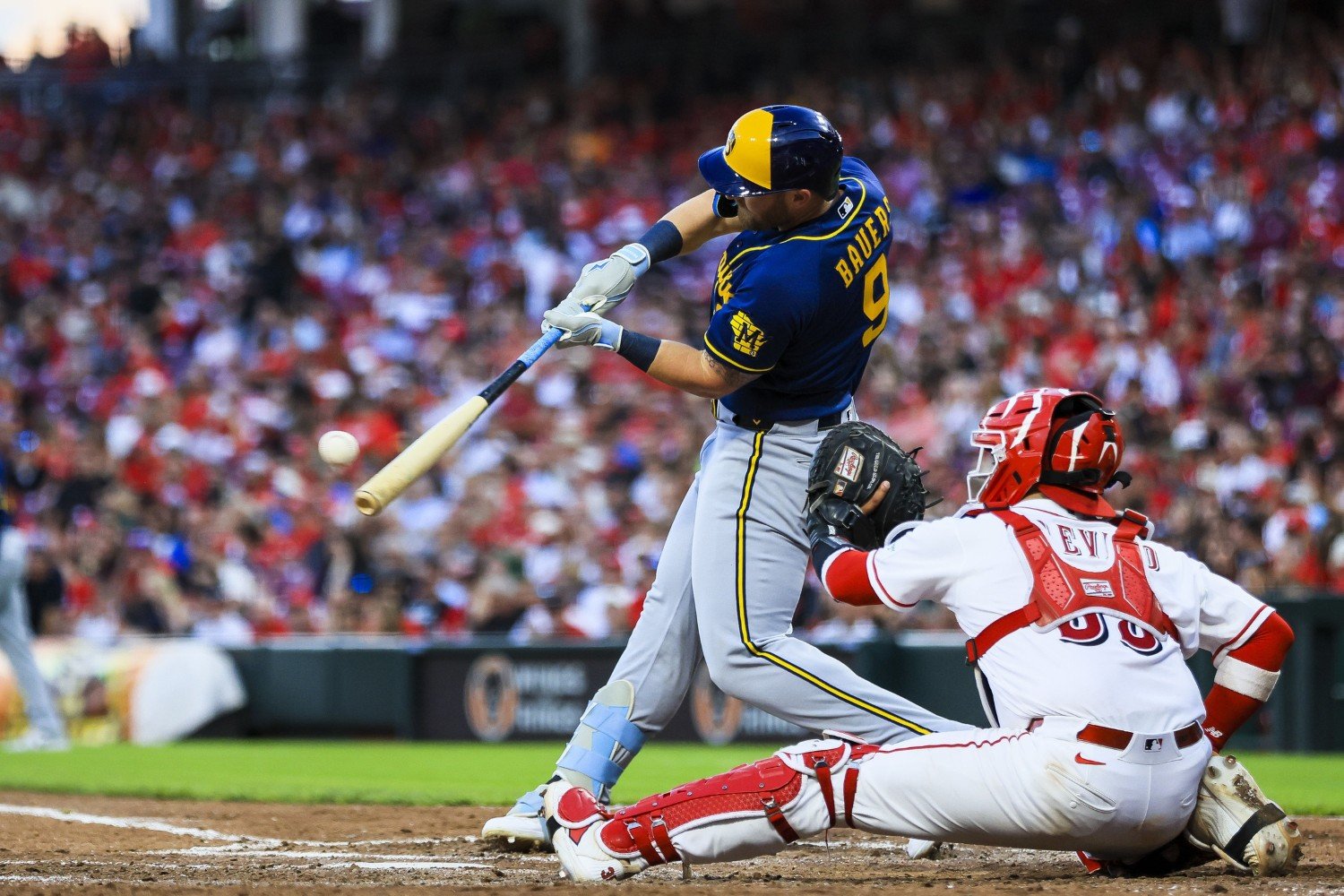 Jake Bauers has been a potent force all season in the Brewers lineup, almost single-handedly carrying them through the first month of the season. His 139 wRC+ estimates his offensive production to be 39% better than a league-average hitter, and he currently leads the Brewers in home runs. It's tough to be disappointed in those numbers, but the Brewers have seen that production dip in June as pitchers have changed their approach to Bauers. If we isolate him to the last two weeks of games (which include two games in Las Vegas), Bauers has slashed just .161/.297/.258, with a 40.5% strikeout rate. Now, every hitter goes through some peaks and troughs, but there are some areas in which Bauers needs to adjust to how he's being attacked. The first thing we can see clearly is that pitchers are pitching around him more often. The volume of pitches inside the strike zone that he's faced has decreased dramatically in June, and that shouldn't be a surprise. Teams are well aware of his threat in a lineup starved of consistent power, and they're not letting Bauers be the one to beat them. Below is the month-by-month percentage of pitches faced by Bauers inside the strike zone across all counts: He dropped from 55.8% of fastballs in May landing inside the zone to a mere 47.2% of them so far in June, with similar reductions in zone rate for breaking stuff. Bauers has been crushing fastballs this season to the tune of a .314 batting average and .579 slugging percentage, so it's no surprise that pitchers are trying to keep these away from the danger zone. The reduced production over the last two weeks isn't because he's chasing these fastballs, however. in fact, it's quite the opposite, Bauers has become too passive, trying to balance doing damage with avoiding the chase rates that can cause him to swing and miss excessively. If we compare Bauers's performance in June to date against his April/May form, there are some glaring differences: The in-zone swing rate is the lowest in baseball over this time, and that's the opposite of what you want from a player you're relying on to contribute some raw slugging numbers. He's taking a lot of pitches. He isn't chasing, and he's getting on base via the walk at an astonishing clip. He's also still showing remarkable quality of contact numbers. It's just that he doesn't seem to be targeting that contact all too often this month, going a little into his shell. The other thing pitchers are doing a great job of is preventing Bauers from pulling the ball in the air. While he doesn't need that air pull to clear the fences with regularity, and his willingness to drive the ball to the opposite field has been a growth point this season, it's still the primary source of his power. Even bat speed superfreaks find most of their extra-base hits on the pull side. That being said, for Bauers, it's still about striking a balance with his approach at the plate. It's when he uncorks a swing that might need a little more nuance. For example, pitchers are throwing him just 37.5% of pitches inside the strike zone when he gets into a three-ball count. They're not concerned with walking him, and he knows it. However, they're not as concerned with throwing such strikes early in the count, throwing 55% of pitches inside the zone in 0-0 counts, more than they did in May. They're gambling that Bauers, like all Brewers hitters, will be in auto-take mode in a 3-0 count, and that he'll be pretty passive at the front end of the at-bat, too. So Bauers has some leverage in counts with no strikes, and he's getting pitches to hit. Deeper into the at-bat, they're just avoiding the zone at all costs. The problem is, the Brewers slugger is currently swinging more often in deeper counts than he is early, so he's missing his opportunity on those pitches that are there to hit. I'm not suggesting Bauers should swing out of his shoes in every hitter's count, but he's shown enough consistent thump this year that his approach can be centered around more than a prayer to be walked. Bauers is enough of a threat that he's no longer getting pitches to hit in the counts he's previously targeted. It might be that he now has to search elsewhere for those pitches, and be more aggressive early in the at-bat. That, or the Brewers need to engineer some lineup support around him to scare teams off putting a runner on base for free. Either way, it will be fascinating to see how Bauers adjusts to how teams are approaching him.
 -
Brewers (Sproat) vs Reds (Lodolo): 6/23/26, 6:10pm
Jake McKibbin replied to Brock Beauchamp's topic in Archived Game Threads
With a full off-season of physical development and mechanical work with H&H car wash, there's a chance Sproat is the definitive number 2 on this team next year. Just needs a little work on his engine and grooving a more consistent delivery -
Brewers (Sproat) vs Reds (Lodolo): 6/23/26, 6:10pm
Jake McKibbin replied to Brock Beauchamp's topic in Archived Game Threads
I grew up in the UK (ish, NI is fun!). Every Saturday evening at 10.30 I watched match of the day with my dad with highlights of all the games played that day, and occasionally full games on a Sunday. I really enjoyed the sport. That being said, I haven't watched more than 2-3 games in the last year purely because it's really difficult to appreciate the intricacies and tactical nuances of the sport in the middle of the park. It's the biggest sport in the world for a reason. But an 8-10 minute highlight video does me just fine. The action is great, the middle bit, a little chewier to really get into. -
Milwaukee Metric Mix-up 6/24-6/30: The Father's Day Soundtrack
Jake McKibbin commented on TheIrrelevantWriter's blog entry in Irrelevant Writer
Two triples is a ballsy call, love it dude!- 2 comments
-
- 1
-
-
- jackson chourio
- jack bauer
- (and 8 more)
-
I really love the depth of thought that's gone into this reply, so I'm going to try and give this the answer it deserves. He has had some success on the four-seamer but that's usually as a by-product of how effective the sinker is and he's use it up above the strike zone for chase and whiff in two stroke counts. The pitch itself doesn't grade out super well on its own unfortunately, though I do love it in that specific situation. On the sinker usage, it's an interesting thought. It depends on how often/comfortable Ashby is using his curve all/slider to get ahead in counts. The 0-0 curveball is the most likely pitch to get a called strike in all of baseball, but again is that because hitters aren't expecting it? And therefore not something to overuse. All of his pitches can survive in the zone, but I'm also not entirely sure he has more command over them than he does with the sinker. I'd potentially stick with his current approach for a little while longer, as you say it's not a huge sample yet, especially as a reliever, and he's not a million miles off. It does bear watching though Thanks again for the detailed response! We as writers absolutely love when you engage with our pieces like this
-
Image courtesy of © Dale Zanine-Imagn Images Aaron Ashby is the most potent weapon the Brewers have in their bullpen. He can be deployed in a multitude of different roles and has one of the nastiest, most diverse arsenals of any reliever in baseball. Using a shorter stride than most, Ashby gets vicious break on everything he throws, and it's caused despair for a number of the best hitters in baseball. That being said, you cannot succeed in a high-leverage role consistently without a strong fastball, and Ashby hasn't been as dominant with his sinker this year. This month, that's starting to catch up to him. Hitters are hitting .321 and slugging .462 against Ashby's sinker, with an expected weighted on-base average (xwOBA) of .355. All of these are career-high marks for one of the most unusual, outstanding pitches in baseball. Excuse a paragraph or two of nerdiness incoming, but it's important to break down why his sinker is so effective at its best, before diagnosing where it might be struggling this year. Ashby's high release point usually coincides with more vertical break and is not always conducive to a sinking fastball. Ashby's short extension gives his pitches more time to break, though, and his ability to generate seam-shifted wake (how the air moves around the seams of a baseball to enhance its movement) makes the sinker drop a lot more than a hitter would expect from his release point. On average. Ashby's sinker drops four inches more than expected from the seam-shifted wake he generates, and runs almost seven inches more than expected from his release point. To show that in a diagram, Ashby's expected movement on the sinker is the shaded orange area. The actual movement is the orange circle. It's a massive difference, and that movement is a key reason for Ashby's ground balls and how he has utterly overmatched hitters in the past. If that pitch is located well, good luck. If anyone has any questions surrounding the graph above or how to translate the data, please let me know in the comments below, by the way, I'm always happy to explain, but if you'd like a further breakdown of seam-shifted wake, I wrote a piece on the phenomenon over the winter here. The problem Ashby is finding so far in 2026 is that his sinker is being elevated at ideal launch angles far more frequently than it has in the past. That's key because, with this Brewers infield, even hard-hit balls are likely to turn into outs if they stay on the ground, and Ashby has historically induced a lot of worm burners. If you can get it over the infield, however, those hard-hit balls turn into extra-base hits and even home runs. Opponents' average launch angle on Ashby's sinker in any season previously reached a high of 2° way back in 2022, and was -1° in 2025. This season, it's all the way up to 8°, and that's the primary reason why we're seeing more hard-hit balls. His ground ball rate has dropped from 64% in 2025 to 51% this season. The first thing to check is whether the movement profile has changed, and it has—but ever so slightly. Ashby is getting about an inch less induced "drop" on the sinker. During his more dominant stretches, Ashby averages about seven inches of induced vertical break, but has been above eight inches each month so far in 2026. We can see from this graphic (both of the above graphics are from Jeremy Maschino at Pitch Profiler, an excellent resource for pitching information and analysis) that Ashby's Stuff+ grades on his sinker are largely identical this year. He's throwing from a slightly higher arm slot, which explains the increase in induced vertical break, but he's still getting impressive drop for that release slot. What is interesting, however, is the reduction in his ProPitch+ score, which combines location and his Stuff+ grades. His ProPitch+ has dropped this year, while Stuff+ remains the same—suggesting we could have a location issue so far. The other point to note is whether he's adjusted his pitch mix, and while I don't think this has made a massive difference, Ashby is using his slider more this year at the expense of his curveball. The changeup usage has slightly dropped, and a good changeup can keep hitters off your primary fastball, but not enough to cause this level of change in contact quality. So let's dig into Ashby's locations with his sinker. At his best, Ashby manages to get hitters off the end of the bat (a "flail") with regularity; that can be helped by hitting the outer third of the plate. We mentioned earlier that Ashby gets a lot of seam-shifted wake effects that help the pitch "sink", but have an even bigger effect on how much horizontal movement he gets. To right-handers, in particular, this movement can force the pitch onto the end of the bats and help with inducing weak contact. If we look at 2025 pitch locations to right-handers: While Ashby wasn't averse to hitting the heart of the plate, and that's something he could get away with given the vicious movement and depth in his arsenal, his most often hit zone was on the outer third of the plate to righties. He was happy enough to front-door his sinker to them, as well, locating quite evenly across the strike zone, but he didn't specifically live in the heart of the plate. When he did, he also kept it down more than up in the strike zone, and we can see the importance of Ashby keeping the ball off the heart of the plate when it comes to his ground ball rate on the sinker: Ashby's ground ball rates were far higher when he could find the inner and outer thirds of the plate, staying away from the center of the barrel, and saying good luck to any who dared chase below the strike zone. There are two clear areas in which Ashby didn't get ground balls with regularity: middle-middle fastballs, and middle-up fastballs. So let's take a look at his locations in 2026: Well, there's a fairly clear answer here. Overall, Asbhy is staying in those two danger areas more often than any other location inside the strike zone. Compounding this is that he seems to have lost the feel for locating in the bottom third of the zone, with his zone rate (how often a pitch lands inside the rulebook strike zone) dipping from 59% in 2025 to 53% in 2026. Ashby is electric when he gets ahead of hitters, but every pitcher in baseball finds it more difficult when they fall behind to a hitter. When they force him into the strike zone in a fastball count, 37% of those pitches are in the danger zone where his sinker gets elevated and hit hard. In short, Ashby needs to find his command of the sinker. Command has never been his overarching strength, but this is a step back for him in that regard. If he can command the two sides of the zone, or even locate better at the bottom of the strike zone, the Brewers will have their high swing-and-miss, high ground ball pitcher that's one of the toughest relievers in baseball. If he can't establish the fastball a bit more tidily, prepare for a slightly bumpier ride. View full article
-
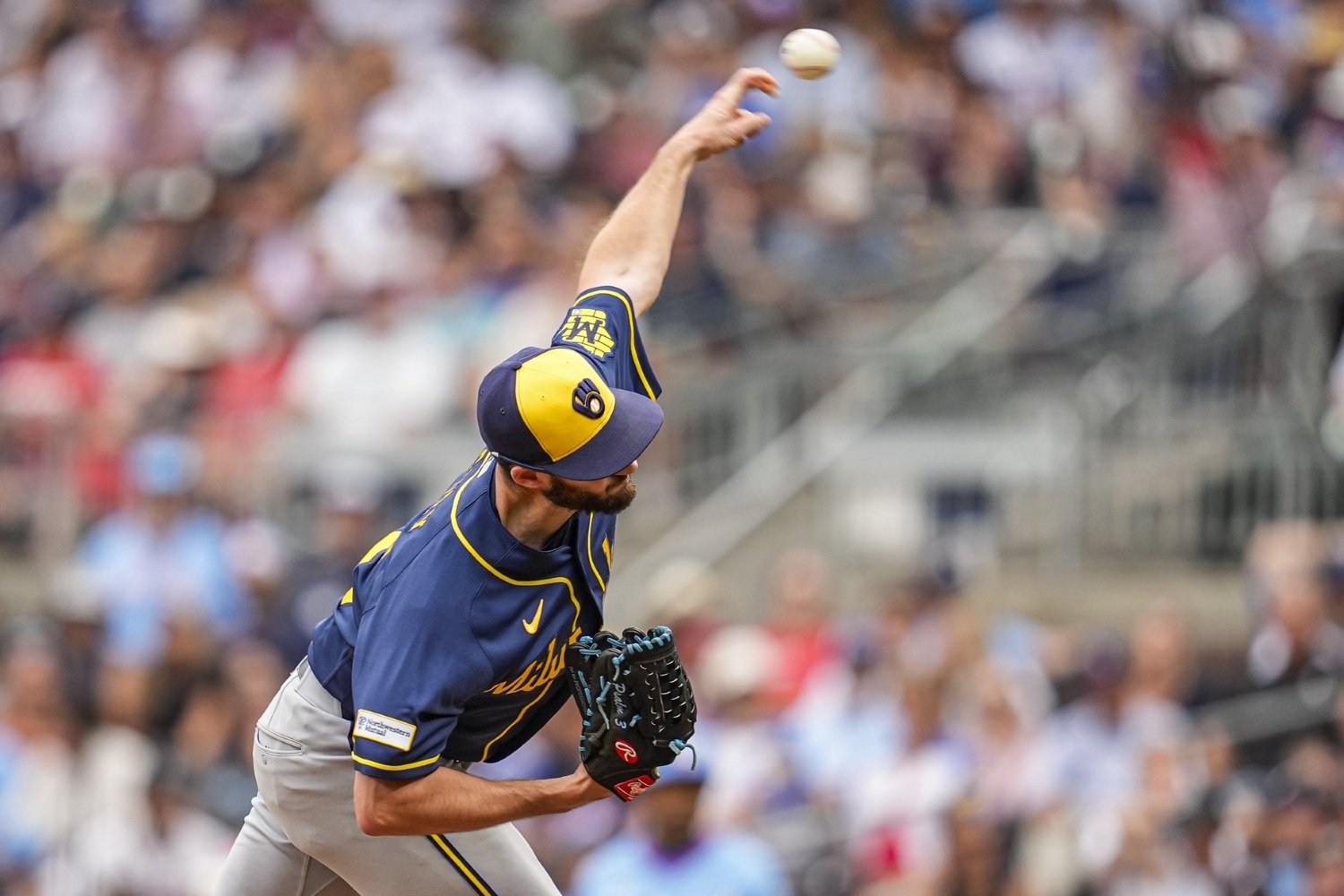 Aaron Ashby is the most potent weapon the Brewers have in their bullpen. He can be deployed in a multitude of different roles and has one of the nastiest, most diverse arsenals of any reliever in baseball. Using a shorter stride than most, Ashby gets vicious break on everything he throws, and it's caused despair for a number of the best hitters in baseball. That being said, you cannot succeed in a high-leverage role consistently without a strong fastball, and Ashby hasn't been as dominant with his sinker this year. This month, that's starting to catch up to him. Hitters are hitting .321 and slugging .462 against Ashby's sinker, with an expected weighted on-base average (xwOBA) of .355. All of these are career-high marks for one of the most unusual, outstanding pitches in baseball. Excuse a paragraph or two of nerdiness incoming, but it's important to break down why his sinker is so effective at its best, before diagnosing where it might be struggling this year. Ashby's high release point usually coincides with more vertical break and is not always conducive to a sinking fastball. Ashby's short extension gives his pitches more time to break, though, and his ability to generate seam-shifted wake (how the air moves around the seams of a baseball to enhance its movement) makes the sinker drop a lot more than a hitter would expect from his release point. On average. Ashby's sinker drops four inches more than expected from the seam-shifted wake he generates, and runs almost seven inches more than expected from his release point. To show that in a diagram, Ashby's expected movement on the sinker is the shaded orange area. The actual movement is the orange circle. It's a massive difference, and that movement is a key reason for Ashby's ground balls and how he has utterly overmatched hitters in the past. If that pitch is located well, good luck. If anyone has any questions surrounding the graph above or how to translate the data, please let me know in the comments below, by the way, I'm always happy to explain, but if you'd like a further breakdown of seam-shifted wake, I wrote a piece on the phenomenon over the winter here. The problem Ashby is finding so far in 2026 is that his sinker is being elevated at ideal launch angles far more frequently than it has in the past. That's key because, with this Brewers infield, even hard-hit balls are likely to turn into outs if they stay on the ground, and Ashby has historically induced a lot of worm burners. If you can get it over the infield, however, those hard-hit balls turn into extra-base hits and even home runs. Opponents' average launch angle on Ashby's sinker in any season previously reached a high of 2° way back in 2022, and was -1° in 2025. This season, it's all the way up to 8°, and that's the primary reason why we're seeing more hard-hit balls. His ground ball rate has dropped from 64% in 2025 to 51% this season. The first thing to check is whether the movement profile has changed, and it has—but ever so slightly. Ashby is getting about an inch less induced "drop" on the sinker. During his more dominant stretches, Ashby averages about seven inches of induced vertical break, but has been above eight inches each month so far in 2026. We can see from this graphic (both of the above graphics are from Jeremy Maschino at Pitch Profiler, an excellent resource for pitching information and analysis) that Ashby's Stuff+ grades on his sinker are largely identical this year. He's throwing from a slightly higher arm slot, which explains the increase in induced vertical break, but he's still getting impressive drop for that release slot. What is interesting, however, is the reduction in his ProPitch+ score, which combines location and his Stuff+ grades. His ProPitch+ has dropped this year, while Stuff+ remains the same—suggesting we could have a location issue so far. The other point to note is whether he's adjusted his pitch mix, and while I don't think this has made a massive difference, Ashby is using his slider more this year at the expense of his curveball. The changeup usage has slightly dropped, and a good changeup can keep hitters off your primary fastball, but not enough to cause this level of change in contact quality. So let's dig into Ashby's locations with his sinker. At his best, Ashby manages to get hitters off the end of the bat (a "flail") with regularity; that can be helped by hitting the outer third of the plate. We mentioned earlier that Ashby gets a lot of seam-shifted wake effects that help the pitch "sink", but have an even bigger effect on how much horizontal movement he gets. To right-handers, in particular, this movement can force the pitch onto the end of the bats and help with inducing weak contact. If we look at 2025 pitch locations to right-handers: While Ashby wasn't averse to hitting the heart of the plate, and that's something he could get away with given the vicious movement and depth in his arsenal, his most often hit zone was on the outer third of the plate to righties. He was happy enough to front-door his sinker to them, as well, locating quite evenly across the strike zone, but he didn't specifically live in the heart of the plate. When he did, he also kept it down more than up in the strike zone, and we can see the importance of Ashby keeping the ball off the heart of the plate when it comes to his ground ball rate on the sinker: Ashby's ground ball rates were far higher when he could find the inner and outer thirds of the plate, staying away from the center of the barrel, and saying good luck to any who dared chase below the strike zone. There are two clear areas in which Ashby didn't get ground balls with regularity: middle-middle fastballs, and middle-up fastballs. So let's take a look at his locations in 2026: Well, there's a fairly clear answer here. Overall, Asbhy is staying in those two danger areas more often than any other location inside the strike zone. Compounding this is that he seems to have lost the feel for locating in the bottom third of the zone, with his zone rate (how often a pitch lands inside the rulebook strike zone) dipping from 59% in 2025 to 53% in 2026. Ashby is electric when he gets ahead of hitters, but every pitcher in baseball finds it more difficult when they fall behind to a hitter. When they force him into the strike zone in a fastball count, 37% of those pitches are in the danger zone where his sinker gets elevated and hit hard. In short, Ashby needs to find his command of the sinker. Command has never been his overarching strength, but this is a step back for him in that regard. If he can command the two sides of the zone, or even locate better at the bottom of the strike zone, the Brewers will have their high swing-and-miss, high ground ball pitcher that's one of the toughest relievers in baseball. If he can't establish the fastball a bit more tidily, prepare for a slightly bumpier ride.
 -
Image courtesy of © Dale Zanine-Imagn Images Jackson Chourio has long been talked about as a potential MVP candidate. We've seen the fast hands, the impressive swing speed and surprising contact rates, but we haven't always seen the results to back up the talent that he possesses. Chourio only turned 22 this March, an important part of this equation, but even so, we'd seen some short glimpses of what Chourio is capable of—and then some more mediocre performance. In his first two seasons, Chourio recorded a wRC+ of 118 and 111 in 2024 and 2025, respectively, striking out a little over 20% of the time and accumulating 6.8 WAR over that period. That's a very valuable run, and one that I don't mean to demean at all, especially for someone of Chourio's age. That being said, his subpar walk rate in each season highlights why Chourio hadn't ascended to the heights he was capable of in his first two seasons. Across both 2024 and 2025, the Brewers phenom was chasing pitches outside the strike zone at a 34.5% clip, on the edge of the worst quintile in baseball. In doing so, he was putting bat to ball on pitches that he couldn't enact much impact on, and also whiffing a lot. Putting yourself in a good hitter's count is key for any batter, and when you do so, you force pitchers into your wheelhouse. By taking more pitches outside the strike zone, Chourio can bring pitchers back into the zone. Then he can unleash. After some of his worst swing decisions in May (something I wrote about three weeks ago), Chourio has completely flipped the switch, and it's directly correlated to his performance so far this month. Have a look at his in-zone swing rate and his chase rate so far in each of the two months, and how that's tied to a variety of batted-ball quality metrics: Chourio is striking out less, and perhaps most importantly, he's finding better launch angles on his batted balls. Hitting the ball hard and into the ground will only get you so far as a hitter, but the screaming line drives have become a real feature of his performance thus far in June. The change in his plate discipline is allowing him to be aggressive at anything inside the strike zone early in the count, letting his bat fly and looking to do damage to the pull side, while being more secure in the knowledge that he can work his way back into the count later on if he gets down to two strikes. The big change so far this year is that Chourio is actively hunting fastballs. If you listened to Jason Wang last night on our Sunday live podcast, you'd know this hasn't always been an area of strength for the young star. In 2025, Chourio struggled at times to really impact fastballs. Against sinkers and four-seamer in 2025, he had a -12 run value (-6 for each pitch). With an expected slugging of just .378 in 2025 against four-seam fastballs, he wasn't impacting the pitch seen most often across major-league baseball. Compare that to 2026, in which he has a +5 run value against four-seamers and sinkers thus far, doing more damage (.471 expected slugging) against four-seamers and marmalising sinkers with a 71% hard hit rate. That marks a real change for Chourio. If we look at his timings, there's quite a clear difference in where exactly Chourio is hitting these fastballs: The graph on the left shows if the pitchers are able to get Chourio down on the end of the bat or get in on his hands to stay off his barrel. In 2025, he was catching a lot of fastballs off the end of the bat, but this year, he's centered the ball on his barrel much better, which is the key to generating exit velocity. (He's also slightly better at being on time and lining up the fastball, possibly because he's hunting them, but let's stay with the flail element for now.) Why would a hitter be hitting a ball off the toe of the bat? One of the main causes would be if Chourio was trying to pull pitches on the outer third of the plate, The bat would be angled toward the pull side on a pitch that just shouldn't be taken in that direction—not for someone with Chourio's stance and set-up, and someone who doesn't need to pull the ball to access his power. The other is by being late to the ball, and again, the tilt of the bat means the ball comes off the end of the bat rather than the barrel. In expertly drawn schematics from my trained hand, these are the same lengths of lines at different angles, but note the difference in where the ball is touching said lines: So, being late or early can influence where a hitter is being tied up or flailing, and so can the types of pitches at which he's swinging. A hitter is more likely to flail at a pitch on the outer third of the plate than one on the inner third, and Chourio has been marginally more selective in swinging at those outer-third fastballs in 2026, especially those lower down in the strike zone (which require a longer bat path to reach). He's also been increasingly aggressive against fastballs on the inner third of the plate. Those locations might tie up a number of hitters, but Chourio's hands allow him to get to those pitches with aplomb, and it's helping him find the center of the bat more often. On average, Chourio is hitting fastball variants almost 5 mph harder in 2026 than he did in 2025, a massive leap forward. He's averaging over 95 mph in exit velocity against these pitches, without sacrificing his contact skills. So does that mean he's been more susceptible to breaking balls? Well, the answer is slightly nuanced. Better swing decisions are helping Chourio force pitchers to throw those breaking pitches inside the strike zone more often, and that definitely helps. He also appears to be reading the pitch out of the hand well, because he's been on time with his swing more often this year than he was in 2025. From May to June, his miss distance on breaking pitches is lower, he's generating fewer "flawed swings" (where he's off in all three dimensions), and overall, he's whiffing a lot less while finding better launch angles on the breaking balls he's hit. As a result, he's got a .371 expected batting average against breaking pitches this month. So between the fastball and the breaking ball, there's been no let-up from Chourio. He's not over-committing one way or the other, and is becoming about as pure a total hitter as one can get. There will be more thorny adjustments to come. We'll see if pitchers try to pitch around him more now; we saw him intentionally walked multiple times last week. Chourio has a 195 wRC+ so far in June, with a 1.091 OPS. He's produced 1.3 fWAR in the last three weeks alone. The plate discipline is fueling all of this change, and the question now becomes whether he can sustain this for longer than a three-week period. If so, the MVP version of Jackson Chourio is leaving the station. Get on board, Milwaukee. View full article
-
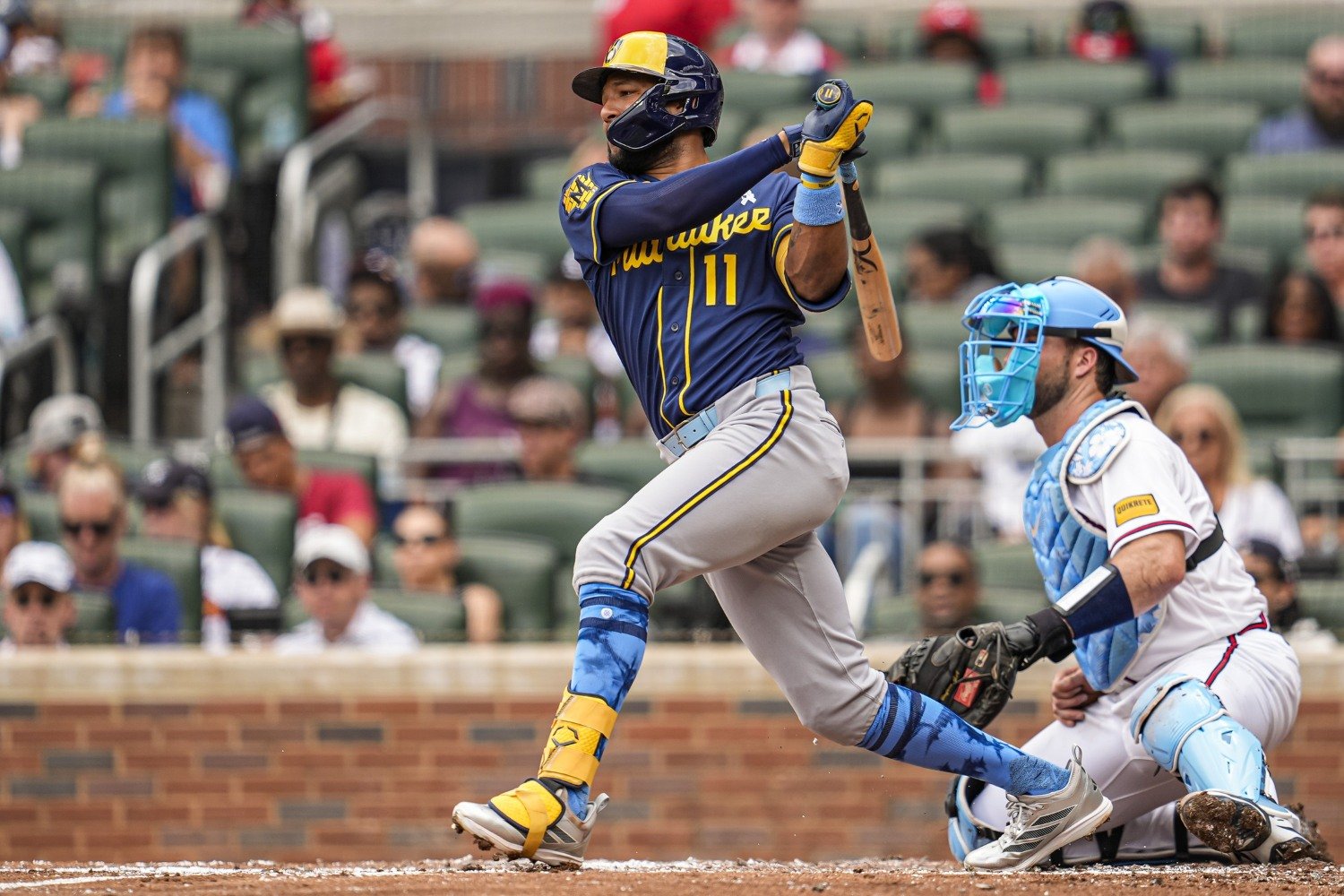 Jackson Chourio has long been talked about as a potential MVP candidate. We've seen the fast hands, the impressive swing speed and surprising contact rates, but we haven't always seen the results to back up the talent that he possesses. Chourio only turned 22 this March, an important part of this equation, but even so, we'd seen some short glimpses of what Chourio is capable of—and then some more mediocre performance. In his first two seasons, Chourio recorded a wRC+ of 118 and 111 in 2024 and 2025, respectively, striking out a little over 20% of the time and accumulating 6.8 WAR over that period. That's a very valuable run, and one that I don't mean to demean at all, especially for someone of Chourio's age. That being said, his subpar walk rate in each season highlights why Chourio hadn't ascended to the heights he was capable of in his first two seasons. Across both 2024 and 2025, the Brewers phenom was chasing pitches outside the strike zone at a 34.5% clip, on the edge of the worst quintile in baseball. In doing so, he was putting bat to ball on pitches that he couldn't enact much impact on, and also whiffing a lot. Putting yourself in a good hitter's count is key for any batter, and when you do so, you force pitchers into your wheelhouse. By taking more pitches outside the strike zone, Chourio can bring pitchers back into the zone. Then he can unleash. After some of his worst swing decisions in May (something I wrote about three weeks ago), Chourio has completely flipped the switch, and it's directly correlated to his performance so far this month. Have a look at his in-zone swing rate and his chase rate so far in each of the two months, and how that's tied to a variety of batted-ball quality metrics: Chourio is striking out less, and perhaps most importantly, he's finding better launch angles on his batted balls. Hitting the ball hard and into the ground will only get you so far as a hitter, but the screaming line drives have become a real feature of his performance thus far in June. The change in his plate discipline is allowing him to be aggressive at anything inside the strike zone early in the count, letting his bat fly and looking to do damage to the pull side, while being more secure in the knowledge that he can work his way back into the count later on if he gets down to two strikes. The big change so far this year is that Chourio is actively hunting fastballs. If you listened to Jason Wang last night on our Sunday live podcast, you'd know this hasn't always been an area of strength for the young star. In 2025, Chourio struggled at times to really impact fastballs. Against sinkers and four-seamer in 2025, he had a -12 run value (-6 for each pitch). With an expected slugging of just .378 in 2025 against four-seam fastballs, he wasn't impacting the pitch seen most often across major-league baseball. Compare that to 2026, in which he has a +5 run value against four-seamers and sinkers thus far, doing more damage (.471 expected slugging) against four-seamers and marmalising sinkers with a 71% hard hit rate. That marks a real change for Chourio. If we look at his timings, there's quite a clear difference in where exactly Chourio is hitting these fastballs: The graph on the left shows if the pitchers are able to get Chourio down on the end of the bat or get in on his hands to stay off his barrel. In 2025, he was catching a lot of fastballs off the end of the bat, but this year, he's centered the ball on his barrel much better, which is the key to generating exit velocity. (He's also slightly better at being on time and lining up the fastball, possibly because he's hunting them, but let's stay with the flail element for now.) Why would a hitter be hitting a ball off the toe of the bat? One of the main causes would be if Chourio was trying to pull pitches on the outer third of the plate, The bat would be angled toward the pull side on a pitch that just shouldn't be taken in that direction—not for someone with Chourio's stance and set-up, and someone who doesn't need to pull the ball to access his power. The other is by being late to the ball, and again, the tilt of the bat means the ball comes off the end of the bat rather than the barrel. In expertly drawn schematics from my trained hand, these are the same lengths of lines at different angles, but note the difference in where the ball is touching said lines: So, being late or early can influence where a hitter is being tied up or flailing, and so can the types of pitches at which he's swinging. A hitter is more likely to flail at a pitch on the outer third of the plate than one on the inner third, and Chourio has been marginally more selective in swinging at those outer-third fastballs in 2026, especially those lower down in the strike zone (which require a longer bat path to reach). He's also been increasingly aggressive against fastballs on the inner third of the plate. Those locations might tie up a number of hitters, but Chourio's hands allow him to get to those pitches with aplomb, and it's helping him find the center of the bat more often. On average, Chourio is hitting fastball variants almost 5 mph harder in 2026 than he did in 2025, a massive leap forward. He's averaging over 95 mph in exit velocity against these pitches, without sacrificing his contact skills. So does that mean he's been more susceptible to breaking balls? Well, the answer is slightly nuanced. Better swing decisions are helping Chourio force pitchers to throw those breaking pitches inside the strike zone more often, and that definitely helps. He also appears to be reading the pitch out of the hand well, because he's been on time with his swing more often this year than he was in 2025. From May to June, his miss distance on breaking pitches is lower, he's generating fewer "flawed swings" (where he's off in all three dimensions), and overall, he's whiffing a lot less while finding better launch angles on the breaking balls he's hit. As a result, he's got a .371 expected batting average against breaking pitches this month. So between the fastball and the breaking ball, there's been no let-up from Chourio. He's not over-committing one way or the other, and is becoming about as pure a total hitter as one can get. There will be more thorny adjustments to come. We'll see if pitchers try to pitch around him more now; we saw him intentionally walked multiple times last week. Chourio has a 195 wRC+ so far in June, with a 1.091 OPS. He's produced 1.3 fWAR in the last three weeks alone. The plate discipline is fueling all of this change, and the question now becomes whether he can sustain this for longer than a three-week period. If so, the MVP version of Jackson Chourio is leaving the station. Get on board, Milwaukee.
 -
I was thinking exactly the same. His home runs are baffling at times, the side on profile shows the bat speed, but front on it looks like a really lazy swing and a flick of the wrists. Such incredible power
-
Image courtesy of © Benny Sieu-Imagn Images Garrett Mitchell has been working all season to get his high fastball problem under control, but it's cost him in some other areas previously considered strong points. He was making some real strides with this goal, as you can see in the graph below, with a rolling swing-and-miss rate that reached league average on May 19. The problem was, he was still hitting too many ground balls and just not tapping into the benefits that limiting his whiffs should have brought about for a player of his capabilities. Through that May 19 date, Mitchell had a 101 RC+, so he was just about a league-average hitter, but his overall slash line was propped up with walks as he hit .224/.347/.352. Since that date, despite his whiff rate climbing, Mitchell has slashed .308/.366/.569 for a 159 wRC+, and a strikeout rate that's actually lower than his first month and a half. How is that happening? The theory was always that if Mitchell could survive against the high fastball, the results could be remarkable. Mitchell knew this. Opponents knew this. It's been a real focus for him this year, and he was really beginning to get on top of it in May. If we break down his whiff rates by month against each pitch type, we can see some real progress, in May against hard pitches: That's bounced back up in June, but not entirely in the way you might think. Throughout the first two months of the season, Mitchell was demonstrating a lot of patience at the plate. He had an 11.4% walk rate, with a league average swing rate at pitches inside the strike zone and exceptional command of the zone, in the form of a very low chase rate. It prevented his whiff rate (and his strikeouts) from ballooning to genuinely untenable proportions. In June however, he's flipped a switch and is taking off. Mitchell has eschewed plate discipline for earlier swings and more aggressive intent, and the results have been excellent. TJstats has a model that can showcase the two in percentile form, side by side: By taking fewer early strikes in the count and swinging more aggressively, Mitchell is actually striking out a lot less at only 25% of the time this month. The one caveat to this is the reduced movement on pitches in both Colorado and Las Vegas. That will have helped Mitchell square up the ball a little more often, and perhaps the offensive environment fed into his desire to swing a little more. That being said, this is a noticeable change, and it seems intentional when we see how exactly he's doing it. Mitchell's bread and butter is that he crushes breaking balls in the zone. Murders them. He's never swung at fewer than 43% of breaking balls in his career, but that changed in the first few months of 2026. He was swinging less, and he wasn't making the type of contact on those mistake pitches that he's known for in Milwaukee—that is, of course, until June came around: Mitchell was swinging at less than 35% of breaking balls this season through May, but has been firing off at almost 70% of them so far in June. That's bringing about more chase, but also allowing him to square up those pitches that are inside the strike zone. He's been unlucky in spots, but the process has looked strong. Then, Tuesday night, he left nothing to chance. On a hanging slider from Guardians reliever Hunter Gaddis, he crushed a line-drive home run to right field, restoring the Brewers' lead just one half-inning after they'd lost it. He's gone through an adjustment period during which he gave away some of his authoritative contact on breaking stuff, but boy, is it ever back. More important, however, is how Mitchell has handled fastballs. Yes, he's still swinging and missing more than you would like, but when pitchers are missing that high fastball, he's punishing them for it. Mitchell's expected weighted on-base average (xwOBA) of .422 against fastballs would mark the highest of his career in any month in which he faced over 50 pitches, and he's doing it by crushing line drives on anything on the middle or inner thirds. He still struggles up and away from him, but it marks a big transformation in that he's reduced the size of the hole in his swing from the entire top of the strike zone to just one area. Here are his whiff zones against fastballs so far in June: There's still room for improvement, as Mitchell is really struggling against a fastball up and away. What he's also doing, however, is crushing anything if you drop slightly lower down in the zone, especially against right-handed pitchers. His average exit velocity against fastballs by zone is impressive against opposite-handed pitchers in June: There could be an argument to platoon Mitchell occasionally on this basis, especially against left-handers with strong fastballs. He's not doing the same level of damage against southpaws, and that bears noting. We can see it in his swing timing, as well. So far in June (the orange line below), Mitchell is more on time, perhaps even occasionally early for the first time, on fastballs, while being more lined up with the middle of the bat. Overall, Mitchell appears to be slowly shedding some of the concerns he brought into the season. He seems less concerned with how his body holds up in the outfield defensively. He might be beginning to worry less about his strikeout rate, and being more aggressive early in counts. Relaxation and comfort are massive in any sport, and it's something Mitchell seems to be taking full advantage of right now. He still has adjustments to make. He'd probably like to be chasing a little bit less than he is at present, and there's still a lot of swing-and-miss to suggest the strikeout rates are a bit of a mirage for now. Most adjustments come from finding an extreme change and dialling that back, and Mitchell has definitely ventured outside of his early-season comfort zone to test the boundaries of what he's capable of. He's beginning to find who he is at the plate, and it might result in some cat-and-mouse with his swing rates as pitchers adjust throughout a season with where and how they pitch him. The good news is, Mitchell seems equally capable of adjusting with them. With a manageable strikeout rate, and actually elevating his hard contact, this version of Garrett Mitchell looks like a force to be reckoned with. View full article
-
Garrett Mitchell's Seesaw of Adjustments Tipped at Just the Right Time
Jake McKibbin posted an article in Brewers
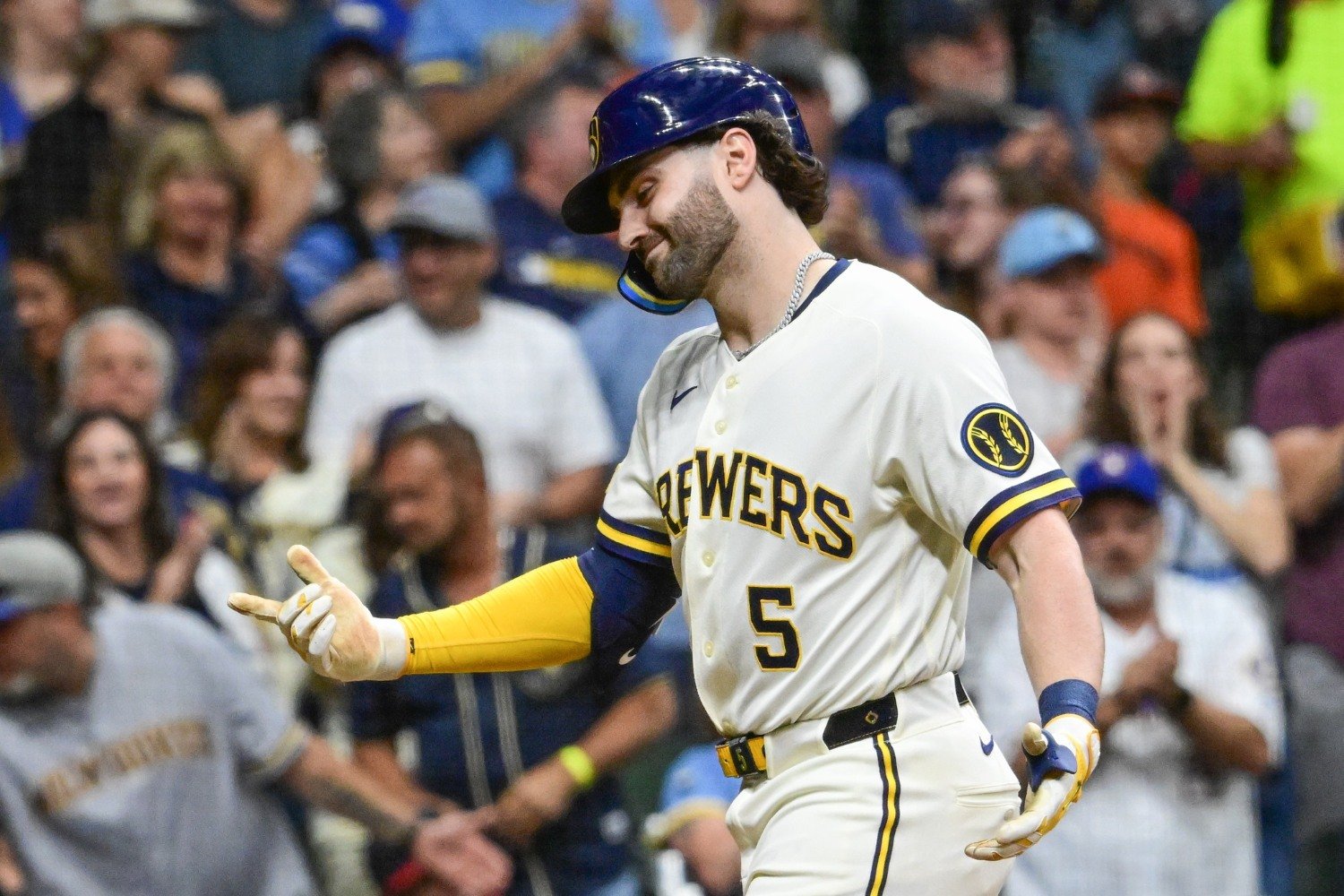 Garrett Mitchell has been working all season to get his high fastball problem under control, but it's cost him in some other areas previously considered strong points. He was making some real strides with this goal, as you can see in the graph below, with a rolling swing-and-miss rate that reached league average on May 19. The problem was, he was still hitting too many ground balls and just not tapping into the benefits that limiting his whiffs should have brought about for a player of his capabilities. Through that May 19 date, Mitchell had a 101 RC+, so he was just about a league-average hitter, but his overall slash line was propped up with walks as he hit .224/.347/.352. Since that date, despite his whiff rate climbing, Mitchell has slashed .308/.366/.569 for a 159 wRC+, and a strikeout rate that's actually lower than his first month and a half. How is that happening? The theory was always that if Mitchell could survive against the high fastball, the results could be remarkable. Mitchell knew this. Opponents knew this. It's been a real focus for him this year, and he was really beginning to get on top of it in May. If we break down his whiff rates by month against each pitch type, we can see some real progress, in May against hard pitches: That's bounced back up in June, but not entirely in the way you might think. Throughout the first two months of the season, Mitchell was demonstrating a lot of patience at the plate. He had an 11.4% walk rate, with a league average swing rate at pitches inside the strike zone and exceptional command of the zone, in the form of a very low chase rate. It prevented his whiff rate (and his strikeouts) from ballooning to genuinely untenable proportions. In June however, he's flipped a switch and is taking off. Mitchell has eschewed plate discipline for earlier swings and more aggressive intent, and the results have been excellent. TJstats has a model that can showcase the two in percentile form, side by side: By taking fewer early strikes in the count and swinging more aggressively, Mitchell is actually striking out a lot less at only 25% of the time this month. The one caveat to this is the reduced movement on pitches in both Colorado and Las Vegas. That will have helped Mitchell square up the ball a little more often, and perhaps the offensive environment fed into his desire to swing a little more. That being said, this is a noticeable change, and it seems intentional when we see how exactly he's doing it. Mitchell's bread and butter is that he crushes breaking balls in the zone. Murders them. He's never swung at fewer than 43% of breaking balls in his career, but that changed in the first few months of 2026. He was swinging less, and he wasn't making the type of contact on those mistake pitches that he's known for in Milwaukee—that is, of course, until June came around: Mitchell was swinging at less than 35% of breaking balls this season through May, but has been firing off at almost 70% of them so far in June. That's bringing about more chase, but also allowing him to square up those pitches that are inside the strike zone. He's been unlucky in spots, but the process has looked strong. Then, Tuesday night, he left nothing to chance. On a hanging slider from Guardians reliever Hunter Gaddis, he crushed a line-drive home run to right field, restoring the Brewers' lead just one half-inning after they'd lost it. He's gone through an adjustment period during which he gave away some of his authoritative contact on breaking stuff, but boy, is it ever back. More important, however, is how Mitchell has handled fastballs. Yes, he's still swinging and missing more than you would like, but when pitchers are missing that high fastball, he's punishing them for it. Mitchell's expected weighted on-base average (xwOBA) of .422 against fastballs would mark the highest of his career in any month in which he faced over 50 pitches, and he's doing it by crushing line drives on anything on the middle or inner thirds. He still struggles up and away from him, but it marks a big transformation in that he's reduced the size of the hole in his swing from the entire top of the strike zone to just one area. Here are his whiff zones against fastballs so far in June: There's still room for improvement, as Mitchell is really struggling against a fastball up and away. What he's also doing, however, is crushing anything if you drop slightly lower down in the zone, especially against right-handed pitchers. His average exit velocity against fastballs by zone is impressive against opposite-handed pitchers in June: There could be an argument to platoon Mitchell occasionally on this basis, especially against left-handers with strong fastballs. He's not doing the same level of damage against southpaws, and that bears noting. We can see it in his swing timing, as well. So far in June (the orange line below), Mitchell is more on time, perhaps even occasionally early for the first time, on fastballs, while being more lined up with the middle of the bat. Overall, Mitchell appears to be slowly shedding some of the concerns he brought into the season. He seems less concerned with how his body holds up in the outfield defensively. He might be beginning to worry less about his strikeout rate, and being more aggressive early in counts. Relaxation and comfort are massive in any sport, and it's something Mitchell seems to be taking full advantage of right now. He still has adjustments to make. He'd probably like to be chasing a little bit less than he is at present, and there's still a lot of swing-and-miss to suggest the strikeout rates are a bit of a mirage for now. Most adjustments come from finding an extreme change and dialling that back, and Mitchell has definitely ventured outside of his early-season comfort zone to test the boundaries of what he's capable of. He's beginning to find who he is at the plate, and it might result in some cat-and-mouse with his swing rates as pitchers adjust throughout a season with where and how they pitch him. The good news is, Mitchell seems equally capable of adjusting with them. With a manageable strikeout rate, and actually elevating his hard contact, this version of Garrett Mitchell looks like a force to be reckoned with.

