


Matthew Trueblood
-
Posts
1,922 -
Joined
-
Last visited
-
Days Won
10
Content Type
Profiles
Forums
Blogs
Events
News
2026 Milwaukee Brewers Top Prospects Ranking
Milwaukee Brewers Videos
2022 Milwaukee Brewers Draft Picks
Milwaukee Brewers Free Agent & Trade Rumors, Notes, & Tidbits
Guides & Resources
2023 Milwaukee Brewers Draft Picks
2024 Milwaukee Brewers Draft Picks
The Milwaukee Brewers Players Project
2025 Milwaukee Brewers Draft Pick Tracker
2026 Milwaukee Brewers Draft Tracker: Picks & Bonuses
Store
Downloads
Gallery
Everything posted by Matthew Trueblood
-
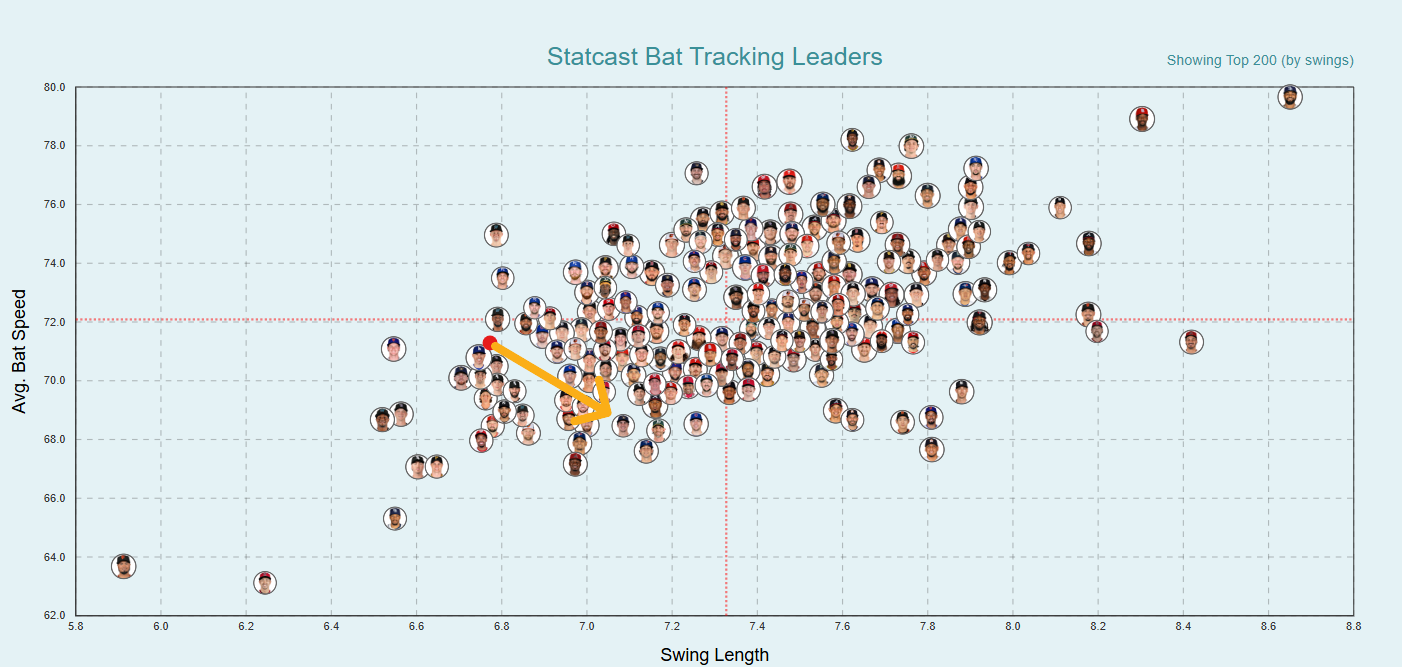
Good question. His swing is both longer AND slower. He's right next to Ernie Clement, Nico Hoerner and Jeff McNeil—guys who can really hit when they're hot, but who have almost no power.
-
Look, if you have to misspell a word, make it 'positivity,' right? Thanks!
-
Image courtesy of © Jeff Curry-Imagn Images The temptation is to assume that Luis Lara's whole game is speed and contact and defense. The temptation is to think that he'll have to survive on singles and create his value mostly via run prevention. You expect this kind of player to spend most of their time on the bench. You expect them to hit at the bottom of the batting order, where they're asked mostly to lengthen the lineup and set the table for the guys at the top. That might even be true, for the most part. Lara is not a future superstar, by anyone's reckoning. For as long as he's been on the prospect radar, he's been talked about as a likely role player with a high floor but a low ceiling. That's still the way most people talk about him, and it's the kind of player who signs the kind of contract he signed with the Brewers before his debut in the majors. He's a small guy—not just short, as many good hitters are, but genuinely small, with a strong but slight frame to go with his 5-foot-7 height. He's never going to carry more than about 180 pounds on his frame, and right now, he weighs under 170. Even one week into his big-league career, though, you can see what I've seen since first watching Lara swing in Arizona, during spring training back in 2024: this guy has some juice. His swing is not geared for power, and it has some elements of the defensiveness the Brewers like their young hitters to demonstrate when they first come to the majors. It also whips, in a way that (say) Sal Frelick's never has. YkJMeExfWGw0TUFRPT1fVUFaWUJWQldYd01BVzFNRlV3QUhDUVJlQUZrRFZ3Y0FDbEFOQlFJTkJ3ZGNWVmRT.mp4 With all due respect to Frelick—a fine all-around hitter, and (for the moment) still a better overall player than Lara has had time to become—he could not do this. On a 1-2 pitch, plainly waiting back a bit to guard against something offspeed, Lara nonetheless not only caught up to a fastball at 97 MPH on the outer third, but turned on it and laced it to the gap in right-center field. That's just one swing, but it's an exceptionally impressive one. Pitchers will learn not to make mistakes like that to him when they're ahead in the count, so don't count on a whole lot of hits that look like this one, but then again, the ability to even scare pitchers out of throwing you that pitch in that situation is a valuable one. Lara has 17 tracked, competitive swings from the left side since he came to the big leagues. On them, his average swing speed is 71.0 MPH, and his swing length is 6.8 feet. That puts him in a fascinating sweet spot: Typically, the shorter your swing, the slower. This is not groundbreaking, because if you think about it, it's almost tautological. To generate maximal bat speed, you try to extend. You attack the ball. You trade some directness for extra magnitude in the arc of your assault. Lara has one of the shortest swings in the league, which is helped by the fact that he's one of the shortest players—but that, alone, doesn't explain it. See the red dot above? That's where Lara's lefty swing would fit on the scatterplot, if he had enough swings to qualify. It drops him neatly into a line that contains three of the best pure hitters in the National League this season: Brice Turang, Freddie Freeman, and Otto Lopez. Being even a little faster with your bat than is predicted by your swing length is valuable. That means you're genuinely quick with the wrists and able to flash through the hitting zone, without a deep load or a long arc from the start of your swing to that zone. Right now, Lara isn't in great position to fully avail himself of this easy bat speed. He hits the ball so deep in his zone that he's often just starting to work uphill to the ball when he makes contact (or misses, high or low). As we talked about earlier this month with Cooper Pratt, the Brewers ask rookies to let the ball travel and prioritize swing decisions early in their time in the majors; that's making Lara pretty late pretty often. But the signs of a quick stick are unmistakable, whether your trust your scouting eye or the data. In time, I think Lara can more consistently hit for power than does Frelick, which makes for an interesting and onrushing conundrum. Frelick is part of what will quickly become a logjam in the outfield, if it doesn't count as one already. Lara has a long-term contract on extremely team-friendly terms, and we all know that he'll be better than Frelick as a defender. If he's also a disciplined hitter and will slug even .050 better than Frelick—that much seems almost certain to me, but I've been a believer in Lara since before most and might be biased about how real what we've seen so far will prove to be—then trading Frelick becomes a conversation worth having as soon as this week. Typically, teams like to trade prospects to bolster their contending team at the trade deadline. The Brewers have turned so many good prospects into good big-leaguers lately, though, that they're starting to overflow with the latter, and a team with a good pitcher whom Milwaukee might prize might well prefer Frelick to a further-off, riskier but higher-upside bet like Josh Adamczewski, or even Luis Peña. In the right deal, Frelick might have substantial value, and trading him (with the understanding that the team's present and future outfield will be well-tended by the likes of Lara, Garrett Mitchell, Jackson Chourio, Jake Bauers, Brandon Lockridge, Jett Williams, Braylon Payne and Adamczewski) might be the best plan. Frelick is a great competitor and is well-liked in the clubhouse; losing him midseason would be tough. At this point, though, the team has enough glue guys to survive a disruption like that, and Lara brings his own brand of intensity and positivity, anyway. He also looks likely to be a more well-rounded offensive force than Frelick is, because his bat has power potential that Frelick's lacks. Even for the Brewers (who don't crave power as much as most teams do these days), that matters a great deal. View full article
-
Luis Lara is Going to Hit for More Power Than Sal Frelick
Matthew Trueblood posted an article in Brewers
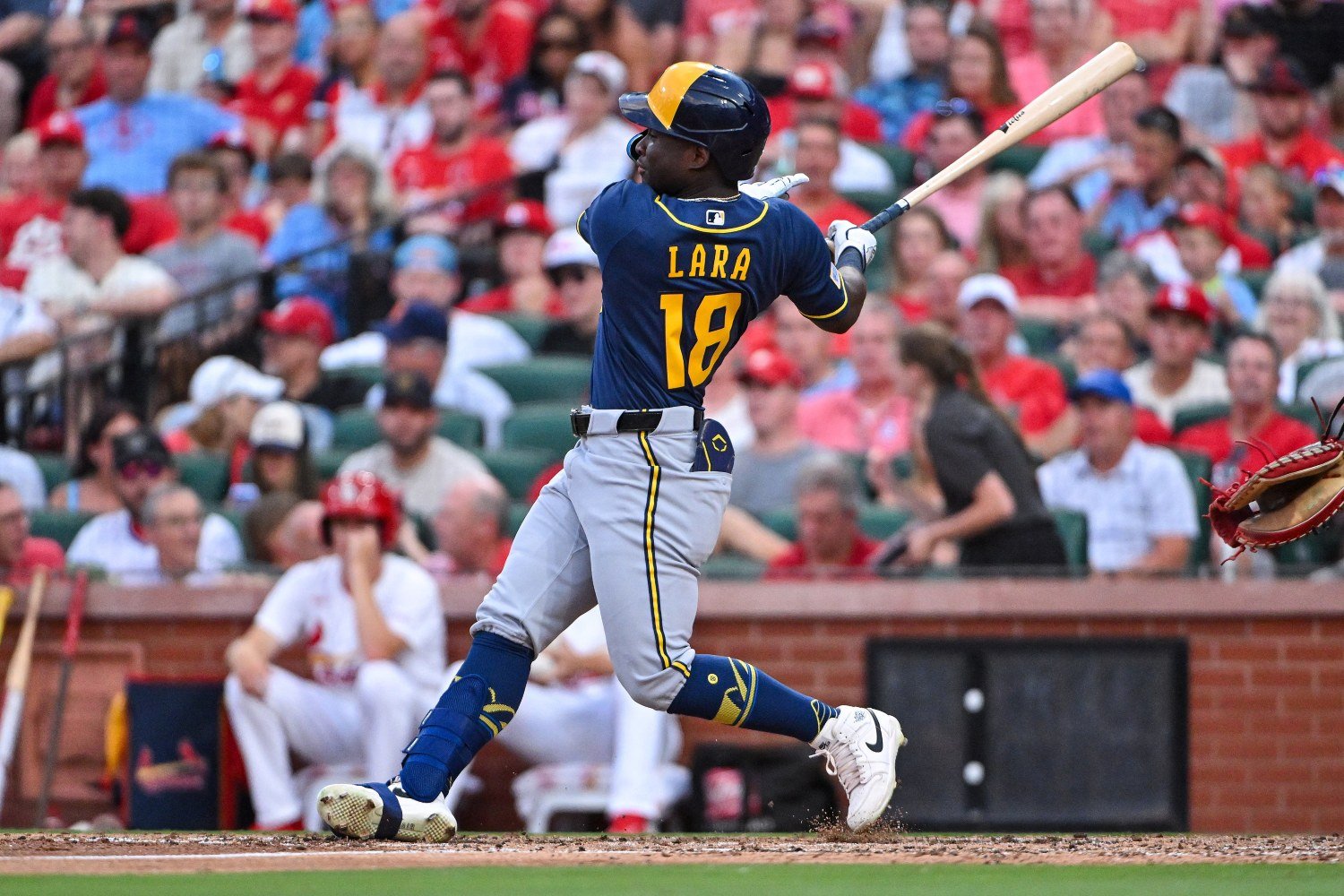 The temptation is to assume that Luis Lara's whole game is speed and contact and defense. The temptation is to think that he'll have to survive on singles and create his value mostly via run prevention. You expect this kind of player to spend most of their time on the bench. You expect them to hit at the bottom of the batting order, where they're asked mostly to lengthen the lineup and set the table for the guys at the top. That might even be true, for the most part. Lara is not a future superstar, by anyone's reckoning. For as long as he's been on the prospect radar, he's been talked about as a likely role player with a high floor but a low ceiling. That's still the way most people talk about him, and it's the kind of player who signs the kind of contract he signed with the Brewers before his debut in the majors. He's a small guy—not just short, as many good hitters are, but genuinely small, with a strong but slight frame to go with his 5-foot-7 height. He's never going to carry more than about 180 pounds on his frame, and right now, he weighs under 170. Even one week into his big-league career, though, you can see what I've seen since first watching Lara swing in Arizona, during spring training back in 2024: this guy has some juice. His swing is not geared for power, and it has some elements of the defensiveness the Brewers like their young hitters to demonstrate when they first come to the majors. It also whips, in a way that (say) Sal Frelick's never has. YkJMeExfWGw0TUFRPT1fVUFaWUJWQldYd01BVzFNRlV3QUhDUVJlQUZrRFZ3Y0FDbEFOQlFJTkJ3ZGNWVmRT.mp4 With all due respect to Frelick—a fine all-around hitter, and (for the moment) still a better overall player than Lara has had time to become—he could not do this. On a 1-2 pitch, plainly waiting back a bit to guard against something offspeed, Lara nonetheless not only caught up to a fastball at 97 MPH on the outer third, but turned on it and laced it to the gap in right-center field. That's just one swing, but it's an exceptionally impressive one. Pitchers will learn not to make mistakes like that to him when they're ahead in the count, so don't count on a whole lot of hits that look like this one, but then again, the ability to even scare pitchers out of throwing you that pitch in that situation is a valuable one. Lara has 17 tracked, competitive swings from the left side since he came to the big leagues. On them, his average swing speed is 71.0 MPH, and his swing length is 6.8 feet. That puts him in a fascinating sweet spot: Typically, the shorter your swing, the slower. This is not groundbreaking, because if you think about it, it's almost tautological. To generate maximal bat speed, you try to extend. You attack the ball. You trade some directness for extra magnitude in the arc of your assault. Lara has one of the shortest swings in the league, which is helped by the fact that he's one of the shortest players—but that, alone, doesn't explain it. See the red dot above? That's where Lara's lefty swing would fit on the scatterplot, if he had enough swings to qualify. It drops him neatly into a line that contains three of the best pure hitters in the National League this season: Brice Turang, Freddie Freeman, and Otto Lopez. Being even a little faster with your bat than is predicted by your swing length is valuable. That means you're genuinely quick with the wrists and able to flash through the hitting zone, without a deep load or a long arc from the start of your swing to that zone. Right now, Lara isn't in great position to fully avail himself of this easy bat speed. He hits the ball so deep in his zone that he's often just starting to work uphill to the ball when he makes contact (or misses, high or low). As we talked about earlier this month with Cooper Pratt, the Brewers ask rookies to let the ball travel and prioritize swing decisions early in their time in the majors; that's making Lara pretty late pretty often. But the signs of a quick stick are unmistakable, whether your trust your scouting eye or the data. In time, I think Lara can more consistently hit for power than does Frelick, which makes for an interesting and onrushing conundrum. Frelick is part of what will quickly become a logjam in the outfield, if it doesn't count as one already. Lara has a long-term contract on extremely team-friendly terms, and we all know that he'll be better than Frelick as a defender. If he's also a disciplined hitter and will slug even .050 better than Frelick—that much seems almost certain to me, but I've been a believer in Lara since before most and might be biased about how real what we've seen so far will prove to be—then trading Frelick becomes a conversation worth having as soon as this week. Typically, teams like to trade prospects to bolster their contending team at the trade deadline. The Brewers have turned so many good prospects into good big-leaguers lately, though, that they're starting to overflow with the latter, and a team with a good pitcher whom Milwaukee might prize might well prefer Frelick to a further-off, riskier but higher-upside bet like Josh Adamczewski, or even Luis Peña. In the right deal, Frelick might have substantial value, and trading him (with the understanding that the team's present and future outfield will be well-tended by the likes of Lara, Garrett Mitchell, Jackson Chourio, Jake Bauers, Brandon Lockridge, Jett Williams, Braylon Payne and Adamczewski) might be the best plan. Frelick is a great competitor and is well-liked in the clubhouse; losing him midseason would be tough. At this point, though, the team has enough glue guys to survive a disruption like that, and Lara brings his own brand of intensity and positivity, anyway. He also looks likely to be a more well-rounded offensive force than Frelick is, because his bat has power potential that Frelick's lacks. Even for the Brewers (who don't crave power as much as most teams do these days), that matters a great deal.
 -
Image courtesy of © Mark J. Rebilas-Imagn Images It's going to be ok. Probably. Jacob Misiorowski has just enough fatigue that it made sense to skip his final start before the All-Star break and to hold him out of the game Tuesday night. Kyle Harrison has just enough irritation in his elbow to make it worth shutting him down here in the middle of July, when the schedule provides the weary Brewers four days off, anyway. The team and the players themselves each insist that there's nothing to worry about, and we all foresaw that there would need to be some point at which the club eased off the gas in terms of workload for one or both of its newfound aces. Let's be optimists, rather than doomers. Even embracing that mindset can't save you from some worry about Brandon Woodruff, though. It sure feels like the erstwhile workhorse of this team has run out of gas. He's on the IL with a second bout of dead arm, and watching his velocity evaporate within a start makes it essentially impossible to envision handing him the ball with the season on the line sometime in mid-October. Woodruff will try to work his way back into the mix, and every Brewers fan should root for him to have as much success with that as possible, but no longer can he be part of the team's firm plans for the stretch run or the playoffs. Logan Henderson just returned from the injured list, but doesn't have a track record that permits much faith in his staying power. Chad Patrick and Aaron Ashby are showing their wear after over a year of being worked hard. DL Hall is on the shelf. Quinn Priester is out for the year. Shane Drohan, Robert Gasser and Brandon Sproat have all shown promise, but also inconsistency, and none has ever managed the physical and mental grind of a full big-league season before. Coleman Crow is becoming increasingly important to this team's medium-term plans, and he's something like a poor man's version of Henderson or Drohan. It's a sign of privilege to have this many names to rattle off when rounding up a rotation mix in mid-July. The Brewers have built one of the best developmental systems and most robust talent pipelines in baseball, including the dozen guys already mentioned in this article. Most teams would be more severely hampered by even fewer injuries and/or constraints. Unfortunately, the baseball gods don't give hustle points, and they don't patiently repeat themselves. When they say 'you can never have too much pitching,' they mean it, and it's a threat, not a funny little aphorism. Despite all that depth and all that quality, the Crew are getting thin. Somehow, though they did every possible thing to avoid this, they're going to need to trade for pitching help before next month's trade deadline. Specifically, despite all those guys who can give them length out of the pen or are capable of being a mid-rotation starter, the Brewers need a starter. Remember Jose Quintana? Last year, Quintana was underwhelming for the Brewers, but he was cromulent. He ate 132 innings for Milwaukee, including often being a vital bridge starter when the team was scrambling. In other recent seasons, that role has been filled by Aaron Civale, Bryse Wilson, and Julio Teheran, to name a few. Often, the team is able to scoop reliable sixth starters off the scrap heap relatively early and cost-free. They've signed pitchers (like Quintana) to low-dollar one-year deals. They've swapped for guys (like Civale and Priester) during seasons, but at points at which they were highly available. By being so proactive, they've usually been able to avoid an acute need for pitching help in July. This year, though, they tried to leave open runways for the pitchers they acquired over the winter (including Drohan, Harrison and Sproat) and for some arms returning from injuries (Gasser and Henderson). That made sense, but now, it leaves them with an unexpected need for that low-ceiling innings eater they've so often had in the past. Quintana is out there. His numbers look atrocious, but that's because he's pitching his home games at Coors Field. Presumably, though, the Brewers would like to aim a little higher. They have lots of options. The Giants will be open to moving Robbie Ray, who's in the last year of his long-term deal and has stopped missing bats the way he used to. The Nationals' Foster Griffin, the Reds' Brady Singer, the Diamondbacks' Eduardo Rodríguez and the Orioles' Trevor Rogers are all in some version of the same situation. None of those guys would start a playoff game for Milwaukee, but that's not what the Brewers need. They just need someone who can absorb a share of the workload over the final two months, so that the rest of the team is fresher and the club is as well-positioned as possible when they get to October. It'll be a needle to thread for the Brewers front office. They don't want to end up in a roster crunch that costs them anyone important. They need to add help, but still have space for their best arms when those guys are back to full strength. They can operate on a six-man rotation for much of the rest of the season, but need to communicate well enough with each of their guys to ensure that those asked to spend time in Nashville or in the bullpen are open to the changes. The team is in too good a position to sacrifice the depth of their league-best farm system just to gild the lily. If they don't act at all, though, they might regret it. After all, clearly, the baseball gods intend to enforce 'you can never have too much pitching' in an especially draconian way for them this summer. View full article
-
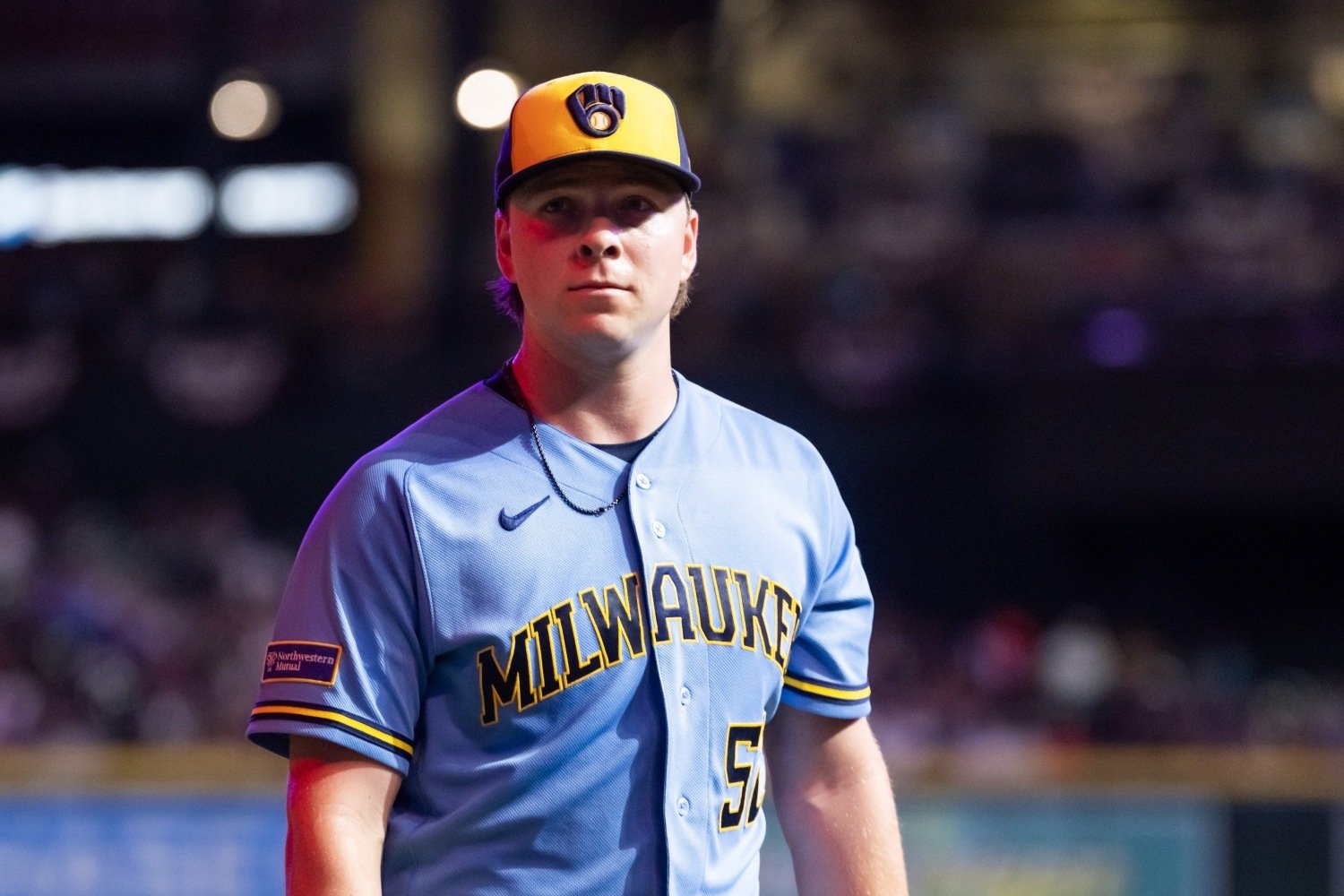 It's going to be ok. Probably. Jacob Misiorowski has just enough fatigue that it made sense to skip his final start before the All-Star break and to hold him out of the game Tuesday night. Kyle Harrison has just enough irritation in his elbow to make it worth shutting him down here in the middle of July, when the schedule provides the weary Brewers four days off, anyway. The team and the players themselves each insist that there's nothing to worry about, and we all foresaw that there would need to be some point at which the club eased off the gas in terms of workload for one or both of its newfound aces. Let's be optimists, rather than doomers. Even embracing that mindset can't save you from some worry about Brandon Woodruff, though. It sure feels like the erstwhile workhorse of this team has run out of gas. He's on the IL with a second bout of dead arm, and watching his velocity evaporate within a start makes it essentially impossible to envision handing him the ball with the season on the line sometime in mid-October. Woodruff will try to work his way back into the mix, and every Brewers fan should root for him to have as much success with that as possible, but no longer can he be part of the team's firm plans for the stretch run or the playoffs. Logan Henderson just returned from the injured list, but doesn't have a track record that permits much faith in his staying power. Chad Patrick and Aaron Ashby are showing their wear after over a year of being worked hard. DL Hall is on the shelf. Quinn Priester is out for the year. Shane Drohan, Robert Gasser and Brandon Sproat have all shown promise, but also inconsistency, and none has ever managed the physical and mental grind of a full big-league season before. Coleman Crow is becoming increasingly important to this team's medium-term plans, and he's something like a poor man's version of Henderson or Drohan. It's a sign of privilege to have this many names to rattle off when rounding up a rotation mix in mid-July. The Brewers have built one of the best developmental systems and most robust talent pipelines in baseball, including the dozen guys already mentioned in this article. Most teams would be more severely hampered by even fewer injuries and/or constraints. Unfortunately, the baseball gods don't give hustle points, and they don't patiently repeat themselves. When they say 'you can never have too much pitching,' they mean it, and it's a threat, not a funny little aphorism. Despite all that depth and all that quality, the Crew are getting thin. Somehow, though they did every possible thing to avoid this, they're going to need to trade for pitching help before next month's trade deadline. Specifically, despite all those guys who can give them length out of the pen or are capable of being a mid-rotation starter, the Brewers need a starter. Remember Jose Quintana? Last year, Quintana was underwhelming for the Brewers, but he was cromulent. He ate 132 innings for Milwaukee, including often being a vital bridge starter when the team was scrambling. In other recent seasons, that role has been filled by Aaron Civale, Bryse Wilson, and Julio Teheran, to name a few. Often, the team is able to scoop reliable sixth starters off the scrap heap relatively early and cost-free. They've signed pitchers (like Quintana) to low-dollar one-year deals. They've swapped for guys (like Civale and Priester) during seasons, but at points at which they were highly available. By being so proactive, they've usually been able to avoid an acute need for pitching help in July. This year, though, they tried to leave open runways for the pitchers they acquired over the winter (including Drohan, Harrison and Sproat) and for some arms returning from injuries (Gasser and Henderson). That made sense, but now, it leaves them with an unexpected need for that low-ceiling innings eater they've so often had in the past. Quintana is out there. His numbers look atrocious, but that's because he's pitching his home games at Coors Field. Presumably, though, the Brewers would like to aim a little higher. They have lots of options. The Giants will be open to moving Robbie Ray, who's in the last year of his long-term deal and has stopped missing bats the way he used to. The Nationals' Foster Griffin, the Reds' Brady Singer, the Diamondbacks' Eduardo Rodríguez and the Orioles' Trevor Rogers are all in some version of the same situation. None of those guys would start a playoff game for Milwaukee, but that's not what the Brewers need. They just need someone who can absorb a share of the workload over the final two months, so that the rest of the team is fresher and the club is as well-positioned as possible when they get to October. It'll be a needle to thread for the Brewers front office. They don't want to end up in a roster crunch that costs them anyone important. They need to add help, but still have space for their best arms when those guys are back to full strength. They can operate on a six-man rotation for much of the rest of the season, but need to communicate well enough with each of their guys to ensure that those asked to spend time in Nashville or in the bullpen are open to the changes. The team is in too good a position to sacrifice the depth of their league-best farm system just to gild the lily. If they don't act at all, though, they might regret it. After all, clearly, the baseball gods intend to enforce 'you can never have too much pitching' in an especially draconian way for them this summer.
- 7 comments
-
- 1
-

-
- jacob misiorowski
- kyle harrison
- (and 1 more)
-
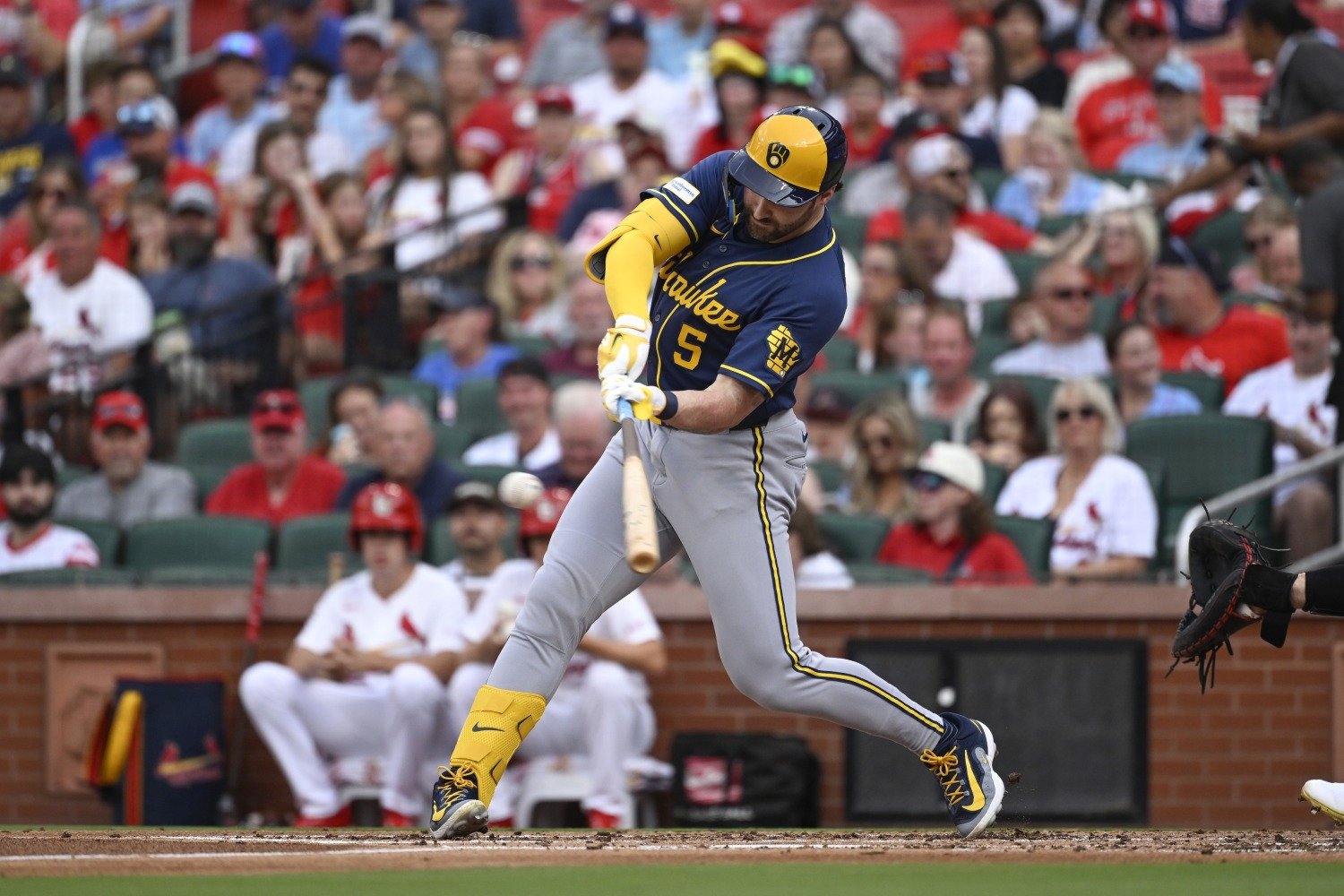 Though the Brewers finally lost a game against the Cardinals Wednesday night, Garrett Mitchell did the same thing he's done in several recent Brewers wins: hit the ball hard, often. He had two hits, including a double, pushing his OPS for 2026 to .831. Though he still has just eight home runs, that was his 18th double, to go with three triples. He's batting .276/.366/.465 on the campaign, though for many, the most important column on his Baseball Reference page is 'PA'. Already, Mitchell has come to the plate 293 times, nearly matching the combined total (302) he had in 2024 and 2025. Before this season, Mitchell had only once collected more than 78 plate appearances in a month; that came in August 2024. In no previous season did he even appear in the majors during May or June. This year, he's had at least 79 plate appearances in each month. At last, he's had the runway to take off as a player. Many worried that when he finally found that runway, he would crash and burn. His profile at the plate—with an extreme swing-and-miss tendency and too many ground balls—seemed like it might doom him to a future as a fourth outfielder, or (if injuries eroded his raw talent) even less. There were some calls last offseason for the Brewers to move on from Mitchell already, and if he hadn't been extremely cheap to retain, they might even have done it. The takeoff has gone off without a hitch, though, and the air flow over Mitchell's wings appears to be well-balanced. It's not just about being healthier than ever, and it's not just about getting more reps and more experience against top-flight pitchers. It's also because Mitchell has made a real and crucial swing change, which probably looks subtle but has changed his game in a radical way. We can use Statcast's excellent visualizations of players' swings in animated movement-tracking form to spot the tweaks Mitchell has made. To do so, let's start by comparing what Mitchell looked like in 2024 (the only other time he's gotten enough playing time in a season for Statcast to build a composite animation of him) to what he looks like now, at the first major checkpoint of the swing—when his hands drop into the slot from which his swing fires. This is our starting point, because it is (in one sense) the starting point of the swing, but it's also a large share of the difference we're going to dig into. In the past, Mitchell had what hitting people call a "long front arm" early in his swing. Look how much higher he's ratcheted his front shoulder in the image on the left, and how it's already turning outward more than he's doing this season. As a result, note the fact that his hands are more centered within his frame on the right, even though he's positioning them to extend his arms through the swing already. Mitchell's weight begins to shift forward a hair sooner this year, but his front shoulder stays closed longer and his hands stay back a hair better. Now, here's where Mitchell was in each season, at the next major checkpoint in a swing—the moment when his attack angle becomes positive. In other words, this is when his bat stops working down from behind his shoulder into the hitting zone and starts moving slightly uphill, to get on plane with the incoming pitch. The differences are much more subtle here, because already, most of them are just remnants of the change he made to how he starts his swing. On the right side of each image, notice the difference in the two numbers below the attack angle. At the moment when he begins to get on plane with the pitch, his bat is angled more toward the opposite field this season. His swing is also flatter, with less downward tilt from his handle to his barrel. Why? because the change to keep his front shoulder in a bit longer early in the swing has allowed him to flatten out the swing to catch up with pitches above his belt. In the past, the early rotation of his upper body forced him to create a steeper plane. If he didn't do so, back then, he would sap his own power and be too short through the hitting zone, ending up with a weakly-hit ball off the end of the bat. This year, because of that earlier change, Mitchell can be more linear and longer through the hitting zone even if he needs to swing flatter than is his default. He still has the option of dipping more for low and bendy pitches, but he doesn't lose bat speed or the ability to cover his preferred timing window, either way. Mitchell is also swinging notably faster this year, by the time he reaches his contact point. That's because of the slightly later rotation of the shoulder, too. There's more torque in his swing; it's more violent. Swinging a bit flatter has meant a few more whiffs and no fewer ugly swings, but it's allowed him to wait longer to make his swing decision, which has contribued to his very strong walk rate. He's also able to square up a wider variety of pitches, so despite a bit more error baked into his address of the ball, there's less glaring a hole in his swing. Will Mitchell remain this good all year, if he stays healthy? It's hard to say. He still swings and misses a lot, for a guy who doesn't hit for all that much power and often hits it on the ground. But maybe a quick comparison to two players with similarly superb bat speedcan elucidate why what Mitchell is doing is working, even if it's not working as well for him as for either of them. First, here are visuals of Kyle Schwarber's swing at the same two moments as we studied above for Mitchell. Schwarber has almost identical bat speed to Mitchell's, and like the new version of Mitchell, he swings fairly flat. On the left, you can see that his hands get into their firing position without the long from arm; he's ready to rip through the ball. However, Schwarber doesn't create as much early bat speed as Mitchell does. The Brewers center fielder has his hands much deeper in the hitting zone when he gets his barrel out from behind his body than Schwarber does when he gets to the same point. On the right, you can see that Schwarber is coming much closer to square to the path of the incoming pitch than Mitchell is when he starts to work uphill. He's going to catch the ball farther in front of his body, with his bat angled much more toward the pull field. That's why Schwarber produces titanic pull-side power so consistently, whereas Mitchell does so rarely. Again, though, Mitchell is ahead of Schwarber in producing early bat speed. He can be late and still hit the ball hard; Schwarber doesn't have that luxury. Here are the same two images for fellow Brewers slugger Jake Bauers. Bauers creates that early bat speed and keeps his hands back, just like Mitchell. He gets around the ball more, like Schwarber, which is why he's produced more power than Mitchell has. However, he's compelled to be steeper to the ball, just as Mitchell was a couple of years ago. He's put himself in great positions to be on time, but when he's not, he doesn't have much chance to catch the ball with his barrel. His timing window is somewhat narrow; so is Schwarbers. Increasingly. Mitchell's is wide, giving him a margin for error in one dimension that he's sacrificed in another. Mitchell is unique. No one else who swings this fast is this oriented toward the opposite field. He's creating so much bat speed while still getting into the hitting zone that he can afford to catch the ball deep. It's a quintessentially Brewers way to hit; only they could help a player with so much bat speed engineer such a non-damage-focused approach. And yet, it seems to be the perfect one for him. It's preserved much of what made him intriguing over his previous, injury-plagued stints, but it's also introduced more adaptability. Whatever his flaws, Mitchell is emerging as something very close to an All-Star center fielder. His rejiggered swing gets the credit for that, and in turn, the Brewers and the player get a lot of credit for the diligent adjustments and perseverance to achieve that transformation while keeping Mitchell healthy and ready to play every day.
 -
Image courtesy of © Joe Puetz-Imagn Images Though the Brewers finally lost a game against the Cardinals Wednesday night, Garrett Mitchell did the same thing he's done in several recent Brewers wins: hit the ball hard, often. He had two hits, including a double, pushing his OPS for 2026 to .831. Though he still has just eight home runs, that was his 18th double, to go with three triples. He's batting .276/.366/.465 on the campaign, though for many, the most important column on his Baseball Reference page is 'PA'. Already, Mitchell has come to the plate 293 times, nearly matching the combined total (302) he had in 2024 and 2025. Before this season, Mitchell had only once collected more than 78 plate appearances in a month; that came in August 2024. In no previous season did he even appear in the majors during May or June. This year, he's had at least 79 plate appearances in each month. At last, he's had the runway to take off as a player. Many worried that when he finally found that runway, he would crash and burn. His profile at the plate—with an extreme swing-and-miss tendency and too many ground balls—seemed like it might doom him to a future as a fourth outfielder, or (if injuries eroded his raw talent) even less. There were some calls last offseason for the Brewers to move on from Mitchell already, and if he hadn't been extremely cheap to retain, they might even have done it. The takeoff has gone off without a hitch, though, and the air flow over Mitchell's wings appears to be well-balanced. It's not just about being healthier than ever, and it's not just about getting more reps and more experience against top-flight pitchers. It's also because Mitchell has made a real and crucial swing change, which probably looks subtle but has changed his game in a radical way. We can use Statcast's excellent visualizations of players' swings in animated movement-tracking form to spot the tweaks Mitchell has made. To do so, let's start by comparing what Mitchell looked like in 2024 (the only other time he's gotten enough playing time in a season for Statcast to build a composite animation of him) to what he looks like now, at the first major checkpoint of the swing—when his hands drop into the slot from which his swing fires. This is our starting point, because it is (in one sense) the starting point of the swing, but it's also a large share of the difference we're going to dig into. In the past, Mitchell had what hitting people call a "long front arm" early in his swing. Look how much higher he's ratcheted his front shoulder in the image on the left, and how it's already turning outward more than he's doing this season. As a result, note the fact that his hands are more centered within his frame on the right, even though he's positioning them to extend his arms through the swing already. Mitchell's weight begins to shift forward a hair sooner this year, but his front shoulder stays closed longer and his hands stay back a hair better. Now, here's where Mitchell was in each season, at the next major checkpoint in a swing—the moment when his attack angle becomes positive. In other words, this is when his bat stops working down from behind his shoulder into the hitting zone and starts moving slightly uphill, to get on plane with the incoming pitch. The differences are much more subtle here, because already, most of them are just remnants of the change he made to how he starts his swing. On the right side of each image, notice the difference in the two numbers below the attack angle. At the moment when he begins to get on plane with the pitch, his bat is angled more toward the opposite field this season. His swing is also flatter, with less downward tilt from his handle to his barrel. Why? because the change to keep his front shoulder in a bit longer early in the swing has allowed him to flatten out the swing to catch up with pitches above his belt. In the past, the early rotation of his upper body forced him to create a steeper plane. If he didn't do so, back then, he would sap his own power and be too short through the hitting zone, ending up with a weakly-hit ball off the end of the bat. This year, because of that earlier change, Mitchell can be more linear and longer through the hitting zone even if he needs to swing flatter than is his default. He still has the option of dipping more for low and bendy pitches, but he doesn't lose bat speed or the ability to cover his preferred timing window, either way. Mitchell is also swinging notably faster this year, by the time he reaches his contact point. That's because of the slightly later rotation of the shoulder, too. There's more torque in his swing; it's more violent. Swinging a bit flatter has meant a few more whiffs and no fewer ugly swings, but it's allowed him to wait longer to make his swing decision, which has contribued to his very strong walk rate. He's also able to square up a wider variety of pitches, so despite a bit more error baked into his address of the ball, there's less glaring a hole in his swing. Will Mitchell remain this good all year, if he stays healthy? It's hard to say. He still swings and misses a lot, for a guy who doesn't hit for all that much power and often hits it on the ground. But maybe a quick comparison to two players with similarly superb bat speedcan elucidate why what Mitchell is doing is working, even if it's not working as well for him as for either of them. First, here are visuals of Kyle Schwarber's swing at the same two moments as we studied above for Mitchell. Schwarber has almost identical bat speed to Mitchell's, and like the new version of Mitchell, he swings fairly flat. On the left, you can see that his hands get into their firing position without the long from arm; he's ready to rip through the ball. However, Schwarber doesn't create as much early bat speed as Mitchell does. The Brewers center fielder has his hands much deeper in the hitting zone when he gets his barrel out from behind his body than Schwarber does when he gets to the same point. On the right, you can see that Schwarber is coming much closer to square to the path of the incoming pitch than Mitchell is when he starts to work uphill. He's going to catch the ball farther in front of his body, with his bat angled much more toward the pull field. That's why Schwarber produces titanic pull-side power so consistently, whereas Mitchell does so rarely. Again, though, Mitchell is ahead of Schwarber in producing early bat speed. He can be late and still hit the ball hard; Schwarber doesn't have that luxury. Here are the same two images for fellow Brewers slugger Jake Bauers. Bauers creates that early bat speed and keeps his hands back, just like Mitchell. He gets around the ball more, like Schwarber, which is why he's produced more power than Mitchell has. However, he's compelled to be steeper to the ball, just as Mitchell was a couple of years ago. He's put himself in great positions to be on time, but when he's not, he doesn't have much chance to catch the ball with his barrel. His timing window is somewhat narrow; so is Schwarbers. Increasingly. Mitchell's is wide, giving him a margin for error in one dimension that he's sacrificed in another. Mitchell is unique. No one else who swings this fast is this oriented toward the opposite field. He's creating so much bat speed while still getting into the hitting zone that he can afford to catch the ball deep. It's a quintessentially Brewers way to hit; only they could help a player with so much bat speed engineer such a non-damage-focused approach. And yet, it seems to be the perfect one for him. It's preserved much of what made him intriguing over his previous, injury-plagued stints, but it's also introduced more adaptability. Whatever his flaws, Mitchell is emerging as something very close to an All-Star center fielder. His rejiggered swing gets the credit for that, and in turn, the Brewers and the player get a lot of credit for the diligent adjustments and perseverance to achieve that transformation while keeping Mitchell healthy and ready to play every day. View full article
-
Image courtesy of © Jeff Curry-Imagn Images It's neither a secret nor a coincidence that, by the standards of big-league ballclubs, the Brewers are run rather like a college team. After all, their manager is one of just two active ones whose background is mostly as a college coach. Pat Murphy has acknowledged that, though he doesn't consciously try to bring the model that made him successful at Notre Dame and Arizona State University to bear in his management of Milwaukee, there's a degree to which his skill set and the way the small-market Crew run things match nicely to what a college program has to do in order to thrive. One way in which that shows up on the field is the collective discipline of the lineup, and not just in terms of swing decisions. When the team brings any of its endless line of young players to the big leagues—or even when they (re)acquire guys who have been in the majors elsewhere, as they did when they dealt for David Hamilton in February—they ask them to let the ball travel. It's important to the team that those guys learn to recognize pitches and to frustrate hurlers' attempts to lure them out of the zone and strike them out. They coach hitters to be patient and to hit the ball deeper in the hitting zone than they normally would. It's an essential part of their offensive DNA, including and especially when it comes time to get a clutch hit. This can make their young hitters look awfully unimpressive, at first. Brewers fans will well remember the ugly early days of Brice Turang, Jackson Chourio and Caleb Durbin, who took anywhere from a few weeks to a few months to tap into their offensive upside. In the meantime, those guys also get deployed strategically, sometimes being held out of the lineup when the matchup favors another player and other times being fed into the woodchipper in a bad matchup so they can learn the ropes. Almost no Brewers hitter comes up and gets to their power quickly. In service to the team and to optimize their development even after they matriculate to the majors, those guys are asked not to swing as aggressively as they otherwise might, in addition to not swinging as often as they otherwise might. Cooper Pratt is the latest exemplar. He came to the majors an unfinished product, because the team has sufficient confidence in Murphy and his coaching staff to finish off development after a player gets to the parent club. Pratt's arrival makes the team deeper and better defensively, and eventually, having him up right now will pay off. He might be better in 2027 than he would otherwise be, because he's here now. He might hit the turbo button and achieve the stardom that is very much possible for him in 2028, because he got some of the toughest adjustments to the bigs out of the way in 2026. That can make the first stint for players like Pratt frustrating, though, because you know this guy has a good chance to be good, but he's not good yet. Pratt entered Tuesday's doubleheader batting .204/.313/.222, with just one extra-base hit in 64 plate appearances. He'd already drawn eight walks and had only 11 strikeouts, but there was little lethality in his lumber. On Tuesday, alone, he raised his career OPS by .091. He came to bat nine times, drew three walks, and cracked two extra-base hits. This week, it seems, Pratt has been let off the leash. Of this 115 tracked swings Pratt has taken since coming up, six of the 12 fastest have come in the last two days. His double down the left-field line came on the third-fastest swing of his young career; his triple to right field came on the 21st-fastest. Pratt is a big guy, and scouting reports have always cited some latent raw power in his frame and his swing. We knew he was capable of more than he showed when he first came up. Now, the team seems to believe he's ready to let it eat. That doesn't mean Pratt will suddenly go on a power binge any time soon. His double was a grounder; two balls he hit on similarly vicious swings Tuesday stayed too low and didn't escape the infield. As our Jack Stern has already laid out, Pratt is more than a small tweak or a few weeks from becoming a full-fledged power hitter. However, he can be more dangerous than he's looked so far. He can get hits, as well as simply keeping the line moving by drawing walks. He can split gaps and find corners. He can make outfielders run backward now and then. We haven't seen much of that so far, because when he got here, the Brewers focused first on ensuring he could organize his zone properly and produce what the team needs in certain situations where the batter's stats aren't the focus. As we've seen this week, though, that talent is still in there. It could burst out of him down the stretch, if only in the form of a lot of singles and doubles, now that Pratt is swinging the way he's always been capable of. The hope when he came up was that he might lengthen the lineup, in a way neither Joey Ortiz nor David Hamilton could. At first, he didn't do so, but that was during an apprentice phase. Now, he's ready to deliver on that promise. View full article
-
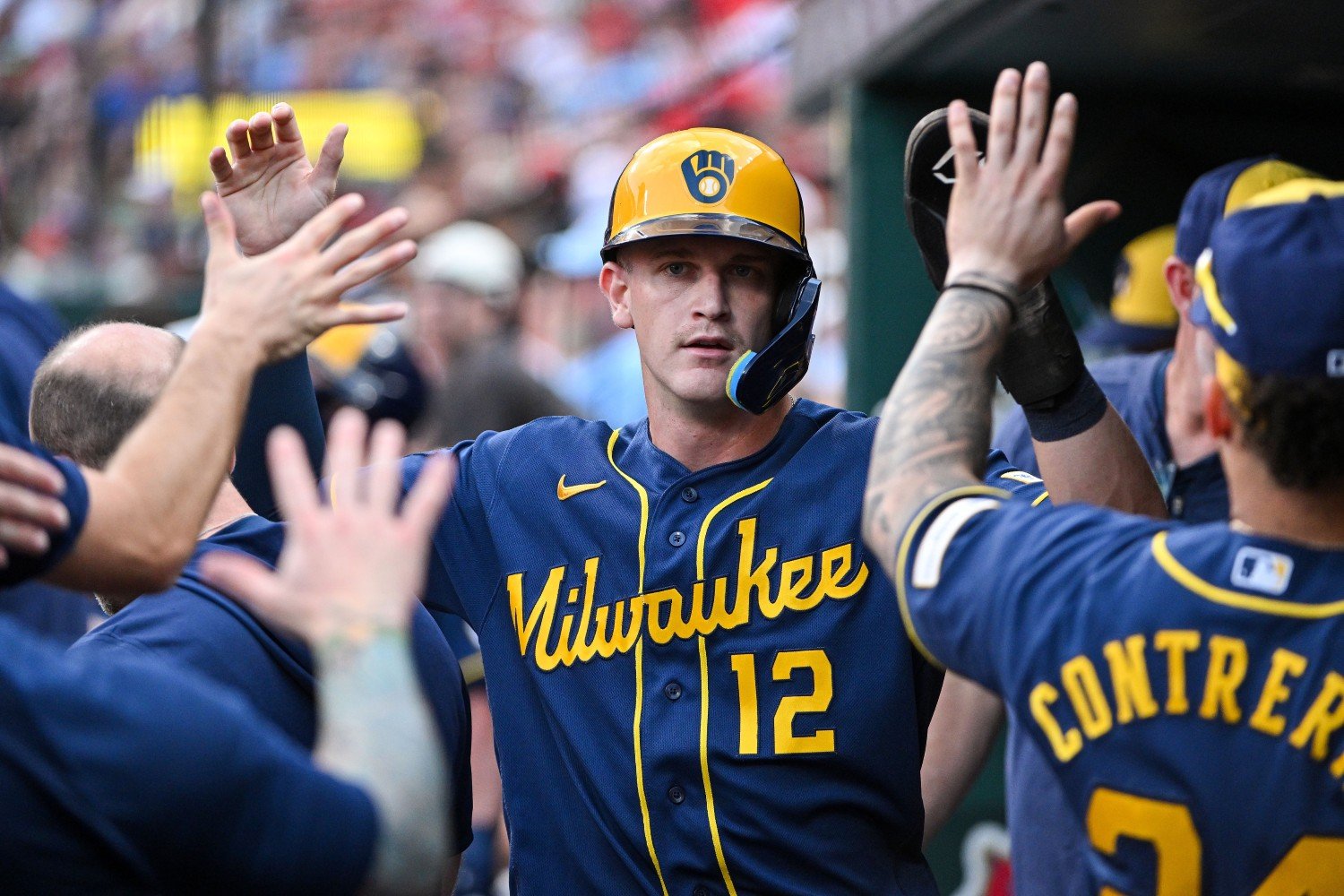 It's neither a secret nor a coincidence that, by the standards of big-league ballclubs, the Brewers are run rather like a college team. After all, their manager is one of just two active ones whose background is mostly as a college coach. Pat Murphy has acknowledged that, though he doesn't consciously try to bring the model that made him successful at Notre Dame and Arizona State University to bear in his management of Milwaukee, there's a degree to which his skill set and the way the small-market Crew run things match nicely to what a college program has to do in order to thrive. One way in which that shows up on the field is the collective discipline of the lineup, and not just in terms of swing decisions. When the team brings any of its endless line of young players to the big leagues—or even when they (re)acquire guys who have been in the majors elsewhere, as they did when they dealt for David Hamilton in February—they ask them to let the ball travel. It's important to the team that those guys learn to recognize pitches and to frustrate hurlers' attempts to lure them out of the zone and strike them out. They coach hitters to be patient and to hit the ball deeper in the hitting zone than they normally would. It's an essential part of their offensive DNA, including and especially when it comes time to get a clutch hit. This can make their young hitters look awfully unimpressive, at first. Brewers fans will well remember the ugly early days of Brice Turang, Jackson Chourio and Caleb Durbin, who took anywhere from a few weeks to a few months to tap into their offensive upside. In the meantime, those guys also get deployed strategically, sometimes being held out of the lineup when the matchup favors another player and other times being fed into the woodchipper in a bad matchup so they can learn the ropes. Almost no Brewers hitter comes up and gets to their power quickly. In service to the team and to optimize their development even after they matriculate to the majors, those guys are asked not to swing as aggressively as they otherwise might, in addition to not swinging as often as they otherwise might. Cooper Pratt is the latest exemplar. He came to the majors an unfinished product, because the team has sufficient confidence in Murphy and his coaching staff to finish off development after a player gets to the parent club. Pratt's arrival makes the team deeper and better defensively, and eventually, having him up right now will pay off. He might be better in 2027 than he would otherwise be, because he's here now. He might hit the turbo button and achieve the stardom that is very much possible for him in 2028, because he got some of the toughest adjustments to the bigs out of the way in 2026. That can make the first stint for players like Pratt frustrating, though, because you know this guy has a good chance to be good, but he's not good yet. Pratt entered Tuesday's doubleheader batting .204/.313/.222, with just one extra-base hit in 64 plate appearances. He'd already drawn eight walks and had only 11 strikeouts, but there was little lethality in his lumber. On Tuesday, alone, he raised his career OPS by .091. He came to bat nine times, drew three walks, and cracked two extra-base hits. This week, it seems, Pratt has been let off the leash. Of this 115 tracked swings Pratt has taken since coming up, six of the 12 fastest have come in the last two days. His double down the left-field line came on the third-fastest swing of his young career; his triple to right field came on the 21st-fastest. Pratt is a big guy, and scouting reports have always cited some latent raw power in his frame and his swing. We knew he was capable of more than he showed when he first came up. Now, the team seems to believe he's ready to let it eat. That doesn't mean Pratt will suddenly go on a power binge any time soon. His double was a grounder; two balls he hit on similarly vicious swings Tuesday stayed too low and didn't escape the infield. As our Jack Stern has already laid out, Pratt is more than a small tweak or a few weeks from becoming a full-fledged power hitter. However, he can be more dangerous than he's looked so far. He can get hits, as well as simply keeping the line moving by drawing walks. He can split gaps and find corners. He can make outfielders run backward now and then. We haven't seen much of that so far, because when he got here, the Brewers focused first on ensuring he could organize his zone properly and produce what the team needs in certain situations where the batter's stats aren't the focus. As we've seen this week, though, that talent is still in there. It could burst out of him down the stretch, if only in the form of a lot of singles and doubles, now that Pratt is swinging the way he's always been capable of. The hope when he came up was that he might lengthen the lineup, in a way neither Joey Ortiz nor David Hamilton could. At first, he didn't do so, but that was during an apprentice phase. Now, he's ready to deliver on that promise.
 -
Image courtesy of © Dave Kallmann / Milwaukee Journal Sentinel / USA TODAY NETWORK via Imagn Images For many Brewers fans, this move will feel overdue. The Brewers tried to give Blake Perkins time to work through what has effectively been a season-long slump at the plate, but ultimately, they needed more functional depth in their outfield. Perkins, still a fine defender but no longer the elite of the elite in center field and without any offensive value of which to speak, was the odd man out—but the corresponding move is an exciting addition to the 26-man roster. It will be fascinating to see how rookie Luis Lara fits into the team's plans. He's taking Perkins's roster spot, but he'll need a bigger role than the one Perkins occupied in order to justify being brought to the majors now. The team already demonstrated its faith that he can thrive in a larger role than Perkins had, though, when they signed him to a seven-year deal earlier this season, before he made it to the majors. The best role for Lara is one similar to Perkins's best one, in that Lara's best tool might also be his fielding prowess. That makes this move interesting, though, because Garrett Mitchell has a 1.042 OPS over the last four weeks. It seems like this is no time to reduce the playing time of the starting center fielder, so will Lara eat into Sal Frelick's role, instead? Or will Mitchell spend some time in a corner spot or at designated hitter, with Christian Yelich getting more days off—whether he wants them or not? This change, like the one the team made when it swapped out Luis Rengifo for Cooper Pratt, makes the team younger and better on defense at the same time. It also affirms the organization's commitment to developing players and building a lasting pipeline. Though no Pat Murphy team will set aside the goal of winning for any meaningful period, these moves accept a certain amount of temporary on-field cost in the service of improving the team's long-term outlook. That's a luxury Milwaukee has afforded itself, with such a comfortable lead in the division and one of the best records in baseball. They'll have to sort through their options and have at least one or two difficult conversations with team-controlled players, but they're going to win the NL Central this year—and doing this, like promoting Pratt last month, just might help them do so next season, too. View full article
-
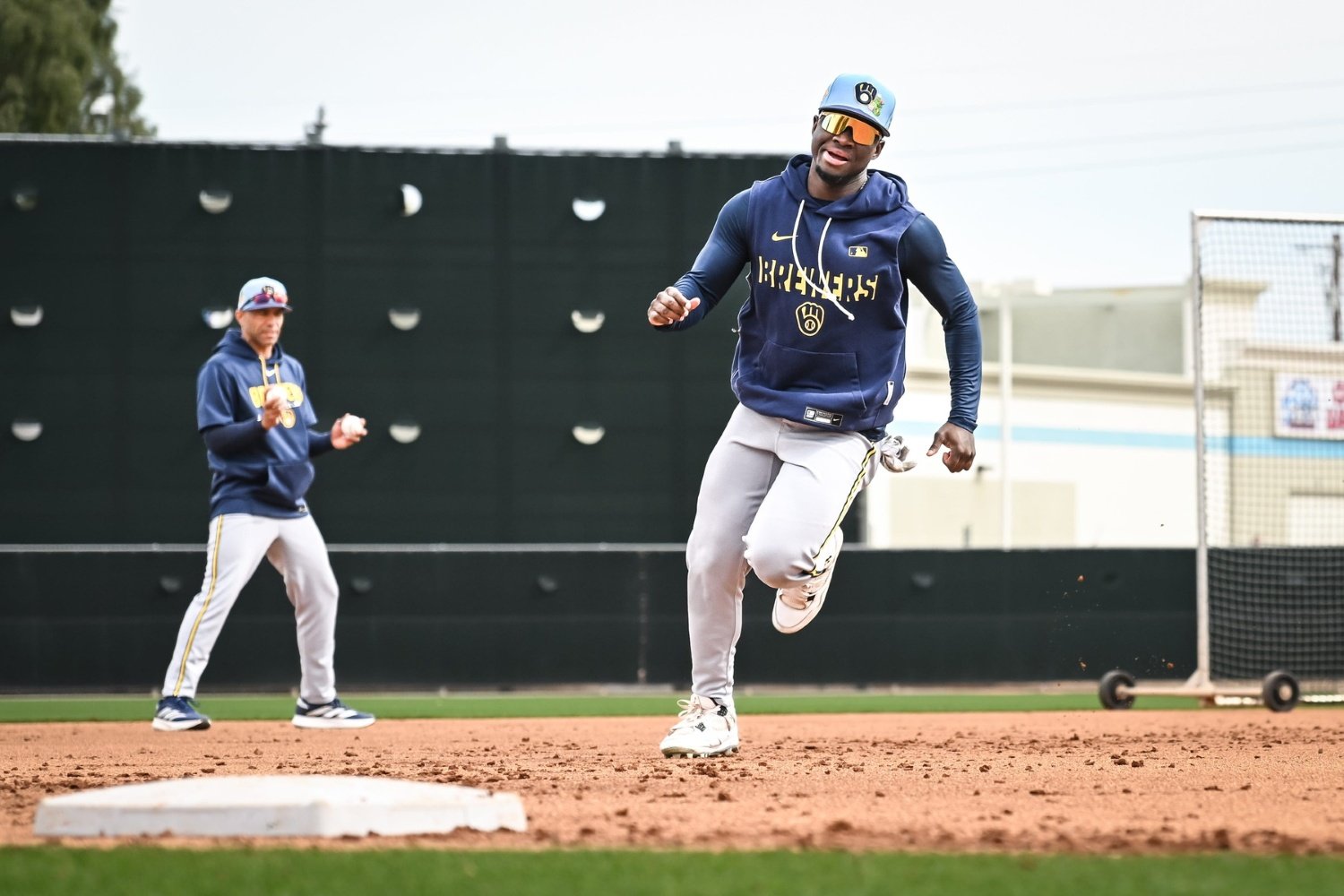 For many Brewers fans, this move will feel overdue. The Brewers tried to give Blake Perkins time to work through what has effectively been a season-long slump at the plate, but ultimately, they needed more functional depth in their outfield. Perkins, still a fine defender but no longer the elite of the elite in center field and without any offensive value of which to speak, was the odd man out—but the corresponding move is an exciting addition to the 26-man roster. It will be fascinating to see how rookie Luis Lara fits into the team's plans. He's taking Perkins's roster spot, but he'll need a bigger role than the one Perkins occupied in order to justify being brought to the majors now. The team already demonstrated its faith that he can thrive in a larger role than Perkins had, though, when they signed him to a seven-year deal earlier this season, before he made it to the majors. The best role for Lara is one similar to Perkins's best one, in that Lara's best tool might also be his fielding prowess. That makes this move interesting, though, because Garrett Mitchell has a 1.042 OPS over the last four weeks. It seems like this is no time to reduce the playing time of the starting center fielder, so will Lara eat into Sal Frelick's role, instead? Or will Mitchell spend some time in a corner spot or at designated hitter, with Christian Yelich getting more days off—whether he wants them or not? This change, like the one the team made when it swapped out Luis Rengifo for Cooper Pratt, makes the team younger and better on defense at the same time. It also affirms the organization's commitment to developing players and building a lasting pipeline. Though no Pat Murphy team will set aside the goal of winning for any meaningful period, these moves accept a certain amount of temporary on-field cost in the service of improving the team's long-term outlook. That's a luxury Milwaukee has afforded itself, with such a comfortable lead in the division and one of the best records in baseball. They'll have to sort through their options and have at least one or two difficult conversations with team-controlled players, but they're going to win the NL Central this year—and doing this, like promoting Pratt last month, just might help them do so next season, too.
 -
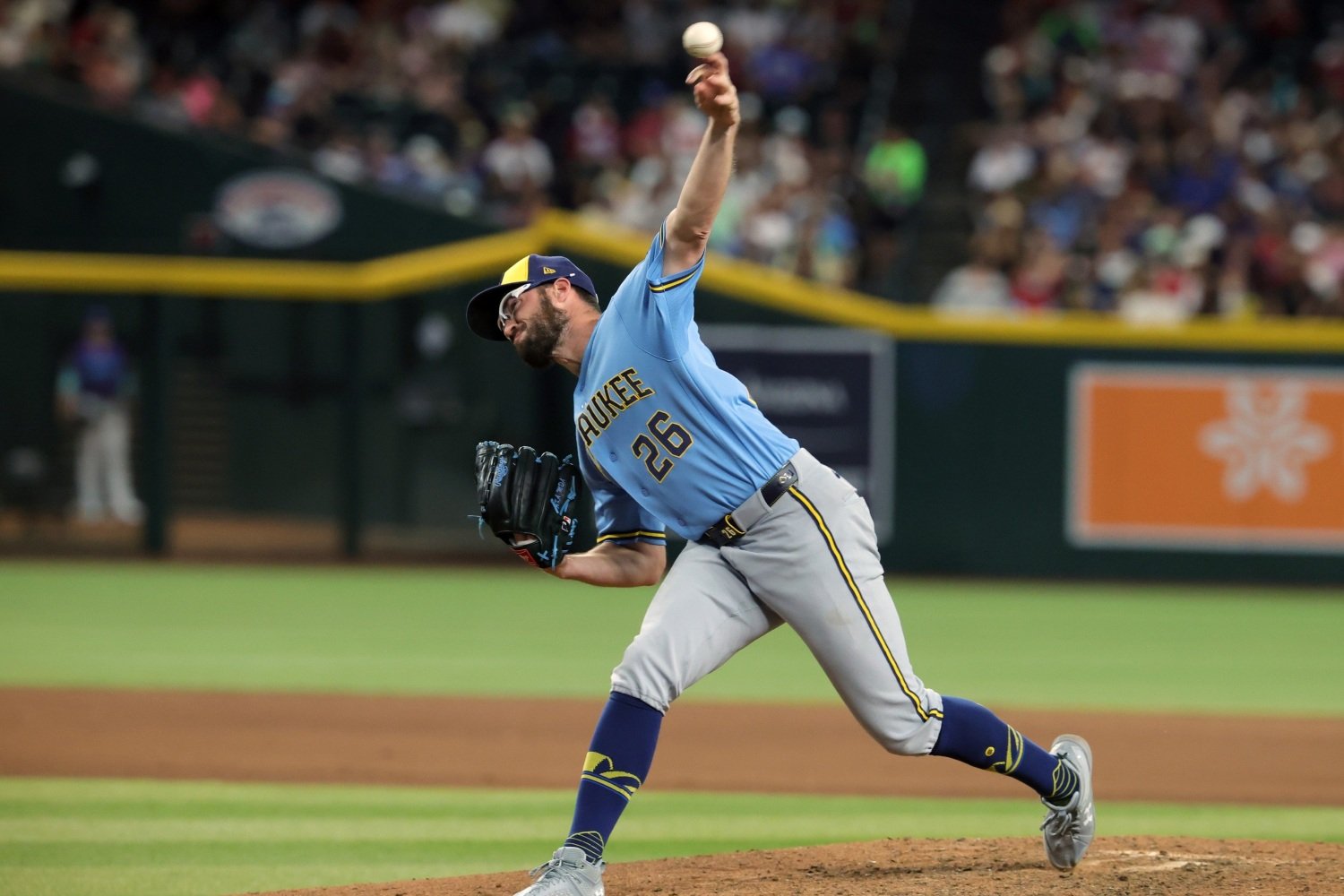 In a piece Monday at Baseball Prospectus, I introduced a new statistic called Swing Disruption+. The concept is exactly what it sounds like. Using the new miss distance and swing timing data from Statcast (which you can find on Baseball Savant, here), I sought to build a model that would tell us how well pitchers produce value when batters swing, and in which ways. As a batter, your goal when you go to bat is to find a pitch you can drive and hit it squarely. As a pitcher, your objective is to mess with the batter, either via changing speeds and fooling them into a mistimed swing or via extremely deceptive movement. This stat is meant to measure how well a hurler does their job in that showdown. Aaron Ashby is not the highest-rated Brewers pitcher by Swing Disruption+. That, believe it or not, is DL Hall. Of the 368 pitchers who had at least 200 swings against them entering Sunday's games, Hall ranked 12th, with a 121 Swing Disruption+. (The stat is indexed to 100, which marks the average, and higher is better.) It's not just luck that allowed Hall to hold hitters to a .294 slugging average on contact (SLGCON) before he went down with a strained pectoral muscle; he's been good at all three ways that a pitcher can get out of harm's way when a batter swings. Since Hall is out, though, let's talk about Ashby. Really, he's the more interesting case study, anyway, because he's only very good at one of those three ways. To understand the difference between the two, let's dive into those three dimensions of deception. Firstly, you want to disrupt timing. That can take many forms, but it's the most valuable single way to get a hitter's swing out of sync, because it doesn't inherently make it harder to do either of the other two things, whereas those two do push against one another most of the time. Funky deliveries often produce mistimed swings, but the best way to reliably do so is by changing speeds often. If there are multiple pitches you can throw in or near the strike zone and they come in at significantly different speeds, hitters have to respect them all, and they can not only end up badly fooled when sitting on one option, but get caught in between when they try to cover everything. The most important individual skill for missing bats (which is the imperative of the modern hurler) is to get above or below the bat often. Most whiffs involve the batter missing vertically; fewer of them involve horrendous timing or a brutal miss on the horizontal plane. That shouldn't surprise you. Think about the arc a bat traces through the hitting zone, and you can see how there's much less margin for error for the batter vertically than horizontally or in the depth dimension that represents time. The trick with "changing eye levels," though, is that keeping the ball in the zone while creating big vertical separation is difficult—and that the more you can stretch your movement distribution vertically, the less it's likely to stretch horizontally. Horizontal movement matters, too, because while going high and low produces whiffs the best, having enough 'wiggle' to get off the center of a barrel is the top way to avoid hard contact. Batters produce all their best exit velocities when they center the ball on the barrel; getting it off the end of the bat or up on the handle produces weaker-hit balls. To avoid being vulnerable to power, a pitcher needs to be able to move one direction or the other, but again, doing that can often make it harder to move up and down the ladder and maximize swing-and-miss. Ashby's 115 Swing Disruption+ ranks him 34th in baseball, still within the league's top decile and behind only Hall and Trevor Megill among Brewers hurlers. Go ahead. Take a moment, now, and guess in your head which dimension makes Ashby a standout. Here's a brief paragraph about Megill, to give you time to think about Ashby without having it spoiled. The Brewers' newly-minted full-time closer is, as I'm sure you'd guess, elite when it comes to changing eye levels. His high-velocity, high-carry four-seamer and power curveball play off one another gorgeously, almost straight up and down. Hitters who chase the heater as it singes the top rail of the zone are often under it; those who chase the curve are usually over it. Megill is sixth in MLB in Changed Eye Levels+, at 139, which puts him right behind teammate Jacob Misiorowski (143) and three spots ahead of Gravitron (aka Kyle Harrison), at 137. Having a fastball that hitters just can't climb their way to is hugely valuable. Alright, though: back to Ashby. Did you guess correctly? He's elite in one dimesnion, and despite his extremely high arm slot, it's not verticality. Despite his varied arsenal of offspeed stuff (the changeup, the curveball, the slider), he's also just average at upsetting timing. No, what makes Ashby special is his 141 Off Barrel+, fifth-best in baseball. This year's version of Ashby is slightly more walk-prone and slightly less extreme a ground-ball guy than the 2025 edition. He's still been an elite hurler, though, and much of the credit goes to that unique sinker. Throwing from an arm slot from which batters mostly see four-seamers, Ashby fires a sinker that almost touches 100 MPH and has good arm-side run; guys mishit that most of the time. Their eyes can handle that pitch, vertically, but they end up getting it off the end of the bat. That's the key, too—that it comes mostly off the end of the bat. For many pitchers, the sinker is effectively a platoon pitch, throwable only to same-handed batters on whom it can run in and attack the label. But it's much more valuable, on average, to get the ball off the center toward the end of the bat. There are more whiffs out there, and less risk of a bloop hit. Because Ashby's movement is so deceptive from the angle he uses, even righties usually don't get the center of the barrel on his sinker, the way most opposite-handed batters often do against most sinkers. His ratio of balls off the end of the bat to those off the label or handle is well above the league average, which augments his effectiveness even more than pitchers like Mark Leiter Jr., Tommy Nance and Daniel Lynch IV, who have similar Off Barrel+ ratings but lower ratios. That ratio is factored into Swing Disruption+, which is why Ashby rates so well despite only excelling in one area. It's not news to you that Ashby is good. What's fun about this new stream of data, though, is that we can now understand and state a bit more clearly why a pitcher is good. In this case, it's an exceptional ability to move the ball horizontally to where batters don't expect it, in a way distinct even from many other pitchers who share the same broad area of strength.
 -
Image courtesy of © Mark J. Rebilas-Imagn Images In a piece Monday at Baseball Prospectus, I introduced a new statistic called Swing Disruption+. The concept is exactly what it sounds like. Using the new miss distance and swing timing data from Statcast (which you can find on Baseball Savant, here), I sought to build a model that would tell us how well pitchers produce value when batters swing, and in which ways. As a batter, your goal when you go to bat is to find a pitch you can drive and hit it squarely. As a pitcher, your objective is to mess with the batter, either via changing speeds and fooling them into a mistimed swing or via extremely deceptive movement. This stat is meant to measure how well a hurler does their job in that showdown. Aaron Ashby is not the highest-rated Brewers pitcher by Swing Disruption+. That, believe it or not, is DL Hall. Of the 368 pitchers who had at least 200 swings against them entering Sunday's games, Hall ranked 12th, with a 121 Swing Disruption+. (The stat is indexed to 100, which marks the average, and higher is better.) It's not just luck that allowed Hall to hold hitters to a .294 slugging average on contact (SLGCON) before he went down with a strained pectoral muscle; he's been good at all three ways that a pitcher can get out of harm's way when a batter swings. Since Hall is out, though, let's talk about Ashby. Really, he's the more interesting case study, anyway, because he's only very good at one of those three ways. To understand the difference between the two, let's dive into those three dimensions of deception. Firstly, you want to disrupt timing. That can take many forms, but it's the most valuable single way to get a hitter's swing out of sync, because it doesn't inherently make it harder to do either of the other two things, whereas those two do push against one another most of the time. Funky deliveries often produce mistimed swings, but the best way to reliably do so is by changing speeds often. If there are multiple pitches you can throw in or near the strike zone and they come in at significantly different speeds, hitters have to respect them all, and they can not only end up badly fooled when sitting on one option, but get caught in between when they try to cover everything. The most important individual skill for missing bats (which is the imperative of the modern hurler) is to get above or below the bat often. Most whiffs involve the batter missing vertically; fewer of them involve horrendous timing or a brutal miss on the horizontal plane. That shouldn't surprise you. Think about the arc a bat traces through the hitting zone, and you can see how there's much less margin for error for the batter vertically than horizontally or in the depth dimension that represents time. The trick with "changing eye levels," though, is that keeping the ball in the zone while creating big vertical separation is difficult—and that the more you can stretch your movement distribution vertically, the less it's likely to stretch horizontally. Horizontal movement matters, too, because while going high and low produces whiffs the best, having enough 'wiggle' to get off the center of a barrel is the top way to avoid hard contact. Batters produce all their best exit velocities when they center the ball on the barrel; getting it off the end of the bat or up on the handle produces weaker-hit balls. To avoid being vulnerable to power, a pitcher needs to be able to move one direction or the other, but again, doing that can often make it harder to move up and down the ladder and maximize swing-and-miss. Ashby's 115 Swing Disruption+ ranks him 34th in baseball, still within the league's top decile and behind only Hall and Trevor Megill among Brewers hurlers. Go ahead. Take a moment, now, and guess in your head which dimension makes Ashby a standout. Here's a brief paragraph about Megill, to give you time to think about Ashby without having it spoiled. The Brewers' newly-minted full-time closer is, as I'm sure you'd guess, elite when it comes to changing eye levels. His high-velocity, high-carry four-seamer and power curveball play off one another gorgeously, almost straight up and down. Hitters who chase the heater as it singes the top rail of the zone are often under it; those who chase the curve are usually over it. Megill is sixth in MLB in Changed Eye Levels+, at 139, which puts him right behind teammate Jacob Misiorowski (143) and three spots ahead of Gravitron (aka Kyle Harrison), at 137. Having a fastball that hitters just can't climb their way to is hugely valuable. Alright, though: back to Ashby. Did you guess correctly? He's elite in one dimesnion, and despite his extremely high arm slot, it's not verticality. Despite his varied arsenal of offspeed stuff (the changeup, the curveball, the slider), he's also just average at upsetting timing. No, what makes Ashby special is his 141 Off Barrel+, fifth-best in baseball. This year's version of Ashby is slightly more walk-prone and slightly less extreme a ground-ball guy than the 2025 edition. He's still been an elite hurler, though, and much of the credit goes to that unique sinker. Throwing from an arm slot from which batters mostly see four-seamers, Ashby fires a sinker that almost touches 100 MPH and has good arm-side run; guys mishit that most of the time. Their eyes can handle that pitch, vertically, but they end up getting it off the end of the bat. That's the key, too—that it comes mostly off the end of the bat. For many pitchers, the sinker is effectively a platoon pitch, throwable only to same-handed batters on whom it can run in and attack the label. But it's much more valuable, on average, to get the ball off the center toward the end of the bat. There are more whiffs out there, and less risk of a bloop hit. Because Ashby's movement is so deceptive from the angle he uses, even righties usually don't get the center of the barrel on his sinker, the way most opposite-handed batters often do against most sinkers. His ratio of balls off the end of the bat to those off the label or handle is well above the league average, which augments his effectiveness even more than pitchers like Mark Leiter Jr., Tommy Nance and Daniel Lynch IV, who have similar Off Barrel+ ratings but lower ratios. That ratio is factored into Swing Disruption+, which is why Ashby rates so well despite only excelling in one area. It's not news to you that Ashby is good. What's fun about this new stream of data, though, is that we can now understand and state a bit more clearly why a pitcher is good. In this case, it's an exceptional ability to move the ball horizontally to where batters don't expect it, in a way distinct even from many other pitchers who share the same broad area of strength. View full article
-
Image courtesy of © Michael McLoone-Imagn Images It's a 2-2 count in a tight spot. The tying run is in scoring position, and the go-ahead run is at first. It's the top of the eighth. What are you going with, here? That's a baseball conversation as old as the game itself—or nearly so. While we don't want long, ponderous pauses between bursts of action, one of the great things about this sport is that it breathes. There's time enough between pitches to guess along with the pitcher, the catcher, the batter, the runners and the defense, at least a little. There's even time to do it aloud. You hear it on broadcasts all the time. We enjoy this exercise. There's a vicariousness to it that can make baseball feel more accessible than other sports, even though it's no less difficult when you're actually between the lines. It's also one way we judge players' baseball IQ and their engagement with their craft. How well are a catcher and pitcher communicating? How creative are they being with their sequencing and their efforts to give the hitter something other than what they're looking for? How much trust is there between them? When you watch a Brewers game, though, you can often look smart by simply leaning toward your friend and saying, "Fastball here, I bet." That's been true for years now. While Milwaukee works hard to give as many hurlers as possible multiple fastball looks, they throw some flavor of heater more often than any other team in baseball. That's not an accident. For one thing, they know that doing so can limit the quality of opponents' contact; the surest way to give up an extra homer or two is to hang an extra breaking ball or three. For another, they have a great defense most of the time, and throwing fastballs allows their pitchers to be efficient while utilizing those adept fielders. Most of all, though, they scout and develop pitchers with exceptional fastballs, in various ways. Josh Hader's unique combination of arm angle and fastball shape made him almost unhittable even when he didn't have his slider working. Corbin Burnes took some time to find that the cutter was the right fastball for him, but once he did, he was an ace. Scrap-heap scoop-ups from Trevor Megill to Bryan Hudson to Grant Anderson have not only been targeted because their fastballs are outliers, but have thrived because the team has helped them optimize what they had there. I don't have to rehash the almost superhuman elements of Kyle Harrison (aka Gravitron) or Jacob Misiorowski here; you know their heaters are the two best in baseball. Thus, there's not as much for a catcher to do back there, really. Brewers pitchers rave about the way William Contreras calls games, but the truth of the matter is that he has the easiest job of any starting catcher in the sport. He can resort to the fastball more often than anyone else, and he does. In fact, this year, he's calling some form of fastball about 68% of the time, more than any other player (including past versions of himself) has done it in any of the last four years. Occasionally, that gets brought up as a point of criticism of Contreras. Pitchers might love being exhorted to trust their heaters, but should they mix it up a bit more? Could the team miss more bats and be a better pitching staff by going to offspeed offerings more? Is Contreras holding guys back. Here's a chart that answers that question pretty neatly. This plots all of the player-seasons by catchers with at least 2,500 pitches caught in that campaign since the start of 2023, by fastball usage (the x-axis) and run value per 100 pitches on fastballs (the y-axis). The navy dots are the Brewers' catchers: Contreras (x4), Eric Haase (x2), Gary Sánchez and Victor Caratini. As you can see, they're all clustered toward the right edge of the graph. All but one dot is also on the good side of 0.00 runs per 100 heaters thrown. Contreras is pushing into new territory with the way he's hammering the fastball this year, but in part, that reflects the fact that he's working with two of the best heaters the game has seen this decade. Neither Misiorowski nor Harrison needs to throw much else; their fastballs deceive and dominate hitters in ways that are relatively exposure-proof. Sánchez is the navy dot second-closest to the right edge of the graph, and is third overall in this sample of player-seasons. The Brewers just have a lot of guys with multiple fastballs, a lot of great fastballs, and less motivation to throw other pitches than other teams have. How sustainable this approach is—whether, for instance, you can lean this hard on fastballs and still advance through the postseason to where the Brewers are hoping to go—remains to be seen. It doesn't feel like throwing so many fastballs is why the team has been beaten in October time after time, but it might be worth exploring a change of strategy that prepares the team to do something more unexpected in the playoffs. For now, though, this keeps working. Moreover, it keeps showing up as an organizational imperative, rather than some quirk of Contreras's. That makes the charismatic leader of the Crew a bit less valuable than if he were some pitch-calling genius, but this is one of those areas in which having a defined, top-down approach has lots of value to the Brewers. Should they elect to trade Contreras this winter, it won't disrupt their run prevention. That machine runs on things with more staying power, at lower cost: Chris Hook, Jim Henderson, the scouting and development teams, and a few other people in the front office. They might still be wise to retain Contreras, because his offense is hard to replace at that position and because the team looks to him as such an important figure. If they do move on, though, they'll be able to select their next starting backstop for their hitting ability, too, because they just need someone who can catch fastballs and manage moments well on defense. For many catchers, calling the game is a matter of personality, and even identity. In Milwaukee, it's about identity, too, but the identity is collective, rather than individual. They know what works, because they've built an entire ecosystem in which that simple plan will work. They want a great catcher with a live arm, intensity and offensive value. They don't need that person to also be an elite tactician, planning at-bats with the precision of a military commander. It's a little less romantic than when a team does ask a catcher to be that brilliant, but you know what's better than romanticism? Outs. Outs and wins. View full article
-
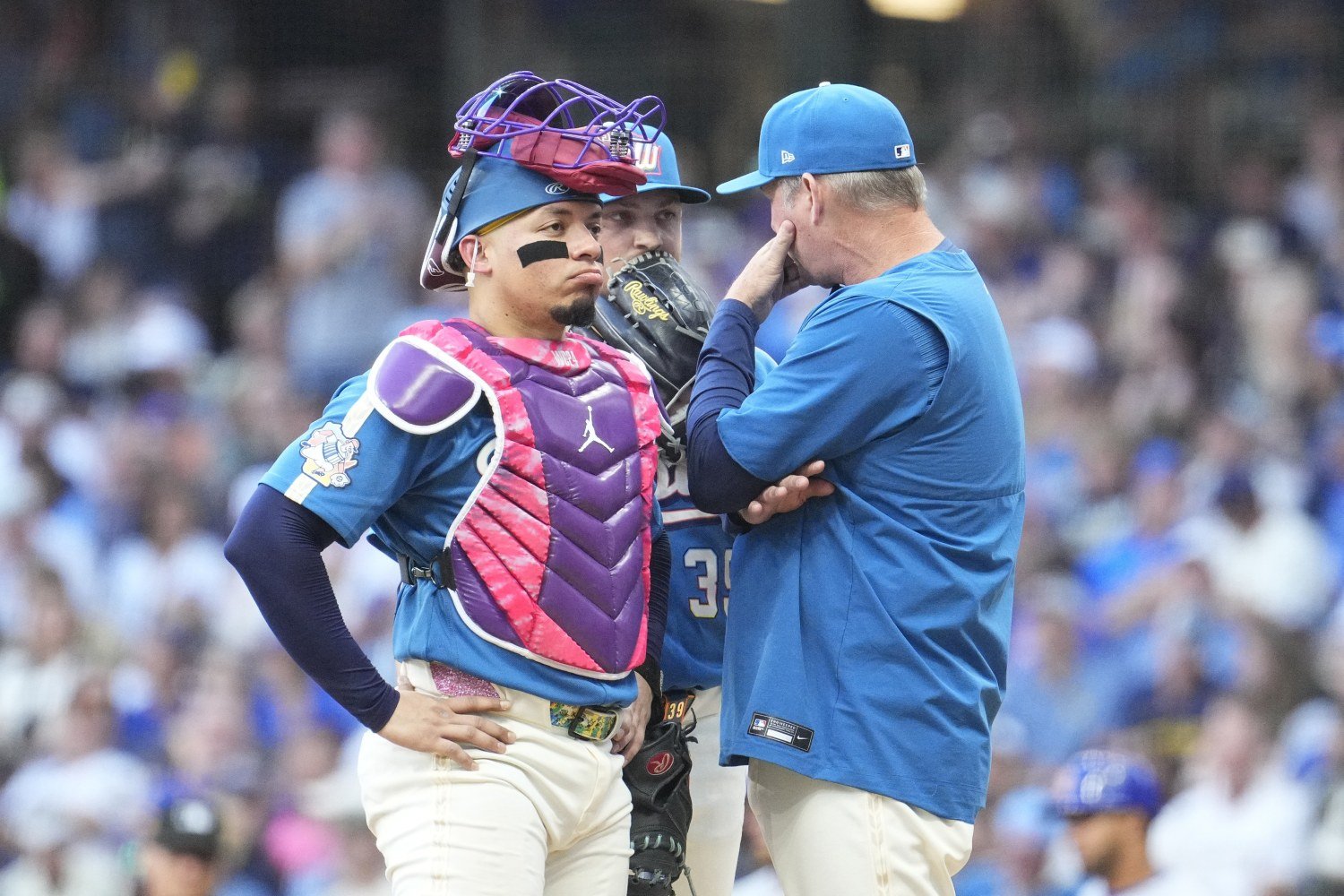 It's a 2-2 count in a tight spot. The tying run is in scoring position, and the go-ahead run is at first. It's the top of the eighth. What are you going with, here? That's a baseball conversation as old as the game itself—or nearly so. While we don't want long, ponderous pauses between bursts of action, one of the great things about this sport is that it breathes. There's time enough between pitches to guess along with the pitcher, the catcher, the batter, the runners and the defense, at least a little. There's even time to do it aloud. You hear it on broadcasts all the time. We enjoy this exercise. There's a vicariousness to it that can make baseball feel more accessible than other sports, even though it's no less difficult when you're actually between the lines. It's also one way we judge players' baseball IQ and their engagement with their craft. How well are a catcher and pitcher communicating? How creative are they being with their sequencing and their efforts to give the hitter something other than what they're looking for? How much trust is there between them? When you watch a Brewers game, though, you can often look smart by simply leaning toward your friend and saying, "Fastball here, I bet." That's been true for years now. While Milwaukee works hard to give as many hurlers as possible multiple fastball looks, they throw some flavor of heater more often than any other team in baseball. That's not an accident. For one thing, they know that doing so can limit the quality of opponents' contact; the surest way to give up an extra homer or two is to hang an extra breaking ball or three. For another, they have a great defense most of the time, and throwing fastballs allows their pitchers to be efficient while utilizing those adept fielders. Most of all, though, they scout and develop pitchers with exceptional fastballs, in various ways. Josh Hader's unique combination of arm angle and fastball shape made him almost unhittable even when he didn't have his slider working. Corbin Burnes took some time to find that the cutter was the right fastball for him, but once he did, he was an ace. Scrap-heap scoop-ups from Trevor Megill to Bryan Hudson to Grant Anderson have not only been targeted because their fastballs are outliers, but have thrived because the team has helped them optimize what they had there. I don't have to rehash the almost superhuman elements of Kyle Harrison (aka Gravitron) or Jacob Misiorowski here; you know their heaters are the two best in baseball. Thus, there's not as much for a catcher to do back there, really. Brewers pitchers rave about the way William Contreras calls games, but the truth of the matter is that he has the easiest job of any starting catcher in the sport. He can resort to the fastball more often than anyone else, and he does. In fact, this year, he's calling some form of fastball about 68% of the time, more than any other player (including past versions of himself) has done it in any of the last four years. Occasionally, that gets brought up as a point of criticism of Contreras. Pitchers might love being exhorted to trust their heaters, but should they mix it up a bit more? Could the team miss more bats and be a better pitching staff by going to offspeed offerings more? Is Contreras holding guys back. Here's a chart that answers that question pretty neatly. This plots all of the player-seasons by catchers with at least 2,500 pitches caught in that campaign since the start of 2023, by fastball usage (the x-axis) and run value per 100 pitches on fastballs (the y-axis). The navy dots are the Brewers' catchers: Contreras (x4), Eric Haase (x2), Gary Sánchez and Victor Caratini. As you can see, they're all clustered toward the right edge of the graph. All but one dot is also on the good side of 0.00 runs per 100 heaters thrown. Contreras is pushing into new territory with the way he's hammering the fastball this year, but in part, that reflects the fact that he's working with two of the best heaters the game has seen this decade. Neither Misiorowski nor Harrison needs to throw much else; their fastballs deceive and dominate hitters in ways that are relatively exposure-proof. Sánchez is the navy dot second-closest to the right edge of the graph, and is third overall in this sample of player-seasons. The Brewers just have a lot of guys with multiple fastballs, a lot of great fastballs, and less motivation to throw other pitches than other teams have. How sustainable this approach is—whether, for instance, you can lean this hard on fastballs and still advance through the postseason to where the Brewers are hoping to go—remains to be seen. It doesn't feel like throwing so many fastballs is why the team has been beaten in October time after time, but it might be worth exploring a change of strategy that prepares the team to do something more unexpected in the playoffs. For now, though, this keeps working. Moreover, it keeps showing up as an organizational imperative, rather than some quirk of Contreras's. That makes the charismatic leader of the Crew a bit less valuable than if he were some pitch-calling genius, but this is one of those areas in which having a defined, top-down approach has lots of value to the Brewers. Should they elect to trade Contreras this winter, it won't disrupt their run prevention. That machine runs on things with more staying power, at lower cost: Chris Hook, Jim Henderson, the scouting and development teams, and a few other people in the front office. They might still be wise to retain Contreras, because his offense is hard to replace at that position and because the team looks to him as such an important figure. If they do move on, though, they'll be able to select their next starting backstop for their hitting ability, too, because they just need someone who can catch fastballs and manage moments well on defense. For many catchers, calling the game is a matter of personality, and even identity. In Milwaukee, it's about identity, too, but the identity is collective, rather than individual. They know what works, because they've built an entire ecosystem in which that simple plan will work. They want a great catcher with a live arm, intensity and offensive value. They don't need that person to also be an elite tactician, planning at-bats with the precision of a military commander. It's a little less romantic than when a team does ask a catcher to be that brilliant, but you know what's better than romanticism? Outs. Outs and wins.
 -
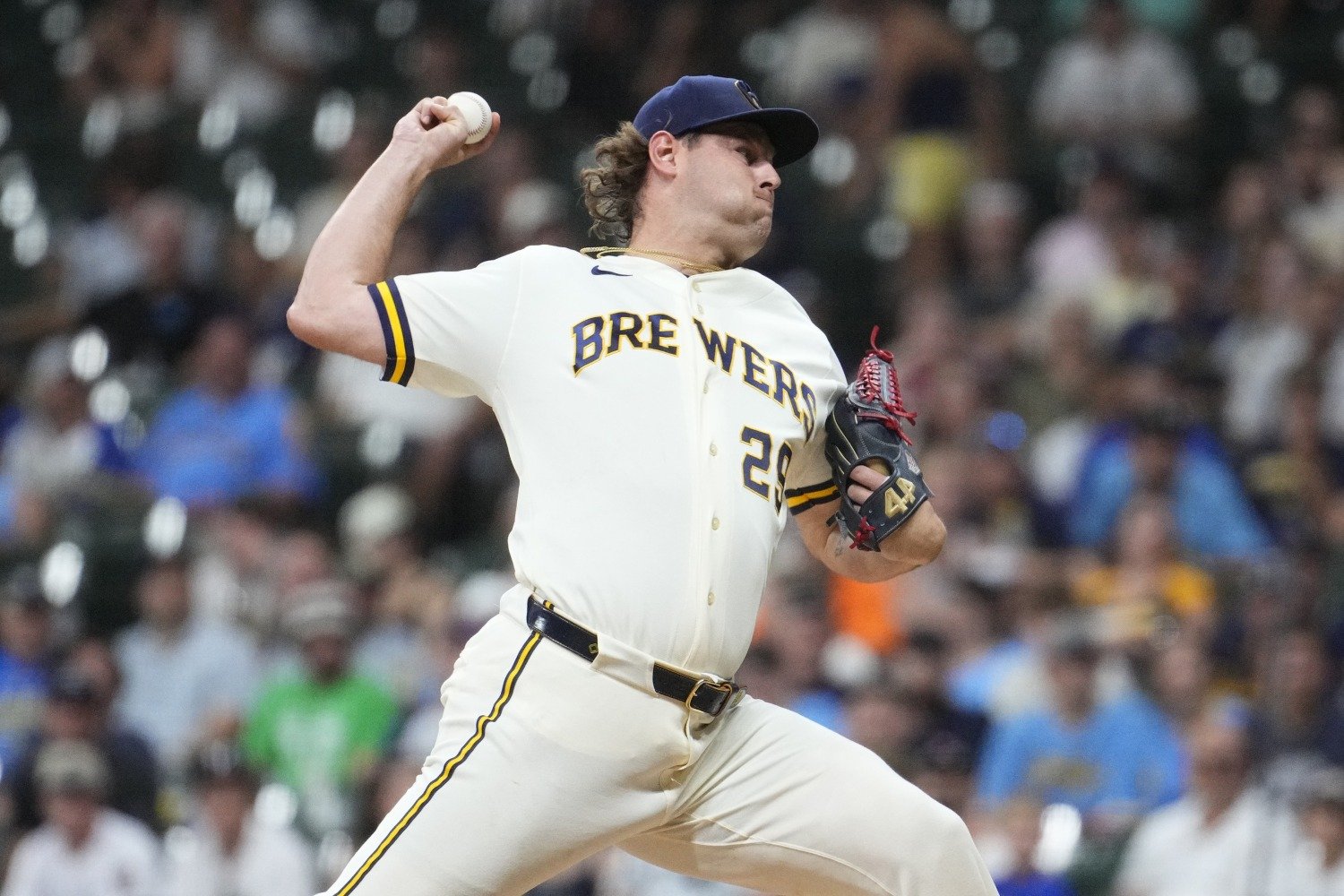 Since the start of May, Trevor Megill has struck out 30 opposing batters and walked four. He's allowed four runs, and half of those (the only ones since May 12) came in one outing at Coors Field. He threw a tick harder than his season average in shutting down the Reds Monday night, though it was pretty easy to stay near 100 MPH, because he only needed 10 pitches to pick up the save. That was Megill's 11th save of the year. When the season began, the Brewers went with a shared closer model that gave both Megill and Abner Uribe save chances, somewhat to the chagrin of the towering righty. Megill doesn't want to make waves, and he's a well-liked member of the relief corps, but he's never made any bones about the fact that he wants to close. He wants it bad. Being the guy on the mound with the game in the balance is where he finds his joy in the game. The emotion he shows whenever he comes off the mound after escaping a jam to rescue the team is the fire that fuels his triple-digit fastball and that high-spin power curve. At this point, there's no reason whatsoever for the Brewers not to let it ride with him as their ninth-inning guy. Though he counts as old-school for the way he embraces the specific duty of saving games, Megill isn't one of those guys who resents being called upon in tie games or struggles to lock in when protecting a four-run lead on a night when the team gets some late insurance. He just wants to be The Guy, and lately, that's exactly how he's pitched. It was reasonable to worry about him a bit early in the year, when his elbow was grumbling and his velocity was down. He's been thoroughly dominant for the laat two months, though, and has earned every bit of the job he wants so badly. Hitters are helpless against him, and have been for some time. Of course, the Brewers have an ulterior motive that makes it easy to shift all the closer work onto him, too. While the number of front offices who will pony up ill-advisedly for a relief ace based on their saves total has dwindled almost to zero, Megill's trade value will get a small boost if he sees out the season as the team's closer. The Crew also knows as well as anyone what's inside Megill's elbow and how long he might be able to hold up at this level, and to whatever extent he's still a bit fragile health-wise, the closing gig is a good safehouse in which to hide him. Roles like those filled by Aaron Ashby and Uribe in this bullpen require a player with terrific durability and recovery. That's not Megill. They can better keep him healthy this way. Next season will be Megill's last under team control. The Brewers will probably seek to trade him over the winter, partially because saving these games has sent his projected arbitration-determined salary for 2027 pretty high. Dealing a healthy Megill with pretty numbers is the best way to maximize the expected return. Letting him rack up the saves also means some savings when the team goes to arbitration with Uribe, who could sneak in as a Super Two-eligible guy this fall (but will probably reach arbitration in the winter of 2027-28 instead). All of that is for later, but that doesn't mean the Brewers aren't thinking about it. Things have a funny way of aligning when you do everything right, organizationally. Yes, the team might want to trade Megill this winter, and yes, their long-term interests are served well on multiple fronts by keeping him in the closer role and making Uribe his setup man. But from the vibes to the intensity of his stuff, everything is pointing them in that direction in the short term, too. Before any offseason trade rumors comes a postseason, and in that cauldron, Megill is the kind of arm and the kind of competitor you want. The team would love nothing more than to have to make a terribly difficult decision this winter: Can they really trade the guy who just got the final out in the franchise's first-ever World Series triumph?
 -
Image courtesy of © Michael McLoone-Imagn Images Since the start of May, Trevor Megill has struck out 30 opposing batters and walked four. He's allowed four runs, and half of those (the only ones since May 12) came in one outing at Coors Field. He threw a tick harder than his season average in shutting down the Reds Monday night, though it was pretty easy to stay near 100 MPH, because he only needed 10 pitches to pick up the save. That was Megill's 11th save of the year. When the season began, the Brewers went with a shared closer model that gave both Megill and Abner Uribe save chances, somewhat to the chagrin of the towering righty. Megill doesn't want to make waves, and he's a well-liked member of the relief corps, but he's never made any bones about the fact that he wants to close. He wants it bad. Being the guy on the mound with the game in the balance is where he finds his joy in the game. The emotion he shows whenever he comes off the mound after escaping a jam to rescue the team is the fire that fuels his triple-digit fastball and that high-spin power curve. At this point, there's no reason whatsoever for the Brewers not to let it ride with him as their ninth-inning guy. Though he counts as old-school for the way he embraces the specific duty of saving games, Megill isn't one of those guys who resents being called upon in tie games or struggles to lock in when protecting a four-run lead on a night when the team gets some late insurance. He just wants to be The Guy, and lately, that's exactly how he's pitched. It was reasonable to worry about him a bit early in the year, when his elbow was grumbling and his velocity was down. He's been thoroughly dominant for the laat two months, though, and has earned every bit of the job he wants so badly. Hitters are helpless against him, and have been for some time. Of course, the Brewers have an ulterior motive that makes it easy to shift all the closer work onto him, too. While the number of front offices who will pony up ill-advisedly for a relief ace based on their saves total has dwindled almost to zero, Megill's trade value will get a small boost if he sees out the season as the team's closer. The Crew also knows as well as anyone what's inside Megill's elbow and how long he might be able to hold up at this level, and to whatever extent he's still a bit fragile health-wise, the closing gig is a good safehouse in which to hide him. Roles like those filled by Aaron Ashby and Uribe in this bullpen require a player with terrific durability and recovery. That's not Megill. They can better keep him healthy this way. Next season will be Megill's last under team control. The Brewers will probably seek to trade him over the winter, partially because saving these games has sent his projected arbitration-determined salary for 2027 pretty high. Dealing a healthy Megill with pretty numbers is the best way to maximize the expected return. Letting him rack up the saves also means some savings when the team goes to arbitration with Uribe, who could sneak in as a Super Two-eligible guy this fall (but will probably reach arbitration in the winter of 2027-28 instead). All of that is for later, but that doesn't mean the Brewers aren't thinking about it. Things have a funny way of aligning when you do everything right, organizationally. Yes, the team might want to trade Megill this winter, and yes, their long-term interests are served well on multiple fronts by keeping him in the closer role and making Uribe his setup man. But from the vibes to the intensity of his stuff, everything is pointing them in that direction in the short term, too. Before any offseason trade rumors comes a postseason, and in that cauldron, Megill is the kind of arm and the kind of competitor you want. The team would love nothing more than to have to make a terribly difficult decision this winter: Can they really trade the guy who just got the final out in the franchise's first-ever World Series triumph? View full article
-
That's one reasonable reading of the progress of their careers, but I don't think it's the one best supported by the evidence or the one that's ultimately right. Both guys HAVE gotten chances, and they just haven't shown that they can really hack it in the majors. Then, when sent back to Triple-A, each has slowly shown more and more of their warts even at those lower levels. I'll tell you this: in addition to neither appearing to be high on this organization's priority list, neither guy is among the players other teams are most interested in acquiring. I think the underlying truth here might actually be that the Brewers gave two guys who probably weren't quite destined to be useful big-leaguers such a good and viable path that they briefly looked like they would not only be useful, but could be MORE than useful. They just couldn't quite pull off what would have been deeply impressive developmental wins. We'll see! Each could still turn things around. But I don't think a lack of organizational faith is holding either back. I think their talent is doing that. It's just gut-wrenchingly hard to be a good big-leaguer, and as close as they've each come, I don't think either one is going to clear the hurdles and get there.
-
Image courtesy of © Michael McLoone-Imagn Images When Jacob Misiorowski takes the mound Friday night to face the Cubs at Uecker Field in Milwaukee, he'll do so on six days' rest. In fact, it will be the second time in a row that he pitches with an extra day—or what those of us born before 2000 would call an extra extra day, because the fifth day of rest between starts has only become as normal as the first four within the last few years. Misiorowski will be making his 31st regular-season appearance and 30th start since debuting last June, but he's only pitched on the traditional four days' rest four times. The Brewers know what they have in The Miz. They also know what dangers he faces. Though few pitchers in the game are better at generating power with their lower half, Misiorowski's velocity and extension—no pitcher in baseball history has had as lethal a combination of the two—mean that his body is undergoing extraordinary stresses when he pitches. So far, he hasn't broken. The team knows they can't take for granted that their luck or his ligaments will hold, though. Thus, they'll continue to treat him cautiously. His efficiency has allowed him to work deep into games, including completing one, but the team hasn't permitted him to throw more than 101 pitches in any start this year. They're also pouncing on every opportunity to stretch out the days between starts for him, as they try to avoid letting his workload skyrocket. In 2024, he pitched 97 1/3 competitive innings, divided between the top two levels of the minors. Last year, counting his playoff outings, he pitched 141 1/3 frames. This season, he's already at 93, and the team fully intends to play not just 162 games, but 175 or so. If he stays on this pace, he could throw 200 innings in 2026, including the postseason. Whatever you might have heard in the past, that's fine. The so-called Verducci Effect is bunk; the columnist for whom it's named did shoddy research and glibly published a piece that had needless staying power because of his ubiquity in the national baseball media at the time. It's fine and normal for Misiorowski to add 50-plus innings to his workload over a full season, even though he did something similar from 2024 to last year. However, while increasing workload doesn't act as a multiplier, per se, the more one pitches, the greater the risk of injury. The harder one throws, the greater the risk of injury. Misiorowski has been impressively available and healthy over the last 15 months, but no one is blind to the risk he faces. Thus, the team will take every viable step to mitigate that risk. Right now, what that looks like is akin to making Misiorowski a collegiate ace. Traditionally, in NCAA baseball, a team sends their top starter to the mound just once a week, and they line them up for Friday nights. It's a handy thing for scouts who want to see pro prospects. It also makes for predictably good viewing for local fans. Most of all, though, putting players on that schedule has helped lure coaches away from an even more ingrained tradition that prevailed before this one: abusing elite arms and burning through them in their early 20s. Misiorowski started on a Friday night two weeks ago against the Phillies. Last week, he got the nod again in the northwest suburbs of Atlanta. For the third week in a row, he'll be the Brewers' Friday Night Starter, this time against the Cubs. It raises the hype and the mania of what was already sure to be an electric ballpark, as the Crew welcome a streaking but ragged Chicago team to town and look to knock them out of the division race for good. He won't stay on the Friday Nights Only schedule next week, but he could bop back onto it soon thereafter. Friday marks the first of 18 games in 17 days, leading into the All-Star break. Having Misiorowski start the opener of such a rough spot in the schedule is a great way to set the tone, but he won't be able to wait until next Friday for his next appearance. That will probably come, instead, in the final contest of this six-game homestand, against the Reds next Thursday. After that, he might start on four days' rest for once, during the Crew's doubleheader in St. Louis—but it's more likely that his final start before the All-Star break will come July 8, to close out that series against the Brewers' toughest challengers for this year's NL Central crown. Presumably, Misiorowski will be asked to start the All-Star Game, but that will just be a brief engagement. Assuming he stays fully healthy between now and then, we could see him land back on the Friday Night Starter schedule beginning July 17, when the Brewers begin their official second half against Miami. They have off days on July 23 and July 30, so if the team elects to go with some form of a six-man rotation (a term Pat Murphy assiduously avoids, but which basically applies to the way they're running the staff right now), Misiorowski could start on July 17, July 24 and July 31, pitching twice at home in three straight weeks of Friday nights. Another run of 17 days between open dates for Milwaukee will force Misiorowski off a once-a-week schedule for most of August. However, it's easy to see how he might get back onto that plan in September. I can get him to the end of the season with 30 total starts, without ever having him truly miss a turn in the rotation. If the Brewers can do that, they almost certainly will. The most remarkable thing about this, though, is not Misiorowski himself. For once, he's not the story, although the story is about him. Rather, this one is about what the Brewers have afforded themselves. In addition to the best pitcher in baseball, they have a legitimate Cy Young Award contender in any other year, in Kyle Harrison; the dominant-when-healthy veteran Brandon Woodruff; and the best depth corps of any team in the league, featuring Brandon Sproat, Shane Drohan, Robert Gasser, Chad Patrick, and the currently injured Coleman Crow and Logan Henderson. They also boast the best farm system in baseball, from which could come more direct help, or from which they could deal to add one more starter before the trade deadline. Almost no other team in the league could afford to slowplay an ace like this. Milwaukee has so many versatile and valuable arms that they can survive five games in six days without Misiorowski getting involved. As they always seem to do, they've also created a buffer for themselves. A slight slip in the standings need not put a bead of sweat on their brows; they have control of the division. The combination of excellent depth and a lack of real urgency to win every last regular-season game in the second half should make taking it easy with Misiorowski relatively easy. The marketing department has to love this. What's easier than making money on a superstar who appears on a predictable schedule? The house is full as often as not during the summers in Milwaukee, but the team can make a real killing by promoting Misiorowski starts that come like clockwork, right alongside the weekend vibes. The front office and the coaching staff wouldn't do it for that reason, though. Misiorowski is being treated like a college arm right now because it's the best way to maximize the chances that he still has this much crackling heat in his arm when the NLCS begins in mid-October. View full article
-
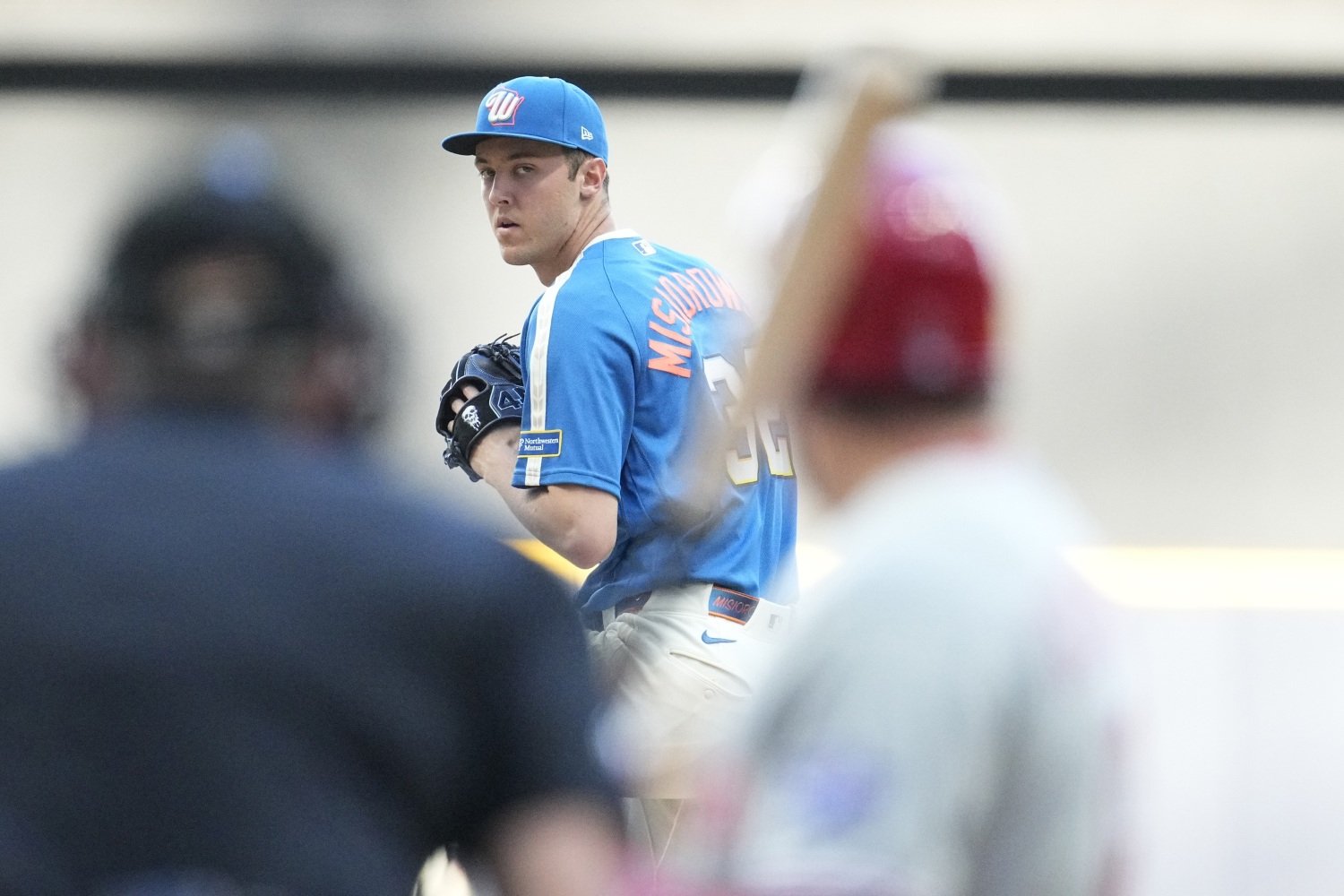 When Jacob Misiorowski takes the mound Friday night to face the Cubs at Uecker Field in Milwaukee, he'll do so on six days' rest. In fact, it will be the second time in a row that he pitches with an extra day—or what those of us born before 2000 would call an extra extra day, because the fifth day of rest between starts has only become as normal as the first four within the last few years. Misiorowski will be making his 31st regular-season appearance and 30th start since debuting last June, but he's only pitched on the traditional four days' rest four times. The Brewers know what they have in The Miz. They also know what dangers he faces. Though few pitchers in the game are better at generating power with their lower half, Misiorowski's velocity and extension—no pitcher in baseball history has had as lethal a combination of the two—mean that his body is undergoing extraordinary stresses when he pitches. So far, he hasn't broken. The team knows they can't take for granted that their luck or his ligaments will hold, though. Thus, they'll continue to treat him cautiously. His efficiency has allowed him to work deep into games, including completing one, but the team hasn't permitted him to throw more than 101 pitches in any start this year. They're also pouncing on every opportunity to stretch out the days between starts for him, as they try to avoid letting his workload skyrocket. In 2024, he pitched 97 1/3 competitive innings, divided between the top two levels of the minors. Last year, counting his playoff outings, he pitched 141 1/3 frames. This season, he's already at 93, and the team fully intends to play not just 162 games, but 175 or so. If he stays on this pace, he could throw 200 innings in 2026, including the postseason. Whatever you might have heard in the past, that's fine. The so-called Verducci Effect is bunk; the columnist for whom it's named did shoddy research and glibly published a piece that had needless staying power because of his ubiquity in the national baseball media at the time. It's fine and normal for Misiorowski to add 50-plus innings to his workload over a full season, even though he did something similar from 2024 to last year. However, while increasing workload doesn't act as a multiplier, per se, the more one pitches, the greater the risk of injury. The harder one throws, the greater the risk of injury. Misiorowski has been impressively available and healthy over the last 15 months, but no one is blind to the risk he faces. Thus, the team will take every viable step to mitigate that risk. Right now, what that looks like is akin to making Misiorowski a collegiate ace. Traditionally, in NCAA baseball, a team sends their top starter to the mound just once a week, and they line them up for Friday nights. It's a handy thing for scouts who want to see pro prospects. It also makes for predictably good viewing for local fans. Most of all, though, putting players on that schedule has helped lure coaches away from an even more ingrained tradition that prevailed before this one: abusing elite arms and burning through them in their early 20s. Misiorowski started on a Friday night two weeks ago against the Phillies. Last week, he got the nod again in the northwest suburbs of Atlanta. For the third week in a row, he'll be the Brewers' Friday Night Starter, this time against the Cubs. It raises the hype and the mania of what was already sure to be an electric ballpark, as the Crew welcome a streaking but ragged Chicago team to town and look to knock them out of the division race for good. He won't stay on the Friday Nights Only schedule next week, but he could bop back onto it soon thereafter. Friday marks the first of 18 games in 17 days, leading into the All-Star break. Having Misiorowski start the opener of such a rough spot in the schedule is a great way to set the tone, but he won't be able to wait until next Friday for his next appearance. That will probably come, instead, in the final contest of this six-game homestand, against the Reds next Thursday. After that, he might start on four days' rest for once, during the Crew's doubleheader in St. Louis—but it's more likely that his final start before the All-Star break will come July 8, to close out that series against the Brewers' toughest challengers for this year's NL Central crown. Presumably, Misiorowski will be asked to start the All-Star Game, but that will just be a brief engagement. Assuming he stays fully healthy between now and then, we could see him land back on the Friday Night Starter schedule beginning July 17, when the Brewers begin their official second half against Miami. They have off days on July 23 and July 30, so if the team elects to go with some form of a six-man rotation (a term Pat Murphy assiduously avoids, but which basically applies to the way they're running the staff right now), Misiorowski could start on July 17, July 24 and July 31, pitching twice at home in three straight weeks of Friday nights. Another run of 17 days between open dates for Milwaukee will force Misiorowski off a once-a-week schedule for most of August. However, it's easy to see how he might get back onto that plan in September. I can get him to the end of the season with 30 total starts, without ever having him truly miss a turn in the rotation. If the Brewers can do that, they almost certainly will. The most remarkable thing about this, though, is not Misiorowski himself. For once, he's not the story, although the story is about him. Rather, this one is about what the Brewers have afforded themselves. In addition to the best pitcher in baseball, they have a legitimate Cy Young Award contender in any other year, in Kyle Harrison; the dominant-when-healthy veteran Brandon Woodruff; and the best depth corps of any team in the league, featuring Brandon Sproat, Shane Drohan, Robert Gasser, Chad Patrick, and the currently injured Coleman Crow and Logan Henderson. They also boast the best farm system in baseball, from which could come more direct help, or from which they could deal to add one more starter before the trade deadline. Almost no other team in the league could afford to slowplay an ace like this. Milwaukee has so many versatile and valuable arms that they can survive five games in six days without Misiorowski getting involved. As they always seem to do, they've also created a buffer for themselves. A slight slip in the standings need not put a bead of sweat on their brows; they have control of the division. The combination of excellent depth and a lack of real urgency to win every last regular-season game in the second half should make taking it easy with Misiorowski relatively easy. The marketing department has to love this. What's easier than making money on a superstar who appears on a predictable schedule? The house is full as often as not during the summers in Milwaukee, but the team can make a real killing by promoting Misiorowski starts that come like clockwork, right alongside the weekend vibes. The front office and the coaching staff wouldn't do it for that reason, though. Misiorowski is being treated like a college arm right now because it's the best way to maximize the chances that he still has this much crackling heat in his arm when the NLCS begins in mid-October.
 -
Image courtesy of © Mark Hoffman/Milwaukee Journal Sentinel / USA TODAY NETWORK via Imagn Images Throughout baseball history, there have been several bunt hit specialists. During the Dead Ball Era, guys like Wee Willie Keeler and Eddie Collins excelled at placing bunts and using their speed to reach base. Brett Butler had 42 bunt hits in 1992 alone. Juan Pierre totaled 201 in his career. I want to talk about the best bunter in baseball, but we need to start by making clear that we won't be besmirching the names of the best bunters in history by pretending that any of them are active now. The game has changed. To wit, David Hamilton is on pace for over 20 bunt hits in 2026, but that wouldn't even come especially close to the top spot for the last 20 years. That honor goes to Carlos Gómez, who—as a raw hitter and speed demon playing his home games on the artificial turf of the Metrodome—had a whopping 30 bunt hits in his first full season of 2008. However, since Gómez did that, no batter has collected more than 20. That new benchmark was set by Dee Strange-Gordon, in 2014. It's not a record, then, but Hamilton has a real chance to collect more hits via bunt than anyone has since CC Sabathia spent a summer in Milwaukee. The last time anyone bunted for a hit more than 20 times in a year, Pat Murphy was the head baseball coach at Arizona State University; Jesus Made was one year old; and Giannis Antetokounmpo had just picked up a basketball for the first time. No one is surprised that Hamilton is fast, of course. He's been one of the fastest people in professional baseball for his whole pro career, and he's exceptionally aggressive on the bases. However, it would have been hard to predict this level of impact from bunting when this season began. That required Hamilton to develop a real facility for the craft of the bunt, and for many a fast hitter in the game's history, that's proved easier said than done. Hamilton has it down, though—literally. He's become so adept at bunting the ball straight down that he often hits home plate or the hard-packed dirt directly in front of it. That's led to a handful of easy singles, because by the time the ball comes down from a 20-foot initial bounce, there's no time for a fielder to secure it and make a strong enough throw all the way to first base. R0JyenJfWGw0TUFRPT1fRGdNRVVWQldWbGNBQVZ0VFZ3QUhBUTlYQUFNTVV3SUFCRk5XVmxjRUJGVlhCRmRR (1).mp4 Generally speaking, that's not a repeatable skill, but that's been Hamilton's genius. He has seven bunt hits with an official batted-ball distance of 0, 1 or 2 feet, and even that undersells him. Here's a ball on which he so niftily dropped the bat onto a dipping breaking ball that Statcast read the first bounce as upward flight off the bat, calling a ball he clipped straight into the dirt an 18-foot blooper. MnI0T1BfWGw0TUFRPT1fVUZKU0J3Y0NBd3NBQ1ZJS1Z3QUhVMVJXQUFOUVVRVUFVRkFHQlFwV0JsRUJBRk1G.mp4 That ability to move with a ball and almost lay the bat atop it has been marvelous to watch. Hamilton can also punch it a little, though, when he needs to get it away from an especially athletic catcher or the third baseman is cheating in but not close to the line. MTZORHJfWGw0TUFRPT1fQVFaV1ZsUlhVQW9BV2xwV1ZnQUhVZzlXQUFNQlVsSUFBZ0VIQUZZRENGVUFBRlFB.mp4 He also shows the capacity to get on top of high fastballs, which can often foil eager bunters with plenty of speed. Getting this down is almost the whole challenge, though getting out of the box well on such a high, hard one can also be tricky. a0R2WEJfWGw0TUFRPT1fQUFVQVVnQUhYbEVBQ1ZZSFhnQUhVdzhIQUFOWEJRQUFWMVJXVWdJSFYxQlVBd1FD.mp4 This skill hasn't turned Hamilton into a star or anything. He hits at the bottom of the Brewers lineup, and he's now in a de facto platoon with Joey Ortiz at third base. He's slugging .322 on the year. However, he's also getting on at a .313 clip, thanks to decent plate discipline, some shielding from tough lefties, and those bunts. Moreover, a bunt single (or a walk, or a plunking, or the time he reached on catcher interference, for which the scoring rules give the batter no credit) is often a double for Hamilton, who already has 16 stolen bases in 21 tries. His numbers won't be pretty. He won't be promoted to the top of the lineup. He won't even play every day. In all likelihood, the only chance Hamilton has for any national attention this year is if he collects enough bunt hits to claim the most since Gómez or Butler. But because he's used the bunt to augment his skills while he works to develop the Brewers' patented patient, let-it-travel approach, Hamilton has helped the team score at the excellent clip they've achieved this year, no matter what his stat line says. It's great to see him keeping the art form alive, and even leading its revival. It's also (aesthetically) good, old-fashioned fun when he lays one down and beats it out. The Brewers will take the fun, but it's the value he's finding ways to generate that has them happiest of all to keep penciling him in against right-handed opposing pitchers. View full article
-
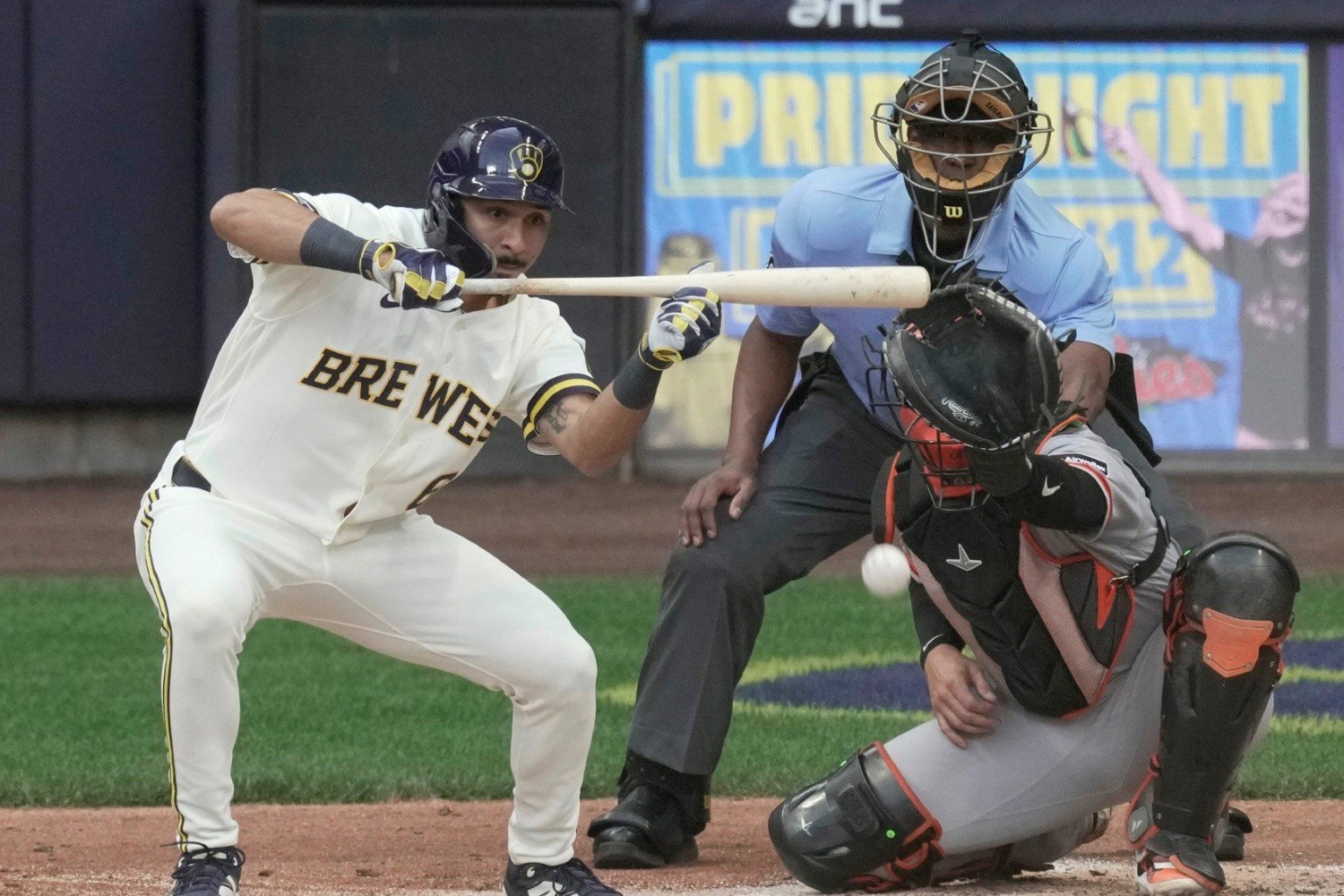 Throughout baseball history, there have been several bunt hit specialists. During the Dead Ball Era, guys like Wee Willie Keeler and Eddie Collins excelled at placing bunts and using their speed to reach base. Brett Butler had 42 bunt hits in 1992 alone. Juan Pierre totaled 201 in his career. I want to talk about the best bunter in baseball, but we need to start by making clear that we won't be besmirching the names of the best bunters in history by pretending that any of them are active now. The game has changed. To wit, David Hamilton is on pace for over 20 bunt hits in 2026, but that wouldn't even come especially close to the top spot for the last 20 years. That honor goes to Carlos Gómez, who—as a raw hitter and speed demon playing his home games on the artificial turf of the Metrodome—had a whopping 30 bunt hits in his first full season of 2008. However, since Gómez did that, no batter has collected more than 20. That new benchmark was set by Dee Strange-Gordon, in 2014. It's not a record, then, but Hamilton has a real chance to collect more hits via bunt than anyone has since CC Sabathia spent a summer in Milwaukee. The last time anyone bunted for a hit more than 20 times in a year, Pat Murphy was the head baseball coach at Arizona State University; Jesus Made was one year old; and Giannis Antetokounmpo had just picked up a basketball for the first time. No one is surprised that Hamilton is fast, of course. He's been one of the fastest people in professional baseball for his whole pro career, and he's exceptionally aggressive on the bases. However, it would have been hard to predict this level of impact from bunting when this season began. That required Hamilton to develop a real facility for the craft of the bunt, and for many a fast hitter in the game's history, that's proved easier said than done. Hamilton has it down, though—literally. He's become so adept at bunting the ball straight down that he often hits home plate or the hard-packed dirt directly in front of it. That's led to a handful of easy singles, because by the time the ball comes down from a 20-foot initial bounce, there's no time for a fielder to secure it and make a strong enough throw all the way to first base. R0JyenJfWGw0TUFRPT1fRGdNRVVWQldWbGNBQVZ0VFZ3QUhBUTlYQUFNTVV3SUFCRk5XVmxjRUJGVlhCRmRR (1).mp4 Generally speaking, that's not a repeatable skill, but that's been Hamilton's genius. He has seven bunt hits with an official batted-ball distance of 0, 1 or 2 feet, and even that undersells him. Here's a ball on which he so niftily dropped the bat onto a dipping breaking ball that Statcast read the first bounce as upward flight off the bat, calling a ball he clipped straight into the dirt an 18-foot blooper. MnI0T1BfWGw0TUFRPT1fVUZKU0J3Y0NBd3NBQ1ZJS1Z3QUhVMVJXQUFOUVVRVUFVRkFHQlFwV0JsRUJBRk1G.mp4 That ability to move with a ball and almost lay the bat atop it has been marvelous to watch. Hamilton can also punch it a little, though, when he needs to get it away from an especially athletic catcher or the third baseman is cheating in but not close to the line. MTZORHJfWGw0TUFRPT1fQVFaV1ZsUlhVQW9BV2xwV1ZnQUhVZzlXQUFNQlVsSUFBZ0VIQUZZRENGVUFBRlFB.mp4 He also shows the capacity to get on top of high fastballs, which can often foil eager bunters with plenty of speed. Getting this down is almost the whole challenge, though getting out of the box well on such a high, hard one can also be tricky. a0R2WEJfWGw0TUFRPT1fQUFVQVVnQUhYbEVBQ1ZZSFhnQUhVdzhIQUFOWEJRQUFWMVJXVWdJSFYxQlVBd1FD.mp4 This skill hasn't turned Hamilton into a star or anything. He hits at the bottom of the Brewers lineup, and he's now in a de facto platoon with Joey Ortiz at third base. He's slugging .322 on the year. However, he's also getting on at a .313 clip, thanks to decent plate discipline, some shielding from tough lefties, and those bunts. Moreover, a bunt single (or a walk, or a plunking, or the time he reached on catcher interference, for which the scoring rules give the batter no credit) is often a double for Hamilton, who already has 16 stolen bases in 21 tries. His numbers won't be pretty. He won't be promoted to the top of the lineup. He won't even play every day. In all likelihood, the only chance Hamilton has for any national attention this year is if he collects enough bunt hits to claim the most since Gómez or Butler. But because he's used the bunt to augment his skills while he works to develop the Brewers' patented patient, let-it-travel approach, Hamilton has helped the team score at the excellent clip they've achieved this year, no matter what his stat line says. It's great to see him keeping the art form alive, and even leading its revival. It's also (aesthetically) good, old-fashioned fun when he lays one down and beats it out. The Brewers will take the fun, but it's the value he's finding ways to generate that has them happiest of all to keep penciling him in against right-handed opposing pitchers.
 -
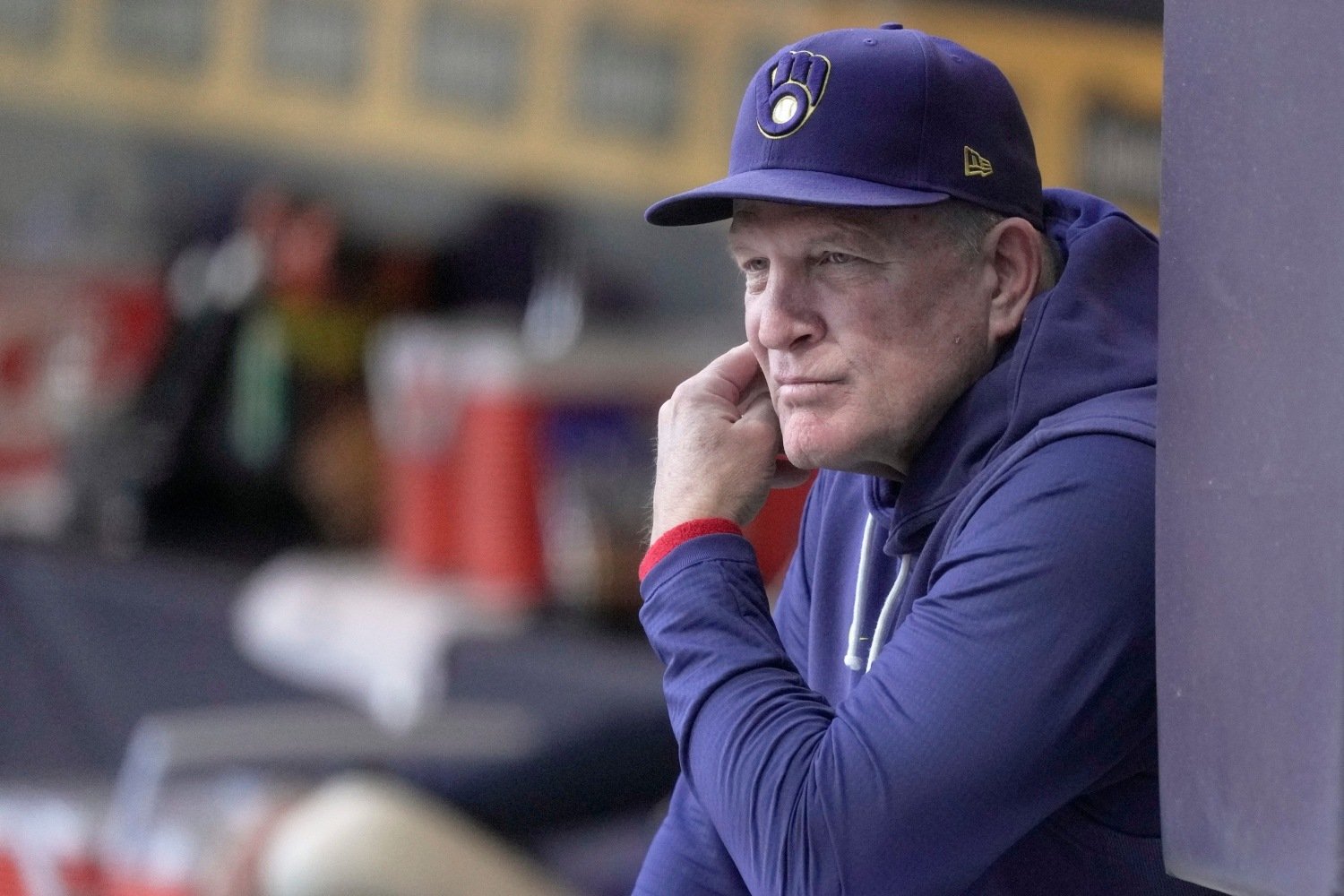 It would be hubris—hideous hubris—to suggest that the NL Central race is over already. Sure, the season starts early these days, so even though it's only June 18, the Brewers have already played 71 of their 162 games. Sure, they have a comfy 5.5-game lead in the standings table, and the teams who looked most likely to give them a run for their money this year (the Pirates and the Cubs) are even further back. Much can happen in 100 days, though, and that's how much time is left in this long season. One year and one day ago, I wrote an article entitled "The Brewers Can Absolutely Catch the Cubs," and that turned out to be true. They were 5.5 games behind Chicago at the time. That said, though: this thing is pretty close to over. The 2026 Cardinals aren't the 2025 Brewers; those Brewers were better. The 2026 Brewers aren't the 2025 Cubs; these Brewers are better. Milwaukee is a well-run, deep, dynamic team that hasn't even had everything go right this year, and that is dominating, anyway. They're 104-58 in their last 162 regular-season games. They're going to win this division. Even the news that Quinn Priester won't be back this year (hardly news, by now, really) doesn't change that. Specifically, FanGraphs gives the Crew an 83% chance to win the NL Central, the highest point they've reached this year. The projection system there gives the Cardinals, Cubs and Pirates each about a 5% chance to catch Milwaukee, but if you have an 83% chance of winning something, you'd also rather have three rivals dividing the rest of the pie than see one more serious one lurking. There's little the Crew could do to press the pedal harder to the floor, anyway, but these data make it clear: they don't need to. They can afford, for instance, the slightly risky maneuver of designating Luis Rengifo for assignment to install Cooper Pratt at shortstop. They can afford not only to lose Priester, but to give Jacob Misiorowski extra rest between starts so he can still be fully operational come October. This team is living on Easy Street. That doesn't mean they should slow down, or that they shouldn't be proactive as the summer wears on. Whether it's another prospect promotion that encourages medium-term development as well as patching a hole on the roster, or making a trade before the deadline on August 3, the team should work hard to improve their chances. It's just that the chances they work hard to improve should be those of remaining a thriving Midwestern hegemon for many more years, and those of winning a World Series soon. If they make a major addition later this summer, it should be someone who materially bolsters their hopes of getting past the Dodgers this time, rather than a depth starter or fortifying secondary setup man. If they turn over Sal Frelick's job to Luis Lara or replace Brandon Sproat in the starting rotation, it should be because that serves the long-term development of the players they most believe are part of their future, not because it might help them win one or two more games before the end of September. Some teams build great farm systems and string together a few division titles, but find they can't get over the hump in October. Eventually, many of them decide to go 'all-in' and swap some future wins for the chance at present glory. The Brewers almost certainly won't do that, and they almost certainly shouldn't, either. However, they also shouldn't remain unduly conservative. The freedom allowed by a nice cushion in the division standings isn't the freedom not to act; it's the freedom to act with precision and patience. This is the golden era of Milwaukee Brewers baseball. It's never been better than this, and it might never be better than this again. But 'this' isn't confined to this summer. It's also about last year, and the one before, and the two or three or five to come. The Brewers' responsibility over the next six weeks is to show that they understand all of that—that they prove to the fans that they understand the hunger for a championship, without overdoing it and giving up the delirious joy of a team that wins the division almost every year. That sounds difficult, but if you're the Brewers, it's really not. What was difficult was building the best organization in the game, in terms of scouting, development, instruction and execution. After doing all that, risk management is just about rolling the dice and not counting the bounces.
 -
Image courtesy of © Mark Hoffman/Milwaukee Journal Sentinel / USA TODAY NETWORK via Imagn Images It would be hubris—hideous hubris—to suggest that the NL Central race is over already. Sure, the season starts early these days, so even though it's only June 18, the Brewers have already played 71 of their 162 games. Sure, they have a comfy 5.5-game lead in the standings table, and the teams who looked most likely to give them a run for their money this year (the Pirates and the Cubs) are even further back. Much can happen in 100 days, though, and that's how much time is left in this long season. One year and one day ago, I wrote an article entitled "The Brewers Can Absolutely Catch the Cubs," and that turned out to be true. They were 5.5 games behind Chicago at the time. That said, though: this thing is pretty close to over. The 2026 Cardinals aren't the 2025 Brewers; those Brewers were better. The 2026 Brewers aren't the 2025 Cubs; these Brewers are better. Milwaukee is a well-run, deep, dynamic team that hasn't even had everything go right this year, and that is dominating, anyway. They're 104-58 in their last 162 regular-season games. They're going to win this division. Even the news that Quinn Priester won't be back this year (hardly news, by now, really) doesn't change that. Specifically, FanGraphs gives the Crew an 83% chance to win the NL Central, the highest point they've reached this year. The projection system there gives the Cardinals, Cubs and Pirates each about a 5% chance to catch Milwaukee, but if you have an 83% chance of winning something, you'd also rather have three rivals dividing the rest of the pie than see one more serious one lurking. There's little the Crew could do to press the pedal harder to the floor, anyway, but these data make it clear: they don't need to. They can afford, for instance, the slightly risky maneuver of designating Luis Rengifo for assignment to install Cooper Pratt at shortstop. They can afford not only to lose Priester, but to give Jacob Misiorowski extra rest between starts so he can still be fully operational come October. This team is living on Easy Street. That doesn't mean they should slow down, or that they shouldn't be proactive as the summer wears on. Whether it's another prospect promotion that encourages medium-term development as well as patching a hole on the roster, or making a trade before the deadline on August 3, the team should work hard to improve their chances. It's just that the chances they work hard to improve should be those of remaining a thriving Midwestern hegemon for many more years, and those of winning a World Series soon. If they make a major addition later this summer, it should be someone who materially bolsters their hopes of getting past the Dodgers this time, rather than a depth starter or fortifying secondary setup man. If they turn over Sal Frelick's job to Luis Lara or replace Brandon Sproat in the starting rotation, it should be because that serves the long-term development of the players they most believe are part of their future, not because it might help them win one or two more games before the end of September. Some teams build great farm systems and string together a few division titles, but find they can't get over the hump in October. Eventually, many of them decide to go 'all-in' and swap some future wins for the chance at present glory. The Brewers almost certainly won't do that, and they almost certainly shouldn't, either. However, they also shouldn't remain unduly conservative. The freedom allowed by a nice cushion in the division standings isn't the freedom not to act; it's the freedom to act with precision and patience. This is the golden era of Milwaukee Brewers baseball. It's never been better than this, and it might never be better than this again. But 'this' isn't confined to this summer. It's also about last year, and the one before, and the two or three or five to come. The Brewers' responsibility over the next six weeks is to show that they understand all of that—that they prove to the fans that they understand the hunger for a championship, without overdoing it and giving up the delirious joy of a team that wins the division almost every year. That sounds difficult, but if you're the Brewers, it's really not. What was difficult was building the best organization in the game, in terms of scouting, development, instruction and execution. After doing all that, risk management is just about rolling the dice and not counting the bounces. View full article

