Michael Trzinski
-
Posts
896 -
Joined
-
Last visited
-
Days Won
1
Content Type
Profiles
Forums
Blogs
Events
News
2026 Milwaukee Brewers Top Prospects Ranking
Milwaukee Brewers Videos
2022 Milwaukee Brewers Draft Picks
Milwaukee Brewers Free Agent & Trade Rumors, Notes, & Tidbits
Guides & Resources
2023 Milwaukee Brewers Draft Picks
2024 Milwaukee Brewers Draft Picks
The Milwaukee Brewers Players Project
2025 Milwaukee Brewers Draft Pick Tracker
2026 Milwaukee Brewers Draft Tracker: Picks & Bonuses
Store
Downloads
Gallery
Everything posted by Michael Trzinski
-
Image courtesy of Dave Eskenazi Collection In December 1967, at baseball’s Winter Meetings in Mexico City, a group led by William Daley, Dewey Soriano, and Max Soriano was awarded a major league franchise. Pacific Northwest Sports, Inc. was led by Daley’s $5.5 million, which gave him about 47% of the team’s ownership. A few months later, they announced that the team would be known as the Seattle Pilots and would play at the same stadium that the Triple-A Seattle Angels played in—Sick’s Stadium. The team was originally scheduled to begin play in 1971, but that schedule was advanced two years when Senator Stuart Symington of Missouri demanded that his Kansas City Royals begin play in 1969. Symington threatened to challenge baseball’s antitrust exemption with legislative action, and Kansas City was awarded the franchise. The American League then forced Seattle to begin play in 1971 rather than 1970 to keep the schedule balanced. The award was contingent on the Pilots making improvements on the stadium, including expanding the seating capacity from 11,000 to 30,000 by April 1969. This issue would be a bone of contention for the next two-plus years. Prior to the Pilots, the Seattle Rainiers and Seattle Angels of the Pacific Coast League called the 11,000-seat Sick’s Stadium home from 1938-68. The Seattle ownership group persuaded several major league baseball players, including Carl Yastrzemski, Mickey Mantle, and Joe DiMaggio, to stump for a new domed stadium in Seattle. The $40 million proposal was passed overwhelmingly by the Seattle electorate. So, it looked like a domed stadium was going to be a part of the bright baseball future in the Pacific Northwest. In late April 1968, the Pilots signed a 20-year contract for a spring training facility in Tempe, Arizona. Baseball Facilities, Inc. (BFI) agreed to construct a 6,000-seat stadium, two practice diamonds, dressing rooms, and other facilities for $500,000. In perhaps what was a harbinger of things to come for the Pilots, in December 1968, E.B. Smith, president of BFI, filed a $6 million lawsuit against the Seattle owners, saying they did not live up to an agreement to provide capital for the Tempe spring training facilities. Legal wrangling aside, the Pilots opened their spring training season on time. Nineteen sixty-nine was a crazy season on the baseball diamond. The Amazin’ Mets. The collapse of the Chicago Cubs. The Baltimore Orioles won 109 games but lost in the World Series. And the Seattle Pilots made their major league debut. After splitting a pair of games in Anaheim against the California Angels to begin the season, the Pilots played their first and only Opening Day at home on April 11 by defeating the Chicago White Sox, 7-0, before a crowd of 14,993. Since construction of some of the outfield seating hadn’t been completed, those who had left field bleacher tickets had to wait three innings for workmen to install the seats before they could even sit down. Eventually, that season, the stadium could seat 25,000, but many of those seats had obstructed views. When there was a large crowd, low water pressure in the main pipeline kept the toilets from working properly. The field had no photo wells, so photographers had to lug their equipment to the top of the grandstand roof to get their shots. A mirror was set in the press box so visiting team media could see the entire field. Suffice it to say, the place was a dump. The first-year team drew only 677,944 to the decrepit stadium, surprisingly ranking 20th of the 24 major league teams. The only teams that fared worse were the Cleveland Indians, Chicago White Sox, Philadelphia Phillies, and the expansion San Diego Padres. The other expansion teams did better: the Montreal Expos ranked 10th and drew 1.2 million, while the Kansas City Royals drew just over 900,000 and ranked 15th. The Pilots finished the year in last place in the AL West with a mark of 64-98-1. Rumblings between the team and the city of Seattle began late in the season. All was not well in the city of the Space Needle. It all started with Mayor Floyd Miller. On September 5, the mayor of Seattle sent a letter to the management of the Pilots demanding a $660,000 letter of credit and a $150,000 surety bond, payable to the city by September 8. The annual rent for the stadium ($165,000) was paid through December 31, 1969, but the remaining $660,000 under the five-year lease was still outstanding. Max Soriano, the secretary-treasurer of the team, said, “We don’t believe the stadium is complete yet. The agreement says it will be renovated to American League standards.” This was the first of many shots fired by all sides in the continuing saga of the Seattle Pilots. After the deadline had come and gone, Miller gave the Pilots two more weeks to pay. This time, Pilots president Dewey Soriano (Max’s brother) said, “We have paid our rent. There is no way we can be kept from playing. All that other stuff—we can get injunctions against that.” In mid-September, King County executive John Spellman, the Pilots, and other organizations began lease negotiations for the use of the multipurpose domed stadium in Seattle, which was expected to be completed by April 1973. On October 11, Dick Cullum, a sportswriter for the Minneapolis Tribune, reported that the American League “may oust the Seattle Pilots from membership.” The two main reasons for this unprecedented action were low attendance and the team's failure to act on providing a new stadium. There were also reports that Daley and the Milwaukee group led by Allan H. (Bud) Selig had a ‘handshake deal’ that would send the Pilots to Milwaukee for $10.8 million. Further reports said the deal was shot down by the American League, which wanted the Pilots to stay in Seattle and recommended that Daley find a buyer in the Seattle area, even if it was for less money. An American League meeting scheduled for October 21 included not only league and team personnel, but Mayor Miller and senators Henry Jackson and Warren Magnuson. At the meeting, AL president Joe Cronin listed three conditions for keeping the Pilots in Seattle: 1) Stadium expansion from 25,000 to 28,000, 2) Evidence that a domed stadium would be completed by 1973, and 3) Notification of a change of ownership. Points 1 and 3 would be easy; the second point might be a problem. A local buyer came forward and said he was ‘thinking’ about purchasing the team, so an owner change in Seattle could be an option. But a sale to the Texas group, led by Tommy Mercer and Lamar Hunt, or a sale to the Milwaukee group led by Selig could also be in the cards. When the season ended, it was a busy time for the Pilots' management team, which included Daley and the Soriano brothers. If the Pilots didn’t end up getting kicked out of the league, potential moves to either Dallas-Fort Worth or Milwaukee were discussed. There was scuttlebutt that a local Seattle group wanted in. There were still some options. In early November, Seattle theatre chain operator Fred Danz and Daley agreed to a purchase deal for a reported $10.5 million. Or did they? A day or two later, Danz told reporters, “It is premature to say we have an agreement. All we have is an opportunity to put together a package, and I’ll start meeting with local fellows to discuss it.” A week before Thanksgiving, Daley and the Danz group announced that 75% of the club’s stock would be exchanged for a sale price of $10.3 million, dependent on the approval of the American League at its Winter Meetings on December 4. In addition, it was reported that another buyer or buyers had offered as much as $13 million. Coming soon in Part Two, Milwaukee, Dallas-Fort Worth, and Seattle all clash to gain control of the franchise. View full article
-
Where's Tony Plush when you need him. 🫤
-
Looking forward to seeing him. If he can get it together, I'm sure he's in the 'ro.'
-
I have started on that...
-
At least Milwaukee didn't have a river that started on fire...lol. Although they did have one in Major League. 🔥
-
True, but those numbers are over 683 ABs, so if that is reduced to Turang's team-leading number (584), it is more like 2.5. But, maybe Vaughn can keep it up for a whole season. Time will tell!
-
Let's hope like hell that Vaughn can post somewhere around a 3.0 bWAR. That would be nice...
-
That does happen...lol. But a crappy showing will get him sent to Nashville for sure 😎
-
Image courtesy of © Dave Kallmann / Milwaukee Journal Sentinel / USA TODAY NETWORK via Imagn Images / © Dan Powers/USA TODAY NETWORK-Wisconsin / USA TODAY NETWORK With the minor league signing and non-roster invite extended to Reese McGuire earlier this week, the number of NRIs that will work out in the major league camp at American Family Fields of Phoenix was increased to 17 players. This group of players will typically include free agents who recently signed minor league contracts with the club, along with top prospects in the minor leagues. Here is a brief overview of the players invited. Brewers Pitchers RHP Gerson Garabito Garabito, 30, was signed to a minor league deal in December. He had an interesting journey last year, starting in the majors for the Rangers, but was sent down to Triple-A Round Rock after two appearances. Garabito made 10 starts there, posting an abysmal 8.53 ERA. Given his release, he signed with the Samsung Lions in the KBO. He made 15 starts for the Lions, going 4-4 with an ERA of 2.64. That was enough to pique the Brewers' interest for 2026. The veteran of 21 big-league appearances, he will start the season at Nashville but could get a call at some point from the Brewers. LHP Tate Kuehner Entering his fourth season in the Brewers organization, Kuehner spent most of last season at Double-A Biloxi, making 21 starts for the Shuckers, posting a record of 7-5 with an ERA of 2.50. The soon-to-be 25-year-old got promoted to Triple-A Nashville and made two starts there at the end of the season. Kuehner, a seventh-round pick in 2023, will most likely begin the season in Nashville but could get a late-season call-up to Milwaukee if he continues his success. LHP Drew Rom The extent of Rom’s major league experience consists of eight starts in 2023 for the Cardinals. He began his professional career with the Baltimore Orioles before getting traded to the Cardinals in 2023. The 26-year-old has been injury-prone, having suffered biceps and shoulder injuries in 2024 and 2025. He only hits 91 on the gun, but has a handful of secondary offerings that could make him an interesting pickup and another candidate for the Brewers' pitching lab after signing a minor league deal with the Brewers in mid-December. RHP Jacob Waguespack A recent signing, the 6-foot-6, 230-pound Waguespack has had a checkered career. He made 27 appearances (13 starts) with Toronto in 2019 and 2020 but then pitched for the Orix Buffaloes in Japan over the 2022 and 2023 seasons. Waguespack signed with Tampa Bay in early 2024 and made four appearances with the Rays before being sent down for the balance of the season. Shoulder problems limited him to 33 innings. Last year, Waguespack pitched well at Triple-A Durham but went on the shelf with an undisclosed injury in June and then was released in July. He signed with Philadelphia in August and made 11 appearances at Triple-A Lehigh Valley but was granted free agency after the season. Waguespack, 32, can pitch in multiple roles, offering the Brewers more organizational depth, at least for now. Brewers Catchers Reese McGuire The man they call ‘Pieces’ has nearly 400 games of big-league experience over eight seasons with Toronto, Boston, White Sox, and with the Cubs last year. Although the lefty hitter slashed only .226/.245/.444 over 44 games, he showed some pop with nine home runs in just 133 at-bats. Signed to a minor league deal a few days ago, McGuire now has a leg up on the back-up job behind ‘Wild Bill’ Contreras, possibly relegating Jeferson Quero back to Triple-A for additional seasoning. The 30-year-old McGuire was a first-round pick (14th overall) by the Pirates in 2013 but has never been anything more than a backup, a role that he would embrace with the Brewers. Darrien Miller The lefty-swinging Miller played the prior two seasons and Double-A Biloxi and hit a combined .203/.385/.308 over 719 plate appearances in 2024 and 2025. In his career, he has thrown out just 15% of runners trying to steal. One thing he can do is get on base, having drawn walks at a rate of nearly 17% while taking one for the team (HBP) once every 16 at-bats. Ouch. Soon to turn 25, Miller gets bumped down the depth chart with the signing of McGuire and could start the year in Nashville. But if Quero starts out in the minors, Miller either sees less playing time or will spend another year in Biloxi. Ramón Rodriguez Selected by the Los Angeles Dodgers in the 2016 MLB Draft, Rodriguez was later picked up by the Baltimore Orioles. Milwaukee picked him up after the 2023 campaign and had a nice year at High-A Wisconsin in 2024, bashing 10 home runs in just 74 games. He moved up to Double-A Biloxi in 2025 but suffered a season-ending Achilles injury in mid-May. If 100% healthy again, the 27-year-old Rodriguez is still one of the catchers blocked by the Contreras-McGuire-Quero trio at the top of the catcher depth chart. You can also throw Matt Wood and Marco Dinges into that second group. He most likely will play in Biloxi again. Matt Wood Now in his fifth year in the Brewers organization, Wood isn’t a prototypical power hitter but is a good gap hitter with doubles power. Over his career, he has drawn walks at a rate of 14%. Wood, who will turn 25 in March, started 2025 at High-A Wisconsin but moved up to Biloxi after just 30 games with the T-Rats. At the higher level, he batted .271/.371/.415 with 18 extra-base hits across 207 at-bats. Wood has a decent arm, having thrown out 27% of runners trying to steal on him in Double-A. Where will he start in 2026? Most likely in Biloxi, but he could begin in Music City. Brewers Infielders Luke Adams Also in his fifth year in the Brewers chain, Adams, 21, spent a half-season at Biloxi last year and is likely to begin there in 2026. He walked at a rate of 15% but struck out 22% of the time. Adams has 50 grade power, but it hasn’t really translated into home run numbers. He’s okay at either corner infield spot, and although he stole a combined 58 bases in his first two full seasons in the pros, he’s not gonna be a burner on the bases. Ranked the ninth-best prospect on Brewer Fanatic and 10th on MLB.com Top Prospects, Adams isn’t ready for prime time yet, but could be ready to take over at first base in 2027, especially if Andrew Vaughn regresses to his 2025 White Sox version or leaves in free agency. Jesús Made Made is the most anticipated Brewer since Jackson Chourio a couple of years ago. The switch-hitter has moved rapidly up the Brewers chain and won’t be 19 until early May 2026. He is ranked third on MLB.com’s Top 100 Prospects list and has a major league ETA of 2027. This year, he will most likely start at Biloxi to build on his five-game stint there at the end of last season. He is a plus runner and grades out at 55 in the field. Made has played mostly at short but also has experience at second and third. All eyes will be on this exciting youngster in Arizona this spring. Cooper Pratt Pratt is one of the three top SS prospects in the Brewers chain and is ranked number 64 on MLB.com’s Top Prospects list this year. Pratt is the closest of the trio to make the big leagues, at least at this point. His defensive tools (arm, fielding) grade out at 60, and he won a Minor League Gold Glove in 2024, so his defensive pedigree is solid. Pratt posted decent stats last year at Biloxi, especially in the walks department, drawing free passes at a rate of nearly 13% while only striking out at a 15% rate. The 21-year-old Pratt will most likely begin the season with Nashville, but has a great opportunity in spring training to cement his standing in the Brewers' shortstop pecking order. Brock Wilken Wilken was off to a good start at Biloxi last year, bashing 18 home runs in 65 games while drawing walks at a rate of 20% before being lost for two months with a dislocated left kneecap suffered in a locker room celebration. Unfortunately, he also struck out at a dismal 27% rate. Wilken returned for the last 16 games of the season but only batted .185 (10-for-54) with no homers. The 6-foot-4, 225-pound slugger is an average defender at third and only grades out at 30 for speed/base running, so his power will carry him as far as he can go. Wilken, 23, might start the season at Biloxi, but he could move up to Nashville at some point in the season, depending on his health. Brewers Outfielders Luis Lara The diminutive (5-foot-8, 167-pound) speedster will fit right in with the Brewers ‘Short Kings’ roster. Only 21, Lara played a full season at Biloxi last year and showed speed (44 steals) and gap power with 32 doubles. Lara has a 60 grade for running, arm, and fielding, and plays an excellent center field. He will never hit for power, but has some elite tools that will move him up. Nashville appears to be the starting destination this year for the switch-hitter. Brewers Infielders/Outfielders These four players have played both infield and outfield in their careers and should fit right in with their versatility. Eduardo Garcia The lanky (6-foot-3, 160-pound) Garcia is 23 and played most of the year at Appleton before moving up to Biloxi for the last six weeks of the season. Base stealing became part of his game last year as he stole 41 bases in 48 tries after only stealing a combined 39 bags in the previous four campaigns. Garcia has bounced around in the organization, having played for four years for the T-Rats and parts of two seasons in Biloxi. He has played almost every position except for catcher and pitcher in the minors, and at this point is strictly organizational depth. Greg Jones Soon to turn 28, the switch-hitter was signed to a minor league deal in early December. Jones has played very briefly in the bigs, appearing in nine games over the last two seasons with the Rockies and White Sox. Jones is another organizational piece for Milwaukee, but his speed, defense, and versatility will make him a valuable member at Nashville. His main positions are shortstop and center field. Eddys Leonard The well-traveled Leonard is now in his fourth organization with Milwaukee. Like many of the other Brewer NRIs, he is very versatile and has played every position except catcher, but has spent most of his time at short. Leonard, 25, has decent power, having hit 95 home runs in parts of seven minor league seasons. All his tools are average or a little above, but for now, he is going to be a ‘camp body’ and provide depth at Nashville. Jett Williams Last but not least, the 22-year-old will be one of the most-watched players at camp this year. Williams came to Milwaukee from the Mets, along with Brandon Sproat, in the Freddy Peralta and Tobias Myers deal. The 5-foot-7, 175-pounder offers speed and versatility and is ticketed for either center field or shortstop, but he can also play second. He stole at least 30 bases in two of his three seasons in the minors, with a high of 45 in 2023 between three teams in the Mets chain. Williams also exhibits a little pop and could be a 15-20 HR guy. Much has been written about Williams, and I offer an excellent piece by our @Jack Stern that will tell you more about him. Will Any of These Make the Brewers' 26-Man Roster? At this point, only McGuire is projected to make the 26-man Opening Day roster, displacing Jeferson Quero as the backup catcher. But a great spring by Quero could alter that plan. Likewise, Williams will likely battle Andruw Monasterio for the utility infielder spot. Williams could use a little seasoning as he only has 40 games worth of action at Triple-A. But again, a great showing in the Arizona camp could force the Brewers to keep him once the season starts. View full article
-
A Breakdown of the 17 Non-Roster Invites to Brewers Spring Training
Michael Trzinski posted an article in Brewers
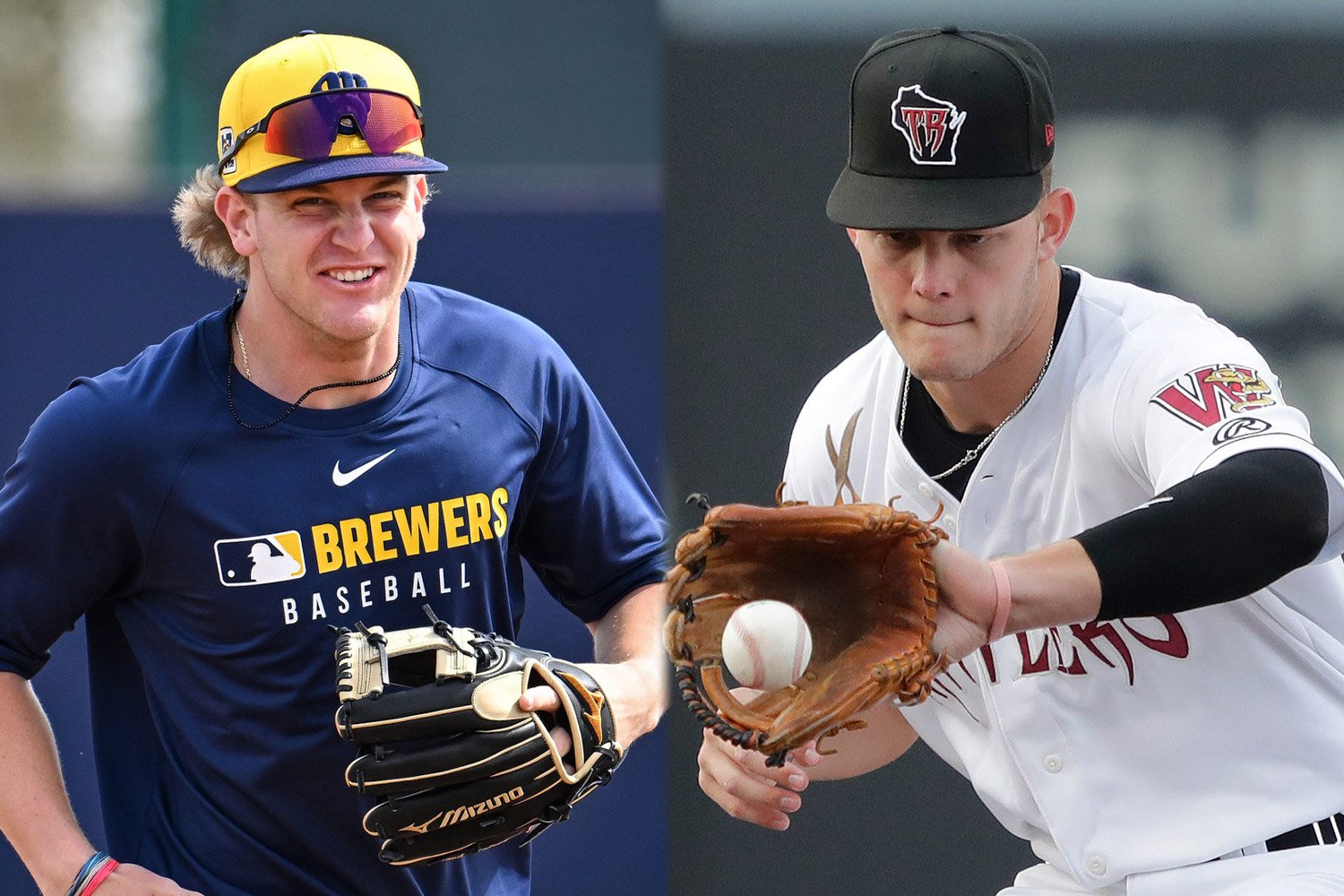 With the minor league signing and non-roster invite extended to Reese McGuire earlier this week, the number of NRIs that will work out in the major league camp at American Family Fields of Phoenix was increased to 17 players. This group of players will typically include free agents who recently signed minor league contracts with the club, along with top prospects in the minor leagues. Here is a brief overview of the players invited. Brewers Pitchers RHP Gerson Garabito Garabito, 30, was signed to a minor league deal in December. He had an interesting journey last year, starting in the majors for the Rangers, but was sent down to Triple-A Round Rock after two appearances. Garabito made 10 starts there, posting an abysmal 8.53 ERA. Given his release, he signed with the Samsung Lions in the KBO. He made 15 starts for the Lions, going 4-4 with an ERA of 2.64. That was enough to pique the Brewers' interest for 2026. The veteran of 21 big-league appearances, he will start the season at Nashville but could get a call at some point from the Brewers. LHP Tate Kuehner Entering his fourth season in the Brewers organization, Kuehner spent most of last season at Double-A Biloxi, making 21 starts for the Shuckers, posting a record of 7-5 with an ERA of 2.50. The soon-to-be 25-year-old got promoted to Triple-A Nashville and made two starts there at the end of the season. Kuehner, a seventh-round pick in 2023, will most likely begin the season in Nashville but could get a late-season call-up to Milwaukee if he continues his success. LHP Drew Rom The extent of Rom’s major league experience consists of eight starts in 2023 for the Cardinals. He began his professional career with the Baltimore Orioles before getting traded to the Cardinals in 2023. The 26-year-old has been injury-prone, having suffered biceps and shoulder injuries in 2024 and 2025. He only hits 91 on the gun, but has a handful of secondary offerings that could make him an interesting pickup and another candidate for the Brewers' pitching lab after signing a minor league deal with the Brewers in mid-December. RHP Jacob Waguespack A recent signing, the 6-foot-6, 230-pound Waguespack has had a checkered career. He made 27 appearances (13 starts) with Toronto in 2019 and 2020 but then pitched for the Orix Buffaloes in Japan over the 2022 and 2023 seasons. Waguespack signed with Tampa Bay in early 2024 and made four appearances with the Rays before being sent down for the balance of the season. Shoulder problems limited him to 33 innings. Last year, Waguespack pitched well at Triple-A Durham but went on the shelf with an undisclosed injury in June and then was released in July. He signed with Philadelphia in August and made 11 appearances at Triple-A Lehigh Valley but was granted free agency after the season. Waguespack, 32, can pitch in multiple roles, offering the Brewers more organizational depth, at least for now. Brewers Catchers Reese McGuire The man they call ‘Pieces’ has nearly 400 games of big-league experience over eight seasons with Toronto, Boston, White Sox, and with the Cubs last year. Although the lefty hitter slashed only .226/.245/.444 over 44 games, he showed some pop with nine home runs in just 133 at-bats. Signed to a minor league deal a few days ago, McGuire now has a leg up on the back-up job behind ‘Wild Bill’ Contreras, possibly relegating Jeferson Quero back to Triple-A for additional seasoning. The 30-year-old McGuire was a first-round pick (14th overall) by the Pirates in 2013 but has never been anything more than a backup, a role that he would embrace with the Brewers. Darrien Miller The lefty-swinging Miller played the prior two seasons and Double-A Biloxi and hit a combined .203/.385/.308 over 719 plate appearances in 2024 and 2025. In his career, he has thrown out just 15% of runners trying to steal. One thing he can do is get on base, having drawn walks at a rate of nearly 17% while taking one for the team (HBP) once every 16 at-bats. Ouch. Soon to turn 25, Miller gets bumped down the depth chart with the signing of McGuire and could start the year in Nashville. But if Quero starts out in the minors, Miller either sees less playing time or will spend another year in Biloxi. Ramón Rodriguez Selected by the Los Angeles Dodgers in the 2016 MLB Draft, Rodriguez was later picked up by the Baltimore Orioles. Milwaukee picked him up after the 2023 campaign and had a nice year at High-A Wisconsin in 2024, bashing 10 home runs in just 74 games. He moved up to Double-A Biloxi in 2025 but suffered a season-ending Achilles injury in mid-May. If 100% healthy again, the 27-year-old Rodriguez is still one of the catchers blocked by the Contreras-McGuire-Quero trio at the top of the catcher depth chart. You can also throw Matt Wood and Marco Dinges into that second group. He most likely will play in Biloxi again. Matt Wood Now in his fifth year in the Brewers organization, Wood isn’t a prototypical power hitter but is a good gap hitter with doubles power. Over his career, he has drawn walks at a rate of 14%. Wood, who will turn 25 in March, started 2025 at High-A Wisconsin but moved up to Biloxi after just 30 games with the T-Rats. At the higher level, he batted .271/.371/.415 with 18 extra-base hits across 207 at-bats. Wood has a decent arm, having thrown out 27% of runners trying to steal on him in Double-A. Where will he start in 2026? Most likely in Biloxi, but he could begin in Music City. Brewers Infielders Luke Adams Also in his fifth year in the Brewers chain, Adams, 21, spent a half-season at Biloxi last year and is likely to begin there in 2026. He walked at a rate of 15% but struck out 22% of the time. Adams has 50 grade power, but it hasn’t really translated into home run numbers. He’s okay at either corner infield spot, and although he stole a combined 58 bases in his first two full seasons in the pros, he’s not gonna be a burner on the bases. Ranked the ninth-best prospect on Brewer Fanatic and 10th on MLB.com Top Prospects, Adams isn’t ready for prime time yet, but could be ready to take over at first base in 2027, especially if Andrew Vaughn regresses to his 2025 White Sox version or leaves in free agency. Jesús Made Made is the most anticipated Brewer since Jackson Chourio a couple of years ago. The switch-hitter has moved rapidly up the Brewers chain and won’t be 19 until early May 2026. He is ranked third on MLB.com’s Top 100 Prospects list and has a major league ETA of 2027. This year, he will most likely start at Biloxi to build on his five-game stint there at the end of last season. He is a plus runner and grades out at 55 in the field. Made has played mostly at short but also has experience at second and third. All eyes will be on this exciting youngster in Arizona this spring. Cooper Pratt Pratt is one of the three top SS prospects in the Brewers chain and is ranked number 64 on MLB.com’s Top Prospects list this year. Pratt is the closest of the trio to make the big leagues, at least at this point. His defensive tools (arm, fielding) grade out at 60, and he won a Minor League Gold Glove in 2024, so his defensive pedigree is solid. Pratt posted decent stats last year at Biloxi, especially in the walks department, drawing free passes at a rate of nearly 13% while only striking out at a 15% rate. The 21-year-old Pratt will most likely begin the season with Nashville, but has a great opportunity in spring training to cement his standing in the Brewers' shortstop pecking order. Brock Wilken Wilken was off to a good start at Biloxi last year, bashing 18 home runs in 65 games while drawing walks at a rate of 20% before being lost for two months with a dislocated left kneecap suffered in a locker room celebration. Unfortunately, he also struck out at a dismal 27% rate. Wilken returned for the last 16 games of the season but only batted .185 (10-for-54) with no homers. The 6-foot-4, 225-pound slugger is an average defender at third and only grades out at 30 for speed/base running, so his power will carry him as far as he can go. Wilken, 23, might start the season at Biloxi, but he could move up to Nashville at some point in the season, depending on his health. Brewers Outfielders Luis Lara The diminutive (5-foot-8, 167-pound) speedster will fit right in with the Brewers ‘Short Kings’ roster. Only 21, Lara played a full season at Biloxi last year and showed speed (44 steals) and gap power with 32 doubles. Lara has a 60 grade for running, arm, and fielding, and plays an excellent center field. He will never hit for power, but has some elite tools that will move him up. Nashville appears to be the starting destination this year for the switch-hitter. Brewers Infielders/Outfielders These four players have played both infield and outfield in their careers and should fit right in with their versatility. Eduardo Garcia The lanky (6-foot-3, 160-pound) Garcia is 23 and played most of the year at Appleton before moving up to Biloxi for the last six weeks of the season. Base stealing became part of his game last year as he stole 41 bases in 48 tries after only stealing a combined 39 bags in the previous four campaigns. Garcia has bounced around in the organization, having played for four years for the T-Rats and parts of two seasons in Biloxi. He has played almost every position except for catcher and pitcher in the minors, and at this point is strictly organizational depth. Greg Jones Soon to turn 28, the switch-hitter was signed to a minor league deal in early December. Jones has played very briefly in the bigs, appearing in nine games over the last two seasons with the Rockies and White Sox. Jones is another organizational piece for Milwaukee, but his speed, defense, and versatility will make him a valuable member at Nashville. His main positions are shortstop and center field. Eddys Leonard The well-traveled Leonard is now in his fourth organization with Milwaukee. Like many of the other Brewer NRIs, he is very versatile and has played every position except catcher, but has spent most of his time at short. Leonard, 25, has decent power, having hit 95 home runs in parts of seven minor league seasons. All his tools are average or a little above, but for now, he is going to be a ‘camp body’ and provide depth at Nashville. Jett Williams Last but not least, the 22-year-old will be one of the most-watched players at camp this year. Williams came to Milwaukee from the Mets, along with Brandon Sproat, in the Freddy Peralta and Tobias Myers deal. The 5-foot-7, 175-pounder offers speed and versatility and is ticketed for either center field or shortstop, but he can also play second. He stole at least 30 bases in two of his three seasons in the minors, with a high of 45 in 2023 between three teams in the Mets chain. Williams also exhibits a little pop and could be a 15-20 HR guy. Much has been written about Williams, and I offer an excellent piece by our @Jack Stern that will tell you more about him. Will Any of These Make the Brewers' 26-Man Roster? At this point, only McGuire is projected to make the 26-man Opening Day roster, displacing Jeferson Quero as the backup catcher. But a great spring by Quero could alter that plan. Likewise, Williams will likely battle Andruw Monasterio for the utility infielder spot. Williams could use a little seasoning as he only has 40 games worth of action at Triple-A. But again, a great showing in the Arizona camp could force the Brewers to keep him once the season starts.
- 2 comments
-
- 2
-

-
- tate kuehner
- jacob waguespack
- (and 8 more)
-
Thank you!
-
Image courtesy of © Dale Guldan / USA TODAY NETWORK This multi-part series talks about how the Brewers got to the World Series and offers a timeline of the 1982 campaign, including player profiles, game recaps, and other events that affected the season. Part 1 Part 2 Part 3 Part 4 Part 5 Part 6 Part 7 Part 8 The Series So Far The 1982 World Series had its ebbs and flows, with the Brewers winning Game 1 by a 10-0 margin, and then two wins by the Cardinals, followed by two wins by the Brewers that resulted in a 3-2 lead for Milwaukee. The Brewers were tough at home during the playoffs, winning five of six contests at County Stadium, but struggled somewhat on the road, winning one while losing three entering the final two games of the Series. Game 6: Stuper pitches a gem in Cards' 13-1 shellacking Milwaukee (Don Sutton) at St. Louis (John Stuper) The middle part of the game was delayed twice due to rain, for more than 2 ½ hours in total, but it didn’t bother the Cardinals. They scored a baker’s dozen in a rout that tied the Series at three games each. While Don Sutton clearly didn’t have his best stuff, allowing seven hits and seven runs in 4 1/3 innings, John Stuper was lights out for the Cardinals. The 25-year-old rookie right-hander pitched a complete-game four-hitter despite the two rain delays, which stretched the game to an even five hours. Milwaukee’s defense didn’t help matters, as Robin Yount and Jim Gantner—normally sure-handed glove men—had two miscues apiece. “I think the wet turf hurt them a little bit,” said manager Whitey Herzog with a chuckle. “We watered it down all day long.” The Cards scored two runs in the second inning, highlighted by Tom Herr’s RBI double. In the fourth, Darrell Porter hit a two-run homer, and Herr’s squeeze bunt scored Dane Iorg to make it 5-0. Keith Hernandez hit a two-run homer in the bottom of the fifth to make it 7-0, and heavy rain prompted a 26-minute delay. One inning later, Doc Medich came on and allowed one run on a sequence that looked like this: double, wild pitch, single, single, wild pitch, groundout. The game was halted by a downpour for a second time. It resumed at 11:40 pm Central, and Medich was greeted rudely, as St. Louis scored five more times with run-scoring singles by Hernandez (two RBI) and George Hendrick and a booted grounder by Gantner that allowed two more runners to cross the plate. In the top of the ninth, the Brewers scored their lone run on a double by Gantner, a single by Paul Molitor, and a wild pitch that allowed Gantner to score. The talk after the game involved the rain, and the way baseball commissioner Bowie Kuhn handled it. "Kuhn took a risk, a chance that players could have [gotten] hurt and not been ready for the seventh game of the World Series,” Medich said after the game. The commissioner was stubborn, all right. “We’re going to play this game until it is completed—even if we have to wait a great many more hours,” Kuhn said in an interview during the game. They waited, then played, until past midnight, even though the result was beyond doubt much earlier. Game 7: Andujar, Sutter shut down Brewers to win Fall Classic Milwaukee (Pete Vuckovich) at St. Louis (Joaquín Andujar) The Brewers had a 3-1 lead going into the bottom of the sixth, needing just 12 outs to win the franchise’s first World Series championship. Unfortunately for the Brewers, the Cardinals scored three times in the bottom half of the sixth and twice in the eighth on their way to a 6-3 victory, earning their ninth title in front of 53,723 screaming maniacs at Busch Stadium in St. Louis. The game was scoreless when the Cardinals came to bat in the bottom of the fourth against Pete Vuckovich. With runners on the corners and one out, Lonnie Smith beat out a groundball to shortstop, scoring Willie McGee. Milwaukee answered immediately against Joaquín Andujar. In the top of the fifth, Ben Oglivie slammed Andujar’s first offering into the right-field stands to quiet the raucous crowd. Vuckovich allowed eight hits and two walks over the first five frames, but held the Cardinals to a single run. The Brewers tagged Andujar for a pair of runs in the top of the sixth. Gantner ambushed his first pitch for a double to right-center. Molitor laid a bunt down the third-base line, but Andujar’s throw to first sailed wide, allowing Gantner to score and Molitor to go to second. Yount beat out an infield chopper that moved Molitor to third. Cecil Cooper hit a sac fly to left that scored Molitor, to extend the lead to 3-1. In the bottom of the sixth, Vuckovich got the first out, but then allowed an Ozzie Smith single and a double by Lonnie Smith. That was all for ‘Vuke,’ who was replaced by Bob McClure. Pinch-hitter Gene Tenace drew a walk and was replaced by pinch-runner Mike Ramsey. Hernandez tied the game with a single to center that scored both Smiths. The Cards took the lead when Hendrick’s single to right scored Ramsey. Haas began the bottom of the eighth by giving up a ground-rule double to Lonnie Smith. Ramsey struck out, Hernandez drew an intentional walk, and Hendrick flied out to center for the second out. With lefthanders Porter and Braun coming up, Brewers manager Harvey Kuenn brought in Mike Caldwell, who had thrown 127 pitches in Game 5 just three days earlier. Caldwell allowed RBI singles to both Porter and Braun, expanding the lead to 6-3. Bruce Sutter, who had retired the side in the eighth, repeated that feat in the ninth to earn his second save of the Series and give the Cardinals their first title since 1967. The city of Milwaukee, which had already waited 10 years longer, still hasn't broken their drought. The Brewers were led by Molitor, who had two hits. For St. Louis, Lonnie Smith had three hits, while Ozzie Smith, Hernandez, Hendrick, and Iorg each had a pair of hits. Andujar allowed seven hits and three runs in seven innings, coming back from the line drive hit off his leg in Game 3. Porter, who batted .286 (8-for-28) with two doubles, a homer, and five RBIs, was named World Series Most Valuable Player. While St. Louis would return to the Fall Classic six more times and win two of them (2006, 2011), the Brewers have not returned. The closest they have come is losing three times in National League Championship Series, including to the Cardinals again in 2011. But no matter their success, the 1982 Brewers team was one of the best Brewers teams in franchise history. Maybe, soon, the team can have another campaign as magical, but for now, Harvey's Wallbangers remain the most memorable and beloved group ever to don the blue and yellow. View full article
-
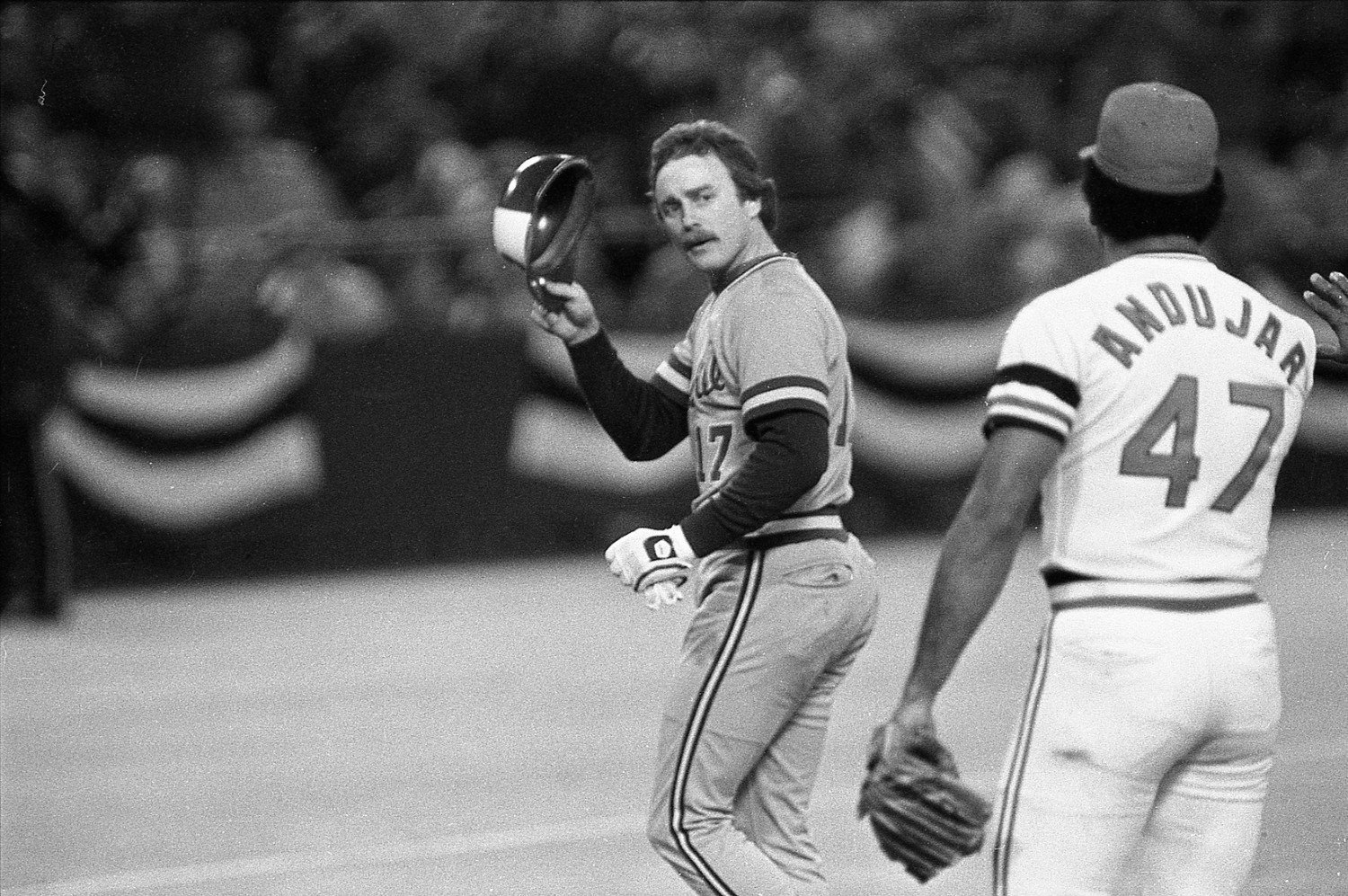 This multi-part series talks about how the Brewers got to the World Series and offers a timeline of the 1982 campaign, including player profiles, game recaps, and other events that affected the season. Part 1 Part 2 Part 3 Part 4 Part 5 Part 6 Part 7 Part 8 The Series So Far The 1982 World Series had its ebbs and flows, with the Brewers winning Game 1 by a 10-0 margin, and then two wins by the Cardinals, followed by two wins by the Brewers that resulted in a 3-2 lead for Milwaukee. The Brewers were tough at home during the playoffs, winning five of six contests at County Stadium, but struggled somewhat on the road, winning one while losing three entering the final two games of the Series. Game 6: Stuper pitches a gem in Cards' 13-1 shellacking Milwaukee (Don Sutton) at St. Louis (John Stuper) The middle part of the game was delayed twice due to rain, for more than 2 ½ hours in total, but it didn’t bother the Cardinals. They scored a baker’s dozen in a rout that tied the Series at three games each. While Don Sutton clearly didn’t have his best stuff, allowing seven hits and seven runs in 4 1/3 innings, John Stuper was lights out for the Cardinals. The 25-year-old rookie right-hander pitched a complete-game four-hitter despite the two rain delays, which stretched the game to an even five hours. Milwaukee’s defense didn’t help matters, as Robin Yount and Jim Gantner—normally sure-handed glove men—had two miscues apiece. “I think the wet turf hurt them a little bit,” said manager Whitey Herzog with a chuckle. “We watered it down all day long.” The Cards scored two runs in the second inning, highlighted by Tom Herr’s RBI double. In the fourth, Darrell Porter hit a two-run homer, and Herr’s squeeze bunt scored Dane Iorg to make it 5-0. Keith Hernandez hit a two-run homer in the bottom of the fifth to make it 7-0, and heavy rain prompted a 26-minute delay. One inning later, Doc Medich came on and allowed one run on a sequence that looked like this: double, wild pitch, single, single, wild pitch, groundout. The game was halted by a downpour for a second time. It resumed at 11:40 pm Central, and Medich was greeted rudely, as St. Louis scored five more times with run-scoring singles by Hernandez (two RBI) and George Hendrick and a booted grounder by Gantner that allowed two more runners to cross the plate. In the top of the ninth, the Brewers scored their lone run on a double by Gantner, a single by Paul Molitor, and a wild pitch that allowed Gantner to score. The talk after the game involved the rain, and the way baseball commissioner Bowie Kuhn handled it. "Kuhn took a risk, a chance that players could have [gotten] hurt and not been ready for the seventh game of the World Series,” Medich said after the game. The commissioner was stubborn, all right. “We’re going to play this game until it is completed—even if we have to wait a great many more hours,” Kuhn said in an interview during the game. They waited, then played, until past midnight, even though the result was beyond doubt much earlier. Game 7: Andujar, Sutter shut down Brewers to win Fall Classic Milwaukee (Pete Vuckovich) at St. Louis (Joaquín Andujar) The Brewers had a 3-1 lead going into the bottom of the sixth, needing just 12 outs to win the franchise’s first World Series championship. Unfortunately for the Brewers, the Cardinals scored three times in the bottom half of the sixth and twice in the eighth on their way to a 6-3 victory, earning their ninth title in front of 53,723 screaming maniacs at Busch Stadium in St. Louis. The game was scoreless when the Cardinals came to bat in the bottom of the fourth against Pete Vuckovich. With runners on the corners and one out, Lonnie Smith beat out a groundball to shortstop, scoring Willie McGee. Milwaukee answered immediately against Joaquín Andujar. In the top of the fifth, Ben Oglivie slammed Andujar’s first offering into the right-field stands to quiet the raucous crowd. Vuckovich allowed eight hits and two walks over the first five frames, but held the Cardinals to a single run. The Brewers tagged Andujar for a pair of runs in the top of the sixth. Gantner ambushed his first pitch for a double to right-center. Molitor laid a bunt down the third-base line, but Andujar’s throw to first sailed wide, allowing Gantner to score and Molitor to go to second. Yount beat out an infield chopper that moved Molitor to third. Cecil Cooper hit a sac fly to left that scored Molitor, to extend the lead to 3-1. In the bottom of the sixth, Vuckovich got the first out, but then allowed an Ozzie Smith single and a double by Lonnie Smith. That was all for ‘Vuke,’ who was replaced by Bob McClure. Pinch-hitter Gene Tenace drew a walk and was replaced by pinch-runner Mike Ramsey. Hernandez tied the game with a single to center that scored both Smiths. The Cards took the lead when Hendrick’s single to right scored Ramsey. Haas began the bottom of the eighth by giving up a ground-rule double to Lonnie Smith. Ramsey struck out, Hernandez drew an intentional walk, and Hendrick flied out to center for the second out. With lefthanders Porter and Braun coming up, Brewers manager Harvey Kuenn brought in Mike Caldwell, who had thrown 127 pitches in Game 5 just three days earlier. Caldwell allowed RBI singles to both Porter and Braun, expanding the lead to 6-3. Bruce Sutter, who had retired the side in the eighth, repeated that feat in the ninth to earn his second save of the Series and give the Cardinals their first title since 1967. The city of Milwaukee, which had already waited 10 years longer, still hasn't broken their drought. The Brewers were led by Molitor, who had two hits. For St. Louis, Lonnie Smith had three hits, while Ozzie Smith, Hernandez, Hendrick, and Iorg each had a pair of hits. Andujar allowed seven hits and three runs in seven innings, coming back from the line drive hit off his leg in Game 3. Porter, who batted .286 (8-for-28) with two doubles, a homer, and five RBIs, was named World Series Most Valuable Player. While St. Louis would return to the Fall Classic six more times and win two of them (2006, 2011), the Brewers have not returned. The closest they have come is losing three times in National League Championship Series, including to the Cardinals again in 2011. But no matter their success, the 1982 Brewers team was one of the best Brewers teams in franchise history. Maybe, soon, the team can have another campaign as magical, but for now, Harvey's Wallbangers remain the most memorable and beloved group ever to don the blue and yellow.
 -
My thought was that it is possible that Ashby or Hall get swapped into the rotation for Sproat, Henderson, or Patrick, just to even out the bullpen mix.
- 17 replies
-
- 2
-
-
- jett williams
- brandon sproat
- (and 2 more)
-
Image courtesy of © Michael McLoone-Imagn Images As Opening Day is about 50 days away, we offer the third version of the 2026 Brewers Opening Day roster projection. The construction of the roster could (and probably will) change between now and then, but here is our best guess for what your Milwaukee Brewers roster will look like on March 26 against the Chicago White Sox. Just over a month ago, we published V 2.0. Here is the newest iteration. PITCHERS Starting Rotation (5) Brandon Woodruff Quinn Priester Jacob Misiorowski Chad Patrick Logan Henderson Big changes have taken place over the last month, as pitchers Freddy Peralta and Tobias Myers were traded to the New York Mets for pitcher Brandon Sproat and infielder/outfielder Jett Williams. Sproat is on the 40-man roster, and will be given every opportunity to make the 26-man roster to start the season. Sproat and Henderson will most likely battle for the final spot in the starting rotation, although Robert Gasser and Coleman Crow will press for inclusion, too. If one or more of these five falters, the Brewers have some depth in the minors to buttress the rotation, in addition to Gasser or Crow. Carlos Rodriguez had a cup of coffee in Milwaukee in each of the last two seasons and shows potential—although perhaps as a long reliever, rather than a true starter. Left-handers Tate Kuehner and Drew Rom and righty Gerson Garabito will be non-roster invites, but it would take a major disaster for any of those three to make the Opening Day roster this year. V 3.0 changes: Peralta out, Henderson in. Bullpen (8) Grant Anderson Aaron Ashby (L) DL Hall (L) Jared Koenig (L) Trevor Megill Abner Uribe Rob Zastryzny (L) Ángel Zerpa (L) We had the optionable Myers down as likely to be optioned, anyway, so this group remains intact from the last projection. It's the most likely to see a change, as bullpens always are, but that change might not be an especially significant one. V 3.0 changes: NONE. CATCHERS (2) William Contreras Jeferson Quero No surprises here. The team could still spring one by adding an experienced backup to give Quero more playing time in the minors, but based on what they have, there's no alternative to this plan. V 3.0 changes: NONE. INFIELDERS (6) Andrew Vaughn (1B) Brice Turang (2B) Caleb Durbin (3B) Joey Ortiz (SS) Jake Bauers (1B-OF) Andruw Monasterio (INF) Williams is the flashy new wild card in this mix, unless you count him as part of the outfield mix, instead. Either way, he's unlikely to make the major-league roster, and no one important has come or gone from the group above since the last time we did this. V 3.0 changes: NONE. OUTFIELDERS (5) Sal Frelick Jackson Chourio Christian Yelich Blake Perkins Garrett Mitchell Brandon Lockridge, Steward Berroa, and free-agent signee Akil Baddoo are all on the 40-man, but this quintet has the inside track. Our Jack Stern wonders if center field might be the spot for Chourio. Yelich can play left in a pinch, but his best defensive days are behind him. Perkins and Mitchell will battle for the ‘8’ spot on the diamond. By midseason, Williams could be in that rotation, too. V 3.0 changes: NONE. A lot can happen over the next month, as the Brewers could add or subtract more players through free agency or trade. This version of the projected Opening Day roster could very well change. Or it may not. The Peralta deal certainly made things more interesting, though, in each department of the roster. What do you think about this 26-man? Am I missing anybody? Who is on your 26-man? Feel free to start the conversation in the comments section. View full article
-
2026 Milwaukee Brewers Opening Day Roster Projection, v. 3.0
Michael Trzinski posted an article in Brewers
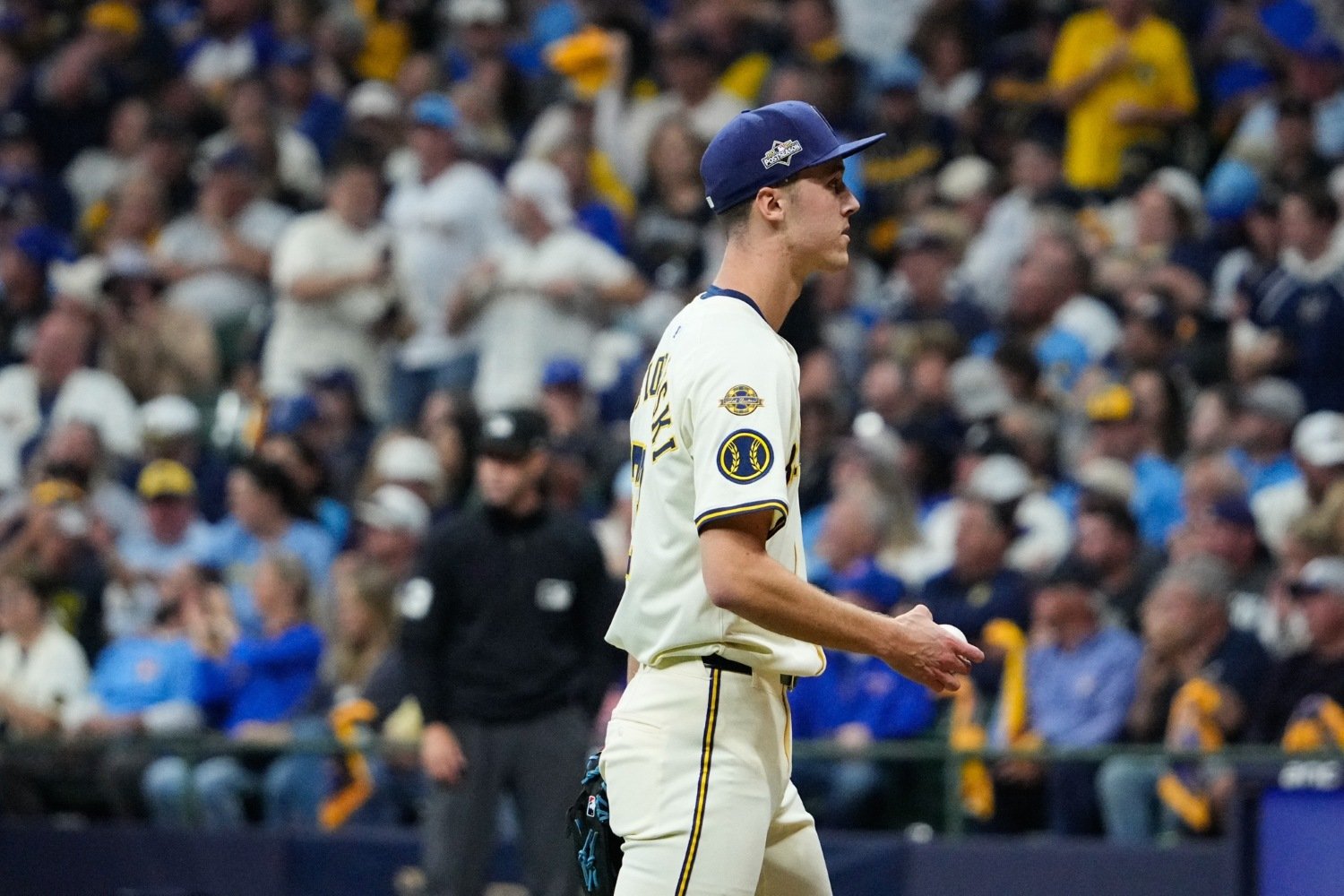 As Opening Day is about 50 days away, we offer the third version of the 2026 Brewers Opening Day roster projection. The construction of the roster could (and probably will) change between now and then, but here is our best guess for what your Milwaukee Brewers roster will look like on March 26 against the Chicago White Sox. Just over a month ago, we published V 2.0. Here is the newest iteration. PITCHERS Starting Rotation (5) Brandon Woodruff Quinn Priester Jacob Misiorowski Chad Patrick Logan Henderson Big changes have taken place over the last month, as pitchers Freddy Peralta and Tobias Myers were traded to the New York Mets for pitcher Brandon Sproat and infielder/outfielder Jett Williams. Sproat is on the 40-man roster, and will be given every opportunity to make the 26-man roster to start the season. Sproat and Henderson will most likely battle for the final spot in the starting rotation, although Robert Gasser and Coleman Crow will press for inclusion, too. If one or more of these five falters, the Brewers have some depth in the minors to buttress the rotation, in addition to Gasser or Crow. Carlos Rodriguez had a cup of coffee in Milwaukee in each of the last two seasons and shows potential—although perhaps as a long reliever, rather than a true starter. Left-handers Tate Kuehner and Drew Rom and righty Gerson Garabito will be non-roster invites, but it would take a major disaster for any of those three to make the Opening Day roster this year. V 3.0 changes: Peralta out, Henderson in. Bullpen (8) Grant Anderson Aaron Ashby (L) DL Hall (L) Jared Koenig (L) Trevor Megill Abner Uribe Rob Zastryzny (L) Ángel Zerpa (L) We had the optionable Myers down as likely to be optioned, anyway, so this group remains intact from the last projection. It's the most likely to see a change, as bullpens always are, but that change might not be an especially significant one. V 3.0 changes: NONE. CATCHERS (2) William Contreras Jeferson Quero No surprises here. The team could still spring one by adding an experienced backup to give Quero more playing time in the minors, but based on what they have, there's no alternative to this plan. V 3.0 changes: NONE. INFIELDERS (6) Andrew Vaughn (1B) Brice Turang (2B) Caleb Durbin (3B) Joey Ortiz (SS) Jake Bauers (1B-OF) Andruw Monasterio (INF) Williams is the flashy new wild card in this mix, unless you count him as part of the outfield mix, instead. Either way, he's unlikely to make the major-league roster, and no one important has come or gone from the group above since the last time we did this. V 3.0 changes: NONE. OUTFIELDERS (5) Sal Frelick Jackson Chourio Christian Yelich Blake Perkins Garrett Mitchell Brandon Lockridge, Steward Berroa, and free-agent signee Akil Baddoo are all on the 40-man, but this quintet has the inside track. Our Jack Stern wonders if center field might be the spot for Chourio. Yelich can play left in a pinch, but his best defensive days are behind him. Perkins and Mitchell will battle for the ‘8’ spot on the diamond. By midseason, Williams could be in that rotation, too. V 3.0 changes: NONE. A lot can happen over the next month, as the Brewers could add or subtract more players through free agency or trade. This version of the projected Opening Day roster could very well change. Or it may not. The Peralta deal certainly made things more interesting, though, in each department of the roster. What do you think about this 26-man? Am I missing anybody? Who is on your 26-man? Feel free to start the conversation in the comments section.
- 17 comments
-
- 2
-
-
- jett williams
- brandon sproat
- (and 2 more)
-
Image courtesy of © The Milwaukee Journal Sentinel-USA TODAY NETWORK This multi-part series talks about how the Brewers got to the World Series and offers a timeline of the 1982 campaign, including player profiles, game recaps, and other events that affected the season. Part 1 Part 2 Part 3 Part 4 Part 5 Part 6 Part 7 Part 8 Game 3: McGee’s two homers lead Cards past Brewers St. Louis (Joaquín Andujar, 15-10) at Milwaukee (Pete Vuckovich, 18-6) Willie McGee smacked a pair of round-trippers in the Cardinals' 6-2 victory, giving St. Louis a 2-1 lead in the Series. He also played Gold Glove defense, robbing at least one home run while making another stellar grab. During the regular season, McGee hit just four home runs in 422 at-bats. After Pete Vuckovich retired the Cardinals in order in the opening inning in front of a County Stadium-record crowd of 56,556, Paul Molitor led off the bottom half with a long drive to center field that had extra bases written all over it. McGee raced back and made a nice leaping grab in front of the ‘402’ sign, much to the disappointment of the large gathering. Both Joaquín Andujar and Vuckovich were formidable in the first four innings, with St. Louis managing only a single (more about that later) and a walk, while Milwaukee had a double and a walk, but no runs to show for it. George Hendrick led off the second with a high chopper down the third-base line. Molitor gloved it waist-high and fired it to Cecil Cooper at first. The throw pulled Cooper off the bag toward foul ground, and Hendrick beat the throw by a quarter-step. First-base ump Dave Phillips waved off the play, thinking the ball was foul. But when third-base ump Jim Evans came over and stated it was a fair ball, Phillips called the runner safe. Manager Harvey Kuenn came out to argue, but after talking with Cooper and Hendrick, who was chuckling, went back to the dugout, shaking his head. Hendrick was given a base hit, snapping an 0-for-7 slump. Vuckovich got out of the inning with three ground ball outs. The Cardinals got on the board first in the top of the fifth. Lonnie Smith walked, and Dane Iorg reached on an error by Cooper, bringing up McGee. Batting left-handed against Vuckovich, McGee ripped the first pitch over the ‘362’ sign in right-center for a three-run homer. The score was still 3-0 when the Cards tacked on two more runs in the seventh. Smith lined a ball to the wall in right-center with one out, and when the throw to third from Jim Gantner skipped into the dugout, Smith trotted home with the fourth run. Two batters later, McGee struck again off ‘Vuke,’ stroking the ball over the right-field fence to make it 5-0. In the bottom half of the seventh, Ted Simmons lined a ball off Andujar’s right knee, allowing Simmons to reach first base. Jim Kaat replaced Andujar and gave up a single to Thomas to put runners at first and second. When right-handed hitting Don Money was announced as a pinch-hitter, Doug Bair entered the game for St. Louis. He walked Money to load the bases. Closer Bruce Sutter came in and got Charlie Moore on a foul pop to third, ending the promising frame. The Brewers finally got to Sutter in the eighth, when Robin Yount walked and Cooper sent a fly ball out of the park in right field to cut the lead to 5-2. St. Louis got back one run in the top of the ninth, however, when Ozzie Smith walked with the bases loaded, forcing in Hendrick to make it 6-2, which would be the final. McGee went 2-for-4 with four RBIs. Andujar allowed three hits and one walk in 6 1/3 innings before leaving with the injured leg. For Milwaukee, Gantner had a pair of hits. Game 4: Six-run frame turns the table on St. Louis St. Louis (Dave LaPoint, 9-3) at Milwaukee (Moose Haas, 11-8) The St. Louis Cardinals scored four runs in the first two innings to take the air out of the Milwaukee crowd of 56,560 in Game 4. Hendrick had an RBI single in the first, and then Tom Herr hit a sacrifice fly to deep center in the second inning that scored speedsters McGee and Ozzie Smith. A slip by Gorman Thomas made it relatively anticlimactic, but the fun part is to note that both Thomas and Smith (not to mention the announcers on the broadcast) were anticipating Smith trying to score even before Thomas made the catch. Ken Oberkfell scored an unearned run to give the Cards an early 4-0 lead. “We gave them four runs in the first two innings on a silver platter,” Molitor said. “The only good thing about it was that we had eight chances left to get the four runs back.” The Brewers would only need six more innings to do just that. The two teams traded runs in the bottom of the fifth and top of the sixth to set the stage for the epic finish. The Milwaukee Brewers probably thought, ‘here we go again’ as they entered the bottom of the seventh inning, trailing the St. Louis Cardinals 5-1. It looked especially gloomy for the Brewers when they had two outs with two men on. St. Louis closer Sutter had appeared in the previous two games—earning a victory and a save—and would not enter the contest; that gave the Brewers hope. “When Sutter didn’t come in to face Molitor, I knew we wouldn’t see him today,” said Simmons. Gantner doubled to score Ben Oglivie and move Money to third, chasing Dave LaPoint in favor of right-hander Doug Bair. Molitor walked to load the bases, and Yount stroked a base hit to right that scored a pair and moved Molitor to third. Manager Whitey Herzog brought in the left-handed Kaat to face Cooper. The Brewers’ first baseman slapped an opposite-field single that scored Molitor to tie the game and moved Yount to second. Reliever Jeff Lahti came in mid-batter and intentionally walked Simmons. Gorman Thomas then singled to left center, scoring Yount and Cooper to give the Brewers a 7-5 lead. Jim Slaton, who came in for starter Moose Haas, started his third inning (the eighth) by walking Darrell Porter and striking out Lonnie Smith before allowing a single to Iorg, putting runners on the corners. Lefty Bob McClure came in and induced a 4-3 double play, getting the Brewers out of the inning. McClure closed the game by retiring the side in order in the ninth, to tie the Series at two games apiece. Slaton and McClure combined to allow one hit and two walks in 3 2/3 innings of relief. Yount, Cooper, and Money all had two hits for the Brewers. “It was a must-win game for us today,” Gantner said. “If we lose today, we’re down 3-1 and not many teams come back from that.” Instead, it was 2-2 and the Brewers would have one more chance to win at home, where they won three straight against California in the ALCS. Game 5: Caldwell earns victory despite giving up 14 hits St. Louis (Bob Forsch) at Milwaukee (Mike Caldwell) The two teams combined for 26 hits as the Brewers held off the Cardinals 6-4 in Game 5. The Brewers scored first in the bottom of the first, on an RBI groundout by Simmons that scored Yount after an errant pickoff throw by Bob Forsch that moved runners into scoring position. The Cardinals knotted the score in the third, when ex-Brewer David Green scored on a two-base hit by Keith Hernandez. Cooper made it 2-1 in the bottom half, plating Molitor on a 3-1 groundout. In the bottom of the fifth, Molitor stroked a line drive to left field that scored Moore to give the Brewers a 3-1 lead. The Cards came back in the top of the seventh with Hendrick’s single to center, which scored Ozzie Smith to cut the lead to 3-2. Yount hit a solo shot to the opposite field in the bottom half to boost the lead to 4-2. Once again, Sutter came into the game in the eighth, even though St. Louis was two runs down. Sutter allowed a single and a walk but had two outs when Moore came to the plate. The Brewers' right fielder singled to right-center to score Oglivie, and then Gantner singled to score Money to make the score 6-2. “I just brought him in tonight so we could stay close,” Herzog said of Sutter. “Then he gives up two runs.” Lucky for the Brewers that they did score those runs, because the Cards matched that in the top of the ninth to cut the margin to two runs before McClure replaced Caldwell and allowed a single before getting the final two outs for the Milwaukee victory, earning his second save. Hernandez had an RBI double before Hendrick hit a run-scoring single to make it 6-4. Caldwell allowed 14 hits, four runs, and two walks in 8 1/3 innings, after throwing a three-hit shutout in Game 1. “I looked up at the scoreboard a couple times, and it even amazed me that they had so many hits,” Caldwell noted. “But I didn’t feel too badly. This was a close ballgame, and it meant more to me to win today because we’re ahead in the Series.” Although the Brewers committed an error, they made several outstanding defensive plays in the game. In the fourth inning, Molitor leaped in the air to spear a chopper, stepped on third, and fired to first for a double play. Moore made a diving catch of a Lonnie Smith line drive in the fifth, and finally, Cooper made a diving stop and threw from his knees to Caldwell covering first for the final out of the seventh inning. The Brewers were led by Yount, who went 4-for-4 to give him a pair of four-hit games in the Series, and was slashing .524/.565/.810 across 23 plate appearances. Oglivie and Moore each had two hits. For St. Louis, Hernandez, Hendrick, and Oberkfell each had three hits in the contest. “You have to like being in the position of having to split the last two games of the season,” Molitor said. “But we know we are going to see a lot of red [in St. Louis].” Coming soon: Part 9 (Games 6-7 in St. Louis). *All quotes/comments appeared in the Wisconsin State Journal, October 1982 View full article
-
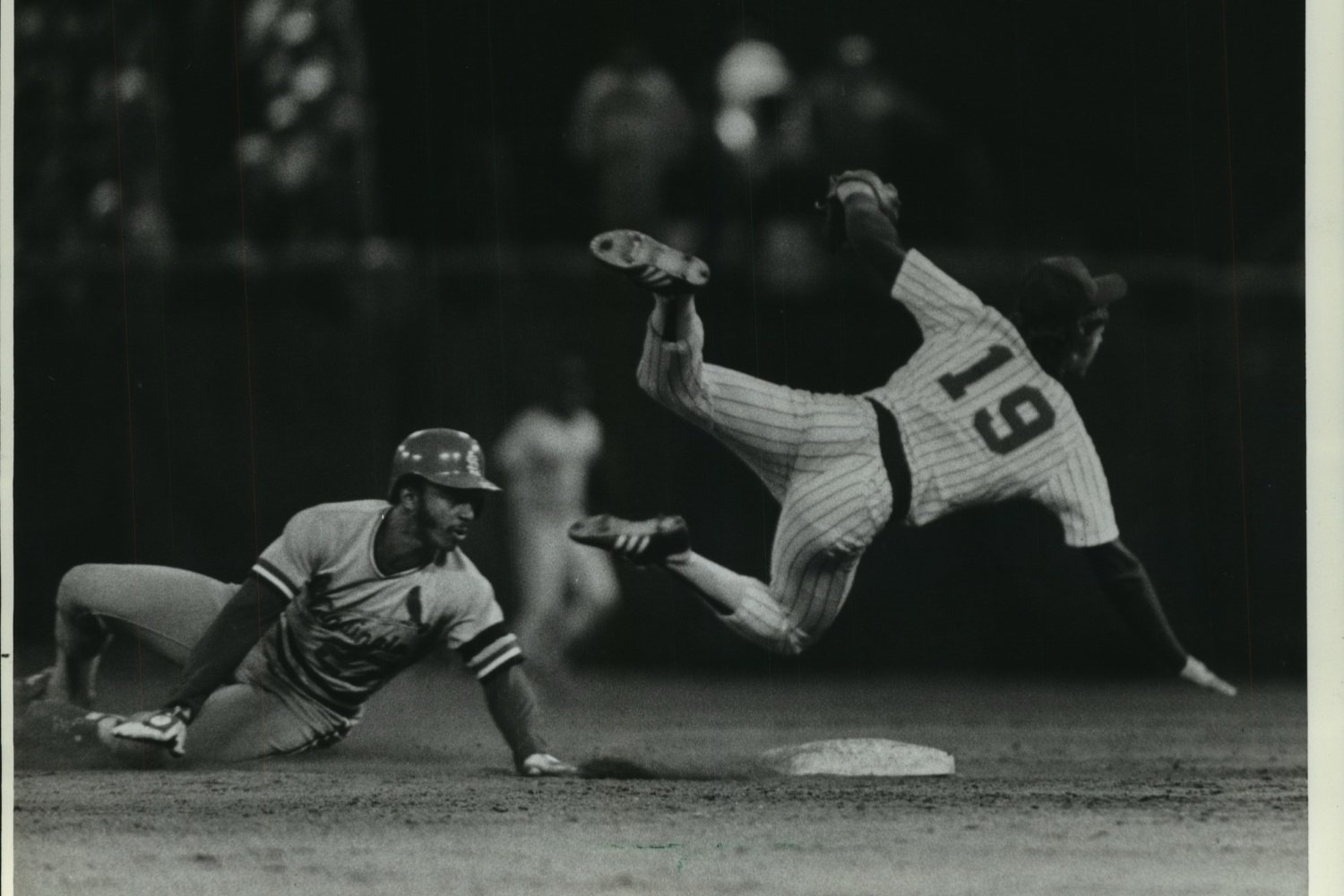 This multi-part series talks about how the Brewers got to the World Series and offers a timeline of the 1982 campaign, including player profiles, game recaps, and other events that affected the season. Part 1 Part 2 Part 3 Part 4 Part 5 Part 6 Part 7 Part 8 Game 3: McGee’s two homers lead Cards past Brewers St. Louis (Joaquín Andujar, 15-10) at Milwaukee (Pete Vuckovich, 18-6) Willie McGee smacked a pair of round-trippers in the Cardinals' 6-2 victory, giving St. Louis a 2-1 lead in the Series. He also played Gold Glove defense, robbing at least one home run while making another stellar grab. During the regular season, McGee hit just four home runs in 422 at-bats. After Pete Vuckovich retired the Cardinals in order in the opening inning in front of a County Stadium-record crowd of 56,556, Paul Molitor led off the bottom half with a long drive to center field that had extra bases written all over it. McGee raced back and made a nice leaping grab in front of the ‘402’ sign, much to the disappointment of the large gathering. Both Joaquín Andujar and Vuckovich were formidable in the first four innings, with St. Louis managing only a single (more about that later) and a walk, while Milwaukee had a double and a walk, but no runs to show for it. George Hendrick led off the second with a high chopper down the third-base line. Molitor gloved it waist-high and fired it to Cecil Cooper at first. The throw pulled Cooper off the bag toward foul ground, and Hendrick beat the throw by a quarter-step. First-base ump Dave Phillips waved off the play, thinking the ball was foul. But when third-base ump Jim Evans came over and stated it was a fair ball, Phillips called the runner safe. Manager Harvey Kuenn came out to argue, but after talking with Cooper and Hendrick, who was chuckling, went back to the dugout, shaking his head. Hendrick was given a base hit, snapping an 0-for-7 slump. Vuckovich got out of the inning with three ground ball outs. The Cardinals got on the board first in the top of the fifth. Lonnie Smith walked, and Dane Iorg reached on an error by Cooper, bringing up McGee. Batting left-handed against Vuckovich, McGee ripped the first pitch over the ‘362’ sign in right-center for a three-run homer. The score was still 3-0 when the Cards tacked on two more runs in the seventh. Smith lined a ball to the wall in right-center with one out, and when the throw to third from Jim Gantner skipped into the dugout, Smith trotted home with the fourth run. Two batters later, McGee struck again off ‘Vuke,’ stroking the ball over the right-field fence to make it 5-0. In the bottom half of the seventh, Ted Simmons lined a ball off Andujar’s right knee, allowing Simmons to reach first base. Jim Kaat replaced Andujar and gave up a single to Thomas to put runners at first and second. When right-handed hitting Don Money was announced as a pinch-hitter, Doug Bair entered the game for St. Louis. He walked Money to load the bases. Closer Bruce Sutter came in and got Charlie Moore on a foul pop to third, ending the promising frame. The Brewers finally got to Sutter in the eighth, when Robin Yount walked and Cooper sent a fly ball out of the park in right field to cut the lead to 5-2. St. Louis got back one run in the top of the ninth, however, when Ozzie Smith walked with the bases loaded, forcing in Hendrick to make it 6-2, which would be the final. McGee went 2-for-4 with four RBIs. Andujar allowed three hits and one walk in 6 1/3 innings before leaving with the injured leg. For Milwaukee, Gantner had a pair of hits. Game 4: Six-run frame turns the table on St. Louis St. Louis (Dave LaPoint, 9-3) at Milwaukee (Moose Haas, 11-8) The St. Louis Cardinals scored four runs in the first two innings to take the air out of the Milwaukee crowd of 56,560 in Game 4. Hendrick had an RBI single in the first, and then Tom Herr hit a sacrifice fly to deep center in the second inning that scored speedsters McGee and Ozzie Smith. A slip by Gorman Thomas made it relatively anticlimactic, but the fun part is to note that both Thomas and Smith (not to mention the announcers on the broadcast) were anticipating Smith trying to score even before Thomas made the catch. Ken Oberkfell scored an unearned run to give the Cards an early 4-0 lead. “We gave them four runs in the first two innings on a silver platter,” Molitor said. “The only good thing about it was that we had eight chances left to get the four runs back.” The Brewers would only need six more innings to do just that. The two teams traded runs in the bottom of the fifth and top of the sixth to set the stage for the epic finish. The Milwaukee Brewers probably thought, ‘here we go again’ as they entered the bottom of the seventh inning, trailing the St. Louis Cardinals 5-1. It looked especially gloomy for the Brewers when they had two outs with two men on. St. Louis closer Sutter had appeared in the previous two games—earning a victory and a save—and would not enter the contest; that gave the Brewers hope. “When Sutter didn’t come in to face Molitor, I knew we wouldn’t see him today,” said Simmons. Gantner doubled to score Ben Oglivie and move Money to third, chasing Dave LaPoint in favor of right-hander Doug Bair. Molitor walked to load the bases, and Yount stroked a base hit to right that scored a pair and moved Molitor to third. Manager Whitey Herzog brought in the left-handed Kaat to face Cooper. The Brewers’ first baseman slapped an opposite-field single that scored Molitor to tie the game and moved Yount to second. Reliever Jeff Lahti came in mid-batter and intentionally walked Simmons. Gorman Thomas then singled to left center, scoring Yount and Cooper to give the Brewers a 7-5 lead. Jim Slaton, who came in for starter Moose Haas, started his third inning (the eighth) by walking Darrell Porter and striking out Lonnie Smith before allowing a single to Iorg, putting runners on the corners. Lefty Bob McClure came in and induced a 4-3 double play, getting the Brewers out of the inning. McClure closed the game by retiring the side in order in the ninth, to tie the Series at two games apiece. Slaton and McClure combined to allow one hit and two walks in 3 2/3 innings of relief. Yount, Cooper, and Money all had two hits for the Brewers. “It was a must-win game for us today,” Gantner said. “If we lose today, we’re down 3-1 and not many teams come back from that.” Instead, it was 2-2 and the Brewers would have one more chance to win at home, where they won three straight against California in the ALCS. Game 5: Caldwell earns victory despite giving up 14 hits St. Louis (Bob Forsch) at Milwaukee (Mike Caldwell) The two teams combined for 26 hits as the Brewers held off the Cardinals 6-4 in Game 5. The Brewers scored first in the bottom of the first, on an RBI groundout by Simmons that scored Yount after an errant pickoff throw by Bob Forsch that moved runners into scoring position. The Cardinals knotted the score in the third, when ex-Brewer David Green scored on a two-base hit by Keith Hernandez. Cooper made it 2-1 in the bottom half, plating Molitor on a 3-1 groundout. In the bottom of the fifth, Molitor stroked a line drive to left field that scored Moore to give the Brewers a 3-1 lead. The Cards came back in the top of the seventh with Hendrick’s single to center, which scored Ozzie Smith to cut the lead to 3-2. Yount hit a solo shot to the opposite field in the bottom half to boost the lead to 4-2. Once again, Sutter came into the game in the eighth, even though St. Louis was two runs down. Sutter allowed a single and a walk but had two outs when Moore came to the plate. The Brewers' right fielder singled to right-center to score Oglivie, and then Gantner singled to score Money to make the score 6-2. “I just brought him in tonight so we could stay close,” Herzog said of Sutter. “Then he gives up two runs.” Lucky for the Brewers that they did score those runs, because the Cards matched that in the top of the ninth to cut the margin to two runs before McClure replaced Caldwell and allowed a single before getting the final two outs for the Milwaukee victory, earning his second save. Hernandez had an RBI double before Hendrick hit a run-scoring single to make it 6-4. Caldwell allowed 14 hits, four runs, and two walks in 8 1/3 innings, after throwing a three-hit shutout in Game 1. “I looked up at the scoreboard a couple times, and it even amazed me that they had so many hits,” Caldwell noted. “But I didn’t feel too badly. This was a close ballgame, and it meant more to me to win today because we’re ahead in the Series.” Although the Brewers committed an error, they made several outstanding defensive plays in the game. In the fourth inning, Molitor leaped in the air to spear a chopper, stepped on third, and fired to first for a double play. Moore made a diving catch of a Lonnie Smith line drive in the fifth, and finally, Cooper made a diving stop and threw from his knees to Caldwell covering first for the final out of the seventh inning. The Brewers were led by Yount, who went 4-for-4 to give him a pair of four-hit games in the Series, and was slashing .524/.565/.810 across 23 plate appearances. Oglivie and Moore each had two hits. For St. Louis, Hernandez, Hendrick, and Oberkfell each had three hits in the contest. “You have to like being in the position of having to split the last two games of the season,” Molitor said. “But we know we are going to see a lot of red [in St. Louis].” Coming soon: Part 9 (Games 6-7 in St. Louis). *All quotes/comments appeared in the Wisconsin State Journal, October 1982
-
- 1
-
-
- robin yount
- paul molitor
- (and 1 more)
-
I have to do my part to keep up with you guys!
-
Thank you. It was fun to go back and check out the writing of my friend Bill Brophy, who wrote for the WSJ. He did TONS of pieces during the playoffs and WS. It was also fun to check out Youtube videos. You should do that if you haven't recently.
-
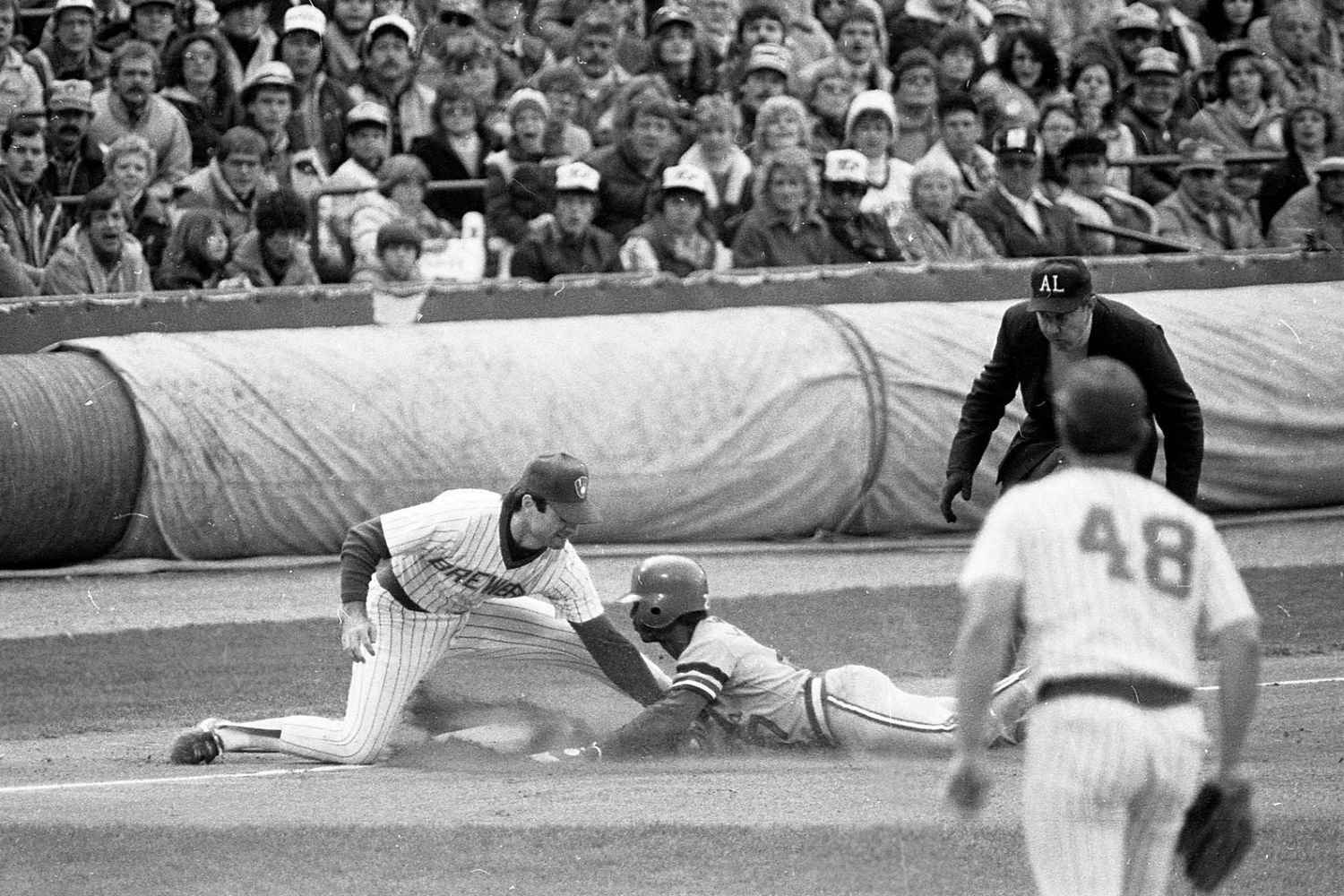 This multi-part series talks about how the Brewers got to the World Series and offers a timeline of the 1982 campaign, including player profiles, game recaps, and other events that affected the season. Part 1 Part 2 Part 3 Part 4 Part 5 Part 6 World Series Preview: Milwaukee vs. St. Louis Milwaukee came from two games down to defeat the California Angels three games to two in the American League Championship Series, to advance to the World Series. In the National League, the St. Louis Cardinals earned a trip to the Fall Classic by sweeping the Atlanta Braves in the NLCS. The series was billed as the Brewers’ power versus the Cardinals’ speed. Milwaukee’s ‘Harvey's Wallbangers’ led the major leagues with 216 home runs, while the Cards were dead last with 67 jacks. (Yes, 67. For the whole team. For the whole season.) The Cardinals, who played ‘Whiteyball' under manager Whitey Herzog, stole 200 bases (second to Oakland’s 232) while the Brew Crew stole 84, ranking 20th of the 26 teams. The Cardinals had an edge on defense with their overall team speed, and had two Gold Glove winners in first baseman Keith Hernandez and shortstop Ozzie Smith. For the Brewers, shortstop Robin Yount won a Gold Glove. It appeared that the Cardinals had a slight advantage on the mound. Their team ERA+ of 109 was tied for third in the majors, while Milwaukee had a team ERA+ of 96, which ranked 21st. The Cards had a FIP of 3.68 (10th) while the Brewers were further down the list with a 4.17 FIP, which ranked 22nd. The series was dubbed the ‘Suds Series,’ as both cities had major breweries in Miller (Milwaukee) and Anheuser-Busch (St. Louis). Let’s tap the keg for the opening game! Game 1: Molitor, Yount combine for nine hits in Brewer blowout Milwaukee (Mike Caldwell, 17-13) at St. Louis (Bob Forsch, 15-9) The Brewers scored twice in the first inning, after Robin Yount singled and Cecil Cooper walked. After Ted Simmons struck out, Ben Oglivie hit a sharp grounder at Gold Glover Hernandez, who let the ball get past him, scoring Yount. Gorman Thomas had an infield single, scoring Cooper. Caldwell cruised through three frames, allowing only a two-base hit to Darrell Porter in the second. In the top of the fourth, Charlie Moore led off with a double down the left-field line. Jim Gantner dropped down a sac bunt that moved Moore to third. Paul Molitor hit a broken-bat flare to short center, scoring Moore, but Molitor was thrown out trying to stretch the hit into a double. If you were scoring at home, the play would have been 6-4. The Brewers led 3-0 when Simmons came to bat in the fifth. Simmons had received a standing ovation during pre-game introductions, but the crowd was quiet when ‘Simba’ blasted a 1-1 pitch from Forsch into the right field stands, giving Milwaukee a 4-0 lead. An inning later, Gantner and Molitor each singled with two outs and were driven in by Yount, who hit a bloop double down the right-field line to make it 6-0 and send Forsch to the showers. Milwaukee finished the scoring in the top of the ninth with four runs, all after two outs had been recorded—a pleasing echo of the way they'd run away from the Orioles in the clinching game at the end of the regular season. Don Money singled in Oglivie, who had walked. Moore singled to put runners at first and second before Gantner tripled to deep right-center, clearing the bases. Molitor capped the scoring with an infield single that scored Gantner. Caldwell put the side down in order in the bottom half, and the Brewers celebrated a 10-0 whitewashing. ‘Iron Mike’ allowed three hits and one walk while inducing 14 groundball outs with his sinker. “I don’t think he missed the target all night,” right fielder Moore told the Wisconsin State Journal. “You will never see Caldwell pitch any better.” The Brewers were led by Molitor’s five hits, which set a World Series record and still stands today, although Albert Pujols of the Cardinals matched that feat in Game 3 of the 2011 World Series. Yount had four hits, along with two each by Simmons, Moore, and Gantner. Game 2: Cardinals bullpen the difference in 5-4 win Milwaukee (Don Sutton, 4-1) at St. Louis (John Stuper, 9-7) The Brewers once again got on the board first in St. Louis. With Roy Howell at second, Moore doubled to deep left-center to score Howell in the second inning for a 1-0 lead. In the third inning, Molitor scored on a groundout by Yount. Two batters later, Simmons hit his second homer of the Series to give Milwaukee a 3-0 lead. Sutton, who had set down six straight in the first two innings, ran into some trouble in the bottom of the third. Dane Iorg singled and was forced at second by Willie McGee, who promptly stole second. Ozzie Smith grounded out, moving McGee to third, and it looked like Sutton might weather the storm. But Tommy Herr had different ideas, as he hit a drive that bounced over the fence in right-center field for a ground-rule double, to make it 3-1. Ken Oberkfell singled to right to drive in Herr, cutting the Brewers' lead to 3-2. In the fifth, Yount led off with a double to left to chase Stuper in favor of Jim Kaat. ‘Kitty’ was making his second appearance of the Series, and at age 43, he was the second-oldest player to participate in the Fall Classic. Not respecting his elders, Cooper lined a single to left-center to score Yount and make it a 4-2 lead. Sutton got back in the groove, retiring eight straight after the third, but with one out in the sixth, Oberkfell singled and George Hendrick walked with two outs. Former Brewer Porter doubled down the left-field line to tie the contest at 4-4. After Cooper doubled with two outs in the seventh, closer Bruce Sutter entered the game, replacing Doug Bair. Sutter walked Simmons intentionally, then got Oglivie to ground out. The score was still tied in the eighth when Hernandez walked and was forced at second by Hendrick. Porter singled to center, moving Hendrick to second. That was the end of the line for reliever Bob McClure, who was removed as Pete Ladd came on for Milwaukee. Ladd ran the count to 3-2 on Lonnie Smith and walked the hitter on a close pitch, one which players on both teams thought was a strike. “I thought it was there on the black,” Smith said after the game. “Was I surprised at the call?” Molitor asked. “I think everyone in this clubhouse was surprised at the call.” Ladd appeared to be rattled, throwing four straight balls to Steve Braun, scoring Hendrick for the 5-4 lead. Molitor led off the top of the ninth with an infield single, but then was thrown out trying to steal second. Yount and Cooper were retired by Sutter, and the Cards evened the Series with a 5-4 victory. Cooper led the Brewers with three hits, while Molitor and Moore each added two. The Series is tied at one win apiece. Check out Part 8 for the games (Games 3-5) played at County Stadium.
 -
Image courtesy of © Dale Guldan / USA TODAY NETWORK This multi-part series talks about how the Brewers got to the World Series and offers a timeline of the 1982 campaign, including player profiles, game recaps, and other events that affected the season. Part 1 Part 2 Part 3 Part 4 Part 5 Part 6 World Series Preview: Milwaukee vs. St. Louis Milwaukee came from two games down to defeat the California Angels three games to two in the American League Championship Series, to advance to the World Series. In the National League, the St. Louis Cardinals earned a trip to the Fall Classic by sweeping the Atlanta Braves in the NLCS. The series was billed as the Brewers’ power versus the Cardinals’ speed. Milwaukee’s ‘Harvey's Wallbangers’ led the major leagues with 216 home runs, while the Cards were dead last with 67 jacks. (Yes, 67. For the whole team. For the whole season.) The Cardinals, who played ‘Whiteyball' under manager Whitey Herzog, stole 200 bases (second to Oakland’s 232) while the Brew Crew stole 84, ranking 20th of the 26 teams. The Cardinals had an edge on defense with their overall team speed, and had two Gold Glove winners in first baseman Keith Hernandez and shortstop Ozzie Smith. For the Brewers, shortstop Robin Yount won a Gold Glove. It appeared that the Cardinals had a slight advantage on the mound. Their team ERA+ of 109 was tied for third in the majors, while Milwaukee had a team ERA+ of 96, which ranked 21st. The Cards had a FIP of 3.68 (10th) while the Brewers were further down the list with a 4.17 FIP, which ranked 22nd. The series was dubbed the ‘Suds Series,’ as both cities had major breweries in Miller (Milwaukee) and Anheuser-Busch (St. Louis). Let’s tap the keg for the opening game! Game 1: Molitor, Yount combine for nine hits in Brewer blowout Milwaukee (Mike Caldwell, 17-13) at St. Louis (Bob Forsch, 15-9) The Brewers scored twice in the first inning, after Robin Yount singled and Cecil Cooper walked. After Ted Simmons struck out, Ben Oglivie hit a sharp grounder at Gold Glover Hernandez, who let the ball get past him, scoring Yount. Gorman Thomas had an infield single, scoring Cooper. Caldwell cruised through three frames, allowing only a two-base hit to Darrell Porter in the second. In the top of the fourth, Charlie Moore led off with a double down the left-field line. Jim Gantner dropped down a sac bunt that moved Moore to third. Paul Molitor hit a broken-bat flare to short center, scoring Moore, but Molitor was thrown out trying to stretch the hit into a double. If you were scoring at home, the play would have been 6-4. The Brewers led 3-0 when Simmons came to bat in the fifth. Simmons had received a standing ovation during pre-game introductions, but the crowd was quiet when ‘Simba’ blasted a 1-1 pitch from Forsch into the right field stands, giving Milwaukee a 4-0 lead. An inning later, Gantner and Molitor each singled with two outs and were driven in by Yount, who hit a bloop double down the right-field line to make it 6-0 and send Forsch to the showers. Milwaukee finished the scoring in the top of the ninth with four runs, all after two outs had been recorded—a pleasing echo of the way they'd run away from the Orioles in the clinching game at the end of the regular season. Don Money singled in Oglivie, who had walked. Moore singled to put runners at first and second before Gantner tripled to deep right-center, clearing the bases. Molitor capped the scoring with an infield single that scored Gantner. Caldwell put the side down in order in the bottom half, and the Brewers celebrated a 10-0 whitewashing. ‘Iron Mike’ allowed three hits and one walk while inducing 14 groundball outs with his sinker. “I don’t think he missed the target all night,” right fielder Moore told the Wisconsin State Journal. “You will never see Caldwell pitch any better.” The Brewers were led by Molitor’s five hits, which set a World Series record and still stands today, although Albert Pujols of the Cardinals matched that feat in Game 3 of the 2011 World Series. Yount had four hits, along with two each by Simmons, Moore, and Gantner. Game 2: Cardinals bullpen the difference in 5-4 win Milwaukee (Don Sutton, 4-1) at St. Louis (John Stuper, 9-7) The Brewers once again got on the board first in St. Louis. With Roy Howell at second, Moore doubled to deep left-center to score Howell in the second inning for a 1-0 lead. In the third inning, Molitor scored on a groundout by Yount. Two batters later, Simmons hit his second homer of the Series to give Milwaukee a 3-0 lead. Sutton, who had set down six straight in the first two innings, ran into some trouble in the bottom of the third. Dane Iorg singled and was forced at second by Willie McGee, who promptly stole second. Ozzie Smith grounded out, moving McGee to third, and it looked like Sutton might weather the storm. But Tommy Herr had different ideas, as he hit a drive that bounced over the fence in right-center field for a ground-rule double, to make it 3-1. Ken Oberkfell singled to right to drive in Herr, cutting the Brewers' lead to 3-2. In the fifth, Yount led off with a double to left to chase Stuper in favor of Jim Kaat. ‘Kitty’ was making his second appearance of the Series, and at age 43, he was the second-oldest player to participate in the Fall Classic. Not respecting his elders, Cooper lined a single to left-center to score Yount and make it a 4-2 lead. Sutton got back in the groove, retiring eight straight after the third, but with one out in the sixth, Oberkfell singled and George Hendrick walked with two outs. Former Brewer Porter doubled down the left-field line to tie the contest at 4-4. After Cooper doubled with two outs in the seventh, closer Bruce Sutter entered the game, replacing Doug Bair. Sutter walked Simmons intentionally, then got Oglivie to ground out. The score was still tied in the eighth when Hernandez walked and was forced at second by Hendrick. Porter singled to center, moving Hendrick to second. That was the end of the line for reliever Bob McClure, who was removed as Pete Ladd came on for Milwaukee. Ladd ran the count to 3-2 on Lonnie Smith and walked the hitter on a close pitch, one which players on both teams thought was a strike. “I thought it was there on the black,” Smith said after the game. “Was I surprised at the call?” Molitor asked. “I think everyone in this clubhouse was surprised at the call.” Ladd appeared to be rattled, throwing four straight balls to Steve Braun, scoring Hendrick for the 5-4 lead. Molitor led off the top of the ninth with an infield single, but then was thrown out trying to steal second. Yount and Cooper were retired by Sutter, and the Cards evened the Series with a 5-4 victory. Cooper led the Brewers with three hits, while Molitor and Moore each added two. The Series is tied at one win apiece. Check out Part 8 for the games (Games 3-5) played at County Stadium. View full article
-
BUT, Peralta could get injured and have a wasted season. I hope not, but it could happen. Like a famous baseball player once said, 'Youneverknow.'