Michael Trzinski
-
Posts
896 -
Joined
-
Last visited
-
Days Won
1
Content Type
Profiles
Forums
Blogs
Events
News
2026 Milwaukee Brewers Top Prospects Ranking
Milwaukee Brewers Videos
2022 Milwaukee Brewers Draft Picks
Milwaukee Brewers Free Agent & Trade Rumors, Notes, & Tidbits
Guides & Resources
2023 Milwaukee Brewers Draft Picks
2024 Milwaukee Brewers Draft Picks
The Milwaukee Brewers Players Project
2025 Milwaukee Brewers Draft Pick Tracker
2026 Milwaukee Brewers Draft Tracker: Picks & Bonuses
Store
Downloads
Gallery
Everything posted by Michael Trzinski
-
According to B-Ref, he has played seven games (16 innings) at 1B in the majors. Not much experience, but it seems he would be willing to play there. So there's that...
- 7 replies
-
- 2
-

-
- andrew vaughn
- jake bauers
- (and 2 more)
-
Image courtesy of © Jovanny Hernandez / Milwaukee Journal Sentinel / USA TODAY NETWORK via Imagn Images Opening Day did not start out well for the Milwaukee Brewers. Chicago leadoff batter Chase Meidroth worked a full count on Brewers starter Jacob Misiorowski and then slammed a 417-foot homer to the second level in left field to give the White Sox an early 1-0 lead. That was one turning point in the first Opening Day start for The Miz. He promptly struck out the side to shut down the South Sider’s hopes. A Historic Day for The Miz After the home run in the first inning, Miz allowed one hit and three free passes while striking out 11 batters, bettering the previous mark for Brewers Opening Day pitchers by three, set by Freddy Peralta (twice) and Ben Sheets. Misiorowski struck out the side twice and gave up one more hit in his five innings on the mound. The second turning point came when Miz allowed a one-out walk to Meidroth and had a 2-0 count on Colson Montgomery in the third inning with the Brewers leading 4-1. Pitching guru Chris Hook came out and had a little chat with his pitcher. Misiorowski then settled down and struck out Montgomery on three pitches and then set down Miguel Vargas on four pitches. Miz retired the side in order in the fifth inning, and his day was done after 94 pitches and a very solid effort. Game, set, and match. Crooked Numbers, Over & Over Milwaukee scored two or more runs in an inning five times today, effectively demoralizing the White Sox. Joey Ortiz came through with the sacks jammed in the second with a looper over a diving Meidroth to tie the game at one. Then, William Contreras ripped a three-run double two batters later to put the Brewers up 4-1. The White Sox had three base runners in the next two innings but failed to score. The Brewers scored two runs each in the fourth and fifth, and then upped their game by scoring three runs in each of the sixth and seventh innings. Sal Frelick hit a two-run blast in the fifth, and then Jake Bauers continued his spring hot streak by hitting a roof-scraping three-run homer in the seventh that just cleared the fence in right field to account for the final Milwaukee scores. Hamilton Lives Up To Murphy Praise David Hamilton came over in the Caleb Durbin/Andruw Monasterio/Anthony Seigler trade from Boston and immediately won over Brewers fans, as he reached base four times, stole a base, and scored two runs. He also made a play on a slow roller by Luisangel Acuña in the fifth, bare handing the ball and firing to first to retire the speedy brother of Ronald Acuña, Jr. Recently acquired reliever Jake Woodford came into the game in the ninth and gave up the first major league hit to Munetaka Murakami when the former Japanese star blasted a home run to make the score 14-2. Woodford then struck out the side on 13 pitches to end the successful day for Milwaukee. One Down, 161 Games To Go A win over Chicago today is a lot better than last year’s debacle at Yankee Stadium, when the Brewers got swept in three games by a combined score of 36-14. Losing Jackson Chourio to a broken left hand will be a setback for the Brewers, but it will allow manager Pat Murphy to see what Bauers, Brandon Lockridge, Garrett Mitchell, and Blake Perkins can do. All in all, it was a great day for the 43,001 fans at ‘The Ueck’ and the people who watched from the comfort of their couches. Let’s hope the Brew Crew can keep it up. View full article
-
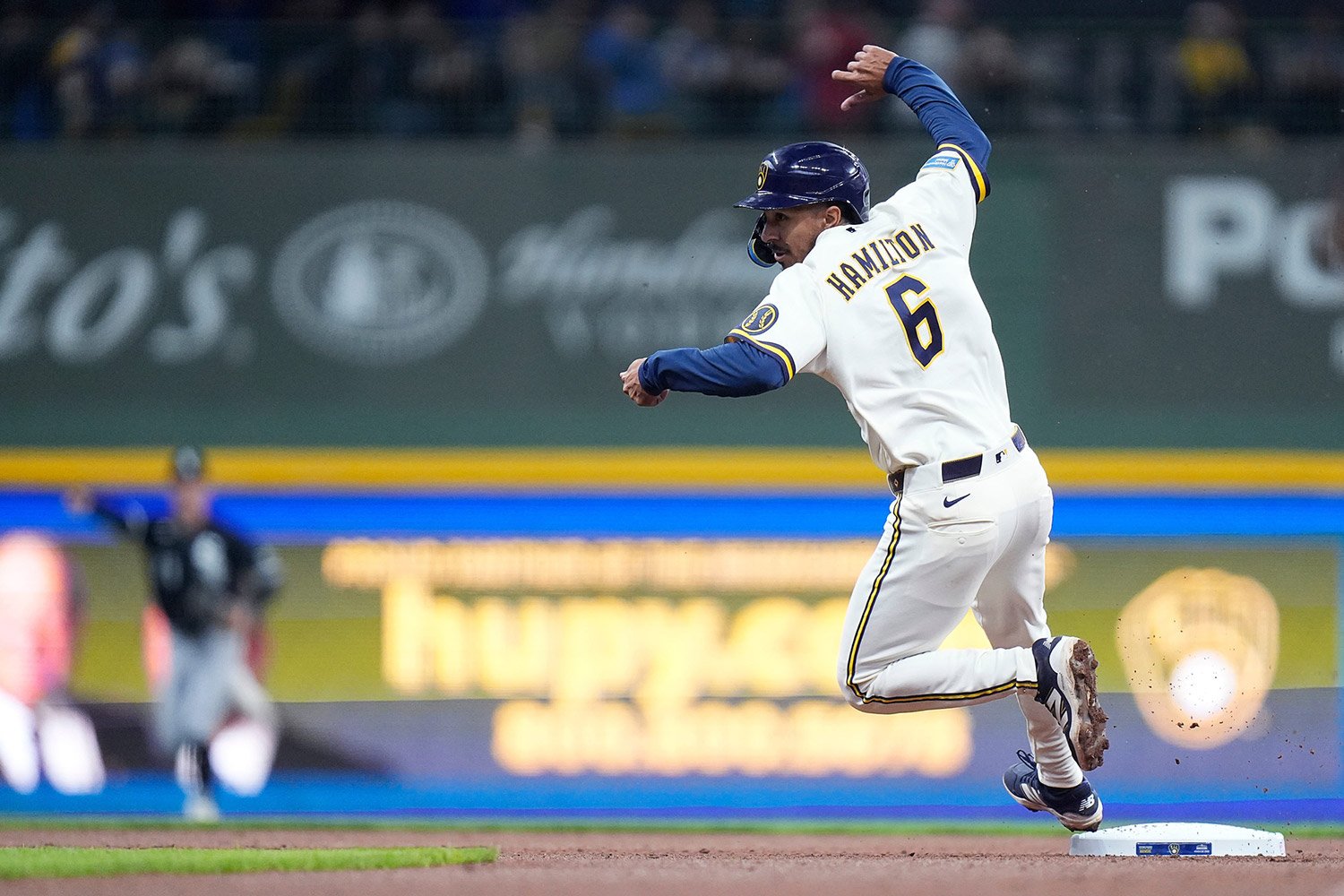 Opening Day did not start out well for the Milwaukee Brewers. Chicago leadoff batter Chase Meidroth worked a full count on Brewers starter Jacob Misiorowski and then slammed a 417-foot homer to the second level in left field to give the White Sox an early 1-0 lead. That was one turning point in the first Opening Day start for The Miz. He promptly struck out the side to shut down the South Sider’s hopes. A Historic Day for The Miz After the home run in the first inning, Miz allowed one hit and three free passes while striking out 11 batters, bettering the previous mark for Brewers Opening Day pitchers by three, set by Freddy Peralta (twice) and Ben Sheets. Misiorowski struck out the side twice and gave up one more hit in his five innings on the mound. The second turning point came when Miz allowed a one-out walk to Meidroth and had a 2-0 count on Colson Montgomery in the third inning with the Brewers leading 4-1. Pitching guru Chris Hook came out and had a little chat with his pitcher. Misiorowski then settled down and struck out Montgomery on three pitches and then set down Miguel Vargas on four pitches. Miz retired the side in order in the fifth inning, and his day was done after 94 pitches and a very solid effort. Game, set, and match. Crooked Numbers, Over & Over Milwaukee scored two or more runs in an inning five times today, effectively demoralizing the White Sox. Joey Ortiz came through with the sacks jammed in the second with a looper over a diving Meidroth to tie the game at one. Then, William Contreras ripped a three-run double two batters later to put the Brewers up 4-1. The White Sox had three base runners in the next two innings but failed to score. The Brewers scored two runs each in the fourth and fifth, and then upped their game by scoring three runs in each of the sixth and seventh innings. Sal Frelick hit a two-run blast in the fifth, and then Jake Bauers continued his spring hot streak by hitting a roof-scraping three-run homer in the seventh that just cleared the fence in right field to account for the final Milwaukee scores. Hamilton Lives Up To Murphy Praise David Hamilton came over in the Caleb Durbin/Andruw Monasterio/Anthony Seigler trade from Boston and immediately won over Brewers fans, as he reached base four times, stole a base, and scored two runs. He also made a play on a slow roller by Luisangel Acuña in the fifth, bare handing the ball and firing to first to retire the speedy brother of Ronald Acuña, Jr. Recently acquired reliever Jake Woodford came into the game in the ninth and gave up the first major league hit to Munetaka Murakami when the former Japanese star blasted a home run to make the score 14-2. Woodford then struck out the side on 13 pitches to end the successful day for Milwaukee. One Down, 161 Games To Go A win over Chicago today is a lot better than last year’s debacle at Yankee Stadium, when the Brewers got swept in three games by a combined score of 36-14. Losing Jackson Chourio to a broken left hand will be a setback for the Brewers, but it will allow manager Pat Murphy to see what Bauers, Brandon Lockridge, Garrett Mitchell, and Blake Perkins can do. All in all, it was a great day for the 43,001 fans at ‘The Ueck’ and the people who watched from the comfort of their couches. Let’s hope the Brew Crew can keep it up.
 -
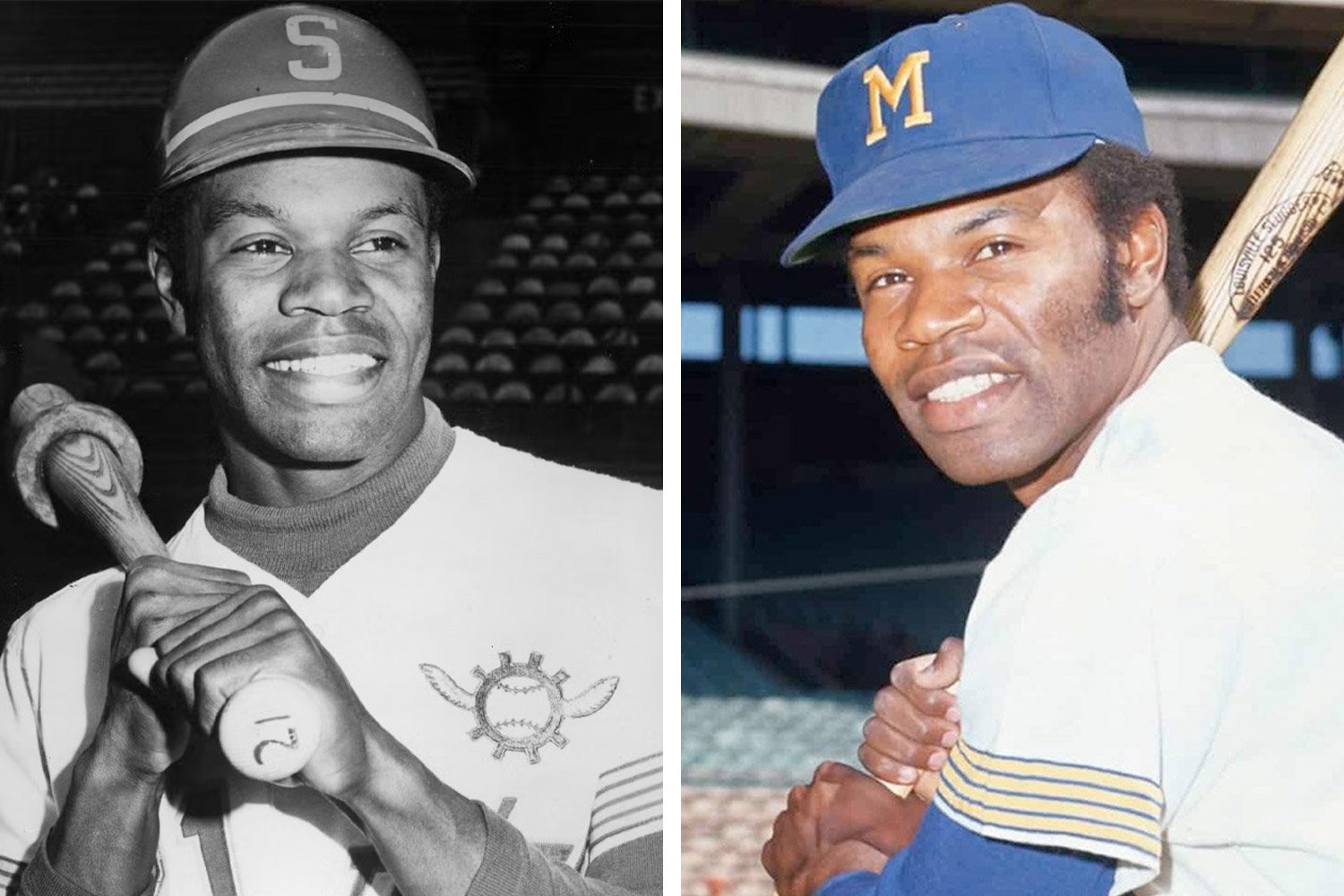
Image courtesy of Tariq Zehawi/NorthJersey.com Trivia question: Other than the fact that they both played for the Brewers, what do Robin Yount and John Briggs have in common? (Answer at the end of this piece.) John Briggs followed a slightly different path to professional baseball than most players. After he graduated from Paterson (NJ) Eastside High School in 1961, he was honored with the Dave Curtis Award (named for a Marine combat flyer who died in a plane crash) as the outstanding student-athlete at Paterson Eastside High School. Thanks to @JohnBriggs12, who prompted this retrospective after making a comment in our retrospective on the debut season of Robin Yount. Briggs attended the Paterson satellite campus of Seton Hall University for a few semesters, but there is no record of him ever playing baseball for Seton Hall. He played amateur league basketball for a couple of seasons after high school, as well as playing American Legion baseball in the summer. In September 1962, the Philadelphia Phillies signed Briggs to an estimated $8,000 bonus, with scouts Jocko Collins and Ben Marmo signing Briggs moments before a New York Mets scout arrived, albeit too late. “I never found out the kind of offer the Mets had in mind for me. I sure would’ve liked to have known, because I know the Mets’ scout, Pete Gebrian, liked me a heck of a lot,” Briggs said in a 2011 interview for a Society for American Baseball Research (SABR) bio. Briggs, who batted and threw left, was originally scheduled to play in the rookie Pioneer League in 1963 but performed well in the minor league camp and was sent instead to Bakersfield in the Class A California League. In his rookie season, Briggs slashed .297/.379/.500 with 21 home runs and 20 steals. After the season, he was added to the Phillies' 40-man roster. Even though Briggs had only two hits in the spring, he and pitcher Rick Wise were placed on the Phillies Opening Day roster in order to protect them from the ‘First-Year Player Draft.’ In those days, major league teams would keep the young player on the roster but not give him much playing time that first season. Briggs played in only 61 games and had 66 at-bats, slashing .258/.347/.333 with one home run. In only his sixth start, Briggs led off, playing center field against the Mets in the second game of a June 21 doubleheader. Batting against Frank Lary in the first, Briggs blasted a 430-foot shot over the center field fence for his first major league dinger. As special as the day was for Briggs, it couldn’t compare to the performance pitcher Jim Bunning had in the first game. All he did was pitch a perfect game in a 6-0 victory against the Mets. Briggs played a part in the first game as well, making a nice running catch of a long drive to center field by the Mets’ Charlie Smith in the third inning to keep the perfecto intact. Briggs also had a front-row seat for one of the biggest collapses in major league history. The Phillies were leading the Cincinnati Reds and St. Louis Cardinals by 6 ½ games with 12 left to play. Philadelphia promptly lost 10 straight games, including three each to the Reds and the Cards, before winning the last two games of the season. Unfortunately for them, it was too little, too late as the Phils finished one game behind the Cardinals. Briggs got into seven games during that 12-game stretch, going 0-for-5 in a pinch-hitting role. Briggs would play six more seasons for the Phillies, splitting time in the outfield, never getting more than 361 ABs in a season. He started the 1971 campaign with the Phillies, but on April 22, he was traded to the Brewers for catcher/first baseman Pete Koegel and RHP Ray Peters in what was arguably one of the most one-sided trades in Brewers history, with Milwaukee coming out on top. Peters never again pitched in the bigs, and Koegel played in just 53 games over the next two years. In his four-plus seasons with Milwaukee, Briggs hit 80 homers, which currently ranks 25th on the Brewers' all-time list. He was also named the left fielder on the Brewers all-decade team for the 1970s. In an interview with SABR, Briggs said of Milwaukee, “The fans were great. I always had a great rapport with the fans.” In 1972, Briggs hit two home runs (and six RBI) off Nolan Ryan in a 7-3 victory over California on July 14. On August 4, 1973, Briggs went 6-for-6 with two doubles in a nine-inning game against Cleveland. That year, he got down-ballot most valuable player consideration, ranking 23rd in the American League MVP. In June 1975, the Brewers traded Briggs to Minnesota for outfielder Bobby Darwin. Briggs played his last major league game on September 28, 1975. Next spring, he asked for his release so that he would be free to pursue an opportunity in Japan. He signed a two-year contract in Japan but played only part of one season due to an illness caused by foodborne parasites, per his SABR biography. After Japan, Briggs eventually moved back to his hometown of Paterson and worked as a corrections office from 1982-2007. He also worked as a recreation supervisor. In 2008, Paterson’s Little League 13-14-year-old division was named the ‘Johnny Briggs Division.’ In 2008, Paterson Little League’s Bill LaSala said of Briggs, “He’s regarded very highly as a ballplayer and a person, probably more important as a person.” Trivia Answer: They both played just one year in the minors before getting called up to the major leagues. What are your favorite memories of Johnny Briggs? Please add them in the 'comments' section. View full article
-
'Briggsie' Was One of the Early Brewers Stars in the 1970s
Michael Trzinski posted an article in History
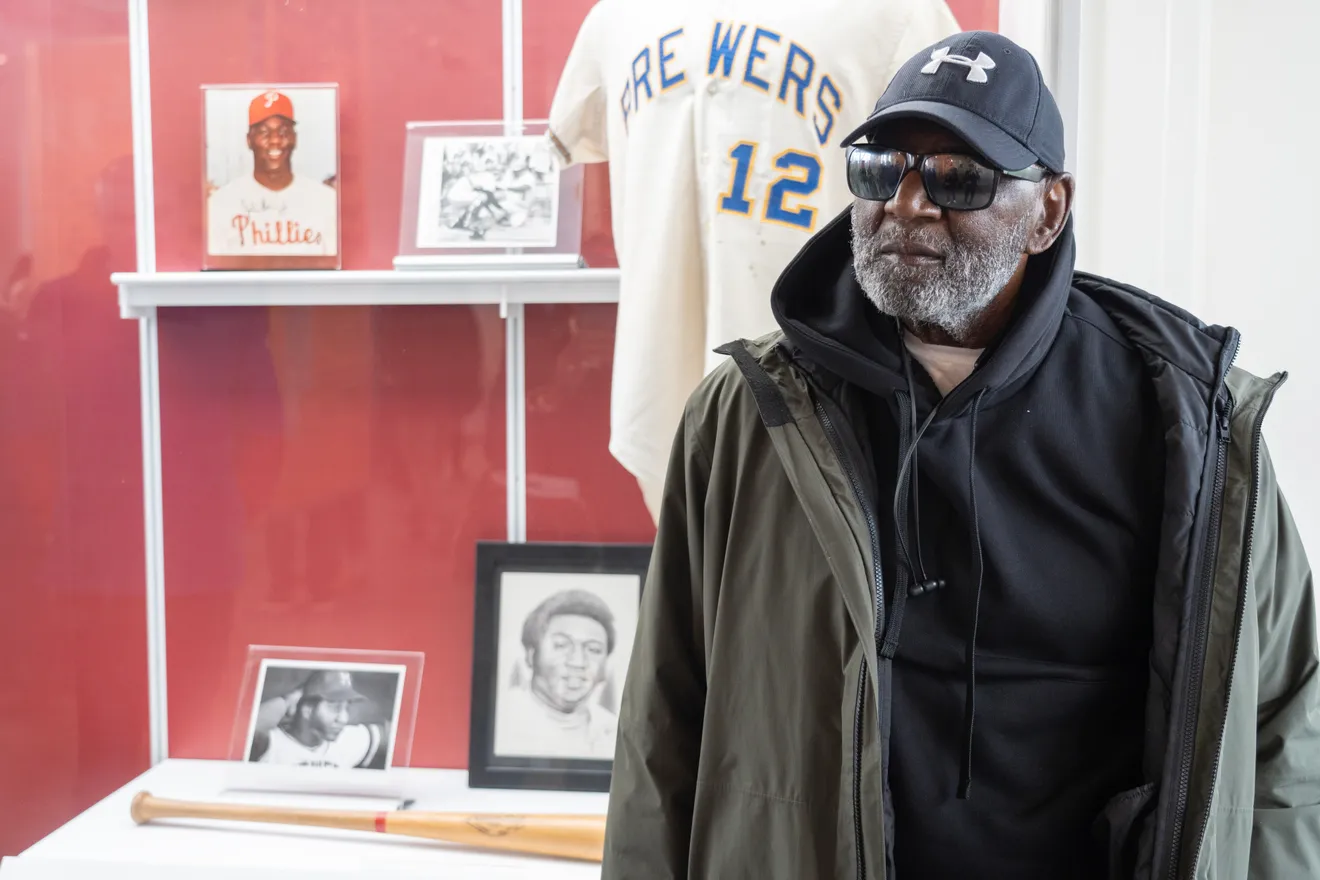 Trivia question: Other than the fact that they both played for the Brewers, what do Robin Yount and John Briggs have in common? (Answer at the end of this piece.) John Briggs followed a slightly different path to professional baseball than most players. After he graduated from Paterson (NJ) Eastside High School in 1961, he was honored with the Dave Curtis Award (named for a Marine combat flyer who died in a plane crash) as the outstanding student-athlete at Paterson Eastside High School. Thanks to @JohnBriggs12, who prompted this retrospective after making a comment in our retrospective on the debut season of Robin Yount. Briggs attended the Paterson satellite campus of Seton Hall University for a few semesters, but there is no record of him ever playing baseball for Seton Hall. He played amateur league basketball for a couple of seasons after high school, as well as playing American Legion baseball in the summer. In September 1962, the Philadelphia Phillies signed Briggs to an estimated $8,000 bonus, with scouts Jocko Collins and Ben Marmo signing Briggs moments before a New York Mets scout arrived, albeit too late. “I never found out the kind of offer the Mets had in mind for me. I sure would’ve liked to have known, because I know the Mets’ scout, Pete Gebrian, liked me a heck of a lot,” Briggs said in a 2011 interview for a Society for American Baseball Research (SABR) bio. Briggs, who batted and threw left, was originally scheduled to play in the rookie Pioneer League in 1963 but performed well in the minor league camp and was sent instead to Bakersfield in the Class A California League. In his rookie season, Briggs slashed .297/.379/.500 with 21 home runs and 20 steals. After the season, he was added to the Phillies' 40-man roster. Even though Briggs had only two hits in the spring, he and pitcher Rick Wise were placed on the Phillies Opening Day roster in order to protect them from the ‘First-Year Player Draft.’ In those days, major league teams would keep the young player on the roster but not give him much playing time that first season. Briggs played in only 61 games and had 66 at-bats, slashing .258/.347/.333 with one home run. In only his sixth start, Briggs led off, playing center field against the Mets in the second game of a June 21 doubleheader. Batting against Frank Lary in the first, Briggs blasted a 430-foot shot over the center field fence for his first major league dinger. As special as the day was for Briggs, it couldn’t compare to the performance pitcher Jim Bunning had in the first game. All he did was pitch a perfect game in a 6-0 victory against the Mets. Briggs played a part in the first game as well, making a nice running catch of a long drive to center field by the Mets’ Charlie Smith in the third inning to keep the perfecto intact. Briggs also had a front-row seat for one of the biggest collapses in major league history. The Phillies were leading the Cincinnati Reds and St. Louis Cardinals by 6 ½ games with 12 left to play. Philadelphia promptly lost 10 straight games, including three each to the Reds and the Cards, before winning the last two games of the season. Unfortunately for them, it was too little, too late as the Phils finished one game behind the Cardinals. Briggs got into seven games during that 12-game stretch, going 0-for-5 in a pinch-hitting role. Briggs would play six more seasons for the Phillies, splitting time in the outfield, never getting more than 361 ABs in a season. He started the 1971 campaign with the Phillies, but on April 22, he was traded to the Brewers for catcher/first baseman Pete Koegel and RHP Ray Peters in what was arguably one of the most one-sided trades in Brewers history, with Milwaukee coming out on top. Peters never again pitched in the bigs, and Koegel played in just 53 games over the next two years. In his four-plus seasons with Milwaukee, Briggs hit 80 homers, which currently ranks 25th on the Brewers' all-time list. He was also named the left fielder on the Brewers all-decade team for the 1970s. In an interview with SABR, Briggs said of Milwaukee, “The fans were great. I always had a great rapport with the fans.” In 1972, Briggs hit two home runs (and six RBI) off Nolan Ryan in a 7-3 victory over California on July 14. On August 4, 1973, Briggs went 6-for-6 with two doubles in a nine-inning game against Cleveland. That year, he got down-ballot most valuable player consideration, ranking 23rd in the American League MVP. In June 1975, the Brewers traded Briggs to Minnesota for outfielder Bobby Darwin. Briggs played his last major league game on September 28, 1975. Next spring, he asked for his release so that he would be free to pursue an opportunity in Japan. He signed a two-year contract in Japan but played only part of one season due to an illness caused by foodborne parasites, per his SABR biography. After Japan, Briggs eventually moved back to his hometown of Paterson and worked as a corrections office from 1982-2007. He also worked as a recreation supervisor. In 2008, Paterson’s Little League 13-14-year-old division was named the ‘Johnny Briggs Division.’ In 2008, Paterson Little League’s Bill LaSala said of Briggs, “He’s regarded very highly as a ballplayer and a person, probably more important as a person.” Trivia Answer: They both played just one year in the minors before getting called up to the major leagues. What are your favorite memories of Johnny Briggs? Please add them in the 'comments' section.
 -
Amen! Johnson was a stopgap measure, but prior to 1973, I'm not sure who the Brewers thought the '6' was going to be. Certainly not Lopez, who was at best, a 'AA' hitter.
-
Image courtesy of National Baseball Hall of Fame Library A month before he graduated from Taft High School in Woodland Hills, California in 1973, Robin Yount signed a national letter of intent to attend Arizona State University. Pat Kuehner, ASU assistant coach, said that Yount was the "best high school prospect in the nation." In the June 1973 MLB Draft, the first pick (by the Texas Rangers) was left-handed high-school pitching phenom David Clyde, who won 44 of his last 45 games for his team in Texas and had nine career no-hitters. The Philadelphia Phillies selected slugging college catcher John Stearns with the second pick. With the third pick, the Milwaukee Brewers chose Yount. Yount, who played mostly shortstop in high school, also did some relief work on the mound, striking out 17 batters in nine innings of work his senior year. Milwaukee scout Roland LeBlanc said that Yount was a "good defensive player with good hands and range, and above-average speed." His bonus was an estimated $75,000. Yount was assigned to short-season Class A ball at Newark, in the New York-Penn League. As a 17-year-old, Yount had a slash line of .285/.370/.409 across 242 at-bats. His 15 doubles ranked fifth in the league. The next year in spring training, Yount opened the eyes of the Brewers' management team. “If he goes north with us, he’ll be our regular shortstop," said manager Del Crandall. Usually, when a manager says that about a player. they don't go north with the team. Yount went north with the team and started the first game of the year, a chilly 40-degree day on Apr. 5, 1974, at Milwaukee County Stadium in front of 32,761 slightly frozen fans. Yount batted ninth and drew a free pass off Boston’s Luis Tiant in the bottom of the second inning. In the top of the third, with Juan Beniquez on second and Cecil Cooper on first, Carl Yastrzemski hit a grounder to short. Yount fielded it clearnly, tagged the bag at second and leaped over a sliding Cooper to make the throw to first. Unfortunately, Cooper’s spikes clipped Yount’s shin, and the throw bounced to first, not in time to get Yastrzemski. Yount learned an early lesson on how to make plays around second base. “I turned it wrong,” Yount said. “I came across the bag when I should have stayed behind it. I was told afterward how to do it. I know now that I shouldn’t have done it that way.” He led off the bottom of the fifth and flied to left field, and in the bottom of the sixth, he was pinch-hit for by Felipe Alou with the bases loaded and one out. Darrell Porter scored on a passed ball to cut Boston’s lead to 7-6, but then Alou struck out looking. Alou would only have two more at-bats in his illustrious career, which would later include managerial stints with the Montreal Expos and San Francisco Giants spanning 14 seasons. Yount started the season hitless in his first 10 at-bats, before he singled to center in the fifth inning off Baltimore's Dave McNally on April 12 at County Stadium. The next day, Yount got the first of 251 career home runs, a game-winner in the eighth off Ross Grimsley of the Orioles in a 3-2 victory. Otherwise, it was slow going for Yount in April; he ended the month with a batting line of .182/.220/.255. Yount finally got the hang of major-league life in May. Keep in mind, he was only 18 for most of the season. In 23 games, he batted .324/.351/.423 across 71 at-bats in his second big league month. The player who became ‘The Kid’ developed tendinitis in his left foot late in the year and only played in 107 games. His season totals of .250/.276/.346 were not a harbinger of things to come. “I don’t think about how scared I should be because I’m in the major leagues at 18,” Yount told sportswriter Pat Jordan for his Sports Illustrated feature in 1974. “I just go out and play. When I’m at bat, I concentrate on hitting the ball, and when I’m in the field, I concentrate on picking it up.” Yount would do just that for 20 years, winning MVP awards at both shortstop and center field, collecting 3,142 hits, and getting inducted into the Baseball Hall of Fame in 1999, along with Nolan Ryan, Orlando Cepeda, and George Brett. Other than Bob Uecker, one of the first people you think about when the Milwaukee Brewers are mentioned is 'Rockin' Robin.' What are your favorite memories of 'The Kid?' Please add them in the 'comments' section. View full article
-
The First Robin Sighting in Milwaukee in the Spring of 1974
Michael Trzinski posted an article in History
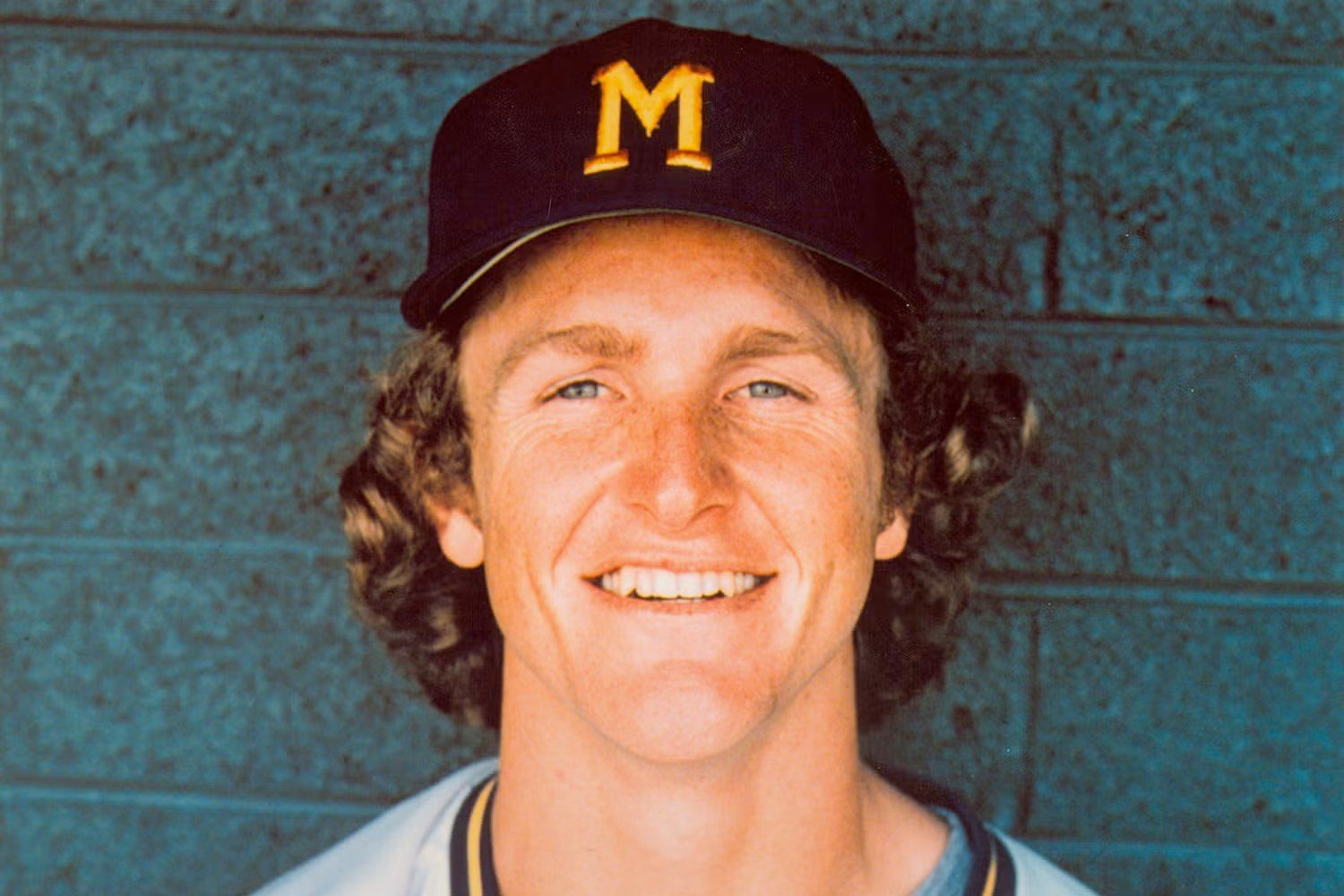 A month before he graduated from Taft High School in Woodland Hills, California in 1973, Robin Yount signed a national letter of intent to attend Arizona State University. Pat Kuehner, ASU assistant coach, said that Yount was the "best high school prospect in the nation." In the June 1973 MLB Draft, the first pick (by the Texas Rangers) was left-handed high-school pitching phenom David Clyde, who won 44 of his last 45 games for his team in Texas and had nine career no-hitters. The Philadelphia Phillies selected slugging college catcher John Stearns with the second pick. With the third pick, the Milwaukee Brewers chose Yount. Yount, who played mostly shortstop in high school, also did some relief work on the mound, striking out 17 batters in nine innings of work his senior year. Milwaukee scout Roland LeBlanc said that Yount was a "good defensive player with good hands and range, and above-average speed." His bonus was an estimated $75,000. Yount was assigned to short-season Class A ball at Newark, in the New York-Penn League. As a 17-year-old, Yount had a slash line of .285/.370/.409 across 242 at-bats. His 15 doubles ranked fifth in the league. The next year in spring training, Yount opened the eyes of the Brewers' management team. “If he goes north with us, he’ll be our regular shortstop," said manager Del Crandall. Usually, when a manager says that about a player. they don't go north with the team. Yount went north with the team and started the first game of the year, a chilly 40-degree day on Apr. 5, 1974, at Milwaukee County Stadium in front of 32,761 slightly frozen fans. Yount batted ninth and drew a free pass off Boston’s Luis Tiant in the bottom of the second inning. In the top of the third, with Juan Beniquez on second and Cecil Cooper on first, Carl Yastrzemski hit a grounder to short. Yount fielded it clearnly, tagged the bag at second and leaped over a sliding Cooper to make the throw to first. Unfortunately, Cooper’s spikes clipped Yount’s shin, and the throw bounced to first, not in time to get Yastrzemski. Yount learned an early lesson on how to make plays around second base. “I turned it wrong,” Yount said. “I came across the bag when I should have stayed behind it. I was told afterward how to do it. I know now that I shouldn’t have done it that way.” He led off the bottom of the fifth and flied to left field, and in the bottom of the sixth, he was pinch-hit for by Felipe Alou with the bases loaded and one out. Darrell Porter scored on a passed ball to cut Boston’s lead to 7-6, but then Alou struck out looking. Alou would only have two more at-bats in his illustrious career, which would later include managerial stints with the Montreal Expos and San Francisco Giants spanning 14 seasons. Yount started the season hitless in his first 10 at-bats, before he singled to center in the fifth inning off Baltimore's Dave McNally on April 12 at County Stadium. The next day, Yount got the first of 251 career home runs, a game-winner in the eighth off Ross Grimsley of the Orioles in a 3-2 victory. Otherwise, it was slow going for Yount in April; he ended the month with a batting line of .182/.220/.255. Yount finally got the hang of major-league life in May. Keep in mind, he was only 18 for most of the season. In 23 games, he batted .324/.351/.423 across 71 at-bats in his second big league month. The player who became ‘The Kid’ developed tendinitis in his left foot late in the year and only played in 107 games. His season totals of .250/.276/.346 were not a harbinger of things to come. “I don’t think about how scared I should be because I’m in the major leagues at 18,” Yount told sportswriter Pat Jordan for his Sports Illustrated feature in 1974. “I just go out and play. When I’m at bat, I concentrate on hitting the ball, and when I’m in the field, I concentrate on picking it up.” Yount would do just that for 20 years, winning MVP awards at both shortstop and center field, collecting 3,142 hits, and getting inducted into the Baseball Hall of Fame in 1999, along with Nolan Ryan, Orlando Cepeda, and George Brett. Other than Bob Uecker, one of the first people you think about when the Milwaukee Brewers are mentioned is 'Rockin' Robin.' What are your favorite memories of 'The Kid?' Please add them in the 'comments' section.
 -
The things I would do to be 5'9" and 175 pounds. (I got the 5'9" nailed...)
-
Like superscout Howie Haak said many times: first you see if they can run. If they have good speed, then you see if they can throw. If they have a good arm, then you see if they can hit. If they can hit, then they are a prospect. Hamilton just needs to figure out how to hit...
-
I see it as a strength because there are a lot of options. Megill, Uribe, and Ashby would be big losses if injured or traded, but I think the rest are fairly interchangeable.
-
Image courtesy of © Jayne Kamin-Oncea-Imagn Images Aaron Ashby is entering his fifth year in Milwaukee and has been an above-average pitcher for the Brewers, posting career numbers of 114 ERA+ and a FIP of 3.46. Let’s say, for the sake of argument, that Nashville is not a realistic option, as in, ‘he’s too good to send down.’ Where will he fit into Milwaukee’s plans? Ashby was a fourth-round pick in the 2018 draft out of Crowder College in Neosho, Missouri, and made good progress through the Brewers chain, arriving in Milwaukee in just his third year, and has been a solid contributor ever since. The Brewers have two main questions with their pitching staff: who is going to start, and who is going to stay in Milwaukee? Let’s answer the first question. Currently, the Brewers have six southpaws that have the versatility to make the rotation or pitch out of the pen. Newcomers Kyle Harrison and Shane Drohan came over in the Caleb Durbin trade from Boston, joining Robert Gasser, Angel Zerpa, DL Hall, and Ashby. All these guys could potentially join the rotation, or they could reside in the pen. Back in 2022, Ashby made 19 starts for Milwaukee. He averaged nearly five innings per start, striking out at a high rate of 26.2%, but unfortunately, his 10.4% walk rate was pretty bad. Last year in 43 appearances (including one opener game) he whiffed 28.1% while improving a little on his walk rate, dropping it to 8.9%. Ashby began spring training last year as a starter but suffered an oblique injury and missed the first third of the season. When he came back, he was inserted into a regular bullpen role, pitching in all leverage situations. Realistically, Quinn Priester, Brandon Woodruff, Chad Patrick, and Jacob Misiorowski are front-runners for the first four starting spots. Logan Henderson and Brandon Sproat are on the periphery. They are all right-handers. Add to that Harrison, Gasser, Ashby, Zerpa, Hall, and Drohan, and you have nearly a baker’s dozen of arms to choose from. Some will get injured, some will underperform, and before you know it, the Brewers could be scrambling to cobble a rotation together. Let’s hope that doesn’t happen. Aaron Ashby's Stuff Ashby depends heavily on his sinker, which he throws over 50% of the time, and backs it up with his curveball, which he throws once every four pitches. His most effective pitch is his curveball, which has a 7.6" drop, more than the major league average. It produced 27 strikeouts for a K rate of 47%. His slider has big movement as well, 9" more than the major league average. Ashby has changed his arm angle over the years, going from high-three-quarters in 2022 when he was a starter to a more over-the-top guy last year with an arm angle of 51%. Aaron Ashby's Pitch Arsenal Ashby uses his sinker and curve three-quarters of the time overall, while using his changeup at a 12% rate, while the slider (8%) and four-seam (2%) are the lesser-used pitches in his repertoire. He relies more on the sinker to lefty hitters (58%) and doubles the slider offering up to 18%. When facing righties, the slider and the four-seam go in the back pocket (5% total) while the curve and slider come out half the time, along with the old reliable sinker at 47%. That sinker gets beat into the dirt more often than not (62%), and with an infield like the Brewers have, that is a good thing. Year Pitch Type # # RHB # LHB % MPH PA AB H 1B 2B 3B HR SO BBE BA xBA SLG xSLG wOBA xwOBA EV LA Spin Ext. Whiff% PutAway% 2025 Sinker 530 305 225 51.3 97.5 136 119 29 24 2 1 2 21 101 .244 .259 .328 .354 .291 .311 90.2 -1 2151 5.3 16.4 22.8 2025 Curveball 273 192 81 26.4 82.2 57 49 7 5 2 0 0 27 22 .143 .150 .184 .185 .219 .225 88.0 3 2737 5.3 43.9 34.6 2025 Changeup 122 120 2 11.8 91.4 38 35 10 6 3 1 0 9 26 .286 .250 .429 .353 .325 .282 89.2 4 1902 5.3 31.3 25.0 2025 Slider 84 14 70 8.1 84.2 31 28 6 5 0 0 1 17 11 .214 .140 .321 .242 .277 .218 76.2 0 2661 5.3 51.5 29.3 2025 Four Seamer 24 17 7 2.3 96.9 8 7 2 2 0 0 0 2 5 .286 .189 .286 .207 .307 .243 78.8 -12 2263 5.3 28.6 11.8 2024 Sinker 216 136 80 44.6 96.2 56 49 12 9 2 0 1 8 42 .245 .211 .347 .327 .297 .297 90.4 1 2120 5.2 12.6 15.1 2024 Changeup 99 91 8 20.5 88.8 27 23 5 1 3 0 1 4 20 .217 .252 .478 .422 .337 .339 86.5 6 1775 5.2 36.4 13.3 2024 Curveball 93 77 16 19.2 82.2 14 14 1 1 0 0 0 9 5 .071 .161 .071 .241 .063 .174 94.6 -5 2636 5.3 42.9 34.6 2024 Slider 66 26 40 13.6 83.2 19 18 2 1 1 0 0 12 6 .111 .138 .167 .277 .149 .201 85.6 9 2541 5.2 43.8 35.3 2024 Four Seamer 10 9 1 2.1 96.9 3 3 0 0 0 0 0 0 3 .000 .155 .000 .467 .000 .255 95.4 32 2214 5.3 0.0 0.0 What Should Aaron Ashby's Role Be in 2026? In his major league career, Ashby has appeared in 97 games, of which 26 were starts. He started 66 times in the minors among his 95 appearances, so he definitely has the chops to fit into the rotation. Given the heavy right-handed presence in the tentative rotation, manager Pat Murphy will probably be looking to insert one southpaw into that mix. The question is: which of the groups listed above will be that left-hander? I would put Harrison or Gasser at the top of that list, but given an underperformance and the likelihood of an injury or two, you might as well flip a coin or roll the dice to decide. No matter where he ends up, Ashby will play a huge role for the Brewers in 2026. View full article
-
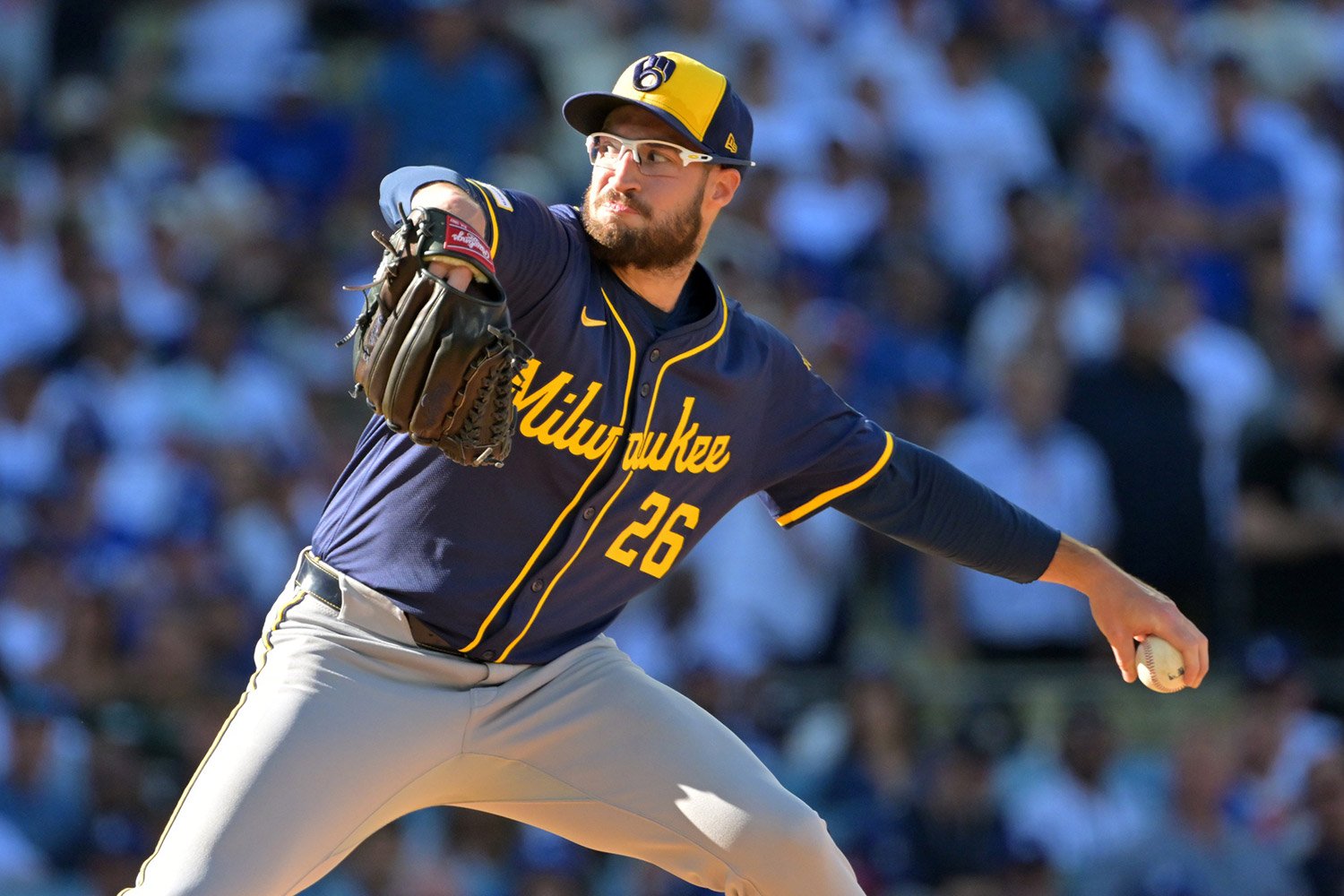 Aaron Ashby is entering his fifth year in Milwaukee and has been an above-average pitcher for the Brewers, posting career numbers of 114 ERA+ and a FIP of 3.46. Let’s say, for the sake of argument, that Nashville is not a realistic option, as in, ‘he’s too good to send down.’ Where will he fit into Milwaukee’s plans? Ashby was a fourth-round pick in the 2018 draft out of Crowder College in Neosho, Missouri, and made good progress through the Brewers chain, arriving in Milwaukee in just his third year, and has been a solid contributor ever since. The Brewers have two main questions with their pitching staff: who is going to start, and who is going to stay in Milwaukee? Let’s answer the first question. Currently, the Brewers have six southpaws that have the versatility to make the rotation or pitch out of the pen. Newcomers Kyle Harrison and Shane Drohan came over in the Caleb Durbin trade from Boston, joining Robert Gasser, Angel Zerpa, DL Hall, and Ashby. All these guys could potentially join the rotation, or they could reside in the pen. Back in 2022, Ashby made 19 starts for Milwaukee. He averaged nearly five innings per start, striking out at a high rate of 26.2%, but unfortunately, his 10.4% walk rate was pretty bad. Last year in 43 appearances (including one opener game) he whiffed 28.1% while improving a little on his walk rate, dropping it to 8.9%. Ashby began spring training last year as a starter but suffered an oblique injury and missed the first third of the season. When he came back, he was inserted into a regular bullpen role, pitching in all leverage situations. Realistically, Quinn Priester, Brandon Woodruff, Chad Patrick, and Jacob Misiorowski are front-runners for the first four starting spots. Logan Henderson and Brandon Sproat are on the periphery. They are all right-handers. Add to that Harrison, Gasser, Ashby, Zerpa, Hall, and Drohan, and you have nearly a baker’s dozen of arms to choose from. Some will get injured, some will underperform, and before you know it, the Brewers could be scrambling to cobble a rotation together. Let’s hope that doesn’t happen. Aaron Ashby's Stuff Ashby depends heavily on his sinker, which he throws over 50% of the time, and backs it up with his curveball, which he throws once every four pitches. His most effective pitch is his curveball, which has a 7.6" drop, more than the major league average. It produced 27 strikeouts for a K rate of 47%. His slider has big movement as well, 9" more than the major league average. Ashby has changed his arm angle over the years, going from high-three-quarters in 2022 when he was a starter to a more over-the-top guy last year with an arm angle of 51%. Aaron Ashby's Pitch Arsenal Ashby uses his sinker and curve three-quarters of the time overall, while using his changeup at a 12% rate, while the slider (8%) and four-seam (2%) are the lesser-used pitches in his repertoire. He relies more on the sinker to lefty hitters (58%) and doubles the slider offering up to 18%. When facing righties, the slider and the four-seam go in the back pocket (5% total) while the curve and slider come out half the time, along with the old reliable sinker at 47%. That sinker gets beat into the dirt more often than not (62%), and with an infield like the Brewers have, that is a good thing. Year Pitch Type # # RHB # LHB % MPH PA AB H 1B 2B 3B HR SO BBE BA xBA SLG xSLG wOBA xwOBA EV LA Spin Ext. Whiff% PutAway% 2025 Sinker 530 305 225 51.3 97.5 136 119 29 24 2 1 2 21 101 .244 .259 .328 .354 .291 .311 90.2 -1 2151 5.3 16.4 22.8 2025 Curveball 273 192 81 26.4 82.2 57 49 7 5 2 0 0 27 22 .143 .150 .184 .185 .219 .225 88.0 3 2737 5.3 43.9 34.6 2025 Changeup 122 120 2 11.8 91.4 38 35 10 6 3 1 0 9 26 .286 .250 .429 .353 .325 .282 89.2 4 1902 5.3 31.3 25.0 2025 Slider 84 14 70 8.1 84.2 31 28 6 5 0 0 1 17 11 .214 .140 .321 .242 .277 .218 76.2 0 2661 5.3 51.5 29.3 2025 Four Seamer 24 17 7 2.3 96.9 8 7 2 2 0 0 0 2 5 .286 .189 .286 .207 .307 .243 78.8 -12 2263 5.3 28.6 11.8 2024 Sinker 216 136 80 44.6 96.2 56 49 12 9 2 0 1 8 42 .245 .211 .347 .327 .297 .297 90.4 1 2120 5.2 12.6 15.1 2024 Changeup 99 91 8 20.5 88.8 27 23 5 1 3 0 1 4 20 .217 .252 .478 .422 .337 .339 86.5 6 1775 5.2 36.4 13.3 2024 Curveball 93 77 16 19.2 82.2 14 14 1 1 0 0 0 9 5 .071 .161 .071 .241 .063 .174 94.6 -5 2636 5.3 42.9 34.6 2024 Slider 66 26 40 13.6 83.2 19 18 2 1 1 0 0 12 6 .111 .138 .167 .277 .149 .201 85.6 9 2541 5.2 43.8 35.3 2024 Four Seamer 10 9 1 2.1 96.9 3 3 0 0 0 0 0 0 3 .000 .155 .000 .467 .000 .255 95.4 32 2214 5.3 0.0 0.0 What Should Aaron Ashby's Role Be in 2026? In his major league career, Ashby has appeared in 97 games, of which 26 were starts. He started 66 times in the minors among his 95 appearances, so he definitely has the chops to fit into the rotation. Given the heavy right-handed presence in the tentative rotation, manager Pat Murphy will probably be looking to insert one southpaw into that mix. The question is: which of the groups listed above will be that left-hander? I would put Harrison or Gasser at the top of that list, but given an underperformance and the likelihood of an injury or two, you might as well flip a coin or roll the dice to decide. No matter where he ends up, Ashby will play a huge role for the Brewers in 2026.
 -
https://sabr.org/bioproj/park/lloyd-street-grounds-milwaukee/
-
I'd be all for that!
-
Before reading this part of the Brewers' voyage to Milwaukee, read part one of the series, "A Failed Launch". Also, part two of the three-part series, "Up For Grabs." PART 3 Charlie O. Finley got back into the headlines on Feb. 4, 1970. “I tried to be of help to Milwaukee. The next thing I see all over the papers is that my plan wasn’t good for baseball," Finley said to reporters at the time. "They made me look like a fool.” His plan had been to move the Pilots to Milwaukee on an interim basis. “If that group up there is trying to get major-league baseball, they haven’t shown me anything.” On Feb. 5, hotel magnate Edward Carlson lauded a fundraising effort that raised nearly $6 million toward a ‘cash and credit goal,’ in a last-ditch effort to get the necessary cash together for the Seattle group. “We hope and believe that this remarkable demonstration of civic pride and financial commitment will convince the American League to retain the Pilots franchise in Seattle on a permanent basis,” Carlson said. “I think we have a deal.” That statement sounded prescient on Feb. 10, when the American League owners voted to keep the franchise in Seattle. Several possibilities were discussed, including a trusteeship that would rescue the team. “This is a very serious problem,” AL president Joe Cronin said. “The American League is leaning over backwards to keep baseball in Seattle." The next day, the American League rejected an application for the Carlson/Danz Seattle group and voted to have the Daley/Soriano group keep the Pilots in Seattle. Carlson had wanted a non-profit organization to run the club for him, and this was a main concern of the American League. "We felt the non-profit factor in their plan could not fit into operation of a baseball club,” Cronin said. At that same meeting, the AL decided to advance the Pilots $650,000 for spring training expenses. On Valentine’s Day, the American League appointed Roy Hamey to oversee the operations of the Pilots. Hamey, you might remember, was a general manager for the New York Yankees in the early 1960s. He would take command of the team as it was just getting ready for spring training. On Feb. 24, 46 players began camp in Tempe, Arizona. Meanwhile, Tempe community leaders reported that they “have exceeded last year’s season ticket sale for the Pilots’ spring training schedule,” according to the Everett (Washington) Daily Herald. Back in Seattle, John Spellman was optimistic. “We still plan to let out bids in November, and construction [for the domed stadium] is still scheduled to start before the end of the year (1970)," he said. In early March, the Milwaukee Sentinel reported that owners were "contemplating moving the club before the regular season started.” The story went on to say that the group worried the Pilots would lose more money in 1970. Hamey’s reply? “Absolutely ridiculous.” Court chaos returned on March 16. The American League had been set to move the franchise to Milwaukee, having the nine necessary votes from owners that would approve the move. Just before the meeting was to begin, though, Circuit Court Judge James D. Bruton, Jr. issued a restraining order that would keep the league from moving the team from Seattle. The league’s response was that the teams could not afford to continue to support the Seattle franchise. The Bank of California sided with the AL in trying to remove legal hurdles that would keep the Pilots in Seattle. The lawsuit that Mayor Wes Uhlman filed at $25 million had been increased to $82 million. According to the Olympia (Washington) Olympian, William Dwyer, special assistant state attorney general, said that if the restraining order was dismissed, “the club will move and our $82 million antitrust damage suit goes into effect immediately.” Note: The lawsuit lasted until Feb. 1976, when it was dismissed on the condition that Seattle would receive an expansion team in 1977. After going from state court to federal court, and then back to Washington state court, and seeing two changes of venue from King County to Kitsap County to Snohomish County, the suit was officially dismissed in April 1977—when the Seattle Mariners made their debut in the new domed stadium called the Kingdome. On March 18, a petition was filed in U.S. District Court, asking that the franchise be sold to Milwaukee for $10.8 million under the Bankruptcy Act. In a hearing that took place on Friday, Mar. 21, Superior Court Judge James W. Mifflin heard arguments. He granted a continuance over the weekend, after which he would decide whether to grant the City of Seattle and State of Washington a temporary injunction to prevent the franchise from moving. Pacific Northwest Sports, Inc. (the ownership group) filed a petition of bankruptcy that sought a transfer of the franchise to Milwaukee so creditors could get paid. Sidney C. Volinn, a bankruptcy court referee, was scheduled to hear the petition on Tuesday, Mar. 24. Baseball Facilities, Inc., a developer of the Pilots' spring training site, filed suit saying the Pilots had failed (once again) to develop the facilities as promised. As the wheels of justice continued to move slowly along, Judge Mifflin's patience wore thin. Meanwhile, Volinn was set to decide the fate of the franchise on Mar. 30. Forgotten in all the litigation was the fact that the ownership group had signed a contract with the Milwaukee group earlier in March, which would expire on April 1. Time was of the essence. Back in Seattle, Dewey and Max Soriano were hung in effigy at a downtown mall. Max Soriano later explained that the club “was too embarrassed to ask a bank for additional funds.” It probably didn’t matter, though. “No banker in his right mind would loan the Pilots additional money," Campbell noted. In Milwaukee, a storm dumped four inches of snow on the ground and groundskeepers at County Stadium were hard at work to get the facility ready for a potential Opening Day contest against the California Angels on Apr. 7. Volinn listened to testimony on Mar. 30, but after a long day in court, decided to continue proceedings the following day. “I realize the onset of the baseball season is here and there is an atmosphere of haste,” Volinn said. “But the court will take all the time necessary in order to receive all the evidence that is necessary to make a decision in this case.” A couple of issues Volinn was considering: the Pilots couldn’t pay their debt of $8.13 million, and would not be able to survive a second season; and it would be unfair to make the league keep the franchise afloat. As spring training ended, the team’s equipment truck drove north from Tempe, Arizona to Provo, Utah and waited at a rest area along I-80 north of Provo. They were waiting to hear whether to head west to Seattle or turn east and make the long drive to Milwaukee. The following day, it became official: The Seattle Pilots would become the Milwaukee Brewers. The driver started his truck and turned east on I-80, starting the long 1,500-mile drive to Brew City. Milwaukee finally got its team! On Apr. 7, 1970, in front of a crowd of 36,107 fans at Milwaukee County Stadium, the Milwaukee Brewers era started with a 12-0 loss to the California Angels. Sources Wikipedia Everett (WA) Daily Herald Spokane (WA) Spokesman-Review Spokane (WA) Chronicle Minneapolis Star Tribune Madison (WI) Capital Times Green Bay (WI) Press-Gazette Appleton (WI) Post-Crescent New York Times Milwaukee Sentinel Olympia (WA) Olympian View full article
-
How the Seattle Pilots Became the Milwaukee Brewers: Part 3
Michael Trzinski posted an article in History
 Before reading this part of the Brewers' voyage to Milwaukee, read part one of the series, "A Failed Launch". Also, part two of the three-part series, "Up For Grabs." PART 3 Charlie O. Finley got back into the headlines on Feb. 4, 1970. “I tried to be of help to Milwaukee. The next thing I see all over the papers is that my plan wasn’t good for baseball," Finley said to reporters at the time. "They made me look like a fool.” His plan had been to move the Pilots to Milwaukee on an interim basis. “If that group up there is trying to get major-league baseball, they haven’t shown me anything.” On Feb. 5, hotel magnate Edward Carlson lauded a fundraising effort that raised nearly $6 million toward a ‘cash and credit goal,’ in a last-ditch effort to get the necessary cash together for the Seattle group. “We hope and believe that this remarkable demonstration of civic pride and financial commitment will convince the American League to retain the Pilots franchise in Seattle on a permanent basis,” Carlson said. “I think we have a deal.” That statement sounded prescient on Feb. 10, when the American League owners voted to keep the franchise in Seattle. Several possibilities were discussed, including a trusteeship that would rescue the team. “This is a very serious problem,” AL president Joe Cronin said. “The American League is leaning over backwards to keep baseball in Seattle." The next day, the American League rejected an application for the Carlson/Danz Seattle group and voted to have the Daley/Soriano group keep the Pilots in Seattle. Carlson had wanted a non-profit organization to run the club for him, and this was a main concern of the American League. "We felt the non-profit factor in their plan could not fit into operation of a baseball club,” Cronin said. At that same meeting, the AL decided to advance the Pilots $650,000 for spring training expenses. On Valentine’s Day, the American League appointed Roy Hamey to oversee the operations of the Pilots. Hamey, you might remember, was a general manager for the New York Yankees in the early 1960s. He would take command of the team as it was just getting ready for spring training. On Feb. 24, 46 players began camp in Tempe, Arizona. Meanwhile, Tempe community leaders reported that they “have exceeded last year’s season ticket sale for the Pilots’ spring training schedule,” according to the Everett (Washington) Daily Herald. Back in Seattle, John Spellman was optimistic. “We still plan to let out bids in November, and construction [for the domed stadium] is still scheduled to start before the end of the year (1970)," he said. In early March, the Milwaukee Sentinel reported that owners were "contemplating moving the club before the regular season started.” The story went on to say that the group worried the Pilots would lose more money in 1970. Hamey’s reply? “Absolutely ridiculous.” Court chaos returned on March 16. The American League had been set to move the franchise to Milwaukee, having the nine necessary votes from owners that would approve the move. Just before the meeting was to begin, though, Circuit Court Judge James D. Bruton, Jr. issued a restraining order that would keep the league from moving the team from Seattle. The league’s response was that the teams could not afford to continue to support the Seattle franchise. The Bank of California sided with the AL in trying to remove legal hurdles that would keep the Pilots in Seattle. The lawsuit that Mayor Wes Uhlman filed at $25 million had been increased to $82 million. According to the Olympia (Washington) Olympian, William Dwyer, special assistant state attorney general, said that if the restraining order was dismissed, “the club will move and our $82 million antitrust damage suit goes into effect immediately.” Note: The lawsuit lasted until Feb. 1976, when it was dismissed on the condition that Seattle would receive an expansion team in 1977. After going from state court to federal court, and then back to Washington state court, and seeing two changes of venue from King County to Kitsap County to Snohomish County, the suit was officially dismissed in April 1977—when the Seattle Mariners made their debut in the new domed stadium called the Kingdome. On March 18, a petition was filed in U.S. District Court, asking that the franchise be sold to Milwaukee for $10.8 million under the Bankruptcy Act. In a hearing that took place on Friday, Mar. 21, Superior Court Judge James W. Mifflin heard arguments. He granted a continuance over the weekend, after which he would decide whether to grant the City of Seattle and State of Washington a temporary injunction to prevent the franchise from moving. Pacific Northwest Sports, Inc. (the ownership group) filed a petition of bankruptcy that sought a transfer of the franchise to Milwaukee so creditors could get paid. Sidney C. Volinn, a bankruptcy court referee, was scheduled to hear the petition on Tuesday, Mar. 24. Baseball Facilities, Inc., a developer of the Pilots' spring training site, filed suit saying the Pilots had failed (once again) to develop the facilities as promised. As the wheels of justice continued to move slowly along, Judge Mifflin's patience wore thin. Meanwhile, Volinn was set to decide the fate of the franchise on Mar. 30. Forgotten in all the litigation was the fact that the ownership group had signed a contract with the Milwaukee group earlier in March, which would expire on April 1. Time was of the essence. Back in Seattle, Dewey and Max Soriano were hung in effigy at a downtown mall. Max Soriano later explained that the club “was too embarrassed to ask a bank for additional funds.” It probably didn’t matter, though. “No banker in his right mind would loan the Pilots additional money," Campbell noted. In Milwaukee, a storm dumped four inches of snow on the ground and groundskeepers at County Stadium were hard at work to get the facility ready for a potential Opening Day contest against the California Angels on Apr. 7. Volinn listened to testimony on Mar. 30, but after a long day in court, decided to continue proceedings the following day. “I realize the onset of the baseball season is here and there is an atmosphere of haste,” Volinn said. “But the court will take all the time necessary in order to receive all the evidence that is necessary to make a decision in this case.” A couple of issues Volinn was considering: the Pilots couldn’t pay their debt of $8.13 million, and would not be able to survive a second season; and it would be unfair to make the league keep the franchise afloat. As spring training ended, the team’s equipment truck drove north from Tempe, Arizona to Provo, Utah and waited at a rest area along I-80 north of Provo. They were waiting to hear whether to head west to Seattle or turn east and make the long drive to Milwaukee. The following day, it became official: The Seattle Pilots would become the Milwaukee Brewers. The driver started his truck and turned east on I-80, starting the long 1,500-mile drive to Brew City. Milwaukee finally got its team! On Apr. 7, 1970, in front of a crowd of 36,107 fans at Milwaukee County Stadium, the Milwaukee Brewers era started with a 12-0 loss to the California Angels. Sources Wikipedia Everett (WA) Daily Herald Spokane (WA) Spokesman-Review Spokane (WA) Chronicle Minneapolis Star Tribune Madison (WI) Capital Times Green Bay (WI) Press-Gazette Appleton (WI) Post-Crescent New York Times Milwaukee Sentinel Olympia (WA) Olympian
 -
Not sure that Chewy is the best choice for CF; I think he belongs in a corner. But Murph will probably mix and match as needed. Due to his proclivity for injury, I don't think Mitch is the answer, either. So who goes where? Not sure...
-
Must have had their talking points straight 😁
-
In 1968 the White Sox played nine games at County Stadium and drew over 264,000 fans, an average of 29,300 per game. In comparison, they drew just 539,000 in Chicago over 72 games, an average of just 7,400 per game. The following season saw the White Sox play 11 games at County Stadium, but they only drew an average of 18,000 fans per game. It probably didn’t help matters that White Sox owner Arthur Allyn said, “I wish they’d get off that kick that we’re going to move anywhere. I’ve said it before: we’re not moving to Milwaukee today, next year, or ever.”
-
I was only 10, so I didn't know all this stuff. But I do remember listening to the first two games out in California on my little transistor radio tucked under my pillow, hoping my parents wouldn't hear it. Good times!!
-
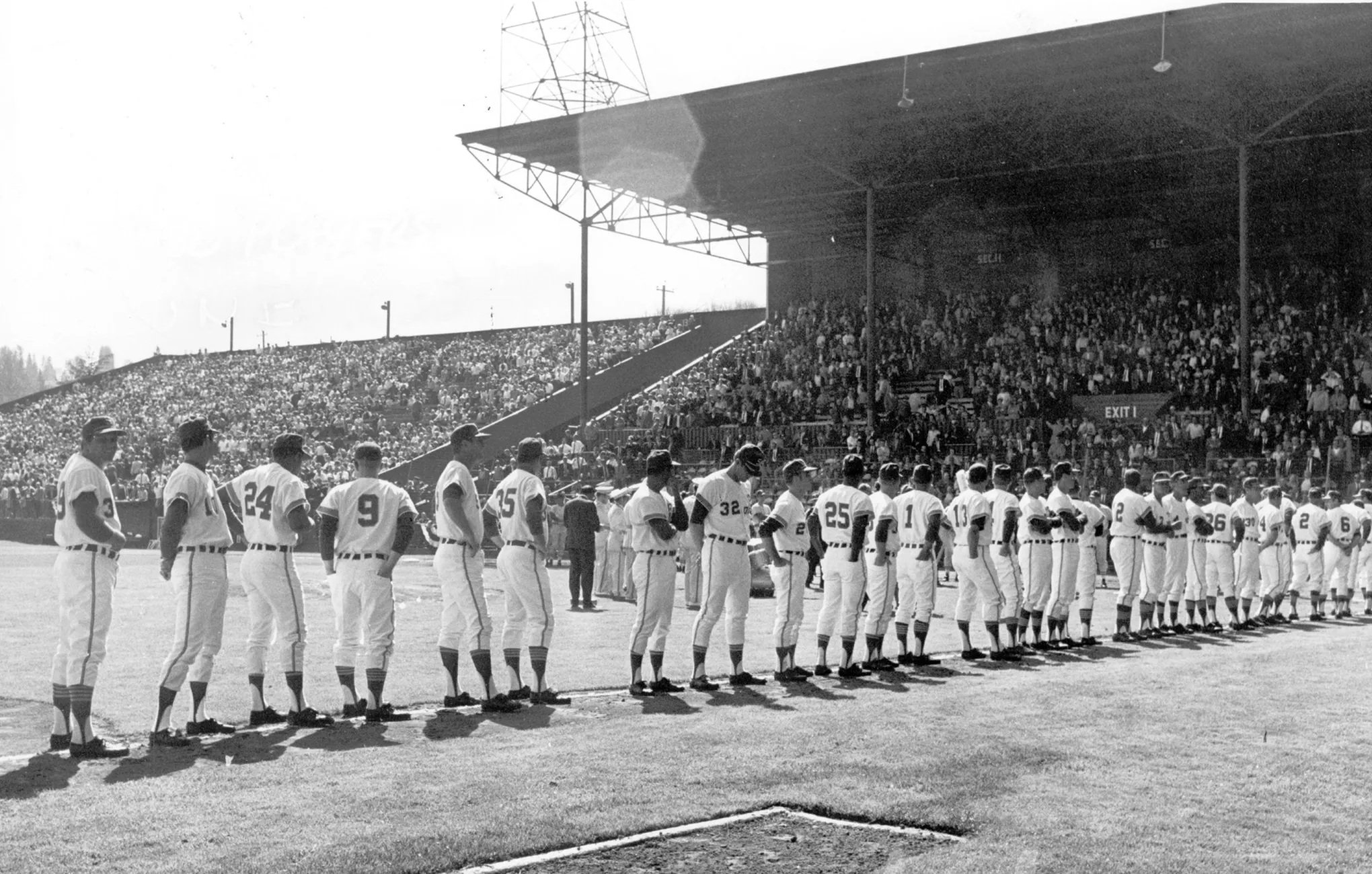
Image courtesy of Barry Sweet / Associated Press Before reading this part of the Brewers' voyage to Milwaukee, read part one of the series, "A Failed Launch". And in the meantime, popular manager Joe Schultz was fired by GM Marvin Milkes—who would become the Brewers' first general manager—and speculation began about who was going to be the next Pilots manager. Dave Bristol, Billy Martin, Dick Williams, and Grady Hatton were among the names mentioned. Two days before Thanksgiving, the Pilots hired Bristol, who had been recently fired by the Cincinnati Reds after guiding them to a record of 89-73 during the season. The estimated contract was a two-year, $80,000 deal. (No, that is not a typo.) A week later, the American League unanimously voted to accept the sale from Daley to the Danz group. However, the $40 million domed stadium deal remained uncertain, and both sides had concerns. Just after the New Year’s Eve hangovers had subsided, more complications popped up in early January 1970 when the Bank of California demanded immediate repayment of a $3.5 million loan that was made to the Pilots the previous season. The new ownership group, led by Danz, was going to assume that loan and was working feverishly to settle its financial issues. Danz later announced a ticket drive that he hoped would raise $1 million to show that the Pilots could count on local support. The ticket drive started slowly, and over the first few days, the team had raised only $200,000 toward the $1 million goal. On January 13, the American League announced they were giving the Denz group nine more days to settle its finances. After only a few days, the Pilots got a five-day extension from the league so Danz and his associates “could find a solution to the financial bottleneck which is holding up the sale” according to the Appleton Post-Crescent. Just days later, baseball commish Bowie Kuhn stated that if the Pilots did not get their deal squared away, “There is a possibility of a franchise transfer. When and if there is a transfer, one thing is certain—Milwaukee will receive serious consideration.” But he also told the crowd of 700 at the Wisconsin Baseball Writers Association 17th Annual Diamond Dinner in Milwaukee that Dallas-Fort Worth was still in the running. “I wish I could bring you some guarantee that would lighten your heart tonight,” Kuhn said. “But I can’t.” On January 22, Daley announced that Seattle was “up for grabs.” Danz and his group were unable to meet a 2 pm deadline to refinance or settle the Bank of California loan. Hunt, the owner of the Kansas City Chiefs, and Mercer then formally applied to the American League for the transfer of the team to the DFW area. Selig’s group reportedly offered less money but had a major league-ready stadium as part of the package. Dallas-Fort Worth only had a minor league facility ready to go, even though a big-league park was in the planning stage. And if there hadn’t been enough chaos already, one day later, the courts got involved when the city of Seattle filed a ‘specific performance’ suit against Pacific Northwest Sports, Inc. (Daley et al) that basically said the Pilots needed to fulfill its five-year lease agreement. It turned ‘hardball’ quickly. King County Superior Court Judge F. A. Walterskirschen threatened a “temporary restraining order barring removal of the franchise” from Seattle. New Seattle Mayor Wes Uhlman intimated that a lawsuit would be filed against any team that bought and moved the Pilots. Uhlman told reporters, “Seattle deserves more than a one-year turn at-bat.” Milwaukee was also looking for ‘another’ turn at bat, as the Milwaukee Braves had skipped town after the 1965 campaign. Earlier in January, Milwaukee radio station WOKY sent telegrams—the forerunner of email—to all American League clubs and AL president Cronin. The telegram read: “The world’s greatest baseball fans urge you to put the Pilots in Milwaukee. Remember the ‘Miracle of Milwaukee.’ It can happen again.” Around that time, things started to get nasty. Ewing Kauffman, owner of the expansion Kansas City team and chairman of a four-man board that would help shepherd the troubling transaction, set the purchase price at $8.8 million, down from Daley’s initial ask of $10.5 million. “We’ve done this [set the price] so that Daley and the Sorianos will make less than half a million profit. They don’t deserve a profit. They did not stay in there and pitch.” Ouch. Once again, AL owners were split in their visions of the outcome. Some wanted the Pilots to stay in Seattle, and others rooted for either Milwaukee or Dallas-Fort Worth to come forward and win the day. Selig and Co. had Milwaukee County Stadium as an anchor and a valid reason for choosing Milwaukee. On the other hand, DFW would have been the larger cash cow, no pun intended. And to add a little more intrigue into this convoluted, comical, and controversial piece of commerce, DFW principal Hunt had a ‘private understanding’ with the Cleveland Indians, according to a column by Leonard Koppett of the New York Times. Rumor had it that Hunt wanted to buy the Indians for $13 million after the 1970 season. Koppett whimsically posited that, “Apparently, the oil millionaire (Hunt) now believes a Pilot in the hand is worth two Indians in the handshake.” You can’t make this stuff up. On January 28, the Pilots were once again given a nine-day extension to allow the Seattle group, now led by hotel executive Edward Carlson, more time to come up with the now-$9-million asking price. Two days later, an airline executive from Oakland threw his hat into the three-ring circus as a potential buyer. Edward J. Daly was president of World Airways, Inc., an Oakland charter carrier. What was Daly’s sudden interest in buying the Pilots? A friend of his, Oakland A’s owner Charles O. Finley, asked him to. And it gets better. Carlson and Danz of the Seattle group asked Tommy Mercer of the DFW group to lend them $4 million. “I said we were not in the finance business,” Mercer commented. Remember when Seattle Mayor Uhlman threatened any non-local buyer with a lawsuit? That number was purportedly now $25 million. Mercer then proposed that the league take over the Pilots and pay $150,000 per team for the year’s baseball operations, rather than each team paying 1/10 of the $25 million lawsuit amount. “It could possibly happen,” Mercer said. Not to be left out, Bank of California vice president Warren G. Campbell told the Milwaukee Sentinel on February 3 that the Carlson/Danz group was “at least $3.5 million short, and maybe $7 million” short of the necessary money needed for purchase. Campbell also said, “I don’t know how many times I have to repeat it. We want the cash, or a guarantee in the form of other types of security other than the franchise.” Meanwhile, Milwaukee and DFW waited…patiently. Coming soon, part three: ladies and gentlemen, the Milwaukee Brewers! View full article
-
 Before reading this part of the Brewers' voyage to Milwaukee, read part one of the series, "A Failed Launch". And in the meantime, popular manager Joe Schultz was fired by GM Marvin Milkes—who would become the Brewers' first general manager—and speculation began about who was going to be the next Pilots manager. Dave Bristol, Billy Martin, Dick Williams, and Grady Hatton were among the names mentioned. Two days before Thanksgiving, the Pilots hired Bristol, who had been recently fired by the Cincinnati Reds after guiding them to a record of 89-73 during the season. The estimated contract was a two-year, $80,000 deal. (No, that is not a typo.) A week later, the American League unanimously voted to accept the sale from Daley to the Danz group. However, the $40 million domed stadium deal remained uncertain, and both sides had concerns. Just after the New Year’s Eve hangovers had subsided, more complications popped up in early January 1970 when the Bank of California demanded immediate repayment of a $3.5 million loan that was made to the Pilots the previous season. The new ownership group, led by Danz, was going to assume that loan and was working feverishly to settle its financial issues. Danz later announced a ticket drive that he hoped would raise $1 million to show that the Pilots could count on local support. The ticket drive started slowly, and over the first few days, the team had raised only $200,000 toward the $1 million goal. On January 13, the American League announced they were giving the Denz group nine more days to settle its finances. After only a few days, the Pilots got a five-day extension from the league so Danz and his associates “could find a solution to the financial bottleneck which is holding up the sale” according to the Appleton Post-Crescent. Just days later, baseball commish Bowie Kuhn stated that if the Pilots did not get their deal squared away, “There is a possibility of a franchise transfer. When and if there is a transfer, one thing is certain—Milwaukee will receive serious consideration.” But he also told the crowd of 700 at the Wisconsin Baseball Writers Association 17th Annual Diamond Dinner in Milwaukee that Dallas-Fort Worth was still in the running. “I wish I could bring you some guarantee that would lighten your heart tonight,” Kuhn said. “But I can’t.” On January 22, Daley announced that Seattle was “up for grabs.” Danz and his group were unable to meet a 2 pm deadline to refinance or settle the Bank of California loan. Hunt, the owner of the Kansas City Chiefs, and Mercer then formally applied to the American League for the transfer of the team to the DFW area. Selig’s group reportedly offered less money but had a major league-ready stadium as part of the package. Dallas-Fort Worth only had a minor league facility ready to go, even though a big-league park was in the planning stage. And if there hadn’t been enough chaos already, one day later, the courts got involved when the city of Seattle filed a ‘specific performance’ suit against Pacific Northwest Sports, Inc. (Daley et al) that basically said the Pilots needed to fulfill its five-year lease agreement. It turned ‘hardball’ quickly. King County Superior Court Judge F. A. Walterskirschen threatened a “temporary restraining order barring removal of the franchise” from Seattle. New Seattle Mayor Wes Uhlman intimated that a lawsuit would be filed against any team that bought and moved the Pilots. Uhlman told reporters, “Seattle deserves more than a one-year turn at-bat.” Milwaukee was also looking for ‘another’ turn at bat, as the Milwaukee Braves had skipped town after the 1965 campaign. Earlier in January, Milwaukee radio station WOKY sent telegrams—the forerunner of email—to all American League clubs and AL president Cronin. The telegram read: “The world’s greatest baseball fans urge you to put the Pilots in Milwaukee. Remember the ‘Miracle of Milwaukee.’ It can happen again.” Around that time, things started to get nasty. Ewing Kauffman, owner of the expansion Kansas City team and chairman of a four-man board that would help shepherd the troubling transaction, set the purchase price at $8.8 million, down from Daley’s initial ask of $10.5 million. “We’ve done this [set the price] so that Daley and the Sorianos will make less than half a million profit. They don’t deserve a profit. They did not stay in there and pitch.” Ouch. Once again, AL owners were split in their visions of the outcome. Some wanted the Pilots to stay in Seattle, and others rooted for either Milwaukee or Dallas-Fort Worth to come forward and win the day. Selig and Co. had Milwaukee County Stadium as an anchor and a valid reason for choosing Milwaukee. On the other hand, DFW would have been the larger cash cow, no pun intended. And to add a little more intrigue into this convoluted, comical, and controversial piece of commerce, DFW principal Hunt had a ‘private understanding’ with the Cleveland Indians, according to a column by Leonard Koppett of the New York Times. Rumor had it that Hunt wanted to buy the Indians for $13 million after the 1970 season. Koppett whimsically posited that, “Apparently, the oil millionaire (Hunt) now believes a Pilot in the hand is worth two Indians in the handshake.” You can’t make this stuff up. On January 28, the Pilots were once again given a nine-day extension to allow the Seattle group, now led by hotel executive Edward Carlson, more time to come up with the now-$9-million asking price. Two days later, an airline executive from Oakland threw his hat into the three-ring circus as a potential buyer. Edward J. Daly was president of World Airways, Inc., an Oakland charter carrier. What was Daly’s sudden interest in buying the Pilots? A friend of his, Oakland A’s owner Charles O. Finley, asked him to. And it gets better. Carlson and Danz of the Seattle group asked Tommy Mercer of the DFW group to lend them $4 million. “I said we were not in the finance business,” Mercer commented. Remember when Seattle Mayor Uhlman threatened any non-local buyer with a lawsuit? That number was purportedly now $25 million. Mercer then proposed that the league take over the Pilots and pay $150,000 per team for the year’s baseball operations, rather than each team paying 1/10 of the $25 million lawsuit amount. “It could possibly happen,” Mercer said. Not to be left out, Bank of California vice president Warren G. Campbell told the Milwaukee Sentinel on February 3 that the Carlson/Danz group was “at least $3.5 million short, and maybe $7 million” short of the necessary money needed for purchase. Campbell also said, “I don’t know how many times I have to repeat it. We want the cash, or a guarantee in the form of other types of security other than the franchise.” Meanwhile, Milwaukee and DFW waited…patiently. Coming soon, part three: ladies and gentlemen, the Milwaukee Brewers!
 -
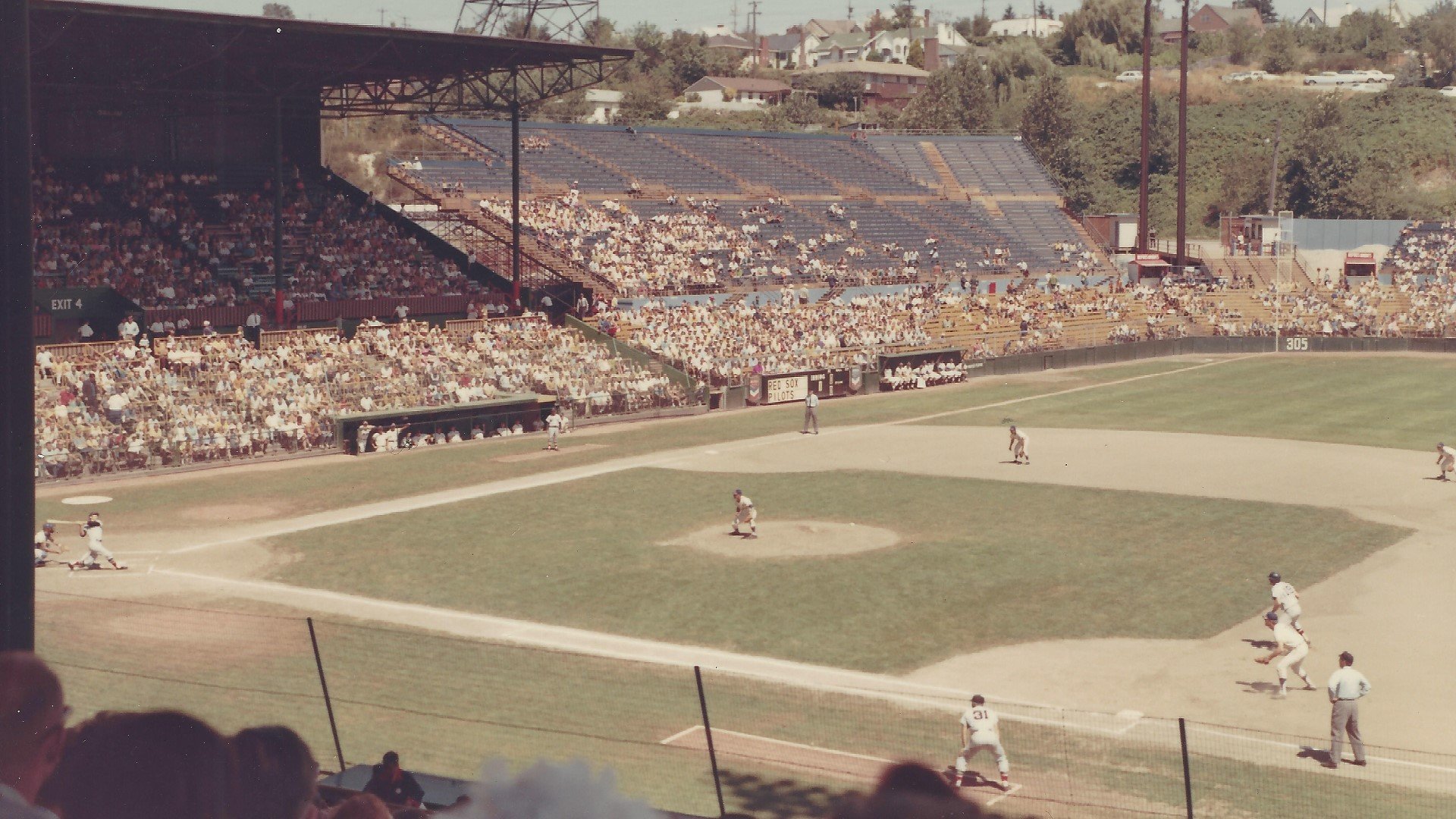 In December 1967, at baseball’s Winter Meetings in Mexico City, a group led by William Daley, Dewey Soriano, and Max Soriano was awarded a major league franchise. Pacific Northwest Sports, Inc. was led by Daley’s $5.5 million, which gave him about 47% of the team’s ownership. A few months later, they announced that the team would be known as the Seattle Pilots and would play at the same stadium that the Triple-A Seattle Angels played in—Sick’s Stadium. The team was originally scheduled to begin play in 1971, but that schedule was advanced two years when Senator Stuart Symington of Missouri demanded that his Kansas City Royals begin play in 1969. Symington threatened to challenge baseball’s antitrust exemption with legislative action, and Kansas City was awarded the franchise. The American League then forced Seattle to begin play in 1971 rather than 1970 to keep the schedule balanced. The award was contingent on the Pilots making improvements on the stadium, including expanding the seating capacity from 11,000 to 30,000 by April 1969. This issue would be a bone of contention for the next two-plus years. Prior to the Pilots, the Seattle Rainiers and Seattle Angels of the Pacific Coast League called the 11,000-seat Sick’s Stadium home from 1938-68. The Seattle ownership group persuaded several major league baseball players, including Carl Yastrzemski, Mickey Mantle, and Joe DiMaggio, to stump for a new domed stadium in Seattle. The $40 million proposal was passed overwhelmingly by the Seattle electorate. So, it looked like a domed stadium was going to be a part of the bright baseball future in the Pacific Northwest. In late April 1968, the Pilots signed a 20-year contract for a spring training facility in Tempe, Arizona. Baseball Facilities, Inc. (BFI) agreed to construct a 6,000-seat stadium, two practice diamonds, dressing rooms, and other facilities for $500,000. In perhaps what was a harbinger of things to come for the Pilots, in December 1968, E.B. Smith, president of BFI, filed a $6 million lawsuit against the Seattle owners, saying they did not live up to an agreement to provide capital for the Tempe spring training facilities. Legal wrangling aside, the Pilots opened their spring training season on time. Nineteen sixty-nine was a crazy season on the baseball diamond. The Amazin’ Mets. The collapse of the Chicago Cubs. The Baltimore Orioles won 109 games but lost in the World Series. And the Seattle Pilots made their major league debut. After splitting a pair of games in Anaheim against the California Angels to begin the season, the Pilots played their first and only Opening Day at home on April 11 by defeating the Chicago White Sox, 7-0, before a crowd of 14,993. Since construction of some of the outfield seating hadn’t been completed, those who had left field bleacher tickets had to wait three innings for workmen to install the seats before they could even sit down. Eventually, that season, the stadium could seat 25,000, but many of those seats had obstructed views. When there was a large crowd, low water pressure in the main pipeline kept the toilets from working properly. The field had no photo wells, so photographers had to lug their equipment to the top of the grandstand roof to get their shots. A mirror was set in the press box so visiting team media could see the entire field. Suffice it to say, the place was a dump. The first-year team drew only 677,944 to the decrepit stadium, surprisingly ranking 20th of the 24 major league teams. The only teams that fared worse were the Cleveland Indians, Chicago White Sox, Philadelphia Phillies, and the expansion San Diego Padres. The other expansion teams did better: the Montreal Expos ranked 10th and drew 1.2 million, while the Kansas City Royals drew just over 900,000 and ranked 15th. The Pilots finished the year in last place in the AL West with a mark of 64-98-1. Rumblings between the team and the city of Seattle began late in the season. All was not well in the city of the Space Needle. It all started with Mayor Floyd Miller. On September 5, the mayor of Seattle sent a letter to the management of the Pilots demanding a $660,000 letter of credit and a $150,000 surety bond, payable to the city by September 8. The annual rent for the stadium ($165,000) was paid through December 31, 1969, but the remaining $660,000 under the five-year lease was still outstanding. Max Soriano, the secretary-treasurer of the team, said, “We don’t believe the stadium is complete yet. The agreement says it will be renovated to American League standards.” This was the first of many shots fired by all sides in the continuing saga of the Seattle Pilots. After the deadline had come and gone, Miller gave the Pilots two more weeks to pay. This time, Pilots president Dewey Soriano (Max’s brother) said, “We have paid our rent. There is no way we can be kept from playing. All that other stuff—we can get injunctions against that.” In mid-September, King County executive John Spellman, the Pilots, and other organizations began lease negotiations for the use of the multipurpose domed stadium in Seattle, which was expected to be completed by April 1973. On October 11, Dick Cullum, a sportswriter for the Minneapolis Tribune, reported that the American League “may oust the Seattle Pilots from membership.” The two main reasons for this unprecedented action were low attendance and the team's failure to act on providing a new stadium. There were also reports that Daley and the Milwaukee group led by Allan H. (Bud) Selig had a ‘handshake deal’ that would send the Pilots to Milwaukee for $10.8 million. Further reports said the deal was shot down by the American League, which wanted the Pilots to stay in Seattle and recommended that Daley find a buyer in the Seattle area, even if it was for less money. An American League meeting scheduled for October 21 included not only league and team personnel, but Mayor Miller and senators Henry Jackson and Warren Magnuson. At the meeting, AL president Joe Cronin listed three conditions for keeping the Pilots in Seattle: 1) Stadium expansion from 25,000 to 28,000, 2) Evidence that a domed stadium would be completed by 1973, and 3) Notification of a change of ownership. Points 1 and 3 would be easy; the second point might be a problem. A local buyer came forward and said he was ‘thinking’ about purchasing the team, so an owner change in Seattle could be an option. But a sale to the Texas group, led by Tommy Mercer and Lamar Hunt, or a sale to the Milwaukee group led by Selig could also be in the cards. When the season ended, it was a busy time for the Pilots' management team, which included Daley and the Soriano brothers. If the Pilots didn’t end up getting kicked out of the league, potential moves to either Dallas-Fort Worth or Milwaukee were discussed. There was scuttlebutt that a local Seattle group wanted in. There were still some options. In early November, Seattle theatre chain operator Fred Danz and Daley agreed to a purchase deal for a reported $10.5 million. Or did they? A day or two later, Danz told reporters, “It is premature to say we have an agreement. All we have is an opportunity to put together a package, and I’ll start meeting with local fellows to discuss it.” A week before Thanksgiving, Daley and the Danz group announced that 75% of the club’s stock would be exchanged for a sale price of $10.3 million, dependent on the approval of the American League at its Winter Meetings on December 4. In addition, it was reported that another buyer or buyers had offered as much as $13 million. Coming soon in Part Two, Milwaukee, Dallas-Fort Worth, and Seattle all clash to gain control of the franchise.