



Jack Stern
-
Posts
764 -
Joined
-
Last visited
-
Days Won
2
Content Type
Profiles
Forums
Blogs
Events
News
2026 Milwaukee Brewers Top Prospects Ranking
Milwaukee Brewers Videos
2022 Milwaukee Brewers Draft Picks
Milwaukee Brewers Free Agent & Trade Rumors, Notes, & Tidbits
Guides & Resources
2023 Milwaukee Brewers Draft Picks
2024 Milwaukee Brewers Draft Picks
The Milwaukee Brewers Players Project
2025 Milwaukee Brewers Draft Pick Tracker
2026 Milwaukee Brewers Draft Tracker: Picks & Bonuses
Store
Downloads
Gallery
Everything posted by Jack Stern
-
 Pat Murphy has raved about Eric Haase's spring training performance on both sides of the ball, but the veteran catcher faces a roster construction roadblock in his battle for a spot on the Opening Day roster. Image courtesy of © Joe Camporeale-USA TODAY Sports Pat Murphy has raved about Eric Haase's spring training performance on both sides of the ball, but the veteran catcher faces a roster construction roadblock in his battle for a spot on the Opening Day roster. If you ask around about players who have made an impression in Brewers camp, you’ll find that catcher Eric Haase is a popular answer. “He’s been as good as anybody in camp,” Pat Murphy said. The Brewers inked Haase to a one-year deal in December. This spring, he has posted gaudy numbers at the plate, slashing .409/.480/1.207 with a pair of home runs. After a challenging 2023 season, Haase trained over the offseason at 108 Performance in Knoxville. The goal was to get back to punishing fastballs. Haase slugged .529 against fastballs during a productive stretch with the Detroit Tigers in 2021 and 2022. During that time, his work against fastballs was worth 15.4 runs, according to Statcast. Last year, his production against them cratered to a .300 slugging percentage and -11.1 runs. One of the adjustments he made was backing off the plate. “I was right on the dish, and it kind of led to a little bit of topspin,” he explained. Topspin fly balls die in the air instead of carrying. They’re bad news for a power bat like Haase, who relies on driving the ball in the air for extra-base hits. His average exit velocity on fly balls fell from 93.8 mph in 2021-22 to 89.6 mph last year. The average distance of those balls dropped from 316 feet to 298 feet. “I backed off the dish [to] give myself a little bit of space,” Haase said. “Just trying to be really simple back up through the middle, and it’s really showing. I’ve been able to hit balls with good spin to every part of the field.” The 31-year-old has also drawn rave reviews for his work behind the plate. Murphy praised his game calling in Robert Gasser’s start on Thursday. “Behind the dish, he continues to impress me,” he said. “He really gets it.” In Murphy’s eyes, Haase has done everything anyone can do to crack the big-league roster out of camp. The problem is there may not be a spot for him. William Contreras was arguably the best catcher in baseball last year, and the Brewers signed Gary Sanchez to complement him as part of a catching and designated hitter carousel. Would the Brewers consider rostering three catchers to keep Haase? “I don’t like it,” Murphy said generally about carrying three backstops concurrently. I think there’s a stretch you can carry three at any given time of a season. I just don’t think that it makes a lot of sense for a lot of teams to carry three catchers.” Tag-teaming Contreras and Sanchez at catcher and DH leaves some at-bats open in the latter spot for other players. Adding Haase to the equation would fill it every day with a catcher. Murphy doesn’t want to lose that flexibility. Murphy said of his tentative plan for the DH role, “I think what best serves us is a rotation of [Christian] Yelich, Contreras, and [Rhys] Hoskins.” Rostering three catchers also comes at the expense of another position player. Keeping Haase would force them to demote another right-handed bat, such as Joey Wiemer, Andruw Monasterio, Joey Ortiz, or Owen Miller. That would suddenly leave Murphy with limited reinforcements in the outfield or the middle infield. Despite turning heads this spring, it’s clear that Haase faces an uphill battle to make the roster. He’s impressed his skipper enough to make it a challenging decision. “I can appreciate what Haase is doing so much, so he’s made this so difficult,” Murphy said. If Haase doesn’t make the roster, the Brewers would have to expose him to waivers, allowing other teams to claim him under his current contract. They could also release him, giving him the freedom to choose his next team. Haase’s best path to breaking camp with the Brewers may be if the club decides Sanchez’s defense is not yet up to par. He allowed three passed balls in his first start behind the plate on Wednesday. Still, preferring Haase behind the plate doesn’t change the fact that the club will have to decide on its catching mix sooner rather than later. Haase knows that he can only keep working to help a big-league team this year. “Just try to handle my business every day,” he said. “If the opportunity’s there, then we go forward. If not, then keep it going. Just try to do what I can do.” View full article
-
Eric Haase Has Impressed but Faces Uphill Battle for Roster Spot
Jack Stern posted an article in Brewers
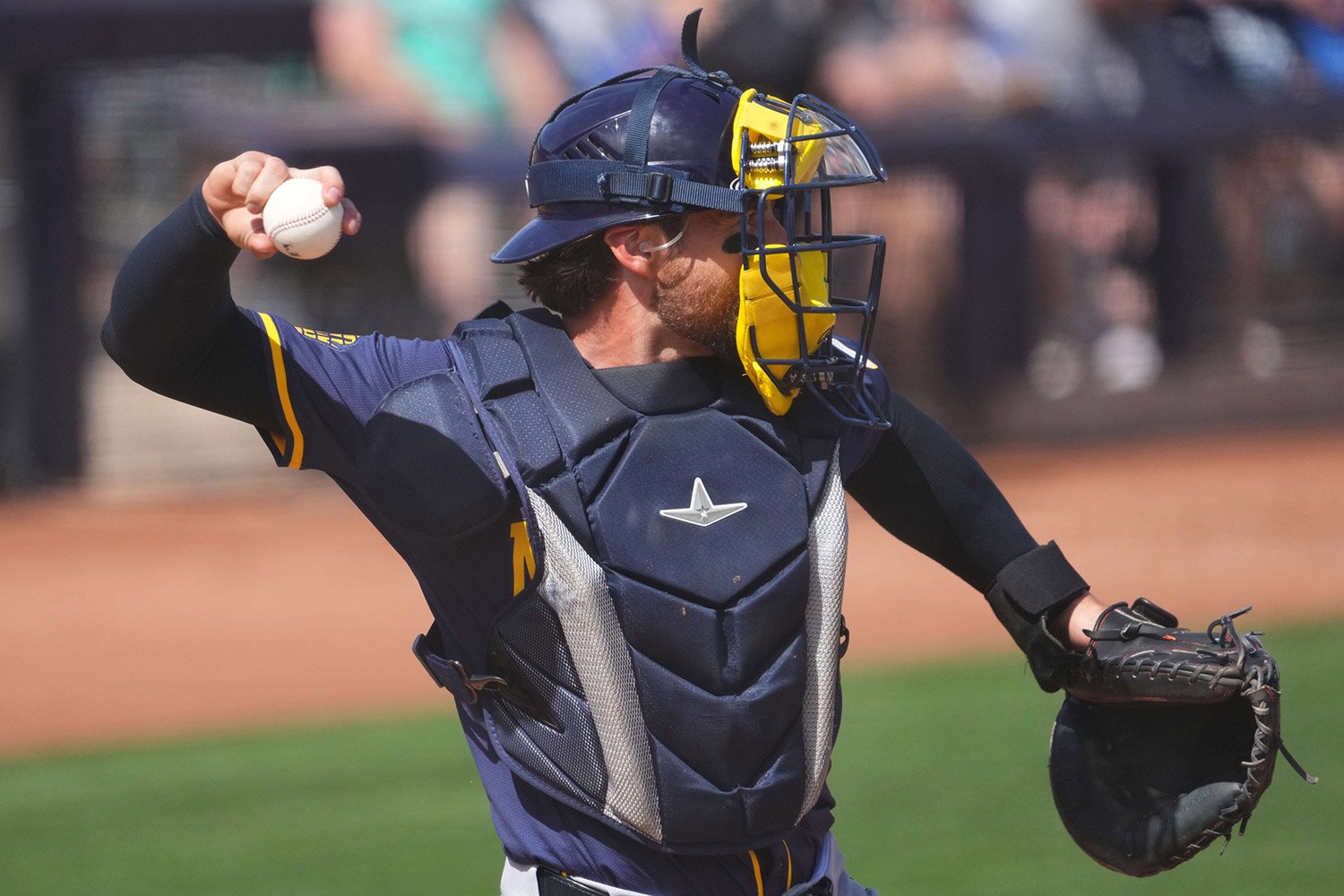 If you ask around about players who have made an impression in Brewers camp, you’ll find that catcher Eric Haase is a popular answer. “He’s been as good as anybody in camp,” Pat Murphy said. The Brewers inked Haase to a one-year deal in December. This spring, he has posted gaudy numbers at the plate, slashing .409/.480/1.207 with a pair of home runs. After a challenging 2023 season, Haase trained over the offseason at 108 Performance in Knoxville. The goal was to get back to punishing fastballs. Haase slugged .529 against fastballs during a productive stretch with the Detroit Tigers in 2021 and 2022. During that time, his work against fastballs was worth 15.4 runs, according to Statcast. Last year, his production against them cratered to a .300 slugging percentage and -11.1 runs. One of the adjustments he made was backing off the plate. “I was right on the dish, and it kind of led to a little bit of topspin,” he explained. Topspin fly balls die in the air instead of carrying. They’re bad news for a power bat like Haase, who relies on driving the ball in the air for extra-base hits. His average exit velocity on fly balls fell from 93.8 mph in 2021-22 to 89.6 mph last year. The average distance of those balls dropped from 316 feet to 298 feet. “I backed off the dish [to] give myself a little bit of space,” Haase said. “Just trying to be really simple back up through the middle, and it’s really showing. I’ve been able to hit balls with good spin to every part of the field.” The 31-year-old has also drawn rave reviews for his work behind the plate. Murphy praised his game calling in Robert Gasser’s start on Thursday. “Behind the dish, he continues to impress me,” he said. “He really gets it.” In Murphy’s eyes, Haase has done everything anyone can do to crack the big-league roster out of camp. The problem is there may not be a spot for him. William Contreras was arguably the best catcher in baseball last year, and the Brewers signed Gary Sanchez to complement him as part of a catching and designated hitter carousel. Would the Brewers consider rostering three catchers to keep Haase? “I don’t like it,” Murphy said generally about carrying three backstops concurrently. I think there’s a stretch you can carry three at any given time of a season. I just don’t think that it makes a lot of sense for a lot of teams to carry three catchers.” Tag-teaming Contreras and Sanchez at catcher and DH leaves some at-bats open in the latter spot for other players. Adding Haase to the equation would fill it every day with a catcher. Murphy doesn’t want to lose that flexibility. Murphy said of his tentative plan for the DH role, “I think what best serves us is a rotation of [Christian] Yelich, Contreras, and [Rhys] Hoskins.” Rostering three catchers also comes at the expense of another position player. Keeping Haase would force them to demote another right-handed bat, such as Joey Wiemer, Andruw Monasterio, Joey Ortiz, or Owen Miller. That would suddenly leave Murphy with limited reinforcements in the outfield or the middle infield. Despite turning heads this spring, it’s clear that Haase faces an uphill battle to make the roster. He’s impressed his skipper enough to make it a challenging decision. “I can appreciate what Haase is doing so much, so he’s made this so difficult,” Murphy said. If Haase doesn’t make the roster, the Brewers would have to expose him to waivers, allowing other teams to claim him under his current contract. They could also release him, giving him the freedom to choose his next team. Haase’s best path to breaking camp with the Brewers may be if the club decides Sanchez’s defense is not yet up to par. He allowed three passed balls in his first start behind the plate on Wednesday. Still, preferring Haase behind the plate doesn’t change the fact that the club will have to decide on its catching mix sooner rather than later. Haase knows that he can only keep working to help a big-league team this year. “Just try to handle my business every day,” he said. “If the opportunity’s there, then we go forward. If not, then keep it going. Just try to do what I can do.”
-
As he commented on the outlook of the Milwaukee Brewers’ bullpen sans Devin Williams, Pat Murphy demonstrated an awareness of both the value of flexibility and the natural gravitation toward defined roles. That understanding will be critical as shapes his bullpen without his star closer. Image courtesy of © Rick Scuteri-USA TODAY Sports As he commented on the outlook of the Milwaukee Brewers’ bullpen sans Devin Williams, Pat Murphy demonstrated an awareness of both the value of flexibility and the natural gravitation toward defined roles. That understanding will be critical as shapes his bullpen without his star closer. Pat Murphy has handled plenty of adversity in his 30-plus years of coaching. Losing players to injury is nothing new. “You’re going to get dealt some cards that are not face cards,” he said in his first media session since the baseball world learned that Devin Williams will miss at least three months with stress fractures in his vertebrae. Still, losing the best closer in baseball for an extended stretch is a gut punch. “This hurts immensely,” Murphy said. There’s a wide range of potential outcomes in the bullpen without Williams. The Brewers have enough arms with great raw stuff that they could survive in his absence. It’s hard for any team to rival the power arms of Trevor Megill, Abner Uribe, and Elvis Peguero, all of whom generate exceptional movement in addition to their premier velocity. At the same time, the club has very few relievers who have proven themselves in high-leverage work over a full season. Beyond 33-year-old Hoby Milner, the track records in the bullpen are short. The Brewers already had enough uncertainty at various positions. They didn't need more. The team is worse off without Williams, who blew just three save opportunities in 2023 and allowed earned runs in just six of his 61 appearances. Williams is so automatic in the ninth inning that anyone else will be a downgrade. Losing him also shakes up the bullpen hierarchy, leaving the Brewers’ first-year manager with a new challenge of finding the best way to line up his arms in the late innings. Murphy’s preference is a closer-by-committee approach. He sees no need to handcuff himself by locking any of his relievers into a particular role or inning. “I got this vision of this fireman’s hat that we’re passing onto different relievers every night,” he quipped. Murphy likes the flexibility afforded by the committee arrangement. In particular, it gives him the ability to use his best reliever in the highest-leverage spot of the game, even if it comes before the ninth inning. “It sometimes behooves you to say, in this situation, you might be better off being a little situational about it,” he said. “It’d be like, okay, the leverage is right now in the seventh. The biggest leverage right now is in the eighth. Worry about the ninth when we get there.” While that sounds like the ideal setup on paper, it rarely holds up in practice. History shows that pitchers and managers gravitate toward defined roles, even if the original intent is to avoid them. Bullpens that begin as committees typically end up with a clear ninth-inning closer, an eighth-inning setup man, and a seventh-inning guy. Murphy recognizes that such a structure is hard-wired into the game. He has a theory as to why it happens. It starts the first time the best reliever in an unstructured bullpen records the final three outs of a win. He began by setting the scene of the late innings in a close game. “Everybody’s using their best arms [in the final three innings],” Murphy explained, “so there’s less runs scored in close ballgames.” The initial ordering of relievers can be based on matchups. If those who throw the seventh and eighth work clean innings, no need arises to deviate from that order. The pitcher on standby as the fireman has yet to appear in the game. “Nothing happened in the seventh. Nothing happened in the eighth. Okay, where is the situation for this guy?” Murphy asked rhetorically. “Well, we got to use him now, so it’s the ninth.” If the situation repeats itself a couple of times, and the final pitcher successfully closes the game each time, it becomes harder for the player and the manager to separate him from that role. Murphy is a firm believer that the last three outs carry an added mental gravity, and it’s challenging to remove someone from that situation once they’ve proved they can handle it. “The last three outs [mentality is] real. It’s different. The guy’s done it. He’s done it twice. He’s done it three times.” All of a sudden, that pitcher has adopted the mindset of a closer. “All the outside influences start telling them, ‘You’re the closer now.’” There you have it. What started as a closer-by-committee setup is now a traditionally-structured bullpen. The process all comes back to the prestige (and the money) that has become associated with recording the last three outs of a close win. So long as the strict closer role continues to be adulated by fans, the media, and baseball’s salary arbitration system, a reliever’s natural gravitation toward it will remain. Murphy thinks the lack of experience in his bullpen could work to the club’s advantage in that regard. He’s hopeful that his young relievers will be able to maintain a broader perspective than that of veterans who have grown accustomed to stricter roles. “I think our group in there, we’re young enough [that] I think we can understand, tonight it’s one guy, the next night it’s another guy.” Despite what Murphy says about flexibility, the bullpen is likely to follow the more common path he described, in which the top relievers settle into specific innings. He probably knows it’s true, even if he won’t say it outright. The real takeaway is that Murphy thinks deeply about these aspects of managing. He has an understanding of both strategy and mentality as it pertains to managing a bullpen. He'll need it as he tries to help this group find its stride without Williams as the anchor. View full article
- 3 replies
-
- 1
-

-
- pat murphy
- devin williams
- (and 1 more)
-
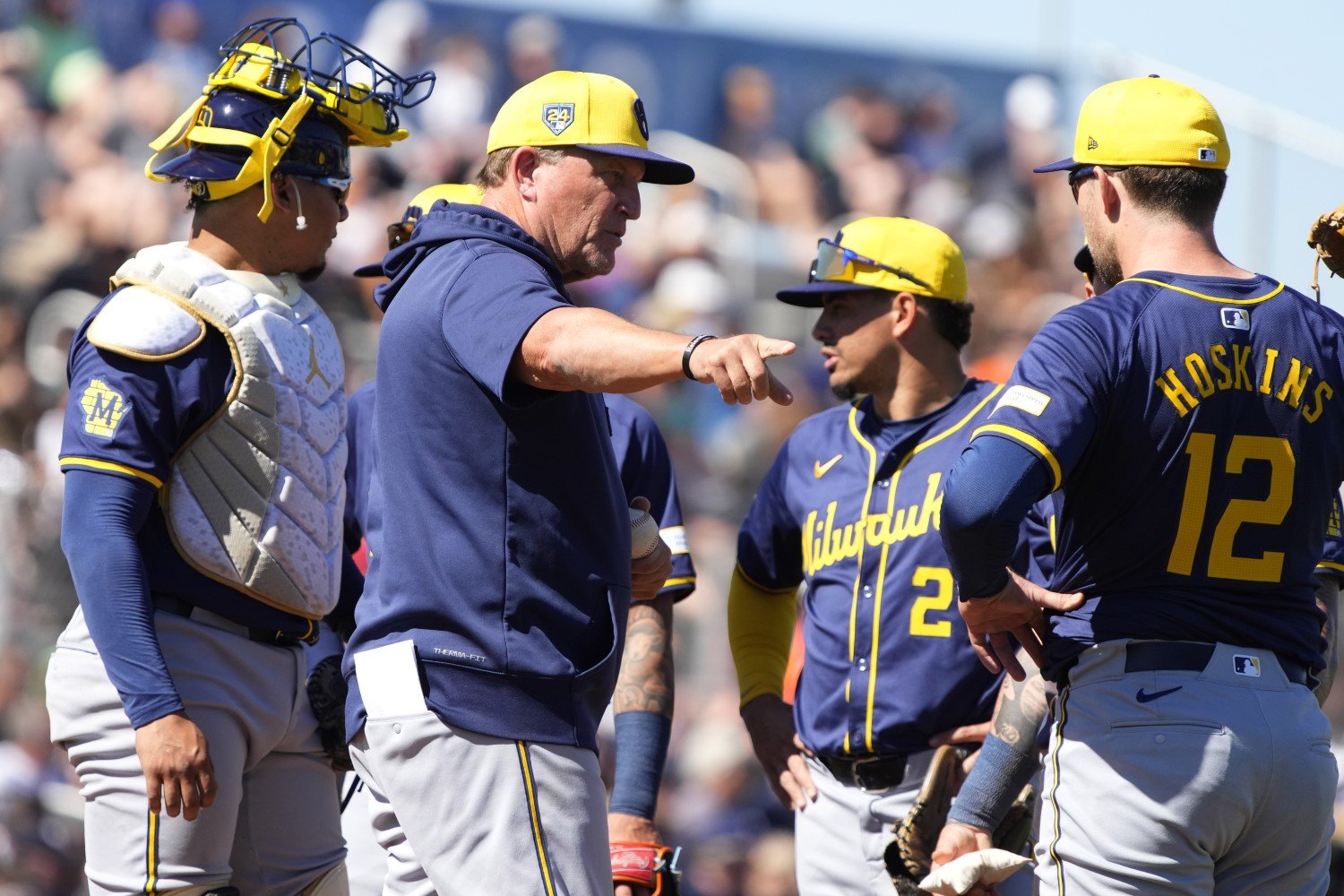 Pat Murphy has handled plenty of adversity in his 30-plus years of coaching. Losing players to injury is nothing new. “You’re going to get dealt some cards that are not face cards,” he said in his first media session since the baseball world learned that Devin Williams will miss at least three months with stress fractures in his vertebrae. Still, losing the best closer in baseball for an extended stretch is a gut punch. “This hurts immensely,” Murphy said. There’s a wide range of potential outcomes in the bullpen without Williams. The Brewers have enough arms with great raw stuff that they could survive in his absence. It’s hard for any team to rival the power arms of Trevor Megill, Abner Uribe, and Elvis Peguero, all of whom generate exceptional movement in addition to their premier velocity. At the same time, the club has very few relievers who have proven themselves in high-leverage work over a full season. Beyond 33-year-old Hoby Milner, the track records in the bullpen are short. The Brewers already had enough uncertainty at various positions. They didn't need more. The team is worse off without Williams, who blew just three save opportunities in 2023 and allowed earned runs in just six of his 61 appearances. Williams is so automatic in the ninth inning that anyone else will be a downgrade. Losing him also shakes up the bullpen hierarchy, leaving the Brewers’ first-year manager with a new challenge of finding the best way to line up his arms in the late innings. Murphy’s preference is a closer-by-committee approach. He sees no need to handcuff himself by locking any of his relievers into a particular role or inning. “I got this vision of this fireman’s hat that we’re passing onto different relievers every night,” he quipped. Murphy likes the flexibility afforded by the committee arrangement. In particular, it gives him the ability to use his best reliever in the highest-leverage spot of the game, even if it comes before the ninth inning. “It sometimes behooves you to say, in this situation, you might be better off being a little situational about it,” he said. “It’d be like, okay, the leverage is right now in the seventh. The biggest leverage right now is in the eighth. Worry about the ninth when we get there.” While that sounds like the ideal setup on paper, it rarely holds up in practice. History shows that pitchers and managers gravitate toward defined roles, even if the original intent is to avoid them. Bullpens that begin as committees typically end up with a clear ninth-inning closer, an eighth-inning setup man, and a seventh-inning guy. Murphy recognizes that such a structure is hard-wired into the game. He has a theory as to why it happens. It starts the first time the best reliever in an unstructured bullpen records the final three outs of a win. He began by setting the scene of the late innings in a close game. “Everybody’s using their best arms [in the final three innings],” Murphy explained, “so there’s less runs scored in close ballgames.” The initial ordering of relievers can be based on matchups. If those who throw the seventh and eighth work clean innings, no need arises to deviate from that order. The pitcher on standby as the fireman has yet to appear in the game. “Nothing happened in the seventh. Nothing happened in the eighth. Okay, where is the situation for this guy?” Murphy asked rhetorically. “Well, we got to use him now, so it’s the ninth.” If the situation repeats itself a couple of times, and the final pitcher successfully closes the game each time, it becomes harder for the player and the manager to separate him from that role. Murphy is a firm believer that the last three outs carry an added mental gravity, and it’s challenging to remove someone from that situation once they’ve proved they can handle it. “The last three outs [mentality is] real. It’s different. The guy’s done it. He’s done it twice. He’s done it three times.” All of a sudden, that pitcher has adopted the mindset of a closer. “All the outside influences start telling them, ‘You’re the closer now.’” There you have it. What started as a closer-by-committee setup is now a traditionally-structured bullpen. The process all comes back to the prestige (and the money) that has become associated with recording the last three outs of a close win. So long as the strict closer role continues to be adulated by fans, the media, and baseball’s salary arbitration system, a reliever’s natural gravitation toward it will remain. Murphy thinks the lack of experience in his bullpen could work to the club’s advantage in that regard. He’s hopeful that his young relievers will be able to maintain a broader perspective than that of veterans who have grown accustomed to stricter roles. “I think our group in there, we’re young enough [that] I think we can understand, tonight it’s one guy, the next night it’s another guy.” Despite what Murphy says about flexibility, the bullpen is likely to follow the more common path he described, in which the top relievers settle into specific innings. He probably knows it’s true, even if he won’t say it outright. The real takeaway is that Murphy thinks deeply about these aspects of managing. He has an understanding of both strategy and mentality as it pertains to managing a bullpen. He'll need it as he tries to help this group find its stride without Williams as the anchor.
- 3 comments
-
- 2
-
-
- pat murphy
- devin williams
- (and 1 more)
-
Hoby Milner has established himself as a cornerstone of the Brewers’ bullpen. He went into detail with Brewer Fanatic on the adjustments to his arsenal and game plan that led to a pair of breakout seasons. Image courtesy of © Allan Henry-USA TODAY Sports Hoby Milner has established himself as a cornerstone of the Brewers’ bullpen. He went into detail with Brewer Fanatic on the adjustments to his arsenal and game plan that led to a pair of breakout seasons. Brewers manager Pat Murphy was asked on Tuesday morning if he needed to see results from Hoby Milner in his remaining spring training outings. “No,” Murphy responded firmly. “A guy like Hoby, we know what we’re getting.” Milner has earned his manager’s full trust with his performance over the past two seasons. Since the start of 2022, he’s appeared in 140 games, posting a 2.79 ERA, 3.14 FIP, and 3.25 SIERA. That makes Milner one of the Brewers’ most valuable hurlers and one of the more reliable bullpen arms in baseball over that two-year run. Among 150 qualified relievers, he ranks fifth in appearances and 34th in RA9-WAR (wins above replacement, based on runs allowed per nine innings) during that span. Milner began his career with the Brewers as a shuttle arm, bounced between Triple A and the big leagues, and was the last man in the bullpen. His 2021 numbers were unimpressive: a 5.40 ERA and 5.89 FIP in 21 2/3 innings. However, some promising changes to Milner’s profile were reasons for optimism moving forward. Milner’s control improved dramatically. Prior to the 2021 season, he struggled with free passes, issuing walks at an 11.1% rate. Once he joined the Brewers, he all but eliminated the walks, limiting them to a 3% rate in the big leagues and just 1.7% in the minor leagues. Milner also transformed from a pitch-to-contact specialist to a strikeout machine. He ran a 30.3% strikeout rate with the Brewers and fanned a jaw-dropping 40% of hitters in Triple A. An improved breaking ball was the biggest driving force behind the newfound swing and miss. By changing how he oriented the ball in his hand, Milner added four inches of sweep to the pitch from 2018 to 2020. When asked on Wednesday in the clubhouse how he tweaked his breaker, Milner immediately began digging through his locker for a baseball. When he turned around, he held a ball marked up with Sharpie to remind him where his index and middle fingers should be positioned. “When I was with the Phillies, I spiked it with a four-seam orientation like a curveball,” he explained. “Almost like Aaron Nola’s grip.” When Milner decided he wanted to generate more sweep on his breaking ball, he maintained the grip but changed the positioning of the seams. “I wasn’t creating any seam-shifted [wake],” he said, referring to the physics term for the interaction of a baseball’s seams with the air around it, creating much of the lateral movement on two-seamers and sliders. “So I moved over to a two-seam orientation, whereas I spin it off, it would come off like a two-seam if I were to throw a curveball with it.” The change enabled Milner to maximize the seam-shifted wake on his breaking ball, creating more sweep. The opponent whiff rate against the pitch increased to 35.1% in 2021. Statcast labels the breaking ball as a curveball. Milner calls it a slider but acknowledges that its unique movement profile falls between a sweeper and a curve. “On the vert line, curveballs are negative,” he explained. “My slider is negative. Everyone else that throws a slider is way up in the positives.” When Milner talks about the “vert line,” he’s referring to a pitch movement graph like the one below. Notice how many of his breaking balls have negative induced vertical break, a trait more common for topspin curveballs than sidespin sliders. For anyone unfamiliar with pitch shape measurements, here’s a crash course. Pitches with a higher induced vertical break resist gravity as the ball approaches home plate, creating a rising effect for hitters. Pitches with lower vertical breaks tend to have sinking or diving action. Milner doesn’t consider his slider a finished product. He wants to fashion it into a true sweeper, with a minimal vertical break or even a deceptive rising effect. “My goal is for it to look like a Frisbee going across. I don’t get that, but I would love to get something that has actual vert so that it defies gravity,” he says, citing San Francisco Giants pitcher Tyler Rogers’ famous “UFO slider” as an example. Milner also made another arsenal change in 2021 to increase his strikeouts, replacing his sinker with a four-seam fastball. “I was throwing all four-seams trying to get swing and miss because I didn’t feel like my two-seam was good enough to get soft contact.” The problem was that Milner's release of the ball didn’t generate the riding action that good swing-and-miss four-seamers possess. He naturally generates sink and run, so switching to a four-seamer was essentially switching to a worse sinker. “I only get like 8 to 10 [inches of vertical break],” he said of his four-seamer. “Most guys are trying to get 20.” The lack of vertical break produced a hittable pitch that opponents frequently barreled. Milner’s four-seamer generated whiffs at a 17.5% rate, and opponents slugged .642 against it. He allowed a 34.9% line drive rate and 3.3 home runs per nine innings. “I gave up so many homers, we were like, ‘Okay, I got to do something different.,’” Milner reflected. He shelved the four-seamer and brought back the sinker in 2022, en route to a breakout season. “I started throwing two-seams to lefties a lot and getting underneath their barrel. That worked out, and I started figuring out ways to use it against righties.” Milner reintroduced the four-seamer last year, but this time, it held opponents to a .233 slugging percentage with an excellent 26.7%. The four-seamer is finally doing what Milner wanted it to a year ago, but nothing about the pitch itself improved. Instead, it’s become effective because it differs enough from Milner’s sinker. He explained what this effect looks like from the hitter’s perspective. “They’re just like, ‘I’m going to swing at this down and away, and oh, it’s two inches higher than I expected it to be.’ So now it’s a pop-out instead of squaring it up.” The interplay of Milner’s two fastballs has become a key part of his game and enabled him to generate a fruitful mix of weak contact and strikeouts. Last season, he held opponents to a 35.4% hard-hit rate and sported a slightly above-average 23.4% strikeout rate. Our own Matthew Trueblood talked to Milner about his grip on the heaters and why he found it fairly easy to incorporate both pitches, last month. The adjustment has also helped Milner curtail the extreme platoon splits that plagued him early in his career. He can keep opposite-handed hitters off balance by learning how to spot the sinker to righties and changing looks with elevated four-seamers. “I used to try and strike righties out all the time with four-seams up, and they would catch them and hit a homer. Now, if I’m throwing a four-seam up to a righty, it’s like a sneaky, “He was not expecting that” kind of situation.” At this point in the conversation, Milner became a spokesperson for the value of having multiple fastball shapes in an arsenal. “I firmly believe most pitchers should have a four- and a two-seam.” “They can be this much different,” he adds, gesturing to indicate a difference of a few inches of movement, “or they can be like a foot [different].” It seems the Brewers agree. Milner’s teammates, including Brandon Woodruff, Colin Rea, Bryse Wilson, and Joel Payamps, throw two and four-seamers. While it took Milner some time into his Brewers tenure to find the best mix of fastballs, another change he made before landing in Milwaukee has largely stuck since. Milner began his career pitching from the first-base side of the rubber but veered toward the third-base side for a couple of years. After joining the Brewers, he returned to the first-base side and has inched even farther that way in the last two seasons. “If my release point was releasing right over the rubber, and everything started straight and then broke this way or this way, I have a feeling that stuff would be easier to see than four feet off the rubber like I am right now,” he said. Milner revealed that he moved to the third-base side early last year only to move back when left-handed opponents started hitting him harder. “I was like, ‘Okay, maybe I just need to be back on this side.’” While Milner admitted he’s not entirely sure what makes him more effective on the first-base side, the horizontal angle of his pitches likely plays up to lefties when it looks like he’s releasing the ball behind him from his sidearm slot. Whatever the explanation, identifying that release point as his most effective was part of the years-long evolution that shaped Milner into the reliable middle reliever he’s been for the past two seasons. The Brewers’ lack of proven starting pitchers and Devin Williams’s prolonged absence in the bullpen make Milner’s presence on the staff even more vital. He knows his craft to continue getting valuable outs for Milwaukee in 2024. View full article
-
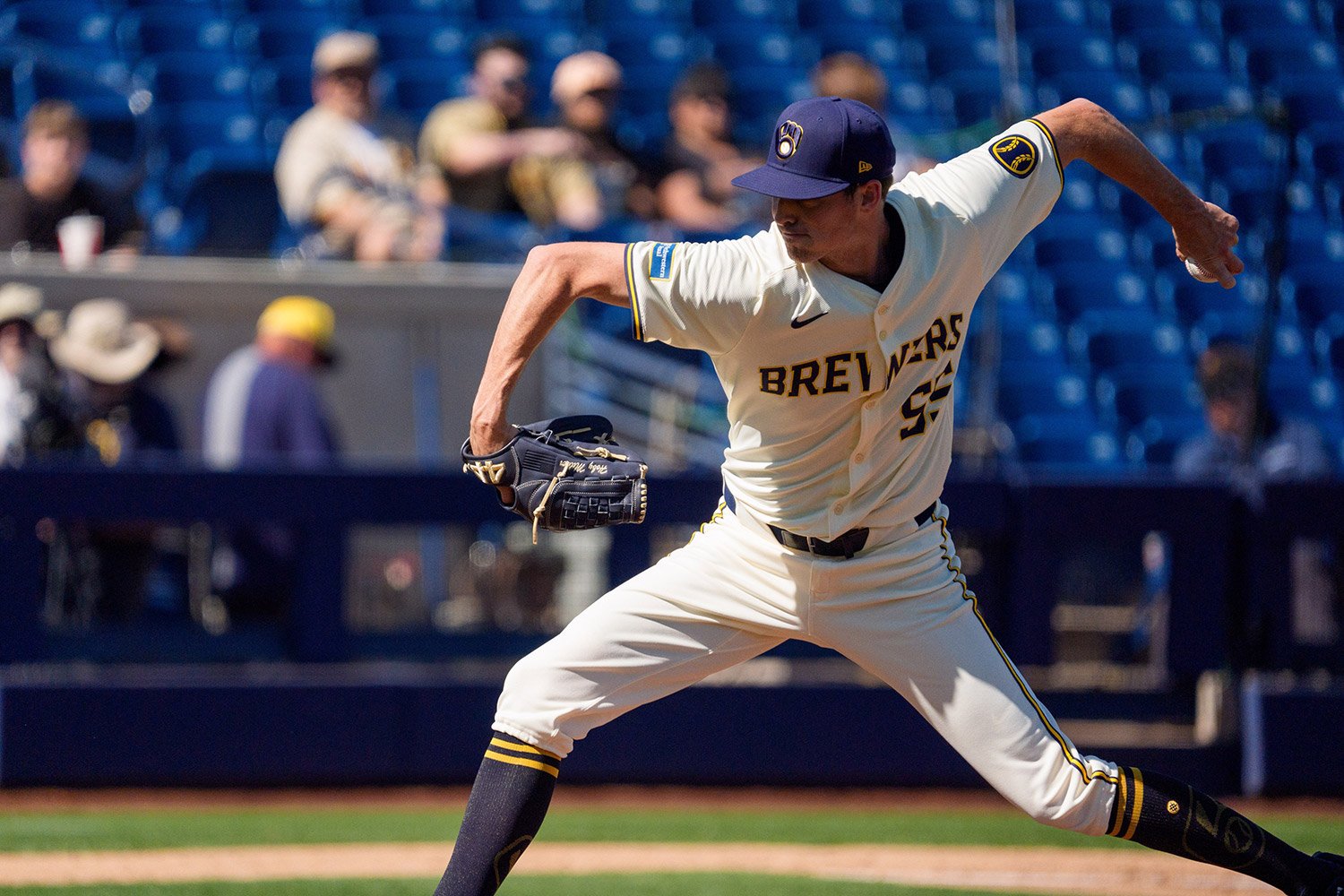 Brewers manager Pat Murphy was asked on Tuesday morning if he needed to see results from Hoby Milner in his remaining spring training outings. “No,” Murphy responded firmly. “A guy like Hoby, we know what we’re getting.” Milner has earned his manager’s full trust with his performance over the past two seasons. Since the start of 2022, he’s appeared in 140 games, posting a 2.79 ERA, 3.14 FIP, and 3.25 SIERA. That makes Milner one of the Brewers’ most valuable hurlers and one of the more reliable bullpen arms in baseball over that two-year run. Among 150 qualified relievers, he ranks fifth in appearances and 34th in RA9-WAR (wins above replacement, based on runs allowed per nine innings) during that span. Milner began his career with the Brewers as a shuttle arm, bounced between Triple A and the big leagues, and was the last man in the bullpen. His 2021 numbers were unimpressive: a 5.40 ERA and 5.89 FIP in 21 2/3 innings. However, some promising changes to Milner’s profile were reasons for optimism moving forward. Milner’s control improved dramatically. Prior to the 2021 season, he struggled with free passes, issuing walks at an 11.1% rate. Once he joined the Brewers, he all but eliminated the walks, limiting them to a 3% rate in the big leagues and just 1.7% in the minor leagues. Milner also transformed from a pitch-to-contact specialist to a strikeout machine. He ran a 30.3% strikeout rate with the Brewers and fanned a jaw-dropping 40% of hitters in Triple A. An improved breaking ball was the biggest driving force behind the newfound swing and miss. By changing how he oriented the ball in his hand, Milner added four inches of sweep to the pitch from 2018 to 2020. When asked on Wednesday in the clubhouse how he tweaked his breaker, Milner immediately began digging through his locker for a baseball. When he turned around, he held a ball marked up with Sharpie to remind him where his index and middle fingers should be positioned. “When I was with the Phillies, I spiked it with a four-seam orientation like a curveball,” he explained. “Almost like Aaron Nola’s grip.” When Milner decided he wanted to generate more sweep on his breaking ball, he maintained the grip but changed the positioning of the seams. “I wasn’t creating any seam-shifted [wake],” he said, referring to the physics term for the interaction of a baseball’s seams with the air around it, creating much of the lateral movement on two-seamers and sliders. “So I moved over to a two-seam orientation, whereas I spin it off, it would come off like a two-seam if I were to throw a curveball with it.” The change enabled Milner to maximize the seam-shifted wake on his breaking ball, creating more sweep. The opponent whiff rate against the pitch increased to 35.1% in 2021. Statcast labels the breaking ball as a curveball. Milner calls it a slider but acknowledges that its unique movement profile falls between a sweeper and a curve. “On the vert line, curveballs are negative,” he explained. “My slider is negative. Everyone else that throws a slider is way up in the positives.” When Milner talks about the “vert line,” he’s referring to a pitch movement graph like the one below. Notice how many of his breaking balls have negative induced vertical break, a trait more common for topspin curveballs than sidespin sliders. For anyone unfamiliar with pitch shape measurements, here’s a crash course. Pitches with a higher induced vertical break resist gravity as the ball approaches home plate, creating a rising effect for hitters. Pitches with lower vertical breaks tend to have sinking or diving action. Milner doesn’t consider his slider a finished product. He wants to fashion it into a true sweeper, with a minimal vertical break or even a deceptive rising effect. “My goal is for it to look like a Frisbee going across. I don’t get that, but I would love to get something that has actual vert so that it defies gravity,” he says, citing San Francisco Giants pitcher Tyler Rogers’ famous “UFO slider” as an example. Milner also made another arsenal change in 2021 to increase his strikeouts, replacing his sinker with a four-seam fastball. “I was throwing all four-seams trying to get swing and miss because I didn’t feel like my two-seam was good enough to get soft contact.” The problem was that Milner's release of the ball didn’t generate the riding action that good swing-and-miss four-seamers possess. He naturally generates sink and run, so switching to a four-seamer was essentially switching to a worse sinker. “I only get like 8 to 10 [inches of vertical break],” he said of his four-seamer. “Most guys are trying to get 20.” The lack of vertical break produced a hittable pitch that opponents frequently barreled. Milner’s four-seamer generated whiffs at a 17.5% rate, and opponents slugged .642 against it. He allowed a 34.9% line drive rate and 3.3 home runs per nine innings. “I gave up so many homers, we were like, ‘Okay, I got to do something different.,’” Milner reflected. He shelved the four-seamer and brought back the sinker in 2022, en route to a breakout season. “I started throwing two-seams to lefties a lot and getting underneath their barrel. That worked out, and I started figuring out ways to use it against righties.” Milner reintroduced the four-seamer last year, but this time, it held opponents to a .233 slugging percentage with an excellent 26.7%. The four-seamer is finally doing what Milner wanted it to a year ago, but nothing about the pitch itself improved. Instead, it’s become effective because it differs enough from Milner’s sinker. He explained what this effect looks like from the hitter’s perspective. “They’re just like, ‘I’m going to swing at this down and away, and oh, it’s two inches higher than I expected it to be.’ So now it’s a pop-out instead of squaring it up.” The interplay of Milner’s two fastballs has become a key part of his game and enabled him to generate a fruitful mix of weak contact and strikeouts. Last season, he held opponents to a 35.4% hard-hit rate and sported a slightly above-average 23.4% strikeout rate. Our own Matthew Trueblood talked to Milner about his grip on the heaters and why he found it fairly easy to incorporate both pitches, last month. The adjustment has also helped Milner curtail the extreme platoon splits that plagued him early in his career. He can keep opposite-handed hitters off balance by learning how to spot the sinker to righties and changing looks with elevated four-seamers. “I used to try and strike righties out all the time with four-seams up, and they would catch them and hit a homer. Now, if I’m throwing a four-seam up to a righty, it’s like a sneaky, “He was not expecting that” kind of situation.” At this point in the conversation, Milner became a spokesperson for the value of having multiple fastball shapes in an arsenal. “I firmly believe most pitchers should have a four- and a two-seam.” “They can be this much different,” he adds, gesturing to indicate a difference of a few inches of movement, “or they can be like a foot [different].” It seems the Brewers agree. Milner’s teammates, including Brandon Woodruff, Colin Rea, Bryse Wilson, and Joel Payamps, throw two and four-seamers. While it took Milner some time into his Brewers tenure to find the best mix of fastballs, another change he made before landing in Milwaukee has largely stuck since. Milner began his career pitching from the first-base side of the rubber but veered toward the third-base side for a couple of years. After joining the Brewers, he returned to the first-base side and has inched even farther that way in the last two seasons. “If my release point was releasing right over the rubber, and everything started straight and then broke this way or this way, I have a feeling that stuff would be easier to see than four feet off the rubber like I am right now,” he said. Milner revealed that he moved to the third-base side early last year only to move back when left-handed opponents started hitting him harder. “I was like, ‘Okay, maybe I just need to be back on this side.’” While Milner admitted he’s not entirely sure what makes him more effective on the first-base side, the horizontal angle of his pitches likely plays up to lefties when it looks like he’s releasing the ball behind him from his sidearm slot. Whatever the explanation, identifying that release point as his most effective was part of the years-long evolution that shaped Milner into the reliable middle reliever he’s been for the past two seasons. The Brewers’ lack of proven starting pitchers and Devin Williams’s prolonged absence in the bullpen make Milner’s presence on the staff even more vital. He knows his craft to continue getting valuable outs for Milwaukee in 2024.
-
Jake Bauers could become a valuable power bat for the Brewers after improving his swing with the Yankees last year. This time around, he’s looking to do damage with a less extreme approach. Image courtesy of © Mark J. Rebilas-USA TODAY Sports Jake Bauers could become a valuable power bat for the Brewers after improving his swing with the Yankees last year. This time around, he’s looking to do damage with a less extreme approach. The Brewers’ lack of power was a well-noted weakness that hampered the team throughout the 2023 season. Matt Arnold addressed that need by signing sluggers Rhys Hoskins and Gary Sanchez, but his first step toward adding thump to the lineup came in November when the Brewers acquired Jake Bauers from the New York Yankees. A former top prospect for the Tampa Bay Rays, Bauers’ big-league output has been uninspiring. In 412 games, he owns a .211/.302/.361 line (83 wRC+) and -1.0 fWAR. At first glance, his 2023 line with the Yankees was more of the same: a .202/.279/.413 slash (89 wRC+) and -0.5 fWAR. A deeper look reveals Bauers was anything but the same hitter he was before arriving in the Bronx. One of the knocks against Bauers for much of his career was his lack of in-game power for a first baseman and corner outfielder. Across his first three seasons, he hit 27 home runs in 328 games with a lackluster hard hit (33.5%) and barrel (5.5%) rates. That changed last season, as Bauers posted some of the best quality of contact metrics in baseball. His hard-hit rate jumped to 48%, and his barrel rate more than tripled to 18.7%. He matched his career high of 12 home runs in just 272 plate appearances. When Bauers made contact, it was among the most authoritative contact in the game. Among hitters with at least 250 plate appearances last year, his barrel rate ranked sixth, and his xwOBAcon (expected wOBA on contact) of .485 placed 10th. The transformation was the product of a series of changes Bauers made to his setup and swing path. He closed off his stance, raised his hands, and flattened his bat path. “I’ve always had an open stance,” Bauers said. “Squaring up helped me feel myself getting into that back hip a little more consistently with less space to travel. That helped a lot, which in turn helped with my bat path.” Bauers says he worked with the Yankees to clean up that bath path and make it flatter through the zone. The more efficient swing makes it easier for him to get the barrel to the ball. The changes produced some incredible results on contact, but Bauers struggled to put the ball in play consistently enough to maximize his newfound power. He struck out at a 34.9% rate and whiffed on 33.3% of his swings. While Bauers has no plans to overhaul his identity as a hitter, he hopes to showcase a more balanced profile with his new club. “I think last year was a little bit of an all-or-nothing approach,” he said. “I’m looking to dial that back a little bit. Put more balls in play, maybe give up a little bit of exit velo now and then, and just let the power happen.” Part of that process is understanding what pitches he can slug and which ones he can’t and applying that knowledge to his plan of attack at the plate. “There’s certain pitches you can hit home runs on, and there’s certain pitches that, unless you’re a freak, you really can’t. Instead of consistently trying to launch everything into the seats, Bauers envisions an approach that leads to more consistent results while allowing him to punish the pitches that he can hit for home runs. “Having a little bit more of a line drive approach and letting the home runs be thrown as opposed to trying to lift everything in the air to right field,” he elaborated. Bauers acknowledged that it’s been a years-long process of landing on the right mechanics and approach to be productive. The hope is that his fifth big-league season will be a breakthrough year. Even after adding Hoskins, the Brewers still see Bauers as a key component of their offense. There should be ample playing time for him between first base, designated hitter, and as a left-handed power bat off the bench. “If you’re looking at it and putting it on paper, he’s got a chance to play a lot,” Pat Murphy said of Bauers’ fit on the roster. The 28-year-old is ready to contribute in whatever role he’s called to fill. While Murphy said he doesn’t consider Bauers an option in the outfield, he’s willing to slide out to the grass if it helps the club. “I’m always looking to do whatever I can to help a team,” he said. “If that means playing right field, left field, shortstop, it doesn’t matter. That’s really the kind of role I’ve had to take over the course of my big-league career, and so I think that’s a healthy mindset. It puts you in good spot.” Wherever he lines up, don’t be surprised if Bauers helps the Brewers plenty as one of their better power bats. View full article
-
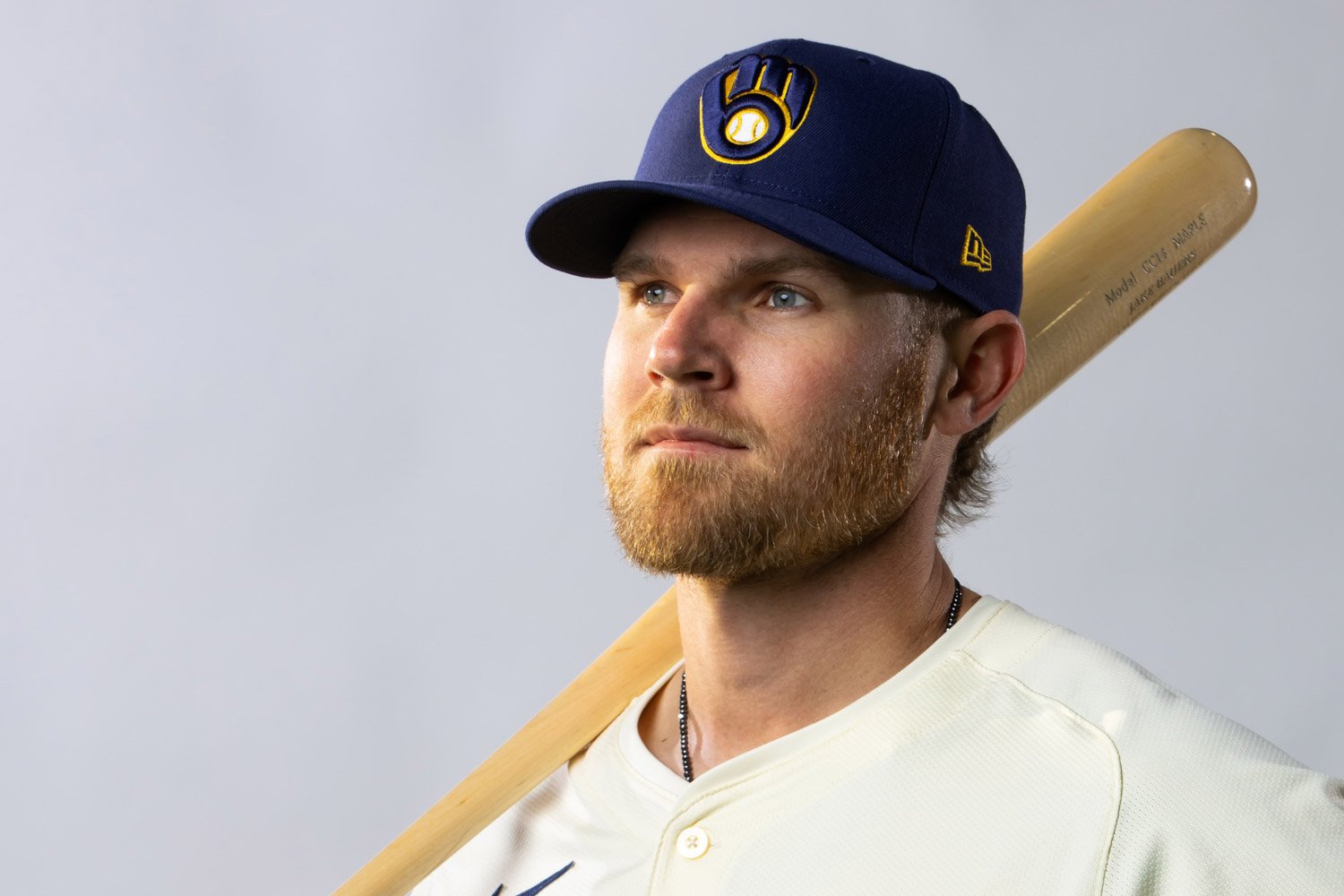 The Brewers’ lack of power was a well-noted weakness that hampered the team throughout the 2023 season. Matt Arnold addressed that need by signing sluggers Rhys Hoskins and Gary Sanchez, but his first step toward adding thump to the lineup came in November when the Brewers acquired Jake Bauers from the New York Yankees. A former top prospect for the Tampa Bay Rays, Bauers’ big-league output has been uninspiring. In 412 games, he owns a .211/.302/.361 line (83 wRC+) and -1.0 fWAR. At first glance, his 2023 line with the Yankees was more of the same: a .202/.279/.413 slash (89 wRC+) and -0.5 fWAR. A deeper look reveals Bauers was anything but the same hitter he was before arriving in the Bronx. One of the knocks against Bauers for much of his career was his lack of in-game power for a first baseman and corner outfielder. Across his first three seasons, he hit 27 home runs in 328 games with a lackluster hard hit (33.5%) and barrel (5.5%) rates. That changed last season, as Bauers posted some of the best quality of contact metrics in baseball. His hard-hit rate jumped to 48%, and his barrel rate more than tripled to 18.7%. He matched his career high of 12 home runs in just 272 plate appearances. When Bauers made contact, it was among the most authoritative contact in the game. Among hitters with at least 250 plate appearances last year, his barrel rate ranked sixth, and his xwOBAcon (expected wOBA on contact) of .485 placed 10th. The transformation was the product of a series of changes Bauers made to his setup and swing path. He closed off his stance, raised his hands, and flattened his bat path. “I’ve always had an open stance,” Bauers said. “Squaring up helped me feel myself getting into that back hip a little more consistently with less space to travel. That helped a lot, which in turn helped with my bat path.” Bauers says he worked with the Yankees to clean up that bath path and make it flatter through the zone. The more efficient swing makes it easier for him to get the barrel to the ball. The changes produced some incredible results on contact, but Bauers struggled to put the ball in play consistently enough to maximize his newfound power. He struck out at a 34.9% rate and whiffed on 33.3% of his swings. While Bauers has no plans to overhaul his identity as a hitter, he hopes to showcase a more balanced profile with his new club. “I think last year was a little bit of an all-or-nothing approach,” he said. “I’m looking to dial that back a little bit. Put more balls in play, maybe give up a little bit of exit velo now and then, and just let the power happen.” Part of that process is understanding what pitches he can slug and which ones he can’t and applying that knowledge to his plan of attack at the plate. “There’s certain pitches you can hit home runs on, and there’s certain pitches that, unless you’re a freak, you really can’t. Instead of consistently trying to launch everything into the seats, Bauers envisions an approach that leads to more consistent results while allowing him to punish the pitches that he can hit for home runs. “Having a little bit more of a line drive approach and letting the home runs be thrown as opposed to trying to lift everything in the air to right field,” he elaborated. Bauers acknowledged that it’s been a years-long process of landing on the right mechanics and approach to be productive. The hope is that his fifth big-league season will be a breakthrough year. Even after adding Hoskins, the Brewers still see Bauers as a key component of their offense. There should be ample playing time for him between first base, designated hitter, and as a left-handed power bat off the bench. “If you’re looking at it and putting it on paper, he’s got a chance to play a lot,” Pat Murphy said of Bauers’ fit on the roster. The 28-year-old is ready to contribute in whatever role he’s called to fill. While Murphy said he doesn’t consider Bauers an option in the outfield, he’s willing to slide out to the grass if it helps the club. “I’m always looking to do whatever I can to help a team,” he said. “If that means playing right field, left field, shortstop, it doesn’t matter. That’s really the kind of role I’ve had to take over the course of my big-league career, and so I think that’s a healthy mindset. It puts you in good spot.” Wherever he lines up, don’t be surprised if Bauers helps the Brewers plenty as one of their better power bats.
-
In Dominant Preview Outing, Colin Rea is a Model of Pitchability
Jack Stern posted an article in Brewers
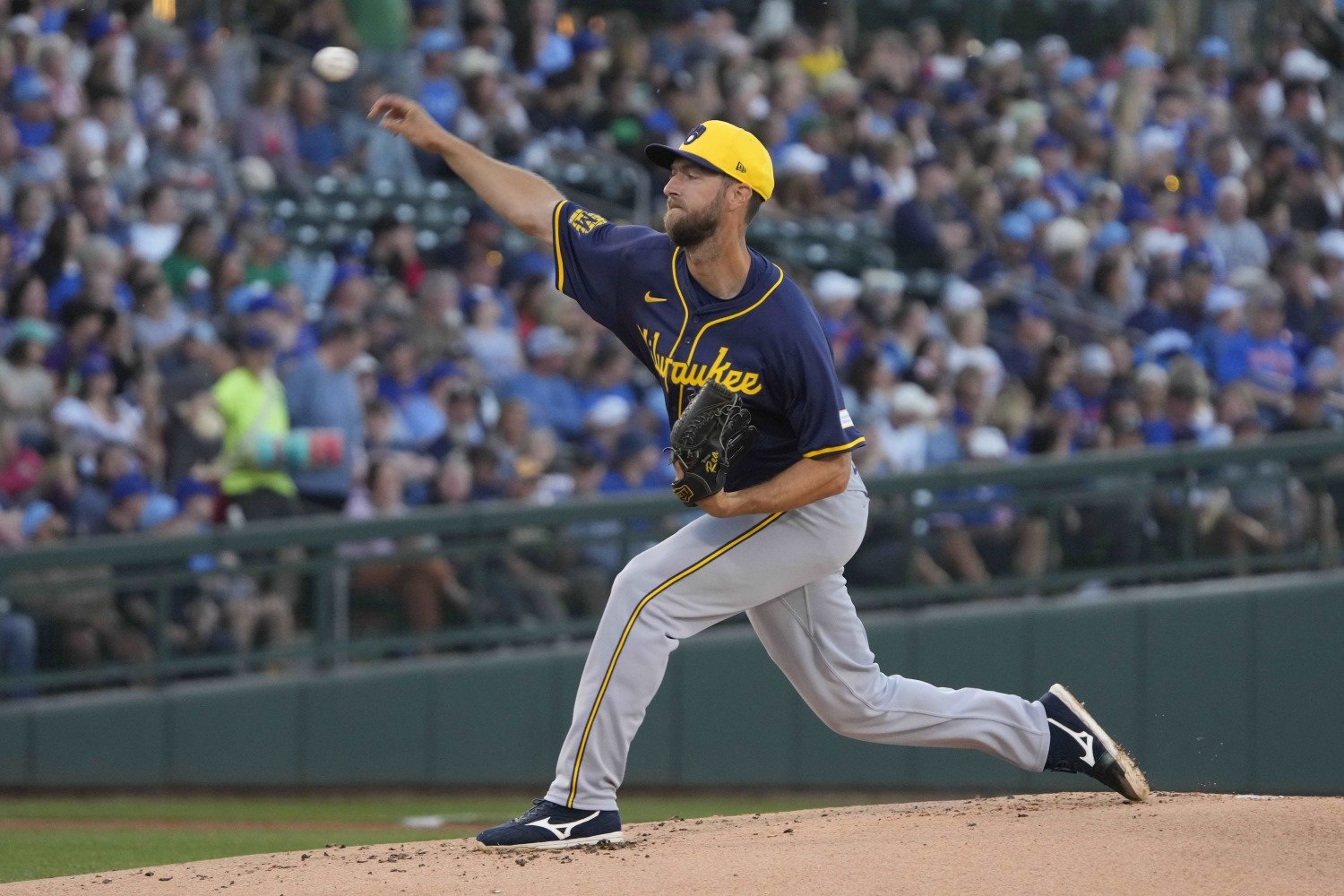 The Brewers lost in walk-off fashion to the Cubs on Tuesday night, but the main story was Colin Rea’s excellent start. Rea induced 14 whiffs en route to seven strikeouts over four hitless innings. While that remarkable performance would draw attention in most instances, it stood out even more because Rea has been reliably unremarkable during his time as a Brewer. Ironically, that became a central topic of discussion in his post-outing media scrum. It’s difficult to draw up a more stereotypical back-of-the-rotation arm than Rea. He tossed 124 ⅔ innings last year, with a 95 ERA+. His strikeout and ground ball rates mirrored the league averages. His average fastball velocity was a tick below that of the average MLB starter. None of Rea’s pitches are inherently good ones. The Stuff+ model available at FanGraphs grades his curveball at 101 and all of his other offerings as below-average. Statcast pitch movement metrics say that most of his pitches have slightly less movement than average. Rea’s auto-generated PITCHf/x arsenal report leads with, “Their sinker is a prototypical pitch with few remarkable qualities.” Rea knows his stuff isn’t good. He acknowledged it without hesitation or prompting when discussing his approach on the mound. “I don’t really have a pitch that stands out as far as stuff-wise,” Rea told the media on Tuesday night. Despite that lack of stuff, Rea keeps chugging along as a reliable arm who keeps his team in the game in most of his outings. His game is a sum of unremarkable parts that create competitive results. None of Rea’s pitches have plus movement, but they all move in different ways. Look at how each of his six offerings form distinct clusters in the movement plot below. A more accurate graph would feature a seventh cluster, as the sinkers with a higher vertical break are actually two-seam fastballs that Rea throws as another distinct pitch. Rea doesn’t excel at generating a particular kind of movement, but he can do a little bit of everything. He can create moderate amounts of sink, arm-side run, glove-side cut and sweep, vertical drop, and occasional ride. Each pitch he throws looks different to the hitter. That diversity in pitch shapes allows Rea to effectively cover every quadrant of the strike zone. The foundation of Rea’s approach is his trio of fastballs. He attacks down with his sinker to both sides of the plate, throws his cutter to the glove-side portion of the zone, and elevates with his four-seamer. That variety keeps the hitter from getting comfortable enough to consistently barrel a particular pitch. “When we mix all three of those together, that makes it play up,” Rea explained. Rea mixes the three pitches effectively to the point that hitters can’t hunt any of them. Last season, he threw his sinker 30% of the time, his cutter 26.5%, and his four-seamer 19.2%. From there, he mixes in a sweeping slider, a curveball, and a splitter that he has refined over the last few months. As someone who relies on mixing speeds and locations to keep hitters from growing comfortable against any of his pitches, Rea is always searching for new ways to add variety to his game plan. Right-handed batters see Rea’s cutter low and away most of the time, so on Tuesday, he deliberately threw several cutters up and in. The idea is that when the hitter sees a pitch in the upper third of the zone, they’ll assume it’s a four-seamer, only for the different movement of the cutter to violate their expectations and miss the barrel. Rea is best off keeping elevated cutters to a minimum. His cutter is more of a breaking ball than a fastball, averaging just 5.7 inches of induced vertical break last year. If left up in the zone, it’ll appear like a hanging breaking ball more often than not. Still, the high cutter is an extension of the thought process that has served Rea well in his time with the Brewers. Pat Murphy confirmed after his outing that Rea will be a member of his starting rotation. The Brewers will be relying on him and his knack for pitchability as a consistent source of innings this year.
-
Keeping hitters off-balance is the key to successful pitching. Some hurlers do so with overpowering stuff, while others do it by mixing speeds, shapes, and locations. Colin Rea is an excellent example of the latter. Ironically, that became a central topic of discussion in his post-outing media scrum. It’s difficult to draw up a more stereotypical back-of-the-rotation arm than Rea. He tossed 124 ⅔ innings last year, with a 95 ERA+. His strikeout and ground ball rates mirrored the league averages. His average fastball velocity was a tick below that of the average MLB starter. None of Rea’s pitches are inherently good ones. The Stuff+ model available at FanGraphs grades his curveball at 101 and all of his other offerings as below-average. Statcast pitch movement metrics say that most of his pitches have slightly less movement than average. Rea’s auto-generated PITCHf/x arsenal report leads with, “Their sinker is a prototypical pitch with few remarkable qualities.” Rea knows his stuff isn’t good. He acknowledged it without hesitation or prompting when discussing his approach on the mound. “I don’t really have a pitch that stands out as far as stuff-wise,” Rea told the media on Tuesday night. Despite that lack of stuff, Rea keeps chugging along as a reliable arm who keeps his team in the game in most of his outings. His game is a sum of unremarkable parts that create competitive results. None of Rea’s pitches have plus movement, but they all move in different ways. Look at how each of his six offerings form distinct clusters in the movement plot below. A more accurate graph would feature a seventh cluster, as the sinkers with a higher vertical break are actually two-seam fastballs that Rea throws as another distinct pitch. Rea doesn’t excel at generating a particular kind of movement, but he can do a little bit of everything. He can create moderate amounts of sink, arm-side run, glove-side cut and sweep, vertical drop, and occasional ride. Each pitch he throws looks different to the hitter. That diversity in pitch shapes allows Rea to effectively cover every quadrant of the strike zone. The foundation of Rea’s approach is his trio of fastballs. He attacks down with his sinker to both sides of the plate, throws his cutter to the glove-side portion of the zone, and elevates with his four-seamer. That variety keeps the hitter from getting comfortable enough to consistently barrel a particular pitch. “When we mix all three of those together, that makes it play up,” Rea explained. Rea mixes the three pitches effectively to the point that hitters can’t hunt any of them. Last season, he threw his sinker 30% of the time, his cutter 26.5%, and his four-seamer 19.2%. From there, he mixes in a sweeping slider, a curveball, and a splitter that he has refined over the last few months. As someone who relies on mixing speeds and locations to keep hitters from growing comfortable against any of his pitches, Rea is always searching for new ways to add variety to his game plan. Right-handed batters see Rea’s cutter low and away most of the time, so on Tuesday, he deliberately threw several cutters up and in. The idea is that when the hitter sees a pitch in the upper third of the zone, they’ll assume it’s a four-seamer, only for the different movement of the cutter to violate their expectations and miss the barrel. Rea is best off keeping elevated cutters to a minimum. His cutter is more of a breaking ball than a fastball, averaging just 5.7 inches of induced vertical break last year. If left up in the zone, it’ll appear like a hanging breaking ball more often than not. Still, the high cutter is an extension of the thought process that has served Rea well in his time with the Brewers. Pat Murphy confirmed after his outing that Rea will be a member of his starting rotation. The Brewers will be relying on him and his knack for pitchability as a consistent source of innings this year. View full article
-
The 2023 Milwaukee Brewers demonstrated the importance of having depth on the 40-man roster. After making some adjustments in Triple-A last summer, new depth piece Vinny Capra could make an impact this summer. Image courtesy of © Allan Henry-USA TODAY Sports The 2023 Milwaukee Brewers demonstrated the importance of having depth on the 40-man roster. After making some adjustments in Triple-A last summer, new depth piece Vinny Capra could make an impact this summer. In a busy offseason filled with personnel change, the Brewers' first addition was claiming infielder Vinny Capra off waivers from the Pittsburgh Pirates at the start of November. Anyone who forgot about that inaugural move is forgiven. It was overshadowed hours later by the return of Colin Rea on a new one-year deal. Amid the roster movement that followed, Capra understandably wasn't a point of conversation. Still, it's notable that the 27-year-old kept his 40-man roster spot throughout that time. While all but guaranteed to begin the season in Triple-A Nashville, Capra remains a useful depth piece for an organization that values flexibility and insurance across the roster. He has just 28 MLB plate appearances to his name, but Capra did take a step forward offensively in Triple-A last year. The improvements he made to get there could aid him in his quest to establish himself as a big leaguer. Capra has an excellent feel for the strike zone and strong bat-to-ball skills, but has always been held back by his limited power. He walked at a 14.5% clip in Triple-A last year against a 15.3% strikeout rate, but managed just a .096 isolated power. Given his skill set, hitting the ball on a line and reaching base however possible is his best path to productivity. "The goal has always been to hit drives," he said of his approach in the Brewers clubhouse on Tuesday. "And getting on base." Capra did the former at a better rate than ever last season, boosting his line drive rate from 24.3% in 2022 to a career-best 33.7%. It took some work to get there. Capra struggled with the Toronto Blue Jays' Triple-A affiliate in Buffalo, slashing .167/.357/.222 (67 wRC+) in 70 plate appearances. "I was hitting a lot of grounders and pop-ups," Capra said, by way of self-diagnosis. "I was coming off the ball and not staying through it." Things improved after a trade to Pittsburgh at the end of April, as Capra worked with Triple-A hitting coach Eric Munson on ironing out his swing. "We worked a lot on my bat angle and how I approach coming into the zone," he explained. "Once I figured that out, it was, 'Okay, now the timing's coming back, the sequencing's coming back.' From there, we can let all the years of training take over because we're at a familiar spot." The adjustments paid off, as Capra hit .329/.411/.439 (120 wRC+) in 192 plate appearances after switching organizations. A secondary goal of Capra's line-drive-centered approach is limiting ground balls. "If I'm barreling the ball up, that's obviously a good thing, but if it's on the ground, that's not as productive as if we can get that barrel into a line drive." When he fails to barrel the ball in a way that produces a line drive, Capra would rather miss underneath it for a fly ball than over the top of it for a grounder. The former gives him a chance to tap into more power. To him, it can be a more productive mistake than chopping the ball into the ground. His offensive philosophy seems to fit gorgeously with that of his new skipper. "Trying to hit homers is not really going to work, but if we try to hit line drives and miss under slightly, that can produce more power numbers." Capra's best asset at the plate is his ability to get on base. His best asset in the field is his versatility. A natural shortstop, he has logged time at every infield position but first base and has some experience in left field. "Each position has a different mindset and mentality," he said of bouncing around the diamond. "Understanding you can't play second base like you play third base and having a different mentality for each position, I think it helps out a lot." Capra's mindset at the plate and on the field could help him make an impact in Milwaukee this summer. Andruw Monasterio is a recent example of a depth infielder who made the most of an opportunity brought on by injuries and underperformance. Capra could follow suit over the next few months. View full article
-
Swing Adjustment Could Have Vinny Capra Ready to Impact the 2024 Brewers
Jack Stern posted an article in Brewers
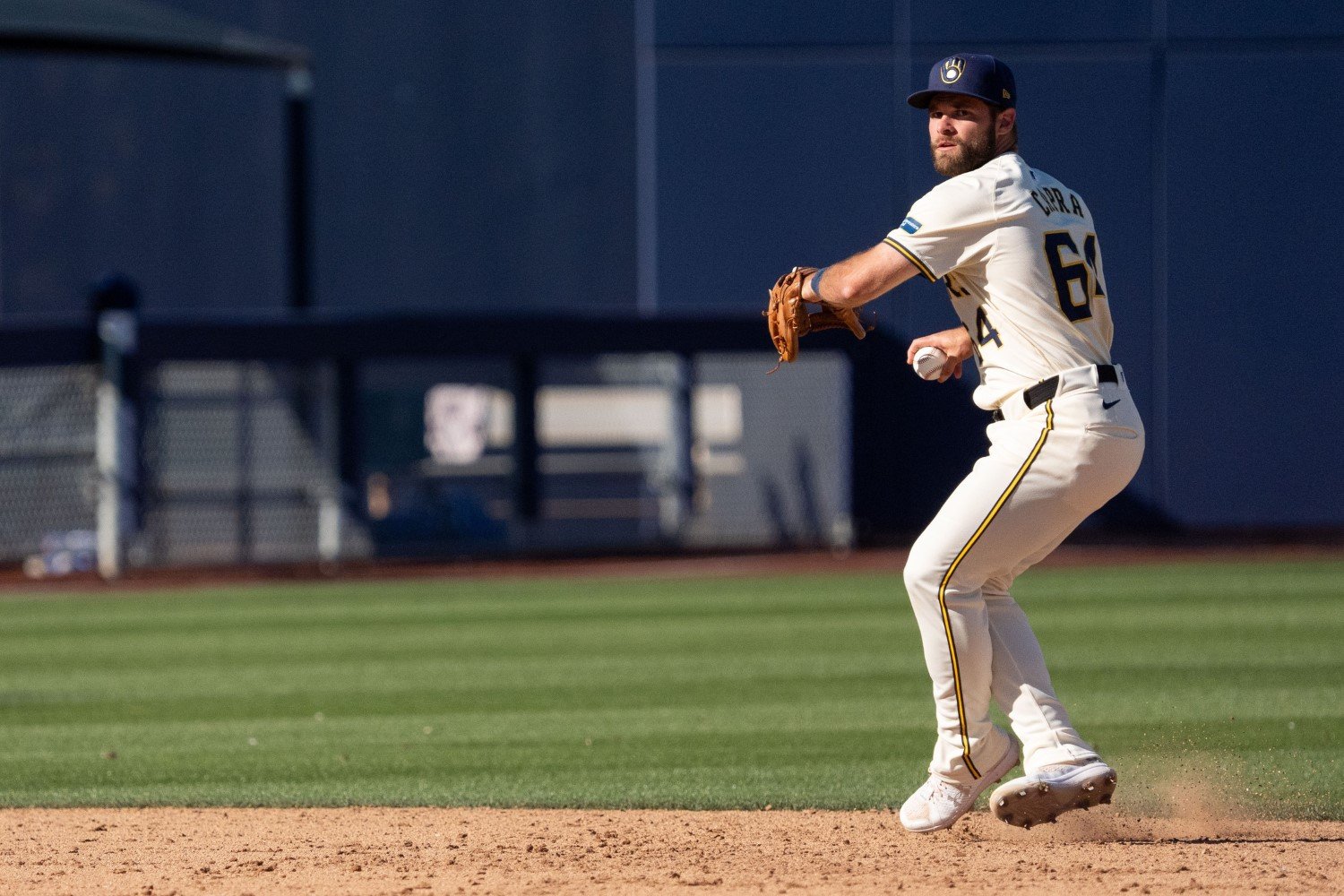 In a busy offseason filled with personnel change, the Brewers' first addition was claiming infielder Vinny Capra off waivers from the Pittsburgh Pirates at the start of November. Anyone who forgot about that inaugural move is forgiven. It was overshadowed hours later by the return of Colin Rea on a new one-year deal. Amid the roster movement that followed, Capra understandably wasn't a point of conversation. Still, it's notable that the 27-year-old kept his 40-man roster spot throughout that time. While all but guaranteed to begin the season in Triple-A Nashville, Capra remains a useful depth piece for an organization that values flexibility and insurance across the roster. He has just 28 MLB plate appearances to his name, but Capra did take a step forward offensively in Triple-A last year. The improvements he made to get there could aid him in his quest to establish himself as a big leaguer. Capra has an excellent feel for the strike zone and strong bat-to-ball skills, but has always been held back by his limited power. He walked at a 14.5% clip in Triple-A last year against a 15.3% strikeout rate, but managed just a .096 isolated power. Given his skill set, hitting the ball on a line and reaching base however possible is his best path to productivity. "The goal has always been to hit drives," he said of his approach in the Brewers clubhouse on Tuesday. "And getting on base." Capra did the former at a better rate than ever last season, boosting his line drive rate from 24.3% in 2022 to a career-best 33.7%. It took some work to get there. Capra struggled with the Toronto Blue Jays' Triple-A affiliate in Buffalo, slashing .167/.357/.222 (67 wRC+) in 70 plate appearances. "I was hitting a lot of grounders and pop-ups," Capra said, by way of self-diagnosis. "I was coming off the ball and not staying through it." Things improved after a trade to Pittsburgh at the end of April, as Capra worked with Triple-A hitting coach Eric Munson on ironing out his swing. "We worked a lot on my bat angle and how I approach coming into the zone," he explained. "Once I figured that out, it was, 'Okay, now the timing's coming back, the sequencing's coming back.' From there, we can let all the years of training take over because we're at a familiar spot." The adjustments paid off, as Capra hit .329/.411/.439 (120 wRC+) in 192 plate appearances after switching organizations. A secondary goal of Capra's line-drive-centered approach is limiting ground balls. "If I'm barreling the ball up, that's obviously a good thing, but if it's on the ground, that's not as productive as if we can get that barrel into a line drive." When he fails to barrel the ball in a way that produces a line drive, Capra would rather miss underneath it for a fly ball than over the top of it for a grounder. The former gives him a chance to tap into more power. To him, it can be a more productive mistake than chopping the ball into the ground. His offensive philosophy seems to fit gorgeously with that of his new skipper. "Trying to hit homers is not really going to work, but if we try to hit line drives and miss under slightly, that can produce more power numbers." Capra's best asset at the plate is his ability to get on base. His best asset in the field is his versatility. A natural shortstop, he has logged time at every infield position but first base and has some experience in left field. "Each position has a different mindset and mentality," he said of bouncing around the diamond. "Understanding you can't play second base like you play third base and having a different mentality for each position, I think it helps out a lot." Capra's mindset at the plate and on the field could help him make an impact in Milwaukee this summer. Andruw Monasterio is a recent example of a depth infielder who made the most of an opportunity brought on by injuries and underperformance. Capra could follow suit over the next few months.
-
Jakob Junis Aims for Unpredictability by Emphasizing Glove-Side Sinkers
Jack Stern posted an article in Brewers
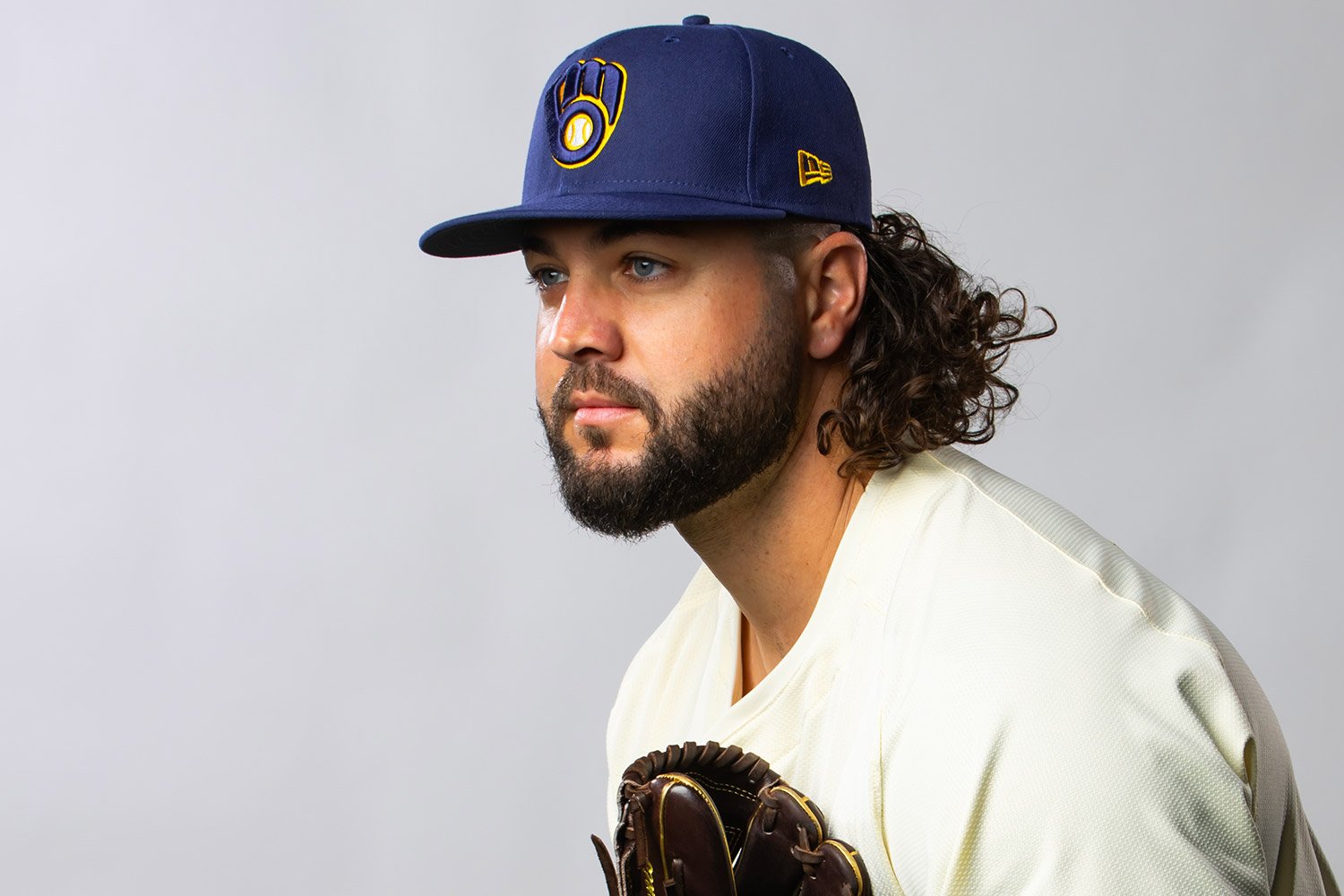 The Brewers hope that what they saw from Jakob Junis on Sunday was a preview of what they can expect in the regular season. Junis worked four hitless innings against the Colorado Rockies. The pitch mix he used to get there mirrored the game plan he deployed as a San Francisco Giant last year. Sliders and sinkers accounted for 50 of Junis’ 56 pitches. The former did much of the heavy lifting, as he turned to it 57% of the time. That’s not far removed from his 62% slider usage rate from last season. In an age when pitchers are throwing hard breaking balls at increasingly higher rates, Junis remains an outlier by using his sweeping slider as his primary offering. It’s an approach that makes sense for him; the slider grades out as his best pitch by far, and using it more helps compensate for a sinker that was blasted last season for -9 runs relative to average, according to Statcast. However, Junis still sees a role for the sinker in his arsenal. His vision for that role is another feature that sets him apart from other pitchers. Many sinkerballers will attempt to bust same-handed hitters inside with the pitch. The goal is to jam the hitter and produce weak contact. Bryse Wilson and Joel Payamps are hurlers who used this strategy to an extreme in 2023. Junis, meanwhile, focuses more on the opposite side of the plate. Last year, the majority of sinkers he threw to righties were of the back-door variety on the outside corner. Junis continued his intentional emphasis on the glove-side sinker on Sunday. One of his goals for 2024 is improved execution of the pitch. “Anybody that throws sinkers, it’s a lot easier to get it to run arm-side. I think it’s much harder to pick your lane glove-side down and away and stick it and get the ball to come back and stay there without leaking over the plate.” Junis’ sinker was hit hard when it leaked over the plate. Opponents feasted on sinkers across the strike zone, but he did find (fleeting) success when tucking it into the outside corner of the plate. Pitches don’t exist in a vacuum, though. Part of the cat-and-mouse game between pitcher and hitter is creating deception and keeping hitters from sitting on pitch types and locations. “It just opens up everything for me,” Junis said of the glove-side sinker, which he believes fulfills those aforementioned purposes in a couple of ways. First, it means hitters have to think about hard stuff on both sides of the plate rather than waiting him out until they get an arm-side sinker. “I can choose to go in [to righties]. I’m not forced to go in because that’s the only place I can throw it.” Second, it plays well off his slider, which Junis typically locates further away from his glove side. “I think it’s harder for them to guess what’s coming,” he said, keeping hitters off balance with the pairing. “You’re making X’s. One’s going this way; one’s going that way. As much as I can move the ball, the better.” Barring improvements to the shape of the pitch, Junis’ sinker is unlikely to be a valuable pitch on its own. However, if it’s a roughly average pitch in isolation that makes his slider better, that bodes well for his production on the mound. The Brewers will hope that’s the case in 2024. In 2022, the sinker graded out at a palatable -1 run value. The expected opponent wOBA on the pitch last year (.364) was much closer to that of 2022 (.348) than the actual .493 mark opponents posted against it. That implies Junis’ sinker was closer to average than awful based on the kind of swings and contact it induced. Pat Murphy remained coy about Junis's specific role, instead focusing on his value as a stretched-out arm who can start or cover the middle innings. Regardless of when Junis delivers bulk outs in games, those outs will be a key piece in Murphy’s puzzle of filling innings this year. For Junis, the glove-side sinker will be part of that process.
-
Unlike some of his teammates, Jakob Junis uses his sinker away to right-handed batters instead of busting them inside. The glove-side sinker remained a point of emphasis in his outing on Sunday. Image courtesy of © Mark J. Rebilas-USA TODAY Sports Unlike some of his teammates, Jakob Junis uses his sinker away to right-handed batters instead of busting them inside. The glove-side sinker remained a point of emphasis in his outing on Sunday. The Brewers hope that what they saw from Jakob Junis on Sunday was a preview of what they can expect in the regular season. Junis worked four hitless innings against the Colorado Rockies. The pitch mix he used to get there mirrored the game plan he deployed as a San Francisco Giant last year. Sliders and sinkers accounted for 50 of Junis’ 56 pitches. The former did much of the heavy lifting, as he turned to it 57% of the time. That’s not far removed from his 62% slider usage rate from last season. In an age when pitchers are throwing hard breaking balls at increasingly higher rates, Junis remains an outlier by using his sweeping slider as his primary offering. It’s an approach that makes sense for him; the slider grades out as his best pitch by far, and using it more helps compensate for a sinker that was blasted last season for -9 runs relative to average, according to Statcast. However, Junis still sees a role for the sinker in his arsenal. His vision for that role is another feature that sets him apart from other pitchers. Many sinkerballers will attempt to bust same-handed hitters inside with the pitch. The goal is to jam the hitter and produce weak contact. Bryse Wilson and Joel Payamps are hurlers who used this strategy to an extreme in 2023. Junis, meanwhile, focuses more on the opposite side of the plate. Last year, the majority of sinkers he threw to righties were of the back-door variety on the outside corner. Junis continued his intentional emphasis on the glove-side sinker on Sunday. One of his goals for 2024 is improved execution of the pitch. “Anybody that throws sinkers, it’s a lot easier to get it to run arm-side. I think it’s much harder to pick your lane glove-side down and away and stick it and get the ball to come back and stay there without leaking over the plate.” Junis’ sinker was hit hard when it leaked over the plate. Opponents feasted on sinkers across the strike zone, but he did find (fleeting) success when tucking it into the outside corner of the plate. Pitches don’t exist in a vacuum, though. Part of the cat-and-mouse game between pitcher and hitter is creating deception and keeping hitters from sitting on pitch types and locations. “It just opens up everything for me,” Junis said of the glove-side sinker, which he believes fulfills those aforementioned purposes in a couple of ways. First, it means hitters have to think about hard stuff on both sides of the plate rather than waiting him out until they get an arm-side sinker. “I can choose to go in [to righties]. I’m not forced to go in because that’s the only place I can throw it.” Second, it plays well off his slider, which Junis typically locates further away from his glove side. “I think it’s harder for them to guess what’s coming,” he said, keeping hitters off balance with the pairing. “You’re making X’s. One’s going this way; one’s going that way. As much as I can move the ball, the better.” Barring improvements to the shape of the pitch, Junis’ sinker is unlikely to be a valuable pitch on its own. However, if it’s a roughly average pitch in isolation that makes his slider better, that bodes well for his production on the mound. The Brewers will hope that’s the case in 2024. In 2022, the sinker graded out at a palatable -1 run value. The expected opponent wOBA on the pitch last year (.364) was much closer to that of 2022 (.348) than the actual .493 mark opponents posted against it. That implies Junis’ sinker was closer to average than awful based on the kind of swings and contact it induced. Pat Murphy remained coy about Junis's specific role, instead focusing on his value as a stretched-out arm who can start or cover the middle innings. Regardless of when Junis delivers bulk outs in games, those outs will be a key piece in Murphy’s puzzle of filling innings this year. For Junis, the glove-side sinker will be part of that process. View full article
-
Why Sal Frelick's Infield Experiment Could End in the Regular Season
Jack Stern posted an article in Brewers
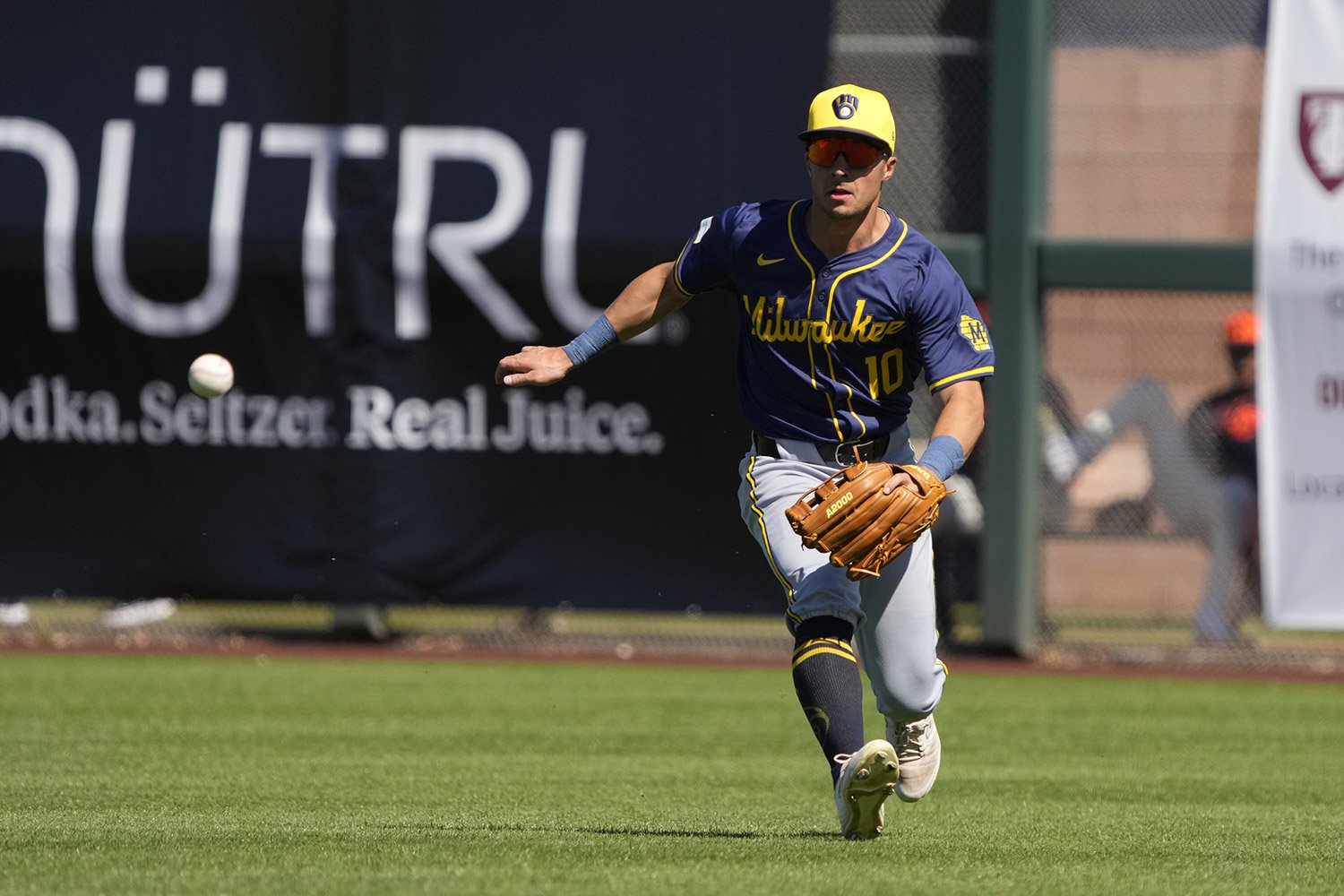 Since the Brewers revealed at the beginning of spring training that Sal Frelick would receive reps as an infielder in exhibition play, there’s been more and more evidence suggesting the club wants him to be a legitimate option at third base--rather than an in-case-of-emergency choice. Frelick has appeared in five games at third base this spring, and made his third Cactus League start at the hot corner on Wednesday. Our own Matthew Trueblood reported last week that Frelick is working diligently at third base, with the apparent goal of being a trustworthy option, not someone who can stand there in a pinch. He wouldn’t get this many reps there unless the club was at least somewhat serious about the move. The preferred plan for the position player mix seems to involve Frelick playing a decent amount of third base. Whether it comes to fruition in the regular season is a different matter. Things rarely unfold throughout a 162-game season the way players, coaches, and executives draw them up beforehand. The Brewers have been one of the best teams in the National League over the last decade, largely because they plan for this. By building deep and versatile rosters, the club has kept chugging along when circumstances force them to deviate from the original vision. The emphasis on versatility is partially why the Brewers are grooming Frelick as a part-time third baseman. However, things playing out differently from the preferred plan is more likely to keep Frelick out of the infield than force him onto the dirt. In a perfect world, the Brewers receive strong production throughout their crowded collection of outfielders, leaving Pat Murphy with more reliable players than available playing time. Shifting Frelick to the infield would alleviate that logjam and give the Brewers their best offensive lineup. However, it’s far more likely that the club receives capable offense from half its outfielders than from all of them. The outfield is deep but filled with offensive question marks. As I discussed earlier this week, Garrett Mitchell’s swing has holes that leave him vulnerable to elevated velocity. Joey Wiemer made substantial improvements to his setup and swing over the winter, but must prove he can wait back on breaking pitches. Jackson Chourio figures to start in center field on Opening Day, but has 24 regular-season plate appearances above Double-A. Frelick’s lack of home run power gives him a lower ceiling than his teammates, but he has a higher floor. In addition to his excellent speed and defense, he boasts superb plate discipline and bat-to-ball skills. He projects as one of Milwaukee’s most reliable outfielders in 2024. The other key variable, of course, is the team's mix of infielders. There, too, there is considerable uncertainty, but a bevy of viable options. If Joey Ortiz, Brice Turang, and Oliver Dunn each continue to impress Pat Murphy and perform well, the need for infield reinforcement might not be nearly as great as seemed possible when we first learned of this experiment. That's to say nothing of Andruw Monasterio, Owen Miller, or Tyler Black. Things could break the other way, but right now, that group feels as crowded as the outfield does. As one examines the construction of this Brewers roster, it becomes clear that Frelick’s best fit remains in the outfield. Barring several injuries in the infield, don’t expect to see him defending on the dirt with any regularity.
-
The Brewers seem serious about making Sal Frelick a part-time infielder, but that doesn’t mean it will become a regular-season reality. Image courtesy of © Rick Scuteri-USA TODAY Sports The Brewers seem serious about making Sal Frelick a part-time infielder, but that doesn’t mean it will become a regular-season reality. Since the Brewers revealed at the beginning of spring training that Sal Frelick would receive reps as an infielder in exhibition play, there’s been more and more evidence suggesting the club wants him to be a legitimate option at third base--rather than an in-case-of-emergency choice. Frelick has appeared in five games at third base this spring, and made his third Cactus League start at the hot corner on Wednesday. Our own Matthew Trueblood reported last week that Frelick is working diligently at third base, with the apparent goal of being a trustworthy option, not someone who can stand there in a pinch. He wouldn’t get this many reps there unless the club was at least somewhat serious about the move. The preferred plan for the position player mix seems to involve Frelick playing a decent amount of third base. Whether it comes to fruition in the regular season is a different matter. Things rarely unfold throughout a 162-game season the way players, coaches, and executives draw them up beforehand. The Brewers have been one of the best teams in the National League over the last decade, largely because they plan for this. By building deep and versatile rosters, the club has kept chugging along when circumstances force them to deviate from the original vision. The emphasis on versatility is partially why the Brewers are grooming Frelick as a part-time third baseman. However, things playing out differently from the preferred plan is more likely to keep Frelick out of the infield than force him onto the dirt. In a perfect world, the Brewers receive strong production throughout their crowded collection of outfielders, leaving Pat Murphy with more reliable players than available playing time. Shifting Frelick to the infield would alleviate that logjam and give the Brewers their best offensive lineup. However, it’s far more likely that the club receives capable offense from half its outfielders than from all of them. The outfield is deep but filled with offensive question marks. As I discussed earlier this week, Garrett Mitchell’s swing has holes that leave him vulnerable to elevated velocity. Joey Wiemer made substantial improvements to his setup and swing over the winter, but must prove he can wait back on breaking pitches. Jackson Chourio figures to start in center field on Opening Day, but has 24 regular-season plate appearances above Double-A. Frelick’s lack of home run power gives him a lower ceiling than his teammates, but he has a higher floor. In addition to his excellent speed and defense, he boasts superb plate discipline and bat-to-ball skills. He projects as one of Milwaukee’s most reliable outfielders in 2024. The other key variable, of course, is the team's mix of infielders. There, too, there is considerable uncertainty, but a bevy of viable options. If Joey Ortiz, Brice Turang, and Oliver Dunn each continue to impress Pat Murphy and perform well, the need for infield reinforcement might not be nearly as great as seemed possible when we first learned of this experiment. That's to say nothing of Andruw Monasterio, Owen Miller, or Tyler Black. Things could break the other way, but right now, that group feels as crowded as the outfield does. As one examines the construction of this Brewers roster, it becomes clear that Frelick’s best fit remains in the outfield. Barring several injuries in the infield, don’t expect to see him defending on the dirt with any regularity. View full article
-
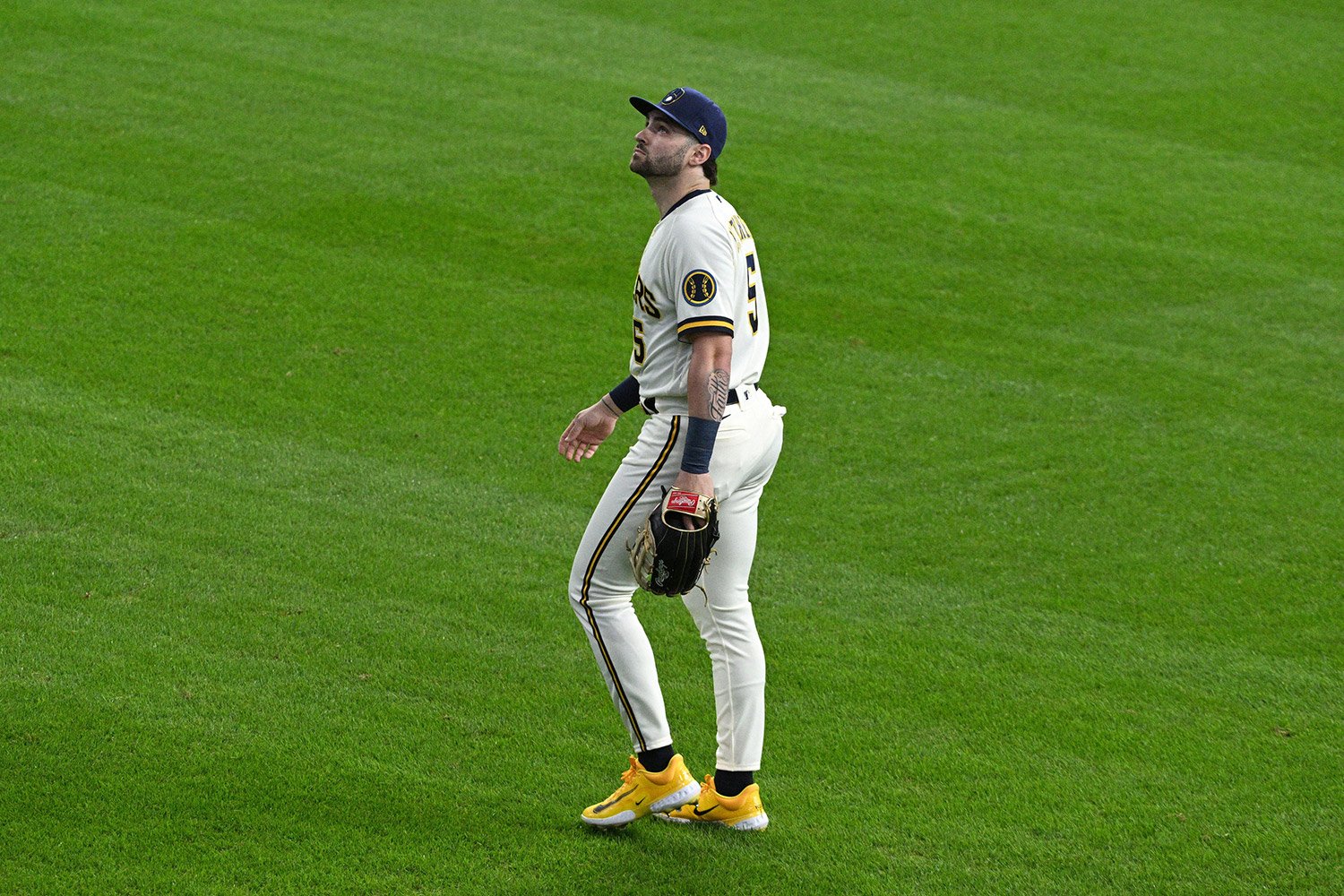 Baseball Prospectus’s PECOTA projections have been out for several weeks. Among the most notable Brewers forecasts is the one for Garrett Mitchell. The former first-rounder has started his big-league career by slashing a solid .278/.343/.452 (119 wRC+), albeit in just 141 plate appearances. PECOTA’s expectations are bearish: a .207/.284/.333 and 72 DRC+ (Deserved Runs Created Plus, BP's all-encompassing offensive measurement, which is scaled to 100 and in which higher is better). It’s easy to be disdainful of that forecast. Mitchell has produced above-average offense at every stop of his professional career, so how did the model come up with such ugly numbers? The answer is that PECOTA doesn’t care about Mitchell’s box score results. Whereas stats like OPS and wRC+ are derived from plate appearance outcomes, Baseball Prospectus’s line of projections and metrics strips things back to what a hitter shows on a per-pitch basis. That’s where things get hairy for Mitchell. No one is questioning Mitchell’s athleticism. His average sprint speed of nearly 30 feet per second makes him one of the fastest runners in baseball. He’s an excellent defensive center fielder, with ample strength in his 6-foot-3 frame. Mitchell’s process at the plate has also looked promising. He’s made mostly wise swing decisions as a big leaguer, posting a lower-than-average chase rate and an average swing rate on pitches in the zone. As someone who can make hard contact, Mitchell has attacked inside pitches most aggressively in a justified effort to pull the ball. What causes concern is Mitchell’s swing path. Scouts have long worried that it leaves him vulnerable to velocity up in the strike zone and prevents him from elevating the ball on contact. Mitchell has done little to ease those doubts. Buried beneath his solid slash lines are high strikeout and ground ball rates. Mitchell punched out at a 25.5% clip in his minor-league career, while hitting 61.8% of his batted balls on the ground. His big-league showing has been even more alarming on a per-swing basis, creating more red flags for a projection system like PECOTA. Mitchell has whiffed on 33.5% of his swings against fastballs. Most of those whiffs come on elevated heaters, where Mitchell’s contact rate drops significantly. Notice the shift once he sees a fastball above the belt. It’s not hard to find productive hitters with high strikeout rates in the modern game, but not all strikeout-heavy bats are equal. Driving the ball and doing damage is a common overarching goal at the plate. For some, strikeouts are an accepted side effect of such an approach. For others, the swing-and-miss reaches an unintentionally extreme level and prevents them from doing damage. Mitchell falls into the latter camp. While his whiff rates have been high across all pitch groups, his inability to make contact with fastballs is especially troublesome for his outlook. Only one qualified hitter (MJ Melendez) whiffed on fastballs in 2023 as frequently as Mitchell has in the majors. Mitchell has looked better on the quality of contact front since reaching the majors, posting a 40.5% ground-ball rate and 28.7% line-drive rate. Statcast says he’s found the “sweet spot” of the bat (producing launch angles between 8 and 32 degrees) on 40.5% of batted balls. Still, that’s not enough to sustainably compensate for Mitchell’s lack of consistent contact. He’s been incredibly fortunate on balls in play, enjoying a .441 BABIP and .537 wOBA on contact. Even hitters with a world-class ability to “guide the ball” (think Luis Arráez) cannot maintain such a success rate on batted balls, let alone one like Mitchell, who has not demonstrated plus bat control. Based on his quantity and quality of contact, Statcast assigned Mitchell an expected .207/.279/.342 line and .276 xwOBA for his big-league work to date. Baseball Prospectus thinks he deserved a .197/.277/.326 slash and 64 DRC+. His 2024 projection is similar. Without improvements to his swing, Mitchell is at risk of ceding playing time in a Brewers outfield filled with young talent. Given that depth, Mitchell’s full set of minor-league options, and his need for more development, there isn’t much pressure to roster him. While a demotion back to Triple-A might surprise some fans, it could be a plausible possibility in the near future. Research assistance provided by TruMedia.
-
PECOTA has a harsh 2024 projection for Garrett Mitchell. What is it seeing, and could it point toward Mitchell ceding playing time in a crowded outfield? Image courtesy of © Michael McLoone-USA TODAY Sports PECOTA has a harsh 2024 projection for Garrett Mitchell. What is it seeing, and could it point toward Mitchell ceding playing time in a crowded outfield? Baseball Prospectus’s PECOTA projections have been out for several weeks. Among the most notable Brewers forecasts is the one for Garrett Mitchell. The former first-rounder has started his big-league career by slashing a solid .278/.343/.452 (119 wRC+), albeit in just 141 plate appearances. PECOTA’s expectations are bearish: a .207/.284/.333 and 72 DRC+ (Deserved Runs Created Plus, BP's all-encompassing offensive measurement, which is scaled to 100 and in which higher is better). It’s easy to be disdainful of that forecast. Mitchell has produced above-average offense at every stop of his professional career, so how did the model come up with such ugly numbers? The answer is that PECOTA doesn’t care about Mitchell’s box score results. Whereas stats like OPS and wRC+ are derived from plate appearance outcomes, Baseball Prospectus’s line of projections and metrics strips things back to what a hitter shows on a per-pitch basis. That’s where things get hairy for Mitchell. No one is questioning Mitchell’s athleticism. His average sprint speed of nearly 30 feet per second makes him one of the fastest runners in baseball. He’s an excellent defensive center fielder, with ample strength in his 6-foot-3 frame. Mitchell’s process at the plate has also looked promising. He’s made mostly wise swing decisions as a big leaguer, posting a lower-than-average chase rate and an average swing rate on pitches in the zone. As someone who can make hard contact, Mitchell has attacked inside pitches most aggressively in a justified effort to pull the ball. What causes concern is Mitchell’s swing path. Scouts have long worried that it leaves him vulnerable to velocity up in the strike zone and prevents him from elevating the ball on contact. Mitchell has done little to ease those doubts. Buried beneath his solid slash lines are high strikeout and ground ball rates. Mitchell punched out at a 25.5% clip in his minor-league career, while hitting 61.8% of his batted balls on the ground. His big-league showing has been even more alarming on a per-swing basis, creating more red flags for a projection system like PECOTA. Mitchell has whiffed on 33.5% of his swings against fastballs. Most of those whiffs come on elevated heaters, where Mitchell’s contact rate drops significantly. Notice the shift once he sees a fastball above the belt. It’s not hard to find productive hitters with high strikeout rates in the modern game, but not all strikeout-heavy bats are equal. Driving the ball and doing damage is a common overarching goal at the plate. For some, strikeouts are an accepted side effect of such an approach. For others, the swing-and-miss reaches an unintentionally extreme level and prevents them from doing damage. Mitchell falls into the latter camp. While his whiff rates have been high across all pitch groups, his inability to make contact with fastballs is especially troublesome for his outlook. Only one qualified hitter (MJ Melendez) whiffed on fastballs in 2023 as frequently as Mitchell has in the majors. Mitchell has looked better on the quality of contact front since reaching the majors, posting a 40.5% ground-ball rate and 28.7% line-drive rate. Statcast says he’s found the “sweet spot” of the bat (producing launch angles between 8 and 32 degrees) on 40.5% of batted balls. Still, that’s not enough to sustainably compensate for Mitchell’s lack of consistent contact. He’s been incredibly fortunate on balls in play, enjoying a .441 BABIP and .537 wOBA on contact. Even hitters with a world-class ability to “guide the ball” (think Luis Arráez) cannot maintain such a success rate on batted balls, let alone one like Mitchell, who has not demonstrated plus bat control. Based on his quantity and quality of contact, Statcast assigned Mitchell an expected .207/.279/.342 line and .276 xwOBA for his big-league work to date. Baseball Prospectus thinks he deserved a .197/.277/.326 slash and 64 DRC+. His 2024 projection is similar. Without improvements to his swing, Mitchell is at risk of ceding playing time in a Brewers outfield filled with young talent. Given that depth, Mitchell’s full set of minor-league options, and his need for more development, there isn’t much pressure to roster him. While a demotion back to Triple-A might surprise some fans, it could be a plausible possibility in the near future. Research assistance provided by TruMedia. View full article
-
Matt Arnold Effectively Managed Resources in an Eventful Offseason
Jack Stern posted an article in Brewers
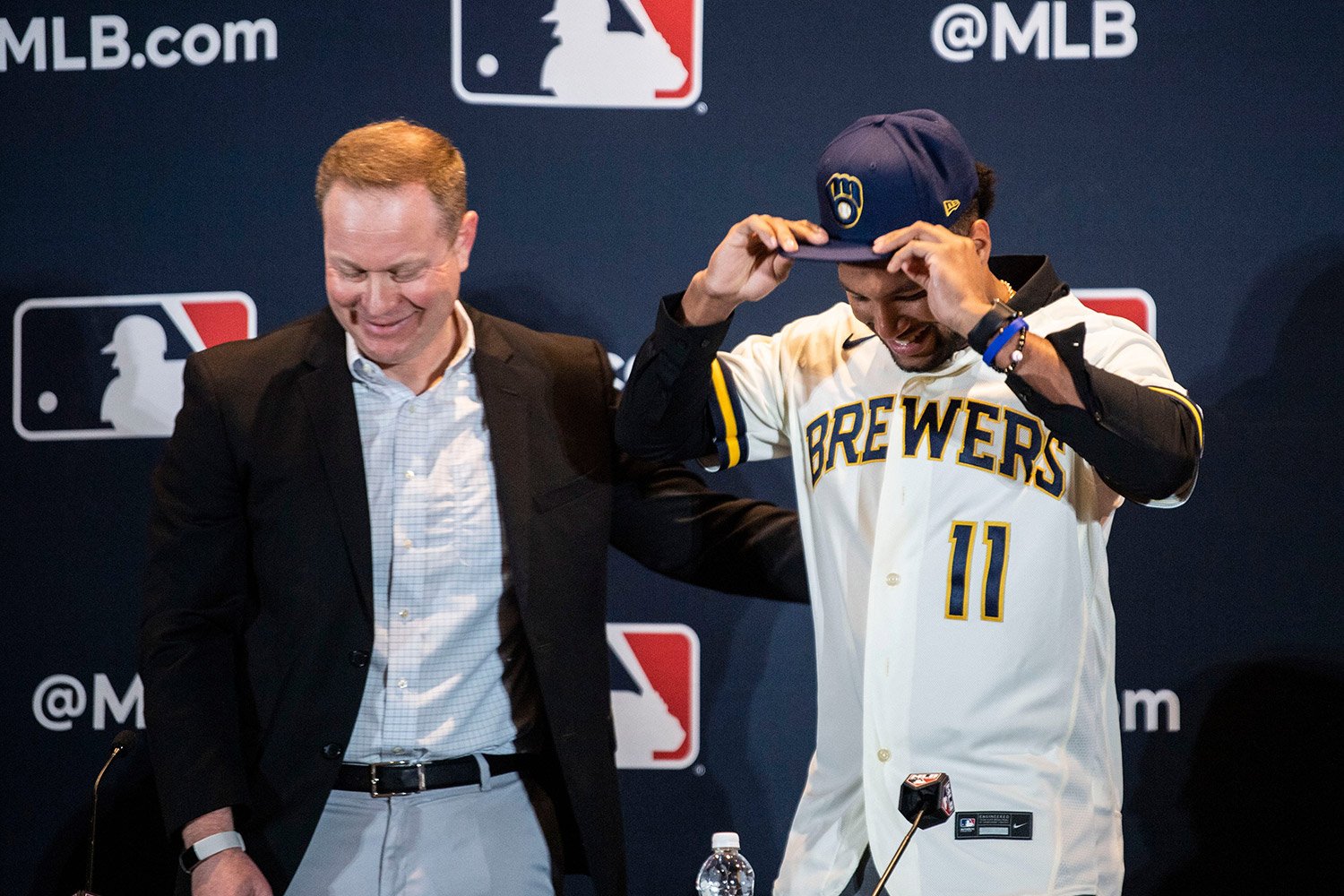 After a swift dismissal in the National League Wild Card Series in October, the focus in Milwaukee immediately shifted to an offseason of change. It became apparent that manager Craig Counsell would test free agency, instead of signing an extension. Corbin Burnes, Brandon Woodruff, and Willy Adames’s contracts were each set to expire after the 2024 season, sparking passionate debates about potential trades and extensions. The widespread thinking was that an organization in the Brewers’ position had two paths forward: go all-in for one last ride or tear it down. Either way, an end to a competitive window was approaching. That belief solidified after Counsell shockingly crossed state lines to manage the Chicago Cubs and the Brewers non-tendered Woodruff in the wake of his shoulder surgery. Owner Mark Attanasio and General Manager Matt Arnold faced difficult decisions that would have serious implications for the franchise. Arnold indeed made many tough decisions in a very active winter, but the final product of his moves did not fit the expectations of many observers. The club kicked things off by trading Mark Canha to the Detroit Tigers instead of picking up his club option. It won the Rhys Hoskins sweepstakes in late January, only for Arnold to trade Burnes to the Baltimore Orioles less than a week later. The Brewers held onto Adames, signed Jakob Junis and Gary Sánchez to one-year deals, and re-signed Woodruff last week to a two-year contract covering his rehab and return. National pundits and portions of the fan base grew increasingly confused with each twist. They perceived the Hoskins signing as a signal that the Brewers chose the all-in path. When Burnes became an Oriole days later, they questioned the prompt U-turn toward the fire sale approach. Trying to put the Brewers’ competitive approach into one of those two boxes is a futile exercise. The organization has been transparent about its process over the past couple of years. Anyone who listened to the messaging shouldn’t be surprised by anything the club has done over the last few months. Despite the poor reception when David Stearns characterized it as taking “bites of the apple,” the Brewers’ organizational philosophy has not changed. They reject the notion that there are only two effective paths toward a World Series title, nor do they think in terms of strict competitive windows tied to specific players. Instead, the Brewers believe the best path to a championship in baseball’s smallest market is to make the playoffs as many years as possible. Competing every year requires excellent player development, the right balance of moves that address short- and long-term, and excellent management of organizational resources. Arnold was especially tasked with the latter two objectives this winter, and did a phenomenal job. Power was the Brewers’ top need. Hoskins and Sánchez are perfect fits. While the former’s deal carries some risk if he struggles after returning from ACL reconstruction, neither player will handcuff the team financially on short-term deals. Decisions on pending free agents require carefully weighing long-term gain against short-term loss. The Brewers played that pro-and-con game in deciding on the futures of Burnes and Adames. Burnes was not going to take a discounted extension to remain with the Brewers, nor was offering him a market value deal wise for the team after they had already received what could be the best seasons of his career. While the Brewers will not be able to backfill the entirety of Burnes’ value in the rotation, they are well-equipped to survive without him as one of baseball’s best pitching development organizations. The long-term benefit of trading Burnes outweighed the potential short-term hit. It made the most sense to deal him, and Arnold found a satisfactory package of Joey Ortiz, DL Hall, and a compensatory pick. Adames’s situation is different. Milwaukee’s hitting development appears to have made strides in recent years, but the results have yet to reach the big leagues. The organization also lacks long-term shortstop options to replace Adames, particularly after Brice Turang looked overpowered by MLB fastballs as a rookie. Furthermore, Adames is at the heart of the clubhouse culture and has spoken openly about his desire to remain in Milwaukee on a new contract. In this instance, one could argue that the shockwaves resulting from an Adames trade would outweigh the value of the return. The balance would swing out of the competitive zone. It seems the Brewers agree, as Adames remains with the team. Arnold’s balancing act extends beyond the big-league roster. He has also dipped into the organization’s minor-league depth, trading away redundant prospects for players with more immediate MLB upside. Arnold traded for second baseman Oliver Dunn, first baseman Jake Bauers, and relievers Bryan Hudson and Taylor Clarke. He parted with prospects Hendry Mendez, Robert Moore, Jace Avina, Brian Sanchez, Justin Chambers, Cam Devanney, and Ryan Brady. Mendez and Moore struggled in High A in 2023. Avina has impressive power but has struck out at alarming rates in the low minors. Chambers has yet to throw a professional pitch and is recovering from Tommy John surgery. Devanney is blocked at every position around the infield and took a step back offensively in Triple A last year. These prospects were low on the organizational depth chart, but the players the Brewers got in return could all help in 2024 and beyond. Dunn and Bauers flashed incredible power last year and could join Hoskins and Sánchez in boosting the Brewers in that category. Hudson ran high strikeout and ground ball rates in Triple-A last year, and Clarke has excellent breaking stuff. The cantilevered approach the Brewers have chosen is difficult to execute, but Arnold pulled it off this winter. He opportunistically added power bats on short-term deals, struck a delicate balance between trading away and retaining pending free agents, and used expendable prospects to add upside players to the 40-man roster. The resulting roster lacks the elite starting rotation of past seasons, and many projection systems believe it will cost the Brewers a handful of wins. However, the club will be more balanced in 2024 than in the last couple of campaigns. The offense is deeper, gained some needed firepower, and the defense and bullpen remain strong. Unlike the 2023 team that featured one of baseball’s worst lineups, this year’s squad should be competent or better in every facet of the game. Entering an offseason under such uncertain circumstances and emerging with that improved outlook is impressive. Arnold and the entire front office deserve credit for it.
- 19 comments
-
- 6
-
-

-
- matt arnold
- corbin burnes
- (and 5 more)
-
The Milwaukee Brewers’ offseason moves left many observers scratching their heads, but the club always had a defined objective. General Manager Matt Arnold balanced several moving pieces throughout the organization and executed the vision exceptionally well. Image courtesy of © Stephanie Amador / The Tennessean / USA TODAY NETWORK The Milwaukee Brewers’ offseason moves left many observers scratching their heads, but the club always had a defined objective. General Manager Matt Arnold balanced several moving pieces throughout the organization and executed the vision exceptionally well. After a swift dismissal in the National League Wild Card Series in October, the focus in Milwaukee immediately shifted to an offseason of change. It became apparent that manager Craig Counsell would test free agency, instead of signing an extension. Corbin Burnes, Brandon Woodruff, and Willy Adames’s contracts were each set to expire after the 2024 season, sparking passionate debates about potential trades and extensions. The widespread thinking was that an organization in the Brewers’ position had two paths forward: go all-in for one last ride or tear it down. Either way, an end to a competitive window was approaching. That belief solidified after Counsell shockingly crossed state lines to manage the Chicago Cubs and the Brewers non-tendered Woodruff in the wake of his shoulder surgery. Owner Mark Attanasio and General Manager Matt Arnold faced difficult decisions that would have serious implications for the franchise. Arnold indeed made many tough decisions in a very active winter, but the final product of his moves did not fit the expectations of many observers. The club kicked things off by trading Mark Canha to the Detroit Tigers instead of picking up his club option. It won the Rhys Hoskins sweepstakes in late January, only for Arnold to trade Burnes to the Baltimore Orioles less than a week later. The Brewers held onto Adames, signed Jakob Junis and Gary Sánchez to one-year deals, and re-signed Woodruff last week to a two-year contract covering his rehab and return. National pundits and portions of the fan base grew increasingly confused with each twist. They perceived the Hoskins signing as a signal that the Brewers chose the all-in path. When Burnes became an Oriole days later, they questioned the prompt U-turn toward the fire sale approach. Trying to put the Brewers’ competitive approach into one of those two boxes is a futile exercise. The organization has been transparent about its process over the past couple of years. Anyone who listened to the messaging shouldn’t be surprised by anything the club has done over the last few months. Despite the poor reception when David Stearns characterized it as taking “bites of the apple,” the Brewers’ organizational philosophy has not changed. They reject the notion that there are only two effective paths toward a World Series title, nor do they think in terms of strict competitive windows tied to specific players. Instead, the Brewers believe the best path to a championship in baseball’s smallest market is to make the playoffs as many years as possible. Competing every year requires excellent player development, the right balance of moves that address short- and long-term, and excellent management of organizational resources. Arnold was especially tasked with the latter two objectives this winter, and did a phenomenal job. Power was the Brewers’ top need. Hoskins and Sánchez are perfect fits. While the former’s deal carries some risk if he struggles after returning from ACL reconstruction, neither player will handcuff the team financially on short-term deals. Decisions on pending free agents require carefully weighing long-term gain against short-term loss. The Brewers played that pro-and-con game in deciding on the futures of Burnes and Adames. Burnes was not going to take a discounted extension to remain with the Brewers, nor was offering him a market value deal wise for the team after they had already received what could be the best seasons of his career. While the Brewers will not be able to backfill the entirety of Burnes’ value in the rotation, they are well-equipped to survive without him as one of baseball’s best pitching development organizations. The long-term benefit of trading Burnes outweighed the potential short-term hit. It made the most sense to deal him, and Arnold found a satisfactory package of Joey Ortiz, DL Hall, and a compensatory pick. Adames’s situation is different. Milwaukee’s hitting development appears to have made strides in recent years, but the results have yet to reach the big leagues. The organization also lacks long-term shortstop options to replace Adames, particularly after Brice Turang looked overpowered by MLB fastballs as a rookie. Furthermore, Adames is at the heart of the clubhouse culture and has spoken openly about his desire to remain in Milwaukee on a new contract. In this instance, one could argue that the shockwaves resulting from an Adames trade would outweigh the value of the return. The balance would swing out of the competitive zone. It seems the Brewers agree, as Adames remains with the team. Arnold’s balancing act extends beyond the big-league roster. He has also dipped into the organization’s minor-league depth, trading away redundant prospects for players with more immediate MLB upside. Arnold traded for second baseman Oliver Dunn, first baseman Jake Bauers, and relievers Bryan Hudson and Taylor Clarke. He parted with prospects Hendry Mendez, Robert Moore, Jace Avina, Brian Sanchez, Justin Chambers, Cam Devanney, and Ryan Brady. Mendez and Moore struggled in High A in 2023. Avina has impressive power but has struck out at alarming rates in the low minors. Chambers has yet to throw a professional pitch and is recovering from Tommy John surgery. Devanney is blocked at every position around the infield and took a step back offensively in Triple A last year. These prospects were low on the organizational depth chart, but the players the Brewers got in return could all help in 2024 and beyond. Dunn and Bauers flashed incredible power last year and could join Hoskins and Sánchez in boosting the Brewers in that category. Hudson ran high strikeout and ground ball rates in Triple-A last year, and Clarke has excellent breaking stuff. The cantilevered approach the Brewers have chosen is difficult to execute, but Arnold pulled it off this winter. He opportunistically added power bats on short-term deals, struck a delicate balance between trading away and retaining pending free agents, and used expendable prospects to add upside players to the 40-man roster. The resulting roster lacks the elite starting rotation of past seasons, and many projection systems believe it will cost the Brewers a handful of wins. However, the club will be more balanced in 2024 than in the last couple of campaigns. The offense is deeper, gained some needed firepower, and the defense and bullpen remain strong. Unlike the 2023 team that featured one of baseball’s worst lineups, this year’s squad should be competent or better in every facet of the game. Entering an offseason under such uncertain circumstances and emerging with that improved outlook is impressive. Arnold and the entire front office deserve credit for it. View full article
- 19 replies
-
- 7
-
-
-
- matt arnold
- corbin burnes
- (and 5 more)

