



Jack Stern
-
Posts
720 -
Joined
-
Last visited
-
Days Won
2
Content Type
Profiles
Forums
Blogs
Events
News
2026 Milwaukee Brewers Top Prospects Ranking
Milwaukee Brewers Videos
2022 Milwaukee Brewers Draft Picks
Milwaukee Brewers Free Agent & Trade Rumors, Notes, & Tidbits
Guides & Resources
2023 Milwaukee Brewers Draft Picks
2024 Milwaukee Brewers Draft Picks
The Milwaukee Brewers Players Project
2025 Milwaukee Brewers Draft Pick Tracker
2026 Milwaukee Brewers Draft Tracker: Picks & Bonuses
Store
Downloads
Gallery
Everything posted by Jack Stern
-
 The Brewers' star backstop has added a new wrinkle to his defensive game this year, but it nearly contributed to a loss on Tuesday night. Is it actually a valuable play? Image courtesy of © Jim Rassol-USA TODAY Sports The Brewers’ Tuesday evening affair with the Rockies was another chaotic battle at Coors Field. Lead changes in consecutive half-innings culminated in a Milwaukee win. Before Milwaukee's ninth-inning comeback, Colorado took the lead in the bottom of the eighth against Bryan Hudson, in a sequence that featured a William Contreras throwing error on a backpick attempt at first base. Ryan McMahon advanced to second on the play, enabling him to score on a Brenton Doyle double a few pitches later. Contreras worked to make the backpick a bigger part of his defensive toolbelt in spring training and threw to bases frequently throughout Cactus League play. He has carried it into the regular season, attempting a league-leading 29 backpicks. The next closest is Jonah Heim, who has attempted 17. Contreras and the Brewers seem to view the backpick as a useful part of his repertoire behind the plate. Tuesday evening’s play demonstrated its potential downside, though. Is it truly valuable, or is it a risky move with minimal payoff? The purpose of the backpick is to establish greater control over the running game. It rarely produces an out. Just 5% of all backpick attempts (17 of 338 throws) have resulted in a pickoff this year, while 3.6% (12 throws) have resulted in throwing errors that moved the runner up by at least one base. Two of Contreras’ 29 backpicks have resulted in a pickoff, and two have resulted in an error. That’s an equal rate of 6.9% for both outcomes. Most of his backpicks have resulted in a neutral result, and they’ve been equally as likely to produce a negative outcome as a positive one. Contreras has been nearly twice as prone to allowing extra bases on a backpick as the average catcher. However, the value of an out is usually greater than that of an extra base, so according to some rudimentary run expectancy math, the Brewers have come out slightly ahead on his pickoff attempts. Determining the value of the backpick is far more nuanced than that simple comparison, though. The threat of a pickoff by a catcher is supposed to deter the runner, by convincing them to reduce their lead off the base and making them less likely to attempt a steal. That effect is not reflected in the outcome of the backpick itself. Contreras only backpicked twice last season, and was a below-average catcher at controlling the running game. Opponents attempted a steal on 6.7% of opportunities, and his 17.2% caught stealing rate was a couple of ticks below the league average of 19.8%. Stolen base success rates have decreased across baseball this year, but Contreras’s gains in that department have outpaced the rest of the league. Opponents are running against him on 5.4% of opportunities, and he’s upped his caught-stealing rate to a league-average 22%. Based on those figures, Contreras has gone from below-average to solid at controlling the running game. This is an admittedly imperfect analysis. Some of it could be rendered moot, given that holding runners is mainly the responsibility of the pitcher, not the catcher. Pat Murphy said last month that he believes pitchers bear “probably more than 80%” of the responsibility for the running game. Varying looks and timing on the mound is more impactful than the catcher's actions. On the other hand, under pitch-timer rules, pitchers are almost confined to that kind of deterrence. Globally, the league takes off and attempts a steal in about 6.6% of their opportunities. After one disengagement within a plate appearance, though, that rate climbs to 17.0%, and after a second disengagement, it climbs to 24.4%. Since the rules provide for a balk and automatic advancement if there's a third disengagement without an out being recorded, every throw over from the mound emboldens a runner. A catcher can fill the gap, because throwing behind runners doesn't count as a disengagement--but, of course, it also comes after the fact of the pitch, so it only deters those runners who are practicing lengthening their lead but not yet ready to go for it. Contreras backpicking may or may not be helpful. Regardless of how one processes the improvements to his stolen base metrics, the evidence indicates that the backpick is unlikely to hurt the Brewers in any meaningful way throughout a season, so why not try it? That may be the real takeaway here, and it could be part of the thought process in Milwaukee permitting its catcher to throw to bases so frequently. View full article
 -
 When breakout reliever Jared Koenig hit the injured list over the weekend with forearm inflammation, the Brewers called on another left-handed minor-league veteran to replace him, selecting the contract of Rob Zastryzny. Signed to a minor-league contract in December, Zastryzny has had a strong season with the Triple-A Nashville Sounds. In 28 ⅓ innings, he posted a 3.18 ERA and 3.07 FIP, with an excellent 34.2% strikeout rate. “He’s the next man up,” Pat Murphy said. “I think he threw the ball well. He’s a veteran. He’s been around. He’s been around this league.” The 32-year-old has appeared in parts of five MLB seasons with four teams and owns a career 4.70 ERA, with a 1.63 strikeout-to-walk ratio in 59 ⅓ innings. That unremarkable body of work is not representative of the current version of Zastryzny, who could be more than a short-term placeholder in the big-league bullpen. Zastryzny’s strikeout rate is the highest of his professional career, and the product of a few changes to his arsenal. Those adjustments began before he joined the Brewers organization, but Milwaukee’s pitching development brass has helped him perfect them this year. A second-round pick of the Chicago Cubs in 2013 as a starting pitcher, Zastryzny progressed through the system, attempting to maintain a traditional starter’s arsenal. During his first three MLB seasons with the Cubs, he featured a curveball and a short slider as his breaking pitches. The curveball featured below-average movement, which he later learned was because he struggled to topspin the ball from his arm slot. “It wasn’t truly a curveball,” he reflected. “It had negative one or two [inches of induced vertical break] for the most part. It was just kind of a slow gyro slider. I’ve never been able to spin the ball with topspin, and I thought for years that’s what I was doing.” Once exposed to his pitch shape metrics, Zastryzny discovered he was better at generating sidespin than topspin. His approach to his secondary pitches shifted to maximizing the former. “Whenever we figured that out, it was like, ‘Hey, you’re not gonna get on top of the ball, maybe you can get on the side of it and make the ball move [to the] right.’” The pitching development crew at Push Performance in Arizona, where Zastryzny trains during the offseason, and Texas-based pitching coach Scott Lacey encouraged him to replace his previous breakers with a sweeper. Such a breaking ball relies on sidespin to produce greater lateral movement, with less drop. In 2018, the last year Zastryzny threw his curveball in the big leagues, it averaged 4.9 inches of horizontal break. The sweeper has averaged 12.4 inches this year. While encouraged by the results of his new breaking ball, Zastryzny realized it had its limits. The sweeper is primarily a chase pitch for swings and misses down and away, and can be less effective against opposite-handed batters. “It ended up playing pretty well against lefties, especially,” he said, “but it’s a hard pitch to land in-zone a lot.” Zastryzny needed another pitch he could use more aggressively in the strike zone and throw to right-handed batters, so he added a cutter to his arsenal as a middle ground between his four-seamer and sweeper. While splitting time between the Pittsburgh Pirates and their Triple-A team in 2023, he used it 22.6% of the time. “The more I threw it, the more I realized that it plays both left and right, and it can get weak contact and strikeouts," Zastryzny said. "So I figured if I have a pitch like that I can command better than the sweeper, I should up the usage of it.” The Brewers took notice of the cutter and expressed interest in Zastryzny over the offseason. It was a natural fit for both parties, as each wanted to make the cutter an even more prominent part of his arsenal. “The first thing they told me was, ‘Hey, we see this pitch that you’re using about 12, 15 percent of the time. Do you think you can use it about 25, 30?’ And I said, ‘That’s exactly what I want to do.’ So it was a good match.” In addition to upping its usage to 33.8% this year, Zastryzny has utilized the cutter more diversely across the strike zone. He started back-dooring it to right-handed batters and using it at both the top and bottom of the zone. “As soon as I got here this year, that’s all we did,” he said. “It was like, ‘Where do you want to throw it? Who do you want to throw it to? What does it set up?’ And from there, it’s been really good in Triple-A.” The cutter serves several functions, but its greatest impact may be how much it’s boosted the effectiveness of the Zastryzny's four-seamer, which is now a weapon at the top of the strike zone. Opponents have slugged .170 against it, with no extra-base hits and a 27.8% whiff rate. That whiff rate was 21.6% last year. The fastball and cutter play off each other. Zastryzny has emphasized tunneling the two, which look alike out of his hand due to their similar spin axes but have distinct velocities and paths through the zone. “It looks enough like the fastball to where it can get under a bat, but it also gets guys off the four-seam fastball at the top,” he explained. Paring down Zastryzny’s arsenal to a four-seamer, sweeper, and slider made formulating an approach against each of those pitches easier. The cutter has disrupted that. “Last year when I was with the Pirates, you see something up, you’ll just assume hard. If you see something down, you can assume soft. And it just becomes a more comfortable at-bat. Now with the cutter that I throw up and down, it means I’m throwing a high-80s pitch at the top and the bottom, so you can’t just sit low soft, high hard anymore.” In addition to making the fastball less hittable, the cutter also helps him steal more strikes with it. The called strike rate of his four-seamer has jumped from 16.9% to 21%. “A lot of the times, if I go down-and-in cutter to a righty, I can go down fastball off of that,” he said. “And if they even assume cutter at all, they’ll take, and I’ll get a free strike there.” With the four-seamer, cutter, sweeper, and changeup, Zastryzny has developed a pitch mix that maximizes how the baseball behaves as he slings it from his low three-quarters release slot. “I think that’s what analytics does,” he said. “A lot of people are like, ‘Hey, you can go to this pitch lab with either the Brewers or in the offseason, and you can create whatever pitch you want.’ But in reality, it’s just figuring out what you do well and going off that.” The refined version of Zastryzny made his Brewers debut as the opener for Bryse Wilson on Monday in Colorado, tossing a perfect first inning. With Koenig sidelined through the All-Star break, he’ll likely get at least a few weeks to prove that his stuff can play against MLB hitters. It would not be surprising if Zastryzny added his name to the growing list of minor acquisitions to unlock their best stuff with the Brewers and contribute out of the bullpen.
 -
It's become a familiar story in Milwaukee: an unheralded reliever joins the Brewers, refines his arsenal, and becomes a contributor in the big-league bullpen. When one such success story landed on the injured list, the club replaced him with someone who could become the next. Image courtesy of © Ron Chenoy-USA TODAY Sports When breakout reliever Jared Koenig hit the injured list over the weekend with forearm inflammation, the Brewers called on another left-handed minor-league veteran to replace him, selecting the contract of Rob Zastryzny. Signed to a minor-league contract in December, Zastryzny has had a strong season with the Triple-A Nashville Sounds. In 28 ⅓ innings, he posted a 3.18 ERA and 3.07 FIP, with an excellent 34.2% strikeout rate. “He’s the next man up,” Pat Murphy said. “I think he threw the ball well. He’s a veteran. He’s been around. He’s been around this league.” The 32-year-old has appeared in parts of five MLB seasons with four teams and owns a career 4.70 ERA, with a 1.63 strikeout-to-walk ratio in 59 ⅓ innings. That unremarkable body of work is not representative of the current version of Zastryzny, who could be more than a short-term placeholder in the big-league bullpen. Zastryzny’s strikeout rate is the highest of his professional career, and the product of a few changes to his arsenal. Those adjustments began before he joined the Brewers organization, but Milwaukee’s pitching development brass has helped him perfect them this year. A second-round pick of the Chicago Cubs in 2013 as a starting pitcher, Zastryzny progressed through the system, attempting to maintain a traditional starter’s arsenal. During his first three MLB seasons with the Cubs, he featured a curveball and a short slider as his breaking pitches. The curveball featured below-average movement, which he later learned was because he struggled to topspin the ball from his arm slot. “It wasn’t truly a curveball,” he reflected. “It had negative one or two [inches of induced vertical break] for the most part. It was just kind of a slow gyro slider. I’ve never been able to spin the ball with topspin, and I thought for years that’s what I was doing.” Once exposed to his pitch shape metrics, Zastryzny discovered he was better at generating sidespin than topspin. His approach to his secondary pitches shifted to maximizing the former. “Whenever we figured that out, it was like, ‘Hey, you’re not gonna get on top of the ball, maybe you can get on the side of it and make the ball move [to the] right.’” The pitching development crew at Push Performance in Arizona, where Zastryzny trains during the offseason, and Texas-based pitching coach Scott Lacey encouraged him to replace his previous breakers with a sweeper. Such a breaking ball relies on sidespin to produce greater lateral movement, with less drop. In 2018, the last year Zastryzny threw his curveball in the big leagues, it averaged 4.9 inches of horizontal break. The sweeper has averaged 12.4 inches this year. While encouraged by the results of his new breaking ball, Zastryzny realized it had its limits. The sweeper is primarily a chase pitch for swings and misses down and away, and can be less effective against opposite-handed batters. “It ended up playing pretty well against lefties, especially,” he said, “but it’s a hard pitch to land in-zone a lot.” Zastryzny needed another pitch he could use more aggressively in the strike zone and throw to right-handed batters, so he added a cutter to his arsenal as a middle ground between his four-seamer and sweeper. While splitting time between the Pittsburgh Pirates and their Triple-A team in 2023, he used it 22.6% of the time. “The more I threw it, the more I realized that it plays both left and right, and it can get weak contact and strikeouts," Zastryzny said. "So I figured if I have a pitch like that I can command better than the sweeper, I should up the usage of it.” The Brewers took notice of the cutter and expressed interest in Zastryzny over the offseason. It was a natural fit for both parties, as each wanted to make the cutter an even more prominent part of his arsenal. “The first thing they told me was, ‘Hey, we see this pitch that you’re using about 12, 15 percent of the time. Do you think you can use it about 25, 30?’ And I said, ‘That’s exactly what I want to do.’ So it was a good match.” In addition to upping its usage to 33.8% this year, Zastryzny has utilized the cutter more diversely across the strike zone. He started back-dooring it to right-handed batters and using it at both the top and bottom of the zone. “As soon as I got here this year, that’s all we did,” he said. “It was like, ‘Where do you want to throw it? Who do you want to throw it to? What does it set up?’ And from there, it’s been really good in Triple-A.” The cutter serves several functions, but its greatest impact may be how much it’s boosted the effectiveness of the Zastryzny's four-seamer, which is now a weapon at the top of the strike zone. Opponents have slugged .170 against it, with no extra-base hits and a 27.8% whiff rate. That whiff rate was 21.6% last year. The fastball and cutter play off each other. Zastryzny has emphasized tunneling the two, which look alike out of his hand due to their similar spin axes but have distinct velocities and paths through the zone. “It looks enough like the fastball to where it can get under a bat, but it also gets guys off the four-seam fastball at the top,” he explained. Paring down Zastryzny’s arsenal to a four-seamer, sweeper, and slider made formulating an approach against each of those pitches easier. The cutter has disrupted that. “Last year when I was with the Pirates, you see something up, you’ll just assume hard. If you see something down, you can assume soft. And it just becomes a more comfortable at-bat. Now with the cutter that I throw up and down, it means I’m throwing a high-80s pitch at the top and the bottom, so you can’t just sit low soft, high hard anymore.” In addition to making the fastball less hittable, the cutter also helps him steal more strikes with it. The called strike rate of his four-seamer has jumped from 16.9% to 21%. “A lot of the times, if I go down-and-in cutter to a righty, I can go down fastball off of that,” he said. “And if they even assume cutter at all, they’ll take, and I’ll get a free strike there.” With the four-seamer, cutter, sweeper, and changeup, Zastryzny has developed a pitch mix that maximizes how the baseball behaves as he slings it from his low three-quarters release slot. “I think that’s what analytics does,” he said. “A lot of people are like, ‘Hey, you can go to this pitch lab with either the Brewers or in the offseason, and you can create whatever pitch you want.’ But in reality, it’s just figuring out what you do well and going off that.” The refined version of Zastryzny made his Brewers debut as the opener for Bryse Wilson on Monday in Colorado, tossing a perfect first inning. With Koenig sidelined through the All-Star break, he’ll likely get at least a few weeks to prove that his stuff can play against MLB hitters. It would not be surprising if Zastryzny added his name to the growing list of minor acquisitions to unlock their best stuff with the Brewers and contribute out of the bullpen. View full article
-
The Brewers' should-be All-Star second baseman is unlikely to post gaudy home run totals at any point in his career, but he is tapping into more game power this year as a bonus of his refined approach. Image courtesy of © Benny Sieu-USA TODAY Sports Brice Turang started the Brewers’ run of hitting five grand slams in eight games when he homered in San Diego last week, and he delivered the latest one in yesterday’s series finale against the division-rival Cubs. That second slam was Turang’s sixth home run of the year, tying his total from last season on the final day of June. Turang has made good on Pat Murphy’s promise of a “quantum leap,” with a breakout season fueled by a more compact swing. While most of his offensive value has come from reaching base and wreaking havoc with his speed, he has also experienced a slight power boost. The 24-year-old’s isolated power has increased from .082 in 2023 to .125 this year. He’s nudged his home run rate from one every 67.3 at-bats to one every 48. Turang is on pace to achieve a double-digit home run total this year. That uptick has come after Turang enacted an approach that isn’t geared toward hitting home runs. He added about 20 pounds of muscle over the offseason, but not with the intent of demolishing fly balls over the fence. “I’m not trying to crush or hit homers,” Turang said. “I’m trying to hit the ball hard back up the middle and just square it up. Good things happen when you’re focused like that.” Instead, the added power is a byproduct of that approach. It may seem paradoxical at first, but it’s not a coincidence that an extra ounce of power has come with the other gains Turang has made. Turang has become one of the game’s top contact hitters, and has one of baseball’s most controlled swings. That succinct and precise bat path enables him to consistently reach pitches that many hitters cannot, partially because it buys him more reaction time. “If you’re shorter, you can make a decision later,” Pat Murphy said. “If you’re quicker to the ball because your bat path is shorter, you can wait longer and identify [pitches] better. We’re talking about instances, but it gives you a little sense of confidence that, ‘Yeah, I can get to that.’” Being short to the ball keeps Turang from being late. It affords him the luxury of letting the ball get deep to shoot it to the opposite field. It’s also proving to be a vehicle by which Turang’s game power can play up from his raw power. Turang still doesn’t generate much loud contact. According to TruMedia, his 33.3% hard-hit rate ranks in the 13th percentile of qualified hitters. That doesn’t mean Turang can’t take swings with the necessary ingredients to drive the ball over the fence, though. While raw strength is a component of driving the ball, timing is also a significant factor. Rhys Hoskins generates ample natural power and can muscle out a home run on a ball he didn’t quite square up. Turang can’t. However, Turang’s compact swing helps him reach a contact point conducive to home runs. Most of Turang’s home runs have not come on powerful-looking swings. Instead, he is catching the ball with his barrel just as it’s about to cross the plate. That’s an ideal contact point for loud pull-side contact in the air. Turang hasn’t crushed most of these home runs, although he did launch a 419-foot blast in Anaheim on the Brewers’ last road trip. His average home run distance of 386.7 feet ranks in the 27th percentile. He’s generating just enough exit velocity in the air to his pull side, though. Five of his home runs have been hit to right or right-center. Below are videos of Turang’s home runs this season. His swing does not look damage-oriented in any of them. Instead, the ball jumps off his bat just enough because his compact swing brings him to a great contact point. Players of any level will recognize these swings as the ones where they don’t feel the ball hit the bat. Turang HRs.mp4 There has been some good fortune involved. Turang’s first home run of the year was a wall-scraper in Cincinnati, and Statcast says his home run at Fenway Park would have cleared in just 15 of 30 parks. Yet, he would still have a shot at 10 in a full season had one or two not left the yard. Turang certainly is not a power hitter. Nor is he trying to be one. Incidentally, that approach puts him in the best spot to hit more home runs. A double-digit home run tally would be a cherry on top of what has already blossomed into a productive offensive profile. View full article
-
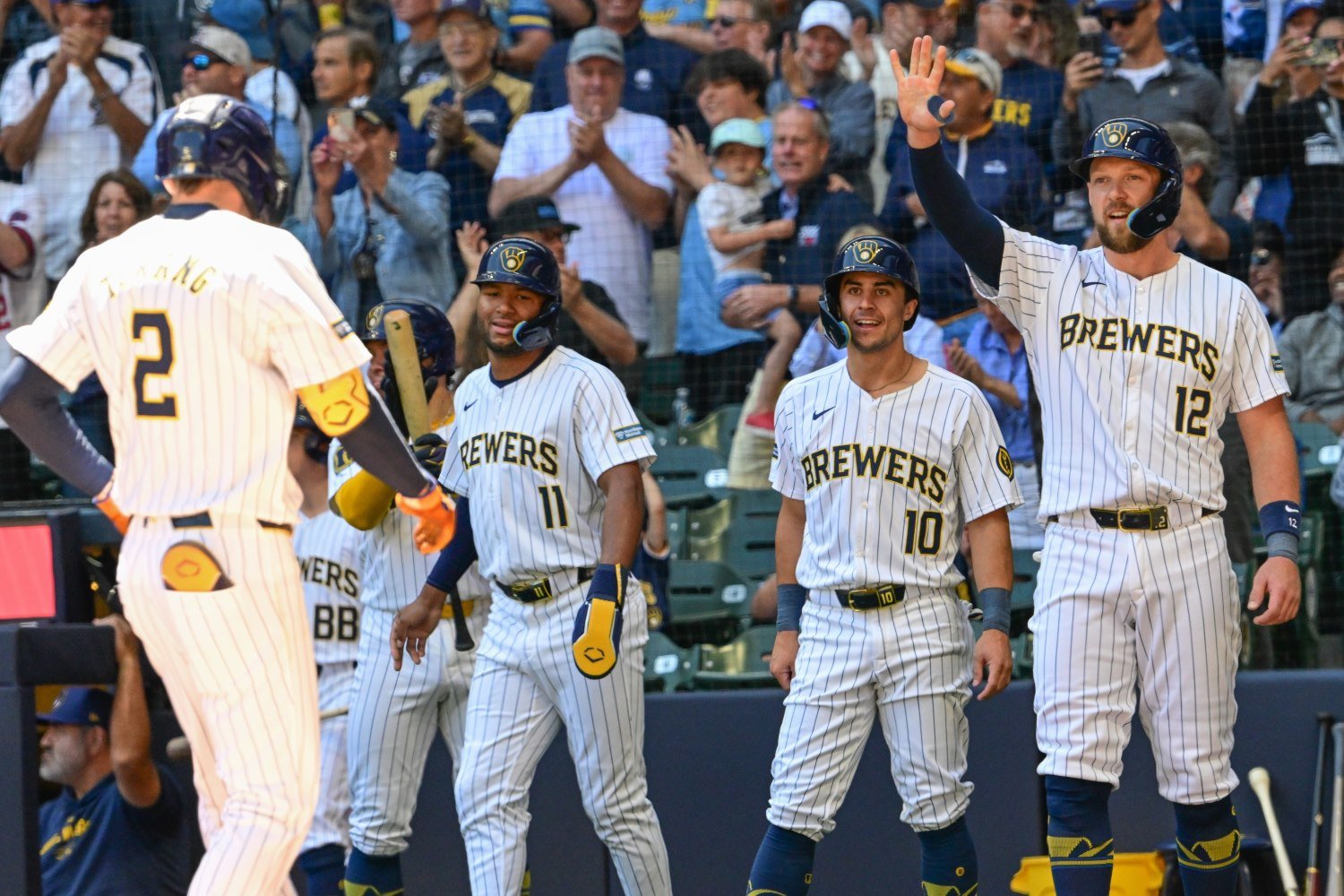 Brice Turang started the Brewers’ run of hitting five grand slams in eight games when he homered in San Diego last week, and he delivered the latest one in yesterday’s series finale against the division-rival Cubs. That second slam was Turang’s sixth home run of the year, tying his total from last season on the final day of June. Turang has made good on Pat Murphy’s promise of a “quantum leap,” with a breakout season fueled by a more compact swing. While most of his offensive value has come from reaching base and wreaking havoc with his speed, he has also experienced a slight power boost. The 24-year-old’s isolated power has increased from .082 in 2023 to .125 this year. He’s nudged his home run rate from one every 67.3 at-bats to one every 48. Turang is on pace to achieve a double-digit home run total this year. That uptick has come after Turang enacted an approach that isn’t geared toward hitting home runs. He added about 20 pounds of muscle over the offseason, but not with the intent of demolishing fly balls over the fence. “I’m not trying to crush or hit homers,” Turang said. “I’m trying to hit the ball hard back up the middle and just square it up. Good things happen when you’re focused like that.” Instead, the added power is a byproduct of that approach. It may seem paradoxical at first, but it’s not a coincidence that an extra ounce of power has come with the other gains Turang has made. Turang has become one of the game’s top contact hitters, and has one of baseball’s most controlled swings. That succinct and precise bat path enables him to consistently reach pitches that many hitters cannot, partially because it buys him more reaction time. “If you’re shorter, you can make a decision later,” Pat Murphy said. “If you’re quicker to the ball because your bat path is shorter, you can wait longer and identify [pitches] better. We’re talking about instances, but it gives you a little sense of confidence that, ‘Yeah, I can get to that.’” Being short to the ball keeps Turang from being late. It affords him the luxury of letting the ball get deep to shoot it to the opposite field. It’s also proving to be a vehicle by which Turang’s game power can play up from his raw power. Turang still doesn’t generate much loud contact. According to TruMedia, his 33.3% hard-hit rate ranks in the 13th percentile of qualified hitters. That doesn’t mean Turang can’t take swings with the necessary ingredients to drive the ball over the fence, though. While raw strength is a component of driving the ball, timing is also a significant factor. Rhys Hoskins generates ample natural power and can muscle out a home run on a ball he didn’t quite square up. Turang can’t. However, Turang’s compact swing helps him reach a contact point conducive to home runs. Most of Turang’s home runs have not come on powerful-looking swings. Instead, he is catching the ball with his barrel just as it’s about to cross the plate. That’s an ideal contact point for loud pull-side contact in the air. Turang hasn’t crushed most of these home runs, although he did launch a 419-foot blast in Anaheim on the Brewers’ last road trip. His average home run distance of 386.7 feet ranks in the 27th percentile. He’s generating just enough exit velocity in the air to his pull side, though. Five of his home runs have been hit to right or right-center. Below are videos of Turang’s home runs this season. His swing does not look damage-oriented in any of them. Instead, the ball jumps off his bat just enough because his compact swing brings him to a great contact point. Players of any level will recognize these swings as the ones where they don’t feel the ball hit the bat. Turang HRs.mp4 There has been some good fortune involved. Turang’s first home run of the year was a wall-scraper in Cincinnati, and Statcast says his home run at Fenway Park would have cleared in just 15 of 30 parks. Yet, he would still have a shot at 10 in a full season had one or two not left the yard. Turang certainly is not a power hitter. Nor is he trying to be one. Incidentally, that approach puts him in the best spot to hit more home runs. A double-digit home run tally would be a cherry on top of what has already blossomed into a productive offensive profile.
 -
Larger takeaways start to solidify by the midpoint of the regular season. It's been a telling first half for the Brewers, who have established their aura as a team after carrying many unknowns into the start of the year. Image courtesy of © Michael McLoone-USA TODAY Sports The Brewers opened the mathematical second half of the regular season with a win over the division-rival Cubs at home. At this juncture, the club finds itself in a better position than even the more optimistic preseason predictions forecasted: the third-best winning percentage (.598) in the National League and a 6.5-game lead over the St. Louis Cardinals in the NL Central. Most early-season noise has dissipated by the halfway point, and a club’s identity solidifies. That’s not to say the Brewers will continue performing at their current level for the rest of the schedule, but it does mean the season has reached a threshold at which larger concrete takeaways become plausible. Here are three things we’ve learned about this Brewers team. The Brewers' most balanced lineup in years may also be its best. Milwaukee’s offense has assumed many shapes over the past few seasons, and most have produced lackluster results. In a seven-year stretch from 2017 through 2023, the Brewers had a below-average offense by wRC+ in five seasons. Last year’s iteration was the worst in a full season during that stretch, finishing with a 92 wRC+ that ranked 24th in baseball and a .385 slugging percentage that ranked 25th. This year, the club’s 108 wRC+ places 10th in the sport. Some good fortune has probably elevated that figure, but the offense still grades out as average according to process-centric metrics like xwOBA (.319) and DRC+ (100). More balance has been the key. In past seasons, the Brewers have relied heavily on home runs while struggling to get on base or find other ways to score. Last season, they worked counts and boasted one of the highest walk rates in baseball, but a lack of power–their .146 ISO was the third-worst in baseball–rendered the offense punchless. The 2024 Brewers feature a productive blend of on-base ability, speed, and power that equips them with multiple ways to score runs. They rank fourth in baseball in on-base percentage (.331) and second in stolen bases (114) while maintaining a league-average home run rate (2.7%). Players like Brice Turang, Blake Perkins, and Sal Frelick have contributed by reaching base and taking extra bases. Others like Rhys Hoskins and Jake Bauers have provided power. Christian Yelich, William Contreras, and Joey Ortiz have anchored the lineup by demonstrating both attributes. While the offense has faced some inevitable regression in June, the ingredients of a sustainably above-average lineup are present. The Brewers have clubbed four grand slams in the past week, three of which have been go-ahead shots, demonstrating that they feature enough thump to slug their way out of prolonged slumps when the hits dry up. The run-prevention system was built to weather hits to the pitching depth. As of this writing, the Brewers have an entire starting rotation on the injured list. In addition to the anticipated absence of Brandon Woodruff, the Brewers have lost Wade Miley and Robert Gasser for the year due to Tommy John surgery. DL Hall and Joe Ross round out the list, and Jakob Junis was on the shelf for ten weeks after making his first start. The Brewers have kept chugging along, though. Colin Rea has emerged as the de facto ace amid Freddy Peralta's inconsistency. Tobias Myers and Bryse Wilson have stepped into starting roles with solid results. Those three have combined for a 3.59 ERA in 213 ⅓ innings, but their isolated performances have more closely resembled those of back-of-the-rotation depth starters. Their 4.74 FIP and 4.42 SIERA are far less flattering. Those discrepancies are not coincidental, however. Rea, Myers, and Wilson have benefitted from a run-prevention infrastructure purposely constructed to maximize their results. The Brewers are an excellent defensive team. They feature three shortstops in the infield and rangy center fielders across the outfield. That mobility enables the pitching staff to record outs on balls that would fall for hits against other teams. This system was already in place last year. Milwaukee’s 68 Defensive Runs Saved ranked second in baseball, and their pitchers allowed the lowest batting average on balls in play (.267). This year, it’s been more of the same, as the Brewers are seventh in DRS (30) and BABIP (.278). The trio of Rea, Myers, and Wilson have benefitted from a .252 BABIP. “The Milwaukee Brewers always have to play defense,” Pat Murphy said. “It just makes sense for our team to be able to baserun as good as we can, to be able to play defense, and to have a multitude of pitchers available.” That defensive unit helps that multitude of pitchers overperform the results one might expect based on their arsenals and the kind of contact they induce. It makes it far more feasible to plug an inexperienced or underperforming arm into the rotation and receive competitive results. If that pitcher throws strikes and keeps the ball in the yard, the Brewers will make plays behind them. “It’s not just you throwing the baseball out there,” Matt Arnold said. “You have to execute that pitch, and some of that is the pitch call that comes from the catcher or the dugout. The defense behind them, a guy puts the ball in play, you [see] the plays from Brice [Turang] and Willy [Adames]. It’s just like, these guys, it’s a team effort. It really is. And so I think the combination of all those guys, all the ingredients certainly helps the pitchers.” Pat Murphy is the right man for the job. The Brewers raised eyebrows when they promoted their longtime bench coach as Craig Counsell’s successor. Whereas Counsell became heralded for his new-school style that skillfully intertwined a data-driven approach with excellent communication skills, Murphy had a reputation as a fiery old-school coach from his days as a collegiate head coach. Those seem like sharply contrasting styles, which raised questions about the team's direction. Fast-forward a few months, and Murphy has proven that he was the right choice to manage the 2024 Brewers. The more Murphy talked throughout spring training about his philosophy, the clearer it became that his outdated rap did not accurately reflect the kind of manager he would be in his first full-time MLB opportunity. Murphy already had the respect of returning players from his time as bench coach and quickly endeared himself to the rest of the clubhouse. Players affectionately dubbed him “Patches,” a reference to the elderly and eccentric coach from the 2004 film Dodgeball. Murphy primarily communicates through his sense of humor and blunt speech but also knows when to handle delicate situations with greater care and sensitivity. That blend has made him the perfect leader for a young roster. As the season progressed, Murphy married his knowledge from experience with his willingness to continue learning as a student of the game. While he maintains that his experienced eye can tell him much of what he needs to know, he also welcomes data and conversations with an analytical front office. “Our game’s going to the data, and you’ve got to embrace it,” Murphy said during a pregame session with the media last month. “Because the data, it’s there for us to look at… You kind of can see it, but a lot of times, you’re fooled. So it’s a great way to kind of validate what you think you see. And that’s why I like it.” Given the open mind he carried into his new role, it’s no surprise that Murphy’s performance as a strategist has steadily improved along the way. The evolution of his bullpen management is an example. Murphy allowed key relievers to shoulder questionable workloads during the season’s inaugural weeks but has since spoken in detail about monitoring and pacing his bullpen arms. He has kept his high-leverage relievers down several times and trusted his “B” relievers in bigger spots. The balance between winning now and down the road is challenging to strike, and Murphy has gotten far better at it over time. Murphy has still made some debatable choices throughout the year, but no manager always pushes the right button or is immune to nitpicking. The bottom line is that he has successfully fulfilled the primary responsibilities of a manager: he’s been a positive leadership figure and has put his players in positions to succeed far more often than not. View full article
-
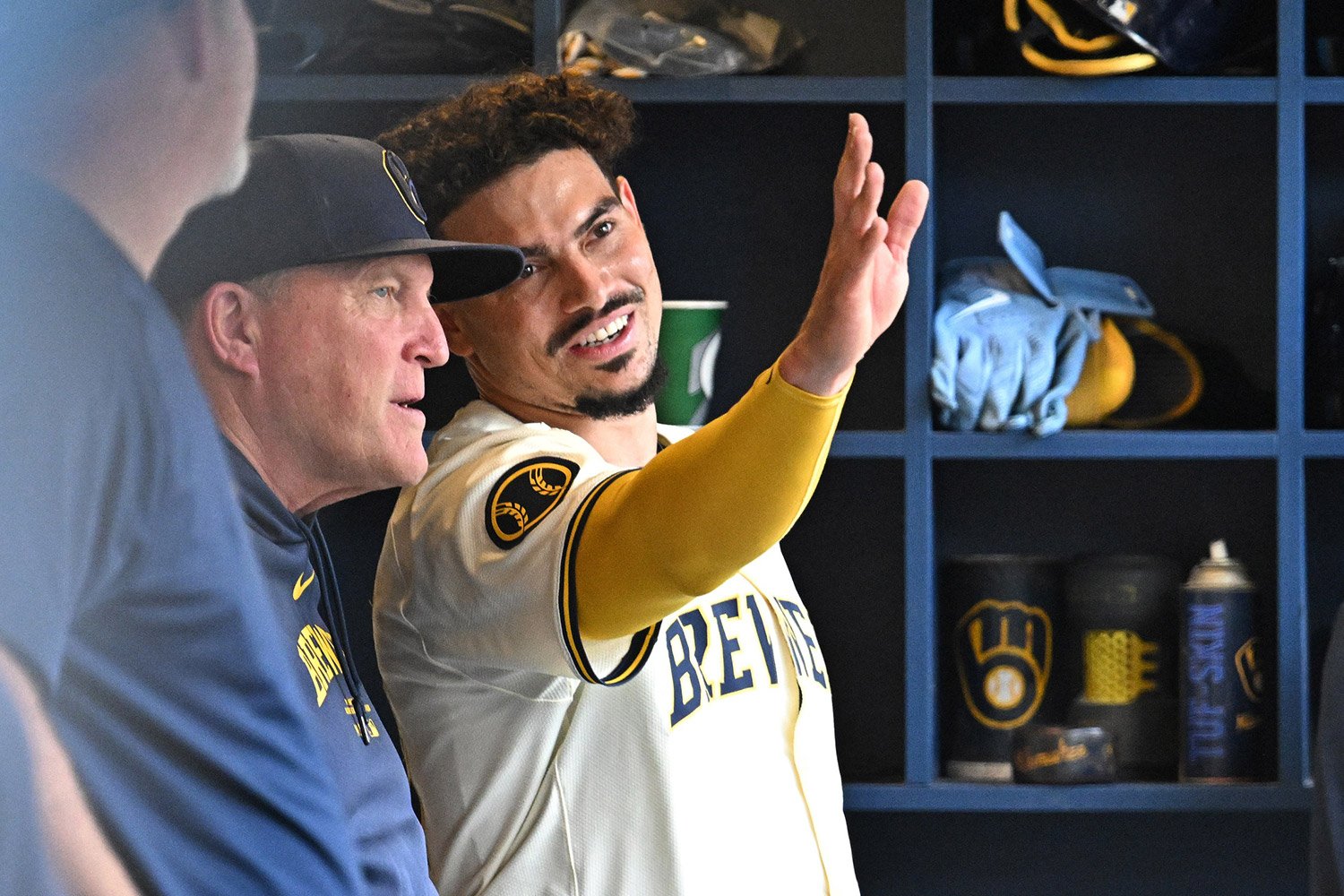 The Brewers opened the mathematical second half of the regular season with a win over the division-rival Cubs at home. At this juncture, the club finds itself in a better position than even the more optimistic preseason predictions forecasted: the third-best winning percentage (.598) in the National League and a 6.5-game lead over the St. Louis Cardinals in the NL Central. Most early-season noise has dissipated by the halfway point, and a club’s identity solidifies. That’s not to say the Brewers will continue performing at their current level for the rest of the schedule, but it does mean the season has reached a threshold at which larger concrete takeaways become plausible. Here are three things we’ve learned about this Brewers team. The Brewers' most balanced lineup in years may also be its best. Milwaukee’s offense has assumed many shapes over the past few seasons, and most have produced lackluster results. In a seven-year stretch from 2017 through 2023, the Brewers had a below-average offense by wRC+ in five seasons. Last year’s iteration was the worst in a full season during that stretch, finishing with a 92 wRC+ that ranked 24th in baseball and a .385 slugging percentage that ranked 25th. This year, the club’s 108 wRC+ places 10th in the sport. Some good fortune has probably elevated that figure, but the offense still grades out as average according to process-centric metrics like xwOBA (.319) and DRC+ (100). More balance has been the key. In past seasons, the Brewers have relied heavily on home runs while struggling to get on base or find other ways to score. Last season, they worked counts and boasted one of the highest walk rates in baseball, but a lack of power–their .146 ISO was the third-worst in baseball–rendered the offense punchless. The 2024 Brewers feature a productive blend of on-base ability, speed, and power that equips them with multiple ways to score runs. They rank fourth in baseball in on-base percentage (.331) and second in stolen bases (114) while maintaining a league-average home run rate (2.7%). Players like Brice Turang, Blake Perkins, and Sal Frelick have contributed by reaching base and taking extra bases. Others like Rhys Hoskins and Jake Bauers have provided power. Christian Yelich, William Contreras, and Joey Ortiz have anchored the lineup by demonstrating both attributes. While the offense has faced some inevitable regression in June, the ingredients of a sustainably above-average lineup are present. The Brewers have clubbed four grand slams in the past week, three of which have been go-ahead shots, demonstrating that they feature enough thump to slug their way out of prolonged slumps when the hits dry up. The run-prevention system was built to weather hits to the pitching depth. As of this writing, the Brewers have an entire starting rotation on the injured list. In addition to the anticipated absence of Brandon Woodruff, the Brewers have lost Wade Miley and Robert Gasser for the year due to Tommy John surgery. DL Hall and Joe Ross round out the list, and Jakob Junis was on the shelf for ten weeks after making his first start. The Brewers have kept chugging along, though. Colin Rea has emerged as the de facto ace amid Freddy Peralta's inconsistency. Tobias Myers and Bryse Wilson have stepped into starting roles with solid results. Those three have combined for a 3.59 ERA in 213 ⅓ innings, but their isolated performances have more closely resembled those of back-of-the-rotation depth starters. Their 4.74 FIP and 4.42 SIERA are far less flattering. Those discrepancies are not coincidental, however. Rea, Myers, and Wilson have benefitted from a run-prevention infrastructure purposely constructed to maximize their results. The Brewers are an excellent defensive team. They feature three shortstops in the infield and rangy center fielders across the outfield. That mobility enables the pitching staff to record outs on balls that would fall for hits against other teams. This system was already in place last year. Milwaukee’s 68 Defensive Runs Saved ranked second in baseball, and their pitchers allowed the lowest batting average on balls in play (.267). This year, it’s been more of the same, as the Brewers are seventh in DRS (30) and BABIP (.278). The trio of Rea, Myers, and Wilson have benefitted from a .252 BABIP. “The Milwaukee Brewers always have to play defense,” Pat Murphy said. “It just makes sense for our team to be able to baserun as good as we can, to be able to play defense, and to have a multitude of pitchers available.” That defensive unit helps that multitude of pitchers overperform the results one might expect based on their arsenals and the kind of contact they induce. It makes it far more feasible to plug an inexperienced or underperforming arm into the rotation and receive competitive results. If that pitcher throws strikes and keeps the ball in the yard, the Brewers will make plays behind them. “It’s not just you throwing the baseball out there,” Matt Arnold said. “You have to execute that pitch, and some of that is the pitch call that comes from the catcher or the dugout. The defense behind them, a guy puts the ball in play, you [see] the plays from Brice [Turang] and Willy [Adames]. It’s just like, these guys, it’s a team effort. It really is. And so I think the combination of all those guys, all the ingredients certainly helps the pitchers.” Pat Murphy is the right man for the job. The Brewers raised eyebrows when they promoted their longtime bench coach as Craig Counsell’s successor. Whereas Counsell became heralded for his new-school style that skillfully intertwined a data-driven approach with excellent communication skills, Murphy had a reputation as a fiery old-school coach from his days as a collegiate head coach. Those seem like sharply contrasting styles, which raised questions about the team's direction. Fast-forward a few months, and Murphy has proven that he was the right choice to manage the 2024 Brewers. The more Murphy talked throughout spring training about his philosophy, the clearer it became that his outdated rap did not accurately reflect the kind of manager he would be in his first full-time MLB opportunity. Murphy already had the respect of returning players from his time as bench coach and quickly endeared himself to the rest of the clubhouse. Players affectionately dubbed him “Patches,” a reference to the elderly and eccentric coach from the 2004 film Dodgeball. Murphy primarily communicates through his sense of humor and blunt speech but also knows when to handle delicate situations with greater care and sensitivity. That blend has made him the perfect leader for a young roster. As the season progressed, Murphy married his knowledge from experience with his willingness to continue learning as a student of the game. While he maintains that his experienced eye can tell him much of what he needs to know, he also welcomes data and conversations with an analytical front office. “Our game’s going to the data, and you’ve got to embrace it,” Murphy said during a pregame session with the media last month. “Because the data, it’s there for us to look at… You kind of can see it, but a lot of times, you’re fooled. So it’s a great way to kind of validate what you think you see. And that’s why I like it.” Given the open mind he carried into his new role, it’s no surprise that Murphy’s performance as a strategist has steadily improved along the way. The evolution of his bullpen management is an example. Murphy allowed key relievers to shoulder questionable workloads during the season’s inaugural weeks but has since spoken in detail about monitoring and pacing his bullpen arms. He has kept his high-leverage relievers down several times and trusted his “B” relievers in bigger spots. The balance between winning now and down the road is challenging to strike, and Murphy has gotten far better at it over time. Murphy has still made some debatable choices throughout the year, but no manager always pushes the right button or is immune to nitpicking. The bottom line is that he has successfully fulfilled the primary responsibilities of a manager: he’s been a positive leadership figure and has put his players in positions to succeed far more often than not.
 -
The newest Brewers hurler looks like a solid fit, as a ground-ball pitcher surrounded by excellent defensive infielders. However, his path to success has more to do with his pitch mix and benefiting from the rest of his defense. The Brewers finally bolstered their rotation depth with an external move, acquiring veteran starter Dallas Keuchel in a minor-league trade with the Seattle Mariners on Tuesday. Keuchel was pitching for Seattle’s Triple-A affiliate in Tacoma on a minor-league deal, but will immediately step into Milwaukee’s big-league pitching mix. He joined the club during Tuesday night’s game. The southpaw could debut in Wednesday’s series finale with the Texas Rangers. He last pitched on Friday, which lines him up for a Wednesday start on regular rest. Colin Rea was set to pitch, but is no longer listed as the probable starter. This move is akin to last summer’s acquisition of Julio Teherán. Milwaukee needed a cheap and available veteran for short-term innings coverage in a thin rotation. If it can coax five or so passable starts from the 36-year-old, he’ll go down as a successful addition. Formerly a Cy Young Award winner and two-time All-Star with the Houston Astros, Keuchel is far removed from his days as a mainstay in a big-league rotation. His last three seasons of MLB work have been especially rough: a 6.29 ERA, 5.20 FIP, and 5.01 SIERA in 260 ⅓ innings. His strikeout-to-walk ratio during that stretch is an unsightly 1.53, and his once-sterling home run rate has ballooned to 1.35 per nine innings. The Brewers have had plenty of success in helping pitchers with lackluster strikeout-to-walk ratios outperform their peripheral metrics by fielding an elite defense behind them. Wade Miley was a shining example in both of his stints in Milwaukee. The injury-ravaged rotation Keuchel is joining has remained afloat thanks to significant overperformance on batted balls from Rea, Bryse Wilson, and Tobias Myers. Could he be the latest in that trend? The potential is evident at first glance; the sinkerballing Keuchel has always been an extreme ground-ball pitcher, and he is playing in front of an excellent defense that features three natural shortstops with plus range. Keuchel’s 53.4% ground-ball rate during the aforementioned stretch falls short of the monstrous grounder rates he produced in Houston, but still ranks in the 93rd percentile of pitchers. In his 13 starts with the Tacoma Raiders this year, he induced grounders on 59.5% of balls in play. Milwaukee’s infield defense ranks fifth with 10 Outs Above Average this year, and that total includes a debatable -1 rating for Brice Turang, who ranks sixth in baseball with 8 Defensive Runs Saved. The run prevention unit has limited opponents to a .231 batting average on ground balls, the eighth-lowest mark in baseball. However, Keuchel’s .236 batting average allowed on ground balls since 2021 suggests that he does not stand to gain as much from that infield defense as one would think. Any boost he may experience could stem from inducing more ground balls and mitigating damage on other kinds of contact. Keuchel has gotten burned on balls in the air about as badly as any pitcher to work over 100 innings since 2021. Of 456 such pitchers, his .404 batting average allowed on fly balls ranks 454th. His .243 BABIP on fly balls, which excludes home runs, ranks the same. Much of that damage is self-inflicted. Keuchel’s hard hit and barrel rates on fly balls rank in the third and first percentiles of that list, respectively. He’s yielded louder fly balls than most pitchers, and this is a common problem. There's a platoon advantage for fly-ball hitters against ground-ball pitchers, because the locations where a ground-ball guy works often fit well with the ones where fly-ball hitters seek to make damage, and because a fly ball surrendered by a ground-ball hurler is usually a mistake pitch, therefore more likely to be squared up. At the same time, it may be the area where Milwaukee’s defense stands to aid him most. The outfielders behind Keuchel have combined for -4 Outs Above Average over his last three MLB seasons. The Brewers’ outfield ranks seventh in baseball this year with 6 Outs Above Average. They’ve recorded the fourth-most hard-hit outs on fly balls (117). The best way to avoid damage on fly balls is to limit them. Simplifying Keuchel’s pitch mix to focus on what he still does well is a good first step. Keuchel’s sinker still possesses above-average movement and has yielded a fly ball rate of just 13% since 2021. He has only thrown it 39% of the time during that stretch, though, while turning increasingly to an ineffective cutter that’s been responsible for most of the barrels he has allowed. Keuchel has leaned on the sinker more heavily with the Rainiers, boosting its usage to 46.5% while using his cutter just 13.5% of the time. His most-used secondary pitch has been his changeup, which features excellent separation from his fastball due to its plus vertical drop and average velocity of 79.7 mph. That’s the blueprint Keuchel will have to follow in Milwaukee: lean heavily on the sinker and changeup to induce ground balls and keep hitters out in front. He should probably take the prevalence of those two pitches to an even greater extreme than he has in Triple-A. From there, the cutter and slider can serve as occasional new-look offerings. As we know, though, the Brewers also like to keep secondary fastball looks in the mix for their starters, so we could see the cutter remain in the mix and generate unexpected utility. By using the right mix and getting enough help from the rangy outfield corps of Blake Perkins, Sal Frelick, Jackson Chourio, and perhaps Garrett Mitchell, Keuchel could be the holdover the Brewers need as the club waits on its rotation to get closer to full strength. Even if that doesn’t pan out, he was a worthwhile buy-low acquisition. View full article
-
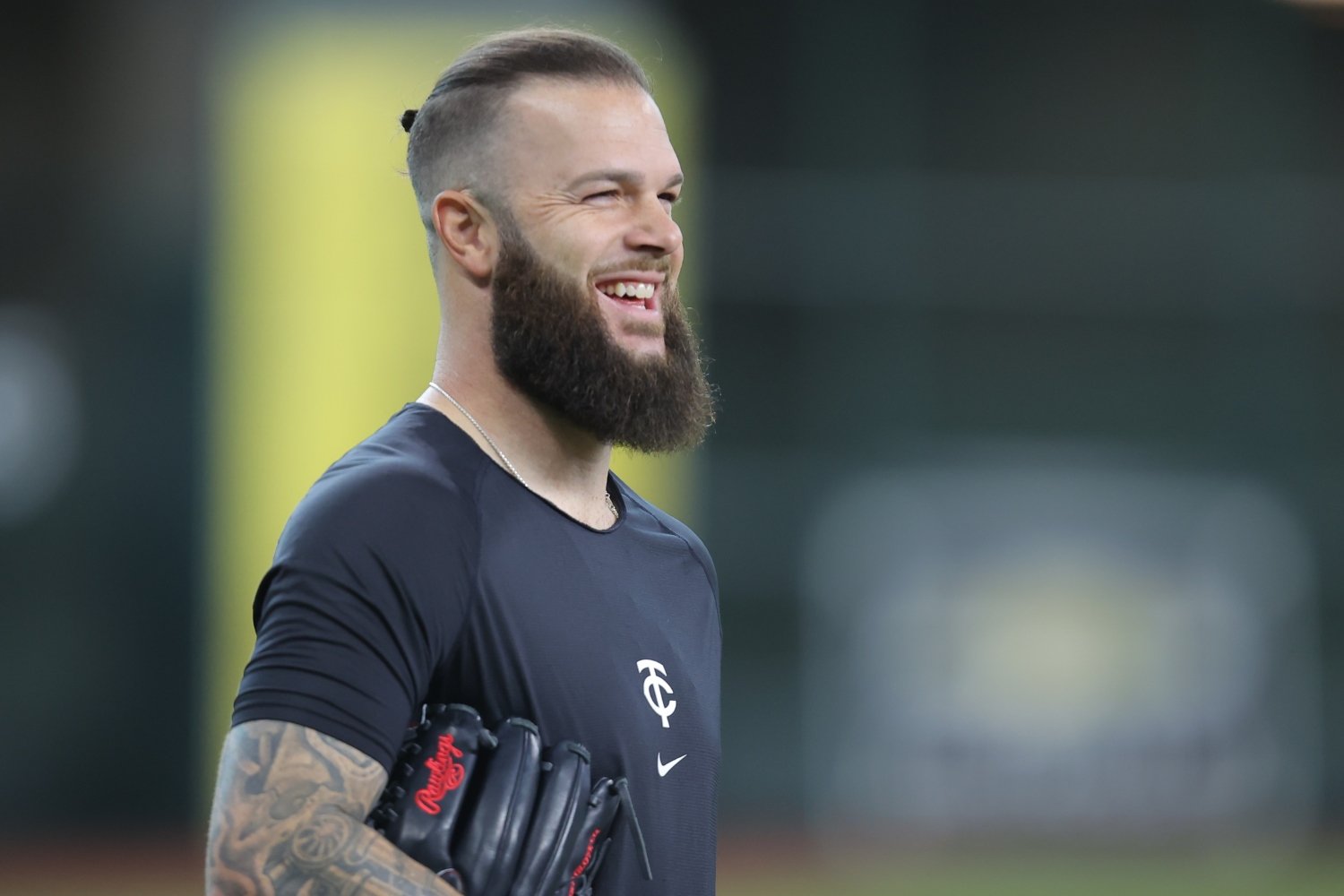 The Brewers finally bolstered their rotation depth with an external move, acquiring veteran starter Dallas Keuchel in a minor-league trade with the Seattle Mariners on Tuesday. Keuchel was pitching for Seattle’s Triple-A affiliate in Tacoma on a minor-league deal, but will immediately step into Milwaukee’s big-league pitching mix. He joined the club during Tuesday night’s game. The southpaw could debut in Wednesday’s series finale with the Texas Rangers. He last pitched on Friday, which lines him up for a Wednesday start on regular rest. Colin Rea was set to pitch, but is no longer listed as the probable starter. This move is akin to last summer’s acquisition of Julio Teherán. Milwaukee needed a cheap and available veteran for short-term innings coverage in a thin rotation. If it can coax five or so passable starts from the 36-year-old, he’ll go down as a successful addition. Formerly a Cy Young Award winner and two-time All-Star with the Houston Astros, Keuchel is far removed from his days as a mainstay in a big-league rotation. His last three seasons of MLB work have been especially rough: a 6.29 ERA, 5.20 FIP, and 5.01 SIERA in 260 ⅓ innings. His strikeout-to-walk ratio during that stretch is an unsightly 1.53, and his once-sterling home run rate has ballooned to 1.35 per nine innings. The Brewers have had plenty of success in helping pitchers with lackluster strikeout-to-walk ratios outperform their peripheral metrics by fielding an elite defense behind them. Wade Miley was a shining example in both of his stints in Milwaukee. The injury-ravaged rotation Keuchel is joining has remained afloat thanks to significant overperformance on batted balls from Rea, Bryse Wilson, and Tobias Myers. Could he be the latest in that trend? The potential is evident at first glance; the sinkerballing Keuchel has always been an extreme ground-ball pitcher, and he is playing in front of an excellent defense that features three natural shortstops with plus range. Keuchel’s 53.4% ground-ball rate during the aforementioned stretch falls short of the monstrous grounder rates he produced in Houston, but still ranks in the 93rd percentile of pitchers. In his 13 starts with the Tacoma Raiders this year, he induced grounders on 59.5% of balls in play. Milwaukee’s infield defense ranks fifth with 10 Outs Above Average this year, and that total includes a debatable -1 rating for Brice Turang, who ranks sixth in baseball with 8 Defensive Runs Saved. The run prevention unit has limited opponents to a .231 batting average on ground balls, the eighth-lowest mark in baseball. However, Keuchel’s .236 batting average allowed on ground balls since 2021 suggests that he does not stand to gain as much from that infield defense as one would think. Any boost he may experience could stem from inducing more ground balls and mitigating damage on other kinds of contact. Keuchel has gotten burned on balls in the air about as badly as any pitcher to work over 100 innings since 2021. Of 456 such pitchers, his .404 batting average allowed on fly balls ranks 454th. His .243 BABIP on fly balls, which excludes home runs, ranks the same. Much of that damage is self-inflicted. Keuchel’s hard hit and barrel rates on fly balls rank in the third and first percentiles of that list, respectively. He’s yielded louder fly balls than most pitchers, and this is a common problem. There's a platoon advantage for fly-ball hitters against ground-ball pitchers, because the locations where a ground-ball guy works often fit well with the ones where fly-ball hitters seek to make damage, and because a fly ball surrendered by a ground-ball hurler is usually a mistake pitch, therefore more likely to be squared up. At the same time, it may be the area where Milwaukee’s defense stands to aid him most. The outfielders behind Keuchel have combined for -4 Outs Above Average over his last three MLB seasons. The Brewers’ outfield ranks seventh in baseball this year with 6 Outs Above Average. They’ve recorded the fourth-most hard-hit outs on fly balls (117). The best way to avoid damage on fly balls is to limit them. Simplifying Keuchel’s pitch mix to focus on what he still does well is a good first step. Keuchel’s sinker still possesses above-average movement and has yielded a fly ball rate of just 13% since 2021. He has only thrown it 39% of the time during that stretch, though, while turning increasingly to an ineffective cutter that’s been responsible for most of the barrels he has allowed. Keuchel has leaned on the sinker more heavily with the Rainiers, boosting its usage to 46.5% while using his cutter just 13.5% of the time. His most-used secondary pitch has been his changeup, which features excellent separation from his fastball due to its plus vertical drop and average velocity of 79.7 mph. That’s the blueprint Keuchel will have to follow in Milwaukee: lean heavily on the sinker and changeup to induce ground balls and keep hitters out in front. He should probably take the prevalence of those two pitches to an even greater extreme than he has in Triple-A. From there, the cutter and slider can serve as occasional new-look offerings. As we know, though, the Brewers also like to keep secondary fastball looks in the mix for their starters, so we could see the cutter remain in the mix and generate unexpected utility. By using the right mix and getting enough help from the rangy outfield corps of Blake Perkins, Sal Frelick, Jackson Chourio, and perhaps Garrett Mitchell, Keuchel could be the holdover the Brewers need as the club waits on its rotation to get closer to full strength. Even if that doesn’t pan out, he was a worthwhile buy-low acquisition.
 -
William Contreras abruptly went from being one of baseball's hottest hitters to one of its coldest. His recent offensive woes may have more to do with an intangible factor than anything mechanical. Image courtesy of © Orlando Ramirez-USA TODAY Sports William Contreras was the Brewers’ best and most available hitter through (roughly) the first two months of the season. Through May 24, Contreras had played in all 50 of his team’s games, while posting a gaudy .337/.412/.538 line. His 167 wRC+ led qualified catchers and ranked ninth among qualified hitters. Contreras has since fallen on rough times, and those struggles have grown from a bump in the road to a prolonged slump. Since May 25, he’s slashed .214/.235/.277 in 115 plate appearances, spanning 26 games. His season line now stands at .293/.353/.444 (126 wRC+), a 153-point drop in OPS. Some of the downturn was due to statistically probable regression. No matter how excellent his at-bats and ability to guide the ball to all fields were, Contreras was never going to sustain the .396 BABIP he managed during the former stretch. Most of the dropoff, however, stems from worse swings and poor swing decisions. “I think he’ll come out of it very soon,” Pat Murphy said before Monday’s series opener against the Texas Rangers, a game in which Contreras went 1-for-4 with a double. “I think his early success has made his standards so high for himself that he’s gotten into a few bad habits, and [he’s] not seeing the ball as well as he could.” Hitting a baseball is among the most challenging feats in sports, and consistent results in that area are difficult to come by. One way to stay as consistent as possible is for a hitter to swing according to the pitches the opposition gives him. Murphy speaks of it frequently as a “pillar” of reliable offense. Contreras excelled on that front to open the year. During his hot stretch, he chased pitches outside the strike zone at a 23.4% rate that ranked in the 76th percentile of hitters and walked at an 11% clip. Since his slump began, his chase rate has inflated to 30.3%, which ranks in the 41st percentile. His walk rate has plummeted to 2.6%. There has been no discernible shift in how pitchers are attacking Contreras. Rather, he’s getting himself out, by offering at pitches he shouldn’t be and making suboptimal contact on balls that are typically in his wheelhouse. Contreras has always been a heavy ground-ball hitter who maximizes damage on line drives and fly balls. He has also found success by utilizing multiple versions of his stance and swing based on game situations and how he is being pitched. All of those attributes have been lacking during this stretch. Contreras is still putting the ball in play at roughly the same rate as before, but those balls in play are mostly pull-side rollovers that are missing the barrel. Contreras is running a 66.3% ground ball rate during his slump, after posting a more manageable 49.7% clip during his first 50 games. His pull rate on batted balls has jumped from 35.7% to 42.7%, and his opposite field rate has dipped from 31.2% to 25.8%. The recent launch of Statcast bat-tracking data allows for a more quantitative breakdown of Contreras’s swing during the two stretches. The good news is that Contreras has not lost any bat speed; his average swing speed has held steady at about 75 mph between the two spans, which ranks near the top of baseball. His fast swing rate has been similarly consistent. The core of the issue appears to be more of an intangible: Contreras’ comfort level at the plate. It’s highly unlikely that Contreras intentionally changed a highly-successful approach. No hitter strives to pull more balls on the ground. However, syncing the body with the mind can be one of the more challenging aspects of hitting, and Contreras seems to be fighting that battle. Consider these two swings Contreras put on fastballs in the low-and-away region of the zone roughly two months apart. The first is a base hit from Apr. 5. Contreras stays closed on a 97-mph sinker and shoots a hard grounder to the right side. contreras single.mp4 The next clip is from Jun. 12. Contreras gets a first-pitch sinker that barely clips the bottom of the zone. Swinging at this pitch is a questionable decision from the get-go, and the jumpy hack taken by Contreras makes matters worse. Instead of waiting for the ball to get to him, Contreras lunges at it, opens up sooner, and taps it straight into the ground. contreras groundout.mp4 “[He’s] trying to create results instead of meeting the game halfway,” Murphy posited as an explanation for his catcher’s recent struggles. Both the visual and statistical evidence support that evaluation. While the ultimate onus falls on Contreras to produce, the Brewers also bear the responsibility of putting him in a position to succeed. That could include more careful workload management. Contreras started in each of the team’s first 64 games, before retreating to the bench. He received a full day off on Sunday, and Murphy acknowledged that his offensive woes were a factor in the decision. Whether it requires more rest or another kind of intervention to initiate a mental reset, the Brewers could use more of the production they’re accustomed to seeing from their catcher. It starts with feeling more laid-back in the box. His opposite-field double on Monday night was a positive sign. View full article
-
Diving Into William Contreras' Recent Struggles at the Plate
Jack Stern posted an article in Brewers
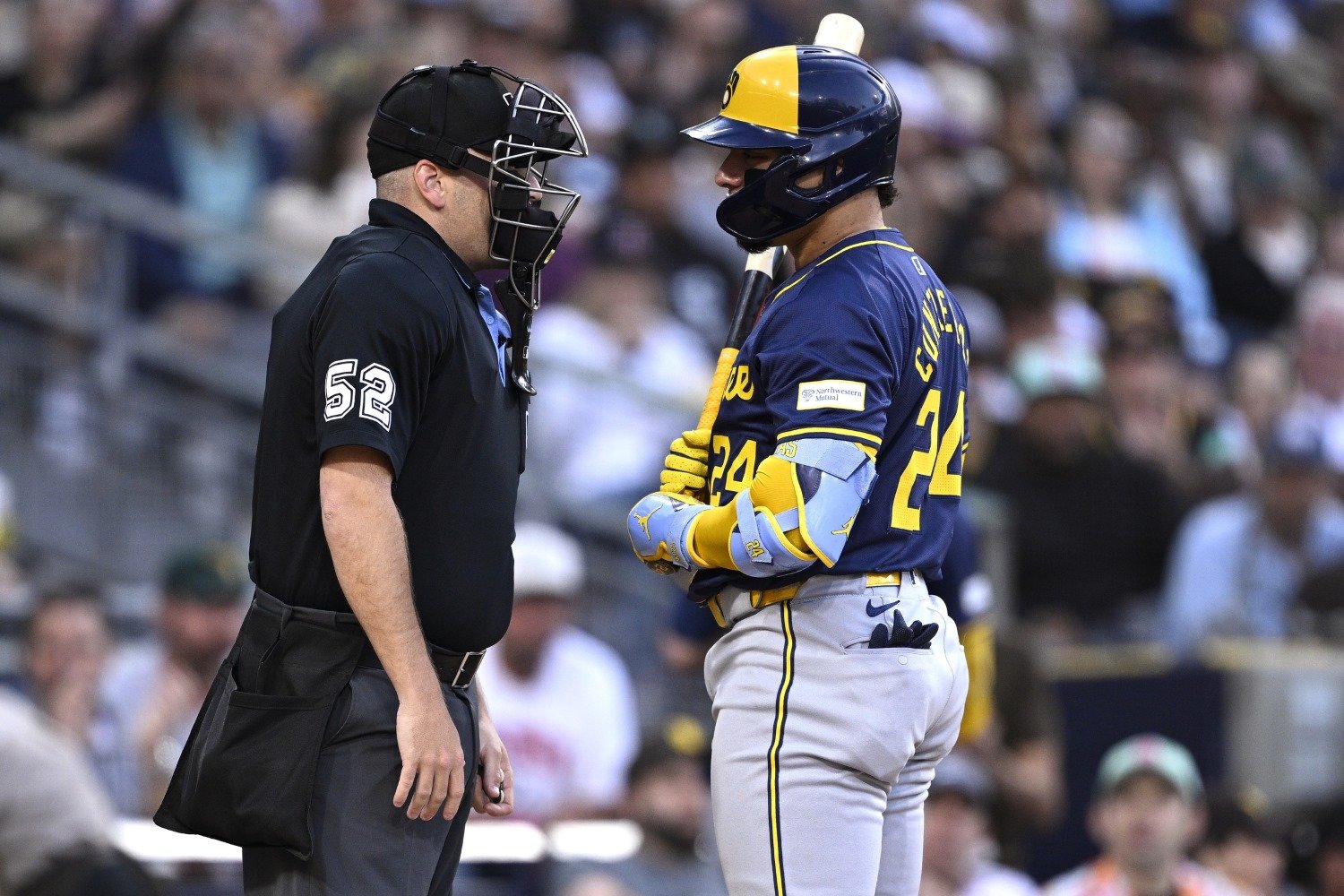 William Contreras was the Brewers’ best and most available hitter through (roughly) the first two months of the season. Through May 24, Contreras had played in all 50 of his team’s games, while posting a gaudy .337/.412/.538 line. His 167 wRC+ led qualified catchers and ranked ninth among qualified hitters. Contreras has since fallen on rough times, and those struggles have grown from a bump in the road to a prolonged slump. Since May 25, he’s slashed .214/.235/.277 in 115 plate appearances, spanning 26 games. His season line now stands at .293/.353/.444 (126 wRC+), a 153-point drop in OPS. Some of the downturn was due to statistically probable regression. No matter how excellent his at-bats and ability to guide the ball to all fields were, Contreras was never going to sustain the .396 BABIP he managed during the former stretch. Most of the dropoff, however, stems from worse swings and poor swing decisions. “I think he’ll come out of it very soon,” Pat Murphy said before Monday’s series opener against the Texas Rangers, a game in which Contreras went 1-for-4 with a double. “I think his early success has made his standards so high for himself that he’s gotten into a few bad habits, and [he’s] not seeing the ball as well as he could.” Hitting a baseball is among the most challenging feats in sports, and consistent results in that area are difficult to come by. One way to stay as consistent as possible is for a hitter to swing according to the pitches the opposition gives him. Murphy speaks of it frequently as a “pillar” of reliable offense. Contreras excelled on that front to open the year. During his hot stretch, he chased pitches outside the strike zone at a 23.4% rate that ranked in the 76th percentile of hitters and walked at an 11% clip. Since his slump began, his chase rate has inflated to 30.3%, which ranks in the 41st percentile. His walk rate has plummeted to 2.6%. There has been no discernible shift in how pitchers are attacking Contreras. Rather, he’s getting himself out, by offering at pitches he shouldn’t be and making suboptimal contact on balls that are typically in his wheelhouse. Contreras has always been a heavy ground-ball hitter who maximizes damage on line drives and fly balls. He has also found success by utilizing multiple versions of his stance and swing based on game situations and how he is being pitched. All of those attributes have been lacking during this stretch. Contreras is still putting the ball in play at roughly the same rate as before, but those balls in play are mostly pull-side rollovers that are missing the barrel. Contreras is running a 66.3% ground ball rate during his slump, after posting a more manageable 49.7% clip during his first 50 games. His pull rate on batted balls has jumped from 35.7% to 42.7%, and his opposite field rate has dipped from 31.2% to 25.8%. The recent launch of Statcast bat-tracking data allows for a more quantitative breakdown of Contreras’s swing during the two stretches. The good news is that Contreras has not lost any bat speed; his average swing speed has held steady at about 75 mph between the two spans, which ranks near the top of baseball. His fast swing rate has been similarly consistent. The core of the issue appears to be more of an intangible: Contreras’ comfort level at the plate. It’s highly unlikely that Contreras intentionally changed a highly-successful approach. No hitter strives to pull more balls on the ground. However, syncing the body with the mind can be one of the more challenging aspects of hitting, and Contreras seems to be fighting that battle. Consider these two swings Contreras put on fastballs in the low-and-away region of the zone roughly two months apart. The first is a base hit from Apr. 5. Contreras stays closed on a 97-mph sinker and shoots a hard grounder to the right side. contreras single.mp4 The next clip is from Jun. 12. Contreras gets a first-pitch sinker that barely clips the bottom of the zone. Swinging at this pitch is a questionable decision from the get-go, and the jumpy hack taken by Contreras makes matters worse. Instead of waiting for the ball to get to him, Contreras lunges at it, opens up sooner, and taps it straight into the ground. contreras groundout.mp4 “[He’s] trying to create results instead of meeting the game halfway,” Murphy posited as an explanation for his catcher’s recent struggles. Both the visual and statistical evidence support that evaluation. While the ultimate onus falls on Contreras to produce, the Brewers also bear the responsibility of putting him in a position to succeed. That could include more careful workload management. Contreras started in each of the team’s first 64 games, before retreating to the bench. He received a full day off on Sunday, and Murphy acknowledged that his offensive woes were a factor in the decision. Whether it requires more rest or another kind of intervention to initiate a mental reset, the Brewers could use more of the production they’re accustomed to seeing from their catcher. It starts with feeling more laid-back in the box. His opposite-field double on Monday night was a positive sign.
 -
Joel Payamps is having a respectable follow-up to last year's breakout season, but some unwelcome developments to his signature breaking ball have him looking more like a solid middle reliever than the excellent setup arm he was in 2023. Image courtesy of © Benny Sieu-USA TODAY Sports Shortly before Opening Day, I suggested two adjustments for Joel Payamps regarding his fastball usage. The first was to throw more four-seam fastballs, to generate more swings and misses. The second was to emphasize the inner third of the zone with his two-seamer to produce jam shots, rather than focusing on the lower third in search of rollover ground balls. Fast forward a few months, and Payamps has demonstrated those two changes. He’s throwing more four-seam fastballs overall, including more to right-handed batters. He is also targeting that inner third against righties with his two-seamer. Encouraging results with those fastballs have followed. Opponents have posted just a .169 wOBA against Payamps’s four-seamer, with a 36.8% whiff rate. The average launch angle against his sinker has dropped from 13 degrees last year to 6 this year, and the wOBA against it from .394 to .237. Despite the improvements to his fastball mix, though, Payamps’s overall results have regressed. His ERA has risen a full run, from 2.55 to 3.55, and his strikeout rate has decreased from 26.8% to 20.8%. In fairness to Payamps, 7 of the 11 earned runs he has allowed have come within two dreadful appearances. He has gone unscored-upon in 23 of 29 appearances (79.3%). Still, many metrics will agree that he has not been the same pitcher on a per-pitch basis that he was last year. Most of the regression traces to his slider. Payamps’s breaking ball was his bread and butter last year. He used it a career-high 43.8% of the time in 2023, and it held opponents to a .243 wOBA while accumulating a run value of +5. This year, it’s yielded a .334 wOBA and -2 run value. The whiff rate against the pitch has dropped from 28.6% to 22.1%. Before Payamps came to Milwaukee, his slider was an underwhelming pitch. It became lethal when he added a couple of ticks of velocity and gave it more of a sweeping shape. Payamps subtracted nearly five inches of vertical drop, while adding nearly two inches of lateral movement. He also excelled at commanding it to the glove side of the zone. This year, Payamps has given back some of those improvements. After his slider averaged 11.9 inches of lateral movement last season, it’s averaging 9.7 inches in 2024. That’s the least movement it’s had since 2021. Payamps has also lost his mastery of the glove-side breaking ball to righties. He’s now catching the middle of the plate with it far too often, and it’s frequently backing up on him over the inner half. These developments have combined to turn what was once a lethal pitch against righties into one that is much more hittable. Left-handed opponents have still managed just a .257 wOBA against the slider, but righties have posted a .381. The pitch held them to a .233 wOBA last year. Payamps is also throwing fewer of these less impressive sliders, lowering its usage to 38.2%. The good news is that Payamps’ slider is not too far removed from the version that produced last year’s breakout. Rather, it’s “off” just enough to downgrade him from a bona fide high-leverage weapon to a solid middle reliever. It may not take much to rediscover the movement and command of the pitch. If he does, Payamps could be as effective as ever. View full article
-
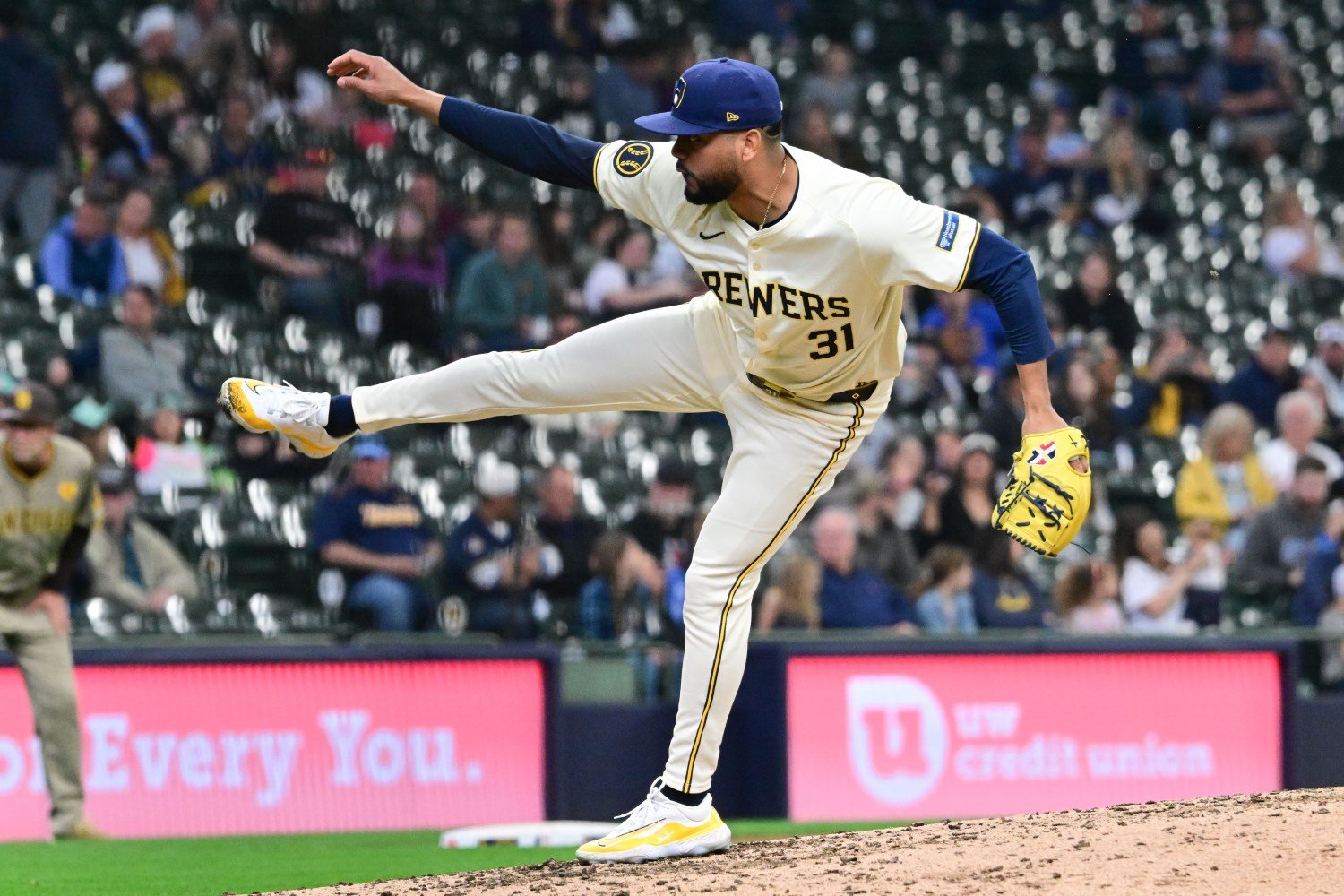 Shortly before Opening Day, I suggested two adjustments for Joel Payamps regarding his fastball usage. The first was to throw more four-seam fastballs, to generate more swings and misses. The second was to emphasize the inner third of the zone with his two-seamer to produce jam shots, rather than focusing on the lower third in search of rollover ground balls. Fast forward a few months, and Payamps has demonstrated those two changes. He’s throwing more four-seam fastballs overall, including more to right-handed batters. He is also targeting that inner third against righties with his two-seamer. Encouraging results with those fastballs have followed. Opponents have posted just a .169 wOBA against Payamps’s four-seamer, with a 36.8% whiff rate. The average launch angle against his sinker has dropped from 13 degrees last year to 6 this year, and the wOBA against it from .394 to .237. Despite the improvements to his fastball mix, though, Payamps’s overall results have regressed. His ERA has risen a full run, from 2.55 to 3.55, and his strikeout rate has decreased from 26.8% to 20.8%. In fairness to Payamps, 7 of the 11 earned runs he has allowed have come within two dreadful appearances. He has gone unscored-upon in 23 of 29 appearances (79.3%). Still, many metrics will agree that he has not been the same pitcher on a per-pitch basis that he was last year. Most of the regression traces to his slider. Payamps’s breaking ball was his bread and butter last year. He used it a career-high 43.8% of the time in 2023, and it held opponents to a .243 wOBA while accumulating a run value of +5. This year, it’s yielded a .334 wOBA and -2 run value. The whiff rate against the pitch has dropped from 28.6% to 22.1%. Before Payamps came to Milwaukee, his slider was an underwhelming pitch. It became lethal when he added a couple of ticks of velocity and gave it more of a sweeping shape. Payamps subtracted nearly five inches of vertical drop, while adding nearly two inches of lateral movement. He also excelled at commanding it to the glove side of the zone. This year, Payamps has given back some of those improvements. After his slider averaged 11.9 inches of lateral movement last season, it’s averaging 9.7 inches in 2024. That’s the least movement it’s had since 2021. Payamps has also lost his mastery of the glove-side breaking ball to righties. He’s now catching the middle of the plate with it far too often, and it’s frequently backing up on him over the inner half. These developments have combined to turn what was once a lethal pitch against righties into one that is much more hittable. Left-handed opponents have still managed just a .257 wOBA against the slider, but righties have posted a .381. The pitch held them to a .233 wOBA last year. Payamps is also throwing fewer of these less impressive sliders, lowering its usage to 38.2%. The good news is that Payamps’ slider is not too far removed from the version that produced last year’s breakout. Rather, it’s “off” just enough to downgrade him from a bona fide high-leverage weapon to a solid middle reliever. It may not take much to rediscover the movement and command of the pitch. If he does, Payamps could be as effective as ever.
 -
The Brewers needed a reliever to step up in Devin Williams's absence. Their 6-foot-8 flamethrower has answered the call in the ninth inning, while featuring the best version of the breaking ball he has fashioned over the past several years. Image courtesy of © Denny Medley-USA TODAY Sports The Brewers lost closer Devin Williams in spring training to stress fractures in his back, but the bullpen has hardly missed a beat as its star reliever recovers. Milwaukee’s relief corps enters Tuesday with a 79 ERA-, the second-best league-adjusted ERA in baseball. Trevor Megill has contributed to the stability by taking hold of the ninth inning in Williams’s absence. Megill has converted 13 of 14 save chances, posting a sterling 2.14 ERA, 2.29 FIP, and 2.98 SIERA with a 29.9% strikeout rate. That constitutes a continuation of a breakout that began late last season. After the Brewers recalled him from Triple-A on Aug. 15, Megill transformed into a late-inning monster. He worked 17 innings the rest of the 2023 season, allowing just four runs while fanning a whopping 40.6% of batters faced. Megill continued to attack opponents with the same triple-digit fastball he possessed in his previous big-league stints, but also ravaged them with a harder and shorter version of his spike curveball. During his time with the Minnesota Twins, Megill’s curveball averaged 83.4 mph with -16.4 inches of induced vertical break. It dropped an average of 56 inches from when it left his hand to when it crossed the plate, making it one of the steepest breaking balls in baseball. Halfway through the 2023 campaign, Megill worked in Nashville to add more velocity to the pitch while slashing some of that movement. After he returned to the big leagues for the stretch run, his curveball averaged 86.7 mph with -8.9 inches of induced vertical break the rest of the year. The evolution has continued to new heights this season. Megill is averaging 87.9 mph with his breaking ball, and its induced vertical break is down to just -5.1 inches. Not only is Megill’s hook now one of baseball’s shorter curveballs, but it’s also migrated to more ambiguous territory on the breaking ball spectrum. It’s effectively become a hard slurve that occasionally takes on more of a slider-like shape. To Megill, however, it’s still a curveball. “Sometimes it just gets a little sideways, but no, it’s still an 88-mile-per-hour curveball,” he said, when asked if he’s made any deliberate changes to the pitch. “Nothing’s changed, just mechanics get different.” In addition to those unintentional alterations to the curveball’s typical movement, its shape has varied more from pitch to pitch. Compare the movement spread of the curveballs Megill threw in his last stint with the Brewers in 2023 (left) to that of 2024. Megill indicated that while he still sees the breaking ball as the same pitch from late last year, the broader array of shapes is sometimes by design. “Sometimes I’ll throw it more slider-y,” he said, “but it’s still a curveball. Same grip, same everything, just different hand placement. “I do manipulate it. Like I said, it’s all the same grip, it’s all the same. Pretty much everything besides the hand placement, whether it’s up and down, it’s 45-degree angle, flat sometimes. It just kind of depends on hitters and what I see.” Megill noted that most of the time, the vertical break of his breaking ball is still much closer to a curveball than a slider. The vertical variation in movement on the pitch (as defined by our own Matthew Trueblood in this piece on Freddy Peralta, taking the difference between the 10th and 90th percentile movement from the sample of all pitches of that type) is unchanged from 2023, at 3.2 inches, but the horizontal variation is up from 3.8 to 4.9 inches. “A slider would probably be more between the minus two, plus two line, and [the curveball is] still minus five, minus six.” However, Megill has thrown a handful of breakers this year that would fall into that slider designation. Prior to 2024, he had never thrown a breaking ball with between -2 and 2 inches of induced vertical break. He’s thrown eight such pitches this year. Most of them look like sliders according to the eye test, too. Megill Sliders.mp4 However one prefers to classify it, Megill’s even harder and tighter breaking ball has been his most effective iteration yet. According to the Stuff+ pitch modeling metric available at FanGraphs, Megill’s curveball is the best in baseball, grading out as 79% better than a league-average pitch. By the same model, it was 23% better than average in 2023. Opponents have recorded just three singles in 17 at-bats ending with Megill’s breaking ball, and it has induced whiffs on an eye-popping 63.6% of swings. Megill is throwing fewer curveballs in the zone (41% in 2023, 37.6% in 2024) and is generating more chases with the pitch (38.8% to 43.1%). Its swinging strike rate has leaped from 22.9% to 30.1%. Intentionally or not, Megill has unlocked the maxed-out version of his curveball. Combined with his electric fastball, it’s a lethal weapon for a late-blooming reliever who will remain near the top of Milwaukee’s bullpen hierarchy even after Williams returns. View full article
-
Trevor Megill's Curveball is Harder, Shorter, and Nastier Than Ever
Jack Stern posted an article in Brewers
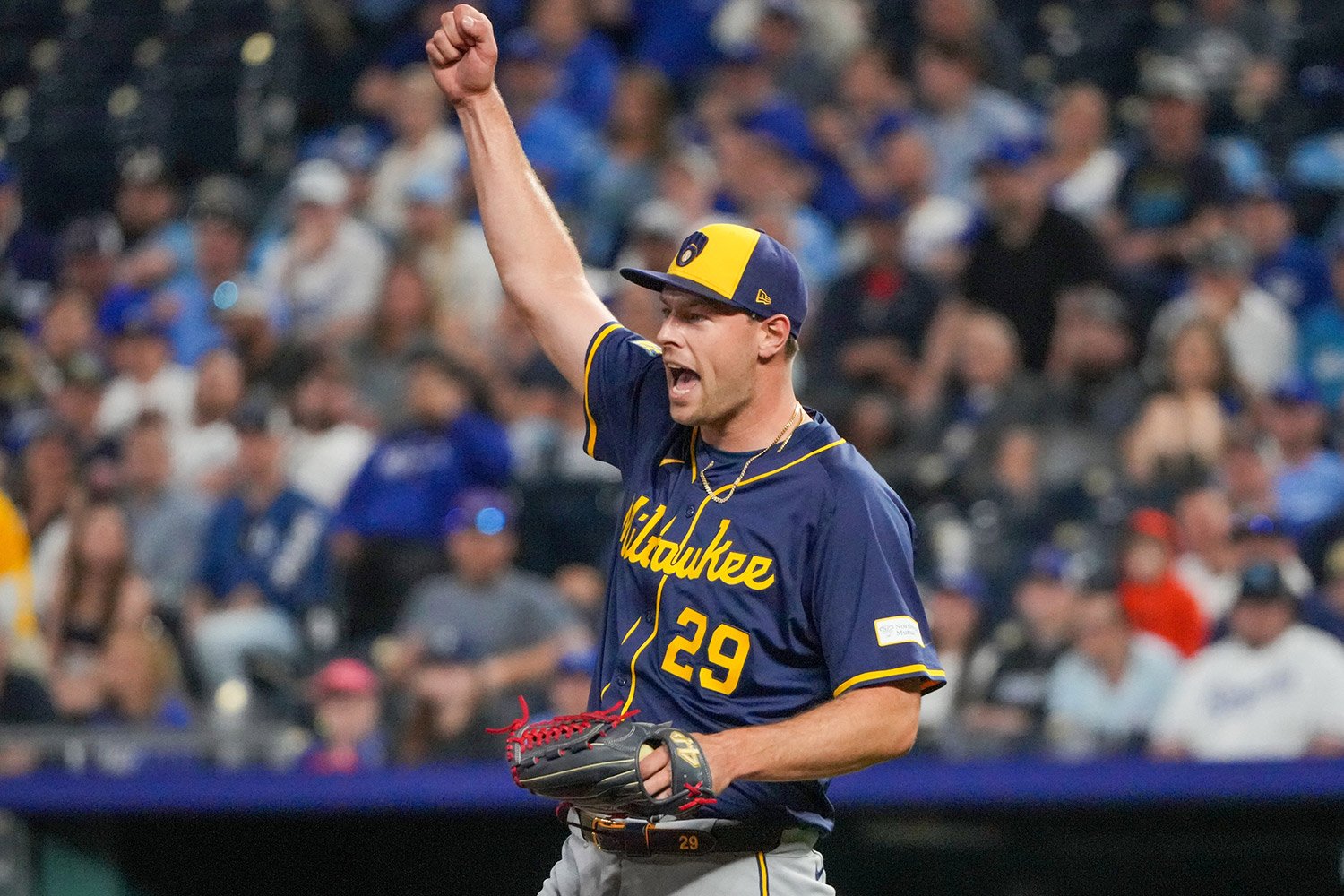 The Brewers lost closer Devin Williams in spring training to stress fractures in his back, but the bullpen has hardly missed a beat as its star reliever recovers. Milwaukee’s relief corps enters Tuesday with a 79 ERA-, the second-best league-adjusted ERA in baseball. Trevor Megill has contributed to the stability by taking hold of the ninth inning in Williams’s absence. Megill has converted 13 of 14 save chances, posting a sterling 2.14 ERA, 2.29 FIP, and 2.98 SIERA with a 29.9% strikeout rate. That constitutes a continuation of a breakout that began late last season. After the Brewers recalled him from Triple-A on Aug. 15, Megill transformed into a late-inning monster. He worked 17 innings the rest of the 2023 season, allowing just four runs while fanning a whopping 40.6% of batters faced. Megill continued to attack opponents with the same triple-digit fastball he possessed in his previous big-league stints, but also ravaged them with a harder and shorter version of his spike curveball. During his time with the Minnesota Twins, Megill’s curveball averaged 83.4 mph with -16.4 inches of induced vertical break. It dropped an average of 56 inches from when it left his hand to when it crossed the plate, making it one of the steepest breaking balls in baseball. Halfway through the 2023 campaign, Megill worked in Nashville to add more velocity to the pitch while slashing some of that movement. After he returned to the big leagues for the stretch run, his curveball averaged 86.7 mph with -8.9 inches of induced vertical break the rest of the year. The evolution has continued to new heights this season. Megill is averaging 87.9 mph with his breaking ball, and its induced vertical break is down to just -5.1 inches. Not only is Megill’s hook now one of baseball’s shorter curveballs, but it’s also migrated to more ambiguous territory on the breaking ball spectrum. It’s effectively become a hard slurve that occasionally takes on more of a slider-like shape. To Megill, however, it’s still a curveball. “Sometimes it just gets a little sideways, but no, it’s still an 88-mile-per-hour curveball,” he said, when asked if he’s made any deliberate changes to the pitch. “Nothing’s changed, just mechanics get different.” In addition to those unintentional alterations to the curveball’s typical movement, its shape has varied more from pitch to pitch. Compare the movement spread of the curveballs Megill threw in his last stint with the Brewers in 2023 (left) to that of 2024. Megill indicated that while he still sees the breaking ball as the same pitch from late last year, the broader array of shapes is sometimes by design. “Sometimes I’ll throw it more slider-y,” he said, “but it’s still a curveball. Same grip, same everything, just different hand placement. “I do manipulate it. Like I said, it’s all the same grip, it’s all the same. Pretty much everything besides the hand placement, whether it’s up and down, it’s 45-degree angle, flat sometimes. It just kind of depends on hitters and what I see.” Megill noted that most of the time, the vertical break of his breaking ball is still much closer to a curveball than a slider. The vertical variation in movement on the pitch (as defined by our own Matthew Trueblood in this piece on Freddy Peralta, taking the difference between the 10th and 90th percentile movement from the sample of all pitches of that type) is unchanged from 2023, at 3.2 inches, but the horizontal variation is up from 3.8 to 4.9 inches. “A slider would probably be more between the minus two, plus two line, and [the curveball is] still minus five, minus six.” However, Megill has thrown a handful of breakers this year that would fall into that slider designation. Prior to 2024, he had never thrown a breaking ball with between -2 and 2 inches of induced vertical break. He’s thrown eight such pitches this year. Most of them look like sliders according to the eye test, too. Megill Sliders.mp4 However one prefers to classify it, Megill’s even harder and tighter breaking ball has been his most effective iteration yet. According to the Stuff+ pitch modeling metric available at FanGraphs, Megill’s curveball is the best in baseball, grading out as 79% better than a league-average pitch. By the same model, it was 23% better than average in 2023. Opponents have recorded just three singles in 17 at-bats ending with Megill’s breaking ball, and it has induced whiffs on an eye-popping 63.6% of swings. Megill is throwing fewer curveballs in the zone (41% in 2023, 37.6% in 2024) and is generating more chases with the pitch (38.8% to 43.1%). Its swinging strike rate has leaped from 22.9% to 30.1%. Intentionally or not, Megill has unlocked the maxed-out version of his curveball. Combined with his electric fastball, it’s a lethal weapon for a late-blooming reliever who will remain near the top of Milwaukee’s bullpen hierarchy even after Williams returns.
 -
Brice Turang has been arguably the most valuable baserunner in baseball this year. It takes a mix of skill, preparedness, and awareness to achieve such a level of efficiency, and this sophomore is already showing it all. Image courtesy of © Jeff Hanisch-USA TODAY Sports Brice Turang enters Thursday third among qualified second basemen with 2.4 fWAR. That’s also the 24th-best figure among all qualified players, at any position. Baseball Reference is even more bullish on his value, pegging him at 3.0 WAR less than halfway through the season. Much has been made of the offensive transformation that, in tandem with Turang’s already elite defense, has turned him into a worthy All-Star candidate. His improved ability to reach base has also allowed him to take advantage of another top-tier skill that flew under the radar in his rookie year: baserunning. According to FanGraphs, Turang has been the most valuable baserunner in baseball this year, accruing 5.5 baserunning runs above average. He has stolen 24 bases, second only to Cincinnati Reds speedster Elly De La Cruz. Dating back to last year, Turang was successful on 36 straight steal attempts, before being caught for the first and only time so far this year. Turang’s average sprint speed of 29.2 feet per second makes him one of the fastest players in baseball. It takes more than speed to run the bases as effectively as he does, though. Exceptional awareness and the ability to get good jumps separate decent baserunners from the elite ones, and can sometimes make a slightly slower runner more valuable than his even speedier peers. Turang has those additional qualities to supplement his speed. He’s also an informed baserunner. “He takes a lot of pride in understanding what the situation is, and he takes a lot of pride in understanding and doing his preparation for the pitcher-catcher combination,” Pat Murphy said. “What their tendencies are and what they may have as tips or clues to what they do.” “We have videos of basically everything,” Turang explained. “I go in there, me and [first base coach Quintin Berry] talk about it, watch the video, see if we can pick up on anything, and go play the game.” Variables they study for each pitcher include his time to the plate, pickoff tendencies, and how he sequences pitches. That information helps Turang perfect his jumps and pick the best times to run. It’s a complicated puzzle to piece together, and the weight of each element varies depending on the matchup or situation. For pitchers who hold runners well, following along with pickoffs and sequencing is crucial. “Some guys won’t pick over. Some guys pick over on the first pitch, some guys pick over on the third. Everybody’s different," Turang said. “If a guy’s down in the count, he’ll maybe try to get back into the count with fastballs, or if he gets ahead in the count, he’ll want to throw some breakers to try to get [the batter]. You play that game, and you can guess wrong. We don’t know exactly what he’s throwing. I don’t want to run and the pitch be fastball up in the zone and get thrown out.” Berry is an invaluable resource for Turang in identifying and processing data in the video room and on the field. A veteran of five MLB seasons, Berry made a career as a late-season baserunning specialist when teams were still allowed to expand their active roster to 40 players during the final month of the regular season. That experience made for a natural transition to his current role as Milwaukee’s first base coach and baserunning guru. “He helps me a ton,” Turang said. “Every pitch, he’s in my ear talking. And I’ll let him know if I think something or if I’m not seeing what he’s seeing. Sometimes he says, ‘Hey, good time to throw a fastball up, don’t run,’ or, ‘Hey, good time to throw a curveball, just a heads up.’ Sometimes he’s just there, like, ‘Hey, relax, dude, you’re too tense. Just relax.’” Stealing second base moves Turang into scoring position. Stealing third positions him to score on a flyout or groundout. Brewers personnel argue he's adding value even before he runs by influencing opposing pitchers with the mere threat of a steal. “He’s a big part of our offense because the pitches that he gets the next guy, that's what I think is big,” Murphy said. “Because when he’s on base, that pitcher is focused over there [on the runner].” “Sometimes I get there and the pitcher who’s usually a 1.6 [seconds to home] is now a 1.3,” Turang said. “So he’s now speeding up to make sure that I’m not running, but that’s going to leave pitches for whoever’s hitting to hit. They’re going to throw fastballs because they’re trying to throw me out.” It’s a challenging effect to quantify, but rudimentary research indicates that it’s more of a potential benefit than a consistently realized one. Brewers hitters are not seeing more fastballs or pitches classified by Statcast as being over the heart of the plate with Turang on first base. The splits are similar after limiting the pool of hitters to William Contreras and Christian Yelich, the duo who bat behind Turang the most, and looking exclusively at pitches thrown with fewer than two outs (a stolen base threat becomes less relevant when the pitcher can escape the inning by retiring the hitter). Still, the value of Turang’s baserunning reverberates throughout the Brewers’ offense. He’s been part of a balanced run-scoring recipe by stealing and taking extra bases on balls in play. “Turning a single into a double, running hard, or a ball hitting a gap that you’re scoring on that people usually don’t score on, or running first to third. Taking that extra base is so big in this game,” he said. “Just putting yourself in situations to score on a base hit or a sac fly, that’s what I think is so important.” Turang did just that on the last road trip. With the Brewers trailing the Detroit Tigers by two runs in the fourth inning, Turang tagged from second to third on a Christian Yelich sac fly to left field. He scored on a Willy Adames groundout a few pitches later to make it a one-run game. That positioned Jackson Chourio’s go-ahead double in the sixth to serve as the game-winning run in a 5-4 win. Many runners would have remained at second and been left stranded. Turang knew the situation, observed the play as it unfolded, and moved up a crucial 90 feet. “You’re trying to advance. I’m watching the throw. If the throw is high, I’m going. If he’s trying to make the play at home, I’m going to go. If he throws it low, I can’t go because if he catches it, I’m out at third. He threw it high, so I took off running.” Turang’s baserunning helped create a big run again on Wednesday against the Blue Jays. Trailing 1-0 in the sixth inning with runners on the corners, the Brewers called for a double steal with Turang and Blake Perkins. Turang took off for second, and Perkins broke for home once the throw went down. It skipped into center field, ensuring that Perkins scored and allowing Turang to advance to third. The play tied the game and released the floodgates for a struggling Brewers offense, which scored four more runs in the inning en route to a win in the series finale. “Sometimes you try to create something,” Murphy said of the play. “Sometimes we have it in our bag to be able to do that.” Turang’s ability, preparedness, and awareness on the bases are valuable tools in that bag. His summary of the tag-up play in Detroit also encapsulates the approach he and many of his teammates employ to score runs. “It’s all about trying to get to the next base.” View full article
- 1 reply
-
- 1
-

-
- brice turang
- pat murphy
- (and 1 more)
-
 Brice Turang enters Thursday third among qualified second basemen with 2.4 fWAR. That’s also the 24th-best figure among all qualified players, at any position. Baseball Reference is even more bullish on his value, pegging him at 3.0 WAR less than halfway through the season. Much has been made of the offensive transformation that, in tandem with Turang’s already elite defense, has turned him into a worthy All-Star candidate. His improved ability to reach base has also allowed him to take advantage of another top-tier skill that flew under the radar in his rookie year: baserunning. According to FanGraphs, Turang has been the most valuable baserunner in baseball this year, accruing 5.5 baserunning runs above average. He has stolen 24 bases, second only to Cincinnati Reds speedster Elly De La Cruz. Dating back to last year, Turang was successful on 36 straight steal attempts, before being caught for the first and only time so far this year. Turang’s average sprint speed of 29.2 feet per second makes him one of the fastest players in baseball. It takes more than speed to run the bases as effectively as he does, though. Exceptional awareness and the ability to get good jumps separate decent baserunners from the elite ones, and can sometimes make a slightly slower runner more valuable than his even speedier peers. Turang has those additional qualities to supplement his speed. He’s also an informed baserunner. “He takes a lot of pride in understanding what the situation is, and he takes a lot of pride in understanding and doing his preparation for the pitcher-catcher combination,” Pat Murphy said. “What their tendencies are and what they may have as tips or clues to what they do.” “We have videos of basically everything,” Turang explained. “I go in there, me and [first base coach Quintin Berry] talk about it, watch the video, see if we can pick up on anything, and go play the game.” Variables they study for each pitcher include his time to the plate, pickoff tendencies, and how he sequences pitches. That information helps Turang perfect his jumps and pick the best times to run. It’s a complicated puzzle to piece together, and the weight of each element varies depending on the matchup or situation. For pitchers who hold runners well, following along with pickoffs and sequencing is crucial. “Some guys won’t pick over. Some guys pick over on the first pitch, some guys pick over on the third. Everybody’s different," Turang said. “If a guy’s down in the count, he’ll maybe try to get back into the count with fastballs, or if he gets ahead in the count, he’ll want to throw some breakers to try to get [the batter]. You play that game, and you can guess wrong. We don’t know exactly what he’s throwing. I don’t want to run and the pitch be fastball up in the zone and get thrown out.” Berry is an invaluable resource for Turang in identifying and processing data in the video room and on the field. A veteran of five MLB seasons, Berry made a career as a late-season baserunning specialist when teams were still allowed to expand their active roster to 40 players during the final month of the regular season. That experience made for a natural transition to his current role as Milwaukee’s first base coach and baserunning guru. “He helps me a ton,” Turang said. “Every pitch, he’s in my ear talking. And I’ll let him know if I think something or if I’m not seeing what he’s seeing. Sometimes he says, ‘Hey, good time to throw a fastball up, don’t run,’ or, ‘Hey, good time to throw a curveball, just a heads up.’ Sometimes he’s just there, like, ‘Hey, relax, dude, you’re too tense. Just relax.’” Stealing second base moves Turang into scoring position. Stealing third positions him to score on a flyout or groundout. Brewers personnel argue he's adding value even before he runs by influencing opposing pitchers with the mere threat of a steal. “He’s a big part of our offense because the pitches that he gets the next guy, that's what I think is big,” Murphy said. “Because when he’s on base, that pitcher is focused over there [on the runner].” “Sometimes I get there and the pitcher who’s usually a 1.6 [seconds to home] is now a 1.3,” Turang said. “So he’s now speeding up to make sure that I’m not running, but that’s going to leave pitches for whoever’s hitting to hit. They’re going to throw fastballs because they’re trying to throw me out.” It’s a challenging effect to quantify, but rudimentary research indicates that it’s more of a potential benefit than a consistently realized one. Brewers hitters are not seeing more fastballs or pitches classified by Statcast as being over the heart of the plate with Turang on first base. The splits are similar after limiting the pool of hitters to William Contreras and Christian Yelich, the duo who bat behind Turang the most, and looking exclusively at pitches thrown with fewer than two outs (a stolen base threat becomes less relevant when the pitcher can escape the inning by retiring the hitter). Still, the value of Turang’s baserunning reverberates throughout the Brewers’ offense. He’s been part of a balanced run-scoring recipe by stealing and taking extra bases on balls in play. “Turning a single into a double, running hard, or a ball hitting a gap that you’re scoring on that people usually don’t score on, or running first to third. Taking that extra base is so big in this game,” he said. “Just putting yourself in situations to score on a base hit or a sac fly, that’s what I think is so important.” Turang did just that on the last road trip. With the Brewers trailing the Detroit Tigers by two runs in the fourth inning, Turang tagged from second to third on a Christian Yelich sac fly to left field. He scored on a Willy Adames groundout a few pitches later to make it a one-run game. That positioned Jackson Chourio’s go-ahead double in the sixth to serve as the game-winning run in a 5-4 win. Many runners would have remained at second and been left stranded. Turang knew the situation, observed the play as it unfolded, and moved up a crucial 90 feet. “You’re trying to advance. I’m watching the throw. If the throw is high, I’m going. If he’s trying to make the play at home, I’m going to go. If he throws it low, I can’t go because if he catches it, I’m out at third. He threw it high, so I took off running.” Turang’s baserunning helped create a big run again on Wednesday against the Blue Jays. Trailing 1-0 in the sixth inning with runners on the corners, the Brewers called for a double steal with Turang and Blake Perkins. Turang took off for second, and Perkins broke for home once the throw went down. It skipped into center field, ensuring that Perkins scored and allowing Turang to advance to third. The play tied the game and released the floodgates for a struggling Brewers offense, which scored four more runs in the inning en route to a win in the series finale. “Sometimes you try to create something,” Murphy said of the play. “Sometimes we have it in our bag to be able to do that.” Turang’s ability, preparedness, and awareness on the bases are valuable tools in that bag. His summary of the tag-up play in Detroit also encapsulates the approach he and many of his teammates employ to score runs. “It’s all about trying to get to the next base.”
- 1 comment
-
- 2
-

-
-
- brice turang
- pat murphy
- (and 1 more)
-
Since joining the Brewers in late May, Enoli Paredes has stabilized the "B" bullpen, and could assume a more prominent role as the season progresses. His unique stuff and refined game plan make him a name to watch in the bullpen. Image courtesy of © Mark J. Rebilas-USA TODAY Sports Reflecting on the state of his pitching staff at the start of the latest homestand, Pat Murphy offered his thoughts on how the Brewers have stayed afloat amid a rash of injuries. “We said early on in spring training, one of the things we have – albeit very inexperienced – we have depth on our pitching staff,” he said. The Brewers have leaned heavily on pitchers who started the season in the minor leagues with minimal big-league experience. The carousel has been more extreme in the starting rotation, where they have called on rookies Robert Gasser, Tobias Myers, and now prospect Carlos Rodriguez, Tuesday night’s starter. There has also been some shuffling in the bullpen, where the club continues to navigate Devin Williams's absence. With other relievers sliding up a notch on the bullpen hierarchy, the Brewers have rotated through relievers at the back of the bullpen. They may have found a(nother) keeper in Enoli Paredes. The Brewers signed Paredes, who last appeared in the big leagues in 2022 with the Houston Astros, to a minor-league contract in November. He dominated the International League as the closer for the Nashville Sounds, posting a 1.31 ERA and 41.5% strikeout rate in Triple-A. After the Brewers designated Thyago Vieira for assignment on May 20, they selected Paredes’s contract, hoping that he could more effectively fill the lower-leverage role in which Vieira struggled. Paredes has helped stabilize the “B” bullpen, beginning his Brewers career with 8 ⅔ scoreless innings across seven appearances while recording a 28.6% strikeout rate. He’s been thrust into some high-leverage work, too. The righthander earned a seventh-inning hold in his third appearance, and picked up his first career save against the White Sox on Jun. 2. Murphy gave him the ball on Saturday with a one-run lead, and he recorded the first two outs of the inning for his second hold. Paredes is already establishing himself as a capable choice to protect close leads. With how heavily the Brewers lean on their bullpen due to a thin rotation, he could be thrust into those spots more frequently the rest of the year. He has the stuff to do it. Paredes has thrown his slider at a career-high 41.7% rate since his promotion, but his most compelling pitch is his four-seam fastball. That heater hums in at 95 miles per hour, which (on its own) is not extraordinary by modern standards. Its average induced vertical break of 13.8 inches is unspectacular, too. But due to Paredes’ 5-foot-11 stature and three-quarters arm slot, it plays exceptionally for whiffs up in the strike zone. His vertical approach angle of -4.1 on four-seamers ranks in the 93rd percentile among qualified pitchers, between MLB and Triple-A. Adding to the effectiveness of Paredes’s four-seamer is that it does not move laterally like a traditional four-seamer. It rarely has much arm-side movement, and is likelier to cut to the glove side. That means hitters often see a pitch that spins like a four-seamer, but moves like a hard, rising cutter. That’s a rare look. Paredes says the cut isn’t intentional. “I don’t think to make the pitch [move] like a cutter," he said. "In my mind, all the time, it’s four-seam fastball. [The cut is] natural.” The cut-ride shape of his four-seamer brings to mind former Brewers reliever Brent Suter, who has ridden similarly unique characteristics to a consistently productive nine-year career despite sitting in the mid- to upper 80s with his fastball. Paredes’s fastball has that distinctive shape, but he also throws it hard. Those two ingredients can make the pitch a nightmare for hitters. Minor-league opponents whiffed at the cutting four-seamer on a whopping 40.8% of swings. Big-league hitters have whiffed 42.1% of the time--admittedly, in a very small sample. Since his last big-league stint, Paredes has refined his arsenal and approach to better supplement his cutting fastball. In addition to using his slider more, he has developed a two-seam fastball that averages 12 inches of arm-side movement. “It’s the same velo, so it’s hard [for the hitter] to figure out when it’s two-seam or four-seam,” he said. “Both pitches break late. The two-seam has the tail late, same with the fastball-cutter.” Paredes first experimented with the pitch last year in Triple-A, but started developing it as a key part of his arsenal over the offseason. When he arrived at Brewers spring training, he worked with members of the club’s pitching development brass to further refine it and establish more consistent command of the pitch. Since his promotion, Paredes has thrown the two-seamer 17.7% of the time. That’s not a high usage rate, but it’s enough to keep it in the minds of hitters. The late movement in the opposite direction forces right-handed hitters to protect the inner half of the zone, making the cutting fastballs and sliders thrown toward the outside corner even more lethal. That’s the essence of Paredes’s current plan of attack: show the two-seamer inside, before putting hitters away with a cutting four-seamer at the top of the zone or a slider. Most of the two-seamers he throws are early in counts, to righties. Paredes has the stuff to get big outs for the Brewers, and could quickly join Trevor Megill and Hoby Milner as minor-league acquisitions to carve out prominent roles in the bullpen in recent years. He’s happy to contribute in any role, though. “Super excited to be out there,” he said. “Trying to have fun, trying to enjoy every second that this game is given to me.” View full article
-
 Reflecting on the state of his pitching staff at the start of the latest homestand, Pat Murphy offered his thoughts on how the Brewers have stayed afloat amid a rash of injuries. “We said early on in spring training, one of the things we have – albeit very inexperienced – we have depth on our pitching staff,” he said. The Brewers have leaned heavily on pitchers who started the season in the minor leagues with minimal big-league experience. The carousel has been more extreme in the starting rotation, where they have called on rookies Robert Gasser, Tobias Myers, and now prospect Carlos Rodriguez, Tuesday night’s starter. There has also been some shuffling in the bullpen, where the club continues to navigate Devin Williams's absence. With other relievers sliding up a notch on the bullpen hierarchy, the Brewers have rotated through relievers at the back of the bullpen. They may have found a(nother) keeper in Enoli Paredes. The Brewers signed Paredes, who last appeared in the big leagues in 2022 with the Houston Astros, to a minor-league contract in November. He dominated the International League as the closer for the Nashville Sounds, posting a 1.31 ERA and 41.5% strikeout rate in Triple-A. After the Brewers designated Thyago Vieira for assignment on May 20, they selected Paredes’s contract, hoping that he could more effectively fill the lower-leverage role in which Vieira struggled. Paredes has helped stabilize the “B” bullpen, beginning his Brewers career with 8 ⅔ scoreless innings across seven appearances while recording a 28.6% strikeout rate. He’s been thrust into some high-leverage work, too. The righthander earned a seventh-inning hold in his third appearance, and picked up his first career save against the White Sox on Jun. 2. Murphy gave him the ball on Saturday with a one-run lead, and he recorded the first two outs of the inning for his second hold. Paredes is already establishing himself as a capable choice to protect close leads. With how heavily the Brewers lean on their bullpen due to a thin rotation, he could be thrust into those spots more frequently the rest of the year. He has the stuff to do it. Paredes has thrown his slider at a career-high 41.7% rate since his promotion, but his most compelling pitch is his four-seam fastball. That heater hums in at 95 miles per hour, which (on its own) is not extraordinary by modern standards. Its average induced vertical break of 13.8 inches is unspectacular, too. But due to Paredes’ 5-foot-11 stature and three-quarters arm slot, it plays exceptionally for whiffs up in the strike zone. His vertical approach angle of -4.1 on four-seamers ranks in the 93rd percentile among qualified pitchers, between MLB and Triple-A. Adding to the effectiveness of Paredes’s four-seamer is that it does not move laterally like a traditional four-seamer. It rarely has much arm-side movement, and is likelier to cut to the glove side. That means hitters often see a pitch that spins like a four-seamer, but moves like a hard, rising cutter. That’s a rare look. Paredes says the cut isn’t intentional. “I don’t think to make the pitch [move] like a cutter," he said. "In my mind, all the time, it’s four-seam fastball. [The cut is] natural.” The cut-ride shape of his four-seamer brings to mind former Brewers reliever Brent Suter, who has ridden similarly unique characteristics to a consistently productive nine-year career despite sitting in the mid- to upper 80s with his fastball. Paredes’s fastball has that distinctive shape, but he also throws it hard. Those two ingredients can make the pitch a nightmare for hitters. Minor-league opponents whiffed at the cutting four-seamer on a whopping 40.8% of swings. Big-league hitters have whiffed 42.1% of the time--admittedly, in a very small sample. Since his last big-league stint, Paredes has refined his arsenal and approach to better supplement his cutting fastball. In addition to using his slider more, he has developed a two-seam fastball that averages 12 inches of arm-side movement. “It’s the same velo, so it’s hard [for the hitter] to figure out when it’s two-seam or four-seam,” he said. “Both pitches break late. The two-seam has the tail late, same with the fastball-cutter.” Paredes first experimented with the pitch last year in Triple-A, but started developing it as a key part of his arsenal over the offseason. When he arrived at Brewers spring training, he worked with members of the club’s pitching development brass to further refine it and establish more consistent command of the pitch. Since his promotion, Paredes has thrown the two-seamer 17.7% of the time. That’s not a high usage rate, but it’s enough to keep it in the minds of hitters. The late movement in the opposite direction forces right-handed hitters to protect the inner half of the zone, making the cutting fastballs and sliders thrown toward the outside corner even more lethal. That’s the essence of Paredes’s current plan of attack: show the two-seamer inside, before putting hitters away with a cutting four-seamer at the top of the zone or a slider. Most of the two-seamers he throws are early in counts, to righties. Paredes has the stuff to get big outs for the Brewers, and could quickly join Trevor Megill and Hoby Milner as minor-league acquisitions to carve out prominent roles in the bullpen in recent years. He’s happy to contribute in any role, though. “Super excited to be out there,” he said. “Trying to have fun, trying to enjoy every second that this game is given to me.”
 -
 The Brewers added to their pitching depth before Saturday’s game against the Detroit Tigers, signing Elieser Hernández to a big-league deal. Hernández threw 9 ⅔ innings for the Los Angeles Dodgers in late May. After posting an 8.38 ERA and 9.55 FIP, the Dodgers designated him for assignment last week. He rejected an outright assignment to Triple-A and elected free agency on Friday. His most extensive big-league action came with the Miami Marlins, whom he pitched for over parts of five seasons. In 297 ⅓ career innings, Hernández owns a 5.15 ERA and 5.64 FIP. Most of the struggles stem from problems with home runs. As a heavy fly ball pitcher, he has allowed an alarming 2.12 home runs per nine innings. Hernández is likely the latest temporary source of low-leverage innings for an injury-plagued Brewers staff, but he carries some intrigue. He features a five-pitch arsenal headlined by a four-seam fastball with above-average carry through the zone. The heater has induced its fair share of whiffs at times. The 29-year-old tweaked the auxiliary pitches in that arsenal during his time with the Dodgers. “There’s a few different pitches that we’re working on and working on different shapes,” he said. Hernández has traded out his slider for a harder and shorter cutter. He has also experimented with a new curveball that he has used 11% of the time between his MLB and Triple-A outings this year. Hernández is available out of the bullpen for now, but Pat Murphy did not rule out the possibility of using him as a starter. “With our needs, the way it is right now, who knows?” he said. Regardless of his role, the veteran will at least provide some short-term coverage as the club awaits word on the next steps for some of their injured starters. Jakob Junis and Joe Ross are on the mend, but Robert Gasser could be looking at a lengthy absence depending on the results of the third opinion on his left elbow.
 -
With Robert Gasser's future uncertain, the Brewers have finally taken to the free agent market to sign a veteran starting pitcher. Image courtesy of © John Hefti-USA TODAY Sports The Brewers added to their pitching depth before Saturday’s game against the Detroit Tigers, signing Elieser Hernández to a big-league deal. Hernández threw 9 ⅔ innings for the Los Angeles Dodgers in late May. After posting an 8.38 ERA and 9.55 FIP, the Dodgers designated him for assignment last week. He rejected an outright assignment to Triple-A and elected free agency on Friday. His most extensive big-league action came with the Miami Marlins, whom he pitched for over parts of five seasons. In 297 ⅓ career innings, Hernández owns a 5.15 ERA and 5.64 FIP. Most of the struggles stem from problems with home runs. As a heavy fly ball pitcher, he has allowed an alarming 2.12 home runs per nine innings. Hernández is likely the latest temporary source of low-leverage innings for an injury-plagued Brewers staff, but he carries some intrigue. He features a five-pitch arsenal headlined by a four-seam fastball with above-average carry through the zone. The heater has induced its fair share of whiffs at times. The 29-year-old tweaked the auxiliary pitches in that arsenal during his time with the Dodgers. “There’s a few different pitches that we’re working on and working on different shapes,” he said. Hernández has traded out his slider for a harder and shorter cutter. He has also experimented with a new curveball that he has used 11% of the time between his MLB and Triple-A outings this year. Hernández is available out of the bullpen for now, but Pat Murphy did not rule out the possibility of using him as a starter. “With our needs, the way it is right now, who knows?” he said. Regardless of his role, the veteran will at least provide some short-term coverage as the club awaits word on the next steps for some of their injured starters. Jakob Junis and Joe Ross are on the mend, but Robert Gasser could be looking at a lengthy absence depending on the results of the third opinion on his left elbow. View full article
-
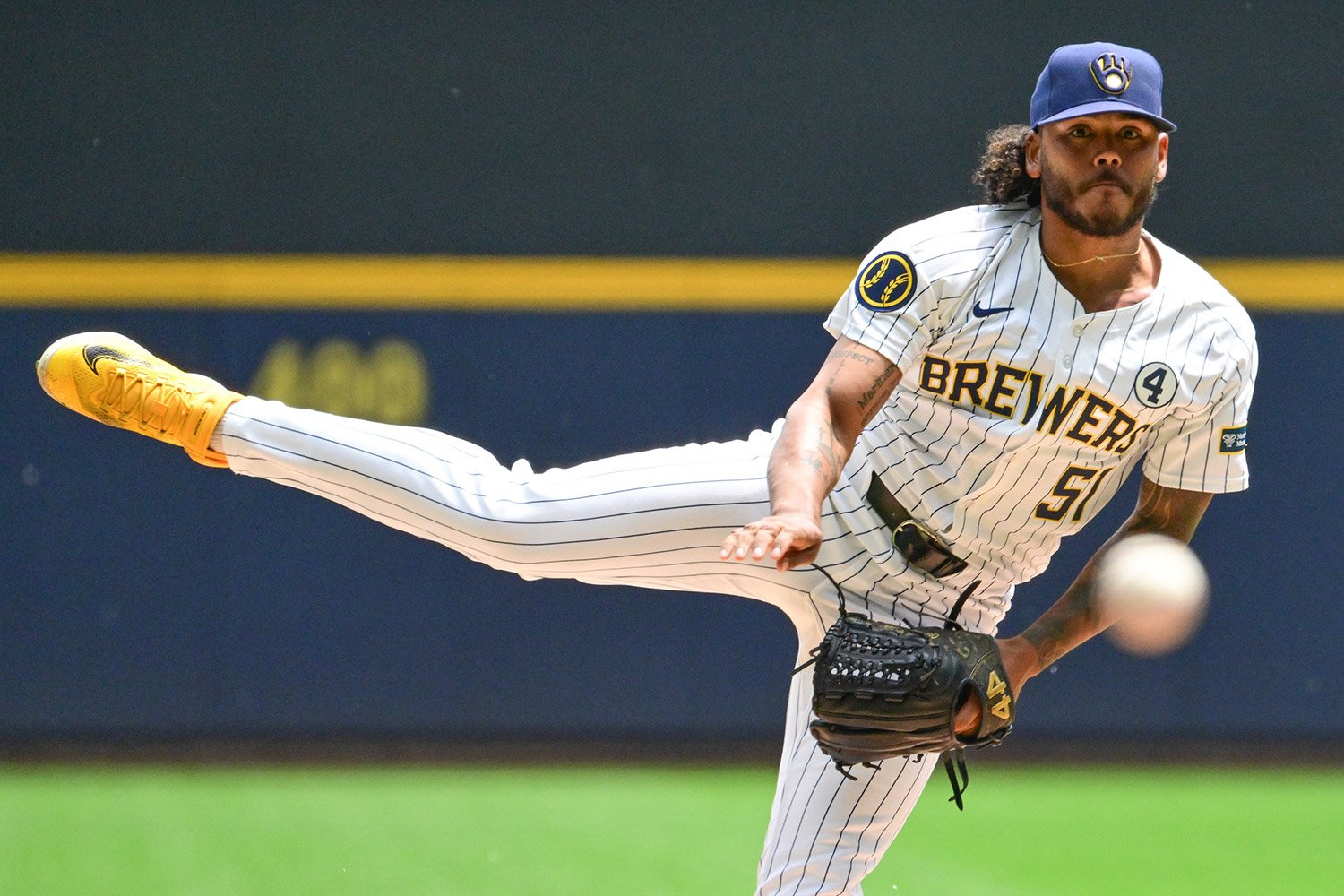 Freddy Peralta’s first season as the leader of the Brewers’ rotation has been solid in many regards. The 28-year-old’s overall numbers fit that description: a 3.74 ERA, 3.39 FIP, 2.86 SIERA, and 77 DRA-. That production does not represent the full extent of Peralta’s capabilities, though, and it arguably falls short of expectations for the role he has been assigned on Milwaukee’s pitching staff. The hope was that he could carry the elite form he showcased in the second half of last year – a 2.81 ERA, 2.92 FIP, and 6.4 K/BB ratio – into his first season atop the rotation. Peralta instead resides in the same territory he has occupied for the better part of two-plus years: good, but not elite. One lasting issue preventing him from making that jump is inefficiency. Peralta is averaging 5 ⅓ innings per start this year, identical to the league average for qualified starting pitchers. His 4.14 pitches per plate appearance is the fourth-highest. Keeping his pitch count low enough to consistently work deep into games will likely never be one of Peralta’s strong suits. As a high-strikeout pitcher, he will naturally find himself in more deep counts that inflate his pitch totals. Still, Peralta frequently throws more pitches than necessary, making it an area of his game he can (and must) tighten to elevate his performance. 18% of plate appearances against Peralta this year have gone to a full count. That’s the fifth-highest rate among qualified starters and discernably higher than the league average of 13.9%. Peralta has been especially inefficient in put-away counts. After getting ahead 0-2 or 1-2, he often wastes bullets by uncorking pitches nowhere close to the strike zone, essentially gifting hitters a free ball. Even if he ultimately retires the hitter, those unproductive pitches unnecessarily lengthen Peralta’s journey to that out. At worst, they put hitters back into neutral or even favorable counts, which can lead to a hit or walk after what should have been a heavily pitcher-friendly count. After this point was raised on the latest installment of the Brewer Fanatic Podcast, our own Jake McKibbin did some preliminary research on the subject. According to TruMedia, Peralta throws significantly more non-competitive pitches (pitches at least 18 inches away from the center of the strike zone in any direction) in 0-2 and 1-2 counts than the average hurler. These misses have resulted in below-average chase (32.8%) and swing (50.2%) rates on two-strike counts with fewer than three balls. Those splits imply two things: Peralta does not tempt hitters to chase with two strikes as often as most pitchers, and hitters know they can wait him out in those counts more than they can most opponents. Peralta’s last start against the Chicago White Sox was a prime example of wasted pitches derailing an outing. Tasked with eating innings on a getaway day against the worst lineup in baseball, Peralta labored through a 43-pitch first inning. To his credit, he rebounded over his final four frames, but the tough start limited him to five innings on a day when Pat Murphy was resting his high-leverage relievers and presumably hoped for more out of his best starter. Peralta made things more challenging by failing to put hitters away in two-strike counts. Pictured below are the locations of his two-strike offerings in that first inning. That’s far too many fastballs well above the zone with two strikes that do not tempt a hitter to chase. By bringing opponents back into the count, Peralta allowed consecutive singles after getting ahead 0-2 and issued a walk after reaching a 1-2 count. The ability to relentlessly attack hitters with well-executed pitches in any count is the missing link for Peralta. To fully live up to the expectations that come with his pedigree, experience, and status as the Brewers’ No. 1 starter, he will have to make strides in that area.
 -
Tasked with a greater role this year as the Brewers' top starting pitcher, Freddy Peralta has mostly shown the same form he did as a middle-of-the-rotation arm. Improved execution in pitcher-friendly counts would help him take an awaited leap forward. Image courtesy of © Benny Sieu-USA TODAY Sports Freddy Peralta’s first season as the leader of the Brewers’ rotation has been solid in many regards. The 28-year-old’s overall numbers fit that description: a 3.74 ERA, 3.39 FIP, 2.86 SIERA, and 77 DRA-. That production does not represent the full extent of Peralta’s capabilities, though, and it arguably falls short of expectations for the role he has been assigned on Milwaukee’s pitching staff. The hope was that he could carry the elite form he showcased in the second half of last year – a 2.81 ERA, 2.92 FIP, and 6.4 K/BB ratio – into his first season atop the rotation. Peralta instead resides in the same territory he has occupied for the better part of two-plus years: good, but not elite. One lasting issue preventing him from making that jump is inefficiency. Peralta is averaging 5 ⅓ innings per start this year, identical to the league average for qualified starting pitchers. His 4.14 pitches per plate appearance is the fourth-highest. Keeping his pitch count low enough to consistently work deep into games will likely never be one of Peralta’s strong suits. As a high-strikeout pitcher, he will naturally find himself in more deep counts that inflate his pitch totals. Still, Peralta frequently throws more pitches than necessary, making it an area of his game he can (and must) tighten to elevate his performance. 18% of plate appearances against Peralta this year have gone to a full count. That’s the fifth-highest rate among qualified starters and discernably higher than the league average of 13.9%. Peralta has been especially inefficient in put-away counts. After getting ahead 0-2 or 1-2, he often wastes bullets by uncorking pitches nowhere close to the strike zone, essentially gifting hitters a free ball. Even if he ultimately retires the hitter, those unproductive pitches unnecessarily lengthen Peralta’s journey to that out. At worst, they put hitters back into neutral or even favorable counts, which can lead to a hit or walk after what should have been a heavily pitcher-friendly count. After this point was raised on the latest installment of the Brewer Fanatic Podcast, our own Jake McKibbin did some preliminary research on the subject. According to TruMedia, Peralta throws significantly more non-competitive pitches (pitches at least 18 inches away from the center of the strike zone in any direction) in 0-2 and 1-2 counts than the average hurler. These misses have resulted in below-average chase (32.8%) and swing (50.2%) rates on two-strike counts with fewer than three balls. Those splits imply two things: Peralta does not tempt hitters to chase with two strikes as often as most pitchers, and hitters know they can wait him out in those counts more than they can most opponents. Peralta’s last start against the Chicago White Sox was a prime example of wasted pitches derailing an outing. Tasked with eating innings on a getaway day against the worst lineup in baseball, Peralta labored through a 43-pitch first inning. To his credit, he rebounded over his final four frames, but the tough start limited him to five innings on a day when Pat Murphy was resting his high-leverage relievers and presumably hoped for more out of his best starter. Peralta made things more challenging by failing to put hitters away in two-strike counts. Pictured below are the locations of his two-strike offerings in that first inning. That’s far too many fastballs well above the zone with two strikes that do not tempt a hitter to chase. By bringing opponents back into the count, Peralta allowed consecutive singles after getting ahead 0-2 and issued a walk after reaching a 1-2 count. The ability to relentlessly attack hitters with well-executed pitches in any count is the missing link for Peralta. To fully live up to the expectations that come with his pedigree, experience, and status as the Brewers’ No. 1 starter, he will have to make strides in that area. View full article
-
Is MLB Still the Best Setting for Jackson Chourio's Development?
Jack Stern posted an article in Brewers
 Brewers principal owner Mark Attanasio and general manager Matt Arnold held court with the media during the team’s latest homestand. Among the topics discussed was the development of Jackson Chourio, the club’s former top prospect who has debuted and spent the entire season in the big leagues after signing an eight-year, $82 million contract. Chourio has struggled mightily so far, hitting .214/.257/.345 (71 wRC+) in 180 plate appearances. Defensive metrics grade his glovework as above-average, but he has also shown hesitancy and taken subpar routes on playable balls. Garrett Mitchell’s impending return from the injured list, Sal Frelick’s recent hot streak, Blake Perkins’s solid performance as a fourth outfielder, and Chourio’s inconsistent play raise questions about his short-term fit with the big-league term. His playing time against right-handed starters has dried up lately. Chourio did not start in Monday night’s series opener against the Phillies, and has now started in just two of Milwaukee’s last seven games against a right-handed starter. A demotion to Triple-A could be on the table, but Attanasio pushed back against that notion. “I don’t see where he’s going to learn anything in Triple-A at this point,” he said. Attanasio is right. While there would be a more straightforward path to daily at-bats in Nashville, Chourio won’t gain much from a developmental standpoint by facing that level of competition. Chourio has already hit six home runs, and has shown that he can punish mistakes. When pitchers leave pitches over the middle of the plate, he’s destroying them. Two of those home runs have come during the last two homestands, and demonstrate how naturally Chourio crushes any pitch in his wheelhouse. On May 15, he demolished a changeup over the plate, sending it to the Miller Lite Deck in left field with a powerful but controlled swing. chourio perez HR.mp4 Last Monday against the Cubs, he took a controlled swing at a two-strike fastball over the outer half of the plate and hit a 103.8-mph double into the gap in right-center. chourio double.mp4 On Sunday against the White Sox, he belted a hanging slider by Nick Nastrini into the left-field bleachers. chourio nastrini HR.mp4 Chourio’s struggles are primarily against well-executed pitches around the edges of the strike zone. He also continues to swing at non-competitive ones, chasing outside the zone at a 36.1% rate that ranks in the 10th percentile of all hitters. Facing pitchers in Triple-A who are more prone to making mistakes over the plate would allow Chourio to lean back on his existing strengths, instead of addressing his weaknesses. Being challenged less will not facilitate growth. Keeping him in the big leagues also guarantees Chourio immediate access to perhaps the most important resource in his development: veteran teammates who can offer guidance and encouragement. “The veteran guys are really helpful for him,” Arnold said. “Conversations with guys like Freddy [Peralta]. He’s playing dominoes with Wade Miley. He’s connecting with veteran guys, and he wants to learn from them.” The conversation with Peralta appeared to spark an improvement in Chourio’s glovework. He appeared hesitant to go after shallow fly balls, perhaps in fear of what would happen if the ball skirted past him after an unsuccessful dive attempt. Chourio was forgoing outs to ensure the ball remained in front of him. When it happened again last Tuesday with Peralta on the mound, the ace pulled Chourio aside afterward for a pep talk. He reminded the rookie that the organization and his teammates had confidence in his abilities, so he should have the confidence to play aggressively. Chourio made two diving catches in the following days. “One hundred percent,” Peralta said when asked if Chourio played with more confidence throughout the rest of the homestand. “I think everyone can tell if they’re seeing what he’s been doing … That’s what we want at the end of the day, to make him feel comfortable.” “I don’t know what he said, but it’s what you want to see, right?” Attanasio said. “It’s a constructive conversation. All I know is they had that conversation and then Jackson made a sliding catch shortly thereafter.” Barring injuries or sudden slumps, the Brewers could be facing some difficult roster decisions when Mitchell is ready to return. It’s possible that Chourio will end up in Nashville soon to ensure playing time. The best place for his development to continue, though, is still the big leagues.
 -
Jackson Chourio's big-league career has gotten off to a rocky start, but the positive moments have demonstrated that he has little to gain from a demotion to Triple-A. With a potential roster crunch looming, the Brewers must keep that in mind. Image courtesy of © Benny Sieu-USA TODAY Sports Brewers principal owner Mark Attanasio and general manager Matt Arnold held court with the media during the team’s latest homestand. Among the topics discussed was the development of Jackson Chourio, the club’s former top prospect who has debuted and spent the entire season in the big leagues after signing an eight-year, $82 million contract. Chourio has struggled mightily so far, hitting .214/.257/.345 (71 wRC+) in 180 plate appearances. Defensive metrics grade his glovework as above-average, but he has also shown hesitancy and taken subpar routes on playable balls. Garrett Mitchell’s impending return from the injured list, Sal Frelick’s recent hot streak, Blake Perkins’s solid performance as a fourth outfielder, and Chourio’s inconsistent play raise questions about his short-term fit with the big-league term. His playing time against right-handed starters has dried up lately. Chourio did not start in Monday night’s series opener against the Phillies, and has now started in just two of Milwaukee’s last seven games against a right-handed starter. A demotion to Triple-A could be on the table, but Attanasio pushed back against that notion. “I don’t see where he’s going to learn anything in Triple-A at this point,” he said. Attanasio is right. While there would be a more straightforward path to daily at-bats in Nashville, Chourio won’t gain much from a developmental standpoint by facing that level of competition. Chourio has already hit six home runs, and has shown that he can punish mistakes. When pitchers leave pitches over the middle of the plate, he’s destroying them. Two of those home runs have come during the last two homestands, and demonstrate how naturally Chourio crushes any pitch in his wheelhouse. On May 15, he demolished a changeup over the plate, sending it to the Miller Lite Deck in left field with a powerful but controlled swing. chourio perez HR.mp4 Last Monday against the Cubs, he took a controlled swing at a two-strike fastball over the outer half of the plate and hit a 103.8-mph double into the gap in right-center. chourio double.mp4 On Sunday against the White Sox, he belted a hanging slider by Nick Nastrini into the left-field bleachers. chourio nastrini HR.mp4 Chourio’s struggles are primarily against well-executed pitches around the edges of the strike zone. He also continues to swing at non-competitive ones, chasing outside the zone at a 36.1% rate that ranks in the 10th percentile of all hitters. Facing pitchers in Triple-A who are more prone to making mistakes over the plate would allow Chourio to lean back on his existing strengths, instead of addressing his weaknesses. Being challenged less will not facilitate growth. Keeping him in the big leagues also guarantees Chourio immediate access to perhaps the most important resource in his development: veteran teammates who can offer guidance and encouragement. “The veteran guys are really helpful for him,” Arnold said. “Conversations with guys like Freddy [Peralta]. He’s playing dominoes with Wade Miley. He’s connecting with veteran guys, and he wants to learn from them.” The conversation with Peralta appeared to spark an improvement in Chourio’s glovework. He appeared hesitant to go after shallow fly balls, perhaps in fear of what would happen if the ball skirted past him after an unsuccessful dive attempt. Chourio was forgoing outs to ensure the ball remained in front of him. When it happened again last Tuesday with Peralta on the mound, the ace pulled Chourio aside afterward for a pep talk. He reminded the rookie that the organization and his teammates had confidence in his abilities, so he should have the confidence to play aggressively. Chourio made two diving catches in the following days. “One hundred percent,” Peralta said when asked if Chourio played with more confidence throughout the rest of the homestand. “I think everyone can tell if they’re seeing what he’s been doing … That’s what we want at the end of the day, to make him feel comfortable.” “I don’t know what he said, but it’s what you want to see, right?” Attanasio said. “It’s a constructive conversation. All I know is they had that conversation and then Jackson made a sliding catch shortly thereafter.” Barring injuries or sudden slumps, the Brewers could be facing some difficult roster decisions when Mitchell is ready to return. It’s possible that Chourio will end up in Nashville soon to ensure playing time. The best place for his development to continue, though, is still the big leagues. View full article


