Matt Breen
-
Posts
9,122 -
Joined
-
Last visited
-
Days Won
1
Content Type
Profiles
Forums
Blogs
Events
Milwaukee Brewers News, Rumors & Analysis
2026 Milwaukee Brewers Top Prospect Rankings
Milwaukee Brewers Videos
2022 Milwaukee Brewers Draft Picks & Signing Bonuses
Milwaukee Brewers Trade & Free Agent Rumors
Milwaukee Brewers Fan Guides & Resources
2023 Milwaukee Brewers Draft Picks & Signing Bonuses
2024 Milwaukee Brewers Draft Picks & Signing Bonuses
2025 Milwaukee Brewers Draft Picks & Signing Bonuses
2026 Milwaukee Brewers Draft Picks & Signing Bonuses
Store
Downloads
Gallery
Everything posted by Matt Breen
-
 Was there really a vote for top rookie last year? And Monasterio won? Wow. I don't recall that.
-
Are The Brewers Interested in Joey Votto?
Matt Breen replied to Brock Beauchamp's topic in Transaction Rumors & Proposals
Not positive, but I think it was more of he would never leave the Reds if he had the choice. So as long as they want him. That time has come. -
Are The Brewers Interested in Joey Votto?
Matt Breen replied to Brock Beauchamp's topic in Transaction Rumors & Proposals
Hah! This is awesome. I said to myself that the Brewers adding Votto would be so up our alley. I'll take him over Jake Bauers. -
Wild Card Game: Packers @ Cowboys - Sunday, Jan 14 3:30pm
Matt Breen replied to homer's topic in Other Sports
A day after the game, it's still amazing to think how much we dominated. The score doesn't demonstrate that. Just a great win. -
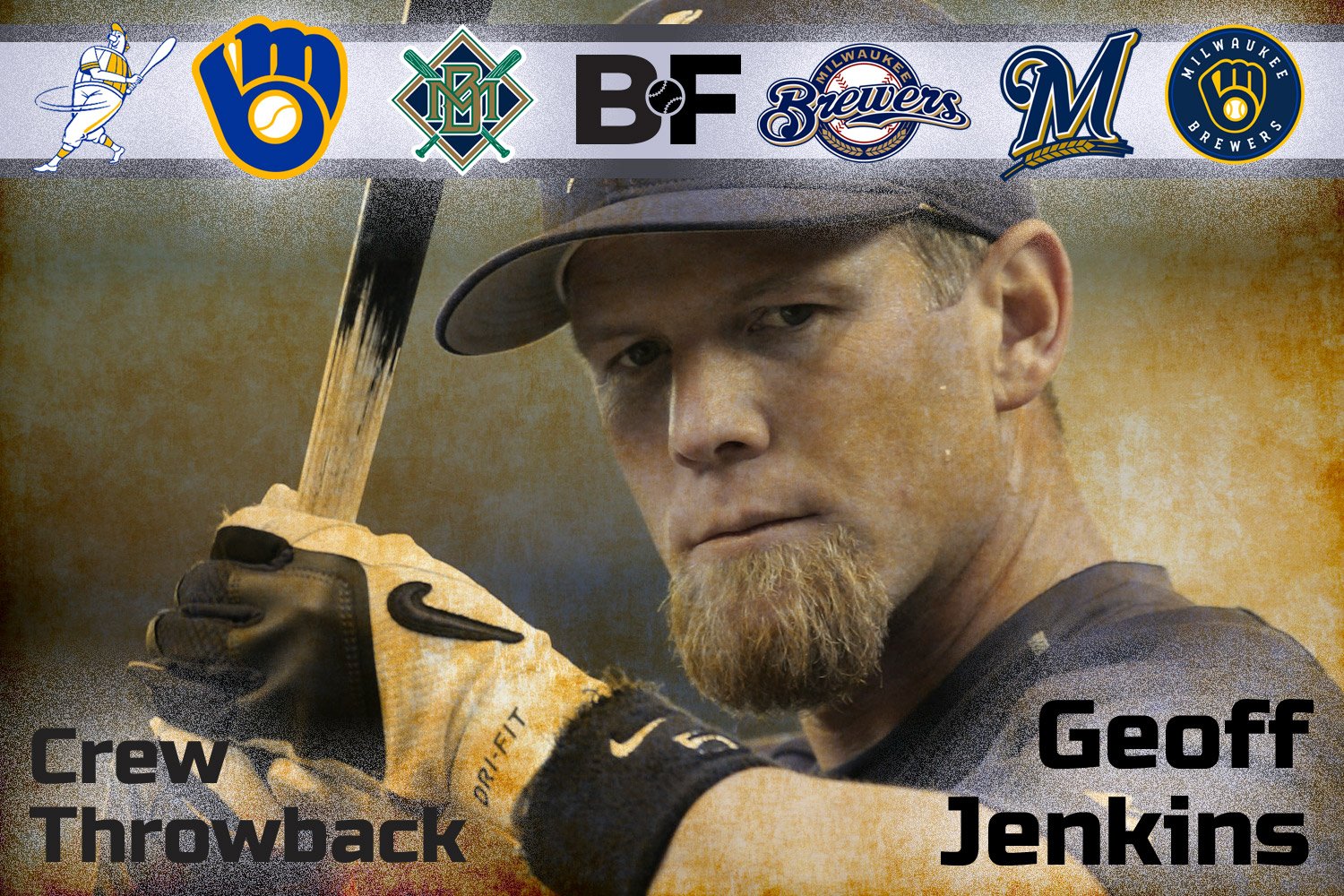 The list of developmental shortcomings includes Ty Hill, Ken Henderson, Gabby Martinez, Todd Dunn, Antone Williamson, Chad Green, J.M. Gold, Kyle Peterson, Ken Felder... you get the picture. However, the decade found a couple of gold nuggets in the first round. This included pitcher Ben Sheets in 1999 and outfielder Geoff Jenkins in 1995 - who would go on to have a stellar 10-year career with Milwaukee. Geoff Scott Jenkins was born in Olympia, Washington, on July 21, 1974. He was an outstanding athlete - growing up in Rancho Cordova, California. He attended USC to play college baseball and led the Trojans to the College World Series. He finished his career as one of the school’s best sluggers. The Brewers selected the left-handed hitting Jenkins in the first round of the 1995 draft - the 9th overall pick. He was seen as an advanced hitter with a good arm who could quickly climb the minor league ladder. He did well his first two seasons, then struggled during his first year at Triple A. However, he pounded opposing pitchers the following season and received a call to the big leagues. He hit a modest .229 in 84 games that season but broke out big the following year, hitting .313 (a career-high) with 21 home runs in 138 games. The following season, he hit 34 homers for a .303 average and Jenkins appeared to be a perennial All-Star in the making. Mainly playing left field, Jenkins quickly demonstrated several qualities (good and bad) that would mark him for most of his career. First, when healthy, he was a very good hitter. However, he was not a great hitter. He didn’t take a lot of walks, and he often struggled against the left-handed pitchers. Against the latter, he managed only a .712 OPS compared to a .871 average against right-handers. His struggles against lefties kept him from becoming an elite hitter. Second, Jenkins was constantly dinged by injuries throughout his career. He played the game hard, and he was often nursing nagging injuries. In 2002, he dislocated an ankle, causing him to miss more than half the year. Jenkins returned in 2003 to have an outstanding season - and make his only All-Star appearance. Jenkins continued to be a productive player for Milwaukee throughout his ten-year run and gamely switched to right field for two years to accommodate the acquisition of Carlos Lee in 2005. The fans appreciated his hard-nosed performances, not to mention the 200+ homers he hit for the club. Jenkins continued to produce at the plate as he moved into his 30s. However, his inability to hit lefties became more pronounced - and he often sat against southpaws. After the 2007 season, with his contract up, the Brewers elected to let the 32-year-old Jenkins go as a free agent after ten years with the club. He signed with Philadelphia and began the season as their left fielder. However, as the season progressed, and he struggled at the plate he found himself on the bench more and more. Jenkins’ numbers were not good that year, and by the time the postseason came around (the first time Jenkins had ever been in the playoffs), he was strictly a benchwarmer - and there was even talk of keeping him off the postseason roster. Jenkins got only four at-bats in the 2008 playoffs and only a single hit. But that hit was a memorable one. In the series finale, he crushed a key double and scored a run, helping the Phillies win the World Series. Philadelphia released Jenkins the following March, and his playing career was over. He was 34 years old. He officially retired in 2010 after signing a one-day contract with the Brewers. Geoff Jenkins was one of the most productive members of the Brewers organization during his 10-year tenure. For his career, he ranks 10th in bWAR, 7th for games played, 6th in hits, 5th in doubles, and 4th in HRs. He hit .300+ twice and represented the Brewers at the All-Star game. Of note: Jenkins is one of only eight players in major league history to strike out six times in a game. Also, he was frequently misidentified as Packers quarterback Brett Favre. In retirement, Jenkins has become the owner of Arizona's sports fitness training facility, where he resides with his family. Geoff Jenkins was a really good ballplayer for the Milwaukee Brewers. He played hard, put up solid numbers, and stayed loyal to the franchise and the fans. He tended to go into slumps and struck out a lot - frustrating many - but as his .843 OPS and 200+ home runs attest, he could hit. The tough thing for Jenkins was having to be a part of so many bad teams during his tenure. In his time in Milwaukee, only one team - his last - was above .500. He never made it to the playoffs with the franchise. While his one year in Philadelphia was not the most memorable, he came away with a World Series ring - a nice way to top off a career. Please share your memories of former Brewer outfielder Geoff Jenkins.
-
The 1990s were the dark ages for the Milwaukee Brewers in developing players. It was the era of GM Sal Bando, his 1st round selections littered with failures. Geoff Jenkins was one of the few highlights of that era of development. The list of developmental shortcomings includes Ty Hill, Ken Henderson, Gabby Martinez, Todd Dunn, Antone Williamson, Chad Green, J.M. Gold, Kyle Peterson, Ken Felder... you get the picture. However, the decade found a couple of gold nuggets in the first round. This included pitcher Ben Sheets in 1999 and outfielder Geoff Jenkins in 1995 - who would go on to have a stellar 10-year career with Milwaukee. Geoff Scott Jenkins was born in Olympia, Washington, on July 21, 1974. He was an outstanding athlete - growing up in Rancho Cordova, California. He attended USC to play college baseball and led the Trojans to the College World Series. He finished his career as one of the school’s best sluggers. The Brewers selected the left-handed hitting Jenkins in the first round of the 1995 draft - the 9th overall pick. He was seen as an advanced hitter with a good arm who could quickly climb the minor league ladder. He did well his first two seasons, then struggled during his first year at Triple A. However, he pounded opposing pitchers the following season and received a call to the big leagues. He hit a modest .229 in 84 games that season but broke out big the following year, hitting .313 (a career-high) with 21 home runs in 138 games. The following season, he hit 34 homers for a .303 average and Jenkins appeared to be a perennial All-Star in the making. Mainly playing left field, Jenkins quickly demonstrated several qualities (good and bad) that would mark him for most of his career. First, when healthy, he was a very good hitter. However, he was not a great hitter. He didn’t take a lot of walks, and he often struggled against the left-handed pitchers. Against the latter, he managed only a .712 OPS compared to a .871 average against right-handers. His struggles against lefties kept him from becoming an elite hitter. Second, Jenkins was constantly dinged by injuries throughout his career. He played the game hard, and he was often nursing nagging injuries. In 2002, he dislocated an ankle, causing him to miss more than half the year. Jenkins returned in 2003 to have an outstanding season - and make his only All-Star appearance. Jenkins continued to be a productive player for Milwaukee throughout his ten-year run and gamely switched to right field for two years to accommodate the acquisition of Carlos Lee in 2005. The fans appreciated his hard-nosed performances, not to mention the 200+ homers he hit for the club. Jenkins continued to produce at the plate as he moved into his 30s. However, his inability to hit lefties became more pronounced - and he often sat against southpaws. After the 2007 season, with his contract up, the Brewers elected to let the 32-year-old Jenkins go as a free agent after ten years with the club. He signed with Philadelphia and began the season as their left fielder. However, as the season progressed, and he struggled at the plate he found himself on the bench more and more. Jenkins’ numbers were not good that year, and by the time the postseason came around (the first time Jenkins had ever been in the playoffs), he was strictly a benchwarmer - and there was even talk of keeping him off the postseason roster. Jenkins got only four at-bats in the 2008 playoffs and only a single hit. But that hit was a memorable one. In the series finale, he crushed a key double and scored a run, helping the Phillies win the World Series. Philadelphia released Jenkins the following March, and his playing career was over. He was 34 years old. He officially retired in 2010 after signing a one-day contract with the Brewers. Geoff Jenkins was one of the most productive members of the Brewers organization during his 10-year tenure. For his career, he ranks 10th in bWAR, 7th for games played, 6th in hits, 5th in doubles, and 4th in HRs. He hit .300+ twice and represented the Brewers at the All-Star game. Of note: Jenkins is one of only eight players in major league history to strike out six times in a game. Also, he was frequently misidentified as Packers quarterback Brett Favre. In retirement, Jenkins has become the owner of Arizona's sports fitness training facility, where he resides with his family. Geoff Jenkins was a really good ballplayer for the Milwaukee Brewers. He played hard, put up solid numbers, and stayed loyal to the franchise and the fans. He tended to go into slumps and struck out a lot - frustrating many - but as his .843 OPS and 200+ home runs attest, he could hit. The tough thing for Jenkins was having to be a part of so many bad teams during his tenure. In his time in Milwaukee, only one team - his last - was above .500. He never made it to the playoffs with the franchise. While his one year in Philadelphia was not the most memorable, he came away with a World Series ring - a nice way to top off a career. Please share your memories of former Brewer outfielder Geoff Jenkins. Image courtesy of Brewer Fanatic & Brock Beauchamp View full article
-
It's sort of like Happy Gilmore's approach to teeing off on the golf course - only with pitching.
-
If you write out 'Luke Voit' in 2023 it will magically turn into 'Jake Bauers' in 2024.
-
Well done, Brent Suter. Wish it wasn't in our division, but whatever. I hope we rock him when we get the chance.
-
I'm still perplexed by us adding the guy. They must see something. Let's hope so.
-
Dodgers return on Busch seems pretty light. Nothing wrong with the players they got - just really, really young guys - I think both teens. Interesting deal.
-
Thanks for all the work.
-
Thankfully, no one else voted in such a fashion. I was ready to act if people started getting weird. One thing you can do when doing polls like we did is to toss out the highest and lowest ballot of each candidate. It prevents one person from spiking (or tanking) the vote. But it never got to that, so I never had to do so. In the end, the old forum votes were fun. Way more work than what we do now, but still fun.
-
I've always liked Arraez, and having him would be awesome. But what's the trade? The Marlins will want young talent. What's it going to take? Would Turang and Wiemer work? I don't think that's enough. Maybe replace one of those guys with Black? I'm not sure what the Marlins need, but I'm guessing they'd ask for Quero or Misiorowski. Not thrilled about dealing either of those guys, especially the former. I guess it can't hurt to ask. We got Contreras for Ruiz last year - so you never know.
-
Team already said that Yelich is playing LF. Whether we want Yeli at 1B or not, the team said it's not happening. So I'm not sure why we dwell on it. Maybe down the road we can revisit, but for now, it isn't happening.
-
Burnes to Yankees best deals
Matt Breen replied to Scooterfletcher's topic in Transaction Rumors & Proposals
Hampton is a nice arm and definitely worthy of getting a hold of. Pereira is really iffy. Some scouts like him a lot - some aren't sold on his hit tool. The guys at Fangraphs put him as the Yankee's #17 prospect in 2024 - really dissing his hit tool. https://blogs.fangraphs.com/new-york-yankees-top-36-prospects-2024/ Thoughts on Oswald Peraza? I think Hampton and Peraza - and something else - might be okay. Nothing thrilling over-the-top thrilling, but potentially interesting. Don't really know these guys very well - just going by numbers and reports. -
Orioles attempt at burnes
Matt Breen replied to Scooterfletcher's topic in Transaction Rumors & Proposals
I think Baltimore matches up really well with Milwaukee. They have prospects, we have Burnes. Fits well. However, I just don't see Baltimore making the leap. They know Burnes is gone after one year, and don't want to deal a top 25 prospect such as Mayo for one year of a guy - no matter how good. But who knows. They may be waiting to see how Boston and New York react to things. -
Brewers Trade Target: Brandon Drury
Matt Breen replied to Tim Muma's topic in Brewer Fanatic Front Page News
Drury would fit club needs nicely. He's not great, but he's solid and provides a good right-handed bat at 3b and 2b. But as I said in my earlier post, I wouldn't over pay. -
Brewers Trade Target: Brandon Drury
Matt Breen replied to Tim Muma's topic in Brewer Fanatic Front Page News
This, in my opinion, is a massive overpayment. You're talking five years of Turang and three of Payamps for one year of Drury. Drury is a nice player and would great to have, but not at that cost. I'm thinking maybe an Eddie Zamora type player. They can have Perkins as well. Maybe I'm underestimating Drury's value. He's a solid player, but limited. He doesn't take walks, his defense is average - at best. And he's been inconsistent over his career. However, his last two years have been good - but so the consistency angle is not as big of an issue compared to last year. -
I don't see the Packers making many big free agent moves next year due to this. It would be nice, but it's just not realistic. Like you say, outside of Bakhtiari, most moves are not going to free up a ton of space. No doubt we will do some of those things - but nothing super big. I see draft (five picks in the first three rounds!), and then a few smaller, targeted FAs. But we shall see.
-
I'd say the regular season went pretty well. I didn't think we'd be terrible - but not great either. I figured it would take half the year for the team to come together (Love get some reps, and all the young receivers). So making the playoffs was a realistic, but iffy, option. But we did it, which is great, and the team seems to be clicking. Playoffs is a new season! I think we can beat anyone, but it'll require lots of good things to happen. Crossed fingers.
-
The implication is that Mark A wants to spite the Cubs - and thus Counsel due to his leaving the Crew for Chicago. No. That has nothing to do with it. What may be on the table is Mark A 'forcing' the team to be competitive, and defeat the Cubs, so we can make the playoffs. I can see that happening. But it's nothing really to do with spite. It's about wanting to win - and the Cubs are in our division - so we want to beat them. Burnes helps us - a lot - with that task. So again, Mark A might put out a directive saying he wants to keep Burnes - but for the reason of winning. That they beat the Cubs and Counsel would - no doubt - be sweet - it's foolish to think Mark A makes such decisions based on sheer pettiness.
-
Will Phillies get desperate?
Matt Breen replied to Madhawk23's topic in Transaction Rumors & Proposals
I'm going to throw out a crazy idea to the Phillies: Phillies get: Corbin Burnes and Devin Williams. Brewers get: RHP Andrew Painter, RHP Mick Abel, 3B Aiden Miller, OF Nick Castellanos, and $24m dollars (spread out over Castellanos' contract at $8m per year). Why for the Phillies: They don't have a closer, and - obviously - Williams is the best in the business - and they have him for at least two years. Burnes gives them a formidable rotation, and they have shown a willingness to spend on starting pitching, so they would at least have a chance to resign him after next season. Moving Castellanos is a plus for them - he's owed $60m over the next three years - and they have an overabundance of bad defense bats (Bohm, Schwarber) to move to DH - thus improving their defense. They pay down Castellanos' contract by $8m per year, but still don't take on a ton of salary in this move. This trade would put Philly in the ballpark with the Dodgers and Braves. A rotation of Burnes, Nola and Wheeler would be pretty amazing - plus with a closer like Williams at the end of the game. That's hard to beat. Why not for the Philly: it's giving up three of their top prospects, including two guys in the top 50. That's hard to do. They are already an old team, and this really sucks the system of young talent. Why for the Brewers: Painter and Abel are both highly ranked arms. We could really use that. They might not help us in 2024, but by 2025 they could be knocking at the door and really help fill out the rotation for years. Miller is a nice prospect - just 19 years old - and a first round pick last year. So he's a ways away - but guys like this are always nice to have. Castellanos is the big risk. You are mitigating some of that by limiting his cost - essentially pricing him at $12m/year for three years. I think that's manageable for Milwaukee. The guy will be 32 years old at the start of the next season. He's been erratic with his power - but he's averaged 27 HR per year over the last three years. He doesn't walk a ton, and he strikes out a lot, but he's a consistent average hitter. I'm guessing we could count on him for 20-25 HR and .270+ BA. One thing to note - Castellanos pounds lefties - something we could really use. He's good against right handers - but great against lefties. The big question would be where to play Castellanos. He hasn't played 3B in six years - and he was bad then - so I wouldn't pencil him in there. I'm surprised he's never played 1B, and it might be something to experiment with. However, he might be regulated to DH with the occasional appearance in the OF. Shedding Williams and Burnes salaries - and taking on Castellanos at $12m, still leaves us with some room to spend. Perhaps adding starter on a one-year deal for 2024 would help fill Burnes' spot. Why not for the Brewers: We are worse in 2024. No question about that. And Castellanos, as noted, has been an erratic bat. He could become a costly mistake. On the other hand, if he hits 25 HR and .275, we are thrilled. Also, if he can't play 1B, it means Yelich has to for sure stay in LF (as opposed to player DH). This keeps our younger outfielders on the bench (Mitchell, Frelick, Wiemer, Choriou). the Brewers seem to value versatility, and having Yelich and Castellanos hamstring's them to a degree - especially if Castellanos is limited to DH. Conclusion: This deal essentially trades future potential for a 'win now' mentality. For Philadelphia, 2024 might be one of their best chances to win a title - especially with Ohtani not pitching in 2024. So an all-in move might be their best option. For the Brewers, it puts their 2024 at risk, but adds some unquestioned talent for the future. Plus it secures a quality, right-handed power bat for a few years. Albeit one who is limited defensively. -
Bleacher Report updated their Top 100. Here's the Brewers on the list: MILWAUKEE: OF Jackson Chourio (2), C Jeferson Quero (34), RHP Jacob Misiorowski (38), 3B Tyler Black (73), LHP Robert Gasser (89) Also, they had an 'honorable mention' - next 50 guys - and that included Carlos F. Rodriguez and Brock Wilken. https://bleacherreport.com/articles/10103552-updated-top-100-mlb-prospects-at-the-start-of-2024
-
Actually, Clancy did not vote in our first poll. Suter did well because he started the 2014 season with a bang. When I wrote up the article in May of that year, he had a 1.96 ERA in 55 IP at AA. So pretty impressive. A lot of people got excited about him. 10 of the 22 voters had him on their ballot, so it was not any one person vaulting him to this spot. One thing about prospect voting is many of us are overly swayed by recent success. There's a reason for that - but it does let someone who has a hot streak over a couple of months jump up abnormally high on our lists. Not always, but sometimes.