Matt Breen
-
Posts
9,112 -
Joined
-
Last visited
-
Days Won
1
Content Type
Profiles
Forums
Blogs
Events
News
2026 Milwaukee Brewers Top Prospects Ranking
Milwaukee Brewers Videos
2022 Milwaukee Brewers Draft Picks
Milwaukee Brewers Free Agent & Trade Rumors, Notes, & Tidbits
Guides & Resources
2023 Milwaukee Brewers Draft Picks
2024 Milwaukee Brewers Draft Picks
The Milwaukee Brewers Players Project
2025 Milwaukee Brewers Draft Pick Tracker
2026 Milwaukee Brewers Draft Tracker: Picks & Bonuses
Store
Downloads
Gallery
Everything posted by Matt Breen
-
 I remember the signing. I didn't care for the move. Too much money for a guy with limited - and diminishing - stuff. But like a lot of people, I appreciated the effort made by the club. At least we got somebody. I thought Suppan would at least eat some innings - like he had done most of his career. Unfortunately, all the red flags about Suppan were true. He was pretty bad.
 -
Game 15: Packers @ Panthers - Sunday, Dec. 24th 12 PM
Matt Breen replied to HarryDoyle's topic in Other Sports
I really don't comment much about this, but the lack of accountability from ML regarding the defense is terrible. He hired his friend and has kept him for how freaking long - to bad results. Just ridiculous. -
Game 15: Packers @ Panthers - Sunday, Dec. 24th 12 PM
Matt Breen replied to HarryDoyle's topic in Other Sports
I can't believe he didn't get off the snap. wow. -
Game 15: Packers @ Panthers - Sunday, Dec. 24th 12 PM
Matt Breen replied to HarryDoyle's topic in Other Sports
you are correct. he is not. -
Game 15: Packers @ Panthers - Sunday, Dec. 24th 12 PM
Matt Breen replied to HarryDoyle's topic in Other Sports
just unbelievable.... -
The landing spot of Yoshinobu Yamamoto struck another blow to the potential trade market for the Brewers' top impending free agent. They still have options, though, and all the evidence tells us they're about to avail themselves of one of them. Image courtesy of © Ebony Cox / Milwaukee Journal Sentinel / USA TODAY NETWORK Corbin Burnes is almost assuredly heading to free agency next fall. He reiterated that this week. Once Burnes hits free agency, the Brewers won’t be able to compete for his services. Thus, here are their options going forward: Trade him now, to maximize the return. Keep him, and ride him for another playoff run, but deal him if the team falls out of contention early. If they keep Burnes all year, they could still net a compensation pick after the 1st round of the 2025 Draft, after he signs elsewhere. All of this assumes that Burnes doesn’t have a terrible year, though--or get seriously injured. So, what will the Brewers do? The answer is: they will trade him now. Why? The Brewers are concerned not only about 2024, but beyond. With the rising price for superstar players, they can’t compete against the likes of the Dodgers and Yankees for elite players. Nothing could have proved that more clearly than the way Los Angeles has thrown money around this winter, adding Shohei Ohtani, Tyler Glasnow, and Yamamoto, or than the fact that the Yankees breezily dealt five players to get ahold of Juan Soto for a single season, before he, too, hits free agency. Burnes will bring back young, talented, cheap players, whether Matt Arnold and his crew deal him now or at the trade deadline. So, you may ask, why not hold onto Burnes and make a run at the playoffs? The team that just won the NL Central rather handily is mostly returning. They won 92 games last year. Why not give it another go, in what appears to be a relatively weak and uncertain division? Arnold can always deal Burnes at the deadline for a nice haul of prospects. The answer has its roots in the 2022 season. That year, the Brewers dealt closer Josh Hader at the trade deadline. The club was 57-45 at the time, and they led the division by three games. The team stumbled after the trade, going 29-31, and missed the playoffs. The move reportedly infuriated many in the clubhouse and caused players (and fans) to question the team’s commitment to winning. The Brewers had multiple reasons for dealing Hader, not the least of which was the fact that he was set to make lots and lots of money the next year, and they wanted to maximize any return on him, while being competitive at the same time. The team missing the playoffs that year, obviously, was a major failure. But the trade, in the end, netted William Contreras, Robert Gasser and Joel Payamps. Not bad. With that in mind, the problem with holding onto Burnes is that the Brewers--even with him in the rotation--are likely to be a team on the fringe of the playoff race come the end of July. This is a good team, but not a great one. Most of the rest of the division is better, but no team is a juggernaut. This means that, at the deadline, there could easily be a cluster of teams fighting for the division crown--just like in 2023, when the Brewers, Reds and Cubs were within five games of one another. If that happens, there is a strong possibility that the Brewers would retain Burnes, instead of trading him. Trading Burnes in the middle of a playoff race would infuriate the fans and players. The club does not want that to happen again. For that reason, the Brewers will act now and deal Burnes. His insistence that he will test the market after next season will hurt the return slightly, but not tank it. A team like the Dodgers or Yankees would use the time to make him comfortable and excited about staying around, and they have the dollars to match any offers down the road. So, while some teams may see Burnes as a one-year rental, most will try to use next year as a way to entice him to sign on for a longer run, whatever he might say about his mindset. Also, there is the specter of Brandon Woodruff hovering over the team. The club just saw how an injury can completely derail the career of a really good player. If Burnes went down, Milwaukee would end up with nothing for him, just like with Woodruff. In the end, the team needs to move Burnes now, because they don’t want him getting hurt on their watch, and trying to move him at the deadline would be potentially disastrous in the clubhouse and with fans. Plus, the Hader trade demonstrates just how valuable trading a player can be. Perhaps there was some luck involved in turning Esteury Ruiz into Contreras and Payamps, but the move still demonstrates the power of proactive aggressiveness in the market. And let’s be clear: the Brewers want and need to trade Burnes. All this talk about trading him only if they are ‘blown away,’ or whatever, is just talk. The team wants to trade Burnes now. Dealing assets while they are still valuable is the philosophy that the team has embraced, and will continue to embrace. It’s the nature of being a small-market club. Perhaps they're not as extreme as Tampa Bay, but that’s the model that Milwaukee now follows. As for going into 2024 without Burnes, yes, it would be difficult. It’s not easy to replace a top-of-the-rotation starter. But it’s likely that the club will get at least one major-league-ready starter back in any such deal. Giving a rotation spot to a young player is always a risk, but it’s something the club needs to be willing to do in the current economic climate. There will probably be other assets acquired in the trade that the team feels will make up for the loss of Burnes. Also, trading Burnes opens up payroll, so the club could replace him with a serviceable but lesser player. All of it is a risk, but hanging onto Burnes may be even riskier. Hence, as the Brewers talk trade this offseason, it will be very much on their mind to deal Burnes. Maybe they won’t be ‘blown away,’ but they will still get a nice haul. If the team doesn’t deal Corbin, I’m guessing it will be more because of Mark Attanasio’s desire to ‘go for it,’ rather than a lack of a quality return. As the other top arms go off the board this offseason--especially Yamamoto, and perhaps Jordan Montgomery--watch for the Burnes trade talk to catch fire. Clubs with World Series aspirations will be desperate to fill out their roster with a great starting pitcher, and Burnes will be the best guy available on the market. The team will get some good offers, and they'll accept one. Fans will be upset, but not nearly as much so as if it happened in the heat of a pennant race. View full article
-
Why the Brewers Will Definitely Trade Corbin Burnes This Winter
Matt Breen posted an article in Brewers
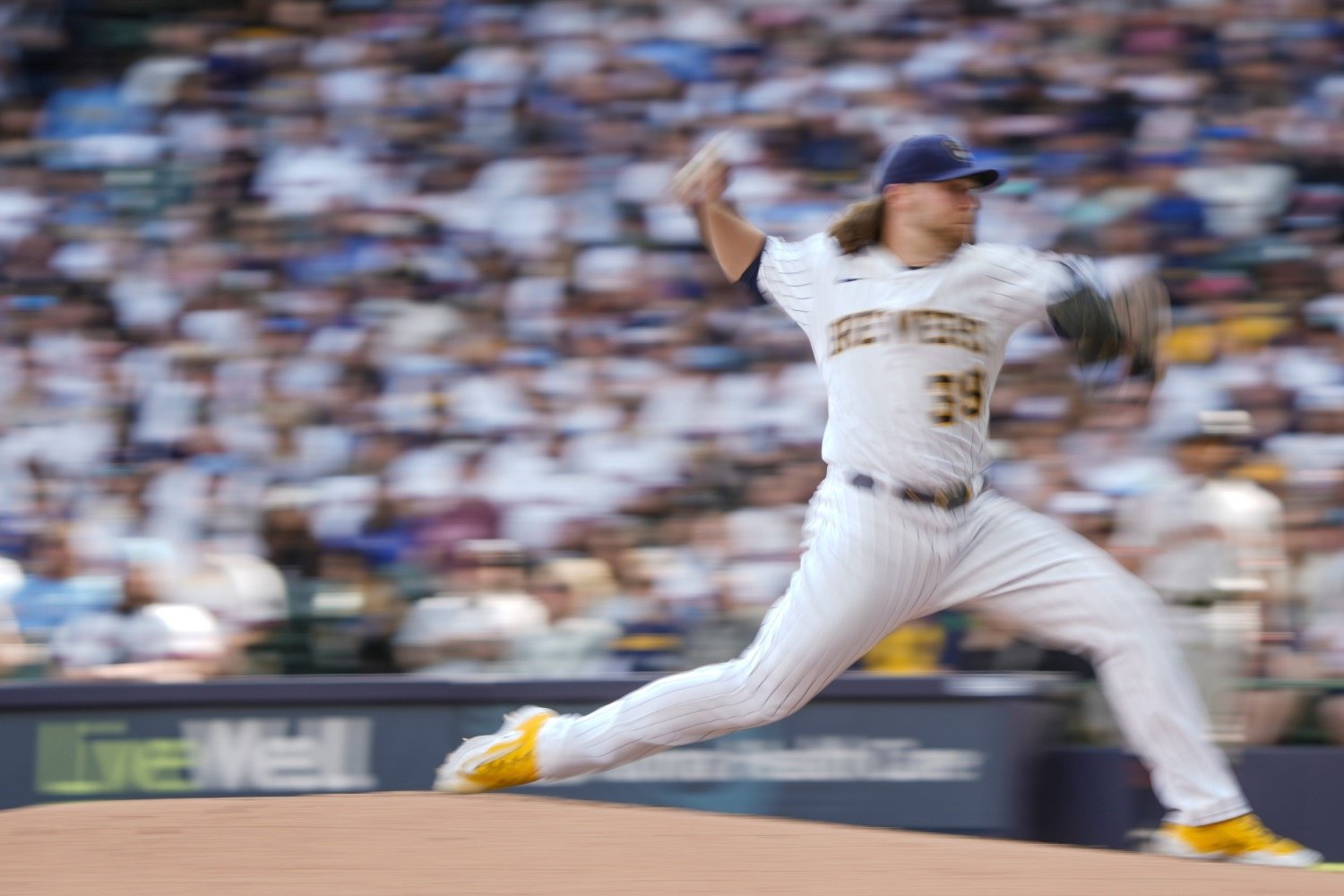 Corbin Burnes is almost assuredly heading to free agency next fall. He reiterated that this week. Once Burnes hits free agency, the Brewers won’t be able to compete for his services. Thus, here are their options going forward: Trade him now, to maximize the return. Keep him, and ride him for another playoff run, but deal him if the team falls out of contention early. If they keep Burnes all year, they could still net a compensation pick after the 1st round of the 2025 Draft, after he signs elsewhere. All of this assumes that Burnes doesn’t have a terrible year, though--or get seriously injured. So, what will the Brewers do? The answer is: they will trade him now. Why? The Brewers are concerned not only about 2024, but beyond. With the rising price for superstar players, they can’t compete against the likes of the Dodgers and Yankees for elite players. Nothing could have proved that more clearly than the way Los Angeles has thrown money around this winter, adding Shohei Ohtani, Tyler Glasnow, and Yamamoto, or than the fact that the Yankees breezily dealt five players to get ahold of Juan Soto for a single season, before he, too, hits free agency. Burnes will bring back young, talented, cheap players, whether Matt Arnold and his crew deal him now or at the trade deadline. So, you may ask, why not hold onto Burnes and make a run at the playoffs? The team that just won the NL Central rather handily is mostly returning. They won 92 games last year. Why not give it another go, in what appears to be a relatively weak and uncertain division? Arnold can always deal Burnes at the deadline for a nice haul of prospects. The answer has its roots in the 2022 season. That year, the Brewers dealt closer Josh Hader at the trade deadline. The club was 57-45 at the time, and they led the division by three games. The team stumbled after the trade, going 29-31, and missed the playoffs. The move reportedly infuriated many in the clubhouse and caused players (and fans) to question the team’s commitment to winning. The Brewers had multiple reasons for dealing Hader, not the least of which was the fact that he was set to make lots and lots of money the next year, and they wanted to maximize any return on him, while being competitive at the same time. The team missing the playoffs that year, obviously, was a major failure. But the trade, in the end, netted William Contreras, Robert Gasser and Joel Payamps. Not bad. With that in mind, the problem with holding onto Burnes is that the Brewers--even with him in the rotation--are likely to be a team on the fringe of the playoff race come the end of July. This is a good team, but not a great one. Most of the rest of the division is better, but no team is a juggernaut. This means that, at the deadline, there could easily be a cluster of teams fighting for the division crown--just like in 2023, when the Brewers, Reds and Cubs were within five games of one another. If that happens, there is a strong possibility that the Brewers would retain Burnes, instead of trading him. Trading Burnes in the middle of a playoff race would infuriate the fans and players. The club does not want that to happen again. For that reason, the Brewers will act now and deal Burnes. His insistence that he will test the market after next season will hurt the return slightly, but not tank it. A team like the Dodgers or Yankees would use the time to make him comfortable and excited about staying around, and they have the dollars to match any offers down the road. So, while some teams may see Burnes as a one-year rental, most will try to use next year as a way to entice him to sign on for a longer run, whatever he might say about his mindset. Also, there is the specter of Brandon Woodruff hovering over the team. The club just saw how an injury can completely derail the career of a really good player. If Burnes went down, Milwaukee would end up with nothing for him, just like with Woodruff. In the end, the team needs to move Burnes now, because they don’t want him getting hurt on their watch, and trying to move him at the deadline would be potentially disastrous in the clubhouse and with fans. Plus, the Hader trade demonstrates just how valuable trading a player can be. Perhaps there was some luck involved in turning Esteury Ruiz into Contreras and Payamps, but the move still demonstrates the power of proactive aggressiveness in the market. And let’s be clear: the Brewers want and need to trade Burnes. All this talk about trading him only if they are ‘blown away,’ or whatever, is just talk. The team wants to trade Burnes now. Dealing assets while they are still valuable is the philosophy that the team has embraced, and will continue to embrace. It’s the nature of being a small-market club. Perhaps they're not as extreme as Tampa Bay, but that’s the model that Milwaukee now follows. As for going into 2024 without Burnes, yes, it would be difficult. It’s not easy to replace a top-of-the-rotation starter. But it’s likely that the club will get at least one major-league-ready starter back in any such deal. Giving a rotation spot to a young player is always a risk, but it’s something the club needs to be willing to do in the current economic climate. There will probably be other assets acquired in the trade that the team feels will make up for the loss of Burnes. Also, trading Burnes opens up payroll, so the club could replace him with a serviceable but lesser player. All of it is a risk, but hanging onto Burnes may be even riskier. Hence, as the Brewers talk trade this offseason, it will be very much on their mind to deal Burnes. Maybe they won’t be ‘blown away,’ but they will still get a nice haul. If the team doesn’t deal Corbin, I’m guessing it will be more because of Mark Attanasio’s desire to ‘go for it,’ rather than a lack of a quality return. As the other top arms go off the board this offseason--especially Yamamoto, and perhaps Jordan Montgomery--watch for the Burnes trade talk to catch fire. Clubs with World Series aspirations will be desperate to fill out their roster with a great starting pitcher, and Burnes will be the best guy available on the market. The team will get some good offers, and they'll accept one. Fans will be upset, but not nearly as much so as if it happened in the heat of a pennant race.
 -
Can Corbin Burnes Be Traded for Jorge Polanco?
Matt Breen replied to Ryan Pollak's topic in Brewer Fanatic Front Page News
Something like this is getting more realistic in my book. Lee is a really good prospect, and exactly the kind of guy the Brewers would want. But like you - and others - have said, Burnes might not be enough for him. Not sure how good Festa really is - but I get the idea where you are going with this. No matter what, the Brewers have the ultimate trade piece - one of the best starting pitchers in the game. And one they are willing to trade (we assume), but don't have to. They can put a premium on that.- 27 replies
-
- 1
-

-
- corbin burnes
- jorge polanco
- (and 4 more)
-
Can Corbin Burnes Be Traded for Jorge Polanco?
Matt Breen replied to Ryan Pollak's topic in Brewer Fanatic Front Page News
I think the issue is that the package coming back to the Brewers is just not good. People realize that the value of assets is subjective, but the return for pretty poor. It just doesn't seem realistic.- 27 replies
-
- 1
-
-
- corbin burnes
- jorge polanco
- (and 4 more)
-
Can Corbin Burnes Be Traded for Jorge Polanco?
Matt Breen replied to Ryan Pollak's topic in Brewer Fanatic Front Page News
This one of the worst trade suggestions I have seen this offseason. Brewers would be idiots to do this.- 27 replies
-
- 2
-
-
- corbin burnes
- jorge polanco
- (and 4 more)
-
Just getting crazy.
-
These do not appear to be good deals for the Brewers. But I admit my judgement on minor league players is lacking, so take my opinion with a grain of salt. These players seem fine, but it seems like we get do better. None of these players is Top 25 prospect material. More like back end of the Top 100 type prospects (and some not that high). Perhaps I'm wrong that Burnes can fetch a top 25 type player.
-
Maybe Pete Alonso is a PTBNL in this deal that we just haven't heard about.
-
I feel the same way...
-
I'm not shocked we traded Houser and Taylor, just that we got so little for them. I mean, I wasn't expecting a ton - but Crow just seems like a light return. Perhaps more is to come.
-
There's got to be more to this deal than just Crow, right?
-
Pretty much what I expected. Fringe veteran who can keep the seat warm for Quero. If he sucks in the first half - and Quero does well at AAA - then we can make a move. Or if there is an injury.
-
This is brilliant
-
Ken Sanders Was The First Great Brewer Pitcher
Matt Breen replied to Matt Breen's topic in Brewer Fanatic Front Page News
Thanks, JohnBriggs, for the great story. -
Who was the first great Milwaukee Brewers pitcher? That moniker falls on an unlikely man - journeyman reliever Ken Sanders, who rose from obscurity to become baseball’s Fireman of the Year in 1971 - and be the first Brewer pitcher to receive MVP votes. Image courtesy of Brewer Fanatic & Brock Beauchamp Ken George Sanders was born in St. Louis, Missouri on July 8, 1941. He attended high school in St. Louis, where he starred in football, baseball, and soccer. After graduation, Sanders briefly went to St. Louis University before signing with the Kansas City Athletics as a free agent in 1960. In his first season in D-affiliate ball, Sanders threw an astounding 240 innings, racking up 22 complete games and 19 wins - all while still a teenager. The next few years saw Sanders find middling success, and in 1964, he was converted to a full-time reliever. He made his major league debut later that year. Sanders spent the rest of the 1960s bouncing between the major and minor leagues including time in Oakland, Boston, and Kansas City. At times, he struggled with his control, walking too many batters. Still, he was mostly effective; his ERA was never more than 3.80. And then, before the 1970 season, Sanders was dealt by the A’s to the Brewers, along with Mike Hershberger, Lew Krausse Jr., and Phil Roof in exchange for Don Mincher and Ron Clark. The 28-year-old Sanders began the season at Spokane, the Brewers Triple-A affiliate, before getting the call to Milwaukee. What followed was Sanders' greatest stint in baseball. That season, he was outstanding, tossing 92 innings to the tune of a 1.75 ERA. He also had 13 saves and demonstrated improved command. Brewers Manager Dave Bristol nicknamed Sanders ‘Bulldog’ because he was “So mean, tough and stubborn on the mound.” It was great stuff - but even better was yet to come. In 1971, Sanders had the finest campaign of his career. Operating as the club’s closer, he appeared in 83 games, threw 136 innings, and had 31 saves - the latter leading the majors. It was all highlighted by a sparkling 1.91 ERA, plus a major league record 77 games finished. He was selected as the Brewers MVP. For his stellar campaign, Sanders was named Fireman of the Year by the Sporting News and even received MVP votes - the first Brewer pitcher to ever do so. The 1972 season began well for Sanders, but some mid-season struggles saw him removed from the closer’s role as manager Del Crandall lost faith in him. Sanders's numbers - 92 IP, 3.12 ERA, and 17 saves - were respectable but far from the heights of his previous work with the club. In the offseason, the Brewers decided to move on from Sanders, trading him to Philadelphia along with Jim Lonborg, Ken Brett, and Earl Stephenson in exchange for Don Money, John Vukovich, and Bill Champion. The Phillies flipped Sanders to Minnesota a month later. Sanders spent the next four years on five major league teams (as well as some minor league clubs) - sometimes pitching well, sometimes not so good. In 1977, he rejoined the Brewers organization, tossing 30 ineffective innings at Triple-A Spokane. After that, he knew the writing was on the wall and retired. Ken Sanders was 35 years old. After his retirement, Sanders stayed in the Milwaukee area, living in Hales Corners, where he and his wife, Mary Ann - his childhood sweetheart - raised three children. Sanders began a career in real estate and then moved into banking. One interesting tidbit where real estate and baseball came together was when Sanders, in 2013, was the listing agent for the Field of Dreams site in Iowa. Sanders stayed involved in baseball in retirement, serving on the MLB Players Alumni Association board for 20 years and participating in various fantasy camps for two decades. Sanders, 82 as of this article, splits his time between Milwaukee and Florida. Ken Sanders was, at first glance, the very definition of a journeyman ball player. 18 seasons. Parts of 13 years in the minor leagues. Eight major league teams over 11 years. But he was, when given the opportunity, effective. He has a lifetime ERA of 2.97 in 409 games and 656 innings pitched. That includes 86 saves. Sanders' time in Milwaukee (less than three full seasons) defines him in most fans' eyes. Yes, it was a short run but the 1970-71 stint was brilliant. Sanders still holds the Brewers record for the most games pitched in a season, 83, tied with Alex Claudio. And his 77 games finished that same year - is a team record. He is one of only two Brewers to win the Fireman of the Year award (the other being Rollie Fingers). The award was discontinued in 2011. So hats off to Ken Sanders - who saved (pun intended) his very best for Milwaukee. Please share your memories of former Brewer pitcher Ken Sanders. View full article
-
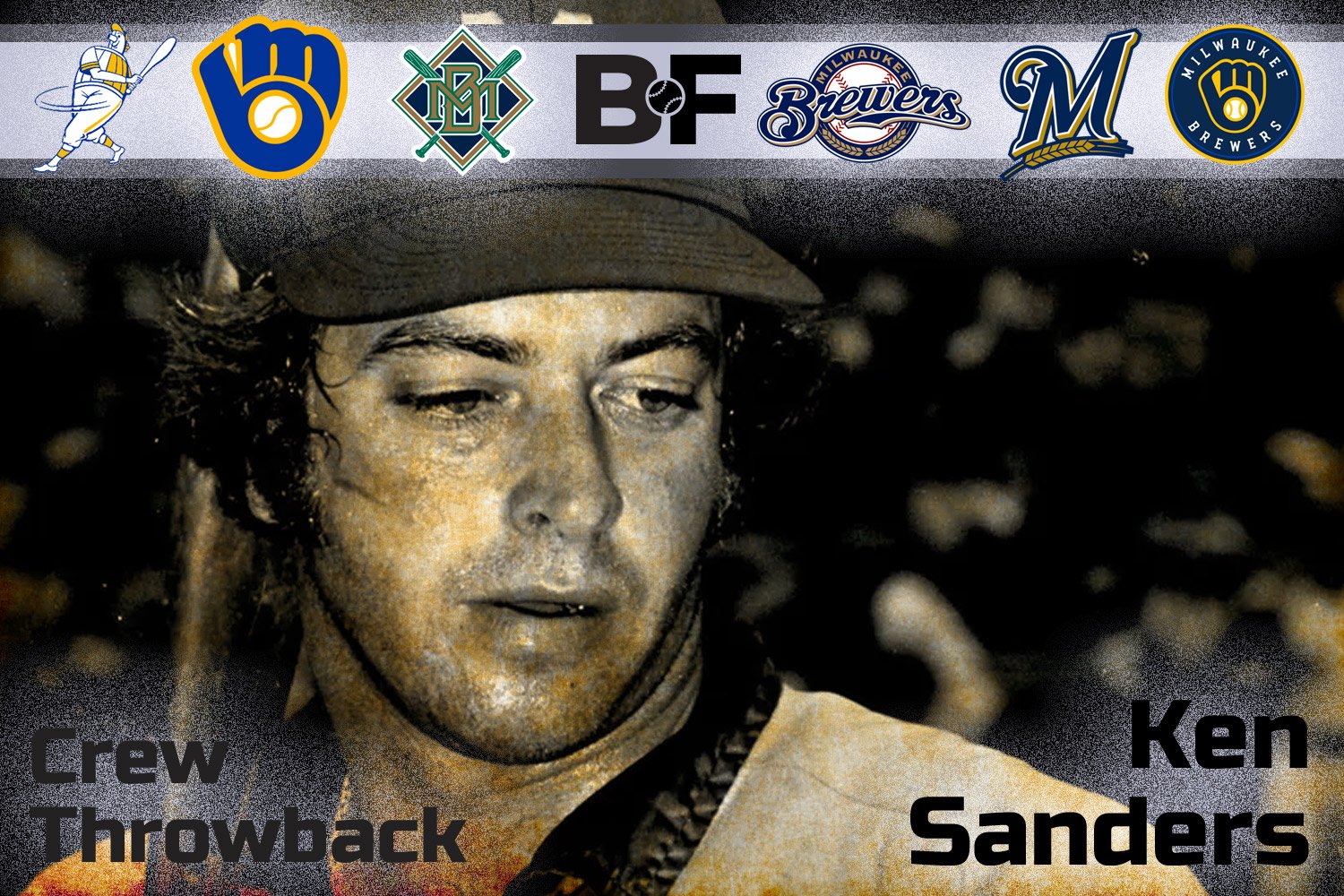 Ken George Sanders was born in St. Louis, Missouri on July 8, 1941. He attended high school in St. Louis, where he starred in football, baseball, and soccer. After graduation, Sanders briefly went to St. Louis University before signing with the Kansas City Athletics as a free agent in 1960. In his first season in D-affiliate ball, Sanders threw an astounding 240 innings, racking up 22 complete games and 19 wins - all while still a teenager. The next few years saw Sanders find middling success, and in 1964, he was converted to a full-time reliever. He made his major league debut later that year. Sanders spent the rest of the 1960s bouncing between the major and minor leagues including time in Oakland, Boston, and Kansas City. At times, he struggled with his control, walking too many batters. Still, he was mostly effective; his ERA was never more than 3.80. And then, before the 1970 season, Sanders was dealt by the A’s to the Brewers, along with Mike Hershberger, Lew Krausse Jr., and Phil Roof in exchange for Don Mincher and Ron Clark. The 28-year-old Sanders began the season at Spokane, the Brewers Triple-A affiliate, before getting the call to Milwaukee. What followed was Sanders' greatest stint in baseball. That season, he was outstanding, tossing 92 innings to the tune of a 1.75 ERA. He also had 13 saves and demonstrated improved command. Brewers Manager Dave Bristol nicknamed Sanders ‘Bulldog’ because he was “So mean, tough and stubborn on the mound.” It was great stuff - but even better was yet to come. In 1971, Sanders had the finest campaign of his career. Operating as the club’s closer, he appeared in 83 games, threw 136 innings, and had 31 saves - the latter leading the majors. It was all highlighted by a sparkling 1.91 ERA, plus a major league record 77 games finished. He was selected as the Brewers MVP. For his stellar campaign, Sanders was named Fireman of the Year by the Sporting News and even received MVP votes - the first Brewer pitcher to ever do so. The 1972 season began well for Sanders, but some mid-season struggles saw him removed from the closer’s role as manager Del Crandall lost faith in him. Sanders's numbers - 92 IP, 3.12 ERA, and 17 saves - were respectable but far from the heights of his previous work with the club. In the offseason, the Brewers decided to move on from Sanders, trading him to Philadelphia along with Jim Lonborg, Ken Brett, and Earl Stephenson in exchange for Don Money, John Vukovich, and Bill Champion. The Phillies flipped Sanders to Minnesota a month later. Sanders spent the next four years on five major league teams (as well as some minor league clubs) - sometimes pitching well, sometimes not so good. In 1977, he rejoined the Brewers organization, tossing 30 ineffective innings at Triple-A Spokane. After that, he knew the writing was on the wall and retired. Ken Sanders was 35 years old. After his retirement, Sanders stayed in the Milwaukee area, living in Hales Corners, where he and his wife, Mary Ann - his childhood sweetheart - raised three children. Sanders began a career in real estate and then moved into banking. One interesting tidbit where real estate and baseball came together was when Sanders, in 2013, was the listing agent for the Field of Dreams site in Iowa. Sanders stayed involved in baseball in retirement, serving on the MLB Players Alumni Association board for 20 years and participating in various fantasy camps for two decades. Sanders, 82 as of this article, splits his time between Milwaukee and Florida. Ken Sanders was, at first glance, the very definition of a journeyman ball player. 18 seasons. Parts of 13 years in the minor leagues. Eight major league teams over 11 years. But he was, when given the opportunity, effective. He has a lifetime ERA of 2.97 in 409 games and 656 innings pitched. That includes 86 saves. Sanders' time in Milwaukee (less than three full seasons) defines him in most fans' eyes. Yes, it was a short run but the 1970-71 stint was brilliant. Sanders still holds the Brewers record for the most games pitched in a season, 83, tied with Alex Claudio. And his 77 games finished that same year - is a team record. He is one of only two Brewers to win the Fireman of the Year award (the other being Rollie Fingers). The award was discontinued in 2011. So hats off to Ken Sanders - who saved (pun intended) his very best for Milwaukee. Please share your memories of former Brewer pitcher Ken Sanders.
 -
The front office has done a great job identifying relief arms that last few years. Wilson, Payamps, Milner, Peguero, Megill - those guys were huge for the club last year. It doesn't mean anyone they pick up will be great. Not every acquisition pans out. But they must have seen something interesting in Clarke to get him. Let's hope the staff can help him up his game.
-
The Royals have a lot of holes. They're filling them with (relatively) affordable pieces without longterm baggage. The quality of those players isn't the best - but for KC - they hope they are at least serviceable so their younger players can develop. The Brewers are lucky in that we don't need a ton of pieces. Doesn't mean we can spend to get better - but it's not like we are filling three rotation slots - like the Cardinals. That's costing them $50m this year.
-
Royals are going nuts! First they nab Seth Lugo, then they add Michael Wacha (2-years/$32m) and Hunter Renfroe (2-years/$13m). https://www.mlbtraderumors.com/2023/12/royals-sign-michael-wacha.html https://www.mlbtraderumors.com/2023/12/royals-finalizing-deal-with-hunter-renfroe.html
-
Or maybe it's just the Dodgers blowing smoke to try and scare Milwaukee into dealing them Burnes. "Oh look, Matt Arnold, we are going to get Glasnow. I guess you have one less suitor for Burnes - unless you lower your asking price..." In reality, I'm betting that no one - myself included - has any clue what is really going on. Maybe the Dodgers truly believe Burnes is out of reach and are now focusing on Glasnow. But whatever. They should be going hard after Burnes.