



Matt Breen
-
Posts
9,112 -
Joined
-
Last visited
-
Days Won
1
Content Type
Profiles
Forums
Blogs
Events
News
2026 Milwaukee Brewers Top Prospects Ranking
Milwaukee Brewers Videos
2022 Milwaukee Brewers Draft Picks
Milwaukee Brewers Free Agent & Trade Rumors, Notes, & Tidbits
Guides & Resources
2023 Milwaukee Brewers Draft Picks
2024 Milwaukee Brewers Draft Picks
The Milwaukee Brewers Players Project
2025 Milwaukee Brewers Draft Pick Tracker
2026 Milwaukee Brewers Draft Tracker: Picks & Bonuses
Store
Downloads
Gallery
Everything posted by Matt Breen
-
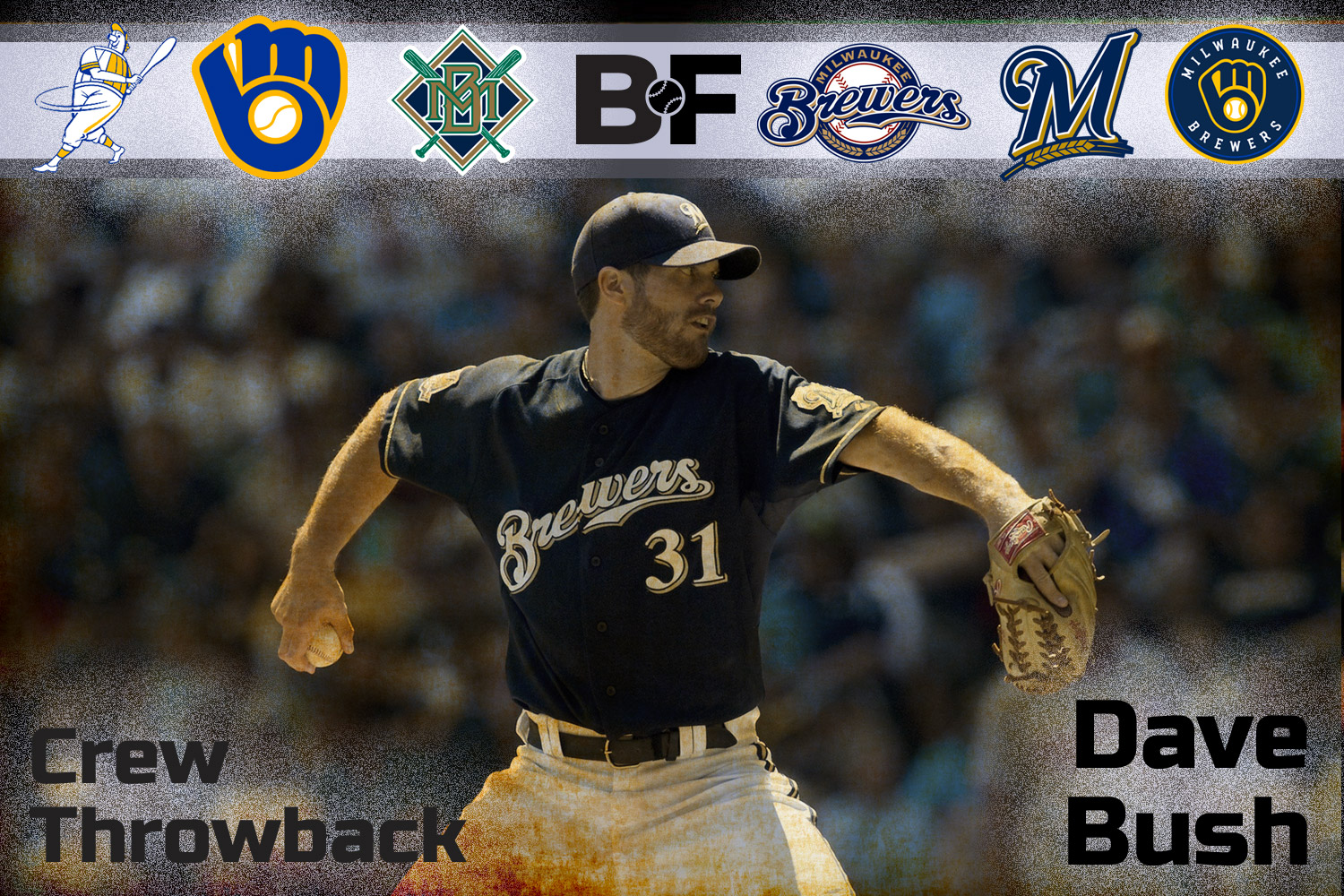 It was Dave Bush at his finest. Sadly, Bush’s career was filled with more disappointments than successes, but he was an important member of the resurgent franchise for five seasons. David Thomas Bush was born in 1979 in Pittsburgh, Pennsylvania. He attended Wake Forest University, where he was a relief pitcher. Bush was drafted by Tampa Bay in the fourth round of the 2001 draft but elected to stay in school for another year. He was selected by Toronto in the second round the following summer. Bush, a right-handed pitcher, was moved to a starting role in his second year as a pro. His numbers were impressive, showing excellent command while striking out a batter per inning. As a college arm, Bush progressed quickly through the Blue Jays' system, reaching the majors in 2004. That season, he started 16 games and acquitted himself nicely, producing an ERA of 3.61 in 97.2 innings. The following season was a mixed bag for Bush. He struggled at times in the big leagues and spent time at AAA. His propensity to serve the gopher ball didn't win him any fans and it was an issue that plagued him throughout his career. In the off-season, the Brewers wanted to open up a spot in the lineup for young slugger Prince Fielder. Thus, on December 7, 2005, Bush was traded along with Gabe Gross and Zach Jackson for first baseman Lyle Overbay and minor league pitcher Ty Taubenheim. For the Brewers, the trade was an opportunity to get a couple of promising young arms in Bush and Jackson. And while many felt Jackson was the prize of the deal, Bush went on to have a longer career. In need of pitching, the Brewers handed the 26-year-old Bush the ball, and he responded with the finest season of his career. He tossed 212 innings, won 12 games, struck out 166, walked only 38, and produced a 4.41 ERA. Those are hardly all-star-level numbers, but they were welcome on a team that struggled to stop their opponents from scoring. With a solid season under his belt, many hoped that Bush would continue to improve as a pitcher. They were, sadly, (mostly) disappointed. Bush's 2007 numbers went backward in almost every way. Despite throwing 24 fewer innings, his hits allowed increased, as did his walks and home runs. His strikeout rate dropped as well. This meant his ERA rose to an unsightly 5.12 but 2008 saw a rebound of sorts for Bush as his ERA dropped back down to 4.18. That improvement couldn't hide weakening peripheral statistics but he still notched a win in the 2008 NLDS - as described in the introduction of this story. In 2009, Bush's performance cratered when, in early June, a line drive struck him in the arm, tearing his triceps muscle. After a Disabled List stint, he tried to come back, but it was awful. He ended up with an ERA of 6.38 for the season. Healthy in 2010, Bush started 31 games but had a mediocre campaign. And so, after five years together, the Brewers decided it was time to let Bush go as he approached free agency. He was 30 and had not improved as a pitcher since the team had acquired him. He gave up too many homers, and his walk and strikeout numbers only worsened. Bush signed with Texas in the spring of 2011, but the end was closer than he realized. After 17 games - only three as a starter - the Rangers released him. He caught on with the Cubs AAA team for a month before opting out of his contract and finishing the year with the Phillies AAA club. In 2012, Bush spent part of the year in the Phillies' minor league system before heading to Korea for half a season. The following year, Bush signed with Toronto. The Blue Jays called him up on April 6 (designating Jeremy Jeffress for assignment at the time). He lasted only one game - getting shelled for five runs (on four home runs) in just three innings of work. He spent the rest of the season at AAA - putting up poor numbers. And with that, Bush's career as a player was done. He was 33 years old. Dave Bush played five years in Milwaukee. His finest season was in 2006 when he produced 2.2 WAR. The postseason victory in the NLDS for the Brewers was his career highlight with the club. At his best, Dave Bush was a competent back-of-the-rotation arm. While he showed good control at times (his 2.40 walks per 9 innings is tenth best in Brewer history), he also gave up too many hits and home runs. For his career, Bush won 46 games in Milwaukee against 53 losses. He showed flashes of being something better on occasion, including taking no-hitters into the 7th inning three times in his career. These fleeting displays of brilliance only frustrated fans, who had hoped for much more in the man's career. Dave Bush does hold one record in the history of the Brewers. Never afraid to pitch inside, he hit 58 batters during his time (including 15 in 2009, which led the league). After retiring from baseball, Bush stayed involved with the game, working as a coach at the high school and international levels. He joined the Boston Red Sox organization in 2016 and has been the Red Sox’s pitching coach since 2019. Please share your memories of former Brewer Dave Bush.
 -
Fernando Vina was not a big man - 5’9” and 170 pounds - and thus lacked power. He had a good glove and thus profiled as a light-hitting utility infielder - except for one thing - his mediocre arm limited him to second base. For a guy like Vina - that is often a professional death sentence. Luckily for Vina, he got a chance to play every day in the majors with Milwaukee - and in time, he developed into a quality contact hitter - which enabled him to carve out a successful 12-year career. Fernando Vina was born in Sacramento, CA, in 1969, the child of Cuban immigrants. He attended Arizona State University and was selected by the Mets in the 9th round of the 1990 draft. Vina quickly put together a profile that would be his calling card throughout his career: he hit for a solid average, not much power, few strikeouts, and good defense at the keystone. Vina was selected by the Seattle Mariners in the 1992 Rule 5 draft but was returned to the Mets the following summer. He was then traded to the Brewers in December of 1994, completing a deal as the player to be named later in the Doug Henry trade. It didn’t take long for Vina to find his niche in Milwaukee at second base and leading off. Vina hit for a good average and got on base at a 35% clip while playing quality defense. He never hit for double-digit home runs but walked fewer times than he struck out. His best year was 1998, when he hit .311 with 39 doubles and a .386 OBP - good enough to make his lone all-star appearance. His 198 hits that year are tied for the eighth most in Brewers' history. Unfortunately for Vina, he missed three-quarters of the 1999 season after a collision with OF Jeromy Burnitz . In 2000 - a year away from free agency with the Brewers in need of pitching - traded Vina to the Cardinals Juan Acevedo and two minor leaguers. Vina went on to have some good years in St. Louis, winning two Gold Gloves and twice hitting .300+. In 2004, Vina signed a two-year deal with Detroit, but due to injuries only played 29 games that year - and none in 2005. An attempt to return in 2006 ended with another injury - and signaled the end of his playing days. For his career, Vina hit .282 and produced a.348 OBP - not far from his Milwaukee numbers of .286 and .349. He only hit 40 HRs in his career. One of the more remarkable stats is his tiny 6.2% strikeout rate - almost unheard of today. Vina had quite a few stolen bases in his day but was not an efficient base stealer (116 SBs vs. 67 CS). Still, when you add in his good defense, Vina had a nice career - making $26M+ over 12 major league seasons. He was not a star and never put up huge numbers, but he was a valuable complementary player. One of the more memorable moments of Vina’s career happened on May 31, 1996. While attempting to tag a runner (Albert Belle) and make a throw to first to complete a double play, he was slammed into by Belle. Belle received a 5-game suspension for his actions. Vina laughed about the incident good-naturedly, claiming, "that put me on the map.” Check out the video of the incident. There was controversy after Vina’s career was over when his name came out in the Mitchell Report in 2007. A Mets clubhouse attendant said he had given Vina steroids in the early 2000s. Vina said he took HGH to recover from injuries - but denied ever buying or using steroids. After retiring, Vina worked for ESPN for several years. He now works teaching and promoting baseball to America’s youth - including underprivileged children. Vina was inducted into the Arizona State University Hall of Fame in 2011 and the Milwaukee Brewer Wall of Honor in 2014. Please share your memories of former Brewer Fernando Vina. View full article
-
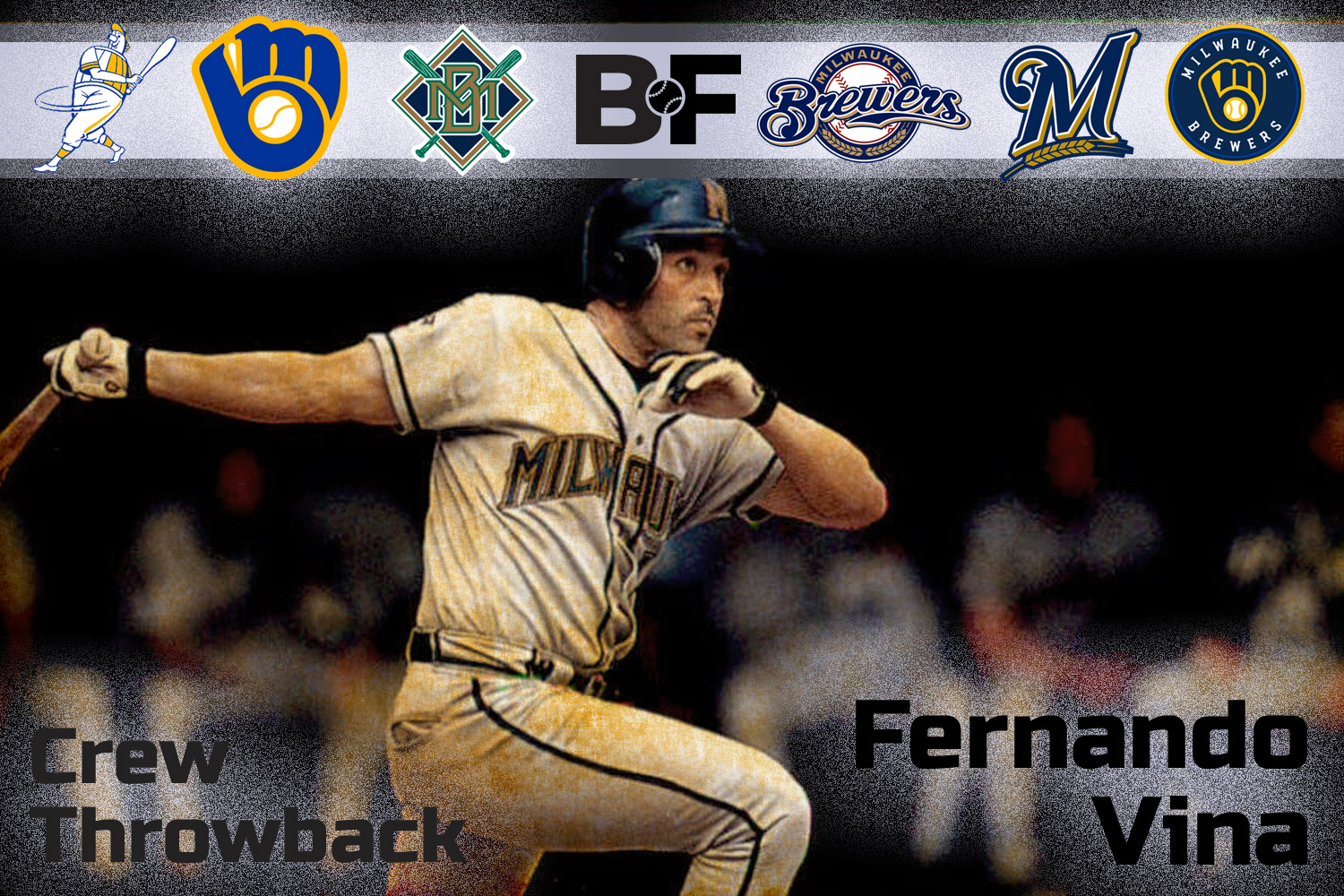 Fernando Vina was born in Sacramento, CA, in 1969, the child of Cuban immigrants. He attended Arizona State University and was selected by the Mets in the 9th round of the 1990 draft. Vina quickly put together a profile that would be his calling card throughout his career: he hit for a solid average, not much power, few strikeouts, and good defense at the keystone. Vina was selected by the Seattle Mariners in the 1992 Rule 5 draft but was returned to the Mets the following summer. He was then traded to the Brewers in December of 1994, completing a deal as the player to be named later in the Doug Henry trade. It didn’t take long for Vina to find his niche in Milwaukee at second base and leading off. Vina hit for a good average and got on base at a 35% clip while playing quality defense. He never hit for double-digit home runs but walked fewer times than he struck out. His best year was 1998, when he hit .311 with 39 doubles and a .386 OBP - good enough to make his lone all-star appearance. His 198 hits that year are tied for the eighth most in Brewers' history. Unfortunately for Vina, he missed three-quarters of the 1999 season after a collision with OF Jeromy Burnitz . In 2000 - a year away from free agency with the Brewers in need of pitching - traded Vina to the Cardinals Juan Acevedo and two minor leaguers. Vina went on to have some good years in St. Louis, winning two Gold Gloves and twice hitting .300+. In 2004, Vina signed a two-year deal with Detroit, but due to injuries only played 29 games that year - and none in 2005. An attempt to return in 2006 ended with another injury - and signaled the end of his playing days. For his career, Vina hit .282 and produced a.348 OBP - not far from his Milwaukee numbers of .286 and .349. He only hit 40 HRs in his career. One of the more remarkable stats is his tiny 6.2% strikeout rate - almost unheard of today. Vina had quite a few stolen bases in his day but was not an efficient base stealer (116 SBs vs. 67 CS). Still, when you add in his good defense, Vina had a nice career - making $26M+ over 12 major league seasons. He was not a star and never put up huge numbers, but he was a valuable complementary player. One of the more memorable moments of Vina’s career happened on May 31, 1996. While attempting to tag a runner (Albert Belle) and make a throw to first to complete a double play, he was slammed into by Belle. Belle received a 5-game suspension for his actions. Vina laughed about the incident good-naturedly, claiming, "that put me on the map.” Check out the video of the incident. There was controversy after Vina’s career was over when his name came out in the Mitchell Report in 2007. A Mets clubhouse attendant said he had given Vina steroids in the early 2000s. Vina said he took HGH to recover from injuries - but denied ever buying or using steroids. After retiring, Vina worked for ESPN for several years. He now works teaching and promoting baseball to America’s youth - including underprivileged children. Vina was inducted into the Arizona State University Hall of Fame in 2011 and the Milwaukee Brewer Wall of Honor in 2014. Please share your memories of former Brewer Fernando Vina.
 -
You gotta love it when perseverance pays off. We've all heard the stories - the ones about a player spending 10+ years bumming around the minors - crappy pay, crappy hotels, crappy bus rides - all for the chance to reach the Show. Former Brewer reliever Mark DiFelice is one of those stories - albeit with a rather abrupt ending. The right-handed throwing Mark DiFelice was born in Pennsylvania in 1976. He attended Western Carolina University and was selected by the Rockies in the 15th round of the 1998 amateur draft. DiFelice was classic organizational fodder. He didn’t stand out in any fashion other than displaying low walk rates throughout his career. He put up solid numbers but nothing eye-popping. He also was prone to giving up HRs - a bugaboo that would haunt him much of his career. DiFelice eventually stalled out at AAA. The Rockies released him in 2004, and he spent the year at AAA with Baltimore, putting up good, but not great, numbers. After that, his journey continued with stints with the Nationals, independent ball (the Atlantic League), and the Mexican League. Following the 2006 season, DiFelice was signed by Milwaukee. And everything seemed to come together for the 30-year-old DiFelice. He had a great year between AA and AAA, throwing 124.2 innings and producing a 2.31 ERA. DiFelice began the 2008 season at AAA Nashville but was called to the big leagues on May 15. He was a 31-year-old rookie. While he had been a starter most of his career, the Brewers used DiFelice strictly as a reliever (he never started a game in the majors). In 2008, he appeared in 15 games and produced a sparkling 2.84 ERA, striking out 20 batters in only 19 innings. What was fascinating about Mark DiFelice was that he succeeded with only one pitch - a slow (he generally worked between 80-84 mph) cut fastball. The pitch made right-handed hitters look like idiots. 2009 was DiFelice’s high water mark. He pitched for Italy in the World Baseball Classic that spring, then was outstanding for Milwaukee in the first half of the year, producing a 1.83 ERA before the All-Star break. But the second half of the season was a disaster, and many wondered if something was wrong. Indeed, DiFelice had shoulder surgery after the year to repair a torn labrum and rotator cuff. For the year, he threw 51.2 innings and produced a solid 3.66 ERA. DiFelice missed all of 2010 rehabbing. In 2011, he returned to Milwaukee on a minor league deal and managed only three innings at the big league level (along with 29 at AAA). The Brewers released the 35-year-old DiFelice after the season. He played ten games in the Italian League the following year, but his playing days were over after that point. After retiring, DiFelice became a pitching coach, working in the minor leagues for the Pirates, Marlins, and Nationals organizations. He spent the 2022 season with the Wilmington Blue Rocks. Due to his limited time in the big leagues, Mark DiFelice might not seem like an ideal candidate for a retrospective. But let’s be honest - he had a great story - spending almost a decade struggling to succeed, getting released several times, playing in independent ball, the Mexican League, and even the Italian League. Going through all that and still making it to the majors is pretty amazing. DiFelice’s time in Milwaukee was short, but it is hard to forget. You would watch him pitch and wonder, “How the heck is this guy getting batters out?” Fangraph’s Dave Cameron even wrote an article on DiFelice called “The Ultimate Roogy.” DiFelice was also famous for his role as the clubhouse barber wherever he played, skills he picked up from his grandmother and aunt. Ultimately, Mark DiFelice may have been a one-trick pony, but he rode that pony to majors, going through a lot of hoops to make it happen. Sadly, injuries cut short his career - but it's not hard to like DeFelice’s story as the "ultimate roogy." Please share your memories of former Brewers reliever Mark DiFelice. View full article
-
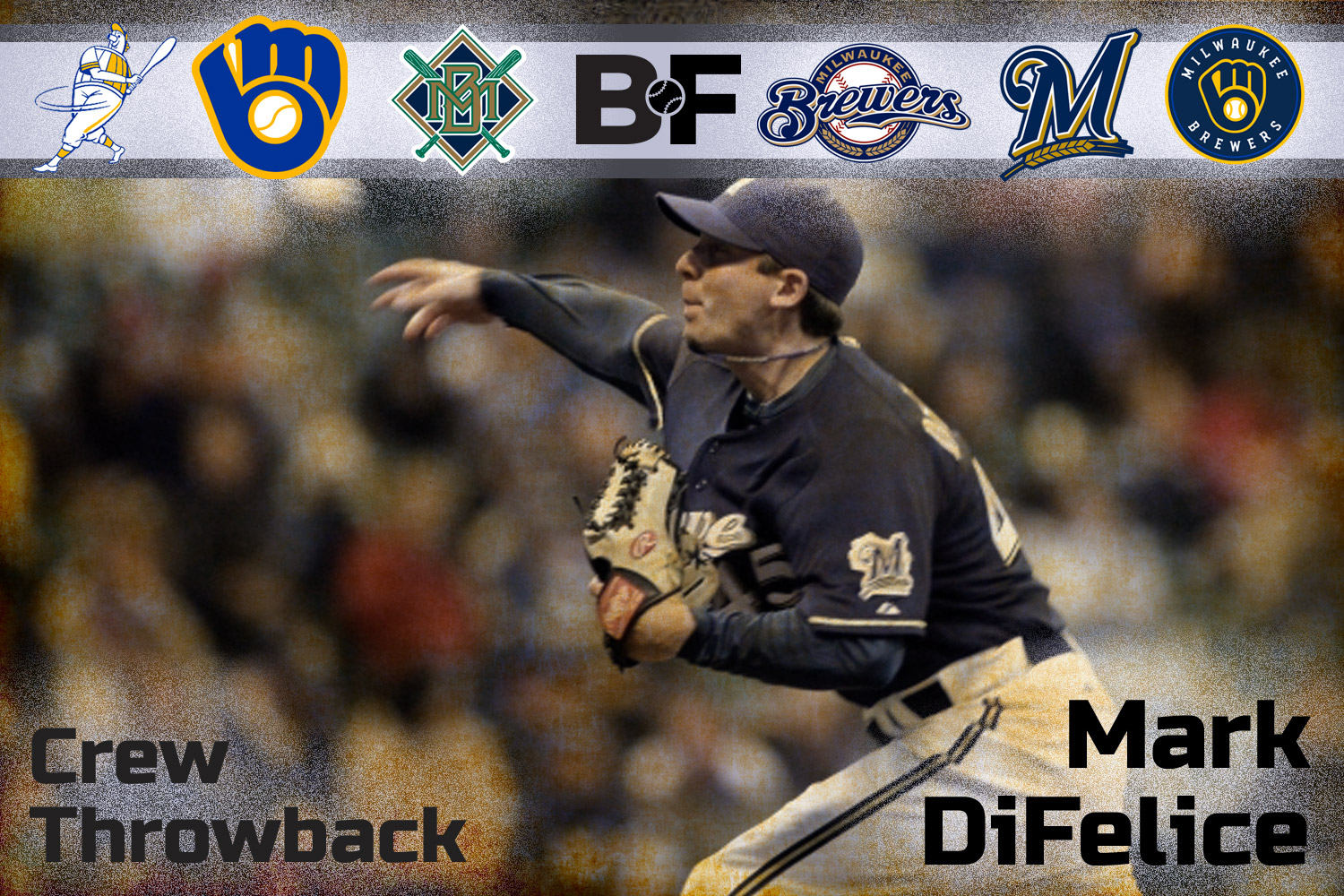 The right-handed throwing Mark DiFelice was born in Pennsylvania in 1976. He attended Western Carolina University and was selected by the Rockies in the 15th round of the 1998 amateur draft. DiFelice was classic organizational fodder. He didn’t stand out in any fashion other than displaying low walk rates throughout his career. He put up solid numbers but nothing eye-popping. He also was prone to giving up HRs - a bugaboo that would haunt him much of his career. DiFelice eventually stalled out at AAA. The Rockies released him in 2004, and he spent the year at AAA with Baltimore, putting up good, but not great, numbers. After that, his journey continued with stints with the Nationals, independent ball (the Atlantic League), and the Mexican League. Following the 2006 season, DiFelice was signed by Milwaukee. And everything seemed to come together for the 30-year-old DiFelice. He had a great year between AA and AAA, throwing 124.2 innings and producing a 2.31 ERA. DiFelice began the 2008 season at AAA Nashville but was called to the big leagues on May 15. He was a 31-year-old rookie. While he had been a starter most of his career, the Brewers used DiFelice strictly as a reliever (he never started a game in the majors). In 2008, he appeared in 15 games and produced a sparkling 2.84 ERA, striking out 20 batters in only 19 innings. What was fascinating about Mark DiFelice was that he succeeded with only one pitch - a slow (he generally worked between 80-84 mph) cut fastball. The pitch made right-handed hitters look like idiots. 2009 was DiFelice’s high water mark. He pitched for Italy in the World Baseball Classic that spring, then was outstanding for Milwaukee in the first half of the year, producing a 1.83 ERA before the All-Star break. But the second half of the season was a disaster, and many wondered if something was wrong. Indeed, DiFelice had shoulder surgery after the year to repair a torn labrum and rotator cuff. For the year, he threw 51.2 innings and produced a solid 3.66 ERA. DiFelice missed all of 2010 rehabbing. In 2011, he returned to Milwaukee on a minor league deal and managed only three innings at the big league level (along with 29 at AAA). The Brewers released the 35-year-old DiFelice after the season. He played ten games in the Italian League the following year, but his playing days were over after that point. After retiring, DiFelice became a pitching coach, working in the minor leagues for the Pirates, Marlins, and Nationals organizations. He spent the 2022 season with the Wilmington Blue Rocks. Due to his limited time in the big leagues, Mark DiFelice might not seem like an ideal candidate for a retrospective. But let’s be honest - he had a great story - spending almost a decade struggling to succeed, getting released several times, playing in independent ball, the Mexican League, and even the Italian League. Going through all that and still making it to the majors is pretty amazing. DiFelice’s time in Milwaukee was short, but it is hard to forget. You would watch him pitch and wonder, “How the heck is this guy getting batters out?” Fangraph’s Dave Cameron even wrote an article on DiFelice called “The Ultimate Roogy.” DiFelice was also famous for his role as the clubhouse barber wherever he played, skills he picked up from his grandmother and aunt. Ultimately, Mark DiFelice may have been a one-trick pony, but he rode that pony to majors, going through a lot of hoops to make it happen. Sadly, injuries cut short his career - but it's not hard to like DeFelice’s story as the "ultimate roogy." Please share your memories of former Brewers reliever Mark DiFelice.
 -
In 1979, the Milwaukee Brewers offense was poised to be special. One player hit .321 with 28 HR and 101 RBI - while walking more times than he struck out. And that person was…Yount? Molitor? Cooper? Wrong, wrong, and wrong. It was 25-year-old outfielder Sixto Lezcano. However, instead of the breakout season launching Lezcano as one of the game's best players, it proved to be his high-water mark, disappointing many who thought he was destined for stardom. Sixto Lezcano was born in Arecibo, Puerto Rico, in 1953. The Brewers signed him as a 16-year-old amateur free agent in 1970, as Puerto Rico was not part of the amateur draft at that time. The right-handed hitting Lezcano moved steadily through the Brewers system, his power improving along the way despite his slight 5'10", 165 lb frame. In 1974, he slugged 34 HR while hitting .325 at AAA Sacramento (a notoriously hitter-friendly park), earning the 20-year-old Lezcano a 15-game trial in Milwaukee. The following year, Sixto was Milwaukee's starting right fielder - a position he played most of his career. Lezcano spent the next six seasons in Milwaukee, displaying good power and on-base skills, not to mention solid defense. His finest season came in 1979 (as noted earlier) when he hit a career-high .321 with 28 HR and 101 RBI. He also finished 15th in the league MVP voting and won a Gold Glove. After his breakthrough 1979 campaign, many thought the 26-year-old Lezcano was ready to be a superstar. Unfortunately, injuries dogged Lezcano the following year, and he had the worst season of his career. The Brewers had also regressed, falling from 95 to 86 wins (no wild card in those days!). General Manager Harry Dalton felt a bold move was needed to get the club to the next level, so on December 12, 1980, the club pulled off what is arguably the most significant trade in team history, sending Lezcano, David Green, Dave LaPoint, and Lary Sorensen to the St. Louis Cardinals for Rollie Fingers, Ted Simmons and Pete Vuckovich. The blockbuster move provided vital elements of Milwaukee's only World Series club two years later in 1982. Interestingly, Lezcano was soon involved in another major deal - San Diego sending Ozzie Smith to St. Louis for Garry Templeton and Sixto after the 1981 campaign. The trade to St. Louis began a run of Lezcano playing for four teams in five years. Other than a good year with San Diego in 1983, he never really approached the success and promise of his Milwaukee tenure. Lezcano’s days as a major leaguer were done after the 1985 season. After a 20-game stint in the Japanese League in 1987, his playing career was finished. After retiring, Lezcano worked as a coach for various organizations, including the Royals and Braves, retiring in 2010. Sixto Lezcano was a key part of the rise of Brewer baseball in the late 1970s. In six full seasons in Milwaukee, he hit .275 with an .805 OPS while slugging 102 HRs. He had an excellent four-year run producing 3.1, 3.7, 4.0, and 5.6 bWAR. His 18.9 bWAR is the 14th best in club history. Lezcano was also known for his strong arm, and in addition to winning a Gold Glove in 1979, he led American League outfielders in assists in 1978. Finally, while with Milwaukee, he became the only player in Major League Baseball history to hit a grand slam on Opening Day twice, doing it in 1978 and 1980. Lezcano had an interesting career arc - peaking at age 25. As noted, many thought he was destined for more great seasons. But instead of greatness, Lezcano was simply ordinary - primarily due to various injuries that eroded his skills. Sixto was inducted into the Brewers Wall of Honor for his contributions to Milwaukee baseball in 2014. Please share your memories of former Brewer Sixto Lezcano. View full article
-
The job of setup man in baseball isn’t sexy. You don’t get the "save" on your stat sheet. You're rarely cheered by the fans for holding onto a lead. You don’t get your teammates' high fives and backslaps as you walk off the field after a victory. But the setup man is crucial in baseball, and Brewer reliever Chuck Crim was one of the best for a few years. The Brewers drafted Charles (Chuck) Robert Crim in the 17th round out of the University of Hawaii in 1982. After two years in the minors, he was moved to the bullpen, where he quickly found his niche. Despite being a non-roster player, Crim made the team in 1987 and quickly became a workhorse out of the pen. Over five years (’87-’91), he appeared in 332 games and threw 530 innings - an average of 66 games and an astounding 106 innings pitched per year. All but five of his appearances were in relief and he led the AL in appearances in 1988 and 1989. Crim was excellent in his first few seasons, producing ERAs of 2.91 and 2.83 in 1988 and 1989, respectively. However, the heavy workload began to take a toll on Crim’s arm, and his numbers began to fade in 1990. In 1991, his final season in Milwaukee, Crim’s ERA rose to 4.63. The Brewers shipped out Crim after that season, sending him to the Angels for another reliever - Mike Fetters - a deal that turned out well for the Brewers. After struggling in 1992 and 1993, the Angels released Crim mid-season. He came back to have a solid 1994 with the Cubs, but after the player strike that year, Crim decided he had had enough of baseball and retired. After his retirement, Crim spent seven years as a professional fisherman, then returned to baseball, joining the Dodgers organization in 2006, working as a scout and coach. He was Los Angeles's bullpen coach from 2013-15. After his stint in Los Angeles, Crim returned to his life as a fisherman. Chuck Crim was not a physically imposing pitcher and didn't have stuff that jumped out at fans. He didn't strike out many batters, but he didn’t walk many, either. He flashed a plus slider and sinker to go with a solid fastball. All of this allowed him to be one of the most effective setup men in baseball for several years. His first three seasons in Milwaukee were excellent - producing bWARs of 2.6, 1.7, and 2.7. Just to let you know, during his five years in Milwaukee, Crim made 332 appearances and tossed 530 innings. Also, he won 33 games, saved 42, and produced an ERA of 3.42. As a rookie, he won two of Milwaukee’s games in their record 13-0 run to start the 1987 season. Players like Crim often need to be remembered due to having the unglamorous role of setup man. For a few years, Crim was really good at his job - making him an integral part of the Milwaukee Brewers team. As a result of his accomplishments, Crim was added to the Milwaukee Brewers Wall of Honor in 2014. Please share your memories of former Brewer reliever Chuck Crim. View full article
-
Chuck Crim Was an Outstanding - and Unappreciated - Setup Man
Matt Breen posted an article in History
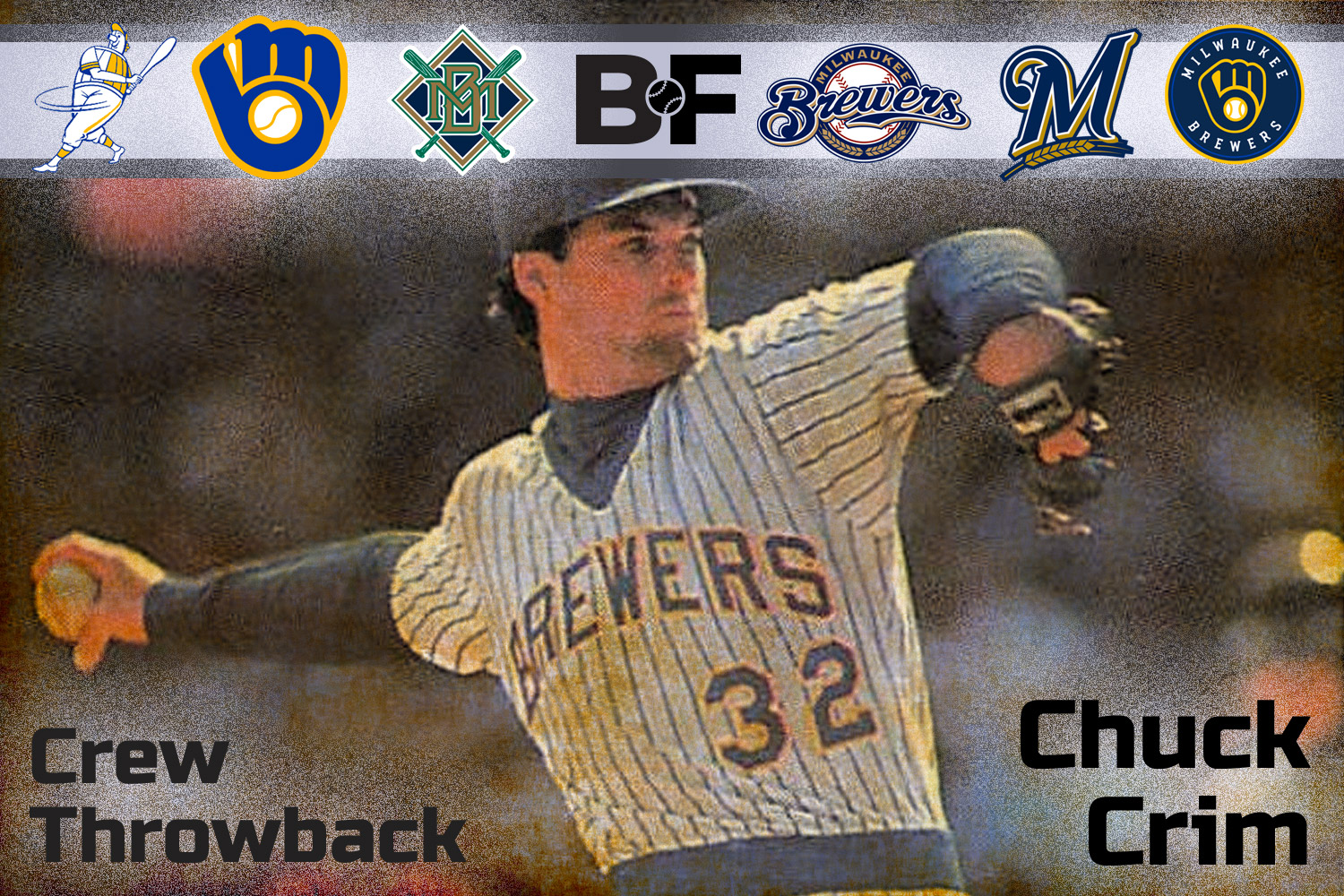 The Brewers drafted Charles (Chuck) Robert Crim in the 17th round out of the University of Hawaii in 1982. After two years in the minors, he was moved to the bullpen, where he quickly found his niche. Despite being a non-roster player, Crim made the team in 1987 and quickly became a workhorse out of the pen. Over five years (’87-’91), he appeared in 332 games and threw 530 innings - an average of 66 games and an astounding 106 innings pitched per year. All but five of his appearances were in relief and he led the AL in appearances in 1988 and 1989. Crim was excellent in his first few seasons, producing ERAs of 2.91 and 2.83 in 1988 and 1989, respectively. However, the heavy workload began to take a toll on Crim’s arm, and his numbers began to fade in 1990. In 1991, his final season in Milwaukee, Crim’s ERA rose to 4.63. The Brewers shipped out Crim after that season, sending him to the Angels for another reliever - Mike Fetters - a deal that turned out well for the Brewers. After struggling in 1992 and 1993, the Angels released Crim mid-season. He came back to have a solid 1994 with the Cubs, but after the player strike that year, Crim decided he had had enough of baseball and retired. After his retirement, Crim spent seven years as a professional fisherman, then returned to baseball, joining the Dodgers organization in 2006, working as a scout and coach. He was Los Angeles's bullpen coach from 2013-15. After his stint in Los Angeles, Crim returned to his life as a fisherman. Chuck Crim was not a physically imposing pitcher and didn't have stuff that jumped out at fans. He didn't strike out many batters, but he didn’t walk many, either. He flashed a plus slider and sinker to go with a solid fastball. All of this allowed him to be one of the most effective setup men in baseball for several years. His first three seasons in Milwaukee were excellent - producing bWARs of 2.6, 1.7, and 2.7. Just to let you know, during his five years in Milwaukee, Crim made 332 appearances and tossed 530 innings. Also, he won 33 games, saved 42, and produced an ERA of 3.42. As a rookie, he won two of Milwaukee’s games in their record 13-0 run to start the 1987 season. Players like Crim often need to be remembered due to having the unglamorous role of setup man. For a few years, Crim was really good at his job - making him an integral part of the Milwaukee Brewers team. As a result of his accomplishments, Crim was added to the Milwaukee Brewers Wall of Honor in 2014. Please share your memories of former Brewer reliever Chuck Crim.
 -
Sixto Lezcano Revitalized Milwaukee Baseball in Multiple Ways
Matt Breen posted an article in History
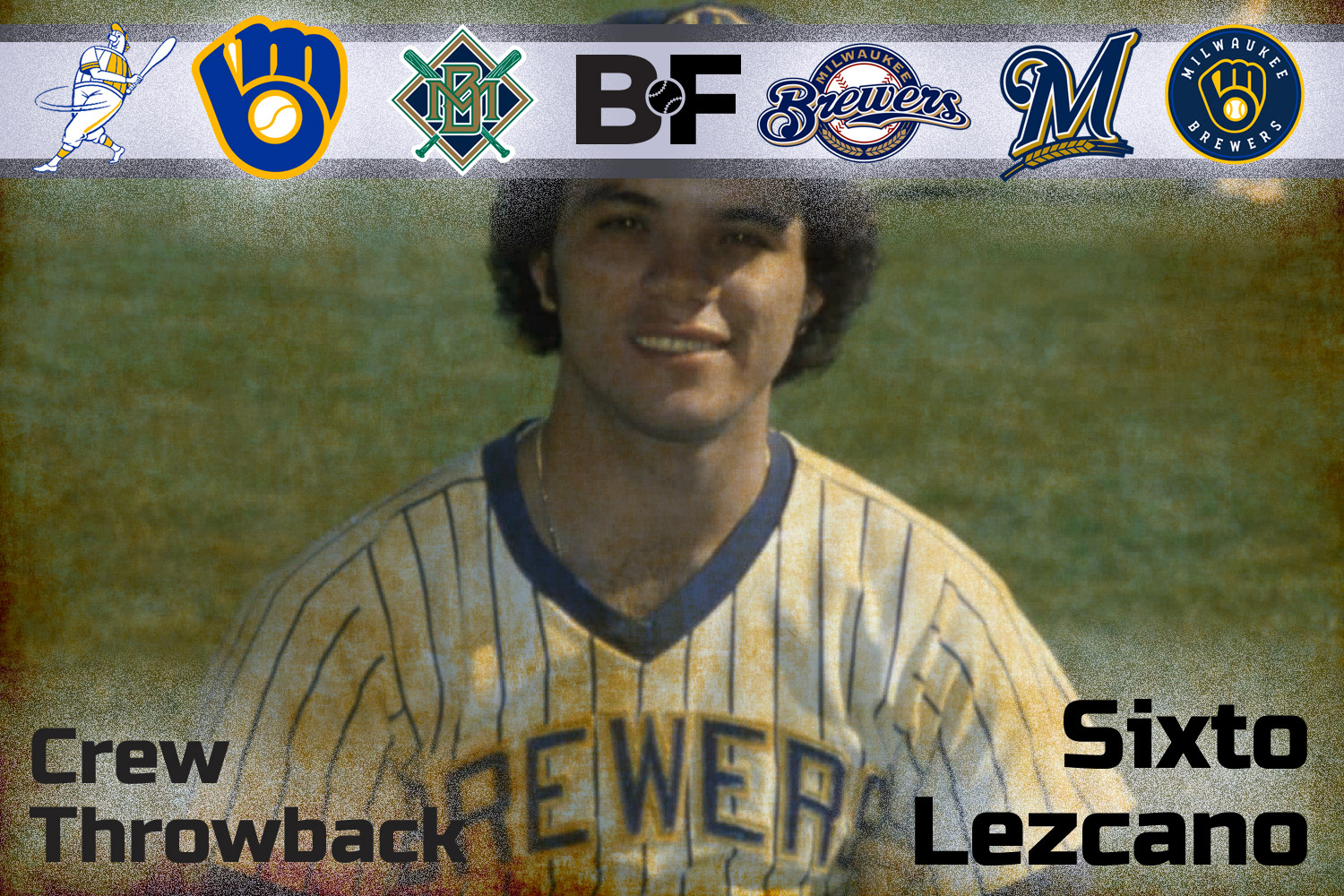 Sixto Lezcano was born in Arecibo, Puerto Rico, in 1953. The Brewers signed him as a 16-year-old amateur free agent in 1970, as Puerto Rico was not part of the amateur draft at that time. The right-handed hitting Lezcano moved steadily through the Brewers system, his power improving along the way despite his slight 5'10", 165 lb frame. In 1974, he slugged 34 HR while hitting .325 at AAA Sacramento (a notoriously hitter-friendly park), earning the 20-year-old Lezcano a 15-game trial in Milwaukee. The following year, Sixto was Milwaukee's starting right fielder - a position he played most of his career. Lezcano spent the next six seasons in Milwaukee, displaying good power and on-base skills, not to mention solid defense. His finest season came in 1979 (as noted earlier) when he hit a career-high .321 with 28 HR and 101 RBI. He also finished 15th in the league MVP voting and won a Gold Glove. After his breakthrough 1979 campaign, many thought the 26-year-old Lezcano was ready to be a superstar. Unfortunately, injuries dogged Lezcano the following year, and he had the worst season of his career. The Brewers had also regressed, falling from 95 to 86 wins (no wild card in those days!). General Manager Harry Dalton felt a bold move was needed to get the club to the next level, so on December 12, 1980, the club pulled off what is arguably the most significant trade in team history, sending Lezcano, David Green, Dave LaPoint, and Lary Sorensen to the St. Louis Cardinals for Rollie Fingers, Ted Simmons and Pete Vuckovich. The blockbuster move provided vital elements of Milwaukee's only World Series club two years later in 1982. Interestingly, Lezcano was soon involved in another major deal - San Diego sending Ozzie Smith to St. Louis for Garry Templeton and Sixto after the 1981 campaign. The trade to St. Louis began a run of Lezcano playing for four teams in five years. Other than a good year with San Diego in 1983, he never really approached the success and promise of his Milwaukee tenure. Lezcano’s days as a major leaguer were done after the 1985 season. After a 20-game stint in the Japanese League in 1987, his playing career was finished. After retiring, Lezcano worked as a coach for various organizations, including the Royals and Braves, retiring in 2010. Sixto Lezcano was a key part of the rise of Brewer baseball in the late 1970s. In six full seasons in Milwaukee, he hit .275 with an .805 OPS while slugging 102 HRs. He had an excellent four-year run producing 3.1, 3.7, 4.0, and 5.6 bWAR. His 18.9 bWAR is the 14th best in club history. Lezcano was also known for his strong arm, and in addition to winning a Gold Glove in 1979, he led American League outfielders in assists in 1978. Finally, while with Milwaukee, he became the only player in Major League Baseball history to hit a grand slam on Opening Day twice, doing it in 1978 and 1980. Lezcano had an interesting career arc - peaking at age 25. As noted, many thought he was destined for more great seasons. But instead of greatness, Lezcano was simply ordinary - primarily due to various injuries that eroded his skills. Sixto was inducted into the Brewers Wall of Honor for his contributions to Milwaukee baseball in 2014. Please share your memories of former Brewer Sixto Lezcano.
 -
Bill Schroeder Retrospective - Good Catcher, Great Announcer
Matt Breen posted an article in Brewers
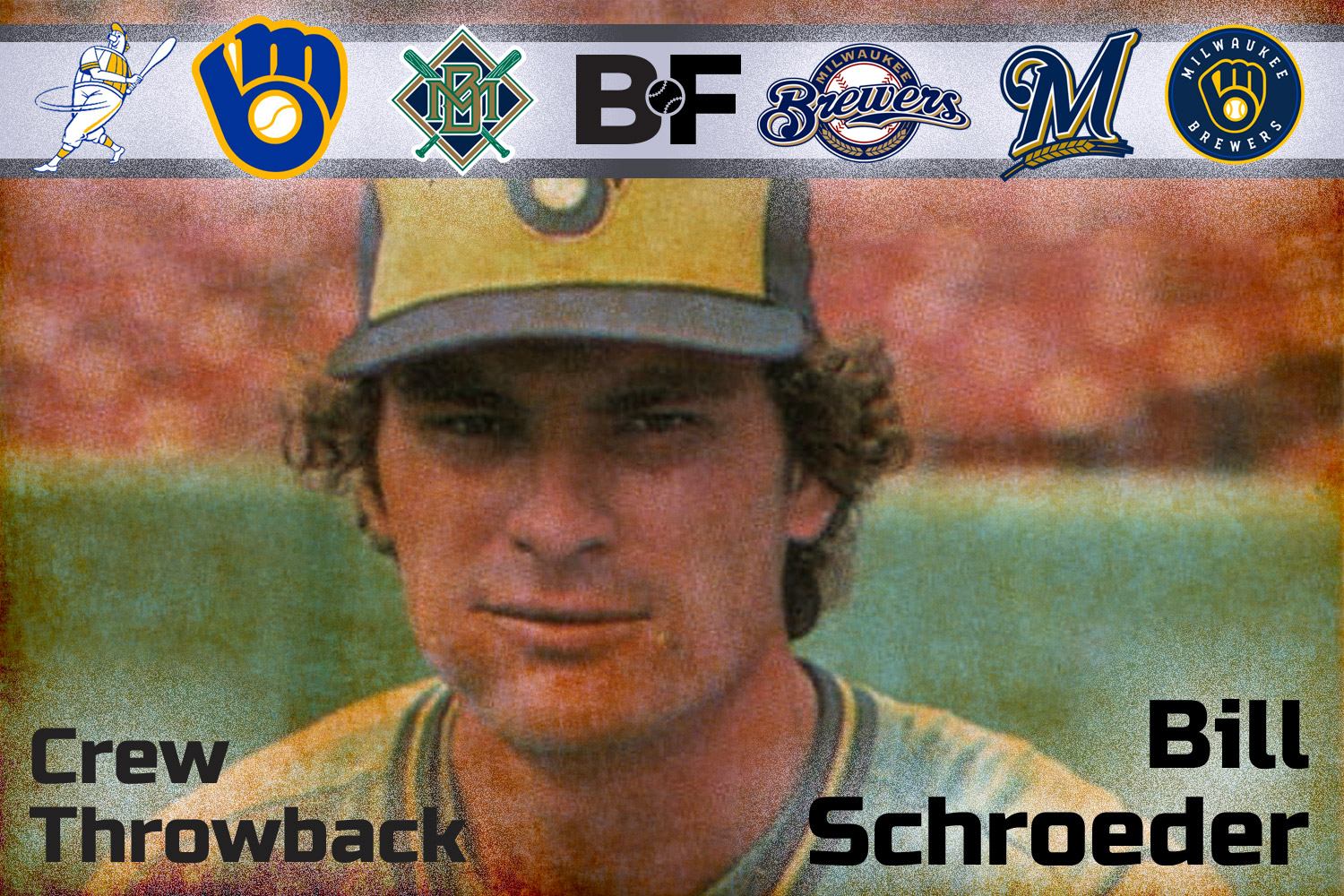 Alfred William Schroeder was born in Maryland in 1958. He grew up in New Jersey, where he earned all-state honors. After attending Clemson University, he was drafted by the Milwaukee Brewers in the 8th round of the 1979 draft. The right-handed hitting Bill Schroeder displayed good power and solid receiving skills and steadily moved up the minor league ladder. He reached the majors at the end of the 1983 season, receiving a 23-game trial with the big league club. Schroeder spent the next five seasons as Milwaukee's reserve catcher, generally receiving 200 or so plate appearances a year. He periodically served as the team's designated hitter and first baseman, but catcher was where he played most of his games. Schroeder's rookie season showed off his promising power as he socked 14 HRs in only 227 plate appearances. But it also showed off a serious flaw in the big catcher's game - only eight walks. For five years, Schroeder provided solid, if unspectacular, production from the reserve catcher position. His best year was in 1987 when he slugged 14 home runs (tying him for the most in his career with his rookie season) with a robust .332 batting average. He also caught Juan Nieves's no-hitter - the only solo no-hitter in Brewer history. He followed up his best season with his worst - hitting a mere .156 in 1988 as an elbow injury limited his playing time. The result was a trade to the California Angels in the off-season. The Brewers received infielder Gus Polidor in return. Schroeder played two more undistinguished seasons with the Angels before being released after the 1990 season. He retired shortly afterward. His playing career may have been done, but Schroeder's association with the Milwaukee Brewers was just beginning. He landed a job in 1994 as a baseball analyst for a Milwaukee-area show called Baseball Sunday; then, in 1995, he was asked to be the television color commentator for the Crew - a position he has held for more than 25+ years. In addition to his announcing gig, Schroder has served as the coordinator of the Brewers Fantasy Camp for over a decade. During his playing career in Milwaukee, Schroeder hit 54 home runs in five full seasons. He showed good power, but he never really hit that well or took many walks (he had a .246 batting average and a .291 on-base percentage), which limited him as a hitter. His most significant contribution came as the Brewers' longtime announcer. Part of Schroeder’s appeal has been his embracing of the Milwaukee organization and the community, which he makes his home. Brewer fans have returned the love - enjoying Rock’s folksy enthusiasm, humor, and good nature. In 2015, Schroeder was inducted into the Brewers Wall of Honor. Please share your memories of former Brewer catcher (and current announcer) Bill Schroeder.
 -
Eight years in the majors is cool. Over 60 home runs is a nice number. But you know what’s even better? How about a quarter of a century behind the microphone for Milwaukee Brewer telecasts? If that rocks your boat, you’ll love this throwback on former Brewer Bill Schroeder - AKA ‘Rock.’ Alfred William Schroeder was born in Maryland in 1958. He grew up in New Jersey, where he earned all-state honors. After attending Clemson University, he was drafted by the Milwaukee Brewers in the 8th round of the 1979 draft. The right-handed hitting Bill Schroeder displayed good power and solid receiving skills and steadily moved up the minor league ladder. He reached the majors at the end of the 1983 season, receiving a 23-game trial with the big league club. Schroeder spent the next five seasons as Milwaukee's reserve catcher, generally receiving 200 or so plate appearances a year. He periodically served as the team's designated hitter and first baseman, but catcher was where he played most of his games. Schroeder's rookie season showed off his promising power as he socked 14 HRs in only 227 plate appearances. But it also showed off a serious flaw in the big catcher's game - only eight walks. For five years, Schroeder provided solid, if unspectacular, production from the reserve catcher position. His best year was in 1987 when he slugged 14 home runs (tying him for the most in his career with his rookie season) with a robust .332 batting average. He also caught Juan Nieves's no-hitter - the only solo no-hitter in Brewer history. He followed up his best season with his worst - hitting a mere .156 in 1988 as an elbow injury limited his playing time. The result was a trade to the California Angels in the off-season. The Brewers received infielder Gus Polidor in return. Schroeder played two more undistinguished seasons with the Angels before being released after the 1990 season. He retired shortly afterward. His playing career may have been done, but Schroeder's association with the Milwaukee Brewers was just beginning. He landed a job in 1994 as a baseball analyst for a Milwaukee-area show called Baseball Sunday; then, in 1995, he was asked to be the television color commentator for the Crew - a position he has held for more than 25+ years. In addition to his announcing gig, Schroder has served as the coordinator of the Brewers Fantasy Camp for over a decade. During his playing career in Milwaukee, Schroeder hit 54 home runs in five full seasons. He showed good power, but he never really hit that well or took many walks (he had a .246 batting average and a .291 on-base percentage), which limited him as a hitter. His most significant contribution came as the Brewers' longtime announcer. Part of Schroeder’s appeal has been his embracing of the Milwaukee organization and the community, which he makes his home. Brewer fans have returned the love - enjoying Rock’s folksy enthusiasm, humor, and good nature. In 2015, Schroeder was inducted into the Brewers Wall of Honor. Please share your memories of former Brewer catcher (and current announcer) Bill Schroeder. View full article
-
Vasquez makes the most sense to me. Probably take a three year deal. Vasquez said playing time will be a key in his decision. He doesn't want to be a part timer. The Brewers could probably offer that - giving him 110-120 starts a year. There is no one in the system knocking on the door right now. Quero is at least a couple of years away - so three years would probably work all right for Milwaukee's purposes. If it takes a four year deal to get Vasquez, I doubt we go there. But someone else might.
-
I remember being at the Big 10 Pub in Madison watching the game. After the final out, I went to the pay phone and rang my dad to see if he had been watching. He had - so everyone was pretty excited. I'll never forget Murray's final at bat. I saw that ball heading to the alley in RF, and was like, "Oh no." Thankfully it hung up there long enough for Robin to get to it. Great moment.
-
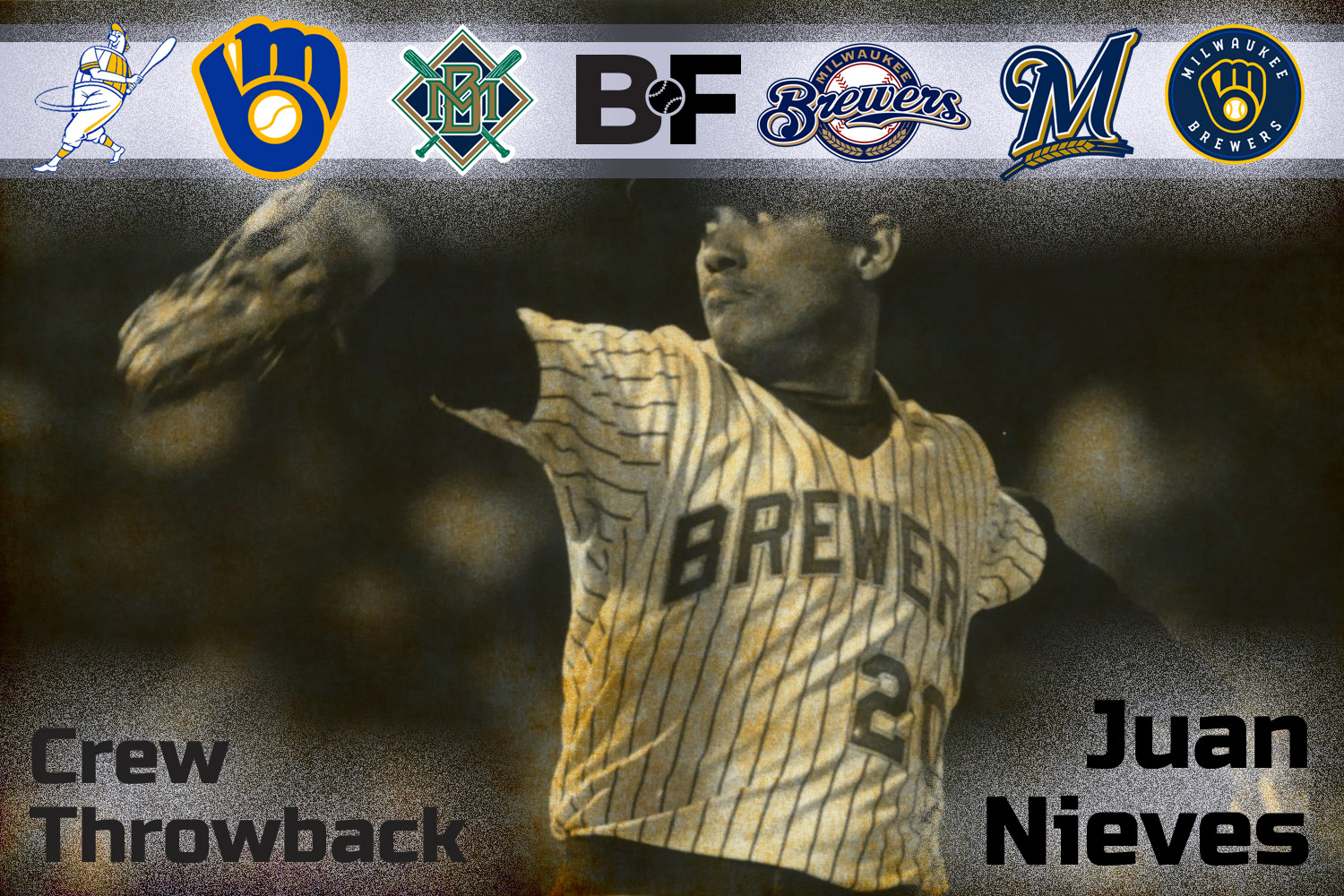 Juan Manuel Nieves Cruz was born in Puerto Rico in 1965. He went to school in Connecticut, and the Brewers won a bidding war for him after he posted a 19-1 record as a high school senior, signing him for the then-impressive figure of $115,000. Nieves was immediately tabbed as a top prospect when he produced a stellar 1.30 ERA while striking out 89 batters in 69 innings (and only 15 walks) as an 18-year-old in A ball. Despite some control issues, he moved quickly through the Brewer system using a mid-90 mph fastball, a good curve, and superior athleticism. Nieves made the Brewers rotation in 1986 as a 21-year-old. Not surprisingly, his performance was erratic. He pitched well to start the season but faded down the stretch. Still, he managed to win 11 games and toss 184.2 innings to go with a 4.92 ERA. The talent was evident. People expected big things. Those big things appeared right out of the gate in 1987. The Brewers began the season with a 13-game winning streak, the ninth game in Baltimore. Nieves threw the first (and only) no-hitter in team history, walking five and striking out seven. Some excellent defense was helped by Paul Molitor, Jim Paciorek (whose fantastic catch is in the video below), and the game-saver by Robin Yount. At the time, Nieves was the second youngest person ever to throw a no-hitter - and the first from Puerto Rico. Nieves showed progress that year, winning 14 games, but he was still plagued by inconsistent performances and bouts of wildness (100 walks in 195.2 IP). In 1988, Nieves struggled with shoulder soreness. He spent some time on the DL and only threw 110.1 innings. But there were signs of growth as a pitcher, as his 4.08 ERA and 1.215 WHIP were the best of his career. Little did anyone realize that Nieves had thrown his last major league game. In early 1989, a rotator cuff tear was detected in Nieves' throwing arm. He only tossed 14 minor league innings that year, then 29 the following season as he tried to battle back to the majors. But it was not to be. Other than a disastrous five-game comeback in 1998 in independent ball, Juan Nieves's career was over. After baseball, Nieves worked as a minor league pitching coach with the Yankees from 1992-96. He then tried his hand as an agent before joining the White Sox as a minor league pitching coach from 1999-2007. From 2008-12, he was the Sox bullpen coach, then was named Boston's pitching coach in 2013, winning a World Series with the club that same year. With Boston's collapse in 2015, Nieves lost his job but landed on his feet when the Marlins named him pitching coach in 2016 - a job he held for three seasons. He has been the Tigers' assistant pitching coach since 2021. On a fun note, Nieves had a small part in the Kevin Costner baseball film "For Love of the Game" in 1999. Due to arm issues, Juan Nieves' playing career lasted only three seasons, all with Milwaukee. The promise he showed never came to fruition. He won 32 games and tossed almost 500 innings with the Crew. For Brewer fans, Nieves' achievements would probably fade into history if not for the historic day in April of 1987. The 22-year-old kid made franchise history - cementing himself a place in the record books and the minds of Brewer fans. Please share your memories of former Brewer pitcher Juan Nieves.
 -
On April 15, 1987, Brewer center fielder Robin Yount made a diving catch of a slicing liner off the bat of Eddie Murray, marking the thrilling finale of the only solo no-hitter in Milwaukee history. The author of that historic event was Juan Nieves. Juan Manuel Nieves Cruz was born in Puerto Rico in 1965. He went to school in Connecticut, and the Brewers won a bidding war for him after he posted a 19-1 record as a high school senior, signing him for the then-impressive figure of $115,000. Nieves was immediately tabbed as a top prospect when he produced a stellar 1.30 ERA while striking out 89 batters in 69 innings (and only 15 walks) as an 18-year-old in A ball. Despite some control issues, he moved quickly through the Brewer system using a mid-90 mph fastball, a good curve, and superior athleticism. Nieves made the Brewers rotation in 1986 as a 21-year-old. Not surprisingly, his performance was erratic. He pitched well to start the season but faded down the stretch. Still, he managed to win 11 games and toss 184.2 innings to go with a 4.92 ERA. The talent was evident. People expected big things. Those big things appeared right out of the gate in 1987. The Brewers began the season with a 13-game winning streak, the ninth game in Baltimore. Nieves threw the first (and only) no-hitter in team history, walking five and striking out seven. Some excellent defense was helped by Paul Molitor, Jim Paciorek (whose fantastic catch is in the video below), and the game-saver by Robin Yount. At the time, Nieves was the second youngest person ever to throw a no-hitter - and the first from Puerto Rico. Nieves showed progress that year, winning 14 games, but he was still plagued by inconsistent performances and bouts of wildness (100 walks in 195.2 IP). In 1988, Nieves struggled with shoulder soreness. He spent some time on the DL and only threw 110.1 innings. But there were signs of growth as a pitcher, as his 4.08 ERA and 1.215 WHIP were the best of his career. Little did anyone realize that Nieves had thrown his last major league game. In early 1989, a rotator cuff tear was detected in Nieves' throwing arm. He only tossed 14 minor league innings that year, then 29 the following season as he tried to battle back to the majors. But it was not to be. Other than a disastrous five-game comeback in 1998 in independent ball, Juan Nieves's career was over. After baseball, Nieves worked as a minor league pitching coach with the Yankees from 1992-96. He then tried his hand as an agent before joining the White Sox as a minor league pitching coach from 1999-2007. From 2008-12, he was the Sox bullpen coach, then was named Boston's pitching coach in 2013, winning a World Series with the club that same year. With Boston's collapse in 2015, Nieves lost his job but landed on his feet when the Marlins named him pitching coach in 2016 - a job he held for three seasons. He has been the Tigers' assistant pitching coach since 2021. On a fun note, Nieves had a small part in the Kevin Costner baseball film "For Love of the Game" in 1999. Due to arm issues, Juan Nieves' playing career lasted only three seasons, all with Milwaukee. The promise he showed never came to fruition. He won 32 games and tossed almost 500 innings with the Crew. For Brewer fans, Nieves' achievements would probably fade into history if not for the historic day in April of 1987. The 22-year-old kid made franchise history - cementing himself a place in the record books and the minds of Brewer fans. Please share your memories of former Brewer pitcher Juan Nieves. View full article
-
Article: Do the Brewers Need to Trade Christian Yelich?
Matt Breen replied to Seth Stohs's topic in Milwaukee Brewers Talk
No team takes on $150m+ for a soon-to-be 31-year old outfielder who is a solid, but not that good. Plus he's aging and has an injury history. That's a disaster waiting to happen. Yelich's 2.8 bWAR is the best he's produced in three years. If he can do that going forward, he's still a valuable player. But does any team really think he can sustain that production when he's 35-36 years old? I'd love to see Yelich rebound - even a little - and just stay healthy. If he could hit .260-.270 with 20 HRs - he's a good player to have. Overpaid? Yes, but still decent. But no team is going to expect big things from him. They'll see a guy that has lost his power and skills, has a rag arm, and is past his prime. Why trade for that? -
The main reason the Dodgers trade for Adames is they want to save their money to go big on other guys - such as Judge. But even then, it seems unlikely.
-
The main reason the Dodgers trade for Adames is they want to save their money to go big on other guys - such as Judge. But even then, it seems unlikely.
-
If you look at the career pitching leaders in Milwaukee Brewer history, there are only two players that fall in the top 10 in each of the following categories: wins, strikeouts, winning percentage, ERA, bWAR, FIP and innings pitched. One is Teddy Higuera - arguably the finest pitcher ever to wear a Brewer’s uniform. And the other guy? Sheets? Caldwell? Slaton? Bosio? Nope. The answer is Yovani Gallardo. Yovani Gallardo was born in Penjamillo, Michoacán, Mexico, in 1986. His family moved to Fort Worth, Texas, when Gallardo was four years old. In 2004, the Brewers selected Gallardo out of high school in the second round of the MLB draft. It didn’t take long for Gallardo, a righty, to become one of the organization's top starting pitchers. Gallardo struck out many batters with his five-pitch arsenal - particularly his fastball/slider/curve mix. Scouts liked his poise, athleticism, and ability to go deep in games (he led the minors in innings pitched in 2006). If you wanted to nitpick anything, it might be that he walked too many batters, and there were some questions about how high of a ceiling he had. Gallardo quickly worked his way up the minor league ladder and made his Brewer debut in 2007. Gallardo was impressive - starting 17 games while going 9-5 with a 3.67 ERA. Not bad for a 21-year-old. The Brewers went into 2008 with hopes to reach the playoffs for the first time in more than a quarter century - and the young Gallardo was a huge part of that hype. However, Gallardo tore the lateral meniscus in his left knee in spring training - missing the start of the season. And then, on his return, he tore his ACL in his right knee while covering first base. He was on the DL the rest of the year until he was activated at the season's end. He started Game 1 of the NLDS but took the loss. What followed next was six of the most consistent years of starting pitching in Brewer history. Gallardo - nicknamed Yo - started between 30-33 games each year, threw between 180-207 innings, and had an ERA between 3.51 and 4.14. He won 17 games in 2011, struck out 200 or more batters three straight years, and was named to the 2010 All-Star game (his only appearance). He also proved to be a quality hitter - winning a Silver Slugger award in 2010 - batting .254 with four home runs, 10 RBIs, and a .504 SLG%. And then, before the 2015 season, with Gallardo just a year away from free agency, the Brewers made a dramatic move - dealing the reliable Gallardo to the Texas Rangers for Marcos Diplan, Corey Knebel, and Luis Sardinas. The move frustrated many fans, who had grown accustomed to the steady work of Gallardo. However, there were signs that he was declining - despite being only 28 years old. The truth is Gallardo was one of the most worked pitchers in the league. He not only threw a lot of innings and faced many batters, but he also threw a ton of pitches. Gallardo had an excellent 2015 season with Texas, which allowed him to ink a 2-year $22M deal with Baltimore. But the magic was gone. He bounced around for the next four years - playing for five different teams. His numbers went from solid to bad to awful (his combined bWAR in the last three years was a grisly -3.8). The 32-year-old Gallardo signed with the Brewers before the 2018 season, but he did not make the club and was released during spring training. It marked the end of Gallardo’s playing career. For his Brewer career, Gallardo played 214 games (211 starts) and logged almost 1,300 innings pitched. He had a solid 3.69 ERA, and the one category he holds the team record for is for strikeouts - his 1,226 punch-outs edging out Ben Sheets by 20. As a hitter, Yo hit a respectable .201 with a dozen HRs in his career. Some highlights of Gallardo’s time in Milwaukee include a 14-strikeout game against Pittsburgh, a walk-off pinch-hit double in the 10th inning against Baltimore, plus a game where he tossed eight shutout innings and hit a home run - the only scoring of the 1-0 game. All and all, Gallardo had a very solid career - but it was disappointing in a couple of ways. First, Gallardo never developed into a top-of-the-rotation ace as many had hoped for. He had a lot of good tools and skills - but nothing exceptional that put him over the top as a pitcher. He was reliable, durable, and a great asset to the team - but he never rose to the level of an elite hurler. The second disappointing aspect of Gallardo’s career was his rapid decline. For seven years, he was a model of consistency and durability. Yet by age 30, he was done as a quality pitcher. Despite those shortcomings, Brewers fans embraced Gallardo during his time with the organization. They loved his hardworking, stoic demeanor. And they loved his dependability - taking the ball every fifth day, year after year. Today, Gallardo and his family, including his wife, son, and two daughters, live in Fort Worth, Texas. He was inducted into the Brewers Wall of Honor in 2021. Please share your memories of former Brewers pitcher Yovani Gallardo. View full article
-
Yovani Gallardo, one of the best pitchers Brewers fans overlook
Matt Breen posted an article in History
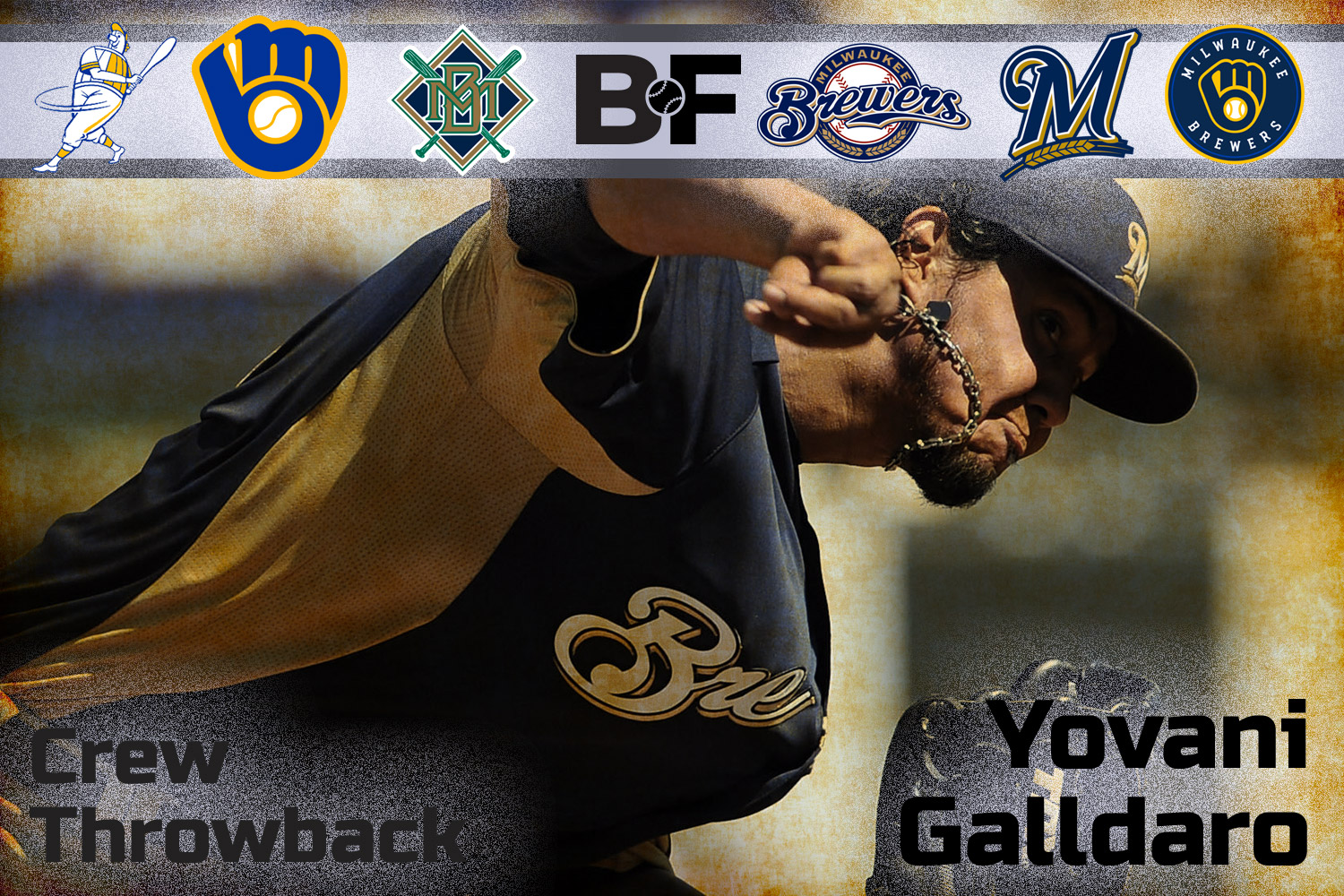 Yovani Gallardo was born in Penjamillo, Michoacán, Mexico, in 1986. His family moved to Fort Worth, Texas, when Gallardo was four years old. In 2004, the Brewers selected Gallardo out of high school in the second round of the MLB draft. It didn’t take long for Gallardo, a righty, to become one of the organization's top starting pitchers. Gallardo struck out many batters with his five-pitch arsenal - particularly his fastball/slider/curve mix. Scouts liked his poise, athleticism, and ability to go deep in games (he led the minors in innings pitched in 2006). If you wanted to nitpick anything, it might be that he walked too many batters, and there were some questions about how high of a ceiling he had. Gallardo quickly worked his way up the minor league ladder and made his Brewer debut in 2007. Gallardo was impressive - starting 17 games while going 9-5 with a 3.67 ERA. Not bad for a 21-year-old. The Brewers went into 2008 with hopes to reach the playoffs for the first time in more than a quarter century - and the young Gallardo was a huge part of that hype. However, Gallardo tore the lateral meniscus in his left knee in spring training - missing the start of the season. And then, on his return, he tore his ACL in his right knee while covering first base. He was on the DL the rest of the year until he was activated at the season's end. He started Game 1 of the NLDS but took the loss. What followed next was six of the most consistent years of starting pitching in Brewer history. Gallardo - nicknamed Yo - started between 30-33 games each year, threw between 180-207 innings, and had an ERA between 3.51 and 4.14. He won 17 games in 2011, struck out 200 or more batters three straight years, and was named to the 2010 All-Star game (his only appearance). He also proved to be a quality hitter - winning a Silver Slugger award in 2010 - batting .254 with four home runs, 10 RBIs, and a .504 SLG%. And then, before the 2015 season, with Gallardo just a year away from free agency, the Brewers made a dramatic move - dealing the reliable Gallardo to the Texas Rangers for Marcos Diplan, Corey Knebel, and Luis Sardinas. The move frustrated many fans, who had grown accustomed to the steady work of Gallardo. However, there were signs that he was declining - despite being only 28 years old. The truth is Gallardo was one of the most worked pitchers in the league. He not only threw a lot of innings and faced many batters, but he also threw a ton of pitches. Gallardo had an excellent 2015 season with Texas, which allowed him to ink a 2-year $22M deal with Baltimore. But the magic was gone. He bounced around for the next four years - playing for five different teams. His numbers went from solid to bad to awful (his combined bWAR in the last three years was a grisly -3.8). The 32-year-old Gallardo signed with the Brewers before the 2018 season, but he did not make the club and was released during spring training. It marked the end of Gallardo’s playing career. For his Brewer career, Gallardo played 214 games (211 starts) and logged almost 1,300 innings pitched. He had a solid 3.69 ERA, and the one category he holds the team record for is for strikeouts - his 1,226 punch-outs edging out Ben Sheets by 20. As a hitter, Yo hit a respectable .201 with a dozen HRs in his career. Some highlights of Gallardo’s time in Milwaukee include a 14-strikeout game against Pittsburgh, a walk-off pinch-hit double in the 10th inning against Baltimore, plus a game where he tossed eight shutout innings and hit a home run - the only scoring of the 1-0 game. All and all, Gallardo had a very solid career - but it was disappointing in a couple of ways. First, Gallardo never developed into a top-of-the-rotation ace as many had hoped for. He had a lot of good tools and skills - but nothing exceptional that put him over the top as a pitcher. He was reliable, durable, and a great asset to the team - but he never rose to the level of an elite hurler. The second disappointing aspect of Gallardo’s career was his rapid decline. For seven years, he was a model of consistency and durability. Yet by age 30, he was done as a quality pitcher. Despite those shortcomings, Brewers fans embraced Gallardo during his time with the organization. They loved his hardworking, stoic demeanor. And they loved his dependability - taking the ball every fifth day, year after year. Today, Gallardo and his family, including his wife, son, and two daughters, live in Fort Worth, Texas. He was inducted into the Brewers Wall of Honor in 2021. Please share your memories of former Brewers pitcher Yovani Gallardo.
 -
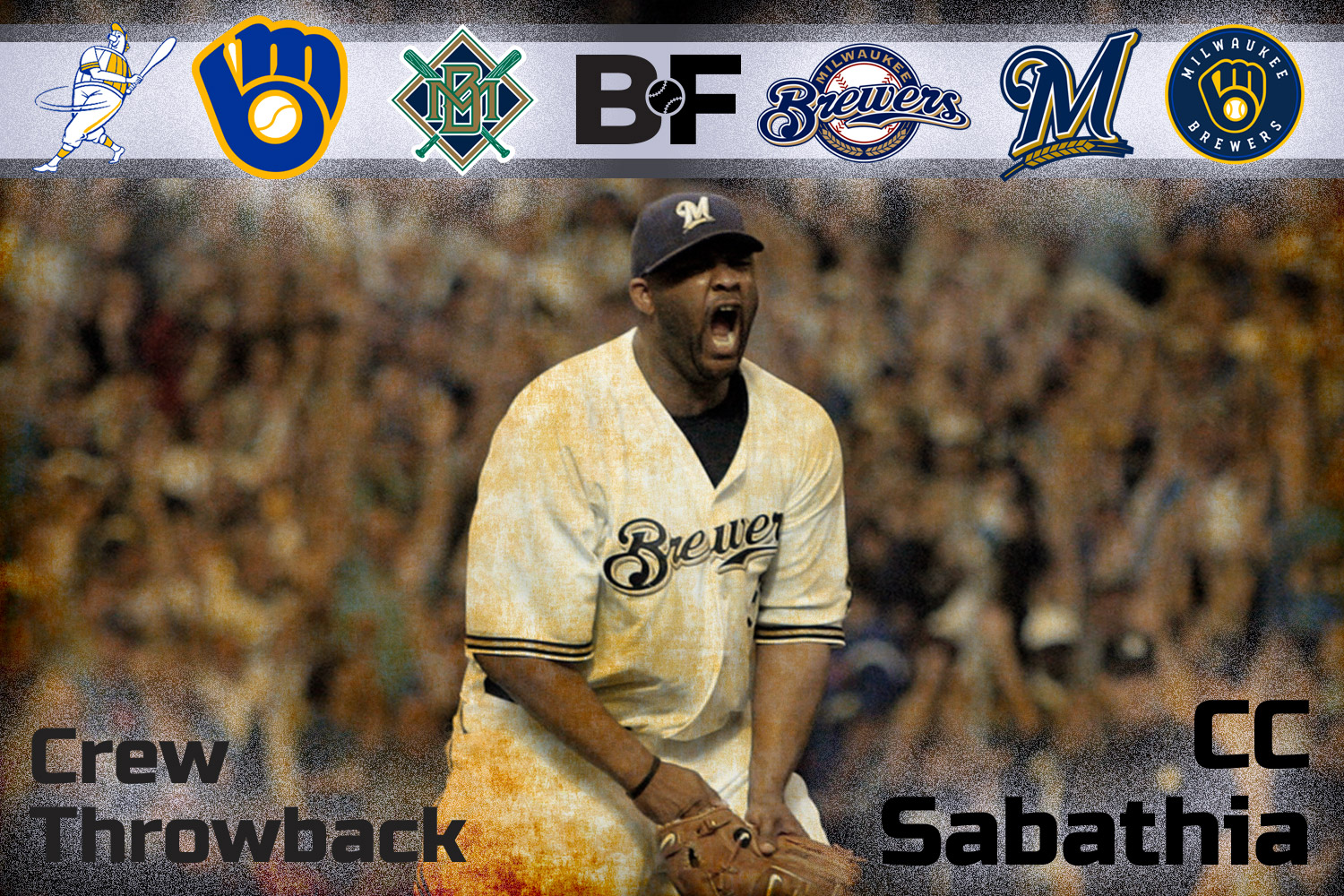 Carsten Charles Sabathia - aka CC - was born in Vallejo, California, in 1980. He was an outstanding high school athlete, receiving scholarship offers to play football and baseball. But professional baseball was Sabathia’s path after being selected in the 1st round (20th overall) by the Cleveland Guardians in the 1998 draft. CC Sabathia moved quickly through Cleveland's minor league system - skipping AAA ball - and heading to the majors after only three seasons. He won 17 games as a 20-year-old rookie - and went on to anchor Cleveland’s rotation for the next seven and a half years. He was named to three All-Star teams and won the 2007 AL Cy Young award. However, the 2008 Guardians struggled to a 37-46 record through June of that season, causing speculation that Sabathia - who was scheduled to be a free agent at the end of the season - would be dealt. Cleveland was, after all, a small market team and didn’t want to lose Sabathia for simple draft compensation. And thus, on July 8, Cleveland shocked the baseball world by dealing the big lefthander. Many had expected the Guardians to trade Sabathia at the deadline - and to a big market club. But the Brewers stepped up to the plate - offering a package of Matt LaPorta, Michael Brantley, Zach Jackson, and Rob Bryson. LaPorta - a power-hitting first baseman - was considered the big prize for Cleveland. The Brewers were 50-40 at the time of the trade, and General Manager Doug Melvin saw Sabathia as the missing ingredient to getting Milwaukee back into the playoffs. The result was a glorious three months for the Brewers and their success-starved fans and Sabathia was at the center of it all. In that time, he started 17 games, won 11 of them, tossed 130.2 innings, seven complete games, three shutouts, and even hit a solid .229 with a home run. The apex of Sabathia’s season was on September 28, 2008. It was the year's final game, and Sabathia took the ball on four days' rest with the Brewers' season on the line. The result was a 3-1 Brewer victory over the Cubs, with Sabathia going all nine innings while surrendering only four hits. The Brewers clinched the wild card spot about an hour later when the Mets lost - sending the blue and gold confetti down from Miller Park’s rafters to the cheers of tens of thousands of fans who had stayed to watch the Mets-Marlins game on the stadium Jumbotron. The author of this article was at that magical game - and can attest that it was one of the most exhilarating moments in Brewer history. CC Sabathia had come to Milwaukee and carried the club into the playoffs for the first time since 1982. Sadly, that was the end of the Brewers' run that season. The Crew lost to Philadelphia in the playoffs, Sabathia losing his only start. And that ended CC Sabathia’s short but memorable, run in Milwaukee. While fans hoped Sabathia would return to the club, most everyone knew the man was set on free agency. The result was a big deal with the New York Yankees. Sabathia spent 11 seasons in the Bronx - maintaining his dominating ways for the first four years with the club. He was named to three more All-Star teams and MVP of the 2009 ALCS. That same year, Sabathia won a World Series. Unfortunately, injuries, wear and tear, and other health issues - including a battle with drinking - eroded Sabathia’s skills, and he went from a dominant pitcher to a solid one for the rest of his career. He retired after the 2019 season, finishing with 251 wins and 61.8 bWAR - which may get him in the Hall of Fame someday. Since retiring from baseball, Sabathia has been heavily involved in charity work and has a podcast with sportscaster Ryan Ruocco. It is hard to imagine how critical CC Sabathia was to the Brewers in 2008. The club had missed out on the playoffs for more than a quarter of a century - and the fans were desperate to get back into postseason play. That would not have been possible without Sabathia’s monumental achievements of that summer. And while Sabathia did leave after the season, hardly anyone begrudged the man the opportunity. He had given his heart, soul, and body to the team - and to this day, fans are grateful for that impressive run. In the end, some argue the deal for Sabathia was for naught. We didn’t even win a playoff series - much less a World Series. And the cost was high - and not because we gave up one of the game’s top prospects - Matt LaPorta - who turned out to be a bust. No, one of the extra guys in the deal - Michael Brantley - turned out to be an All-Star. Brantley has gone on to be a five-time All-Star - and a career .298 hitter. No matter, CC Sabathia’s brief run in Milwaukee was a fantastic time in Brewer history. And it may have been Sabathia’s greatest stint in his remarkable career - which is saying a lot. Please share your memories of former Brewer pitcher CC Sabathia.
 -
When CC Sabathia arrived in Milwaukee in early July of 2008, he didn’t say, “Get on my back. I’m carrying this club.” But he may as well have done so. Sabathia had one of the greatest half-seasons of baseball in club history. Over 17 starts, he was an absolute workhorse - carrying the Brewers into the playoffs for the first time in 26 years. It was a magical - if short-lived - time for Brewer fans. Carsten Charles Sabathia - aka CC - was born in Vallejo, California, in 1980. He was an outstanding high school athlete, receiving scholarship offers to play football and baseball. But professional baseball was Sabathia’s path after being selected in the 1st round (20th overall) by the Cleveland Guardians in the 1998 draft. CC Sabathia moved quickly through Cleveland's minor league system - skipping AAA ball - and heading to the majors after only three seasons. He won 17 games as a 20-year-old rookie - and went on to anchor Cleveland’s rotation for the next seven and a half years. He was named to three All-Star teams and won the 2007 AL Cy Young award. However, the 2008 Guardians struggled to a 37-46 record through June of that season, causing speculation that Sabathia - who was scheduled to be a free agent at the end of the season - would be dealt. Cleveland was, after all, a small market team and didn’t want to lose Sabathia for simple draft compensation. And thus, on July 8, Cleveland shocked the baseball world by dealing the big lefthander. Many had expected the Guardians to trade Sabathia at the deadline - and to a big market club. But the Brewers stepped up to the plate - offering a package of Matt LaPorta, Michael Brantley, Zach Jackson, and Rob Bryson. LaPorta - a power-hitting first baseman - was considered the big prize for Cleveland. The Brewers were 50-40 at the time of the trade, and General Manager Doug Melvin saw Sabathia as the missing ingredient to getting Milwaukee back into the playoffs. The result was a glorious three months for the Brewers and their success-starved fans and Sabathia was at the center of it all. In that time, he started 17 games, won 11 of them, tossed 130.2 innings, seven complete games, three shutouts, and even hit a solid .229 with a home run. The apex of Sabathia’s season was on September 28, 2008. It was the year's final game, and Sabathia took the ball on four days' rest with the Brewers' season on the line. The result was a 3-1 Brewer victory over the Cubs, with Sabathia going all nine innings while surrendering only four hits. The Brewers clinched the wild card spot about an hour later when the Mets lost - sending the blue and gold confetti down from Miller Park’s rafters to the cheers of tens of thousands of fans who had stayed to watch the Mets-Marlins game on the stadium Jumbotron. The author of this article was at that magical game - and can attest that it was one of the most exhilarating moments in Brewer history. CC Sabathia had come to Milwaukee and carried the club into the playoffs for the first time since 1982. Sadly, that was the end of the Brewers' run that season. The Crew lost to Philadelphia in the playoffs, Sabathia losing his only start. And that ended CC Sabathia’s short but memorable, run in Milwaukee. While fans hoped Sabathia would return to the club, most everyone knew the man was set on free agency. The result was a big deal with the New York Yankees. Sabathia spent 11 seasons in the Bronx - maintaining his dominating ways for the first four years with the club. He was named to three more All-Star teams and MVP of the 2009 ALCS. That same year, Sabathia won a World Series. Unfortunately, injuries, wear and tear, and other health issues - including a battle with drinking - eroded Sabathia’s skills, and he went from a dominant pitcher to a solid one for the rest of his career. He retired after the 2019 season, finishing with 251 wins and 61.8 bWAR - which may get him in the Hall of Fame someday. Since retiring from baseball, Sabathia has been heavily involved in charity work and has a podcast with sportscaster Ryan Ruocco. It is hard to imagine how critical CC Sabathia was to the Brewers in 2008. The club had missed out on the playoffs for more than a quarter of a century - and the fans were desperate to get back into postseason play. That would not have been possible without Sabathia’s monumental achievements of that summer. And while Sabathia did leave after the season, hardly anyone begrudged the man the opportunity. He had given his heart, soul, and body to the team - and to this day, fans are grateful for that impressive run. In the end, some argue the deal for Sabathia was for naught. We didn’t even win a playoff series - much less a World Series. And the cost was high - and not because we gave up one of the game’s top prospects - Matt LaPorta - who turned out to be a bust. No, one of the extra guys in the deal - Michael Brantley - turned out to be an All-Star. Brantley has gone on to be a five-time All-Star - and a career .298 hitter. No matter, CC Sabathia’s brief run in Milwaukee was a fantastic time in Brewer history. And it may have been Sabathia’s greatest stint in his remarkable career - which is saying a lot. Please share your memories of former Brewer pitcher CC Sabathia. View full article
-
Article: The Case for Trea Turner in Brewer Gold
Matt Breen replied to Kyle Ginsbach's topic in Milwaukee Brewers Talk
There's really not a 'case' to be made about adding Trea Turner to the roster. He'd be awesome. He'd be pretty much awesome for any team. But it's about finances. Are we really going to drop $30M+ on a player - for at least five years? The case should be how can we manage that? -
Article: The Case for Trea Turner in Brewer Gold
Matt Breen replied to Kyle Ginsbach's topic in Milwaukee Brewers Talk
There's really not a 'case' to be made about adding Trea Turner to the roster. He'd be awesome. He'd be pretty much awesome for any team. But it's about finances. Are we really going to drop $30M+ on a player - for at least five years? The case should be how can we manage that? -
Glenn Braggs Had All the Tools But Couldn't Put Them Together
Matt Breen posted an article in History
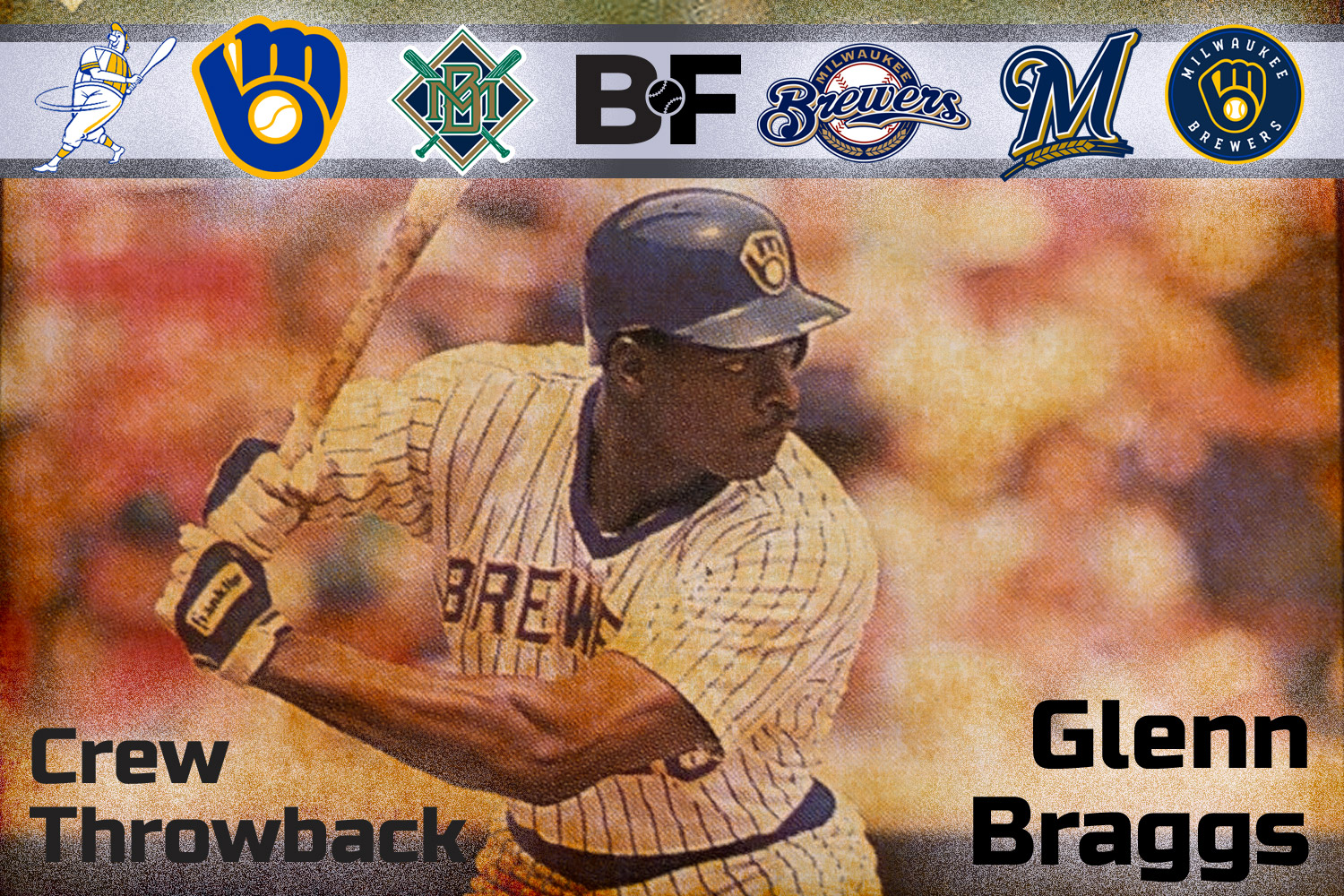 Glenn Erick Braggs was born in 1962 in San Bernardino, California. A right-handed hitter, he attended the University of Hawaii and was drafted in the 2nd round of the 1983 amateur draft. Braggs quickly developed into one of Milwaukee's brightest young prospects, hitting .390 and producing an OPS of 1.189 in rookie ball. The powerful young outfielder quickly moved through the minors, hitting a robust .360 with 15 HR in only 90 games at AAA in 1986. It led to the Brewers calling up Braggs and installing him in left field that season (he bounced between left and right field during his career). Braggs struggled his first season, hitting .237 in 58 games. But in 1987, with some experience under his belt, he improved, hitting .269 with 13 HR and a .762 OPS. It was a solid full-season debut, and many saw stardom in Braggs' future. He had a sweet swing, and many said he was one of the most powerful men they had ever seen in the game. However, a shoulder injury the following season cost Braggs more than half the year, and his 1989 season saw him regress in many areas (although he hit a career-high 15 home runs). Things soured for Braggs as he tried to fulfill lofty expectations, and he saw less and less playing time as he struggled, particularly against right-handed pitching. In June 1990, he was traded to Cincinnati for pitchers Ron Robinson and Bob Sebra - neither of whom had any meaningful impact in Milwaukee. He settled in as a part-time player in Cincinnati for three seasons with modest success and was part of the Reds' 1990 World Series team, making a nice home run-saving catch to preserve his team's lead in game six. In 1993, he signed with Yokohama in the Japanese League, beginning a successful four-year run overseas. He hit .300 in Japan and, in 1994, smashed 35 home runs. Braggs retired from professional baseball after the 1996 season at age 33. After retiring, Braggs became a real estate agent. He married Cindy Herron of the R&B group En Vogue in 1994, and the couple had four children - although Herron filed for divorce early in 2022 after 29 years of marriage. Braggs has focused on his real estate business and doesn't do much involving baseball, but he has participated in past Brewer Fantasy Camps. He is a vegan, and he has a lifelong interest in fitness. Braggs hit .255 with 45 home runs for his career with Milwaukee, and produced a .726 OPS. His career was solid, if undistinguished. But in hindsight, the results were a disappointment to most. When he arrived in Milwaukee, he was a "can't miss" player - and one of the most hyped prospects in years. Scouts raved about his swing and physical tools. Everyone expected a star. Braggs later said that he felt that he tried too hard. Ultimately, his excellent physical tools weren't enough. He was stiff in the field and at the plate. Many great players have an effortlessness to their game - something Braggs never developed. As noted, Braggs was considered one of the strongest players in the league, looking more like a football player than a baseball player. One of the things people remember him for was the time he shattered a bat on his own back after swinging and missing at a pitch. Take a look - it's pretty amazing. Glenn Braggs' bat breaks on back"> Please share your memories of former Milwaukee Brewer outfielder Glenn Braggs.

