Matt Breen
-
Posts
9,112 -
Joined
-
Last visited
-
Days Won
1
Content Type
Profiles
Forums
Blogs
Events
News
2026 Milwaukee Brewers Top Prospects Ranking
Milwaukee Brewers Videos
2022 Milwaukee Brewers Draft Picks
Milwaukee Brewers Free Agent & Trade Rumors, Notes, & Tidbits
Guides & Resources
2023 Milwaukee Brewers Draft Picks
2024 Milwaukee Brewers Draft Picks
The Milwaukee Brewers Players Project
2025 Milwaukee Brewers Draft Pick Tracker
2026 Milwaukee Brewers Draft Tracker: Picks & Bonuses
Store
Downloads
Gallery
Everything posted by Matt Breen
-
I don't remember what year it was, but it would have probably been around 1990. My friend came over to watch the draft with me. We wrote out predictions. Now, April is usually not that warm - but that day it was friggin' hot in Madison. So my buddy brought over a bottle of vodka and some lemonade. Proceeded to get drunk and watch the draft - laughing our ass off at Paul Zimmerman who couldn't get any pick right and couldn't believe most of the selections. Good times.
-
Here are predictions for today: Wild Idea: Packers trade up to pick Tetairoa McMillan. Probably cost our 1st and 2nd round picks - to jump over Dallas. Very unlikely, but that's why it is a wild idea. 1st round: DT Derrick Harmon or CB Will Johnson. Dark horse pick: OL Grey Zabel. Matthew Golden would work, but I bet he's gone.
-
I remember watching the first NFL Draft on ESPN back in 1980. Weird to think how far things have come.
-
Right now, I think the Packers grab DT Derrick Harmon if he is still there at #23. Just a way-to-early guess.
-
Jake Bauers has more than 600 ABs over the last two years. He's hit freaking .200. He has a combined bWAR of -1.3. He's not good. He should not be on our roster. And this is done by protecting him against left-handed pitchers. Less than 10% of his at bats have been against lefties the last couple of years. He's not a particularly good defender, and his base running is mediocre - at best. Please no. Just give Tyler Black the job. Maybe he'll stink, but at least he has some promise to offer - unlike Bauers.
-
 Did not see that one coming. Nice signing at that price. I'm surprised no one was willing to give Quintana more $$$.
 -
That's a lot of money. Oh well, better in Boston than Chicago.
-
Nothing wrong with Inglesias. He'll hit for a decent average, but that is it. He has no power. Never has. Defense isn't what it used to be either. And every single projection (ZIPS, Steamer, a few others) I have seen has him as a sub.-.700 OPS player. The upside is negligible - unless he suddenly is a .300 hitter like he did last season (when he was great). I just don't trust the guy at 35. And I'd rather have someone with more upside than Jose. All that aside, the guy is really weird. Every now and then he'll just get into a groove and just hit and hit and hit. Odd career.
-
It's possible - but Hernandez has had an OPS of .654, .646 and .629 that last three years. Good defense. Little upside. So probably more utility infielder type guy.
-
Rodgers is a big bag of 'meh'. As noted elsewhere, he hits lefties well, but he's been bad against right handers and bad away from Coors field (.826 OPS at Coors vs .626 OPS on the road). But he's young enough that the club might think they can 'fix' him or something like that. He probably would get plugged in at 2B - with Turang going to SS. Not a fan of it all.
-
I really dislike DeJong. Other than some power, he's just a black hole with the bat. But I could see the Brewers signing him on the cheap.
-
The allure of Drury is 2022-23. He hit .263 and .262, respectively, with 26 and 28 HRs. He had an OPS north of .800 both years. He was horrible in 2024. A minor league deal to see how he looks - and hope for some sort of rebound - is totally in line with how the Brewers operate.
-
With Moncada off the market, I'm betting the Brewers sign one of Paul DeJong, Brandon Drury or Brendan Rodgers.
-
Gone: Khris Middleton (thank you!), Delon Wright, MarJon Beauchamp, AJ Johnson Additions: Jericho Sims, Kevin Porter Jr., Kyle Kuzma Are we better? I think so. A healthy Middleton is - hands down - the best player in this bunch. But it looks like the club - and the players - know Khris isn't up to snuff. I haven't watched a lot of games, but he looks like a liability on defense. And just not knowing his health is difficult. Kuzma had been made fun of a lot on the Internet. But some he has some value. Many think he's been miscast as a big scorer. He's more of a #3-4 option - which is what he will be asked of in Milwaukee. And he was known to be adequate defensively - although I'm not sure where he is at now. I'm guessing the club feels they can get him back to that sort of a role now that he's off a losing club. In the end, this club can only do so much due to their financial limitations. And let's face it - you have Giannis. You optimize these windows of opportunity. I don't think anyone thought we were going to win with Middleton. I think (and hope) we can improve with Kuzma, Porter and Sims. We have half a season for this team to gel. Let's hope for the best.
-
I'm curious to see what happens if the club loses early in the playoffs again. I'm guessing Horst gets the axe. But lots can happen. Maybe Kuzma will fit in really well. Cross fingers.
-
I think Horst was desperate to do something - anything. Does it make us better? I don't know. Now that we are under the 2nd apron, I wouldn't be surprised if there's other moves coming.
-
Fox, Luca, and Lavine are on the move. Assuming Lavine is in his final landing place for 2025, that really leaves Jimmy Butler and Bradley Beal as the last big players rumored to be on the market. This is my guess on how things play out. 1. The Bucks don't want Beal. He's not that much of an upgrade, and is wildly expensive the next two years. The team is better to just hope Middleton rounds into form. 2. Butler to the Suns doesn't happen due to Beal not wanting to go to a bad team and/or cold weather team. He might accept Milwaukee - but as stated in #1 - he doesn't make the Bucks that much better of a team (if at all better). 3. That leaves Butler in a quandary. So the Bucks say, "Hey, Jimmy, we know you are not thrilled by Milwaukee. But come on up here, let's see how it goes for the rest of the season. It's just a few months. If you don't like it, we'll find a sign-and-trade deal for you this summer." Butler brings a ton of intensity, defense and a huge chip on his shoulder to the club. Opens up door for a championship run. He can then re-up, and we keep it up for a couple of more years. Or he can ask for a sign and trade. 4, Okay, how does this happen? Butler to Milwaukee. Portis, Middleton and our 2031 #1 pick to Miami. You then need another team to take Pat C and his $9m salary (gets us under the 2nd tax apron - otherwise we can't combine salaries - meaning Middleton and Portis - to get Butler). Example would be Pat C, Marjon Beauchamp, and a 2nd rounder for a minimum wage guy. If that's not enough - get Miami to throw in a 2nd rounder to facilitate the deal. I'm guessing there would be some small salary guys tossed in on both sides - but you get the idea. 5. Why would Milwaukee do this? As noted, Butler is truly a guy who would elevate the team. It is, however, a huge risk. Who knows if Butler would work will with Giannis and Dame. And then there's the health issue. Butler is no spring chicken. So why take the risk? And why give up yet another first round pick? Because the current lineup looks lacking. And Horst doesn't really care about 2031. He cares about the next three seasons or so - while Giannis is in full superstar mode. If the club stands pat or makes only a weak upgrade - and then falters again early in the playoffs - his job is on the line. The guy wants to keep working. He wants to be successful now. He doesn't care about five years from now. That makes a guy willing to take big risks. Butler is that risk. Of course, if Butler doesn't want to be here - so be it. You can't force him - and you look elsewhere. But I'm betting Horst and company make a play for Butler in the coming days as he represents a true path to making the team better for the rest of the year - and maybe beyond.
-
To me, the crazy thing is that the Dallas GM didn't feel out other teams about a deal. He honed in on LA and only LA. Seems like he could have scored a bigger haul from other clubs. But who knows. Just seems like Dallas could have got quite a bit more.
-
I don't know that much about the NBA, so this is my arm chair thoughts. The Bucks seem to think their current lineup doesn't have a good chance at a championship. The primary issue is Middleton is aging, injury prone and just not as good as he once was. He seems like the guy the club is aiming to replace. That leads to the question of who can you get to replace him? Option 1, Jimmy Butler. The guy doesn't sound like he wants to be in Milwaukee, so don't worry about him. And with all of his injuries and age - you have to be worried about how long he can keep going. Butler makes $49m this year, and has a player option for $52m next year. He is honked off because the Heat wouldn't give him a max extension - which would be two years at something like $54m and $58m. Option 2. Bradley Beal. The dude looks like he's old - like Khris Middleton old. I guess he's healthier than Khris, but I'm worried he'll be another aging player who will get less and less effective. Perhaps I'm wrong about this. The guy is only 31, but he's missed some significant time with injuries the last 4-5 years. I mean, is he an upgrade over Middleton? Probably. But is he that much of a difference maker? I'm not so sure. Especially at his price - $50m this year, and then two more years at $53m and $57m. Option 3, Zach Lavine. The Bulls guard doesn't have the resume of Butler or Beal, but he's having a great year. He's getting 24 points a game, and shooting 44% from three. He makes $42m this year, and $46m next year. He has a player option for 2026/27 for $49m. He's had some injuries - but has been healthy this year - and is only 29. The Bulls like Lavine, but they are looking to rebuild. So now is the time to deal him. To me, focusing Lavine is the best option. It gives the club a couple of seasons to focus on winning around a powerful threesome (Giannis, Dame and Lavine). His salary is not small - but not as onerous as what Beal and Butler will make. What would Lavine cost? I'm assuming it will take some sort of multi-team deal to happen. But to equal out the money, the team could package Middleton and Portis ($44m). Perhaps one or both of those guys then get re-routed to Miami in a Butler deal. I'm guessing we'd have to offer more - but I don't know values very well. The other thing the Bucks would need to do is deal Pat Connaughton - to get under the second apron (if we don't do this, we can't aggregate salaries together in a trade). They'd have to attach some asset(s) to make that happen. What those assets are - I can't say. It annoys me we gave up five 2nd round picks for Crowder a few years ago. That was just stupid. I know 2nds are that valuable, but maybe a few of those could have done the trick. Oh well, just ruminating.
-
Money and what the trade stuff would be - yeah, I'd take the guy. In a heartbeat. He'd bring a scary intensity to this club. I'd take the risk. Of course, it might all implode. But whatever. You only live once. Of course, you have to be confident he can live in an ecosystem with Giannis and Dame. That might not be feasible.
-
Our nightmare continues…
-
Wait, These Guys Were Once Brewers?
Matt Breen replied to Matt Breen's topic in Brewer Fanatic Front Page News
Abbot, Brunansky and Franco would have been great guys to add. Thanks. -
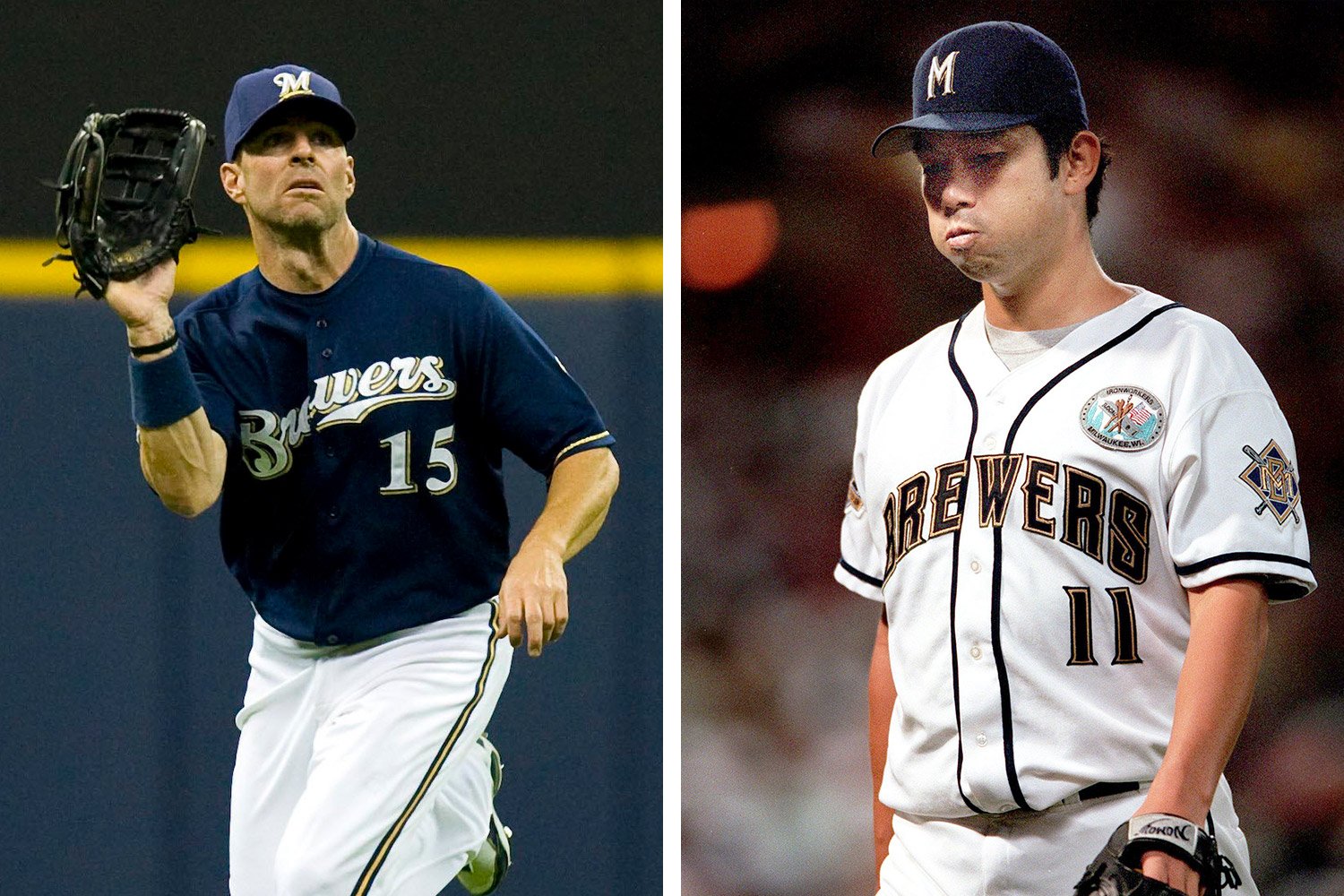 Here is a list of prominent major league players who had short (one or two seasons) stays with the Brewers. Rob Dibble The former Reds All-Star closer and Nasty Boy ended his career in Milwaukee in 1991, tossing 12 innings with an 8.25 ERA. Willie Randolph The Brewers signed the six-time All-Star second baseman in 1991, right before the start of the season. Randolph, 36, hit a career-high .327. He became a free agent after the season. Dave Parker The Cobra was one of the most feared hitters of his day. He was named to seven All-Star teams and won the NL MVP award in 1978. At 39, Parker’s all-star days were behind him when he joined the Brewers as a free agent, serving as the club’s primary designated hitter. He rewarded the team by hitting .289 and 21 home runs. The Brewers traded Parker to the Angels the following spring for Dante Bichette. Hank Aaron As his career faded, one of baseball’s all-time greats was winding down his days and was looking for an American League team that could use him at the designated hitter position. The Brewers fit the bill, and Aaron was happy to return to a city where he had fond memories. The team thus traded for Aaron after the 1974 season. The Brewers (who were not very good) enjoyed Aaron’s star power for two years before he retired at age 42. However, his time in Milwaukee was not good as baseball’s home run king’s abilities were in decline. Ray Fosse Fosse was one of baseball’s most promising young catchers coming up with Cleveland in the early 1970s, including two All-Star appearances and a Gold Glove in his first two seasons. Injuries, however, derailed his career. His final go in the majors was a failed 19-game stint with the Brewers in 1979 at the age of 32. Devon White White, a center fielder, was known for his elite glove (seven Gold Gloves) and solid bat. But his skills had eroded when he reached Milwaukee for his final season in 2001. Despite being 38, White could still hit (.277 and 14 home runs), but his defense had eroded badly, and he called it a career after the season. Jim Edmonds Edmonds, a center fielder, won eight Gold Gloves and appeared in four All-Star games in his career. While not in the Hall of Fame, he accumulated an impressive 60+ bWAR. After a year out of baseball, Edmonds made a comeback in 2010 with the Brewers at age 40, making the team on a minor league contract. And he did well, hitting .286 and adding eight home runs on 240 at bats. However, with the team out of the playoff race, the Crew traded him to the Reds in August. Hideo Nomo Nomo was among the first Japanese players to come to America and have a long and successful career. He won the Rookie of the Year Award in 1995 and made the All-Star team. But Nomo’s effectiveness waned after a few years, and he was traded and then released by two teams. He joined the Brewers in early 1999, resurrecting his career - throwing 176 innings and winning 12 games. He was let go by the Brewers after the season and had four more solid seasons before his career fell off a cliff. Rick Dempsey Dempsey may not have been an All-Star player, but he was one of the majors' most durable and long-lasting catchers for nearly a century. He was also famous as one of baseball’s great entertainers. Dempsey played with Milwaukee in 1991 for his second-to-last season, serving adequately as the club’s backup catcher.
- 4 comments
-
- 1
-

-
- dave parker
- ray fosse
- (and 5 more)
-
There are often times when we read a story or see a video of past Brewer teams. We often are surprised to find out that some famous (and not-so-famous) players spent a year or two with the club. Many, but not all, of these players were at the end of their careers - playing for one more chance to prolong their glory days. Here is a list of prominent major league players who had short (one or two seasons) stays with the Brewers. Rob Dibble The former Reds All-Star closer and Nasty Boy ended his career in Milwaukee in 1991, tossing 12 innings with an 8.25 ERA. Willie Randolph The Brewers signed the six-time All-Star second baseman in 1991, right before the start of the season. Randolph, 36, hit a career-high .327. He became a free agent after the season. Dave Parker The Cobra was one of the most feared hitters of his day. He was named to seven All-Star teams and won the NL MVP award in 1978. At 39, Parker’s all-star days were behind him when he joined the Brewers as a free agent, serving as the club’s primary designated hitter. He rewarded the team by hitting .289 and 21 home runs. The Brewers traded Parker to the Angels the following spring for Dante Bichette. Hank Aaron As his career faded, one of baseball’s all-time greats was winding down his days and was looking for an American League team that could use him at the designated hitter position. The Brewers fit the bill, and Aaron was happy to return to a city where he had fond memories. The team thus traded for Aaron after the 1974 season. The Brewers (who were not very good) enjoyed Aaron’s star power for two years before he retired at age 42. However, his time in Milwaukee was not good as baseball’s home run king’s abilities were in decline. Ray Fosse Fosse was one of baseball’s most promising young catchers coming up with Cleveland in the early 1970s, including two All-Star appearances and a Gold Glove in his first two seasons. Injuries, however, derailed his career. His final go in the majors was a failed 19-game stint with the Brewers in 1979 at the age of 32. Devon White White, a center fielder, was known for his elite glove (seven Gold Gloves) and solid bat. But his skills had eroded when he reached Milwaukee for his final season in 2001. Despite being 38, White could still hit (.277 and 14 home runs), but his defense had eroded badly, and he called it a career after the season. Jim Edmonds Edmonds, a center fielder, won eight Gold Gloves and appeared in four All-Star games in his career. While not in the Hall of Fame, he accumulated an impressive 60+ bWAR. After a year out of baseball, Edmonds made a comeback in 2010 with the Brewers at age 40, making the team on a minor league contract. And he did well, hitting .286 and adding eight home runs on 240 at bats. However, with the team out of the playoff race, the Crew traded him to the Reds in August. Hideo Nomo Nomo was among the first Japanese players to come to America and have a long and successful career. He won the Rookie of the Year Award in 1995 and made the All-Star team. But Nomo’s effectiveness waned after a few years, and he was traded and then released by two teams. He joined the Brewers in early 1999, resurrecting his career - throwing 176 innings and winning 12 games. He was let go by the Brewers after the season and had four more solid seasons before his career fell off a cliff. Rick Dempsey Dempsey may not have been an All-Star player, but he was one of the majors' most durable and long-lasting catchers for nearly a century. He was also famous as one of baseball’s great entertainers. Dempsey played with Milwaukee in 1991 for his second-to-last season, serving adequately as the club’s backup catcher. View full article
-
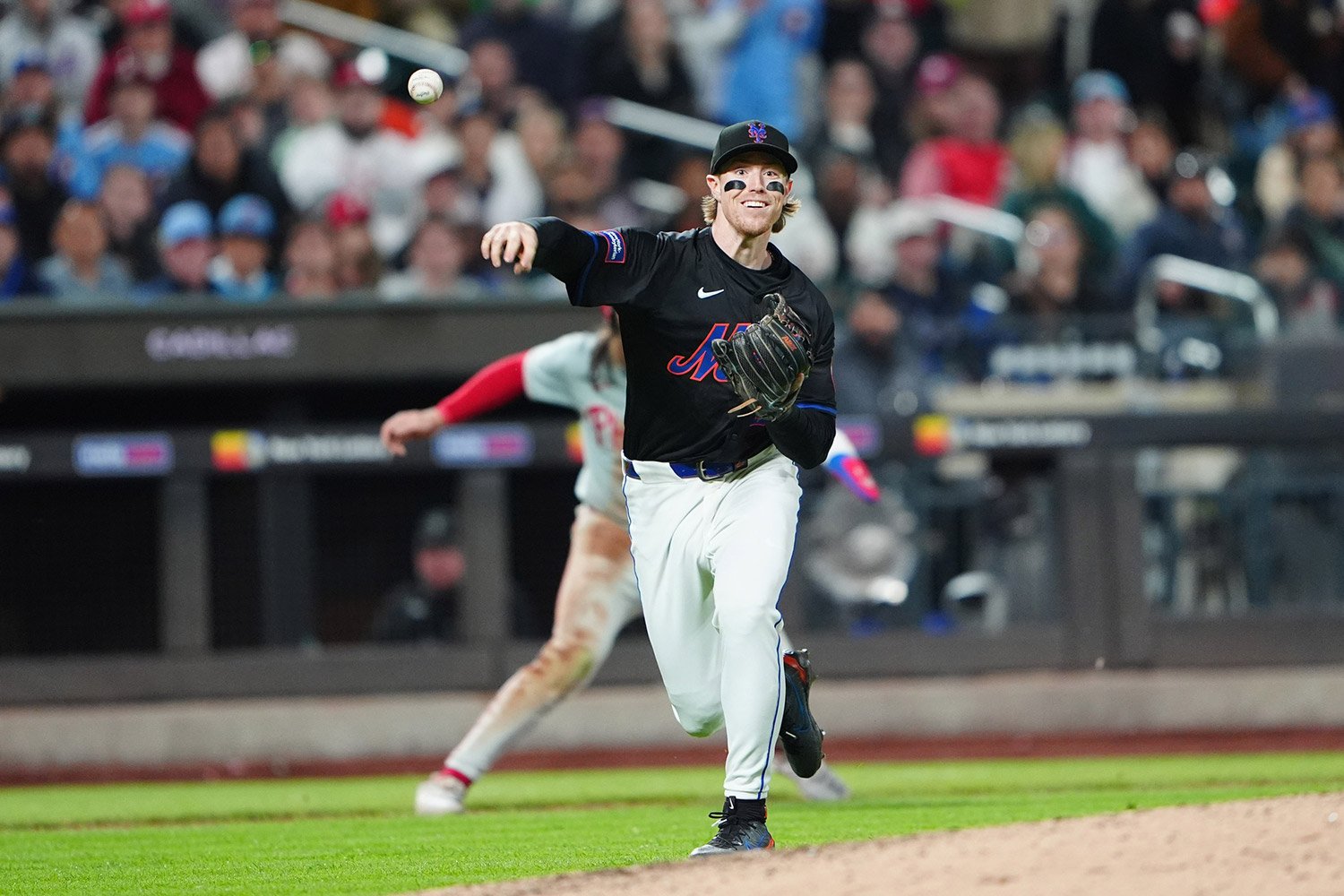 The Brewers trade of Devin Williams to New York Yankees for Nestor Cortes and Caleb Durbin addresses a couple of glaring holes in the team’s roster: starting pitching and infield depth. But let’s not kid ourselves about Durbin - he will not be unquestioningly given a starting position in 2025. He might be a nice story, but some believe he projects as a utility player rather than an everyday infielder. Sure, Durbin can put the ball in play, and he has plus speed. But he doesn’t hit the ball hard, which limits his upside. Could Durbin be an everyday infielder in the majors? Yes, but the likelihood is small. No matter your take on Durbin, the Brewers should be looking at providing infield competition for 2025. With Joey Ortiz and Brice Turang, the team has flexibility in how they line up their defense. With that in mind, this article looks at three players who could handle second or third base next year in Milwaukee. None of these players has a sure starting spot in the big leagues in 2025, so they shouldn’t break the bank to acquire - assuming their teams are open to dealing them. Brett Baty, 3B, NY Mets Baty represents a guy with a bright pedigree who has lost his shine. Baty, drafted 12th overall in 2019, was a top 50 prospect a few years ago, hitting .300+ at Triple A with power. But he has underwhelmed at the major league level. Over the past two years, he's logged more than 500 at-bats yet has struggled with a .607 OPS. He has been surpassed at third base by Mark Vientos. By the way, a wild card is free agent Pete Alonso. Without Alonso, the club might be happy to shift Baty to first base. But the Mets are probably odds on being a favorite to bring back Alonso, leaving Baty without a position. The left-handed hitting Baty would be a risk due to his (thus far) failure to adapt to big league pitching. But the guy is still only 25 years old - and if the Brewers feel they can help him reach his potential, he's a 25+ home run bat who the club would control for five years. He would slide into the third base spot with Turang and Ortiz handling the middle of the infield. Justin Foscue, 2B, Texas Rangers The right-handed hitting Foscue was the 14th overall pick in 2020. He is a bat-first guy but lacks range and arm strength. That means he would slot into the Brewers lineup as a second baseman, with Turang and Ortiz covering shortstop and third base. Foscue has been a good (but not great) minor-league hitter. While his power has been good, his calling card has been his ability to get on base (career .388 OBP in the minors). He has walked more than he has struck out in the last two years at Triple A. Foscue has never hit over .300 as a pro, but he's also never hit below .266. His hit tool is very good, and his bat has potential for 20 home runs. The key is whether his glove can play at the big league level. Some believe he is destined for first base or designated hitter. Foscue's value probably dipped in 2024, when he had a short but terrible stint with the Rangers. He got only two hits in 42 at-bats. With Marcus Semien entrenched at second base, Foscue looks destined for first base and/or designated hitter duties in 2025 with Texas unless the Brewers can pry him away. Josh Smith, INF, Texas Rangers Back to Texas for another trade target. Left-handed hitting Josh Smith was a solid prospect for the Rangers - demonstrating a good hit tool in the minors but modest power. After struggling in 2022 and 2023 in extended time with Texas, he broke out last season after an injury to third baseman Josh Jung. Smith hit .258 with 13 home runs and played solid defense at the hot corner. The 27-year-old Smith could probably play second or third base for Milwaukee (he came up at shortstop but lacks range). He will likely never be a great defender, but he should be at least adequate. His bat would play just fine, but he likely won’t ever be a big home run hitter. Smith lacks a position for Texas, assuming Josh Jung comes back healthy. However, he would be a wonderful utility player. Still, Smith shouldn't be too expensive due to his lack of big upside. The Costs of Another Trade Each player profiled in this article has their positives - and negatives. Baty offers the big power the Brewers crave but probably the biggest bust potential. Smith is the safest of the three trade targets, with the highest floor - but the lowest ceiling. Foscue is probably the most solid all-around bat but lacks positional flexibility. All of the players have five or six years of control remaining. None of these three trade targets represents a huge expenditure to acquire. Tyler Black would be a player that could potentially net Smith or Foscue, either straight up or with some minor tweaking to seal the deal. Black is an overpay for Baty, but perhaps a trade could be centered around one of the Brewers' bullpen arms, such as Elvis Peguero. Or if the club wanted to dip into their minor league system, Mike Boeve or Yophery Rodriguez would work for Baty. Either player could be packaged with another prospect for Smith or Foscue. Ultimately, the club would be trading from depth for a position of need.