Matt Breen
-
Posts
9,112 -
Joined
-
Last visited
-
Days Won
1
Content Type
Profiles
Forums
Blogs
Events
News
2026 Milwaukee Brewers Top Prospects Ranking
Milwaukee Brewers Videos
2022 Milwaukee Brewers Draft Picks
Milwaukee Brewers Free Agent & Trade Rumors, Notes, & Tidbits
Guides & Resources
2023 Milwaukee Brewers Draft Picks
2024 Milwaukee Brewers Draft Picks
The Milwaukee Brewers Players Project
2025 Milwaukee Brewers Draft Pick Tracker
2026 Milwaukee Brewers Draft Tracker: Picks & Bonuses
Store
Downloads
Gallery
Everything posted by Matt Breen
-
Bill Wegman was born in Cincinnati, Ohio, in 1962. The Brewers nabbed the tall (6’5”) right-hander out of high school in the 5th round of the 1981 amateur draft. Initially an infielder, Wegman took well to pitching as he quickly established himself in his second year, going 12-6 with a 2.81 ERA at Beloit. And the good times kept rolling for Wegman as he posted a career minor league ERA south of 3.00. With his success, Wegman received a three-game stint with the Brewers in 1985 at age 22 and then landed a spot in the Brewers rotation the following year. Wegman struggled the first few years of his career, often victimized by the long ball, but he delivered much-needed innings to the Brewers - averaging over 200 IP from 1986-88. He missed much of the 1989 and 1990 seasons due to injury, but he returned to have two stellar seasons in 1991-92. He won 15 games and had a 2.84 ERA in 1991, followed by his best year in 1992, when he threw 261.2 innings (seventh best in team history) and produced a 3.20 ERA in 35 starts. Injuries, however, returned in 1993 and 1994, leading to diminishing results. In 1995, the team moved Wegman to the bullpen - but the results weren’t good. A free agent that off-season, Wegman elected to retire rather than try and catch on with another club. He was 32 years old. Bill Wegman was not a strikeout pitcher. He succeeded by limiting walks and pitching to contact and his slider was his best pitch. He spent parts of 11 years in Milwaukee - the second longest tenure in team history for a pitcher (Jim Slaton holds the record - 12 years - although not consecutive). Despite the injuries, his longevity allowed him to put an imprint on Brewer records. Wegman’s 17.8 bWAR ranks fourth all-time, while his 81 wins are seventh. His 2.137 balls per 9 innings rank fifth overall, and his 1482.2 IP rank fourth. He started 216 games (5th all-time) and tossed 33 complete games (8th). On the negative side, Wegman served up 187 HRs - second most in team history (behind Jim Slaton) and surrendered 1567 hits - fourth most. His 90 losses are also second most in team history - again, behind Slaton. For his career, Wegman ended up going 81-90. Wegman was, unfortunately, plagued by injuries on and off for much of his career. He mixed several excellent years with numerous mediocre (or just bad) years. At his best, he was an above-average workhorse who helped the Brewers nearly make the playoffs in the early 90s. He is a member of the Brewers Wall of Honor. A very religious man, after retiring, Wegman became a pastor in Cincinnati. View full player
-
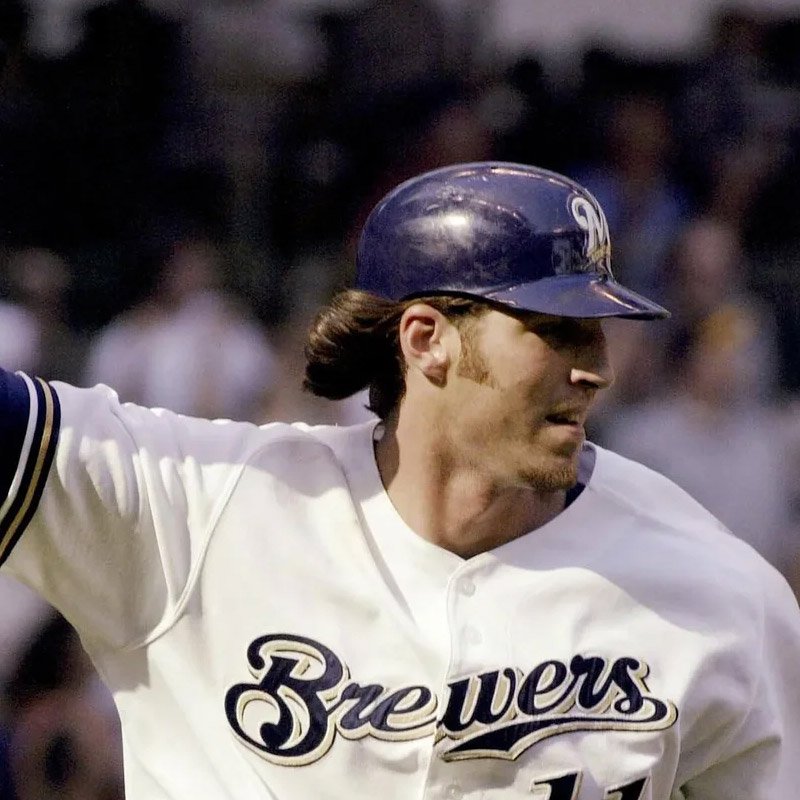 The 2001 club hit 209 dingers - good for second in the league. Leading the big bats of the Brewers at this time was their 6’7” first baseman - Richie Sexson. Born in 1974 in Portland, Oregon, Richmond "Richie" Sexson was a celebrated high school athlete. He earned all-state honors in baseball, basketball, and football. But baseball would be Sexson's ticket to fame as he set his school's record for home runs. The Cleveland Indians selected the right-handed-hitting Sexson in the 24th round of the 1993 MLB draft. Playing primarily first base, he rose steadily in the Indians' minor league ranks, showing good power and a solid batting average. He was, however, limited defensively. In 1997, at AA Buffalo, he broke out by slugging 31 home runs - and earned a five-game cup of coffee in the bigs. The following season, Sexson tore up AAA and continued his spree at the major league level - hitting .310 with 11 HR in only 49 games. However, there was one problem for Sexson - the presence of future Hall of Famer Jim Thome - entrenched at first. To get Sexson’s bat into the lineup, the Indians gave Sexson time at 1B, OF, and DH for the next couple of years. It got Sexson at-bats, but his play in the outfield was not good. In his sophomore season, Sexson slugged 31 HR in only 134 games, but the following season he slumped, his strikeouts spiking and his power and batting average falling. The Indians - desperate for pitching - traded Sexson to Milwaukee at the deadline for pitchers Bob Wickman, Steve Woodard, and Jason Bere. Wickman had been an all-star for the Brewers. The Crew also got pitchers Kane Davis, Paul Rigdon, and infielder Marco Scutaro. The deal provided enormous dividends for the Brewers. Sexson was installed at first base - his best defensive position - and put into the lineup every day. He responded by hitting .296 and slugging 14 HR over the final 57 games of the 2000 season. From 2001-2003, Sexson smashed 45, 29, and 45 homers, respectively, while hitting between .271 and .279. He also displayed a keen eye at the plate, walking as many as 98 times in a season. On the flip side, he struck out, on average, over 150 times a year (before, it was okay to strike out that often). Sexson was named to two All-Star teams. In 2003, he placed 12th in the NL MVP voting. Despite Sexson's success, these were bad Milwaukee Brewer teams - winning only 68 games during his tenure. With free agency a year away, the Brewers knew that Sexson was short for Milwaukee. So rather than lose him, the team traded him to Arizona on December 1st, 2003. In exchange for Sexson, plus minor leaguers Shane Nance and Noochie Varner, the Diamondbacks sent Chris Capuano, Craig Counsell, Chad Moeller, Lyle Overbay, Jorge De La Rosa, and Junior Spivey. The deal helped transform the Brewers. Sexson spent one injury-plagued season in Arizona - playing only 23 games. Despite his limited playing time in 2004, he signed a four-year, $50 million free agent contract with the Seattle Mariners. He had two good seasons in Seattle, but in 2007, at age 32, his production plummeted. He was released the following year during the season, then spent 22 games with the Yankees before being released again. His baseball career was over. Richie Sexson was a big man with a big bat. He was a true, middle-of-the-order slugger and had his finest years in Milwaukee. In 3 1/3 seasons, he slugged 133 HR while hitting a respectable .276 with a .902 OPS. His booming home runs were among the few reasons to go to a Brewers game in the early 2000s. In acquiring and trading away Sexson, the Brewers maximized their resources on both ends of his tenure. The trade with Arizona was an important one for the franchise - adding a key pitcher (Capuano) and a quality bat (Overbay) as well as some spare parts (including future Brewer Manager Craig Counsell). Despite playing less than 3 1/2 years in Milwaukee, Sexson's name is in the team record books. His career .902 OPS is the second-best in team history. His 45 home runs in 2001 and 2003 are the third-most in a season. His 98 walks in 2003 are the sixth most. His 125 RBI in 2001 is the third highest. In his 12-year career, Sexson hit 306 HRs. After baseball, Richie Sexson retired to Bend, Oregon, and took up coaching at the high school level - heading up the baseball program at Summit High School for nearly a decade. In 2023, he was named manager of the Windy City ThunderBolts of the independent Frontier League. Please share your memories of Richie Sexson and his time in Milwaukee.
 -
The 2001 club hit 209 dingers - good for second in the league. Leading the big bats of the Brewers at this time was their 6’7” first baseman - Richie Sexson. Born in 1974 in Portland, Oregon, Richmond "Richie" Sexson was a celebrated high school athlete. He earned all-state honors in baseball, basketball, and football. But baseball would be Sexson's ticket to fame as he set his school's record for home runs. The Cleveland Indians selected the right-handed-hitting Sexson in the 24th round of the 1993 MLB draft. Playing primarily first base, he rose steadily in the Indians' minor league ranks, showing good power and a solid batting average. He was, however, limited defensively. In 1997, at AA Buffalo, he broke out by slugging 31 home runs - and earned a five-game cup of coffee in the bigs. The following season, Sexson tore up AAA and continued his spree at the major league level - hitting .310 with 11 HR in only 49 games. However, there was one problem for Sexson - the presence of future Hall of Famer Jim Thome - entrenched at first. To get Sexson’s bat into the lineup, the Indians gave Sexson time at 1B, OF, and DH for the next couple of years. It got Sexson at-bats, but his play in the outfield was not good. In his sophomore season, Sexson slugged 31 HR in only 134 games, but the following season he slumped, his strikeouts spiking and his power and batting average falling. The Indians - desperate for pitching - traded Sexson to Milwaukee at the deadline for pitchers Bob Wickman, Steve Woodard, and Jason Bere. Wickman had been an all-star for the Brewers. The Crew also got pitchers Kane Davis, Paul Rigdon, and infielder Marco Scutaro. The deal provided enormous dividends for the Brewers. Sexson was installed at first base - his best defensive position - and put into the lineup every day. He responded by hitting .296 and slugging 14 HR over the final 57 games of the 2000 season. From 2001-2003, Sexson smashed 45, 29, and 45 homers, respectively, while hitting between .271 and .279. He also displayed a keen eye at the plate, walking as many as 98 times in a season. On the flip side, he struck out, on average, over 150 times a year (before, it was okay to strike out that often). Sexson was named to two All-Star teams. In 2003, he placed 12th in the NL MVP voting. Despite Sexson's success, these were bad Milwaukee Brewer teams - winning only 68 games during his tenure. With free agency a year away, the Brewers knew that Sexson was short for Milwaukee. So rather than lose him, the team traded him to Arizona on December 1st, 2003. In exchange for Sexson, plus minor leaguers Shane Nance and Noochie Varner, the Diamondbacks sent Chris Capuano, Craig Counsell, Chad Moeller, Lyle Overbay, Jorge De La Rosa, and Junior Spivey. The deal helped transform the Brewers. Sexson spent one injury-plagued season in Arizona - playing only 23 games. Despite his limited playing time in 2004, he signed a four-year, $50 million free agent contract with the Seattle Mariners. He had two good seasons in Seattle, but in 2007, at age 32, his production plummeted. He was released the following year during the season, then spent 22 games with the Yankees before being released again. His baseball career was over. Richie Sexson was a big man with a big bat. He was a true, middle-of-the-order slugger and had his finest years in Milwaukee. In 3 1/3 seasons, he slugged 133 HR while hitting a respectable .276 with a .902 OPS. His booming home runs were among the few reasons to go to a Brewers game in the early 2000s. In acquiring and trading away Sexson, the Brewers maximized their resources on both ends of his tenure. The trade with Arizona was an important one for the franchise - adding a key pitcher (Capuano) and a quality bat (Overbay) as well as some spare parts (including future Brewer Manager Craig Counsell). Despite playing less than 3 1/2 years in Milwaukee, Sexson's name is in the team record books. His career .902 OPS is the second-best in team history. His 45 home runs in 2001 and 2003 are the third-most in a season. His 98 walks in 2003 are the sixth most. His 125 RBI in 2001 is the third highest. In his 12-year career, Sexson hit 306 HRs. After baseball, Richie Sexson retired to Bend, Oregon, and took up coaching at the high school level - heading up the baseball program at Summit High School for nearly a decade. In 2023, he was named manager of the Windy City ThunderBolts of the independent Frontier League. Please share your memories of Richie Sexson and his time in Milwaukee. View full player
-
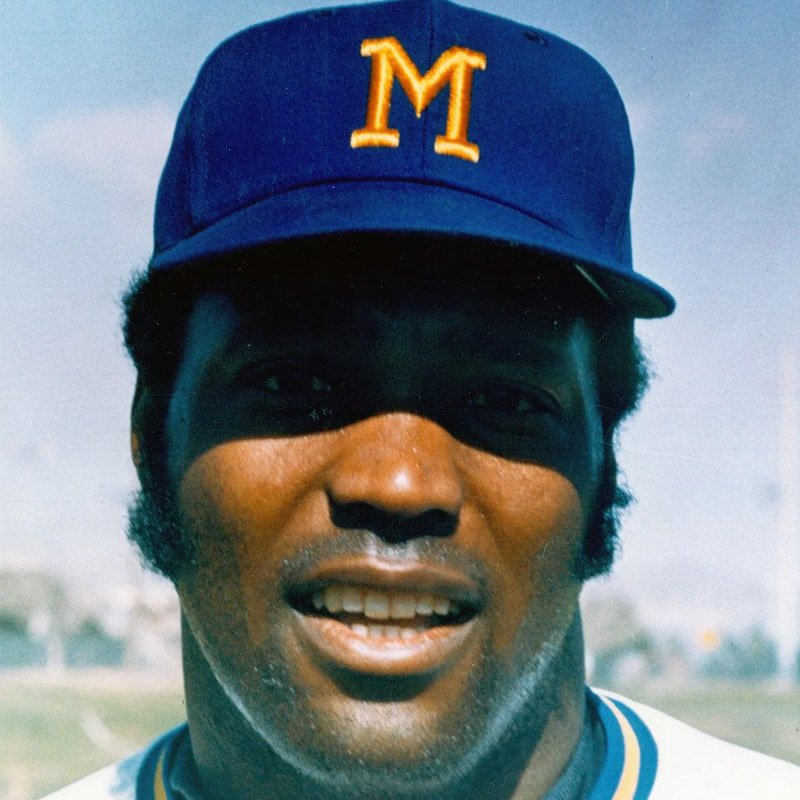 David LaFrance May was born in Delaware in 1943. He signed with the San Francisco Giants in 1961 for a $15,000 bonus - turning down multiple college scholarship offers. Dave May was not tall, 5’10”, and somewhat stocky. The left-handed hitting May displayed his hitting skills from the get-go, winning the batting title in rookie ball with a .379 average. The following year, May was selected by the Baltimore Orioles in the first-year player draft (this long abandoned process was designed to discourage big bonuses being offered to amateur talent). May continued to be able to hit as he moved up the minor league rungs with Baltimore, ultimately producing a lifetime batting average of .321 in the minors. He didn’t strike out a lot, showed some speed, and took his fair share of walks. He was considered a good outfielder. May got his first taste of the majors in 1967, appearing in 36 games for the Orioles. Over the next few years, May spent time at AAA or as a reserve with Baltimore - never really getting into any groove due to the erratic playing time. Then, in June of 1970, the Orioles dealt the 26-year-old to Milwaukee. The Brewers sent Dick Baney and Buzz Stephen to the O’s, neither of whom ever played for Baltimore. May was installed in center field for Milwaukee, starting 100 games that year. He became a staple in Milwaukee for nearly five years - producing some good - and bad - seasons. His finest season was in 1973 when May hit .303 with 25 HR and 93 RBI. He had a 24-game hitting streak that summer and led the league with 295 total bases. He produced 4.7 bWAR, was named to the All-Star team and finished eighth in the American League MVP voting. After slumping badly in 1974, the Brewers traded the 30-year-old May to the Atlanta Braves for the legendary Hank Aaron. May spent two seasons in Atlanta and another in Texas, his playing time and production waning as he aged. In 1978, May returned to Milwaukee - but his second stint lasted just 39 games and 77 at-bats before he was sold to Pittsburgh. He was signed as a free agent by Philadelphia in the offseason but was released in spring training. May spent part of the year playing for the Inter-American League - a high-level minor league circuit unaffiliated with the majors. The league lasted only three months before shutting down. With that, Dave May’s professional baseball playing career was over. He was 35 years old. May continued to play baseball at the semi-pro level with the Colonial Wallace back in his home state of Delaware. He played for five years - selling furniture when off the diamond. One of his teammates was former Brewer Johnny Briggs. May served as a roving hitting coach for the Braves for a couple of years but mostly remained in Delaware. In addition to selling furniture and appliances, he worked as a sports site director and cook. However, he was plagued by health problems as he got older. In 2003, he was diagnosed with diabetes, and his right leg was amputated. He also dealt with heart issues. May died in 2012 at the age of 68 due to cancer. May was inducted into the Delaware Sports Museum and Hall of Fame in 1984 and the Delaware Afro-American Sports Hall of Fame in 2004. Dave May had three children, including Derrick May, who went on to be a 1st round pick by the Chicago Cubs. Derrick played parts of 10 years in the majors as an outfielder - just like his dad. His son David Jr. played college baseball at the University of Delaware. Dave May was not a great baseball player, but he was a bright light for a couple of years in the early days of Brewer baseball. His 1971 and 1973 seasons were very good - especially the 1973 season. In his five years in Milwaukee, May hit .259 with 69 home runs. Unfortunately, his good seasons were balanced by bad ones. He wasn’t around long enough to accumulate big numbers - and his skillset was balanced - so he did not produce eye-popping stats. At his peak, May produced bWARs of 3.1, 2.5, and 4.7, showing his value as a steady, productive player. Also, May had a reputation as one of the friendliest and most well-liked players in the game.
 -
David LaFrance May was born in Delaware in 1943. He signed with the San Francisco Giants in 1961 for a $15,000 bonus - turning down multiple college scholarship offers. Dave May was not tall, 5’10”, and somewhat stocky. The left-handed hitting May displayed his hitting skills from the get-go, winning the batting title in rookie ball with a .379 average. The following year, May was selected by the Baltimore Orioles in the first-year player draft (this long abandoned process was designed to discourage big bonuses being offered to amateur talent). May continued to be able to hit as he moved up the minor league rungs with Baltimore, ultimately producing a lifetime batting average of .321 in the minors. He didn’t strike out a lot, showed some speed, and took his fair share of walks. He was considered a good outfielder. May got his first taste of the majors in 1967, appearing in 36 games for the Orioles. Over the next few years, May spent time at AAA or as a reserve with Baltimore - never really getting into any groove due to the erratic playing time. Then, in June of 1970, the Orioles dealt the 26-year-old to Milwaukee. The Brewers sent Dick Baney and Buzz Stephen to the O’s, neither of whom ever played for Baltimore. May was installed in center field for Milwaukee, starting 100 games that year. He became a staple in Milwaukee for nearly five years - producing some good - and bad - seasons. His finest season was in 1973 when May hit .303 with 25 HR and 93 RBI. He had a 24-game hitting streak that summer and led the league with 295 total bases. He produced 4.7 bWAR, was named to the All-Star team and finished eighth in the American League MVP voting. After slumping badly in 1974, the Brewers traded the 30-year-old May to the Atlanta Braves for the legendary Hank Aaron. May spent two seasons in Atlanta and another in Texas, his playing time and production waning as he aged. In 1978, May returned to Milwaukee - but his second stint lasted just 39 games and 77 at-bats before he was sold to Pittsburgh. He was signed as a free agent by Philadelphia in the offseason but was released in spring training. May spent part of the year playing for the Inter-American League - a high-level minor league circuit unaffiliated with the majors. The league lasted only three months before shutting down. With that, Dave May’s professional baseball playing career was over. He was 35 years old. May continued to play baseball at the semi-pro level with the Colonial Wallace back in his home state of Delaware. He played for five years - selling furniture when off the diamond. One of his teammates was former Brewer Johnny Briggs. May served as a roving hitting coach for the Braves for a couple of years but mostly remained in Delaware. In addition to selling furniture and appliances, he worked as a sports site director and cook. However, he was plagued by health problems as he got older. In 2003, he was diagnosed with diabetes, and his right leg was amputated. He also dealt with heart issues. May died in 2012 at the age of 68 due to cancer. May was inducted into the Delaware Sports Museum and Hall of Fame in 1984 and the Delaware Afro-American Sports Hall of Fame in 2004. Dave May had three children, including Derrick May, who went on to be a 1st round pick by the Chicago Cubs. Derrick played parts of 10 years in the majors as an outfielder - just like his dad. His son David Jr. played college baseball at the University of Delaware. Dave May was not a great baseball player, but he was a bright light for a couple of years in the early days of Brewer baseball. His 1971 and 1973 seasons were very good - especially the 1973 season. In his five years in Milwaukee, May hit .259 with 69 home runs. Unfortunately, his good seasons were balanced by bad ones. He wasn’t around long enough to accumulate big numbers - and his skillset was balanced - so he did not produce eye-popping stats. At his peak, May produced bWARs of 3.1, 2.5, and 4.7, showing his value as a steady, productive player. Also, May had a reputation as one of the friendliest and most well-liked players in the game. View full player
-
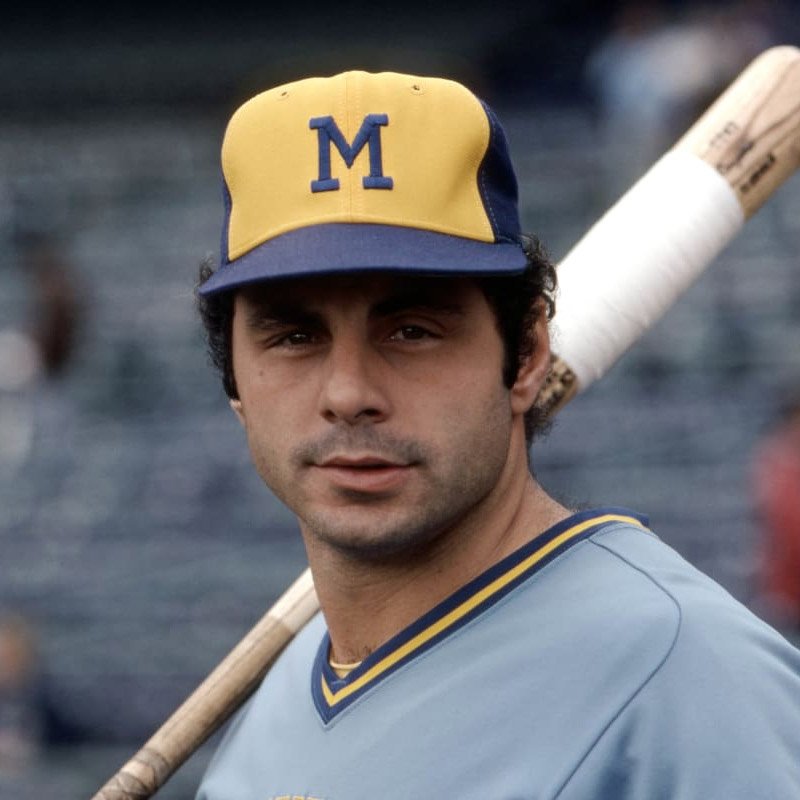 Salvatore Leonard Bando was born in Cleveland, Ohio, in 1944. An outstanding athlete in multiple sports in high school, Sal Bando attended Arizona State University. There, the right-handed hitting third baseman was a member of the 1965 College World Series championship team - and voted the series’ outstanding player. The Kansas City Athletics selected Bando in the 6th round of the 1965 draft. As an advanced position player, Bando moved quickly through the Athletics system - getting a cup of coffee just a year later. Bando showed a good all-around skill set - including a quality glove and a powerful arm. And while his hit tool wasn’t great, he made up for it by taking a lot of walks. By 1968, he was entrenched at the hot corner in Oakland (the franchise having moved from Kansas City) - a position he wouldn’t relinquish for nine years. In his time in Oakland, Bando was named to four All-Star teams, finished in the top three in MVP voting three times, and was part of three consecutive World Series teams (1972-74). But the 1970s introduced a new element into baseball's economic landscape: free agency. And after the 1976 season, the soon-to-be 33-year-old Bando hit the open market - signing the first big free agent contract in Brewer history - a 5-year deal worth $1.5 million. While modest by today’s standards, the signing was a milestone for the Brewers - a sign they could attract the game’s top talent. And within a year, the team was winning 90+ games. Bando had two fine seasons with Milwaukee - hitting 17 home runs in 1977 and 1978 and playing good defense. He brought gravitas and leadership to a young Brewers team. However, the 1979 season signaled the end was near for the aging Bando. He failed to hit double-digit home runs for the first time since his rookie season, and his batting average fell to .246. For the next two years, Bando wore the moniker of player-coach - moving to a part-time role in the field. The results weren't good as he hit a paltry .197. Bando finished his career in 1981, playing 32 games and hitting .200. Sal Bando hit a solid but unspectacular career batting average (.254). But Bando’s power, on-base skills, and fielding made him special. He had seven seasons where he had a bWAR of five or higher and four more higher than three. For his career, he produced an impressive 61.5 bWAR. There are some impressive numbers in Bando’s stat line, including 30+ HRs in a season and 100+ RBI (twice). But two things jump out at you. The first was his durability. Bando averaged 156 games played over 11 consecutive seasons. That’s almost unheard of in today’s game. The second stat that jumps out is Bando’s walks. He walked more times in his career than he struck out (1031 BB vs. 923 Ks) - including 118 free passes in 1970. So while Bando’s batting average was never great, he more than made up for it with his keen eye at the plate. In Bando’s five years in Milwaukee, he did well his first couple of seasons before age began to take its toll. Still, he was an important part of the first great Brewer teams in the late 70s. Now, if that were it for Sal Bando and the Brewers, it would be a good story. But there’s more - lots more. After retiring, Bando got into announcing and became a special assistant to Brewer GM Harry Dalton as he remained in Milwaukee and set down roots in the community. In 1991, Bando was named the Brewers' General Manager - a position he held until August 1999. It was - in all honesty - nearly a decade of despair for the Crew. Baseball salaries went crazy - and Milwaukee couldn’t (or wouldn’t) keep up. The Brewers farm system didn’t produce and the team fell into a long run of mediocre - or bad - baseball. In Bando’s tenure as GM, the team had only one winning season. As a fan, it was a bad time - perhaps the worst in franchise history. There were a lot of bad drafts (Antone Williamson fourth overall!), bad signings (three years of Franklin Stubbs!), and other blunders (see you later, Paul Molitor). Bando never seemed to move the franchise into a new era - and the result was a weak organization that didn't recover until after he was gone. I argue that Bando was the worst GM in team history. In some ways, he had the unenviable task of running an aging club when he took over. But instead of embracing a philosophy (such as selling off assets and rebuilding), it appeared to be a quest for mediocrity year after year. Bando was finished as GM in 1999 and moved on from the game. He had invested his baseball earnings well since his days as a player and managed those business interests successfully for many years afterward. And while Bando never got back into baseball, he stayed in Wisconsin. He was living in Oconomowoc when he died on Jan. 21, 2023, after a battle with cancer. He was 78. Bando was inducted into the College Baseball Hall of Fame in 2013 and was an inaugural member of the Milwaukee Brewers Wall of Honor in 2014. He was also inducted into the Oakland Athletics Hall of Fame in 2022. Bando’s brother, Chris, was a catcher in the big leagues for eight years, most of them with Cleveland. One last tidbit about Sal Bando: in 2006, he had a voice cameo in a Simpsons episode.
 -
Salvatore Leonard Bando was born in Cleveland, Ohio, in 1944. An outstanding athlete in multiple sports in high school, Sal Bando attended Arizona State University. There, the right-handed hitting third baseman was a member of the 1965 College World Series championship team - and voted the series’ outstanding player. The Kansas City Athletics selected Bando in the 6th round of the 1965 draft. As an advanced position player, Bando moved quickly through the Athletics system - getting a cup of coffee just a year later. Bando showed a good all-around skill set - including a quality glove and a powerful arm. And while his hit tool wasn’t great, he made up for it by taking a lot of walks. By 1968, he was entrenched at the hot corner in Oakland (the franchise having moved from Kansas City) - a position he wouldn’t relinquish for nine years. In his time in Oakland, Bando was named to four All-Star teams, finished in the top three in MVP voting three times, and was part of three consecutive World Series teams (1972-74). But the 1970s introduced a new element into baseball's economic landscape: free agency. And after the 1976 season, the soon-to-be 33-year-old Bando hit the open market - signing the first big free agent contract in Brewer history - a 5-year deal worth $1.5 million. While modest by today’s standards, the signing was a milestone for the Brewers - a sign they could attract the game’s top talent. And within a year, the team was winning 90+ games. Bando had two fine seasons with Milwaukee - hitting 17 home runs in 1977 and 1978 and playing good defense. He brought gravitas and leadership to a young Brewers team. However, the 1979 season signaled the end was near for the aging Bando. He failed to hit double-digit home runs for the first time since his rookie season, and his batting average fell to .246. For the next two years, Bando wore the moniker of player-coach - moving to a part-time role in the field. The results weren't good as he hit a paltry .197. Bando finished his career in 1981, playing 32 games and hitting .200. Sal Bando hit a solid but unspectacular career batting average (.254). But Bando’s power, on-base skills, and fielding made him special. He had seven seasons where he had a bWAR of five or higher and four more higher than three. For his career, he produced an impressive 61.5 bWAR. There are some impressive numbers in Bando’s stat line, including 30+ HRs in a season and 100+ RBI (twice). But two things jump out at you. The first was his durability. Bando averaged 156 games played over 11 consecutive seasons. That’s almost unheard of in today’s game. The second stat that jumps out is Bando’s walks. He walked more times in his career than he struck out (1031 BB vs. 923 Ks) - including 118 free passes in 1970. So while Bando’s batting average was never great, he more than made up for it with his keen eye at the plate. In Bando’s five years in Milwaukee, he did well his first couple of seasons before age began to take its toll. Still, he was an important part of the first great Brewer teams in the late 70s. Now, if that were it for Sal Bando and the Brewers, it would be a good story. But there’s more - lots more. After retiring, Bando got into announcing and became a special assistant to Brewer GM Harry Dalton as he remained in Milwaukee and set down roots in the community. In 1991, Bando was named the Brewers' General Manager - a position he held until August 1999. It was - in all honesty - nearly a decade of despair for the Crew. Baseball salaries went crazy - and Milwaukee couldn’t (or wouldn’t) keep up. The Brewers farm system didn’t produce and the team fell into a long run of mediocre - or bad - baseball. In Bando’s tenure as GM, the team had only one winning season. As a fan, it was a bad time - perhaps the worst in franchise history. There were a lot of bad drafts (Antone Williamson fourth overall!), bad signings (three years of Franklin Stubbs!), and other blunders (see you later, Paul Molitor). Bando never seemed to move the franchise into a new era - and the result was a weak organization that didn't recover until after he was gone. I argue that Bando was the worst GM in team history. In some ways, he had the unenviable task of running an aging club when he took over. But instead of embracing a philosophy (such as selling off assets and rebuilding), it appeared to be a quest for mediocrity year after year. Bando was finished as GM in 1999 and moved on from the game. He had invested his baseball earnings well since his days as a player and managed those business interests successfully for many years afterward. And while Bando never got back into baseball, he stayed in Wisconsin. He was living in Oconomowoc when he died on Jan. 21, 2023, after a battle with cancer. He was 78. Bando was inducted into the College Baseball Hall of Fame in 2013 and was an inaugural member of the Milwaukee Brewers Wall of Honor in 2014. He was also inducted into the Oakland Athletics Hall of Fame in 2022. Bando’s brother, Chris, was a catcher in the big leagues for eight years, most of them with Cleveland. One last tidbit about Sal Bando: in 2006, he had a voice cameo in a Simpsons episode. View full player
-
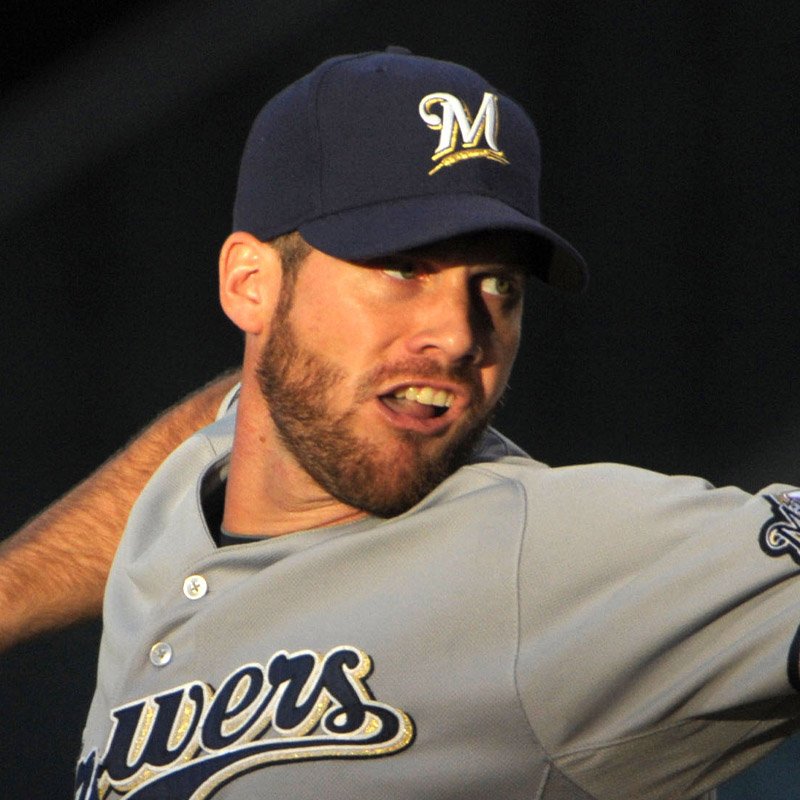 On October 4th, 2008, Brewer right-hander Dave Bush took the mound for the biggest game of his major league career. He tossed 5.1 innings, allowing only one run, while striking out three and walking no one, leading the Brewers to their first postseason victory in more than 25 years. It was Dave Bush at his finest. Sadly, Bush’s career was filled with more disappointments than successes, but he was an important member of the resurgent franchise for five seasons. David Thomas Bush was born in 1979 in Pittsburgh, Pennsylvania. He attended Wake Forest University, where he was a relief pitcher. Bush was drafted by Tampa Bay in the fourth round of the 2001 draft but elected to stay in school for another year. He was selected by Toronto in the second round the following summer. Bush, a right-handed pitcher, was moved to a starting role in his second year as a pro. His numbers were impressive, showing excellent command while striking out a batter per inning. As a college arm, Bush progressed quickly through the Blue Jays' system, reaching the majors in 2004. That season, he started 16 games and acquitted himself nicely, producing an ERA of 3.61 in 97.2 innings. The following season was a mixed bag for Bush. He struggled at times in the big leagues and spent time at AAA. His propensity to serve the gopher ball didn't win him any fans and it was an issue that plagued him throughout his career. In the off-season, the Brewers wanted to open up a spot in the lineup for young slugger Prince Fielder. Thus, on December 7, 2005, Bush was traded along with Gabe Gross and Zach Jackson for first baseman Lyle Overbay and minor league pitcher Ty Taubenheim. For the Brewers, the trade was an opportunity to get a couple of promising young arms in Bush and Jackson. And while many felt Jackson was the prize of the deal, Bush went on to have a longer career. In need of pitching, the Brewers handed the 26-year-old Bush the ball, and he responded with the finest season of his career. He tossed 212 innings, won 12 games, struck out 166, walked only 38, and produced a 4.41 ERA. Those are hardly all-star-level numbers, but they were welcome on a team that struggled to stop their opponents from scoring. With a solid season under his belt, many hoped that Bush would continue to improve as a pitcher. They were, sadly, (mostly) disappointed. Bush's 2007 numbers went backward in almost every way. Despite throwing 24 fewer innings, his hits allowed increased, as did his walks and home runs. His strikeout rate dropped as well. This meant his ERA rose to an unsightly 5.12 but 2008 saw a rebound of sorts for Bush as his ERA dropped back down to 4.18. That improvement couldn't hide weakening peripheral statistics but he still notched a win in the 2008 NLDS - as described in the introduction of this story. In 2009, Bush's performance cratered when, in early June, a line drive struck him in the arm, tearing his triceps muscle. After a Disabled List stint, he tried to come back, but it was awful. He ended up with an ERA of 6.38 for the season. Healthy in 2010, Bush started 31 games but had a mediocre campaign. And so, after five years together, the Brewers decided it was time to let Bush go as he approached free agency. He was 30 and had not improved as a pitcher since the team had acquired him. He gave up too many homers, and his walk and strikeout numbers only worsened. Bush signed with Texas in the spring of 2011, but the end was closer than he realized. After 17 games - only three as a starter - the Rangers released him. He caught on with the Cubs AAA team for a month before opting out of his contract and finishing the year with the Phillies AAA club. In 2012, Bush spent part of the year in the Phillies' minor league system before heading to Korea for half a season. The following year, Bush signed with Toronto. The Blue Jays called him up on April 6 (designating Jeremy Jeffress for assignment at the time). He lasted only one game - getting shelled for five runs (on four home runs) in just three innings of work. He spent the rest of the season at AAA - putting up poor numbers. And with that, Bush's career as a player was done. He was 33 years old. Dave Bush played five years in Milwaukee. His finest season was in 2006 when he produced 2.2 WAR. The postseason victory in the NLDS for the Brewers was his career highlight with the club. At his best, Dave Bush was a competent back-of-the-rotation arm. While he showed good control at times (his 2.40 walks per 9 innings is tenth best in Brewer history), he also gave up too many hits and home runs. For his career, Bush won 46 games in Milwaukee against 53 losses. He showed flashes of being something better on occasion, including taking no-hitters into the 7th inning three times in his career. These fleeting displays of brilliance only frustrated fans, who had hoped for much more in the man's career. Dave Bush does hold one record in the history of the Brewers. Never afraid to pitch inside, he hit 58 batters during his time (including 15 in 2009, which led the league). After retiring from baseball, Bush stayed involved with the game, working as a coach at the high school and international levels. He joined the Boston Red Sox organization in 2016 and has been the Red Sox’s pitching coach since 2019.
 -
On October 4th, 2008, Brewer right-hander Dave Bush took the mound for the biggest game of his major league career. He tossed 5.1 innings, allowing only one run, while striking out three and walking no one, leading the Brewers to their first postseason victory in more than 25 years. It was Dave Bush at his finest. Sadly, Bush’s career was filled with more disappointments than successes, but he was an important member of the resurgent franchise for five seasons. David Thomas Bush was born in 1979 in Pittsburgh, Pennsylvania. He attended Wake Forest University, where he was a relief pitcher. Bush was drafted by Tampa Bay in the fourth round of the 2001 draft but elected to stay in school for another year. He was selected by Toronto in the second round the following summer. Bush, a right-handed pitcher, was moved to a starting role in his second year as a pro. His numbers were impressive, showing excellent command while striking out a batter per inning. As a college arm, Bush progressed quickly through the Blue Jays' system, reaching the majors in 2004. That season, he started 16 games and acquitted himself nicely, producing an ERA of 3.61 in 97.2 innings. The following season was a mixed bag for Bush. He struggled at times in the big leagues and spent time at AAA. His propensity to serve the gopher ball didn't win him any fans and it was an issue that plagued him throughout his career. In the off-season, the Brewers wanted to open up a spot in the lineup for young slugger Prince Fielder. Thus, on December 7, 2005, Bush was traded along with Gabe Gross and Zach Jackson for first baseman Lyle Overbay and minor league pitcher Ty Taubenheim. For the Brewers, the trade was an opportunity to get a couple of promising young arms in Bush and Jackson. And while many felt Jackson was the prize of the deal, Bush went on to have a longer career. In need of pitching, the Brewers handed the 26-year-old Bush the ball, and he responded with the finest season of his career. He tossed 212 innings, won 12 games, struck out 166, walked only 38, and produced a 4.41 ERA. Those are hardly all-star-level numbers, but they were welcome on a team that struggled to stop their opponents from scoring. With a solid season under his belt, many hoped that Bush would continue to improve as a pitcher. They were, sadly, (mostly) disappointed. Bush's 2007 numbers went backward in almost every way. Despite throwing 24 fewer innings, his hits allowed increased, as did his walks and home runs. His strikeout rate dropped as well. This meant his ERA rose to an unsightly 5.12 but 2008 saw a rebound of sorts for Bush as his ERA dropped back down to 4.18. That improvement couldn't hide weakening peripheral statistics but he still notched a win in the 2008 NLDS - as described in the introduction of this story. In 2009, Bush's performance cratered when, in early June, a line drive struck him in the arm, tearing his triceps muscle. After a Disabled List stint, he tried to come back, but it was awful. He ended up with an ERA of 6.38 for the season. Healthy in 2010, Bush started 31 games but had a mediocre campaign. And so, after five years together, the Brewers decided it was time to let Bush go as he approached free agency. He was 30 and had not improved as a pitcher since the team had acquired him. He gave up too many homers, and his walk and strikeout numbers only worsened. Bush signed with Texas in the spring of 2011, but the end was closer than he realized. After 17 games - only three as a starter - the Rangers released him. He caught on with the Cubs AAA team for a month before opting out of his contract and finishing the year with the Phillies AAA club. In 2012, Bush spent part of the year in the Phillies' minor league system before heading to Korea for half a season. The following year, Bush signed with Toronto. The Blue Jays called him up on April 6 (designating Jeremy Jeffress for assignment at the time). He lasted only one game - getting shelled for five runs (on four home runs) in just three innings of work. He spent the rest of the season at AAA - putting up poor numbers. And with that, Bush's career as a player was done. He was 33 years old. Dave Bush played five years in Milwaukee. His finest season was in 2006 when he produced 2.2 WAR. The postseason victory in the NLDS for the Brewers was his career highlight with the club. At his best, Dave Bush was a competent back-of-the-rotation arm. While he showed good control at times (his 2.40 walks per 9 innings is tenth best in Brewer history), he also gave up too many hits and home runs. For his career, Bush won 46 games in Milwaukee against 53 losses. He showed flashes of being something better on occasion, including taking no-hitters into the 7th inning three times in his career. These fleeting displays of brilliance only frustrated fans, who had hoped for much more in the man's career. Dave Bush does hold one record in the history of the Brewers. Never afraid to pitch inside, he hit 58 batters during his time (including 15 in 2009, which led the league). After retiring from baseball, Bush stayed involved with the game, working as a coach at the high school and international levels. He joined the Boston Red Sox organization in 2016 and has been the Red Sox’s pitching coach since 2019. View full player
-
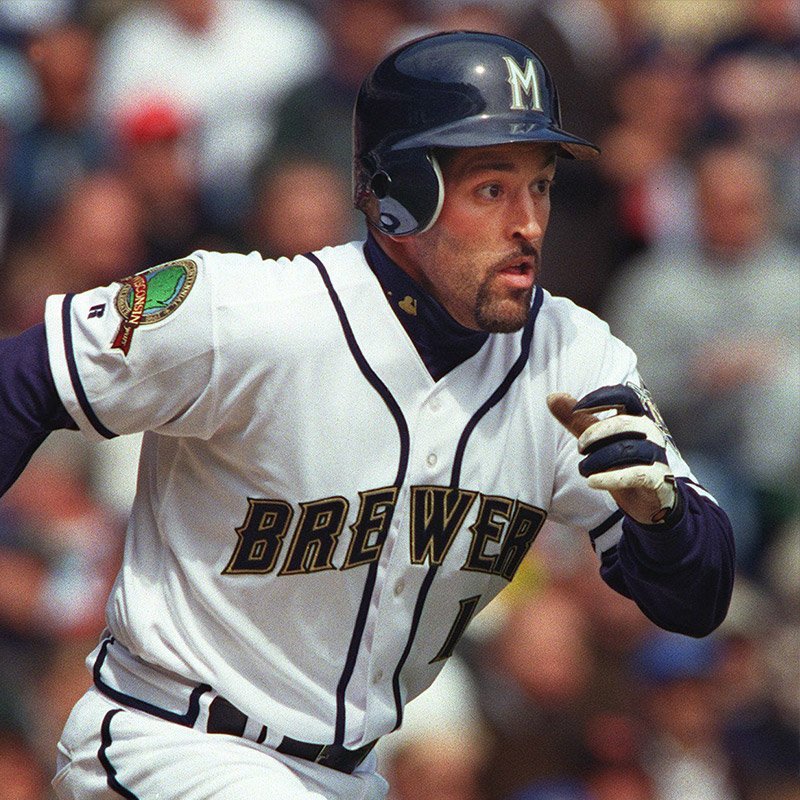 Fernando Vina was born in Sacramento, CA, in 1969, the child of Cuban immigrants. He attended Arizona State University and was selected by the Mets in the 9th round of the 1990 draft. Vina quickly put together a profile that would be his calling card throughout his career: he hit for a solid average, not much power, few strikeouts, and good defense at the keystone. Vina was selected by the Seattle Mariners in the 1992 Rule 5 draft but was returned to the Mets the following summer. He was then traded to the Brewers in December of 1994, completing a deal as the player to be named later in the Doug Henry trade. It didn’t take long for Vina to find his niche in Milwaukee at second base and leading off. Vina hit for a good average and got on base at a 35% clip while playing quality defense. He never hit for double-digit home runs but walked fewer times than he struck out. His best year was 1998, when he hit .311 with 39 doubles and a .386 OBP - good enough to make his lone all-star appearance. His 198 hits that year are tied for the eighth most in Brewers' history. Unfortunately for Vina, he missed three-quarters of the 1999 season after a collision with OF Jeromy Burnitz . In 2000 - a year away from free agency with the Brewers in need of pitching - traded Vina to the Cardinals Juan Acevedo and two minor leaguers. Vina went on to have some good years in St. Louis, winning two Gold Gloves and twice hitting .300+. In 2004, Vina signed a two-year deal with Detroit, but due to injuries only played 29 games that year - and none in 2005. An attempt to return in 2006 ended with another injury - and signaled the end of his playing days. For his career, Vina hit .282 and produced a.348 OBP - not far from his Milwaukee numbers of .286 and .349. He only hit 40 HRs in his career. One of the more remarkable stats is his tiny 6.2% strikeout rate - almost unheard of today. Vina had quite a few stolen bases in his day but was not an efficient base stealer (116 SBs vs. 67 CS). Still, when you add in his good defense, Vina had a nice career - making $26M+ over 12 major league seasons. He was not a star and never put up huge numbers, but he was a valuable complementary player. One of the more memorable moments of Vina’s career happened on May 31, 1996. While attempting to tag a runner (Albert Belle) and make a throw to first to complete a double play, he was slammed into by Belle. Belle received a 5-game suspension for his actions. Vina laughed about the incident good-naturedly, claiming, "that put me on the map.” Check out the video of the incident. There was controversy after Vina’s career was over when his name came out in the Mitchell Report in 2007. A Mets clubhouse attendant said he had given Vina steroids in the early 2000s. Vina said he took HGH to recover from injuries - but denied ever buying or using steroids. After retiring, Vina worked for ESPN for several years. He now works teaching and promoting baseball to America’s youth - including underprivileged children. Vina was inducted into the Arizona State University Hall of Fame in 2011 and the Milwaukee Brewer Wall of Honor in 2014. Please share your memories of former Brewer Fernando Vina.
 -
Fernando Vina was born in Sacramento, CA, in 1969, the child of Cuban immigrants. He attended Arizona State University and was selected by the Mets in the 9th round of the 1990 draft. Vina quickly put together a profile that would be his calling card throughout his career: he hit for a solid average, not much power, few strikeouts, and good defense at the keystone. Vina was selected by the Seattle Mariners in the 1992 Rule 5 draft but was returned to the Mets the following summer. He was then traded to the Brewers in December of 1994, completing a deal as the player to be named later in the Doug Henry trade. It didn’t take long for Vina to find his niche in Milwaukee at second base and leading off. Vina hit for a good average and got on base at a 35% clip while playing quality defense. He never hit for double-digit home runs but walked fewer times than he struck out. His best year was 1998, when he hit .311 with 39 doubles and a .386 OBP - good enough to make his lone all-star appearance. His 198 hits that year are tied for the eighth most in Brewers' history. Unfortunately for Vina, he missed three-quarters of the 1999 season after a collision with OF Jeromy Burnitz . In 2000 - a year away from free agency with the Brewers in need of pitching - traded Vina to the Cardinals Juan Acevedo and two minor leaguers. Vina went on to have some good years in St. Louis, winning two Gold Gloves and twice hitting .300+. In 2004, Vina signed a two-year deal with Detroit, but due to injuries only played 29 games that year - and none in 2005. An attempt to return in 2006 ended with another injury - and signaled the end of his playing days. For his career, Vina hit .282 and produced a.348 OBP - not far from his Milwaukee numbers of .286 and .349. He only hit 40 HRs in his career. One of the more remarkable stats is his tiny 6.2% strikeout rate - almost unheard of today. Vina had quite a few stolen bases in his day but was not an efficient base stealer (116 SBs vs. 67 CS). Still, when you add in his good defense, Vina had a nice career - making $26M+ over 12 major league seasons. He was not a star and never put up huge numbers, but he was a valuable complementary player. One of the more memorable moments of Vina’s career happened on May 31, 1996. While attempting to tag a runner (Albert Belle) and make a throw to first to complete a double play, he was slammed into by Belle. Belle received a 5-game suspension for his actions. Vina laughed about the incident good-naturedly, claiming, "that put me on the map.” Check out the video of the incident. There was controversy after Vina’s career was over when his name came out in the Mitchell Report in 2007. A Mets clubhouse attendant said he had given Vina steroids in the early 2000s. Vina said he took HGH to recover from injuries - but denied ever buying or using steroids. After retiring, Vina worked for ESPN for several years. He now works teaching and promoting baseball to America’s youth - including underprivileged children. Vina was inducted into the Arizona State University Hall of Fame in 2011 and the Milwaukee Brewer Wall of Honor in 2014. Please share your memories of former Brewer Fernando Vina. View full player
-
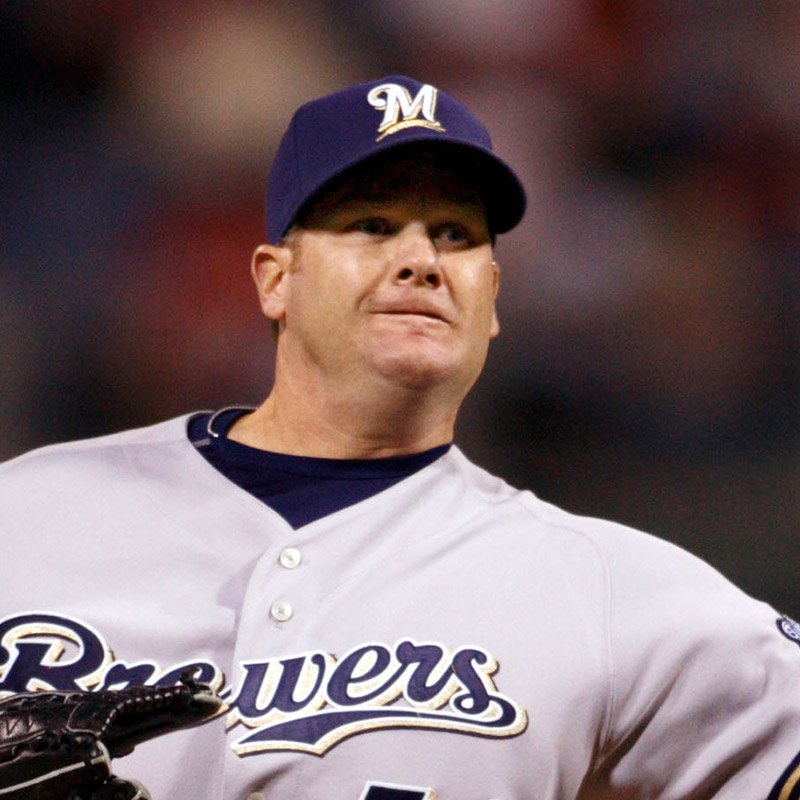 Initially drafted by the Pittsburgh Pirates in the 13th round during the 1990 MLB draft, Brian Shouse worked his way through the minors and made his debut in 1993 at age 24. He pitched four innings in six games, racking up an ugly 9.00 ERA and a 2.25 WHIP. After spending several years in the minor leagues of the Baltimore Orioles and Pittsburgh Pirates, he would only play in the major leagues once more after Boston Red Sox signed him in 1998. He pitched eight innings in seven games with a slightly improved 5.63 ERA and 1.63 WHIP. After 1998, Shouse would again endure a protracted absence from the major leagues, moving between the minor league systems of the Arizona Diamondbacks, Baltimore Orioles, New York Mets, and Houston Astros. In 2002, Shouse would play in another MLB game for the Kansas City Royals, and he was here to stay this time. The Texas Rangers signed Shouse as a free agent in 2003, and they would prove to be a good signing. During his four-year stint in Texas, Shouse pitched 163 innings and struck out 112 batters while carrying a 3.59 ERA and 1.29 WHIP. He also earned 34 holds and one save. Shouse’s performance on the mound caught the eye of the Milwaukee Brewers, who traded minor league infield prospect Enrique Cruz and cash for Shouse on May 13, 2006. Now, the late 2000s were an awkward time for the Milwaukee Brewers. Sure, they had some rising stars like Prince Fielder and Ryan Braun, but the big league club struggled to win games. Pitching was a big question mark at this time, both in the starting rotation and the bullpen. In 2006, when Milwaukee acquired Shouse, the team pitching staff held a 4.82 ERA. The offense drove in 730 runs, but the pitching staff gave up 833 runs. Shouse proved himself to be effective in the Brewers bullpen as a left-handed specialist. He maintained a 1.50 WHIP in 34 innings pitched in 2006. In 2007, at the age of 38, Shouse was even better. He put up a WHIP of 1.26 in 47.2 innings pitched. It seemed that despite his age, he was reliable and unstoppable. Rick Ankiel, infamously a pitcher-turned-outfielder for the St. Louis Cardinals, would later claim that Brian Shouse was the hardest pitcher he had ever faced in his career. 2008 would turn out to be Shouse’s best year with Milwaukee. He struck out 33 batters, earning a WHIP of 1.17 and a 2.81 ERA. His command on the mound helped Milwaukee clinch their first appearance in the playoffs since 1982. Shouse would end his career with the Tampa Bay Rays in 2009 at 40. In recent years, Shouse spent time as a pitching coach for the Texas Rangers organization. In 2019, he was the pitching coach for the Nashville Sounds. However, he would be let go after one season in Nashville. While not the flashiest player, Shouse deserves to be remembered as a reliable arm in a lackluster bullpen during an important time in Brewers' history. His arm brought badly-needed stability to an often unstable pitching staff.
 -
Initially drafted by the Pittsburgh Pirates in the 13th round during the 1990 MLB draft, Brian Shouse worked his way through the minors and made his debut in 1993 at age 24. He pitched four innings in six games, racking up an ugly 9.00 ERA and a 2.25 WHIP. After spending several years in the minor leagues of the Baltimore Orioles and Pittsburgh Pirates, he would only play in the major leagues once more after Boston Red Sox signed him in 1998. He pitched eight innings in seven games with a slightly improved 5.63 ERA and 1.63 WHIP. After 1998, Shouse would again endure a protracted absence from the major leagues, moving between the minor league systems of the Arizona Diamondbacks, Baltimore Orioles, New York Mets, and Houston Astros. In 2002, Shouse would play in another MLB game for the Kansas City Royals, and he was here to stay this time. The Texas Rangers signed Shouse as a free agent in 2003, and they would prove to be a good signing. During his four-year stint in Texas, Shouse pitched 163 innings and struck out 112 batters while carrying a 3.59 ERA and 1.29 WHIP. He also earned 34 holds and one save. Shouse’s performance on the mound caught the eye of the Milwaukee Brewers, who traded minor league infield prospect Enrique Cruz and cash for Shouse on May 13, 2006. Now, the late 2000s were an awkward time for the Milwaukee Brewers. Sure, they had some rising stars like Prince Fielder and Ryan Braun, but the big league club struggled to win games. Pitching was a big question mark at this time, both in the starting rotation and the bullpen. In 2006, when Milwaukee acquired Shouse, the team pitching staff held a 4.82 ERA. The offense drove in 730 runs, but the pitching staff gave up 833 runs. Shouse proved himself to be effective in the Brewers bullpen as a left-handed specialist. He maintained a 1.50 WHIP in 34 innings pitched in 2006. In 2007, at the age of 38, Shouse was even better. He put up a WHIP of 1.26 in 47.2 innings pitched. It seemed that despite his age, he was reliable and unstoppable. Rick Ankiel, infamously a pitcher-turned-outfielder for the St. Louis Cardinals, would later claim that Brian Shouse was the hardest pitcher he had ever faced in his career. 2008 would turn out to be Shouse’s best year with Milwaukee. He struck out 33 batters, earning a WHIP of 1.17 and a 2.81 ERA. His command on the mound helped Milwaukee clinch their first appearance in the playoffs since 1982. Shouse would end his career with the Tampa Bay Rays in 2009 at 40. In recent years, Shouse spent time as a pitching coach for the Texas Rangers organization. In 2019, he was the pitching coach for the Nashville Sounds. However, he would be let go after one season in Nashville. While not the flashiest player, Shouse deserves to be remembered as a reliable arm in a lackluster bullpen during an important time in Brewers' history. His arm brought badly-needed stability to an often unstable pitching staff. View full player
- 1 reply
-
- 1
-

-
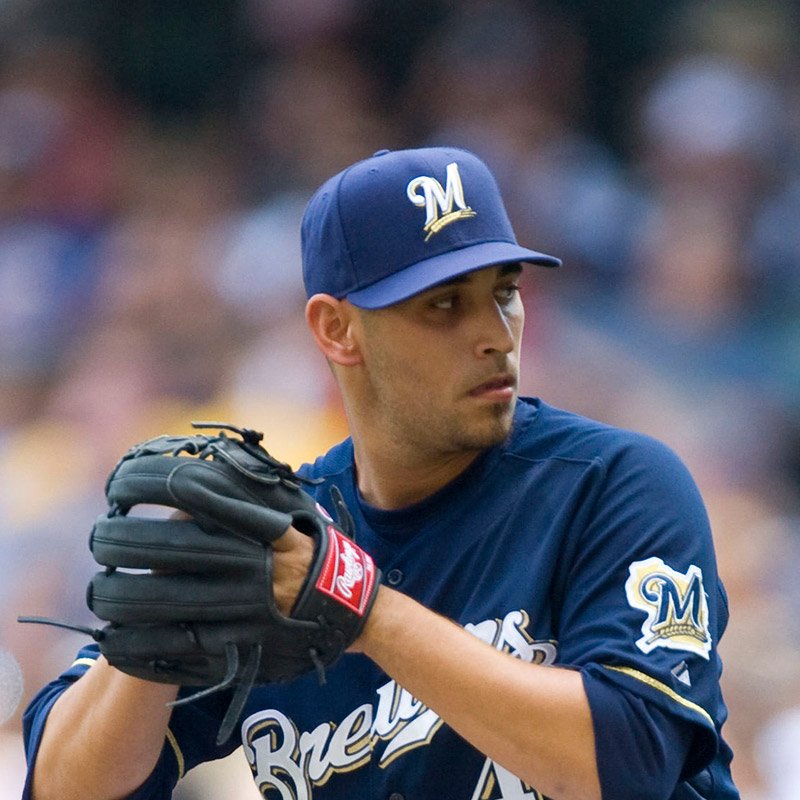 The right-handed throwing Mark DiFelice was born in Pennsylvania in 1976. He attended Western Carolina University and was selected by the Rockies in the 15th round of the 1998 amateur draft. DiFelice was classic organizational fodder. He didn’t stand out in any fashion other than displaying low walk rates throughout his career. He put up solid numbers but nothing eye-popping. He also was prone to giving up HRs - a bugaboo that would haunt him much of his career. DiFelice eventually stalled out at AAA. The Rockies released him in 2004, and he spent the year at AAA with Baltimore, putting up good, but not great, numbers. After that, his journey continued with stints with the Nationals, independent ball (the Atlantic League), and the Mexican League. Following the 2006 season, DiFelice was signed by Milwaukee. And everything seemed to come together for the 30-year-old DiFelice. He had a great year between AA and AAA, throwing 124.2 innings and producing a 2.31 ERA. DiFelice began the 2008 season at AAA Nashville but was called to the big leagues on May 15. He was a 31-year-old rookie. While he had been a starter most of his career, the Brewers used DiFelice strictly as a reliever (he never started a game in the majors). In 2008, he appeared in 15 games and produced a sparkling 2.84 ERA, striking out 20 batters in only 19 innings. What was fascinating about Mark DiFelice was that he succeeded with only one pitch - a slow (he generally worked between 80-84 mph) cut fastball. The pitch made right-handed hitters look like idiots. 2009 was DiFelice’s high water mark. He pitched for Italy in the World Baseball Classic that spring, then was outstanding for Milwaukee in the first half of the year, producing a 1.83 ERA before the All-Star break. But the second half of the season was a disaster, and many wondered if something was wrong. Indeed, DiFelice had shoulder surgery after the year to repair a torn labrum and rotator cuff. For the year, he threw 51.2 innings and produced a solid 3.66 ERA. DiFelice missed all of 2010 rehabbing. In 2011, he returned to Milwaukee on a minor league deal and managed only three innings at the big league level (along with 29 at AAA). The Brewers released the 35-year-old DiFelice after the season. He played ten games in the Italian League the following year, but his playing days were over after that point. After retiring, DiFelice became a pitching coach, working in the minor leagues for the Pirates, Marlins, and Nationals organizations. He spent the 2022 season with the Wilmington Blue Rocks. Due to his limited time in the big leagues, Mark DiFelice might not seem like an ideal candidate for a retrospective. But let’s be honest - he had a great story - spending almost a decade struggling to succeed, getting released several times, playing in independent ball, the Mexican League, and even the Italian League. Going through all that and still making it to the majors is pretty amazing. DiFelice’s time in Milwaukee was short, but it is hard to forget. You would watch him pitch and wonder, “How the heck is this guy getting batters out?” Fangraph’s Dave Cameron even wrote an article on DiFelice called “The Ultimate Roogy.” DiFelice was also famous for his role as the clubhouse barber wherever he played, skills he picked up from his grandmother and aunt. Ultimately, Mark DiFelice may have been a one-trick pony, but he rode that pony to majors, going through a lot of hoops to make it happen. Sadly, injuries cut short his career - but it's not hard to like DeFelice’s story as the "ultimate roogy." Please share your memories of former Brewers reliever Mark DiFelice.
 -
The right-handed throwing Mark DiFelice was born in Pennsylvania in 1976. He attended Western Carolina University and was selected by the Rockies in the 15th round of the 1998 amateur draft. DiFelice was classic organizational fodder. He didn’t stand out in any fashion other than displaying low walk rates throughout his career. He put up solid numbers but nothing eye-popping. He also was prone to giving up HRs - a bugaboo that would haunt him much of his career. DiFelice eventually stalled out at AAA. The Rockies released him in 2004, and he spent the year at AAA with Baltimore, putting up good, but not great, numbers. After that, his journey continued with stints with the Nationals, independent ball (the Atlantic League), and the Mexican League. Following the 2006 season, DiFelice was signed by Milwaukee. And everything seemed to come together for the 30-year-old DiFelice. He had a great year between AA and AAA, throwing 124.2 innings and producing a 2.31 ERA. DiFelice began the 2008 season at AAA Nashville but was called to the big leagues on May 15. He was a 31-year-old rookie. While he had been a starter most of his career, the Brewers used DiFelice strictly as a reliever (he never started a game in the majors). In 2008, he appeared in 15 games and produced a sparkling 2.84 ERA, striking out 20 batters in only 19 innings. What was fascinating about Mark DiFelice was that he succeeded with only one pitch - a slow (he generally worked between 80-84 mph) cut fastball. The pitch made right-handed hitters look like idiots. 2009 was DiFelice’s high water mark. He pitched for Italy in the World Baseball Classic that spring, then was outstanding for Milwaukee in the first half of the year, producing a 1.83 ERA before the All-Star break. But the second half of the season was a disaster, and many wondered if something was wrong. Indeed, DiFelice had shoulder surgery after the year to repair a torn labrum and rotator cuff. For the year, he threw 51.2 innings and produced a solid 3.66 ERA. DiFelice missed all of 2010 rehabbing. In 2011, he returned to Milwaukee on a minor league deal and managed only three innings at the big league level (along with 29 at AAA). The Brewers released the 35-year-old DiFelice after the season. He played ten games in the Italian League the following year, but his playing days were over after that point. After retiring, DiFelice became a pitching coach, working in the minor leagues for the Pirates, Marlins, and Nationals organizations. He spent the 2022 season with the Wilmington Blue Rocks. Due to his limited time in the big leagues, Mark DiFelice might not seem like an ideal candidate for a retrospective. But let’s be honest - he had a great story - spending almost a decade struggling to succeed, getting released several times, playing in independent ball, the Mexican League, and even the Italian League. Going through all that and still making it to the majors is pretty amazing. DiFelice’s time in Milwaukee was short, but it is hard to forget. You would watch him pitch and wonder, “How the heck is this guy getting batters out?” Fangraph’s Dave Cameron even wrote an article on DiFelice called “The Ultimate Roogy.” DiFelice was also famous for his role as the clubhouse barber wherever he played, skills he picked up from his grandmother and aunt. Ultimately, Mark DiFelice may have been a one-trick pony, but he rode that pony to majors, going through a lot of hoops to make it happen. Sadly, injuries cut short his career - but it's not hard to like DeFelice’s story as the "ultimate roogy." Please share your memories of former Brewers reliever Mark DiFelice. View full player
-
 McMahon's career OPS: Home (Colorado): .814 OPS Away: .673 OP I realize players often do better once they get away from having to adjust to the different environments, but it is something to consider.
 -
This may well be. It's hard to get a gauge of what position(s) the club is willing to let Black play at the major league level.
-
What do you do with Yelich? Does he stick in the OF? Legit idea, just wondering thoughts.
-
Tyler Black needs to play for the Milwaukee Brewers in 2025. Image courtesy of © Michael McLoone-Imagn Images Like what the Brewers did with Jackson Chourio in 2024, the club needs to give Tyler Black regular playing time with plenty of leash so he can develop into a reliable player going forward. If Black can become a regular in the Brewers lineup, it’s possible he could hit .270-.280 with 12-15 home runs and 25 stolen bases. No, he won’t smash 30 home runs but he could be an above-average bat and a threat on the basepaths. So, how does Black get playing time in 2025? The biggest challenge for Black is his defensive position. He’s played third base, second base, first base and outfield. The latter, outfield (specifically left field), is probably where he is best suited. The problem is that the team has a bevy of Gold-Glove caliber outfielders, including Chourio, Garrett Mitchell, Blake Perkins, and Sal Frelick. And then there is Christian Yelich. Regarding the latter, it would be best if Yelich was limited to designated hitter to maximize his chances of staying healthy. The Brewers need Yelich’s bat to win in 2025. So, where does that leave Milwaukee? Well, let’s start with a couple of assumptions. First, Willy Adames is gone. The Crew will not pay him $25 million annually for five or six seasons. Second, Turang and Ortiz will man the second base and shortstop positions. That leaves us with the following: Rhys Hoskins (who recently triggered his 2025 option): 130-140 starts at first base Yelich: 130-140 starts at designated hitter A free agent signing or trade to fill third base This leaves Black the option to get the following starts: 20-30 games at first base 20-30 games at designated hitter 20-30 games at third base 20 games in left field That would give Black 80-130 starts, plus pinch-hitting. And there will, undoubtedly, be injuries, giving him other opportunities. Given that Black bats left-handed, the team will likely want to sit him against lefty starters in favor of right-handed options, which makes it difficult to see him ever becoming a 150-game starter. While his position may be unpredictable, it would be necessary for him to be in the lineup regularly. He has nothing else to prove at Triple-A Nashville, so the team needs to let his development continue at the big-league level. For Black, the biggest question is whether he can actually handle the defensive positions at an acceptable level. That’s not given. The Brewers have been moving him around the field and don’t seem happy about his performance with the glove. As noted, the best position for Black may ultimately be left field. But at this point, he is only going to get out there on rare occasions due to the quality of players ahead of him. It may signal a need to use him as trade bait to acquire a third baseman or a pitcher. Otherwise, Black has an opportunity to become a super-utility player. The team must allow him to play most days and be prepared for some growing pains. In the end, if the Brewers do that, the team should be rewarded with a quality bat, provided they can find a defensive position in the lineup. View full article
-
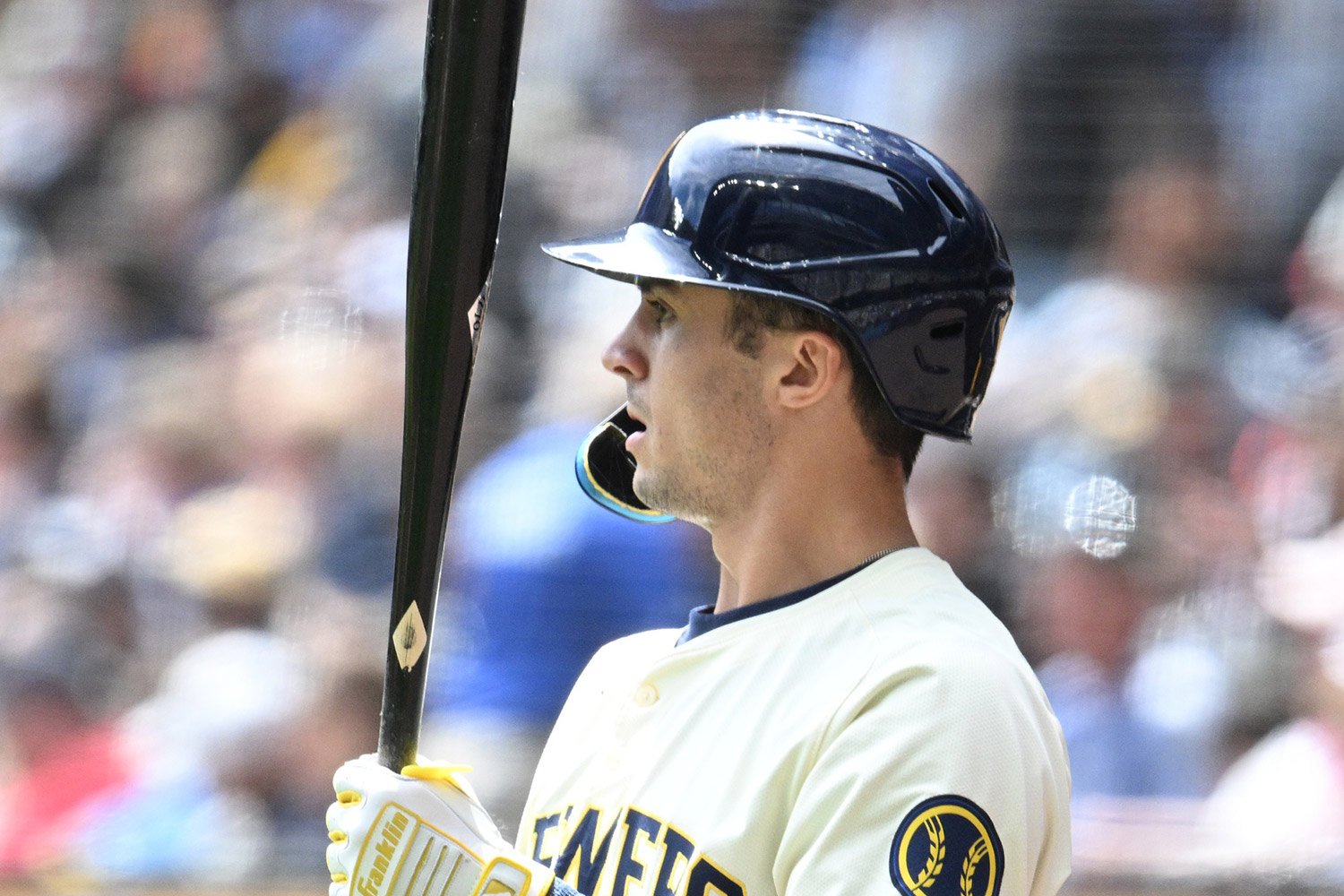 Like what the Brewers did with Jackson Chourio in 2024, the club needs to give Tyler Black regular playing time with plenty of leash so he can develop into a reliable player going forward. If Black can become a regular in the Brewers lineup, it’s possible he could hit .270-.280 with 12-15 home runs and 25 stolen bases. No, he won’t smash 30 home runs but he could be an above-average bat and a threat on the basepaths. So, how does Black get playing time in 2025? The biggest challenge for Black is his defensive position. He’s played third base, second base, first base and outfield. The latter, outfield (specifically left field), is probably where he is best suited. The problem is that the team has a bevy of Gold-Glove caliber outfielders, including Chourio, Garrett Mitchell, Blake Perkins, and Sal Frelick. And then there is Christian Yelich. Regarding the latter, it would be best if Yelich was limited to designated hitter to maximize his chances of staying healthy. The Brewers need Yelich’s bat to win in 2025. So, where does that leave Milwaukee? Well, let’s start with a couple of assumptions. First, Willy Adames is gone. The Crew will not pay him $25 million annually for five or six seasons. Second, Turang and Ortiz will man the second base and shortstop positions. That leaves us with the following: Rhys Hoskins (who recently triggered his 2025 option): 130-140 starts at first base Yelich: 130-140 starts at designated hitter A free agent signing or trade to fill third base This leaves Black the option to get the following starts: 20-30 games at first base 20-30 games at designated hitter 20-30 games at third base 20 games in left field That would give Black 80-130 starts, plus pinch-hitting. And there will, undoubtedly, be injuries, giving him other opportunities. Given that Black bats left-handed, the team will likely want to sit him against lefty starters in favor of right-handed options, which makes it difficult to see him ever becoming a 150-game starter. While his position may be unpredictable, it would be necessary for him to be in the lineup regularly. He has nothing else to prove at Triple-A Nashville, so the team needs to let his development continue at the big-league level. For Black, the biggest question is whether he can actually handle the defensive positions at an acceptable level. That’s not given. The Brewers have been moving him around the field and don’t seem happy about his performance with the glove. As noted, the best position for Black may ultimately be left field. But at this point, he is only going to get out there on rare occasions due to the quality of players ahead of him. It may signal a need to use him as trade bait to acquire a third baseman or a pitcher. Otherwise, Black has an opportunity to become a super-utility player. The team must allow him to play most days and be prepared for some growing pains. In the end, if we do that, we should be rewarded with a quality bat, provided the Brewers can find a defensive position in the lineup.
 -
At what cost? What would it take to get McMahon?
-
Nice. Congrats to those guys. It's something they can always have to show off.
-
Hoskins exercises 18MM dollar option for 2025
Matt Breen replied to patrickgpe's topic in Milwaukee Brewers Talk
This was a no brainer for Hoskins. No way he gets that kind of coin in free agency. I hope he comes back better after as last year he was coming off major surgery. Maybe the year of playing will help him rebound. I'd like to see him in a little better shape. Age hits all players - but bigger bodied guys like Hoskins can really go downhill fast if they aren't careful. They lose a little speed and quickness - and it can really affect them. -
Brewers place Colin Rea on waivers
Matt Breen replied to liveforoctober's topic in Milwaukee Brewers Talk
Letting go of Rea surprises me. I'm guessing it's a money issue. I'm worried we'll see a lowering of payroll for next year. -
Cardinals have hired Brant Brown as the hitting coach. They really dropped the ball on that one.