Matt Breen
-
Posts
9,122 -
Joined
-
Last visited
-
Days Won
1
Content Type
Profiles
Forums
Blogs
Events
Milwaukee Brewers News, Rumors & Analysis
2026 Milwaukee Brewers Top Prospect Rankings
Milwaukee Brewers Videos
2022 Milwaukee Brewers Draft Picks & Signing Bonuses
Milwaukee Brewers Trade & Free Agent Rumors
Milwaukee Brewers Fan Guides & Resources
2023 Milwaukee Brewers Draft Picks & Signing Bonuses
2024 Milwaukee Brewers Draft Picks & Signing Bonuses
The Milwaukee Brewers Players Project
2025 Milwaukee Brewers Draft Picks & Signing Bonuses
2026 Milwaukee Brewers Draft Picks & Signing Bonuses
Store
Downloads
Gallery
Everything posted by Matt Breen
-
 One game. Like Moonlight Graham and a handful of other guys, Chris Sáenz had his one day in The Show - then was gone. But unlike Graham (and most of those other guys), Sáenz had a day to remember. One game. Like Moonlight Graham and a handful of other guys, Chris Sáenz had his one day in The Show - then was gone. But unlike Graham (and most of those other guys), Sáenz had a day to remember. Chris Sáenz was born in Tucson, Arizona, in 1981. He was a 28th round pick by the Brewers in 2001 out of Pima Community College in Tucson. He began his career as a reliever, but moved to the rotation after two season. The results were middling, mostly due to control issues. But Sáenz could strike out batters - averaging a strikeout per inning during his minor league career, and the team was intrigued by his potential. In 2004, Sáenz began the season at AA Huntsville. He had only pitched in three games when he was informed that the Brewers needed him for an emergency start after an injury to Chris Capuano - as well as a 15-inning game two days earlier. The 22-year-old right hander was to face the St. Louis Cardinals, whose powerful lineup included Scott Rolen, Albert Pujols and Jim Edmunds . On April 24, 2004, in front of more than 22,000 fans at Miller Park, Sáenz was brilliant. He threw six innings, giving up only two hits and three walks against seven strikeouts - all while picking up his first - and only - major league decision: a win. Sáenz struck out the first batter he faced and at one point retired 14 straight. His only major scare was in the first inning, when Edgar Renteria drove a fly ball to the deepest part of the park only to have it hauled in by Scott Podsednik . It was a stunning performance, but Sáenz knew it was only a one-game ride. The club had already told him he was heading back to AA after the game. Little did he know he would never return to the big leagues. Sáenz headed back to AA but suffered a serious arm injury later that year, which lead to Tommy John surgery, causing him to miss not only the rest of the season, but all of 2005. The Brewers released him the following year. He tried to make a comeback with the Angels organization in 2007, but the results were disastrous. A stint in indy ball was no better, and after the 2008 season his career was done. He was 26 years old. Sáenz played all of one game in his major league career, but there was something of a fairy tale to it. Plucked from obscurity, he found himself on the biggest stage in the world and - for one day - was awesome. He is only the fourth pitcher in baseball history, and the first since 1899, to start in his only major league game, give up no runs (earned or unearned) with at least six innings pitched, and record the win. His lifetime MLB record is 1-0 with an ERA of 0.00. Many people call it the best one-day career in baseball history. You can't help but not feel bad for Sáenz. Like lots of players, injuries derailed his career. But there's something kind of cool to his story. Who can walk around saying they won their only major league game? Or say they have a lifetime ERA of 0.00? And to do it against the powerful (and hated) Cardinals. It's probably great at parties. After baseball, Sáenz went back to school, and got his degree from Arizona State. He and his family would eventually move to Chicago, where he works as a railroad engineer. Please share your thoughts on Chris Sáenz's amazing one game career. View full article
-
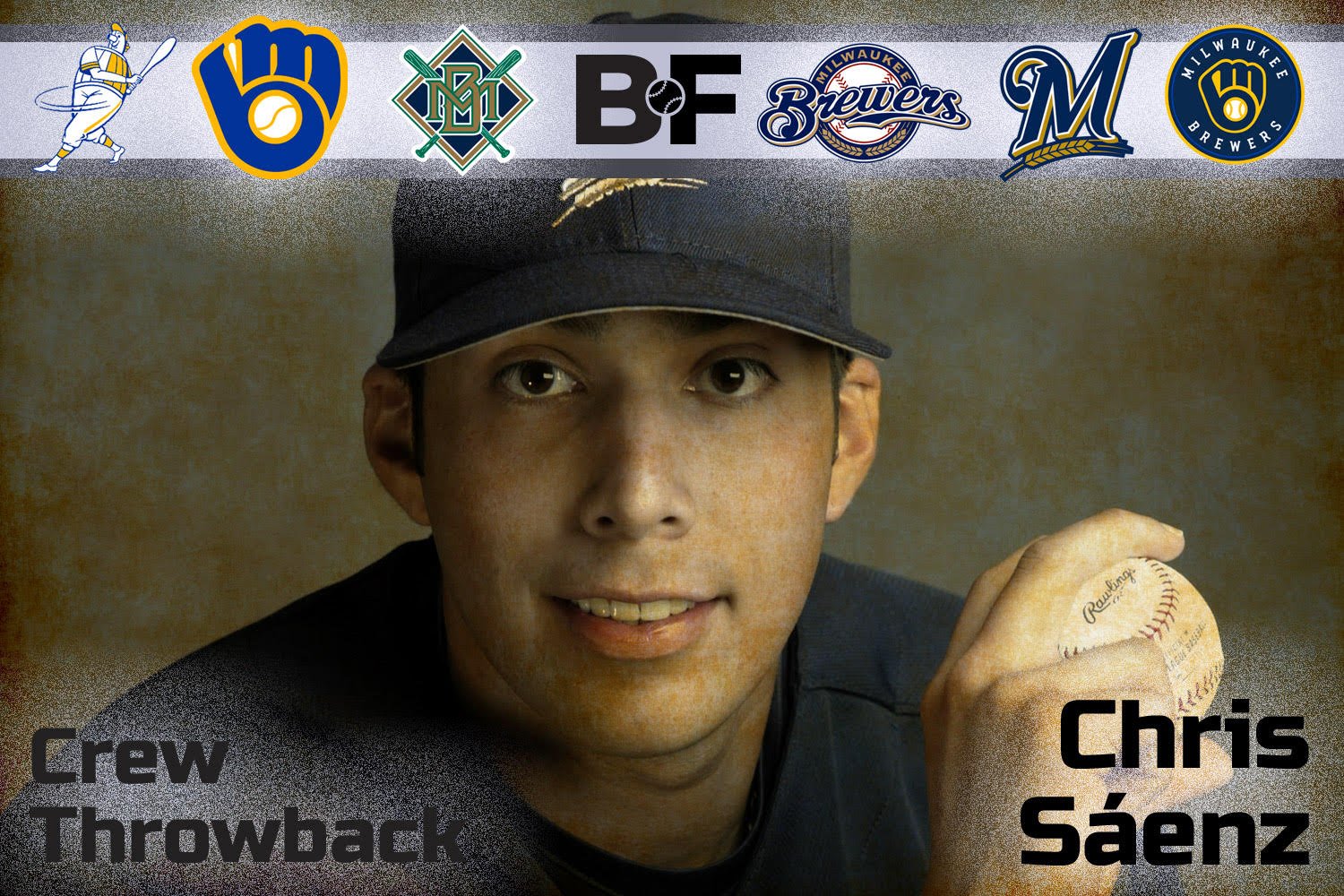 Chris Sáenz was born in Tucson, Arizona, in 1981. He was a 28th round pick by the Brewers in 2001 out of Pima Community College in Tucson. He began his career as a reliever, but moved to the rotation after two season. The results were middling, mostly due to control issues. But Sáenz could strike out batters - averaging a strikeout per inning during his minor league career, and the team was intrigued by his potential. In 2004, Sáenz began the season at AA Huntsville. He had only pitched in three games when he was informed that the Brewers needed him for an emergency start after an injury to Chris Capuano - as well as a 15-inning game two days earlier. The 22-year-old right hander was to face the St. Louis Cardinals, whose powerful lineup included Scott Rolen, Albert Pujols and Jim Edmunds . On April 24, 2004, in front of more than 22,000 fans at Miller Park, Sáenz was brilliant. He threw six innings, giving up only two hits and three walks against seven strikeouts - all while picking up his first - and only - major league decision: a win. Sáenz struck out the first batter he faced and at one point retired 14 straight. His only major scare was in the first inning, when Edgar Renteria drove a fly ball to the deepest part of the park only to have it hauled in by Scott Podsednik . It was a stunning performance, but Sáenz knew it was only a one-game ride. The club had already told him he was heading back to AA after the game. Little did he know he would never return to the big leagues. Sáenz headed back to AA but suffered a serious arm injury later that year, which lead to Tommy John surgery, causing him to miss not only the rest of the season, but all of 2005. The Brewers released him the following year. He tried to make a comeback with the Angels organization in 2007, but the results were disastrous. A stint in indy ball was no better, and after the 2008 season his career was done. He was 26 years old. Sáenz played all of one game in his major league career, but there was something of a fairy tale to it. Plucked from obscurity, he found himself on the biggest stage in the world and - for one day - was awesome. He is only the fourth pitcher in baseball history, and the first since 1899, to start in his only major league game, give up no runs (earned or unearned) with at least six innings pitched, and record the win. His lifetime MLB record is 1-0 with an ERA of 0.00. Many people call it the best one-day career in baseball history. You can't help but not feel bad for Sáenz. Like lots of players, injuries derailed his career. But there's something kind of cool to his story. Who can walk around saying they won their only major league game? Or say they have a lifetime ERA of 0.00? And to do it against the powerful (and hated) Cardinals. It's probably great at parties. After baseball, Sáenz went back to school, and got his degree from Arizona State. He and his family would eventually move to Chicago, where he works as a railroad engineer. Please share your thoughts on Chris Sáenz's amazing one game career.
-
Chris Bosio was what a lot of baseball people would call a bulldog on the mound. He was tough, competitive and combative - never afraid to knock down an opposing player or claim his part of the plate. He even looked like a Brewer - big and stout - more like a wrestler (or a plumber) than a pitcher. Despite his size, however, he was more of a finesse pitcher, throwing a split-finger fastball and showing good control. Bosio was also successful - achieving double digit win totals four times during his productive stint in Milwaukee. Chris Bosio was what a lot of baseball people would call a bulldog on the mound. He was tough, competitive and combative - never afraid to knock down an opposing player or claim his part of the plate. He even looked like a Brewer - big and stout - more like a wrestler (or a plumber) than a pitcher. Despite his size, however, he was more of a finesse pitcher, throwing a split-finger fastball and showing good control. Bosio was also successful - achieving double digit win totals four times during his productive stint in Milwaukee. Christopher Louis Bosio was born in 1963 in Carmichael, California. He was selected by the Brewers in the 2nd round of the 1982 draft out of Sacramento City College. The big right hander was mostly a starting pitcher until 1986, when the club moved him to relieving at AAA. Bosio had a great year, and was rewarded with a cup of coffee that season. In 1987, the 24-year old Chris Bosio made the club as a swingman, starting 19 games and relieving 27. He continued in the same role in 1988, before moving to the rotation permanently in '89. For three of the next four years he would be a workhorse, twice throwing more than 230 innings (his 1990 campaign was limited to 19 starts due to a knee injury). He won 15, 14 and 16 games during the span, with an ERA as low as 2.95. He also won 10 straight games in the second half of the 1992 season to help the Brewers battle Toronto for the division title. (Alas, Milwaukee came in second, despite winning 92 games. Were was the wild card when you needed it?) Bosio's success made him a hot prospect when he reached free agency after the 1992 season. The Brewers had what looked like a solid core of pitchers (Cal Eldred, Jaime Navarro, Ricky Bones, Bill Wegman ), and elected not to get into a bidding war for Bosio's services. The Seattle Mariners were loaded with young talent, including Ken Griffey Jr. , but needed arms to go with Randy Johnson . The result was a four-year, $16 million contract for Boz, the largest in team history. Just like that, Milwaukee's best pitcher was gone. Bosio would never equal the success he had in Milwaukee. Injuries (nine knee surgeries) sapped him of his skills, and he never pitched more than 170 innings in Seattle. He did however have a historic day on April 22, 1993, when he tossed a no-hitter against Boston. After three games in the minors in 1997, Bosio retired. After baseball, Bosio moved right into coaching, serving as pitching coach at the college, minor league and major league levels. He continued his close ties to Wisconsin by serving as the assistant pitching coach at the University of Wisconsin–Oshkosh in 2006. In 2007, he became the pitching coach and then interim manager at Lawrence University (located near Appleton). He joined the Brewers in 2009, serving as pitching coach at AAA. At the big league level, he served as pitching coach as well as an advanced scout. After the 2012 season, Bosio joined Dale Sveum 's staff with the Chicago Cubs as pitching coach, earning a championship ring for the club's 2016 World Series title. He was let go by the Cubs the following year, and moved onto Detroit, but was terminated in 2018 after reportedly making some 'insensitive comments' in the clubhouse. For Milwaukee, Bosio pitched for six full seasons, averaging almost 200 IPs per year. He had a 4.13 ERA, and had two seasons with a bWAR over 5.0. His 18.6 bWAR represents the 3rd most in team history (behind Teddy Higuera and Ben Sheets ). His 67 wins and 1,190 IPs rank high on the Brewer 'all-time' list as well. He threw 32 complete games and 8 shutouts. At his best, Bosio took the ball every fifth day, went deep into a game, avoided walking too many players, and limited home runs. He was a key member of late 80s/early 90s teams that were often good (winning 91, 87, 81, 83 and 92 games), but never great (none of the teams made the playoffs). Bosio endeared himself to fans not only with his play, but his fiery attitude and dogged approach to the game. Share your thoughts on former Brewer Chris Bosio. View full article
-
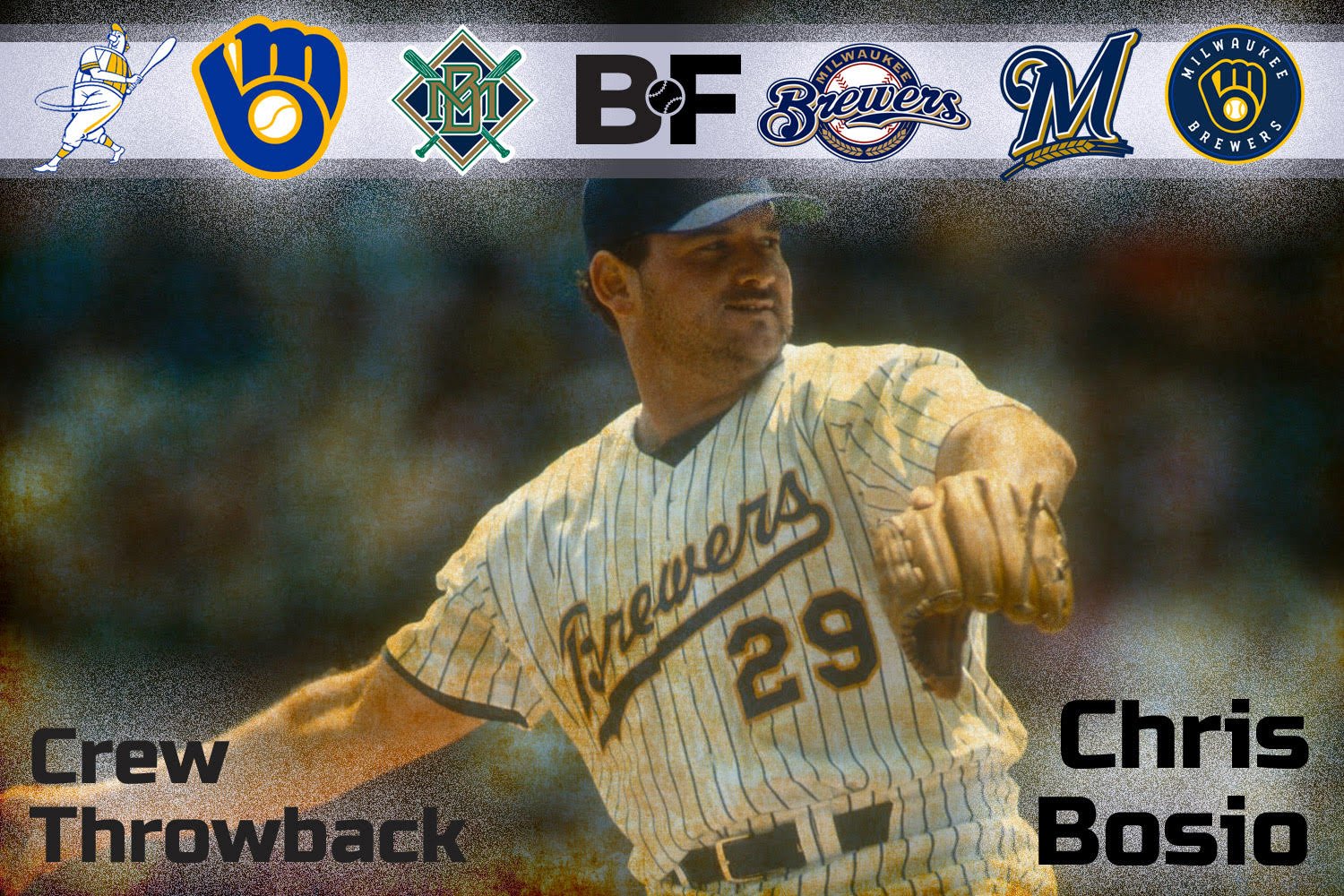 Christopher Louis Bosio was born in 1963 in Carmichael, California. He was selected by the Brewers in the 2nd round of the 1982 draft out of Sacramento City College. The big right hander was mostly a starting pitcher until 1986, when the club moved him to relieving at AAA. Bosio had a great year, and was rewarded with a cup of coffee that season. In 1987, the 24-year old Chris Bosio made the club as a swingman, starting 19 games and relieving 27. He continued in the same role in 1988, before moving to the rotation permanently in '89. For three of the next four years he would be a workhorse, twice throwing more than 230 innings (his 1990 campaign was limited to 19 starts due to a knee injury). He won 15, 14 and 16 games during the span, with an ERA as low as 2.95. He also won 10 straight games in the second half of the 1992 season to help the Brewers battle Toronto for the division title. (Alas, Milwaukee came in second, despite winning 92 games. Were was the wild card when you needed it?) Bosio's success made him a hot prospect when he reached free agency after the 1992 season. The Brewers had what looked like a solid core of pitchers (Cal Eldred, Jaime Navarro, Ricky Bones, Bill Wegman ), and elected not to get into a bidding war for Bosio's services. The Seattle Mariners were loaded with young talent, including Ken Griffey Jr. , but needed arms to go with Randy Johnson . The result was a four-year, $16 million contract for Boz, the largest in team history. Just like that, Milwaukee's best pitcher was gone. Bosio would never equal the success he had in Milwaukee. Injuries (nine knee surgeries) sapped him of his skills, and he never pitched more than 170 innings in Seattle. He did however have a historic day on April 22, 1993, when he tossed a no-hitter against Boston. After three games in the minors in 1997, Bosio retired. After baseball, Bosio moved right into coaching, serving as pitching coach at the college, minor league and major league levels. He continued his close ties to Wisconsin by serving as the assistant pitching coach at the University of Wisconsin–Oshkosh in 2006. In 2007, he became the pitching coach and then interim manager at Lawrence University (located near Appleton). He joined the Brewers in 2009, serving as pitching coach at AAA. At the big league level, he served as pitching coach as well as an advanced scout. After the 2012 season, Bosio joined Dale Sveum 's staff with the Chicago Cubs as pitching coach, earning a championship ring for the club's 2016 World Series title. He was let go by the Cubs the following year, and moved onto Detroit, but was terminated in 2018 after reportedly making some 'insensitive comments' in the clubhouse. For Milwaukee, Bosio pitched for six full seasons, averaging almost 200 IPs per year. He had a 4.13 ERA, and had two seasons with a bWAR over 5.0. His 18.6 bWAR represents the 3rd most in team history (behind Teddy Higuera and Ben Sheets ). His 67 wins and 1,190 IPs rank high on the Brewer 'all-time' list as well. He threw 32 complete games and 8 shutouts. At his best, Bosio took the ball every fifth day, went deep into a game, avoided walking too many players, and limited home runs. He was a key member of late 80s/early 90s teams that were often good (winning 91, 87, 81, 83 and 92 games), but never great (none of the teams made the playoffs). Bosio endeared himself to fans not only with his play, but his fiery attitude and dogged approach to the game. Share your thoughts on former Brewer Chris Bosio.
-
Bucks took care of business tonight. Bobby, Carter, Matthews, Ingles. All good. We essentially are bringing back the band next season (plus Ingles) - which is just fine. Let's hope injuries dog bite us. But if they do, we have more depth this year. But it'll be good to have Matthews and Carter for a full season. And Lopez healthy - as well as Hill. Frankly, there's wasn't tons more we could do without making a drastic move. But I don't think that was needed. Team will be good.
-
Ben Oglivie Quietly Dominated The Game
Matt Breen replied to Matt Breen's topic in Brewer Fanatic Front Page News
Imagine having a line up like the 1982 team: Yount - 29/.331 Simmons - 23/.269 Cooper - 32/.313 Oglivie - 34/.244 Thomas - 39/.245 Molitor - 19/.302 Money - 16/.284 Gantner - 4/.295 Moore - 6/.254 Howell - 4/.260 Even our scrubs hit okay. Ned Yost, Mark Brouhard, Marshall Edwards, Ed Romero - the lowest BA was .247. It was fun to watch. -
In the golden years of Bambi's Bombers and Harvey Wallbangers, there are so many players to remember from the lineup. This included Robin Yount, Gorman Thomas, Cecil Cooper, and Paul Molitor - the group earning MVPs, HR titles, and boatloads of All-Star appearances during their time in Milwaukee. With all the colorful characters and great players, it's easy to forget one of the most productive bats in team history - and a key member of the great Brewer teams of the late 70s and early 80s - slugging outfielder Ben Oglivie. In the golden years of Bambi's Bombers and Harvey Wallbangers, there are so many players to remember from the lineup. This included Robin Yount, Gorman Thomas, Cecil Cooper, and Paul Molitor - the group earning MVPs, HR titles, and boatloads of All-Star appearances during their time in Milwaukee. With all the colorful characters and great players, it's easy to forget one of the most productive bats in team history - and a key member of the great Brewer teams of the late 70s and early 80s - slugging outfielder Ben Oglivie. Benjamin Ambrosio Oglivie Palmer was born in Panama in 1949. At age 17, he and his family moved to New York following the death of his father. The Red Sox drafted the athletic Oglivie in 1968 in the 11th round. The tall, lanky left-handed outfielder steadily worked his way through the Boston system, reaching the big leagues in 1971. After two years as a part time player, Oglivie was dealt to Detroit, where he played for four years, primarily as a platoon player. Just when it looked like Oglivie was ticketed for a full time job, the Tigers traded him to Milwaukee for pitcher Jim Slaton (who would return to Milwaukee a year later as a free agent). The trade for Oglivie was the best thing for the then 29-year-old outfielder. He hit .303 in 1978, then followed up with 29 HRs the next season. In 1980, Oglivie hit .304 and pounded out a league leading 41 HRs (tying Reggie Jackson), thus becoming the first foreign born player to top the circuit in round trippers. He made the first of three All-Star appearances that year, finish 13th in the league MVP voting, and won his only Silver Slugger Award. He would never top his fantastic 1980 campaign, but he did hit .277 and produce an OPS of .806 during his time with the Crew. Oglivie played nine years in Milwaukee, primarily in left field, but also in right field and as a designated hitter. After leaving the Brewers, Oglivie played two successful years in Japan (hitting over .300 and having more than 20 HR both years). He attempted a comeback at age 40 with Milwaukee in the minor leagues, but an injured knee ended the affair after only 2 games. As a player, Oglivie was known as quiet, intelligent and low-key. Perhaps it was his introspective nature that kept him out of the spotlight. He was viewed as a bit of an odd duck, more comfortable reading philosophy than drinking beers with larger-than-life characters such as Gorman Thomas. In fact, early in his career, many took his cerebral approach and polite attitude as a lack of passion. The opposite, however, was true. Oglivie was immensely curious and intelligent, and just approached things differently. Former teammate Bill Lee said Benji could do the New York Times crossword puzzle in five minutes. After retiring, Oglivie stayed in the game, primarily as a hitting coach, in the Padres, Brewers, Tigers and Rays organizations. For his Brewer career, Oglivie is ranked 8th in hits, 7th in HRs (176) and 6th in RBI (685). For his entire career, he hit 235 HR and drove in 901 runs. In 1983, in one of his more memorable games, he slugged three home runs as the Brewers came from behind to beat Boston 8-7 in 10 innings. Oglivie's 3rd homer tied the score at 6-6 in the bottom of the 9th. It should be noted that Oglivie put up a lot of impressive numbers in his career despite not becoming a full time major league player until the age of 28. He was elected to the Latino Baseball Hall of Fame in 2012. Please share your memories of former Milwaukee Brewer great Ben Oglivie . View full article
-
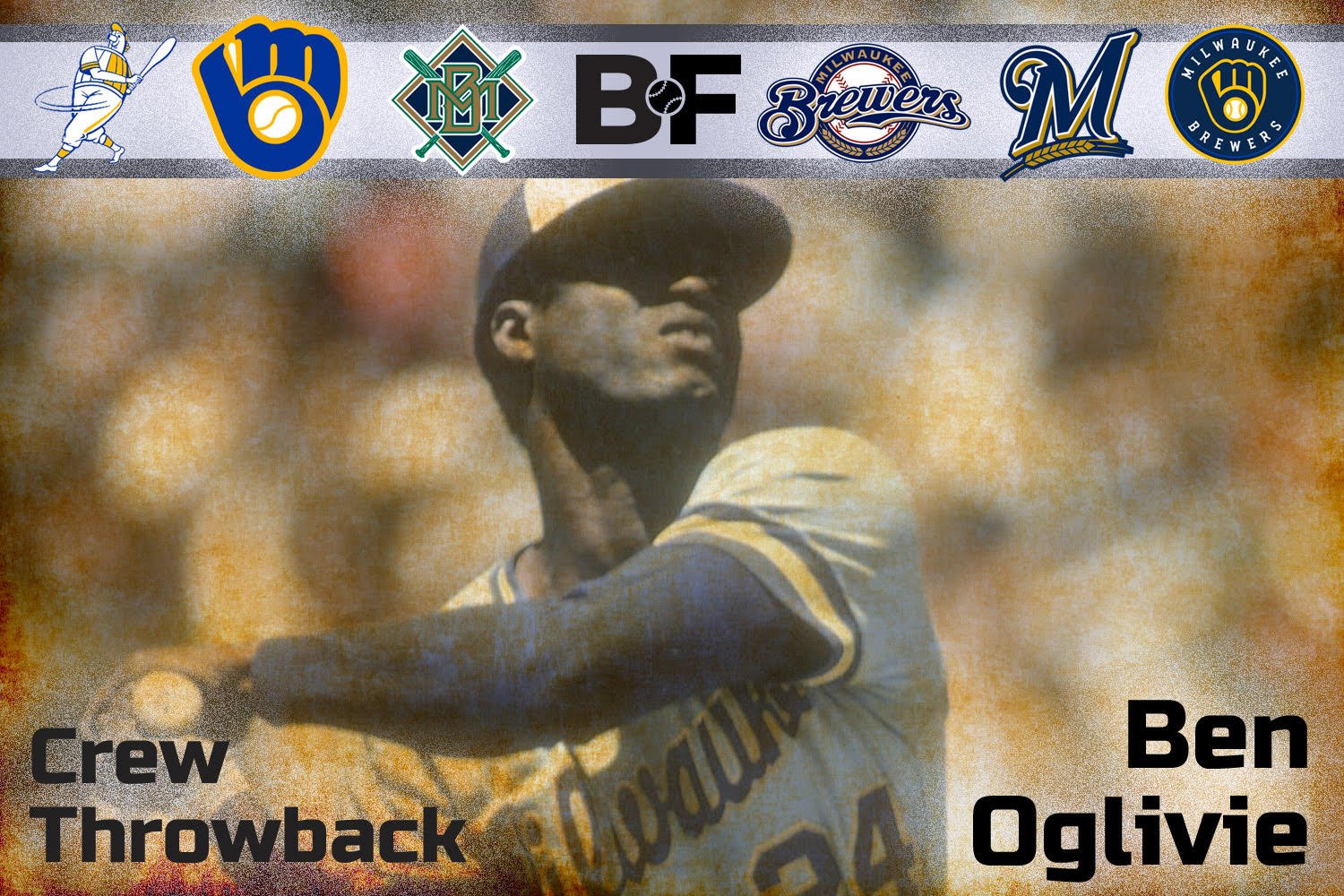 Benjamin Ambrosio Oglivie Palmer was born in Panama in 1949. At age 17, he and his family moved to New York following the death of his father. The Red Sox drafted the athletic Oglivie in 1968 in the 11th round. The tall, lanky left-handed outfielder steadily worked his way through the Boston system, reaching the big leagues in 1971. After two years as a part time player, Oglivie was dealt to Detroit, where he played for four years, primarily as a platoon player. Just when it looked like Oglivie was ticketed for a full time job, the Tigers traded him to Milwaukee for pitcher Jim Slaton (who would return to Milwaukee a year later as a free agent). The trade for Oglivie was the best thing for the then 29-year-old outfielder. He hit .303 in 1978, then followed up with 29 HRs the next season. In 1980, Oglivie hit .304 and pounded out a league leading 41 HRs (tying Reggie Jackson), thus becoming the first foreign born player to top the circuit in round trippers. He made the first of three All-Star appearances that year, finish 13th in the league MVP voting, and won his only Silver Slugger Award. He would never top his fantastic 1980 campaign, but he did hit .277 and produce an OPS of .806 during his time with the Crew. Oglivie played nine years in Milwaukee, primarily in left field, but also in right field and as a designated hitter. After leaving the Brewers, Oglivie played two successful years in Japan (hitting over .300 and having more than 20 HR both years). He attempted a comeback at age 40 with Milwaukee in the minor leagues, but an injured knee ended the affair after only 2 games. As a player, Oglivie was known as quiet, intelligent and low-key. Perhaps it was his introspective nature that kept him out of the spotlight. He was viewed as a bit of an odd duck, more comfortable reading philosophy than drinking beers with larger-than-life characters such as Gorman Thomas. In fact, early in his career, many took his cerebral approach and polite attitude as a lack of passion. The opposite, however, was true. Oglivie was immensely curious and intelligent, and just approached things differently. Former teammate Bill Lee said Benji could do the New York Times crossword puzzle in five minutes. After retiring, Oglivie stayed in the game, primarily as a hitting coach, in the Padres, Brewers, Tigers and Rays organizations. For his Brewer career, Oglivie is ranked 8th in hits, 7th in HRs (176) and 6th in RBI (685). For his entire career, he hit 235 HR and drove in 901 runs. In 1983, in one of his more memorable games, he slugged three home runs as the Brewers came from behind to beat Boston 8-7 in 10 innings. Oglivie's 3rd homer tied the score at 6-6 in the bottom of the 9th. It should be noted that Oglivie put up a lot of impressive numbers in his career despite not becoming a full time major league player until the age of 28. He was elected to the Latino Baseball Hall of Fame in 2012. Please share your memories of former Milwaukee Brewer great Ben Oglivie .
-
They technically can't trade the pick. But they can make the selection and then trade the player. So you just have the whole thing orchestrated ahead of time with another team - aka - "You (the Bucks) pick (insert player 1) at #24, and after you make the pick, deal him to us for (insert player 2)."
-
What do the Bucks do? If they keep the pick, do they go for big upside - which means someone who may take time to develop? Or do you grab someone who could move right into the rotation and contribute from day 1? If you do that, the player's upside is likely limited. Or do you just trade the pick for a veteran who can help now. Hard to tell. I'm guessing the club is considering all the options. If we do keep the pick, I'm fascinated by Jalen Williams out of Santa Clara, but he seems to rising up draft boards. Looks like no way he reaches us. Seen Christian Braun, Kessler and Liddell mocked to us as well. All three would likely find a role right away - but not huge upside. Good chance Liddell is gone when we pick. Jovic is interesting, but an immense wild card. We could easily move the pick - who knows.
-
Who is the most successful pitcher in Brewer history? Sheets? Gallardo? Bosio? Caldwell? Nope. The answer is Teddy Higuera. The amazing thing is that Higuera was plunked out of the Mexican league at age 25 - and still had an astounding run from 1986-88 where averaged 7.7 bWAR a year. That run solidified Higuera as the most productive pitcher in franchise history. Who is the most successful pitcher in Brewer history? Sheets? Gallardo? Bosio? Caldwell? Nope. The answer is Teddy Higuera. The amazing thing is that Higuera was plunked out of the Mexican league at age 25 - and still had an astounding run from 1986-88 where averaged 7.7 bWAR a year. That run solidified Higuera as the most productive pitcher in franchise history. Teodoro Valenzuela Higuera was born in Mexico in 1957. He didn't began playing baseball until he was 17, but by age 21, he was pitching in the Mexican League. In 1983, in the wake of the success of fellow Mexican Fernando Valenzuela , the Brewers took a shine to the short, stocky 25-year old lefthander with a five-pitch repertoire. Milwaukee bought Higuera's contract from the Mexican League, and after one year in the minors, installed him into their starting rotation. Teddy Higuera 's career began with a very good rookie campaign in 1985. The 27-year old threw 212 innings, won 15 games, and had a 3.90 ERA. He broke out the following season, producing one of the finest seasons in Milwaukee Brewer history. Higuera won 20 games, threw 248 innings and struck out 207 batters. He had a 32 inning scoreless streak. He finished 2nd in the Cy Young voting (behind Roger Clemens ), was named to the all-star team, and finished 15th in MVP voting. Higuera continued to dominate the next two seasons, winning 18 and 16 games, respectively. His 1986-88 run represent three of the five highest season bWAR ratings in team history. However, beginning in 1989, injuries began to take their toll on Higuera. He was limited to 22 and 27 starts the next two seasons, pitching well, but not great. Then, in 1991, Higuera tore his rotator cuff. He missed most of the season and all of 1992. Higuera struggled to come back the next two years. After the 1994 season, his career was over. In retirement, Higuera stayed involved in baseball in his native Mexico. He served as the pitching coach for the national team during 2006, 2009 and 2013 World Baseball Classics. He was inducted into the Mexican Professional Baseball Hall of Fame in 2011. He was also added to the Brewers' Walk of Fame in 2014 Higuera was a great story back in the 1980s. Emerging from the obscurity of the Mexican Baseball League, he was an All-Star and Cy Young runner-up just two short years later. He didn't have overpowering stuff, but he succeeded by keeping hitters off balance with a variety of pitches, sharp control and deception. Higuera had an incredible four-year run in Milwaukee (1985-88), throwing nearly 950 innings during the span, and averaging 17 wins a year. For his career, Higuera won 94 games, produced a .595 winning percentage, a 3.61 ERA, 1380 innings pitched, 50 complete games, 12 shutouts, and 1081 strikeouts. If injuries had not derailed his career, he would likely own most every major pitching record in Milwaukee. Today, Higuera sits as one of the most talented and productive pitchers in team history. View full article
-
Crew Throwback: Teddy Higuera Rose Quickly and Burned Bright
Matt Breen posted an article in Brewers
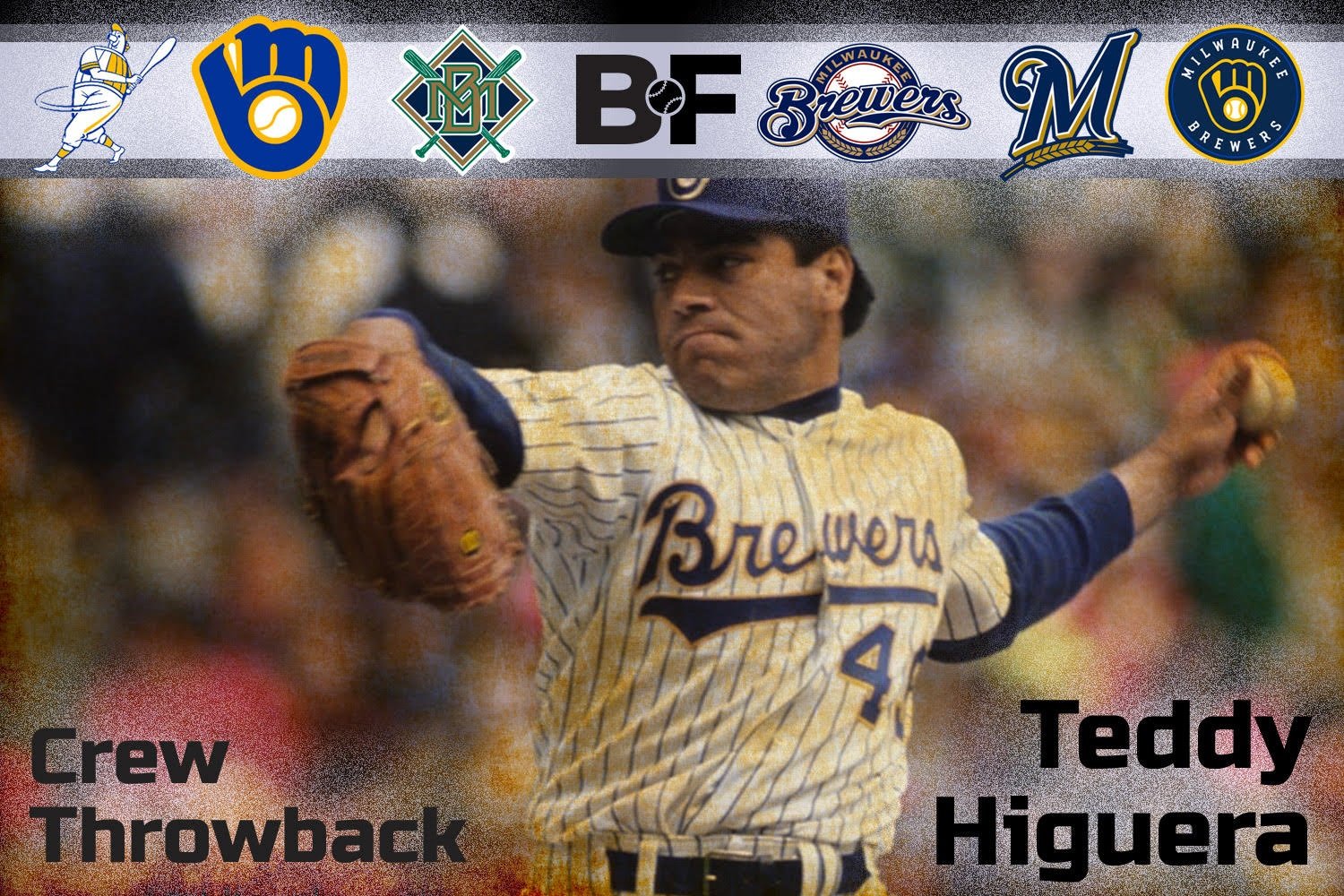 Teodoro Valenzuela Higuera was born in Mexico in 1957. He didn't began playing baseball until he was 17, but by age 21, he was pitching in the Mexican League. In 1983, in the wake of the success of fellow Mexican Fernando Valenzuela , the Brewers took a shine to the short, stocky 25-year old lefthander with a five-pitch repertoire. Milwaukee bought Higuera's contract from the Mexican League, and after one year in the minors, installed him into their starting rotation. Teddy Higuera 's career began with a very good rookie campaign in 1985. The 27-year old threw 212 innings, won 15 games, and had a 3.90 ERA. He broke out the following season, producing one of the finest seasons in Milwaukee Brewer history. Higuera won 20 games, threw 248 innings and struck out 207 batters. He had a 32 inning scoreless streak. He finished 2nd in the Cy Young voting (behind Roger Clemens ), was named to the all-star team, and finished 15th in MVP voting. Higuera continued to dominate the next two seasons, winning 18 and 16 games, respectively. His 1986-88 run represent three of the five highest season bWAR ratings in team history. However, beginning in 1989, injuries began to take their toll on Higuera. He was limited to 22 and 27 starts the next two seasons, pitching well, but not great. Then, in 1991, Higuera tore his rotator cuff. He missed most of the season and all of 1992. Higuera struggled to come back the next two years. After the 1994 season, his career was over. In retirement, Higuera stayed involved in baseball in his native Mexico. He served as the pitching coach for the national team during 2006, 2009 and 2013 World Baseball Classics. He was inducted into the Mexican Professional Baseball Hall of Fame in 2011. He was also added to the Brewers' Walk of Fame in 2014 Higuera was a great story back in the 1980s. Emerging from the obscurity of the Mexican Baseball League, he was an All-Star and Cy Young runner-up just two short years later. He didn't have overpowering stuff, but he succeeded by keeping hitters off balance with a variety of pitches, sharp control and deception. Higuera had an incredible four-year run in Milwaukee (1985-88), throwing nearly 950 innings during the span, and averaging 17 wins a year. For his career, Higuera won 94 games, produced a .595 winning percentage, a 3.61 ERA, 1380 innings pitched, 50 complete games, 12 shutouts, and 1081 strikeouts. If injuries had not derailed his career, he would likely own most every major pitching record in Milwaukee. Today, Higuera sits as one of the most talented and productive pitchers in team history.
-
Crew Throwback: Johnny Briggs was a Bright Spot in Early Years
Matt Breen posted an article in Brewers
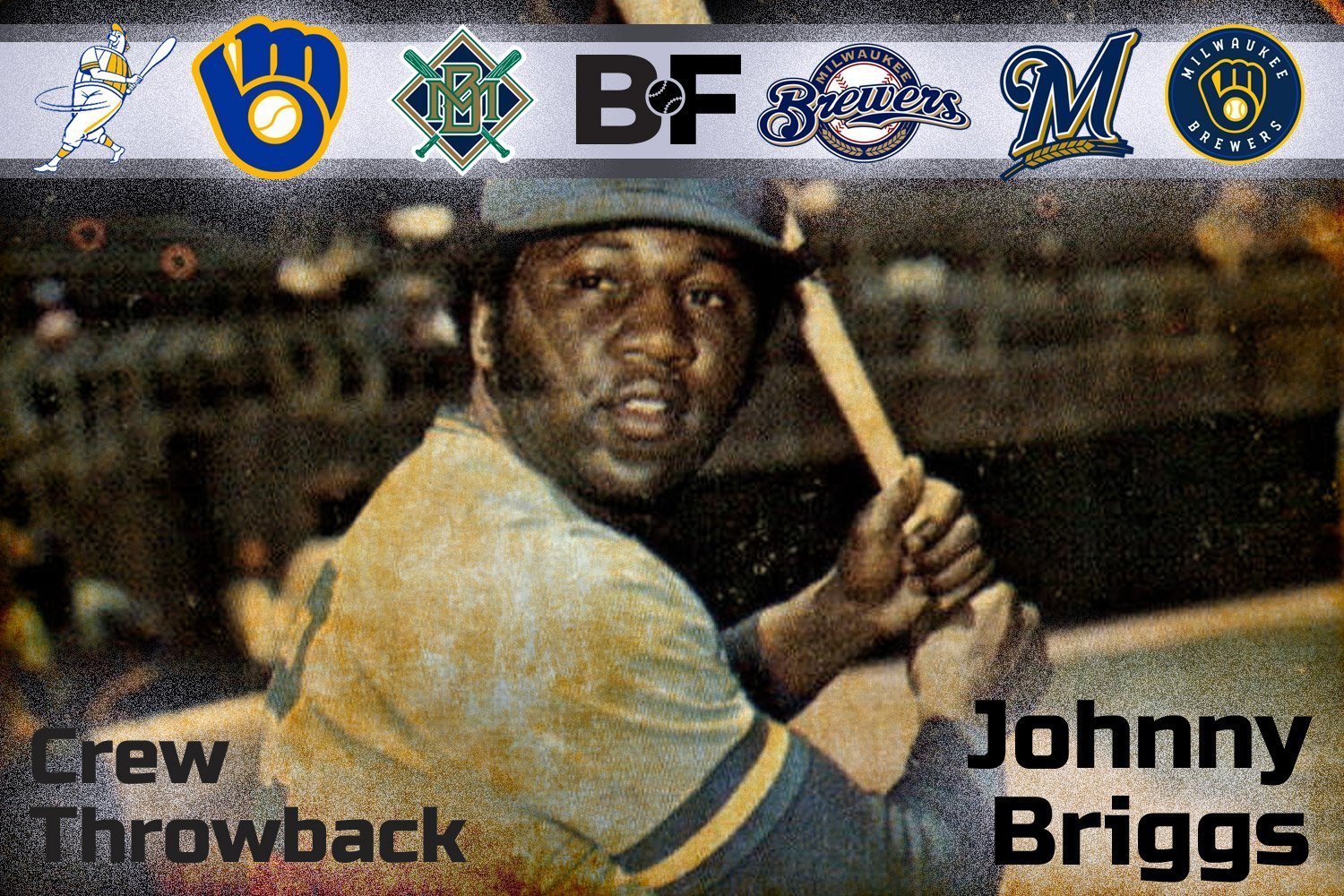 Johnny Briggs was born in New Jersey in 1944. He was signed as an amateur free agent by Philadelphia in 1962. A left-handed hitting outfielder, he reached the big leagues in 1964 after only one minor league season. He was a semi-regular for the Phillies from 1965 through 1970, showing modest power and good on-base skills. But he could never quite breakout as an everyday player - perhaps due to his struggles against left-handers. He spent most of his time in centerfield, but also played right field, left field, and first base. Early into the 1971 season, Milwaukee acquired Briggs in exchange for Pete Koegel and Ray Peters (neither player would have more than a cup of coffee in the bigs). The deal was an immediate boon for Briggs and Milwaukee. Given the chance to play everyday, the 27-year old Briggs posted his best numbers, including 21 HRs and a .845 OPS. For four seasons, Briggs would provide a consistent bat in the Brewer lineup, hitting between 17 and 21 HRs each season, and boasting a .358 OBP and a .799 OPS. Both Fangraphs and Baseball Reference have him as roughly a 3.0 WAR player for each of his years as a Brewers. During his time in Milwaukee, Briggs primarily played left field, but he moved around as needed, getting starts at first base, center field, right field, and designated hitter. Some highlights of Briggs career include drawing four walks in a game, driving in six runs in a game (off Nolan Ryan ), and accomplishing the rare feat of having six hits in a nine inning game. The 1975 season saw Briggs miss a month with an injury. Then, after appearing in only 28 games, he was dealt to the Twins for Bobby Darwin . After one mediocre season in Minnesota, Briggs saw an opportunity in Japan, and he signed a two year deal with the Lotte Orions. Unfortunately, Briggs became ill from food parasites, and left the team after only 47 games. He would not return to Japan, and when no major league team would guarantee him a roster spot, he elected to retire. Briggs moved back to his hometown of Patterson, New Jersey, and join the Passaic County Sheriff’s Department. He retired in 2008 as a lieutenant after 25 years. He stayed active in sports by spending more than 20 years as a Paterson recreation supervisor, running baseball leagues and clinics, and counseling kids. John Briggs spent four years in Milwaukee. These were the early years of the franchise - tough, losing years. Still, he provided a quality bat during the lean times and twice lead the team in OPS. His strong on-base skills are probably more appreciated today than they were back in the early 70s, and thus he never got the accolades he deserved. Briggs, a soft-spoken man, said he enjoyed playing in Milwaukee. "Going to Milwaukee," Briggs said in a 2007 interview, "that was probably the best thing that ever happened to me." Please share your memories of former Brewer outfielder Johnny Briggs.
-
The early years of the Milwaukee Brewers franchise were not pretty. In the first three years in Milwaukee, the team lost more than 90 games each season. But the era would reward the club with some good players. One of those was slugging outfielder Johnny Briggs. The early years of the Milwaukee Brewers franchise were not pretty. In the first three years in Milwaukee, the team lost more than 90 games each season. But the era would reward the club with some good players. One of those was slugging outfielder Johnny Briggs. Johnny Briggs was born in New Jersey in 1944. He was signed as an amateur free agent by Philadelphia in 1962. A left-handed hitting outfielder, he reached the big leagues in 1964 after only one minor league season. He was a semi-regular for the Phillies from 1965 through 1970, showing modest power and good on-base skills. But he could never quite breakout as an everyday player - perhaps due to his struggles against left-handers. He spent most of his time in centerfield, but also played right field, left field, and first base. Early into the 1971 season, Milwaukee acquired Briggs in exchange for Pete Koegel and Ray Peters (neither player would have more than a cup of coffee in the bigs). The deal was an immediate boon for Briggs and Milwaukee. Given the chance to play everyday, the 27-year old Briggs posted his best numbers, including 21 HRs and a .845 OPS. For four seasons, Briggs would provide a consistent bat in the Brewer lineup, hitting between 17 and 21 HRs each season, and boasting a .358 OBP and a .799 OPS. Both Fangraphs and Baseball Reference have him as roughly a 3.0 WAR player for each of his years as a Brewers. During his time in Milwaukee, Briggs primarily played left field, but he moved around as needed, getting starts at first base, center field, right field, and designated hitter. Some highlights of Briggs career include drawing four walks in a game, driving in six runs in a game (off Nolan Ryan ), and accomplishing the rare feat of having six hits in a nine inning game. The 1975 season saw Briggs miss a month with an injury. Then, after appearing in only 28 games, he was dealt to the Twins for Bobby Darwin . After one mediocre season in Minnesota, Briggs saw an opportunity in Japan, and he signed a two year deal with the Lotte Orions. Unfortunately, Briggs became ill from food parasites, and left the team after only 47 games. He would not return to Japan, and when no major league team would guarantee him a roster spot, he elected to retire. Briggs moved back to his hometown of Patterson, New Jersey, and join the Passaic County Sheriff’s Department. He retired in 2008 as a lieutenant after 25 years. He stayed active in sports by spending more than 20 years as a Paterson recreation supervisor, running baseball leagues and clinics, and counseling kids. John Briggs spent four years in Milwaukee. These were the early years of the franchise - tough, losing years. Still, he provided a quality bat during the lean times and twice lead the team in OPS. His strong on-base skills are probably more appreciated today than they were back in the early 70s, and thus he never got the accolades he deserved. Briggs, a soft-spoken man, said he enjoyed playing in Milwaukee. "Going to Milwaukee," Briggs said in a 2007 interview, "that was probably the best thing that ever happened to me." Please share your memories of former Brewer outfielder Johnny Briggs. View full article
-
The names, faces and stories from the era are legendary to Brewer fans: Stormin' Gorman, Coop, The Igniter, Benji, Vuke, Moose, The Kid, Gumby, Fingers' mustache, Caldwell's 'sinker' (aka spitball) and others. But for all the team's greatness, one long time Brewer often gets forgotten. And that is catcher/outfielder Charlie Moore - who spent 14 seasons (yes, 14!) with the club. Image courtesy of Brewer Fanatic The names, faces and stories from the era are legendary to Brewer fans: Stormin' Gorman, Coop, The Igniter, Benji, Vuke, Moose, The Kid, Gumby, Fingers' mustache, Caldwell's 'sinker' (aka spitball) and others. But for all the team's greatness, one long time Brewer often gets forgotten. And that is catcher/outfielder Charlie Moore - who spent 14 seasons (yes, 14!) with the club. Charlie Moore was born in 1953 in Birmingham, Alabama. He was a 5th round pick by Milwaukee in 1971 out of the University of Alabama at Birmingham. He was a catcher with all-around, if unspectacular, skills. He moved quickly through the Brewer system, reaching Milwaukee for a cup of coffee in 1973. In 1974, the 21 year old served as the reserve catcher behind Darrell Porter. He held that position for eight years, generally getting 250-350 ABs each year. During that time, he showed the ability to hit for average (.290+ four different times), but not much power. Throughout his career, Moore showed good contact skills, striking out only 10% of his at bats. His finest season as a catcher was 1979 when he hit .300 in 111 games. In 1980, the Brewers acquired all-star catcher Ted Simmons from the Cardinals (along with Pete Vukovich and Rollie Fingers). The move caused the Brewers to rethink Moore's role with the club, and by 1981 they were experimenting with him in RF, a position where they were lacking a capable starter. In 1982, Moore made the shift from catcher to full time outfielder, and helped the Brewers reach the World Series. His play was nothing special, but on a team littered with all-stars, he quietly played the role required of him. He provided solid defense in RF, got on base, and was a steady presence in the clubhouse. In 1983, he played a career high 151 games while hitting a respectable .284 - walking more times than he struck out. In 1985, Moore shifted back to catcher, where he played until 1986. In 1987, Moore went to Toronto for a final season before retiring. Moore played 14 seasons for Milwaukee - topped only by Robin Yount, Jim Gantner and Paul Molitor. His 1,283 games rank 6th in team history, and his 1,029 hits is 10th on the team list. In 1980, he hit for the cycle. In postseason play he sports a robust .354 batting average. One other claim to fame: he was the last runner batted in by the great Hank Aaron (on October 3, 1976). With his big league career behind him, Moore returned to his hometown of Birmingham, Alabama. He became a sales rep for Birmingham Fastener, Inc., a manufacturer of bolts and fasteners - for more than 15 years. Charlie Moore is the classic organizational soldier. He was a quiet guy who went about his business without much fanfare. When the team needed a right fielder, he answered the call. Perhaps his biggest challenge was that he never did anything really well. He hit .261 for his career - not bad, but nothing special. He had modest power (only 36 career HR), and while he didn't strike out a lot, he didn't walk that much either (a career OBP of .319). His longevity with the team is probably his most defining trait. Still, 14 seasons in Milwaukee earned Charlie Moore a place on the Brewers Wall of Fame, testifying to his contributions to the club. Share your memories of former Brewer Charlie Moore. View full article
-
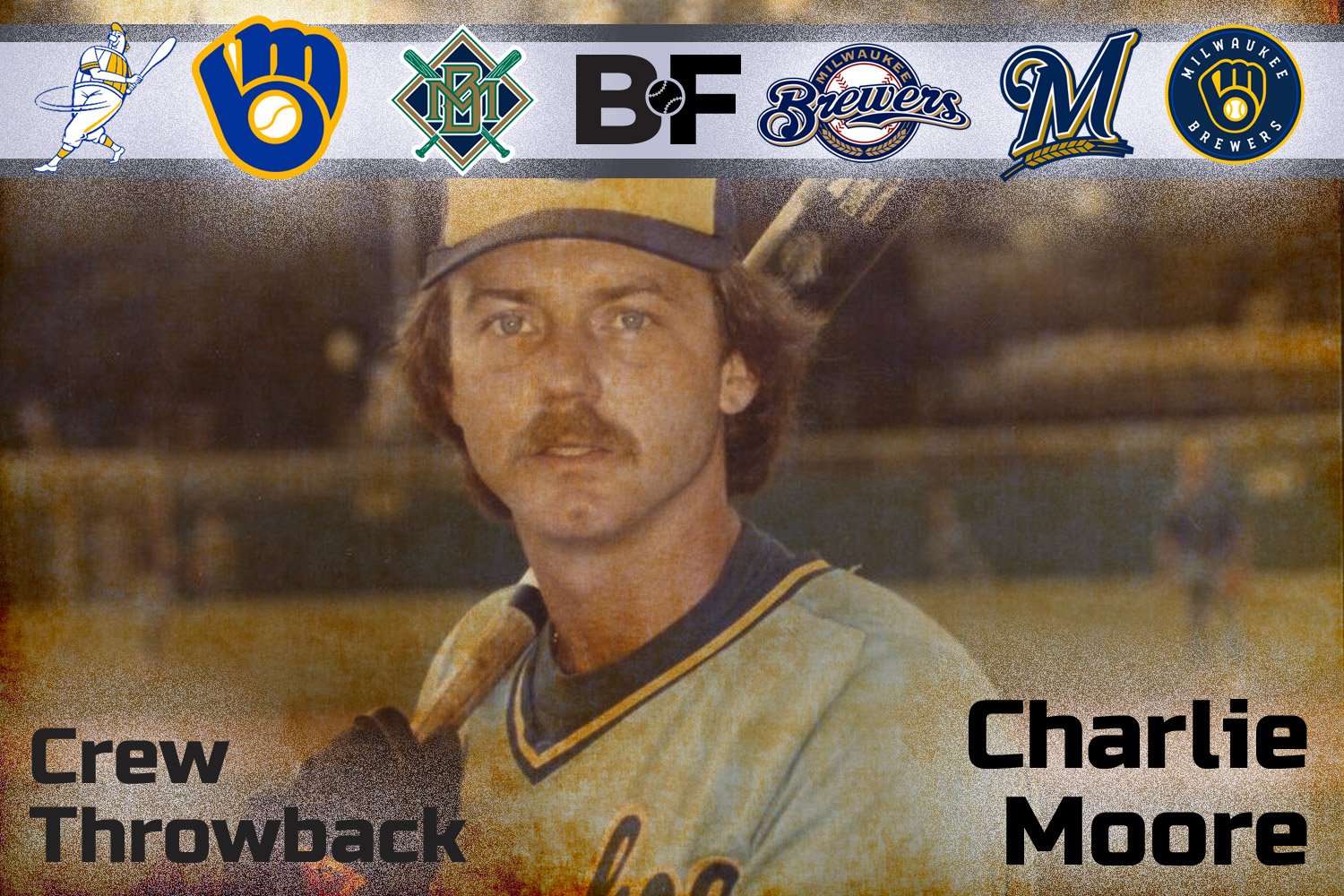 Charlie Moore was born in 1953 in Birmingham, Alabama. He was a 5th round pick by Milwaukee in 1971 out of the University of Alabama at Birmingham. He was a catcher with all-around, if unspectacular, skills. He moved quickly through the Brewer system, reaching Milwaukee for a cup of coffee in 1973. In 1974, the 21 year old served as the reserve catcher behind Darrell Porter. He held that position for eight years, generally getting 250-350 ABs each year. During that time, he showed the ability to hit for average (.290+ four different times), but not much power. Throughout his career, Moore showed good contact skills, striking out only 10% of his at bats. His finest season as a catcher was 1979 when he hit .300 in 111 games. In 1980, the Brewers acquired all-star catcher Ted Simmons from the Cardinals (along with Pete Vukovich and Rollie Fingers). The move caused the Brewers to rethink Moore's role with the club, and by 1981 they were experimenting with him in RF, a position where they were lacking a capable starter. In 1982, Moore made the shift from catcher to full time outfielder, and helped the Brewers reach the World Series. His play was nothing special, but on a team littered with all-stars, he quietly played the role required of him. He provided solid defense in RF, got on base, and was a steady presence in the clubhouse. In 1983, he played a career high 151 games while hitting a respectable .284 - walking more times than he struck out. In 1985, Moore shifted back to catcher, where he played until 1986. In 1987, Moore went to Toronto for a final season before retiring. Moore played 14 seasons for Milwaukee - topped only by Robin Yount, Jim Gantner and Paul Molitor. His 1,283 games rank 6th in team history, and his 1,029 hits is 10th on the team list. In 1980, he hit for the cycle. In postseason play he sports a robust .354 batting average. One other claim to fame: he was the last runner batted in by the great Hank Aaron (on October 3, 1976). With his big league career behind him, Moore returned to his hometown of Birmingham, Alabama. He became a sales rep for Birmingham Fastener, Inc., a manufacturer of bolts and fasteners - for more than 15 years. Charlie Moore is the classic organizational soldier. He was a quiet guy who went about his business without much fanfare. When the team needed a right fielder, he answered the call. Perhaps his biggest challenge was that he never did anything really well. He hit .261 for his career - not bad, but nothing special. He had modest power (only 36 career HR), and while he didn't strike out a lot, he didn't walk that much either (a career OBP of .319). His longevity with the team is probably his most defining trait. Still, 14 seasons in Milwaukee earned Charlie Moore a place on the Brewers Wall of Fame, testifying to his contributions to the club. Share your memories of former Brewer Charlie Moore.
-
Nice day.
-
Crew Throwback: Jeromy Burnitz
Matt Breen replied to Matt Breen's topic in Brewer Fanatic Front Page News
I wonder how many times that has happened. -
Crew Throwback: Jeromy Burnitz
Matt Breen replied to Matt Breen's topic in Brewer Fanatic Front Page News
I wonder how many times that has happened. -
Power. Everyone loves power. So when a player can average more than 32 HRs per season over a five year span - well, that's special. And that's precisely what Jeremy Burnitz did for the Brewers from 1997-2001. Image courtesy of Brewer Fanatic Power. Everyone loves power. So when a player can average more than 32 HRs per season over a five year span - well, that's special. And that's precisely what Jeremy Burnitz did for the Brewers from 1997-2001. Jeromy Burnitz was born in 1969 in Westminster, California. He was a 1st round selection (17th overall) by the NY Mets in 1990 out of Oklahoma State University. He quickly displayed his calling card - power - hitting 31 HR (and drawing over 100 walks) the following season at AA. After bouncing back and forth between the minors and majors, the Mets - tired of his streaky play, plus his clashes with manager Dallas Green - dealt Burnitz to Cleveland in 1994. He spent some more time in the minors before finally staying put in the big leagues in 1996. Despite playing well for Cleveland, they dealt the then 27-year old to Milwaukee for veteran Kevin Seitzer. The trade would be a boon for Burnitz, who emerged as a legitimate slugger in 1997, crushing 27 home runs in his first full season in Milwaukee. He followed with home run totals of 38, 33, 31 and 34 - before being dealt back to the Mets after the 2001 season. (He hit 30+ HR for two more seasons - giving him an impressive run of 30+ HR for six years). The trade to New York cleared Burnitz's large salary, and brought in a young starting pitcher, Glendon Rusch (who floundered in his time in Milwaukee). While in Milwaukee, Burnitz averaged 32+ HR and 100+ RBI a season. He never had less than 70 walks, and he hit a respectable .258 - which led to a .362 OBP. His big power made him a fan favorite in Milwaukee. Sadly, the Brewers never had a winning team during Burnitz's time with the club. Jeromy bounced around the rest of his career, playing four more seasons for the Mets, Dodgers, Rockies, Cubs and Pirates. He retired after the 2006 season at age 37. All told, Burnitz hit a 315 HRs (totals made more impressive because he didn't became a regular until age 28) and had a SLG% of .481. For Milwaukee, he hit 165 HRs and had an .870 OPS during his 5+ seasons. He averaged 3.0+ bWAR a year during his Brewer tenure. Burnitz had the honor of starting the 1999 all-star - in place of an injured Tony Gwynn - the first Brewer to start an all-star game since Paul Molitor. Despite his reputation as a bit of a hot head, Burnitz was also known to be laid back and well-liked in the clubhouse. He loved to pull pranks, and Peter Abraham of the "Boston Globe" reported this: "Burnitz would have fit in with the cast of 'Jackass.' As a practical joke, he would empty out bottles of shampoo in the showers on road trips after the last game of the series and pee in them." After retiring, Burnitz settled down with his wife and three children in California. He has elected to remain out of the public eye ever since. Jeromy Burnitz will hold a special place in the hearts and minds of Brewer fans (like many other sluggers). A powerful looking man, Burnitz looked more like a linebacker than a baseball player. During the dark days of the franchise in the late 90s and early 2000s, he provided excitement and thrills when they were few and far between. He is a member of the Brewer Wall of Honor. Please share your memories of Jeromy Burnitz. View full article
-
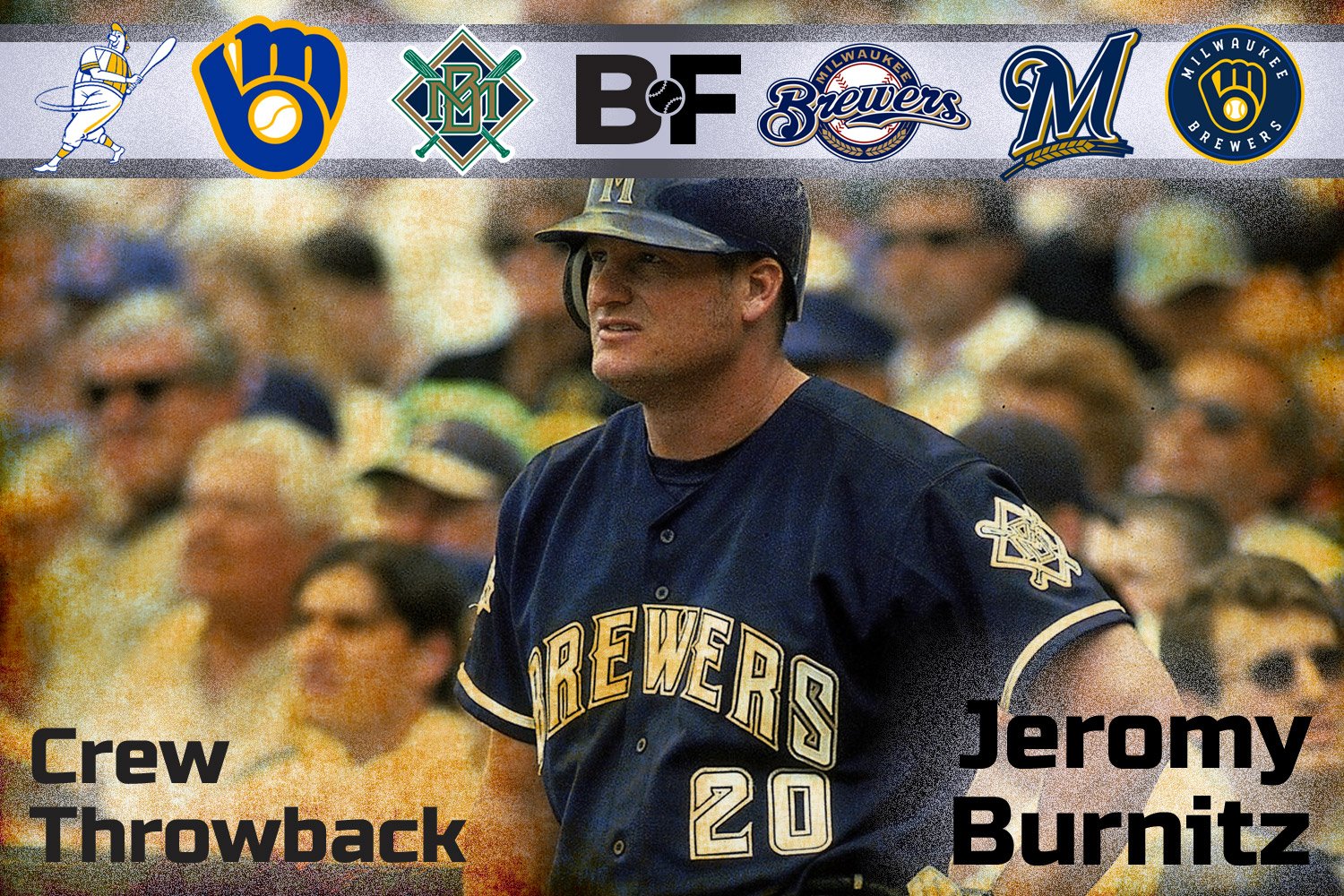 Jeromy Burnitz was born in 1969 in Westminster, California. He was a 1st round selection (17th overall) by the NY Mets in 1990 out of Oklahoma State University. He quickly displayed his calling card - power - hitting 31 HR (and drawing over 100 walks) the following season at AA. After bouncing back and forth between the minors and majors, the Mets - tired of his streaky play, plus his clashes with manager Dallas Green - dealt Burnitz to Cleveland in 1994. He spent some more time in the minors before finally staying put in the big leagues in 1996. Despite playing well for Cleveland, they dealt the then 27-year old to Milwaukee for veteran Kevin Seitzer. The trade would be a boon for Burnitz, who emerged as a legitimate slugger in 1997, crushing 27 home runs in his first full season in Milwaukee. He followed with home run totals of 38, 33, 31 and 34 - before being dealt back to the Mets after the 2001 season. (He hit 30+ HR for two more seasons - giving him an impressive run of 30+ HR for six years). The trade to New York cleared Burnitz's large salary, and brought in a young starting pitcher, Glendon Rusch (who floundered in his time in Milwaukee). While in Milwaukee, Burnitz averaged 32+ HR and 100+ RBI a season. He never had less than 70 walks, and he hit a respectable .258 - which led to a .362 OBP. His big power made him a fan favorite in Milwaukee. Sadly, the Brewers never had a winning team during Burnitz's time with the club. Jeromy bounced around the rest of his career, playing four more seasons for the Mets, Dodgers, Rockies, Cubs and Pirates. He retired after the 2006 season at age 37. All told, Burnitz hit a 315 HRs (totals made more impressive because he didn't became a regular until age 28) and had a SLG% of .481. For Milwaukee, he hit 165 HRs and had an .870 OPS during his 5+ seasons. He averaged 3.0+ bWAR a year during his Brewer tenure. Burnitz had the honor of starting the 1999 all-star - in place of an injured Tony Gwynn - the first Brewer to start an all-star game since Paul Molitor. Despite his reputation as a bit of a hot head, Burnitz was also known to be laid back and well-liked in the clubhouse. He loved to pull pranks, and Peter Abraham of the "Boston Globe" reported this: "Burnitz would have fit in with the cast of 'Jackass.' As a practical joke, he would empty out bottles of shampoo in the showers on road trips after the last game of the series and pee in them." After retiring, Burnitz settled down with his wife and three children in California. He has elected to remain out of the public eye ever since. Jeromy Burnitz will hold a special place in the hearts and minds of Brewer fans (like many other sluggers). A powerful looking man, Burnitz looked more like a linebacker than a baseball player. During the dark days of the franchise in the late 90s and early 2000s, he provided excitement and thrills when they were few and far between. He is a member of the Brewer Wall of Honor. Please share your memories of Jeromy Burnitz.
-
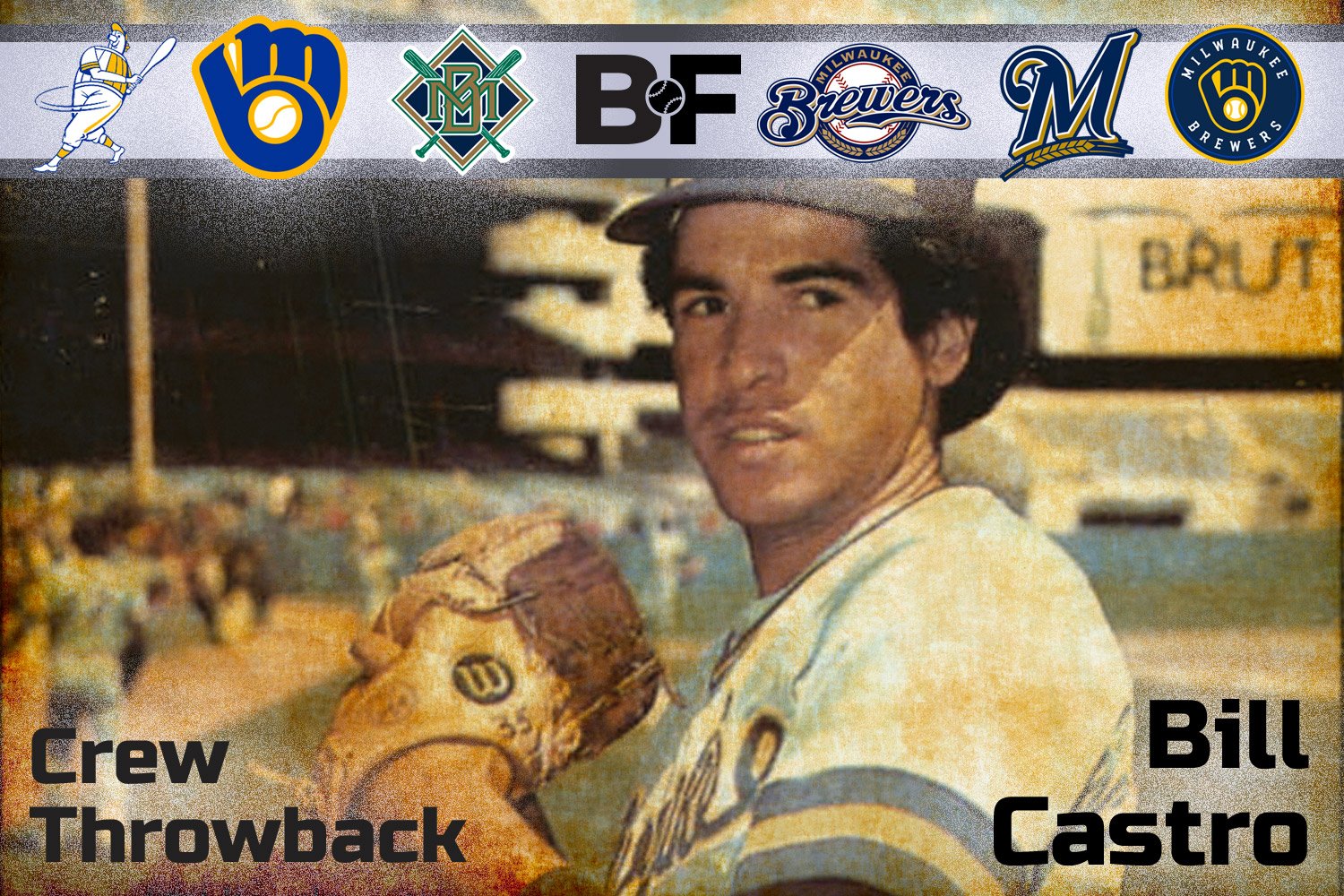 William Radhames Castro Checo, born in 1952 in the Dominican Republic, was signed by the Brewers in as an amateur free agent in 1970. Castro was immediately moved into the bullpen, reaching the big leagues in 1974. Working almost exclusively out of the pen, Castro spent more than six years in Milwaukee, appearing in 253 games. Castro left Milwaukee after the 1980 season as a free agent, spending one year with the Yankees and two with the Royals, before retiring after the 1983 season. During his time in Milwaukee, he was an effective reliever. His best run came from 1978-80, when he produced ERAs of 1.81, 2.03 and 2.77, respectively. Not a strikeout pitcher, Castro succeeded by limiting home runs and walks. In addition to appearing in 253 games, Castro saved 44 games, and posted a 3.56 ERA. After retiring, Castro worked as a scout and minor league coach for the Brewers from 1985 through 1991, before becoming Milwaukee's bullpen coach in 1992. He served in that capacity until 2008, when he was promoted to pitching coach. The Brewers fired him in August 2009, but he returned to the organization in 2010 and 2011 as their Latin American pitching advisor. In 2012, Castro served as the Baltimore bullpen coach, and then as their pitching coach in 2013, before retiring from baseball. Bill Castro is a great example of an organizational role player providing solid, but unspectacular, results from the bullpen for seven seasons. He didn't do anything exceptionally well, but the team was able to count on him for solid production during his tenure. Share your memories of relief pitcher long time Brewer coach Bill Castro below.
-
If you ask, who wore a Milwaukee Brewer uniform the longest? The answer is likely Bill Castro, who spent seven seasons with the club as a player, and 18 more as a coach. Image courtesy of Brewer Fanatic If you ask, who wore a Milwaukee Brewer uniform the longest? The answer is likely Bill Castro, who spent seven seasons with the club as a player, and 18 more as a coach. William Radhames Castro Checo, born in 1952 in the Dominican Republic, was signed by the Brewers in as an amateur free agent in 1970. Castro was immediately moved into the bullpen, reaching the big leagues in 1974. Working almost exclusively out of the pen, Castro spent more than six years in Milwaukee, appearing in 253 games. Castro left Milwaukee after the 1980 season as a free agent, spending one year with the Yankees and two with the Royals, before retiring after the 1983 season. During his time in Milwaukee, he was an effective reliever. His best run came from 1978-80, when he produced ERAs of 1.81, 2.03 and 2.77, respectively. Not a strikeout pitcher, Castro succeeded by limiting home runs and walks. In addition to appearing in 253 games, Castro saved 44 games, and posted a 3.56 ERA. After retiring, Castro worked as a scout and minor league coach for the Brewers from 1985 through 1991, before becoming Milwaukee's bullpen coach in 1992. He served in that capacity until 2008, when he was promoted to pitching coach. The Brewers fired him in August 2009, but he returned to the organization in 2010 and 2011 as their Latin American pitching advisor. In 2012, Castro served as the Baltimore bullpen coach, and then as their pitching coach in 2013, before retiring from baseball. Bill Castro is a great example of an organizational role player providing solid, but unspectacular, results from the bullpen for seven seasons. He didn't do anything exceptionally well, but the team was able to count on him for solid production during his tenure. Share your memories of relief pitcher long time Brewer coach Bill Castro below. View full article
-
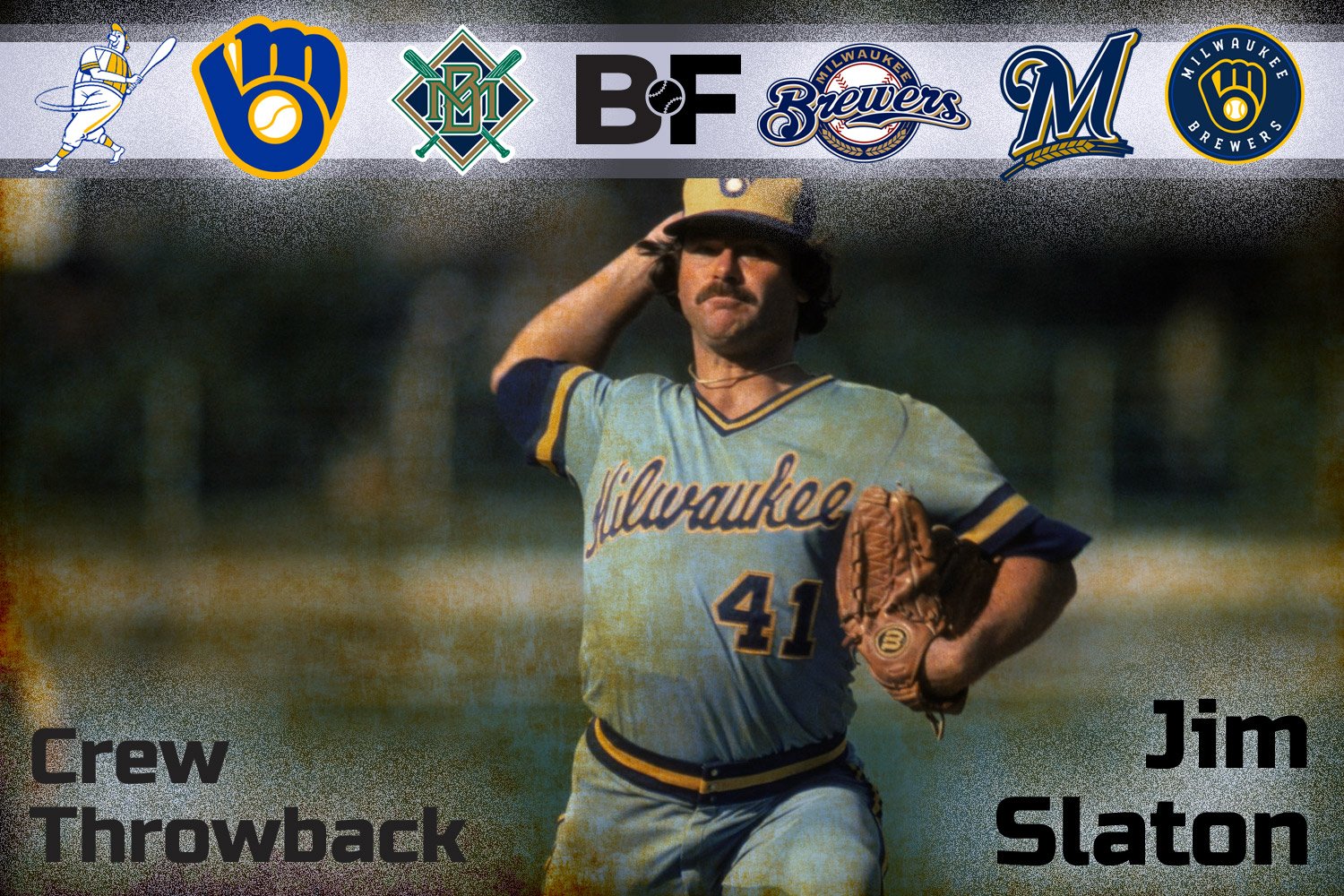 Jim Slaton was born in Long Beach, California, in 1970. After a short stint at Antelope Valley College in Lancaster, California, Slaton was drafted by the Seattle Pilots in the 15th round in 1969. He moved quickly through the minor leagues, reaching Milwaukee in 1971. By 1973, Slaton established himself as a workhorse starting pitcher, throwing more than 210 innings in each of the next seven seasons, including 292 innings in 1976. After the 1977 season, the Brewers sent Slaton to Detroit for slugging outfielder Ben Oglivie. After a solid year, he returned to the Brewers as a free agent, picking up right where he left off. Slaton's career was forever changed in 1980 when he suffered a rotator cuff injury. He missed most of the year and then returned and played for six more seasons. However, his days as an innings-eating starter were over. Instead, Slaton returned as a long reliever and spot starter. The Brewers dealt Slaton to the Angels after the 1983 season for OF Bobby Clark. He played three more years before retiring at age 36. Slaton's time in Milwaukee was not insignificant. While he was never a great pitcher, his ability to soak up innings was a tremendous asset. He owned a 3.86 ERA over 12 years, and his 117 wins, 69 complete games, and 2,025 innings pitched are still Brewer records. His longevity also means he has the most losses in team history and has given up the most hits, home runs, and walks. Some other highlights include an all-star appearance in 1977 and the winning pitcher for the Crew in the fourth game of the 1982 World Series. Despite the many accomplishments of Slaton, he is often forgotten. He was consistent and solid, never striking out many batters or flashing fantastic stuff. His walk-to-strike out rate is relatively poor - for his career, he walked 1,004 batters and struck out 1,202. Still, his longevity and workhorse performance solidifies Slaton a place in Brewer history. After retiring, Slaton got into coaching. For more than two decades, he has worked in several capacities in the minor and major leagues, including stints as the bullpen coach for the Mariners and the Dodgers. Slaton was added to the Milwaukee Brewers Wall of Honor in 2014. Please share your memories of former Brewer pitcher Jim Slaton.