Matt Breen
-
Posts
9,122 -
Joined
-
Last visited
-
Days Won
1
Content Type
Profiles
Forums
Blogs
Events
Milwaukee Brewers News, Rumors & Analysis
2026 Milwaukee Brewers Top Prospect Rankings
Milwaukee Brewers Videos
2022 Milwaukee Brewers Draft Picks & Signing Bonuses
Milwaukee Brewers Trade & Free Agent Rumors
Milwaukee Brewers Fan Guides & Resources
2023 Milwaukee Brewers Draft Picks & Signing Bonuses
2024 Milwaukee Brewers Draft Picks & Signing Bonuses
The Milwaukee Brewers Players Project
2025 Milwaukee Brewers Draft Picks & Signing Bonuses
2026 Milwaukee Brewers Draft Picks & Signing Bonuses
Store
Downloads
Gallery
Everything posted by Matt Breen
-
 wow
-
I got out my old Geoff Jenkins jersey to wear today. Haven't had it on all year. Let's hope good luck for these coming days.
-
Well, 1/2 game back. Just gotta keep winning. Easier said than done with this team, but that's the truth right now. Let's just do it.
-
I'm guessing Houser is gone after the season. He's arbitration eligible a second time, and I doubt we will be willing to pay him $3-4M to be this bad. He'll look amazing one day, then awful the next two starts. But he just gives up too many baserunners. He's had a long leash. Time to cut it. Perhaps he's one of those guys who needs to be moved to a relief role. Or just needs a change of scenery.
-
Castillo Extension as Woodruff Comp?
Matt Breen replied to sveumrules's topic in Milwaukee Brewers Talk
The thing is that if we don't extend Burnes and/or Woodruff, they instantly become a source of trade speculation - which can make things a bit awkward for all parties. I mean, we could keep them until they are FAs - but logic says to deal them earlier so we get a much better return. I guess it's just the way of things in our market... -
Castillo Extension as Woodruff Comp?
Matt Breen replied to sveumrules's topic in Milwaukee Brewers Talk
Woodruff is interesting. I like the guy a lot. But do you extend a pitcher who is entering his age 30 season, and who you have control of for two more years? I don't know the answer. The Castillo comp isn't bad, although Woody doesn't have Castillo's track record. Again, I can see both ways on this. -
Too Early 2023 Ideas (or beyond)
Matt Breen replied to jay87shot's topic in Transaction Rumors & Proposals
I wouldn't count on Ruiz at 2B, but he may have a role versus left handers. The last two years he has pounded left handed pitching. 2022: BA .379 vs L, .293 vs R | OPS .1.154 vs L, .850 vs R 2021: BA .324 vs L, .228 vs R | OPS .999 vs L, .664 vs R The big thing with Ruiz is that his 2022 numbers are amazing, but are they the outlier? 2018-21 showed Ruiz as a mediocre bat - a .250ish BA and a bit of power. But this year he's pretty much improved all across the board. Better average, more power, more walks. He's had a great year. His splits, however, remain pretty wide. Now, if he hits righties at an .850 clip - like he has this year - we'll be thrilled. But if he reverts to his earlier form (sub. 700 OPS), well that may be an issue. But even if he struggles against right handers, he could carve himself a niche as a platoon/defensive replacement player. As I said, the big question is how much of Ruiz's improvement is real. His speed makes him a fascinating player. -
When looking at batting average, who is the best hitter in Brewer history? Cooper? Molitor? Young? Braun? Yelich? Well, if you guessed Jeff Cirillo, then you know your Brewer history. Cirillo has the highest career batting average in franchise history - edging out Paul Molitor (.303) and Cecil Cooper (.302). When looking at batting average, who is the best hitter in Brewer history? Cooper? Molitor? Young? Braun? Yelich? Well, if you guessed Jeff Cirillo, then you know your Brewer history. Cirillo has the highest career batting average in franchise history - edging out Paul Molitor (.303) and Cecil Cooper (.302). Jeff Howard Cirillo was born in California in 1969. He attended USC and was selected by the Brewers in the 11th round of the 1991 draft. Cirillo quickly established himself as a quality bat, hitting .350 at Helena his first year. A right-handed hitting third baseman, he progressed through the system, hitting for average at every stop to go with solid power and respectable walk rates. In 1994, Milwaukee called up Cirillo, and the 24-year old struggled with a .238 BA in 39 games. But the following season saw Cirillo work his way into the lineup on a semi-regular basis as he hit a solid .277 with an .813 OPS. By 1996, he was a regular, and one of the best offensive and defensive players on the team. From 1996-1999, Cirillo averaged more than 5.0 WAR a year, and hit over .300 three times, including .325 in 1996 and .326 in 1999. His OBP was routinely between .390 and .400, and he hit double digit HRs every year. He made the all-star team in 1996. As Milwaukee struggled to produce quality pitching, the Crew decided to package Cirillo - along with Scott Karl - in a three team deal that netted the club pitchers Jimmy Haynes and Jamey Wright, plus catcher Henry Blanco. The trade was a disaster for the Crew, as Haynes and Wright struggled in their time in the rotation (although Wright did go on to a long career). Blanco - who also had a long career - was a good defender, but a poor hitter. The club signed free agent Jose Hernandez to replace Cirillo. Cirillo spent two years in Colorado (hitting over .300 both seasons), before being dealt to Seattle, where his bat suddenly faltered at age 32. Looking for work in 2005, the 35-year old Cirillo wrangled a spring training invite from the Crew, and made the club. For two years he provided some quality at bats (hitting .281 and .319) while serving as a reserve infielder. With the promise of more playing time, Cirillo left Milwaukee in 2007 and played a final season - splitting time between Minnesota and Arizona. After retiring, Cirillo worked for FSN Wisconsin for a few years, then was a scout for the Diamondbacks and Angels. He is currently a partner in Pacific Baseball Ventures, which owns the Walla Walla Sweets and the Yakima Valley Pippins in a summer collegiate wood-bat league located in Walla Walla, Washington. Jeff Cirillo played 14 years in the majors, eight in Milwaukee. In his time with the Brewers, he produced a .307 batting average - the best in franchise history. He also produced 26.2 bWAR during that time, the sixth best for position players. His .325 and .326 season averages rank 8th and 9th, respectively, and his .383 career OBP is third - behind only Prince Fielder and Christian Yelich. Cirillo was a doubles machine at his peak, hitting 46 in back-to-back seasons. To go along with Cirillo's offensive achievements, he was considered an excellent defensive third baseman as well - especially in his prime. Cirillo wasn't a big home run hitter, but he took his share of walks, and he could flat out hit. He was not the most athletic player, but he did a lot of the little things well - and the fans and coaches loved him for it. Unfortunately, Cirillo was part of Brewer clubs that lacked pitching, and the organization used him to try and fill those needs, prematurely ending his great run in Milwaukee. He may not have had the longevity of Molitor or Yount, and he didn't put up the big power numbers, but Jeff Cirillo was one of the finest hitters the team has ever produced. Please share your memories of former Milwaukee third baseman Jeff Cirillo. View full article
-
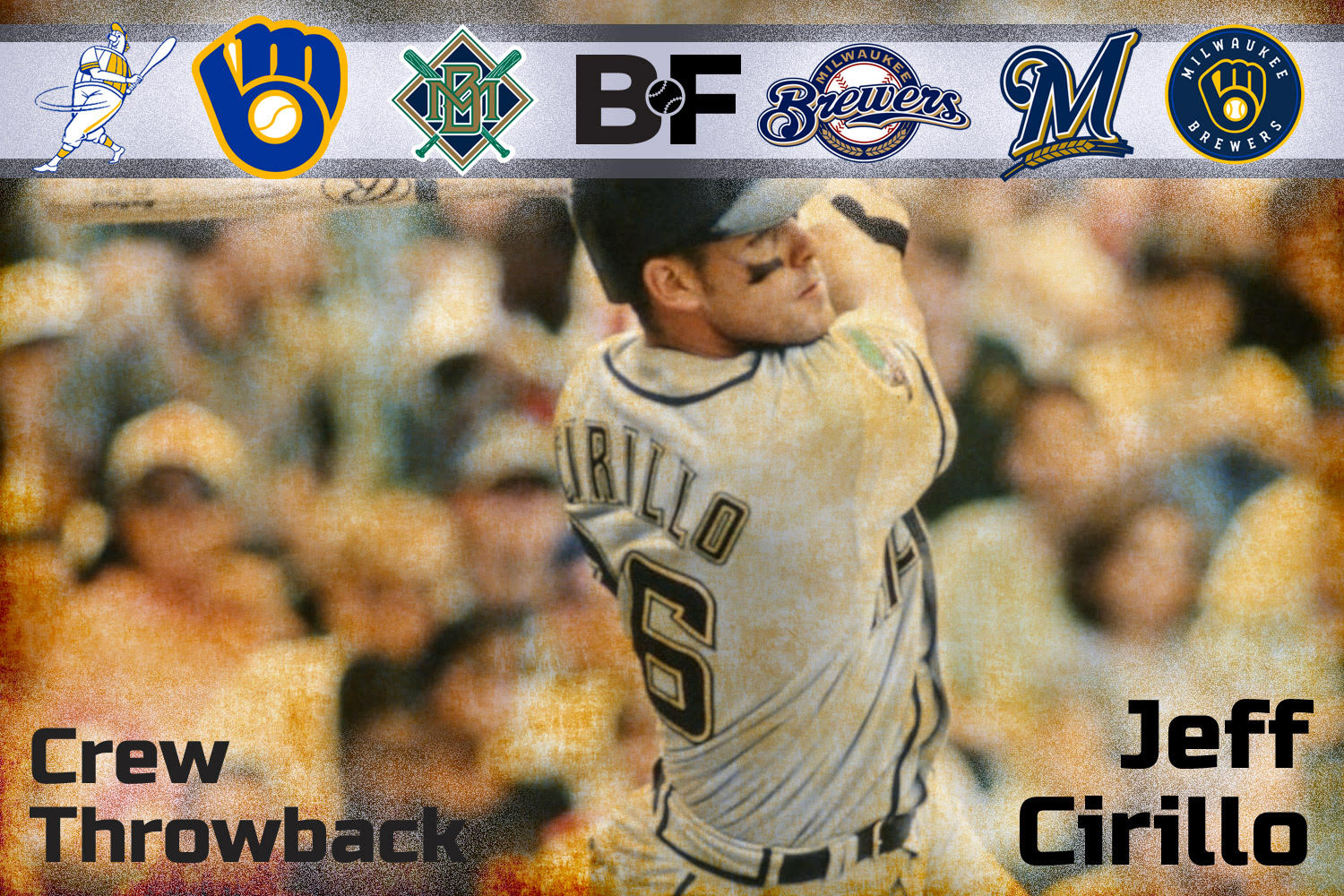 Jeff Howard Cirillo was born in California in 1969. He attended USC and was selected by the Brewers in the 11th round of the 1991 draft. Cirillo quickly established himself as a quality bat, hitting .350 at Helena his first year. A right-handed hitting third baseman, he progressed through the system, hitting for average at every stop to go with solid power and respectable walk rates. In 1994, Milwaukee called up Cirillo, and the 24-year old struggled with a .238 BA in 39 games. But the following season saw Cirillo work his way into the lineup on a semi-regular basis as he hit a solid .277 with an .813 OPS. By 1996, he was a regular, and one of the best offensive and defensive players on the team. From 1996-1999, Cirillo averaged more than 5.0 WAR a year, and hit over .300 three times, including .325 in 1996 and .326 in 1999. His OBP was routinely between .390 and .400, and he hit double digit HRs every year. He made the all-star team in 1996. As Milwaukee struggled to produce quality pitching, the Crew decided to package Cirillo - along with Scott Karl - in a three team deal that netted the club pitchers Jimmy Haynes and Jamey Wright, plus catcher Henry Blanco. The trade was a disaster for the Crew, as Haynes and Wright struggled in their time in the rotation (although Wright did go on to a long career). Blanco - who also had a long career - was a good defender, but a poor hitter. The club signed free agent Jose Hernandez to replace Cirillo. Cirillo spent two years in Colorado (hitting over .300 both seasons), before being dealt to Seattle, where his bat suddenly faltered at age 32. Looking for work in 2005, the 35-year old Cirillo wrangled a spring training invite from the Crew, and made the club. For two years he provided some quality at bats (hitting .281 and .319) while serving as a reserve infielder. With the promise of more playing time, Cirillo left Milwaukee in 2007 and played a final season - splitting time between Minnesota and Arizona. After retiring, Cirillo worked for FSN Wisconsin for a few years, then was a scout for the Diamondbacks and Angels. He is currently a partner in Pacific Baseball Ventures, which owns the Walla Walla Sweets and the Yakima Valley Pippins in a summer collegiate wood-bat league located in Walla Walla, Washington. Jeff Cirillo played 14 years in the majors, eight in Milwaukee. In his time with the Brewers, he produced a .307 batting average - the best in franchise history. He also produced 26.2 bWAR during that time, the sixth best for position players. His .325 and .326 season averages rank 8th and 9th, respectively, and his .383 career OBP is third - behind only Prince Fielder and Christian Yelich. Cirillo was a doubles machine at his peak, hitting 46 in back-to-back seasons. To go along with Cirillo's offensive achievements, he was considered an excellent defensive third baseman as well - especially in his prime. Cirillo wasn't a big home run hitter, but he took his share of walks, and he could flat out hit. He was not the most athletic player, but he did a lot of the little things well - and the fans and coaches loved him for it. Unfortunately, Cirillo was part of Brewer clubs that lacked pitching, and the organization used him to try and fill those needs, prematurely ending his great run in Milwaukee. He may not have had the longevity of Molitor or Yount, and he didn't put up the big power numbers, but Jeff Cirillo was one of the finest hitters the team has ever produced. Please share your memories of former Milwaukee third baseman Jeff Cirillo.
-
Too Early 2023 Ideas (or beyond)
Matt Breen replied to jay87shot's topic in Transaction Rumors & Proposals
If that works, that's fine. I put Frelick in LF due to his average arm. Perhaps the coverage he'd provide in RF would be more advantageous. But again, whatever the team needs. -
Too Early 2023 Ideas (or beyond)
Matt Breen replied to jay87shot's topic in Transaction Rumors & Proposals
Regarding the OF, I'm guessing that in 2023 we'll go with Mitchell in CF, Frelick in LF, and Renfroe in RF. Taylor will be a nice back up. Frelick seems totally ready. Mitchell has some swing and miss issues that concern me, but I'm good with giving him a shot. Both Frelick and Mitchell would provide outstanding defense at their positions. I'm keeping Renfroe another year, but Wiemer is not far away. Renfroe is a 30 HR bat. He's solid, but nothing more. Depending how the season goes, Wiemer could replace Renfroe along the way. I'm not sure about Ruiz. His 2022 has been impressive, but are those improvements for real. I guess see how things shake out. And he'll be good insurance in case of an injury. The overall defense would be very good, and Taylor offers good fourth OF who can play all the positions. Removing Yelich from the field is a big plus. Yelich, by the way, gets ticketed for DH and/or 1B. He can certainly play some OF if necessary - but I think our depth would be fine there. I'm not sure playing 1B would work with Yelich. I believe he played the position in high school, and he's still athletic. He's pretty tall - so he'd be a nice big target. And he'd push Rusty to DH - who is not a good fielder. But I don't know if it would be wise. But I'd look at it. Ultimately, I'd probably slot Yelich and Rusty at 1B/DH - whatever works. PS - I'm not sold on Rowdy. I love the HRs, but a .220 BA is just not good. If we could improve, I'd be all for it. Just not sure how. Perhaps the lack of a shift would help him improve a bit. In then, Frelick in LF, Mitchell in CF, and - maybe - Yelich at 1B - would improve our defense at three positions. -
When Frelick comes to Milwaukee, he shouldn't be sitting. Here's his numbers for 2022: BA: .324 vs lefties, .333 vs righties OPS .875 vs L, .885 vs R Almost no differences there. He hits everyone. So run the guy out there and let him play next year.
-
I hate the Cardinals. And I'm not a big Pujols fan. But it was nice to see the guy reach 700 HRs. It's a huge accomplishment - and I didn't think he'd get there. It would have been cool to have done it at home - but whatever. So congrats to Albert. He did something few others have ever done - which is cool.
-
What's the plan for Kolten Wong next year?
Matt Breen replied to Andrew's topic in Milwaukee Brewers Talk
Umm...no. I never said anything like that. That would be stupid. I presented data to show that while he has reverse splits, that are not that dramatic. Which supports your statement. But the data also demonstrates he's up to the challenge of hitting against right handers - as well as lefties. Perhaps I should have not quoted your statement, or added more context - saying something like, "Agree, Turang shouldn't sit against lefties, but his splits are not that dramatic" or "Turang should play everyday since his splits aren't very different." -
What's the plan for Kolten Wong next year?
Matt Breen replied to Andrew's topic in Milwaukee Brewers Talk
Turang has hit lefties a little better than righties - but it's not particularly dramatic. 2022: BA - .299 vs L, .278 vs R | OPS .798 vs L, .747 vs R 2021: BA - .266 vs L, .255 vs R | OPS .711 vs L, .705 vs R -
Frelick's minor league career numbers: 152 Games 630 ABs 118 Runs 208 Hits 13 HR 73 BB 88 K .330 BA .406 OBP .882 OPS That's a guy I want in this lineup. Still surprised they brought up Mitchell instead of Frelick.
-
What's the plan for Kolten Wong next year?
Matt Breen replied to Andrew's topic in Milwaukee Brewers Talk
The moment I talk down Wong he goes all Judge-like. Well done, Kolton. -
What's the plan for Kolten Wong next year?
Matt Breen replied to Andrew's topic in Milwaukee Brewers Talk
I think Wong's option is declined because he doesn't provide the defense he once did, and we have someone who appears ready to replace him (Turang), which saves the team $8M. Seems pretty simple. Here's Turang's splits from the last two years: 2022: BA - .307 vs L, .271 vs R | OPS .741 vs L, .807 vs R 2021: BA - .266 vs L, .255 vs R | OPS .711 vs L, .705 vs R His splits aren't very dramatic, which means he can play most days. But we should expect some growing pains. Turang hasn't put up big minor league numbers, and has often taken a little time to acclimate at each step. So expect the same going forward. But his 2022 numbers are solid: .285 BA, .360 OBP, 12 HR. He should be a good defender - certainly better than Wong has been this year. I expect Milwaukee to have 2-3 rookies playing most days next year - so I expect some struggles. But our defense will be a lot better for it, and if we are patient with our young guys, we could see some big dividends by mid-season. -
Needed that one. Big time.
-
It seems hard to believe we can't find some alternative to Alexander.
-
I think this demonstrates that Rowdy is - routinely - in the lower end of the defensive spectrum of first baseman. And his base running is awful. As someone noted, Rowdy gets burned by the shift - so if he could improve the BA to the .260-270 range - that would really help his value. I'm guessing Rowdy doesn't make more than $5M next year - so we can roll with the guy if there are no better options. But his defense and base running do limit his value.
-
Name the first Brewer ever elected to start an all-star game? Most fans would struggle for the answer. Maybe George Scott with his monster 36 HR campaign of 1975. Or perhaps it was one of Yount, Molitor or Cooper. But the answer is Don Money in 1978. It was one of four all-star appearances for Money - who went on to have a steady 11-year career in Milwaukee. Name the first Brewer ever elected to start an all-star game? Most fans would struggle for the answer. Maybe George Scott with his monster 36 HR campaign of 1975. Or perhaps it was one of Yount, Molitor or Cooper. But the answer is Don Money in 1978. It was one of four all-star appearances for Money - who went on to have a steady 11-year career in Milwaukee. Donald Wayne Money was born in Washington, DC, on June 7, 1947, and signed with Pittsburgh as an amateur free agent in 1965. He primarily played SS in the minors, but also found himself at third base and second base. Money had an excellent 1967 campaign at A ball, but was dealt to Philadelphia in the off season. Bumped up to AAA, the 21-year-old got a cup of coffee the next season, then settled in as a big leaguer in 1969. After spending his rookie season at shortstop, Money was shifted to third base the following season, but played just about anywhere, including OF. After a strong sophomore campaign (.295 BA and 14 HR), he struggled the next two years, hitting just .223 and .222, respectively. With future all-star Mike Schmidt ready to take over 3B, the Phillies packaged Money with Bill Champion and John Vukovich, and sent him to Milwaukee in exchange for Ken Brett, Jim Lonborg, Ken Sanders and Earl Stephenson. The move signaled an 11-year run with the Crew for Money, including four all-star game appearances between 1974 and 1978. Money held down the third base spot in Milwaukee for the next four years before he shifted into a super sub role. For example, in 1978 he played 61 games at 1B, 36 at 2B, 22 at 3B, 13 at DH and 2 at SS. He produced solid numbers at the plate with Milwaukee; his OPS generally ranged from the mid-.750 to the low .800s. In addition, he was known for his excellent defense (and eventually, his versatility). In fact, he was nicknamed 'Brooks' because of his glovework. Another nickname was 'Easy'. He slugged double digit HRs in 8 of his 11 seasons, including a career high 25 in 1977. His best batting average was a .293 mark, which he slashed in 1978. Injuries, age and the emergence of other players, including free agent Sal Bando and rookie Paul Molitor, began to eat into Money's playing time by 1979. But he remained a key part of the club through 1982, producing a career high .891 OPS in 1982 on 275 ABs that year. In 1983, Money struggled with injuries and reduced playing time, resulting in only 114 at-bats. The Brewers released him in the off season. He spent part of 1984 in Japan, and despite playing well, decided to retire when he didn't enjoy the experience. Within a couple of years of retiring, Money moved into coaching in the Yankees organization. In 1998, he became manager of the Beloit Snappers in the Milwaukee organization. From there he moved up the chain, going to AA-Huntsville in 2005 and Nashville in 2009. Following the 2011 campaign, Money became Milwaukee's special instructor of player development, a position he holds to this day. Don Money spent parts of 16 seasons in the majors, 11 in Milwaukee. He hit .270 with 134 HRs during his time with the Crew, and produced a solid .760 OPS. In 1978, he became the first Brewer voted as a starter in the all-star game (at 2B). He was a key member of the powerful up-and-coming Brewer clubs in the late 70s, then a valuable reserve during their World Series team in 1982. In 1974, he set a major league record for errorless games at third base (86). For his Brewer career, he produced 27.4 bWAR - 5th best of any hitter in franchise history. His coaching career highlight was being named Southern League manager of the year in 2007. Don Money was an excellent baseball player. Probably his greatest sin was that he did everything good, not great. Nothing really stood out for Money, thus he never really got the love other players enjoyed. He was the kind of guy who would hit .280 with 15 HRs, and move around the diamond as needed, sort of the Tony Phillips or Ben Zobrist of his time. It allowed Milwaukee to plug Money into just about any position that they needed. In 2005, Money was inducted into the Brewers Walk of Fame. In 2022, Money’s grandson, Buddy Kennedy, an infielder in the Arizona Diamondbacks organization, made his major league debut. Please share your remembrances of former Milwaukee Brewer Don Money. View full article
-
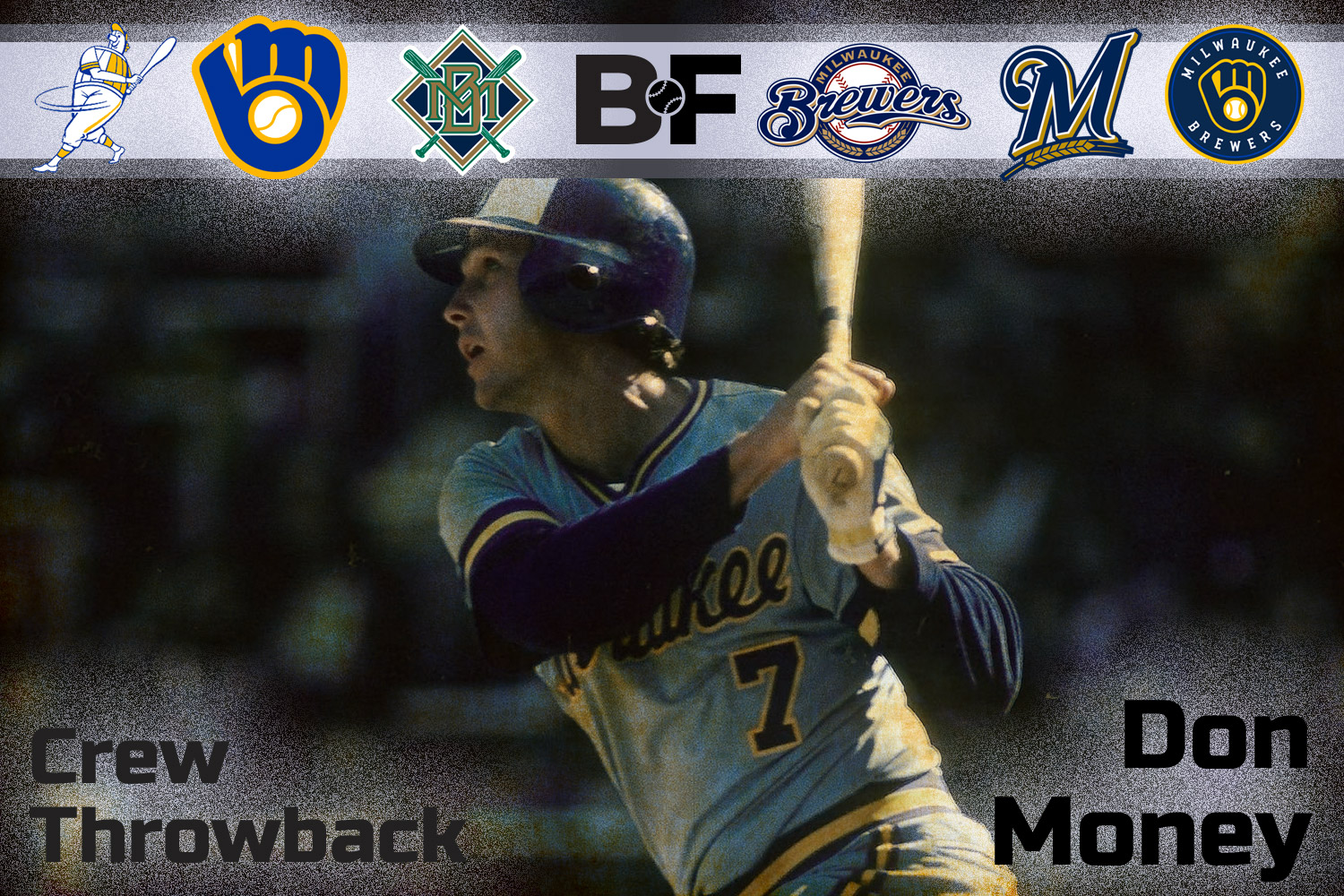 Donald Wayne Money was born in Washington, DC, on June 7, 1947, and signed with Pittsburgh as an amateur free agent in 1965. He primarily played SS in the minors, but also found himself at third base and second base. Money had an excellent 1967 campaign at A ball, but was dealt to Philadelphia in the off season. Bumped up to AAA, the 21-year-old got a cup of coffee the next season, then settled in as a big leaguer in 1969. After spending his rookie season at shortstop, Money was shifted to third base the following season, but played just about anywhere, including OF. After a strong sophomore campaign (.295 BA and 14 HR), he struggled the next two years, hitting just .223 and .222, respectively. With future all-star Mike Schmidt ready to take over 3B, the Phillies packaged Money with Bill Champion and John Vukovich, and sent him to Milwaukee in exchange for Ken Brett, Jim Lonborg, Ken Sanders and Earl Stephenson. The move signaled an 11-year run with the Crew for Money, including four all-star game appearances between 1974 and 1978. Money held down the third base spot in Milwaukee for the next four years before he shifted into a super sub role. For example, in 1978 he played 61 games at 1B, 36 at 2B, 22 at 3B, 13 at DH and 2 at SS. He produced solid numbers at the plate with Milwaukee; his OPS generally ranged from the mid-.750 to the low .800s. In addition, he was known for his excellent defense (and eventually, his versatility). In fact, he was nicknamed 'Brooks' because of his glovework. Another nickname was 'Easy'. He slugged double digit HRs in 8 of his 11 seasons, including a career high 25 in 1977. His best batting average was a .293 mark, which he slashed in 1978. Injuries, age and the emergence of other players, including free agent Sal Bando and rookie Paul Molitor, began to eat into Money's playing time by 1979. But he remained a key part of the club through 1982, producing a career high .891 OPS in 1982 on 275 ABs that year. In 1983, Money struggled with injuries and reduced playing time, resulting in only 114 at-bats. The Brewers released him in the off season. He spent part of 1984 in Japan, and despite playing well, decided to retire when he didn't enjoy the experience. Within a couple of years of retiring, Money moved into coaching in the Yankees organization. In 1998, he became manager of the Beloit Snappers in the Milwaukee organization. From there he moved up the chain, going to AA-Huntsville in 2005 and Nashville in 2009. Following the 2011 campaign, Money became Milwaukee's special instructor of player development, a position he holds to this day. Don Money spent parts of 16 seasons in the majors, 11 in Milwaukee. He hit .270 with 134 HRs during his time with the Crew, and produced a solid .760 OPS. In 1978, he became the first Brewer voted as a starter in the all-star game (at 2B). He was a key member of the powerful up-and-coming Brewer clubs in the late 70s, then a valuable reserve during their World Series team in 1982. In 1974, he set a major league record for errorless games at third base (86). For his Brewer career, he produced 27.4 bWAR - 5th best of any hitter in franchise history. His coaching career highlight was being named Southern League manager of the year in 2007. Don Money was an excellent baseball player. Probably his greatest sin was that he did everything good, not great. Nothing really stood out for Money, thus he never really got the love other players enjoyed. He was the kind of guy who would hit .280 with 15 HRs, and move around the diamond as needed, sort of the Tony Phillips or Ben Zobrist of his time. It allowed Milwaukee to plug Money into just about any position that they needed. In 2005, Money was inducted into the Brewers Walk of Fame. In 2022, Money’s grandson, Buddy Kennedy, an infielder in the Arizona Diamondbacks organization, made his major league debut. Please share your remembrances of former Milwaukee Brewer Don Money.
-
Too Early 2023 Ideas (or beyond)
Matt Breen replied to jay87shot's topic in Transaction Rumors & Proposals
Is Tellez (and other left handed hitters) going to be more valuable with the shift ban in place? Lefty sluggers seem to lose a lot of hits because of the shift. I don't watch enough games to recall if other clubs shift on Rowdy a lot. Just curious. -
Sun. 9/11 - Timber Rattler and Mudcat Finales
Matt Breen replied to Jim Goulart's topic in Brewers Minor League Talk
It was fun, wasn't it? Just cool to see someone in our organization breakout like that.