

Brewers Video
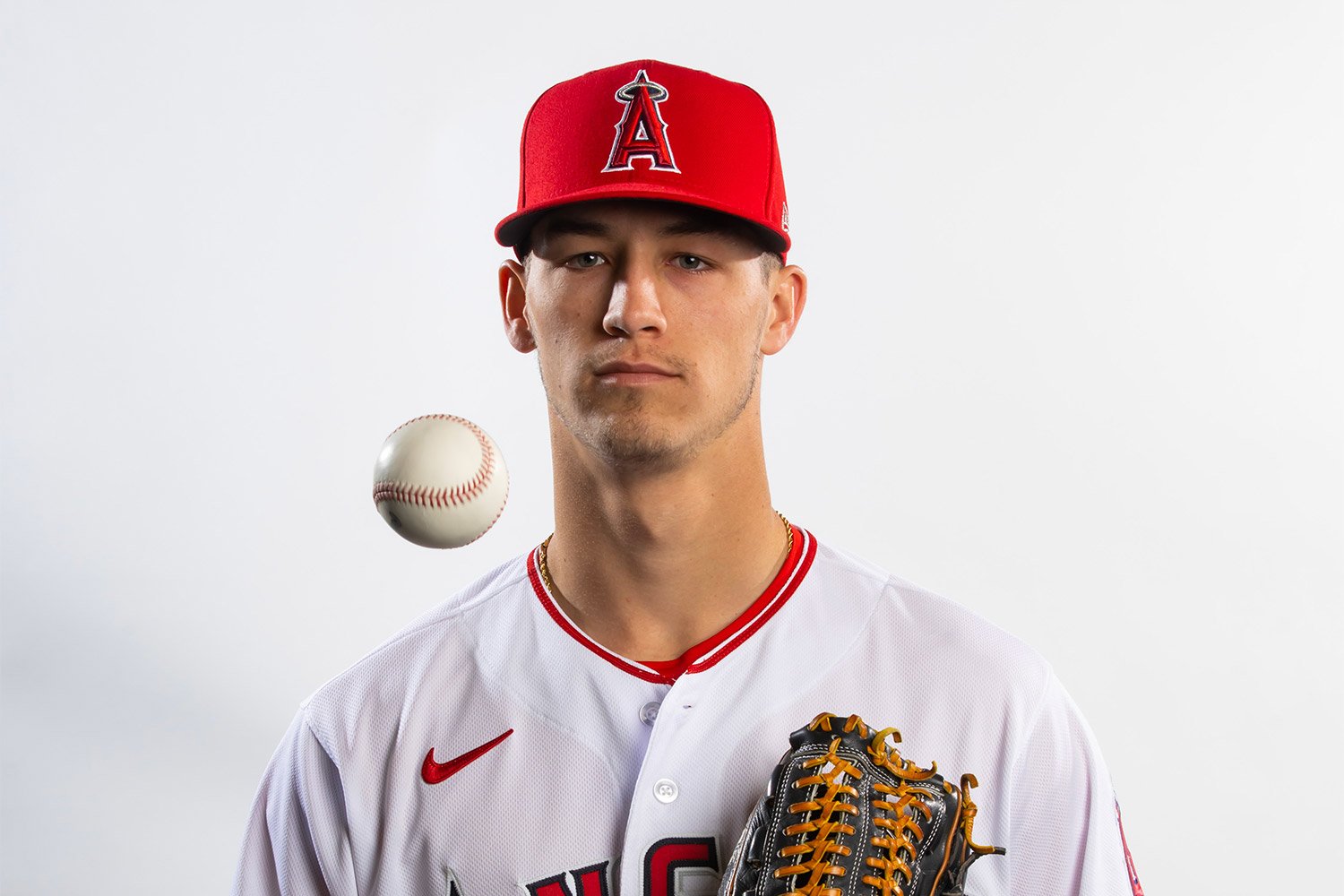
Coleman Crow was a 28th-round selection by the Angels in 2019, but he didn’t make his professional debut until 2021 due to COVID-19. He worked through the system over the next two years, starting in 2023 in Double A. He made four starts before going on the Injured List with an elbow issue that would eventually lead to Tommy John surgery. Despite the injury, he was dealt to the Mets in a trade for former Brewer Eduardo Escobar in late June. He underwent his procedure in August and will probably miss most (if not all) of the 2024 season. With knowledge of all of that, the Brewers still decided he was worth two respectable big-league players. What did they see in order to make this trade worthwhile from Milwaukee’s standpoint?
They saw outlier spin and outlier movement to go along with solid command. Specifically, they saw major outlier qualities in his breaking balls. We would be remiss to ignore (as with any Southern League pitcher who threw in the first half of the season last year) that the spin rates and the movement on his pitches were inflated a bit due to the pre-tacked baseballs they were using. However, simply put, if you can spin the baseball, you can spin the baseball. Crow can do that.
Looking first at his four-seam fastball, Crow only sits in the 90-92 range on the pitch, though he can sometimes bump it to 93 or 94. That type of velocity certainly won’t be blowing hitters away. However, his -4 degree Vertical Approach Angle (VAA) could still make the fastball relatively effective. VAA is a term and a measurement that has only existed for a few years. It measures the steepness at which the ball travels as it enters the zone. The average four-seam fastball in MLB the last couple of years has been around -5 degrees. While the difference of only one degree may not seem all that noteworthy, it is a much bigger difference than it appears on the surface.
Batters have trained the majority of their lives against fastballs that come in around the average VAA. They are used to the ball following a somewhat predictable downward path based on gravity, speed, and spin. Connecting with any pitch requires a split-second decision. Batters often have to rely on the law of averages for how pitches move. That’s why outliers in either direction are valued so highly. Outliers play tricks on the eyes of hitters. A -4 degree fastball is much flatter than what most offensive players are used to, and it often causes them to swing under the ball. For example, Freddy Peralta is known for his “invisible fastball,” and a big reason for that is his VAA of -3.91 degrees on the pitch.
Barring a jump in velocity, the fastball will probably never be more than an average offering, and he will most likely always be prone to some home run issues because of it. Still, the VAA is the reason it shouldn’t be a big enough issue to ruin his chances of starting.
The breaking balls are Crow's real appeal, namely his curveball. Not only does he command it well, but according to Baseball America, “his curveball has some of the highest horizontal sweep and spin rate of any curve in baseball. It has the most glove-side run of any curveball in the upper levels, including the majors.” There isn’t much more that needs to be said about the pitch. It’s minimally a plus offering, if not better, and the pitch will likely carry him throughout his career.
Crow also mixes in a slider with high spin numbers and a good amount of sweep. The slider has generated strong chase rates and created a lot of soft contact. It’s a pitch that some evaluators think he should throw more often to right-handed hitters, and a team like the Brewers is more likely to instruct him to do so than an organization like the Angels would have been. When he returns from his injury, it will be interesting to see which direction the Brewers take his pitch mix.
Curt Hogg of the Milwaukee Journal Sentinel had a Twitter thread showing all three pitches discussed above.
Beyond his primary, three-pitch mix, Crow also sprinkles in a sinker occasionally, as well as a changeup. Both are lagging behind the four-seam fastball and slider, and they are well behind the curveball. The development of either would benefit him greatly. Still, given his propensity for spinning breaking balls, he is most likely what is referred to as a “supinator” (meaning it’s easier for him to rotate his fingers on the outside of the ball) than a “pronator” (Devin Williams is a definite pronator, as he can rotate the ball the opposite direction better than almost anyone). That could prove a challenge when trying to develop the changeup specifically. The good news is that he could get by with just those three main pitches.
While Crow will probably miss the 2024 season, there is reason to be excited about his potential. He possesses an arsenal that, combined with his strong command, could eventually make him a mid-rotation caliber starter. Adrian Houser and Tyrone Taylor were not a cheap price for an arm of this caliber. He will need further refinement of his fastball and slider and, more importantly, a clean recovery from Tommy John, but the pieces are there for Crow. The Brewers hope to help him combine those pieces to form an even larger piece of the puzzle. That is, the post-Burnes and Woodruff starting rotation puzzle.
What are your thoughts on Crow? Do you feel better about the deal now that you have seen the upside he could bring? Let us know!
Do you approve of the job the Brewers' front office is doing?

Interested in learning more about the Milwaukee Brewers' top prospects? Check out our comprehensive top prospects list that includes up-to-date stats, articles and videos about every prospect, scouting reports, and more!
View Brewers Top ProspectsFollow Brewer Fanatic For Milwaukee Brewers News & Analysis



-
 3
3



Recommended Comments
Create an account or sign in to comment
You need to be a member in order to leave a comment
Create an account
Sign up for a new account in our community. It's easy!
Register a new accountSign in
Already have an account? Sign in here.
Sign In Now