


Brewers Video
The Milwaukee Brewers got adequate production from a bevy of young hitters last season, but for nearly all of them, the first thing on the to-do list in preparing for 2024 was to generate more hard contact. That box, sadly, remains unchecked.
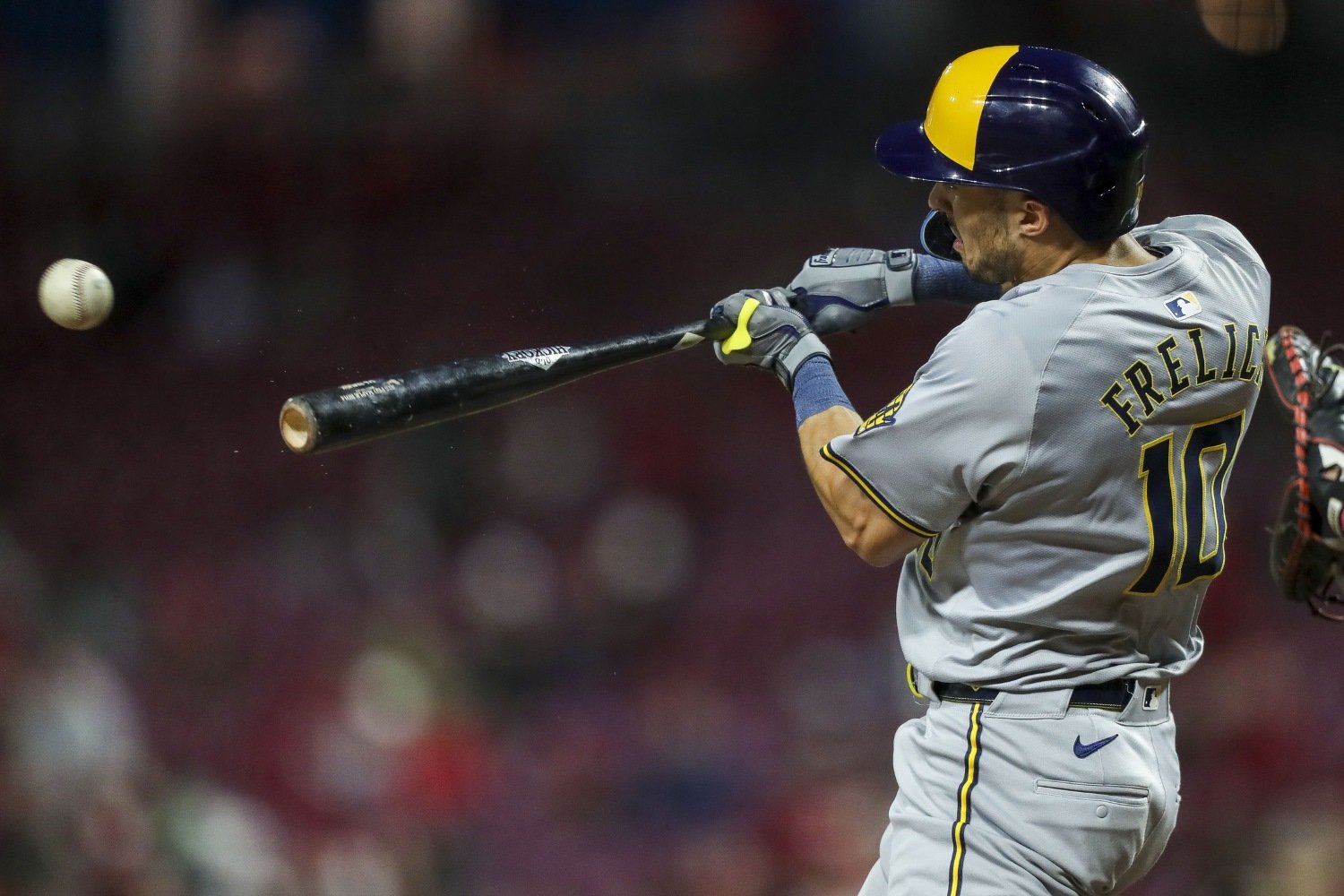
The glaring deficiency in the games of both Sal Frelick and Brice Turang, during encouraging rookie campaigns, was a shortfall in the power department. Neither player hit the ball hard enough (or even moderately hard often enough) to sustain the kind of offensive output for which the team is still hoping. They showed good plate discipline and the ability to put the bat on the ball at near-elite rates, they ran the bases aggressively and well, and they played great defense, but Frelick slugged .351, and Turang slugged just .300. Entering the offseason, the hope was that each would figure out how to leave a darker mark on the ball in 2024.
It's very early, but so far, there's little evidence that any of that needed improvement is forthcoming. Each player has dragged their average exit velocity upward, in a tiny sample. Turang is up from an average of 84.6 miles per hour to 86.2. Frelick is up from 83.9 MPH to 85.2. The Brewers really needed to see a bigger boost, though, and specifically, they needed to see each increase their top 10 percent or so of exit velocities. Instead, each has set a lower ceiling, so far. They're not lifting the ball enough. They're not driving it in a fashion consistent with meaningful power production over time.
Neither player changed his swing this winter. Neither has made a major change in approach. Both are doing an exceptional job of making contact and putting the ball in play, but they seem to be emphasizing that too much. It's coming at the expense of any real juice behind the ball when they strike it. Frelick named this as a problem he was trying to solve during spring training, but couched it solely in terms of tightening his strike zone. If that's still his focus, he needs to further tighten it, because his chase rate isn't down any meaningful amount, and he's yet to lock in on a section of the zone where he can do damage when he makes contact on swings.
Turang's situation seems even more dire, despite his superb early results. He's still swinging mostly at pitches up in the zone, which he's still hitting mostly downward, albeit fairly sharply. There's nothing driving his success, except that the ball has crept through the infield exceptionally frequently in a fistful of instances. Both Turang and Frelick are actually striking out more this year, just north of 20 percent of the time. Neither is drawing walks at much more than an average rate.
If not for Garrett Mitchell's injury at the tail end of spring training, Frelick's playing time might be squeezed right now. Oliver Dunn only got his chance to show what he can do because of Mitchell's injury, but now that that opportunity has come, he's shown that one thing he can do is hit the ball hard. He's also been a capable defensive third baseman. Mitchell, though a source of huge strikeout-centered risk, has big-time power. Joey Ortiz has his own exit velocity/launch angle problem, but it's one that offers more hope: his hard-hit balls just tend too strongly to be in a low launch-angle band.
Since Matt Arnold said this week not to expect Mitchell back before June, we can assume Frelick will keep getting playing time for at least that long. Turang is even safer, because his defense has so much value and because his legs have both fueled a prettier batting line and allowed him to rack up value on the bases in the early stages of the campaign. Eventually, however, these two need to find their power stroke. Neither needs to be a 20-home run hitter, but they're not exceptional enough in other facets to make up for a total lack of pop. To stay helpful, they have to at least be able to jolt the ball over the wall 10 or 12 times, in everyday playing time. Right now, that's a pipe dream, based on their batted-ball profiles.
Since both players had long power outages down the stretch last season (and since Andruw Monasterio had an even uglier one), it's worth watching this closely. It might be that all three are fatally afflicted with balsa bat syndrome, but it might also be true that the team needs to coach up power better. In the modern game, the bottom half of the lineup can't be full of guys who slap the ball and hope to scratch out an empty .320 on-base percentage. There has to be some danger there. The Brewers will, eventually, have to fix the problem of these young hitters' dearth of power. It's troubling enough, though, that they don't seem to have made any progress at all on that this winter.
Do you approve of the job Pat Murphy is doing as Brewers manager?

Follow Brewer Fanatic For Milwaukee Brewers News & Analysis



-
 2
2



Recommended Comments
Create an account or sign in to comment
You need to be a member in order to leave a comment
Create an account
Sign up for a new account in our community. It's easy!
Register a new accountSign in
Already have an account? Sign in here.
Sign In Now