


Brewers Video
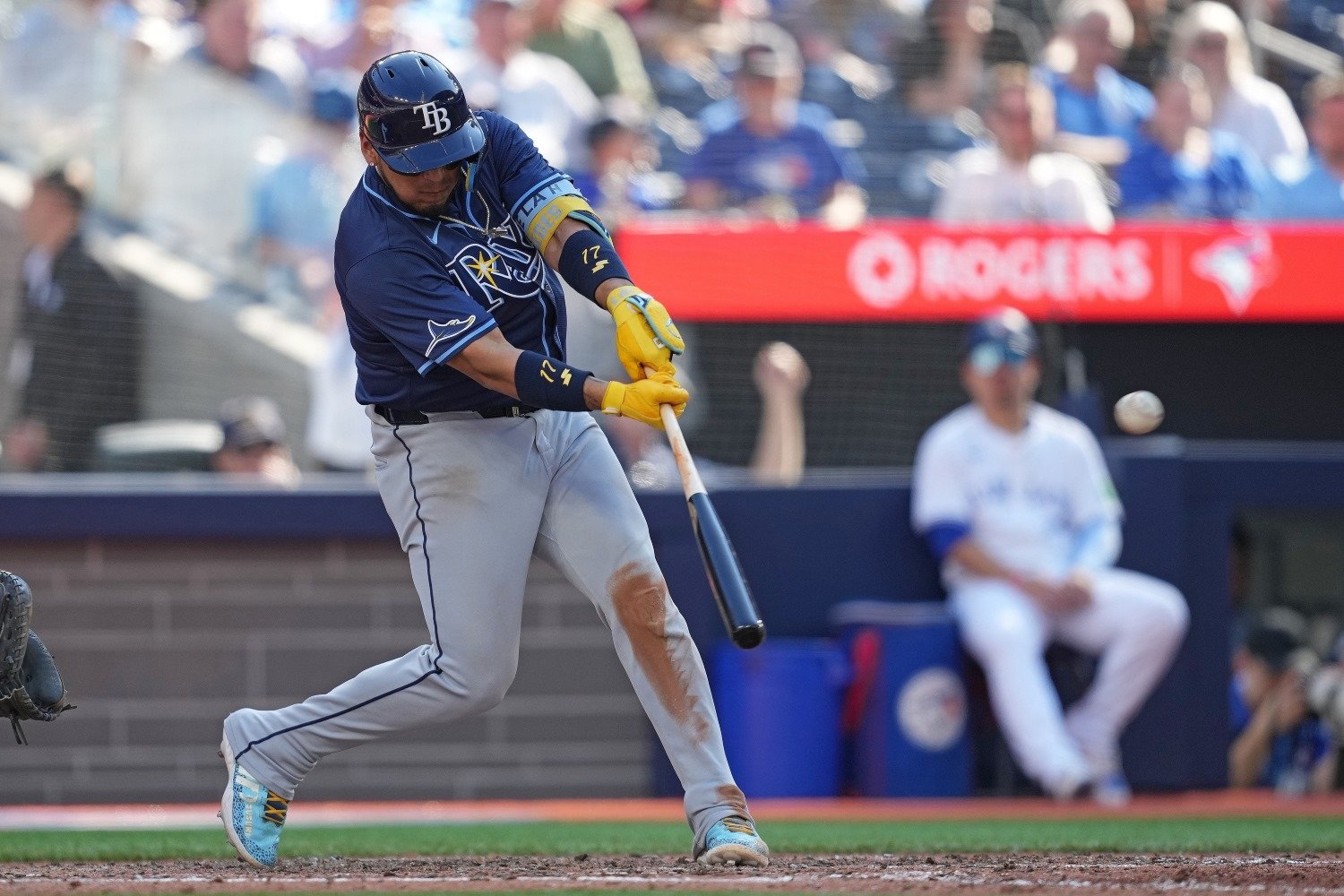
Isaac Paredes is one of the American League’s best batters this year, but only because he continues to defy many of Statcast’s batted-ball metrics and produce unexpected power. Is Tyler Black following the same trend, or should we begin to worry about his horrible exit velocities in Triple A?
Tyler Black does not hit the ball hard with any great regularity. Yet, he continues to put up power numbers just like the Rays' third baseman, and it may be baffling to some people. However, it all stem from some models undervaluing two key statistics: how often does a hitter find the sweet spot for launch angle, and how well they pull the ball in the air with this ideal launch angle.
How Does Isaac Paredes Access His Power?

The above is Paredes's current Statcast percentiles page, with one of the slowest bats and lowest average exit velocities in all of Major League Baseball. To put this in context, Andruw Monasterio has swung the bat faster and created better exit velocities than Paredes, yet Paredes has hit 10 home runs (the same as Rhys Hoskins and Willy Adames) and 13 doubles so far this season, with a .287/.369/.474 slash line.
Hitting the ball harder more often should result in more extra-base hits, and there’s a clear correlation between the two. All the evidence so far this year suggests that when a ball is hit harder, the expected slugging numbers go up:

So where does Paredes's power come from? Well, expected slugging takes into account the exit velocity and trajectory of a batted ball and ascertains how often that results in a hit and how many bases (on average) the batter could expect from that batted ball. What it doesn’t factor in is the location of the batted ball. While a 120-mph, 27° launch will have an xBA of 1.000 and xSlg of 4.000 (because it’s always out of the ballpark, no matter where you hit it), a 98-mph, 27° launch angle can also get out in some parks if it’s located into the corners. Statcast compares this to other fly balls hit all across the diamond, and the majority would be easy fly balls that result in outs, so the expected data doesn’t match the result. If a player can do this consistently, then their batted ball data will always be significantly outstripped by real production.

Paredes's home run locations fully support this. They're all pulled, and many of them are 350- to 360-foot fly balls. So perhaps the biggest metric for Paredes isn’t his average exit velocity, but his fly ball rate and his spray angles. Over half (55%) of his batted balls are fly balls or line drives, well above league average. To integrate a statistic based on the new Sweet Spot Exit Velocity created by our very own Matthew Trueblood, let's tweak it to suit Paredes better. Sweet-spot launch angles are between 10° and 30°. However, for hitters like Paredes who don’t hit it particularly hard, they want to be more in the 20° - 30° range to access their power.
So if we take Paredes's batted balls in this “power range,” he averages a fly ball distance of 349 feet, with an average exit velocity of 90 mph. For most hitters, that would be on the light side, but it's more than enough to clear the fence frequently for assiduous pull-side hitters.
By being in such control of the locations to which he hits the ball, Paredes is allowing his contact-oriented swing to bring about significantly more power production than it otherwise would, and Tyler Black may be in the same boat.
So How Does Tyler Black Compare?
Tyler Black has an average exit velocity of just 85.2 mph in Triple A, which ranks 106th out of 126 qualified hitters. Yet, he has nine home runs, six doubles and four triples in 48 games at the highest level of the minors this season. How has he managed it? Well, quite similarly to Paredes:

The home run that appears misplaced (near the batter's box) was another 391-foot blast to right field, and you can see that the majority of Black’s power comes to the pull side and down the lines for both doubles and home runs. Up the middle is somewhere he doesn’t quite have the power to go to regularly, but because of his incredible contact skills and plate discipline (highlighted by the 12% walk rate and an 8.2% swinging strike rate), Black is able to make consistent contact and control the barrel well enough that he can access that power with regularity.
In the 15°- 30° range, he averaged almost a barrel every other ball, and to qualify for that statistic requires him to be hitting the ball hard when he does get those launch angles--which is borne out by the 45.1% hard-hit rate in this range. In June, nearly all of his hits have been down the foul lines, and it’s brought him two booming home runs and four doubles. It’s the mark of a hitter who knows his approach and his swing with incredible confidence, and there’s no reason to believe this can’t be replicated in the major leagues.
There is one concern, however. As you may have noticed at the top, Isaac Paredes is one of the best in the major leagues at concentrating his batted balls in the launch-angle sweet spot, but Black isn’t quite so prolific, even at Triple A. Over his recent hot stretch, he’s put 39.1% of his batted balls into that band. However, the same hasn’t been true over the rest of the season at Triple A (31.4%), when he's been much closer to league-average. Where he makes up for this is his speed and ability to put the ball in play. However, if he’s to make it with his defensive limitations, he may need to tap into that pull side with more regularity.
It’s something he seems to have worked on recently, but here are his hit locations from 2022 to 2024:

There was a minimal sample size in 2022, but in 2023 and 2024, you can see him pulling more often. Still, it’s significantly less than Paredes’s 49.5% pull rate, and he might need to come closer to that in order to generate the power required of a player like him.
That's the question for him going forward. Black knows how to access his power, and seems to be trending that way, but it may come down to pitch selection:


As you can see, Black has a tendency toward heavy ground balls on pitches down and away from him, and there is a clear correlation with where he best controls the launch angle and drives the ball. Reaching out on pitches isn't a strong suit for him, so perhaps he can use his incredible eye at the plate for a different purpose. Whereas currently, Black is one of the best at determining balls and strikes, he could be more selective as to where he swings most within the zone. He swings just as much down and away as he does up and in, and it's taking away from his power. By being more selective early in counts, trusting his ability to be pesky even if he falls behind, and sitting on pitches on the inner half he could see his power output skyrocket.
As for whether Black is the next coming of Isaac Paredes, I'm not sold just yet. He doesn't elevate as well as Paredes does across the entirety of the zone, but he does possess slightly more pop and other attributes that can help him along the way to being successful at the plate. There may be growth to come. I think Black may (especially if he can't find a home at first base or the outfield) have to sell out for more power production, but he's not quite at that point yet.
Which team do you dislike the most in the NL Central?

Follow Brewer Fanatic For Milwaukee Brewers News & Analysis



-
 1
1


Recommended Comments
Create an account or sign in to comment
You need to be a member in order to leave a comment
Create an account
Sign up for a new account in our community. It's easy!
Register a new accountSign in
Already have an account? Sign in here.
Sign In Now