


Brewers Video
Throughout baseball, hitting development is still trying to catch up to pitching development, and new bat-tracking technology could emerge as a tool that helps close the gap once front offices, coaches, and players discover how to best interpret and apply it. For now, the Brewers emphasize swing decisions, preaching it throughout all levels of the organization and tracking it with their own internal metric.
What constitutes a wise swing decision is more nuanced than swinging at strikes and laying off balls. In non-two-strike counts, the Brewers would prefer their hitters to watch a strike in a location they struggle to hit, rather than take a non-productive swing. It’s why Garrett Mitchell is passive against fastballs in the top third of the zone and why Pat Murphy wants Brice Turang to follow suit.
As a result, the Brewers have baseball’s third-lowest chase rate since the start of 2023, but they’ve also taken more strikes (18.1% called strike rate) than any other team in that span. Their 63.1% in-zone swing rate is the lowest for the second consecutive season.
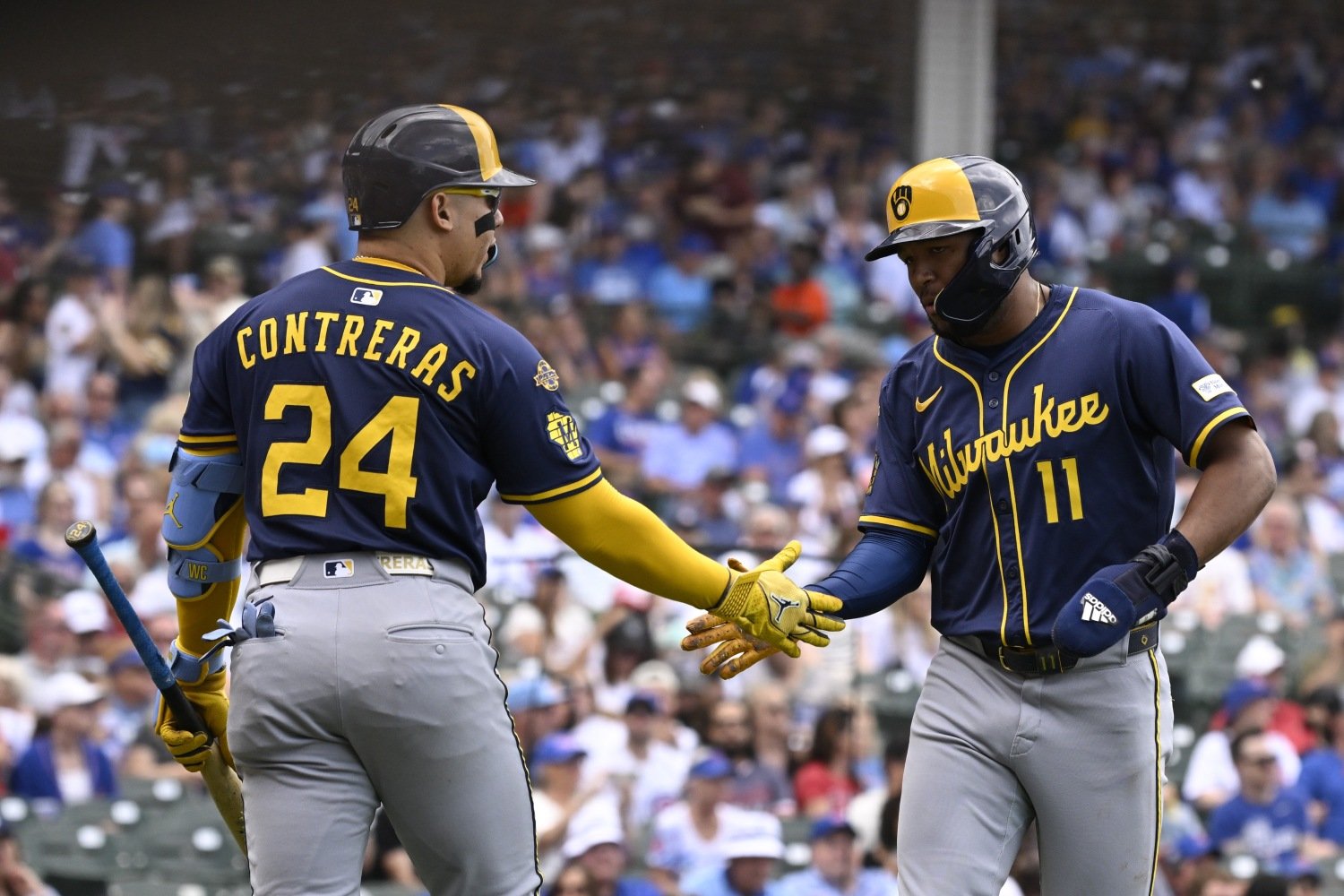
On the whole, the Brewers were not more aggressive than usual in Thursday’s series finale at Wrigley Field, swinging at 62.9% of in-zone pitches. However, they offered at 68% of in-zone pitches from starter Jameson Taillon, scoring five of their eight runs within the first three innings against him. Milwaukee’s offense tallied eight hits against Taillon, while posting an average exit velocity of 95 mph.
That increased aggression looked more like a response to Taillon’s form than a sudden, concerted effort to take more swings. The right-hander struggled to land his curveball and left plenty of his harder pitches over the heart of the plate. The Brewers capitalized on those mistakes.

After Taillon departed, the Brewers were noticeably less aggressive against relievers Genesis Cabrera, Chris Flexen, and Drew Pomeranz, and the latter two held Milwaukee scoreless over its final four innings. It wasn’t that the offense spontaneously abandoned a successful approach, but that Flexen and Pomeranz made more quality pitches around the edges of the strike zone.

Perhaps the Brewers could still benefit from attacking more pitches in the zone overall—their 68.2% swing rate on pitches tagged by Statcast as within the heart of the strike zone is also baseball’s lowest—but Thursday served as a reminder that commanding hitters to swing at more strikes can be overly simplistic. There’s more to swing decisions than offering at strikes and laying off balls. A hitter’s hot and cold zones and the pitcher’s ability to locate to the latter are big parts of the equation.
Which team do you dislike the most in the NL Central?

Follow Brewer Fanatic For Milwaukee Brewers News & Analysis



-
 1
1


Recommended Comments
Create an account or sign in to comment
You need to be a member in order to leave a comment
Create an account
Sign up for a new account in our community. It's easy!
Register a new accountSign in
Already have an account? Sign in here.
Sign In Now