Tedaldtada
-
Posts
1,766 -
Joined
-
Last visited
-
Days Won
4
Content Type
Profiles
Forums
Blogs
Events
News
2026 Milwaukee Brewers Top Prospects Ranking
Milwaukee Brewers Videos
2022 Milwaukee Brewers Draft Picks
Milwaukee Brewers Free Agent & Trade Rumors, Notes, & Tidbits
Guides & Resources
2023 Milwaukee Brewers Draft Picks
2024 Milwaukee Brewers Draft Picks
The Milwaukee Brewers Players Project
2025 Milwaukee Brewers Draft Pick Tracker
2026 Milwaukee Brewers Draft Tracker: Picks & Bonuses
Store
Downloads
Gallery
Everything posted by Tedaldtada
-
 Scratch your Frias, Martinez, and Matos itch by listening to the great James Anderson, along with wonderful Alex Jensen, during the latest Rotowire Fantasy Baseball Podcast. Listen as they breakdown some of the young breakouts in the ACL/DSL. They spend a minute or two on each guy. https://podcasts.apple.com/us/podcast/dsl-and-complex-league-breakouts-w-alex-jensen/id838315493?i=1000773162965 Jensen is a big fan of Juan Martinez's offensive traits. With Alexander Frias, he sees a great tool kit, but wants more airside pull. And both guys are very intrigued with Leanders Matos, putting him on their watchlists going forward.
 -
Definitely minus cool points for the organization on this one
-
Touched 100 on the TV readout. That’ll play.
-
It’s that really flattened follow through that catches my eye. Giancarlo-esque
-
Fischer looked completely fine in Spring and in the WBC against elevated pitchers. I think he is kind of coasting to be honest. Seems like a guy that plays up to the moment. Man against boys. I’d expect the K rate to go down in AA. I know I sound cuckoo.
-
Fri. 5/29: Keep the Good Mojo Going
Tedaldtada replied to Jim Goulart's topic in Brewers Minor League Talk
That’s insane lol -
“My goodness, this Brewers system is beyond ridiculous.” The list of the Brewers Top 20 infield prospects has to rival, or exceed, the talent of some organizations complete Top 20’s.
- 3 replies
-
- 1
-

-
- tyson hardin
- luis lara
- (and 8 more)
-
Sat. 5/23: Warbirds Over .500 Entering the Night!
Tedaldtada replied to Jim Goulart's topic in Brewers Minor League Talk
Matt Wood’s line is ridiculous this year. -
Video: 2025 Draft Class Check-In: Andrew Fischer
Tedaldtada replied to Aram Leighton's topic in Brewers Minor League Talk
Count me as one who is not worried on iota about the whiff. For one, and as others have noticed, it’s trending in the right direction. But aside from that, I don’t believe it’s caused by a lack of pitch recognition or slow reflexes. He’s being over-aggressive with that “I can hit anything” mentality. As his approach refines further up the chain, I’m certain we will all reminisce fondly about Andrew Fischer’s whiff fest in High-A. It helps that he’s absolutely mashing when he does connect. ✌🏼 -
Good hitters galore!
-
ACL Crew are electric
-
Running 2026 MLB Draft Thread
Tedaldtada replied to wiguy94's topic in MLB Draft & International Signings
I’m pretty happy honestly. All four you named look to be decent bets to make the majors in some form or fashion. None of them are slugs on defense. They have some baserunning ability to varying degrees. And each has shown good on-base ability in spite of contact related issues. The Brewers were spot on with their power eval of each. They hit lots of dingerz. I’m giving these four profiles a long leash. -
Yes, something about his mix and shapes is working. Long live the Mayor King!
-
Ohhhh age-20 Venezuelan pitcher Ismael Yanez is pumping 95’s and 96’s in relief of Broughton. Sinkers. Working in some decent breaking stuff as well.
-
GameDay seems to be having trouble figuring out Joey Broughton (great to see him debut!). I see he's topping out around 90. As I think about Tayden Hall’s early success in 2026, I must remind myself to be patient with these high school picks. Some of them take off immediately and fly through the system but others don’t. Most of them experience mixed results and often some injuries too. What I’m try to say is give Joey a long leash.
-
Fun night so far in AZ! SS CJ Hughes hit a sub 100 MPH EV jack. Everyone’s on base. Acosta at 3B. Antunez in CF. Holden and Nieman have thrown a ton of strikes. Not so much for the Padres hurlers.
-
Great inning! No damage. Numerous 93’s and even a 94 on a high fastball. Got a swinging K on a nasty splitter the catcher had to block.
-
Thirst quenching and hype feeding pro debuts for CJ Hughes and Rylan Mills
-
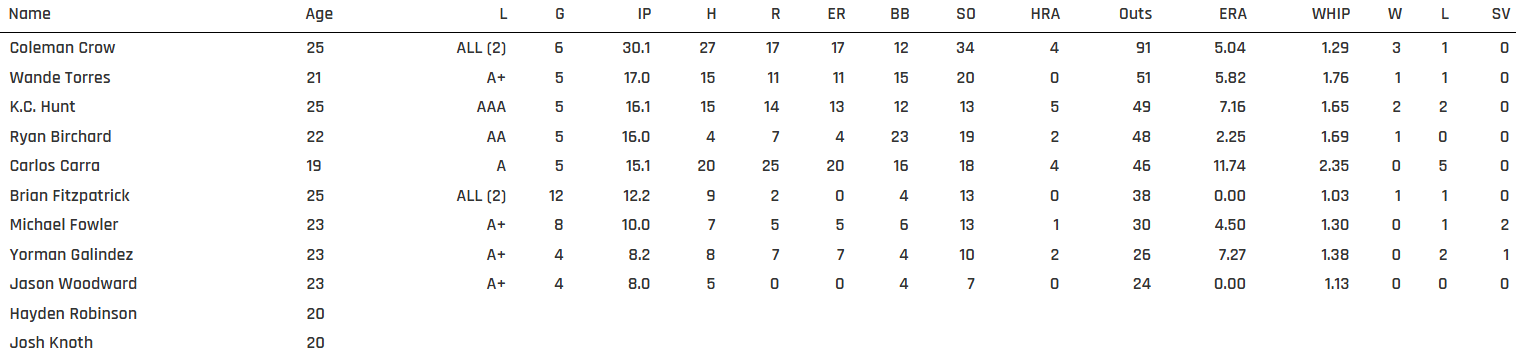
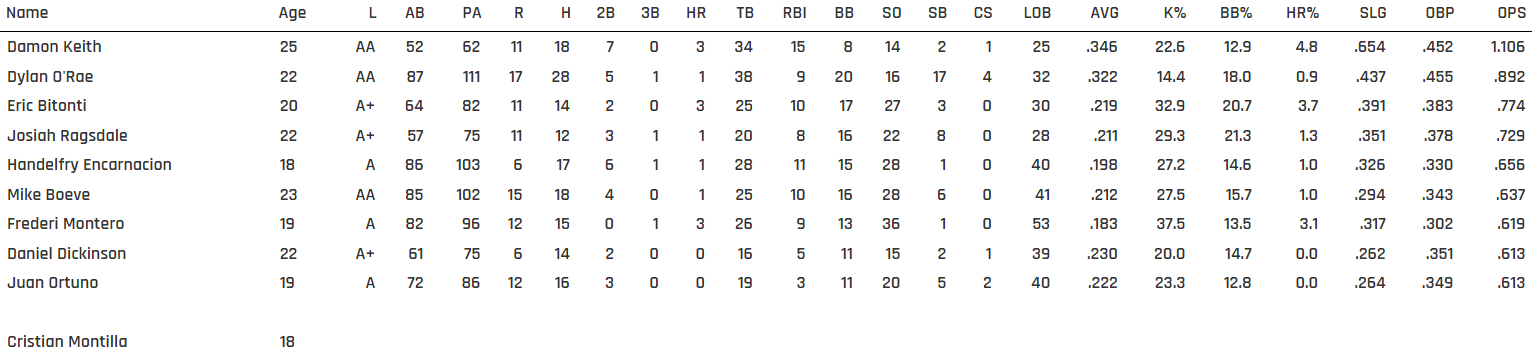
I collected all the preseason picks into this stat page. Joey Broughton doesn't seem to be in the database yet. Will add him when he debuts. Keith, O'Rae, Woodward and Fitzpatrick shine the brightest as of May 1st Waiting on debuts for Montilla, Robinson, Broughton, Knoth
-
2026 Minor League Transaction Thread
Tedaldtada replied to Jim Goulart's topic in Brewers Minor League Talk
Let’s go, Fitz! Facebook WWW.FACEBOOK.COM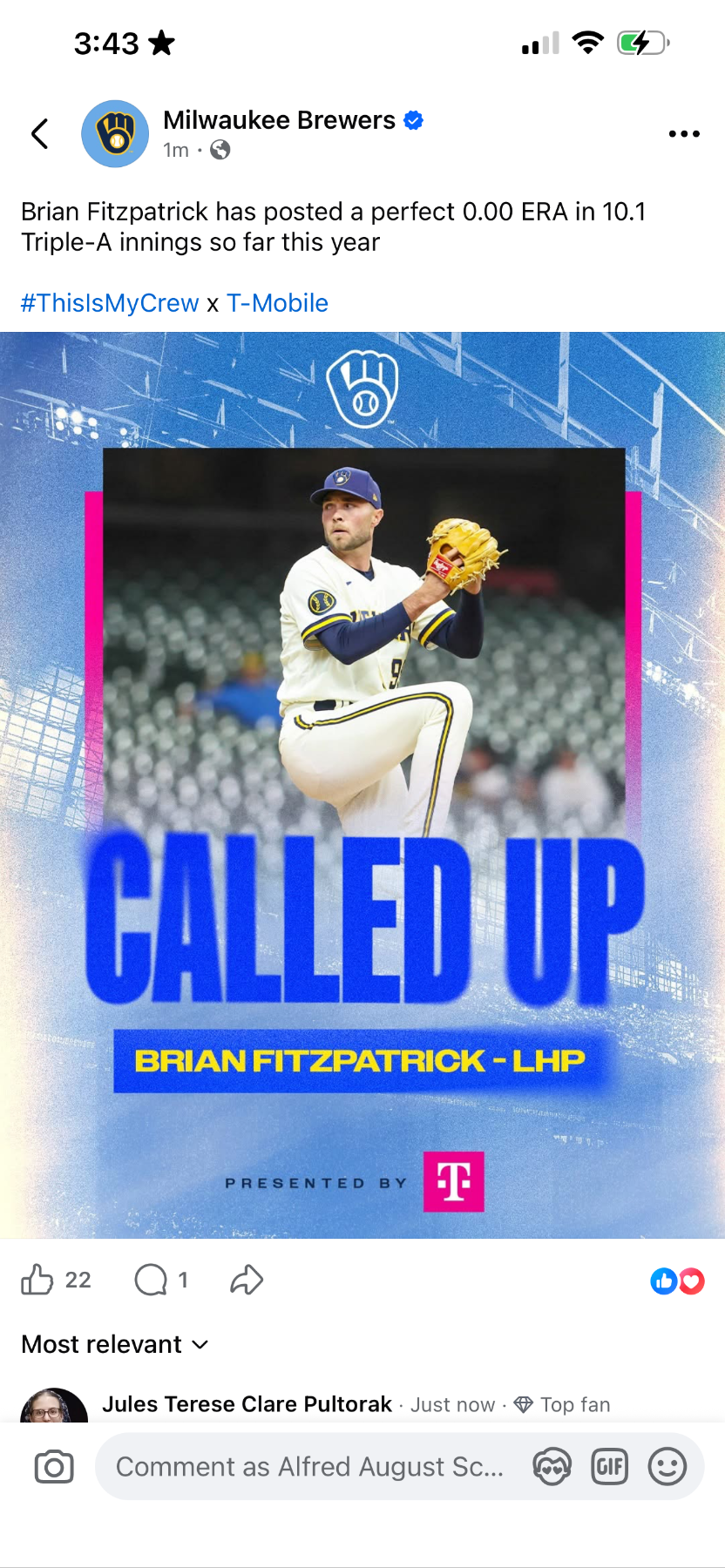
-
2026 Minor League Transaction Thread
Tedaldtada replied to Jim Goulart's topic in Brewers Minor League Talk
Could this be the call up for one of my preseason picks to click?? Facebook WWW.FACEBOOK.COM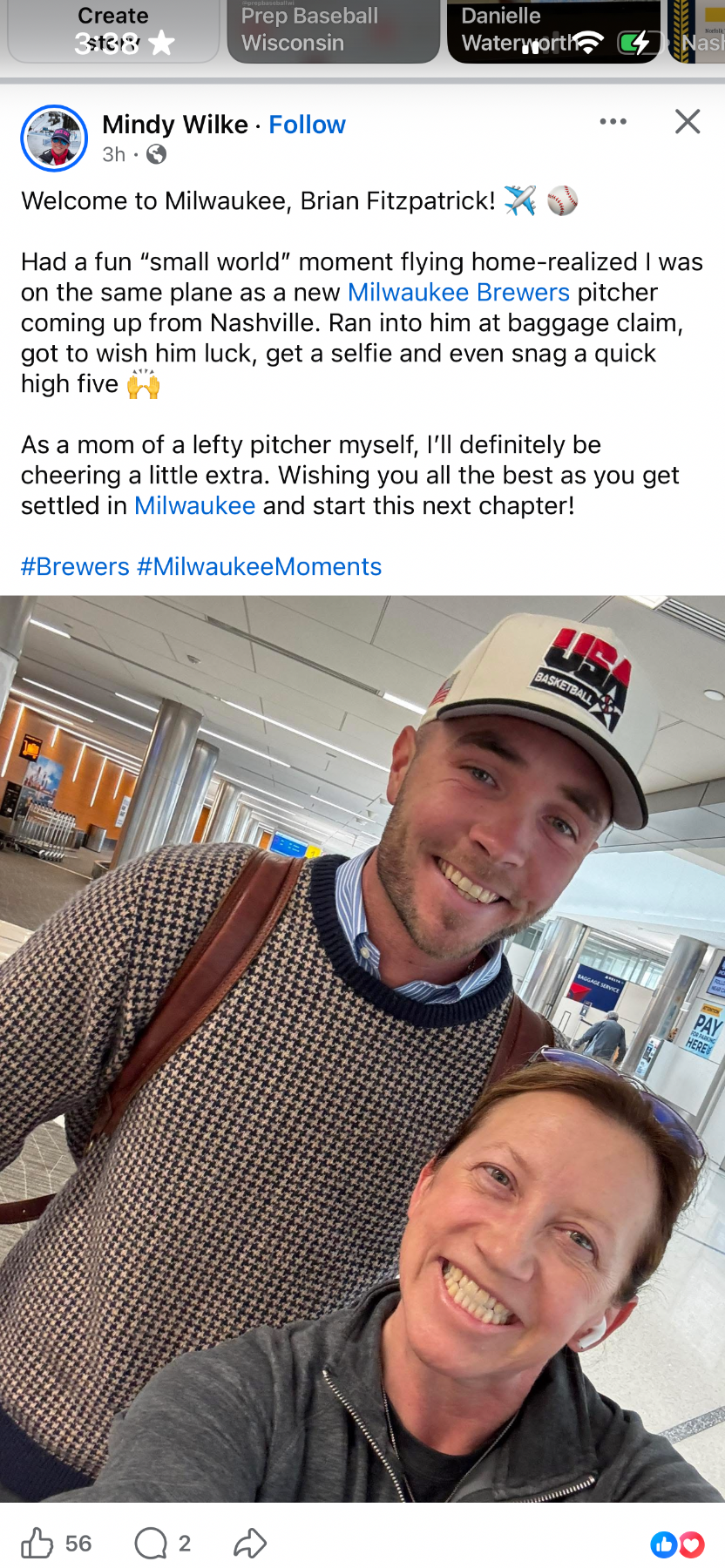
-
Owens looks like a hell of a find. If the stat line doesn’t jump out and get you excited, it’s worth noting he was placed in Wisconsin, a more aggressive assignment than where several college arms drafted ahead of him have started or are expected to start. That speaks volumes.
-
He’s the best. Quite the valuable profile.
-
16 players in the org. have an OPS North of .900 (.950 actually) headed into this week's games. Early Season .900 Club