LouisEly
-
Posts
12,041 -
Joined
-
Last visited
-
Days Won
14
Content Type
Profiles
Forums
Blogs
Events
Milwaukee Brewers News, Rumors & Analysis
2026 Milwaukee Brewers Top Prospect Rankings
Milwaukee Brewers Videos
2022 Milwaukee Brewers Draft Picks & Signing Bonuses
Milwaukee Brewers Trade & Free Agent Rumors
Milwaukee Brewers Fan Guides & Resources
2023 Milwaukee Brewers Draft Picks & Signing Bonuses
2024 Milwaukee Brewers Draft Picks & Signing Bonuses
The Milwaukee Brewers Players Project
2025 Milwaukee Brewers Draft Picks & Signing Bonuses
2026 Milwaukee Brewers Draft Picks & Signing Bonuses
Store
Downloads
Gallery
Everything posted by LouisEly
-
Am I the only person in the world who still hates Tiger Woods for what he did to his wife and family (not to mention driving 90 mph in a residential area, losing control and crossing two oncoming lanes that could have injured or killed other drivers)? The gushing over this arrogant jerk ever since his reckless driving incident has been sickening.
-
2022 Minor League Transaction Thread
LouisEly replied to Jim Goulart's topic in Brewers Minor League Talk
To think that at the time of the draft he was higher on the Brewers board than Corbin Burnes. -
Lorne Bowman is leaving UW and will transfer somewhere closer to his hometown of Detroit. Not terribly surprising as he has left the team twice to attend to personal and family matters.
-
That's just one of the four guys on NFL.com. Zierlein is the best over there, probably followed by Schrager who has GB going with Burks at #22 and Wyatt at #28, which I think is very, very possible.
-
Now, we're starting to hear about his teammate who is clearly also highly thought of. Will be curious to see where and when he ends up. You need to start following people other than Pauline. Most others (PFF, The Draft Network, NFL.com, etc.) have had Goedeke in their top 100-150 since the end of the season. PFF has Goedeke at #100. NFL.com has a grade of 6.22 which puts him roughly in that same range (mid-3rd to early 4th). Most are projecting him to guard because of his short-ish arms (32 1/4").
-
Is there a way to turn off the automatic double-spacing when you hit return?
-
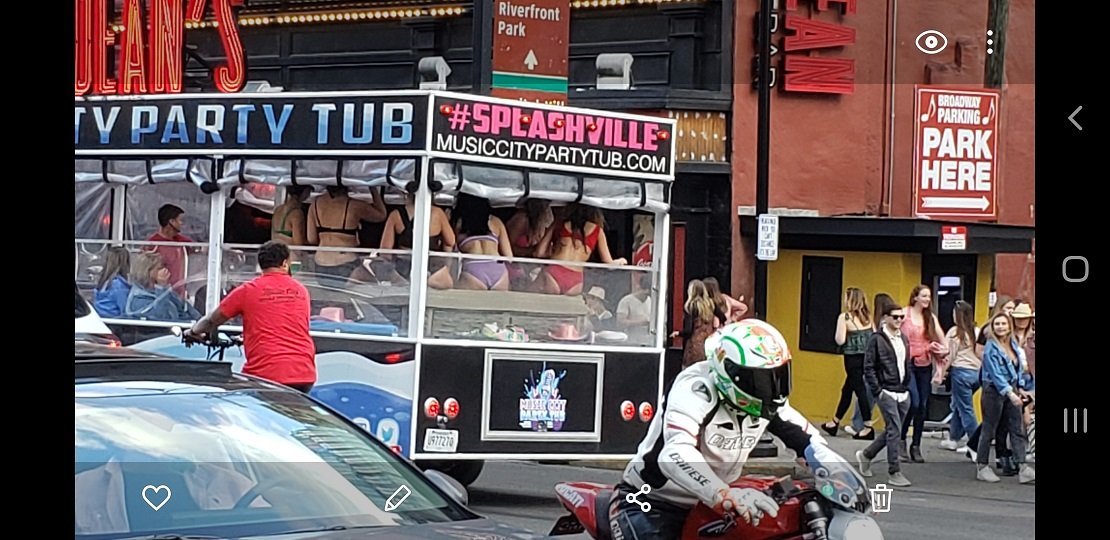
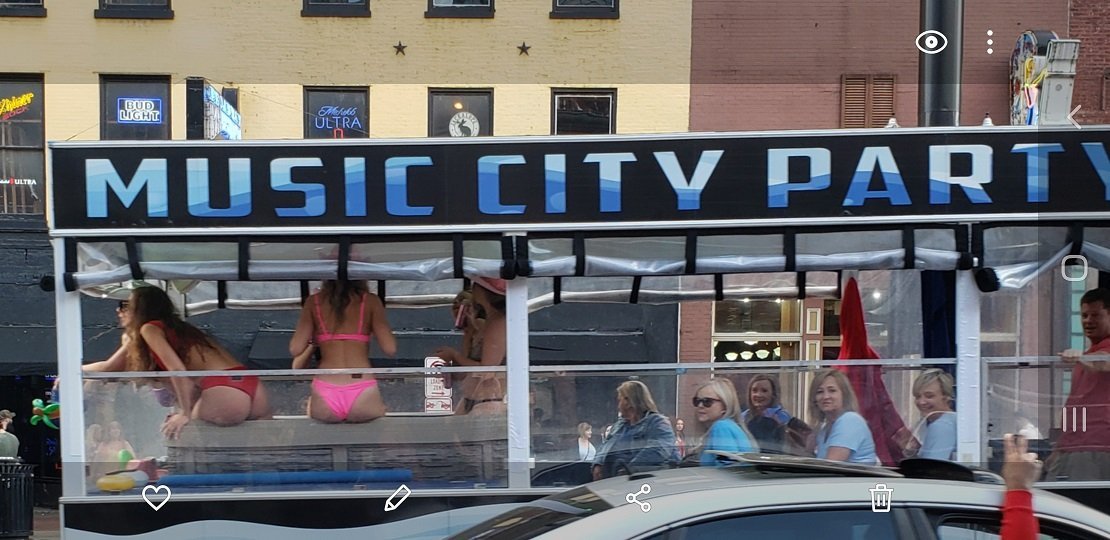
@nate82 how many people are you trying to take to Nashville and what is it that you would like to do? I know that city very well, was just there two weekends ago. One of my best friends has a couple of AirBnB apartments in the 12-South neighborhood. In that neighborhood many people are building studio apartments above their garage and putting them on AirBnB. If you're not going to the bars on Broadway and it's just you and one other person you can probably get a much better deal staying in the neighborhoods. In fact, I would not recommend anyone over the age of 30 go anywhere near Broadway/2nd.
-
This is exactly it. They need one guy to open up the field, but Lazard has caught a lot of balls in this offense for a reason and it isn't because of his speed.
-
Keep in mind, it takes a while to earn Rodgers trust. To bring in a couple of high draft picks... they aren't likely going to get on the same page quickly, or at least as quickly as a guy who has been in the league for three years. And high draft picks do bust, especially WRs (John Ross, Corey Coleman, Josh Doctson, Laquan Treadwell, Kevin White, Tavon Austin, Justin Blackmon, A.J. Jenkins, etc.) The Packers got a 1st and 2nd for Adams... if they trade that 1st for a guy such as Metcalf or McLaurin the net effect is Adams for McLaurin/Metcalf and a 2nd plus (temporary) salary cap relief. I don't think Metcalf or McLaurin have done enough to get Adams money, so the Packers net a 2nd round pick, cap space, and a guy who is 4/5 years younger than Adams. The Packers are obviously in win-now mode. I'd part with one of the two 1sts for either Metcalf or McLaurin to eliminate the bust risk..
-
The Milwaukee Dog, Coming to a Tailgate Near You
LouisEly replied to BrewCrewBBQ's topic in Brewer Fanatic Front Page News
Nope. Grill the hot dog (whatever type of hot dog you wish) Put on a hot dog bun Add mustard or Stadium Secret Sauce Add diced raw onions (preferably yellow) Add shredded cheese (if it's not a cheese dog) That's a Wisconsin dog. None of that jalapeno BS. -
No, he's not unheralded or under the radar at all - there's a good chance he will not be on the board on Day 3. NFL.com has a grade of 6.14 on him; for reference, their grade on Christian Watson (who you think is not likely to be there when the Packers pick late in the 2nd), is 6.27. No way he makes it past the 4th round. You've been gushing over Watson, but McCollum's numbers are better than Watson's across the board except for broad jump - 4.33 40, 39.5" vertical, and a ridiculous 6.48 3-cone and 3.94 short-shuttle, both best of any player at any position at the combine. I don't think he makes it past the Packers 3rd round pick, much less their 4th round picks (spoiler alert)...
-
This is why...
-
Can we please not post PFF mock drafts? They take up too much screen space, and they are not terribly accurate in terms of who will be available when. IMO, the guys at NFL.com (Zierlein, etc.) are more accurate as they have more access to NFL scouts and player personnel executives.
-
And it was also apparently forgotten that ISU was 10th in the nation in defensive efficiency, and held many other tournament teams to less than 60 points as well. Their defense forced UW to play poorly, just like many other teams they played.
-
Funny thing is, this happened a day early - I'm going on vacation tomorrow morning.
-
And on top of that is due $17.5M & $18M in salary and roster bonuses the next two seasons. The only way I see the Packers acquiring Golladay is if the Giants cut him.
-
Fun fact - Davante Adams was the #53 overall pick in the 2014 draft.
-
If #22 gets them Drake London (even if it costs a 4th or two to move up for him), that won't be a bad deal in my eyes.
-
You beat me to it. Bryan Edwards progressed nicely last year, and fits their size profile (6'3", 215)
-
Reports are that Cobb's salary cut to $3M, a $5.5M cap savings.
-
RE: Douglas - being under the cap is a starting point. There could be some post-June 1 cuts coming to spread cap hits over next two seasons. I can't think of anyone who that would be significant for, but it's possible. Also gives more time for negotiations for extensions to clear up more cap room.
-
McCutchen in agreement with Brewers
LouisEly replied to markedman5's topic in Milwaukee Brewers Talk
Castellanos: 2021 OPS at Great American Bandbox: 1.109 2021 OPS not at Great American Bandbox: .772 McCutcheon 2021 OPS: .778 -
I'm 99% sure that the "Barry Sanders rule" is still in effect and a team can go to an arbitrator to have the player pay back the portion of the bonus that counted towards the remaining years on his contract which will then not count as "dead cap". I'm 99.9% sure that this was discussed during the negotiations.
-
I think where we are getting mixed up is in terminology. When you say "oil companies", I think you may be referring to the entire oil supply market which includes state-owned oil producers (OPEC, Russia, etc.) who have a much bigger influence on market prices than oil "companies". Middle-Eastern countries have a much lower production cost than in the US, thus why there are constant negotiations with OPEC on supply - those countries can (and like Dhonks said, have tried to) run the oil companies out of business by flooding the market. I would agree with the "price gouging" comment (and I'm sure in some micro markets with limited supply there is some) if prices never dropped, or dropped much slower than they rose. But that isn't true; if you look at an overlay of gas and oil prices, they mirror almost exactly over the last 30 years. In fact, it looks like price drops happen more rapidly and dramatically than price increases. What's happening now is that countries that do not produce any oil (think Europe) are clamoring to secure supplies, driving up the contract prices. The reason that gas mirror oil, even if current gas supplies were purchased at lower prices, is that if prices drop (which has been well documented over the last 30 years and can happen rapidly) a competitor can purchase gas at a lower price and thus they will sell for a lower price. Most people view gas as a commodity and will purchase from whoever has the lowest price. Not only does that company then lose out on those sales but they also increase holding costs which compounds the losses - they'll have to sell for a lower price eventually, so gas prices always mirror current oil prices. Plenty of times gas supplies have been sold at a lower cost than acquisition when prices drop. If there is a sustained delta between oil prices and gas prices, that's a sign of "price gouging". This may surprise you, but the Saudi's don't want oil to be this costly. They know that if oil gets too expensive, it accelerates the development and purchase intent of alternative fuels and technology. How many people were motivated to buy an electric vehicle three years ago compared to today? The Saudis are actively trying to diversify their economy because they know that once the gas market goes away their entire economy goes away, and high gas prices will bring that day all the faster. Point being, the market is much more complex than what the "oil companies" are doing and it takes longer than a couple of weeks for global supply/demand to balance if there is an external shock. Price spikes happen, but if you look historically they've never sustained for long periods of time. Oil prices are already 15% lower today than last Thursday.