



Harold Hutchison
-
Posts
6,909 -
Joined
-
Last visited
Content Type
Profiles
Forums
Blogs
Events
News
2026 Milwaukee Brewers Top Prospects Ranking
Milwaukee Brewers Videos
2022 Milwaukee Brewers Draft Picks
Milwaukee Brewers Free Agent & Trade Rumors, Notes, & Tidbits
Guides & Resources
2023 Milwaukee Brewers Draft Picks
2024 Milwaukee Brewers Draft Picks
The Milwaukee Brewers Players Project
2025 Milwaukee Brewers Draft Pick Tracker
2026 Milwaukee Brewers Draft Tracker: Picks & Bonuses
Store
Downloads
Gallery
Everything posted by Harold Hutchison
-
Down the stretch in 2018, the Brewers used two of their top pitching prospects to bolster their bullpen, propelling them within one game of the World Series and setting the stage for arguably the most dominant rotation in team history. Could it be happening again in 2024? Six years ago, a couple of highly-touted Brewers pitching prospects helped propel the 2018 Brewers to a 96-win regular season that year (counting Game 163), a mark reached only once in the team’s history. You may have heard of them: The prospects in question were Corbin Burnes and Brandon Woodruff. The latter even chipped in a memorable blast against Clayton Kershaw in Game One of the 2018 NLCS. Burnes and Woodruff's legacy needs little discussion. Both became potent 1-2 punches in the Brewers rotation after their 2018 turns as multi-inning relievers in the bullpen, propelling the team to playoff appearances in 2019, 2020, 2021, and 2023. Both rank among the all-time leaders in multiple rate statistics for the Crew career-wise. In 2024, DL Hall and Aaron Ashby were highly-touted starting pitching prospects. Hall was acquired in the deal that sent Burnes to Baltimore, placing some pressure on him. Ashby had missed virtually all of 2023 with a shoulder injury. Their 2024 seasons were not exactly smooth rides, though. Hall had a rough adjustment before missing time with injury, while Ashby spent most of 2024 regaining the form he had before his shoulder injury. Both currently work as multi-inning relief options out of the Brewers, where they excel. But could something greater be in the offing in the future? Now, each baseball player is unique – but for Brewers fans, the parallels offer quite an exciting future, not just because of the track record Burnes and Woodruff put together. But there will be openings come 2025. This year, the Brewers rotation has been solid, with Freddy Peralta, Colin Rea, Tobias Myers, and Aaron Civale, while Frankie Montas has not done poorly for the team at this time. Other players have chipped in, whether planned from the start or filling in until they, too, were sidelined. With Rea’s age (34), Freddy Peralta’s pending free agency after 2026 (leading to a probable trade), and Montas’s likely departure in free agency, the team will be looking for some new starters sooner rather than later. This is where Hall and Ashby can come in. Hall is already forcing some consideration for a rotation move as early as this year. His seven shutout innings against the Reds during an August 30 doubleheader was a major boost for the team. If Ashby can be stretched out during spring training next season, the Brewers could come into 2025 with a much better pitching situation than they did at the start of the season. Adding Hall and Ashby to Peralta, Myers, Civale, and Rea gives the Crew excellent rotation depth, regardless of whether they have Bryse Wilson on the roster. For starters, it gives the Crew more time to refine Jacob Misiorowski and Carlos F. Rodriguez in Triple-A Nashville while allowing Robert Gasser and Woodruff more time to properly recover from injuries that have kept them on the shelf for most or all of 2024. The Brewers could have a very strong rotation in 2025 and beyond, and the 2024 bullpen could contribute significantly to that rotation. View full article
-
Roster crunches are a fact of life in Major League Baseball, and the Brewers have what is arguably a “good” roster crunch due to their talent. But should they keep around one name being bandied about as a potential casualty of the numbers game. Image courtesy of © Robert Edwards-Imagn Images Bryse Wilson came to the Brewers in the 2022-2023 offseason and slotted into a long-relief role for the 2023 NL Central champs. He did very well by any measure that year, posting a 6-0 record and a 2.58 ERA in 76 2/3 innings pitched. In 2024, his top-line numbers--a 5-4 record and a 4.04 ERA over 104 2/3 innings pitched--appear to be a step down, but Wilson’s been no less valuable. Yet, despite his contributions, Wilson could be waived or designated for assignment by the Brewers over this offseason, rather than the team electing to pay a potential $3 million salary for 2025. While the Brewers face harsh economic realities in every hot-stove league, things are different for this coming offseason for one big reason: The Brewers have a lot of in-house choices. Their rotation of Freddy Peralta, Tobias Myers, Colin Rea, Aaron Civale, and DL Hall would not be bank-breaking, and they have other potential rotation options in prospects Jacob Misiorowski, Carlos F. Rodriguez, Chad Patrick, and Logan Henderson at Triple-A Nashville, plus the returning Brandon Woodruff and the possibility of second-half contributions from Robert Gasser and/or Wade Miley. That is a lot of depth, before one considers possible free-agent signings. That said, between the prospects and injury returnees, the Brewers will need pitchers capable of going a time through the order to “bridge” the gap from the starters to the late-inning crew that would consist of Devin Williams, Trevor Megill, Abner Uribe, Craig Yoho, Hoby Milner, Joel Payamps, and Jared Koenig. Bryan Hudson has been one such pitcher for the Brewers, but so has Wilson been, even in 2024. As a reliever, Wilson’s posted a 5-3 record with a 3.57 ERA and 1.16 WHIP in 63 innings across 25 appearances – not quite to 2023 standards, but still very solid numbers. It goes without saying that the Brewers will be looking to manage the workload for both prospects and pitchers returning from the injured list. Wilson lets them do just that, and can do so on a very reliable basis. Wilson is more than just a long-relief/mop-up guy. He also is a reliable spot starter, albeit a limited one. In nine starts for the 2024 Brewers, he posted a 4.75 ERA. It’s slightly lower than his career ERA as a starter (5.37), but the real value is that Wilson is readily available to be plugged in for a doubleheader or because of injury. Just look at what the 2024 Brewers have gone though, and ask yourself if paying Wilson $3 million is really a bad thing. They lost Miley, Joe Ross, Hall, Woodruff, Jakob Junis, and Gasser to injury for extended parts of the season. Wilson was one of those who filled in and helped the Brewers greatly exceed expectations in 2024. The Brewers have done well by picking pitchers up and turning them into valuable contributors. Wilson is but one example – others who have been more impactful include Rea, Myers, and Megill. That said, the Brewers have a known quantity with Wilson, and given their experience with pitching injuries, Wilson might be the most cost-effective option. The Brewers will face a lot of hard questions with the 40-man roster over the offseason. Keeping Wilson is not necessarily one of them. View full article
-
The Brewers Would Be Batty Not To Keep Their Biggest Bulk Guy Around
Harold Hutchison posted an article in Brewers
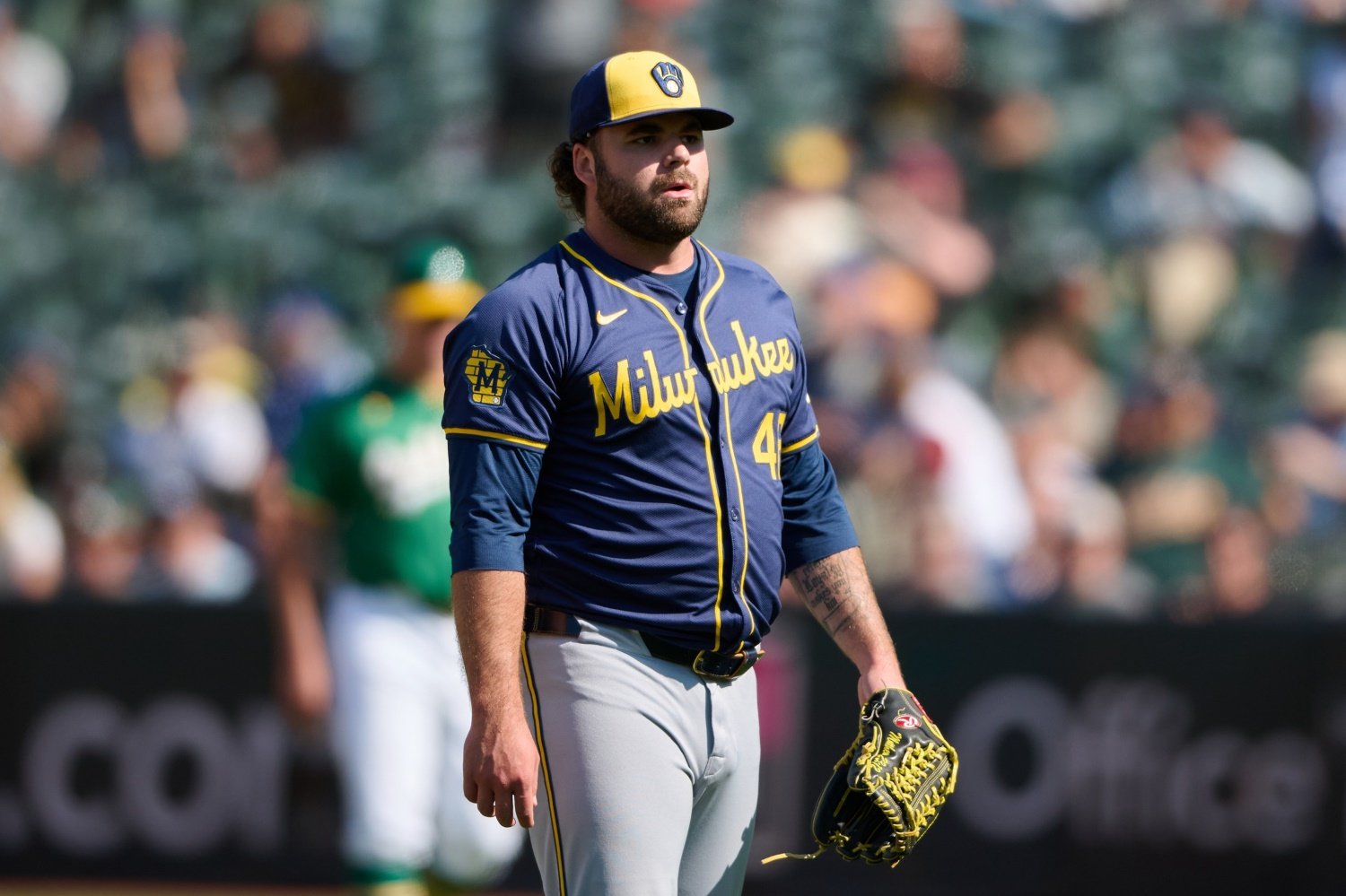 Bryse Wilson came to the Brewers in the 2022-2023 offseason and slotted into a long-relief role for the 2023 NL Central champs. He did very well by any measure that year, posting a 6-0 record and a 2.58 ERA in 76 2/3 innings pitched. In 2024, his top-line numbers--a 5-4 record and a 4.04 ERA over 104 2/3 innings pitched--appear to be a step down, but Wilson’s been no less valuable. Yet, despite his contributions, Wilson could be waived or designated for assignment by the Brewers over this offseason, rather than the team electing to pay a potential $3 million salary for 2025. While the Brewers face harsh economic realities in every hot-stove league, things are different for this coming offseason for one big reason: The Brewers have a lot of in-house choices. Their rotation of Freddy Peralta, Tobias Myers, Colin Rea, Aaron Civale, and DL Hall would not be bank-breaking, and they have other potential rotation options in prospects Jacob Misiorowski, Carlos F. Rodriguez, Chad Patrick, and Logan Henderson at Triple-A Nashville, plus the returning Brandon Woodruff and the possibility of second-half contributions from Robert Gasser and/or Wade Miley. That is a lot of depth, before one considers possible free-agent signings. That said, between the prospects and injury returnees, the Brewers will need pitchers capable of going a time through the order to “bridge” the gap from the starters to the late-inning crew that would consist of Devin Williams, Trevor Megill, Abner Uribe, Craig Yoho, Hoby Milner, Joel Payamps, and Jared Koenig. Bryan Hudson has been one such pitcher for the Brewers, but so has Wilson been, even in 2024. As a reliever, Wilson’s posted a 5-3 record with a 3.57 ERA and 1.16 WHIP in 63 innings across 25 appearances – not quite to 2023 standards, but still very solid numbers. It goes without saying that the Brewers will be looking to manage the workload for both prospects and pitchers returning from the injured list. Wilson lets them do just that, and can do so on a very reliable basis. Wilson is more than just a long-relief/mop-up guy. He also is a reliable spot starter, albeit a limited one. In nine starts for the 2024 Brewers, he posted a 4.75 ERA. It’s slightly lower than his career ERA as a starter (5.37), but the real value is that Wilson is readily available to be plugged in for a doubleheader or because of injury. Just look at what the 2024 Brewers have gone though, and ask yourself if paying Wilson $3 million is really a bad thing. They lost Miley, Joe Ross, Hall, Woodruff, Jakob Junis, and Gasser to injury for extended parts of the season. Wilson was one of those who filled in and helped the Brewers greatly exceed expectations in 2024. The Brewers have done well by picking pitchers up and turning them into valuable contributors. Wilson is but one example – others who have been more impactful include Rea, Myers, and Megill. That said, the Brewers have a known quantity with Wilson, and given their experience with pitching injuries, Wilson might be the most cost-effective option. The Brewers will face a lot of hard questions with the 40-man roster over the offseason. Keeping Wilson is not necessarily one of them.
 -
In the case of Martinez, there was a bit of injury problems, and he lost 2020 to COVID. I've been intrigued by him from the start, to be honest, just from his DSL numbers. Really was high on him after 2021, where he seemed to break out some. Injuries hampered him in 2022, but since then...
- 7 replies
-
- 1
-

-
- ever urena
- ernesto martinez jr
- (and 3 more)
-
At Which Positions Do Brewers Face Major 2025 Position Battles?
Harold Hutchison posted an article in Brewers
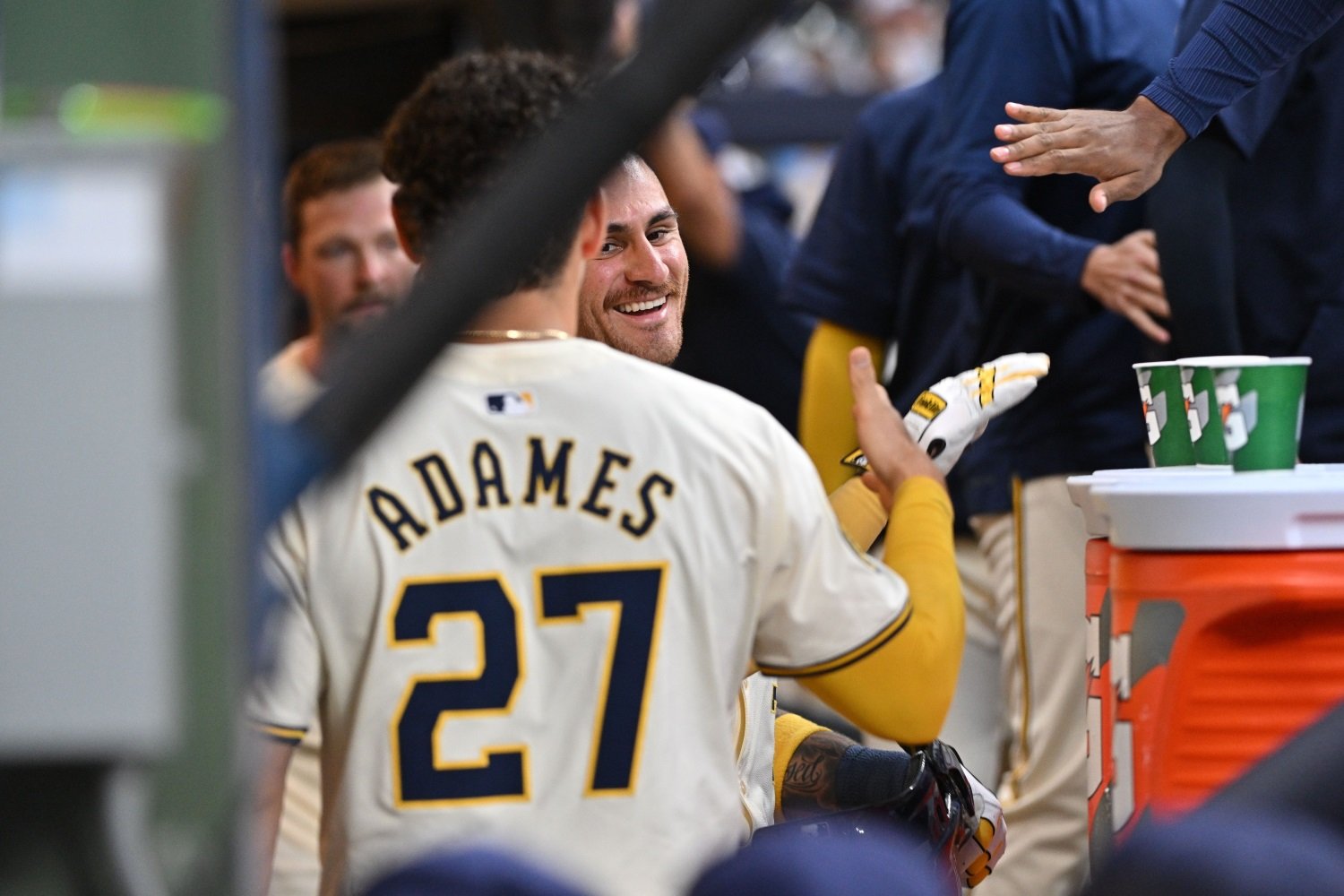 Why might one of the best teams in the National League, a team that is clearly the best in its division, make major changes? In Milwaukee’s case, it comes from a mix of both harsh reality and high-class problems. The harsh reality is one discussed before: Milwaukee just simply can’t match the payrolls of teams like the Dodgers, Mets, Yankees, Red Sox, Phillies, and others. The high-class problem is that the Brewers also have a lot of good options in their position-player group. So, which positions could be in flux? Shortstop The Brewers winning the World Series in 2024 might be seen as a miracle by some. Willy Adames remaining in a Brewers uniform come 2025 would definitely be seen as miraculous, by just about anyone who follows baseball enough to know who he is. In his final year before free agency, he is leading the Brewers with 29 home runs and 100 RBIs, and he boasts a 120 OPS+. Other than Robin Yount, he’s been the best to play shortstop in Milwaukee Brewers history. The question is who takes over for Adames. The Brewers have two very capable options. The heavy favorite for it is Joey Ortiz, the incumbent third baseman. Ortiz has played supernal defense, and he's been roughly a league-average hitter, even as a rookie. In this case, it may make sense for the Brewers to move Ortiz to shortstop, but that would create an opening third base. The other option is Brice Turang, their current second baseman. Turang offers Gold Glove-caliber defense, but his bat is somewhat inconsistent. His hot streaks can be hot (.816 OPS in April), but when he isn’t, his bat is below-average (.651 OPS since May 1). Third Base With Ortiz presumably moving to short, the Brewers need a new man for the hot corner. Options on the 40-man roster include Andruw Monasterio, who has been a solid defensive option with a below-average bat in 2023 and 2024; Tyler Black, who has been a hitter without a position; and Oliver Dunn, who played some third base in a platoon with Ortiz early in the season. Black has the highest offensive ceiling of the three, with Dunn having somewhat of an offensive edge over Monasterio as a left-handed power bat. However, the Brewers also could give 2023 first-round pick Brock Wilken a lengthy look in spring training. First Base Rhys Hoskins may not opt out of the second year of the free-agent deal he signed with the Brewers in the 2023-2024 offseason. Jake Bauers has been a solid backup at not only first base, but both corner outfield spots. But even then, the position could be in flux – the Brewers could find a taker for Hoskins and/or non-tender Bauers, and Black could see some time at first base in 2025. The Outfield The corner outfield positions might seem locked in, but even with the Joey Wiemer trade, the Brewers have a lot of outfield talent. Currently, Jackson Chourio primarily handles left field, with Garrett Mitchell and Blake Perkins splitting time in center, while Sal Frelick is usually in right. The return of Christian Yelich next season, the addition of Brewer Hicklen, and Black’s search for a defensive home could change things. Designated Hitter Yelich may get most of the at-bats at DH by default, partially to lessen the load on his surgically-repaired back, but also because the younger outfielders are that good defensively. William Contreras could also see time there, along with Hoskins (if he's still on the roster) and Black. Backup Catcher Gary Sanchez probably will not stick around after 2024, but Eric Haase is under team control and has made a fine case to stick around--unless and until Jeferson Quero makes up for a lost 2024 season. Bench The Brewers could even see some changes on the bench. Isaac Collins has handled multiple infield and outfield positions over the last two seasons and may be worth a look. Depending on spring training performances, the Brewers could see Frelick or Perkins as a fourth outfielder, although Frelick did see limited action at third base and could offer more positional versatility. Overview Successful teams often try to keep the roster together. In the case of the 2024 Brewers, there may be more changes than usual, some of which are driven by harsh economic reality, but others of which will likely be due to the emergence of prospects who might be upgrades over players currently on the roster.
 -
With an 80-57 record and a nine-game lead over the Chicago Cubs, you would think the Brewers are pretty set at most positions. Guess again, this team may be on the cusp of one of the best regular-season records in its history, but it is also a team that could see major changes over the offseason. Why might one of the best teams in the National League, a team that is clearly the best in its division, make major changes? In Milwaukee’s case, it comes from a mix of both harsh reality and high-class problems. The harsh reality is one discussed before: Milwaukee just simply can’t match the payrolls teams like the Dodgers, Mets, Yankees, Red Sox, Phillies, and others. The high-class problem is that the Brewers also have a lot of good options in their position player group. So, which positions could be in flux? Shortstop The Brewers winning the World Series in 2024 might be seen as a miracle by some. Willy Adames remaining in a Brewers uniform come 2025 would definitely be seen as miraculous by just about anyone who follows baseball enough to know who he is. In his final year before free agency, he is leading the Brewers with 27 home runs and 95 RBI and adding a 121 OPS+. Other than some guy by the name of Robin Yount, he’s been the best to play shortstop in Milwaukee Brewers history. The question is who takes over for Adames. The Brewers have two very capable options. The first would be Brice Turang, their current second baseman. Turang offers Gold Glove caliber defense, but his bat is somewhat inconsistent. His hot streaks can be hot (.816 OPS in April), but when he isn’t, his bat is below average (.639 OPS since May 1 per Baseball Reference), albeit with solid OBP skills (34 walks in 373 at-bats from May 1 to August 31). The other option is Joey Ortiz, the incumbent third baseman. Ortiz also provides excellent defense, but his bat is superior to Turang’s (100 OPS+ to 87 OPS+ for Turang). In this case, it may make sense for the Brewers to move Ortiz to shortstop, but that would create an opening third base. Third Base With Ortiz moving to shortstop to replace Adames, the Brewers need a new third baseman to replace Ortiz. Options on the 40-man roster include Andruw Monasterio, who has been a solid defensive option with a below-average bat in 2023 and 2024, Tyler Black, who has been a hitter without a position, and Oliver Dunn, who played some third base in a platoon with Ortiz early in the season. Black has the highest offensive ceiling of the three, with Dunn having somewhat of an offensive edge over Monasterio as a left-handed power bat. However, the Brewers also could give 2023 first-round pick Brock Wilken a lengthy look at the hot corner in spring training. First Base Rhys Hoskins may not opt out of the second year of the free-agent deal he signed with the Brewers in the 2023-2024 offseason. Jake Bauers has been a solid backup at not only first base, but both corner outfield spots. But even then, the position could be in flux – the Brewers could find a take for Hoskins or Bauers, and Black could see some time at first base in 2025. The Outfield The corner outfield positions might seem locked in, but even with the Joey Wiemer trade, the Brewers have a lot of outfield talent. Currently, Jackson Chourio primarily handles left field, with Garrett Mitchell and Blake Perkins splitting time in center, while Sal Frelick is usually in right. The return of Christian Yelich next season, the addition of Brewer Hicklen, and Tyler Black’s search for a defensive home could change things. Designated Hitter Yelich may get most of the at-bats at DH by default, partially to lessen the load on his surgically-repaired back, but also because the younger outfielders are that good defensively. William Contreras could also see time there, along with Hoskins (if still on the roster) and Black. Backup Catcher Gary Sanchez probably will not stick around after 2024, but Eric Haase will probably be around as a backup at the start of 2025, at least until Jeferson Quero makes up for a lost 2024 season. Bench The Brewers could even see some changes on the bench. Isaac Collins has handled multiple infield and outfield positions over the last two seasons and may be worth a look. Depending on spring training performances, the Brewers could see Sal Frelick or Blake Perkins as a fourth outfielder, although Frelick did see limited action at third base and could offer more positional versatility. Overview Successful teams often try to keep the roster together. In the case of the 2024 Brewers, there may be changes, some of which are driven by harsh economic reality, but others will likely be due to the emergence of prospects who might be upgrades over players currently on the roster. View full article
-
The Brewers are still rolling toward a National League Central title in 2024, something that has defied expectations. But could this success carry a long-term cost for one Brewer, down the road? Image courtesy of © David Banks-USA TODAY Sports Brewers fans have it very good. Twenty-five years ago, they seemed to be more likely to contend for the #1 overall pick than the playoffs, and the only thing cutting through the gloom of the short- and medium-term outlook was the farm system and the hope for the long term. Now, they're perennial playoff participants and a Midwest baseball powerhouse. The farm eventually produced franchise icons like Rickie Weeks, Prince Fielder, JJ Hardy, Lorenzo Cain and others, who helped launch the Brewers into their current era of competitiveness, whether through their contributions on the field; the players they brought back in deals; or both. While Brewers fans celebrate the team making a seemingly magical run, despite injuries to so many key contributors over the course of the season and the loss of their manager last fall, could the team pay the price over the long term, when it comes to one particular player? Tyler’s Toolbox Entering this season, when it came to hitting prospects, Tyler Black was second only to Jackson Chourio in the Brewers system. While Chourio’s toolset looks to be along the lines of the 2018-2019 MVP version of Christian Yelich, Black’s is more centered on bat-to-ball skills. Although Black is not a big-time power hitter like Brock Wilken, Luke Adams, or Eric Bitonti, he is a potent offensive threat in other ways. He has superb OBP skills, drawing seven walks in 49 MLB at-bats and adding another 51 in 399 at-bats with Triple-A Nashville. He’s also very good at hitting for average, posting a .279 between 2023 and 2024 at Triple-A. He’s not punchless, as 26 doubles and 16 home runs in 477 at-bats in Music City would attest, though those figures aren't especially impressive by Triple-A standards. He also brings speed, with nine triples and 25 steals. Their 2024 seasons, though, went very differently. Chourio has been in Milwaukee since Opening Day, and the team let him adjust over the course of April and May – particularly in figuring how to kill certain pitches instead of taking a walk back to the dugout. It was a decision with an eye toward optimizing his development over the long haul, given that the team signed Chourio to a record-breaking eight-year deal. Black, though, never really got the opportunity Chourio did to adjust to MLB pitching. He went into the offseason as a candidate to man third base, and maybe see some action. In November, first base appeared off the table when the Brewers acquired Jake Bauers, but he still seemed like an option at third. Then, the Crew traded Corbin Burnes for a return that included Joey Ortiz shortly before spring training, and signed Gary Sánchez as the primary DH in late February. That's not to mention Rhys Hoskins, who took up the position for which the team seems to have discerned that Black is best suited: first base. Black suddenly became a player without a clear road to MLB. The result was three trips on the Milwaukee-Nashville shuttle, and in none of them did he receive sustained playing time or the chance to really adjust to MLB pitching, much less find a groove. So, in one sense, his .561 OPS over a small sample has not been a surprise. He's only had three short stints, none lasting longer that 12 days, and the playing time was inconsistent. The good news is that, despite that, his walk rate held up, and he showed he could be a threat on the basepaths. The Future Questions Where could Black play? Third base could be an option for 2025, especially if Willy Adames ends up walking as a free agent and Ortiz moves to short, but the Crew would probably have to give Black time to shake off the rust; he’s mostly played first base and the outfield. Chourio will likely handle one of the corner outfield spots, but Black has experience in both center field and left field. Regardless of where he plays, the Brewers need to discard the desire for Black to be a power hitter, and instead let him get his MLB plate appearances and make his adjustments. It isn't discussed as much as, perhaps, it should be, but there's an opportunity cost involved even in winning seasons. Young players like Black can't be given time to work through ugly slumps or prove their ability to adjust and improve at the highest level as readily, because the top priority is to keep winning games. The Brewers haven't been able to simply give Black 10 days to show his value to the lineup, without interruption. Now, with a 10-game lead in the NL Central, the Crew has plenty of flexibility to do just that over the last five weeks of the regular season. Add an off-season conditioning program like the one Brice Turang undertook between 2023 and 2024, and the Brewers might just have solved the need for another proficient bat, without needing to make a trade. View full article
-
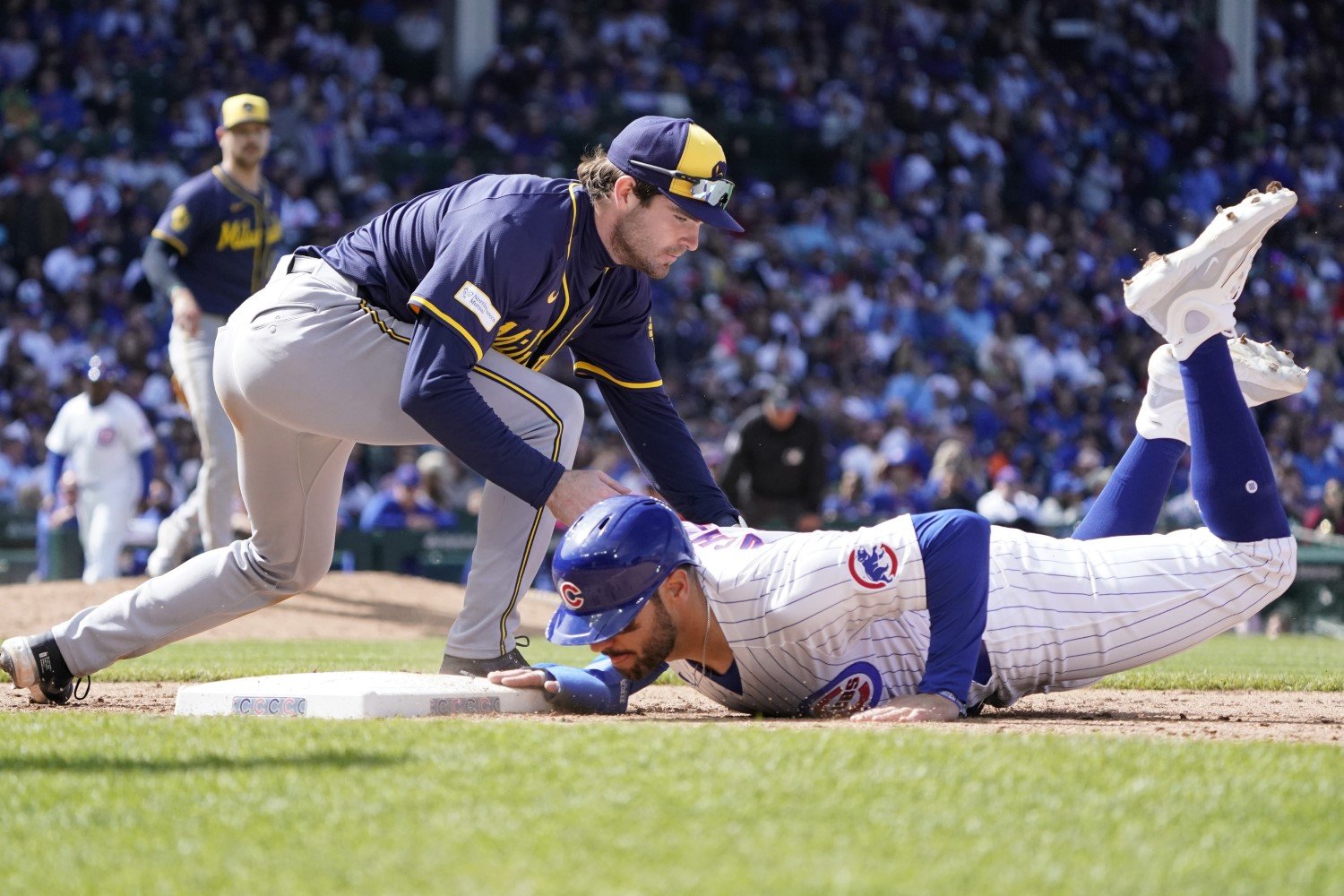 Brewers fans have it very good. Twenty-five years ago, they seemed to be more likely to contend for the #1 overall pick than the playoffs, and the only thing cutting through the gloom of the short- and medium-term outlook was the farm system and the hope for the long term. Now, they're perennial playoff participants and a Midwest baseball powerhouse. The farm eventually produced franchise icons like Rickie Weeks, Prince Fielder, JJ Hardy, Lorenzo Cain and others, who helped launch the Brewers into their current era of competitiveness, whether through their contributions on the field; the players they brought back in deals; or both. While Brewers fans celebrate the team making a seemingly magical run, despite injuries to so many key contributors over the course of the season and the loss of their manager last fall, could the team pay the price over the long term, when it comes to one particular player? Tyler’s Toolbox Entering this season, when it came to hitting prospects, Tyler Black was second only to Jackson Chourio in the Brewers system. While Chourio’s toolset looks to be along the lines of the 2018-2019 MVP version of Christian Yelich, Black’s is more centered on bat-to-ball skills. Although Black is not a big-time power hitter like Brock Wilken, Luke Adams, or Eric Bitonti, he is a potent offensive threat in other ways. He has superb OBP skills, drawing seven walks in 49 MLB at-bats and adding another 51 in 399 at-bats with Triple-A Nashville. He’s also very good at hitting for average, posting a .279 between 2023 and 2024 at Triple-A. He’s not punchless, as 26 doubles and 16 home runs in 477 at-bats in Music City would attest, though those figures aren't especially impressive by Triple-A standards. He also brings speed, with nine triples and 25 steals. Their 2024 seasons, though, went very differently. Chourio has been in Milwaukee since Opening Day, and the team let him adjust over the course of April and May – particularly in figuring how to kill certain pitches instead of taking a walk back to the dugout. It was a decision with an eye toward optimizing his development over the long haul, given that the team signed Chourio to a record-breaking eight-year deal. Black, though, never really got the opportunity Chourio did to adjust to MLB pitching. He went into the offseason as a candidate to man third base, and maybe see some action. In November, first base appeared off the table when the Brewers acquired Jake Bauers, but he still seemed like an option at third. Then, the Crew traded Corbin Burnes for a return that included Joey Ortiz shortly before spring training, and signed Gary Sánchez as the primary DH in late February. That's not to mention Rhys Hoskins, who took up the position for which the team seems to have discerned that Black is best suited: first base. Black suddenly became a player without a clear road to MLB. The result was three trips on the Milwaukee-Nashville shuttle, and in none of them did he receive sustained playing time or the chance to really adjust to MLB pitching, much less find a groove. So, in one sense, his .561 OPS over a small sample has not been a surprise. He's only had three short stints, none lasting longer that 12 days, and the playing time was inconsistent. The good news is that, despite that, his walk rate held up, and he showed he could be a threat on the basepaths. The Future Questions Where could Black play? Third base could be an option for 2025, especially if Willy Adames ends up walking as a free agent and Ortiz moves to short, but the Crew would probably have to give Black time to shake off the rust; he’s mostly played first base and the outfield. Chourio will likely handle one of the corner outfield spots, but Black has experience in both center field and left field. Regardless of where he plays, the Brewers need to discard the desire for Black to be a power hitter, and instead let him get his MLB plate appearances and make his adjustments. It isn't discussed as much as, perhaps, it should be, but there's an opportunity cost involved even in winning seasons. Young players like Black can't be given time to work through ugly slumps or prove their ability to adjust and improve at the highest level as readily, because the top priority is to keep winning games. The Brewers haven't been able to simply give Black 10 days to show his value to the lineup, without interruption. Now, with a 10-game lead in the NL Central, the Crew has plenty of flexibility to do just that over the last five weeks of the regular season. Add an off-season conditioning program like the one Brice Turang undertook between 2023 and 2024, and the Brewers might just have solved the need for another proficient bat, without needing to make a trade.
 -
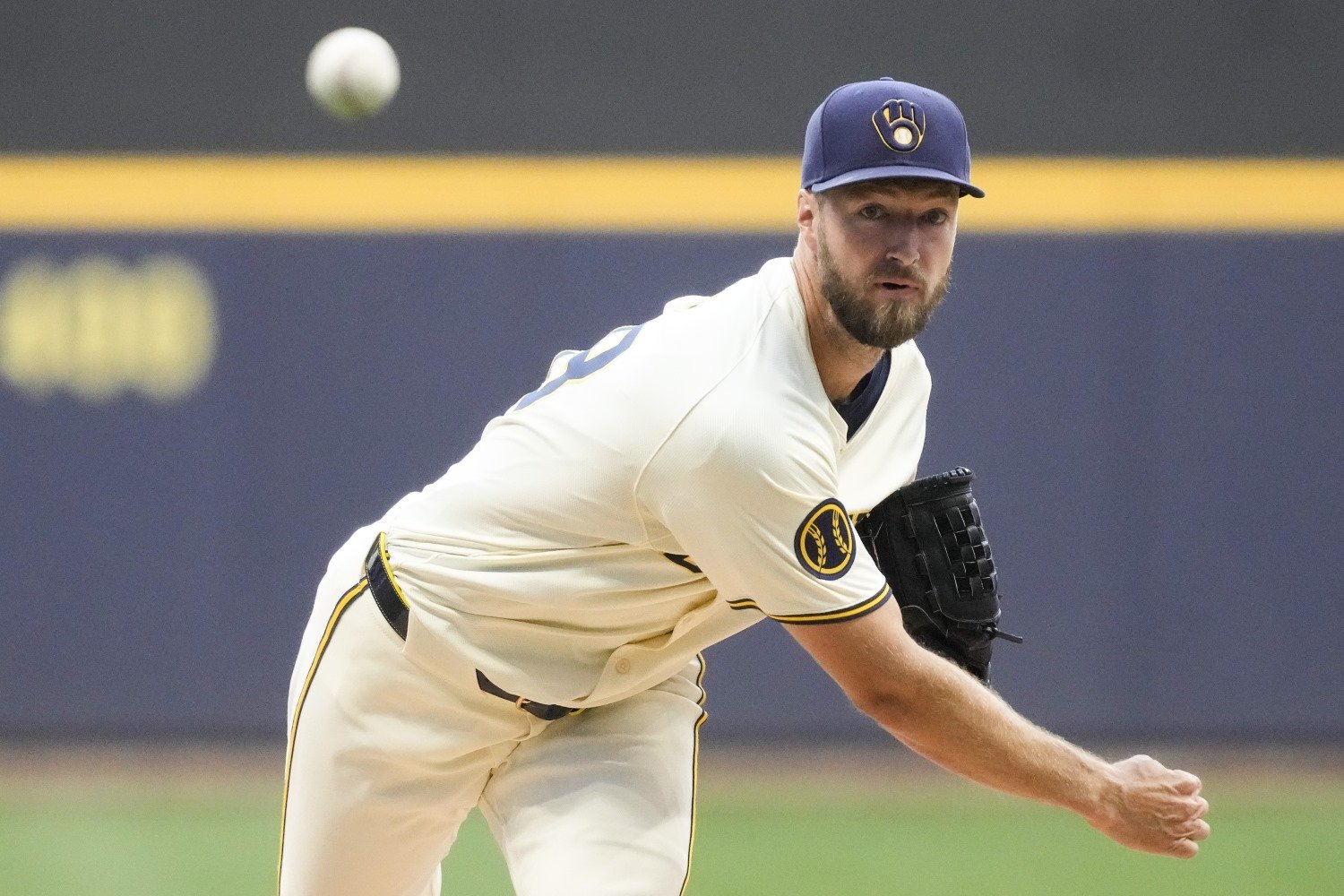 That’s the odyssey of Colin Rea. He’s gone from a usable back-of-the-rotation pitcher to a solid No. 3 pitcher, as has been detailed here on multiple occasions. He’s even become capable of dominating, going seven innings without allowing an earned run against the Guardians on Aug. 18 and against Atlanta on Aug. 6. There is more good news: The Brewers have a $5.5 million option for 2025 – which the Brewers are going to exercise. But what about the years beyond? Rea will be in his age 35 season in 2026. That’s getting up there age-wise, but over the last two years, he’s arguably found a new gear, and as the 2024 season has proven, the Brewers can’t have enough insurance for the rotation. Over the last two years, Brandon Woodruff, Aaron Ashby, Wade Miley, Joe Ross, DL Hall, and Robert Gasser all are projected rotation mainstays who have, instead, spent significant time on the injured list. At worst, Rea is depth, but his latest run puts him more in the category of rotation mainstay when he is at his best. The Case Against An Extension Rea’s age leaves open the question of how long he can keep pitching well, as opposed to becoming a back-end inning-eating option. He’ll be heading into his age-35 year when he is up for free agency, so any extension carries the risk that the wheels may come off due to performance (see the Randy Wolf, Kyle Lohse, and Matt Garza contracts). That is a factor weighing against handing Rea a multi-year extension. The other major factor weighing against extending Rea really is not so much about Rea, but about the Brewers' roster situation in general--specifically, the two-fold roster management problems stemming from prospects and returnees from the injured list. Let’s look at the young arms coming up. Carlos F. Rodriguez, Jacob Misiorowski, and Logan Henderson could be vying for spots in the Brewers rotation at some point in the 2025 season, and they are just the top prospects. Chad Patrick, Brett Wichrowski, Bishop Letson, and Josh Knoth could also make their cases. The return of Gasser and Woodruff from the injured list is a factor to consider, as well. Woodruff will try to join Rea and Freddy Peralta at the front end of the rotation next season, and in 2026, Gasser should be back to full strength after the Tommy John surgery that ended his season early this year. It's possible Rea would be crowded out, or at least pushed well down the depth chart, by the time any extension kicked in. The Case For An Extension Have you seen how many starters went on the injured list the past two years? Rea has been reliable, and reliable starters are crucial to make the playoffs, let alone to have a fighting chance in a playoff series. Rea has pitched well the last two seasons, and this year, some of his best performances on the mound have been against potential playoff opponents. He's pitched well against the Phillies once, Atlanta twice, and Cleveland once to date. His trajectory has also been in the right direction. Even if he ends up as a back-end innings-eater, those have value over the course of a 162-game season. Also, extending Rea may not be a real budget-buster for the Brewers either. He's only due $5.5 million next year, and it's hard to imagine him being in position to command more than that as he enters his late 30s. Overview Rea has been a crucial part of Milwaukee’s success over the last two seasons. He may have been an NRI for the Brewers at the start of 2023, but now, he’s a crucial part of the rotation, and probably should get an offer that reflects that. If he'd be open to a deal that renews him at $5.5 million in 2026 and gives the team another option (with a healthy buyout) for 2027, the front office should be all over it. They should even be willing to give him a signing bonus that boosts his 2025 salary, in effect, to $7 million or so. Rea has earned that, and the investment would be small and worthwhile.
 -
He has posted 17 wins since Opening Day 2023 as part of the Brewers’ rotation. He was in one sense, a two-time scrap-heap pickup by the Brewers who now has emerged as arguably the team’s most reliable starter. He doesn’t overpower hitters, yet he is arguably the one member of the Brewers rotation who should get an extension ASAP. That’s the odyssey of Colin Rea. He’s gone from a solid back-end-of-the-rotation pitcher to a solid #3 pitcher, as has been detailed here on multiple occasions. He’s even become dominating going seven innings without allowing an earned run against the Guardians on August 18 and against the Braves on August 6. There is more good news: The Brewers have a $5.5 million option for 2025 – which the Brewers are going to exercise. But what about the years beyond? Rea will be in his age 35 season in 2026. That’s getting up there age-wise, but over the last two years, he’s arguably found a new gear, and as the 2024 season has proven, the Brewers can’t have enough insurance for the rotation. Over the last two years, Brandon Woodruff, Aaron Ashby, Wade Miley, Joe Ross, DL Hall, and Robert Gasser all are projected rotation mainstays who have instead spent significant time on the injured list. At worst, Rea is depth, but his latest run puts him more in the category of rotation mainstay when he is at his best. The Case Against An Extension Rea’s age leaves open the question of how long he can keep pitching well, as opposed to becoming a back-end inning-eating option. He’ll be heading into his age 35 year when he is up for free agency, so any extension carries the risk that the wheels may come off due to performance (see the Randy Wolf, Kyle Lohse, and Matt Garza contracts). That is a factor weighing against handing Rea a multi-year extension. The other major factor weighing against extending Rea really is not so much about Rea, but about the Brewers roster situation in general. Specifically, the two-fold roster management problems stemming from prospects and returnees from the injured list. Let’s look at the young arms coming up. Carlos F. Rodriguez, Jacob Misiorowski, and Logan Henderson could be vying for spots in the Brewers rotation at some point in the 2025 season, and they are just the top prospects. Chad Patrick, Brett Wichrowski, Bishop Letson, and Josh Knoth could also make their cases. The return of Gasser and Woodruff from the injured list is a factor to consider as well. Their successful comebacks could also make things crowded in the 2025, to put it bluntly. It is fair to ask if Rea would even be one of the best six the Crew could put in the rotation. The Case For An Extension Have you seen how many starters went on the injured list the past two years? Rea has been reliable for the Brewers to date, and reliable starters are crucial to make the playoffs, if not to have a fighting chance in a playoff series. But Rea has pitched well the last two seasons, and this year, some of his best performances on the mound have been against potential playoff opponents. He pitched well against the Phillies once, the Braves twice, and Cleveland once to date in the season. His trajectory has also been in the right direction. Even if he ends up as a back-end innings-eater, those have value over the course of a 162-game season. Also, extending Rea may not be a real budget-buster for the Brewers either. As note when discussing Milwaukee’s offseason options with Willy Adames, such an extension is not so much about what the player gets paid overall, but really, it’s about how much more one has to come up with to make a deal work. Overview Colin Rea has been a crucial part of Milwaukee’s success the last two seasons. In this case, a two-year extension at $7.5 million a year, with a team option for $10 million for the third year (along with a $4 million buyout) might be the best option. Long enough to keep a solid contributor who could be a veteran presence for the younger starters, but not so long as to risk repeating the Lohse/Wolf/Garza sagas for the Brewers. Colin Rea may have been a NRI for the Brewers at the start of 2023, but now, he’s a crucial part of the rotation, and probably should get an offer that reflects that. View full article
-
Back in January, I reviewed potential non-roster invitees to spring training for the Brewers. One entry in particular seems worth a look after the way the 2024 season has unfolded for the Milwaukee Brewers. Image courtesy of © Benny Sieu-USA TODAY Sports Here's what I wrote about a certain non-roster pitching project, just before camp opened. Monasterio and Colin Rea have each made legitimate impacts in 2023 and 2024. Monasterio rightly earned the Brewer Fanatic Top Rookie of 2023 award for what he delivered after he came up following a line drive that concussed Willy Adames, while Rea has blossomed into a reliable mid-rotation starter since he replaced Brandon Woodruff in May 2023. Like Monasterio and Rea, Myers came up due to an injury (Wade Miley’s left elbow inflammation, which turned into Tommy John surgery), and like Monasterio, Myers had a long journey to Milwaukee. He came to the Crew on Nov. 10, 2022, as arguably Matt Arnold’s first signing after David Stearns suddenly stepped down. Before that, he had been drafted by the Orioles, then traded to Tampa for Tim Beckham. Tampa, in turn, dealt Myers to Cleveland for Junior Caminero. After that, he had a rough 2022 season and was purchased by the Giants, before the White Sox snagged him on a waiver claim. The White Sox gave him his release in September of that year. After Myers signed with the Brewers, he spent 2023 in Double-A Biloxi, where some of the surface numbers weren’t good, but he also flashed a good strikeout-to-walk ratio. He posted two relief outings in Nashville last in the season. He was good enough to get an invitation to spring training in 2024--where he posted a 7.88 ERA in four outings. Myers started off in Nashville for two games, then got the call-up to Milwaukee as injuries ravaged the team. He hasn’t been on the Milwaukee-Nashville shuttle, though. He rode it once, but only got a chance to make one abbreviated appearance with the Sounds in mid-May before an injury to Joe Ross brought him right back to the big leagues. Since getting a second chance born just as much of necessity as the first, he's been on fire. Entering his start in St. Louis Wednesday night, Myers has appeared in 19 games, starting 18 (he picked up one win by pitching the 7th inning, right after being recalled while out of phase in the rotation), posting a 2.81 ERA, a 1.11 WHIP, 85 strikeouts and 25 walks. That is superb performance on its own merits, and arguably a key reason why the Brewers are in a commanding position in the National League Central despite having so many pitchers from the Opening Day roster on the injured list. This understates Myers’s performance, though. Like the highly-touted Jackson Chourio, Myers has kicked it up another level since Jun. 1. He’s pitched 72 2/3 innings, with 58 strikeouts against 15 walks. Most impressively, his ERA is 1.86, and the WHIP is 0.98. The list of Brewers with a better 12-start stretch in the last 40 years (more than 70 innings, an ERA of 1.86 or lower) conveys just how special a run Myers is on: Teddy Higuera, 1988 Cal Edlred, 1992 Jeff D'Amico, 2000 Ben Sheets, 2004 CC Sabathia, 2008 Yovani Gallardo, 2010 Mike Fiers, 2012 Brandon Woodruff, 2021 Admittedly, Myers probably has more in common with Fiers and D'Amico than with Sabathia or Sheets. Still, his acquisition and development is a huge credit to Arnold, the team’s scouting and coaching department, just on the basis of this year’s performance. If he can sustain this brilliance for just one more start, to help put boot to neck on the unbeloved Cardinals, he'll enter territory unsullied by the previous occupancy of Fiers, or even Higuera. But whether he does that or not, Myers is perhaps the most impactful non-roster invitee the Brewers have had since Rob Deer in 1986. Arguably, he should not just be the Brewers' top rookie of 2024 and the team’s unsung hero of the year, but a serious candidate for National League Rookie of the Year. Even when compared to Jackson Chourio, he's not substantially outshined. That's saying a lot. View full article
-
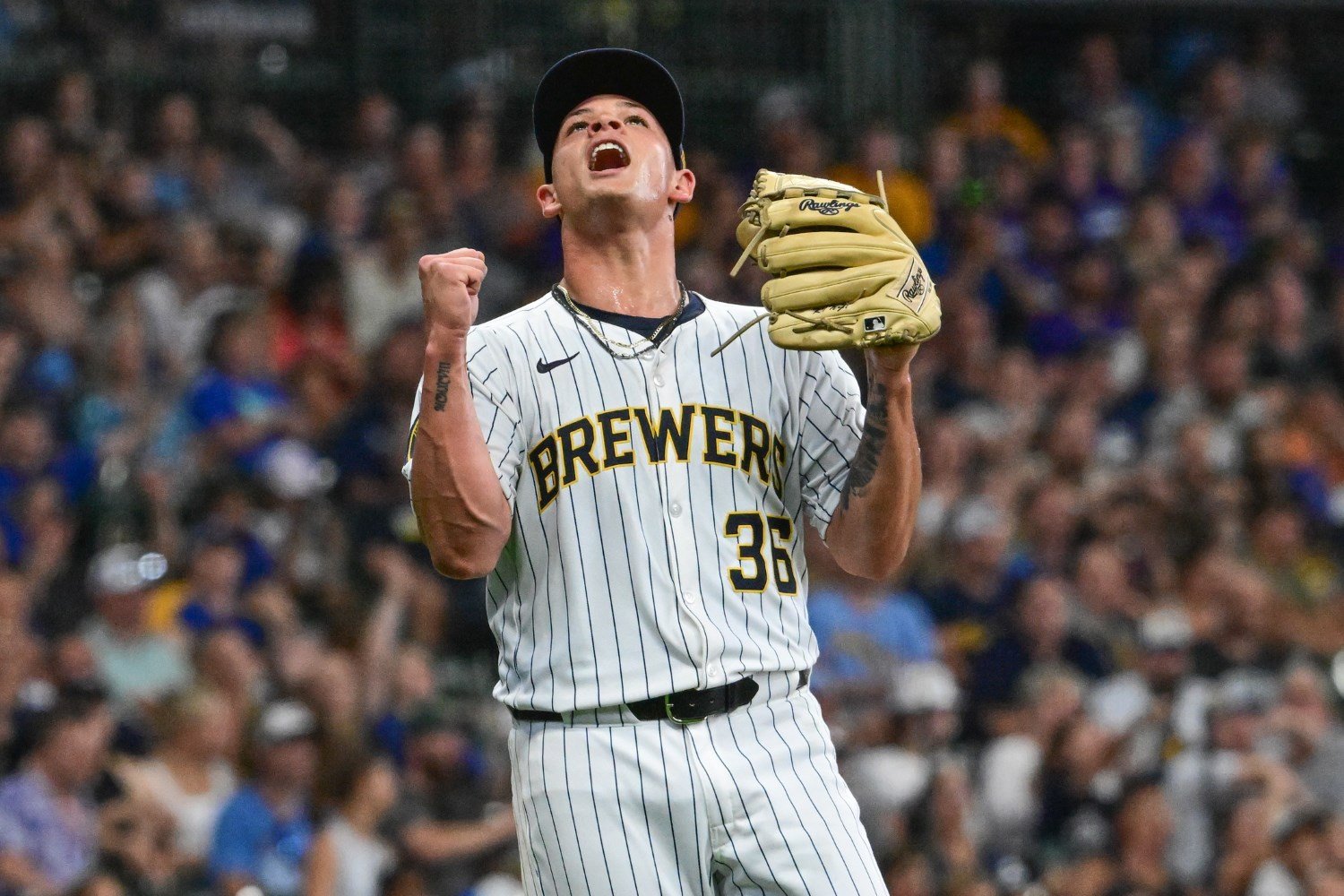 Here's what I wrote about a certain non-roster pitching project, just before camp opened. Monasterio and Colin Rea have each made legitimate impacts in 2023 and 2024. Monasterio rightly earned the Brewer Fanatic Top Rookie of 2023 award for what he delivered after he came up following a line drive that concussed Willy Adames, while Rea has blossomed into a reliable mid-rotation starter since he replaced Brandon Woodruff in May 2023. Like Monasterio and Rea, Myers came up due to an injury (Wade Miley’s left elbow inflammation, which turned into Tommy John surgery), and like Monasterio, Myers had a long journey to Milwaukee. He came to the Crew on Nov. 10, 2022, as arguably Matt Arnold’s first signing after David Stearns suddenly stepped down. Before that, he had been drafted by the Orioles, then traded to Tampa for Tim Beckham. Tampa, in turn, dealt Myers to Cleveland for Junior Caminero. After that, he had a rough 2022 season and was purchased by the Giants, before the White Sox snagged him on a waiver claim. The White Sox gave him his release in September of that year. After Myers signed with the Brewers, he spent 2023 in Double-A Biloxi, where some of the surface numbers weren’t good, but he also flashed a good strikeout-to-walk ratio. He posted two relief outings in Nashville last in the season. He was good enough to get an invitation to spring training in 2024--where he posted a 7.88 ERA in four outings. Myers started off in Nashville for two games, then got the call-up to Milwaukee as injuries ravaged the team. He hasn’t been on the Milwaukee-Nashville shuttle, though. He rode it once, but only got a chance to make one abbreviated appearance with the Sounds in mid-May before an injury to Joe Ross brought him right back to the big leagues. Since getting a second chance born just as much of necessity as the first, he's been on fire. Entering his start in St. Louis Wednesday night, Myers has appeared in 19 games, starting 18 (he picked up one win by pitching the 7th inning, right after being recalled while out of phase in the rotation), posting a 2.81 ERA, a 1.11 WHIP, 85 strikeouts and 25 walks. That is superb performance on its own merits, and arguably a key reason why the Brewers are in a commanding position in the National League Central despite having so many pitchers from the Opening Day roster on the injured list. This understates Myers’s performance, though. Like the highly-touted Jackson Chourio, Myers has kicked it up another level since Jun. 1. He’s pitched 72 2/3 innings, with 58 strikeouts against 15 walks. Most impressively, his ERA is 1.86, and the WHIP is 0.98. The list of Brewers with a better 12-start stretch in the last 40 years (more than 70 innings, an ERA of 1.86 or lower) conveys just how special a run Myers is on: Teddy Higuera, 1988 Cal Edlred, 1992 Jeff D'Amico, 2000 Ben Sheets, 2004 CC Sabathia, 2008 Yovani Gallardo, 2010 Mike Fiers, 2012 Brandon Woodruff, 2021 Admittedly, Myers probably has more in common with Fiers and D'Amico than with Sabathia or Sheets. Still, his acquisition and development is a huge credit to Arnold, the team’s scouting and coaching department, just on the basis of this year’s performance. If he can sustain this brilliance for just one more start, to help put boot to neck on the unbeloved Cardinals, he'll enter territory unsullied by the previous occupancy of Fiers, or even Higuera. But whether he does that or not, Myers is perhaps the most impactful non-roster invitee the Brewers have had since Rob Deer in 1986. Arguably, he should not just be the Brewers' top rookie of 2024 and the team’s unsung hero of the year, but a serious candidate for National League Rookie of the Year. Even when compared to Jackson Chourio, he's not substantially outshined. That's saying a lot.
 -
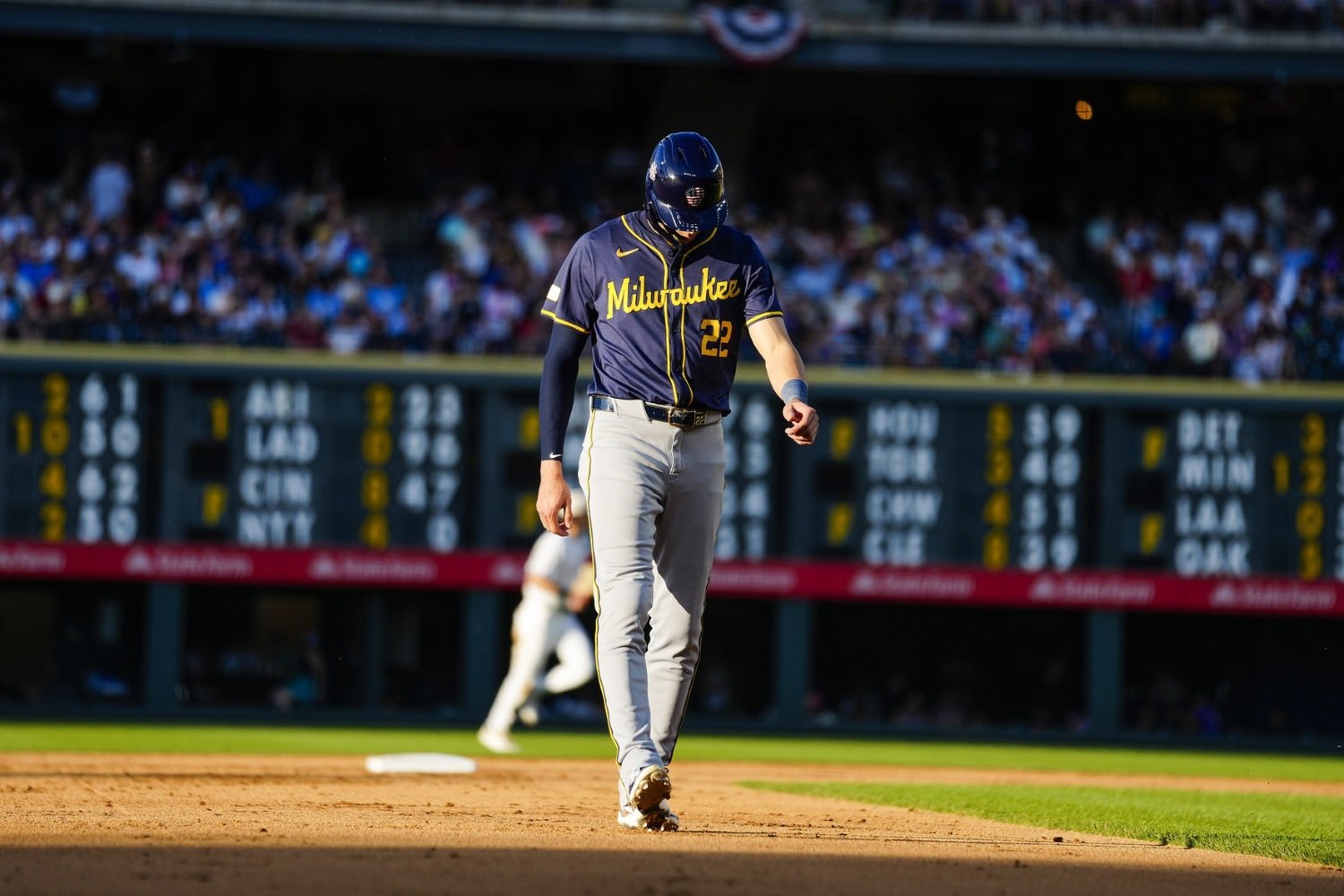 The Back Issue Christian Yelich has dealt with back issues before–with one or more stints on the disabled list or injured list in 2014, 2015, and 2021 before his two times being shelved in 2024. There was also a right oblique injury during his 2018 MVP season that sidelined him. That’s a lot of missing time, and the ongoing issue is something that has to be dealt with. The Crew owes Yelich $104 million from 2025-2028, and potentially another $20 million for 2029 if the option is exercised. On Aug. 15, Yelich announced he would be having surgery, ending a season where he was posting his best OPS since 2019. What The Brewers Lost Yelich was posting a .909 OPS and an OPS+ of 152–both of which led the team, among players with more than 100 at-bats. He led them in batting average, on-base percentage, and slugging percentage. In counting stats, Yelich was second in stolen bases and fourth in walks, as of Aug. 16. When he did play, he filled the No. 3 spot in the lineup, usually behind second baseman Brice Turang and catcher William Contreras, and ahead of Willy Adames and Rhys Hoskins. In short, the Brewers went from an elite offense this season to a merely solid one when they lost Yelich. That’s yet another hole for the Brewers, whose rotation has been riddled with injuries all season. Despite all that, they are 11 games ahead of the focus of evil in the NL Central. Think Of The Rest Of The Season As An Investment Opportunity Though the lineup will miss Yelich, the team has very good young outfielders (Jackson Chourio, Garrett Mitchell, Sal Frelick, and Blake Perkins) who will now get plenty of MLB at-bats. It’s time for the Brewers to use the last few weeks of the season to evaluate Mitchell, Frelick, and Perkins, to calibrate reasonable expectations for each going forward. In essence, these players will be finalizing their adjustments to MLB, and the data profile on each will grow more robust. This will be very good news for the Brewers in 2025 and beyond. However, there is one non-outfielder who could and should benefit from Yelich missing the rest of the season, and he is who the Brewers should make an investment in, perhaps above all. That would be Tyler Black, who has seen action in center field for Nashville after some decent showings at first base and third base in the 2023 and 2024 seasons. His bat has been MLB-ready since spring training–and with Yelich out, Black’s bat could make up a bit of the difference, whether in left field, at third base, first base, or designated hitter. The last six weeks of the season and the Brewers’ playoff games could provide Black the extended at-bats needed to adjust to MLB pitching. It took Jackson Chourio two months of regular playing time for his bat to make the adjustment, so why not give Black those two months now, and have both him and Chourio ready to dominate on Opening Day 2025? Given that Black has seen a fair bit of Triple-A pitching, his adjustment might not take as long as Chourio's did, although his ceiling is also much lower. Overview The loss of Yelich is a huge hit for the Brewers, but it may actually end up being a good thing for them in the long run, if Black can make the adjustments to MLB pitching. Playing Black regularly, even if he struggles at the plate or in the field, might just be the best long-term investment the Brewers can make in the 2024 season.
 -
Christian Yelich tried to use rest and rehabilitation for the latest back issue that has him on the injured list, so that he could return by the end of the season. That was not to be. An Aug. 15 post on social media gave an update that was disappointing for Yelich and the Brewers in the short term. But is there a bright side to Yelich having surgery now? Image courtesy of © Troy Babbitt-USA TODAY Sports The Back Issue Christian Yelich has dealt with back issues before–with one or more stints on the disabled list or injured list in 2014, 2015, and 2021 before his two times being shelved in 2024. There was also a right oblique injury during his 2018 MVP season that sidelined him. That’s a lot of missing time, and the ongoing issue is something that has to be dealt with. The Crew owes Yelich $104 million from 2025-2028, and potentially another $20 million for 2029 if the option is exercised. On Aug. 15, Yelich announced he would be having surgery, ending a season where he was posting his best OPS since 2019. What The Brewers Lost Yelich was posting a .909 OPS and an OPS+ of 152–both of which led the team, among players with more than 100 at-bats. He led them in batting average, on-base percentage, and slugging percentage. In counting stats, Yelich was second in stolen bases and fourth in walks, as of Aug. 16. When he did play, he filled the No. 3 spot in the lineup, usually behind second baseman Brice Turang and catcher William Contreras, and ahead of Willy Adames and Rhys Hoskins. In short, the Brewers went from an elite offense this season to a merely solid one when they lost Yelich. That’s yet another hole for the Brewers, whose rotation has been riddled with injuries all season. Despite all that, they are 11 games ahead of the focus of evil in the NL Central. Think Of The Rest Of The Season As An Investment Opportunity Though the lineup will miss Yelich, the team has very good young outfielders (Jackson Chourio, Garrett Mitchell, Sal Frelick, and Blake Perkins) who will now get plenty of MLB at-bats. It’s time for the Brewers to use the last few weeks of the season to evaluate Mitchell, Frelick, and Perkins, to calibrate reasonable expectations for each going forward. In essence, these players will be finalizing their adjustments to MLB, and the data profile on each will grow more robust. This will be very good news for the Brewers in 2025 and beyond. However, there is one non-outfielder who could and should benefit from Yelich missing the rest of the season, and he is who the Brewers should make an investment in, perhaps above all. That would be Tyler Black, who has seen action in center field for Nashville after some decent showings at first base and third base in the 2023 and 2024 seasons. His bat has been MLB-ready since spring training–and with Yelich out, Black’s bat could make up a bit of the difference, whether in left field, at third base, first base, or designated hitter. The last six weeks of the season and the Brewers’ playoff games could provide Black the extended at-bats needed to adjust to MLB pitching. It took Jackson Chourio two months of regular playing time for his bat to make the adjustment, so why not give Black those two months now, and have both him and Chourio ready to dominate on Opening Day 2025? Given that Black has seen a fair bit of Triple-A pitching, his adjustment might not take as long as Chourio's did, although his ceiling is also much lower. Overview The loss of Yelich is a huge hit for the Brewers, but it may actually end up being a good thing for them in the long run, if Black can make the adjustments to MLB pitching. Playing Black regularly, even if he struggles at the plate or in the field, might just be the best long-term investment the Brewers can make in the 2024 season. View full article
-
Crew could have and should have dealt him at the deadline, IMO. They could have scored a 2025 competitive balance pick or a nice nugget or two from some AL team's farm system.
-
In a Fully Healthy Brewers Playoff Lineup, Who Bats Where?
Harold Hutchison posted an article in Brewers
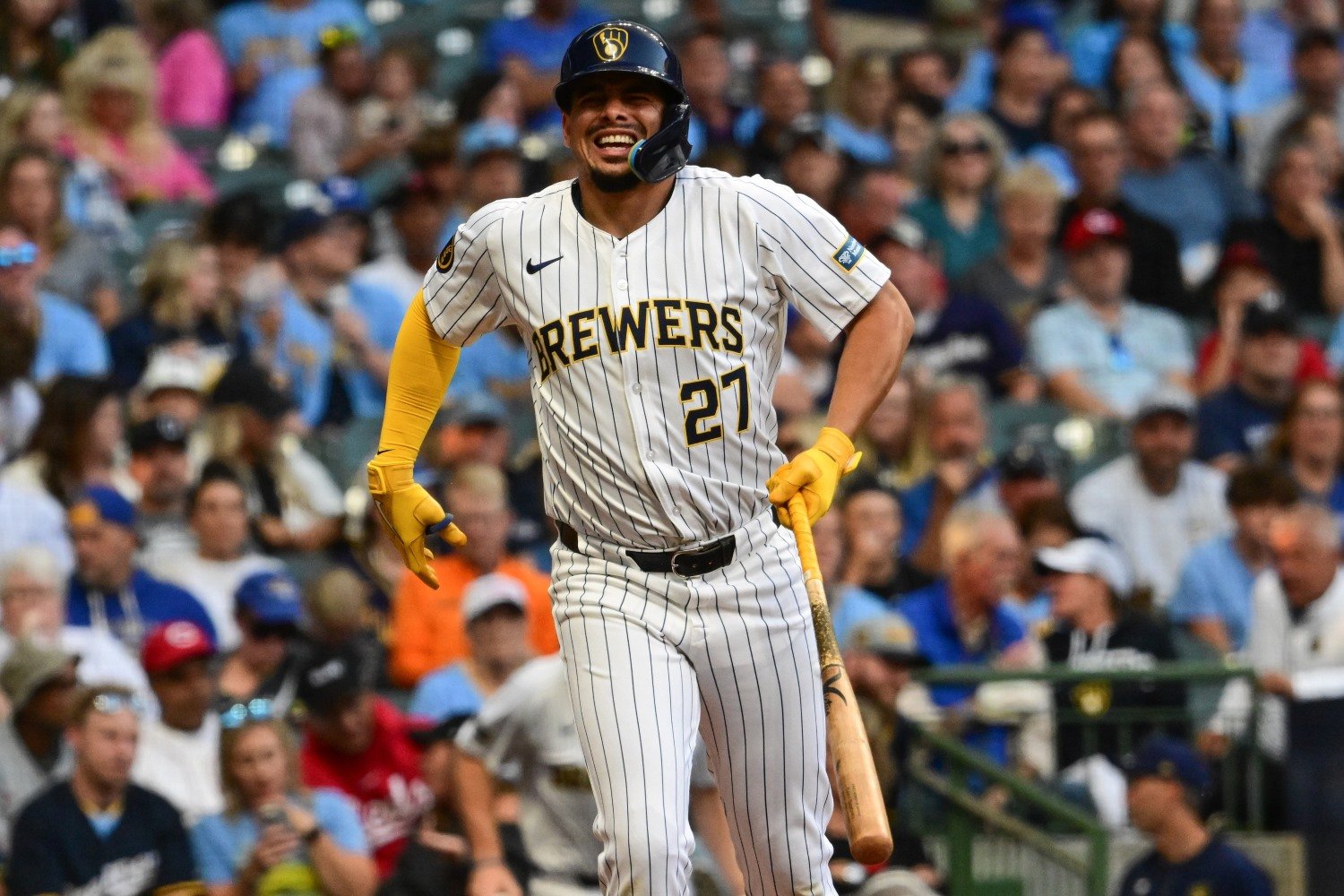 Constructing a lineup isn’t strictly science – and it's not just a numbers game. At times in 2017 and 2018, the Brewers had Eric Thames leading off. Thames could get on base, but he was arguably a misfit for the top spot, both for what he didn’t have (speed) and what he had (power). So, how could the Brewers lineup be emerging, knowing that they might get Christian Yelich back before making their playoff run? Leadoff Brice Turang has often batted leadoff (55 times in 115 games) while providing Gold Glove-caliber defense at the keystone. The Crew has also seen Sal Frelick (19 times) and Jackson Chourio (17 times) handle leadoff duties this season, with William Contreras (8 times) and Joey Oritz (9 times) as occasional options against lefties earlier in the campaign. At this point, either Turang or Frelick can make a case for being the best option, with Frelick having a slight edge in OBP (.345 to .318) but Turang having great speed utility. Frelick usually plays right field lately, but could also handle left or center. Second Contreras (94 games) has been the principal No. 2 hitter for the Crew this year, but in the month of August, Chourio has hit there five times. Ask the Braves how it went for them. Rhys Hoskins had six appearances in this spot, and some other Brewers have hit there, but given his performance since the beginning of June, Chourio is probably the best option going forward. He's hitting for contact (.330 batting average since then), power (14 homers on the year), and speed (16 steals). Chourio’s played both corner spots, mostly in right, but lately has been a regular in left field. Third Christian Yelich has hit third in 71 of the 73 games he has played this season. That’s an easy call, given his .909 OPS, his best figure since his 2018-2019 MVP-level performances. At this point, the best option may be for him to primarily DH the rest of the year--assuming he's able to return, and at more or less full strength. Cleanup Willy Adames has been hitting the ball hard in his walk year (team-leading 21 homers and 79 RBIs) and he’s handled cleanup 91 times in 116 games, but with Chourio seizing the No. 2 spot, it's primarily been Contreras batting fourth over the last week. Fifth Hoskins, Jake Bauers, and Frelick have each had at least 20 games in the fifth spot so far this season. But when Yelich returns, Garrett Mitchell might be the best option, after recently holding down the three spot for three of the last five games. He’s missed a lot of time with injury, but in the small samples he's cobbled together, his bat has been dynamic. He’ll likely be the primary center fielder going forward, unless and until the league figures him out. Sixth Hoskins has hit sixth 38 times, the most in any spot. (He’s also the Brewer with the most appearance in the 5 hole.) However, as the development of Chourio and the return of Mitchell are pushing people down, Adames could end up batting sixth--if and when Yelich does come back. Seventh Frelick has hit the most in this spot for the Brewers (27 games). At this point, though, Hoskins might become a fixture there; it's where he's slotted three times in the last five contests. Hoskins has delivered a 111 OPS+ for the Crew, and his 20 homers and 59 RBIs are too much for the 8- or 9-holes. (Yes, I’m aware that Dale Sveum hit 25 homers and produced 95 RBIs in 110 game at those spots in 1987, but that should be a cautionary tale, rather than an object for emulation.) Eighth Chourio’s hit in the 8-hole 27 times this season, the most on the club--followed closely by Ortiz, who hit there 26 times. Here, the Crew faces a tough choice between Ortiz and Turang. Ortiz brings the higher OPS and OPS+, but Turang could break up the lineup and avoid having three right-handed hitters in a row. In this case, the OPS and OPS+ indicate that Milwaukee’s primary third baseman should hit here. Ninth Either Turang or Frelick will end up hitting here, but it’s really due to the immense offensive talent and production that’s in front of them. It’s not that either would be horrible at leadoff--they've been very good, if you remove their dearth of power from the equation--but Frelick’s OBP is higher, so having Turang down here would be wiser. He’s got some pop this year, but not so much as to warrant hitting in the middle of the order. Turang can still do a lot of damage in the 9-spot – not as much as Sveum did in `87, but plenty. In essence, he can set the table for Frelick and Chourio. Potential Playoff Run Lineup: RF Frelick LF Chourio DH Yelich C Contreras CF Mitchell SS Adames 1B Hoskins 3B Ortiz 2B Turang Overview The Brewers have the offensive talent to have no trouble scoring runs off the best teams in the league, as the three-game series in Atlanta shows. The trick is to build the lineup that can do so on a very consistent basis, to back up a pitching staff that has performed miraculously in overcoming injuries this season. What do you think the Brewers lineup should be for the playoff run?
 -
The Brewers had an impressive series against Atlanta, hitting marks never reached before in a three-game series, and tacking on eight more runs against the Reds on Friday. But are we seeing the emergence of a lineup that could dominate in the playoffs? Image courtesy of © Benny Sieu-USA TODAY Sports Constructing a lineup isn’t strictly science – and it's not just a numbers game. At times in 2017 and 2018, the Brewers had Eric Thames leading off. Thames could get on base, but he was arguably a misfit for the top spot, both for what he didn’t have (speed) and what he had (power). So, how could the Brewers lineup be emerging, knowing that they might get Christian Yelich back before making their playoff run? Leadoff Brice Turang has often batted leadoff (55 times in 115 games) while providing Gold Glove-caliber defense at the keystone. The Crew has also seen Sal Frelick (19 times) and Jackson Chourio (17 times) handle leadoff duties this season, with William Contreras (8 times) and Joey Oritz (9 times) as occasional options against lefties earlier in the campaign. At this point, either Turang or Frelick can make a case for being the best option, with Frelick having a slight edge in OBP (.345 to .318) but Turang having great speed utility. Frelick usually plays right field lately, but could also handle left or center. Second Contreras (94 games) has been the principal No. 2 hitter for the Crew this year, but in the month of August, Chourio has hit there five times. Ask the Braves how it went for them. Rhys Hoskins had six appearances in this spot, and some other Brewers have hit there, but given his performance since the beginning of June, Chourio is probably the best option going forward. He's hitting for contact (.330 batting average since then), power (14 homers on the year), and speed (16 steals). Chourio’s played both corner spots, mostly in right, but lately has been a regular in left field. Third Christian Yelich has hit third in 71 of the 73 games he has played this season. That’s an easy call, given his .909 OPS, his best figure since his 2018-2019 MVP-level performances. At this point, the best option may be for him to primarily DH the rest of the year--assuming he's able to return, and at more or less full strength. Cleanup Willy Adames has been hitting the ball hard in his walk year (team-leading 21 homers and 79 RBIs) and he’s handled cleanup 91 times in 116 games, but with Chourio seizing the No. 2 spot, it's primarily been Contreras batting fourth over the last week. Fifth Hoskins, Jake Bauers, and Frelick have each had at least 20 games in the fifth spot so far this season. But when Yelich returns, Garrett Mitchell might be the best option, after recently holding down the three spot for three of the last five games. He’s missed a lot of time with injury, but in the small samples he's cobbled together, his bat has been dynamic. He’ll likely be the primary center fielder going forward, unless and until the league figures him out. Sixth Hoskins has hit sixth 38 times, the most in any spot. (He’s also the Brewer with the most appearance in the 5 hole.) However, as the development of Chourio and the return of Mitchell are pushing people down, Adames could end up batting sixth--if and when Yelich does come back. Seventh Frelick has hit the most in this spot for the Brewers (27 games). At this point, though, Hoskins might become a fixture there; it's where he's slotted three times in the last five contests. Hoskins has delivered a 111 OPS+ for the Crew, and his 20 homers and 59 RBIs are too much for the 8- or 9-holes. (Yes, I’m aware that Dale Sveum hit 25 homers and produced 95 RBIs in 110 game at those spots in 1987, but that should be a cautionary tale, rather than an object for emulation.) Eighth Chourio’s hit in the 8-hole 27 times this season, the most on the club--followed closely by Ortiz, who hit there 26 times. Here, the Crew faces a tough choice between Ortiz and Turang. Ortiz brings the higher OPS and OPS+, but Turang could break up the lineup and avoid having three right-handed hitters in a row. In this case, the OPS and OPS+ indicate that Milwaukee’s primary third baseman should hit here. Ninth Either Turang or Frelick will end up hitting here, but it’s really due to the immense offensive talent and production that’s in front of them. It’s not that either would be horrible at leadoff--they've been very good, if you remove their dearth of power from the equation--but Frelick’s OBP is higher, so having Turang down here would be wiser. He’s got some pop this year, but not so much as to warrant hitting in the middle of the order. Turang can still do a lot of damage in the 9-spot – not as much as Sveum did in `87, but plenty. In essence, he can set the table for Frelick and Chourio. Potential Playoff Run Lineup: RF Frelick LF Chourio DH Yelich C Contreras CF Mitchell SS Adames 1B Hoskins 3B Ortiz 2B Turang Overview The Brewers have the offensive talent to have no trouble scoring runs off the best teams in the league, as the three-game series in Atlanta shows. The trick is to build the lineup that can do so on a very consistent basis, to back up a pitching staff that has performed miraculously in overcoming injuries this season. What do you think the Brewers lineup should be for the playoff run? View full article
-
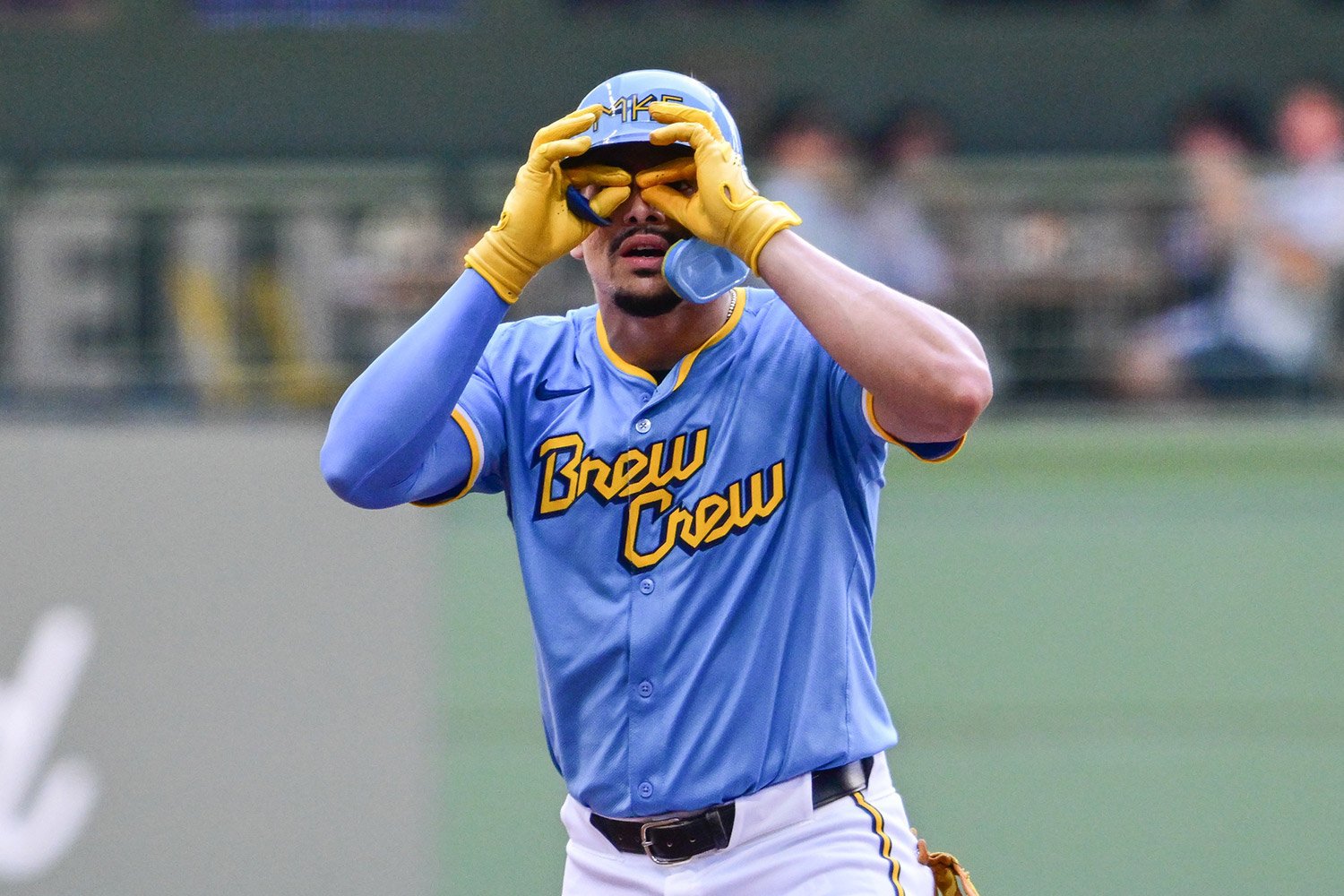 Overview Willy Adames came to the Brewers in a 2021 trade that saw pitchers Drew Rasmussen and J.P. Feyereisen get shipped to the Rays. The deal has worked out well for Milwaukee, with Adames becoming one of the best shortstops the Brewers have had in their history, posting a .773 OPS with 91 home runs and 304 RBI for the Crew as of July 24. His defense has also been superb carrying him to 3.0 Wins Above Replacement or more from 2021-2023. As of July 24, he’s posted another 2.4 WAR. The box score contributions aren’t the full measure of what Adames provides for the Brewers. He’s been a crucial leader for the team and a vital clubhouse presence, neither of which show up in the box scores, but those contributions count big time. So, what are the Brewers’ options? Option 1: Let Adames Walk After The Season If Adames walks, the Brewers are not short of contenders to replace him on the field. Both Joey Ortiz and Brice Turang could slide over from third base or second base, respectively, and the defense would not take a hit, with Ortiz offering perhaps the closest thing to a straight-up replacement for Willy’s right-handed power bat. Turang has been an OBP/speed machine who has figured out how to do damage against MLB pitching. Sliding one over to shortstop as an Adames replacement is the easy part. The hard part is that the hole in the clubhouse Adames would leave behind would be very hard to fill, to put it mildly. Can this be avoided? The Brewers have some options. Option 2: Make A Qualifying Offer After The Season Following the season, Milwaukee can extend Adames a qualifying offer (QO). In the 2023-2024 offseason, the figure was $20.325 million. That’s a lot of money for the Crew, which is in one of the smaller markets in MLB. That said, given his contributions to the Crew on the diamond and in the clubhouse, no one can argue that Willy Adames isn’t worth the money. The question becomes fitting him in. If Adames takes the QO, the Crew has to come up with about $8.1 million to reflect the increase in salary from the $12.25 million he gets. Wade Miley comes off the books (an $11 million mutual option likely to be declined), as does Jacob Junis (an $8 million mutual option that’ll probably be declined). The buyouts for those options are $4.5 million, leaving $14.5 million – more than enough to cover Willy’s salary boost. It costs the Brewers any hope of draft pick compensation, but Adames would be a crucial contributor for a team poised for a championship run in 2025. The problem with this strategy is that Adames can decline the qualifying option and enter the free agent market this winter. While the Brewers lose Adames in this situation, they gain a supplemental draft pick in the 2025 MLB Draft. Option 3: Extend Adames In A Long-Term Deal Okay, that’s the scenario of Adames taking the QO. But let’s think longer. There is a chance that the Brewers could get a long-term deal with Adames. It’s a slim chance, but let’s figure out what it might cost. Javier Baez landed a six-year, $120 million deal with the Tigers, following some monster seasons with the Cubs (which included a 2nd-place MVP finish, a Gold Glove, and two All-Star game selections. Dansby Swanson received seven years and $177 million from the Cubs following two Gold Gloves, two All-Star game selections, and three top-20 MVP finishes with Atlanta. Compared to them, Adames is hardware-poor with one top-20 MVP finish. These oversights of Adames, while they stink, could make it very possible for Milwaukee to reach a deal before the QO even comes up. A five-year, $112.5 million ($22.5 million AAV) deal, with a significant amount deferred (say, $37.5 million paid out over 30 years), could have Adames remain a fixture in Milwaukee alongside Christian Yelich and Jackson Chourio to the end of the decade (2029 without the QO). Yes, it would be another big contract alongside Yelich’s, and that might tie the team’s hands a little. On the other hand, locking down Adames – even at a high price – gives the Crew a superb infield through 2029 and retains a crucial clubhouse leader (in addition to the on-field production). Overview Willy Adames has been a major contributor since his acquisition in 2021. It may well be in the Crew’s best interests to hope he takes the QO (with the 2025 team looking ready for a championship run) or to knock out a long-term deal to keep him in Milwaukee. In this case, given that Adames provides big-time production on the field and is also a key contributor in the clubhouse in ways that don't show up in box scores, the deal is probably well worth the cash.
 -
Willy Adames has been the heart and soul of the Brewers since he arrived in a 2021 trade. The 2024 season appears to be his swan song with the Crew, but does that have to be the case, or should the Brewers find a way to keep him playing half his games at American Family Field? Image courtesy of © Benny Sieu-USA TODAY Sports Overview Willy Adames came to the Brewers in a 2021 trade that saw pitchers Drew Rasmussen and J.P. Feyereisen get shipped to the Rays. The deal has worked out well for Milwaukee, with Adames becoming one of the best shortstops the Brewers have had in their history, posting a .773 OPS with 91 home runs and 304 RBI for the Crew as of July 24. His defense has also been superb carrying him to 3.0 Wins Above Replacement or more from 2021-2023. As of July 24, he’s posted another 2.4 WAR. The box score contributions aren’t the full measure of what Adames provides for the Brewers. He’s been a crucial leader for the team and a vital clubhouse presence, neither of which show up in the box scores, but those contributions count big time. So, what are the Brewers’ options? Option 1: Let Adames Walk After The Season If Adames walks, the Brewers are not short of contenders to replace him on the field. Both Joey Ortiz and Brice Turang could slide over from third base or second base, respectively, and the defense would not take a hit, with Ortiz offering perhaps the closest thing to a straight-up replacement for Willy’s right-handed power bat. Turang has been an OBP/speed machine who has figured out how to do damage against MLB pitching. Sliding one over to shortstop as an Adames replacement is the easy part. The hard part is that the hole in the clubhouse Adames would leave behind would be very hard to fill, to put it mildly. Can this be avoided? The Brewers have some options. Option 2: Make A Qualifying Offer After The Season Following the season, Milwaukee can extend Adames a qualifying offer (QO). In the 2023-2024 offseason, the figure was $20.325 million. That’s a lot of money for the Crew, which is in one of the smaller markets in MLB. That said, given his contributions to the Crew on the diamond and in the clubhouse, no one can argue that Willy Adames isn’t worth the money. The question becomes fitting him in. If Adames takes the QO, the Crew has to come up with about $8.1 million to reflect the increase in salary from the $12.25 million he gets. Wade Miley comes off the books (an $11 million mutual option likely to be declined), as does Jacob Junis (an $8 million mutual option that’ll probably be declined). The buyouts for those options are $4.5 million, leaving $14.5 million – more than enough to cover Willy’s salary boost. It costs the Brewers any hope of draft pick compensation, but Adames would be a crucial contributor for a team poised for a championship run in 2025. The problem with this strategy is that Adames can decline the qualifying option and enter the free agent market this winter. While the Brewers lose Adames in this situation, they gain a supplemental draft pick in the 2025 MLB Draft. Option 3: Extend Adames In A Long-Term Deal Okay, that’s the scenario of Adames taking the QO. But let’s think longer. There is a chance that the Brewers could get a long-term deal with Adames. It’s a slim chance, but let’s figure out what it might cost. Javier Baez landed a six-year, $120 million deal with the Tigers, following some monster seasons with the Cubs (which included a 2nd-place MVP finish, a Gold Glove, and two All-Star game selections. Dansby Swanson received seven years and $177 million from the Cubs following two Gold Gloves, two All-Star game selections, and three top-20 MVP finishes with Atlanta. Compared to them, Adames is hardware-poor with one top-20 MVP finish. These oversights of Adames, while they stink, could make it very possible for Milwaukee to reach a deal before the QO even comes up. A five-year, $112.5 million ($22.5 million AAV) deal, with a significant amount deferred (say, $37.5 million paid out over 30 years), could have Adames remain a fixture in Milwaukee alongside Christian Yelich and Jackson Chourio to the end of the decade (2029 without the QO). Yes, it would be another big contract alongside Yelich’s, and that might tie the team’s hands a little. On the other hand, locking down Adames – even at a high price – gives the Crew a superb infield through 2029 and retains a crucial clubhouse leader (in addition to the on-field production). Overview Willy Adames has been a major contributor since his acquisition in 2021. It may well be in the Crew’s best interests to hope he takes the QO (with the 2025 team looking ready for a championship run) or to knock out a long-term deal to keep him in Milwaukee. In this case, given that Adames provides big-time production on the field and is also a key contributor in the clubhouse in ways that don't show up in box scores, the deal is probably well worth the cash. View full article
-
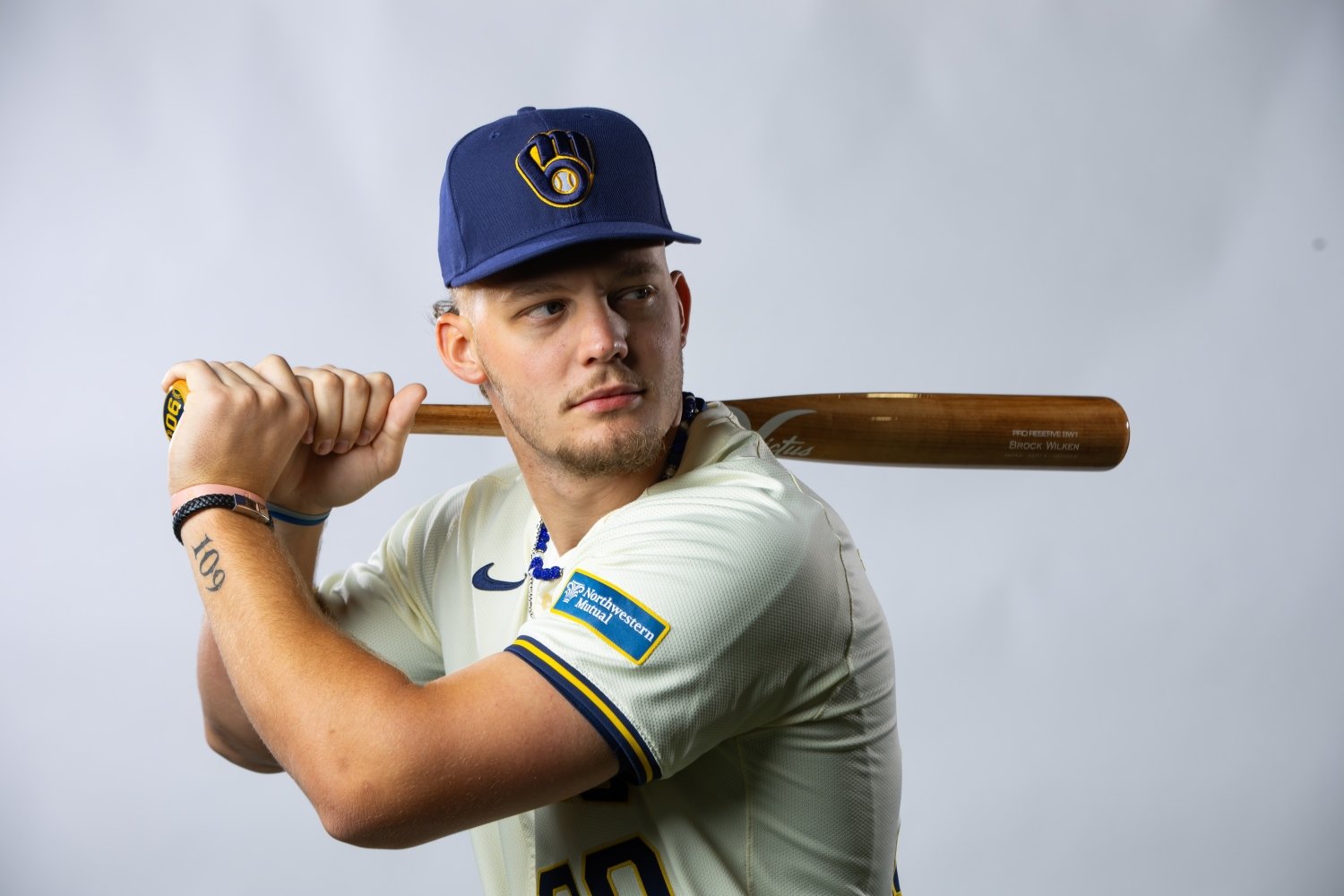 Reviewing The Picks In the 2022 amateur draft, the Brewers used their first-round pick to select shortstop Eric Brown Jr. To date in his career, Brown has shown defense, speed on the basepaths, and superior OBP skills. His big issue has been staying healthy, though, and his offense has slumped to a batting average slightly below the Uecker line (hitting .195 as of Jul. 13), with a stint on the injured list. The following year, Brock Wilken was Milwaukee’s first-round pick. He’s rapidly climbed to Biloxi in less than a year, but his 2024 season has been thrown somewhat off track by a scary incident wherein he was hit by a pitch and missed significant time. He provides a right-handed power bat and solid defense at third base. The In-House Alternatives The Brewers have long had a buffet of options at shortstop. At the major-league level alone, Joey Ortiz could secure the spot for the next half-decade, while Andruw Monasterio and Brice Turang could be options, as well. Down on the farm, Jadher Areinamo, Cooper Pratt, and Filippo Di Turi are among several contenders who have flashed serious potential. Jesus Made and Luiyin Alastra are showing some potential in the rookie leagues. At third base, the Brewers have completely changed their situation from what it was at the start of 2023, and not just due to Wilken being selected. In that same draft, the Brewers added Mike Boeve and Eric Bitonti, while Tyler Black had a solid season at the hot corner that year. Down in Carolina, Juan Báez has also emerged as a contender for the position after converting from being a bat-first shortstop. Areinamo has also seen action at the hot corner. Ortiz has held down third base in 2024. Luke Adams is also flashing a potent bat and superb OBP skills over several seasons in the minors. The Case For Not Trading Them Both Brown and Wilken make Brewer Fanatic’s Top 20 and MLB Pipeline’s Top 30 prospect lists for the Brewers. In just about any scenario, these players look to be assets for the Brewers. Wilken would hold down third base for at least a half-decade, before the harsh hot-stove economic realities hit. Brown could slide in as a high-end utility player, giving Wilken, Ortiz, and Turang days off and notching 3-4 starts a week, depending on the situation. Conventionally, it is the safer play to hold onto young, cost-controlled talent, especially for a team with limited financial muscle. The team has made substantial financial investments in these two ($2.05 million in the case of Brown, $3.15 million for Wilken). So, why not give them every chance to be stars for the Brewers? The Case For Making A Deal As former first-round picks, Brown and Wilken can help fetch a premium return. Take, for instance, trying to put together a package for Tarik Skubal. Wilken and Brown would make an intriguing two-part starting point for the deal, with the Crew tossing in Carlos F. Rodriguez, Luis Lara, and a piece or two from their crowded MLB bullpen (Elvis Peguero, Rob Zastryzny) to make it happen. Perhaps Wilken and Brown could, on their own, net a solid rotation piece in the mold of Aaron Civale (think Yusei Kikuchi from the Blue Jays). A Joel Payamps/Eric Brown Jr. package could net the Crew Kikuchi, while bolstering the rotation. Another option could be to see if Wilken and Brown could net the Crew a long-term asset. Wilken could probably secure Edward Cabrera from the Marlins in a straight-up swap (issue with the crowded 40-man roster notwithstanding). Brown could pair with Bradley Blalock to acquire Mason Black, from the Giants. Overview Eric Brown Jr. and Brock Wilken were exciting pickups when they were drafted. They could be real assets for the Brewers down the road, but there is a strong case that they could help the Brewers more as trade assets from positions of depth. Either way, they're names worth keeping in mind for the next week.
 -
The last two first-round picks for the Milwaukee Brewers, shortstop Eric Brown Jr. and third baseman Brock Wilken, have big-league futures. However, could their best value for the organization be as trade assets, rather than eventual Brewers? Image courtesy of © Mark J. Rebilas-USA TODAY Sports Reviewing The Picks In the 2022 amateur draft, the Brewers used their first-round pick to select shortstop Eric Brown Jr. To date in his career, Brown has shown defense, speed on the basepaths, and superior OBP skills. His big issue has been staying healthy, though, and his offense has slumped to a batting average slightly below the Uecker line (hitting .195 as of Jul. 13), with a stint on the injured list. The following year, Brock Wilken was Milwaukee’s first-round pick. He’s rapidly climbed to Biloxi in less than a year, but his 2024 season has been thrown somewhat off track by a scary incident wherein he was hit by a pitch and missed significant time. He provides a right-handed power bat and solid defense at third base. The In-House Alternatives The Brewers have long had a buffet of options at shortstop. At the major-league level alone, Joey Ortiz could secure the spot for the next half-decade, while Andruw Monasterio and Brice Turang could be options, as well. Down on the farm, Jadher Areinamo, Cooper Pratt, and Filippo Di Turi are among several contenders who have flashed serious potential. Jesus Made and Luiyin Alastra are showing some potential in the rookie leagues. At third base, the Brewers have completely changed their situation from what it was at the start of 2023, and not just due to Wilken being selected. In that same draft, the Brewers added Mike Boeve and Eric Bitonti, while Tyler Black had a solid season at the hot corner that year. Down in Carolina, Juan Báez has also emerged as a contender for the position after converting from being a bat-first shortstop. Areinamo has also seen action at the hot corner. Ortiz has held down third base in 2024. Luke Adams is also flashing a potent bat and superb OBP skills over several seasons in the minors. The Case For Not Trading Them Both Brown and Wilken make Brewer Fanatic’s Top 20 and MLB Pipeline’s Top 30 prospect lists for the Brewers. In just about any scenario, these players look to be assets for the Brewers. Wilken would hold down third base for at least a half-decade, before the harsh hot-stove economic realities hit. Brown could slide in as a high-end utility player, giving Wilken, Ortiz, and Turang days off and notching 3-4 starts a week, depending on the situation. Conventionally, it is the safer play to hold onto young, cost-controlled talent, especially for a team with limited financial muscle. The team has made substantial financial investments in these two ($2.05 million in the case of Brown, $3.15 million for Wilken). So, why not give them every chance to be stars for the Brewers? The Case For Making A Deal As former first-round picks, Brown and Wilken can help fetch a premium return. Take, for instance, trying to put together a package for Tarik Skubal. Wilken and Brown would make an intriguing two-part starting point for the deal, with the Crew tossing in Carlos F. Rodriguez, Luis Lara, and a piece or two from their crowded MLB bullpen (Elvis Peguero, Rob Zastryzny) to make it happen. Perhaps Wilken and Brown could, on their own, net a solid rotation piece in the mold of Aaron Civale (think Yusei Kikuchi from the Blue Jays). A Joel Payamps/Eric Brown Jr. package could net the Crew Kikuchi, while bolstering the rotation. Another option could be to see if Wilken and Brown could net the Crew a long-term asset. Wilken could probably secure Edward Cabrera from the Marlins in a straight-up swap (issue with the crowded 40-man roster notwithstanding). Brown could pair with Bradley Blalock to acquire Mason Black, from the Giants. Overview Eric Brown Jr. and Brock Wilken were exciting pickups when they were drafted. They could be real assets for the Brewers down the road, but there is a strong case that they could help the Brewers more as trade assets from positions of depth. Either way, they're names worth keeping in mind for the next week. View full article
-
Yeah, once he's healthy. Unless, of course, Contreras isn't as lucky after the next big collision at the plate or Sanchez strains his calf again.
-
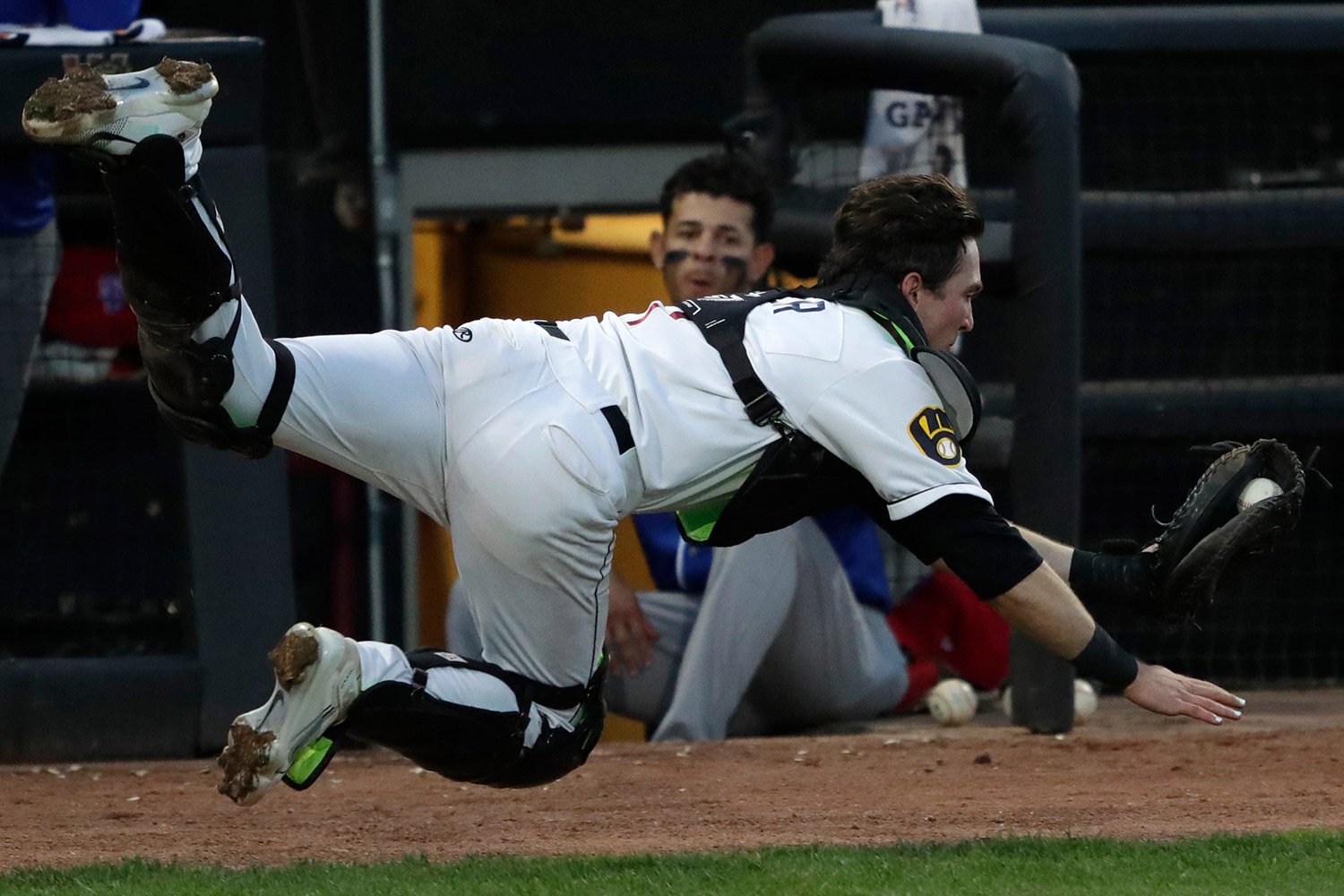 The 26-Man Roster Crunch William Contreras has been a highly durable option for the Brewers at catcher – with Gary Sanchez primarily serving as designated hitter for the Crew. Sanchez has been on the injured list with a left calf strain and could return after the All-Star break. In the meantime, Eric Haase, who was initially on the 40-man, had to be outrighted when he didn’t make the 26-man roster out of spring training due to being out of options. When Sanchez returns, Haase is likely to be designated for assignment again, and this time, the Crew will not be as fortunate as they were in March. So, the question is, do they lose Haase for nothing or salvage some return? But a trade could leave them without a backup catcher… or is an answer already in-house? Biloxi’s Outstanding On-Base Machine Darrien Miller has been one of the more under-the-radar prospects for the Brewers since being drafted in the ninth round in 2019. Jeferson Quero got a lot of attention and is on the prospect lists. Still, since being drafted out of high school, Miller has quietly displayed outstanding on-base skills (195 walks in 1139 professional at-bats through July 10) and, in most years, has flashed some pop in his left-handed bat. In 2024, Miller’s formidable on-base skills have taken a quantum leap at Double-A Biloxi. From 2021-2023, including his winter stint at Brisbane, Miller posted a .368 OBP. As a Shucker in 2024, his OBP is .432 through July 10, fueled by 45 walks, and it includes a selection as Hitter of the Month by Brewers Player Development. Miller has also gotten on base the hard way – as of July, he’s been hit 16 times in 2024, with a career total of 67. If Miller has an issue, it’s that he’s been unable to keep baserunners from taking larcenous liberties – in his professional career, he’s thrown out just 16% of would-be base stealers. So, in one sense, he is a bat-first catcher, although not to the extent of Satchell Norman. Otherwise, he’s a solid backstop. The Case For Selecting Miller The Brewers need another catcher on the 40-man to address any additional IL visits by either Sanchez or Contreras – and Contreras may be wearing down and in need of more off days. While most backup backstop issues may be fixed by having Christian Yelich DH more, the Crew needs a backup that can take the shuttle from Milwaukee to Nashville in 2024. Quero was to have been that guy, but his shoulder injury wiped out his 2024 season. Miller, though, could be that guy for the Crew and offers additional benefits. His left-handed bat complements the righty bats of Contreras, Quero, and Sanchez. Plus, he will have three option years – and the Crew can use him for the shuttle. If his on-base skills and pop translate to the majors, so much the better for the Crew, they will have plenty of options. The Alternatives Why Miller over Wes Clarke, Francisco Mejia, and Brian Navarreto? Mejia has a solid case to be added to the 40-man roster – plenty of MLB experience, a switch hitter, substantial pedigree as a top prospect, and playing at Triple-A Nashville. The problem with Mejia is that it puts the Brewers in the same position they are in with Haase—Mejia burned his option years in 2018, 2019, and 2020. In August 2023, the Rays outrighted Mejia. The Brewers can do much better than a “lather, rinse, repeat” of the Eric Haase situation. Mejia is a guy who thinks about flipping for help, either in the bullpen or to find a prospect. Navarreto’s biggest problem is the bat. It’s nowhere near as good as Miller’s; he is another right-handed hitter. At 29, he is a solid depth option and mentor for catching prospects who make the high minors, but the Brewers can do better regarding MLB options. As for Clarke, the potential issue is rust. While he was the primary backup to both Quero and Miller in 2023 and 2022, this year, he has all six games behind the plate. The big reason is that his three-true-outcomes bat made it to Triple-A Nashville, where Haase and Mejia have done the catching. Clarke deserves a 40-man spot due to his bat, but it may need to wait until the offseason. Overview The fact is, the Brewers have some blues when it comes to a backup catcher for the short term, given Quero’s injury and Haase’s lack of options and vulnerability to the DFA process. The Brewers should look to deal Haase – perhaps to Cleveland, which could use an upgrade at catcher (even if Austin Hedges is more of a coach). The Brewers could give Cleveland an upgrade over Hedges as a player in exchange for Cleveland’s competitive balance pick in the 2024 draft. After that deal, the Brewers could then make a call to Biloxi that could fix these backup backstop blues, not just for 2024 but for years down the road.
 -
The pending return of Gary Sanchez from the injured list has the Brewers in a potentially tough spot due to Eric Haase being out of options. But could a solution to their backup catcher conundrum be available at Biloxi? Image courtesy of © Dan Powers/USA TODAY NETWORK-Wisconsin / USA TODAY NETWORK The 26-Man Roster Crunch William Contreras has been a highly durable option for the Brewers at catcher – with Gary Sanchez primarily serving as designated hitter for the Crew. Sanchez has been on the injured list with a left calf strain and could return after the All-Star break. In the meantime, Eric Haase, who was initially on the 40-man, had to be outrighted when he didn’t make the 26-man roster out of spring training due to being out of options. When Sanchez returns, Haase is likely to be designated for assignment again, and this time, the Crew will not be as fortunate as they were in March. So, the question is, do they lose Haase for nothing or salvage some return? But a trade could leave them without a backup catcher… or is an answer already in-house? Biloxi’s Outstanding On-Base Machine Darrien Miller has been one of the more under-the-radar prospects for the Brewers since being drafted in the ninth round in 2019. Jeferson Quero got a lot of attention and is on the prospect lists. Still, since being drafted out of high school, Miller has quietly displayed outstanding on-base skills (195 walks in 1139 professional at-bats through July 10) and, in most years, has flashed some pop in his left-handed bat. In 2024, Miller’s formidable on-base skills have taken a quantum leap at Double-A Biloxi. From 2021-2023, including his winter stint at Brisbane, Miller posted a .368 OBP. As a Shucker in 2024, his OBP is .432 through July 10, fueled by 45 walks, and it includes a selection as Hitter of the Month by Brewers Player Development. Miller has also gotten on base the hard way – as of July, he’s been hit 16 times in 2024, with a career total of 67. If Miller has an issue, it’s that he’s been unable to keep baserunners from taking larcenous liberties – in his professional career, he’s thrown out just 16% of would-be base stealers. So, in one sense, he is a bat-first catcher, although not to the extent of Satchell Norman. Otherwise, he’s a solid backstop. The Case For Selecting Miller The Brewers need another catcher on the 40-man to address any additional IL visits by either Sanchez or Contreras – and Contreras may be wearing down and in need of more off days. While most backup backstop issues may be fixed by having Christian Yelich DH more, the Crew needs a backup that can take the shuttle from Milwaukee to Nashville in 2024. Quero was to have been that guy, but his shoulder injury wiped out his 2024 season. Miller, though, could be that guy for the Crew and offers additional benefits. His left-handed bat complements the righty bats of Contreras, Quero, and Sanchez. Plus, he will have three option years – and the Crew can use him for the shuttle. If his on-base skills and pop translate to the majors, so much the better for the Crew, they will have plenty of options. The Alternatives Why Miller over Wes Clarke, Francisco Mejia, and Brian Navarreto? Mejia has a solid case to be added to the 40-man roster – plenty of MLB experience, a switch hitter, substantial pedigree as a top prospect, and playing at Triple-A Nashville. The problem with Mejia is that it puts the Brewers in the same position they are in with Haase—Mejia burned his option years in 2018, 2019, and 2020. In August 2023, the Rays outrighted Mejia. The Brewers can do much better than a “lather, rinse, repeat” of the Eric Haase situation. Mejia is a guy who thinks about flipping for help, either in the bullpen or to find a prospect. Navarreto’s biggest problem is the bat. It’s nowhere near as good as Miller’s; he is another right-handed hitter. At 29, he is a solid depth option and mentor for catching prospects who make the high minors, but the Brewers can do better regarding MLB options. As for Clarke, the potential issue is rust. While he was the primary backup to both Quero and Miller in 2023 and 2022, this year, he has all six games behind the plate. The big reason is that his three-true-outcomes bat made it to Triple-A Nashville, where Haase and Mejia have done the catching. Clarke deserves a 40-man spot due to his bat, but it may need to wait until the offseason. Overview The fact is, the Brewers have some blues when it comes to a backup catcher for the short term, given Quero’s injury and Haase’s lack of options and vulnerability to the DFA process. The Brewers should look to deal Haase – perhaps to Cleveland, which could use an upgrade at catcher (even if Austin Hedges is more of a coach). The Brewers could give Cleveland an upgrade over Hedges as a player in exchange for Cleveland’s competitive balance pick in the 2024 draft. After that deal, the Brewers could then make a call to Biloxi that could fix these backup backstop blues, not just for 2024 but for years down the road. View full article
-
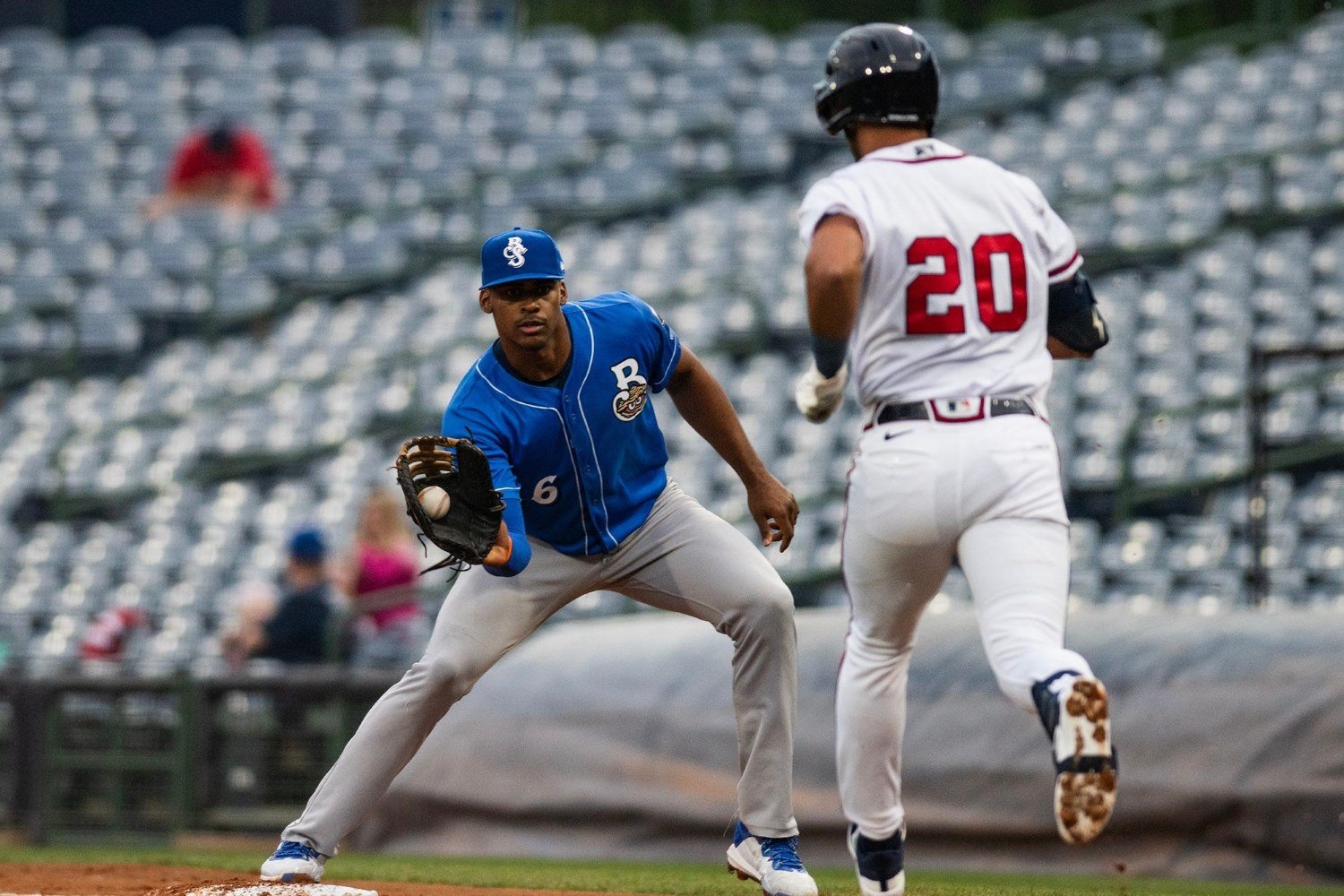 Though they don't garner as much fanfare as the organization's top prospects or the parent club's top players, there are some players on the Brewers farm who are making very compelling cases for a spot on the 40-man roster, come November (if not sooner). Let’s take a look at five of these prospects. IF/OF Isaac Collins Collins was a waiver-wire pickup from the Colorado Rockies system in the 2022-2023 offseason. Since then, he posted an .855 OPS in the pitcher-friendly Southern League in 2023, and is posting a .905 OPS with Triple-A Nashville in 2024. His power has gone up a step (36 extra-base hits in 263 at-bats so far this year, compared to 25 in all of 2023), he’s adding speed (16-for-20 in stolen base attempts), and his OBP skills are superb. In addition, he plays multiple infield and outfield positions. With this performance, he could entice a team to grab him in the Rule 5 draft, which would mean the only return the Crew gets is $100,000 cash. That’s not a good return for what could be a valuable bench asset, or even a little bit more. The Brewers could make sure that doesn’t happen by putting him on the 40-man roster this fall, although it would likely have to be at the expense of either Vinny Capra or Oliver Dunn. UT Noah Campbell Campbell was signed as an undrafted free agent following the truncated 2020 MLB Draft, but three years earlier, he had been picked by the Crew in the 19th round. He’s been a bit of a steal, providing all-over-the-diamond positional versatility. His offensive profile features the ability to get walks, some speed, and occasional power. That competent bat is not his biggest virtue. His biggest virtue really is his defensive versatility. He can handle any position on the diamond – useful when a team has all of four bench spots. There are more paths to a big-league roster for someone who can move around that freely. 1B/C/DH Wes Clarke Clarke is, perhaps, one of the Brewers' biggest late-round steals in recent years. In 2023, all he did was outperform Jackson Chourio in home runs, doubles, walks, and OPS, while splitting time between first base, catcher, and designated hitter. His three-true-outcomes bat (54 homers, 200 walks, and 349 strikeouts in 1,003 professional at-bats, as of Jul. 4) might make for a useful complement to Tyler Black at first base, if he can carry the same balance between those outcomes up to the highest level. Clarke’s defensive abilities also should give him an edge. In 2023, he was Jeferson Quero’s main backup at Double-A Biloxi, after fulfilling the same role for Darrien Miller in Advanced-A Wisconsin. Come 2025, should the Crew go with William Contreras and Jeferson Quero in Milwaukee, it’s likely Contreras sees some time at DH, and having a third catcher like Clarke could come in handy--if he can handle that job at an MLB level, too. 1B/OF Ernesto Martinez Martínez has had a long road to this point in his professional career, and the Crew re-signed him when he reached minor-league free agency in the 2023-2024 offseason. That decision has looked good, as Martínez has held down first base for Double-A Biloxi. While injuries have delayed his rise, he is still only 25. His tools and his production to this point leave the door open to a possible Eric Thames future, if things break right. One bonus from Martínez is his speed. He has posted excellent stolen-base numbers since the pandemic, with 67 steals in 81 attempts. He’s also flashed greater defensive versatility than Jake Bauers or Thames, by filling in as a center fielder in 2024 (and 2021). If the Crew did decide to move some outfielders or a player like Black, Martínez is not a bad fallback option. C Darrien Miller While Jeferson Quero has generated the prospect accolades, Miller has quietly developed into what could be a solid number-two catcher, and he could be an excellent complement to Contreras and/or Quero. His left-handed bat has flashed power, but throughout his career, Miller has also displayed superb OBP skills (192 walks in 1,134 professional at-bats, as of Jul. 4). He’s also willing to get on base the hard way; he's been plunked 72 times in his career. Miller is a potential minor-league free agent in the 2024-2025 offseason, but will only be 24 in the 2025 season. Brewers Player Development named him their Player of the Month for June. He’s a candidate for a 40-man spot, if only to have a little offensive variety with his lefty bat and OBP skills. Overview When the Brewers look at the upcoming offseason, these are players they could very easily lose to the Rule 5 draft or free agency. The Crew has done well with some not-so-heralded pickups in the offseason, luring them with 40-man spots (see Blake Perkins), but it may be time to do the same with homegrown talent.
