Harold Hutchison
-
Posts
6,909 -
Joined
-
Last visited
Content Type
Profiles
Forums
Blogs
Events
News
2026 Milwaukee Brewers Top Prospects Ranking
Milwaukee Brewers Videos
2022 Milwaukee Brewers Draft Picks
Milwaukee Brewers Free Agent & Trade Rumors, Notes, & Tidbits
Guides & Resources
2023 Milwaukee Brewers Draft Picks
2024 Milwaukee Brewers Draft Picks
The Milwaukee Brewers Players Project
2025 Milwaukee Brewers Draft Pick Tracker
2026 Milwaukee Brewers Draft Tracker: Picks & Bonuses
Store
Downloads
Gallery
Everything posted by Harold Hutchison
-
The Ortiz CS didn't help, either.
-
Wonder if Corbin is wishing he'd worked out an extension with the Crew by now...
-
I just want him to get on base, and have the speed to steal second (or turn a single into a double/double into a triple).
-
This. I never got why Counsell had Thames lead off as much as he did. Ideally, a good line-up goes: CF: Frelick RF: Chourio LF: Yelich C: Conteras 1B: Hoskins 3B: Dunn SS: Adames DH: Sanchez 2B: Turang
-
If anything, Harper was someone more modern stats would love. VERY good OBP skills. He was no slouch in the power department, even in his non-30-30 year,
-
No Chourio or Yelich?
-
2024 Minor League Transaction Thread
Harold Hutchison replied to Jim Goulart's topic in Brewers Minor League Talk
Here's a link to a version that still has the article up: https://web.archive.org/web/20181224220011/https://dearsportsfan.com/2018/10/16/why-do-base-runners-in-baseball-wear-an-oven-mitt/ -
10 Bold Predictions For The Brewers Farm System In 2024
Harold Hutchison posted an article in Minor Leagues
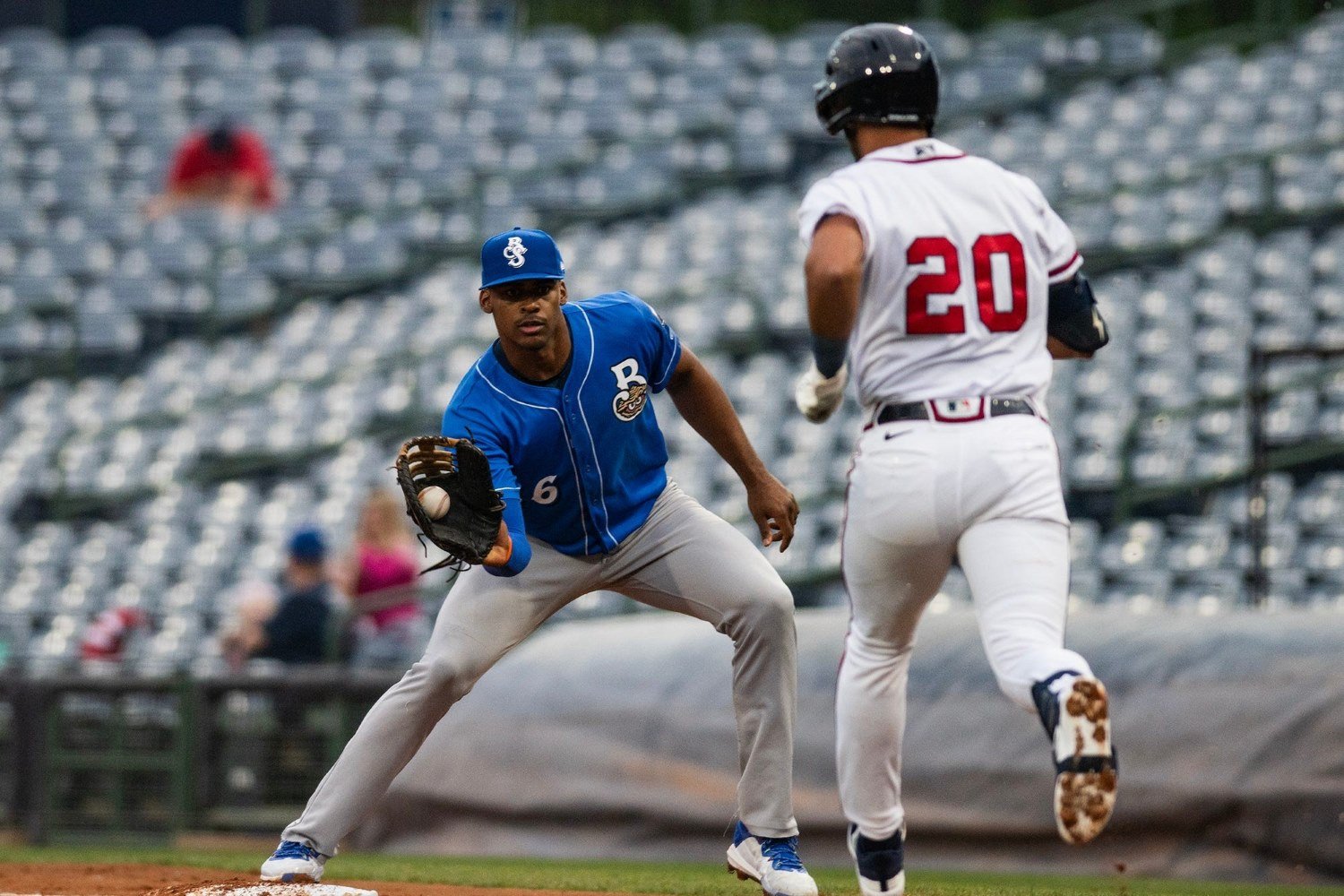 1. Ernesto Martinez Emerges As First Baseman of The Future Martinez has been under the radar for a while. Even with a 2021 breakout, he has struggled to stay healthy and on the field – at least until 2023. Martinez is huge, but also highly rated defensively. He’s always shown excellent OBP skills and flashed power. In 2021, he handled limited duty in center field for Single-A Carolina, and showed he could be a serious threat on the basepaths. In 2024, he could truly break out. He did well in eight spring training at-bats. 2. Wes Clarke Catches More Than He Plays First Base At the start of spring, it didn’t seem likely this would be the case for someone who was arguably the top backup for Jeferson Quero in 2023. Austin Nola was expected to get a lot of Triple-A time as a mentor to Quero, until he was released after the Crew signed Gary Sánchez to be their backup catcher and sometime designated hitter. Then, Eric Haase was designated for assignment due to being out of options. Haase and Francisco Mejia are in Nashville, at least until Quero returns, but Clarke still saw action behind the plate in spring training, and right now, he will split time with Darrien Miller in Biloxi, so his showdown with Martinez as First Baseman of the Future may not materialize in quite the form we previously imagined. 3. Three Position Players Rocket Up the Minor-League Ladder In 2022, it was Jackson Chourio who shot up from Low-A Carolina to Double-A Biloxi in one season. In 2023, Jacob Misiorowski rode a rocket up the ladder. But in 2024, the Crew could see a hat trick of position players make some big strides. Juan Baez, Cooper Pratt, and Yophery Rodriguez all have the makings of big stars, and could make things interesting for the Crew. That puts a potentially shocking move on the table. 4. Luke Adams Cracks the Top 30 Adams has been another under-the-radar corner infield prospect, but his offensive profile looks a lot like that of Martinez, albeit from the right side of the plate. He’s also seen corner outfield time, but here’s where it gets interesting: In five spring training at-bats, he didn’t strike out, and he drew a walk, against some high-quality opponents, per Baseball Reference. He has power, OBP skills, and can steal bases. If he breaks out (and he's quietly posted solid numbers so far), that sort of mix could be the last piece of the puzzle that makes a shocking move be not-so-shocking. 5. Brock Wilken Ends Up on the Block Even with Corbin Burnes traded and Brandon Woodruff and Devin Williams out with injury, the Brewers may find themselves in the midst of a pennant race – and in need of some reinforcements. With the rapid rise of Pratt and Báez and the presence of Tyler Black and Luke Adams, the Brewers find their 2023 1st-round pick could be a prime asset to get the pieces for a pennant run, as was the case 16 years ago, involving Matt LaPorta. Yes, it would be a stunning end to the battle for the future at third base, but Wilken could fetch an excellent return for the Crew in a move reminiscent of the CC Sabathia deal. 6. Satchell Norman Is the Catcher the Crew Can’t Coach There are very few questions about Satchell Norman’s bat. It was arguably the second-best for the 2023 Arizona Complex League champs. The problem is that his defense behind the plate is an adventure, to put it mildly. Norman’s best shot is as a designated hitter – or maybe being hidden in left field. Most likely, though, once the catcher experiment ends, the Crew will decide to keep him at DH until he can be traded. 7. Quinton Low Becomes a Dollar General Version of Shohei Ohtani Quinton Low’s tug-of-war finally gets resolved, when the Crew puts him in the bullpen and lets him DH and play first and the corner outfield. His bat is a legitimate three-true-outcome threat. As a pitcher, he did very well in the bullpen. So, while he is on the 60-day injured list now, by the end of the season, the Crew will turn him into a hybrid of Eric Thames and Bryse Wilson. It’s not a bad outcome, even if it isn’t likely to land him an MVP award or two. 8. Nate Peterson Proves to Be as Good as Robert Gasser Nate Peterson has been under the radar as a pitching prospect, but he held his own despite a stint on the injured list. His peripherals in NCAA baseball were close to those of Robert Gasser, and that could be a huge lift for the Brewers. 9. Single-A Carolina Has the Best Rotation Among Brewers Affiliates by August The Brewers have some very high-end talent who pitched very well in the Dominican Summer League in 2023. It’s hard to imagine they will be kept on the sidelines, even with Josh Knoth and Bishop Letson slated for the Mudcats rotation. Melvin Hernandez, Eric Prado, Enniel Cortez, and Anthony Flores may not see much time in the ACL. 10. Darrien Miller Breaks Out Big Jeferson Quero has gotten the hype, but Darrien Miller has quietly been a solid catcher for the Crew in the minors. Offensively, his skill set is heavy on OBP and a lot of doubles. As a catcher, he has been solid behind the plate. Miller makes things interesting for the Crew behind the plate, but his left-handed bat could be an excellent complement to Quero, Clarke, and/or William Contreras. What do you predict will happen in the Brewers’ farm system? Who will break out? What will be the biggest surprise? Let us know in the comments below!
- 4 comments
-
- 1
-

-
- ernesto martinez jr
- wes clarke
- (and 1 more)
-
While the major-league club is already playing games that matter, the 26 players on the Opening Day roster are not the only ones who will be playing games that count. Here are some bold predictions for the farm system. 1. Ernesto Martinez Emerges As First Baseman of The Future Martinez has been under the radar for a while. Even with a 2021 breakout, he has struggled to stay healthy and on the field – at least until 2023. Martinez is huge, but also highly-rated defensively. He’s always shown excellent OBP skills and flashed power. In 2021, he handled limited duty in center field for Single-A Carolina, and showed he could be a serious threat on the basepaths. In 2024, he could truly break out. He did well in eight spring-training at-bats. 2. Wes Clarke Catches At Least 30 Games Again At the start of spring, it didn’t seem likely this would be the case for someone who was arguably the top backup for Jeferson Quero. Austin Nola was expected to get a lot of Triple-A time as mentor to Quero… until he was released after the Crew signed Gary Sanchez to be primary DH (and #2 catcher). Then, Eric Haase was designated for assignment due to being out of options. Clarke still saw action behind the plate in spring training, so his showdown with Martinez as First Baseman of the Future may not completely happen, as he gets plenty of at-bats as a catcher or DH. 3. Five Position Players Rocket Up the Minor-League Ladder In 2022, it was Jackson Chourio who shot up from Single-A Carolina to Double-A Biloxi in one season. In 2023, Jacob Misiorowski rode a rocket up the ladder. But in 2024, the Crew could see a hat trick of position players make some big marks. Demetrio Nadal, Pedro Ibarguen. Juan Baez, Cooper Pratt, and Yophery Rodriguez all have the makings to be big stars and could make things interesting for the Crew, putting a potentially shocking move on the table. 4. Luke Adams Cracks the Top 30 Adams has been another under-the-radar corner infield prospect, but his offensive profile looks a lot like that of Martinez, albeit from the right side of the plate. He’s also seen corner outfield time, but here’s where it gets interesting – in five spring-training at-bats, he didn’t strike out, and he drew a walk – against some high-quality opponents, per Baseball Reference. That sort of mix could be the last piece of the puzzle that makes a shocking move be not-so-shocking. 5. Brock Wilken Ends Up on the Block The Brewers may find themselves in the midst of a pennant race – and in need of some reinforcements. With the rapid rise of Nadal, Ibarguen, Pratt and Baez and the presence of Tyler Black and Luke Adams, the Brewers find their 2023 1st-round pick is a prime asset to get the pieces for a pennant run. Yes, it would be a stunning end to the battle for the future at third base, but Wilken could fetch an excellent return for the Crew in a move reminiscent of the Matt LaPorta trade. 6. Satchell Norman Is the Catcher the Crew Can’t Coach There are very few questions about Satchell Norman’s bat. It was arguably the second-best for the 2023 Arizona Complex League champs. The problem is that his defense behind the plate is an adventure, to put it mildly. Norman’s best shot is as a designated hitter – or maybe being hidden in left field. Most likely, though, once the catcher experiment ends, the Crew will decide to keep him at DH until he can be traded. 7. Quinton Low Becomes a Dollar General Version of Ohtani Quinton Low’s tug-of-war finally gets resolved when the Crew puts him in the bullpen and lets him DH and play first and the corner outfield. His bat is a legitimate three-true-outcome threat. As a pitcher, he did very well in the bullpen. So, the Crew turns him into a hybrid of Eric Thames and Bryse Wilson. It’s not a bad outcome, even if it isn’t likely to land him an MVP award or two. 8. Nate Peterson Proves to Be as Good as Gasser Nate Peterson has been under-the-radar as a pitching prospect, but he held his own despite an injured-list stint. His peripherals in NCAA baseball were close to those of Robert Gasser, and that could be a huge lift for the Brewers. 9. Single-A Carolina Has the Best Rotation Among Brewers Affiliates by August The Brewers have some very high-end talent who pitched very well in the Dominican Summer League in 2023. It’s hard to imagine they will be kept on the sidelines. Melvin Hernandez, Eric Prado, Enniel Cortez, and Anthony Flores may not see much time in the ACL. 10. Darrien Miller Breaks Out Big Jeferson Quero has gotten the hype, but Darrien Miller has quietly been a solid catcher for the Crew in the minors. Offensively, his skill set is heavy on OBP and a lot of doubles. As a catcher he has been solid behind the plate. Miller makes things interesting for the Crew behind the plate, but his left-handed bat could be an excellent complement to Quero, Clarke, and/or Contreras. What do you predict will happen in the Brewers’ farm system? Who will break out? What will be the biggest surprise? Let us know in the comments below! View full article
-
Turang, Ortiz, Dunn, Black, others?
Harold Hutchison replied to Oxy's topic in Milwaukee Brewers Talk
No, I think it's very deep, and these are the guys who really will emerge. I think there are a lot of permutations... Black really has the kind of bat that is dynamic - Jeff Cirillo with a plus speed tool. Frelick, I think moves to the infield as the outfield in 2026 is Chourio (left), Michell (center), Yophery Rodriguez (right), with Wiemer as the 4th OF. Yelich is full-time DH. I can also see some deals bringing in some real controllable starting pitchers by Opening Day 2026, with Contreras, Dunn, Bauers, and Peralta among those dealt. -
Turang, Ortiz, Dunn, Black, others?
Harold Hutchison replied to Oxy's topic in Milwaukee Brewers Talk
The Opening Day 2026 infield: 3B: Tyler Black SS: Joey Ortiz 2B: Sal Frelick 1B: Ernesto Martinez Bench: Brice Turang, Andruw Monasterio -
In general, I'm reluctant to reduce a pitcher's arsenal. Alter the mix, sure, but the more pitches a pitcher can throw, the harder it is for a hitter to sit on one.
-
The 2024 Carolina Mudcats look to have some exciting prospects on their roster – at least for the start of the season. Who is going to headline this team? Let’s take a look. Image courtesy of © Curt Hogg / USA TODAY NETWORK Great talent passes through the Low-A level more often than it did before some recent changes to the structure of the minor leagues. It doesn't always stay very long, though; many players quickly prove themselves worthy of a sterner test. Starting Pitching The biggest names on the 2024 Mudcats pitching staff will be 2023 draft picks Josh Knoth and Bishop Letson. The former, selected with the Crew’s Competitive Balance Round A pick, started on Opening Day and held his own (even if he only went three innings). Letson, an 11th-round pick whom the Crew inked to a deal with a $482,600 bonus, will likely also see some action in the rotation. Joining them in the rotation will be Daniel Corniel and Yorman Galindez, who primarily started with the 2023 Arizona Complex League champion Brewers. Osbrial Mogollon and Manuel Rodriguez also saw rotation action in the ACL. Aidan Maldonado returns after spending 2023 in the Mudcats rotation (for the most part). Some of these players could work out of the bullpen in a “piggyback” role. There are some players seemingly in limbo – Ryne Moore (Who was with the ACL Brewers in 2023) and Alexander Vallecillo (who made 11 starts) aren’t on minor-league rosters and didn’t get released. Bullpen Five players the Brewers either signed or drafted in 2023 may end up in the bullpen. Morris Austin, a 10th-round pick, 16th-round pick Josh Timmerman, and undrafted free agent Blake Whiting saw brief action with the ACL Crew in 2023. Whiting also appeared in a couple of games with the Mudcats. Two other pitchers, 5th-round pick Ryan Birchard and undrafted free agent Harrison Durow, will make their pro debuts in Zebulon. It should be noted that in Carolina, the Brewers will piggyback pitchers, so a pitcher starting in the pen may eventually make some starts, and vice-versa. Jesus Rivero looks to be the closer for the Mudcats. Bayden Root and Jeferson Figueroa also look to be late-inning options for Carolina, while K.C. Hunt and Jeison Pena look to round out the relief corps. Fray Morelo is starting the year on the injured list after missing all of 2023. Catcher The Mudcats may be somewhat unsettled here. Blayberg Diaz was called up to Triple-A Nashville after Jeferson Quero’s injury. That left Satchell Norman and David Garcia as the primary options (with Tayden Hall also listed as a catcher on the Mudcats website) until Diaz returned to the roster April 5 following the Brewers’ signing of Francisco Mejia to the Sounds roster. There are few questions about Norman’s bat. It was a major contributor to the ACL Brewers' championship run. The questions are how Norman can settle in behind the plate, however (11 passed balls and five errors in 28 professional games as a catcher). Brewers coaches have their work cut out for them with Norman’s defense. Garcia is a minor-league veteran who can probably mentor Norman – or help bring along a very raw pitching staff. Hall’s experience behind the plate is very limited. Infield Juan Baez and Cooper Pratt are taking their battle for Shortstop of the Future to Zebulon; Baez handled the hot corner on Opening Day. Both have bats that could explode and lead to rapid climbs up the minor-league ladder in 2024. Baez’s has shown a more dynamic profile in the pros, while Pratt holds an edge on defense (with a solid bat to date). Daniel Guilarte was on the roster, but was reassigned to the ACL Crew after Díaz returned from his Triple-A stint. Miguel Briceno, who has shown he can hit for average, started at second for the Mudcats on Opening Day, despite being officially an outfielder. Tayden Hall will primarily handle first base for the Mudcats, after a solid 2023 split between Maryvale and Zebulon and some bigger numbers at Brisbane over the winter. Outfield Yophery Rodriguez will get his chance to match Jackson Chourio’s rapid 2022 rise through the minor-league system, starting with the Mudcats after a superb DSL season. He’s flashed power, OBP skills, and some speed in the DSL, and the Crew’s aggressive assignment could make things very interesting. Hedbert Perez, Reidy Mercado, Luis Castillo, and Kay-Lan Nicasia will all be returning to Zebulon. Nicasia is very intriguing, not just for his potential three-true-outcome bat, but also because he has a cannon for an arm (10 assists in 84 outfield games). Castillo looks to have a promising power bat of his own, while Perez is looking to break out in 2024 at age 21. Overview The 2024 Mudcats have a lot of exciting talent, from highly-touted pitchers (Knoth, Letson) to position players with superstar potential (Pratt, Báez, Yophery Rodríguez), not to mention some potentially solid players who could break out, like Hall, Briceno, Castillo, and Nicasia. The pitching staff, in particular, could be incredibly exciting for Brewers fans to watch. View full article
-
Brewers Farm System 2024 Preview: Carolina Mudcats
Harold Hutchison posted an article in Minor Leagues
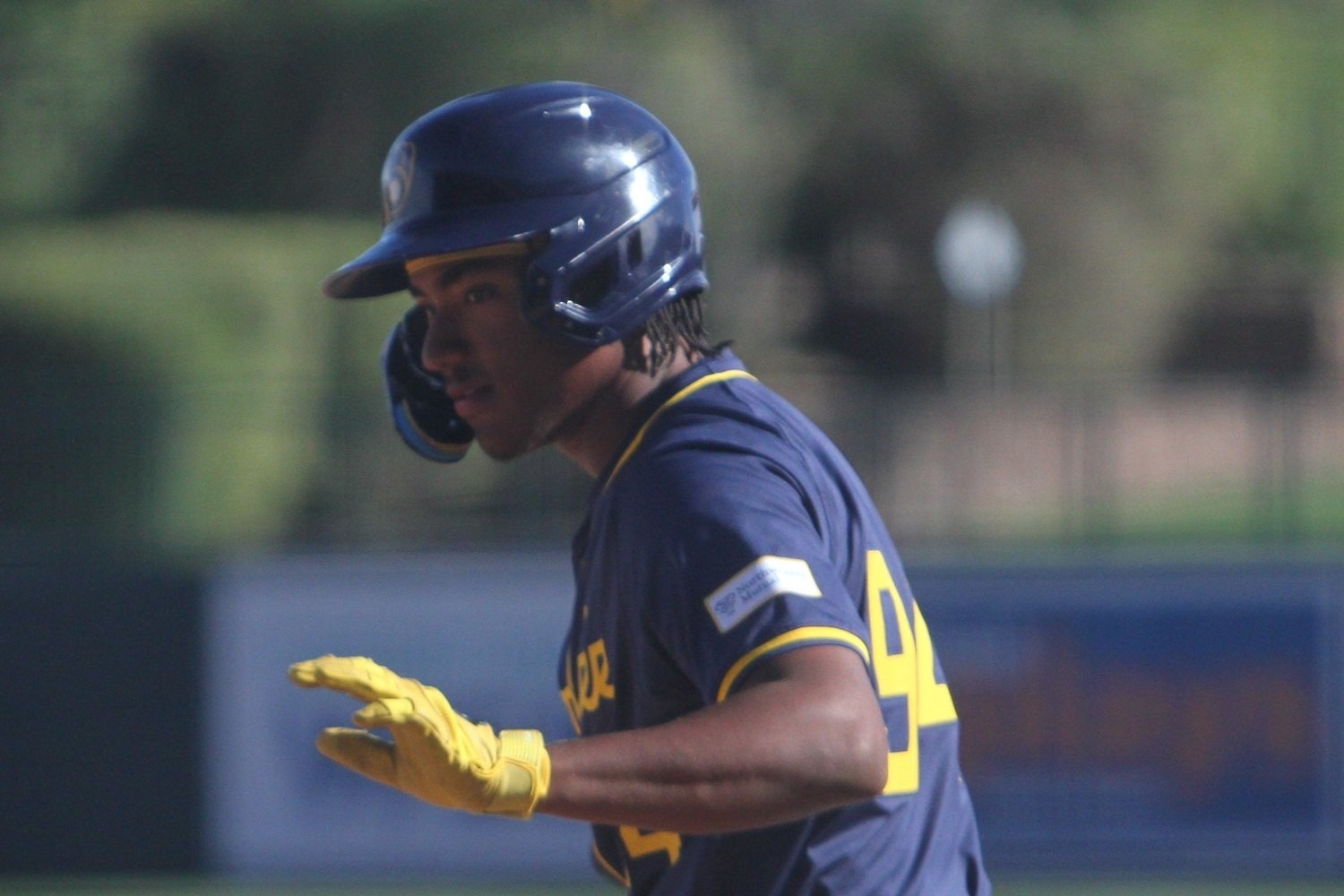 Great talent passes through the Low-A level more often than it did before some recent changes to the structure of the minor leagues. It doesn't always stay very long, though; many players quickly prove themselves worthy of a sterner test. Starting Pitching The biggest names on the 2024 Mudcats pitching staff will be 2023 draft picks Josh Knoth and Bishop Letson. The former, selected with the Crew’s Competitive Balance Round A pick, started on Opening Day and held his own (even if he only went three innings). Letson, an 11th-round pick whom the Crew inked to a deal with a $482,600 bonus, will likely also see some action in the rotation. Joining them in the rotation will be Daniel Corniel and Yorman Galindez, who primarily started with the 2023 Arizona Complex League champion Brewers. Osbrial Mogollon and Manuel Rodriguez also saw rotation action in the ACL. Aidan Maldonado returns after spending 2023 in the Mudcats rotation (for the most part). Some of these players could work out of the bullpen in a “piggyback” role. There are some players seemingly in limbo – Ryne Moore (Who was with the ACL Brewers in 2023) and Alexander Vallecillo (who made 11 starts) aren’t on minor-league rosters and didn’t get released. Bullpen Five players the Brewers either signed or drafted in 2023 may end up in the bullpen. Morris Austin, a 10th-round pick, 16th-round pick Josh Timmerman, and undrafted free agent Blake Whiting saw brief action with the ACL Crew in 2023. Whiting also appeared in a couple of games with the Mudcats. Two other pitchers, 5th-round pick Ryan Birchard and undrafted free agent Harrison Durow, will make their pro debuts in Zebulon. It should be noted that in Carolina, the Brewers will piggyback pitchers, so a pitcher starting in the pen may eventually make some starts, and vice-versa. Jesus Rivero looks to be the closer for the Mudcats. Bayden Root and Jeferson Figueroa also look to be late-inning options for Carolina, while K.C. Hunt and Jeison Pena look to round out the relief corps. Fray Morelo is starting the year on the injured list after missing all of 2023. Catcher The Mudcats may be somewhat unsettled here. Blayberg Diaz was called up to Triple-A Nashville after Jeferson Quero’s injury. That left Satchell Norman and David Garcia as the primary options (with Tayden Hall also listed as a catcher on the Mudcats website) until Diaz returned to the roster April 5 following the Brewers’ signing of Francisco Mejia to the Sounds roster. There are few questions about Norman’s bat. It was a major contributor to the ACL Brewers' championship run. The questions are how Norman can settle in behind the plate, however (11 passed balls and five errors in 28 professional games as a catcher). Brewers coaches have their work cut out for them with Norman’s defense. Garcia is a minor-league veteran who can probably mentor Norman – or help bring along a very raw pitching staff. Hall’s experience behind the plate is very limited. Infield Juan Baez and Cooper Pratt are taking their battle for Shortstop of the Future to Zebulon; Baez handled the hot corner on Opening Day. Both have bats that could explode and lead to rapid climbs up the minor-league ladder in 2024. Baez’s has shown a more dynamic profile in the pros, while Pratt holds an edge on defense (with a solid bat to date). Daniel Guilarte was on the roster, but was reassigned to the ACL Crew after Díaz returned from his Triple-A stint. Miguel Briceno, who has shown he can hit for average, started at second for the Mudcats on Opening Day, despite being officially an outfielder. Tayden Hall will primarily handle first base for the Mudcats, after a solid 2023 split between Maryvale and Zebulon and some bigger numbers at Brisbane over the winter. Outfield Yophery Rodriguez will get his chance to match Jackson Chourio’s rapid 2022 rise through the minor-league system, starting with the Mudcats after a superb DSL season. He’s flashed power, OBP skills, and some speed in the DSL, and the Crew’s aggressive assignment could make things very interesting. Hedbert Perez, Reidy Mercado, Luis Castillo, and Kay-Lan Nicasia will all be returning to Zebulon. Nicasia is very intriguing, not just for his potential three-true-outcome bat, but also because he has a cannon for an arm (10 assists in 84 outfield games). Castillo looks to have a promising power bat of his own, while Perez is looking to break out in 2024 at age 21. Overview The 2024 Mudcats have a lot of exciting talent, from highly-touted pitchers (Knoth, Letson) to position players with superstar potential (Pratt, Báez, Yophery Rodríguez), not to mention some potentially solid players who could break out, like Hall, Briceno, Castillo, and Nicasia. The pitching staff, in particular, could be incredibly exciting for Brewers fans to watch.
 -
Last year, the Wisconsin Timber Rattlers saw some players bounce back big time while others soared to serious heights and persevered through difficult years. What is in store for them in 2024? Let’s take a look. Image courtesy of © Wm. Glasheen/USA TODAY NETWORK-Wisconsin / USA TODAY NETWORK Starting Pitching The 2024 Timber Rattlers rotation includes 2023 13th-round pick Brett Wichrowski, who debuted on Friday. While the absence of Logan Henderson and Joseph Hernandez is a surprise, given Henderson’s superb 2023 performance in Zebulon and Hernandez’s solid 2023, the Rattlers have a lot of depth behind Wichrowski, whose stuff looks to be on par with Henderson’s. Carolina Mudcats starters Patricio Aquino, Will Rudy, and Brian Fitzpatrick have advanced to Appleton, joining Alexander Cornielle and Stiven Cruz, who persevered through rough 2023 campaigns. Aquino and Rudy quietly posted solid numbers for the Mudcats in 2023, while Fitzpatrick took a big step up in Brisbane over the winter. Cornielle put things together near the last half of 2023, while Cruz is looking to rebound after posting a 6.90 ERA. Will Childers, Edwin Jiminez, and Tate Kuehner also made some starts in 2023, while Cameron Wagoner will miss the 2024 season after rebounding from a rough start in 2023. Bullpen The Brewers have decided to challenge some of their 2023 draft picks by having them serve as firemen. Kuehner saw some brief action in the ACL in 2023, while Craig Yoho and Mark Manfredi will make their pro full-season debuts in Appleton. Kuehner looks to be an intriguing option for replacing Hoby Milner down the road. Yoho and Manfredi look very intriguing, with expanded arsenals that may land them in the rotation. While Tanner Shears will be on the injured list all season, Yerlin Rodriguez, who posted 11 saves in 2023, can lock down the ninth inning. Undrafted free agent Aaron Rund made his pro debut Friday, while Chase Costello was solid as a multi-inning option for the Mudcats in 2023. Jacob Polancic is an intriguing signing after three years in independent ball, while Miguel Guerrero and Tyler Wehrle are coming off solid seasons. Catcher Matthew Wood returns to Appleton as the primary catcher after a 2023 campaign that saw him dominate at Carolina and display superb OBP skills in Wisconsin. Whether the left-handed pop that Wood displayed in Carolina returns will be something to watch, and it could determine whether he moves up the ladder or remains behind Wes Clarke and Damien Miller in the pecking order. He will be backed up by Ramon Rodriguez and Alejandro Rodriguez. Ramon has been a long-time pro and has been as high as Triple-A. Alejandro saw action with the ACL champs in Maryvale during the 2023 season. Infielders The Rattlers’ roster is a little misleading. Dylan O’Rae, listed as an outfielder, started at second base on Opening Day. The speedster with superb OBP skills will be worth watching as the Brewers try to figure out what they have. Jesus Chirinos returns to Appleton after a rough 2023 with the Rattlers (he was solid with the Mudcats that season) to be part of the first base mix. Mike Boeve, Luke Adams, and Ben Metzinger will compete for playing time at the hot corner, with all three likely to see action at other positions (Boeve played some second base, Adams and Metzinger saw time at first base). Metzinger did see some action behind the plate in college, while Adams has some corner outfield experience in professional baseball. Jose Acosta, Jadher Areinamo, and Jheremy Vargas have all primarily played second base in professional baseball, but each has a different skill set. Acosta brings some pop to the plate, while Vargas has an intriguing OBP/speed skillset. Areinamo has a high-contact bat. Gregory Barrios will handle shortstop. Outfield The Rattlers have four outfielders listed on the roster. Luis Lara returns to man center field and could move up to Biloxi sometime soon if he plays like he did in 2023. Lara has speed, defense, and the ability to hit for contact to the plate. Eduarqi Fernandez has flashed some power, while Terrence Dotson is looking to find some traction after being drafted in 2019. Dylan O’Rae, while listed as an outfielder, has primarily played infield to date in his pro career. Overview The strength of this Timber Rattlers team looks to be their pitching staff, which has a lot of depth, particularly in the rotation, while the bullpen could have some real gems. This is not to say there aren’t some potential offensive stars in Boeve, Adams, and Lara, but this is a team that will count on its pitching to win games. View full article
-
Brewers Farm System 2024 Preview: Wisconsin Timber Rattlers
Harold Hutchison posted an article in Minor Leagues
 Starting Pitching The 2024 Timber Rattlers rotation includes 2023 13th-round pick Brett Wichrowski, who debuted on Friday. While the absence of Logan Henderson and Joseph Hernandez is a surprise, given Henderson’s superb 2023 performance in Zebulon and Hernandez’s solid 2023, the Rattlers have a lot of depth behind Wichrowski, whose stuff looks to be on par with Henderson’s. Carolina Mudcats starters Patricio Aquino, Will Rudy, and Brian Fitzpatrick have advanced to Appleton, joining Alexander Cornielle and Stiven Cruz, who persevered through rough 2023 campaigns. Aquino and Rudy quietly posted solid numbers for the Mudcats in 2023, while Fitzpatrick took a big step up in Brisbane over the winter. Cornielle put things together near the last half of 2023, while Cruz is looking to rebound after posting a 6.90 ERA. Will Childers, Edwin Jiminez, and Tate Kuehner also made some starts in 2023, while Cameron Waggoner will miss the 2024 season after rebounding from a rough start in 2023. Bullpen The Brewers have decided to challenge some of their 2023 draft picks by having them serve as firemen. Kuehner saw some brief action in the ACL in 2023, while Craig Yoho and Mark Manfredi will make their pro debuts in Appleton. Kuehner looks to be an intriguing option for replacing Hoby Milner down the road. Yoho and Manfredi look very intriguing, with expanded arsenals that may land them in the rotation. While Tanner Shears will be on the injured list all season, Yerlin Rodriguez, who posted 11 saves in 2023, can lock down the ninth inning. Undrafted free agent Aaron Rund made his pro debut Friday, while Chase Costello was solid as a multi-inning option for the Mudcats in 2023. Jacob Polancic is an intriguing signing after three years in independent ball, while Miguel Guerrero and Tyler Wehrle are coming off solid seasons. Catcher Matthew Wood returns to Appleton as the primary catcher after a 2023 campaign that saw him dominate at Carolina and display superb OBP skills in Wisconsin. Whether the left-handed pop that Wood displayed in Carolina returns will be something to watch, and it could determine whether he moves up the ladder or remains behind Wes Clarke and Damien Miller in the pecking order. He will be backed up by Ramon Rodriguez and Alejandro Rodriguez. Ramon has been a long-time pro and has been as high as Triple-A. Alejandro saw action with the ACL champs in Maryvale during the 2023 season. Infielders The Rattler's roster is a little misleading. Dylan O’Rae, listed as an outfielder, started at second base on Opening Day. The speedster with superb OBP skills will be worth watching as the Brewers try to figure out what they have. Jesus Chirinos returns to Appleton after a rough 2023 with the Rattlers (he was solid with the Mudcats that season) to be part of the first base mix. Mike Boeve, Luke Adams, and Ben Metzinger will compete for playing time at the hot corner, with all three likely to see action at other positions (Boeve played some second base, Adams and Metzinger saw time at first base). Metzinger did see some action behind the plate in college, while Adams has some corner outfield experience in professional baseball. Jose Acosta, Jadher Areinamo, and Jheremy Vargas have all primarily played second base in professional baseball, but each has a different skill set. Acosta brings some pop to the plate, while Vargas has an intriguing OBP/speed skillset. Areinamo has a high-contact bat. Gregory Barrios will handle shortstop. Outfield The Rattlers have four outfielders listed on the roster. Luis Lara returns to man center field and could move up to Biloxi sometime soon if he plays like he did in 2023. Lara has speed, defense, and the ability to hit for contact to the plate. Eduarqi Fernandez has flashed some power, while Terrence Dotson is looking to find some traction after being drafted in 2019. Dylan O’Rae, while listed as an outfielder, has primarily played infield to date in his pro career. Overview The strength of this Timber Rattlers team looks to be their pitching staff, which has a lot of depth, particularly in the rotation, while the bullpen could have some real gems. This is not to say there aren’t some potential offensive stars in Boeve, Adams, and Lara, but this is a team that will count on its pitching to win games.
 -
While the Triple-A Nashville Sounds have been underway for a week, the rest of the Milwaukee Brewers' full-season minor-league affiliates get going this weekend. Let's take a few minutes to preview the Biloxi Shuckers. Image courtesy of © Curt Hogg / USA TODAY NETWORK In some ways, the Shuckers will find it hard to top 2023, when Jackson Chourio, Jeferson Quero, and Tyler Black headlined an exciting team. Can the 2024 version be as exciting? Let’s look and see. Starting Pitching Jacob Misiorowski fronts the Shuckers rotation. He’s widely seen as the most exciting Brewers pitching prospect in years. He’s joined by Bradley Blalock (acquired from the Red Sox in the Luis Urías trade), Chad Patrick, Adam Seminaris (who is looking to rebound from an injury-plagued 2023), Tyler Woessner, and Nate Peterson. While Misiorowski gets the hype, and Blalock is a solid rotation prospect, Woessner, Patrick, Peterson, and Seminaris all could emerge as under-the-radar candidates to take a step up as starters. Coleman Crow and Brandon Knarr are opening the year on the 60-day injured list. Bullpen James Meeker and TJ Shook return after being the arguable MVPs of the staff. Both have proven to be superb relievers and solid starters. Nick Merkel looks ready to join them as multi-inning firemen. Justin King and Shane Smith look to be a solid 1-2 punch as future late-inning assets for the Brewers. The second tier of the Shuckers bullpen has potential as well. Russell Smith and Justin Yeager are looking to rebound from difficult 2023 campaigns, while Sam Gardner and Sam Carlson also could enter the bullpen picture. Catchers Wes Clarke’s surprising return comes with what may be a new primary position: he is listed as a catcher on Biloxi’s roster. Clarke, who outperformed Jackson Chourio in multiple offensive categories in 2023, has been pretty solid behind the plate as a backup. The only question is his ability to keep baserunners honest, but otherwise, he could be a solid number two catcher who can also handle first base and DH duties. Clarke is not the only guy behind the plate He will split time with Darrien Miller, an under-the-radar prospect whose OBP skills and left-handed bat make him an attractive option as a future second catcher for the Crew, especially with Quero’s health questions. Andy Yerzy will be the third catcher for the Shuckers, possibly seeing some time when Clarke or Miller handle DH duties, but most likely being a pure backup. Infielders There is a lot of sheer talent in the Shuckers infield. First-round picks Brock Wilken (third base) and Eric Brown Jr. (shortstop) are on the left side; both have flashed some serious offensive talent. Brown has missed time with injury, while Wilken’s rapid rise in 2023 stalled out at Biloxi, but both could very well be in Milwaukee on Opening Day 2026. At first base, Ernesto Martinez has been developing as a prime prospect without the hype in a long, Tyrone Taylor-esque journey. His defense has been superb, and offensively, he profiles as an Eric Thames-type hitter who can steal a lot of bases. Wes Clarke is officially listed as a first baseman, but may see limited action there given likely duties behind the plate and in the designated hitter rotation. Freddy Zamora and Ethan Murray will likely compete for playing time at second base, while Zavier Warren could get playing time at both third base and first base behind Wilken and Martinez, while chipping in at designated hitter. They might not get a lot of hype, but all remain solid prospects. Outfielders Perhaps the biggest surprise is the presence of one-time shortstop prospect Eduardo Garcia in the outfield. Officially listed as an infielder on the Shuckers’ site, the release and spring training game lineups have him in center field. He will be joined by Carlos D. Rodriguez, 2023 standout Lamar Sparks, and the highly versatile Noah Campbell. Rodriguez is a contact hitter, while Sparks provides OBP skills and power for the Shuckers. Martinez and Warren could also see some time in the outfield, with the former handling center field competently in a brief stint in his breakout 2021 campaign, while the latter’s seen some action in left field in spring training games. Overview Aside from Wilken, Brown, and Misiorowski, the Shuckers roster may not have the pure star power of Chourio, Black, Quero, Uribe, and Rodríguez, but there are a lot of very talented players on this roster, some of whom may be as valuable to an MLB roster as the potential stars. The real value in this team may lie in its under-the-radar players. What do you think of the Shuckers? Let us know in the comments below! View full article
-
Brewers Farm System 2024 Preview: Biloxi Shuckers
Harold Hutchison posted an article in Minor Leagues
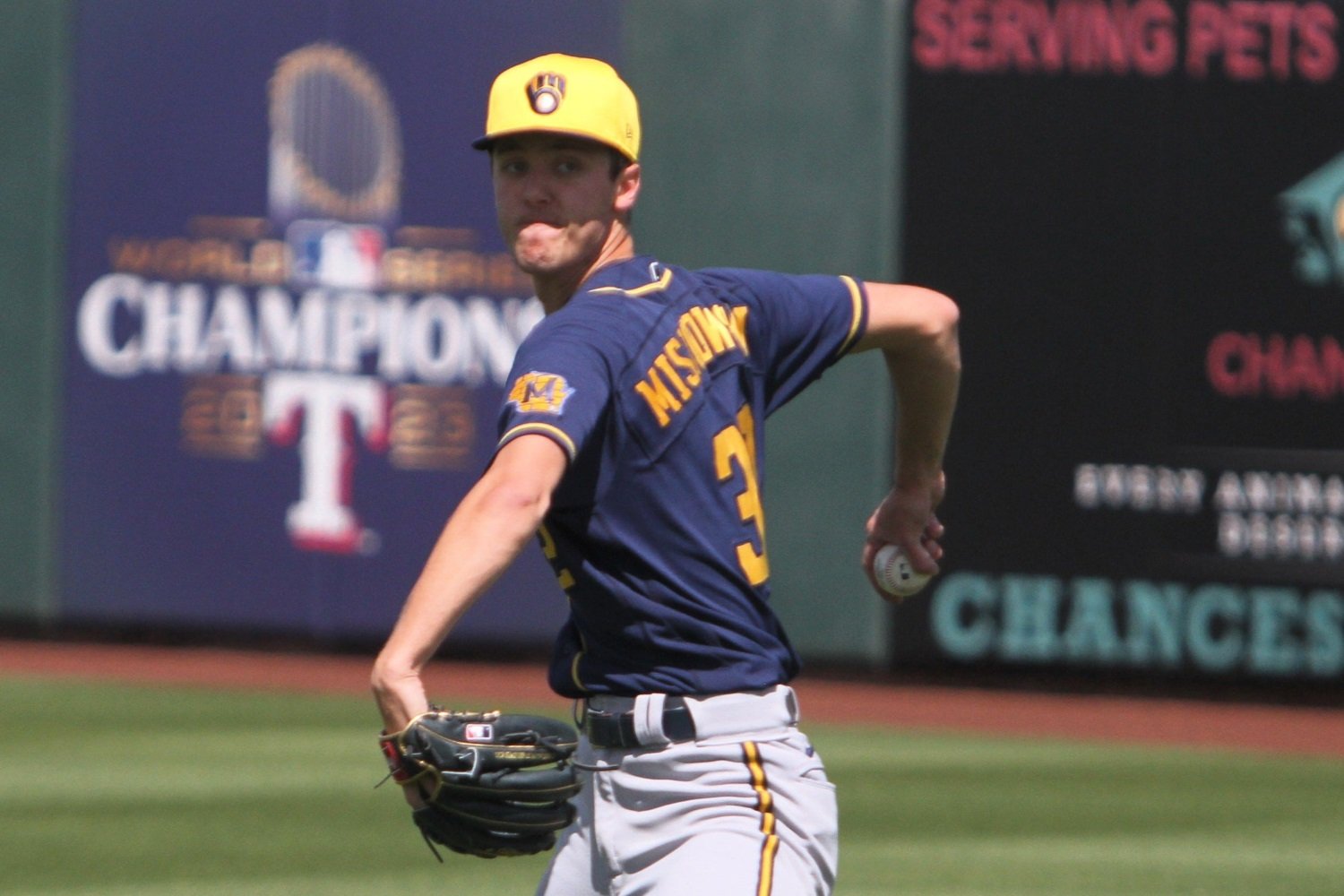 In some ways, the Shuckers will find it hard to top 2023, when Jackson Chourio, Jeferson Quero, and Tyler Black headlined an exciting team. Can the 2024 version be as exciting? Let’s look and see. Starting Pitching Jacob Misiorowski fronts the Shuckers rotation. He’s widely seen as the most exciting Brewers pitching prospect in years. He’s joined by Bradley Blalock (acquired from the Red Sox in the Luis Urías trade), Chad Patrick, Adam Seminaris (who is looking to rebound from an injury-plagued 2023), Tyler Woessner, and Nate Peterson. While Misiorowski gets the hype, and Blalock is a solid rotation prospect, Woessner, Patrick, Peterson, and Seminaris all could emerge as under-the-radar candidates to take a step up as starters. Coleman Crow and Brandon Knarr are opening the year on the 60-day injured list. Bullpen James Meeker and TJ Shook return after being the arguable MVPs of the staff. Both have proven to be superb relievers and solid starters. Nick Merkel looks ready to join them as multi-inning firemen. Justin King and Shane Smith look to be a solid 1-2 punch as future late-inning assets for the Brewers. The second tier of the Shuckers bullpen has potential as well. Russell Smith and Justin Yeager are looking to rebound from difficult 2023 campaigns, while Sam Gardner and Sam Carlson also could enter the bullpen picture. Catchers Wes Clarke’s surprising return comes with what may be a new primary position: he is listed as a catcher on Biloxi’s roster. Clarke, who outperformed Jackson Chourio in multiple offensive categories in 2023, has been pretty solid behind the plate as a backup. The only question is his ability to keep baserunners honest, but otherwise, he could be a solid number two catcher who can also handle first base and DH duties. Clarke is not the only guy behind the plate He will split time with Darrien Miller, an under-the-radar prospect whose OBP skills and left-handed bat make him an attractive option as a future second catcher for the Crew, especially with Quero’s health questions. Andy Yerzy will be the third catcher for the Shuckers, possibly seeing some time when Clarke or Miller handle DH duties, but most likely being a pure backup. Infielders There is a lot of sheer talent in the Shuckers infield. First-round picks Brock Wilken (third base) and Eric Brown Jr. (shortstop) are on the left side; both have flashed some serious offensive talent. Brown has missed time with injury, while Wilken’s rapid rise in 2023 stalled out at Biloxi, but both could very well be in Milwaukee on Opening Day 2026. At first base, Ernesto Martinez has been developing as a prime prospect without the hype in a long, Tyrone Taylor-esque journey. His defense has been superb, and offensively, he profiles as an Eric Thames-type hitter who can steal a lot of bases. Wes Clarke is officially listed as a first baseman, but may see limited action there given likely duties behind the plate and in the designated hitter rotation. Freddy Zamora and Ethan Murray will likely compete for playing time at second base, while Zavier Warren could get playing time at both third base and first base behind Wilken and Martinez, while chipping in at designated hitter. They might not get a lot of hype, but all remain solid prospects. Outfielders Perhaps the biggest surprise is the presence of one-time shortstop prospect Eduardo Garcia in the outfield. Officially listed as an infielder on the Shuckers’ site, the release and spring training game lineups have him in center field. He will be joined by Carlos D. Rodriguez, 2023 standout Lamar Sparks, and the highly versatile Noah Campbell. Rodriguez is a contact hitter, while Sparks provides OBP skills and power for the Shuckers. Martinez and Warren could also see some time in the outfield, with the former handling center field competently in a brief stint in his breakout 2021 campaign, while the latter’s seen some action in left field in spring training games. Overview Aside from Wilken, Brown, and Misiorowski, the Shuckers roster may not have the pure star power of Chourio, Black, Quero, Uribe, and Rodríguez, but there are a lot of very talented players on this roster, some of whom may be as valuable to an MLB roster as the potential stars. The real value in this team lies in the under-the-radar players, which have hit big for the Brewers in years past (Brent Suter and Andruw Monasterio being two such examples of way under-the-radar prospects, while Brandon Woodruff and Corey Hart were also not the most hyped when picked). What do you think of the Shuckers? Let us know in the comments below!
 -
The Biggest Storylines In The Brewers Farm System For 2024
Harold Hutchison posted an article in Minor Leagues
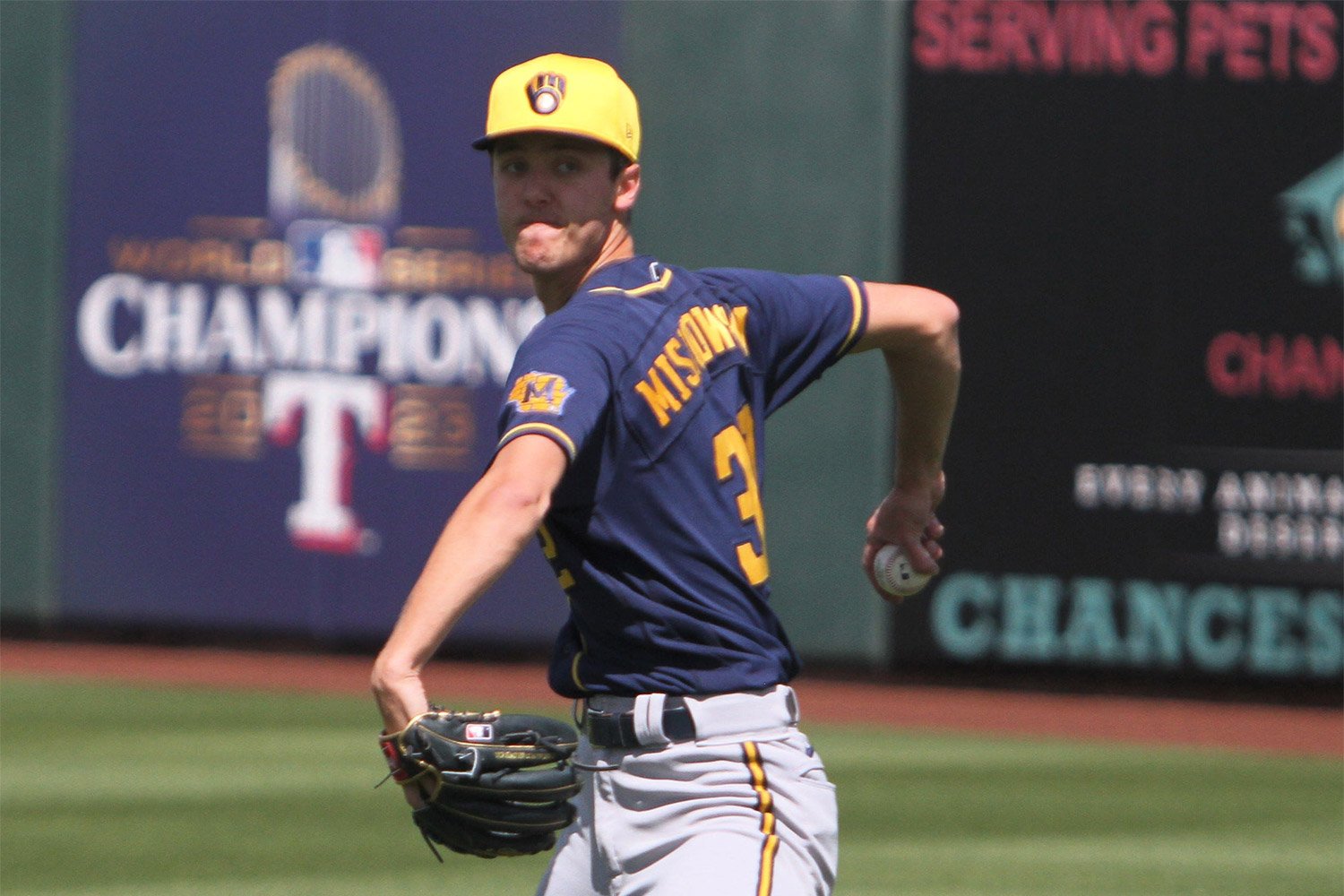 1. The Development Of Joey Wiemer Joey Wiemer was called up to the majors when Luis Urias injured his hamstring on Opening Day in 2023. He spent most of the season with Milwaukee, providing excellent defense in center field once Garrett Mitchell landed on the injured list after hurting his shoulder while running the bases. That said, while Wiemer had plenty of power, he also had serious holes in his swing. He had a hot streak in June, but he struggled most of the season while facing major-league breaking balls. The Crew optioned him to Nashville so he could work on his swing with regular at-bats. At present, Wiemer could be a platoon option against left-handed pitchers - and his career would look a lot like former Brewer Keon Broxton’s. But he could be more than just a Keon Broxton clone with a mullet. How he adjusts his swing – and if it can be effective at the major-league level, could determine his future in Milwaukee. Jackson Chourio will have one spot in Milwaukee’s future outfield, and Sal Frelick and Garrett Mitchell are strong contenders for time as well – with Luis Lara and Yophery Rodriguez coming up through the minors – to say nothing of less-hyped prospects. 2. Tyler Black’s Future Position Tyler Black came into spring training as arguably the top contender to handle third base – justifiably so, based on his 2023 performance. The Corbin Burnes trade and the crowded outfield, though, changed that. Now, Black is a man arguably without a position. At second base and the outfield in 2022, he had injury troubles. Third base may be blocked in the short term by Joey Ortiz and Frelick, with Brock Wilken being a long-term fixture there. Could he end up at first base? It’s possible, but at five feet, ten inches, he is arguably a little short for that position. Designated hitter could be an option, but the Brewers may want Christian Yelich there from 2025 onward. Black needs to claim a position soon because his bat has nothing left to prove in the minors. If he can’t nail down a position, he could end up being traded, and while he could provide the Brewers with an excellent short-to-medium-term piece, the Crew would be better off in the long term having Black play for them. 3. The Imminent Arrival Of The Young Guns Jacob Misiorowski, Carlos F. Rodriguez, and Robert Gasser rank high on the MLB Pipeline and Brewer Fanatic Top Prospects lists. The big question is when they will arrive in Milwaukee. Each also has an individual question to answer as well. In Misiorowski’s case, there is another question: Is he a dominating ace or the next Josh Hader? Misiorowski’s stuff would work as a late-inning reliever right now. There are seasons where he’d have been rushed up for that role, and it would arguably have been decisive. The Brewers are, of course, hoping he makes it as a starter – and it’s the right call at this point. If he comes up in 2024, his likely destiny will be as a top reliever in the bullpen – which can be quite lucrative (see Josh Hader’s free-agent deal and salaries in his last two years of arbitration). If he stays in the minors all year, he could be the next ace for the Crew. Rodriguez and Gasser's situation has changed since some of our past reviews. The Corbin Burnes trade leaves the Brewers with a need to fill up innings from a decent rotation that is without two of its “Big Three” (Brandon Woodruff will miss most of 2024 with a shoulder injury), so they could be taking a one-way ride from Nashville to Milwaukee. The Brewers have a lot to look forward to from them and some other prospects – both hyped and under the radar – and it is a question of when they get that plane ticket. 4. Which Young Players Make The Jackson Chourio Jump? Jackson Chourio’s jump from Single-A Carolina to Double-A Biloxi in 2022 was fun for Brewers fans to watch. Jacob Misiorowski made a similar climb up the ladder in 2023. Could it happen again for some other prospects? The Brewers have several legitimate contenders in their farm system. Perhaps the most obvious in a pure apples-to-apples comparison is Yophery Rodriguez. Like Chourio, he is an outfielder who posted outstanding numbers in the Dominican Summer League. Their age 17 seasons came out with similar OPS totals (Chourio .833, Rodriguez .842), but a deeper dive reveals that Rodriguez’s bat may be closer to a “three true outcomes” (homers, walks, and strikeouts) profile than Chourio’s. Rodriguez posted 87 true outcomes in 178 at-bats (six homers, 41 walks, 40 strikeouts) compared to 56 (five homers, 23 walks, 28 strikeouts) in 159 at-bats for Chourio. If he can handle stateside pitching, he could rocket up the ladder as Chourio did. Then we get to Juan Baez. Baez is very polarizing: Nobody doubts his bat – he posted a .904 OPS between the ACL Brewers and Carolina Mudcats in 2023. His defense (an .833 fielding percentage at shortstop) is cause for concern (and calls to shift him elsewhere on the diamond). Baez’s ACL teammate, Satchell Norman, is similar in that regard. His bat looks to be very productive, but he had 11 passed balls in 28 professional games behind the plate. If he were a designated hitter or corner outfielder, he just might rocket up the minor-league ladder. Cooper Pratt, who saw some at-bats in Maryvale, could also have a similar rise if he can boost his power production (the OBP skills and defense are there, as is a good hit-for-contact tool). Then there is Demetrio Nadal, who is ignored in the now-crowded third base picture occupied by Sal Frelick, Tyler Black, Brock Wilken, Eric Bitonti, and Mike Boeve. Nadal has superb OBP skills, good bat-to-ball skills, and some speed and developing power. There could be plenty of others, including some pitchers, who could also rocket up the ladder. 5. The Comebacks From Injury Aaron Ashby missed most of 2023 (and never appeared in Milwaukee) due to a shoulder injury and has been optioned to Nashville on an indefinite rehabilitation assignment. In the minors, under-rated prospects Brandon Knarr and Adam Seminaris also seek to return after lengthy stays on the injured list. We could even see Brandon Woodruff make similar appearances as he tries to return. Similar questions will surround Coleman Crow (recovering from Tommy John surgery) and Easton McGee (who signed a two-year minor-league contract). What do you think will be the big storylines in Milwaukee’s farm system? Let us know in the comments below.
 -
Your 2024 Biloxi Shuckers
Harold Hutchison replied to Jim Goulart's topic in Brewers Minor League Talk
Or he ends up an option behind the plate, given Quero's fragility (Quero's highest number of games played is 95 in 2022, and he probably won't top it this year). Clarke has a very good power bat, and he's been available. -
The Nashville Sounds will be important for Brewers fans to follow – because a number of players there will likely be in Milwaukee at some point. So, how do the Sounds shape up in 2024? Let’s look them over, and there are some surprising absences from the Opening Day roster. Image courtesy of © Joe Camporeale-USA TODAY Sports Starting Pitching The Sounds took a hit when Robert Gasser went on the injured list with a bone spur in his elbow. While not as serious as other problems, it does delay his expected MLB debut. Carlos F. Rodriguez started on Opening Day. He is likely to be joined by Evan McKendry, Janson Junk, Tobias Myers, and Aaron Ashby. Gasser will return at some point, making this a promising rotation – even without Jacob Misiorowski, who will begin the year in Biloxi. The team also has Easton McGee and Coleman Crow on the 60-day injured list. Neither will likely pitch much – if at all – in 2024, but both could be future depth for the Brewers. Misiorowski could likely end up in Nashville at some point in 2024, as could some other pitchers on the Shuckers’ roster. Bullpen There are some surprises here – notably the initial absence of James Meeker after a superb 2023 in Biloxi. Lefty Darrell Thompson is recovering from sports hernia surgery. But the Sounds bullpen has some very talented options, but turning to them could make things interesting vis-à-vis the 40-man roster. The only reliever on the 40-man is J.B. Bukauskas. Many others, including the underrated Nick Bennett and Blake Holub, would need to be added if they’re needed in Milwaukee. Harold Chirino looks to be at the cusp of MLB following a Tyrone Taylor-esque pro career, while Jared Koenig could be a Thompson-esque find. Catcher The surprising omission of Wes Clarke (yes, he’s officially a first baseman) after his 2023 breakout season may not last for long, given the apparent injury to top prospect Jeferson Quero on Opening Day. Clarke may end up in Nashville to fill the hole caused by Quero’s injury. Prior to the injury, Quero, an MLB Pipeline Top-100 prospect, joined Nick Kahle and Brian Navaretto on the Sounds’ Opening Day roster—a very different situation than what many Brewers fans thought at the start of spring training. Austin Nola was expected to get significant time as a mentor to Quero (and compete to back up William Contreras in Milwaukee). The arrival of Gary Sanchez changed all that. Quero’s recovery from his shoulder injury will be closely watched, as much of his value was in outstanding defense. Infielders Surprisingly, Clarke was not in Nashville to handle first base for the Sounds after he outperformed Jackson Chourio in multiple offensive categories in Biloxi during the 2023 season. Still, between Tyler Black, Owen Miller, and Patrick Dorrian, the Sounds are sound at first. Second base could be interesting, with Vinny Capra, Black, Miller, and Yonny Hernandez as options. Capra could be the primary shortstop, with Hernandez filling. All of these players could conceivably handle the hot corner as well. In addition, Isaac Collins, officially listed as an outfielder, could see some action at second base and third base, as he did in 2023 with the Shuckers. The positional flexibility of the Shuckers' infield could be crucial—Capra and Miller are both on the 40-man and could be called up to Milwaukee in case of injury, while Black’s addition to the 40-man is probably just a matter of time. Outfielders Joey Wiemer is on the Sounds’ Opening Day roster for the second straight year – and this time, they will be hoping he can improve his swing. He and Chris Roller are on the 40-man roster, so they would be first in line to be called up. Collins brings excellent on-base ability and could man left field, while Brewer Hicklen and Chavez Young round out the Sounds’ official outfielders. Don’t be surprised if Tyler Black and Owen Miller see some time in the outfield, as the former looks for an MLB position, and the latter fills in for purposes of depth. On the flip side, Collins could likely see plenty of time in the infield, as he did in Biloxi. Overview Like all Triple-A rosters, the Sounds roster has its usual mix of prospects and veteran pros. The more intriguing storylines in the Music City will include Wiemer’s swing and Black’s search for a defensive home. Brewers fans will also be watching anxiously for word on Quero’s shoulder. On the mound, Rodriguez, Gasser, Junk, McKendry, Myers, and Ashby all could find themselves in Milwaukee at some point – and probably sooner rather than later. Bukauskas and some of the other relievers also may end up on a Milwaukee-Nashville shuttle. That said, Nashville still has some exciting talent that Brewers fans will eagerly watch in 2024. View full article
-
Brewers Farm System 2024 Preview: Nashville Sounds
Harold Hutchison posted an article in Minor Leagues
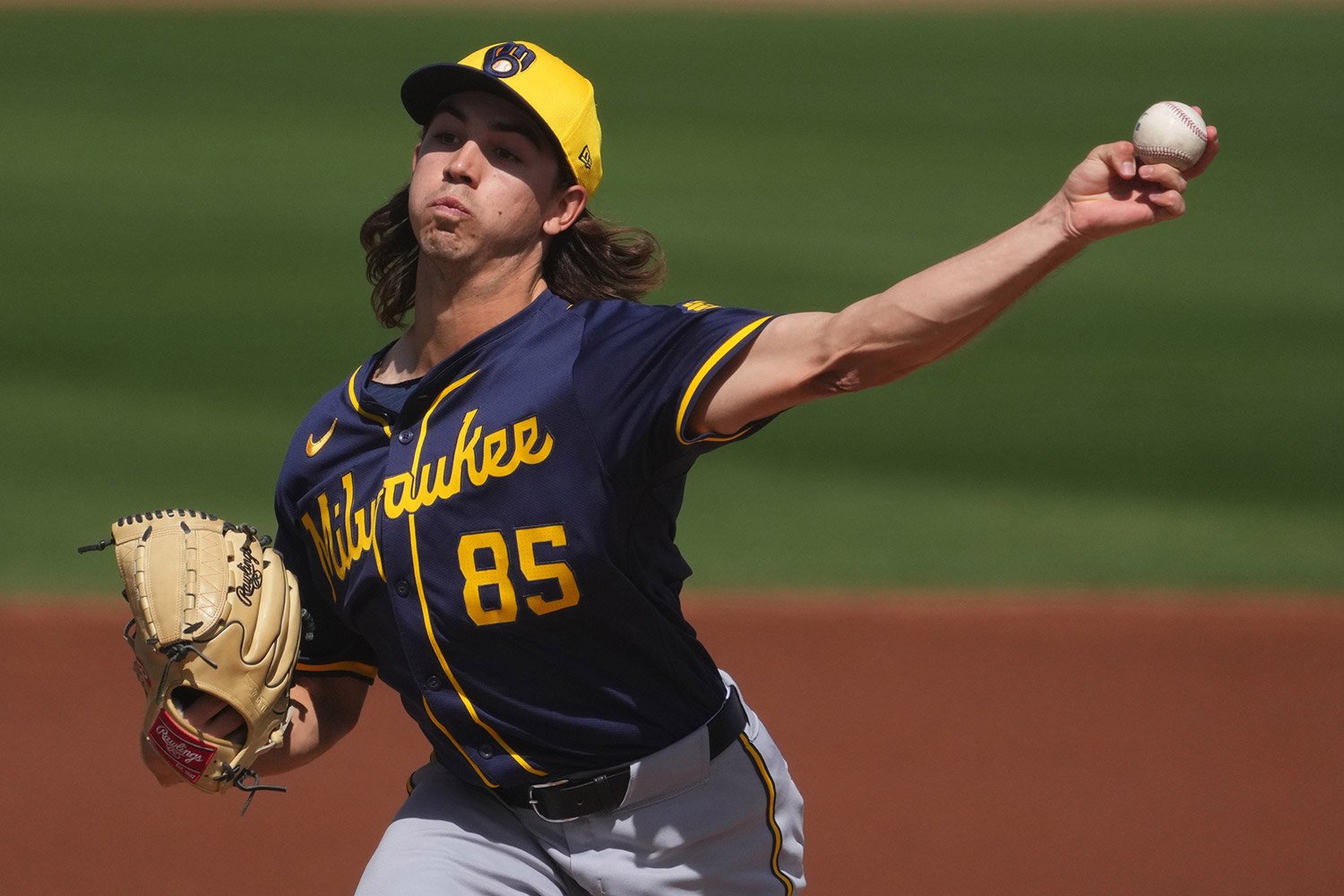 Starting Pitching The Sounds took a hit when Robert Gasser went on the injured list with a bone spur in his elbow. While not as serious as other problems, it does delay his expected MLB debut. Carlos F. Rodriguez started on Opening Day. He is likely to be joined by Evan McKendry, Janson Junk, Tobias Myers, and Aaron Ashby. Gasser will return at some point, making this a promising rotation – even without Jacob Misiorowski, who will begin the year in Biloxi. The team also has Easton McGee and Coleman Crow on the 60-day injured list. Neither will likely pitch much – if at all – in 2024, but both could be future depth for the Brewers. Misiorowski could likely end up in Nashville at some point in 2024, as could some other pitchers on the Shuckers’ roster. Bullpen There are some surprises here – notably the initial absence of James Meeker after a superb 2023 in Biloxi. Lefty Darrell Thompson is recovering from sports hernia surgery. But the Sounds bullpen has some very talented options, but turning to them could make things interesting vis-à-vis the 40-man roster. The only reliever on the 40-man is J.B. Bukauskas. Many others, including the underrated Nick Bennett and Blake Holub, would need to be added if they’re needed in Milwaukee. Harold Chirino looks to be at the cusp of MLB following a Tyrone Taylor-esque pro career, while Jared Koenig could be a Thompson-esque find. Catcher The surprising omission of Wes Clarke (yes, he’s officially a first baseman) after his 2023 breakout season may not last for long, given the apparent injury to top prospect Jeferson Quero on Opening Day. Clarke may end up in Nashville to fill the hole caused by Quero’s injury. Prior to the injury, Quero, an MLB Pipeline Top-100 prospect, joined Nick Kahle and Brian Navaretto on the Sounds’ Opening Day roster—a very different situation than what many Brewers fans thought at the start of spring training. Austin Nola was expected to get significant time as a mentor to Quero (and compete to back up William Contreras in Milwaukee). The arrival of Gary Sanchez changed all that. Quero’s recovery from his shoulder injury will be closely watched, as much of his value was in outstanding defense. Infielders Surprisingly, Clarke was not in Nashville to handle first base for the Sounds after he outperformed Jackson Chourio in multiple offensive categories in Biloxi during the 2023 season. Still, between Tyler Black, Owen Miller, and Patrick Dorrian, the Sounds are sound at first. Second base could be interesting, with Vinny Capra, Black, Miller, and Yonny Hernandez as options. Capra could be the primary shortstop, with Hernandez filling. All of these players could conceivably handle the hot corner as well. In addition, Isaac Collins, officially listed as an outfielder, could see some action at second base and third base, as he did in 2023 with the Shuckers. The positional flexibility of the Shuckers' infield could be crucial—Capra and Miller are both on the 40-man and could be called up to Milwaukee in case of injury, while Black’s addition to the 40-man is probably just a matter of time. Outfielders Joey Wiemer is on the Sounds’ Opening Day roster for the second straight year – and this time, they will be hoping he can improve his swing. He and Chris Roller are on the 40-man roster, so they would be first in line to be called up. Collins brings excellent on-base ability and could man left field, while Brewer Hicklen and Chavez Young round out the Sounds’ official outfielders. Don’t be surprised if Tyler Black and Owen Miller see some time in the outfield, as the former looks for an MLB position, and the latter fills in for purposes of depth. On the flip side, Collins could likely see plenty of time in the infield, as he did in Biloxi. Overview Like all Triple-A rosters, the Sounds roster has its usual mix of prospects and veteran pros. The more intriguing storylines in the Music City will include Wiemer’s swing and Black’s search for a defensive home. Brewers fans will also be watching anxiously for word on Quero’s shoulder. On the mound, Rodriguez, Gasser, Junk, McKendry, Myers, and Ashby all could find themselves in Milwaukee at some point – and probably sooner rather than later. Bukauskas and some of the other relievers also may end up on a Milwaukee-Nashville shuttle. That said, Nashville still has some exciting talent that Brewers fans will eagerly watch in 2024.
 -
As spring training comes to a close, it is time to turn to the games that actually count in the regular season. Just what should Brewers fans be looking for as the season progresses? 1. The Development Of Joey Wiemer Joey Wiemer got his call-up to the majors when Luis Urias injured his hamstring on Opening Day in 2023. He spent most of the season with Milwaukee, providing excellent defense in center field once Garrett Mitchell landed on the injured list after hurting his shoulder while running the bases. That said, while Wiemer had plenty of power, he also had serious holes in his swing. He had a hot streak in June, but for most of the season, he struggled while facing major-league breaking balls. The Crew optioned him to Nashville so he could work on his swing with regular at-bats. At present, Wiemer could be a platoon option against left-handed pitchers - and his career would look a lot like former Brewer Keon Broxton’s. But he could be more than just a Keon Broxton clone with a mullet. How he adjusts his swing – and if it can be effective at the major-league level, could determine his future in Milwaukee. Jackson Chourio will have one spot in Milwaukee’s future outfield, and Sal Frelick and Garrett Mitchell are strong contenders for time as well – with Luis Lara and Yophery Rodriguez coming up through the minors – to say nothing of less-hyped prospects. 2. Tyler Black’s Future Position Tyler Black came into spring training as arguably the top contender to handle third base – justifiably so, based on his 2023 performance. The Corbin Burnes trade and the crowded outfield, though, changed that. Now, Black is a man arguably without a position. At second base and the outfield in 2022, he had injury troubles. Third base may be blocked in the short term by Joey Ortiz and Frelick, with Brock Wilken being a long-term fixture there. Could he end up at first base? It’s possible, but at five feet, ten inches, he is arguably a little short for that position. Designated hitter could be an option, but the Brewers may want Christian Yelich there from 2025 on. Black needs to claim a position soon – because his bat has nothing left to prove in the minors. If he can’t nail down a position, then he could end up being traded, and while he could provide the Brewers an excellent short-to-medium-term piece, the Crew would be better off in the long term having Black play for them. 3. The Imminent Arrival Of The Young Guns Jacob Misiorowski, Carlos F. Rodriguez, and Robert Gasser all rank pretty high on both the MLB Pipeline and Brewer Fanatic Top Prospects lists. The big question is when will they arrive in Milwaukee? Each also has an individual question to answer as well. In Misiorowski’s case, there is another question: Is he a dominating ace or the next Josh Hader? Misiorowski’s stuff would work as a late-inning reliever right now. In fact, there are seasons where he’d have been rushed up for that role and it would arguably have been decisive. The Brewers are, of course, hoping he makes it as a starter – and it’s the right call at this point. If he comes up in 2024, his likely destiny will be as a top reliever in the bullpen – which can be quite lucrative (see Josh Hader’s free-agent deal and salaries in his last two years of arbitration). If he stays in the minors all year, he could be the next ace for the Crew. For Rodriguez and Gasser, the situation has changed since some of our past reviews. The Corbin Burnes trade leaves the Brewers with a need to fill up innings from a decent rotation that is without two of its “Big Three” (Brandon Woodruff will miss most of 2024 with a shoulder injury), so they could be taking a one-way ride from Nashville to Milwaukee. The Brewers have a lot to look forward to from them and some other prospects – both hyped and under-the-radar – and it really is a question of when they get that plane ticket. 4. Which Young Players Make The Jackson Chourio Jump? Jackson Chourio’s jump from Single-A Carolina to Double-A Biloxi in 2022 was fun for Brewers fans to watch. Jacob Misiorowski made a similar climb up the ladder in 2023. Could it happen again for some other prospects? The Brewers have several legitimate contenders in their farm system. Perhaps the most obvious in a pure apples-to-apples comparison is Yophery Rodriguez. Like Chourio, he is an outfielder who posted outstanding numbers in the Dominican Summer League. Their age 17 seasons came out with similar OPS totals (Chourio .833, Rodriguez .842), but a deeper dive reveals that Rodriguez’s bat may be closer to a “three true outcomes” (homers, walks, and strikeouts) profile than Chourio’s. Rodriguez posted 87 true outcomes in 178 at-bats (six homers, 41 walks, 40 strikeouts) compared to 56 (five homers, 23 walks, 28 strikeouts) in 159 at-bats for Chourio. If he can handle stateside pitching, he could rocket up the ladder the way Chourio did. Then we get to Juan Baez. Baez is very polarizing: Nobody doubts his bat – he posted a .904 OPS between the ACL Brewers and Carolina Mudcats in 2023. It’s just his defense (an .833 fielding percentage at shortstop) that is cause for concern (and calls to shift him elsewhere on the diamond). Baez’s ACL teammate, Satchell Norman, is similar in that regard. His bat looks to be very productive, but he had 11 passed balls in 28 professional games behind the plate. If he were a designated hitter or corner outfielder, he just might rocket up the minor-league ladder. Cooper Pratt, who saw some at-bats in Maryvale, could also have a similar rise if he can boost his power production (the OBP skills and defense are there, as is a good hit-for-contact tool). Then there is Demetrio Nadal, who is ignored in the now-crowded third base picture occupied by Sal Frelick, Tyler Black, Brock Wilken, Eric Bitonti, and Mike Boeve. Nadal has superb OBP skills and good bat-to-ball skills, plus some speed and some developing power. There could be plenty of others, including some pitchers, who could also rocket up the ladder. 5. The Comebacks From Injury Aaron Ashby missed most of 2023 (and never appeared in Milwaukee) due to a shoulder injury, and has been optioned to Nashville on what is really an indefinite rehabilitation assignment. In the minors, under-rated prospects Brandon Knarr and Adam Seminaris are also seeking to come back after lengthy stays on the injured list. We could even see Brandon Woodruff make similar appearances as he also tries to come back. Similar questions will surround Coleman Crow (recovering from Tommy John surgery) and Easton McGee (who signed a two-year minor-league contract). What do you think will be the big storylines in Milwaukee’s farm system? Let us know in the comments below. View full article
-
Worth bringing back for a look, IMO.
-
MLB 2023/2024 Free Agency Thread
Harold Hutchison replied to wiguy94's topic in Milwaukee Brewers Talk
Maybe, but he had a solid 2022. May be worth at least a AAA deal for rotation depth and the pitching lab could turn him around.