Harold Hutchison
-
Posts
6,909 -
Joined
-
Last visited
Content Type
Profiles
Forums
Blogs
Events
News
2026 Milwaukee Brewers Top Prospects Ranking
Milwaukee Brewers Videos
2022 Milwaukee Brewers Draft Picks
Milwaukee Brewers Free Agent & Trade Rumors, Notes, & Tidbits
Guides & Resources
2023 Milwaukee Brewers Draft Picks
2024 Milwaukee Brewers Draft Picks
The Milwaukee Brewers Players Project
2025 Milwaukee Brewers Draft Pick Tracker
2026 Milwaukee Brewers Draft Tracker: Picks & Bonuses
Store
Downloads
Gallery
Everything posted by Harold Hutchison
-
Revisiting the State of the Farm – Full Season Relief Pitching
Harold Hutchison posted an article in Minor Leagues
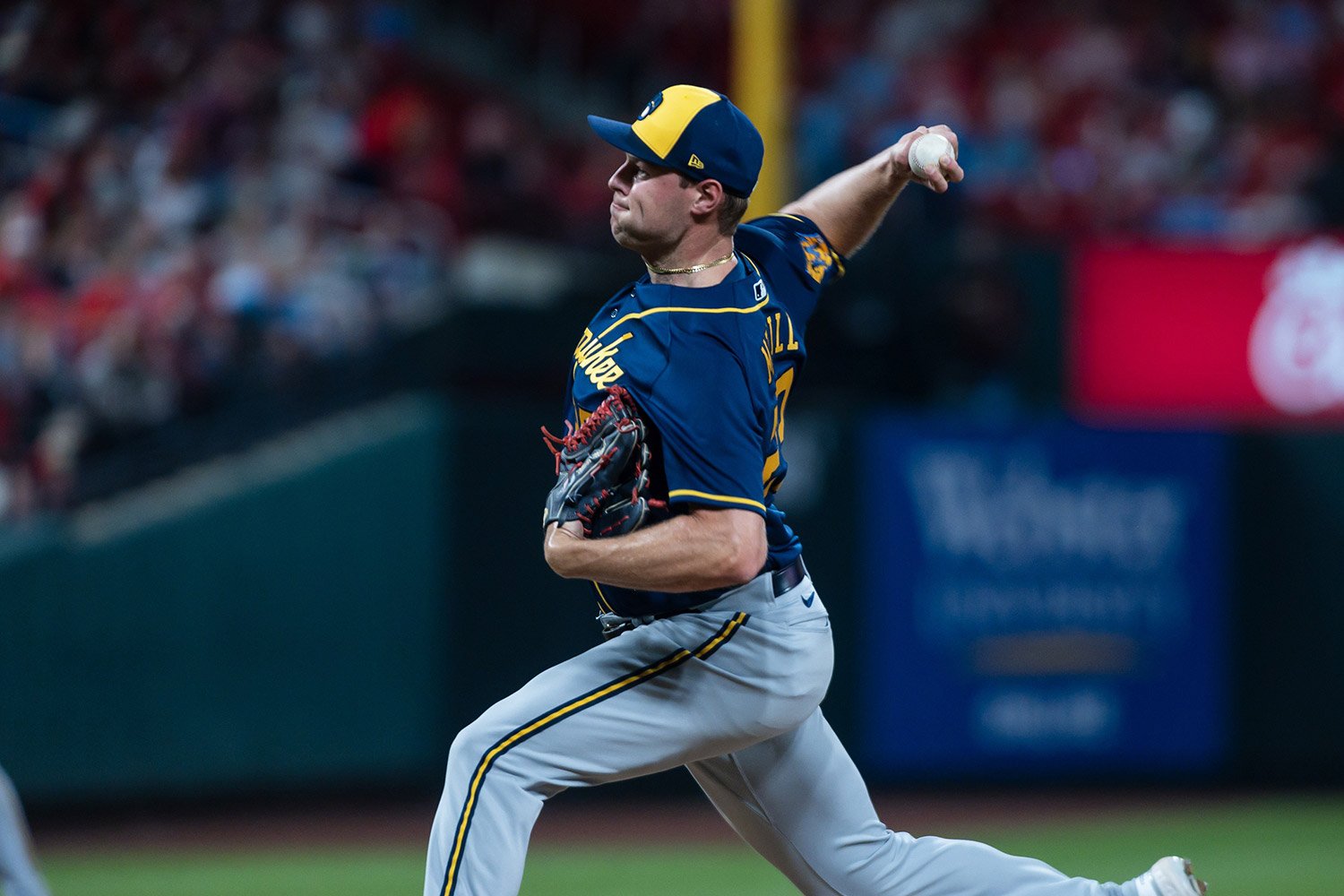 In the minors, the same has been true – and much of the Brewers full-season system has seen some outstanding performances from relief pitchers that make it very likely the Brewers could see similar success for years down the road. We’ll look at the rookie league bullpens in a separate piece, given the fact that they will have smaller sample sizes. Nashville Sounds The Milwaukee-Nashville shuttle has been going two ways for a bit this season, and it makes for tough decisions between very good choices. Ethan Small, Clayton Andrews, Peter Strzelecki, J.B. Bukauskas, Trevor Megill, Abner Uribe, Tyson Miller, and Alex Claudio have all spent time in both Brewers and Sounds uniforms. Justin Wilson has yet to make it to Milwaukee, but has pitched well while rehabbing from Tommy John surgery. Uribe looks like he will remain in the Brewers bullpen full-time, and others on the shuttle can certainly make cases for longer stays in Milwaukee as well, notably Andrews, Strzelecki, and Small. Darrell Thompson is also making a case for a 40-man spot, even if he is older than a typical prospect. Biloxi Shuckers The Shuckers bullpen is in a very different world than it was in March. Back then, it looked like Uribe and James Meeker would be the 1-2 punch in the late innings. Instead, Uribe is in Milwaukee and Meeker is in the starting rotation. Cam Robinson is back in Biloxi after struggling in Nashville, and has had a forgettable season, along with Zach Vennaro, Nick Bennett, and Ryan Middendorf. Harold Chirino had also dominated in Biloxi but has been placed on the 60-day IL as of July 15th. Some of the Shuckers’ best performers out of the pen are in Nashville – or even Milwaukee. Wisconsin Timber Rattlers Kaleb Bowman has pitched his way to Biloxi, but the Timber Rattlers have seen some excellent performances. Max Lazar is rebounding from injury to become a superb bullpen option, joining Tanner Shears, Luis Amaya, Sam Gardner, Shane Smith, and Brannon Jordan. Karlos Morales, Justin King, and Ryan Brady have also posted some excellent numbers in Appleton. The Brewers will not be lacking for options in the next two to three years. Carolina Mudcats Shears and Smith have pitched their way to Appleton from Zebulon, but the Mudcats are not short of potential relief prospects. Quinton Low has split time between the rotation and the bullpen while also handling some DH duties. Yerlin Rodriguez has notched four saves as of July 21, while Chase Costello has done well despite not ringing up strikeouts. Jeison Pena and Tyler Wehrle have also contributed out of the bullpen for the Mudcats. Overview How deep is relief pitching in the Brewers farm system? The Brewers could deal Devin Williams, Payamps, Peguero, and Milner tomorrow, and they could arguably call up replacements who could take over without missing a beat – at least on paper – from Nashville. It’s a very nice position to be in, but it also causes a problem as minor-league free agency and the 40-man roster only allow so many players to stick around. But considering other problems teams could have, the Brewers may have to accept the relative downside to their vast buffet of good options.
 -
Turang is better than Gantner on two fronts: He's got speed and can steal bases, and his OBP skills have been much better. Think Omar Vizquel with better OBP skills and slightly more pop.
-
Turang's OBP skills seem to have resurfaced in the last two weeks (6 walks to 7 strikeouts), which is on par with how things went with mid-season promotions. He would walk a lot, struggle on the BA side, but the next year, whether promoted or repeating, he suddenly hits more than adequately. Going forward in 2023, I expect lots of walks, a batting average around the Uecker line, and excellent defense. Next year, I can see him taking the batting average up about 60 points, with some more doubles and triples. Think Omar Vizquel from 1996-2004, but with better OBP skills, some more power, and stealing 30-35 bases a season.
-
It can be harder to evaluate starting pitching in the rookie leagues, in both Arizona and the Dominican Republic, than in full-season ball. The biggest reason for that comes down to sample size: These leagues do not start until June, so we’re really only able to get a look at these pitchers for a month or so. Image courtesy of © Joe Camporeale-USA TODAY Sports The Arizona Complex League, in particular, gets distorted in another way: Players often go there on rehabilitation assignments. As such, it is harder to tell just why a pitcher may appear to have struggled. But with those caveats in mind, let’s look over the starting rotations in the rookie leagues. ACL Brewers To get one sense of the distortion in the ACL so far, five of the 28 starts for the ACL Brewers as of July 17 were by players on rehab assignments: Jason Alexander, the fill-in from 2022, made two, while Ryne Moore, a prospect drafted in 2021, made three. But Yorman Galindez has made huge strides from 2022, having taken his ERA down by about 50%. Daniel Corniel has struggled some after coming up from the DSL. Other pitchers appearing in the ACL rotation include Brian Fitzpatrick (currently on the 60-day IL), Osbriel Moggolon, Felipe De Los Santos, and Brailin Rodriguez, who is coming off missing the entire 2022 season. DSL Brewers 1 The same sense of caution concerning numbers in the ACL should apply to some of the eye-popping numbers among the DSL Brewers 1 rotation. That caveat aside, the big question is: Which prospect has been the best? Is it Eric Prado, with a sub-1.00 ERA as of July 17 while splitting time between the rotation and the bullpen? Is it Enniel Cortez, who posts a 7.5:1 K/BB ratio and a 1.75 ERA? What about Gabriel Colmenarz, who has posted a 1.89 ERA despite only getting 6.2 strikeouts per nine innings? And let’s not forget lefty Anthony Flores, who is averaging almost four strikeouts every three innings. So far, with anywhere from three to six starts, they all look very good, but it will be interesting to see if it continues past this initial small sample. DSL Brewers 2 With a similar small-sample warning for the second Brewers affiliate in the DSL, there are some numbers that indicate some starting pitching prospects deserve a closer look. Melvin Hernandez is posting a 2.25 ERA, with only five walks in 20 innings as of July 17. Ismael Yanez is only 17, but has a 0.00 ERA in three innings as of July 17. Bryan Rivera has dominated over six starts, with a sub-1.00 WHIP, while Jesus Flores has allowed just one home run in just over 20 IP. Aneuris Rodriguez has taken some huge steps up in his second season in the DSL as well. Overview Small samples and rehab assignment distortions aside, the rookie leagues feature a lot of intriguing talent for the Brewers. While these pitchers have a long road to MLB, in the past, rookie-league talent has been used to make deals work at times. On the flip side, one just has to look at Freddy Peralta to know that in a few years, rookie-league talent can pay off big time for a major-league club. View full article
-
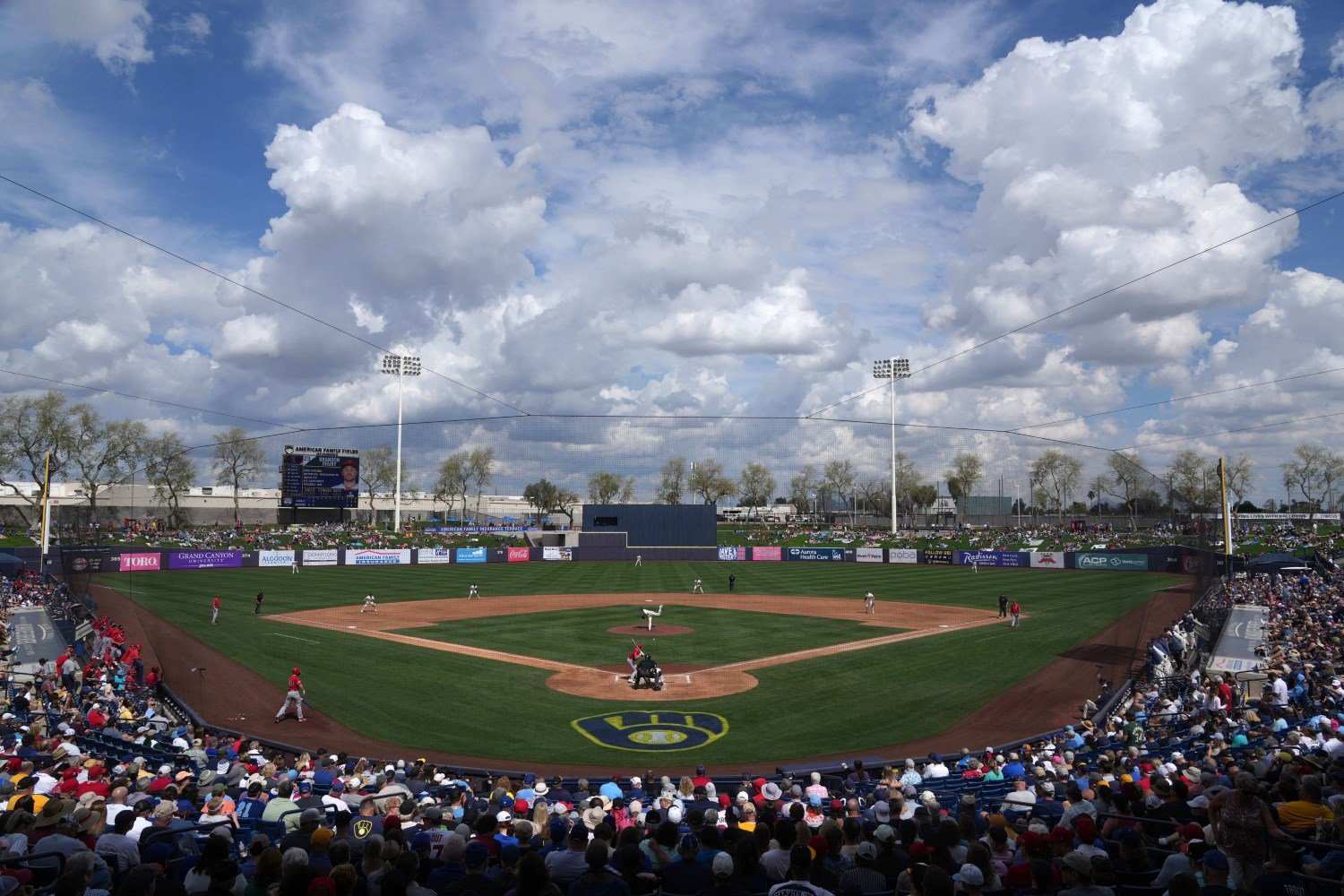 The Arizona Complex League, in particular, gets distorted in another way: Players often go there on rehabilitation assignments. As such, it is harder to tell just why a pitcher may appear to have struggled. But with those caveats in mind, let’s look over the starting rotations in the rookie leagues. ACL Brewers To get one sense of the distortion in the ACL so far, five of the 28 starts for the ACL Brewers as of July 17 were by players on rehab assignments: Jason Alexander, the fill-in from 2022, made two, while Ryne Moore, a prospect drafted in 2021, made three. But Yorman Galindez has made huge strides from 2022, having taken his ERA down by about 50%. Daniel Corniel has struggled some after coming up from the DSL. Other pitchers appearing in the ACL rotation include Brian Fitzpatrick (currently on the 60-day IL), Osbriel Moggolon, Felipe De Los Santos, and Brailin Rodriguez, who is coming off missing the entire 2022 season. DSL Brewers 1 The same sense of caution concerning numbers in the ACL should apply to some of the eye-popping numbers among the DSL Brewers 1 rotation. That caveat aside, the big question is: Which prospect has been the best? Is it Eric Prado, with a sub-1.00 ERA as of July 17 while splitting time between the rotation and the bullpen? Is it Enniel Cortez, who posts a 7.5:1 K/BB ratio and a 1.75 ERA? What about Gabriel Colmenarz, who has posted a 1.89 ERA despite only getting 6.2 strikeouts per nine innings? And let’s not forget lefty Anthony Flores, who is averaging almost four strikeouts every three innings. So far, with anywhere from three to six starts, they all look very good, but it will be interesting to see if it continues past this initial small sample. DSL Brewers 2 With a similar small-sample warning for the second Brewers affiliate in the DSL, there are some numbers that indicate some starting pitching prospects deserve a closer look. Melvin Hernandez is posting a 2.25 ERA, with only five walks in 20 innings as of July 17. Ismael Yanez is only 17, but has a 0.00 ERA in three innings as of July 17. Bryan Rivera has dominated over six starts, with a sub-1.00 WHIP, while Jesus Flores has allowed just one home run in just over 20 IP. Aneuris Rodriguez has taken some huge steps up in his second season in the DSL as well. Overview Small samples and rehab assignment distortions aside, the rookie leagues feature a lot of intriguing talent for the Brewers. While these pitchers have a long road to MLB, in the past, rookie-league talent has been used to make deals work at times. On the flip side, one just has to look at Freddy Peralta to know that in a few years, rookie-league talent can pay off big time for a major-league club.
 -
Here are the numbers that have me wanting to slow down a little: 86 BB to 251 K in 1,025 at-bats over his pro career. The walk rate is still low, and he's striking out almost three times for every walk. I'd like to see the walk rate get closer to 10% and to see the pitch selection improve and cut the strikeouts down some.
-
Chourio is still showing some holes in his swing. With Frelick-Mitchell-Wiemer as starters, Taylor and Perkins competing as 4th OF for the Crew, and Yelich as a corner OF/DH/1B option, why not have him improve his pitch selection/OBP skills in Nashville in 2024 and 2025? We saw what happened with Jimmy Nelson in 2019 when the Crew put him in MLB when he should have been optioned to AAA to start the year after his lengthy absence due to that shoulder injury. It was a mistake then, the Crew burned up service time that they didn't need to. The smart move is to have Chourio resolve those issues in Nashville. The Brewers don't need to add him to the 40-man until 2025, they have three cheap rookies and multiple solid backups, and Chourio will have three option years when he is added.
-
Taylor bats right-handed and could be used to rest Yelich, Mitchell, and Frelick in 2024. He's also been productive vs. lefties in the past. Frelick-Mitchell-Wiemer as starters with Taylor 4th OF and Yelich as DH/5th OF is an excellent setup to have for that year, and doesn't break the budget. Gives Chourio the full 2024 season and most of 2025 at Nashville to develop.
-
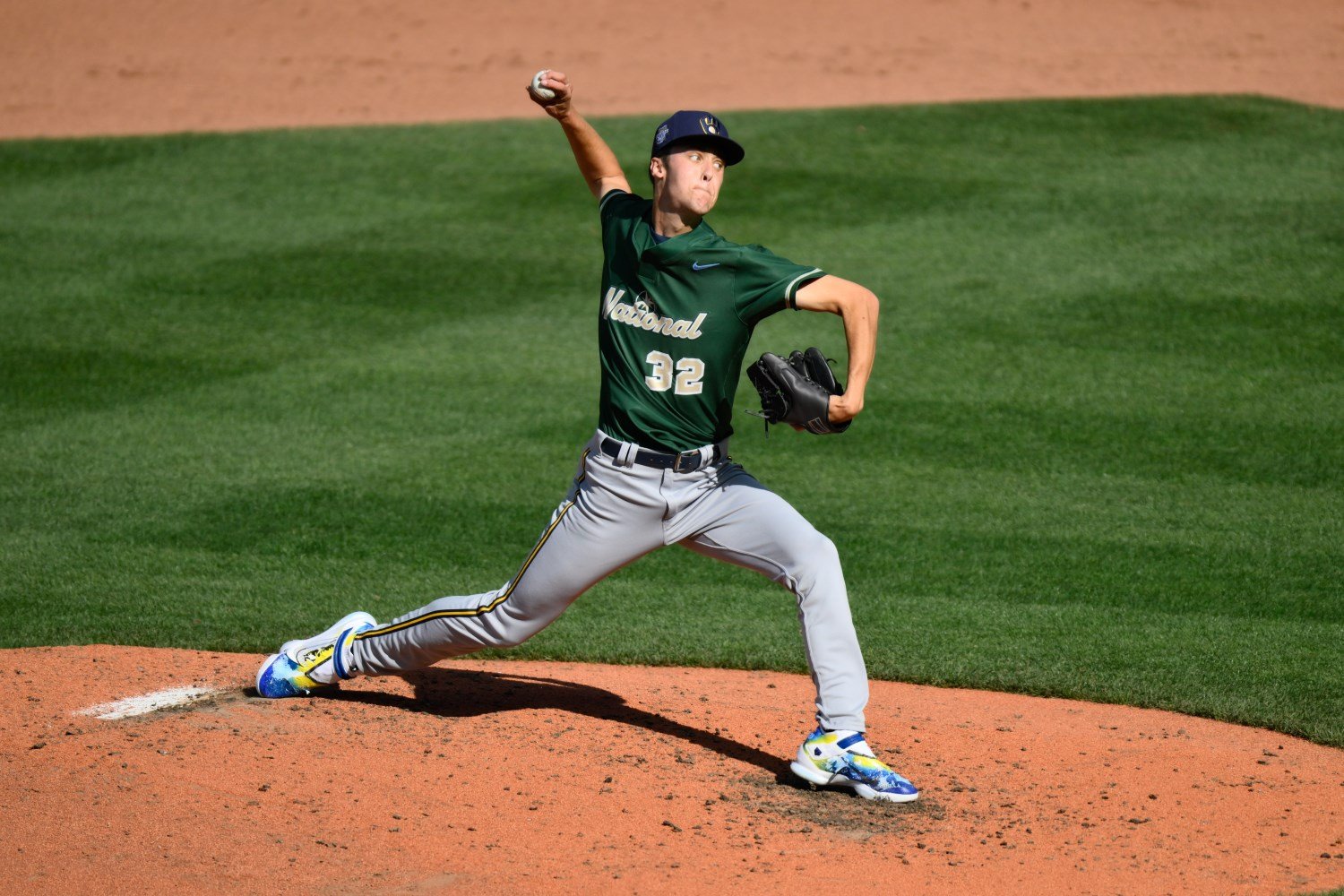 Let’s start by taking a look at the full-season squads, where some pitchers have been making some very strong cases. Nashville Sounds Robert Gasser, Janson Junk, and Justin Jarvis have each made the Brewer Fanatic Top 20 list at times, and they headline the Sounds' rotation. Jason Alexander, who filled in the Brewers rotation in 2022, is on the comeback trail after spending a lot of time on the injured list. Eric Lauer has been struggling after some solid years in the MLB rotation, while Pedro Fernandez and Caleb Boushley have also spent time in the Nashville rotation. Should the Crew be forced to deal Corbin Burnes and Brandon Woodruff in the offseason, there are potentially solid replacements in-house for the team, which at the MLB level has been able to get higher-than-expected performance from pitchers. Biloxi Shuckers Carlos F. Rodriguez has been the undisputed ace in Biloxi, but the real game-changer has been James Meeker’s move to the rotation after a dominating stretch in the bullpen in Biloxi in 2022. He set himself up for this breakout in 2023, with an amazing winter in Brisbane. Meeker’s shift to the rotation, following injured list visits by Brandon Knarr and Adam Seminaris is an interesting development that could be an opening for a couple other pitchers in the Brewers system, and could be a huge benefit for the Brewers come 2025. Christian Mejias, Tobias Myers, and TJ Shook also have spent time in the rotation. Wisconsin Timber Rattlers There are two sides to the Timber Rattlers rotation: The struggles of prospects Stiven Cruz, Cameron Waggoner, and Alexander Corinelle on the one hand, and the continued development of Tyler Woessner and Joseph Hernandez on the other, plus the promotion of Jacob Misiorowski from Carolina. While Misiorowski still has yet to average more than four innings a start in Wisconsin, he’s shown dominating stuff. Carolina Mudcats While some touted prospects have struggled in Wisconsin, a number of below-the-radar prospects have exploded on the scene in Carolina. Patricio Aquino has posted a 2.06 ERA and 1.01 WHIP for the Mudcats, emerging as the ace of the rotation. Logan Henderson is also putting up outstanding numbers. Will Rudy has also emerged as a solid starter in Zebulon. Quinton Low, Alexander Vallecillo, Yujanyer Herrera, and Aidan Maldanado have also seen time in the Mudcats rotation. Overview The Brewers have seen a number of their starting pitchers have setbacks down on the farm this year, but those who are emerging look to be quite good. In essence, the Brewers have some solid options at every level of the fam, and this is before anyone takes into account what may happen in the upcoming trade deadline period. After those moves, the Brewers could be very well-stocked, indeed.
- 1 comment
-
- 1
-

-
- robert gasser
- janson junk
- (and 3 more)
-
When it comes to starting pitching, the Brewers have a number of prospects on their full-season teams. Some have high ceilings and are exciting. Others seem to emerge out of nowhere. There are a lot of pitchers in the system to look through, so we’ll divvy this up between the full-season teams and the Rookie League squads. Image courtesy of © Steven Bisig-USA TODAY Sports Let’s start by taking a look at the full-season squads, where some pitchers have been making some very strong cases. Nashville Sounds Robert Gasser, Janson Junk, and Justin Jarvis have each made the Brewer Fanatic Top 20 list at times, and they headline the Sounds' rotation. Jason Alexander, who filled in the Brewers rotation in 2022, is on the comeback trail after spending a lot of time on the injured list. Eric Lauer has been struggling after some solid years in the MLB rotation, while Pedro Fernandez and Caleb Boushley have also spent time in the Nashville rotation. Should the Crew be forced to deal Corbin Burnes and Brandon Woodruff in the offseason, there are potentially solid replacements in-house for the team, which at the MLB level has been able to get higher-than-expected performance from pitchers. Biloxi Shuckers Carlos F. Rodriguez has been the undisputed ace in Biloxi, but the real game-changer has been James Meeker’s move to the rotation after a dominating stretch in the bullpen in Biloxi in 2022. He set himself up for this breakout in 2023, with an amazing winter in Brisbane. Meeker’s shift to the rotation, following injured list visits by Brandon Knarr and Adam Seminaris is an interesting development that could be an opening for a couple other pitchers in the Brewers system, and could be a huge benefit for the Brewers come 2025. Christian Mejias, Tobias Myers, and TJ Shook also have spent time in the rotation. Wisconsin Timber Rattlers There are two sides to the Timber Rattlers rotation: The struggles of prospects Stiven Cruz, Cameron Waggoner, and Alexander Corinelle on the one hand, and the continued development of Tyler Woessner and Joseph Hernandez on the other, plus the promotion of Jacob Misiorowski from Carolina. While Misiorowski still has yet to average more than four innings a start in Wisconsin, he’s shown dominating stuff. Carolina Mudcats While some touted prospects have struggled in Wisconsin, a number of below-the-radar prospects have exploded on the scene in Carolina. Patricio Aquino has posted a 2.06 ERA and 1.01 WHIP for the Mudcats, emerging as the ace of the rotation. Logan Henderson is also putting up outstanding numbers. Will Rudy has also emerged as a solid starter in Zebulon. Quinton Low, Alexander Vallecillo, Yujanyer Herrera, and Aidan Maldanado have also seen time in the Mudcats rotation. Overview The Brewers have seen a number of their starting pitchers have setbacks down on the farm this year, but those who are emerging look to be quite good. In essence, the Brewers have some solid options at every level of the fam, and this is before anyone takes into account what may happen in the upcoming trade deadline period. After those moves, the Brewers could be very well-stocked, indeed. View full article
-
The Brewers have long had a tradition of pulling together excellent relief pitching and seeing it pay off in performance on the field, as well as returns in trades. Drew Rasmussen and Bob Wickman are among the relivers who have brough massive returns in the past. Right now, the MLB bullpen looks very solid with Devin Williams, Joel Payamps, Elvis Peguero, Hoby Milner, and Bryce Wilson leading the pack. Image courtesy of © Paul Halfacre-USA TODAY Sports In the minors, the same has been true – and much of the Brewers full-season system has seen some outstanding performances from relief pitchers that make it very likely the Brewers could see similar success for years down the road. We’ll look at the rookie league bullpens in a separate piece, given the fact that they will have smaller sample sizes. Nashville Sounds The Milwaukee-Nashville shuttle has been going two ways for a bit this season, and it makes for tough decisions between very good choices. Ethan Small, Clayton Andrews, Peter Strzelecki, J.B. Bukauskas, Trevor Megill, Abner Uribe, Tyson Miller, and Alex Claudio have all spent time in both Brewers and Sounds uniforms. Justin Wilson has yet to make it to Milwaukee, but has pitched well while rehabbing from Tommy John surgery. Uribe looks like he will remain in the Brewers bullpen full-time, and others on the shuttle can certainly make cases for longer stays in Milwaukee as well, notably Andrews, Strzelecki, and Small. Darrell Thompson is also making a case for a 40-man spot, even if he is older than a typical prospect. Biloxi Shuckers The Shuckers bullpen is in a very different world than it was in March. Back then, it looked like Uribe and James Meeker would be the 1-2 punch in the late innings. Instead, Uribe is in Milwaukee and Meeker is in the starting rotation. Cam Robinson is back in Biloxi after struggling in Nashville, and has had a forgettable season, along with Zach Vennaro, Nick Bennett, and Ryan Middendorf. Harold Chirino had also dominated in Biloxi but has been placed on the 60-day IL as of July 15th. Some of the Shuckers’ best performers out of the pen are in Nashville – or even Milwaukee. Wisconsin Timber Rattlers Kaleb Bowman has pitched his way to Biloxi, but the Timber Rattlers have seen some excellent performances. Max Lazar is rebounding from injury to become a superb bullpen option, joining Tanner Shears, Luis Amaya, Sam Gardner, Shane Smith, and Brannon Jordan. Karlos Morales, Justin King, and Ryan Brady have also posted some excellent numbers in Appleton. The Brewers will not be lacking for options in the next two to three years. Carolina Mudcats Shears and Smith have pitched their way to Appleton from Zebulon, but the Mudcats are not short of potential relief prospects. Quinton Low has split time between the rotation and the bullpen while also handling some DH duties. Yerlin Rodriguez has notched four saves as of July 21, while Chase Costello has done well despite not ringing up strikeouts. Jeison Pena and Tyler Wehrle have also contributed out of the bullpen for the Mudcats. Overview How deep is relief pitching in the Brewers farm system? The Brewers could deal Devin Williams, Payamps, Peguero, and Milner tomorrow, and they could arguably call up replacements who could take over without missing a beat – at least on paper – from Nashville. It’s a very nice position to be in, but it also causes a problem as minor-league free agency and the 40-man roster only allow so many players to stick around. But considering other problems teams could have, the Brewers may have to accept the relative downside to their vast buffet of good options. View full article
-
Toro and Hiura, sending down Jones and DFA Winker.
- 38 replies
-
- 1
-
-
- trade deadline
- tyler black
- (and 3 more)
-
Revisiting the State of the Farm – Designated Hitter
Harold Hutchison posted an article in Minor Leagues
 That said, it never hurts to see who is manning this position. In some ways, it will account for up to one-ninth of a team’s production, and if you can find a great DH – or even good players who can rotate – it helps the team win games. Nashville Sounds In Nashville, the DH has become a revolving door as of July 16, with players having at most ten games. For the Sounds, the three players who reached that level are catchers Payton Henry, Alex Jackson, and Brian Navarreto. Keston Hiura and Abraham Toro have each seen eight games at the position. Biloxi Shuckers Tristen Lutz has played 22 games at DH as of July 16, while Noah Campbell and Wes Clark have 14 and 13 games at that position, respectively. Lutz has shown on-base skills and power, while Clarke has split time at first and catcher. Campbell has played all over the diamond and has hit well enough to get DH at-bats, too. Wisconsin Timber Rattlers Like Biloxi, three players are seeing a lot of time at DH: Catchers Matthew Wood and Darrien Miller, along with third baseman Ben Metzinger. Miller’s time at DH could be necessary as he has had some defensive struggles behind the plate, as his bat has always been superb. Wood has also seen time at DH with the Mudcats. Carolina Mudcats As of July 16, four Mudcats lead the team in games at DH with nine: Luke Adams, Jesus Parra, Hedbert Perez, and Jheremy Vargas, with Quinton Low just one game behind those four while also seeing action on the mound. Adams has posted the best numbers of all these players, but the shuffle may have hurt Low the most, as his offense seems to have taken a step back from last year. ACL Brewers Juan Baez and Yeison Perez tied for the most games at designated hitter with five apiece. Baez has posted some dominating numbers, while Perez has been solid. Right behind Baez and Perez is Satchell Norman, whose bat has been outstanding but has also allowed 23 stolen bases. DSL Brewers 1 Argenis Aparicio and Luis Garcia have played six games at DH for the first Brewers DSL affiliate. Both come to that position from different routes. Garcia is a catcher posting a .354 OBP as of July 16. On the other hand, Aparicio has seen time in both corner outfield positions and has already made four appearances on the mound. Outfielder Pedro Tovar and shortstop Kevin Ereu have tied for second with three games at DH apiece as of July 16. DSL Brewers 2 Pedro Ibarguen leads the second Brewers DSL affiliate with nine games at DH. Shortstops Roderick Flores and Filippo Di Turi are the second and third DHs for the second Brewers DSL affiliate, with six and five games, respectively. All have been on-base machines as of July 16. Overview For the most part, designated hitter has been a revolving door in the Brewers system. That said, the Brewers may want to look at locking a couple of players into that role on a more permanent basis to move them up the ladder faster.
 -
When discussing the designated hitter in the Brewers farm system, one needs to have the dreaded asterisk alongside. In many cases, it is used to rotate among various position players to give them additional playing time, and allowing prospects to develop. Image courtesy of © Nick Turchiaro-USA TODAY Sports That said, it never hurts to see who is manning this position. In some ways, it will account for up to one-ninth of a team’s production, and if you can find a great DH – or even good players who can rotate – it helps the team win games. Nashville Sounds In Nashville, the DH has become a revolving door as of July 16, with players having at most ten games. For the Sounds, the three players who reached that level are catchers Payton Henry, Alex Jackson, and Brian Navarreto. Keston Hiura and Abraham Toro have each seen eight games at the position. Biloxi Shuckers Tristen Lutz has played 22 games at DH as of July 16, while Noah Campbell and Wes Clark have 14 and 13 games at that position, respectively. Lutz has shown on-base skills and power, while Clarke has split time at first and catcher. Campbell has played all over the diamond and has hit well enough to get DH at-bats, too. Wisconsin Timber Rattlers Like Biloxi, three players are seeing a lot of time at DH: Catchers Matthew Wood and Darrien Miller, along with third baseman Ben Metzinger. Miller’s time at DH could be necessary as he has had some defensive struggles behind the plate, as his bat has always been superb. Wood has also seen time at DH with the Mudcats. Carolina Mudcats As of July 16, four Mudcats lead the team in games at DH with nine: Luke Adams, Jesus Parra, Hedbert Perez, and Jheremy Vargas, with Quinton Low just one game behind those four while also seeing action on the mound. Adams has posted the best numbers of all these players, but the shuffle may have hurt Low the most, as his offense seems to have taken a step back from last year. ACL Brewers Juan Baez and Yeison Perez tied for the most games at designated hitter with five apiece. Baez has posted some dominating numbers, while Perez has been solid. Right behind Baez and Perez is Satchell Norman, whose bat has been outstanding but has also allowed 23 stolen bases. DSL Brewers 1 Argenis Aparicio and Luis Garcia have played six games at DH for the first Brewers DSL affiliate. Both come to that position from different routes. Garcia is a catcher posting a .354 OBP as of July 16. On the other hand, Aparicio has seen time in both corner outfield positions and has already made four appearances on the mound. Outfielder Pedro Tovar and shortstop Kevin Ereu have tied for second with three games at DH apiece as of July 16. DSL Brewers 2 Pedro Ibarguen leads the second Brewers DSL affiliate with nine games at DH. Shortstops Roderick Flores and Filippo Di Turi are the second and third DHs for the second Brewers DSL affiliate, with six and five games, respectively. All have been on-base machines as of July 16. Overview For the most part, designated hitter has been a revolving door in the Brewers system. That said, the Brewers may want to look at locking a couple of players into that role on a more permanent basis to move them up the ladder faster. View full article
-
I think Miller's got the better chance at actually reaching his ceiling. Mendez's swing still seems funky, but Miller's offense is good. He just needs to move to LF/1B full-time.
-
I'm thinking the Crew deals Mendez for a rental or a couple of nuggets, and clear a corner OF spot for Darrien Miller (left field, most likely). Miller's bat is quite good, but he may not be a great fit for catcher.
-
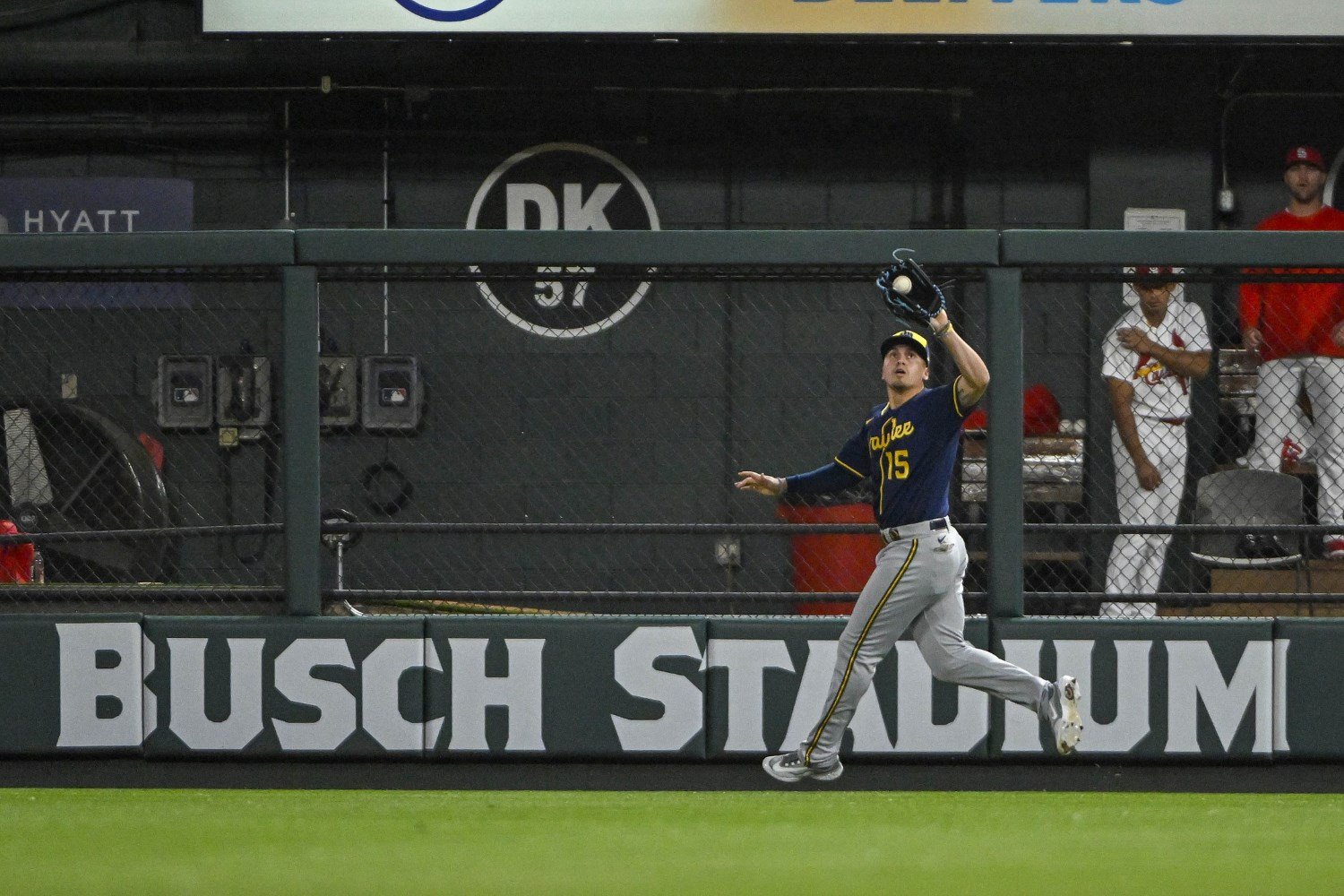 Injuries to Luis Urias, Tyrone Taylor, and Garrett Mitchell changed everything. Joey Wiemer is now handling center field, and doing so quite well. Taylor is seeing time in right with Anderson, Blake Perkins, and Raimel Tapia. So, how did that shake things out on the farm? Nashville Sounds Monte Harrison has the most starts in right for the Sounds, but Sal Frelick has surprisingly manned right field a lot, too. This could make things interesting in 2024, when the Brewers will have to juggle Mitchell, Wiemer, Frelick, Taylor, and Yelich in the outfield. Biloxi Shuckers Carlos D. Rodriguez has taken the bulk of the starts in right field for the Shuckers, with Lamar Sparks and Noah Campbell also seeing time there. Rodriguez’s primary tool is OBP, and he adds a fair number of doubles. Campbell has emerged as a legit offensive threat under the radar as an undrafted free agent pickup, after he failed to sign as a 19th-round pick in 2017. Wisconsin Timber Rattlers Hendry Mendez missed a lot of time with injuries, forcing Je’Von Ward and Joe Gray to handle the bulk of the duties in right field. Mendez brings OBP skills and physical talent, and in a small sample, appears to have improved his power numbers somewhat. Gray has always provided power, while Ward is trying to rebound after missing almost all of 2022. Carolina Mudcats Kay-Lan Nicasia has been under the radar, making a full-time move to the outfield after having played all over the infield for 2021 and most of 2022. As of July 16, he’s second on the Mudcats in walks and stolen bases. Jace Avina has also seen significant time in right field in Zebulon while also playing left field and center. Hedbert Perez, Eduarqui Fernandez, and Luis Castillo all spent time in right as well. ACL Brewers Reece Walling has been the primary right fielder in Maryvale, and he’s generating a lot of walks on the offensive side of things. Angel Pereira, who has also played in left and center, also is racking up the OBP by taking the free passes. Duncan Garcia has seen some limited action but has arguably shown the most well-rounded offense in a small sample size. DSL Brewers 1 Irving Igualas and Pedro Tovar have alternated as the primary right fielder for the first of the Brewers two DSL affiliates. Tovar has demonstrated some serious OBP skills, while Igualas had been involved in one double play. DSL Brewers 2 Ramon Moreno and Christopher Vasquez have split right field for the second Brewers affiliate in the DSL. Moreno is flashing power and OBP skills, plus solid defense. Vasquez’s 1.147 OPS as of July 16 is making its own case for playing time – if not in the outfield, then at first base, perhaps. Overview On one hand, right field looks like a poor relation compared to shortstop or center field. That quick judgment is a mistake, though. In recent years, the Brewers have preferred to move players from center to right. But even with that in mind, there are some potential breakout prospects in the lower levels, while the upper levels have a couple of players who could be very credible options.
 -
Like third base, the Brewers are living in a very different right-field world than they were looking at in March. At that time, it looked like Tyrone Taylor and Brian Anderson were going to split the playing time, with Joey Wiemer handling right field in Nashville. Things have played out very differently. Image courtesy of © Jeff Curry-USA TODAY Sports Injuries to Luis Urias, Tyrone Taylor, and Garrett Mitchell changed everything. Joey Wiemer is now handling center field, and doing so quite well. Taylor is seeing time in right with Anderson, Blake Perkins, and Raimel Tapia. So, how did that shake things out on the farm? Nashville Sounds Monte Harrison has the most starts in right for the Sounds, but Sal Frelick has surprisingly manned right field a lot, too. This could make things interesting in 2024, when the Brewers will have to juggle Mitchell, Wiemer, Frelick, Taylor, and Yelich in the outfield. Biloxi Shuckers Carlos D. Rodriguez has taken the bulk of the starts in right field for the Shuckers, with Lamar Sparks and Noah Campbell also seeing time there. Rodriguez’s primary tool is OBP, and he adds a fair number of doubles. Campbell has emerged as a legit offensive threat under the radar as an undrafted free agent pickup, after he failed to sign as a 19th-round pick in 2017. Wisconsin Timber Rattlers Hendry Mendez missed a lot of time with injuries, forcing Je’Von Ward and Joe Gray to handle the bulk of the duties in right field. Mendez brings OBP skills and physical talent, and in a small sample, appears to have improved his power numbers somewhat. Gray has always provided power, while Ward is trying to rebound after missing almost all of 2022. Carolina Mudcats Kay-Lan Nicasia has been under the radar, making a full-time move to the outfield after having played all over the infield for 2021 and most of 2022. As of July 16, he’s second on the Mudcats in walks and stolen bases. Jace Avina has also seen significant time in right field in Zebulon while also playing left field and center. Hedbert Perez, Eduarqui Fernandez, and Luis Castillo all spent time in right as well. ACL Brewers Reece Walling has been the primary right fielder in Maryvale, and he’s generating a lot of walks on the offensive side of things. Angel Pereira, who has also played in left and center, also is racking up the OBP by taking the free passes. Duncan Garcia has seen some limited action but has arguably shown the most well-rounded offense in a small sample size. DSL Brewers 1 Irving Igualas and Pedro Tovar have alternated as the primary right fielder for the first of the Brewers two DSL affiliates. Tovar has demonstrated some serious OBP skills, while Igualas had been involved in one double play. DSL Brewers 2 Ramon Moreno and Christopher Vasquez have split right field for the second Brewers affiliate in the DSL. Moreno is flashing power and OBP skills, plus solid defense. Vasquez’s 1.147 OPS as of July 16 is making its own case for playing time – if not in the outfield, then at first base, perhaps. Overview On one hand, right field looks like a poor relation compared to shortstop or center field. That quick judgment is a mistake, though. In recent years, the Brewers have preferred to move players from center to right. But even with that in mind, there are some potential breakout prospects in the lower levels, while the upper levels have a couple of players who could be very credible options. View full article
-
In March, the Brewers seemed stacked in center field. Garrett Mitchell was slated to open the season in center in Milwaukee, with Tyrone Taylor seeing some time there and Sal Frelick in Nashville, and more. It seemed an embarrassment of riches. That depth would be instantly tested. Image courtesy of © Curt Hogg / Milwaukee Journal Sentinel / USA TODAY NETWORK But the club boasted some incredible depth – witness Joey Wiemer holding down center after Garrett Mitchell’s injury, with Blake Perkins playing his way to a bench role in Milwaukee after Sal Frelick got hurt. The same holds true down the ladder. Nashville Sounds Perkins manned center field until he played his way into being Milwaukee’s fourth outfielder, following injuries to Mitchell and Taylor. Frelick has struggled since his injury in the spring. Monte Harrison, who was part of the package that brought Christian Yelich to Milwaukee, also has seen time in center for the Sounds. Biloxi Shuckers Jackson Chourio has been the main center fielder for Biloxi, and is one of the top prospects in all of minor-league baseball. At age 19, he is in his first full season and to hold down a position every day in Double A at that age is no small accomplishment. The even better news is that the Brewers are in no rush to get him to the majors, and he can refine his skills. Lamar Sparks and Carlos Rodriguez have also seen time in center for the Shuckers. Wisconsin Timber Rattlers Joe Gray and Eduarqui Fernandez have been the top two center fielders in Appleton, with Gray rebounding from an early slump to post some solid numbers, while Fernandez has still been adjusting after a solid 2022. Terrence Dotson also saw significant action in center as of July 15. Carolina Mudcats For the second straight year, a center field prospect is breaking out big time in Zebulon. Last year, it was Chourio. This year, Luis Lara has broken out in his first season of pro ball, emerging as a sparkplug at the top of the order, hitting for average, drawing walks, and stealing bases. Jace Avina has also seen time in center for the Mudcats. ACL Brewers Reidy Mercado has been the primary center fielder in Maryvale, posting an .822 OPS as of July 15, while Duncan Garcia has flashed some power and speed as the number two at the position. Luis Medina and Angel Pereira have also handled the position in 2023. DSL Brewers 1 Yophery Rodriguez has emerged as arguably the offensive MVP of the DSL Brewers 1 while being the team’s primary center fielder. His offensive profile looks a lot like Jackson Chourio’s, only Rodriguez is drawing nearly twice as many walks than strikeouts (29 to 16 as of July 15) – and he bats left-handed. Backing him up is walk machine Pedro Tovar. DSL Brewers 2 Antony Gomez and Ramon Moreno have split the duties evenly for the second Brewers affiliate in the DSL, with Moreno posting the more rounded offensive package. Overview The depth of the talent pool at this position is not quite as amazing as at shortstop, but it is clearly there, with multiple potential stars looking to break out. Even some of the second-tier names could be decent MLB starters and/or bring a nice return in a trade. View full article
-
 But the club boasted some incredible depth – witness Joey Wiemer holding down center after Garrett Mitchell’s injury, with Blake Perkins playing his way to a bench role in Milwaukee after Sal Frelick got hurt. The same holds true down the ladder. Nashville Sounds Perkins manned center field until he played his way into being Milwaukee’s fourth outfielder, following injuries to Mitchell and Taylor. Frelick has struggled since his injury in the spring. Monte Harrison, who was part of the package that brought Christian Yelich to Milwaukee, also has seen time in center for the Sounds. Biloxi Shuckers Jackson Chourio has been the main center fielder for Biloxi, and is one of the top prospects in all of minor-league baseball. At age 19, he is in his first full season and to hold down a position every day in Double A at that age is no small accomplishment. The even better news is that the Brewers are in no rush to get him to the majors, and he can refine his skills. Lamar Sparks and Carlos Rodriguez have also seen time in center for the Shuckers. Wisconsin Timber Rattlers Joe Gray and Eduarqui Fernandez have been the top two center fielders in Appleton, with Gray rebounding from an early slump to post some solid numbers, while Fernandez has still been adjusting after a solid 2022. Terrence Dotson also saw significant action in center as of July 15. Carolina Mudcats For the second straight year, a center field prospect is breaking out big time in Zebulon. Last year, it was Chourio. This year, Luis Lara has broken out in his first season of pro ball, emerging as a sparkplug at the top of the order, hitting for average, drawing walks, and stealing bases. Jace Avina has also seen time in center for the Mudcats. ACL Brewers Reidy Mercado has been the primary center fielder in Maryvale, posting an .822 OPS as of July 15, while Duncan Garcia has flashed some power and speed as the number two at the position. Luis Medina and Angel Pereira have also handled the position in 2023. DSL Brewers 1 Yophery Rodriguez has emerged as arguably the offensive MVP of the DSL Brewers 1 while being the team’s primary center fielder. His offensive profile looks a lot like Jackson Chourio’s, only Rodriguez is drawing nearly twice as many walks than strikeouts (29 to 16 as of July 15) – and he bats left-handed. Backing him up is walk machine Pedro Tovar. DSL Brewers 2 Antony Gomez and Ramon Moreno have split the duties evenly for the second Brewers affiliate in the DSL, with Moreno posting the more rounded offensive package. Overview The depth of the talent pool at this position is not quite as amazing as at shortstop, but it is clearly there, with multiple potential stars looking to break out. Even some of the second-tier names could be decent MLB starters and/or bring a nice return in a trade.
-
- 1
-
-
- sal frelick
- joey wiemer
- (and 3 more)
-
In some ways, left field is not an immediate concern for the Brewers in the farm system. The obvious reason is Christian Yelich’s presence in Milwaukee for the rest of the decade. Then again, left field remains a position where the Brewers are deceptively shallow. Why? Because, as we mentioned in previewing the farm system, many of the prospects the Brewers have are listed as center fielders. Image courtesy of © Matt Kartozian-USA TODAY Sports Let’s take a look at the farm’s left fielders. Nashville Sounds Keston Hiura and Skye Bolt have been the primary left fielders for the Sounds, with Hiura also seeing time at second base, first base, and designated hitter. Tyler Naquin has also seen time in left. Hiura seems to have had an offensive rebound and may have put the struggles of 2021 and 2022 behind him. Biloxi Shuckers The Shuckers have featured a three-headed monster in left field, with Noah Campbell, Isaac Collins, and Carlos Rodriguez all seeing significant action. Campbell has truly broken out as a versatile offensive threat who can hold down multiple positions. Collins is a versatile OBP-speed threat. Rodriguez, who only bats left-handed (as opposed to Campbell and Collins being switch-hitters), still has superb OBP skills and rack up doubles. Wisconsin Timber Rattlers As in Biloxi, a three-headed monster handles left field in Appleton, with Je’Von Ward, Alex Hall, and Terrence Doston all holding the position down. Hall is arguably the best of the three, when he isn’t seeing action behind the plate or at first base. Jose Acosta also has seen some action in left field. Carolina Mudcats A pair of 20-year-olds, Jace Avina and Hedbert Perez, have been the top two left fielders in Zebulon. Perez, once touted as a prospect, struggled in past years but has improved his OBP skills, while Avina is showing a Three True Outcome bat and some speed offensively, even as he is about 30 points below the Uecker line as of July 15. Jheremy Vargas, who has shown an OBP-speed-doubles offensive profile, also saw action in left for the Mudcats. ACL Brewers Left field has been a revolving door for the ACL Brewers, with five players seeing time there. Angel Pereira has seen the most games there, and is drawing walks, but also a lot of strikeouts. Yeison Perez posted a decent batting average and some power, while Miguel Briceno and Luis Castillo have flashed dominance in limited playing time. DSL Brewers 1 Brian Sanchez has been the primary left fielder for the first of Milwaukee’s two DSL teams – and he’s been posting some dominant numbers. Behind him, both Argenis Aparicio and Idalberto Santiesteban have both flashed some serious OBP skills. Yophery Rodriguez, the DSL Brewers 1 offensive MVP as of July 15, has primarily played center field, but also saw action in left. DSL Brewers 2 There has been somewhat of a revolving door behind Fabricio Valera in left field for the second Brewers DSL affiliate. Valera has walked more than he struck out, but behind him, Demetrio Nadal and Danny Puerta have both flashed signs of superb offense as of July 15. Smarlin Espinal and Ramon Moreno have also seen time in left. Overview While many of the left fielders do not get the hype that the center fielders in the Brewers system receive, a few are showing signs they could be very productive players at the MLB level. If nothing else, some of these players could get the Crew some real help elsewhere. View full article
-
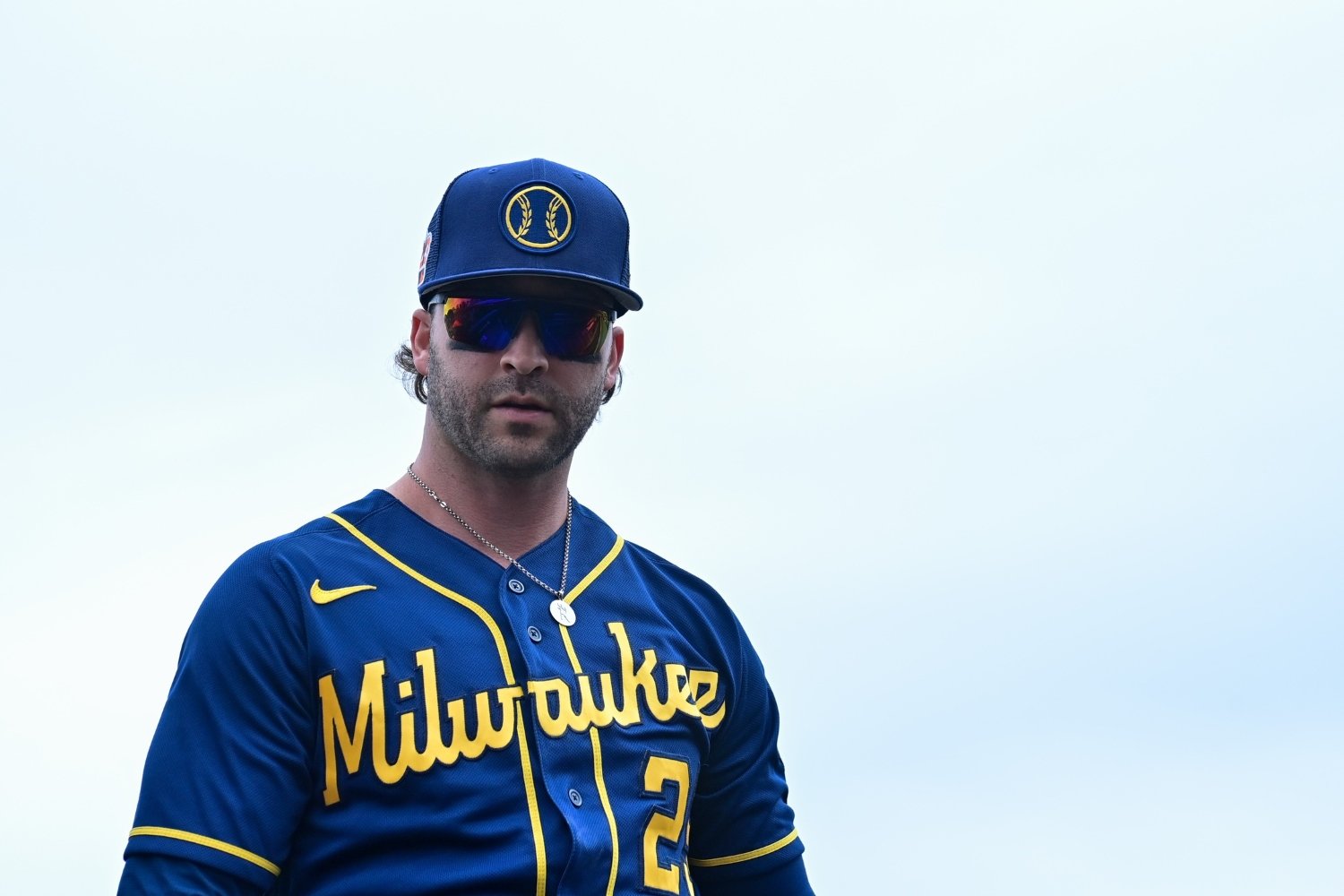 Let’s take a look at the farm’s left fielders. Nashville Sounds Keston Hiura and Skye Bolt have been the primary left fielders for the Sounds, with Hiura also seeing time at second base, first base, and designated hitter. Tyler Naquin has also seen time in left. Hiura seems to have had an offensive rebound and may have put the struggles of 2021 and 2022 behind him. Biloxi Shuckers The Shuckers have featured a three-headed monster in left field, with Noah Campbell, Isaac Collins, and Carlos Rodriguez all seeing significant action. Campbell has truly broken out as a versatile offensive threat who can hold down multiple positions. Collins is a versatile OBP-speed threat. Rodriguez, who only bats left-handed (as opposed to Campbell and Collins being switch-hitters), still has superb OBP skills and rack up doubles. Wisconsin Timber Rattlers As in Biloxi, a three-headed monster handles left field in Appleton, with Je’Von Ward, Alex Hall, and Terrence Doston all holding the position down. Hall is arguably the best of the three, when he isn’t seeing action behind the plate or at first base. Jose Acosta also has seen some action in left field. Carolina Mudcats A pair of 20-year-olds, Jace Avina and Hedbert Perez, have been the top two left fielders in Zebulon. Perez, once touted as a prospect, struggled in past years but has improved his OBP skills, while Avina is showing a Three True Outcome bat and some speed offensively, even as he is about 30 points below the Uecker line as of July 15. Jheremy Vargas, who has shown an OBP-speed-doubles offensive profile, also saw action in left for the Mudcats. ACL Brewers Left field has been a revolving door for the ACL Brewers, with five players seeing time there. Angel Pereira has seen the most games there, and is drawing walks, but also a lot of strikeouts. Yeison Perez posted a decent batting average and some power, while Miguel Briceno and Luis Castillo have flashed dominance in limited playing time. DSL Brewers 1 Brian Sanchez has been the primary left fielder for the first of Milwaukee’s two DSL teams – and he’s been posting some dominant numbers. Behind him, both Argenis Aparicio and Idalberto Santiesteban have both flashed some serious OBP skills. Yophery Rodriguez, the DSL Brewers 1 offensive MVP as of July 15, has primarily played center field, but also saw action in left. DSL Brewers 2 There has been somewhat of a revolving door behind Fabricio Valera in left field for the second Brewers DSL affiliate. Valera has walked more than he struck out, but behind him, Demetrio Nadal and Danny Puerta have both flashed signs of superb offense as of July 15. Smarlin Espinal and Ramon Moreno have also seen time in left. Overview While many of the left fielders do not get the hype that the center fielders in the Brewers system receive, a few are showing signs they could be very productive players at the MLB level. If nothing else, some of these players could get the Crew some real help elsewhere.
 -
Tyler Black Broke out as 3B of the future - as soon as 2024?Jackson Chourio Plenty of time to develop the skills to reach his very high ceiling.Yophery Rodriguez Probably a Yelich-like talent.Jeferson Quero Best catching prospect.Justin Jarvis 2024 rotation contributorJuan Baez Future shortstopSal Frelick Dealing with a lost season.Abner Uribe Closer of the futureCam Devanney Probably a superb under-the-radar option at SSRobert Moore Could be a dynamic 2B/SS.Luke AdamsFreddy ZamoraLuis Lara Could be a superb sparkplugFilippo Di TuriJacob MisiorowskiMatthew WoodDaniel GuilarteTyler WoessnerEthan SmallEric Brown Jr
-
A reunion with Suter could be an excellent boost for the bullpen - get a guy who can go two innings atfer Teheran/Rea or other starters who can go five IPs.
-
At the start of 2023, the Brewers had incredible depth at shortstop up and down the farm system. Depending on their success in signing the three shortstops they drafted, that depth could reach the level of ridiculous. How deep was the system behind Willy Adames at the MLB level? Let’s take a look. Image courtesy of © Mark J. Rebilas-USA TODAY Sports Nashville Sounds One measure of the depth of shortstop talent in the farm system is this: Two of the top three potential shortstops for the Sounds when we previewed the position in March, Brice Turang and Andruw Monasterio, are with the MLB club as of July 15. The third guy, Cam Devanney, is posting an OPS of .804 after an early-season slump. That’s just one of the teams--and all three of those guys could be credible MLB shortstops. Biloxi Shuckers Freddy Zamora was already considered a solid prospect, and in Biloxi, he’s rebounded from an injury-plagued 2022 with a .784 OPS in a year where pitchers dominated the Southern League early on. The surprise is Ethan Murray, who is posting a .367 OBP and who has drawn more walks than Zamora in 29 fewer at-bats as of July 15. Wisconsin Timber Rattlers Eric Brown has had some trips to the injured list this season, leading Robert Moore and Eduardo Garcia to fill in from playing second base and third base, respectively. Brown has shown OBP skills and speed, while Moore’s proven to be a potentially dominating switch-hitter offensively. The development of the 20-year-old Garcia’s OBP skills (his walk total already exceeds the full-season total from 2022) is a great sign. Carolina Mudcats While Gregory Barrios has seen the most action at shortstop in Zebulon, the best shortstop for the Mudcats has been Daniel Guilarte–-when he is on the field. Guilarte’s flashed a solid glove, the ability to hit for average, speed, and some serious OBP skills. The real question could be whether third-round pick Eric Bitonti goes to the Mudcats, or if Juan Baez is promoted from the ACL. ACL Brewers The 18-year-old Baez has been the primary shortstop for the ACL Brewers, and his monster season so far (his only weakness is drawing walks – but hitting .420 makes up for a lot of that) is very exciting to see. But the real questions surround sixth-round pick Cooper Pratt and 15th-round pick Josh Adamczewski. If they are signed, things get very interesting… in a good way. DSL Brewers 1 Joan Gutierrez and Kevin Ereu have both flashed some serious OBP skills in the DSL for the first of the Crew’s two DSL squads, Ereu’s walks have overcome a batting average below the Uecker line, while Gutierrez is flashing a more well-rounded offense. Switch-hitter Luivin Alastre has primarily played third, but has seen action at short as well. DSL Brewers 2 The other Brewers squad in the DSL also has a pair of OBP machines at short in Filippo Di Turi and Roderick Flores. The switch-hitting Di Turi is posting very well-rounded offensive numbers, while the 16-year-old Flores is showing a two-true-outcome bat with speed. Demetrio Nadal saw one game so far at short, but also has put up some monster numbers offensively. Overview The Brewers have a lot of good prospects at shortstop, which leads to some very interesting questions, like: Which players could be dealt to get the Brewers rentals for the upcoming push to the playoffs? Which players will stick around? The biggest ones for the long term center around late draftees Pratt and Adamczewski, who could be huge stars for the Crew, or what-ifs on the order of Nomar Garciaparra. View full article