Harold Hutchison
-
Posts
6,909 -
Joined
-
Last visited
Content Type
Profiles
Forums
Blogs
Events
News
2026 Milwaukee Brewers Top Prospects Ranking
Milwaukee Brewers Videos
2022 Milwaukee Brewers Draft Picks
Milwaukee Brewers Free Agent & Trade Rumors, Notes, & Tidbits
Guides & Resources
2023 Milwaukee Brewers Draft Picks
2024 Milwaukee Brewers Draft Picks
The Milwaukee Brewers Players Project
2025 Milwaukee Brewers Draft Pick Tracker
2026 Milwaukee Brewers Draft Tracker: Picks & Bonuses
Store
Downloads
Gallery
Everything posted by Harold Hutchison
-
2023 Brewers Optimism Thread
Harold Hutchison replied to Brewcrew82's topic in Milwaukee Brewers Talk
This win tonight is a huge one. I know, it counts the same as the ones where we completely owned teams, but how this team won says a lot. The fell down early, but got back up and roared back. Makes me feel good. Kind of a 2018 vibe. -
What Would An Ideal Draft For The Brewers Look Like?
Harold Hutchison commented on Harold Hutchison's article in Minor Leagues
First of all, there are two pitchers. Sullivan and Whitman. Whitman is the sleeper, and I might move him up in place of Jebb, depending on how he does in the Cape Cod league. One Mariners writer would take him in the second, and provides a bit more of a write-up (https://www.midnightmariners.com/p/my-mariners-mock-draft-10) that could prompt a re-evaluation. Second, Schanuel is probably the best hit-for-average/OBP bat in the draft, and worth taking to lock down one of first base or left field for five-plus years. Think Sal Frelick with power, someone who can move Yelich to full-time DH in the 2026-2027 timeframe. Velazquez could be an excellent pickup - not just at catcher, but at any of the corner OF/IF positions, given his arm, and that left-handed power bat fits American Family Field quite nicely. So, I'll stand by those two for the first round and the CB-A pick. As for Sullivan, look at how Teheran. Miley, and Adrian Houser have done this year, especially with the Brewers defense. I'm not going to dismiss a prospect if they're not a flame-thrower. -
If so, then it may be worth picking up the options for 2025 and 2026 at the very least.
-
What Would An Ideal Draft For The Brewers Look Like?
Harold Hutchison posted an article in Minor Leagues
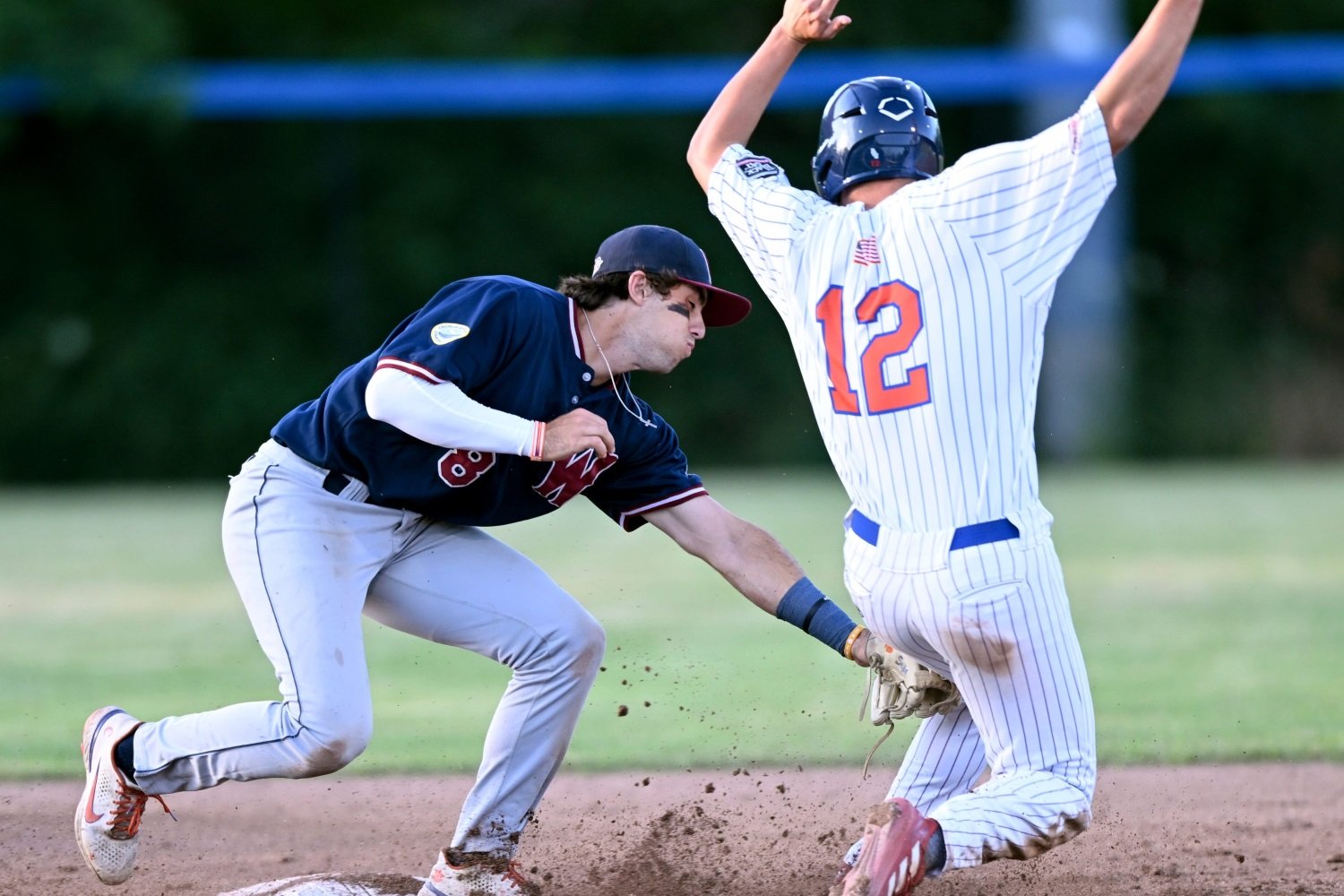 Without further ado, it’s time to name names. First Round, #18 Overall – 1B/LF Nolan Schanuel Yes, he’s at #30 overall on the Consensus Big Board and might be seen as a reach. Yes, he primarily plays first base and could see action in the corner outfield, as opposed to premium up-the-middle positions. However, in this case, the reach is more than justified by virtue of his bat--most notably the strikeout-to-walk ratio. The Brewers offense is struggling and posting horrific numbers, and Schanuel could rocket through the system both by playing a position where the Brewers farm system is thin and by virtue of his elite talent. The Brewers have had a pattern of selecting “up the middle” players, but this year, it may be time to break that pattern for an elite bat. Competitive Balance A, #33 Overall – C/1B/3B Raffaelle Velazquez Yes, I’m ignoring shortstops and center fielders again, but like Schanuel, Velazquez is probably worth selecting on the basis of his left-handed power bat. He does play catcher. Yes, I know Jeferson Quero is in Double A and making a strong case for packing his bags for Nashville and that William Contreras will be in Milwaukee for a while, but Velazquez also offers versatility by being a solid player at four corner positions (1B, 3B, LF, and RF), and his bat could be an excellent fit for American Family Field. Second Round, #54 Overall – SS Mitch Jebb, Michigan State Jebb could be an excellent choice for the Brewers based on his high-contact left-handed bat, speed, and OBP skills. He’s seen action at shortstop and third base, but some scouting reports have him moving to the outfield. Second base might also be an option for him. At worst, he could be a bench asset who doesn’t embarrass himself at the plate, and he could move relatively quickly through the farm system, especially if Brice Turang doesn’t sort out his skills at the plate. Third Round, #87 Overall – LHP Sean Sullivan, Wake Forest A relatively soft-tossing lefty, Sullivan is racking up an astounding 15 strikeouts per nine innings for Wake Forest. Sullivan could rocket up the board and the Crew may want to consider a reach for Sullivan at #54 overall. The results and the breakout speak very loudly, and Sullivan could move up the system rapidly. With the Brewers facing the loss of Corbin Burnes, Brandon Woodruff, and others in the rotation, Sullivan could be a good pick. Fourth Round, #119 Overall – LHP Joe Whitman, Kent State There are not a lot of write-ups on Whitman, but in this case, one reason for the Brewers to grab him is the number two. That number is how many home runs Whitman surrendered in all of the 2023 season for Kent State. He did that while still striking out 11.1 hitters per nine innings. Even though he might be a bit of an enigma, the stats point to Whitman fitting in well with the type of defense the Brewers have in Turang, Garrett Mitchell, Joey Wiemer, and other players. Who do you want the Brewers to take with their picks among the first 150 in the MLB draft? Let’s have it out.
 -
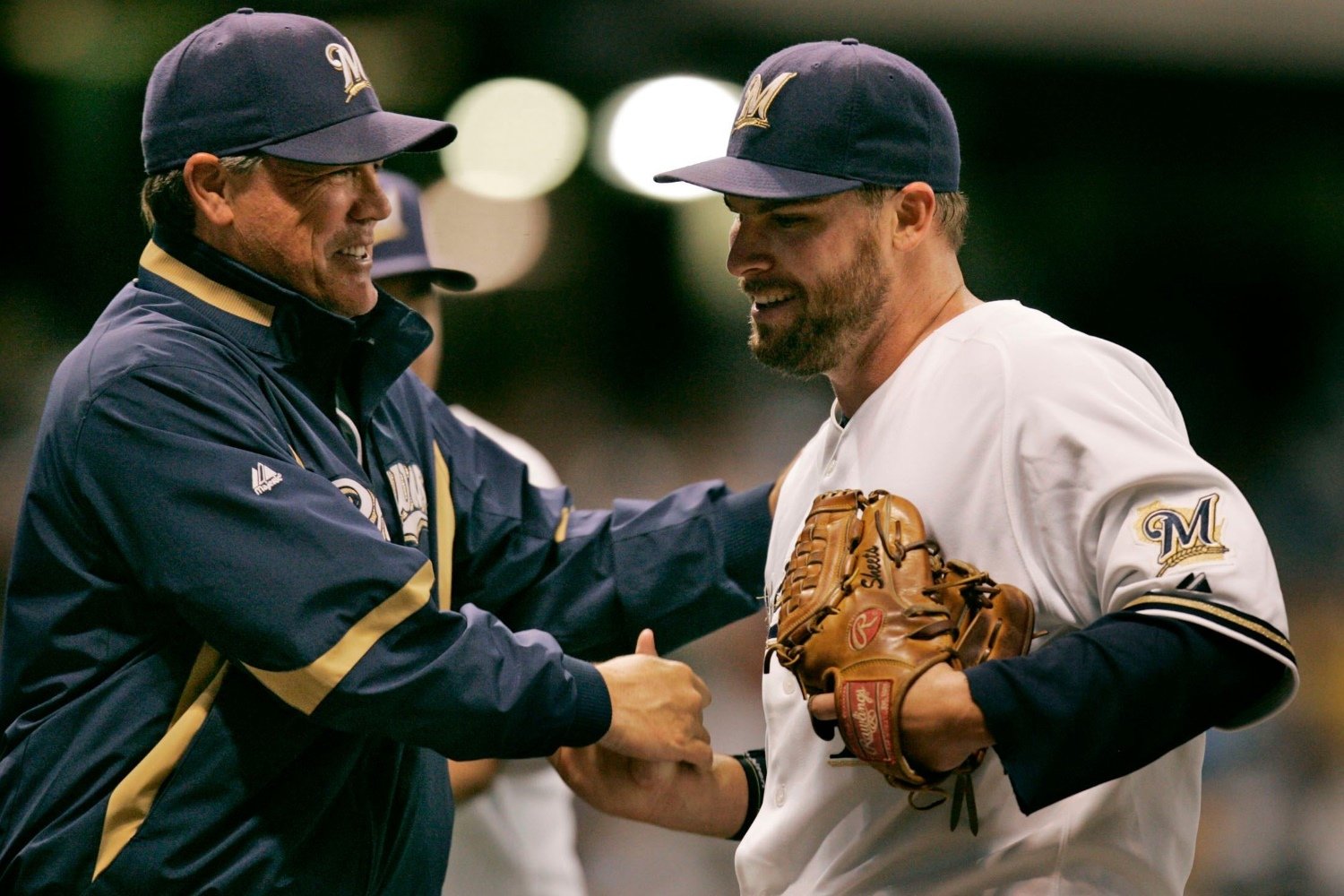 The 2002 season was an unmitigated disaster for the Brewers, who finished 56-106, the worst record in franchise history. After that season, general manager Doug Melvin began searching for a new manager. According to the Associated Press coverage of his hiring, Ned Yost wasn’t even in the picture when Melvin began his search. But Yost was extremely eager to manage the Brewers. Ken Macha, the team’s first choice, ended up staying with Oakland for 2003. Yost ended up beating out Bob Melvin, one-time teammate Cecil Cooper, and former Brewer Willie Randolph for the job. In 2003, Yost oversaw a 12-game improvement from the 2002 nadir, even though the team arguably saw a downgrade at shortstop due to the departure of Jose Hernandez via free agency. The next season, despite the trade of Richie Sexson, the team hung in there. In his third year, the Brewers reached .500 for the first time since 1992. Despite a step back in 2006, Yost finally saw the team go above .500 in 2007, with the core of the 2008 and 2011 playoff teams (Ryan Braun, Rickie Weeks, and Prince Fielder) almost fully in place. Indeed, Yost was managing the best left fielder, second baseman, and first baseman in the team’s history, as well as the second-best shortstop, during those years–although those years saw Ben Sheets and Yovani Gallardo miss significant time with injuries. Yost would be fired with 12 games to go in the 2008 season, with Dale Sveum taking over. Perhaps one of his biggest calls was during 2005, when Rickie Weeks and JJ Hardy were struggling. According to a 2019 tweet by Ken Rosenthal of The Athletic, Yost told then-GM Doug Melvin to keep them up, being willing to take the hit on his managerial record. That move worked out quite well down the road. Overall, Yost’s Brewers finished one game over their Pythagorean record (counting the 12 games Dale Sveum handled as interim manager). He was often criticized by the team’s fans for the calls he made within games. His overall record of 457-502 as Brewers manager doesn’t seen impressive, but in things that didn’t show up in the box score, Yost made a big difference. However, Yost’s impact arguably goes beyond a won-lost record. In a very real sense, even as the team was struggling in 2003 and 2004, he brought about a change in mindset following the doldrums of the Davey Lopes/Jerry Royster years that was crucial to the Brewers becoming the (largely) successful team they have been since Mark Attanasio purchased the Crew in 2005. Yost went on to manage for Kansas City from 2010-2019, where he would reach the World Series in 2014 and 2015, winning it all in the latter year. Yost, though, would impact the Brewers during that 2015 season, according to the Athletic, giving the Crew’s new manager, Craig Counsell, advice that arguably helped make Counsell the team’s best manager in history. When it comes down to it, Ned Yost ranks with Tom Trebelhorn as one of the most underappreciated managers in Brewers history.
 -
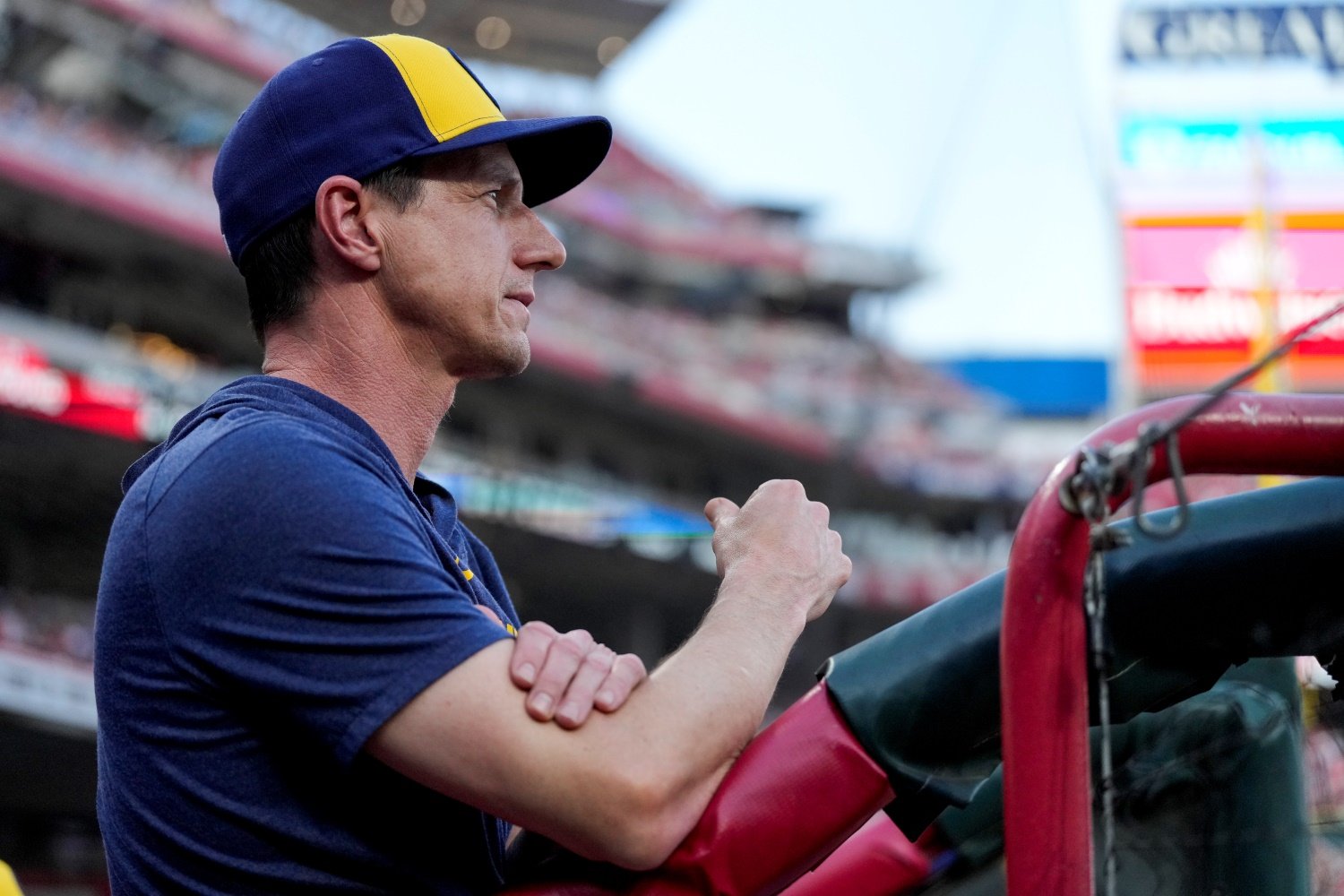 The real bad news is what Brewers fans haven’t heard anything about: To wit: whether or not the Brewers will be looking for a new manager in the offseason. There is no word on whether Craig Counsell will still be wearing the blue and gold of the Brewers. This silence is very concerning, particularly given the fact that Counsell has probably been the best manger in Brewers history by just about every possible metric (be it wins, playoff appearances, longevity) that can be looked at on paper. Is that hyperbole? Let’s look through some of the record: In five of the six full (162-game) seasons under Counsell, the team posted 86 wins or more, according to the Brewers’ 2023 media guide. The only exception was 2016, which saw the Brewers win a not-too-shabby 73 games, considering the fact that the team dealt Jonathan Lucroy and Jeremy Jeffress for Lewis Brinson and Luis Ortiz, who each were components in deals that enabled the team’s 2018 run to Game Seven of the NLCS. Counsell has the highest win total of any Brewers manager in history–surpassing Phil Garner in 2022, and Garner’s tenure with the Brewers was sub-.500 overall. The Brewers manager with the most wins and a winning record prior to Counsell was Tom Trebelhorn, and he never got into the playoffs (although he did not have the benefit of Wild Card spots or the three-division format). Harvey Kuenn had the highest winning percentage over two stints (1975, 1982-1983), but only had the one playoff appearance that netted the Crew the 1982 AL pennant. The team got single playoff appearances from Buck Rogers in 1981, the duo of Ned Yost and Dale Sveum in 2008, and Ron Roenicke in 2011. Counsell has equaled that total in his tenure, which is the longest of any manager in Brewers history (1235 games as of June 10 and counting). Furthermore, Counsell’s Brewers have won 21 games more than their Pythagorean record would indicate from 2016 through the games of June 10, 2023. That includes four in this injury-riddled 2023 season, and a stunning eight in the 2019 Wild Card season. Counsell also exceeded the Pythagorean by five games in the 2018 season–so his managing got the Crew to Game 163 against the Cubs that year. It's not even up for debate at this point: Counsell’s done a superb job as manager of maximizing the talent on the Brewers roster. He’s clearly managed the clubhouse very well over the past eight-plus seasons in charge of the team. Sure, the team is scuffling offensively, and there have been a lot of injuries this season. The manager can play an important part. For all some Brewers fans like to dump on Ned Yost, can anyone deny that his enthusiasm to be the manager of the Brewers played a role in turning the team around after that horrendous 2002 season that marked the franchise’s nadir? But at this point, can anyone point to someone who is a certain upgrade over Counsell as the on-field manager? Right now, that seems to be highly doubtful. If anything, Counsell has clearly earned an extension from the Brewers. The apparent lack of any apparent movement to keep Counsell in the fold should be of great concern to fans hoping to see a run of success for the franchise continue.
 -
The Brewers have fallen behind Pittsburgh, trailing the surprising Pirates by a single game as of June 13. But while the weekend sweep by the A’s has knocked the Crew out of first place for now, that is not the bad news that Brewers fans should fret about, given that there are still 97 games to play. Image courtesy of © Sam Greene-USA TODAY Sports The real bad news is what Brewers fans haven’t heard anything about: To wit: whether or not the Brewers will be looking for a new manager in the offseason. There is no word on whether Craig Counsell will still be wearing the blue and gold of the Brewers. This silence is very concerning, particularly given the fact that Counsell has probably been the best manger in Brewers history by just about every possible metric (be it wins, playoff appearances, longevity) that can be looked at on paper. Is that hyperbole? Let’s look through some of the record: In five of the six full (162-game) seasons under Counsell, the team posted 86 wins or more, according to the Brewers’ 2023 media guide. The only exception was 2016, which saw the Brewers win a not-too-shabby 73 games, considering the fact that the team dealt Jonathan Lucroy and Jeremy Jeffress for Lewis Brinson and Luis Ortiz, who each were components in deals that enabled the team’s 2018 run to Game Seven of the NLCS. Counsell has the highest win total of any Brewers manager in history–surpassing Phil Garner in 2022, and Garner’s tenure with the Brewers was sub-.500 overall. The Brewers manager with the most wins and a winning record prior to Counsell was Tom Trebelhorn, and he never got into the playoffs (although he did not have the benefit of Wild Card spots or the three-division format). Harvey Kuenn had the highest winning percentage over two stints (1975, 1982-1983), but only had the one playoff appearance that netted the Crew the 1982 AL pennant. The team got single playoff appearances from Buck Rogers in 1981, the duo of Ned Yost and Dale Sveum in 2008, and Ron Roenicke in 2011. Counsell has equaled that total in his tenure, which is the longest of any manager in Brewers history (1235 games as of June 10 and counting). Furthermore, Counsell’s Brewers have won 21 games more than their Pythagorean record would indicate from 2016 through the games of June 10, 2023. That includes four in this injury-riddled 2023 season, and a stunning eight in the 2019 Wild Card season. Counsell also exceeded the Pythagorean by five games in the 2018 season–so his managing got the Crew to Game 163 against the Cubs that year. It's not even up for debate at this point: Counsell’s done a superb job as manager of maximizing the talent on the Brewers roster. He’s clearly managed the clubhouse very well over the past eight-plus seasons in charge of the team. Sure, the team is scuffling offensively, and there have been a lot of injuries this season. The manager can play an important part. For all some Brewers fans like to dump on Ned Yost, can anyone deny that his enthusiasm to be the manager of the Brewers played a role in turning the team around after that horrendous 2002 season that marked the franchise’s nadir? But at this point, can anyone point to someone who is a certain upgrade over Counsell as the on-field manager? Right now, that seems to be highly doubtful. If anything, Counsell has clearly earned an extension from the Brewers. The apparent lack of any apparent movement to keep Counsell in the fold should be of great concern to fans hoping to see a run of success for the franchise continue. View full article
-
Pros and Cons of Potential Draft Picks for Brewers at No, 18
Harold Hutchison posted an article in Brewers
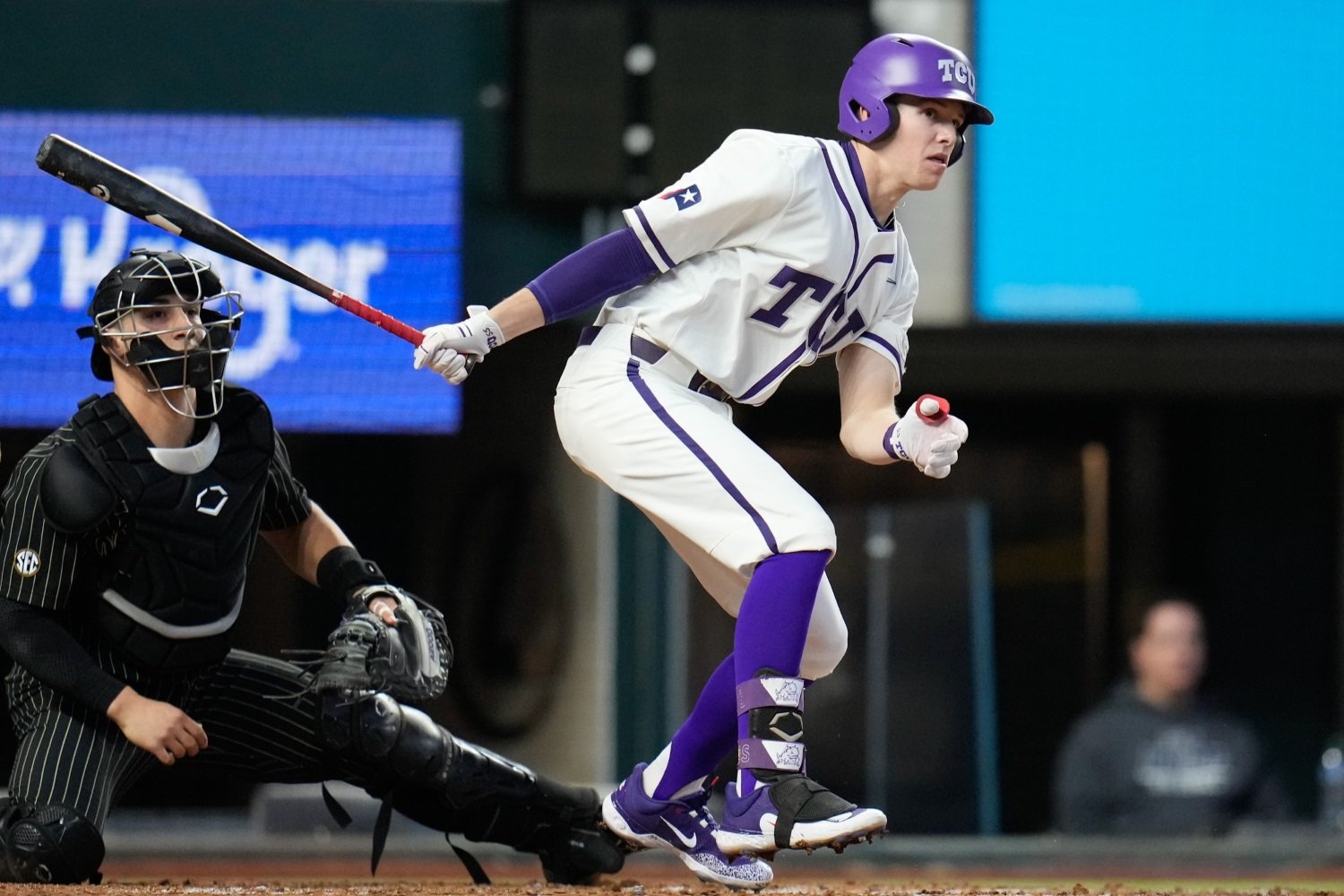 This whole exercise will be based on the Consensus Big Board as of May 24. This will include the player listed at that spot, a couple of players in the five spaces after number 18; two guys who are in the five spaces before 18; a couple of cheeseballs within the top 30; a “dropper” in the top ten, and a pair of “reaches” in the range of 31-50. At the pick #18 – 3B Aidan Miller, Mitchell High School (Florida) Pros: A big power bat who plays third base. Described as having a “solid” hit tool. Good defense. Power tool rated at 60 on the 20-80 scale. Cons: Prep athlete, not likely to rapidly climb the system. Might not stick at third, could end up at first base. Before the #18 pick #13 – 2B Tommy Troy, Stanford University Pros: Excellent hitter. College bat who could rapidly rise through the system. Improving atrikeout-to-walk ratio, shows ability to make adjustments. Cons: Missed time with injury. Is a bat-first player who may need to move to left field or DH. Farm system already crowded with middle infield prospects. #15 – RHP Noble Meyer, Jesuit High School (Oregon) Pros: Tall (6’5”) who could possibly add some muscle. Already a good power arm with a fastball and slider. Cons: Prep arm, which hasn’t worked so well for the Brewers at times. Third pitch a work in progress. Not likely to move rapidly through the system. After the No. 18 pick #20 – 1B/RHP Bryce Eldridge, Madison High School (Virginia) Pros: Two-way threat as first baseman and pitcher. Potential ability to also handle corner outfield slots. Left-handed bat, which could fit well at American Family Field. Cons: Prep player, and not likely to rapidly climb the ladder to the majors. Crew’s handling of Quinton Low indicates that one side of potential two-way contribution could be ignored. #21 – 3B Brayden Taylor, Texas Christian University Pros: Left-handed power bat that could do well in American Family Field. Good defense at third base. Could move up the ladder relatively quickly. Excellent walk rate in college. Line-drive power to all fields. Cons: Strikes out a lot. Exit velocity relatively low despite high come run totals. Top 30 “Cheeseballs” #27 – OF Chase Davis, University of Arizona Pros: Could move quickly up the system. Left-handed bat with power and OBP skills. Cut down strikeouts from 2022 to 2023. Cons: Crowded position in the farm system. Still has a relatively high strikeout rate. Not a threat on the basepaths. #30 – 1B Nolan Schanuel, Florida Atlantic University Pros: Does not strike out much. Incredible OBP skills. Threat on the basepaths. Could rapidly climb through the farm system. Plays a position of need in the system. Has some corner OF and 3B experience in summer leagues. Cons: Primarily plays first base, and DH may be the other option. FAU not known for facing powerhouse teams. Primarily played in warm weather. Potential “Dropper” #7 Jacob Gonzalez, University of Mississippi Pros: Could rapidly move through farm system. Excellent OBP skills. Avoids strikeouts. Possibly a left-handed Jeff Cirillo or Mark Loretta. Played well in SEC. Cons: Shortstop is crowded. Lacks speed on basepaths. Not a lot of power. The “Reaches” #38 – SS Adrian Santana, Doral Academy (Florida) Pros: Switch-hitter. Excellent defense. Speedy. High-contact bat. Cons: Not likely to move up the ladder quickly. Shortstop a very crowded position in farm system. #41 – C/1B Raffaelle Velazquez, Huntington Beach High School (California) Pros: High-power lefty bat. Has versatility, playing catcher, first base, and third base. Could be an option in corner OF slots with strong arm. Superb plate discipline. Cons: Prep bat, not likely to move fast through system. Needs work behind the plate, which could stunt development of offense. Catcher somewhat crowded in system. Which player from here would you like to see the Brewers draft?
 -
Picking at #18 overall, the Brewers will probably have little chance of some of the most hyped prospects in the 2023 MLB draft. That said, there will be a number of choices for the team at #18. Who could they pick? Let’s take a page from Leslie Knope and put together a pros and cons list for some of them. Image courtesy of © Chris Jones-USA TODAY Sports This whole exercise will be based on the Consensus Big Board as of May 24. This will include the player listed at that spot, a couple of players in the five spaces after number 18; two guys who are in the five spaces before 18; a couple of cheeseballs within the top 30; a “dropper” in the top ten, and a pair of “reaches” in the range of 31-50. At the pick #18 – 3B Aidan Miller, Mitchell High School (Florida) Pros: A big power bat who plays third base. Described as having a “solid” hit tool. Good defense. Power tool rated at 60 on the 20-80 scale. Cons: Prep athlete, not likely to rapidly climb the system. Might not stick at third, could end up at first base. Before the #18 pick #13 – 2B Tommy Troy, Stanford University Pros: Excellent hitter. College bat who could rapidly rise through the system. Improving atrikeout-to-walk ratio, shows ability to make adjustments. Cons: Missed time with injury. Is a bat-first player who may need to move to left field or DH. Farm system already crowded with middle infield prospects. #15 – RHP Noble Meyer, Jesuit High School (Oregon) Pros: Tall (6’5”) who could possibly add some muscle. Already a good power arm with a fastball and slider. Cons: Prep arm, which hasn’t worked so well for the Brewers at times. Third pitch a work in progress. Not likely to move rapidly through the system. After the No. 18 pick #20 – 1B/RHP Bryce Eldridge, Madison High School (Virginia) Pros: Two-way threat as first baseman and pitcher. Potential ability to also handle corner outfield slots. Left-handed bat, which could fit well at American Family Field. Cons: Prep player, and not likely to rapidly climb the ladder to the majors. Crew’s handling of Quinton Low indicates that one side of potential two-way contribution could be ignored. #21 – 3B Brayden Taylor, Texas Christian University Pros: Left-handed power bat that could do well in American Family Field. Good defense at third base. Could move up the ladder relatively quickly. Excellent walk rate in college. Line-drive power to all fields. Cons: Strikes out a lot. Exit velocity relatively low despite high come run totals. Top 30 “Cheeseballs” #27 – OF Chase Davis, University of Arizona Pros: Could move quickly up the system. Left-handed bat with power and OBP skills. Cut down strikeouts from 2022 to 2023. Cons: Crowded position in the farm system. Still has a relatively high strikeout rate. Not a threat on the basepaths. #30 – 1B Nolan Schanuel, Florida Atlantic University Pros: Does not strike out much. Incredible OBP skills. Threat on the basepaths. Could rapidly climb through the farm system. Plays a position of need in the system. Has some corner OF and 3B experience in summer leagues. Cons: Primarily plays first base, and DH may be the other option. FAU not known for facing powerhouse teams. Primarily played in warm weather. Potential “Dropper” #7 Jacob Gonzalez, University of Mississippi Pros: Could rapidly move through farm system. Excellent OBP skills. Avoids strikeouts. Possibly a left-handed Jeff Cirillo or Mark Loretta. Played well in SEC. Cons: Shortstop is crowded. Lacks speed on basepaths. Not a lot of power. The “Reaches” #38 – SS Adrian Santana, Doral Academy (Florida) Pros: Switch-hitter. Excellent defense. Speedy. High-contact bat. Cons: Not likely to move up the ladder quickly. Shortstop a very crowded position in farm system. #41 – C/1B Raffaelle Velazquez, Huntington Beach High School (California) Pros: High-power lefty bat. Has versatility, playing catcher, first base, and third base. Could be an option in corner OF slots with strong arm. Superb plate discipline. Cons: Prep bat, not likely to move fast through system. Needs work behind the plate, which could stunt development of offense. Catcher somewhat crowded in system. Which player from here would you like to see the Brewers draft? View full article
-
Thinking About the Brewers' Needs in the 2023 MLB Draft
Harold Hutchison posted an article in Brewers
 Hopefully, the farm system will have prospects who can do that. But the Brewers have some needs they should look to fill. Let’s take a look at them. First Base Face it, the players manning first base for the Brewers farm system are not looking too hot. Aside from 31-year-old Jon Singleton, none have an OPS over .718 as of June 2. Rowdy Tellez is slated to be a free agent after 2024, so the Brewers may need to find a replacement unless they extend him (which might be a good idea). Even if Tellez is extended through 2030, by the end of the deal, he may be more of a DH than a reliable option at first base. Thus, looking for a first baseman who can rapidly climb the ladder might be good–say Nolan Schanuel, with the Competitive Balance A pick the Brewers have this year. Third Base Tyler Black has been handing third base well in Biloxi, but his injury history means it may not be a bad idea to have a backup option–or better yet, someone who can push Black to second base, first base, DH, or even left field. This player should be someone who could rapidly climb the system. Braden Taylor might be that option for the Crew in the first round, at pick 18. Starting Pitchers One lesson of 2023 is that there can never be too much depth for your starting rotation. With the exception of Burnes, every member of the planned Opening Day 2023 rotation was on the injured list in 2022, 2023, or both. This should be a pitcher who can make a fast climb as well. One candidate with their second-round pick (No. 54): Alonzo Tredwell, while Sean Sullivan would make an excellent choice at pick 87 in the third round, and Matthew Dallas could be a worthwhile risk in the fourth or fifth round. Pray For A Drop In 2018, Brice Turang dropped to the Brewers at No. 21 in the first round of the draft. The Crew could always hope for history to repeat itself five years later, and maybe get some great talent. Jacob Gonzales from Mississippi could be one such dropper–offering the Brewers someone who could move up quickly, and whose lefty bat could be very useful. Another possibility is Adrian Santana–who is currently 38 on the consensus big board, but could be worth taking if he slips to #54 overall. Make A Deal Or Three – Get More Picks Acquiring competitive-balance picks might be another option. The Brewers have given up picks to get players, and should consider making a deal to clear space for Black or other prospects (Quero, etc.). If that can be done, the Crew could add one or two more prospects. It also could be a way to address the roster crush as players continue to come off the injured list and re-join the parent club. Overview The Brewers come into the 2023 MLB draft with a number of needs. How they fill them could determine how they perform in 2026 and beyond. The success–or the lack thereof–in 2017-2020 has shown up in recent Brewers teams. But successful drafts can lead to success.
 -
With the draft coming up, the Brewers will get the chance to infuse a lot of new talent into the farm system. In some areas, that infusion will be much-needed: By Opening Day 2024, they will need to find a way to keep fans interested after the all-but-inevitable departures of Corbin Burnes, Brandon Woodruff, and Willy Adames via trade. Image courtesy of © Angela Peterson / USA TODAY NETWORK Hopefully, the farm system will have prospects who can do that. But the Brewers have some needs they should look to fill. Let’s take a look at them. First Base Face it, the players manning first base for the Brewers farm system are not looking too hot. Aside from 31-year-old Jon Singleton, none have an OPS over .718 as of June 2. Rowdy Tellez is slated to be a free agent after 2024, so the Brewers may need to find a replacement unless they extend him (which might be a good idea). Even if Tellez is extended through 2030, by the end of the deal, he may be more of a DH than a reliable option at first base. Thus, looking for a first baseman who can rapidly climb the ladder might be good–say Nolan Schanuel, with the Competitive Balance A pick the Brewers have this year. Third Base Tyler Black has been handing third base well in Biloxi, but his injury history means it may not be a bad idea to have a backup option–or better yet, someone who can push Black to second base, first base, DH, or even left field. This player should be someone who could rapidly climb the system. Braden Taylor might be that option for the Crew in the first round, at pick 18. Starting Pitchers One lesson of 2023 is that there can never be too much depth for your starting rotation. With the exception of Burnes, every member of the planned Opening Day 2023 rotation was on the injured list in 2022, 2023, or both. This should be a pitcher who can make a fast climb as well. One candidate with their second-round pick (No. 54): Alonzo Tredwell, while Sean Sullivan would make an excellent choice at pick 87 in the third round, and Matthew Dallas could be a worthwhile risk in the fourth or fifth round. Pray For A Drop In 2018, Brice Turang dropped to the Brewers at No. 21 in the first round of the draft. The Crew could always hope for history to repeat itself five years later, and maybe get some great talent. Jacob Gonzales from Mississippi could be one such dropper–offering the Brewers someone who could move up quickly, and whose lefty bat could be very useful. Another possibility is Adrian Santana–who is currently 38 on the consensus big board, but could be worth taking if he slips to #54 overall. Make A Deal Or Three – Get More Picks Acquiring competitive-balance picks might be another option. The Brewers have given up picks to get players, and should consider making a deal to clear space for Black or other prospects (Quero, etc.). If that can be done, the Crew could add one or two more prospects. It also could be a way to address the roster crush as players continue to come off the injured list and re-join the parent club. Overview The Brewers come into the 2023 MLB draft with a number of needs. How they fill them could determine how they perform in 2026 and beyond. The success–or the lack thereof–in 2017-2020 has shown up in recent Brewers teams. But successful drafts can lead to success. View full article
-
Reasons to Be Optimistic About Top Brewers Prospects - Part 2
Harold Hutchison posted an article in Minor Leagues
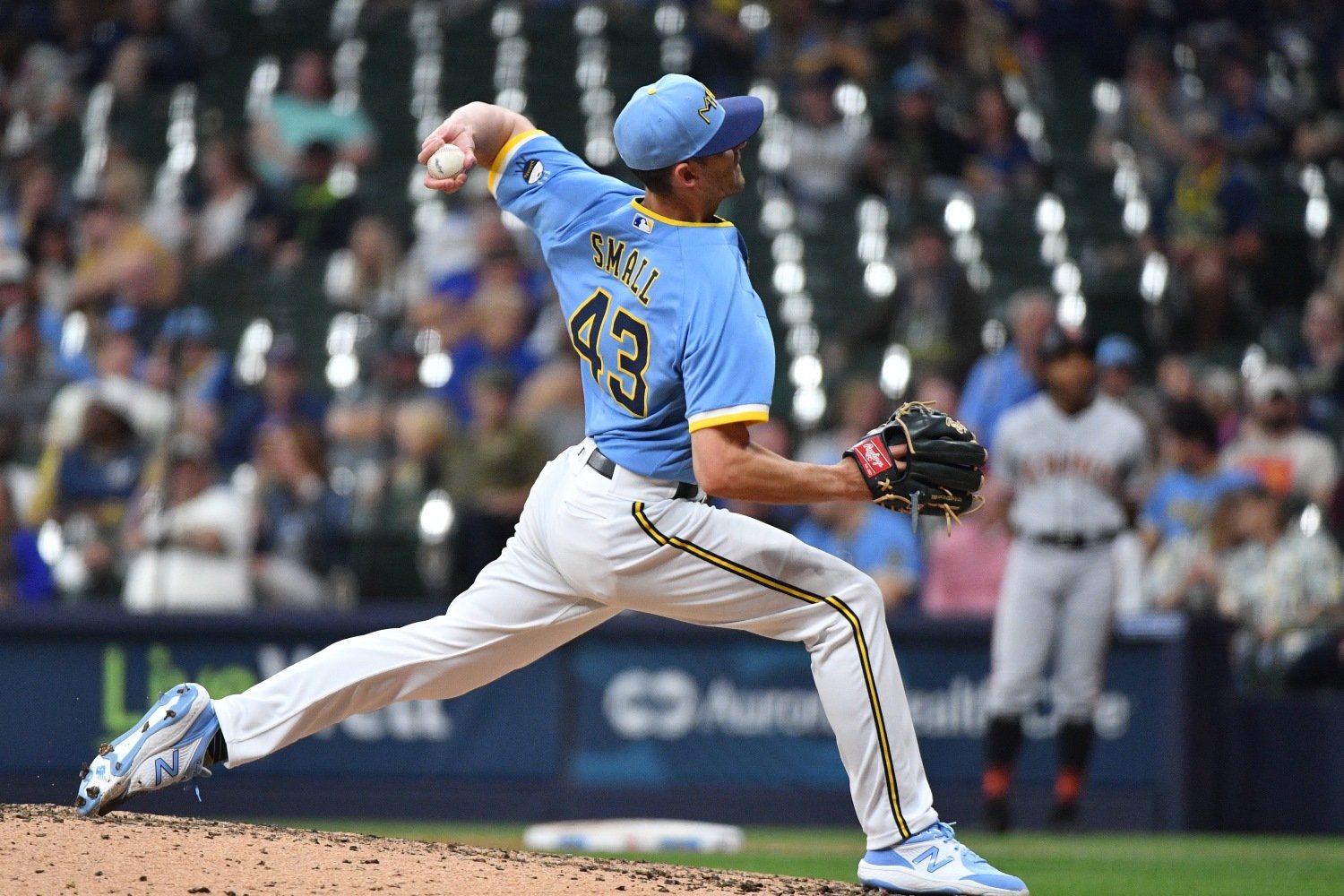 We covered the top 10 in the first part, here are the rest of the top 20. OF Luis Lara – OBP/Defense Lara is arguably the 2023 version of one-time Brewer Mike Felder. In his early years, Felder delivered OBP and some defense, and also had good speed. That said, Lara lacks Felder’s value on the basepaths, which means he could wind up a fifth outfielder, with an upside akin to Brady Clark’s years with the Brewers. RHP Justin Jarvis – K/9IP, K:BB ratio Jarvis is punching out more than one hitter an inning and posting almost four strikeouts for every walk issued. The Brewers will likely lose Corbin Burnes and Brandon Woodruff in trades over the offseason (barring miraculous extensions). If so, Jarvis could be one of the pitchers to carry the load. OF Hendry Mendez – OBP/Approach Mendez generates OBP–drawing walks at almost a Barry Bonds-esque rate. This will make him useful, especially if he can add playing some first base to his repertoire. Currently, the stats say he is Terry Francona with OBP skills as a player, but Francona ended up a valuable reserve for several teams across ten seasons. LHP Ethan Small – K/9IP Small may have some issues with walks, and he may have gotten clobbered, but he is also punching out a lot of hitters at the plate–almost one and a half an inning. This puts Small as arguably a poor man’s Josh Hader, a valuable late-inning reliever who can shut things down. SS Freddy Zamora – OBP/Defense Zamora has had some injury problems over his college and minor-league career, but in full seasons, he has shown that he has outstanding OBP skills (.377 career OBP) and he’s also shown he can rap out a lot of doubles (31 in 555 minor-league at-bats). If the Brewers extend Willy Adames, Zamora could be trade bait. If they move Adames, Zamora might be a worthy successor. C Matthew Wood – All-Around Offense Wood was drafted last year and has already forced his way to Appleton after about six weeks. He’s walked more than he’s struck out, and he has shown both power and the ability to hit for average. Add some adequate defense, and he might be joining Jeferson Quero as a potent 1-2 punch behind the plate for the Brewers. 3B/1B Luke Adams – OBP/Speed/Power Adams may be hitting below the Uecker line in batting average, but he also is walking a lot, stealing a bunch, and when he connects, the ball tends to go far. That, and the fact he plays first base and third base could give him a shot in Milwaukee eventually. If Adams can hit for average some more, he would be a fearsome threat in the lineup. RHP Alexander Cornielle – Age and BB/9IP Cornielle is having a rough season, but he has cut the walks down, from 4.5 per nine innings pitched in 2022 to 3.4 in 2023. This is a good sign, and if Cornielle can rediscover the form he had in Wisconsin, he could do well. He’s about two years and three months younger than your average Double A player. IF Rob Moore – OBP/Power/Lack of Ks Moore may be struggling to reach the Uecker line, but he is hitting for power and drawing walks. More importantly, he’s only struck out 31 times in 160 at-bats. It could just be bad luck, and when the hits drop in, Moore could very well be putting up numbers like he did in Brisbane. RHP Stiven Cruz – Lower HBP and HR/9IP Like Cornielle, Cruz has been struggling a bit in Biloxi, and is about two years and three months younger than your average player. But while the walk rate has climbed, Cruz has yet to plunk an opposing hitter, after doing so nine times last year. Cruz has also pushed his home runs allowed per nine innings down slightly.
 -
We’re continuing our look at reasons to be optimistic about each player on the Brewer Fanatic Top 20 Prospects list. When we go over this, it’s to outline just how some of these players could end up contributing to the next successful Brewers team. Image courtesy of © Michael McLoone-USA TODAY Sports We covered the top 10 in the first part, here are the rest of the top 20. OF Luis Lara – OBP/Defense Lara is arguably the 2023 version of one-time Brewer Mike Felder. In his early years, Felder delivered OBP and some defense, and also had good speed. That said, Lara lacks Felder’s value on the basepaths, which means he could wind up a fifth outfielder, with an upside akin to Brady Clark’s years with the Brewers. RHP Justin Jarvis – K/9IP, K:BB ratio Jarvis is punching out more than one hitter an inning and posting almost four strikeouts for every walk issued. The Brewers will likely lose Corbin Burnes and Brandon Woodruff in trades over the offseason (barring miraculous extensions). If so, Jarvis could be one of the pitchers to carry the load. OF Hendry Mendez – OBP/Approach Mendez generates OBP–drawing walks at almost a Barry Bonds-esque rate. This will make him useful, especially if he can add playing some first base to his repertoire. Currently, the stats say he is Terry Francona with OBP skills as a player, but Francona ended up a valuable reserve for several teams across ten seasons. LHP Ethan Small – K/9IP Small may have some issues with walks, and he may have gotten clobbered, but he is also punching out a lot of hitters at the plate–almost one and a half an inning. This puts Small as arguably a poor man’s Josh Hader, a valuable late-inning reliever who can shut things down. SS Freddy Zamora – OBP/Defense Zamora has had some injury problems over his college and minor-league career, but in full seasons, he has shown that he has outstanding OBP skills (.377 career OBP) and he’s also shown he can rap out a lot of doubles (31 in 555 minor-league at-bats). If the Brewers extend Willy Adames, Zamora could be trade bait. If they move Adames, Zamora might be a worthy successor. C Matthew Wood – All-Around Offense Wood was drafted last year and has already forced his way to Appleton after about six weeks. He’s walked more than he’s struck out, and he has shown both power and the ability to hit for average. Add some adequate defense, and he might be joining Jeferson Quero as a potent 1-2 punch behind the plate for the Brewers. 3B/1B Luke Adams – OBP/Speed/Power Adams may be hitting below the Uecker line in batting average, but he also is walking a lot, stealing a bunch, and when he connects, the ball tends to go far. That, and the fact he plays first base and third base could give him a shot in Milwaukee eventually. If Adams can hit for average some more, he would be a fearsome threat in the lineup. RHP Alexander Cornielle – Age and BB/9IP Cornielle is having a rough season, but he has cut the walks down, from 4.5 per nine innings pitched in 2022 to 3.4 in 2023. This is a good sign, and if Cornielle can rediscover the form he had in Wisconsin, he could do well. He’s about two years and three months younger than your average Double A player. IF Rob Moore – OBP/Power/Lack of Ks Moore may be struggling to reach the Uecker line, but he is hitting for power and drawing walks. More importantly, he’s only struck out 31 times in 160 at-bats. It could just be bad luck, and when the hits drop in, Moore could very well be putting up numbers like he did in Brisbane. RHP Stiven Cruz – Lower HBP and HR/9IP Like Cornielle, Cruz has been struggling a bit in Biloxi, and is about two years and three months younger than your average player. But while the walk rate has climbed, Cruz has yet to plunk an opposing hitter, after doing so nine times last year. Cruz has also pushed his home runs allowed per nine innings down slightly. View full article
-
Article: Consensus MLB Draft Board V2
Harold Hutchison replied to Jamie Cameron's topic in Brewer Fanatic Front Page News
Bryce Eldridge is right at 18, and would be good pickup, IMO. Power-hitting 1B, but also a big pitcher on the mound. -
Reasons to Be Optimistic About Top Brewers Prospects - Part 1
Harold Hutchison posted an article in Minor Leagues
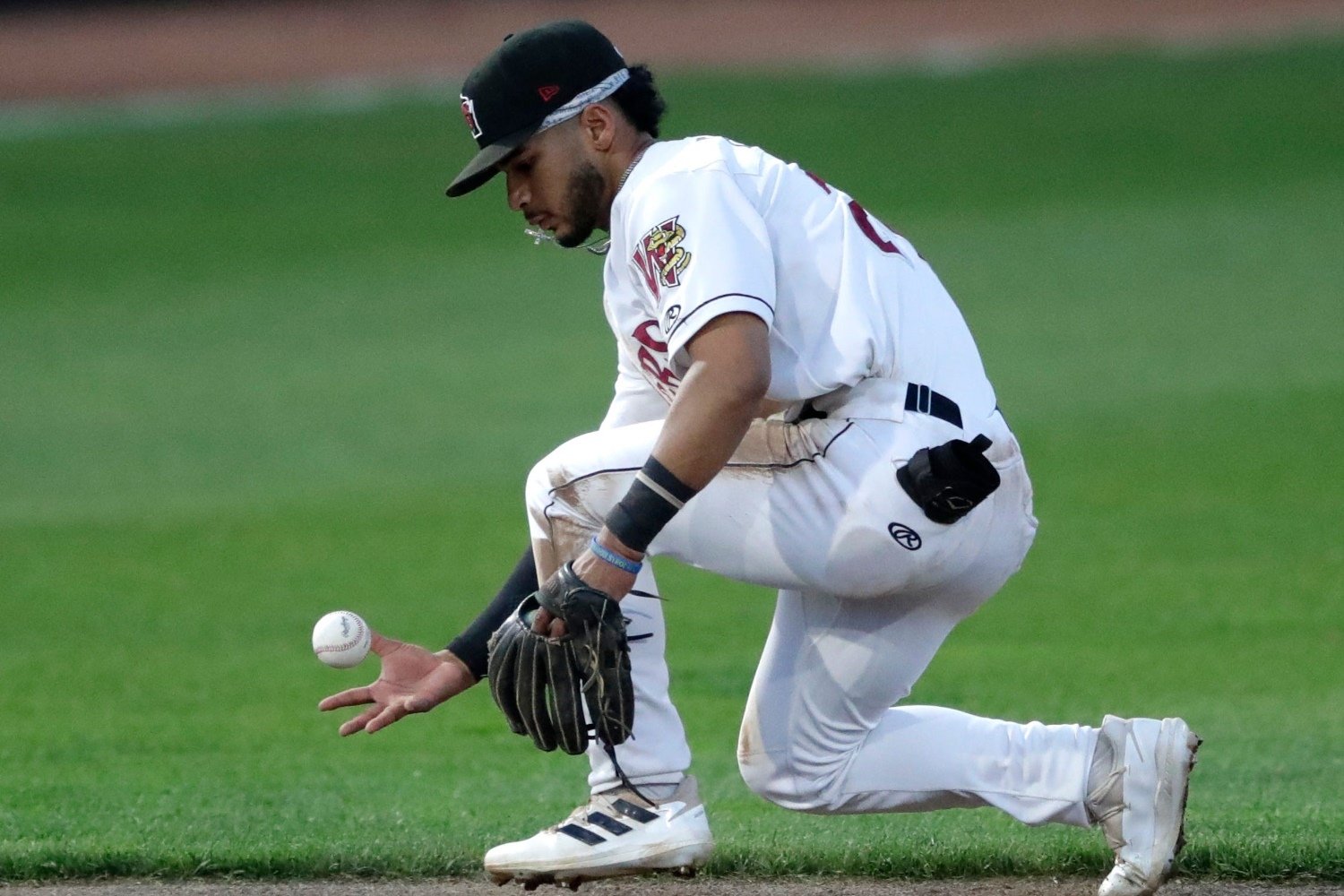 OF Jackson Chourio – Where He Is Let’s face it: For all the quibbles about Chourio’s low walk rates, he is making these adjustments at Double A at the age of 19. That is five years younger than your average player at that level. This means that the Brewers have a very valuable commodity: time. Chourio currently could spend a full year at Biloxi and a full year at Triple-A Nasvhille before Rule 5 eligibility even becomes a question. Given the wealth of outfield talent the Crew has, this is a good thing. OF Sal Frelick – Hit Tool and Speed Prior to going on the injured list with a thumb injury, Frelick flashed the ability to get on base and hit for average, and he has plenty of speed. I’ve said in the past that Frelick looks like the early seasons of Paul Molitor or Ichiro Suzuki. This is a reason to be optimistic, because those two players were always threats–even if they didn’t blast home runs out of the park. IF/OF Tyler Black – Offense and Versatility Black has played second base, third base, left field, and center field. All the while, he has been a dangerous hitter with excellent OBP skills. We’re talking Barry Bonds-type ability to draw walks, and this year, Black has also flashed a real power bat, at the cost of some batting average. Black is taking off a lot on the basepaths, too. A left-handed Jeff Cirillo with speed could be the best outcome, but a player with three-true-outcome offensive upside and speed could also be nice. C Jeferson Quero – Age, Power, and Defense Quero is only a year older than Chourio, and yet he, too, is in Double A, and his offense–at least the power–has been there. Plenty of catchers with power and defense have good careers in MLB, and Quero could easily be one of them. He’s done decently drawing walks in the past, so if he can rebound to the OBP he maintained in Wisconsin, that would be good. If his walk rate goes to what it was in the Arizona Fall League, Quero could make a run at displacing Jonathan Lucroy as the best catcher in Brewers history. RHP Jacob Misiorowski – His Stuff Misiorowski hasn’t quite been able to go deep into games, but his stuff is simply dominating. He’s striking out 16.3 batters per nine innings, and only walking 2.6 per nine frames. He could arguably replace Devin Williams as the closer today, and the Crew wouldn’t be hurt by that move, but if he can stretch out… it’s lights out for opposing offenses. RHP Carlos F. Rodriguez – Age, Results Rodriguez draws concern over his walks, but everything else is pointing upwards for the 21-year-old hurler, who is pitching like an ace at a level where players are about three years older than him, on average. It would be nice to see him go deeper into games, and hopefully, that happens soon. Worst case, Rodriguez becomes a guy who can go 2-3 innings per outing, bridging a short start to the guys who close the door in the late innings. LHP Robert Gasser – High K/9, Low HR/9 Gasser might be having some issues with walks, but he is also punching out more than one hitter per inning and avoiding the go-fer ball. At the very least, Gasser could become a crucial member of the bullpen with that sort of profile, but it’s always better if he could emerge as a viable starter. RHP Abner Uribe – Fastball and K/9 How dominating is Abner Uribe? Most innings, two of the three outs he will get will be via the strikeout. A fastball hitting triple digits can do that. So can a superb slider. Even with the walks, he could be an asset in the Brewers bullpen today–and the Brewers did protect him on the 40-man roster in the 2022-2023 offseason. SS Eric Brown Jr. – OBP/Speed/Defense Brown may not be a big bopper, but he is showing an OBP/speed combo that could be quite useful in a reserve role at the very least. Think of a right-handed Bill Spiers or Mark Loretta, albeit with the ability to steal 25-30 bases a season. Both Spiers and Loretta proved to be extremely useful players throughout their careers. IF Daniel Guilarte – OBP/Hit-For-Average/Speed/Defense Guilarte is proving to be an OBP god who hits for average as well. Add in speed and his defense, and you have the kind of player that could very well have been the difference in the 2018 NLCS, where the Crew would have a runner at third, but the hitter would strike out. He lacks the pop of even Spiers or Loretta, but he’s still a competent backup.
 -
Last week, we discussed the “caution lights” for the prospects on the Brewer Fanatic Top 20 list. But there are also reasons to be very optimistic about each of these prospects. Some of them have very high ceilings. Others have skills that will make them valuable as bench assets. But all of them clearly have the potential to really help the Brewers in the future. Image courtesy of © Dan Powers/USA TODAY NETWORK-Wisconsin / USA TODAY NETWORK OF Jackson Chourio – Where He Is Let’s face it: For all the quibbles about Chourio’s low walk rates, he is making these adjustments at Double A at the age of 19. That is five years younger than your average player at that level. This means that the Brewers have a very valuable commodity: time. Chourio currently could spend a full year at Biloxi and a full year at Triple-A Nasvhille before Rule 5 eligibility even becomes a question. Given the wealth of outfield talent the Crew has, this is a good thing. OF Sal Frelick – Hit Tool and Speed Prior to going on the injured list with a thumb injury, Frelick flashed the ability to get on base and hit for average, and he has plenty of speed. I’ve said in the past that Frelick looks like the early seasons of Paul Molitor or Ichiro Suzuki. This is a reason to be optimistic, because those two players were always threats–even if they didn’t blast home runs out of the park. IF/OF Tyler Black – Offense and Versatility Black has played second base, third base, left field, and center field. All the while, he has been a dangerous hitter with excellent OBP skills. We’re talking Barry Bonds-type ability to draw walks, and this year, Black has also flashed a real power bat, at the cost of some batting average. Black is taking off a lot on the basepaths, too. A left-handed Jeff Cirillo with speed could be the best outcome, but a player with three-true-outcome offensive upside and speed could also be nice. C Jeferson Quero – Age, Power, and Defense Quero is only a year older than Chourio, and yet he, too, is in Double A, and his offense–at least the power–has been there. Plenty of catchers with power and defense have good careers in MLB, and Quero could easily be one of them. He’s done decently drawing walks in the past, so if he can rebound to the OBP he maintained in Wisconsin, that would be good. If his walk rate goes to what it was in the Arizona Fall League, Quero could make a run at displacing Jonathan Lucroy as the best catcher in Brewers history. RHP Jacob Misiorowski – His Stuff Misiorowski hasn’t quite been able to go deep into games, but his stuff is simply dominating. He’s striking out 16.3 batters per nine innings, and only walking 2.6 per nine frames. He could arguably replace Devin Williams as the closer today, and the Crew wouldn’t be hurt by that move, but if he can stretch out… it’s lights out for opposing offenses. RHP Carlos F. Rodriguez – Age, Results Rodriguez draws concern over his walks, but everything else is pointing upwards for the 21-year-old hurler, who is pitching like an ace at a level where players are about three years older than him, on average. It would be nice to see him go deeper into games, and hopefully, that happens soon. Worst case, Rodriguez becomes a guy who can go 2-3 innings per outing, bridging a short start to the guys who close the door in the late innings. LHP Robert Gasser – High K/9, Low HR/9 Gasser might be having some issues with walks, but he is also punching out more than one hitter per inning and avoiding the go-fer ball. At the very least, Gasser could become a crucial member of the bullpen with that sort of profile, but it’s always better if he could emerge as a viable starter. RHP Abner Uribe – Fastball and K/9 How dominating is Abner Uribe? Most innings, two of the three outs he will get will be via the strikeout. A fastball hitting triple digits can do that. So can a superb slider. Even with the walks, he could be an asset in the Brewers bullpen today–and the Brewers did protect him on the 40-man roster in the 2022-2023 offseason. SS Eric Brown Jr. – OBP/Speed/Defense Brown may not be a big bopper, but he is showing an OBP/speed combo that could be quite useful in a reserve role at the very least. Think of a right-handed Bill Spiers or Mark Loretta, albeit with the ability to steal 25-30 bases a season. Both Spiers and Loretta proved to be extremely useful players throughout their careers. IF Daniel Guilarte – OBP/Hit-For-Average/Speed/Defense Guilarte is proving to be an OBP god who hits for average as well. Add in speed and his defense, and you have the kind of player that could very well have been the difference in the 2018 NLCS, where the Crew would have a runner at third, but the hitter would strike out. He lacks the pop of even Spiers or Loretta, but he’s still a competent backup. View full article
-
Though they still have three years of control left via his original contract extension, the Brewers might be wise to talk to Freddy Peralta about another one before 2023 is out. What would that look like? Image courtesy of © Dan Hamilton-USA TODAY Sports The Brewers’ starting rotation has been rocked with injuries the last two years. The team planned to have Corbin Burnes, Brandon Woodruff, Freddy Peralta, Aaron Ashby, Wade Miley, and Eric Lauer as their top six starters, with Adrian Houser moving to the bullpen. In the last two years, only Burnes has avoided the injured list, and Houser’s been starting. Back in Feburary 2020, Peralta signed a team-friendly deal with team options through 2026, but that year is beginning to feel relatively close. Meanwhile, the Brewers are very likely to lose one or both of Burnes and Woodruff via trade or free agency. There is an outside shot of retaining their aces, but it is very unlikely, given that there seems to be no movement in terms of locking up Matt Arnold and Craig Counsell. Peralta has been the third ace of the Brewers rotation. He came up during the 2018 season, and was a key part of getting the Brewers to the playoffs, but he was underused–almost an afterthought–in the NLCS, aside from stepping in when Gio Gonzalez was injured in Game 4. In 2019, he struggled, after mostly being in the bullpen that year, but he rebounded in 2020 and broke out in 2021. In 2022, he had a shoulder injury and went on the injured list. Since then, he’s returned to form, albeit in short outings in 2022. In 2023, he’s had some rough outings, including giving up 10 runs (four earned) against the Giants. He may warrant a mulligan for that one, based on that scary incident involving close friend Willy Adames for that 15-1 loss, but it is time to ask what to do about him. For starters, let’s assume that the 2025 and 2026 options will be exercised. At $8 million, Peralta is a bargain, especially if he is at his 2021 form. Even at his current level, teams could do far worse. In 2023, Peralta has been a lot more hittable than he was in the past. He’s also giving up homers at a slightly lower rate than he did in 2019. That said, he has kept the Crew in games more often than not, and currently has a 5-4 record. He’s also stayed on the mound in 2023, as opposed to going on the injured list. Taking a look at similar pitchers, the names Jake Odorizzi and Lance Lynn come up, along with Dakota Hudson and Cal Quantrill. Odorizzi and Lynn probably provide the best guidance for the Brewers, pulling in salaries ranging from $8 million to $19 million a year. Peralta will be 28 at the end of 2026, though, while Odorizzi and Lynn are 33 and 36, respectively. That said, the Brewers should not hesitate at this point. Assuming Peralta rebounds as he did following his IL trip last season, the best option might be to offer Peralta a four-year deal at $13.5 million a year. This splits the difference of the salaries, but gives the Brewers a proven commodity in the rotation. Extending Peralta a second time is not without risk, given his shoulder injury and 2023 struggles. That said, with Burnes and Woodruff likely to be too pricey to keep around, Peralta might be the best option to anchor the rotation in 2025 and beyond. View full article
-
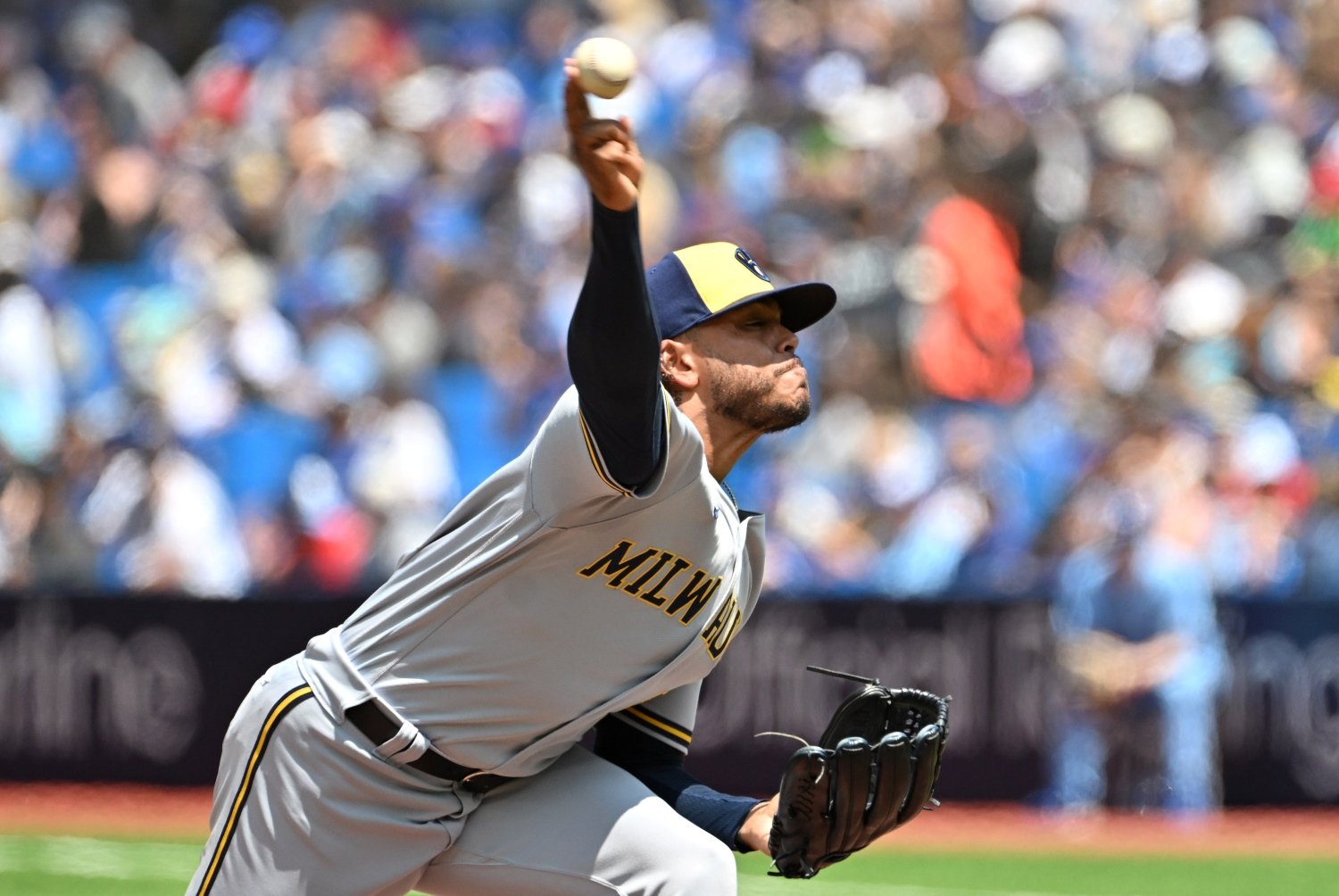 The Brewers’ starting rotation has been rocked with injuries the last two years. The team planned to have Corbin Burnes, Brandon Woodruff, Freddy Peralta, Aaron Ashby, Wade Miley, and Eric Lauer as their top six starters, with Adrian Houser moving to the bullpen. In the last two years, only Burnes has avoided the injured list, and Houser’s been starting. Back in Feburary 2020, Peralta signed a team-friendly deal with team options through 2026, but that year is beginning to feel relatively close. Meanwhile, the Brewers are very likely to lose one or both of Burnes and Woodruff via trade or free agency. There is an outside shot of retaining their aces, but it is very unlikely, given that there seems to be no movement in terms of locking up Matt Arnold and Craig Counsell. Peralta has been the third ace of the Brewers rotation. He came up during the 2018 season, and was a key part of getting the Brewers to the playoffs, but he was underused–almost an afterthought–in the NLCS, aside from stepping in when Gio Gonzalez was injured in Game 4. In 2019, he struggled, after mostly being in the bullpen that year, but he rebounded in 2020 and broke out in 2021. In 2022, he had a shoulder injury and went on the injured list. Since then, he’s returned to form, albeit in short outings in 2022. In 2023, he’s had some rough outings, including giving up 10 runs (four earned) against the Giants. He may warrant a mulligan for that one, based on that scary incident involving close friend Willy Adames for that 15-1 loss, but it is time to ask what to do about him. For starters, let’s assume that the 2025 and 2026 options will be exercised. At $8 million, Peralta is a bargain, especially if he is at his 2021 form. Even at his current level, teams could do far worse. In 2023, Peralta has been a lot more hittable than he was in the past. He’s also giving up homers at a slightly lower rate than he did in 2019. That said, he has kept the Crew in games more often than not, and currently has a 5-4 record. He’s also stayed on the mound in 2023, as opposed to going on the injured list. Taking a look at similar pitchers, the names Jake Odorizzi and Lance Lynn come up, along with Dakota Hudson and Cal Quantrill. Odorizzi and Lynn probably provide the best guidance for the Brewers, pulling in salaries ranging from $8 million to $19 million a year. Peralta will be 28 at the end of 2026, though, while Odorizzi and Lynn are 33 and 36, respectively. That said, the Brewers should not hesitate at this point. Assuming Peralta rebounds as he did following his IL trip last season, the best option might be to offer Peralta a four-year deal at $13.5 million a year. This splits the difference of the salaries, but gives the Brewers a proven commodity in the rotation. Extending Peralta a second time is not without risk, given his shoulder injury and 2023 struggles. That said, with Burnes and Woodruff likely to be too pricey to keep around, Peralta might be the best option to anchor the rotation in 2025 and beyond.
 -
Caution Lights for Top Brewers Prospects - Part 2
Harold Hutchison posted an article in Minor Leagues
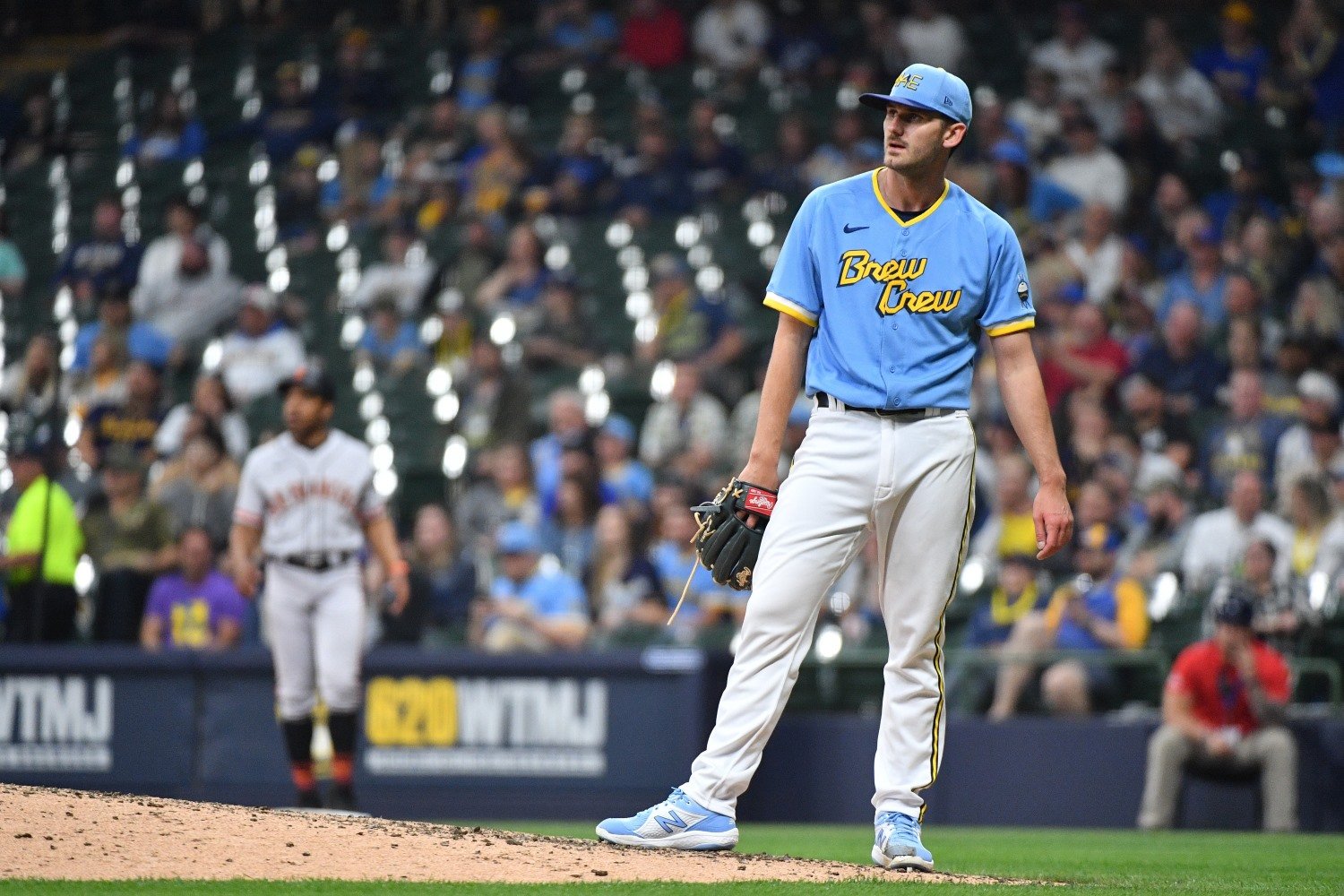 We covered the top ten in the first part; here are the rest of the top 20. OF Luis Lara – Power Luis Lara was given an aggressive promotion to full-season Class-A Carolina, and he’s hitting for average, providing excellent defense, and has walked many more times than he’s struck out (16 walks to 10 strikeouts in 82 at-bats). But the power deficiency (two doubles, one home run) will be a concern going forward. While Mike Felder had a good career, even he could hit one out of the park. RHP Justin Jarvis – Walks/How Long Can He Go? Justin Jarvis is having a bit of a breakout since arriving in Biloxi late last year, posting a 2.67 ERA. However, he still gives up four walks per nine innings, and he is averaging less than six innings a start. If he can lower the walks and get through the sixth inning more, he’ll be an asset. Otherwise, the team may need someone to piggyback with him. OF Hendry Mendez – Injury/Power Mendez has shown great OBP skills, but he hasn’t displayed the power one would expect or need from a corner outfielder. In addition, he’s only played in eight games this year, due to an injury. Mendez has the OBP skills to be a very dangerous hitter at American Family Field, but he has to be on the field to be valuable, and he has to adjust his swing. LHP Ethan Small – Walks Ethan Small has done reasonably well since moving to the bullpen. However, the walks are still high. He did avoid some walks during the 15-1 loss to the Giants that had a very scary moment involving Willy Adames, but he needs to keep them down more consistently if he wants to have a shot at a late-inning, high-leverage role. SS Freddy Zamora – Injuries/Power Zamora missed a lot of time in 2020 and 2022 with injuries. Other than that, he’s delivered at the plate and on defense. With Adames slated to become a free agent after 2024, Zamora could slot right in as a replacement. He has flashed some power, with 5 home runs in 117 at-bats so far this year, as opposed to 6 in 347 in 2021. But he has to stay healthy to deliver. C Matthew Wood – How Fast Can He Move Up?/Full-Season Stamina Wood is already showing a lot of good signs. He draws walks, has some pop, and forced a promotion from Carolina to Wisconsin in May. His continued rapid rise could be crucial, as Milwaukee needs a replacement for Victor Caratini. His ability to hold up for a full season is also going to be tested, and could determine his fate. So far, so good. 3B/1B Luke Adams – Defensive Home/Hitting for Average Luke Adams is a physical specimen, but so far in Carolina, his batting average is below the Uecker line. While he’s drawing a lot of walks, he’s also striking out a lot. In addition, where does he play? Is he a third baseman? Is he in the outfield? Does he play first base? Inquiring minds want to know. RHP Alexander Cornielle – Hits Allowed Cornielle looked like he was a potential breakout, but results so far in 2023 have been rough, to say the least. He’s allowing more than one hit per inning, and that’s a good way to give up runs and not go deep into games–he’s averaging less than five innings per start. IF Rob Moore – Batting Average Moore dominated in Brisbane over the winter, but in Wisconsin, he’s had a sub-Uecker line batting average. The OBP skills are there, and Moore is rapping a lot of extra-base hits. Moore can turn things around, but the middle infield is crowded in the Brewers farm system. RHP Stiven Cruz – Hits/Walks Like Cornielle, Cruz seemed like he would have a huge season in 2023. However, everything seems to be going the wrong way. He’s walked 18 in 34.2 innings, compared to 24 walks in 91.1 innings pitched in 2022. He’s also averaging more than one hit allowed per inning, and less than four innings per start. Cruz is young, but will need to turn things around.
 -
We’re continuing our look at what might be called “caution lights” for the Brewer Fanatic Top 20 list. Discussing these is not saying these players are going to fail to make the majors, but it is something to keep an eye on, and hope for the players to improve over the 2023 season and beyond. Image courtesy of © Michael McLoone-USA TODAY Sports We covered the top ten in the first part; here are the rest of the top 20. OF Luis Lara – Power Luis Lara was given an aggressive promotion to full-season Class-A Carolina, and he’s hitting for average, providing excellent defense, and has walked many more times than he’s struck out (16 walks to 10 strikeouts in 82 at-bats). But the power deficiency (two doubles, one home run) will be a concern going forward. While Mike Felder had a good career, even he could hit one out of the park. RHP Justin Jarvis – Walks/How Long Can He Go? Justin Jarvis is having a bit of a breakout since arriving in Biloxi late last year, posting a 2.67 ERA. However, he still gives up four walks per nine innings, and he is averaging less than six innings a start. If he can lower the walks and get through the sixth inning more, he’ll be an asset. Otherwise, the team may need someone to piggyback with him. OF Hendry Mendez – Injury/Power Mendez has shown great OBP skills, but he hasn’t displayed the power one would expect or need from a corner outfielder. In addition, he’s only played in eight games this year, due to an injury. Mendez has the OBP skills to be a very dangerous hitter at American Family Field, but he has to be on the field to be valuable, and he has to adjust his swing. LHP Ethan Small – Walks Ethan Small has done reasonably well since moving to the bullpen. However, the walks are still high. He did avoid some walks during the 15-1 loss to the Giants that had a very scary moment involving Willy Adames, but he needs to keep them down more consistently if he wants to have a shot at a late-inning, high-leverage role. SS Freddy Zamora – Injuries/Power Zamora missed a lot of time in 2020 and 2022 with injuries. Other than that, he’s delivered at the plate and on defense. With Adames slated to become a free agent after 2024, Zamora could slot right in as a replacement. He has flashed some power, with 5 home runs in 117 at-bats so far this year, as opposed to 6 in 347 in 2021. But he has to stay healthy to deliver. C Matthew Wood – How Fast Can He Move Up?/Full-Season Stamina Wood is already showing a lot of good signs. He draws walks, has some pop, and forced a promotion from Carolina to Wisconsin in May. His continued rapid rise could be crucial, as Milwaukee needs a replacement for Victor Caratini. His ability to hold up for a full season is also going to be tested, and could determine his fate. So far, so good. 3B/1B Luke Adams – Defensive Home/Hitting for Average Luke Adams is a physical specimen, but so far in Carolina, his batting average is below the Uecker line. While he’s drawing a lot of walks, he’s also striking out a lot. In addition, where does he play? Is he a third baseman? Is he in the outfield? Does he play first base? Inquiring minds want to know. RHP Alexander Cornielle – Hits Allowed Cornielle looked like he was a potential breakout, but results so far in 2023 have been rough, to say the least. He’s allowing more than one hit per inning, and that’s a good way to give up runs and not go deep into games–he’s averaging less than five innings per start. IF Rob Moore – Batting Average Moore dominated in Brisbane over the winter, but in Wisconsin, he’s had a sub-Uecker line batting average. The OBP skills are there, and Moore is rapping a lot of extra-base hits. Moore can turn things around, but the middle infield is crowded in the Brewers farm system. RHP Stiven Cruz – Hits/Walks Like Cornielle, Cruz seemed like he would have a huge season in 2023. However, everything seems to be going the wrong way. He’s walked 18 in 34.2 innings, compared to 24 walks in 91.1 innings pitched in 2022. He’s also averaging more than one hit allowed per inning, and less than four innings per start. Cruz is young, but will need to turn things around. View full article
-
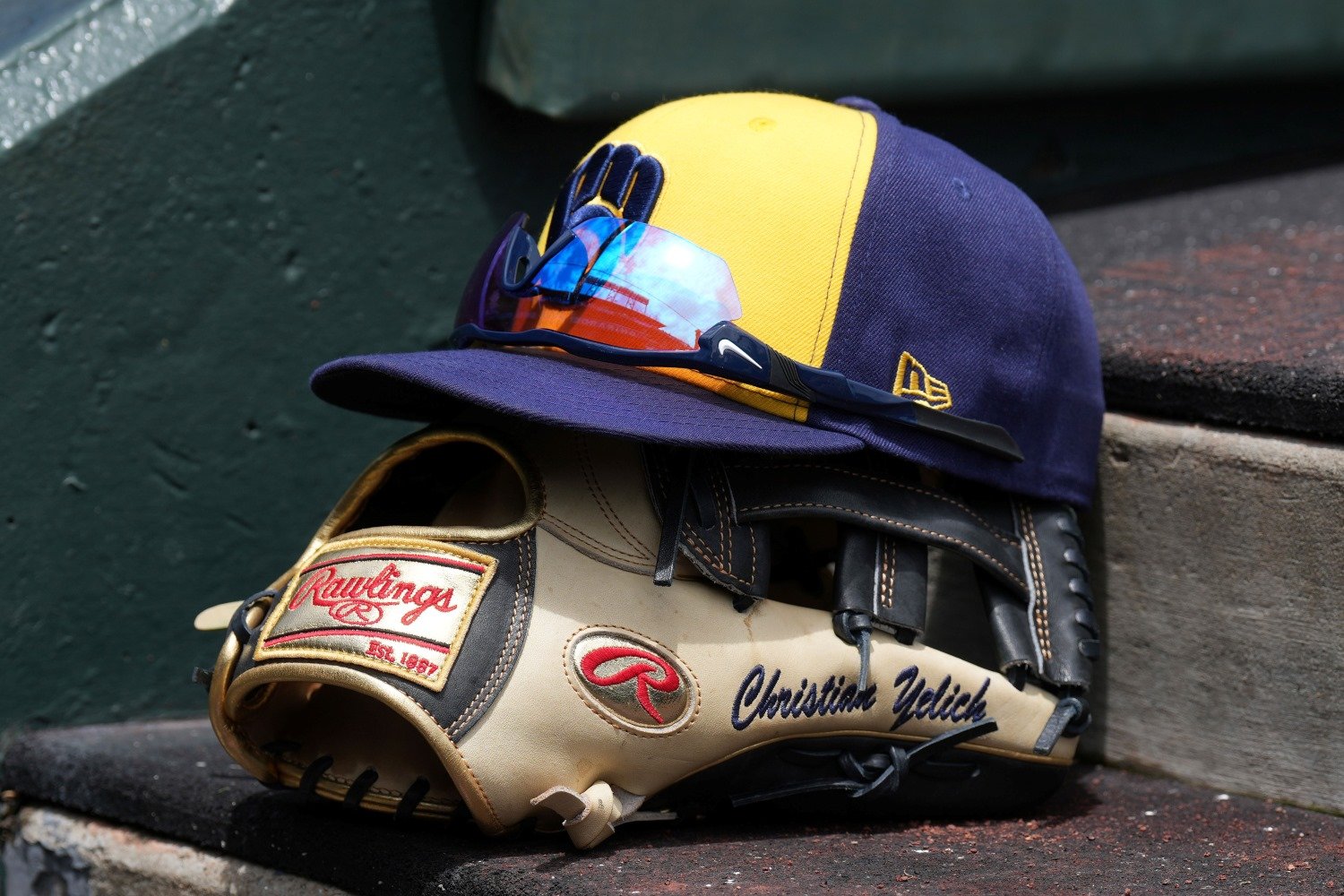 However, one remarkably successful manager doesn’t get a lot of credit. In today’s playoff system, he arguably would have taken the Crew to the playoffs. Let’s go over each year of his tenure. 1986 Tom Trebelhorn managed the Brewers for the last nine games of the 1986 season, following Bamberger’s second retirement, going 6-3. That stint came after serving as third-base coach in place of Tony Muser following the infamous clubhouse explosion at their spring training facility in Chandler, Ariz. Perhaps the signature moment was sweeping a doubleheader to close out the season against the Blue Jays, who had some exciting talent back then. 1987 Brewers fans know this as Team Streak, with the highs of going 13-0, including a moment of history on April 15, when Juan Nieves no-hit the Orioles; Paul Molitor’s 39-game hitting streak; and a 91-71 record. The team had its lows, too: there was a 12-game losing streak in May, and a fair number of injuries, with Jim Gantner playing only 81 games and Molitor missing 44. It also was a victim of the two-division format and the lack of wild cards–had either been in play, this team would have made the postseason. The team’s Pythagorean record of 85-77 was not horrible, but Trebelhorn eked out another six wins. 1988 The team was almost as good (in its way) as the 1987 version, finishing 87-75, two games back of the Red Sox in the two-division format. With the three-division alignment (plus wild cards), it becomes an open question if they make the playoffs. If only one wild card, they barely miss. But with two, the team probably would have faced off against the Blue Jays in a Game 163 situation, and with three, they would have been in the playoffs again. The team finished two games below their Pythagorean record of 89-73, but it was a playoff-caliber team. 1989 This was the first of two years where injuries really took Trebelhorn’s teams out. Molitor played 155 games, and Robin Yount was in 160, but many of the supporting Crew were out with injuries, including ace Ted Higuera; keystone man Gantner; Dale Sveum, and Greg Brock, forcing the Brewers to have Gus Polidor, Dave Engle, and Terry Francona (among others) see a lot of playing time. The team finished 81-81 against a Pythagorean record of 84-78. 1990 This was the only year the Brewers finished under .500 on Trebelhorn’s watch, going 74-88 versus the Pythagorean record of 78-84. Again, injuries decimated the team, with Molitor missing 59 games, among others. It was a team that never quite got untracked, despite bringing in Dave Parker to be the full-time DH. 1991 Despite injuries, Trebelhorn’s Brewers ended 1991 with a record of 83-79, three games below their Pythagorean record of 86-76. Molitor stayed healthy, but Yount was only in 130 games that season, and declined from his near-MVP form. The pitching staff was particularly hard-hit, with injuries to Higuera and ineffectiveness from other contributors. The injury bug also hit some position players, and the team missed the playoffs in Trebelhorn’s final year. Overview The late 1980s and early 1990s were a good run for the Brewers–one that could have been great, if not for injuries. Managers can’t control that, but Trebelhorn was able to finish his tenure with the Brewers with 422 wins and 397 losses. It was a superb run, and one that is underappreciated due to the way baseball’s playoffs were set up. In today’s three-division, multi-wild card team format, Trebelhorn would have secured two playoff appearances and a division title, matching the record of all combined prior managers of the Brewers, and when he left, he led all managers in wins and had managed longer than any other manager in Brewers history to that time. Author’s note: From 1989-1991, I had occasional correspondence with Trebelhorn, culminating in a 1991 letter that secured me an A on a high-school English project as a freshman.
 -
Some Brewers managers have become well-known. George Bamberger led the Crew to its first run of success, before a heart attack sidelined him for a good chunk of the 1980 season. Harvey Kuenn led the Brewers to their only World Series appearance. Ned Yost brought the Brewers to contention after the 2002 nadir. Craig Counsell has taken the Brewers to the postseason four times–or, to put it in perspective, he’s seen the postseason as often as all of his predecessors combined. Image courtesy of © Darren Yamashita-USA TODAY Sports However, one remarkably successful manager doesn’t get a lot of credit. In today’s playoff system, he arguably would have taken the Crew to the playoffs. Let’s go over each year of his tenure. 1986 Tom Trebelhorn managed the Brewers for the last nine games of the 1986 season, following Bamberger’s second retirement, going 6-3. That stint came after serving as third-base coach in place of Tony Muser following the infamous clubhouse explosion at their spring training facility in Chandler, Ariz. Perhaps the signature moment was sweeping a doubleheader to close out the season against the Blue Jays, who had some exciting talent back then. 1987 Brewers fans know this as Team Streak, with the highs of going 13-0, including a moment of history on April 15, when Juan Nieves no-hit the Orioles; Paul Molitor’s 39-game hitting streak; and a 91-71 record. The team had its lows, too: there was a 12-game losing streak in May, and a fair number of injuries, with Jim Gantner playing only 81 games and Molitor missing 44. It also was a victim of the two-division format and the lack of wild cards–had either been in play, this team would have made the postseason. The team’s Pythagorean record of 85-77 was not horrible, but Trebelhorn eked out another six wins. 1988 The team was almost as good (in its way) as the 1987 version, finishing 87-75, two games back of the Red Sox in the two-division format. With the three-division alignment (plus wild cards), it becomes an open question if they make the playoffs. If only one wild card, they barely miss. But with two, the team probably would have faced off against the Blue Jays in a Game 163 situation, and with three, they would have been in the playoffs again. The team finished two games below their Pythagorean record of 89-73, but it was a playoff-caliber team. 1989 This was the first of two years where injuries really took Trebelhorn’s teams out. Molitor played 155 games, and Robin Yount was in 160, but many of the supporting Crew were out with injuries, including ace Ted Higuera; keystone man Gantner; Dale Sveum, and Greg Brock, forcing the Brewers to have Gus Polidor, Dave Engle, and Terry Francona (among others) see a lot of playing time. The team finished 81-81 against a Pythagorean record of 84-78. 1990 This was the only year the Brewers finished under .500 on Trebelhorn’s watch, going 74-88 versus the Pythagorean record of 78-84. Again, injuries decimated the team, with Molitor missing 59 games, among others. It was a team that never quite got untracked, despite bringing in Dave Parker to be the full-time DH. 1991 Despite injuries, Trebelhorn’s Brewers ended 1991 with a record of 83-79, three games below their Pythagorean record of 86-76. Molitor stayed healthy, but Yount was only in 130 games that season, and declined from his near-MVP form. The pitching staff was particularly hard-hit, with injuries to Higuera and ineffectiveness from other contributors. The injury bug also hit some position players, and the team missed the playoffs in Trebelhorn’s final year. Overview The late 1980s and early 1990s were a good run for the Brewers–one that could have been great, if not for injuries. Managers can’t control that, but Trebelhorn was able to finish his tenure with the Brewers with 422 wins and 397 losses. It was a superb run, and one that is underappreciated due to the way baseball’s playoffs were set up. In today’s three-division, multi-wild card team format, Trebelhorn would have secured two playoff appearances and a division title, matching the record of all combined prior managers of the Brewers, and when he left, he led all managers in wins and had managed longer than any other manager in Brewers history to that time. Author’s note: From 1989-1991, I had occasional correspondence with Trebelhorn, culminating in a 1991 letter that secured me an A on a high-school English project as a freshman. View full article
-
Caution Lights for Top Brewers Prospects - Part 1
Harold Hutchison posted an article in Minor Leagues
 OF Jackson Chourio – Low Walk Rates Jackson Chourio is an exciting prospect to be sure, but like Keston Hiura, who rocketed through the system five years ago, he is showing a low walk rate along the way. This could be a concern, as we see from how Hiura struggled in 2021 and (to a lesser extent) 2022. Chourio’s youth means there is a lot of time for him to develop, but this has to be a concern for Brewers fans. OF Sal Frelick – Thumb Injury A thumb injury can wreck a hitter for a while. Just look at Ryan Braun’s 2013-2014 odyssey following his injury. While Frelick’s injury doesn’t seem as severe, it could delay his MLB debut to 2024. IF/OF Tyler Black – Injury History/Batting Average Drop Tyler Black’s play at third base with Biloxi has been a very bright spot for the Brewers farm system. His injury history, particularly 2022, is a worry. The other concern has to be the fact that his batting average has dropped to .234. While Black has OBP skills (he’s walked more than he’s struck out), he can do far more for the Brewers offense as a left-handed Jeff Cirillo with speed than by trying to be the next Russell Branyan. C Jeferson Quero – Walk Rate Quero’s got great defense, and his bat certainly is showing pop. The worry here can be expressed by the number seven. That’s how many walks he has through the games of June 1. Like Chourio, he is young and can develop, and he is not rocketing through the system like Chourio did in 2022 and Hiura did in 2018-2019. But if he can’t walk, the Crew may want to bank on Matthew Wood and Darrien Miller for the future. RHP Jacob Misiorowski – Can He Start? Misiorowski has Brewers fans who follow the farm system seeing a new ace in the late 2020s. But the real question is whether he can actually be a starter. To date, he has averaged less than three innings per outing in his eight starts. That puts a lot on the bullpen. Getting him to where he can go 6-7 innings will be crucial. RHP Carlos F. Rodriguez – Walks Rodriguez has dominated since his promotion to Wisconsin in 2022, but at the same time, he has walked 33 batters in 81 innings, adding five hit batsmen and a wild pitch to the total. If Rodriguez can lower the walks, he could be a very nice piece of the rotation in 2025 – or even 2024. But walks can kill a team. LHP Robert Gasser – High WHIP Gasser was part of the return for closer Josh Hader. While he’s striking out a lot of hitters, he’s also walking a lot and giving up hits. Are his struggles in Nashville an attempt to work on some stuff, or is it a sign hitters at the AAA and MLB levels have figured him out? Gasser could always be a bullpen option, but that would make the Hader deal look a little worse. RHP Abner Uribe – Health and Walks Uribe, with a lot of heat in his fastball and a devastating slider, is reminiscent of Derrick Turnbow, who was a late-inning mainstay for the Brewers in the mid-2000s. Turnbow’s Achilles heel, though, was walks, meaning that at times, hits were much more devastating. Uribe also spent time on the injured list this season. SS Eric Brown Jr. – Power If there is caution light for Brown, it’s a lack of power. To date, he has only five home runs in 232 at-bats in the minors. Otherwise, his defense, speed, and on-base skills look quite strong, but pitchers may decide to risk contact if he isn’t able to punish them for it–see how Brice Turang is doing in Milwaukee. IF Daniel Guilarte – Power Guilarte is in the same boat as Brown, only more so. Brown at least has hit some home runs. Guilarte has none, in 254 at-bats. Like Brown, his defense, OBP skills, and speed contribute to wins, and Guilarte is hitting for average. But this profile, similar to one-time second baseman Jeff Pickler, may not be enough to get Guilarte to the majors.
 -
For fans, the prospects on the farm system provide a lot of hope. But at the same time, they don’t always work out. So, it seems worth looking over the prospects on Brewer Fanatic Top 20, and taking a glance at what might be called “caution lights” for them. Now, we’re not saying they won’t break out or have great careers; we’re just noting what could go wrong. Image courtesy of © Dan Powers/USA TODAY NETWORK-Wisconsin / USA TODAY NETWORK OF Jackson Chourio – Low Walk Rates Jackson Chourio is an exciting prospect to be sure, but like Keston Hiura, who rocketed through the system five years ago, he is showing a low walk rate along the way. This could be a concern, as we see from how Hiura struggled in 2021 and (to a lesser extent) 2022. Chourio’s youth means there is a lot of time for him to develop, but this has to be a concern for Brewers fans. OF Sal Frelick – Thumb Injury A thumb injury can wreck a hitter for a while. Just look at Ryan Braun’s 2013-2014 odyssey following his injury. While Frelick’s injury doesn’t seem as severe, it could delay his MLB debut to 2024. IF/OF Tyler Black – Injury History/Batting Average Drop Tyler Black’s play at third base with Biloxi has been a very bright spot for the Brewers farm system. His injury history, particularly 2022, is a worry. The other concern has to be the fact that his batting average has dropped to .234. While Black has OBP skills (he’s walked more than he’s struck out), he can do far more for the Brewers offense as a left-handed Jeff Cirillo with speed than by trying to be the next Russell Branyan. C Jeferson Quero – Walk Rate Quero’s got great defense, and his bat certainly is showing pop. The worry here can be expressed by the number seven. That’s how many walks he has through the games of June 1. Like Chourio, he is young and can develop, and he is not rocketing through the system like Chourio did in 2022 and Hiura did in 2018-2019. But if he can’t walk, the Crew may want to bank on Matthew Wood and Darrien Miller for the future. RHP Jacob Misiorowski – Can He Start? Misiorowski has Brewers fans who follow the farm system seeing a new ace in the late 2020s. But the real question is whether he can actually be a starter. To date, he has averaged less than three innings per outing in his eight starts. That puts a lot on the bullpen. Getting him to where he can go 6-7 innings will be crucial. RHP Carlos F. Rodriguez – Walks Rodriguez has dominated since his promotion to Wisconsin in 2022, but at the same time, he has walked 33 batters in 81 innings, adding five hit batsmen and a wild pitch to the total. If Rodriguez can lower the walks, he could be a very nice piece of the rotation in 2025 – or even 2024. But walks can kill a team. LHP Robert Gasser – High WHIP Gasser was part of the return for closer Josh Hader. While he’s striking out a lot of hitters, he’s also walking a lot and giving up hits. Are his struggles in Nashville an attempt to work on some stuff, or is it a sign hitters at the AAA and MLB levels have figured him out? Gasser could always be a bullpen option, but that would make the Hader deal look a little worse. RHP Abner Uribe – Health and Walks Uribe, with a lot of heat in his fastball and a devastating slider, is reminiscent of Derrick Turnbow, who was a late-inning mainstay for the Brewers in the mid-2000s. Turnbow’s Achilles heel, though, was walks, meaning that at times, hits were much more devastating. Uribe also spent time on the injured list this season. SS Eric Brown Jr. – Power If there is caution light for Brown, it’s a lack of power. To date, he has only five home runs in 232 at-bats in the minors. Otherwise, his defense, speed, and on-base skills look quite strong, but pitchers may decide to risk contact if he isn’t able to punish them for it–see how Brice Turang is doing in Milwaukee. IF Daniel Guilarte – Power Guilarte is in the same boat as Brown, only more so. Brown at least has hit some home runs. Guilarte has none, in 254 at-bats. Like Brown, his defense, OBP skills, and speed contribute to wins, and Guilarte is hitting for average. But this profile, similar to one-time second baseman Jeff Pickler, may not be enough to get Guilarte to the majors. View full article
-
I like Schanuel and Williamson - and think both could move up quickly.