



Harold Hutchison
-
Posts
6,909 -
Joined
-
Last visited
Content Type
Profiles
Forums
Blogs
Events
News
2026 Milwaukee Brewers Top Prospects Ranking
Milwaukee Brewers Videos
2022 Milwaukee Brewers Draft Picks
Milwaukee Brewers Free Agent & Trade Rumors, Notes, & Tidbits
Guides & Resources
2023 Milwaukee Brewers Draft Picks
2024 Milwaukee Brewers Draft Picks
The Milwaukee Brewers Players Project
2025 Milwaukee Brewers Draft Pick Tracker
2026 Milwaukee Brewers Draft Tracker: Picks & Bonuses
Store
Downloads
Gallery
Everything posted by Harold Hutchison
-
When it comes to right field, the Brewers are not as shallow as they are in left field or at third base. Then again, given how in practicality, the Brewers are not shallow at those positions, their situation in right field is quite good, even if it’s not as good as center field. Image courtesy of © Mark J. Rebilas-USA TODAY Sports In this case, the curve gets blown by the presence of a Top 100 prospect from the post-2022 MLB.com and Baseball Prospectus lists. Let’s look at this position a little more. AAA Nashville Joey Wiemer will likely be the Opening Day right fielder for the Nashville Sounds. That said, he could end up in right field for the Brewers by the end of the season. The exact timing will depend on Tyrone Taylor, Brian Anderson, and Blake Perkins, to a large degree, between disabled list stints and performance. Once Wiemer is up, non-roster invitee Tyler Naquin will likely take over in Nashville unless Tristen Lutz forces the issue. AA Biloxi Lutz will likely see some time in right field, along with Joe Gray Jr. and Je’Von Ward. The former’s question marks come from a sub-Uecker line batting average in Wisconsin, while the latter only saw the field for nine games in the Arizona Fall League, where he was a walks machine and flashed some power. Not a bad situation for the Shuckers, who may also see some help from utility player Noah Campbell. A+ Wisconsin If he isn’t promoted to AA, Gray will compete with Hendry Mendez for the right field job in Wisconsin. Gray’s batting average issues are apparent. For Mendez, the big question is whether he will figure out how to maximize the power potential. Hedbert Perez and Arbert Cipion, who tended to spend more time in left and center fields, will also compete for playing time. A Carolina Luis Castillo may be a top contender for left field, but he did get the most starts for the ACL Brewers Gold in right field. He will face competition from Eduarqui Fernandez, the top right fielder for the ACL Brewers Blue. Both put up solid performances in the ACL and will see some competition from Kaylan Nicasa (also a center fielder) and Luis Medina (also a left fielder). Rookie Leagues Duncan Garcia will be the front-runner to be the top right fielder for the Brewers’ lone team in the ACL in 2023, while Jose Gonzalez and Irving Igualas will also compete for playing time. Yeison Perez also saw some action in right field for the DSL Brewers 1 team but may be kept at first base. The DSL teams for the Brewers will likely be starting players from this January’s signing class. Overview Wiemer will likely be starting for the Brewers for a few years, but there is a lot of other talent in Mendez, Hedbert Perez, Castillo, Fernandez, Garcia, and even Yeison Perez. Given the wealth of talent at that position, this does not account for any displaced center fielders, either. In other words, there are many ways that the right field could go right for the Brewers in the future. View full article
-
- 2
-

-
- joey wiemer
- tristen lutz
- (and 3 more)
-
2023 Brewers Farm System Positional Preview: Right Field
Harold Hutchison posted an article in Minor Leagues
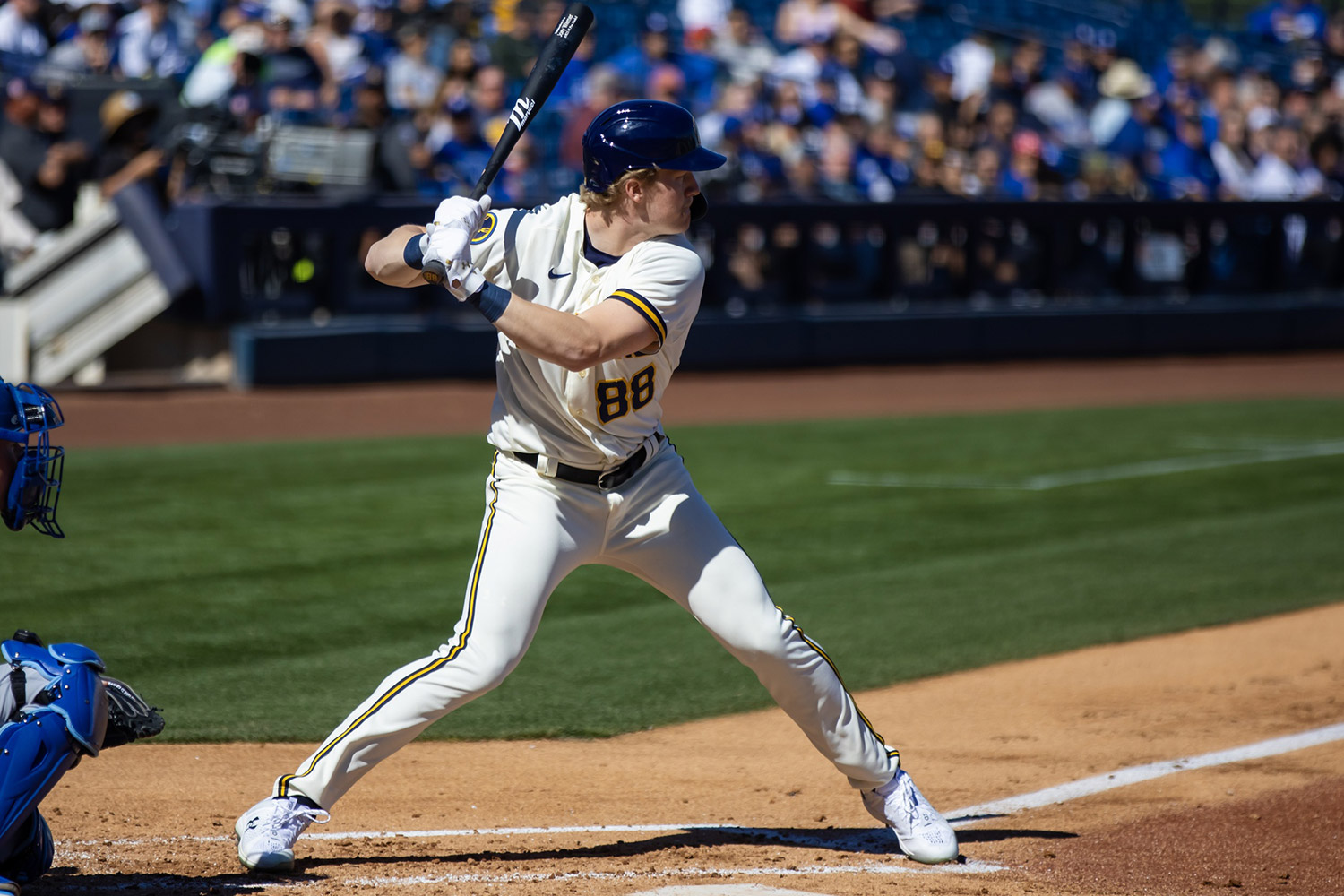 In this case, the curve gets blown by the presence of a Top 100 prospect from the post-2022 MLB.com and Baseball Prospectus lists. Let’s look at this position a little more. AAA Nashville Joey Wiemer will likely be the Opening Day right fielder for the Nashville Sounds. That said, he could end up in right field for the Brewers by the end of the season. The exact timing will depend on Tyrone Taylor, Brian Anderson, and Blake Perkins, to a large degree, between disabled list stints and performance. Once Wiemer is up, non-roster invitee Tyler Naquin will likely take over in Nashville unless Tristen Lutz forces the issue. AA Biloxi Lutz will likely see some time in right field, along with Joe Gray Jr. and Je’Von Ward. The former’s question marks come from a sub-Uecker line batting average in Wisconsin, while the latter only saw the field for nine games in the Arizona Fall League, where he was a walks machine and flashed some power. Not a bad situation for the Shuckers, who may also see some help from utility player Noah Campbell. A+ Wisconsin If he isn’t promoted to AA, Gray will compete with Hendry Mendez for the right field job in Wisconsin. Gray’s batting average issues are apparent. For Mendez, the big question is whether he will figure out how to maximize the power potential. Hedbert Perez and Arbert Cipion, who tended to spend more time in left and center fields, will also compete for playing time. A Carolina Luis Castillo may be a top contender for left field, but he did get the most starts for the ACL Brewers Gold in right field. He will face competition from Eduarqui Fernandez, the top right fielder for the ACL Brewers Blue. Both put up solid performances in the ACL and will see some competition from Kaylan Nicasa (also a center fielder) and Luis Medina (also a left fielder). Rookie Leagues Duncan Garcia will be the front-runner to be the top right fielder for the Brewers’ lone team in the ACL in 2023, while Jose Gonzalez and Irving Igualas will also compete for playing time. Yeison Perez also saw some action in right field for the DSL Brewers 1 team but may be kept at first base. The DSL teams for the Brewers will likely be starting players from this January’s signing class. Overview Wiemer will likely be starting for the Brewers for a few years, but there is a lot of other talent in Mendez, Hedbert Perez, Castillo, Fernandez, Garcia, and even Yeison Perez. Given the wealth of talent at that position, this does not account for any displaced center fielders, either. In other words, there are many ways that the right field could go right for the Brewers in the future.
 -
To say the Brewers are stacked at center field is to understate the issue. Garrett Mitchell will likely start in Milwaukee after being the Crew’s first-round pick in the 2020 draft. However, three other prospects are forcing their way to Milwaukee, and all are in center – for now. Image courtesy of © Curt Hogg / Milwaukee Journal Sentinel / USA TODAY NETWORK Let’s look over this very deep position for the Brewers. AAA Nashville If he’s not in Milwaukee, Sal Frelick could very well be in center field for the Sounds. Spring training non-roster invitees Skye Bolt and Monte Harrison also could see time in center for Nashville, as could Blake Perkins. Joey Wiemer, who primarily plays right field, is also a credible center fielder. Frelick and Wiemer could be in Milwaukee sooner rather than later, forcing the Crew to make some trades from their existing outfield corps. AA Biloxi Jackson Chourio will likely return to Biloxi after a meteoric rise through the Brewers system in 2022, putting him in the top ten of the MLB.com Pipeline Top 100. Terrence Dotson, a 22nd-round pick in 2019, had an aggressive jump in 2022 after showing superb OBP skills in the ACL in 2021 and didn’t embarrass himself in Biloxi. Joe Gray and his three true outcome bat could also factor in here, as could Tyler Black, also a second base and third base contender, but it is hard to imagine Chourio being displaced by any of them. A+ Wisconsin The Brewers will have an interesting choice in 2023. Do they hold Joe Gray back and see if he can reduce his strikeouts and get his average above the Uecker line? Or do they push Jace Avina, who had a superb 2022 in the ACL and Carolina League, to see if he can rise almost as swiftly as Chourio? Arbert Cipion, Eduarqui Fernandez, and Hedbert Perez could also be factored in center. The Timber Rattlers will have plenty of options, and all of them could be better. A Carolina Jace Avina rose to Carolina and did not embarrass himself. Still, he now faces competition from Kaylan Nicasia, who also saw time at shortstop and right field in 2022 with the ACL Brewers Gold, while Avina dominated with the ACL Brewers Blue. Diego Larez’s on-base and speed combination could make things interesting in Carolina. Rookie Leagues Luis Lara is coming off a superb 2022 in the Dominican Summer League. He will likely man center for the Brewers’ lone affiliate in the ACL, especially after Reminton Batista went to the Marlins in the deal that brought Payton Henry back to the Brewers. Mendy Ferreira looks to be the second-string center fielder in Arizona. In the DSL, the Brewers will cycle through their January signees. Overview By Opening Day 2025, the Brewers could see Frelick, Chourio, and Wiemer in the majors with Mitchell, with Avina and Lara having made their way well up the minor-league ladder. This position is where the Brewers boast a lot of depth and exciting talent, some of whom may move a little to the left – or right – depending on your perspective to provide Brewers fans plenty of excitement for years to come. View full article
-
- 1
-
-
- sal frelick
- skye bolt
- (and 3 more)
-
2023 Brewers Farm System Positional Preview: Center Field
Harold Hutchison posted an article in Minor Leagues
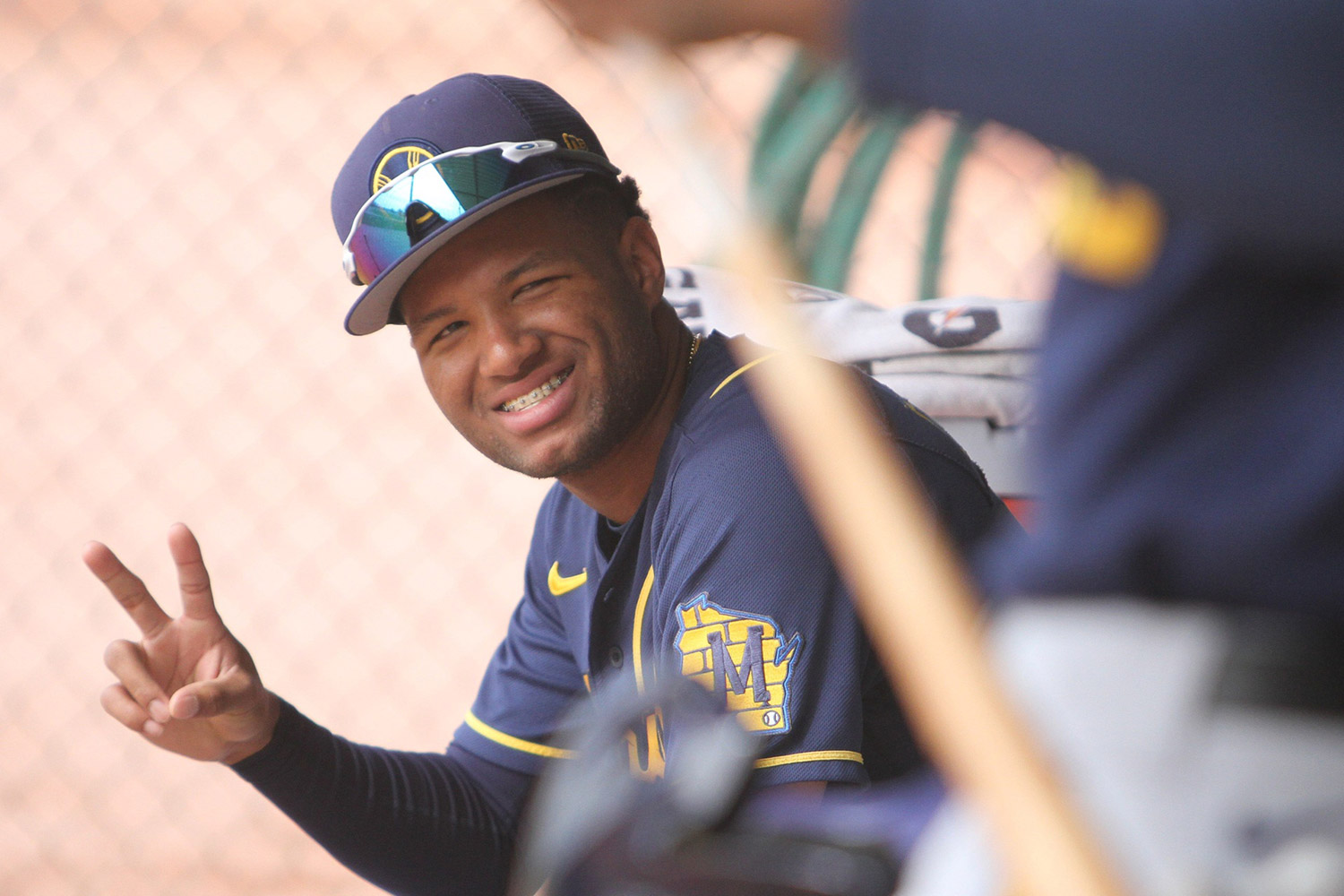 Let’s look over this very deep position for the Brewers. AAA Nashville If he’s not in Milwaukee, Sal Frelick could very well be in center field for the Sounds. Spring training non-roster invitees Skye Bolt and Monte Harrison also could see time in center for Nashville, as could Blake Perkins. Joey Wiemer, who primarily plays right field, is also a credible center fielder. Frelick and Wiemer could be in Milwaukee sooner rather than later, forcing the Crew to make some trades from their existing outfield corps. AA Biloxi Jackson Chourio will likely return to Biloxi after a meteoric rise through the Brewers system in 2022, putting him in the top ten of the MLB.com Pipeline Top 100. Terrence Dotson, a 22nd-round pick in 2019, had an aggressive jump in 2022 after showing superb OBP skills in the ACL in 2021 and didn’t embarrass himself in Biloxi. Joe Gray and his three true outcome bat could also factor in here, as could Tyler Black, also a second base and third base contender, but it is hard to imagine Chourio being displaced by any of them. A+ Wisconsin The Brewers will have an interesting choice in 2023. Do they hold Joe Gray back and see if he can reduce his strikeouts and get his average above the Uecker line? Or do they push Jace Avina, who had a superb 2022 in the ACL and Carolina League, to see if he can rise almost as swiftly as Chourio? Arbert Cipion, Eduarqui Fernandez, and Hedbert Perez could also be factored in center. The Timber Rattlers will have plenty of options, and all of them could be better. A Carolina Jace Avina rose to Carolina and did not embarrass himself. Still, he now faces competition from Kaylan Nicasia, who also saw time at shortstop and right field in 2022 with the ACL Brewers Gold, while Avina dominated with the ACL Brewers Blue. Diego Larez’s on-base and speed combination could make things interesting in Carolina. Rookie Leagues Luis Lara is coming off a superb 2022 in the Dominican Summer League. He will likely man center for the Brewers’ lone affiliate in the ACL, especially after Reminton Batista went to the Marlins in the deal that brought Payton Henry back to the Brewers. Mendy Ferreira looks to be the second-string center fielder in Arizona. In the DSL, the Brewers will cycle through their January signees. Overview By Opening Day 2025, the Brewers could see Frelick, Chourio, and Wiemer in the majors with Mitchell, with Avina and Lara having made their way well up the minor-league ladder. This position is where the Brewers boast a lot of depth and exciting talent, some of whom may move a little to the left – or right – depending on your perspective to provide Brewers fans plenty of excitement for years to come.
 -
2023 Brewers Farm System Positional Preview: Left Field
Harold Hutchison posted an article in Minor Leagues
 There is precedent: at the major-league level, Christian Yelich came to the Brewers via trade after being the primary center fielder for the Miami Marlins in 2017. He spent significant time there in 2015 and 2016. He spent lots of time in left and right field in 2018 and 2019 before taking the left field job in 2020 and staying there ever since. So, let’s look at the minor-league system and see who will occupy left field. AAA Nashville If he is not on the Opening Day roster, Sal Frelick could be one option in left for Nashville, where he spent most of his starts (22 in left vs. 17 in center). Tyler Naquin, Skye Bolt, and Monte Harrison, all non-roster invitees for the Brewers, could also spend time in left for Nashville, particularly when Frelick heads to Milwaukee. AA Biloxi It seems pretty likely that last year’s duo of Noah Campbell and Tristen Lutz will be the primary options for Biloxi. Both are very different players. Lutz, a right-handed power bat, once was a top prospect but has been overshadowed by Frelick, Avina, Chourio, Mitchell, and Joey Wiemer. Conversely, Campbell is a switch-hitter with on-base skills who spent time in the infield and outfield in 2021 and 2022. Ernesto Martinez may see some time here if first base and catcher become crowded with Jeferson Quero, Wes Clarke, and Darrien Miller. A+ Wisconsin Hedbert Perez will likely move up to take left field after flashing power at Carolina. Once a heralded prospect, his struggles vis-à-vis OBP mean he could face some real competition from 2018 draft picks Arbert Cipion and Micah Bello. Bello, a second-round pick, showed some real offensive potential in 2022, but his big problem since the 2020 pandemic has been spending a lot of time on the DL. Cipion, on the other hand, has struggled offensively. A Carolina Luis Castillo is the likely front-runner of several prospects from the Arizona Complex League. He flashed OBP skills and power between the ACL Brewers Gold and Carolina. OBP machine and speed merchant Diego Larez (.393 OBP in 36 games) from the ACL Brewers Gold could also force his way to some playing time. Another OBP machine with a lot of speed, Jamal Zalm from the ACL Brewers Blue, could also see playing time. Rookie Leagues Luis Watter looks to be the top contender to man left field for the sole ACL Brewers team in 2023, with Francisco Nina and Devin Gomez looking to rebound from rough years in the DSL. As for the DSL, the Brewers have a crop of new signees who could take lots of playing time. Overview Even though the top Brewers' outfield prospects mostly come from center field, the Brewers have some very credible prospects in left field. Frelick is clearly the best of the bunch, but Lutz, Perez, and Castillo all remain credible prospects, while Campbell is a potential bench asset, and Bello and Watter are sleepers.
 -
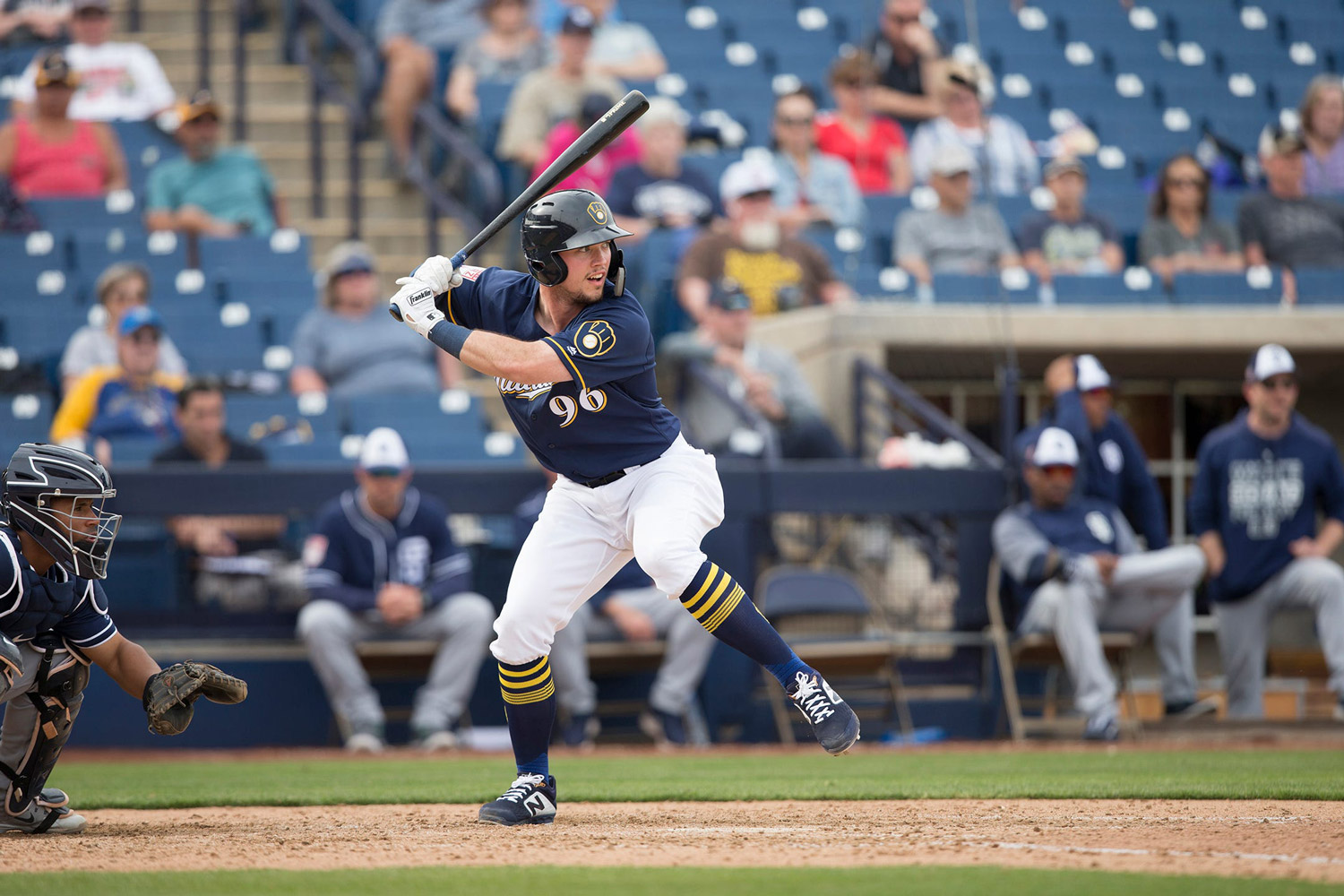
As with third base, the Brewers are deceptively shallow in left field. Why? Because many of the team’s top outfield prospects, like Jackson Chourio, Jace Avina, Sal Frelick, and Garrett Mitchell, are all listed as center fielders. Likely, the future of left field in Milwaukee is not on this page, and that a center fielder will be moved over. Image courtesy of © Scott Paulus / Milwaukee Brewers, Milwaukee Journal Sentinel via Imagn Content Services, LLC There is precedent: at the major-league level, Christian Yelich came to the Brewers via trade after being the primary center fielder for the Miami Marlins in 2017. He spent significant time there in 2015 and 2016. He spent lots of time in left and right field in 2018 and 2019 before taking the left field job in 2020 and staying there ever since. So, let’s look at the minor-league system and see who will occupy left field. AAA Nashville If he is not on the Opening Day roster, Sal Frelick could be one option in left for Nashville, where he spent most of his starts (22 in left vs. 17 in center). Tyler Naquin, Skye Bolt, and Monte Harrison, all non-roster invitees for the Brewers, could also spend time in left for Nashville, particularly when Frelick heads to Milwaukee. AA Biloxi It seems pretty likely that last year’s duo of Noah Campbell and Tristen Lutz will be the primary options for Biloxi. Both are very different players. Lutz, a right-handed power bat, once was a top prospect but has been overshadowed by Frelick, Avina, Chourio, Mitchell, and Joey Wiemer. Conversely, Campbell is a switch-hitter with on-base skills who spent time in the infield and outfield in 2021 and 2022. Ernesto Martinez may see some time here if first base and catcher become crowded with Jeferson Quero, Wes Clarke, and Darrien Miller. A+ Wisconsin Hedbert Perez will likely move up to take left field after flashing power at Carolina. Once a heralded prospect, his struggles vis-à-vis OBP mean he could face some real competition from 2018 draft picks Arbert Cipion and Micah Bello. Bello, a second-round pick, showed some real offensive potential in 2022, but his big problem since the 2020 pandemic has been spending a lot of time on the DL. Cipion, on the other hand, has struggled offensively. A Carolina Luis Castillo is the likely front-runner of several prospects from the Arizona Complex League. He flashed OBP skills and power between the ACL Brewers Gold and Carolina. OBP machine and speed merchant Diego Larez (.393 OBP in 36 games) from the ACL Brewers Gold could also force his way to some playing time. Another OBP machine with a lot of speed, Jamal Zalm from the ACL Brewers Blue, could also see playing time. Rookie Leagues Luis Watter looks to be the top contender to man left field for the sole ACL Brewers team in 2023, with Francisco Nina and Devin Gomez looking to rebound from rough years in the DSL. As for the DSL, the Brewers have a crop of new signees who could take lots of playing time. Overview Even though the top Brewers' outfield prospects mostly come from center field, the Brewers have some very credible prospects in left field. Frelick is clearly the best of the bunch, but Lutz, Perez, and Castillo all remain credible prospects, while Campbell is a potential bench asset, and Bello and Watter are sleepers. View full article
-
Turang's floor is an Arcia-ish OPS in the .700-.730 range, but the OBP will be pretty high, he'll provide excellent defense, and he'll steal 25-30 bases. Not bad for the bottom half of the order or even as a utility player on the bench at or near MLB minimum. Probably good for about 2 WAR as an every day player. His ceiling, with an OPS like he posted in Nashville (.772), might be 3 WAR as a solid everyday SS. At this point, I think unless Adames and the Brewers line up an extension, Turang's at worst competing with Devanny to be the opening day SS.
- 3 replies
-
- 1
-
-
- opening day 2023
- brice turang
- (and 3 more)
-
2023 Brewers Farm System Positional Preview: Shortstop
Harold Hutchison posted an article in Minor Leagues
 Seven of the MLB Pipeline Top 30 Prospects for the Brewers are listed at that position, which should have Brewers fans breathing somewhat easier, even if a Willy Adames extension is not in the works for the Crew. AAA Nashville Will the primary shortstop be Brice Turang? Will it be Cam Devanney? Will Andruw Monasterio hold it down? Those three would be solid at the plate or in the field. Turang, a first-round pick in 2018, brings speed, on-base skills, and an excellent glove. Devanney has a power bat, can draw his share of walks, and has split time between shortstop and third. Monasterio has been at second, third, and short and probably has the weakest bat of the three. Turang’s eventual permanent rise to Milwaukee will sort things out. AA Biloxi Freddy Zamora spent more time on the DL than the field in 2022, but he showed a lot of promise in 2021. Ethan Murray has been solid, posting better numbers in Biloxi than Wisconsin in 2022, while Antonio Pinero appears to be on the outside looking in for time at the position in Biloxi. A+ Wisconsin Eduardo Garcia was once a hyped prospect and looked to repeat at Wisconsin. The defense is there; he has flashed some power over his career. But OBP is the big question – he drew no walks while at Wisconsin in 2022. Eric Brown Jr. could force his way into the conversation for the Timber Rattlers as well, given his performance offensively and the fact he was a first-round pick out of college in 2022. If he isn't at second base, Robert Moore could also be a factor. A Carolina Brown could be sent back to the Mudcats, given the desire to give Garcia and Brown regular playing time at shortstop. Jadher Areinamo also saw time at short with Carolina in 2022. However, OBP machine Daniel Guilarte, number 18 on MLB Pipeline’s top 30, Gregory Barrios, who flashed speed and on-base skills in the ACL, and Jose Caballero will also be making solid cases for playing time. Rookie Leagues The ACL and DSL teams could see a mix of players. Third-round pick Dylan O’Rae could get a start here. Barrios and Caballero could return to the ACL, given Brown’s presence in Carolina. Still, Jhonny Severino and Juan Baez also could force their way to some playing time with their solid DSL performances. Then there are the international signees, which could make things interesting in the Dominican Republic. Overview Could the Brewers have too many shortstops? In one sense, yes. There is going to be some difficulty getting them on the field at the premium position. On the other hand, solid shortstops can move easily to second base or third base and fill holes there. They have two solid options to replace Willy Adames in AAA in Turang and Devanney, while Zamora, Moore, Garcia, O’Rae, Brown, and Guilarte all seem highly regarded. Areinamo also is in the mix, even though he’s spent time at second and third. The Brewers may not just be set at shortstop – this glut of talent will help them at second and third base for years to come.
 -
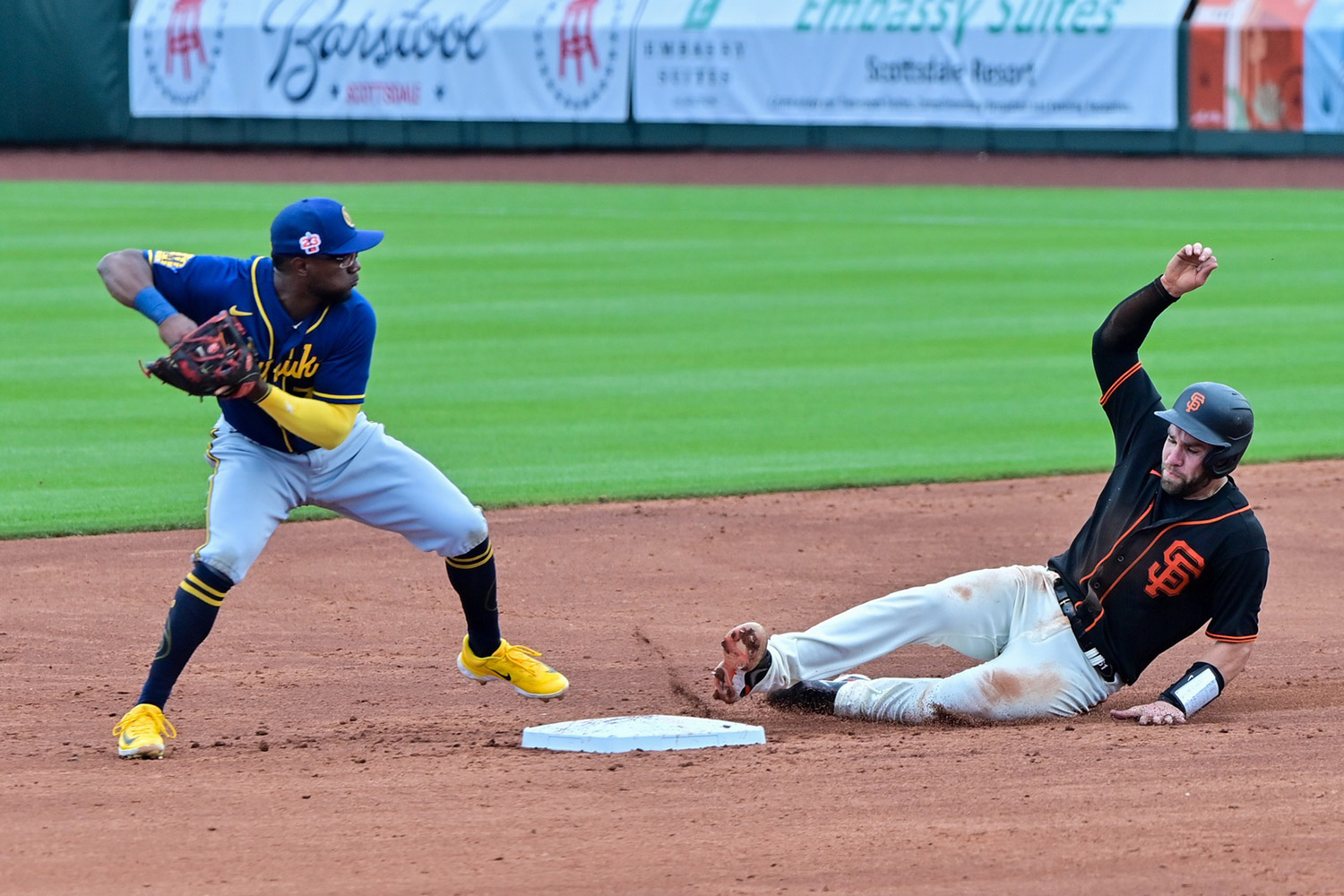
One position where the Brewers farm system is very deep happens to be shortstop, where the Brewers seem to be overflowing with good, and great, options. Let's look at the positional farm depth. Image courtesy of © Matt Kartozian-USA TODAY Sports Seven of the MLB Pipeline Top 30 Prospects for the Brewers are listed at that position, which should have Brewers fans breathing somewhat easier, even if a Willy Adames extension is not in the works for the Crew. AAA Nashville Will the primary shortstop be Brice Turang? Will it be Cam Devanney? Will Andruw Monasterio hold it down? Those three would be solid at the plate or in the field. Turang, a first-round pick in 2018, brings speed, on-base skills, and an excellent glove. Devanney has a power bat, can draw his share of walks, and has split time between shortstop and third. Monasterio has been at second, third, and short and probably has the weakest bat of the three. Turang’s eventual permanent rise to Milwaukee will sort things out. AA Biloxi Freddy Zamora spent more time on the DL than the field in 2022, but he showed a lot of promise in 2021. Ethan Murray has been solid, posting better numbers in Biloxi than Wisconsin in 2022, while Antonio Pinero appears to be on the outside looking in for time at the position in Biloxi. A+ Wisconsin Eduardo Garcia was once a hyped prospect and looked to repeat at Wisconsin. The defense is there; he has flashed some power over his career. But OBP is the big question – he drew no walks while at Wisconsin in 2022. Eric Brown Jr. could force his way into the conversation for the Timber Rattlers as well, given his performance offensively and the fact he was a first-round pick out of college in 2022. If he isn't at second base, Robert Moore could also be a factor. A Carolina Brown could be sent back to the Mudcats, given the desire to give Garcia and Brown regular playing time at shortstop. Jadher Areinamo also saw time at short with Carolina in 2022. However, OBP machine Daniel Guilarte, number 18 on MLB Pipeline’s top 30, Gregory Barrios, who flashed speed and on-base skills in the ACL, and Jose Caballero will also be making solid cases for playing time. Rookie Leagues The ACL and DSL teams could see a mix of players. Third-round pick Dylan O’Rae could get a start here. Barrios and Caballero could return to the ACL, given Brown’s presence in Carolina. Still, Jhonny Severino and Juan Baez also could force their way to some playing time with their solid DSL performances. Then there are the international signees, which could make things interesting in the Dominican Republic. Overview Could the Brewers have too many shortstops? In one sense, yes. There is going to be some difficulty getting them on the field at the premium position. On the other hand, solid shortstops can move easily to second base or third base and fill holes there. They have two solid options to replace Willy Adames in AAA in Turang and Devanney, while Zamora, Moore, Garcia, O’Rae, Brown, and Guilarte all seem highly regarded. Areinamo also is in the mix, even though he’s spent time at second and third. The Brewers may not just be set at shortstop – this glut of talent will help them at second and third base for years to come. View full article
-
Between defense, OBP skills, speed, and a lot of doubles, I see Frelick as a power for a long time, and definitely someone to extend long-term ASAP.
-
The more I think of it, the more Sal Frelick gives me Ichiro vibes. .300+ average, bunches of doubles, fair bit of steals, few strikeouts, but he may be better at drawing walks than Ichiro was. A fixture at the #1 or #2 hole of the lineup for a decade.
- 7 replies
-
- 1
-
-
- tyrone taylor
- sal frelick
- (and 3 more)
-
2023 Brewers Farm System Positional Preview: Third Base
Harold Hutchison posted an article in Minor Leagues
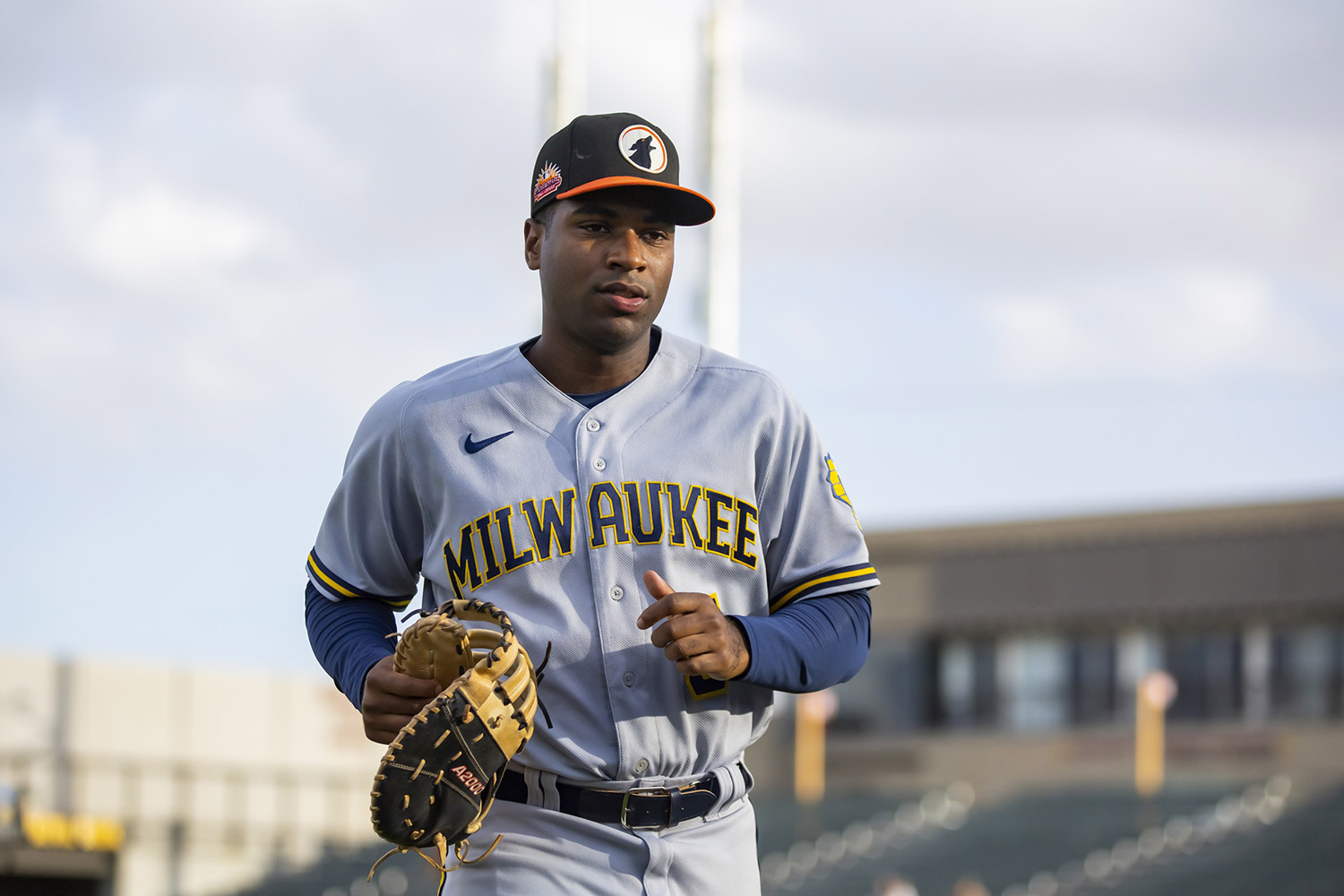 See Luis Urias, often officially listed as a shortstop, or Jace Peterson, who often was listed as a second baseman at the major league level in the past. The same holds in the minor leagues, where the options at third often have come from elsewhere on the diamond. AAA Nashville Weston Wilson, the primary third baseman for the Sounds in 2022, is now with Philadelphia. That said, the Brewers are not without options – Patrick Dorrian is one option, having posted a .868 OPS with Nashville in 2022. He also faces competition for playing time from natural shortstops Cam Devanney, Brice Turang, and Andruw Monasterio. Much of this will probably shake out when Turang goes to Milwaukee. Owen Miller and Abraham Toro could also be in the mix here. AA Biloxi Zavier Warren manned third base late in 2022 for the Shuckers and could easily start there. Still, Tyler Black and Felix Valerio could also be content for playing time at the hot corner down in Mississippi, where Ethan Murray could be on the outside looking in. All have something to prove – for Warren, it’s hitting for average to go with OBP skills and power. Valerio needs to rebound from a somewhat slump-y 2022. Black’s issue is staying off the IL, while Murray’s bat has been a question mark. A+ Wisconsin After being drafted in the 7th round of the 2022 amateur draft, Ben Metzinger jumped from the ACL to Wisconsin and flashed some OBP skills and power. Jheremy Vargas was a walk machine at Carolina in 2022 and could be the #2 third baseman, while Alberis Ferrer and Luis Silva could also be moved up to Wisconsin for the bench. A Carolina The hot corner is up in the air for the Mudcats, given the many players who cycled through the position in the two ACL teams the Brewers fielded in 2022. Luke Adams and Miguel Briceno performed well in small samples with the ACL Brewers Gold, while Ney Serrano was an OBP machine for the ACL Brewers Blue. Jadher Areinamo, Beyker Pastran, and Alexander Perez also could figure into the mix for the Mudcats. Rookie Leagues Johan Barrios and Erick Reyes, OBP machines for the DSL Brewers 2 in 2022, will likely face off with DSL Brewers 1 OBP Gery Holguin, with Jhonny Severino, Angel Pereira, and Richard Rojas also being in the mix. The stakes could be high since the Brewers cut to a single ACL team. Overview The Brewers may be short on “true” third basemen in the system. But Luis Urias has shown that a converted shortstop can work out quite well, which is a good sign for Devanney. Historically, Paul Molitor’s move from second to third offers Tyler Black and Felix Valerio hope. With the shift ban, the Brewers may be able to prevent more runs simply by moving bat-first shortstops to the hot corner while still getting some solid offensive performances.
- 1 comment
-
- 1
-
-
- patrick dorrian
- zavier warren
- (and 3 more)
-
When it comes to the hot corner, the Brewers are deceptively shallow. They don’t have anybody officially listed at third base, yet some very capable players are spending time at that position and have in the past couple of years. Image courtesy of © Mark J. Rebilas-USA TODAY Sports See Luis Urias, often officially listed as a shortstop, or Jace Peterson, who often was listed as a second baseman at the major league level in the past. The same holds in the minor leagues, where the options at third often have come from elsewhere on the diamond. AAA Nashville Weston Wilson, the primary third baseman for the Sounds in 2022, is now with Philadelphia. That said, the Brewers are not without options – Patrick Dorrian is one option, having posted a .868 OPS with Nashville in 2022. He also faces competition for playing time from natural shortstops Cam Devanney, Brice Turang, and Andruw Monasterio. Much of this will probably shake out when Turang goes to Milwaukee. Owen Miller and Abraham Toro could also be in the mix here. AA Biloxi Zavier Warren manned third base late in 2022 for the Shuckers and could easily start there. Still, Tyler Black and Felix Valerio could also be content for playing time at the hot corner down in Mississippi, where Ethan Murray could be on the outside looking in. All have something to prove – for Warren, it’s hitting for average to go with OBP skills and power. Valerio needs to rebound from a somewhat slump-y 2022. Black’s issue is staying off the IL, while Murray’s bat has been a question mark. A+ Wisconsin After being drafted in the 7th round of the 2022 amateur draft, Ben Metzinger jumped from the ACL to Wisconsin and flashed some OBP skills and power. Jheremy Vargas was a walk machine at Carolina in 2022 and could be the #2 third baseman, while Alberis Ferrer and Luis Silva could also be moved up to Wisconsin for the bench. A Carolina The hot corner is up in the air for the Mudcats, given the many players who cycled through the position in the two ACL teams the Brewers fielded in 2022. Luke Adams and Miguel Briceno performed well in small samples with the ACL Brewers Gold, while Ney Serrano was an OBP machine for the ACL Brewers Blue. Jadher Areinamo, Beyker Pastran, and Alexander Perez also could figure into the mix for the Mudcats. Rookie Leagues Johan Barrios and Erick Reyes, OBP machines for the DSL Brewers 2 in 2022, will likely face off with DSL Brewers 1 OBP Gery Holguin, with Jhonny Severino, Angel Pereira, and Richard Rojas also being in the mix. The stakes could be high since the Brewers cut to a single ACL team. Overview The Brewers may be short on “true” third basemen in the system. But Luis Urias has shown that a converted shortstop can work out quite well, which is a good sign for Devanney. Historically, Paul Molitor’s move from second to third offers Tyler Black and Felix Valerio hope. With the shift ban, the Brewers may be able to prevent more runs simply by moving bat-first shortstops to the hot corner while still getting some solid offensive performances. View full article
-
And a lot of these players could be factors at multiple positions.
- 2 replies
-
- 1
-
-
- brice turang
- tyler black
- (and 3 more)
-
2023 Brewers Farm System Positional Preview: Second Base
Harold Hutchison posted an article in Minor Leagues
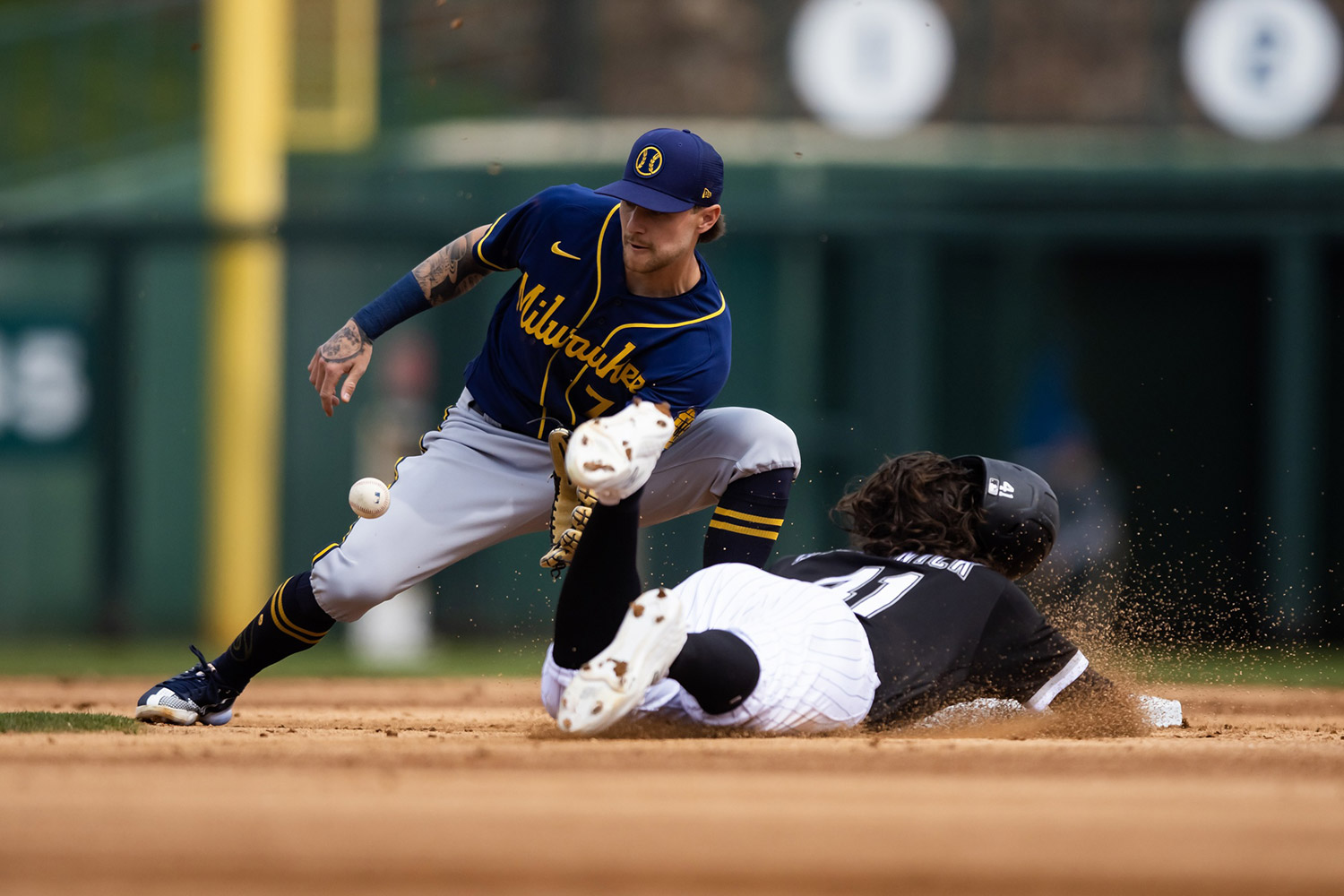 The minors also have a lot of very interesting possibilities at the position, especially when looking at AA and below. What are these possibilities, and how good could they be? Let’s take a look. AAA Nashville Brice Turang and Andruw Monasterio both played shortstop and saw action at second base. Josh VanMeter, Owen Miller, and Toro also could see action at the position for Nashville if they do not make the major-league roster. Felix Valerio also could be in Nashville if he forces his way up. There could be a revolving door, due not only to the fact that many of these players could be in Milwaukee at some point during the season but also that many of those there could be highly talented options for Nashville. AA Biloxi Valerio could end up back in Biloxi after some 2022 struggles, but he has a track record of offensive performance after coming over in the 2019 Keon Broxton trade. That said, Valerio could face a lot of competition from Tyler Black and Jose Acosta. Black has been a professional hitter on the field but has had multiple injuries in the regular season and the Arizona Fall League. Acosta has flashed a lot of power, but he’s also struggled with getting on base. A+ Wisconsin Zack Rabbe and Robert Moore both flashed potential in 2022. Rabbe was an on-base machine that generated a .364 OBP with many doubles. Moore, though, made a case that he could be a real star, with the #72 overall pick in the 2022 June draft adding a dominating performance during the 2022-2023 Australian baseball season. Either way, the Brewers have some interesting options there. A Carolina Jose Caballero, Jadher Areinamo, and Alexander Perez all posted decent seasons with the Brewers in the Arizona Complex League in 2022 and will likely be the top contenders for the Mudcats. Areinamo put together the best offensive numbers in a relatively small sample size, but Caballero showed an intriguing OBP-speed mix. Jesus Parra could also be in the mix if he isn’t playing a lot of first base. Rookie Leagues Angel Pereira and Demetrio Nadal will likely be the leading candidates to handle second for the lone ACL Brewers team or 2023, with Jose Pena and Donis Rodriguez serving as competition. Pereira flashed some superb OBP skills with the DSL Brewers 1, while Nadal has an OBP-speed mix and also flashed a little power potential for the DSL Brewers 2. Juan Baez also saw time at second base with the DSL Brewers 2, albeit he spent more time between shortstop and third base. Overview The Brewers have questions at second base through their farm system. That said, these questions, like those surrounding the outfield for the major-league team, could have many good answers. Turang, Black, and Moore are all blue-chip prospects, but Valerio, Monasterio, Miller, and Toro could be valuable contributors for a period at the major-league level. Further down, the Brewers have other players who could make things interesting. Then again, many of the system’s talented shortstops could wind up at second.
 -
Second base is becoming very intriguing in Milwaukee, not just with the major-league competition between Luis Urias, Brice Turang, and Abraham Toro. Image courtesy of © Mark J. Rebilas-USA TODAY Sports The minors also have a lot of very interesting possibilities at the position, especially when looking at AA and below. What are these possibilities, and how good could they be? Let’s take a look. AAA Nashville Brice Turang and Andruw Monasterio both played shortstop and saw action at second base. Josh VanMeter, Owen Miller, and Toro also could see action at the position for Nashville if they do not make the major-league roster. Felix Valerio also could be in Nashville if he forces his way up. There could be a revolving door, due not only to the fact that many of these players could be in Milwaukee at some point during the season but also that many of those there could be highly talented options for Nashville. AA Biloxi Valerio could end up back in Biloxi after some 2022 struggles, but he has a track record of offensive performance after coming over in the 2019 Keon Broxton trade. That said, Valerio could face a lot of competition from Tyler Black and Jose Acosta. Black has been a professional hitter on the field but has had multiple injuries in the regular season and the Arizona Fall League. Acosta has flashed a lot of power, but he’s also struggled with getting on base. A+ Wisconsin Zack Rabbe and Robert Moore both flashed potential in 2022. Rabbe was an on-base machine that generated a .364 OBP with many doubles. Moore, though, made a case that he could be a real star, with the #72 overall pick in the 2022 June draft adding a dominating performance during the 2022-2023 Australian baseball season. Either way, the Brewers have some interesting options there. A Carolina Jose Caballero, Jadher Areinamo, and Alexander Perez all posted decent seasons with the Brewers in the Arizona Complex League in 2022 and will likely be the top contenders for the Mudcats. Areinamo put together the best offensive numbers in a relatively small sample size, but Caballero showed an intriguing OBP-speed mix. Jesus Parra could also be in the mix if he isn’t playing a lot of first base. Rookie Leagues Angel Pereira and Demetrio Nadal will likely be the leading candidates to handle second for the lone ACL Brewers team or 2023, with Jose Pena and Donis Rodriguez serving as competition. Pereira flashed some superb OBP skills with the DSL Brewers 1, while Nadal has an OBP-speed mix and also flashed a little power potential for the DSL Brewers 2. Juan Baez also saw time at second base with the DSL Brewers 2, albeit he spent more time between shortstop and third base. Overview The Brewers have questions at second base through their farm system. That said, these questions, like those surrounding the outfield for the major-league team, could have many good answers. Turang, Black, and Moore are all blue-chip prospects, but Valerio, Monasterio, Miller, and Toro could be valuable contributors for a period at the major-league level. Further down, the Brewers have other players who could make things interesting. Then again, many of the system’s talented shortstops could wind up at second. View full article
-
The Brewers have solid options at first base at the major league level between Rowdy Tellez and Keston Hiura, but how will this position look in the minors for the Crew in 2023? Image courtesy of © Curt Hogg / Milwaukee Journal Sentinel / USA TODAY NETWORK First base may often seem like an easy position to find someone to play – and the Brewers have received some good performances in the past from signings that didn’t generate a lot of waves: Eric Thames from the Korean Baseball Organization, the acquisition of Tellez, and even the pickup of Jesus Aguilar via waivers. But the best option is to develop from the minors. Who might emerge from the farm to be the next home-grown mainstay at first? AAA Nashville 2023 NRIs Jon Singleton and Luke Voit will likely be the primary options in Nashville. Both have major-league experience, and Voit did win the 2020 AL home run crown. Neither are young, and Singleton’s MLB track record is a three true outcome bat that struggles to reach the Bob Uecker line. If the Brewers see either of them in Milwaukee for an extended period, they could be in big trouble. AA Biloxi Ernesto Martinez is an under-the-radar prospect with power potential and good on-base skills. In 2021, he broke out, adding speed and showing the ability to play some outfield. The biggest question is if he can stay healthy. Wes Clarke, while a catcher, also saw a bit of time at first base, and with Darrien Miller and Jeferson Quero a potential 1-2 punch there, he may be moved to first if Martinez spends time on the injured list. A+ Wisconsin Jesus Chirinos, like Martinez, has quietly flashed real offensive potential. Beyond that, Australian Alex Hall saw limited action at first base in Wisconsin, while Luis Silva backed up Chirinos in Carolina in 2022. Here, Timber Rattler fans must believe in Jesus to continue his development. A Carolina Quinton Low, Jesus Parra, and Branlyn Jaraba will likely split time between first base and DH for the Mudcats, who will have depth here, thanks to the fact the Brewers had two teams with the Arizona Complex League in 2022. Low will likely see the bulk of playing time for the Rookie Leagues Yeison Perez and Arnys Rodriguez got most of the time at the DSL Brewers 2 and 1 teams, respectively. Perez performed very well offensively, while Rodriguez posted a .360 OBP due to a superb walk rate. While primarily catchers, Edgardo Ordonez and Eric Martinez saw time at first base in 2022. As with a catcher, having only one ACL team will make the competition fierce. Overview At AAA, the Brewers are banking on some folks whose MLB track records show potential and big questions. But at AA and below, the Brewers could have multiple options, which could be long-term answers at the position for Milwaukee, even if many of them have to prove a few things. View full article
-
2023 Brewers Farm System Positional Preview: First Base
Harold Hutchison posted an article in Minor Leagues
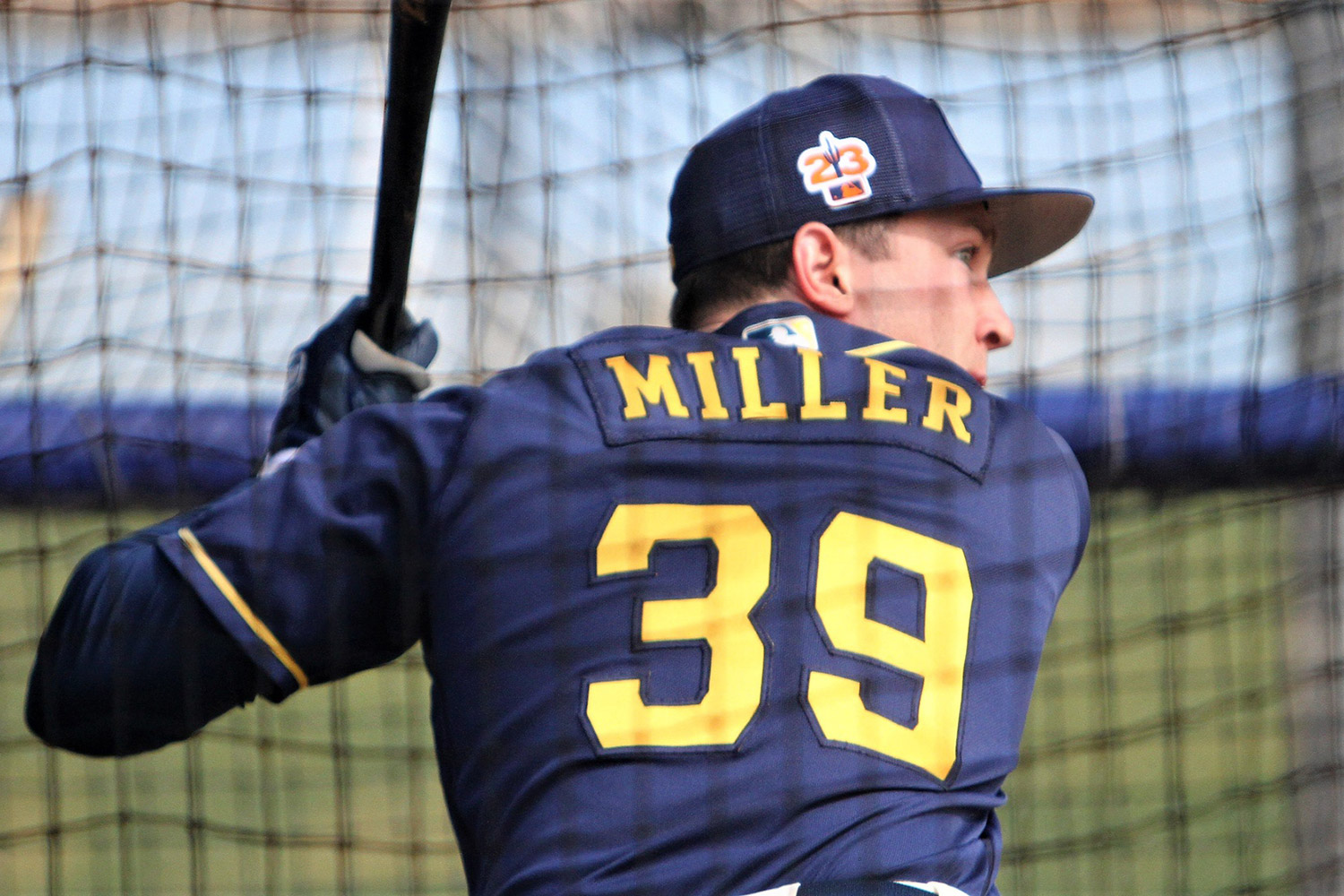 First base may often seem like an easy position to find someone to play – and the Brewers have received some good performances in the past from signings that didn’t generate a lot of waves: Eric Thames from the Korean Baseball Organization, the acquisition of Tellez, and even the pickup of Jesus Aguilar via waivers. But the best option is to develop from the minors. Who might emerge from the farm to be the next home-grown mainstay at first? AAA Nashville 2023 NRIs Jon Singleton and Luke Voit will likely be the primary options in Nashville. Both have major-league experience, and Voit did win the 2020 AL home run crown. Neither are young, and Singleton’s MLB track record is a three true outcome bat that struggles to reach the Bob Uecker line. If the Brewers see either of them in Milwaukee for an extended period, they could be in big trouble. AA Biloxi Ernesto Martinez is an under-the-radar prospect with power potential and good on-base skills. In 2021, he broke out, adding speed and showing the ability to play some outfield. The biggest question is if he can stay healthy. Wes Clarke, while a catcher, also saw a bit of time at first base, and with Darrien Miller and Jeferson Quero a potential 1-2 punch there, he may be moved to first if Martinez spends time on the injured list. A+ Wisconsin Jesus Chirinos, like Martinez, has quietly flashed real offensive potential. Beyond that, Australian Alex Hall saw limited action at first base in Wisconsin, while Luis Silva backed up Chirinos in Carolina in 2022. Here, Timber Rattler fans must believe in Jesus to continue his development. A Carolina Quinton Low, Jesus Parra, and Branlyn Jaraba will likely split time between first base and DH for the Mudcats, who will have depth here, thanks to the fact the Brewers had two teams with the Arizona Complex League in 2022. Low will likely see the bulk of playing time for the Rookie Leagues Yeison Perez and Arnys Rodriguez got most of the time at the DSL Brewers 2 and 1 teams, respectively. Perez performed very well offensively, while Rodriguez posted a .360 OBP due to a superb walk rate. While primarily catchers, Edgardo Ordonez and Eric Martinez saw time at first base in 2022. As with a catcher, having only one ACL team will make the competition fierce. Overview At AAA, the Brewers are banking on some folks whose MLB track records show potential and big questions. But at AA and below, the Brewers could have multiple options, which could be long-term answers at the position for Milwaukee, even if many of them have to prove a few things.
- 4 comments
-
- 1
-
-
- darrien miller
- ernesto martinez jr
- (and 3 more)
-
As April approaches, it is time to start looking at the Brewers Farm system, see which players will be where, dive deeper into each position from AAA to the full-season A, and maybe even hazard a guess as to the rookie leagues. Image courtesy of © Rick Scuteri-USA TODAY Sports While William Contreras and Victor Caratini will be handling the bulk of the starts at catcher in Milwaukee if all goes as planned, the minors will have a lot of potential depth. Let’s look at each of the full-season teams. AAA Nashville The primary catcher will be former Brewers prospect Payton Henry, who was dealt to the Marlins in 2021 for John Curtiss. That deal didn’t work out for the Crew, but they got Henry back for a rookie league OF Reminton Batista. Throughout his professional career, including two brief cups of coffee in Miami, he’s shown power and OBP skills. Alex Johnson and Brian Navaretto will likely be the backups there and will get lots of playing time if Henry is called up. AA Biloxi The starting job could be up for grabs. Jeferson Quero is a hot prospect, hitting pretty well with the Carolina Mudcats and Wisconsin Timber Rattlers. His only minus is a low walk rate in the small sample in Appleton. However, Darrien Miller has performed well at the plate, not just over his career in the United States but also during the 2022-2023 winter season as Brisbane, where he posted a .812 OPS, and his bat shows plenty of pop. Wes Clarke, who split time between first base and catcher with the Shuckers and Timber Rattlers, could also factor in behind the plate. A+ Wisconsin Quero could very well start in Wisconsin, despite a mostly superb performance in 20 games in 2022 due to the presence of Miller and Clarke. He would likely be joined by Jose Sibrian, who showed OBP skills and some doubles power, but will be 24 and looks more like an organization player. Australian Alex Hall could also see time in Wisconsin after a superb 2022-2023 “winter” season in Perth. A Carolina 2022 fourth-round draft pick Matthew Wood could end up the starter here. Still, the Brewers had four catchers at the ACL in 2022, including Jhonnys Cabrera, who looks to be a 3TO option that not only played catcher but also saw action at first base and took the mound occasionally in 2021 and 2022. Blayberg Diaz, Jason Ollarve, and Felipe Valderrama also could be factors at Carolina Rookie Leagues Wood did not see much professional action, so he could end up in Arizona, while Edgardo Ordonez and Eric Martinez look to be the most promising from the 2022 DSL teams – and with the Brewers cutting down to one ACL team, the competition will be fierce. Overview The Brewers look set for the short-term at catcher between Contreras, Caratini, and Henry. Down the road, though, there are a lot of options. Quero gets the spotlight in the minors, but Darien Miller’s left-handed power bat could be a good fit for American Family Field. At the same time, down in the lower levels, Wood, Cabrera, Ordonez, and Martinez could also become factors for the Crew. View full article
- 7 replies
-
- 1
-
-
- payton henry
- jeferson quero
- (and 3 more)
-
2023 Brewers Farm System Positional Preview: Catcher
Harold Hutchison posted an article in Minor Leagues
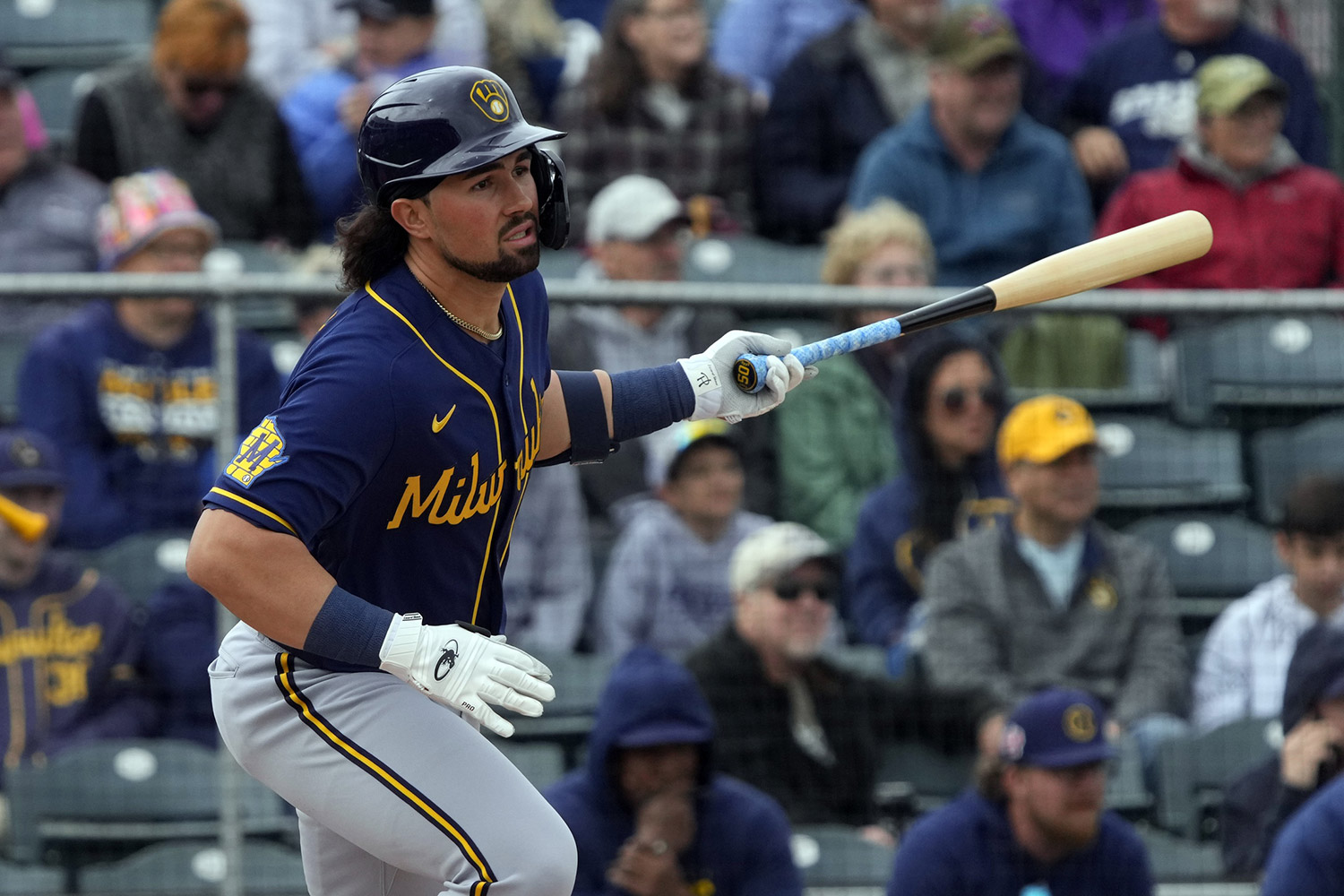 While William Contreras and Victor Caratini will be handling the bulk of the starts at catcher in Milwaukee if all goes as planned, the minors will have a lot of potential depth. Let’s look at each of the full-season teams. AAA Nashville The primary catcher will be former Brewers prospect Payton Henry, who was dealt to the Marlins in 2021 for John Curtiss. That deal didn’t work out for the Crew, but they got Henry back for a rookie league OF Reminton Batista. Throughout his professional career, including two brief cups of coffee in Miami, he’s shown power and OBP skills. Alex Johnson and Brian Navaretto will likely be the backups there and will get lots of playing time if Henry is called up. AA Biloxi The starting job could be up for grabs. Jeferson Quero is a hot prospect, hitting pretty well with the Carolina Mudcats and Wisconsin Timber Rattlers. His only minus is a low walk rate in the small sample in Appleton. However, Darrien Miller has performed well at the plate, not just over his career in the United States but also during the 2022-2023 winter season as Brisbane, where he posted a .812 OPS, and his bat shows plenty of pop. Wes Clarke, who split time between first base and catcher with the Shuckers and Timber Rattlers, could also factor in behind the plate. A+ Wisconsin Quero could very well start in Wisconsin, despite a mostly superb performance in 20 games in 2022 due to the presence of Miller and Clarke. He would likely be joined by Jose Sibrian, who showed OBP skills and some doubles power, but will be 24 and looks more like an organization player. Australian Alex Hall could also see time in Wisconsin after a superb 2022-2023 “winter” season in Perth. A Carolina 2022 fourth-round draft pick Matthew Wood could end up the starter here. Still, the Brewers had four catchers at the ACL in 2022, including Jhonnys Cabrera, who looks to be a 3TO option that not only played catcher but also saw action at first base and took the mound occasionally in 2021 and 2022. Blayberg Diaz, Jason Ollarve, and Felipe Valderrama also could be factors at Carolina Rookie Leagues Wood did not see much professional action, so he could end up in Arizona, while Edgardo Ordonez and Eric Martinez look to be the most promising from the 2022 DSL teams – and with the Brewers cutting down to one ACL team, the competition will be fierce. Overview The Brewers look set for the short-term at catcher between Contreras, Caratini, and Henry. Down the road, though, there are a lot of options. Quero gets the spotlight in the minors, but Darien Miller’s left-handed power bat could be a good fit for American Family Field. At the same time, down in the lower levels, Wood, Cabrera, Ordonez, and Martinez could also become factors for the Crew.
 -
At this point, I think the position player group for the Opening Day 26-man looks like this: cf: Mitchell ss: Adames lf: Yelich c: Contreras dh: Winker 3b: Urias 1b: Tellez rf: Anderson 2b: Toro bench: Caratini, Perkins, Brosseau, Hiura
-
We’ve looked at the state of the Brewers on the field, but a crucial aspect of the team also warrants review: the decision-makers, both those on the field and those off the field. Image courtesy of © Ebony Cox / Milwaukee Journal Sentinel / USA TODAY NETWORK The Brewers are already looking at some turnover in the front office with David Stearns’s stunning decision to step aside with a year left on his contract. What will happen in 2023 and beyond? Let’s take a look. The Manager: Primary On-Field Decision Maker By about any measure, Craig Counsell can make a case for being the most successful manager in the 54-year history of the Milwaukee Brewers, holding the records for most wins and most playoff appearances. He has been the guy making the calls for what was the Brewers’ longest sustained run of success, making the most of the players the team had available at the time. His contract expires after this season, and there has been no visible move to extend him. The Brewers need to either have Counsell locked up as soon as possible or have a succession plan in place. The former would be ideal, as Counsell has handled roster turnover quite well. If the latter, we could be seeing the Crew decide to go into a rebuild or at least a step backward for a season or two, given the harsh economic realities exposed during the most recent hot-stove season. Switching a manager is a decision not to be taken lightly. The Primary Off-Field Decision Maker The stunning decision by Stearns to step down as President of Baseball Operations following speculation he could be going to either the Mets or Astros was a blow to the Brewers. Stearns was the architect who assembled and acquired the players who made the 2017-2022 run possible – a run that will extend at least one more season. Matt Arnold was elevated to replace Stearns and offers at least some continuity. Some brilliant moves marked his first offseason, and for the most part, they seem to have brought back some excellent pieces for 2023 and beyond, but like Counsell, his contract runs out after this year. To put it mildly, baseball is seeing some economic uncertainty, given that several regional sports networks could be facing bankruptcy. The ability to put together a competitive team in one of the smaller markets is a rare thing, and the Brewers need to do what they can to hold on to proven commodities. Dealing players is far preferable to losing front office talent. Overview While what the players do (or don’t do) contributes a great deal to the team’s success (or lack thereof), one cannot ignore the importance of the manager and the team's architect. A great manager and GM/president of baseball operations can maximize the team’s performance with the limited resources the Brewers have. The Brewers have great ones in Counsell and Arnold. The extensions of Counsell and Arnold – or locating their eventual replacements, if that is how things break – probably should be the top priority for Mark Attanasio. For the Brewers, the right manager and front office personnel are probably more crucial than almost any player on the field. Just look at the tenure of Sal Bando to see the alternative. View full article
-
The State of the Brewers: Front Office – Keeping The Team Together
Harold Hutchison posted an article in Brewers
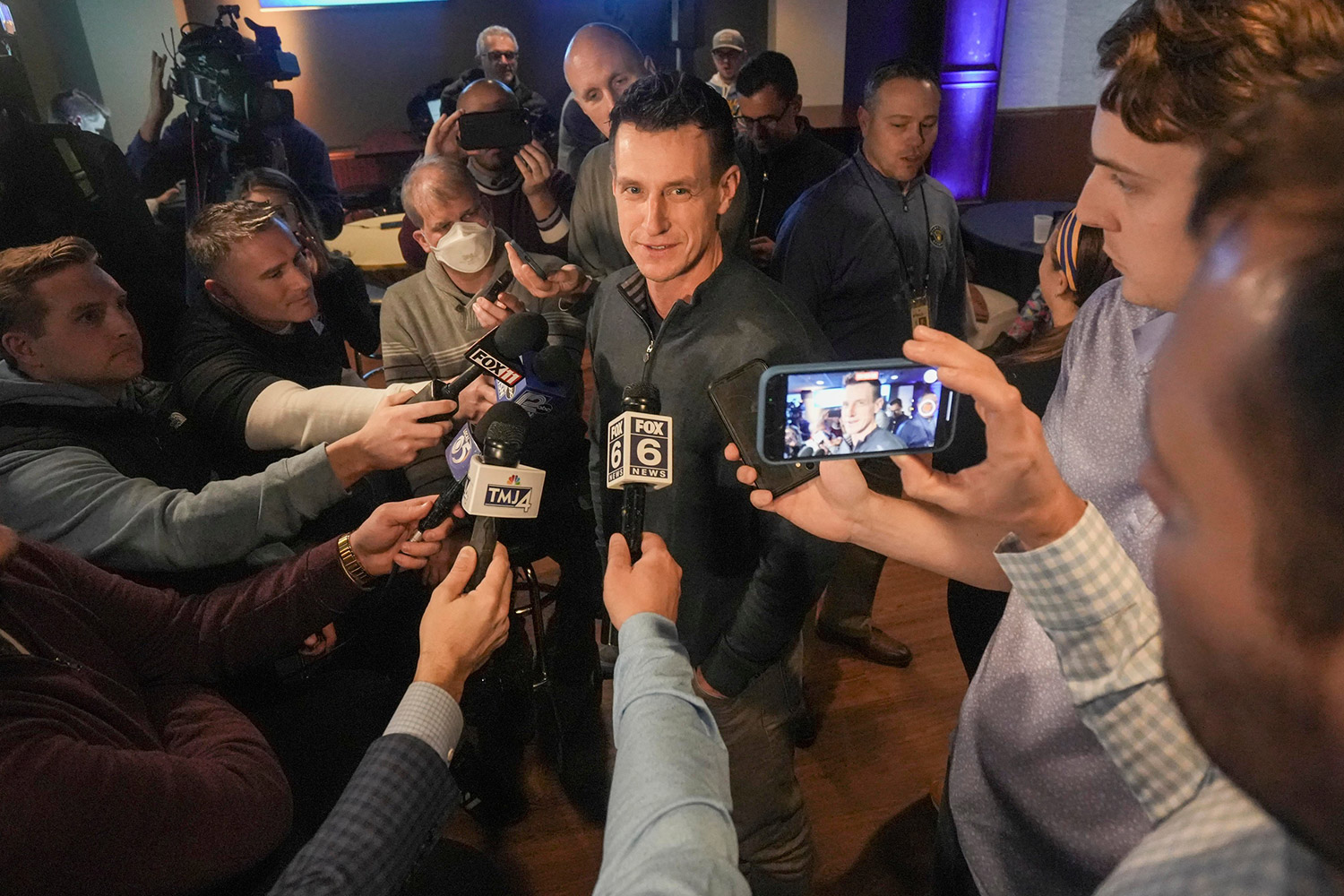 The Brewers are already looking at some turnover in the front office with David Stearns’s stunning decision to step aside with a year left on his contract. What will happen in 2023 and beyond? Let’s take a look. The Manager: Primary On-Field Decision Maker By about any measure, Craig Counsell can make a case for being the most successful manager in the 54-year history of the Milwaukee Brewers, holding the records for most wins and most playoff appearances. He has been the guy making the calls for what was the Brewers’ longest sustained run of success, making the most of the players the team had available at the time. His contract expires after this season, and there has been no visible move to extend him. The Brewers need to either have Counsell locked up as soon as possible or have a succession plan in place. The former would be ideal, as Counsell has handled roster turnover quite well. If the latter, we could be seeing the Crew decide to go into a rebuild or at least a step backward for a season or two, given the harsh economic realities exposed during the most recent hot-stove season. Switching a manager is a decision not to be taken lightly. The Primary Off-Field Decision Maker The stunning decision by Stearns to step down as President of Baseball Operations following speculation he could be going to either the Mets or Astros was a blow to the Brewers. Stearns was the architect who assembled and acquired the players who made the 2017-2022 run possible – a run that will extend at least one more season. Matt Arnold was elevated to replace Stearns and offers at least some continuity. Some brilliant moves marked his first offseason, and for the most part, they seem to have brought back some excellent pieces for 2023 and beyond, but like Counsell, his contract runs out after this year. To put it mildly, baseball is seeing some economic uncertainty, given that several regional sports networks could be facing bankruptcy. The ability to put together a competitive team in one of the smaller markets is a rare thing, and the Brewers need to do what they can to hold on to proven commodities. Dealing players is far preferable to losing front office talent. Overview While what the players do (or don’t do) contributes a great deal to the team’s success (or lack thereof), one cannot ignore the importance of the manager and the team's architect. A great manager and GM/president of baseball operations can maximize the team’s performance with the limited resources the Brewers have. The Brewers have great ones in Counsell and Arnold. The extensions of Counsell and Arnold – or locating their eventual replacements, if that is how things break – probably should be the top priority for Mark Attanasio. For the Brewers, the right manager and front office personnel are probably more crucial than almost any player on the field. Just look at the tenure of Sal Bando to see the alternative.
 -
Put it this way... it's worth seeing what the Brewers development team can do. I'd feel better if he were a NRI and Brent Suter was on the 40-man, to be honest.
-
To me, Wilson did show something over the last six outings after developing his splitter. Post-splitter Wilson posted a 4.05 ERA, which while not spectacular, is not bad for a back-of-the bullpen option for long relief.
