



Harold Hutchison
-
Posts
6,909 -
Joined
-
Last visited
Content Type
Profiles
Forums
Blogs
Events
News
2026 Milwaukee Brewers Top Prospects Ranking
Milwaukee Brewers Videos
2022 Milwaukee Brewers Draft Picks
Milwaukee Brewers Free Agent & Trade Rumors, Notes, & Tidbits
Guides & Resources
2023 Milwaukee Brewers Draft Picks
2024 Milwaukee Brewers Draft Picks
The Milwaukee Brewers Players Project
2025 Milwaukee Brewers Draft Pick Tracker
2026 Milwaukee Brewers Draft Tracker: Picks & Bonuses
Store
Downloads
Gallery
Everything posted by Harold Hutchison
-
Four Shortstops? Five, Even? No Problem!
Harold Hutchison replied to Harold Hutchison's topic in Brewers Minor League Talk
Or Freddy Zamora, or Ethan Murray, or Eduardo Garcia, or Filippo di Turi... -
Image courtesy of © Dave Kallmann / Milwaukee Journal Sentinel / USA TODAY NETWORK via Imagn Images On the face of it, the Brewers might appear to have a problem. The top four prospects on the Brewer Fanatic Top 20 (Jesús Made, Luis Peña, Jett Williams, and Cooper Pratt) are all shortstops, and there’s only one shortstop in the lineup. The logical assumption might be that the Brewers would have to trade one (and possibly two) of these four players, all of whom are top-100 prospects in the game. Well, the Brewers sent a three-word message to fans thinking along those lines with the March 20 lineup card for their first Spring Breakout game: Not so fast. All four shortstops were in the starting lineup. The Brewers put Williams at third base, Made at second base, Peña at designated hitter, and Pratt at shortstop. In other words, Milwaukee has demonstrated that they are perfectly capable of fitting all four of their top prospects into a lineup. So, how might they fit all four onto a 26-man roster, perhaps as soon as 2027? Let’s look at each of them. Jesús Made The most exciting position-player prospect the Brewers have landed since Jackson Chourio, Made is making the same rapid rise. He got a taste of Cactus League action and was not overmatched. He also put on some serious weight, which could signal an increase in power production that could go along with his speed and defense. Made could stick at short, but the Brewers may want to slide him over to third base or second base (where he appeared on the Spring Breakout lineup card), partially to have the power normally associated with the position, but also because Made’s glove is not quite the best at shortstop among the prospects. He looked rough at second in early action this spring, but it's just a matter of acclimation; he has all the tools to thrive there. Luis Peña The Brewers signed Peña in the same international free agent class as Made, and Peña’s proven a capable player at short, second base, and the hot corner. While Made is a switch-hitter, Peña only hits right-handed. He also appears to have more raw power. There is talk of moving Pena to the outfield, but he could also serve as a super-sub, filling in across the diamond and still racking up plenty of plate appearances. Jett Williams Williams, acquired in the Freddy Peralta trade, mostly has played shortstop, second base, and center field. The Brewers gave him reps at third base in Maryvale, and he’s heading to Triple-A Nashville, likely to get more of those reps. His hit tool is the big question; he has ample speed to play well in center and his approach generates plenty of pull-side contact in the air. Like Peña, he appears to be a versatile option with an above-average bat, though of these four, he's easily the least likely to actually stay at shortstop. He's also the most experienced and comfortable of the set in the difficult task of moving between positions from day to day and week to week. Cooper Pratt Pratt was a sixth-round selection whom the Brewers roped in with an above-slot signing bonus that cracked seven figures. That investment has worked out well for Milwaukee. Pratt picked up a Minor League Gold Glove, but he’s also displayed some very good OBP skills and speed on the basepaths, and he’s got the frame for some extra pop. That said, even if he ends up more of a Jeff Cirillo-plus type of offensive player, he becomes an excellent option at shortstop. The Brewers have given Pratt some work at second base, but he is probably the best defensive option at shortstop of the four top names the Brewers have. If they do choose to keep all of them, Pratt is the most likely to unseat Joey Ortiz and take over at short in the majors. Overview Depth is the name of the game in Milwaukee. It's why Pat Murphy thinks his team got better this winter, not worse. It's how they can stay ahead of the pack even when they have to trade key players or watch them leave as free agents. The team did run out of steam offensively in the 2025 playoffs, and building a deeper bench with more offensive punch would make that outcome less likely in 2026 and beyond. Keeping all four of these so-called shortstops, while perhaps not the conventional wisdom, could be the route they choose—and rightfully so. View full article
- 5 replies
-
- 1
-

-
- luis pena
- jesus made
- (and 3 more)
-
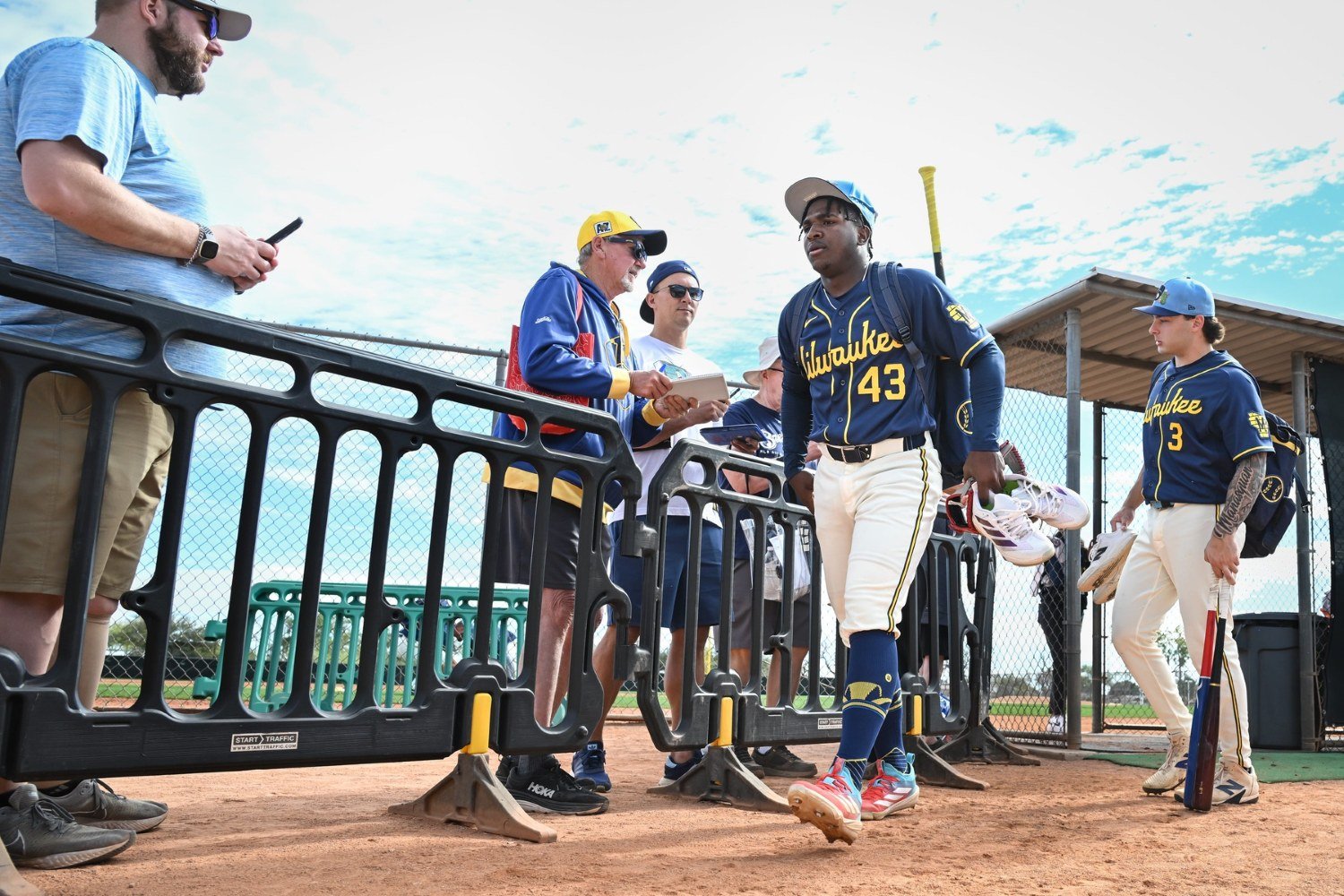 On the face of it, the Brewers might appear to have a problem. The top four prospects on the Brewer Fanatic Top 20 (Jesús Made, Luis Peña, Jett Williams, and Cooper Pratt) are all shortstops, and there’s only one shortstop in the lineup. The logical assumption might be that the Brewers would have to trade one (and possibly two) of these four players, all of whom are top-100 prospects in the game. Well, the Brewers sent a three-word message to fans thinking along those lines with the March 20 lineup card for their first Spring Breakout game: Not so fast. All four shortstops were in the starting lineup. The Brewers put Williams at third base, Made at second base, Peña at designated hitter, and Pratt at shortstop. In other words, Milwaukee has demonstrated that they are perfectly capable of fitting all four of their top prospects into a lineup. So, how might they fit all four onto a 26-man roster, perhaps as soon as 2027? Let’s look at each of them. Jesús Made The most exciting position-player prospect the Brewers have landed since Jackson Chourio, Made is making the same rapid rise. He got a taste of Cactus League action and was not overmatched. He also put on some serious weight, which could signal an increase in power production that could go along with his speed and defense. Made could stick at short, but the Brewers may want to slide him over to third base or second base (where he appeared on the Spring Breakout lineup card), partially to have the power normally associated with the position, but also because Made’s glove is not quite the best at shortstop among the prospects. He looked rough at second in early action this spring, but it's just a matter of acclimation; he has all the tools to thrive there. Luis Peña The Brewers signed Peña in the same international free agent class as Made, and Peña’s proven a capable player at short, second base, and the hot corner. While Made is a switch-hitter, Peña only hits right-handed. He also appears to have more raw power. There is talk of moving Pena to the outfield, but he could also serve as a super-sub, filling in across the diamond and still racking up plenty of plate appearances. Jett Williams Williams, acquired in the Freddy Peralta trade, mostly has played shortstop, second base, and center field. The Brewers gave him reps at third base in Maryvale, and he’s heading to Triple-A Nashville, likely to get more of those reps. His hit tool is the big question; he has ample speed to play well in center and his approach generates plenty of pull-side contact in the air. Like Peña, he appears to be a versatile option with an above-average bat, though of these four, he's easily the least likely to actually stay at shortstop. He's also the most experienced and comfortable of the set in the difficult task of moving between positions from day to day and week to week. Cooper Pratt Pratt was a sixth-round selection whom the Brewers roped in with an above-slot signing bonus that cracked seven figures. That investment has worked out well for Milwaukee. Pratt picked up a Minor League Gold Glove, but he’s also displayed some very good OBP skills and speed on the basepaths, and he’s got the frame for some extra pop. That said, even if he ends up more of a Jeff Cirillo-plus type of offensive player, he becomes an excellent option at shortstop. The Brewers have given Pratt some work at second base, but he is probably the best defensive option at shortstop of the four top names the Brewers have. If they do choose to keep all of them, Pratt is the most likely to unseat Joey Ortiz and take over at short in the majors. Overview Depth is the name of the game in Milwaukee. It's why Pat Murphy thinks his team got better this winter, not worse. It's how they can stay ahead of the pack even when they have to trade key players or watch them leave as free agents. The team did run out of steam offensively in the 2025 playoffs, and building a deeper bench with more offensive punch would make that outcome less likely in 2026 and beyond. Keeping all four of these so-called shortstops, while perhaps not the conventional wisdom, could be the route they choose—and rightfully so.
- 5 comments
-
- 2
-
-
- luis pena
- jesus made
- (and 3 more)
-
Image courtesy of © Dave Kallmann / Milwaukee Journal Sentinel / USA TODAY NETWORK via Imagn Images How deep are the Brewers in center field? Put it this way: In 2025, they set a team record for wins in the regular season despite their top two center fielders from 2024 missing substantial time, and turning to what was arguably a worst-case scenario at the position. What is their center field situation like in 2026? Let’s take a look. The Starter: Garrett Mitchell Mitchell was Milwaukee’s first-round pick in the truncated 2020 draft. His offensive profile is tied to his high-end speed and power, and he has a strong arm and plays excellent overall defense in the middle of the outfield. When he’s been on the field, Mitchell’s been productive. In 141 career games, he’s posted a 112 OPS+ and 3.6 Wins Above Replacement, according to Baseball Reference. That WAR total would have been third on the team among position players in 2025. The problem is that these 141 games have been scattered across four seasons, from his 2022 debut to 2025. Mitchell has also shown vulnerability to high heat when he does play. He’s good at forcing pitchers to pitch to spots where he can crush the ball, though. He just has to keep himself on the field, and not the injured list. The Backups Brandon Lockridge Jackson Chourio Sal Frelick In addition to Lockridge, who has flashed some serious potential of his own in spring training, both Jackson Chourio and Sal Frelick would be very capable starters in center field if needed. Chourio, of course, spent most of his time there in 2025. Lockridge unlocked more offensive potential over the offseason and could end up being an excellent secondary return on the Devin Williams trade. He was acquired for Nestor Cortes, who came over from the Yankees. Chourio and Frelick are slated to be the starters in left field and right field, respectively, but both came up through the farm system primarily as center fielders, and most major-league teams would love to have them in center. Other 40-Man Roster Options Blake Perkins Steward Berroa Akil Baddoo In 2024, Blake Perkins was a Gold Glove finalist and arguably the team’s primary center fielder. He’s now going to be at Triple-A Nashville, partially because of Lockridge’s spring breakout. Baddoo and Berroa are more likely to get their center field starts in Nashville, if they aren’t released. Both players hover close enough to the fringe of the 40-man roster that if the team makes an external addition, it could come at their expense. Prospects Luis Lara Braylon Payne Jose Anderson Kenny Fenelon Eduardo Garcia Lara is an intriguing mix of Perkins and Frelick, likely to start in Nashville and be knocking on the door to the majors. Payne has a potentially dynamic bat, but he will need to cut down on his strikeouts and stay healthy; he's far from the big leagues. Anderson and Fenelon are raw talents who were international free agents. Garcia, at one point, was Milwaukee’s Shortstop of the Future, but has been bypassed by Cooper Pratt, Jesús Made, and Luis Peña. Still, he's turned himself into a valuable utility player who can competently handle center field, among other positions. Overview The Brewers will have plenty of depth, and should be able to count on excellent production at the plate, on the basepaths, and in the field from whoever ends up as the primary center fielder in 2026. If it has to come from Chourio and/or Frelick, though, that production could come at the cost of value in the corner spots. View full article
-
Milwaukee Brewers 2026 Position Analysis: Center Field
Harold Hutchison posted an article in Brewers
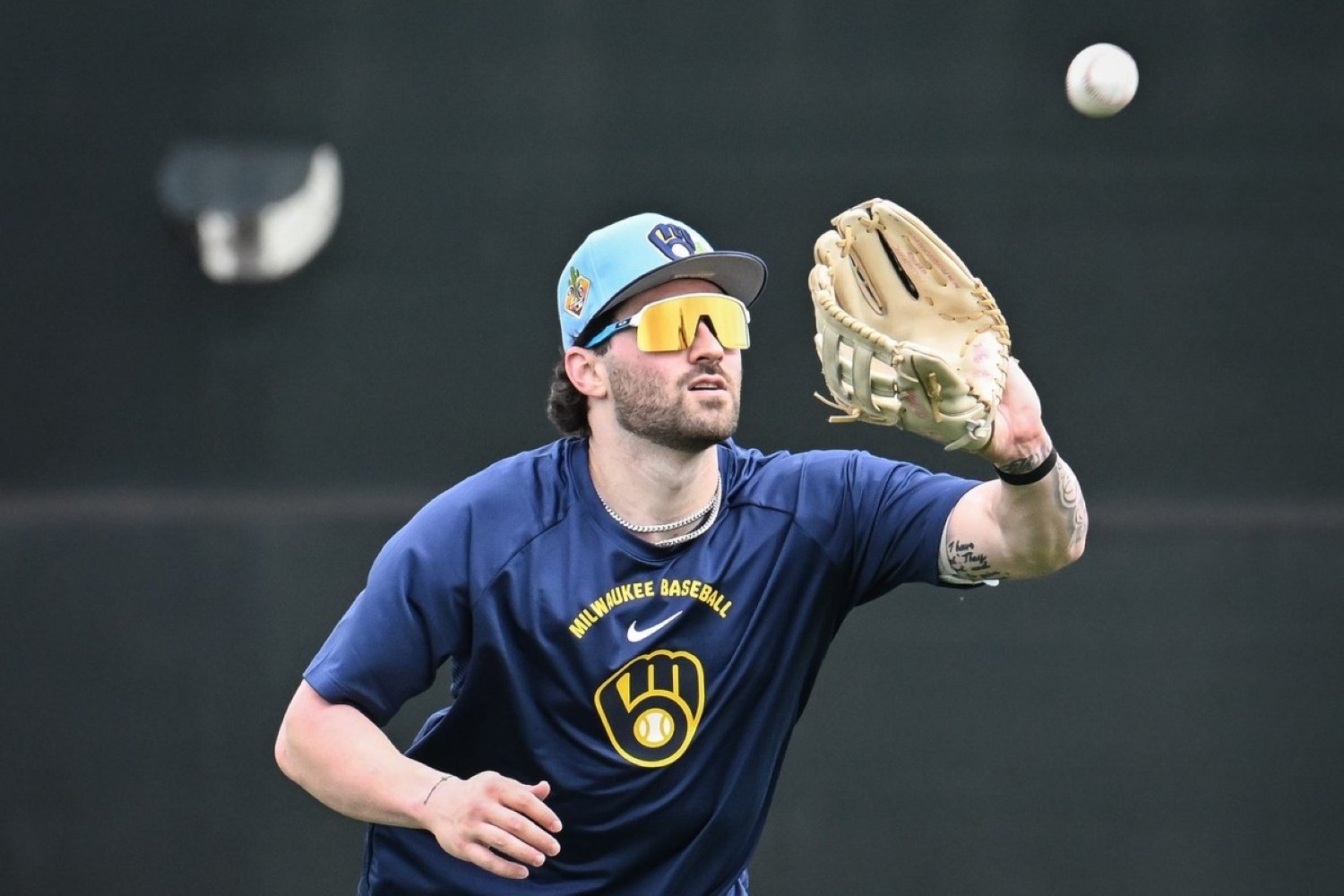 How deep are the Brewers in center field? Put it this way: In 2025, they set a team record for wins in the regular season despite their top two center fielders from 2024 missing substantial time, and turning to what was arguably a worst-case scenario at the position. What is their center field situation like in 2026? Let’s take a look. The Starter: Garrett Mitchell Mitchell was Milwaukee’s first-round pick in the truncated 2020 draft. His offensive profile is tied to his high-end speed and power, and he has a strong arm and plays excellent overall defense in the middle of the outfield. When he’s been on the field, Mitchell’s been productive. In 141 career games, he’s posted a 112 OPS+ and 3.6 Wins Above Replacement, according to Baseball Reference. That WAR total would have been third on the team among position players in 2025. The problem is that these 141 games have been scattered across four seasons, from his 2022 debut to 2025. Mitchell has also shown vulnerability to high heat when he does play. He’s good at forcing pitchers to pitch to spots where he can crush the ball, though. He just has to keep himself on the field, and not the injured list. The Backups Brandon Lockridge Jackson Chourio Sal Frelick In addition to Lockridge, who has flashed some serious potential of his own in spring training, both Jackson Chourio and Sal Frelick would be very capable starters in center field if needed. Chourio, of course, spent most of his time there in 2025. Lockridge unlocked more offensive potential over the offseason and could end up being an excellent secondary return on the Devin Williams trade. He was acquired for Nestor Cortes, who came over from the Yankees. Chourio and Frelick are slated to be the starters in left field and right field, respectively, but both came up through the farm system primarily as center fielders, and most major-league teams would love to have them in center. Other 40-Man Roster Options Blake Perkins Steward Berroa Akil Baddoo In 2024, Blake Perkins was a Gold Glove finalist and arguably the team’s primary center fielder. He’s now going to be at Triple-A Nashville, partially because of Lockridge’s spring breakout. Baddoo and Berroa are more likely to get their center field starts in Nashville, if they aren’t released. Both players hover close enough to the fringe of the 40-man roster that if the team makes an external addition, it could come at their expense. Prospects Luis Lara Braylon Payne Jose Anderson Kenny Fenelon Eduardo Garcia Lara is an intriguing mix of Perkins and Frelick, likely to start in Nashville and be knocking on the door to the majors. Payne has a potentially dynamic bat, but he will need to cut down on his strikeouts and stay healthy; he's far from the big leagues. Anderson and Fenelon are raw talents who were international free agents. Garcia, at one point, was Milwaukee’s Shortstop of the Future, but has been bypassed by Cooper Pratt, Jesús Made, and Luis Peña. Still, he's turned himself into a valuable utility player who can competently handle center field, among other positions. Overview The Brewers will have plenty of depth, and should be able to count on excellent production at the plate, on the basepaths, and in the field from whoever ends up as the primary center fielder in 2026. If it has to come from Chourio and/or Frelick, though, that production could come at the cost of value in the corner spots.
 -
Image courtesy of © Sam Navarro-Imagn Images Last season, the Brewers used Jackson Chourio in center field most of the time, and Isaac Collins emerged as the team's regular left fielder. Rather than running that back, though, they dealt Collins to Kansas City this winter, and Chourio will be back in the corner outfield mix for 2026. Who else will factor in prominently? Let's break it down. The Starters Left Field: Jackson Chourio Right Field: Sal Frelick Milwaukee prioritizes fielding an excellent defense. Nowhere is that clearer than in the corner outfield spots. Frelick and Chourio are solid center fielders, but as they've established themselves in the majors, they've moved to the corners. Chourio is a franchise cornerstone. The massive eight-year, $82-million contract (with two team options) he signed before 2024 made that abundantly clear. He’s posted two straight 20-20 seasons, and he still hasn’t hit his peak yet. Frelick is a Gold Glove-caliber right fielder who could start in center for about two dozen other major-league clubs. While he lacks the traditional power of a corner outfielder, some power did emerge in 2025. Frelick is simply a solid all-around player who can add speed and defense to his impressive bat control. The Major-League Backups Jake Bauers Brandon Lockridge Yes, you saw the header right: backups, plural. Bauers will get most of his playing time by dividing chances with Andrew Vaughn at the cold corner, but he made an offensive leap in 2025. If it holds up in 2026, he can keep Frelick and Chourio fresh, especially if his bat is on a hot streak like the one he had late in the 2025 season. Lockridge was acquired when the Brewers moved on from Nestor Cortes, making him an indirect return from the Devin Williams trade. He's beaten out Blake Perkins for an Opening Day roster spot based on a red-hot spring training. If it carries over into the regular season, it will be the second time the Brewers have generated a massive secondary return on trading a closer—the first being when Esteury Ruiz, who had been acquired in the Josh Hader trade, went to the Athletics in a three-team deal that brought William Contreras to Milwaukee—under Matt Arnold. He'll also play a good amount of center field, but he's available to slide to the corners as needed. Other 40-Man Roster Options Tyler Black Jett Williams Christian Yelich Akil Baddoo Steward Berroa The Brewers' corner outfield group is so deep that both a former MVP and a former MLB Top-100 prospect are on the outside looking in for playing time. Yelich is still an outfielder, the organization insists, and has played there twice this spring, but he went nearly two months between appearances in the outfield two different times last year. Black is a solid hitter, if his power surge this spring is for real. The rest of these options are emergency-only—not because they can't be good, but because the team has considerably better options and/or would rather play those guys elsewhere. Overview Having so many center field-capable athletes in the mix to play in the corners is an extraordinary luxury—one of several the Brewers have afforded themselves of late. The team doesn't have one or two clear-cut candidates for each position, but that just serves to insulate them against injuries and maintain opportunities for players who break out unexpectedly. View full article
-
Milwaukee Brewers 2026 Position Analysis: Corner Outfield
Harold Hutchison posted an article in Brewers
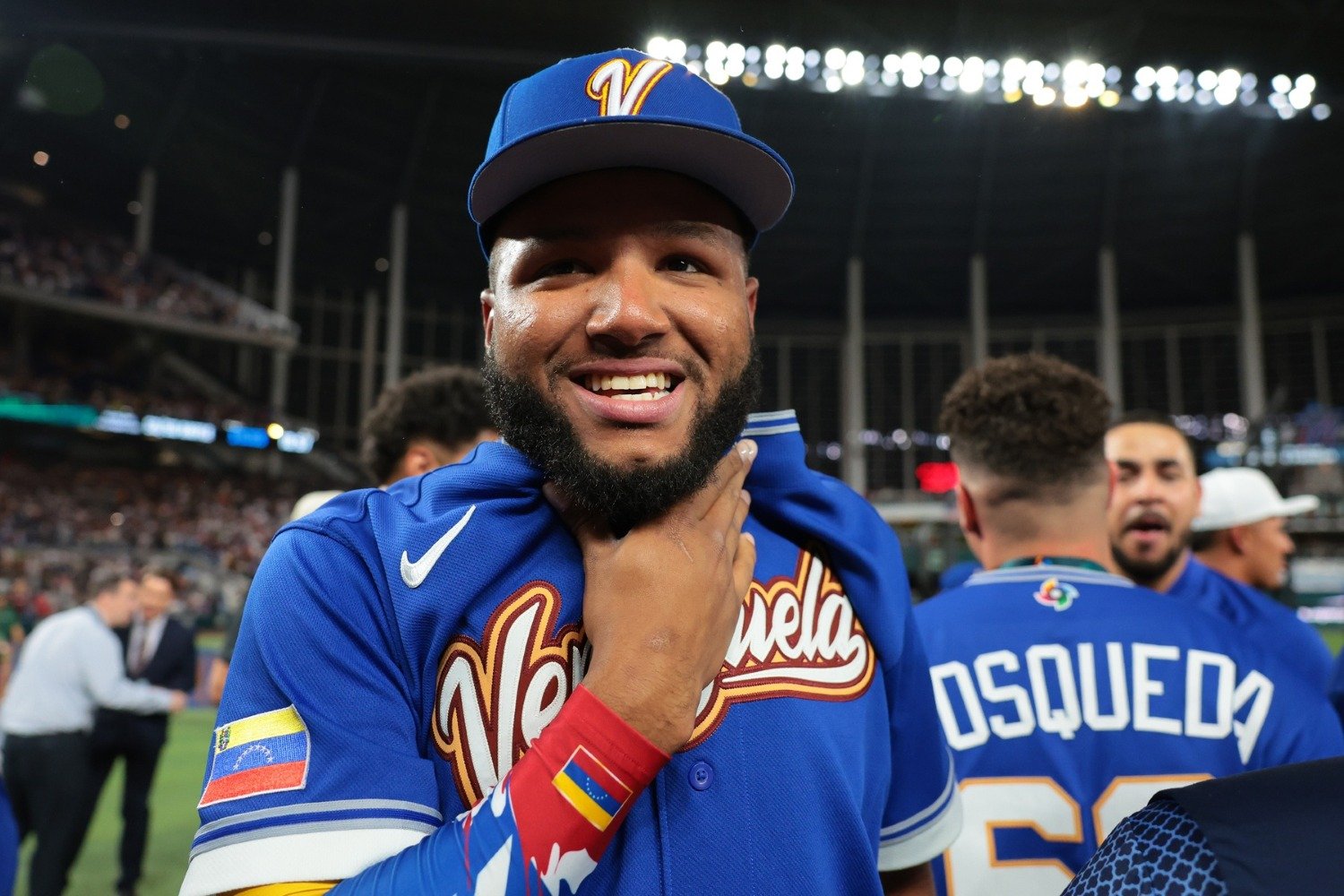 Last season, the Brewers used Jackson Chourio in center field most of the time, and Isaac Collins emerged as the team's regular left fielder. Rather than running that back, though, they dealt Collins to Kansas City this winter, and Chourio will be back in the corner outfield mix for 2026. Who else will factor in prominently? Let's break it down. The Starters Left Field: Jackson Chourio Right Field: Sal Frelick Milwaukee prioritizes fielding an excellent defense. Nowhere is that clearer than in the corner outfield spots. Frelick and Chourio are solid center fielders, but as they've established themselves in the majors, they've moved to the corners. Chourio is a franchise cornerstone. The massive eight-year, $82-million contract (with two team options) he signed before 2024 made that abundantly clear. He’s posted two straight 20-20 seasons, and he still hasn’t hit his peak yet. Frelick is a Gold Glove-caliber right fielder who could start in center for about two dozen other major-league clubs. While he lacks the traditional power of a corner outfielder, some power did emerge in 2025. Frelick is simply a solid all-around player who can add speed and defense to his impressive bat control. The Major-League Backups Jake Bauers Brandon Lockridge Yes, you saw the header right: backups, plural. Bauers will get most of his playing time by dividing chances with Andrew Vaughn at the cold corner, but he made an offensive leap in 2025. If it holds up in 2026, he can keep Frelick and Chourio fresh, especially if his bat is on a hot streak like the one he had late in the 2025 season. Lockridge was acquired when the Brewers moved on from Nestor Cortes, making him an indirect return from the Devin Williams trade. He's beaten out Blake Perkins for an Opening Day roster spot based on a red-hot spring training. If it carries over into the regular season, it will be the second time the Brewers have generated a massive secondary return on trading a closer—the first being when Esteury Ruiz, who had been acquired in the Josh Hader trade, went to the Athletics in a three-team deal that brought William Contreras to Milwaukee—under Matt Arnold. He'll also play a good amount of center field, but he's available to slide to the corners as needed. Other 40-Man Roster Options Tyler Black Jett Williams Christian Yelich Akil Baddoo Steward Berroa The Brewers' corner outfield group is so deep that both a former MVP and a former MLB Top-100 prospect are on the outside looking in for playing time. Yelich is still an outfielder, the organization insists, and has played there twice this spring, but he went nearly two months between appearances in the outfield two different times last year. Black is a solid hitter, if his power surge this spring is for real. The rest of these options are emergency-only—not because they can't be good, but because the team has considerably better options and/or would rather play those guys elsewhere. Overview Having so many center field-capable athletes in the mix to play in the corners is an extraordinary luxury—one of several the Brewers have afforded themselves of late. The team doesn't have one or two clear-cut candidates for each position, but that just serves to insulate them against injuries and maintain opportunities for players who break out unexpectedly.
 -
Image courtesy of © Jayne Kamin-Oncea-Imagn Images The Brewers have had an interesting situation at first base since Eric Thames departed after the 2019 season. While they have received some excellent production in the aggregate in some seasons, their primary starter has not topped 1.0 Wins Above Replacement (according to Baseball Reference) in any season since then.* Could that change? Let’s look at the position and see who Milwaukee has for 2026. The Starter Andrew Vaughn .308/.375/.493, 9 home runs, 46 RBIs in 64 games with Milwaukee Vaughn was acquired in exchange for disgruntled right-handed starting pitcher Aaron Civale last June. The deal worked out quite well for Milwaukee, as Vaughn provided some right-handed pop that helped make up for the absence of Rhys Hoskins due to injury. An increasingly well-rounded hitter, Vaughn didn’t just club homers; he also delivered 14 doubles. That balanced power and an improved walk rate pushed his OPS to .869 during his time with the Brewers. If Vaughn manages to equal his 141 OPS+ (where 100 is average and higher is better) from his 2025 in Milwaukee, the Brewers would be in position to rival the league leaders in value from first base. Vaughn would help the Brewers maintain length in their lineup, behind Jackson Chourio, Christian Yelich, William Contreras, and Brice Turang. *Incidentally, Vaughn actually exceeded the 1.0 WAR threshold in 2025, but wasn’t the primary starter at first base for the Brewers, Hoskins, who posted 0.9 WAR, was. The “Platoon Partner” Jake Bauers .235/.353/.399, 7 home runs, 28 RBIs in 85 games Bauers is not likely to be the primary first baseman for the Brewers; nor is he a strict platoon partner for Vaughn. He’ll exist in a more flexible timeshare with Vaughn, and find supplemental playing time in the outfield corners. Like Vaughn, Bauers had a career year with Milwaukee in 2025. In this case, he rebounded from being non-tendered after the 2024 season and posted a 111 OPS+, fueled by improved plate discipline (32 walks in 183 at-bats in 2025, compared to 39 in 302 at-bats in 2024). He's also capable of even more power than Vaughn, with the best sheer bat speed on the team. Down The Depth Chart On the 40-man roster, the “third first baseman” is former top-100 prospect Tyler Black, whose biggest issue is finding a defensive home. Black has had a couple cups of coffee in the majors, but hasn’t had a chance to get untracked, being stuck behind external additions Hoskins, Vaughn, and Bauers over the past two seasons. He's also failed to develop the power required of a bat-first player, but that might be changing this spring. He not only cracked four extra-base hits before leaving for Team Canada and the World Baseball Classic, but has been hitting the ball harder this spring than he has in the past two years, in terms of exit velocity. In the upper minors, the Brewers have other prospects who could emerge as contributors. Blake Burke and Luke Adams could someday form a traditional platoon arrangement, with Adams also able to play some third base. Burke, acquired with a competitive-balance pick the Brewers acquired in the Corbin Burnes trade, is a lefty power bat. Adams is an OBP machine who adds some power and average speed as a right-handed hitter. The Brewers also have 2025 first-round draft pick Andrew Fischer, a natural first baseman who’s proving capable at the hot corner. Fischer has been performing extremely well in the World Baseball Classic for team Italy, batting 4-for-11 with two doubles, a home run, a walk and just two strikeouts entering Monday's semifinal against Venezuela. He could force his way to the high minors—or even Milwaukee—in 2026. Overview Milwaukee’s star prospects and players are often in the outfield or the middle infield. First base in Milwaukee hasn’t seen a long-term primary starter since Prince Fielder’s departure after the 2011 season. Right now, though, there are several players with a chance to change that in the organization. We could see one of them seize the position this year. View full article
-
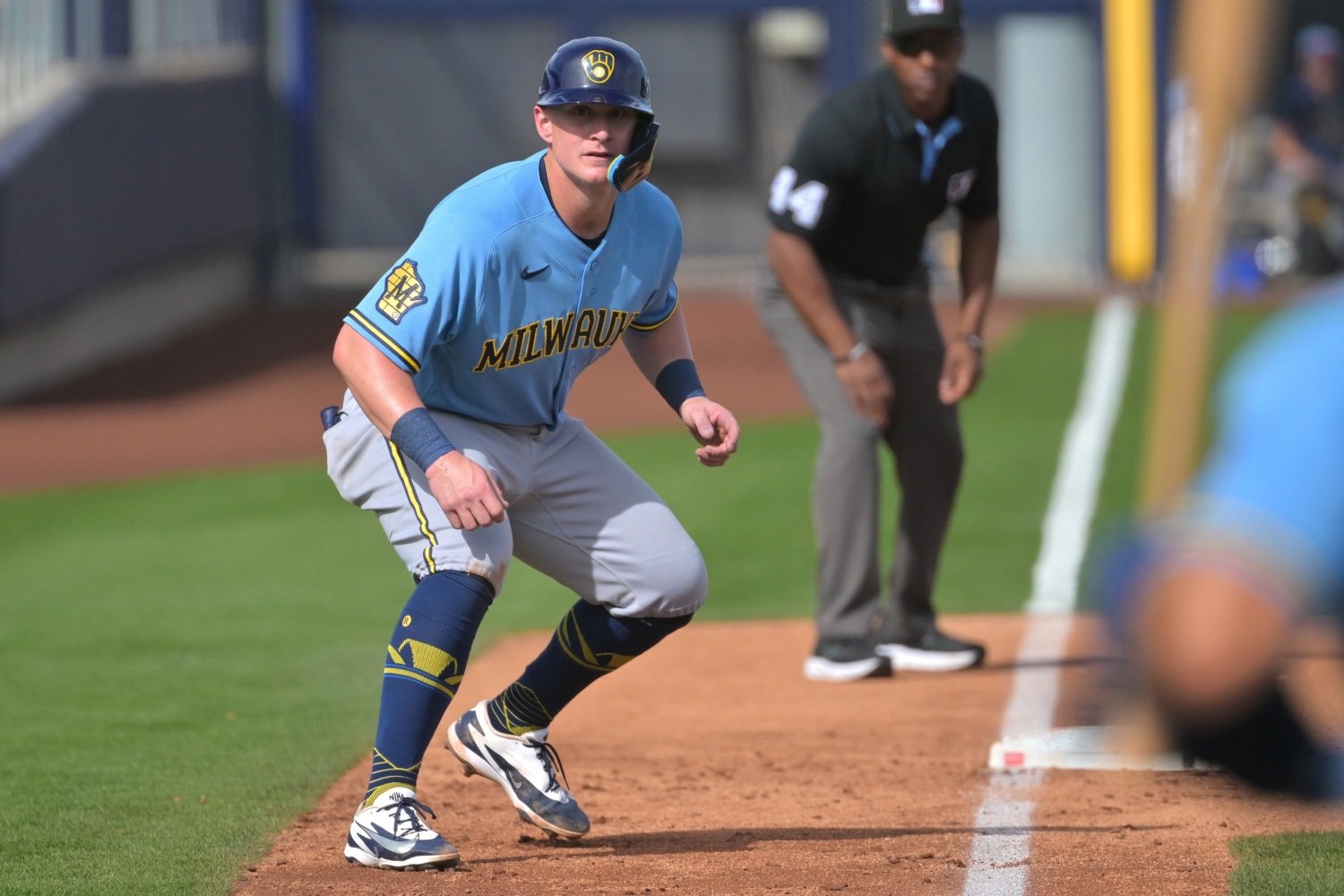 The Brewers have had an interesting situation at first base since Eric Thames departed after the 2019 season. While they have received some excellent production in the aggregate in some seasons, their primary starter has not topped 1.0 Wins Above Replacement (according to Baseball Reference) in any season since then.* Could that change? Let’s look at the position and see who Milwaukee has for 2026. The Starter Andrew Vaughn .308/.375/.493, 9 home runs, 46 RBIs in 64 games with Milwaukee Vaughn was acquired in exchange for disgruntled right-handed starting pitcher Aaron Civale last June. The deal worked out quite well for Milwaukee, as Vaughn provided some right-handed pop that helped make up for the absence of Rhys Hoskins due to injury. An increasingly well-rounded hitter, Vaughn didn’t just club homers; he also delivered 14 doubles. That balanced power and an improved walk rate pushed his OPS to .869 during his time with the Brewers. If Vaughn manages to equal his 141 OPS+ (where 100 is average and higher is better) from his 2025 in Milwaukee, the Brewers would be in position to rival the league leaders in value from first base. Vaughn would help the Brewers maintain length in their lineup, behind Jackson Chourio, Christian Yelich, William Contreras, and Brice Turang. *Incidentally, Vaughn actually exceeded the 1.0 WAR threshold in 2025, but wasn’t the primary starter at first base for the Brewers, Hoskins, who posted 0.9 WAR, was. The “Platoon Partner” Jake Bauers .235/.353/.399, 7 home runs, 28 RBIs in 85 games Bauers is not likely to be the primary first baseman for the Brewers; nor is he a strict platoon partner for Vaughn. He’ll exist in a more flexible timeshare with Vaughn, and find supplemental playing time in the outfield corners. Like Vaughn, Bauers had a career year with Milwaukee in 2025. In this case, he rebounded from being non-tendered after the 2024 season and posted a 111 OPS+, fueled by improved plate discipline (32 walks in 183 at-bats in 2025, compared to 39 in 302 at-bats in 2024). He's also capable of even more power than Vaughn, with the best sheer bat speed on the team. Down The Depth Chart On the 40-man roster, the “third first baseman” is former top-100 prospect Tyler Black, whose biggest issue is finding a defensive home. Black has had a couple cups of coffee in the majors, but hasn’t had a chance to get untracked, being stuck behind external additions Hoskins, Vaughn, and Bauers over the past two seasons. He's also failed to develop the power required of a bat-first player, but that might be changing this spring. He not only cracked four extra-base hits before leaving for Team Canada and the World Baseball Classic, but has been hitting the ball harder this spring than he has in the past two years, in terms of exit velocity. In the upper minors, the Brewers have other prospects who could emerge as contributors. Blake Burke and Luke Adams could someday form a traditional platoon arrangement, with Adams also able to play some third base. Burke, acquired with a competitive-balance pick the Brewers acquired in the Corbin Burnes trade, is a lefty power bat. Adams is an OBP machine who adds some power and average speed as a right-handed hitter. The Brewers also have 2025 first-round draft pick Andrew Fischer, a natural first baseman who’s proving capable at the hot corner. Fischer has been performing extremely well in the World Baseball Classic for team Italy, batting 4-for-11 with two doubles, a home run, a walk and just two strikeouts entering Monday's semifinal against Venezuela. He could force his way to the high minors—or even Milwaukee—in 2026. Overview Milwaukee’s star prospects and players are often in the outfield or the middle infield. First base in Milwaukee hasn’t seen a long-term primary starter since Prince Fielder’s departure after the 2011 season. Right now, though, there are several players with a chance to change that in the organization. We could see one of them seize the position this year.
 -
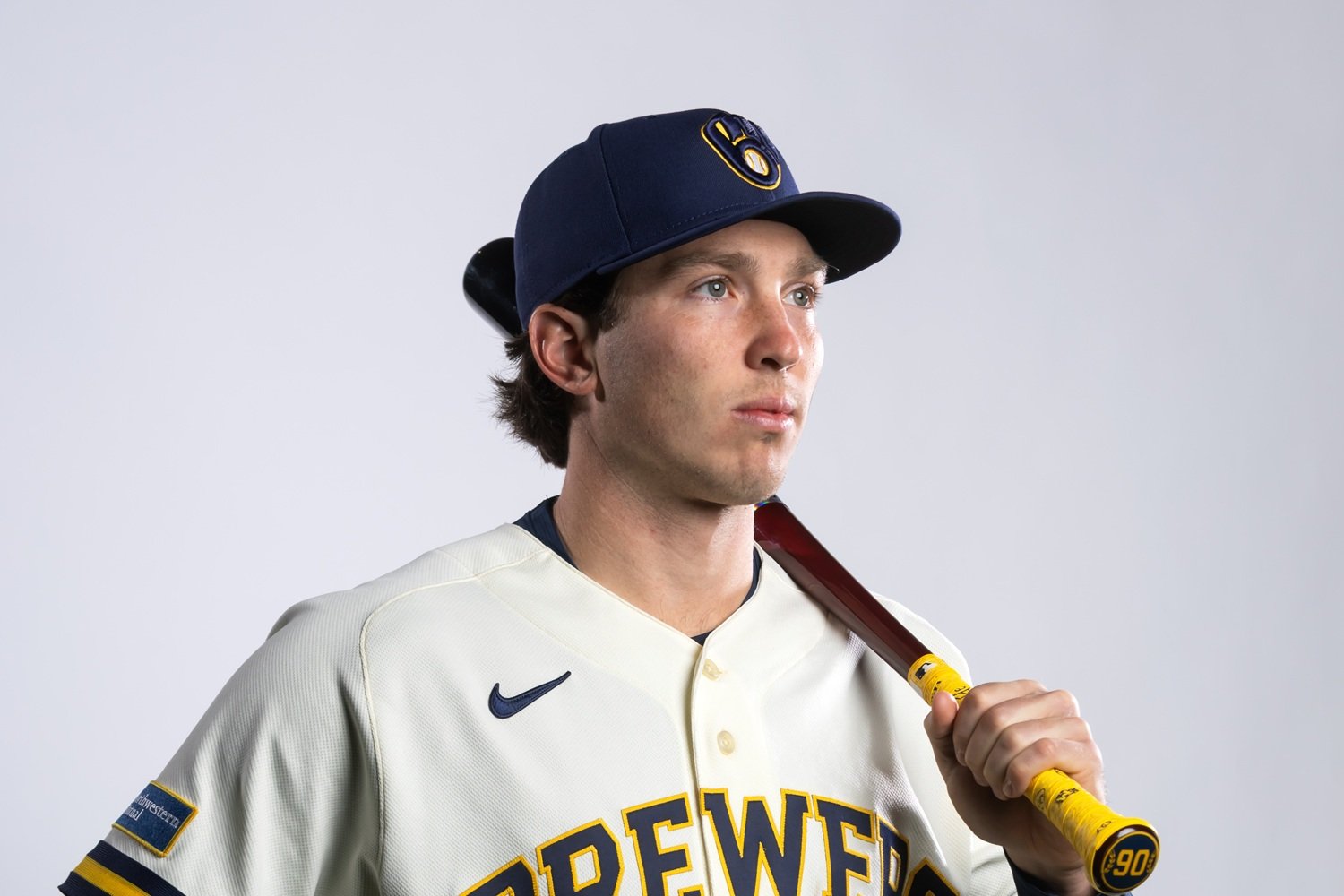 Darrien Miller has long been an under-the-radar prospect at catcher in the Milwaukee farm system, without the 40-man roster spot or prospect luster of Jeferson Quero, or the high offensive ceiling of Marco Dinges. Miller’s been dinged at times for having merely acceptable defense, with the biggest knock being his relative inability to keep baserunners honest compared to the pre-injury form Quero displayed. However, this year, Major League Baseball’s new Automatic Ball-Strike (ABS) system and the new rule allowing challenges to ball-strike calls may make Miller’s offensive skill set more valuable behind the plate. Throughout his professional career, Miller's carrying skill has been his on-base skill. Miller’s drawn 271 walks, and he’s also gotten on base the painful way 102 times. A secondary feature has been some pop in his bat, in the form of 37 homers in his professional career. One at-bat from the Brewers’ February 27 Cactus League game against the White Sox points to how Miller’s offensive skillset may increase his defensive value behind the plate. Specifically, it was the last pitch of the showdown in a high-leverage situation. It was the top of the eighth inning, and the Brewers were clinging to a 5-2 lead when Will Childers was called in to relieve Drew Rom, who’d been pretty wild, allowing three walks and a wild pitch in two-thirds of an inning. When Childers came in, the bases were loaded with two outs, with White Sox third baseman Jordan Sprinkle, their fourth-round pick from the 2022 MLB Draft, coming to the plate. Sprinkle’s primary offensive tools are the ability to get on base (137 walks as a pro) and a lot of speed (he stole 80 bases between three minor-league stops in 2025). He doesn’t have a lot of power, though, and prior to 2025, he tended to strike out a lot (260 times in 1,046 professional at-bats) for a player who has only hit seven baseballs into the stands throughout his professional career. According to the MLB Gameday recap of the at-bat, Sprinkle didn’t swing once, with Childers’s first three pitches being pretty clear balls. Then, Childers settled down, getting two called strikes. On the sixth pitch, home plate umpire Brian Van Vracken called it “ball four,” which meant Sprinkle would walk and the runner on third would come into score. Here’s where we need to explore the rules of the ABS challenge system. Only the batter, pitcher, or catcher can challenge the call. The call also has to be challenged right away. To challenge or not will be a split-second decision, almost as fast as deciding whether or not to swing the bat as a hitter. The stakes are high. If the call being challenged is upheld, the team loses its challenge; they only get two for the first nine innings of the game. On the other hand, if the challenge leads to the call being overturned, the team keeps it. This can have implications late in a game: blowing the challenges early can leave a team helpless when it really needs to get a second look at a borderline call. In this case, Miller challenged the call, and Van Vracken’s “ball four” was overturned, becoming a called strike three. The ABS showed that Childers’s pitch had caught the bottom edge of the strike zone for the third out of the inning, and Miller's eye was at a level where he decided the challenge was worth it. The White Sox got nothing to show for all the ducks on the pond from Rom’s earlier struggles in the inning, and the Brewers went on to win. What does this pitch mean going forward? On the one hand, it is just one pitch, the smallest of small samples. But on the other hand, Miller’s eye for the strike zone is arguably one of the best in the organization, based on his entire professional career to date. With the rules surrounding the ABS challenge system, Miller’s eye has potentially become not just a weapon at the plate, but behind it as well.
 -
Image courtesy of © Mark J. Rebilas-Imagn Images Darrien Miller has long been an under-the-radar prospect at catcher in the Milwaukee farm system, without the 40-man roster spot and Top-100 luster of Jeferson Quero, the high offensive ceiling of Marco Dinges, or the prospect potential of Isais Chavez or Moises Salazar. Miller’s been dinged at times for having merely acceptable defense, with the biggest knock being his relative inability to keep baserunners honest compared to the pre-injury form Quero displayed. However, this year, Major League Baseball’s new Automatic Ball-Strike (ABS) system and the new rule allowing challenges to certain ball-strike calls, may make Miller’s offensive skill set more valuable behind the plate. The primary feature of Miller’s skill set throughout his professional career has been his on-base skills. Miller’s drawn 271 walks, and he’s also gotten on base the painful way 102 times. A secondary feature has been some pop in his bat in the form of 37 homers in his professional career. One at-bat from the Brewers’ February 27 Cactus League game against the White Sox, a 5-2 victory, points to how Miller’s offensive skillset may increase his defensive value behind the plate. Specifically, it was the last pitch of the showdown in a high-leverage situation. It was the top of the eighth inning, and the Brewers were clinging to a 5-2 lead when Will Childers was called in to relieve Drew Rom, who’d been pretty wild – allowing three walks and a wild pitch in two-thirds of an inning. When Childers came in, the bases were loaded with two out, with White Sox third baseman Jordan Sprinkle, their fourth-round pick from the 2022 amateur draft, coming to the plate. Sprinkle’s primary offensive tools are the ability to get on base (137 walks as a pro) and a lot of speed (he stole 80 bases between three minor-league stops in 2025). He doesn’t have a lot of power, though, and prior to 2025, he tended to strike out a lot (260 times in 1,046 professional at-bats) for a player who has only hit seven baseballs into the stands throughout his professional career. According to the MLB Gameday recap of the at-bat, Sprinkle didn’t swing once, with Childers’ first three pitches being pretty clear balls. Then, Childers settled down, getting two called strikes. Then on the sixth pitch, home plate umpire Brian Van Vracken called it “ball four,” which meant Sprinkle would walk and the runner on third would come into score. Here’s where we need to explore the rules of the ABS challenge system. Only the batter, pitcher, or catcher can challenge the call. The call also has to be challenged right away. So to challenge or not will require a split-second decision – almost as fast as deciding whether or not to swing the bat as a hitter. The stakes are high. If the call being challenged is upheld, the team loses its challenge – and they only get two for the first nine innings of the ballgame. On the other hand, if the challenge leads to the call being overturned, the team keeps it. This can have implications late in a game – blowing the challenges early can leave a team helpless when it really needs to get a second look at a borderline call. In this case, Miller challenged the call, and Van Vracken’s “ball four” was overturned, becoming a called strike three. The ABS showed that Childers’ pitch had caught the bottom edge of the strike zone for the third out of the inning, and Miller's eye was at a level where he decided the challenge was worth it. The White Sox got nothing to show for all the ducks on the pond from Rom’s earlier struggles in the inning, and the Brewers went on to win. What does this pitch mean going forward? On the one hand, it is just one pitch – the smallest of small samples. But on the other hand, Miller’s eye for the strike zone is arguably one of the best in the organization, based on his entire professional career to date. With the rules surrounding the ABS challenge system, Miller’s eye has potentially become not just a weapon at the plate, but behind it as well. View full article
-
Could see Bauers moving. Black offers more positional versatility (he's seen action at 3B, 2B, and CF in addition to 1B, LF, and RF), and while he doesn't have the pop Bauers has, he's got a more consistent profile. What Black needs is a month or two of regular ABs at the major-league level. He could probably get that rotating at several positions.
-
I'd try Josh A at the hot corner, perhaps.
-
My hope is that Wilken gets hot and that he and Ashby are packaged in a deal for a CC Sabathia-esque difference maker around mid-June.
- 21 replies
-
- 1
-

-
- luis lara
- brock wilken
- (and 3 more)
-
I have to admit, I think Adams is the better 3B prospect between him and Wilken. He's got a more rounded offensive profile (mostly due to being a serious threat on the basepaths as opposed to Wilken).
-
On average, it's a bargain, but the option years are 2 years/$22 million. The time to trade Ashby is the 2026 trade deadline.
-
I would probably look to sell Ashby due to his contract. He's costing a lot for a bullpen role. If he were a left-handed version of Freddy Peralta, it would be a different story, but if he is healthy and doing well, I'd be looking to deal him at the deadline.
-
Image courtesy of © Jayne Kamin-Oncea-Imagn Images When the Brewers held a lead after six innings in 2025, it was almost certain they would come out the winners at the end of the game. The bullpen remains a strength in 2026, especially since, in a way, it feeds off the rotation depth that the Milwaukee organization has built. More than one starter in Milwaukee has found a home in the bullpen, where they become valuable contributors. 2025 In Review Milwaukee’s bullpen depth was demonstrated in 2025, when the team allowed pitchers who were valuable contributors in previous seasons—like Joel Payamps, Bryan Hudson, and Elvis Peguero—to be plucked off the waiver wire. That came after the Brewers traded closer Devin Williams during the offseason. Trevor Megill, Jared Koenig, Nick Mears, Abner Uribe, and Grant Anderson were the mainstays in the late innings, joined by Aaron Ashby, DL Hall, Tobias Myers, and Chad Patrick from the rotation by the end of the season. Craig Yoho had a rough first ride of the big-league circuit, but also flashed signs of being the next dominant Brewers reliever. Current Roster Situation Megill, Uribe, Koenig, and Anderson all return to handle the late-inning duties, with Yoho likely to force his way to Milwaukee on a full-time basis sometime in 2026. Other relief candidates on the 40-man include Easton McGee, Sammy Peralta, and Rob Zastryzny. Ashby, Ángel Zerpa, Hall, Patrick, Shane Drohan, Carlos Rodriguez, Logan Henderson, and other starting pitchers in the Brewers’ rotation Royal Rumble may end up in the bullpen. Among non-roster invitees, the Brewers have Gerson Garabito (though he'll miss at least the first two months of the season with an injury), old friend Peter Strzelecki, and Jacob Waguespack as options, although they may be more likely to serve as depth at Triple-A Nashville. A lot of the Brewers’ rotation prospects at Nashville or Double-A Biloxi could find themselves doing work out of the bullpen to start their careers in Milwaukee, a path previously trodden by former Brewers ace Corbin Burnes and current ace Brandon Woodruff in their early years in Milwaukee. Best-Case Scenario The Brewers cash in on one or two relievers (Ashby and Megill seem like top candidates) around the trade deadline not only to pick up some help elsewhere for a playoff push, but also to clear space for younger pitchers with more talent and roster flexibility. No pitcher appears in more than 60 games. If this is happening, then the Brewers are getting excellent production from the bullpen, and they are building more assets to continue their competitive run of finishing above .500 in every full year since 2017. Drohan is one likely candidate to take a multi-inning fireman role, similar to what Josh Hader held down in 2017 and 2018, and he could save the Brewers a not-insignificant amount of money by forcing a trade of Ashby. But this also will be dependent on how well Brewers relief prospects fare in Nashville and Biloxi. The Brewers have numerous pathways for their bullpen to succeed in 2026. The real question will be whether that depth is leveraged to bring in new assets for the team, or if it addresses injuries. Worst-Case Scenario The Brewers end up trading for relief pitching help. This scenario involves injuries and ineffectiveness across the entire pitching staff, and the prospects at Triple-A and Double-A. In 2025, the Brewers were able to win big, even when their bullpen was cobbled together, but the price was a heavy reliance on Megill, Uribe, Anderson, Koenig, and Mears, creating a bill that came due in the playoffs. In this case, the Brewers’ preference will be to deal from their surplus, likely involving pitchers who are out of options, and picking the cream of the crop from teams in need of bullpen help. Overview The bullpen will probably be a source of strength for the Brewers in 2026, even if the team starts a churn when top pitching prospects push their way to Milwaukee. The biggest question isn’t if the bullpen will be a strength; it will be how it is a strength. If the innings for Brewers relievers are more spread out, the team will be in good shape for October. If multiple pitchers hit 70 appearances a game, the team might have a good record, but there’s a risk of an October dropoff as fatigue catches up. View full article
-
Brewers' Best- and Worst-Case Scenarios for 2026: Bullpen
Harold Hutchison posted an article in Brewers
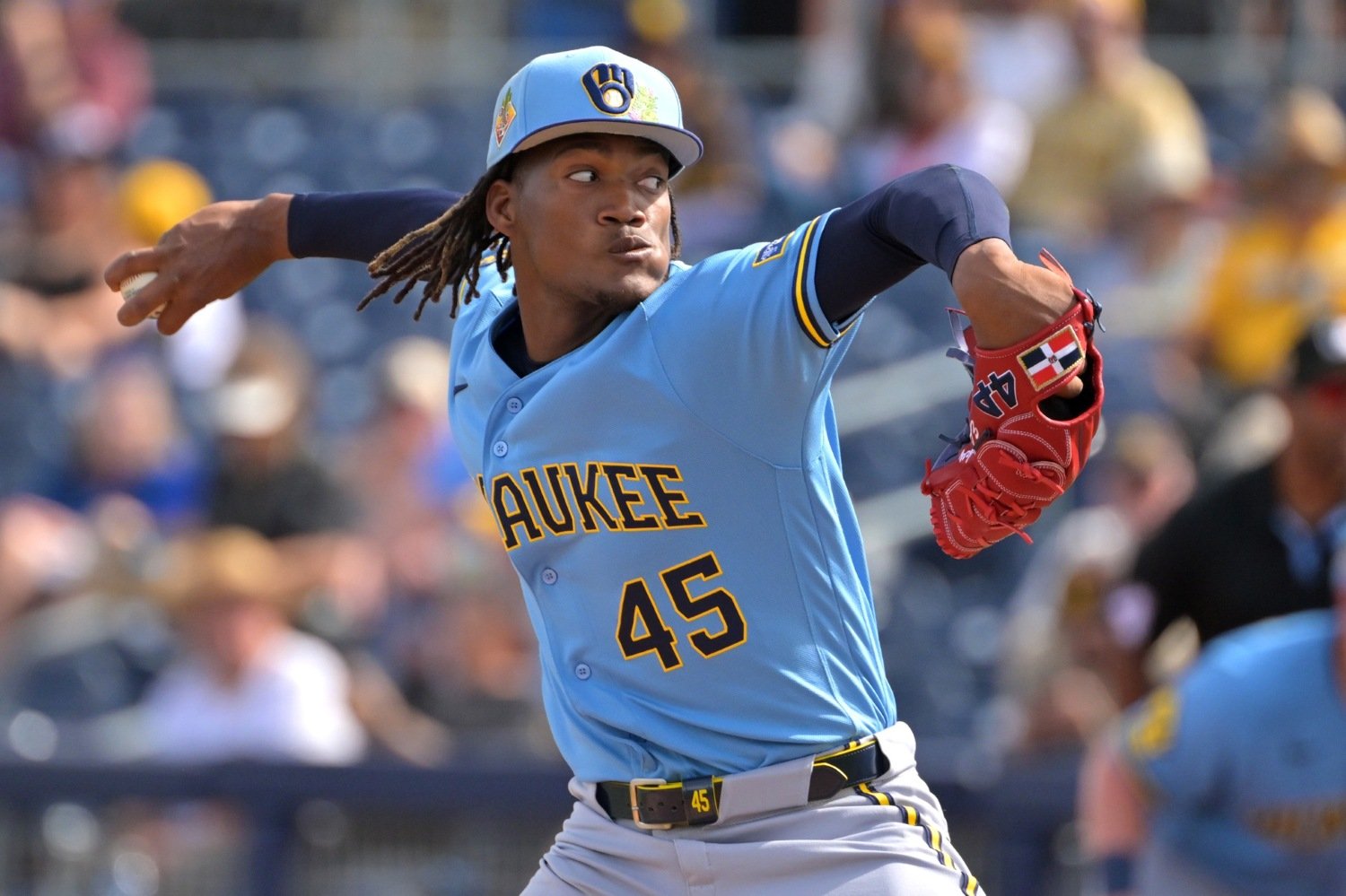 When the Brewers held a lead after six innings in 2025, it was almost certain they would come out the winners at the end of the game. The bullpen remains a strength in 2026, especially since, in a way, it feeds off the rotation depth that the Milwaukee organization has built. More than one starter in Milwaukee has found a home in the bullpen, where they become valuable contributors. 2025 In Review Milwaukee’s bullpen depth was demonstrated in 2025, when the team allowed pitchers who were valuable contributors in previous seasons—like Joel Payamps, Bryan Hudson, and Elvis Peguero—to be plucked off the waiver wire. That came after the Brewers traded closer Devin Williams during the offseason. Trevor Megill, Jared Koenig, Nick Mears, Abner Uribe, and Grant Anderson were the mainstays in the late innings, joined by Aaron Ashby, DL Hall, Tobias Myers, and Chad Patrick from the rotation by the end of the season. Craig Yoho had a rough first ride of the big-league circuit, but also flashed signs of being the next dominant Brewers reliever. Current Roster Situation Megill, Uribe, Koenig, and Anderson all return to handle the late-inning duties, with Yoho likely to force his way to Milwaukee on a full-time basis sometime in 2026. Other relief candidates on the 40-man include Easton McGee, Sammy Peralta, and Rob Zastryzny. Ashby, Ángel Zerpa, Hall, Patrick, Shane Drohan, Carlos Rodriguez, Logan Henderson, and other starting pitchers in the Brewers’ rotation Royal Rumble may end up in the bullpen. Among non-roster invitees, the Brewers have Gerson Garabito (though he'll miss at least the first two months of the season with an injury), old friend Peter Strzelecki, and Jacob Waguespack as options, although they may be more likely to serve as depth at Triple-A Nashville. A lot of the Brewers’ rotation prospects at Nashville or Double-A Biloxi could find themselves doing work out of the bullpen to start their careers in Milwaukee, a path previously trodden by former Brewers ace Corbin Burnes and current ace Brandon Woodruff in their early years in Milwaukee. Best-Case Scenario The Brewers cash in on one or two relievers (Ashby and Megill seem like top candidates) around the trade deadline not only to pick up some help elsewhere for a playoff push, but also to clear space for younger pitchers with more talent and roster flexibility. No pitcher appears in more than 60 games. If this is happening, then the Brewers are getting excellent production from the bullpen, and they are building more assets to continue their competitive run of finishing above .500 in every full year since 2017. Drohan is one likely candidate to take a multi-inning fireman role, similar to what Josh Hader held down in 2017 and 2018, and he could save the Brewers a not-insignificant amount of money by forcing a trade of Ashby. But this also will be dependent on how well Brewers relief prospects fare in Nashville and Biloxi. The Brewers have numerous pathways for their bullpen to succeed in 2026. The real question will be whether that depth is leveraged to bring in new assets for the team, or if it addresses injuries. Worst-Case Scenario The Brewers end up trading for relief pitching help. This scenario involves injuries and ineffectiveness across the entire pitching staff, and the prospects at Triple-A and Double-A. In 2025, the Brewers were able to win big, even when their bullpen was cobbled together, but the price was a heavy reliance on Megill, Uribe, Anderson, Koenig, and Mears, creating a bill that came due in the playoffs. In this case, the Brewers’ preference will be to deal from their surplus, likely involving pitchers who are out of options, and picking the cream of the crop from teams in need of bullpen help. Overview The bullpen will probably be a source of strength for the Brewers in 2026, even if the team starts a churn when top pitching prospects push their way to Milwaukee. The biggest question isn’t if the bullpen will be a strength; it will be how it is a strength. If the innings for Brewers relievers are more spread out, the team will be in good shape for October. If multiple pitchers hit 70 appearances a game, the team might have a good record, but there’s a risk of an October dropoff as fatigue catches up.
 -
Image courtesy of © Dave Kallmann / Milwaukee Journal Sentinel / USA TODAY NETWORK via Imagn Images In 2025, the Brewers’ starting rotation was a shambles for the first few weeks of the season due to injuries. It got so bad that the team dealt minor-league phenom Yophery Rodriguez, a competitive balance A pick, and John Holobetz to Boston for Quinn Priester. By the end of 2025, the rotation was so deep, early-season hero Chad Patrick was first sent to Triple-A Nashville, then kept hidden in the bullpen. How will it shake out in 2026? 2025 In Review The Brewers overcame early-season injuries to DL Hall, Nestor Cortes, Aaron Civale, Tobias Myers, and Aaron Ashby – all of whom were contenders for starting rotation spots – as well as the continued convalescence of Brandon Woodruff and Robert Gasser and Jose Quintana’s delayed signing in spring training. Part of that was by embracing the worst-case scenario in trading for Priester, who became a mainstay in the Milwaukee rotation, while Patrick stepped up huge in the early part of the season. Combined with top prospects Logan Henderson and Jacob Misiorowski contributing, while Freddy Peralta became the team’s ace, and Woodruff returned in a new form that still dominated, the rotation became a strength, so much so that after they’d recovered, Myers, Ashby, Hall, and Patrick spent their time in the bullpen, while Cortes and Civale were dealt mid-season. Current Roster Situation Jose Quintana is still a free agent. Peralta and Myers were traded to the Mets. Yet despite those departures, the Brewers still have a lot of options. Woodruff, Misiorowski, Patrick, Priester, Gasser, Henderson, Ashby, Hall, and Carlos Rodriguez return to Maryvale, joined by acquisitions Kyle Harrison, Shane Drohan, Brandon Sproat, and (possibly) Angel Zerpa. Then there is prospect Cameron Crow, added to the 40-man to shield him from the Rule 5 draft. Non-roster invitee Tate Kuehner is a top prospect who’s been dominating in the minors, while Drew Rom could be an emergency option. Bishop Letson is the only other starter on the Brewer Fanatic Top 20 Prospects list, but the team’s pitching prospects who reached Double-A Biloxi or Triple-A Nashville in 2025 include Alexander Cornielle, Brett Wichrowski, K.C. Hunt, Tyson Harbin, Bishop Letson, and Manuel Rodriguez. We’re not even talking about some high-ceiling prospects further down like Melvin Hernandez, Bryce Meccage, Ethan Dorchies, Jayden Dubanewicz, Steven Duran, and Joan Pena. Milwaukee is stacked in the rotation, despite the trades. Best-Case Scenario The Brewers settle in with a six-man rotation of Woodruff, Misiorowski, Priester, Gasser, one of Patrick or Sproat, and Harrison for the bulk of the season. The team’s depth could be leveraged in two ways: First, it reduces the strain on Woodruff and Gasser, both of whom are not-that-far removed from their return from extended absences due to arm trouble. Second, it would give Milwaukee very fresh pitchers down the season. The Brewers have a lot of ways to make their rotation work out and work out well. One or two injuries will not disrupt the team horribly, especially with the depth in the minors added to what is already on the 40-man roster. The big challenge will be managing the options and figuring out a way to cash in on some of the pitchers who lack the roster flexibility the Brewers may need. Worst-Case Scenario The Brewers make a panic trade for a starter in the early weeks of the season. As was the case in 2025, it would mean that the team’s rotation has been riddled with injuries. With the team’s incredible depth in the rotation just on the 40-man roster, not to mention the prospects at Biloxi and Nashville, a trade for a starting pitcher really should not be occurring in the early part of 2026. Milwaukee’s model is to have a large stockpile of talent and depth to address injuries and ineffectiveness internally, while cashing in on the pitchers they have developed or rebuilt. Panic trades tend to deplete that stockpile at times and in ways not of Milwaukee’s choosing. Overview Oddly enough, after dealing Peralta and Myers while letting Quintana walk, the Brewers came into the 2026 season with more depth and some very clear talent in the rotation. There are arguably 14 legitimate options for spots in the rotation, perhaps as many as 16. Brewers fans should not be surprised to see one or two get moved in a deadline deal if the Brewers want to bulk up for another run in October. View full article
-
Brewers Best And Worst Case Scenarios For 2026: Starting Rotation
Harold Hutchison posted an article in Brewers
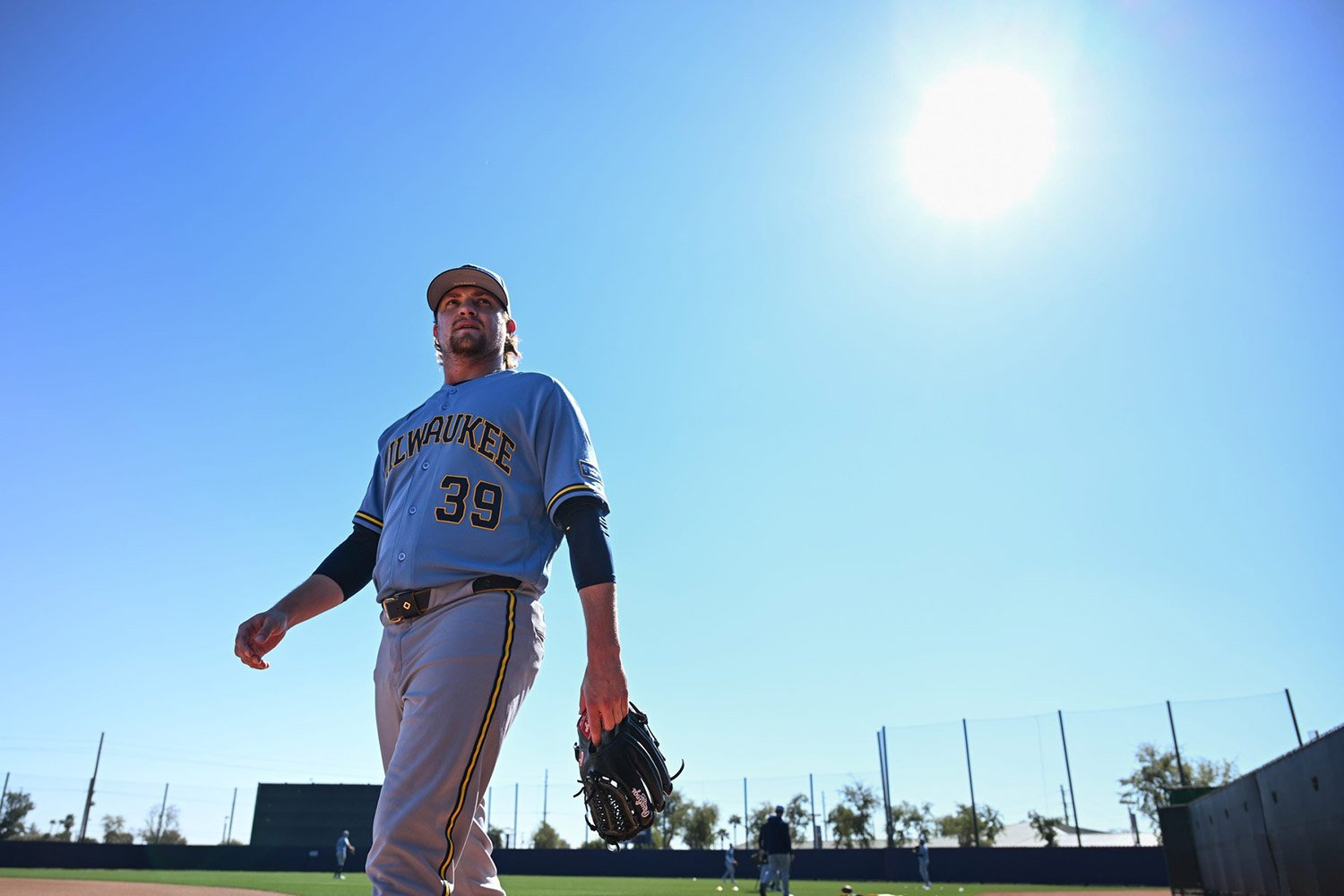 In 2025, the Brewers’ starting rotation was a shambles for the first few weeks of the season due to injuries. It got so bad that the team dealt minor-league phenom Yophery Rodriguez, a competitive balance A pick, and John Holobetz to Boston for Quinn Priester. By the end of 2025, the rotation was so deep, early-season hero Chad Patrick was first sent to Triple-A Nashville, then kept hidden in the bullpen. How will it shake out in 2026? 2025 In Review The Brewers overcame early-season injuries to DL Hall, Nestor Cortes, Aaron Civale, Tobias Myers, and Aaron Ashby – all of whom were contenders for starting rotation spots – as well as the continued convalescence of Brandon Woodruff and Robert Gasser and Jose Quintana’s delayed signing in spring training. Part of that was by embracing the worst-case scenario in trading for Priester, who became a mainstay in the Milwaukee rotation, while Patrick stepped up huge in the early part of the season. Combined with top prospects Logan Henderson and Jacob Misiorowski contributing, while Freddy Peralta became the team’s ace, and Woodruff returned in a new form that still dominated, the rotation became a strength, so much so that after they’d recovered, Myers, Ashby, Hall, and Patrick spent their time in the bullpen, while Cortes and Civale were dealt mid-season. Current Roster Situation Jose Quintana is still a free agent. Peralta and Myers were traded to the Mets. Yet despite those departures, the Brewers still have a lot of options. Woodruff, Misiorowski, Patrick, Priester, Gasser, Henderson, Ashby, Hall, and Carlos Rodriguez return to Maryvale, joined by acquisitions Kyle Harrison, Shane Drohan, Brandon Sproat, and (possibly) Angel Zerpa. Then there is prospect Cameron Crow, added to the 40-man to shield him from the Rule 5 draft. Non-roster invitee Tate Kuehner is a top prospect who’s been dominating in the minors, while Drew Rom could be an emergency option. Bishop Letson is the only other starter on the Brewer Fanatic Top 20 Prospects list, but the team’s pitching prospects who reached Double-A Biloxi or Triple-A Nashville in 2025 include Alexander Cornielle, Brett Wichrowski, K.C. Hunt, Tyson Harbin, Bishop Letson, and Manuel Rodriguez. We’re not even talking about some high-ceiling prospects further down like Melvin Hernandez, Bryce Meccage, Ethan Dorchies, Jayden Dubanewicz, Steven Duran, and Joan Pena. Milwaukee is stacked in the rotation, despite the trades. Best-Case Scenario The Brewers settle in with a six-man rotation of Woodruff, Misiorowski, Priester, Gasser, one of Patrick or Sproat, and Harrison for the bulk of the season. The team’s depth could be leveraged in two ways: First, it reduces the strain on Woodruff and Gasser, both of whom are not-that-far removed from their return from extended absences due to arm trouble. Second, it would give Milwaukee very fresh pitchers down the season. The Brewers have a lot of ways to make their rotation work out and work out well. One or two injuries will not disrupt the team horribly, especially with the depth in the minors added to what is already on the 40-man roster. The big challenge will be managing the options and figuring out a way to cash in on some of the pitchers who lack the roster flexibility the Brewers may need. Worst-Case Scenario The Brewers make a panic trade for a starter in the early weeks of the season. As was the case in 2025, it would mean that the team’s rotation has been riddled with injuries. With the team’s incredible depth in the rotation just on the 40-man roster, not to mention the prospects at Biloxi and Nashville, a trade for a starting pitcher really should not be occurring in the early part of 2026. Milwaukee’s model is to have a large stockpile of talent and depth to address injuries and ineffectiveness internally, while cashing in on the pitchers they have developed or rebuilt. Panic trades tend to deplete that stockpile at times and in ways not of Milwaukee’s choosing. Overview Oddly enough, after dealing Peralta and Myers while letting Quintana walk, the Brewers came into the 2026 season with more depth and some very clear talent in the rotation. There are arguably 14 legitimate options for spots in the rotation, perhaps as many as 16. Brewers fans should not be surprised to see one or two get moved in a deadline deal if the Brewers want to bulk up for another run in October.
- 2 comments
-
- 1
-
-
- brandon woodruff
- jacob misiorowski
- (and 7 more)
-
Designated hitter has long been handled in one of two ways by the Brewers: Either it’s been filled by one-year deals for a “primary” DH (Andrew McCutchen, Jesse Winker, and Gary Sanchez being recent examples) or it was handled “by committee” (multiple players with over 25 starts as the DH). The Brewers took a rare approach in 2025, using Christian Yelich as their DH 131 times. Will that be the case in 2026? 2025 In Review Yelich put together arguably his best season since 2019 as the Brewers’ primary designated hitter, leading the team in homers and RBI and generating 3.1 Wins Above Replacement, according to Baseball Reference. It was an excellent recovery from a 2024 season where he missed over half the games due to back issues. The only other Brewer to see significant time at DH was catcher William Contreras, who served in that role for 22 games, often when Yelich was playing some left field or needed a day off. Jake Bauers saw seven games at DH, but nobody else reached five appearances at the position. Designated hitter was one position where things went well for the Brewers. Current Roster Situation Yelich is under contract through 2028, with a 2029 mutual option. He will likely be the primary DH for as long as he is in Milwaukee – not because he can no longer field, but because the Brewers have multiple capable options for all three outfield spots. Contreras and 2024 primary DH Sanchez are also options for when Yelich may need a day off or when he is patrolling left field, but those should be few and far between. Players who are behind the “break in case of emergency” glass include Tyler Black and Jake Bauers, with a few of their regular players from other positions as options. Best Case Scenario Yelich handles 85-90% of the starts at designated hitter and produces at his 2024 level, being another year removed from back surgery. If Yelich is “relegated” to designated hitter, it means that the Brewers are getting solid, if not better, production from the other positions on the field, particularly the corner outfield spots and first base, and that the team has avoided injuries. Against left-handers, Sanchez can step in occasionally and be an effective DH against southpaws. In this case, it should be noted that Yelich at DH is not so much a bad thing, particularly when it is seen as a statement of the depth and talent the Brewers have in the outfield. If he gets 140-150 starts on “partial rest,” the Brewers are likely to be doing very well in 2026. Worst Case Scenario Christian Yelich is somehow not the primary designated hitter. If Yelich is on the injured list, it means one of Milwaukee’s best hitters is on the shelf – and their $26 million a year man is one of those they can ill afford to lose. If he’s in the field for more than 10 starts, then it’s likely because of injuries or ineffectiveness from other players – unless Black has performed in such a manner than the Brewers decide to move Yelich to left field or first base on a semi-regular basis, but that’s about as likely as a stray unicorn walking onto American Family Fields at Maryvale and having triplet foals. Seriously, though, if Yelich is broken free from the DH role to play the field, then the Brewers are in for a rough time – not just because of other players being hurt, but because in the field, Yelich is more likely to re-injure his back – or something else. Overview If things go well for the Brewers, Christian Yelich may etch himself another claim to history: As one of the best, if not the best, primary designated hitters in team history. As we’ve discussed years earlier, Dick Davis is the Brewers ' player with the most seasons as the team’s primary starter at the position, with three, as the team has often rotated the position among its starters. While there are other players who could be very competent at the position, including Contreras, Sanchez, Black, and Bauers, and while Milwaukee also retains the option to rotate players, how much time Yelich spends as the DH will perhaps be the best indicator of how Milwaukee’s 2026 season is progressing. View full article
-
Brewers Best And Worst Case Scenarios For 2026: Designated Hitter
Harold Hutchison posted an article in Brewers
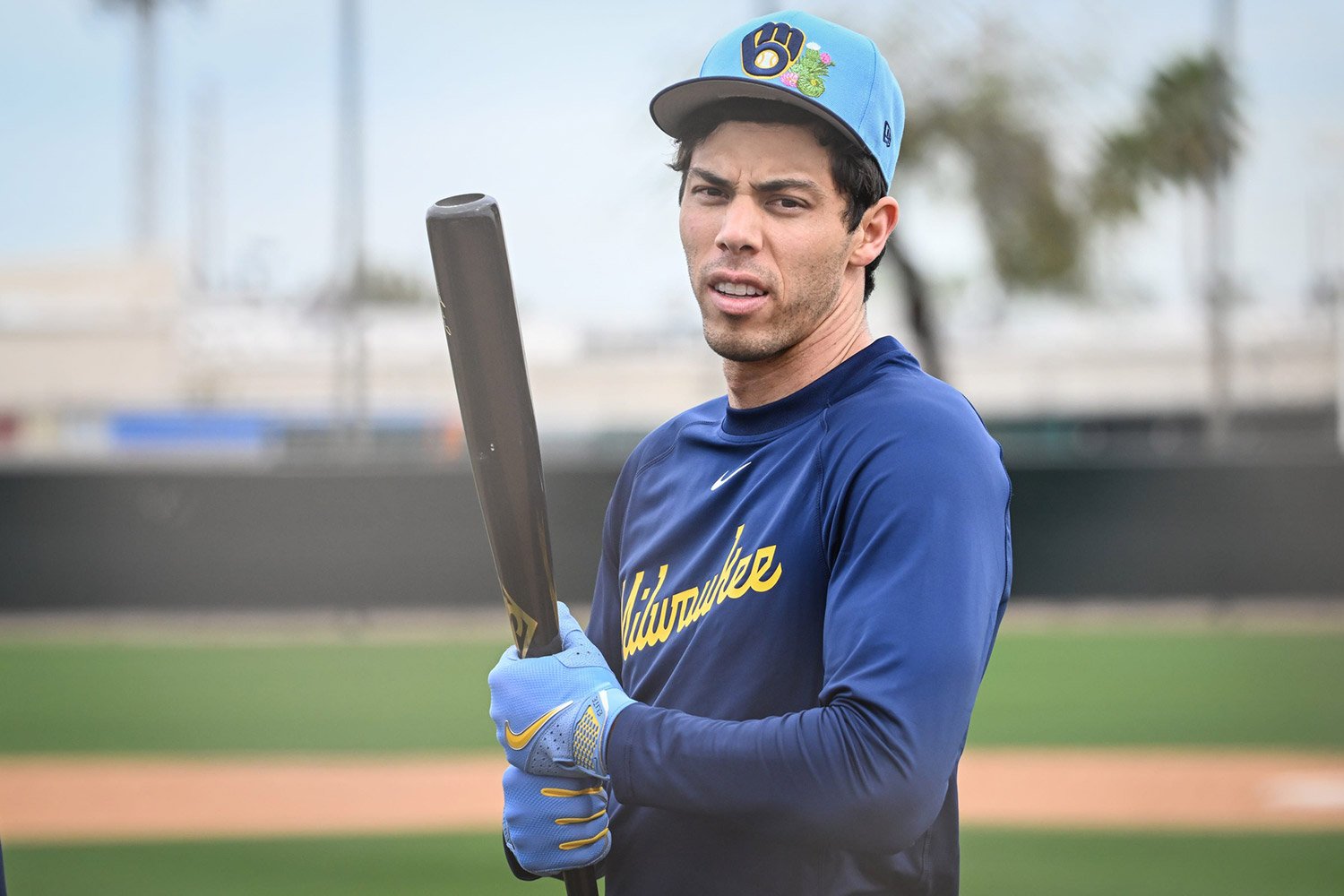 Designated hitter has long been handled in one of two ways by the Brewers: Either it’s been filled by one-year deals for a “primary” DH (Andrew McCutchen, Jesse Winker, and Gary Sanchez being recent examples) or it was handled “by committee” (multiple players with over 25 starts as the DH). The Brewers took a rare approach in 2025, using Christian Yelich as their DH 131 times. Will that be the case in 2026? 2025 In Review Yelich put together arguably his best season since 2019 as the Brewers’ primary designated hitter, leading the team in homers and RBI and generating 3.1 Wins Above Replacement, according to Baseball Reference. It was an excellent recovery from a 2024 season where he missed over half the games due to back issues. The only other Brewer to see significant time at DH was catcher William Contreras, who served in that role for 22 games, often when Yelich was playing some left field or needed a day off. Jake Bauers saw seven games at DH, but nobody else reached five appearances at the position. Designated hitter was one position where things went well for the Brewers. Current Roster Situation Yelich is under contract through 2028, with a 2029 mutual option. He will likely be the primary DH for as long as he is in Milwaukee – not because he can no longer field, but because the Brewers have multiple capable options for all three outfield spots. Contreras and 2024 primary DH Sanchez are also options for when Yelich may need a day off or when he is patrolling left field, but those should be few and far between. Players who are behind the “break in case of emergency” glass include Tyler Black and Jake Bauers, with a few of their regular players from other positions as options. Best Case Scenario Yelich handles 85-90% of the starts at designated hitter and produces at his 2024 level, being another year removed from back surgery. If Yelich is “relegated” to designated hitter, it means that the Brewers are getting solid, if not better, production from the other positions on the field, particularly the corner outfield spots and first base, and that the team has avoided injuries. Against left-handers, Sanchez can step in occasionally and be an effective DH against southpaws. In this case, it should be noted that Yelich at DH is not so much a bad thing, particularly when it is seen as a statement of the depth and talent the Brewers have in the outfield. If he gets 140-150 starts on “partial rest,” the Brewers are likely to be doing very well in 2026. Worst Case Scenario Christian Yelich is somehow not the primary designated hitter. If Yelich is on the injured list, it means one of Milwaukee’s best hitters is on the shelf – and their $26 million a year man is one of those they can ill afford to lose. If he’s in the field for more than 10 starts, then it’s likely because of injuries or ineffectiveness from other players – unless Black has performed in such a manner than the Brewers decide to move Yelich to left field or first base on a semi-regular basis, but that’s about as likely as a stray unicorn walking onto American Family Fields at Maryvale and having triplet foals. Seriously, though, if Yelich is broken free from the DH role to play the field, then the Brewers are in for a rough time – not just because of other players being hurt, but because in the field, Yelich is more likely to re-injure his back – or something else. Overview If things go well for the Brewers, Christian Yelich may etch himself another claim to history: As one of the best, if not the best, primary designated hitters in team history. As we’ve discussed years earlier, Dick Davis is the Brewers ' player with the most seasons as the team’s primary starter at the position, with three, as the team has often rotated the position among its starters. While there are other players who could be very competent at the position, including Contreras, Sanchez, Black, and Bauers, and while Milwaukee also retains the option to rotate players, how much time Yelich spends as the DH will perhaps be the best indicator of how Milwaukee’s 2026 season is progressing.
-
- 1
-
-
- christian yelich
- gary sanchez
- (and 1 more)
-
Image courtesy of © Dave Kallmann / USA TODAY NETWORK via Imagn Images Sal Frelick’s emergence as a crucial component of Milwaukee’s lineup has been overshadowed by the breakout of Brice Turang, the veteran presence of Christian Yelich, the day-to-day consistency of William Contreras, and the high ceiling of Jackson Chourio. But Frelick has provided excellent defense and much-improved offense since coming up in mid-2023. What does 2026 hold for him—and the Brewers—in right field? 2025 In Review Frelick’s offensive improvement made it easy to overlook the fact that his defense was still Gold Glove-caliber. In fact, he was also a capable option in center field, taking part in a spectacular play in Game 1 of the NLCS once injuries forced him to move there. But the offensive improvement, from an 84 OPS+ to a 111 OPS+, was significant, and the hope is that, as Turang did from 2024 to 2025, Frelick can make yet another leap. Current Roster Situation Frelick is entrenched in right field, but theoretically, he's not the team's only option. On the current roster, Jackson Chourio spent 20 games in right, while Jake Bauers added five games. Since-departed Daz Cameron and Isaac Collins combined for 20 games, Brandon Lockridge played seven games, and Tyler Black had a single appearance in right field. Luis Rengifo has had sporadic experience in right field, while Jett Williams could possibly fill in there, as well. Other options on the 40-man include Akil Baddoo (who’s mostly spent time in left field and center field) and Steward Berroa. These are more “emergency” options than players the Brewers would want to use regularly in right field, though. Some of these players are more natural fits for right field than others, but it never hurts to have a plethora of usable guys at a given spot, especially after the Brewers had to hold an outfield together with duct tape and some panic transactions in 2025 due to injuries that sidelined Blake Perkins, Garrett Mitchell, Chourio and Bauers, as well as (briefly) Frelick himself. Best-Case Scenario Sal Frelick and Jackson Chourio combine for about 150 starts in right field, with Frelick getting the vast majority of them. Chourio is no slouch in right, but if things go well for the Brewers, Frelick will be the primary starter in right field, while Chourio gets almost all of the starts in left. In essence, the Brewers’ best-case scenario is not so much dependent on Chourio and/or Frelick performing well. That's an as-expected outcome; both are relatively known quantities and could actually be improving in 2026. Rather, it's about what them playing there implies about the rest of the roster. If Frelick and Chourio combine for almost all of the starts in right field, it means that the Brewers have had excellent contributions in center field from the combination of Mitchell, Perkins, and Williams. That would be good news for Milwaukee’s chances for a fourth straight NL Central title. Worst-Case Scenario Jake Bauers and/or Brandon Lockridge get more than 10 starts in right field. This, again, would probably happen not because of some failure by Frelick, but because of a string of injury emergencies. If Bauers is playing there often, Frelick is in center, where his size does slightly more to diminish his range than it does in a corner. If Lockridge is playing there, it must be because either Mitchell or Perkins is healthy, but Frelick isn't, and Bauers has to spend more time at first base. Either way, it's not good news. Overview The Brewers hit with Frelick in the first round of the 2021 MLB draft. He’s emerged as a solid all-around player who could be a pesky leadoff hitter against righties. The big question in right field isn’t so much how Frelick performs; it’s how center field shakes out. Of course, other X factors could affect things. The Brewers could make a deal in the middle of spring training or during the season that reshuffles the active roster. A prospect could force their way to Milwaukee by dominating at Triple-A Nashville or Double-A Biloxi. But for now, Sal Frelick is perhaps the best option for the Brewers in right field—and he's probably as safe a bet to soak up that playing time and be average-plus as any player the team has at any position. View full article
-
Brewers' Best- and Worst-Case Scenarios for 2026: Right Field
Harold Hutchison posted an article in Brewers
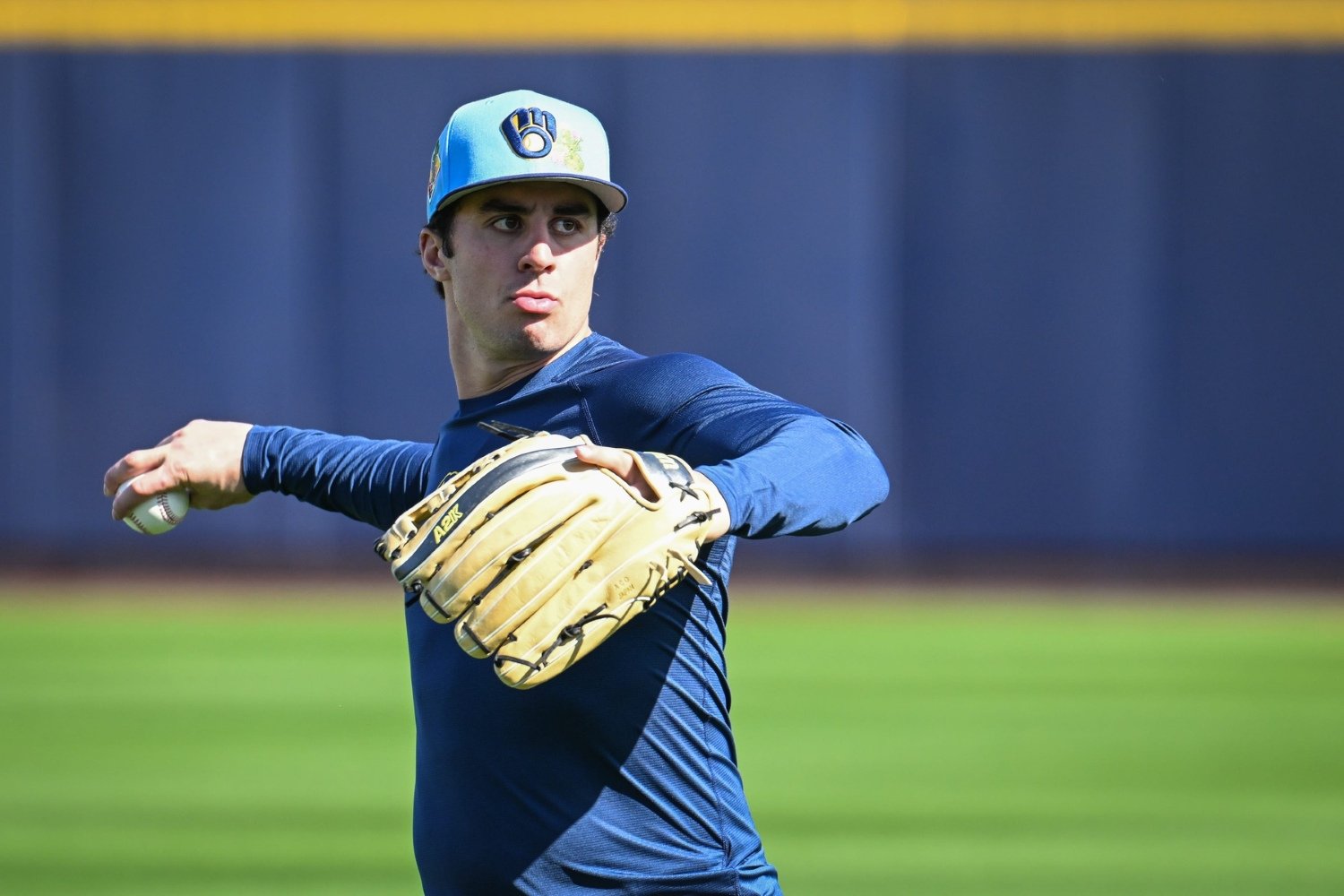 Sal Frelick’s emergence as a crucial component of Milwaukee’s lineup has been overshadowed by the breakout of Brice Turang, the veteran presence of Christian Yelich, the day-to-day consistency of William Contreras, and the high ceiling of Jackson Chourio. But Frelick has provided excellent defense and much-improved offense since coming up in mid-2023. What does 2026 hold for him—and the Brewers—in right field? 2025 In Review Frelick’s offensive improvement made it easy to overlook the fact that his defense was still Gold Glove-caliber. In fact, he was also a capable option in center field, taking part in a spectacular play in Game 1 of the NLCS once injuries forced him to move there. But the offensive improvement, from an 84 OPS+ to a 111 OPS+, was significant, and the hope is that, as Turang did from 2024 to 2025, Frelick can make yet another leap. Current Roster Situation Frelick is entrenched in right field, but theoretically, he's not the team's only option. On the current roster, Jackson Chourio spent 20 games in right, while Jake Bauers added five games. Since-departed Daz Cameron and Isaac Collins combined for 20 games, Brandon Lockridge played seven games, and Tyler Black had a single appearance in right field. Luis Rengifo has had sporadic experience in right field, while Jett Williams could possibly fill in there, as well. Other options on the 40-man include Akil Baddoo (who’s mostly spent time in left field and center field) and Steward Berroa. These are more “emergency” options than players the Brewers would want to use regularly in right field, though. Some of these players are more natural fits for right field than others, but it never hurts to have a plethora of usable guys at a given spot, especially after the Brewers had to hold an outfield together with duct tape and some panic transactions in 2025 due to injuries that sidelined Blake Perkins, Garrett Mitchell, Chourio and Bauers, as well as (briefly) Frelick himself. Best-Case Scenario Sal Frelick and Jackson Chourio combine for about 150 starts in right field, with Frelick getting the vast majority of them. Chourio is no slouch in right, but if things go well for the Brewers, Frelick will be the primary starter in right field, while Chourio gets almost all of the starts in left. In essence, the Brewers’ best-case scenario is not so much dependent on Chourio and/or Frelick performing well. That's an as-expected outcome; both are relatively known quantities and could actually be improving in 2026. Rather, it's about what them playing there implies about the rest of the roster. If Frelick and Chourio combine for almost all of the starts in right field, it means that the Brewers have had excellent contributions in center field from the combination of Mitchell, Perkins, and Williams. That would be good news for Milwaukee’s chances for a fourth straight NL Central title. Worst-Case Scenario Jake Bauers and/or Brandon Lockridge get more than 10 starts in right field. This, again, would probably happen not because of some failure by Frelick, but because of a string of injury emergencies. If Bauers is playing there often, Frelick is in center, where his size does slightly more to diminish his range than it does in a corner. If Lockridge is playing there, it must be because either Mitchell or Perkins is healthy, but Frelick isn't, and Bauers has to spend more time at first base. Either way, it's not good news. Overview The Brewers hit with Frelick in the first round of the 2021 MLB draft. He’s emerged as a solid all-around player who could be a pesky leadoff hitter against righties. The big question in right field isn’t so much how Frelick performs; it’s how center field shakes out. Of course, other X factors could affect things. The Brewers could make a deal in the middle of spring training or during the season that reshuffles the active roster. A prospect could force their way to Milwaukee by dominating at Triple-A Nashville or Double-A Biloxi. But for now, Sal Frelick is perhaps the best option for the Brewers in right field—and he's probably as safe a bet to soak up that playing time and be average-plus as any player the team has at any position.
