Harold Hutchison
-
Posts
6,909 -
Joined
-
Last visited
Content Type
Profiles
Forums
Blogs
Events
News
2026 Milwaukee Brewers Top Prospects Ranking
Milwaukee Brewers Videos
2022 Milwaukee Brewers Draft Picks
Milwaukee Brewers Free Agent & Trade Rumors, Notes, & Tidbits
Guides & Resources
2023 Milwaukee Brewers Draft Picks
2024 Milwaukee Brewers Draft Picks
The Milwaukee Brewers Players Project
2025 Milwaukee Brewers Draft Pick Tracker
2026 Milwaukee Brewers Draft Tracker: Picks & Bonuses
Store
Downloads
Gallery
Everything posted by Harold Hutchison
-
Image courtesy of © Benny Sieu-Imagn Images During their recent run of success, the Brewers have been famous for some late signings that ended up paying off big-time. For instance, Jose Quintana became a rotation mainstay in 2025, helping the team power through early injuries. Could they find similar magic again in 2026? Milwaukee currently boasts a deep starting rotation, featuring Freddy Peralta, Brandon Woodruff, Jacob Misiorowski, Quinn Priester, Chad Patrick, Logan Henderson, Robert Gasser, Carlos Rodriguez, and Tobias Myers as candidates to fill slots. That doesn’t include current relief options Ángel Zerpa, DL Hall, and Aaron Ashby. So, why consider adding a free agent or two? Firstly, Woodruff, Henderson, Gasser, and Myers all spent time on the injured list in 2025. So did Hall and Ashby. That’s half of the rotation candidates. Top depth starter Cameron Crow also has an injury history, and Peralta could very well be traded. You really can’t have too many starting pitchers. Here are four names the team could still pluck from free agency for help, in the event of a trade or injuries. Jordan Montgomery Montgomery will still be recovering from his second Tommy John surgery in the early part of 2026, likely not being available until the All-Star Break. The Brewers could consider signing him to a Woodruff-esque deal ($3 million in 2026, $7 million in 2027, and a $15 million mutual option with a $2.5 million buyout for 2028). It would be like getting a solid starter as a mid-season acquisition, without paying the price in terms of prospects. The Brewers acquired Montgomery along with Shelby Miller this July, in exchange for a player to be named later. By taking on the money remaining on Montgomery's deal with the Diamondbacks, the Crew avoided having to give up any meaningful prospect to get Miller, but they also bought some time to work with Montgomery and oversee his rehab process in the wake of surgery. The deal didn’t quite work; Miller was lost for the season due to injury. Bringing Montgomery back could make some good come out of it, after all. Nestor Cortes The Brewers hoped Cortes would be a solid piece of the rotation in 2025, when he was acquired in the Devin Williams trade. Instead, he was injured early in the season and eventually traded to the Padres (with shortstop Jorge Quintana) for Brandon Lockridge. Before 2025, Cortes had been a solid starting pitcher, including being a top-10 Cy Young vote recipient in 2022. Milwaukee’s brought pitchers back from the brink before, and Cortes could be the latest in that line. Besides, if Cortes has a dominant year, the Brewers could issue the qualifying offer and get a compensatory draft pick. A one-year, $3-million deal for 2026 with a $10-million mutual option for 2027 (and a $2-million buyout) could bring Cortes back, if no stronger an offer materializes for him. Jose Quintana Quintana was such a late signing that Milwaukee had to option him to the Rookie-level Arizona Complex League Brewers and couldn’t bring him up until two weeks into the regular season. Thereafter, though, he was a solid presence in the rotation who ate innings and gave the bullpen much-needed breaks when he was on the mound. Quintana took $4 million to come to Milwaukee in 2025, but made another $4.65 million in incentives based on innings and starts. This year, Milwaukee could offer him $5 million on a one-year deal, and then a mutual option for $10 million in 2027, with a $2.5 million buyout. Patrick Corbin At his best, Patrick Corbin was an All-Star and received votes for the Cy Young Award. From 2022 to 2024, though, he had a rough stretch in Washington, wherein he was arguably the worst full-time starter in baseball. He rebounded somewhat with the Rangers in 2025. Over the last five years, Corbin has pitched an average of 167 innings a season, making him a reliable workhorse. Corbin also has a World Series ring, won with the Nationals in 2019. Milwaukee’s track record of maximizing pitchers’ stuff (as they did for Quintana in 2025) might be appealing to Corbin, as well. Corbin’s strikeout rates have been better than Quintana’s over the last two years. As a similarly cheap echo of Quintana's signing, Corbin could be the veteran presence and high-volume arm Milwaukee needs. Which of these lefties do you think the Brewers should take a chance on? Let us know in the comments below! View full article
-
Four Lefties the Brewers Could Sign Late in Free Agency
Harold Hutchison posted an article in Brewers
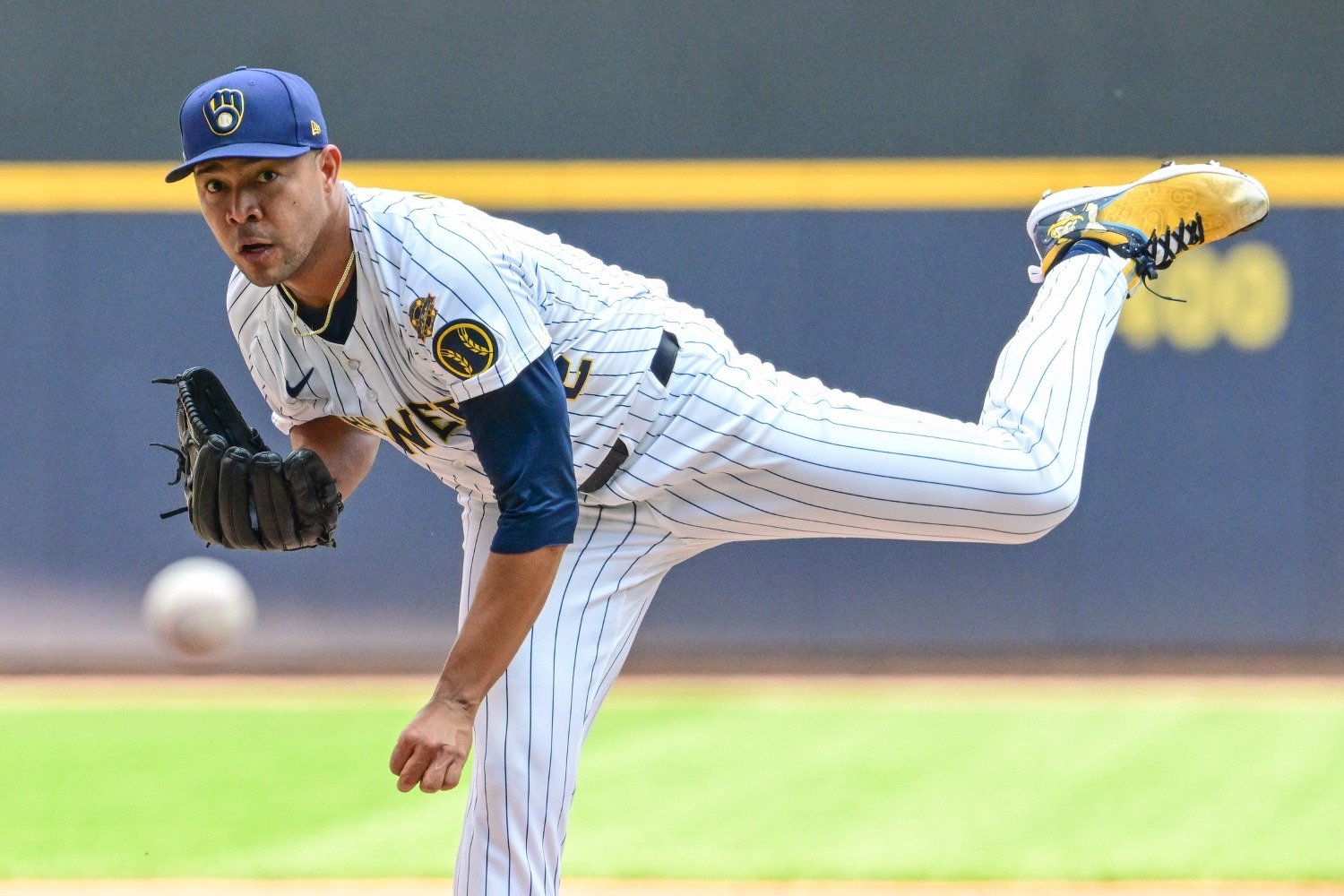 During their recent run of success, the Brewers have been famous for some late signings that ended up paying off big-time. For instance, Jose Quintana became a rotation mainstay in 2025, helping the team power through early injuries. Could they find similar magic again in 2026? Milwaukee currently boasts a deep starting rotation, featuring Freddy Peralta, Brandon Woodruff, Jacob Misiorowski, Quinn Priester, Chad Patrick, Logan Henderson, Robert Gasser, Carlos Rodriguez, and Tobias Myers as candidates to fill slots. That doesn’t include current relief options Ángel Zerpa, DL Hall, and Aaron Ashby. So, why consider adding a free agent or two? Firstly, Woodruff, Henderson, Gasser, and Myers all spent time on the injured list in 2025. So did Hall and Ashby. That’s half of the rotation candidates. Top depth starter Cameron Crow also has an injury history, and Peralta could very well be traded. You really can’t have too many starting pitchers. Here are four names the team could still pluck from free agency for help, in the event of a trade or injuries. Jordan Montgomery Montgomery will still be recovering from his second Tommy John surgery in the early part of 2026, likely not being available until the All-Star Break. The Brewers could consider signing him to a Woodruff-esque deal ($3 million in 2026, $7 million in 2027, and a $15 million mutual option with a $2.5 million buyout for 2028). It would be like getting a solid starter as a mid-season acquisition, without paying the price in terms of prospects. The Brewers acquired Montgomery along with Shelby Miller this July, in exchange for a player to be named later. By taking on the money remaining on Montgomery's deal with the Diamondbacks, the Crew avoided having to give up any meaningful prospect to get Miller, but they also bought some time to work with Montgomery and oversee his rehab process in the wake of surgery. The deal didn’t quite work; Miller was lost for the season due to injury. Bringing Montgomery back could make some good come out of it, after all. Nestor Cortes The Brewers hoped Cortes would be a solid piece of the rotation in 2025, when he was acquired in the Devin Williams trade. Instead, he was injured early in the season and eventually traded to the Padres (with shortstop Jorge Quintana) for Brandon Lockridge. Before 2025, Cortes had been a solid starting pitcher, including being a top-10 Cy Young vote recipient in 2022. Milwaukee’s brought pitchers back from the brink before, and Cortes could be the latest in that line. Besides, if Cortes has a dominant year, the Brewers could issue the qualifying offer and get a compensatory draft pick. A one-year, $3-million deal for 2026 with a $10-million mutual option for 2027 (and a $2-million buyout) could bring Cortes back, if no stronger an offer materializes for him. Jose Quintana Quintana was such a late signing that Milwaukee had to option him to the Rookie-level Arizona Complex League Brewers and couldn’t bring him up until two weeks into the regular season. Thereafter, though, he was a solid presence in the rotation who ate innings and gave the bullpen much-needed breaks when he was on the mound. Quintana took $4 million to come to Milwaukee in 2025, but made another $4.65 million in incentives based on innings and starts. This year, Milwaukee could offer him $5 million on a one-year deal, and then a mutual option for $10 million in 2027, with a $2.5 million buyout. Patrick Corbin At his best, Patrick Corbin was an All-Star and received votes for the Cy Young Award. From 2022 to 2024, though, he had a rough stretch in Washington, wherein he was arguably the worst full-time starter in baseball. He rebounded somewhat with the Rangers in 2025. Over the last five years, Corbin has pitched an average of 167 innings a season, making him a reliable workhorse. Corbin also has a World Series ring, won with the Nationals in 2019. Milwaukee’s track record of maximizing pitchers’ stuff (as they did for Quintana in 2025) might be appealing to Corbin, as well. Corbin’s strikeout rates have been better than Quintana’s over the last two years. As a similarly cheap echo of Quintana's signing, Corbin could be the veteran presence and high-volume arm Milwaukee needs. Which of these lefties do you think the Brewers should take a chance on? Let us know in the comments below!
- 4 comments
-
- 1
-

-
- jose quintana
- patrick corbin
- (and 2 more)
-
Should Cooper Pratt Handle The Hot Corner For The 2026 Brewers?
Harold Hutchison posted an article in Brewers
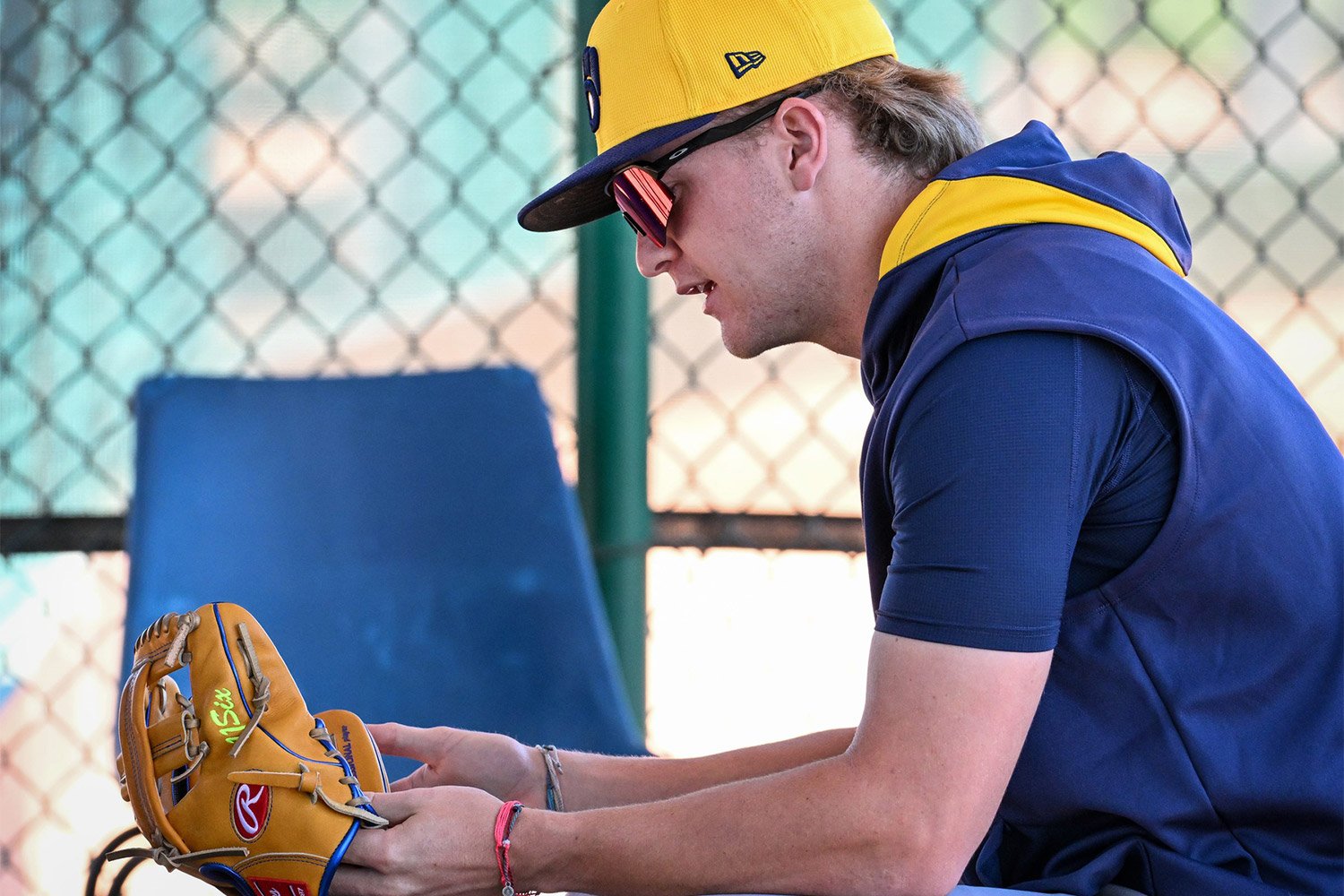 The Milwaukee Brewers have a bit of a conundrum at shortstop. The incumbent, Joey Ortiz, is the epitome of good-field, no-hit, to the point where Milwaukee may be better off moving him. Over the long term, talent like Jesus Made, Luis Pena, Juan Baez, Brady Ebel, and Filippo di Turi could also stake a claim to the position. A short-term solution could be to move Brice Turang there, but that would necessitate filling the resulting hole at second base by sliding Caleb Durbin to the keystone. So where does that leave Cooper Pratt, who is slated for a Milwaukee debut of his own sometime in 2026? The answer may be a move a little further to the left side of the infield, a move that could benefit both him and the Brewers over the long haul. Third base might seem to be already in good shape, with Durbin proving to be a solid starter at the hot corner, while the Brewers have multiple options (Brock Wilken, Luke Adams, Andrew Fischer, and Mike Boeve) in High-A or higher. However, Pratt may be a better long-term solution than Durbin. Pratt’s offensive profile fits the approach used by manager Pat Murphy almost perfectly. As the number three prospect in the Brewer Fanatic Top 20, he’s the type of player who should be a franchise cornerstone. In Biloxi, he walked 67 times in 437 at-bats, striking out only 80 times, which should alleviate some concerns about his bat-to-ball and plate discipline from his brief stint in Advanced-A Wisconsin in 2024. His defense has drawn raves, and he has a minor-league Gold Glove. Pratt’s current offensive profile in some aspects is similar to that of Wade Boggs in the 1990s, a solid performer who hit for a .300 average and got on base to the tune of a 112+ OPS. In addition, the 1990s version of Boggs delivered very good defense (Boggs won a pair of Gold Gloves during that timeframe). Pratt, though, has shown he is a very capable threat on the basepaths, notching 58 steals in 66 attempts. So, why the hot corner for Pratt, and why 2026? The fact is, Jesus Made is on a Jackson Chourio-esque rocket up the minor-league ladder. Assuming he splits between Double-A Biloxi and Triple-A Nashville in 2026, he’s likely to be Milwaukee’s Opening Day 2027 shortstop. So, moving Pratt to third would help him get accustomed to what could be a long-term home. As for bringing Pratt up in 2026, much of that can be laid at the feet of Joey Ortiz, whose offensive production plummeted in 2025. The 2024 version of Ortiz would be pretty good for most teams, but Pratt’s offensive floor is higher than what Ortiz provided in 2025, and his ceiling – especially if he taps into his power potential – could propel him to be among the franchise’s best at that position. Turang could handle shortstop for 2026 and shift back to second base when Made makes his Milwaukee debut, allowing the Brewers to flank the switch-hitting with two Gold Glove-caliber defenders in the infield – proving some outstanding run-prevention over the next few years, especially if they can work out an extension with Turang. This also allows the Brewers to use 2023 first-round pick Brock Wilken as a potential trade asset to help nail down a position of need in 2026 – or beyond. The Brewers have been seeking some hot corner stability since trading Aramis Ramirez. Cooper Pratt may well be the solution to that hot problem. Do you think Cooper Pratt should handle the hot corner in Milwaukee? Let us know in the comments below!
 -
Image courtesy of © Dave Kallmann / Milwaukee Journal Sentinel / USA TODAY NETWORK via Imagn Images The Milwaukee Brewers have a bit of a conundrum at shortstop. The incumbent, Joey Ortiz, is the epitome of good-field, no-hit, to the point where Milwaukee may be better off moving him. Over the long term, talent like Jesus Made, Luis Pena, Juan Baez, Brady Ebel, and Filippo di Turi could also stake a claim to the position. A short-term solution could be to move Brice Turang there, but that would necessitate filling the resulting hole at second base by sliding Caleb Durbin to the keystone. So where does that leave Cooper Pratt, who is slated for a Milwaukee debut of his own sometime in 2026? The answer may be a move a little further to the left side of the infield, a move that could benefit both him and the Brewers over the long haul. Third base might seem to be already in good shape, with Durbin proving to be a solid starter at the hot corner, while the Brewers have multiple options (Brock Wilken, Luke Adams, Andrew Fischer, and Mike Boeve) in High-A or higher. However, Pratt may be a better long-term solution than Durbin. Pratt’s offensive profile fits the approach used by manager Pat Murphy almost perfectly. As the number three prospect in the Brewer Fanatic Top 20, he’s the type of player who should be a franchise cornerstone. In Biloxi, he walked 67 times in 437 at-bats, striking out only 80 times, which should alleviate some concerns about his bat-to-ball and plate discipline from his brief stint in Advanced-A Wisconsin in 2024. His defense has drawn raves, and he has a minor-league Gold Glove. Pratt’s current offensive profile in some aspects is similar to that of Wade Boggs in the 1990s, a solid performer who hit for a .300 average and got on base to the tune of a 112+ OPS. In addition, the 1990s version of Boggs delivered very good defense (Boggs won a pair of Gold Gloves during that timeframe). Pratt, though, has shown he is a very capable threat on the basepaths, notching 58 steals in 66 attempts. So, why the hot corner for Pratt, and why 2026? The fact is, Jesus Made is on a Jackson Chourio-esque rocket up the minor-league ladder. Assuming he splits between Double-A Biloxi and Triple-A Nashville in 2026, he’s likely to be Milwaukee’s Opening Day 2027 shortstop. So, moving Pratt to third would help him get accustomed to what could be a long-term home. As for bringing Pratt up in 2026, much of that can be laid at the feet of Joey Ortiz, whose offensive production plummeted in 2025. The 2024 version of Ortiz would be pretty good for most teams, but Pratt’s offensive floor is higher than what Ortiz provided in 2025, and his ceiling – especially if he taps into his power potential – could propel him to be among the franchise’s best at that position. Turang could handle shortstop for 2026 and shift back to second base when Made makes his Milwaukee debut, allowing the Brewers to flank the switch-hitting with two Gold Glove-caliber defenders in the infield – proving some outstanding run-prevention over the next few years, especially if they can work out an extension with Turang. This also allows the Brewers to use 2023 first-round pick Brock Wilken as a potential trade asset to help nail down a position of need in 2026 – or beyond. The Brewers have been seeking some hot corner stability since trading Aramis Ramirez. Cooper Pratt may well be the solution to that hot problem. Do you think Cooper Pratt should handle the hot corner in Milwaukee? Let us know in the comments below! View full article
-
Image courtesy of © Dan Hamilton-Imagn Images The New York Post reports that the Yankees are among the teams looking to get in on the market for free-agent infielder Bo Bichette. For the Brewers, this could be a chance to clear a couple of logjams, and perhaps get a short-term power boost. In 2025, Jazz Chisholm Jr. split time between third base and second base for the Yankees, while also handling some of the duties in center field for the Yankees in 2024. With Miami, he played second base and center field and also saw action at shortstop. He has a left-handed bat that has seen a power surge since he left Miami (42 home runs in 638 at-bats) and has some speed and baserunning skills as well (49 out of 59 in stolen bases). At first glance, Chisholm could give Milwaukee a brief power boost to give Top-100 prospects like Cooper Pratt and Jesus Made time to season in the minor leagues, while allowing the Brewers to make some adjustments in the infield to account for Joey Ortiz’s offensive struggles. He also adds power to a lineup that could use it. That left-handed bat could also thrive in American Family Field, as suggested by the power jump when he left Miami (Christian Yelich had a similar power boost when he came to Milwaukee). Both the power bat and the versatility of Chisholm would help Milwaukee in the course of 2026. For the Yankees, trading Chisholm would clear some payroll and, more importantly, roster space for the Yankees to get Bichette. There is a big question for Milwaukee: Who should be offered to seal the deal and get Chisholm in a Brewers jersey? The answer might seem steep, but it could well be worth it. The Brewers should offer third baseman Brock Wilken and outfielder Braylon Payne to the Yankees. While both of them are in the Brewer Fanatic Top 20, they may also be the best options for Milwaukee to deal at this time. We can start with Wilken, the team’s first-round pick in the 2023 MLB draft. Over two seasons at Double-A Biloxi, he’s hit 32 doubles and 35 home runs despite a scary injury in the 2024 season. However, in 695 at-bats, he’s struck out 235 times – a 33.8% strikeout rate. While he’s also drawn 132 walks, his 3TO profile is not exactly the type of thing that fits the offense that Pat Murphy has assembled. His lack of speed on the basepaths is another glaring omission from the type of profile the Brewers used to great regular-season success in 2024 and 2025. Wilken stole only three bases in those two seasons. Wilken’s defense is also suspect to a degree, and he is arguably better suited for first base. Milwaukee had Blake Burns as one option at the cold corner, with Tyler Black another potential option, and Jake Bauers and Andrew Vaughn likely to handle the bulk of the playing time in 2026. It won’t be the first time the Crew used a recent first-round pick for a rental (their 2007 first-round pick, Matt LaPorta, was the centerpiece of the midseason deal that brought CC Sabathia to Milwaukee). The other piece of the deal, Braylon Payne, the Brewers’ first-round pick from 2024, might be tougher to part with. Still, in his first full professional season, while he flashed signs of a dynamic bat across 77 games at Single-A Carolina, he also struck out in 35.7% of his at-bats. While Payne stole 31 bases and has excellent defense, the Brewers are very deep in center field (Sal Frelick, Blake Perkins, Jackson Chourio, Garrett Mitchell, Steward Berroa, and Brandon Lockridge all saw action for the Brewers in center field in 2025 and are on the 40-man roster, while Black, Turang, and Yelich are among Brewers with past experience). Payne, who will be just 19 on Opening Day 2026, could be a fast riser, and he did have some bad injury luck in 2025; still, the Brewers have to consider that Luis Lara and Jose Anderson may still be ahead of him in the minors, in addition to all of their options at the major-league level. To balance things out, Milwaukee may want to ask for a low-level prospect or two, like utility player Hans Montero or left-handed reliever Kevin Centeno, and some international bonus money. The Brewers also get a “conditional” draft pick, depending on how well Chisholm does. Do you think the Brewers should make a Jazz Chisholm deal with the Bronx Bombers? Let us know in the comments below! View full article
-
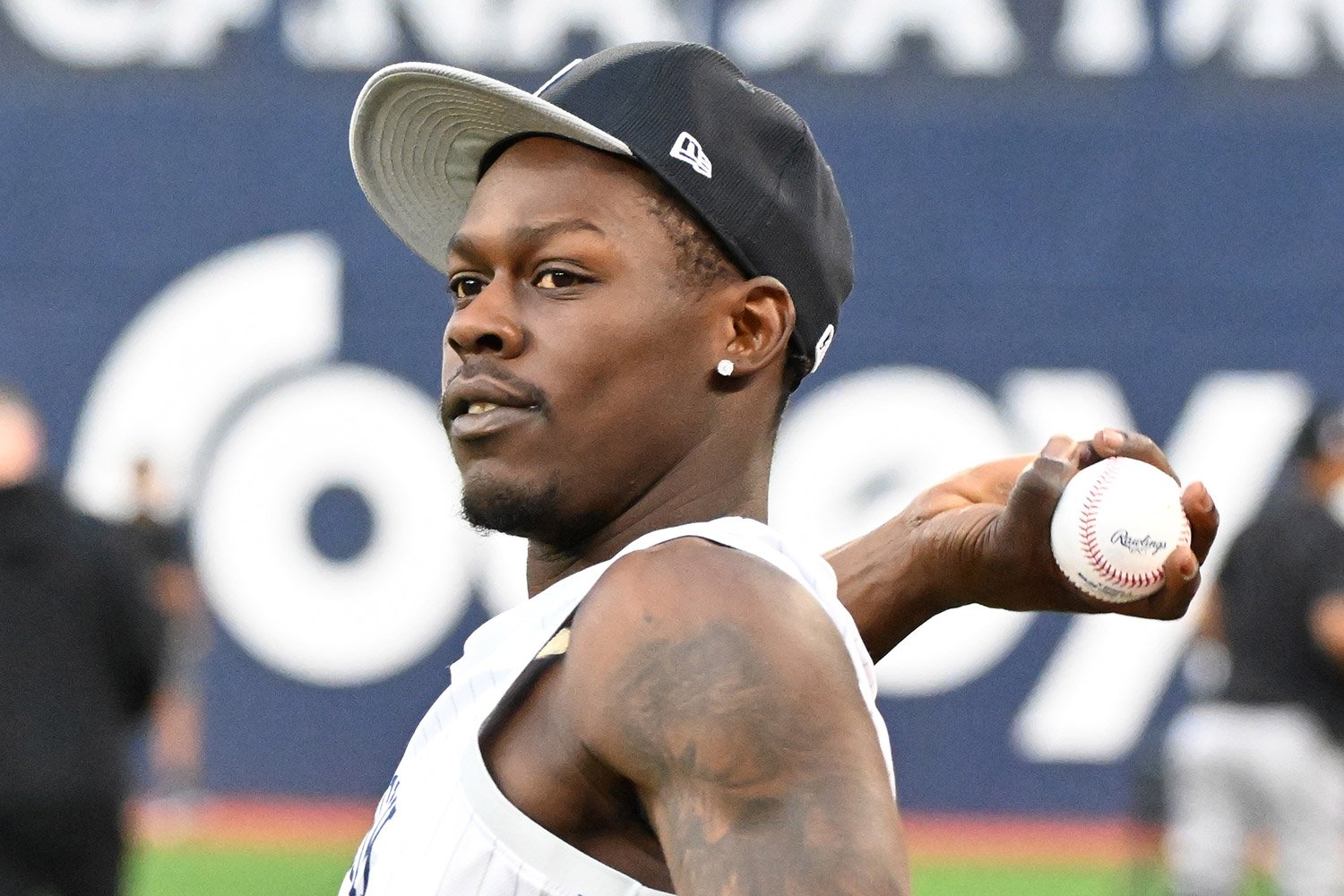 The New York Post reports that the Yankees are among the teams looking to get in on the market for free-agent infielder Bo Bichette. For the Brewers, this could be a chance to clear a couple of logjams, and perhaps get a short-term power boost. In 2025, Jazz Chisholm Jr. split time between third base and second base for the Yankees, while also handling some of the duties in center field for the Yankees in 2024. With Miami, he played second base and center field and also saw action at shortstop. He has a left-handed bat that has seen a power surge since he left Miami (42 home runs in 638 at-bats) and has some speed and baserunning skills as well (49 out of 59 in stolen bases). At first glance, Chisholm could give Milwaukee a brief power boost to give Top-100 prospects like Cooper Pratt and Jesus Made time to season in the minor leagues, while allowing the Brewers to make some adjustments in the infield to account for Joey Ortiz’s offensive struggles. He also adds power to a lineup that could use it. That left-handed bat could also thrive in American Family Field, as suggested by the power jump when he left Miami (Christian Yelich had a similar power boost when he came to Milwaukee). Both the power bat and the versatility of Chisholm would help Milwaukee in the course of 2026. For the Yankees, trading Chisholm would clear some payroll and, more importantly, roster space for the Yankees to get Bichette. There is a big question for Milwaukee: Who should be offered to seal the deal and get Chisholm in a Brewers jersey? The answer might seem steep, but it could well be worth it. The Brewers should offer third baseman Brock Wilken and outfielder Braylon Payne to the Yankees. While both of them are in the Brewer Fanatic Top 20, they may also be the best options for Milwaukee to deal at this time. We can start with Wilken, the team’s first-round pick in the 2023 MLB draft. Over two seasons at Double-A Biloxi, he’s hit 32 doubles and 35 home runs despite a scary injury in the 2024 season. However, in 695 at-bats, he’s struck out 235 times – a 33.8% strikeout rate. While he’s also drawn 132 walks, his 3TO profile is not exactly the type of thing that fits the offense that Pat Murphy has assembled. His lack of speed on the basepaths is another glaring omission from the type of profile the Brewers used to great regular-season success in 2024 and 2025. Wilken stole only three bases in those two seasons. Wilken’s defense is also suspect to a degree, and he is arguably better suited for first base. Milwaukee had Blake Burns as one option at the cold corner, with Tyler Black another potential option, and Jake Bauers and Andrew Vaughn likely to handle the bulk of the playing time in 2026. It won’t be the first time the Crew used a recent first-round pick for a rental (their 2007 first-round pick, Matt LaPorta, was the centerpiece of the midseason deal that brought CC Sabathia to Milwaukee). The other piece of the deal, Braylon Payne, the Brewers’ first-round pick from 2024, might be tougher to part with. Still, in his first full professional season, while he flashed signs of a dynamic bat across 77 games at Single-A Carolina, he also struck out in 35.7% of his at-bats. While Payne stole 31 bases and has excellent defense, the Brewers are very deep in center field (Sal Frelick, Blake Perkins, Jackson Chourio, Garrett Mitchell, Steward Berroa, and Brandon Lockridge all saw action for the Brewers in center field in 2025 and are on the 40-man roster, while Black, Turang, and Yelich are among Brewers with past experience). Payne, who will be just 19 on Opening Day 2026, could be a fast riser, and he did have some bad injury luck in 2025; still, the Brewers have to consider that Luis Lara and Jose Anderson may still be ahead of him in the minors, in addition to all of their options at the major-league level. To balance things out, Milwaukee may want to ask for a low-level prospect or two, like utility player Hans Montero or left-handed reliever Kevin Centeno, and some international bonus money. The Brewers also get a “conditional” draft pick, depending on how well Chisholm does. Do you think the Brewers should make a Jazz Chisholm deal with the Bronx Bombers? Let us know in the comments below!
 -
The Brewers Have a Battle Royale Brewing in Center Field
Harold Hutchison posted an article in Brewers
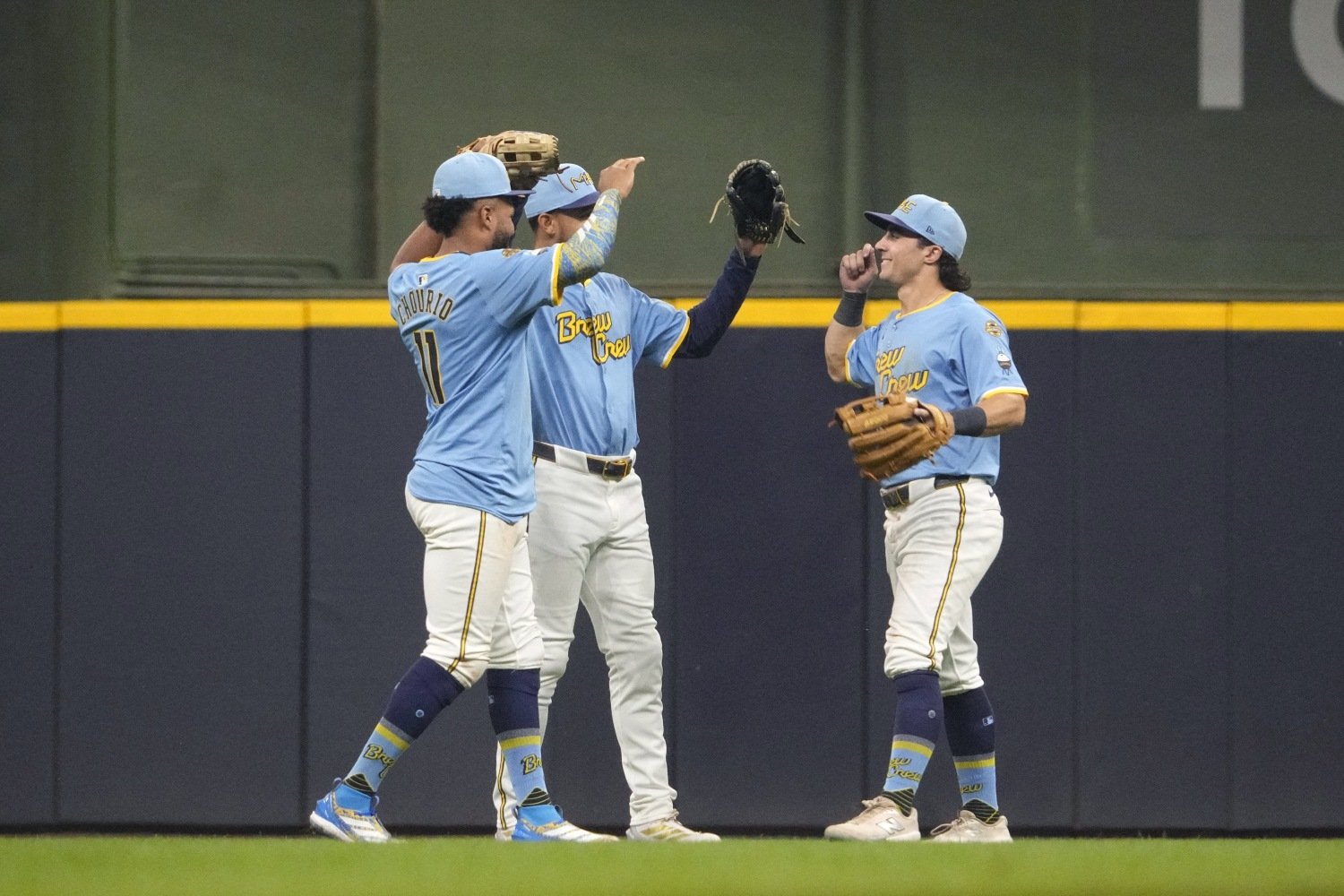 When a team notches four division titles in five years, you would expect that they have the key positions locked down by long-term options. The Brewers, though, have had different players as their primary starter in center field in each of the last five seasons. Jackie Bradley Jr., Tyrone Taylor, Joey Wiemer, Blake Perkins, and Jackson Chourio have each been primary starters at the position since Opening Day 2021. That’s a lot of turnover, but there’s been a lot of quality there. Bradley was the only flop, and the Brewers turned him into Hunter Renfroe, and Renfroe became some pitching help. Taylor and Wiemer also were dealt for new assets by the Crew. In each of the last three years, the eventual regular was not the one they planned for: Garrett Mitchell's injuries forced them to pivot. Could yet another player be the primary starter in 2026? In one sense, the Brewers hope so. Chourio starting the bulk of the games in center field was never the plan. While he's athletically sufficient for center, he fits a bit better as a left fielder, where he spent most of his time in 2024. The move this year was due to a rash of injuries (Mitchell, Perkins) and the limitations on what Christian Yelich can do after undergoing back surgery in 2024. The organization would like to see Mitchell handle the bulk of the starts in center. In his 141 total games, he’s racked up 3.6 WAR with a 112 OPS+, according to Baseball Reference. Mitchell has 30/30 potential and could be a left-handed version of Carlos Gómez at his 2013-2014 peak. Of course, that hinges on him addressing the holes in his swing, learning to lift the ball, and staying on the field. He hasn't been exposed enough to test whether he can do the first two; he's been stunningly unable to check the third and most crucial box. Perkins was the primary center fielder in 2024 and was a Gold Glove finalist. He missed a lot of 2025 due to an injury suffered in spring training, and he wasn't his best self even after he returned. Given the nature of that injury and the difficulty of losing his mother during the season, though, he more than deserves a mulligan. It's just that a mulligan doesn't mean guaranteed playing time, on a roster this strong. Chourio has posted two 20/20 seasons to start his major-league career and is seen as the franchise player for the late 2020s and the 2030s. Ideally, perhaps, he's a corner outfielder, but they could do much worse than having him find his playing time in center again in any of the next few seasons, while his elite speed still covers for some subpar reads on balls off the bat. Mitchell, Perkins, and Chourio are the best three center fielders on the 40-man roster, but there are now others. Sal Frelick, who’s primarily played right field, is a viable center fielder, and he has a Gold Glove from 2024. His bat’s taken a step up, although he arguably ran out of gas late in the season. Even more than Chourio, his best defensive spot is in a corner, but his bat will never have Chourio's thunder, so letting him stretch to use his speed and cover center would be fine. Behind those four, the Brewers have Brandon Lockridge and Steward Berroa, mid-season acquisitions in 2025 due to the injuries that hit the outfield. Akil Baddoo, signed to a deal that grants him a 40-man roster spot (though not a place on the Opening Day roster), played a fair amount in center as a rookie in 2021. He hasn't spent meaningful time there since 2022, and is strictly an emergency option, but he gives the team even more insurance. It doesn't stop there. Minor-league prospect Luis Lara will likely be in Triple-A Nashville, while Braylon Payne will patrol center for High-A Wisconsin. The Brewers could also move prospects like Jesús Made and Luis Peña to center to accommodate other prospects, although at the moment, that seems very unlikely. In short, center field could be in flux for a long time in Milwaukee, but in this case, it’s a sign of the immense depth and drafting success the team has had. Mitchell or Chourio could seize the gig on a more lasting basis, but that seems unlikely at this juncture. Who should be in center field for the Brewers in 2026? Let us know in the comments below!
 -
When a team notches four division titles in five years, you would expect that they have the key positions locked down tight. The Brewers, though, have had five different players as their primary starter in center field in each of the last five seasons. Jackie Bradley Jr., Tyrone Taylor, Joey Wiemer, Blake Perkins, and Jackson Chourio have each been primary starters at the position since Opening Day 2021. That’s a lot of turnover, but there’s been a lot of quality there. Bradley was the only flop, and the Brewers turned him into Hunter Renfroe, and Renfroe became some pitching help. Taylor and Wiemer also were dealt for new assets by the Crew. Could another different player be the primary starter in 2026? In one sense, the Brewers hope so. Chourio starting the bulk of the games in center field was actually a worst-case scenario for the Brewers. This was due to a rash of injuries in the outfield that resulted in the worst-case scenario of Jake Bauers seeing significant time in a corner outfield spot. The organization would like to see Garrett Mitchell handle the bulk of the starts in center, largely due to his dynamic bat. In his 141 total games, he’s racked up 3.6 WAR, with a 112 OPS+ according to Baseball Reference. Mitchell has 30-30 potential and could be a left-handed version of Carlos Gomez at his 2013-2014 peak. If, that is, he is on the field and not on the injured list. That’s been a big if the last three seasons. Blake Perkins was the primary center fielder in 2024 and was a Gold Glove finalist. He missed a lot of 2025 due to an injury suffered in spring training, but his style of hitting has been more productive despite a lack of pop, and he contributes on the basepaths as well. Chourio has posted two 20-20 seasons to start off his major-league career and is seen as the franchise player for the late 2020s and into the 2030s. Mitchell, Perkins, and Chourio are the best three center fielders on the 40-man roster, but there are now others. Perhaps the most notable is free-agent pickup Akil Baddoo, whose offensive profile has been like another former Brewer, Keon Broxton, albeit Baddoo’s left-handed. Sal Frelick, who’s primarily played right field, is a natural center fielder, and he has a Gold Glove from 2024. His bat’s taken a step up, although he arguably ran out of gas late in the season. But he’s a viable option there. Behind those five, the Brewers have Brandon Lockridge and Steward Berroa, mid-season acquisitions in 2025 due to the injuries that hit the outfield. There is also Christian Yelich, who’s had some experience in center during his major-league career, although he’s arguably limited to corner outfield at this stage of his career. However, there are some other players in the organization who might see time in center. Both Tyler Black and Brice Turang played center in the minors. Minor-league prospect Luis Lara will likely be in Triple-A Nashville, while Braylon Payne will patrol center in Advanced-A Wisconsin. The Brewers could also move prospects like Jesus Made and Luis Pena to center to accommodate other prospects. In short, center field could be in flux for a long time in Milwaukee, but in this case, it’s a sign of the immense depth and drafting success the team has had. Who should be in center field for the Brewers in 2026? Let us know in the comments below! View full article
-
Image courtesy of © Denis Poroy-Imagn Images Isaac Collins was a crucial reason why the Brewers survived the injuries suffered by Garrett Mitchell and Blake Perkins in the early part of 2025. In no small part, it's thanks to Collins that the Crew came away with their third consecutive division title and the top seed in the National League playoffs. The value he provided was huge, considering that he was plucked from the Rockies in the minor-league phase of the Rule 5 Draft two years earlier. Collins did that through his OBP skills, speed, and excellent, unorthodox defense in left field. He provided 2.1 wins above replacement and a 118 OPS+, according to Baseball Reference. Despite that performance. there still seems to be doubt about his ability to contribute, partially because he seemed to fade in September and October, and was often on the bench due to Jake Bauers being the hot hand. The Brewers appear to be skeptics, too. They traded Collins and reliever Nick Mears to Kansas City in exchange for lefty reliever Ángel Zerpa on December 13, gaining a 40-man roster spot, but the cost could be much higher than many Brewers fans (or even some team executives) think. The 2025 Brewers had one Achilles’ heel: They ran out of gas by the time of the National League Championship Series, largely due to injuries. If there was a team “need” going into the offseason, it was to assemble a bench that could give Brice Turang, Caleb Durbin, Sal Frelick, and other players more rest during the regular season, while still maintaining above-average offensive performance. On a 26-man roster, the Brewers usually go with 13 position players and 13 pitchers. (By rule, they can't have more pitchers than that, but in practice, neither they nor any other team in the league spend much time rostering fewer, either.) With the designated hitter, nine position-player slots are spoken for in each day's starting lineup. The team will usually carry a backup catcher, which leaves three bench spots to fill. Collins would have been immensely valuable in one of those spots, due to one aspect of his game that didn’t get a ton of play due to the circumstances in 2025: his versatility. Through his minor-league career, Collins played all three outfield positions and saw time at second base and third base. While perhaps he would not be a regular starter on the Brewers in 2026, the versatility he displayed in the minors could have allowed him to give Frelick, Durbin, Turang, and even Jackson Chourio some in-season rest. Between a lighter schedule (but still four or five starts a week) and a full offseason to prepare with a specific big-league role in mind, Collins would likely have still performed close to his 2025 levels, and he would have also kept more talented players fresher during the playoffs. The Brewers don't really trust Collins on the dirt, and even in left field, his defense degraded late in 2025. Still, if pressed into flexible duty, he might have had significant roster utility, beyond his simple production. Come 2026, the Brewers may find themselves missing Isaac Collins a lot, no matter how well Ángel Zerpa turns out for them. Do you think Isaac Collins was too high a price to pay for Ángel Zerpa? Let us know in the comments below! View full article
-
Why Brewers Might Miss Isaac Collins More Than They Think
Harold Hutchison posted an article in Brewers
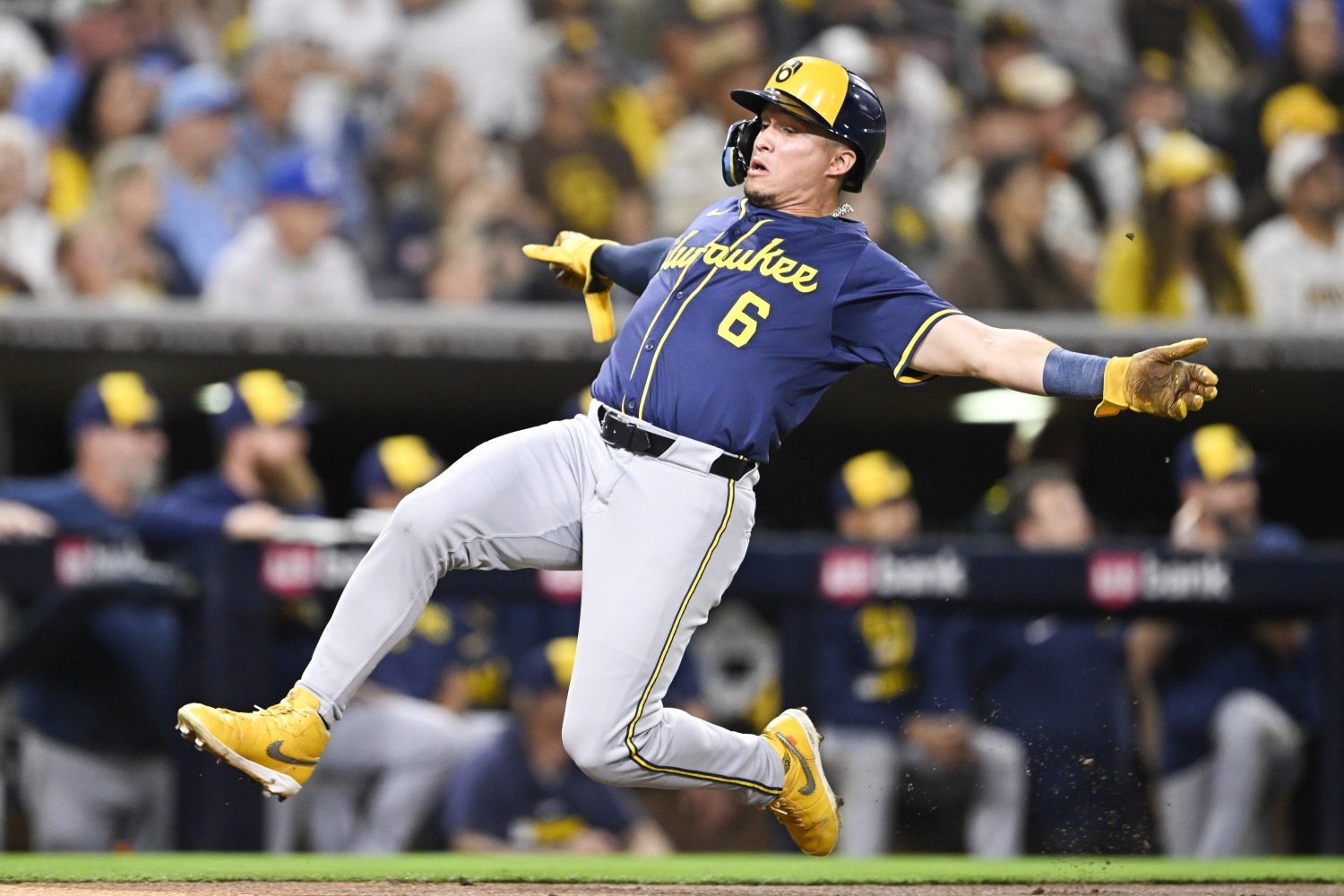 Isaac Collins was a crucial reason why the Brewers survived the injuries suffered by Garrett Mitchell and Blake Perkins in the early part of 2025. In no small part, it's thanks to Collins that the Crew came away with their third consecutive division title and the top seed in the National League playoffs. The value he provided was huge, considering that he was plucked from the Rockies in the minor-league phase of the Rule 5 Draft two years earlier. Collins did that through his OBP skills, speed, and excellent, unorthodox defense in left field. He provided 2.1 wins above replacement and a 118 OPS+, according to Baseball Reference. Despite that performance. there still seems to be doubt about his ability to contribute, partially because he seemed to fade in September and October, and was often on the bench due to Jake Bauers being the hot hand. The Brewers appear to be skeptics, too. They traded Collins and reliever Nick Mears to Kansas City in exchange for lefty reliever Ángel Zerpa on December 13, gaining a 40-man roster spot, but the cost could be much higher than many Brewers fans (or even some team executives) think. The 2025 Brewers had one Achilles’ heel: They ran out of gas by the time of the National League Championship Series, largely due to injuries. If there was a team “need” going into the offseason, it was to assemble a bench that could give Brice Turang, Caleb Durbin, Sal Frelick, and other players more rest during the regular season, while still maintaining above-average offensive performance. On a 26-man roster, the Brewers usually go with 13 position players and 13 pitchers. (By rule, they can't have more pitchers than that, but in practice, neither they nor any other team in the league spend much time rostering fewer, either.) With the designated hitter, nine position-player slots are spoken for in each day's starting lineup. The team will usually carry a backup catcher, which leaves three bench spots to fill. Collins would have been immensely valuable in one of those spots, due to one aspect of his game that didn’t get a ton of play due to the circumstances in 2025: his versatility. Through his minor-league career, Collins played all three outfield positions and saw time at second base and third base. While perhaps he would not be a regular starter on the Brewers in 2026, the versatility he displayed in the minors could have allowed him to give Frelick, Durbin, Turang, and even Jackson Chourio some in-season rest. Between a lighter schedule (but still four or five starts a week) and a full offseason to prepare with a specific big-league role in mind, Collins would likely have still performed close to his 2025 levels, and he would have also kept more talented players fresher during the playoffs. The Brewers don't really trust Collins on the dirt, and even in left field, his defense degraded late in 2025. Still, if pressed into flexible duty, he might have had significant roster utility, beyond his simple production. Come 2026, the Brewers may find themselves missing Isaac Collins a lot, no matter how well Ángel Zerpa turns out for them. Do you think Isaac Collins was too high a price to pay for Ángel Zerpa? Let us know in the comments below!
 -
Ashby's too expensive for the Crew if he's a reliever, even an ace reliever.
- 29 replies
-
- 4
-
-
- isaac collins
- nick mears
- (and 1 more)
-
Isaac Collins is a bigger loss than he appears. Ideally, he was the guy who could give Durham, Turang, Frelick, Chourio, and whoever mans center field days off. He keeps the toolsier/talented players fresh.
- 29 replies
-
- 3
-
-
- isaac collins
- nick mears
- (and 1 more)
-
Image courtesy of © Charles LeClaire-Imagn Images In 2025, the Brewers got excellent production (in the aggregate) at first base. Rhys Hoskins, Andrew Vaughn, and Jake Bauers each carried the team at times. Hoskins has departed via free agency, after the Brewers declined their end of a mutual option, but can first base be as productive in 2026 without the veteran? Let’s take a look. On The 40-Man Roster Andrew Vaughn .235/.333/.426 with five doubles, one triple, five home runs, and 27 RBI between Triple-A Charlotte and Triple-A Nashville .254/.307/.411 with 22 doubles, 14 home runs, and 65 RBI between Milwaukee Brewers and Chicago White Sox Vaughn was a somewhat under-the-radar acquisition, after Aaron Civale requested a trade. It worked out exceptionally well for the Brewers, with Vaughn posting an .869 OPS across 221 at-bats with his new team, a huge improvement over his totals with the White Sox. The question is, will Vaughn continue at the 141 OPS+ clip he had with the Crew, or will he fade to his pre-Milwaukee form? Jake Bauers .211/.318/.737 with one double, three home runs, and five RBI in Triple-A Nashville .235/.353/.399 with nine doubles, seven home runs, and 28 RBI in Milwaukee Bauers returned to the Crew on a minor-league deal after he was non-tendered in the 2024-2025 offseason. He was a solid complement to Hoskins in 2024, even with a batting average below the Uecker line. In 2025, his offense took a step up, and he posted a 111 OPS+. In addition to playing first base, he has also handled both corner outfield spots and taken some time on the mound. This time around, he signed a guaranteed big-league deal in November, and he's in line for more playing time than he got this season. Tyler Black .261/.388/.391 with 12 doubles, three triples, five home runs, and 39 RBI between Triple-A Nashville and Rookie League ACL Brewers .250/.538/.375 with one double and one RBI in Milwaukee Tyler Black is a one-time top-100 prospect. The problem came after a breakout 2023 season. In the 2023-2024 offseason, the Brewers acquired Joey Ortiz and Oliver Dunn, who crowded him out at third base. He moved to first base, but in 2025 suffered a hamate injury late in spring training. Now, he’s played left field, first base, and had a stint in right field for the Brewers. Nowhere, over the last two seasons, has he looked like a major contributor either in producing or preventing runs. Minor-League Players Who Could Impact 2026 Blake Burke .292/.379/.453 with 27 doubles, two triples, 16 home runs, and 82 RBI between Advanced-A Wisconsin and Double-A Biloxi Burke was selected with the Competitive Balance Round A pick acquired by the Brewers in the Corbin Burnes trade during the 2023-2024 offseason. So far, he’s made that part of the deal look very good, rapidly moving up the minor-league ladder. While he won't be on the Opening Day roster, either his sheer talent or regression by Vaughn and Bauers could see him in Milwaukee by the end of the season. Luke Adams .231/.417/.436 with 15 doubles, 11 home runs, and 42 RBI between Advanced-A Wisconsin and Double-A Biloxi .333/.471/569 with three doubles, three home runs, and 10 RBI with Surprise in the AFL Adams doesn’t get on the field much, but when he does, he’s been frighteningly productive wherever he’s playing—positionally, and in the Crew’s farm system. His stint in the Arizona Fall League was quite dominating. He’s split time at both corner infield positions and seen some limited action in left field. Adams could be a 30-30 player, if given enough playing time. Like Burke, he could force his way to Milwaukee sometime in 2026. Wild Cards Christian Yelich .264/.343/.452 with 21 doubles, 29 home runs, and 103 RBI in Milwaukee Yelich has mostly played the outfield, and is now Milwaukee’s primary DH, but the Crew could use him at first base in the event of injuries or slumps. The Florida Marlins selected him as a first baseman in the 2010 draft. The Brewers made a similar move with Ryan Braun at the start of the 2018 season, only to shift Braun back to the outfield after Jesús Aguilar caught fire. Yelich at first would be an emergency move, though. It's not a great position for a player with a recent spate of back problems on their medical chart. William Contreras .260/.355/.399 with 28 doubles, 17 home runs, and 76 RBI in Milwaukee Contreras is an anchor for the Crew behind the plate, so why is he a wild card at first base? Two reasons: First is the emergence of Jeferson Quero, who has been a top prospect on multiple lists (including Brewer Fanatic’s) for years. If the rookie wins the backup job, the team will want to play him more often than they've used previous backups, but they also won't want to lose Contreras's bat in the lineup. Second is the fact that the team looked wiped out during the NLCS, and they'll want to ease the burden on players like Contreras, whose brother Willson made the move to first this year for those fifth-rate flying rats in St. Louis. A similar shift might be good for the team as a whole. How do you think first base will shake out for the Brewers in 2026? Let us know in the comments below! View full article
-
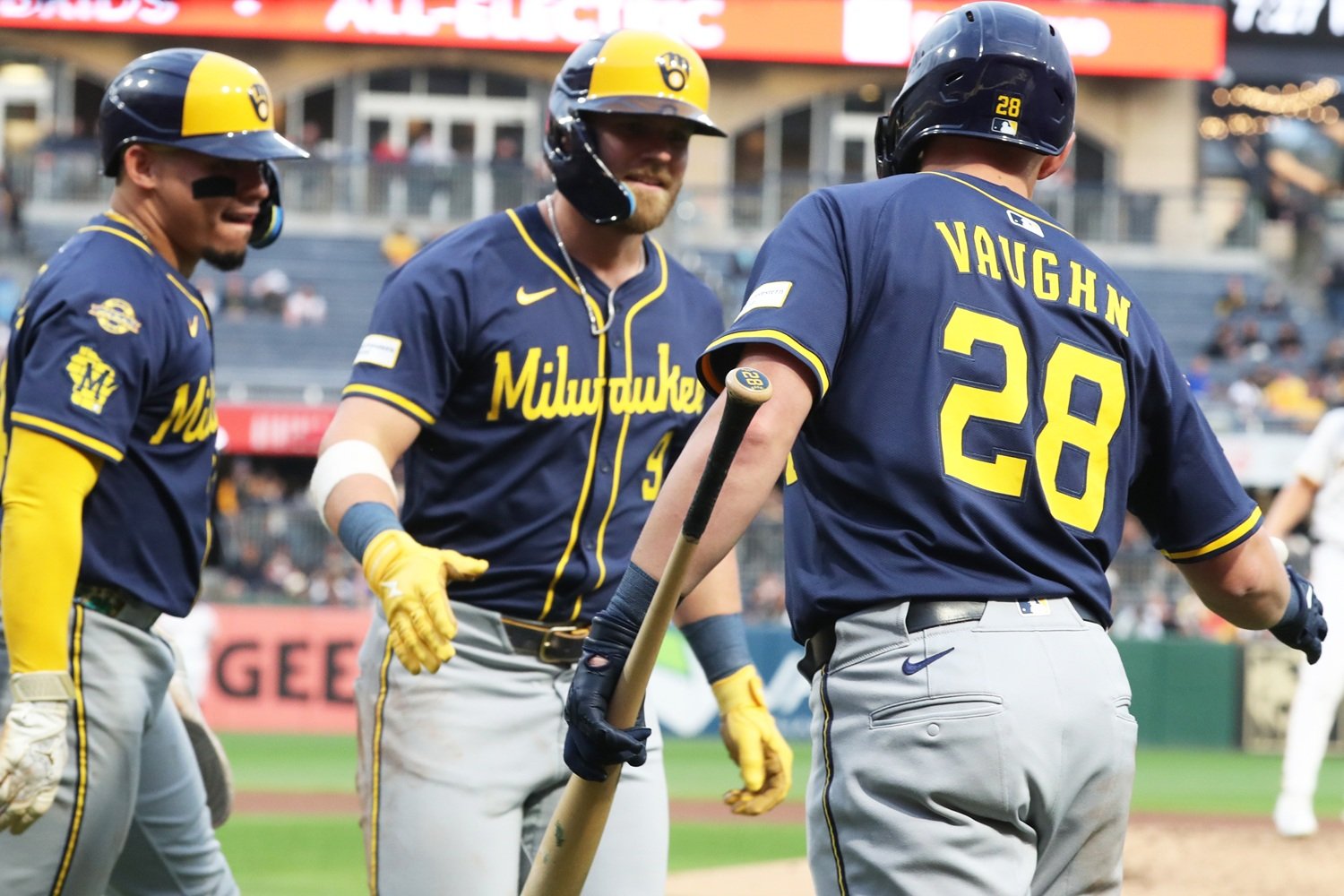 In 2025, the Brewers got excellent production (in the aggregate) at first base. Rhys Hoskins, Andrew Vaughn, and Jake Bauers each carried the team at times. Hoskins has departed via free agency, after the Brewers declined their end of a mutual option, but can first base be as productive in 2026 without the veteran? Let’s take a look. On The 40-Man Roster Andrew Vaughn .235/.333/.426 with five doubles, one triple, five home runs, and 27 RBI between Triple-A Charlotte and Triple-A Nashville .254/.307/.411 with 22 doubles, 14 home runs, and 65 RBI between Milwaukee Brewers and Chicago White Sox Vaughn was a somewhat under-the-radar acquisition, after Aaron Civale requested a trade. It worked out exceptionally well for the Brewers, with Vaughn posting an .869 OPS across 221 at-bats with his new team, a huge improvement over his totals with the White Sox. The question is, will Vaughn continue at the 141 OPS+ clip he had with the Crew, or will he fade to his pre-Milwaukee form? Jake Bauers .211/.318/.737 with one double, three home runs, and five RBI in Triple-A Nashville .235/.353/.399 with nine doubles, seven home runs, and 28 RBI in Milwaukee Bauers returned to the Crew on a minor-league deal after he was non-tendered in the 2024-2025 offseason. He was a solid complement to Hoskins in 2024, even with a batting average below the Uecker line. In 2025, his offense took a step up, and he posted a 111 OPS+. In addition to playing first base, he has also handled both corner outfield spots and taken some time on the mound. This time around, he signed a guaranteed big-league deal in November, and he's in line for more playing time than he got this season. Tyler Black .261/.388/.391 with 12 doubles, three triples, five home runs, and 39 RBI between Triple-A Nashville and Rookie League ACL Brewers .250/.538/.375 with one double and one RBI in Milwaukee Tyler Black is a one-time top-100 prospect. The problem came after a breakout 2023 season. In the 2023-2024 offseason, the Brewers acquired Joey Ortiz and Oliver Dunn, who crowded him out at third base. He moved to first base, but in 2025 suffered a hamate injury late in spring training. Now, he’s played left field, first base, and had a stint in right field for the Brewers. Nowhere, over the last two seasons, has he looked like a major contributor either in producing or preventing runs. Minor-League Players Who Could Impact 2026 Blake Burke .292/.379/.453 with 27 doubles, two triples, 16 home runs, and 82 RBI between Advanced-A Wisconsin and Double-A Biloxi Burke was selected with the Competitive Balance Round A pick acquired by the Brewers in the Corbin Burnes trade during the 2023-2024 offseason. So far, he’s made that part of the deal look very good, rapidly moving up the minor-league ladder. While he won't be on the Opening Day roster, either his sheer talent or regression by Vaughn and Bauers could see him in Milwaukee by the end of the season. Luke Adams .231/.417/.436 with 15 doubles, 11 home runs, and 42 RBI between Advanced-A Wisconsin and Double-A Biloxi .333/.471/569 with three doubles, three home runs, and 10 RBI with Surprise in the AFL Adams doesn’t get on the field much, but when he does, he’s been frighteningly productive wherever he’s playing—positionally, and in the Crew’s farm system. His stint in the Arizona Fall League was quite dominating. He’s split time at both corner infield positions and seen some limited action in left field. Adams could be a 30-30 player, if given enough playing time. Like Burke, he could force his way to Milwaukee sometime in 2026. Wild Cards Christian Yelich .264/.343/.452 with 21 doubles, 29 home runs, and 103 RBI in Milwaukee Yelich has mostly played the outfield, and is now Milwaukee’s primary DH, but the Crew could use him at first base in the event of injuries or slumps. The Florida Marlins selected him as a first baseman in the 2010 draft. The Brewers made a similar move with Ryan Braun at the start of the 2018 season, only to shift Braun back to the outfield after Jesús Aguilar caught fire. Yelich at first would be an emergency move, though. It's not a great position for a player with a recent spate of back problems on their medical chart. William Contreras .260/.355/.399 with 28 doubles, 17 home runs, and 76 RBI in Milwaukee Contreras is an anchor for the Crew behind the plate, so why is he a wild card at first base? Two reasons: First is the emergence of Jeferson Quero, who has been a top prospect on multiple lists (including Brewer Fanatic’s) for years. If the rookie wins the backup job, the team will want to play him more often than they've used previous backups, but they also won't want to lose Contreras's bat in the lineup. Second is the fact that the team looked wiped out during the NLCS, and they'll want to ease the burden on players like Contreras, whose brother Willson made the move to first this year for those fifth-rate flying rats in St. Louis. A similar shift might be good for the team as a whole. How do you think first base will shake out for the Brewers in 2026? Let us know in the comments below!
- 3 comments
-
- 2
-
-
- andrew vaughn
- tyler black
- (and 5 more)
-
Is 2026 a Make-or-Break Year for Brewers' Tyler Black?
Harold Hutchison posted an article in Brewers
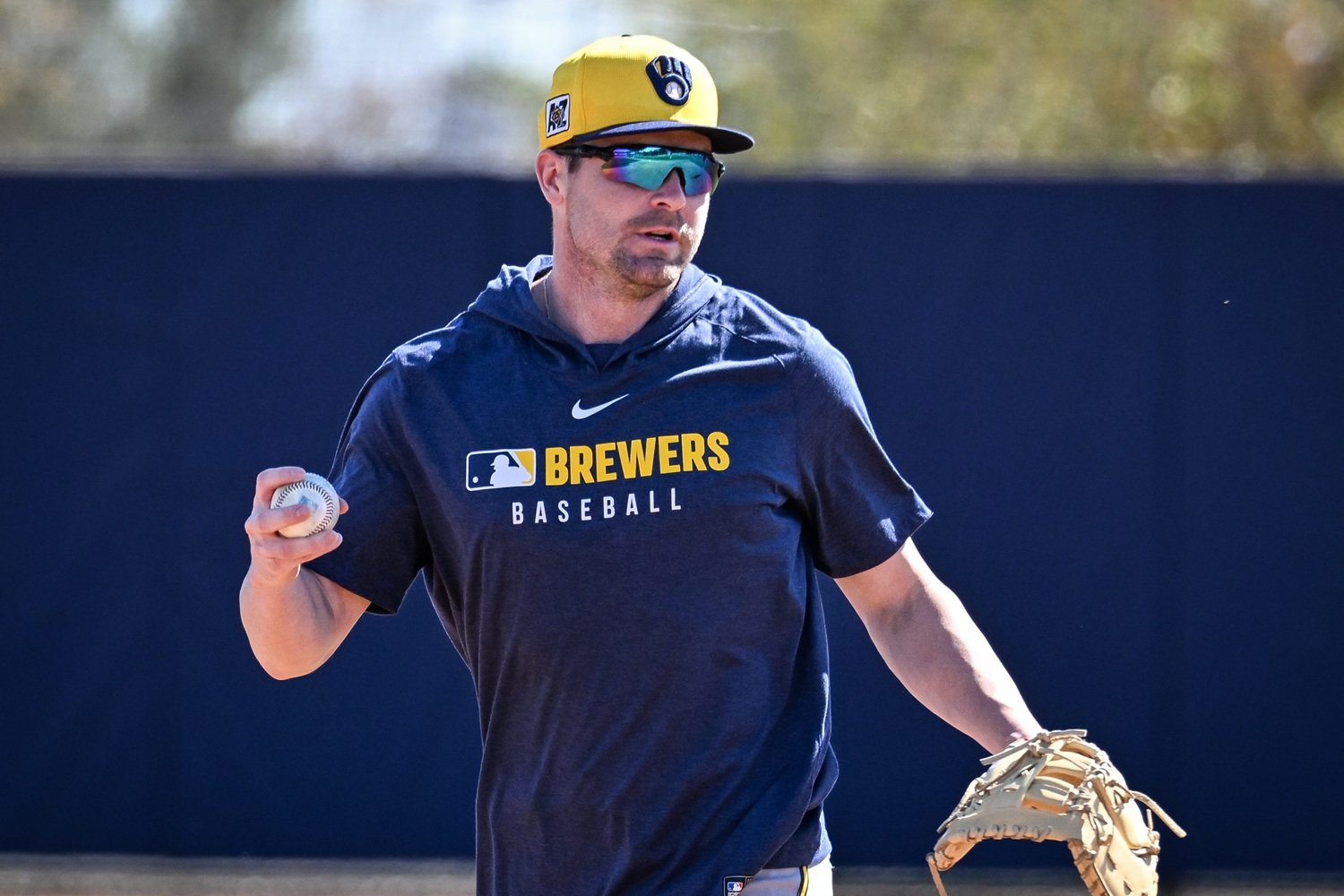 In one sense, it seems absurd that Tyler Black is in a make-or-break situation with the Brewers. He was a top-100 prospect after his breakout 2023 season, but then things went sideways. Two trades in the 2023-2024 offseason put Joey Ortiz and Oliver Dunn ahead of Black at third base—though he, in turn, gave no evidence that he could handle the spot, anyway. Another trade saw Jake Bauers take the role of left-handed complement to Rhys Hoskins in Milwaukee for the 2024 season—though Black didn't hit enough to be a first baseman, either. Black ended up riding the Milwaukee-Nashville shuttle a bit, and never really got the chance to fully adjust to big-league pitching or to settle in at some position and find a defensive home. Even when Christian Yelich was gone for the season, the Brewers kept Black in Nashville, instead of giving him the chance to fill in at DH. Black’s luck got a bit worse in 2025, when he suffered a hamate injury. Again, he spent most of the season at Triple-A Nashville, while also spending time at Maryvale rehabbing with the ACL Brewers. In a brief stint with Milwaukee, with far fewer plate appearances than he had in 2024, he posted a .538 OBP and only struck out once. Black could still be an asset in the Brewers lineup. He's not powerful enough to hit in the middle of the batting order and he lacks defensive value, but he seems likely to sustain an average or better on-base percentage even against the best pitching in the world. The big question, of course, is whether can he break through on a talented Brewers team. Isaac Collins properly won plaudits for his defense in left field, and his approach is somewhat similar to Black’s. He's a switch-hitter, unlike Black, and he's proved that he can be a plus hitter in the majors. Collins's sluggish finish to the season cracks the door for Black, but he's probably the only player on the projected 26-man roster Black has any hope of displacing—and again, that would require the best version of Black to show up this spring, whereas Collins has much less to prove. Could Black also end up at first base? It would require, at the very least, a slump or injury to Bauers, who has the power normally associated with that position. Bauers also plays better defense at the cold corner. Even if Bauers were hurt, Andrew Vaughn might expand his role to take all the playing time at the position; he certainly showed more in 2025 than Black has ever shown. Collins’s defense is similarly better in left field, which has been the sticking point for Black. He’s not found a defensive home. In short, Black needs to get significant at-bats at the major-league level in order to be sure about his remaining upside. If the Brewers can find him some playing time, Black deserves one more chance. If they can’t, he will likely be traded—or worse, designated for assignment and picked up for a song by another team. That could happen before Opening Day, but at the very latest, he'll finish the season as either a late-blooming breakout guy or some other team's problem. Do you think Tyler Black will make it in 2026? Let us know in the comments below!
 -
Image courtesy of © Dave Kallmann / Milwaukee Journal Sentinel / USA TODAY NETWORK via Imagn Images In one sense, it seems absurd that Tyler Black is in a make-or-break situation with the Brewers. He was a top-100 prospect after his breakout 2023 season, but then things went sideways. Two trades in the 2023-2024 offseason put Joey Ortiz and Oliver Dunn ahead of Black at third base—though he, in turn, gave no evidence that he could handle the spot, anyway. Another trade saw Jake Bauers take the role of left-handed complement to Rhys Hoskins in Milwaukee for the 2024 season—though Black didn't hit enough to be a first baseman, either. Black ended up riding the Milwaukee-Nashville shuttle a bit, and never really got the chance to fully adjust to big-league pitching or to settle in at some position and find a defensive home. Even when Christian Yelich was gone for the season, the Brewers kept Black in Nashville, instead of giving him the chance to fill in at DH. Black’s luck got a bit worse in 2025, when he suffered a hamate injury. Again, he spent most of the season at Triple-A Nashville, while also spending time at Maryvale rehabbing with the ACL Brewers. In a brief stint with Milwaukee, with far fewer plate appearances than he had in 2024, he posted a .538 OBP and only struck out once. Black could still be an asset in the Brewers lineup. He's not powerful enough to hit in the middle of the batting order and he lacks defensive value, but he seems likely to sustain an average or better on-base percentage even against the best pitching in the world. The big question, of course, is whether can he break through on a talented Brewers team. Isaac Collins properly won plaudits for his defense in left field, and his approach is somewhat similar to Black’s. He's a switch-hitter, unlike Black, and he's proved that he can be a plus hitter in the majors. Collins's sluggish finish to the season cracks the door for Black, but he's probably the only player on the projected 26-man roster Black has any hope of displacing—and again, that would require the best version of Black to show up this spring, whereas Collins has much less to prove. Could Black also end up at first base? It would require, at the very least, a slump or injury to Bauers, who has the power normally associated with that position. Bauers also plays better defense at the cold corner. Even if Bauers were hurt, Andrew Vaughn might expand his role to take all the playing time at the position; he certainly showed more in 2025 than Black has ever shown. Collins’s defense is similarly better in left field, which has been the sticking point for Black. He’s not found a defensive home. In short, Black needs to get significant at-bats at the major-league level in order to be sure about his remaining upside. If the Brewers can find him some playing time, Black deserves one more chance. If they can’t, he will likely be traded—or worse, designated for assignment and picked up for a song by another team. That could happen before Opening Day, but at the very latest, he'll finish the season as either a late-blooming breakout guy or some other team's problem. Do you think Tyler Black will make it in 2026? Let us know in the comments below! View full article
-
Image courtesy of © Benny Sieu-Imagn Images It might seem odd to view 2026 as a make-or-break year for Aaron Ashby. In 2024 and 2025, he’s combined for a 2.37 ERA in 95 innings pitched across 57 games, with 109 strikeouts. This was after he missed most of 2023 and a fair bit of 2024, due to shoulder surgery. He'd delivered some tantalizing peripherals in 2021 and 2022, but 2025 was very much his coming-out party. It’s a great comeback story. Why would Ashby be a Brewer on the bubble? A big part of it is the contract he signed. During the 2022 season, Ashby was seen as a key cog in the Brewers' rotation plans, and he signed a team-friendly pre-arbitration extension. At spring training, he went on the injured list with shoulder inflammation, which ultimately needed surgery. Therefore, he missed all of that year. The next year, he was rehabbing in Triple-A Nashville on an option. Upon his return, Ashby was close to the form that made the Crew offer him the extension, albeit in shorter stints out of the bullpen. This presents Milwaukee with a tough question. He gets $5.5 million in 2026 and $7.5 million in 2027, before option years in 2028 and 2029. In those final years, he would make $9 million and $13 million, respectively, with small buyouts if the Crew decline either option. While those would be fine prices for a quality starting pitcher, it’s a lot for a reliever, given the Brewers’ small-market status and their need to stretch their payroll and make the most of every dollar. So, 2026 is where the rubber will really meet the road for Ashby. The Brewers will need to figure out how to stretch him out as a starter, even though they have a lot of depth in the rotation already between Freddy Peralta, Brandon Woodruff, Chad Patrick, Quinn Priester, Tobias Myers, Jacob Misiorowski, Logan Henderson, Robert Gasser, and Carlos Rodriguez. If Ashby becomes a dominant starter to the tune of the 176 ERA+ he has posted (per Baseball Reference), then he becomes an obvious keeper. Even if he is relatively solid, it's a good buy through at least 2027, when the Brewers could look to deal him. On the flip side, if Ashby can be a dominant reliever, the Brewers may want to use him as a closer and look at dealing him for a return similar to what Devin Williams fetched (maybe more, since Ashby remains under team control through 2028), since teams have been known to overpay for closers. That would be an excellent outcome, even if it means adjusting the roles of Trevor Megill, Abner Uribe, and rookie Craig Yoho. If neither happens, Milwaukee has the choice of not picking up his 2028 option. That course of action would put Ashby into the arbitration process, which could get very rough and wreck the team’s relationship with him (see Josh Hader and Burnes for examples). On the other hand, he's both smart and amiable, and would probably not be unduly insulted by having the option turned down. Ashby is not a player in a typical “make-or-break” situation. He’s pitched quite well in the role he’s fit into, but he could be capable of so much more. The real question is whether he can reach the heights that appeared possible in 2022, when he signed that extension, or if the Brewers will have to move him due to a high price tag for his performance. Maybe the real question is: Since trading Ashby would take a much smaller chunk out of the team's pitching plan and only a slightly smaller chunk off their projected payroll, might he be a trade candidate this month, rather than Peralta? View full article
-
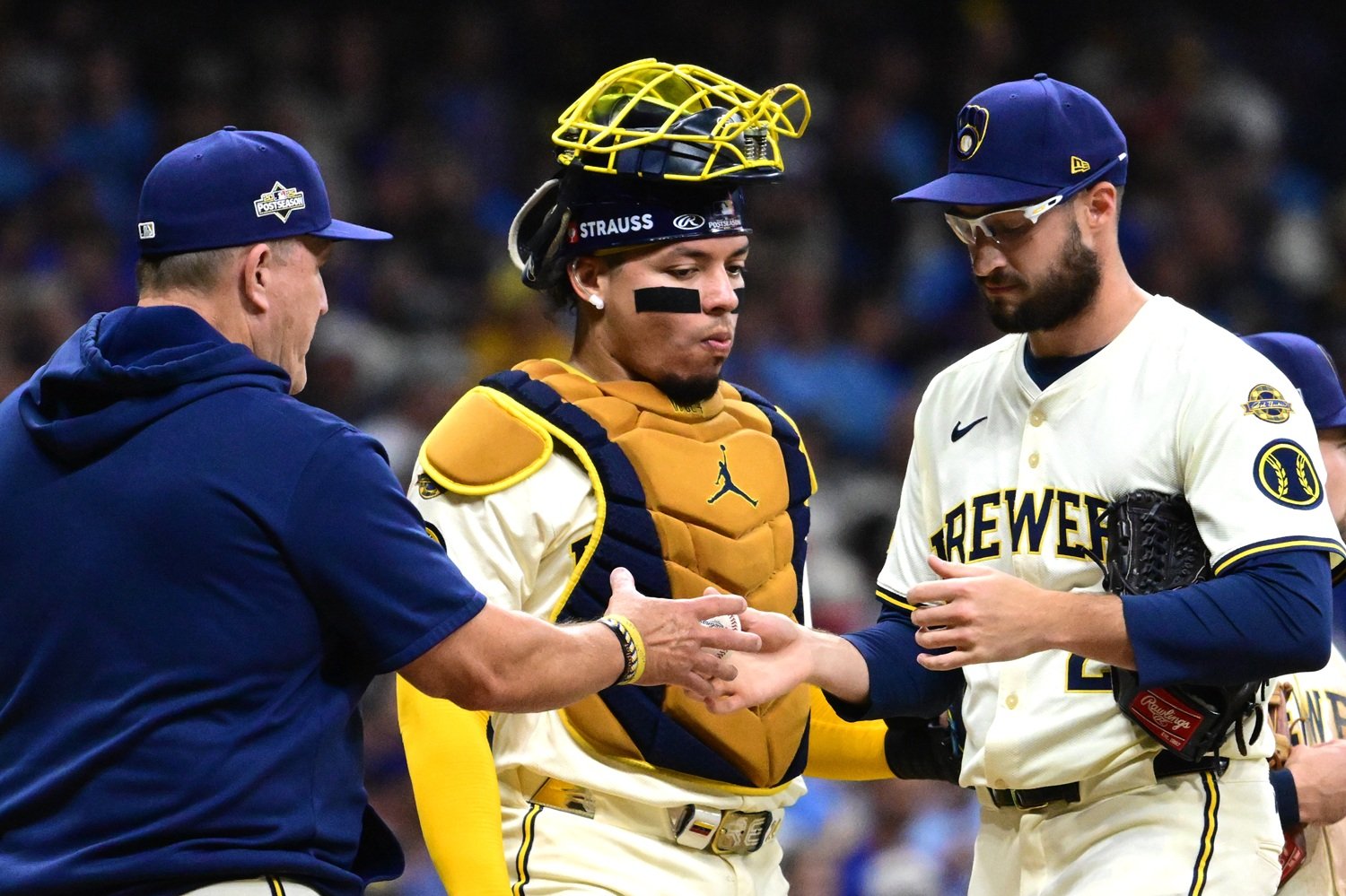 It might seem odd to view 2026 as a make-or-break year for Aaron Ashby. In 2024 and 2025, he’s combined for a 2.37 ERA in 95 innings pitched across 57 games, with 109 strikeouts. This was after he missed most of 2023 and a fair bit of 2024, due to shoulder surgery. He'd delivered some tantalizing peripherals in 2021 and 2022, but 2025 was very much his coming-out party. It’s a great comeback story. Why would Ashby be a Brewer on the bubble? A big part of it is the contract he signed. During the 2022 season, Ashby was seen as a key cog in the Brewers' rotation plans, and he signed a team-friendly pre-arbitration extension. At spring training, he went on the injured list with shoulder inflammation, which ultimately needed surgery. Therefore, he missed all of that year. The next year, he was rehabbing in Triple-A Nashville on an option. Upon his return, Ashby was close to the form that made the Crew offer him the extension, albeit in shorter stints out of the bullpen. This presents Milwaukee with a tough question. He gets $5.5 million in 2026 and $7.5 million in 2027, before option years in 2028 and 2029. In those final years, he would make $9 million and $13 million, respectively, with small buyouts if the Crew decline either option. While those would be fine prices for a quality starting pitcher, it’s a lot for a reliever, given the Brewers’ small-market status and their need to stretch their payroll and make the most of every dollar. So, 2026 is where the rubber will really meet the road for Ashby. The Brewers will need to figure out how to stretch him out as a starter, even though they have a lot of depth in the rotation already between Freddy Peralta, Brandon Woodruff, Chad Patrick, Quinn Priester, Tobias Myers, Jacob Misiorowski, Logan Henderson, Robert Gasser, and Carlos Rodriguez. If Ashby becomes a dominant starter to the tune of the 176 ERA+ he has posted (per Baseball Reference), then he becomes an obvious keeper. Even if he is relatively solid, it's a good buy through at least 2027, when the Brewers could look to deal him. On the flip side, if Ashby can be a dominant reliever, the Brewers may want to use him as a closer and look at dealing him for a return similar to what Devin Williams fetched (maybe more, since Ashby remains under team control through 2028), since teams have been known to overpay for closers. That would be an excellent outcome, even if it means adjusting the roles of Trevor Megill, Abner Uribe, and rookie Craig Yoho. If neither happens, Milwaukee has the choice of not picking up his 2028 option. That course of action would put Ashby into the arbitration process, which could get very rough and wreck the team’s relationship with him (see Josh Hader and Burnes for examples). On the other hand, he's both smart and amiable, and would probably not be unduly insulted by having the option turned down. Ashby is not a player in a typical “make-or-break” situation. He’s pitched quite well in the role he’s fit into, but he could be capable of so much more. The real question is whether he can reach the heights that appeared possible in 2022, when he signed that extension, or if the Brewers will have to move him due to a high price tag for his performance. Maybe the real question is: Since trading Ashby would take a much smaller chunk out of the team's pitching plan and only a slightly smaller chunk off their projected payroll, might he be a trade candidate this month, rather than Peralta?
 -
Image courtesy of © Benny Sieu-Imagn Images The Brewers have made some major deals in recent offseasons. In the 2023-2024 offseason, they dealt Corbin Burnes to acquire DL Hall, Joey Ortiz, and the draft pick that became Blake Burke. In the 2024-2025 offseason, Devin Williams was dealt to the Yankees for Nestor Cortes and Caleb Durbin. But Milwaukee has also made deals with lesser-known players that hit big. In the same offseason Corbin Burnes was dealt, the Brewers made the under-the-radar swap with the Athletics that brought Chad Patrick to Milwaukee in exchange for Abraham Toro. In the 2022-2023 offseason, the Crew moved Esteury Ruiz to the Athletics as part of a three-team trade that landed Joel Payamps, minor-leaguer Justin Yeager, and some guy named William Contreras. Who might the Crew move in a deal nobody pays attention to? Here are five possibilities. LHP Aaron Ashby Ashby has become a key member of the Brewers' bullpen, so he’s worked out reasonably well. But why might the Crew want to consider moving him? Part of it is the deal he signed after the 2022 season, where he was solid as a member of the starting rotation; in 2026, he gets $5.5 million, with $7.7 million due in 2027, along with $9 million and $13 million salaries in 2028 and 2029 if the options are picked up. If Ashby became a mainstay in the rotation, it’d be money well spent. But Ashby has become a bullpen ace after missing 2023 and a large part of 2024 with shoulder problems. It may be time for Milwaukee to see what Ashby could fetch in return. It’s not that he’s a bad pitcher, but the chance to free up $13.2 million over 2026 and 2027 may make a deal worth it. RHP Carlos Rodriguez Rodriguez has been caught up in the numbers game among Milwaukee’s young pitchers in 2025. He emerged as an outlier with an extensive arsenal. He’s had two cups of coffee with the Brewers, and while he’s struggled, there’s a lot of potential. The problem, of course, is that there are a lot of other pitchers with potential forcing their way up. The combination of team control and his youth could make Rodriguez a trade asset – either on his own, or as part of a larger package. A pitcher like Rodriguez could net a solid return, but not if the team holds on to him for too long. SS Joey Ortiz The Brewers have an interesting situation at shortstop. The top three prospects on the Brewer Fanatic Top 20 are all at shortstop. One, Cooper Pratt, is likely to start 2026 at Triple-A Nashville. Jesus Made will likely start at Double-A Biloxi, and then, there is Luis Pena. Joey Ortiz would likely be a prime trade chip if he’d matched his 2024 offensive numbers, but he instead fell off a cliff at the plate. That said, Ortiz may still be someone who could draw interest. A big part is that he is cheap and comes with years of control. The Brewers moved a slumping JJ Hardy in the 2010-2011 offseason and acquired Carlos Gomez. Milwaukee could look to see if it can pull off something similar or use Ortiz to sweeten some other deal to get a difference-maker, particularly if Cooper Pratt is on a hot streak. 1B Andrew Vaughn Vaughn helped save the Brewers’ season after Rhys Hoskins went on the injured list. So why put him on the block? One reason is the $7.8 million he is potentially due. The Crew could try to sell relatively high when it comes to Vaughn, especially with the presence of other first-base options (Jake Bauers and Tyler Black come to mind). In this case, it is a bit of a salary dump. But at the same time, Vaughn’s run with the Brewers is much higher than his career OPS+ of 101. A regression to his 2021-2024 mean would not be the worst the Brewers have had at first base in their history, but it would not exactly be what the Brewers are hoping for from a $7.8 million first baseman, either. OF Garrett Mitchell When Garrett Mitchell’s been on the field, he’s been an incredible talent. The problem is that in his three full major league seasons, he’s averaged just under 38 games a season. That’s less than a quarter of a full major-league season. Yet he is now in his first year of arbitration – while he will only cost the crew about $1 million, the fact is that Blake Perkins, Isaac Collins, and Tyler Black could be more likely to play and contribute than Mitchell has so far. Mitchell, like Ortiz, could be used to pull off a deal similar to the Hardy-for-Gomez trade the Brewers did in the 2010-2011 offseason. The other option is to see if Mitchell can land some prospects or a competitive balance pick. Which players do you think the Brewers should be putting on the market? Let us know in the comments below! View full article
-
 The Brewers have made some major deals in recent offseasons. In the 2023-2024 offseason, they dealt Corbin Burnes to acquire DL Hall, Joey Ortiz, and the draft pick that became Blake Burke. In the 2024-2025 offseason, Devin Williams was dealt to the Yankees for Nestor Cortes and Caleb Durbin. But Milwaukee has also made deals with lesser-known players that hit big. In the same offseason Corbin Burnes was dealt, the Brewers made the under-the-radar swap with the Athletics that brought Chad Patrick to Milwaukee in exchange for Abraham Toro. In the 2022-2023 offseason, the Crew moved Esteury Ruiz to the Athletics as part of a three-team trade that landed Joel Payamps, minor-leaguer Justin Yeager, and some guy named William Contreras. Who might the Crew move in a deal nobody pays attention to? Here are five possibilities. LHP Aaron Ashby Ashby has become a key member of the Brewers' bullpen, so he’s worked out reasonably well. But why might the Crew want to consider moving him? Part of it is the deal he signed after the 2022 season, where he was solid as a member of the starting rotation; in 2026, he gets $5.5 million, with $7.7 million due in 2027, along with $9 million and $13 million salaries in 2028 and 2029 if the options are picked up. If Ashby became a mainstay in the rotation, it’d be money well spent. But Ashby has become a bullpen ace after missing 2023 and a large part of 2024 with shoulder problems. It may be time for Milwaukee to see what Ashby could fetch in return. It’s not that he’s a bad pitcher, but the chance to free up $13.2 million over 2026 and 2027 may make a deal worth it. RHP Carlos Rodriguez Rodriguez has been caught up in the numbers game among Milwaukee’s young pitchers in 2025. He emerged as an outlier with an extensive arsenal. He’s had two cups of coffee with the Brewers, and while he’s struggled, there’s a lot of potential. The problem, of course, is that there are a lot of other pitchers with potential forcing their way up. The combination of team control and his youth could make Rodriguez a trade asset – either on his own, or as part of a larger package. A pitcher like Rodriguez could net a solid return, but not if the team holds on to him for too long. SS Joey Ortiz The Brewers have an interesting situation at shortstop. The top three prospects on the Brewer Fanatic Top 20 are all at shortstop. One, Cooper Pratt, is likely to start 2026 at Triple-A Nashville. Jesus Made will likely start at Double-A Biloxi, and then, there is Luis Pena. Joey Ortiz would likely be a prime trade chip if he’d matched his 2024 offensive numbers, but he instead fell off a cliff at the plate. That said, Ortiz may still be someone who could draw interest. A big part is that he is cheap and comes with years of control. The Brewers moved a slumping JJ Hardy in the 2010-2011 offseason and acquired Carlos Gomez. Milwaukee could look to see if it can pull off something similar or use Ortiz to sweeten some other deal to get a difference-maker, particularly if Cooper Pratt is on a hot streak. 1B Andrew Vaughn Vaughn helped save the Brewers’ season after Rhys Hoskins went on the injured list. So why put him on the block? One reason is the $7.8 million he is potentially due. The Crew could try to sell relatively high when it comes to Vaughn, especially with the presence of other first-base options (Jake Bauers and Tyler Black come to mind). In this case, it is a bit of a salary dump. But at the same time, Vaughn’s run with the Brewers is much higher than his career OPS+ of 101. A regression to his 2021-2024 mean would not be the worst the Brewers have had at first base in their history, but it would not exactly be what the Brewers are hoping for from a $7.8 million first baseman, either. OF Garrett Mitchell When Garrett Mitchell’s been on the field, he’s been an incredible talent. The problem is that in his three full major league seasons, he’s averaged just under 38 games a season. That’s less than a quarter of a full major-league season. Yet he is now in his first year of arbitration – while he will only cost the crew about $1 million, the fact is that Blake Perkins, Isaac Collins, and Tyler Black could be more likely to play and contribute than Mitchell has so far. Mitchell, like Ortiz, could be used to pull off a deal similar to the Hardy-for-Gomez trade the Brewers did in the 2010-2011 offseason. The other option is to see if Mitchell can land some prospects or a competitive balance pick. Which players do you think the Brewers should be putting on the market? Let us know in the comments below!
- 1 comment
-
- 1
-
-
- joey ortiz
- garrett mitchell
- (and 3 more)
-
I'd like to see the Crew move both Mears and Zastryzny. Perhaps a pitching package to Cleveland (Mears and Carlos Rodriguez) for a CB pick and two Single-A prospects?
-
Image courtesy of © Wm. Glasheen/USA TODAY NETWORK-Wisconsin / USA TODAY NETWORK / © Mark J. Rebilas-USA TODAY Sports In the 2022-2023 offseason, the Brewers acquired William Contreras as the centerpiece of their haul for getting involved in a deal with the Atlanta Braves and Oakland Athletics. But who’s behind Contreras? Brewers fans have rarely had to worry, but it may be time for a look because there is talent down the depth chart. On The 40-Man Roster William Contreras: .260/.355/.399 with 28 doubles, 17 home runs, and 76 RBI in Milwaukee Contreras has been incredibly durable – appearing in 446 games over three seasons. That’s out of a possible 486. That’s not very many days off. When he isn’t catching, he’s often serving as the designated hitter for the Crew. Contreras is the undisputed starter at catcher, at least through 2026. The real question is whether Milwaukee runs with him through 2027, or if they deal him for a haul of young players in the 2026-2027 offseason. Until then, he is likely to get the bulk of the starts. Jeferson Quero: .261/.371/.468 with 17 doubles, one triple, 11 home runs, and 57 RBI between Triple-A Nashville and Rookie League ACL Brewers Quero’s progression has been delayed by injuries. In 2024, an effort to avoid being picked off first base cost him the entire season, save for that initial plate appearance, due to a shoulder injury. In 2025, he dealt with other injuries, playing only 58 games at Nashville. While initially a top prospect due to defensive prowess, the injury has affected his ability to keep baserunners honest. He still excels at handling pitchers and has worked with Milwaukee’s young talent in the minors. His bat is also very solid for the position, and could allow the Crew to rest Contreras. Anthony Seigler: .267/.391/.424 with 17 doubles, four triples, eight home runs, and 44 RBI between Triple-A Nashville and Milwaukee Seigler may seem like an odd inclusion since he is officially listed as an infielder. But he started 22 games behind the plate for the Sounds, and also caught for the Brewers for one frame. Baseball-Reference projects him to provide a .696 OPS in the majors in 2026, which wouldn’t be bad for a catcher. Seigler was a switch-hitter before he started hitting exclusively from the left side in 2025. With some serious talent in the minor-league infield, Seigler’s best shot at sticking with the Brewers may be to once again don the tools of ignorance. Minor-League Players Who Could Impact 2026 Darrien Miller: .192/.381/.329 with 10 doubles, one triple, seven home runs, and 37 RBI at Double-A Biloxi Miller, a minor-league free agent, has re-signed with Milwaukee, marking his seventh season with the organization, and he will only be 25. Miller’s forte has been OBP. In 2025, he posted a .381 OBP in the pitching-friendly Southern League despite his batting average being eight points below the Uecker line, thanks to drawing 57 walks and getting plunked 17 times. Miller has also provided solid defense – not as spectacular as Quero at his best, but not horrible, either. His power surged a bit in 2025 as well, nearly quadrupling his home run total from 2024. Miller will likely be in Triple-A Nashville in 2026, and his familiarity with the Brewers' young pitchers could be an asset. Matt Wood: .256/.372/.380 with 16 doubles, seven home runs, and 43 RBI between Advanced-A Wisconsin and Double-A Biloxi Wood will also be 25 in the 2026 season, the same age as Miller, but was drafted by the Brewers in the 2022 amateur draft. Wood’s offensive profile is very solid, posting a .787 OPS in 59 games at Double-A, 77 points higher than Miller’s. His left-handed bat should perform well at American Family Field. Wood’s defense has also been solid. It’s an open question if he will be at Double-A Biloxi or if he will make the jump to Triple-A Nashville alongside Miller. Marco Dinges: .300/.416/.514 with 12 doubles, two triples, 13 home runs, and 62 RBI between Single-A Carolina and Advanced-A Wisconsin Dinges has always had a potent bat. The Brewers, though, have been developing him behind the plate – and he rocketed all the way to Wisconsin in his first full professional season, then added a couple of games in the Arizona Fall League. Dinges is likely to be in Double-A Biloxi in 2026, but if he hits like he did in 2025, he could end up in Nashville and possibly Milwaukee. Which catchers do you think will make the biggest impact for the Crew in 2026? Let us know in the comments below! View full article
-
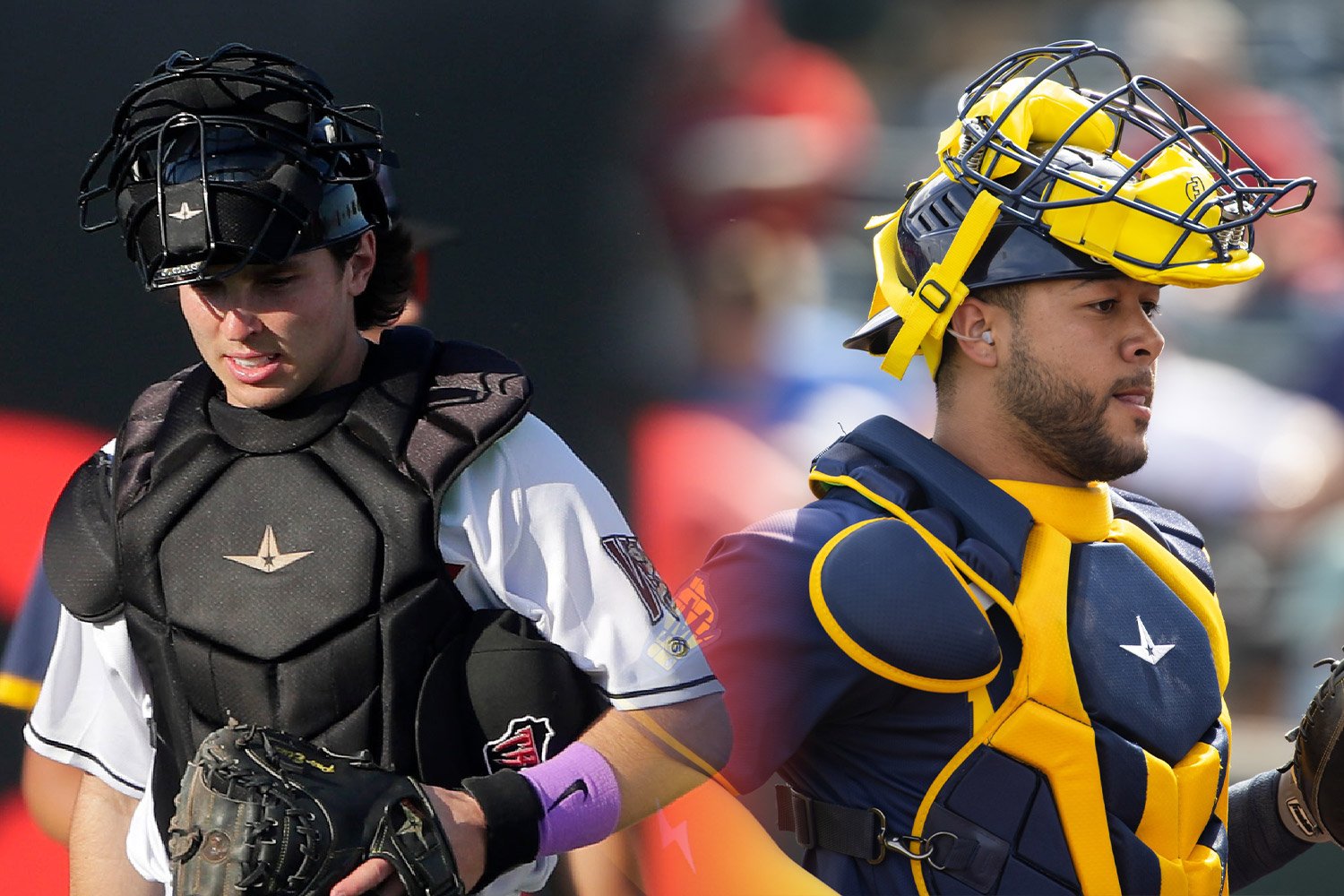 In the 2022-2023 offseason, the Brewers acquired William Contreras as the centerpiece of their haul for getting involved in a deal with the Atlanta Braves and Oakland Athletics. But who’s behind Contreras? Brewers fans have rarely had to worry, but it may be time for a look because there is talent down the depth chart. On The 40-Man Roster William Contreras: .260/.355/.399 with 28 doubles, 17 home runs, and 76 RBI in Milwaukee Contreras has been incredibly durable – appearing in 446 games over three seasons. That’s out of a possible 486. That’s not very many days off. When he isn’t catching, he’s often serving as the designated hitter for the Crew. Contreras is the undisputed starter at catcher, at least through 2026. The real question is whether Milwaukee runs with him through 2027, or if they deal him for a haul of young players in the 2026-2027 offseason. Until then, he is likely to get the bulk of the starts. Jeferson Quero: .261/.371/.468 with 17 doubles, one triple, 11 home runs, and 57 RBI between Triple-A Nashville and Rookie League ACL Brewers Quero’s progression has been delayed by injuries. In 2024, an effort to avoid being picked off first base cost him the entire season, save for that initial plate appearance, due to a shoulder injury. In 2025, he dealt with other injuries, playing only 58 games at Nashville. While initially a top prospect due to defensive prowess, the injury has affected his ability to keep baserunners honest. He still excels at handling pitchers and has worked with Milwaukee’s young talent in the minors. His bat is also very solid for the position, and could allow the Crew to rest Contreras. Anthony Seigler: .267/.391/.424 with 17 doubles, four triples, eight home runs, and 44 RBI between Triple-A Nashville and Milwaukee Seigler may seem like an odd inclusion since he is officially listed as an infielder. But he started 22 games behind the plate for the Sounds, and also caught for the Brewers for one frame. Baseball-Reference projects him to provide a .696 OPS in the majors in 2026, which wouldn’t be bad for a catcher. Seigler was a switch-hitter before he started hitting exclusively from the left side in 2025. With some serious talent in the minor-league infield, Seigler’s best shot at sticking with the Brewers may be to once again don the tools of ignorance. Minor-League Players Who Could Impact 2026 Darrien Miller: .192/.381/.329 with 10 doubles, one triple, seven home runs, and 37 RBI at Double-A Biloxi Miller, a minor-league free agent, has re-signed with Milwaukee, marking his seventh season with the organization, and he will only be 25. Miller’s forte has been OBP. In 2025, he posted a .381 OBP in the pitching-friendly Southern League despite his batting average being eight points below the Uecker line, thanks to drawing 57 walks and getting plunked 17 times. Miller has also provided solid defense – not as spectacular as Quero at his best, but not horrible, either. His power surged a bit in 2025 as well, nearly quadrupling his home run total from 2024. Miller will likely be in Triple-A Nashville in 2026, and his familiarity with the Brewers' young pitchers could be an asset. Matt Wood: .256/.372/.380 with 16 doubles, seven home runs, and 43 RBI between Advanced-A Wisconsin and Double-A Biloxi Wood will also be 25 in the 2026 season, the same age as Miller, but was drafted by the Brewers in the 2022 amateur draft. Wood’s offensive profile is very solid, posting a .787 OPS in 59 games at Double-A, 77 points higher than Miller’s. His left-handed bat should perform well at American Family Field. Wood’s defense has also been solid. It’s an open question if he will be at Double-A Biloxi or if he will make the jump to Triple-A Nashville alongside Miller. Marco Dinges: .300/.416/.514 with 12 doubles, two triples, 13 home runs, and 62 RBI between Single-A Carolina and Advanced-A Wisconsin Dinges has always had a potent bat. The Brewers, though, have been developing him behind the plate – and he rocketed all the way to Wisconsin in his first full professional season, then added a couple of games in the Arizona Fall League. Dinges is likely to be in Double-A Biloxi in 2026, but if he hits like he did in 2025, he could end up in Nashville and possibly Milwaukee. Which catchers do you think will make the biggest impact for the Crew in 2026? Let us know in the comments below!
- 2 comments
-
- 1
-
-
- william contreras
- jeferson quero
- (and 4 more)
-
While many baseball fans in the hot stove league are asking “will they or won’t they” on a Brandon Woodruff return to the Brewers, the free agent market might have some real bargains for the Crew to bolster their major-league pitching staff. The team’s been very successful at finding bargains in the past, like Colin Rea or Julio Teheran. So, who could be the next free-agent bargain for the Crew? Here are some options. LHP Foster Griffin, Yomiuri Giants (NPB) Griffin had cups of coffee in MLB in 2020 and 2022, where he mostly handled mop-up duty. He then went to Japan, where he found himself a spot in the starting rotation of the Yomiuri Giants of the Central League. Over those three years, he started 53 of the 54 games he appeared in, pitching 315 2/3 innings with a 2.57 ERA while striking out 9.1 hitters per nine innings while averaging only two walks per nine. Notably, Griffin had a grand total of three wild pitches and 15 hit batsmen during that time. Griffin has slightly over one year of MLB service time, so the Brewers could have team control for five years. While he made strides in NPB, the Brewers’ pitching lab could refine him into a back-end of the rotation option for the team who can reliably eat innings. LHP Brent Suter, Cincinnati Reds A reunion with “The Raptor” could be a boon for the Brewers bullpen. On November 5, the Cincinnati Reds declined a $3 million team option on Suter, making him a free agent. Over the three seasons since Milwaukee put him on waivers, he’s appeared in 152 games and posted a 3.69 ERA over 202 2/3 innings pitched. He has done this while pitching half the time in two rather notoriously hitter-friendly stadiums. Suter comes with few question marks, the biggest being his age (36). That said, he’s fit in with the Brewers’ clubhouse before, he has been able to eat 65-70 innings out of the bullpen for each of the last five years, and he could benefit from the Brewers’ pitching lab. He’d slot in as a replacement should Aaron Ashby and/or DL Hall earn spots in the starting rotation. RHP Michael Soroka, Washington Nationals/Chicago Cubs Soroka’s had to come back from multiple Achilles injuries, and may be a candidate for the pitching lab, given his 3-18 record, 4.62 ERA, and 4.57 FIP over the last two seasons. There is some good news: In six games with the Cubs, mostly working out of the pen, he had a dominant stretch that flashed the talent that made him the youngest Opening Day starter in Atlanta Braves history. Last year, Soroka got a $9 million deal. Between his age and the deal he received, he may end up being one of the more expensive options on this list. That said, this could be a pickup that could pay off big for Milwaukee compared to the expense. RHP Adrian Houser, Chicago White Sox/Tampa Rays Houser is another former Brewer on this list, but like Brent Suter, he may be worth the reunion. After he was released by the Texas Rangers, Houser signed on with the White Sox, where he became their staff ace with a 2.10 ERA in 68 2/3 innings pitched across 11 starts, then added another 56 1/3 innings in 10 starts with the Rays. Like Suter, there would be little question about his fit in the clubhouse. He’s 33, but his arsenal, with the heavy use of a sinker, according to FanGraphs, would be an excellent match with the Brewers’ infield defense. That’s before he gets in some work with the pitching lab. RHP Dustin May, Los Angeles Dodgers/Boston Red Sox May has had some difficulty with injuries, but when he’s been on the mound he has generally pitched well. Like Houser, he primarily throws a sinker, but his can touch 98 miles per hour. May was reasonably healthy, but was pushed out of the Dodgers’ rotation, and eventually traded to Boston, where he went 1-4 over six games (five starts) with a 5.40 ERA across 28 1/3 innings pitched. May would make an excellent fit for the Brewers’ excellent defense, being the type of pitcher that could do really well with work in the pitching lab. Like Soroka, he might be a more expensive pickup, but at the same time, he could pay off big time for the Brewers. Honorable Mentions The Brewers may also want to look at bringing back Jordan Montgomery on a deal similar to Brandon Woodruff’s. Montgomery was a very solid pitcher from 2021-2023 and could be similar to a mid-season acquisition after missing all of 2025 with an elbow injury. Nestor Cortes underwent surgery for a flexor injury on October 16, and will be out for nine to ten months, but is another candidate for the Crew if they want to buy low and rehab him. Do you think any of these free agents make sense for the Brewers? Who do you think they should try to sign in the off-season? View full article