Spencer Michaelis
-
Posts
1,119 -
Joined
-
Last visited
-
Days Won
17
Content Type
Profiles
Forums
Blogs
Events
News
2026 Milwaukee Brewers Top Prospects Ranking
Milwaukee Brewers Videos
2022 Milwaukee Brewers Draft Picks
Milwaukee Brewers Free Agent & Trade Rumors, Notes, & Tidbits
Guides & Resources
2023 Milwaukee Brewers Draft Picks
2024 Milwaukee Brewers Draft Picks
The Milwaukee Brewers Players Project
2025 Milwaukee Brewers Draft Pick Tracker
2026 Milwaukee Brewers Draft Tracker: Picks & Bonuses
Store
Downloads
Gallery
Everything posted by Spencer Michaelis
-
 Ideally he'll be a utility guy yeah, not sure where he is on the injury front completely, but he was rehabbing in Arizona at the end of the year, so I'd assume he will be ready for the start of the year.
 -
Brewer Fanatic 2024 Offseason Top 20 Prospects: #11-15
Spencer Michaelis posted an article in Minor Leagues
 Let's take a look at the second installment of prospects, which will cover 11-15, as voted on and compiled by the Brewer Fanatic community. #15 RHP Josh Knoth (Carolina Mudcats) The Brewers' Competitive Balance Round A selection in the 2023 Draft, Knoth has a smooth delivery that appears to be pretty repeatable. Going back to the summer of 2022, his profile was already very enticing, even though he only threw his fastball in the 90-93 range and was topping out at 95, at the time. The spring before he was drafted, however, he was up to 98 on occasion and sitting more in the 93-96 range. Knoth’s velocity held in that 93-96 range in 2024, and the fastball played quite well at the Low-A level. His athletic delivery gives him a low release height, which helps the fastball play well up in the zone, due to the carry he generates on the pitch. The fastball shape pairs extremely well with Knoth’s low-80s curveball. It’s a 3,000-RPM pitch with late bite and a ton of vertical movement. His slider could be a plus pitch as well, coming in on a different plane than his curve, with more sweep and less depth. The slider also has sharp movement and a spin rate around 3,000 RPMs, and it sits in the 86-88 MPH range. He seems more comfortable with commanding the slider than the curveball, and likes to use it as a put-away pitch against right-handed hitters. Knoth also mixes in an occasional changeup (mostly against lefties) that shows some interesting fade. So far, he doesn’t take as much velocity off of it as you would hope, and that’s likely something the Brewers will continue to work on with him. A decent fourth pitch, especially something that moves the opposite direction of his breaking balls, would make it more likely that he’s able to continue as a starting pitcher. While Knoth’s repertoire seems like one that would give right-handed hitters fits, given how breaking ball-heavy it is, he was actually much better against left-handed hitters this season. Lefties only managed a .630 OPS against him, while righties were at .808 for the year. An 84-inning sample isn’t big enough to make any conclusions with regard to platoon splits, but it will be worth monitoring as he moves forward. Knoth spent the vast majority of his season as an 18-year-old in Low A, and he definitely held his own. His command would come and go, and he allowed more hard contact and line drives than you would want. However, those types of struggles are not abnormal for such a youngster in full-season ball. It will be interesting to see if he remains in Carolina to begin 2025, or if they continue to push him by starting him at High-A Wisconsin. Knoth has one of the higher ceilings among the pitchers in the organization, but fans will need to remain patient. He will be a teenager for the majority of 2025; there’s still a lot of work to be done. #14 RHP Craig Yoho (Wisconsin Timber Rattlers, Carolina Mudcats, Biloxi Shuckers) The Brewers' 8th-round selection in the 2023 draft out of Indiana, Yoho is the only pitcher on this list of 20 prospects who appears to be firmly slotted into a relief role in the future. Initially a position player in college, he transitioned to a two-way role for a couple of seasons, but after battling quite a few injuries, he gave up hitting. His draft year was his first season focusing solely on pitching. So, despite his advanced age, he entered pro ball with some untapped potential. After an incredible start with the Timber Rattlers, he quickly made his way to Double-A where he again was dominant enough to make another quick leap to Triple-A, which is where he would close out his impressive debut season. Yoho does not possess the velocity that we have all come to expect out of a high-leverage reliever. You will not see him in the upper 90s. His fastball is a strong offering, currently sitting in the 91-93 range with heavy arm-side run, getting up to 21 inches at times and averaging around 17 inches. It doesn’t get a lot of swing-and-miss, but it does generate a lot of ground balls and often sneaks in for called strikes on the glove side. What carries his profile though, are his secondaries. Not many pitches should be compared to Devin Williams’s “airbender” changeup, but Yoho’s is maybe the lone exception. The movement profile is very similar, with Yoho generating around -2 inches of Induced Vertical Break (IVB), while Williams is at -3.5 inches on average. Yoho averaged 18 inches of horizontal movement to the arm side, while Williams was at 19.4 inches. They are in a very similar spot. It should be noted that Yoho throws his around 77-79 MPH on average, while Williams is in the 83-86 range, but everything else is very similar. Public data on the pitch wasn’t available until he reached Triple-A, but at that level, Yoho generated an elite 45.9% whiff rate on his changeup, while using it as his primary pitch and throwing it 41% of the time. It appears to be one of the best pitches in baseball. Unlike Williams, Yoho doesn’t stop there. He also possesses a curveball, which averaged around 75 MPH during his time in Nashville. The curve essentially mirrors the shape of the changeup, averaging over 20 inches of glove-side movement, and with an IVB of -7.8 inches. The curveball was not used as often as the changeup, but it still generated whiffs at a 45.5% clip. Another plus, or better, pitch in Yoho’s repertoire. Yoho also added a cutter this past season, which was likely meant to give him a mirror to the two-seam fastball he throws. The cutter averaged around 88 MPH, and while it showed some flashes, it was by far the least effective of his four pitches. It will be a continued work in progress for 2025, or perhaps they will eventually scrap it, as he may not need it to be effective. Yoho shared the Brewers' MiLB Co-Pitcher of the Year honors with K.C. Hunt, and won Relief Pitcher of the Year honors through all of Minor League Baseball (courtesy of Baseball America and MLB Pipeline). He was knocking on the doorstep of MLB in September, and may have only been an injury or two away from getting there. He is a definite candidate to join the Brewers bullpen in 2025, likely sooner rather than later. #13 1B/3B Luke Adams (Wisconsin Timber Rattlers) The Brewers' 12th-round pick in the 2022 draft. Adams was drafted out of Hinsdale Central High School in Illinois and appears to have been a really nice find by Area Scout Ginger Poulson. Adams spent the first few weeks of the 2024 season still a 19-year-old, before turning 20 in late April. Standing 6-foot-4 and weighing 210 pounds, Adams shows a rare blend of patience at the plate go along with his plus raw power, as well as surprising speed for his size. Adams has played a very solid third base where he not only has the arm to handle the position, but has shown an ability to make off-platform throws, which is not easily done at 6’4. In a Baseball America survey of Midwest League coaches, Adams was voted the best defensive third baseman in the league. He also spent some time at first base, where he is a definite above average defender. Offensively, Adams has a very violent swing, but he did tone down the amount of movement in the swing from 2023 to 2024. Those adjustments helped him improve even further on his impressive plate discipline and bat-to-ball skills. While his patience definitely paid off to the tune of a 98th percentile walk rate, the key for him is going to be continuing to find the balance between being passive and patient. His overall swing rate of 40.6% was the lowest of all 525 qualified hitters in MiLB and MLB. The pitchers he faces will get better at throwing strikes as he climbs through the minors and he will need to find a way to be a bit more aggressive on in-zone pitches. When he does swing, he tends to make a lot of contact, and loud contact at that. For someone with as much movement as he still has in his swing, a whiff rate of 21.6% is fantastic, and placed him in the 84th percentile in MiLB. His 106 MPH 90th Percentile Exit Velocity would have placed him in the 90th percentile for Triple-A hitters, and is one of the highest of any twenty year old in baseball. When you hit the ball as hard as Adams does, the only ball in play that really doesn’t have a chance is a pop up and 31% of Adams’ fly balls were of the pop-up variety, a number that put him in the 13th percentile. That’s something that carried over from 2023 to 2024 and will be something he will likely be focused on improving heading into 2025. As mentioned earlier, Adams is also a freak athlete for his size, and he’s an above average runner presently. He stole 28 bases this year, though only at a 74% success rate. He likely won’t be a huge stolen base threat at the big league level, but he will definitely be enough of a threat to keep defenses on their toes. Adams ended the season as one of the best hitters at the High-A level, despite being one of the younger hitters at the level. He will likely be in a similar situation in Biloxi next year, where he seems likely to start the 2025 campaign. #12 CIF Eric Bitonti (ACL Brewers, Carolina Mudcats) Selected in the third round of the Brewers 2023 draft, Bitonti spent the entire 2024 season as an eighteen year old, and won’t turn nineteen until mid-November of 2024. Drafted as a shortstop, it was always unlikely that someone of his size would be able to stick there and he spent all of this past season at the corner infield spots. Equipped with arguably the most raw power of anyone in his high school class, Bitonti showed a strong ability to get to it in game, throughout his first full professional season. His 104.8 MPH 90th percentile exit velocity was in the upper tier for players his age, and his 24% barrel rate was an elite number, regardless of age. Overall Bitonti hit 16 home runs, hitting eight at the Complex level and eight at Low-A. He’s able to get to his game power because of his batted-ball profile. He hit over 50% of his balls in play for fly balls, which was 98th percentile. At the same time, Bitonti impressively avoided popping up the ball much, only doing so on 11.2% of his fly balls. His 28.3% ground ball rate was also in the 98th percentile, in the context of a low rate being better than a high one. Bitonti has a sweet looking left handed swing, and while he did strikeout at a higher rate than you would want to see, he only chased at a 20% clip which would have been in the 94th percentile at the MLB level. He does have a healthy amount of swing and miss in his game, so his bat-to-ball grade would come in below average. However, his swing decision grade would grade out as plus so far. While the hit tool is unlikely to ever be better than mediocre, there is a lot of Kyle Schwarber to Bitonti’s profile as a hitter. The big time power, ability to hit the ball in the air and the ability to take pitches out of the zone are all calling-cards of Schwarber’s as well. While he was never going to be able to stick as a shortstop, Bitonti should be a pretty strong defender at the hot corner, and he certainly has the arm to handle it as well. His hands are pretty good, though he does struggle to move laterally at times. If that lack of range proves to be too big of an issue, he could end up at first base long term, where his hands would be more important. While a move to first would not be the most ideal outcome, the good news is that his bat would be able to hold up to the expectations that come with playing first base. Given how well Bitonti performed in Carolina to close out his season and the aggressiveness with which the Brewers have been pushing players this season, it’s possible he will begin 2025 in High-A. If not, he will be back in Carolina, where he could quickly force his way to High-A with another strong start. #11 OF Braylon Payne (Carolina Mudcats) The Brewers first round selection in the most recent MLB Draft, Payne was a surprising pick at the time it happened. The Brewers signed him to an under-slot deal, allowing them more room to maneuver later in the draft. While he was seen as a reach at the time, the early returns on Payne have been extremely encouraging. After signing, Payne was assigned to the ACL Brewers, where he participated in the “Bridge League” which is a league designed to help get recent draftees acclimated to pro ball, and also to allow other young players the chance to play more games after the Complex League’s season has ended. Payne performed well enough there that he was given the opportunity to play in Carolina for the final week of the regular season, as well as the playoffs. Seen as a “slash and dash” type of hitter at the time of the draft, Payne quickly showed that he has the capability of being a lot more than that. There were reports that he hit multiple home runs in the Bridge League, and in just 19 regular season plate appearances for the Mudcats, Payne flashed exit velocities of 103, 104 and 110 MPH. He was the youngest player in Low-A at that time having only turned eighteen a couple of weeks prior. Per Baseball America, Payne’s 110.2 mph max exit velocity was the best of any player drafted out of high school and 13th-best among 158 total drafted players to make their debut. In the small professional sample, Payne did well in terms of not chasing pitches, limiting that to a 19.5% rate, but he did appear to have a habit of going after high fastballs. Something that may be able to be taken advantage of as he climbs through the system. He did also show an ability to get the bat to pitches in all quadrants of the zone, as well as outside of it, so that could help negate any chase issues he may eventually have pop up. Defensively, Payne received strong grades in high school and he appeared comfortable in his small sample at Low-A. His arm has reportedly improved over time, to the point where it grades out as average. He has mentioned that he believes there is more in the tank in terms of arm strength as well. His speed grades out as plus, which will help him as he develops in the outfield, and will also be a weapon for him on the bases, where he has already shown that he will be an aggressive, high effort base runner and base stealer. Payne will likely begin 2025 back with Carolina, where he will remain one of the youngest players. A surprise pick in July, Payne has the chance to be a surprise breakout in 2025. With signs of the power coming along, he has the potential to be a true five-tool player. What stands out from 11-15 in this list? Let us know your thoughts in the comments!
 -
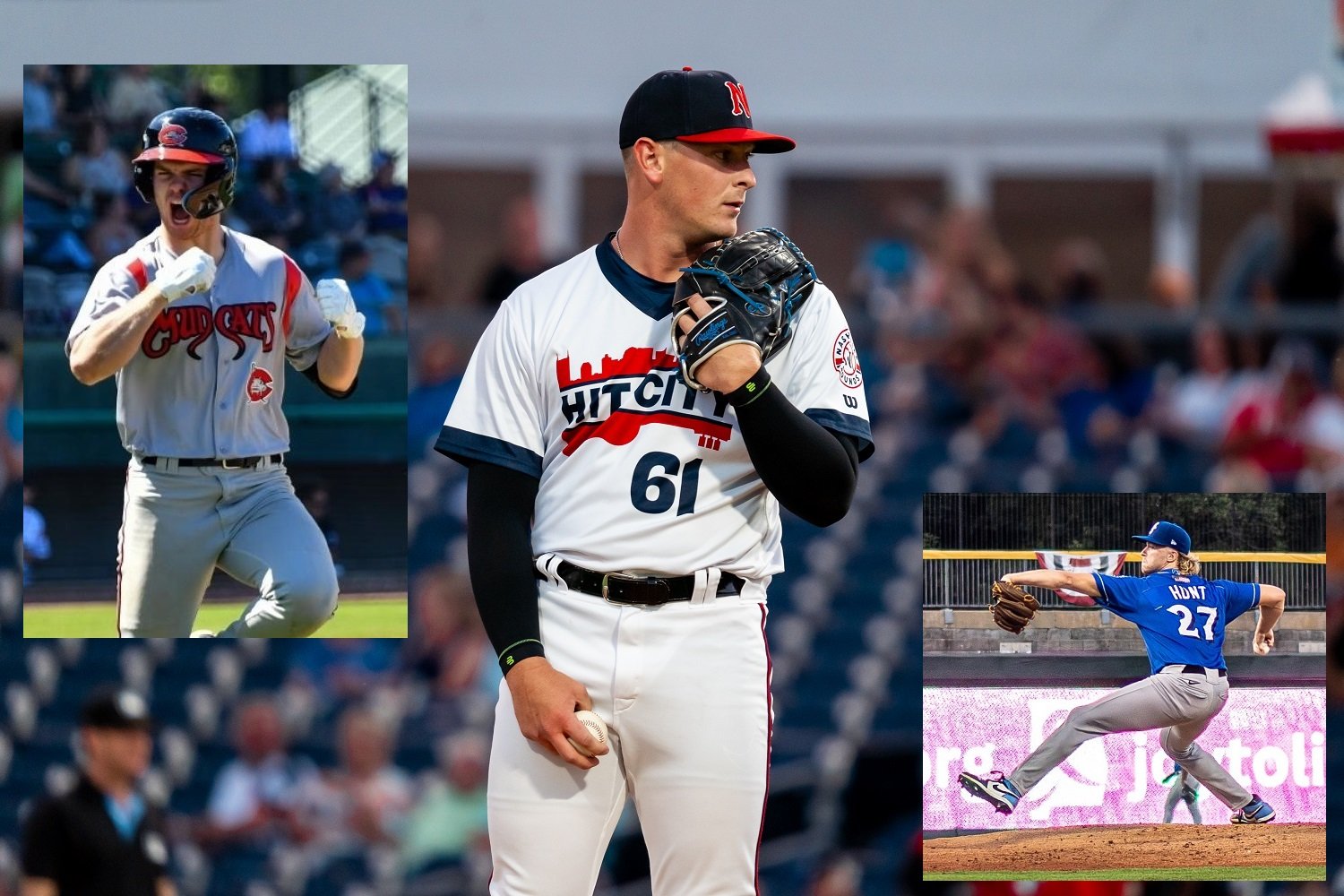
Welcome back to Brewer Fanatic's 2024 top 20 prospect rundown! The Brewers graduated a number of their top prospects throughout the 2024 season, so there are some new names to look at heading into the offseason. Image courtesy of Left to Right: Neal Hock, Carolina Mudcats (photo of Adams), Nashville Sounds (photo of Yoho), Sierra Gatz, Biloxi Shuckers (photo of Hunt) Let's take a look at the second installment of prospects, which will cover 11-15, as voted on and compiled by the Brewer Fanatic community. #15 RHP Josh Knoth (Carolina Mudcats) The Brewers' Competitive Balance Round A selection in the 2023 Draft, Knoth has a smooth delivery that appears to be pretty repeatable. Going back to the summer of 2022, his profile was already very enticing, even though he only threw his fastball in the 90-93 range and was topping out at 95, at the time. The spring before he was drafted, however, he was up to 98 on occasion and sitting more in the 93-96 range. Knoth’s velocity held in that 93-96 range in 2024, and the fastball played quite well at the Low-A level. His athletic delivery gives him a low release height, which helps the fastball play well up in the zone, due to the carry he generates on the pitch. The fastball shape pairs extremely well with Knoth’s low-80s curveball. It’s a 3,000-RPM pitch with late bite and a ton of vertical movement. His slider could be a plus pitch as well, coming in on a different plane than his curve, with more sweep and less depth. The slider also has sharp movement and a spin rate around 3,000 RPMs, and it sits in the 86-88 MPH range. He seems more comfortable with commanding the slider than the curveball, and likes to use it as a put-away pitch against right-handed hitters. Knoth also mixes in an occasional changeup (mostly against lefties) that shows some interesting fade. So far, he doesn’t take as much velocity off of it as you would hope, and that’s likely something the Brewers will continue to work on with him. A decent fourth pitch, especially something that moves the opposite direction of his breaking balls, would make it more likely that he’s able to continue as a starting pitcher. While Knoth’s repertoire seems like one that would give right-handed hitters fits, given how breaking ball-heavy it is, he was actually much better against left-handed hitters this season. Lefties only managed a .630 OPS against him, while righties were at .808 for the year. An 84-inning sample isn’t big enough to make any conclusions with regard to platoon splits, but it will be worth monitoring as he moves forward. Knoth spent the vast majority of his season as an 18-year-old in Low A, and he definitely held his own. His command would come and go, and he allowed more hard contact and line drives than you would want. However, those types of struggles are not abnormal for such a youngster in full-season ball. It will be interesting to see if he remains in Carolina to begin 2025, or if they continue to push him by starting him at High-A Wisconsin. Knoth has one of the higher ceilings among the pitchers in the organization, but fans will need to remain patient. He will be a teenager for the majority of 2025; there’s still a lot of work to be done. #14 RHP Craig Yoho (Wisconsin Timber Rattlers, Carolina Mudcats, Biloxi Shuckers) The Brewers' 8th-round selection in the 2023 draft out of Indiana, Yoho is the only pitcher on this list of 20 prospects who appears to be firmly slotted into a relief role in the future. Initially a position player in college, he transitioned to a two-way role for a couple of seasons, but after battling quite a few injuries, he gave up hitting. His draft year was his first season focusing solely on pitching. So, despite his advanced age, he entered pro ball with some untapped potential. After an incredible start with the Timber Rattlers, he quickly made his way to Double-A where he again was dominant enough to make another quick leap to Triple-A, which is where he would close out his impressive debut season. Yoho does not possess the velocity that we have all come to expect out of a high-leverage reliever. You will not see him in the upper 90s. His fastball is a strong offering, currently sitting in the 91-93 range with heavy arm-side run, getting up to 21 inches at times and averaging around 17 inches. It doesn’t get a lot of swing-and-miss, but it does generate a lot of ground balls and often sneaks in for called strikes on the glove side. What carries his profile though, are his secondaries. Not many pitches should be compared to Devin Williams’s “airbender” changeup, but Yoho’s is maybe the lone exception. The movement profile is very similar, with Yoho generating around -2 inches of Induced Vertical Break (IVB), while Williams is at -3.5 inches on average. Yoho averaged 18 inches of horizontal movement to the arm side, while Williams was at 19.4 inches. They are in a very similar spot. It should be noted that Yoho throws his around 77-79 MPH on average, while Williams is in the 83-86 range, but everything else is very similar. Public data on the pitch wasn’t available until he reached Triple-A, but at that level, Yoho generated an elite 45.9% whiff rate on his changeup, while using it as his primary pitch and throwing it 41% of the time. It appears to be one of the best pitches in baseball. Unlike Williams, Yoho doesn’t stop there. He also possesses a curveball, which averaged around 75 MPH during his time in Nashville. The curve essentially mirrors the shape of the changeup, averaging over 20 inches of glove-side movement, and with an IVB of -7.8 inches. The curveball was not used as often as the changeup, but it still generated whiffs at a 45.5% clip. Another plus, or better, pitch in Yoho’s repertoire. Yoho also added a cutter this past season, which was likely meant to give him a mirror to the two-seam fastball he throws. The cutter averaged around 88 MPH, and while it showed some flashes, it was by far the least effective of his four pitches. It will be a continued work in progress for 2025, or perhaps they will eventually scrap it, as he may not need it to be effective. Yoho shared the Brewers' MiLB Co-Pitcher of the Year honors with K.C. Hunt, and won Relief Pitcher of the Year honors through all of Minor League Baseball (courtesy of Baseball America and MLB Pipeline). He was knocking on the doorstep of MLB in September, and may have only been an injury or two away from getting there. He is a definite candidate to join the Brewers bullpen in 2025, likely sooner rather than later. #13 1B/3B Luke Adams (Wisconsin Timber Rattlers) The Brewers' 12th-round pick in the 2022 draft. Adams was drafted out of Hinsdale Central High School in Illinois and appears to have been a really nice find by Area Scout Ginger Poulson. Adams spent the first few weeks of the 2024 season still a 19-year-old, before turning 20 in late April. Standing 6-foot-4 and weighing 210 pounds, Adams shows a rare blend of patience at the plate go along with his plus raw power, as well as surprising speed for his size. Adams has played a very solid third base where he not only has the arm to handle the position, but has shown an ability to make off-platform throws, which is not easily done at 6’4. In a Baseball America survey of Midwest League coaches, Adams was voted the best defensive third baseman in the league. He also spent some time at first base, where he is a definite above average defender. Offensively, Adams has a very violent swing, but he did tone down the amount of movement in the swing from 2023 to 2024. Those adjustments helped him improve even further on his impressive plate discipline and bat-to-ball skills. While his patience definitely paid off to the tune of a 98th percentile walk rate, the key for him is going to be continuing to find the balance between being passive and patient. His overall swing rate of 40.6% was the lowest of all 525 qualified hitters in MiLB and MLB. The pitchers he faces will get better at throwing strikes as he climbs through the minors and he will need to find a way to be a bit more aggressive on in-zone pitches. When he does swing, he tends to make a lot of contact, and loud contact at that. For someone with as much movement as he still has in his swing, a whiff rate of 21.6% is fantastic, and placed him in the 84th percentile in MiLB. His 106 MPH 90th Percentile Exit Velocity would have placed him in the 90th percentile for Triple-A hitters, and is one of the highest of any twenty year old in baseball. When you hit the ball as hard as Adams does, the only ball in play that really doesn’t have a chance is a pop up and 31% of Adams’ fly balls were of the pop-up variety, a number that put him in the 13th percentile. That’s something that carried over from 2023 to 2024 and will be something he will likely be focused on improving heading into 2025. As mentioned earlier, Adams is also a freak athlete for his size, and he’s an above average runner presently. He stole 28 bases this year, though only at a 74% success rate. He likely won’t be a huge stolen base threat at the big league level, but he will definitely be enough of a threat to keep defenses on their toes. Adams ended the season as one of the best hitters at the High-A level, despite being one of the younger hitters at the level. He will likely be in a similar situation in Biloxi next year, where he seems likely to start the 2025 campaign. #12 CIF Eric Bitonti (ACL Brewers, Carolina Mudcats) Selected in the third round of the Brewers 2023 draft, Bitonti spent the entire 2024 season as an eighteen year old, and won’t turn nineteen until mid-November of 2024. Drafted as a shortstop, it was always unlikely that someone of his size would be able to stick there and he spent all of this past season at the corner infield spots. Equipped with arguably the most raw power of anyone in his high school class, Bitonti showed a strong ability to get to it in game, throughout his first full professional season. His 104.8 MPH 90th percentile exit velocity was in the upper tier for players his age, and his 24% barrel rate was an elite number, regardless of age. Overall Bitonti hit 16 home runs, hitting eight at the Complex level and eight at Low-A. He’s able to get to his game power because of his batted-ball profile. He hit over 50% of his balls in play for fly balls, which was 98th percentile. At the same time, Bitonti impressively avoided popping up the ball much, only doing so on 11.2% of his fly balls. His 28.3% ground ball rate was also in the 98th percentile, in the context of a low rate being better than a high one. Bitonti has a sweet looking left handed swing, and while he did strikeout at a higher rate than you would want to see, he only chased at a 20% clip which would have been in the 94th percentile at the MLB level. He does have a healthy amount of swing and miss in his game, so his bat-to-ball grade would come in below average. However, his swing decision grade would grade out as plus so far. While the hit tool is unlikely to ever be better than mediocre, there is a lot of Kyle Schwarber to Bitonti’s profile as a hitter. The big time power, ability to hit the ball in the air and the ability to take pitches out of the zone are all calling-cards of Schwarber’s as well. While he was never going to be able to stick as a shortstop, Bitonti should be a pretty strong defender at the hot corner, and he certainly has the arm to handle it as well. His hands are pretty good, though he does struggle to move laterally at times. If that lack of range proves to be too big of an issue, he could end up at first base long term, where his hands would be more important. While a move to first would not be the most ideal outcome, the good news is that his bat would be able to hold up to the expectations that come with playing first base. Given how well Bitonti performed in Carolina to close out his season and the aggressiveness with which the Brewers have been pushing players this season, it’s possible he will begin 2025 in High-A. If not, he will be back in Carolina, where he could quickly force his way to High-A with another strong start. #11 OF Braylon Payne (Carolina Mudcats) The Brewers first round selection in the most recent MLB Draft, Payne was a surprising pick at the time it happened. The Brewers signed him to an under-slot deal, allowing them more room to maneuver later in the draft. While he was seen as a reach at the time, the early returns on Payne have been extremely encouraging. After signing, Payne was assigned to the ACL Brewers, where he participated in the “Bridge League” which is a league designed to help get recent draftees acclimated to pro ball, and also to allow other young players the chance to play more games after the Complex League’s season has ended. Payne performed well enough there that he was given the opportunity to play in Carolina for the final week of the regular season, as well as the playoffs. Seen as a “slash and dash” type of hitter at the time of the draft, Payne quickly showed that he has the capability of being a lot more than that. There were reports that he hit multiple home runs in the Bridge League, and in just 19 regular season plate appearances for the Mudcats, Payne flashed exit velocities of 103, 104 and 110 MPH. He was the youngest player in Low-A at that time having only turned eighteen a couple of weeks prior. Per Baseball America, Payne’s 110.2 mph max exit velocity was the best of any player drafted out of high school and 13th-best among 158 total drafted players to make their debut. In the small professional sample, Payne did well in terms of not chasing pitches, limiting that to a 19.5% rate, but he did appear to have a habit of going after high fastballs. Something that may be able to be taken advantage of as he climbs through the system. He did also show an ability to get the bat to pitches in all quadrants of the zone, as well as outside of it, so that could help negate any chase issues he may eventually have pop up. Defensively, Payne received strong grades in high school and he appeared comfortable in his small sample at Low-A. His arm has reportedly improved over time, to the point where it grades out as average. He has mentioned that he believes there is more in the tank in terms of arm strength as well. His speed grades out as plus, which will help him as he develops in the outfield, and will also be a weapon for him on the bases, where he has already shown that he will be an aggressive, high effort base runner and base stealer. Payne will likely begin 2025 back with Carolina, where he will remain one of the youngest players. A surprise pick in July, Payne has the chance to be a surprise breakout in 2025. With signs of the power coming along, he has the potential to be a true five-tool player. What stands out from 11-15 in this list? Let us know your thoughts in the comments! View full article
- 21 replies
-
- 4
-

-

-
- kc hunt
- craig yoho
- (and 3 more)
-
Both. Dunn was an elite defender in his MLB sample at third, has plus speed on the bases, and he hits the ball very hard. He will need to make more contact, but in all honesty there are a ton of parallels to Garrett Mitchell in terms of what the ceiling can be if they can make more consistent contact. Obviously Dunn is older, but due to a lot of injuries, he's young-ish in terms of professional experience. He also never really got any time at Triple-A, so I don't think he was actually ready for MLB when he made it up.
- 12 replies
-
- 4
-
-
- brewer hicklen
- jake bauers
- (and 5 more)
-
October 2024 prospect voting closed
Spencer Michaelis replied to Brock Beauchamp's topic in Brewers Minor League Talk
To whoever it was that voted for Chris Levonas.... I have bad news... -
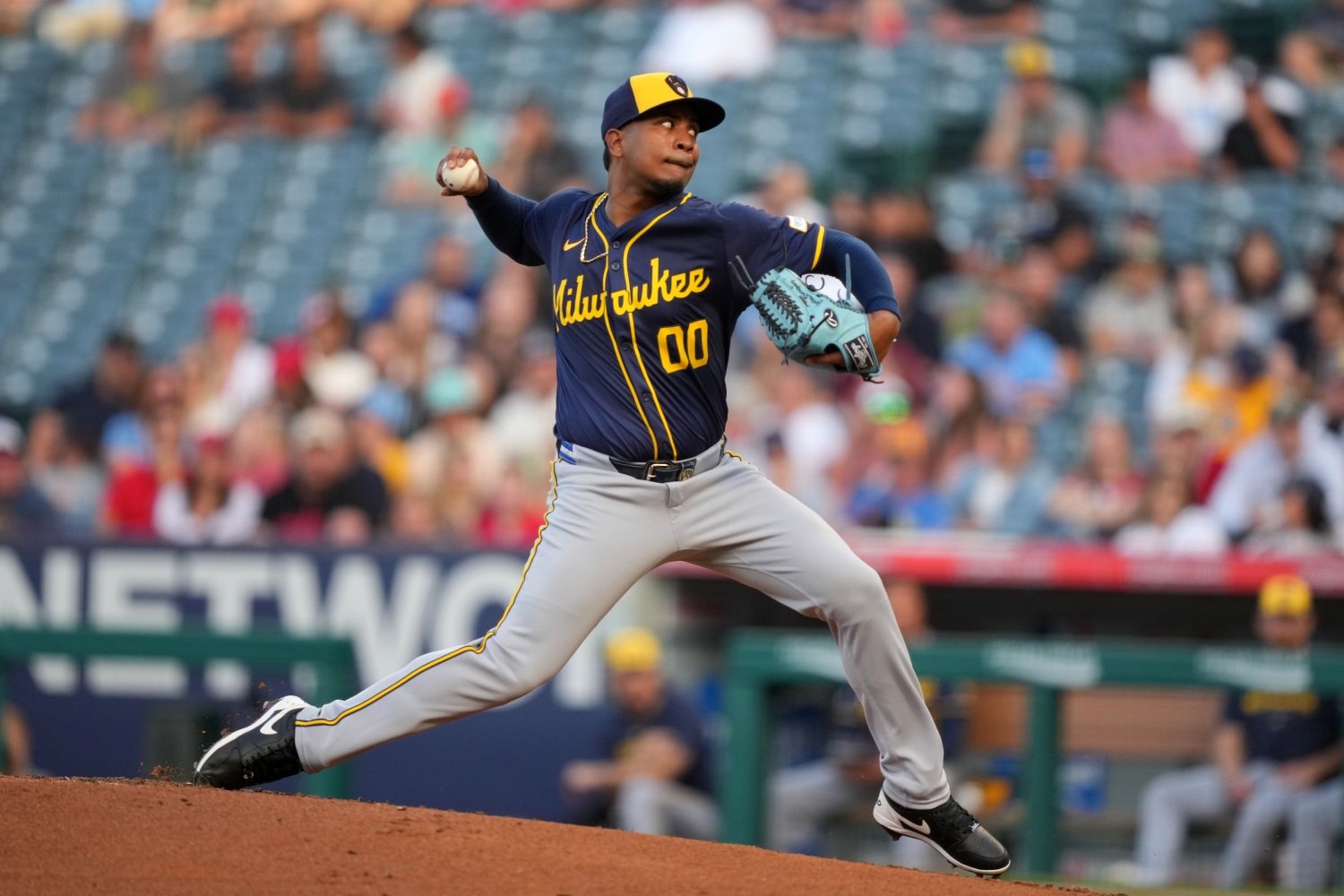
Welcome to Brewer Fanatic's 2024 top 20 prospect rundown! The Brewers graduated a number of their top prospects throughout the 2024 season, including Jackson Chourio, so there are some new names to look at heading into this offseason. Image courtesy of © Kirby Lee-Imagn Images Let's take a look at the first installment of prospects, numbered 16-20, as voted on and compiled by the Brewer Fanatic community. #20 RHP Brett Wichrowski (Wisconsin Timber Rattlers, Biloxi Shuckers) The Brewers' 13th-round selection in last year's draft, Wichrowski received a lot of attention this spring, when he showed up throwing in the upper 90s and reportedly reaching 101 MPH on his fastball. Drafted out of Bryant University, Wichrowski had been sitting in the low 90s in college, despite splitting time between starting and relieving. Starting all 21 games he appeared in this season, Wichrowski’s average velocity of 94.6 MPH wasn’t as high as what he had shown in spring, but it was still a jump of 3.4 MPH over his average fastball in 2023 at Bryant. According to Baseball America, that 3.4 MPH jump was the second-largest increase in average four-seam fastball velocity among all minor-league pitchers. Beyond the velo, Wichrowski seems to have the three-fastball combination that the Brewers love, at times cutting the ball, other times running it, to go along with his more standard four-seam fastball shape. The best pitch in Wichrowski’s repertoire is his low- to mid-80s sweeper. He most often uses it against right-handed hitters as a put-away pitch, though he’s shown an ability to land it for strikes as well. He does this against righties especially, but also against lefties at times. Wichrowski also throws a shorter, harder slider, and he appears to be more comfortable using that version against lefties than the sweeper. He rounds his repertoire out with a changeup in the mid- to upper 80s that is a work in progress, but it made strides throughout the season. The Brewers are likely thrilled with the progress Wichrowski made in 2024. For him to make another big leap in 2025, though, he will need to show a better ability to generate swings and misses. His stuff is too good for his whiff rate and strikeout rate to be 40th and 28th percentile, respectively, like they were this season. Improvement in his command could help him put hitters away more consistently, and it would help him to limit the walks a bit more. Wichrowski seems like a strong candidate to begin in Biloxi next season, and a 2026 ETA seems most realistic. However, if his command does make big strides, he could work his way into the conversation as early as next season. #19 OF Luis Lara (Wisconsin Timber Rattlers) The Brewers signed Lara in their 2022 International class, and he was one of the bigger investments of that year for them. He began 2023 in Extended Spring Training, but soon proved too talented to be sent to the Arizona Complex League and was promoted to Low-A Carolina a month into the season. He later moved to High-A, where he finished 2023. In 2024, he returned to High-A and spent the entire season there. Listed at 5-foot-7 and 155 pounds at the time of signing as a 16-year-old, he doesn’t appear to have grown taller since then, though he does seem to have bulked up. A plus runner and twitchy athlete in general, Lara does his best to make up for the lack of size with his athleticism. This athleticism and speed show up most often in the outfield, where Lara already shows signs of being a plus defender in center field. He improved his jumps out there this year, as well as his routes to the ball. He plays with a Sal Frelick-like reckless abandon in the outfield, unafraid of running into walls or of laying out. Lara has the ability to be a major-league center fielder in the future, and a good one, at that. Lara also uses his plus speed on the bases, stealing 45 bases in 2024. While his success rate of 76% isn’t great, he is likely being encouraged to push his limits in the lower levels, which can lead to being caught more often than if he only were to take off when he was comfortable. The reason Lara has dropped 11 spots on this list since the end of 2023 is certainly not due to his defense or baserunning, but rather the lack of progression offensively. His power actually took a slight step forward (though it remains well below average), hitting four home runs and posting some exit velocities over 105 MPH--an impressive feat for someone his size. The negative was that he regressed in the other three facets that had previously carried his profile. His line drive rate went from an elite 27% in 2023 to a middle-of-the-road 22.9% in 2024 and in turn, his ground ball rate jumped up around 8%. Lara’s whiff rate went from an elite 17% to a merely very good 20.3%. He also stepped back in the walk department, going from an average number of 11% to a 22nd-percentile 8.4%. This could end up being a fork in the road in Lara’s career. Will he look to continue to add power, which could help cover up some regression in other areas of his game? Will he try to get back to being an elite bat-to-ball guy, rather than a good one? Is it possible to find the ideal balance between those two, especially given his physical limitations? These are all questions he will look to answer in 2025. His glove is good enough to allow the bat to lag behind, but it will need to be better than it was in 2024 if he is going to continue to climb through the system. #18 IF Luis Peña (DSL Brewers) Signed as an international free agent in the 2024 class, Peña received $800,000, which was the third-largest bonus in the Brewers’ class. He didn’t take long to show why the Brewers were willing to guarantee him that much money, getting off to a red-hot start in the Dominican Summer League and finishing it as one of the best hitters in the league. Peña is tooled-up across the board, but his speed stands out above all else. Scouts say it’s either 70- or 80-grade speed, and the stolen base numbers certainly support that, as he went 39-for-43 stealing on the season. Reports have Peña with an above-average arm, possibly plus, and many evaluators believe he will have a chance to stick at shortstop for the long term. If he does end up having to move off of short, third base would be a possibility due to his arm strength, but many believe he would end up in center field, where his speed would allow him to prosper. Offensively, Peña has a very aggressive approach. His bat-to-ball skills border on elite, which allows him to take that approach, especially at the lower levels. His strikeout rate of 8.2% is a clear sign that he had no issues with this approach in the DSL, but it is something that pitchers might be able to take better advantage of as he moves through the system, so a bit more patience could go a long way. He has the potential for an above-average to plus hit tool, due to his contact skills. Peña has really fast hands and a ton of bat speed, along with a swing that should help him generate pretty consistent loft on the ball. While the power didn’t show up in home runs this year (only one), he did have six triples and 16 doubles. Some evaluators project him to have above-average power once he adds good weight to his projectable frame. His strong ability to pull the ball in the air would combine well with added strength. His ceiling is one of the highest in the organization, but there is a long way to go in his development. It will be interesting to see if Peña finds himself beginning the 2025 season in Low-A Carolina, or if he spends time in the Arizona Complex League. If he does skip the ACL, and he shows an ability to drive the ball a bit more (as well as a slightly more patient approach), he’s the type of talent who could not only fly up Brewers lists, but also national ones. #17 RHP Carlos F Rodriguez (Nashville Sounds, Milwaukee Brewers) Rodriguez was selected by the Brewers in the sixth round of the 2021 MLB Draft. He came out of Florida Southwestern State Junior College, which means you can include him on the growing list of JuCo pitchers who have succeeded or are showing signs of future success in the Brewers system. Rodriguez made his MLB debut this season, pitching to mixed results, especially struggling the second time through the order. None of this is out of the ordinary for a 22-year-old, though, and he showed in Nashville that there’s still plenty of reason to monitor him as a potential rotation piece in the future. A true six-pitch pitcher, Rodriguez throws all three variations of fastballs (four-seam, sinker and cutter). He also throws a changeup, curveball and slider. None of them stand out as plus pitches, but all of them are average or better. Rodriguez helps his stuff play up by messing with the timing of hitters. His four-seam and sinker are both thrown in the 91-94 range for the most part, but he can reach back and touch up to 96 MPH when he needs it. His four-seam shape is pretty standard, but his -4.5 Vertical Approach Angle helps the ball play above bats, and helped him post a very solid 29% whiff rate against the pitch this season. The cutter is thrown in the 87-89 range, and is the pitch he tends to command the best out of all of his pitches. None of them are outliers in terms of a movement profile, but they do play well off of each other. In terms of secondaries, Rodriguez throws his changeup the most often. It averaged around 15” of horizontal break, and generated a 33% whiff rate in 2024. It’s a really solid put-away pitch against left-handed hitters, which is going to be important as he moves forward, as Rodriguez did have his struggles with lefties this season. Left-handed hitters posted a .760 OPS against him in Nashville, while righties only had a .562 OPS. His curveball is another pitch that saw some improvement this season. Previously seen as his sixth-best pitch, he started throwing the curve a bit harder, as it averaged 75.8 MPH this season and didn’t drop into the upper 60s at any point, which it had in the past. The results were a 35.1% whiff rate and the lowest opponent xwOBA of any of his pitches. He rounds the repertoire out with his slider, which he used less than he had in the past, but which was still a good put-away pitch as well, posting a 33% whiff rate. Rodriguez’s command was very hot-and-cold this season. He will need to find some more consistency moving forward. When he’s at his best, he looks like a back-of-the-rotation starter. When the command is not on, he will have a hard time recording outs at the MLB level. His stuff is not bad, but it's not good enough to overcome poor command. He will head into 2025 as rotation depth, and it’s very likely we will see him make some starts for the Brewers again next season. #16 RHP K.C. Hunt (Carolina Mudcats, Wisconsin Timber Rattlers, Biloxi Shuckers) Hunt was signed as an undrafted free agent following the 2023 MLB Draft. In the 20 rounds of the draft, nobody used a pick on him. About 14 months later, he’s just put the finishing touches on a spectacular debut season, taking home co-Pitcher of the Year honors in the organization, and is now seen as a top-20 prospect in the Brewers system, at least in these parts. Hunt began the season with Low-A Carolina as a reliever and finished it in Double-A Biloxi as a starter. It was a whirlwind of a season, but Hunt never wavered, performing extremely well every step of the way. Hunt’s move to the rotation was made possible by his five-pitch mix, consisting of a four-seam fastball, slider, cutter, curveball and changeup (in order of 2024 usage). The four-seam is thrown in the 90-93 MPH range, and averaged around 18” of Induced Vertical Break. It also comes in with a -4.5 Vertical Approach Angle, both of which helped it play up above what the velocity would lead you to guess. His cutter is in the 86-88 range on average, and generated a lot of swings and misses on pitches away from righties. His mid-80s bullet slider is a true plus-plus, elite offering. According to Baseball America, he recorded a 48% whiff rate, 40% chase rate and a staggering 58% CSW% (Called Strikes + Whiff Rate) with the slider. Pitch-level data isn’t publicly available for Double-A and lower, but that CSW% would have been the highest for anyone with at least 200 sliders thrown at Triple-A or MLB this season. The closest was Jason Adam of the Rays, who had a 49.3% rate. An absolutely elite offering. Hunt’s curveball is a good pitch as well, though he struggles to command it as well as the slider. The curve has sharp, downer movement and a pretty big shape, which can make it difficult to spot. Off nights were rare for Hunt in 2024, but when they happened, it often came when he was struggling to get the curve down. He also threw a changeup, though he only used it 5% of the time. Another upper-80s pitch, it was mainly used against lefties. He struggled with it early on, but it actually made some pretty big strides throughout the season and is an average pitch at this point. Command and control were both fantastic for Hunt as well. He threw 65% of his pitches for strikes and posted a very strong 6.3% walk rate. Hunt did so well in his two-month stint at Double-A that the organization may feel comfortable having him begin 2025 in Nashville, where he would be one call away from making his MLB debut. Hunt has mid-rotation upside with his wide array of pitches and above-average command. There seems to be a good chance of seeing him in Milwaukee, sooner rather than later. What stands out from 16-20 on this list? Anybody you think is over/under ranked? Let us know your thoughts in the comments! View full article
- 18 replies
-
- 4
-
-
-
- carlos f rodriguez
- luis lara
- (and 3 more)
-
Brewer Fanatic 2024 Offseason Top 20 Prospects: #16-20
Spencer Michaelis posted an article in Minor Leagues
 Let's take a look at the first installment of prospects, numbered 16-20, as voted on and compiled by the Brewer Fanatic community. #20 RHP Brett Wichrowski (Wisconsin Timber Rattlers, Biloxi Shuckers) The Brewers' 13th-round selection in last year's draft, Wichrowski received a lot of attention this spring, when he showed up throwing in the upper 90s and reportedly reaching 101 MPH on his fastball. Drafted out of Bryant University, Wichrowski had been sitting in the low 90s in college, despite splitting time between starting and relieving. Starting all 21 games he appeared in this season, Wichrowski’s average velocity of 94.6 MPH wasn’t as high as what he had shown in spring, but it was still a jump of 3.4 MPH over his average fastball in 2023 at Bryant. According to Baseball America, that 3.4 MPH jump was the second-largest increase in average four-seam fastball velocity among all minor-league pitchers. Beyond the velo, Wichrowski seems to have the three-fastball combination that the Brewers love, at times cutting the ball, other times running it, to go along with his more standard four-seam fastball shape. The best pitch in Wichrowski’s repertoire is his low- to mid-80s sweeper. He most often uses it against right-handed hitters as a put-away pitch, though he’s shown an ability to land it for strikes as well. He does this against righties especially, but also against lefties at times. Wichrowski also throws a shorter, harder slider, and he appears to be more comfortable using that version against lefties than the sweeper. He rounds his repertoire out with a changeup in the mid- to upper 80s that is a work in progress, but it made strides throughout the season. The Brewers are likely thrilled with the progress Wichrowski made in 2024. For him to make another big leap in 2025, though, he will need to show a better ability to generate swings and misses. His stuff is too good for his whiff rate and strikeout rate to be 40th and 28th percentile, respectively, like they were this season. Improvement in his command could help him put hitters away more consistently, and it would help him to limit the walks a bit more. Wichrowski seems like a strong candidate to begin in Biloxi next season, and a 2026 ETA seems most realistic. However, if his command does make big strides, he could work his way into the conversation as early as next season. #19 OF Luis Lara (Wisconsin Timber Rattlers) The Brewers signed Lara in their 2022 International class, and he was one of the bigger investments of that year for them. He began 2023 in Extended Spring Training, but soon proved too talented to be sent to the Arizona Complex League and was promoted to Low-A Carolina a month into the season. He later moved to High-A, where he finished 2023. In 2024, he returned to High-A and spent the entire season there. Listed at 5-foot-7 and 155 pounds at the time of signing as a 16-year-old, he doesn’t appear to have grown taller since then, though he does seem to have bulked up. A plus runner and twitchy athlete in general, Lara does his best to make up for the lack of size with his athleticism. This athleticism and speed show up most often in the outfield, where Lara already shows signs of being a plus defender in center field. He improved his jumps out there this year, as well as his routes to the ball. He plays with a Sal Frelick-like reckless abandon in the outfield, unafraid of running into walls or of laying out. Lara has the ability to be a major-league center fielder in the future, and a good one, at that. Lara also uses his plus speed on the bases, stealing 45 bases in 2024. While his success rate of 76% isn’t great, he is likely being encouraged to push his limits in the lower levels, which can lead to being caught more often than if he only were to take off when he was comfortable. The reason Lara has dropped 11 spots on this list since the end of 2023 is certainly not due to his defense or baserunning, but rather the lack of progression offensively. His power actually took a slight step forward (though it remains well below average), hitting four home runs and posting some exit velocities over 105 MPH--an impressive feat for someone his size. The negative was that he regressed in the other three facets that had previously carried his profile. His line drive rate went from an elite 27% in 2023 to a middle-of-the-road 22.9% in 2024 and in turn, his ground ball rate jumped up around 8%. Lara’s whiff rate went from an elite 17% to a merely very good 20.3%. He also stepped back in the walk department, going from an average number of 11% to a 22nd-percentile 8.4%. This could end up being a fork in the road in Lara’s career. Will he look to continue to add power, which could help cover up some regression in other areas of his game? Will he try to get back to being an elite bat-to-ball guy, rather than a good one? Is it possible to find the ideal balance between those two, especially given his physical limitations? These are all questions he will look to answer in 2025. His glove is good enough to allow the bat to lag behind, but it will need to be better than it was in 2024 if he is going to continue to climb through the system. #18 IF Luis Peña (DSL Brewers) Signed as an international free agent in the 2024 class, Peña received $800,000, which was the third-largest bonus in the Brewers’ class. He didn’t take long to show why the Brewers were willing to guarantee him that much money, getting off to a red-hot start in the Dominican Summer League and finishing it as one of the best hitters in the league. Peña is tooled-up across the board, but his speed stands out above all else. Scouts say it’s either 70- or 80-grade speed, and the stolen base numbers certainly support that, as he went 39-for-43 stealing on the season. Reports have Peña with an above-average arm, possibly plus, and many evaluators believe he will have a chance to stick at shortstop for the long term. If he does end up having to move off of short, third base would be a possibility due to his arm strength, but many believe he would end up in center field, where his speed would allow him to prosper. Offensively, Peña has a very aggressive approach. His bat-to-ball skills border on elite, which allows him to take that approach, especially at the lower levels. His strikeout rate of 8.2% is a clear sign that he had no issues with this approach in the DSL, but it is something that pitchers might be able to take better advantage of as he moves through the system, so a bit more patience could go a long way. He has the potential for an above-average to plus hit tool, due to his contact skills. Peña has really fast hands and a ton of bat speed, along with a swing that should help him generate pretty consistent loft on the ball. While the power didn’t show up in home runs this year (only one), he did have six triples and 16 doubles. Some evaluators project him to have above-average power once he adds good weight to his projectable frame. His strong ability to pull the ball in the air would combine well with added strength. His ceiling is one of the highest in the organization, but there is a long way to go in his development. It will be interesting to see if Peña finds himself beginning the 2025 season in Low-A Carolina, or if he spends time in the Arizona Complex League. If he does skip the ACL, and he shows an ability to drive the ball a bit more (as well as a slightly more patient approach), he’s the type of talent who could not only fly up Brewers lists, but also national ones. #17 RHP Carlos F Rodriguez (Nashville Sounds, Milwaukee Brewers) Rodriguez was selected by the Brewers in the sixth round of the 2021 MLB Draft. He came out of Florida Southwestern State Junior College, which means you can include him on the growing list of JuCo pitchers who have succeeded or are showing signs of future success in the Brewers system. Rodriguez made his MLB debut this season, pitching to mixed results, especially struggling the second time through the order. None of this is out of the ordinary for a 22-year-old, though, and he showed in Nashville that there’s still plenty of reason to monitor him as a potential rotation piece in the future. A true six-pitch pitcher, Rodriguez throws all three variations of fastballs (four-seam, sinker and cutter). He also throws a changeup, curveball and slider. None of them stand out as plus pitches, but all of them are average or better. Rodriguez helps his stuff play up by messing with the timing of hitters. His four-seam and sinker are both thrown in the 91-94 range for the most part, but he can reach back and touch up to 96 MPH when he needs it. His four-seam shape is pretty standard, but his -4.5 Vertical Approach Angle helps the ball play above bats, and helped him post a very solid 29% whiff rate against the pitch this season. The cutter is thrown in the 87-89 range, and is the pitch he tends to command the best out of all of his pitches. None of them are outliers in terms of a movement profile, but they do play well off of each other. In terms of secondaries, Rodriguez throws his changeup the most often. It averaged around 15” of horizontal break, and generated a 33% whiff rate in 2024. It’s a really solid put-away pitch against left-handed hitters, which is going to be important as he moves forward, as Rodriguez did have his struggles with lefties this season. Left-handed hitters posted a .760 OPS against him in Nashville, while righties only had a .562 OPS. His curveball is another pitch that saw some improvement this season. Previously seen as his sixth-best pitch, he started throwing the curve a bit harder, as it averaged 75.8 MPH this season and didn’t drop into the upper 60s at any point, which it had in the past. The results were a 35.1% whiff rate and the lowest opponent xwOBA of any of his pitches. He rounds the repertoire out with his slider, which he used less than he had in the past, but which was still a good put-away pitch as well, posting a 33% whiff rate. Rodriguez’s command was very hot-and-cold this season. He will need to find some more consistency moving forward. When he’s at his best, he looks like a back-of-the-rotation starter. When the command is not on, he will have a hard time recording outs at the MLB level. His stuff is not bad, but it's not good enough to overcome poor command. He will head into 2025 as rotation depth, and it’s very likely we will see him make some starts for the Brewers again next season. #16 RHP K.C. Hunt (Carolina Mudcats, Wisconsin Timber Rattlers, Biloxi Shuckers) Hunt was signed as an undrafted free agent following the 2023 MLB Draft. In the 20 rounds of the draft, nobody used a pick on him. About 14 months later, he’s just put the finishing touches on a spectacular debut season, taking home co-Pitcher of the Year honors in the organization, and is now seen as a top-20 prospect in the Brewers system, at least in these parts. Hunt began the season with Low-A Carolina as a reliever and finished it in Double-A Biloxi as a starter. It was a whirlwind of a season, but Hunt never wavered, performing extremely well every step of the way. Hunt’s move to the rotation was made possible by his five-pitch mix, consisting of a four-seam fastball, slider, cutter, curveball and changeup (in order of 2024 usage). The four-seam is thrown in the 90-93 MPH range, and averaged around 18” of Induced Vertical Break. It also comes in with a -4.5 Vertical Approach Angle, both of which helped it play up above what the velocity would lead you to guess. His cutter is in the 86-88 range on average, and generated a lot of swings and misses on pitches away from righties. His mid-80s bullet slider is a true plus-plus, elite offering. According to Baseball America, he recorded a 48% whiff rate, 40% chase rate and a staggering 58% CSW% (Called Strikes + Whiff Rate) with the slider. Pitch-level data isn’t publicly available for Double-A and lower, but that CSW% would have been the highest for anyone with at least 200 sliders thrown at Triple-A or MLB this season. The closest was Jason Adam of the Rays, who had a 49.3% rate. An absolutely elite offering. Hunt’s curveball is a good pitch as well, though he struggles to command it as well as the slider. The curve has sharp, downer movement and a pretty big shape, which can make it difficult to spot. Off nights were rare for Hunt in 2024, but when they happened, it often came when he was struggling to get the curve down. He also threw a changeup, though he only used it 5% of the time. Another upper-80s pitch, it was mainly used against lefties. He struggled with it early on, but it actually made some pretty big strides throughout the season and is an average pitch at this point. Command and control were both fantastic for Hunt as well. He threw 65% of his pitches for strikes and posted a very strong 6.3% walk rate. Hunt did so well in his two-month stint at Double-A that the organization may feel comfortable having him begin 2025 in Nashville, where he would be one call away from making his MLB debut. Hunt has mid-rotation upside with his wide array of pitches and above-average command. There seems to be a good chance of seeing him in Milwaukee, sooner rather than later. What stands out from 16-20 on this list? Anybody you think is over/under ranked? Let us know your thoughts in the comments!
 -
Episode 28: Offseason Presser From Matt Arnold & Pat Murphy
Spencer Michaelis posted an article in Podcasts
 Jack and Spencer discuss Matt Arnold and Pat Murphy's final press conferences of the season and take listener questions on pending offseason decisions. Apple Podcasts: https://podcasts.apple.com/us/podcast/the-brewer-fanatic-podcast/id1740648724 Spotify: https://open.spotify.com/show/5CY8mWsQayqjDXqw9OT2Td\ iHeartRadio: https://www.iheart.com/podcast/263-the-brewer-fanatic-podcast-166534588/
 -
The Brewers offseason is set to begin in earnest. What did General Manager Matt Arnold and Manager Pat Murphy have to say in their end-of-season press conference? Jack and Spencer discuss Matt Arnold and Pat Murphy's final press conferences of the season and take listener questions on pending offseason decisions. Apple Podcasts: https://podcasts.apple.com/us/podcast/the-brewer-fanatic-podcast/id1740648724 Spotify: https://open.spotify.com/show/5CY8mWsQayqjDXqw9OT2Td\ iHeartRadio: https://www.iheart.com/podcast/263-the-brewer-fanatic-podcast-166534588/ View full article
-
Adding some more that I've found... Nicolas Barrios -- Appears to be related to Gregory Barrios (traded to TB in the Civale deal), his IG shows he's a left hitter, but no video that I can find. Unsure if he's goin to be signing this year or next. Diego Frontado -- RHH infielder, found some Facebook video from this year, and some older video on YouTube Gerlyn Payano -- LHH OF, part of RVH Academy has some old video on IG Alejandro Guerrero -- RHH IF, also training with RVH, with some video from 2023 on IG Leonard Rijo -- RHH, seemed to be a class of 24 guy, but appears he will be in this upcoming class? Hard to tell, but he seemingly didn't sign in last years class. Has some swings in his IG Highlights and the swing looks pretty nice.
-
Jeferson Quero Hope the shoulder doesn't affect the throwing much, but until I see that it does, I'm not going to assume it does. He has All Star catcher potential.Jacob MisiorowskiCooper PrattJesus MadeRobert GasserTyler BlackBraylon PayneLogan HendersonYophery RodriguezLuis PenaBrock WilkenCraig YohoLuke AdamsEric BitontiK.C. HuntMike BoeveBrett WichrowskiJosh KnothLuis LaraBishop Letson Doing this the day after the Brewers lost, so I don't have the energy to put too much into this, but below are the rest of my Top 50 from my last update. 21 RHP Bryce Meccage 22 1B Blake Burke 23 RHP Carlos Rodriguez 24 SS Josh Adamczewski 25 UTIL Jadher Areinamo 26 UTIL Juan Baez 27 RHP Yorman Galindez 28 RHP Shane Smith 29 RHP Ryan Birchard 30 OF Jose Anderson 31 1B Ernesto Martinez 32 SS Filippo Di Turi 33 SS Jorge Quintana 34 SS Eric Brown 35 UTIL Dylan O'Rae 36 OF Luis Castillo 37 UTIL Isaac Collins 38 RHP Coleman Crow 39 RHP Manuel Rodriguez 40 LHP Tate Kuehner 41 LHP Joey Broughton 42 C Marco Dinges 43 OF Hedbert Perez 44 RHP Hayden Robinson 45 RHP Jason Woodward 46 RHP Alexander Cornielle 47 RHP Jaron Deberry 48 RHP Travis Smith 49 RHP Jesus Rivero 50 OF Carlos D. Rodriguez
-
Episode 27: Heading Into The Offseason With More Heartbreak
Spencer Michaelis posted an article in Podcasts
 Jack and Spencer dissect another heartbreaking playoff series loss--and why this keeps happening to the Brewers--before transitioning into offseason coverage. Apple Podcasts: https://podcasts.apple.com/us/podcast/the-brewer-fanatic-podcast/id1740648724 Spotify: https://open.spotify.com/show/5CY8mWsQayqjDXqw9OT2Td\ iHeartRadio: https://www.iheart.com/podcast/263-the-brewer-fanatic-podcast-166534588/
 -
So, what's next for the Brewers? Jack and Spencer dissect another heartbreaking playoff series loss--and why this keeps happening to the Brewers--before transitioning into offseason coverage. Apple Podcasts: https://podcasts.apple.com/us/podcast/the-brewer-fanatic-podcast/id1740648724 Spotify: https://open.spotify.com/show/5CY8mWsQayqjDXqw9OT2Td\ iHeartRadio: https://www.iheart.com/podcast/263-the-brewer-fanatic-podcast-166534588/ View full article
-
Since names are starting to come out via the Pipeline rankings, I'll share some other names I was able to dig up beyond the three we know. I believe they are all 2025's, but I found some 2026 names too. I'll keep searching, but this is what I've found so far. Alexander Frias -- has a lot of videos on his TikTok including some fun bat flips and some nukes from the left side. Manny De Los Santos -- (not entirely sure if he's class of 2025, but believe he is) also has video of some nice LH swings on his TikTok Salomón Millán - Catcher who has some video on his Instagram, has the "El Craken" nickname that Gary Sanchez was given early on. Francis Sosa -- RHH has some video on his TikTok Sharlinson de la Rosa -- RHH who seems to have some pop. Has some video on his IG Highlights and his TikTok Isais Chavez -- Has some video of his swings on TikTok, not sure what position he plays, but looks catcher-ish. Yeuri Ramirez -- RHP, appears to like messing with timing, and show a lot of emotion on the mound, also appears to throw a pretty good combo of two breaking ball shapes and looks like he has some decent velo in the tank as well. Video on his TikTok Diustin Mayorquin -- RHP out of Nicaragua (pipeline continues), fastball has already been up to 92 from what I could gather. Looks to throw a slider as his main secondary. Decent amount of video on his TikTok.
-
Was able to learn a bit about Jaquez. Throws a changeup and slider as his secondaries, both had some decent whiff rates and both are around 80 MPH. Still couldn't find anything on his fastball velocity, but I'd imagine it's pretty close to 90 based on the velo on the secondaries. And yeah to touch on the above, I somehow overlooked King on my voting this year, as well as Hernandez. I was quite excited about both throughout the season too... Total oversight on my part. Even if I placed King first, he would've ended up as an Honorable Mention. So it appears we all overlooked him outside of @Ro Muellerlol.
- 10 replies
-
- 2
-
-
- dariel jaquez
- argenis aparicio
- (and 2 more)
-
Brewer Fanatic Short Season Pitcher of the Year - 2024
Spencer Michaelis posted an article in Minor Leagues
 Without further ado, here are your Brewer Fanatic Minor League Short Season Pitchers of the Year, voted on by the site’s writers, and beginning with five honorable mentions. Honorable Mentions RHP- Wenderlyn King - Dominican Summer League - 10 G, 6 GS, 37.2 IP, 2-3, 3.25 ERA, 3.07 FIP, 1.27 WHIP, 42 H, 6 BB, 43 K LHP- Wande Torres - Dominican Summer League - 8 G, 7 GS, 15.2 IP, 1-0, 1.72 ERA, 1.49 FIP, 0.83 WHIP, 7 H, 6 BB, 33 K RHP- Wandy Cabrera - Dominican Summer League - 11 G, 3 GS, 30.2 IP, 4-2, 2.05 ERA, 4.82 FIP, 1.27 WHIP, 21 H, 18 BB, 25 K RHP- Saul Sanchez - Dominican Summer League - 26 G, 0 GS, 20.2 IP, 3-2, 1.74 ERA, 4.07 FIP, 1.06 WHIP, 13 H, 9 BB, 17 K, 1 SV LHP- Anfernny Reyes - Arizona Complex League and Carolina Mudcats - 27 G, 0 GS, 32.1 IP, 6-1, 2.23 ERA, 4.84 FIP, 1.30 WHIP, 16 H, 26 BB, 41 K, 2 SV TOP FOUR SHORT SEASON PITCHERS OF 2024 #4 RHP - Hayden Robinson - Arizona Complex League - 6 G, 3 GS, 18.2 IP, 0-0, 2.41 ERA, 3.14 FIP, 1.13 WHIP, 14 H, 7 BB, 28 K Unranked by all publications The Brewers 14th round selection in 2023, Robinson was signed away from a Nicholls State commitment, and made his professional debut this summer. He quickly generated buzz within the scouting community in Arizona, specifically due to his secondaries. Robinson throws a fastball, slider and changeup. The fastball is only in the 88-91 MPH range, but it plays up due to his elite extension. At only six feet tall, he is able to get seven feet of extension, which adds around two MPH to his perceived velocity. The slider is a really good offering, sitting around 80 MPH with quite a bit of sweep. The changeup looks similar to Logan Henderson’s on video, and is also hovering around 80 MPH on average. It was used against righties and lefties, and according to Baseball America, both the changeup and slider induced whiff rates of over 45% against them this year. The final two appearances of Robinson’s season were arguably his best. On May 30th he struck out nine batters in 4 2/3 innings, only allowing two hits and one walk, as well as a hit by pitch, though he did allow one earned run. On June 6th, in his final outing, Robinson only allowed one baserunner in 3 1/3 innings. He struck out seven hitters. In total, he threw eight innings of one run ball, allowed only four baserunners, and struck out 16. Unfortunately for him and the Brewers, Robinson ended up missing the second half of the season with an elbow injury. It’s unknown exactly how long he will be out, but if he is healthy enough to handle it, the Brewers may feel comfortable pushing him to Low-A to being 2025. #3 RHP - Ayendy Bravo - Dominican Summer League - 12 G, 4 GS, 45.1 IP, 4-3, 2.38 ERA, 4.24 FIP, 1.04 WHIP, 31 H, 16 BB, 34 K Unranked by all publications Signed out of the Dominican Republic in this past January’s class, Bravo turned 17 a couple of weeks after signing. His first season as a professional came with a lot of success. An unheralded signing at the time, his bonus went unreported, and there is not much information available to the public. Based on some social media sleuthing, Bravo appears to throw in the low-90’s with a firm fastball and an over the top delivery. He also mixes in an upper-70’s slider that takes a little more of a curveball shape, due to that previously mentioned arm slot. It’s unclear if he has more secondaries in his repertoire, but it’s certainly possible that he does. Bravo has good stuff for his age, but one thing he will likely look to improve on as he moves through the system is his ability to generate swing and miss. Along with, on the same note, generating strikeouts. He seems like a good candidate to begin 2025 in the Arizona Complex League. #2 RHP - Argenis Aparicio - Dominican Summer League - 11 G, 5 GS, 48.0 IP, 4-1, 2.81 ERA, 4.37 FIP, 1.08 WHIP, 41 H,11 BB, 41 K Unranked by all publications Aparicio signed out of the Dominican Republic in 2023 as a two-way player. He spent his first season doing both and didn’t find much success on either side of the ball. In 2024, however, he spent all of his time on the mound and had a much better second season. Aparicio possesses a fastball in the 87-91 MPH range. In the video that is available, the fastball appears to have carry and play well at the top of the zone. Similar to Bravo, Aparicio throws from a pretty high slot. His upper 70’s-low 80’s slider has the shape of a gyro slider, getting sharp, late, downer movement on the pitch. He also has a mid-80’s changeup that appears to have quite a bit of fade to the arm side. Aparicio showed an ability to strike hitters out at a decent level, limited walks well, and never allowed more than three earned runs in an appearance. He was 18 for the entirety of the season, but is 19 at the time this article is being written. He seems like another good candidate for the Arizona Complex Brewers in 2025. #1 RHP - Dariel Jaquez - Dominican Summer League - 9 G, 6 GS, 31.0 IP, 2-0, 1.74 ERA, 4.65 FIP, 0.94 WHIP, 13 H, 16 BB, 29 K Unranked by all publications Signed out of the Dominican Republic this past winter, Jaquez had just turned 17 a few weeks before signing. Unfortunately, there is not much in the way of information on Jaquez. Unlike the majority of his DSL teammates, Jaquez doesn’t appear to be very active on social media, thus making it hard to find anything on his repertoire. What we do know is that he struck out nearly a batter per inning this year, which implies that he has an ability to miss bats. His walk numbers were higher than you would want them to be, walking 13% of the hitters he faced, but he did a fantastic job limiting the number of base hits he allowed, and still ended up with a WHIP under one. There’s no way to be sure of this, but often times those three qualities point to a pitcher who has good velocity, or an outlier pitch of some sort which allows them to work around control issues. Jaquez will be 18 in 2025. The high walk rate is the only reason he might not begin next year at the Arizona Complex, but assuming his stuff matches his results, he would seem to be a good candidate to move stateside. Do any of these names stand out to you? Anybody you’re specifically excited to see in 2025? Let us know in the comments!
- 10 comments
-
- 1
-
-
- dariel jaquez
- argenis aparicio
- (and 2 more)
-
While complex level pitching can often lag behind the hitters, the Brewers had some impressive performances this season, and four names in particular separated themselves from the crowd. Without further ado, here are your Brewer Fanatic Minor League Short Season Pitchers of the Year, voted on by the site’s writers, and beginning with five honorable mentions. Honorable Mentions RHP- Wenderlyn King - Dominican Summer League - 10 G, 6 GS, 37.2 IP, 2-3, 3.25 ERA, 3.07 FIP, 1.27 WHIP, 42 H, 6 BB, 43 K LHP- Wande Torres - Dominican Summer League - 8 G, 7 GS, 15.2 IP, 1-0, 1.72 ERA, 1.49 FIP, 0.83 WHIP, 7 H, 6 BB, 33 K RHP- Wandy Cabrera - Dominican Summer League - 11 G, 3 GS, 30.2 IP, 4-2, 2.05 ERA, 4.82 FIP, 1.27 WHIP, 21 H, 18 BB, 25 K RHP- Saul Sanchez - Dominican Summer League - 26 G, 0 GS, 20.2 IP, 3-2, 1.74 ERA, 4.07 FIP, 1.06 WHIP, 13 H, 9 BB, 17 K, 1 SV LHP- Anfernny Reyes - Arizona Complex League and Carolina Mudcats - 27 G, 0 GS, 32.1 IP, 6-1, 2.23 ERA, 4.84 FIP, 1.30 WHIP, 16 H, 26 BB, 41 K, 2 SV TOP FOUR SHORT SEASON PITCHERS OF 2024 #4 RHP - Hayden Robinson - Arizona Complex League - 6 G, 3 GS, 18.2 IP, 0-0, 2.41 ERA, 3.14 FIP, 1.13 WHIP, 14 H, 7 BB, 28 K Unranked by all publications The Brewers 14th round selection in 2023, Robinson was signed away from a Nicholls State commitment, and made his professional debut this summer. He quickly generated buzz within the scouting community in Arizona, specifically due to his secondaries. Robinson throws a fastball, slider and changeup. The fastball is only in the 88-91 MPH range, but it plays up due to his elite extension. At only six feet tall, he is able to get seven feet of extension, which adds around two MPH to his perceived velocity. The slider is a really good offering, sitting around 80 MPH with quite a bit of sweep. The changeup looks similar to Logan Henderson’s on video, and is also hovering around 80 MPH on average. It was used against righties and lefties, and according to Baseball America, both the changeup and slider induced whiff rates of over 45% against them this year. The final two appearances of Robinson’s season were arguably his best. On May 30th he struck out nine batters in 4 2/3 innings, only allowing two hits and one walk, as well as a hit by pitch, though he did allow one earned run. On June 6th, in his final outing, Robinson only allowed one baserunner in 3 1/3 innings. He struck out seven hitters. In total, he threw eight innings of one run ball, allowed only four baserunners, and struck out 16. Unfortunately for him and the Brewers, Robinson ended up missing the second half of the season with an elbow injury. It’s unknown exactly how long he will be out, but if he is healthy enough to handle it, the Brewers may feel comfortable pushing him to Low-A to being 2025. #3 RHP - Ayendy Bravo - Dominican Summer League - 12 G, 4 GS, 45.1 IP, 4-3, 2.38 ERA, 4.24 FIP, 1.04 WHIP, 31 H, 16 BB, 34 K Unranked by all publications Signed out of the Dominican Republic in this past January’s class, Bravo turned 17 a couple of weeks after signing. His first season as a professional came with a lot of success. An unheralded signing at the time, his bonus went unreported, and there is not much information available to the public. Based on some social media sleuthing, Bravo appears to throw in the low-90’s with a firm fastball and an over the top delivery. He also mixes in an upper-70’s slider that takes a little more of a curveball shape, due to that previously mentioned arm slot. It’s unclear if he has more secondaries in his repertoire, but it’s certainly possible that he does. Bravo has good stuff for his age, but one thing he will likely look to improve on as he moves through the system is his ability to generate swing and miss. Along with, on the same note, generating strikeouts. He seems like a good candidate to begin 2025 in the Arizona Complex League. #2 RHP - Argenis Aparicio - Dominican Summer League - 11 G, 5 GS, 48.0 IP, 4-1, 2.81 ERA, 4.37 FIP, 1.08 WHIP, 41 H,11 BB, 41 K Unranked by all publications Aparicio signed out of the Dominican Republic in 2023 as a two-way player. He spent his first season doing both and didn’t find much success on either side of the ball. In 2024, however, he spent all of his time on the mound and had a much better second season. Aparicio possesses a fastball in the 87-91 MPH range. In the video that is available, the fastball appears to have carry and play well at the top of the zone. Similar to Bravo, Aparicio throws from a pretty high slot. His upper 70’s-low 80’s slider has the shape of a gyro slider, getting sharp, late, downer movement on the pitch. He also has a mid-80’s changeup that appears to have quite a bit of fade to the arm side. Aparicio showed an ability to strike hitters out at a decent level, limited walks well, and never allowed more than three earned runs in an appearance. He was 18 for the entirety of the season, but is 19 at the time this article is being written. He seems like another good candidate for the Arizona Complex Brewers in 2025. #1 RHP - Dariel Jaquez - Dominican Summer League - 9 G, 6 GS, 31.0 IP, 2-0, 1.74 ERA, 4.65 FIP, 0.94 WHIP, 13 H, 16 BB, 29 K Unranked by all publications Signed out of the Dominican Republic this past winter, Jaquez had just turned 17 a few weeks before signing. Unfortunately, there is not much in the way of information on Jaquez. Unlike the majority of his DSL teammates, Jaquez doesn’t appear to be very active on social media, thus making it hard to find anything on his repertoire. What we do know is that he struck out nearly a batter per inning this year, which implies that he has an ability to miss bats. His walk numbers were higher than you would want them to be, walking 13% of the hitters he faced, but he did a fantastic job limiting the number of base hits he allowed, and still ended up with a WHIP under one. There’s no way to be sure of this, but often times those three qualities point to a pitcher who has good velocity, or an outlier pitch of some sort which allows them to work around control issues. Jaquez will be 18 in 2025. The high walk rate is the only reason he might not begin next year at the Arizona Complex, but assuming his stuff matches his results, he would seem to be a good candidate to move stateside. Do any of these names stand out to you? Anybody you’re specifically excited to see in 2025? Let us know in the comments! View full article
- 10 replies
-
- 1
-
-
- dariel jaquez
- argenis aparicio
- (and 2 more)
-
 In this playoff preview episode, Jack and Spencer break down their preferred Wild Card rosters, how the Brewers will manage their pitching staff, and much more. Apple Podcasts: https://podcasts.apple.com/us/podcast/the-brewer-fanatic-podcast/id1740648724 Spotify: https://open.spotify.com/show/5CY8mWsQayqjDXqw9OT2Td\ iHeartRadio: https://www.iheart.com/podcast/263-the-brewer-fanatic-podcast-166534588/
 -
Jack and Spencer break down the Brewers' Wild Card rosters and talk about the playoffs! In this playoff preview episode, Jack and Spencer break down their preferred Wild Card rosters, how the Brewers will manage their pitching staff, and much more. Apple Podcasts: https://podcasts.apple.com/us/podcast/the-brewer-fanatic-podcast/id1740648724 Spotify: https://open.spotify.com/show/5CY8mWsQayqjDXqw9OT2Td\ iHeartRadio: https://www.iheart.com/podcast/263-the-brewer-fanatic-podcast-166534588/ View full article
-
 Spencer is joined by Ryan Topp of Milwaukee’s Tailgate. They discuss the Brewers taking 2 of 3 in Arizona and then 2 of 3 at home against Philadelphia, the Brewers clinching the NL Central, Christian Yelich in the TV booth, Chris Hook’s wizardry, and much more! Apple Podcasts: https://podcasts.apple.com/us/podcast/the-brewer-fanatic-podcast/id1740648724 Spotify: https://open.spotify.com/show/5CY8mWsQayqjDXqw9OT2Td iHeartRadio: https://www.iheart.com/podcast/263-the-brewer-fanatic-podcast-166534588/
 -
The Brewers are going to the playoffs! Spencer is joined by Ryan Topp of Milwaukee’s Tailgate. They discuss the Brewers taking 2 of 3 in Arizona and then 2 of 3 at home against Philadelphia, the Brewers clinching the NL Central, Christian Yelich in the TV booth, Chris Hook’s wizardry, and much more! Apple Podcasts: https://podcasts.apple.com/us/podcast/the-brewer-fanatic-podcast/id1740648724 Spotify: https://open.spotify.com/show/5CY8mWsQayqjDXqw9OT2Td iHeartRadio: https://www.iheart.com/podcast/263-the-brewer-fanatic-podcast-166534588/ View full article
-
A minor league recap pod you say? We may have to explore this idea haha
- 2 replies
-
- 2
-
-
-
- yophery rodriguez
- alexander cornielle
- (and 3 more)
-
As we head into mid-September, the Brewers rotation is something of an unknown as Colin Rea struggles while Aaron Civale and Frankie Montas outperform their (relatively meager) expectations. The guys recap the Rockies and Giants series, Colin Rea’s recent struggles, the changes Aaron Civale and Frankie Montas have made since joining the Brewers, the value of keeping the coaching staff intact under Pat Murphy, and more. Apple Podcasts: https://podcasts.apple.com/us/podcast/the-brewer-fanatic-podcast/id1740648724 Spotify: https://open.spotify.com/show/5CY8mWsQayqjDXqw9OT2Td\ iHeartRadio: https://www.iheart.com/podcast/263-the-brewer-fanatic-podcast-166534588/ View full article
-
Episode 24: Brewers Doin' Brewer Things With Civale & Montas
Spencer Michaelis posted an article in Podcasts
 The guys recap the Rockies and Giants series, Colin Rea’s recent struggles, the changes Aaron Civale and Frankie Montas have made since joining the Brewers, the value of keeping the coaching staff intact under Pat Murphy, and more. Apple Podcasts: https://podcasts.apple.com/us/podcast/the-brewer-fanatic-podcast/id1740648724 Spotify: https://open.spotify.com/show/5CY8mWsQayqjDXqw9OT2Td\ iHeartRadio: https://www.iheart.com/podcast/263-the-brewer-fanatic-podcast-166534588/