



Spencer Michaelis
-
Posts
1,119 -
Joined
-
Last visited
-
Days Won
17
Content Type
Profiles
Forums
Blogs
Events
News
2026 Milwaukee Brewers Top Prospects Ranking
Milwaukee Brewers Videos
2022 Milwaukee Brewers Draft Picks
Milwaukee Brewers Free Agent & Trade Rumors, Notes, & Tidbits
Guides & Resources
2023 Milwaukee Brewers Draft Picks
2024 Milwaukee Brewers Draft Picks
The Milwaukee Brewers Players Project
2025 Milwaukee Brewers Draft Pick Tracker
2026 Milwaukee Brewers Draft Tracker: Picks & Bonuses
Store
Downloads
Gallery
Everything posted by Spencer Michaelis
-
2024 Minor League Transaction Thread
Spencer Michaelis replied to Jim Goulart's topic in Brewers Minor League Talk
A couple more interesting MiLB Signings per Curt Hogg -
2024 Minor League Transaction Thread
Spencer Michaelis replied to Jim Goulart's topic in Brewers Minor League Talk
It appears Arias is signing as part of the 2024 International Class, from what I can tell. They must have a bit of money left over. Found his TikTok and his Instagram. Not much video, but you can see some of the mechanics. -
Back-to-back podcasts; today Jack and Spencer look at the lead-up to the Rule 5 Draft. Jack and Spencer break down the potential impact of losing Walker McKinven to the White Sox, the upcoming Rule 5 draft, how the Brewers can fix Deivi García, and more. Apple Podcasts: https://podcasts.apple.com/us/podcast/the-brewer-fanatic-podcast/id1740648724 Spotify: https://open.spotify.com/show/5CY8mWsQayqjDXqw9OT2Td iHeartRadio: https://www.iheart.com/podcast/263-the-brewer-fanatic-podcast-166534588/ Pocket Casts: https://pca.st/ommzz627 Watch On YouTube: https://www.youtube.com/@brewerfanatic View full article
-
 Jack and Spencer break down the potential impact of losing Walker McKinven to the White Sox, the upcoming Rule 5 draft, how the Brewers can fix Deivi García, and more. Apple Podcasts: https://podcasts.apple.com/us/podcast/the-brewer-fanatic-podcast/id1740648724 Spotify: https://open.spotify.com/show/5CY8mWsQayqjDXqw9OT2Td iHeartRadio: https://www.iheart.com/podcast/263-the-brewer-fanatic-podcast-166534588/ Pocket Casts: https://pca.st/ommzz627 Watch On YouTube: https://www.youtube.com/@brewerfanatic
 -
You won't need X to listen! It's available on Spotify, Apple Podcasts, and almost anywhere you can get a pod! It's also available on the site 🙂 and you can listen directly through there. Hoping it'll be on YouTube soon as well, as we used a lot of graphics and video on this episode. https://brewerfanatic.com/news-rumors/milwaukee-brewers-podcasts/special-episode-1-2024-minor-league-recap-r2819/?do=getNewComment&d=1&id=2819
-
In the first part of five, Brewer Fanatic's Joseph Zarr joins Spencer to talk about the Brewers minor league system. In an extended episode and the first of a five part series, Joseph Zarr joins Spencer to discuss the Brewers 2024 MiLB season, some of the departures and additions, updates on how players from the organization have fared in the AFL and winter leagues, and also placed DSL and ACL prospects into tiers based on their future potential. Apple Podcasts: https://podcasts.apple.com/us/podcast/the-brewer-fanatic-podcast/id1740648724 Spotify: https://open.spotify.com/show/5CY8mWsQayqjDXqw9OT2Td\ iHeartRadio: https://www.iheart.com/podcast/263-the-brewer-fanatic-podcast-166534588/ View full article
-
- 3
-

-

-
- jesus made
- luis pena
- (and 3 more)
-
 In an extended episode and the first of a five part series, Joseph Zarr joins Spencer to discuss the Brewers 2024 MiLB season, some of the departures and additions, updates on how players from the organization have fared in the AFL and winter leagues, and also placed DSL and ACL prospects into tiers based on their future potential. Apple Podcasts: https://podcasts.apple.com/us/podcast/the-brewer-fanatic-podcast/id1740648724 Spotify: https://open.spotify.com/show/5CY8mWsQayqjDXqw9OT2Td\ iHeartRadio: https://www.iheart.com/podcast/263-the-brewer-fanatic-podcast-166534588/
 -
I think that's a fair POV for sure. It's the main reason he isn't my number one. But the pure upside of being a legit ace is also a solid reason to vote him so highly I think. So I get how he ended up here.
-
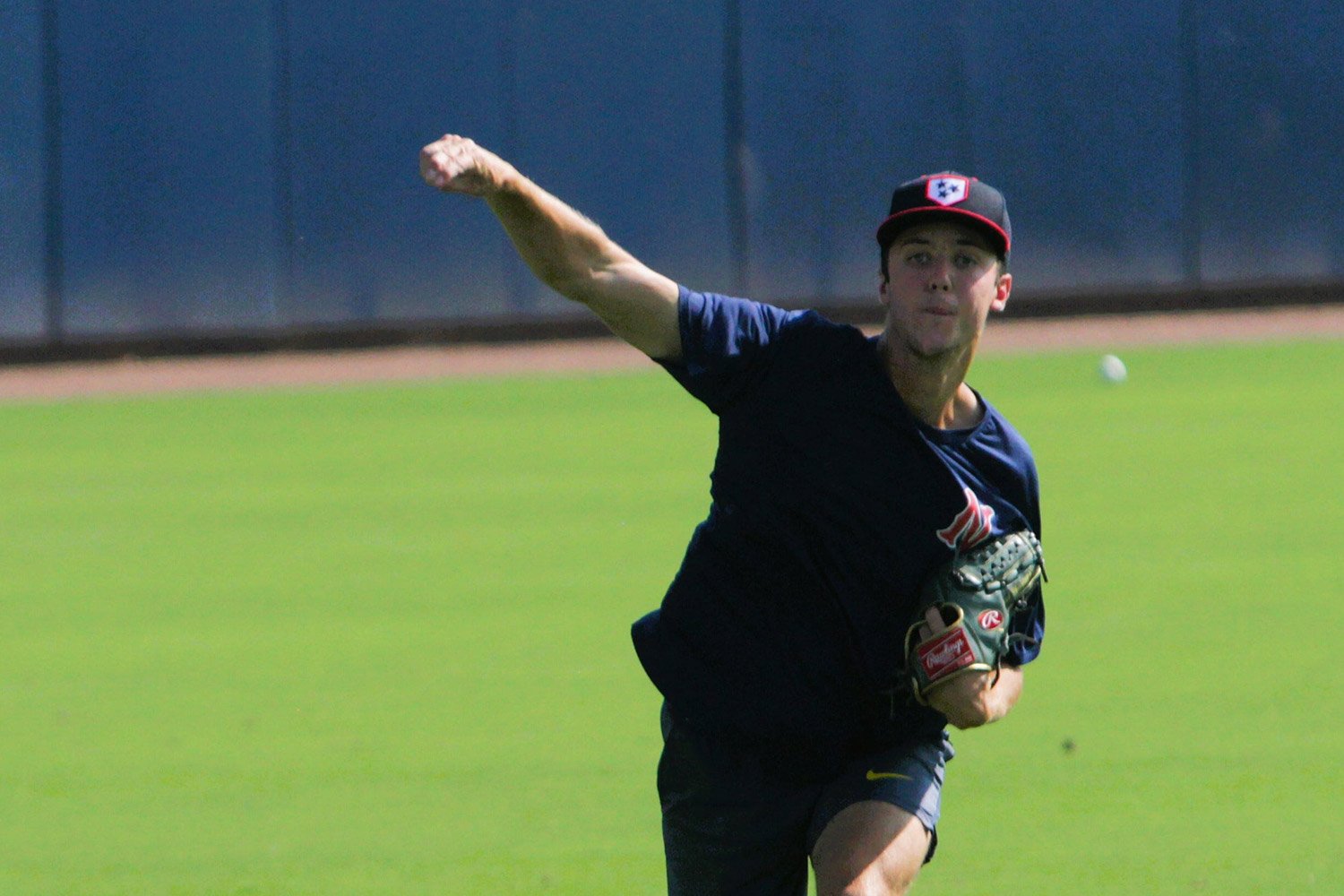
Welcome back to the final edition of Brewer Fanatic's 2024 top 20 prospect breakdown! In this edition, we will take a deep dive look at Jacob Misiorowski. Misiorowski is the new number one prospect in the system, as voted on and compiled by the Brewer Fanatic community. Image courtesy of © Curt Hogg / USA TODAY NETWORK #1 Jacob Misiorowski (Biloxi Shuckers, Nashville Sounds) In terms of pure ceiling, the Brewers' second-round selection in the 2022 draft has one of the highest in baseball. A junior college standout from Crowder College in Missouri, Misiorowski is a freak athlete on the mound, with long levers and a blazing fastball. Since selecting Misiorowski, the Brewers have been extremely cautious in managing his workload. He only appeared in two games in 2022 and was built up very slowly in 2023. In 2024, they managed the workload differently, as he began the season making starts but finished in the bullpen. During that time, he moved from Double-A, where he had started the season, to Triple-A, where he would ultimately finish it. He continued to show his immense potential along the way, but also the qualities that have evaluators hesitant to label him a starting pitcher in the long term. What to Like: Misiorowski has, arguably, the most electric fastball in the minor leagues. Sitting in the 96-99 range most of the time, he has proven capable of running it up all the way to 102 in shorter stints. Not only does his fastball have 80-grade velocity, but it also has really good characteristics. Despite being 6’7", he releases the ball at just over five feet off the ground, which helps him generate a Vertical Approach Angle of -4.1, an elite number. Misiorowski also gets an insane 7.4 feet of extension, which would have finished in the 99th percentile in MLB this past season. His fastball compares extremely well to Zach Wheeler’s regarding release height, movement, and extension. However, Misiorowski’s fastball is thrown a couple of miles per hour harder than Wheeler’s. The consensus is that somebody with around 6.5 feet of extension will have essentially the same perceived velocity as their actual velocity. Each foot of extension beyond that adds about two MPH from the hitter's point of view. That means that a 98 MPH fastball from Misiorowski looks like 100, and if he runs it up to 102, it looks like 104. His fastball is his best pitch, but his secondaries don’t lag far behind. His slider has long been considered his best secondary offering, and it is a very good pitch, sitting in the low 90s with more of a cutter shape than a true slider. It missed a lot of bats at the lower levels but was more of a barrel-missing pitch for him in Triple-A, as he only generated whiffs at a 16.7% rate. His mid-80s curveball made a huge leap in 2023 and got even better in 2024. The curve shows a big, late drop with an above-average sweep, and hitters take it for many strikes because of how tough it is to pick up. It also became his primary “out pitch” in 2024, as he used it far more often than the slider. At the Triple-A level, the curveball generated an elite chase rate of 39.6% and a similarly elite whiff rate of 41%. It has surpassed the slider as his best secondary and is a borderline 70-grade pitch. What to Work On: It’s not a secret that Misiorowski has command concerns. It was the main knock on him during the draft, and it has followed him early in his career. A walk rate of 14.39% and over five walks per nine innings is not something he will be able to get away with in MLB, especially if he wants to continue down the path of being a starting pitcher. Along those lines, there is still concern over whether Misiorowski will end up being forced into a full time relief role at some point. His delivery does involve a lot of effort, and has a lot of moving parts. From the time he was drafted to the present, there has been quite a bit of improvement in terms of repeating his mechanics and staying within himself more often, so he will look to continue to build upon that. Adding some bulk to his frame could help keep the body in sync more consistently. While his fastball, slider and curveball combination have done the majority of the work for Misiorowski, he does also throw a changeup. The changeup is a distant fourth offering at the moment, and one he never actually broke out in Triple-A. He has very little command over it and is almost completely unable to throw it for strikes. The pitch shows signs of having good, late depth on it, but if he can’t learn to command it better he will likely need to scrap it, which he may have already done. What’s next: Misiorowski has moved very quickly through the Brewers system. He will almost certainly begin 2025 back in Triple-A Nashville. The bigger question is whether they will have him starting games, or if he will be preparing for a bullpen role in MLB. His stuff is good enough to pitch in the majors right now, especially in that aforementioned bullpen role. He showed a better ability to hold his velocity deeper into games in 2024, which means if he can make strides with his command (a big if), then starting games should still be on the table. Either way, assuming full health, it feels like a safe assumption that Misiorowski will make his MLB debut in 2025. The role in which that will happen is all that’s left to find out. What are your thoughts on Misiorowski? What are you hoping to see from him in 2025? Do you think he can stick as a starter? Let us know in the comments! View full article
-
 #1 Jacob Misiorowski (Biloxi Shuckers, Nashville Sounds) In terms of pure ceiling, the Brewers' second-round selection in the 2022 draft has one of the highest in baseball. A junior college standout from Crowder College in Missouri, Misiorowski is a freak athlete on the mound, with long levers and a blazing fastball. Since selecting Misiorowski, the Brewers have been extremely cautious in managing his workload. He only appeared in two games in 2022 and was built up very slowly in 2023. In 2024, they managed the workload differently, as he began the season making starts but finished in the bullpen. During that time, he moved from Double-A, where he had started the season, to Triple-A, where he would ultimately finish it. He continued to show his immense potential along the way, but also the qualities that have evaluators hesitant to label him a starting pitcher in the long term. What to Like: Misiorowski has, arguably, the most electric fastball in the minor leagues. Sitting in the 96-99 range most of the time, he has proven capable of running it up all the way to 102 in shorter stints. Not only does his fastball have 80-grade velocity, but it also has really good characteristics. Despite being 6’7", he releases the ball at just over five feet off the ground, which helps him generate a Vertical Approach Angle of -4.1, an elite number. Misiorowski also gets an insane 7.4 feet of extension, which would have finished in the 99th percentile in MLB this past season. His fastball compares extremely well to Zach Wheeler’s regarding release height, movement, and extension. However, Misiorowski’s fastball is thrown a couple of miles per hour harder than Wheeler’s. The consensus is that somebody with around 6.5 feet of extension will have essentially the same perceived velocity as their actual velocity. Each foot of extension beyond that adds about two MPH from the hitter's point of view. That means that a 98 MPH fastball from Misiorowski looks like 100, and if he runs it up to 102, it looks like 104. His fastball is his best pitch, but his secondaries don’t lag far behind. His slider has long been considered his best secondary offering, and it is a very good pitch, sitting in the low 90s with more of a cutter shape than a true slider. It missed a lot of bats at the lower levels but was more of a barrel-missing pitch for him in Triple-A, as he only generated whiffs at a 16.7% rate. His mid-80s curveball made a huge leap in 2023 and got even better in 2024. The curve shows a big, late drop with an above-average sweep, and hitters take it for many strikes because of how tough it is to pick up. It also became his primary “out pitch” in 2024, as he used it far more often than the slider. At the Triple-A level, the curveball generated an elite chase rate of 39.6% and a similarly elite whiff rate of 41%. It has surpassed the slider as his best secondary and is a borderline 70-grade pitch. What to Work On: It’s not a secret that Misiorowski has command concerns. It was the main knock on him during the draft, and it has followed him early in his career. A walk rate of 14.39% and over five walks per nine innings is not something he will be able to get away with in MLB, especially if he wants to continue down the path of being a starting pitcher. Along those lines, there is still concern over whether Misiorowski will end up being forced into a full time relief role at some point. His delivery does involve a lot of effort, and has a lot of moving parts. From the time he was drafted to the present, there has been quite a bit of improvement in terms of repeating his mechanics and staying within himself more often, so he will look to continue to build upon that. Adding some bulk to his frame could help keep the body in sync more consistently. While his fastball, slider and curveball combination have done the majority of the work for Misiorowski, he does also throw a changeup. The changeup is a distant fourth offering at the moment, and one he never actually broke out in Triple-A. He has very little command over it and is almost completely unable to throw it for strikes. The pitch shows signs of having good, late depth on it, but if he can’t learn to command it better he will likely need to scrap it, which he may have already done. What’s next: Misiorowski has moved very quickly through the Brewers system. He will almost certainly begin 2025 back in Triple-A Nashville. The bigger question is whether they will have him starting games, or if he will be preparing for a bullpen role in MLB. His stuff is good enough to pitch in the majors right now, especially in that aforementioned bullpen role. He showed a better ability to hold his velocity deeper into games in 2024, which means if he can make strides with his command (a big if), then starting games should still be on the table. Either way, assuming full health, it feels like a safe assumption that Misiorowski will make his MLB debut in 2025. The role in which that will happen is all that’s left to find out. What are your thoughts on Misiorowski? What are you hoping to see from him in 2025? Do you think he can stick as a starter? Let us know in the comments!
 -
Ironically, Jimmy Nelson's was very similar. He didn't actually lose much velo on his fastball after returning (it was more of a command issue for him post-surgery), which makes me hopeful that Quero's arm won't suffer the consequences. I can't find position players with the same injury, suffered the same exact way, at least to the point where we have data to see how it affected throwing post-surgery. It might be out there, I just haven't been able to find a good example. From what I can tell, it's not expected to affect him swinging, which is good news. The fact it's on his back shoulder for that and not the arm he finishes his swing with makes it less of an issue at the plate. The throws are the one question, from what I can tell.
-
Welcome back to Brewer Fanatic's 2024 top 20 prospect breakdown! In this edition, we will be taking a deep dive look at Jeferson Quero. Quero comes in as the number two prospect in the system, as voted on and compiled by the Brewer Fanatic community Image courtesy of © Mark J. Rebilas-Imagn Images 2. Jeferson Quero (Nashville Sounds, Full-Season Injured List) The Brewers signed Quero out of Venezuela in the 2019 international class. He garnered the sixth-highest bonus in the Brewers class at $200,000. While the Brewers did not have as much success as they would have hoped on their biggest bonus players, such as Luis Medina and Hedbert Perez, Quero has been a revelation since signing. From the moment he was signed, Quero has been heralded for his makeup and his ability to handle a pitching staff, both within the organization and externally. Coming into the 2024 season, he was seen as someone who could potentially impact the big-league club by the end of the season. Unfortunately, his season was flipped on its head after only one plate appearance. After drawing a walk in that plate appearance, the pitcher attempted a pickoff, Quero dove back into first base somewhat awkwardly and ended up dislocating his right shoulder, tearing his labrum in the process. Though it happened differently, the injury was the same one Shohei Ohtani sustained in Game 2 of the World Series: the shoulder pops out and back in, but in the process, the labrum tears under the strain of trying to stabilize the joint. Quero would miss the rest of the season, delaying his potential debut until at least 2025. The stats below are from 2023, when he had played a full season. What to Like: As mentioned above, Quero has been lauded for his moxie behind the plate. Having only turned 22 in early October, he's considered to be extremely mature for his age. He has the respect of his pitchers and coaches as a game-caller and is a vocal and energetic competitor. He’s more than just a smart defensive catcher though; he’s an extremely talented one as well. His arm grades out as plus, posting pop times as low as 1.86 and averaging around 1.9, which would have placed him in the top 10 in MLB last year. His shoulder injury was to his throwing arm, so his throwing will be something to keep an eye on in 2025. Quero also does a good job as a receiver, stealing his pitchers strikes and fighting for every close pitch. Defense is his calling card and assuming the arm returns to where it was pre-injury, it gives him a pretty high floor as an MLB-level backup. The reason his prospect status has grown so much over the last couple of years is the improvements he has made on the other side of the ball. At the plate, Quero has always had above-average bat-to-ball skills and shown some pop to all fields. That continued in 2023, and the pop turned into more in-game power than he had shown in the past, hitting 16 home runs. Those 16 home runs surpassed his previous career high of 10 in 2022, in fewer plate appearances. His batted-ball profile points to continued improvement in the power department. He hits the ball in the air quite a bit, and he hits the ball with authority, posting exit velocities of up to 110 MPH in 2023. His 105.2 MPH 90th-percentile exit velocity was fourth-highest for his age in 2023, and he was sandwiched between two big-time prospects in Marcelo Mayer and Jasson Dominguez. Quero has the potential to hit for a decent average and for power, all while playing plus defense at a premium position. What to Work On: While Quero has very good contact skills, he would do well to exercise a bit more patience at the dish. His walk numbers aren’t awful, but they were below-average in 2023. He’s a very aggressive hitter, and he swings out of the zone at an above-average rate. We aren’t talking about a Javier Báez level of chase, so it’s not something that should ever hamper him completely, but improving his swing decisions would go a very long way toward helping him reach his full potential offensively. Speed is the least important tool for a catcher, so it’s not a big deal, but Quero is below-average in that regard. He appears to be a heady base runner, though, and was able to go 5-for-5 on stolen bases in 2023. Despite that, his legs are more likely to be a negative than a positive at the MLB level. On the defensive side, Quero did at times struggle with receiving lower fastballs, but even that improved as the season progressed. He allowed more passed balls than you would hope for. However, that's not uncommon for younger catchers, for a multitude of reasons. Losing concentration from time to time or simply being too focused on attempting to frame a pitch rather than making sure the ball is actually caught are often the culprits. At times, Quero can also have a bit too much faith in his arm, which over the years has caused a few throwing errors on plays on which he didn't have a chance of recording an out. On one hand, the majority of these “concerns” appear to simply be youthful mistakes and energy. On the other hand, if he’s going to be impacting the big-league club in 2025, they are mistakes that would be harder to swallow. Cleaning up some of those lapses would go a long way toward building trust with Pat Murphy and company, though Quero certainly impressed Murphy last year in spring training, anyway. What’s next: Quero was able to get some at-bats as the DH for the Brewers in their instructs games, and is expected to be ready to catch by spring. He is already on the 40-man roster, so depending on how the rest of the offseason goes, he could enter spring training with a chance at the backup catcher position. The more likely scenario, though, is that he will begin next season back in Triple-A, ideally avoiding any major injuries this time, and get the chance to play every day at the level. Either way, he will be on the doorstep to the majors, where he could have a chance to make an immediate impact with his defense and power potential. With those tools on his side, Quero's long-term ceiling is becoming a multi-time All Star, and a top-five catcher in baseball. What are your thoughts on Quero? What are you hoping to see from him in 2025? Any concerns about his injury? Let us know in the comments! View full article
-
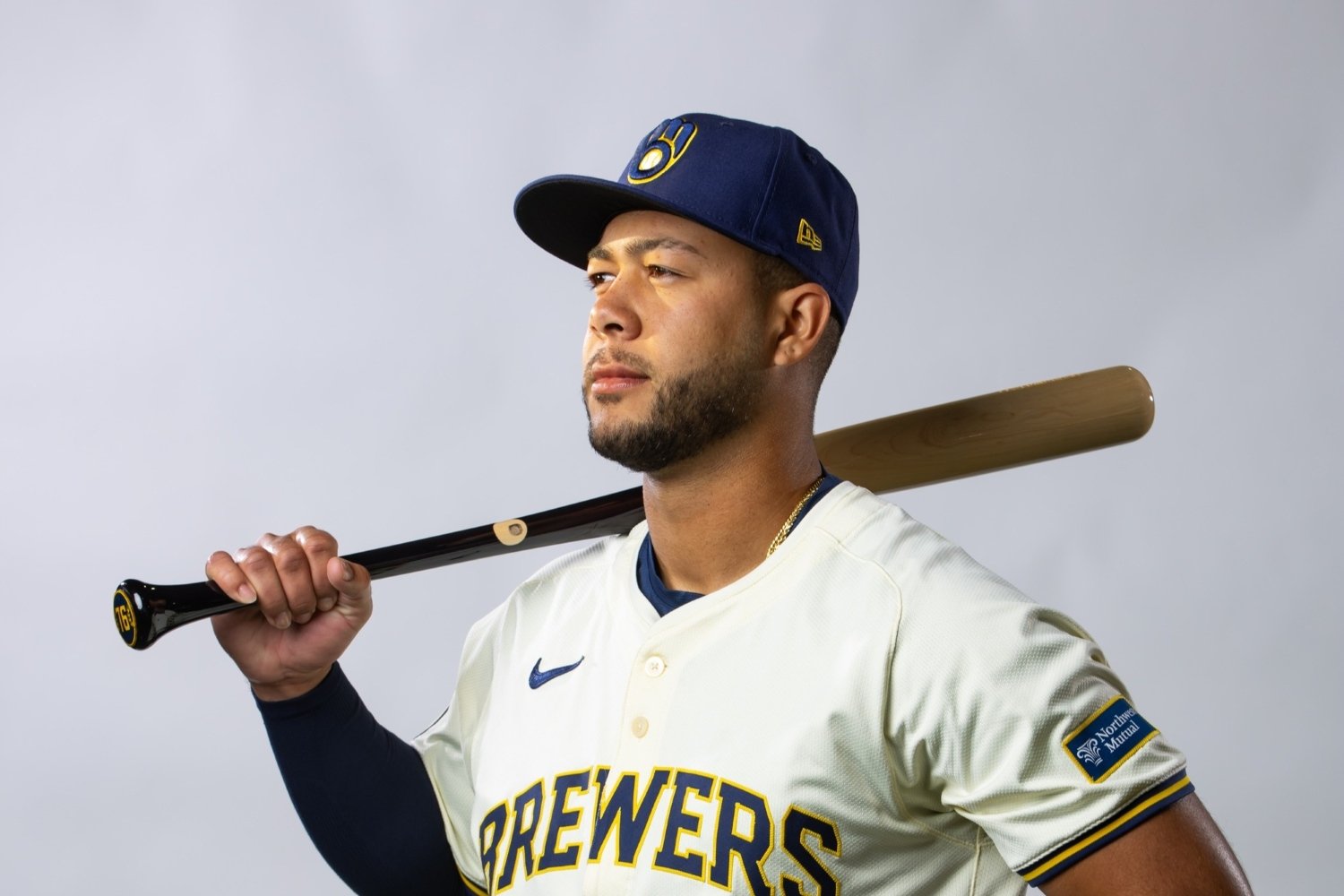 2. Jeferson Quero (Nashville Sounds, Full-Season Injured List) The Brewers signed Quero out of Venezuela in the 2019 international class. He garnered the sixth-highest bonus in the Brewers class at $200,000. While the Brewers did not have as much success as they would have hoped on their biggest bonus players, such as Luis Medina and Hedbert Perez, Quero has been a revelation since signing. From the moment he was signed, Quero has been heralded for his makeup and his ability to handle a pitching staff, both within the organization and externally. Coming into the 2024 season, he was seen as someone who could potentially impact the big-league club by the end of the season. Unfortunately, his season was flipped on its head after only one plate appearance. After drawing a walk in that plate appearance, the pitcher attempted a pickoff, Quero dove back into first base somewhat awkwardly and ended up dislocating his right shoulder, tearing his labrum in the process. Though it happened differently, the injury was the same one Shohei Ohtani sustained in Game 2 of the World Series: the shoulder pops out and back in, but in the process, the labrum tears under the strain of trying to stabilize the joint. Quero would miss the rest of the season, delaying his potential debut until at least 2025. The stats below are from 2023, when he had played a full season. What to Like: As mentioned above, Quero has been lauded for his moxie behind the plate. Having only turned 22 in early October, he's considered to be extremely mature for his age. He has the respect of his pitchers and coaches as a game-caller and is a vocal and energetic competitor. He’s more than just a smart defensive catcher though; he’s an extremely talented one as well. His arm grades out as plus, posting pop times as low as 1.86 and averaging around 1.9, which would have placed him in the top 10 in MLB last year. His shoulder injury was to his throwing arm, so his throwing will be something to keep an eye on in 2025. Quero also does a good job as a receiver, stealing his pitchers strikes and fighting for every close pitch. Defense is his calling card and assuming the arm returns to where it was pre-injury, it gives him a pretty high floor as an MLB-level backup. The reason his prospect status has grown so much over the last couple of years is the improvements he has made on the other side of the ball. At the plate, Quero has always had above-average bat-to-ball skills and shown some pop to all fields. That continued in 2023, and the pop turned into more in-game power than he had shown in the past, hitting 16 home runs. Those 16 home runs surpassed his previous career high of 10 in 2022, in fewer plate appearances. His batted-ball profile points to continued improvement in the power department. He hits the ball in the air quite a bit, and he hits the ball with authority, posting exit velocities of up to 110 MPH in 2023. His 105.2 MPH 90th-percentile exit velocity was fourth-highest for his age in 2023, and he was sandwiched between two big-time prospects in Marcelo Mayer and Jasson Dominguez. Quero has the potential to hit for a decent average and for power, all while playing plus defense at a premium position. What to Work On: While Quero has very good contact skills, he would do well to exercise a bit more patience at the dish. His walk numbers aren’t awful, but they were below-average in 2023. He’s a very aggressive hitter, and he swings out of the zone at an above-average rate. We aren’t talking about a Javier Báez level of chase, so it’s not something that should ever hamper him completely, but improving his swing decisions would go a very long way toward helping him reach his full potential offensively. Speed is the least important tool for a catcher, so it’s not a big deal, but Quero is below-average in that regard. He appears to be a heady base runner, though, and was able to go 5-for-5 on stolen bases in 2023. Despite that, his legs are more likely to be a negative than a positive at the MLB level. On the defensive side, Quero did at times struggle with receiving lower fastballs, but even that improved as the season progressed. He allowed more passed balls than you would hope for. However, that's not uncommon for younger catchers, for a multitude of reasons. Losing concentration from time to time or simply being too focused on attempting to frame a pitch rather than making sure the ball is actually caught are often the culprits. At times, Quero can also have a bit too much faith in his arm, which over the years has caused a few throwing errors on plays on which he didn't have a chance of recording an out. On one hand, the majority of these “concerns” appear to simply be youthful mistakes and energy. On the other hand, if he’s going to be impacting the big-league club in 2025, they are mistakes that would be harder to swallow. Cleaning up some of those lapses would go a long way toward building trust with Pat Murphy and company, though Querp certainly impressed Murphy last year in spring training, anyway. What’s next: Quero was able to get some at-bats as the DH for the Brewers in their instructs games, and is expected to be ready to catch by spring. He is already on the 40-man roster, so depending on how the rest of the offseason goes, he could enter spring training with a chance at the backup catcher position. The more likely scenario, though, is that he will begin next season back in Triple-A, ideally avoiding any major injuries this time, and get the chance to play every day at the level. Either way, he will be on the doorstep to the majors, where he could have a chance to make an immediate impact with his defense and power potential. With those tools on his side, Quero's long-term ceiling is becoming a multi-time All Star, and a top-five catcher in baseball. What are your thoughts on Quero? What are you hoping to see from him in 2025? Any concerns about his injury? Let us know in the comments!
 -
I know that the assumption seems to be that the Brewers are going to be cutting payroll (I don't think it's as much of a foregone conclusion, though I get why people are thinking it is), but even if that is the case I'm not sure I buy that adding $12 million for 2025 is something that should be considered unrealistic. Especially if you were to, for example, cancel out close to $8 million of that with a Devin Williams trade.
-
The Brewers got to work on their offseason by making a small trade and shedding a bunch of 40-man roster spots. Jack and Spencer break down Willy Adames's free agency and a flurry of Brewers moves to begin the offseason, including declining club options for Colin Rea and Devin Williams. Apple Podcasts: https://podcasts.apple.com/us/podcast/the-brewer-fanatic-podcast/id1740648724 Spotify: https://open.spotify.com/show/5CY8mWsQayqjDXqw9OT2Td\ iHeartRadio: https://www.iheart.com/podcast/263-the-brewer-fanatic-podcast-166534588/ View full article
-
 Jack and Spencer break down Willy Adames's free agency and a flurry of Brewers moves to begin the offseason, including declining club options for Colin Rea and Devin Williams. Apple Podcasts: https://podcasts.apple.com/us/podcast/the-brewer-fanatic-podcast/id1740648724 Spotify: https://open.spotify.com/show/5CY8mWsQayqjDXqw9OT2Td\ iHeartRadio: https://www.iheart.com/podcast/263-the-brewer-fanatic-podcast-166534588/
 -
Welcome back to Brewer Fanatic's 2024 top 20 prospect breakdown! In this edition, we break down Cooper Pratt, who comes in as the third-best prospect in the system, as voted on and compiled by the Brewer Fanatic community. Image courtesy of © Dan Powers/USA TODAY NETWORK-Wisconsin / USA TODAY NETWORK via Imagn Images 3. Cooper Pratt (Carolina Mudcats, Wisconsin Timber Rattlers, Biloxi Shuckers) The Brewers surprisingly selected Pratt in the sixth round in 2023, a pick that many evaluators considered the steal of the draft at the time. Pratt was ranked the 25th-best overall prospect in the draft by FanGraphs, 45th by MLB Pipeline, and 63rd by Baseball America. Pratt was, like many Brewers selections in recent history, a pick based on a mix of analytics and pure scouting. He would stand out in most teams' models, but he also stood out to the pro scouts watching him on the prep circuit over the last few years. Pratt began his first full season with the Carolina Mudcats as a 19-year-old, spent time with the Wisconsin Timber Rattlers, and eventually finished his season playing for the Biloxi Shuckers in their lone playoff series. What to Like: On the defensive side, Pratt appears to be poised to stick at shortstop, despite his 6-foot-4 build. He was recently awarded the Rawlings MiLB Gold Glove award as the best defensive shortstop in the minor leagues. Pratt has very good hands, and advanced actions for his age. He gets solid reads off the bat and does especially well when coming in on the ball, or ranging up the middle. As the season progressed, he looked more and more comfortable ranging to his right to cover the hole between shortstop and third base. Pratt’s arm is above-average, if not plus, and it allows him to record outs on plays that not many players his age could make. While not a burner, Pratt is an above-average runner with good instincts on the bases. He has a very smooth gait and used it well on the bases in 2024, stealing 27 bags successfully and being caught just three times. While he probably won’t be a prolific basestealer in his prime, a 20-steal big-league season wouldn’t be out of the question. He also appears to have good baserunning instincts, and looks to take the extra base when he can. Offensively, Pratt’s approach at the plate was considered one of the best among all the high school selections in his class. According to Baseball America, he posted fantastic plate discipline and bat-to-ball numbers during his time on the tournament circuit. “Over a 668-pitch sample, Pratt had just a 12% overall miss rate and 17% chase rate," reads the BA report. "His miss rate falls to just 6% on pitches in the zone.” Unsurprisingly, that whiff rate was higher in pro ball, but the 23.2% rate he posted in 2024 was still 77th-percentile and shows that he has above-average contact skills. Pratt has a simple operation at the plate, utilizing a small leg kick and extremely quick hands. Those traits combine to form a smooth swing that keeps the barrel in the zone for a long time and allows him to hit the ball with authority to all fields, and also to hit line drives at an elite level. His 30.5% line drive rate was in the 98th percentile among all minor-league hitters, and he batted .728 on those line drives, including 11 of his 15 doubles and three of his eight home runs. What to Work On: Pratt is not providing much in the way of in-game power at this point in his career. Still, his frame shows the potential to grow into much more, and he did start to show signs of improvement after his promotion to High-A. Pratt hit five home runs with the Timber Rattlers in only 95 plate appearances. He had only hit three in 311 plate appearances with Carolina. In order to get to that power more consistently, Pratt could benefit from hitting fly balls more often; his 28.2% rate is extremely low. However, similar to Mike Boeve, there's a risk of losing his elite ability to hit line drives in that process. As long as he keeps getting stronger, he might be able to make this profile work well enough to get to 20-homer power, but he’s more likely to end up in the 10-15 range without the adjustment. While Pratt drew quite a few walks in Low-A, he did see that number fall sharply in High-A. He went from a 12.2% walk rate to a 4.2% rate, and at the same time, he saw his strikeout rate jump from 18.3% to 25.3%. His power numbers made a leap at High-A, but could that have been at the cost of his plate discipline and bat-to-ball abilities? A sample of under 100 plate appearances isn’t any reason to sound the alarms, but it will be something to monitor moving forward. Defensively, continued improvement in his initial read off the bat will help ensure that he sticks as a shortstop. As mentioned earlier, this mainly shows up on balls hit to his backhand. He already made a jump in this regard in 2024, but getting even better at it could take him from a really good shortstop to a great one. What’s next: Pratt has already popped up on a couple of Top 100 lists around the industry. His ability to defend at short, hit line drives and play smart baseball all give him a really solid floor. If he can trade some of his ground balls for fly balls and continue to add weight to a frame that can definitely carry more, he may begin to tap into a bit more power. A power jump, while maintaining what he’s already good at, would likely make him a consensus Top 100 prospect. Starting Pratt back in Wisconsin with the Timber Rattlers is a possibility, given he only spent a few weeks there in 2024. However, considering the amount of infield depth in the Brewers system at the lower levels (as well as Pratt’s promotion to Double-A for the Shuckers playoff series) would seem to point to a potential Biloxi assignment to begin 2025. What are your thoughts on Pratt? What are you hoping to see from him in 2025? Let us know in the comments! View full article
-
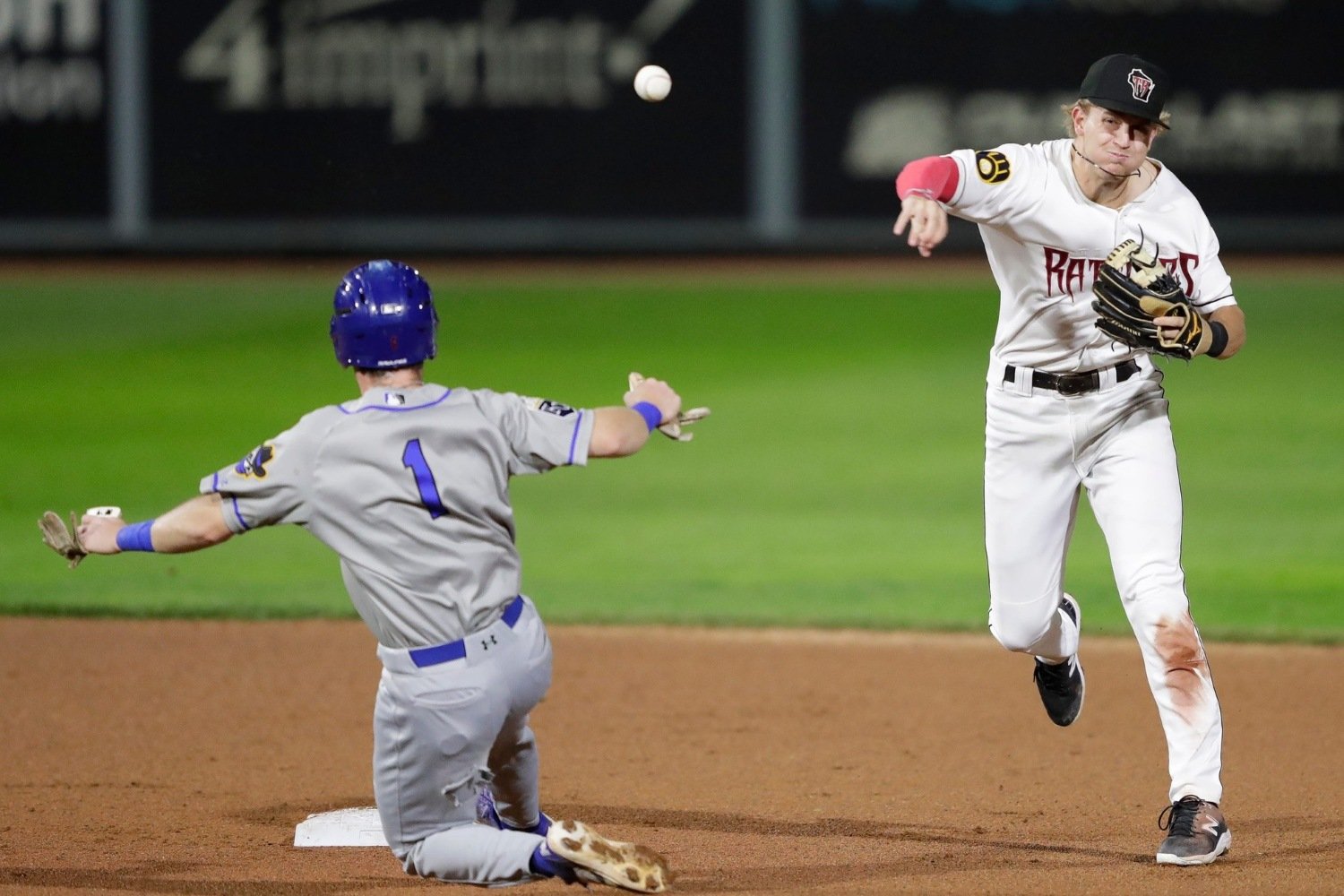 3. Cooper Pratt (Carolina Mudcats, Wisconsin Timber Rattlers, Biloxi Shuckers) The Brewers surprisingly selected Pratt in the sixth round in 2023, a pick that many evaluators considered the steal of the draft at the time. Pratt was ranked the 25th-best overall prospect in the draft by FanGraphs, 45th by MLB Pipeline, and 63rd by Baseball America. Pratt was, like many Brewers selections in recent history, a pick based on a mix of analytics and pure scouting. He would stand out in most teams' models, but he also stood out to the pro scouts watching him on the prep circuit over the last few years. Pratt began his first full season with the Carolina Mudcats as a 19-year-old, spent time with the Wisconsin Timber Rattlers, and eventually finished his season playing for the Biloxi Shuckers in their lone playoff series. What to Like: On the defensive side, Pratt appears to be poised to stick at shortstop, despite his 6-foot-4 build. He was recently awarded the Rawlings MiLB Gold Glove award as the best defensive shortstop in the minor leagues. Pratt has very good hands, and advanced actions for his age. He gets solid reads off the bat and does especially well when coming in on the ball, or ranging up the middle. As the season progressed, he looked more and more comfortable ranging to his right to cover the hole between shortstop and third base. Pratt’s arm is above-average, if not plus, and it allows him to record outs on plays that not many players his age could make. While not a burner, Pratt is an above-average runner with good instincts on the bases. He has a very smooth gait and used it well on the bases in 2024, stealing 27 bags successfully and being caught just three times. While he probably won’t be a prolific basestealer in his prime, a 20-steal big-league season wouldn’t be out of the question. He also appears to have good baserunning instincts, and looks to take the extra base when he can. Offensively, Pratt’s approach at the plate was considered one of the best among all the high school selections in his class. According to Baseball America, he posted fantastic plate discipline and bat-to-ball numbers during his time on the tournament circuit. “Over a 668-pitch sample, Pratt had just a 12% overall miss rate and 17% chase rate," reads the BA report. "His miss rate falls to just 6% on pitches in the zone.” Unsurprisingly, that whiff rate was higher in pro ball, but the 23.2% rate he posted in 2024 was still 77th-percentile and shows that he has above-average contact skills. Pratt has a simple operation at the plate, utilizing a small leg kick and extremely quick hands. Those traits combine to form a smooth swing that keeps the barrel in the zone for a long time and allows him to hit the ball with authority to all fields, and also to hit line drives at an elite level. His 30.5% line drive rate was in the 98th percentile among all minor-league hitters, and he batted .728 on those line drives, including 11 of his 15 doubles and three of his eight home runs. What to Work On: Pratt is not providing much in the way of in-game power at this point in his career. Still, his frame shows the potential to grow into much more, and he did start to show signs of improvement after his promotion to High-A. Pratt hit five home runs with the Timber Rattlers in only 95 plate appearances. He had only hit three in 311 plate appearances with Carolina. In order to get to that power more consistently, Pratt could benefit from hitting fly balls more often; his 28.2% rate is extremely low. However, similar to Mike Boeve, there's a risk of losing his elite ability to hit line drives in that process. As long as he keeps getting stronger, he might be able to make this profile work well enough to get to 20-homer power, but he’s more likely to end up in the 10-15 range without the adjustment. While Pratt drew quite a few walks in Low-A, he did see that number fall sharply in High-A. He went from a 12.2% walk rate to a 4.2% rate, and at the same time, he saw his strikeout rate jump from 18.3% to 25.3%. His power numbers made a leap at High-A, but could that have been at the cost of his plate discipline and bat-to-ball abilities? A sample of under 100 plate appearances isn’t any reason to sound the alarms, but it will be something to monitor moving forward. Defensively, continued improvement in his initial read off the bat will help ensure that he sticks as a shortstop. As mentioned earlier, this mainly shows up on balls hit to his backhand. He already made a jump in this regard in 2024, but getting even better at it could take him from a really good shortstop to a great one. What’s next: Pratt has already popped up on a couple of Top 100 lists around the industry. His ability to defend at short, hit line drives and play smart baseball all give him a really solid floor. If he can trade some of his ground balls for fly balls and continue to add weight to a frame that can definitely carry more, he may begin to tap into a bit more power. A power jump, while maintaining what he’s already good at, would likely make him a consensus Top 100 prospect. Starting Pratt back in Wisconsin with the Timber Rattlers is a possibility, given he only spent a few weeks there in 2024. However, considering the amount of infield depth in the Brewers system at the lower levels (as well as Pratt’s promotion to Double-A for the Shuckers playoff series) would seem to point to a potential Biloxi assignment to begin 2025. What are your thoughts on Pratt? What are you hoping to see from him in 2025? Let us know in the comments!
 -
Welcome back to Brewer Fanatic's 2024 top 20 prospect breakdown! In this edition, we will be taking a look at Robert Gasser. Gasser comes in as the fourth-best prospect in the system, as voted on and compiled by the Brewer Fanatic community. Image courtesy of © Mark Hoffman-Imagn Images 4. Robert Gasser (Nashville Sounds, Milwaukee Brewers) A second-round draft pick by the Padres in the 2021 draft, Gasser was in the midst of his first full season when the infamous Josh Hader trade went down at the trade deadline in 2022. He finished his Padres career at the High-A level, having thrown 90 1/3 innings for the Fort Wayne TinCaps. The Brewers decided that was plenty of experience at that level and assigned him to Double-A Biloxi to begin his Brewers career. Four starts later, Gasser and his 2.21 ERA and 11.5 strikeouts per nine innings were headed to Triple-A Nashville. Thst's where he would finish the 2022 campaign and where he spent all of 2023. He returned there to begin 2024 after battling some elbow issues in spring, and made three starts before being called up to make his MLB debut on May 10th. What to Like: To begin, Gasser has an athletic delivery, and because of that delivery, he releases the ball 4.96 feet off of the ground on average. Out of 193 lefties to throw at least 100 pitches in 2024, Gasser’s release height was the ninth-lowest. He does this while also generating well above-average extension, at 6.7 feet. It’s a very abnormal release point for hitters, and it helps all of his pitches play up. Gasser has five pitches, and all five showed signs of being average or better offerings in his 28 innings with the big-league club. His sweeper was his most effective pitch and the pitch he threw the most often. After the sweeper, the order of usage went sinker, four-seam fastball, changeup, cutter. Gasser’s sweeper grades out well by any metric, as the low-80s offering features three inches less drop than the average sweeper thrown by a southpaw. It also has above-average glove-side movement, as well as average velocity. Coming from that low release point, it’s an outlier of a pitch from lefties and the 34.5% whiff rate on a pitch that he threw 32% of the time is a clear sign of that. His comfort throwing it for strikes and for chases against right-handed hitters is also abnormal, and that makes it an uncomfortable pitch for both handednesses of hitter. Hitters only posted a .190 batting average against the sweeper and a .573 OPS. In MLB, Gasser sat in the 92-94 range and got up to 95 on the fastball at times. His low release height helps him generate an above-average -4.3 degree Vertical Approach Angle, which helps him get the ball above barrels. He didn’t get many whiffs on it during his MLB stint, but it’s the type of pitch that should generate more, as long as he’s spotting at the top of the zone or higher. Since coming to the Brewers organization, Gasser had been mixing in his upper-80s cutter much more often than he had with the Padres. When he reached MLB, he dropped the usage significantly, instead relying more on the sinker and changeup than he had in Triple-A. However, the cutter still showed signs of being an effective pitch against right-handed hitters, especially when he can get it inside and on the hands of hitters. His sinker was used far more often in MLB than in Triple-A, and it performed much better than it had over the last couple of seasons in the minors. It did a great job generating ground balls for Gasser, doing so at a 57.7% rate, leading to a .214 batting average against, and a .429 OPS against the pitch. With over 15 inches of run on the pitch, the shape is surprisingly close to mirroring the sweeper shape, other than the fact that it’s thrown 12-13 MPH harder. The other pitch that made huge strides for Gasser was his changeup. He was able to get more separation between the changeup velocity and the fastballs he throws, which was helpful on its own. His command of the pitch was extremely impressive, and similar to the sinker, it was a great pitch for generating grounders in MLB. His 60% rate combined with an average exit velocity of 82.2 points to Gasser actually having some bad luck on this pitch as hitters batted .333 against it. Generally, Gasser’s command was fantastic in MLB, and it showed in his walk numbers, as well as the amount of soft contact he generated. Something he had struggled with at times in the minor leagues, seeing him walk less than a batter per nine innings was a great sign for him, even in a small sample. What to Work On: While the cutter was a really solid pitch for Gasser in the minors, and it did show signs of being effective in MLB, hitters did damage against it in a small sample. The 1.415 OPS against it was far and away the worst of any of Gasser's pitches. Batters hit the cutter in the air at a 70% clip and had an average exit velocity of 93.3 against it. While it has the ability to be a good counter pitch, he will need to throw it more effectively moving forward. Though Gasser had an extremely strong start to his MLB career, there was one main ingredient missing. The swings and misses that Gasser had generated throughout his minor-league career were largely non-existent, save for the sweeper. Throughout his career in the minors, he had generated whiffs at a 28.1% rate. In his 28 MLB innings, that number was only 21.6%. His strikeout rate at Triple-A was also 28.1%, compared to the miniscule 14% rate he posted in MLB. Gasser could have a solid career generating soft contact and living off of that, but if he is to reach his ceiling, there will need to be more swing and miss involved. Some of this could be related to pitch-calling from Brewers catchers as they got used to calling games for him. We know he is capable of generating more whiffs. Whether he can or can not, could be the difference between him being a mid-rotation arm or a back of the rotation arm. What’s next: Gasser was in the midst of establishing himself as a rotation piece, and well on his way to graduating from this list, before he unfortunately had to undergo Tommy John surgery. He’s expected to miss the majority, if not the entirety of the 2025 season. While there isn’t an ideal type of surgery, Tommy John has arguably become more of an exact science than any other. Gasser should be able to return to his old form eventually. It’s more of a matter of when, than if. The Brewers will take anything they can get from him in 2025, but barring a setback or a surprise, Gasser should be expected to be a part of the 2026 rotation. What are your thoughts on Gasser? What are you hoping to see from him in the future? Let us know in the comments! View full article
-
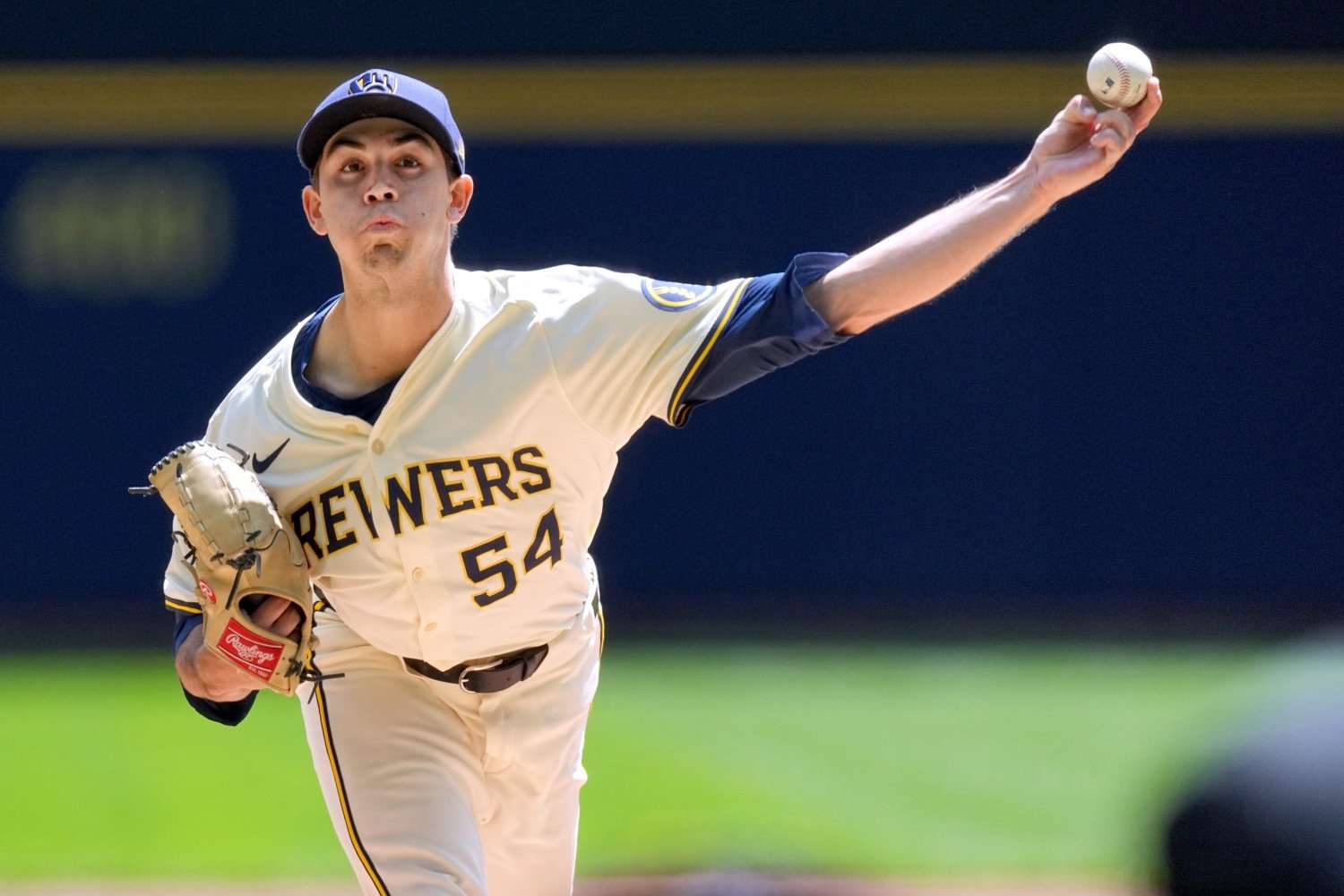 4. Robert Gasser (Nashville Sounds, Milwaukee Brewers) A second-round draft pick by the Padres in the 2021 draft, Gasser was in the midst of his first full season when the infamous Josh Hader trade went down at the trade deadline in 2022. He finished his Padres career at the High-A level, having thrown 90 1/3 innings for the Fort Wayne TinCaps. The Brewers decided that was plenty of experience at that level and assigned him to Double-A Biloxi to begin his Brewers career. Four starts later, Gasser and his 2.21 ERA and 11.5 strikeouts per nine innings were headed to Triple-A Nashville. Thst's where he would finish the 2022 campaign and where he spent all of 2023. He returned there to begin 2024 after battling some elbow issues in spring, and made three starts before being called up to make his MLB debut on May 10th. What to Like: To begin, Gasser has an athletic delivery, and because of that delivery, he releases the ball 4.96 feet off of the ground on average. Out of 193 lefties to throw at least 100 pitches in 2024, Gasser’s release height was the ninth-lowest. He does this while also generating well above-average extension, at 6.7 feet. It’s a very abnormal release point for hitters, and it helps all of his pitches play up. Gasser has five pitches, and all five showed signs of being average or better offerings in his 28 innings with the big-league club. His sweeper was his most effective pitch and the pitch he threw the most often. After the sweeper, the order of usage went sinker, four-seam fastball, changeup, cutter. Gasser’s sweeper grades out well by any metric, as the low-80s offering features three inches less drop than the average sweeper thrown by a southpaw. It also has above-average glove-side movement, as well as average velocity. Coming from that low release point, it’s an outlier of a pitch from lefties and the 34.5% whiff rate on a pitch that he threw 32% of the time is a clear sign of that. His comfort throwing it for strikes and for chases against right-handed hitters is also abnormal, and that makes it an uncomfortable pitch for both handednesses of hitter. Hitters only posted a .190 batting average against the sweeper and a .573 OPS. In MLB, Gasser sat in the 92-94 range and got up to 95 on the fastball at times. His low release height helps him generate an above-average -4.3 degree Vertical Approach Angle, which helps him get the ball above barrels. He didn’t get many whiffs on it during his MLB stint, but it’s the type of pitch that should generate more, as long as he’s spotting at the top of the zone or higher. Since coming to the Brewers organization, Gasser had been mixing in his upper-80s cutter much more often than he had with the Padres. When he reached MLB, he dropped the usage significantly, instead relying more on the sinker and changeup than he had in Triple-A. However, the cutter still showed signs of being an effective pitch against right-handed hitters, especially when he can get it inside and on the hands of hitters. His sinker was used far more often in MLB than in Triple-A, and it performed much better than it had over the last couple of seasons in the minors. It did a great job generating ground balls for Gasser, doing so at a 57.7% rate, leading to a .214 batting average against, and a .429 OPS against the pitch. With over 15 inches of run on the pitch, the shape is surprisingly close to mirroring the sweeper shape, other than the fact that it’s thrown 12-13 MPH harder. The other pitch that made huge strides for Gasser was his changeup. He was able to get more separation between the changeup velocity and the fastballs he throws, which was helpful on its own. His command of the pitch was extremely impressive, and similar to the sinker, it was a great pitch for generating grounders in MLB. His 60% rate combined with an average exit velocity of 82.2 points to Gasser actually having some bad luck on this pitch as hitters batted .333 against it. Generally, Gasser’s command was fantastic in MLB, and it showed in his walk numbers, as well as the amount of soft contact he generated. Something he had struggled with at times in the minor leagues, seeing him walk less than a batter per nine innings was a great sign for him, even in a small sample. What to Work On: While the cutter was a really solid pitch for Gasser in the minors, and it did show signs of being effective in MLB, hitters did damage against it in a small sample. The 1.415 OPS against it was far and away the worst of any of Gasser's pitches. Batters hit the cutter in the air at a 70% clip and had an average exit velocity of 93.3 against it. While it has the ability to be a good counter pitch, he will need to throw it more effectively moving forward. Though Gasser had an extremely strong start to his MLB career, there was one main ingredient missing. The swings and misses that Gasser had generated throughout his minor-league career were largely non-existent, save for the sweeper. Throughout his career in the minors, he had generated whiffs at a 28.1% rate. In his 28 MLB innings, that number was only 21.6%. His strikeout rate at Triple-A was also 28.1%, compared to the miniscule 14% rate he posted in MLB. Gasser could have a solid career generating soft contact and living off of that, but if he is to reach his ceiling, there will need to be more swing and miss involved. Some of this could be related to pitch-calling from Brewers catchers as they got used to calling games for him. We know he is capable of generating more whiffs. Whether he can or can not, could be the difference between him being a mid-rotation arm or a back of the rotation arm. What’s next: Gasser was in the midst of establishing himself as a rotation piece, and well on his way to graduating from this list, before he unfortunately had to undergo Tommy John surgery. He’s expected to miss the majority, if not the entirety of the 2025 season. While there isn’t an ideal type of surgery, Tommy John has arguably become more of an exact science than any other. Gasser should be able to return to his old form eventually. It’s more of a matter of when, than if. The Brewers will take anything they can get from him in 2025, but barring a setback or a surprise, Gasser should be expected to be a part of the 2026 rotation. What are your thoughts on Gasser? What are you hoping to see from him in the future? Let us know in the comments!
 -
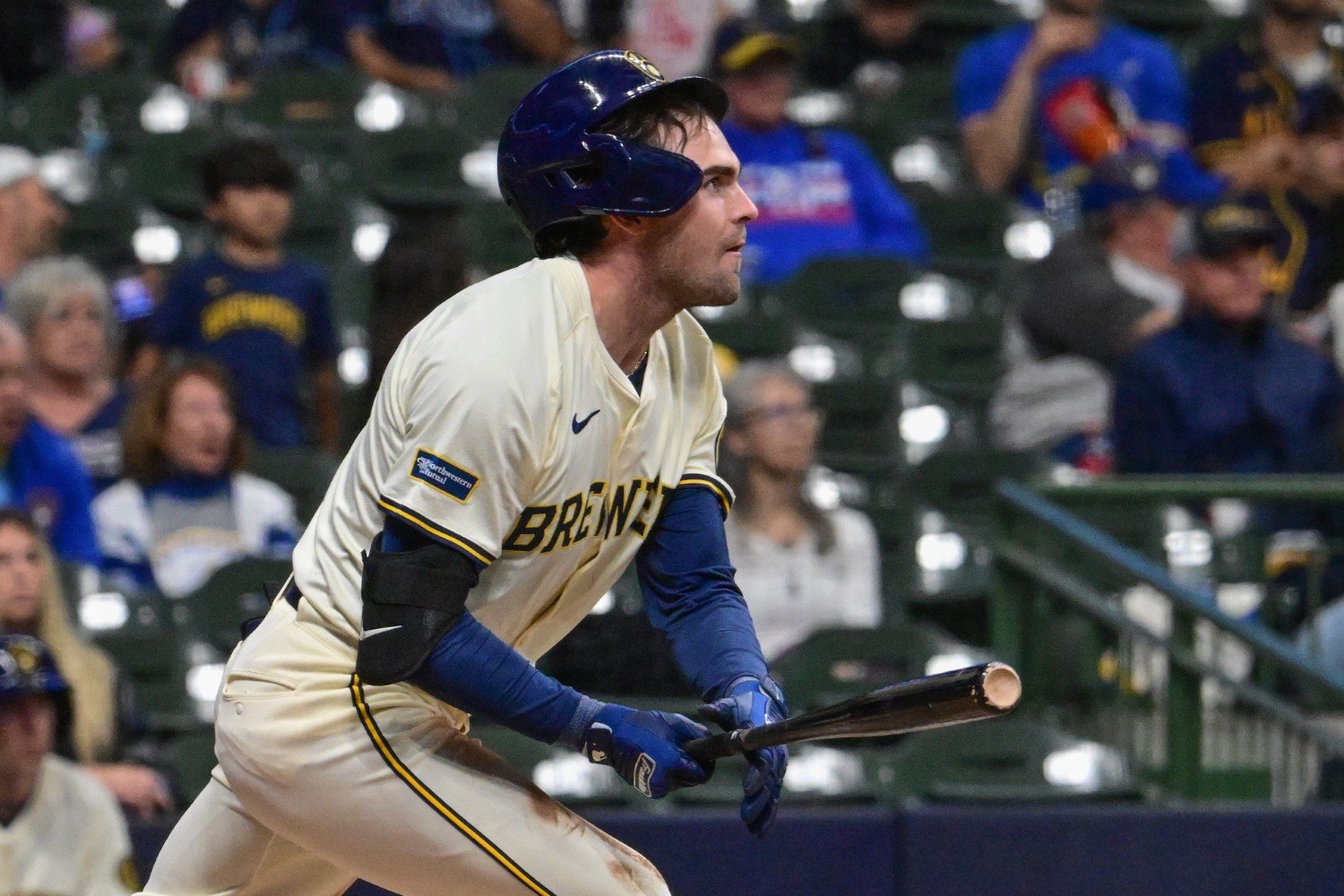 5. Tyler Black (Nashville Sounds) The Brewers took Black with their Competitive Balance Round A pick in 2021. Coming out of Wright State, Black was a small-school, model-based selection. After battling some tough injury luck in his first full season in 2022, Black was able to stay on the field in 2023 and he broke out in a major way at the plate and on the bases, eventually making his way all the way to Triple-A. He began there again in 2024 and continued to put up solid numbers at the plate. He also made his MLB debut, and spent a decent chunk of his time riding the active roster shuttle between Nashville and Milwaukee. What to Like: Like most of the recent prospect graduates from the Brewers system, Black plays extremely hard, with a lot of emotion and energy. These aren’t tools that show up as grades on a prospect website, but they do matter to traditional scouts and the Brewers, as an organization, seem to seek these types of players out. Black’s profile is going to be carried by his bat. At Wright State, he showed some in-game power, hitting 13 home runs in his final season. However, his batted-ball profile didn’t point to a ton of power in his future. He had a max exit velocity of 102.2 while in college. Since 2021, Jacob Wilson and Black are the only two first-round picks out of college that had a 90th percentile exit velocity under 100 MPH. In the first 400 plate appearances of his pro career, that batted ball data appeared to be a more accurate sign of his power than the 13 home runs, as he only hit five home runs in that time period. However, in 2023, he hit 18, and he followed that up with 14 more in 2024. Black’s power numbers have risen, but his bat-to-ball and strike-recognition abilities have not been sacrificed in the process. He demonstrated this throughout the season, consistently winning ball/strike challenges in Nashville. His 19.8% whiff rate in 2024 was in the 90th percentile in MiLB, and he was able to limit whiffs at an above-average rate against all three main types of pitches (fastballs, breaking balls and offspeed). He did the same in terms of limiting chases outside of the zone against all three main types, posting a 91st-percentile chase rate that was the exact same as his whiff rate, at 19.8%. Those abilities combined to help Black post a strong 13.2% walk rate, to go along with his 18.8% strikeout rate. While Black did not follow up his ridiculous stolen base total from 2023 (55), he still stole 20 bases while only being caught three times. Players who are on the edge of making it to MLB will often take fewer risks on the bases, in fear of getting injured and missing a chance to get called up. Teams can even instruct players to do that. We will never know if that’s the case with Black, but given his high success rate when he did attempt to steal, it’s safe to assume that he is still very capable of swiping bases. Black possesses closer to above-average speed than plus speed, but he has great instincts and the type of hustle and aggressiveness that will create extra bases. What to Work On: While Black has shown home run power, it hasn’t necessarily come by way of hitting the ball all that much harder than he used to. His 90th-percentile exit velocity was 101.7 this past season. That's higher than it was in college, yes, but still a below-average mark for the level. Black gets to his power because, when he hits the ball in the air, he seems to hit the ball at an ideal launch angle, especially to his pull side. This is a great ability to have, but whether it’s sustainable at the MLB level is another question. Isaac Paredes is well-known for his ability to make this sort of profile work, but he hits the ball in the air to the pull side at an insane rate. A whopping 49.3% of the balls Paredes hits in the air are to the pull side. Only 27.7% of balls Black hits in the air are to the pull side. Paredes’s average launch angle was 22.4 degrees, while Black’s was only 13.8 degrees. There’s reason to question whether the home run power that he’s shown at the upper levels of the minor leagues will actually show up at the MLB level with this profile. The biggest hindrance to Black spending extended time in MLB in 2024 was his inability to find a defensive home. After spending time at second base and third base (as well as getting outfield action) for the first few seasons, Black spent the majority of his time at first base in Nashville this year. Unfortunately, despite being an above-average athlete, Black has been unable to pick up any of these spots on the infield. His hands and defensive instincts just have not improved enough at any spot, and first base was no exception, as he made numerous physical and mental errors at the position. It's certainly possible that Black could improve with even more reps, but despite what Ron Washington might tell Scott Hatteberg in "Moneyball", first base is not an "extremely hard" position to learn. If Black was going to be able to handle it long term, it's likely we would have seen more signs of it in 2024. What’s next: Black did spend time in the outfield as the season progressed, and that appears to be his ideal defensive home. The issue for him and the Brewers is that the big-league club does not have any need for more outfielders at the moment. Finding a spot in the infield that he could handle at even a fringe-average level would help him find firmer footing on an MLB roster spot. Black seems like a potential trade candidate this offseason, just due to the lack of room for him right now and the fact that some organizations could afford to use him in the outfield while betting on the bat and the baserunning. If not, he will likely have a similar season in 2025, spending the majority of his time at Triple-A, but also making appearances with the Brewers. What are your thoughts on Black? What are you hoping to see from him in 2025? Let us know in the comments!
 -
Welcome back to Brewer Fanatic's 2024 top 20 prospect breakdown! In this edition, we will be taking a deep dive look at Tyler Black. Black comes in as the number five prospect in the system, as voted on and compiled by the Brewer Fanatic community. Image courtesy of © Benny Sieu-Imagn Images 5. Tyler Black (Nashville Sounds) The Brewers took Black with their Competitive Balance Round A pick in 2021. Coming out of Wright State, Black was a small-school, model-based selection. After battling some tough injury luck in his first full season in 2022, Black was able to stay on the field in 2023 and he broke out in a major way at the plate and on the bases, eventually making his way all the way to Triple-A. He began there again in 2024 and continued to put up solid numbers at the plate. He also made his MLB debut, and spent a decent chunk of his time riding the active roster shuttle between Nashville and Milwaukee. What to Like: Like most of the recent prospect graduates from the Brewers system, Black plays extremely hard, with a lot of emotion and energy. These aren’t tools that show up as grades on a prospect website, but they do matter to traditional scouts and the Brewers, as an organization, seem to seek these types of players out. Black’s profile is going to be carried by his bat. At Wright State, he showed some in-game power, hitting 13 home runs in his final season. However, his batted-ball profile didn’t point to a ton of power in his future. He had a max exit velocity of 102.2 while in college. Since 2021, Jacob Wilson and Black are the only two first-round picks out of college that had a 90th percentile exit velocity under 100 MPH. In the first 400 plate appearances of his pro career, that batted ball data appeared to be a more accurate sign of his power than the 13 home runs, as he only hit five home runs in that time period. However, in 2023, he hit 18, and he followed that up with 14 more in 2024. Black’s power numbers have risen, but his bat-to-ball and strike-recognition abilities have not been sacrificed in the process. He demonstrated this throughout the season, consistently winning ball/strike challenges in Nashville. His 19.8% whiff rate in 2024 was in the 90th percentile in MiLB, and he was able to limit whiffs at an above-average rate against all three main types of pitches (fastballs, breaking balls and offspeed). He did the same in terms of limiting chases outside of the zone against all three main types, posting a 91st-percentile chase rate that was the exact same as his whiff rate, at 19.8%. Those abilities combined to help Black post a strong 13.2% walk rate, to go along with his 18.8% strikeout rate. While Black did not follow up his ridiculous stolen base total from 2023 (55), he still stole 20 bases while only being caught three times. Players who are on the edge of making it to MLB will often take fewer risks on the bases, in fear of getting injured and missing a chance to get called up. Teams can even instruct players to do that. We will never know if that’s the case with Black, but given his high success rate when he did attempt to steal, it’s safe to assume that he is still very capable of swiping bases. Black possesses closer to above-average speed than plus speed, but he has great instincts and the type of hustle and aggressiveness that will create extra bases. What to Work On: While Black has shown home run power, it hasn’t necessarily come by way of hitting the ball all that much harder than he used to. His 90th-percentile exit velocity was 101.7 this past season. That's higher than it was in college, yes, but still a below-average mark for the level. Black gets to his power because, when he hits the ball in the air, he seems to hit the ball at an ideal launch angle, especially to his pull side. This is a great ability to have, but whether it’s sustainable at the MLB level is another question. Isaac Paredes is well-known for his ability to make this sort of profile work, but he hits the ball in the air to the pull side at an insane rate. A whopping 49.3% of the balls Paredes hits in the air are to the pull side. Only 27.7% of balls Black hits in the air are to the pull side. Paredes’s average launch angle was 22.4 degrees, while Black’s was only 13.8 degrees. There’s reason to question whether the home run power that he’s shown at the upper levels of the minor leagues will actually show up at the MLB level with this profile. The biggest hindrance to Black spending extended time in MLB in 2024 was his inability to find a defensive home. After spending time at second base and third base (as well as getting outfield action) for the first few seasons, Black spent the majority of his time at first base in Nashville this year. Unfortunately, despite being an above-average athlete, Black has been unable to pick up any of these spots on the infield. His hands and defensive instincts just have not improved enough at any spot, and first base was no exception, as he made numerous physical and mental errors at the position. It's certainly possible that Black could improve with even more reps, but despite what Ron Washington might tell Scott Hatteberg in "Moneyball", first base is not an "extremely hard" position to learn. If Black was going to be able to handle it long term, it's likely we would have seen more signs of it in 2024. What’s next: Black did spend time in the outfield as the season progressed, and that appears to be his ideal defensive home. The issue for him and the Brewers is that the big-league club does not have any need for more outfielders at the moment. Finding a spot in the infield that he could handle at even a fringe-average level would help him find firmer footing on an MLB roster spot. Black seems like a potential trade candidate this offseason, just due to the lack of room for him right now and the fact that some organizations could afford to use him in the outfield while betting on the bat and the baserunning. If not, he will likely have a similar season in 2025, spending the majority of his time at Triple-A, but also making appearances with the Brewers. What are your thoughts on Black? What are you hoping to see from him in 2025? Let us know in the comments! View full article
-
I think they probably will. Made feels like a lock, Pena probably close to one. But there is a lot of infield depth in the system currently so you never know how it will shake out.
-
FWIW, some scouts are actually projecting Pena for above average to even plus power as he grows into his body more. He has the type of batted ball profile that simply needs more juice behind the ball to start clearing walls. He’s already shown 104 MPH EV’s in games and a better than average 90th percentile EV for his age, while still being quite skinny too.
-
 Jack and Spencer react to recent news on the coaching staff, including Chris Hook's new contract and Quintin Berry following Craig Counsell to Chicago. Apple Podcasts: https://podcasts.apple.com/us/podcast/the-brewer-fanatic-podcast/id1740648724 Spotify: https://open.spotify.com/show/5CY8mWsQayqjDXqw9OT2Td\ iHeartRadio: https://www.iheart.com/podcast/263-the-brewer-fanatic-podcast-166534588/

