



Spencer Michaelis
-
Posts
1,119 -
Joined
-
Last visited
-
Days Won
17
Content Type
Profiles
Forums
Blogs
Events
News
2026 Milwaukee Brewers Top Prospects Ranking
Milwaukee Brewers Videos
2022 Milwaukee Brewers Draft Picks
Milwaukee Brewers Free Agent & Trade Rumors, Notes, & Tidbits
Guides & Resources
2023 Milwaukee Brewers Draft Picks
2024 Milwaukee Brewers Draft Picks
The Milwaukee Brewers Players Project
2025 Milwaukee Brewers Draft Pick Tracker
2026 Milwaukee Brewers Draft Tracker: Picks & Bonuses
Store
Downloads
Gallery
Everything posted by Spencer Michaelis
-
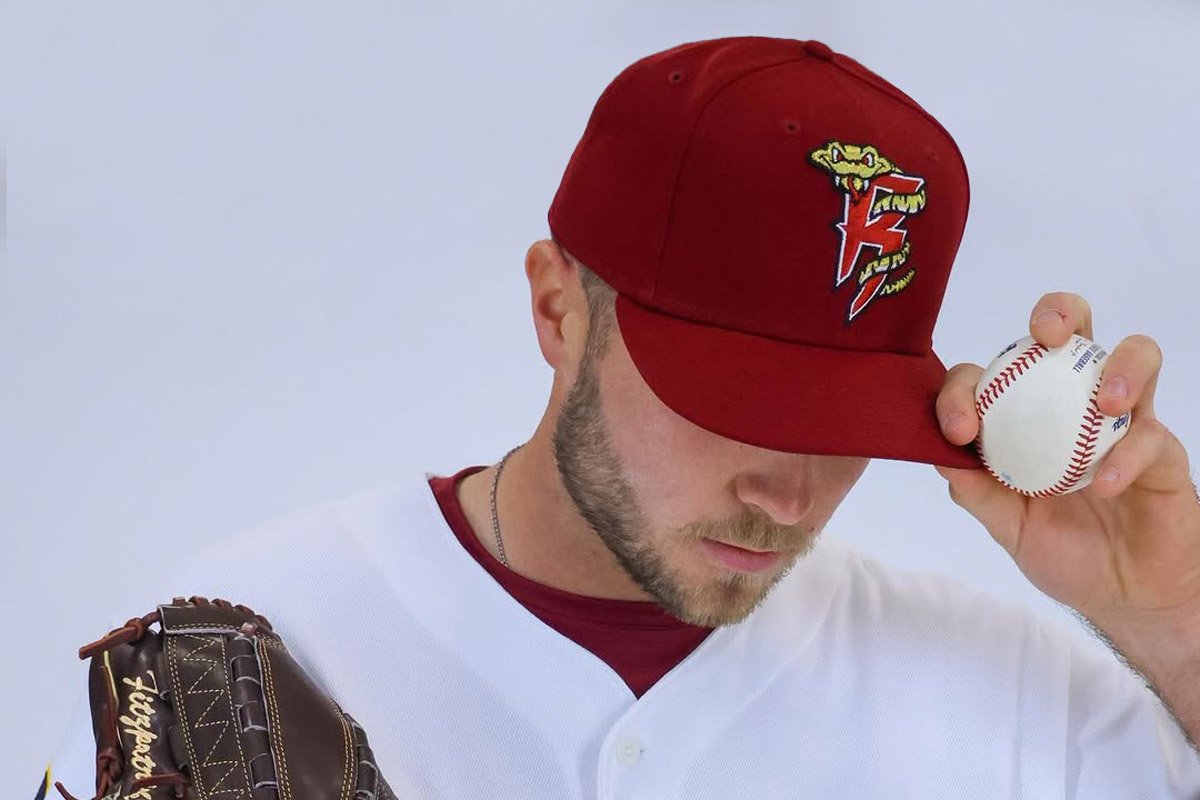 The Rule 5 Draft is on December 10th, but the deadline to protect players from the draft is November 18th. Unlike recent offseasons, there are no surefire additions for the Brewers, and there may not even be any coin-flip options. There are three pitchers and one position player who can at least make a case, though. The four players with cases are among the 31 eligible players to be selected this year. The complete list is available in our forums, along with a more detailed explanation of what makes a player eligible for selection in the draft. Brewers fans are well aware of the dangers of leaving a player unprotected, as they witnessed one of their prospects become the number one selection in last year's draft, and proceeded to watch the previously mentioned Shane Smith pitch his way to an All-Star appearance, or at least a "White Sox need an All-Star" appearance, in his debut season. Following the addition of Coleman Crow to the 40-man roster last week, keeping him from minor league free agency, the Brewers currently have 38 of the 40 spots filled. Thus, they could add two players to the roster without any additional moves, but the question is whether they will feel the need to do so with any of the 31 eligible players. None of these four players has as strong a case as Smith or Chad Patrick had in 2024, but they do all have a case. Pitchers: LHP Brian Fitzpatrick The Brewers used their tenth-round selection on Brian Fitzpatrick in 2022, drafting him out of Rutgers. Having spent time in a starter's role and a relief role in the past, all of Fitzpatrick's appearances in 2025 were out of the bullpen, though many were of the multi-inning variety. After returning to High-A to begin the season, Fitzpatrick was quickly pushed to Double-A in 2025. In 34 ⅔ innings, he posted an impressive 1.82 ERA, to go along with a 2.99 FIP. He struck out 28.6% of batters in Biloxi, and only walked 7.5% of them. He was promoted again to Triple-A, where his first outing was a significant struggle, as he allowed six earned runs in one inning. However, in the final 17 ⅔ innings of his season that followed, he had a 4.08 ERA and a 3.78 FIP. His numbers aren't what land him on this list, though. It's his repertoire and his build that are most intriguing. A true five-pitch pitcher, Fitzpatrick can keep hitters on their toes, especially in shorter stints. He throws a two-seam fastball and a four-seam fastball in the 92-94 MPH range, reaching back for 95 at times. This was a velocity jump for him from having sat 90-92 in the past. He also mixes in a short slider in the mid-80s and a bigger sweeper in the upper-70s. His best pitch is his 82-84 MPH changeup, which he averages around 17 inches of run on. Standing 6'7" and generating about the same amount of extension from the left side, Fitzpatrick has qualities that are likely to be intriguing to big league organizations. Will it be enough to protect him? Likely not, but there is enough here not to rule it out. Likelihood of protection: 15% RHP Will Childers Childers is a legacy of the Brewers, as his father, Matt, was a Brewers draft pick in 1997 and debuted for the Brewers in 2002. Will was an undrafted signing after the 2022 draft after attending the University of Georgia, where he spent the majority of his time injured after a strong freshman season. He didn't appear in his first professional games until June of 2023 as he continued to rehab. After 38 ⅔ innings of 2.33 ERA and 3.08 FIP pitching in Double-A, Childers didn't see the same success in Triple-A. His 4.50 ERA looks respectable, but the 6.07 FIP tells a different story. You don't have to look much further than three of the more important stats to see why FIP is low on him. His strikeout rate went from 30.9% in Biloxi to 18.4% in Nashville. His walk rate went up from an already high 11.2% to 15.8% after the promotion. Beyond that, he also allowed an unsavory 1.38 home runs per nine innings, nearly double the 0.70 number he had posted in Biloxi. Like Fitzpatrick, Childers has a deep repertoire for a reliever, and like Fitzpatrick, it's not his results that warrant him a look. His main fastball is a four-seam, which tends toward the "cut/carry" profile, thrown in the 95-97 MPH range and reaching 99. His sinker is a dead-zone shape thrown in a similar velocity band, though the movement appears to be late, helping the pitch play better than the overall shape would suggest. He throws a cutter in the upper 80s, but it can blend into a shorter slider at times. It's a pitch that could use some sharpening, but it shows signs of being above average. Childers also throws a curveball in the 82-84 MPH range, with sharp, downward bite. Based on his struggles in Triple-A and his injury history, he seems unlikely to be protected, but his pure stuff and the impressive showing in Double-A do give him a fighter's chance. Likelihood of protection: 10% RHP Blake Holub Holub was acquired from the Tigers for Mark Canha following the 2023 season. There are similarities to Childers with Holub. His walk rate in Triple-A was 16.8%, and he has a cut/carry fastball, though Holub's has a lot more true cut, and is even classified as a cutter. Holub struggled in his first taste of Triple-A in 2024 as well. His overall numbers in 2025 were strong. He had a 3.70 ERA and a 3.54 FIP, brought along by a 29.1 whiff-rate and striking out 28.6% of batters faced. The walk rate was a problem for him, but the contact quality was weak, which, when combined with his ability to generate swing and miss, helped him limit runs. Along with his interesting cutter, which he throws in the 93-95 MPH range and can reach 97 with, Holub throws his slider around 43% of the time. Sitting around 85 MPH, the slider generates a lot of ground balls and has good depth to it. He rounds out his repertoire with a very rare splitter. Holub is already 27 years old, and he is a relief-only pitcher at this point. The Brewers are unlikely to protect a player like Holub, but he is someone that a team could view as an option to fill a relief role right away, with a little upside if they can help him limit the walks a bit more, and perhaps are willing to let him lean on the splitter a bit more often. Likelihood of protection: 10% Position Players Catcher: Matt Wood -- FanGraphs #43 prospect A fourth-round pick out of Penn State in 2022, Wood got off to a solid, if unspectacular, start in High-A this season. He was promoted to Double-A in late May, and that's when he began to really make his case. His wRC+ improved from 103 in 116 plate appearances (as well as 100 in 379 plate appearances in 2024) to an impressive 134 with Biloxi in 245 plate appearances. He hit a career-high six home runs as well. However, the biggest reason he now has an outside chance at protection was the strides he made behind the plate. According to Baseball Prospectus, Wood went from -2.3 Catching Defense Added in 2023 to an improved 2.7 in 2024, but he jumped all the way up to 6.5 in 2025. After throwing out 20.4% of stolen base attempts in parts of three seasons in High-A, Wood threw out 27.2% of runners in Double-A. He also showed improvement in blocking and receiving. Position players are naturally less likely to be selected in the Rule 5 Draft, as they are a bit harder to hide in the big leagues for a full season, but a team that is looking for a backup catcher could see Wood as a player on the upswing that would be worth a flier. Likelihood of protection: 10% Other Names of Note RHP Yerlin Rodriguez Rodriguez is not going to be protected; his walk rate has been over 20% each of the last two seasons in High-A, but his stuff warrants mention. He has been up to 101 MPH in his minor league career, and his slider can be a wipeout pitch for him at times. If a team is willing to take a shot on his stuff, the Brewers will likely let them take that chance. RHP Nick Merkel Merkel has shown a wide repertoire out of the bullpen. Mixing six pitches with all three fastball variations, two breaking balls, and a changeup. He combines that with seven feet of extension and decent command. His velocity is only in the low-90s, but a FIP of 2.94 and a bunch of average or better pitches will garner some interest. Of the players in this category, he may be the most likely to be selected, but given that he never got the call to Triple-A in 2025, he seems unlikely to be protected. UTIL Ethan Murray Murray is the lone position player in this section, mainly due to his Double-A performance. The former fifth-round pick posted a very strong 146 wRC+ with Biloxi, but his performance did not carry over to Triple-A, where his wRC+ was 44 in 114 plate appearances. While his average exit velocity of 89.7 MPH was above average, he lacked top-end power. Outside of making decent swing decisions, the rest of the peripheral stats were all well below average. He's a serviceable shortstop defensively and above-average at second base, capable of helping at third and in left field as well. He's unlikely to be selected and almost certainly won't be protected. It would have to be considered an upset if anyone is protected by the Brewers this season, barring an outside acquisition, along the lines of the Oliver Dunn trade two offseasons ago. If they do protect anyone, they have to come from this group. Is there anyone we missed? Should anyone be protected from this group? Let us know!
- 32 comments
-
- 4
-

-
- brian fitzpatrick
- matt childers
- (and 5 more)
-
Just Baseball's Top 100 was released yesterday, always good work, five Brewers represented in this one. Top 100 MLB Prospects for 2025 (November Update)
-
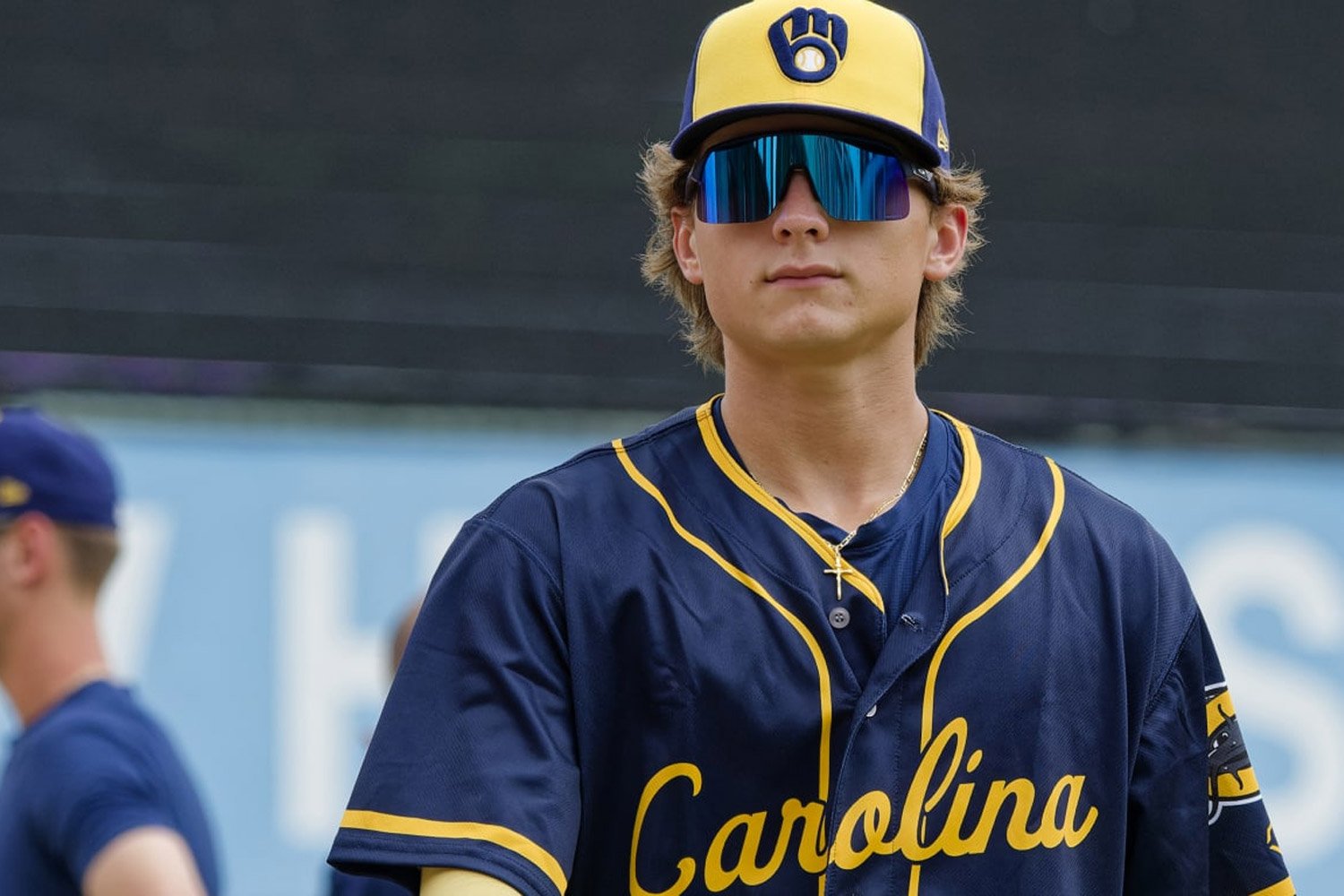 What have we seen from these three players to earn themselves a spot in the Fall Stars Game? Acknowledging that there is definite small-sample noise built into the results to this point, have they shown anything new, or anything that changes their future projections? OF Josh Adamczewski: 14 G, 74 PA, .283/.405/.550 (.955 OPS), 4 Doubles, 4 HR, 15 K, 12 BB, 1 Sac Fly, 4 SB, 1 CS Adamczewski has had one of the more visually appealing swings in the system since he was drafted as a 15th-round pick in 2023. An adjustment that Adamczewski made to his hands this past offseason helped him elevate the ball more consistently, which has been a big part of his success in the Fall League to this point. After only hitting six home runs in 308 regular-season plate appearances this year, Adamczewski has hit four in only 57 plate appearances in the AFL. His 90th percentile exit velocity of 106.5 MPH puts him in the 78th percentile for the league, and his barrel rate of 14% is in the 85th percentile. He is making consistently hard contact, and he’s pulling it in the air at a solid clip as well, as his 11.4% Pull Air% is in the 72nd percentile for the AFL. Adamczewski’s whiff rate of 34% is undoubtedly higher than you would hope to see, but that has been coming down over the course of the fall. In fact, five of his 15 strikeouts occurred in his first two games. He is making fantastic swing decisions, only chasing 15.5% of pitches and swinging at 72.4% of pitches in the zone, both of which are well above average. Playing mainly left field as he works outfield into his defensive repertoire, Adamczewski has shown some athleticism, though he is unsurprisingly raw in his routes and jumps out there. His bat will always be his calling card, but showing he can handle left field defensively would go a long way toward clearing his path to the big leagues. UTIL Dylan O’Rae: 8 G, 28 PA, .302/.388/.395 (.783 OPS), 4 Doubles, 15 K, 5 BB, 1 HBP, 6 SB, 1 CS The Brewers' 2022 third-round pick missed all of 2025 due to injury, so this is the first official action he has seen in over a year, and he has re-acquitted himself well. Known as a speedster—he stole 62 bases between High-A and Double-A in 2024—O'Rae has registered six steals in seven attempts so far in the fall. His speed has also helped him stretch a couple of singles into doubles, which will be important for him as he moves forward, with power being a clear hole in his profile. O'Rae is small in stature, standing only 5'7" and listed at 160 pounds post-draft, though he appears to have bulked up since then, and that weight is most likely no longer accurate. Even with some added bulk, O'Rae has struggled to impact the baseball with much authority. This has held true early in his AFL stint, with a fourth percentile max exit velocity of 104.2 MPH. However, his average exit velocity of 87.1 MPH, placing him in the 21st percentile, is more palatable when you factor in how often he's been elevating the ball at ideal launch angles, currently in the 95th percentile for "launch angle sweet spot %" in the AFL. After a slow start in terms of making contact, he's been getting the bat to the ball more consistently over the last couple of weeks, allowing him to put his speed and athleticism on display. O'Rae has spent some time in the outfield in the past, but he has played all 13 of his AFL games at second base, where he has consistently projected as an above-average defender with a below-average arm. His versatility could prove helpful as he progresses through the Brewers' system. A Brandon Lockridge-type profile is likely what you are hoping for, but with added infield versatility. For now, seeing him on the field and performing well is a big-time positive after missing the 2025 regular season. He will likely return to Double-A in 2026. LHP Jesús Broca: 4 G, 1 GS, 9 IP, 15 K:5 BB, 1 HBP, 2 ER, 2.00 ERA, 1.22 WHIP Broca caught our attention near the end of the season, due in part to a velocity jump he made as the season progressed. At 19 years old, Broca was signed by the Brewers out of Mexico in 2023 and will be Rule 5-eligible in 2026. He performed well in High-A after an early-season promotion and even finished his season in Double-A. He has carried over his regular-season success to the AFL, where he is striking out 39.5% of the hitters he has faced, recording 15 strikeouts in just nine innings. Broca's delivery was already helping the velocity play up a bit above what the gun was reading, as he hides the ball well, and his release point appeared to be tough to pick up. Therefore, a jump from 89-91 to sitting 92-94 MPH, and touching up to 96 MPH this year, is even more encouraging. He uses both a sinker and a four-seam. The sinker helps him generate ground balls at a high level, and the four-seam is used more as a put-away pitch above the zone. In the AFL, batters have only managed a .103 xwOBA against the sinker. The four-seam has not seen similar success in the limited sample, with a 1.125 xwOBA against it. The sinker is a solid pitch, but Broca's best offerings are his secondaries. His slider has generated a 41% whiff rate in the fall league, a substantial number on its own, especially impressive given it's his most often-used pitch and he is throwing it in the zone 56% of the time. His changeup has also generated a 33.3% whiff rate, though the contact against it has been a bit loud at times. Broca is only 22 years old and has already made his way up to Double-A and is following it up with a strong AFL stint, earning a well-deserved nod to the Fall Stars Game. He is worthy of some attention heading into 2026, especially if they attempt to stretch him out as a starter. What are your thoughts on the players representing the Brewers in the Fall Stars Game? Did Luke Adams deserve a nod? Let us know!
- 3 comments
-
- 2
-
-

-
- josh adamczewksi
- dylan orae
- (and 1 more)
-
What have we seen from these three players to earn themselves a spot in the Fall Stars Game? Acknowledging that there is definite small-sample noise built into the results to this point, have they shown anything new, or anything that changes their future projections? OF Josh Adamczewski: 14 G, 74 PA, .283/.405/.550 (.955 OPS), 4 Doubles, 4 HR, 15 K, 12 BB, 1 Sac Fly, 4 SB, 1 CS Adamczewski has had one of the more visually appealing swings in the system since he was drafted as a 15th-round pick in 2023. An adjustment that Adamczewski made to his hands this past offseason helped him elevate the ball more consistently, which has been a big part of his success in the Fall League to this point. After only hitting six home runs in 308 regular-season plate appearances this year, Adamczewski has hit four in only 57 plate appearances in the AFL. His 90th percentile exit velocity of 106.5 MPH puts him in the 78th percentile for the league, and his barrel rate of 14% is in the 85th percentile. He is making consistently hard contact, and he’s pulling it in the air at a solid clip as well, as his 11.4% Pull Air% is in the 72nd percentile for the AFL. Adamczewski’s whiff rate of 34% is undoubtedly higher than you would hope to see, but that has been coming down over the course of the fall. In fact, five of his 15 strikeouts occurred in his first two games. He is making fantastic swing decisions, only chasing 15.5% of pitches and swinging at 72.4% of pitches in the zone, both of which are well above average. Playing mainly left field as he works outfield into his defensive repertoire, Adamczewski has shown some athleticism, though he is unsurprisingly raw in his routes and jumps out there. His bat will always be his calling card, but showing he can handle left field defensively would go a long way toward clearing his path to the big leagues. UTIL Dylan O’Rae: 8 G, 28 PA, .302/.388/.395 (.783 OPS), 4 Doubles, 15 K, 5 BB, 1 HBP, 6 SB, 1 CS The Brewers' 2022 third-round pick missed all of 2025 due to injury, so this is the first official action he has seen in over a year, and he has re-acquitted himself well. Known as a speedster—he stole 62 bases between High-A and Double-A in 2024—O'Rae has registered six steals in seven attempts so far in the fall. His speed has also helped him stretch a couple of singles into doubles, which will be important for him as he moves forward, with power being a clear hole in his profile. O'Rae is small in stature, standing only 5'7" and listed at 160 pounds post-draft, though he appears to have bulked up since then, and that weight is most likely no longer accurate. Even with some added bulk, O'Rae has struggled to impact the baseball with much authority. This has held true early in his AFL stint, with a fourth percentile max exit velocity of 104.2 MPH. However, his average exit velocity of 87.1 MPH, placing him in the 21st percentile, is more palatable when you factor in how often he's been elevating the ball at ideal launch angles, currently in the 95th percentile for "launch angle sweet spot %" in the AFL. After a slow start in terms of making contact, he's been getting the bat to the ball more consistently over the last couple of weeks, allowing him to put his speed and athleticism on display. O'Rae has spent some time in the outfield in the past, but he has played all 13 of his AFL games at second base, where he has consistently projected as an above-average defender with a below-average arm. His versatility could prove helpful as he progresses through the Brewers' system. A Brandon Lockridge-type profile is likely what you are hoping for, but with added infield versatility. For now, seeing him on the field and performing well is a big-time positive after missing the 2025 regular season. He will likely return to Double-A in 2026. LHP Jesús Broca: 4 G, 1 GS, 9 IP, 15 K:5 BB, 1 HBP, 2 ER, 2.00 ERA, 1.22 WHIP Broca caught our attention near the end of the season, due in part to a velocity jump he made as the season progressed. At 19 years old, Broca was signed by the Brewers out of Mexico in 2023 and will be Rule 5-eligible in 2026. He performed well in High-A after an early-season promotion and even finished his season in Double-A. He has carried over his regular-season success to the AFL, where he is striking out 39.5% of the hitters he has faced, recording 15 strikeouts in just nine innings. Broca's delivery was already helping the velocity play up a bit above what the gun was reading, as he hides the ball well, and his release point appeared to be tough to pick up. Therefore, a jump from 89-91 to sitting 92-94 MPH, and touching up to 96 MPH this year, is even more encouraging. He uses both a sinker and a four-seam. The sinker helps him generate ground balls at a high level, and the four-seam is used more as a put-away pitch above the zone. In the AFL, batters have only managed a .103 xwOBA against the sinker. The four-seam has not seen similar success in the limited sample, with a 1.125 xwOBA against it. The sinker is a solid pitch, but Broca's best offerings are his secondaries. His slider has generated a 41% whiff rate in the fall league, a substantial number on its own, especially impressive given it's his most often-used pitch and he is throwing it in the zone 56% of the time. His changeup has also generated a 33.3% whiff rate, though the contact against it has been a bit loud at times. Broca is only 22 years old and has already made his way up to Double-A and is following it up with a strong AFL stint, earning a well-deserved nod to the Fall Stars Game. He is worthy of some attention heading into 2026, especially if they attempt to stretch him out as a starter. What are your thoughts on the players representing the Brewers in the Fall Stars Game? Did Luke Adams deserve a nod? Let us know! View full article
- 3 replies
-
- 1
-
-
- josh adamczewksi
- dylan orae
- (and 1 more)
-
It's Brewers prospect list day at Baseball Prospectus (Believe you need a subscription) 2026 Prospects: Milwaukee Brewers Top Prospects | Baseball Prospectus
-
Your 2025 Biloxi Shuckers
Spencer Michaelis replied to Jim Goulart's topic in Brewers Minor League Talk
Made a quick reel of his defensive highlights from this season. Definitely doesn’t include all his incredible plays and he makes the difficult look routine often as well. -
Minor League Coaching Thread
Spencer Michaelis replied to Jim Goulart's topic in Brewers Minor League Talk
It appears DSL coach Aritz Garcia will be moving on from the organization as well. His Instagram post is below, in which he says, “I’ve made the choice to return home, to give my loved ones the quality time they truly deserve and to help develop the game of baseball in Spain and across Europe.” Aritz Garcia (@capitan_ag) • Instagram photos and videos WWW.INSTAGRAM.COM 418 likes, 21 comments - capitan_ag on October 12, 2025: "My time with the Milwaukee Brewers has come to an end. I’m incredibly grateful for the opportunity to work... -
At his end of year press conference, Arnold said he feels really, really good about him being on the big league roster to start next year. I think they're prepping for Quero to be the backup next year. He'll be down to his final option year (though if needed, they'd likely be able to get a fourth due to the injury issues), and I think they believe he's ready, or at least will be after a (hopefully) full offseason of health. The way Murph talked him up in spring last year was different than the way he usually discusses young players too. I have a feeling he will actually use Quero if he's on the roster. A decent amount more than Haase and Jansen played this past season. I won't rule out the idea of adding a catcher, but assuming Quero does stay healthy, I'm guessing they go the route of minor league deal or split deal for a catcher like they did with Haase/Nola a couple years ago.
-
Added the others I could find to this list (bolded/underlined), but only two of them have actually played in games so far and a few of them could be MiLB free agents soon. Always fun to look through these rosters and see all the former Brewers and Brewers farmhands. From Pedro Severino and JC Mejia (sensing a theme) to Fernando Olguin, Jose Chavez and Jose Sibrian.
-
2026 International Free Agent Market
Spencer Michaelis replied to Jake McKibbin's topic in MLB Draft & International Signings
In the midst of watching this insane Game 3 of the WS, I found a new player that's likely to sign, and I think this could be a fun one... LHP Alexander Mercedes is apparently already sitting 92-94 according to the below IG post and with a build that would seem to indicate the potential for a decent amount more coming down the line. @deporteadiariord056 • Instagram reel WWW.INSTAGRAM.COM Álex Álvarez, el joven pitcher del Milwaukee Brewers, está generando expectativas con su rendimiento en el campo. Su velocidad y control de la pelota son impresionantes, lo que lo... Believe this is his personal Instagram, but it's private -
I have a tough time believing Justin Yeager would be valued more highly than Coleman Crow, unless Crow’s injury is much, much worse than we think. Even beyond the potential value a quality starter brings in comparison to a middle reliever, anything close to Yeager’s 20.2 K% to 16.7 BB% ratio in AAA is incredibly tough to make work at the big league level. Yeager is someone I’m sure they’d like to keep in the organization, but frankly, he’s not someone I’d see any need to use a 40-man spot on. Certainly not in lieu of McGee or Rob Z, both of whom have shown better MLB traits.
- 14 replies
-
- 10
-
-
-
- justin yeager
- ernesto martinez jr
- (and 2 more)
-
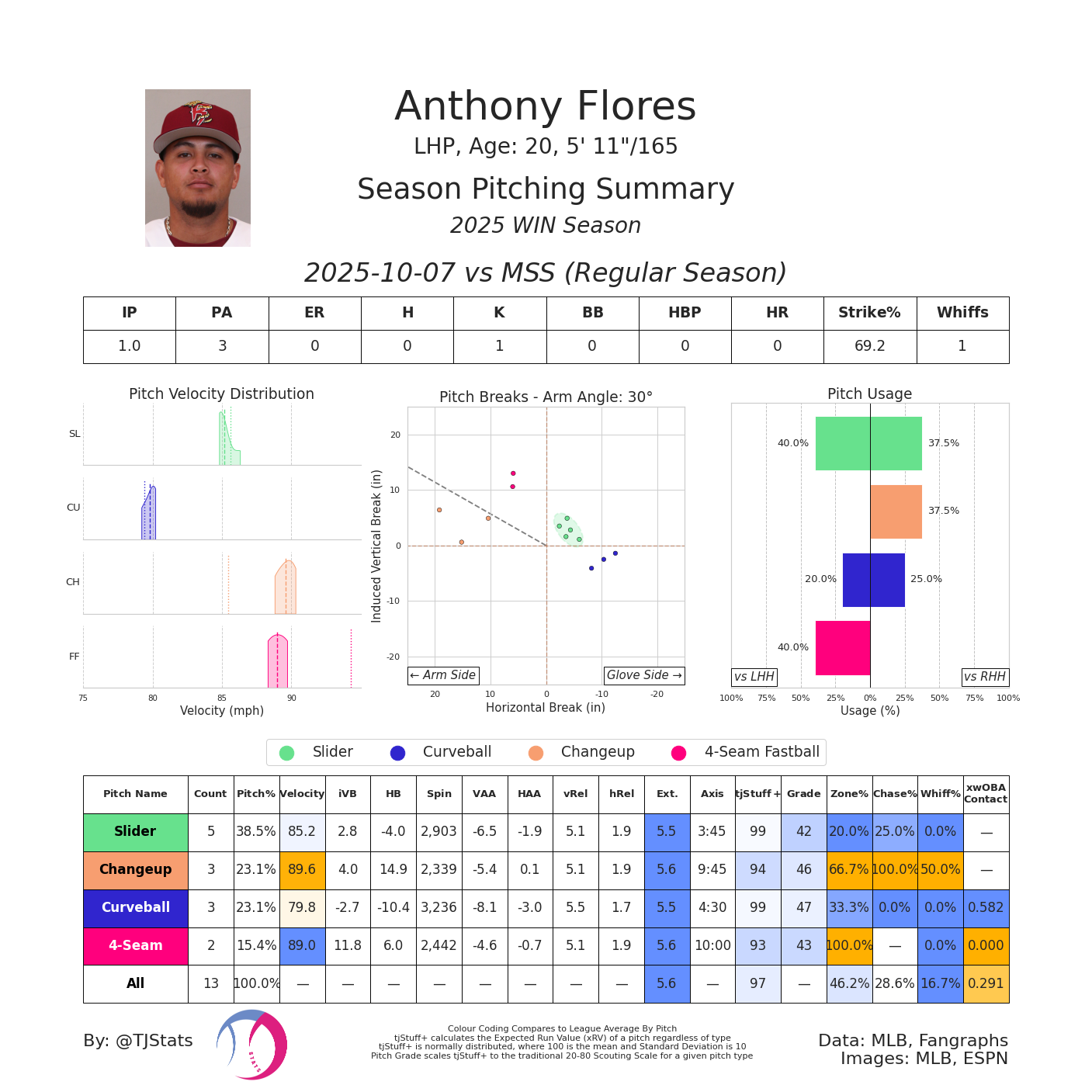
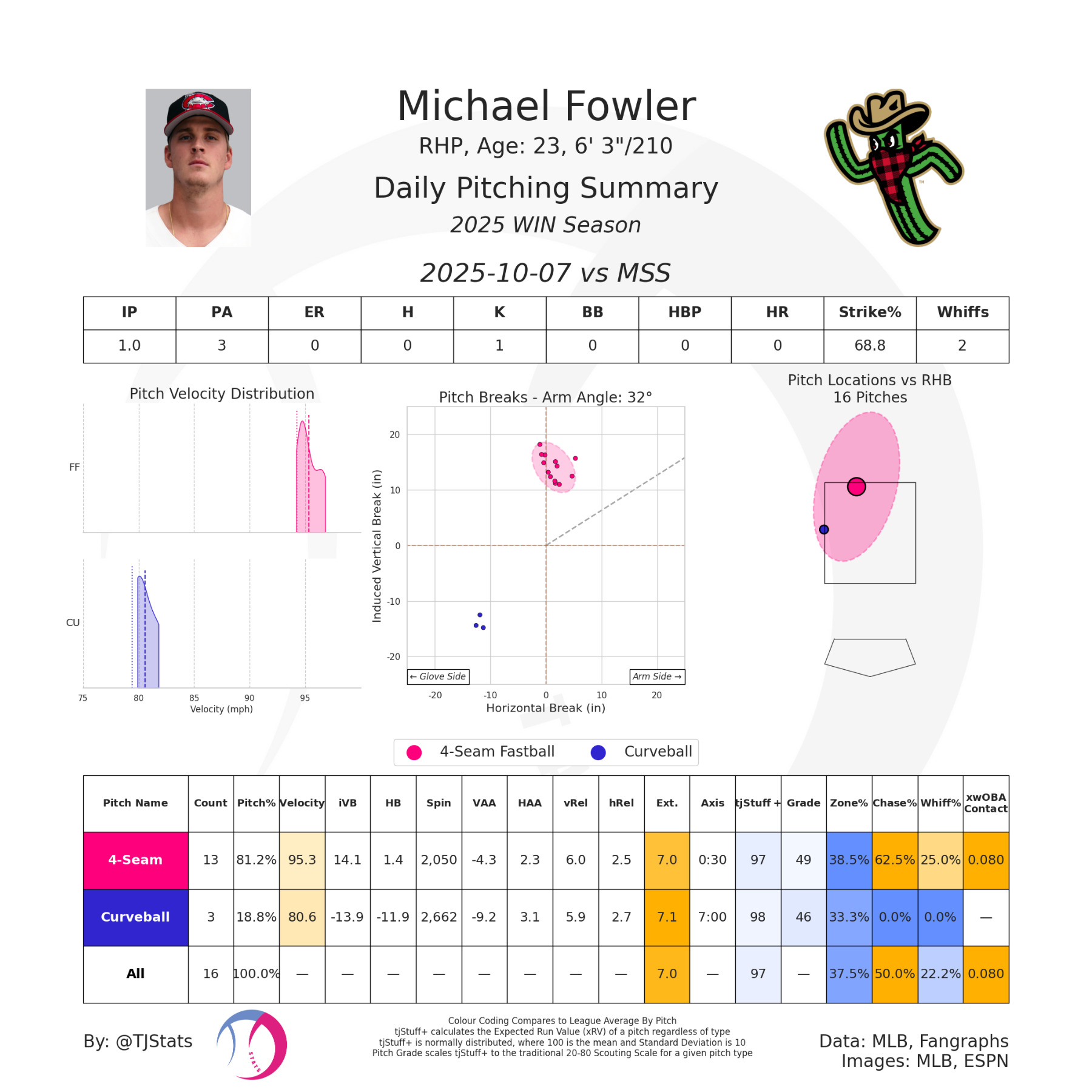
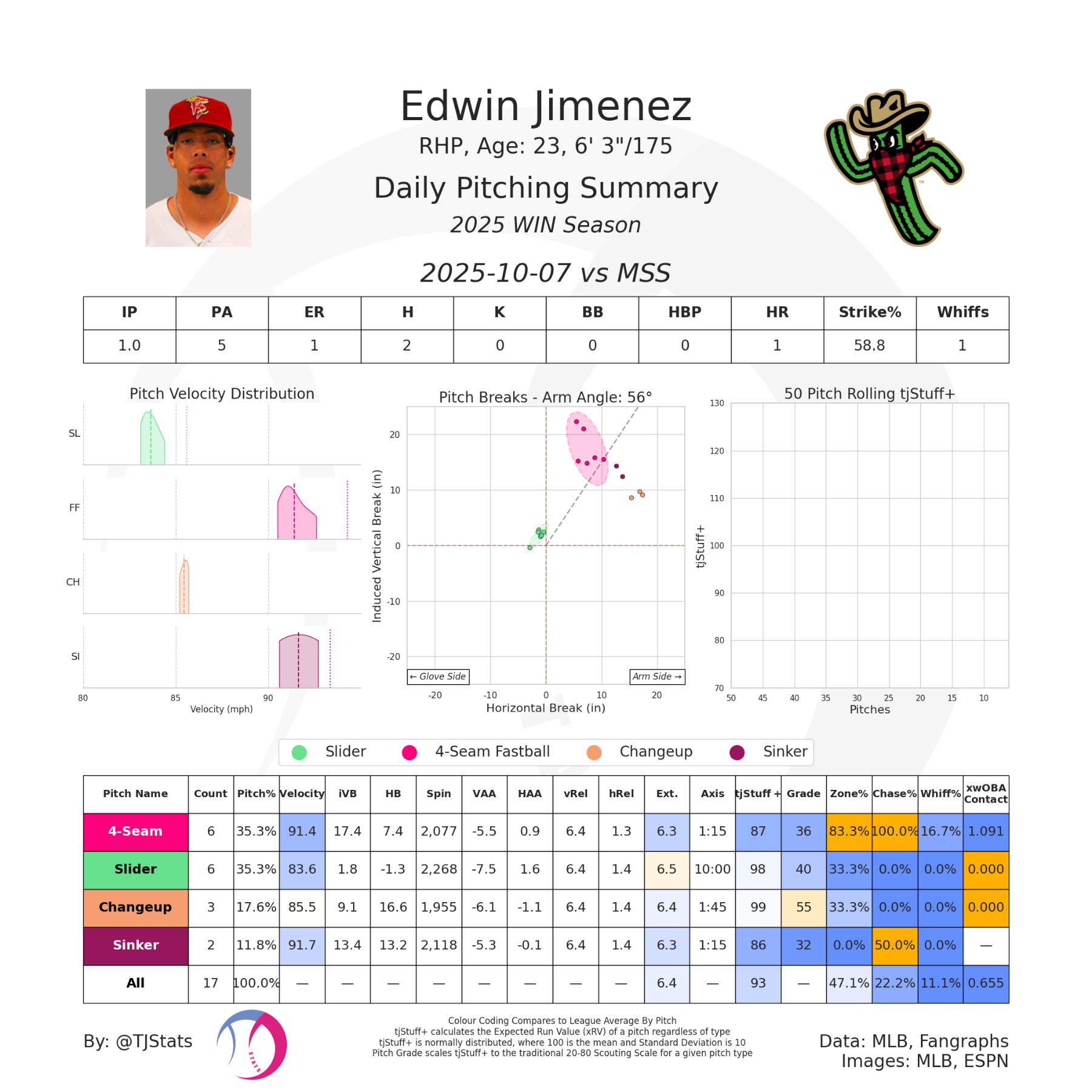
Some notes on the three pitchers to throw yesterday... LHP Anthony Flores: The "changeups" are actually his sinker, and he flashed one as low as 0 IVB and as much as 20" of run. It was inconsistent on the three he threw, but there is a pretty fun pitch in there if he can find it consistently. Spins the hell out of the curveball at over 3,200 RPM and has a lot of spin on his pitches in general. He needs a velo jump of at least a couple ticks, but there's a fun baseline here. RHP Michael Fowler: Fowler was up to 96.8 and showed signs of a very interesting cut/carry fastball shape, though the amount of carry he generated on the pitch was a little inconsistent, as was the spin rate, which is a bit low for a four-seam. The curve is a big breaker, with above-average spin, I just wonder if they'll attempt to bridge the gap between the two at all, either by adding a truer cutter or short slider, or by trying to shorten up the curve and have him throw it harder (think Trevor Megill). RHP Edwin Jimenez: First game back from TJS, so will be interesting to follow moving forward, but the fastball velo and shapes are pretty meh, especially from his high release point. He did mix a couple 4FB with over 20" of IVB, though even those aren't anything too special from his release height. The slider isn't an awful shape, but the spin is quite low. Changeup is a pretty good-looking pitch.
-
It appears that LHP Nate Peterson is on the Surprise roster now, not sure if anyone had seen that yet?
- 14 replies
-
- 1
-
-
- luke adams
- josh adamczewski
- (and 5 more)
-
Figured it might be worth starting a topic on notes or tidbits that come out during the MiLB "offseason" here as we get into Instructional League play, and the AFL begins soon. If I hear anything, I might drop some notes myself. I'll start with a couple articles from this morning: Eric Longenhagen wrote about a few Brewers in his "A Week of Instructional League Scouting Notes" article (JD Thompson, Jarrette Bonet and Kevin Garcia) Chris Clegg wrote about Luke Adams as a "bat who could increase stock" in the AFL, while previewing the Surprise Saguaros roster Both should be free to read.
-
It appears Fanatic officially has bots in the comments. Does this mean we’ve made it? Some are saying…
- 14 replies
-
- 2
-

-
- luke adams
- josh adamczewski
- (and 5 more)
-
2026 International Free Agent Market
Spencer Michaelis replied to Jake McKibbin's topic in MLB Draft & International Signings
Rickey Moneys is also at 19 on the list. He’s been my favorite so far based on my research and the limited video out there, so I’m excited to see him that high already on Pipeline. -
Image courtesy of © Dan Powers / USA TODAY NETWORK-Wisconsin / USA TODAY NETWORK via Imagn Images The Arizona Fall League (AFL) will begin on October 6, and the Brewers will be sending seven players to play as members of the Surprise Saguaros. There will be three position players, and five pitchers. Position Players C Marco Dinges -- Carolina Mudcats and Wisconsin Timber Rattlers -- 317 PA, .930 OPS, 161 wRC+ The Brewers usually send a catcher to the AFL, and this year’s representative is an exciting one in Dinges. The Brewers used their 2024 fourth-round pick on Dinges out of Florida State, only a year after he had battled a rare immune deficiency disorder called hemophagocytic lymphohistiocytosis (HLH). Severe cases can lead to organ failure and death, and Dinges had to fight for his life in the hospital for almost six weeks, all while transferring from Tallahassee Community College to Florida State. He eventually beat HLH, and he still put up a strong performance in his lone season as a Seminole. In his first full season of professional baseball, Dinges had a breakout season, flying up prospect lists. His bat did most of the heavy lifting, as evidenced by his combined 161 wRC+ between Low-A and High-A. He also combined for 13 home runs and 62 RBIs between the levels. Defensively, there’s still work to be done, but he is an outstanding athlete for a catcher. He caught only his senior year of high school and one year at Tallahassee Community College. Despite his lack of experience, he has been making big strides this season and looks like a catcher who will be an average defender at his peak, especially with FanGraphs giving his arm a 70 grade. His footwork needs work, but his arm could be a big-time weapon behind the dish. Above all else, the Brewers are likely sending Dinges to the AFL to get him continued reps as a catcher in a competitive environment, especially given that he missed time this season with a hamstring injury. OF Josh Adamczewski -- Carolina Mudcats and Wisconsin Timber Rattlers -- 308 PA, .910 OPS, 155 wRC+ The Brewers drafted Adamczewski in the 15th round of the 2023 draft and signed him away from a Ball State commitment. Adamczewski missed time in 2024 due to injury, but when he was healthy, he performed very well between the Arizona Complex League and Low-A Carolina—as evidenced by his 156 wRC+. The same is true of his 2025 season, where he again missed time due to injury but posted a 155 wRC+ between Low-A and High-A. Adamczewski’s carrying traits are connected to his ability to hit the ball. His hit tool has the chance to be above-average, with an ability to hit the ball with authority to all fields. After some changes to his setup and stance this year, he reduced his groundball rate by 10 percentage points. While he doesn’t possess huge raw power, Adamczewski’s more consistent ability to pull the ball in the air (and to hit the ball at ideal launch angles) does give him a chance to get to game power, with potentially above-average future grades. He has hit home runs with exit velocities of up to 108 MPH as a teenager, and shows quite a bit of gap-to-gap power, as well, with plenty of doubles and triples on his ledger. On the defensive side of the ball, Adamczewski’s glove work is certainly solid enough to get the job done, but his lack of arm strength leaves him as a likely second base-only prospect on the infield. However, he is being listed as an outfielder on the AFL roster, after spending four of his games with the Timber Rattlers in left field. Getting Adamczewski reps in the outfield, as well as continued at-bats against higher-level competition, will be the objective of his time in Arizona. INF Luke Adams -- Biloxi Shuckers -- 302 PA, .879 OPS, 165 wRC+ The Brewers' 12th-round pick in the 2022 draft, Adams stands 6-foot-4 and weighs 210 pounds. He has a rare blend of patience at the plate, plus raw power, and surprising baserunning ability for his size. Adams only turned 21 in April and was the fifth-youngest player in the Southern League on Opening Day. He also started the year by making a swing adjustment. It wasn’t a huge surprise, therefore, when the bat got off to a bit of a slow start; he posted a line of .173/.326/.387 in April. This was good for a 118 wRC+ in the oppressive Southern League hitting environment, but it was not the type of line you'd hope to see from a genuine prospect. He turned things around after that, and with a week remaining in the regular season, he’s posted a 165 wRC+ for the season, along with 11 home runs and 13 doubles. Adams hits the ball extremely hard, but has struggled to tap into game power, as over 40% of his fly balls have been of the infield variety. Line drives are great, but they don’t often leave the ballpark, so finding a happy medium between pop-ups and line drives would go a long way for Adams. Adams spent most of the season at first base, with Brock Wilken manning third, but third base is a spot he has shown an ability to handle. Getting more reps over there could be a big part of the reasoning behind this AFL assignment. Like the others above, Adams also missed about two months of the season, and that is also likely playing a role in this assignment. Pitchers LHP Jesus Broca -- Carolina Mudcats, Wisconsin Timber Rattlers and Biloxi Shuckers -- 76.1 IP, 3.77 ERA, 4.09 FIP, 21.1 K%, 12.3 BB% At 19 years old, Broca was signed by the Brewers out of Mexico in 2023, and will be Rule 5-eligible in 2026. He performed well in High-A after an early-season promotion and is closing out his season in Double-A now. Broca’s delivery was already helping the velocity play up a bit above what the gun was reading, as he hides the ball well, and his release point appeared to be tough to pick up. Therefore, a jump from 89-91 to sitting 92-94 MPH and touching all the way up to 96 MPH this year is even more encouraging. He mixes a two-seam and a four-seam heater. The two-seam command comes and goes, but it’s heavy and definitely played a big role in his 53.4% groundball rate. The four-seamer mostly plays up in the zone. His changeup was his best pitch in previous seasons, and that held true this year, as one of his best out pitches against right-handed hitters. He also shows good command of an 80-MPH curveball, with good depth. Broca’s inclusion on the roster is a bit surprising, as he had already surpassed his career high in innings by over 45 frames. As a multi-inning reliever this year, perhaps they are aiming to raise the innings even further in hopes of stretching him out as a starter in 2026. LHP Anthony Flores -- Wisconsin Timber Rattlers -- 91.0 IP, 3.89 ERA, 4.52 FIP, 22.8 K%, 11.9 BB% Signed as an amateur out of Venezuela in 2022, Flores will also be eligible for the Rule 5 draft in 2026. The lefty spent his entire 2025 in Appleton with the Timber Rattlers. He began the season making starts, but finished it in the bullpen. Flores operates mainly with a four-pitch mix. He sits in the upper 80s with his fastball, a lack of velocity that he attempts to make up for by mixing his other pitches deftly. He throws a mid-80s cutter as his primary pitch, especially when facing right-handed hitters. It’s not a big swing-and-miss pitch for him, but it does generate a lot of soft contact. Flores also throws a bigger curveball in the 79-81 MPH range, a pitch that he likes to use against left-handed bats as a putaway pitch. He’s pretty comfortable landing it for strikes, too. His changeup has solid fade and is his go-to for trying to put righties away. Flores walked too many players this year, for a hurler who doesn’t possess the pure stuff to work around free passes, but he did strike batters out at an average rate. As a 20-year-old in High-A, he did solid (if unspectacular) work. Similar to Broca, Flores’s inclusion is interesting. Perhaps he is another one they would like to keep stretched out, so he can be a full-time starter in 2026. RHP Michael Fowler -- Carolina Mudcats and Nashville Sounds -- 9.1 IP, 2.89 ERA, 3.14 FIP, 27.5 K%, 15.0 BB% Fowler had a peripatetic college career, beginning at LSU, transferring to Tulane for his third year and then finishing his career at Southern Miss. In terms of results, there wasn’t exactly a successful stop among them. He showed that he possessed good stuff, though, as he struck plenty of batters out. Alas, he also walked them at an absurdly high rate. He throws a four-seam fastball that can get into the upper 90s at times, and has some similarities to Trevor Megill’s fastball, with a borderline cut-carry profile. It can play well up in the zone and still get a little cut action on it. He also mixes in a hammer of a curveball that sits around 80 MPH and generates around -13 IVB, which means it has a ton of depth. He likes to mix both his pitches quite a bit, likely around a 60/40 usage, favoring the fastball. Fowler was a late sign, and someone who has struggled mightily with his command in his amateur (and early professional) career. His inclusion on the AFL roster shows that they think highly of the stuff he possesses, but likely are hoping he can get reps down there and show continued command improvements. RHP Edwin Jimenez -- Missed 2025 season due to injury A 2018 international signee, Jimenez is now 23 years old and running up against the organizational clock. He is set to hit minor league free agency this winter, though one has to wonder if an AFL assignment is a precursor to a return. Starting with a low-90s fastball, Jimenez has a starter’s repertoire and had a pretty solid 2023 season. In his return to High-A in 2024, Jimenez got off to a poor start, before missing the final three months due to injury. That bled into missing all of 2025. Jimenez had always had a curveball with good traits—a good shape and two-plane break—that he used a lot. He also threw a changeup that showed flashes of being a solid offering against left-handed bats. The reasoning behind this assignment is pretty clear. They are hoping to get Jimenez some innings in a competitive setting in 2025. As mentioned above, this would seem to be a likely precursor to him re-signing a minor-league deal with the organization heading into 2026. RHP Brett Wichrowski -- Biloxi Shuckers -- 99.1 IP, 3.44 ERA, 3.98 FIP, 16.7 K%, 10.2 BB% The Brewers' 13th-round selection in the vaunted 2023 draft, out of Bryant University, Wichrowski moved very quickly to Double-A in 2024, his first professional season. He returned there in 2025 and put up strong surface-level numbers. Wichrowski reached 99 MPH in a few of his starts this season, sitting in the 94-95 MPH range more regularly. The fastball shape seems inconsistent, and will be something to watch if he gets any outings on Statcast fields in Arizona. The lack of consistency for the fastball likely contributes to his low strikeout totals. The best pitch in Wichrowski’s repertoire is his low- to mid-80s sweeper. He most often uses it against right-handed hitters as a putaway pitch, though he’s shown an ability to land it for strikes, as well. He does this against righties, especially, but also against lefties at times. Wichrowski also throws a shorter, harder slider, and he appears to be more comfortable using that version against lefties than the sweeper. He rounds out his repertoire with a changeup in the mid- to upper 80s that made some strides in 2025. Wichrowski’s inclusion is interesting, because like Broca and Flores, he’s surpassed his career high in innings already. Given his lack of fastball shape, perhaps they hope to see him in a bullpen role in the AFL, to see if that helps his velocity play up. The Brewers have a very strong system, and they are sending a fun group of players to Arizona. A group that will be worth paying attention to, in order to get your fill of minor league baseball, even after the actual season ends. View full article
- 14 replies
-
- 2
-
-
- luke adams
- josh adamczewski
- (and 5 more)
-
Brewers Send Eight Prospects to the Arizona Fall League
Spencer Michaelis posted an article in Minor Leagues
 The Arizona Fall League (AFL) will begin on October 6, and the Brewers will be sending seven players to play as members of the Surprise Saguaros. There will be three position players, and five pitchers. Position Players C Marco Dinges -- Carolina Mudcats and Wisconsin Timber Rattlers -- 317 PA, .930 OPS, 161 wRC+ The Brewers usually send a catcher to the AFL, and this year’s representative is an exciting one in Dinges. The Brewers used their 2024 fourth-round pick on Dinges out of Florida State, only a year after he had battled a rare immune deficiency disorder called hemophagocytic lymphohistiocytosis (HLH). Severe cases can lead to organ failure and death, and Dinges had to fight for his life in the hospital for almost six weeks, all while transferring from Tallahassee Community College to Florida State. He eventually beat HLH, and he still put up a strong performance in his lone season as a Seminole. In his first full season of professional baseball, Dinges had a breakout season, flying up prospect lists. His bat did most of the heavy lifting, as evidenced by his combined 161 wRC+ between Low-A and High-A. He also combined for 13 home runs and 62 RBIs between the levels. Defensively, there’s still work to be done, but he is an outstanding athlete for a catcher. He caught only his senior year of high school and one year at Tallahassee Community College. Despite his lack of experience, he has been making big strides this season and looks like a catcher who will be an average defender at his peak, especially with FanGraphs giving his arm a 70 grade. His footwork needs work, but his arm could be a big-time weapon behind the dish. Above all else, the Brewers are likely sending Dinges to the AFL to get him continued reps as a catcher in a competitive environment, especially given that he missed time this season with a hamstring injury. OF Josh Adamczewski -- Carolina Mudcats and Wisconsin Timber Rattlers -- 308 PA, .910 OPS, 155 wRC+ The Brewers drafted Adamczewski in the 15th round of the 2023 draft and signed him away from a Ball State commitment. Adamczewski missed time in 2024 due to injury, but when he was healthy, he performed very well between the Arizona Complex League and Low-A Carolina—as evidenced by his 156 wRC+. The same is true of his 2025 season, where he again missed time due to injury but posted a 155 wRC+ between Low-A and High-A. Adamczewski’s carrying traits are connected to his ability to hit the ball. His hit tool has the chance to be above-average, with an ability to hit the ball with authority to all fields. After some changes to his setup and stance this year, he reduced his groundball rate by 10 percentage points. While he doesn’t possess huge raw power, Adamczewski’s more consistent ability to pull the ball in the air (and to hit the ball at ideal launch angles) does give him a chance to get to game power, with potentially above-average future grades. He has hit home runs with exit velocities of up to 108 MPH as a teenager, and shows quite a bit of gap-to-gap power, as well, with plenty of doubles and triples on his ledger. On the defensive side of the ball, Adamczewski’s glove work is certainly solid enough to get the job done, but his lack of arm strength leaves him as a likely second base-only prospect on the infield. However, he is being listed as an outfielder on the AFL roster, after spending four of his games with the Timber Rattlers in left field. Getting Adamczewski reps in the outfield, as well as continued at-bats against higher-level competition, will be the objective of his time in Arizona. INF Luke Adams -- Biloxi Shuckers -- 302 PA, .879 OPS, 165 wRC+ The Brewers' 12th-round pick in the 2022 draft, Adams stands 6-foot-4 and weighs 210 pounds. He has a rare blend of patience at the plate, plus raw power, and surprising baserunning ability for his size. Adams only turned 21 in April and was the fifth-youngest player in the Southern League on Opening Day. He also started the year by making a swing adjustment. It wasn’t a huge surprise, therefore, when the bat got off to a bit of a slow start; he posted a line of .173/.326/.387 in April. This was good for a 118 wRC+ in the oppressive Southern League hitting environment, but it was not the type of line you'd hope to see from a genuine prospect. He turned things around after that, and with a week remaining in the regular season, he’s posted a 165 wRC+ for the season, along with 11 home runs and 13 doubles. Adams hits the ball extremely hard, but has struggled to tap into game power, as over 40% of his fly balls have been of the infield variety. Line drives are great, but they don’t often leave the ballpark, so finding a happy medium between pop-ups and line drives would go a long way for Adams. Adams spent most of the season at first base, with Brock Wilken manning third, but third base is a spot he has shown an ability to handle. Getting more reps over there could be a big part of the reasoning behind this AFL assignment. Like the others above, Adams also missed about two months of the season, and that is also likely playing a role in this assignment. Pitchers LHP Jesus Broca -- Carolina Mudcats, Wisconsin Timber Rattlers and Biloxi Shuckers -- 76.1 IP, 3.77 ERA, 4.09 FIP, 21.1 K%, 12.3 BB% At 19 years old, Broca was signed by the Brewers out of Mexico in 2023, and will be Rule 5-eligible in 2026. He performed well in High-A after an early-season promotion and is closing out his season in Double-A now. Broca’s delivery was already helping the velocity play up a bit above what the gun was reading, as he hides the ball well, and his release point appeared to be tough to pick up. Therefore, a jump from 89-91 to sitting 92-94 MPH and touching all the way up to 96 MPH this year is even more encouraging. He mixes a two-seam and a four-seam heater. The two-seam command comes and goes, but it’s heavy and definitely played a big role in his 53.4% groundball rate. The four-seamer mostly plays up in the zone. His changeup was his best pitch in previous seasons, and that held true this year, as one of his best out pitches against right-handed hitters. He also shows good command of an 80-MPH curveball, with good depth. Broca’s inclusion on the roster is a bit surprising, as he had already surpassed his career high in innings by over 45 frames. As a multi-inning reliever this year, perhaps they are aiming to raise the innings even further in hopes of stretching him out as a starter in 2026. LHP Anthony Flores -- Wisconsin Timber Rattlers -- 91.0 IP, 3.89 ERA, 4.52 FIP, 22.8 K%, 11.9 BB% Signed as an amateur out of Venezuela in 2022, Flores will also be eligible for the Rule 5 draft in 2026. The lefty spent his entire 2025 in Appleton with the Timber Rattlers. He began the season making starts, but finished it in the bullpen. Flores operates mainly with a four-pitch mix. He sits in the upper 80s with his fastball, a lack of velocity that he attempts to make up for by mixing his other pitches deftly. He throws a mid-80s cutter as his primary pitch, especially when facing right-handed hitters. It’s not a big swing-and-miss pitch for him, but it does generate a lot of soft contact. Flores also throws a bigger curveball in the 79-81 MPH range, a pitch that he likes to use against left-handed bats as a putaway pitch. He’s pretty comfortable landing it for strikes, too. His changeup has solid fade and is his go-to for trying to put righties away. Flores walked too many players this year, for a hurler who doesn’t possess the pure stuff to work around free passes, but he did strike batters out at an average rate. As a 20-year-old in High-A, he did solid (if unspectacular) work. Similar to Broca, Flores’s inclusion is interesting. Perhaps he is another one they would like to keep stretched out, so he can be a full-time starter in 2026. RHP Michael Fowler -- Carolina Mudcats and Nashville Sounds -- 9.1 IP, 2.89 ERA, 3.14 FIP, 27.5 K%, 15.0 BB% Fowler had a peripatetic college career, beginning at LSU, transferring to Tulane for his third year and then finishing his career at Southern Miss. In terms of results, there wasn’t exactly a successful stop among them. He showed that he possessed good stuff, though, as he struck plenty of batters out. Alas, he also walked them at an absurdly high rate. He throws a four-seam fastball that can get into the upper 90s at times, and has some similarities to Trevor Megill’s fastball, with a borderline cut-carry profile. It can play well up in the zone and still get a little cut action on it. He also mixes in a hammer of a curveball that sits around 80 MPH and generates around -13 IVB, which means it has a ton of depth. He likes to mix both his pitches quite a bit, likely around a 60/40 usage, favoring the fastball. Fowler was a late sign, and someone who has struggled mightily with his command in his amateur (and early professional) career. His inclusion on the AFL roster shows that they think highly of the stuff he possesses, but likely are hoping he can get reps down there and show continued command improvements. RHP Edwin Jimenez -- Missed 2025 season due to injury A 2018 international signee, Jimenez is now 23 years old and running up against the organizational clock. He is set to hit minor league free agency this winter, though one has to wonder if an AFL assignment is a precursor to a return. Starting with a low-90s fastball, Jimenez has a starter’s repertoire and had a pretty solid 2023 season. In his return to High-A in 2024, Jimenez got off to a poor start, before missing the final three months due to injury. That bled into missing all of 2025. Jimenez had always had a curveball with good traits—a good shape and two-plane break—that he used a lot. He also threw a changeup that showed flashes of being a solid offering against left-handed bats. The reasoning behind this assignment is pretty clear. They are hoping to get Jimenez some innings in a competitive setting in 2025. As mentioned above, this would seem to be a likely precursor to him re-signing a minor-league deal with the organization heading into 2026. RHP Brett Wichrowski -- Biloxi Shuckers -- 99.1 IP, 3.44 ERA, 3.98 FIP, 16.7 K%, 10.2 BB% The Brewers' 13th-round selection in the vaunted 2023 draft, out of Bryant University, Wichrowski moved very quickly to Double-A in 2024, his first professional season. He returned there in 2025 and put up strong surface-level numbers. Wichrowski reached 99 MPH in a few of his starts this season, sitting in the 94-95 MPH range more regularly. The fastball shape seems inconsistent, and will be something to watch if he gets any outings on Statcast fields in Arizona. The lack of consistency for the fastball likely contributes to his low strikeout totals. The best pitch in Wichrowski’s repertoire is his low- to mid-80s sweeper. He most often uses it against right-handed hitters as a putaway pitch, though he’s shown an ability to land it for strikes, as well. He does this against righties, especially, but also against lefties at times. Wichrowski also throws a shorter, harder slider, and he appears to be more comfortable using that version against lefties than the sweeper. He rounds out his repertoire with a changeup in the mid- to upper 80s that made some strides in 2025. Wichrowski’s inclusion is interesting, because like Broca and Flores, he’s surpassed his career high in innings already. Given his lack of fastball shape, perhaps they hope to see him in a bullpen role in the AFL, to see if that helps his velocity play up. The Brewers have a very strong system, and they are sending a fun group of players to Arizona. A group that will be worth paying attention to, in order to get your fill of minor league baseball, even after the actual season ends.
- 14 comments
-
- 4
-
-
- luke adams
- josh adamczewski
- (and 5 more)
-
Jesus Made 65 OFP The bat is still showing a bunch of signs of being special, but the pleasant surprise this year is that the glove is also showing signs of being special. There's a Prime Francisco Lindor type of ceiling here.Luis Pena 60 OFP Really fun to watch at the plate. Chase rate is around 30%, which is the one nit-pick right now, but love the swing and his ability to drive the ball has been a huge development this year. Defensively, I do have concerns about the actions and the hands, but there's so much athleticism and a great arm, so I'm giving it time. Worst case, he's likely a pretty good outfielder with his speed.Cooper Pratt 55 OFP Pratt has started to tap into some more power, and he's up to a 115 wRC+ in the Southern League, while going 28/33 on SB attempts. I still think there's going to be more and more power as he progresses. The defense is very good, and he's got the ability to play SS long term, for sure. Just a matter of whether Made will allow it.Jeferson Quero 50 OFP Quero is starting to impact the ball again, and that's what I needed to see. He chases a ton but has really impressive bat to ball skills on those pitches. Still something I'd like to see cleaned up at least a bit more. The defense has been good, and the arm is still trending a bit more positively. If the arm was where it used to be, I'd still have him in the top 2 overall.Marco Dinges 50 OFP Seeing Dinges in person has not done anything to lower my opinion of him. The bat speed is immense, the swing decisions are solid. I think he may need to tone down the swings a bit at times, as it's sort of pedal to the medal at all times. Love the way the glove is progressing. I do think he needs to learn not to wear his emotions on his sleeve as often. Especially as a catcher.Braylon Payne 50 OFP Payne is one that I am betting on the upside, and I think people are overlooking him in this system. He is going to have to cut down on the whiffs, but he *just* turned 19 a couple weeks ago, and has shown big time speed, along with potentially above-average or better power, and defensive ability in the center. Lot of Garrett Mitchell in this profile, but (due to being a HS pick rather than college) with a lot more runway to develop the bat to ball skills.Tyson Hardin 45+ OFP Hardin has moved to my top pitching prospect in the org, because I think there's TOR upside some of the others just below him don't have. The fastball is a carrying pitch, it's one of the more interesting fastballs in all of minor league baseball, due to the VAA, IVB and velo it possesses. I like the secondaries quite a bit, especially the cutter and sweeper. There's just a ton to like here, and I haven't even mentioned how he's been one of the best in baseball at limiting walks.Logan Henderson 45+ OFP Henderson's flexor issue doesn't sound major, but never ideal. He has two pitches that are bordering on plus, and the cutter has made some strides. He probably tops out as a mid-rotation type without further improvement from the cutter/slider, but that's a really nice arm to have.Bishop Letson 45+ OFP Letson returned from the IL with a new cutter, adding to an already very fun repertoire. Lots of 93 and 94 and even some 95 in his return. Barring injuries in his first two seasons, he'd likely be ahead of Henderson and have a very good case for being ahead of Hardin too.Robert Gasser 45+ OFP Stuff is essentially the exact same as it was in his MLB debut last year. He's got a very good chance of being a middle of the rotation type.Andrew Fischer 45+ OFP Fischer is interesting. I like the swing, though I don't love how he starts his hands, feels like he creates some unnecessary movement. But I think he's going to hit. I do think he's a 1B, maybe capable of handling LF, but 3B is a major WIP right now. Moves decently once he gets going on the bases. Some things to clean up, but I could see a late 2026 MLB debut without being surprised.Josh Adamczewski 45 OFP Adamczewski can really hit. I think the hit tool might be getting a little overhyped, but I think there's potential for above-average hit and power tools, with tremendous swing decisions. Second base is the only infield spot he can handle, but I think he's fine there. Wonder if they try LF at all.Brock Wilken 45 OFP Wilken is rehabbing in the Bridge League, so I wonder if we see him back in Biloxi before year end? He was showing a lot of good this year. Good eye, swinging a bit more often, the power was showing up, and he looked like a sure-fire third baseman to my eye.Luis Lara 45 OFP Lara is a legitimately elite centerfielder. For my money, the best defensive outfielder in the system, by a decent amount. He's also been a better than average hitter in AA, as the fourth-youngest hitter at the level. His plus speed has him 35/41 on SB attempts too, with improved jumps this year.Luke Adams 45 OFP Like Wilken, Adams is rehabbing in the Bridge League, so it's possible we will see him back in Biloxi before year end as well. The bat has played so well. The Brewers seem to have him pegged as a first base only type now, which lowers some value. I would still like to see a *bit* more aggressiveness at the plate, but I really enjoy Adams' game and think there's a very real shot he's a big league caliber player.Bryce Meccage 45 OFP Outside of some pretty major struggled in June, immediately following a bout with a bad illness, Meccage has looked the part of a young pitching prospect. Fastball has been up to 98, but often sits more 93-95, with solid characteristics. The breakers are his best pitches, the changeup could be solid, and I'd like to see him use it more. Command has been up and down, but mostly pretty solid outside of that stretch post-illness. Will be very interesting to watch him next spring.Ethan Dorchies 45 OFP The walks have been too high in Low-A, but the strikeout stuff is clearly there, and I'm not really convinced that he has bad command. I think he nibbles a bit too much and it hurts him, more than being unable to be in and around the zone. The fastball is 91-93, T95 and decent specs. I *love* the splitter, and like the wide array of pitches he throws in general. Doesn't turn 19 until October. Lot to like here.Coleman Crow 45 OFP Crow looked so good in AA, his debut in AAA was great, his second start was rough and now he's been on the IL since then with an undisclosed injury. I really liked what I saw from the stuff when he was healthy, and assuming he is healthy this offseason, I'm adding him to the 40 man without a second thought.Brailyn Antunez 45 OFP The numbers were not very good in the DSL, but I have continued to hear good things here. I'm sticking with Antunez as the top guy in this class for now.Frank Cairone 45 OFP It's probably a bit aggressive to have him at 20, but I just think Cairone is a perfect fit for the Brewers and how they do things. I love the delivery, the fastball shape, the ability to spin it, the fact he won't turn 18 until mid-September. There's just a lot to like. I'll go up to my top 128 this time around (which is all of my 35 OFP or higher players I currently have ranked). A reminder that I view the tiers as much more important than the rankings, especially once you get outside of the Top 10-20. On my personal spreadsheet, 30+ through 40 tiers tend to have quite a bit of shuffling done throughout the year, but it's harder to move into the 40+ tier and higher 45 OFP 21 Mike Boeve 1B AA 22 Brady Ebel SS Draft - A 40+ OFP 23 Craig Yoho RHP AAA 24 JD Thompson LHP Draft - ACL 25 Eric Bitonti 3B A 26 Blake Burke 1B AA 27 Handelfry Encarnacion OF A 28 Tate Kuehner LHP AAA 29 K.C. Hunt RHP AA 30 Josh Knoth RHP A - IL 31 Brett Wichrowski RHP AA 32 Jaron Deberry RHP AA 33 Anthony Seigler UTIL MLB 34 Sean Episcope RHP Draft - IL 40 OFP 35 Jayden Dubanewicz RHP A 36 Ernesto Martinez 1B AAA 37 Carlos Rodriguez RHP AAA 38 Joshua Flores RHP ACL 39 Jose Anderson OF A 40 Tyler Black UTIL AAA 41 Hayden Robinson RHP ACL 42 Tyler Renz RHP A 43 CJ Hughes SS Draft - ACL 44 Yorman Galindez RHP A - IL 45 Jason Woodward RHP A - IL 46 Manuel Rodriguez RHP A+ 47 Jacob Morrison RHP Draft - ACL 48 Kenny Fenelon OF DSL 49 Alexander Frias OF DSL 50 Luis Corobo C ACL 51 Daniel Dickinson 2B Draft - ACL 52 Ma'Kale Holden RHP Draft - ACL 35+ OFP 53 Melvin Hernandez RHP A 54 Matthew Wood C AA 55 Alexander Cornielle RHP AA 56 Jack Hostetler RHP A - IL 57 Diustin Mayorquin RHP DSL 58 Chase Bentley RHP Draft - ACL 59 Cristopher Acosta SS DSL 60 Gerlyn Payano OF DSL 61 Ryan Birchard RHP A+ 62 Joseph Broughton LHP ACL - IL 63 Ethan Murray SS AAA 64 Juan Ortuno UTIL ACL - IL 65 Filippo Di Turi SS A 66 Juan Baez UTIL A+ 67 Luiyin Alastre SS A+ 68 Travis Smith RHP A+ 69 Bjorn Johnson LHP A 70 Brian Fitzpatrick LHP AA 71 Tyler Bryant RHP AA - IL 72 Josiah Ragsdale OF A 73 Dylan O'Rae UTIL AA - IL 74 Miqueas Mercedes RHP A 75 Will Childers RHP AAA 76 Wande Torres LHP A 77 Mark Manfredi LHP AA 35 OFP 78 Quinton Low Two Way A - IL 79 Tyler Rodriguez SS A 80 Jadyn Fielder 2B ACL 81 Cristian Montilla SS DSL 82 Steward Berroa OF AAA 83 Andrew Healy LHP Draft - ACL 84 Enniel Cortez RHP A - IL 85 Justin Yeager RHP AAA 86 Eric Brown SS AA 87 Eryks Rivero OF DSL 88 Pedro Ibarguen 2B ACL 89 Frederi Montero 3B ACL 90 Daniel Corniel RHP A - IL 91 Chase Costello RHP AA - IL 92 Rylan Mills C ACL 93 Luis Aguayo RHP DSL - IL 94 Chang Tzu-Chun Lin RHP DSL 95 Aidan Maldonado RHP A+ - IL 96 Blake Holub RHP AAA 97 Hedbert Perez OF A+ 98 Eduardo Garcia UTIL AA 99 Luis Lameda UTIL A 100 Bryan Rivera RHP A 101 Griffin Tobias RHP A 102 Jonathan Rangel UTIL DSL 103 Hayden Vucinovich RHP ACL 104 Ayendy Bravo RHP ACL 105 Isais Chavez C DSL 106 Edgardo Ordonez C A 107 Luke Roupe RHP Draft - ACL 108 Nick Merkel RHP AA 109 Jesus Broca LHP A+ 110 Moises Polanco 2B DSL 111 Tanner Gillis RHP A+ 112 Carlos Carra RHP ACL 113 Joan Pena LHP DSL 114 Anthony Flores LHP A+ 115 Leonard Rijo SS DSL 116 Thomas Conrad RHP UDFA - ACL 117 Zach Peek RHP AA 118 Jesus Flores RHP A - IL 119 Gustavo Garcia RHP DSL 120 Cameron Wagoner RHP A+ - IL 121 Wenderlyn King RHP ACL - IL 122 Kevin Garcia C A 123 Demetrio Nadal UTIL ACL 124 Johanderson Tarazona C DSL 125 Enderson Mercado LHP A 126 Raymond Sarmiento RHP DSL 127 Steven Duran RHP DSL 128 Peyton Niksch RHP UDFA - ACL
-
I think that’s a fair question. I personally don’t have many concerns with Peña’s bat holding up as he’s pushed. It’s been a bit of a struggle in High-A but he’s also shown a lot of the good stuff he showed in Low-A. My guess is they’ll continue moving Made/Peña together, but you’re not wrong that they shouldn’t force it.
-
2025 Minor League Transaction Thread
Spencer Michaelis replied to Jim Goulart's topic in Brewers Minor League Talk
He's been in the Bridge League rehabbing, so wouldn't surprise me if he is getting close to a return as well. Troy Collins (@troycollinsbaseballlife) • Instagram reel WWW.INSTAGRAM.COM 2,175 likes, 2 comments - troycollinsbaseballlife on August 19, 2025: "Milwaukee Brewers Luke Adams on a rehab assignment launches a missile out for a home run today against the... -
2025 Minor League Transaction Thread
Spencer Michaelis replied to Jim Goulart's topic in Brewers Minor League Talk
-
Some video from the Bridge League via Troy Collins on Instagram Luke Adams dinger 👀 Troy Collins (@troycollinsbaseballlife) • Instagram reel WWW.INSTAGRAM.COM 1,381 likes, 0 comments - troycollinsbaseballlife on August 19, 2025: "Milwaukee Brewers Luke Adams on a rehab assignment launches a missile out for a home run today against the... CJ Hughes single: Troy Collins (@troycollinsbaseballlife) • Instagram reel WWW.INSTAGRAM.COM 362 likes, 6 comments - troycollinsbaseballlife on August 19, 2025: "Milwaukee Brewers 2025 11th round MLB draft pick out of Junipero Serra HS CJ Hughes knocks one through the hole for a... Rylan Mills bloop double (with Brock Wilken scoring): Troy Collins (@troycollinsbaseballlife) • Instagram reel WWW.INSTAGRAM.COM 764 likes, 0 comments - troycollinsbaseballlife on August 19, 2025: "Milwaukee Brewers 2025 18th round MLB draft pick Rylan Mills drops an rbi double to right field today against the Seattle...
-
2026 International Free Agent Market
Spencer Michaelis replied to Jake McKibbin's topic in MLB Draft & International Signings
And while we are here, I might as well start the list of other random projected signees I have found in my internet sleuthing so far. INF Osiris Ramirez Jr -- Instagram and TikTok OF Denyer Ramirez -- Instagram and TikTok INF Rickey Moneys (great name) -- Instagram and TikTok OF Yasleyker Parra -- Instagram and TikTok INF Leander Matos (once thought to be in the 2025 class) -- Instagram and TikTok C Sebastian Franeites (once thought to be in the 2025 class) -- Instagram and TikTok INF Ruben Rebost -- Instagram OF (?) Manny De Los Santos -- Instagram -- Lots of video from both sides of the plate in his IG Highlights INF Frankller Mayora (once thought to be in the 2025 class) -- Instagram INF Edison Mota -- Instagram -
2026 International Free Agent Market
Spencer Michaelis replied to Jake McKibbin's topic in MLB Draft & International Signings
Insane timing, as I was working on starting this thread and then saw you had posted it just before I hit send myself lol Here's a link to Frontado's Instagram And a link to Rodriguez's Instagram

