Spencer Michaelis
-
Posts
1,119 -
Joined
-
Last visited
-
Days Won
17
Content Type
Profiles
Forums
Blogs
Events
News
2026 Milwaukee Brewers Top Prospects Ranking
Milwaukee Brewers Videos
2022 Milwaukee Brewers Draft Picks
Milwaukee Brewers Free Agent & Trade Rumors, Notes, & Tidbits
Guides & Resources
2023 Milwaukee Brewers Draft Picks
2024 Milwaukee Brewers Draft Picks
The Milwaukee Brewers Players Project
2025 Milwaukee Brewers Draft Pick Tracker
2026 Milwaukee Brewers Draft Tracker: Picks & Bonuses
Store
Downloads
Gallery
Everything posted by Spencer Michaelis
-
 Travis Smith was mixing in a low-80s curveball last night, giving him more velocity differential between his fastball and his slowest pitch, so...
 -
Looks like 17-year-old RHP Fausto Barreras (signed June 12th) made his pro debut today for the blue team, pitching one inning, with one walk and nothing else. Brewers have had pretty decent luck with pitchers out of Mexico in the past.
-
Hadn't noticed this, but very nice to see. He had caught my eye during my pre-signing "scouting" (finding random videos on TikTok and Instagram)
-
A lot of nice defensive plays included in this video. Really, really been impressed with Made on that side of the ball. Had heard in the offseason that Peña was the better present defender, but I've seen the complete opposite this year.
- 8 replies
-
- 1
-

-
- jesus made
- luis pena
- (and 1 more)
-
From what I've been able to find, Garcia is a 4FB/CV guy. Fastball in the 90-91 range and a nice looking curveball.
-
Image courtesy of © Wm. Glasheen/USA TODAY NETWORK-Wisconsin / USA TODAY NETWORK via Imagn Images The Rattlers were facing off with the Great Lakes Loons, and the starting pitcher was Wyatt Crowell, who sat 91-93 with a sinker and four-seam combo. He mixed in a solid-looking upper-80s cutter, mid-80s changeup and low-80s sweeper. He reminded me a lot of Robert Gasser, with a better changeup, but otherwise similar or worse pitches across the board. Before I get too deep into this, it’s important to note that watching players one time is never enough to form a strong opinion on them, so these are merely observations I made Tuesday night, mixed in with some opinions I had already formed via watching them regularly on MiLB TV. SS Jesús Made -- 1-3, 2B, BB, K, CS, R Made looked the part of a top prospect in this one. His first at-bat, he poked the first pitch down the right-field line for a leadoff double. He proceeded to get a bad jump on his steal attempt of third base, though, and the throw beat him by quite a bit. In his second at-bat, Made chased a first pitch cutter from Crowell, before hitting a routine grounder to second base. The third time up, he showed off the tremendous plate discipline he is known for, taking a well-placed changeup to begin the plate appearance, laying off a back-foot sweeper to make it 2-0 and eventually loading the bases by drawing a five-pitch walk against Crowell. His final plate appearance came against a fireballing reliever, who was able to blow a lively 98 MPH fastball by Made for a strikeout. Aside from the double that he poked to right, the bat speed was evident on every swing, from both sides of the plate. At times, the swing gets a bit too aggressive and he loses his mechanics, especially when it comes to having too much hand movement in his load. The only pitch that gave him some issues against the lefty was the cutter that ran in on him, which he chased twice, but those were well-executed pitches more than anything else. The defensive side is where Made really shined on Tuesday. His instincts jumped out from the start. He was attacking the ball aggressively and confidently. He has a strong arm that can play from anywhere on the diamond. He made the routine look routine, and did the same with some more difficult plays, as well. The play of the game came in the seventh inning, when he ranged up the middle for a ball that, off the bat, appeared to be ticketed for center. He gloved it, spun, and fired to first base from shallow center to record an out—an important one at that, as it kept the bases empty for the top of the order in a one-run game. He played with confidence and conviction in everything he was doing, and if you haven’t seen his pregame media availability yet, you will want to check that out as well. Both he and Luis Peña seem to have a great head on their shoulders, and the talk of hustle with the media was far from empty, as they were both hustling every opportunity they had. 2B Luis Peña -- 2-4, HR, 3 RBI, 2 K, R Speaking of Peña, the other half of the recently promoted dynamic duo also looked the part of a top prospect—particularly on the offensive side of the ball. Improving his ability to hit for power has been the biggest positive change for Peña this year, and he put it on display in this one. After striking out in his first at-bat, Peña took an 87 MPH cutter that was left over the heart of the plate and deposited it 384 feet away for a solo home run. The ball left the bat at 104 MPH. Peña’s calling card in the DSL was his hit tool, and he showed that off in his third at-bat by getting himself on plane with a well-executed changeup by Crowell, to line a two-run single up the middle. His ability to get to pitches like this one and line it to center is not normal for a player of his age, with the relative lack of experience he has. It reminds me of what Jackson Chourio was showing a few years ago. He followed that up by stealing second base with ease, and advancing to third on a throwing error by the catcher. The speed was evident, as were the instincts on the bases. Unlike Made, Peña’s night defensively did not go as well as his night at the plate. To my eye, there was a hesitation to most of his reads off of the bat, and he wound up finding himself in-between on most of the hops he was attempting to field. He didn’t wind up with any errors on the books in this one, but he easily could have had two. He saved himself in the first inning when he booted a grounder, but caught the runner on second rounding too far around third base, and fired a bullet behind him to record the third out of the inning. He also whiffed on a perfect throw from Dinges on a caught stealing attempt, that was going to be close enough that they didn’t give him an error. That said, the athleticism and the arm strength will likely allow Peña a lot of time and opportunity to improve in these regards. I think it might be more of a lack of trusting his eyes than anything else. If he never figures it out enough, he has the speed and athleticism that could easily allow him to move to the outfield long term. On the offensive side of things, Peña looks like the better present hitter between him and Made, but lacks some of the pure upside that Made possesses. Defensively, I would definitely give Made the advantage presently. You can view the previously mentioned Peña media availability here, where he also comes off as very mature and grounded. C Marco Dinges -- 0-3, BB, 2 K Dinges didn’t have the eye-catching hit(s) that Peña and Made each had, but seeing him in person only further solidified my view of him as a top-five prospect in the system. Offensively, he struck out twice, but the walk he drew was an impressive one. He fell behind 1-2, before laying off three well-executed sweepers below the zone. These were tough, aggressive takes. While he didn’t end up hitting anything especially hard in this game, the bat speed was impressive and stood out in a game featuring a lot of top-tier talent. On the defensive side, I had a very impressive 1.79 pop time on his perfect throw in the first inning, which Peña dropped. The arm strength is very real. It’s not quite to the level of pre-injury Jeferson Quero, but it’s also not that far behind. His athleticism stands out behind the plate as well, jumping on multiple dribblers in front of the plate to nab fast baserunners at first base. His receiving continues to improve as well, and I also liked the way he called the game on Tuesday. He was willing to double or triple up on pitches that clearly had hitters off balance. I’m sure there will be much better performances to come for Dinges, but the ability was still evident watching him in person. He looked like he fit in with the upper-tier talent in Made and Peña, as well as Zyhir Hope on the Dodgers side (side note: Hope is ridiculously strong and the ball sounded different off his bat when he made contact). Just after I typed the above out, Dinges hit a home run in Wednesday’s day game, so the better performance didn’t take long to show up. RHP Travis Smith -- 5.2 IP, 5 H, 2 BB, 0 K, 3 R, 2 ER Smith got the start for the Timber Rattlers in this one, his second since being promoted to High-A. While he didn’t rack up strikeouts, I came away intrigued. Smith’s repertoire is very fastball-driven, as he throws all three variations of the fastball. His four-seam is not used much, but he did go to it to try to get whiffs up in the zone at times. It topped out at 94 MPH Tuesday, but he has touched 98 MPH this season. The sinker also sat in the 91-93 range and touched 94. His cutter also sat in the low-90s and is the pitch that stood out to me the most. I think the reason he struggled to get whiffs and strikeouts is largely tied to his lack of secondaries. His slider isn’t a bad pitch, but he throws it in the 86-88 MPH range, so the difference in velocity from his fastball is not big enough to cause many timing issues. I didn’t notice any changeups in this one, but he has used it at times this year. He seems capable of spinning the ball, so I feel like improving the breaking ball will be the clearest path forward for him. He has a starter’s build, and the three-fastball combination is usually one associated with starters. That said, this feels like more of a relief profile for me, unless he can both improve the breaker and the changeup. I think if the velocity plays up in a relief role, though, he could do good work in that role. LHP Jesus Broca -- 3.1 IP, 1 H, 3 BB, 5 K, 0 R Broca was the most pleasant surprise for me on Tuesday. I had seen a velocity jump for him this year, but seeing it up close made it clear just how much that jump has helped him. I would imagine that Broca’s delivery was already helping the velocity play up a bit above what the gun was reading, as he hides the ball well, and his release point appeared to be tough to pick up. Broca generated a bunch of whiffs with his fastball, which sat 92-94 MPH and even touched 95 once, according to the scoreboard. He mixes a two-seam and a four-seam heater. The two-seam command seems a bit worse, but it looks pretty heavy, and definitely plays a big role in his 56% groundball rate. The four-seamer was used up in the zone quite a bit, and hitters really struggled to get to it. He struck out Zyhir Hope on a high fastball for one of his five strikeouts. The pitch I had always known Broca for was his changeup, which he also showed a really good feel for on Tuesday. It sat around 84 MPH, but he seemed to be adding and subtracting velocity and movement at times for different situations. It looked like an above-average secondary. He also threw quite a few 80 MPH curveballs with pretty good depth that he showed good command of. I think Broca is definitely capable of raising his current strikeout rate of 17.9%, closer to the 25% that we saw from him in the ACL and Low-A. He will need to limit walks moving forward, as well, but the groundball rate could help limit some of the damage walks normally cause by generating double-play balls. It’s an interesting profile. Summary of the Night Wyatt Crowell isn’t quite the level of prospect that Gasser was, but I think the Dodgers have something there. The Timber Rattlers did well to get to him for four earned runs, especially in less than five innings. In fact, coming into this start, he had only allowed three earned runs in his last 34 innings. Peña’s home run was the first he’d allowed since June 26. I mentioned it throughout, but Made, Peña and Dinges all looked the part of top-five prospects in the system, and I left the stadium feeling even better about their futures than I did heading in. Travis Smith is a work in progress, but he has an interesting baseline to work with, and Jesus Broca has made some serious strides in the past few months. If you have an opportunity to go see this talented group of players in Appleton (or anywhere else), I’d highly recommend it, especially with first-round pick Andrew Fischer getting added to the roster this week. Hope you enjoyed a bit of a different version of the weekly observations. We will be back next week in some capacity! View full article
- 8 replies
-
- 3
-

-
- jesus made
- luis pena
- (and 1 more)
-
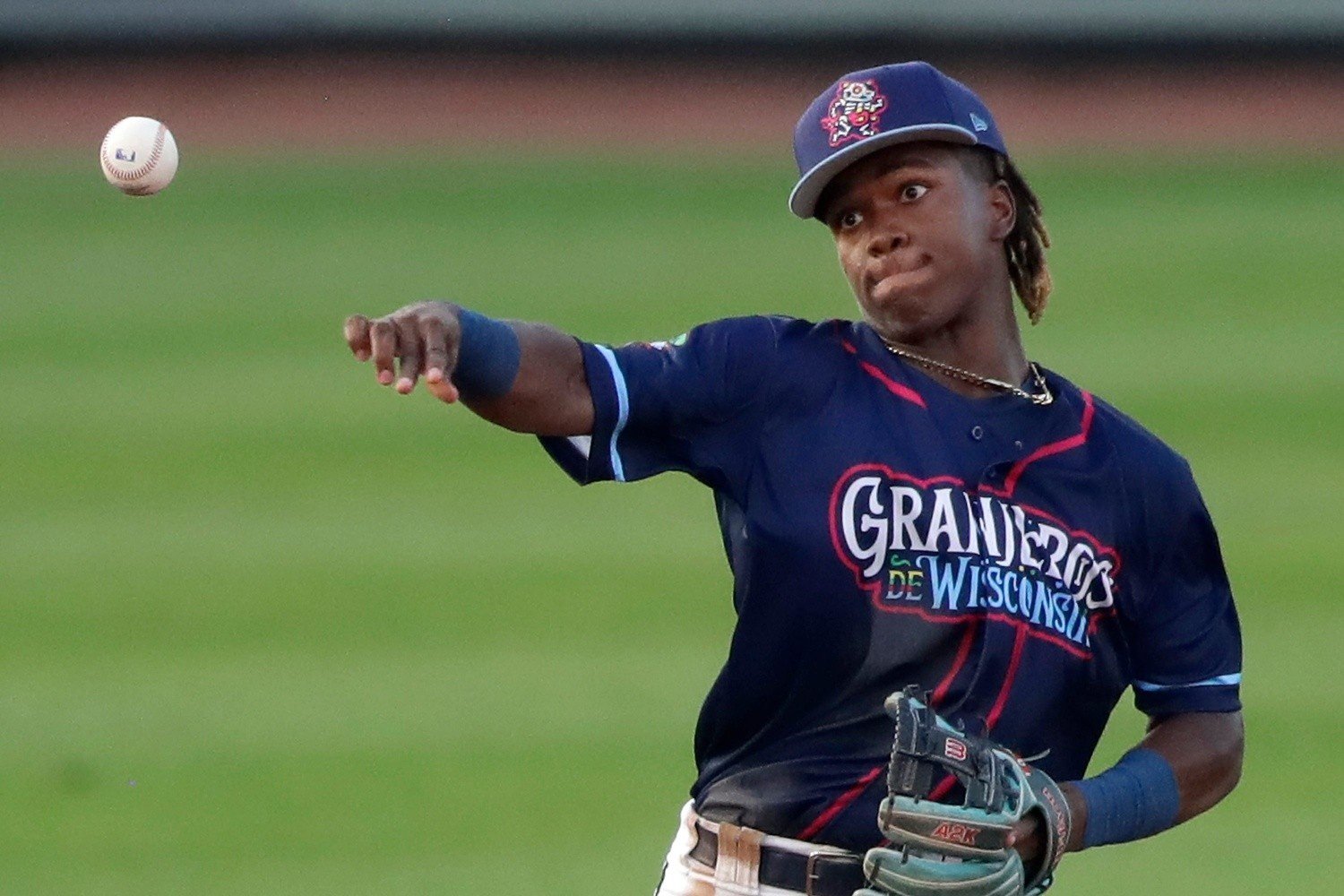 The Rattlers were facing off with the Great Lakes Loons, and the starting pitcher was Wyatt Crowell, who sat 91-93 with a sinker and four-seam combo. He mixed in a solid-looking upper-80s cutter, mid-80s changeup and low-80s sweeper. He reminded me a lot of Robert Gasser, with a better changeup, but otherwise similar or worse pitches across the board. Before I get too deep into this, it’s important to note that watching players one time is never enough to form a strong opinion on them, so these are merely observations I made Tuesday night, mixed in with some opinions I had already formed via watching them regularly on MiLB TV. SS Jesús Made -- 1-3, 2B, BB, K, CS, R Made looked the part of a top prospect in this one. His first at-bat, he poked the first pitch down the right-field line for a leadoff double. He proceeded to get a bad jump on his steal attempt of third base, though, and the throw beat him by quite a bit. In his second at-bat, Made chased a first pitch cutter from Crowell, before hitting a routine grounder to second base. The third time up, he showed off the tremendous plate discipline he is known for, taking a well-placed changeup to begin the plate appearance, laying off a back-foot sweeper to make it 2-0 and eventually loading the bases by drawing a five-pitch walk against Crowell. His final plate appearance came against a fireballing reliever, who was able to blow a lively 98 MPH fastball by Made for a strikeout. Aside from the double that he poked to right, the bat speed was evident on every swing, from both sides of the plate. At times, the swing gets a bit too aggressive and he loses his mechanics, especially when it comes to having too much hand movement in his load. The only pitch that gave him some issues against the lefty was the cutter that ran in on him, which he chased twice, but those were well-executed pitches more than anything else. The defensive side is where Made really shined on Tuesday. His instincts jumped out from the start. He was attacking the ball aggressively and confidently. He has a strong arm that can play from anywhere on the diamond. He made the routine look routine, and did the same with some more difficult plays, as well. The play of the game came in the seventh inning, when he ranged up the middle for a ball that, off the bat, appeared to be ticketed for center. He gloved it, spun, and fired to first base from shallow center to record an out—n important one at that, as it kept the bases empty for the top of the order in a one-run game. He played with confidence and conviction in everything he was doing, and if you haven’t seen his pregame media availability yet, you will want to check that out as well. Both he and Luis Peña seem to have a great head on their shoulders, and the talk of hustle with the media was far from empty, as they were both hustling every opportunity they had. 2B Luis Peña -- 2-4, HR, 3 RBI, 2 K, R Speaking of Peña, the other half of the recently promoted dynamic duo also looked the part of a top prospect—particularly on the offensive side of the ball. Improving his ability to hit for power has been the biggest positive change for Peña this year, and he put it on display in this one. After striking out in his first at-bat, Peña took an 87 MPH cutter that was left over the heart of the plate and deposited it 384 feet away for a solo home run. The ball left the bat at 104 MPH. Peña’s calling card in the DSL was his hit tool, and he showed that off in his third at-bat by getting himself on plane with a well-executed changeup by Crowell, to line a two-run single up the middle. His ability to get to pitches like this one and line it to center is not normal for a player of his age, with the relative lack of experience he has. It reminds me of what Jackson Chourio was showing a few years ago. He followed that up by stealing second base with ease, and advancing to third on a throwing error by the catcher. The speed was evident, as were the instincts on the bases. Unlike Made, Peña’s night defensively did not go as well as his night at the plate. To my eye, there was a hesitation to most of his reads off of the bat, and he wound up finding himself in-between on most of the hops he was attempting to field. He didn’t wind up with any errors on the books in this one, but he easily could have had two. He saved himself in the first inning when he booted a grounder, but caught the runner on second rounding too far around third base, and fired a bullet behind him to record the third out of the inning. He also whiffed on a perfect throw from Dinges on a caught stealing attempt, that was going to be close enough that they didn’t give him an error. That said, the athleticism and the arm strength will likely allow Peña a lot of time and opportunity to improve in these regards. I think it might be more of a lack of trusting his eyes than anything else. If he never figures it out enough, he has the speed and athleticism that could easily allow him to move to the outfield long term. On the offensive side of things, Peña looks like the better present hitter between him and Made, but lacks some of the pure upside that Made possesses. Defensively, I would definitely give Made the advantage presently. You can view the previously mentioned Peña media availability here, where he also comes off as very mature and grounded. C Marco Dinges -- 0-3, BB, 2 K Dinges didn’t have the eye-catching hit(s) that Peña and Made each had, but seeing him in person only further solidified my view of him as a top-five prospect in the system. Offensively, he struck out twice, but the walk he drew was an impressive one. He fell behind 1-2, before laying off three well-executed sweepers below the zone. These were tough, aggressive takes. While he didn’t end up hitting anything especially hard in this game, the bat speed was impressive and stood out in a game featuring a lot of top-tier talent. On the defensive side, I had a very impressive 1.79 pop time on his perfect throw in the first inning, which Peña dropped. The arm strength is very real. It’s not quite to the level of pre-injury Jeferson Quero, but it’s also not that far behind. His athleticism stands out behind the plate as well, jumping on multiple dribblers in front of the plate to nab fast baserunners at first base. His receiving continues to improve as well, and I also liked the way he called the game on Tuesday. He was willing to double or triple up on pitches that clearly had hitters off balance. I’m sure there will be much better performances to come for Dinges, but the ability was still evident watching him in person. He looked like he fit in with the upper-tier talent in Made and Peña, as well as Zyhir Hope on the Dodgers side (side note: Hope is ridiculously strong and the ball sounded different off his bat when he made contact). Just after I typed the above out, Dinges hit a home run in Wednesday’s day game, so the better performance didn’t take long to show up. RHP Travis Smith -- 5.2 IP, 5 H, 2 BB, 0 K, 3 R, 2 ER Smith got the start for the Timber Rattlers in this one, his second since being promoted to High-A. While he didn’t rack up strikeouts, I came away intrigued. Smith’s repertoire is very fastball-driven, as he throws all three variations of the fastball. His four-seam is not used much, but he did go to it to try to get whiffs up in the zone at times. It topped out at 94 MPH Tuesday, but he has touched 98 MPH this season. The sinker also sat in the 91-93 range and touched 94. His cutter also sat in the low-90s and is the pitch that stood out to me the most. I think the reason he struggled to get whiffs and strikeouts is largely tied to his lack of secondaries. His slider isn’t a bad pitch, but he throws it in the 86-88 MPH range, so the difference in velocity from his fastball is not big enough to cause many timing issues. I didn’t notice any changeups in this one, but he has used it at times this year. He seems capable of spinning the ball, so I feel like improving the breaking ball will be the clearest path forward for him. He has a starter’s build, and the three-fastball combination is usually one associated with starters. That said, this feels like more of a relief profile for me, unless he can both improve the breaker and the changeup. I think if the velocity plays up in a relief role, though, he could do good work in that role. LHP Jesus Broca -- 3.1 IP, 1 H, 3 BB, 5 K, 0 R Broca was the most pleasant surprise for me on Tuesday. I had seen a velocity jump for him this year, but seeing it up close made it clear just how much that jump has helped him. I would imagine that Broca’s delivery was already helping the velocity play up a bit above what the gun was reading, as he hides the ball well, and his release point appeared to be tough to pick up. Broca generated a bunch of whiffs with his fastball, which sat 92-94 MPH and even touched 95 once, according to the scoreboard. He mixes a two-seam and a four-seam heater. The two-seam command seems a bit worse, but it looks pretty heavy, and definitely plays a big role in his 56% groundball rate. The four-seamer was used up in the zone quite a bit, and hitters really struggled to get to it. He struck out Zyhir Hope on a high fastball for one of his five strikeouts. The pitch I had always known Broca for was his changeup, which he also showed a really good feel for on Tuesday. It sat around 84 MPH, but he seemed to be adding and subtracting velocity and movement at times for different situations. It looked like an above-average secondary. He also threw quite a few 80 MPH curveballs with pretty good depth that he showed good command of. I think Broca is definitely capable of raising his current strikeout rate of 17.9%, closer to the 25% that we saw from him in the ACL and Low-A. He will need to limit walks moving forward, as well, but the groundball rate could help limit some of the damage walks normally cause by generating double-play balls. It’s an interesting profile. Summary of the Night Wyatt Crowell isn’t quite the level of prospect that Gasser was, but I think the Dodgers have something there. The Timber Rattlers did well to get to him for four earned runs, especially in less than five innings. In fact, coming into this start, he had only allowed three earned runs in his last 34 innings. Peña’s home run was the first he’d allowed since June 26. I mentioned it throughout, but Made, Peña and Dinges all looked the part of top-five prospects in the system, and I left the stadium feeling even better about their futures than I did heading in. Travis Smith is a work in progress, but he has an interesting baseline to work with, and Jesus Broca has made some serious strides in the past few months. If you have an opportunity to go see this talented group of players in Appleton (or anywhere else), I’d highly recommend it, especially with first-round pick Andrew Fischer getting added to the roster this week. Hope you enjoyed a bit of a different version of the weekly observations. We will be back next week in some capacity!
- 8 comments
-
- 5
-
-
-
- jesus made
- luis pena
- (and 1 more)
-
2025 Major Publication Prospect Rankings
Spencer Michaelis replied to sveumrules's topic in Brewers Minor League Talk
Definitely agree. Pipeline had Dickinson pretty high up on their draft rankings, so I am not surprised they're sticking to what they thought pre-draft, but it feels like an aggressive spot to me before he plays in pro ball. -
2025 Major Publication Prospect Rankings
Spencer Michaelis replied to sveumrules's topic in Brewers Minor League Talk
Believe it was just the following 5: Carlos Rodriguez, Kenny Fenelon, Brett Wichrowski, Manuel Rodriguez and K.C. Hunt -
Feel like I should maybe drop in and clarify that the pitchers available, and the order they’re going to be used in, is more or less set before the game for minor league games. Obviously injury, extra innings or major struggles could change something later in a game, but Nick Stanley is not really managing the bullpen, nor are any of the other minor league managers in the system (only one I’m not 100% sure on is Nashville). It’s all development focused and having guys on a schedule that’s best for them moving forward. So personally, I’m never going to read much into a manager’s ability to manage a game in the minors, because that’s not really their role.
-
Agreed! I think there’s a pretty decent chance they’ll at least test it out.
- 6 replies
-
- 1
-
-
- josh adamczewski
- tyler renz
- (and 1 more)
-
Oh, and it looks like NDFA Malachai Halterman is in fact doing some catching down there as well. I'll reference what a couple sources told me after he signed, specifically the part about his potential ability to catch:
-
Looks like Jeferson Quero is down in Arizona playing in rehab games in the Bridge League already, so that's good to see.
-
That's a good question. I think they'd at least consider it. They sent Lara when he was about a half a year younger than Adamczewski will be this fall.
- 6 replies
-
- 4
-
-
- josh adamczewski
- tyler renz
- (and 1 more)
-
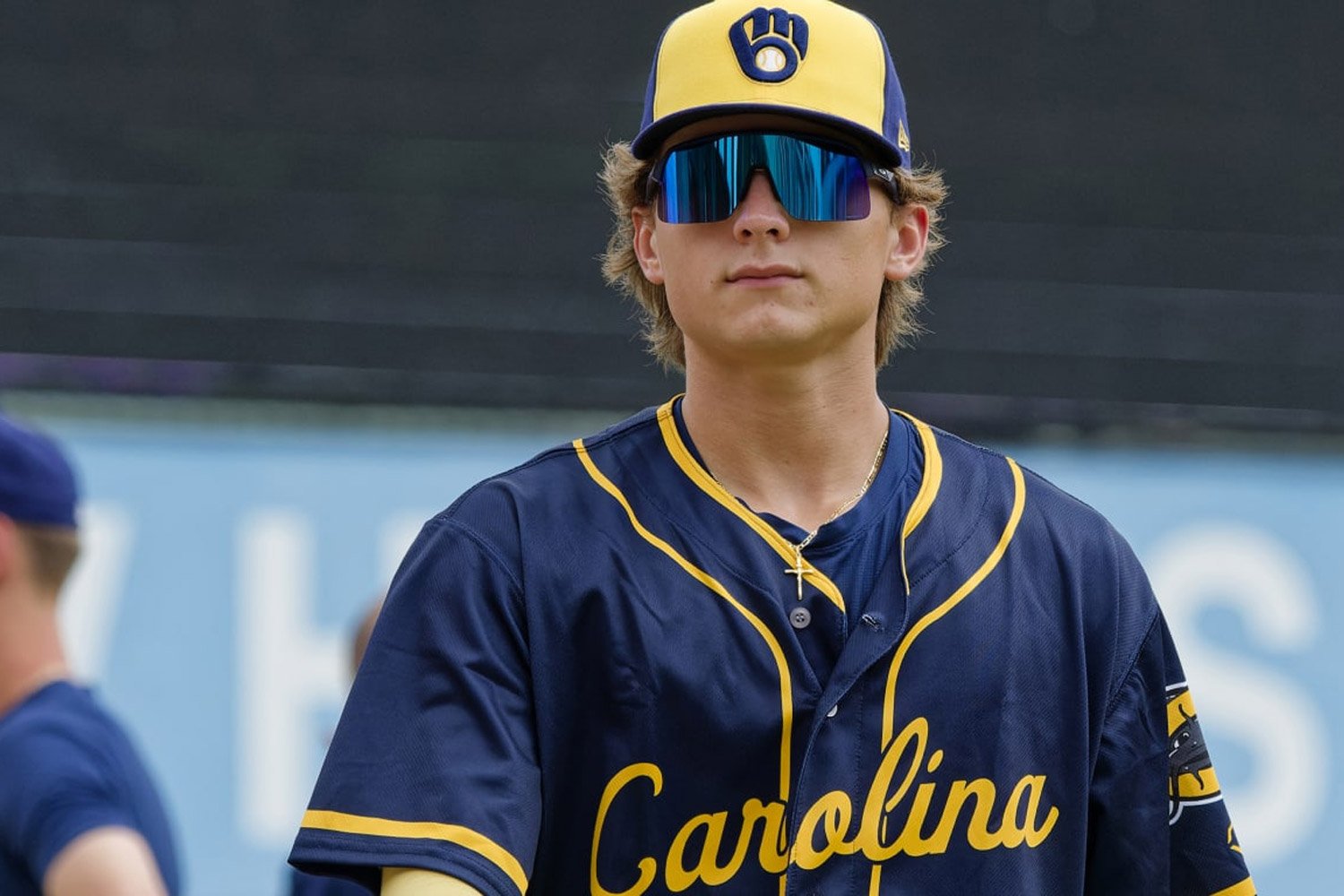 After a three-week hiatus, due to the draft and travel, we are back with another installment of minor league observations. This week, we cover one of my favorite swings in the system, another teenage pitcher in Carolina, and then an 18-year-old hitter on the Mudcats who was off to a slow start but appears to be figuring some things out. All statistics are season-long unless otherwise noted Josh Adamczewski - 2B - Carolina Mudcats: 164 PA, 115 wRC+, 19.5 K%, 12.8 BB%, 5 HR (no ACL rehab stats included) Adamczewski has been a personal favorite since the moment I saw a video of his swing post-draft. The 15th-round selection was signed away from a Ball State commitment for only $252,500, a deal the Brewers have to feel quite good about at the moment. He spent most of last season in the Arizona Complex League before a strong finish in Carolina to close out the year. He got off to a tremendous start this season and appeared to be on the fast track to High A before he was sidelined for two months with a back injury. Adamczewski is back with the Mudcats and picked up right where he left off. I was a big fan of Adamczewski’s swing out of high school, but it has only continued to improve since then, including some changes that Chris Clegg of Dynasty Dugout pointed out early in the season. While he was off to a great start pre-injury, his return has been even better. In his first 12 games back in Carolina, Adamczewski is posting a 210 wRC+ and a 1.124 OPS, while walking the same number of times as he’s struck out (seven times). He has shown his ability to hit with power to all fields, hitting a home run to right center on Wednesday, and then one to left-center on Friday. Adamczewski’s bat is unquestionably advanced for his age. His swing has some shades of Corey Seager, and the results have mirrored his tremendous offensive process to this point. With a couple of his fellow middle infielders being promoted to High A before him, I’m guessing that the organization would like to see him remain with the Mudcats for a little longer as he continues to work back from his injury. I also can’t help but wonder if they’d like to see more consistency defensively at second base. Perhaps they even have plans to try him at a position or two that aren’t second base, where he has spent his entire pro career to this point. Either way, he deserves an opportunity to see High A soon, as Single-A pitching is proving to be no match for his bat. Tyler Renz - RHP - ACL Brewers and Carolina Mudcats: 57.2 IP, 3.43 ERA, 4.68 FIP, 21.3 K%, 8.2 BB% The Brewers selected Renz in the 18th round of the 2024 draft, likely in part as insurance in case they couldn’t sign Chris Levonas. As a 17-year-old who was still four months from turning 18, Renz was seen as a prospect data-driven organizations would like, but it was also likely to make him pretty expensive. Thus, Renz signed for a hefty $852,500 bonus, the second-highest bonus ever given to an 18th-rounder. He has spent the vast majority of this season in the Arizona Complex League, but he made his full-season debut this past Tuesday, which gave me an opportunity to watch an entire outing, rather than just highlights. Renz has reportedly been up to 96 MPH on his four-seam fastball, though it sounds as though that was in a bullpen setting. In this outing, he was sitting 89-91 MPH early, before dropping a few in the 87-88 range later on. The fastball plays up well above his velocity, due to decent extension, but mainly the excellent carry and shape the pitch has. He did a good job of locating at the top of the zone, especially early in his outing on Tuesday. Despite all of that, the velocity will need to improve over time if he is to reach his immense ceiling. The ceiling is there because of the pitch mix he possesses beyond the fastball. He mixes in a solid-looking cutter, as well as a slider and curveball combination that used to blend together in high school but have now become two very different pitches. Renz has also added a changeup that appears to be a splitter variation, rather than the circle-change he was attempting to throw before the draft. Renz was cruising through his first two innings, only allowing one baserunner via a walk, and striking out four. The velocity started to dip a bit in the third inning, and the command eluded him more consistently as he walked two in the inning. When he came back out for his fourth inning, he had started to wear down and walked two more, as well as throwing a wild pitch. Some poor umpiring cost him one of the walks, as well as finishing the game, as he made way for Anfernny Reyes to retire the final batter of the Mudcats game. All in all, though, you could see the talent Renz possesses. Moving forward, building stamina will undoubtedly play a significant role in his overall improvement, as well as adding some velocity. Much of the improvement for both of those is likely via physical gains, as he has a lot of room to add good mass to his body. Renz will only turn 19 at the end of November and has a long way to go in his career, but already showing signs of a good starting pitcher’s repertoire and projectability in his frame is a great starting point. José Anderson - OF - ACL Brewers and Carolina Mudcats: 226 PA, 73wRC+, 30.1 K%, 8.8 BB%, 3 HR (Carolina stats only) Along with Luis Pena and Jesus Made, Anderson was the third player from the 2024 international signing class to really explode onto the scene in the Dominican Summer League. He began the season in the Arizona Complex League, but after hitting three home runs in 10 games and posting a 200 wRC+, he was quickly pushed to Single A. It has been a struggle to this point, though there have been some signs of progress over the past month or so. I’m going to start with the glove before getting into some of the offensive improvements, though. With Braylon Payne out again due to injury, Anderson spent most of this week manning center field for the Mudcats. There are some inconsistencies to his play out there, but there are also a ton of tools and a high ceiling out there. He showed off the potential on Saturday, when he made a tremendous diving catch in left-center field to take away extra bases. He has a cannon of an arm in the outfield, but his true defensive ability has looked questionable at times. His jumps have looked much better over the course of the season, and the routes seem to be improving as well. Anderson’s glove coming around to potentially being an above-average or better tool for him would be a significant development, but obviously, questions about his offensive profile remain. His 30% strikeout rate is too high, and his 36.5% whiff rate is even more concerning. However, I felt better about his approach watching him in July, and looking at the numbers, he did make some improvements in both regards. His strikeout rate is at 25.3% since July 1st, and his whiff rate is down to 32.7%. Again, neither of those is a good number, but they are much closer to playable than the numbers he was posting before this past month. It should be noted, however, that the power he was showing pre-July has also largely dissipated, as evidenced by the .096 ISO since then, with only six doubles and one triple. There may have been an over-adjustment to work on the bat-to-ball skills that came at the cost of his ability to drive the ball. While it’s not an ideal scenario, I believe that for a player of his age, such over-adjustments are completely fine, as he still has a lot of time to find a balance. If Anderson can find that middle ground between driving the ball while limiting strikeouts and whiffs to a reasonable degree, and combine that with his improving defense, he could put himself squarely back into prospect talks. While I’m sure his start to full-season ball has not been what he envisioned, he still has shown that he has a lot of talent and seems to be working to improve on his weaknesses. I’m not exactly sure where things go from here, but I do know that it will still be fascinating to follow. That’s all I’ve got for this week; let us know what you think in the replies!
- 6 comments
-
- 4
-
-
- josh adamczewski
- tyler renz
- (and 1 more)
-
After a three-week hiatus, due to the draft and travel, we are back with another installment of minor league observations. This week, we cover one of my favorite swings in the system, another teenage pitcher in Carolina, and then an 18-year-old hitter on the Mudcats who was off to a slow start but appears to be figuring some things out. All statistics are season-long unless otherwise noted Josh Adamczewski - 2B - Carolina Mudcats: 164 PA, 115 wRC+, 19.5 K%, 12.8 BB%, 5 HR (no ACL rehab stats included) Adamczewski has been a personal favorite since the moment I saw a video of his swing post-draft. The 15th-round selection was signed away from a Ball State commitment for only $252,500, a deal the Brewers have to feel quite good about at the moment. He spent most of last season in the Arizona Complex League before a strong finish in Carolina to close out the year. He got off to a tremendous start this season and appeared to be on the fast track to High A before he was sidelined for two months with a back injury. Adamczewski is back with the Mudcats and picked up right where he left off. I was a big fan of Adamczewski’s swing out of high school, but it has only continued to improve since then, including some changes that Chris Clegg of Dynasty Dugout pointed out early in the season. While he was off to a great start pre-injury, his return has been even better. In his first 12 games back in Carolina, Adamczewski is posting a 210 wRC+ and a 1.124 OPS, while walking the same number of times as he’s struck out (seven times). He has shown his ability to hit with power to all fields, hitting a home run to right center on Wednesday, and then one to left-center on Friday. Adamczewski’s bat is unquestionably advanced for his age. His swing has some shades of Corey Seager, and the results have mirrored his tremendous offensive process to this point. With a couple of his fellow middle infielders being promoted to High A before him, I’m guessing that the organization would like to see him remain with the Mudcats for a little longer as he continues to work back from his injury. I also can’t help but wonder if they’d like to see more consistency defensively at second base. Perhaps they even have plans to try him at a position or two that aren’t second base, where he has spent his entire pro career to this point. Either way, he deserves an opportunity to see High A soon, as Single-A pitching is proving to be no match for his bat. Tyler Renz - RHP - ACL Brewers and Carolina Mudcats: 57.2 IP, 3.43 ERA, 4.68 FIP, 21.3 K%, 8.2 BB% The Brewers selected Renz in the 18th round of the 2024 draft, likely in part as insurance in case they couldn’t sign Chris Levonas. As a 17-year-old who was still four months from turning 18, Renz was seen as a prospect data-driven organizations would like, but it was also likely to make him pretty expensive. Thus, Renz signed for a hefty $852,500 bonus, the second-highest bonus ever given to an 18th-rounder. He has spent the vast majority of this season in the Arizona Complex League, but he made his full-season debut this past Tuesday, which gave me an opportunity to watch an entire outing, rather than just highlights. Renz has reportedly been up to 96 MPH on his four-seam fastball, though it sounds as though that was in a bullpen setting. In this outing, he was sitting 89-91 MPH early, before dropping a few in the 87-88 range later on. The fastball plays up well above his velocity, due to decent extension, but mainly the excellent carry and shape the pitch has. He did a good job of locating at the top of the zone, especially early in his outing on Tuesday. Despite all of that, the velocity will need to improve over time if he is to reach his immense ceiling. The ceiling is there because of the pitch mix he possesses beyond the fastball. He mixes in a solid-looking cutter, as well as a slider and curveball combination that used to blend together in high school but have now become two very different pitches. Renz has also added a changeup that appears to be a splitter variation, rather than the circle-change he was attempting to throw before the draft. Renz was cruising through his first two innings, only allowing one baserunner via a walk, and striking out four. The velocity started to dip a bit in the third inning, and the command eluded him more consistently as he walked two in the inning. When he came back out for his fourth inning, he had started to wear down and walked two more, as well as throwing a wild pitch. Some poor umpiring cost him one of the walks, as well as finishing the game, as he made way for Anfernny Reyes to retire the final batter of the Mudcats game. All in all, though, you could see the talent Renz possesses. Moving forward, building stamina will undoubtedly play a significant role in his overall improvement, as well as adding some velocity. Much of the improvement for both of those is likely via physical gains, as he has a lot of room to add good mass to his body. Renz will only turn 19 at the end of November and has a long way to go in his career, but already showing signs of a good starting pitcher’s repertoire and projectability in his frame is a great starting point. José Anderson - OF - ACL Brewers and Carolina Mudcats: 226 PA, 73wRC+, 30.1 K%, 8.8 BB%, 3 HR (Carolina stats only) Along with Luis Pena and Jesus Made, Anderson was the third player from the 2024 international signing class to really explode onto the scene in the Dominican Summer League. He began the season in the Arizona Complex League, but after hitting three home runs in 10 games and posting a 200 wRC+, he was quickly pushed to Single A. It has been a struggle to this point, though there have been some signs of progress over the past month or so. I’m going to start with the glove before getting into some of the offensive improvements, though. With Braylon Payne out again due to injury, Anderson spent most of this week manning center field for the Mudcats. There are some inconsistencies to his play out there, but there are also a ton of tools and a high ceiling out there. He showed off the potential on Saturday, when he made a tremendous diving catch in left-center field to take away extra bases. He has a cannon of an arm in the outfield, but his true defensive ability has looked questionable at times. His jumps have looked much better over the course of the season, and the routes seem to be improving as well. Anderson’s glove coming around to potentially being an above-average or better tool for him would be a significant development, but obviously, questions about his offensive profile remain. His 30% strikeout rate is too high, and his 36.5% whiff rate is even more concerning. However, I felt better about his approach watching him in July, and looking at the numbers, he did make some improvements in both regards. His strikeout rate is at 25.3% since July 1st, and his whiff rate is down to 32.7%. Again, neither of those is a good number, but they are much closer to playable than the numbers he was posting before this past month. It should be noted, however, that the power he was showing pre-July has also largely dissipated, as evidenced by the .096 ISO since then, with only six doubles and one triple. There may have been an over-adjustment to work on the bat-to-ball skills that came at the cost of his ability to drive the ball. While it’s not an ideal scenario, I believe that for a player of his age, such over-adjustments are completely fine, as he still has a lot of time to find a balance. If Anderson can find that middle ground between driving the ball while limiting strikeouts and whiffs to a reasonable degree, and combine that with his improving defense, he could put himself squarely back into prospect talks. While I’m sure his start to full-season ball has not been what he envisioned, he still has shown that he has a lot of talent and seems to be working to improve on his weaknesses. I’m not exactly sure where things go from here, but I do know that it will still be fascinating to follow. That’s all I’ve got for this week; let us know what you think in the replies! View full article
- 6 replies
-
- 5
-
-
-
- josh adamczewski
- tyler renz
- (and 1 more)
-
Fouled a ball off his knee, stayed in and took the walk but could barely (actually) walk. Didn’t even go to first base after taking ball 4…hobbled to the dugout instead
-
Image courtesy of © Dave Kallmann / Milwaukee Journal Sentinel / USA TODAY NETWORK via Imagn Images (Abdiel Mendoza) This was a strong month for relievers in the Brewers system, with quite a few making a strong case. Beginning with a few honorable mentions: HONORABLE MENTIONS RHP - Craig Yoho - Nashville Sounds - 7 G, 5.1 IP, 0-0, 0.00 ERA, 0.86 FIP, 0.38 WHIP, 2 H, 0 BB, 7 K, 1 SV RHP - Jhosep Ospino - DSL Brewers Blue - 6 G, 10.2 IP, 0-1, 2.53 ERA, 1.78 FIP, 0.94 WHIP, 7 H, 3 BB, 18 K, 1 SV RHP - Blake Holub - Nashville Sounds - 7 G, 8.2 IP, 0-0, 1.17 ERA, 4.85 FIP, 1.57 WHIP, 5 H, 7 BB, 8 K TOP FIVE RELIEF PITCHERS FOR JULY #5 RHP - Justin Yeager - Biloxi Shuckers and Nashville Sounds - 9 G, 8.2 IP, 1-0, 0.00 ERA, 2.51 FIP, 0.58 WHIP, 4 H, 1 BB, 5 K Unranked by all publications The third piece that the Brewers received in the infamous Esteury Ruiz for William Contreras and Joel Payamps trade, Yeager, was drafted in the 33rd round by the Braves in 2019. His mid-90s fastball plays extremely well when he gets it up in the zone, due to an Induced Vertical Break that will get up to 20 inches. Yeager’s cutter has more of a short slider shape and sits in the 84-87 range with a lot of late bite to it. Both pitches have the ability to be above average or better, but they can play down at times due to his lack of commanding them to the areas of the zone where they play their best. Now that he’s in Triple-A, we do have access to public Statcast data, and TJ Stats does a great job laying it out in an easy-to-read way. In July, Yeager was promoted to Triple A for his final four appearances and threw five scoreless innings while striking out four. Yeager finished the month on a high note by receiving his first win at the Triple-A level, after throwing one inning, allowing one hit, striking out one, and allowing an unearned run. Now in his third season with the Brewers organization, and after a strong 2024, Yeager is on the edges of MLB. While the bullpen is a pretty crowded situation for the Brewers already, Elvis Peguero and Bryan Hudson being designated for assignment recently upped his odds of making his MLB debut in 2025, at least a little. #4 RHP - Bryan Rivera - Carolina Mudcats - 5 G, 11 IP, 2-0, 0.00 ERA, 2.99 FIP, 0.91 WHIP, 6 H, 4 BB, 9 K Unranked by all publications Signed out of Nicaragua in 2022, the Brewers moved Rivera to Single A quickly last season, despite uninspiring results in the Complex League. Now in his first full season at the level, Rivera has struggled for much of the season. July was a different story. Rivera has a four pitch mix, including a four-seam and a two-seam variation of the fastball. The fastball sits in the 92-94 MPH range and touches 96. He throws a slider in the 82-83 range, and at times will drop it as low as 78-79. He’s comfortable throwing at any time. Rivera also mixes in a mid-80’s changeup that shows flashes of being an above average pitch with quite a bit of fade on it. A pitch he uses mostly against left-handed hitters. In July, Rivera posted an impressive whiff rate of 36%. He didn’t turn those whiffs into strikeouts as often as one might expect, but he did have hitters off balance all month. As is usually the case for Rivera, he was a multi-inning reliever multiple times over the course of the month, including a four inning appearance on July 27th, in which he did not allow any runs and struck out two batters. Rivera is only 20 years old. Struggles are normal for a player his age in full season ball, and he shows plenty of signs of having the stuff to perform at this level. Consistency and confidence will likely be key for him as he works through a tough season, hopefully July is a sign of things to come for him. #3 LHP - Mark Manfredi - Biloxi Shuckers - 8 G, 11.1 IP, 0-0, 1.59 ERA, 2.82 FIP, 0.79 WHIP, 5 H , 4 BB, 11 K Unranked by all publications The Brewers used their ninth-round pick in 2023 on this Dayton University left-hander. Manfredi was assigned to High-A Wisconsin in 2024, where he got off to a strong start but struggled with command down the stretch of the season. He did strike out 95 batters in 76 innings and showed flashes of brilliance in his long-relief role. His time in the Arizona Fall League did not go well, with the command issues catching up to him against higher-level offensive competition. He walked 13 in 5 1/3 inings and posted a 13.50 ERA in his time there. Manfredi’s velocity was down a couple of ticks in the AFL, and it’s possible he was just exhausted from his first full season of professional baseball. Despite his struggles, the Brewers still assigned him to Double-A Biloxi to start 2025. Manfredi is working mostly around his fastball, which is sitting in the 93-96 MPH range and topping out at 97. His upper-80s changeup has been a big weapon for him as well, especially against right-handed hitters. He rounds out his repertoire with a slider in the mid-80s that he uses mainly in matchups with lefties, but has started using more often to hitters from the right side as well. Manfredi’s July was highlighted by continuing to keep his walk rate in the single digits, walking 8.9% of the batters he faced, which is much better than his season long rate of 15.4%. Three of his four walks actually came in one outing, only walking one person in the other seven appearances. Manfredi’s command is going to continue to be a linchpin for his success, but when he is in and around the zone regularly, there is not a lot of hard contact and quite a few missed bats as well. Despite a slow start, his season-long numbers are now down to a 2.81 ERA, with a 3.31 FIP. He will be a candidate for Nashville’s bullpen to begin 2026, if not earlier. #2 RHP - Kaleb Bowman - Biloxi Shuckers - 9 G, 10.2 IP, 1-0, 0.00 ERA, 2.80 FIP, 0.94 WHIP, 5 H, 3 BB, 8 K, 1 SV Unranked by all publications Bowman was signed out of Independent ball prior to the 2023 season and performed well at High A in 2023, followed that up with a solid performance in Double A in 2024 and after a slow start, and dealing with injury early in 2025, Bowman has been fantastic over his last 16 appearances. Including a scoreless month of July. Bowman is equipped with a sinker that sits in the 92-93 range, and can get up to 95 MPH. The pitch can get up to 20 inches of run on it, but sits more in the 16-inch range. It is thrown from a low release height and a bit of a funky delivery. He will also throw a four-seam in the 93-94 range, touching 96, which plays up a bit better than the metrics might suggest, due to his arm angle. Rounding out the three fastball mix, Bowman also mixes in an upper-80s cutter that he’s comfortable throwing to either handed hitter. He mixes in a short slider, as well as a more often used sweeper, the sweeper being thrown in the upper-70s, while the slider is more in the 83-85 MPH range. He didn’t allow a run in July, and while his strikeout rate of 22.9% and whiff rate of 20.9% were both around average for the level, he limited hard contact extremely well, and did a solid job of limiting the free passes as well. He finished the month with a save in his final outing, going two innings, allowing two baserunners and striking out one. Bowman has seen his velocity climb a couple of miles per hour this season, and has an interesting five pitch mix. At 28, he is old for the level, but with his stuff ticking up, he’s a name to keep an eye on moving forward. #1 RHP - Abdiel Mendoza - Biloxi Shuckers - 7 G, 14.1 IP, 2-0, 0.63 ERA, 1.50 FIP, 0.63 WHIP, 8 H, 1 BB, 15 K Unranked by all publications The Brewers signed the 26-year-old Mendoza as a minor league free agent this past offseason, after he spent 2024 in the Blue Jays organization. The right-hander has been in Double A for the entire 2025 season, and after some struggles early on, had a very strong July. Mendoza’s two-seam fastball sits in the 92-94 MPH range and can get up to around 19 inches of run on the pitch. He throws an 86-88 MPH cutter, as well as a lower-80s slider that has been one of his best pitches for generating whiffs. Mendoza also adds a changeup in the mid-80s that has been a solid weapon for him against left-handed hitters. He rounds out the repertoire with his upper-70s curveball that can blend with the slider shape at times, but when it’s going well has more depth than the slider does. It’s a true five pitch mix out of the bullpen. In July, Mendoza continued to build upon a strong June. He did a great job limiting free passes, only walking one batter and hitting one other. He struck out over 28.8% of batters he faced, and he was able to generate whiffs on 28% of swings. Mendoza worked more than one inning in all but one of his appearances, and worked three innings twice. His best outing of the month came on July 18th, when he struck out five over three scoreless innings, only allowing two baserunners, both via singles. Thanks for following along with this three-part series on the Brewers' minor league system. Let us know your thoughts below! Did we miss anybody? View full article
-
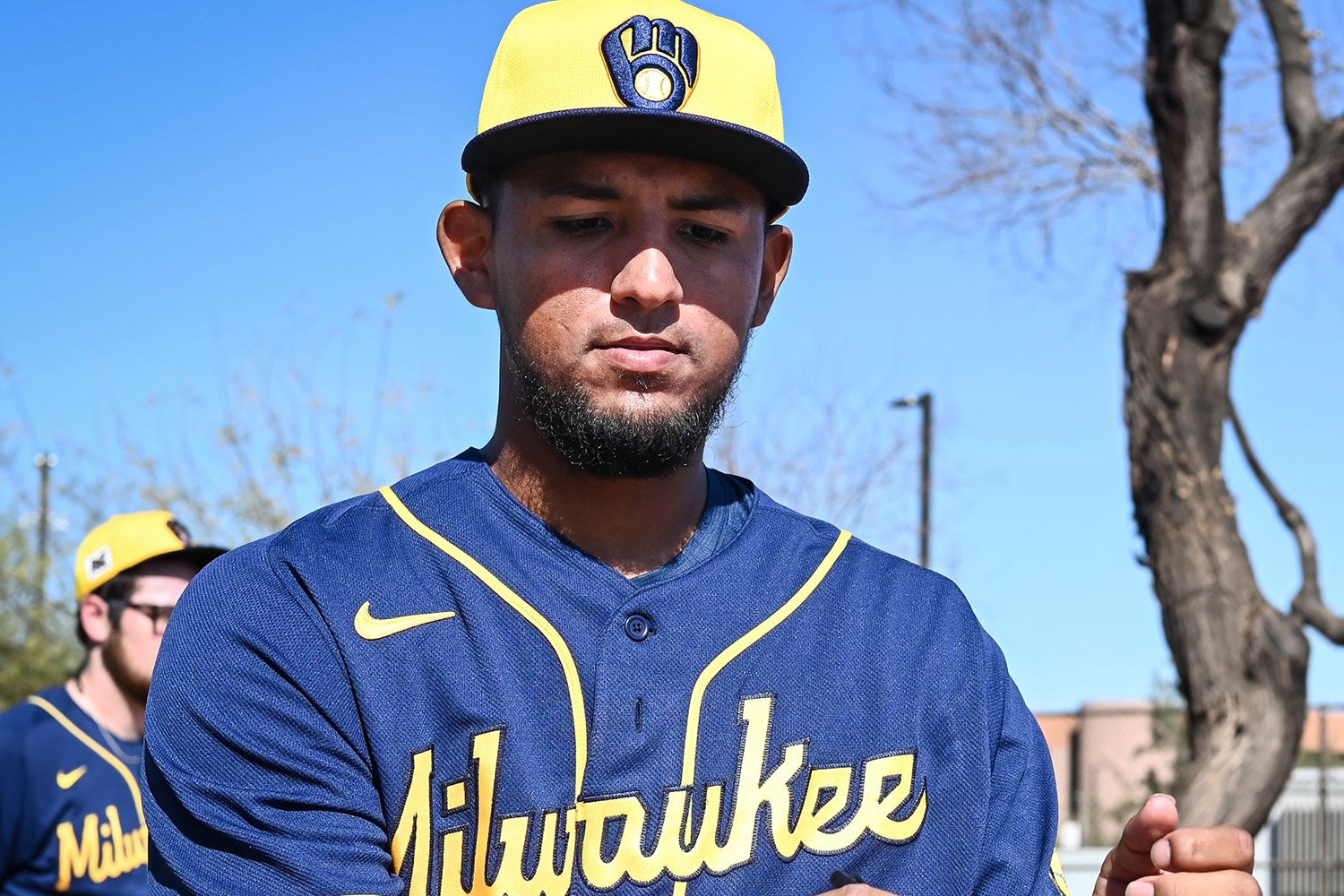 This was a strong month for relievers in the Brewers system, with quite a few making a strong case. Beginning with a few honorable mentions: HONORABLE MENTIONS RHP - Craig Yoho - Nashville Sounds - 7 G, 5.1 IP, 0-0, 0.00 ERA, 0.86 FIP, 0.38 WHIP, 2 H, 0 BB, 7 K, 1 SV RHP - Jhosep Ospino - DSL Brewers Blue - 6 G, 10.2 IP, 0-1, 2.53 ERA, 1.78 FIP, 0.94 WHIP, 7 H, 3 BB, 18 K, 1 SV RHP - Blake Holub - Nashville Sounds - 7 G, 8.2 IP, 0-0, 1.17 ERA, 4.85 FIP, 1.57 WHIP, 5 H, 7 BB, 8 K TOP FIVE RELIEF PITCHERS FOR JULY #5 RHP - Justin Yeager - Biloxi Shuckers and Nashville Sounds - 9 G, 8.2 IP, 1-0, 0.00 ERA, 2.51 FIP, 0.58 WHIP, 4 H, 1 BB, 5 K Unranked by all publications The third piece that the Brewers received in the infamous Esteury Ruiz for William Contreras and Joel Payamps trade, Yeager, was drafted in the 33rd round by the Braves in 2019. His mid-90s fastball plays extremely well when he gets it up in the zone, due to an Induced Vertical Break that will get up to 20 inches. Yeager’s cutter has more of a short slider shape and sits in the 84-87 range with a lot of late bite to it. Both pitches have the ability to be above average or better, but they can play down at times due to his lack of commanding them to the areas of the zone where they play their best. Now that he’s in Triple-A, we do have access to public Statcast data, and TJ Stats does a great job laying it out in an easy-to-read way. In July, Yeager was promoted to Triple A for his final four appearances and threw five scoreless innings while striking out four. Yeager finished the month on a high note by receiving his first win at the Triple-A level, after throwing one inning, allowing one hit, striking out one, and allowing an unearned run. Now in his third season with the Brewers organization, and after a strong 2024, Yeager is on the edges of MLB. While the bullpen is a pretty crowded situation for the Brewers already, Elvis Peguero and Bryan Hudson being designated for assignment recently upped his odds of making his MLB debut in 2025, at least a little. #4 RHP - Bryan Rivera - Carolina Mudcats - 5 G, 11 IP, 2-0, 0.00 ERA, 2.99 FIP, 0.91 WHIP, 6 H, 4 BB, 9 K Unranked by all publications Signed out of Nicaragua in 2022, the Brewers moved Rivera to Single A quickly last season, despite uninspiring results in the Complex League. Now in his first full season at the level, Rivera has struggled for much of the season. July was a different story. Rivera has a four pitch mix, including a four-seam and a two-seam variation of the fastball. The fastball sits in the 92-94 MPH range and touches 96. He throws a slider in the 82-83 range, and at times will drop it as low as 78-79. He’s comfortable throwing at any time. Rivera also mixes in a mid-80’s changeup that shows flashes of being an above average pitch with quite a bit of fade on it. A pitch he uses mostly against left-handed hitters. In July, Rivera posted an impressive whiff rate of 36%. He didn’t turn those whiffs into strikeouts as often as one might expect, but he did have hitters off balance all month. As is usually the case for Rivera, he was a multi-inning reliever multiple times over the course of the month, including a four inning appearance on July 27th, in which he did not allow any runs and struck out two batters. Rivera is only 20 years old. Struggles are normal for a player his age in full season ball, and he shows plenty of signs of having the stuff to perform at this level. Consistency and confidence will likely be key for him as he works through a tough season, hopefully July is a sign of things to come for him. #3 LHP - Mark Manfredi - Biloxi Shuckers - 8 G, 11.1 IP, 0-0, 1.59 ERA, 2.82 FIP, 0.79 WHIP, 5 H , 4 BB, 11 K Unranked by all publications The Brewers used their ninth-round pick in 2023 on this Dayton University left-hander. Manfredi was assigned to High-A Wisconsin in 2024, where he got off to a strong start but struggled with command down the stretch of the season. He did strike out 95 batters in 76 innings and showed flashes of brilliance in his long-relief role. His time in the Arizona Fall League did not go well, with the command issues catching up to him against higher-level offensive competition. He walked 13 in 5 1/3 inings and posted a 13.50 ERA in his time there. Manfredi’s velocity was down a couple of ticks in the AFL, and it’s possible he was just exhausted from his first full season of professional baseball. Despite his struggles, the Brewers still assigned him to Double-A Biloxi to start 2025. Manfredi is working mostly around his fastball, which is sitting in the 93-96 MPH range and topping out at 97. His upper-80s changeup has been a big weapon for him as well, especially against right-handed hitters. He rounds out his repertoire with a slider in the mid-80s that he uses mainly in matchups with lefties, but has started using more often to hitters from the right side as well. Manfredi’s July was highlighted by continuing to keep his walk rate in the single digits, walking 8.9% of the batters he faced, which is much better than his season long rate of 15.4%. Three of his four walks actually came in one outing, only walking one person in the other seven appearances. Manfredi’s command is going to continue to be a linchpin for his success, but when he is in and around the zone regularly, there is not a lot of hard contact and quite a few missed bats as well. Despite a slow start, his season-long numbers are now down to a 2.81 ERA, with a 3.31 FIP. He will be a candidate for Nashville’s bullpen to begin 2026, if not earlier. #2 RHP - Kaleb Bowman - Biloxi Shuckers - 9 G, 10.2 IP, 1-0, 0.00 ERA, 2.80 FIP, 0.94 WHIP, 5 H, 3 BB, 8 K, 1 SV Unranked by all publications Bowman was signed out of Independent ball prior to the 2023 season and performed well at High A in 2023, followed that up with a solid performance in Double A in 2024 and after a slow start, and dealing with injury early in 2025, Bowman has been fantastic over his last 16 appearances. Including a scoreless month of July. Bowman is equipped with a sinker that sits in the 92-93 range, and can get up to 95 MPH. The pitch can get up to 20 inches of run on it, but sits more in the 16-inch range. It is thrown from a low release height and a bit of a funky delivery. He will also throw a four-seam in the 93-94 range, touching 96, which plays up a bit better than the metrics might suggest, due to his arm angle. Rounding out the three fastball mix, Bowman also mixes in an upper-80s cutter that he’s comfortable throwing to either handed hitter. He mixes in a short slider, as well as a more often used sweeper, the sweeper being thrown in the upper-70s, while the slider is more in the 83-85 MPH range. He didn’t allow a run in July, and while his strikeout rate of 22.9% and whiff rate of 20.9% were both around average for the level, he limited hard contact extremely well, and did a solid job of limiting the free passes as well. He finished the month with a save in his final outing, going two innings, allowing two baserunners and striking out one. Bowman has seen his velocity climb a couple of miles per hour this season, and has an interesting five pitch mix. At 28, he is old for the level, but with his stuff ticking up, he’s a name to keep an eye on moving forward. #1 RHP - Abdiel Mendoza - Biloxi Shuckers - 7 G, 14.1 IP, 2-0, 0.63 ERA, 1.50 FIP, 0.63 WHIP, 8 H, 1 BB, 15 K Unranked by all publications The Brewers signed the 26-year-old Mendoza as a minor league free agent this past offseason, after he spent 2024 in the Blue Jays organization. The right-hander has been in Double A for the entire 2025 season, and after some struggles early on, had a very strong July. Mendoza’s two-seam fastball sits in the 92-94 MPH range and can get up to around 19 inches of run on the pitch. He throws an 86-88 MPH cutter, as well as a lower-80s slider that has been one of his best pitches for generating whiffs. Mendoza also adds a changeup in the mid-80s that has been a solid weapon for him against left-handed hitters. He rounds out the repertoire with his upper-70s curveball that can blend with the slider shape at times, but when it’s going well has more depth than the slider does. It’s a true five pitch mix out of the bullpen. In July, Mendoza continued to build upon a strong June. He did a great job limiting free passes, only walking one batter and hitting one other. He struck out over 28.8% of batters he faced, and he was able to generate whiffs on 28% of swings. Mendoza worked more than one inning in all but one of his appearances, and worked three innings twice. His best outing of the month came on July 18th, when he struck out five over three scoreless innings, only allowing two baserunners, both via singles. Thanks for following along with this three-part series on the Brewers' minor league system. Let us know your thoughts below! Did we miss anybody?
- 1 comment
-
- 4
-
-
-
- craig yoho
- jhosep ospino
- (and 6 more)
-
I like Jansen as an addition. I wouldn't be surprised at all if he's an above average hitter for the final two months, and the Brewers fix some of the framing issues that @Jake McKibbin talked about under Jack's article. I've also been wondering if the fact that the Rays usually have their catchers give middle/middle targets means their catchers are reaching for pretty much any pitch that's on the corners and potentially causing some framing issues. Combine that with Jake's point that he has moved to a one-knee stance he potentially isn't very comfortable with, I wonder if it might be a quicker fix than it appears at first glance. I won't get into it too much, but there were other reasons (outside of the valid swing/approach concerns) that the Brewers were lower on Areinamo as well. I would've been very surprised if he'd still been in the organization after the deadline, he was the prospect I expected them to move more than any other.
- 28 replies
-
- 2
-
-
-
- danny jansen
- eric haase
- (and 1 more)
-
2025 Official Draft Signings Thread
Spencer Michaelis replied to Jake McKibbin's topic in MLB Draft & International Signings
Oh same lol. Just mean it in the context of the draft as a whole -
2025 Official Draft Signings Thread
Spencer Michaelis replied to Jake McKibbin's topic in MLB Draft & International Signings
Here's what I can say on the unused money... It was offered to all of the unsigned HS guys and they all declined. In fact, I hear that Lauridsen turned down an offer for closer to $1.5 mil at some point throughout the process. Pretty wild, but hey, what can you do? In the end they're kids who apparently really wanted to go to college unless they got insane money thrown at them.- 226 replies
-
- 16
-
-
Brewers NDFA Signings - 2025
Spencer Michaelis replied to Spencer Michaelis's topic in MLB Draft & International Signings
Was curious so went through the old NDFA’s going back to 2020. If their name is in bold, they’re still in the org. Added notes for guys who got traded or picked in Rule 5 (ok, only one of those). 2020: Drew Smith, 2B, Grand Canyon Noah Campbell, 2B, South Carolina Brandon Knarr, LHP, Tampa Jason Munsch, LHP, Concordia (Neb.) Evan Reifert, RHP, Central Missouri (traded to TB for 3B Mike Brosseau) TJ Shook, RHP, South Carolina (traded to NYM for LHP Tyler Jay) 2021: Jakob Brustoski, LHP, Texas Tech Shane Smith, RHP, Wake Forest (drafted by CWS w/ 1st pick of most recent Rule 5 Draft) Trevor Tietz, RHP, Jefferson (Mo.) CC 2022: Logan Adams, RHP, North Carolina State Jonathan Beymer, RHP, Campbell Ryan Brady, RHP, Brigham Young (Part of trade to KCR for RHP Taylor Clarke) Will Childers, RHP, Georgia Nick Merkel, RHP, Central Methodist (Mo.) Reece Walling, OF, Prairie (Wash.) HS Tyler Wehrle, RHP, Tiffin (Ohio) 2023: KC Hunt, RHP, Mississippi State Isaiah Jackson, RHP, Heartland (Ill.) JC Alejandro Rodriguez, C/INF, Florida Gulf Coast Bayden Root, RHP, Oklahoma State Blake Whiting, RHP, Utah Harrison Durow, RHP, Trinity (TX) 2024: Jadyn Fielder, INF, Almonte Springs, Fla. (TNXL Academy) Miles Langhorne, RHP, Charlotte Jake Seppings, RHP, Brown Tanner Gillis, RHP, Northern Kentucky Jack Hostetler, RHP, Whitman College (D3) Garrett Hodges, RHP, Charlotte -
 The Brewers stayed hot coming out of the All-Star break, sweeping the Dodgers (again) and winning a three-game series in Seattle. Jack and Spencer break down the action, along with a preview of the trade deadline. Apple Podcasts: https://podcasts.apple.com/us/podcast/the-brewer-fanatic-podcast/id1740648724 Spotify: https://open.spotify.com/show/5CY8mWsQayqjDXqw9OT2Td iHeartRadio: https://www.iheart.com/podcast/263-the-brewer-fanatic-podcast-166534588/ Pocket Casts: https://pca.st/ommzz627 Watch On YouTube: https://www.youtube.com/@brewerfanatic