



Spencer Michaelis
-
Posts
1,119 -
Joined
-
Last visited
-
Days Won
17
Content Type
Profiles
Forums
Blogs
Events
News
2026 Milwaukee Brewers Top Prospects Ranking
Milwaukee Brewers Videos
2022 Milwaukee Brewers Draft Picks
Milwaukee Brewers Free Agent & Trade Rumors, Notes, & Tidbits
Guides & Resources
2023 Milwaukee Brewers Draft Picks
2024 Milwaukee Brewers Draft Picks
The Milwaukee Brewers Players Project
2025 Milwaukee Brewers Draft Pick Tracker
2026 Milwaukee Brewers Draft Tracker: Picks & Bonuses
Store
Downloads
Gallery
Everything posted by Spencer Michaelis
-

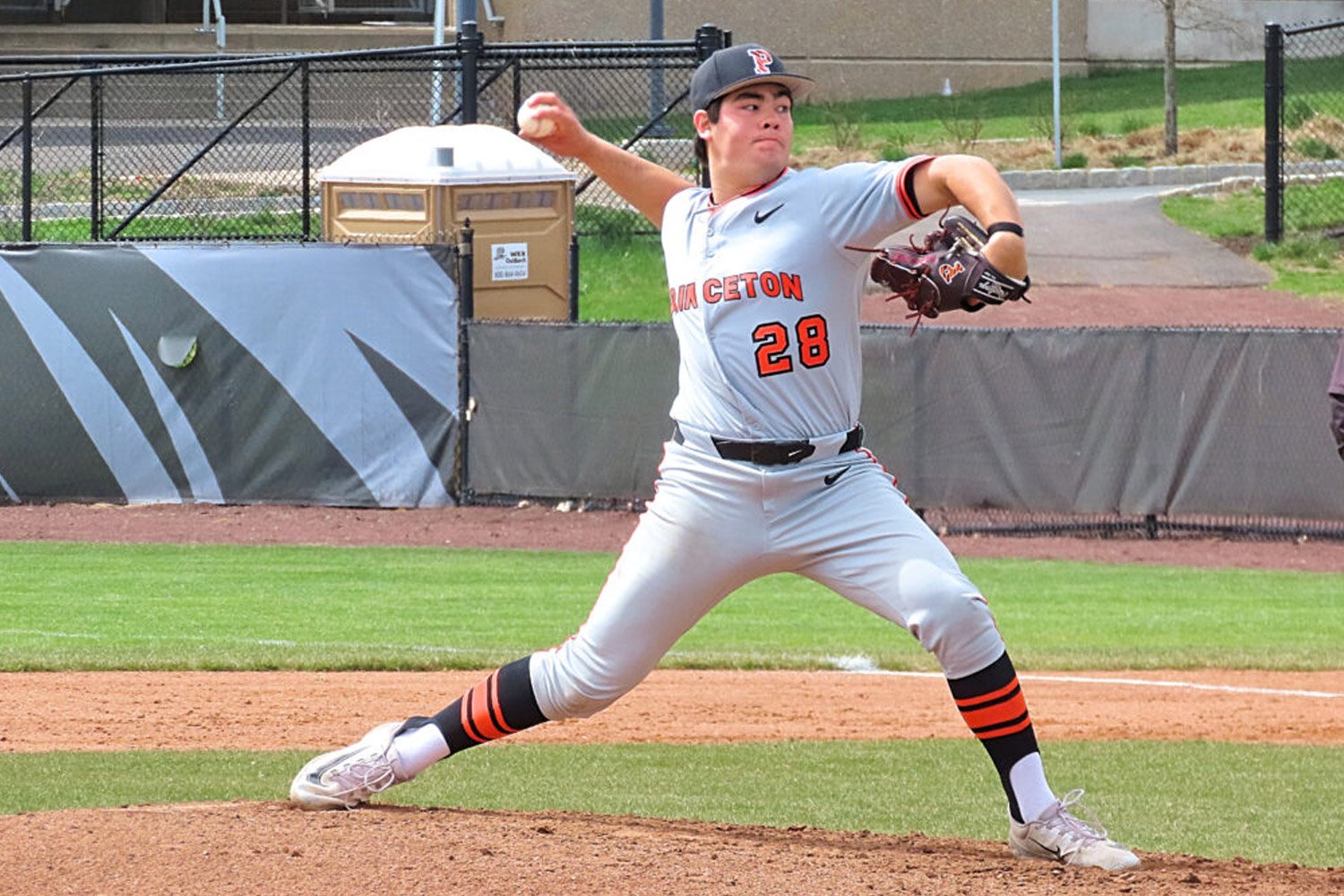 Sean Episcope is from the Chicago area originally, but has spent his college career at Princeton. At 6'0, he throws from a higher slot than you would expect. After undergoing Tommy John Surgery his senior year of high school, he is dealing with another elbow injury currently that will likely keep him out for a while. MLB Pipeline has Episcope ranked 215th overall, and their write-up discusses how he, "made 10 uneven starts as a freshman with the Tigers in 2024, but came out of the gate this year like gangbusters, with 26 strikeouts and just four walks in 20 innings, including a nine-strikeout, five-inning start at Wake Forest that opened a lot of eyes. But he came out of his fourth start with his biceps tingling, and it was eventually determined that he required another procedure, getting internal brace surgery in May." They then dive into his interesting pitch mix, saying, "Episcope does have the pitch mix to potentially start when healthy. He was topping out at 97 mph with his fastball and averaging a touch over 94, while maintaining that velocity throughout his starts before he got shut down. He has two legitimate breaking balls, with a mid-80s gyro-like slider and more of a 12-to-6 power curve up to 82 mph that registered elite-level spin rates north of 3,000 rpm. Combined, the two breakers elicited a 60-percent miss rate over his four starts, according to Synergy. Episcope did an excellent job filling up the strike zone this spring, but given the lack of history on the mound and the multiple elbow procedures, it's a little more difficult to pinpoint where he belongs in a Draft class. Some thought he could go as high as the second round as a future starter had his success continued, while others see his size and injuries and see a reliever profile." The Brewers' next selection will come in the sixth round, 185th overall.
 -
100% agree. Think they believe they have a market inefficiency in these under-scouted cold-weather states. So far, they certainly seem to be correct in that assessment.
-
 Joshua Flores hails from the same high school as 2023 pick Josh Adamczewski and 2024 pick Griffin Tobias, making it three years in a row the Brewers went to the well at Lake Central High School in Indiana. MLB Pipeline has Flores ranked 243rd overall, and wrote, "Indiana's high school pitching crop runs deeper than usual this year, and Flores has the loudest stuff of the group. He features one of the best curveballs in the national prep class, though he also averaged a walk per inning as a senior. He comes with a high ceiling but also a good deal of reliever risk. Flores' hammer curveball ranges from 82-85 mph with downer break, grading as a well above-average pitch at times but also moving so much he has difficulty landing it in the zone. He has better command of a tighter slider with similar velocity. Hitters can't really guard against his breaking balls because his fastball sits at 92-95 mph and touches 97 with some armside run and carry. Flores barely utilizes his mid-80s changeup, which flashes some interesting tumble. The Kentucky recruit has a long arm action and effort in his delivery, which hampers his ability to throw strikes, let alone locate his offerings with much precision. He'll be an intriguing project for a team that believes in its ability to develop pitchers." The Brewers' next selection will be 155th overall, in the fifth round.
 -
Joshua Flores hails from the same high school as 2023 pick Josh Adamczewski and 2024 pick Griffin Tobias, making it three years in a row the Brewers went to the well at Lake Central High School in Indiana. MLB Pipeline has Flores ranked 243rd overall, and wrote, "Indiana's high school pitching crop runs deeper than usual this year, and Flores has the loudest stuff of the group. He features one of the best curveballs in the national prep class, though he also averaged a walk per inning as a senior. He comes with a high ceiling but also a good deal of reliever risk. Flores' hammer curveball ranges from 82-85 mph with downer break, grading as a well above-average pitch at times but also moving so much he has difficulty landing it in the zone. He has better command of a tighter slider with similar velocity. Hitters can't really guard against his breaking balls because his fastball sits at 92-95 mph and touches 97 with some armside run and carry. Flores barely utilizes his mid-80s changeup, which flashes some interesting tumble. The Kentucky recruit has a long arm action and effort in his delivery, which hampers his ability to throw strikes, let alone locate his offerings with much precision. He'll be an intriguing project for a team that believes in its ability to develop pitchers." The Brewers' next selection will be 155th overall, in the fifth round. View full rumor
-
2025 MLB Draft Day 2 Thread
Spencer Michaelis replied to Jake McKibbin's topic in MLB Draft & International Signings
Ah, good call. Somehow missed that one. -
2025 MLB Draft Day 2 Thread
Spencer Michaelis replied to Jake McKibbin's topic in MLB Draft & International Signings
Unfortunately, the Rangers took Owens last night, I also was a big fan of his... Here are some names I'll be watching throughout the day today. I'll be tweeting reactions again, if people are interested in following along! I'll also do my best to drop by in here today, but will have a lot on my plate, as I'll be writing articles for the first two picks and then another on rounds 6-10 at least. So a busy day for me 😂 -
Some video of the HR and double from yesterday if you're interested:
-
He's been featured in some sandboxes, but I can try to go a bit more in depth at some point! This week was pre-draft talk and next week will be post-draft talk, but I'll do my best to remember to include more talk the week after!
-
 Jack and Spencer give their thoughts on Brandon Woodruff's return, the excellent starting pitching in a sweep of the Dodgers, Pat Murphy's benching of Joey Ortiz over poor swing decisions, and how the Brewers should approach first base with Rhys Hoskins sidelined. Spencer also previews next week's MLB draft. Apple Podcasts: https://podcasts.apple.com/us/podcast/the-brewer-fanatic-podcast/id1740648724 Spotify: https://open.spotify.com/show/5CY8mWsQayqjDXqw9OT2Td iHeartRadio: https://www.iheart.com/podcast/263-the-brewer-fanatic-podcast-166534588/ Pocket Casts: https://pca.st/ommzz627 Watch On YouTube: https://www.youtube.com/@brewerfanatic
 -
Jack and Spencer give their thoughts on Brandon Woodruff's return, the excellent starting pitching in a sweep of the Dodgers, Pat Murphy's benching of Joey Ortiz over poor swing decisions, and how the Brewers should approach first base with Rhys Hoskins sidelined. Spencer also previews next week's MLB draft. Apple Podcasts: https://podcasts.apple.com/us/podcast/the-brewer-fanatic-podcast/id1740648724 Spotify: https://open.spotify.com/show/5CY8mWsQayqjDXqw9OT2Td iHeartRadio: https://www.iheart.com/podcast/263-the-brewer-fanatic-podcast-166534588/ Pocket Casts: https://pca.st/ommzz627 Watch On YouTube: https://www.youtube.com/@brewerfanatic View full article
-
Payne added another HR yesterday, highlighted by BrewersPD today
- 10 replies
-
- 1
-

-
- braylon payne
- tate kuehner
- (and 1 more)
-
I think they’ll almost certainly try that with some of the players down the road.
- 10 replies
-
- 1
-
-
- braylon payne
- tate kuehner
- (and 1 more)
-
Honestly, had not seen Harold's article yet, but uhhh yeah, we definitely coordinated!
- 10 replies
-
- 3
-

-
- braylon payne
- tate kuehner
- (and 1 more)
-
Image courtesy of © Max Correa / Milwaukee Journal Sentinel / USA TODAY NETWORK via Imagn Images We're back for another week of farm system observations. This week, we cover a change to Braylon Payne’s stance, a left-handed pitcher from the famous 2023 draft class who may be flying under the radar, and a rejuvenated utility player quietly performing exceptionally well in Biloxi. All statistics are season-long unless otherwise noted Braylon Payne - OF - Carolina Mudcats: 222 PA, 115 wRC+, 28.4 K%, 14.4 BB%, 5 HR The Brewers surprised a lot of people when they selected Payne with the 17th pick in the 2024 draft, though Curt Hogg recently reported that the Dodgers were going to choose him if the Brewers didn’t. After a hot start in Carolina to begin the year, Payne struggled mightily in May, posting a 69 wRC+ with zero extra-base hits. Though he had a better start to June, he still only posted an 80 wRC+ and ended up sitting out the final two weeks of the month. He returned on the first of July and had what I believe was the best four-game stretch of his career to this point. Payne was seen as a slash-and-dash type of player at draft time, but he’s flashed more power in pro ball than most people expected, already posting exit velocities upward of 110 MPH. Payne had a power outage in May, but despite his continued struggles in June, he had an ISO of .216, with five of his 11 hits being of the extra-base variety. He showed his power ability this past week with the above home run, as well as a double, but he also flashed contact skills that had been severely lacking for much of the season—as evidenced by his 35.5% whiff rate. It was a minuscule sample, but in 20 plate appearances this past week, he only whiffed at a 17.6% rate, and he only struck out one time. Unsurprisingly, given his speed and athleticism, getting the ball in play led to a considerable amount of success. It was a nice glimpse at the potential that he possesses. He is capable of hitting the ball hard in the air. He’s also capable of beating out infield hits on balls on the ground. The profile is currently very similar to Garrett Mitchell’s at the plate, both in the batted-ball profile and Payne’s ability to draw walks at a strong rate, and on the negative side: the issues with whiffs. What stood out to me this week was that Payne has also made some changes to his stance and load pattern since the beginning of the year. Now in a more upright, straight-legged stance, he sinks into his hip a bit more during his load, but his head appears to stay a bit more still with this adjustment, which could potentially help him curtail some of those whiff concerns. There also seems to be less drift in his backside with the new setup. See the swing from early in the season below, and compare it to the home run he hit this week. As one of the younger players in full-season ball, Payne’s up-and-down season is unsurprising. Despite the months' worth of struggles, he’s still been 15% better than league average at the plate and has shown his offensive tools all season. I think the new stance and load could help him become more consistent as he moves forward. There’s still room to grow in terms of the optimization of his swing, but I think he's taken a step in the right direction. Tate Kuehner - LHP - Biloxi Shuckers: 76.2 IP, 2.82 ERA, 3.64 FIP, 27.1 K%, 13.5 BB%, 32 Whiff% The Brewers' seventh-round selection in the 2023 draft, Kuehner signed for a below-slot $72,500 signing bonus and spent the majority of his time at Louisville in a relief role. Only 12 of his appearances out of 64 total were starts. Since being drafted, 36 of his 41 have been starts. This season, all 16 appearances have been starts in Double-A. He’s been at his best the last 10 starts, and I’ve watched most of them, including his most recent. Kuehner was sitting in the upper 80s as a junior in college but made a jump into the 92-94 range as a senior. He has ticked that up another mile per hour or so since entering pro ball as well, now sitting 93-95 and touching 97. He holds his velocity late into his starts. Throwing from a low slot—nearly sidearm—he started generating more run on the pitch during his senior year. That slot allows the pitch to play well up in the zone due to the vertical approach angle, and the run helps it play low, too, as evidenced by his 48.1% groundball rate. Building around his interesting fastball, Kuehner yields a secondary mix of upper-80s sliders, mid-80s changeups, as well as an upper-70s curveball. The changeup has evolved from a pitch he rarely used in college (due to an inability to command it) to one of his most effective weapons against right-handed hitters, generating up to 18 inches of armside movement on the pitch. The curveball and slider were more of a slurve-type pitch for him at Louisville, but he has been able to separate it into these two distinct offerings. He shows a comfort level in throwing both of the breaking balls against righties and lefties, which goes a long way. The curve has been a good swing-and-miss pitch for him, while Kuehner uses the slider more like a cutter early in counts, attacking the zone with the pitch. The issue for Kuehner has largely been tied to his struggles to throw strikes, but when I watch him pitch, he seems like a rare pitcher who has better command than control. He seems to throw the ball in the vicinity of where he wants it to go, but his misses are often out of the zone rather than missing in hittable spots. If he attempts to throw a pitch on the outside corner, he’s much more likely to miss outside than over the plate. Having watched Brandon Woodruff on Sunday, constantly on the attack, I couldn’t help but wonder if Kuehner’s walk issues could dissipate with a simple change in mindset. His current approach is closer to that of Jose Quintana, but Kuehner has better stuff than the 2025 version of Quintana. Kuehner generates whiffs at a well above-average clip and is racking up strikeouts. Could a change in mindset and approach improve his command to the point where he can stick as a starter? If not, Kuehner has the type of stuff and delivery that could very easily translate to a bullpen role, where walks can be forgiven a bit more easily. Either way, I view Kuehner as a likely future big-league pitcher, which would be an impressive outcome for a senior-sign, below-slot pick. Ethan Murray - UTIL - Biloxi Shuckers: 170 PA, 161 wRC+, 24.7 K%, 13.5 BB%, 7 HR Murray was the Brewers' fifth-round pick out of Duke in 2021. He climbed the ladder to Double-A rather quickly, but has stalled out there over the last three seasons. Some of this was due to injury, but even after recovering from an injury, there was also a significant drop-off in his performance in 2024. His 61 wRC+ last year (after a 100 mark in 2023) was a bit of a surprise for me, as I had started to view him as someone who could fill an Andruw Monasterio-esque platoon role at some point. His impressive performance this year has me considering that a legitimate possibility again. A high walk rate and average bat-to-ball skills have primarily driven Murray’s offensive profile. Neither of those skills has declined in any way in 2025, but the quality of contact has improved tremendously. Murray hit his seventh home run of the season this week, a career high for him, which he accomplished in only 170 plate appearances. There has been a lot of hard contact this year, after showing very few signs of power in 2024. Last season, he put up an ISO of only .076, mustering only 16 extra-base hits. He’s matched that tally so far in 2025, and he’s done so in 147 fewer plate appearances. He doesn’t quite reach the plate appearance threshold, but Murray’s 161 wRC+ would be fourth among all qualified Southern League hitters. I genuinely believe that Murray’s bat has taken a step forward, beyond the raw stats. If it has, it could unlock a higher level for him, considering defense was always going to be his primary tool. He’s spent the majority of his time this year at second base, letting Cooper Pratt handle shortstop and Brock Wilken handle third before his injury, but he has experience at both spots, including this season. He can handle himself well with the glove at any of the three positions, and his solid-average throwing arm is capable of performing at any infield spot. He’s even added a little outfield versatility to his game this year, making five starts in left field. Murray is 25 years old and probably deserves a shot in Triple-A right now. He's another victim of the infield depth throughout the system. His defensive versatility, improved bat, and all-around baseball acumen—which are regularly on display when you watch him play—make him a prime candidate to be a future MLB utility player. Now, he just needs to stay healthy and get the chance to showcase his abilities at the Triple-A level. That’s all I’ve got for this week; let us know what you think in the replies! View full article
- 10 replies
-
- 5
-

-
-
- braylon payne
- tate kuehner
- (and 1 more)
-
 We're back for another week of farm system observations. This week, we cover a change to Braylon Payne’s stance, a left-handed pitcher from the famous 2023 draft class who may be flying under the radar, and a rejuvenated utility player quietly performing exceptionally well in Biloxi. All statistics are season-long unless otherwise noted Braylon Payne - OF - Carolina Mudcats: 222 PA, 115 wRC+, 28.4 K%, 14.4 BB%, 5 HR The Brewers surprised a lot of people when they selected Payne with the 17th pick in the 2024 draft, though Curt Hogg recently reported that the Dodgers were going to choose him if the Brewers didn’t. After a hot start in Carolina to begin the year, Payne struggled mightily in May, posting a 69 wRC+ with zero extra-base hits. Though he had a better start to June, he still only posted an 80 wRC+ and ended up sitting out the final two weeks of the month. He returned on the first of July and had what I believe was the best four-game stretch of his career to this point. Payne was seen as a slash-and-dash type of player at draft time, but he’s flashed more power in pro ball than most people expected, already posting exit velocities upward of 110 MPH. Payne had a power outage in May, but despite his continued struggles in June, he had an ISO of .216, with five of his 11 hits being of the extra-base variety. He showed his power ability this past week with the above home run, as well as a double, but he also flashed contact skills that had been severely lacking for much of the season—as evidenced by his 35.5% whiff rate. It was a minuscule sample, but in 20 plate appearances this past week, he only whiffed at a 17.6% rate, and he only struck out one time. Unsurprisingly, given his speed and athleticism, getting the ball in play led to a considerable amount of success. It was a nice glimpse at the potential that he possesses. He is capable of hitting the ball hard in the air. He’s also capable of beating out infield hits on balls on the ground. The profile is currently very similar to Garrett Mitchell’s at the plate, both in the batted-ball profile and Payne’s ability to draw walks at a strong rate, and on the negative side: the issues with whiffs. What stood out to me this week was that Payne has also made some changes to his stance and load pattern since the beginning of the year. Now in a more upright, straight-legged stance, he sinks into his hip a bit more during his load, but his head appears to stay a bit more still with this adjustment, which could potentially help him curtail some of those whiff concerns. There also seems to be less drift in his backside with the new setup. See the swing from early in the season below, and compare it to the home run he hit this week. As one of the younger players in full-season ball, Payne’s up-and-down season is unsurprising. Despite the months' worth of struggles, he’s still been 15% better than league average at the plate and has shown his offensive tools all season. I think the new stance and load could help him become more consistent as he moves forward. There’s still room to grow in terms of the optimization of his swing, but I think he's taken a step in the right direction. Tate Kuehner - LHP - Biloxi Shuckers: 76.2 IP, 2.82 ERA, 3.64 FIP, 27.1 K%, 13.5 BB%, 32 Whiff% The Brewers' seventh-round selection in the 2023 draft, Kuehner signed for a below-slot $72,500 signing bonus and spent the majority of his time at Louisville in a relief role. Only 12 of his appearances out of 64 total were starts. Since being drafted, 36 of his 41 have been starts. This season, all 16 appearances have been starts in Double-A. He’s been at his best the last 10 starts, and I’ve watched most of them, including his most recent. Kuehner was sitting in the upper 80s as a junior in college but made a jump into the 92-94 range as a senior. He has ticked that up another mile per hour or so since entering pro ball as well, now sitting 93-95 and touching 97. He holds his velocity late into his starts. Throwing from a low slot—nearly sidearm—he started generating more run on the pitch during his senior year. That slot allows the pitch to play well up in the zone due to the vertical approach angle, and the run helps it play low, too, as evidenced by his 48.1% groundball rate. Building around his interesting fastball, Kuehner yields a secondary mix of upper-80s sliders, mid-80s changeups, as well as an upper-70s curveball. The changeup has evolved from a pitch he rarely used in college (due to an inability to command it) to one of his most effective weapons against right-handed hitters, generating up to 18 inches of armside movement on the pitch. The curveball and slider were more of a slurve-type pitch for him at Louisville, but he has been able to separate it into these two distinct offerings. He shows a comfort level in throwing both of the breaking balls against righties and lefties, which goes a long way. The curve has been a good swing-and-miss pitch for him, while Kuehner uses the slider more like a cutter early in counts, attacking the zone with the pitch. The issue for Kuehner has largely been tied to his struggles to throw strikes, but when I watch him pitch, he seems like a rare pitcher who has better command than control. He seems to throw the ball in the vicinity of where he wants it to go, but his misses are often out of the zone rather than missing in hittable spots. If he attempts to throw a pitch on the outside corner, he’s much more likely to miss outside than over the plate. Having watched Brandon Woodruff on Sunday, constantly on the attack, I couldn’t help but wonder if Kuehner’s walk issues could dissipate with a simple change in mindset. His current approach is closer to that of Jose Quintana, but Kuehner has better stuff than the 2025 version of Quintana. Kuehner generates whiffs at a well above-average clip and is racking up strikeouts. Could a change in mindset and approach improve his command to the point where he can stick as a starter? If not, Kuehner has the type of stuff and delivery that could very easily translate to a bullpen role, where walks can be forgiven a bit more easily. Either way, I view Kuehner as a likely future big-league pitcher, which would be an impressive outcome for a senior-sign, below-slot pick. Ethan Murray - UTIL - Biloxi Shuckers: 170 PA, 161 wRC+, 24.7 K%, 13.5 BB%, 7 HR Murray was the Brewers' fifth-round pick out of Duke in 2021. He climbed the ladder to Double-A rather quickly, but has stalled out there over the last three seasons. Some of this was due to injury, but even after recovering from an injury, there was also a significant drop-off in his performance in 2024. His 61 wRC+ last year (after a 100 mark in 2023) was a bit of a surprise for me, as I had started to view him as someone who could fill an Andruw Monasterio-esque platoon role at some point. His impressive performance this year has me considering that a legitimate possibility again. A high walk rate and average bat-to-ball skills have primarily driven Murray’s offensive profile. Neither of those skills has declined in any way in 2025, but the quality of contact has improved tremendously. Murray hit his seventh home run of the season this week, a career high for him, which he accomplished in only 170 plate appearances. There has been a lot of hard contact this year, after showing very few signs of power in 2024. Last season, he put up an ISO of only .076, mustering only 16 extra-base hits. He’s matched that tally so far in 2025, and he’s done so in 147 fewer plate appearances. He doesn’t quite reach the plate appearance threshold, but Murray’s 161 wRC+ would be fourth among all qualified Southern League hitters. I genuinely believe that Murray’s bat has taken a step forward, beyond the raw stats. If it has, it could unlock a higher level for him, considering defense was always going to be his primary tool. He’s spent the majority of his time this year at second base, letting Cooper Pratt handle shortstop and Brock Wilken handle third before his injury, but he has experience at both spots, including this season. He can handle himself well with the glove at any of the three positions, and his solid-average throwing arm is capable of performing at any infield spot. He’s even added a little outfield versatility to his game this year, making five starts in left field. Murray is 25 years old and probably deserves a shot in Triple-A right now. He's another victim of the infield depth throughout the system. His defensive versatility, improved bat, and all-around baseball acumen—which are regularly on display when you watch him play—make him a prime candidate to be a future MLB utility player. Now, he just needs to stay healthy and get the chance to showcase his abilities at the Triple-A level. That’s all I’ve got for this week; let us know what you think in the replies!
- 10 comments
-
- 2
-
-
- braylon payne
- tate kuehner
- (and 1 more)
-
Always appreciate the shoutout for the sandbox! If any of you are interested in seeing some Kuehner video, here's a reel of his whiffs and called strikes from last night:
- 8 replies
-
- 3
-
-
-
- tobias myers
- tate kuehner
- (and 3 more)
-
 The guys break down Jacob Misiorowski's first rough start in the big leagues, what role Anthony Seigler could play after his promotion, Joey Ortiz's odd defensive season, and more. Apple Podcasts: https://podcasts.apple.com/us/podcast/the-brewer-fanatic-podcast/id1740648724 Spotify: https://open.spotify.com/show/5CY8mWsQayqjDXqw9OT2Td iHeartRadio: https://www.iheart.com/podcast/263-the-brewer-fanatic-podcast-166534588/ Pocket Casts: https://pca.st/ommzz627 Watch On YouTube: https://www.youtube.com/@brewerfanatic
 -
The guys break down Jacob Misiorowski's first rough start in the big leagues, what role Anthony Seigler could play after his promotion, Joey Ortiz's odd defensive season, and more. Apple Podcasts: https://podcasts.apple.com/us/podcast/the-brewer-fanatic-podcast/id1740648724 Spotify: https://open.spotify.com/show/5CY8mWsQayqjDXqw9OT2Td iHeartRadio: https://www.iheart.com/podcast/263-the-brewer-fanatic-podcast-166534588/ Pocket Casts: https://pca.st/ommzz627 Watch On YouTube: https://www.youtube.com/@brewerfanatic View full article
-
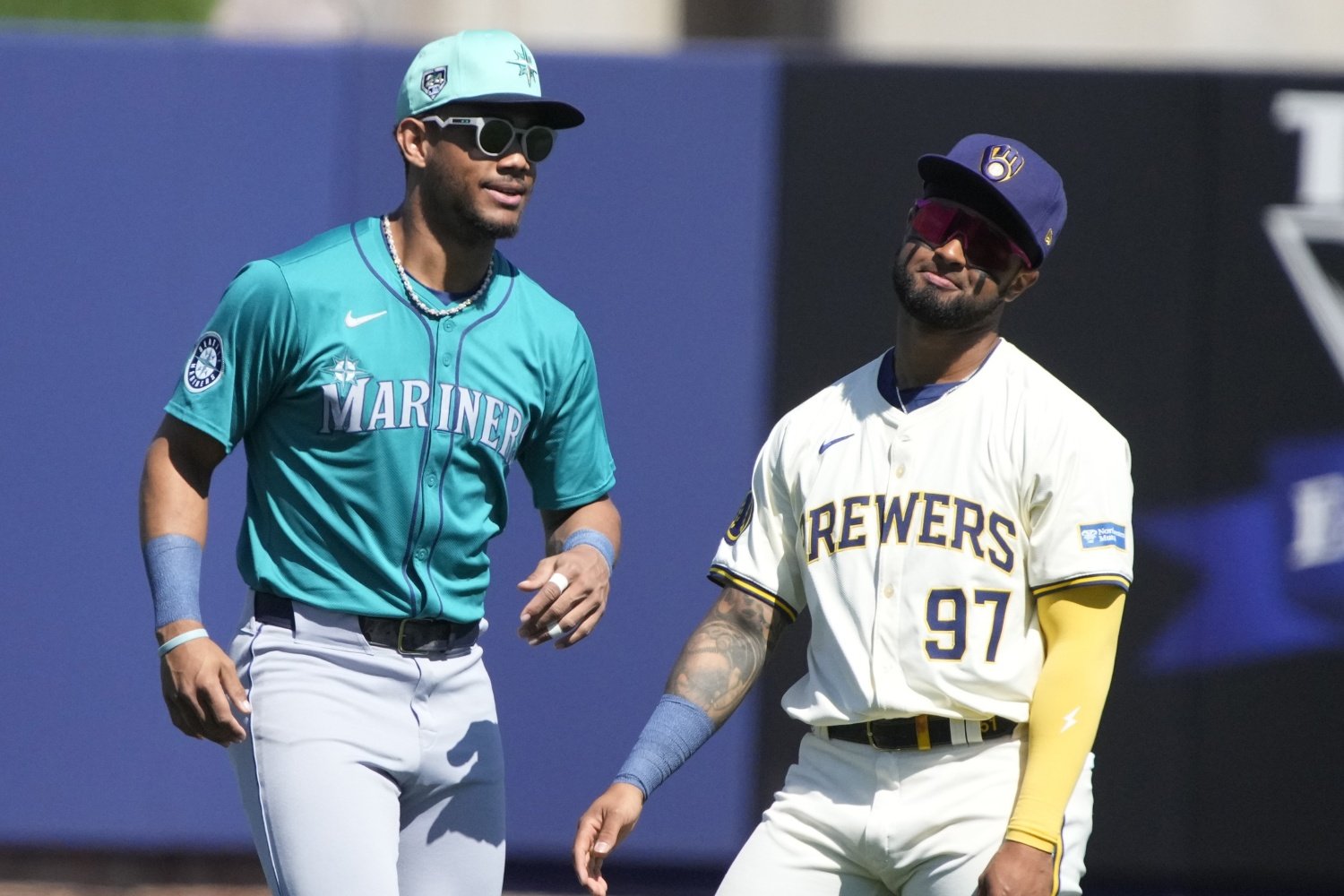
Image courtesy of © Rick Scuteri-Imagn Images We're back for another week of farm system observations. This week, we cover two pitchers from the 2024 draft, both outperforming expectations in their first full season. We also check in on a post-hype prospect from the COVID era who looks to have figured some things out at the plate, and who is probably still younger than you’d think. All statistics are season-long unless otherwise noted Tyson Hardin - RHP - Biloxi Shuckers: 74.2 IP, 2.17 ERA, 2.05 FIP, 26.4 K%, 3.7 BB%, 27.2 Whiff% A 12th-round selection less than a year ago out of Mississippi State (where he was used exclusively as a reliever and posted a 3.22 ERA and walked 23 in 36 ⅓ innings), Hardin began the year in High-A as a starter. In 57 ⅓ innings, his 1.97 FIP was the best at the level among starting pitchers, and he has already been promoted to Double-A. I have been able to tune in for all three starts, and continue to come away impressed. Hardin’s four-seam fastball is a plus pitch, due to the ultra-flat vertical approach angle at which he throws the pitch, coming from a low release height and generating more induced vertical break than you’d expect from the arm angle. He already sits in the 94-95 mph range, which is more than sufficient given the other traits the pitch possesses, but in college, he would likely sit a tick or two higher out of the bullpen. If he can ever sit in that range as a starter, there’s potential for the fastball to jump up closer to a plus-plus offering. He also throws a cutter in the 87-90 MPH range that he is very comfortable throwing to either side of the plate and against either right- or left-handed hitters. The cutter gets more swing-and-miss than most, but the main goal of the pitch is still to avoid hard contact and get quick outs. Hardin does seem to morph the shape of the cutter, whether intentionally or not, as it can sometimes resemble a short slider. He threw the cutter quite a bit in his most recent outing, and it helped the four-seam play up even more than it does on its own. Hardin’s best out-pitch, other than his fastball, is his low-80s sweeper. He uses the sweeper in two-strike counts to get chases away from right-handed hitters. It works especially well when it’s paired with a cutter that was on the outer half earlier in the at-bat. Like the cutter, he has no issue throwing the sweeper to batters on either side of the plate. A changeup that sits in the mid-80s rounds out his repertoire. It flashes decent depth at times, but for the most part, it lags behind the other offerings. Getting more consistency with the changeup could go a long way, as he could use a pitch that moves away from left-handed hitters. Lefties have managed a .725 OPS against Hardin, compared to .522 for right-handed bats. Hardin’s combined walk rate of 3.7% between the two levels is tied for the second-lowest among all qualified pitchers above the complex level. For a guy who walked 13.9% of hitters in college last year, that number is hard to fathom. His Double-A performances to this point have been very impressive. This was a big jump for Hardin to make, and he hasn’t skipped a beat. Hedbert Perez - OF - Wisconsin Timber Rattlers: 224 PA, 112 wRC+, 26.8 K%, 12.9 BB%, 9 HR The talk of the prospect town in the winter of 2019, then-17-year-old Perez spent the 2020 COVID season at the Brewers' alternate training site, the youngest player in any organization’s 60-man player pool. He showed well and was assigned to the Arizona Complex League in 2021, having never played in the Dominican Summer League. After a hot start at the complex level, he quickly moved to Low-A. Unfortunately, things have not gone very well. Perez struggled with swing decisions and the ability to make contact in his first season in Carolina, and that trend continued into 2023, as evidenced by his 77 wRC+ in 2022 and 76 in 2023. However, he was figuring things out in the summer of 2023, posting a 112 wRC+ with only a 22.6% strikeout rate from June 18th through July 18th. Unfortunately, Perez suffered a significant injury on July 18th and would proceed to miss nearly 13 months after that. He made his return on Aug. 13, 2024, which also marked his debut in High-A. After an up-and-down month to close out the season, he is back with the Timber Rattlers this year, and he’s shown some signs of putting himself back on the prospect radar. Despite how long he’s been in the organization, Perez only turned 22 years old in April. Watching him at the plate, he has adopted a much more patient approach. This plays out in his numbers, as his swing rate of 45.3% is seven percentage points lower than any other season of his career, and around 10% lower than his first season in Low-A. Unsurprisingly, this has led to a career-high walk rate of 12.9%, surpassing his previous high of 8.6% in that injury-shortened 2023 season. His contact rate is also a career high. The impressive part of his improved contact rate is that he is taking swings as big as ever. He shows major bat speed, and with that bat speed, he’s shown a lot of raw power, with exit velocities up to 113 MPH this season. He has had power binges throughout the season, and this past week was one of them, hitting three of his nine home runs in the past five games. Included in that stretch was a multi-homer game, with both traveling over 400 feet, including the first at 423. While not a slow runner, Perez is not a big-time base stealer, either. He’s an average runner, with average instincts as well. The lack of top-tier athleticism is also noticeable on defense, where watching Perez in the outfield can be an adventure. He will make some extremely impressive plays, and follow them up with an inconceivable misplay in the same game. His arm is strong enough to play right field, and that’s where he’s spent all season in 2025, after previously splitting time between left and right. It appears that the lack of positional movement may be benefiting him somewhat, but the defense is still likely closer to being below average than above average. If Perez is to jump back onto the prospect radar, his offense is going to do most of the heavy lifting. It’s a bat-first profile, and in 2025, he has shown some significant signs of improvement in a lot of key areas at the plate. Perez will be Rule 5 Draft-eligible this offseason. He won’t be selected in that draft, but the more interesting timeframe is when he becomes a minor-league free agent, which would come after the 2026 season. He will only be 23 at that time, so it will be interesting to see if he can force any interesting decisions with a strong finish to this year and an even better 2026. Jayden Dubanewicz - RHP - Carolina Mudcats: 42.2 IP, 2.53 ERA, 3.74 FIP, 17.1 K%, 5.7 BB%, 12.7 Whiff% (Whiff% is Low-A only) The Brewers selected Dubanewicz in the 16th round of last year’s draft and signed him away from a Florida commitment with a $665,000 signing bonus. He made his pro debut this year in the Arizona Complex League, where he posted a strong 2.66 ERA, with a 3.52 FIP, before being promoted to Low-A early in June. I’ve been able to watch all four of his Low-A outings now, and it’s been an interesting start to his time in full-season ball. Dubanewicz has a 2.37 ERA through his first four outings, but his 4.01 FIP tells a different story. The main thing that jumps out is the strikeout rate of 9.3%. That would be the lowest strikeout rate for any qualified pitcher outside of the DSL. At the same time, his walk rate of 2.7% would be the second-best walk rate of any qualified pitcher outside the DSL. It’s a pitch-to-contact approach that, to this point, has worked very well, though one has to wonder if the success will keep up. Armed with a pair of fastballs that sit in the low 90s and touch up to 94 MPH (both of which play up a little bit due to his above-average extension of around 6.7 feet), Dubanewicz uses his fastball as a way to get ahead of hitters and get early contact. When he does decide to go up with his four-seam variation, it can get some swing-and-miss at the top of the zone. The two-seam is more of a true two-seam shape than a sinker, as it has some carry on it rather than sink, but gets a decent amount of run. The four-seamer is the better pitch right now, but the two-seamer probably pairs better with the rest of his repertoire. He throws two different breaking balls, though they blend together at times. His slider and curveball have similar movement profiles, though he does take a little more velocity off the curve. The slider sits in the 81-83 MPH range, while the curve is in the upper 70s. Dubanewicz is comfortable throwing either of them in any count and commands them both very well. Neither has proven to be a great swing-and-miss pitch for him yet, though, which likely contributes to the extremely low strikeout rate mentioned earlier. I would grade his changeup as his best pitch right now. He takes around 8-9 MPH off of his fastball and shows good fade with the pitch, and at times really good depth as well, though it flattens out at other times. This is a pitch he primarily uses against left-handed hitters currently, but I think he could mix it in a bit more often against righties as well. Dubanewicz has a slew of fringe-average offerings, but he’s a lanky teenager with a ton of projection left. He currently pounds the zone as well as anyone, and while that likely won’t be enough on its own, with continued growth in his “stuff”, the starting point of above-average to plus command gives him a pretty solid ceiling. That’s all I’ve got for this week; let us know what you think in the replies! View full article
- 8 replies
-
- 4
-
-
-
- tyson hardin
- hedbert perez
- (and 1 more)
-
 We're back for another week of farm system observations. This week, we cover two pitchers from the 2024 draft, both outperforming expectations in their first full season. We also check in on a post-hype prospect from the COVID era who looks to have figured some things out at the plate, and who is probably still younger than you’d think. All statistics are season-long unless otherwise noted Tyson Hardin - RHP - Biloxi Shuckers: 74.2 IP, 2.17 ERA, 2.05 FIP, 26.4 K%, 3.7 BB%, 27.2 Whiff% A 12th-round selection less than a year ago out of Mississippi State (where he was used exclusively as a reliever and posted a 3.22 ERA and walked 23 in 36 ⅓ innings), Hardin began the year in High-A as a starter. In 57 ⅓ innings, his 1.97 FIP was the best at the level among starting pitchers, and he has already been promoted to Double-A. I have been able to tune in for all three starts, and continue to come away impressed. Hardin’s four-seam fastball is a plus pitch, due to the ultra-flat vertical approach angle at which he throws the pitch, coming from a low release height and generating more induced vertical break than you’d expect from the arm angle. He already sits in the 94-95 mph range, which is more than sufficient given the other traits the pitch possesses, but in college, he would likely sit a tick or two higher out of the bullpen. If he can ever sit in that range as a starter, there’s potential for the fastball to jump up closer to a plus-plus offering. He also throws a cutter in the 87-90 MPH range that he is very comfortable throwing to either side of the plate and against either right- or left-handed hitters. The cutter gets more swing-and-miss than most, but the main goal of the pitch is still to avoid hard contact and get quick outs. Hardin does seem to morph the shape of the cutter, whether intentionally or not, as it can sometimes resemble a short slider. He threw the cutter quite a bit in his most recent outing, and it helped the four-seam play up even more than it does on its own. Hardin’s best out-pitch, other than his fastball, is his low-80s sweeper. He uses the sweeper in two-strike counts to get chases away from right-handed hitters. It works especially well when it’s paired with a cutter that was on the outer half earlier in the at-bat. Like the cutter, he has no issue throwing the sweeper to batters on either side of the plate. A changeup that sits in the mid-80s rounds out his repertoire. It flashes decent depth at times, but for the most part, it lags behind the other offerings. Getting more consistency with the changeup could go a long way, as he could use a pitch that moves away from left-handed hitters. Lefties have managed a .725 OPS against Hardin, compared to .522 for right-handed bats. Hardin’s combined walk rate of 3.7% between the two levels is tied for the second-lowest among all qualified pitchers above the complex level. For a guy who walked 13.9% of hitters in college last year, that number is hard to fathom. His Double-A performances to this point have been very impressive. This was a big jump for Hardin to make, and he hasn’t skipped a beat. Hedbert Perez - OF - Wisconsin Timber Rattlers: 224 PA, 112 wRC+, 26.8 K%, 12.9 BB%, 9 HR The talk of the prospect town in the winter of 2019, then-17-year-old Perez spent the 2020 COVID season at the Brewers' alternate training site, the youngest player in any organization’s 60-man player pool. He showed well and was assigned to the Arizona Complex League in 2021, having never played in the Dominican Summer League. After a hot start at the complex level, he quickly moved to Low-A. Unfortunately, things have not gone very well. Perez struggled with swing decisions and the ability to make contact in his first season in Carolina, and that trend continued into 2023, as evidenced by his 77 wRC+ in 2022 and 76 in 2023. However, he was figuring things out in the summer of 2023, posting a 112 wRC+ with only a 22.6% strikeout rate from June 18th through July 18th. Unfortunately, Perez suffered a significant injury on July 18th and would proceed to miss nearly 13 months after that. He made his return on Aug. 13, 2024, which also marked his debut in High-A. After an up-and-down month to close out the season, he is back with the Timber Rattlers this year, and he’s shown some signs of putting himself back on the prospect radar. Despite how long he’s been in the organization, Perez only turned 22 years old in April. Watching him at the plate, he has adopted a much more patient approach. This plays out in his numbers, as his swing rate of 45.3% is seven percentage points lower than any other season of his career, and around 10% lower than his first season in Low-A. Unsurprisingly, this has led to a career-high walk rate of 12.9%, surpassing his previous high of 8.6% in that injury-shortened 2023 season. His contact rate is also a career high. The impressive part of his improved contact rate is that he is taking swings as big as ever. He shows major bat speed, and with that bat speed, he’s shown a lot of raw power, with exit velocities up to 113 MPH this season. He has had power binges throughout the season, and this past week was one of them, hitting three of his nine home runs in the past five games. Included in that stretch was a multi-homer game, with both traveling over 400 feet, including the first at 423. While not a slow runner, Perez is not a big-time base stealer, either. He’s an average runner, with average instincts as well. The lack of top-tier athleticism is also noticeable on defense, where watching Perez in the outfield can be an adventure. He will make some extremely impressive plays, and follow them up with an inconceivable misplay in the same game. His arm is strong enough to play right field, and that’s where he’s spent all season in 2025, after previously splitting time between left and right. It appears that the lack of positional movement may be benefiting him somewhat, but the defense is still likely closer to being below average than above average. If Perez is to jump back onto the prospect radar, his offense is going to do most of the heavy lifting. It’s a bat-first profile, and in 2025, he has shown some significant signs of improvement in a lot of key areas at the plate. Perez will be Rule 5 Draft-eligible this offseason. He won’t be selected in that draft, but the more interesting timeframe is when he becomes a minor-league free agent, which would come after the 2026 season. He will only be 23 at that time, so it will be interesting to see if he can force any interesting decisions with a strong finish to this year and an even better 2026. Jayden Dubanewicz - RHP - Carolina Mudcats: 42.2 IP, 2.53 ERA, 3.74 FIP, 17.1 K%, 5.7 BB%, 12.7 Whiff% (Whiff% is Low-A only) The Brewers selected Dubanewicz in the 16th round of last year’s draft and signed him away from a Florida commitment with a $665,000 signing bonus. He made his pro debut this year in the Arizona Complex League, where he posted a strong 2.66 ERA, with a 3.52 FIP, before being promoted to Low-A early in June. I’ve been able to watch all four of his Low-A outings now, and it’s been an interesting start to his time in full-season ball. Dubanewicz has a 2.37 ERA through his first four outings, but his 4.01 FIP tells a different story. The main thing that jumps out is the strikeout rate of 9.3%. That would be the lowest strikeout rate for any qualified pitcher outside of the DSL. At the same time, his walk rate of 2.7% would be the second-best walk rate of any qualified pitcher outside the DSL. It’s a pitch-to-contact approach that, to this point, has worked very well, though one has to wonder if the success will keep up. Armed with a pair of fastballs that sit in the low 90s and touch up to 94 MPH (both of which play up a little bit due to his above-average extension of around 6.7 feet), Dubanewicz uses his fastball as a way to get ahead of hitters and get early contact. When he does decide to go up with his four-seam variation, it can get some swing-and-miss at the top of the zone. The two-seam is more of a true two-seam shape than a sinker, as it has some carry on it rather than sink, but gets a decent amount of run. The four-seamer is the better pitch right now, but the two-seamer probably pairs better with the rest of his repertoire. He throws two different breaking balls, though they blend together at times. His slider and curveball have similar movement profiles, though he does take a little more velocity off the curve. The slider sits in the 81-83 MPH range, while the curve is in the upper 70s. Dubanewicz is comfortable throwing either of them in any count and commands them both very well. Neither has proven to be a great swing-and-miss pitch for him yet, though, which likely contributes to the extremely low strikeout rate mentioned earlier. I would grade his changeup as his best pitch right now. He takes around 8-9 MPH off of his fastball and shows good fade with the pitch, and at times really good depth as well, though it flattens out at other times. This is a pitch he primarily uses against left-handed hitters currently, but I think he could mix it in a bit more often against righties as well. Dubanewicz has a slew of fringe-average offerings, but he’s a lanky teenager with a ton of projection left. He currently pounds the zone as well as anyone, and while that likely won’t be enough on its own, with continued growth in his “stuff”, the starting point of above-average to plus command gives him a pretty solid ceiling. That’s all I’ve got for this week; let us know what you think in the replies!
- 8 comments
-
- 1
-
-
- tyson hardin
- hedbert perez
- (and 1 more)
-
Yeah, I'm inclined to agree with Jake here. I don't really think there's much similarity between Miz and Schoolcraft. Schoolcraft's best secondary is a changeup/split and his breaker is a sweeping, upper-70s pitch. Not to mention, Miz's fastball has otherworldly characteristics that you're pretty unlikely to find again. That said, I still like Schoolcraft, and I'd have no issue with the pick. Just don't really see a Miz comp.
-
Would be very happy with Fien, though it would hurt my heart to pass on Forbes at 32 (and especially if the Red Sox used the old Brewers pick to take him at 33)
-
Mon. 6/30: Made to Play in MLB Future's Game
Spencer Michaelis replied to Jim Goulart's topic in Brewers Minor League Talk
Excited to see Alexander Frias debut! He had some buzz around him this spring before his injury. -
 The Brewers keep winning, and Jacob Misiorowski keeps dominating to start his big-league career. Meanwhile, Jack's efforts to catch a foul ball in the press box keep failing with worsening results. Apple Podcasts: https://podcasts.apple.com/us/podcast/the-brewer-fanatic-podcast/id1740648724 Spotify: https://open.spotify.com/show/5CY8mWsQayqjDXqw9OT2Td iHeartRadio: https://www.iheart.com/podcast/263-the-brewer-fanatic-podcast-166534588/ Pocket Casts: https://pca.st/ommzz627 Watch On YouTube: https://www.youtube.com/@brewerfanatic

