



Tim Muma
-
Posts
436 -
Joined
-
Last visited
-
Days Won
1
Content Type
Profiles
Forums
Blogs
Events
News
2026 Milwaukee Brewers Top Prospects Ranking
Milwaukee Brewers Videos
2022 Milwaukee Brewers Draft Picks
Milwaukee Brewers Free Agent & Trade Rumors, Notes, & Tidbits
Guides & Resources
2023 Milwaukee Brewers Draft Picks
2024 Milwaukee Brewers Draft Picks
The Milwaukee Brewers Players Project
2025 Milwaukee Brewers Draft Pick Tracker
2026 Milwaukee Brewers Draft Tracker: Picks & Bonuses
Store
Downloads
Gallery
Everything posted by Tim Muma
-
 Milwaukee Brewers' pitchers hit Willson Contreras twice during baseball’s opening weekend, prompting the Chicago Cubs to retaliate. It is another chapter in the book of Contreras where hit-by-pitches are part of his game, but they make him angry. There is nothing inherently wrong with a baseball player willing to take pitches off his body to earn a free pass to first. However, when that is a regular strategy he employs, he forfeits the opportunity to complain except for rare circumstances. As has happened in previous seasons, Brewers’ pitchers plunked Contreras multiple times already this year. That was enough for Contreras and the Cubs. In the 8th inning of a 9-0 game, Keegan Thompson threw two pitches targeted for Andrew McCutchen, with the second hitting him flush. It was clearly an intentional message that many with the Brewers believed came from Contreras himself. Watch how Contreras puts his mask back down when things get heated – like he was expecting to get punched. Starting off a hitter with an outside pitch, especially anything that has movement away from the batter, is dangerous and cowardly when you plan to throw at the hitter. That initial delivery can get the batter leaning more toward the plate anticipating more pitches outside. If that pitcher then fires a fastball inside, it’s tougher for the hitter to protect himself, particularly if it’s near his head. These types of incidents go away quickly when players police themselves. The issue drags on when guys do things the wrong way and create more animosity in a back-and-forth battle. Milwaukee and Chicago will see each other 16 more times in 2022; this isn’t the last you’ll hear about possible shenanigans. The odds are excellent that Contreras will be hit at least one more time this season; how the Cubs react will indicate what they have learned. View full article
 -
The start of the 2022 MLB season marks the Milwaukee Brewers’ 53rd Opening Day. There have been memorable moments, forgettable outcomes, and random performances over more than half a century of games. Pitchers are often ahead of the hitters to begin play, so it’s notable when players achieve rare feats offensively on Opening Day. The focus here isn’t on the most impressive accomplishments but on things that don’t often happen in the Brewers’ first game of the season. These events might also be rarer now and in the future, so fans should appreciate what these players have done. Hitting a Triple (nine times) It was surprising to see nine different players hit a triple on Opening Day for the Brewers. It seemed like something that would occur less frequently, although nine triples out of 52 games is only 17% of the time. It’s also striking that 2012 was the last time it happened. The list of hitters is an interesting mix: Carlos Gomez (2012) Jose Hernandez (2002) Sean Berry (1999) Alex Diaz (1994) Paul Molitor (1987) Jim Gantner (1981) Pedro Garcia (1974) Gorman Thomas (1973) Joe Lahoud (1972) Molitor and Gantner stand out immediately. The former is a Hall of Famer with 3,319 career hits and plenty of speed. He racked up 114 triples in his career. The latter is a Wisconsin native who played for 17 years in Milwaukee. Gomez isn’t too surprising, considering his wheels and propensity for excitement, but some of the other guys are pretty intriguing. Diaz hit seven triples in 1994, but never hit one before or after that season in 872 career plate appearances. That three-bagger in 1999 was Berry’s 10th (and last) of his career. Lahoud only had 12 triples in an 11-year career. Thomas collected 13 in 13 seasons, and Garcia reached third base on a hit 15 times. Stunning that these five men all happened to hit a triple on Opening Day. A few other interesting tidbits about the triples: Molitor was the only leadoff hitter to triple Berry was the only player also to hit a home run Five of the players hit in the 7-9 spots in the batting order Pitcher and catcher are the only two positions not represented Collecting Four Hits (four times) The Brewers’ record for hits on Opening Day is four. Ironically, four different hitters accomplished the feat. However, it has only occurred in three games, as two players collected their record number of hits in the same contest. Carlos Gomez (2010) Jose Valentin (1996) Chuck Carr (1996) Dave Nilsson (1994) Valentin and Carr went a combined 8-for-11 with seven runs and five RBI in a 15-9 victory over the California Angels in the 1996 opener. That was Carr’s only four-hit game with Milwaukee, where he is far more famous for telling his manager, “Chuckie hacks on 2-0,” after he was given the take sign. Valentin had four such games in his career, all with the Brewers. Gomez turned the trick 16 times (15 of them with Milwaukee) in his 13-year career. Nilsson collected four hits in four different games in 1994 and seven times in his career. Nilsson is one of three Australian-born players to appear in an MLB All-Star game and had a sizable fan club. Some additional takeaways from the four-hit Opening Day games: Carr was the only player to walk, while Valentin was the only one to strike out (twice). Nilsson was the lone player without a home run; he had four singles. Gomez also stole a base and grounded into a double play. Scoring Four Runs (two times) Only two Brewers have scored four runs on Opening Day. Both occurrences led to 15 runs and a win for Milwaukee on the road. You’ve already seen one of these two players: Jose Valentin (1996) Charlie Moore (1982) This game was the only time Valentin scored four runs in a game for the Brewers, but he had a couple of others in his career. For Moore, 1982 was the only time he crossed the plate four times in a single contest in his 15 seasons, all but the last one with Milwaukee. A player has scored four runs in any game on just 63 occasions in Brewers’ history. A couple of other notes on the two Opening Day performances: Moore had two hits and no walks or hit-by-pitches; he reached on an error and a fielder’s choice This was the same game when Valentin collected four hits Moore was the first catcher in Brewers’ history to score four runs in any game Stealing Three Bases (one time) Now we’re talking about a truly unique achievement for Opening Day. Stolen bases have gone down over the years as teams avoid the risk of an out on the bases. It’s difficult to see this happening again on Opening Day for the Brewers, and it is fitting if he remains the sole owner. Paul Molitor (1988) The legendary "Ignitor" swiped three bags in a 12-0 win over the Baltimore Orioles. Though not all in the same frame, Molitor stole second base, third base, and home in the victory. You can watch his theft of home at the 1:31:04 mark of the video below. You could also enjoy the entire Opening Day broadcast! Here are a few more interesting facts related to stealing three bases: Only nine players in MLB history have stolen three bases on Opening Day. Of those nine men, six were leadoff hitters, one batted second, and two hit third in the lineup that day. Molitor stole three bases in a game six times for Milwaukee, and the Brewers were undefeated in those contests. Blasting Two Home Runs (one time) Like the stolen base factoid, only one player has hit two home runs in a Brewers’ Opening Day game. Older fans and students of Milwaukee baseball history probably already know the story that led to a 9-5 win at County Stadium. Who is this man? Sixto Lezcano (1980) Lezcano tied the game in the 4th inning with a two-run home run off Boston’s Dennis Eckersley. With two outs and the game tied in the bottom of the 9th, Lezcano crushed a walk-off grand slam to beat the Red Sox and send the crowd into delirium. Enjoy the footage and call from the great Bob Uecker. A few other quick notes connected to Lezcano’s big day: Lezcano also hit a grand slam on Opening Day in 1978, becoming the only player to do it twice Six different Brewers were on base for the two grand slams despite being only two years apart The 1980 dinger was the third and final grand slam of his career Here’s to seeing one of these or another rare feat during the Brewers’ Opening Day battle at Wrigley Field this season. There’s nothing like starting the new season with a bang. View full article
-
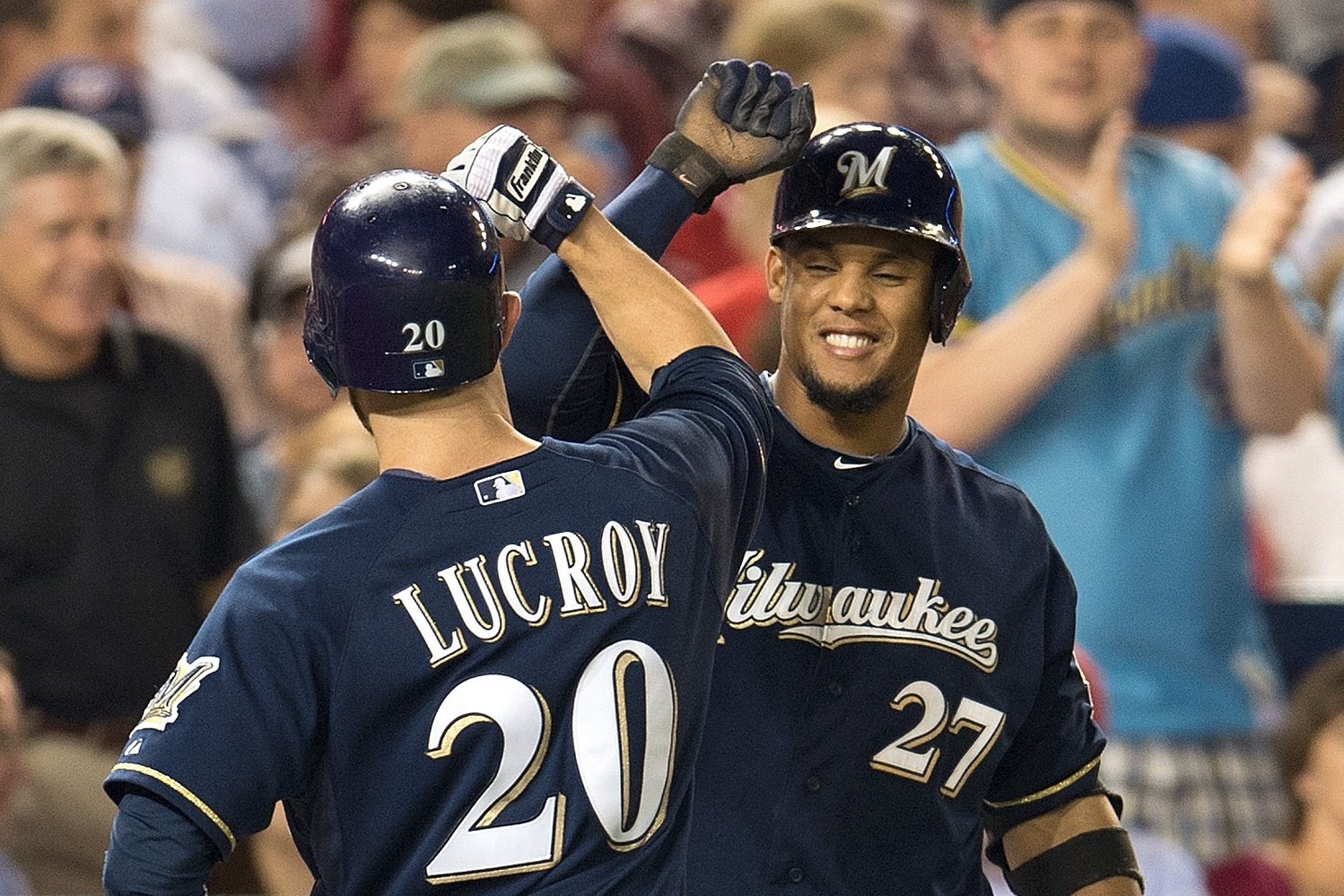 The focus here isn’t on the most impressive accomplishments but on things that don’t often happen in the Brewers’ first game of the season. These events might also be rarer now and in the future, so fans should appreciate what these players have done. Hitting a Triple (nine times) It was surprising to see nine different players hit a triple on Opening Day for the Brewers. It seemed like something that would occur less frequently, although nine triples out of 52 games is only 17% of the time. It’s also striking that 2012 was the last time it happened. The list of hitters is an interesting mix: Carlos Gomez (2012) Jose Hernandez (2002) Sean Berry (1999) Alex Diaz (1994) Paul Molitor (1987) Jim Gantner (1981) Pedro Garcia (1974) Gorman Thomas (1973) Joe Lahoud (1972) Molitor and Gantner stand out immediately. The former is a Hall of Famer with 3,319 career hits and plenty of speed. He racked up 114 triples in his career. The latter is a Wisconsin native who played for 17 years in Milwaukee. Gomez isn’t too surprising, considering his wheels and propensity for excitement, but some of the other guys are pretty intriguing. Diaz hit seven triples in 1994, but never hit one before or after that season in 872 career plate appearances. That three-bagger in 1999 was Berry’s 10th (and last) of his career. Lahoud only had 12 triples in an 11-year career. Thomas collected 13 in 13 seasons, and Garcia reached third base on a hit 15 times. Stunning that these five men all happened to hit a triple on Opening Day. A few other interesting tidbits about the triples: Molitor was the only leadoff hitter to triple Berry was the only player also to hit a home run Five of the players hit in the 7-9 spots in the batting order Pitcher and catcher are the only two positions not represented Collecting Four Hits (four times) The Brewers’ record for hits on Opening Day is four. Ironically, four different hitters accomplished the feat. However, it has only occurred in three games, as two players collected their record number of hits in the same contest. Carlos Gomez (2010) Jose Valentin (1996) Chuck Carr (1996) Dave Nilsson (1994) Valentin and Carr went a combined 8-for-11 with seven runs and five RBI in a 15-9 victory over the California Angels in the 1996 opener. That was Carr’s only four-hit game with Milwaukee, where he is far more famous for telling his manager, “Chuckie hacks on 2-0,” after he was given the take sign. Valentin had four such games in his career, all with the Brewers. Gomez turned the trick 16 times (15 of them with Milwaukee) in his 13-year career. Nilsson collected four hits in four different games in 1994 and seven times in his career. Nilsson is one of three Australian-born players to appear in an MLB All-Star game and had a sizable fan club. Some additional takeaways from the four-hit Opening Day games: Carr was the only player to walk, while Valentin was the only one to strike out (twice). Nilsson was the lone player without a home run; he had four singles. Gomez also stole a base and grounded into a double play. Scoring Four Runs (two times) Only two Brewers have scored four runs on Opening Day. Both occurrences led to 15 runs and a win for Milwaukee on the road. You’ve already seen one of these two players: Jose Valentin (1996) Charlie Moore (1982) This game was the only time Valentin scored four runs in a game for the Brewers, but he had a couple of others in his career. For Moore, 1982 was the only time he crossed the plate four times in a single contest in his 15 seasons, all but the last one with Milwaukee. A player has scored four runs in any game on just 63 occasions in Brewers’ history. A couple of other notes on the two Opening Day performances: Moore had two hits and no walks or hit-by-pitches; he reached on an error and a fielder’s choice This was the same game when Valentin collected four hits Moore was the first catcher in Brewers’ history to score four runs in any game Stealing Three Bases (one time) Now we’re talking about a truly unique achievement for Opening Day. Stolen bases have gone down over the years as teams avoid the risk of an out on the bases. It’s difficult to see this happening again on Opening Day for the Brewers, and it is fitting if he remains the sole owner. Paul Molitor (1988) The legendary "Ignitor" swiped three bags in a 12-0 win over the Baltimore Orioles. Though not all in the same frame, Molitor stole second base, third base, and home in the victory. You can watch his theft of home at the 1:31:04 mark of the video below. You could also enjoy the entire Opening Day broadcast! Here are a few more interesting facts related to stealing three bases: Only nine players in MLB history have stolen three bases on Opening Day. Of those nine men, six were leadoff hitters, one batted second, and two hit third in the lineup that day. Molitor stole three bases in a game six times for Milwaukee, and the Brewers were undefeated in those contests. Blasting Two Home Runs (one time) Like the stolen base factoid, only one player has hit two home runs in a Brewers’ Opening Day game. Older fans and students of Milwaukee baseball history probably already know the story that led to a 9-5 win at County Stadium. Who is this man? Sixto Lezcano (1980) Lezcano tied the game in the 4th inning with a two-run home run off Boston’s Dennis Eckersley. With two outs and the game tied in the bottom of the 9th, Lezcano crushed a walk-off grand slam to beat the Red Sox and send the crowd into delirium. Enjoy the footage and call from the great Bob Uecker. A few other quick notes connected to Lezcano’s big day: Lezcano also hit a grand slam on Opening Day in 1978, becoming the only player to do it twice Six different Brewers were on base for the two grand slams despite being only two years apart The 1980 dinger was the third and final grand slam of his career Here’s to seeing one of these or another rare feat during the Brewers’ Opening Day battle at Wrigley Field this season. There’s nothing like starting the new season with a bang.
 -
 MLB had gotten to a point where it no longer made sense to have pitchers bat. Big league hurlers don't work on their craft in the batter’s box as much as they used to, and it shows. Not to mention that pitching has become so tough for everyday players to hit that pitchers stand even less of a chance to do much damage. Thus, after years of fighting it, the NL has adopted the DH for good. No doubt this helps the Brewers’ offense on a basic level, where a professional hitter takes the spot of a pitcher flailing at the dish. For a club with elite pitching, there are aspects to this that could also prove advantageous for the pitchers. There are three ways the DH may help the Brewers’ pitching staff. Injury and Fatigue Removing the risk of injury by swinging a bat or running the bases is one obvious benefit, but that goes for all teams. Of course, the Brewers have had a few injuries stand out to (at the time, top of the rotation starters: Jimmy Nelson (shoulder, diving back to first base), Chase Anderson (oblique, swinging bat), and Junior Guerra (calf, running out of the box). Nelson’s injury was the most damaging for the Brewers and Nelson’s career. Nobody wants to see their pitchers go down for an extended period thanks to something on the offense side of the ball. That rings especially true when you rely on pitching as much as the Brewers are in 2022. The same thing goes for keeping them healthy and fresh throughout the season. Fatigue doesn’t just happen on the mound. While Corbin Burnes, Brandon Woodruff, and Freddy Peralta weren’t on base that much last season, each foray onto the base paths takes a little out of you. Whether you’re running hard to help the offense or just standing on the diamond longer, it can impact effectiveness as the game wears on. Tightness, cramps, general fatigue, and other minor disruptions can cause a drop in performance and another increased risk of injury. The cumulative impact of fatigue and other related concerns throughout the season can add up over time. Once again, while no team wants to see their pitchers go down, no club needs their hurlers strong and in peak form as much as the Brewers. Multiple Innings for Relievers The Brewers have several pitchers in the bullpen who are more than capable of throwing at least two innings in relief in games. Now manager Craig Counsell doesn’t have to worry about the pitcher’s spot coming up next inning or figuring out if it’s worth “wasting” at at-bat to keep a reliever in the game. Having the DH opens up new philosophies on reliever usage, which Counsell and the Brewers typically thrive on. It’s a valuable strategy to utilize an effective reliever for more than one frame for several reasons. Every time a new pitcher comes out of the pen, there’s a chance he has a bad day. If a reliever is throwing well in his first inning, there’s some comfort in sticking with the “hot arm” for a second inning. It’s not always the best move – and it will occasionally blow up in the manager’s face – but it becomes a more viable option with a DH. How often has a reliever had a quick inning, only to see his spot come up in the order, and the odds say it’s better to use a pinch-hitter and a new pitcher? Having pitchers throw a couple of innings followed by a day or two off can also be a better long-term strategy to keep relievers healthy and fresh. Pitching one frame at a time and consistently tossing an inning on back-to-back days can develop more wear and tear over time. It also creates situations where pitchers are needed more often, adding to the workload. If you’re a team like the Brewers fighting for a division title, you tend to push your best relievers a lot. Take Brad Boxberger last season. He appeared in a career-high 71 games a year ago and had some fatigue issues late in the year. While Boxberger mainly was lights out, he had three blown saves in September, plus another outing when he allowed five earned runs without recording an out. Had Counsell had more opportunities to skip Boxberger's outings by using more multi-inning relievers, it certainly would have helped his reliever down the stretch. Guys like Aaron Ashby and Brent Suter can even provide three innings of valuable relief work to spare others who are more one-inning guys. Once again, not worrying about pitchers hitting will offer more chances to take advantage of this strategy and keep the bullpen humming into September and the playoffs. Longer Outings for the Starters No, none of the starters will regularly pitch into the 8th inning or anything. However, much like with the relievers, not having to worry about the pitcher’s spot will give the starters some extra innings here and there. Counsell typically went for the pinch-hitter late and close, even if the starter had more in the tank. Now he can focus just on the pitcher. Take a scenario where it’s the top of the 6th in St. Louis with the Brewers trailing by one and Burnes coming up with a man on 2nd. You pinch-hit there to try to tie the game but now lose Burnes to a (likely) less qualified middle relief arm. From now on, it’s no longer a concern, and you can keep in your Cy Young winner if he is still dealing. Throughout the season, you can get more innings from your stud rotation, provide some added rest for relievers, and have greater certainty of victory. Think about how this impacted the NLDS games in Atlanta. In Game 3 especially, Counsell decided to pinch-hit for Peralta after four innings to chase some runs. That led a depleted bullpen to cover more innings than usual. Handling those frames, then having to pitch early and often in Game Four, certainly played a role in the Brewers' series defeat. The DH will allow Counsell to prioritize innings and pitches better for his starters and relievers throughout the season and into the playoffs. Especially for Milwaukee’s “Big Three,” you could be talking an extra 10-15 frames over 30 starts, giving them more opportunities to win games late and save high-leverage bullpen arms. It will be easier to ride the horses in the postseason without worrying about “playing for runs” with a pinch-hitter. It will be fun to see how Counsell finds ways to use the rules to their advantage. Sure, the 60-game COVID season gave a glimpse with a DH, but pitchers weren’t fully ready – and the season was strange anyway. Seeing this unfold over 162 contests (plus the postseason) will be something Brewers fans should be able to enjoy. You can disagree, but it feels like the DH helps Milwaukee’s offense AND pitching.
- 24 comments
-
- 1
-

-
- corbin burnes
- brandon woodruff
- (and 3 more)
-
Bringing the DH to the National League will certainly increase offense across the Senior Circuit, and it provides the Milwaukee Brewers an added bat to hopefully improve their offense this season. Sometimes rule changes also have unintended consequences, which could suit the Brewers' pitching staff. MLB had gotten to a point where it no longer made sense to have pitchers bat. Big league hurlers don't work on their craft in the batter’s box as much as they used to, and it shows. Not to mention that pitching has become so tough for everyday players to hit that pitchers stand even less of a chance to do much damage. Thus, after years of fighting it, the NL has adopted the DH for good. No doubt this helps the Brewers’ offense on a basic level, where a professional hitter takes the spot of a pitcher flailing at the dish. For a club with elite pitching, there are aspects to this that could also prove advantageous for the pitchers. There are three ways the DH may help the Brewers’ pitching staff. Injury and Fatigue Removing the risk of injury by swinging a bat or running the bases is one obvious benefit, but that goes for all teams. Of course, the Brewers have had a few injuries stand out to (at the time, top of the rotation starters: Jimmy Nelson (shoulder, diving back to first base), Chase Anderson (oblique, swinging bat), and Junior Guerra (calf, running out of the box). Nelson’s injury was the most damaging for the Brewers and Nelson’s career. Nobody wants to see their pitchers go down for an extended period thanks to something on the offense side of the ball. That rings especially true when you rely on pitching as much as the Brewers are in 2022. The same thing goes for keeping them healthy and fresh throughout the season. Fatigue doesn’t just happen on the mound. While Corbin Burnes, Brandon Woodruff, and Freddy Peralta weren’t on base that much last season, each foray onto the base paths takes a little out of you. Whether you’re running hard to help the offense or just standing on the diamond longer, it can impact effectiveness as the game wears on. Tightness, cramps, general fatigue, and other minor disruptions can cause a drop in performance and another increased risk of injury. The cumulative impact of fatigue and other related concerns throughout the season can add up over time. Once again, while no team wants to see their pitchers go down, no club needs their hurlers strong and in peak form as much as the Brewers. Multiple Innings for Relievers The Brewers have several pitchers in the bullpen who are more than capable of throwing at least two innings in relief in games. Now manager Craig Counsell doesn’t have to worry about the pitcher’s spot coming up next inning or figuring out if it’s worth “wasting” at at-bat to keep a reliever in the game. Having the DH opens up new philosophies on reliever usage, which Counsell and the Brewers typically thrive on. It’s a valuable strategy to utilize an effective reliever for more than one frame for several reasons. Every time a new pitcher comes out of the pen, there’s a chance he has a bad day. If a reliever is throwing well in his first inning, there’s some comfort in sticking with the “hot arm” for a second inning. It’s not always the best move – and it will occasionally blow up in the manager’s face – but it becomes a more viable option with a DH. How often has a reliever had a quick inning, only to see his spot come up in the order, and the odds say it’s better to use a pinch-hitter and a new pitcher? Having pitchers throw a couple of innings followed by a day or two off can also be a better long-term strategy to keep relievers healthy and fresh. Pitching one frame at a time and consistently tossing an inning on back-to-back days can develop more wear and tear over time. It also creates situations where pitchers are needed more often, adding to the workload. If you’re a team like the Brewers fighting for a division title, you tend to push your best relievers a lot. Take Brad Boxberger last season. He appeared in a career-high 71 games a year ago and had some fatigue issues late in the year. While Boxberger mainly was lights out, he had three blown saves in September, plus another outing when he allowed five earned runs without recording an out. Had Counsell had more opportunities to skip Boxberger's outings by using more multi-inning relievers, it certainly would have helped his reliever down the stretch. Guys like Aaron Ashby and Brent Suter can even provide three innings of valuable relief work to spare others who are more one-inning guys. Once again, not worrying about pitchers hitting will offer more chances to take advantage of this strategy and keep the bullpen humming into September and the playoffs. Longer Outings for the Starters No, none of the starters will regularly pitch into the 8th inning or anything. However, much like with the relievers, not having to worry about the pitcher’s spot will give the starters some extra innings here and there. Counsell typically went for the pinch-hitter late and close, even if the starter had more in the tank. Now he can focus just on the pitcher. Take a scenario where it’s the top of the 6th in St. Louis with the Brewers trailing by one and Burnes coming up with a man on 2nd. You pinch-hit there to try to tie the game but now lose Burnes to a (likely) less qualified middle relief arm. From now on, it’s no longer a concern, and you can keep in your Cy Young winner if he is still dealing. Throughout the season, you can get more innings from your stud rotation, provide some added rest for relievers, and have greater certainty of victory. Think about how this impacted the NLDS games in Atlanta. In Game 3 especially, Counsell decided to pinch-hit for Peralta after four innings to chase some runs. That led a depleted bullpen to cover more innings than usual. Handling those frames, then having to pitch early and often in Game Four, certainly played a role in the Brewers' series defeat. The DH will allow Counsell to prioritize innings and pitches better for his starters and relievers throughout the season and into the playoffs. Especially for Milwaukee’s “Big Three,” you could be talking an extra 10-15 frames over 30 starts, giving them more opportunities to win games late and save high-leverage bullpen arms. It will be easier to ride the horses in the postseason without worrying about “playing for runs” with a pinch-hitter. It will be fun to see how Counsell finds ways to use the rules to their advantage. Sure, the 60-game COVID season gave a glimpse with a DH, but pitchers weren’t fully ready – and the season was strange anyway. Seeing this unfold over 162 contests (plus the postseason) will be something Brewers fans should be able to enjoy. You can disagree, but it feels like the DH helps Milwaukee’s offense AND pitching. View full article
-
Article: 4 Bold Brewers Predictions for 2022
Tim Muma replied to Tim Muma's topic in Brewer Fanatic Front Page News
Well, you're going to love my next post about how the DH may actually HELP the Brewers pitching staff. ? -
Article: 4 Bold Brewers Predictions for 2022
Tim Muma replied to Tim Muma's topic in Brewer Fanatic Front Page News
Well, you're going to love my next post about how the DH may actually HELP the Brewers pitching staff. ? -
 Let's start with American League predictions, including a quick blurb for each team as we go through the standings in each division. From there, you will see complete AL records and playoffs broken down. Then we'll do the same with the National League and the Milwaukee Brewers. AL EAST New York Yankees: Tons of talent, but need to stay healthy. Stars will step up and pull it out in 2022. Toronto Blue Jays: Maybe the most exciting team in the AL. They'll battle for the division, but still a year away. Tampa Bay Rays: Forever underestimated, they will remain in contention. Hard to see enough for a title. Boston Red Sox: Surprised last year; the pitching lacks postseason talent this season. Baltimore Orioles: Nothing to see here. AL CENTRAL Chicago White Sox: If starting pitching holds up, they could be the best team in AL; lineup and bullpen loaded. Minnesota Twins: Surprisingly bad last year, but made some significant additions. Starting pitching the primary question. Detroit Tigers: A team to watch that could sneak up on some. Young talent could make it a fun ride. Cleveland Guardians: Not enough offense to compete the whole season, despite some high-level pitching. Kansas City Royals: The club has a unique way of building their MLB roster but lacks a lot. AL WEST Houston Astros: They could take a step back this year after AL Pennant in 2021, but talent is there. Los Angeles Angels: They will jump up the standings if they get a healthy Mike Trout and Anthony Rendon. Seattle Mariners: They were a fun story last season; they feel a bit light to take another step, but could surprise. Texas Rangers: Big-time additions will help the offense while the club plans for the next few years. Oakland A's: It's hard to see this team doing much on the field with all the talent they dealt away. Below you'll see the entire layout for the AL: Next up is the Senior Circuit to find out who will play the hated Yankees in the 2022 World Series. NL EAST Atlanta Braves: Defending World Series Champs have an even better roster to start the new season. New York Mets: The club spent a ton of money building a competitor. Starting pitching is critical, good or bad (or hurt). Philadelphia Phillies: They're going to score but could have a historically bad defense. Miami Marlins: The team added bats to complement good, young pitching. Still a couple of years away from a push. Washington Nationals: They might have the best hitter in baseball with Juan Soto, but not much else. NL CENTRAL Milwaukee Brewers: Best pitching in MLB from start to finish. They should only need some improvement in the lineup to flourish. St. Louis Cardinals: Pitching has significant question marks, while the defense and lineup are strong. Chicago Cubs: Made sneaky acquisitions to remain relevant. Probably not enough for a playoff run. Cincinnati Reds: Blew up much of the roster they had built to win with two seasons ago. Pittsburgh Pirates: It feels like they are still a long way away. Not sure how they will score much this season. NL WEST Los Angeles Dodgers: They continue to reload with young talent and veteran stars to create an elite lineup. San Diego Padres: Big blow losing Fernando Tatis, Jr. for some time, but still a talented roster with upside. San Francisco Giants: Surprised everyone with 107 wins last season. Tough to see a division title repeat. Arizona Diamondbacks: A disaster 110-loss season in 2021, they are better than they performed. Colorado Rockies: They always have some offensive firepower, but the club seems rudderless. There you have the NL side of things. Details are below: I know what you're thinking: "What a homer pick, Tim!" In all the years I've made predictions like this, I have NEVER had the Brewers winning the World Series before because I know how it looks. Sort of like if you're coaching your son on a team. He has to be better than someone on the bench if he is starting. Same idea - I have to be sure this is a realistic possibility. Their pitching is that good this season, and their offense should be more consistent. The playoffs are a bit of a crapshoot, but there are factors this season that will help them succeed. Manager Craig Counsell learned from last season and will ride Corbin Burnes, Brandon Woodruff, Freddy Peralta, Devin Williams, and Josh Hader hard to the finish - and he won't have to worry about removing a pitcher for a pinch-hitter. So that leaves the matchup in the World Series with the big, bad New York Yankees taking on lowly Milwaukee. It's "sort of" a rematch of 1957 when the (then) Milwaukee Braves took on the Yanks, and a player from New York reportedly dismissed the small-market city as "Bushville." 2022 World Series: Milwaukee Brewers defeat the New York Yankees Call me biased or any other name you can think of, but I'm staking my claim right now that the Milwaukee Brewers will defeat the New York Yankees in 2022 to earn the Brewers' first championship. The odds are certainly not in my favor, but I don't care. It will be just like the last 40 years of my life if it doesn't happen anyway. Your turn! Share your 2022 MLB Predictions below. It will be fun to look back at the end of the season to see how we did!
 -
Now is the time of year to see how much (or little) we think we know. Typically my Milwaukee Brewers' record prediction is accurate, likely because I pay so much attention to them. As for the rest of MLB, there are good and bad seasons, ugly predictions, and lucky ones. Please take a peek, give us your thoughts, and post your own MLB predictions in the comments! Let's start with American League predictions, including a quick blurb for each team as we go through the standings in each division. From there, you will see complete AL records and playoffs broken down. Then we'll do the same with the National League and the Milwaukee Brewers. AL EAST New York Yankees: Tons of talent, but need to stay healthy. Stars will step up and pull it out in 2022. Toronto Blue Jays: Maybe the most exciting team in the AL. They'll battle for the division, but still a year away. Tampa Bay Rays: Forever underestimated, they will remain in contention. Hard to see enough for a title. Boston Red Sox: Surprised last year; the pitching lacks postseason talent this season. Baltimore Orioles: Nothing to see here. AL CENTRAL Chicago White Sox: If starting pitching holds up, they could be the best team in AL; lineup and bullpen loaded. Minnesota Twins: Surprisingly bad last year, but made some significant additions. Starting pitching the primary question. Detroit Tigers: A team to watch that could sneak up on some. Young talent could make it a fun ride. Cleveland Guardians: Not enough offense to compete the whole season, despite some high-level pitching. Kansas City Royals: The club has a unique way of building their MLB roster but lacks a lot. AL WEST Houston Astros: They could take a step back this year after AL Pennant in 2021, but talent is there. Los Angeles Angels: They will jump up the standings if they get a healthy Mike Trout and Anthony Rendon. Seattle Mariners: They were a fun story last season; they feel a bit light to take another step, but could surprise. Texas Rangers: Big-time additions will help the offense while the club plans for the next few years. Oakland A's: It's hard to see this team doing much on the field with all the talent they dealt away. Below you'll see the entire layout for the AL: Next up is the Senior Circuit to find out who will play the hated Yankees in the 2022 World Series. NL EAST Atlanta Braves: Defending World Series Champs have an even better roster to start the new season. New York Mets: The club spent a ton of money building a competitor. Starting pitching is critical, good or bad (or hurt). Philadelphia Phillies: They're going to score but could have a historically bad defense. Miami Marlins: The team added bats to complement good, young pitching. Still a couple of years away from a push. Washington Nationals: They might have the best hitter in baseball with Juan Soto, but not much else. NL CENTRAL Milwaukee Brewers: Best pitching in MLB from start to finish. They should only need some improvement in the lineup to flourish. St. Louis Cardinals: Pitching has significant question marks, while the defense and lineup are strong. Chicago Cubs: Made sneaky acquisitions to remain relevant. Probably not enough for a playoff run. Cincinnati Reds: Blew up much of the roster they had built to win with two seasons ago. Pittsburgh Pirates: It feels like they are still a long way away. Not sure how they will score much this season. NL WEST Los Angeles Dodgers: They continue to reload with young talent and veteran stars to create an elite lineup. San Diego Padres: Big blow losing Fernando Tatis, Jr. for some time, but still a talented roster with upside. San Francisco Giants: Surprised everyone with 107 wins last season. Tough to see a division title repeat. Arizona Diamondbacks: A disaster 110-loss season in 2021, they are better than they performed. Colorado Rockies: They always have some offensive firepower, but the club seems rudderless. There you have the NL side of things. Details are below: I know what you're thinking: "What a homer pick, Tim!" In all the years I've made predictions like this, I have NEVER had the Brewers winning the World Series before because I know how it looks. Sort of like if you're coaching your son on a team. He has to be better than someone on the bench if he is starting. Same idea - I have to be sure this is a realistic possibility. Their pitching is that good this season, and their offense should be more consistent. The playoffs are a bit of a crapshoot, but there are factors this season that will help them succeed. Manager Craig Counsell learned from last season and will ride Corbin Burnes, Brandon Woodruff, Freddy Peralta, Devin Williams, and Josh Hader hard to the finish - and he won't have to worry about removing a pitcher for a pinch-hitter. So that leaves the matchup in the World Series with the big, bad New York Yankees taking on lowly Milwaukee. It's "sort of" a rematch of 1957 when the (then) Milwaukee Braves took on the Yanks, and a player from New York reportedly dismissed the small-market city as "Bushville." 2022 World Series: Milwaukee Brewers defeat the New York Yankees Call me biased or any other name you can think of, but I'm staking my claim right now that the Milwaukee Brewers will defeat the New York Yankees in 2022 to earn the Brewers' first championship. The odds are certainly not in my favor, but I don't care. It will be just like the last 40 years of my life if it doesn't happen anyway. Your turn! Share your 2022 MLB Predictions below. It will be fun to look back at the end of the season to see how we did! View full article
-
 The challenge in creating “bold predictions” is finding areas that would be extremely impressive or rare and somewhat realistic. Keep that in mind as you ponder the possibility of these happening for the 2022 Brewers. Christian Yelich Collects a Career-Best 40 Doubles If you believe in OPS+ where 100 is league average, Christian Yelich was 3% better than league average the past two seasons with his 103 OPS+. Based on comments by many fans, you’d think he was one of the worst hitters in baseball since the start of 2020. The significant drop-off – and a large part of the perception – comes from the complete disappearance of his power. After 36 homers in 2018 and 44 in 2019, Yelich has hit just 21 dingers over his last 722 plate appearances. Then his slugging percentage of .373 last season marked a career-worst. I think there is a bounce-back coming, but it will look a little different. Yeli likely isn’t a 30-homer guy anymore; however, there’s a chance he rediscovers his swing to raise his batting average, find some gaps, and hit frozen ropes from line to line. Sometimes when a player loses some home run power, those balls turn into doubles more frequently. Should Yelich reach 40 doubles in 2022, it would mark a career-high in a single season. His previous best was 38 with the Miami Marlins in 2016. Yelich only collected 19 two-baggers last season, so a jump to 40 doubles would be huge – and likely mean the Brewers' offense is in good shape. Pitchers Allow Fewest Runs per Game in Franchise History Not to be confused with ERA, the 1992 Brewers’ pitching staff holds the franchise record for the fewest runs allowed per game at 3.73. One could argue this is a pitching and defense mark since unearned runs would count against this number, unlike ERA. The ’92 Milwaukee defense had the best defensive efficiency percentage (.725), the percentage of balls in play converted into outs. Some may not realize how good the pitchers were in ‘92. Three starters – Bill Wegman, Jamie Navarro, and Chris Bosio – each tossed more than 230 innings and owned ERAs of 3.20, 3.33, and 3.62, respectively. Rookie Cal Eldred came up partway through the season to go 11-2 with a 1.79 ERA over 100 1/3 frames, while the bullpen owned the league’s lowest ERA (2.78) and OPS allowed (.643). A look at the top-5 in Brewers history for single-season runs allowed per game: Year League RA/G ▲ HR BB SO WHIP SO9 HR9 1992 AL East 3.73 127 435 793 1.221 4.90 0.78 1971 AL West 3.78 130 569 795 1.322 5.05 0.83 1988 AL East 3.80 125 437 832 1.236 5.17 0.78 1972 AL East 3.81 116 486 740 1.275 4.79 0.75 2021 NL Central 3.85 168 537 1618 1.179 10.14 1.05 We all know how good the 2022 pitching staff should be. With Corbin Burnes, Brandon Woodruff, and Freddy Peralta at the top of the rotation, one could argue there are three NL Cy Young candidates on the club. Add in an often-dominant bullpen led by Josh Hader and Devin Williams, and you can see the challenge for opposing hitters. The performances of the back half of the rotation, the middle relief corps, and the defense will all factor into achieving this franchise mark. Milwaukee allowed 3.85 runs/game last season, good for 5th in club history and just 0.13 runs/game shy of setting the franchise record. The 2022 defense ranked 3rd in the NL in defensive efficiency at .708, well shy of the 1992 defense. With a slightly improved defense and more development from the frightening pitching staff, the 2022 Brewers run prevention could easily be the best in club history. Willy Adames Finishes in Top-5 of MVP Voting The 26-year-old energetic shortstop ignited the Brewers' offense when he came to Milwaukee via Tampa Bay last May. Despite a quad strain late in the season that limited his production and forced him to miss games, Willy Adames posted a .285/.366/.521 (.886) line in 99 contests with the Brewers. Adames struggled in his former home stadium with the Rays. He told reporters on more than one occasion that he had trouble picking up the baseball at Tropicana Field. That explains his .217/.275/.341 (.616) numbers in his former home park. Something was up, and he took steps toward proving his theory true in his first season with the Crew. The other encouraging development that could raise Adames into the top-5 of MVP voting is his progress in a few critical areas since 2018. He has shown better bat control to hit balls hard off the barrel at a higher clip. Adames has also learned to get the ball in the air more as his launch angle has increased by 8.3 degrees the past four seasons – an indication that even more homers could be coming. Playing 81 games at American Family Field (and only two in Tampa) makes it more realistic to think Adames can hit 30+ HR with around 100 runs and 100 RBI. His totals last year between the two teams landed him with 25 dingers, 32 doubles, 77 runs, and 73 RBI. Considering how poorly he hit at Tropicana, it wouldn’t take a superhuman effort to reach career highs in many categories, allowing him to make a real run for MVP. Pitching Staff Sets MLB Record for fWAR in a Season It’s tough to figure out the best way to judge a pitching staff over the course of a season – and then compare it to all of baseball history – but let’s give it a shot. The 2017 Cleveland Indians hold the all-time single-season record for fWAR (FanGraphs WAR) in MLB history at 30.4 fWAR. That rotation featured Corey Kluber, Mike Clevinger, Carlos Carrasco, and Trevor Bauer. Meanwhile, Cleveland’s bullpen was lights out, spearheaded by super reliever Andrew Miller who posted a 319 ERA+ (making him 219% better than league average). Cleveland also set the record for strikeouts in a season with 1,614 punchouts. that year. That total is now 7th all-time after the 2021 Brewers jumped in front of Cleveland into 6th place with 1,618 strikeouts. Despite how fantastic Milwaukee’s pitching was last year, they finished just 47th all-time in the single-season ranking with a 23.6 fWAR. Burnes paced the staff with a 7.5 fWAR, while Woodruff (4.7) and Peralta (4.0) combined for nearly 9 fWAR. There is a long way to go between 2021’s 23.6 fWAR and the record-setting number, 30.5 fWAR. The Brewers’ strikeout ability on the hill gives them a running start toward the record. As much as they need their top guns to put up huge numbers, Milwaukee also needs the lower-end hurlers to step up and add value in smaller increments. If any pitching staff were going to set an MLB record, I’d put my money down on the 2022 Brewers squad. Go ahead and pick these apart. Please give us your thoughts on how likely these will happen in 2022. Add your own bold predictions to the comments yourself. Right before Opening Day is the best time to be optimistic about the Milwaukee Brewers.
- 14 comments
-
- 1
-
-
- christian yelich
- willy adames
- (and 3 more)
-
Fans, experts, and others around baseball see the 2022 Milwaukee Brewers as a genuine contender for a World Series title. Typically when a club finds its way to the top of the game, it is the beneficiary of some tremendous performances - from both individuals and the team. Predicting a championship would be the ultimate bold prediction, but we'll save that possibility for another article. The challenge in creating “bold predictions” is finding areas that would be extremely impressive or rare and somewhat realistic. Keep that in mind as you ponder the possibility of these happening for the 2022 Brewers. Christian Yelich Collects a Career-Best 40 Doubles If you believe in OPS+ where 100 is league average, Christian Yelich was 3% better than league average the past two seasons with his 103 OPS+. Based on comments by many fans, you’d think he was one of the worst hitters in baseball since the start of 2020. The significant drop-off – and a large part of the perception – comes from the complete disappearance of his power. After 36 homers in 2018 and 44 in 2019, Yelich has hit just 21 dingers over his last 722 plate appearances. Then his slugging percentage of .373 last season marked a career-worst. I think there is a bounce-back coming, but it will look a little different. Yeli likely isn’t a 30-homer guy anymore; however, there’s a chance he rediscovers his swing to raise his batting average, find some gaps, and hit frozen ropes from line to line. Sometimes when a player loses some home run power, those balls turn into doubles more frequently. Should Yelich reach 40 doubles in 2022, it would mark a career-high in a single season. His previous best was 38 with the Miami Marlins in 2016. Yelich only collected 19 two-baggers last season, so a jump to 40 doubles would be huge – and likely mean the Brewers' offense is in good shape. Pitchers Allow Fewest Runs per Game in Franchise History Not to be confused with ERA, the 1992 Brewers’ pitching staff holds the franchise record for the fewest runs allowed per game at 3.73. One could argue this is a pitching and defense mark since unearned runs would count against this number, unlike ERA. The ’92 Milwaukee defense had the best defensive efficiency percentage (.725), the percentage of balls in play converted into outs. Some may not realize how good the pitchers were in ‘92. Three starters – Bill Wegman, Jamie Navarro, and Chris Bosio – each tossed more than 230 innings and owned ERAs of 3.20, 3.33, and 3.62, respectively. Rookie Cal Eldred came up partway through the season to go 11-2 with a 1.79 ERA over 100 1/3 frames, while the bullpen owned the league’s lowest ERA (2.78) and OPS allowed (.643). A look at the top-5 in Brewers history for single-season runs allowed per game: Year League RA/G ▲ HR BB SO WHIP SO9 HR9 1992 AL East 3.73 127 435 793 1.221 4.90 0.78 1971 AL West 3.78 130 569 795 1.322 5.05 0.83 1988 AL East 3.80 125 437 832 1.236 5.17 0.78 1972 AL East 3.81 116 486 740 1.275 4.79 0.75 2021 NL Central 3.85 168 537 1618 1.179 10.14 1.05 We all know how good the 2022 pitching staff should be. With Corbin Burnes, Brandon Woodruff, and Freddy Peralta at the top of the rotation, one could argue there are three NL Cy Young candidates on the club. Add in an often-dominant bullpen led by Josh Hader and Devin Williams, and you can see the challenge for opposing hitters. The performances of the back half of the rotation, the middle relief corps, and the defense will all factor into achieving this franchise mark. Milwaukee allowed 3.85 runs/game last season, good for 5th in club history and just 0.13 runs/game shy of setting the franchise record. The 2022 defense ranked 3rd in the NL in defensive efficiency at .708, well shy of the 1992 defense. With a slightly improved defense and more development from the frightening pitching staff, the 2022 Brewers run prevention could easily be the best in club history. Willy Adames Finishes in Top-5 of MVP Voting The 26-year-old energetic shortstop ignited the Brewers' offense when he came to Milwaukee via Tampa Bay last May. Despite a quad strain late in the season that limited his production and forced him to miss games, Willy Adames posted a .285/.366/.521 (.886) line in 99 contests with the Brewers. Adames struggled in his former home stadium with the Rays. He told reporters on more than one occasion that he had trouble picking up the baseball at Tropicana Field. That explains his .217/.275/.341 (.616) numbers in his former home park. Something was up, and he took steps toward proving his theory true in his first season with the Crew. The other encouraging development that could raise Adames into the top-5 of MVP voting is his progress in a few critical areas since 2018. He has shown better bat control to hit balls hard off the barrel at a higher clip. Adames has also learned to get the ball in the air more as his launch angle has increased by 8.3 degrees the past four seasons – an indication that even more homers could be coming. Playing 81 games at American Family Field (and only two in Tampa) makes it more realistic to think Adames can hit 30+ HR with around 100 runs and 100 RBI. His totals last year between the two teams landed him with 25 dingers, 32 doubles, 77 runs, and 73 RBI. Considering how poorly he hit at Tropicana, it wouldn’t take a superhuman effort to reach career highs in many categories, allowing him to make a real run for MVP. Pitching Staff Sets MLB Record for fWAR in a Season It’s tough to figure out the best way to judge a pitching staff over the course of a season – and then compare it to all of baseball history – but let’s give it a shot. The 2017 Cleveland Indians hold the all-time single-season record for fWAR (FanGraphs WAR) in MLB history at 30.4 fWAR. That rotation featured Corey Kluber, Mike Clevinger, Carlos Carrasco, and Trevor Bauer. Meanwhile, Cleveland’s bullpen was lights out, spearheaded by super reliever Andrew Miller who posted a 319 ERA+ (making him 219% better than league average). Cleveland also set the record for strikeouts in a season with 1,614 punchouts. that year. That total is now 7th all-time after the 2021 Brewers jumped in front of Cleveland into 6th place with 1,618 strikeouts. Despite how fantastic Milwaukee’s pitching was last year, they finished just 47th all-time in the single-season ranking with a 23.6 fWAR. Burnes paced the staff with a 7.5 fWAR, while Woodruff (4.7) and Peralta (4.0) combined for nearly 9 fWAR. There is a long way to go between 2021’s 23.6 fWAR and the record-setting number, 30.5 fWAR. The Brewers’ strikeout ability on the hill gives them a running start toward the record. As much as they need their top guns to put up huge numbers, Milwaukee also needs the lower-end hurlers to step up and add value in smaller increments. If any pitching staff were going to set an MLB record, I’d put my money down on the 2022 Brewers squad. Go ahead and pick these apart. Please give us your thoughts on how likely these will happen in 2022. Add your own bold predictions to the comments yourself. Right before Opening Day is the best time to be optimistic about the Milwaukee Brewers. View full article
-
Yeah, I went back & forth on the extra pitcher vs. keeping Reyes & Hiura. With the 5 option limit not starting until after the 1st month, I just saw them not looking to rely on a 15th pitcher & just being ready to taxi a guy im if needed in a week. Either way, can't wait for next Thursday!
-
Yeah, I went back & forth on the extra pitcher vs. keeping Reyes & Hiura. With the 5 option limit not starting until after the 1st month, I just saw them not looking to rely on a 15th pitcher & just being ready to taxi a guy im if needed in a week. Either way, can't wait for next Thursday!
-
Yeah, it's plausible. Gott is out of options & I believe Urena would have to accept a demotion. There's also a chance Perdomo & Gustave start with the Brewers, almost like a month-long tryout. Of course, that would mean Hiura or Reyes would start in AAA.
-
Yeah, it's plausible. Gott is out of options & I believe Urena would have to accept a demotion. There's also a chance Perdomo & Gustave start with the Brewers, almost like a month-long tryout. Of course, that would mean Hiura or Reyes would start in AAA.
-
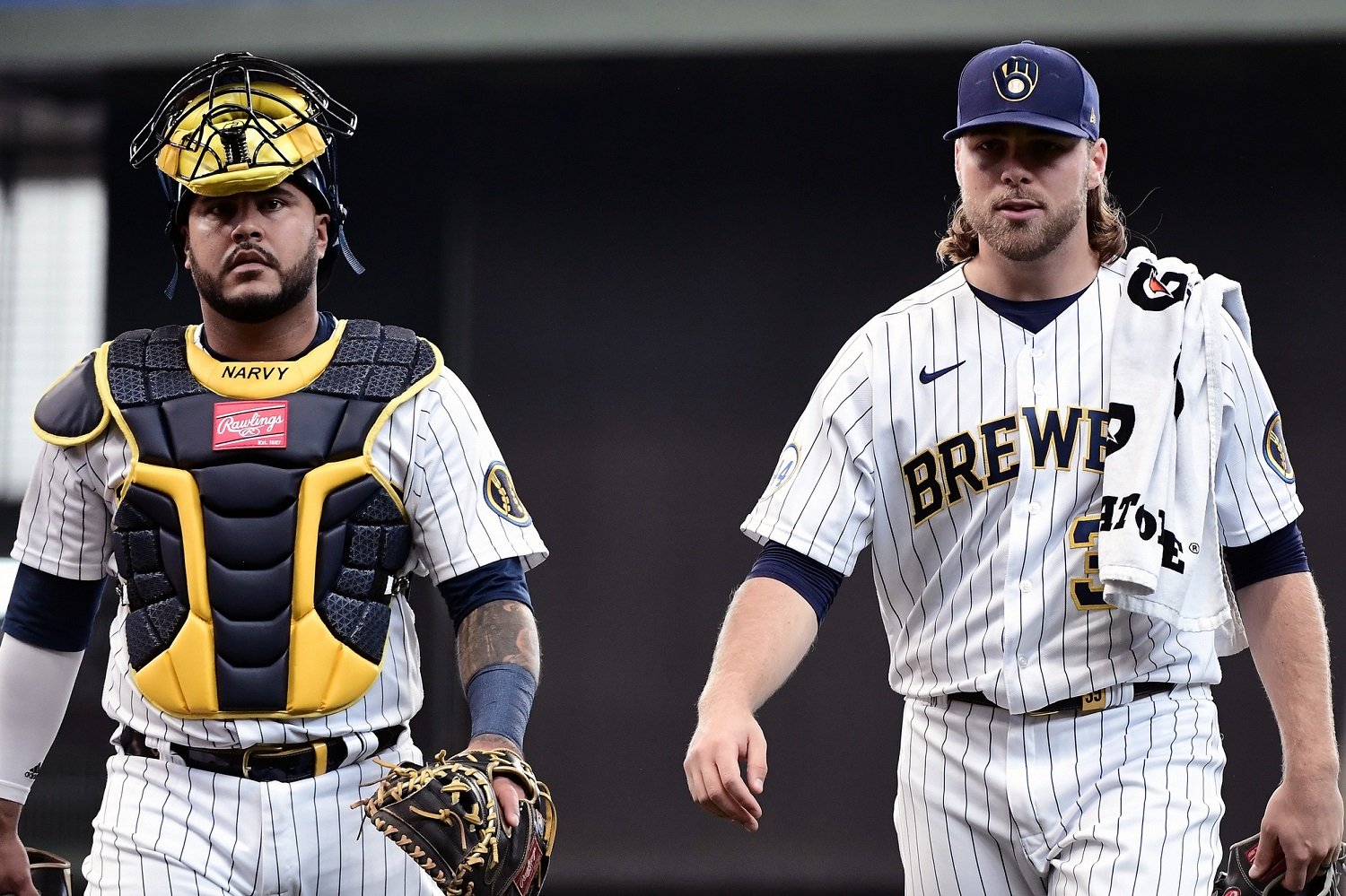 The Milwaukee Brewers always dive deep with their roster decisions, often focusing on keeping depth at various levels of the organization. MLB's announcement that teams will have a larger roster until May 1 opens up more possibilities, but there are still tough decisions to make. Catchers (2): Omar Narvaez, Pedro Severino Narvaez begins his third season as the Brewers starting catcher. Coming off a solid 2021 campaign, Narvaez is a free agent after the season. The right-handed hitting Severino signed as a free agent last November. Severino hits left-handed pitchers well, a perfect complement to the lefty-swinging Narvaez after longtime backup Manny Pina signed with the Atlanta Braves. Promising youngster Mario Feliciano will be ready to make the jump from Triple-A should there be an injury. Infielders (7): Rowdy Tellez, Kolten Wong, Willy Adames, Jace Peterson, Mike Brosseau, Keston Hiura, Pablo Reyes Adames and Wong are the keystone starters, and Tellez looks to be the primary first baseman to start the season. Peterson and Brosseau will likely serve as the platoon partners at third base while Luis Urias recovers from his quadriceps injury. They can also help cover first and second base defensively. If the Brewers decide to keep 14 position players, Hiura and Reyes should both make the Opening Day roster. Hiura offers right-handed pop and a platoon option at first if his spring success carries over. Meanwhile, Reyes gets a nod thanks to his versatility, which could include backup duty at shortstop with Urias out. Outfielders (5): Christian Yelich, Lorenzo Cain, Hunter Renfroe, Andrew McCutchen, Tyrone Taylor The outfield situation in Milwaukee is rather clear. Manager Craig Counsell will utilize the three outfield spots and the DH to play the best matchups each game and provide rest for the veteran group. As a whole, the outfield quintet provides plenty of run production potential, assuming health. An injury likely means Corey Ray or David Dahl would get a call-up, assuming Dahl remains in the Brewers organization. Rotation (6): Corbin Burnes, Brandon Woodruff, Freddy Peralta, Adrian Houser, Eric Lauer, Aaron Ashby We all know who the top five starters are for the Brewers. The only questions could be the order of the back end of the rotation and if they’ll go with a sixth starter. Ashby would be the clear-cut favorite to fill the sixth spot, but if Milwaukee is comfortable with five starters, then Ashby becomes a multi-inning weapon out of the bullpen. Ethan Small would also be ready to come up from the minors for a handful of starts should the Brewers need it. Bullpen (8): Josh Hader, Devin Williams, Brad Boxberger, Brent Suter, Jake Cousins, Luis Perdomo, Jose Urena, Trevor Gott Like the rotation, there are no doubts about the top five arms out of the pen – and yes, that includes Cousins. The signing of Urena gets him a spot in the 'pen, for now, allowing the Brewers to keep an extra arm down in the minors for depth. Perdomo has impressed many and provides another multi-inning option in relief, which is even more valuable now that pitchers don’t need to hit. Lastly, Gott is another intriguing reliever with upside. The 28-year-old struck out 11.4 batters per nine innings with the San Francisco Giants’ Triple-A club last season. If the Brewers choose to go with 15 pitchers, Jandel Gustave likely gets the final spot at the expense of Hiura or Reyes from the position player pool. Regardless of how the roster looks to open the year, the Brewers will rotate through guys at will and as the need arises. What are your thoughts on this Opening Day 28-man projection?
- 8 comments
-
- 1
-
-
- corbin burnes
- omar narvaez
- (and 3 more)
-
A handful of spots are still up for grabs on the big league club. With rosters officially expanded to 28 players to start the season, the Milwaukee Brewers will need to decide exactly how many pitchers they want to keep, and determine how that impacts the position player pool. The Milwaukee Brewers always dive deep with their roster decisions, often focusing on keeping depth at various levels of the organization. MLB's announcement that teams will have a larger roster until May 1 opens up more possibilities, but there are still tough decisions to make. Catchers (2): Omar Narvaez, Pedro Severino Narvaez begins his third season as the Brewers starting catcher. Coming off a solid 2021 campaign, Narvaez is a free agent after the season. The right-handed hitting Severino signed as a free agent last November. Severino hits left-handed pitchers well, a perfect complement to the lefty-swinging Narvaez after longtime backup Manny Pina signed with the Atlanta Braves. Promising youngster Mario Feliciano will be ready to make the jump from Triple-A should there be an injury. Infielders (7): Rowdy Tellez, Kolten Wong, Willy Adames, Jace Peterson, Mike Brosseau, Keston Hiura, Pablo Reyes Adames and Wong are the keystone starters, and Tellez looks to be the primary first baseman to start the season. Peterson and Brosseau will likely serve as the platoon partners at third base while Luis Urias recovers from his quadriceps injury. They can also help cover first and second base defensively. If the Brewers decide to keep 14 position players, Hiura and Reyes should both make the Opening Day roster. Hiura offers right-handed pop and a platoon option at first if his spring success carries over. Meanwhile, Reyes gets a nod thanks to his versatility, which could include backup duty at shortstop with Urias out. Outfielders (5): Christian Yelich, Lorenzo Cain, Hunter Renfroe, Andrew McCutchen, Tyrone Taylor The outfield situation in Milwaukee is rather clear. Manager Craig Counsell will utilize the three outfield spots and the DH to play the best matchups each game and provide rest for the veteran group. As a whole, the outfield quintet provides plenty of run production potential, assuming health. An injury likely means Corey Ray or David Dahl would get a call-up, assuming Dahl remains in the Brewers organization. Rotation (6): Corbin Burnes, Brandon Woodruff, Freddy Peralta, Adrian Houser, Eric Lauer, Aaron Ashby We all know who the top five starters are for the Brewers. The only questions could be the order of the back end of the rotation and if they’ll go with a sixth starter. Ashby would be the clear-cut favorite to fill the sixth spot, but if Milwaukee is comfortable with five starters, then Ashby becomes a multi-inning weapon out of the bullpen. Ethan Small would also be ready to come up from the minors for a handful of starts should the Brewers need it. Bullpen (8): Josh Hader, Devin Williams, Brad Boxberger, Brent Suter, Jake Cousins, Luis Perdomo, Jose Urena, Trevor Gott Like the rotation, there are no doubts about the top five arms out of the pen – and yes, that includes Cousins. The signing of Urena gets him a spot in the 'pen, for now, allowing the Brewers to keep an extra arm down in the minors for depth. Perdomo has impressed many and provides another multi-inning option in relief, which is even more valuable now that pitchers don’t need to hit. Lastly, Gott is another intriguing reliever with upside. The 28-year-old struck out 11.4 batters per nine innings with the San Francisco Giants’ Triple-A club last season. If the Brewers choose to go with 15 pitchers, Jandel Gustave likely gets the final spot at the expense of Hiura or Reyes from the position player pool. Regardless of how the roster looks to open the year, the Brewers will rotate through guys at will and as the need arises. What are your thoughts on this Opening Day 28-man projection? View full article
-
Hunter Renfroe will be a regular in the starting lineup when the Milwaukee Brewers face a left-handed starting pitcher this year. How will he be handled when a righty takes the hill against the Crew? Despite improving his performance against right-handers last season, Renfroe’s production against same-side hurlers raises questions. When Milwaukee acquired Renfroe for Jackie Bradley, Jr. and a couple of prospects, fans were happy to be rid of Bradley, Jr.’s gaudy contract. But giving up two of the Brewers' top-20 prospects signals that management expects Renfroe to be a consistent contributor. His career line versus left-handed pitching speaks for itself: .263 average, .347 OBP, .557 SLG, 904 OPS, .375 wOBA, 137 wRC+. The last stat, wRC+ (weighted Runs Created Plus), better represents a hitter’s offensive value where each point above 100 is equal to one percentage point above league average. Thus, Renfroe is 37% better than league average against lefties in his career. Suffice to say, Renfroe is a proven commodity against southpaws and will help to strengthen the Brewers’ 2021 weakness. The problem is that Milwaukee will likely see far more right-handed starters as they did last year (123 righty-handed starters faced). It’s not as though the 6-foot-1-inch, 230-pound outfielder can’t do anything against righties. In his past two full seasons – 2019 and 2021 – he blasted 33 and 31 homers, respectively. Of Renfroe’s 31 HR a year ago, 20 of them came off righties. He has always had respectable power against right-handers (.459 career SLG); the problem lies in the rest of his “production” facing righties in his career. The long ball potential is tempting to utilize, while the strikeout rate (K%) of 29.5% can be frustrating. This could mean that Renfroe is put in the starting lineup based on additional matchup factors (e.g., pitcher type, pitch movement, velocity) when they see a right-handed starter. It also could open the door for 28-year-old Tyrone Taylor to see more time in the starting lineup and pick up more at-bats. Some believe Taylor deserves an extended, more consistent opportunity to produce. Taylor has just 324 total MLB plate appearances (271 last season), posting a slash line of .251/.324/.467/.791. Sure, solid stats, but many players get exposed the more often they bat. On the flip side, you never really know how good they are until they get that real shot. When we look at Taylor’s numbers versus righties specifically, they become less impressive, albeit in just 216 plate appearances. Take a look at Taylor’s stats against right-handers. While the numbers don’t jump off the page, they are better than Renfroe’s in 1,200 fewer times to the dish. Taylor and Renfroe could also be battling with veteran newcomer Andrew McCutchen for at-bats. The challenge in figuring out McCutchen’s value versus right-handers is deciding how much to factor in his early-career stats compared to his more recent production. The 35-year-old owns an .816 OPS against same-sided hurlers in his career but had a mere .650 OPS and .683 OPS the past two seasons. The Brewers will likely give him chances early on, and the results will dictate the plan moving forward. Going back to Renfroe, it is a little tough to figure out the size and scope of his role, particularly when the Brewers see a right-handed starter. The grass looks a bit greener when you dig deeper into the numbers. Everything goes up when peeking at his stats against right-handed starters only (not including right-handed relievers). His last two full seasons look particularly enticing (though he won't ever be a high-OBP hitter). While it covers two separate seasons – and avoids the strange 2020 campaign – he accumulated those stats over 668 plate appearances. That basically amounts to a full year in terms of sample size. Did he discover something in 2019? Was he better at game planning against right-handed starters? Is it just a fluke? Hard to say but intriguing nonetheless. Of course, that leads one to check on Taylor’s production against right-handed starters in his three years. Taylor has 459 fewer plate appearances with this split, with only nine in 2019 and 17 in 2020. Taylor sports the far better OBP with a lower slugging percentage. How you judge his smaller sample size is up for debate. Well, it’s really up to manager Craig Counsell and the Brewers staff to figure that out. Another item for Counsell to consider will be how often he pinch hits for Renfroe (or Taylor) when opponents bring in a right-handed reliever. Since their stats against same-side starters are better than their overall righty splits, it means they struggle more against bullpen arms from that side. Will Counsell sub out his possible fourth or fifth hitter in a big situation? The numbers say he should, but other factors outside of right/lefty splits come into play. One final detail to keep in mind is that Christian Yelich and Lorenzo Cain will need days off. Whether due to injury or load management, rest for those veterans should open up more playing time for Renfroe throughout the season. Ultimately, one would think that Renfroe's production and the impact it has on the Brewers scoring runs will make the picture clearer in the first couple of months. So if you were managing the Milwaukee Brewers, what percentage of starts versus right-handed pitchers would you give Renfroe in 2022? View full article
-
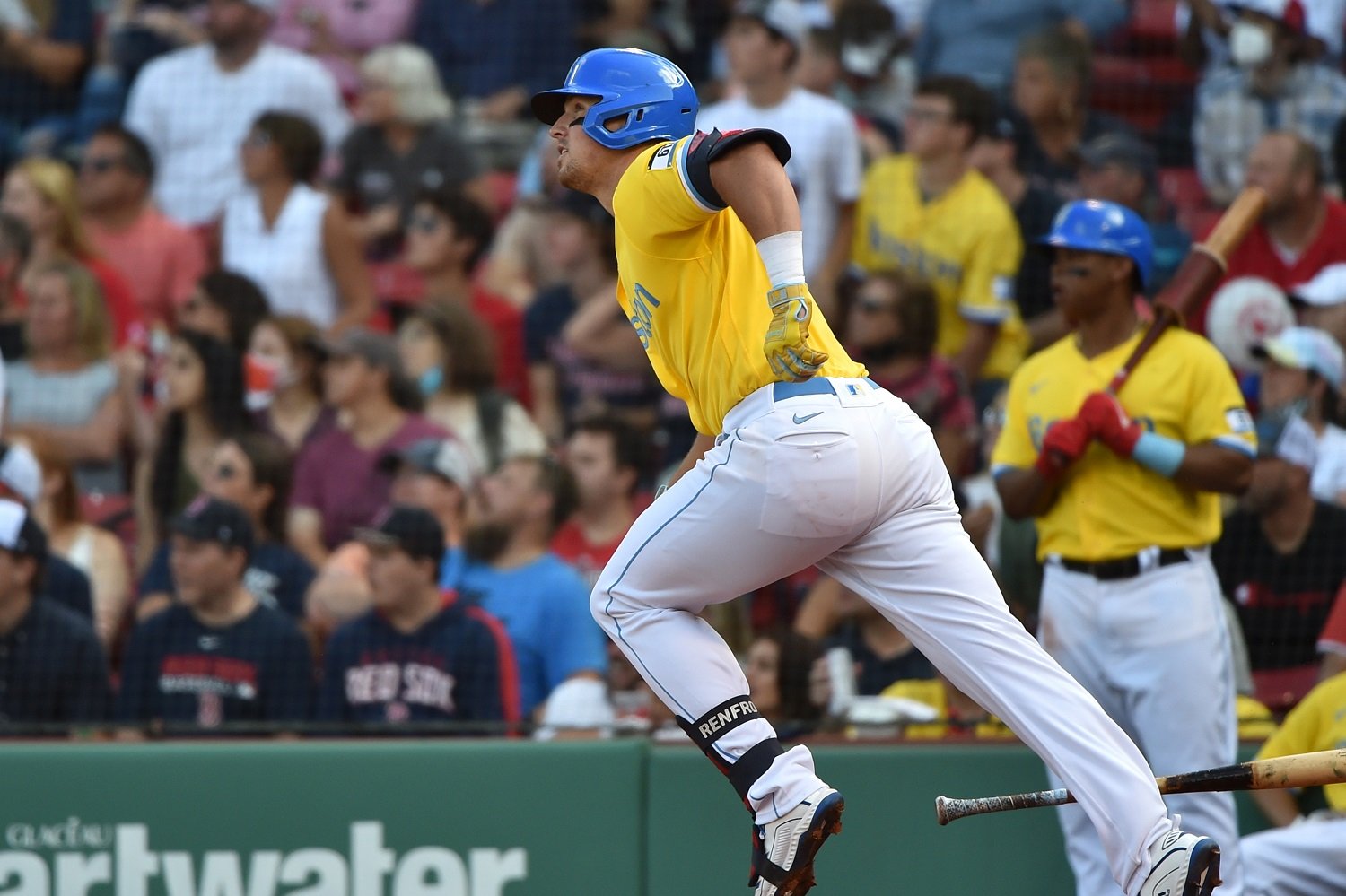 When Milwaukee acquired Renfroe for Jackie Bradley, Jr. and a couple of prospects, fans were happy to be rid of Bradley, Jr.’s gaudy contract. But giving up two of the Brewers' top-20 prospects signals that management expects Renfroe to be a consistent contributor. His career line versus left-handed pitching speaks for itself: .263 average, .347 OBP, .557 SLG, 904 OPS, .375 wOBA, 137 wRC+. The last stat, wRC+ (weighted Runs Created Plus), better represents a hitter’s offensive value where each point above 100 is equal to one percentage point above league average. Thus, Renfroe is 37% better than league average against lefties in his career. Suffice to say, Renfroe is a proven commodity against southpaws and will help to strengthen the Brewers’ 2021 weakness. The problem is that Milwaukee will likely see far more right-handed starters as they did last year (123 righty-handed starters faced). It’s not as though the 6-foot-1-inch, 230-pound outfielder can’t do anything against righties. In his past two full seasons – 2019 and 2021 – he blasted 33 and 31 homers, respectively. Of Renfroe’s 31 HR a year ago, 20 of them came off righties. He has always had respectable power against right-handers (.459 career SLG); the problem lies in the rest of his “production” facing righties in his career. The long ball potential is tempting to utilize, while the strikeout rate (K%) of 29.5% can be frustrating. This could mean that Renfroe is put in the starting lineup based on additional matchup factors (e.g., pitcher type, pitch movement, velocity) when they see a right-handed starter. It also could open the door for 28-year-old Tyrone Taylor to see more time in the starting lineup and pick up more at-bats. Some believe Taylor deserves an extended, more consistent opportunity to produce. Taylor has just 324 total MLB plate appearances (271 last season), posting a slash line of .251/.324/.467/.791. Sure, solid stats, but many players get exposed the more often they bat. On the flip side, you never really know how good they are until they get that real shot. When we look at Taylor’s numbers versus righties specifically, they become less impressive, albeit in just 216 plate appearances. Take a look at Taylor’s stats against right-handers. While the numbers don’t jump off the page, they are better than Renfroe’s in 1,200 fewer times to the dish. Taylor and Renfroe could also be battling with veteran newcomer Andrew McCutchen for at-bats. The challenge in figuring out McCutchen’s value versus right-handers is deciding how much to factor in his early-career stats compared to his more recent production. The 35-year-old owns an .816 OPS against same-sided hurlers in his career but had a mere .650 OPS and .683 OPS the past two seasons. The Brewers will likely give him chances early on, and the results will dictate the plan moving forward. Going back to Renfroe, it is a little tough to figure out the size and scope of his role, particularly when the Brewers see a right-handed starter. The grass looks a bit greener when you dig deeper into the numbers. Everything goes up when peeking at his stats against right-handed starters only (not including right-handed relievers). His last two full seasons look particularly enticing (though he won't ever be a high-OBP hitter). While it covers two separate seasons – and avoids the strange 2020 campaign – he accumulated those stats over 668 plate appearances. That basically amounts to a full year in terms of sample size. Did he discover something in 2019? Was he better at game planning against right-handed starters? Is it just a fluke? Hard to say but intriguing nonetheless. Of course, that leads one to check on Taylor’s production against right-handed starters in his three years. Taylor has 459 fewer plate appearances with this split, with only nine in 2019 and 17 in 2020. Taylor sports the far better OBP with a lower slugging percentage. How you judge his smaller sample size is up for debate. Well, it’s really up to manager Craig Counsell and the Brewers staff to figure that out. Another item for Counsell to consider will be how often he pinch hits for Renfroe (or Taylor) when opponents bring in a right-handed reliever. Since their stats against same-side starters are better than their overall righty splits, it means they struggle more against bullpen arms from that side. Will Counsell sub out his possible fourth or fifth hitter in a big situation? The numbers say he should, but other factors outside of right/lefty splits come into play. One final detail to keep in mind is that Christian Yelich and Lorenzo Cain will need days off. Whether due to injury or load management, rest for those veterans should open up more playing time for Renfroe throughout the season. Ultimately, one would think that Renfroe's production and the impact it has on the Brewers scoring runs will make the picture clearer in the first couple of months. So if you were managing the Milwaukee Brewers, what percentage of starts versus right-handed pitchers would you give Renfroe in 2022?
 -
Hey KeithStone...I'm not trying to make you angry or "confused" as the emoji technically says, just having a good baseball conversation. You may be right on some/all of it...or maybe I am...or maybe it's somewhere in the middle. We likely won't see Counsell use Yelich in the leadoff spot much, if at all...so whatever. Fun to discuss.
-
Hey KeithStone...I'm not trying to make you angry or "confused" as the emoji technically says, just having a good baseball conversation. You may be right on some/all of it...or maybe I am...or maybe it's somewhere in the middle. We likely won't see Counsell use Yelich in the leadoff spot much, if at all...so whatever. Fun to discuss.
-
Hey KeithStone...I'm not trying to make you angry or "confused" as the emoji technically says, just having a good baseball conversation. You may be right on some/all of it...or maybe I am...or maybe it's somewhere in the middle. We likely won't see Counsell use Yelich in the leadoff spot much, if at all...so whatever. Fun to discuss.
-
Hey KeithStone...I'm not trying to make you angry or "confused" as the emoji technically says, just having a good baseball conversation. You may be right on some/all of it...or maybe I am...or maybe it's somewhere in the middle. We likely won't see Counsell use Yelich in the leadoff spot much, if at all...so whatever. Fun to discuss.
-
It's hard to take too much stock in 2020 overall because of 1) coming off the knee injury, 2) shortened/strange spring training, and 3) short season with all the other COVID things to worry about. I'm not suggesting he "only" worry about contact. I think last year shows he needs to make adjustments to his swing, either due to his back and/or due to what appears to be a slower bat (which may be in part because of the bat). Would explain trouble barrelling up the ball as well. I would look at the 2016-17 versions of Yelich, which is probably more a true representation of him as a hitter. He broke out in a big way in 2018-19 for whatever reason...but those may be his literal peaks. A number of his metrics from last season are similar to his 2016-17 seasons where he had 38 and 34 doubles, as well as a .369 OBP and .376 OBP. Most hitters will change throughout their career, including getting better with plate discipline and hitting fewer HRs, which often results in more doubles (of course, not always). Again, I just personally think he needs a clear head without the "pressure" of being a power guy in the middle of the lineup.
-
It's hard to take too much stock in 2020 overall because of 1) coming off the knee injury, 2) shortened/strange spring training, and 3) short season with all the other COVID things to worry about. I'm not suggesting he "only" worry about contact. I think last year shows he needs to make adjustments to his swing, either due to his back and/or due to what appears to be a slower bat (which may be in part because of the bat). Would explain trouble barrelling up the ball as well. I would look at the 2016-17 versions of Yelich, which is probably more a true representation of him as a hitter. He broke out in a big way in 2018-19 for whatever reason...but those may be his literal peaks. A number of his metrics from last season are similar to his 2016-17 seasons where he had 38 and 34 doubles, as well as a .369 OBP and .376 OBP. Most hitters will change throughout their career, including getting better with plate discipline and hitting fewer HRs, which often results in more doubles (of course, not always). Again, I just personally think he needs a clear head without the "pressure" of being a power guy in the middle of the lineup.

