



Tim Muma
-
Posts
436 -
Joined
-
Last visited
-
Days Won
1
Content Type
Profiles
Forums
Blogs
Events
News
2026 Milwaukee Brewers Top Prospects Ranking
Milwaukee Brewers Videos
2022 Milwaukee Brewers Draft Picks
Milwaukee Brewers Free Agent & Trade Rumors, Notes, & Tidbits
Guides & Resources
2023 Milwaukee Brewers Draft Picks
2024 Milwaukee Brewers Draft Picks
The Milwaukee Brewers Players Project
2025 Milwaukee Brewers Draft Pick Tracker
2026 Milwaukee Brewers Draft Tracker: Picks & Bonuses
Store
Downloads
Gallery
Everything posted by Tim Muma
-

Article: Is Now the Right Time to Trade Corbin Burnes?
Tim Muma replied to Tim Muma's topic in Milwaukee Brewers Talk
There is risk to every move. Mullins certainly carries risk and I agree you want some of the BAL prospects who MIGHT be off limits. At the same time, the Brewers might feel their best option is a trade to BAL that seems light, because they also make a separate move that will be a better than thought return for one of their own prospects and/or Renfroe. There's no guarantee the Brewers get a "better deal" than Mullins and 3 prospects. Do they keep him for a year (or 1/2 year) and try again? Risk getting less value later because of injury, decline, fewer years left, etc.? I don't think they SHOULD necessarily trade him now or for a package from Baltimore. The Texas and Baltimore mentions were examples of teams that would make sense because they have the prospects, the hunger to push toward competing, and the money to extend Burnes. -
Article: Is Now the Right Time to Trade Corbin Burnes?
Tim Muma replied to Tim Muma's topic in Milwaukee Brewers Talk
Let's keep in mind that after the 2017 season, a majority of fans thought there was no reason to try to upgrade the outfield because they had Braun, Domingo Santana, Keon Broxton and Brett Phillips. That season, Santana had hit 30 HR with an .875 OPS. Broxton had 20 HR/21 SB and seen as a top defensive CF. Phillips was seen as a future everyday outfielder with a cannon arm, and in 98 PA had a .276/.351/.448/.799 slash line. They also had Lewis Brinson as their #1 prospect - another outfielder. When I suggested that November that the Brewers trade for Christian Yelich, I was roundly seen as insane. Not only did the Brewers trade for him, they also signed Cain to a big contract. The Brewers don't come within 1 game of the World Series in 2018 if they stood pat in the outfield...and who knows how the rest of the seasons went. Performance and potential are not always what they seem, nor are they linear. If the organization believes Mullins (yes, regressed last year, but 27 years old a season removed from a 30/30 season, .878 OPS) and 3 top BAL prospects puts them in a better position, they should do it. They could then trade Renfroe and/or one of the outfield prospects for other pieces they want/need. In the end it comes down to making the right decisions because not every prospect will pan out, and sometimes trading one is worth more than keeping him. I'm just saying...it's important to be open to any and all possibilities. -
Article: Is Now the Right Time to Trade Corbin Burnes?
Tim Muma replied to Tim Muma's topic in Milwaukee Brewers Talk
Let's keep in mind that after the 2017 season, a majority of fans thought there was no reason to try to upgrade the outfield because they had Braun, Domingo Santana, Keon Broxton and Brett Phillips. That season, Santana had hit 30 HR with an .875 OPS. Broxton had 20 HR/21 SB and seen as a top defensive CF. Phillips was seen as a future everyday outfielder with a cannon arm, and in 98 PA had a .276/.351/.448/.799 slash line. They also had Lewis Brinson as their #1 prospect - another outfielder. When I suggested that November that the Brewers trade for Christian Yelich, I was roundly seen as insane. Not only did the Brewers trade for him, they also signed Cain to a big contract. The Brewers don't come within 1 game of the World Series in 2018 if they stood pat in the outfield...and who knows how the rest of the seasons went. Performance and potential are not always what they seem, nor are they linear. If the organization believes Mullins (yes, regressed last year, but 27 years old a season removed from a 30/30 season, .878 OPS) and 3 top BAL prospects puts them in a better position, they should do it. They could then trade Renfroe and/or one of the outfield prospects for other pieces they want/need. In the end it comes down to making the right decisions because not every prospect will pan out, and sometimes trading one is worth more than keeping him. I'm just saying...it's important to be open to any and all possibilities. -
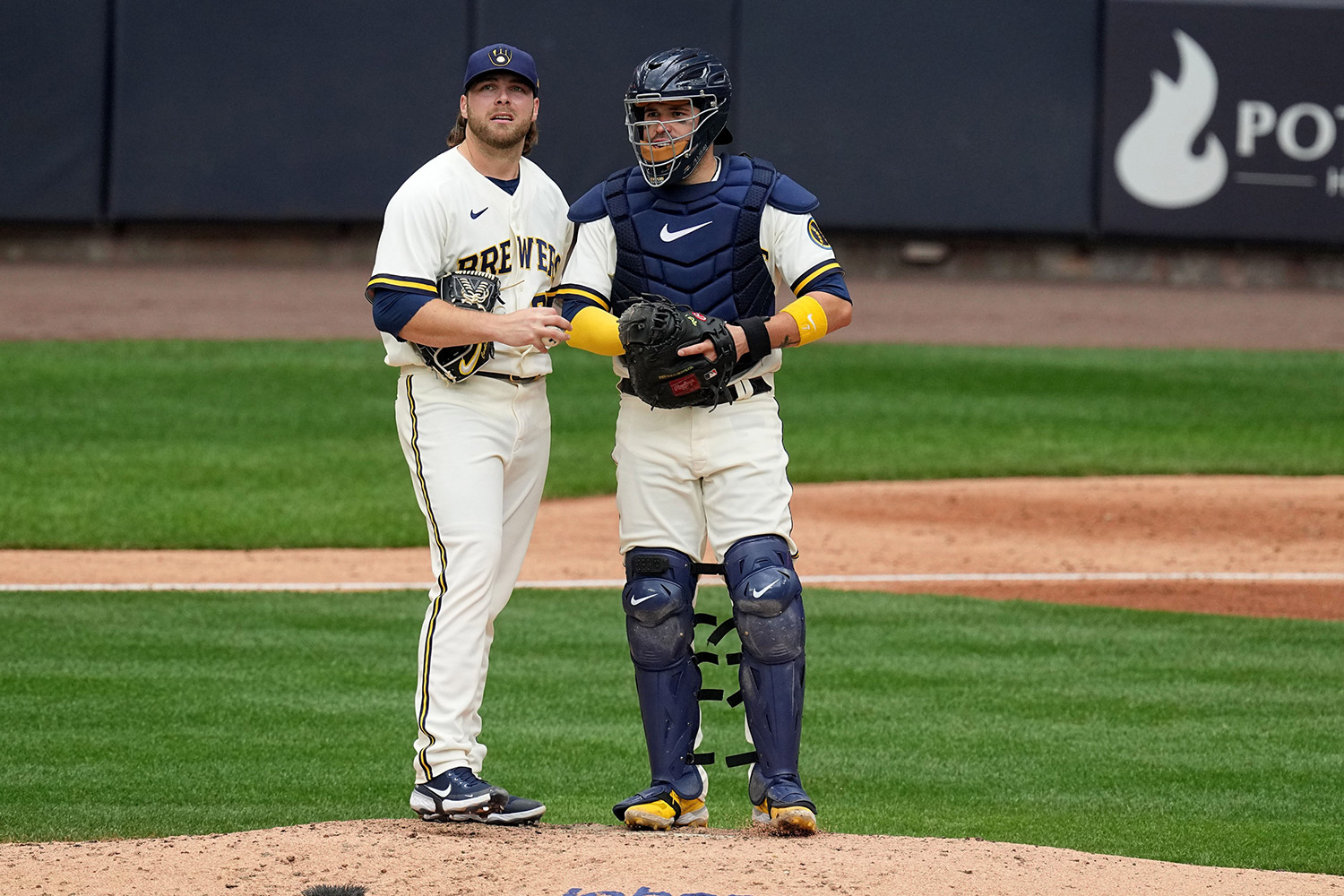 GM Matt Arnold will have some tough decisions in the coming months and years, but nothing is more significant than determining how to handle Corbin Burnes' time with the Milwaukee Brewers. That could also be affected by what the Brewers decide to do with Brandon Woodruff. It isn't easy to see them keeping both or offering long-term deals before they become free agents in two seasons. Could they trade both? That would be a gamble, too. But let's look squarely at Burnes and his trade candidacy. The 2021 NL Cy Young has been phenomenal since the start of the 2020 season, which means a big payday is on the horizon. Some people need to appreciate how ridiculous Burnes has been in the last three years and how it will impact his salary. Corbin Burnes ranks first among MLB starters in these categories since 2020: 2.60 ERA 2.36 FIP 0.96 WHIP 11.83 K/9 33.3 K% 27.1 K-BB% 7.86 WPA (Win Probability Added) 14.3 fWAR (FanGraphs' Wins Above Replacement) Burnes makes a strong case for being the best pitcher in baseball right now. With two years of arbitration remaining, he would become a free agent after the 2024 season if he doesn't sign a contract extension. Those numbers for a starter who would hit free agency at 30 with mostly good health could generate a record contract. Burnes also tossed more than 200 innings last season while leading the NL with 243 strikeouts, meaning he isn't likely to decline soon. A quick look at recent starting pitcher contracts could legitimately net Burnes a contract for anywhere between five and eight years from $175-$275 million if a big market team is determined to land him. Check out the list below from Spotrac.com and you can see the huge deals for recent starting pitchers. Realistically, the Brewers are unlikely to invest that much in one player, especially with the way the Christian Yelich deal has gone thus far. Pitchers also carry more injury risk. If the organization doesn't want to lose Burnes to free agency without getting anything in return, this offseason could net them the most crucial haul for future success. The question is, can you get fair value back in a trade? For the Brewers to jettison Burnes elsewhere, they need at least a couple of players at the beginning of their MLB careers or on the cusp. Getting two players back who are under team control for five or six years and are ready to contribute now is essential to keep the club from dipping in performance. Then Milwaukee would need a couple of higher-level prospects with significant potential. Ideally, they're getting at least two starting pitchers in the deal and one impact bat. People might argue the return should include a top-20 MLB prospect and three more of the team's best 10 minor leaguers, but that can be subjective. It's going to come down to the right fit for a club that lacks top-tier starting pitching and has the means to sign Burns to a long-term contract. It would help if you also had a team that feels comfortable offensively or is willing to add offense via free agency. They would then feel good about swapping out a solid bat (and the other pieces) for a true ace that puts them over the top. The first two clubs that come to mind as examples are the Texas Rangers and Baltimore Orioles. Both teams want to push their franchises forward, and their farm systems were ranked sixth and first this past August. Texas has already shown a willingness to pay big bucks by giving Corey Seager and Marcus Semien mega-deals last offseason. The Rangers have six prospects in MLB Pipeline's top 100, including third baseman Josh Jung (#36) and right-handed pitchers Jack Leiter (#45), Owen White (#59), and Brock Porter (#89). Getting Jung and two of those hurlers gets them in the ballpark, then you figure out the fourth player. Texas finished fifth in runs scored (4.36 R/G) in the AL last season but 12th in ERA (4.22), so they would make a considerable jump up with Burnes. Rangers' fans in September were already pining for a rotation with Burnes at the top. How does this sound for Rangers opening day rotation 2023 RHP Corbin Burnes RHP Jon Gray LHP Martin Perez RHP Koudai Senga RHP Dane Dunning — John Moore (The Recliner Nerd) (@reclinernerd) September 13, 2022 No matter who the Brewers get in return for a potential Burnes trade, many in the fanbase will be upset - and there's nothing wrong with that. Unfortunately, moving a player of Burnes' caliber at the right time for the best collection of young talent possible is often the ideal long-term option for continued, sustainable success. The most intriguing question around a Burnes trade might be, when is the best time to make it happen? Should the Brewers see how 2023 starts and trade him at the mid-season deadline if the club is floundering? It gives you another shot at the playoffs with your two aces (assuming Woodruff is still with the club). Do you wait until next offseason when he has just one year left on the contract and has slightly less value? You also risk injury or ineffectiveness curtailing his worth. That potential for injury and a possible dip in value is why many believe that if the Milwaukee Brewers are going to trade Corbin Burnes, this offseason is the time to strike. What do you think about dealing Burnes away, and who should they try to get back?
 -
It is rare to willingly get rid of one of the most dominant pitchers in MLB, who also won a Cy Young Award two seasons ago. However, the Milwaukee Brewers have to consider the option of trading Corbin Burnes now to maximize the return package of talent, especially if they aren't going to offer the right-hander a long-term contract. GM Matt Arnold will have some tough decisions in the coming months and years, but nothing is more significant than determining how to handle Corbin Burnes' time with the Milwaukee Brewers. That could also be affected by what the Brewers decide to do with Brandon Woodruff. It isn't easy to see them keeping both or offering long-term deals before they become free agents in two seasons. Could they trade both? That would be a gamble, too. But let's look squarely at Burnes and his trade candidacy. The 2021 NL Cy Young has been phenomenal since the start of the 2020 season, which means a big payday is on the horizon. Some people need to appreciate how ridiculous Burnes has been in the last three years and how it will impact his salary. Corbin Burnes ranks first among MLB starters in these categories since 2020: 2.60 ERA 2.36 FIP 0.96 WHIP 11.83 K/9 33.3 K% 27.1 K-BB% 7.86 WPA (Win Probability Added) 14.3 fWAR (FanGraphs' Wins Above Replacement) Burnes makes a strong case for being the best pitcher in baseball right now. With two years of arbitration remaining, he would become a free agent after the 2024 season if he doesn't sign a contract extension. Those numbers for a starter who would hit free agency at 30 with mostly good health could generate a record contract. Burnes also tossed more than 200 innings last season while leading the NL with 243 strikeouts, meaning he isn't likely to decline soon. A quick look at recent starting pitcher contracts could legitimately net Burnes a contract for anywhere between five and eight years from $175-$275 million if a big market team is determined to land him. Check out the list below from Spotrac.com and you can see the huge deals for recent starting pitchers. Realistically, the Brewers are unlikely to invest that much in one player, especially with the way the Christian Yelich deal has gone thus far. Pitchers also carry more injury risk. If the organization doesn't want to lose Burnes to free agency without getting anything in return, this offseason could net them the most crucial haul for future success. The question is, can you get fair value back in a trade? For the Brewers to jettison Burnes elsewhere, they need at least a couple of players at the beginning of their MLB careers or on the cusp. Getting two players back who are under team control for five or six years and are ready to contribute now is essential to keep the club from dipping in performance. Then Milwaukee would need a couple of higher-level prospects with significant potential. Ideally, they're getting at least two starting pitchers in the deal and one impact bat. People might argue the return should include a top-20 MLB prospect and three more of the team's best 10 minor leaguers, but that can be subjective. It's going to come down to the right fit for a club that lacks top-tier starting pitching and has the means to sign Burns to a long-term contract. It would help if you also had a team that feels comfortable offensively or is willing to add offense via free agency. They would then feel good about swapping out a solid bat (and the other pieces) for a true ace that puts them over the top. The first two clubs that come to mind as examples are the Texas Rangers and Baltimore Orioles. Both teams want to push their franchises forward, and their farm systems were ranked sixth and first this past August. Texas has already shown a willingness to pay big bucks by giving Corey Seager and Marcus Semien mega-deals last offseason. The Rangers have six prospects in MLB Pipeline's top 100, including third baseman Josh Jung (#36) and right-handed pitchers Jack Leiter (#45), Owen White (#59), and Brock Porter (#89). Getting Jung and two of those hurlers gets them in the ballpark, then you figure out the fourth player. Texas finished fifth in runs scored (4.36 R/G) in the AL last season but 12th in ERA (4.22), so they would make a considerable jump up with Burnes. Rangers' fans in September were already pining for a rotation with Burnes at the top. How does this sound for Rangers opening day rotation 2023 RHP Corbin Burnes RHP Jon Gray LHP Martin Perez RHP Koudai Senga RHP Dane Dunning — John Moore (The Recliner Nerd) (@reclinernerd) September 13, 2022 No matter who the Brewers get in return for a potential Burnes trade, many in the fanbase will be upset - and there's nothing wrong with that. Unfortunately, moving a player of Burnes' caliber at the right time for the best collection of young talent possible is often the ideal long-term option for continued, sustainable success. The most intriguing question around a Burnes trade might be, when is the best time to make it happen? Should the Brewers see how 2023 starts and trade him at the mid-season deadline if the club is floundering? It gives you another shot at the playoffs with your two aces (assuming Woodruff is still with the club). Do you wait until next offseason when he has just one year left on the contract and has slightly less value? You also risk injury or ineffectiveness curtailing his worth. That potential for injury and a possible dip in value is why many believe that if the Milwaukee Brewers are going to trade Corbin Burnes, this offseason is the time to strike. What do you think about dealing Burnes away, and who should they try to get back? View full article
-
Hey, I could be wrong and he may have developed just as they hoped/expected. I'm just skeptical.
-
Hey, I could be wrong and he may have developed just as they hoped/expected. I'm just skeptical.
-
I am lost in your debate, but my quick two cents. The best option for success in 2023 & the next few years is Urias at 2B, Adames at SS, young bat at 3B, Turang as Utility. I don't believe in him every day as a hitter, but would be perfect to spell those 3 spots to get semi-regular time.
-
I am lost in your debate, but my quick two cents. The best option for success in 2023 & the next few years is Urias at 2B, Adames at SS, young bat at 3B, Turang as Utility. I don't believe in him every day as a hitter, but would be perfect to spell those 3 spots to get semi-regular time.
-
First off, like another commenter said...these are options to target. Some players would require higher costs, and I am always honest, it's an educated guess what each team is willing to deal. I do my best to see a big picture on it. And for the record, I'm not sold on Turang as an everyday player (more like the replacement for Peterson) & Urias still has risk. Tyler Black COULD be ready by 2024, but he has also had some injury setbacks. The infield outlook is far more questionable than the outfield, at least in the near future. Secondly, as noted, if you trade a Woodruff or especially Burnes, you're getting multiple players back and would/should include a viable starting pitcher. With Woody and Burnes under contract only through 2024, you know the Brewers likely need to trade one as they won't/can't pay to keep both long-term. Lastly, other acquisitions and trades can also happen to supplement a move for a young third baseman or to replenish positions at the MLB level and the minors. I think it's likely one of their minor league outfielders is part of a deal this offseason...so that could net them a return for "need" if that is what you'd want.
-
First off, like another commenter said...these are options to target. Some players would require higher costs, and I am always honest, it's an educated guess what each team is willing to deal. I do my best to see a big picture on it. And for the record, I'm not sold on Turang as an everyday player (more like the replacement for Peterson) & Urias still has risk. Tyler Black COULD be ready by 2024, but he has also had some injury setbacks. The infield outlook is far more questionable than the outfield, at least in the near future. Secondly, as noted, if you trade a Woodruff or especially Burnes, you're getting multiple players back and would/should include a viable starting pitcher. With Woody and Burnes under contract only through 2024, you know the Brewers likely need to trade one as they won't/can't pay to keep both long-term. Lastly, other acquisitions and trades can also happen to supplement a move for a young third baseman or to replenish positions at the MLB level and the minors. I think it's likely one of their minor league outfielders is part of a deal this offseason...so that could net them a return for "need" if that is what you'd want.
-
Definitely had Vargas in my sights as well. My thought was the Dodgers are going to keep him with Justin Turner close to the end (could be gone this offseason). Plus, I don't trust doing deals with the Dodgers...they just always seem to have the "right" answer.
-
Definitely had Vargas in my sights as well. My thought was the Dodgers are going to keep him with Justin Turner close to the end (could be gone this offseason). Plus, I don't trust doing deals with the Dodgers...they just always seem to have the "right" answer.
-
Finding a productive, long-term option at third base is essential for the Milwaukee Brewers to create consistent offensive success. The free agent market and trade block lacks tried-and-true bats at the hot corner, meaning GM Matt Arnold likely needs to take a chance via trade for a young, unproven third baseman. The Milwaukee Brewers have had short spurts of quality bats at third base in the past two decades. Travis Shaw in 2017-2018 was a bit of a surprise, while Aramis Ramirez offered solid production for most of his four seasons. Otherwise, the hot corner has been chiefly a revolving door with no young prospects or veteran staples to be "the guy." Milwaukee's 2022 offense improved from the previous season but lacked the true upper-level talent that clubs ride into the postseason. It was especially necessary for the Brewers last season as their stellar pitching suffered injuries and regression. Third base wasn't a barren wasteland, but relying on Luis Urias and Jace Peterson (with a dash of Mike Brosseau) didn't inspire greatness. The problem with upgrading the position in 2023 and beyond is a lack of options, at least for proven commodities. The free agent class is underwhelming at best, and a few players who might have been available are now off-limits. Nolan Arenado opted into his deal and is staying put in St. Louis. Jose Ramirez signed a long-term extension with Cleveland in April. Rafael Devers has one year left on his contract in Boston, so it's unlikely the Brewers will pay a high price for a rental. That leads to a different focus on the trade market. A handful of prospects and recently-promoted third basemen could be had for the right return. A couple players could require an elite arm, while others might need some creativity to swing a deal. Either way, Milwaukee should check in on these five third basemen. Josh Jung - Texas Rangers - 24 years old Jung was the Rangers' top prospect and saw 102 MLB plate appearances last season. His .654 OPS and 39:4 strikeout-to-walk ratio disappointed many, but it's just growing pains. Jung had a .326/.398/.592 (.990) slash line in 2021 between Double-A and Triple-A with 19 homers in 78 games. Scouts rate his hit tool at a 60-grade (20-80 scale) level, and his strong arm with average defense should be good enough at third to hold it down for a while. As you can imagine, pulling Jung from the Rangers would take a tantalizing player or package. Jung could be one of the guys that convinces the Brewers to trade Brandon Woodruff or Corbin Burnes if Texas included additional players. Curtis Mead - Tampa Bay Rays - 22 years old The Rays' second-best prospect has less power than Jung but has impressive plate discipline and bat control. Another 60-grade hitter, he posted a .390 OBP and .922 OPS in the minors last year (Double-A and Triple-A). Some see Mead moving to second base due to his weaker arm, though his offense would be a plus there. There's more uncertainty with Mead's future value, so Tampa might be willing to move him for a reasonable price. The Rays also currently have veteran third baseman Yandy Diaz in tow. At 31 years old and due to make around $5 million in arbitration, Tampa may be more likely to shop Diaz and keep Mead (which could also work for the Brewers). Joe Perez - Houston Astros - 23 years old Perez sits as the Astros' ninth prospect, and his hit tool ranks lower (45) than the others. However, his raw power and bat speed can make up for his struggles to connect as often. There are some concerns over his dip in home runs last season (seven in 83 games), though some believe it is a speed bump. His arm injuries and less-than-ideal range mean third base is a short-term spot. Perez's arm issue and inconsistent bat could make Houston more apt to deal for a modest return. Milwaukee might only be keen on the risk involved if the cost was minimal. Mark Vientos - New York Mets - 22 years old The Mets' number seven prospect started six games as the DH for the big league club in 2022. Vientos is another big-time power bat who blasted 49 home runs the past two seasons, mostly in Triple-A. He does have a proneness to whiff but still hit .280 with an OBP over .350 across 2021 and 2022. While his arm plays well at third, his glove and athleticism are below standard. New York has Brett Baty (number two prospect) ready to play the hot corner and Pete Alonso at first base. So unless the Mets are good with Vientos being a primary DH and backup corner infielder, he could get them a strong return. How much would the Brewers be willing to give up from their pitching staff or farm system? It starts with that question. Jordan Westburg - Baltimore Orioles - 23 years old Westburg profiles as a gap-to-gap hitter with 25-homer potential in the majors. He is an all-around quality player with a .274/.371/.489/.860 slash line across four minor league levels in the past two years. That includes 39 doubles, 27 homers, and 106 RBI in 2022 in Double-A and Triple-A. He was drafted as a shortstop and is a plus defender, though many see third base as his permanent spot, especially since Baltimore has Gunnar Henderson. The Orioles are poised to make another push next season and may want to use some of their young talent to trade for proven big leaguers to take the next step. Milwaukee and Baltimore could be partners on a deal involving multiple players, and Westburg is an intriguing future star. If the Brewers go this route of trading for an up-and-coming third baseman, there will be a risk of failing to get the production they seek. Trades mostly come down to asking price and "fit," but to have a handful of clubs as potential partners would give Milwaukee better odds of pulling something off. Considering the offensive concerns and need for a young infield bat, these are some exciting options for the Brewers to explore if they're willing to give up enough player capital. Do you have any favorites from the list? View full article
-
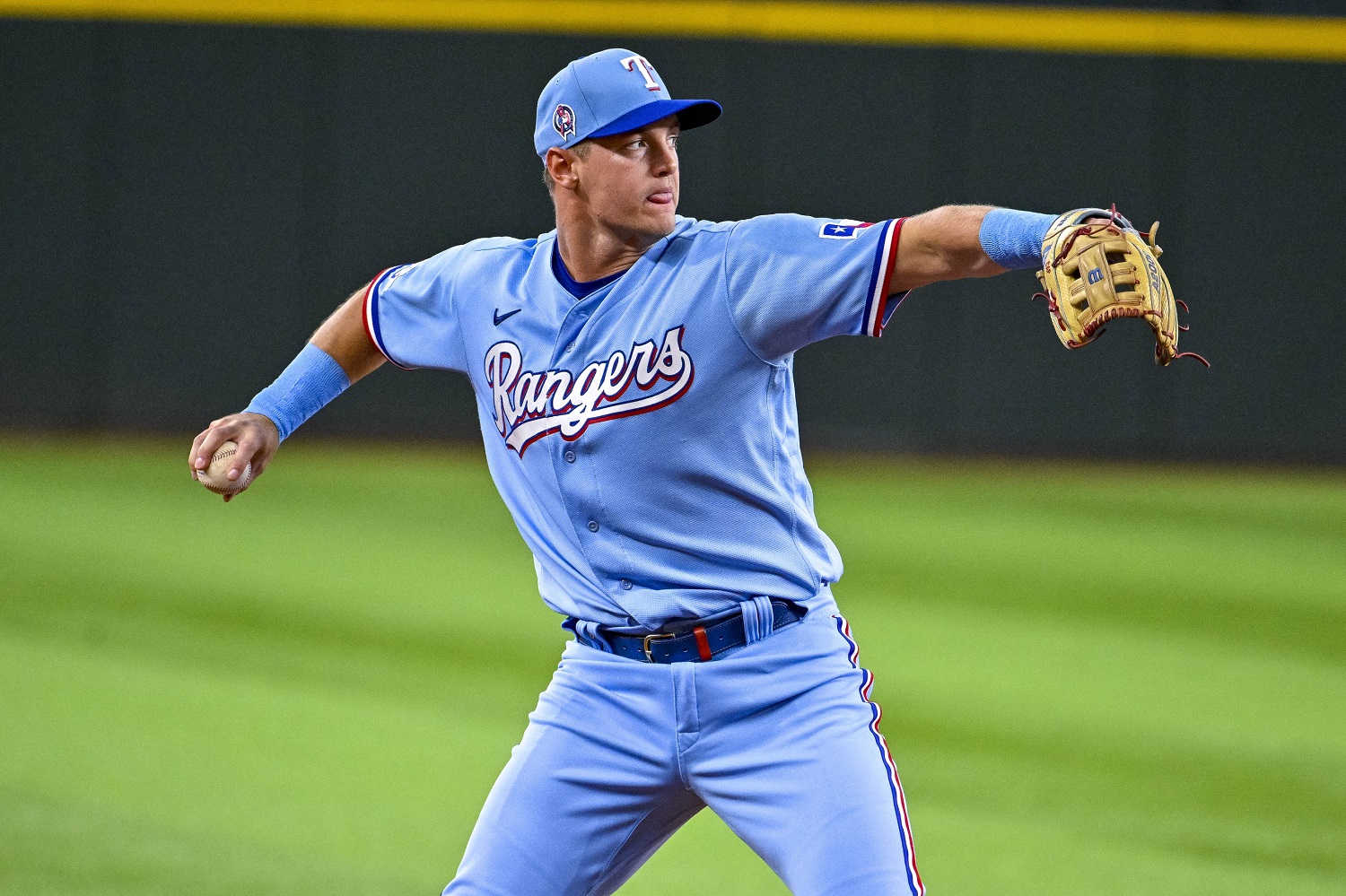 The Milwaukee Brewers have had short spurts of quality bats at third base in the past two decades. Travis Shaw in 2017-2018 was a bit of a surprise, while Aramis Ramirez offered solid production for most of his four seasons. Otherwise, the hot corner has been chiefly a revolving door with no young prospects or veteran staples to be "the guy." Milwaukee's 2022 offense improved from the previous season but lacked the true upper-level talent that clubs ride into the postseason. It was especially necessary for the Brewers last season as their stellar pitching suffered injuries and regression. Third base wasn't a barren wasteland, but relying on Luis Urias and Jace Peterson (with a dash of Mike Brosseau) didn't inspire greatness. The problem with upgrading the position in 2023 and beyond is a lack of options, at least for proven commodities. The free agent class is underwhelming at best, and a few players who might have been available are now off-limits. Nolan Arenado opted into his deal and is staying put in St. Louis. Jose Ramirez signed a long-term extension with Cleveland in April. Rafael Devers has one year left on his contract in Boston, so it's unlikely the Brewers will pay a high price for a rental. That leads to a different focus on the trade market. A handful of prospects and recently-promoted third basemen could be had for the right return. A couple players could require an elite arm, while others might need some creativity to swing a deal. Either way, Milwaukee should check in on these five third basemen. Josh Jung - Texas Rangers - 24 years old Jung was the Rangers' top prospect and saw 102 MLB plate appearances last season. His .654 OPS and 39:4 strikeout-to-walk ratio disappointed many, but it's just growing pains. Jung had a .326/.398/.592 (.990) slash line in 2021 between Double-A and Triple-A with 19 homers in 78 games. Scouts rate his hit tool at a 60-grade (20-80 scale) level, and his strong arm with average defense should be good enough at third to hold it down for a while. As you can imagine, pulling Jung from the Rangers would take a tantalizing player or package. Jung could be one of the guys that convinces the Brewers to trade Brandon Woodruff or Corbin Burnes if Texas included additional players. Curtis Mead - Tampa Bay Rays - 22 years old The Rays' second-best prospect has less power than Jung but has impressive plate discipline and bat control. Another 60-grade hitter, he posted a .390 OBP and .922 OPS in the minors last year (Double-A and Triple-A). Some see Mead moving to second base due to his weaker arm, though his offense would be a plus there. There's more uncertainty with Mead's future value, so Tampa might be willing to move him for a reasonable price. The Rays also currently have veteran third baseman Yandy Diaz in tow. At 31 years old and due to make around $5 million in arbitration, Tampa may be more likely to shop Diaz and keep Mead (which could also work for the Brewers). Joe Perez - Houston Astros - 23 years old Perez sits as the Astros' ninth prospect, and his hit tool ranks lower (45) than the others. However, his raw power and bat speed can make up for his struggles to connect as often. There are some concerns over his dip in home runs last season (seven in 83 games), though some believe it is a speed bump. His arm injuries and less-than-ideal range mean third base is a short-term spot. Perez's arm issue and inconsistent bat could make Houston more apt to deal for a modest return. Milwaukee might only be keen on the risk involved if the cost was minimal. Mark Vientos - New York Mets - 22 years old The Mets' number seven prospect started six games as the DH for the big league club in 2022. Vientos is another big-time power bat who blasted 49 home runs the past two seasons, mostly in Triple-A. He does have a proneness to whiff but still hit .280 with an OBP over .350 across 2021 and 2022. While his arm plays well at third, his glove and athleticism are below standard. New York has Brett Baty (number two prospect) ready to play the hot corner and Pete Alonso at first base. So unless the Mets are good with Vientos being a primary DH and backup corner infielder, he could get them a strong return. How much would the Brewers be willing to give up from their pitching staff or farm system? It starts with that question. Jordan Westburg - Baltimore Orioles - 23 years old Westburg profiles as a gap-to-gap hitter with 25-homer potential in the majors. He is an all-around quality player with a .274/.371/.489/.860 slash line across four minor league levels in the past two years. That includes 39 doubles, 27 homers, and 106 RBI in 2022 in Double-A and Triple-A. He was drafted as a shortstop and is a plus defender, though many see third base as his permanent spot, especially since Baltimore has Gunnar Henderson. The Orioles are poised to make another push next season and may want to use some of their young talent to trade for proven big leaguers to take the next step. Milwaukee and Baltimore could be partners on a deal involving multiple players, and Westburg is an intriguing future star. If the Brewers go this route of trading for an up-and-coming third baseman, there will be a risk of failing to get the production they seek. Trades mostly come down to asking price and "fit," but to have a handful of clubs as potential partners would give Milwaukee better odds of pulling something off. Considering the offensive concerns and need for a young infield bat, these are some exciting options for the Brewers to explore if they're willing to give up enough player capital. Do you have any favorites from the list?
 -
As David Stearns steps down as Milwaukee Brewers' President of Baseball Operations, it's time to look at his tenure since he took over as GM prior to the 2016 season. Everything is relative, including how one measures team success in baseball. Depending on your goals and how you determine "winning" as a franchise, you can argue various levels of success or failure with David Stearns in charge of player personnel. Some feel he never truly tried to push the team "over the top" to win a title. Instead, the focus was on getting as many "bites of the apple," which they choked on this season. Now Stearns moves on and GM Matt Arnold takes over the department (full press conference at the bottom of the article). He will likely follow a similar style as Stearns, but perhaps with his own wrinkles. He has a lot of decisions to make, with 18 guys in arbitration and a few major players nearing the end of club control. Of course, Arnold shouldn't be judged on this upcoming season alone, and if he were to bring Milwaukee a World Series, fans would love him - even if some poor years follow. So as the David Stearns era ends in Milwaukee, how would you evaluate his performance? It's always been a lively debate, mostly centered on the positives of regular season wins and playoff appearances, but lacking the ultimate prize. You can watch the full press conference below. View full article
-
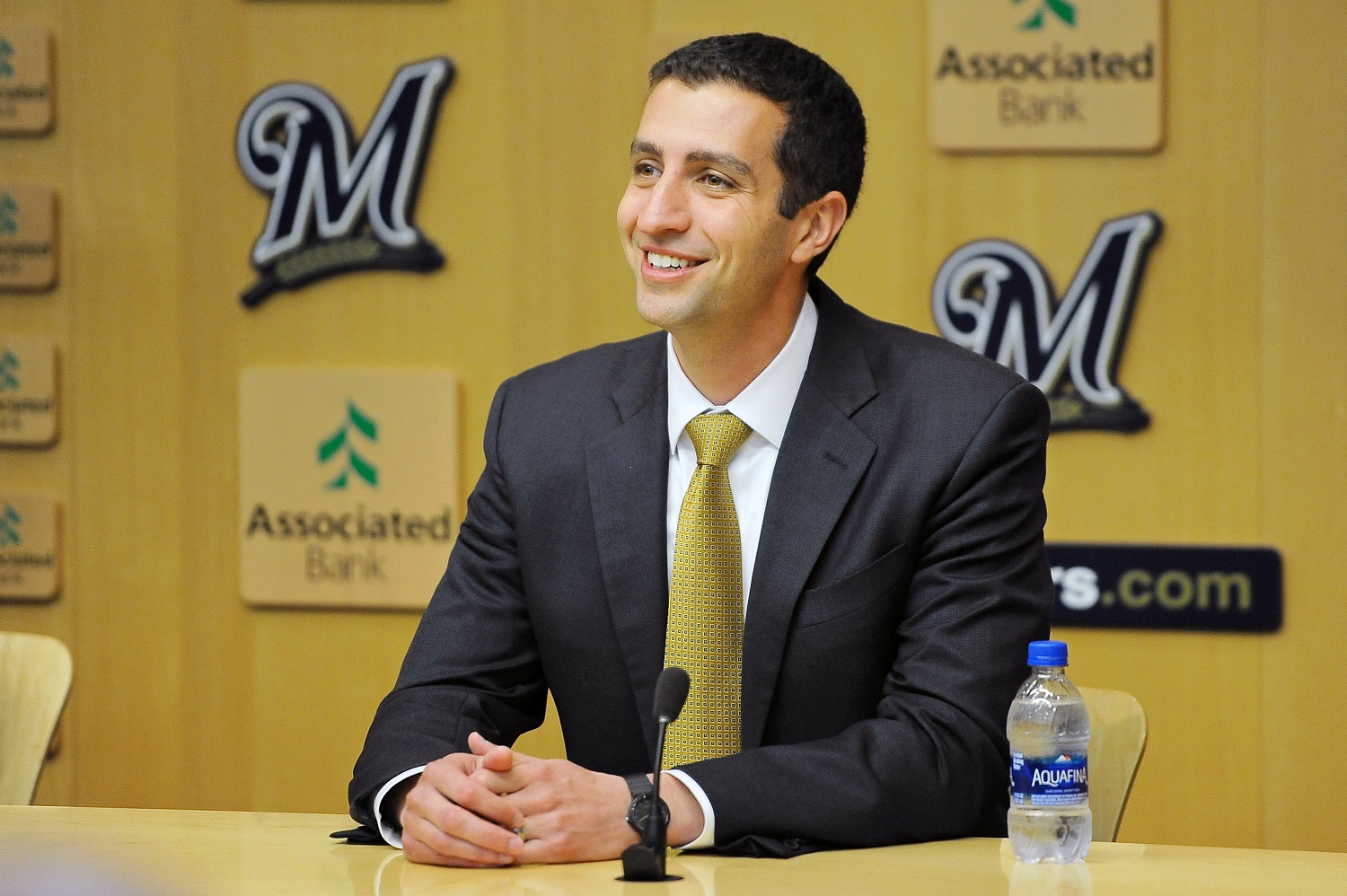 Everything is relative, including how one measures team success in baseball. Depending on your goals and how you determine "winning" as a franchise, you can argue various levels of success or failure with David Stearns in charge of player personnel. Some feel he never truly tried to push the team "over the top" to win a title. Instead, the focus was on getting as many "bites of the apple," which they choked on this season. Now Stearns moves on and GM Matt Arnold takes over the department (full press conference at the bottom of the article). He will likely follow a similar style as Stearns, but perhaps with his own wrinkles. He has a lot of decisions to make, with 18 guys in arbitration and a few major players nearing the end of club control. Of course, Arnold shouldn't be judged on this upcoming season alone, and if he were to bring Milwaukee a World Series, fans would love him - even if some poor years follow. So as the David Stearns era ends in Milwaukee, how would you evaluate his performance? It's always been a lively debate, mostly centered on the positives of regular season wins and playoff appearances, but lacking the ultimate prize. You can watch the full press conference below.
 -
I don't doubt that the numbers do skew on the light side. In my thinking, though, the Brewers won't worry about pushing the envelope too much this season for extensions. It will have to be more "team friendly," so yes, it' s up to the player (agent) to decide what's more valuable for them this year & "gambling' on the future. For Woodruff, I definitely did consider the Castillo extension; however, Castillo was going to be a free agent after the 2023 season, so he had more leverage with his current team than Woodruff (under control through 2024). And his deal could be something like $10.75 in 2023, $13 in 2024 and $21.25 in 2025. Adames will be extremely interesting to see how much his defense is valued financially...and then how to compare him to the big free agent class of shortstops this offseason (T. Turner, C. Correa, D. Swanson, X. Bogaerts maybe, T. Anderson maybe). Does he build up more value by the team he hits free agency where he has less competition and possibly better production for a bigger deal?
-
I don't doubt that the numbers do skew on the light side. In my thinking, though, the Brewers won't worry about pushing the envelope too much this season for extensions. It will have to be more "team friendly," so yes, it' s up to the player (agent) to decide what's more valuable for them this year & "gambling' on the future. For Woodruff, I definitely did consider the Castillo extension; however, Castillo was going to be a free agent after the 2023 season, so he had more leverage with his current team than Woodruff (under control through 2024). And his deal could be something like $10.75 in 2023, $13 in 2024 and $21.25 in 2025. Adames will be extremely interesting to see how much his defense is valued financially...and then how to compare him to the big free agent class of shortstops this offseason (T. Turner, C. Correa, D. Swanson, X. Bogaerts maybe, T. Anderson maybe). Does he build up more value by the team he hits free agency where he has less competition and possibly better production for a bigger deal?
-
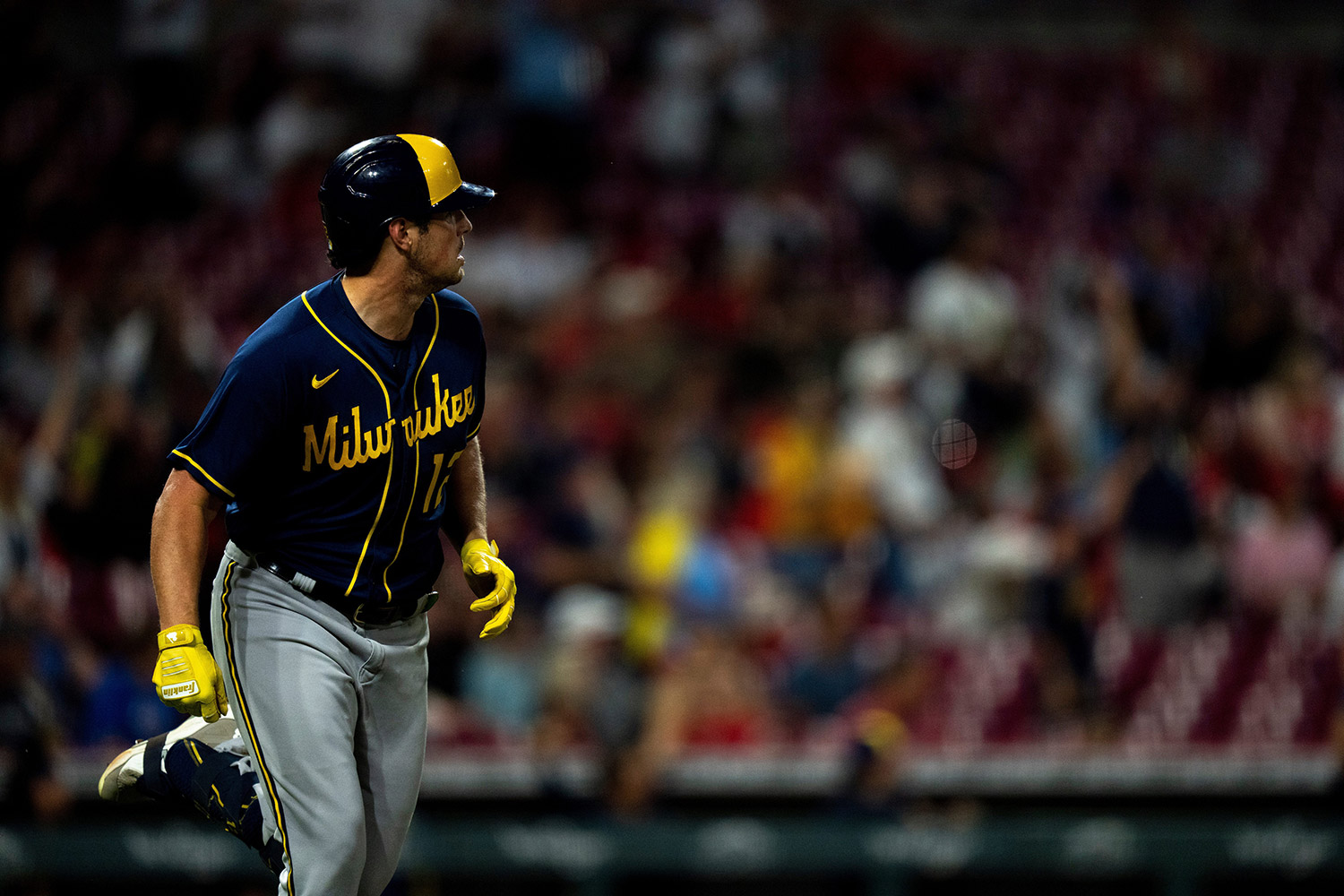 Milwaukee has 18 players in various stages of the arbitration process. The positive is that the club can keep each guy for 2023 if they choose. The negative side comes from the team having to pay increases to each - some sizable raises - even if they disagree with the player's value. The MLB Trade Rumors site breaks down the projected arbitration numbers for each player, usually with considerable accuracy. If each arbitration figure for the Brewers came to fruition by MLB Trade Rumors' projections, it would add $33-$34 million to Milwaukee's payroll in 2023. Let's quickly go through each player and their projected salary, grouping them by the years they have left in arbitration. For each player, we'll try to determine if they will 1) Settle on a one-year contract, 2) Sign a multi-year contract, 3) Be traded before accepting a deal, or 4) Be non-tendered, meaning they become a free agent. *NOTE: The Brewers rarely ever go to an arbitration hearing (Adrian Houser was an exception last year), so we will leave that off the table.* LAST YEAR OF ARBITRATION Victor Caratini (projection = $2.8 million): Sign one-year contract around $2.6 million This would be a $650,000 raise for an average catcher who hit .199 last season. With Omar Narvaez a free agent, it makes sense to keep Caratini for one year and keep options open for a young guy in 2024. Luis Perdomo (projection = $1 million): Sign one-year contract around $750,000 He was under a two-year contract, mostly rehabbing in 2021. He pitched well in many outings, and the Brewers need bullpen arms at lower, set costs. Hunter Renfroe (projection = $11.2 million): Sign one-year contract around $11 million Highest OPS+ (126) on the team, but with multiple top outfield prospects ready, no need for multiple years. A $3.4 million raise might be on the low end, and the Brewers could be willing to make an even $4 million increase to $11.6 million (though you can't rule out a trade at that cost). Brent Suter (projection = $3.1 million): Non-tender The Brewers won't value him at $3 million with worse numbers in 2022, so they should move on. At 33 years old, Suter could try to get a cheaper two-year contract. TWO YEARS OF ARBITRATION REMAINING Willy Adames (projection = $9.2 million): Sign four-year contract around $52 million Locking up a 27-year-old shortstop with a big offensive ceiling and high defensive ratings is extremely valuable. Adames' decision would come down to gambling on himself, but he would still be a free agent by his age-31 season. Corbin Burnes (projection = $11.4 million): Sign one-year contract around $12.5 million It's not exciting, but this is the most likely result for this season, as short of a mega-deal, Burnes has little incentive to do anything more than one year. The Brewers keep their options open and know they control Burnes' future - either in Milwaukee or in trade elsewhere. Matt Bush (projection = $1.2 million): Sign one-year contract around $900,000 His struggles at the end of the season should sink his cost some. Bush has shown great stuff, so Milwaukee would probably be happy paying a bit more to avoid a hearing. Trevor Gott (projection = $1.4 million): Non-tender Gott has an intriguing arm, but not reliable enough to pay almost $1.5 million. They could easily reach a cheap agreement after the non-tender if Gott likes his chances in Milwaukee. Jandel Gustave (projection = $900,000): Non-tender A below-average, 30-year-old reliever isn't getting nearly $1 million from the Brewers. Milwaukee will find two younger arms with the same cost and more upside. Adrian Houser (projection = $3.6 million): Trade before agreeing to a contract The relationship may have been fractured after his arbitration hearing last season. Teams are always looking for relatively cheap starters, and the Brewers could fill a need (or net a prospect) for a guy not in the long-term plans. Eric Lauer (projection = $5.2 million): Sign two-year contract around $12 million A talented but up-and-down hurler, Milwaukee can play the middle for the next two years. Guaranteeing himself $10 million, Lauer can worry about setting himself up for a big contract after 2024. Rowdy Tellez (projection = $5.3 million): Sign one-year contract around $4.5 million The projection seems to overvalue Tellez's 35 HR while ignoring his deficiencies. Milwaukee will give him a shot to break out with the "shift ban" coming while also being trade bait later in the offseason. Brandon Woodruff (projection = $11 million): Sign three-year contract around $45 million Entering his age-30 season, Woodruff should be open to a multi-year deal. Perhaps he would want more per season, but it buys out just one year of free agency. THREE YEARS OF ARBITRATION REMAINING Mike Brosseau (projection = $1.2 million): Sign one-year contract around $1.2 million The Brewers still need quality bats against left-handed pitchers, and Brosseau provides one. Brosseau posted a 0.6 fWAR in 160 plate appearances, which is good value for a part-time guy. Keston Hiura (projection = $2 million): Trade before agreeing to a contract It's difficult to see the Brewers giving Hiura a shot at full-time work, so a trade makes the most sense. Is there a team who values Hiura enough to inspire Milwaukee? Maybe he's a piece of a more significant deal. Hoby Milner (projection = $1.1 million): Sign one-year contract around $1 million Milner had a breakout season, gave manager Craig Counsell a weapon vs. lefties, and allowed just five of 37 inherited runners to score. Going year to year limits risk for the Brewers, though Milner could take a two-year deal at $1 million per season. Luis Urias (projection = $4.3 million): Sign one-year contract around $4.1 million Despite a perceived down year, Urias had the fourth-best fWAR on the club (2.3). The Brewers believe in Urias' talent and expect big things in the next couple of seasons. Devin Williams (projection = $3.2 million): Sign one-year contract around $3.5 million As they did with Josh Hader, the Brewers likely go year-to-year with Williams as the "closer." Reliever performance can fluctuate annually, so the safe play is to pay per season. These "predictions" lead to about the same payroll as if each arbitration projection turns out to be accurate and accepted. But by non-tendering a few players and offering more significant deals through contract extensions, Milwaukee can prioritize its best talent. However, President of Baseball Operations David Stearns will have many options to manipulate the Brewers 2023 roster into a World Series contender. Will there be more trades? Will the Brewers shy away from multi-year deals? Let us know what you think will happen - or what you hope will happen with these 18 players in arbitration.
- 42 comments
-
- 1
-

-
- victor caratini
- hunter renfroe
- (and 3 more)
-
The Milwaukee Brewers front office will be bustling this offseason. I'm not talking about significant free agent moves or mass trades, but dealing with the almost ridiculous number of players in their arbitration years. Milwaukee has 18 players in various stages of the arbitration process. The positive is that the club can keep each guy for 2023 if they choose. The negative side comes from the team having to pay increases to each - some sizable raises - even if they disagree with the player's value. The MLB Trade Rumors site breaks down the projected arbitration numbers for each player, usually with considerable accuracy. If each arbitration figure for the Brewers came to fruition by MLB Trade Rumors' projections, it would add $33-$34 million to Milwaukee's payroll in 2023. Let's quickly go through each player and their projected salary, grouping them by the years they have left in arbitration. For each player, we'll try to determine if they will 1) Settle on a one-year contract, 2) Sign a multi-year contract, 3) Be traded before accepting a deal, or 4) Be non-tendered, meaning they become a free agent. *NOTE: The Brewers rarely ever go to an arbitration hearing (Adrian Houser was an exception last year), so we will leave that off the table.* LAST YEAR OF ARBITRATION Victor Caratini (projection = $2.8 million): Sign one-year contract around $2.6 million This would be a $650,000 raise for an average catcher who hit .199 last season. With Omar Narvaez a free agent, it makes sense to keep Caratini for one year and keep options open for a young guy in 2024. Luis Perdomo (projection = $1 million): Sign one-year contract around $750,000 He was under a two-year contract, mostly rehabbing in 2021. He pitched well in many outings, and the Brewers need bullpen arms at lower, set costs. Hunter Renfroe (projection = $11.2 million): Sign one-year contract around $11 million Highest OPS+ (126) on the team, but with multiple top outfield prospects ready, no need for multiple years. A $3.4 million raise might be on the low end, and the Brewers could be willing to make an even $4 million increase to $11.6 million (though you can't rule out a trade at that cost). Brent Suter (projection = $3.1 million): Non-tender The Brewers won't value him at $3 million with worse numbers in 2022, so they should move on. At 33 years old, Suter could try to get a cheaper two-year contract. TWO YEARS OF ARBITRATION REMAINING Willy Adames (projection = $9.2 million): Sign four-year contract around $52 million Locking up a 27-year-old shortstop with a big offensive ceiling and high defensive ratings is extremely valuable. Adames' decision would come down to gambling on himself, but he would still be a free agent by his age-31 season. Corbin Burnes (projection = $11.4 million): Sign one-year contract around $12.5 million It's not exciting, but this is the most likely result for this season, as short of a mega-deal, Burnes has little incentive to do anything more than one year. The Brewers keep their options open and know they control Burnes' future - either in Milwaukee or in trade elsewhere. Matt Bush (projection = $1.2 million): Sign one-year contract around $900,000 His struggles at the end of the season should sink his cost some. Bush has shown great stuff, so Milwaukee would probably be happy paying a bit more to avoid a hearing. Trevor Gott (projection = $1.4 million): Non-tender Gott has an intriguing arm, but not reliable enough to pay almost $1.5 million. They could easily reach a cheap agreement after the non-tender if Gott likes his chances in Milwaukee. Jandel Gustave (projection = $900,000): Non-tender A below-average, 30-year-old reliever isn't getting nearly $1 million from the Brewers. Milwaukee will find two younger arms with the same cost and more upside. Adrian Houser (projection = $3.6 million): Trade before agreeing to a contract The relationship may have been fractured after his arbitration hearing last season. Teams are always looking for relatively cheap starters, and the Brewers could fill a need (or net a prospect) for a guy not in the long-term plans. Eric Lauer (projection = $5.2 million): Sign two-year contract around $12 million A talented but up-and-down hurler, Milwaukee can play the middle for the next two years. Guaranteeing himself $10 million, Lauer can worry about setting himself up for a big contract after 2024. Rowdy Tellez (projection = $5.3 million): Sign one-year contract around $4.5 million The projection seems to overvalue Tellez's 35 HR while ignoring his deficiencies. Milwaukee will give him a shot to break out with the "shift ban" coming while also being trade bait later in the offseason. Brandon Woodruff (projection = $11 million): Sign three-year contract around $45 million Entering his age-30 season, Woodruff should be open to a multi-year deal. Perhaps he would want more per season, but it buys out just one year of free agency. THREE YEARS OF ARBITRATION REMAINING Mike Brosseau (projection = $1.2 million): Sign one-year contract around $1.2 million The Brewers still need quality bats against left-handed pitchers, and Brosseau provides one. Brosseau posted a 0.6 fWAR in 160 plate appearances, which is good value for a part-time guy. Keston Hiura (projection = $2 million): Trade before agreeing to a contract It's difficult to see the Brewers giving Hiura a shot at full-time work, so a trade makes the most sense. Is there a team who values Hiura enough to inspire Milwaukee? Maybe he's a piece of a more significant deal. Hoby Milner (projection = $1.1 million): Sign one-year contract around $1 million Milner had a breakout season, gave manager Craig Counsell a weapon vs. lefties, and allowed just five of 37 inherited runners to score. Going year to year limits risk for the Brewers, though Milner could take a two-year deal at $1 million per season. Luis Urias (projection = $4.3 million): Sign one-year contract around $4.1 million Despite a perceived down year, Urias had the fourth-best fWAR on the club (2.3). The Brewers believe in Urias' talent and expect big things in the next couple of seasons. Devin Williams (projection = $3.2 million): Sign one-year contract around $3.5 million As they did with Josh Hader, the Brewers likely go year-to-year with Williams as the "closer." Reliever performance can fluctuate annually, so the safe play is to pay per season. These "predictions" lead to about the same payroll as if each arbitration projection turns out to be accurate and accepted. But by non-tendering a few players and offering more significant deals through contract extensions, Milwaukee can prioritize its best talent. However, President of Baseball Operations David Stearns will have many options to manipulate the Brewers 2023 roster into a World Series contender. Will there be more trades? Will the Brewers shy away from multi-year deals? Let us know what you think will happen - or what you hope will happen with these 18 players in arbitration. View full article
-
Article: Three Bad Decisions Sunk the Brewers' Playoff Run
Tim Muma replied to Tim Muma's topic in Milwaukee Brewers Talk
Yeah, I didn't necessarily say the all the decisions where "wrong." As I noted, you can make a sound decision and it doesn't work. I would say with McCutchen, the idea to mash LHP was relatively sound. For $8 million? Maybe not. And then yes, to use him so much vs. RHP was foolish. And maybe it impacted his effectiveness vs. LHP, because he wasn't close to what they expected. With Small...they expected he was going to start more games with the Brewers. He seemed to regress, so yes, the Brewers avoided him. But the problem is, they had no other real options. Yes, I know Ashby was their "6th starter," but I believe the average team uses 8 starters in a season. Yeah, they tried Chi Chi, I suppose. Just figured there could have been a stronger focus on a "reliable" option. Those are just my thoughts on what you said. Obviously when you miss the playoffs by so few games, you feel like any 1 decision would have made the difference. -
Article: Three Bad Decisions Sunk the Brewers' Playoff Run
Tim Muma replied to Tim Muma's topic in Milwaukee Brewers Talk
Yeah, I didn't necessarily say the all the decisions where "wrong." As I noted, you can make a sound decision and it doesn't work. I would say with McCutchen, the idea to mash LHP was relatively sound. For $8 million? Maybe not. And then yes, to use him so much vs. RHP was foolish. And maybe it impacted his effectiveness vs. LHP, because he wasn't close to what they expected. With Small...they expected he was going to start more games with the Brewers. He seemed to regress, so yes, the Brewers avoided him. But the problem is, they had no other real options. Yes, I know Ashby was their "6th starter," but I believe the average team uses 8 starters in a season. Yeah, they tried Chi Chi, I suppose. Just figured there could have been a stronger focus on a "reliable" option. Those are just my thoughts on what you said. Obviously when you miss the playoffs by so few games, you feel like any 1 decision would have made the difference. -
Article: Three Bad Decisions Sunk the Brewers' Playoff Run
Tim Muma replied to Tim Muma's topic in Milwaukee Brewers Talk
Yes...I've written about the pitching and it is clear that is the major failing. HOWEVER, an organization should not just assume things will go the same way year after year. Last season, the Brewers were quite fortunate to avoid injuries to their starting pitching, also. The old adage of "if you're not getting better, you're getting worse," is very true, because it's almost unheard of to have the exact same success from the same people each season. So the point is, the Brewers failed to shore up potential issues, first before the season, then during the season with the deadline...when they already saw what was happening. You can say they "tried" with Bush and Rogers, which is fine, but that failed. And they didn't acquire a bat or a starting pitcher, either. -
Article: Three Bad Decisions Sunk the Brewers' Playoff Run
Tim Muma replied to Tim Muma's topic in Milwaukee Brewers Talk
Yes...I've written about the pitching and it is clear that is the major failing. HOWEVER, an organization should not just assume things will go the same way year after year. Last season, the Brewers were quite fortunate to avoid injuries to their starting pitching, also. The old adage of "if you're not getting better, you're getting worse," is very true, because it's almost unheard of to have the exact same success from the same people each season. So the point is, the Brewers failed to shore up potential issues, first before the season, then during the season with the deadline...when they already saw what was happening. You can say they "tried" with Bush and Rogers, which is fine, but that failed. And they didn't acquire a bat or a starting pitcher, either.

