



Jack Stern
-
Posts
764 -
Joined
-
Last visited
-
Days Won
2
Content Type
Profiles
Forums
Blogs
Events
News
2026 Milwaukee Brewers Top Prospects Ranking
Milwaukee Brewers Videos
2022 Milwaukee Brewers Draft Picks
Milwaukee Brewers Free Agent & Trade Rumors, Notes, & Tidbits
Guides & Resources
2023 Milwaukee Brewers Draft Picks
2024 Milwaukee Brewers Draft Picks
The Milwaukee Brewers Players Project
2025 Milwaukee Brewers Draft Pick Tracker
2026 Milwaukee Brewers Draft Tracker: Picks & Bonuses
Store
Downloads
Gallery
Everything posted by Jack Stern
-

Brewers Add Their Latest Funky Relief Project in Sidewinding Grant Anderson
Jack Stern posted an article in Brewers
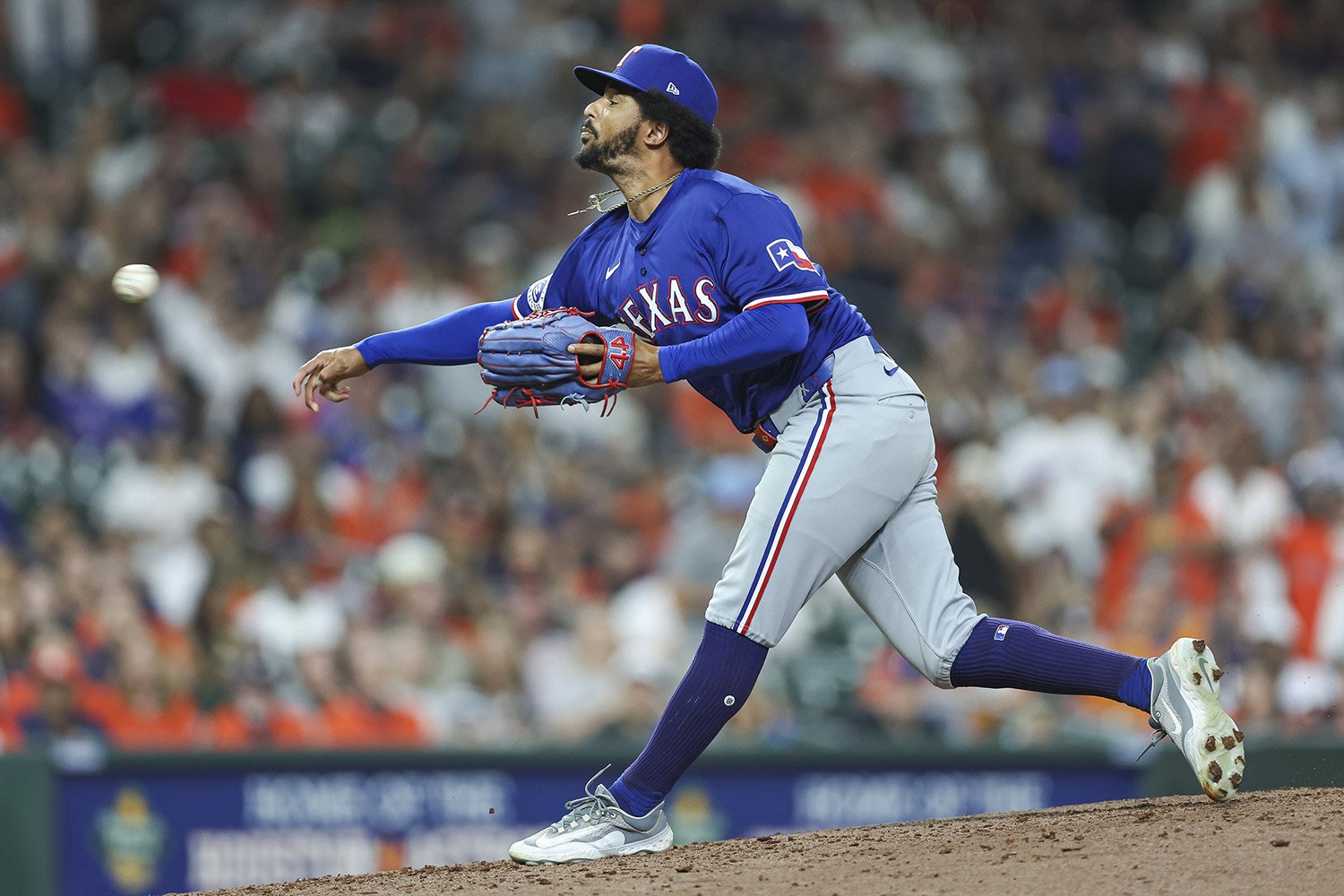 The Brewers added an intriguing arm to their bullpen mix on Thursday evening, acquiring right-hander Grant Anderson from the Texas Rangers for minor-league left-hander Mason Molina. Reliever Tyler Jay was designated for assignment to open a spot on the 40-man roster. At first glance, Anderson's big-league resume is uninspiring. In 62 ⅓ innings, he has pitched to a 6.35 ERA and 5.91 FIP, allowing 2.31 home runs per nine innings. His 2024 numbers with Texas are even more ghastly: an 8.10 ERA and 7.59 FIP in 26 ⅔ innings. However, he's had some success at Triple-A, where he has posted a 3.87 ERA and 32.7% strikeout rate. Funky left-handers Hoby Milner and Bryan Hudson broke out in Milwaukee in recent years, where the Brewers' pitching development brass helped them maximize the extreme angles they can create with their unique arm slots. They're taking on a similar project in Anderson, but from the right side. He mirrors Milner in many ways, starting with how he releases the baseball. Their arm angles both averaged -3 degrees last year. As unorthodox as Milner's delivery is, Anderson's is even more chaotic. He seemingly has yet to find the best version that gives him the proper mix of deception, repeatability, and ability to execute pitches. As a rookie in 2023, he came set closed off from the hitter, twisted so far that his back was parallel with home plate, brought the baseball behind his head toward first base, and then slung it with a crossfire delivery. 2023.mp4 Believing this delivery to be detrimental to finishing his pitches, Anderson came to Rangers camp last spring having toned things down dramatically. He started less closed off, truncated the twist with his leg kick, kept his throwing hand closer to his glove when he separated them, and rerouted his crossfire stride to be more direct to the plate. spring_2024.mp4 The 27-year-old used these new mechanics in his first three big-league outings of the year before a demotion back to Triple-A, but the changes would be short-lived. By the time he resurfaced with the Rangers in late April, he had settled on a delivery somewhere between the previous two iterations. The twist was back, though slightly less extreme than before. The separation between his throwing and glove hands remained quieter. april_2024.mp4 With these mechanics, Anderson is closer to where he should be – his delivery is still funky but more restrained and repeatable. Still, it would not be surprising if Chris Hook identified and implemented additional tweaks to help him use his body most effectively. He lost a few inches of extension from 2023 to 2024, something the Brewers may seek to restore. They could also nudge him across the rubber toward third base, but his crossfire delivery might make it challenging to command his pitches from such an extreme angle. Anderson's low-to-mid-90s velocity is notably higher than Milner's, but their pitch mixes are similar. From his sidearm slot, Anderson throws a heavy sinker and changeup, a four-seamer, and a mostly horizontal breaking ball. The slider is his most oft-used pitch. It resembled a cutter in his debut season, but in 2024, Anderson fashioned it into more of a true slider with more sweeping action. He slashed its velocity from 85.3 to 82.2 mph and increased its horizontal break from 2.1 to 7 inches. The sinker has plus movement, averaging -2.2 inches of induced vertical break and 17.2 inches of horizontal break. That makes it challenging to elevate; big-league opponents have managed a 47.5% hard hit rate against it, but an average launch angle of -1 degree and 4.9% barrel rate have kept them from driving it for extra-base hits. As a sidearmer, Anderson does not create much carry from backspin on his four-seamer. The pitch averages just 10 inches of induced vertical break. However, that's three more inches than Milner's four-seamer, so Anderson creates greater separation between his two heaters. The four-seamer also plays up at the top of the zone due to Anderson's low slot. This gives it an elite vertical approach angle of -3.7 degrees and creates an upshoot angle that leads hitters to swing under the ball. Anderson's four-seamer has induced whiffs on 36.4% of swings, but opponents crush it when they make contact, slugging .855 with a 51.4% hard hit rate, 25.7% barrel rate, and an average exit velocity of 93.7 mph. Ten of the 16 home runs he has allowed have come off a four-seamer. As a Ranger, Anderson's pitch usage prevented him from maximizing his potential. He was two different pitchers based on batter handedness. Right-handers saw almost exclusively sliders and sinkers; left-handers saw high four-seamers, sliders, and changeups. Given that his sinker and slider are his two best pitches and his four-seamer has been hit the hardest, it's unsurprising that Anderson has suffered from massive platoon splits. Righties have hit for a modest .668 OPS, but lefties have torched him for a 1.201 mark. While Anderson's four-seamer can be deceptive, it's not nearly good enough to warrant a usage rate of over 50% against most hitters. Because it lacks remarkable velocity or movement, overexposure turns it into a batting practice pitch. Rooting his mix at the bottom of the zone makes those occasional sidearm four-seamers at the top challenging to hit. Milner ran into similar problems in his first season as a Brewer. Using his four-seamer 52.9% of the time, it yielded a .719 slugging percentage. He fixed the issue by reintroducing his sinker and eventually mixing both fastballs to all hitters. Milner's four-seamer induced significantly more whiffs after these changes, and opponents hit under .150 against it in each of the last two seasons. Anderson should follow a similar path. The Brewers will likely instruct him to live on sinkers and sliders at the bottom of the zone – against both righties and lefties – while sprinkling in timely four-seamers for swings and misses at the top of the zone. Expect Anderson to neutralize his platoon splits by properly mixing his top three pitches, no matter the matchup. Anderson still has one minor-league option season remaining, so he may ride the 2025 bullpen shuttle instead of immediately becoming a mainstay. However, he has more upside than Jay. He's more deceptive and, with the right tweaks, can provide a productive mix of weak contact and strikeouts as a durable middle reliever. The Brewers certainly see long-term value here. While Molina's shortcomings as a pitcher could raise hurdles in his development, he was Milwaukee's seventh-round pick in last year's draft. Matt Arnold parted with legitimate value to land Anderson, who could become his latest savvy bullpen pickup.
-
- 2
-

-

-
- grant anderson
- hoby milner
- (and 2 more)
-
The Brewers are dipping back into what's been a fruitful corner of the reliever market for them. This time, they've grabbed a funky right-hander coming off a tough 2024 season. Image courtesy of © Troy Taormina-Imagn Images The Brewers are dipping back into what's been a fruitful corner of the reliever market for them. This time, they've grabbed a funky right-hander coming off a tough 2024 season. The Brewers added an intriguing arm to their bullpen mix on Thursday evening, acquiring right-hander Grant Anderson from the Texas Rangers for minor-league left-hander Mason Molina. Reliever Tyler Jay was designated for assignment to open a spot on the 40-man roster. At first glance, Anderson's big-league resume is uninspiring. In 62 ⅓ innings, he has pitched to a 6.35 ERA and 5.91 FIP, allowing 2.31 home runs per nine innings. His 2024 numbers with Texas are even more ghastly: an 8.10 ERA and 7.59 FIP in 26 ⅔ innings. However, he's had some success at Triple-A, where he has posted a 3.87 ERA and 32.7% strikeout rate. Funky left-handers Hoby Milner and Bryan Hudson broke out in Milwaukee in recent years, where the Brewers' pitching development brass helped them maximize the extreme angles they can create with their unique arm slots. They're taking on a similar project in Anderson, but from the right side. He mirrors Milner in many ways, starting with how he releases the baseball. Their arm angles both averaged -3 degrees last year. As unorthodox as Milner's delivery is, Anderson's is even more chaotic. He seemingly has yet to find the best version that gives him the proper mix of deception, repeatability, and ability to execute pitches. As a rookie in 2023, he came set closed off from the hitter, twisted so far that his back was parallel with home plate, brought the baseball behind his head toward first base, and then slung it with a crossfire delivery. 2023.mp4 Believing this delivery to be detrimental to finishing his pitches, Anderson came to Rangers camp last spring having toned things down dramatically. He started less closed off, truncated the twist with his leg kick, kept his throwing hand closer to his glove when he separated them, and rerouted his crossfire stride to be more direct to the plate. spring_2024.mp4 The 27-year-old used these new mechanics in his first three big-league outings of the year before a demotion back to Triple-A, but the changes would be short-lived. By the time he resurfaced with the Rangers in late April, he had settled on a delivery somewhere between the previous two iterations. The twist was back, though slightly less extreme than before. The separation between his throwing and glove hands remained quieter. april_2024.mp4 With these mechanics, Anderson is closer to where he should be – his delivery is still funky but more restrained and repeatable. Still, it would not be surprising if Chris Hook identified and implemented additional tweaks to help him use his body most effectively. He lost a few inches of extension from 2023 to 2024, something the Brewers may seek to restore. They could also nudge him across the rubber toward third base, but his crossfire delivery might make it challenging to command his pitches from such an extreme angle. Anderson's low-to-mid-90s velocity is notably higher than Milner's, but their pitch mixes are similar. From his sidearm slot, Anderson throws a heavy sinker and changeup, a four-seamer, and a mostly horizontal breaking ball. The slider is his most oft-used pitch. It resembled a cutter in his debut season, but in 2024, Anderson fashioned it into more of a true slider with more sweeping action. He slashed its velocity from 85.3 to 82.2 mph and increased its horizontal break from 2.1 to 7 inches. The sinker has plus movement, averaging -2.2 inches of induced vertical break and 17.2 inches of horizontal break. That makes it challenging to elevate; big-league opponents have managed a 47.5% hard hit rate against it, but an average launch angle of -1 degree and 4.9% barrel rate have kept them from driving it for extra-base hits. As a sidearmer, Anderson does not create much carry from backspin on his four-seamer. The pitch averages just 10 inches of induced vertical break. However, that's three more inches than Milner's four-seamer, so Anderson creates greater separation between his two heaters. The four-seamer also plays up at the top of the zone due to Anderson's low slot. This gives it an elite vertical approach angle of -3.7 degrees and creates an upshoot angle that leads hitters to swing under the ball. Anderson's four-seamer has induced whiffs on 36.4% of swings, but opponents crush it when they make contact, slugging .855 with a 51.4% hard hit rate, 25.7% barrel rate, and an average exit velocity of 93.7 mph. Ten of the 16 home runs he has allowed have come off a four-seamer. As a Ranger, Anderson's pitch usage prevented him from maximizing his potential. He was two different pitchers based on batter handedness. Right-handers saw almost exclusively sliders and sinkers; left-handers saw high four-seamers, sliders, and changeups. Given that his sinker and slider are his two best pitches and his four-seamer has been hit the hardest, it's unsurprising that Anderson has suffered from massive platoon splits. Righties have hit for a modest .668 OPS, but lefties have torched him for a 1.201 mark. While Anderson's four-seamer can be deceptive, it's not nearly good enough to warrant a usage rate of over 50% against most hitters. Because it lacks remarkable velocity or movement, overexposure turns it into a batting practice pitch. Rooting his mix at the bottom of the zone makes those occasional sidearm four-seamers at the top challenging to hit. Milner ran into similar problems in his first season as a Brewer. Using his four-seamer 52.9% of the time, it yielded a .719 slugging percentage. He fixed the issue by reintroducing his sinker and eventually mixing both fastballs to all hitters. Milner's four-seamer induced significantly more whiffs after these changes, and opponents hit under .150 against it in each of the last two seasons. Anderson should follow a similar path. The Brewers will likely instruct him to live on sinkers and sliders at the bottom of the zone – against both righties and lefties – while sprinkling in timely four-seamers for swings and misses at the top of the zone. Expect Anderson to neutralize his platoon splits by properly mixing his top three pitches, no matter the matchup. Anderson still has one minor-league option season remaining, so he may ride the 2025 bullpen shuttle instead of immediately becoming a mainstay. However, he has more upside than Jay. He's more deceptive and, with the right tweaks, can provide a productive mix of weak contact and strikeouts as a durable middle reliever. The Brewers certainly see long-term value here. While Molina's shortcomings as a pitcher could raise hurdles in his development, he was Milwaukee's seventh-round pick in last year's draft. Matt Arnold parted with legitimate value to land Anderson, who could become his latest savvy bullpen pickup. View full article
-
After previously announcing an arrangement under which the Brewers would have produced their telecasts and distributed them through Major League Baseball, the club is returning to the status quo by re-upping with Diamond Sports Group. Image courtesy of © Jeff Hanisch-Imagn Images After previously announcing an arrangement under which the Brewers would have produced their telecasts and distributed them through Major League Baseball, the club is returning to the status quo by re-upping with Diamond Sports Group. The Brewers have reached a new agreement with Diamond Sports Group to produce and distribute 2025 game telecasts on FanDuel Sports Network (previously branded as Bally Sports), the club announced on Tuesday. "The media landscape is complex and evolving rapidly, but our top priority is to ensure that Brewers games are available to fans regardless of where they live and how they connect to the broadcasts," Brewers President of Business Operations Rick Schlesinger said in a media release. "For many years, our television ratings have remained among the highest in baseball; the team has enjoyed a consistent run of success on the field and the future is promising with some of the game's best and brightest stars calling Milwaukee home. We look forward to working with FanDuel Sports Network to deliver the best content in and around our game telecasts." The news is a course reversal from the previous plan for Brewers telecasts. After the team's contract with Diamond expired after the 2024 season, it announced that MLB Advanced Media would assist in producing and distributing telecasts moving forward. This arrangement would have enabled fans to stream games through a Brewers-specific MLB.TV package without blackouts and opened the possibility of the team producing and broadcasting expanded content via streaming and its own cable and satellite channels in the future. Separating from Diamond and going the MLB route also presented financial challenges for a team in baseball's smallest market. The Brewers' television rights deal was a major source of revenue for the club. Ownership downplayed the loss by pointing to other revenue streams like ticket and merchandise sales, sponsorships, and revenue sharing, but operating without a broadcast deal almost certainly put the club in a financial bind. Other teams to re-up with Diamond this offseason, including the division-rival St. Louis Cardinals, have accepted reduced revenue from their previous deals. Even if that's the case here, the new agreement presumably gives the Brewers more cost certainty than the alternative. While unlikely to dramatically alter the course of a quiet offseason, it could eliminate the need for further payroll cuts or add enough wiggle room for another middle-tier addition. For fans, access to broadcasts will remain largely the same as in recent seasons. Those living within the Brewers' regional broadcast market can watch games on cable if their provider carries FanDuel Sports Network or can purchase a FanDuel Sports streaming package. New for 2025, in-market fans can also stream games through Amazon Prime Video as an add-on subscription. Out-of-market fans can continue watching on MLB.TV but remain subject to local blackouts. FanDuel Sports Network will carry all regular-season Brewers games not selected for national broadcasts. The pregame and postgame shows for each telecast will also return in their usual 30-minute format. View full article
-
FanDuel Sports Will Continue to Broadcast Brewers Games in 2025
Jack Stern posted an article in Brewers
 The Brewers have reached a new agreement with Diamond Sports Group to produce and distribute 2025 game telecasts on FanDuel Sports Network (previously branded as Bally Sports), the club announced on Tuesday. "The media landscape is complex and evolving rapidly, but our top priority is to ensure that Brewers games are available to fans regardless of where they live and how they connect to the broadcasts," Brewers President of Business Operations Rick Schlesinger said in a media release. "For many years, our television ratings have remained among the highest in baseball; the team has enjoyed a consistent run of success on the field and the future is promising with some of the game's best and brightest stars calling Milwaukee home. We look forward to working with FanDuel Sports Network to deliver the best content in and around our game telecasts." The news is a course reversal from the previous plan for Brewers telecasts. After the team's contract with Diamond expired after the 2024 season, it announced that MLB Advanced Media would assist in producing and distributing telecasts moving forward. This arrangement would have enabled fans to stream games through a Brewers-specific MLB.TV package without blackouts and opened the possibility of the team producing and broadcasting expanded content via streaming and its own cable and satellite channels in the future. Separating from Diamond and going the MLB route also presented financial challenges for a team in baseball's smallest market. The Brewers' television rights deal was a major source of revenue for the club. Ownership downplayed the loss by pointing to other revenue streams like ticket and merchandise sales, sponsorships, and revenue sharing, but operating without a broadcast deal almost certainly put the club in a financial bind. Other teams to re-up with Diamond this offseason, including the division-rival St. Louis Cardinals, have accepted reduced revenue from their previous deals. Even if that's the case here, the new agreement presumably gives the Brewers more cost certainty than the alternative. While unlikely to dramatically alter the course of a quiet offseason, it could eliminate the need for further payroll cuts or add enough wiggle room for another middle-tier addition. For fans, access to broadcasts will remain largely the same as in recent seasons. Those living within the Brewers' regional broadcast market can watch games on cable if their provider carries FanDuel Sports Network or can purchase a FanDuel Sports streaming package. New for 2025, in-market fans can also stream games through Amazon Prime Video as an add-on subscription. Out-of-market fans can continue watching on MLB.TV but remain subject to local blackouts. FanDuel Sports Network will carry all regular-season Brewers games not selected for national broadcasts. The pregame and postgame shows for each telecast will also return in their usual 30-minute format.
 -
Rule 5 Pick Connor Thomas Could Be Brewers' Bryse Wilson Replacement
Jack Stern posted an article in Brewers
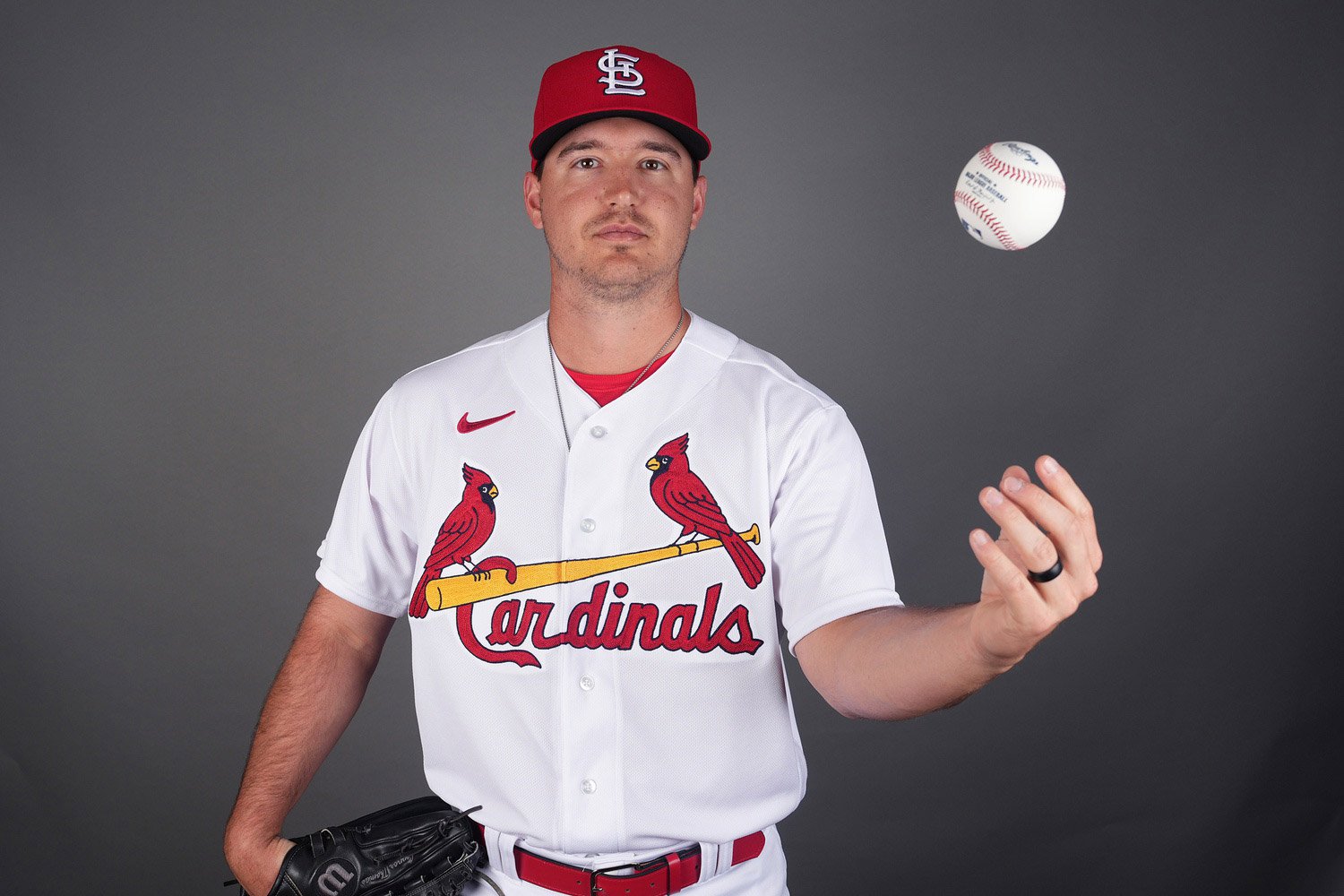 Days before shipping Devin Williams to the New York Yankees in what’s likely to be one of their most significant offseason transactions, the Brewers added a couple of left-handed pitchers to their 40-man roster during the winter meetings. One of them was Connor Thomas, whom Milwaukee plucked from the St. Louis Cardinals’ Triple-A affiliate during the big-league round of the Rule 5 draft. Per the rules of the draft, Thomas must spend at least 90 days on his new team’s active roster in 2025 and cannot be sent to the minor leagues without passing through waivers and then being offered back to his original club. That inflexibility may seem suboptimal for the Brewers, but it should not be an issue if Thomas proves helpful in his projected role. Taking a flier on a Rule 5 pitcher is nothing new for the Brewers, but this one differs from past selections. The club isn’t hiding a reliever in the bullpen as part of a long-term development project as it did with Wei-Chung Wang a decade ago. This is not a shot on an upside reliever like the Gus Varland selection. Instead, it’s a cost-effective means of filling an unglamorous but essential role within a successful run-prevention unit: versatile length. Colin Rea and Bryse Wilson were useful in that capacity across the last two seasons, eating up 473 ⅔ innings with a competitive but unremarkable 95 ERA- (100 is average, lower is better). When other pitchers sustained injuries or battled inconsistency, Rea and Wilson kept the ship afloat with their steady availability. Despite that production, the Brewers waived both at the onset of the offseason, evidently deducing from the growing red flags in their profiles that their most productive seasons were behind them. That presumably left finding the next Wilson or Rea – a durable and flexible innings-eater who keeps his team in the game in most of his appearances – as a key item on Matt Arnold’s winter checklist. Thomas profiles as that hopeful successor. Unlike Rea and Wilson, who succeeded by inducing decently struck fly balls that a core of speedy outfielders could run down for outs, Thomas is a ground-ball specialist. Instead of a running two-seamer with limited depth, his primary fastball is a heavy sinker. Those differences aside, his other traits point to him filling a similar role. In a broad sense, Rea and Wilson found success by tweaking the shapes of their unassuming pitches, learning the best ways to sequence them, and executing them well enough to induce the kind of contact the Brewers’ defense could convert into outs. Thomas, rated by FanGraphs as having 60-grade command of a five-pitch arsenal, is already on a similar trajectory. The southpaw tightened up his cutter shape, shedding about an inch of induced vertical break on average and giving it more consistent cutting action (keeping the movement to the right of the vertical axis in the graphs below). After experimenting with a bigger slider during the final months of 2023, he morphed it into a sweeping breaking ball that averaged 12.6 inches of lateral movement. The cutter and slider now have cleaner and more consistent separation. Struggles against right-handed batters plagued two disappointing seasons for Thomas in Triple-A, but their wOBA against him plummeted from .383 in 2023 to .281 in 2024. He accomplished that turnaround by attacking right-handers more diversely. He balanced his pitch usage against them, and instead of consistently pitching around the knees with his natural sink, he worked every quadrant within or near the strike zone. Since adding the cutter late in 2022, Thomas has used it primarily up-and-in to righties. That location works with his low three-quarters release as a 5-foot-11 left-hander to create an uncomfortable angle for the hitter. The high cutter appears to bore in on them as Thomas slings it toward them. Jared Koenig and Robert Gasser are other low-slot lefties who weaponize their cutters similarly, and Wilson himself often pitched this way to left-handers. The pitch was not effective for Thomas in 2023. In particular, righties ambushed the cutters he threw at the knees. After those unproductive attempts at mixing in low cutters, Thomas kept them elevated to a greater extreme in 2024. He threw more cutters above the zone than in the lower third. For those high cutters to be effective, at least one other pitch must work in conjunction with them. That seemingly led Thomas to a somewhat unorthodox strategy: throwing more sinkers right down the middle and in the upper third of the zone. There’s a method to the madness. Throwing sinkers over the center of the plate instead of down and away created tighter tunneling with high cutters. The sinker also became the anchor off which the rest of Thomas’s arsenal plays. It forced hitters to start by looking down the middle, only for his other pitches to cut, sweep, ride, or dive in every other direction. They had more to cover, and locking in on a particular quadrant became more challenging. The location graphics below (plotted by Thomas Nestico’s Pitching Summary web app) visualize this effect. Notice how Thomas’s sinker locations in 2024 overlapped more with each of his other pitches. Improved pitch shapes, better tunneling, and two added ticks of fastball velocity enabled everything to fall into place in 2024. After consecutive seasons with an ERA north of 5.00 in Triple-A, Thomas posted a 2.89 ERA, 3.87 FIP, and 86 DRA-, all the best full-season marks of his professional career. The right-handed whiff rate against his cutter doubled, and their slugging percentages against every pitch in his arsenal dropped by over 100 points. While Thomas worked almost exclusively in relief for the first time this past season, most of the drivers behind his improvement are not correlated to pitching in shorter stints. He also remained somewhat stretched out, frequently pitching multiple innings and recording nine or more outs in six appearances. For these reasons, it’s unsurprising that the Brewers will evaluate him as a starter in spring training. They did the same with Wilson. When Thomas arrives in camp, expect to see many of the same adjustments he enacted a year ago. There’s room for more tweaks, though. He currently pitches from the third-base side of the rubber; sliding him toward first base could create a more extreme crossfire angle for right-handed batters, and it may help him hide the ball better against lefties, who posted a .343 wOBA against Thomas over the last two years. His changeup shape and usage could also undergo modifications. Thomas threw more changeups to right-handers than sinkers, and they slugged just .324 against it with a 35.7% whiff rate, but it comes in just six mph slower than his sinker on average with similar movement. Unless he develops greater separation between his changeup and sinker, the Brewers may emphasize the latter more while recasting the former as an occasional change-of-pace offering. Only two teams threw changeups, splitters, and forkballs at a lower rate than Milwaukee in 2024. With at least five starters ahead of him on the depth chart, Thomas is most likely to settle into Wilson’s niche as a flexible bulk reliever who makes occasional spot starts. Becoming the next Rea is a higher-percentile outcome. Either way, he’s a cerebral pitcher with a deep arsenal who is growing into the most deceptive way to utilize it. His results should play up in front of an elite infield defense, and he’s precisely the kind of pupil who has found success with guidance from Chris Hook and company.
 -
The crafty left-hander is not quite the same pitcher as the recently departed swingman, but several attributes position him as the heir to his innings. Image courtesy of © Jim Rassol-Imagn Images The crafty left-hander is not quite the same pitcher as the recently departed swingman, but several attributes position him as the heir to his innings. Days before shipping Devin Williams to the New York Yankees in what’s likely to be one of their most significant offseason transactions, the Brewers added a couple of left-handed pitchers to their 40-man roster during the winter meetings. One of them was Connor Thomas, whom Milwaukee plucked from the St. Louis Cardinals’ Triple-A affiliate during the big-league round of the Rule 5 draft. Per the rules of the draft, Thomas must spend at least 90 days on his new team’s active roster in 2025 and cannot be sent to the minor leagues without passing through waivers and then being offered back to his original club. That inflexibility may seem suboptimal for the Brewers, but it should not be an issue if Thomas proves helpful in his projected role. Taking a flier on a Rule 5 pitcher is nothing new for the Brewers, but this one differs from past selections. The club isn’t hiding a reliever in the bullpen as part of a long-term development project as it did with Wei-Chung Wang a decade ago. This is not a shot on an upside reliever like the Gus Varland selection. Instead, it’s a cost-effective means of filling an unglamorous but essential role within a successful run-prevention unit: versatile length. Colin Rea and Bryse Wilson were useful in that capacity across the last two seasons, eating up 473 ⅔ innings with a competitive but unremarkable 95 ERA- (100 is average, lower is better). When other pitchers sustained injuries or battled inconsistency, Rea and Wilson kept the ship afloat with their steady availability. Despite that production, the Brewers waived both at the onset of the offseason, evidently deducing from the growing red flags in their profiles that their most productive seasons were behind them. That presumably left finding the next Wilson or Rea – a durable and flexible innings-eater who keeps his team in the game in most of his appearances – as a key item on Matt Arnold’s winter checklist. Thomas profiles as that hopeful successor. Unlike Rea and Wilson, who succeeded by inducing decently struck fly balls that a core of speedy outfielders could run down for outs, Thomas is a ground-ball specialist. Instead of a running two-seamer with limited depth, his primary fastball is a heavy sinker. Those differences aside, his other traits point to him filling a similar role. In a broad sense, Rea and Wilson found success by tweaking the shapes of their unassuming pitches, learning the best ways to sequence them, and executing them well enough to induce the kind of contact the Brewers’ defense could convert into outs. Thomas, rated by FanGraphs as having 60-grade command of a five-pitch arsenal, is already on a similar trajectory. The southpaw tightened up his cutter shape, shedding about an inch of induced vertical break on average and giving it more consistent cutting action (keeping the movement to the right of the vertical axis in the graphs below). After experimenting with a bigger slider during the final months of 2023, he morphed it into a sweeping breaking ball that averaged 12.6 inches of lateral movement. The cutter and slider now have cleaner and more consistent separation. Struggles against right-handed batters plagued two disappointing seasons for Thomas in Triple-A, but their wOBA against him plummeted from .383 in 2023 to .281 in 2024. He accomplished that turnaround by attacking right-handers more diversely. He balanced his pitch usage against them, and instead of consistently pitching around the knees with his natural sink, he worked every quadrant within or near the strike zone. Since adding the cutter late in 2022, Thomas has used it primarily up-and-in to righties. That location works with his low three-quarters release as a 5-foot-11 left-hander to create an uncomfortable angle for the hitter. The high cutter appears to bore in on them as Thomas slings it toward them. Jared Koenig and Robert Gasser are other low-slot lefties who weaponize their cutters similarly, and Wilson himself often pitched this way to left-handers. The pitch was not effective for Thomas in 2023. In particular, righties ambushed the cutters he threw at the knees. After those unproductive attempts at mixing in low cutters, Thomas kept them elevated to a greater extreme in 2024. He threw more cutters above the zone than in the lower third. For those high cutters to be effective, at least one other pitch must work in conjunction with them. That seemingly led Thomas to a somewhat unorthodox strategy: throwing more sinkers right down the middle and in the upper third of the zone. There’s a method to the madness. Throwing sinkers over the center of the plate instead of down and away created tighter tunneling with high cutters. The sinker also became the anchor off which the rest of Thomas’s arsenal plays. It forced hitters to start by looking down the middle, only for his other pitches to cut, sweep, ride, or dive in every other direction. They had more to cover, and locking in on a particular quadrant became more challenging. The location graphics below (plotted by Thomas Nestico’s Pitching Summary web app) visualize this effect. Notice how Thomas’s sinker locations in 2024 overlapped more with each of his other pitches. Improved pitch shapes, better tunneling, and two added ticks of fastball velocity enabled everything to fall into place in 2024. After consecutive seasons with an ERA north of 5.00 in Triple-A, Thomas posted a 2.89 ERA, 3.87 FIP, and 86 DRA-, all the best full-season marks of his professional career. The right-handed whiff rate against his cutter doubled, and their slugging percentages against every pitch in his arsenal dropped by over 100 points. While Thomas worked almost exclusively in relief for the first time this past season, most of the drivers behind his improvement are not correlated to pitching in shorter stints. He also remained somewhat stretched out, frequently pitching multiple innings and recording nine or more outs in six appearances. For these reasons, it’s unsurprising that the Brewers will evaluate him as a starter in spring training. They did the same with Wilson. When Thomas arrives in camp, expect to see many of the same adjustments he enacted a year ago. There’s room for more tweaks, though. He currently pitches from the third-base side of the rubber; sliding him toward first base could create a more extreme crossfire angle for right-handed batters, and it may help him hide the ball better against lefties, who posted a .343 wOBA against Thomas over the last two years. His changeup shape and usage could also undergo modifications. Thomas threw more changeups to right-handers than sinkers, and they slugged just .324 against it with a 35.7% whiff rate, but it comes in just six mph slower than his sinker on average with similar movement. Unless he develops greater separation between his changeup and sinker, the Brewers may emphasize the latter more while recasting the former as an occasional change-of-pace offering. Only two teams threw changeups, splitters, and forkballs at a lower rate than Milwaukee in 2024. With at least five starters ahead of him on the depth chart, Thomas is most likely to settle into Wilson’s niche as a flexible bulk reliever who makes occasional spot starts. Becoming the next Rea is a higher-percentile outcome. Either way, he’s a cerebral pitcher with a deep arsenal who is growing into the most deceptive way to utilize it. His results should play up in front of an elite infield defense, and he’s precisely the kind of pupil who has found success with guidance from Chris Hook and company. View full article
-
Chris Hook and company excel at helping pitchers maximize the deceptiveness of unremarkable stuff. They should avoid some of their go-to tricks with the Brewers’ latest rotation addition, who marches to the beat of a unique drum. Image courtesy of © Bill Streicher-Imagn Images Chris Hook and company excel at helping pitchers maximize the deceptiveness of unremarkable stuff. They should avoid some of their go-to tricks with the Brewers’ latest rotation addition, who marches to the beat of a unique drum. The Brewers have well-oiled systems in place to maximize pitcher performance, even if their velocity or pitch shapes do not turn heads. Milwaukee hurlers enjoy the built-in benefit of an elite defense that turns would-be hits into outs, but they also level up their performance by creating as much deception as possible. Newly acquired Nestor Cortes will receive a boost from excellent outfield defense, but Chris Hook and friends cannot pull out many of the same stops with him that they have for most pitchers in recent years. While they almost certainly have a small tweak or two in mind, Cortes is already plenty deceptive in different ways than any other Brewers pitcher—and most across the league, for that matter. While the Brewers craft a personalized development plan for each individual, their broader methodology for making pitches harder to recognize and track is pretty consistent. They create the most extreme angle from which a pitcher can execute and equip his arsenal with multiple pitches that have different shapes but look similar out of the hand. To create tough angles, some pitchers move to one edge of the rubber, modify their arm slot, or both. That’s what made Bryan Hudson’s fastball, which averages 90 to 92 mph with neither remarkable carry nor unusual run, so challenging to square up. His height, extension, arm slot, and positioning on the rubber create an off-putting visual for the hitter. Hook is also a firm advocate of throwing multiple fastball variations. Because these pitches spin in similar directions, it’s challenging for the naked eye to differentiate them immediately. The pitches’ trajectories separate as they approach the plate: a sinker runs to the arm side, a cutter breaks late to the glove side, and a four-seamer remains straighter, with more carry. Someone with all three can work both sides of the plate and the top of the strike zone with pitches that all appear to have the same spin after release. Twelve of 25 Brewers who threw at least 10 innings in 2024 used two or more kinds of fastballs at least 15% of the time, and six threw three variations regularly. Colin Rea, Frankie Montas, and Bryse Wilson applied this strategy especially well, with the latter also moving to the third-base edge of the rubber to better bust his sinker inside to right-handed hitters. For most Brewers pitchers, promoting deception begins with keeping as many things as possible looking the same for as long as possible. Changes to one’s arm slot, extension, or positioning on the rubber remain constant across every pitch. It’s tough for opponents to know what’s coming until the ball is close to the plate, because everything looks nearly identical leading up to that point. Cortes does the opposite. He creates deception through chaos and inconsistency. The crafty southpaw is well-known for mixing windups and arm slots in attempts to throw hitters off-balance. Freddy Peralta varied the pacing of his windup with three distinct leg kicks down the stretch, but that’s tame in comparison to the exploits of his new rotation mate. It’s the same case for arm angle – Peralta’s rose slightly in the second half, but Cortes’s release points were wide-ranging and unpredictable. In that sense, he’s the inverse of Rea, who excelled at delivering every pitch from the same slot. In the charts above, Cortes’s release cluster is an amalgamation of different arm slots. Some are subtle variations of his default slot, but others are him dropping down to throw sidearm. The chaos has worked. Since the start of the 2021 season, Cortes has pitched to a 3.33 ERA, 3.68 FIP, and 3.84 FIP with a 4.06 strikeout-to-walk ratio. He posted similar numbers in 2024, while tossing a career-high 174 ⅓ innings. Cortes is a uniquely successful pitcher, not a reclamation project like Rea, Montas, Aaron Civale, and Tobias Myers. As such, don’t expect the Brewers to alter much. If anything, Hook may apply his eye for mechanical adjustments to make Cortes’s windup and arm slot alterations more seamless than ever. The more noticeable change the Brewers may pursue is developing a true two-seamer. Cortes’s release point chart indicates he throws a sinker, but only from the sidearm slot. This is Statcast misclassifying sidearm four-seamers: By dropping his arm, Cortes changes the shape pretty dramatically to resemble a two-seamer. Pitch MPH IVB HB 4-Seam/Sinker, Arm Angle ≥ 35° 92.1 19.2 4.9 4-Seam/Sinker, Arm Angle ≤ 30° 90.1 13.8 12.1 In its current form, the sidearm fastball is a show-me pitch. Cortes throws most of his pitches closer to a three-quarters slot, so “two-seamers” accounted for just 1.2% of his offerings in 2024. If he threw a legitimate one from his primary arm slot, it could become a mainstay in his arsenal. The pitch would play well with his riding four-seamer and cutter. If the Brewers see potential for a balanced three-fastball mix, they’ll almost certainly pursue it. Hook will not deprive Cortes of what makes him unique. He always says that the Brewers focus most on what each pitcher does best. However, the front office has recently handed him several pitchers suited for similar methods of masking their pitches. Cortes is a different breed, so Milwaukee’s pitching development brass should embrace the chaos and only apply sporadic elements of their usual deception blueprint. View full article
-
Nestor Cortes Deceives Hitters in Different Ways Than Most Brewers Pitchers
Jack Stern posted an article in Brewers
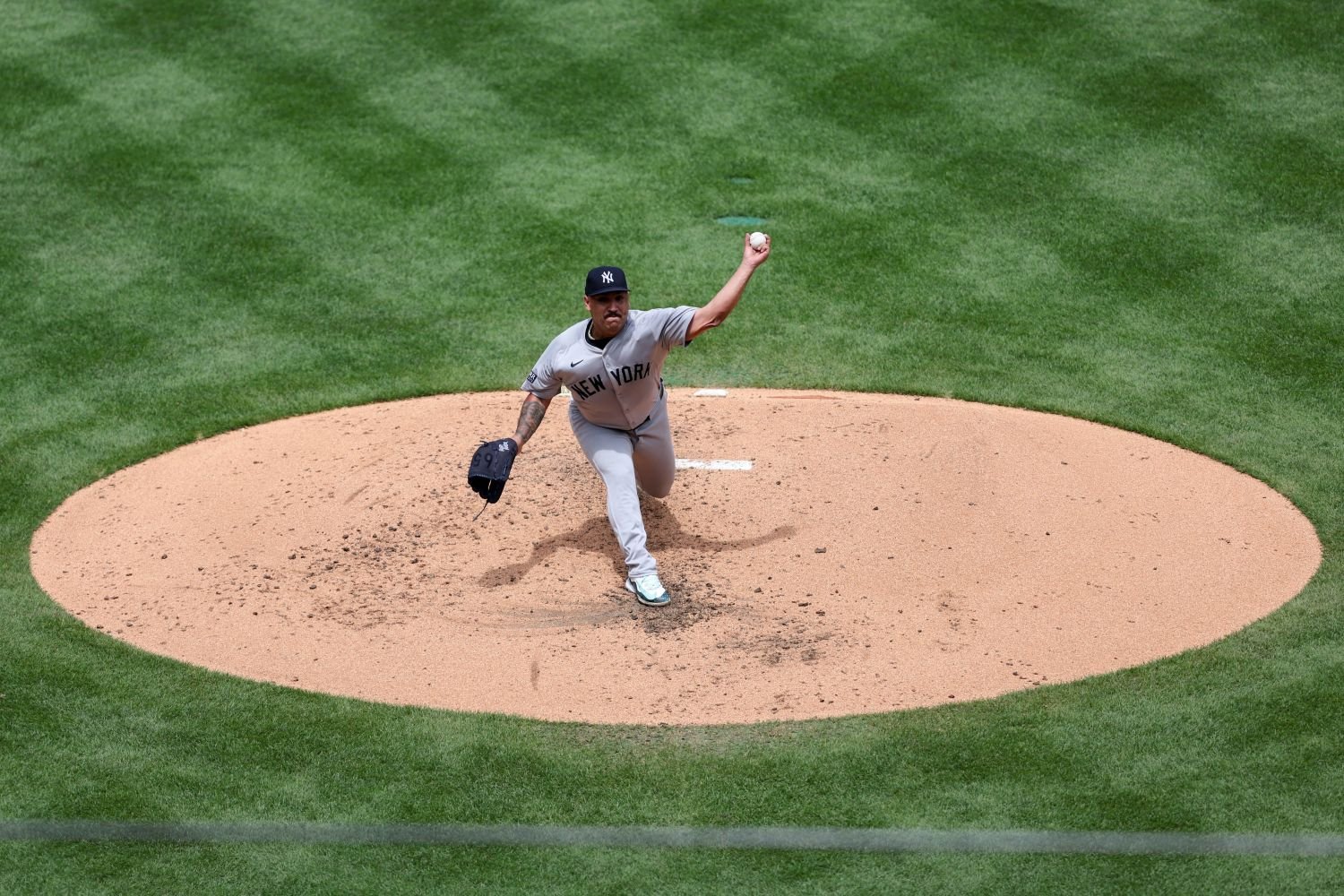 The Brewers have well-oiled systems in place to maximize pitcher performance, even if their velocity or pitch shapes do not turn heads. Milwaukee hurlers enjoy the built-in benefit of an elite defense that turns would-be hits into outs, but they also level up their performance by creating as much deception as possible. Newly acquired Nestor Cortes will receive a boost from excellent outfield defense, but Chris Hook and friends cannot pull out many of the same stops with him that they have for most pitchers in recent years. While they almost certainly have a small tweak or two in mind, Cortes is already plenty deceptive in different ways than any other Brewers pitcher—and most across the league, for that matter. While the Brewers craft a personalized development plan for each individual, their broader methodology for making pitches harder to recognize and track is pretty consistent. They create the most extreme angle from which a pitcher can execute and equip his arsenal with multiple pitches that have different shapes but look similar out of the hand. To create tough angles, some pitchers move to one edge of the rubber, modify their arm slot, or both. That’s what made Bryan Hudson’s fastball, which averages 90 to 92 mph with neither remarkable carry nor unusual run, so challenging to square up. His height, extension, arm slot, and positioning on the rubber create an off-putting visual for the hitter. Hook is also a firm advocate of throwing multiple fastball variations. Because these pitches spin in similar directions, it’s challenging for the naked eye to differentiate them immediately. The pitches’ trajectories separate as they approach the plate: a sinker runs to the arm side, a cutter breaks late to the glove side, and a four-seamer remains straighter, with more carry. Someone with all three can work both sides of the plate and the top of the strike zone with pitches that all appear to have the same spin after release. Twelve of 25 Brewers who threw at least 10 innings in 2024 used two or more kinds of fastballs at least 15% of the time, and six threw three variations regularly. Colin Rea, Frankie Montas, and Bryse Wilson applied this strategy especially well, with the latter also moving to the third-base edge of the rubber to better bust his sinker inside to right-handed hitters. For most Brewers pitchers, promoting deception begins with keeping as many things as possible looking the same for as long as possible. Changes to one’s arm slot, extension, or positioning on the rubber remain constant across every pitch. It’s tough for opponents to know what’s coming until the ball is close to the plate, because everything looks nearly identical leading up to that point. Cortes does the opposite. He creates deception through chaos and inconsistency. The crafty southpaw is well-known for mixing windups and arm slots in attempts to throw hitters off-balance. Freddy Peralta varied the pacing of his windup with three distinct leg kicks down the stretch, but that’s tame in comparison to the exploits of his new rotation mate. It’s the same case for arm angle – Peralta’s rose slightly in the second half, but Cortes’s release points were wide-ranging and unpredictable. In that sense, he’s the inverse of Rea, who excelled at delivering every pitch from the same slot. In the charts above, Cortes’s release cluster is an amalgamation of different arm slots. Some are subtle variations of his default slot, but others are him dropping down to throw sidearm. The chaos has worked. Since the start of the 2021 season, Cortes has pitched to a 3.33 ERA, 3.68 FIP, and 3.84 FIP with a 4.06 strikeout-to-walk ratio. He posted similar numbers in 2024, while tossing a career-high 174 ⅓ innings. Cortes is a uniquely successful pitcher, not a reclamation project like Rea, Montas, Aaron Civale, and Tobias Myers. As such, don’t expect the Brewers to alter much. If anything, Hook may apply his eye for mechanical adjustments to make Cortes’s windup and arm slot alterations more seamless than ever. The more noticeable change the Brewers may pursue is developing a true two-seamer. Cortes’s release point chart indicates he throws a sinker, but only from the sidearm slot. This is Statcast misclassifying sidearm four-seamers: By dropping his arm, Cortes changes the shape pretty dramatically to resemble a two-seamer. Pitch MPH IVB HB 4-Seam/Sinker, Arm Angle ≥ 35° 92.1 19.2 4.9 4-Seam/Sinker, Arm Angle ≤ 30° 90.1 13.8 12.1 In its current form, the sidearm fastball is a show-me pitch. Cortes throws most of his pitches closer to a three-quarters slot, so “two-seamers” accounted for just 1.2% of his offerings in 2024. If he threw a legitimate one from his primary arm slot, it could become a mainstay in his arsenal. The pitch would play well with his riding four-seamer and cutter. If the Brewers see potential for a balanced three-fastball mix, they’ll almost certainly pursue it. Hook will not deprive Cortes of what makes him unique. He always says that the Brewers focus most on what each pitcher does best. However, the front office has recently handed him several pitchers suited for similar methods of masking their pitches. Cortes is a different breed, so Milwaukee’s pitching development brass should embrace the chaos and only apply sporadic elements of their usual deception blueprint.
- 2 comments
-
- 2
-
-
- nestor cortes
- chris hook
- (and 4 more)
-
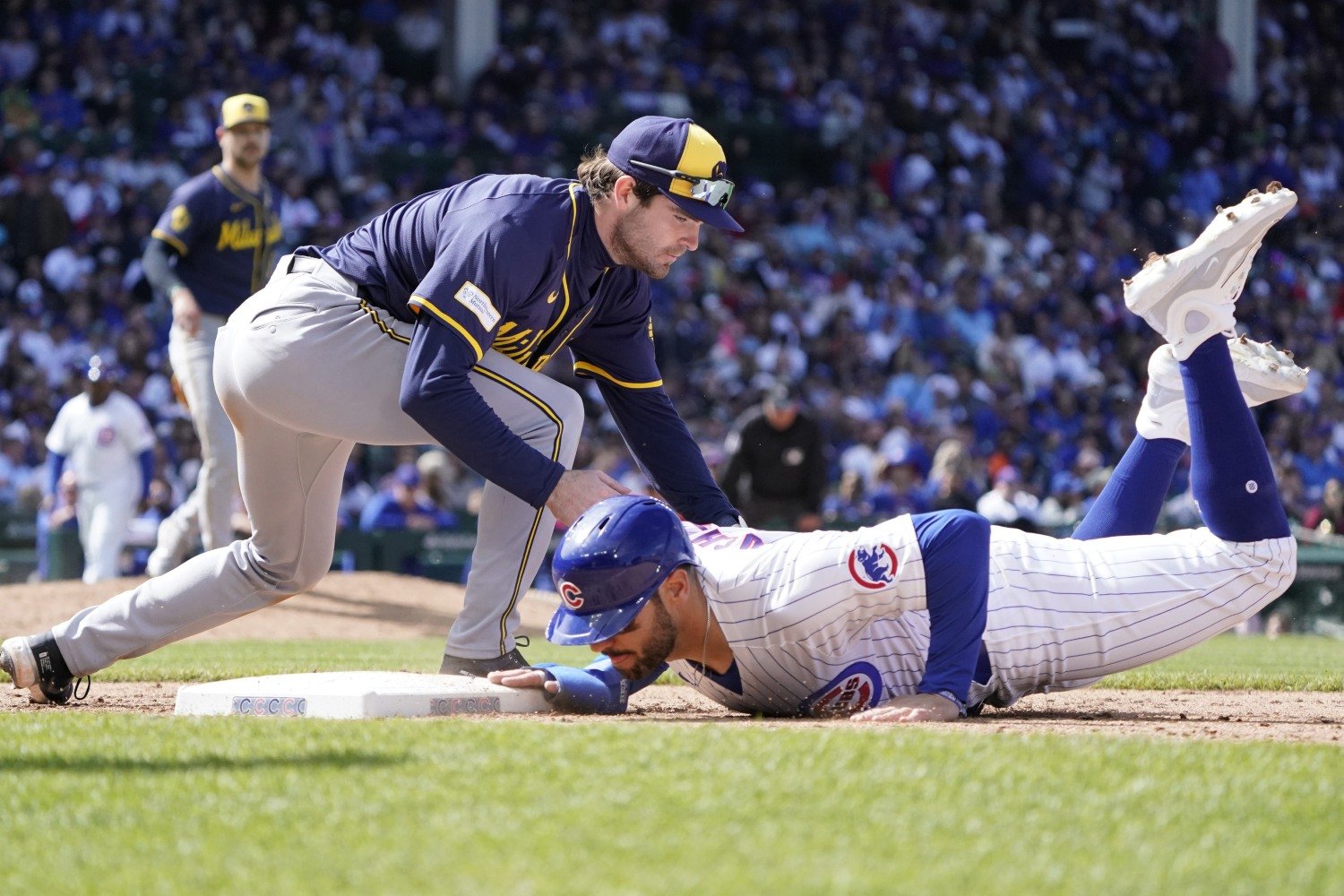 Tyler Black’s first tastes of the big leagues were brief and unsuccessful. The Brewers selected his contract at the end of April, but he only appeared in 18 games, slashing .204/.316/.245 (68 wRC+) in 57 disjointed plate appearances. Despite entering the season as Milwaukee’s No. 4 prospect (according to MLB Pipeline), there was no place for Black on the big-league roster, and he did not push the envelope enough to create one. As things currently stand, it could be a similar story in 2025. There are openings in the lineup. While the Brewers added infielder Caleb Durbin as part of the Devin Williams trade last week, they still have an infield position with no designated starter. Unfortunately, Black did not take well to second or third base in the minor leagues, prompting the organization to move him to first base full-time for most of 2024. Black could be a left-handed complement for Rhys Hoskins at first base, but the Brewers may prioritize competent defense in that role. That’s why Jake Bauers remained on the roster over Black for the entire season, even as his bat cratered in the second half. Perhaps the Brewers view Andruw Monasterio as their best defensive backup first baseman, after he gained his first experience there in 2024. Black has two minor-league options remaining, so the Brewers face no pressure to shoehorn him onto the active roster. They can easily keep him in the organization without rostering him in the majors. At first glance, that may seem like the most compelling argument for hanging onto him instead of dangling him as offseason trade bait. This was why the Brewers could comfortably keep all of their young outfielders as potential logjams brewed. In the event of a roster crunch, they could option one of Garrett Mitchell, Sal Frelick, or Blake Perkins to Triple-A to continue playing regularly. If injury or underperformance created an opening in the outfield, they could recall the demoted player and plug him back into the starting lineup. Mitchell and Christian Yelich’s injury troubles prevented that situation from arising, but the Brewers would not have been in a serious bind had everyone remained healthy. Every young outfielder had (and still has) options, which created roster flexibility. The odd man out would still serve as valuable depth on the 40-man roster because he’d have a direct path to contribute if any other outfielder went down. That’s not so for Black. He’s not an infielder, where his hands and instincts remain clunky. At this moment, he’s effectively confined to DH duty. While Hoskins’s poor defense means Black could fill in without a significant dropoff in the field, he’s not a clean replacement for any other player. Because they can play capable defense at several positions, Monasterio and Isaac Collins have more value as optionable depth. The Brewers can option Black to Triple A, but he’s an inefficient use of a 40-man spot, particularly if they have other plans for reinforcing their first-base depth. The harsh reality is that Black brings little value to this roster, as it’s currently constructed. If he’s rarely a realistic choice for a promotion, he is not genuine depth. Trading away an outfielder is the best way to change that. Black’s speed and athleticism should make him a capable left fielder, and he and Yelich could share time in left and at DH. However, he lacks Mitchell’s upside, Frelick’s experience, and Perkins’s elite glovework as a fourth outfielder. The Brewers may not be comfortable trading a known commodity to accommodate a player with limited outfield reps as a professional. The alternative is trading Black. It comes down to how the Brewers project each player to contribute in 2025 and what they can receive in return. Nothing is forcing a move, but Black’s odd profile and nonexistent fit may prompt them to shop him more aggressively. The depth argument for stashing him in Triple-A is less compelling than it is for other players. Making good on his prospect pedigree now via trade may be the best course of action. There is little question surrounding Black’s excellent plate discipline, bat-to-ball skills, and speed. In those senses, he fits in with his former minor-league peers who have formed a scrappy core throughout the Brewers’ lineup. His offense has a high floor and is MLB-ready. The problem is that his shortcomings render him too limited to fill the open roles on the big-league roster. As a result, he could find himself with another organization before getting a prolonged opportunity to establish himself in Milwaukee.
 -
When a team can option an unestablished player to the minor leagues, that added flexibility often makes it easier to keep him on the 40-man roster. That’s not as much the case for the Brewers and one of their top prospects. Image courtesy of © David Banks-Imagn Images When a team can option an unestablished player to the minor leagues, that added flexibility often makes it easier to keep him on the 40-man roster. That’s not as much the case for the Brewers and one of their top prospects. Tyler Black’s first tastes of the big leagues were brief and unsuccessful. The Brewers selected his contract at the end of April, but he only appeared in 18 games, slashing .204/.316/.245 (68 wRC+) in 57 disjointed plate appearances. Despite entering the season as Milwaukee’s No. 4 prospect (according to MLB Pipeline), there was no place for Black on the big-league roster, and he did not push the envelope enough to create one. As things currently stand, it could be a similar story in 2025. There are openings in the lineup. While the Brewers added infielder Caleb Durbin as part of the Devin Williams trade last week, they still have an infield position with no designated starter. Unfortunately, Black did not take well to second or third base in the minor leagues, prompting the organization to move him to first base full-time for most of 2024. Black could be a left-handed complement for Rhys Hoskins at first base, but the Brewers may prioritize competent defense in that role. That’s why Jake Bauers remained on the roster over Black for the entire season, even as his bat cratered in the second half. Perhaps the Brewers view Andruw Monasterio as their best defensive backup first baseman, after he gained his first experience there in 2024. Black has two minor-league options remaining, so the Brewers face no pressure to shoehorn him onto the active roster. They can easily keep him in the organization without rostering him in the majors. At first glance, that may seem like the most compelling argument for hanging onto him instead of dangling him as offseason trade bait. This was why the Brewers could comfortably keep all of their young outfielders as potential logjams brewed. In the event of a roster crunch, they could option one of Garrett Mitchell, Sal Frelick, or Blake Perkins to Triple-A to continue playing regularly. If injury or underperformance created an opening in the outfield, they could recall the demoted player and plug him back into the starting lineup. Mitchell and Christian Yelich’s injury troubles prevented that situation from arising, but the Brewers would not have been in a serious bind had everyone remained healthy. Every young outfielder had (and still has) options, which created roster flexibility. The odd man out would still serve as valuable depth on the 40-man roster because he’d have a direct path to contribute if any other outfielder went down. That’s not so for Black. He’s not an infielder, where his hands and instincts remain clunky. At this moment, he’s effectively confined to DH duty. While Hoskins’s poor defense means Black could fill in without a significant dropoff in the field, he’s not a clean replacement for any other player. Because they can play capable defense at several positions, Monasterio and Isaac Collins have more value as optionable depth. The Brewers can option Black to Triple A, but he’s an inefficient use of a 40-man spot, particularly if they have other plans for reinforcing their first-base depth. The harsh reality is that Black brings little value to this roster, as it’s currently constructed. If he’s rarely a realistic choice for a promotion, he is not genuine depth. Trading away an outfielder is the best way to change that. Black’s speed and athleticism should make him a capable left fielder, and he and Yelich could share time in left and at DH. However, he lacks Mitchell’s upside, Frelick’s experience, and Perkins’s elite glovework as a fourth outfielder. The Brewers may not be comfortable trading a known commodity to accommodate a player with limited outfield reps as a professional. The alternative is trading Black. It comes down to how the Brewers project each player to contribute in 2025 and what they can receive in return. Nothing is forcing a move, but Black’s odd profile and nonexistent fit may prompt them to shop him more aggressively. The depth argument for stashing him in Triple-A is less compelling than it is for other players. Making good on his prospect pedigree now via trade may be the best course of action. There is little question surrounding Black’s excellent plate discipline, bat-to-ball skills, and speed. In those senses, he fits in with his former minor-league peers who have formed a scrappy core throughout the Brewers’ lineup. His offense has a high floor and is MLB-ready. The problem is that his shortcomings render him too limited to fill the open roles on the big-league roster. As a result, he could find himself with another organization before getting a prolonged opportunity to establish himself in Milwaukee. View full article
-
Brewers Attempt Latest Competitive Balancing Act by Trading Devin Williams
Jack Stern posted an article in Brewers
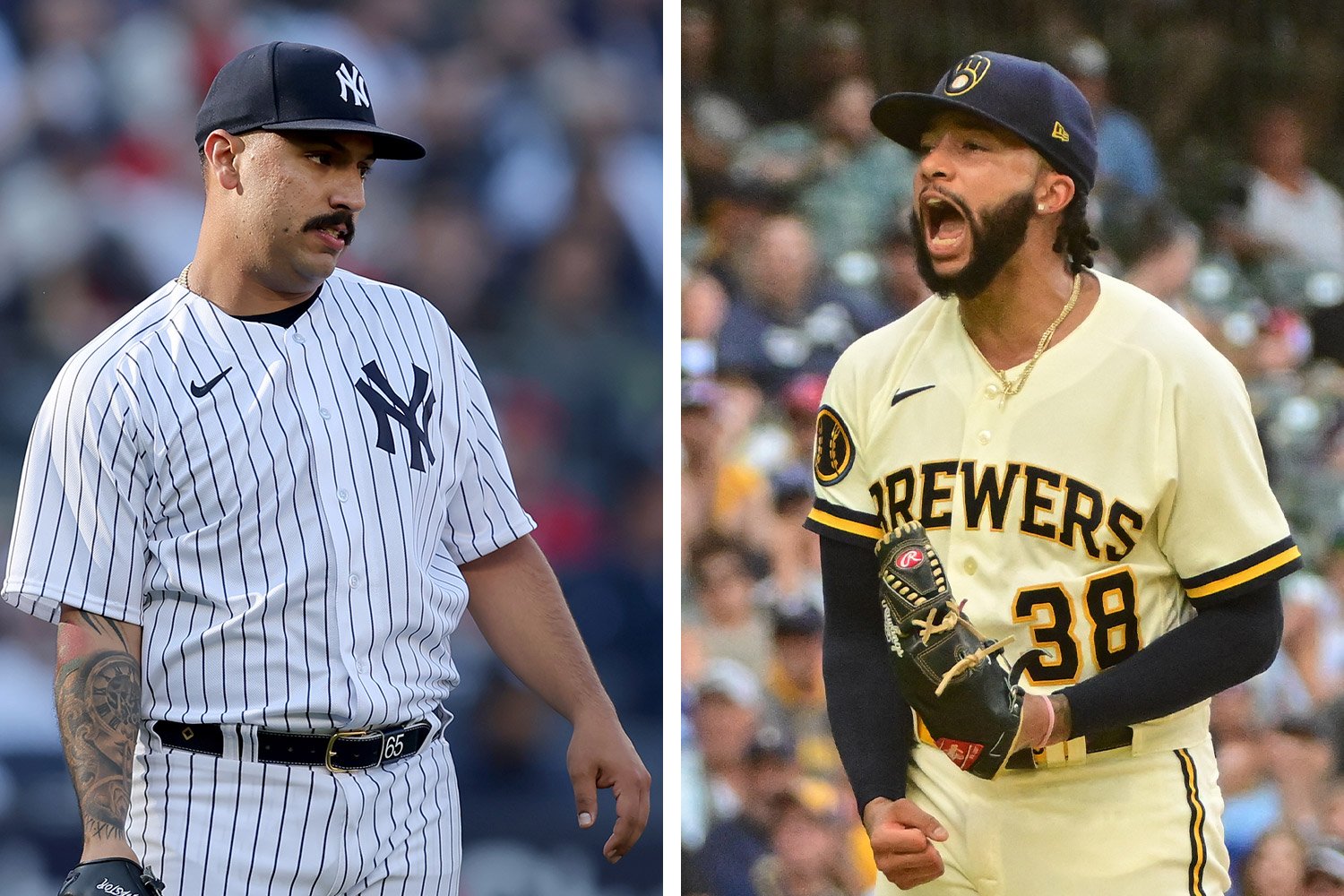 Hours after he completed a trade that sent Devin Williams to the New York Yankees for left-handed starter Nestor Cortes, infielder Caleb Durbin, and cash, the theme of Matt Arnold’s summary of the deal was balance. Balance is at the heart of the Brewers’ competitive vision. Playing in baseball’s smallest market, the club has made clear its approach to winning the franchise’s first World Series championship: build perennial playoff contenders instead of defined and limited windows that could require full-scale rebuilds after they close. That approach demands a constant balance between the short and long term. It means the Brewers must decide whether to keep star players for the final seasons of expiring contracts, after which they will not retain their services, or trade them for long-term assets. In some cases, it makes the most sense to trade the player, as the Brewers did with Corbin Burnes. Other times, the proper balance entails keeping them, as they did with Willy Adames. In Williams’s case, a trade was the proper decision and inevitable outcome. Even the best closers are one-inning relievers who typically have short shelf lives at baseball’s most volatile position. Among valuable contributors, they’re the most replaceable. That’s especially true for a Brewers club that produces new breakout relievers every season. This balancing act took a different shape than those before it, mainly because half of the return is also on an expiring contract. Cortes is projected to earn the same $7.7 million arbitration salary as Williams in his final year before free agency, but the Yankees sent $2 million to cover roughly a quarter of it. Arnold felt it was the right move to both support the 2025 Brewers and add a long-term contributor. “It’s a balance with both of the players involved,” he said. “I think the first is trying to help the team today, and we think we definitely do that with bringing somebody in with the pedigree of Nestor Cortes. Having been the opening day starter for the Yankees just a year ago, he brings a real stability to our rotation.” Cortes became the odd man out in a stacked Yankees rotation but profiles as arguably Milwaukee’s second-best starting pitcher. His peripherals since 2021 and in 2024 rival Freddy Peralta’s and put him ahead of other rotation options like Tobias Myers, Aaron Civale, DL Hall, and possibly what could be a diminished version of Brandon Woodruff after his return from shoulder surgery. Pitcher ERA- FIP- SIERA Nestor Cortes (2021-2024) 82 87 3.84 Nestor Cortes (2024) 94 91 4.02 Freddy Peralta (2021-2024) 83 86 3.55 Freddy Peralta (2024) 89 101 3.78 Tobias Myers (2024) 73 96 3.99 Aaron Civale (Career) 98 101 4.18 Aaron Civale (2024 MIL) 85 117 4.39 DL Hall (2024) 122 114 4.36 He’s a perfect fit for Chris Hook and company. Standing 5-foot-11 with unremarkable velocity, Cortes is not the flashiest pitcher. He mixes six pitches from a myriad of arm angles to keep hitters off-balance. Cortes relies heavily on his four-seamer and cutter but threw just 40 sinkers in 174 ⅓ innings. The Brewers will likely make the sinker a mainstay in his arsenal, adding the arm-side run he lacks in how he attacks hitters. Unlike Myers, Civale, and trade deadline acquisition Frankie Montas, Cortes does not need fixing. He’s already a reliable mid-rotation starter. The Brewers insist he is fully healthy after a late-season elbow scare, positioning him to be one of the most valuable members of the 2025 rotation. Durbin is the long-term piece in the deal and the player who could most impact how it ages. The Yankees were set to name him their starting second baseman before the deal, but he’s best suited for a utility role. His place on the roster has yet to be determined, but he figures to see plenty of big-league at-bats throughout 2025. Excellent plate discipline, productive baserunning, and versatility are his calling cards. In 375 plate appearances at Triple-A Scranton/Wilkes-Barre in 2024, Durbin walked (12.5%) more than he struck out (9.9%) and stole 29 bases. While primarily a second baseman, he also logged time at third base and shortstop with cameos in the outfield. At 5-foot-6, he’s one of the shortest players in professional baseball. His short levers give him excellent bat-to-ball skills, but there should be serious concerns about whether he will hit for any power against big-league pitching. Durbin’s average exit velocity in Triple-A was just 83.8 mph, and his barrel rate was just 3.3%. Beneath his .375 wOBA was a less-impressive .315 xwOBA. Durbin missed two months midseason with a broken wrist, an injury that often saps hitters of their raw power. Still, his 84.2 mph average exit velocity and 1.3% barrel rate in two months before the injury were similarly poor. At first glance, those are strikingly similar red flags to those of Sal Frelick and Brice Turang, two players whose lack of power has seriously limited their ceilings. In parts of two big-league seasons, Frelick has hit for an 88 wRC+ and Turang for a 76 wRC+. Whereas Frelick and Turang always employed a balanced approach that featured plenty of hits to the opposite field, Durbin is a heavy pull hitter. He pulled 56.4% of his contact in Triple-A while hitting most of those batted balls at ideal launch angles. That has allowed him to achieve greater power numbers than one would expect. He hit 10 home runs in the regular season and five more in 117 plate appearances in the Arizona Fall League. “You’ve seen him start to graduate and gravitate into a little bit more power as his career has progressed in a really good way,” Arnold said. “We saw that continuing to progress, especially in the fall league this year, while continuing to face higher-quality pitching.” Durbin pulled all 10 of his regular-season home runs and hit seven down the left-field line. Pulling line drives down the line also helped him hit 23 doubles. It worked well in the minor leagues but might not carry over to the big leagues. Durbin will face better pitching while playing in bigger ballparks where the ball does not carry as well. The fact that half of his home runs left the bat at less than 100 mph is alarming. Isaac Paredes led right-handed hitters with nine such home runs in 2024. No one else exceeded six, and every name in that tier of the leaderboard hits the ball much harder than Durbin. Durbin has a high floor, and his profile meshes well with the Brewers’ current offensive identity and scrappy mentally under Pat Murphy. “I called Murph earlier to talk to him about it, and he was pumped,” Arnold said. “He got to see a lot of him in the fall league, being located in Arizona, and he’s been watching him out there and said he loved the way this guy plays. Pat Murphy’s leadership, that’s exactly what he’s looking for, those kind of grinder-type players and guys that get the most out of their ability.” While the fit is clear from that standpoint, it also makes Durbin feel redundant. In Frelick and Turang, the Brewers already start two scrappy hitters with minimal power every day against right-handed pitchers. It raises the question of how many of them they can roster. It’s fair to wonder if the Brewers can better flank their existing core with more explosive athletes with greater power potential. Some of those questions could be resolved by further offseason moves. For now, Durbin and Cortes are a fair return for one year of Williams. It was not an earth-shattering package, but relievers with one year of control rarely command that kind of coup during the offseason. The immediate takeaway is that this deal has minimal risk of turning out poorly for the Brewers. They still have a loaded bullpen, their rotation is in better shape than it was before Friday, and they added a capable MLB position player. If Durbin hits for even modest power, it could prove another successful balancing act by Milwaukee’s front office.
 -
The Brewers made the correct call to trade their star closer and received a fair return. Time will tell if they chose the right package. The Brewers made the correct call to trade their star closer and received a fair return. Time will tell if they chose the right package. Hours after he completed a trade that sent Devin Williams to the New York Yankees for left-handed starter Nestor Cortes, infielder Caleb Durbin, and cash, the theme of Matt Arnold’s summary of the deal was balance. Balance is at the heart of the Brewers’ competitive vision. Playing in baseball’s smallest market, the club has made clear its approach to winning the franchise’s first World Series championship: build perennial playoff contenders instead of defined and limited windows that could require full-scale rebuilds after they close. That approach demands a constant balance between the short and long term. It means the Brewers must decide whether to keep star players for the final seasons of expiring contracts, after which they will not retain their services, or trade them for long-term assets. In some cases, it makes the most sense to trade the player, as the Brewers did with Corbin Burnes. Other times, the proper balance entails keeping them, as they did with Willy Adames. In Williams’s case, a trade was the proper decision and inevitable outcome. Even the best closers are one-inning relievers who typically have short shelf lives at baseball’s most volatile position. Among valuable contributors, they’re the most replaceable. That’s especially true for a Brewers club that produces new breakout relievers every season. This balancing act took a different shape than those before it, mainly because half of the return is also on an expiring contract. Cortes is projected to earn the same $7.7 million arbitration salary as Williams in his final year before free agency, but the Yankees sent $2 million to cover roughly a quarter of it. Arnold felt it was the right move to both support the 2025 Brewers and add a long-term contributor. “It’s a balance with both of the players involved,” he said. “I think the first is trying to help the team today, and we think we definitely do that with bringing somebody in with the pedigree of Nestor Cortes. Having been the opening day starter for the Yankees just a year ago, he brings a real stability to our rotation.” Cortes became the odd man out in a stacked Yankees rotation but profiles as arguably Milwaukee’s second-best starting pitcher. His peripherals since 2021 and in 2024 rival Freddy Peralta’s and put him ahead of other rotation options like Tobias Myers, Aaron Civale, DL Hall, and possibly what could be a diminished version of Brandon Woodruff after his return from shoulder surgery. Pitcher ERA- FIP- SIERA Nestor Cortes (2021-2024) 82 87 3.84 Nestor Cortes (2024) 94 91 4.02 Freddy Peralta (2021-2024) 83 86 3.55 Freddy Peralta (2024) 89 101 3.78 Tobias Myers (2024) 73 96 3.99 Aaron Civale (Career) 98 101 4.18 Aaron Civale (2024 MIL) 85 117 4.39 DL Hall (2024) 122 114 4.36 He’s a perfect fit for Chris Hook and company. Standing 5-foot-11 with unremarkable velocity, Cortes is not the flashiest pitcher. He mixes six pitches from a myriad of arm angles to keep hitters off-balance. Cortes relies heavily on his four-seamer and cutter but threw just 40 sinkers in 174 ⅓ innings. The Brewers will likely make the sinker a mainstay in his arsenal, adding the arm-side run he lacks in how he attacks hitters. Unlike Myers, Civale, and trade deadline acquisition Frankie Montas, Cortes does not need fixing. He’s already a reliable mid-rotation starter. The Brewers insist he is fully healthy after a late-season elbow scare, positioning him to be one of the most valuable members of the 2025 rotation. Durbin is the long-term piece in the deal and the player who could most impact how it ages. The Yankees were set to name him their starting second baseman before the deal, but he’s best suited for a utility role. His place on the roster has yet to be determined, but he figures to see plenty of big-league at-bats throughout 2025. Excellent plate discipline, productive baserunning, and versatility are his calling cards. In 375 plate appearances at Triple-A Scranton/Wilkes-Barre in 2024, Durbin walked (12.5%) more than he struck out (9.9%) and stole 29 bases. While primarily a second baseman, he also logged time at third base and shortstop with cameos in the outfield. At 5-foot-6, he’s one of the shortest players in professional baseball. His short levers give him excellent bat-to-ball skills, but there should be serious concerns about whether he will hit for any power against big-league pitching. Durbin’s average exit velocity in Triple-A was just 83.8 mph, and his barrel rate was just 3.3%. Beneath his .375 wOBA was a less-impressive .315 xwOBA. Durbin missed two months midseason with a broken wrist, an injury that often saps hitters of their raw power. Still, his 84.2 mph average exit velocity and 1.3% barrel rate in two months before the injury were similarly poor. At first glance, those are strikingly similar red flags to those of Sal Frelick and Brice Turang, two players whose lack of power has seriously limited their ceilings. In parts of two big-league seasons, Frelick has hit for an 88 wRC+ and Turang for a 76 wRC+. Whereas Frelick and Turang always employed a balanced approach that featured plenty of hits to the opposite field, Durbin is a heavy pull hitter. He pulled 56.4% of his contact in Triple-A while hitting most of those batted balls at ideal launch angles. That has allowed him to achieve greater power numbers than one would expect. He hit 10 home runs in the regular season and five more in 117 plate appearances in the Arizona Fall League. “You’ve seen him start to graduate and gravitate into a little bit more power as his career has progressed in a really good way,” Arnold said. “We saw that continuing to progress, especially in the fall league this year, while continuing to face higher-quality pitching.” Durbin pulled all 10 of his regular-season home runs and hit seven down the left-field line. Pulling line drives down the line also helped him hit 23 doubles. It worked well in the minor leagues but might not carry over to the big leagues. Durbin will face better pitching while playing in bigger ballparks where the ball does not carry as well. The fact that half of his home runs left the bat at less than 100 mph is alarming. Isaac Paredes led right-handed hitters with nine such home runs in 2024. No one else exceeded six, and every name in that tier of the leaderboard hits the ball much harder than Durbin. Durbin has a high floor, and his profile meshes well with the Brewers’ current offensive identity and scrappy mentally under Pat Murphy. “I called Murph earlier to talk to him about it, and he was pumped,” Arnold said. “He got to see a lot of him in the fall league, being located in Arizona, and he’s been watching him out there and said he loved the way this guy plays. Pat Murphy’s leadership, that’s exactly what he’s looking for, those kind of grinder-type players and guys that get the most out of their ability.” While the fit is clear from that standpoint, it also makes Durbin feel redundant. In Frelick and Turang, the Brewers already start two scrappy hitters with minimal power every day against right-handed pitchers. It raises the question of how many of them they can roster. It’s fair to wonder if the Brewers can better flank their existing core with more explosive athletes with greater power potential. Some of those questions could be resolved by further offseason moves. For now, Durbin and Cortes are a fair return for one year of Williams. It was not an earth-shattering package, but relievers with one year of control rarely command that kind of coup during the offseason. The immediate takeaway is that this deal has minimal risk of turning out poorly for the Brewers. They still have a loaded bullpen, their rotation is in better shape than it was before Friday, and they added a capable MLB position player. If Durbin hits for even modest power, it could prove another successful balancing act by Milwaukee’s front office. View full article
-
Brewers Could Have More Than Outside Chance in Roki Sasaki Sweepstakes
Jack Stern posted an article in Brewers
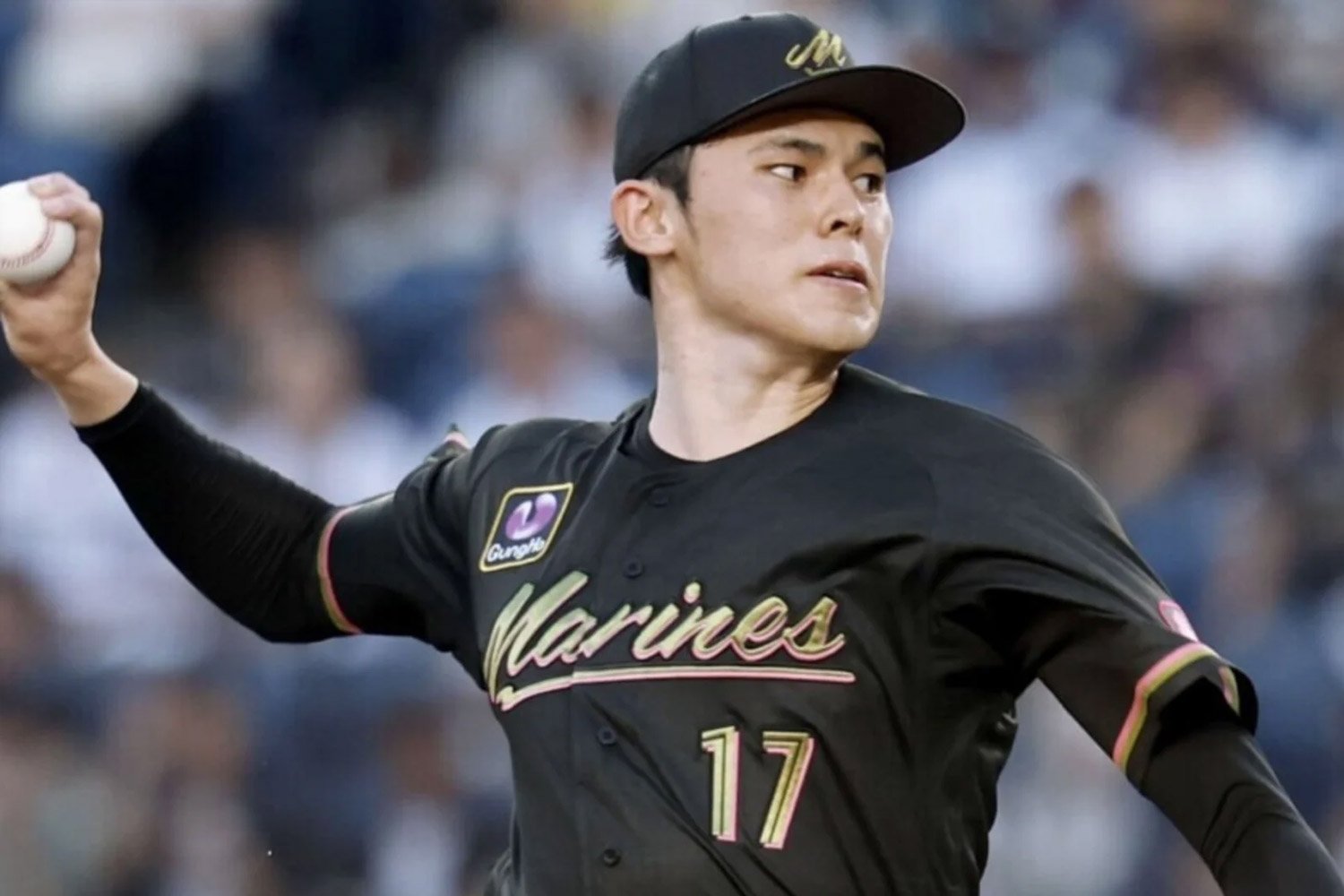 The Roki Sasaki sweepstakes officially opened on Tuesday. The Japanese phenom was posted by the Chiba Lotte Marines, opening a 45-day negotiating window for big-league teams. By making the stateside jump now, Sasaki has already established that money is not his prime concern as he chooses his next club. Because he is just 23 years old, he’s limited to signing a minor-league deal with a signing bonus from a team’s international signing bonus pool as his only guaranteed money. After selecting his contract, that club can employ him for the standard six years of control before he hits free agency. Those restrictions, along with rumblings in the weeks preceding his posting that an organization’s pitching development infrastructure matters more to Sasaki than its market size, created a glimmer of speculative hope that the Brewers could make a competitive pitch to the right-hander. Milwaukee has developed a reputation as an excellent landing spot for pitchers looking to elevate their game, and its $7,555,500 bonus pool for the 2025 international signing period is in the top tier of clubs. Fresh comments by Sasaki’s agent, Joel Wolfe, may add more fuel to that fire. Speaking to reporters at the winter meetings in Dallas, Wolfe speculated that Sasaki’s tumultuous relationship with Japanese media while pitching for the Marines may sway him toward a “soft landing” with a small- or mid-market team. While fans of small-market teams will undoubtedly use that soundbite to argue that their team’s odds of signing Sasaki just increased, such a conclusion is reading too much into Wolfe’s comments. He emphasized that he had not discussed market sizes with Sasaki. From his perspective, there’s no reason to publicly rule out any team on the first official day of the negotiation process. At the same time, this is not just shallow posturing by Sasaki’s camp. Given the league-imposed financial limit on his eventual contract, he and Wolfe are almost certainly open to hearing as many pitches as possible that are not centered on money. If the Brewers are interested in Sasaki, they won’t be competing on a level playing field with other organizations, but the slope isn’t nearly as steep as it usually is in pursuits of such a talent. It’s easy to whip up potential ideas they may have for refining what is widely regarded as some of the best stuff in professional baseball. Sasaki’s arsenal is headlined by a powerful fastball with triple-digit velocity. When he appeared in the 2023 World Baseball Classic, it averaged 100.3 mph with 16.8 inches of induced vertical break and 12 inches of horizontal break. On top of being blazing fast, that’s a unique fastball shape. Most pitchers excel at generating carry or run on their primary fastball, but rarely both; Sasaki’s four-seamer has above-average carry and run. However, its velocity and total movement took steps back in 2024 amid speculation over an arm injury. His signature pitch is a unique upper-80s splitter. Because of its gyroscopic spin (the same kind of spin as a football spiral), it often sharply drops straight down or cuts to his glove side instead of fading arm-side like most splitters. Sasaki’s third pitch is a slider with up to one foot of sweeping movement but an inconsistent shape. The Brewers emphasize throwing multiple fastballs to maximize deception. They might do the same for Sasaki by splitting his heater into two pitches – a riding four-seamer he can use at the top of the zone and a sinker he can throw at the bottom and run inside on right-handed batters. Because his splitter often behaves like a short bullet slider, finding a breaking ball shape that does not overlap with it should be the top priority for any team that acquires him. Sasaki has no shortage of suitors, but if he’s looking for a winning organization with the resources to help him improve, the Brewers can make a competitive pitch. Don’t expect them to land him, but know they have a better shot at this free-agent talent than they usually do.
 -
The Brewers are not favorites for the Japanese phenom, whom pundits have projected as most likely to land with a West Coast contender. However, comments from his agent at the winter meetings provided another hint that they could make a competitive pitch for his services. The Brewers are not favorites for the Japanese phenom, whom pundits have projected as most likely to land with a West Coast contender. However, comments from his agent at the winter meetings provided another hint that they could make a competitive pitch for his services. The Roki Sasaki sweepstakes officially opened on Tuesday. The Japanese phenom was posted by the Chiba Lotte Marines, opening a 45-day negotiating window for big-league teams. By making the stateside jump now, Sasaki has already established that money is not his prime concern as he chooses his next club. Because he is just 23 years old, he’s limited to signing a minor-league deal with a signing bonus from a team’s international signing bonus pool as his only guaranteed money. After selecting his contract, that club can employ him for the standard six years of control before he hits free agency. Those restrictions, along with rumblings in the weeks preceding his posting that an organization’s pitching development infrastructure matters more to Sasaki than its market size, created a glimmer of speculative hope that the Brewers could make a competitive pitch to the right-hander. Milwaukee has developed a reputation as an excellent landing spot for pitchers looking to elevate their game, and its $7,555,500 bonus pool for the 2025 international signing period is in the top tier of clubs. Fresh comments by Sasaki’s agent, Joel Wolfe, may add more fuel to that fire. Speaking to reporters at the winter meetings in Dallas, Wolfe speculated that Sasaki’s tumultuous relationship with Japanese media while pitching for the Marines may sway him toward a “soft landing” with a small- or mid-market team. While fans of small-market teams will undoubtedly use that soundbite to argue that their team’s odds of signing Sasaki just increased, such a conclusion is reading too much into Wolfe’s comments. He emphasized that he had not discussed market sizes with Sasaki. From his perspective, there’s no reason to publicly rule out any team on the first official day of the negotiation process. At the same time, this is not just shallow posturing by Sasaki’s camp. Given the league-imposed financial limit on his eventual contract, he and Wolfe are almost certainly open to hearing as many pitches as possible that are not centered on money. If the Brewers are interested in Sasaki, they won’t be competing on a level playing field with other organizations, but the slope isn’t nearly as steep as it usually is in pursuits of such a talent. It’s easy to whip up potential ideas they may have for refining what is widely regarded as some of the best stuff in professional baseball. Sasaki’s arsenal is headlined by a powerful fastball with triple-digit velocity. When he appeared in the 2023 World Baseball Classic, it averaged 100.3 mph with 16.8 inches of induced vertical break and 12 inches of horizontal break. On top of being blazing fast, that’s a unique fastball shape. Most pitchers excel at generating carry or run on their primary fastball, but rarely both; Sasaki’s four-seamer has above-average carry and run. However, its velocity and total movement took steps back in 2024 amid speculation over an arm injury. His signature pitch is a unique upper-80s splitter. Because of its gyroscopic spin (the same kind of spin as a football spiral), it often sharply drops straight down or cuts to his glove side instead of fading arm-side like most splitters. Sasaki’s third pitch is a slider with up to one foot of sweeping movement but an inconsistent shape. The Brewers emphasize throwing multiple fastballs to maximize deception. They might do the same for Sasaki by splitting his heater into two pitches – a riding four-seamer he can use at the top of the zone and a sinker he can throw at the bottom and run inside on right-handed batters. Because his splitter often behaves like a short bullet slider, finding a breaking ball shape that does not overlap with it should be the top priority for any team that acquires him. Sasaki has no shortage of suitors, but if he’s looking for a winning organization with the resources to help him improve, the Brewers can make a competitive pitch. Don’t expect them to land him, but know they have a better shot at this free-agent talent than they usually do. View full article
-
The Brewers knew this day was coming and made the right decisions as it approached. They and Willy Adames can happily reflect on his time in Milwaukee while productively moving forward. Image courtesy of © Bill Streicher-Imagn Images The Brewers knew this day was coming and made the right decisions as it approached. They and Willy Adames can happily reflect on his time in Milwaukee while productively moving forward. The Willy Adames era of Brewers baseball is over. ESPN’s Jeff Passan reported on Saturday afternoon that the veteran shortstop agreed to a seven-year, $182 million deal with the San Francisco Giants, pending a physical. A four-year partnership that began with Adames’s acquisition from the Tampa Bay Rays in May 2021 is now in the rearview mirror. During that time, he quickly became a leader for the Brewers on and off the field. Adames immediately brought stability to the shortstop position. He posted a 113 wRC+ and belted 107 home runs, surpassing 30 homers in two seasons. Paired with solid defense in most of those years, Baseball-Reference credited him with 14 wins above replacement as a Brewer. He also emerged as the most prominent veteran leader in the clubhouse. Several young Brewers players have cited Adames’s mentorship as impactful in their development. He was a leading member of Jackson Chourio’s support group, which helped the 20-year-old rookie break out as one of the club’s best players from June through the rest of the season. Brice Turang credited Adames with helping him become a Platinum Glove Award winner at second base. His impending departure was a central talking point dating back to last offseason, and it lingered amid another successful regular season for the club. While never uttered publicly in certain terms, the consensus was that Adames would sign a lucrative contract in a larger market upon hitting free agency. Faced with this looming reality, the Brewers were at a crossroads as Adames entered his final season of club control. They chose the right path. Pundits speculated that the club would follow its recent precedent of trading players on expiring contracts. In a desire to compete every year, the Brewers flipped Josh Hader and Corbin Burnes to recoup long-term value before they left as free agents. Counterbuilding moves are all about balance, though. Hader was a one-inning reliever with a potential replacement behind him in Devin Williams. Burnes was a durable starter with elite top-of-the-rotation upside, but pitching development is the Brewers’ specialty. They could keep chugging along without both pitchers, and they did. The Adames case was different. He was too valuable at a premium position and as a clubhouse leader, and his presence assumed even greater importance as one of the few holdovers after an offseason of upheaval. Trading him would have severely disrupted the competitive vision for 2024. The immediate cost did not outweigh the long-term benefits. With this in mind, the Brewers retained Adames through his final campaign before free agency. General manager Matt Arnold and owner Mark Attanasio revealed during the season that they rejected several trade offers to do so. He played in a career-high 161 games, hitting .251/.331/.462 (119 wRC+) with 32 home runs, the second most by a primary shortstop in franchise history. Manager Pat Murphy frequently cited him as one of his clubhouse pillars. That platform showing cemented his eventual departure. Adames was among the few big fish in a lackluster infield free-agent market. Murphy and Attanasio openly admitted multiple times they expected other clubs would promise him more money than the Brewers were willing to devote to one player. As they did in keeping him through his original years of club control, the Brewers made the right choice in not re-signing Adames to a deal in the neighborhood of the guarantee the Giants gave him. Red flags in his profile paint Adames as a candidate to age poorly. His alarming defensive dropoff (8 Defensive Runs Saved in 2023 to -16 in 2024) raises questions about how long he’ll remain at shortstop. While he’s walked at a 10.9% clip over the last two seasons, his chase rate is roughly average. As a power hitter with a long and violent swing, his decline could hit harder and faster than others as he loses bat speed with age. All of this means there’s a risk Adames plays out much of his deal as a third baseman with unremarkable or below-average offense. The Giants are evidently comfortable with assuming that risk, but it would not have been a wise gamble for his now-former team. The Brewers played their cards right. Knowing his value to the 2024 team, they kept Adames to be integral to another winning season. When he elected free agency, they extended a qualifying offer to ensure a compensation pick after the first round of the 2025 draft. In his four seasons in Milwaukee, the Brewers won 366 games – the fifth-most in baseball – and reached the postseason thrice. While neither side accomplished the ultimate goal of winning a World Series during that time, both received just about everything else they sought. The Brewers received what will likely go down as Adames’s best on-field seasons amid the most successful run in franchise history, a lasting clubhouse culture he helped build, and an extra top-30 pick in next summer’s draft on his way out. Adames earned his free-agent payday and enjoyed one last ride with an organization he grew to love before inking his new deal. Was it the storybook ending of Adames winning a championship in Milwaukee? No. But as the book closes on his Brewers tenure, both parties should be pleased with the last four seasons and content with the transition to the next phase of his career. View full article
-
Brewers Played Their Cards Right Leading Into Willy Adames's Departure
Jack Stern posted an article in Brewers
 The Willy Adames era of Brewers baseball is over. ESPN’s Jeff Passan reported on Saturday afternoon that the veteran shortstop agreed to a seven-year, $182 million deal with the San Francisco Giants, pending a physical. A four-year partnership that began with Adames’s acquisition from the Tampa Bay Rays in May 2021 is now in the rearview mirror. During that time, he quickly became a leader for the Brewers on and off the field. Adames immediately brought stability to the shortstop position. He posted a 113 wRC+ and belted 107 home runs, surpassing 30 homers in two seasons. Paired with solid defense in most of those years, Baseball-Reference credited him with 14 wins above replacement as a Brewer. He also emerged as the most prominent veteran leader in the clubhouse. Several young Brewers players have cited Adames’s mentorship as impactful in their development. He was a leading member of Jackson Chourio’s support group, which helped the 20-year-old rookie break out as one of the club’s best players from June through the rest of the season. Brice Turang credited Adames with helping him become a Platinum Glove Award winner at second base. His impending departure was a central talking point dating back to last offseason, and it lingered amid another successful regular season for the club. While never uttered publicly in certain terms, the consensus was that Adames would sign a lucrative contract in a larger market upon hitting free agency. Faced with this looming reality, the Brewers were at a crossroads as Adames entered his final season of club control. They chose the right path. Pundits speculated that the club would follow its recent precedent of trading players on expiring contracts. In a desire to compete every year, the Brewers flipped Josh Hader and Corbin Burnes to recoup long-term value before they left as free agents. Counterbuilding moves are all about balance, though. Hader was a one-inning reliever with a potential replacement behind him in Devin Williams. Burnes was a durable starter with elite top-of-the-rotation upside, but pitching development is the Brewers’ specialty. They could keep chugging along without both pitchers, and they did. The Adames case was different. He was too valuable at a premium position and as a clubhouse leader, and his presence assumed even greater importance as one of the few holdovers after an offseason of upheaval. Trading him would have severely disrupted the competitive vision for 2024. The immediate cost did not outweigh the long-term benefits. With this in mind, the Brewers retained Adames through his final campaign before free agency. General manager Matt Arnold and owner Mark Attanasio revealed during the season that they rejected several trade offers to do so. He played in a career-high 161 games, hitting .251/.331/.462 (119 wRC+) with 32 home runs, the second most by a primary shortstop in franchise history. Manager Pat Murphy frequently cited him as one of his clubhouse pillars. That platform showing cemented his eventual departure. Adames was among the few big fish in a lackluster infield free-agent market. Murphy and Attanasio openly admitted multiple times they expected other clubs would promise him more money than the Brewers were willing to devote to one player. As they did in keeping him through his original years of club control, the Brewers made the right choice in not re-signing Adames to a deal in the neighborhood of the guarantee the Giants gave him. Red flags in his profile paint Adames as a candidate to age poorly. His alarming defensive dropoff (8 Defensive Runs Saved in 2023 to -16 in 2024) raises questions about how long he’ll remain at shortstop. While he’s walked at a 10.9% clip over the last two seasons, his chase rate is roughly average. As a power hitter with a long and violent swing, his decline could hit harder and faster than others as he loses bat speed with age. All of this means there’s a risk Adames plays out much of his deal as a third baseman with unremarkable or below-average offense. The Giants are evidently comfortable with assuming that risk, but it would not have been a wise gamble for his now-former team. The Brewers played their cards right. Knowing his value to the 2024 team, they kept Adames to be integral to another winning season. When he elected free agency, they extended a qualifying offer to ensure a compensation pick after the first round of the 2025 draft. In his four seasons in Milwaukee, the Brewers won 366 games – the fifth-most in baseball – and reached the postseason thrice. While neither side accomplished the ultimate goal of winning a World Series during that time, both received just about everything else they sought. The Brewers received what will likely go down as Adames’s best on-field seasons amid the most successful run in franchise history, a lasting clubhouse culture he helped build, and an extra top-30 pick in next summer’s draft on his way out. Adames earned his free-agent payday and enjoyed one last ride with an organization he grew to love before inking his new deal. Was it the storybook ending of Adames winning a championship in Milwaukee? No. But as the book closes on his Brewers tenure, both parties should be pleased with the last four seasons and content with the transition to the next phase of his career.
 -
 While Brice Turang progressed through the farm system as the Brewers’ homegrown shortstop, Joey Ortiz looks like the in-house favorite to take the reins at the position after Willy Adames’s departure in free agency. The presence of Adames shifted Turang to second base when he reached the big leagues, where he quickly established himself as a world-class defender. In 271 games at the position, Turang has averaged 19 Defensive Runs Saved per 1,200 innings. He won the National League Platinum Glove Award for his excellence in the field in 2024. Turang has more than enough range to handle shortstop. However, Ortiz also developed as a shortstop and was scouted as an even better defender, receiving as high as a 70 grade from FanGraphs for his glovework. He backed up that reputation in his rookie season, accruing 8 DRS in 1,098 ⅓ innings at third base. Neither infielder has a great throwing arm, but Ortiz has showcased the slightly stronger one. While judging throws from second base against throws from third is hardly a fair comparison – the longer throw across the diamond always requires the defender to use more of his arm strength – there’s still a meaningful gap between the two. Ortiz’s hardest throws of 2024 regularly exceeded 84 mph. Turang averaged 80 mph with max-effort throws on double-play turns. He matched Ortiz’s velocity a few times, but almost exclusively when given the chance to step into an over-the-top throw after receiving the ball as the cutoff man. The difference would be negligible for many plays at shortstop, but Ortiz is better equipped to fire a strong throw on plays where his momentum does not help him, particularly ones in the hole where he ranges toward third base. Unless the Brewers sign a strong defensive shortstop, the best infield alignment has Ortiz sliding there and Turang remaining at the keystone. It’s seemingly the one Pat Murphy prefers. “In my mind, if I’m being honest with you, I’m like, ‘Why take this guy off there?’” Murphy said last month of moving Turang off second base. He repeated that sentiment a few days later, telling the hosts of Foul Territory that his “tendency is probably to leave Brice alone” due to his elite defense at second base. Murphy acknowledged that Turang can play shortstop and left the possibility open. Even if it’s not the Brewers’ preferred choice, circumstances could force them to pivot in that direction. The list of available infielders the Brewers can fit within a tight budget is underwhelming, especially if they prefer a right-handed bat with power potential to help replace Adames. Jorge Polanco and Brendan Rodgers are two of the very few who fit that description. Both are lackluster defenders, and neither has the arm strength to be a comfortable fit at third base. Smart teams in small markets use all of their resources to get the best bang for their buck. The Brewers have often done so by approaching their roster as a dynamic puzzle, instead of focusing on a perceived need at any single position. They must operate under that same mindset as they fill out their infield. To maximize leverage and opportunities, the Brewers must be willing to move Turang to shortstop and keep Ortiz at third. It may not be Plan A, but sometimes the market dictates that you settle for Plan B or C. That may mean scooping up Rodgers or Polanco to play second base instead of paying more for a third baseman with a lower offensive ceiling. “I think you’ve got to have the discussion and then see where the other pieces are and see who you have,” Murphy said. Ortiz looks like the preferred and most likely choice to assume Adames’s old post. Still, having Turang as another option is a luxury that affords the Brewers an opportunity to get more creative. They may have to take advantage of it.
 -
Leaving a reigning Platinum Glove Award winner at the same position is the obvious choice, but the Brewers may have to relocate one of their best defenders to the other side of second base to most cost-effectively round out their infield. Image courtesy of © Darren Yamashita-Imagn Images Leaving a reigning Platinum Glove Award winner at the same position is the obvious choice, but the Brewers may have to relocate one of their best defenders to the other side of second base to most cost-effectively round out their infield. While Brice Turang progressed through the farm system as the Brewers’ homegrown shortstop, Joey Ortiz looks like the in-house favorite to take the reins at the position after Willy Adames’s departure in free agency. The presence of Adames shifted Turang to second base when he reached the big leagues, where he quickly established himself as a world-class defender. In 271 games at the position, Turang has averaged 19 Defensive Runs Saved per 1,200 innings. He won the National League Platinum Glove Award for his excellence in the field in 2024. Turang has more than enough range to handle shortstop. However, Ortiz also developed as a shortstop and was scouted as an even better defender, receiving as high as a 70 grade from FanGraphs for his glovework. He backed up that reputation in his rookie season, accruing 8 DRS in 1,098 ⅓ innings at third base. Neither infielder has a great throwing arm, but Ortiz has showcased the slightly stronger one. While judging throws from second base against throws from third is hardly a fair comparison – the longer throw across the diamond always requires the defender to use more of his arm strength – there’s still a meaningful gap between the two. Ortiz’s hardest throws of 2024 regularly exceeded 84 mph. Turang averaged 80 mph with max-effort throws on double-play turns. He matched Ortiz’s velocity a few times, but almost exclusively when given the chance to step into an over-the-top throw after receiving the ball as the cutoff man. The difference would be negligible for many plays at shortstop, but Ortiz is better equipped to fire a strong throw on plays where his momentum does not help him, particularly ones in the hole where he ranges toward third base. Unless the Brewers sign a strong defensive shortstop, the best infield alignment has Ortiz sliding there and Turang remaining at the keystone. It’s seemingly the one Pat Murphy prefers. “In my mind, if I’m being honest with you, I’m like, ‘Why take this guy off there?’” Murphy said last month of moving Turang off second base. He repeated that sentiment a few days later, telling the hosts of Foul Territory that his “tendency is probably to leave Brice alone” due to his elite defense at second base. Murphy acknowledged that Turang can play shortstop and left the possibility open. Even if it’s not the Brewers’ preferred choice, circumstances could force them to pivot in that direction. The list of available infielders the Brewers can fit within a tight budget is underwhelming, especially if they prefer a right-handed bat with power potential to help replace Adames. Jorge Polanco and Brendan Rodgers are two of the very few who fit that description. Both are lackluster defenders, and neither has the arm strength to be a comfortable fit at third base. Smart teams in small markets use all of their resources to get the best bang for their buck. The Brewers have often done so by approaching their roster as a dynamic puzzle, instead of focusing on a perceived need at any single position. They must operate under that same mindset as they fill out their infield. To maximize leverage and opportunities, the Brewers must be willing to move Turang to shortstop and keep Ortiz at third. It may not be Plan A, but sometimes the market dictates that you settle for Plan B or C. That may mean scooping up Rodgers or Polanco to play second base instead of paying more for a third baseman with a lower offensive ceiling. “I think you’ve got to have the discussion and then see where the other pieces are and see who you have,” Murphy said. Ortiz looks like the preferred and most likely choice to assume Adames’s old post. Still, having Turang as another option is a luxury that affords the Brewers an opportunity to get more creative. They may have to take advantage of it. View full article
-
 Throughout the early months of the regular season, an unlikely member of the Brewers' lineup absorbed Pat Murphy's ire over his swing decisions. Before Jackson Chourio's post-May explosion, Joey Ortiz was the hot-hitting rookie establishing himself as a major contributor to an improved offense. He slashed .275/.380/.455 (135 wRC+) through June, and that production was naturally a popular discussion topic in Murphy's pregame media availability. While Murphy credited Ortiz for establishing himself as a bona fide big-leaguer, however, that praise was often followed by frustration over his plate discipline. "When he swings at a breaking ball in the dirt, I want to tase him," Murphy said in May, a month in which Ortiz hit for a .978 OPS. "I don't know if that's legal, but it drives me nuts." Based on Ortiz's surface-level plate discipline metrics, it was an odd bone to pick, both then and now. His 24.7% chase rate ranked in the 74th percentile, and his 11% walk rate was an improvement from his minor-league clip and trailed only William Contreras among qualified Brewers hitters. A more nuanced breakdown reveals that Murphy wasn't far off base. His chase rate on pitches within the shadow zone – pitches roughly a baseball's width from the border of the strike zone – was well below the league average, but his swing rates on those in the chase and waste zones were more pedestrian. While chasing is not a real issue for Ortiz, it's easy to see how a few ugly chases by a rookie would stand out in Murphy's eye test. Split Ortiz MLB Shadow Chase% 35.6% 43.5% Chase Swing% 21.0% 22.6% Waste Swing% 5.7% 5.5% At best, Ortiz's overall chase rate is misleading. At worst, his elite chase rate on borderline pitches may signal a deficiency rather than a strength. Instead of an indicator of fantastic pitch recognition, it could be a symptom of pitches locking him up or a flaw in his approach. Watching balls outside the zone is only half the battle. Seeing the ball and making smart swing decisions also entail swinging at hittable pitches in the zone, and Ortiz was one of baseball's worst in that regard in his rookie season. The league-average swing rate on pitches in the zone was 67.9%. Ortiz's was 53.1%, the lowest among all qualified hitters. Being a selective hitter isn't necessarily a bad thing – plenty of great hitters swing at fewer strikes than average – but Ortiz was detrimentally passive. According to Statcast, which calculates the value a hitter contributes per pitch by location, he cost the Brewers 10 runs on pitches over the heart of the plate. Unlike most hitters with negative run values on pitches over the heart of the plate, Ortiz can hit them. He was productive when he swung but cost his team 14 runs by watching so many hittable pitches go by. Ortiz's 58.6% swing rate on pitches over the heart of the plate was also the lowest among qualified hitters. For much of the year, Ortiz swung at a below-average but tenable percentage of pitches in the zone. Things took a turn for the worse over the season's final two months, during which Ortiz watched more strikes than he swung at. In August, he offered at just 42.8% of in-zone pitches. These splits and trends make it trickier to assess Ortiz's ball-strike recognition, which appears to be a strength based on his overall walk and chase rates. Was he excellent at laying off borderline pitches because he identifies spin and trajectory early, or was he often fooled and left hesitant to swing? What looks at first glance like a great eye and command of the strike zone may actually be the opposite. At the very least, it became an issue late in the season, when rookies often find themselves on the point of a counterthrust in the duel of adjustments between themselves and the league. Whether it's a sign of subpar pitch recognition or simply an unrelated hesitancy to attack hittable pitches, it's something Ortiz and the Brewers must address. To approach his ceiling, Ortiz must give himself opportunities to produce by going after pitches he can handle. Ortiz's overly passive nature, particularly the one he exhibited down the stretch, will not cut it. Presently in line to become Milwaukee's everyday shortstop, Ortiz's excellent defense gives him a high floor as a big-league regular, but more development at the plate lies ahead than his slash line indicates. Becoming more aggressive on obvious strikes is perhaps the greatest hurdle he must clear.
 -
 The tender deadline near the end of November added several low-cost infielders to the free-agent pool. While expected, that’s still good news for the Brewers, who are in the market for infield help with Willy Adames all but guaranteed to sign elsewhere. One of those newcomers to the market is Josh Rojas. The 30-year-old hit .225/.304/.336 (91 wRC+) for the Seattle Mariners in 2024. Upon accounting for the run environment (T-Mobile Park was the worst place to be a hitter in 2024), that production matched his career line of .247/.323/.362 (92 wRC+). The trajectory of Rojas’s season, not his overall numbers, likely convinced Seattle to move on. He began the season on a tear, posting a 1.029 OPS through May 5, but his bat cratered for a .196/.274/.282 line the rest of the way. After that hot start, he limped to the fourth-worst wRC+ among hitters with at least 350 plate appearances. It was Rojas’s second consecutive season of below-average offense, after posting a 106 wRC+ across the 2021 and 2022 seasons. His batting average on balls in play sunk to its lowest mark since 2020, perhaps partly because Rojas hit more balls in the air. That can be a recipe for success for those who hit the ball hard, but is often detrimental to those with suboptimal exit velocities. While Rojas makes much more hard contact than both, we’ve seen this movie before with Brice Turang and Sal Frelick. When they elevate, those lazy fly balls are often automatic outs. Therefore, they try to avoid hitting the ball in the air. Then there’s Rojas, who was similarly unproductive on fly balls but hit more than the average batter. Leveling out his contact to produce more line drives could boost Rojas’s offense, as would improving his fourth-percentile bat speed. He already boosted his hard-hit rate to a career-best 38.2% in 2024. That’s still lower than the league average, but it gives him more to work with than Turang and Frelick have in terms of generating pop. Even without improvements to his offense, Rojas is arguably the most Brewers-esque infielder available. He’s versatile, having appeared at every infield position and both corner outfield spots. He’s coming off a solid defensive season while playing primarily third base, compiling 7 Defensive Runs Saved at the hot corner. He doesn’t offer much power, but is a selective hitter whose 22% chase rate ranked in the 89th percentile. These qualities would make him a seamless fit in the Brewers’ run-prevention and run-producing systems. The club prioritizes positional flexibility, excellent defense, and smart swing decisions. It could be a fruitful match between player and organization, but Rojas’s offensive limitations and similarities to existing Brewers position players should prompt the team to look elsewhere first. Milwaukee posted baseball’s fourth-highest on-base percentage in 2024. With nearly that entire lineup set to return, the floor is already high enough. The Brewers need more hitters with greater power and higher ceilings, especially after losing one of their most consistent home-run hitters in Adames. The light-hitting Rojas does not meet those needs. He would also force Andruw Monasterio into the short side of a third-base platoon, when he’s better suited for a stricter bench role or as Triple-A depth. Rojas should be on Matt Arnold’s radar but not near the top of his list as he shops for infielders. With the potential to be a league-average hitter with strong glovework, he’s a more reliable fallback option than Monasterio or Oliver Dunn. There’s a viable scenario in which he’s the free-agent third baseman who lands in Milwaukee.
 -
The recently non-tendered infielder has several traits the Brewers value, but that would not necessarily make him an opportunistic signing. Image courtesy of © John Froschauer-Imagn Images The recently non-tendered infielder has several traits the Brewers value, but that would not necessarily make him an opportunistic signing. The tender deadline near the end of November added several low-cost infielders to the free-agent pool. While expected, that’s still good news for the Brewers, who are in the market for infield help with Willy Adames all but guaranteed to sign elsewhere. One of those newcomers to the market is Josh Rojas. The 30-year-old hit .225/.304/.336 (91 wRC+) for the Seattle Mariners in 2024. Upon accounting for the run environment (T-Mobile Park was the worst place to be a hitter in 2024), that production matched his career line of .247/.323/.362 (92 wRC+). The trajectory of Rojas’s season, not his overall numbers, likely convinced Seattle to move on. He began the season on a tear, posting a 1.029 OPS through May 5, but his bat cratered for a .196/.274/.282 line the rest of the way. After that hot start, he limped to the fourth-worst wRC+ among hitters with at least 350 plate appearances. It was Rojas’s second consecutive season of below-average offense, after posting a 106 wRC+ across the 2021 and 2022 seasons. His batting average on balls in play sunk to its lowest mark since 2020, perhaps partly because Rojas hit more balls in the air. That can be a recipe for success for those who hit the ball hard, but is often detrimental to those with suboptimal exit velocities. While Rojas makes much more hard contact than both, we’ve seen this movie before with Brice Turang and Sal Frelick. When they elevate, those lazy fly balls are often automatic outs. Therefore, they try to avoid hitting the ball in the air. Then there’s Rojas, who was similarly unproductive on fly balls but hit more than the average batter. Leveling out his contact to produce more line drives could boost Rojas’s offense, as would improving his fourth-percentile bat speed. He already boosted his hard-hit rate to a career-best 38.2% in 2024. That’s still lower than the league average, but it gives him more to work with than Turang and Frelick have in terms of generating pop. Even without improvements to his offense, Rojas is arguably the most Brewers-esque infielder available. He’s versatile, having appeared at every infield position and both corner outfield spots. He’s coming off a solid defensive season while playing primarily third base, compiling 7 Defensive Runs Saved at the hot corner. He doesn’t offer much power, but is a selective hitter whose 22% chase rate ranked in the 89th percentile. These qualities would make him a seamless fit in the Brewers’ run-prevention and run-producing systems. The club prioritizes positional flexibility, excellent defense, and smart swing decisions. It could be a fruitful match between player and organization, but Rojas’s offensive limitations and similarities to existing Brewers position players should prompt the team to look elsewhere first. Milwaukee posted baseball’s fourth-highest on-base percentage in 2024. With nearly that entire lineup set to return, the floor is already high enough. The Brewers need more hitters with greater power and higher ceilings, especially after losing one of their most consistent home-run hitters in Adames. The light-hitting Rojas does not meet those needs. He would also force Andruw Monasterio into the short side of a third-base platoon, when he’s better suited for a stricter bench role or as Triple-A depth. Rojas should be on Matt Arnold’s radar but not near the top of his list as he shops for infielders. With the potential to be a league-average hitter with strong glovework, he’s a more reliable fallback option than Monasterio or Oliver Dunn. There’s a viable scenario in which he’s the free-agent third baseman who lands in Milwaukee. View full article
-
Patrick Corbin Could Be a Worthwhile Rotation Flier for Brewers
Jack Stern posted an article in Brewers
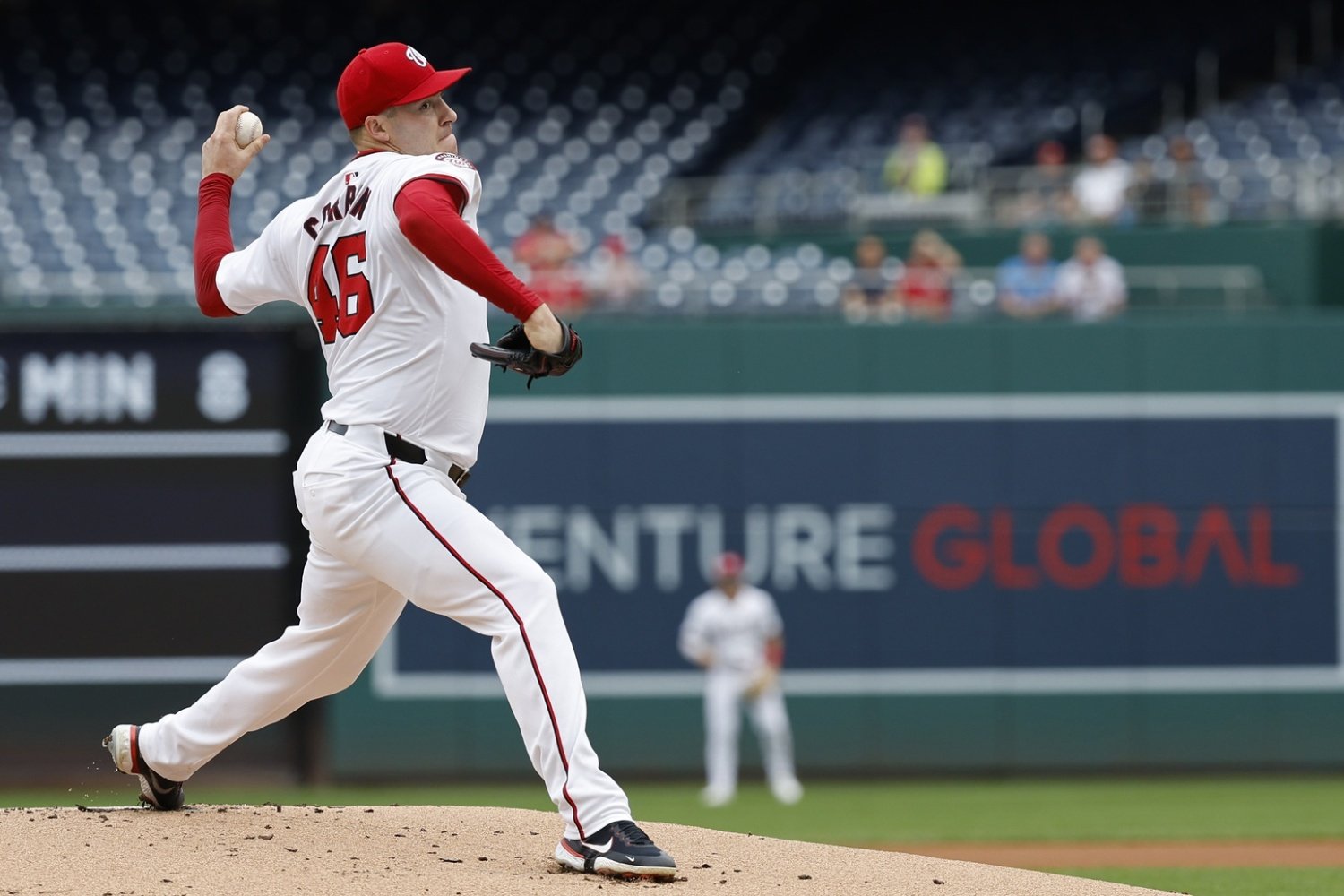 The 2024 season saw the Brewers piece together innings from several unlikely sources, some of them buy-low reclamation projects. The club dipped into that well again last week by signing former New York Yankees prospect Deivi García to a minor-league deal. It’s unknown whether he’ll remain in a relief role or attempt a conversion back to starting, but in either case, the Brewers should continue stockpiling rotation depth. There’s another free agent who has struggled for several years, but falls on the other end of the stuff and age spectrums: 35-year-old Patrick Corbin. The veteran left-hander just concluded a six-year deal with the Washington Nationals. In year one, he was a key part of an elite starting rotation that carried the club to a World Series championship, but things quickly took a turn for the worse. Corbin declined in 2020, and the wheels fell off thereafter. Over the contract’s last four seasons, he pitched to a 5.71 ERA, the worst of any qualified starting pitcher. He did, however, eat innings for rebuilding Nationals teams during that time. Corbin’s 679 innings pitched from 2021 through 2024 were the 15th-most in baseball. Excluding the shortened 2020 season, he’s the only pitcher who has started at least 31 games in every campaign going back to 2017. With that kind of durability, remotely competitive results would make him a useful back-end starting pitcher. The Brewers are as capable as any organization of coaxing solid innings from unassuming pitchers. Corbin fits that mold, and could fit nicely into the now-vacant Colin Rea role at the back of the rotation. It’s often tricky to say with certainty whether Milwaukee’s elite defense will elevate a pitcher’s results, but the effect would be tangible for Corbin. Since 2020, he’s allowed a .331 BABIP while pitching in front of Nationals defenses that combined to rank last in baseball in Fielding Run Value (-142) and fifth-worst in Defensive Runs Saved (-122). Meanwhile, the Brewers finished within the top five in both metrics in each of the last two seasons. The real key to unlocking a productive version of Corbin, though, is furthering the development of the cutter he introduced in 2024. Corbin added the pitch to keep right-handed hitters off his signature slider, which had fallen from an elite pitch in his prime to a below-average one in recent years. As opponents became more familiar with the slider over time, they chased less and did more damage against it in the strike zone. During this time, Corbin threw fewer sliders and more sinkers, presumably in an attempt to keep hitters off the breaking ball. The problem is that Corbin’s sinker has never been an intrinsically good pitch. Opponents have slugged .467 against it for his career and .512 since the start of the 2020 season. According to Statcast, the pitch has yielded a positive run value twice in Corbin’s 12-year career, the last time being in 2019. Enter the cutter. In theory, having a pitch with characteristics residing between Corbin’s slider and sinker should help him keep hitters off the former without overexposing the latter. He turned to the pitch 19.2% of the time, including 23.2% against right-handed batters, who were the primary instigators of his struggles. It worked, to an extent. Opponents slugged just .335 with a .267 wOBA against Corbin’s slider in 2024, and it accumulated a favorable run value for the first time since 2020. The average exit velocity against it fell to 83.1 mph. His sinker, meanwhile, remained batting practice for hitters, who slugged .567 against it. There’s room for Corbin’s cutter to better complement his main two offerings, and he took steps in the right direction later in the year. That’s what makes him an intriguing possibility for a Brewers team that has helped several veteran hurlers get the most out of their suspect fastballs in recent years. For much of the season, Corbin’s cutter was not a fastball variant that filled the gap between his sinker and slider. Instead, it behaved like a harder version of his slider, with very similar movement. That changed in the final two months of the year. Corbin gained a few ticks of velocity and added a couple of inches of lift to his cutter, while slashing the same amount of horizontal break. This created a little more separation from the slider. Months Cutter Velocity Cutter IVB Cutter HB Slider Velocity Slider IVB Slider HB March-July 84.6 3.7 2.9 79.8 0.4 2.9 August-September 87.5 5.9 0.9 80.2 0.1 2.4 For a visual representation, notice how much more the cutter (orange) and slider (green) overlap on the left graphic compared to the one on the right. As a result, the pitch gained far more separation from his slider down the stretch. Coincidentally (or not), opponents fared worse against his slider in August and September than they had at any point in the year: a .235 slugging percentage and 39.6% whiff rate. The chase rate against it did not meaningfully improve. Corbin’s cutter needs more development, as it still resembles a breaking ball more than a cutting fastball. Further refining it would give him the three-fastball triangle the Brewers have repeatedly maximized, plus a breaking ball that has still flashed the capacity to be effective. Corbin has next-to no upside at this stage of his career, but plucking him off the scrap heap could potentially give the Brewers a durable arm at the back end of a rotation that is once again in flux.
 -
Last week, the Brewers added a younger reclamation project with upside. Could they further stock their rotation depth with a flier on an underperforming veteran? Image courtesy of © Geoff Burke-Imagn Images Last week, the Brewers added a younger reclamation project with upside. Could they further stock their rotation depth with a flier on an underperforming veteran? The 2024 season saw the Brewers piece together innings from several unlikely sources, some of them buy-low reclamation projects. The club dipped into that well again last week by signing former New York Yankees prospect Deivi García to a minor-league deal. It’s unknown whether he’ll remain in a relief role or attempt a conversion back to starting, but in either case, the Brewers should continue stockpiling rotation depth. There’s another free agent who has struggled for several years, but falls on the other end of the stuff and age spectrums: 35-year-old Patrick Corbin. The veteran left-hander just concluded a six-year deal with the Washington Nationals. In year one, he was a key part of an elite starting rotation that carried the club to a World Series championship, but things quickly took a turn for the worse. Corbin declined in 2020, and the wheels fell off thereafter. Over the contract’s last four seasons, he pitched to a 5.71 ERA, the worst of any qualified starting pitcher. He did, however, eat innings for rebuilding Nationals teams during that time. Corbin’s 679 innings pitched from 2021 through 2024 were the 15th-most in baseball. Excluding the shortened 2020 season, he’s the only pitcher who has started at least 31 games in every campaign going back to 2017. With that kind of durability, remotely competitive results would make him a useful back-end starting pitcher. The Brewers are as capable as any organization of coaxing solid innings from unassuming pitchers. Corbin fits that mold, and could fit nicely into the now-vacant Colin Rea role at the back of the rotation. It’s often tricky to say with certainty whether Milwaukee’s elite defense will elevate a pitcher’s results, but the effect would be tangible for Corbin. Since 2020, he’s allowed a .331 BABIP while pitching in front of Nationals defenses that combined to rank last in baseball in Fielding Run Value (-142) and fifth-worst in Defensive Runs Saved (-122). Meanwhile, the Brewers finished within the top five in both metrics in each of the last two seasons. The real key to unlocking a productive version of Corbin, though, is furthering the development of the cutter he introduced in 2024. Corbin added the pitch to keep right-handed hitters off his signature slider, which had fallen from an elite pitch in his prime to a below-average one in recent years. As opponents became more familiar with the slider over time, they chased less and did more damage against it in the strike zone. During this time, Corbin threw fewer sliders and more sinkers, presumably in an attempt to keep hitters off the breaking ball. The problem is that Corbin’s sinker has never been an intrinsically good pitch. Opponents have slugged .467 against it for his career and .512 since the start of the 2020 season. According to Statcast, the pitch has yielded a positive run value twice in Corbin’s 12-year career, the last time being in 2019. Enter the cutter. In theory, having a pitch with characteristics residing between Corbin’s slider and sinker should help him keep hitters off the former without overexposing the latter. He turned to the pitch 19.2% of the time, including 23.2% against right-handed batters, who were the primary instigators of his struggles. It worked, to an extent. Opponents slugged just .335 with a .267 wOBA against Corbin’s slider in 2024, and it accumulated a favorable run value for the first time since 2020. The average exit velocity against it fell to 83.1 mph. His sinker, meanwhile, remained batting practice for hitters, who slugged .567 against it. There’s room for Corbin’s cutter to better complement his main two offerings, and he took steps in the right direction later in the year. That’s what makes him an intriguing possibility for a Brewers team that has helped several veteran hurlers get the most out of their suspect fastballs in recent years. For much of the season, Corbin’s cutter was not a fastball variant that filled the gap between his sinker and slider. Instead, it behaved like a harder version of his slider, with very similar movement. That changed in the final two months of the year. Corbin gained a few ticks of velocity and added a couple of inches of lift to his cutter, while slashing the same amount of horizontal break. This created a little more separation from the slider. Months Cutter Velocity Cutter IVB Cutter HB Slider Velocity Slider IVB Slider HB March-July 84.6 3.7 2.9 79.8 0.4 2.9 August-September 87.5 5.9 0.9 80.2 0.1 2.4 For a visual representation, notice how much more the cutter (orange) and slider (green) overlap on the left graphic compared to the one on the right. As a result, the pitch gained far more separation from his slider down the stretch. Coincidentally (or not), opponents fared worse against his slider in August and September than they had at any point in the year: a .235 slugging percentage and 39.6% whiff rate. The chase rate against it did not meaningfully improve. Corbin’s cutter needs more development, as it still resembles a breaking ball more than a cutting fastball. Further refining it would give him the three-fastball triangle the Brewers have repeatedly maximized, plus a breaking ball that has still flashed the capacity to be effective. Corbin has next-to no upside at this stage of his career, but plucking him off the scrap heap could potentially give the Brewers a durable arm at the back end of a rotation that is once again in flux. View full article
-
With Gary Sánchez gone and Jeferson Quero needing more development time, Eric Haase is now behind William Contreras on the depth chart. Can he fill that role successfully? Image courtesy of © Mark Hoffman/Milwaukee Journal Sentinel / USA TODAY NETWORK With Gary Sánchez gone and Jeferson Quero needing more development time, Eric Haase is now behind William Contreras on the depth chart. Can he fill that role successfully? For months, Eric Haase has appeared to be the leading candidate to back up William Contreras in 2025. Squeezing him onto the roster in the second half despite nearly nonexistent playing time as a third catcher allowed the Brewers to retain control of Haase through arbitration, and the sides agreed to a one-year deal ahead of Friday’s tender deadline. An additional acquisition could change plans, but Haase will likely begin the year second on the catching depth chart. The question is how the Brewers will utilize him in that capacity, and how effectively he’ll fill the role. Contreras shouldered a heavy workload (at his own request) for much of the season, but Pat Murphy eased that burden down the stretch with more starts as the DH and full days off. Doing that more frequently to save Contreras from himself should be a priority moving forward, which would leave more starts for Haase than the 43 he and Gary Sánchez combined to start in 2024. The last time Haase was effective in a role at least that extensive was in 2022. He struggled mightily in 2023, hitting .201/.247/.281, for a 43 wRC+. After spending most of the first half of 2024 in Triple A, he drew just 69 plate appearances with the Brewers. Haase made a nice impact in that minuscule sample, though, slugging .515, smacking five home runs, and posting a 125 wRC+. He’s unlikely to recreate those results in a larger sample next year. Beneath Haase’s strong surface-level output, the red flags that have hampered him in the past remained. Haase has always had excellent raw power, but he’s an aggressive hitter with significant issues making contact. Since reaching the big leagues in 2018, Haase has struck out 30.1% of the time while walking at just a 6.3% rate. Among hitters with at least 1,000 plate appearances during that span, his 4.79 strikeout-to-walk ratio is in the seventh percentile, and his 74.9% in-zone contact rate is in the third percentile. The swing-and-miss is still a glaring issue. Haase struck out at a 32.9% clip for Nashville, with a nearly identical whiff rate. With the Brewers, he punched out at an alarming 40.6% rate, with a 39.4% whiff rate. He relied on unsustainable damage on balls in play (a BABIP of .386 in Triple A and .394 in the big leagues) to compensate for his lack of consistent contact. When he did make contact, Haase looked more like the hitter who combined for a 105 wRC+ across the 2021 and 2022 seasons. His hard-hit rate in Triple A was 48.4%, and his average exit velocity was 90.5 mph. He also tempered his aggressiveness, cutting his chase rate to just above the league average at 27.3%. Even so, he’s due for significant regression. Haase profiles as a below-average hitter, but he could still provide some timely home runs throughout next season. The offensive bar for a productive backup catcher is pretty low; if Haase keeps his offense above an 85 wRC+, he’ll be doing fine for his role. More intriguing is how Haase will fare behind the plate. He became the latest backstop to transform from a poor pitch framer to a solid one after joining the Brewers. Because Statcast offers Triple-A pitch-tracking data, public framing metrics have a larger sample to consider than his sporadic big-league appearances. Haase already improved his framing ability at the bottom of the zone in 2023, by switching to a one-knee stance that positioned him closer to the ground, but he remained one of baseball’s worst framers at the top. In 2024, he transformed into one of the best. A quick video search indicates that Haase set more high targets for Brewers pitchers than he did in Detroit. If true, that would mean he often had the easier task of framing at executed locations, instead of elevated misses. However, most of the improvement stems from adjustments to his setup. Here are a couple of Haase’s unsuccessful frame attempts around the top of the zone from 2023. haase_failed_frames.mp4 Constant motion is the theme in these examples. Haase was constantly shifting his weight around behind the plate and would often reposition his left leg as the pitcher began his motion. He was on one knee, but he was not taking advantage of the added stability that the one-knee setup is supposed to provide. This was a weakness Matt Trueblood highlighted when Haase signed last winter and named as one thing the Brewers would work to correct. Here’s how Haase framed pitches at the top of the zone as a Brewer. haase_frames.mp4 Instead of nonstop movement, what stands out now is how little Haase moves while receiving these pitches. Once he gets his base knee down, there’s no shuffling. As the pitch comes in, Haase appears more focused on using his hand and wrist to guide it toward the corners instead of his entire arm. While the growing popularity of the one-knee stance has helped catchers steal strikes at the bottom of the zone, framing pitches at the top remains more elusive. If Haase has unlocked a legitimate knack for doing so after toning things down, it gives the Brewers a backstop uniquely equipped for catching at least a couple of their starters. Freddy Peralta and Aaron Civale live at the top of the zone with their fastballs, and Tobias Myers and Brandon Woodruff also show plenty of elevated four-seamers. Haase stealing extra strikes up there would be valuable for those hurlers. Blocking has been a struggle for Haase throughout his career. He was not successful at controlling the running game in 2024 but previously graded out well in that regard. Framing holds the most weight among the quantitative aspects of catching, so Haase’s growth on that front boosts his defensive value. Plate discipline is most likely to make or break Haase’s season. If his strikeouts come in under an unplayable extreme and he adequately limits wild swings on pitches outside the zone, his combination of power and improved receiving will make him a solid backup to Contreras. View full article
-
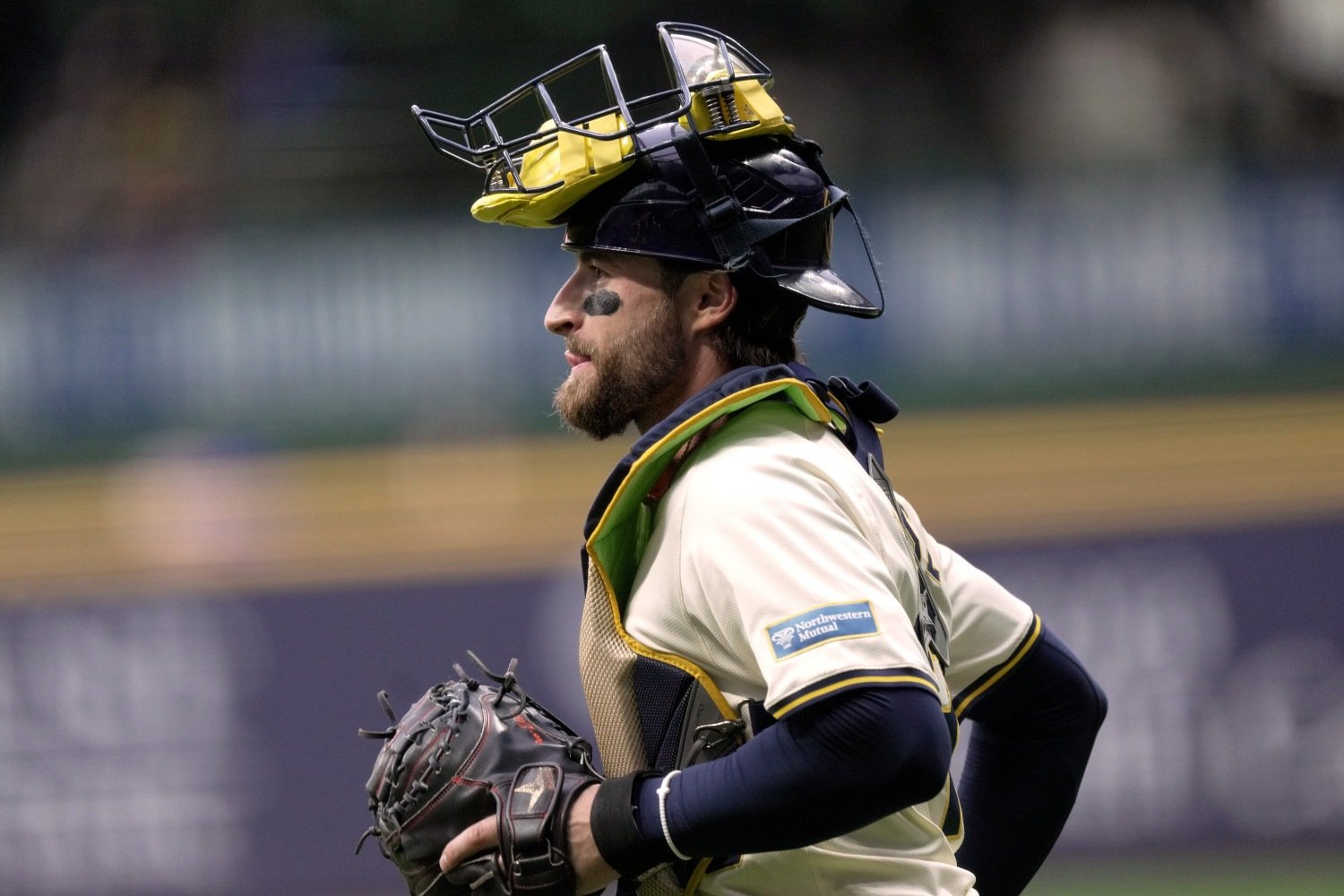 For months, Eric Haase has appeared to be the leading candidate to back up William Contreras in 2025. Squeezing him onto the roster in the second half despite nearly nonexistent playing time as a third catcher allowed the Brewers to retain control of Haase through arbitration, and the sides agreed to a one-year deal ahead of Friday’s tender deadline. An additional acquisition could change plans, but Haase will likely begin the year second on the catching depth chart. The question is how the Brewers will utilize him in that capacity, and how effectively he’ll fill the role. Contreras shouldered a heavy workload (at his own request) for much of the season, but Pat Murphy eased that burden down the stretch with more starts as the DH and full days off. Doing that more frequently to save Contreras from himself should be a priority moving forward, which would leave more starts for Haase than the 43 he and Gary Sánchez combined to start in 2024. The last time Haase was effective in a role at least that extensive was in 2022. He struggled mightily in 2023, hitting .201/.247/.281, for a 43 wRC+. After spending most of the first half of 2024 in Triple A, he drew just 69 plate appearances with the Brewers. Haase made a nice impact in that minuscule sample, though, slugging .515, smacking five home runs, and posting a 125 wRC+. He’s unlikely to recreate those results in a larger sample next year. Beneath Haase’s strong surface-level output, the red flags that have hampered him in the past remained. Haase has always had excellent raw power, but he’s an aggressive hitter with significant issues making contact. Since reaching the big leagues in 2018, Haase has struck out 30.1% of the time while walking at just a 6.3% rate. Among hitters with at least 1,000 plate appearances during that span, his 4.79 strikeout-to-walk ratio is in the seventh percentile, and his 74.9% in-zone contact rate is in the third percentile. The swing-and-miss is still a glaring issue. Haase struck out at a 32.9% clip for Nashville, with a nearly identical whiff rate. With the Brewers, he punched out at an alarming 40.6% rate, with a 39.4% whiff rate. He relied on unsustainable damage on balls in play (a BABIP of .386 in Triple A and .394 in the big leagues) to compensate for his lack of consistent contact. When he did make contact, Haase looked more like the hitter who combined for a 105 wRC+ across the 2021 and 2022 seasons. His hard-hit rate in Triple A was 48.4%, and his average exit velocity was 90.5 mph. He also tempered his aggressiveness, cutting his chase rate to just above the league average at 27.3%. Even so, he’s due for significant regression. Haase profiles as a below-average hitter, but he could still provide some timely home runs throughout next season. The offensive bar for a productive backup catcher is pretty low; if Haase keeps his offense above an 85 wRC+, he’ll be doing fine for his role. More intriguing is how Haase will fare behind the plate. He became the latest backstop to transform from a poor pitch framer to a solid one after joining the Brewers. Because Statcast offers Triple-A pitch-tracking data, public framing metrics have a larger sample to consider than his sporadic big-league appearances. Haase already improved his framing ability at the bottom of the zone in 2023, by switching to a one-knee stance that positioned him closer to the ground, but he remained one of baseball’s worst framers at the top. In 2024, he transformed into one of the best. A quick video search indicates that Haase set more high targets for Brewers pitchers than he did in Detroit. If true, that would mean he often had the easier task of framing at executed locations, instead of elevated misses. However, most of the improvement stems from adjustments to his setup. Here are a couple of Haase’s unsuccessful frame attempts around the top of the zone from 2023. haase_failed_frames.mp4 Constant motion is the theme in these examples. Haase was constantly shifting his weight around behind the plate and would often reposition his left leg as the pitcher began his motion. He was on one knee, but he was not taking advantage of the added stability that the one-knee setup is supposed to provide. This was a weakness Matt Trueblood highlighted when Haase signed last winter and named as one thing the Brewers would work to correct. Here’s how Haase framed pitches at the top of the zone as a Brewer. haase_frames.mp4 Instead of nonstop movement, what stands out now is how little Haase moves while receiving these pitches. Once he gets his base knee down, there’s no shuffling. As the pitch comes in, Haase appears more focused on using his hand and wrist to guide it toward the corners instead of his entire arm. While the growing popularity of the one-knee stance has helped catchers steal strikes at the bottom of the zone, framing pitches at the top remains more elusive. If Haase has unlocked a legitimate knack for doing so after toning things down, it gives the Brewers a backstop uniquely equipped for catching at least a couple of their starters. Freddy Peralta and Aaron Civale live at the top of the zone with their fastballs, and Tobias Myers and Brandon Woodruff also show plenty of elevated four-seamers. Haase stealing extra strikes up there would be valuable for those hurlers. Blocking has been a struggle for Haase throughout his career. He was not successful at controlling the running game in 2024 but previously graded out well in that regard. Framing holds the most weight among the quantitative aspects of catching, so Haase’s growth on that front boosts his defensive value. Plate discipline is most likely to make or break Haase’s season. If his strikeouts come in under an unplayable extreme and he adequately limits wild swings on pitches outside the zone, his combination of power and improved receiving will make him a solid backup to Contreras.


