



Jack Stern
-
Posts
764 -
Joined
-
Last visited
-
Days Won
2
Content Type
Profiles
Forums
Blogs
Events
News
2026 Milwaukee Brewers Top Prospects Ranking
Milwaukee Brewers Videos
2022 Milwaukee Brewers Draft Picks
Milwaukee Brewers Free Agent & Trade Rumors, Notes, & Tidbits
Guides & Resources
2023 Milwaukee Brewers Draft Picks
2024 Milwaukee Brewers Draft Picks
The Milwaukee Brewers Players Project
2025 Milwaukee Brewers Draft Pick Tracker
2026 Milwaukee Brewers Draft Tracker: Picks & Bonuses
Store
Downloads
Gallery
Everything posted by Jack Stern
-
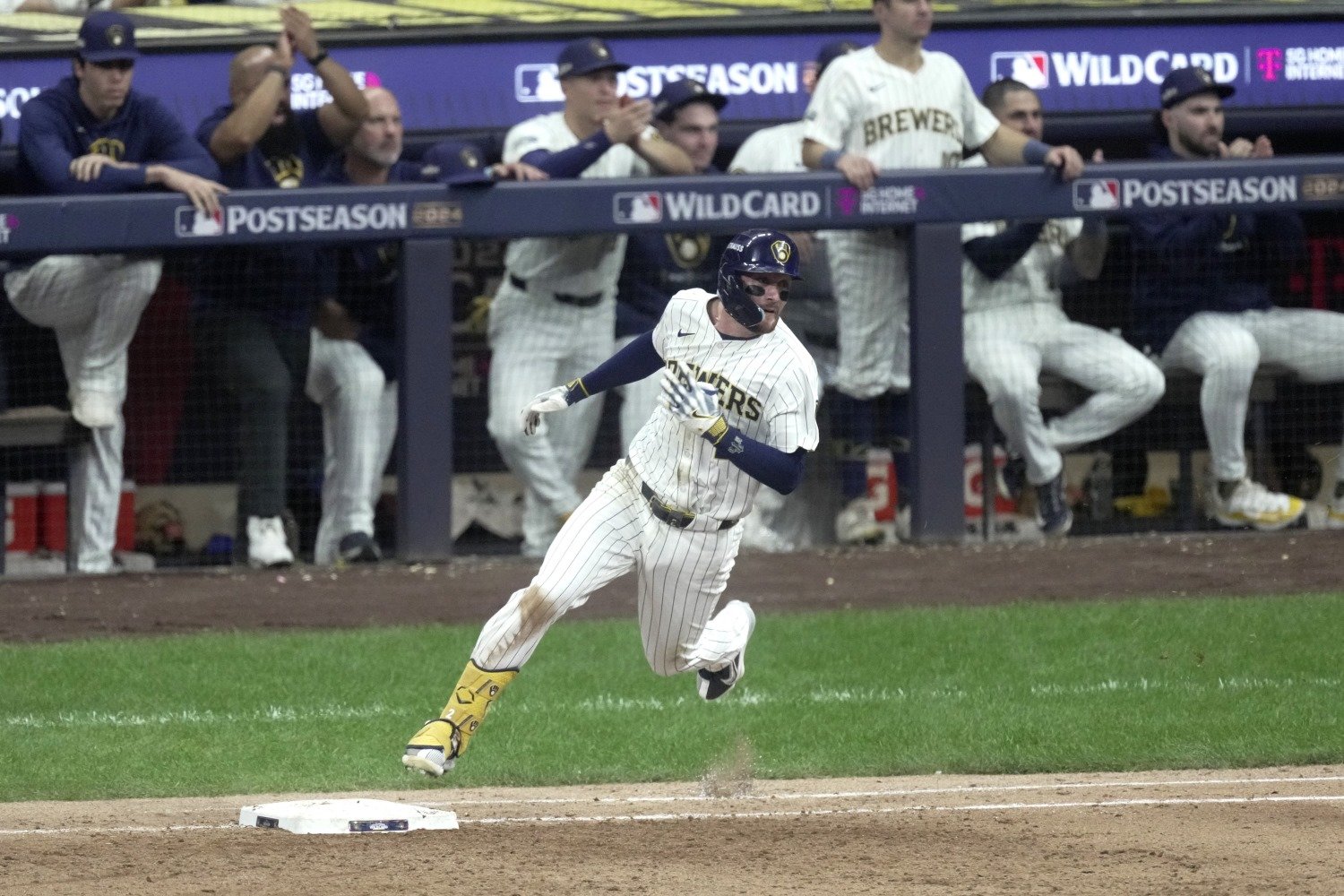 When Pat Murphy declared in spring training that he expected Brice Turang to take a “quantum leap” in his sophomore season, the prediction was followed by instructions for the assembled media in his office. “If he doesn’t, I want you to say, ‘Murph, you said he’s going to make a quantum leap. What the hell?’ I’ll say I was wrong because I don’t mind saying that. But I believe in this kid in a huge way.” Murphy’s words looked prophetic, on the surface, for most of the season’s first half. Through Jul. 4, Turang hit .291/.352/.415 in his 341 plate appearances, good for a 115 wRC+. His bat then cratered the rest of the way, with a .209/.272/.269 line and 53 wRC+ that resembled his anemic rookie campaign. Turang finished his second big-league season as a well-below-average hitter, slashing .254/.316/.349 for an 87 wRC+. Despite the disappointing finish, that was still a massive improvement over the previous year’s 61 wRC+. It afforded Turang’s true strengths as a player the runway to shine. His bat was capable enough to keep him in the field for more than 1,200 innings at second base, where he led baseball with 22 Defensive Runs Saved. With an improved on-base percentage, he stole 50 bases and finished sixth in baserunning runs above average (7.2), according to FanGraphs. According to Baseball-Reference’s version of the metric, which uses DRS for its defensive valuation, Turang accrued 4.6 wins above replacement. That trailed only William Contreras among Brewers position players, and only Ketel Marte among qualified second basemen. It also ranked 26th among all players, regardless of position. To revisit Murphy’s prediction, gaining 80 points of OPS and becoming one of the best second basemen in the sport could reasonably be defined as a quantum leap. Still, the Jekyll-and-Hyde nature of Turang’s two half-seasons calls into question how much he truly grew as a hitter and whether he has more room to develop. The starting point is reviewing the discernible changes to Turang’s stance, swing, and approach from 2023 to 2024. He switched bats, simplified his pre-pitch load, and made his swing one of the shortest in baseball. Everything was geared toward reducing strikeouts and harmless flyouts, with Turang hitting more line drives and ground balls to reach base more frequently. That’s the best approach for Turang, who still has a wiry build after adding 20 pounds of muscle last winter and is unlikely to succeed in attempts to hit for power. However, it also comes with limitations. Turang was pushing those limits with his early-season output, and regression outside his control wears significant responsibility for his second-half downturn. Date wOBA xwOBA BABIP Exit Velo LA Hard Hit Chase% Contact% Thru 7/4 .335 .298 .339 86.2 4.3 32.7% 24.7% 87.2% From 7/5 .243 .278 .254 83.6 3.6 26.1% 31.2% 85.2% Expected wOBA is derived from expected outcomes, based on a player’s quality and quantity of contact, among other variables. It’s neither predictive nor a perfect metric for evaluating a player’s deserved results, but it often provides a more useful snapshot than box score outcomes. Turang outperformed his xwOBA by 37 points through Jul. 4 and underperformed it by 35 points the rest of the way. His wOBA fell by 92 points, but his xwOBA only declined by 20 points. That’s still a noticeable drop, but it would not be nearly as magnified by the average viewer throughout a 162-game season. Based mainly on the kind of batted balls he was hitting, Turang was experiencing plenty of favorable luck throughout the season’s first three months. His performance worsened as the year went along, but much of the shift was due to his luck flipping—to the point that it evened out by season’s end. He ended the year with a .294 wOBA that nearly matched his .289 xwOBA. Compounding the reversed luck were worse swings. Turang has never been one to hit the ball hard often, and his quality of contact fell even further down the stretch. His swing decisions flipped from strong to poor. Date wOBA xwOBA Exit Velo Contact% Chase% Thru 7/4 .306 .264 87.2 83.9% 19.3% From 7/5 .216 .231 83.4 79.3% 32.9% A complete collapse against breaking pitches was the main culprit. Turang made remarkable strides against fastballs this year, slashing his whiff rate nearly in half from 2023 to 2024 while improving from a .283 to a .330 xwOBA. It seemed, on the surface, that he had acclimated to breaking pitches in the early months of the year, but a .264 xwOBA pointed to it being a mirage. It also helped that he saw plenty of breakers over the middle of the plate, which yielded much of his early damage. Neither the mistake pitches nor the damage lasted. From Jul. 5 onward, right-handed pitchers attacked Turang with more spin to better locations, and with more elevated fastballs on the inner third of the plate. The results were ugly. Over the season’s final three months, Turang often flailed at spin regardless of location, and while his compact bat path usually meant he still made contact, it was rarely productive. He became particularly vulnerable to inside breakers from right-handers and outside ones from left-handers. Perhaps trying to protect against more velocity at the top of the zone made it more difficult for Turang to cover the breaking ball. Perhaps he was worn down a bit by the grind. Whatever the cause, it became one of the catalysts behind his dropoff. Turang made some mechanical adjustments in the season’s final weeks. Starting on Sept. 12, he lowered his hands to hold his bat more upright and stood a little less crouched in the box. Those tweaks did not produce noticeable results in a small sample, but they make Turang’s setup something to watch when he reports to spring training in 2025. Turang nearly tripled his WAR from 2023 to 2024. By that measure, he took a quantum leap. His development at the plate, mainly consisting of an altered approach that helped him hold his own against fastballs, was closer to a lunge, albeit in the right direction. Turang still struggles mightily with anything soft and does not drive the ball often, leaving him well shy of being a reliably league-average bat. His final slash line is a solid indicator of his standing as a hitter and where he’s most likely to settle offensively as his career progresses. The good news remains that an OPS within the .660 to .680 range is all Turang needs to be a key cog in Milwaukee’s young core. As someone who brings elite contributions in the field and on the bases, the floor of his overall value is high. The total package is a player who can be a quality second baseman for years to come. It’s just best to keep expectations tempered toward the bat.
 -
 His dramatic postseason blast was a reminder that while the slap-hitting outfielder will never be a power hitter, there's a more explosive version of his swing that he would benefit from channeling more frequently. Image courtesy of © Benny Sieu-Imagn Images His dramatic postseason blast was a reminder that while the slap-hitting outfielder will never be a power hitter, there's a more explosive version of his swing that he would benefit from channeling more frequently. Sal Frelick’s improbable home run in Game 3 of the Wild Card Series didn’t just inspire brief hope for the Milwaukee faithful. It was also a monumental moment for Frelick himself because it was the first time he showed an extra gear of strength that had been absent from his big-league portfolio until that swing. Heading into the postseason, Frelick’s highest exit velocity on a batted ball was 106.6 mph. The home run left the bat at 107.6 mph. It was also the farthest ball he ever hit, traveling 408 feet for his first no-doubt home run. It was the result of Frelick unleashing one of the most violent swings of his career. His bat speed was 76.3 mph, his 10th-fastest tracked swing ever. It was also his 10th-longest hack, with his bat head traveling 8.5 feet from his first movement to his point of contact. It was uncharacteristic of Frelick, whose swing is typically among the most compact in baseball. His average swing speed of 66.3 mph during the 2024 regular season was the seventh-lowest among 214 qualified hitters, and his swing length of 6.9 feet was the 27th-shortest. Here’s what an average Frelick swing looks like. dzcwdkJfWGw0TUFRPT1fQTFBQ0JnY01BbEFBQ2xZR1VRQUFVRlFEQUFBRFUxUUFCbElDVWdwVVZGY0JWZ2RR.mp4 Here’s his cut on the home run ball. The eye test alone says that it’s a vastly different swing. a0RZT0JfV0ZRVkV3dEdEUT09X0F3UlRWZ1VFQUZZQUFWUURWUUFBVkE5VkFBTUNBQWNBQ2dRSFZRcFhVQVJVVWdFRA==.mp4 Frelick had shown fleeting glimpses of it before, but his home run was the most prolific illustration that he can swing harder and connect more authoritatively with the ball than he typically has. That particular swing is on the higher end of his ability and not consistently replicable. It should, however, help encourage Frelick and the Brewers to concede some of his compactness through the zone for a couple of extra ticks of bat speed. While not strongly correlated across hitters, bat speed and swing length are tied together mechanically. Hitters do not swing slowly by design; it’s a byproduct of getting to the ball as directly as possible. Conversely, the more bat speed a hitter wishes to produce, the longer his bat path must be to generate the necessary whip through the zone. In the first clip, Frelick takes a truncated slash at the ball. In the second, he unloads on a first-pitch fastball with a longer and more explosive swing. The bat head has plenty of momentum behind it at the point of contact. It’s no coincidence that many hitters with baseball’s fastest swings – including Giancarlo Stanton, Aaron Judge, and Oneil Cruz – stand six-and-a-half feet or taller. They’re strong athletes with long levers; swinging hard with a longer whipping motion through the zone is their best path toward production. Meanwhile, three-time batting champion Luis Arraez stands under six feet tall and has baseball’s slowest and shortest swing. As a smaller hitter with shorter levers, excellent bat control was always Frelick’s calling card as a prospect. Being so short to the ball has allowed him to get the barrel to it regularly in the big leagues. Statcast considered 31.7% of his contact in the regular season to be “squared-up,” which placed him in the 92nd percentile of hitters. To keep the explanation brief, that means that on roughly one-third of his batted balls, Frelick generated at least 80% of the possible exit velocity based on the speeds of the pitch and his swing. In layperson’s terms, because his short swing is so precise, he meets the ball at a good spot with his barrel at an elite rate. Unfortunately, that’s not as beneficial when the barrel is not meeting the ball with much authority. Despite an elite squared-up rate, Frelick finished the year with the worst hard hit (19.7%) and barrel (0.7%) rates among qualified hitters. He slugged .500 with a .141 ISO on squared-up contact. Those respective figures ranked 366th and 388th among 419 hitters who squared up at least 50 batted balls during the regular season. The average hitter slugged .681 with a .303 ISO on squared-up contact. Frelick’s current combination of swing speed, path, and length has not proven productive in the big leagues. Through 747 regular-season plate appearances, he has posted an underwhelming 88 wRC+. He could achieve above-average offense by taking his current approach to an even greater extreme and becoming the next Arraez. That’s not a tenable route, though. Arraez is an outlier with irreplicable bat control. Frelick’s best course of action is to swing harder. That doesn’t mean maxing out his bat speed on every swing to recreate his postseason home run. For a hitter of Frelick’s build, chasing the long ball will only lead to frequent pop-ups and routine flyouts. He needs a better balance of bat control and bat speed to shoot hard line drives into gaps for doubles and triples. There was no public bat-tracking data during his minor-league career, but Frelick’s results during that time pointed to a hitter whose swing had that proper balance. He hit 11 home runs and 28 doubles in 562 minor-league plate appearances in 2022. Frelick shouldn’t overhaul his identity as a hitter. Misguided attempts to become a power threat would likely tank his floor and could cause his offense to crater. Instead, he and the Brewers should be willing to experiment with some give-and-take within the framework of his strengths. That means swinging a little harder more often, even if it means adding a bit of length to his swing and conceding his ability to fight off certain pitches late in their trajectory. Frelick can still be a solid bat-to-ball hitter while adding a couple of ticks to his average swing speed. If he meets the barrel a little less but hits the ball harder, it would be a worthwhile tradeoff. View full article
 -
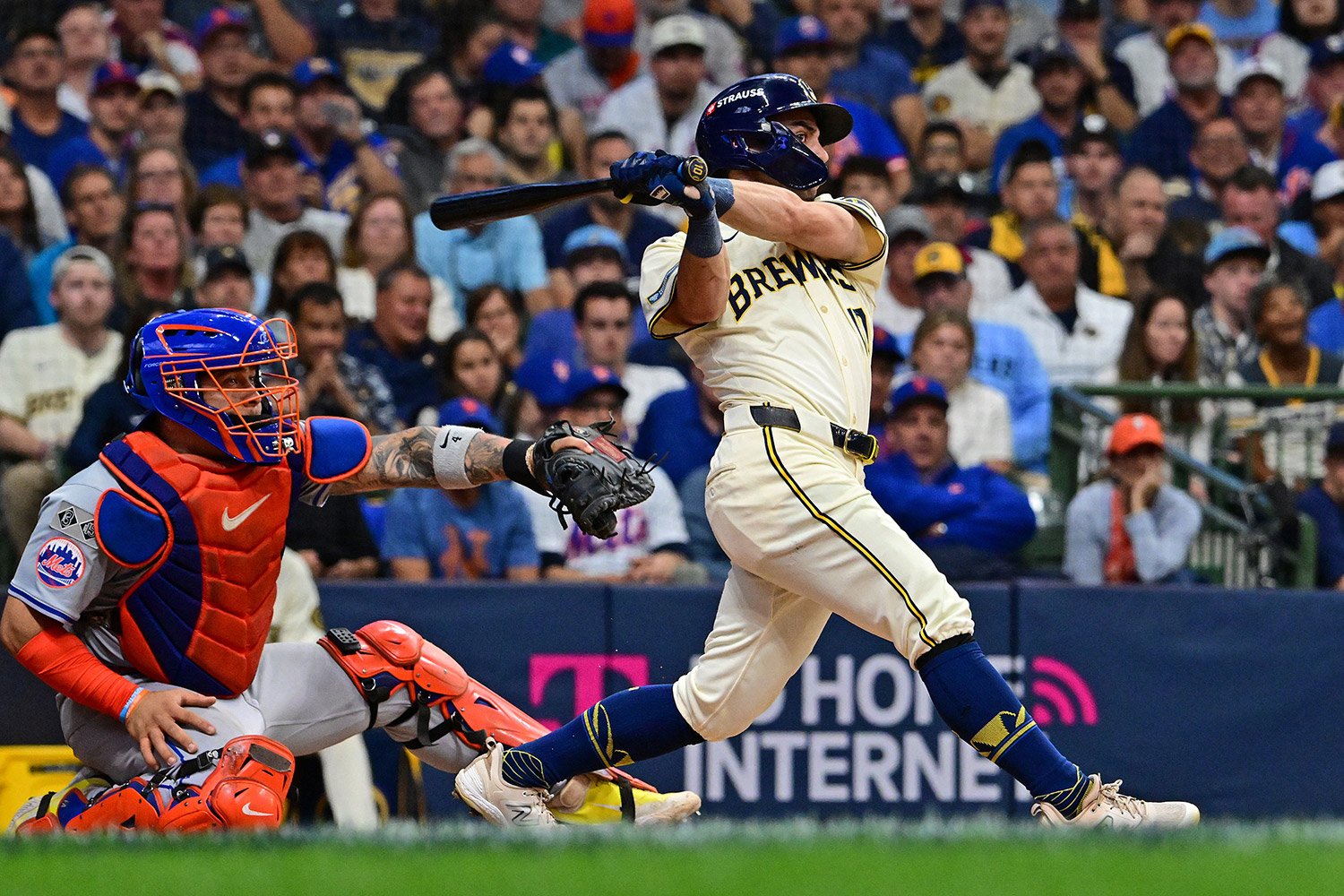 Sal Frelick’s improbable home run in Game 3 of the Wild Card Series didn’t just inspire brief hope for the Milwaukee faithful. It was also a monumental moment for Frelick himself because it was the first time he showed an extra gear of strength that had been absent from his big-league portfolio until that swing. Heading into the postseason, Frelick’s highest exit velocity on a batted ball was 106.6 mph. The home run left the bat at 107.6 mph. It was also the farthest ball he ever hit, traveling 408 feet for his first no-doubt home run. It was the result of Frelick unleashing one of the most violent swings of his career. His bat speed was 76.3 mph, his 10th-fastest tracked swing ever. It was also his 10th-longest hack, with his bat head traveling 8.5 feet from his first movement to his point of contact. It was uncharacteristic of Frelick, whose swing is typically among the most compact in baseball. His average swing speed of 66.3 mph during the 2024 regular season was the seventh-lowest among 214 qualified hitters, and his swing length of 6.9 feet was the 27th-shortest. Here’s what an average Frelick swing looks like. dzcwdkJfWGw0TUFRPT1fQTFBQ0JnY01BbEFBQ2xZR1VRQUFVRlFEQUFBRFUxUUFCbElDVWdwVVZGY0JWZ2RR.mp4 Here’s his cut on the home run ball. The eye test alone says that it’s a vastly different swing. a0RZT0JfV0ZRVkV3dEdEUT09X0F3UlRWZ1VFQUZZQUFWUURWUUFBVkE5VkFBTUNBQWNBQ2dRSFZRcFhVQVJVVWdFRA==.mp4 Frelick had shown fleeting glimpses of it before, but his home run was the most prolific illustration that he can swing harder and connect more authoritatively with the ball than he typically has. That particular swing is on the higher end of his ability and not consistently replicable. It should, however, help encourage Frelick and the Brewers to concede some of his compactness through the zone for a couple of extra ticks of bat speed. While not strongly correlated across hitters, bat speed and swing length are tied together mechanically. Hitters do not swing slowly by design; it’s a byproduct of getting to the ball as directly as possible. Conversely, the more bat speed a hitter wishes to produce, the longer his bat path must be to generate the necessary whip through the zone. In the first clip, Frelick takes a truncated slash at the ball. In the second, he unloads on a first-pitch fastball with a longer and more explosive swing. The bat head has plenty of momentum behind it at the point of contact. It’s no coincidence that many hitters with baseball’s fastest swings – including Giancarlo Stanton, Aaron Judge, and Oneil Cruz – stand six-and-a-half feet or taller. They’re strong athletes with long levers; swinging hard with a longer whipping motion through the zone is their best path toward production. Meanwhile, three-time batting champion Luis Arraez stands under six feet tall and has baseball’s slowest and shortest swing. As a smaller hitter with shorter levers, excellent bat control was always Frelick’s calling card as a prospect. Being so short to the ball has allowed him to get the barrel to it regularly in the big leagues. Statcast considered 31.7% of his contact in the regular season to be “squared-up,” which placed him in the 92nd percentile of hitters. To keep the explanation brief, that means that on roughly one-third of his batted balls, Frelick generated at least 80% of the possible exit velocity based on the speeds of the pitch and his swing. In layperson’s terms, because his short swing is so precise, he meets the ball at a good spot with his barrel at an elite rate. Unfortunately, that’s not as beneficial when the barrel is not meeting the ball with much authority. Despite an elite squared-up rate, Frelick finished the year with the worst hard hit (19.7%) and barrel (0.7%) rates among qualified hitters. He slugged .500 with a .141 ISO on squared-up contact. Those respective figures ranked 366th and 388th among 419 hitters who squared up at least 50 batted balls during the regular season. The average hitter slugged .681 with a .303 ISO on squared-up contact. Frelick’s current combination of swing speed, path, and length has not proven productive in the big leagues. Through 747 regular-season plate appearances, he has posted an underwhelming 88 wRC+. He could achieve above-average offense by taking his current approach to an even greater extreme and becoming the next Arraez. That’s not a tenable route, though. Arraez is an outlier with irreplicable bat control. Frelick’s best course of action is to swing harder. That doesn’t mean maxing out his bat speed on every swing to recreate his postseason home run. For a hitter of Frelick’s build, chasing the long ball will only lead to frequent pop-ups and routine flyouts. He needs a better balance of bat control and bat speed to shoot hard line drives into gaps for doubles and triples. There was no public bat-tracking data during his minor-league career, but Frelick’s results during that time pointed to a hitter whose swing had that proper balance. He hit 11 home runs and 28 doubles in 562 minor-league plate appearances in 2022. Frelick shouldn’t overhaul his identity as a hitter. Misguided attempts to become a power threat would likely tank his floor and could cause his offense to crater. Instead, he and the Brewers should be willing to experiment with some give-and-take within the framework of his strengths. That means swinging a little harder more often, even if it means adding a bit of length to his swing and conceding his ability to fight off certain pitches late in their trajectory. Frelick can still be a solid bat-to-ball hitter while adding a couple of ticks to his average swing speed. If he meets the barrel a little less but hits the ball harder, it would be a worthwhile tradeoff.
 -
The Brewers shouldn't let another year of postseason heartbreak diminish confidence in their process. Early indicators are that the club's decision-makers have the proper response. Image courtesy of © Mike De Sisti / Milwaukee Journal Sentinel / USA TODAY NETWORK via Imagn Images The Brewers shouldn't let another year of postseason heartbreak diminish confidence in their process. Early indicators are that the club's decision-makers have the proper response. Postseason baseball has not been kind to the Brewers in recent years. The long faces and tears throughout American Family Field and comments from players, coaches, and executives in the aftermath of a blindsiding elimination illustrated how hard it hit the team and the fanbase. It’s almost impossible to deeply engage with baseball without experiencing some level of the emotions the sport invokes. Part of the job for professionals, from the front office to the playing field, is separating those emotions from the decision-making process that requires the most rational thought to best position a club for success. The Brewers have remained grounded in their approach to evaluating players and building rosters amid a series of emotional postseason exits. If their manager’s comments last week were any indication, the organization is not letting the latest gut punch change that. David Stearns drew ire for his “bites of the apple” explanation after trading Josh Hader at the 2022 trade deadline, but the process he described is the correct road map to winning a championship in baseball’s smallest market. The playoffs feature plenty of randomness. Every World Series winner needs its share of breaks in October to push it over the top. The more years the Brewers can make the tournament, the more chances they have of the stars aligning in their favor. In a way, the approach has been validated several times. The cruel twist is that the Brewers have been repeatedly sent home by the team that got hot at the right time and surprised much of the baseball world. The New York Mets, who defeated them in this year’s Wild Card Series, look like the latest entry in a nauseating trend. “The Mets are the hottest team in baseball, and we ran into them,” Pat Murphy said in his end-of-season media availability last Thursday. “And it’s just happened that the last four or five years, we’ve run into the hottest team in the National League in the first round of the playoffs. That’s been documented.” Entering 2024, all nine teams to bounce the Brewers from the postseason in franchise history have reached the World Series that same year. Excluding 1982 and 2018, when the Brewers were eliminated in the World Series and Championship Series, respectively, still leaves opponents seven-for-seven in winning the pennant after downing Milwaukee earlier in October. The Mets are four wins away from continuing the phenomenon. Research has repeatedly proven that the playoffs are a crapshoot. The talent gaps on paper between two good teams can easily be closed--or even reversed--for a few games. Murphy reiterated it. “It’s not a matter of being good enough, making the right call, and all that kind of stuff. A lot of it just happens at this time of year in baseball," he said. "Getting through these games, a lot has to go [your] way, and a lot has to happen. That’s our game.” Despite the frequent talk about how playoff baseball is different than its regular-season counterpart, the reality is that it’s exactly the same game. The winner has to score more runs than the loser, and driving the ball for extra-base hits is the most efficient way to do so. Teams keep runs off the board by executing pitches, mixing looks, and making plays in the field. The context is what changes. The stakes are higher, the atmosphere is more charged, and the sample size is smaller. Little moments – some within a player or manager’s control, some not – and individual performances for a few games that would go unnoted during the regular season can swing a team’s October fate and erupt into narratives. No outcomes are guaranteed in baseball, whether it’s the regular season or the postseason. The difference is that everything is under the microscope during the latter. Bad luck is not unusual in baseball. Nor are three-game skids for Willy Adames, William Contreras, and Rhys Hoskins. Failures by veteran pitchers to cover first base and off nights for Devin Williams are rare, but they are not unprecedented. Treating specific instances differently because they occurred in a playoff series is a dangerous error, one the Brewers are correct to avoid. Losing in the playoffs is not necessarily a symptom of an inherent flaw in a team’s makeup, nor is it evidence that the winning opponent is somehow better built to succeed in October. “It’s not like we’re at this level, and then whoever wins that playoff game is at the next level,” Murphy said. “We beat the Mets five out of six [games] during the [regular season].” It may be tempting to think otherwise after first-round exits in five straight postseason appearances. However, it’s hard to label the Brewers a demonstrably bad postseason team based on that sample, when the roster has looked drastically different each year. For a perennial contender, the Brewers have undergone significant annual turnover. The final outcome was the same, but the events and players behind each year’s playoff shortcomings differed. Murphy noted that every march to the postseason has been a unique experience with its own challenges, not the same group attempting to pick up where it left off a year ago. “Someone says, ‘The Brewers got the regular season figured out. Now they’ve got to figure out the playoffs.’ That’s absurd that you’d say that, if you really know baseball. We don’t have the regular season figured out. It’s a grind every freaking year to get to be where they have been. I’ve watched it. I’ve felt it. “It isn’t a matter of, ‘Well, the Brewers are just always good.’ That is a fact, but it’s a different type of rebuild almost every year.” None of this means the Brewers will not seek to improve. No competitive organization is complacent. However, don’t expect the club to make many – if any – decisions based on a three-game series loss. The reality is that while there can be smaller takeaways from a team’s postseason performance, the small samples of October baseball are not the proper backdrop for the comprehensive and precise evaluation that keeps a well-oiled organization running. “Playing one game or a three-game series in the playoffs doesn’t indicate where your program’s at,” Murphy said. Better indicators are the Brewers’ 93 regular-season wins in 2024 and 666 since the start of the 2017 season--the sixth-most in baseball during that span. It would take substantial evidence for the Brewers to lose faith in the philosophy that has produced such success. The repeated playoff losses, as frustrating as they are, do not provide it. Every postseason that does not end in a Brewers championship will sting. However, there should be solace in the fact that the club consistently reaches the dance almost every year. Each season presents an opportunity just as realistic as the last. This era of Milwaukee baseball has another built-in layer of optimism. Unlike past offseasons, the front office will not be tasked with retooling significant portions of the roster. The Brewers boast a young position player core, most of which is set to remain intact for the long haul. That continuity means lessons learned in 2024 can carry over to next year and beyond. “We could have played in the World Series this year,” Murphy said. “Just look at what’s going on. We’ve beaten all the teams that are going to be there. Look how consistent we were this year. We were capable of winning it. “I think players will take away that, ‘Wow, I can do this.’” View full article
-
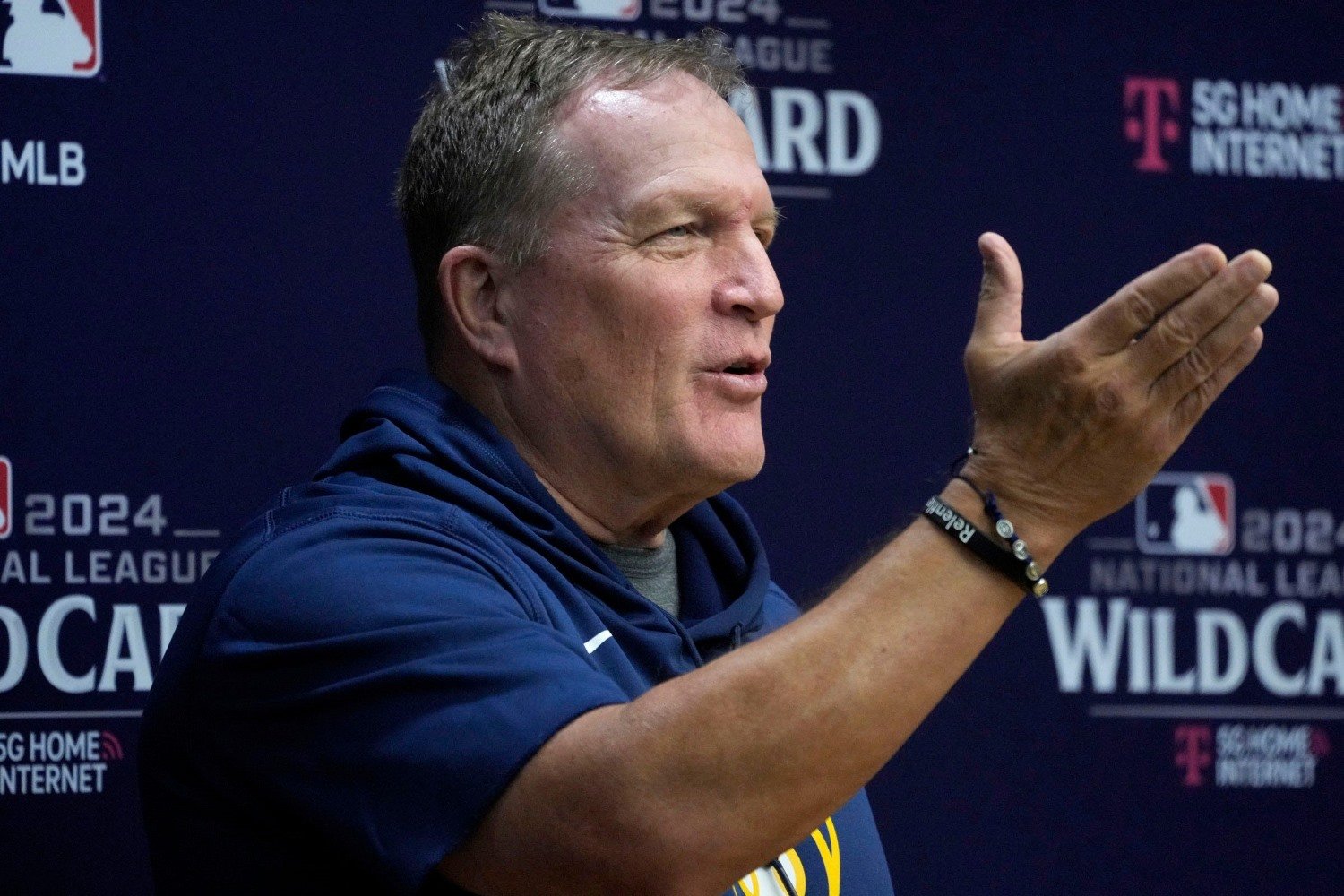 Postseason baseball has not been kind to the Brewers in recent years. The long faces and tears throughout American Family Field and comments from players, coaches, and executives in the aftermath of a blindsiding elimination illustrated how hard it hit the team and the fanbase. It’s almost impossible to deeply engage with baseball without experiencing some level of the emotions the sport invokes. Part of the job for professionals, from the front office to the playing field, is separating those emotions from the decision-making process that requires the most rational thought to best position a club for success. The Brewers have remained grounded in their approach to evaluating players and building rosters amid a series of emotional postseason exits. If their manager’s comments last week were any indication, the organization is not letting the latest gut punch change that. David Stearns drew ire for his “bites of the apple” explanation after trading Josh Hader at the 2022 trade deadline, but the process he described is the correct road map to winning a championship in baseball’s smallest market. The playoffs feature plenty of randomness. Every World Series winner needs its share of breaks in October to push it over the top. The more years the Brewers can make the tournament, the more chances they have of the stars aligning in their favor. In a way, the approach has been validated several times. The cruel twist is that the Brewers have been repeatedly sent home by the team that got hot at the right time and surprised much of the baseball world. The New York Mets, who defeated them in this year’s Wild Card Series, look like the latest entry in a nauseating trend. “The Mets are the hottest team in baseball, and we ran into them,” Pat Murphy said in his end-of-season media availability last Thursday. “And it’s just happened that the last four or five years, we’ve run into the hottest team in the National League in the first round of the playoffs. That’s been documented.” Entering 2024, all nine teams to bounce the Brewers from the postseason in franchise history have reached the World Series that same year. Excluding 1982 and 2018, when the Brewers were eliminated in the World Series and Championship Series, respectively, still leaves opponents seven-for-seven in winning the pennant after downing Milwaukee earlier in October. The Mets are four wins away from continuing the phenomenon. Research has repeatedly proven that the playoffs are a crapshoot. The talent gaps on paper between two good teams can easily be closed--or even reversed--for a few games. Murphy reiterated it. “It’s not a matter of being good enough, making the right call, and all that kind of stuff. A lot of it just happens at this time of year in baseball," he said. "Getting through these games, a lot has to go [your] way, and a lot has to happen. That’s our game.” Despite the frequent talk about how playoff baseball is different than its regular-season counterpart, the reality is that it’s exactly the same game. The winner has to score more runs than the loser, and driving the ball for extra-base hits is the most efficient way to do so. Teams keep runs off the board by executing pitches, mixing looks, and making plays in the field. The context is what changes. The stakes are higher, the atmosphere is more charged, and the sample size is smaller. Little moments – some within a player or manager’s control, some not – and individual performances for a few games that would go unnoted during the regular season can swing a team’s October fate and erupt into narratives. No outcomes are guaranteed in baseball, whether it’s the regular season or the postseason. The difference is that everything is under the microscope during the latter. Bad luck is not unusual in baseball. Nor are three-game skids for Willy Adames, William Contreras, and Rhys Hoskins. Failures by veteran pitchers to cover first base and off nights for Devin Williams are rare, but they are not unprecedented. Treating specific instances differently because they occurred in a playoff series is a dangerous error, one the Brewers are correct to avoid. Losing in the playoffs is not necessarily a symptom of an inherent flaw in a team’s makeup, nor is it evidence that the winning opponent is somehow better built to succeed in October. “It’s not like we’re at this level, and then whoever wins that playoff game is at the next level,” Murphy said. “We beat the Mets five out of six [games] during the [regular season].” It may be tempting to think otherwise after first-round exits in five straight postseason appearances. However, it’s hard to label the Brewers a demonstrably bad postseason team based on that sample, when the roster has looked drastically different each year. For a perennial contender, the Brewers have undergone significant annual turnover. The final outcome was the same, but the events and players behind each year’s playoff shortcomings differed. Murphy noted that every march to the postseason has been a unique experience with its own challenges, not the same group attempting to pick up where it left off a year ago. “Someone says, ‘The Brewers got the regular season figured out. Now they’ve got to figure out the playoffs.’ That’s absurd that you’d say that, if you really know baseball. We don’t have the regular season figured out. It’s a grind every freaking year to get to be where they have been. I’ve watched it. I’ve felt it. “It isn’t a matter of, ‘Well, the Brewers are just always good.’ That is a fact, but it’s a different type of rebuild almost every year.” None of this means the Brewers will not seek to improve. No competitive organization is complacent. However, don’t expect the club to make many – if any – decisions based on a three-game series loss. The reality is that while there can be smaller takeaways from a team’s postseason performance, the small samples of October baseball are not the proper backdrop for the comprehensive and precise evaluation that keeps a well-oiled organization running. “Playing one game or a three-game series in the playoffs doesn’t indicate where your program’s at,” Murphy said. Better indicators are the Brewers’ 93 regular-season wins in 2024 and 666 since the start of the 2017 season--the sixth-most in baseball during that span. It would take substantial evidence for the Brewers to lose faith in the philosophy that has produced such success. The repeated playoff losses, as frustrating as they are, do not provide it. Every postseason that does not end in a Brewers championship will sting. However, there should be solace in the fact that the club consistently reaches the dance almost every year. Each season presents an opportunity just as realistic as the last. This era of Milwaukee baseball has another built-in layer of optimism. Unlike past offseasons, the front office will not be tasked with retooling significant portions of the roster. The Brewers boast a young position player core, most of which is set to remain intact for the long haul. That continuity means lessons learned in 2024 can carry over to next year and beyond. “We could have played in the World Series this year,” Murphy said. “Just look at what’s going on. We’ve beaten all the teams that are going to be there. Look how consistent we were this year. We were capable of winning it. “I think players will take away that, ‘Wow, I can do this.’”
 -
The public faces of Milwaukee's front office and dugout touched on several topics in their final remarks of the 2024 season. Image courtesy of © Mike De Sisti / The Milwaukee Journal Sentinel / USA TODAY NETWORK via Imagn Images The public faces of Milwaukee's front office and dugout touched on several topics in their final remarks of the 2024 season. Matt Arnold and Pat Murphy each held their end-of-season press conferences with local media on Thursday. Here are a few nuggets of note to take into the offseason. William Contreras played through a sprained knee in the postseason Milwaukee’s All-Star backstop went 2-for-12 in the Wild Card Series and was not moving well out of the batter’s box all week. The club revised its lineup multiple times ahead of Game 3, with Contreras shifting to the DH slot after he was originally going to start at catcher. Arnold revealed the shuffling was due to a knee sprain. “He wanted to be in the lineup and was able to get in the lineup,” he said. “There was no talking him out of that, not that we tried to. He was adamant about playing, but he was hurt.” The Brewers believe it to be a mild injury and are not concerned about it long-term, but it still re-raises the question of whether the club allowed him to assume too heavy a workload. Contreras insists upon catching as often as possible. He talked his way out of a planned day off at the start of June and started each of the team’s first 64 games, catching in 52 of them. That run ended with a prolonged slump that saw him hit .222/.256/.301 in 36 games from mid-May through June, after a red-hot start. The Brewers worked in a few more days off for Contreras the rest of the way, but he still appeared in 158 of the team’s 165 games in 2024 and finished 62 innings behind Cal Raleigh for most regular-season innings caught. Could he get more regular rest next year? “We’re certainly aware of it, and it’s something we want to monitor going forward,” said Arnold, adding that the club feels Murphy and the training staff do a “fantastic job” at keeping players fresh. “But he’s a leader on this team, and we always want him in the lineup every day.” The Brewers are “open-minded” about Devin Williams’s future With one season of control remaining before he hits free agency, Williams could join Josh Hader and Corbin Burnes as elite pitchers whom the Brewers cashed in for long-term capital, as part of their goal to avoid competitive cycles and to remain perennial contenders. Dating back to David Stearns’s days as president of baseball operations, the Brewers have repeatedly expressed that they never rule out the creative and challenging moves necessitated by their market. Unsurprisingly, Arnold struck the same note when asked about Williams’s future. “We never want to close the door on anything,” he said. “On anything, we have to stay open-minded. We’re the smallest market in the league, so that’s something that’s required in the place that we are.” Arnold and the rest of the front office could retain Williams if they receive no offers to their liking, but history indicates that the two-time National League Reliever of the Year will likely have a new home by Opening Day. Multiple positions are still on the table for Tyler Black–and Sal Frelick Black’s profile as a prospect has been a plate discipline savant, without a clear defensive home. The latter limited his time in the big leagues this year, as he received just 57 MLB plate appearances and played just six games in the field, all at first base. The 24-year-old has natural athleticism, but has failed to settle in at any infield position. His long-term home may be in the outfield, where he started 12 games in the minor leagues last season and 15 in 2022. Moving him there full-time would not create a spot for him, though, as the Brewers feature a crowded outfield section of the 40-man roster already. Arnold indicated the Brewers could continue to give Black work at multiple positions in 2025 as both parties continue their efforts to land on a fit with the big-league club. “He’s just a really good athlete,” he said. “I wouldn’t pigeonhole him necessarily into one position.” Black could still carve out a role on next year’s team, but his current unclear fit and uninspiring results in a minuscule big-league sample make him an offseason trade candidate. Meanwhile, Murphy revealed that the Brewers still believe Frelick can provide additional positional flexibility beyond the outfield. His trial run at third base in spring training all but ended when Garrett Mitchell’s injury at the end of March forced him back to full-time outfield duty, but the Brewers could revisit it next year. “He was making great progress [at third base],” Murphy said. “That’s on the table for sure, depending on if we acquire anyone, if we don’t, if we lose somebody else, injuries. But to have that in our pocket, that versatility is crucial.” While flexibility is valuable, it’s uncertain whether Frelick is most helpful to the Brewers if he plays third base even semi-regularly. He’s been a below-average hitter in the big leagues, but his elite defense in the outfield has made him a solid everyday player. He’s unlikely to have the same level of impact with the glove at the hot corner. Roles remain undecided for Aaron Ashby, DL Hall, Jacob Misiorowski Initially viewed by the organization as starting pitchers in the long run, Ashby and Hall repaired their stock with encouraging showings as relievers late in the season. Misiorowski, meanwhile, also shifted to a relief role after an August promotion to Triple-A. Arnold said the organization has not decided what roles the trio will fill next year and beyond. Murphy struck a similar tone on Ashby, but indicated that he believes the left-hander can be more than a short-range reliever at the back end of the bullpen. “I’d say he’s more of a candidate to throw more innings, because the stuff is pretty special,” Murphy said. “But that’s going to be discussed.” Injury updates on Abner Uribe, Robert Gasser Uribe and Gasser were supposed to be major contributors this year, but their big-league time was limited for varying reasons. Uribe pitched to a 6.91 ERA and 4.63 FIP in 14 appearances before a high walk rate and composure issues prompted a demotion to Triple-A. He then sustained a right knee injury in the minor leagues that required surgery. Gasser was carving out a role in the starting rotation, authoring a 2.57 ERA and 3.38 FIP in his first five big-league starts, but his balky left elbow ultimately required Tommy John surgery. Arnold said Uribe will have a standard offseason and should be ready for spring training. “I saw him when we were playing in Arizona a couple weeks ago, and he was moving around really well.” Gasser’s timeline is less certain after receiving a full UCL replacement. The optimistic projection is a late-season return, but Arnold cautioned that a precise timeline is not set in stone. “It’s hard to tell with any kind of surgery like that,” he said, “but I think that’s sort of the timeline we’re thinking.” View full article
-
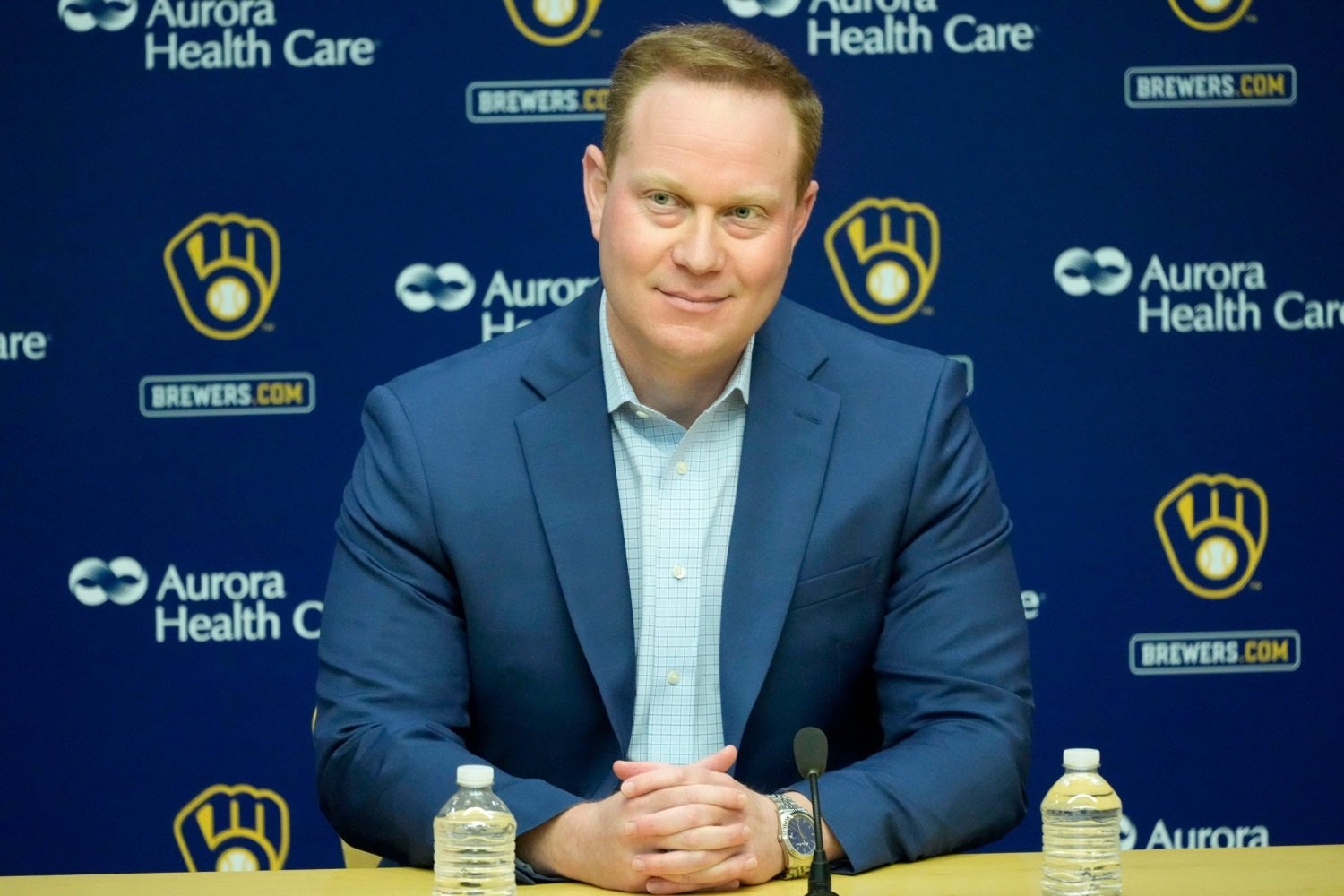 Matt Arnold and Pat Murphy each held their end-of-season press conferences with local media on Thursday. Here are a few nuggets of note to take into the offseason. William Contreras played through a sprained knee in the postseason Milwaukee’s All-Star backstop went 2-for-12 in the Wild Card Series and was not moving well out of the batter’s box all week. The club revised its lineup multiple times ahead of Game 3, with Contreras shifting to the DH slot after he was originally going to start at catcher. Arnold revealed the shuffling was due to a knee sprain. “He wanted to be in the lineup and was able to get in the lineup,” he said. “There was no talking him out of that, not that we tried to. He was adamant about playing, but he was hurt.” The Brewers believe it to be a mild injury and are not concerned about it long-term, but it still re-raises the question of whether the club allowed him to assume too heavy a workload. Contreras insists upon catching as often as possible. He talked his way out of a planned day off at the start of June and started each of the team’s first 64 games, catching in 52 of them. That run ended with a prolonged slump that saw him hit .222/.256/.301 in 36 games from mid-May through June, after a red-hot start. The Brewers worked in a few more days off for Contreras the rest of the way, but he still appeared in 158 of the team’s 165 games in 2024 and finished 62 innings behind Cal Raleigh for most regular-season innings caught. Could he get more regular rest next year? “We’re certainly aware of it, and it’s something we want to monitor going forward,” said Arnold, adding that the club feels Murphy and the training staff do a “fantastic job” at keeping players fresh. “But he’s a leader on this team, and we always want him in the lineup every day.” The Brewers are “open-minded” about Devin Williams’s future With one season of control remaining before he hits free agency, Williams could join Josh Hader and Corbin Burnes as elite pitchers whom the Brewers cashed in for long-term capital, as part of their goal to avoid competitive cycles and to remain perennial contenders. Dating back to David Stearns’s days as president of baseball operations, the Brewers have repeatedly expressed that they never rule out the creative and challenging moves necessitated by their market. Unsurprisingly, Arnold struck the same note when asked about Williams’s future. “We never want to close the door on anything,” he said. “On anything, we have to stay open-minded. We’re the smallest market in the league, so that’s something that’s required in the place that we are.” Arnold and the rest of the front office could retain Williams if they receive no offers to their liking, but history indicates that the two-time National League Reliever of the Year will likely have a new home by Opening Day. Multiple positions are still on the table for Tyler Black–and Sal Frelick Black’s profile as a prospect has been a plate discipline savant, without a clear defensive home. The latter limited his time in the big leagues this year, as he received just 57 MLB plate appearances and played just six games in the field, all at first base. The 24-year-old has natural athleticism, but has failed to settle in at any infield position. His long-term home may be in the outfield, where he started 12 games in the minor leagues last season and 15 in 2022. Moving him there full-time would not create a spot for him, though, as the Brewers feature a crowded outfield section of the 40-man roster already. Arnold indicated the Brewers could continue to give Black work at multiple positions in 2025 as both parties continue their efforts to land on a fit with the big-league club. “He’s just a really good athlete,” he said. “I wouldn’t pigeonhole him necessarily into one position.” Black could still carve out a role on next year’s team, but his current unclear fit and uninspiring results in a minuscule big-league sample make him an offseason trade candidate. Meanwhile, Murphy revealed that the Brewers still believe Frelick can provide additional positional flexibility beyond the outfield. His trial run at third base in spring training all but ended when Garrett Mitchell’s injury at the end of March forced him back to full-time outfield duty, but the Brewers could revisit it next year. “He was making great progress [at third base],” Murphy said. “That’s on the table for sure, depending on if we acquire anyone, if we don’t, if we lose somebody else, injuries. But to have that in our pocket, that versatility is crucial.” While flexibility is valuable, it’s uncertain whether Frelick is most helpful to the Brewers if he plays third base even semi-regularly. He’s been a below-average hitter in the big leagues, but his elite defense in the outfield has made him a solid everyday player. He’s unlikely to have the same level of impact with the glove at the hot corner. Roles remain undecided for Aaron Ashby, DL Hall, Jacob Misiorowski Initially viewed by the organization as starting pitchers in the long run, Ashby and Hall repaired their stock with encouraging showings as relievers late in the season. Misiorowski, meanwhile, also shifted to a relief role after an August promotion to Triple-A. Arnold said the organization has not decided what roles the trio will fill next year and beyond. Murphy struck a similar tone on Ashby, but indicated that he believes the left-hander can be more than a short-range reliever at the back end of the bullpen. “I’d say he’s more of a candidate to throw more innings, because the stuff is pretty special,” Murphy said. “But that’s going to be discussed.” Injury updates on Abner Uribe, Robert Gasser Uribe and Gasser were supposed to be major contributors this year, but their big-league time was limited for varying reasons. Uribe pitched to a 6.91 ERA and 4.63 FIP in 14 appearances before a high walk rate and composure issues prompted a demotion to Triple-A. He then sustained a right knee injury in the minor leagues that required surgery. Gasser was carving out a role in the starting rotation, authoring a 2.57 ERA and 3.38 FIP in his first five big-league starts, but his balky left elbow ultimately required Tommy John surgery. Arnold said Uribe will have a standard offseason and should be ready for spring training. “I saw him when we were playing in Arizona a couple weeks ago, and he was moving around really well.” Gasser’s timeline is less certain after receiving a full UCL replacement. The optimistic projection is a late-season return, but Arnold cautioned that a precise timeline is not set in stone. “It’s hard to tell with any kind of surgery like that,” he said, “but I think that’s sort of the timeline we’re thinking.”
 -
There were signs that this year could be different. Instead, the outcome was familiar, with a cruel new twist. Image courtesy of © Benny Sieu-Imagn Images There were signs that this year could be different. Instead, the outcome was familiar, with a cruel new twist. It was so close. The seeds were sewn throughout the regular season. They seemingly sprouted on Wednesday, night and were minutes from blossoming 24 hours later. This Brewers team felt different. With new front-facing personnel, a different style of play than past iterations, and an ability to fight back after adversity smacked it in the face, hope grew throughout the year that this group could achieve what those before it could not. It nearly happened. The Brewers were two outs away from slaying the proverbial postseason dragon that tormented the club for half a decade. On the mound was the man who ranks second in ERA among qualified relievers since the start of the 2020 season. His task was to save a two-run lead in the ninth inning, something he had failed to do on just three occasions in his career. A potential double-play situation meant the crowd of over 41,000 at American Family Field was one pitch away from erupting in jubilation. Instead, Pete Alonso vaporized the hope of nearly an entire stadium – if not an entire state – by driving a Devin Williams changeup to right field for a go-ahead three-run home run. Fifteen minutes later, the 2024 Milwaukee Brewers season was over. Willy Adames best summarized the experience from an emotional home clubhouse. “It’s kind of like when you were a kid and they let you try a candy, but they don’t give you the candy, you just taste it,” he said. Every postseason since the 2018 run was hardly a taste. If anything, it was the equivalent of walking into the candy store and looking around, only to be forcefully removed while approaching the counter. Each visit followed the same pattern. The Brewers did not play their best baseball, but the baseball gods also dealt them critical injuries going into October, and the randomness of small-sample postseason baseball often gave the opponent the boost they needed to dispose of the Crew swiftly. It felt, at times, as if there was nothing the Brewers could do to control their fate. This year’s Wild Card Series was a taste. It felt different. The Brewers snapped a six-game postseason losing streak with a thrilling comeback win in Game 2 that kept their season alive. When Jake Bauers and Sal Frelick hit improbable back-to-back home runs to claim a 2-0 lead with six outs to go, it felt like the unpredictability with which the Brewers were all too familiar, but viewed gloriously from the other side. That’s not to discredit either player. They put great swings on the ball and did not luck into their home runs. There was, however, an element of randomness behind the moment. Bauers slugged .361 in the regular season, including .262 over his final 115 plate appearances. Frelick had never hit a ball harder than 106.6 mph off the bat in the big leagues. Nor had he hit a home run of more than 391 feet. Both home runs were improbable. For 40 minutes that feel all too fleeting in hindsight, it appeared the Brewers were finally on the favorable end of enough playoff chaos to punch a ticket to a second round for the first time in years. Then, as quickly as the optimism arose, it crumbled in equally chaotic and unpredictable fashion. The Brewers battled back as they had all year long. They grabbed a late lead with the unexplainable storybook moment, then handed the ball to the best closer in the National League. Somehow, it still was not enough. There will be plenty of analysis on this site and others of last night, this week, and this season. The Brewers have plenty to unpack as they reflect on the year that was and determine the best path forward for 2025 and beyond. The dust from Thursday night must settle first. The devastating reality in the immediate aftermath: just when it seemed the Brewers had slayed their dragon, it reemerged with another snarl and burning burst, as brutal as any. View full article
-
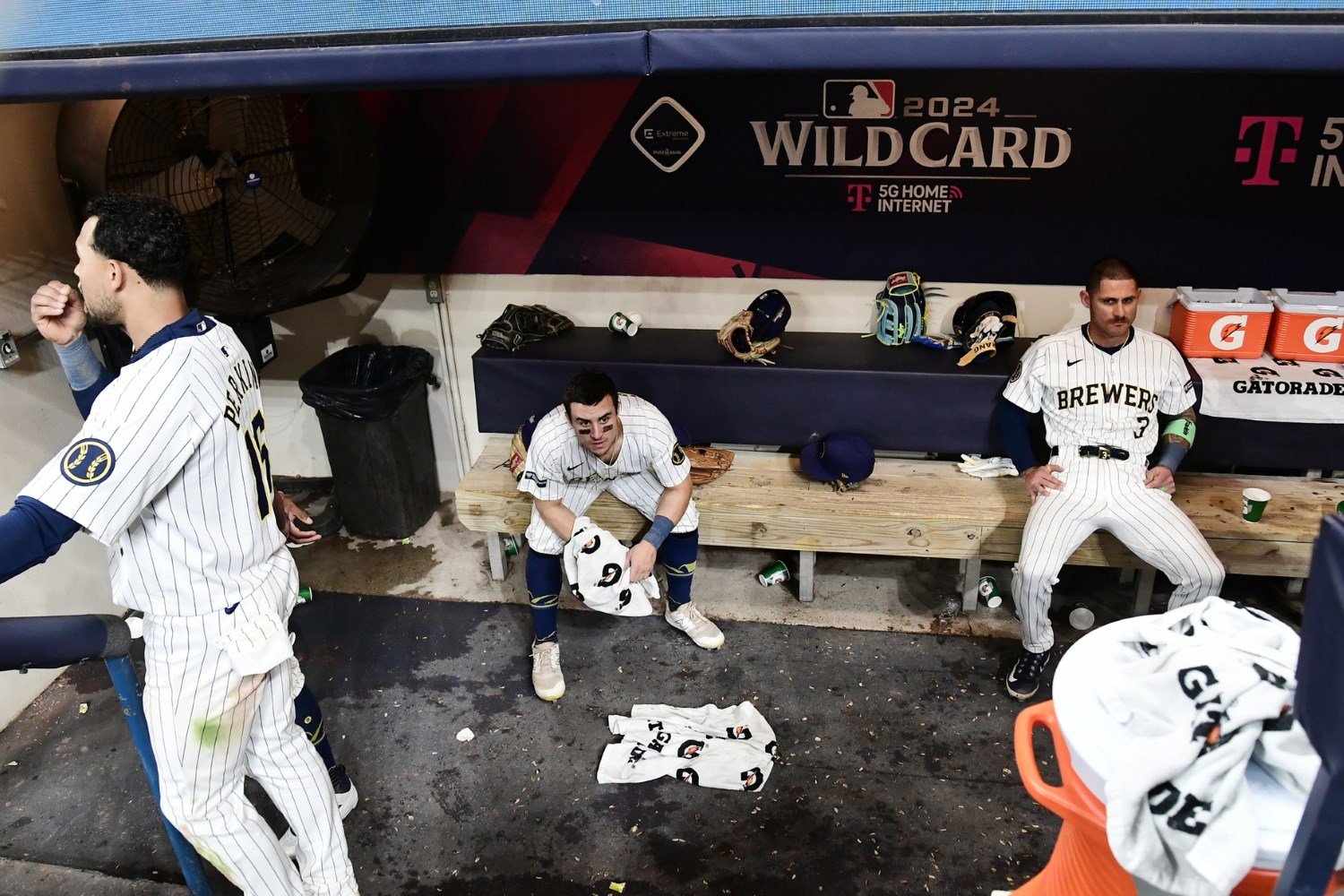 It was so close. The seeds were sewn throughout the regular season. They seemingly sprouted on Wednesday, night and were minutes from blossoming 24 hours later. This Brewers team felt different. With new front-facing personnel, a different style of play than past iterations, and an ability to fight back after adversity smacked it in the face, hope grew throughout the year that this group could achieve what those before it could not. It nearly happened. The Brewers were two outs away from slaying the proverbial postseason dragon that tormented the club for half a decade. On the mound was the man who ranks second in ERA among qualified relievers since the start of the 2020 season. His task was to save a two-run lead in the ninth inning, something he had failed to do on just three occasions in his career. A potential double-play situation meant the crowd of over 41,000 at American Family Field was one pitch away from erupting in jubilation. Instead, Pete Alonso vaporized the hope of nearly an entire stadium – if not an entire state – by driving a Devin Williams changeup to right field for a go-ahead three-run home run. Fifteen minutes later, the 2024 Milwaukee Brewers season was over. Willy Adames best summarized the experience from an emotional home clubhouse. “It’s kind of like when you were a kid and they let you try a candy, but they don’t give you the candy, you just taste it,” he said. Every postseason since the 2018 run was hardly a taste. If anything, it was the equivalent of walking into the candy store and looking around, only to be forcefully removed while approaching the counter. Each visit followed the same pattern. The Brewers did not play their best baseball, but the baseball gods also dealt them critical injuries going into October, and the randomness of small-sample postseason baseball often gave the opponent the boost they needed to dispose of the Crew swiftly. It felt, at times, as if there was nothing the Brewers could do to control their fate. This year’s Wild Card Series was a taste. It felt different. The Brewers snapped a six-game postseason losing streak with a thrilling comeback win in Game 2 that kept their season alive. When Jake Bauers and Sal Frelick hit improbable back-to-back home runs to claim a 2-0 lead with six outs to go, it felt like the unpredictability with which the Brewers were all too familiar, but viewed gloriously from the other side. That’s not to discredit either player. They put great swings on the ball and did not luck into their home runs. There was, however, an element of randomness behind the moment. Bauers slugged .361 in the regular season, including .262 over his final 115 plate appearances. Frelick had never hit a ball harder than 106.6 mph off the bat in the big leagues. Nor had he hit a home run of more than 391 feet. Both home runs were improbable. For 40 minutes that feel all too fleeting in hindsight, it appeared the Brewers were finally on the favorable end of enough playoff chaos to punch a ticket to a second round for the first time in years. Then, as quickly as the optimism arose, it crumbled in equally chaotic and unpredictable fashion. The Brewers battled back as they had all year long. They grabbed a late lead with the unexplainable storybook moment, then handed the ball to the best closer in the National League. Somehow, it still was not enough. There will be plenty of analysis on this site and others of last night, this week, and this season. The Brewers have plenty to unpack as they reflect on the year that was and determine the best path forward for 2025 and beyond. The dust from Thursday night must settle first. The devastating reality in the immediate aftermath: just when it seemed the Brewers had slayed their dragon, it reemerged with another snarl and burning burst, as brutal as any.
 -
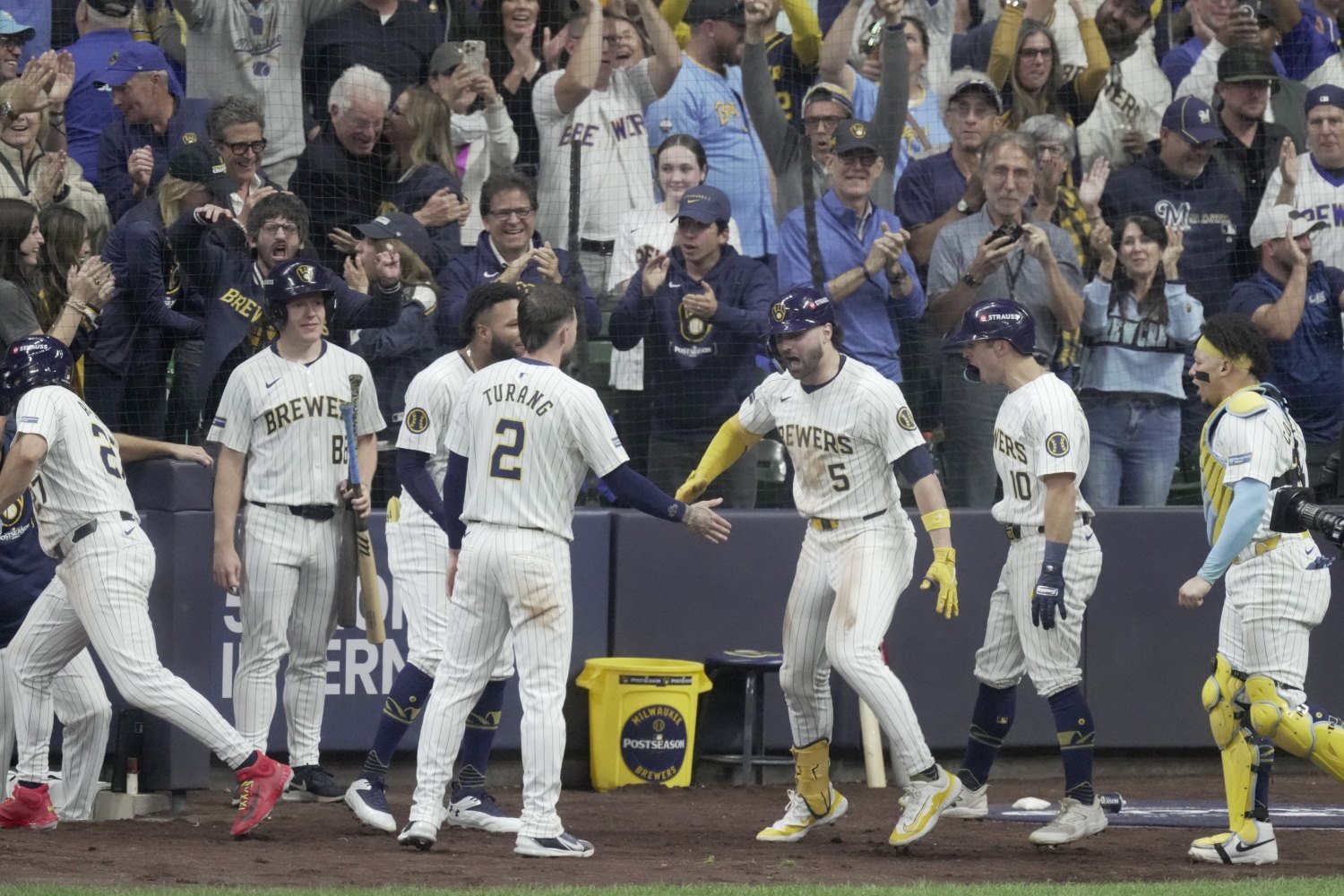 The Brewers saved their season with a dramatic win on Wednesday night. Trailing 3-2 in the eighth with the back of the Mets’ bullpen taking over, Milwaukee stormed back with a three-run inning against Phil Maton. Jackson Chourio slugged his second homer of the game to tie it, and Garrett Mitchell’s two-run shot minutes later was the dagger. It’s the young hitters who have kept the Brewers from a second consecutive sweep in the Wild Card Series. Five players with fewer than two qualified seasons of playing time – Chourio, Mitchell, Brice Turang, Sal Frelick, and Blake Perkins – have combined to slash .467/.469/.900 with seven extra-base hits in the first two games of the series. “It’s pretty cool,” Pat Murphy said after the game. “When you think of Turang and Ortiz and Sal and Perkins and ‘Jack-Jack,’ these guys are freshmen. Mitchell is the older guy of the group, but he really doesn’t have a full year of service in terms of games played. It’s pretty special watching these guys excel on the big stage.” Their performance has picked up the rest of the team, which has hit .139/.184/.139. That includes a group of more experienced veterans whom many would have seen as the most likely sparks in the lineup. Willy Adames is 1-for-7, and popped out in all three of his at-bats on Tuesday. Rhys Hoskins is hitless and bounced into a rally-killing double play in the third inning that same night. William Contreras has just two singles in eight at-bats. In the field, a pair of veteran pitchers have committed the most egregious misplays. Joel Payamps did not break immediately to cover first base when Jose Iglesias grounded to Hoskins in Game 1. Just over 24 hours later, Frankie Montas reached the base but dropped the feed from Hoskins. Both plays should have been routine outs; they instead opened the door to rallies that gave New York the lead. Murphy has frequently issued reminders of the youth of his roster, after games in which the Brewers did not execute well enough to win. That reminder was noticeably absent after their uncharacteristic performance on Tuesday, because it was not applicable. The veterans made most of the mistakes. Two games is a microscopic sample. It’s not predictive of a hitter’s performance the following night. Baseball is also a unique sport, because it’s configured in a way that welcomes contributions from varying and often unlikely sources. A successful team finds ways to win games without production from its most prominent players. The Brewers did it on Wednesday night, although Adames’s first hit of the series proved impactful by prolonging the inning for Mitchell. Milwaukee will be in an even better position to advance to the Division Series if he, Contreras, and Hoskins bring more to the table in Game 3.
-
- 1
-

-
- sal frelick
- brice turang
- (and 4 more)
-
A youth movement has kept the Brewers' season alive by offsetting underwhelming performances from more experienced players. Will the veteran bats help punch a ticket to the Division Series? Image courtesy of © Mark Hoffman/USA Today Network via Imagn Images A youth movement has kept the Brewers' season alive by offsetting underwhelming performances from more experienced players. Will the veteran bats help punch a ticket to the Division Series? The Brewers saved their season with a dramatic win on Wednesday night. Trailing 3-2 in the eighth with the back of the Mets’ bullpen taking over, Milwaukee stormed back with a three-run inning against Phil Maton. Jackson Chourio slugged his second homer of the game to tie it, and Garrett Mitchell’s two-run shot minutes later was the dagger. It’s the young hitters who have kept the Brewers from a second consecutive sweep in the Wild Card Series. Five players with fewer than two qualified seasons of playing time – Chourio, Mitchell, Brice Turang, Sal Frelick, and Blake Perkins – have combined to slash .467/.469/.900 with seven extra-base hits in the first two games of the series. “It’s pretty cool,” Pat Murphy said after the game. “When you think of Turang and Ortiz and Sal and Perkins and ‘Jack-Jack,’ these guys are freshmen. Mitchell is the older guy of the group, but he really doesn’t have a full year of service in terms of games played. It’s pretty special watching these guys excel on the big stage.” Their performance has picked up the rest of the team, which has hit .139/.184/.139. That includes a group of more experienced veterans whom many would have seen as the most likely sparks in the lineup. Willy Adames is 1-for-7, and popped out in all three of his at-bats on Tuesday. Rhys Hoskins is hitless and bounced into a rally-killing double play in the third inning that same night. William Contreras has just two singles in eight at-bats. In the field, a pair of veteran pitchers have committed the most egregious misplays. Joel Payamps did not break immediately to cover first base when Jose Iglesias grounded to Hoskins in Game 1. Just over 24 hours later, Frankie Montas reached the base but dropped the feed from Hoskins. Both plays should have been routine outs; they instead opened the door to rallies that gave New York the lead. Murphy has frequently issued reminders of the youth of his roster, after games in which the Brewers did not execute well enough to win. That reminder was noticeably absent after their uncharacteristic performance on Tuesday, because it was not applicable. The veterans made most of the mistakes. Two games is a microscopic sample. It’s not predictive of a hitter’s performance the following night. Baseball is also a unique sport, because it’s configured in a way that welcomes contributions from varying and often unlikely sources. A successful team finds ways to win games without production from its most prominent players. The Brewers did it on Wednesday night, although Adames’s first hit of the series proved impactful by prolonging the inning for Mitchell. Milwaukee will be in an even better position to advance to the Division Series if he, Contreras, and Hoskins bring more to the table in Game 3. View full article
-
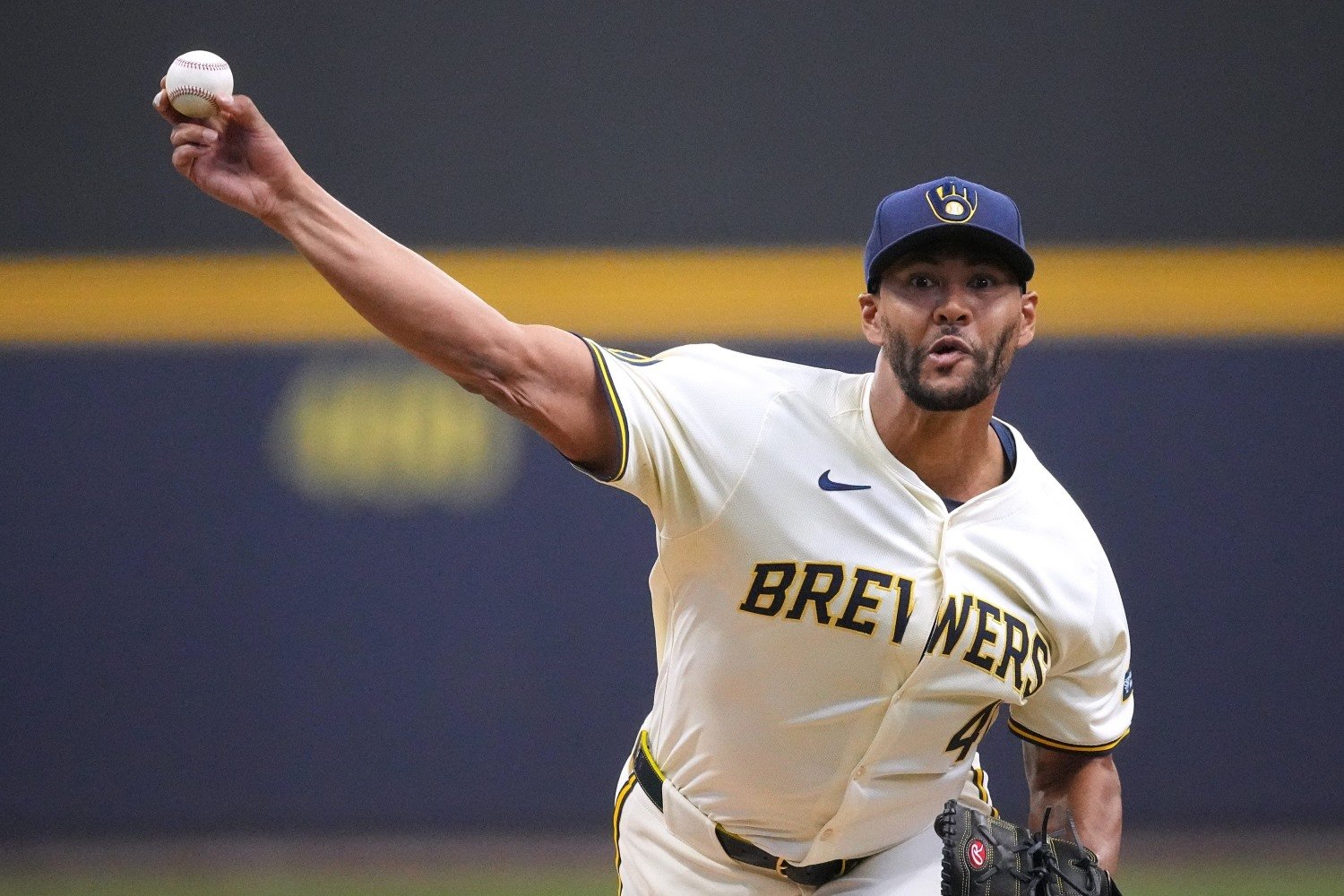 When identifying key contributors to the Brewers’ comeback victory in Game 2 of the Wild Card Series, one could choose from a large number of names. Trevor Megill and Joel Payamps contained the Mets in the middle innings, with the latter delivering Milwaukee’s first shutdown inning of the series after the Crew trimmed the deficit to one run. Jackson Chourio clobbered his first two playoff home runs, the second of which tied the game. Garrett Mitchell followed four batters later with the decisive two-run blast. Milwaukee manager Pat Murphy made sure to throw another name into the ring. “You’ve got to look to Joe Ross as kind of an unsung hero in this game,” he said in his postgame press conference. “He got four huge outs in crucial times.” Ross entered in the top of the seventh to face J.D. Martinez, with a runner on first and the Brewers still trailing, 3-2. He induced a soft lineout to end the inning, before returning to face the minimum in a scoreless eighth. That set the stage for Chourio and Mitchell’s heroics minutes later. Murphy said the Brewers were willing to use Megill in the fourth and fifth innings because they trusted Ross to retire the slew of right-handed batters in the bottom half of the Mets order. He earned that trust due to his strong work in relief throughout the final two months of the regular season. Ross’s tenure in the starting rotation was a mixed bag, interrupted by a back injury that cost him two months on the injured list. In 10 starts, he pitched to a 4.98 ERA, 4.11 FIP, and 4.66 SIERA. After an unsuccessful performance in his return outing, the Brewers shifted him to relief, where he posted a 1.67 ERA, 3.35 FIP, and 3.89 SIERA. “Honestly, just trying to stay aggressive when I get out there,” Ross said of his mentality out of the bullpen. “Just trying to hold my own with the rest of the guys. We’ve got one of the better bullpens around. “Anytime you go in out of the bullpen, it’s pound the zone, get ahead, stay ahead, and try to limit the long at-bats.” Ross throws a four-seam fastball and a changeup to left-handed hitters, but as a right-hander whose best pitches are his slider and two-seamer, he was always better suited for relief. The improved results in that role are not surprising. “He can sink the ball and bring it back on the outside. He loves his slider,” Murphy said. Ross has done more of what his manager is describing there since shifting to the bullpen. Instead of attacking right-handed batters inside with his two-seamer, he’s spotting it as a back-door pitch. The two-seamer away better sets up Ross’s signature slider, because both pitches are starting in the same tunnel. Both start just off the plate, with the former coming back to catch the corner and the latter diving away from the batter. The separation is later, making the decision of whether to swing more difficult. As a result, righties chased 43.5% of Ross's sliders outside the zone after his move to the bullpen. Their chase rate on sliders was 30.6% in his starts. The two-seamer's physical characteristics have benefited from modest improvements. It’s added half a tick of velocity on average (94.6 mph to 95.1), and the lateral movement distribution is tighter. Ross is getting more consistent run on the ball. When he does come inside, that extra inch or so of movement has helped him jam righties for harmless flyouts like the one depicted below. This two-seamer featured 17.1 inches of arm-side movement. ross_2s_17_inches.mp4 The optimized version of Ross has been a tough draw for same-sided opponents, who slugged .203 with zero extra-base hits in his regular-season relief outings. It was a similar story when Ross faced four righties on Wednesday night. None recorded a hit, and the only baserunner reached on a walk. The context of the outing made it even more impressive, particularly for someone who has spent most of his career as a starting pitcher. Ross got hot, sat down, and started again multiple times throughout the game, beginning in the second inning and continuing throughout the night. Repeated starting and stopping of a warmup routine encapsulates the uncertainty associated with pitching in relief. “With the situation [being] win or go home, I don’t think it’s too hard to stay locked in, to be honest with you,” he said, adding that the adrenaline boost from the situation helped him stay loose. “Just staying focused, keeping up with the batters, kind of paying attention to the sequencing and things like that. When it’s your turn to go out there, just do your thing.” If the Brewers make a deep playoff run, it won’t be the only time Ross is called upon in a close game. He’s become a trusted member of one of baseball’s best relief corps. “No situation is too big for him,” Murphy said. “I was really pleased with his poise.”
 -
He's been solid out of the bullpen, and his first playoff outing since 2019 was a sampling of the role he can play in a Brewers postseason run. Image courtesy of © Mark Hoffman/Milwaukee Journal Sentinel / USA TODAY NETWORK He's been solid out of the bullpen, and his first playoff outing since 2019 was a sampling of the role he can play in a Brewers postseason run. When identifying key contributors to the Brewers’ comeback victory in Game 2 of the Wild Card Series, one could choose from a large number of names. Trevor Megill and Joel Payamps contained the Mets in the middle innings, with the latter delivering Milwaukee’s first shutdown inning of the series after the Crew trimmed the deficit to one run. Jackson Chourio clobbered his first two playoff home runs, the second of which tied the game. Garrett Mitchell followed four batters later with the decisive two-run blast. Milwaukee manager Pat Murphy made sure to throw another name into the ring. “You’ve got to look to Joe Ross as kind of an unsung hero in this game,” he said in his postgame press conference. “He got four huge outs in crucial times.” Ross entered in the top of the seventh to face J.D. Martinez, with a runner on first and the Brewers still trailing, 3-2. He induced a soft lineout to end the inning, before returning to face the minimum in a scoreless eighth. That set the stage for Chourio and Mitchell’s heroics minutes later. Murphy said the Brewers were willing to use Megill in the fourth and fifth innings because they trusted Ross to retire the slew of right-handed batters in the bottom half of the Mets order. He earned that trust due to his strong work in relief throughout the final two months of the regular season. Ross’s tenure in the starting rotation was a mixed bag, interrupted by a back injury that cost him two months on the injured list. In 10 starts, he pitched to a 4.98 ERA, 4.11 FIP, and 4.66 SIERA. After an unsuccessful performance in his return outing, the Brewers shifted him to relief, where he posted a 1.67 ERA, 3.35 FIP, and 3.89 SIERA. “Honestly, just trying to stay aggressive when I get out there,” Ross said of his mentality out of the bullpen. “Just trying to hold my own with the rest of the guys. We’ve got one of the better bullpens around. “Anytime you go in out of the bullpen, it’s pound the zone, get ahead, stay ahead, and try to limit the long at-bats.” Ross throws a four-seam fastball and a changeup to left-handed hitters, but as a right-hander whose best pitches are his slider and two-seamer, he was always better suited for relief. The improved results in that role are not surprising. “He can sink the ball and bring it back on the outside. He loves his slider,” Murphy said. Ross has done more of what his manager is describing there since shifting to the bullpen. Instead of attacking right-handed batters inside with his two-seamer, he’s spotting it as a back-door pitch. The two-seamer away better sets up Ross’s signature slider, because both pitches are starting in the same tunnel. Both start just off the plate, with the former coming back to catch the corner and the latter diving away from the batter. The separation is later, making the decision of whether to swing more difficult. As a result, righties chased 43.5% of Ross's sliders outside the zone after his move to the bullpen. Their chase rate on sliders was 30.6% in his starts. The two-seamer's physical characteristics have benefited from modest improvements. It’s added half a tick of velocity on average (94.6 mph to 95.1), and the lateral movement distribution is tighter. Ross is getting more consistent run on the ball. When he does come inside, that extra inch or so of movement has helped him jam righties for harmless flyouts like the one depicted below. This two-seamer featured 17.1 inches of arm-side movement. ross_2s_17_inches.mp4 The optimized version of Ross has been a tough draw for same-sided opponents, who slugged .203 with zero extra-base hits in his regular-season relief outings. It was a similar story when Ross faced four righties on Wednesday night. None recorded a hit, and the only baserunner reached on a walk. The context of the outing made it even more impressive, particularly for someone who has spent most of his career as a starting pitcher. Ross got hot, sat down, and started again multiple times throughout the game, beginning in the second inning and continuing throughout the night. Repeated starting and stopping of a warmup routine encapsulates the uncertainty associated with pitching in relief. “With the situation [being] win or go home, I don’t think it’s too hard to stay locked in, to be honest with you,” he said, adding that the adrenaline boost from the situation helped him stay loose. “Just staying focused, keeping up with the batters, kind of paying attention to the sequencing and things like that. When it’s your turn to go out there, just do your thing.” If the Brewers make a deep playoff run, it won’t be the only time Ross is called upon in a close game. He’s become a trusted member of one of baseball’s best relief corps. “No situation is too big for him,” Murphy said. “I was really pleased with his poise.” View full article
-
 There is never a singular reason for a win or a loss in baseball. One can point to several shortcomings that contributed to the Brewers falling to the Mets in Game 1 of the Wild Card Series on Tuesday night. Freddy Peralta immediately gave away an early 2-0 lead, instead of responding with a shutdown inning. Rhys Hoskins bounced into a rally-killing double play with runners on the corners in the bottom of the third. Willy Adames went 0-for-3 with three infield popouts, seemingly trying to hit a statement home run with every swing after an on-field argument with Jesse Winker. A disastrous top of the fifth inning was the headliner, though. The energy evaporated from American Family Field as more than 40,000 onlookers watched two of the home club’s greatest strengths crumble at the worst possible moment. Run prevention has been the Brewers’ specialty for years. While more than just pitching and defense carried this team through a successful regular season, the two attributes were arguably its most consistent. The Brewers’ second opportunity for a shutdown inning began with Jackson Chourio robbing Starling Marte of extra bases with a leaping grab at the left-field wall. After that, the pitching and defense melted down. Joel Payamps, summoned for the inning in relief of Peralta, surrendered a second straight hard-hit ball to the next batter, ex-Brewer Tyrone Taylor. Chourio misplayed this one into a double. Payamps recorded the second out, but continued to labor, walking Francisco Lindor on five pitches, four of which weren't even in the neighborhood of the strike zone. Despite his rough performance, though, Payamps still had a chance to log a scoreless inning when José Iglesias hit a ground ball to first base. Hoskins smothered it, but Payamps watched him make the stop before breaking to cover the bag. Iglesias beat him there for a game-tying infield hit. That mistake opened the floodgates. Aaron Ashby entered to face Brandon Nimmo, who reached on an infield single to load the bases. Adames, who was shaded toward second base, ranged to his right and gloved the ball as he slid to his knees, but could not transfer it to his throwing hand. It wasn’t an easy play, but it’s likely converted by past versions of Adames, who has played the worst defense of his career this year. Ashby would not retire a batter, allowing two more hits, throwing a wild pitch, and issuing one unintentional walk. He threw just eight of his 18 pitches for strikes. When Nick Mears entered as the third reliever of the inning, the Brewers trailed 8-4. The score held there, as Milwaukee dropped its sixth straight playoff game and the 10th of its last 11. For the second consecutive year, they entered the Wild Card Series as the No. 3 seed and were promptly sucker punched to the brink of elimination. It happened for numerous reasons, the most prominent being the implosion of the roster’s greatest aptitudes. Still, many fingers pointed to Murphy as a catalyst for pulling Peralta – who retired each of the final nine batters he faced – after four innings. That’s redirecting blame from where the brunt of it belongs. Murphy’s bullpen management at times warranted valid criticism throughout the regular season, but he governed the staff correctly in Game 1. Peralta tossed a pair of quick innings, but was not in his best form. Inconsistent command produced several unintentionally low fastballs, and the hesitancy of Peralta and William Contreras to throw his breaking stuff as often as usual against a heavily right-handed lineup hinted he lacked feel for those pitches. He was also approaching a point in the start where he has historically struggled. “It had been an emotional 70 pitches,” Murphy explained. “What’s he got, 20 left? He’s usually between 83 and 90 when he kind of loses a little bit on his fastball. I didn’t want him to face those guys three times around.” The Brewers had just reclaimed the lead in the middle innings, and needed a shutdown frame to launch themselves toward the win for which they had positioned themselves well. Peralta had already failed to deliver one, was a coin flip to have his best stuff, and had a third trip through the top of the Mets order looming if anyone reached base. Giving a clean inning to Payamps (with Ashby waiting in the wings) was the sensible decision for holding the lead. The former allowed earned runs in just two of his final 30 regular-season outings, and the latter posted a 1.37 ERA and 0.78 FIP in 19 ⅔ relief innings after a late-August promotion. Murphy knows Peralta’s shortcomings as a starting pitcher. He knows that his bullpen is a strength. He rightfully had a quick hook and was unafraid to enforce it. Unfortunately, his players failed to execute the blueprint that was incredibly successful in the regular season. Moreover, they did so while exhibiting a glaring absence of an attribute Murphy deemed necessary for his team to succeed in the playoffs. During the final weekend of the regular season, Murphy spoke about the need to respond “immediately” and “meet the game halfway.” Players will make mistakes, he said. It’s part of the game. The key is being ready for the next pitch and the next play. Isolated mistakes can be more costly in the postseason, but no World Series winner plays perfect baseball throughout the entirety of October. Case in point: even after Chourio’s misplay and multiple well-struck balls against Payamps, he would have escaped with a scoreless inning had he simply broken for first on contact. Things went south for the Brewers when the mistakes snowballed. No one could see inside the minds of the players after each mistake. Everyone could see what outwardly transpired on the field. Whether the Brewers let the failure of the previous play and the previous pitch bleed into the next, the bottom line is that they did not meet the next opportunity. The rest of the team could have picked up Chourio after his misplay. Instead, Payamps was late in covering first base. Ashby could have responded to Nimmo’s infield hit by bearing down with more competitive pitches. Instead, his control worsened, and the bleeding continued. “What I think happened is the game sped up on him a little bit,” Murphy said. The Brewers then failed to rise to the occasion on the other side of the ball. An offense that prides itself on sound swing decisions drew just two walks and chased 30% of pitches it saw outside the strike zone – the antithesis of how Murphy preaches "meeting the game halfway" to hitters. Seventeen straight Milwaukee hitters were retired to end the game, allowing Luis Severino to complete six innings despite his early struggles and preventing the Brewers from pouncing on an overworked Mets bullpen. Teams can have uncharacteristic showings in the regular season with less consequence. There’s more time to respond during a 162-game schedule. It must be immediate in a short playoff series. It was not on Tuesday, and the result was another postseason loss. Now the Brewers must answer back in Game 2. If they don’t, it will be another early and demoralizing playoff exit for an organization that speaks frequently of its greater aspirations of a World Series championship.
 -
An untimely and uncharacteristic showing on multiple fronts has the Brewers staring down a repeat of failed postseasons of the past. Image courtesy of © Benny Sieu-Imagn Images An untimely and uncharacteristic showing on multiple fronts has the Brewers staring down a repeat of failed postseasons of the past. There is never a singular reason for a win or a loss in baseball. One can point to several shortcomings that contributed to the Brewers falling to the Mets in Game 1 of the Wild Card Series on Tuesday night. Freddy Peralta immediately gave away an early 2-0 lead, instead of responding with a shutdown inning. Rhys Hoskins bounced into a rally-killing double play with runners on the corners in the bottom of the third. Willy Adames went 0-for-3 with three infield popouts, seemingly trying to hit a statement home run with every swing after an on-field argument with Jesse Winker. A disastrous top of the fifth inning was the headliner, though. The energy evaporated from American Family Field as more than 40,000 onlookers watched two of the home club’s greatest strengths crumble at the worst possible moment. Run prevention has been the Brewers’ specialty for years. While more than just pitching and defense carried this team through a successful regular season, the two attributes were arguably its most consistent. The Brewers’ second opportunity for a shutdown inning began with Jackson Chourio robbing Starling Marte of extra bases with a leaping grab at the left-field wall. After that, the pitching and defense melted down. Joel Payamps, summoned for the inning in relief of Peralta, surrendered a second straight hard-hit ball to the next batter, ex-Brewer Tyrone Taylor. Chourio misplayed this one into a double. Payamps recorded the second out, but continued to labor, walking Francisco Lindor on five pitches, four of which weren't even in the neighborhood of the strike zone. Despite his rough performance, though, Payamps still had a chance to log a scoreless inning when José Iglesias hit a ground ball to first base. Hoskins smothered it, but Payamps watched him make the stop before breaking to cover the bag. Iglesias beat him there for a game-tying infield hit. That mistake opened the floodgates. Aaron Ashby entered to face Brandon Nimmo, who reached on an infield single to load the bases. Adames, who was shaded toward second base, ranged to his right and gloved the ball as he slid to his knees, but could not transfer it to his throwing hand. It wasn’t an easy play, but it’s likely converted by past versions of Adames, who has played the worst defense of his career this year. Ashby would not retire a batter, allowing two more hits, throwing a wild pitch, and issuing one unintentional walk. He threw just eight of his 18 pitches for strikes. When Nick Mears entered as the third reliever of the inning, the Brewers trailed 8-4. The score held there, as Milwaukee dropped its sixth straight playoff game and the 10th of its last 11. For the second consecutive year, they entered the Wild Card Series as the No. 3 seed and were promptly sucker punched to the brink of elimination. It happened for numerous reasons, the most prominent being the implosion of the roster’s greatest aptitudes. Still, many fingers pointed to Murphy as a catalyst for pulling Peralta – who retired each of the final nine batters he faced – after four innings. That’s redirecting blame from where the brunt of it belongs. Murphy’s bullpen management at times warranted valid criticism throughout the regular season, but he governed the staff correctly in Game 1. Peralta tossed a pair of quick innings, but was not in his best form. Inconsistent command produced several unintentionally low fastballs, and the hesitancy of Peralta and William Contreras to throw his breaking stuff as often as usual against a heavily right-handed lineup hinted he lacked feel for those pitches. He was also approaching a point in the start where he has historically struggled. “It had been an emotional 70 pitches,” Murphy explained. “What’s he got, 20 left? He’s usually between 83 and 90 when he kind of loses a little bit on his fastball. I didn’t want him to face those guys three times around.” The Brewers had just reclaimed the lead in the middle innings, and needed a shutdown frame to launch themselves toward the win for which they had positioned themselves well. Peralta had already failed to deliver one, was a coin flip to have his best stuff, and had a third trip through the top of the Mets order looming if anyone reached base. Giving a clean inning to Payamps (with Ashby waiting in the wings) was the sensible decision for holding the lead. The former allowed earned runs in just two of his final 30 regular-season outings, and the latter posted a 1.37 ERA and 0.78 FIP in 19 ⅔ relief innings after a late-August promotion. Murphy knows Peralta’s shortcomings as a starting pitcher. He knows that his bullpen is a strength. He rightfully had a quick hook and was unafraid to enforce it. Unfortunately, his players failed to execute the blueprint that was incredibly successful in the regular season. Moreover, they did so while exhibiting a glaring absence of an attribute Murphy deemed necessary for his team to succeed in the playoffs. During the final weekend of the regular season, Murphy spoke about the need to respond “immediately” and “meet the game halfway.” Players will make mistakes, he said. It’s part of the game. The key is being ready for the next pitch and the next play. Isolated mistakes can be more costly in the postseason, but no World Series winner plays perfect baseball throughout the entirety of October. Case in point: even after Chourio’s misplay and multiple well-struck balls against Payamps, he would have escaped with a scoreless inning had he simply broken for first on contact. Things went south for the Brewers when the mistakes snowballed. No one could see inside the minds of the players after each mistake. Everyone could see what outwardly transpired on the field. Whether the Brewers let the failure of the previous play and the previous pitch bleed into the next, the bottom line is that they did not meet the next opportunity. The rest of the team could have picked up Chourio after his misplay. Instead, Payamps was late in covering first base. Ashby could have responded to Nimmo’s infield hit by bearing down with more competitive pitches. Instead, his control worsened, and the bleeding continued. “What I think happened is the game sped up on him a little bit,” Murphy said. The Brewers then failed to rise to the occasion on the other side of the ball. An offense that prides itself on sound swing decisions drew just two walks and chased 30% of pitches it saw outside the strike zone – the antithesis of how Murphy preaches "meeting the game halfway" to hitters. Seventeen straight Milwaukee hitters were retired to end the game, allowing Luis Severino to complete six innings despite his early struggles and preventing the Brewers from pouncing on an overworked Mets bullpen. Teams can have uncharacteristic showings in the regular season with less consequence. There’s more time to respond during a 162-game schedule. It must be immediate in a short playoff series. It was not on Tuesday, and the result was another postseason loss. Now the Brewers must answer back in Game 2. If they don’t, it will be another early and demoralizing playoff exit for an organization that speaks frequently of its greater aspirations of a World Series championship. View full article
-
 Little has been decided about how the Brewers will align their pitching staff for the National League Wild Card Series. The only certainty is that Freddy Peralta will start Game 1 on Tuesday afternoon. Peralta was always the clear-cut choice to start Milwaukee’s first playoff game. The strikeout ability and high upside of his stuff separate him from the club’s other bulk arms, all of whom profile as back-of-the-rotation pitchers. That’s not a knock against them. It’s simply an acknowledgment that if anyone in the group can dominate a strong lineup, it’s Peralta. However, Peralta comes with his own set of question marks. He’s coming off an inconsistent season in which he did not realize his upside nearly as often as one would hope or expect from a front-line starter. Most of the problems stem from elusive command. Whether he was inflating his pitch count by failing to execute competitive two-strike pitches or suffering from the long ball by making mistakes over the plate, Peralta’s performance was inefficient for good portions of the season. He racked up strikeouts, but ran into more trouble than you'd like when he got into an opposing lineup a third time, and rarely gave the team the deep starts they craved. He finished the regular season with a 3.68 ERA, 4.16 FIP, and 4.41 DRA. That’s the performance of a quality big-league starting pitcher, but it’s a bit underwhelming for a seven-year veteran with the talent to be one of the game’s best pitchers for a contending club. The positives were Peralta’s durability and work ethic. He made all 32 of his scheduled regular-season starts and logged a career-high 173 ⅔ innings. Throughout that time, he worked diligently to reach a comfort zone on the mound, both physically and mentally. It’s not abnormal for pitchers to tinker with mechanics throughout a long season, but Peralta’s changes were more than occasional minor alterations. He switched his positioning on the rubber multiple times, beginning the year on the third-base side and ending on the first-base side. He also reduced the crossfire action in his delivery while driving down the mound. Peralta made another round of alterations in August, abandoning his windup to pitch exclusively out of the stretch and employing a variety of leg lifts to begin his motion. “I had something going on back then physically, and I was trying to make the adjustment to what made me feel better back then,” Peralta explained before a team workout on Monday. After that, he felt everything started to click. “When I changed that… me and [pitching coach Chris Hook], we [decided], let’s keep doing it this way because there’s no issues when you’re pitching from the stretch. And I think from there, even my mind, it was clear. Everything was different.” The results improved. Peralta posted an ERA of 3.06 in the second half, marking the second straight season in which his surface-level output improved after the All-Star break. Beginning with the start against the Dodgers in August in which his varied delivery patterns entered the picture, his ERA was 2.79 in nine starts. “I had some hard moments early in the season, because I wasn’t finding the strike zone sometimes, or maybe my slider wasn’t working really well,” he said,. “But we were able to make the adjustment, and I finished really strong.” “He’s been doing a tremendous job of getting better throughout the year, and I think he kind of helped himself to be in a great spot mind-wise to get to here and to be ready for this game,” Willy Adames said. “I think he’s in a great position, and I believe he’s going to do a great job.” Beneath the shiny exterior of Peralta’s second-half splits, whether he truly threw the ball better after his changes is less clear. His strikeout, walk, and home run rates worsened, leading to less inspiring reviews from ERA estimators. He also threw more non-competitive pitches, defined by TruMedia as a pitch located more than 18 inches from the center of the strike zone. Split GS IP BB% K% HR% ERA FIP SIERA NonCompLoc% First Half 19 103 8.3% 30.1% 3.2% 4.11 3.69 3.36 17.3% Second Half 13 70.2 10.9% 23.9% 4.1% 3.06 4.84 4.45 20.9% Peralta stated last month that he was emphasizing pitching to contact over chasing swing-and-miss, in pursuit of efficiency. However, he still issues too many free passes, makes too many unproductive misses, and gets burned on too many mistakes over the plate for one to say he’s improved on that front. The flaws that remain in Peralta’s game and led to regular-season inconsistency could prove costly in the playoffs. A rough outing in a loss would bring his team to the brink of elimination in a three-game series. With these realities in mind, along with an opponent .840 OPS the third time through the order and beyond this year, the Brewers cannot approach Peralta’s Game 1 start in the way they may have for past aces Brandon Woodruff and Corbin Burnes. Pat Murphy must apply a short leash. Peralta did finish the regular season with two of his better starts of the year, allowing three runs in 10 ⅓ innings. Efficiency remained an issue, but Peralta allowed just two hits while striking out 16 of 39 batters faced (41%). That form would be enough on Tuesday against the Mets. If Peralta limits New York to a pair of runs in five innings, he’ll have done his job. His history inspires both promise and uncertainty. It’s a reminder that Peralta could dominate in a special outing--or, just as easily, put the Brewers in a hole with a shaky one. Once he toes the rubber, all that matters is how he looks in the moment. All the adjustments he's made across a long season and all the innings and outings have been learning opportunities. Tuesday will be the test for which he's studied all year.
 -
Consistent, ace-like form proved elusive for Milwaukee's top starter in the regular season. Can he find it under the bright lights, in his third career playoff start? Image courtesy of © Charles LeClaire-Imagn Images Consistent, ace-like form proved elusive for Milwaukee's top starter in the regular season. Can he find it under the bright lights, in his third career playoff start? Little has been decided about how the Brewers will align their pitching staff for the National League Wild Card Series. The only certainty is that Freddy Peralta will start Game 1 on Tuesday afternoon. Peralta was always the clear-cut choice to start Milwaukee’s first playoff game. The strikeout ability and high upside of his stuff separate him from the club’s other bulk arms, all of whom profile as back-of-the-rotation pitchers. That’s not a knock against them. It’s simply an acknowledgment that if anyone in the group can dominate a strong lineup, it’s Peralta. However, Peralta comes with his own set of question marks. He’s coming off an inconsistent season in which he did not realize his upside nearly as often as one would hope or expect from a front-line starter. Most of the problems stem from elusive command. Whether he was inflating his pitch count by failing to execute competitive two-strike pitches or suffering from the long ball by making mistakes over the plate, Peralta’s performance was inefficient for good portions of the season. He racked up strikeouts, but ran into more trouble than you'd like when he got into an opposing lineup a third time, and rarely gave the team the deep starts they craved. He finished the regular season with a 3.68 ERA, 4.16 FIP, and 4.41 DRA. That’s the performance of a quality big-league starting pitcher, but it’s a bit underwhelming for a seven-year veteran with the talent to be one of the game’s best pitchers for a contending club. The positives were Peralta’s durability and work ethic. He made all 32 of his scheduled regular-season starts and logged a career-high 173 ⅔ innings. Throughout that time, he worked diligently to reach a comfort zone on the mound, both physically and mentally. It’s not abnormal for pitchers to tinker with mechanics throughout a long season, but Peralta’s changes were more than occasional minor alterations. He switched his positioning on the rubber multiple times, beginning the year on the third-base side and ending on the first-base side. He also reduced the crossfire action in his delivery while driving down the mound. Peralta made another round of alterations in August, abandoning his windup to pitch exclusively out of the stretch and employing a variety of leg lifts to begin his motion. “I had something going on back then physically, and I was trying to make the adjustment to what made me feel better back then,” Peralta explained before a team workout on Monday. After that, he felt everything started to click. “When I changed that… me and [pitching coach Chris Hook], we [decided], let’s keep doing it this way because there’s no issues when you’re pitching from the stretch. And I think from there, even my mind, it was clear. Everything was different.” The results improved. Peralta posted an ERA of 3.06 in the second half, marking the second straight season in which his surface-level output improved after the All-Star break. Beginning with the start against the Dodgers in August in which his varied delivery patterns entered the picture, his ERA was 2.79 in nine starts. “I had some hard moments early in the season, because I wasn’t finding the strike zone sometimes, or maybe my slider wasn’t working really well,” he said,. “But we were able to make the adjustment, and I finished really strong.” “He’s been doing a tremendous job of getting better throughout the year, and I think he kind of helped himself to be in a great spot mind-wise to get to here and to be ready for this game,” Willy Adames said. “I think he’s in a great position, and I believe he’s going to do a great job.” Beneath the shiny exterior of Peralta’s second-half splits, whether he truly threw the ball better after his changes is less clear. His strikeout, walk, and home run rates worsened, leading to less inspiring reviews from ERA estimators. He also threw more non-competitive pitches, defined by TruMedia as a pitch located more than 18 inches from the center of the strike zone. Split GS IP BB% K% HR% ERA FIP SIERA NonCompLoc% First Half 19 103 8.3% 30.1% 3.2% 4.11 3.69 3.36 17.3% Second Half 13 70.2 10.9% 23.9% 4.1% 3.06 4.84 4.45 20.9% Peralta stated last month that he was emphasizing pitching to contact over chasing swing-and-miss, in pursuit of efficiency. However, he still issues too many free passes, makes too many unproductive misses, and gets burned on too many mistakes over the plate for one to say he’s improved on that front. The flaws that remain in Peralta’s game and led to regular-season inconsistency could prove costly in the playoffs. A rough outing in a loss would bring his team to the brink of elimination in a three-game series. With these realities in mind, along with an opponent .840 OPS the third time through the order and beyond this year, the Brewers cannot approach Peralta’s Game 1 start in the way they may have for past aces Brandon Woodruff and Corbin Burnes. Pat Murphy must apply a short leash. Peralta did finish the regular season with two of his better starts of the year, allowing three runs in 10 ⅓ innings. Efficiency remained an issue, but Peralta allowed just two hits while striking out 16 of 39 batters faced (41%). That form would be enough on Tuesday against the Mets. If Peralta limits New York to a pair of runs in five innings, he’ll have done his job. His history inspires both promise and uncertainty. It’s a reminder that Peralta could dominate in a special outing--or, just as easily, put the Brewers in a hole with a shaky one. Once he toes the rubber, all that matters is how he looks in the moment. All the adjustments he's made across a long season and all the innings and outings have been learning opportunities. Tuesday will be the test for which he's studied all year. View full article
-
 Pat Murphy has proven to be a media-friendly manager in his first full season in the role. His authentic and straightforward communication has made him a source of quotes and soundbites all year long. It was no surprise, then, when the Brewers adopted one of Murphy’s unofficial mottos as the tagline of its marketing campaign for this year’s postseason. During one of his club’s few regular-season slumps, Murphy issued a vocabulary lesson on the word undaunted. Now it adorns the banner plastered throughout the walls of American Family Field and the city of Milwaukee. It’s been attached as a hashtag to most of the club’s social media posts since the Brewers clinched the NL Central on Sept. 18. The undaunted and relentless nature of Murphy’s club is one of the many driving forces behind a level of success that few outside the organization saw coming. However, he used a different word when asked how his team must approach the fresh challenge of October baseball. “Response is the word I think of, more than anything,” Murphy said. “How are you going to respond to whatever immediately?” While the call to remain undaunted remains active, it’s a different Murphy aphorism that could prove most crucial in practice in the postseason. Winning baseball is energetic, but it’s also thoughtful and grounded. Murphy tries to thread that needle with another adage that he has employed to less fanfare. He’s used it just as frequently, though, including multiple times over the final weekend of the regular season. “The game gets very cruel when you’re trying to control the game,” he said Friday in his office. “You can only meet the game halfway.” That means recognizing what one can and cannot control, and responding properly to whatever cards he’s dealt. “Oftentimes, we want what we want, and we want it now, and that’s not the way it is,” Murphy explained on Saturday. “This game’s way bigger than all of us, so just be okay with being part of it. What can I do to be ready for when opportunities come? And I think that’s just what these guys have done.” Murphy preaches the concept to his hitters, noting that they’re in a reactionary state and at the mercy of the opposing pitcher and defense. The only thing they can fully control is whether or not they swing the bat. “If it’s a ball six inches outside, it’s what it is,” he said. “You can’t do anything about it. If I try to put that in play, I’m not going to be able to do anything with it. So I’m going to play the pitch, meet the game halfway. If he gives me a pitch to hit, I put my swing on it.” Showing up prepared and responding accordingly to whatever the game throws at you is not exclusive to the nine hitters who will start Game 1 of the Wild Card Series on Tuesday afternoon. It applies to everyone in the dugout, including Murphy. “No doubt,” he said when asked if he holds a responsibility to meet the game halfway with his in-game decisions. “I think it’s absolutely the truth.” Regular season or postseason, the Brewers are playing the same sport. The context changes, though. The regular season is a long game in which the cream typically rises to the top. With playoff baseball comes the madness of small sample sizes, which usher in added implications behind each pitch and randomness for which even the best players, managers, and front offices cannot account. In that kind of setting, reminders that baseball often affords its participants limited control over certain outcomes are as vital as ever. All the Brewers can do is put themselves in a position to succeed by meeting the game halfway. Hitters must make smart swing decisions. Pitchers must be ready to contribute in what figures to be an all-hands-on-deck approach to covering innings. Murphy and his staff must be prepared and balance thinking ahead with seizing opportunities right in front of them (which may include letting certain hitters swing the bat instead of encouraging a bunt attempt). “It’s easy sitting here talking about it,” he said. As recently as mid-August, the team faced a real test in this regard, when the Dodgers came to Milwaukee. Murphy saw his charges respond less than perfectly at the time. The luxury the manager and his team carved for themselves was to learn from those moments without being pushed into a lesser position for the one ahead. They've had their trials, and they've gotten some practice with that magnitude of crowd and opponent. Now it’s time for the Brewers to apply it on a brighter stage, with higher stakes.
 -
It’s not the more marketable slogan adorning the team’s October promotional campaign, but it’s just as vital when every pitch assumes added implications. Image courtesy of © Charles LeClaire-Imagn Images It’s not the more marketable slogan adorning the team’s October promotional campaign, but it’s just as vital when every pitch assumes added implications. Pat Murphy has proven to be a media-friendly manager in his first full season in the role. His authentic and straightforward communication has made him a source of quotes and soundbites all year long. It was no surprise, then, when the Brewers adopted one of Murphy’s unofficial mottos as the tagline of its marketing campaign for this year’s postseason. During one of his club’s few regular-season slumps, Murphy issued a vocabulary lesson on the word undaunted. Now it adorns the banner plastered throughout the walls of American Family Field and the city of Milwaukee. It’s been attached as a hashtag to most of the club’s social media posts since the Brewers clinched the NL Central on Sept. 18. The undaunted and relentless nature of Murphy’s club is one of the many driving forces behind a level of success that few outside the organization saw coming. However, he used a different word when asked how his team must approach the fresh challenge of October baseball. “Response is the word I think of, more than anything,” Murphy said. “How are you going to respond to whatever immediately?” While the call to remain undaunted remains active, it’s a different Murphy aphorism that could prove most crucial in practice in the postseason. Winning baseball is energetic, but it’s also thoughtful and grounded. Murphy tries to thread that needle with another adage that he has employed to less fanfare. He’s used it just as frequently, though, including multiple times over the final weekend of the regular season. “The game gets very cruel when you’re trying to control the game,” he said Friday in his office. “You can only meet the game halfway.” That means recognizing what one can and cannot control, and responding properly to whatever cards he’s dealt. “Oftentimes, we want what we want, and we want it now, and that’s not the way it is,” Murphy explained on Saturday. “This game’s way bigger than all of us, so just be okay with being part of it. What can I do to be ready for when opportunities come? And I think that’s just what these guys have done.” Murphy preaches the concept to his hitters, noting that they’re in a reactionary state and at the mercy of the opposing pitcher and defense. The only thing they can fully control is whether or not they swing the bat. “If it’s a ball six inches outside, it’s what it is,” he said. “You can’t do anything about it. If I try to put that in play, I’m not going to be able to do anything with it. So I’m going to play the pitch, meet the game halfway. If he gives me a pitch to hit, I put my swing on it.” Showing up prepared and responding accordingly to whatever the game throws at you is not exclusive to the nine hitters who will start Game 1 of the Wild Card Series on Tuesday afternoon. It applies to everyone in the dugout, including Murphy. “No doubt,” he said when asked if he holds a responsibility to meet the game halfway with his in-game decisions. “I think it’s absolutely the truth.” Regular season or postseason, the Brewers are playing the same sport. The context changes, though. The regular season is a long game in which the cream typically rises to the top. With playoff baseball comes the madness of small sample sizes, which usher in added implications behind each pitch and randomness for which even the best players, managers, and front offices cannot account. In that kind of setting, reminders that baseball often affords its participants limited control over certain outcomes are as vital as ever. All the Brewers can do is put themselves in a position to succeed by meeting the game halfway. Hitters must make smart swing decisions. Pitchers must be ready to contribute in what figures to be an all-hands-on-deck approach to covering innings. Murphy and his staff must be prepared and balance thinking ahead with seizing opportunities right in front of them (which may include letting certain hitters swing the bat instead of encouraging a bunt attempt). “It’s easy sitting here talking about it,” he said. As recently as mid-August, the team faced a real test in this regard, when the Dodgers came to Milwaukee. Murphy saw his charges respond less than perfectly at the time. The luxury the manager and his team carved for themselves was to learn from those moments without being pushed into a lesser position for the one ahead. They've had their trials, and they've gotten some practice with that magnitude of crowd and opponent. Now it’s time for the Brewers to apply it on a brighter stage, with higher stakes. View full article
-
He seemed like the odd man out a month ago, but the veteran has put himself back into the conversation with a resurgent September, while other contenders remain on the injured list or in the minor leagues. Image courtesy of © Michael McLoone-Imagn Images He seemed like the odd man out a month ago, but the veteran has put himself back into the conversation with a resurgent September, while other contenders remain on the injured list or in the minor leagues. When the Brewers activated Hoby Milner from the injured list and optioned Bryan Hudson to Triple-A during the first week of September, the move served multiple functions. The club wanted Hudson to work on rediscovering his best stuff in a low-pressure environment. Meanwhile, Milner, who struggled mightily leading up to his IL stint, received one last shot to prove that he could still be an impactful bullpen piece. The veteran is making good on that opportunity. While Aaron Ashby is the most notable lefty to raise his stock this month and force his way into a key relief role, Milner is quietly trending in the right direction himself. His outings have not been as flashy, but he, too, has become increasingly likely to land in Milwaukee’s playoff bullpen next week. Milner has been due for positive regression for months, and it’s arriving at just the right time. In eight appearances since his return, Milner has posted a solid 3.72 ERA in 9 ⅔ innings, but the outcomes he’s generating per pitch and per swing are what matter most in a small sample. On those fronts, he is looking like a quality reliever worth rostering in October. The 33-year-old has yet to issue a walk since his return, while striking out 31.4% of batters faced, producing a strong 2.56 FIP. Opponents are whiffing on 26.3% of swings, and when they put the ball in play, 56.5% of that contact has been on the ground. Given how close Milner was to his more effective form from previous seasons, sweeping adjustments were unnecessary. Instead, a couple of minor improvements to his location are leading to more swing-and-miss and pairing nicely with improved fortune. Avoiding the heart of the plate is essential for Milner, who relies on creating funky angles with his arsenal to overcome unremarkable stuff. His rate of pitches over the white of the plate is lower in September than in any other month this year. He’s also leaning more on his four-seam fastball, enabling him to attack the upper third of the zone more often. That’s the source of most of his newfound whiffs, and it gives opposing hitters more territory to cover within the zone. Finally, while Milner is throwing strikes at roughly the same rate as he has throughout the season, his sequencing of quality pitches has improved. He’s winning the “race to two” – throwing strike two before ball two – more frequently than he has at any point this year, and he’s making more quality pitches with two strikes. Split 4FB% High% Heart% 0-2 or 1-2% 2-Str Heart% 2-Str AVG March/April 18.3% 17.7% 23.1% 30.8% 10.0% .091 May 14.0% 19.5% 23.0% 41.3% 18.1% .067 June 18.7% 20.0% 27.7% 41.5% 29.2% .250 July 24.2% 24.7% 23.2% 32.0% 11.3% .125 August 26.5% 14.7% 26.5% 35.3% 19.0% .286 September 31.5% 27.3% 20.2% 45.7% 7.1% .143 Milner is not a lock for the playoff roster, but barring a blow-up outing in the season’s final days, he’s made a legitimate case. He still is not one of Milwaukee’s top leverage arms, but as an effective middle reliever, he is a candidate to cover innings in a deficit or bridge the gap between a short start and the team’s back-end relievers. Also looming large is that Milner is trending in the right direction as others who once superseded him on Pat Murphy’s bullpen hierarchy remain away from the active roster. Hudson’s stuff has not improved to the extent the Brewers seemingly desire, so he remains in Triple-A. Rob Zastrzyny’s season is all but officially finished, after a recent transfer to the 60-day injured list. Nick Mears and Bryse Wilson could be activated in Pittsburgh, but face uphill battles with the clock running down. At this stage, it could be a coin flip between Milner and Hudson for the final bullpen spot, with Mears potentially in the mix as well. The Brewers face some interesting roster decisions in the final days. It would not be shocking to see Milner make the cut, and given the composition of this pitching staff, anyone who makes the playoff roster will be asked to do something important before the team gets very far. View full article
-
Hoby Milner is Making a Strong Push for the Brewers' Playoff Bullpen
Jack Stern posted an article in Brewers
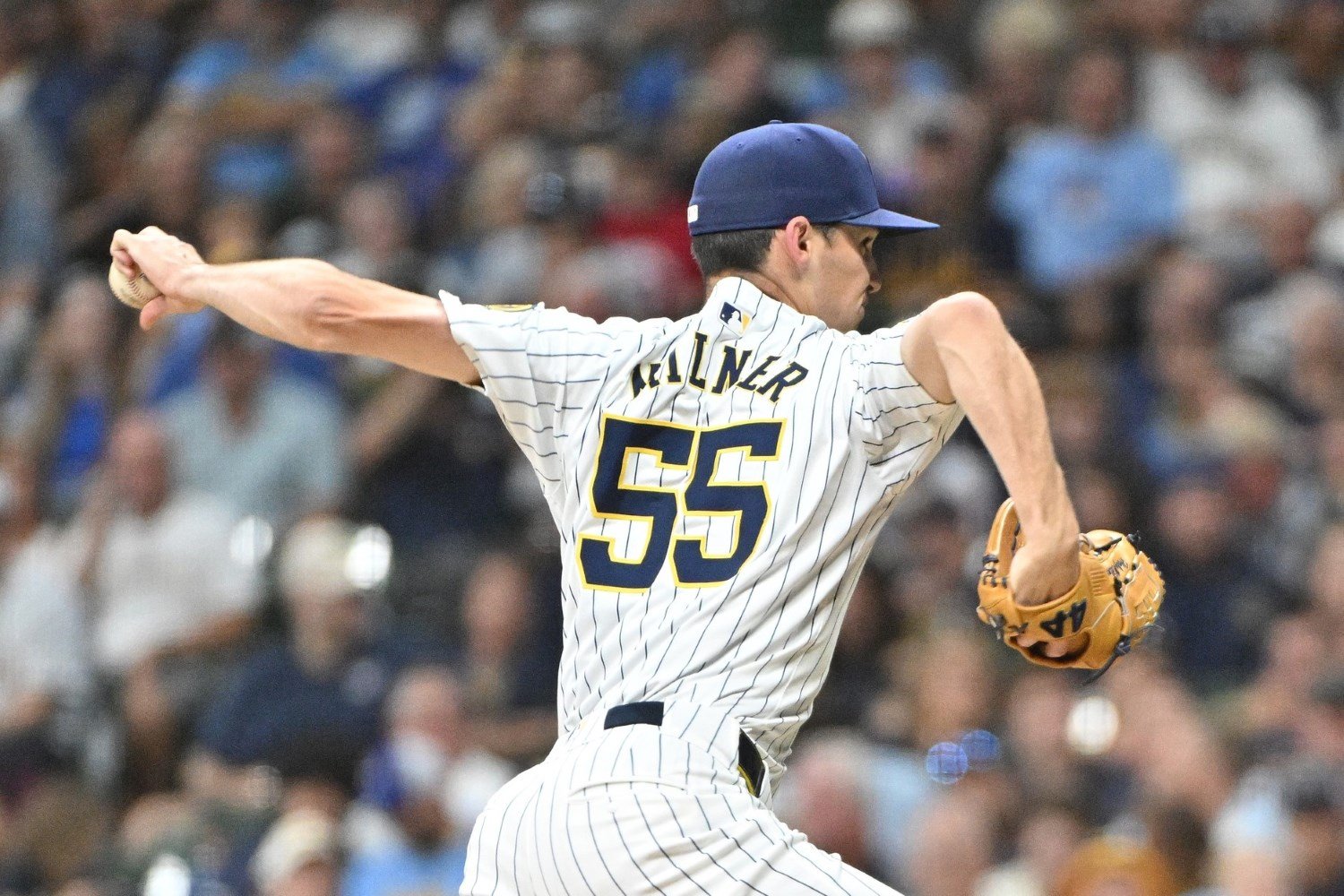 When the Brewers activated Hoby Milner from the injured list and optioned Bryan Hudson to Triple-A during the first week of September, the move served multiple functions. The club wanted Hudson to work on rediscovering his best stuff in a low-pressure environment. Meanwhile, Milner, who struggled mightily leading up to his IL stint, received one last shot to prove that he could still be an impactful bullpen piece. The veteran is making good on that opportunity. While Aaron Ashby is the most notable lefty to raise his stock this month and force his way into a key relief role, Milner is quietly trending in the right direction himself. His outings have not been as flashy, but he, too, has become increasingly likely to land in Milwaukee’s playoff bullpen next week. Milner has been due for positive regression for months, and it’s arriving at just the right time. In eight appearances since his return, Milner has posted a solid 3.72 ERA in 9 ⅔ innings, but the outcomes he’s generating per pitch and per swing are what matter most in a small sample. On those fronts, he is looking like a quality reliever worth rostering in October. The 33-year-old has yet to issue a walk since his return, while striking out 31.4% of batters faced, producing a strong 2.56 FIP. Opponents are whiffing on 26.3% of swings, and when they put the ball in play, 56.5% of that contact has been on the ground. Given how close Milner was to his more effective form from previous seasons, sweeping adjustments were unnecessary. Instead, a couple of minor improvements to his location are leading to more swing-and-miss and pairing nicely with improved fortune. Avoiding the heart of the plate is essential for Milner, who relies on creating funky angles with his arsenal to overcome unremarkable stuff. His rate of pitches over the white of the plate is lower in September than in any other month this year. He’s also leaning more on his four-seam fastball, enabling him to attack the upper third of the zone more often. That’s the source of most of his newfound whiffs, and it gives opposing hitters more territory to cover within the zone. Finally, while Milner is throwing strikes at roughly the same rate as he has throughout the season, his sequencing of quality pitches has improved. He’s winning the “race to two” – throwing strike two before ball two – more frequently than he has at any point this year, and he’s making more quality pitches with two strikes. Split 4FB% High% Heart% 0-2 or 1-2% 2-Str Heart% 2-Str AVG March/April 18.3% 17.7% 23.1% 30.8% 10.0% .091 May 14.0% 19.5% 23.0% 41.3% 18.1% .067 June 18.7% 20.0% 27.7% 41.5% 29.2% .250 July 24.2% 24.7% 23.2% 32.0% 11.3% .125 August 26.5% 14.7% 26.5% 35.3% 19.0% .286 September 31.5% 27.3% 20.2% 45.7% 7.1% .143 Milner is not a lock for the playoff roster, but barring a blow-up outing in the season’s final days, he’s made a legitimate case. He still is not one of Milwaukee’s top leverage arms, but as an effective middle reliever, he is a candidate to cover innings in a deficit or bridge the gap between a short start and the team’s back-end relievers. Also looming large is that Milner is trending in the right direction as others who once superseded him on Pat Murphy’s bullpen hierarchy remain away from the active roster. Hudson’s stuff has not improved to the extent the Brewers seemingly desire, so he remains in Triple-A. Rob Zastrzyny’s season is all but officially finished, after a recent transfer to the 60-day injured list. Nick Mears and Bryse Wilson could be activated in Pittsburgh, but face uphill battles with the clock running down. At this stage, it could be a coin flip between Milner and Hudson for the final bullpen spot, with Mears potentially in the mix as well. The Brewers face some interesting roster decisions in the final days. It would not be shocking to see Milner make the cut, and given the composition of this pitching staff, anyone who makes the playoff roster will be asked to do something important before the team gets very far.
 -
The Brewers, the Diamondbacks, and Baseball's Lack of Absolutes
Jack Stern posted an article in Brewers
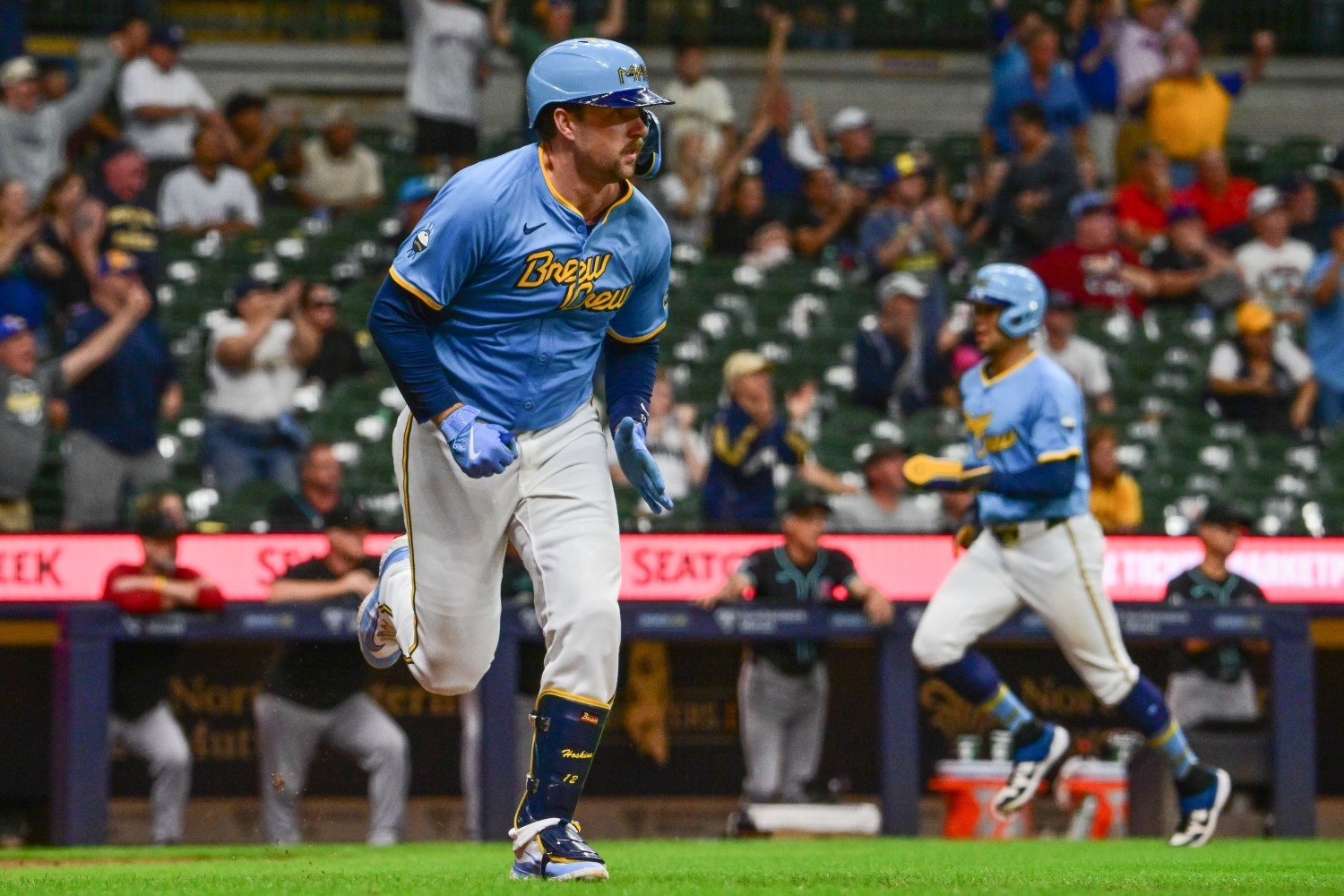 When Frankie Montas left the mound in the top of the third inning, his team trailed 8-0. A couple of hours later, the Brewers’ bullpen and offense had taken him off the hook in a thrilling 10-9 comeback victory. It was the fourth time in franchise history (and first since 2004, and only the third time overall, of you disown the Seattle Pilots) that Milwaukee erased a deficit of eight or more runs in a win. Most of it happened late, as the Brewers plated six runs over their final two turns, including a four-spot in the bottom of the eighth to take the lead. Underscoring an afternoon filled with several noteworthy storylines – including Montas inadvertently revealing his pitch grips to Diamondbacks runners on second base and Willy Adames refusing to leave the game amid the ugly deficit – was the improbability of the final result. While not the most intricate metric, Win Expectancy provides a solid estimate of a team’s chances of winning a game from the current game situation. Factors considered include the score, inning, number of outs and men on base, and whether the team in question is home or away. Each team’s odds are recalculated after every play. The Brewers’ Win Expectancy was 2.2% when Montas left the game. In other words, a team in a similar situation had historically gone on to win roughly two out of every 100 times. A Diamondbacks victory was extremely likely, but it was not guaranteed. No matter the score, a team’s Win Expectancy does not hit a flat 100 or zero until the final out is recorded. That’s because improbable comebacks have happened throughout baseball’s storied history. No lead is certain to hold up until the game is over. A likelihood of 2% is greater than zero. The Brewers’ comeback was improbable, but not impossible. It can happen and has happened before. The same can be said of how they accomplished the feat. The four-run rally began with two outs and the bases empty in the eighth, at which point the Brewers had roughly a 7% chance of scoring a single run. A likelihood of 7% is greater than zero, though. Six straight Brewers reached base, with Rhys Hoskins’s bloop single tying it and Jake Bauers’s infield hit attaining the lead. Blake Perkins and Hoskins both singled after falling behind in the count 0-2 and prolonging their at-bats. The league-wide on-base percentage this year after reaching an 0-2 count is .198. A 20% chance of reaching base is greater than zero. On multiple levels, the Brewers ultimately landed in the small percentages of players and teams who came through when it was highly unlikely. In an information-driven age of baseball, front offices and managers make an increasing majority of decisions based on probabilities. Sunday’s events were a reminder that no strategy in this game is infallible. Managers can play the favorable platoon matchup, and their player can still be on the losing end of the plate appearance. A pitcher can execute a pitch and induce soft contact that goes for a hit. A batter can hit a line drive on the screws up the middle, only to see it caught for an out. Conversely, players, managers, and front offices occasionally do the wrong things, with favorable results. Orchestrating favorable situations and executing on the field works more often than not, but it will never have a 100% success rate. The adage rings true: that’s why you play the game. That should be comforting to anyone who fears what they perceive as the sport becoming “run by computers.” It can never be fully automated. No results can be guaranteed from human players. Given that humans also make the ultimate call after every pitch, no outcome can be fully assured. There are no absolutes in baseball. It’s one of many elements that make the game great.
 -
In a game that is increasingly managed according to probabilities, Sunday’s unlikely Brewers victory was a reminder that nothing is guaranteed until the final out. Image courtesy of © Benny Sieu-Imagn Images In a game that is increasingly managed according to probabilities, Sunday’s unlikely Brewers victory was a reminder that nothing is guaranteed until the final out. When Frankie Montas left the mound in the top of the third inning, his team trailed 8-0. A couple of hours later, the Brewers’ bullpen and offense had taken him off the hook in a thrilling 10-9 comeback victory. It was the fourth time in franchise history (and first since 2004, and only the third time overall, of you disown the Seattle Pilots) that Milwaukee erased a deficit of eight or more runs in a win. Most of it happened late, as the Brewers plated six runs over their final two turns, including a four-spot in the bottom of the eighth to take the lead. Underscoring an afternoon filled with several noteworthy storylines – including Montas inadvertently revealing his pitch grips to Diamondbacks runners on second base and Willy Adames refusing to leave the game amid the ugly deficit – was the improbability of the final result. While not the most intricate metric, Win Expectancy provides a solid estimate of a team’s chances of winning a game from the current game situation. Factors considered include the score, inning, number of outs and men on base, and whether the team in question is home or away. Each team’s odds are recalculated after every play. The Brewers’ Win Expectancy was 2.2% when Montas left the game. In other words, a team in a similar situation had historically gone on to win roughly two out of every 100 times. A Diamondbacks victory was extremely likely, but it was not guaranteed. No matter the score, a team’s Win Expectancy does not hit a flat 100 or zero until the final out is recorded. That’s because improbable comebacks have happened throughout baseball’s storied history. No lead is certain to hold up until the game is over. A likelihood of 2% is greater than zero. The Brewers’ comeback was improbable, but not impossible. It can happen and has happened before. The same can be said of how they accomplished the feat. The four-run rally began with two outs and the bases empty in the eighth, at which point the Brewers had roughly a 7% chance of scoring a single run. A likelihood of 7% is greater than zero, though. Six straight Brewers reached base, with Rhys Hoskins’s bloop single tying it and Jake Bauers’s infield hit attaining the lead. Blake Perkins and Hoskins both singled after falling behind in the count 0-2 and prolonging their at-bats. The league-wide on-base percentage this year after reaching an 0-2 count is .198. A 20% chance of reaching base is greater than zero. On multiple levels, the Brewers ultimately landed in the small percentages of players and teams who came through when it was highly unlikely. In an information-driven age of baseball, front offices and managers make an increasing majority of decisions based on probabilities. Sunday’s events were a reminder that no strategy in this game is infallible. Managers can play the favorable platoon matchup, and their player can still be on the losing end of the plate appearance. A pitcher can execute a pitch and induce soft contact that goes for a hit. A batter can hit a line drive on the screws up the middle, only to see it caught for an out. Conversely, players, managers, and front offices occasionally do the wrong things, with favorable results. Orchestrating favorable situations and executing on the field works more often than not, but it will never have a 100% success rate. The adage rings true: that’s why you play the game. That should be comforting to anyone who fears what they perceive as the sport becoming “run by computers.” It can never be fully automated. No results can be guaranteed from human players. Given that humans also make the ultimate call after every pitch, no outcome can be fully assured. There are no absolutes in baseball. It’s one of many elements that make the game great. View full article
-
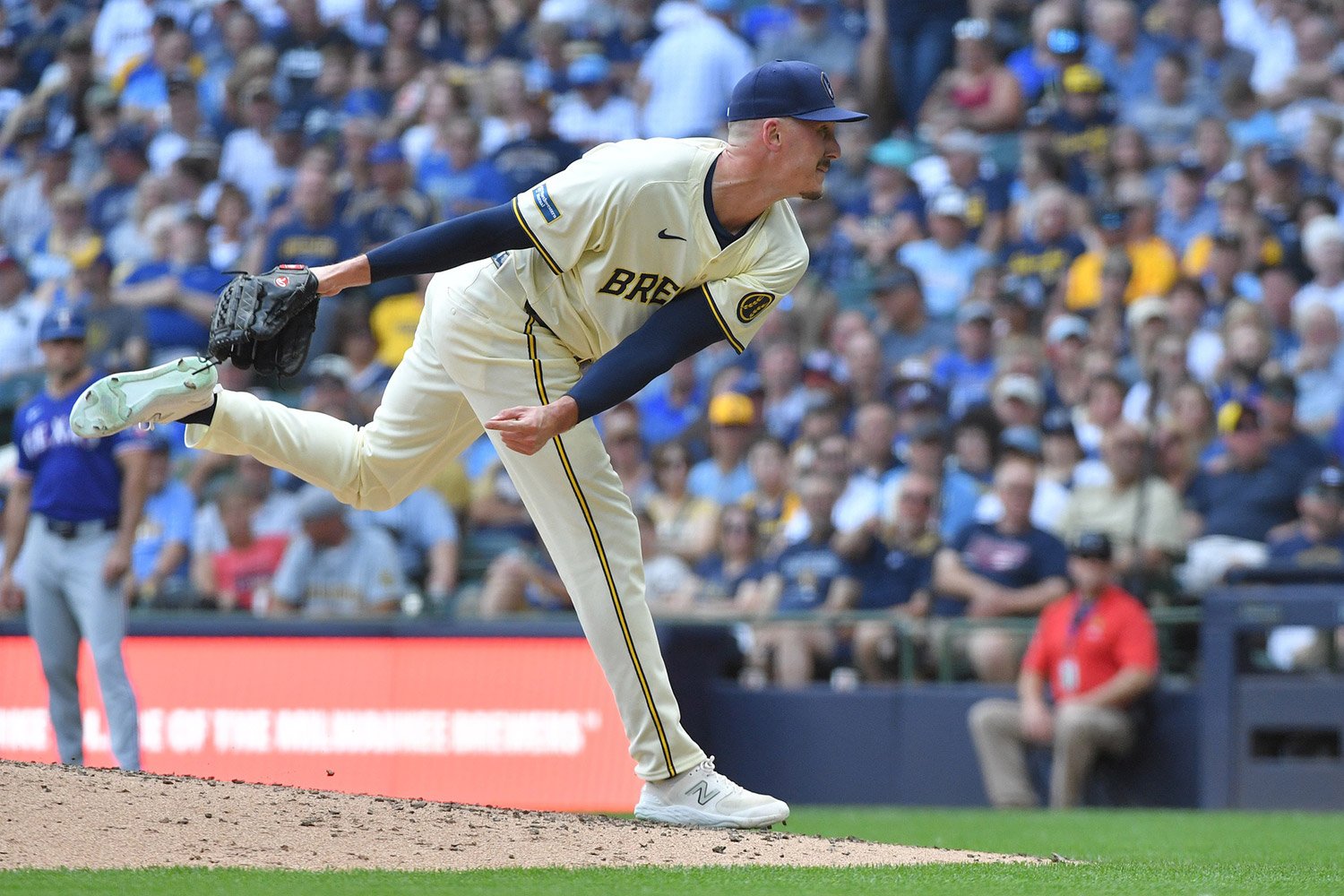 When the Brewers added a fresh arm to their bullpen ahead of Friday night’s game, they passed over one of their former high-leverage relievers who has spent much of the month in Triple-A. Kevin Herget, not Bryan Hudson, got the call to replace Enoli Paredes. The Brewers optioned Hudson to Nashville on September 3. He’s surpassed the requisite 10 days in the minor leagues but remains there as the regular season nears its conclusion. The results suggest Hudson has earned his way back to the roster. In four innings since the reassignment, he has struck out seven (a 41.2% strikeout rate), walked none, and allowed just one run. Results are not the focus, though. The Brewers sent Hudson down for a reset amid concerns over his declining stuff. His Triple-A appearances, all one-inning stints, have been deliberately staggered with multiple days of rest in between. The goal is to restore Hudson’s stuff in a more controlled environment. “He’s working on stuff, and it’s going in the right direction,” Pat Murphy said. “He didn’t have a great one the other night, but it was going in the right direction, so I anticipate you’ll see him back [this year].” While most of the public attention went to his declining fastball velocity, the degradation of Hudson’s sweeper, which lost nearly 5 mph from July to September, always looked like the main driver behind the move. Murphy confirmed on Friday that it’s part of the equation, but it would still be obvious if he hadn’t. At the time of his optioning, Hudson had thrown the sweeper just 15.7% of the time since the start of August. He deployed it at a 25.3% rate until the All-Star break. During this Triple-A stint, he’s thrown as many sweepers as four-seam fastballs, a whopping 45.6% usage rate. This is not a results-oriented strategy; Hudson has never used his breaking ball like this. The Brewers want him to rediscover a better version of the pitch and have prescribed significant in-game reps. Murphy’s report that things are trending in the right direction is only partially true. Hudson’s fastball is improving, but his sweeper is not. Split Vel 10thVel 90thVel EffectVel IVB HB 4FB, MLB, Aug-Sept 90.0 88.2 91.9 91.9 12.6 -6.7 4FB, Triple-A, Sept 90.7 89.1 92.4 92.2 14.5 -8.1 ST, MLB, Aug-Sept 79.5 77.4 82.0 81.2 -4.8 13.5 ST, Triple-A, Sept 79.6 77.3 81.2 81.0 -3.6 12.7 Raw velocity has never been what makes Hudson’s fastball effective. Greater gains would be welcome, but they’re not necessary. The takeaways are that Hudson’s slowest fastballs are no longer quite as slow and that he’s gained a couple of inches of carry through the zone. It now looks to a lefty as if it’s boring in on him slightly more. The sweeper, on the other hand, remains stagnant. The velocity is unchanged, and for a big breaking ball, the shape is not impactfully different from where it was since the start of August. For that reason, Hudson’s outlook remains unclear. The Brewers will make decisions based on his projected future production, not his past output from when his stuff was better. “We don’t just bring him back because, quote, ‘You deserve it because you pitched so well early,’” Murphy said. “You’ve got to pitch well again. That’s what we’re looking for.” While Murphy indicated that the Brewers prefer to have him back this year, he also implied that the organization does not regard the pitcher Hudson was when it optioned him as one of their top eight relievers. At the very least, it doesn’t seem to have nearly the same level of confidence in the second-half version of Hudson as it did in his former self. “If you’re just going to go by how he pitched recently and how his stuff was so down, then maybe he doesn’t pitch,” Murphy said. “Does he just want to be on the team and doesn’t pitch, or does he want to be effective?” The Brewers likely have not seen everything they were hoping to in Hudson’s Triple-A stint and may not feel he’s ready to return. That said, the clock is running short. With the Triple-A season concluding on Sunday and just seven big-league games remaining before the postseason, the club must soon make a decision. Is a diminished Hudson worth carrying in a playoff bullpen? Hudson could rejoin the Brewers before Sunday’s game, as Herget has thrown a combined 36 pitches while appearing in back-to-back contests since his promotion. Either way, the fact that he was not the choice on Friday and has not seen his sweeper improve are indications that he’s not where the Brewers want him to be. That has implications for what role -- if any -- Hudson plays for the remainder of the season.
 -
The former high-leverage stalwart has not shown considerable improvement where the Brewers want to see it most. At this juncture, it's not guaranteed that he'll resurface in the big-league bullpen. Image courtesy of © Michael McLoone-Imagn Images The former high-leverage stalwart has not shown considerable improvement where the Brewers want to see it most. At this juncture, it's not guaranteed that he'll resurface in the big-league bullpen. When the Brewers added a fresh arm to their bullpen ahead of Friday night’s game, they passed over one of their former high-leverage relievers who has spent much of the month in Triple-A. Kevin Herget, not Bryan Hudson, got the call to replace Enoli Paredes. The Brewers optioned Hudson to Nashville on September 3. He’s surpassed the requisite 10 days in the minor leagues but remains there as the regular season nears its conclusion. The results suggest Hudson has earned his way back to the roster. In four innings since the reassignment, he has struck out seven (a 41.2% strikeout rate), walked none, and allowed just one run. Results are not the focus, though. The Brewers sent Hudson down for a reset amid concerns over his declining stuff. His Triple-A appearances, all one-inning stints, have been deliberately staggered with multiple days of rest in between. The goal is to restore Hudson’s stuff in a more controlled environment. “He’s working on stuff, and it’s going in the right direction,” Pat Murphy said. “He didn’t have a great one the other night, but it was going in the right direction, so I anticipate you’ll see him back [this year].” While most of the public attention went to his declining fastball velocity, the degradation of Hudson’s sweeper, which lost nearly 5 mph from July to September, always looked like the main driver behind the move. Murphy confirmed on Friday that it’s part of the equation, but it would still be obvious if he hadn’t. At the time of his optioning, Hudson had thrown the sweeper just 15.7% of the time since the start of August. He deployed it at a 25.3% rate until the All-Star break. During this Triple-A stint, he’s thrown as many sweepers as four-seam fastballs, a whopping 45.6% usage rate. This is not a results-oriented strategy; Hudson has never used his breaking ball like this. The Brewers want him to rediscover a better version of the pitch and have prescribed significant in-game reps. Murphy’s report that things are trending in the right direction is only partially true. Hudson’s fastball is improving, but his sweeper is not. Split Vel 10thVel 90thVel EffectVel IVB HB 4FB, MLB, Aug-Sept 90.0 88.2 91.9 91.9 12.6 -6.7 4FB, Triple-A, Sept 90.7 89.1 92.4 92.2 14.5 -8.1 ST, MLB, Aug-Sept 79.5 77.4 82.0 81.2 -4.8 13.5 ST, Triple-A, Sept 79.6 77.3 81.2 81.0 -3.6 12.7 Raw velocity has never been what makes Hudson’s fastball effective. Greater gains would be welcome, but they’re not necessary. The takeaways are that Hudson’s slowest fastballs are no longer quite as slow and that he’s gained a couple of inches of carry through the zone. It now looks to a lefty as if it’s boring in on him slightly more. The sweeper, on the other hand, remains stagnant. The velocity is unchanged, and for a big breaking ball, the shape is not impactfully different from where it was since the start of August. For that reason, Hudson’s outlook remains unclear. The Brewers will make decisions based on his projected future production, not his past output from when his stuff was better. “We don’t just bring him back because, quote, ‘You deserve it because you pitched so well early,’” Murphy said. “You’ve got to pitch well again. That’s what we’re looking for.” While Murphy indicated that the Brewers prefer to have him back this year, he also implied that the organization does not regard the pitcher Hudson was when it optioned him as one of their top eight relievers. At the very least, it doesn’t seem to have nearly the same level of confidence in the second-half version of Hudson as it did in his former self. “If you’re just going to go by how he pitched recently and how his stuff was so down, then maybe he doesn’t pitch,” Murphy said. “Does he just want to be on the team and doesn’t pitch, or does he want to be effective?” The Brewers likely have not seen everything they were hoping to in Hudson’s Triple-A stint and may not feel he’s ready to return. That said, the clock is running short. With the Triple-A season concluding on Sunday and just seven big-league games remaining before the postseason, the club must soon make a decision. Is a diminished Hudson worth carrying in a playoff bullpen? Hudson could rejoin the Brewers before Sunday’s game, as Herget has thrown a combined 36 pitches while appearing in back-to-back contests since his promotion. Either way, the fact that he was not the choice on Friday and has not seen his sweeper improve are indications that he’s not where the Brewers want him to be. That has implications for what role -- if any -- Hudson plays for the remainder of the season. View full article



