



Jack Stern
-
Posts
764 -
Joined
-
Last visited
-
Days Won
2
Content Type
Profiles
Forums
Blogs
Events
News
2026 Milwaukee Brewers Top Prospects Ranking
Milwaukee Brewers Videos
2022 Milwaukee Brewers Draft Picks
Milwaukee Brewers Free Agent & Trade Rumors, Notes, & Tidbits
Guides & Resources
2023 Milwaukee Brewers Draft Picks
2024 Milwaukee Brewers Draft Picks
The Milwaukee Brewers Players Project
2025 Milwaukee Brewers Draft Pick Tracker
2026 Milwaukee Brewers Draft Tracker: Picks & Bonuses
Store
Downloads
Gallery
Everything posted by Jack Stern
-

The Brewers Have the Pitching Infrastructure Deivi García Desperately Needs
Jack Stern posted an article in Brewers
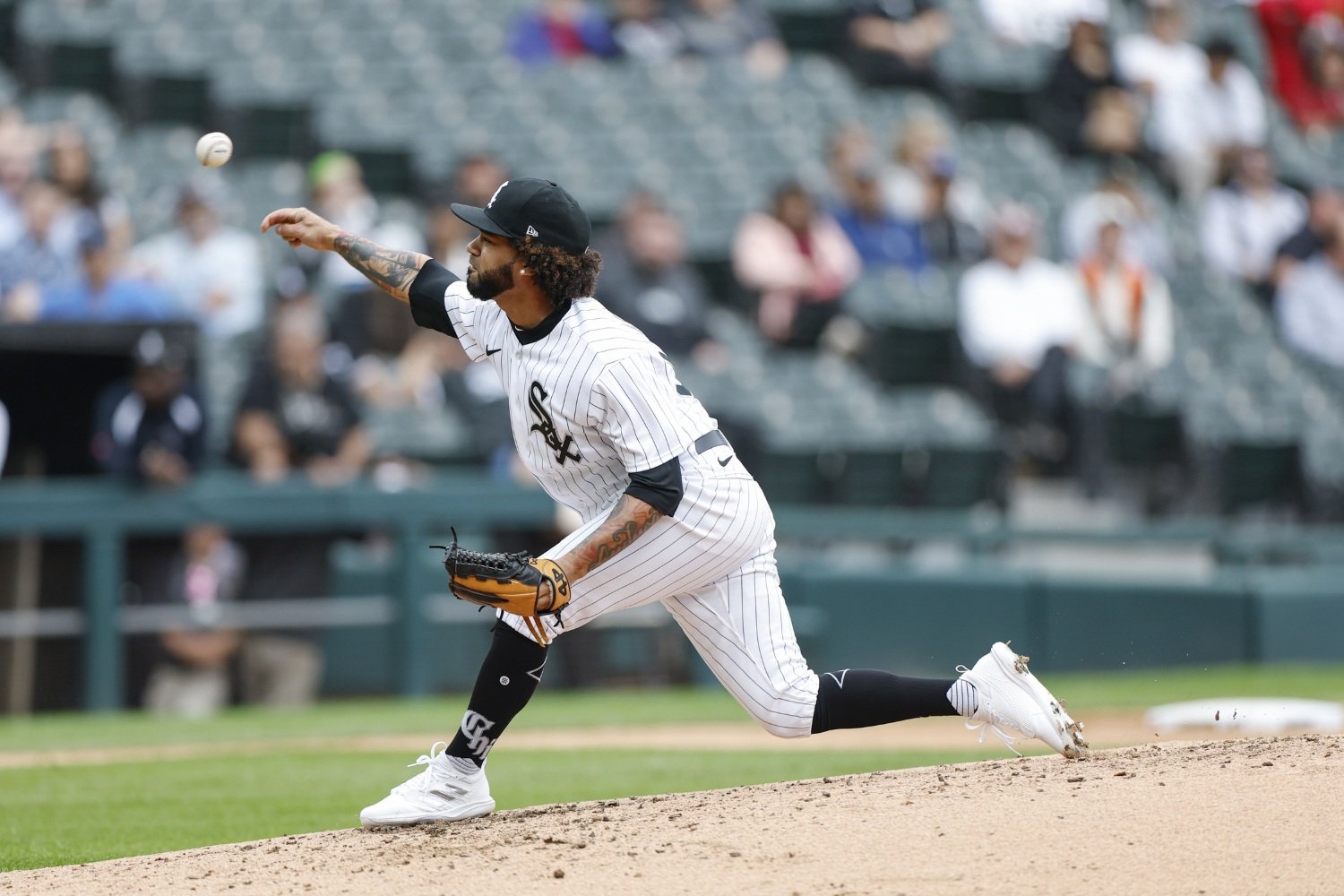 The Brewers snagged their latest pitching reclamation project on Monday, signing former New York Yankees prospect Deivi García to a minor-league deal with an invitation to big-league spring training. Brewer Fanatic’s Matthew Trueblood provided a snapshot of the 25-year-old’s current standing as a pitcher and some basic tweaks the Brewers could be planning to help him implement. Here’s the CliffsNotes summary: García is nowhere close to a good big-leaguer in his current form, but his stuff can dominate hitters if he learns how to harness and sequence it. The Brewers are García’s third organization, and the third time could be the charm for the talented right-hander. That’s because he’s finally landed with a club that offers what he’s lacked for much of his professional career: consistent messaging from a coaching staff that advances his development instead of hindering it. García’s mix has long been headlined by a mid-to-upper-90s four-seamer that induces ample whiffs at the top of the strike zone. His secondary pitches have been in constant flux, marred by inconsistent and sometimes unproductive messaging from his first two teams. Going into 2023, García and the Yankees lowered his arm angle and tweaked his sequencing by eliminating his curveball – a big 12-6 breaker he can only throw from a higher release point than the rest of his arsenal – and shorter gyro slider. The goal was to optimize García’s mechanics and pitch mix. The Chicago White Sox claimed him off waivers in August and immediately undid those changes. García’s curveball returned as his go-to secondary pitch. The slider was also back, and the cutter was scrapped. He did not throw another sweeper until the final weekend of the regular season. Within one season, García underwent two overhauls to his plan of attack, and the second was nearly the exact opposite of the first. That continued into 2024, during which repeated tinkering was the only constant throughout his season. García returned with a reinstated sweeper, and the slider was seemingly gone for good. He began the year in the big leagues with a fastball, sweeper, curveball, and changeup mix, but it would again change repeatedly throughout the season. After a rough 14-game stint in the major leagues, the White Sox designated García for assignment and outrighted him to Triple-A. When he reported to his new affiliate, they immediately brought back his cutter, but it was not the same pitch it was the year before. As a Yankee, the characteristics of García’s cutter fell somewhere between a cutting fastball and a hard slider, but it was slightly closer to the former. When he and the White Sox reimplemented in Triple-A, its shape shifted toward slider territory. Its induced vertical break decreased from 10.1 to 7.1 inches, and its glove-side movement increased from 3.8 to 4.8 inches. These changes didn’t just make the cutter look more like a breaking ball to hitters; they also separated it more from García’s four-seamer. Notice how there’s more space between the blue and orange clusters in García’s White Sox movement plot. That added space is not necessarily a good thing. Cutters and four-seamers are supposed to look similar from release through their early trajectories, before moving in opposite directions as they approach the plate. The four-seamer rides through the zone with some arm-side run. The cutter has less ride, but does not drop like a breaking ball and moves late to the glove side. The greater the movement separation between the pitches, the easier it can get for a hitter to discern them after release and make a better swing decision. The new cutter induced whiffs at a 30.4% rate, but the Brewers may prefer the previous iteration because of how it interacts with García’s four-seamer. They’ve utilized both kinds of cutter shapes, but the goal is usually to make fastball variants look as similar as possible out of hand for maximum deception. Look at how much wider the movement gap is between García’s four-seamer and cutter, compared to other notable Brewers who threw both pitches in 2024. García will never close that gap as fully as the others, because his four-seamer has more run than most. Still, it’s plausible to predict that when it comes to the cutter, Chris Hook and company may focus on later, more subtle cut and more carry to make both fastballs more deceptive. When García and the White Sox restored his cutter after his demotion, they also abolished his sweeper from game action for nearly three months. García’s sweeper returned at the end of July, and like the cutter, it came back in a different form. It was harder, with less break. The pitch had significant movement at the beginning of the year, breaking an average of 16.9 inches horizontally and often surpassing 20 inches. Later in the season, it averaged 13.8 inches and never exceeded 17.4 inches. Its average induced vertical break also changed from -4.3 to -1.9 inches, meaning the pitch dropped less as it approached the plate. Finally, its average velocity ticked from 80.2 to 81.6 mph. There may have been a method to the madness. García struggled to control the sweeper early in the year, throwing just 33.3% of them in the strike zone in the majors, and opponents only chased 16.7% of sweepers he threw outside the zone. Breaking balls with big movement can be tougher to land for strikes, and dramatic movement early in a pitch’s trajectory can make it easier for hitters to identify its trajectory and take it for a ball. When the Brewers acquired Aaron Civale, they cautioned him against making his curveball and sweeper too big, partially for these reasons. Slashing a few inches of movement can alleviate both issues. In a small sample, García threw his new sweeper in the zone 42.3% of the time, and it produced a 36.4% chase rate. Keeping a pitch off-limits in games for half of the season is still unusual, even if the thought is to fine-tune it in the background instead, but this could be an adjustment that the Brewers carry into 2025. The pitching development brass has its work cut out for it. García pitched to a 7.07 ERA in the big leagues in 2024 and a 6.18 mark in Triple-A. He’s a mess right now, but given his career trajectory, that is not surprising. Young pitchers take time to mature. They must grow comfortable with their arsenal and mechanics and learn to use them productively against the best hitters in the world. García has not received that runway because teams have modified his repertoire every few months for multiple years. Enter the Brewers, who have successfully maximized various pitching profiles in recent years. Milwaukee’s staff has been lauded for its communication skills and ability to help pitchers implement productive adjustments natural to how each individual’s body moves and how the ball leaves their hand. The exact tweaks they have waiting for García remain to be seen. They might tweak his cutter shape and alter how he sequences it off his four-seamer. Perhaps they’ll scrap or minimize his curveball and increase the usage of his tighter sweeper. Maybe a mechanical tweak will make his delivery more consistent and reduce his alarming walk rate. Whatever the message, it will be concise, consistent, and realistic, and the Brewers will put García in a position to grow as a pitcher. Those are the things he needs most.
 -
The Brewers' new minor-league signee is still a young pitcher with limited big-league experience. His new organization offers the proper guidance for him to blossom, something he did not get at his previous stops. Image courtesy of © Kamil Krzaczynski-Imagn Images The Brewers' new minor-league signee is still a young pitcher with limited big-league experience. His new organization offers the proper guidance for him to blossom, something he did not get at his previous stops. The Brewers snagged their latest pitching reclamation project on Monday, signing former New York Yankees prospect Deivi García to a minor-league deal with an invitation to big-league spring training. Brewer Fanatic’s Matthew Trueblood provided a snapshot of the 25-year-old’s current standing as a pitcher and some basic tweaks the Brewers could be planning to help him implement. Here’s the CliffsNotes summary: García is nowhere close to a good big-leaguer in his current form, but his stuff can dominate hitters if he learns how to harness and sequence it. The Brewers are García’s third organization, and the third time could be the charm for the talented right-hander. That’s because he’s finally landed with a club that offers what he’s lacked for much of his professional career: consistent messaging from a coaching staff that advances his development instead of hindering it. García’s mix has long been headlined by a mid-to-upper-90s four-seamer that induces ample whiffs at the top of the strike zone. His secondary pitches have been in constant flux, marred by inconsistent and sometimes unproductive messaging from his first two teams. Going into 2023, García and the Yankees lowered his arm angle and tweaked his sequencing by eliminating his curveball – a big 12-6 breaker he can only throw from a higher release point than the rest of his arsenal – and shorter gyro slider. The goal was to optimize García’s mechanics and pitch mix. The Chicago White Sox claimed him off waivers in August and immediately undid those changes. García’s curveball returned as his go-to secondary pitch. The slider was also back, and the cutter was scrapped. He did not throw another sweeper until the final weekend of the regular season. Within one season, García underwent two overhauls to his plan of attack, and the second was nearly the exact opposite of the first. That continued into 2024, during which repeated tinkering was the only constant throughout his season. García returned with a reinstated sweeper, and the slider was seemingly gone for good. He began the year in the big leagues with a fastball, sweeper, curveball, and changeup mix, but it would again change repeatedly throughout the season. After a rough 14-game stint in the major leagues, the White Sox designated García for assignment and outrighted him to Triple-A. When he reported to his new affiliate, they immediately brought back his cutter, but it was not the same pitch it was the year before. As a Yankee, the characteristics of García’s cutter fell somewhere between a cutting fastball and a hard slider, but it was slightly closer to the former. When he and the White Sox reimplemented in Triple-A, its shape shifted toward slider territory. Its induced vertical break decreased from 10.1 to 7.1 inches, and its glove-side movement increased from 3.8 to 4.8 inches. These changes didn’t just make the cutter look more like a breaking ball to hitters; they also separated it more from García’s four-seamer. Notice how there’s more space between the blue and orange clusters in García’s White Sox movement plot. That added space is not necessarily a good thing. Cutters and four-seamers are supposed to look similar from release through their early trajectories, before moving in opposite directions as they approach the plate. The four-seamer rides through the zone with some arm-side run. The cutter has less ride, but does not drop like a breaking ball and moves late to the glove side. The greater the movement separation between the pitches, the easier it can get for a hitter to discern them after release and make a better swing decision. The new cutter induced whiffs at a 30.4% rate, but the Brewers may prefer the previous iteration because of how it interacts with García’s four-seamer. They’ve utilized both kinds of cutter shapes, but the goal is usually to make fastball variants look as similar as possible out of hand for maximum deception. Look at how much wider the movement gap is between García’s four-seamer and cutter, compared to other notable Brewers who threw both pitches in 2024. García will never close that gap as fully as the others, because his four-seamer has more run than most. Still, it’s plausible to predict that when it comes to the cutter, Chris Hook and company may focus on later, more subtle cut and more carry to make both fastballs more deceptive. When García and the White Sox restored his cutter after his demotion, they also abolished his sweeper from game action for nearly three months. García’s sweeper returned at the end of July, and like the cutter, it came back in a different form. It was harder, with less break. The pitch had significant movement at the beginning of the year, breaking an average of 16.9 inches horizontally and often surpassing 20 inches. Later in the season, it averaged 13.8 inches and never exceeded 17.4 inches. Its average induced vertical break also changed from -4.3 to -1.9 inches, meaning the pitch dropped less as it approached the plate. Finally, its average velocity ticked from 80.2 to 81.6 mph. There may have been a method to the madness. García struggled to control the sweeper early in the year, throwing just 33.3% of them in the strike zone in the majors, and opponents only chased 16.7% of sweepers he threw outside the zone. Breaking balls with big movement can be tougher to land for strikes, and dramatic movement early in a pitch’s trajectory can make it easier for hitters to identify its trajectory and take it for a ball. When the Brewers acquired Aaron Civale, they cautioned him against making his curveball and sweeper too big, partially for these reasons. Slashing a few inches of movement can alleviate both issues. In a small sample, García threw his new sweeper in the zone 42.3% of the time, and it produced a 36.4% chase rate. Keeping a pitch off-limits in games for half of the season is still unusual, even if the thought is to fine-tune it in the background instead, but this could be an adjustment that the Brewers carry into 2025. The pitching development brass has its work cut out for it. García pitched to a 7.07 ERA in the big leagues in 2024 and a 6.18 mark in Triple-A. He’s a mess right now, but given his career trajectory, that is not surprising. Young pitchers take time to mature. They must grow comfortable with their arsenal and mechanics and learn to use them productively against the best hitters in the world. García has not received that runway because teams have modified his repertoire every few months for multiple years. Enter the Brewers, who have successfully maximized various pitching profiles in recent years. Milwaukee’s staff has been lauded for its communication skills and ability to help pitchers implement productive adjustments natural to how each individual’s body moves and how the ball leaves their hand. The exact tweaks they have waiting for García remain to be seen. They might tweak his cutter shape and alter how he sequences it off his four-seamer. Perhaps they’ll scrap or minimize his curveball and increase the usage of his tighter sweeper. Maybe a mechanical tweak will make his delivery more consistent and reduce his alarming walk rate. Whatever the message, it will be concise, consistent, and realistic, and the Brewers will put García in a position to grow as a pitcher. Those are the things he needs most. View full article
-
The Brewers can make do without their former run prevention coordinator, but his absence could be felt in the short term more than the losses of other coaches. Image courtesy of © Mike De Sisti / Milwaukee Journal Sentinel / USA TODAY NETWORK The Brewers can make do without their former run prevention coordinator, but his absence could be felt in the short term more than the losses of other coaches. When Pat Murphy was named the National League Manager of the Year Tuesday night, he emphasized the role of his entire coaching staff in the Brewers’ success. A key member of that group will not return next year, as new White Sox manager Will Venable announced on Tuesday that Walker McKinven is joining his staff as bench coach. McKinven follows Quintin Berry as the second coach to depart Milwaukee for a promotion in Chicago this offseason, and he won’t be the last bright baseball mind to leave in the coming years. However, his exit may be among the most significant. The 35-year-old spent nine seasons with the Brewers, including the last five in the dugout as an influential figure within the team’s run-prevention infrastructure. He didn’t always garner the same public recognition as Chris Hook and Charlie Greene, but he was nearly as vital as a game-planning, pitch-sequencing, and catching savant. In 2024, McKinven operated under the blanket title of run prevention coordinator, which reflected his hand in multiple aspects of the Brewers’ 88 ERA-. That figure ranked second-best in baseball. He was a bridge between the front office and the dugout, synthesizing relevant data so coaches and players could understand and apply it. McKinven was instrumental in identifying and implementing successful pitch usage tweaks for countless Brewers pitchers, giving Hook needed information for his hands-on work and freeing him to focus more on physical adjustments. The pair led daily game-planning meetings together with pitchers and catchers. During games, Hook, McKinven, and assistant pitching coach Jim Henderson would be in near-constant conversation along the dugout rail. He also worked closely with catchers on techniques and mechanical adjustments to improve their receiving. McKinven was heavily involved in the defensive transformations of Omar Narváez and William Contreras, two catchers other organizations thought could not stay behind the plate. When a pitcher productively transformed his pitch mix and how he attacked hitters after landing in Milwaukee, McKinven was part of the success story. When a recent Brewers catcher turned into an excellent pitch framer seemingly overnight, it was often because McKinven tweaked his stance and ran him through drills that retrained his arm, wrist, and hand movements to better guide pitches just off the plate toward the edges of the strike zone. It was only a matter of time before other organizations noticed McKinven’s impact and offered him a higher-ranking job. As the White Sox bench coach, he figures to have increased responsibility and authority throughout a full-blown rebuild, not to mention a higher salary. He’s long deserved the opportunity. The Brewers have a deep organizational coaching staff, built to withstand the loss of any individual in the big-league ranks. However, McKinven’s departure arguably leaves bigger shoes to fill than others. Berry’s instincts and preparation as a baserunning and outfield sherpa were valuable, but many of the straightforward principles he preached should be easy to uphold without him. He laid the groundwork for what should be a sustainable system. Game-planning and pitch-calling are arts predicated on several constantly changing factors, including scouting reports, pitch characteristics, and reading swings within a plate appearance. There is no universally agreed-upon methodology, and the process varies from one pitcher to the next. That’s why the Brewers have an army of pitching strategists. McKinven’s impact within that system was tremendous, and his success may not be as replicable as that of a baserunning or outfield coach. The Brewers still employ several coaches and analysts who are knowledgeable in the pitch sequencing realm, including Hook, so losing McKinven is hardly a death sentence for the pitching staff’s success. However, there may be short-term bumps in the road as they try to backfill the excellent analysis and communication he brought to the staff. The change poses a new challenge for Hook, who will be without one of his right-hand men of several years. Regardless of whom the Brewers tab with more responsibilities in McKinven’s stead, how complex information makes its way from the scouting department to in-game pitch-calling and receiving will look slightly different in 2025. If a coaching absence will be deeply felt next season, it will be McKinven’s. View full article
-
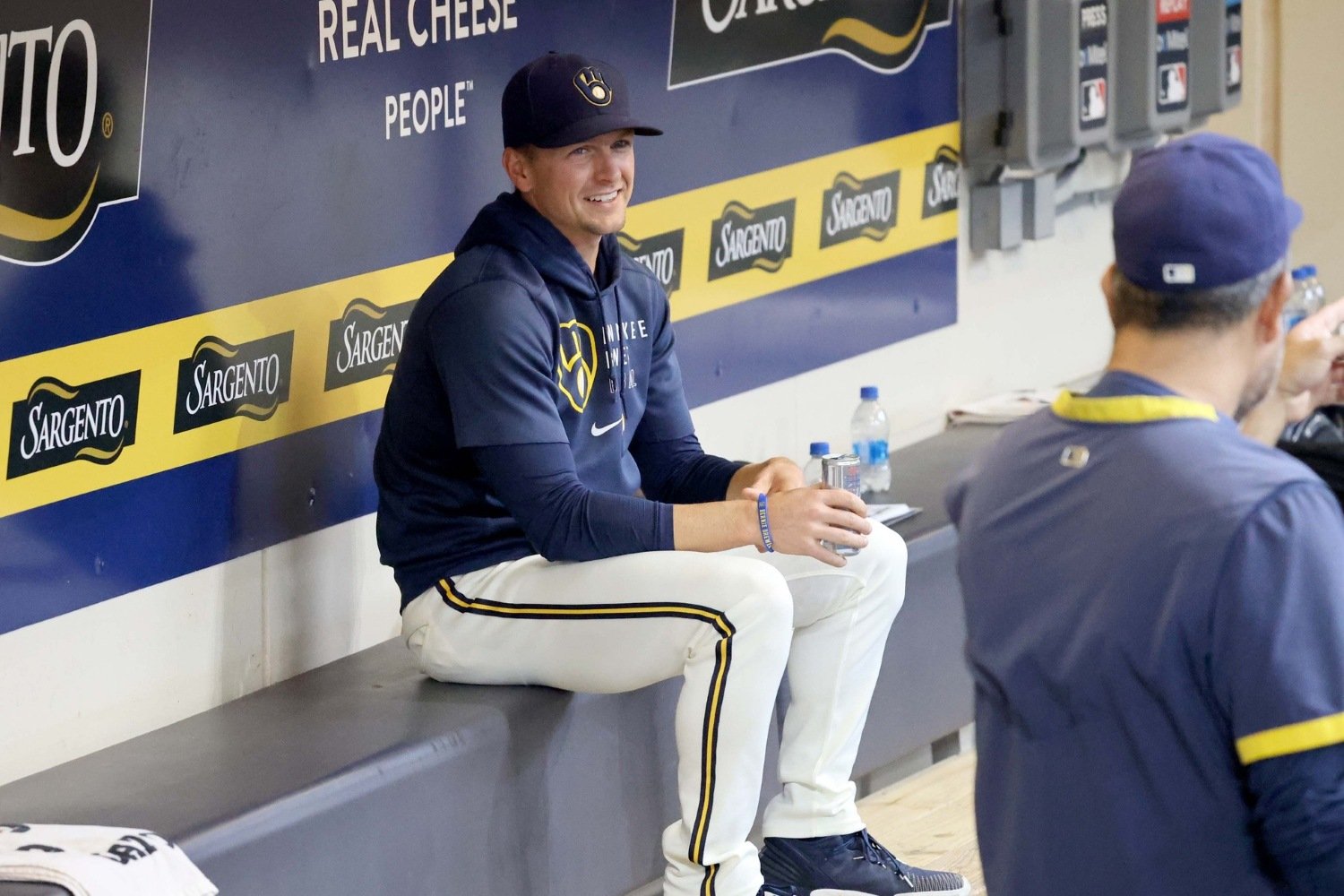 When Pat Murphy was named the National League Manager of the Year Tuesday night, he emphasized the role of his entire coaching staff in the Brewers’ success. A key member of that group will not return next year, as new White Sox manager Will Venable announced on Tuesday that Walker McKinven is joining his staff as bench coach. McKinven follows Quintin Berry as the second coach to depart Milwaukee for a promotion in Chicago this offseason, and he won’t be the last bright baseball mind to leave in the coming years. However, his exit may be among the most significant. The 35-year-old spent nine seasons with the Brewers, including the last five in the dugout as an influential figure within the team’s run-prevention infrastructure. He didn’t always garner the same public recognition as Chris Hook and Charlie Greene, but he was nearly as vital as a game-planning, pitch-sequencing, and catching savant. In 2024, McKinven operated under the blanket title of run prevention coordinator, which reflected his hand in multiple aspects of the Brewers’ 88 ERA-. That figure ranked second-best in baseball. He was a bridge between the front office and the dugout, synthesizing relevant data so coaches and players could understand and apply it. McKinven was instrumental in identifying and implementing successful pitch usage tweaks for countless Brewers pitchers, giving Hook needed information for his hands-on work and freeing him to focus more on physical adjustments. The pair led daily game-planning meetings together with pitchers and catchers. During games, Hook, McKinven, and assistant pitching coach Jim Henderson would be in near-constant conversation along the dugout rail. He also worked closely with catchers on techniques and mechanical adjustments to improve their receiving. McKinven was heavily involved in the defensive transformations of Omar Narváez and William Contreras, two catchers other organizations thought could not stay behind the plate. When a pitcher productively transformed his pitch mix and how he attacked hitters after landing in Milwaukee, McKinven was part of the success story. When a recent Brewers catcher turned into an excellent pitch framer seemingly overnight, it was often because McKinven tweaked his stance and ran him through drills that retrained his arm, wrist, and hand movements to better guide pitches just off the plate toward the edges of the strike zone. It was only a matter of time before other organizations noticed McKinven’s impact and offered him a higher-ranking job. As the White Sox bench coach, he figures to have increased responsibility and authority throughout a full-blown rebuild, not to mention a higher salary. He’s long deserved the opportunity. The Brewers have a deep organizational coaching staff, built to withstand the loss of any individual in the big-league ranks. However, McKinven’s departure arguably leaves bigger shoes to fill than others. Berry’s instincts and preparation as a baserunning and outfield sherpa were valuable, but many of the straightforward principles he preached should be easy to uphold without him. He laid the groundwork for what should be a sustainable system. Game-planning and pitch-calling are arts predicated on several constantly changing factors, including scouting reports, pitch characteristics, and reading swings within a plate appearance. There is no universally agreed-upon methodology, and the process varies from one pitcher to the next. That’s why the Brewers have an army of pitching strategists. McKinven’s impact within that system was tremendous, and his success may not be as replicable as that of a baserunning or outfield coach. The Brewers still employ several coaches and analysts who are knowledgeable in the pitch sequencing realm, including Hook, so losing McKinven is hardly a death sentence for the pitching staff’s success. However, there may be short-term bumps in the road as they try to backfill the excellent analysis and communication he brought to the staff. The change poses a new challenge for Hook, who will be without one of his right-hand men of several years. Regardless of whom the Brewers tab with more responsibilities in McKinven’s stead, how complex information makes its way from the scouting department to in-game pitch-calling and receiving will look slightly different in 2025. If a coaching absence will be deeply felt next season, it will be McKinven’s.
 -
The Brewers' first-year skipper received due credit for leading a young and unproven group to success in 2024. Image courtesy of © Milwaukee Journal Sentinel-Imagn Images The Brewers' first-year skipper received due credit for leading a young and unproven group to success in 2024. MLB’s award season continues, and the Brewers continue to be well-represented. After the club went 93-69 in the regular season and won a division title under his leadership, Pat Murphy was named the National League Manager of the Year on Tuesday night. Murphy edged out New York Mets manager Carlos Mendoza and San Diego Padres manager Mike Shildt to win the award. He's the tenth skipper to win in his first year as a non-interim MLB manager, joining American League winner Stephen Vogt. Voted on by the Baseball Writers’ Association of America, the Manager of the Year Award is a flawed accolade, partially because there’s no great way to measure the impact a manager’s impact. Murphy echoed that sentiment before being announced as a finalist, saying it was “embarrassing” to be considered individually for an award when building a winner is a group effort. He struck a similar tone after officially taking home the honor. "Evaluating the job that the manager does, it encompasses so many things," Murphy said. "Unless you've lived it, it's kind of tough... I don't want to disrespect the award in any way, but I think there's a tremendous emphasis put on these types of things that I don't think are necessarily indicative of what the award should be about." Still, it’s deserving recognition for a baseball lifer who paid his dues at all organized levels of the sport. A longtime college and minor-league coach, Murphy was finally promoted to his first full-time managerial gig at age 65 after serving eight seasons as Craig Counsell’s bench coach. He inherited a Brewers team that always intended to compete in 2024, but roster and coaching turnover threatened to complicate the path to another playoff berth. He wasn't perfect. At times, Murphy looked like a first-year manager while handling in-game strategy and player workloads. The greater takeaway, though, is how he approached the role. Murphy squared confidence with humility and open-mindedness. He emphasized that he is still a student of the game and welcomed constructive criticism and analytical input. At the end of the day, Murphy positioned his players to succeed far more often than not, and his continued willingness to grow as an established baseball thinker should help him continue improving in his post. Most importantly, he was the stabilizing figure the Brewers needed at the helm as they transitioned to a new era in franchise history. Counsell and Corbin Burnes were gone. Brandon Woodruff would not pitch as he recovered from major shoulder surgery. Many positions were wide open for players who had yet to establish themselves in the big leagues. Murphy motivated his troops throughout a long regular season filled with adversity, laying the groundwork of the scrappy identity that helped the team avoid prolonged losing streaks. The clubhouse culture didn’t skip a beat and arguably improved under his leadership. Players regularly spoke about their eagerness to go to battle for their skipper. He always credits those players for establishing a productive atmosphere. "I've got young hungry players," Murphy said. "I know the role of the [Wade] Miley's and the [Christian] Yelich's and the [Willy] Adames's. That's a difference maker." The players insist it starts with the manager. “He keeps it light, but he’s intense, too,” Yelich said. “He demands a lot out of his players, and he expects you to conduct yourself and play in a certain way, but he also keeps it light, which is important over a six-month season where there’s going to be ups and downs.” “You walk around our clubhouse, and you can’t look in any direction where it doesn’t say, ‘Win tonight,’” Mark Attanasio said. “I think he’s brought that demeanor and edge to the team.” While there was value in maintaining organizational continuity by promoting Murphy, Attanasio and Matt Arnold insisted he went through the fully exhaustive interview process that any outside candidate would have. They concluded he was the right man for the job, and he rewarded their judgment. “I can’t say enough good things about him,” Arnold said. “The way he connected with our fans and our staff and our players, how much he cares day-to-day, his ‘win tonight’ mentality, his ‘undaunted’ mentality – all those things, they’re real for us in this building. He meant a ton to this franchise, and he has for a long time.” “With Murph, it’s always been about people,” Attanasio said. “Not every number two can be a number one. And we learned that Murph is a true number one.” Writers across the sport agree. He might not believe he deserves it, but Murphy received due recognition for his efforts on Tuesday night. View full article
-
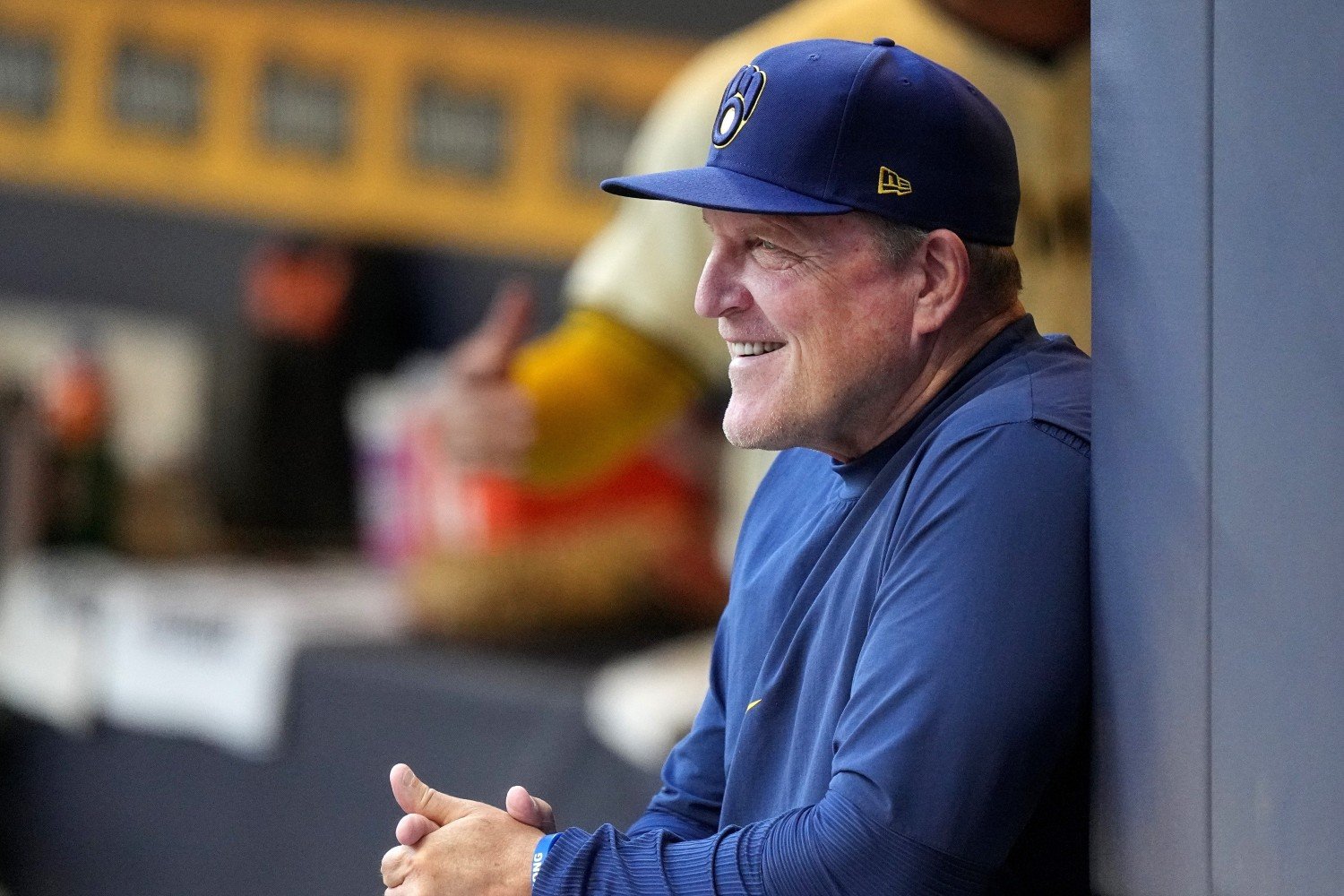 MLB’s award season continues, and the Brewers continue to be well-represented. After the club went 93-69 in the regular season and won a division title under his leadership, Pat Murphy was named the National League Manager of the Year on Tuesday night. Murphy edged out New York Mets manager Carlos Mendoza and San Diego Padres manager Mike Shildt to win the award. He's the tenth skipper to win in his first year as a non-interim MLB manager, joining American League winner Stephen Vogt. Voted on by the Baseball Writers’ Association of America, the Manager of the Year Award is a flawed accolade, partially because there’s no great way to measure the impact a manager’s impact. Murphy echoed that sentiment before being announced as a finalist, saying it was “embarrassing” to be considered individually for an award when building a winner is a group effort. He struck a similar tone after officially taking home the honor. "Evaluating the job that the manager does, it encompasses so many things," Murphy said. "Unless you've lived it, it's kind of tough... I don't want to disrespect the award in any way, but I think there's a tremendous emphasis put on these types of things that I don't think are necessarily indicative of what the award should be about." Still, it’s deserving recognition for a baseball lifer who paid his dues at all organized levels of the sport. A longtime college and minor-league coach, Murphy was finally promoted to his first full-time managerial gig at age 65 after serving eight seasons as Craig Counsell’s bench coach. He inherited a Brewers team that always intended to compete in 2024, but roster and coaching turnover threatened to complicate the path to another playoff berth. He wasn't perfect. At times, Murphy looked like a first-year manager while handling in-game strategy and player workloads. The greater takeaway, though, is how he approached the role. Murphy squared confidence with humility and open-mindedness. He emphasized that he is still a student of the game and welcomed constructive criticism and analytical input. At the end of the day, Murphy positioned his players to succeed far more often than not, and his continued willingness to grow as an established baseball thinker should help him continue improving in his post. Most importantly, he was the stabilizing figure the Brewers needed at the helm as they transitioned to a new era in franchise history. Counsell and Corbin Burnes were gone. Brandon Woodruff would not pitch as he recovered from major shoulder surgery. Many positions were wide open for players who had yet to establish themselves in the big leagues. Murphy motivated his troops throughout a long regular season filled with adversity, laying the groundwork of the scrappy identity that helped the team avoid prolonged losing streaks. The clubhouse culture didn’t skip a beat and arguably improved under his leadership. Players regularly spoke about their eagerness to go to battle for their skipper. He always credits those players for establishing a productive atmosphere. "I've got young hungry players," Murphy said. "I know the role of the [Wade] Miley's and the [Christian] Yelich's and the [Willy] Adames's. That's a difference maker." The players insist it starts with the manager. “He keeps it light, but he’s intense, too,” Yelich said. “He demands a lot out of his players, and he expects you to conduct yourself and play in a certain way, but he also keeps it light, which is important over a six-month season where there’s going to be ups and downs.” “You walk around our clubhouse, and you can’t look in any direction where it doesn’t say, ‘Win tonight,’” Mark Attanasio said. “I think he’s brought that demeanor and edge to the team.” While there was value in maintaining organizational continuity by promoting Murphy, Attanasio and Matt Arnold insisted he went through the fully exhaustive interview process that any outside candidate would have. They concluded he was the right man for the job, and he rewarded their judgment. “I can’t say enough good things about him,” Arnold said. “The way he connected with our fans and our staff and our players, how much he cares day-to-day, his ‘win tonight’ mentality, his ‘undaunted’ mentality – all those things, they’re real for us in this building. He meant a ton to this franchise, and he has for a long time.” “With Murph, it’s always been about people,” Attanasio said. “Not every number two can be a number one. And we learned that Murph is a true number one.” Writers across the sport agree. He might not believe he deserves it, but Murphy received due recognition for his efforts on Tuesday night.
 -
The next offseason deadline is approaching. The Brewers have a handful of minor-league players eligible for the Rule 5 draft. Here's why some candidates are more likely than others to be protected. Image courtesy of © Joe Camporeale-Imagn Images The next offseason deadline is approaching. The Brewers have a handful of minor-league players eligible for the Rule 5 draft. Here's why some candidates are more likely than others to be protected. At the beginning of the month, the Brewers trimmed their 40-man roster to 36 by declining club options and waiving several players. That was partially in preparation for the next key offseason date that arrives next week: the deadline to protect players from December's Rule 5 Draft. The draft aims to give big-league opportunities to players who may be buried on their current organization’s depth chart. Unprotected players signed at age 19 or older become eligible after playing four years of professional baseball, and those signed at 18 or younger become eligible after five years. If left unprotected, these players are available for teams to add to their big-league rosters. Players on the 40-man roster of their current club are not available to other teams in the draft, so teams often select the contracts of their best eligible prospects by the deadline to protect them. The deadline to do so is next Tuesday, Nov. 19. The Brewers have more than 40 eligible players (the complete list is available here), but only a handful are serious candidates to be selected by other teams or added to Milwaukee’s 40-man roster. If recent history is any indication, it’s unlikely the club will protect more than two or three of these players. It’s worth noting that leaving a player exposed does not mean the Brewers don’t value them. It’s often a calculated gamble that favors the player’s current team if he’s not an elite prospect. Although the Draft technically lasts until all 30 teams have passed, and can involve multiple rounds, most teams do not make a pick. Only 10 selections were made in last year’s draft, and 15 in 2022. The drafting team cannot send the player to the minor leagues, and that player must remain on the active roster for at least 90 days of the season for the club to retain their rights beyond that year. For this reason, the team that lost the player still has a decent chance of getting them back within a few months. With that in mind, here’s a narrowed-down list of potential additions to the Brewers’ 40-man roster and their likelihood of being protected. RHP Logan Henderson Henderson is the only lock on this list. The 22-year-old righthander shot up prospect rankings with an excellent 2024 season that began in High-A and ended in Triple-A. In 17 starts spanning three levels, he pitched to a 3.52 ERA and 3.63 FIP with a fantastic 31.2% strikeout rate and a 6.27 strikeout-to-walk ratio. The updated rankings at FanGraphs named Henderson Milwaukee’s 12th-best prospect, and Brewer Fanatic recently ranked him 8th. His fastball usually sits in the low 90s, but Henderson can reach back for 95-96. He’s unique in that he generates above-average ride from backspin on his four-seamer while throwing it from a low slot. This helps it play exceptionally at the top of the zone, where the pitch induces plenty of whiffs and pop-ups. Henderson complements the fastball with a 60-grade changeup that has plenty of fade and separation off his heater. Henderson has developed strong command of his fastball-changeup combination, leaving the mastery of a consistent secondary pitch with glove-side movement as his next hill to conquer. Neither his cutter nor slider have developed much in the minor leagues. However, his upside and straightforward path to big-league innings in 2025 make him a slam dunk to join the 40-man roster in a few days. RHP Coleman Crow Every candidate after Henderson has protection odds ranging from toss-up to unlikely, but Crow may have a leg up on his contemporaries due to his promise and Milwaukee’s presumed desire to see more of him. Acquired in return for Adrian Houser and Tyrone Taylor last winter, Crow missed the 2024 regular season while rehabbing from the Tommy John surgery he underwent the previous August. He’s pitched four times in the Arizona Fall League with mixed results, but at the time of the trade, prospect evaluators viewed Crow as someone who could quickly ascend to the big leagues in a bulk role upon recovery. His low-90s fastball isn’t as effective as Henderson’s, but it’s a serviceable pitch when Crow commands it at the top of the zone from his arm slot. His ability to spin the ball is his standout trait. In addition to his fastball, Crow throws two distinct breaking balls that could make him an MLB-ready arm at some point in 2025. All three pitches have excellent spin rates. Crow’s curveball has received as high as a 60 grade from evaluators, and the tracked curves he’s thrown in the AFL have averaged -10 inches of induced vertical break with nearly 17 inches of horizontal break. His slider is a shorter and harder pitch, sitting in the mid-80s with 4.8 inches of induced vertical break and 5 inches of horizontal break. Unsurprisingly, Crow has been plenty reliant on his breaking pitches in the minor leagues. He’ll need that approach to succeed at the game’s highest level. Refining his sinker and changeup could make him more likely to stick as a starter, but his breaking balls should allow him to navigate a lineup once in a multi-inning relief role. The Brewers could take the gamble of leaving Crow unprotected in hopes that nobody is willing to roster him in his first season back from major surgery. They’ve invested player capital and time into his rehab, though, and adding him to the 40-man roster is the safe route for maintaining a chance of a return on that commitment. RHP Shane Smith The 24-year-old Smith signed with the Brewers as an undrafted free agent in 2022 while recovering from Tommy John surgery. He began the 2024 season as a reliever in Double-A before transitioning into a starting role. His performance earned him a September promotion to Triple-A, where he allowed just two runs in five relief outings. Across the two levels, he posted a 3.05 ERA and 2.91 FIP with a 29.6% strikeout rate in 94 ⅓ innings. Like Crow, Smith’s calling card is his slurve-like curveball, but his breaking ball possesses even more depth with less sweep. His mid-90s fastball has also received strong grades and sometimes trends toward a rise-cut shape. Smith also features a hard bullet slider and began experimenting with a sweeper in 2024. Smith could crack the big leagues as a reliever in 2025, but his inconsistent fastball shape and the deep relief corps in Milwaukee could thwart that. It’s unlikely the Brewers will devote two roster spots to pitchers with plus breaking balls but no or limited experience above Double-A, so a decision on who to protect alongside Henderson could come down to Smith or Crow. RHP Chad Patrick The Brewers acquired Patrick from the Oakland A’s a year ago in exchange for Abraham Toro. He was named International League Pitcher of the Year in his first season with his new organization, leading the league in ERA (2.90) and strikeouts (146) while logging 136 1/3 innings for the Nashville Sounds. Despite that showing, Patrick never received a promotion, even as the Brewers looked to shore up what was a patchwork rotation for prolonged stretches of the season. That was likely due to his lack of upside and uncertainty about how his profile will translate to the big leagues, which could also make the club comfortable with losing him to another organization. Beneath that shiny ERA were a more pedestrian 3.98 FIP and 4.84 DRA. Patrick’s bread and butter is his cutter, but while it was highly effective against Triple-A opponents, its shape often varied wildly from one pitch to the next. Clusters on a pitch movement graph are generally not supposed to be that big. While no pitch will leave a pitcher’s hand in exactly the same fashion every time, Patrick’s cutter can look like an entirely different offering within a single outing. No one else in the upper levels of the game has quite this much variability. It raises the possibility that Patrick manipulates the cutter by design. If he doesn’t, it’s an unpredictability that makes it harder to trust him to pitch at the highest level. Add in the home run concerns baked into his heavy fly-ball profile and inconsistent walk numbers, and there are reasons to believe the Brewers are not as likely to protect him as his surface-level numbers might indicate. 1B/OF Ernesto Martinez Jr. Martinez just re-upped with the Brewers on a new minor-league deal after enjoying a breakout campaign at age 25. He spent the entire year in Double-A, hitting .284/.365/.466 with 13 home runs for a 146 wRC+. Standing 6-foot-6 and weighing 250 pounds, Martinez has always possessed an exciting blend of raw power and speed. He still has a ways to go, but the significant cuts to his strikeout rate in recent seasons are the real story. Making more contact is what’s positioned him to finally reach the upper minors after a slower progression through the first several years of his career. He’s been primarily a first baseman, but has also made cameos in center field due to his athleticism and range in the field. Martinez is still raw enough entering his age-26 season that the Brewers likely don’t see a pressing need to protect him. Still, he probably renewed some optimism within the organization (and earned some external looks) with a resurgent season. 1B/C Wes Clarke After smashing 26 home runs in 118 games at Double-A Biloxi in 2023, Clarke made his presence felt in spring training by homering four times. The slugger then went deep 21 times during the minor-league season, spending most of it in Triple-A. Clarke has caught 80 games in the minor leagues but has played primarily first base, and profiles as a DH in the big leagues. Offensively, he’s a stereotypical three-true-outcomes hitter from the right side. Too much swing-and-miss stands between him and being a semi-reliable MLB bat. He struck out 35.1% of the time in Triple-A, where his 40.6% whiff rate was the fourth-highest among hitters with at least 300 plate appearances. The Brewers could use more power in their lineup, but Clarke isn’t the answer. He’s highly unlikely to be protected. While a rebuilding organization could take a gamble on his light-tower power, the low floor presented by the holes in his swing means he’ll probably return to Nashville in 2025. View full article
- 6 replies
-
- 1
-

-
- logan henderson
- coleman crow
- (and 3 more)
-
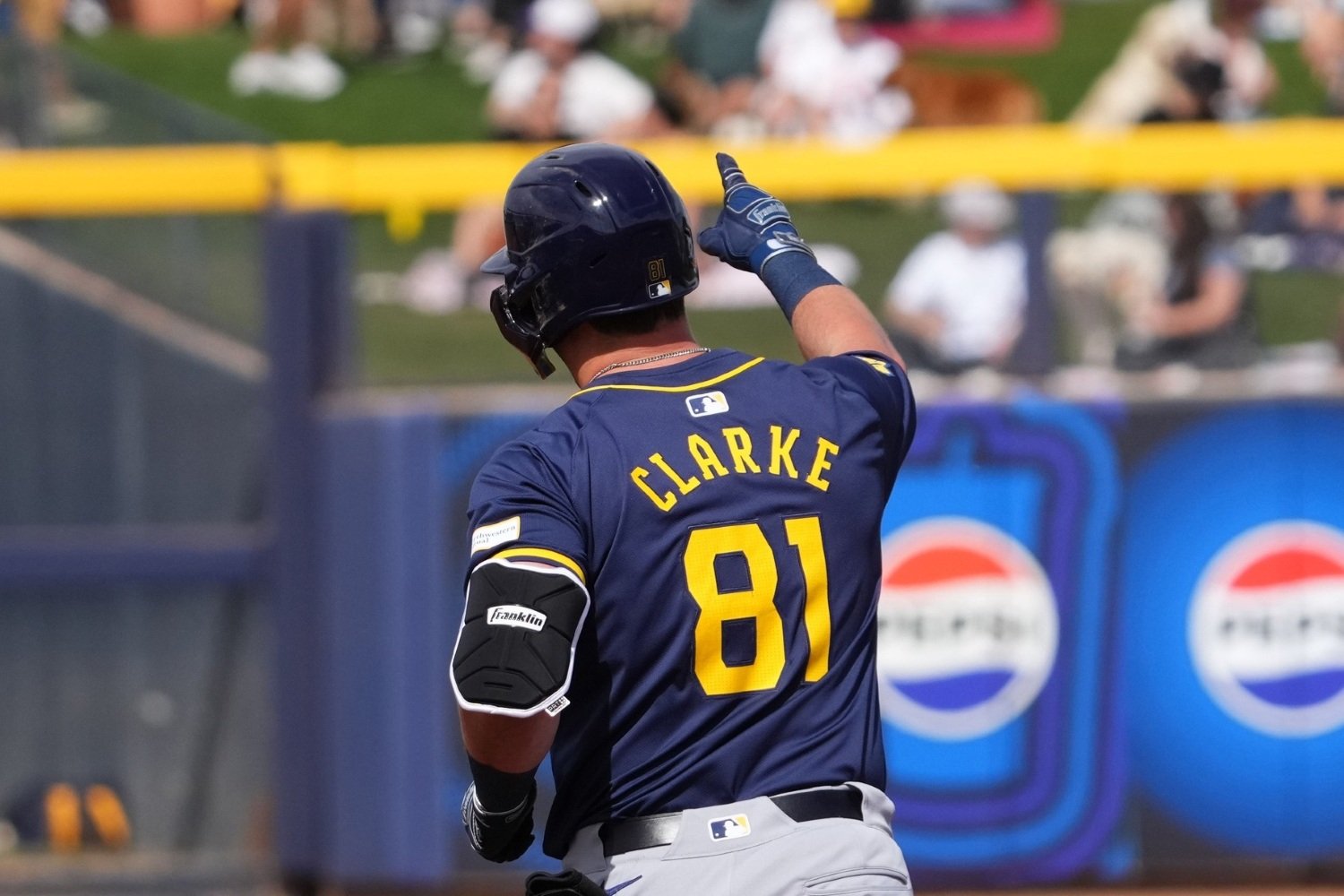 At the beginning of the month, the Brewers trimmed their 40-man roster to 36 by declining club options and waiving several players. That was partially in preparation for the next key offseason date that arrives next week: the deadline to protect players from December's Rule 5 Draft. The draft aims to give big-league opportunities to players who may be buried on their current organization’s depth chart. Unprotected players signed at age 19 or older become eligible after playing four years of professional baseball, and those signed at 18 or younger become eligible after five years. If left unprotected, these players are available for teams to add to their big-league rosters. Players on the 40-man roster of their current club are not available to other teams in the draft, so teams often select the contracts of their best eligible prospects by the deadline to protect them. The deadline to do so is next Tuesday, Nov. 19. The Brewers have more than 40 eligible players (the complete list is available here), but only a handful are serious candidates to be selected by other teams or added to Milwaukee’s 40-man roster. If recent history is any indication, it’s unlikely the club will protect more than two or three of these players. It’s worth noting that leaving a player exposed does not mean the Brewers don’t value them. It’s often a calculated gamble that favors the player’s current team if he’s not an elite prospect. Although the Draft technically lasts until all 30 teams have passed, and can involve multiple rounds, most teams do not make a pick. Only 10 selections were made in last year’s draft, and 15 in 2022. The drafting team cannot send the player to the minor leagues, and that player must remain on the active roster for at least 90 days of the season for the club to retain their rights beyond that year. For this reason, the team that lost the player still has a decent chance of getting them back within a few months. With that in mind, here’s a narrowed-down list of potential additions to the Brewers’ 40-man roster and their likelihood of being protected. RHP Logan Henderson Henderson is the only lock on this list. The 22-year-old righthander shot up prospect rankings with an excellent 2024 season that began in High-A and ended in Triple-A. In 17 starts spanning three levels, he pitched to a 3.52 ERA and 3.63 FIP with a fantastic 31.2% strikeout rate and a 6.27 strikeout-to-walk ratio. The updated rankings at FanGraphs named Henderson Milwaukee’s 12th-best prospect, and Brewer Fanatic recently ranked him 8th. His fastball usually sits in the low 90s, but Henderson can reach back for 95-96. He’s unique in that he generates above-average ride from backspin on his four-seamer while throwing it from a low slot. This helps it play exceptionally at the top of the zone, where the pitch induces plenty of whiffs and pop-ups. Henderson complements the fastball with a 60-grade changeup that has plenty of fade and separation off his heater. Henderson has developed strong command of his fastball-changeup combination, leaving the mastery of a consistent secondary pitch with glove-side movement as his next hill to conquer. Neither his cutter nor slider have developed much in the minor leagues. However, his upside and straightforward path to big-league innings in 2025 make him a slam dunk to join the 40-man roster in a few days. RHP Coleman Crow Every candidate after Henderson has protection odds ranging from toss-up to unlikely, but Crow may have a leg up on his contemporaries due to his promise and Milwaukee’s presumed desire to see more of him. Acquired in return for Adrian Houser and Tyrone Taylor last winter, Crow missed the 2024 regular season while rehabbing from the Tommy John surgery he underwent the previous August. He’s pitched four times in the Arizona Fall League with mixed results, but at the time of the trade, prospect evaluators viewed Crow as someone who could quickly ascend to the big leagues in a bulk role upon recovery. His low-90s fastball isn’t as effective as Henderson’s, but it’s a serviceable pitch when Crow commands it at the top of the zone from his arm slot. His ability to spin the ball is his standout trait. In addition to his fastball, Crow throws two distinct breaking balls that could make him an MLB-ready arm at some point in 2025. All three pitches have excellent spin rates. Crow’s curveball has received as high as a 60 grade from evaluators, and the tracked curves he’s thrown in the AFL have averaged -10 inches of induced vertical break with nearly 17 inches of horizontal break. His slider is a shorter and harder pitch, sitting in the mid-80s with 4.8 inches of induced vertical break and 5 inches of horizontal break. Unsurprisingly, Crow has been plenty reliant on his breaking pitches in the minor leagues. He’ll need that approach to succeed at the game’s highest level. Refining his sinker and changeup could make him more likely to stick as a starter, but his breaking balls should allow him to navigate a lineup once in a multi-inning relief role. The Brewers could take the gamble of leaving Crow unprotected in hopes that nobody is willing to roster him in his first season back from major surgery. They’ve invested player capital and time into his rehab, though, and adding him to the 40-man roster is the safe route for maintaining a chance of a return on that commitment. RHP Shane Smith The 24-year-old Smith signed with the Brewers as an undrafted free agent in 2022 while recovering from Tommy John surgery. He began the 2024 season as a reliever in Double-A before transitioning into a starting role. His performance earned him a September promotion to Triple-A, where he allowed just two runs in five relief outings. Across the two levels, he posted a 3.05 ERA and 2.91 FIP with a 29.6% strikeout rate in 94 ⅓ innings. Like Crow, Smith’s calling card is his slurve-like curveball, but his breaking ball possesses even more depth with less sweep. His mid-90s fastball has also received strong grades and sometimes trends toward a rise-cut shape. Smith also features a hard bullet slider and began experimenting with a sweeper in 2024. Smith could crack the big leagues as a reliever in 2025, but his inconsistent fastball shape and the deep relief corps in Milwaukee could thwart that. It’s unlikely the Brewers will devote two roster spots to pitchers with plus breaking balls but no or limited experience above Double-A, so a decision on who to protect alongside Henderson could come down to Smith or Crow. RHP Chad Patrick The Brewers acquired Patrick from the Oakland A’s a year ago in exchange for Abraham Toro. He was named International League Pitcher of the Year in his first season with his new organization, leading the league in ERA (2.90) and strikeouts (146) while logging 136 1/3 innings for the Nashville Sounds. Despite that showing, Patrick never received a promotion, even as the Brewers looked to shore up what was a patchwork rotation for prolonged stretches of the season. That was likely due to his lack of upside and uncertainty about how his profile will translate to the big leagues, which could also make the club comfortable with losing him to another organization. Beneath that shiny ERA were a more pedestrian 3.98 FIP and 4.84 DRA. Patrick’s bread and butter is his cutter, but while it was highly effective against Triple-A opponents, its shape often varied wildly from one pitch to the next. Clusters on a pitch movement graph are generally not supposed to be that big. While no pitch will leave a pitcher’s hand in exactly the same fashion every time, Patrick’s cutter can look like an entirely different offering within a single outing. No one else in the upper levels of the game has quite this much variability. It raises the possibility that Patrick manipulates the cutter by design. If he doesn’t, it’s an unpredictability that makes it harder to trust him to pitch at the highest level. Add in the home run concerns baked into his heavy fly-ball profile and inconsistent walk numbers, and there are reasons to believe the Brewers are not as likely to protect him as his surface-level numbers might indicate. 1B/OF Ernesto Martinez Jr. Martinez just re-upped with the Brewers on a new minor-league deal after enjoying a breakout campaign at age 25. He spent the entire year in Double-A, hitting .284/.365/.466 with 13 home runs for a 146 wRC+. Standing 6-foot-6 and weighing 250 pounds, Martinez has always possessed an exciting blend of raw power and speed. He still has a ways to go, but the significant cuts to his strikeout rate in recent seasons are the real story. Making more contact is what’s positioned him to finally reach the upper minors after a slower progression through the first several years of his career. He’s been primarily a first baseman, but has also made cameos in center field due to his athleticism and range in the field. Martinez is still raw enough entering his age-26 season that the Brewers likely don’t see a pressing need to protect him. Still, he probably renewed some optimism within the organization (and earned some external looks) with a resurgent season. 1B/C Wes Clarke After smashing 26 home runs in 118 games at Double-A Biloxi in 2023, Clarke made his presence felt in spring training by homering four times. The slugger then went deep 21 times during the minor-league season, spending most of it in Triple-A. Clarke has caught 80 games in the minor leagues but has played primarily first base, and profiles as a DH in the big leagues. Offensively, he’s a stereotypical three-true-outcomes hitter from the right side. Too much swing-and-miss stands between him and being a semi-reliable MLB bat. He struck out 35.1% of the time in Triple-A, where his 40.6% whiff rate was the fourth-highest among hitters with at least 300 plate appearances. The Brewers could use more power in their lineup, but Clarke isn’t the answer. He’s highly unlikely to be protected. While a rebuilding organization could take a gamble on his light-tower power, the low floor presented by the holes in his swing means he’ll probably return to Nashville in 2025.
- 6 comments
-
- 4
-
-
- logan henderson
- coleman crow
- (and 3 more)
-
Why Pat Murphy Finds His NL Manager of the Year Candidacy 'Embarrassing'
Jack Stern posted an article in Brewers
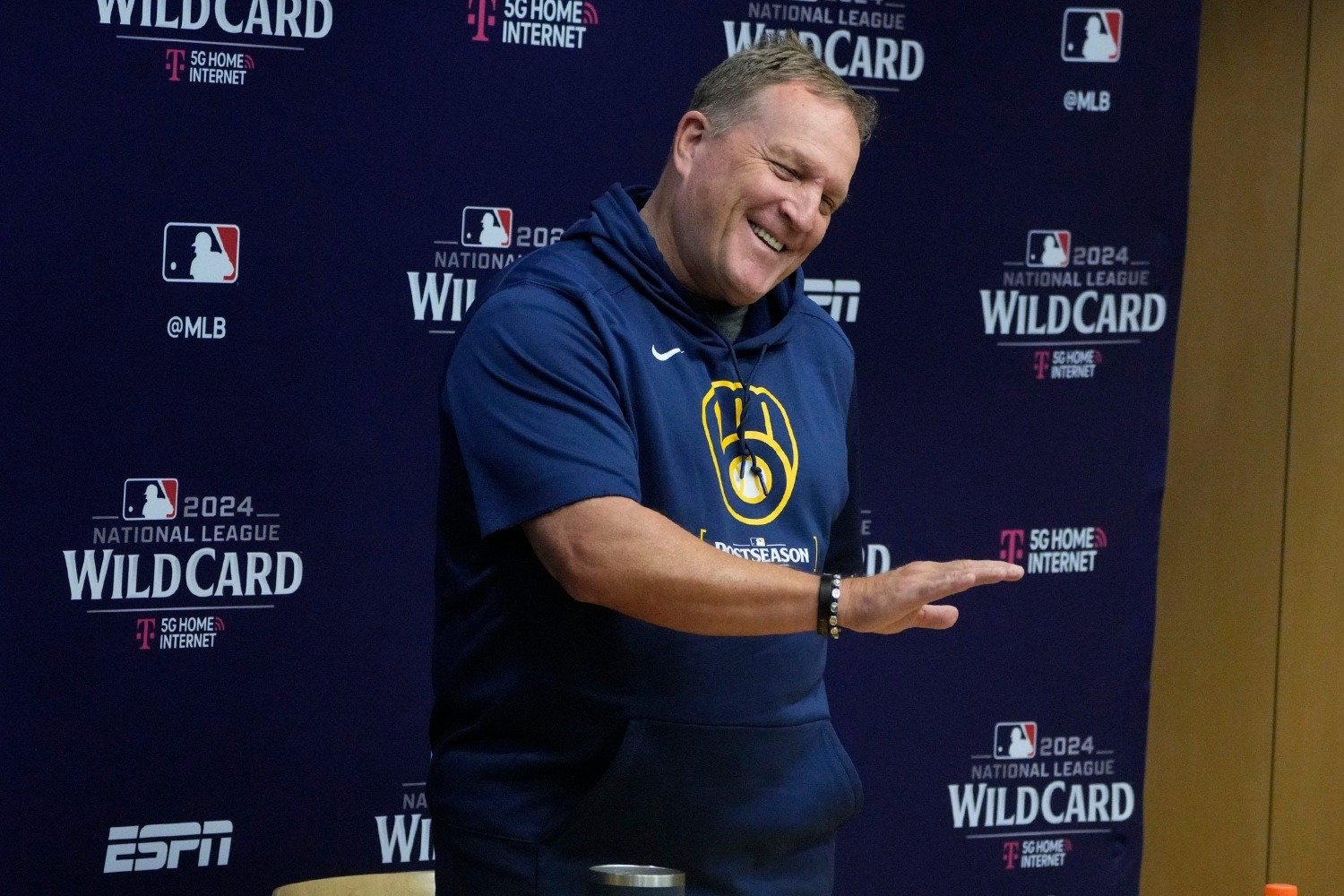 After leading the Brewers to a 93-69 record and a second straight division title in his first season at the helm, Pat Murphy was named a finalist for the National League Manager of the Year Award on Monday night. Murphy was expected to be a finalist, and he’s also the favorite to become the latest Brewer to take home offseason hardware when winners are announced on Nov. 19. Murphy is not one to assume credit for anything, so it was unsurprising when he downplayed his consideration for the award on Sunday. He then went a step further by expressing discomfort with it, offering a valuable reminder of the disconnect between the work it takes to build and guide a winning team and how some accolades for those accomplishments are publicly bestowed. “Any award like that is a team award,” he said. “It’s a staff award. It’s embarrassing even to be mentioned [in consideration for] it. It truly is. If you love this profession and you’re passionate about what it means, then those types of things are like it doesn’t fit with what you’re really all about. “It just doesn’t sit as well, but I guess you gotta go through it, and I gotta deal with it,” he added. The problem with the Manager of the Year Award is that it recognizes one individual for success that takes a village to achieve. Players have the task of doing everything they can to help their team win, and many metrics isolate their contributions. There’s no WAR for managers, leaving voters to go on character and team record relative to expectations or adversity. The good news is that Murphy has garnered praise on those fronts, but the reality is there’s too much noise surrounding those factors to come up with a firm answer. It’s a flawed methodology that uses on-field results to evaluate the performance of one man in the dugout. As Murphy alluded to, coaching is a group effort. The size of big-league staffs continues to grow, including in Milwaukee. In-game decision-making is a collaborative process, and it’s often increasingly specialized instructors and analysts helping players make the tweaks to unlock better versions of themselves. Even then, coaches only look good if players work on and off the field and answer the call in the moment. Having good coaches does not automatically lead to success, nor is success always indicative of good coaching. Managers are impactful, but it’s challenging to rank them because compatibility can be just as important as skill. Most managers are gifted leaders or have the traits to blossom into one. It’s why they get the job. A fit between the manager and the rest of an organization is what leads to the most fruitful experience for all parties. A skipper need not agree with the front office or fellow coaches on everything, but they must buy into the club’s larger vision and successfully transpose it onto the field, all while maintaining cohesion throughout the clubhouse. A successful managerial performance not only entails doing the job well, but is also about being the right person at the right time. Because the context throughout the league and an organization constantly changes, that window can be fleeting. It leads to frequent turnover among acclaimed managers. Every NL Manager of the Year from 2019 through 2022 was dismissed by their club within the next two seasons, and 2023 winner Skip Schumaker stepped down after this year. They did not suddenly become worse managers. Instead, they were most likely dismissed or moved on because they were no longer the most compatible with the organization’s executives, coaches, and players. The need for a new voice can arise quickly. That’s why Craig Counsell’s tenure as Milwaukee’s manager continues to stand out after his departure. The Brewers posted winning records in each of his last six full seasons after exiting a rebuild. He remained a productive voice for years while managing rosters of varying shapes, strengths, and weaknesses. Still, his underwhelming first season in Chicago illustrates the importance of having the proper infrastructure behind any manager. As Murphy said, it’s a staff endeavor. It’s impossible to measure which manager is baseball’s best, which is rarely what the Manager of the Year Award highlights. The finalists are often managers of teams that most overperformed external expectations, or most improved their records from the previous season. While those accomplishments can reflect the manager’s efforts, that’s just a small piece of the puzzle on which baseball writers base their votes. Recent history shows that leading any team to overperform significantly is rarely a skill that one can repeatedly attribute solely to a manager. The award’s methodology is flawed, largely because there is no great alternative. Whether Murphy wins or not, the takeaway from his first season as skipper is that he was the right manager for the 2024 Brewers. After an offseason of turnover, the club needed someone to keep this team grounded amid uncertainty. While he was understandably far from perfect in other facets of the job, Murphy was a respected and stable leader throughout a successful regular season. He’ll likely be commended for it next week.
 -
The Brewers' skipper deserves the recognition he's getting, but his discomfort over it is a reminder that the Manager of the Year Award is flawed and inconclusive. Image courtesy of © Mike De Sisti / Milwaukee Journal Sentinel / USA TODAY NETWORK via Imagn Images The Brewers' skipper deserves the recognition he's getting, but his discomfort over it is a reminder that the Manager of the Year Award is flawed and inconclusive. After leading the Brewers to a 93-69 record and a second straight division title in his first season at the helm, Pat Murphy was named a finalist for the National League Manager of the Year Award on Monday night. Murphy was expected to be a finalist, and he’s also the favorite to become the latest Brewer to take home offseason hardware when winners are announced on Nov. 19. Murphy is not one to assume credit for anything, so it was unsurprising when he downplayed his consideration for the award on Sunday. He then went a step further by expressing discomfort with it, offering a valuable reminder of the disconnect between the work it takes to build and guide a winning team and how some accolades for those accomplishments are publicly bestowed. “Any award like that is a team award,” he said. “It’s a staff award. It’s embarrassing even to be mentioned [in consideration for] it. It truly is. If you love this profession and you’re passionate about what it means, then those types of things are like it doesn’t fit with what you’re really all about. “It just doesn’t sit as well, but I guess you gotta go through it, and I gotta deal with it,” he added. The problem with the Manager of the Year Award is that it recognizes one individual for success that takes a village to achieve. Players have the task of doing everything they can to help their team win, and many metrics isolate their contributions. There’s no WAR for managers, leaving voters to go on character and team record relative to expectations or adversity. The good news is that Murphy has garnered praise on those fronts, but the reality is there’s too much noise surrounding those factors to come up with a firm answer. It’s a flawed methodology that uses on-field results to evaluate the performance of one man in the dugout. As Murphy alluded to, coaching is a group effort. The size of big-league staffs continues to grow, including in Milwaukee. In-game decision-making is a collaborative process, and it’s often increasingly specialized instructors and analysts helping players make the tweaks to unlock better versions of themselves. Even then, coaches only look good if players work on and off the field and answer the call in the moment. Having good coaches does not automatically lead to success, nor is success always indicative of good coaching. Managers are impactful, but it’s challenging to rank them because compatibility can be just as important as skill. Most managers are gifted leaders or have the traits to blossom into one. It’s why they get the job. A fit between the manager and the rest of an organization is what leads to the most fruitful experience for all parties. A skipper need not agree with the front office or fellow coaches on everything, but they must buy into the club’s larger vision and successfully transpose it onto the field, all while maintaining cohesion throughout the clubhouse. A successful managerial performance not only entails doing the job well, but is also about being the right person at the right time. Because the context throughout the league and an organization constantly changes, that window can be fleeting. It leads to frequent turnover among acclaimed managers. Every NL Manager of the Year from 2019 through 2022 was dismissed by their club within the next two seasons, and 2023 winner Skip Schumaker stepped down after this year. They did not suddenly become worse managers. Instead, they were most likely dismissed or moved on because they were no longer the most compatible with the organization’s executives, coaches, and players. The need for a new voice can arise quickly. That’s why Craig Counsell’s tenure as Milwaukee’s manager continues to stand out after his departure. The Brewers posted winning records in each of his last six full seasons after exiting a rebuild. He remained a productive voice for years while managing rosters of varying shapes, strengths, and weaknesses. Still, his underwhelming first season in Chicago illustrates the importance of having the proper infrastructure behind any manager. As Murphy said, it’s a staff endeavor. It’s impossible to measure which manager is baseball’s best, which is rarely what the Manager of the Year Award highlights. The finalists are often managers of teams that most overperformed external expectations, or most improved their records from the previous season. While those accomplishments can reflect the manager’s efforts, that’s just a small piece of the puzzle on which baseball writers base their votes. Recent history shows that leading any team to overperform significantly is rarely a skill that one can repeatedly attribute solely to a manager. The award’s methodology is flawed, largely because there is no great alternative. Whether Murphy wins or not, the takeaway from his first season as skipper is that he was the right manager for the 2024 Brewers. After an offseason of turnover, the club needed someone to keep this team grounded amid uncertainty. While he was understandably far from perfect in other facets of the job, Murphy was a respected and stable leader throughout a successful regular season. He’ll likely be commended for it next week. View full article
-
Brewers Offseason Handbook: Filling and Fortifying The Starting Rotation
Jack Stern posted an article in Caretakers
 Welcome to the 2025 Offseason Handbook! This year, we’re offering the format online only through our Caretakers program. The Offseason Handbook is a comprehensive look at what challenges the Brewers face in the coming winter to field a competitive team in 2025. To become a Caretaker, visit this page. On top of receiving exclusive access to the Offseason Handbook, Caretakers also receive in-depth analysis from national writers you cannot find anywhere else. You will also receive exclusive access to events and an ad-free browsing option. In celebration of the Offseason Handbook’s release, we’re offering 20% off all Caretaker programs for the next week. Use the code HANDBOOK at checkout to receive 20% off your purchase! The Brewers’ starting rotation assumed a different shape in 2024. Gone were the days of Corbin Burnes, Brandon Woodruff, and Freddy Peralta forming a fearsome trio, with the first two especially distinguished as elite starters who often worked deep into games. Woodruff’s shoulder surgery and Burnes’s trade to the Baltimore Orioles made Peralta the de facto No. 1 of the pitching staff. While the rest of the rotation stabilized in the season’s final months, it was a rotating cast behind him for much of the year. Fast forward to the offseason, and there’s more ambiguity following Peralta. Gone are Colin Rea and Frankie Montas, and Aaron Civale could join them if the Brewers offload his projected $8 million salary via trade and reinvest those savings elsewhere. Bryse Wilson, who contributed 104 ⅔ innings as a flexible bulk pitcher, elected free agency after the Brewers outrighted him on November 4. That’s up to 403 ⅔ innings the Brewers must replace, and that’s not accounting for the baked-in likelihood of any injuries to returning or new starting pitchers in 2025. As last season demonstrated, that’s a reality against which Milwaukee must hedge itself as much as possible. Whether the Brewers have enough in-house starting pitchers on their current roster hinges largely on two of their unestablished left-handers. Aaron Ashby and DL Hall finished the season working primarily out of the bullpen. While General Manager Matt Arnold has spoken open-endedly of their future roles, early indicators are that the Brewers want both to get another crack as starters. Stretching out both hurlers is a reasonable temptation. Hall has two quality breaking pitches and flashed an above-average changeup this year. Ashby has two plus breakers and a capable changeup. In 2022, he was one of just a handful of starters to generate both ground balls and swings and misses at high rates. Both southpaws are just 26 years old and still have the tools to develop into productive starters. While giving that talent runway is a reasonable decision, relying on it to manifest into reliable rotation innings would be less wise.
 -
For the second straight offseason, the Brewers have a starting rotation in flux. Some external additions are necessary to lengthen the depth chart, but the pitching staff's outlook hinges on several in-house wild cards above all else. Image courtesy of © Matt Krohn-Imagn Images For the second straight offseason, the Brewers have a starting rotation in flux. Some external additions are necessary to lengthen the depth chart, but the pitching staff's outlook hinges on several in-house wild cards above all else. Welcome to the 2025 Offseason Handbook! This year, we’re offering the format online only through our Caretakers program. The Offseason Handbook is a comprehensive look at what challenges the Brewers face in the coming winter to field a competitive team in 2025. To become a Caretaker, visit this page. On top of receiving exclusive access to the Offseason Handbook, Caretakers also receive in-depth analysis from national writers you cannot find anywhere else. You will also receive exclusive access to events and an ad-free browsing option. In celebration of the Offseason Handbook’s release, we’re offering 20% off all Caretaker programs for the next week. Use the code HANDBOOK at checkout to receive 20% off your purchase! The Brewers’ starting rotation assumed a different shape in 2024. Gone were the days of Corbin Burnes, Brandon Woodruff, and Freddy Peralta forming a fearsome trio, with the first two especially distinguished as elite starters who often worked deep into games. Woodruff’s shoulder surgery and Burnes’s trade to the Baltimore Orioles made Peralta the de facto No. 1 of the pitching staff. While the rest of the rotation stabilized in the season’s final months, it was a rotating cast behind him for much of the year. Fast forward to the offseason, and there’s more ambiguity following Peralta. Gone are Colin Rea and Frankie Montas, and Aaron Civale could join them if the Brewers offload his projected $8 million salary via trade and reinvest those savings elsewhere. Bryse Wilson, who contributed 104 ⅔ innings as a flexible bulk pitcher, elected free agency after the Brewers outrighted him on November 4. That’s up to 403 ⅔ innings the Brewers must replace, and that’s not accounting for the baked-in likelihood of any injuries to returning or new starting pitchers in 2025. As last season demonstrated, that’s a reality against which Milwaukee must hedge itself as much as possible. Whether the Brewers have enough in-house starting pitchers on their current roster hinges largely on two of their unestablished left-handers. Aaron Ashby and DL Hall finished the season working primarily out of the bullpen. While General Manager Matt Arnold has spoken open-endedly of their future roles, early indicators are that the Brewers want both to get another crack as starters. Stretching out both hurlers is a reasonable temptation. Hall has two quality breaking pitches and flashed an above-average changeup this year. Ashby has two plus breakers and a capable changeup. In 2022, he was one of just a handful of starters to generate both ground balls and swings and misses at high rates. Both southpaws are just 26 years old and still have the tools to develop into productive starters. While giving that talent runway is a reasonable decision, relying on it to manifest into reliable rotation innings would be less wise. View full article
-
In this installment of the Brewer Fanatic Offseason Handbook, we'll walk through objectives the Brewers should prioritize this winter and how they might accomplish them. Image courtesy of © Jovanny Hernandez / Milwaukee Journal Sentinel / USA TODAY NETWORK via Imagn Images In this installment of the Brewer Fanatic Offseason Handbook, we'll walk through objectives the Brewers should prioritize this winter and how they might accomplish them. Welcome to the 2025 Offseason Handbook! This year, we’re offering the format online only through our Caretakers program. The Offseason Handbook is a comprehensive look at what challenges the Brewers face in the coming winter to field a competitive team in 2025. To become a Caretaker, visit this page. On top of receiving exclusive access to the Offseason Handbook, Caretakers also receive in-depth analysis from national writers you cannot find anywhere else. You will also receive exclusive access to events and an ad-free browsing option. In celebration of the Offseason Handbook’s release, we’re offering 20% off all Caretaker programs for the next week. Use the code HANDBOOK at checkout to receive 20% off your purchase! By almost every measure, the Milwaukee Brewers exceeded external expectations in 2024. Even the more optimistic observers would not have predicted a 93-69 record and a division title. Despite a heartbreaking finish that saw the Brewers come within two outs of finally conquering their recent playoff demons, the club’s outlook for 2025 and beyond is bright. Last winter featured substantial shakeups to the roster and coaching staff, ushering in a wave of uncertainty as the Brewers insisted they would remain competitive. A year later, roster continuity is a theme. While next year’s club will look a bit different—Willy Adames is a free agent, a Devin Williams trade feels inevitable, and the starting rotation will undergo a slight makeover—most core contributors from 2024 figure to return. The Brewers have 16 players under control through at least 2027, based on service time or under existing contracts, nine of whom were worth at least 2 Wins Above Replacement this year, according to Baseball-Reference. The list of desperate needs is shorter than in years past, but it’s also important to look past it when executing and evaluating offseason moves. Shrewd organizations do their best to fill needs, but the greater objective is always to assemble a competitive roster with prudent and opportunistic moves. That means taking advantage of chances to add value and rejecting potential moves that don’t, regardless of position. These offseason storylines will be covered in greater depth in future installments of Brewer Fanatic’s Offseason Handbook series, but here is a quick snapshot of the most prominent issues as the Hot Stove gets underway. View full article
-
.png.f09bfde215469869ea3b36c550e9a804.png) Welcome to the 2025 Offseason Handbook! This year, we’re offering the format online only through our Caretakers program. The Offseason Handbook is a comprehensive look at what challenges the Brewers face in the coming winter to field a competitive team in 2025. To become a Caretaker, visit this page. On top of receiving exclusive access to the Offseason Handbook, Caretakers also receive in-depth analysis from national writers you cannot find anywhere else. You will also receive exclusive access to events and an ad-free browsing option. In celebration of the Offseason Handbook’s release, we’re offering 20% off all Caretaker programs for the next week. Use the code HANDBOOK at checkout to receive 20% off your purchase! By almost every measure, the Milwaukee Brewers exceeded external expectations in 2024. Even the more optimistic observers would not have predicted a 93-69 record and a division title. Despite a heartbreaking finish that saw the Brewers come within two outs of finally conquering their recent playoff demons, the club’s outlook for 2025 and beyond is bright. Last winter featured substantial shakeups to the roster and coaching staff, ushering in a wave of uncertainty as the Brewers insisted they would remain competitive. A year later, roster continuity is a theme. While next year’s club will look a bit different—Willy Adames is a free agent, a Devin Williams trade feels inevitable, and the starting rotation will undergo a slight makeover—most core contributors from 2024 figure to return. The Brewers have 16 players under control through at least 2027, based on service time or under existing contracts, nine of whom were worth at least 2 Wins Above Replacement this year, according to Baseball-Reference. The list of desperate needs is shorter than in years past, but it’s also important to look past it when executing and evaluating offseason moves. Shrewd organizations do their best to fill needs, but the greater objective is always to assemble a competitive roster with prudent and opportunistic moves. That means taking advantage of chances to add value and rejecting potential moves that don’t, regardless of position. These offseason storylines will be covered in greater depth in future installments of Brewer Fanatic’s Offseason Handbook series, but here is a quick snapshot of the most prominent issues as the Hot Stove gets underway.
Welcome to the 2025 Offseason Handbook! This year, we’re offering the format online only through our Caretakers program. The Offseason Handbook is a comprehensive look at what challenges the Brewers face in the coming winter to field a competitive team in 2025. To become a Caretaker, visit this page. On top of receiving exclusive access to the Offseason Handbook, Caretakers also receive in-depth analysis from national writers you cannot find anywhere else. You will also receive exclusive access to events and an ad-free browsing option. In celebration of the Offseason Handbook’s release, we’re offering 20% off all Caretaker programs for the next week. Use the code HANDBOOK at checkout to receive 20% off your purchase! By almost every measure, the Milwaukee Brewers exceeded external expectations in 2024. Even the more optimistic observers would not have predicted a 93-69 record and a division title. Despite a heartbreaking finish that saw the Brewers come within two outs of finally conquering their recent playoff demons, the club’s outlook for 2025 and beyond is bright. Last winter featured substantial shakeups to the roster and coaching staff, ushering in a wave of uncertainty as the Brewers insisted they would remain competitive. A year later, roster continuity is a theme. While next year’s club will look a bit different—Willy Adames is a free agent, a Devin Williams trade feels inevitable, and the starting rotation will undergo a slight makeover—most core contributors from 2024 figure to return. The Brewers have 16 players under control through at least 2027, based on service time or under existing contracts, nine of whom were worth at least 2 Wins Above Replacement this year, according to Baseball-Reference. The list of desperate needs is shorter than in years past, but it’s also important to look past it when executing and evaluating offseason moves. Shrewd organizations do their best to fill needs, but the greater objective is always to assemble a competitive roster with prudent and opportunistic moves. That means taking advantage of chances to add value and rejecting potential moves that don’t, regardless of position. These offseason storylines will be covered in greater depth in future installments of Brewer Fanatic’s Offseason Handbook series, but here is a quick snapshot of the most prominent issues as the Hot Stove gets underway. -
 With Willy Adames all but guaranteed to depart in free agency, the Brewers need a replacement on the left side of the infield. They can fill that need by moving Joey Ortiz to shortstop and acquiring a third baseman, or they can keep Ortiz at the hot corner and bring in a shortstop. Having both options does not dramatically expand the number of paths available in free agency, though. The infield market is uninspiring, featuring just seven middle infielders or third basemen worth more than 0.8 fWAR in 2024. Two of them—Adames and Alex Bregman—are likely beyond Milwaukee’s price range. The trade market could feature alternatives. The Colorado Rockies are reportedly cutting payroll over the winter and intend to shop several veteran players. Third baseman Ryan McMahon, who is halfway through a six-year extension he signed before the 2022 season, could be among them. 'Could' is the key word. In recent years, Colorado’s front office has been unwilling to trade players it has deemed essential to the franchise’s identity, even if the prudent move is to flip them for younger talent. McMahon lands firmly within that echelon, and the Rockies already withheld him from the trade block at the July deadline when he was fresh off his first All-Star nod. Given how unconventionally the club operates, McMahon’s availability is anyone’s guess. If the Rockies put him on the market, though, there’s an obvious fit in Milwaukee, along with a level of upside absent in free agency. McMahon is an eight-year veteran who has emerged as one of baseball’s best defensive third basemen. Since inheriting the position from Nolan Arenado in 2021, he has more Defensive Runs Saved (DRS) at the hot corner than anyone but Pittsburgh's Ke'Bryan Hayes. His 37 Outs Above Average trail only Hayes and Arenado. That makes him a perfect fit for a Brewers team that places a premium on defense as part of its run-prevention strategy. Offensively, it’s more challenging to judge whether McMahon is a worthwhile target. His left-handed bat has carried untapped potential for years, but his natural tendencies as a hitter and his health complicate his path to unlocking another gear. McMahon hits the ball hard. Since the start of 2018, he ranks in the 91st percentile of big-league hitters in hard-hit rate and average exit velocity. The veteran also whiffs frequently, running a career 28.7% strikeout rate. That means he generates loud contact at a great rate per batted ball, but at a middling rate per swing. Furthermore, how McMahon produces and steers that contact separates him from most left-handed power hitters, and it’s partially why he’s approaching his 30th birthday with an underwhelming career .243/.324/.422 line and 92 DRC+. Many left-handed hitters, particularly those with stronger builds who hit the ball hard, are pull-heavy hitters. They like to turn on pitches over the middle and inner thirds of the plate. Since 2018, lefties have a pull rate 4.4 percentage points higher than righties. McMahon has a more balanced spray chart, working the opposite field more than the average lefty. His 27.9% opposite field rate ranks in the 88th percentile of left-handed hitters with at least 1,000 plate appearances since the start of 2018. His 39.3% pull rate ranks in the 11th percentile. Take a look at how McMahon’s directional batted-ball distribution in 2024 differed from that of the average left-handed batter. Unlike most of his peers, McMahon appears in his comfort zone when going the other way, and he’s done more damage to that area than most. His .643 slugging percentage on opposite-field batted balls ranks 15th in the aforementioned pool of lefties. The average is .491. That unique profile has a drawback, though: regularly taking the ball the other way instead of pulling it prevents McMahon from fully tapping into his raw power. One might assume that the solution is recommending he pull more pitches, but it’s more complicated than that. McMahon has not proven capable of consistently pulling the ball in the air. Instead, roughly two-thirds of his pull-side contact has been on the ground, including 71.2% in 2024. Rolling over so frequently has kept McMahon from maximizing his pull-side contact. Direction LA Exit Velo Hard Hit% GB% LD% FB% Pull 0.3 89.7 43.0% 66.3% 20.6% 12.2% Middle 11.0 93.5 55.4% 43.4% 27.0% 28.3% Oppo 23.2 90.1 42.7% 22.1% 30.7% 40.0% McMahon has ample power to right field. He’s pulled 53 of his 124 career home runs, and his career 1.439 slugging percentage on pulled non-grounders ranks in the 93rd percentile of left-handed hitters during that time. Tapping into that stroke consistently has been the issue. It appeared McMahon was starting to break out during the first half of the year. He earned an appearance in the Midsummer Classic by hitting .272/.350/.447 with 14 home runs in his first 95 games. However, his strikeout and pull rates remained unchanged from his career averages. His bat cratered in the second half, as he posted a .592 OPS, and the end result was a standard McMahon line: .242/.325/.397 with 20 home runs for a 94 DRC+. Health played a role in that ugly finish. McMahon claimed he lost 12-15 pounds while battling a virus out of the All-Star break and also played through left knee tendinitis. While the illness cannot be held against him, McMahon’s balky knees have hampered him throughout the last two years. The recent history of lower-body ailments, the continuing disconnect between his ceiling and batted-ball profile, and his heavy swing-and-miss tendencies are red flags as he exits his 20s. Therein lies the dilemma the Brewers would face in deciding whether to pursue McMahon. His potential is undeniable, but expecting him to realize that ceiling is a precarious and potentially costly bet. He’s owed $44 million over the next three years, including $16 million annually in 2026 and 2027, and his high valuation within the Colorado front office could mean a steep ask in return for his services. His name has been noticeably absent from the list of candidates the Rockies would shop to dump salary. McMahon’s elite defense gives him a high floor as a solid starter in his current form, and it’s possible that leaving Coors Field will positively nudge his offense on its own. It would eliminate the challenge of frequently adjusting to differences in pitch flight imparted by the vastly different home and road elevations. DJ LeMahieu and Arenado are recent examples of players who posted career years at age 30 or older after escaping the Coors effect. Still, McMahon requires more development to fully unlock the skill of pulling the ball in the air. It’s impossible to know, from the outside, whether his failure to make that jump in eight seasons is due to lackluster instruction or McMahon’s own inability to master the right adjustments. Furthermore, his strikeout rate already teeters along territory that can handicap a hitter’s opportunities to do consistent damage. Any loss of bat speed in the next three years could prove catastrophic if it worsens his contact rate and plate discipline. If he’s available, the Brewers must weigh McMahon’s promise against those concerns. Is acquiring him to man third base for the next three years a smart allocation of resources this winter? There are compelling arguments to be made in either direction.
 -
The longtime Rockies third baseman has the potential to be one of the best in baseball at the position, but his availability and likelihood of reaching that ceiling are both uncertain. Image courtesy of © Kiyoshi Mio-Imagn Images The longtime Rockies third baseman has the potential to be one of the best in baseball at the position, but his availability and likelihood of reaching that ceiling are both uncertain. With Willy Adames all but guaranteed to depart in free agency, the Brewers need a replacement on the left side of the infield. They can fill that need by moving Joey Ortiz to shortstop and acquiring a third baseman, or they can keep Ortiz at the hot corner and bring in a shortstop. Having both options does not dramatically expand the number of paths available in free agency, though. The infield market is uninspiring, featuring just seven middle infielders or third basemen worth more than 0.8 fWAR in 2024. Two of them—Adames and Alex Bregman—are likely beyond Milwaukee’s price range. The trade market could feature alternatives. The Colorado Rockies are reportedly cutting payroll over the winter and intend to shop several veteran players. Third baseman Ryan McMahon, who is halfway through a six-year extension he signed before the 2022 season, could be among them. 'Could' is the key word. In recent years, Colorado’s front office has been unwilling to trade players it has deemed essential to the franchise’s identity, even if the prudent move is to flip them for younger talent. McMahon lands firmly within that echelon, and the Rockies already withheld him from the trade block at the July deadline when he was fresh off his first All-Star nod. Given how unconventionally the club operates, McMahon’s availability is anyone’s guess. If the Rockies put him on the market, though, there’s an obvious fit in Milwaukee, along with a level of upside absent in free agency. McMahon is an eight-year veteran who has emerged as one of baseball’s best defensive third basemen. Since inheriting the position from Nolan Arenado in 2021, he has more Defensive Runs Saved (DRS) at the hot corner than anyone but Pittsburgh's Ke'Bryan Hayes. His 37 Outs Above Average trail only Hayes and Arenado. That makes him a perfect fit for a Brewers team that places a premium on defense as part of its run-prevention strategy. Offensively, it’s more challenging to judge whether McMahon is a worthwhile target. His left-handed bat has carried untapped potential for years, but his natural tendencies as a hitter and his health complicate his path to unlocking another gear. McMahon hits the ball hard. Since the start of 2018, he ranks in the 91st percentile of big-league hitters in hard-hit rate and average exit velocity. The veteran also whiffs frequently, running a career 28.7% strikeout rate. That means he generates loud contact at a great rate per batted ball, but at a middling rate per swing. Furthermore, how McMahon produces and steers that contact separates him from most left-handed power hitters, and it’s partially why he’s approaching his 30th birthday with an underwhelming career .243/.324/.422 line and 92 DRC+. Many left-handed hitters, particularly those with stronger builds who hit the ball hard, are pull-heavy hitters. They like to turn on pitches over the middle and inner thirds of the plate. Since 2018, lefties have a pull rate 4.4 percentage points higher than righties. McMahon has a more balanced spray chart, working the opposite field more than the average lefty. His 27.9% opposite field rate ranks in the 88th percentile of left-handed hitters with at least 1,000 plate appearances since the start of 2018. His 39.3% pull rate ranks in the 11th percentile. Take a look at how McMahon’s directional batted-ball distribution in 2024 differed from that of the average left-handed batter. Unlike most of his peers, McMahon appears in his comfort zone when going the other way, and he’s done more damage to that area than most. His .643 slugging percentage on opposite-field batted balls ranks 15th in the aforementioned pool of lefties. The average is .491. That unique profile has a drawback, though: regularly taking the ball the other way instead of pulling it prevents McMahon from fully tapping into his raw power. One might assume that the solution is recommending he pull more pitches, but it’s more complicated than that. McMahon has not proven capable of consistently pulling the ball in the air. Instead, roughly two-thirds of his pull-side contact has been on the ground, including 71.2% in 2024. Rolling over so frequently has kept McMahon from maximizing his pull-side contact. Direction LA Exit Velo Hard Hit% GB% LD% FB% Pull 0.3 89.7 43.0% 66.3% 20.6% 12.2% Middle 11.0 93.5 55.4% 43.4% 27.0% 28.3% Oppo 23.2 90.1 42.7% 22.1% 30.7% 40.0% McMahon has ample power to right field. He’s pulled 53 of his 124 career home runs, and his career 1.439 slugging percentage on pulled non-grounders ranks in the 93rd percentile of left-handed hitters during that time. Tapping into that stroke consistently has been the issue. It appeared McMahon was starting to break out during the first half of the year. He earned an appearance in the Midsummer Classic by hitting .272/.350/.447 with 14 home runs in his first 95 games. However, his strikeout and pull rates remained unchanged from his career averages. His bat cratered in the second half, as he posted a .592 OPS, and the end result was a standard McMahon line: .242/.325/.397 with 20 home runs for a 94 DRC+. Health played a role in that ugly finish. McMahon claimed he lost 12-15 pounds while battling a virus out of the All-Star break and also played through left knee tendinitis. While the illness cannot be held against him, McMahon’s balky knees have hampered him throughout the last two years. The recent history of lower-body ailments, the continuing disconnect between his ceiling and batted-ball profile, and his heavy swing-and-miss tendencies are red flags as he exits his 20s. Therein lies the dilemma the Brewers would face in deciding whether to pursue McMahon. His potential is undeniable, but expecting him to realize that ceiling is a precarious and potentially costly bet. He’s owed $44 million over the next three years, including $16 million annually in 2026 and 2027, and his high valuation within the Colorado front office could mean a steep ask in return for his services. His name has been noticeably absent from the list of candidates the Rockies would shop to dump salary. McMahon’s elite defense gives him a high floor as a solid starter in his current form, and it’s possible that leaving Coors Field will positively nudge his offense on its own. It would eliminate the challenge of frequently adjusting to differences in pitch flight imparted by the vastly different home and road elevations. DJ LeMahieu and Arenado are recent examples of players who posted career years at age 30 or older after escaping the Coors effect. Still, McMahon requires more development to fully unlock the skill of pulling the ball in the air. It’s impossible to know, from the outside, whether his failure to make that jump in eight seasons is due to lackluster instruction or McMahon’s own inability to master the right adjustments. Furthermore, his strikeout rate already teeters along territory that can handicap a hitter’s opportunities to do consistent damage. Any loss of bat speed in the next three years could prove catastrophic if it worsens his contact rate and plate discipline. If he’s available, the Brewers must weigh McMahon’s promise against those concerns. Is acquiring him to man third base for the next three years a smart allocation of resources this winter? There are compelling arguments to be made in either direction. View full article
-
.png.76f8309f5b5d9e7e82f70a118c5a243b.png) Two of the Brewers’ three Gold Glove Awards "finalists" ultimately took home hardware. On Sunday evening’s awards show on ESPN, Rawlings announced second baseman Brice Turang and right fielder Sal Frelick as the National League winners at their respective positions. “It’s awesome,” Turang said. “It’s super cool.” “It’s definitely cool,” Frelick said. “It’s an honor. A little surreal still.” Turang has established himself as arguably the best defensive second baseman in baseball. His 22 Defensive Runs Saved led all qualified fielders across all positions. He’s shown especially impressive range to his right, going up the middle, in his two big-league seasons. “Someone will hit it there, and somehow Brice gets to the ball,” Frelick said. “I used to charge from right field because I’m like, ‘I’m going to have to field this ground ball and throw a guy out,’ but now I know that I don’t have to charge any ball hit on the ground to the right side.” Frelick has spent time at all three outfield positions and is a solid defensive center fielder, but the presence of Blake Perkins and Garrett Mitchell has pushed him to right for much of his big-league career. He accumulated 16 Defensive Runs Saved as a right fielder in 2024. Those figures are impressive in any context, but even more so considering that Frelick played just 776 regular-season innings at the position. “He’s just fearless,” Turang said. “He just goes into walls and he catches them. It’s very impressive.” While both defenders make their share of highlight-reel plays, their excellent range and instincts allow them to make routine-looking plays on balls in the gaps and in the holes. Those aren’t jaw-dropping plays, but their impact added up quickly for a Brewers pitching staff that saw many pitchers overperform their quality of stuff and peripheral metrics. For the second consecutive season, no staff had a more favorable gap between its ERA and FIP than Milwaukee’s. The Brewers benefitted from the fifth-lowest BABIP in baseball, including the second-lowest on ground balls (.232). Elite defenders like Turang and Frelick are among the most impactful catalysts. Their ability to turn would-be hits into outs creates extra flexibility for the pitching staff and gives Brewers hurlers a built-in advantage not all teams possess. “You’re trying to get them off the field as quickly as possible,” Turang said. “Our pitchers do a really good job at trusting us, and that kind of leads to them being able to pitch how they want.” “The identity of our team the past few years and since I got drafted has always been pitching and defense,” Frelick said. “I think you take pride in that when you throw on the Brewer uniform and take the field knowing that is our identity.” It’s an aspect of run-prevention that can fly under the radar, but both players have deservedly taken home an award for their efforts this year. Defense is challenging to properly evaluate, and the Gold Glove Awards can return a questionable list of the best fielders. They’re voted on by managers and coaches across baseball, who may not have the most complete and objective view of a player’s defensive season. It’s led to some controversial winners over the years, with detractors pointing to more established players winning over the more deserving ones for the season in question. In this instance, though, the award has directed a spotlight toward two defenders who deserve more recognition outside Milwaukee. Turang and Frelick are the second Brewers duo to win Gold Gloves in the same season. The last pair to do it was first baseman Cecil Cooper and right fielder Sixto Lezcano in 1979. Turang and Frelick are also in the running for the NL Platinum Glove Award, which is bestowed on the best Gold Glove winner as voted on by fans. Perkins, whose 8 DRS in center field also ranked among the best in baseball, was also a Gold Glove "finalist" (meaning he finished within the top three at the position), but lost to Colorado Rockies center fielder Brenton Doyle. He’s also been essential to Milwaukee’s run-prevention success, as have several other defenders around the diamond.
Two of the Brewers’ three Gold Glove Awards "finalists" ultimately took home hardware. On Sunday evening’s awards show on ESPN, Rawlings announced second baseman Brice Turang and right fielder Sal Frelick as the National League winners at their respective positions. “It’s awesome,” Turang said. “It’s super cool.” “It’s definitely cool,” Frelick said. “It’s an honor. A little surreal still.” Turang has established himself as arguably the best defensive second baseman in baseball. His 22 Defensive Runs Saved led all qualified fielders across all positions. He’s shown especially impressive range to his right, going up the middle, in his two big-league seasons. “Someone will hit it there, and somehow Brice gets to the ball,” Frelick said. “I used to charge from right field because I’m like, ‘I’m going to have to field this ground ball and throw a guy out,’ but now I know that I don’t have to charge any ball hit on the ground to the right side.” Frelick has spent time at all three outfield positions and is a solid defensive center fielder, but the presence of Blake Perkins and Garrett Mitchell has pushed him to right for much of his big-league career. He accumulated 16 Defensive Runs Saved as a right fielder in 2024. Those figures are impressive in any context, but even more so considering that Frelick played just 776 regular-season innings at the position. “He’s just fearless,” Turang said. “He just goes into walls and he catches them. It’s very impressive.” While both defenders make their share of highlight-reel plays, their excellent range and instincts allow them to make routine-looking plays on balls in the gaps and in the holes. Those aren’t jaw-dropping plays, but their impact added up quickly for a Brewers pitching staff that saw many pitchers overperform their quality of stuff and peripheral metrics. For the second consecutive season, no staff had a more favorable gap between its ERA and FIP than Milwaukee’s. The Brewers benefitted from the fifth-lowest BABIP in baseball, including the second-lowest on ground balls (.232). Elite defenders like Turang and Frelick are among the most impactful catalysts. Their ability to turn would-be hits into outs creates extra flexibility for the pitching staff and gives Brewers hurlers a built-in advantage not all teams possess. “You’re trying to get them off the field as quickly as possible,” Turang said. “Our pitchers do a really good job at trusting us, and that kind of leads to them being able to pitch how they want.” “The identity of our team the past few years and since I got drafted has always been pitching and defense,” Frelick said. “I think you take pride in that when you throw on the Brewer uniform and take the field knowing that is our identity.” It’s an aspect of run-prevention that can fly under the radar, but both players have deservedly taken home an award for their efforts this year. Defense is challenging to properly evaluate, and the Gold Glove Awards can return a questionable list of the best fielders. They’re voted on by managers and coaches across baseball, who may not have the most complete and objective view of a player’s defensive season. It’s led to some controversial winners over the years, with detractors pointing to more established players winning over the more deserving ones for the season in question. In this instance, though, the award has directed a spotlight toward two defenders who deserve more recognition outside Milwaukee. Turang and Frelick are the second Brewers duo to win Gold Gloves in the same season. The last pair to do it was first baseman Cecil Cooper and right fielder Sixto Lezcano in 1979. Turang and Frelick are also in the running for the NL Platinum Glove Award, which is bestowed on the best Gold Glove winner as voted on by fans. Perkins, whose 8 DRS in center field also ranked among the best in baseball, was also a Gold Glove "finalist" (meaning he finished within the top three at the position), but lost to Colorado Rockies center fielder Brenton Doyle. He’s also been essential to Milwaukee’s run-prevention success, as have several other defenders around the diamond. -
It can be easy to overlook the value of elite defense in keeping runs off the board, but two of the Brewers' best defenders received due credit for their contributions in that field. Image courtesy of © Benny Sieu-Imagn Images It can be easy to overlook the value of elite defense in keeping runs off the board, but two of the Brewers' best defenders received due credit for their contributions in that field. Two of the Brewers’ three Gold Glove Awards "finalists" ultimately took home hardware. On Sunday evening’s awards show on ESPN, Rawlings announced second baseman Brice Turang and right fielder Sal Frelick as the National League winners at their respective positions. “It’s awesome,” Turang said. “It’s super cool.” “It’s definitely cool,” Frelick said. “It’s an honor. A little surreal still.” Turang has established himself as arguably the best defensive second baseman in baseball. His 22 Defensive Runs Saved led all qualified fielders across all positions. He’s shown especially impressive range to his right, going up the middle, in his two big-league seasons. “Someone will hit it there, and somehow Brice gets to the ball,” Frelick said. “I used to charge from right field because I’m like, ‘I’m going to have to field this ground ball and throw a guy out,’ but now I know that I don’t have to charge any ball hit on the ground to the right side.” Frelick has spent time at all three outfield positions and is a solid defensive center fielder, but the presence of Blake Perkins and Garrett Mitchell has pushed him to right for much of his big-league career. He accumulated 16 Defensive Runs Saved as a right fielder in 2024. Those figures are impressive in any context, but even more so considering that Frelick played just 776 regular-season innings at the position. “He’s just fearless,” Turang said. “He just goes into walls and he catches them. It’s very impressive.” While both defenders make their share of highlight-reel plays, their excellent range and instincts allow them to make routine-looking plays on balls in the gaps and in the holes. Those aren’t jaw-dropping plays, but their impact added up quickly for a Brewers pitching staff that saw many pitchers overperform their quality of stuff and peripheral metrics. For the second consecutive season, no staff had a more favorable gap between its ERA and FIP than Milwaukee’s. The Brewers benefitted from the fifth-lowest BABIP in baseball, including the second-lowest on ground balls (.232). Elite defenders like Turang and Frelick are among the most impactful catalysts. Their ability to turn would-be hits into outs creates extra flexibility for the pitching staff and gives Brewers hurlers a built-in advantage not all teams possess. “You’re trying to get them off the field as quickly as possible,” Turang said. “Our pitchers do a really good job at trusting us, and that kind of leads to them being able to pitch how they want.” “The identity of our team the past few years and since I got drafted has always been pitching and defense,” Frelick said. “I think you take pride in that when you throw on the Brewer uniform and take the field knowing that is our identity.” It’s an aspect of run-prevention that can fly under the radar, but both players have deservedly taken home an award for their efforts this year. Defense is challenging to properly evaluate, and the Gold Glove Awards can return a questionable list of the best fielders. They’re voted on by managers and coaches across baseball, who may not have the most complete and objective view of a player’s defensive season. It’s led to some controversial winners over the years, with detractors pointing to more established players winning over the more deserving ones for the season in question. In this instance, though, the award has directed a spotlight toward two defenders who deserve more recognition outside Milwaukee. Turang and Frelick are the second Brewers duo to win Gold Gloves in the same season. The last pair to do it was first baseman Cecil Cooper and right fielder Sixto Lezcano in 1979. Turang and Frelick are also in the running for the NL Platinum Glove Award, which is bestowed on the best Gold Glove winner as voted on by fans. Perkins, whose 8 DRS in center field also ranked among the best in baseball, was also a Gold Glove "finalist" (meaning he finished within the top three at the position), but lost to Colorado Rockies center fielder Brenton Doyle. He’s also been essential to Milwaukee’s run-prevention success, as have several other defenders around the diamond. View full article
-
 The contracts of several Brewers coaches expired on Thursday after the conclusion of the World Series, and one of them has already taken a new job elsewhere. Quintin Berry is reportedly following Craig Counsell down I-94 to become the new third base and baserunning coach of the Chicago Cubs. Berry served six seasons on Milwaukee's staff, including the last four as first-base coach, and specialized in baserunning and outfield defense instruction. Since his promotion before the 2021 season, the Brewers ranked third in baseball in baserunning runs above average. In the outfield, they ranked first in Defensive Runs Saved and second in Outs Above Average. In 2024, Milwaukee led the sport in baserunning runs and was second in steals and outfield OAA. That success stems primarily from the club’s increasing presence of speedy young talent in recent seasons, but Berry helped them maximize those skills. Numerous players praised him for his positive influence on their baserunning, including Brice Turang, who stole 50 bases in 2024. Berry helped lay the groundwork for a position-player core that runs the bases and patrols the outfield better than nearly any in the game. That foundation doesn’t disappear at his exit. Turang and the Brewers’ plethora of young outfielders were the club’s best baserunners this year, and all are controlled long-term. The next objective is ensuring those players maintain the skills Berry sharpened. While he would have remained integral in that process had he stayed, the Brewers can do it without him. Runners might miss his keen observations and attention to detail when studying pitcher tendencies in a few singular moments, but Berry's departure won't diminish the club's emphasis on using speed and awareness on the bases to help win games. After his success in Milwaukee, he’ll assume a similar but likely expanded role under his former manager. It’s not a surprising move. The two worked together in his first five seasons, and his new role as third-base coach constitutes a deserved promotion. The question now is how many coaches Counsell or other managers will poach from the Brewers in the coming days. The Crew already retained Chris Hook on a new multi-year contract earlier this week, and Connor Dawson will return as part of a restructured hitting coach think tank. Assistant pitching coach Jim Henderson and run-prevention coordinator Walker McKinven are perhaps the most crucial staff for the club to re-sign, and the hottest names on the market.
 -
After their first-base coach helped establish a core of excellent young baserunners and outfield defenders, the Brewers will have to maintain it in his absence. Image courtesy of © Benny Sieu-Imagn Images After their first-base coach helped establish a core of excellent young baserunners and outfield defenders, the Brewers will have to maintain it in his absence. The contracts of several Brewers coaches expired on Thursday after the conclusion of the World Series, and one of them has already taken a new job elsewhere. Quintin Berry is reportedly following Craig Counsell down I-94 to become the new third base and baserunning coach of the Chicago Cubs. Berry served six seasons on Milwaukee's staff, including the last four as first-base coach, and specialized in baserunning and outfield defense instruction. Since his promotion before the 2021 season, the Brewers ranked third in baseball in baserunning runs above average. In the outfield, they ranked first in Defensive Runs Saved and second in Outs Above Average. In 2024, Milwaukee led the sport in baserunning runs and was second in steals and outfield OAA. That success stems primarily from the club’s increasing presence of speedy young talent in recent seasons, but Berry helped them maximize those skills. Numerous players praised him for his positive influence on their baserunning, including Brice Turang, who stole 50 bases in 2024. Berry helped lay the groundwork for a position-player core that runs the bases and patrols the outfield better than nearly any in the game. That foundation doesn’t disappear at his exit. Turang and the Brewers’ plethora of young outfielders were the club’s best baserunners this year, and all are controlled long-term. The next objective is ensuring those players maintain the skills Berry sharpened. While he would have remained integral in that process had he stayed, the Brewers can do it without him. Runners might miss his keen observations and attention to detail when studying pitcher tendencies in a few singular moments, but Berry's departure won't diminish the club's emphasis on using speed and awareness on the bases to help win games. After his success in Milwaukee, he’ll assume a similar but likely expanded role under his former manager. It’s not a surprising move. The two worked together in his first five seasons, and his new role as third-base coach constitutes a deserved promotion. The question now is how many coaches Counsell or other managers will poach from the Brewers in the coming days. The Crew already retained Chris Hook on a new multi-year contract earlier this week, and Connor Dawson will return as part of a restructured hitting coach think tank. Assistant pitching coach Jim Henderson and run-prevention coordinator Walker McKinven are perhaps the most crucial staff for the club to re-sign, and the hottest names on the market. View full article
-
Fresh off a new deal to remain in Milwaukee, Chris Hook credited the Brewers' larger pitching development system for the club's success on the mound. He's integral to that system running smoothly, and keeping him in Milwaukee ensures that will remain the case. Image courtesy of © Michael McLoone-Imagn Images Fresh off a new deal to remain in Milwaukee, Chris Hook credited the Brewers' larger pitching development system for the club's success on the mound. He's integral to that system running smoothly, and keeping him in Milwaukee ensures that will remain the case. The Brewers already announced some changes to their coaching staff last week, but perhaps the most prominent development in that department occurred on Tuesday, when Chris Hook signed a new multi-year deal to remain the team’s pitching coach. The 56-year-old Hook will return for his 18th season with the organization and seventh as big-league pitching coach. Since his promotion to the role ahead of the 2019 season, the Brewers rank fourth in baseball in league-adjusted ERA and sixth in RA9-WAR. Hook, who said both parties articulated interest in prolonging their partnership toward the end of the regular season, is the public face of Milwaukee’s pitching development system, but he’s far from the only impactful figure fueling that well-oiled machine. He cited his comfort and productive working relationship with Brewers executives, analysts, trainers, and fellow coaches as the source of his desire to stay put in lieu of free agency. “The group that I have that I work with, from the training staff to the strength staff to the front office, the systems are in place,” he said. “The work between our groups is very, very fluid. That happens very easy. “Matt [Arnold] and his group are going to find the right guys to make it work for us. I think that is the driving force in my coming back.” Hook rightfully apportioned the credit to others throughout the organization, but his fingerprints are all over the Brewers’ sustained success at preventing runs. His keen eye for potential adjustments to a pitcher’s mechanics, pitch mix, and mentality stand out. Even when he isn’t the source of such observations, he’s the guiding figure communicating those tweaks to pitchers with concise, digestible, and impactful messaging. The road from player acquisition to success on the mound runs through him. The common theme across Milwaukee’s many pitching success stories is Hook repeatedly helping hurlers maximize deception. He’s preached the importance of mixing fastball variations to compensate for uninspiring velocity and shapes. He helped Colin Rea adopt mechanical and pitch mix tweaks that fueled one of the best stretches of his career. He pushed Aaron Civale to reintroduce his shorter slider to bridge the gap between his cutter and bigger breaking balls. Three outings into Tobias Myers’s big-league career, Hook identified cues to generate more consistent velocity on his riding fastball. Pat Murphy credited Hook throughout the season, specifically pointing out his work with the starting pitchers. That’s where his influence shined most in 2024, as the Brewers successfully assembled nearly an entire rotation on the fly after a litany of injuries early in the season. “I think we know that we’re always going to have challenges every year in some form or fashion,” Hook said. “It’s, ‘What are we going to do? What’s our next step? Who’s the next man up? How are we going to make this guy better? How is he going to fill the need that we have?’” Depending on how many of their additional pitching-focused coaches they can retain, the Brewers likely could have survived in the long run had Hook changed scenery. They employ plenty of bright minds throughout the organization and have already survived several key departures by diligently preparing internal replacements. It could be a rocky transition in the short-term, though, to a new face with less experience and familiarity with the big-league staff. By re-upping with Hook, the club avoided that potential speed bump for at least a few more years. The many moving parts throughout the organization on the pitching side would not come together so neatly without his leadership. So long as he’s in Milwaukee, one of baseball’s best pitching development systems remains highly likely to continue chugging along. View full article
- 1 reply
-
- 1
-

-
- chris hook
- colin rea
- (and 2 more)
-
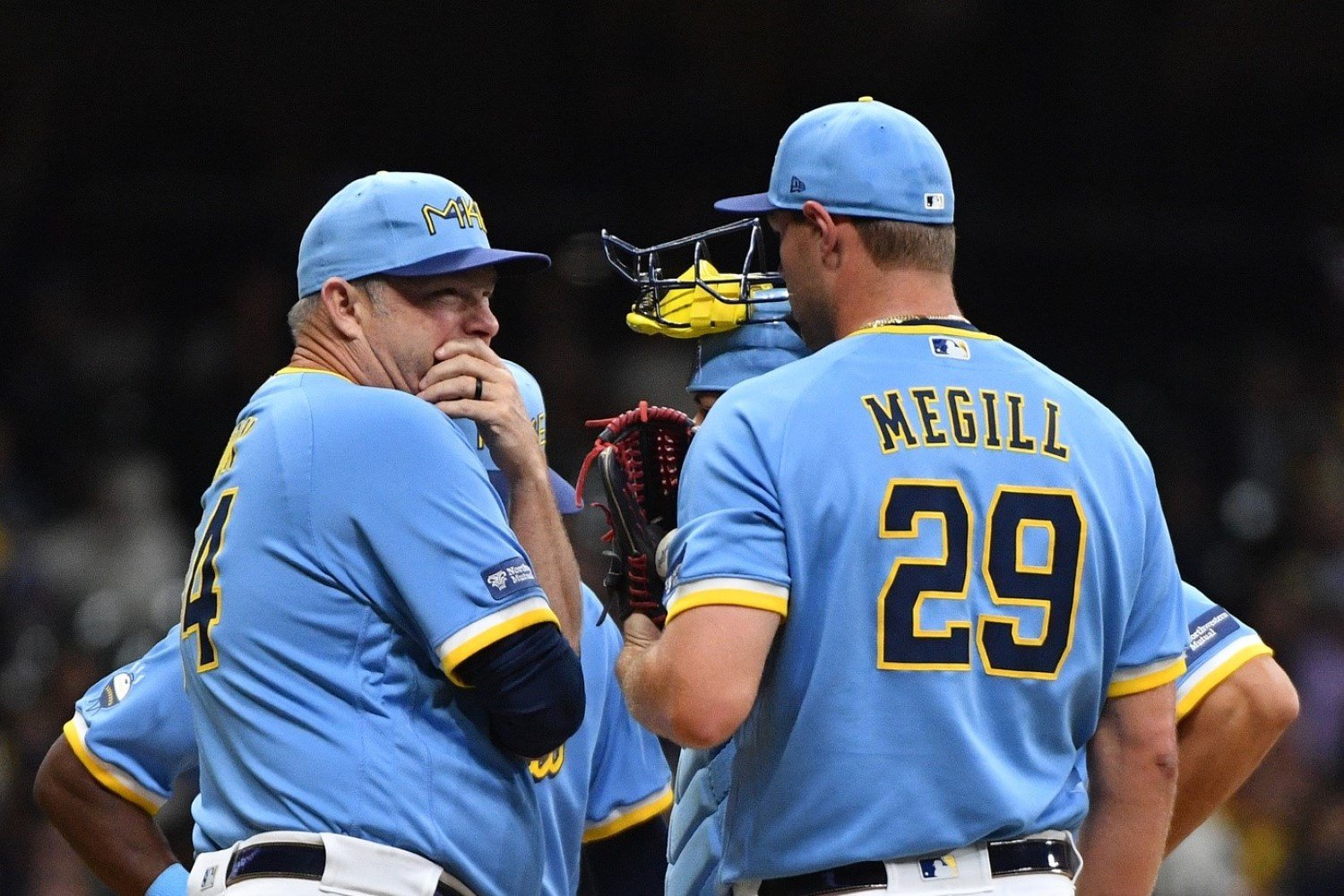 The Brewers already announced some changes to their coaching staff last week, but perhaps the most prominent development in that department occurred on Tuesday, when Chris Hook signed a new multi-year deal to remain the team’s pitching coach. The 56-year-old Hook will return for his 18th season with the organization and seventh as big-league pitching coach. Since his promotion to the role ahead of the 2019 season, the Brewers rank fourth in baseball in league-adjusted ERA and sixth in RA9-WAR. Hook, who said both parties articulated interest in prolonging their partnership toward the end of the regular season, is the public face of Milwaukee’s pitching development system, but he’s far from the only impactful figure fueling that well-oiled machine. He cited his comfort and productive working relationship with Brewers executives, analysts, trainers, and fellow coaches as the source of his desire to stay put in lieu of free agency. “The group that I have that I work with, from the training staff to the strength staff to the front office, the systems are in place,” he said. “The work between our groups is very, very fluid. That happens very easy. “Matt [Arnold] and his group are going to find the right guys to make it work for us. I think that is the driving force in my coming back.” Hook rightfully apportioned the credit to others throughout the organization, but his fingerprints are all over the Brewers’ sustained success at preventing runs. His keen eye for potential adjustments to a pitcher’s mechanics, pitch mix, and mentality stand out. Even when he isn’t the source of such observations, he’s the guiding figure communicating those tweaks to pitchers with concise, digestible, and impactful messaging. The road from player acquisition to success on the mound runs through him. The common theme across Milwaukee’s many pitching success stories is Hook repeatedly helping hurlers maximize deception. He’s preached the importance of mixing fastball variations to compensate for uninspiring velocity and shapes. He helped Colin Rea adopt mechanical and pitch mix tweaks that fueled one of the best stretches of his career. He pushed Aaron Civale to reintroduce his shorter slider to bridge the gap between his cutter and bigger breaking balls. Three outings into Tobias Myers’s big-league career, Hook identified cues to generate more consistent velocity on his riding fastball. Pat Murphy credited Hook throughout the season, specifically pointing out his work with the starting pitchers. That’s where his influence shined most in 2024, as the Brewers successfully assembled nearly an entire rotation on the fly after a litany of injuries early in the season. “I think we know that we’re always going to have challenges every year in some form or fashion,” Hook said. “It’s, ‘What are we going to do? What’s our next step? Who’s the next man up? How are we going to make this guy better? How is he going to fill the need that we have?’” Depending on how many of their additional pitching-focused coaches they can retain, the Brewers likely could have survived in the long run had Hook changed scenery. They employ plenty of bright minds throughout the organization and have already survived several key departures by diligently preparing internal replacements. It could be a rocky transition in the short-term, though, to a new face with less experience and familiarity with the big-league staff. By re-upping with Hook, the club avoided that potential speed bump for at least a few more years. The many moving parts throughout the organization on the pitching side would not come together so neatly without his leadership. So long as he’s in Milwaukee, one of baseball’s best pitching development systems remains highly likely to continue chugging along.
- 1 comment
-
- 2
-
-
-
- chris hook
- colin rea
- (and 2 more)
-
Despite an encouraging finish to his season, DL Hall's signature pitch remained a far cry from the offering many projected it to be. That reality has significant implications for his future in Milwaukee. Image courtesy of © Allan Henry-Imagn Images Despite an encouraging finish to his season, DL Hall's signature pitch remained a far cry from the offering many projected it to be. That reality has significant implications for his future in Milwaukee. After a difficult start to his Brewers career (consisting of a 7.71 ERA in four injury-marred starts and a three-month rehab filled with speed bumps), DL Hall ended his season on a positive note. In 26 2/3 innings after returning to the big leagues in August, Hall pitched to a 3.38 ERA, 3.28 FIP, and 27.4% strikeout rate. It was undeniably a step in the right direction. So, too, was Hall’s average fastball velocity jumping from 92.3 mph before his lengthy IL stint to 94.3 mph after his return. That was still a few ticks shy of the upper 90s he consistently flashed as a full-time reliever for the Baltimore Orioles, but it’s where one would expect to see him sit in a bulk role. However, despite the velocity nudge, Hall’s fastball remained uninspiring in most aspects. It’s concerning, because the heater was billed as his signature pitch when the Brewers acquired him as part of the trade package for Corbin Burnes. In parts of two big-league seasons before the trade, Hall’s fastball induced whiffs on 28% of opponents' swings. In 2023, FanGraphs tagged it with a 70 grade on the 20-80 scouting scale. At no point during his inaugural season in Milwaukee—before, during, or after injury—did Hall’s fastball resemble a 70-grade pitch. While it avoided barrels down the stretch, it hardly overpowered opponents. Despite the increased velocity, its whiff rate barely improved and remained well below the league average of 22% for four-seamers. The fastball’s appearance to hitters was still unremarkable. It gained 1.5 inches of induced vertical break but remained short of its average with Hall’s previous team. As such, his vertical approach angle (a measure of the steepness at which a pitch crosses the plate) remained higher and matched that of the league-average four-seamer. Pitch modeling metrics continued to view it as a suboptimal fastball. Split Stuff+ Velo Perceived Velo IVB VAA Exit Velo Hard Hit% wOBA xwOBA Whiff% 2022-2023 117 95.8 97.0 15.8 -4.23 81.7 13.9% .294 .280 28.0% 2024 (pre-IL) 55 92.3 93.2 13.2 -4.92 87.0 43.6% .485 .434 10.5% 2024 (post-IL) 86 94.3 95.3 14.8 -4.67 82.4 33.3% .408 .340 14.1% At its best, a combination of factors—velocity, spin-induced carry, a deceptive delivery, and keeping the ball at the top of the zone—made Hall’s fastball challenging for hitters to reach, producing whiffs and pop-ups. In 2024, he never captured the right mix of variables to recreate anything close to the fastball that enticed the Brewers nine months ago. Instead, it was a flat fastball against which hitters could easily make productive contact. If those numbers and jargon sound like a mouthful, here’s the concise version: Hall’s fastball was terrible in his first four starts and mediocre down the stretch. It was never close to a 70-grade pitch. Instead, it exhibited many traits of a very hittable fastball. An entire offseason to work with Milwaukee’s pitching development staff could prove transformational for Hall, who joined the organization just two weeks before pitchers and catchers reported for spring training in February. Perhaps some mechanical tweaks to his lower half and release, along with continued recovery from the MCL damage in his left knee, will restore more of the life and deception his heater once boasted. If not, the Brewers may have to concede that Hall is not the pitcher they thought they were getting. If his fastball remains below average in a bulk role, it lowers his ceiling and impacts what role he’ll fill moving forward. If Hall’s fastball only assumes its effective form in short spurts, the Brewers may convert him to a full-time relief role. He's been effective in that capacity before and still presents high-leverage upside. There remains a path for him to be a useful starting pitcher, though. It’s just different and less exciting than the original road map. In its current incarnation, Hall’s fastball is the weak link in his arsenal as a starter. Instead of building his game around it as initially expected, he must do the opposite, fashioning his approach to mitigate its limitations. That means relying heavily on his secondary pitches. Hall’s curveball, slider, and changeup all graded well in 2024 and combined to hold opponents to a .260 wOBA and 33.7% whiff rate, while accounting for 33 of his 44 strikeouts. Under this framework, Hall would mix and match with a full arsenal to protect his four-seamer, a strategy the Brewers have successfully enacted for innings-eaters like Colin Rea, Aaron Civale, and Bryse Wilson. Hall used such an approach in several of his games down the stretch. In four bulk appearances after his return (three traditional starts and a four-inning relief outing), 60% of his pitches were non-fastballs. He was largely effective in those games, posting a 2.89 ERA, 3.07 FIP, and 30.4% strikeout rate. It was a stark contrast from his first four starts, in which he used his fastball about 50% of the time. The soft- and spin-heavy approach would carry limitations. Hall’s slider and changeup profile best as chase pitches off the plate, and he threw both pitches in the zone less than 40% of the time in 2024. That leaves his curveball as his remaining “land for a strike” pitch to get ahead in counts, and too many curveballs left over the plate can spell disaster. Protecting the four-seamer may require Hall to develop another fastball variant (a cutter or a two-seamer) he can use within the strike zone to set up breaking balls in two-strike counts. Either way, Hall lacks top-of-the-rotation upside if he does not have a good enough fastball to use aggressively against most opponents. Instead, he’d be an unexciting back-end bulk arm, like Rea, Civale, and Wilson. Recent Milwaukee staffs have showcased how valuable such pitchers can be, but the Brewers were likely hoping for much more when they scouted and acquired Hall. Matt Arnold said two weeks ago that the club has not decided on Hall’s role for 2025. The best choice is probably to have him prepare as a starter over the offseason and through spring training. If his fastball does not make strides during that time, the organization will find itself at a crossroads with a once-promising left-hander whom they originally slotted behind Freddy Peralta in last year’s rotation. View full article
-
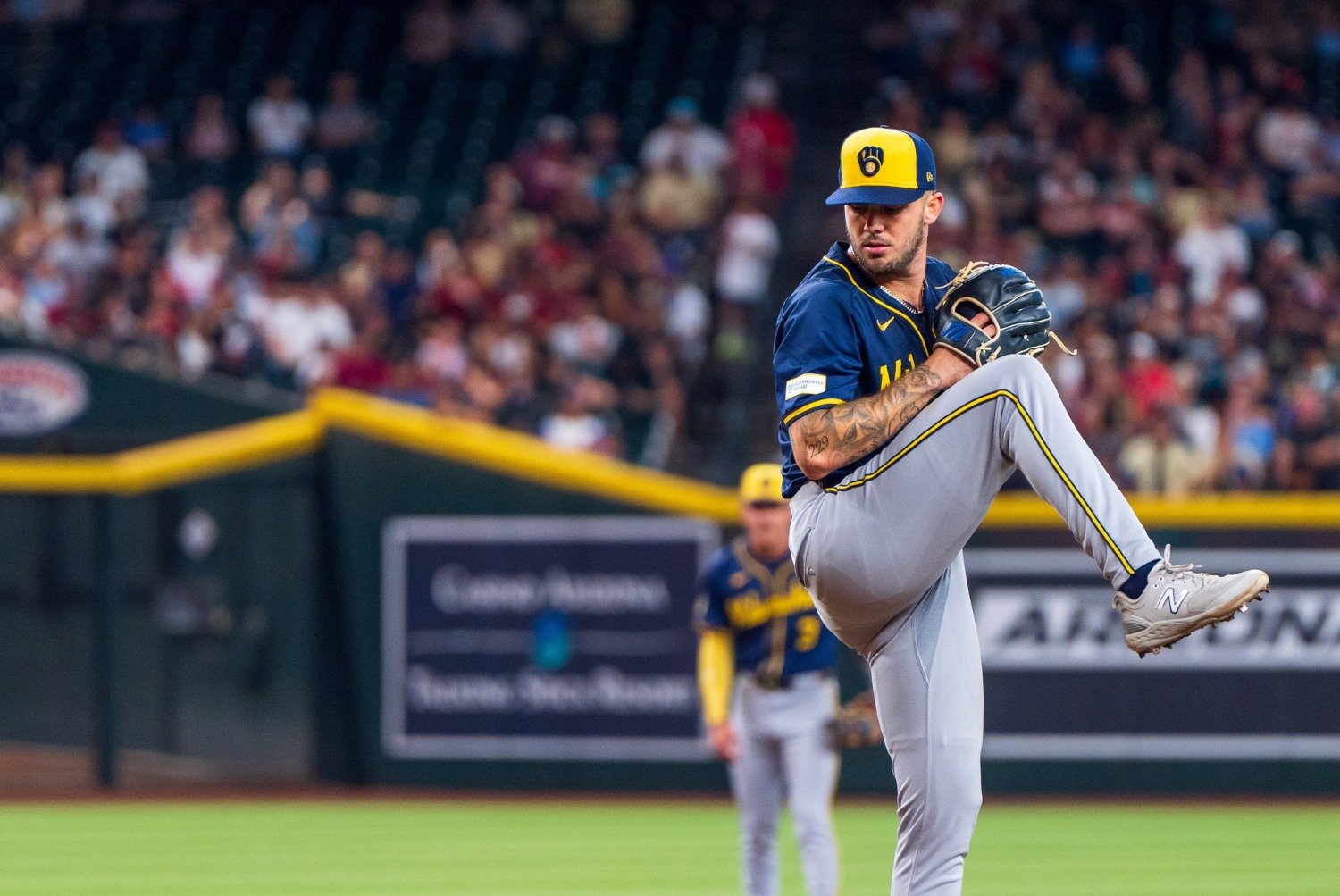 After a difficult start to his Brewers career (consisting of a 7.71 ERA in four injury-marred starts and a three-month rehab filled with speed bumps), DL Hall ended his season on a positive note. In 26 2/3 innings after returning to the big leagues in August, Hall pitched to a 3.38 ERA, 3.28 FIP, and 27.4% strikeout rate. It was undeniably a step in the right direction. So, too, was Hall’s average fastball velocity jumping from 92.3 mph before his lengthy IL stint to 94.3 mph after his return. That was still a few ticks shy of the upper 90s he consistently flashed as a full-time reliever for the Baltimore Orioles, but it’s where one would expect to see him sit in a bulk role. However, despite the velocity nudge, Hall’s fastball remained uninspiring in most aspects. It’s concerning, because the heater was billed as his signature pitch when the Brewers acquired him as part of the trade package for Corbin Burnes. In parts of two big-league seasons before the trade, Hall’s fastball induced whiffs on 28% of opponents' swings. In 2023, FanGraphs tagged it with a 70 grade on the 20-80 scouting scale. At no point during his inaugural season in Milwaukee—before, during, or after injury—did Hall’s fastball resemble a 70-grade pitch. While it avoided barrels down the stretch, it hardly overpowered opponents. Despite the increased velocity, its whiff rate barely improved and remained well below the league average of 22% for four-seamers. The fastball’s appearance to hitters was still unremarkable. It gained 1.5 inches of induced vertical break but remained short of its average with Hall’s previous team. As such, his vertical approach angle (a measure of the steepness at which a pitch crosses the plate) remained higher and matched that of the league-average four-seamer. Pitch modeling metrics continued to view it as a suboptimal fastball. Split Stuff+ Velo Perceived Velo IVB VAA Exit Velo Hard Hit% wOBA xwOBA Whiff% 2022-2023 117 95.8 97.0 15.8 -4.23 81.7 13.9% .294 .280 28.0% 2024 (pre-IL) 55 92.3 93.2 13.2 -4.92 87.0 43.6% .485 .434 10.5% 2024 (post-IL) 86 94.3 95.3 14.8 -4.67 82.4 33.3% .408 .340 14.1% At its best, a combination of factors—velocity, spin-induced carry, a deceptive delivery, and keeping the ball at the top of the zone—made Hall’s fastball challenging for hitters to reach, producing whiffs and pop-ups. In 2024, he never captured the right mix of variables to recreate anything close to the fastball that enticed the Brewers nine months ago. Instead, it was a flat fastball against which hitters could easily make productive contact. If those numbers and jargon sound like a mouthful, here’s the concise version: Hall’s fastball was terrible in his first four starts and mediocre down the stretch. It was never close to a 70-grade pitch. Instead, it exhibited many traits of a very hittable fastball. An entire offseason to work with Milwaukee’s pitching development staff could prove transformational for Hall, who joined the organization just two weeks before pitchers and catchers reported for spring training in February. Perhaps some mechanical tweaks to his lower half and release, along with continued recovery from the MCL damage in his left knee, will restore more of the life and deception his heater once boasted. If not, the Brewers may have to concede that Hall is not the pitcher they thought they were getting. If his fastball remains below average in a bulk role, it lowers his ceiling and impacts what role he’ll fill moving forward. If Hall’s fastball only assumes its effective form in short spurts, the Brewers may convert him to a full-time relief role. He's been effective in that capacity before and still presents high-leverage upside. There remains a path for him to be a useful starting pitcher, though. It’s just different and less exciting than the original road map. In its current incarnation, Hall’s fastball is the weak link in his arsenal as a starter. Instead of building his game around it as initially expected, he must do the opposite, fashioning his approach to mitigate its limitations. That means relying heavily on his secondary pitches. Hall’s curveball, slider, and changeup all graded well in 2024 and combined to hold opponents to a .260 wOBA and 33.7% whiff rate, while accounting for 33 of his 44 strikeouts. Under this framework, Hall would mix and match with a full arsenal to protect his four-seamer, a strategy the Brewers have successfully enacted for innings-eaters like Colin Rea, Aaron Civale, and Bryse Wilson. Hall used such an approach in several of his games down the stretch. In four bulk appearances after his return (three traditional starts and a four-inning relief outing), 60% of his pitches were non-fastballs. He was largely effective in those games, posting a 2.89 ERA, 3.07 FIP, and 30.4% strikeout rate. It was a stark contrast from his first four starts, in which he used his fastball about 50% of the time. The soft- and spin-heavy approach would carry limitations. Hall’s slider and changeup profile best as chase pitches off the plate, and he threw both pitches in the zone less than 40% of the time in 2024. That leaves his curveball as his remaining “land for a strike” pitch to get ahead in counts, and too many curveballs left over the plate can spell disaster. Protecting the four-seamer may require Hall to develop another fastball variant (a cutter or a two-seamer) he can use within the strike zone to set up breaking balls in two-strike counts. Either way, Hall lacks top-of-the-rotation upside if he does not have a good enough fastball to use aggressively against most opponents. Instead, he’d be an unexciting back-end bulk arm, like Rea, Civale, and Wilson. Recent Milwaukee staffs have showcased how valuable such pitchers can be, but the Brewers were likely hoping for much more when they scouted and acquired Hall. Matt Arnold said two weeks ago that the club has not decided on Hall’s role for 2025. The best choice is probably to have him prepare as a starter over the offseason and through spring training. If his fastball does not make strides during that time, the organization will find itself at a crossroads with a once-promising left-hander whom they originally slotted behind Freddy Peralta in last year’s rotation.
 -
The Brewers' second baseman made strides at the plate in 2024—enough to establish himself as one of the best at the position. Yet, a challenging second half was a reminder to keep expectations around his bat tempered. Image courtesy of © Mark Hoffman/USA Today Network via Imagn Images The Brewers' second baseman made strides at the plate in 2024—enough to establish himself as one of the best at the position. Yet, a challenging second half was a reminder to keep expectations around his bat tempered. When Pat Murphy declared in spring training that he expected Brice Turang to take a “quantum leap” in his sophomore season, the prediction was followed by instructions for the assembled media in his office. “If he doesn’t, I want you to say, ‘Murph, you said he’s going to make a quantum leap. What the hell?’ I’ll say I was wrong because I don’t mind saying that. But I believe in this kid in a huge way.” Murphy’s words looked prophetic, on the surface, for most of the season’s first half. Through Jul. 4, Turang hit .291/.352/.415 in his 341 plate appearances, good for a 115 wRC+. His bat then cratered the rest of the way, with a .209/.272/.269 line and 53 wRC+ that resembled his anemic rookie campaign. Turang finished his second big-league season as a well-below-average hitter, slashing .254/.316/.349 for an 87 wRC+. Despite the disappointing finish, that was still a massive improvement over the previous year’s 61 wRC+. It afforded Turang’s true strengths as a player the runway to shine. His bat was capable enough to keep him in the field for more than 1,200 innings at second base, where he led baseball with 22 Defensive Runs Saved. With an improved on-base percentage, he stole 50 bases and finished sixth in baserunning runs above average (7.2), according to FanGraphs. According to Baseball-Reference’s version of the metric, which uses DRS for its defensive valuation, Turang accrued 4.6 wins above replacement. That trailed only William Contreras among Brewers position players, and only Ketel Marte among qualified second basemen. It also ranked 26th among all players, regardless of position. To revisit Murphy’s prediction, gaining 80 points of OPS and becoming one of the best second basemen in the sport could reasonably be defined as a quantum leap. Still, the Jekyll-and-Hyde nature of Turang’s two half-seasons calls into question how much he truly grew as a hitter and whether he has more room to develop. The starting point is reviewing the discernible changes to Turang’s stance, swing, and approach from 2023 to 2024. He switched bats, simplified his pre-pitch load, and made his swing one of the shortest in baseball. Everything was geared toward reducing strikeouts and harmless flyouts, with Turang hitting more line drives and ground balls to reach base more frequently. That’s the best approach for Turang, who still has a wiry build after adding 20 pounds of muscle last winter and is unlikely to succeed in attempts to hit for power. However, it also comes with limitations. Turang was pushing those limits with his early-season output, and regression outside his control wears significant responsibility for his second-half downturn. Date wOBA xwOBA BABIP Exit Velo LA Hard Hit Chase% Contact% Thru 7/4 .335 .298 .339 86.2 4.3 32.7% 24.7% 87.2% From 7/5 .243 .278 .254 83.6 3.6 26.1% 31.2% 85.2% Expected wOBA is derived from expected outcomes, based on a player’s quality and quantity of contact, among other variables. It’s neither predictive nor a perfect metric for evaluating a player’s deserved results, but it often provides a more useful snapshot than box score outcomes. Turang outperformed his xwOBA by 37 points through Jul. 4 and underperformed it by 35 points the rest of the way. His wOBA fell by 92 points, but his xwOBA only declined by 20 points. That’s still a noticeable drop, but it would not be nearly as magnified by the average viewer throughout a 162-game season. Based mainly on the kind of batted balls he was hitting, Turang was experiencing plenty of favorable luck throughout the season’s first three months. His performance worsened as the year went along, but much of the shift was due to his luck flipping—to the point that it evened out by season’s end. He ended the year with a .294 wOBA that nearly matched his .289 xwOBA. Compounding the reversed luck were worse swings. Turang has never been one to hit the ball hard often, and his quality of contact fell even further down the stretch. His swing decisions flipped from strong to poor. Date wOBA xwOBA Exit Velo Contact% Chase% Thru 7/4 .306 .264 87.2 83.9% 19.3% From 7/5 .216 .231 83.4 79.3% 32.9% A complete collapse against breaking pitches was the main culprit. Turang made remarkable strides against fastballs this year, slashing his whiff rate nearly in half from 2023 to 2024 while improving from a .283 to a .330 xwOBA. It seemed, on the surface, that he had acclimated to breaking pitches in the early months of the year, but a .264 xwOBA pointed to it being a mirage. It also helped that he saw plenty of breakers over the middle of the plate, which yielded much of his early damage. Neither the mistake pitches nor the damage lasted. From Jul. 5 onward, right-handed pitchers attacked Turang with more spin to better locations, and with more elevated fastballs on the inner third of the plate. The results were ugly. Over the season’s final three months, Turang often flailed at spin regardless of location, and while his compact bat path usually meant he still made contact, it was rarely productive. He became particularly vulnerable to inside breakers from right-handers and outside ones from left-handers. Perhaps trying to protect against more velocity at the top of the zone made it more difficult for Turang to cover the breaking ball. Perhaps he was worn down a bit by the grind. Whatever the cause, it became one of the catalysts behind his dropoff. Turang made some mechanical adjustments in the season’s final weeks. Starting on Sept. 12, he lowered his hands to hold his bat more upright and stood a little less crouched in the box. Those tweaks did not produce noticeable results in a small sample, but they make Turang’s setup something to watch when he reports to spring training in 2025. Turang nearly tripled his WAR from 2023 to 2024. By that measure, he took a quantum leap. His development at the plate, mainly consisting of an altered approach that helped him hold his own against fastballs, was closer to a lunge, albeit in the right direction. Turang still struggles mightily with anything soft and does not drive the ball often, leaving him well shy of being a reliably league-average bat. His final slash line is a solid indicator of his standing as a hitter and where he’s most likely to settle offensively as his career progresses. The good news remains that an OPS within the .660 to .680 range is all Turang needs to be a key cog in Milwaukee’s young core. As someone who brings elite contributions in the field and on the bases, the floor of his overall value is high. The total package is a player who can be a quality second baseman for years to come. It’s just best to keep expectations tempered toward the bat. View full article


.png.f09bfde215469869ea3b36c550e9a804.png)
.png.76f8309f5b5d9e7e82f70a118c5a243b.png)
