



Matt Breen
-
Posts
9,112 -
Joined
-
Last visited
-
Days Won
1
Content Type
Profiles
Forums
Blogs
Events
News
2026 Milwaukee Brewers Top Prospects Ranking
Milwaukee Brewers Videos
2022 Milwaukee Brewers Draft Picks
Milwaukee Brewers Free Agent & Trade Rumors, Notes, & Tidbits
Guides & Resources
2023 Milwaukee Brewers Draft Picks
2024 Milwaukee Brewers Draft Picks
The Milwaukee Brewers Players Project
2025 Milwaukee Brewers Draft Pick Tracker
2026 Milwaukee Brewers Draft Tracker: Picks & Bonuses
Store
Downloads
Gallery
Everything posted by Matt Breen
-
 Back in the day, people had all sorts of stories about Gorman. He'd stop by people tailgating after the game - eat food and drink beers. I ran into one guy who told me about meeting him in the lot after the game, and inviting him to a house party. He showed up. People just loved him.
 -
Back in the day, people had all sorts of stories about Gorman. He'd stop by people tailgating after the game - eat food and drink beers. I ran into one guy who told me about meeting him in the lot after the game, and inviting him to a house party. He showed up. People just loved him.
-
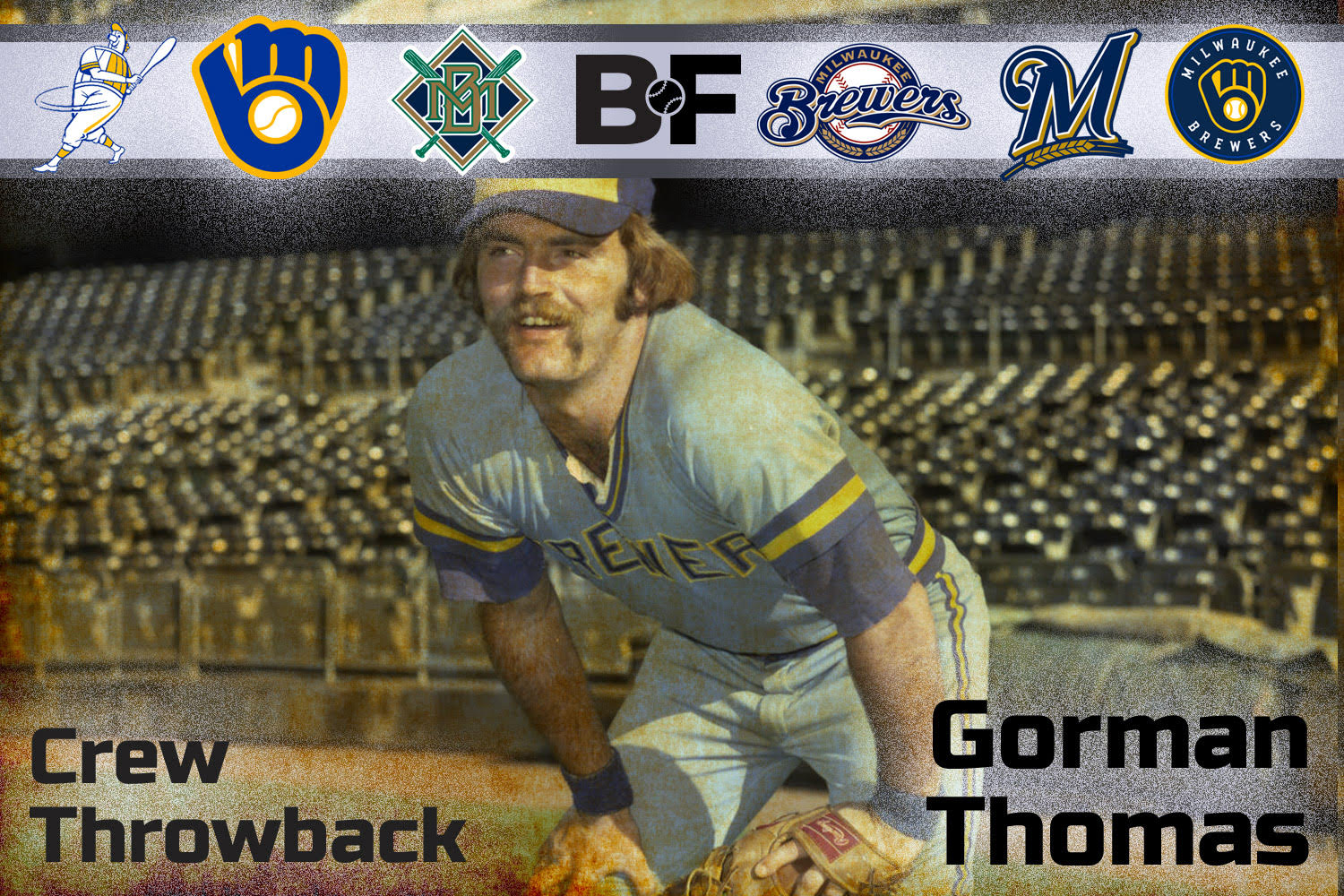 Gorman Thomas was born in 1950 in South Carolina. He was drafted in the first round (21st overall) of the 1969 draft - the first pick of the fledgling Pilots/Brewer franchise. A shortstop in high school, Thomas quickly emerged as a low average, high power, high strikeout player. After shifting between shortstop and third base for a couple of years, Thomas settled in as a center fielder, where he showed a strong arm and good range. Thomas reached Milwaukee in 1973, but struggled in limited action. Then, in 1974 he hammered 51 HR at AAA, netting him a position on the 1975 squad. Unfortunately, Thomas played poorly, hitting under .200 the next two seasons as a part time player. At age 26, he found himself back at AAA. He performed well, hitting .322 with 36 HR, but was traded to Texas shortly after the season. At age 27, Thomas could have easily ended up a AAAA type player, but luckily for him, Milwaukee decided they wanted to have him back. In February of 1978, the Brewers bought Thomas back from the Rangers. He seized the opportunity, not only making the club, but working himself into the regular lineup. In 137 games, he slugged 32 home runs, and became a cornerstone of 'Bambie's Bombers' - the powerful lineup trotted out by new manager Geroge Bamburger. Brewer coach Frank Howard gave Thomas the nickname of Stormin' Gorman. Over the next five years Thomas hit 175 HR, leading the league twice. (He also led the league in strikeouts twice as well.) He drove in over a 100 runs three times during those years. His batter average floated in the .240-250 range, but the power and plus defense made him an indispensable part of the late 70s/early 80s Brewer teams. In 1983, the 32-year-old Thomas struggled out of the gate, hitting only .182 in 46 games. Injuries and age had taken a toll on Thomas, not to mention his hard living. Seeking to shake up the club, the Brewers dealt Thomas to Cleveland for outfielder Rick Manning . Thomas was crushed by the trade. He had developed folk legend status in Milwaukee, and the deal had ended his fairy tale ride. The Indians dealt Thomas after the season to Seattle, where he floundered before succumbing to rotator cuff surgery. Thomas had one last good year in 1985, hitting 32 HR as DH for the Mariners and winning the AL Comeback Player of the Year Award. But the success was short lived. He struggled the next season, and in a (mostly) PR move, the Brewers reacquired the aging slugger. He played 44 games for the Crew, hitting a tepid .179 with a paltry 6 HR. Milwaukee released the 35 year old Thomas after the season, and his career was over. Thomas spent parts of 11 seasons with Milwaukee (although only five as a full time starter). He averaged about 4.0 WAR from 1978-82, participate in an all star game (1981) and the 1982 World Series. He hit 208 HR, drove in 605 runs, walked 501 times, struck out 1033 times, and hit .230. He was three true outcomes before three true outcomes existed. But Gorman Thomas' influence was never measured in just numbers. For Brewer fans, he was a folk hero, and he has essentially fashioned a second career around this status. He was the quintessential Brewer. He played hard and he partied hard. Fans celebrated his larger than life persona - and Gorman was happy to live it up with them. He was known for stopping by tailgates after games and drinking beers with fans. Along with teammate Pete Vukovich, Thomas opened a bar near the stadium called Stormin' and Vukes'. Over the years, Thomas has remained in the Brewer family working in a variety of capacities, including helping out at spring training, participating in fantasy camps, and doing personal appearances. He also lent his name to Gorman's Grill at Miller Park. He still resides in the Milwaukee area, hunting, fishing and golfing in his retirement. Thomas was inducted into both the South Carolina and Wisconsin Athletic Halls of Fame as well as the Brewers Wall of Fame. Please share your memories of former Milwaukee Brewer Gorman Thomas.
 -
Gorman Thomas. He was scruffy and disheveled. He looked like he had had a few too many beers and eaten a few too many cheeseburgers. On any given night you could count on him running into a wall, striking out, or hitting a home run. It was the glory years of Brewer baseball, and Thomas became one of the most beloved players in franchise history. Gorman Thomas was born in 1950 in South Carolina. He was drafted in the first round (21st overall) of the 1969 draft - the first pick of the fledgling Pilots/Brewer franchise. A shortstop in high school, Thomas quickly emerged as a low average, high power, high strikeout player. After shifting between shortstop and third base for a couple of years, Thomas settled in as a center fielder, where he showed a strong arm and good range. Thomas reached Milwaukee in 1973, but struggled in limited action. Then, in 1974 he hammered 51 HR at AAA, netting him a position on the 1975 squad. Unfortunately, Thomas played poorly, hitting under .200 the next two seasons as a part time player. At age 26, he found himself back at AAA. He performed well, hitting .322 with 36 HR, but was traded to Texas shortly after the season. At age 27, Thomas could have easily ended up a AAAA type player, but luckily for him, Milwaukee decided they wanted to have him back. In February of 1978, the Brewers bought Thomas back from the Rangers. He seized the opportunity, not only making the club, but working himself into the regular lineup. In 137 games, he slugged 32 home runs, and became a cornerstone of 'Bambie's Bombers' - the powerful lineup trotted out by new manager Geroge Bamburger. Brewer coach Frank Howard gave Thomas the nickname of Stormin' Gorman. Over the next five years Thomas hit 175 HR, leading the league twice. (He also led the league in strikeouts twice as well.) He drove in over a 100 runs three times during those years. His batter average floated in the .240-250 range, but the power and plus defense made him an indispensable part of the late 70s/early 80s Brewer teams. In 1983, the 32-year-old Thomas struggled out of the gate, hitting only .182 in 46 games. Injuries and age had taken a toll on Thomas, not to mention his hard living. Seeking to shake up the club, the Brewers dealt Thomas to Cleveland for outfielder Rick Manning . Thomas was crushed by the trade. He had developed folk legend status in Milwaukee, and the deal had ended his fairy tale ride. The Indians dealt Thomas after the season to Seattle, where he floundered before succumbing to rotator cuff surgery. Thomas had one last good year in 1985, hitting 32 HR as DH for the Mariners and winning the AL Comeback Player of the Year Award. But the success was short lived. He struggled the next season, and in a (mostly) PR move, the Brewers reacquired the aging slugger. He played 44 games for the Crew, hitting a tepid .179 with a paltry 6 HR. Milwaukee released the 35 year old Thomas after the season, and his career was over. Thomas spent parts of 11 seasons with Milwaukee (although only five as a full time starter). He averaged about 4.0 WAR from 1978-82, participate in an all star game (1981) and the 1982 World Series. He hit 208 HR, drove in 605 runs, walked 501 times, struck out 1033 times, and hit .230. He was three true outcomes before three true outcomes existed. But Gorman Thomas' influence was never measured in just numbers. For Brewer fans, he was a folk hero, and he has essentially fashioned a second career around this status. He was the quintessential Brewer. He played hard and he partied hard. Fans celebrated his larger than life persona - and Gorman was happy to live it up with them. He was known for stopping by tailgates after games and drinking beers with fans. Along with teammate Pete Vukovich, Thomas opened a bar near the stadium called Stormin' and Vukes'. Over the years, Thomas has remained in the Brewer family working in a variety of capacities, including helping out at spring training, participating in fantasy camps, and doing personal appearances. He also lent his name to Gorman's Grill at Miller Park. He still resides in the Milwaukee area, hunting, fishing and golfing in his retirement. Thomas was inducted into both the South Carolina and Wisconsin Athletic Halls of Fame as well as the Brewers Wall of Fame. Please share your memories of former Milwaukee Brewer Gorman Thomas. View full article
-
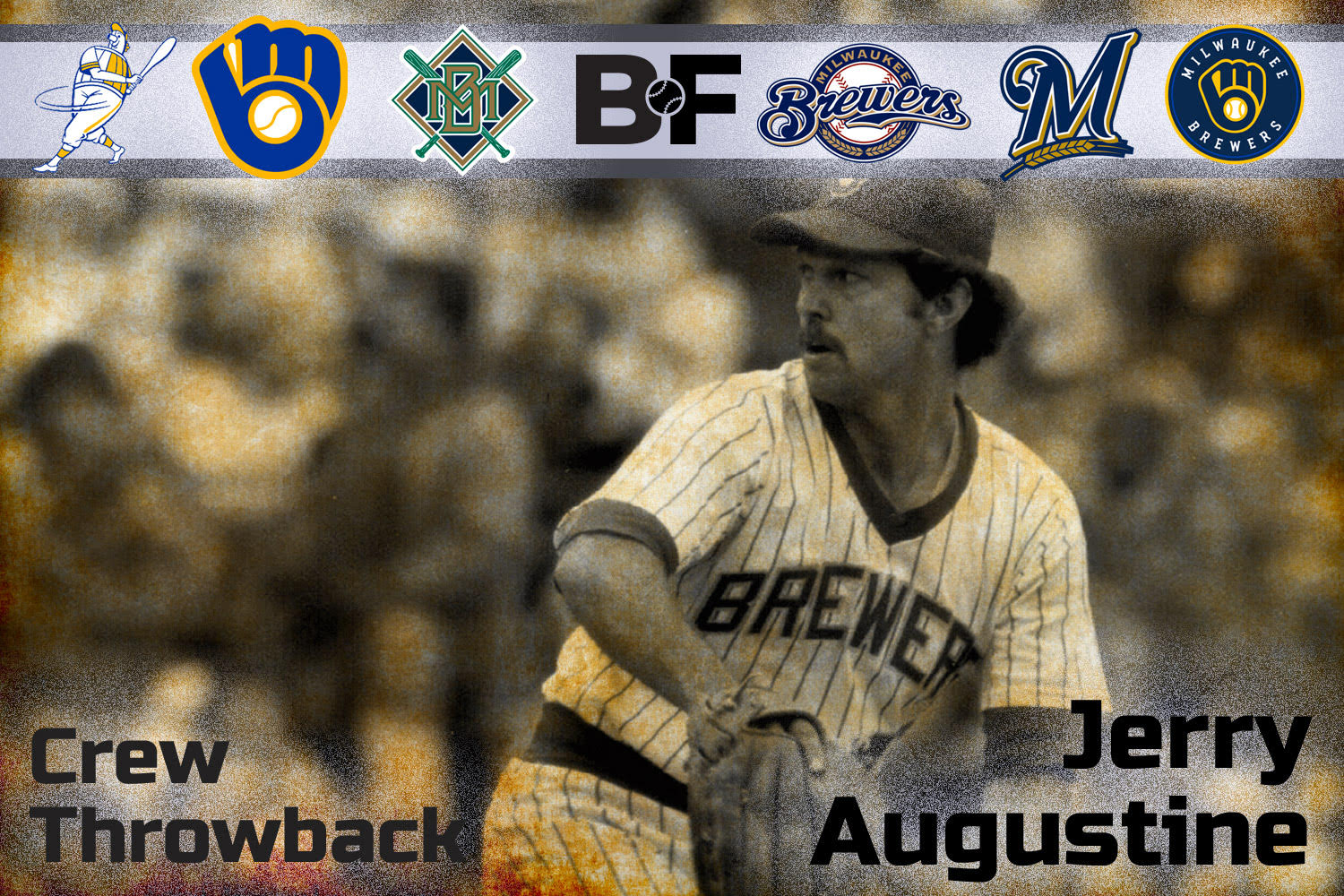 Gerald Lee "Jerry" Augustine was born in 1952 in Kewaunee, Wisconsin. He grew up in Kewaunee as well, and stayed in state for college, heading to UW-La Crosse. The Brewers drafted Augie in the 15th round of the 1974 draft. He spent only 28 games in the minors before being brought up to the Big Leagues in 1975, becoming a fixture on the Brewers staff, first as a starter, then as a reliever, until 1984. Augustine had a promising rookie campaign in '76, making the all-rookie team when he posted a 3.30 ERA and produced a 2.8 bWAR. But that was Augie's high water mark. He spent a couple of more years as a starter, throwing a career high 209 innings in 1977 (while losing 18 games), but ultimately prove himself to be a remarkably average pitcher. He simply gave up too many hits, walked too many guys, and didn't strike enough batters. As the Crew improved in the late 70s, Augustine was shifted to the bullpen, having a nice year in 1979 (1.4 bWAR). But subsequent campaigns saw Augie's numbers gradually decline, and after the 1984 season he was let go by Milwaukee. He bounced around in the minors for a couple of more seasons before finally retiring at age 33. Jerry Augustine was never a particularly good pitcher, going 55-59 and producing a 4.23 ERA over parts of 10 seasons. Being a left-handed pitcher undoubtedly extended Augustine's career, but he never really was a key element of the club. For his career, he walked almost as many batters (340) as he struck out (348). He accumulated 4.1 WAR during his playing days. But Augie's status in Brewer lore is not really measured by his numbers. He was a Wisconsin guy. He talked like a Wisconsin guy. He grew up in Wisconsin, went to college in Wisconsin, and spent his entire major league career in Wisconsin. After retiring, he opened up his own insurance agency in West Allis - Jerry Augustine Agency, Inc. He further cemented his ties to the state by coaching the UW-Milwaukee baseball team for 12 seasons before joining Fox Sports Wisconsin as an analyst - a position he holds to this day. Wisconsin-La Crosse inducted Augustine into its Wall of Fame in 1984, and the Brewers added him on their Wall of Honor in 2014. Please share your memories of former Milwaukee Brewer Jerry Augustine.
 -
"It's a break-a-ball." And with that, we turn the spotlight on former Brewer left-handed pitcher - and Wisconsin native - Jerry Augustine. Gerald Lee "Jerry" Augustine was born in 1952 in Kewaunee, Wisconsin. He grew up in Kewaunee as well, and stayed in state for college, heading to UW-La Crosse. The Brewers drafted Augie in the 15th round of the 1974 draft. He spent only 28 games in the minors before being brought up to the Big Leagues in 1975, becoming a fixture on the Brewers staff, first as a starter, then as a reliever, until 1984. Augustine had a promising rookie campaign in '76, making the all-rookie team when he posted a 3.30 ERA and produced a 2.8 bWAR. But that was Augie's high water mark. He spent a couple of more years as a starter, throwing a career high 209 innings in 1977 (while losing 18 games), but ultimately prove himself to be a remarkably average pitcher. He simply gave up too many hits, walked too many guys, and didn't strike enough batters. As the Crew improved in the late 70s, Augustine was shifted to the bullpen, having a nice year in 1979 (1.4 bWAR). But subsequent campaigns saw Augie's numbers gradually decline, and after the 1984 season he was let go by Milwaukee. He bounced around in the minors for a couple of more seasons before finally retiring at age 33. Jerry Augustine was never a particularly good pitcher, going 55-59 and producing a 4.23 ERA over parts of 10 seasons. Being a left-handed pitcher undoubtedly extended Augustine's career, but he never really was a key element of the club. For his career, he walked almost as many batters (340) as he struck out (348). He accumulated 4.1 WAR during his playing days. But Augie's status in Brewer lore is not really measured by his numbers. He was a Wisconsin guy. He talked like a Wisconsin guy. He grew up in Wisconsin, went to college in Wisconsin, and spent his entire major league career in Wisconsin. After retiring, he opened up his own insurance agency in West Allis - Jerry Augustine Agency, Inc. He further cemented his ties to the state by coaching the UW-Milwaukee baseball team for 12 seasons before joining Fox Sports Wisconsin as an analyst - a position he holds to this day. Wisconsin-La Crosse inducted Augustine into its Wall of Fame in 1984, and the Brewers added him on their Wall of Honor in 2014. Please share your memories of former Milwaukee Brewer Jerry Augustine. View full article
-
The 1990s were a wasteland for the Milwaukee Brewers franchise (thanks, Sal Bando). It began a run of 14 straight years without a winning record. But that doesn't mean all was lost. Fans would be teased by the occasional winning streak, and the flashes of greatness. One of the primary figures on the club during this time was slugging 1B John Jaha, a late bloomer who's successes were matched (if not equaled) by his injuries. John Jaha was born in Portland, Oregon, in 1966. He was a 14th round pick by the Crew out of high school in 1984. He split his time between third and first in the minors, but settled in at the latter position by the time he reached the majors. Early in his pro career, Jaha struggled to escape the lower rungs of the minors. He put up solid, but unspectacular numbers, in part because he missed significant time after injuring his Achilles, an injury that would bother him the rest of his career. However, after a big 1989 in A-ball, he was on a steady track to Milwaukee. The big first baseman displayed excellent all around hitting skills - hitting for average, power and taking a lot of walks. He put up massive numbers at AA-El Paso and at AAA-Denver (both notorious hitters havens), and in 1992 he got his first trip to Milwaukee. The next season, at age 27, he was club's starting first baseman. Jaha hit double digit HRs for the next five seasons, including 34 in 1996, and twice hit .300 or better. Unfortunately, he was hurt as often as he was healthy; he had nine stints on the DL during his major league career. He only made it into more than 88 games twice during his seven years with the Brewers. His 1996 season was his high water mark. In addition to 34 home runs, he drove in 118 runs, hit .300 and had an OPS of .941. But injuries and less-than-stellar conditioning took their toll on Jaha, and his time in Milwaukee ended following the 1998 season after he hit only 7 HRs and a mere .208. He was 32. Jaha signed with the Oakland A's the next season, and for one season, caught lightning in a bottle as he slugged 35 HRs and produced a .970 OPS while making the All-Star team. But Jaha's nemesis, injuries, would catch up to him. He was only in 35 games over the next two years. He retired after the 2001 season at age 35. In his seven years in Milwaukee, Jaha hit 105 HRs and produce an OPS of .824. He was a part of a some good hitting (but poor pitching) teams during his Brewer years, and produce some memorable moments during some bad seasons. Jaha was, ultimately, a disappointment for Milwaukee. While he had some nice (even excellent) seasons, his inability to stay healthy made him more of a tease than a star. In addition to the Achilles injury, he tore his groin, and had his shoulder surgically repaired. Another thing to mention are the steroid accusations against Jaha. He spent time with Oakland and played with admitted steroid users at the time (the Giambis). His out-of-the-blue all-star season in 1999 has made people speculate that he was a PED user. However, nothing has ever been brought forth more than accusations, and Jaha has never said anything on the subject. After retiring, Jaha moved back to his home state of Oregon, and remains involved in baseball by running a sports and recreation facility. His son played college baseball at Oregon. Jaha was added to the Brewer Wall of Honor in 2014, and he was inducted in the Oregon Sports Hall of Fame in 2020. Please share your memories of former Brewer slugger John Jaha. View full article
-
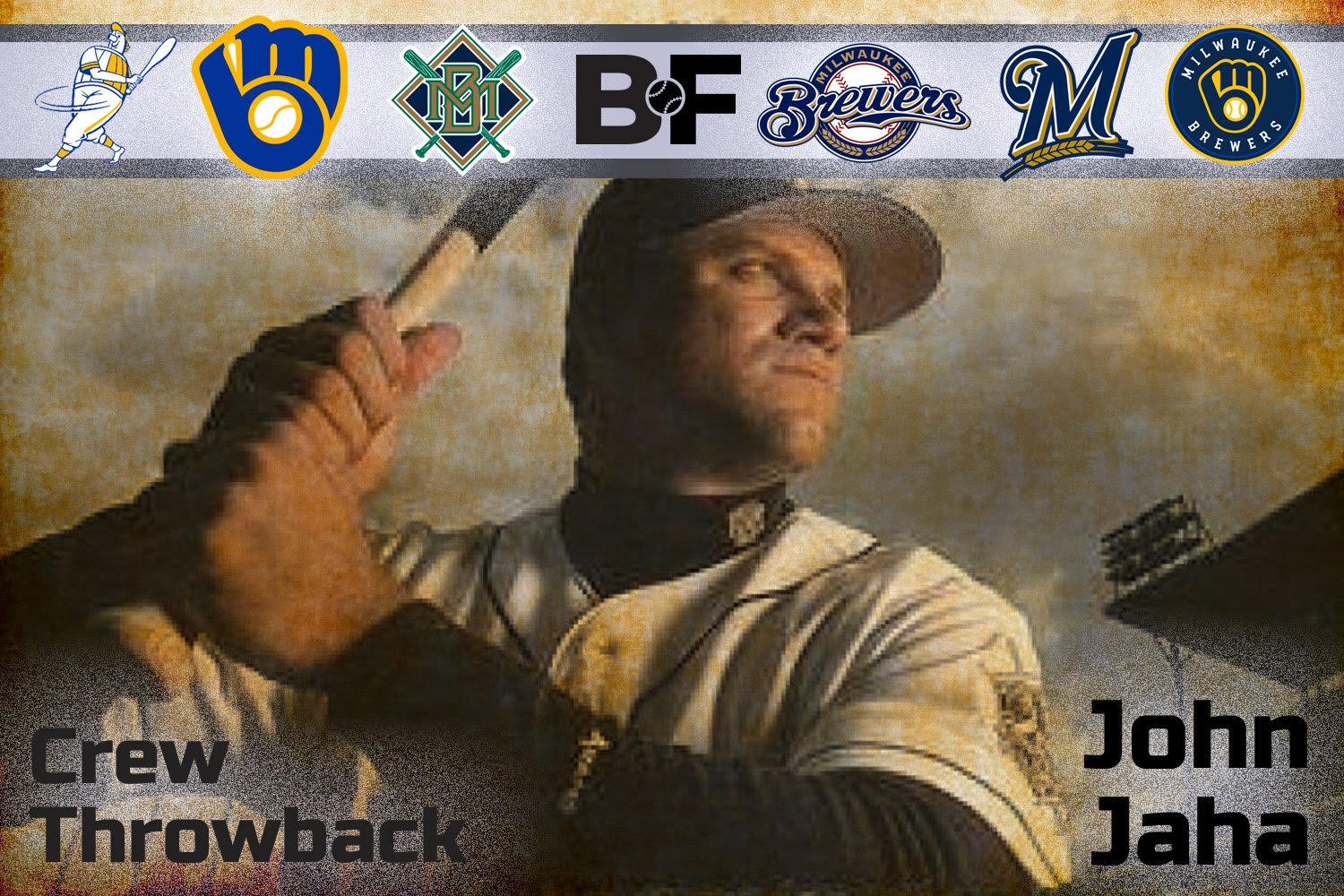 John Jaha was born in Portland, Oregon, in 1966. He was a 14th round pick by the Crew out of high school in 1984. He split his time between third and first in the minors, but settled in at the latter position by the time he reached the majors. Early in his pro career, Jaha struggled to escape the lower rungs of the minors. He put up solid, but unspectacular numbers, in part because he missed significant time after injuring his Achilles, an injury that would bother him the rest of his career. However, after a big 1989 in A-ball, he was on a steady track to Milwaukee. The big first baseman displayed excellent all around hitting skills - hitting for average, power and taking a lot of walks. He put up massive numbers at AA-El Paso and at AAA-Denver (both notorious hitters havens), and in 1992 he got his first trip to Milwaukee. The next season, at age 27, he was club's starting first baseman. Jaha hit double digit HRs for the next five seasons, including 34 in 1996, and twice hit .300 or better. Unfortunately, he was hurt as often as he was healthy; he had nine stints on the DL during his major league career. He only made it into more than 88 games twice during his seven years with the Brewers. His 1996 season was his high water mark. In addition to 34 home runs, he drove in 118 runs, hit .300 and had an OPS of .941. But injuries and less-than-stellar conditioning took their toll on Jaha, and his time in Milwaukee ended following the 1998 season after he hit only 7 HRs and a mere .208. He was 32. Jaha signed with the Oakland A's the next season, and for one season, caught lightning in a bottle as he slugged 35 HRs and produced a .970 OPS while making the All-Star team. But Jaha's nemesis, injuries, would catch up to him. He was only in 35 games over the next two years. He retired after the 2001 season at age 35. In his seven years in Milwaukee, Jaha hit 105 HRs and produce an OPS of .824. He was a part of a some good hitting (but poor pitching) teams during his Brewer years, and produce some memorable moments during some bad seasons. Jaha was, ultimately, a disappointment for Milwaukee. While he had some nice (even excellent) seasons, his inability to stay healthy made him more of a tease than a star. In addition to the Achilles injury, he tore his groin, and had his shoulder surgically repaired. Another thing to mention are the steroid accusations against Jaha. He spent time with Oakland and played with admitted steroid users at the time (the Giambis). His out-of-the-blue all-star season in 1999 has made people speculate that he was a PED user. However, nothing has ever been brought forth more than accusations, and Jaha has never said anything on the subject. After retiring, Jaha moved back to his home state of Oregon, and remains involved in baseball by running a sports and recreation facility. His son played college baseball at Oregon. Jaha was added to the Brewer Wall of Honor in 2014, and he was inducted in the Oregon Sports Hall of Fame in 2020. Please share your memories of former Brewer slugger John Jaha.
 -
On May 16, 2004, Ben Sheets threw one of the greatest games in Milwaukee Brewers history. The righthander struck out 18 batters - still a Milwaukee record - on the way to a 4-1 victory over the Atlanta Braves. It was a window into Sheets' electrifying ability. Sadly, Sheets' career would be derailed by injuries and bad teams - otherwise he may have ended up as the best pitcher in franchise history Ben Sheets was born in Louisiana in 1978. He attended college at Northeast Louisiana University (now the University of Louisiana Monroe), where he was an All-American. The Brewers drafted Sheets in the first round (10th overall) in 1999. In 2000, Sheets became the hero for the U.S. Olympic baseball team, pitching 22 innings and yielding only one walk and 11 hits. For the gold medal game, he pitched a complete game shutout against the favored Cuban team, giving up only three singles and no walks. The Brewers moved Sheets rapidly through the minor leagues, and by 2001, he was a fixture in the rotation. Sheets quickly became a workhorse, averaging 225 IP from 2002-2004. During the span, Sheets became a complete pitcher, controlling his offerings and increasing his strikeouts. All of it came together in 2004, when Sheets produced one of the best seasons in Brewer history. In addition to a 2.70 ERA, Sheets struck out 264 batters and walked just 32. Unfortunately, Sheets suffered from a lack of run support, and only had a record of 12-14. (The club won only 67 games that season.) Due to the low win total, he finished a distant eighth in the Cy Young Award voting, despite producing 7.2 bWAR - second in the league behind Randy Johnson. After Sheets' breakout campaign, the Brewers gave their newly minted ace a four-year contract worth $38.5 million. Unfortunately, Sheets never rose up to the brilliance of the 2004 campaign as he missed time due to injury and illness during each of the next four years. He was still effective, but he never threw for more than 200 innings or produced a sub-3.00 ERA. His list of injuries included shoulder tendinitis, hamstring issues, ear infections that caused vertigo, and a tear in his right elbow. The latter injury occurred in the final weeks of 2008 - the only winning season Sheets had been part of with Milwaukee - and shelved him for the playoffs. With the season concluded, Sheets was a free agent. The Brewers decided the oft-injured Sheets wasn't worth a significant investment, but did opt to offer him arbitration with the expectation of landing a draft pick as compensation. Unfortunately for Sheets, who declined the arbitration offer, the elbow injury was worse than thought and required Tommy John surgery. He missed all of the 2009 season. Sheets signed with Oakland for the 2010 season, starting 20 games, with mediocre results, before suffering a torn flexor in his pitching elbow. He made one final stab at playing in 2012, signing with Atlanta mid-season. He pitched pretty well over nine games before landing on the DL again with a sore shoulder. After the last setback, Sheets decided to call it a career. After retiring, Sheets returned to Louisiana to raise his family, where he owns and operates Sheets Baseball Academy. He has served as a volunteer baseball coach at his alma mater since 2013. He was inducted into the Brewer Wall of Honor in 2014. Ben Sheets was unique in that he was a starter that relied primary on only two pitches: his fastball and a devastating curveball. No player in team history probably threw a curve ball as often and as effectively as Sheets. Sheets' legacy with Milwaukee is effectively in place as one of the top pitchers the organization ever produced - even if it was tinged with disappointment. In addition to pitching in four All-Star games, he is second in career bWAR, with 25.6, behind only Teddy Higuera . And he has more strikeouts than anyone other than Yovani Gallardo . Sheets' name appears in the Brewers top 10 of just about every pitching statistic that you can think of, including WHIP, innings pitched, and wins. As I noted, for all the accomplishments of Sheets, there is a dose of disappointment that things weren't better during his run in Brew City. Sheets pitched on some really bad clubs, dimming his accomplishments in some eyes. Also, as the club's first home grown star in years, he was cast as the savior for the franchise and awarded the richest contract in team history. But the injuries that followed clouded people's view of him and he would never carry the club on his back like he did in 2004. I remember during the time period that people on brewerfan.net would sarcastically say things such as, "It would be nice if our 'ace' would get over his dizzy spells" and things of that nature. The final injury cemented for many fans the sour view of Sheets. At the time, some felt he was bailing on the team in the heat of the pennant race. When he left the Brewer organization, there was some bitterness between both parties, but that appears to have faded over the years. In the end, it's easy to remember Sheets for the good things his did in Milwaukee. Watching him when he was on top of his game was a thing of beauty. Sheets' curveball was second to none. I personally remember going to an afternoon game with my father and watching Sheets mow down the opposing team in less then 2.5 hours. It was brilliant. That's how I remember Ben Sheets. And finally, we can't mention Sheets without talking about his batting. Sheets had a reputation as one of the worst hitters in the league. His .076 BA backs up those claims. I used to joke that Brewer pitcher Doug Davis (who had a career BA of .083) used to thank Sheets for not making him look so bad. But Ben Sheets was a pitcher. If you want to see him at his best, take a look at all 18 of his strikeouts from May 16, 2004 game against Atlanta. The curve is just sick. Enjoy - then leave your own memories of former Brewer Ben Sheets. View full article
-
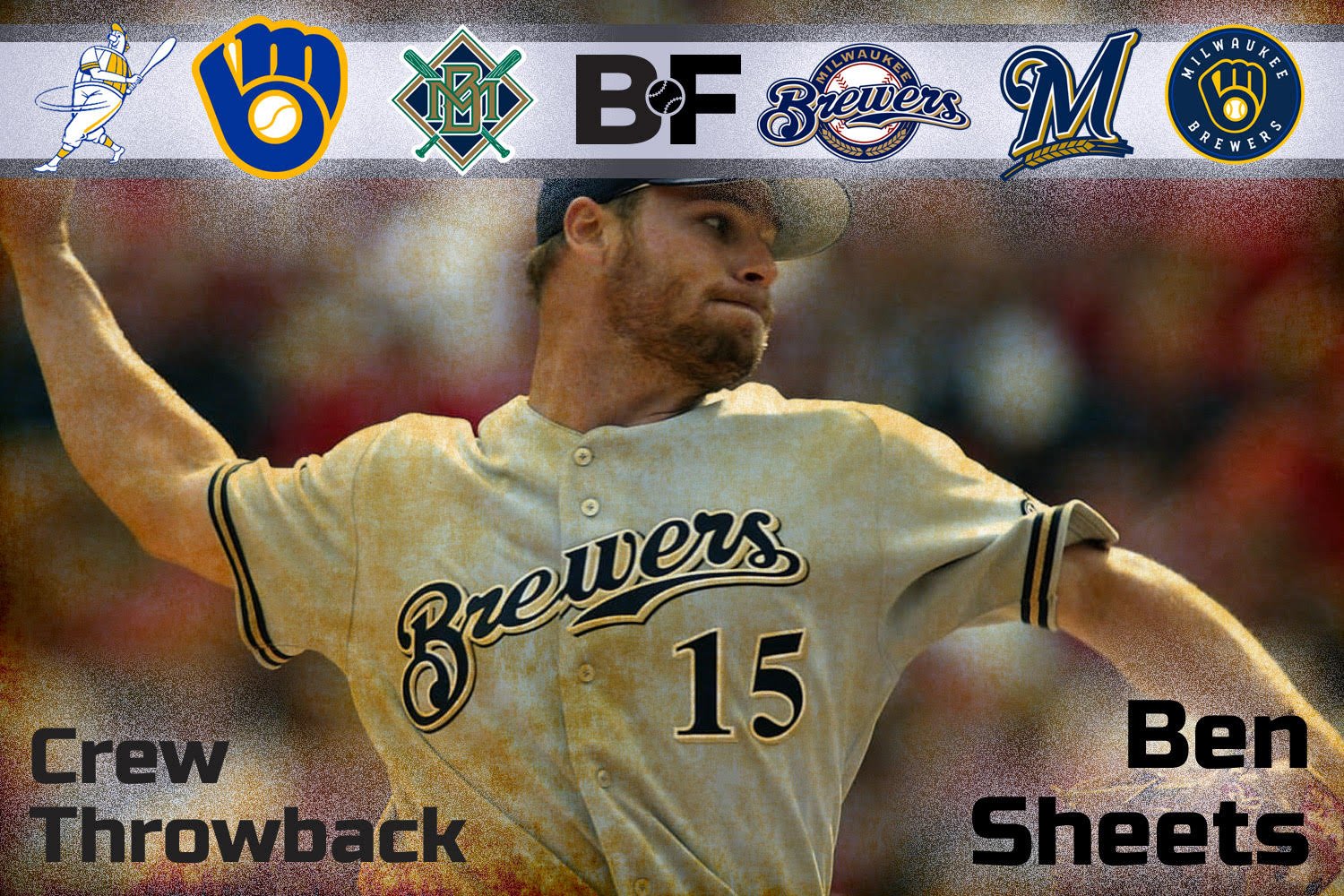 Ben Sheets was born in Louisiana in 1978. He attended college at Northeast Louisiana University (now the University of Louisiana Monroe), where he was an All-American. The Brewers drafted Sheets in the first round (10th overall) in 1999. In 2000, Sheets became the hero for the U.S. Olympic baseball team, pitching 22 innings and yielding only one walk and 11 hits. For the gold medal game, he pitched a complete game shutout against the favored Cuban team, giving up only three singles and no walks. The Brewers moved Sheets rapidly through the minor leagues, and by 2001, he was a fixture in the rotation. Sheets quickly became a workhorse, averaging 225 IP from 2002-2004. During the span, Sheets became a complete pitcher, controlling his offerings and increasing his strikeouts. All of it came together in 2004, when Sheets produced one of the best seasons in Brewer history. In addition to a 2.70 ERA, Sheets struck out 264 batters and walked just 32. Unfortunately, Sheets suffered from a lack of run support, and only had a record of 12-14. (The club won only 67 games that season.) Due to the low win total, he finished a distant eighth in the Cy Young Award voting, despite producing 7.2 bWAR - second in the league behind Randy Johnson. After Sheets' breakout campaign, the Brewers gave their newly minted ace a four-year contract worth $38.5 million. Unfortunately, Sheets never rose up to the brilliance of the 2004 campaign as he missed time due to injury and illness during each of the next four years. He was still effective, but he never threw for more than 200 innings or produced a sub-3.00 ERA. His list of injuries included shoulder tendinitis, hamstring issues, ear infections that caused vertigo, and a tear in his right elbow. The latter injury occurred in the final weeks of 2008 - the only winning season Sheets had been part of with Milwaukee - and shelved him for the playoffs. With the season concluded, Sheets was a free agent. The Brewers decided the oft-injured Sheets wasn't worth a significant investment, but did opt to offer him arbitration with the expectation of landing a draft pick as compensation. Unfortunately for Sheets, who declined the arbitration offer, the elbow injury was worse than thought and required Tommy John surgery. He missed all of the 2009 season. Sheets signed with Oakland for the 2010 season, starting 20 games, with mediocre results, before suffering a torn flexor in his pitching elbow. He made one final stab at playing in 2012, signing with Atlanta mid-season. He pitched pretty well over nine games before landing on the DL again with a sore shoulder. After the last setback, Sheets decided to call it a career. After retiring, Sheets returned to Louisiana to raise his family, where he owns and operates Sheets Baseball Academy. He has served as a volunteer baseball coach at his alma mater since 2013. He was inducted into the Brewer Wall of Honor in 2014. Ben Sheets was unique in that he was a starter that relied primary on only two pitches: his fastball and a devastating curveball. No player in team history probably threw a curve ball as often and as effectively as Sheets. Sheets' legacy with Milwaukee is effectively in place as one of the top pitchers the organization ever produced - even if it was tinged with disappointment. In addition to pitching in four All-Star games, he is second in career bWAR, with 25.6, behind only Teddy Higuera . And he has more strikeouts than anyone other than Yovani Gallardo . Sheets' name appears in the Brewers top 10 of just about every pitching statistic that you can think of, including WHIP, innings pitched, and wins. As I noted, for all the accomplishments of Sheets, there is a dose of disappointment that things weren't better during his run in Brew City. Sheets pitched on some really bad clubs, dimming his accomplishments in some eyes. Also, as the club's first home grown star in years, he was cast as the savior for the franchise and awarded the richest contract in team history. But the injuries that followed clouded people's view of him and he would never carry the club on his back like he did in 2004. I remember during the time period that people on brewerfan.net would sarcastically say things such as, "It would be nice if our 'ace' would get over his dizzy spells" and things of that nature. The final injury cemented for many fans the sour view of Sheets. At the time, some felt he was bailing on the team in the heat of the pennant race. When he left the Brewer organization, there was some bitterness between both parties, but that appears to have faded over the years. In the end, it's easy to remember Sheets for the good things his did in Milwaukee. Watching him when he was on top of his game was a thing of beauty. Sheets' curveball was second to none. I personally remember going to an afternoon game with my father and watching Sheets mow down the opposing team in less then 2.5 hours. It was brilliant. That's how I remember Ben Sheets. And finally, we can't mention Sheets without talking about his batting. Sheets had a reputation as one of the worst hitters in the league. His .076 BA backs up those claims. I used to joke that Brewer pitcher Doug Davis (who had a career BA of .083) used to thank Sheets for not making him look so bad. But Ben Sheets was a pitcher. If you want to see him at his best, take a look at all 18 of his strikeouts from May 16, 2004 game against Atlanta. The curve is just sick. Enjoy - then leave your own memories of former Brewer Ben Sheets.
 -
In 1970, baseball was back in Milwaukee (much to the chagrin of Seattle fans). Sadly, it wasn't very good baseball. This was an expansion club after all. So, while wins were few and far between, Brewer fans did get to enjoy the performance of Tommy Harper, the organization's first all-star. Tommy Harper was born in Louisiana in 1940. He came up through the Red organization as a right-handed hitting 2B/3B, showing an exceptional blend of speed, power and plate discipline. He got a cup of coffee in 1962 after putting up outstanding numbers at AAA (.333 BA, 26 HR, 100+ walks). He broke camp for the Reds the following season - and spent the next 14 seasons in the majors. The Reds moved Harper to the outfield in his rookie season, and except for a very good 1965, he provided solid, if unspectacular, numbers for the next few years. After a disappointing 1967 campaign, Harper was shipped to Cleveland for one year, then acquired by the newly minted Seattle Pilots in the expansion draft. Harper rejuvenated his career with the Pilots/Brewers. He showed versatility, playing 3B, 2B and OF - a trait that would extend his time in Milwaukee. In 1969, he struggled with a .235 BA, but added 95 walks, which produced a respectable .349 OBP. This allowed Harper to run wild - which he did - stealing a league leading (and still franchise record) 73 bases. But Harper was destined for better things. After the club moved to Milwaukee in 1970, the 29-year-old Harper would have one of the best seasons ever produced by a Brewer hitter. He would slug 31 HRs, steal 38 bases, and put up a .296 BA and an .899 OPS (6th in the AL). It was all good enough for 7.4 bWAR. He is only one of 43 people in league history to be a part of the 30-30 club - 30 steals and 30 HRs. Harper's performance netted him his only all-star appearance, as well as a sixth place finish in the MVP voting. Harper never again sniffed the numbers of his magical 1970 season (his next highest HR total was 18). The following season, he predictably regressed, finishing with a .717 OPS (his exact career number). Then the Brewers, looking to add power, dealt Harper to the Red Sox in a 10-player deal prior to the 1972 season - netting the Brewers slugger George Scott. Harper played three seasons for Boston, then parts of two seasons with the Angels, Orioles and A's. He was done as a player in 1976 at age 35. He coached after his playing career, working in the Yankees, Expos and Red Sox organizations. In 2010, he was named to the Red Sox Hall of Fame in acknowledgement of his long career with the organization as a player, coach and instructor. Harper's time with the franchise wasn't long - just three years. But he represents the first great season that a Brewer ever produced. In both Seattle and Milwaukee, he holds the distinction of being the first player to get an at-bat. His 7.4 bWAR season ranks as the franchise's 4th best ever. His 95 walks, while with the Pilots, rank 8th best. In the stolen base department, he holds the sixth spot with 136 career swipes, and - as noted - he still holds the franchise record with 73 SBs. For his Brewer career, he had a respectable .763 OPS, and his versatility was a great attribute for the club. Other highlights of Harper's career include a 24-game hitting streak in 1966, a four stolen base performance with the Pilots in 1969, and 408 career stolen bases to go with 146 HRs. Please share your memories of Milwaukee's first all-star - Tommy Harper. View full article
-
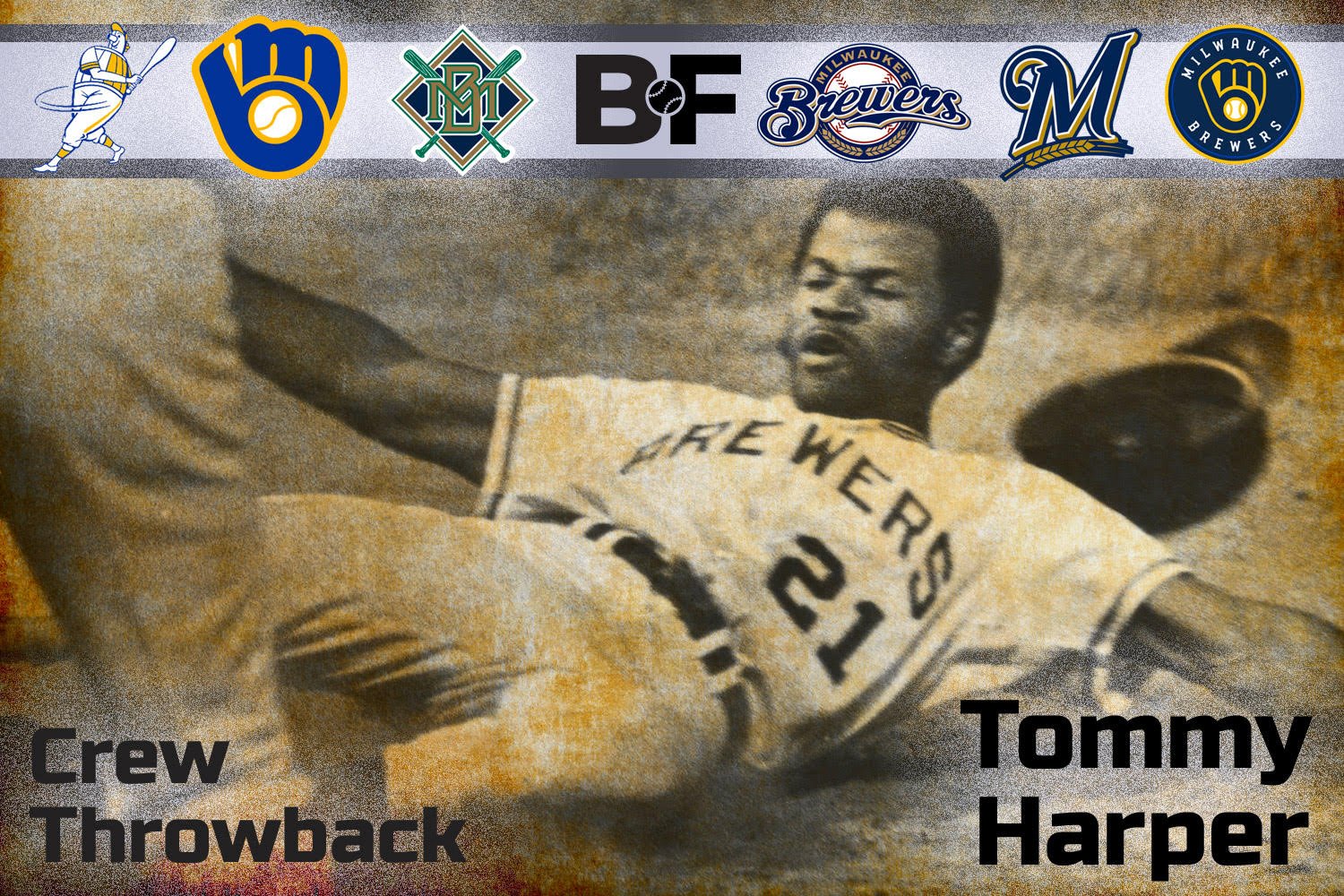 Tommy Harper was born in Louisiana in 1940. He came up through the Red organization as a right-handed hitting 2B/3B, showing an exceptional blend of speed, power and plate discipline. He got a cup of coffee in 1962 after putting up outstanding numbers at AAA (.333 BA, 26 HR, 100+ walks). He broke camp for the Reds the following season - and spent the next 14 seasons in the majors. The Reds moved Harper to the outfield in his rookie season, and except for a very good 1965, he provided solid, if unspectacular, numbers for the next few years. After a disappointing 1967 campaign, Harper was shipped to Cleveland for one year, then acquired by the newly minted Seattle Pilots in the expansion draft. Harper rejuvenated his career with the Pilots/Brewers. He showed versatility, playing 3B, 2B and OF - a trait that would extend his time in Milwaukee. In 1969, he struggled with a .235 BA, but added 95 walks, which produced a respectable .349 OBP. This allowed Harper to run wild - which he did - stealing a league leading (and still franchise record) 73 bases. But Harper was destined for better things. After the club moved to Milwaukee in 1970, the 29-year-old Harper would have one of the best seasons ever produced by a Brewer hitter. He would slug 31 HRs, steal 38 bases, and put up a .296 BA and an .899 OPS (6th in the AL). It was all good enough for 7.4 bWAR. He is only one of 43 people in league history to be a part of the 30-30 club - 30 steals and 30 HRs. Harper's performance netted him his only all-star appearance, as well as a sixth place finish in the MVP voting. Harper never again sniffed the numbers of his magical 1970 season (his next highest HR total was 18). The following season, he predictably regressed, finishing with a .717 OPS (his exact career number). Then the Brewers, looking to add power, dealt Harper to the Red Sox in a 10-player deal prior to the 1972 season - netting the Brewers slugger George Scott. Harper played three seasons for Boston, then parts of two seasons with the Angels, Orioles and A's. He was done as a player in 1976 at age 35. He coached after his playing career, working in the Yankees, Expos and Red Sox organizations. In 2010, he was named to the Red Sox Hall of Fame in acknowledgement of his long career with the organization as a player, coach and instructor. Harper's time with the franchise wasn't long - just three years. But he represents the first great season that a Brewer ever produced. In both Seattle and Milwaukee, he holds the distinction of being the first player to get an at-bat. His 7.4 bWAR season ranks as the franchise's 4th best ever. His 95 walks, while with the Pilots, rank 8th best. In the stolen base department, he holds the sixth spot with 136 career swipes, and - as noted - he still holds the franchise record with 73 SBs. For his Brewer career, he had a respectable .763 OPS, and his versatility was a great attribute for the club. Other highlights of Harper's career include a 24-game hitting streak in 1966, a four stolen base performance with the Pilots in 1969, and 408 career stolen bases to go with 146 HRs. Please share your memories of Milwaukee's first all-star - Tommy Harper.
 -
There are many baseball gods, but one of the more obscure is Versatilus, the patron god of utility players. Few players have worshiped at the alter of Versatilus more than former Brewer Eddie Romero , who parlayed his modest skills into a long career as a a player - and then as a coach and instructor. Edgardo Ralph Romero was born in Puerto Rico on Dec. 9, 1957. He was signed as an amateur free agent by the Brewers in 1975 at the age of 17. The slightly built infielder was installed at shortstop and began a steady climb through the minor league system. At the plate, he never scared anybody (no power and an average hit tool), but he took his walks and showed good contact, rarely striking out. In 1977, the Brewers would give the 19-year-old Romero a brief 10-game trial, but he was sent back to minors in short order, and did not return to Milwaukee until 1980. But once he established himself with the Brewers in 1980, he spent the next 11 years in the majors (seven in Milwaukee), and was a key reserve for the great Brewers clubs of the era. Romero's calling card was his versatility (unless you count his impressive mustache). He played, at some point, every postion on the field except pitcher and catcher. He hit a modest .254 for the Crew and never had more than 1 HR in a season, but as noted, he limited his strikeouts and took his walks, and was ready to play wherever the club needed him. On average, he had about 200-250 at-bats in a season, the most coming in 1984 when Paul Molitor was injured. After the 1985 season, Romero was dealt to Boston for reliever Mark Clear. He spent nearly four seasons in Boston before returning to Milwaukee at the conclusion of the 1989 season. After a brief stint with Detroit in 1990, then a year in the minor leagues, he was done as a player. Upon retiring, Romero immediately went into coaching. He has served as a manager for more than a dozen minor league seasons, including several for the Brewers. He was the Astros third base coach in 2008, and bench coach the following season under former teammate Cecil Cooper. For his career, Romero had a .247 BA and produced an OPS of just .600. For Milwaukee, the numbers are .254 and .619, respectively. He wasn't a speed guy (only 9 career SBs versus being caught 10 times), and he was - at times - prone to errors (in the minors he had two seasons with more than 40 miscues). Historical stats don't see him as any sort of defensive whiz, but perhaps the constant moving around the field diminished his numbers. His poor hitting and average defense give him a WAR of -5.0 for his career. Romero lamented the perception that he was 'only' a utility player and that he never got the chance to be a full-time player. But his bat never really justified a role other than that of a reserve. His biggest plus was probably that he was viewed as a competent, trustworthy and reliable player who could step up when the need arose. There's value in that. And Eddie parlayed it into a long career which is a pretty amazing accomplishment. Romero married his high school sweetheart in 1977, and they had two children. Their son, Ed Romero Jr., earned a law degree, and after a stint as a prosecutor, joined the Boston Red Sox organization in 2006. Today he is the team's Executive Vice President and Assistant General Manager. Share your memories of former Milwaukee Brewer utilityman Ed Romero. View full article
-
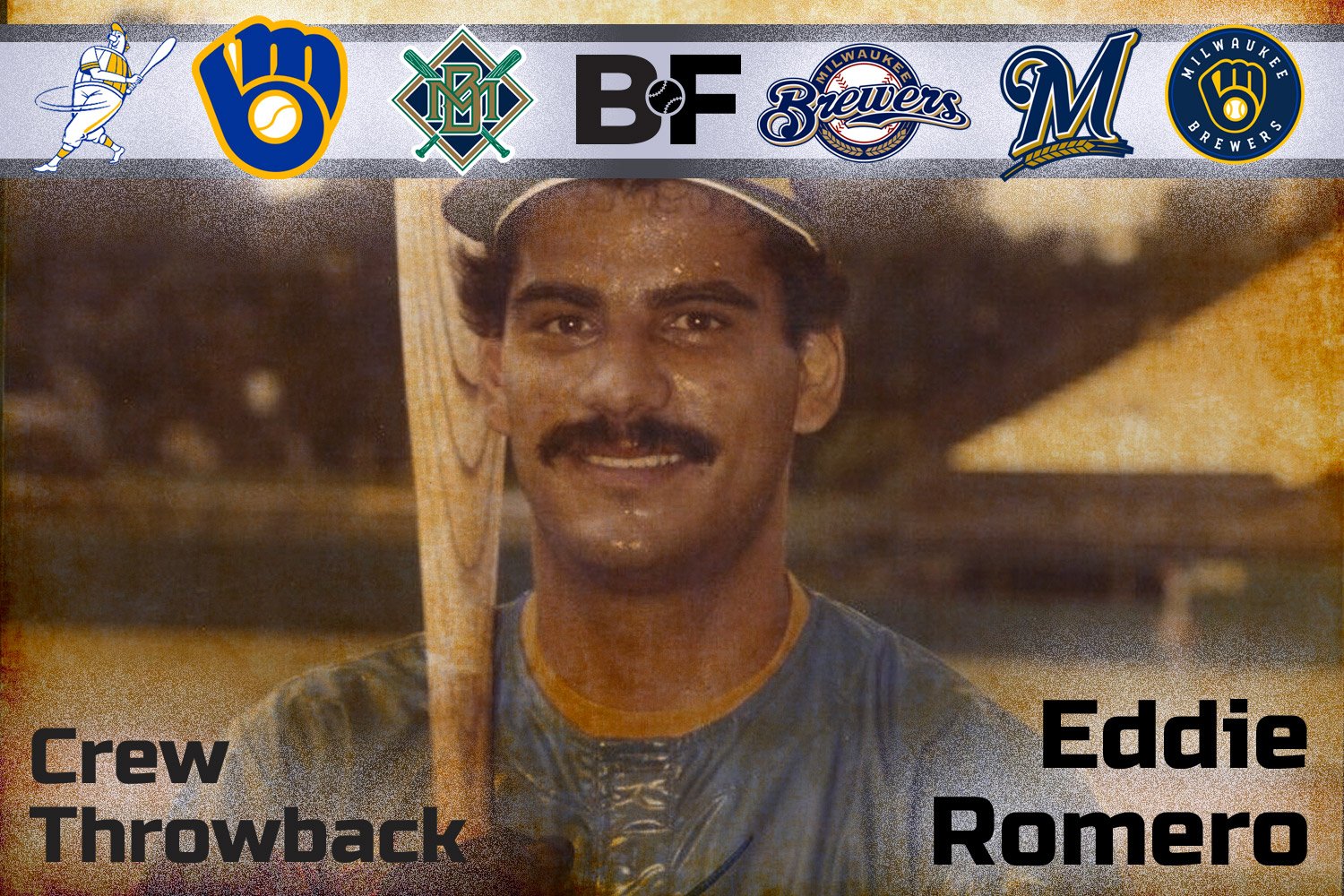 Edgardo Ralph Romero was born in Puerto Rico on Dec. 9, 1957. He was signed as an amateur free agent by the Brewers in 1975 at the age of 17. The slightly built infielder was installed at shortstop and began a steady climb through the minor league system. At the plate, he never scared anybody (no power and an average hit tool), but he took his walks and showed good contact, rarely striking out. In 1977, the Brewers would give the 19-year-old Romero a brief 10-game trial, but he was sent back to minors in short order, and did not return to Milwaukee until 1980. But once he established himself with the Brewers in 1980, he spent the next 11 years in the majors (seven in Milwaukee), and was a key reserve for the great Brewers clubs of the era. Romero's calling card was his versatility (unless you count his impressive mustache). He played, at some point, every postion on the field except pitcher and catcher. He hit a modest .254 for the Crew and never had more than 1 HR in a season, but as noted, he limited his strikeouts and took his walks, and was ready to play wherever the club needed him. On average, he had about 200-250 at-bats in a season, the most coming in 1984 when Paul Molitor was injured. After the 1985 season, Romero was dealt to Boston for reliever Mark Clear. He spent nearly four seasons in Boston before returning to Milwaukee at the conclusion of the 1989 season. After a brief stint with Detroit in 1990, then a year in the minor leagues, he was done as a player. Upon retiring, Romero immediately went into coaching. He has served as a manager for more than a dozen minor league seasons, including several for the Brewers. He was the Astros third base coach in 2008, and bench coach the following season under former teammate Cecil Cooper. For his career, Romero had a .247 BA and produced an OPS of just .600. For Milwaukee, the numbers are .254 and .619, respectively. He wasn't a speed guy (only 9 career SBs versus being caught 10 times), and he was - at times - prone to errors (in the minors he had two seasons with more than 40 miscues). Historical stats don't see him as any sort of defensive whiz, but perhaps the constant moving around the field diminished his numbers. His poor hitting and average defense give him a WAR of -5.0 for his career. Romero lamented the perception that he was 'only' a utility player and that he never got the chance to be a full-time player. But his bat never really justified a role other than that of a reserve. His biggest plus was probably that he was viewed as a competent, trustworthy and reliable player who could step up when the need arose. There's value in that. And Eddie parlayed it into a long career which is a pretty amazing accomplishment. Romero married his high school sweetheart in 1977, and they had two children. Their son, Ed Romero Jr., earned a law degree, and after a stint as a prosecutor, joined the Boston Red Sox organization in 2006. Today he is the team's Executive Vice President and Assistant General Manager. Share your memories of former Milwaukee Brewer utilityman Ed Romero.
 -
Yeah, no one can take away that day. It's pretty cool.
-
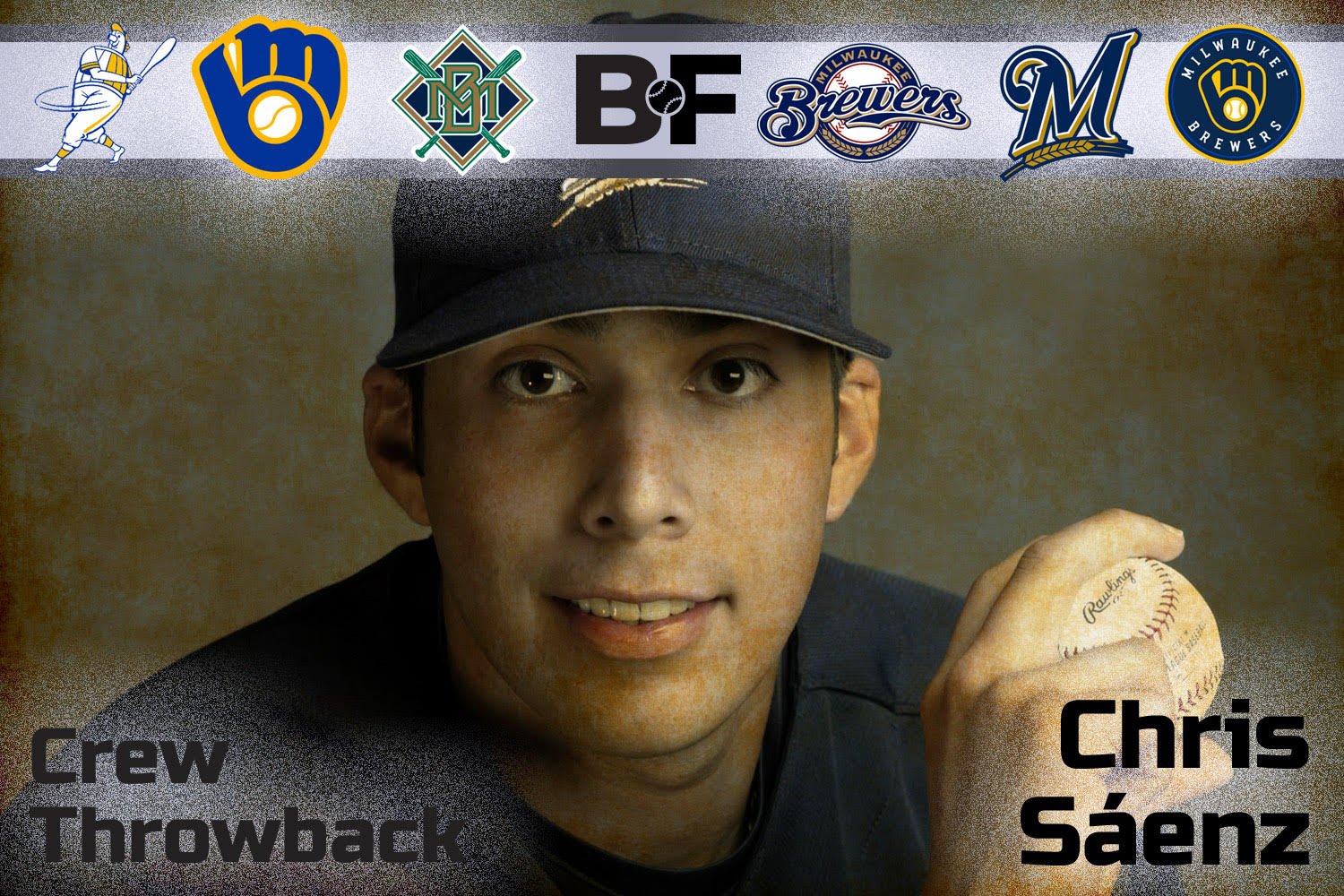 Chris Sáenz was born in Tucson, Arizona, in 1981. He was a 28th round pick by the Brewers in 2001 out of Pima Community College in Tucson. He began his career as a reliever, but moved to the rotation after two season. The results were middling, mostly due to control issues. But Sáenz could strike out batters - averaging a strikeout per inning during his minor league career, and the team was intrigued by his potential. In 2004, Sáenz began the season at AA Huntsville. He had only pitched in three games when he was informed that the Brewers needed him for an emergency start after an injury to Chris Capuano - as well as a 15-inning game two days earlier. The 22-year-old right hander was to face the St. Louis Cardinals, whose powerful lineup included Scott Rolen, Albert Pujols and Jim Edmunds . On April 24, 2004, in front of more than 22,000 fans at Miller Park, Sáenz was brilliant. He threw six innings, giving up only two hits and three walks against seven strikeouts - all while picking up his first - and only - major league decision: a win. Sáenz struck out the first batter he faced and at one point retired 14 straight. His only major scare was in the first inning, when Edgar Renteria drove a fly ball to the deepest part of the park only to have it hauled in by Scott Podsednik . It was a stunning performance, but Sáenz knew it was only a one-game ride. The club had already told him he was heading back to AA after the game. Little did he know he would never return to the big leagues. Sáenz headed back to AA but suffered a serious arm injury later that year, which lead to Tommy John surgery, causing him to miss not only the rest of the season, but all of 2005. The Brewers released him the following year. He tried to make a comeback with the Angels organization in 2007, but the results were disastrous. A stint in indy ball was no better, and after the 2008 season his career was done. He was 26 years old. Sáenz played all of one game in his major league career, but there was something of a fairy tale to it. Plucked from obscurity, he found himself on the biggest stage in the world and - for one day - was awesome. He is only the fourth pitcher in baseball history, and the first since 1899, to start in his only major league game, give up no runs (earned or unearned) with at least six innings pitched, and record the win. His lifetime MLB record is 1-0 with an ERA of 0.00. Many people call it the best one-day career in baseball history. You can't help but not feel bad for Sáenz. Like lots of players, injuries derailed his career. But there's something kind of cool to his story. Who can walk around saying they won their only major league game? Or say they have a lifetime ERA of 0.00? And to do it against the powerful (and hated) Cardinals. It's probably great at parties. After baseball, Sáenz went back to school, and got his degree from Arizona State. He and his family would eventually move to Chicago, where he works as a railroad engineer. Please share your thoughts on Chris Sáenz's amazing one game career.
 -
One game. Like Moonlight Graham and a handful of other guys, Chris Sáenz had his one day in The Show - then was gone. But unlike Graham (and most of those other guys), Sáenz had a day to remember. Chris Sáenz was born in Tucson, Arizona, in 1981. He was a 28th round pick by the Brewers in 2001 out of Pima Community College in Tucson. He began his career as a reliever, but moved to the rotation after two season. The results were middling, mostly due to control issues. But Sáenz could strike out batters - averaging a strikeout per inning during his minor league career, and the team was intrigued by his potential. In 2004, Sáenz began the season at AA Huntsville. He had only pitched in three games when he was informed that the Brewers needed him for an emergency start after an injury to Chris Capuano - as well as a 15-inning game two days earlier. The 22-year-old right hander was to face the St. Louis Cardinals, whose powerful lineup included Scott Rolen, Albert Pujols and Jim Edmunds . On April 24, 2004, in front of more than 22,000 fans at Miller Park, Sáenz was brilliant. He threw six innings, giving up only two hits and three walks against seven strikeouts - all while picking up his first - and only - major league decision: a win. Sáenz struck out the first batter he faced and at one point retired 14 straight. His only major scare was in the first inning, when Edgar Renteria drove a fly ball to the deepest part of the park only to have it hauled in by Scott Podsednik . It was a stunning performance, but Sáenz knew it was only a one-game ride. The club had already told him he was heading back to AA after the game. Little did he know he would never return to the big leagues. Sáenz headed back to AA but suffered a serious arm injury later that year, which lead to Tommy John surgery, causing him to miss not only the rest of the season, but all of 2005. The Brewers released him the following year. He tried to make a comeback with the Angels organization in 2007, but the results were disastrous. A stint in indy ball was no better, and after the 2008 season his career was done. He was 26 years old. Sáenz played all of one game in his major league career, but there was something of a fairy tale to it. Plucked from obscurity, he found himself on the biggest stage in the world and - for one day - was awesome. He is only the fourth pitcher in baseball history, and the first since 1899, to start in his only major league game, give up no runs (earned or unearned) with at least six innings pitched, and record the win. His lifetime MLB record is 1-0 with an ERA of 0.00. Many people call it the best one-day career in baseball history. You can't help but not feel bad for Sáenz. Like lots of players, injuries derailed his career. But there's something kind of cool to his story. Who can walk around saying they won their only major league game? Or say they have a lifetime ERA of 0.00? And to do it against the powerful (and hated) Cardinals. It's probably great at parties. After baseball, Sáenz went back to school, and got his degree from Arizona State. He and his family would eventually move to Chicago, where he works as a railroad engineer. Please share your thoughts on Chris Sáenz's amazing one game career. View full article
-
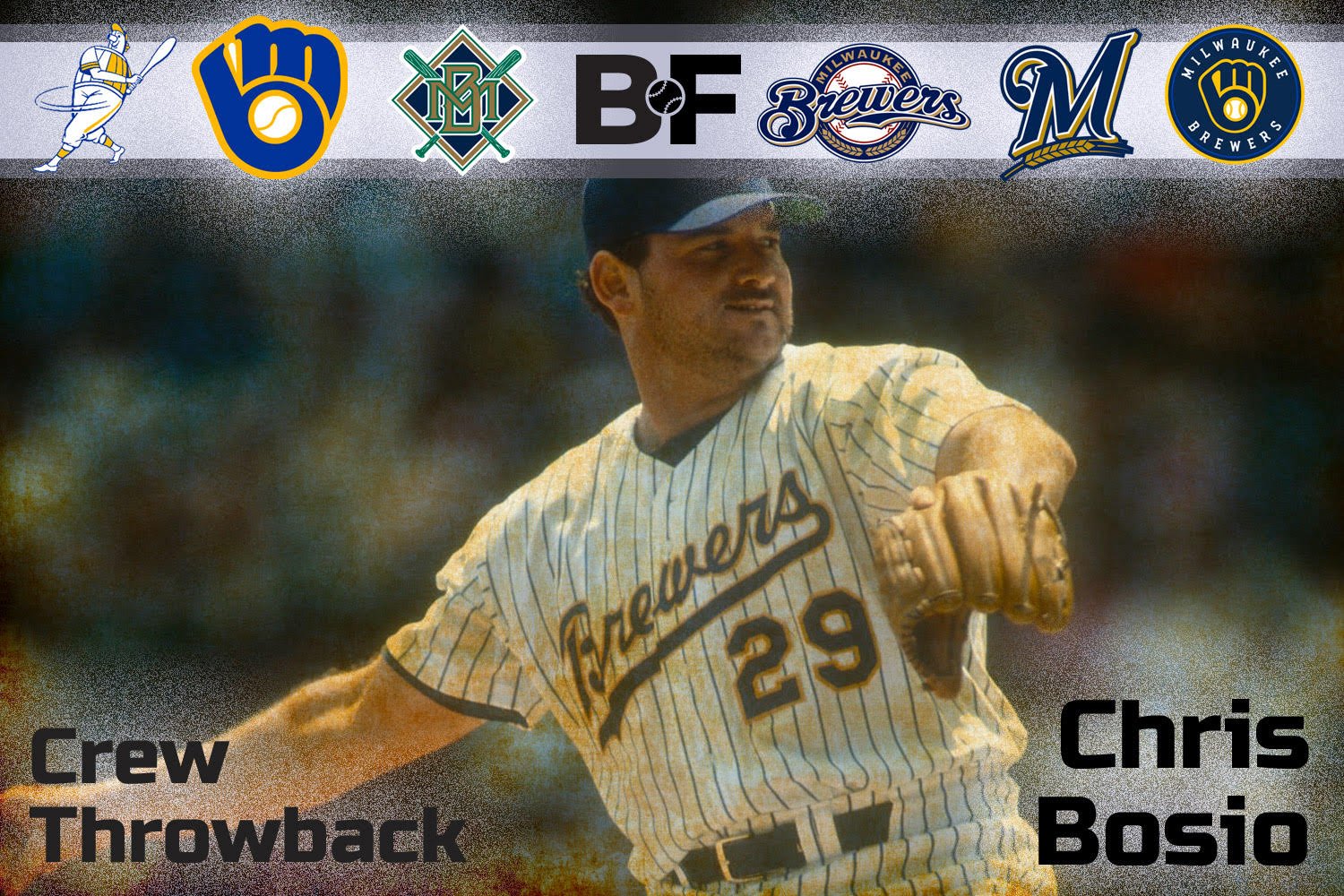 Christopher Louis Bosio was born in 1963 in Carmichael, California. He was selected by the Brewers in the 2nd round of the 1982 draft out of Sacramento City College. The big right hander was mostly a starting pitcher until 1986, when the club moved him to relieving at AAA. Bosio had a great year, and was rewarded with a cup of coffee that season. In 1987, the 24-year old Chris Bosio made the club as a swingman, starting 19 games and relieving 27. He continued in the same role in 1988, before moving to the rotation permanently in '89. For three of the next four years he would be a workhorse, twice throwing more than 230 innings (his 1990 campaign was limited to 19 starts due to a knee injury). He won 15, 14 and 16 games during the span, with an ERA as low as 2.95. He also won 10 straight games in the second half of the 1992 season to help the Brewers battle Toronto for the division title. (Alas, Milwaukee came in second, despite winning 92 games. Were was the wild card when you needed it?) Bosio's success made him a hot prospect when he reached free agency after the 1992 season. The Brewers had what looked like a solid core of pitchers (Cal Eldred, Jaime Navarro, Ricky Bones, Bill Wegman ), and elected not to get into a bidding war for Bosio's services. The Seattle Mariners were loaded with young talent, including Ken Griffey Jr. , but needed arms to go with Randy Johnson . The result was a four-year, $16 million contract for Boz, the largest in team history. Just like that, Milwaukee's best pitcher was gone. Bosio would never equal the success he had in Milwaukee. Injuries (nine knee surgeries) sapped him of his skills, and he never pitched more than 170 innings in Seattle. He did however have a historic day on April 22, 1993, when he tossed a no-hitter against Boston. After three games in the minors in 1997, Bosio retired. After baseball, Bosio moved right into coaching, serving as pitching coach at the college, minor league and major league levels. He continued his close ties to Wisconsin by serving as the assistant pitching coach at the University of Wisconsin–Oshkosh in 2006. In 2007, he became the pitching coach and then interim manager at Lawrence University (located near Appleton). He joined the Brewers in 2009, serving as pitching coach at AAA. At the big league level, he served as pitching coach as well as an advanced scout. After the 2012 season, Bosio joined Dale Sveum 's staff with the Chicago Cubs as pitching coach, earning a championship ring for the club's 2016 World Series title. He was let go by the Cubs the following year, and moved onto Detroit, but was terminated in 2018 after reportedly making some 'insensitive comments' in the clubhouse. For Milwaukee, Bosio pitched for six full seasons, averaging almost 200 IPs per year. He had a 4.13 ERA, and had two seasons with a bWAR over 5.0. His 18.6 bWAR represents the 3rd most in team history (behind Teddy Higuera and Ben Sheets ). His 67 wins and 1,190 IPs rank high on the Brewer 'all-time' list as well. He threw 32 complete games and 8 shutouts. At his best, Bosio took the ball every fifth day, went deep into a game, avoided walking too many players, and limited home runs. He was a key member of late 80s/early 90s teams that were often good (winning 91, 87, 81, 83 and 92 games), but never great (none of the teams made the playoffs). Bosio endeared himself to fans not only with his play, but his fiery attitude and dogged approach to the game. Share your thoughts on former Brewer Chris Bosio.
 -
Chris Bosio was what a lot of baseball people would call a bulldog on the mound. He was tough, competitive and combative - never afraid to knock down an opposing player or claim his part of the plate. He even looked like a Brewer - big and stout - more like a wrestler (or a plumber) than a pitcher. Despite his size, however, he was more of a finesse pitcher, throwing a split-finger fastball and showing good control. Bosio was also successful - achieving double digit win totals four times during his productive stint in Milwaukee. Christopher Louis Bosio was born in 1963 in Carmichael, California. He was selected by the Brewers in the 2nd round of the 1982 draft out of Sacramento City College. The big right hander was mostly a starting pitcher until 1986, when the club moved him to relieving at AAA. Bosio had a great year, and was rewarded with a cup of coffee that season. In 1987, the 24-year old Chris Bosio made the club as a swingman, starting 19 games and relieving 27. He continued in the same role in 1988, before moving to the rotation permanently in '89. For three of the next four years he would be a workhorse, twice throwing more than 230 innings (his 1990 campaign was limited to 19 starts due to a knee injury). He won 15, 14 and 16 games during the span, with an ERA as low as 2.95. He also won 10 straight games in the second half of the 1992 season to help the Brewers battle Toronto for the division title. (Alas, Milwaukee came in second, despite winning 92 games. Were was the wild card when you needed it?) Bosio's success made him a hot prospect when he reached free agency after the 1992 season. The Brewers had what looked like a solid core of pitchers (Cal Eldred, Jaime Navarro, Ricky Bones, Bill Wegman ), and elected not to get into a bidding war for Bosio's services. The Seattle Mariners were loaded with young talent, including Ken Griffey Jr. , but needed arms to go with Randy Johnson . The result was a four-year, $16 million contract for Boz, the largest in team history. Just like that, Milwaukee's best pitcher was gone. Bosio would never equal the success he had in Milwaukee. Injuries (nine knee surgeries) sapped him of his skills, and he never pitched more than 170 innings in Seattle. He did however have a historic day on April 22, 1993, when he tossed a no-hitter against Boston. After three games in the minors in 1997, Bosio retired. After baseball, Bosio moved right into coaching, serving as pitching coach at the college, minor league and major league levels. He continued his close ties to Wisconsin by serving as the assistant pitching coach at the University of Wisconsin–Oshkosh in 2006. In 2007, he became the pitching coach and then interim manager at Lawrence University (located near Appleton). He joined the Brewers in 2009, serving as pitching coach at AAA. At the big league level, he served as pitching coach as well as an advanced scout. After the 2012 season, Bosio joined Dale Sveum 's staff with the Chicago Cubs as pitching coach, earning a championship ring for the club's 2016 World Series title. He was let go by the Cubs the following year, and moved onto Detroit, but was terminated in 2018 after reportedly making some 'insensitive comments' in the clubhouse. For Milwaukee, Bosio pitched for six full seasons, averaging almost 200 IPs per year. He had a 4.13 ERA, and had two seasons with a bWAR over 5.0. His 18.6 bWAR represents the 3rd most in team history (behind Teddy Higuera and Ben Sheets ). His 67 wins and 1,190 IPs rank high on the Brewer 'all-time' list as well. He threw 32 complete games and 8 shutouts. At his best, Bosio took the ball every fifth day, went deep into a game, avoided walking too many players, and limited home runs. He was a key member of late 80s/early 90s teams that were often good (winning 91, 87, 81, 83 and 92 games), but never great (none of the teams made the playoffs). Bosio endeared himself to fans not only with his play, but his fiery attitude and dogged approach to the game. Share your thoughts on former Brewer Chris Bosio. View full article
-
Article: Ben Oglivie Quietly Dominated The Game
Matt Breen replied to Matt Breen's topic in Brewer Fanatic Front Page News
Imagine having a line up like the 1982 team: Yount - 29/.331 Simmons - 23/.269 Cooper - 32/.313 Oglivie - 34/.244 Thomas - 39/.245 Molitor - 19/.302 Money - 16/.284 Gantner - 4/.295 Moore - 6/.254 Howell - 4/.260 Even our scrubs hit okay. Ned Yost, Mark Brouhard, Marshall Edwards, Ed Romero - the lowest BA was .247. It was fun to watch. -
Article: Ben Oglivie Quietly Dominated The Game
Matt Breen replied to Matt Breen's topic in Brewer Fanatic Front Page News
Imagine having a line up like the 1982 team: Yount - 29/.331 Simmons - 23/.269 Cooper - 32/.313 Oglivie - 34/.244 Thomas - 39/.245 Molitor - 19/.302 Money - 16/.284 Gantner - 4/.295 Moore - 6/.254 Howell - 4/.260 Even our scrubs hit okay. Ned Yost, Mark Brouhard, Marshall Edwards, Ed Romero - the lowest BA was .247. It was fun to watch. -
In the golden years of Bambi's Bombers and Harvey Wallbangers, there are so many players to remember from the lineup. This included Robin Yount, Gorman Thomas, Cecil Cooper, and Paul Molitor - the group earning MVPs, HR titles, and boatloads of All-Star appearances during their time in Milwaukee. With all the colorful characters and great players, it's easy to forget one of the most productive bats in team history - and a key member of the great Brewer teams of the late 70s and early 80s - slugging outfielder Ben Oglivie. Benjamin Ambrosio Oglivie Palmer was born in Panama in 1949. At age 17, he and his family moved to New York following the death of his father. The Red Sox drafted the athletic Oglivie in 1968 in the 11th round. The tall, lanky left-handed outfielder steadily worked his way through the Boston system, reaching the big leagues in 1971. After two years as a part time player, Oglivie was dealt to Detroit, where he played for four years, primarily as a platoon player. Just when it looked like Oglivie was ticketed for a full time job, the Tigers traded him to Milwaukee for pitcher Jim Slaton (who would return to Milwaukee a year later as a free agent). The trade for Oglivie was the best thing for the then 29-year-old outfielder. He hit .303 in 1978, then followed up with 29 HRs the next season. In 1980, Oglivie hit .304 and pounded out a league leading 41 HRs (tying Reggie Jackson), thus becoming the first foreign born player to top the circuit in round trippers. He made the first of three All-Star appearances that year, finish 13th in the league MVP voting, and won his only Silver Slugger Award. He would never top his fantastic 1980 campaign, but he did hit .277 and produce an OPS of .806 during his time with the Crew. Oglivie played nine years in Milwaukee, primarily in left field, but also in right field and as a designated hitter. After leaving the Brewers, Oglivie played two successful years in Japan (hitting over .300 and having more than 20 HR both years). He attempted a comeback at age 40 with Milwaukee in the minor leagues, but an injured knee ended the affair after only 2 games. As a player, Oglivie was known as quiet, intelligent and low-key. Perhaps it was his introspective nature that kept him out of the spotlight. He was viewed as a bit of an odd duck, more comfortable reading philosophy than drinking beers with larger-than-life characters such as Gorman Thomas. In fact, early in his career, many took his cerebral approach and polite attitude as a lack of passion. The opposite, however, was true. Oglivie was immensely curious and intelligent, and just approached things differently. Former teammate Bill Lee said Benji could do the New York Times crossword puzzle in five minutes. After retiring, Oglivie stayed in the game, primarily as a hitting coach, in the Padres, Brewers, Tigers and Rays organizations. For his Brewer career, Oglivie is ranked 8th in hits, 7th in HRs (176) and 6th in RBI (685). For his entire career, he hit 235 HR and drove in 901 runs. In 1983, in one of his more memorable games, he slugged three home runs as the Brewers came from behind to beat Boston 8-7 in 10 innings. Oglivie's 3rd homer tied the score at 6-6 in the bottom of the 9th. It should be noted that Oglivie put up a lot of impressive numbers in his career despite not becoming a full time major league player until the age of 28. He was elected to the Latino Baseball Hall of Fame in 2012. Please share your memories of former Milwaukee Brewer great Ben Oglivie . View full article
-
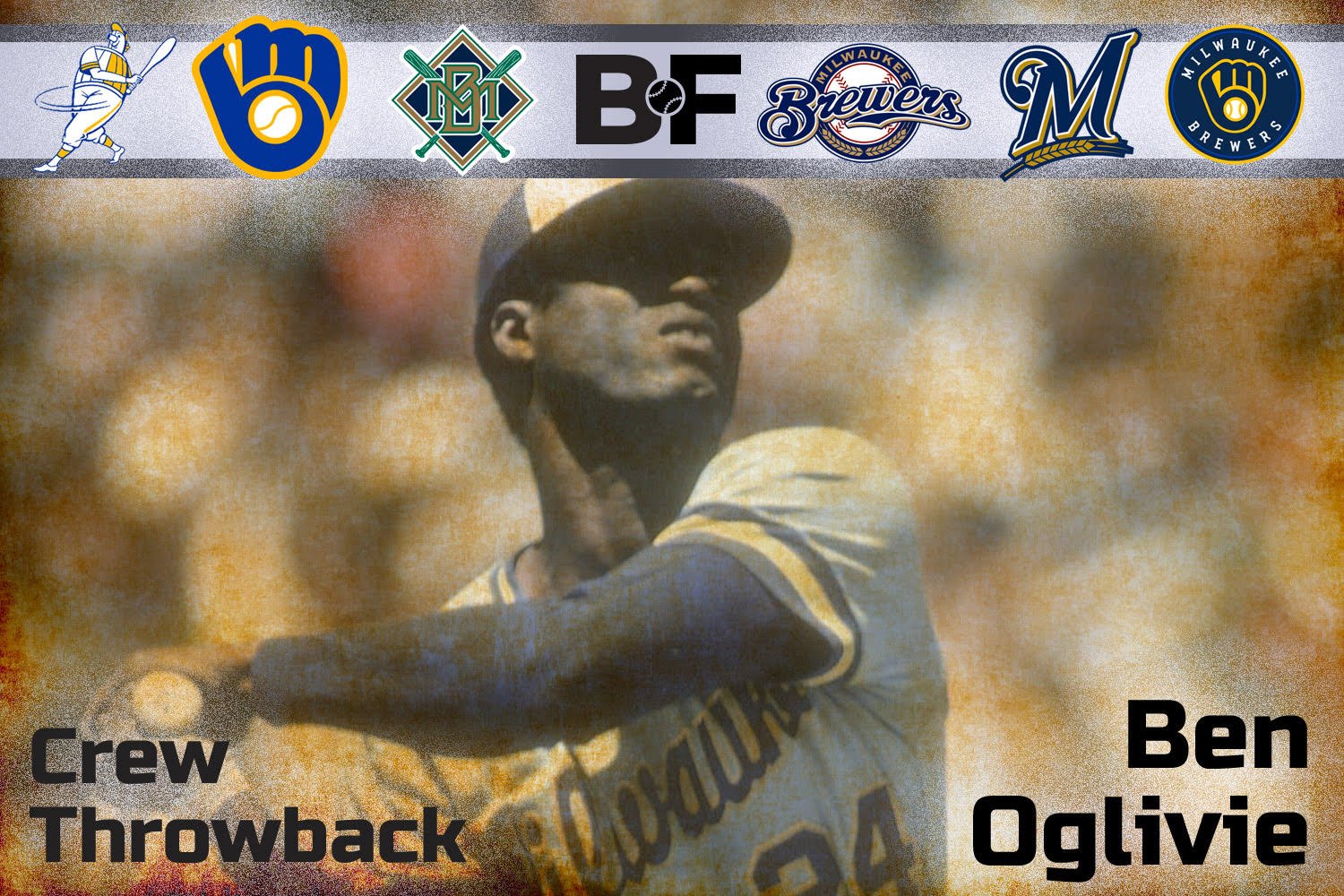 Benjamin Ambrosio Oglivie Palmer was born in Panama in 1949. At age 17, he and his family moved to New York following the death of his father. The Red Sox drafted the athletic Oglivie in 1968 in the 11th round. The tall, lanky left-handed outfielder steadily worked his way through the Boston system, reaching the big leagues in 1971. After two years as a part time player, Oglivie was dealt to Detroit, where he played for four years, primarily as a platoon player. Just when it looked like Oglivie was ticketed for a full time job, the Tigers traded him to Milwaukee for pitcher Jim Slaton (who would return to Milwaukee a year later as a free agent). The trade for Oglivie was the best thing for the then 29-year-old outfielder. He hit .303 in 1978, then followed up with 29 HRs the next season. In 1980, Oglivie hit .304 and pounded out a league leading 41 HRs (tying Reggie Jackson), thus becoming the first foreign born player to top the circuit in round trippers. He made the first of three All-Star appearances that year, finish 13th in the league MVP voting, and won his only Silver Slugger Award. He would never top his fantastic 1980 campaign, but he did hit .277 and produce an OPS of .806 during his time with the Crew. Oglivie played nine years in Milwaukee, primarily in left field, but also in right field and as a designated hitter. After leaving the Brewers, Oglivie played two successful years in Japan (hitting over .300 and having more than 20 HR both years). He attempted a comeback at age 40 with Milwaukee in the minor leagues, but an injured knee ended the affair after only 2 games. As a player, Oglivie was known as quiet, intelligent and low-key. Perhaps it was his introspective nature that kept him out of the spotlight. He was viewed as a bit of an odd duck, more comfortable reading philosophy than drinking beers with larger-than-life characters such as Gorman Thomas. In fact, early in his career, many took his cerebral approach and polite attitude as a lack of passion. The opposite, however, was true. Oglivie was immensely curious and intelligent, and just approached things differently. Former teammate Bill Lee said Benji could do the New York Times crossword puzzle in five minutes. After retiring, Oglivie stayed in the game, primarily as a hitting coach, in the Padres, Brewers, Tigers and Rays organizations. For his Brewer career, Oglivie is ranked 8th in hits, 7th in HRs (176) and 6th in RBI (685). For his entire career, he hit 235 HR and drove in 901 runs. In 1983, in one of his more memorable games, he slugged three home runs as the Brewers came from behind to beat Boston 8-7 in 10 innings. Oglivie's 3rd homer tied the score at 6-6 in the bottom of the 9th. It should be noted that Oglivie put up a lot of impressive numbers in his career despite not becoming a full time major league player until the age of 28. He was elected to the Latino Baseball Hall of Fame in 2012. Please share your memories of former Milwaukee Brewer great Ben Oglivie .
 -
Crew Throwback: Teddy Higuera Rose Quickly and Burned Bright
Matt Breen posted an article in Brewers
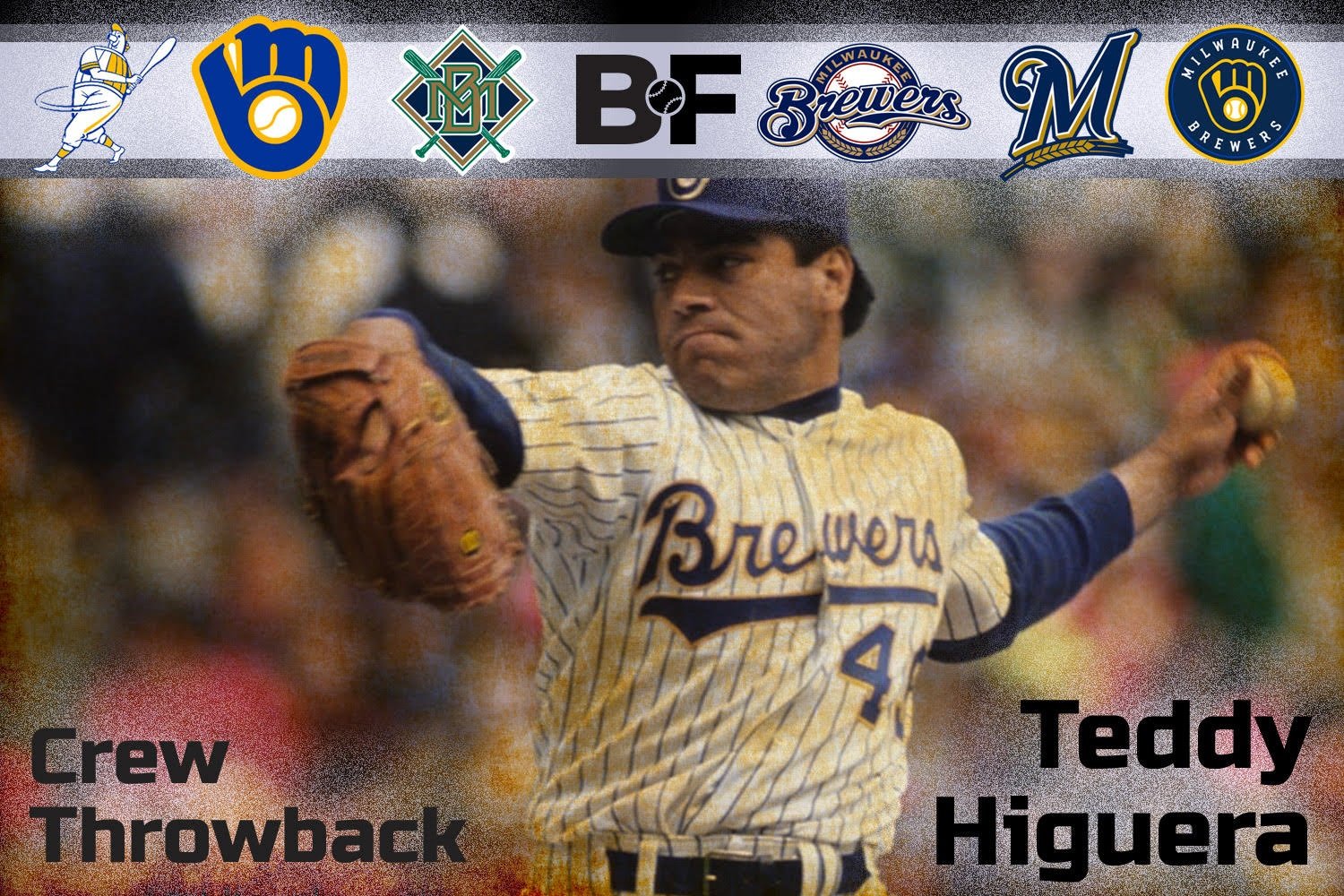 Teodoro Valenzuela Higuera was born in Mexico in 1957. He didn't began playing baseball until he was 17, but by age 21, he was pitching in the Mexican League. In 1983, in the wake of the success of fellow Mexican Fernando Valenzuela , the Brewers took a shine to the short, stocky 25-year old lefthander with a five-pitch repertoire. Milwaukee bought Higuera's contract from the Mexican League, and after one year in the minors, installed him into their starting rotation. Teddy Higuera 's career began with a very good rookie campaign in 1985. The 27-year old threw 212 innings, won 15 games, and had a 3.90 ERA. He broke out the following season, producing one of the finest seasons in Milwaukee Brewer history. Higuera won 20 games, threw 248 innings and struck out 207 batters. He had a 32 inning scoreless streak. He finished 2nd in the Cy Young voting (behind Roger Clemens ), was named to the all-star team, and finished 15th in MVP voting. Higuera continued to dominate the next two seasons, winning 18 and 16 games, respectively. His 1986-88 run represent three of the five highest season bWAR ratings in team history. However, beginning in 1989, injuries began to take their toll on Higuera. He was limited to 22 and 27 starts the next two seasons, pitching well, but not great. Then, in 1991, Higuera tore his rotator cuff. He missed most of the season and all of 1992. Higuera struggled to come back the next two years. After the 1994 season, his career was over. In retirement, Higuera stayed involved in baseball in his native Mexico. He served as the pitching coach for the national team during 2006, 2009 and 2013 World Baseball Classics. He was inducted into the Mexican Professional Baseball Hall of Fame in 2011. He was also added to the Brewers' Walk of Fame in 2014 Higuera was a great story back in the 1980s. Emerging from the obscurity of the Mexican Baseball League, he was an All-Star and Cy Young runner-up just two short years later. He didn't have overpowering stuff, but he succeeded by keeping hitters off balance with a variety of pitches, sharp control and deception. Higuera had an incredible four-year run in Milwaukee (1985-88), throwing nearly 950 innings during the span, and averaging 17 wins a year. For his career, Higuera won 94 games, produced a .595 winning percentage, a 3.61 ERA, 1380 innings pitched, 50 complete games, 12 shutouts, and 1081 strikeouts. If injuries had not derailed his career, he would likely own most every major pitching record in Milwaukee. Today, Higuera sits as one of the most talented and productive pitchers in team history.
 -
Who is the most successful pitcher in Brewer history? Sheets? Gallardo? Bosio? Caldwell? Nope. The answer is Teddy Higuera. The amazing thing is that Higuera was plunked out of the Mexican league at age 25 - and still had an astounding run from 1986-88 where averaged 7.7 bWAR a year. That run solidified Higuera as the most productive pitcher in franchise history. Teodoro Valenzuela Higuera was born in Mexico in 1957. He didn't began playing baseball until he was 17, but by age 21, he was pitching in the Mexican League. In 1983, in the wake of the success of fellow Mexican Fernando Valenzuela , the Brewers took a shine to the short, stocky 25-year old lefthander with a five-pitch repertoire. Milwaukee bought Higuera's contract from the Mexican League, and after one year in the minors, installed him into their starting rotation. Teddy Higuera 's career began with a very good rookie campaign in 1985. The 27-year old threw 212 innings, won 15 games, and had a 3.90 ERA. He broke out the following season, producing one of the finest seasons in Milwaukee Brewer history. Higuera won 20 games, threw 248 innings and struck out 207 batters. He had a 32 inning scoreless streak. He finished 2nd in the Cy Young voting (behind Roger Clemens ), was named to the all-star team, and finished 15th in MVP voting. Higuera continued to dominate the next two seasons, winning 18 and 16 games, respectively. His 1986-88 run represent three of the five highest season bWAR ratings in team history. However, beginning in 1989, injuries began to take their toll on Higuera. He was limited to 22 and 27 starts the next two seasons, pitching well, but not great. Then, in 1991, Higuera tore his rotator cuff. He missed most of the season and all of 1992. Higuera struggled to come back the next two years. After the 1994 season, his career was over. In retirement, Higuera stayed involved in baseball in his native Mexico. He served as the pitching coach for the national team during 2006, 2009 and 2013 World Baseball Classics. He was inducted into the Mexican Professional Baseball Hall of Fame in 2011. He was also added to the Brewers' Walk of Fame in 2014 Higuera was a great story back in the 1980s. Emerging from the obscurity of the Mexican Baseball League, he was an All-Star and Cy Young runner-up just two short years later. He didn't have overpowering stuff, but he succeeded by keeping hitters off balance with a variety of pitches, sharp control and deception. Higuera had an incredible four-year run in Milwaukee (1985-88), throwing nearly 950 innings during the span, and averaging 17 wins a year. For his career, Higuera won 94 games, produced a .595 winning percentage, a 3.61 ERA, 1380 innings pitched, 50 complete games, 12 shutouts, and 1081 strikeouts. If injuries had not derailed his career, he would likely own most every major pitching record in Milwaukee. Today, Higuera sits as one of the most talented and productive pitchers in team history. View full article

