


Brewers Video
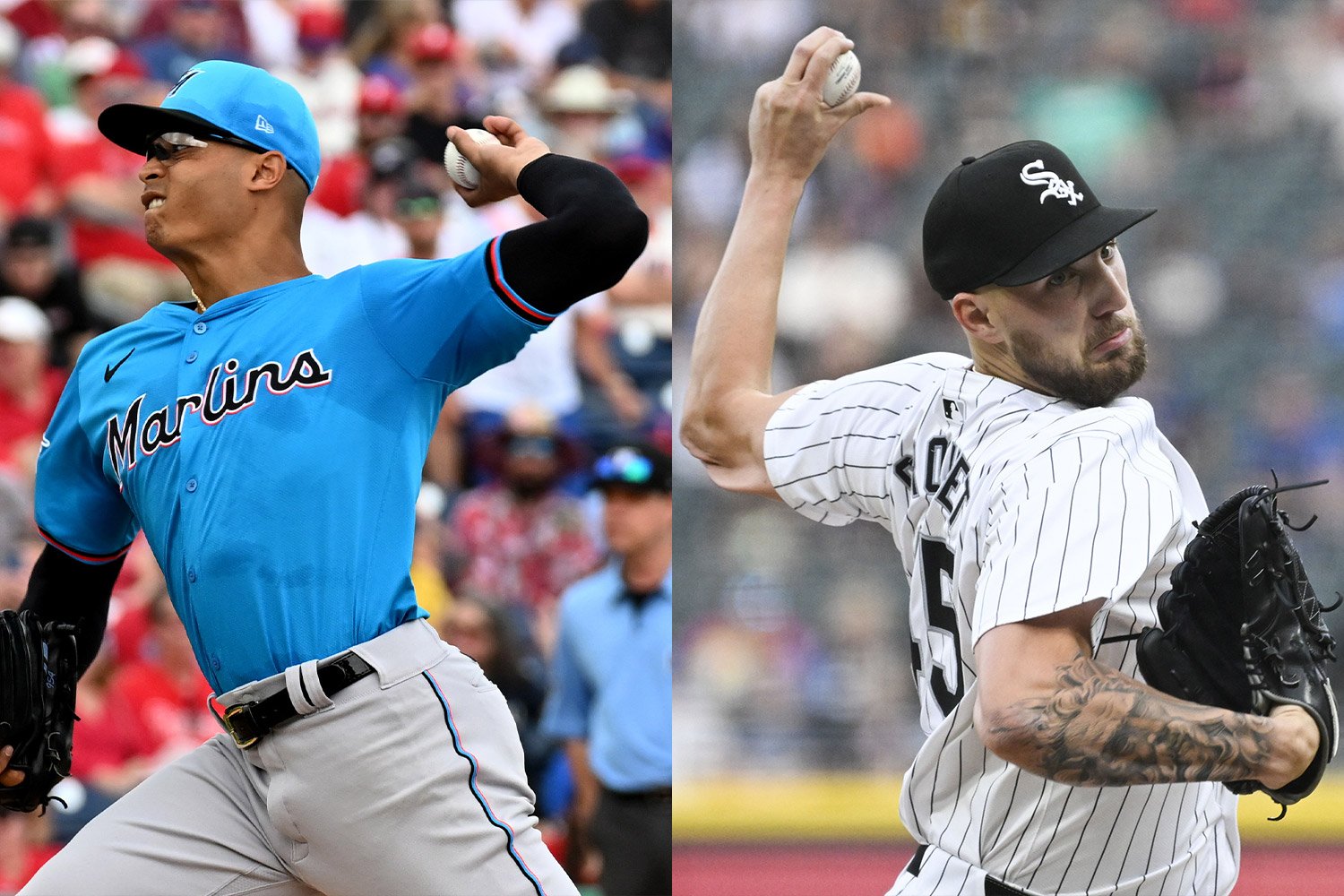
The Brewers need an ace, and a controllable arm like Garrett Crochet makes sense in a lot of ways. Aces aren't cheap, however, so could Misiorowski or Black be part of an era-defining deal? Is it worth it?
The Brewers have spent several years stocking up their minor league quality using impressive drafting to become one of the top farm systems in the league. They have a particular need this year, and potentially into the next two years as well and they could address that in the here and now with several viable options on the table. Their last big trade involved trading four prospects to the Marlins for Christian Yelich. Can they replicate the success of that deal by going big on a top-of-the-rotation arm?
Why Does Investing Long Term Make Sense?
The Brewers' last “competitive window” may have shut with the departure of Corbin Burnes, or at least many expected it to disappear gracefully after the loss of Brandon Woodruff and Wade Miley to season-ending injuries. It appears those were mistaken, as the Brewers have formed a capable offensive lineup just as their pitching unit has come undone.
Peralta’s struggles have perhaps been the biggest issue, as his promotion to ace of the staff started well before petering out. Despite all the talent in the world, Peralta’s command, especially in two-strike counts, has been found wanting and left him unable to eat innings with any of the consistency he’s capable of. Pat Murphy recently talked about Peralta wanting to carry the rotation on his back, and that stress and self-made pressure were perhaps weighing him down, something a new acquisition at the top of the rotation may help.
Then you factor in the injuries to DL Hall, who was touted for a breakout like the one Garrett Crochet is experiencing in his bullpen-to-starter conversion, Wade Miley’s UCL, and injuries to Joe Ross, Jakob Junis, and Robert Gasser after strong starts, and the Brewers are left not only thin on starting arms but also on high-quality starting arms.
Then you look at next season; Peralta is still under club control with an option, as is Colin Rea and the return of Brandon Woodruff looms large. It seems unreasonable to expect Woodruff, after a surgery that has grounded many a pitcher for good, to be his indomitable old self, and there is a chance the Brewers may waste what is a potentially very strong lineup. Jacob Misiorowski, as a starter at least, has a long way to go, and Logan Henderson isn’t quite a top-of-the-rotation caliber arm. Other than that, the Brewers don’t have a lot of quality in the upper minors pitching, albeit spades of talent in the lower minors. As such, if they want to remain competitive next season, they may want to gamble on one more high-ceiling arm that they control through 2025.
If all clicks, DL Hall (post knee problems), Peralta, and Woodruff all have the talent to lead a rotation, but adding one more to that mix would create a special unit of starting pitchers with the depth to survive injuries that have been seen this season. A rotation led by those four with a lineup featuring Joey Ortiz, a seasoned Jackson Chourio, Brice Turang, Christian Yelich, and William Contreras, plus more, would be a sight to behold and a force for any playoff run. By 2026, the army of high-quality arms in Brewers' lower minor leagues will have risen and developed to the point that they may have enough arms of their own to take his place.
Who Might The Brewers Trade?
To get talent you have to give up talent, and the Brewers are loaded with high potential, controllable players in a variety of positions. Which of these may form part of the trades?
Jacob Misiorowski
Perhaps the highest-ceiling arm in the minor leagues, Misiorwski’s control issues are well documented and, perhaps more worryingly, he has found himself at times hittable when he has stayed inside the strike zone. This is largely as a result of staying over the heart of the plate when he does stay in zone, but it is a worry. Trading Misiorowski would depend entirely on how the Brewers see him going forward; if they think he’s destined for a relief role, then no matter how good he is Crochet is infinitely more valuable to them for two and a half years. If they believe they can correct his command issues and see improvements that can lead to him starting, then he’s off the table.
Tyler Black
Black is on a hot streak with elite plate discipline and a developing ability to hit for power despite low average exit velocities. He elevates the ball well but the absence of a defensive home may make him tradable and it would be tough to argue with that decision. His future home may be in the outfield and he may need to hit the ball harder and more consistently to justify poor defense, but the discipline, speed and surface stats say he’s a valuable player.
Jeferson Quero
Out with a shoulder injury for the season, Quero is one of the best defensive catchers in the minors and has grown some solid pop in the bat. His receiving skills are allied with a cannon of a throwing arm that brought a 35% caught stealing rate last season. Quero is a jewel and at only 20 years old has a lot of room to develop offensively and be one of the best catchers in the game. William Contreras may complicate matters and make him more available, but the Brewers should be loath to part with Quero.
Garrett Mitchell
Strong surface statistics bely a poor contact rate at the major league level combined with a high ground ball rate unlikely to lead to future success. Mitchell has some of the fastest legs in the game and plays incredible defense in center field when healthy, and that’s been a big problem for him so far in his fledgling career. The Brewers are loaded with outfielders, and Mitchell’s value may never be higher than it is right now. He’s a very tradable asset especially with the development of Perkins in recent months whose defense and above-average offensive output have been remarkable.
Brock Wilken
Early struggles and a fractured jaw from being beamed earlier in the season, Wilken is beginning to heat up a little at the plate and is in the one area the Brewers may want to upgrade. With Willy Adames likely leaving after 2024, and Joey Ortiz moving to shortstop, a vacancy at third base will be filled most likely be either Oliver Dunn or Brock Wilken. If Dunn had excelled early on this may be a different story, but his in zone swing-and-miss has caused problems for him early doors and the power Wilken has in his bat may make him a tough asset to part with.
Garrett Crochet Is The Perfect Fit For The Brewers
As indicated earlier, Crochet has had the kind of season that makes you sit up and take notice. He’s tweaked his pitch mix since the start of the season and his last start he ate seven innings with 13 strikeouts in 102 pitches. Of those, 101 were four-seam fastballs (perceived average velocity 98 mph) and cutters (90 mph). His pitches are electric in velocity and movement, but his command is perhaps the most underrated part of his game. You can see him hitting the locations laid down by his catcher with unerring accuracy.
In his last 48 innings, Crochet has given up just six earned runs since the start of May, recording 69 strikeouts. It’s some of the most un-hittable raw stuff in the majors, and when combined with a mere ten walks over that span, it’s fair to say Crochet is an elite arm.
The below is Crochet’s expected WOBA since May 1st. Inside the strike zone is possibly the most comprehensively dominant pitch chart I’ve ever seen, and it's just the four-seam fastball and cutter results this season. I could wax lyrical about the pitch shapes and effectiveness of these pitches in a variety of different ways but this image alone tells it better than I ever could: these two pitches are basically un-hittable. The sea of blue is extraordinary, and xWOBA under .300 is good but most pitchers would find this more around the edges, whereas Crochet's raw stuff is so good it almost doesn't matter.

Crochet was promoted to the big leagues before playing a single minor league game, straight from college, and it may have hampered his development as it’s taken him a few years to access his potential while dealing with injuries and general pitching progression. He’s a survivor of Tommy John surgery in 2022 and has dealt with niggling shoulder injuries on top of that, which may lower his value slightly, and he has two and a half years of control remaining (under team control through 2026). One other query surrounding Crochet is that he’s never thrown 100 innings in a baseball season, and it remains to be seen how he holds up throughout a lengthy season. Can his body and arm stay sharp over the course? The unknowns make it risky, but the Brewers can’t make trades like this without an element of risk involved.
Given the length of control, and recent dominance, the White Sox would be trading Crochet at his peak and he won’t come cheap. They have also been quite ludicrous in demands that perhaps only the Padres would be crazy enough to match, but there are some offers that may be viable that I think the Brewers should consider:
Tyler Black, Garrett Mitchell, Carlos F Rodriguez, and Luke Adams for Garrett Crochet
The Brewers avoid giving their top arm while trading from positions of strength within their system. If the Brewers see Jacob Misiorowski as a reliever only, this is the one trade I would consider involving him in, but if they can avoid it, then all the better. For the White Sox, they’re getting three controllable long-term talents, with a potential star center fielder to replace Luis Robert Jr. (who is also being shopped), Tyler Black as an offensive weapon, and Carlos F Rodriguez as a very young hurler with a talented arm and command of a vast array of pitches who can get outs at the big league level right now. The White Sox may ask for a fourth lower league, high-ceiling arm/bat to go along with the deal, so I included Luke Adams, who's powerful bat could make him a star one day, but as with all deals, the value depends a lot on what the White Sox internal metrics say about each of these players.
Crochet is an injury risk, and I’d maybe keep away from offering more than that because of his past but a trade like this is likely to be judged not on what happens at the time but on the results after a few seasons. If Crochet gets two healthy, dominant years then the Brewers will consider it a win; if either Mitchell or Black torch the league and Crochet spends more time on the IL and never pitches in October then they’ll likely regret it.
Jesus Luzardo Is Talented, But Is He Reliable?
Another name being bandied about is Luzardo after the Marlins hapless start left them all but eliminated from playoff contention by mid-May. Luzardo has had problems of his own with staying healthy and is perhaps similar to a Freddy Peralta where his raw stuff doesn’t match up with the results he’s getting on the mound, Capable of dismantling a lineup or blowing up, it’s not always clear which version of Luzardo you’re going to get.
A lot of this stems from fastballs, which despite touching 98 mph have a tendency to get hard and in the air. Average exit velocity is 90 mph and 93 mph on his four-seamer and sinker, respectively, while even his usually effective slider has been left hanging far too often this season:

The above is every pitch thrown by Luzardo this year, and you can see a couple of problems. He doesn’t work the top of the zone often, so hitters can sit on a pitch down just like we saw with Corbin Burnes last year; and he also leaves far too much over the middle stripe of the plate which sees him get hit often and hard. I'm not a huge fan of the Brewer's making this move, but Luzardo has seen success in previous seasons and if anyone can get more out of his talented arm it's the Brewers.
Luzardo is likely to cost a pretty penny based on reputation alone, and the question the Brewers will have is whether or not they can get more out of him than the Marlins currently are. He’s controllable through 2026 like Crochet but if the Brewers don’t see an avenue to improved results then he’s probably not the pitcher they’re looking for.
The Marlins have many needs, most of which are in the hitting department. With a strong rotation to return for next year, they’ll likely want controllable hitting talent. As such, I would suggest the following deal may get it done (though I’m not convinced in the arm, and it may be light because of that):
Tyler Black and Mike Boeve for Jesus Luzardo
The Marlins get two promising bats centered around hit tools, one of which is a capable infield defender, while the other is more of an outfielder. They have need for production all over the diamond, but they may need an extra piece to get the deal over the line given Luzardo may be a hot commodity this summer if he improves on his early season results. I'm not sure I'd offer this up if I was in Matt Arnold's shoes based on what I can see with Luzardo, but time will tell if he entices the Milwaukee club in an hour of need.
Other notable options
The two other names that may get a look in are Eric Fedde and Trevor Rogers. Teammates of the two players listed above, neither have the high ceiling the Brewers may look for in a deal such as this, but that cheaper costs while remaining controllable could be of interest to a Brewers front office who are more comfortable playing the margins than being in the spotlight. Fedde is back from Korea and has seen a massive improvement in command since his time with the Nationals, while Rogers was a former runner-up in Rookie of the Year in 2021 but has seen middling results since then.
Can you see the Brewers making either of these trades? How much would you be willing to part with to sign either of these top of the rotation arms? Or do you have someone else in mind?
Let us know your thoughts in the comments below!





Recommended Comments
Create an account or sign in to comment
You need to be a member in order to leave a comment
Create an account
Sign up for a new account in our community. It's easy!
Register a new accountSign in
Already have an account? Sign in here.
Sign In Now