


Brewers Video
The big Brewers prospect news of the week is the massive contract extension to which the team and outfielder Jackson Chourio have agreed. The team also needs help from the farm on the infield, though, and another of their top prospects poses a potential solution to that problem.
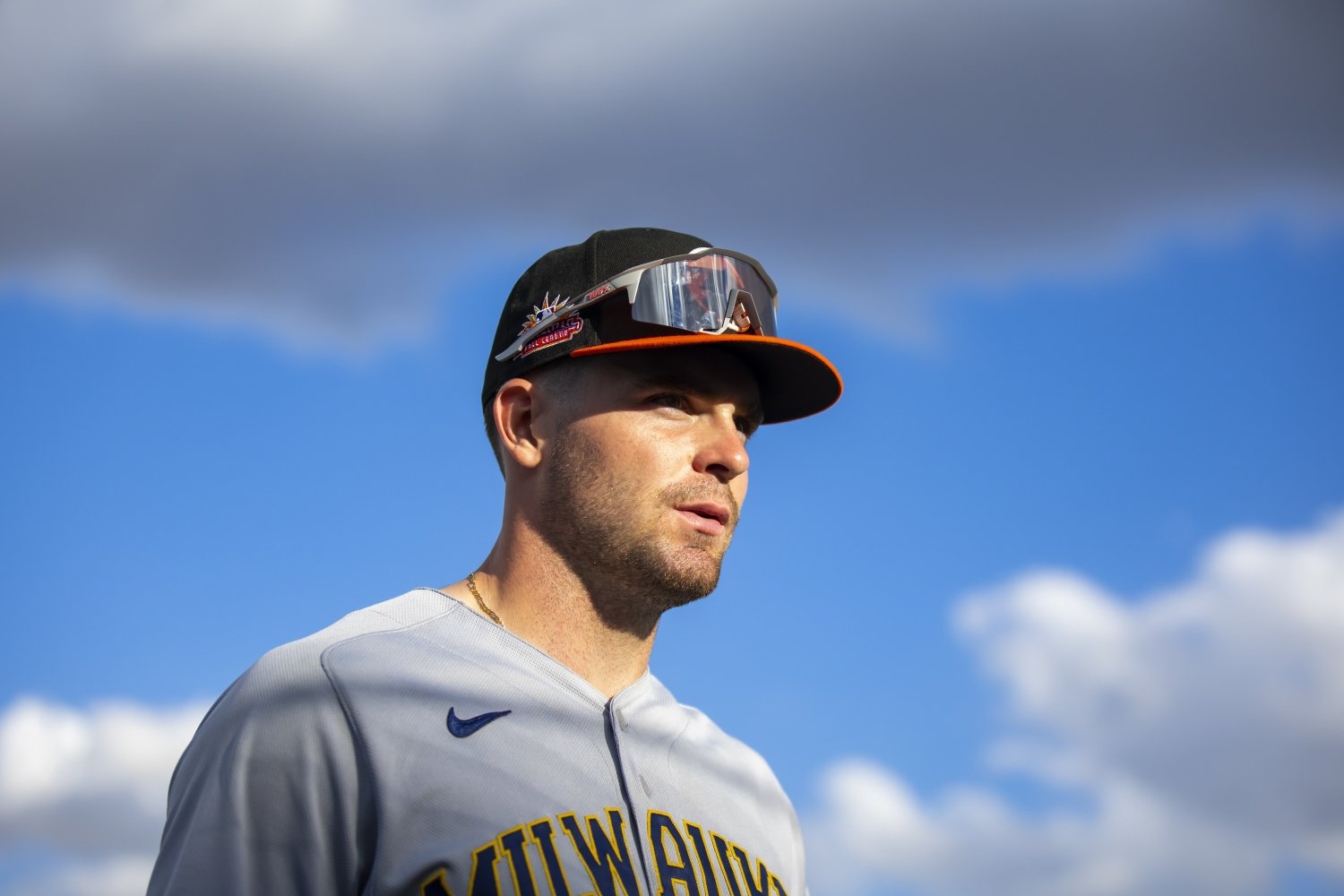
It's easy to get excited about Tyler Black. He's a left-handed hitter with speed, plate discipline, and a good hit tool. His on-base percentage (just under .420) and stolen-base total (55) were each gaudy last year. He feels like a dynamic addition to the lineup, just waiting a pinch more seasoning in Triple A. He feels like a potential middle-of-the-order bat, even if it be a bit non-traditional, because he cracked 25 doubles, 12 triples, and 18 home runs across the top two levels of the minors in 2023.
Unfortunately, the real picture is probably a little bit less exciting. Black's bat-to-ball skills and his patience should translate well to the majors. He whiffed quite a bit on offspeed stuff with Nashville in September, but otherwise, he looks like a well-rounded pure hitter.
.jpeg.49860b8e0d9509479f102532855ab5a8.jpeg)
Still, both the strikeout and the walk rates Black ran in the high minors will move at least some amount in an unfriendly direction when he reaches MLB. That means more pressure on the actual batted balls he generates. In MLB, players without good power get the bat knocked out of their hands, at least to some extent. We saw that with Sal Frelick and Brice Turang in 2023. Both are modestly valuable, but that value had to come almost solely from their gloves and their legs, because they lacked the pop to be great hitters.
Admittedly, our data on Black is quite limited, so far. In that sample, though, the indications are that he's not much more of a slugger than Frelick or Turang.
Exit Velocities, Triple A, 2023
|
Player |
Avg EV |
95th %ile EV |
|
Tyler Black |
86.3 |
103 |
|
Sal Frelick |
84.9 |
102.2 |
|
Brice Turang |
87.8 |
103.3 |
That directly compares Black to what those two guys did in Triple A; the numbers above don't include when Turang and Frelick faced big-league competition. If you harbor any serious hopes that Black will hit for power, these data run into them like a fist into a kidney. Worse, Black has run high ground-ball rates throughout his climb up the minor-league ladder. He made some progress on adjusting his swing plane in 2023, but it's unlikely he's going to elevate the ball enough to produce substantially more power than his raw exit speeds imply.
Pair Black with Andruw Monasterio, and you could see a solid platoon form at the hot corner. Monasterio is a fine defender there, although Black is much less polished. Monasterio showed the same bat-to-ball ability and the same comfort hitting opposite-handed pitchers hard that Black has demonstrated in the upper minors. They could be an average-plus overall tandem.
However, every platoon comes at a cost, and this one would pay twice the price. Two players for one spot means one fewer roster spot to use on other position players and other skill sets. In this case, it also seals off third base and eliminates that as a position at which the Brewers could shop for a difference-making power bat. If Black isn't that kind of player, the team still very much needs one--not just a good hitter, but one who can swat 30-plus home runs. Platooning Monasterio and Black at a position that traditionally does yield some power would mean narrowing the avenues to much-needed upgrades for Matt Arnold, Pat Murphy and company.
What do you think? Will Black develop power at the highest level, despite the underlying indicators in his batted-ball data? Might he be better used as a trade chip this winter? Comment to start a conversation.





Recommended Comments
Create an account or sign in to comment
You need to be a member in order to leave a comment
Create an account
Sign up for a new account in our community. It's easy!
Register a new accountSign in
Already have an account? Sign in here.
Sign In Now