



Harold Hutchison
-
Posts
6,909 -
Joined
-
Last visited
Content Type
Profiles
Forums
Blogs
Events
News
2026 Milwaukee Brewers Top Prospects Ranking
Milwaukee Brewers Videos
2022 Milwaukee Brewers Draft Picks
Milwaukee Brewers Free Agent & Trade Rumors, Notes, & Tidbits
Guides & Resources
2023 Milwaukee Brewers Draft Picks
2024 Milwaukee Brewers Draft Picks
The Milwaukee Brewers Players Project
2025 Milwaukee Brewers Draft Pick Tracker
2026 Milwaukee Brewers Draft Tracker: Picks & Bonuses
Store
Downloads
Gallery
Everything posted by Harold Hutchison
-
Worst case for the Crew? DL Hall joins Devin Williams, Abner Uribe, and Jacob Misiorowski to create a bullpen nightmare for 29 other MLB teams in 2024, with Hall/Uribe/Misiorowski sticking around through 2929. We're talking a pen that makes the 2018 Crew's Nasty Boys of Knebel, Jeffress, and Hader look hittable. This current team looks a lot like the late 2017-2018 Crew. A couple of bigger holes, but could catch fire and make a run. Still plenty of time for another move or two.
-
Williams, Hall, Uribe, and Misiorowski (late season call-up) just became the 2024 Nasty Boys. That said, finding out Ethan Small was designated for assignment was, to me, disappointing. I probably would have dropped Bukauskas, Jahmai Jones, or Chris Roller instead.
- 17 replies
-
- 1
-

-
- corbin burnes
- joey ortiz
- (and 1 more)
-
Ortiz at least platoons at second and/or third. Maybe an eventual Adames replacement?
-
Recently, we've pondered ways the Brewers might get aggressive and make a multi-stage move to get better in the short term, including versions of that that would hearken to the famous Yelich-Cain maneuver of 2018. Is this team really primed for that? Image courtesy of © Rick Scuteri-USA TODAY Sports Brewers fans well remember the 48-hour stretch in January 2018 during which the Christian Yelich trade and the signing of Lorenzo Cain were announced. It was an incredibly exciting time for fans, who saw the team take the outfield from decent to one of the best in the majors (Ryan Braun and Eric Thames – no slouches at the plate – were the third and fourth options for the Crew), and those moves fueled a run to Game 7 of the 2018 National League Championship Series. Fans are eager to see a similar one-two punch, given the pending free agency of Corbin Burnes and Willy Adames. But that very circumstance may make waiting until 2024-2025 to make the big moves worthwhile. The 2024 Roster With the signing of Rhys Hoskins to handle first base, the Brewers do not have any glaring holes in their roster. Tyler Black is likely to handle third base, since his bat has nothing left to prove in the minors. Brice Turang is a very good defender at second base (or even shortstop). Andruw Monasterio provides solid performance at second, third, and shortstop as the top bench option, with Oliver Donn, Owenr Miller, and Vinny Capra as additional depth on the 40-man roster. Brock Wilken could be poised to rocket up the minor-league system. Adames has shortstop locked down for at least the coming year. Catcher has William Contreras, perhaps soon to be joined by Jeferson Quero, and quite possibly Wes Clarke (who is more likely depth at first base and DH, but he's seen significant time behind the plate, and his bat is much better than those of Eric Haase and Austin Nola). Outfield and designated hitter are more than covered by Jackson Chourio, Sal Frelick, Joey Wiemer, Garrett Mitchell, and Christian Yelich. If Blake Perkins or Chris Roller see a lot of time in Milwaukee in 2024, things have deteriorated badly for the Crew. Assuming a six-man rotation of Corbin Burnes, Freddy Peralta, Wade Miley, Joe Ross, Colin Rea, and Aaron Ashby, the Crew is very solid there. That doesn’t include the Triple-A depth of Janson Junk (on the 40-man, but possibly NPB-bound) or non-roster invitees Evan McKendry, Carlos Rodriguez, Robert Gasser, and Jacob Misiorowski. Then, of course, there is the bullpen, which rolls out Devin Williams, Abner Uribe, Joel Payamps, Trevor Megill, and Hoby Milner as the top late-inning options, along with long-relief ace Bryse Wilson. Further down, there is plenty of depth in the form of Elvis Peguero, Taylor Clarke, Clayton Andrews, Ethan Small, and Thyago Vieira. Keep in mind, Gasser, Rodríguez, and Misiorowski could end up in the pen sometime in the latter part of 2024 (see the Crew’s 2018 run). At this point, the Crew looks pretty locked down for the season, and should be able to hold off the Cardinals, Reds, and Cubs for the NL Crown. 2025 Looks Less Settled If the Crew of 2024 looks like a favorite for another division title, the 2025 Crew will have a lot more uncertainty. Burnes will definitely be gone via free agency, while there remains at least some chance of an extension or a re-upping with Adames. Both are top-15 players at their positions, and would be huge losses. Contreras will be entering arbitration, and his performance will command a substantial (though still very affordable) price, even in his first arbitration year. Rhys Hoskins has an opt-out after 2024. Wade Miley (assuming the option is not exercised) and Joe Ross will be free agents, putting a lot of the rotation depth on the shoulders of young pitchers. Peralta-Ashby-Rea is a step down from the Burnes-Woodruff-Peralta trio the Crew ran out to start 2023. The Crew could also have to decide about whether to hold Williams and Freddy Peralta for a 2025/2026 run or deal them before they reach free agency, after 2025 for Williams and after 2026 for Peralta. (Extensions may not be options barring a resolution of the Bally Sports situation.) Rodríguez, Misiorowski, and Gasser could very well end up in the 2025 rotation along with Peralta, Ashby, and Rea after their bullpen seasoning in 2024. Still, the team may want to hedge a little. Misiorowski could end up sticking in the pen (see Josh Hader) long-term, and Rea is unlikely to be around past next year. The bullpen would see similar uncertainty, as Milner joins Williams as potential free agents after 2025. The Crew may want some blue-chip talent there behind Uribe. That said, many key contributors or potential contributors would be in pre-arbitration years: Frelick, Mitchell, Wiemer, Turang, Monasterio, Black, Quero, Uribe. There are other prospects who could rocket up the system (Yophery Rodriguez, Juan Baez, and Cooper Pratt come to mind), make their way up in a longer grind (see Ernesto Martinez), or otherwise break out (Wes Clarke). The only major contracts, assuming Adames passes on a qualifying offer, would be Yelich’s $26-million salary, Miley’s $12 million (assuming a mutual option is exercised), $8 million for Peralta (assuming a team option is exercised), and about $17 million for Hoskins (provided he doesn’t opt out). This does not includes prospects forcing their way up the ladder in the minors. In short, there will be more salary flexibility, even with the uncertainty of the Bally Sports collapse hanging over the Crew. Overview There is a very simple reason that Matt Arnold didn’t replicate the Yelich-Cain double move from the 2017-2018 offseason, beyond the difficulty of doing so: The Crew didn’t need to. As things stand now, the 2024-2025 offseason could be much different. The Crew will be going in with a lot of good players but some potential holes, and could be looking to fill them for the long term, depending on how things go in the minors. They may also be seeking some relief for congestion at certain positions (outfield would be one, barring a move to first base or DH by Yelich, which then closes it off for Clarke/Martinez). In short, Brewers fans who felt disappointed because they didn’t see a pair of big blockbuster moves in the 2023-2024 offseason have to just take some advice from the old Brooklyn Dodgers teams: Wait till next year. View full article
-
Rather Than Go Big à la 2018, The Crew Should Wait Till Next Year
Harold Hutchison posted an article in Brewers
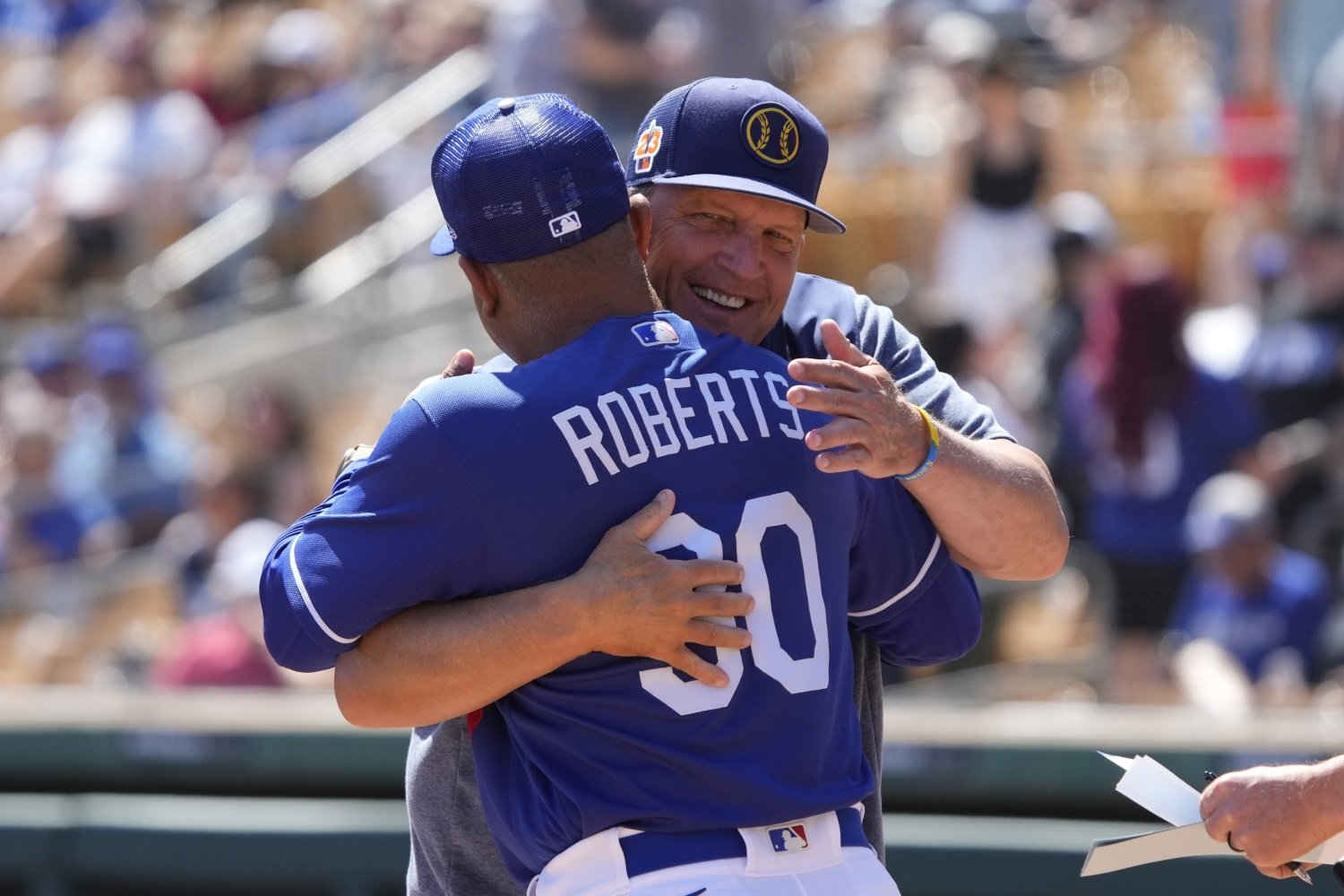 Brewers fans well remember the 48-hour stretch in January 2018 during which the Christian Yelich trade and the signing of Lorenzo Cain were announced. It was an incredibly exciting time for fans, who saw the team take the outfield from decent to one of the best in the majors (Ryan Braun and Eric Thames – no slouches at the plate – were the third and fourth options for the Crew), and those moves fueled a run to Game 7 of the 2018 National League Championship Series. Fans are eager to see a similar one-two punch, given the pending free agency of Corbin Burnes and Willy Adames. But that very circumstance may make waiting until 2024-2025 to make the big moves worthwhile. The 2024 Roster With the signing of Rhys Hoskins to handle first base, the Brewers do not have any glaring holes in their roster. Tyler Black is likely to handle third base, since his bat has nothing left to prove in the minors. Brice Turang is a very good defender at second base (or even shortstop). Andruw Monasterio provides solid performance at second, third, and shortstop as the top bench option, with Oliver Donn, Owenr Miller, and Vinny Capra as additional depth on the 40-man roster. Brock Wilken could be poised to rocket up the minor-league system. Adames has shortstop locked down for at least the coming year. Catcher has William Contreras, perhaps soon to be joined by Jeferson Quero, and quite possibly Wes Clarke (who is more likely depth at first base and DH, but he's seen significant time behind the plate, and his bat is much better than those of Eric Haase and Austin Nola). Outfield and designated hitter are more than covered by Jackson Chourio, Sal Frelick, Joey Wiemer, Garrett Mitchell, and Christian Yelich. If Blake Perkins or Chris Roller see a lot of time in Milwaukee in 2024, things have deteriorated badly for the Crew. Assuming a six-man rotation of Corbin Burnes, Freddy Peralta, Wade Miley, Joe Ross, Colin Rea, and Aaron Ashby, the Crew is very solid there. That doesn’t include the Triple-A depth of Janson Junk (on the 40-man, but possibly NPB-bound) or non-roster invitees Evan McKendry, Carlos Rodriguez, Robert Gasser, and Jacob Misiorowski. Then, of course, there is the bullpen, which rolls out Devin Williams, Abner Uribe, Joel Payamps, Trevor Megill, and Hoby Milner as the top late-inning options, along with long-relief ace Bryse Wilson. Further down, there is plenty of depth in the form of Elvis Peguero, Taylor Clarke, Clayton Andrews, Ethan Small, and Thyago Vieira. Keep in mind, Gasser, Rodríguez, and Misiorowski could end up in the pen sometime in the latter part of 2024 (see the Crew’s 2018 run). At this point, the Crew looks pretty locked down for the season, and should be able to hold off the Cardinals, Reds, and Cubs for the NL Crown. 2025 Looks Less Settled If the Crew of 2024 looks like a favorite for another division title, the 2025 Crew will have a lot more uncertainty. Burnes will definitely be gone via free agency, while there remains at least some chance of an extension or a re-upping with Adames. Both are top-15 players at their positions, and would be huge losses. Contreras will be entering arbitration, and his performance will command a substantial (though still very affordable) price, even in his first arbitration year. Rhys Hoskins has an opt-out after 2024. Wade Miley (assuming the option is not exercised) and Joe Ross will be free agents, putting a lot of the rotation depth on the shoulders of young pitchers. Peralta-Ashby-Rea is a step down from the Burnes-Woodruff-Peralta trio the Crew ran out to start 2023. The Crew could also have to decide about whether to hold Williams and Freddy Peralta for a 2025/2026 run or deal them before they reach free agency, after 2025 for Williams and after 2026 for Peralta. (Extensions may not be options barring a resolution of the Bally Sports situation.) Rodríguez, Misiorowski, and Gasser could very well end up in the 2025 rotation along with Peralta, Ashby, and Rea after their bullpen seasoning in 2024. Still, the team may want to hedge a little. Misiorowski could end up sticking in the pen (see Josh Hader) long-term, and Rea is unlikely to be around past next year. The bullpen would see similar uncertainty, as Milner joins Williams as potential free agents after 2025. The Crew may want some blue-chip talent there behind Uribe. That said, many key contributors or potential contributors would be in pre-arbitration years: Frelick, Mitchell, Wiemer, Turang, Monasterio, Black, Quero, Uribe. There are other prospects who could rocket up the system (Yophery Rodriguez, Juan Baez, and Cooper Pratt come to mind), make their way up in a longer grind (see Ernesto Martinez), or otherwise break out (Wes Clarke). The only major contracts, assuming Adames passes on a qualifying offer, would be Yelich’s $26-million salary, Miley’s $12 million (assuming a mutual option is exercised), $8 million for Peralta (assuming a team option is exercised), and about $17 million for Hoskins (provided he doesn’t opt out). This does not includes prospects forcing their way up the ladder in the minors. In short, there will be more salary flexibility, even with the uncertainty of the Bally Sports collapse hanging over the Crew. Overview There is a very simple reason that Matt Arnold didn’t replicate the Yelich-Cain double move from the 2017-2018 offseason, beyond the difficulty of doing so: The Crew didn’t need to. As things stand now, the 2024-2025 offseason could be much different. The Crew will be going in with a lot of good players but some potential holes, and could be looking to fill them for the long term, depending on how things go in the minors. They may also be seeking some relief for congestion at certain positions (outfield would be one, barring a move to first base or DH by Yelich, which then closes it off for Clarke/Martinez). In short, Brewers fans who felt disappointed because they didn’t see a pair of big blockbuster moves in the 2023-2024 offseason have to just take some advice from the old Brooklyn Dodgers teams: Wait till next year.
 -
I'd agree with breaking Ashby in as a reliever, too. Control his innings some, build him up as an eventual starter later in the season. Gasser and Rodriguez could start, but I'm not opposed to using them in the pen alongside Misiorowski in a repeat of the 2018 strategy used with Burnes and Woodruff.
-
Plus, having natural center fielders means you have a lot more range - and that means they get to some balls that may otherwise drop in for hits. That prevents runs.
-
If the Crew makes Yelich the primary DH (120 games), much of this resolves itself. Frelick in left field, Chourio in right, Mitchell/Wiemer platoon in center, although you could rotate them around for matchups/days off. Wiemer and Mitchell effectively platoon as the 4th outfielder on the squad.
-
I'm inclined to rotate the four as well, have the position player group look like this: lf: Frelick rf: Chourio dh: Yelich c: Contreras 3b: Black 1b; Hoskins cf: Mitchell/Wiemer ss: Adames 2b: Turang/Monasterio bench Haase (eventually Quero), Turang/Monasterio, Miller, Mitchell/Wiemer
-
In 1986, the Brewers gave a one-time prospect with the San Francisco Giants a non-roster invitation to spring training. That invitee, Rob Deer, won a roster spot and went on to post a monster season, leading the squad with 33 home runs and 86 RBI. Could the 2024 non-roster invitees have similar impact? Image courtesy of © Curt Hogg / Milwaukee Journal Sentinel / USA TODAY NETWORK Just last season, Andruw Monasterio, Colin Rea, and Sal Frelick, who got invites to big-league spring training from off the 40-man roster, and they ultimately played key roles in the Crew’s run to a division title. This year’s crop of non-roster invitees (NRIs) are homegrown, for the most part. Several could also play big roles for the team, the way Deer did in 1986. Let’s look over these players. Potential Opening-Day Starter Tyler Black The signing of Rhys Hoskins gives the Brewers some help at the top of the order. He’ll either bat second or fourth, joining Frelick, Christian Yelich, and William Contreras at the top of an increasingly potent batting order. Who bats fifth? That could very well be Black, whose bat has nothing left to prove in the minors, and who slots in nicely at third base, another position the Crew is looking to upgrade, even with Monasterio’s solid performance in 2023. Eventually On The 26-Man In 2024 Carlos Rodriguez Rodriguez has been an outlier, which made him a contender for Ace of the Future. As an NRI, he probably won’t break camp with the major-league squad in late March, but that doesn’t mean there won’t be an impact. While it’s possible he could end up in the rotation at some point, it also seems possible the Brewers could use him the way they used eventual co-aces Brandon Woodruff and Corbin Burnes in their 2018 run. Jacob Misiorowski Like Rodriguez, Misiorowski is a contender for Ace of the Future, but primarily due to his stuff. Like Rodriguez, he probably won't break camp with the Crew. Misiorowski is still trying to build endurance as a starter, after averaging less than four innings a game in 2023. That said, he is probably the most likely to be called up if the Crew wants to bolster their bullpen for the 2024 pennant run, simply because he would be a high-end late-inning option in the majors as things stand right now. Robert Gasser Gasser, best known as being the last bit of return the Brewers kept in the Josh Hader trade, also is not likely to break camp with the big-league Crew. That said, of the top prospects, he could be the one most likely to slot into the rotation when called upon. Potential Unsung Heroes Evan McKendry McKendry doesn’t get the hype that Rodriguez, Misiorowski, and Gasser receive. That said, he has proved himself to be a capable back-end starter. Why might he end up an unsung hero? It could very well be that it will be his turn in the rotation, should the Crew need someone to handle a game for an injured starter or a second game of a doubleheader. Tobias Myers Like McKendry, Myers hasn’t received the hype of the top pitching prospects. In this case, he is more like Andruw Monasterio, given that he arrived as a minor-league free agent in the previous offseason and received an NRI this year. Again, his call-up might come based on a rotation spot. Still, Monasterio and Rea have both demonstrated a player doesn’t have to be a top prospect to be a big hero. Wes Clarke Clarke has been the subject of multiple pieces recently, due to a breakout season with Double-A Biloxi that saw him split time between first base and catcher (where he backed up top prospect Jeferson Quero). As noted elsewhere, he outperformed the highly-touted Jackson Chourio in several categories. While the signing of Rhys Hoskins appears to have blocked him for the short term at first, his work with Rodriguez and Misiorowski in Biloxi may give him an edge over Austin Nola if the Crew looks for help behind the plate beyond Quero. Brock Wilken In one sense, there is no middle ground if Wilken is in Milwaukee by the end of the 2024 season. He will have either forced his way onto the major-league roster with a dominating performance, or the Brewers will have had to call him up due to failures and/or injuries affecting Black, Jake Bauers, Hoskins, and perhaps one or two others. If it is due to performance, Wilken would probably end up displacing either Black (at third) or Hoskins (at first). Overview Non-roster invitees are not always tracked over the years, yet Brewers history has seen some of the biggest impacts come from these players who got a chance with their invitation to spring training – and took it deep. Which of this year’s invitees will become the next big hero, following the path of Rob Deer, Jace Peterson, Colin Rea, and Andruw Monasterio? Let us know in the comments below! View full article
-
Which 2024 Brewers Non-Roster Invitees Could Make a Major Difference?
Harold Hutchison posted an article in Brewers
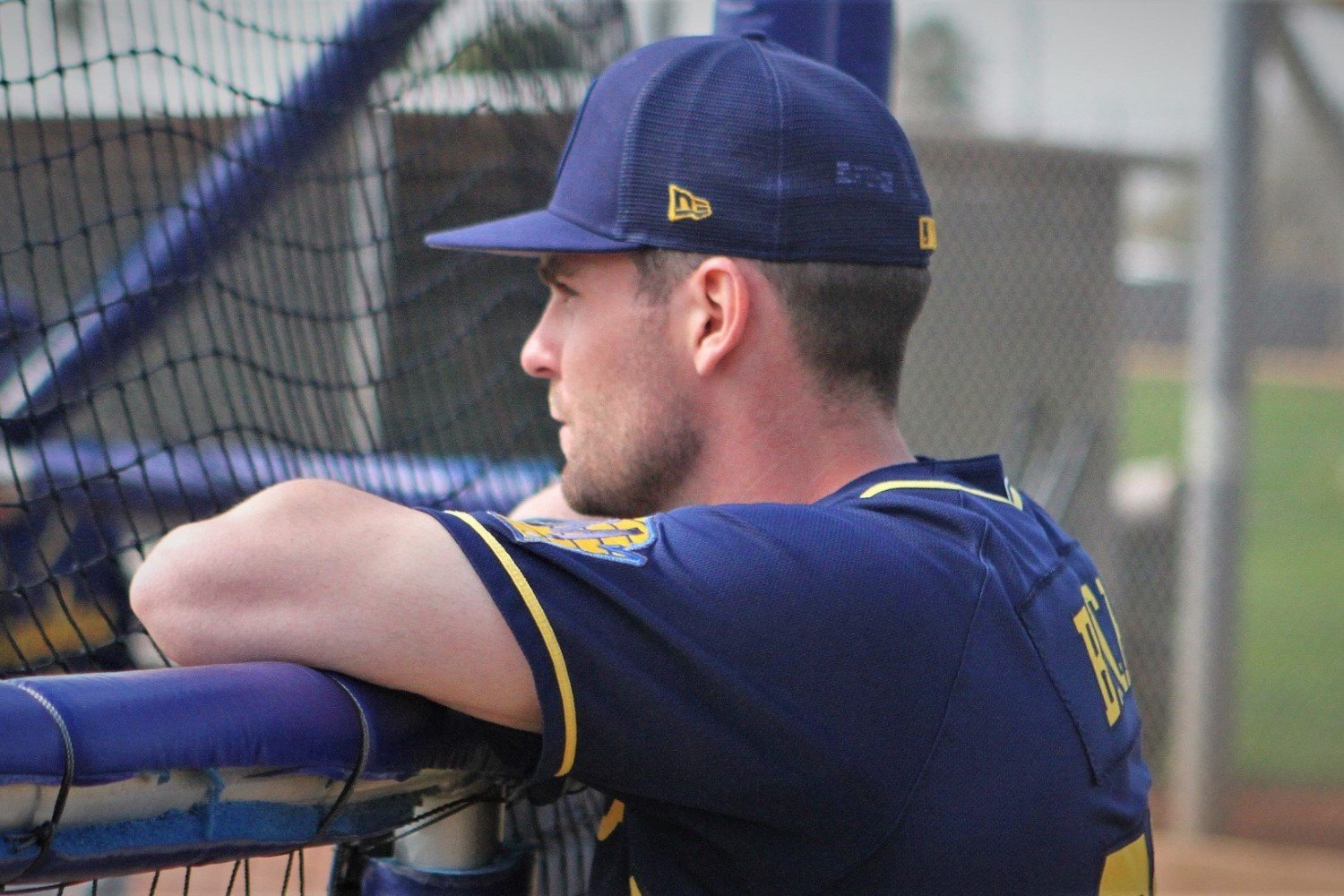 Just last season, Andruw Monasterio, Colin Rea, and Sal Frelick, who got invites to big-league spring training from off the 40-man roster, and they ultimately played key roles in the Crew’s run to a division title. This year’s crop of non-roster invitees (NRIs) are homegrown, for the most part. Several could also play big roles for the team, the way Deer did in 1986. Let’s look over these players. Potential Opening-Day Starter Tyler Black The signing of Rhys Hoskins gives the Brewers some help at the top of the order. He’ll either bat second or fourth, joining Frelick, Christian Yelich, and William Contreras at the top of an increasingly potent batting order. Who bats fifth? That could very well be Black, whose bat has nothing left to prove in the minors, and who slots in nicely at third base, another position the Crew is looking to upgrade, even with Monasterio’s solid performance in 2023. Eventually On The 26-Man In 2024 Carlos Rodriguez Rodriguez has been an outlier, which made him a contender for Ace of the Future. As an NRI, he probably won’t break camp with the major-league squad in late March, but that doesn’t mean there won’t be an impact. While it’s possible he could end up in the rotation at some point, it also seems possible the Brewers could use him the way they used eventual co-aces Brandon Woodruff and Corbin Burnes in their 2018 run. Jacob Misiorowski Like Rodriguez, Misiorowski is a contender for Ace of the Future, but primarily due to his stuff. Like Rodriguez, he probably won't break camp with the Crew. Misiorowski is still trying to build endurance as a starter, after averaging less than four innings a game in 2023. That said, he is probably the most likely to be called up if the Crew wants to bolster their bullpen for the 2024 pennant run, simply because he would be a high-end late-inning option in the majors as things stand right now. Robert Gasser Gasser, best known as being the last bit of return the Brewers kept in the Josh Hader trade, also is not likely to break camp with the big-league Crew. That said, of the top prospects, he could be the one most likely to slot into the rotation when called upon. Potential Unsung Heroes Evan McKendry McKendry doesn’t get the hype that Rodriguez, Misiorowski, and Gasser receive. That said, he has proved himself to be a capable back-end starter. Why might he end up an unsung hero? It could very well be that it will be his turn in the rotation, should the Crew need someone to handle a game for an injured starter or a second game of a doubleheader. Tobias Myers Like McKendry, Myers hasn’t received the hype of the top pitching prospects. In this case, he is more like Andruw Monasterio, given that he arrived as a minor-league free agent in the previous offseason and received an NRI this year. Again, his call-up might come based on a rotation spot. Still, Monasterio and Rea have both demonstrated a player doesn’t have to be a top prospect to be a big hero. Wes Clarke Clarke has been the subject of multiple pieces recently, due to a breakout season with Double-A Biloxi that saw him split time between first base and catcher (where he backed up top prospect Jeferson Quero). As noted elsewhere, he outperformed the highly-touted Jackson Chourio in several categories. While the signing of Rhys Hoskins appears to have blocked him for the short term at first, his work with Rodriguez and Misiorowski in Biloxi may give him an edge over Austin Nola if the Crew looks for help behind the plate beyond Quero. Brock Wilken In one sense, there is no middle ground if Wilken is in Milwaukee by the end of the 2024 season. He will have either forced his way onto the major-league roster with a dominating performance, or the Brewers will have had to call him up due to failures and/or injuries affecting Black, Jake Bauers, Hoskins, and perhaps one or two others. If it is due to performance, Wilken would probably end up displacing either Black (at third) or Hoskins (at first). Overview Non-roster invitees are not always tracked over the years, yet Brewers history has seen some of the biggest impacts come from these players who got a chance with their invitation to spring training – and took it deep. Which of this year’s invitees will become the next big hero, following the path of Rob Deer, Jace Peterson, Colin Rea, and Andruw Monasterio? Let us know in the comments below!
- 1 comment
-
- 1
-
-
- tyler black
- carlos f rodriguez
- (and 4 more)
-
They probably hoped to do so last year at Nashville, then Luis Urias injured his hamstring on opening day, and that plan went by the wayside. I think no professional team's plans for a season survive the first game, and it may go back to them failing to survive the first day of training camp/spring training.
-
Haase's time in Milwaukee ends about as soon as Quero's called up to Milwaukee. Nola may well have an opt-out in his deal should a MLB slot open up. That puts Navarreto as the lone catcher. Clarke's found plenty of time in past seasons. Even if he is at DH/1B, they can still coach him up.
-
Again, I'll just point to what we saw with the last two acquisitions at catcher. Omar Narvaez and William Contreras both came in with questions about their defensive chops. By the time Narvaez left as a free agent, the questions were not about his glove. Contreras also made huge improvements on defense. Given the team's track record of improving catchers' defense, and given that Clarke got more starts behind the plate than Biloxi's "official" backup, Nick Kahle, in 2023, I think they could improve Clarke to be at least average behind the plate. Lots of baseball to be played, but I think the Crew has shown they can improve catchers' defensive issues and make them decent behind the plate, and Wes Clarke can be the latest in that line.
-
I can do it in about one sentence. Several Brewers who received non-roster invitations to spring training, notably Tyler Black, Wes Clarke, and Brock Wilken, could likely provide solid performance at first base for a much cheaper price.
-
The numbers at Biloxi beg to differ. https://www.baseball-reference.com/register/team.cgi?id=eb728882 Clarke and Quero were comparable in fielding percentage, if you double Clarke's 34 games at catcher, he would have had ten errors and eight passed balls to Quero's nine errors and ten passed balls. The only differential was CS%, where Quero threw out 35% and Clarke got only 10%. So, that points to Clarke as a credible #2 catcher who probably hits well enough for a lot of time at 1B/DH, where he also excels.
- 13 replies
-
- 3
-

-
- william contreras
- jeferson quero
- (and 1 more)
-
In one sense, the Brewers seem to be set at catcher, with William Contreras as their starter and under club control through the 2027 season. But for how long will he remain a fixture? Image courtesy of © Michael McLoone-USA TODAY Sports William Contreras got a lot of honors in 2023, but those who follow the farm system are no doubt aware of Jeferson Quero, who will be 21 years old during the 2024 season. Quero, second only to Jackson Chourio on the MLB Pipeline and Brewer Fanatic top Brewers prospects lists, could be in Milwaukee in this season. Then there is Wes Clarke, who posted a monster season of his own alongside Quero and Chourio in Biloxi in 2023. Who will be the Crew’s catcher for the long term? Let’s look each of these players over. The Case for William Contreras Contreras was arguably one of the biggest trade steals in the history of the Brewers, acquired in a three-team trade involving the Oakland A’s and Atlanta Braves during the 2022-2023 offseason that also netted relief pitcher Joel Payamps and minor-league hurler Justin Yeager, for the paltry price of outfielder Esteury Ruiz. Contreras was the team’s MVP for 2023, posting an ,825 OPS with 38 doubles, 17 home runs, and 78 RBI over 141 games (108 as catcher, 33 as designated hitter). While his bat always has been impressive, in Milwaukee, he improved on his defense, which had previously been considered a weakness. Contreras brings the proven track record in making his case to be Milwaukee’s catcher. With an All-Star Game appearance, a Silver Slugger Award, and 11th-place finish in MVP voting in 2023, his résumé is extremely strong. But those very decorations also figured to make him expensive when he becomes arbitration-eligible, starting next winter. At that point, the Brewers' financial disadvantages start to enter the picture and influence decisions. The bankruptcy of Bally Sports is not likely to help matters for the short term. Could the Crew extend Contreras? It’s possible, but it would be pricey. Contreras might be dealt, although probably not for at least two years, and he could fetch a huge return given his level of performance. The Case for Jeferson Quero Jeferson Quero was not as highly-touted as other prospects in the July 2019 international free agent class, but the young catcher has been a huge hit. His defense was already strong, and Quero has minor-league Gold Glove awards for that, but it became obvious that his bat wasn’t horrible, either. Indeed, at just 20, Quero posted a .779 OPS in Biloxi in 2023, after racking up a .781 OPS between Low-A Carolina and High-A Wisconsin in 2022, combining for 26 homers in those years. Quero’s OBP skills have also improved, making him a legit threat at the plate. If there is a question mark for Quero, it’s his health. He has made trips to the injured list in each of his professional seasons, playing only 23 of 54 games in 2021, 95 out of 130 in 2022, and 95 out of 137 in 2023. That being said, Quero could be locked up in a manner similar to Chourio, giving Milwaukee long-term stability at the position that hasn’t been since since Jonathan Lucroy was with the Crew. At the very least, he will factor into their plans before this season is over--be it as a backup to Contreras, an injury stopgap, or a potential trade chip. The Case for Wes Clarke Clarke was not on many people's radar screens at the start of 2023. That was understandable, given his pedigree: he was a 10th-round pick in 2021. From the beginning, though, Clarke’s offensive profile carried some intrigue. He draws his walks, and generates huge power on contact, at the expense of many strikeouts. But while many think of him as a first baseman, he is arguably going to be the third-best catcher in Maryvale this spring – even with MLB vets Eric Haase and Austin Nola there alongside minor-league veteran Brian Navarreto. In 2023, Clarke broke out big-time, as noted when we discussed him and fellow under-the-radar first base prospect Ernesto Martinez. He outperformed Chourio in multiple statistical categories, and then performed well in the Arizona Fall League, earning an invitation to spring training with the Brewers. Clarke primarily has played first base, but over the last two campaigns, he's spent a lot of time filling in behind the plate, proving very capable when Quero was on the injured list. He made the fringe of the MLB Pipeline top prospect list during the Crew’s flurry of offseason deals. If there is a knock to his performance behind the plate, it is that he doesn’t make runners scared of the potential consequences of attempting larceny on the basepaths, with only a 10% caught stealing rate in 2023. He had higher rates in 2021 and 2022, but in this area, he is clearly a step behind Quero. Still, he’s not a bad option behind the plate, albeit he is a bat-first option. Then again, so was Contreras when the Crew acquired him. Overview The Brewers may not be set at catcher, but that is not due to a lack of talent at that position. If anything, they have a lot of good options to feel totally locked into any one of them in the long term. That said, the team’s need for help at designated hitter and first base could ease the logjam. Brewers fans should not be surprised if all three of these players are on the team’s major-league roster at some point in 2024, but they also shouldn’t be surprised if the team makes a deal involving one of these players for help elsewhere, be it soon or in 2025 or 2026. View full article
- 13 replies
-
- 1
-
-
- william contreras
- jeferson quero
- (and 1 more)
-
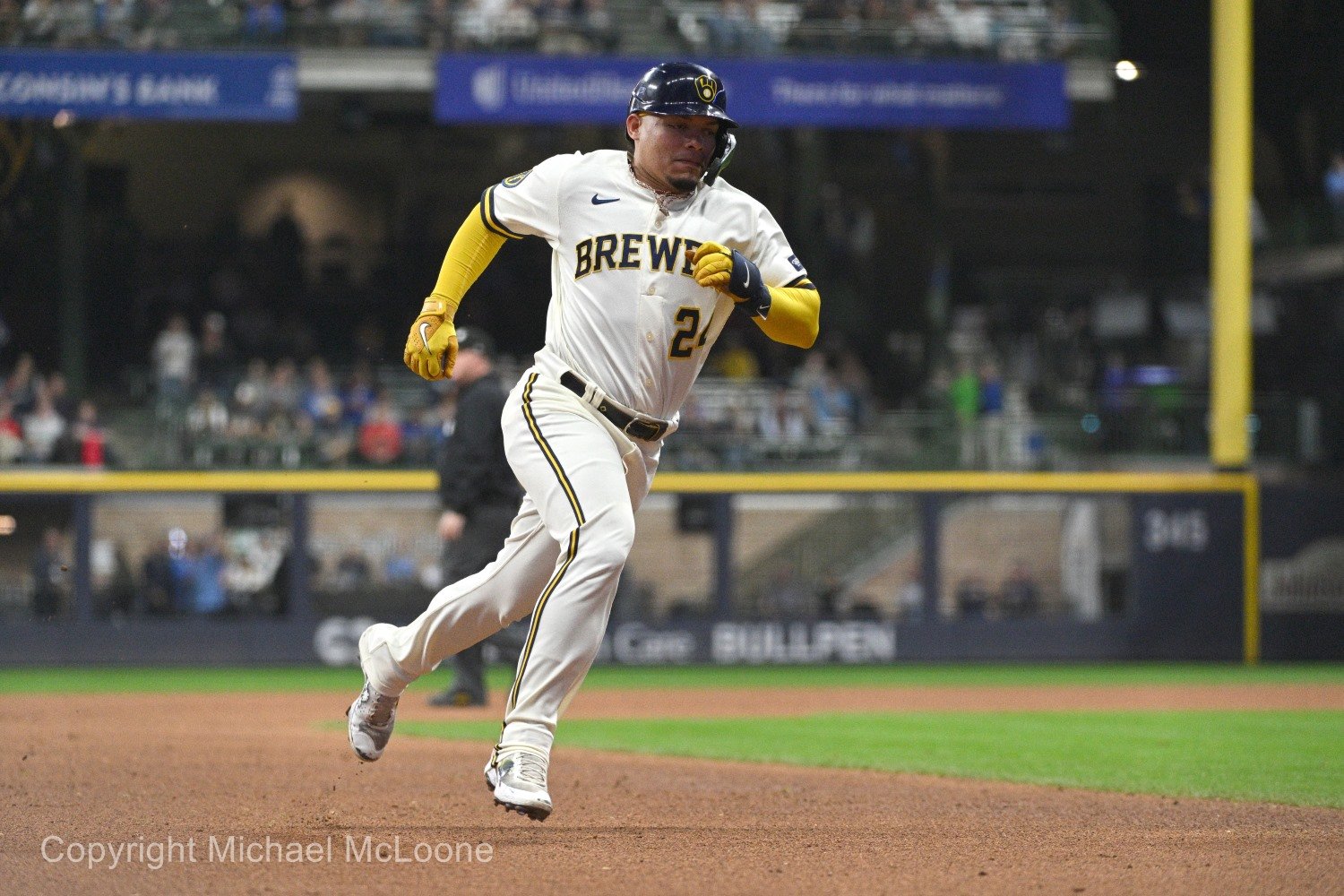 William Contreras got a lot of honors in 2023, but those who follow the farm system are no doubt aware of Jeferson Quero, who will be 21 years old during the 2024 season. Quero, second only to Jackson Chourio on the MLB Pipeline and Brewer Fanatic top Brewers prospects lists, could be in Milwaukee in this season. Then there is Wes Clarke, who posted a monster season of his own alongside Quero and Chourio in Biloxi in 2023. Who will be the Crew’s catcher for the long term? Let’s look each of these players over. The Case for William Contreras Contreras was arguably one of the biggest trade steals in the history of the Brewers, acquired in a three-team trade involving the Oakland A’s and Atlanta Braves during the 2022-2023 offseason that also netted relief pitcher Joel Payamps and minor-league hurler Justin Yeager, for the paltry price of outfielder Esteury Ruiz. Contreras was the team’s MVP for 2023, posting an ,825 OPS with 38 doubles, 17 home runs, and 78 RBI over 141 games (108 as catcher, 33 as designated hitter). While his bat always has been impressive, in Milwaukee, he improved on his defense, which had previously been considered a weakness. Contreras brings the proven track record in making his case to be Milwaukee’s catcher. With an All-Star Game appearance, a Silver Slugger Award, and 11th-place finish in MVP voting in 2023, his résumé is extremely strong. But those very decorations also figured to make him expensive when he becomes arbitration-eligible, starting next winter. At that point, the Brewers' financial disadvantages start to enter the picture and influence decisions. The bankruptcy of Bally Sports is not likely to help matters for the short term. Could the Crew extend Contreras? It’s possible, but it would be pricey. Contreras might be dealt, although probably not for at least two years, and he could fetch a huge return given his level of performance. The Case for Jeferson Quero Jeferson Quero was not as highly-touted as other prospects in the July 2019 international free agent class, but the young catcher has been a huge hit. His defense was already strong, and Quero has minor-league Gold Glove awards for that, but it became obvious that his bat wasn’t horrible, either. Indeed, at just 20, Quero posted a .779 OPS in Biloxi in 2023, after racking up a .781 OPS between Low-A Carolina and High-A Wisconsin in 2022, combining for 26 homers in those years. Quero’s OBP skills have also improved, making him a legit threat at the plate. If there is a question mark for Quero, it’s his health. He has made trips to the injured list in each of his professional seasons, playing only 23 of 54 games in 2021, 95 out of 130 in 2022, and 95 out of 137 in 2023. That being said, Quero could be locked up in a manner similar to Chourio, giving Milwaukee long-term stability at the position that hasn’t been since since Jonathan Lucroy was with the Crew. At the very least, he will factor into their plans before this season is over--be it as a backup to Contreras, an injury stopgap, or a potential trade chip. The Case for Wes Clarke Clarke was not on many people's radar screens at the start of 2023. That was understandable, given his pedigree: he was a 10th-round pick in 2021. From the beginning, though, Clarke’s offensive profile carried some intrigue. He draws his walks, and generates huge power on contact, at the expense of many strikeouts. But while many think of him as a first baseman, he is arguably going to be the third-best catcher in Maryvale this spring – even with MLB vets Eric Haase and Austin Nola there alongside minor-league veteran Brian Navarreto. In 2023, Clarke broke out big-time, as noted when we discussed him and fellow under-the-radar first base prospect Ernesto Martinez. He outperformed Chourio in multiple statistical categories, and then performed well in the Arizona Fall League, earning an invitation to spring training with the Brewers. Clarke primarily has played first base, but over the last two campaigns, he's spent a lot of time filling in behind the plate, proving very capable when Quero was on the injured list. He made the fringe of the MLB Pipeline top prospect list during the Crew’s flurry of offseason deals. If there is a knock to his performance behind the plate, it is that he doesn’t make runners scared of the potential consequences of attempting larceny on the basepaths, with only a 10% caught stealing rate in 2023. He had higher rates in 2021 and 2022, but in this area, he is clearly a step behind Quero. Still, he’s not a bad option behind the plate, albeit he is a bat-first option. Then again, so was Contreras when the Crew acquired him. Overview The Brewers may not be set at catcher, but that is not due to a lack of talent at that position. If anything, they have a lot of good options to feel totally locked into any one of them in the long term. That said, the team’s need for help at designated hitter and first base could ease the logjam. Brewers fans should not be surprised if all three of these players are on the team’s major-league roster at some point in 2024, but they also shouldn’t be surprised if the team makes a deal involving one of these players for help elsewhere, be it soon or in 2025 or 2026.
- 13 comments
-
- 1
-
-
- william contreras
- jeferson quero
- (and 1 more)
-
The acquisition of Coleman Crow from the Mets was notable for the steep price the Brewers paid for a pitcher who will miss most of 2024 recovering from Tommy John surgery. But is Crow the only type of outlier the Brewers should look for, or should they expand their horizons when it comes to outliers? Image courtesy of Benny Sieu-USA TODAY Sports (photo of Suter), Carlos Hurtado (photo of Rodriguez) There are some other outliers besides the ones that encouraged the Crew to get Crow that could also point to success. Let’s do so in the form of some pitchers, two current (albeit in the minors) and one former, as well as recapping Crow. Coleman Crow – Spin Rates and Vertical Approach Angle In Brewer Fanatic’s article on the deal that brought Crow to Milwaukee, his spin rates and Vertical Approach Angle (VAA) were seen as outliers that could point to success. His MLB Pipeline write-up also mentions the spin rate and notes that his fastball tends to induce a lot of ground balls, and his slider tends to get hitters to whiff. The Brewer Fanatic article compared Crow’s fastball to Freddy Peralta, who has developed into a definite top-of-the-rotation pitcher whose only obstacles to being an Opening Day starter for the past three years were Corbin Burnes and Brandon Woodruff. Add in some deception, per MLB Pipeline, and you have someone who, like Brent Suter did a decade ago, manages to pitch beyond what his “stuff” would indicate. Crow was selected in the 28th round of the 2019 draft – not quite Suter territory, but still quite a steal for the Angels, who got Eduardo Escobar as an infield fill-in. Not a bad return for a late-round pick. Crow now has netted the Mets a solid outfielder and a good back-end starter. Brent Suter - Performance Suter was a 31st-round draft pick that hung at the fringes of the Brewer Fanatic’s top prospect list in its early iterations. In this case, the big outlier was his performance in the 2015 and 2016 seasons. Despite not dominating hitters (he only had 6.3 strikeouts per nine innings), he performed. In Double-A Biloxi, he posted a 1.96 ERA. The real stunner was Colorado Springs, where he posted a 3.31 ERA when half the games were in one of the most hitter-friendly parks in professional baseball. How hitter-friendly was Colorado Springs? Josh Hader, one of the most dominating pitchers in baseball (who signed a five-year, $95 million contract with the Astros), posted a 5.22 ERA in that venue in 2016. Suter’s ERA at Colorado Springs was 3.50 that year, while he posted a 5.36 strikeout-to-walk ratio pitching half the time in that batter’s paradise. That, folks, is an outlier worth noting. Put it this way, in 2016, Hader, a pitcher who was undisputedly talented and considered a top prospect, went 1-7 with a 5.22 ERA in Colorado Springs over 14 starts. Now, nobody will dispute that Hader turned out just fine, but it’s pretty clear that, as a rule, even the most talented pitchers got hit so hard in Colorado Springs that baby seals meeting Canadian fishermen in the Arctic felt bad for them. Suter may not have had great stuff, but he was making extremely effective use of the stuff he had. From 2016-2022, he became a solid member of the Brewers' pitching staff. Carlos F. Rodriguez – The Arsenal We touched on Rodriguez when debating whether he or Jacob Misiorowski would claim the title of Ace of the Future. Rodriguez’s outlier is his arsenal. MLB Pipeline’s writeup on Rodriguez gives him a 55 grade for both his fastball and curve. That is somewhat misleading. Rodriguez throws seven pitches, ranging from a slow curve in the 60s to a fastball that tops out at 96 miles per hour. Part of that arsenal is three different types of fastball: A four-seam, a sinking fastball, and a cutter. In addition, he has two different curveballs – one at 75 miles per hour, the other that drops into the 60s. Tack on a change-up and a slider that are both solid pitches, and the scope of the arsenal is an outlier in and of itself. If Rodriguez can avoid tipping pitches (an issue Freddy Peralta dealt with for part of the 2023 season), this arsenal could be extremely confusing for opposing hitters. In and of itself, knowing a pitcher has seven pitches is already daunting for a hitter. But with Rodriguez, sitting on a fastball still forces the hitter to guess which fastball is coming, and the same goes for a curve. Melvin Hernandez – Age A 2.06 ERA, 1.17 WHIP, and a 3.33 K/BB ratio are not bad figures in and of themselves and are enough to make people take note of Hernandez. Now consider that Hernandez posted those numbers at age 16 for a significant part of the 2023 season when the average age of the hitters he faced in the Dominican Summer League was 17.7. How Hernandez did it isn’t easy to tell from the stat lines, but we know what did – and didn’t – happen. He struck out 7.7 batters per nine innings, a solid figure. He issued only nine walks in 35 innings pitched. He gave up just one gopher ball. He did that while standing at 5’11” and 139 pounds. Given his age, it’s a safe bet that Hernandez has more growing to do. With the new facility in the Dominican Republic opening up this offseason, Hernandez could do well, and there are also the resources available stateside (since Hernandez arguably has nothing left to prove in the DSL). Overview Crow, Suter, Rodriguez, and Hernandez are at different points in their professional baseball journeys. But all of them have made their marks as outliers. When looking for the outliers, it might be good to look for stuff beyond spin rates and VAA. The Crew might find a pitching gem or three. View full article
-
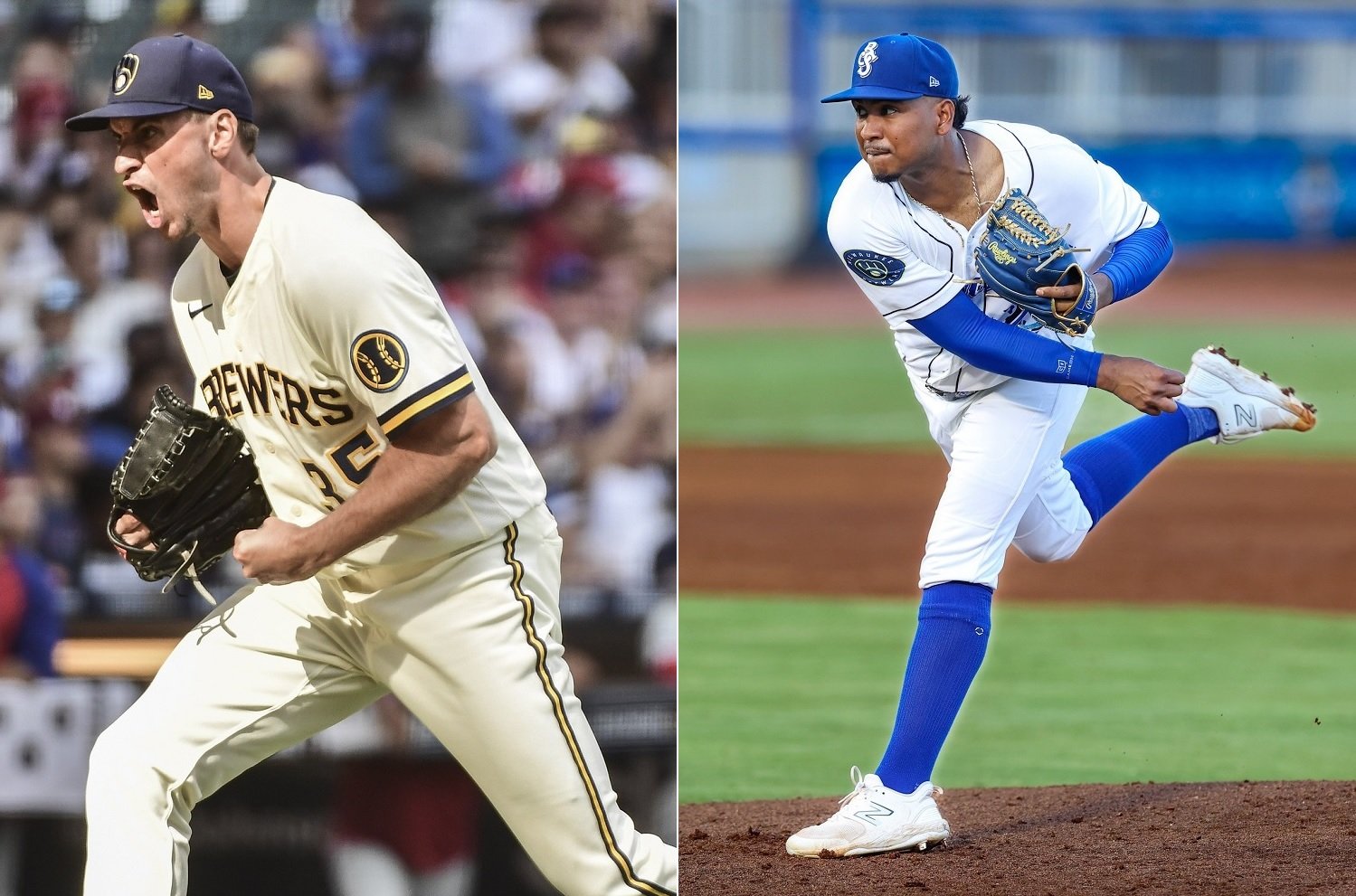 There are some other outliers besides the ones that encouraged the Crew to get Crow that could also point to success. Let’s do so in the form of some pitchers, two current (albeit in the minors) and one former, as well as recapping Crow. Coleman Crow – Spin Rates and Vertical Approach Angle In Brewer Fanatic’s article on the deal that brought Crow to Milwaukee, his spin rates and Vertical Approach Angle (VAA) were seen as outliers that could point to success. His MLB Pipeline write-up also mentions the spin rate and notes that his fastball tends to induce a lot of ground balls, and his slider tends to get hitters to whiff. The Brewer Fanatic article compared Crow’s fastball to Freddy Peralta, who has developed into a definite top-of-the-rotation pitcher whose only obstacles to being an Opening Day starter for the past three years were Corbin Burnes and Brandon Woodruff. Add in some deception, per MLB Pipeline, and you have someone who, like Brent Suter did a decade ago, manages to pitch beyond what his “stuff” would indicate. Crow was selected in the 28th round of the 2019 draft – not quite Suter territory, but still quite a steal for the Angels, who got Eduardo Escobar as an infield fill-in. Not a bad return for a late-round pick. Crow now has netted the Mets a solid outfielder and a good back-end starter. Brent Suter - Performance Suter was a 31st-round draft pick that hung at the fringes of the Brewer Fanatic’s top prospect list in its early iterations. In this case, the big outlier was his performance in the 2015 and 2016 seasons. Despite not dominating hitters (he only had 6.3 strikeouts per nine innings), he performed. In Double-A Biloxi, he posted a 1.96 ERA. The real stunner was Colorado Springs, where he posted a 3.31 ERA when half the games were in one of the most hitter-friendly parks in professional baseball. How hitter-friendly was Colorado Springs? Josh Hader, one of the most dominating pitchers in baseball (who signed a five-year, $95 million contract with the Astros), posted a 5.22 ERA in that venue in 2016. Suter’s ERA at Colorado Springs was 3.50 that year, while he posted a 5.36 strikeout-to-walk ratio pitching half the time in that batter’s paradise. That, folks, is an outlier worth noting. Put it this way, in 2016, Hader, a pitcher who was undisputedly talented and considered a top prospect, went 1-7 with a 5.22 ERA in Colorado Springs over 14 starts. Now, nobody will dispute that Hader turned out just fine, but it’s pretty clear that, as a rule, even the most talented pitchers got hit so hard in Colorado Springs that baby seals meeting Canadian fishermen in the Arctic felt bad for them. Suter may not have had great stuff, but he was making extremely effective use of the stuff he had. From 2016-2022, he became a solid member of the Brewers' pitching staff. Carlos F. Rodriguez – The Arsenal We touched on Rodriguez when debating whether he or Jacob Misiorowski would claim the title of Ace of the Future. Rodriguez’s outlier is his arsenal. MLB Pipeline’s writeup on Rodriguez gives him a 55 grade for both his fastball and curve. That is somewhat misleading. Rodriguez throws seven pitches, ranging from a slow curve in the 60s to a fastball that tops out at 96 miles per hour. Part of that arsenal is three different types of fastball: A four-seam, a sinking fastball, and a cutter. In addition, he has two different curveballs – one at 75 miles per hour, the other that drops into the 60s. Tack on a change-up and a slider that are both solid pitches, and the scope of the arsenal is an outlier in and of itself. If Rodriguez can avoid tipping pitches (an issue Freddy Peralta dealt with for part of the 2023 season), this arsenal could be extremely confusing for opposing hitters. In and of itself, knowing a pitcher has seven pitches is already daunting for a hitter. But with Rodriguez, sitting on a fastball still forces the hitter to guess which fastball is coming, and the same goes for a curve. Melvin Hernandez – Age A 2.06 ERA, 1.17 WHIP, and a 3.33 K/BB ratio are not bad figures in and of themselves and are enough to make people take note of Hernandez. Now consider that Hernandez posted those numbers at age 16 for a significant part of the 2023 season when the average age of the hitters he faced in the Dominican Summer League was 17.7. How Hernandez did it isn’t easy to tell from the stat lines, but we know what did – and didn’t – happen. He struck out 7.7 batters per nine innings, a solid figure. He issued only nine walks in 35 innings pitched. He gave up just one gopher ball. He did that while standing at 5’11” and 139 pounds. Given his age, it’s a safe bet that Hernandez has more growing to do. With the new facility in the Dominican Republic opening up this offseason, Hernandez could do well, and there are also the resources available stateside (since Hernandez arguably has nothing left to prove in the DSL). Overview Crow, Suter, Rodriguez, and Hernandez are at different points in their professional baseball journeys. But all of them have made their marks as outliers. When looking for the outliers, it might be good to look for stuff beyond spin rates and VAA. The Crew might find a pitching gem or three.
 -
I'd only deal one of Mitchell or Henderson, probably Mitchell if a gun was to my head. I would also flip Yelich and Frelick. Let Frelick lead off and use his speed. Have Yelich drive him in.
- 6 replies
-
- 1
-
-
- christian yelich
- lorenzo cain
- (and 2 more)
-
I'd actually look at a three-team deal with Burnes going to a team, who sends their prospects to Miami, who sends the Crew Arraez. Here's one I worked out with the Astros. https://www.baseballtradevalues.com/trades/161174 Brewers get: IF/DH Luis Arraez Astros get: RHP Corbin Burnes Marlins get: OF Jacob Melton and RP Bryan Abreu Brewers line-up after the deal: CF: Frelick 1B: Arraez DH: Yelich C: Contreras RF: Mitchell/Wiemer SS: Adames 3B: Black LF: Chourio 2B: Turang/Monasterio The Crew can then see how things go in 2024, not just with trying to extend Arraez, but how Wes Clarke and Ernesto Martinez develop at first, and how Wilken progresses. Then. they can flip Arraez or if they can reach an extension... then Frelick and Arraez become a real potent 1-2 punch.
-
I've looked at Dorrian a bit, too. Will admit, his time at short struck me (who usually follows stats) as not totally embarrassing, and that left-handed pop is a very nice fit at American Family Field. To me, the bid red flag is the BB:K ratio regression he had in 2023. Prior to that, his BB rate was quite solid, making him a solid 3TO bat.
-
Haase is just a placeholder until Quero is MLB-ready. Even then, the Brewers have a logjam at catcher that gets interesting if Wes Clarke continues his breakout. Three very solid hitters at catcher, the worst of whom (Clarke) is not an embarrassment, but who could be bumped by either Tyler Black or Brock Wilken at first base (to say nothing of Biloxi teammate Ernesto Martinez). Quero-Contreras becomes the #1 catching group in MLB.
-
Looking at the latest ZIPS projections, one might expect the Brewers will need a lot of help at first base. But could there be some answers for first base down on the farm? Image courtesy of © Dan Powers/USA TODAY NETWORK-Wisconsin / USA TODAY NETWORK When we discussed the battle for Third Baseman of the Future, it was noted that both Tyler Black and Brock Wilken could be options at first base and designated hitter. Neither of them would be atrocious options at the position, but let’s look a little more below the radar of top prospects lists–or even the fringes. The Brewers have two prospects who could make the situation at first interesting. Andruw Monasterio is, perhaps, the best reason why it never hurts to look past the top prospects list. He won the title of Brewer Fanatic Top Rookie in 2023, having never appeared on MLB Pipeline or the BF list. He was a minor-league signee a year and a half before making his impact in the majors. The Crew has two candidates to replicate Monasterio’s surprising contributions and cult hero status in the upper minors, Wes Clarke and Ernesto Martinez. Let’s look them over. The Case For Wes Clarke Here’s a bit of trivia for you: Between Wes Clarke and Jackson Chourio, who had the higher totals for OPS, home runs, doubles, and walks in 2023? It wasn’t the guy who signed a record contract this offseason. That’s right. Clarke, a 10th-round pick in the 2021 draft, topped Chourio in those four categories, and finished a respectable second in RBI. Clarke primarily manned first base for the Shuckers, but also saw a lot of time behind the plate when Jeferson Quero was on the injured list. As if his monster season in Biloxi wasn’t enough, Clarke then went to the Arizona Fall League and posted a 1.002 OPS, with another three doubles, five homers, and 17 walks. Clarke is a fairly extreme three-true-outcomes bat, with 45 homers and 172 walks in 806 professional at-bats. That also means he strikes out a lot–272 times in that sample. Still, he did hit for a ,297 average in the AFL. Even if his bat doesn't ultimately reach its ceiling, his ability to fill in behind the plate gives him a chance to be a solid bench asset, with the departure of Victor Caratini. The Crew’s need for a right-handed power bat, though, could get Clarke some at-bats in Milwaukee, especially since William Contreras spends a lot of time at designated hitter, and Eric Haase has been very inconsistent at the plate. Clarke should start the season in Triple-A Nashville, but his relatively rapid rise through the system could point to him being in Milwaukee soon. The Case For Ernesto Martinez Martinez hasn't matched Clarke's smooth, fast progress, partially due to the pandemic in 2020 and a lost 2022 season (he totaled 78 at-bats). But when he has been on the field, the hulking Martinez (6’5”, 250 pounds) flashed a very solid left-handed power bat that looks like it would work well at American Family Field. An international free-agent signing, Martinez first showed promising power and OBP in the Dominican Summer League in 2017, before muddling through in the Arizona Complex the following year, where his OBP skills stayed solid despite a downturn from his DSL stats. In 2019, he posted strong numbers with the Rocky Mountain Vibe before the pandemic. In those years, Martinez looked like a version of Eric Thames, who provided the Crew with solid production at the major-league level between his power and OBP skills. In 2021, he had a huge breakout, posting a .862 OPS with Low-A Carolina after earning a call-up from extended spring training, and proved he was more than just a slugger by stealing 30 bases in 32 attempts and seeing action in center field as well as holding down first base, despite a frame that suggests the former would be difficult. However, Martinez also began missing time with injury–something that turned up big-time in 2022. Martinez, however, rebounded from the lost season in 2023, posting a .754 OPS and solid power numbers with High-A Wisconsin before earning a promotion to Double-A Biloxi and holding his own (.704 OPS). More importantly, he cut down on strikeouts. From 2017-2022, he struck out in 33.5 percent of his at-bats. Given his power and OBP skills, that was understandable, but it made him essentially non-viable as a big-league prospect. But in 2023, he cut that down to 79 strikeouts in 349 at-bats, while still generating good power numbers in pitcher-friendly leagues. Martinez has had a long road, but he’s beaten some long odds and persevered through injuries, and could be a contender for a 40-man spot in the 2024-2025 offseason, a path similar to that of Tyrone Taylor, albeit with far less pedigree. Breakdown While both players have been at the fringe of prospect consideration, the numbers indicate that they could be a decent platoon for the Crew in the 2025 timeframe at a very cheap price (you can thank the Bally Sports bankruptcy for the financial uncertainty). It would not be a horrible option at first base; both have been solid defensively, but they also backfill other positions (Clarke is a decent backstop, and Martinez showed he can handle the outfield in a pinch) and they hit well enough to be plugged in at designated hitter. In essence, like the case of Ace of the Future and somewhat similarly to Third Baseman of the Future, the Brewers may not be faced with a strict either/or choice here. The platoon option could work well for the team, and these somewhat versatile players, like Cooper Hummel, could even be flipped for help at the trade deadline. Do you view Clarke and/or Martinez as future big-league options? Can they help fill gaps left by the team's reluctance to spend more money for more talented alternatives? Let's discuss it in the comment section. View full article
