Harold Hutchison
-
Posts
6,909 -
Joined
-
Last visited
Content Type
Profiles
Forums
Blogs
Events
News
2026 Milwaukee Brewers Top Prospects Ranking
Milwaukee Brewers Videos
2022 Milwaukee Brewers Draft Picks
Milwaukee Brewers Free Agent & Trade Rumors, Notes, & Tidbits
Guides & Resources
2023 Milwaukee Brewers Draft Picks
2024 Milwaukee Brewers Draft Picks
The Milwaukee Brewers Players Project
2025 Milwaukee Brewers Draft Pick Tracker
2026 Milwaukee Brewers Draft Tracker: Picks & Bonuses
Store
Downloads
Gallery
Everything posted by Harold Hutchison
-
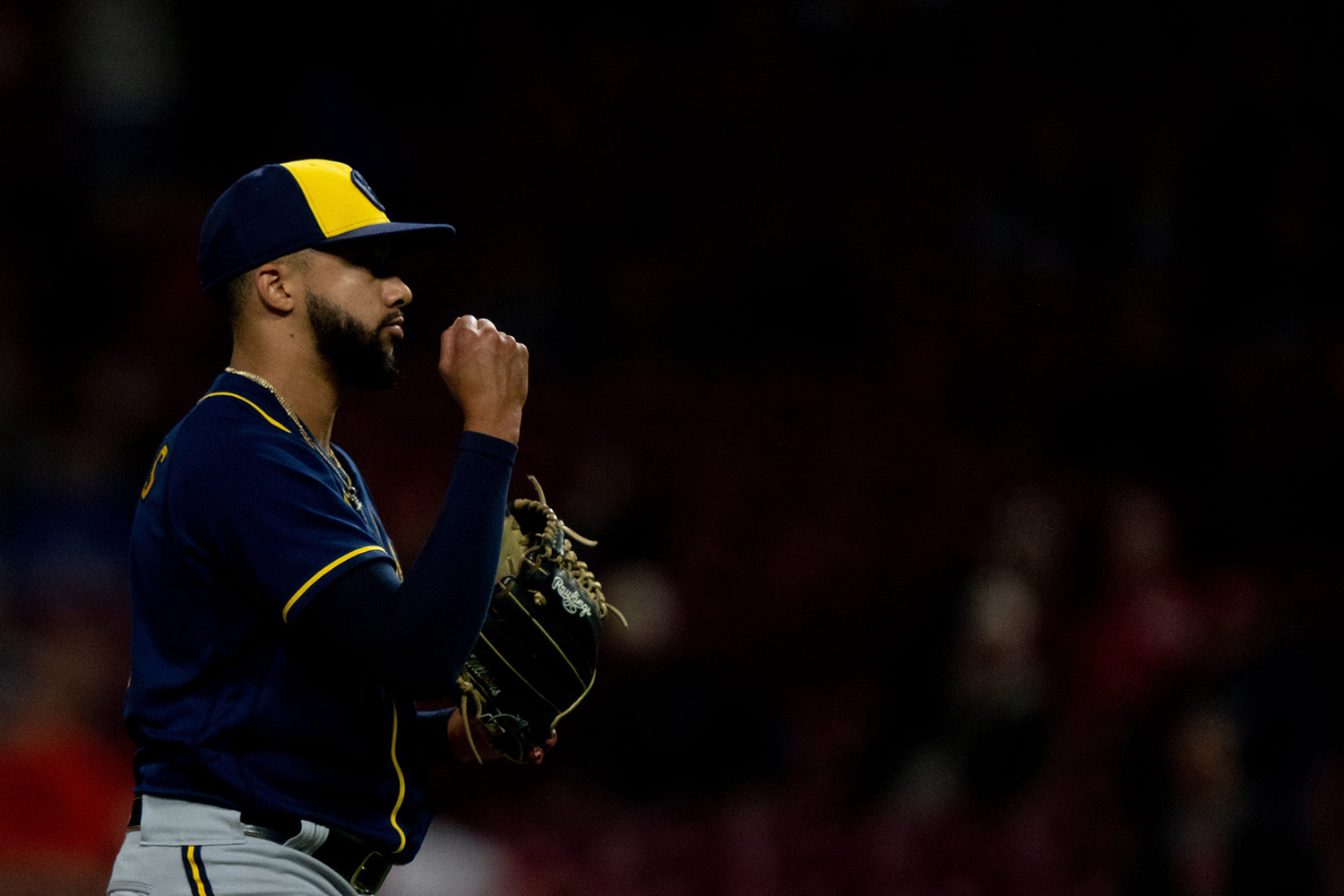 Past Brewers teams may not have had the horses to take the lead in some years, but they often were able to hold the leads they did have. In 2018, Josh Hader, Jeremy Jeffress, and Corey Knebel were the Crew’s equivalent of the “Nasty Boys” the Reds turned to in 1990. With what we’ve seen from the infield, outfield, and starting rotation, the Brewers can take many leads. Will the 2023 bullpen hold them? Let’s look and find out. The 40-Man Roster Devin Williams has been dominating since his Rookie of the Year campaign in 2020, and after the Hader trade, he posted 15 saves. With the departure of Brad Boxberger as a free agent and the decision to put Brent Suter on waivers, the top returning relievers for the Brewers are Peter Strzelecki, Matt Bush, and Hoby Milner. Jake Cousins pitched well when he was healthy; it is a big question if he will need Tommy John surgery. Of the new acquisitions, Javy Guerra looks promising but only really settled in with the Rays last season. Justin Wilson could be a solid lefty, but he will be on the 60-day DL while recovering from last year’s Tommy John surgery. Joel Payamps, acquired in the William Contreras deal, looks solid. Rule V pick Gus Varland struggled in two years at AA since the pandemic. The Brewers have some other resources for bullpen help. Corbin Burnes and Aaron Ashby spent a lot of time in the bullpen when they first reached the majors, and some of those in the mix for rotation jobs could find themselves in the pen. One other note: Abner Uribe and Cam Robinson have both intrigued as relievers in the minors but are more likely to be Opening Day 2024 options than for 2023. Still, they look like a potent 1-2 punch for the Crew in the latter half of the 2020s. Non-Roster Invitees Alex Claudio was a valuable asset prior to the three-hitter rule as a LOOGY for the Crew. Lucas Erceg, a converted third baseman, has flashed potential as a reliever and could be an emergency bench asset in some situations. Thomas Pannone was a swingman in two seasons in MLB from the left side. Robert Stock was a swingman in 2022. Thyago Vieira spent the last three years in Japan and posted some good numbers. X-Factors/Potential Breakouts Aside from Uribe and Robinson, the Brewers could see some real breakouts in the minors. Clayton Andrews was a promising lefty out of the bullpen who also saw some time in center field and whose offensive profile was more of a slap-hitter, but he is coming off two injury-plagued years. Matt Hardy has posted solid numbers from the bullpen since being signed as an undrafted free agent. Michele Vassalotti sparkled in his first year from the bullpen after scuffling as a starter. Ryan Middendorf jumped from the ACL to Biloxi in 2022. James Meeker dominated from the mound at Brisbane this past winter. Pablo Garabitos was an outfielder but could be a future lefty from the pen. In contrast, 2017 25th-round pick Karlos Morales, another lefty, seemed to settle in the bullpen in 2022 between Carolina and Wisconsin. Then, of course, there is always the potential for prospects acquired in trades, given the uncertain long-term future of Willy Adames, Corbin Burnes, Brandon Woodruff, and Eric Lauer, among others. Overview The losses of Boxberger and Suter leave the Brewers with some uncertainty. The cash for the declined option of Boxberger and giving Suter some form of modest extension would have been relatively small; that said, the Brewers front office did very well in finding some potential replacements, and between the NRIs and the farm system, there are some very intriguing options. Williams has the ninth inning locked down, for sure. The question will be, who can step up to help the Crew get to the ninth? Right now, that looks a little thin.
 -
The bullpen has historically been a strength of the Brewers over the years, even in the doldrums of the late 1990s. Today we'll take a look at how it stacks up in 2023. Image courtesy of © Albert Cesare/The Enquirer / USA TODAY NETWORK Past Brewers teams may not have had the horses to take the lead in some years, but they often were able to hold the leads they did have. In 2018, Josh Hader, Jeremy Jeffress, and Corey Knebel were the Crew’s equivalent of the “Nasty Boys” the Reds turned to in 1990. With what we’ve seen from the infield, outfield, and starting rotation, the Brewers can take many leads. Will the 2023 bullpen hold them? Let’s look and find out. The 40-Man Roster Devin Williams has been dominating since his Rookie of the Year campaign in 2020, and after the Hader trade, he posted 15 saves. With the departure of Brad Boxberger as a free agent and the decision to put Brent Suter on waivers, the top returning relievers for the Brewers are Peter Strzelecki, Matt Bush, and Hoby Milner. Jake Cousins pitched well when he was healthy; it is a big question if he will need Tommy John surgery. Of the new acquisitions, Javy Guerra looks promising but only really settled in with the Rays last season. Justin Wilson could be a solid lefty, but he will be on the 60-day DL while recovering from last year’s Tommy John surgery. Joel Payamps, acquired in the William Contreras deal, looks solid. Rule V pick Gus Varland struggled in two years at AA since the pandemic. The Brewers have some other resources for bullpen help. Corbin Burnes and Aaron Ashby spent a lot of time in the bullpen when they first reached the majors, and some of those in the mix for rotation jobs could find themselves in the pen. One other note: Abner Uribe and Cam Robinson have both intrigued as relievers in the minors but are more likely to be Opening Day 2024 options than for 2023. Still, they look like a potent 1-2 punch for the Crew in the latter half of the 2020s. Non-Roster Invitees Alex Claudio was a valuable asset prior to the three-hitter rule as a LOOGY for the Crew. Lucas Erceg, a converted third baseman, has flashed potential as a reliever and could be an emergency bench asset in some situations. Thomas Pannone was a swingman in two seasons in MLB from the left side. Robert Stock was a swingman in 2022. Thyago Vieira spent the last three years in Japan and posted some good numbers. X-Factors/Potential Breakouts Aside from Uribe and Robinson, the Brewers could see some real breakouts in the minors. Clayton Andrews was a promising lefty out of the bullpen who also saw some time in center field and whose offensive profile was more of a slap-hitter, but he is coming off two injury-plagued years. Matt Hardy has posted solid numbers from the bullpen since being signed as an undrafted free agent. Michele Vassalotti sparkled in his first year from the bullpen after scuffling as a starter. Ryan Middendorf jumped from the ACL to Biloxi in 2022. James Meeker dominated from the mound at Brisbane this past winter. Pablo Garabitos was an outfielder but could be a future lefty from the pen. In contrast, 2017 25th-round pick Karlos Morales, another lefty, seemed to settle in the bullpen in 2022 between Carolina and Wisconsin. Then, of course, there is always the potential for prospects acquired in trades, given the uncertain long-term future of Willy Adames, Corbin Burnes, Brandon Woodruff, and Eric Lauer, among others. Overview The losses of Boxberger and Suter leave the Brewers with some uncertainty. The cash for the declined option of Boxberger and giving Suter some form of modest extension would have been relatively small; that said, the Brewers front office did very well in finding some potential replacements, and between the NRIs and the farm system, there are some very intriguing options. Williams has the ninth inning locked down, for sure. The question will be, who can step up to help the Crew get to the ninth? Right now, that looks a little thin. View full article
-
It is a low-risk pickup, especially if they can make a decent reliver out of Wilson. The splitter seemed to help, though, and over those last six starts, his ERA was 4.05. Not at the level of Burnes/Woodruff/Peralta, but not awful, either. It would be suitable for the back end of the bullpen, especially if a starter has one of those days that make him feel like a baby seal in the Arctic.
-
The starting rotation has been one of the biggest strengths of the Brewers since the 2020 season. That looks to be the case again in 2023; let's look at the options available to the team. Image courtesy of © Benny Sieu-USA TODAY Sports The top three of the rotation – Corbin Burnes, Brandon Woodruff, and Freddy Peralta – all would be aces on just about any other major-league team. But while the short-term situation looks very good, what happens to the Crew over the medium and long term as service time accumulates? The 40-Man Roster Burnes, Woodruff, and Peralta will be the Crew’s top three starters at the start of 2023. Put it in indelible ink. All three have dominated, and that dominance has fueled the latter half of the Brewers’ four consecutive playoff appearances, not to mention the near-miss of 2022. Eric Lauer, Adrian Houser, Aaron Ashby, and Wade Miley are right behind them. With Ashby likely headed to the disabled list with shoulder soreness, joining 2022 depth option Jason Alexander, who is already on the 60-day DL, the Crew’s depth is still okay. Still, already, an eye is looking to Nashville. The pitchers in this second tier could easily range from a high-end #2 starter (Lauer) to solid #3 pitchers (Ashby, Miley, and Houser). In Nashville, the Brewers have Ethan Small, who dominated in AAA but struggled in Milwaukee. Bryse Wilson and Janson Junk have primarily been starters in their major-league careers, giving the Brewers some additional options until Ashby and Alexander get healthy. The Non-Roster Invitees Robert Gasser is another young left-handed pitcher, the last player left on the Brewers from the infamous Josh Hader deal. He’s put up some solid numbers in his minor-league career and could be an option if the 60-day DL gets more occupants. J.C. Mejia has done both starting and relieving in his professional career, while Colin Rea put in a starter-like outing in 2021 for the Crew from the bullpen. Tobias Myers is only 23 but has a lot of experience in minor-league rotations. Tyler Herb is 30, with a long career of starting in the minors and independent-league ball. X-Factors/Potential Breakouts Justin Jarvis, a fifth-round pick in 2018, will likely start in AA but has looked solid and dependable. Victor Castenada has also emerged as a decent option who would move into the Brewers’ second tier by the end of 2023. Brandon Knarr, an undrafted free agent, has looked like an incredible Suter-esque find. Further down the minors, the Brewers have some exciting prospects in Stiven Cruz, Carlos Rodriguez, and Jacob Misiorowski. Cruz, an international free agent, and Rodriguez, a sixth-round pick in 2021, posted more strikeouts than innings pitched. Misiorowski had just two games, but his potential is already exciting some fans. Two others who could sneak into the discussion are Logan Henderson and Tyler Woessner. The former, a fourth-round pick in 2021, debuted in 2022 and posted Hader-like K/9s as a starter. The latter, a sixth-round pick in 2022, dominated in a brief sample. Then there are some true X-factors/unknowns: Who will come in what seems to be the inevitable Burnes and Woodruff trades, for starters? We have yet to learn who that could be or if a miracle extension happens for one (or both) of these players. We know the Brewers will insist on at least some young pitchers, but we don’t know who they will be or where they will be on the road to MLB. Overview For 2023, the Brewers are in excellent shape. There appears to be enough depth to overcome what looks like, for now, two of their second-tier starting pitchers going on the DL to start the season, while their top three look to be intact. The medium-term has questions, primarily due to the uncertainty of the Burnes/Woodruff/Lauer situation past this season. Will they stick around, or will they be dealt? There are some decent options in the upper minors, though, and for the long term, the Brewers could have some very excellent starting pitchers come down the pike. View full article
-
The State of the Brewers: Starting Rotation – Depth And Questions
Harold Hutchison posted an article in Brewers
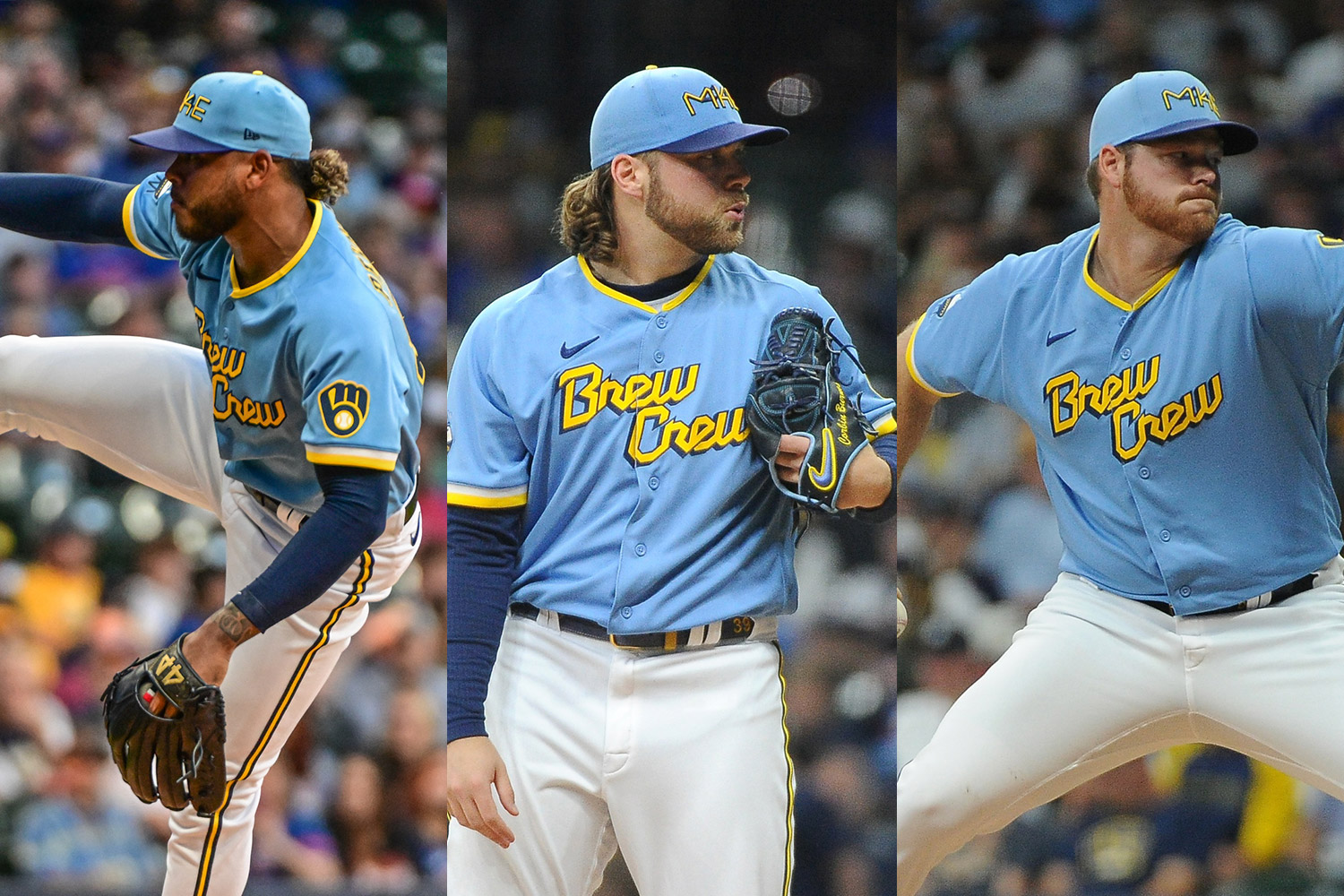 The top three of the rotation – Corbin Burnes, Brandon Woodruff, and Freddy Peralta – all would be aces on just about any other major-league team. But while the short-term situation looks very good, what happens to the Crew over the medium and long term as service time accumulates? The 40-Man Roster Burnes, Woodruff, and Peralta will be the Crew’s top three starters at the start of 2023. Put it in indelible ink. All three have dominated, and that dominance has fueled the latter half of the Brewers’ four consecutive playoff appearances, not to mention the near-miss of 2022. Eric Lauer, Adrian Houser, Aaron Ashby, and Wade Miley are right behind them. With Ashby likely headed to the disabled list with shoulder soreness, joining 2022 depth option Jason Alexander, who is already on the 60-day DL, the Crew’s depth is still okay. Still, already, an eye is looking to Nashville. The pitchers in this second tier could easily range from a high-end #2 starter (Lauer) to solid #3 pitchers (Ashby, Miley, and Houser). In Nashville, the Brewers have Ethan Small, who dominated in AAA but struggled in Milwaukee. Bryse Wilson and Janson Junk have primarily been starters in their major-league careers, giving the Brewers some additional options until Ashby and Alexander get healthy. The Non-Roster Invitees Robert Gasser is another young left-handed pitcher, the last player left on the Brewers from the infamous Josh Hader deal. He’s put up some solid numbers in his minor-league career and could be an option if the 60-day DL gets more occupants. J.C. Mejia has done both starting and relieving in his professional career, while Colin Rea put in a starter-like outing in 2021 for the Crew from the bullpen. Tobias Myers is only 23 but has a lot of experience in minor-league rotations. Tyler Herb is 30, with a long career of starting in the minors and independent-league ball. X-Factors/Potential Breakouts Justin Jarvis, a fifth-round pick in 2018, will likely start in AA but has looked solid and dependable. Victor Castenada has also emerged as a decent option who would move into the Brewers’ second tier by the end of 2023. Brandon Knarr, an undrafted free agent, has looked like an incredible Suter-esque find. Further down the minors, the Brewers have some exciting prospects in Stiven Cruz, Carlos Rodriguez, and Jacob Misiorowski. Cruz, an international free agent, and Rodriguez, a sixth-round pick in 2021, posted more strikeouts than innings pitched. Misiorowski had just two games, but his potential is already exciting some fans. Two others who could sneak into the discussion are Logan Henderson and Tyler Woessner. The former, a fourth-round pick in 2021, debuted in 2022 and posted Hader-like K/9s as a starter. The latter, a sixth-round pick in 2022, dominated in a brief sample. Then there are some true X-factors/unknowns: Who will come in what seems to be the inevitable Burnes and Woodruff trades, for starters? We have yet to learn who that could be or if a miracle extension happens for one (or both) of these players. We know the Brewers will insist on at least some young pitchers, but we don’t know who they will be or where they will be on the road to MLB. Overview For 2023, the Brewers are in excellent shape. There appears to be enough depth to overcome what looks like, for now, two of their second-tier starting pitchers going on the DL to start the season, while their top three look to be intact. The medium-term has questions, primarily due to the uncertainty of the Burnes/Woodruff/Lauer situation past this season. Will they stick around, or will they be dealt? There are some decent options in the upper minors, though, and for the long term, the Brewers could have some very excellent starting pitchers come down the pike.
 -
Yes, Chourio has had a meteoric rise. That said, I see nothing wrong with a full season in AA this year, especially given the way-below-the-Uecker-line BA. He's an excellent prospect. I think he could be extremely good. But I think that we have the depth to be patient.
-
The Crew has a lot of options. Urias/Turang/Toro/Miller/Brosseau are also in the field for playing time at second and third. Frelick, Wiemer, and Perkins could have a lot to say about what happens in right field as well. Even hirua could bump Yelich to right in some scenarios.
-
One of the more interesting battles the Brewers have will be between Tyrone Taylor and Brian Anderson in right field. Let's take a look. Image courtesy of © Joe Rondone / USA TODAY NETWORK Like the competition between Abraham Toro and Brice Turang, it is not strictly a head-to-head match-up. In some ways, Anderson and Taylor are not entirely in control of their destiny. Let’s look the two of them over. Tyrone Taylor Tyrone Taylor was an exciting prospect drafted in the second round of the 2012 amateur draft that saw the Brewers land Brent Suter in the 31st round. His arrival took a lot of time, but since his first call-up in 2019, he has performed somewhat above average, with a career OPS+ of 107, and has manned all three outfield positions. Taylor hits more home runs and posts a higher ISO (isolated power) than average MLB players on a percentage basis, but also strikes out slightly more often than your average player. But while his stolen base percentage is average, he is above average at taking an extra base. His BABIP is a bit below league average, so the question is whether he was unlucky. On defense, Taylor has seen plenty of time at all three outfield positions, so he has often been available if other players got hurt or needed time off. At 29, what you see is what you get with Taylor, and what you get is a capable player that is the perfect fourth outfielder in the best-case scenarios. Worst case, he’s a decent starter. Brian Anderson Brian Anderson is best known as a third baseman, but during his 2018 rookie season, he played more in right field than third base. He came to the Brewers as a free agent earlier this year and is now involved in competition for playing time in right field and at third base. Anderson posted a career OPS+ of 105, slightly lower than Taylor. That said, Anderson’s OPS comes from much better on-base skills than Taylor has shown (9.3% walk percentage to Taylor’s 6.2%), but Anderson doesn’t have the power that Taylor has shown. He strikes out about as much as Taylor, as evidenced by matching 23.3% strikeout percentages. On defense, though, Anderson has seen action at all four infield positions in the majors, as well as right and left field. In one sense, he could be seen as a replacement for the departed Jace Peterson, who covered multiple positions before Oakland lured him away with a two-year deal. Like Taylor, what you see is what you get with Brian Anderson, who will be 30 this season, and like Taylor, the best case is that Anderson is a solid bench option. Overview Both of these players would be acceptable starters in right field. That said, in a real sense, neither completely controls their 2023 destiny. Anderson’s playing time won’t be just up to his performance; it also depends on what happens with Luis Urias, Brice Turang, and several other players on the infield. Tyrone Taylor, similarly, will see his playing time affected by what happens with Sal Frelick, Garrett Mitchell, and Joey Wiemer, among others. There are all of those factors, plus the greatest variable for any team or player navigating the long baseball year: injuries. Taylor will be sidelined for almost the first half of the Cactus League schedule due to a sprained elbow, which tips things in the direction of Anderson but is mostly a reminder of how both players will be needed before the season is out. If both Taylor and Anderson play a lot, the Brewers will be fine in 2023. If they are riding the bench a lot, though, that may be one of the best-case scenarios for the Brewers because it will mean that the talent in the minors has forced the MLB team’s hand, which could be excellent news for the Brewers in the medium-to-long term. View full article
-
Brewers Spring Training Battles: Tyrone Taylor vs. Brian Anderson
Harold Hutchison posted an article in Brewers
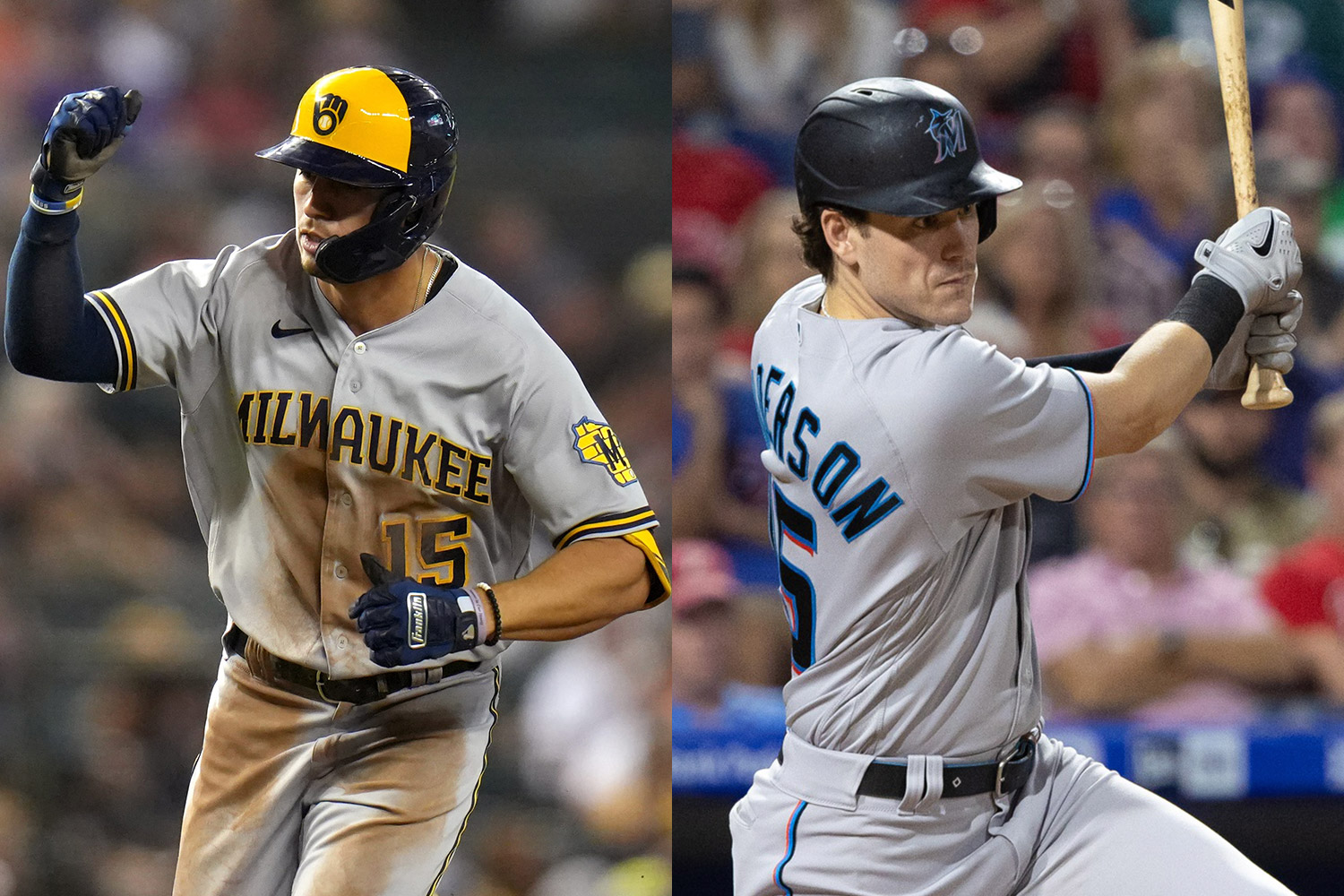 Like the competition between Abraham Toro and Brice Turang, it is not strictly a head-to-head match-up. In some ways, Anderson and Taylor are not entirely in control of their destiny. Let’s look the two of them over. Tyrone Taylor Tyrone Taylor was an exciting prospect drafted in the second round of the 2012 amateur draft that saw the Brewers land Brent Suter in the 31st round. His arrival took a lot of time, but since his first call-up in 2019, he has performed somewhat above average, with a career OPS+ of 107, and has manned all three outfield positions. Taylor hits more home runs and posts a higher ISO (isolated power) than average MLB players on a percentage basis, but also strikes out slightly more often than your average player. But while his stolen base percentage is average, he is above average at taking an extra base. His BABIP is a bit below league average, so the question is whether he was unlucky. On defense, Taylor has seen plenty of time at all three outfield positions, so he has often been available if other players got hurt or needed time off. At 29, what you see is what you get with Taylor, and what you get is a capable player that is the perfect fourth outfielder in the best-case scenarios. Worst case, he’s a decent starter. Brian Anderson Brian Anderson is best known as a third baseman, but during his 2018 rookie season, he played more in right field than third base. He came to the Brewers as a free agent earlier this year and is now involved in competition for playing time in right field and at third base. Anderson posted a career OPS+ of 105, slightly lower than Taylor. That said, Anderson’s OPS comes from much better on-base skills than Taylor has shown (9.3% walk percentage to Taylor’s 6.2%), but Anderson doesn’t have the power that Taylor has shown. He strikes out about as much as Taylor, as evidenced by matching 23.3% strikeout percentages. On defense, though, Anderson has seen action at all four infield positions in the majors, as well as right and left field. In one sense, he could be seen as a replacement for the departed Jace Peterson, who covered multiple positions before Oakland lured him away with a two-year deal. Like Taylor, what you see is what you get with Brian Anderson, who will be 30 this season, and like Taylor, the best case is that Anderson is a solid bench option. Overview Both of these players would be acceptable starters in right field. That said, in a real sense, neither completely controls their 2023 destiny. Anderson’s playing time won’t be just up to his performance; it also depends on what happens with Luis Urias, Brice Turang, and several other players on the infield. Tyrone Taylor, similarly, will see his playing time affected by what happens with Sal Frelick, Garrett Mitchell, and Joey Wiemer, among others. There are all of those factors, plus the greatest variable for any team or player navigating the long baseball year: injuries. Taylor will be sidelined for almost the first half of the Cactus League schedule due to a sprained elbow, which tips things in the direction of Anderson but is mostly a reminder of how both players will be needed before the season is out. If both Taylor and Anderson play a lot, the Brewers will be fine in 2023. If they are riding the bench a lot, though, that may be one of the best-case scenarios for the Brewers because it will mean that the talent in the minors has forced the MLB team’s hand, which could be excellent news for the Brewers in the medium-to-long term.
 -
I'd be shocked if he even reaches Nashville. Let him do a full season in Biloxi, get used to a routine. He probably ought to have a NRI in 2024, just to get the big-league atmosphere, but really, there is no reason for him to be anywhere but Biloxi, with an AFL stint afterwards. Smae goes for Avina. No need to rush, just move him up one level a year.
-
No need to rush Chourio, particularly with the depth the Brewers have in the outfield. Take the time, let him refine his game. They can still do full seasons at Biloxi and Nashville before the Rule V draft even comes into play. As we have seen with the starting rotation, a lot of these depth issues can resolve themselves without panicking or doing something... iffy for the long-term success of the franchise.
-
As spring training approaches, Brewers fans are looking forward to 2023. What will the Milwaukee outfield look like this season? Image courtesy of © Benny Sieu-USA TODAY Sports When it comes to the outfield, the biggest problem is what to do with a surplus of quality players, not just on the 40-man roster, but who will likely be in the minors and those coming up soon. Just how crowded is the Brewers' outfield? Let’s look it over. The 40-Man Roster Christian Yelich, even coming off two subpar seasons and a third that would have translated to over 30 homers (even with a low batting average), is the only fixture in the Brewers outfield. He’ll man left field. The other two positions get a little more complicated. Garrett Mitchell and Tyrone Taylor will be seeing time in center field. But how much will each of them play? Both players have power and speed and are assets defensively. Mitchell is a promising first-round pick from the truncated 2020 amateur draft, while Taylor had a long odyssey as a second-round pick from the 2012 amateur draft, the same one that saw the Crew score big with Brent Suter in the 31st round. Taylor could also be in right field a lot, with Brian Anderson (who also could spend time at third) in the mix. Taylor’s power bat makes him a poor man’s Hunter Renfroe, albeit with a touch more speed and the ability to play center field. Blake Perkins is on the 40-man – a bit of a surprise on one level – but looks to be a call-up from AAA Nashville relatively early on in the season. Jesse Winker will likely be spending a lot of time as the designated hitter. Keston Hiura also saw some time in the outfield, but Brewers fans may have cause to worry if he's there. Non-Roster Invitees Sal Frelick and Joey Wiemer will likely be in Milwaukee sooner than you think. Frelick is a pure hitter, while Wiemer flashed monster power and speed. The former is a 2021 first-round pick, and the latter was selected in the 2020 draft. Tyler Naquin, a left-handed hitting corner outfielder who's hit as many as 19 homers in seven seasons with Cleveland, Cincinnati and the Mets, could also see time if Wiemer and Frelick slump in conjunction with injuries at the major-league level. Monte Harrison was a highly-touted prospect who helped bring Yelich to Milwaukee in that 2017-2018 offseason trade. He’s back, having become a version of Keon Broxton (power, speed, defense). Skye Bolt and Eddy Alvarez round out the outfield NRIs and will likely be options to fill in at Nashville as Frelick and Wiemer force their way onto the 40-man. X-Factors/Potential Breakouts The situation gets even more crowded – with two names standing out: Jackson Chourio and Jace Avina. Both are center fielders who flashed a lot of power and superstar potential. Some other familiar names with flashes of potential are there, too, like Hedbert Perez, Hendry Mendez, Joe Gray Jr., and Tristen Lutz. Overview In a sense, the outfield is like the infield for the Brewers – there are questions, but these are the questions where the answers are fun to debate. Do the Brewers push forward with very exciting young talent? What do they do when keeping the likes of Frelick and Wiemer at AAA can’t be justified? What of Chourio and Avina? View full article
-
The State of the Brewers: Outfield – More Choices Galore
Harold Hutchison posted an article in Brewers
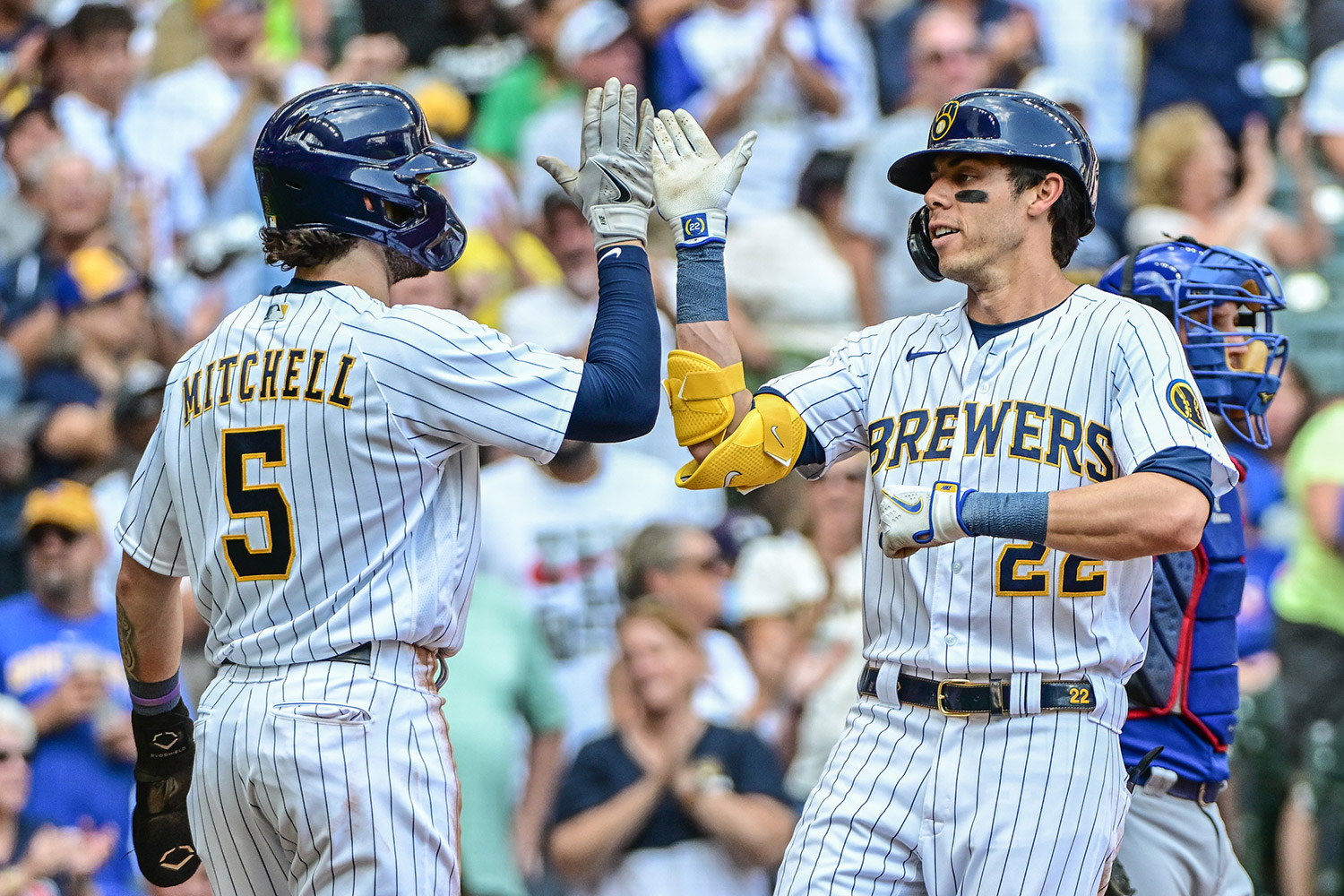 When it comes to the outfield, the biggest problem is what to do with a surplus of quality players, not just on the 40-man roster, but who will likely be in the minors and those coming up soon. Just how crowded is the Brewers' outfield? Let’s look it over. The 40-Man Roster Christian Yelich, even coming off two subpar seasons and a third that would have translated to over 30 homers (even with a low batting average), is the only fixture in the Brewers outfield. He’ll man left field. The other two positions get a little more complicated. Garrett Mitchell and Tyrone Taylor will be seeing time in center field. But how much will each of them play? Both players have power and speed and are assets defensively. Mitchell is a promising first-round pick from the truncated 2020 amateur draft, while Taylor had a long odyssey as a second-round pick from the 2012 amateur draft, the same one that saw the Crew score big with Brent Suter in the 31st round. Taylor could also be in right field a lot, with Brian Anderson (who also could spend time at third) in the mix. Taylor’s power bat makes him a poor man’s Hunter Renfroe, albeit with a touch more speed and the ability to play center field. Blake Perkins is on the 40-man – a bit of a surprise on one level – but looks to be a call-up from AAA Nashville relatively early on in the season. Jesse Winker will likely be spending a lot of time as the designated hitter. Keston Hiura also saw some time in the outfield, but Brewers fans may have cause to worry if he's there. Non-Roster Invitees Sal Frelick and Joey Wiemer will likely be in Milwaukee sooner than you think. Frelick is a pure hitter, while Wiemer flashed monster power and speed. The former is a 2021 first-round pick, and the latter was selected in the 2020 draft. Tyler Naquin, a left-handed hitting corner outfielder who's hit as many as 19 homers in seven seasons with Cleveland, Cincinnati and the Mets, could also see time if Wiemer and Frelick slump in conjunction with injuries at the major-league level. Monte Harrison was a highly-touted prospect who helped bring Yelich to Milwaukee in that 2017-2018 offseason trade. He’s back, having become a version of Keon Broxton (power, speed, defense). Skye Bolt and Eddy Alvarez round out the outfield NRIs and will likely be options to fill in at Nashville as Frelick and Wiemer force their way onto the 40-man. X-Factors/Potential Breakouts The situation gets even more crowded – with two names standing out: Jackson Chourio and Jace Avina. Both are center fielders who flashed a lot of power and superstar potential. Some other familiar names with flashes of potential are there, too, like Hedbert Perez, Hendry Mendez, Joe Gray Jr., and Tristen Lutz. Overview In a sense, the outfield is like the infield for the Brewers – there are questions, but these are the questions where the answers are fun to debate. Do the Brewers push forward with very exciting young talent? What do they do when keeping the likes of Frelick and Wiemer at AAA can’t be justified? What of Chourio and Avina?
 -
Brewers Spring Training Battles: Abraham Toro vs. Brice Turang
Harold Hutchison posted an article in Brewers
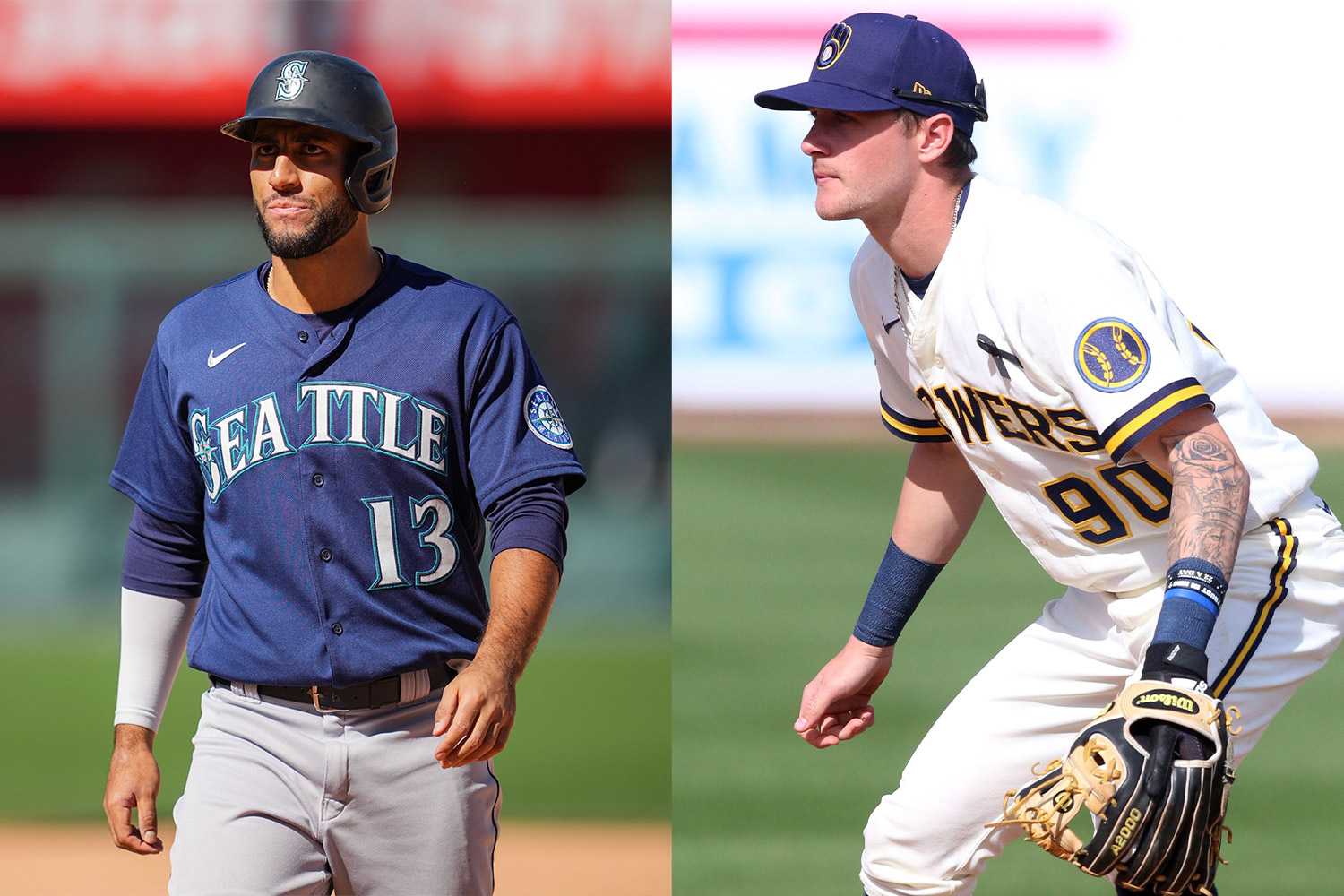 These two players do not quite match up head-to-head, and it is even an open question as to what roster spot and playing time they are battling over. Could it be the starting second base position? A spot on the bench? Some sort of hybrid? Much of that is up in the air. Let’s look over the two players and how they compare to one another. Abraham Toro The Brewers acquired Toro and designated hitter Jesse Winker in the trade, sending Kolton Wong and $1.25 million to Seattle. Toro has been up and down from the minor leagues since 2019. He is a versatile switch-hitter, having seen time at second base, third base, right field, first base, and designated hitter. The 26-year-old Toro came up with the Astros, then was dealt to Seattle in 2021 in a deal that netted the Astros two relievers, one of whom notched 14 saves with Houston in 2022. His MLB stats show some decent power (26 homers and 30 doubles in 824 at-bats), but his career batting average is around the Bob Uecker line, he doesn’t exactly draw a lot of walks, and his BABIP is only .224. The only good news: Toro only struck out 161 times – a little less than 20%. Perhaps American Family Field will be more friendly than Minute Maid Park, and T-Mobile Park have been, but that is a lot to count on. Brice Turang Turang is a natural shortstop who looked to be a replacement for the traded Kolton Wong until the Brewers signed Brian Anderson, thrusting him into the mix at third base. Turang was the Brewers’ first-round pick in 2018 and has displayed speed, OBP skills, some occasional power, and slick defense. Even before the acquisition of Willy Adames in 2021, Turang spent time at second base, third base, and center field at various points in his professional career. At 22, Turang more than doubled his 2021 home run total and had a career-high in doubles. At worst, Turang looks to be a left-handed Orlando Arcia with better OBP skills and speed. The biggest question is whether Turang develops more – and he has a lot of time to do so. With the current presence of Adames, the question is whether to have Turang start at second base in Milwaukee, play full-time in Nashville, or serve as a utility player in 2023. Overview This is a battle that, in one sense, seems easy. Turang is the future of Milwaukee, and the Brewers have many options in the infield. Luis Urias is a viable starter at second or third. Brian Anderson has handled third base for the Marlins for a while. Mike Brosseau did pretty well in 2022 for the Crew, spending time at third. Keston Hiura saw time at second base. Owen Miller has also seen a lot of time. The fact is, Turang and Toro could both end up in Nashville, albeit for different reasons; in many scenarios, that would be good news for the Crew in 2023. The Brewers may want to buy an extra year of control before free agency and avoid super-two status in the case of Turang, while Toro could easily find himself bypassed by other options who outperformed him. If both Turang and Toro make the Opening Day roster, then the Brewers had a lot of injuries and slumps, or both players will have broken out big time in the small sample of spring training.
 -
The Brewers will be seeing several battles over the course of Spring Training. One will see Abraham Toro and Brice Turang face off for what could be a lot of playing time. Image courtesy of © Roy Dabner / For the Journal Sentinel, Milwaukee Journal Sentinel via Imagn Content Services, LLC These two players do not quite match up head-to-head, and it is even an open question as to what roster spot and playing time they are battling over. Could it be the starting second base position? A spot on the bench? Some sort of hybrid? Much of that is up in the air. Let’s look over the two players and how they compare to one another. Abraham Toro The Brewers acquired Toro and designated hitter Jesse Winker in the trade, sending Kolton Wong and $1.25 million to Seattle. Toro has been up and down from the minor leagues since 2019. He is a versatile switch-hitter, having seen time at second base, third base, right field, first base, and designated hitter. The 26-year-old Toro came up with the Astros, then was dealt to Seattle in 2021 in a deal that netted the Astros two relievers, one of whom notched 14 saves with Houston in 2022. His MLB stats show some decent power (26 homers and 30 doubles in 824 at-bats), but his career batting average is around the Bob Uecker line, he doesn’t exactly draw a lot of walks, and his BABIP is only .224. The only good news: Toro only struck out 161 times – a little less than 20%. Perhaps American Family Field will be more friendly than Minute Maid Park, and T-Mobile Park have been, but that is a lot to count on. Brice Turang Turang is a natural shortstop who looked to be a replacement for the traded Kolton Wong until the Brewers signed Brian Anderson, thrusting him into the mix at third base. Turang was the Brewers’ first-round pick in 2018 and has displayed speed, OBP skills, some occasional power, and slick defense. Even before the acquisition of Willy Adames in 2021, Turang spent time at second base, third base, and center field at various points in his professional career. At 22, Turang more than doubled his 2021 home run total and had a career-high in doubles. At worst, Turang looks to be a left-handed Orlando Arcia with better OBP skills and speed. The biggest question is whether Turang develops more – and he has a lot of time to do so. With the current presence of Adames, the question is whether to have Turang start at second base in Milwaukee, play full-time in Nashville, or serve as a utility player in 2023. Overview This is a battle that, in one sense, seems easy. Turang is the future of Milwaukee, and the Brewers have many options in the infield. Luis Urias is a viable starter at second or third. Brian Anderson has handled third base for the Marlins for a while. Mike Brosseau did pretty well in 2022 for the Crew, spending time at third. Keston Hiura saw time at second base. Owen Miller has also seen a lot of time. The fact is, Turang and Toro could both end up in Nashville, albeit for different reasons; in many scenarios, that would be good news for the Crew in 2023. The Brewers may want to buy an extra year of control before free agency and avoid super-two status in the case of Turang, while Toro could easily find himself bypassed by other options who outperformed him. If both Turang and Toro make the Opening Day roster, then the Brewers had a lot of injuries and slumps, or both players will have broken out big time in the small sample of spring training. View full article
-
Spring training is a great time to evaluate and consider not only the coming season, but the medium- and long-term future of a franchise. Today, let’s make a circuit of the Brewers’ infield, thinking about their organizational depth at each position. Image courtesy of © Rick Scuteri-USA TODAY Sports The Milwaukee Brewers have myriad questions at all five infield positions, but there might be an equal number of good answers. They have star-caliber upside and notable depth at the two most important positions on the diamond, and plenty of possible ways to mix and match at the others. Let’s break things down based on who’s on the 40-man roster, who’s in camp as a non-roster invitee, and who lurks even further down on the farm. 40-Man Roster Catcher has been an interesting position for the Brewers since they traded away Jonathan Lucroy, who might be the best backstop in franchise history. The team hopes there will soon be a new claimant to that crown, though. William Contreras was an All-Star last season, notching an .860 OPS with 20 homers in 97 games. However, he made 31 of his starts at designated hitter. That means solid backup Victor Caratini will likely see a lot of time behind the plate. Payton Henry, acquired by the Brewers from the Marlins, is the third catcher, and will likely wait to be called upon at Triple-A Nashville. Henry has flashed a decent bat in the minors, but has struggled in a small sample in the majors. This is not a bad situation for 2023. Contreras can hit, and at worst will end up spending a lot of time at DH. Caratini’s solid as a complementary catcher, but he could wear down. Henry’s past performance in the minors shows some pop and OBP skills, and he could end up being a nice surprise. At first base, the Crew has the tandem of Rowdy Tellez or Keston Hiura, each of whom posted a 115 OPS+ in 2022. While both fare better against right-handed pitchers, the splits were not as pronounced against starters. In either case, their performances should have Brewers fans feeling okay about first. At second base, the starter will be either Brice Turang or Luis Urías. The former is a slick defender with OBP skills and speed who flashed some decent hitting in his first full season at Triple A. The latter has mostly played third base, and has a 111 OPS+ with 39 homers since the start of 2021. Abraham Toro and Owen Miller could also figure into the competition there. Willy Adames, who has posted a 122 OPS+ with 51 home runs since coming over from Tampa, is the shortstop. He’s also impressed on defense, so the team will hope to write him into the lineup nearly every day, but Turang and Urías provide insurance. Who’s at third base in the short term depends on how Turang and Toro show at second. Urías will man the hot corner if either of those two claim the keystone, but if not, Brian Anderson and Mike Brosseau might figure prominently. Non-Roster Invitees Alex Jackson has had a few cups of coffee in the majors, the longest being alongside Henry in Miami in 2021. He will likely be in Nashville with Henry in 2023. He is probably the fourth catcher on the depth chart. Brian Navaretto had one cup of coffee with the Marlins in 2020, and will likely be in the minors. He spent time at Triple-A Nashville, and could be the third catcher there. Jeferson Quero is different from Jackson and Navaretto. Splitting time at Carolina (A) and Wisconsin (A+), he posted superb numbers. He went to the Arizona Fall League, where his average dipped, but his OBP skills held up. Quero is a peek into the future in this spring training, and not likely to see time in Milwaukee. Just how solid are the Brewers feeling about their 40-man options around the horn? They’re only bringing in three non-catcher infielders as non-roster invitees. One is Jon Singleton, an all-or-nothing bat whose career major-league batting average is well below the Bob Uecker line. The other two are Josh VanMeter (a middle infielder who’s seen action with three MLB teams in four years and who offers five-position versatility and some decent OBP skills) and Andruw Monasterio, an overlooked prospect who put up solid numbers with Biloxi before struggling at Nashville. X-Factor/Potential Breakout One catcher who won’t be in big-league camp, but who is worth keeping in mind, is Darrien Miller, who boasts a promising offensive profile and his left-handed bat. Miller has shown awesome OBP skills and power, things that could serve the Brewers very well. Ernesto Martinez and Jesus Chirinos have evinced upside in the minors, while Wes Clarke also shows promise (and also spent time at catcher). Felix Valerio and Zack Rabbe offer intriguing options at second in the upper minors, while Tyler Black could also move up, and Rob Moore dominated in Brisbane. Shortstops Eduardo Garcia, Eric Brown Jr., and Cam Devanney also could be factors. Xavier Warren looked good in the Arizona Fall League. Overview The Brewers have questions about their infield, outside of Adames at short and the Tellez/Hiura duo at first for 2023. But those questions are “Which of the good choices do we select?” as opposed to “Can somebody step up?” In Contreras and Adames, they have anchors they hope will be in place for a long time, and their depth at all five spots stretches even down to minor-league camp. View full article
-
State of the Brewers, Spring Training Edition: Infield
Harold Hutchison posted an article in Brewers
 The Milwaukee Brewers have myriad questions at all five infield positions, but there might be an equal number of good answers. They have star-caliber upside and notable depth at the two most important positions on the diamond, and plenty of possible ways to mix and match at the others. Let’s break things down based on who’s on the 40-man roster, who’s in camp as a non-roster invitee, and who lurks even further down on the farm. 40-Man Roster Catcher has been an interesting position for the Brewers since they traded away Jonathan Lucroy, who might be the best backstop in franchise history. The team hopes there will soon be a new claimant to that crown, though. William Contreras was an All-Star last season, notching an .860 OPS with 20 homers in 97 games. However, he made 31 of his starts at designated hitter. That means solid backup Victor Caratini will likely see a lot of time behind the plate. Payton Henry, acquired by the Brewers from the Marlins, is the third catcher, and will likely wait to be called upon at Triple-A Nashville. Henry has flashed a decent bat in the minors, but has struggled in a small sample in the majors. This is not a bad situation for 2023. Contreras can hit, and at worst will end up spending a lot of time at DH. Caratini’s solid as a complementary catcher, but he could wear down. Henry’s past performance in the minors shows some pop and OBP skills, and he could end up being a nice surprise. At first base, the Crew has the tandem of Rowdy Tellez or Keston Hiura, each of whom posted a 115 OPS+ in 2022. While both fare better against right-handed pitchers, the splits were not as pronounced against starters. In either case, their performances should have Brewers fans feeling okay about first. At second base, the starter will be either Brice Turang or Luis Urías. The former is a slick defender with OBP skills and speed who flashed some decent hitting in his first full season at Triple A. The latter has mostly played third base, and has a 111 OPS+ with 39 homers since the start of 2021. Abraham Toro and Owen Miller could also figure into the competition there. Willy Adames, who has posted a 122 OPS+ with 51 home runs since coming over from Tampa, is the shortstop. He’s also impressed on defense, so the team will hope to write him into the lineup nearly every day, but Turang and Urías provide insurance. Who’s at third base in the short term depends on how Turang and Toro show at second. Urías will man the hot corner if either of those two claim the keystone, but if not, Brian Anderson and Mike Brosseau might figure prominently. Non-Roster Invitees Alex Jackson has had a few cups of coffee in the majors, the longest being alongside Henry in Miami in 2021. He will likely be in Nashville with Henry in 2023. He is probably the fourth catcher on the depth chart. Brian Navaretto had one cup of coffee with the Marlins in 2020, and will likely be in the minors. He spent time at Triple-A Nashville, and could be the third catcher there. Jeferson Quero is different from Jackson and Navaretto. Splitting time at Carolina (A) and Wisconsin (A+), he posted superb numbers. He went to the Arizona Fall League, where his average dipped, but his OBP skills held up. Quero is a peek into the future in this spring training, and not likely to see time in Milwaukee. Just how solid are the Brewers feeling about their 40-man options around the horn? They’re only bringing in three non-catcher infielders as non-roster invitees. One is Jon Singleton, an all-or-nothing bat whose career major-league batting average is well below the Bob Uecker line. The other two are Josh VanMeter (a middle infielder who’s seen action with three MLB teams in four years and who offers five-position versatility and some decent OBP skills) and Andruw Monasterio, an overlooked prospect who put up solid numbers with Biloxi before struggling at Nashville. X-Factor/Potential Breakout One catcher who won’t be in big-league camp, but who is worth keeping in mind, is Darrien Miller, who boasts a promising offensive profile and his left-handed bat. Miller has shown awesome OBP skills and power, things that could serve the Brewers very well. Ernesto Martinez and Jesus Chirinos have evinced upside in the minors, while Wes Clarke also shows promise (and also spent time at catcher). Felix Valerio and Zack Rabbe offer intriguing options at second in the upper minors, while Tyler Black could also move up, and Rob Moore dominated in Brisbane. Shortstops Eduardo Garcia, Eric Brown Jr., and Cam Devanney also could be factors. Xavier Warren looked good in the Arizona Fall League. Overview The Brewers have questions about their infield, outside of Adames at short and the Tellez/Hiura duo at first for 2023. But those questions are “Which of the good choices do we select?” as opposed to “Can somebody step up?” In Contreras and Adames, they have anchors they hope will be in place for a long time, and their depth at all five spots stretches even down to minor-league camp.
 -
 However, since Prince Fielder left the Brewers as a free agent following the 2011 season, the team has had a revolving door at first base. Only Eric Thames was the primary starter at the position for more than one season, per Baseball Reference. Not exactly the model of consistency you want to see, is it? Brewersfarm, an Instagram account following the Brewers farm system, lists Ernesto Martinez and Jesus Chirinos as the top two options for the position in the system, followed by Wes Clarke. None of the players listed will be above AA, per the Brewersfarm projections. Assuming full years at AA and AAA, the Brewers might see these players’ rookie seasons just as they have a gaping hole at first. Now, I’ve discussed Martinez and Chirinos when discussing prospects that are more under the radar. Still, proven help at first base for the long term is a question mark, partially because Martinez has missed time with injury, while Chirinos seemed to have a power outage in the Venezuelan Winter League. So, there are some big question marks in the system. It doesn’t have to be that way, though. Rowdy Tellez, acquired from Toronto for Bowden Francis and Trevor Richards (who came to the Brewers in the Willy Adames deal) late in the 2021 season, has given the Brewers a 116 OPS+ with 42 homers and 117 RBI. That has not been bad, even with a 2022 season where he seemed closer to the Bob Uecker line than .250. Solid performance at first base could be a big deal, and with the NL having the full-time DH now, a long extension is not as risky as it once was for players like Tellez. Tellez has shown some very good signs at the plate, and one can argue that the shift and bad luck in 2022 had an effect. Lefty power hitters and American Family Field are a good combination. Just ask Prince Fielder, Christian Yelich, Geoff Jenkins, and Eric Thames… you get the idea. So, what does an extension for Tellez look like in this situation? Similar players have included Chris Carter, Mitch Moreland, Carlos Pena, C.J. Cron, and Ji-Man Choi. Their salaries have varied, with Pena pulling in as much as $10,125,000 in 2010. Cron recently signed a deal paying him $7.25 million in 2022 and 2023, and his career OPS+ of 117 is slightly higher than Tellez’s 116 OPS+ mark with the Crew. Of course, there is inflation to keep in mind. In this case, the Brewers could offer Tellez $6 million a year in 2024 and 2025, $6.5 million in 2026 and 2027, with team options in 2028 ($7.5 million), 2029 ($7.5 million), and 2030 ($10 million). This is similar to the deal proposed for Luis Urias, taking the Brewers through the decade with a reasonably known quantity. Like Luis Urias, Tellez is not a superstar but a solid option who could remove a question mark and not break the bank. It would be one thing if the Brewers had a prospect like Jackson Chourio at the position, but for now, an extension for Tellez makes a lot of sense for the Brewers.
 -
In theory, first base is an easy position to fill. But theory and practice don’t always mesh. Image courtesy of © Benny Sieu-USA TODAY Sports However, since Prince Fielder left the Brewers as a free agent following the 2011 season, the team has had a revolving door at first base. Only Eric Thames was the primary starter at the position for more than one season, per Baseball Reference. Not exactly the model of consistency you want to see, is it? Brewersfarm, an Instagram account following the Brewers farm system, lists Ernesto Martinez and Jesus Chirinos as the top two options for the position in the system, followed by Wes Clarke. None of the players listed will be above AA, per the Brewersfarm projections. Assuming full years at AA and AAA, the Brewers might see these players’ rookie seasons just as they have a gaping hole at first. Now, I’ve discussed Martinez and Chirinos when discussing prospects that are more under the radar. Still, proven help at first base for the long term is a question mark, partially because Martinez has missed time with injury, while Chirinos seemed to have a power outage in the Venezuelan Winter League. So, there are some big question marks in the system. It doesn’t have to be that way, though. Rowdy Tellez, acquired from Toronto for Bowden Francis and Trevor Richards (who came to the Brewers in the Willy Adames deal) late in the 2021 season, has given the Brewers a 116 OPS+ with 42 homers and 117 RBI. That has not been bad, even with a 2022 season where he seemed closer to the Bob Uecker line than .250. Solid performance at first base could be a big deal, and with the NL having the full-time DH now, a long extension is not as risky as it once was for players like Tellez. Tellez has shown some very good signs at the plate, and one can argue that the shift and bad luck in 2022 had an effect. Lefty power hitters and American Family Field are a good combination. Just ask Prince Fielder, Christian Yelich, Geoff Jenkins, and Eric Thames… you get the idea. So, what does an extension for Tellez look like in this situation? Similar players have included Chris Carter, Mitch Moreland, Carlos Pena, C.J. Cron, and Ji-Man Choi. Their salaries have varied, with Pena pulling in as much as $10,125,000 in 2010. Cron recently signed a deal paying him $7.25 million in 2022 and 2023, and his career OPS+ of 117 is slightly higher than Tellez’s 116 OPS+ mark with the Crew. Of course, there is inflation to keep in mind. In this case, the Brewers could offer Tellez $6 million a year in 2024 and 2025, $6.5 million in 2026 and 2027, with team options in 2028 ($7.5 million), 2029 ($7.5 million), and 2030 ($10 million). This is similar to the deal proposed for Luis Urias, taking the Brewers through the decade with a reasonably known quantity. Like Luis Urias, Tellez is not a superstar but a solid option who could remove a question mark and not break the bank. It would be one thing if the Brewers had a prospect like Jackson Chourio at the position, but for now, an extension for Tellez makes a lot of sense for the Brewers. View full article
-
It's a tough call - why Doug Melvin, David Stearns, and now Matt Arnold get the big bucks. Knowing you not only need to keep putting the best team you can on the field, but also to keep the team profitable. I'm not sure how long any of us could manage that level of stress.
-
I agree, but at the same time, it never hurts to plan for contingencies - like not being able to get an extension in place.
-
Chourio is an interesting case... if I'm the Brewers, if he extends, great. If not... maybe the Trent Grisham strategy might be the right move. Controversial at the time, but is anybody complaining now?
-
Willy Adames has rightly been hailed as a cornerstone of the 2021 and 2022 Milwaukee Brewers teams, but Craig Counsell's club has another infielder they could extend--one who has proven himself to be a solid bat capable of playing multiple infield positions, including third base. Should Milwaukee try to lock up Luis Urías on a long-term deal? Image courtesy of © Charles LeClaire-USA TODAY Sports Meet Luis Urias, who in the last two full seasons has delivered an OPS+ of 111, highlighted by 39 homers, 42 doubles, and 122 RBI. Not too shabby, especially as he has either split time with Jace Peterson in the past or covered second base and shortstop. In other words, Luis Urias is, at worst, the kind of “utility infielder” that the Brewers haven’t had since Mark Loretta. Urias, 26, is also relatively young to enter his fifth major-league season. This is a chance for the Brewers to lock in a solid performance for the medium-to-long term, particularly at third base. The team could use it, since the lack of long-term stability they have had at the position since the mid-2015 trade of Aramis Ramirez can be seen with one look at Baseball-Reference’s list of historical positional starters. Urias could provide that for the Brewers, whose best options in the farm system are Cam Devanney or Zavier Warren. The question comes down to what extension the team should offer Urias, who will be paid about $4.7 million in 2023. Close comparisons through age 25 include Danny Espinoza (the best, per Baseball Reference), former Brewer Dale Sveum (4th), Kolten Wong (5th), and Brad Miller (8th), all of whom but Wong spent significant time at shortstop (Wong primarily played second with some time in the outfield). Still, all of them saw action at multiple positions. Espinoza earned a peak of $5,425,000 in 2017 at age 30, after averaging 86 OPS+ from 2011 to 2016, with 2013 and 2014 being shortened by slumps. Wong is coming off a three-year deal that paid him $16 million across 2021 and 2022 and secured him $10 million in 2023. Miller got $6 million in 2022 and $4 million in 2023. Could the Crew keep Urias and not break the bank? Like Eric Lauer, he is a player many teams would love to have as an everyday starter. With third base up in the air for the Brewers, it may make sense to lock him in on a multi-year extension to buy out some free agency. A four-year deal for $25 million ($6 million in 2025 and 2025, $6.5 million in 2026 and 2027) with some team options ($7.5 million for 2028 and 2029 and $10 million for 2030) could give the Brewers a solid third baseman for the rest of the decade. Of course, how the development of Tyler Black, Brice Turang, Felix Valerio, Devanney, and Warren play out might make Urias a long-term starter at shortstop or second base or even trade bait. Compared to the mega-deals that went for shortstops that will make reaching an extension with Adames, who has posted a 122 OPS+ with the Brewers, harder, an extension for Luis is a relative bargain. Urias may not be as spectacular as Adames, but like Eric Lauer, he also is a proven commodity that can at least remove a question mark. View full article
-
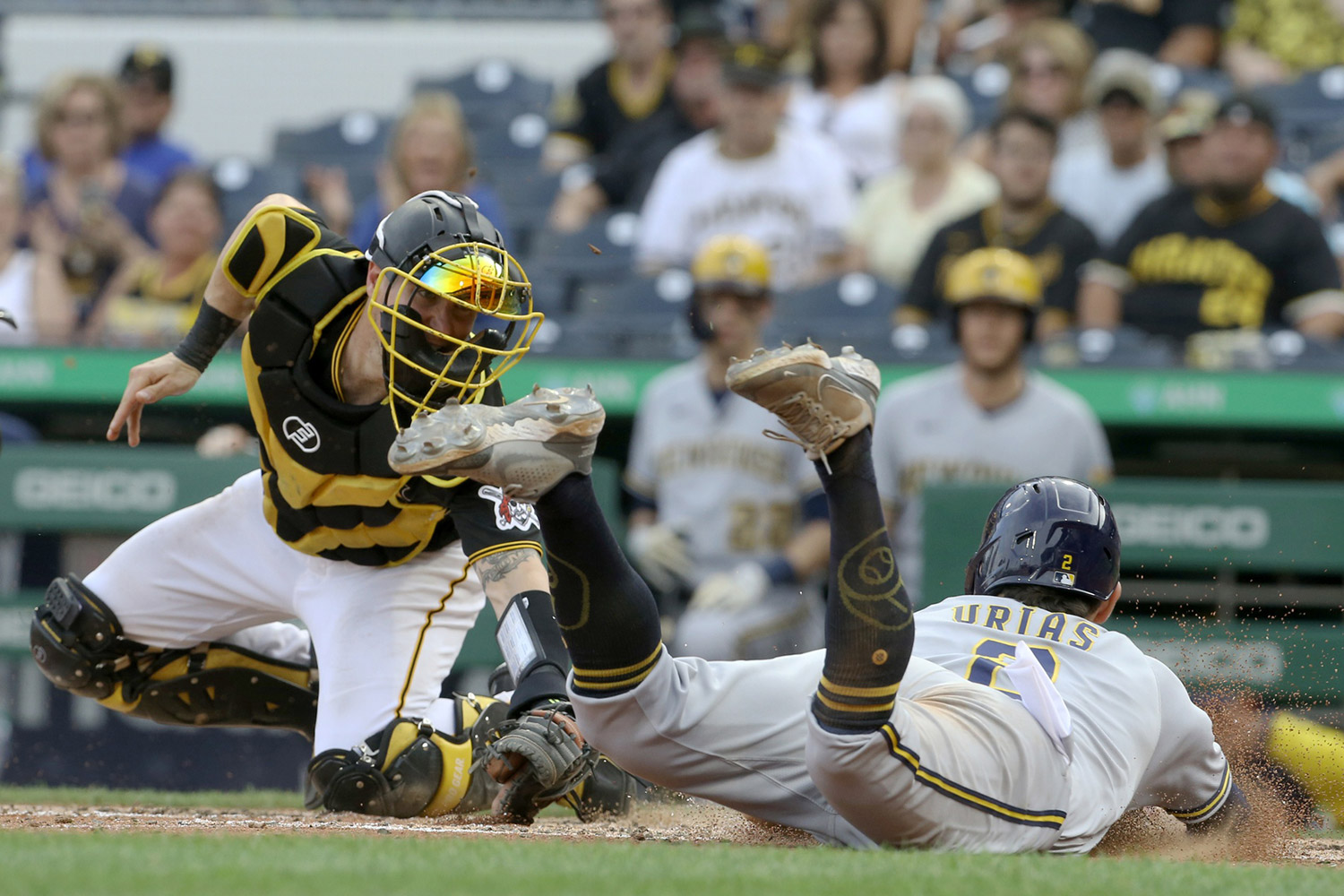 Meet Luis Urias, who in the last two full seasons has delivered an OPS+ of 111, highlighted by 39 homers, 42 doubles, and 122 RBI. Not too shabby, especially as he has either split time with Jace Peterson in the past or covered second base and shortstop. In other words, Luis Urias is, at worst, the kind of “utility infielder” that the Brewers haven’t had since Mark Loretta. Urias, 26, is also relatively young to enter his fifth major-league season. This is a chance for the Brewers to lock in a solid performance for the medium-to-long term, particularly at third base. The team could use it, since the lack of long-term stability they have had at the position since the mid-2015 trade of Aramis Ramirez can be seen with one look at Baseball-Reference’s list of historical positional starters. Urias could provide that for the Brewers, whose best options in the farm system are Cam Devanney or Zavier Warren. The question comes down to what extension the team should offer Urias, who will be paid about $4.7 million in 2023. Close comparisons through age 25 include Danny Espinoza (the best, per Baseball Reference), former Brewer Dale Sveum (4th), Kolten Wong (5th), and Brad Miller (8th), all of whom but Wong spent significant time at shortstop (Wong primarily played second with some time in the outfield). Still, all of them saw action at multiple positions. Espinoza earned a peak of $5,425,000 in 2017 at age 30, after averaging 86 OPS+ from 2011 to 2016, with 2013 and 2014 being shortened by slumps. Wong is coming off a three-year deal that paid him $16 million across 2021 and 2022 and secured him $10 million in 2023. Miller got $6 million in 2022 and $4 million in 2023. Could the Crew keep Urias and not break the bank? Like Eric Lauer, he is a player many teams would love to have as an everyday starter. With third base up in the air for the Brewers, it may make sense to lock him in on a multi-year extension to buy out some free agency. A four-year deal for $25 million ($6 million in 2025 and 2025, $6.5 million in 2026 and 2027) with some team options ($7.5 million for 2028 and 2029 and $10 million for 2030) could give the Brewers a solid third baseman for the rest of the decade. Of course, how the development of Tyler Black, Brice Turang, Felix Valerio, Devanney, and Warren play out might make Urias a long-term starter at shortstop or second base or even trade bait. Compared to the mega-deals that went for shortstops that will make reaching an extension with Adames, who has posted a 122 OPS+ with the Brewers, harder, an extension for Luis is a relative bargain. Urias may not be as spectacular as Adames, but like Eric Lauer, he also is a proven commodity that can at least remove a question mark.
 -
How would you view a starting pitcher who posted a record of 18-12 with a 3.47 ERA and 1.19 WHIP over the last two years? For most major league teams, that’s a solid #2 starter. For some teams, this starter might be their ace. For the Brewers, though, Eric Lauer is the fourth starter. Image courtesy of © Dale Zanine-USA TODAY Sports Why? Corbin Burnes, Brandon Woodruff, and Freddy Peralta have given the Brewers an excellent trio in the starting rotation for the last two years. In a very real sense, Burnes and Woodruff, arguably two of the best starters in Brewers' history, have distorted the team’s starting rotation in a positive direction. This has given the Brewers a huge edge in the last two years. So, while Brewers fans fret over the lack of an extension for the big names, the smart play is not to try to extend Burnes and Woodruff. The Brewers could be well-served to offer an extension to Eric Lauer to solidify their rotation through this decade. In most cases, it would be crazy to give the #4 starter an extension. But the Brewers don’t have a normal situation. The Crew currently has Freddy Peralta with team options through 2026. Aaron Ashby is also locked up, with team options taking him through 2029. If their shoulders hold up, Peralta and Ashby would still make a potent 1-2 punch in the rotation, even if they are different from the generational talent that Burnes is. However, if the Crew were to extend Eric Lauer, it could solidify their rotation through the late 2020s. Yes, the Brewers have pitching prospects in the system, including exciting ones like Carlos Rodriguez, Jacob Misiorowski, and Stiven Cruz. But a lot of these pitchers are at the lower levels. The journey from full-season A, Advanced A, or the Arizona Complex League is long, and not all touted prospects make it or become Corbin Burnes. So, the Brewers, in need of some stability in the rotation and also needing to be cost-conscious, might want to set their extension sights on Lauer. Part of what makes an extension workable is that there are some up-and-coming prospects in the outfield. Sal Frelick, Garrett Mitchell, and Joey Wiemer could be the starting outfielders in Game 162, with Christian Yelich as the designated hitter. What could that extension look like? Baseball-Reference lists Kyle Freeland as the most comparable pitcher to Lauer through age 27. Freeland signed a five-year, $64.5 million extension in April 2022 that includes a $17 million option for 2027 that will vest if he pitches 160 innings in 2026. In one sense, that could be a very reasonable starting point for the Brewers and Lauer. Freeland, who pitches half the time at Coors Field, probably warranted a premium. American Family Field does tend to be a little hitter-friendly, but that effect is often for left-handed hitters. The Brewers might want to consider dispensing with the vesting option and getting a lower AAV. The Crew also could always defer some of the money – giving Lauer long-term financial stability and easing the short-term budget crunch. In this case, the Brewers could go six years, $72 million, giving Lauer an extra guaranteed year, and defer $12 million over 25 years. This deal would take the team through 2029, putting Lauer alongside Ashby in the rotation long-term while also offering him some significant financial security for his post-MLB life. Extending Eric Lauer would not be as spectacular as keeping Corbin Burnes, but for the Brewers, locking down a solid starting pitcher would make a lot of sense and provide significant bang for the buck. View full article