



Brock Beauchamp
-
Posts
7,218 -
Joined
-
Last visited
-
Days Won
47
Content Type
Profiles
Forums
Blogs
Events
News
2026 Milwaukee Brewers Top Prospects Ranking
Milwaukee Brewers Videos
2022 Milwaukee Brewers Draft Picks
Milwaukee Brewers Free Agent & Trade Rumors, Notes, & Tidbits
Guides & Resources
2023 Milwaukee Brewers Draft Picks
2024 Milwaukee Brewers Draft Picks
The Milwaukee Brewers Players Project
2025 Milwaukee Brewers Draft Pick Tracker
2026 Milwaukee Brewers Draft Tracker: Picks & Bonuses
Store
Downloads
Gallery
Everything posted by Brock Beauchamp
-

Brian Anderson to Brewers!!!! Yes!!!
Brock Beauchamp replied to DR28's topic in Milwaukee Brewers Talk
Wrote up a quick piece that I'll edit more in the morning. Righty bat with reverse splits a la Keston Hiura. Strange. -
The Brewers have come to terms with the 29-year-old third baseman and outfielder, reports Ken Rosenthal of The Athletic. Can the former promising young player get his groove back in Milwaukee? Image courtesy of © Jasen Vinlove-USA TODAY Sports The Brewers have come to terms with the 29-year-old third baseman and outfielder, reports Ken Rosenthal of The Athletic. Can the former promising young player get his groove back in Milwaukee? Reports are coming in that the Milwaukee Brewers have come to terms with third baseman and right fielder Brian Anderson, formerly of the Miami Marlins. Anderson, still only 29 years old, looked to be a rising star with the Miami Marlins, posting a .811 OPS and 114 OPS+ over the 2019 and 2020 seasons but has fallen back to earth the past two seasons, posting just a .681 OPS and 90 OPS+. It wasn't only Anderson's offense that slumped in 2022. Formerly a solidly well-above-average defensive third baseman, according to DRS (Defensive Runs Saved), Anderson slid into below-average territory last season, posting a -4 runs number over 371 innings played at third base. Nonetheless, this could likely see Luis Urias shift over to second base for the Brewers on Opening Day while Anderson handles the hot corner on a near-daily basis. On the surface, the acquisition looks like an upside play by Milwaukee to rehabilitate a formerly promising infielder still on the right side of 30 years old. Miami has been notoriously poor in developing hitters over the past several seasons, so the Brewers may see something to unlock in Anderson's bat. Last year's defensive slide could be an aberration or a longer trend of decline but given Anderson's age, he should remain acceptable on defense for at least one or two more seasons. Even more strangely, Anderson, a right-handed hitter, also carries reverse splits similar to Keston Hiura. Throughout his MLB career, Anderson has a .766 OPS against right-handed pitching and only a .702 OPS against southpaws. As a result, over the past few seasons, Miami has shielded him against left-handed starters, and he has faced over three times as many right-handers in his career as lefties. This move also puts into question the future of Keston Hiura, who has become even more redundant on this roster with the addition of another infielder who hits righties better than lefties. Anderson's deal with Milwaukee maxes out at $5.5 million, a relative bargain if performance escalators are met. Information in this article will be updated as it becomes available. View full article
-
Brewers Sign Veteran Third Baseman and Outfielder Brian Anderson
Brock Beauchamp posted an article in Brewers
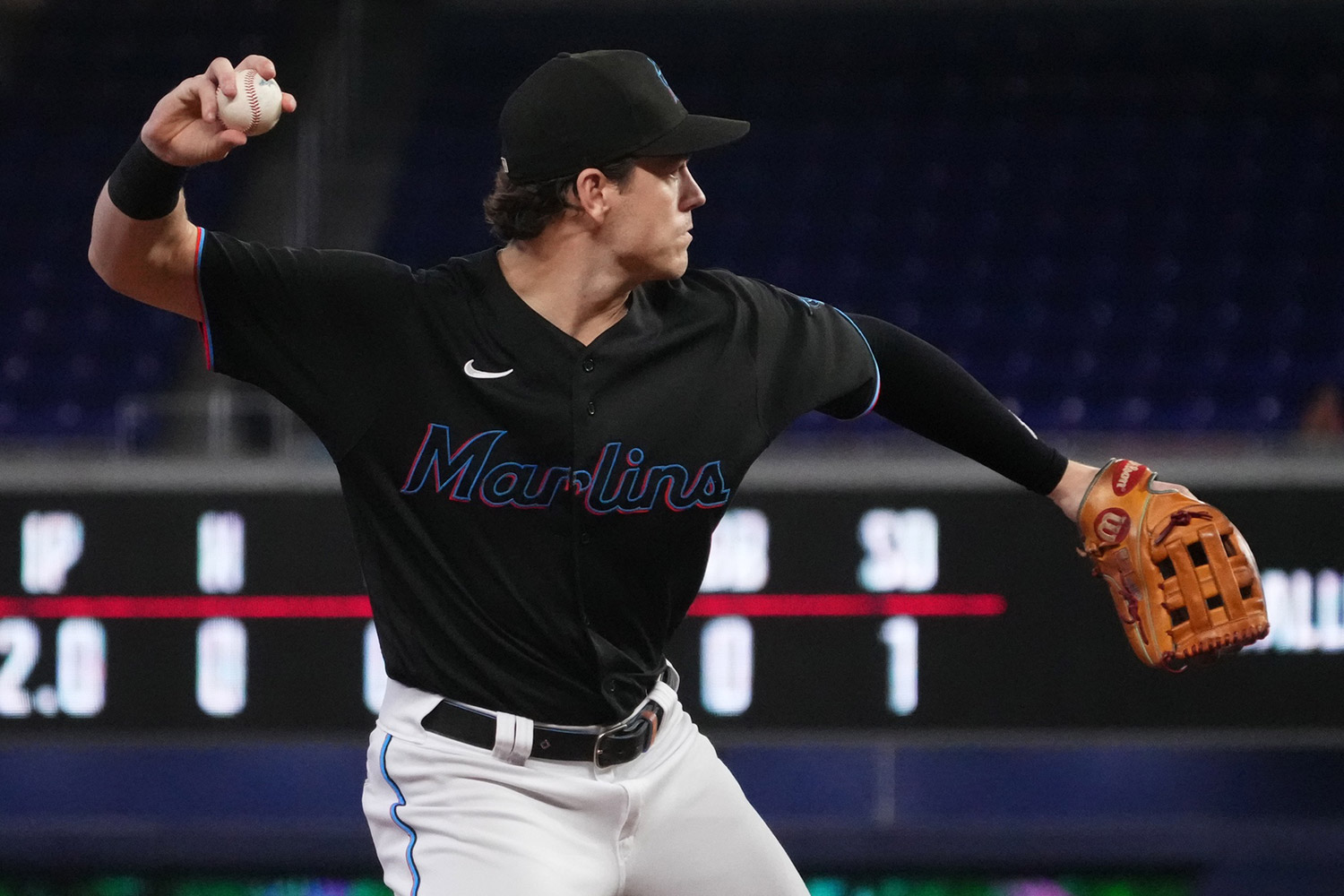 Reports are coming in that the Milwaukee Brewers have come to terms with third baseman and right fielder Brian Anderson, formerly of the Miami Marlins. Anderson, still only 29 years old, looked to be a rising star with the Miami Marlins, posting a .811 OPS and 114 OPS+ over the 2019 and 2020 seasons but has fallen back to earth the past two seasons, posting just a .681 OPS and 90 OPS+. It wasn't only Anderson's offense that slumped in 2022. Formerly a solidly well-above-average defensive third baseman, according to DRS (Defensive Runs Saved), Anderson slid into below-average territory last season, posting a -4 runs number over 371 innings played at third base. Nonetheless, this could likely see Luis Urias shift over to second base for the Brewers on Opening Day while Anderson handles the hot corner on a near-daily basis. On the surface, the acquisition looks like an upside play by Milwaukee to rehabilitate a formerly promising infielder still on the right side of 30 years old. Miami has been notoriously poor in developing hitters over the past several seasons, so the Brewers may see something to unlock in Anderson's bat. Last year's defensive slide could be an aberration or a longer trend of decline but given Anderson's age, he should remain acceptable on defense for at least one or two more seasons. Even more strangely, Anderson, a right-handed hitter, also carries reverse splits similar to Keston Hiura. Throughout his MLB career, Anderson has a .766 OPS against right-handed pitching and only a .702 OPS against southpaws. As a result, over the past few seasons, Miami has shielded him against left-handed starters, and he has faced over three times as many right-handers in his career as lefties. This move also puts into question the future of Keston Hiura, who has become even more redundant on this roster with the addition of another infielder who hits righties better than lefties. Anderson's deal with Milwaukee maxes out at $5.5 million, a relative bargain if performance escalators are met. Information in this article will be updated as it becomes available.
-
Man, I just don't see it.
-
It'd be cool to see, for sure! I spent a few weeks in Nicaragua a year or two before their civil war. To say that country is poor understates the word "poor". Lovely people, lovely country, abject poverty even by central American standards.
-
Four pitchers from Nicaragua? That's wild. That country isn't exactly a hotbed of MLB talent.
-
Yeah, their ability to compete almost entirely depends on their ability to choose the right players (pitchers, in particular) when trading off assets nearing free agency.
-
I stared at that thing for awhile but according to the press service, it's Quero so I threw up my hands and moved on.
-
I think it's entirely possible to avoid a rebuild but given the Brewers' situation, it's highly likely they cannot maintain peak competitiveness every season (ie. they'll need "retool" seasons). For example, say they extend Woodruff but hit roadblocks with Adames and Burnes this offseason. If they make the right moves, it will be hard to field a 90+ win team in 2024 but they could be back in the mix in 2025, for sure. Full-scale rebuilds are often a bad idea, particularly in a baseball environment where so many teams are trying it at once. It dilutes the potential of getting a top 1-2 draft pick multiple years in a row and makes it harder to trade away assets to competitive teams because 1/3rd the league isn't even trying at any given moment.
-
And aren't they still about $10m under last year's payroll? I haven't checked in since all the arb guys settled.
-
Great research. That's a massive ERA/FIP gap I was completely unaware of.
-
Okay, everyone should see lightning fast load times now. Thanks to all our caretakers, without which we couldn't manage large infrastructure upgrades such as this. You're all awesome!
-
Also, we know the site is really slow right now, promise this isn't permanent. We have a lot of work to do in optimization and load balancing, then we'll evaluate how much additional hardware we need to keep things snappy. I hope to have it all sorted in a couple of days, which is why we do this kind of work in mid-January so the overall user impact is minimal.
-
If we're dropping any pre-expansion era player into today's game and expect them to succeed with modern conditioning and training, I'd put money on either Ted Williams or Willie Mays, for wildly different reasons.
-
His talent is likely transcendent but it's highly unlikely he'd be the best player of all time. Highly unlikely, to the point where it's a very small number. When Babe Ruth was born, the American population about about 60 million people. It's 330 million today. When Babe Ruth played, Black Americans couldn't compete. When he played, Japan, Korea, and the Caribbean weren't factors in American baseball while Americans currently constitute only about 70% of MLB's players today and the best players are even a smaller percentage than that. When you mash all of that together, Ruth's competition was less than 10% of today and that's not even factoring in money and how much that has driven more to attempt to compete in the sport.
-
Better? Yeah, probably. Over .500? Probably not.
-
Thanks for everyone's patience today, these things always end up hitting a few snags and taking longer than expected. But we're back up and on an entirely new server platform, one that will respond to traffic fluctuations and expand resources as needed. If you find bugs, please share them here.
-
Oh, I'm not crying for mid-tier players but baseball would be better if more revenue sharing happened, coupled with younger players getting paid a lot more with older players getting paid a lot less. The sport would do better for itself if players were paid commensurate with their on-field ability at the time. The sport would be more compelling if Juan Soto made $25m right now and Xander Bogaerts didn't have a guaranteed eleventy-seven year deal.
-
Yeah, it's rough to be a Pirates fan. And I don't enjoy watching them suffer; at least a small part of me feels sympathy when baseball's economics and bad ownership lead to a small market fanbase suffering through an endlessly bad product on the field.
-
To add to this a bit, this is why you so often see players like Kolten Wong or Gio Urshela dished off via trade in their final year of arb. Some team might need one year of a player at that price but even though it’s a solid value for the team that controls said player, the system doesn’t properly rate and value that player so they move on. Yet one more way MLB bites mid-tier players in the ass and devalues them into a lower tier. The entire system is so broken.
-
It's not likely, that's the situation. Baseball arbitration is an archaic system that is based on rather strict rules and outdated modes of evaluating players (it's a union arbitration that is not baseball specific, so you get arbitrators who know nothing of baseball's intricacies). If you're arb 1, you basically get X% of your free agent value. If you're arb 2, you basically get X2% of your free agent value. If you're arb 3, you basically get X3% of your free agent value. At the far end of the spectrum, you occasionally see a player get something close to their actual free agent value in their arb 3/4 years (usually 4th year if that player happened to be super 2). The entire system is based on number of arb years with actual talent being a distant secondary part of the equation.
-
It depends. Does the player carry over their ERA+/OPS+ from their era or are they adjusted for modern day? If the former, Babe Ruth. No brainer. If the latter, Shohei Ohtani. Also no brainer.
-
Ooh, this could be a really good debate! If anyone wants to participate in this, PM me and let me know which side you'd like to argue.
-
Kinda nice that McCutchen is going back to Pittsburgh after reading this from Olney: Pittsburgh fans have so little to cheer for, a farewell tour from Cutch reminds them of their 15 minutes of relevance a decade ago.
-
I hope the challenge system works as well as I think it will. That’s my first choice if things go well. Another thing to keep in mind is that ten umpires retired this off-season. Not a single one of them was better than average at strike-calling, most were way below average. We could see a significant improvement in calling from that alone.