



Kyle Ginsbach
-
Posts
279 -
Joined
-
Last visited
Content Type
Profiles
Forums
Blogs
Events
News
2026 Milwaukee Brewers Top Prospects Ranking
Milwaukee Brewers Videos
2022 Milwaukee Brewers Draft Picks
Milwaukee Brewers Free Agent & Trade Rumors, Notes, & Tidbits
Guides & Resources
2023 Milwaukee Brewers Draft Picks
2024 Milwaukee Brewers Draft Picks
The Milwaukee Brewers Players Project
2025 Milwaukee Brewers Draft Pick Tracker
2026 Milwaukee Brewers Draft Tracker: Picks & Bonuses
Store
Downloads
Gallery
Everything posted by Kyle Ginsbach
-
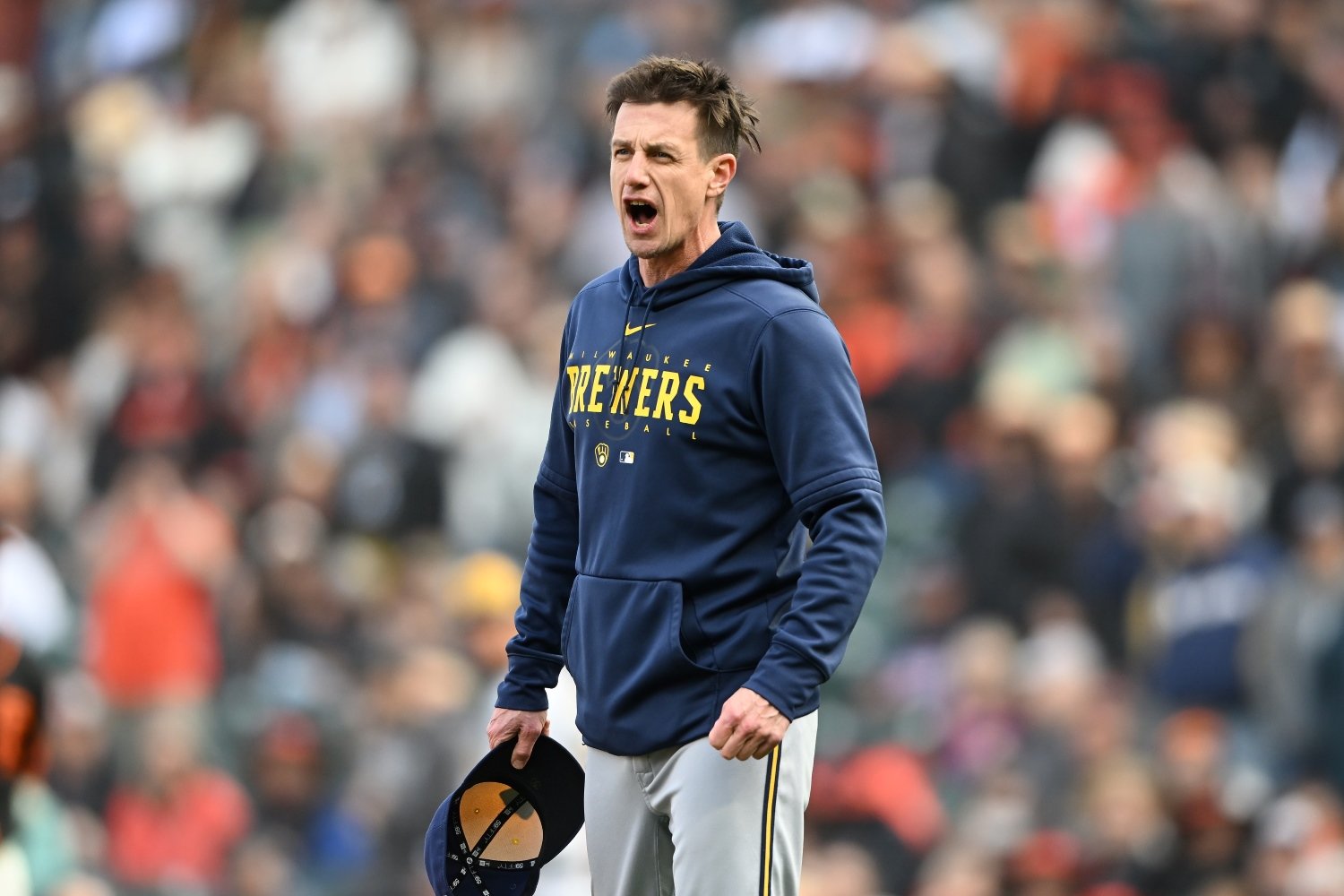 Weekly Snapshot Record Last Week: 1-5 Runs Scored: 21 Runs Surrendered: 32 Standing: 2nd in NL Central (0.5 GB) *** Game 29 | COL 3, MIL 2 Game 30 | COL 7, MIL 1 Game 31 | COL 9, MIL 6 Game 32 | SF 6, MIL 4 Game 33 | SF 4, MIL 1 Game 34 | MIL 7, SF 3 NEWS AND NOTES In the last of these weekly recaps, we saw the Brewers struggle with the bats a bit, but this past week, it was even more of a struggle to plate runs for the Crew--despite a trip to Coors Field. However, the Brewers did see one return on the offensive side, with Tyrone Taylor making his season debut in Colorado. Blake Perkins was optioned to make room for Taylor’s return. Adrian Houser made his comeback on Sunday, where he made a start in San Francisco. His role will flip between starter and reliever going forward, depending on the team's ongoing health status. In a flurry of pitching moves, Gus Varland began his rehab assignment last Tuesday. Varland was out after being struck with a pitch earlier in the season. Bennett Sousa was called up on Friday, with Jake Cousins being sent down as the corresponding move. Sousa will pitch out of the bullpen. To make room for Houser, reliever Tyson Miller was sent down Friday as well. HIGHLIGHTS The Brewers didn’t generate many highlights in their dreadful week, but there were a few flashes of excitement. Much like his debut in Coors Field, Peralta turned in another double-digit strikeout performance in his second career start there. Tyrone Taylors return to the lineup was punctuated with two outfield assists in Colorado. Willy Adames hit his 100th career home run on Sunday in San Francisco. LOWLIGHTS The pitching staff yielded mixed results all week. The bullpen, still trying to find a new stabilization point after heavy usage over the first three weeks of the season and a couple of key injuries, struggled throughout the West Coast swing. The starters had more ups, but also some frustrating downs. Over the last seven days, the team ERA was 4.59, while the Brewers also surrendered seven unearned runs. The offense slashed .256/.323/.372, with a notable lack of “the big hit." The Brewers have continued to struggle with left-handed pitching, lowering their season numbers against lefties yet again this week. Against southpaws, the Brewers are hitting just .213 on the season. There are plenty of other little things that could make it to this section, but in spirit of some much needed positivity, I'll leave it at that. TRENDING STORYLINE The Brewers caught a bit of a break last week, with the Cubs, Pirates, and Cardinals all suffering similar (or even worse) losing streaks. It is hard to believe all three will keep scuffling, so the Brewers will need to right the ship, too. Can the Brewers make do with what they have? Both Luis Urias and Brandon Woodruff remain far from returning, so players like Colin Rea and Houser need to fill the pitching gap, while Owen Miller and Mike Brosseau need to swing more potent bats on the infield. The win on Sunday should help the Brewers get back on track, but nothing is guaranteed. LOOKING AHEAD The Brewers have six home games ahead: three each against the Dodgers and Royals. The Dodgers have been playing much better over the last two weeks, while the Royals have continued to limp helplessly through the early parts of the season. MONDAY, 5/8: DODGERS @ BREWERS - RHP Freddy Peralta vs. RHP Tony Gonsolin TUESDAY, 5/9: DODGERS @ BREWERS - LHP Eric Lauer vs. RHP Noah Syndergaard WEDNESDAY, 5/10: DODGERS @ BREWERS - LHP Wade Miley vs. LHP Clayton Kershaw FRIDAY, 5/12: ROYALS @ BREWERS - TBD vs. TBD SATURDAY, 5/13: ROYALS @ BREWERS - TBD vs. TBD SUNDAY, 5/14: ROYALS @ BREWERS - TBD vs. TBD
 -
 The Brewers went 4-2 last week, including a sweep over the Mariner in Seattle. However, one key injury may over shadow the Brewers winning ways for the second straight week. Image courtesy of © Michael McLoone-USA TODAY Sports Weekly Snapshot *** Record Last Week: 4-2 Runs Scored: 31 Runs Surrendered: 32 Standing: 2nd in NL Central (0.5 GB) *** Game 17 | MIL 7, SEA 3: Brewers Bring The Pain to The Pacific Northwest Game 18 | MIL 6, SEA 5 Game 19 | MIL 5, SEA 3 Game 20 | BOS 5, MIL 3 Game 21 | MIL 5, BOS 4 Game 22 | BOS 12, MIL 5 NEWS AND NOTES Much like the previous week, the accumulating injuries threaten to overshadow the on-field success of the Brewers. The key loss of the week was Garrett Mitchell, who went down with a shoulder injury in Seattle. The first set of MRI tests showed significant damage to Mitchell’s labrum, and will likely require surgery. Both the Brewers and Mitchell will seek a second opinion this coming week, but for now, Mitchell’s season is in jeopardy. Blake Perkins was called up to take Mitchell’s place on the big league roster, and made his debut on Saturday. Perkins collected his first major-league hit. The Arizona native was slashing .292/.370/.417 in Triple A. Corbin Burnes had a bit of a scare in Seattle when he left his first start of the week with a pectoral issue. Burnes still made his next start on Sunday, but lacked the effectiveness from his previous two. Sal Frelick likely would’ve been in line for a call-up when Mitchell went down, but is currently battling a thumb injury. Frelick celebrated his 23rd birthday this week by being placed on the 7-day injured list in Triple A. It does sound like Frelick avoided any kind of major injury, so it’s not unlikely the Brewers may find room for Frelick soon. HIGHLIGHTS Last week was the week where Rowdy Tellez found his familiar power stroke. The stocky first basemen is now slugging over .500 on the season, after a strong showing in three consecutive series. LOWLIGHTS Other than the injuries, no particular Brewer had that poor of a week. The bullpen allowed a handful of inherited runners to score in the Brewers' loss to the Red Sox on Friday, but were fine overall. Wiemer has struggled at the plate, but picked up two hits on Sunday, and has continued to play fantastic defense. Matt Bush had a tough outing Sunday, giving up home runs to the first two batters he faced, quickly squandering what was a 4-3 lead. Bush has been the go-to guy for the eighth inning so far this year, but has had trouble keeping the ball in the ballpark. Javy Guerra struggled in relief of Bush, too, surrendering five more runs after Bush had departed. TRENDING STORYLINE Can the Brewers stay healthy? All facets of the Brewers' game have been either good or great this year, and Milwaukee has the second-best record in the National League to show for it. Still, injuries are beginning to pile up, it will be hard to maintain the type of success they’ve found so far. If there’s any goal for the coming week other than winning, it’s to keep everyone in good health. LOOKING AHEAD The Brewers have a week ahead of them where they can continue to take advantage of their opponents. Both the Tigers and Angels come to town, with a combined record of 18-24 on the season. MONDAY, 4/24: TIGERS @ BREWERS - LHP Matthew Boyd vs. RHP Colin Rea TUESDAY, 4/25: TIGERS @ BREWERS - RHP Spencer Turnbull vs. LHP Eric Lauer WEDNESDAY, 4/26: TIGERS @ BREWERS - RHP Michael Lorenzen vs. RHP Freddy Peralta FRIDAY, 4/28: ANGELS @ BREWERS - TBD vs. LHP Wade Miley SATURDAY, 4/29: ANGELS @ BREWERS TBD vs. RHP Corbin Burnes SUNDAY, 4/30: ANGELS @ BREWERS TBD vs. TBD View full article
 -
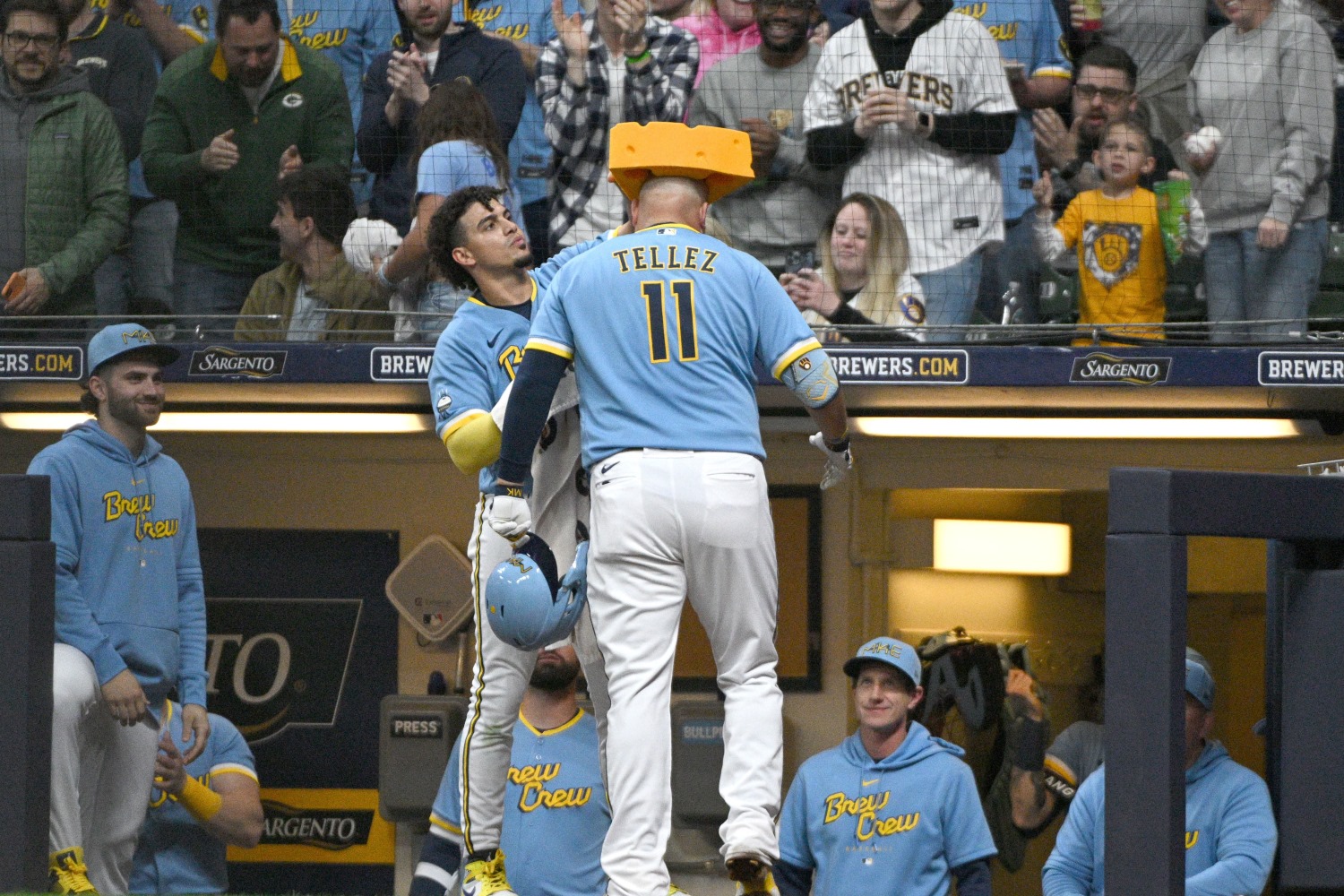 Weekly Snapshot *** Record Last Week: 4-2 Runs Scored: 31 Runs Surrendered: 32 Standing: 2nd in NL Central (0.5 GB) *** Game 17 | MIL 7, SEA 3: Brewers Bring The Pain to The Pacific Northwest Game 18 | MIL 6, SEA 5 Game 19 | MIL 5, SEA 3 Game 20 | BOS 5, MIL 3 Game 21 | MIL 5, BOS 4 Game 22 | BOS 12, MIL 5 NEWS AND NOTES Much like the previous week, the accumulating injuries threaten to overshadow the on-field success of the Brewers. The key loss of the week was Garrett Mitchell, who went down with a shoulder injury in Seattle. The first set of MRI tests showed significant damage to Mitchell’s labrum, and will likely require surgery. Both the Brewers and Mitchell will seek a second opinion this coming week, but for now, Mitchell’s season is in jeopardy. Blake Perkins was called up to take Mitchell’s place on the big league roster, and made his debut on Saturday. Perkins collected his first major-league hit. The Arizona native was slashing .292/.370/.417 in Triple A. Corbin Burnes had a bit of a scare in Seattle when he left his first start of the week with a pectoral issue. Burnes still made his next start on Sunday, but lacked the effectiveness from his previous two. Sal Frelick likely would’ve been in line for a call-up when Mitchell went down, but is currently battling a thumb injury. Frelick celebrated his 23rd birthday this week by being placed on the 7-day injured list in Triple A. It does sound like Frelick avoided any kind of major injury, so it’s not unlikely the Brewers may find room for Frelick soon. HIGHLIGHTS Last week was the week where Rowdy Tellez found his familiar power stroke. The stocky first basemen is now slugging over .500 on the season, after a strong showing in three consecutive series. LOWLIGHTS Other than the injuries, no particular Brewer had that poor of a week. The bullpen allowed a handful of inherited runners to score in the Brewers' loss to the Red Sox on Friday, but were fine overall. Wiemer has struggled at the plate, but picked up two hits on Sunday, and has continued to play fantastic defense. Matt Bush had a tough outing Sunday, giving up home runs to the first two batters he faced, quickly squandering what was a 4-3 lead. Bush has been the go-to guy for the eighth inning so far this year, but has had trouble keeping the ball in the ballpark. Javy Guerra struggled in relief of Bush, too, surrendering five more runs after Bush had departed. TRENDING STORYLINE Can the Brewers stay healthy? All facets of the Brewers' game have been either good or great this year, and Milwaukee has the second-best record in the National League to show for it. Still, injuries are beginning to pile up, it will be hard to maintain the type of success they’ve found so far. If there’s any goal for the coming week other than winning, it’s to keep everyone in good health. LOOKING AHEAD The Brewers have a week ahead of them where they can continue to take advantage of their opponents. Both the Tigers and Angels come to town, with a combined record of 18-24 on the season. MONDAY, 4/24: TIGERS @ BREWERS - LHP Matthew Boyd vs. RHP Colin Rea TUESDAY, 4/25: TIGERS @ BREWERS - RHP Spencer Turnbull vs. LHP Eric Lauer WEDNESDAY, 4/26: TIGERS @ BREWERS - RHP Michael Lorenzen vs. RHP Freddy Peralta FRIDAY, 4/28: ANGELS @ BREWERS - TBD vs. LHP Wade Miley SATURDAY, 4/29: ANGELS @ BREWERS TBD vs. RHP Corbin Burnes SUNDAY, 4/30: ANGELS @ BREWERS TBD vs. TBD
 -
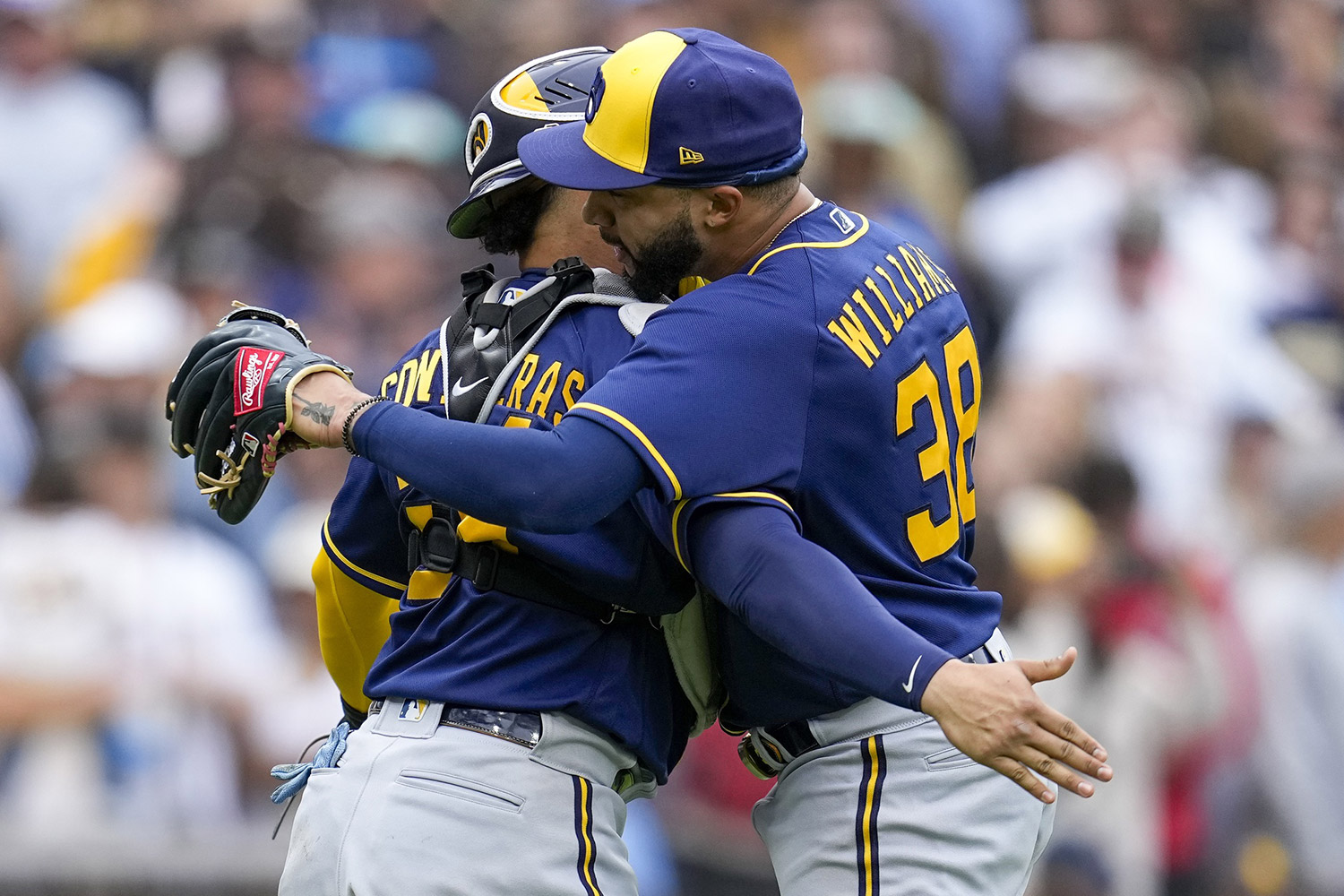 Weekly Snapshot Record Last Week: 4-3 Runs Scored: 29 Runs Surrendered: 21 Standing: 1st in NL Central (2.0 GA) *** Game 10 | AZ 3, MIL 0 Game 11 | MIL 7, AZ 1: Pitching Showdown Ends With A Bang Game 12 | AZ 7, MIL 3: Snakes Strike Back Game 13 | MIL 4, SD 3: Close Call In San Diego Game 14 | MIL 11, SD 2: Hello, Officer; I’d Like to Report a Murder in San Diego Game 15 | SD 10, MIL 3: You Win Some, You Lose Some Game 16 | MIL 1, SD 0 NEWS AND NOTES After a relatively healthy first two weeks of the season, the Brewers see players go down with injuries more frequently. The big hit was the announcement that Brandon Woodruff was diagnosed with a Subscapular Strain, which will sideline Brewer’s ace for a significant amount of time. It’s currently unknown how long he’ll be out, but Colin Rea will occupy a rotation spot until Woodruff can return. Jesse Winker missed the first two games of the series in San Diego with an illness before being scratched with an oblique tightness before the final game. Gus Varland had a major scare in San Diego after being struck with a line drive late in the game Saturday. The initial concern was a head injury, but Varland could walk off the field with assistance. It was announced Sunday that Varland was placed on the 15-day IL with a right-hand contusion. To take Varland‘s roster spot, the Brewers called up Elivs Peguero. HIGHLIGHTS After struggling to start the season, Rowdy Tellez found his footing while the Brewers visited the West Coast. Tellez's season numbers are suddenly up to .240/.322/.560, and he’s hit five home runs. This week, two blasts came in the Brewers' 11-2 blowout against the Padres. Wade Miley had a wonderful week, building on his fantastic first start last week. His finest work came on Sunday, where Miley twirled seven scoreless innings of baseball, picking up eight strikeouts. Devin Williams has quietly gotten off to an excellent start to the season. He made three appearances last week, recorded two saves, and didn’t surrender a single run. Williams has recorded eight strikeouts in five innings of work this year, with six coming in his two outings against the Padres last week. Victor Caratini is off to a great start despite his limited playing time. The Brewers second backstop had a 4-4 day at the plate in what was the Brewers' only highlight of the 10-3 loss to the Padres on Saturday. LOWLIGHTS Even though the Brewers' offense has been producing runs at an admirable level, they’ve been striking out quite a bit. The team recorded 66 outs via strikeout last week but did draw 25 walks. Janson Junk had a tough debut in Arizona, giving up five runs in 4.2 innings against the Diamondbacks. Junk was optioned back to AAA after the start. The Brewers will likely call on his services again at some point this season, but for now, not the start Junk wanted. Brian Anderson had a tough start to the week before snapping his 0-18 skid with a single on Friday. Joey Wiemer also had a similar hitless streak but broke it up with a base hit in the Padres series. The pitching staff's performance on Saturday was particularly ugly, where they surrendered ten runs of 12 hits in the only loss to the Padres. TRENDING STORYLINE Injuries and Strikeouts are likely the only reasonable concern with the Brewers. Last week was particularly brutal on both fronts, so Milwaukee will look for a healthier week next week and likely aim to cut down on the swing-and-miss. The return of Adrian Houser could cause some complications, too, as it is now unclear what his role will be with the injury to Brandon Woodruff. Houser could slot into the rotation or slot into the bullpen as a long man, but the remains to be seen. Houser has been rehabbing since last week. LOOKING AHEAD The Brewers will finish their west coast road trip, starting a series in Seattle on Monday, before finishing the week taking on the Red Sox at American Family Field. Colin Rea is scheduled for his second start of the season, while the rest of the rotation remains the same with the absence of Brandon Woodruff. MONDAY, 4/17: BREWERS @ MARINERS - RHP Corbin Burnes vs. RHP Chirs Flexen TUESDAY, 4/18: BREWERS @ MARINERS - RHP Colin Rea vs. RHP Logan Gilbert WEDNESDAY, 4/19: BREWERS @ MARINERS - LHP Eric Lauer vs. TBD FRIDAY, 4/21: RED SOX @ BREWERS - RHP Freddy Peralta vs. TBD SATURDAY, 4/22: RED SOX @ BREWERS - LHP Wade Miley vs. TBD SUNDAY, 4/23: RED SOX @ BREWERS - RHP Corbin Burnes vs. TBD
 -
The Brewers dropped their first series of the year last week, but still found a way to be successful on their West Coast road trip. Here’s a Breakdown of last week’s action. Image courtesy of © Ray Acevedo-USA TODAY Sports Weekly Snapshot Record Last Week: 4-3 Runs Scored: 29 Runs Surrendered: 21 Standing: 1st in NL Central (2.0 GA) *** Game 10 | AZ 3, MIL 0 Game 11 | MIL 7, AZ 1: Pitching Showdown Ends With A Bang Game 12 | AZ 7, MIL 3: Snakes Strike Back Game 13 | MIL 4, SD 3: Close Call In San Diego Game 14 | MIL 11, SD 2: Hello, Officer; I’d Like to Report a Murder in San Diego Game 15 | SD 10, MIL 3: You Win Some, You Lose Some Game 16 | MIL 1, SD 0 NEWS AND NOTES After a relatively healthy first two weeks of the season, the Brewers see players go down with injuries more frequently. The big hit was the announcement that Brandon Woodruff was diagnosed with a Subscapular Strain, which will sideline Brewer’s ace for a significant amount of time. It’s currently unknown how long he’ll be out, but Colin Rea will occupy a rotation spot until Woodruff can return. Jesse Winker missed the first two games of the series in San Diego with an illness before being scratched with an oblique tightness before the final game. Gus Varland had a major scare in San Diego after being struck with a line drive late in the game Saturday. The initial concern was a head injury, but Varland could walk off the field with assistance. It was announced Sunday that Varland was placed on the 15-day IL with a right-hand contusion. To take Varland‘s roster spot, the Brewers called up Elivs Peguero. HIGHLIGHTS After struggling to start the season, Rowdy Tellez found his footing while the Brewers visited the West Coast. Tellez's season numbers are suddenly up to .240/.322/.560, and he’s hit five home runs. This week, two blasts came in the Brewers' 11-2 blowout against the Padres. Wade Miley had a wonderful week, building on his fantastic first start last week. His finest work came on Sunday, where Miley twirled seven scoreless innings of baseball, picking up eight strikeouts. Devin Williams has quietly gotten off to an excellent start to the season. He made three appearances last week, recorded two saves, and didn’t surrender a single run. Williams has recorded eight strikeouts in five innings of work this year, with six coming in his two outings against the Padres last week. Victor Caratini is off to a great start despite his limited playing time. The Brewers second backstop had a 4-4 day at the plate in what was the Brewers' only highlight of the 10-3 loss to the Padres on Saturday. LOWLIGHTS Even though the Brewers' offense has been producing runs at an admirable level, they’ve been striking out quite a bit. The team recorded 66 outs via strikeout last week but did draw 25 walks. Janson Junk had a tough debut in Arizona, giving up five runs in 4.2 innings against the Diamondbacks. Junk was optioned back to AAA after the start. The Brewers will likely call on his services again at some point this season, but for now, not the start Junk wanted. Brian Anderson had a tough start to the week before snapping his 0-18 skid with a single on Friday. Joey Wiemer also had a similar hitless streak but broke it up with a base hit in the Padres series. The pitching staff's performance on Saturday was particularly ugly, where they surrendered ten runs of 12 hits in the only loss to the Padres. TRENDING STORYLINE Injuries and Strikeouts are likely the only reasonable concern with the Brewers. Last week was particularly brutal on both fronts, so Milwaukee will look for a healthier week next week and likely aim to cut down on the swing-and-miss. The return of Adrian Houser could cause some complications, too, as it is now unclear what his role will be with the injury to Brandon Woodruff. Houser could slot into the rotation or slot into the bullpen as a long man, but the remains to be seen. Houser has been rehabbing since last week. LOOKING AHEAD The Brewers will finish their west coast road trip, starting a series in Seattle on Monday, before finishing the week taking on the Red Sox at American Family Field. Colin Rea is scheduled for his second start of the season, while the rest of the rotation remains the same with the absence of Brandon Woodruff. MONDAY, 4/17: BREWERS @ MARINERS - RHP Corbin Burnes vs. RHP Chirs Flexen TUESDAY, 4/18: BREWERS @ MARINERS - RHP Colin Rea vs. RHP Logan Gilbert WEDNESDAY, 4/19: BREWERS @ MARINERS - LHP Eric Lauer vs. TBD FRIDAY, 4/21: RED SOX @ BREWERS - RHP Freddy Peralta vs. TBD SATURDAY, 4/22: RED SOX @ BREWERS - LHP Wade Miley vs. TBD SUNDAY, 4/23: RED SOX @ BREWERS - RHP Corbin Burnes vs. TBD View full article
-
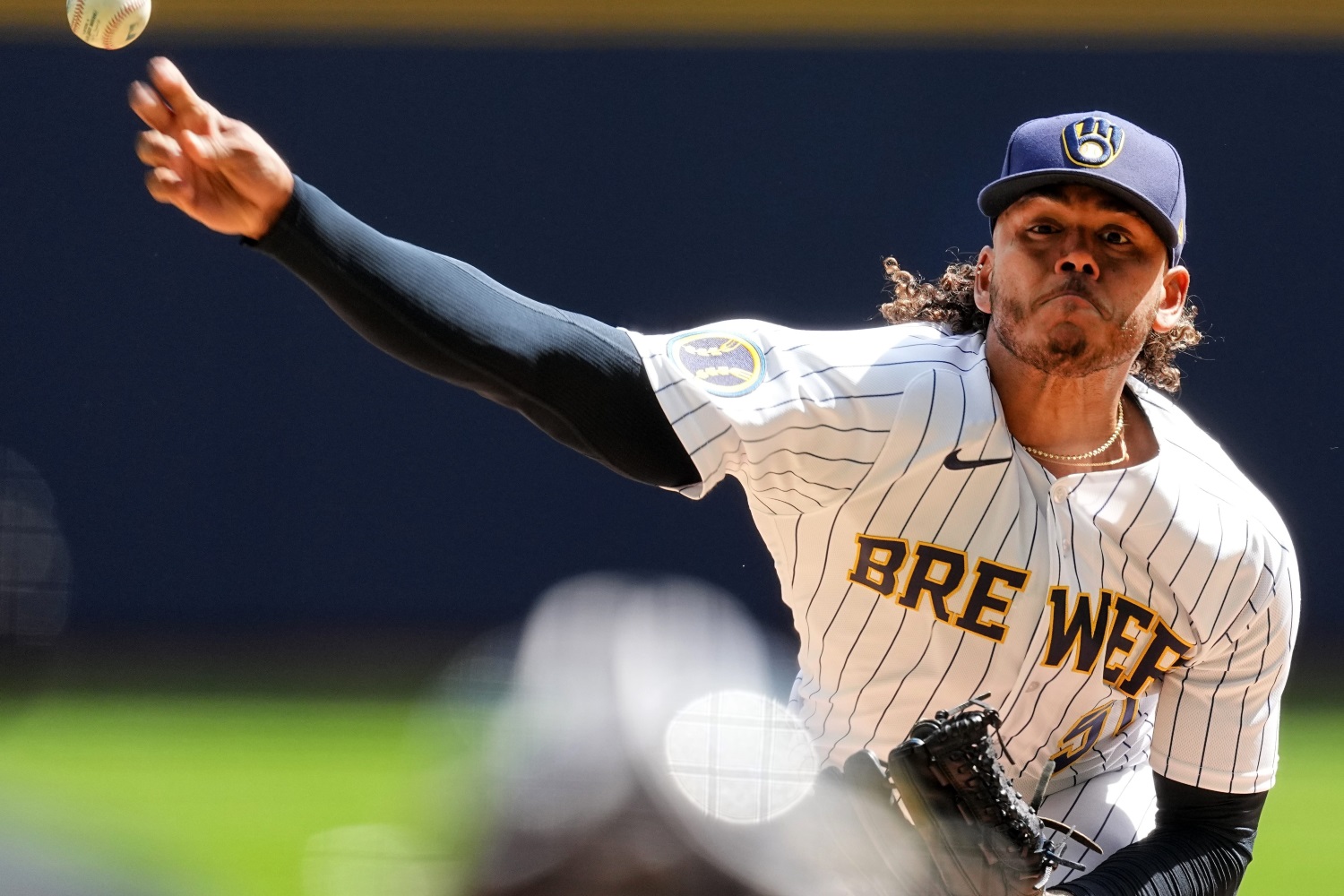 Weekly Snapshot *** Record Last Week: 5-1 (7-2 Overall) Runs Scored: 36 Runs Surrendered: 13 Standing: 1st in NL Central (1.0 GA) *** Game 4 | MIL 10, NYM 0, Brewers Blowout Game 5 | MIL 9, NYM 0, Brewers go Back-to-Back-to-Back Game 6 | MIL 7, NYM 6, Get the Brooms, says Mitchell Game 7 | MIL 4, STL 0, Milwaukee's Momentum Mounts Game 8 | STL 6, MIL 0 Game 9 | MIL 6, STL 1: The Boys Are Back NEWS AND NOTES As expected, Luis Urías is continuing to nurse the leg injury he suffered last week, and could potentially return to the lineup late next month. Expect more updates following the series in Arizona. Unfortunate news for Aaron Ashby, as he underwent an arthroscopic procedure last week, putting his season in question. While the Brewers reported the surgery went well, it’s unlikely Ashby will return this season. The future beyond this year doesn't look bright either, as the surgery has had varying effects on pitchers over the years. Adrian Houser started his rehab assignment Sunday, where he is expected to make multiple multi-inning relief appearances. The plan is for him to fill a similar role when he’s back with the Brewers, but the timetable is unknown. Luckily for the Brewers, Bryse Wilson has been filling in the long relief role with desirable results. HIGHLIGHTS Where do I even start? The Brewers offense put up 36 runs this week, while the pitching staff recorded shutouts in three games. It was a team effort to win five of six this past week, but there are some particularly notable individual highlights. The rookie trio of Joey Wiemer, Brice Turang, and Garret Mitchell continued to post their share of both defensive and offensive highlights. Turang and Wiemer both continued to hit with consistency over the week, while Mitchell more than doubled his career home runs over the span of a few days, hitting two against the Mets on Tuesday, and adding a walk-off jolt the next day to help complete the series sweep. Newcomers Jesse Winker and William Contreras had solid weeks with the bat too, with Winker slashing .308/.387/.385 in the early season, and Contreras posting a similar .308/.379/.346 slash line thus far. Both are still looking for their first homers of the season, but there certainly isn't any complaints with how the two have been producing so far. The Bullpen was fantastic yet again, and they find themselves at the top of almost every pitching category in the major leagues. Through the first nine games of the season, the unit has posted a 0.77 ERA, 0.97 WHIP, and 23 K in 35 innings. Relievers Hoby Milner, Matt Bush, Peter Strzelecki, Devin Williams, and Gus Varland have yet to surrender a run. Brandon Woodruff continued to build on his excellent first outing from last week, tossing 5.1 innings of scoreless baseball in the series opener against St. Louis. Freddy Peralta was excellent in his first two outings of the season. He logged 6 innings in each of his starts this week, and only surrendered one run. Even Wade Miley got in on the fun, throwing 6 shutout innings in his first outing since returning to the Brewers. That start also gave Miley the win he needed to reach the century mark in career victories. Perhaps the top performer of the week was Brian Anderson. Getting everyday playing time at both 3B and RF, Anderson has been the biggest surprise for the Brewers so far. He was part of the offensive explosion in the Mets series, going 6-10 with 3 HRs, 3 BBs, and 9 RBIs. LOWLIGHTS The production from first base has been spotty at best through nine games, with Rowdy Tellez and Luke Voit sharing the time. Both men have combined for just six hits so far, and both find themselves hitting under .200. It’s too early to panic about either, but it is something to note. Shockingly, Corbin Burnes is the lone blemish on the pitching staff so far this season. The former Cy-Young winner has given up 10 runs in his two starts, with a particularly poor performance against the Mets in the 7-6 win last week. Eric Lauer was the only pitcher to record a loss last week, where he got hit around for six runs against the Cardinals. There is some concern with Lauer missing some velocity on his pitches, but he has shown in the past he doesn’t need speed to be effective. TRENDING STORYLINE The Brewers had major problems with left-handed pitching last year, and so far that continued. The Brewers had a good showing against Mets starter David Peterson, but have failed to muster any offense against the other two lefties they’ve faced, Justin Steele and Jordan Montgomery. So far, Brewers skipper Craig Counsell has called upon Mike Brosseau, Luke Voit, and Owen Miller to face left-handed hurlers, and none of the three have produced much. LOOKING AHEAD Christian Yelich had a tough week, hitting just .200 before Sunday's. game, but picked up 3 hits Sunday, including a home run. If the former MVP is able to start contributing to the already hot offense, the Brewers are going to have another successful week. The Brewers are playing their first full week of baseball starting Monday, and will be immediately faced with an early season Cy Young candidate in Zac Gallen. Both the Padres and Diamondbacks have gotten off to solid starts this season, so it would be in the Brewers' best interest to bring their A-game to the West Coast this week. MONDAY, 4/10: BREWERS @ D-BACKS - LHP Wade Miley vs. RHP Zac Gallen TUESDAY, 4/11: BREWERS @ D-BACKS - RHP Corbin Burnes vs. RHP Merrill Kelly WEDNESDAY, 4/12 BREWERS@ D-BACKS - RHP Brandon Woodruff vs. TBA THURSDAY, 4/13: BREWERS @ PADRES - LHP Eric Lauer vs. TBA FRIDAY, 4/14: BREWERS @ PADRES - RHP Freddy Peralta vs. TBA SATURDAY, 4/15: BREWERS @ PADRES - LHP Wade Miley vs. TBA SUNDAY, 4/16: BREWERS @ PADRES - RHP Corbin Burnes vs. TBA
 -
After a 2022 season plagued with offensive inconsistency, the Brewers have come out of the gates swinging. In their first full week of action, the Brewers played a stretch of homes game to remember. Here's the breakdown from the last week of action. Image courtesy of © MARK HOFFMAN/MILWAUKEE JOURNAL SENTINEL / USA TODAY NETWORK Weekly Snapshot *** Record Last Week: 5-1 (7-2 Overall) Runs Scored: 36 Runs Surrendered: 13 Standing: 1st in NL Central (1.0 GA) *** Game 4 | MIL 10, NYM 0, Brewers Blowout Game 5 | MIL 9, NYM 0, Brewers go Back-to-Back-to-Back Game 6 | MIL 7, NYM 6, Get the Brooms, says Mitchell Game 7 | MIL 4, STL 0, Milwaukee's Momentum Mounts Game 8 | STL 6, MIL 0 Game 9 | MIL 6, STL 1: The Boys Are Back NEWS AND NOTES As expected, Luis Urías is continuing to nurse the leg injury he suffered last week, and could potentially return to the lineup late next month. Expect more updates following the series in Arizona. Unfortunate news for Aaron Ashby, as he underwent an arthroscopic procedure last week, putting his season in question. While the Brewers reported the surgery went well, it’s unlikely Ashby will return this season. The future beyond this year doesn't look bright either, as the surgery has had varying effects on pitchers over the years. Adrian Houser started his rehab assignment Sunday, where he is expected to make multiple multi-inning relief appearances. The plan is for him to fill a similar role when he’s back with the Brewers, but the timetable is unknown. Luckily for the Brewers, Bryse Wilson has been filling in the long relief role with desirable results. HIGHLIGHTS Where do I even start? The Brewers offense put up 36 runs this week, while the pitching staff recorded shutouts in three games. It was a team effort to win five of six this past week, but there are some particularly notable individual highlights. The rookie trio of Joey Wiemer, Brice Turang, and Garret Mitchell continued to post their share of both defensive and offensive highlights. Turang and Wiemer both continued to hit with consistency over the week, while Mitchell more than doubled his career home runs over the span of a few days, hitting two against the Mets on Tuesday, and adding a walk-off jolt the next day to help complete the series sweep. Newcomers Jesse Winker and William Contreras had solid weeks with the bat too, with Winker slashing .308/.387/.385 in the early season, and Contreras posting a similar .308/.379/.346 slash line thus far. Both are still looking for their first homers of the season, but there certainly isn't any complaints with how the two have been producing so far. The Bullpen was fantastic yet again, and they find themselves at the top of almost every pitching category in the major leagues. Through the first nine games of the season, the unit has posted a 0.77 ERA, 0.97 WHIP, and 23 K in 35 innings. Relievers Hoby Milner, Matt Bush, Peter Strzelecki, Devin Williams, and Gus Varland have yet to surrender a run. Brandon Woodruff continued to build on his excellent first outing from last week, tossing 5.1 innings of scoreless baseball in the series opener against St. Louis. Freddy Peralta was excellent in his first two outings of the season. He logged 6 innings in each of his starts this week, and only surrendered one run. Even Wade Miley got in on the fun, throwing 6 shutout innings in his first outing since returning to the Brewers. That start also gave Miley the win he needed to reach the century mark in career victories. Perhaps the top performer of the week was Brian Anderson. Getting everyday playing time at both 3B and RF, Anderson has been the biggest surprise for the Brewers so far. He was part of the offensive explosion in the Mets series, going 6-10 with 3 HRs, 3 BBs, and 9 RBIs. LOWLIGHTS The production from first base has been spotty at best through nine games, with Rowdy Tellez and Luke Voit sharing the time. Both men have combined for just six hits so far, and both find themselves hitting under .200. It’s too early to panic about either, but it is something to note. Shockingly, Corbin Burnes is the lone blemish on the pitching staff so far this season. The former Cy-Young winner has given up 10 runs in his two starts, with a particularly poor performance against the Mets in the 7-6 win last week. Eric Lauer was the only pitcher to record a loss last week, where he got hit around for six runs against the Cardinals. There is some concern with Lauer missing some velocity on his pitches, but he has shown in the past he doesn’t need speed to be effective. TRENDING STORYLINE The Brewers had major problems with left-handed pitching last year, and so far that continued. The Brewers had a good showing against Mets starter David Peterson, but have failed to muster any offense against the other two lefties they’ve faced, Justin Steele and Jordan Montgomery. So far, Brewers skipper Craig Counsell has called upon Mike Brosseau, Luke Voit, and Owen Miller to face left-handed hurlers, and none of the three have produced much. LOOKING AHEAD Christian Yelich had a tough week, hitting just .200 before Sunday's. game, but picked up 3 hits Sunday, including a home run. If the former MVP is able to start contributing to the already hot offense, the Brewers are going to have another successful week. The Brewers are playing their first full week of baseball starting Monday, and will be immediately faced with an early season Cy Young candidate in Zac Gallen. Both the Padres and Diamondbacks have gotten off to solid starts this season, so it would be in the Brewers' best interest to bring their A-game to the West Coast this week. MONDAY, 4/10: BREWERS @ D-BACKS - LHP Wade Miley vs. RHP Zac Gallen TUESDAY, 4/11: BREWERS @ D-BACKS - RHP Corbin Burnes vs. RHP Merrill Kelly WEDNESDAY, 4/12 BREWERS@ D-BACKS - RHP Brandon Woodruff vs. TBA THURSDAY, 4/13: BREWERS @ PADRES - LHP Eric Lauer vs. TBA FRIDAY, 4/14: BREWERS @ PADRES - RHP Freddy Peralta vs. TBA SATURDAY, 4/15: BREWERS @ PADRES - LHP Wade Miley vs. TBA SUNDAY, 4/16: BREWERS @ PADRES - RHP Corbin Burnes vs. TBA View full article
-
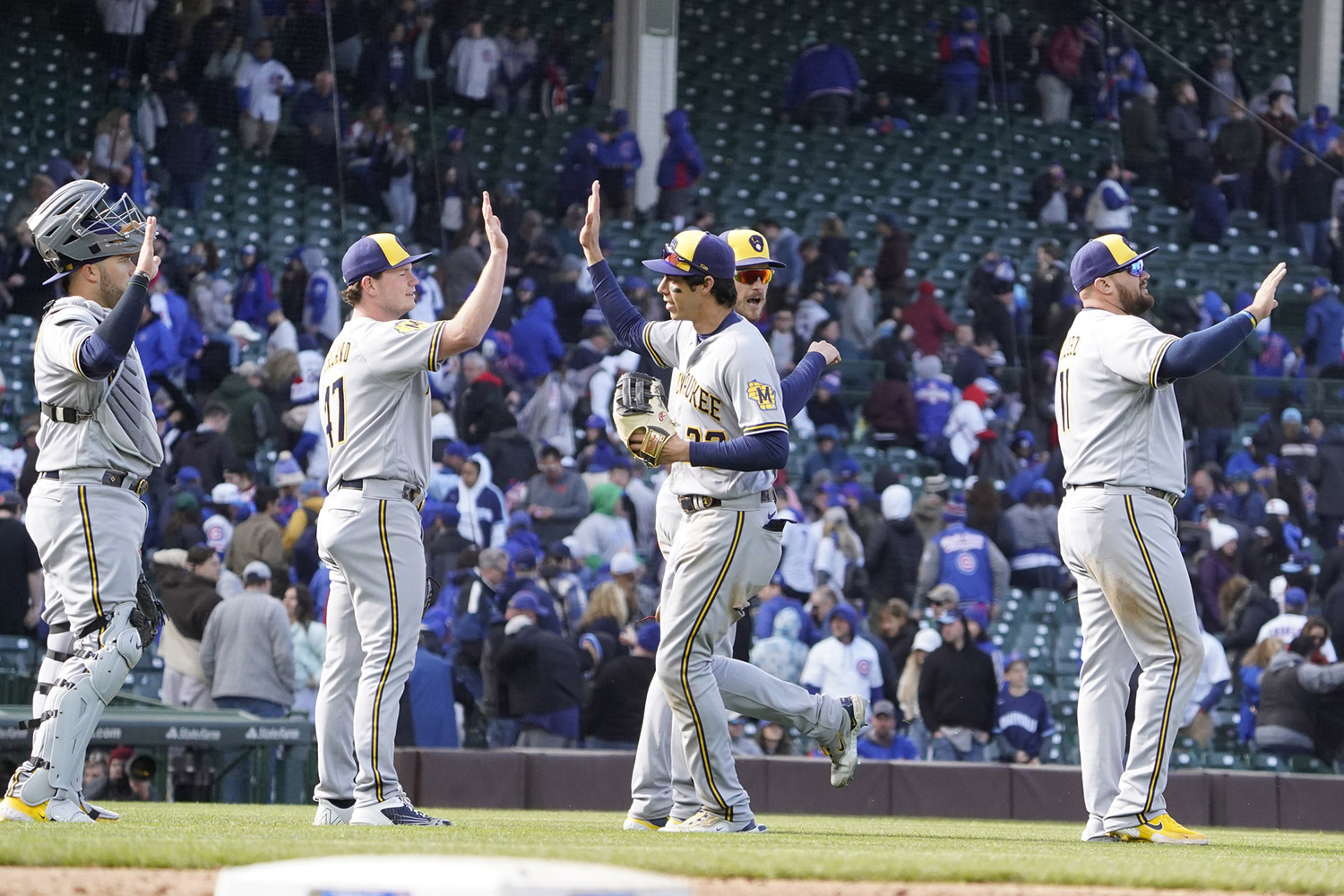 Last Week's Game Results: Game 1 | CHC 4, MIL 0: Brewers Shut Out on Opening Day Game 2 | MIL 3, CHC 1: Bats Come Through in a Pinch Game 3 | MIL 9, CHC 5: Death By a Thousand Singles Weekly Snapshot: Thur, 3/30 through Sun, 4/2 *** Record Last Week: 2-1 (Overall: 2-1) Run Scored Last Week: 12 Runs Surrendered Last Week: 10 Standing: 1st place in NL Central (0 GA) NEWS AND NOTES The Brewers kicked off the season in Chicago with the major league debuts of Brice Turang and Gus Varland. The Brewers would go on to lose on opening day, and some bitter news would follow. Luis Urías would find himself headed to the injured list with a hamstring injury. With an extra roster spot, Joey Wiemer was called up before the game Saturday, where he’d be the third Brewer to make his major league debut in the young season. Devin Williams was struck with a line drive during his first appearance of the season but would go on to finish the inning. There appeared to be no repercussions going forward. Williams recorded his first save of the season, with all three outs coming after he was struck with the line drive. HIGHLIGHTS Brandon Woodruff was looking to continue to build on his roaring finish to the previous season and was certainly able to do so this past Saturday. Woodruff was excellent in his first outing of the season, surrendering only one run and striking out eight through six innings of work. Jesse Winker and Christian Yelich recorded three hits over the short week, as both are looking to return to the peak of their offensive production this year. William Contreras was solid in his Brewer debut too, delivering a crucial hit in the win over the Cubs on Saturday. It was quite the four days for the Brewers rookies. Brice Turang picked up his first big league hit on Thursday and followed up his debut with another start in Sunday's rubber match. In the 9-5 win, he picked up two more hits, drew two walks, and knocked in his first major league RBI. Fans only had to wait one game for Joey Wiemer's call-up, and he found a way to contribute to the offense, picking up multiple hits in his first two games as a major leaguer. Wiemer's stay may be limited, but he's looking to contribute enough to make a case to hang around on the roster for the entire year. Gus Varland also debuted on opening day, tossing a scoreless frame and picking up his first major league strikeout. He’d throw another scoreless inning in the win on Sunday too. Even Garrett Mitchell got in on the rookie-themed fun, notching two hits and a couple of RBIs over the course of the series. LOWLIGHTS It was a tough start to the season for Rowdy Tellez. The first baseman earned a start in every game of the series but only managed one hit and struck out six times in 11 plate appearances. The aforementioned Luis Urías went 0-for-4 in his first game of the season and will spend the better part of the next two weeks nursing a hamstring injury. Not the kind of momentum Urías was looking to build after his performance in the WBC. Possibly through little fault of their own, the pitching staff struggled to contain the Cubs' new star, Dansby Swanson. The former Atlanta shortstop tallied seven hits in his 12 at-bats and made more than one fantastic defensive play. If the Brewers consistently beat the Cubs for the next seven years, they’ll need to find ways to get Swanson out. There is one blemish on the pitching staff's record to start the season, and it belongs to Javy Guerra. Guerra’s appearance on Sunday was a disaster, walking the first two batters he faced and giving up a single to the third. The following batter, Cubs catcher Yan Gomes narrowly missed a grand slam, and Guerra was lifted from the game in favor of Hoby Milner. LOOKING AHEAD With a solid start, the Brewers will have to buckle down next week to face two teams featured in the playoffs last year. The six home games should work in their favor, but the Crew will still need to tighten up for the six games ahead. MONDAY, 4/3: METS @ BREWERS - RHP Freddy Peralta vs. RHP Carlos Carrasco TUESDAY, 4/4: METS @ BREWERS - LHP Wade Miley vs. RHP Max Scherzer WEDNESDAY, 4/5: METS @ BREWERS - RHP Corbin Burnes vs. LHP David Peterson FRIDAY, 4/7: CARDINALS @ BREWERS - RHP Jack Flaherty vs. TBD SATURDAY,4/8: CARDINALS @ BREWERS - TBD vs. TBD SUNDAY, 4/9: CARDINALS @ BREWERS - TBD vs. TBD
 -
At long last, Baseball is back! The Brewers kicked off another season of baseball by taking on the Chicago Cubs. Here’s a quick catch-up on last week's action! Image courtesy of David Banks-USA TODAY Sports Last Week's Game Results: Game 1 | CHC 4, MIL 0: Brewers Shut Out on Opening Day Game 2 | MIL 3, CHC 1: Bats Come Through in a Pinch Game 3 | MIL 9, CHC 5: Death By a Thousand Singles Weekly Snapshot: Thur, 3/30 through Sun, 4/2 *** Record Last Week: 2-1 (Overall: 2-1) Run Scored Last Week: 12 Runs Surrendered Last Week: 10 Standing: 1st place in NL Central (0 GA) NEWS AND NOTES The Brewers kicked off the season in Chicago with the major league debuts of Brice Turang and Gus Varland. The Brewers would go on to lose on opening day, and some bitter news would follow. Luis Urías would find himself headed to the injured list with a hamstring injury. With an extra roster spot, Joey Wiemer was called up before the game Saturday, where he’d be the third Brewer to make his major league debut in the young season. Devin Williams was struck with a line drive during his first appearance of the season but would go on to finish the inning. There appeared to be no repercussions going forward. Williams recorded his first save of the season, with all three outs coming after he was struck with the line drive. HIGHLIGHTS Brandon Woodruff was looking to continue to build on his roaring finish to the previous season and was certainly able to do so this past Saturday. Woodruff was excellent in his first outing of the season, surrendering only one run and striking out eight through six innings of work. Jesse Winker and Christian Yelich recorded three hits over the short week, as both are looking to return to the peak of their offensive production this year. William Contreras was solid in his Brewer debut too, delivering a crucial hit in the win over the Cubs on Saturday. It was quite the four days for the Brewers rookies. Brice Turang picked up his first big league hit on Thursday and followed up his debut with another start in Sunday's rubber match. In the 9-5 win, he picked up two more hits, drew two walks, and knocked in his first major league RBI. Fans only had to wait one game for Joey Wiemer's call-up, and he found a way to contribute to the offense, picking up multiple hits in his first two games as a major leaguer. Wiemer's stay may be limited, but he's looking to contribute enough to make a case to hang around on the roster for the entire year. Gus Varland also debuted on opening day, tossing a scoreless frame and picking up his first major league strikeout. He’d throw another scoreless inning in the win on Sunday too. Even Garrett Mitchell got in on the rookie-themed fun, notching two hits and a couple of RBIs over the course of the series. LOWLIGHTS It was a tough start to the season for Rowdy Tellez. The first baseman earned a start in every game of the series but only managed one hit and struck out six times in 11 plate appearances. The aforementioned Luis Urías went 0-for-4 in his first game of the season and will spend the better part of the next two weeks nursing a hamstring injury. Not the kind of momentum Urías was looking to build after his performance in the WBC. Possibly through little fault of their own, the pitching staff struggled to contain the Cubs' new star, Dansby Swanson. The former Atlanta shortstop tallied seven hits in his 12 at-bats and made more than one fantastic defensive play. If the Brewers consistently beat the Cubs for the next seven years, they’ll need to find ways to get Swanson out. There is one blemish on the pitching staff's record to start the season, and it belongs to Javy Guerra. Guerra’s appearance on Sunday was a disaster, walking the first two batters he faced and giving up a single to the third. The following batter, Cubs catcher Yan Gomes narrowly missed a grand slam, and Guerra was lifted from the game in favor of Hoby Milner. LOOKING AHEAD With a solid start, the Brewers will have to buckle down next week to face two teams featured in the playoffs last year. The six home games should work in their favor, but the Crew will still need to tighten up for the six games ahead. MONDAY, 4/3: METS @ BREWERS - RHP Freddy Peralta vs. RHP Carlos Carrasco TUESDAY, 4/4: METS @ BREWERS - LHP Wade Miley vs. RHP Max Scherzer WEDNESDAY, 4/5: METS @ BREWERS - RHP Corbin Burnes vs. LHP David Peterson FRIDAY, 4/7: CARDINALS @ BREWERS - RHP Jack Flaherty vs. TBD SATURDAY,4/8: CARDINALS @ BREWERS - TBD vs. TBD SUNDAY, 4/9: CARDINALS @ BREWERS - TBD vs. TBD View full article
-
Yesterday, I gave you 13 of my bold predictions for 2023. Here are 10 more, to bring this to the level that the calendar demands. Image courtesy of © Kareem Elgazzar/The Enquirer / USA TODAY NETWORK 10. The Brewers Capture the NL Central, Easily No team has captured consecutive NL central titles since the Cubs did so in 2016 and 2017. St Louis won the division with relative ease last year, with a seven-game gap between them and the second-place Brewers. This year, the Brewers can flip the script. There's no real reason to believe it won't be a close race throughout the season, but come time for playoff baseball, the Brewers might just be sitting atop the NL Central comfortably. 9. Rowdy Tellez Hits 40 Home Runs Rowdy Tellez is a force at the plate. It takes little more than a glance to figure that out. However, 40 home runs in a single season in quite the accomplishment. There have only been seven Brewers who eclipsed 40 bombs in a campaign, and Tellez can become the eighth, as long he stays healthy and fends off any encroachment on his playing time by Luke Voit or William Contreras. 8. Jake Cousins is a Key Piece in the Pen Without Josh Hader, Devin Williams naturally will shift into the closer role. With Williams now manning the ninth, Craig Counsell needs someone to step up for the set-up role. My pick for the slot is Jake Cousins. He features one of the filthiest sliders in the game, and with a slight uptick to his control, has good supplemental pitches too. It may not be the most natural pick, but there's potential. 1. Woodruff wins the NL Cy Young Brandon Woodruff is often an afterthought within the Brewers pitching staff, but he's got the skills to take home pitching's grandest prize. With names like Jacob deGrom and Carlos Rodón switching to American League teams, Burnes might be Woodruff's greatest competition. If there's a year for a Woodruff to insert himself into the race, this could be it. There you have it. If you missed my previous piece with the rest of the 23 predictions, check it out. Let me know in the comments whether I've missed any especially juicy ones. View full article
-
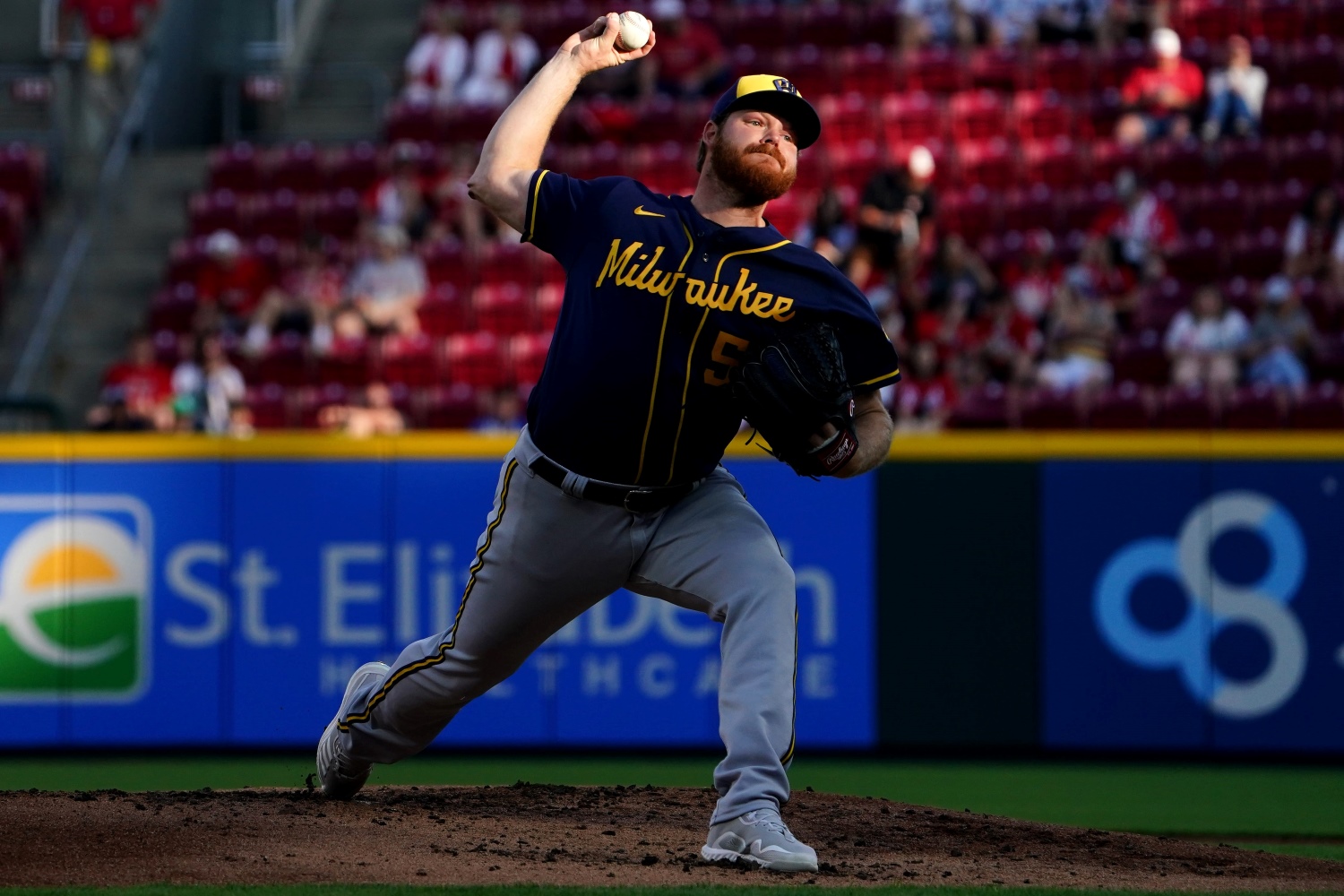 10. The Brewers Capture the NL Central, Easily No team has captured consecutive NL central titles since the Cubs did so in 2016 and 2017. St Louis won the division with relative ease last year, with a seven-game gap between them and the second-place Brewers. This year, the Brewers can flip the script. There's no real reason to believe it won't be a close race throughout the season, but come time for playoff baseball, the Brewers might just be sitting atop the NL Central comfortably. 9. Rowdy Tellez Hits 40 Home Runs Rowdy Tellez is a force at the plate. It takes little more than a glance to figure that out. However, 40 home runs in a single season in quite the accomplishment. There have only been seven Brewers who eclipsed 40 bombs in a campaign, and Tellez can become the eighth, as long he stays healthy and fends off any encroachment on his playing time by Luke Voit or William Contreras. 8. Jake Cousins is a Key Piece in the Pen Without Josh Hader, Devin Williams naturally will shift into the closer role. With Williams now manning the ninth, Craig Counsell needs someone to step up for the set-up role. My pick for the slot is Jake Cousins. He features one of the filthiest sliders in the game, and with a slight uptick to his control, has good supplemental pitches too. It may not be the most natural pick, but there's potential. 1. Woodruff wins the NL Cy Young Brandon Woodruff is often an afterthought within the Brewers pitching staff, but he's got the skills to take home pitching's grandest prize. With names like Jacob deGrom and Carlos Rodón switching to American League teams, Burnes might be Woodruff's greatest competition. If there's a year for a Woodruff to insert himself into the race, this could be it. There you have it. If you missed my previous piece with the rest of the 23 predictions, check it out. Let me know in the comments whether I've missed any especially juicy ones.
 -
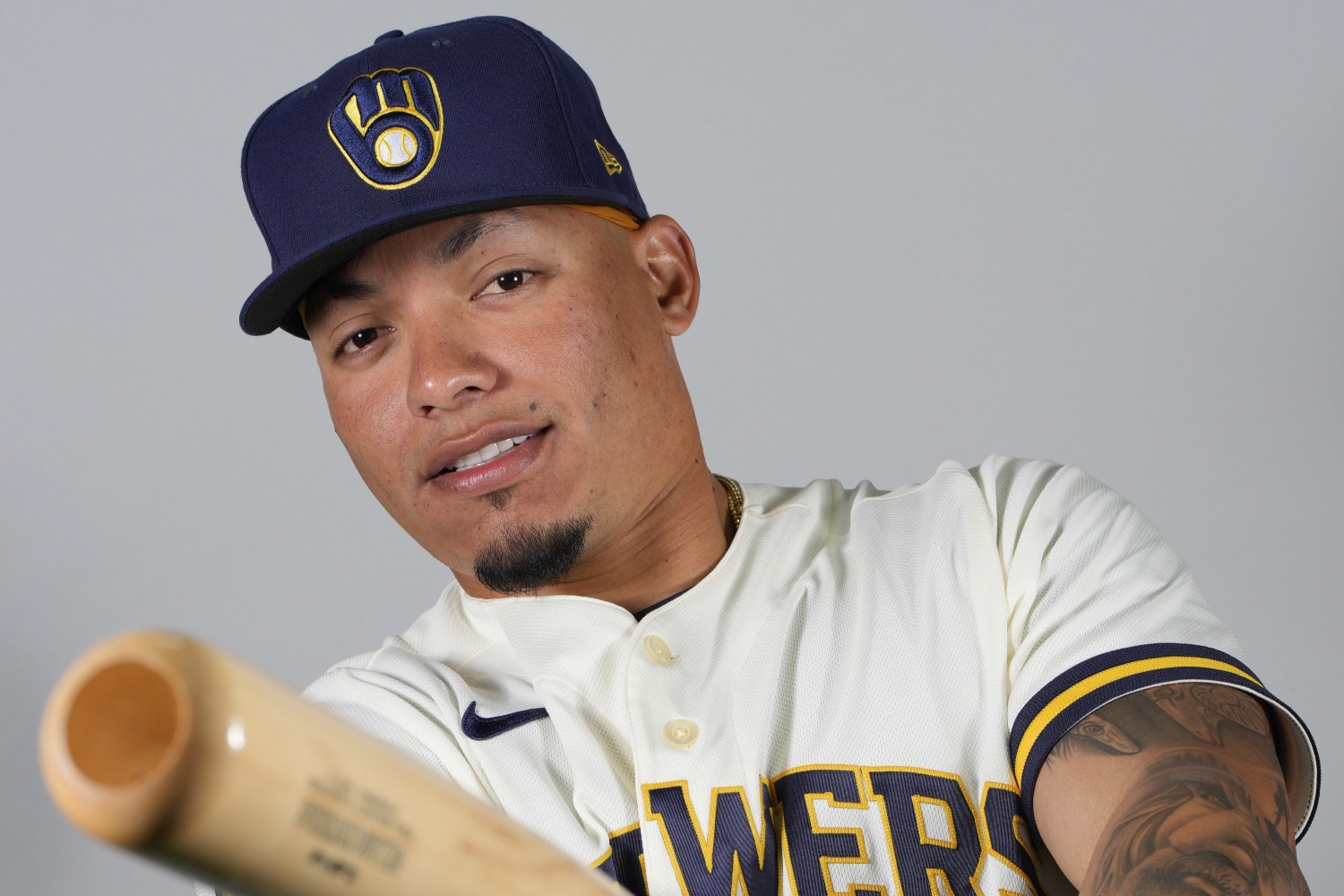 All of the predictions below are about things that can happen in the 2023 season. It could be an MVP winner or a breakout rookie. As long as it pertains to the Brewers, it’s fair game. Will all of them come true? Almost certainly not. Will some of them come true? Only time will tell. 23. Hedbert Perez Takes Off It may be a make or break year for Hedbert Perez, who was an international signee in 2019. Perez spent the entirety of last year in Low-A, where his strikeouts skyrocketed, and his production flatlined. Still, Perez is only 19, and possesses five-tool talent. Perez will likely feature a new approach, and with some experience under his belt, he has the ability to shoot through the system in 2023. 22. Garrett Mitchell Wins a Gold Glove Mitchell will have every opportunity to capture a starting spot in the Brewers outfield. His glove won't be the problem. If Mitchell is able to find success with his bat, he'll be able to showcase the caliber of his glove. If that's the case, Mitchell can earn the first piece of hardware in his MLB career. 12. Corbin Burnes Throws a No-Hitter Corbin Burnes has already etched himself into the Brewers' history books with a combined no-hitter with Josh Hader in 2021. There's really no method to predicting no-hitters, so this is nothing more than a hunch. But if there's anyone who can replicate the type of performance needed for a no-hitter, Burnes is it. 11. Urías is Traded It isn't the case that Urías has done anything to warrant the Brewers moving on; this is a bold prediction after all. Yet, there's a feeling that Urías hasn't seized an infield spot with authority. Now, the Brewers are swimming in options, and it feels like there isn't room for all of them. Urias has the best combination of trade value and ability, and the Brewers just might move on. That's a hefty dose of boldness already, but we're far from finished. Let me know what you think of some of these in the comments, and check back tomorrow for the last 10 of my bold predictions for the year.
 -
Baseball is hard to predict. The Milwaukee Brewers are no exception. With the Cactus League opener upon us, though, it's time to take a stab at trying to predict what might brew in Milwaukee this season. Image courtesy of © Rick Scuteri-USA TODAY Sports All of the predictions below are about things that can happen in the 2023 season. It could be an MVP winner or a breakout rookie. As long as it pertains to the Brewers, it’s fair game. Will all of them come true? Almost certainly not. Will some of them come true? Only time will tell. 23. Hedbert Perez Takes Off It may be a make or break year for Hedbert Perez, who was an international signee in 2019. Perez spent the entirety of last year in Low-A, where his strikeouts skyrocketed, and his production flatlined. Still, Perez is only 19, and possesses five-tool talent. Perez will likely feature a new approach, and with some experience under his belt, he has the ability to shoot through the system in 2023. 22. Garrett Mitchell Wins a Gold Glove Mitchell will have every opportunity to capture a starting spot in the Brewers outfield. His glove won't be the problem. If Mitchell is able to find success with his bat, he'll be able to showcase the caliber of his glove. If that's the case, Mitchell can earn the first piece of hardware in his MLB career. 12. Corbin Burnes Throws a No-Hitter Corbin Burnes has already etched himself into the Brewers' history books with a combined no-hitter with Josh Hader in 2021. There's really no method to predicting no-hitters, so this is nothing more than a hunch. But if there's anyone who can replicate the type of performance needed for a no-hitter, Burnes is it. 11. Urías is Traded It isn't the case that Urías has done anything to warrant the Brewers moving on; this is a bold prediction after all. Yet, there's a feeling that Urías hasn't seized an infield spot with authority. Now, the Brewers are swimming in options, and it feels like there isn't room for all of them. Urias has the best combination of trade value and ability, and the Brewers just might move on. That's a hefty dose of boldness already, but we're far from finished. Let me know what you think of some of these in the comments, and check back tomorrow for the last 10 of my bold predictions for the year. View full article
-
The Milwaukee Brewers are a small market team that needs to effectively manage its assets, often with an eye to the future. Here are some of the most valuable assets the team currently holds. Read the second part of the installment to see where the top five stand. As a quick refresher, these rankings aim to answer one question: How valuable is this player to the Milwaukee Brewers organization in 2023? You can do so here if you'd like to see the five players that cracked numbers six through ten. For the second part, here are the five best assets the Brewers have going into 2023, the pillars of the franchise. The Top 10 Brewers Assets for 2023: 1 through 5 5. Willy Adames, SS Willy Adames has been the Brewers' most valuable player since he was acquired from the Tampa Bay Rays in May 2021. He plays excellent defense, hits for power, and is the most influential voice on the field. The more fun Adames is having while he's on the field, the better he's playing. Since the beginning of 2021, Adames has ranked 5th among all MLB shortstops in WAR. Adames has hit .256/.325/.483 during his time in Milwaukee and has a strong argument for being the best bat currently slotted in the Brewers lineup. The only problem is his price tag is catching up to the Brewers. Adames is projected to make over $9 million this year and more in his final arbitration year in 2024. With the spending flux for free agent shortstops and Boston’s recent extension to Rafael Devers, the possibility of Adames being an extension candidate may be in limbo. 4. Brandon Woodruff, SP Brandon Woodruff doesn’t get enough credit. He’s a legitimate ace, and his numbers back it up. As a starter, Woodruff pitched to a 3.24 ERA and a 3.34 FIP, amassing over 600 strikeouts in 586 innings. Those numbers are closer to being Cy Young numbers than anything. There is no spotlight too bright for Woodruff, and the Brewers realize that. Woodruff is currently slated to become a free agent for the first time following the 2024 season and earned nearly $7 million in arbitration last year. The fact is, Woodruff isn’t going to be around much longer at this price. Still, he remains a good extension candidate, which would require a re-evaluation of his value should it happen. The Brewers have built a reputation as an organization that has leaned heavily on their pitching staff and has the luxury to keep doing so. Brandon Woodruff is undoubtedly a part of that, even though he isn’t exactly the perfect combination of affordability and team control. 3. William Contreras, C William Contreras has yet to appear as a Brewer, and there’s already enough reason to list him among some key names from past years. In his first year as an everyday option in Atlanta, Contreras hit and hit well, posting an .860 OPS. The Brewers expect much of the same coming into 2023 and beyond. In 97 games last year, Contreras hit .278/.354/.506 with a wRC+ of 138. On top of his excellent offensive numbers, Contreras also earned a nod as a DH in the All-Star Game. Where the real value is apparent in his age and controllability, Contreras is barely 25 years of age, plays a premium position, won’t enter arbitration until 2025, and is under team control until 2028. The Brewers stand to lose quite a bit of talent in a few years, but Contreras won't be one of them. Expect "Wild Bill" to don a Brewers jersey for years. 2. Freddy Peralta, SP Freddy Peralta has had a wild ride to begin his major league career. He has one of the more memorable pitching debuts in recent memory, has battled injuries, pitched stretches out of the bullpen, and now has solidified himself as a key piece in the Brewers rotation. Though he only pitched in 78 innings last year, he posted a career-low ERA of 3.12 and increased his ground ball rate to 40 percent while striking out 86 batters and only allowing six home runs. Peralta's drawbacks have little to do with his on-field performance; he needs to keep himself on the field. Injuries are hard to predict, but if there's such thing as being "due" for a healthy season, Peralta's it. What makes Peralta so valuable is his contract. The 26-year-old signed a five-year $15M contract in 2020, a deal that also features two club options. If the Brewers keep Peralta throughout the deal, he won’t be a free agent until 2027. Not only is that a long time, but it won’t cost the Brewers much in the process. 1. Corbin Burnes, SP What is there to say about Corbin Burnes that hasn’t already been said? He’s one of the best pitchers in all of baseball. He’s already won a Cy Young Award and has two more years of being a Milwaukee Brewer. Burnes has posted an ERA under 3.00 in his last three seasons, striking out nearly a third of the batters he’s faced, all while walking only 6% of batters. His analytical numbers are great, too, suggesting his ascent has little to do with luck. Burnes may not have Peralta's contract length or the same potential for a contract extension as Willy Adames or Brandon Woodruff. Corbin Burnes has a legitimate argument for being the best pitcher in the sport, and the Brewers are only going to be paying half of what he’s worth in the coming two years, if not less. That may not seem apparent now, but in two years, Burnes will be one of baseball's most sought-after pitching assets. View full article
-
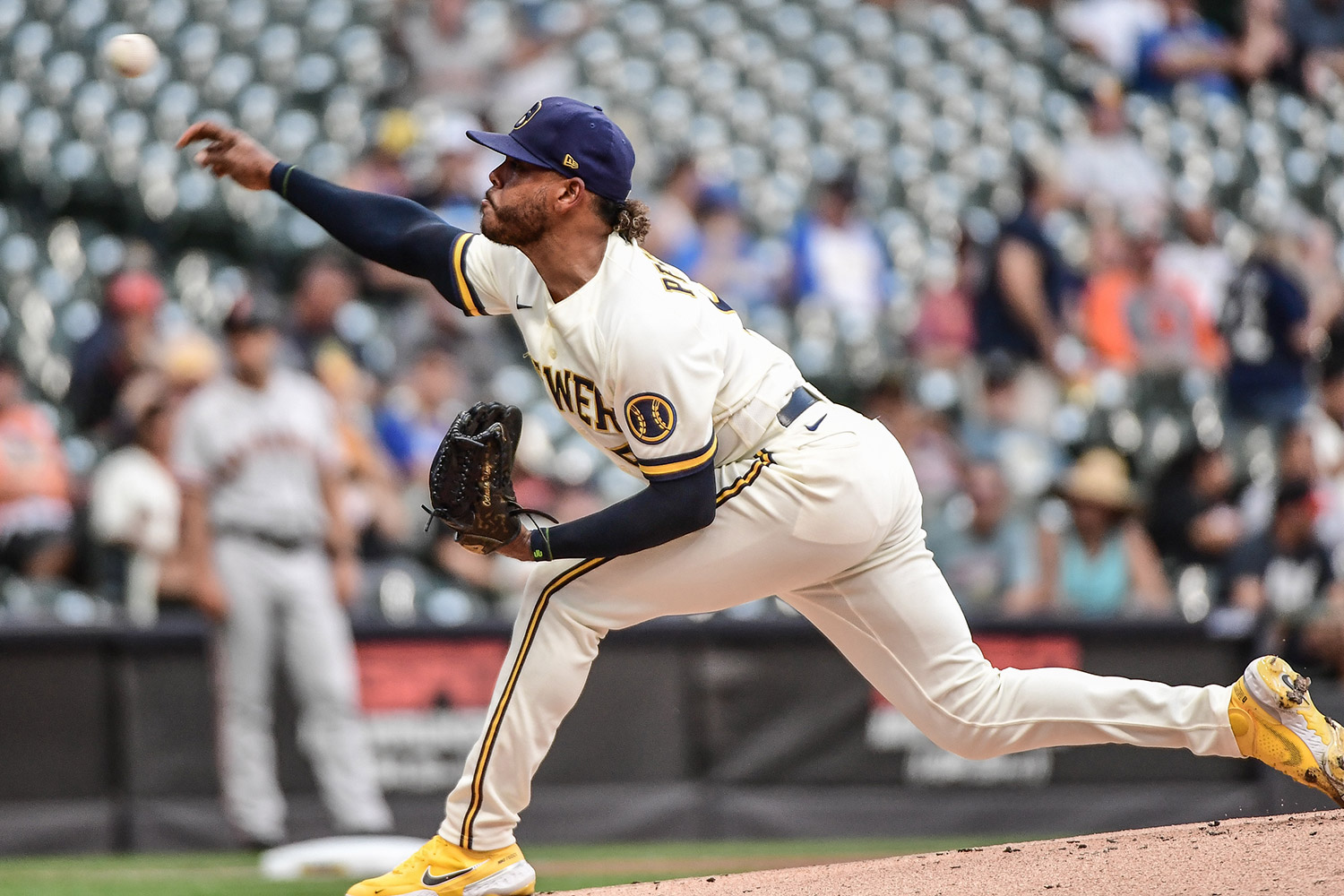 As a quick refresher, these rankings aim to answer one question: How valuable is this player to the Milwaukee Brewers organization in 2023? You can do so here if you'd like to see the five players that cracked numbers six through ten. For the second part, here are the five best assets the Brewers have going into 2023, the pillars of the franchise. The Top 10 Brewers Assets for 2023: 1 through 5 5. Willy Adames, SS Willy Adames has been the Brewers' most valuable player since he was acquired from the Tampa Bay Rays in May 2021. He plays excellent defense, hits for power, and is the most influential voice on the field. The more fun Adames is having while he's on the field, the better he's playing. Since the beginning of 2021, Adames has ranked 5th among all MLB shortstops in WAR. Adames has hit .256/.325/.483 during his time in Milwaukee and has a strong argument for being the best bat currently slotted in the Brewers lineup. The only problem is his price tag is catching up to the Brewers. Adames is projected to make over $9 million this year and more in his final arbitration year in 2024. With the spending flux for free agent shortstops and Boston’s recent extension to Rafael Devers, the possibility of Adames being an extension candidate may be in limbo. 4. Brandon Woodruff, SP Brandon Woodruff doesn’t get enough credit. He’s a legitimate ace, and his numbers back it up. As a starter, Woodruff pitched to a 3.24 ERA and a 3.34 FIP, amassing over 600 strikeouts in 586 innings. Those numbers are closer to being Cy Young numbers than anything. There is no spotlight too bright for Woodruff, and the Brewers realize that. Woodruff is currently slated to become a free agent for the first time following the 2024 season and earned nearly $7 million in arbitration last year. The fact is, Woodruff isn’t going to be around much longer at this price. Still, he remains a good extension candidate, which would require a re-evaluation of his value should it happen. The Brewers have built a reputation as an organization that has leaned heavily on their pitching staff and has the luxury to keep doing so. Brandon Woodruff is undoubtedly a part of that, even though he isn’t exactly the perfect combination of affordability and team control. 3. William Contreras, C William Contreras has yet to appear as a Brewer, and there’s already enough reason to list him among some key names from past years. In his first year as an everyday option in Atlanta, Contreras hit and hit well, posting an .860 OPS. The Brewers expect much of the same coming into 2023 and beyond. In 97 games last year, Contreras hit .278/.354/.506 with a wRC+ of 138. On top of his excellent offensive numbers, Contreras also earned a nod as a DH in the All-Star Game. Where the real value is apparent in his age and controllability, Contreras is barely 25 years of age, plays a premium position, won’t enter arbitration until 2025, and is under team control until 2028. The Brewers stand to lose quite a bit of talent in a few years, but Contreras won't be one of them. Expect "Wild Bill" to don a Brewers jersey for years. 2. Freddy Peralta, SP Freddy Peralta has had a wild ride to begin his major league career. He has one of the more memorable pitching debuts in recent memory, has battled injuries, pitched stretches out of the bullpen, and now has solidified himself as a key piece in the Brewers rotation. Though he only pitched in 78 innings last year, he posted a career-low ERA of 3.12 and increased his ground ball rate to 40 percent while striking out 86 batters and only allowing six home runs. Peralta's drawbacks have little to do with his on-field performance; he needs to keep himself on the field. Injuries are hard to predict, but if there's such thing as being "due" for a healthy season, Peralta's it. What makes Peralta so valuable is his contract. The 26-year-old signed a five-year $15M contract in 2020, a deal that also features two club options. If the Brewers keep Peralta throughout the deal, he won’t be a free agent until 2027. Not only is that a long time, but it won’t cost the Brewers much in the process. 1. Corbin Burnes, SP What is there to say about Corbin Burnes that hasn’t already been said? He’s one of the best pitchers in all of baseball. He’s already won a Cy Young Award and has two more years of being a Milwaukee Brewer. Burnes has posted an ERA under 3.00 in his last three seasons, striking out nearly a third of the batters he’s faced, all while walking only 6% of batters. His analytical numbers are great, too, suggesting his ascent has little to do with luck. Burnes may not have Peralta's contract length or the same potential for a contract extension as Willy Adames or Brandon Woodruff. Corbin Burnes has a legitimate argument for being the best pitcher in the sport, and the Brewers are only going to be paying half of what he’s worth in the coming two years, if not less. That may not seem apparent now, but in two years, Burnes will be one of baseball's most sought-after pitching assets.
 -
I think many people have fallen into the trap of over-evaluating Houser and Lauer in particular. Houser's never had a WHIP below 1.2, hasn't posted a FIP below 4 since 2019, and has some of the extremely poor underlying numbers. Although Lauer was a nice surprise last year, he struggles from the same underlying number problems Houser, and has never had a FIP under 4. Both Houser and Lauer have two years of control left before they're UFA's, and I you can't reasonably expect them to be anything more than average starters. If Aaron Ashby can solidify himself in the rotation this year, I can promise he'd shoot up this list next year. His contract is incredibly team friendly, but he has to prove himself first. Remember, Ashby wasn't any kind of world breaking prospect, even if the Brewers were particularly high on him. As for Tyrone Taylor, I don't think he has a argument for a spot on this list. I wonder how much time he'll see next year, and though he has 3 years of control left, he's nearly 29-years-old already.
-
No need to worry about my feelings! I certainly see the thought process behind not being a fan of seeing both Winker and Tellez on the list, but I truly think both Winker and Tellez are slated to have great offensive seasons in 2023. I could certainly see prospects such as Mitchell, Frelick, and Wiemer getting spots on this list if I were to put it together at the All-Star Break, but they all have areas to improve (Mitchell's concerning MLB K% or Frelick's power tool for example), and I hesitate to value a prospect highly when they don't have the type of ceiling Chourio does. Sure the years of control are attractive, but they'll mean nothing If they aren't successful at the big league level. That being said, If guys like the aforementioned Frelick, Mitchell, and Wiemer take strike this year, they'll certainly be on the list next year. Even guys like Turang, Gasser, Black, and Quero have chances to crack the list next year. I'm a fan of some of all the young minor league talent the Brewers have, but I'm trying to be cautiously optimistic.
-
 The rankings below are a relative view of Brewers players and prospects based on the answer to one question: How valuable is this player to the Milwaukee Brewers organization? We’ve done our best to account for all things a baseball player can provide in value, including age, contract, controllability, potential, etc. The rankings do not directly correlate with trade value. Instead, the list better represents how valuable a player is to the organization. With that setup, here are my picks for the 6th through 10th most valuable assets in the Milwaukee Brewers organization heading into the 2023 season. The Top 10 Brewers Assets for 2023: 6 through 10 Honorable Mention. Christian Yelich, OF Conventionally, Christain Yelich’s contract single-handedly ruins his monetary value. There’s no denying that, but Yelich can be worth more than his contract with the Brewers. For whatever reason, the MVP form of Christian Yelich has disappeared over the last three years. Still, Yelich is now one of the longest-tenured Brewers and still possesses a high offensive ceiling with a relatively low floor. By giving him an honorable mention nod, I’m betting Yelich will take steps towards returning to being the player he was in 2018-2019, which can come with improved health and some minor adjustments. A fully healthy Yelich is still capable of playing 140+ games, hitting 20 home runs, and getting on base at a high clip. Will he play at a $26 million level? Probably not, but there’s no denying Yelich will be a key contributor if the Brewers are successful. 10. Rowdy Tellez, 1B With two more years of inexpensive control left, Tellez has a shot at breaking out this year. The first base job is his to lose, and with changes to the shift coming, Tellez’s already plus bat could see an uptick in production. If Tellez can find a way to have a few more hits fall, he has the potential to be one of the better-hitting first basemen in the league. If Rowdy Tellez puts it all together, there's a world where the Brewers keep him around for a long time. Already a key clubhouse member, Rowdy is a larger-than-life personality who also swings a pretty good bat. 9. Jesse Winker, OF/DH Coming into a contract year, Jesse Winker could be a huge contributor for the Brewers offensively. His checkered bill of health is concerning, as is his poor performance last year, but there’s plenty of reason to believe Winker can be the player the Brewers saw back when he was a member of the Cincinnati Reds. There’s also a possibility that Winker will be moved near the trade deadline. I see two scenarios where this is possible: one where the Brewers are out of the race early or a world where Garrett Mitchell, Sal Frelick, and Joey Wiemer can comfortably fill a vacant spot should Winker be moved. It may seem unlikely now, but it’s worth mentioning. A healthy Jesse Winker can quickly become an offensive nucleus for the Brewers. Even though Winker likely won't be in a Brewer past 2023, I expect him to be an important bat in a competitive season, even if it's only for a single season. 8. Luis Urías, 2B Luis Urías is still only 25 years old. He has three years of control and has already proven he can be valuable with the glove and bat. His power is what makes Urías such a pleasant surprise. Coming through the minor leagues with the Padres, Urías wasn't given a friendly grade regarding his power but has shown he can slug over .400 while popping 20 homers. Throughout his young career, Urías has been able to stay relatively healthy, showing he can play multiple infield positions. Urias may not be the most exciting player, but he’ll generate 3-4 WAR for a low price. 7. Devin Williams, RP The only thing hurting Devin Williams’ overall value is that he’s a relief pitcher. Williams made his first all-star game in 2022 and took over the closer role following the Josh Hader trade. His season numbers were excellent, posting a 1.93 ERA, a WHIP of 1.005, and FIP of just 2.01. There’s no doubt Williams will be able to replicate his dominance on the mound in the future, but as a closer, the Brewers need to win late for him to get into games. The more that happens, the more valuable Williams will become. The Brewers will lean on Williams to navigate them in and out of trouble in 2022 and beyond and there's no reasonable doubt he can't do it. 6. Jackson Chourio, OF You could very well argue that Jackson Chourio is the most valuable player in the Brewers organization right now, and in many ways, you’d be right. At just 18 years of age, Chourio is not only the Brewers' top prospect but also one of the top prospects in all of baseball. He had a fantastic season throughout the minor leagues in 2022, including being named the Carolina League Most Valuable Player, winning a MILB gold glove, and slashing .288/.342/.538 between three teams. There’s no doubt that Chourio, traditionally speaking, is the most valuable asset the Brewers have. However, there’s one thing holding him back on my list. Jackson Chourio’s impact likely won’t be felt in 2023. It might not even be felt in 2024. He’s too valuable to be traded and too young to impact the big-league club. With only a handful of AA games under his belt, Chourio still has a ways to go before he's ready to contribute to the big league club. Because of that, Chourio needs time, so for as valuable and talented as he is, there’s nothing we can do but wait.
 -
The Milwaukee Brewers are a small market team that needs to effectively manage its assets, often with an eye to the future. Here are some of the most valuable assets the team currently holds. The rankings below are a relative view of Brewers players and prospects based on the answer to one question: How valuable is this player to the Milwaukee Brewers organization? We’ve done our best to account for all things a baseball player can provide in value, including age, contract, controllability, potential, etc. The rankings do not directly correlate with trade value. Instead, the list better represents how valuable a player is to the organization. With that setup, here are my picks for the 6th through 10th most valuable assets in the Milwaukee Brewers organization heading into the 2023 season. The Top 10 Brewers Assets for 2023: 6 through 10 Honorable Mention. Christian Yelich, OF Conventionally, Christain Yelich’s contract single-handedly ruins his monetary value. There’s no denying that, but Yelich can be worth more than his contract with the Brewers. For whatever reason, the MVP form of Christian Yelich has disappeared over the last three years. Still, Yelich is now one of the longest-tenured Brewers and still possesses a high offensive ceiling with a relatively low floor. By giving him an honorable mention nod, I’m betting Yelich will take steps towards returning to being the player he was in 2018-2019, which can come with improved health and some minor adjustments. A fully healthy Yelich is still capable of playing 140+ games, hitting 20 home runs, and getting on base at a high clip. Will he play at a $26 million level? Probably not, but there’s no denying Yelich will be a key contributor if the Brewers are successful. 10. Rowdy Tellez, 1B With two more years of inexpensive control left, Tellez has a shot at breaking out this year. The first base job is his to lose, and with changes to the shift coming, Tellez’s already plus bat could see an uptick in production. If Tellez can find a way to have a few more hits fall, he has the potential to be one of the better-hitting first basemen in the league. If Rowdy Tellez puts it all together, there's a world where the Brewers keep him around for a long time. Already a key clubhouse member, Rowdy is a larger-than-life personality who also swings a pretty good bat. 9. Jesse Winker, OF/DH Coming into a contract year, Jesse Winker could be a huge contributor for the Brewers offensively. His checkered bill of health is concerning, as is his poor performance last year, but there’s plenty of reason to believe Winker can be the player the Brewers saw back when he was a member of the Cincinnati Reds. There’s also a possibility that Winker will be moved near the trade deadline. I see two scenarios where this is possible: one where the Brewers are out of the race early or a world where Garrett Mitchell, Sal Frelick, and Joey Wiemer can comfortably fill a vacant spot should Winker be moved. It may seem unlikely now, but it’s worth mentioning. A healthy Jesse Winker can quickly become an offensive nucleus for the Brewers. Even though Winker likely won't be in a Brewer past 2023, I expect him to be an important bat in a competitive season, even if it's only for a single season. 8. Luis Urías, 2B Luis Urías is still only 25 years old. He has three years of control and has already proven he can be valuable with the glove and bat. His power is what makes Urías such a pleasant surprise. Coming through the minor leagues with the Padres, Urías wasn't given a friendly grade regarding his power but has shown he can slug over .400 while popping 20 homers. Throughout his young career, Urías has been able to stay relatively healthy, showing he can play multiple infield positions. Urias may not be the most exciting player, but he’ll generate 3-4 WAR for a low price. 7. Devin Williams, RP The only thing hurting Devin Williams’ overall value is that he’s a relief pitcher. Williams made his first all-star game in 2022 and took over the closer role following the Josh Hader trade. His season numbers were excellent, posting a 1.93 ERA, a WHIP of 1.005, and FIP of just 2.01. There’s no doubt Williams will be able to replicate his dominance on the mound in the future, but as a closer, the Brewers need to win late for him to get into games. The more that happens, the more valuable Williams will become. The Brewers will lean on Williams to navigate them in and out of trouble in 2022 and beyond and there's no reasonable doubt he can't do it. 6. Jackson Chourio, OF You could very well argue that Jackson Chourio is the most valuable player in the Brewers organization right now, and in many ways, you’d be right. At just 18 years of age, Chourio is not only the Brewers' top prospect but also one of the top prospects in all of baseball. He had a fantastic season throughout the minor leagues in 2022, including being named the Carolina League Most Valuable Player, winning a MILB gold glove, and slashing .288/.342/.538 between three teams. There’s no doubt that Chourio, traditionally speaking, is the most valuable asset the Brewers have. However, there’s one thing holding him back on my list. Jackson Chourio’s impact likely won’t be felt in 2023. It might not even be felt in 2024. He’s too valuable to be traded and too young to impact the big-league club. With only a handful of AA games under his belt, Chourio still has a ways to go before he's ready to contribute to the big league club. Because of that, Chourio needs time, so for as valuable and talented as he is, there’s nothing we can do but wait. View full article
-
Here what's he missed so far in his career: 19 days with a arm injury in 2017 68 days with a shoulder injury in 2018 43 with a neck injury in 2019 33 with a oblique injury in 2021 This offseason had a meniscus cleanup in his left knee, and surgery on disc in his neck The most games he's ever played in a season was last year, and he was no where near 100%
-
The Brewers front office staff have been more creative with Major League Baseball in a spending flux. Relatively quietly, they swung a trade with the Seattle Mariners to bring in slugger Jesse Winker, who may be primed for a big season in Milwaukee. In recent memory, the Brewers have had quite the knack for finding offensive weapons via trade. They brought in Christain Yelich from Miami, Willy Adames from Tampa Bay, and William Contreras from Atlanta, all of whom are key pieces of the current team. By acquiring Jesse Winker, the Brewers once again brought in another hitter who can produce similarly, and the move hasn’t gotten the attention it deserves. Winker’s previous season in Seattle was a struggle for the former All-Star. He battled injuries, didn’t click with his new teammates, and posted a career-worst wRC+ of 109. After all that, Winker returns to his former division with plenty of reason to believe last year's performance was an outlier. Before Winker’s poor 2022 season, he terrorized pitchers as a member of the Brewers’ division rival Cincinnati Reds. Winker broke out offensively in the shortened 2020 season, posting a wRC+ over 140 and popping 12 home runs in the short campaign. He’d continue the success by making his first all-star game in 2021, where he slashed .305/.394/.556 as the Reds' cleanup hitter. So what went wrong in Seattle? The answer isn’t simple, but it has to do with multiple things. Firstly, Winker started slow and bounced around the lineup, batting in numerous spots. Should Winker get off to a better start, he’ll find himself at the top of the lineup daily in Milwaukee. Secondly, his new home ballpark in Seattle wasn’t close to a good match. In 2022, His OPS at home was a measly .625, while his OPS eclipsed a respectable .700 playing away from T-Mobile park. Compare that to his time in Cincinnati, where he has a career .930 OPS. With a shift to Milwaukee, Winker should thrive again, transitioning back to a hitter-friendly park, though not quite as hitter-friendly as the one he found in Great American Ballpark. The change to playing at American Family Field should also be easier on Winker. Not only did he visit the park frequently as a member of the Reds, but he hit exceptionally well in Milwaukee, with a career OPS 1.032 OPS in American Family Field. Notably, the fraction of success Winker did have with the bat last year came when he hit .307/.358/.484 against NL teams, something he’ll see more of as a member of the Brewers. If you’re worried about Winker’s ugly history of injuries, there's a reason for optimism there too. Winker is a poor fielder by trade and is the Brewers' prime candidate for the everyday DH. Getting starts there can go a long way in ensuring a healthy season from the newly acquired slugger. Most importantly, Winker's game adjustments last year should translate into success. By checking in on his statcast and sabermetrics, Winker saw an increase in his plate discipline. His BB% jumped nearly five percent, while his K% stayed at only 18 percent. Both his whiff and chase rates were excellent, ranking in the top third of baseball. And while his xMetrics weren’t necessarily great, it's clear the only area Winker needs to make adjustments in is making hard contact once again. Another important factor is Winker’s contract status. He’ll only see one guaranteed year in Milwaukee before hitting the free agency market, and with a good season, Winker will put himself in a position to receive a multi-year deal. Although this certainly doesn't guarantee success, Winker does have one more thing to play for, himself. Do you think Winker can bounce back as a member of the Brewers? Let us hear your thoughts in the comments below! View full article
-
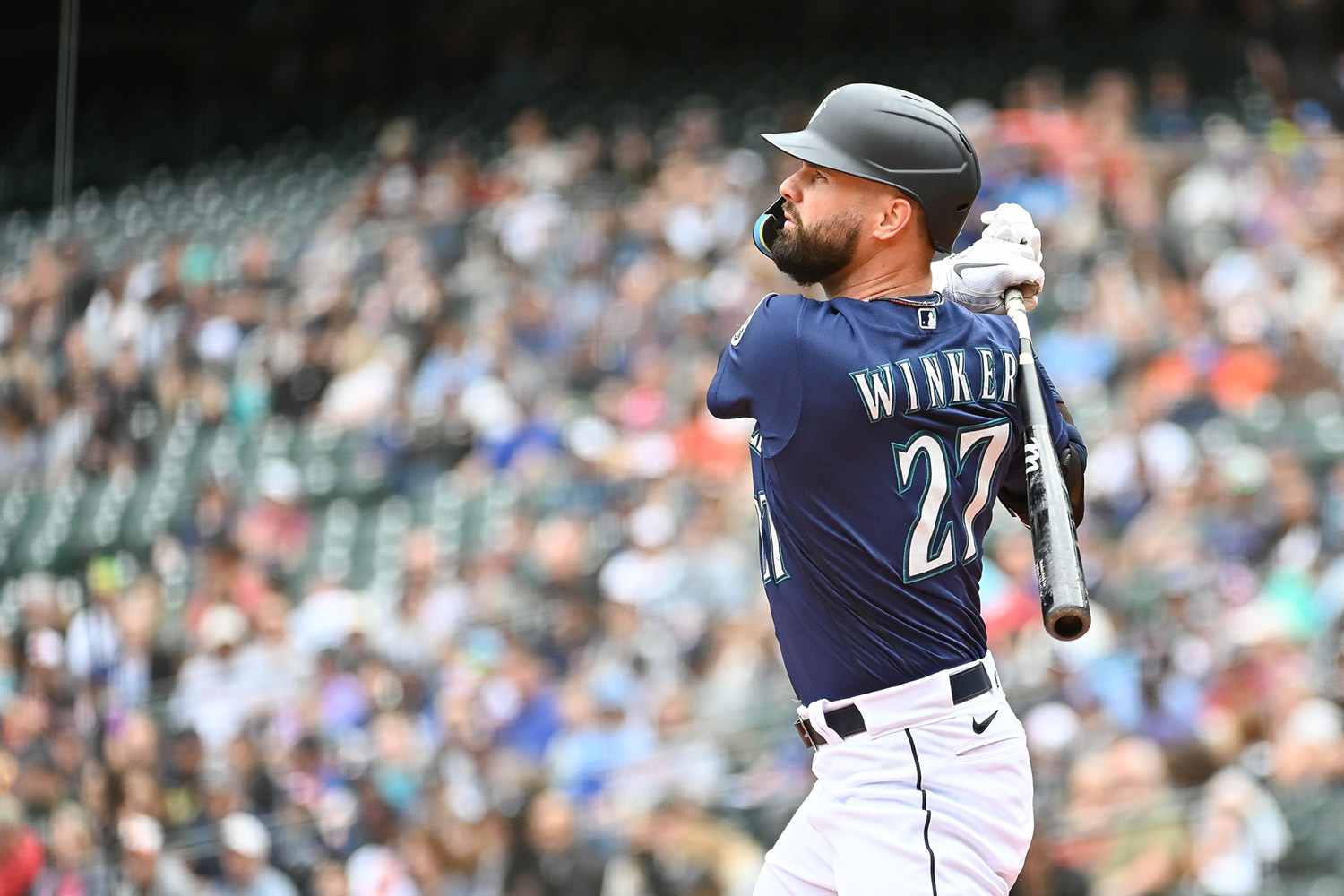 In recent memory, the Brewers have had quite the knack for finding offensive weapons via trade. They brought in Christain Yelich from Miami, Willy Adames from Tampa Bay, and William Contreras from Atlanta, all of whom are key pieces of the current team. By acquiring Jesse Winker, the Brewers once again brought in another hitter who can produce similarly, and the move hasn’t gotten the attention it deserves. Winker’s previous season in Seattle was a struggle for the former All-Star. He battled injuries, didn’t click with his new teammates, and posted a career-worst wRC+ of 109. After all that, Winker returns to his former division with plenty of reason to believe last year's performance was an outlier. Before Winker’s poor 2022 season, he terrorized pitchers as a member of the Brewers’ division rival Cincinnati Reds. Winker broke out offensively in the shortened 2020 season, posting a wRC+ over 140 and popping 12 home runs in the short campaign. He’d continue the success by making his first all-star game in 2021, where he slashed .305/.394/.556 as the Reds' cleanup hitter. So what went wrong in Seattle? The answer isn’t simple, but it has to do with multiple things. Firstly, Winker started slow and bounced around the lineup, batting in numerous spots. Should Winker get off to a better start, he’ll find himself at the top of the lineup daily in Milwaukee. Secondly, his new home ballpark in Seattle wasn’t close to a good match. In 2022, His OPS at home was a measly .625, while his OPS eclipsed a respectable .700 playing away from T-Mobile park. Compare that to his time in Cincinnati, where he has a career .930 OPS. With a shift to Milwaukee, Winker should thrive again, transitioning back to a hitter-friendly park, though not quite as hitter-friendly as the one he found in Great American Ballpark. The change to playing at American Family Field should also be easier on Winker. Not only did he visit the park frequently as a member of the Reds, but he hit exceptionally well in Milwaukee, with a career OPS 1.032 OPS in American Family Field. Notably, the fraction of success Winker did have with the bat last year came when he hit .307/.358/.484 against NL teams, something he’ll see more of as a member of the Brewers. If you’re worried about Winker’s ugly history of injuries, there's a reason for optimism there too. Winker is a poor fielder by trade and is the Brewers' prime candidate for the everyday DH. Getting starts there can go a long way in ensuring a healthy season from the newly acquired slugger. Most importantly, Winker's game adjustments last year should translate into success. By checking in on his statcast and sabermetrics, Winker saw an increase in his plate discipline. His BB% jumped nearly five percent, while his K% stayed at only 18 percent. Both his whiff and chase rates were excellent, ranking in the top third of baseball. And while his xMetrics weren’t necessarily great, it's clear the only area Winker needs to make adjustments in is making hard contact once again. Another important factor is Winker’s contract status. He’ll only see one guaranteed year in Milwaukee before hitting the free agency market, and with a good season, Winker will put himself in a position to receive a multi-year deal. Although this certainly doesn't guarantee success, Winker does have one more thing to play for, himself. Do you think Winker can bounce back as a member of the Brewers? Let us hear your thoughts in the comments below!
 -
In 2022, the Milwaukee Brewers' rookie outfielder Garrett Mitchell made quite the impression following his call-up in late August. It hasn’t always been easy for Garrett Mitchell , who fell in the 2020 draft due to concerns over his Type-1 Diabetes. That didn’t stop the Brewers from taking Mitchell 20th overall, and it certainly didn't stop Mitchell from roaring straight to the big leagues after only 132 minor league games. Mitchell earned his first call to MLB action in the waning days of August and immediately made an impact. In his first start, Mitchell recorded his first major league hit, swatting a two-run single up the middle and sparking the offense in a 9-7 win over the Cubs. The following day, Mitchell made the most of a second consecutive start. He blasted a two-out, game-tying two-run homer in the eighth inning, allowing the Brewers to win the game in extra innings. If anything is certain, Mitchell picked an excellent time to pop his first big league homer. Later in the season, Mitchell continued his streak of clutch play. In a 7-6 win over the Reds, Mitchell recorded the second out in the ninth inning with a diving grab, stopping the game-tying run from scoring and allowing Devin Williams to close the game with the following hitter. Perhaps Mitchell's defining moment of his debut season was his first major league walk-off. A few weeks into his career, Mitchell came to the plate with two outs in the ninth, with the bases loaded. On a two-strike pitch, Mitchell laced a line drive into center field to walk off Clay Holmes and the Yankees. Still, in just a short month, Mitchell showed he has room to improve. His K% through his first 68 plate appearances clipped 40 percent, and his BABIP was unsustainably high, at .548. As a prospect, Mitchell graded out as an average hitter, but the Brewers believe he's capable of more. Before his call-up, Mitchell posted an OPS above .900 in AAA, a K% hovering around 20 percent, a BB% over ten percent. Should Mitchell find near that type of success with his bat at the next level, he'll be a staple in the lineup for years to come. Season Team Level Age G PA HR R RBI SB BB% K% ISO BABIP AVG OBP SLG wOBA xwOBA wRC+ BsR Off Def WAR 2021 MIL A+ 22 29 120 5 33 20 12 23.3% 25.0% .261 .491 .359 .508 .620 .494 204 2021 MIL AA 22 35 148 3 16 10 5 12.2% 27.7% .078 .247 .186 .291 .264 .264 63 2022 MIL CPX 23 4 17 0 5 0 1 23.5% 23.5% .083 .125 .083 .353 .167 .303 78 2022 MIL AA 23 44 187 4 29 25 7 8.6% 27.8% .151 .378 .277 .353 .428 .352 108 2022 MIL AAA 23 20 85 1 15 9 9 11.8% 21.2% .123 .444 .342 .435 .466 .408 147 2022 MIL MLB 23 28 68 2 9 9 8 8.8% 41.2% .148 .548 .311 .373 .459 .365 .266 136 2.2 5.1 2.3 1.0 2023 FGDC PROJ 24 109 469 12 49 50 15 9.0% 28.6% .142 .325 .242 .317 .385 .310 99 0.4 -0.3 2.1 1.8 2023 Steamer PROJ 24 109 432 11 45 46 13 9.0% 28.6% .142 .325 .242 .317 .385 .310 99 0.4 -0.3 2.2 1.7 Total - - - MLB 28 68 2 9 9 8 8.8% 41.2% .148 .548 .311 .373 .459 .365 136 2.2 5.1 2.3 1.0 With the glove, should Mitchell's win one of the outfield spots coming out of spring training, he'll likely spend the majority of his time patrolling center field. As a prospect, Mitchell graded highly as a fielder, with a 60-grade arm and glove and a 70-grade speed. There are likely no worries about his part of Mitchell's game, as he was an excellent fielder throughout college and the minor leagues. What did you think of Mitchell's first month in the big leagues? Where does it rank among Brewers' pivotal moments from last year? What do you expect from Mitchell next year? Lets us hear your thoughts in the comments below! View full article
-
Pivotal Brewers Moments of 2022: Garrett Mitchell’s Debut
Kyle Ginsbach posted an article in Brewers
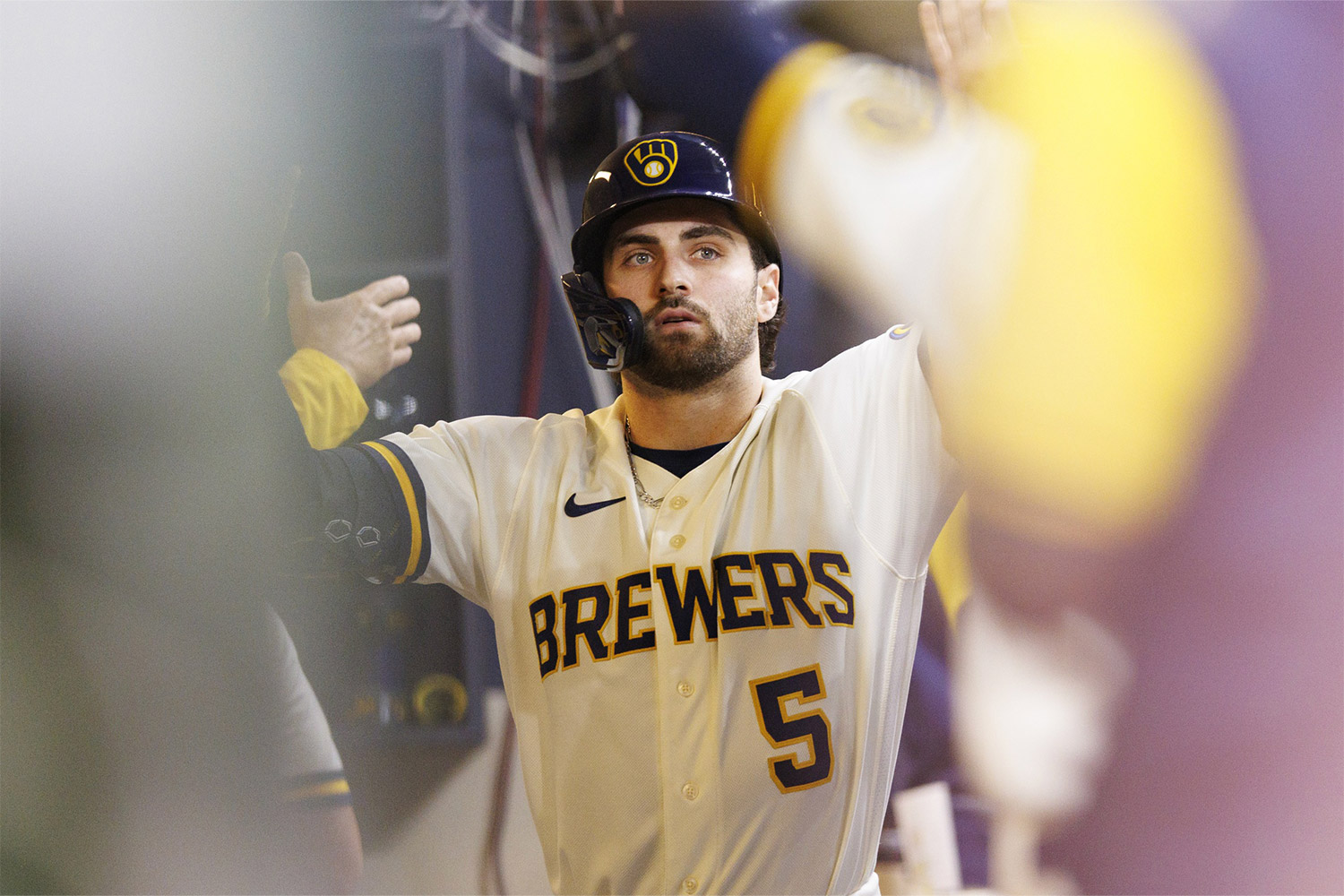 It hasn’t always been easy for Garrett Mitchell , who fell in the 2020 draft due to concerns over his Type-1 Diabetes. That didn’t stop the Brewers from taking Mitchell 20th overall, and it certainly didn't stop Mitchell from roaring straight to the big leagues after only 132 minor league games. Mitchell earned his first call to MLB action in the waning days of August and immediately made an impact. In his first start, Mitchell recorded his first major league hit, swatting a two-run single up the middle and sparking the offense in a 9-7 win over the Cubs. The following day, Mitchell made the most of a second consecutive start. He blasted a two-out, game-tying two-run homer in the eighth inning, allowing the Brewers to win the game in extra innings. If anything is certain, Mitchell picked an excellent time to pop his first big league homer. Later in the season, Mitchell continued his streak of clutch play. In a 7-6 win over the Reds, Mitchell recorded the second out in the ninth inning with a diving grab, stopping the game-tying run from scoring and allowing Devin Williams to close the game with the following hitter. Perhaps Mitchell's defining moment of his debut season was his first major league walk-off. A few weeks into his career, Mitchell came to the plate with two outs in the ninth, with the bases loaded. On a two-strike pitch, Mitchell laced a line drive into center field to walk off Clay Holmes and the Yankees. Still, in just a short month, Mitchell showed he has room to improve. His K% through his first 68 plate appearances clipped 40 percent, and his BABIP was unsustainably high, at .548. As a prospect, Mitchell graded out as an average hitter, but the Brewers believe he's capable of more. Before his call-up, Mitchell posted an OPS above .900 in AAA, a K% hovering around 20 percent, a BB% over ten percent. Should Mitchell find near that type of success with his bat at the next level, he'll be a staple in the lineup for years to come. Season Team Level Age G PA HR R RBI SB BB% K% ISO BABIP AVG OBP SLG wOBA xwOBA wRC+ BsR Off Def WAR 2021 MIL A+ 22 29 120 5 33 20 12 23.3% 25.0% .261 .491 .359 .508 .620 .494 204 2021 MIL AA 22 35 148 3 16 10 5 12.2% 27.7% .078 .247 .186 .291 .264 .264 63 2022 MIL CPX 23 4 17 0 5 0 1 23.5% 23.5% .083 .125 .083 .353 .167 .303 78 2022 MIL AA 23 44 187 4 29 25 7 8.6% 27.8% .151 .378 .277 .353 .428 .352 108 2022 MIL AAA 23 20 85 1 15 9 9 11.8% 21.2% .123 .444 .342 .435 .466 .408 147 2022 MIL MLB 23 28 68 2 9 9 8 8.8% 41.2% .148 .548 .311 .373 .459 .365 .266 136 2.2 5.1 2.3 1.0 2023 FGDC PROJ 24 109 469 12 49 50 15 9.0% 28.6% .142 .325 .242 .317 .385 .310 99 0.4 -0.3 2.1 1.8 2023 Steamer PROJ 24 109 432 11 45 46 13 9.0% 28.6% .142 .325 .242 .317 .385 .310 99 0.4 -0.3 2.2 1.7 Total - - - MLB 28 68 2 9 9 8 8.8% 41.2% .148 .548 .311 .373 .459 .365 136 2.2 5.1 2.3 1.0 With the glove, should Mitchell's win one of the outfield spots coming out of spring training, he'll likely spend the majority of his time patrolling center field. As a prospect, Mitchell graded highly as a fielder, with a 60-grade arm and glove and a 70-grade speed. There are likely no worries about his part of Mitchell's game, as he was an excellent fielder throughout college and the minor leagues. What did you think of Mitchell's first month in the big leagues? Where does it rank among Brewers' pivotal moments from last year? What do you expect from Mitchell next year? Lets us hear your thoughts in the comments below!
 -
It’s no secret the Brewers struggled against left-handed pitching in 2022. Barring considerable roster upheaval, most adjustments must come from within if Milwaukee is looking to improve against lefties going forward. A significant contributor to the Brewers' offensive mediocrity last season was, in part, their inability to find success against left-handed pitching. The team OPS of .673 against lefties ranked 25th in the big leagues and was nearly 70 points behind their OPS against right-handers. To add insult to injury, the Brewers' late-season collapse was perhaps sparked by division rival St. Louis adding two left-handed pitchers via trade at the deadline. It isn’t uncommon for ball clubs to find themselves struggling against left-handers. Naturally, heavy left-handed lineups struggle against lefty pitchers, while right-handed lineups will commonly find more success. As it stands now, the Brewers will feature an everyday lineup packed full of left-handed hitters, but they may have some platoon-based answers for those pesky left-handed pitchers. The Outfield The Brewers currently feature five outfielders on their 40-man roster, four of which figure to get the bulk of the playing time. Christian Yelich, Jesse Winker, and Garrett Mitchell hit left-handed, while Tyrone Taylor is the lone righty among the four. Sal Frelick also figures to be in the mix for an OF spot during spring training, another left-handed hitter. Yelich is likely to play every day, doesn’t feature an extreme difference in his platoon splits, and has also shown the ability to hit comfortably against left-handers, so there could be answers. Whether Yelich deserves the chance to play against lefties and righties can be debatable, but the Brewers will play Yelich whenever available. Jesse Winker is coming off the worst offensive season in his career. In Seattle, Winker slashed .219/.344/.688, with a OPS+ of 103, well below his career mark of 123. As if the poor offensive season wasn’t uncharacteristic enough, Winker hit better against left-handers last season. His WRC+ against lefties was 37 points higher than it was against righties, and his K% sat comfortably below 20 percent. If Winker can keep that kind of success against lefties, he might be another part of the puzzle the Brewers are looking to solve, though year-over-year splits are often volatile so it's likely Winker regresses against left-handers in 2023. Garrett Mitchell only had five major league plate appearances against lefties last year, and already slated as the fourth outfielder, Mitchell should, and likely will find most of his playing time against right-handers. As for Tyrone Taylor, his situation is likely the opposite of Mitchell’s. Though his 2022 splits favor him against right-handers, he showed better plate discipline against lefties, and the already left-handed heavy outfield will make it difficult for him to see the field against righties often. Catching Milwaukee currently carries three catchers on their 40-man and will carry at least two on the major league roster. Recently acquired William Contreras figures to play against lefties and righties, while Victor Caratini and Henry will serve as backups throughout the season. If the Brewers were looking for someone to mash left-handed pitching, they solved it in their early December trade with Oakland and Atlanta. William Contreras slugged nearly .600 against LHP in his first big league season, with an OPS+ of 187. As for both Henry and Caratini, there is some concern. Henry is an inexperienced hitter, while Caratini hit only .168/.276/.290 against lefties last year, despite being a switch hitter. Like many switch hitters, Caratini's strong side is against right-handed pitching, and he's unlikely to start often against lefties unless Contreras is injured. The Infield Barring a significant trade or free agent signing, Willy Adames is the only infielder who will see consistent playtime no matter what pitcher is on the mound. Still, the Brewers have a wealth of different infielders to choose from, but the key will be choosing when and where those players play. The biggest piece to the infield puzzle is Keston Hiura. Against right-handers, Hiura slashed .254/.344/.522, but just .188/.275/.344 against left-handers. Even though Hiura hits right-handed, it’s time for the Brewers to accept the reverse splits. If Hiura’s going to play, it can’t be against left-handers, no matter what traditional logic may tell you. As for the rest of the infield, the Brewers' options present themselves: Abraham Toro (Career 64 wRC+ vs. LHP) Luis Urías (Career 120 wRC+ vs. LHP) Mike Brosseau (Career 127 wRC+ vs. LHP) Rowdy Tellez (Career 94 wRC+ vs. LHP) Owen Miller (Career 65 wRC+ vs. LHP) Brice Turang (108 wRC+ in AAA in 2022) If the Brewers play matchup correctly in the infield, they shouldn’t have many problems handling lefties with their current group of players. If they make the wrong decisions, such as starting Hiura against left-handed starters, lefties could again be the Brewers' kryptonite in 2023. Potential Lineup Keeping these numbers in mind, here's what a healthy Brewers lineup may look like when facing an LHP in 2023: 1. Christian Yelich LF 2. Willy Adames SS 3. Jesse Winker DH 4. William Contreras C 5. Rowdy Tellez 1B 6. Luis Urías 2B 7. Mike Brosseau 3B 8. Garret Mitchell/Sal Frelick CF 9. Tyrone Taylor RF What do you think, Brewer fans? Do you think Milwaukee can improve against left-handers next season? What would your lineup look like against an LHP? Let us know your thoughts in the comments below! View full article
- 8 replies
-
- 1
-

-
- jesse winker
- rowdy tellez
- (and 3 more)
