



Jake McKibbin
-
Posts
2,450 -
Joined
-
Last visited
-
Days Won
6
Content Type
Profiles
Forums
Blogs
Events
News
2026 Milwaukee Brewers Top Prospects Ranking
Milwaukee Brewers Videos
2022 Milwaukee Brewers Draft Picks
Milwaukee Brewers Free Agent & Trade Rumors, Notes, & Tidbits
Guides & Resources
2023 Milwaukee Brewers Draft Picks
2024 Milwaukee Brewers Draft Picks
The Milwaukee Brewers Players Project
2025 Milwaukee Brewers Draft Pick Tracker
2026 Milwaukee Brewers Draft Tracker: Picks & Bonuses
Store
Downloads
Gallery
Everything posted by Jake McKibbin
-
That's a fair point. While May has conceded seven home runs this season, that number would be 11 if he played all of his game in Milwaukee. It's actually a really wide spread, with a projected four in Pittsburgh up to 14 in Philadelphia, suggesting not a lot of "no-doubters". To counter that though is the expected increase in his sinker use. The best way to keep the ball in the park is to keep it on the ground, and the Brewers are expected to lean heavily into a sinker with a 55%+ ground ball rate vs the four-seamer that's currently his most used pitch. I'm not advocating using it against opposite handed hitters, but the Brewers aren't all that afraid if they're comfortable with his command. Pitch Profiler's seam shifted wake model estimates that May gets a quite ridiculous 5.2" of extra "drop" on his sinker as a result of seam positions, and that's a big reason why he's getting underneath so many bats. I think that should mitigate some of the ballpark related concerns
- 20 replies
-
- 3
-

-
- dustin may
- antonio senzatela
- (and 1 more)
-
I think this move was made as an effort to gear up for an NLCS/World Series push. The Brewers now have four starters that, if healthy, are capable of shutting down nearly any offense, something you need in those seven game series. As rankings go, it's Miz first, but the other three are quite close... who would you lean towards after reading the article?
-
I think so. Factoring in the fastball mix the Brewers love so much, the command he has of those fastballs and the variety of plus breaking pitches, he fits a Brewers model to a T. Rival GM's have talked about the fit and said anonymously that "May might be superhuman with the Brewers" That, plus the inter-division tax seemed to be a real thing this year as we've seen in the AL East and this trade
- 20 replies
-
- 3
-
-
- dustin may
- antonio senzatela
- (and 1 more)
-
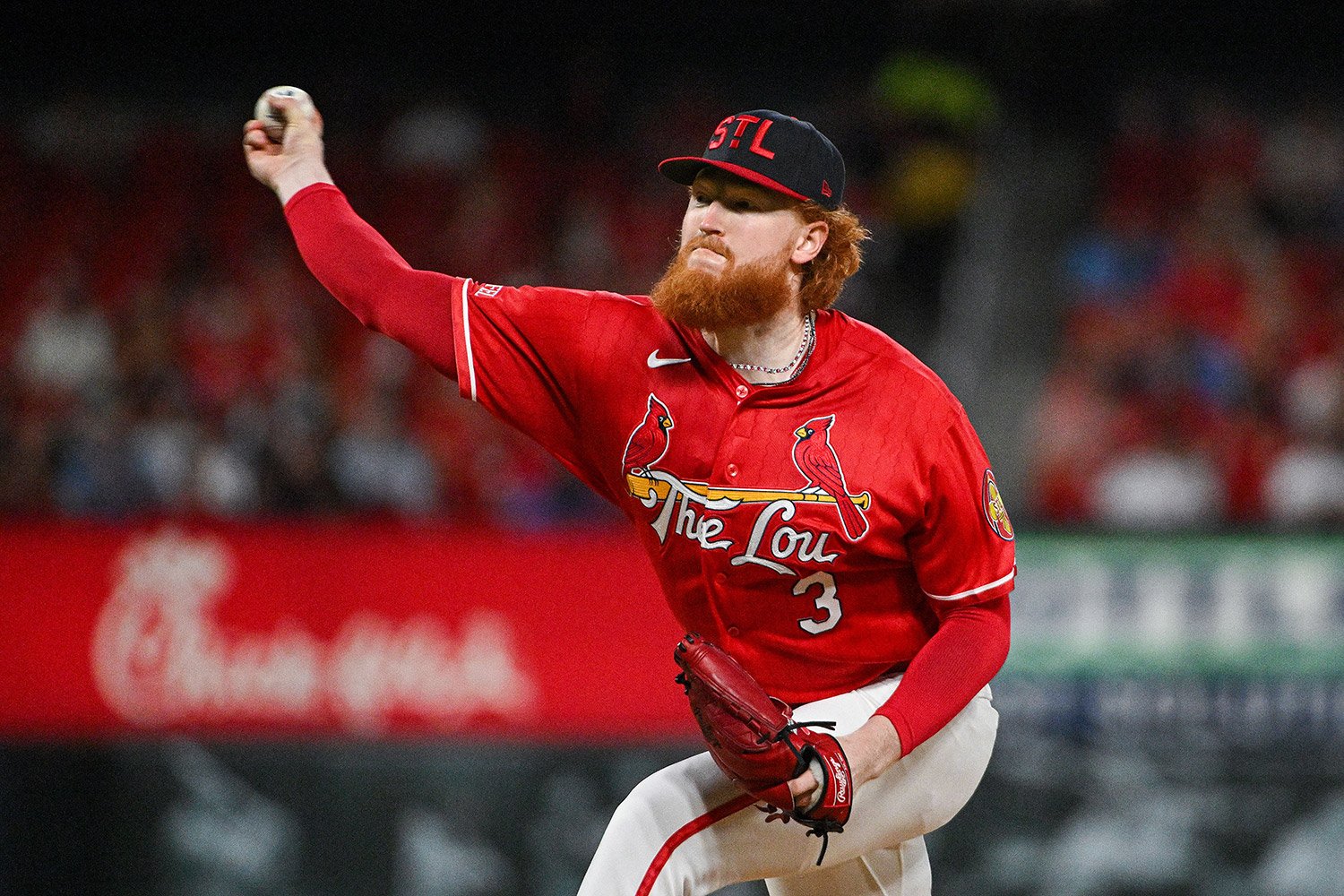 Dustin May's 4.38 ERA is the first thing many fans will see after the Brewers acquired him at the trade deadline. It's also the reason some believe Milwaukee paid too much. The underlying numbers tell a very different story. Those numbers suggest Dustin May had the strongest statistical case to be the second-best starting pitcher available at the deadline, and could be a crucial arm for Milwaukee's bid to reach the World Series. May's recent history is important. Coming off a series of significant injuries, including two Tommy John surgeries in 2021 and 2023 and a torn esophagus in 2024, he had a rough 2025 split between the LA Dodgers and the Boston Red Sox. May posted a 4.96 earned run average (ERA), a 4.87 fielder-independent pitching (FIP), and a 1.42 walks and hits per inning pitched (WHIP) across 132 1/3 innings. His fastball velocity was down a couple of ticks from his pomp with the Dodgers, seeing his sinker punished consistently. During the 2026 offseason, prior to signing with the Cardinals on a one-year, $12.5 million deal, May went to work. He adjusted his sinker grip, adopting a one-seam orientation to generate more seam-shifted wake, which uses the aerodynamics of the ball to encourage more downward movement. He also saw his velocity creep back up to start the year to the 96-97 mph range on his two fastballs, which is where he thrived with the Dodgers. After a rocky start to the season with 13 earned runs through his first 7 1/3 innings pitched, May has been one of the best pitchers in baseball by the measures hitters can control: strikeouts, walks, and home runs - also known as FIP. Since May 1st, among pitchers to throw at least 70 innings, Dustin May ranks 8th in baseball in FIP. It's a statistic that, while basic, has correlated well with actual pitching performance in recent years. FIP suggests May's ERA has not fully reflected the quality of his underlying performance over the same period, as his ERA is 4.02 over that span. Here's a look at the top 12 pitchers by FIP since May 1st, and you'll see a host of recognisable names: Name Team IP K/9 BB/9 HR/9 GB% HR/FB ERA FIP Jacob Misiorowski MIL 94.1 13.74 1.53 0.67 49.10% 11.50% 1.05 1.64 Chris Sale ATL 82 11.52 1.87 0.33 45.10% 4.50% 1.98 1.85 Dylan Cease TOR 88 12.78 3.48 0.72 41.20% 9.30% 2.25 2.48 Cristopher Sánchez PHI 104.1 10.18 1.73 0.78 57.90% 13.20% 2.5 2.65 Drew Rasmussen TBR 86.2 9.35 1.56 0.73 41.80% 8.40% 3.01 2.8 Paul Skenes PIT 90.2 11.61 2.48 0.89 37.00% 9.60% 4.27 2.83 Sean Burke CHW 79 11.51 2.73 0.8 33.50% 8.20% 2.96 2.87 Dustin May STL 78.1 9.65 3.22 0.46 42.30% 5.10% 4.02 2.88 Bryan Woo SEA 85.1 10.02 2.11 0.95 41.80% 10.10% 4.85 2.98 Cam Schlittler NYY 95 10.99 1.89 1.04 41.10% 11.30% 2.27 2.98 Zack Wheeler PHI 100 10.8 1.8 1.17 44.40% 15.10% 2.43 3.05 Chase Burns CIN 84.2 10.42 3.3 0.85 31.60% 8.30% 2.23 3.14 That's the key context. Every other pitcher ahead of May on this list remained with their original team. Among available starters, nobody matched May's underlying production. In fact, the next player on the list is Kevin Gausman, who ranked 35th with a 3.59 FIP since May 1st. Dustin May, by the elements a pitcher can control, is far and away the best starter to be traded by this metric over the last three months. That profile explains why Milwaukee was willing to pay a significant price. The Brewers have consistently valued pitchers who limit damage, generate ground balls and create weak contact, and May fits that philosophy. So why is he so good? Well, Dustin May avoids the long ball like the plague. Only Chris Sale of the names above allows fewer home runs per nine innings, and that's because May's large arsenal and vicious movement do a phenomenal job of missing barrels with regularity. The three-fastball mix he possesses is something the Brewers prize for this reason, and his cutter is the cream of the crop. Last season, May's fastballs were getting hit so hard that he led his entire mix with his sweeper. This season, he's establishing all three fastballs to quite deadly effect. The graphic above from pitch profiler shows that, on both the four-seamer and the cutter, when hitters put the ball in play, their expected run value is negative. The four-seamer has been hit hard, but generates a lot of pop-ups, while the cutter has an average exit velocity against it of just 85.5 mph. If that wasn't enough, the newly constructed sinker has a 56% ground ball rate this season. Each pitch protects the other well, but let's hone in on the cutter a little bit. I've got another graphic below showing how each pitch, if thrown at the same target, looks at the time the hitter is making his swing decision. Notice how close the red (four-seam), orange (sinker), and brown (cutter) are. More importantly, the cutter is a bridge pitch that enhances the effectiveness of the sweeper, May's most effective out pitch. From a pure stuff perspective, this pitch is 70-80 grade, coming in faster than most sweepers with more horizontal break, averaging almost 3,200 rpm. The cutter mirrors the sweeper more closely than the four-seam or sinker, and allows the pitch to be even more deceptive. To add to that, May is able to spin a steep curveball to left-handed hitters, and a changeup that grades out extremely well, although he does have some spotty command of the pitch. Again, if you look at the decision point chart, the changeup and the sinker look almost identical at the time a hitter is gearing up to swing, and that's why May can get a lot of swing and miss on it when it's well located. Some analysts think the Brewers, if they can find the right sequencing for Dustin May, can unlock even more from him. Eli-Ben Porat from Baseball America has a model called "FIRE", combining a pitcher's stuff, sequencing, and location to create overall grades for a pitcher. Unlike traditional stuff models that only evaluate pitch quality, FIRE attempts to measure how a pitcher's arsenal works together through stuff, sequencing, and location. Here's his assessment of Dustin May: The one change we may see more of from the Brewers, and it's backed up by Ben-Porat's model, is more sinkers and fewer four-seam fastballs. Combining May's feel to command the pitch, his ground ball rate, and the increased movement he gets with it, as well as the Brewers' fondness for sinkers in general, I would expect Milwaukee to increase May's sinker usage while reducing his four-seam frequency ever so slightly. They haven't enjoyed big east/west arsenals of late, and that would be the one concern. Big moving pitchers like sweepers haven't fitted too well in their structure, and they don't call a lot of them, but May's ability to command his main breaking pitch can buck the trend. There's a lot to like about Dustin May. He doesn't walk many hitters. He avoids barrels. He has some electric breaking pitches at his disposal. Oh, and he's been one of the top 10 pitchers in baseball since May 1st. This is someone the Brewers would be comfortable starting a playoff series, and who has a chance on his day to dominate any lineup. After Tarik Skubal was off the board, the Brewers have pivoted to the next best starter on the market. The price was large, but a lot more reasonable than that of Skubal, and they got a left-handed, late-inning reliever to boot. Given the dearth of quality impact bats available to fix their offensive capabilities, I could make the argument that Dustin May, JoJo Romero, and Antonio Senzatela are the highest quality upgrades available for the Brewers. How it plays out over the next three months will go a long way toward determining that statement.
- 20 comments
-
- 7
-
-

-
- dustin may
- antonio senzatela
- (and 1 more)
-
Image courtesy of IMAGN IMAGES via Reuters Connect Dustin May's 4.38 ERA is the first thing many fans will see after the Brewers acquired him at the trade deadline. It's also the reason some believe Milwaukee paid too much. The underlying numbers tell a very different story. Those numbers suggest Dustin May had the strongest statistical case to be the second-best starting pitcher available at the deadline, and could be a crucial arm for Milwaukee's bid to reach the World Series. May's recent history is important. Coming off a series of significant injuries, including two Tommy John surgeries in 2021 and 2023 and a torn esophagus in 2024, he had a rough 2025 split between the LA Dodgers and the Boston Red Sox. May posted a 4.96 earned run average (ERA), a 4.87 fielder-independent pitching (FIP), and a 1.42 walks and hits per inning pitched (WHIP) across 132 1/3 innings. His fastball velocity was down a couple of ticks from his pomp with the Dodgers, seeing his sinker punished consistently. During the 2026 offseason, prior to signing with the Cardinals on a one-year, $12.5 million deal, May went to work. He adjusted his sinker grip, adopting a one-seam orientation to generate more seam-shifted wake, which uses the aerodynamics of the ball to encourage more downward movement. He also saw his velocity creep back up to start the year to the 96-97 mph range on his two fastballs, which is where he thrived with the Dodgers. After a rocky start to the season with 13 earned runs through his first 7 1/3 innings pitched, May has been one of the best pitchers in baseball by the measures hitters can control: strikeouts, walks, and home runs - also known as FIP. Since May 1st, among pitchers to throw at least 70 innings, Dustin May ranks 8th in baseball in FIP. It's a statistic that, while basic, has correlated well with actual pitching performance in recent years. FIP suggests May's ERA has not fully reflected the quality of his underlying performance over the same period, as his ERA is 4.02 over that span. Here's a look at the top 12 pitchers by FIP since May 1st, and you'll see a host of recognisable names: Name Team IP K/9 BB/9 HR/9 GB% HR/FB ERA FIP Jacob Misiorowski MIL 94.1 13.74 1.53 0.67 49.10% 11.50% 1.05 1.64 Chris Sale ATL 82 11.52 1.87 0.33 45.10% 4.50% 1.98 1.85 Dylan Cease TOR 88 12.78 3.48 0.72 41.20% 9.30% 2.25 2.48 Cristopher Sánchez PHI 104.1 10.18 1.73 0.78 57.90% 13.20% 2.5 2.65 Drew Rasmussen TBR 86.2 9.35 1.56 0.73 41.80% 8.40% 3.01 2.8 Paul Skenes PIT 90.2 11.61 2.48 0.89 37.00% 9.60% 4.27 2.83 Sean Burke CHW 79 11.51 2.73 0.8 33.50% 8.20% 2.96 2.87 Dustin May STL 78.1 9.65 3.22 0.46 42.30% 5.10% 4.02 2.88 Bryan Woo SEA 85.1 10.02 2.11 0.95 41.80% 10.10% 4.85 2.98 Cam Schlittler NYY 95 10.99 1.89 1.04 41.10% 11.30% 2.27 2.98 Zack Wheeler PHI 100 10.8 1.8 1.17 44.40% 15.10% 2.43 3.05 Chase Burns CIN 84.2 10.42 3.3 0.85 31.60% 8.30% 2.23 3.14 That's the key context. Every other pitcher ahead of May on this list remained with their original team. Among available starters, nobody matched May's underlying production. In fact, the next player on the list is Kevin Gausman, who ranked 35th with a 3.59 FIP since May 1st. Dustin May, by the elements a pitcher can control, is far and away the best starter to be traded by this metric over the last three months. That profile explains why Milwaukee was willing to pay a significant price. The Brewers have consistently valued pitchers who limit damage, generate ground balls and create weak contact, and May fits that philosophy. So why is he so good? Well, Dustin May avoids the long ball like the plague. Only Chris Sale of the names above allows fewer home runs per nine innings, and that's because May's large arsenal and vicious movement do a phenomenal job of missing barrels with regularity. The three-fastball mix he possesses is something the Brewers prize for this reason, and his cutter is the cream of the crop. Last season, May's fastballs were getting hit so hard that he led his entire mix with his sweeper. This season, he's establishing all three fastballs to quite deadly effect. The graphic above from pitch profiler shows that, on both the four-seamer and the cutter, when hitters put the ball in play, their expected run value is negative. The four-seamer has been hit hard, but generates a lot of pop-ups, while the cutter has an average exit velocity against it of just 85.5 mph. If that wasn't enough, the newly constructed sinker has a 56% ground ball rate this season. Each pitch protects the other well, but let's hone in on the cutter a little bit. I've got another graphic below showing how each pitch, if thrown at the same target, looks at the time the hitter is making his swing decision. Notice how close the red (four-seam), orange (sinker), and brown (cutter) are. More importantly, the cutter is a bridge pitch that enhances the effectiveness of the sweeper, May's most effective out pitch. From a pure stuff perspective, this pitch is 70-80 grade, coming in faster than most sweepers with more horizontal break, averaging almost 3,200 rpm. The cutter mirrors the sweeper more closely than the four-seam or sinker, and allows the pitch to be even more deceptive. To add to that, May is able to spin a steep curveball to left-handed hitters, and a changeup that grades out extremely well, although he does have some spotty command of the pitch. Again, if you look at the decision point chart, the changeup and the sinker look almost identical at the time a hitter is gearing up to swing, and that's why May can get a lot of swing and miss on it when it's well located. Some analysts think the Brewers, if they can find the right sequencing for Dustin May, can unlock even more from him. Eli-Ben Porat from Baseball America has a model called "FIRE", combining a pitcher's stuff, sequencing, and location to create overall grades for a pitcher. Unlike traditional stuff models that only evaluate pitch quality, FIRE attempts to measure how a pitcher's arsenal works together through stuff, sequencing, and location. Here's his assessment of Dustin May: The one change we may see more of from the Brewers, and it's backed up by Ben-Porat's model, is more sinkers and fewer four-seam fastballs. Combining May's feel to command the pitch, his ground ball rate, and the increased movement he gets with it, as well as the Brewers' fondness for sinkers in general, I would expect Milwaukee to increase May's sinker usage while reducing his four-seam frequency ever so slightly. They haven't enjoyed big east/west arsenals of late, and that would be the one concern. Big moving pitchers like sweepers haven't fitted too well in their structure, and they don't call a lot of them, but May's ability to command his main breaking pitch can buck the trend. There's a lot to like about Dustin May. He doesn't walk many hitters. He avoids barrels. He has some electric breaking pitches at his disposal. Oh, and he's been one of the top 10 pitchers in baseball since May 1st. This is someone the Brewers would be comfortable starting a playoff series, and who has a chance on his day to dominate any lineup. After Tarik Skubal was off the board, the Brewers have pivoted to the next best starter on the market. The price was large, but a lot more reasonable than that of Skubal, and they got a left-handed, late-inning reliever to boot. Given the dearth of quality impact bats available to fix their offensive capabilities, I could make the argument that Dustin May, JoJo Romero, and Antonio Senzatela are the highest quality upgrades available for the Brewers. How it plays out over the next three months will go a long way toward determining that statement. View full article
- 20 replies
-
- 3
-
-
- dustin may
- antonio senzatela
- (and 1 more)
-
This may explain some of the holes that concerned the organisation
-
Haha fair enough! If there's ever anything you need clarified or want further explanation on, if you ever drop a comment or send a message in more than happy to answer dude! But I appreciate your clarification, thanks man
-
I think Matt's breakdown from earlier in the year still holds the most weight, and the swing is a little more rigid, especially down and in
-
Okay, so needling aside, that's a great metaphor, and a very valid opinion. The article however is directed to the changes he's made to his approach and set-up since his 2024 iteration where he impacts the ball more, but with some trade-off in the swing and miss department. He's made clear changes that have moved him away from the version of himself, and the article is intended to dissect those changes and explain why they've had the effect that's occurred. To use your metaphor, the Porsche underwent some attempts to supe it up, changed out the exhaust, adjusted some of the ECU mapping, and it hasn't turned out quite as expected. The car has lost some of its original top end speed, albeit it's a slightly smoother ride. I had fun replying in that metaphor by the way, so thanks! The point, for anyway, is always to write something that educates or informs in a new way, and I hope the article has fulfilled that.
-
Thank you. This is why I spend an hour or more researching, challenging my views and collating data before even writing an article, just so someone can ignore literally all of it. I will say that captures none of the nuances of the situation, and has completely misappropriated statistics within the article. If you want to do this, fine. Please do not tarnish my hard work with the drivel that LLM AI summarises my articles into. Thank you. Okay I'll deal with the main comment here. Offensive catchers are hard to come by, and the position averages an 89 OPS+ this year (I heard that mentioned recently). In that context, Contreras is an above average catcher. However, if Aaron Judge had a .750 OPS, would you say "he's an above average hitter", or would you feel disappointed because you have higher standards for Aaron Judge? I've compared William to his former self and analysed the changes he's made to his swing to get where he is today, and that while they have reaped some improvements in a few areas, overall they've sacrificed what the Brewers need most in this particular line-up: thump. I don't think the scathing nature of this is warranted, but if you want to read the article and contest any of my points on a more in depth scale, I'm happy to have a debate. Same goes for anyone in this forum.
-
Absolutely! As mentioned, it does show some progression, he's elevating the ball more which is perhaps the intention. What he's sacrificed to get there however is a bit of his thump, and while the change may be good for him in some situations, overall it's thump, not a high batting average, the Brewers need right now.
-
Image courtesy of Kiyoshi Mio-Imagn Images William Contreras has looked like a different hitter this season. After averaging 20 home runs across his first two years in Milwaukee and playing through a broken finger in 2025, the expectation was that offseason surgery would restore his power. Instead, the opposite has happened. The underlying data suggests he hasn't just been less productive; he's become a different kind of hitter. You can see below the Savant percentiles comparison for Contreras across the last three years; it's telling in this regard. Strikeout rates were never a problem for him, even when he was swinging and missing. Pitchers also appear more willing to challenge him in the zone, which has coincided with the lowest walk rate of his Brewers career. So what, exactly, has gone wrong here to change his profile so dramatically? Before diving into the swing changes, it's worth asking whether fatigue could be playing a role. The first thing, which we can't rule out, is injury, Contreras showed just last year that he'll play through almost anything with nary a peep, and catchers take a beating behind the plate. The wear and tear at that position is unique, but we can say that, if there was an injury, there is absolutely no reason not to see Gary Sánchez behind the plate more regularly. Of the 111 games the Brewers have played at the time of this writing, Contreras has started 83 behind the plate, which would project up to around 121 starts by the end of the year. That's seven fewer than 2025, but it would constitute a large workload for a catcher they want to be firing on all cylinders in October, not struggling to the finish line. Is Contreras Still Swinging Fast? Let's take a look at the bat-tracking data. His bat speed distribution shows us how often Contreras is swinging the bat at different speeds, where the higher the arc, the more often he swings in that range. Here is his distribution of swings since 2023: This is the biggest measure of intent we can see, and there are some giveaways that Contreras is being less aggressive this year than he was in 2024. The arc of 2025-26 is peaking earlier, with his most common swing averaging around 74 mph rather than 75 mph in bat speed. What's really telling, however, is on the right-hand side of this graph. Notice how the orange and blue lines for 2023 and 2024 show a number of swings at 82+ mph, but there are almost none in that range between the last two seasons. Injury may account for some of that, but there's more to this; Above is another breakdown, this time of Contreras's stance and point of impact. This is where we're seeing a big change. In 2023 and 2024, Contreras's stance was slightly more open/neutral, impacting the ball a little further back overall (which did engender him to a few more ground balls than is ideal). The MLB average stance set-up is 11° open, so Contreras was still more "closed" than your average player. The last two years, however, he's adopted an even more closed stance. In theory, a more closed stance should encourage a hitter to stay on the ball longer and use the opposite field more often. That was true for stretches of 2025. However, his contact point relative to his center of mass is now almost identical to what it was with the more open stance, creating a mechanical mismatch. Let's compare two home runs from those years to see the stance difference even into his "A" swing: Above is a swing from earlier this year. Notice how Contreras's feet are angled more toward the opposite field, almost shutting off the pull side. He opens up slightly after his toe tap, but while he middled this swing, it's an awkward position to pull the ball from. Now see the swing below (in case you ever needed to see what "letting it rip" looks like), which is from 2024: Contreras uses a leg kick rather than a toe tap here, starting with his feet closer together and exploding into the ball. At contact, his feet are 10-15° open, directed toward left field rather than right field. This is a swing where he was over 82 mph in bat speed, and it showed. One might question why someone whose swing was so successful would have remodeled it quite so extensively, and that perhaps lends itself to the cerebral nature of the man, which we'll come to in a bit. I'm not suggesting Contreras can't hit home runs with 74 mph of bat speed. That's plenty for a hitter, but I do think it shows a lack of intent versus previous seasons. He's trying to be more of a hitter than a slugger, especially in favourable counts wherein he should be able to unload. Most importantly, however, there seems to be a discrepancy in his set-up compared to his swing, and closing off his stance means that when he does pull the ball in the air, something he's doing more of this season, he's not doing it with the authority we're used to. He has managed to get the ground balls under control, reducing it from 55% of balls in play coming on the ground in 2024 to 42% in 2026. That's great, but he's lost the authority with which he traditionally hit balls, especially over the last month or two. Contreras is known for, at times, overthinking his approach behind the plate as a catcher, and he seems to be very cerebral in the box, too. We've seen him set up with different stances in the same at-bat in the past, playing a game of 4D chess with a pitcher. I can't say if that's right or wrong, but it is unique, and can make it difficult to be consistent in your swing. Whether it's lingering physical limitations, accumulated fatigue, or an intentional mechanical adjustment, Contreras doesn't look like the hitter he was in 2023 or 2024. The encouraging part is that the underlying bat speed remains good enough to rediscover that version of himself. The Brewers just need him to do it before October. The catcher is too important to their lineup, and perhaps the freedom to let the bat eat every once in a while could loosen the mental shackles, too. Can he find a way to tap into those elite exit velocities while keeping the ball in the air? Or is this a pick-your-poison situation? That, I can't answer, but if given a choice, I would take the latter. That power is far more consequential to this Brewers lineup, as constructed, than any bat-to-ball improvement that sacrifices said power. What have you thought of William Contreras's output lately? Do you think this is just a blip on the radar? Let us know your thoughts in the comments below! View full article
-
William Contreras is Stuck in a Two-Year Slump. The Brewers Need More.
Jake McKibbin posted an article in Brewers
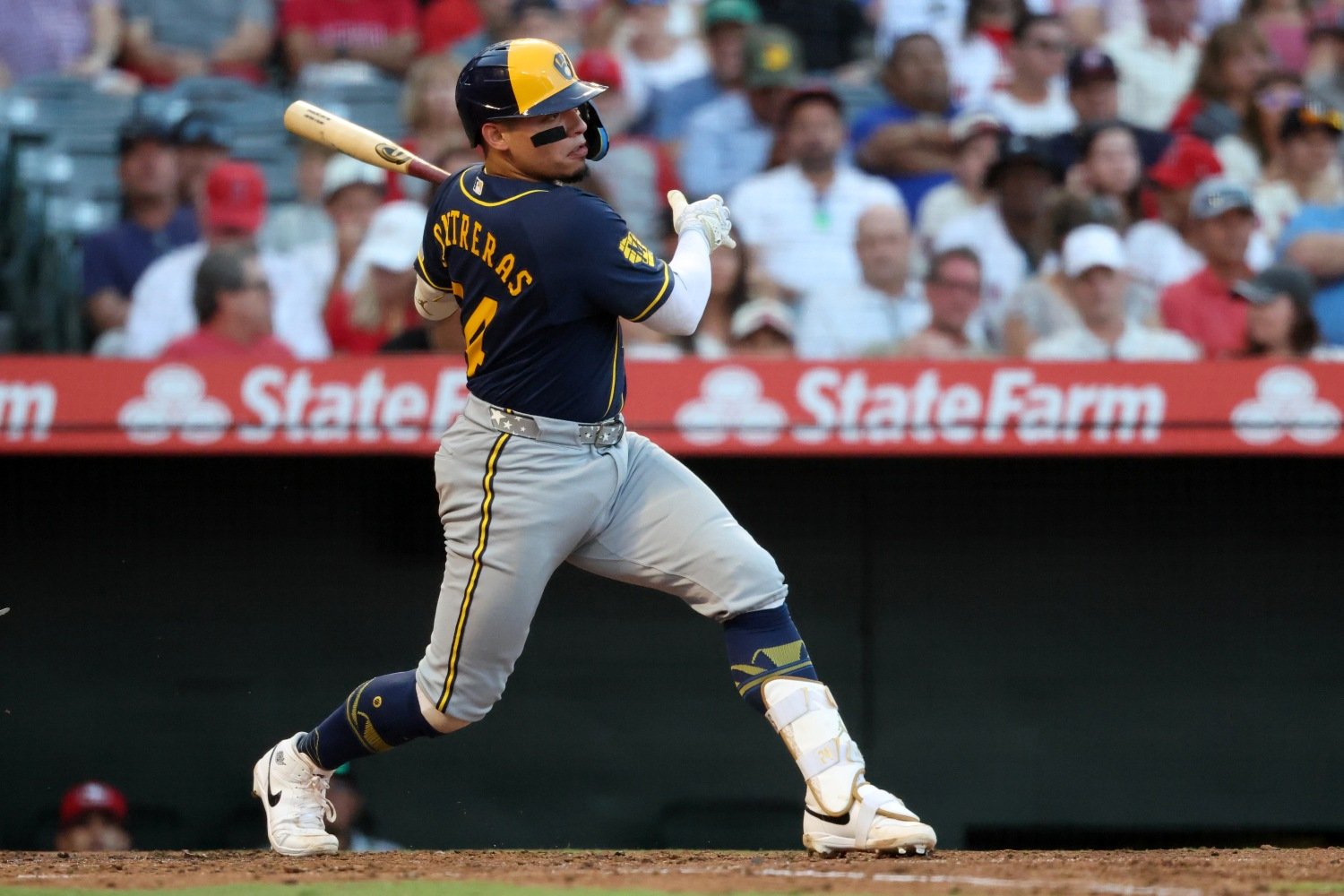 William Contreras has looked like a different hitter this season. After averaging 20 home runs across his first two years in Milwaukee and playing through a broken finger in 2025, the expectation was that offseason surgery would restore his power. Instead, the opposite has happened. The underlying data suggests he hasn't just been less productive; he's become a different kind of hitter. You can see below the Savant percentiles comparison for Contreras across the last three years; it's telling in this regard. Strikeout rates were never a problem for him, even when he was swinging and missing. Pitchers also appear more willing to challenge him in the zone, which has coincided with the lowest walk rate of his Brewers career. So what, exactly, has gone wrong here to change his profile so dramatically? Before diving into the swing changes, it's worth asking whether fatigue could be playing a role. The first thing, which we can't rule out, is injury, Contreras showed just last year that he'll play through almost anything with nary a peep, and catchers take a beating behind the plate. The wear and tear at that position is unique, but we can say that, if there was an injury, there is absolutely no reason not to see Gary Sánchez behind the plate more regularly. Of the 111 games the Brewers have played at the time of this writing, Contreras has started 83 behind the plate, which would project up to around 121 starts by the end of the year. That's seven fewer than 2025, but it would constitute a large workload for a catcher they want to be firing on all cylinders in October, not struggling to the finish line. Is Contreras Still Swinging Fast? Let's take a look at the bat-tracking data. His bat speed distribution shows us how often Contreras is swinging the bat at different speeds, where the higher the arc, the more often he swings in that range. Here is his distribution of swings since 2023: This is the biggest measure of intent we can see, and there are some giveaways that Contreras is being less aggressive this year than he was in 2024. The arc of 2025-26 is peaking earlier, with his most common swing averaging around 74 mph rather than 75 mph in bat speed. What's really telling, however, is on the right-hand side of this graph. Notice how the orange and blue lines for 2023 and 2024 show a number of swings at 82+ mph, but there are almost none in that range between the last two seasons. Injury may account for some of that, but there's more to this; Above is another breakdown, this time of Contreras's stance and point of impact. This is where we're seeing a big change. In 2023 and 2024, Contreras's stance was slightly more open/neutral, impacting the ball a little further back overall (which did engender him to a few more ground balls than is ideal). The MLB average stance set-up is 11° open, so Contreras was still more "closed" than your average player. The last two years, however, he's adopted an even more closed stance. In theory, a more closed stance should encourage a hitter to stay on the ball longer and use the opposite field more often. That was true for stretches of 2025. However, his contact point relative to his center of mass is now almost identical to what it was with the more open stance, creating a mechanical mismatch. Let's compare two home runs from those years to see the stance difference even into his "A" swing: Above is a swing from earlier this year. Notice how Contreras's feet are angled more toward the opposite field, almost shutting off the pull side. He opens up slightly after his toe tap, but while he middled this swing, it's an awkward position to pull the ball from. Now see the swing below (in case you ever needed to see what "letting it rip" looks like), which is from 2024: Contreras uses a leg kick rather than a toe tap here, starting with his feet closer together and exploding into the ball. At contact, his feet are 10-15° open, directed toward left field rather than right field. This is a swing where he was over 82 mph in bat speed, and it showed. One might question why someone whose swing was so successful would have remodeled it quite so extensively, and that perhaps lends itself to the cerebral nature of the man, which we'll come to in a bit. I'm not suggesting Contreras can't hit home runs with 74 mph of bat speed. That's plenty for a hitter, but I do think it shows a lack of intent versus previous seasons. He's trying to be more of a hitter than a slugger, especially in favourable counts wherein he should be able to unload. Most importantly, however, there seems to be a discrepancy in his set-up compared to his swing, and closing off his stance means that when he does pull the ball in the air, something he's doing more of this season, he's not doing it with the authority we're used to. He has managed to get the ground balls under control, reducing it from 55% of balls in play coming on the ground in 2024 to 42% in 2026. That's great, but he's lost the authority with which he traditionally hit balls, especially over the last month or two. Contreras is known for, at times, overthinking his approach behind the plate as a catcher, and he seems to be very cerebral in the box, too. We've seen him set up with different stances in the same at-bat in the past, playing a game of 4D chess with a pitcher. I can't say if that's right or wrong, but it is unique, and can make it difficult to be consistent in your swing. Whether it's lingering physical limitations, accumulated fatigue, or an intentional mechanical adjustment, Contreras doesn't look like the hitter he was in 2023 or 2024. The encouraging part is that the underlying bat speed remains good enough to rediscover that version of himself. The Brewers just need him to do it before October. The catcher is too important to their lineup, and perhaps the freedom to let the bat eat every once in a while could loosen the mental shackles, too. Can he find a way to tap into those elite exit velocities while keeping the ball in the air? Or is this a pick-your-poison situation? That, I can't answer, but if given a choice, I would take the latter. That power is far more consequential to this Brewers lineup, as constructed, than any bat-to-ball improvement that sacrifices said power. What have you thought of William Contreras's output lately? Do you think this is just a blip on the radar? Let us know your thoughts in the comments below!
 -
Yep, weird that 2 months of Skubal cost more... Like you said, people are gonna be outraged by the actual return here, the same experts will say "wow I think they've stolen Skubal", come back and posit similarly ludicrous trades next year
-
This one is even worse. Cade Horton, Wiggins and Shaw? LOL
-
Almost as ridiculous for the Cubs:
-
It is, but I feel it's clickbaity. He's mentioning those names for clicks, and throwing stuff at the wall I actually think he gets some inside info, but not the full package and then left guessing on bits
-
We can also add MoccBomb, who is not a bona fide source, with this tweet suggesting all bar one name the Brewers may use in such talks
-
A full thread of these could be gold in a few years to look back on
-
I figured, for a little entertainment, a thread of some of the most ridiculous trade proposals might be a bit of fun. To start off with, here are two of my absolute favourites Apologies Molly and Jim, you may need to fire whomever whispered this in your ear Perhaps even more outlandish, and the audio is worse than the trade board in the comments, but: The man has "GM" in his twitter handle and, well, thank goodness he's not one Have you seen any truly ridiculous trade threads?
-
2026 Draftee Signing Thread
Jake McKibbin replied to Jastro's topic in MLB Draft & International Signings
-
Huh, baseball reference has done me dirty on that front. Delightful! The minors do naturally restrict innings, no one's going to throw 160+ in the shortened lower level seasons, but I think he's had an injury issue in most seasons? I remember seeing a chart somewhere on this about how VAA based fastballs were becoming less effective as more and more pitchers coming through has that lower arm angle. I think the average VAA on four seamers has decreased season on season too, so it's not just Peralta but you're absolutely right that the extension is a huge part of it as well
-
Kate to the party, but just checked out the video and that changeup looks so similar to his fastball out of the hand. If I didn't see the speed gun, I would have no clue at all on the pitch being different, it looks really impressive, though he was overthrowing in that bullpen on the FB, I'd expect slightly lower velo's in game. Still, something to work with if he signs
-
It seems teams have been asking about the Brewers young controllable arms in trade discussions. I don't know if this adds validity, as we don't know the brewers response to those requests but I think there's been some valid points here. A couple of things: - Henderson has a strong fastball shape wise, but needs to have his command on point. This could be said for a lot of pitchers, but I don't think he could survive well if the velocity dropped at any point (injury, etc) - It's a great combination of outlier vertical approach angle and induced vertical break for his arm angle. That being said, pitchers do adapt, especially to fastball trends. VAA fastballs, like Freddy Peralta's, have been hit harder year on year as hitter's get more and more used to seeing them around the league. That adaptation is one of the key differences between 2021/22 Peralta and 2026 Peralta (note Peralta surged after spider tack was banned in 2021) - There's zero wiggle room if either the changeup or fastball aren't coming out of the hand quite right on a given day. It's why we so rarely see two-pitch pitchers dominate for long. Even take Spencer Strider, who's struggled despite regaining his former fastball velocity. He throws a lot harder than Henderson too. Just some food for thought that, to use the stock market advice, past performance is no indication of future returns. All of that being said, this is toeing the line value wise. If Henderson headlined a deal, it should be the majority of the value in that deal, with no other high end pieces included. Or perhaps even expand the deal to include a controllable reliever as well. Joe Ryan is entering his most expensive few years, and typically the Brewers would be trading an arm like that in the 2026/27 offseason, not acquiring one a few months before. He also has less developmental improvement than there perhaps is with a Reid Detmers who's just beginning to tap into his upside. I think Robert Murray said on the Microbrew podcast this week that sources believe he could be a top 5-10 pitcher in baseball with the Brewers. That's more than I thought, but it is an intriguing possibility. That upside is what you'd eb trading for, but it is a gamble vs what you have in Henderson Finally, Henderson's largest innings total in a season is 81 1/3, and he's consistently been healthy to pitch around that 80 inning mark. Will he wear down and tire as he passes that mark? As mentioned, he can't afford to lose the command or life on the fastball without running into problems, and with a history of elbow inflammation, that doesn't perhaps reassure me. Just food for thought in the whole debate!
- 36 replies
-
- 2
-
-
- logan henderson
- joe ryan
- (and 2 more)
-
No idea why I'm still up, but really enjoying the discourse here, some great points! I think that's fair, I just at times question some of the results when teams have seen Henderson more. Ryan's definitely been hurt by his last start in those metrics as well, but that doesn't mean the start should be excluded. I think the more I've researched this after writing the piece, the more Reid Detmers intrigues me. It's a poor pitching development organisation, I adore the arsenal mix, the fastball has more IVB which can help it play better than Ryan's if he does miss down in the zone, and those breaking balls are LEGIT. I can see how, from that release point/spin efficiency there's a really nice option for a bridge cutter that can take pressure off his fastball too, a cut-ride kind of offering plus he's under control for two and a half years rather than one and a half. I do think it's an interesting discussion on future performance and longevity
- 36 replies
-
- 1
-
-
- logan henderson
- joe ryan
- (and 2 more)

