Jake McKibbin
-
Posts
2,450 -
Joined
-
Last visited
-
Days Won
6
Content Type
Profiles
Forums
Blogs
Events
News
2026 Milwaukee Brewers Top Prospects Ranking
Milwaukee Brewers Videos
2022 Milwaukee Brewers Draft Picks
Milwaukee Brewers Free Agent & Trade Rumors, Notes, & Tidbits
Guides & Resources
2023 Milwaukee Brewers Draft Picks
2024 Milwaukee Brewers Draft Picks
The Milwaukee Brewers Players Project
2025 Milwaukee Brewers Draft Pick Tracker
2026 Milwaukee Brewers Draft Tracker: Picks & Bonuses
Store
Downloads
Gallery
Everything posted by Jake McKibbin
-
If Corbin can dial in the cutter down and in to right handers, we should see the dominant version. He is an abnormally large swing rate on that pitch out of the zone, and a high whiff % too (beginning to think a deep dive is in order). If he can set that up and execute, the D'backs are gonna be in trouble
-
It's not great but it happens, sometimes for you and sometimes against, though I can't recall the Brewers having a ton of luck so far Out of curiosity, does a manager giving his 2 cents and heading for a cold shower ever seem to do anything?
-
Your 2023 Wisconsin Timber Rattlers
Jake McKibbin replied to Jim Goulart's topic in Brewers Minor League Talk
Do you think EBJ's performances this season could have a big impact on the situation with Adames contract? Or other 2B more likely to have this impact? -
First AB I saw was the Brewers 3-0 down, and Joey Wiemer called out on a ball miles inside the strike zone, tough break for him and the crew. Galen's struggled at times because hitters have laid off his curveball well and he's hung a few in his first few starts, clearly the expanded zone helped last night, but also some insane break on that pitch. Good lord
-
The only thing I can maybe see is Voit being gone and another DH/1B in the mix, potentially, but other than that yeah most likely pitching side, either bullpen or starter and push a back ender to the bullpen
-
I Was Wrong ... My Apologies
Jake McKibbin replied to edfunderburk's topic in Milwaukee Brewers Talk
Thanks foe the response! Yeah I mean I would say yelich last season was prone to strong stretches followed by awful stretches, and it's very early, but some signs at least of something sitting under it all. I don't think he'll ever hit 40 homers again but I think he can be a strong vet presence for younger guys. We shall see! Look forward to a debate or two regardless 😁 -
The Early Optimism Stat Crunch: Part One
Jake McKibbin replied to Jake McKibbin's topic in Brewer Fanatic Front Page News
The difference in hard hit rate Vs barrel rate is likely due to the launch angle The strikeouts and walks are fascinating and hopefully we'll see more, there the stuff to miss bats here for sure and I don't expect them to be lower than average by end of season -
With the Brewers going well over the first ten days, why don’t we look at where they’re surpassing pre-season expectations and giving us hope that this early-season momentum isn’t just a flash in the pan? Image courtesy of © Jeff Hanisch-USA TODAY Sports With the Brewers going well over the first ten days, why don’t we look at where they’re surpassing pre-season expectations and giving us hope that this early-season momentum isn’t just a flash in the pan? Willy Adames Strikeout to Walk Ratio So far this season, in 33 plate appearances, Adames has registered a 13.2% walk rate to a 21% strikeout rate. He’s historically been around a 25% strikeout rate in his career with the Milwaukee Brewers, but his walk rate has been an element of concern amongst the Brewers fans. With a .391 BABIP, his batting average will likely come down, but if he can maintain a double-digit walk rate, as he has in multiple prior seasons, the Brewers will be all the better for it. He’s also maintained previous seasons' trends of hitting considerably better with men on base and better again when they’re in scoring position. Christian Yelich’s Nine-Game On-Base Streak Yelich’s first nine games have seen him get on base at least once per game, a feat he last produced in the 2019 season. He’s reaching base at a .381 clip, outstanding from a leadoff hitter, and has been much more proficient at laying off pitches down and out of the zone his last few games, something he struggled mightily with last season. He has also shown more regular hard-hit contact, hitting four seamers hard with a 71.4% hard-hit rate. He has a high expected batting average against the four-seamer and cutter and an xBA of .463 against the curveball, something he hasn’t hit well since 2019. Overall he currently has an xBA of .290 and xSLG of .489. If he can time his swing on the change-up, the National League should watch out. Joey Wiemer’s Defense Our new right fielder does look a little funky at the plate, and his batting line is bolstered by a lot of infield hits in his early career. However, his biggest value so far this season is his defense; he’s the league leader in outs above average, as well as being in the 96th percentile for outfield jump and 93rd percentile for sprint speed. His success rate of 100% vastly surpasses his estimated catch percentage of 87%. He’s made every remotely possible catch so far this season. The Cardinals on Sunday had some very makeable plays in the outfield that turned into big runs for Milwaukee, and I can’t see that happening anywhere near as much with this rangy outfield crew. Brice Turang’s Plate Discipline Often when players hit the big leagues, they take a period to adapt to the higher quality of pitching. Not so Brice Turang, who has come in and shown remarkable discipline at the plate with solid bat-to-ball skills. He’s struck out just 13% of his plate appearances and walked in a vast 17.4%. If he can maintain the strikeout rate around this level, the Brewers will have a solid bottom-of-the-line-up, something they’ve missed in previous seasons, and allow pitchers to settle into their groove. Turang is also 95th percentile sprint speed, and his 86th percentile OAA contributed to one of the best middle infields in baseball, a marked improvement again on last season. Rowdy Tellez Underlying Stats Tellez is the one Brewer who hasn’t caught fire, but his underlying stats of a 52.6% hard-hit rate, 91.2mph average exit velocity, and 15.8% barrel rate suggest an outburst is on its way. He’s squaring up four-seamers and sliders in particular, and it won’t be long until he becomes the dominant middle-of-the-line-up hitter we know he can be. Tellez got off to a scorching start last season, but he had a poor BABIP throughout the year, almost .070 points below his usual marks, and the Brewers will think if he can get a bit of luck, the line-up will take on a whole new, fearsome visage. Freddy Peralta’s Dominance Fastball Freddy has conceded just one run across 12 innings of work this season. He’s been in the top 10% of expected batting average in four of his five seasons, a trend that’s continued with an xBA of .191 and an xSLG of .330 in his first two starts. He locates around the edges of the zone a lot with his fastball and has kept the slider just off the outside edge to right-handed hitters across both starts, though there is a cause for concern with his 43.3% in-zone percentage. He’s been getting ahead off the first pitch (60% first-pitch strikes) and then trying to induce chases, but he does need to be a little more trusting in his stuff to pitch deeper into the game. Against the Cardinals, he had more 95 mph+ pitches than any other outing in his career (32), maxing out at 97.8mph, the hardest of his career as a starter. More importantly, health-wise, his last five pitches were all 95 mph and above. Bullpen Proficiency Aided by a somewhat unsustainable 82% left-on-base percentage to start the season, the bullpen leads the majors in ERA. Peter Strzelecki, Hoby Milner, Devin Williams, and Gus Varland have been lights out in high-leverage situations with some nasty pitches. Strzelecki’s slider to strike out Arenado on Sunday was a thing of beauty, and it won’t be long before the strikeout numbers escalate for this relief corps. Gus Varland has an xSlg of just .368, Peter Strzelecki has an XBA of .217, and Hoby Milner has a 70% ground ball rate this season. Some optimism there, Brewer Fanatics; what do you guys think? Does anything surprise you? View full article
-
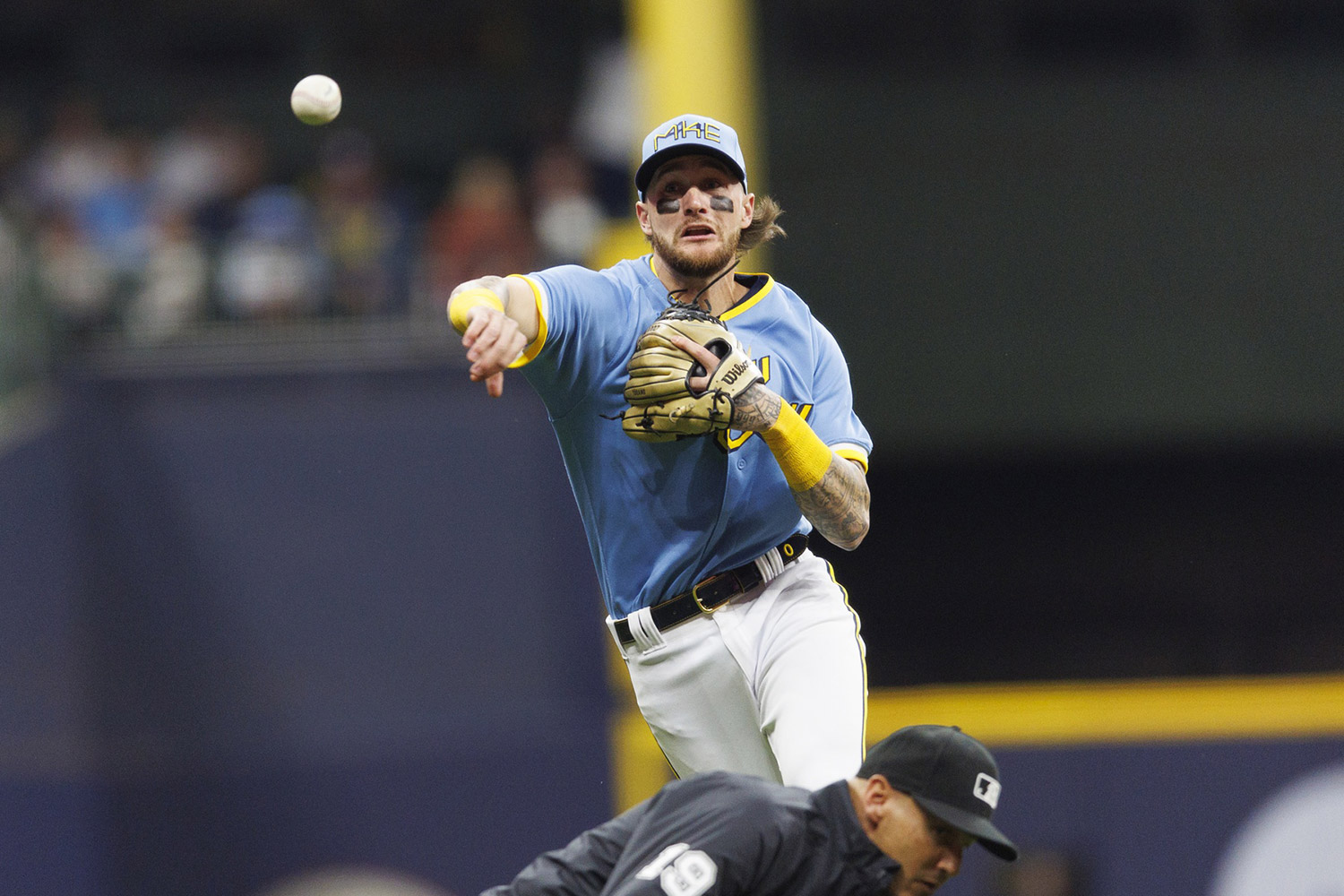 Willy Adames Strikeout to Walk Ratio So far this season, in 33 plate appearances, Adames has registered a 13.2% walk rate to a 21% strikeout rate. He’s historically been around a 25% strikeout rate in his career with the Milwaukee Brewers, but his walk rate has been an element of concern amongst the Brewers fans. With a .391 BABIP, his batting average will likely come down, but if he can maintain a double-digit walk rate, as he has in multiple prior seasons, the Brewers will be all the better for it. He’s also maintained previous seasons' trends of hitting considerably better with men on base and better again when they’re in scoring position. Christian Yelich’s Nine-Game On-Base Streak Yelich’s first nine games have seen him get on base at least once per game, a feat he last produced in the 2019 season. He’s reaching base at a .381 clip, outstanding from a leadoff hitter, and has been much more proficient at laying off pitches down and out of the zone his last few games, something he struggled mightily with last season. He has also shown more regular hard-hit contact, hitting four seamers hard with a 71.4% hard-hit rate. He has a high expected batting average against the four-seamer and cutter and an xBA of .463 against the curveball, something he hasn’t hit well since 2019. Overall he currently has an xBA of .290 and xSLG of .489. If he can time his swing on the change-up, the National League should watch out. Joey Wiemer’s Defense Our new right fielder does look a little funky at the plate, and his batting line is bolstered by a lot of infield hits in his early career. However, his biggest value so far this season is his defense; he’s the league leader in outs above average, as well as being in the 96th percentile for outfield jump and 93rd percentile for sprint speed. His success rate of 100% vastly surpasses his estimated catch percentage of 87%. He’s made every remotely possible catch so far this season. The Cardinals on Sunday had some very makeable plays in the outfield that turned into big runs for Milwaukee, and I can’t see that happening anywhere near as much with this rangy outfield crew. Brice Turang’s Plate Discipline Often when players hit the big leagues, they take a period to adapt to the higher quality of pitching. Not so Brice Turang, who has come in and shown remarkable discipline at the plate with solid bat-to-ball skills. He’s struck out just 13% of his plate appearances and walked in a vast 17.4%. If he can maintain the strikeout rate around this level, the Brewers will have a solid bottom-of-the-line-up, something they’ve missed in previous seasons, and allow pitchers to settle into their groove. Turang is also 95th percentile sprint speed, and his 86th percentile OAA contributed to one of the best middle infields in baseball, a marked improvement again on last season. Rowdy Tellez Underlying Stats Tellez is the one Brewer who hasn’t caught fire, but his underlying stats of a 52.6% hard-hit rate, 91.2mph average exit velocity, and 15.8% barrel rate suggest an outburst is on its way. He’s squaring up four-seamers and sliders in particular, and it won’t be long until he becomes the dominant middle-of-the-line-up hitter we know he can be. Tellez got off to a scorching start last season, but he had a poor BABIP throughout the year, almost .070 points below his usual marks, and the Brewers will think if he can get a bit of luck, the line-up will take on a whole new, fearsome visage. Freddy Peralta’s Dominance Fastball Freddy has conceded just one run across 12 innings of work this season. He’s been in the top 10% of expected batting average in four of his five seasons, a trend that’s continued with an xBA of .191 and an xSLG of .330 in his first two starts. He locates around the edges of the zone a lot with his fastball and has kept the slider just off the outside edge to right-handed hitters across both starts, though there is a cause for concern with his 43.3% in-zone percentage. He’s been getting ahead off the first pitch (60% first-pitch strikes) and then trying to induce chases, but he does need to be a little more trusting in his stuff to pitch deeper into the game. Against the Cardinals, he had more 95 mph+ pitches than any other outing in his career (32), maxing out at 97.8mph, the hardest of his career as a starter. More importantly, health-wise, his last five pitches were all 95 mph and above. Bullpen Proficiency Aided by a somewhat unsustainable 82% left-on-base percentage to start the season, the bullpen leads the majors in ERA. Peter Strzelecki, Hoby Milner, Devin Williams, and Gus Varland have been lights out in high-leverage situations with some nasty pitches. Strzelecki’s slider to strike out Arenado on Sunday was a thing of beauty, and it won’t be long before the strikeout numbers escalate for this relief corps. Gus Varland has an xSlg of just .368, Peter Strzelecki has an XBA of .217, and Hoby Milner has a 70% ground ball rate this season. Some optimism there, Brewer Fanatics; what do you guys think? Does anything surprise you?
- 5 comments
-
- 1
-

-
- christian yelich
- willy adames
- (and 3 more)
-
Wiemer is rapid! Mitchel has hit too many extra bases so far to really show off his wheels. If only he'd stop roping doubles and homers, but yeah that's wild! Also because stats are so relevant... Yelich is currently 1 OAA for the season. Premium defense on offer
-
One thing the Brewers have struggled with a ton the last few seasons is regularly having men on base, but this season we've had multiple threats across a variety of innings, and it's been so refreshing. Be interesting to see when that helps get a starter out early, tonight would be great for it. Yelich and Winker really work a count, and it's whether we can get that big early inning and rack up a big pitch count. Bit rambly, but I've no doubt there'll be opportunities tonight, question is if the extra hit or two can make a big dent
-
I think it'll be interesting, Gallen hasn't hit his stride as of yet, and the Arizona offense has overperformed so far (Perdomo has an xBA of .200 vs actual BA of .438, and xSlg of .303 vs actual slugging of .813 Can the Brewers limit damage on the base paths? Will need some offense for sure, but also some clutch fielding and a bit of good luck. Miley was very good his first start, and should be an exciting game, so many young talents on show
-
I think the Catcher was giving Cruz some verbal... compliments, and Santana took issue with it? But yeah it seemed a poor slide, and much better diving head first on the outside to slip a hand in as you go past
-
FTFY
-
One fun fact is yelich's percentage of sweet spot contact was 66.7% going into this series. He's not as far off as you'd think, had a poor start in two games but still a big player
-
You just know he's gonna go 8 no hit innings after the slabbering 😂
-
He hasn't seen anywhere near enough yet, be interesting to see after a couple of months, but also chourio has better defensive capabilities and more speed. Im saying no more because, devil magic, but I maybe don't rate walker as highly as the cards fanbase is
-
He was a little fortunate with 7 walks issues, the Blue Jays had a bit of an off day other than that, but certainly the best results so far from him. I think the first game tonight is huge, set the tone, and up the ante some I agree, I don't think he was slow, and totally understandable pace given his injury record and early in season. Never should've been sent
-
Just a wee joke! Hitters looking good, Burnes still to catch form, but we're putting balls in play more, and showing much better defense from 2B, RF and CF so far this season I think the Woodruff v Flaherty matchup tonight could be interesting, a Brewers win will create some pressure much earlier than expected for the Cardinals!
-
We are... inevitable
-
Just went to double check, and technically we're both correct here... it was the labrum in his hips that ended him! Impressive memory, thanks for the heads up!
-
Another interesting stat is that Joey Wiemer has the best "outfield jump" so far this year
-
Aaron Ashby’s arthroscopic procedure to repair his torn labrum is a nasty option, and it’s easy to see why the Milwaukee Brewers took so long before resorting to this surgery. It's also why his future is now much less clear, even in the long term. Image courtesy of © Darren Yamashita-USA TODAY Sports Aaron Ashby’s arthroscopic procedure to repair his torn labrum is a nasty option, and it’s easy to see why the Milwaukee Brewers took so long before resorting to this surgery. It's also why his future is now much less clear, even in the long term. Some 61.5% of specified arthroscopies on baseball players are for this specific issue, and they average just under a four-year career post-surgery on injuries operated on from 1998 – 2016. It’s a very serious surgery, and we don't know how it will affect Aaron Ashby moving forward. The Procedure An arthroscopy is a form of keyhole surgery used to check or repair joints, commonly used for anterior cruciate ligament (ACL) injuries, but also around the shoulder joint due to the complexity of the shoulder's composition. An arthroscope is an endoscope inserted through a small incision to see the inner workings of the joint, with accessory incisions made for the corrective surgery performed alongside it with specially-designed instruments. The labrum is a rim of soft tissue or cartilage that surrounds the ball-and-socket joint, making it more stable, providing cushioning to the joint, and also the point at which the muscle fibers attach to the joint. There are so many fibers from various muscles along the deltoids, biceps, triceps, and rotator cuff, intertwining in such complex ways, that repairing the joint exactly is nigh impossible. This usually results in a shoulder that is tighter than before, with more restricted movement, a feeling heightened by the period of immobilization while the injury heals post-operation--a sensation doctors call a “frozen shoulder.” The Recovery And Rehabilitation After surgery, the shoulder is kept in a sling to minimize movement for three to four weeks while performing “passive range of motion” exercises (this is where the therapist moves the joint, the patient not performing any movement themselves) to try and limit the tension in the shoulder. After removing the sling, the athlete takes more responsibility for the motion and flexibility issues, eventually building up to strengthening the joint at about three months post-operation, with Massachusetts General suggesting it will take about six months before the injury is fully healed. That's why it could be season-ending for Ashby. That is for the general public, and unfortunately for big-league ballplayers, Park et al. found that the average recovery period was closer to eight or nine months from 1998-2016, with an average return to play of only 63% across both the major and minor leagues. However, this increased to 82% if you included only major-league players. This may be due to minor leaguers giving up on their careers after the injury, something that won’t happen to Ashby due to his contract, but there’s still an 18% chance he may never pitch again. It should also be noted that among pitchers specifically (who make up 60% of the sample), return to play was significantly longer again, averaging 413 days, per a report from Chalmers et al. The Return To Play Within baseball, this is an injury carefully managed even in the season after the injury occurs, often playing in 26.4% fewer games than the previous “healthy” season. Performance-wise, there is less of a drop off in MLB compared to the NFL, with an average 2-3% drop in performance metrics, but often returning to preoperative levels in season two after the surgery. The worry is that the surgery massively shortened Ashby’s career length, with an average of 3.7 years post-injury played across major league baseball. However, there is a lot of volatility within this, with some players having just one year and others twelve years of playing time. Why did the Brewers and Ashby wait so long to perform the surgery? Torn labrums are tricky injuries; ideally, they have the ability, and greater recovery, if they can heal independently, depending on the severity of damage to the cartilage. If so, it can be assisted by injections, physical therapy, and anti-inflammatory medication. Surgery is the most difficult for recovery and would be seen as a last resort by the organization. Reasons To Be Positive The studies involved figures from 1998, and medical practices have evolved massively. Take, for example, the recovery from Tommy John surgery, deemed impossible until relatively recently, and we can be assured that Ashby will have access to the best medical services. This should likely improve both his recovery time and post-op performance metrics. Ashby is also much younger than most players who get the injury, at 24 years old compared to the average 29. At a younger age, the body seems vastly more capable of recovering and repairing itself, and I’d expect the Brewers to want more than four years out of his arm. He might not have a long career, but I wouldn’t be surprised if he pitched into his thirties. Comparative Pitchers Michael Pineda - 2012 surgery, next played in 2014 but largely returned to previous performance levels Ben Sheets – Effectively ended his career. Chris Carpenter – Surgery mid-2002, returning to previous playing ability in 2004 Jack Flaherty – Notable decrease in performance since tearing his labrum, but he didn’t have surgery, instead healing on its own with platelet-rich plasma injections. Hasn’t shown the same “stuff” since. Tim Lincecum – Career Ending The injury road doesn’t look promising for Ashby, but medical advances and his age might allow him to be more successful than others who have needed the surgery in the past. We won’t know until we see him pitch again, and he’ll likely be a different pitcher in terms of his velocity and stuff than we saw pre-injury. View full article
-
The Bad News About Aaron Ashby And Shoulder Arthroscopies
Jake McKibbin posted an article in Brewers
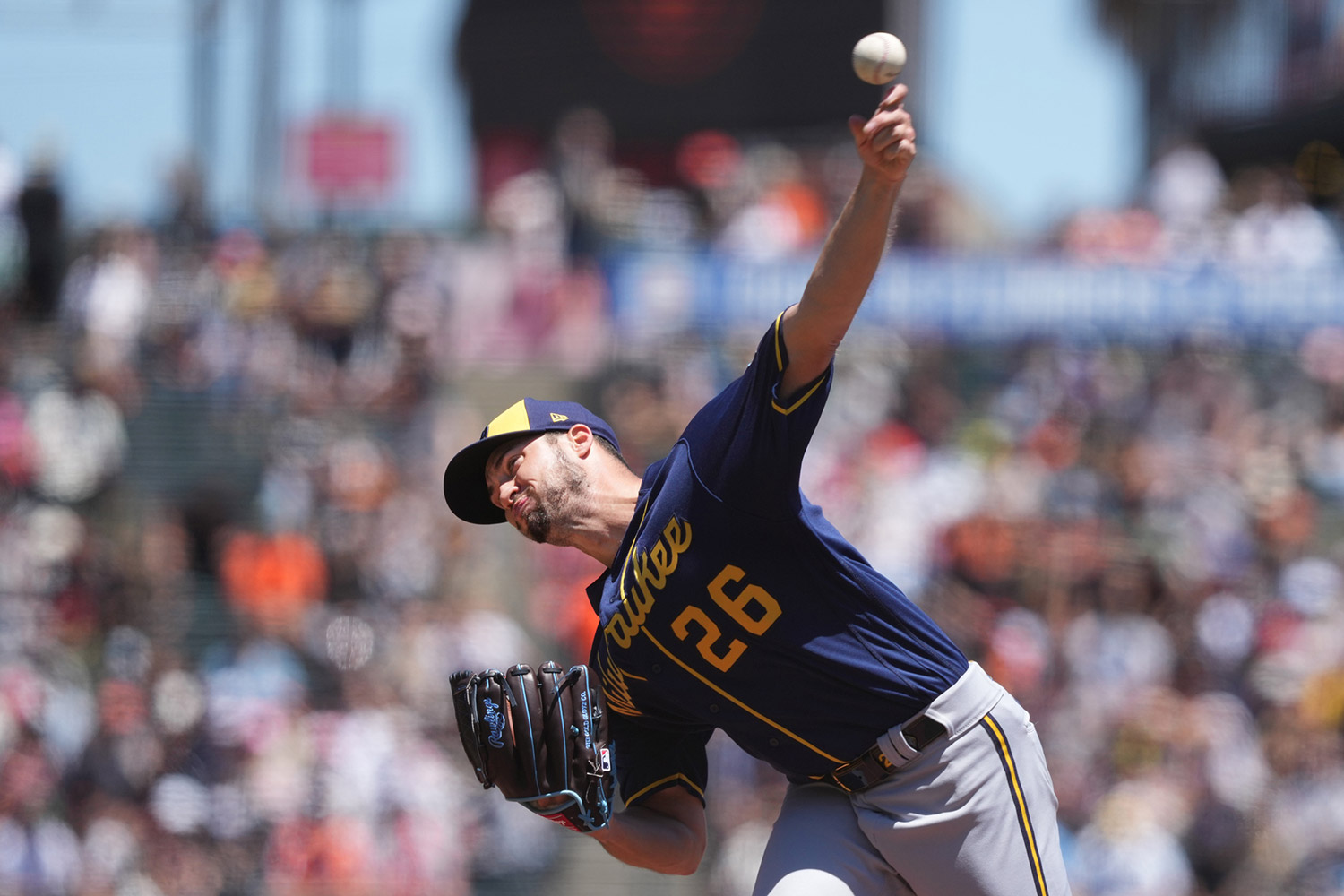 Some 61.5% of specified arthroscopies on baseball players are for this specific issue, and they average just under a four-year career post-surgery on injuries operated on from 1998 – 2016. It’s a very serious surgery, and we don't know how it will affect Aaron Ashby moving forward. The Procedure An arthroscopy is a form of keyhole surgery used to check or repair joints, commonly used for anterior cruciate ligament (ACL) injuries, but also around the shoulder joint due to the complexity of the shoulder's composition. An arthroscope is an endoscope inserted through a small incision to see the inner workings of the joint, with accessory incisions made for the corrective surgery performed alongside it with specially-designed instruments. The labrum is a rim of soft tissue or cartilage that surrounds the ball-and-socket joint, making it more stable, providing cushioning to the joint, and also the point at which the muscle fibers attach to the joint. There are so many fibers from various muscles along the deltoids, biceps, triceps, and rotator cuff, intertwining in such complex ways, that repairing the joint exactly is nigh impossible. This usually results in a shoulder that is tighter than before, with more restricted movement, a feeling heightened by the period of immobilization while the injury heals post-operation--a sensation doctors call a “frozen shoulder.” The Recovery And Rehabilitation After surgery, the shoulder is kept in a sling to minimize movement for three to four weeks while performing “passive range of motion” exercises (this is where the therapist moves the joint, the patient not performing any movement themselves) to try and limit the tension in the shoulder. After removing the sling, the athlete takes more responsibility for the motion and flexibility issues, eventually building up to strengthening the joint at about three months post-operation, with Massachusetts General suggesting it will take about six months before the injury is fully healed. That's why it could be season-ending for Ashby. That is for the general public, and unfortunately for big-league ballplayers, Park et al. found that the average recovery period was closer to eight or nine months from 1998-2016, with an average return to play of only 63% across both the major and minor leagues. However, this increased to 82% if you included only major-league players. This may be due to minor leaguers giving up on their careers after the injury, something that won’t happen to Ashby due to his contract, but there’s still an 18% chance he may never pitch again. It should also be noted that among pitchers specifically (who make up 60% of the sample), return to play was significantly longer again, averaging 413 days, per a report from Chalmers et al. The Return To Play Within baseball, this is an injury carefully managed even in the season after the injury occurs, often playing in 26.4% fewer games than the previous “healthy” season. Performance-wise, there is less of a drop off in MLB compared to the NFL, with an average 2-3% drop in performance metrics, but often returning to preoperative levels in season two after the surgery. The worry is that the surgery massively shortened Ashby’s career length, with an average of 3.7 years post-injury played across major league baseball. However, there is a lot of volatility within this, with some players having just one year and others twelve years of playing time. Why did the Brewers and Ashby wait so long to perform the surgery? Torn labrums are tricky injuries; ideally, they have the ability, and greater recovery, if they can heal independently, depending on the severity of damage to the cartilage. If so, it can be assisted by injections, physical therapy, and anti-inflammatory medication. Surgery is the most difficult for recovery and would be seen as a last resort by the organization. Reasons To Be Positive The studies involved figures from 1998, and medical practices have evolved massively. Take, for example, the recovery from Tommy John surgery, deemed impossible until relatively recently, and we can be assured that Ashby will have access to the best medical services. This should likely improve both his recovery time and post-op performance metrics. Ashby is also much younger than most players who get the injury, at 24 years old compared to the average 29. At a younger age, the body seems vastly more capable of recovering and repairing itself, and I’d expect the Brewers to want more than four years out of his arm. He might not have a long career, but I wouldn’t be surprised if he pitched into his thirties. Comparative Pitchers Michael Pineda - 2012 surgery, next played in 2014 but largely returned to previous performance levels Ben Sheets – Effectively ended his career. Chris Carpenter – Surgery mid-2002, returning to previous playing ability in 2004 Jack Flaherty – Notable decrease in performance since tearing his labrum, but he didn’t have surgery, instead healing on its own with platelet-rich plasma injections. Hasn’t shown the same “stuff” since. Tim Lincecum – Career Ending The injury road doesn’t look promising for Ashby, but medical advances and his age might allow him to be more successful than others who have needed the surgery in the past. We won’t know until we see him pitch again, and he’ll likely be a different pitcher in terms of his velocity and stuff than we saw pre-injury.
-
Exactly. Let's be more realistic, all this 161-1 nonsense 159-3 is the best we can expect