Jake McKibbin
-
Posts
2,450 -
Joined
-
Last visited
-
Days Won
6
Content Type
Profiles
Forums
Blogs
Events
News
2026 Milwaukee Brewers Top Prospects Ranking
Milwaukee Brewers Videos
2022 Milwaukee Brewers Draft Picks
Milwaukee Brewers Free Agent & Trade Rumors, Notes, & Tidbits
Guides & Resources
2023 Milwaukee Brewers Draft Picks
2024 Milwaukee Brewers Draft Picks
The Milwaukee Brewers Players Project
2025 Milwaukee Brewers Draft Pick Tracker
2026 Milwaukee Brewers Draft Tracker: Picks & Bonuses
Store
Downloads
Gallery
Everything posted by Jake McKibbin
-
Definitely a poor zone overall, maybe I missed some of them as there was less tension being ahead in the game at that point. These old umpires are so much worse than their younger counterparts, and it's not close
-
Hmm I think he did favour the Brewers a bit, some bad calls against the crew for sure, but the should be walk to Cruz, as wella s the Machado AB, anyway I think it possibly evens out the D'Backs game where Gallen got some calls. It swings and roundabouts eh?
-
https://twitter.com/UmpScorecards/status/1647972409369063425/photo/1 May also have been a little lucky last night
-
Which MLB Players Describe Joey Wiemer?
Jake McKibbin replied to Harold Hutchison's topic in Brewer Fanatic Front Page News
Fun fact While Wiemer has accumulated 0.3 fWAR over the short season so far, Jordan Walker with all the hype about his undying brilliance is sitting at -0.3 fWAR Edit: This becomes 0.5 bWAR for Joey and still -0.3 bWAR for poor Walker on baseball reference -
Statcast data now public for AAA?
Jake McKibbin replied to wiguy94's topic in Brewers Minor League Talk
Some stats based fun The Clayton Andrews love is interesting, his slider in 12 Batted ball events has an average exit velocity of 46 mph, along with a 50% CSW and every ball hit on the ground Ethan Small's Changeup has a 61.9% CSW rate.. i thought the slider was meant to be his pitch, yowza! That's with 57% of the change-ups being in-zone. He also has the biggest rising action on the sounds, with 19.1 inches less vertical drop than expected, just a shame that almost 65% are out of the zone. Would be interesting if he took the Lauer approach and said "hit this meatball" Bennett Sousa's fastball has a 46.7% CSW rate, but with the caveat of an average exit velocity of 98 mph Lucas Erceg's change-up has as much horizontal movement as Adrian Houser's sinker, as well as having the fastest pitch in Nashville with his 96mph sinker -
Flexen absolutely blew up in his last start v the cubs, currently sporting a WHIP over two (not unusual for his career at times) Brewers will be expecting a solid outing form burnes will be enough, never mind a special one Flexen has walked seven and struck out six so far this year, as well as giving up 16 hits
-
He's had a few deep flyouts last few days, has reigned in the whiffs. He's getting closer, but I think only time at MLB level can bring his bat up. I did a comp on his vs Judge actually, a lot of similarities in their numbers coming through the minors (save for stolen bases) and Judge in his first month as a September call-up hit .179/.263/.345 for a .608 OPS. Came back next season mashing. Wiemer can do damage, he's just slightly off at the moment, but I've not seen anything to do with him struggling to hit breakers in the minors, so I'm assuming he'll get there.. that and the defense has been freakishly good
-
I was so sure that was gone be changeup out of the zone .. so was grisham it seems, Devin does love some drama
-
The cards commentators are awful... Tuned in to a little bit of pirates game yesterday, Matz in a 3-2 count misses several inches off the inside of the plate, and crouches Commentator "everyone thought THAT was a strike, except the guy with the (short pause) little strike zone" Later on Carson struck out looking on a pitch dotted at bottom of the zone , and they call it a "moveable strike zone, that's not a strike".
-
Early in a new season, it's a good time to dive deep even on players with whom most fans feel familiar. Today, let's discuss the arsenal of Brewers ace Corbin Burnes. Image courtesy of © Rick Scuteri-USA TODAY Sports Early in a new season, it's a good time to dive deep even on players with whom most fans feel familiar. Today, let's discuss the arsenal of Brewers ace Corbin Burnes. In the build-up to his performance against the Diamondbacks, the Milwaukee Brewers released a video talking to both Corbin Burnes and Brandon Woodruff, where Woodruff mentioned that after a bad performance, he sees Corbin in his black book analyzing his pitches, and knows something special is coming the next time he gets on the mound. We got that against the exciting, young Diamondbacks, who had just put up 29 runs across their last three games against the LA Dodgers. Burnes held them to just three hits and zero walks across eight innings of work. Later in the season, or with a healthier pitching staff, he likely would have finished the job, potentially with a Maddux. So without further ado, let’s take a look at what makes Burnes potentially the best pitcher in baseball. Pitch Mix Burnes has a five-pitch arsenal: cutter, changeup, sinker, slider, and curveball, having eliminated the four-seamer altogether coming into this season. He has different approaches based on matchups, though, predominantly throwing cutters (41%) and sliders (33%) to right-handed hitters, with lesser use of the change-up and the curveball. Against left-handers, he eliminates the slider altogether and really hones in on the cutter (62%) with the change (23%) and curveball (15%) as his alternate options. He particularly likes working lefties down and in with the cutter, as well as with the back-door cutter curving in late. He has various options at his disposal depending on the hitter, so let’s take a dive into them. The Cutter The first thing that stands out about Burnes’s primary weapon is the velocity at which he throws it, averaging over 95 miles per hour in each of the last two seasons. It's the fastest cutter in baseball from a starting pitcher, by a fairly wide margin. Most of the time, such high velocity results in reduced movement, as the velocity requires more spin and energy to move the ball off its intended course. No such trouble for Burnes, who has slightly above-average vertical movement, and 80 percent better horizontal movement than the rest of the league on his cutter. It’s a pitch he used over 50% of the time in his last two full seasons, and uses it in a variety of ways, challenging hitters with belt-high offerings, curving it in the front door against right-handers, or dipping it down and away off the plate to force hitters to chase. He was, at times, guilty of overusing it last season, given he threw only the cutter in 3-0 and 3-1 counts. On 3-0, batters hit .429/.643 against him, contrasted to a .267/.467 line from 2021. Aside from the strikeout stuff, he also induces a large number of ground balls with this pitch, with an average launch angle of three degrees. In 2021, he had a strikeout rate of 35% with a ground-ball rate of 48%. The cutter, specifically, was seven percentage points better than league average at producing ground balls, surpassing a 50% rate. The Curveball Burnes’ second-most-used pitch in 2021 and 2022 was the curveball, and on the surface, it’s difficult to see why it’s so effective. In 2022, opponents had a batting average against of .127 against that curve, and they slugged just .263. Yet, his expected numbers were even better, with a .118 average and .184 slugging. It has less vertical movement, compared to the average hook, but where it stands out is the horizontal break he gets on the pitch, 32 percent better than league average in 2022. The break is less of a loopy movement, and more of a sharp, late break as it enters the strike zone with slightly above average velocity for a curveball. All in all last season, it was worth a run value of -11. In terms of how he uses it, 65-70 percent of Burnes’s curveballs are out of the zone, predominantly to put hitters away, but he’s rarely truly wild with it, with his heat map showing a lot of pitches just below the strike zone, which must be torturous to hit. As you can see, over the course of 2022, his curveball was predominantly in the lower portion, or below the strike zone, though the occasional hanging curves can bite him, something he’s done a little more often in his first few starts of the year. The pace and snap on the delivery can bail him out of trouble more often than not, and it’s also important to note that last season he shelved the pitch in counts wherein he fell behind. To sum up how dominant this pitch was, it had a strikeout % of 62.5%, and put-away percentage of 41.7%. Those numbers speak for themselves. That’s all for part one, stay tuned for part two in the next day or two! View full article
-
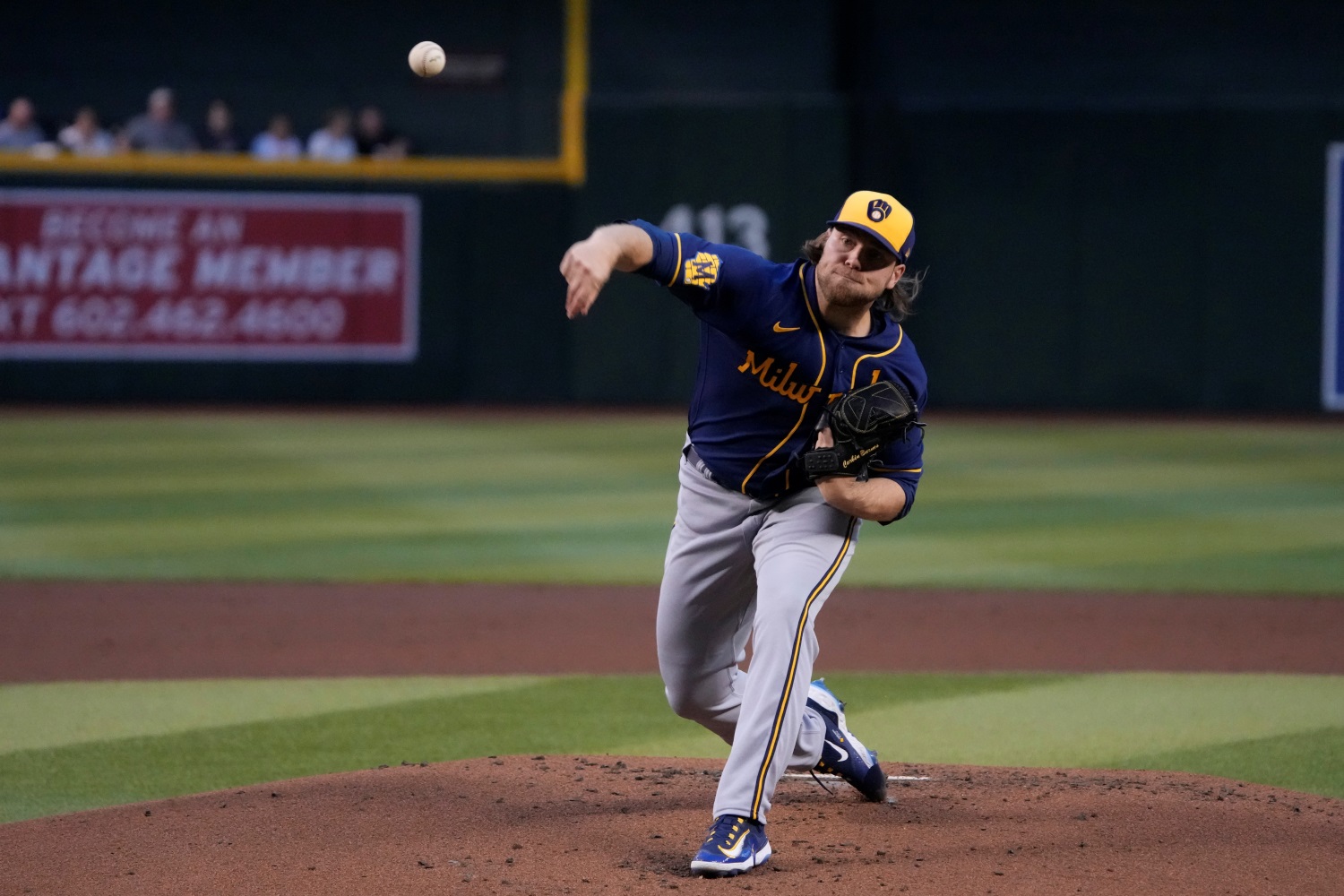 In the build-up to his performance against the Diamondbacks, the Milwaukee Brewers released a video talking to both Corbin Burnes and Brandon Woodruff, where Woodruff mentioned that after a bad performance, he sees Corbin in his black book analyzing his pitches, and knows something special is coming the next time he gets on the mound. We got that against the exciting, young Diamondbacks, who had just put up 29 runs across their last three games against the LA Dodgers. Burnes held them to just three hits and zero walks across eight innings of work. Later in the season, or with a healthier pitching staff, he likely would have finished the job, potentially with a Maddux. So without further ado, let’s take a look at what makes Burnes potentially the best pitcher in baseball. Pitch Mix Burnes has a five-pitch arsenal: cutter, changeup, sinker, slider, and curveball, having eliminated the four-seamer altogether coming into this season. He has different approaches based on matchups, though, predominantly throwing cutters (41%) and sliders (33%) to right-handed hitters, with lesser use of the change-up and the curveball. Against left-handers, he eliminates the slider altogether and really hones in on the cutter (62%) with the change (23%) and curveball (15%) as his alternate options. He particularly likes working lefties down and in with the cutter, as well as with the back-door cutter curving in late. He has various options at his disposal depending on the hitter, so let’s take a dive into them. The Cutter The first thing that stands out about Burnes’s primary weapon is the velocity at which he throws it, averaging over 95 miles per hour in each of the last two seasons. It's the fastest cutter in baseball from a starting pitcher, by a fairly wide margin. Most of the time, such high velocity results in reduced movement, as the velocity requires more spin and energy to move the ball off its intended course. No such trouble for Burnes, who has slightly above-average vertical movement, and 80 percent better horizontal movement than the rest of the league on his cutter. It’s a pitch he used over 50% of the time in his last two full seasons, and uses it in a variety of ways, challenging hitters with belt-high offerings, curving it in the front door against right-handers, or dipping it down and away off the plate to force hitters to chase. He was, at times, guilty of overusing it last season, given he threw only the cutter in 3-0 and 3-1 counts. On 3-0, batters hit .429/.643 against him, contrasted to a .267/.467 line from 2021. Aside from the strikeout stuff, he also induces a large number of ground balls with this pitch, with an average launch angle of three degrees. In 2021, he had a strikeout rate of 35% with a ground-ball rate of 48%. The cutter, specifically, was seven percentage points better than league average at producing ground balls, surpassing a 50% rate. The Curveball Burnes’ second-most-used pitch in 2021 and 2022 was the curveball, and on the surface, it’s difficult to see why it’s so effective. In 2022, opponents had a batting average against of .127 against that curve, and they slugged just .263. Yet, his expected numbers were even better, with a .118 average and .184 slugging. It has less vertical movement, compared to the average hook, but where it stands out is the horizontal break he gets on the pitch, 32 percent better than league average in 2022. The break is less of a loopy movement, and more of a sharp, late break as it enters the strike zone with slightly above average velocity for a curveball. All in all last season, it was worth a run value of -11. In terms of how he uses it, 65-70 percent of Burnes’s curveballs are out of the zone, predominantly to put hitters away, but he’s rarely truly wild with it, with his heat map showing a lot of pitches just below the strike zone, which must be torturous to hit. As you can see, over the course of 2022, his curveball was predominantly in the lower portion, or below the strike zone, though the occasional hanging curves can bite him, something he’s done a little more often in his first few starts of the year. The pace and snap on the delivery can bail him out of trouble more often than not, and it’s also important to note that last season he shelved the pitch in counts wherein he fell behind. To sum up how dominant this pitch was, it had a strikeout % of 62.5%, and put-away percentage of 41.7%. Those numbers speak for themselves. That’s all for part one, stay tuned for part two in the next day or two!
-
He has had a lot of infield hits in that too though, we know there's power in there so the main question is if he can translate it over to the majors faster by staying here (he may adjust himself before Taylor returns) or better with time out of the spotlight in the minors. He's playing everyday so that's the main thing
-
Brewers (Lauer) vs. Padres (Wacha): 4/14/23, 8:40pm
Jake McKibbin replied to Brock Beauchamp's topic in Archived Game Threads
Wacha started well, but a career 4 ERA pitcher, can the rookies find their on base potential again to build that pressure on offense again? Also liking more and more that if Voit goes somewhere (such as Philly) then Brosseau as a defensive upgrade at 1B and the way he's hit in spring training and so far, I like it a lot. Would love Wiemer to break out and really get into one, he's done okay vs fastballs, but he's whiffed a ton against breaking pitches, do doubt on for a steady diet of them again today -
Oops, was thinking a couple days earlier he was chasing a lot, but his whiff rate was 70th percentile. It's in 28th now (shows early season volatility eh?)
-
I thik it's also fair to say that Wiemer is looking like a hell of a higher floor than we thought, but his contact hasn't been at the level expected (lowest exit velocity in the majors) and likely just needs a little fine tuning before coming back up and putting the adjustments to good use. He's whiffing at a very low rate, so it's just the quality of contact, and potentially identifying pitches (which'll come with time at major league level) So could be a good outcome if that happens, and I'd back him to return before end of season
-
-
From about a minute or so in, enjoy the clips of not just current Javy Baez being awful on the bases, but also from the night before #elmago
-
Jameson is right handed?
-
As a foreigner and the lone baseball fan among my friends, I sometimes find myself attempting to find ways to help them understand why it’s such a majestic sport. I’ve shown them clips of some amazingly athletic plays, but regular game cameras don’t show just how much ground is being covered, how fast the footwork is, or how fast the game is. Image courtesy of © Benny Sieu-USA TODAY Sports As a foreigner and the lone baseball fan among my friends, I sometimes find myself attempting to find ways to help them understand why it’s such a majestic sport. I’ve shown them clips of some amazingly athletic plays, but regular game cameras don’t show just how much ground is being covered, how fast the footwork is, or how fast the game is. They can appreciate that hitting a baseball is one of the hardest things to do, yet nothing after this entirely sinks in. Unless you have played the sport, it’s tough to fully grasp how challenging even the most basic throws can be. Given cricket is a much bigger sport in Ireland, and with feats like these catches to compare to (on a heavier smaller ball without gloves), baseball can be seen as inferior in some ways. So why is baseball so beautiful? For me, it comes down to several things. I love the randomness of it, encapsulated by the fact that the Pittsburgh Pirates won their season series against the mighty LA Dodgers 5-1 last season. In so many other sports, from American Football, Rugby, “Real” football, Basketball, and Tennis, a team as comparatively poor as the Pirates would have no chance. Yet, in the fine margins that baseball operates, there are always shocks to be had; any team can truly believe they can win on a given day. It’s one reason why the postseason is so exciting, one clean swing changing a whole game, one pitch that’s an inch off target, one umpire’s decision, one call from the catcher. The difference between barreling a baseball and just missing is so minute that even the home run derby doesn’t feature home runs on every swing. We see position players getting out by throwing absolute trash at the hitters. It doesn’t matter how much you square up a ball if you line it straight to shortstop. Add in the fine margins, often a single camera frame, between being on base and a recorded out, and you see how easily a game can swing. It’s magical and highly frustrating sometimes, so the high emotions of tension-filled games can make you feel alive, living, and dying on every pitch. The Mets game on the 5th of April is a prime example, from going 4-1 up with your ace and Cy Young caliber pitcher on the mound to a couple of innings later finding yourself 6-4 down and potentially game over with the strength of the Mets bullpen… Jesse Winker tied the game after Luke Voit stole a base. It finished with Garrett Mitchell's walk-off home run after attempting to bunt multiple times at the start of the at-bat. In case you need a recap from a Redditor with a fun backing track: What would happen had the Mets allowed the double steal chance to bring Yelich home but got out on Voit at second base? Or had Mitchell got a bunt down, how does the 9th inning look? Would he have even tried to bunt when trailing by a run? We’ll never know, but the game would have had a very different complexion and probably involved David Robertson, too, had the Mets led through the 8th and 9th innings. The complexion of a game changes even on one player reaching base somehow, as the hitters faced by each pitcher change from there on, every at-bat is altered. So many possible outcomes from each pitch, and I find that incredibly exciting. I also love the numbers and analytics, seeing through the surface level and assessing if, at any point, a player could break out, do any pinch hitters shine against the areas this pitcher favors, working out the value a player brings to a club, why is a pitcher struggling. I find all this interesting for each new game; your past performances don’t matter; it’s how likely you are to positively impact the game at that moment. No one cares that Corbin Burnes has had a couple of poor outings because we know he’s more likely to give us a good start next time than Eric Lauer. I’ve always been a maths nerd, and the fact that almost every decision in a game is a probability-related one, such as if Mike Brosseau pinch hits and fields third base, is he that much better against left-handed pitchers to compensate for his weaker defense at the hot corner? I love the way the sound of a ball hitting the barrel of the bat makes you sit on the edge of your seat, the smack of a ball hitting the glove at first base or the catcher’s mitt, the face mashing slides and desperation in the outfield to make a catch, the millimeters defining whether a player has reached base safely or is out. I love how the whole complexion of a game changes even on one player reaching base somehow, as the hitters each pitcher faces change from there on; every at-bat is altered. So many possible outcomes from each pitch, and I find that incredibly exciting. What do you think, Brewer Fanatics? What do you find is the most majestic thing about baseball? How would you show it off to your friends if they’ve never seen or played a game before? View full article
-
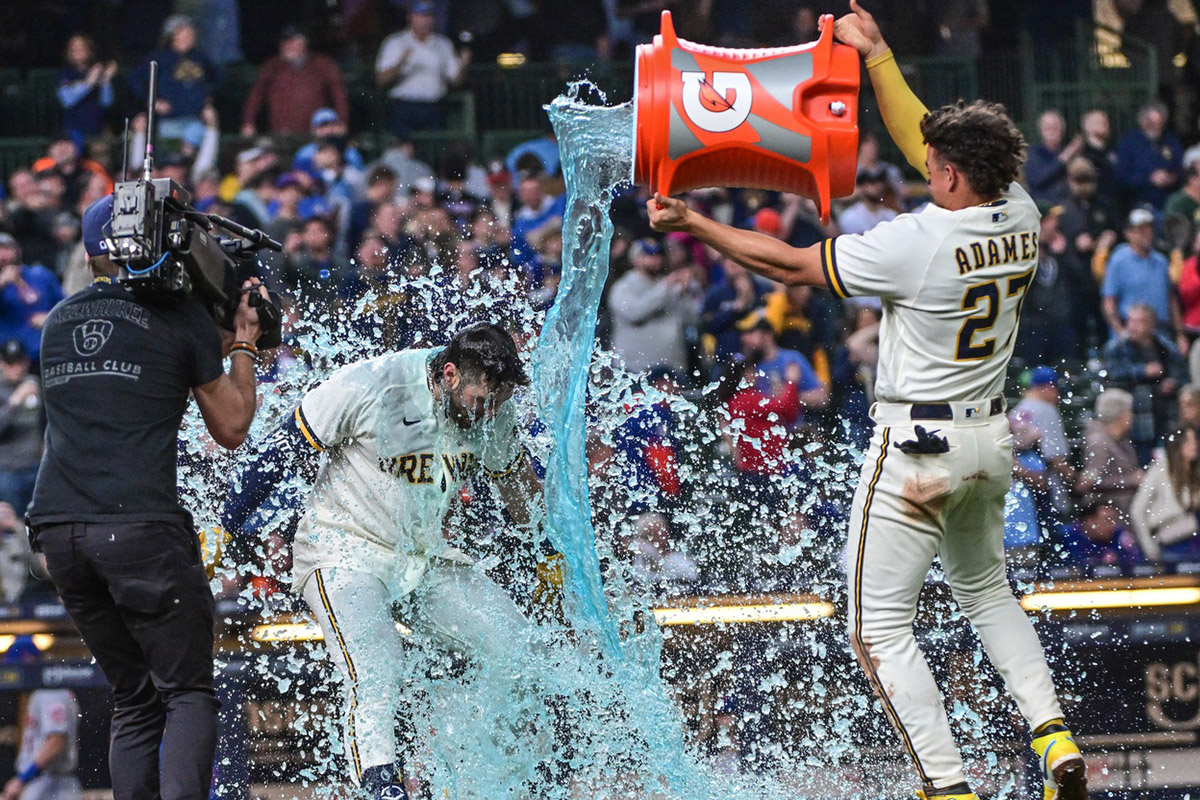 They can appreciate that hitting a baseball is one of the hardest things to do, yet nothing after this entirely sinks in. Unless you have played the sport, it’s tough to fully grasp how challenging even the most basic throws can be. Given cricket is a much bigger sport in Ireland, and with feats like these catches to compare to (on a heavier smaller ball without gloves), baseball can be seen as inferior in some ways. So why is baseball so beautiful? For me, it comes down to several things. I love the randomness of it, encapsulated by the fact that the Pittsburgh Pirates won their season series against the mighty LA Dodgers 5-1 last season. In so many other sports, from American Football, Rugby, “Real” football, Basketball, and Tennis, a team as comparatively poor as the Pirates would have no chance. Yet, in the fine margins that baseball operates, there are always shocks to be had; any team can truly believe they can win on a given day. It’s one reason why the postseason is so exciting, one clean swing changing a whole game, one pitch that’s an inch off target, one umpire’s decision, one call from the catcher. The difference between barreling a baseball and just missing is so minute that even the home run derby doesn’t feature home runs on every swing. We see position players getting out by throwing absolute trash at the hitters. It doesn’t matter how much you square up a ball if you line it straight to shortstop. Add in the fine margins, often a single camera frame, between being on base and a recorded out, and you see how easily a game can swing. It’s magical and highly frustrating sometimes, so the high emotions of tension-filled games can make you feel alive, living, and dying on every pitch. The Mets game on the 5th of April is a prime example, from going 4-1 up with your ace and Cy Young caliber pitcher on the mound to a couple of innings later finding yourself 6-4 down and potentially game over with the strength of the Mets bullpen… Jesse Winker tied the game after Luke Voit stole a base. It finished with Garrett Mitchell's walk-off home run after attempting to bunt multiple times at the start of the at-bat. In case you need a recap from a Redditor with a fun backing track: What would happen had the Mets allowed the double steal chance to bring Yelich home but got out on Voit at second base? Or had Mitchell got a bunt down, how does the 9th inning look? Would he have even tried to bunt when trailing by a run? We’ll never know, but the game would have had a very different complexion and probably involved David Robertson, too, had the Mets led through the 8th and 9th innings. The complexion of a game changes even on one player reaching base somehow, as the hitters faced by each pitcher change from there on, every at-bat is altered. So many possible outcomes from each pitch, and I find that incredibly exciting. I also love the numbers and analytics, seeing through the surface level and assessing if, at any point, a player could break out, do any pinch hitters shine against the areas this pitcher favors, working out the value a player brings to a club, why is a pitcher struggling. I find all this interesting for each new game; your past performances don’t matter; it’s how likely you are to positively impact the game at that moment. No one cares that Corbin Burnes has had a couple of poor outings because we know he’s more likely to give us a good start next time than Eric Lauer. I’ve always been a maths nerd, and the fact that almost every decision in a game is a probability-related one, such as if Mike Brosseau pinch hits and fields third base, is he that much better against left-handed pitchers to compensate for his weaker defense at the hot corner? I love the way the sound of a ball hitting the barrel of the bat makes you sit on the edge of your seat, the smack of a ball hitting the glove at first base or the catcher’s mitt, the face mashing slides and desperation in the outfield to make a catch, the millimeters defining whether a player has reached base safely or is out. I love how the whole complexion of a game changes even on one player reaching base somehow, as the hitters each pitcher faces change from there on; every at-bat is altered. So many possible outcomes from each pitch, and I find that incredibly exciting. What do you think, Brewer Fanatics? What do you find is the most majestic thing about baseball? How would you show it off to your friends if they’ve never seen or played a game before?
-
Jameson has made three multi inning relief appearances so far, so wouldn't necessarily expect him to go deep. Be interesting to see how Junk's AAA starts transfer over, he has looked good according to our minor league guru's
-
A makeable play by Tovar on Walker's liner, and McMahon's error let the Cards in, they were a little lucky but rallied well. Could kickstart their season, as another loss would've been fairly denting to the clubhouse morale
-
For 3 month of ohtani that won't be their asking price. They may request something like Frelick and black style price though, I'm not as good at judging these things but 7 years chourio is way outvaluing ohtani for 3 months for me
-
Also think the Voit ab is interesting. If wiener turang or Mitchell are on 1st I think the AB's should really be taken deep by the next hitter. Those boys can steal at high rates, but second pitch swing just killed him.
-
The speed of his hands in recieving those pitches is crazy! Through the minors his slash line looked a little like it does now, he pounds the ball but a little often into the ground. Either that or his recieving worried them, Murphy provides a lot more security Ruiz has been meh so far, batting 9th with a couple of nice plays in CF but I'm fairly convinced the A's would've been better just taking Contreras. Glad we've got him