



Michael Trzinski
-
Posts
923 -
Joined
-
Last visited
-
Days Won
1
Content Type
Profiles
Forums
Blogs
Events
News
2026 Milwaukee Brewers Top Prospects Ranking
Milwaukee Brewers Videos
2022 Milwaukee Brewers Draft Picks
Milwaukee Brewers Free Agent & Trade Rumors, Notes, & Tidbits
Guides & Resources
2023 Milwaukee Brewers Draft Picks
2024 Milwaukee Brewers Draft Picks
The Milwaukee Brewers Players Project
2025 Milwaukee Brewers Draft Pick Tracker
2026 Milwaukee Brewers Draft Tracker: Picks & Bonuses
Store
Downloads
Gallery
Everything posted by Michael Trzinski
-
Thanks for the kind words and Merry Christmas to you!!
-
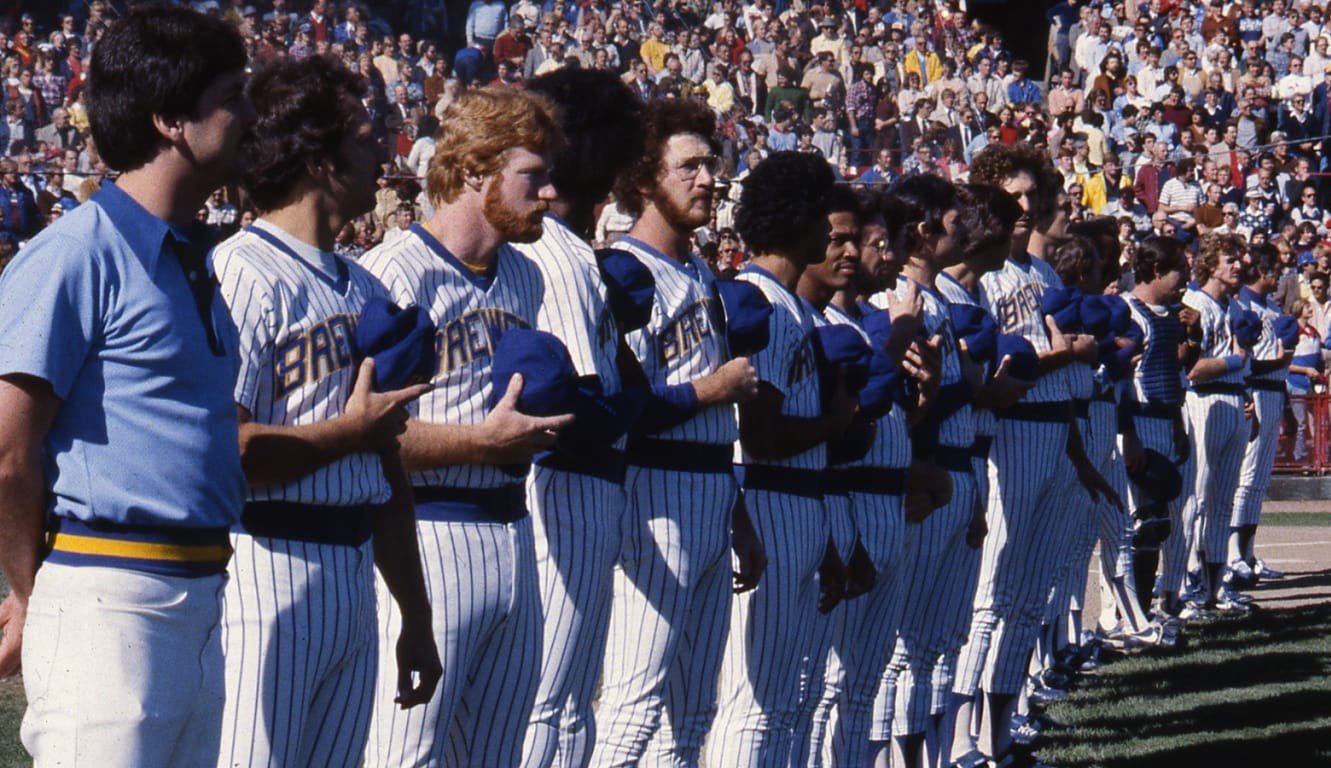 The 1981 MLB season was shortened by a player strike, which lasted from mid-June to mid-August. The second half began on Aug. 9 with the All-Star Game, which included Rollie Fingers, Ted Simmons, and Gorman Thomas. The playoffs would match the first-half winner against the second-half winner. In the American League East, it would be the New York Yankees against the Brewers. The Brewers were a .500 club until mid-May but then ran off 16 victories in a 22-game span, moving them to within one game of the division-leading Yankees. After losing four of their next five games, the Brewers would end in third place (three games behind New York) when the strike hit on Jun. 11. The Brewers took the second half of the split season, going 31-22 and winning the AL East by 1.5 games over Boston and Detroit. That propelled the Crew to their first playoff series against New York. Along with the usual stars on the team, several ‘role’ players performed well. Here are some of the key contributors. Outfielder Mark Brouhard scuffled early in the season, batting only .242 through mid-May. Brouhard heated up as the Wisconsin weather did, though, and during the aforementioned 22-game span, “Bro” went 25-for-77 (.325). Surprisingly, Brouhard failed to hit a home run, but he did have triples in back-to-back games in late May; he also had three hits in each game. In the second half of the season, Brouhard was sidelined for two weeks with muscle cramps in his legs in mid-August. Upon his return, Brouhard was red-hot, hitting .379 (11-for-29) with four doubles, one triple, and seven RBIs, raising his batting average to .322 in his first seven games back. Unfortunately, he slumped in the last part of September, getting only four hits in 40 at-bats to end the season. Charlie Moore played mostly behind the plate but moved to the outfield for eight games—a precursor to his 1982 season, when he played 85% of his games in right field. Moore entered May 1981 with a .250 batting average. It wouldn’t stay that low for long. Moore went 27-for-71 (.380) in May, raising his average to .367. After struggling in June and August, Moore got his batting eye back, hitting .306 (11-for-36) along with his only home run of the season in September. When Robin Yount injured his right knee in early May, Eddie Romero stepped up and took over the shortstop position for the Brewers. Although his numbers weren’t great in the two-week period of Yount's convalescence, Romero provided stability and even showed some clutch ability, knocking in six runs across 46 at-bats. He did commit five errors in 14 games, but he had a big game on May 20, going 2-for-2 with a walk, run scored and RBI in a 6-1 win over the Minnesota Twins. The Brewers won seven of 14 games, and stayed in the AL East race, dropping to 3.5 games behind the Yankees. Marshall Edwards wasn’t large in stature, but he came up big as a reserve outfielder for the Brewers. In late May and early June, Edwards banged out nine hits in 29 at-bats for a .310 average, including a 2-for-4 performance with an RBI in a 5-1 win over the Detroit Tigers on May 27. Four days later, he bettered that, going 3-for-4 with a double, triple, stolen base, and two RBIs in a 5-2 win over the Boston Red Sox. Don Money also played a large role, not so much with his bat (that would come in 1982), but with his leadership in the clubhouse and on the field. Money played in 60 games and only slashed .216/.288/.286 across 185 at-bats. Making 48 starts at the hot corner, the 34-year-old veteran made only three errors and had a .977 fielding average in 130 chances. Money was felled with a sciatic nerve problem in his back and missed two weeks in September. He played two games at the end of the regular season and went 2-for-5. Playoffs Mark Brouhard was scratched from the first-ever Division Series due to a pulled calf muscle. Charlie Moore split time between DH and right field in four games against the Yankees and went 2-for-9, but did have two hits in Game 1, a 5-3 loss at County Stadium. Eddie Romero started at second base in Game 5 and went 1-for-2 with a run scored in the 7-3 loss to New York. Marshall Edwards made a pair of appearances in the series, going 0-for-1 in games where he entered the contests as a pinch-runner. Don Money went 0-for-3 in the ALDS against New York but came achingly close to sending the Brewers to the ALCS. With the Brewers trailing 5-3 in the eighth inning at Yankee Stadium in Game 5, Money came to the plate with two runners on and two outs against Yankee relief ace Goose Gossage. Money hit a deep, hooking drive to left field that 6-foot-6 left fielder Dave Winfield caught at the wall. Five more feet and a Rollie Fingers 1-2-3 ninth inning would have sent the Brewers to the championship series against the Oakland Athletics. Prep for 1982 Moore became a full-time right fielder, while Brouhard, Romero, Edwards, and Money all played key supporting roles in helping the Brewers advance all the way to the 1982 World Series against the St. Louis Cardinals. If ace reliever Rollie Fingers had been healthy, it's likely the Brewers would have hoisted the trophy as the 1982 World Series champs. They got that far in 1982, in part, because of what they learned and discovered about themselves in 1981.
-
- 1
-

-
- don money
- charlie moore
- (and 2 more)
-
Every Brewers fan knows about the 1982 Milwaukee Brewers. Books have been written about Robin, Molly, and Stormin’ Gorman, and articles have been posted far and wide. But how many people know about the previous year’s team? The Brewers made the playoffs for the first time in franchise history during that historic 1981 season, setting the stage for the following year. Image courtesy of © The Milwaukee Journal Sentinel-USA TODAY NETWORK The 1981 MLB season was shortened by a player strike, which lasted from mid-June to mid-August. The second half began on Aug. 9 with the All-Star Game, which included Rollie Fingers, Ted Simmons, and Gorman Thomas. The playoffs would match the first-half winner against the second-half winner. In the American League East, it would be the New York Yankees against the Brewers. The Brewers were a .500 club until mid-May but then ran off 16 victories in a 22-game span, moving them to within one game of the division-leading Yankees. After losing four of their next five games, the Brewers would end in third place (three games behind New York) when the strike hit on Jun. 11. The Brewers took the second half of the split season, going 31-22 and winning the AL East by 1.5 games over Boston and Detroit. That propelled the Crew to their first playoff series against New York. Along with the usual stars on the team, several ‘role’ players performed well. Here are some of the key contributors. Outfielder Mark Brouhard scuffled early in the season, batting only .242 through mid-May. Brouhard heated up as the Wisconsin weather did, though, and during the aforementioned 22-game span, “Bro” went 25-for-77 (.325). Surprisingly, Brouhard failed to hit a home run, but he did have triples in back-to-back games in late May; he also had three hits in each game. In the second half of the season, Brouhard was sidelined for two weeks with muscle cramps in his legs in mid-August. Upon his return, Brouhard was red-hot, hitting .379 (11-for-29) with four doubles, one triple, and seven RBIs, raising his batting average to .322 in his first seven games back. Unfortunately, he slumped in the last part of September, getting only four hits in 40 at-bats to end the season. Charlie Moore played mostly behind the plate but moved to the outfield for eight games—a precursor to his 1982 season, when he played 85% of his games in right field. Moore entered May 1981 with a .250 batting average. It wouldn’t stay that low for long. Moore went 27-for-71 (.380) in May, raising his average to .367. After struggling in June and August, Moore got his batting eye back, hitting .306 (11-for-36) along with his only home run of the season in September. When Robin Yount injured his right knee in early May, Eddie Romero stepped up and took over the shortstop position for the Brewers. Although his numbers weren’t great in the two-week period of Yount's convalescence, Romero provided stability and even showed some clutch ability, knocking in six runs across 46 at-bats. He did commit five errors in 14 games, but he had a big game on May 20, going 2-for-2 with a walk, run scored and RBI in a 6-1 win over the Minnesota Twins. The Brewers won seven of 14 games, and stayed in the AL East race, dropping to 3.5 games behind the Yankees. Marshall Edwards wasn’t large in stature, but he came up big as a reserve outfielder for the Brewers. In late May and early June, Edwards banged out nine hits in 29 at-bats for a .310 average, including a 2-for-4 performance with an RBI in a 5-1 win over the Detroit Tigers on May 27. Four days later, he bettered that, going 3-for-4 with a double, triple, stolen base, and two RBIs in a 5-2 win over the Boston Red Sox. Don Money also played a large role, not so much with his bat (that would come in 1982), but with his leadership in the clubhouse and on the field. Money played in 60 games and only slashed .216/.288/.286 across 185 at-bats. Making 48 starts at the hot corner, the 34-year-old veteran made only three errors and had a .977 fielding average in 130 chances. Money was felled with a sciatic nerve problem in his back and missed two weeks in September. He played two games at the end of the regular season and went 2-for-5. Playoffs Mark Brouhard was scratched from the first-ever Division Series due to a pulled calf muscle. Charlie Moore split time between DH and right field in four games against the Yankees and went 2-for-9, but did have two hits in Game 1, a 5-3 loss at County Stadium. Eddie Romero started at second base in Game 5 and went 1-for-2 with a run scored in the 7-3 loss to New York. Marshall Edwards made a pair of appearances in the series, going 0-for-1 in games where he entered the contests as a pinch-runner. Don Money went 0-for-3 in the ALDS against New York but came achingly close to sending the Brewers to the ALCS. With the Brewers trailing 5-3 in the eighth inning at Yankee Stadium in Game 5, Money came to the plate with two runners on and two outs against Yankee relief ace Goose Gossage. Money hit a deep, hooking drive to left field that 6-foot-6 left fielder Dave Winfield caught at the wall. Five more feet and a Rollie Fingers 1-2-3 ninth inning would have sent the Brewers to the championship series against the Oakland Athletics. Prep for 1982 Moore became a full-time right fielder, while Brouhard, Romero, Edwards, and Money all played key supporting roles in helping the Brewers advance all the way to the 1982 World Series against the St. Louis Cardinals. If ace reliever Rollie Fingers had been healthy, it's likely the Brewers would have hoisted the trophy as the 1982 World Series champs. They got that far in 1982, in part, because of what they learned and discovered about themselves in 1981. View full article
-
This was finished up just before Canning got signed. Not sure how it slipped into publication. Oh well, it was a good idea...
-
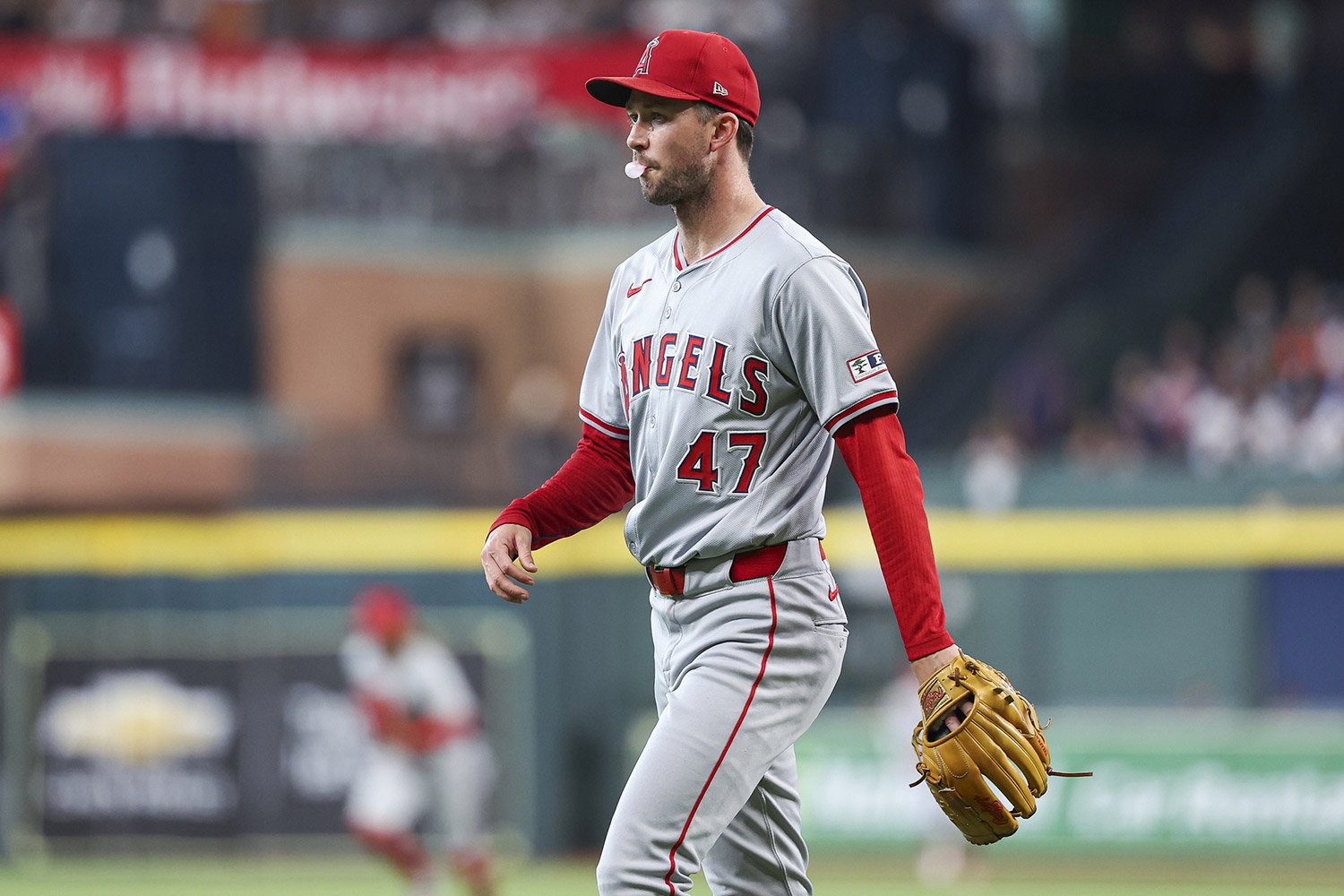 Griffin Canning, a right-hander out of UCLA, has been plagued by inconsistency and injury. After showing promise in his first two seasons with an ERA+ of 101 and 114, respectively, in 2019 and 2020, he suffered a lower back stress fracture late in 2021 and was shelved for the remainder of the campaign. The same injury forced him to miss the 2022 season, with Canning electing to rehab his back instead of undergoing surgery. Prior to the 2023 season, the Angels and Canning agreed to a one-year, $850,000 contract and avoided arbitration. Canning gave the Halos their money’s worth, making 22 starts and posting an ERA+ of 103 while striking out batters at a rate of 25.9%, allowing only 6.7% walks across 127 innings. The solid season earned Canning a $2.6 million contract for 2024. Canning made 31 starts during the season and struggled to the tune of an 81 ERA+ while whiffing only 17.6% of the batters he faced. On Halloween, he was traded to the Atlanta Braves for Jorge Soler. Three weeks later, without throwing a pitch for Atlanta, Canning was non-tendered by the Braves. A healthy Canning is a solid middle-of-the-rotation starter and could be had for a reasonable deal. Per Pat Ragazzo of Sports Illustrated, the New York Mets have shown interest in Canning. Brewer Fanatic writer Jason Wang says that the Brewers have excessive pieces in the rotation. That may be so, but could a healthy Canning be among the better choices? Canning is also an elite fielder on the mound, having won the AL Gold Glove Award in 2020 and was nominated for the same honor in 2024 (won by Seth Lugo). Here is an example of his defensive prowess. Given that Mets president of baseball operations David Stearns is a low-risk, high-reward kind of guy, is it possible that the Brewers are thinking the same thing about Canning? Share your thoughts about the 28-year-old righty. Are his best days behind him, or does he have a few solid years left?
 -
Way back in 2017, Griffin Canning was the 47th overall pick in the MLB Amateur Draft by the Los Angeles Angels. The second-round selection made it to the majors in 2019, but in his five seasons in the bigs, he has disappointed. After his recent trade to Atlanta and subsequent release days later, Canning is on the market. Is he worth the risk? Image courtesy of © Troy Taormina-Imagn Images Griffin Canning, a right-hander out of UCLA, has been plagued by inconsistency and injury. After showing promise in his first two seasons with an ERA+ of 101 and 114, respectively, in 2019 and 2020, he suffered a lower back stress fracture late in 2021 and was shelved for the remainder of the campaign. The same injury forced him to miss the 2022 season, with Canning electing to rehab his back instead of undergoing surgery. Prior to the 2023 season, the Angels and Canning agreed to a one-year, $850,000 contract and avoided arbitration. Canning gave the Halos their money’s worth, making 22 starts and posting an ERA+ of 103 while striking out batters at a rate of 25.9%, allowing only 6.7% walks across 127 innings. The solid season earned Canning a $2.6 million contract for 2024. Canning made 31 starts during the season and struggled to the tune of an 81 ERA+ while whiffing only 17.6% of the batters he faced. On Halloween, he was traded to the Atlanta Braves for Jorge Soler. Three weeks later, without throwing a pitch for Atlanta, Canning was non-tendered by the Braves. A healthy Canning is a solid middle-of-the-rotation starter and could be had for a reasonable deal. Per Pat Ragazzo of Sports Illustrated, the New York Mets have shown interest in Canning. Brewer Fanatic writer Jason Wang says that the Brewers have excessive pieces in the rotation. That may be so, but could a healthy Canning be among the better choices? Canning is also an elite fielder on the mound, having won the AL Gold Glove Award in 2020 and was nominated for the same honor in 2024 (won by Seth Lugo). Here is an example of his defensive prowess. Given that Mets president of baseball operations David Stearns is a low-risk, high-reward kind of guy, is it possible that the Brewers are thinking the same thing about Canning? Share your thoughts about the 28-year-old righty. Are his best days behind him, or does he have a few solid years left? View full article
-
Marshall Lynn Edwards was born in 1952 in Fort Lewis, Washington. The family moved to Los Angeles and Edwards ran track and played baseball at Jefferson High School, graduating in 1970. Edwards attended Los Angeles Community College and then UCLA, graduating in 1974. He was not drafted but instead was signed as a free agent by the Baltimore Orioles in June 1974. Edwards showed speed and hitting tools, stealing 167 bags in four minor league seasons while slashing .289/.358/.328. Power was not his game, as he hit only eight home runs in his pro career. In December 1977, Edwards was selected by the Brewers Double-A club, the Holyoke (Massachusetts) Millers, in the Rule 5 minor league draft. He spent the 1978 campaign in the Eastern League and tied for the league lead with 11 triples and was second with 147 hits. Edwards moved up to Triple-A Vancouver and did well in 1979-1980, including leading the Pacific Coast League with 17 triples and second with 68 stolen bases in 1980. In 1981, Edwards began the season in Milwaukee, playing mostly as a pinch-runner and defensive replacement. The highlight of his season was in a 5-2 win over Boston at Fenway Park on May 31, when he went 3-for-4 with a double, triple, stolen base, and two RBIs. Edwards started the 1982 season with Vancouver and was called up to Milwaukee in May. The slender (5-foot-9, 157 pound) left-handed outfielder had career bests with 69 games, 178 at-bats, 44 hits, and 10 stolen bases. He played in three ALCS games and one World Series game as a pinch-runner and defensive replacement, going 0-for-1 while scoring a pair of runs and stealing one base. While replacing injured center fielder Gorman Thomas, Edwards made a nice catch to rob the Angels Don Baylor of extra bases in Game 5 of the ALCS to help propel the Brewers to the World Series. The 1983 season was Edwards’ final big-league season. He played in 51 games, starting 19 of them. He finished the season with a .297 batting average but only had one walk and two extra-base hits across 74 at-bats. Edwards was sent down to Triple-A Vancouver in 1984 and played in 93 games before retiring from baseball. View full player
-
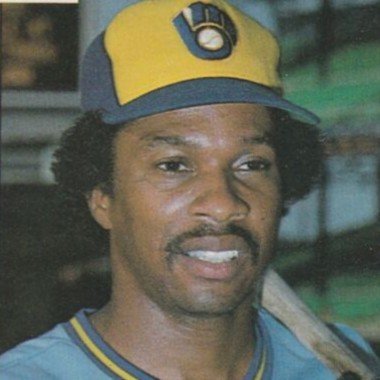 Marshall Lynn Edwards was born in 1952 in Fort Lewis, Washington. The family moved to Los Angeles and Edwards ran track and played baseball at Jefferson High School, graduating in 1970. Edwards attended Los Angeles Community College and then UCLA, graduating in 1974. He was not drafted but instead was signed as a free agent by the Baltimore Orioles in June 1974. Edwards showed speed and hitting tools, stealing 167 bags in four minor league seasons while slashing .289/.358/.328. Power was not his game, as he hit only eight home runs in his pro career. In December 1977, Edwards was selected by the Brewers Double-A club, the Holyoke (Massachusetts) Millers, in the Rule 5 minor league draft. He spent the 1978 campaign in the Eastern League and tied for the league lead with 11 triples and was second with 147 hits. Edwards moved up to Triple-A Vancouver and did well in 1979-1980, including leading the Pacific Coast League with 17 triples and second with 68 stolen bases in 1980. In 1981, Edwards began the season in Milwaukee, playing mostly as a pinch-runner and defensive replacement. The highlight of his season was in a 5-2 win over Boston at Fenway Park on May 31, when he went 3-for-4 with a double, triple, stolen base, and two RBIs. Edwards started the 1982 season with Vancouver and was called up to Milwaukee in May. The slender (5-foot-9, 157 pound) left-handed outfielder had career bests with 69 games, 178 at-bats, 44 hits, and 10 stolen bases. He played in three ALCS games and one World Series game as a pinch-runner and defensive replacement, going 0-for-1 while scoring a pair of runs and stealing one base. While replacing injured center fielder Gorman Thomas, Edwards made a nice catch to rob the Angels Don Baylor of extra bases in Game 5 of the ALCS to help propel the Brewers to the World Series. The 1983 season was Edwards’ final big-league season. He played in 51 games, starting 19 of them. He finished the season with a .297 batting average but only had one walk and two extra-base hits across 74 at-bats. Edwards was sent down to Triple-A Vancouver in 1984 and played in 93 games before retiring from baseball.
 -
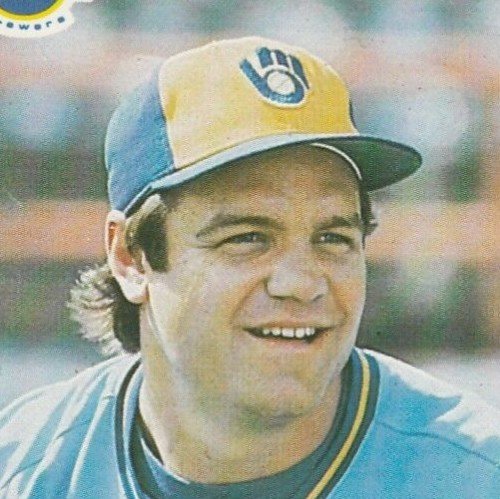 Mark Steven Brouhard was born in 1956 in Burbank, California. Brouhard was a three-sport star at El Camino Real High School in Woodland Hills, starring as a running back/linebacker on the gridiron, a shot putter on the track squad, and a designated hitter/catcher on the baseball team. After playing baseball for two years at Pierce College, Brouhard was selected in the fourth round of the 1976 MLB Amateur Draft (January Draft, Regular Phase) by the California Angels. Brouhard moved up the Angels chain and in his fourth minor league season, won the Double-A Texas League MVP and Triple Crown (28-107-.350) at El Paso, which at the time was an Angels affiliate. Unbelievably, California left the right-handed slugger unprotected and he was chosen by the Brewers in the 1979 Rule 5 Draft. By rule, Brouhard stayed on the 1980 Brewers roster all season and appeared in only 45 games, slashing .232/.278/.400 across 125 at-bats. He hit six doubles and five home runs in his first big league campaign. In 1981, the Brewers made the playoffs for the first time in franchise history, albeit in a strike-shortened season. The season was split into halves, with the New York Yankees winning the first half, while the Brewers won the second half. The Brewers lost the best-of-five series to the Yankees, three games to two. Brouhard did not play due to a leg injury. His season totals included a slash line of .274/.305/.371. The Brewers made it all the way to the World Series in 1982. Even though the Brewers lost to the St. Louis Cardinals in seven games, Brouhard became a Brewer folk hero a week earlier when he subbed for injured LF Ben Oglivie and went 3-for-4 with a double, homer, three RBIs, and four runs scored in a 9-5 Game 4 win over California in the ALCS. Brouhard split time between Milwaukee and Triple-A Vancouver the next three seasons before being purchased by the Yakult Swallows in the Japanese Central League after the 1985 campaign. Brouhard hit 21 home runs in 1986 for Yakult and split the 1987 season between two teams in the Angels organization and one last season for Yakult. In six big league seasons, Brouhard slashed .259/.305/.400 with 235 hits, including 25 HRs.
 -
Mark Steven Brouhard was born in 1956 in Burbank, California. Brouhard was a three-sport star at El Camino Real High School in Woodland Hills, starring as a running back/linebacker on the gridiron, a shot putter on the track squad, and a designated hitter/catcher on the baseball team. After playing baseball for two years at Pierce College, Brouhard was selected in the fourth round of the 1976 MLB Amateur Draft (January Draft, Regular Phase) by the California Angels. Brouhard moved up the Angels chain and in his fourth minor league season, won the Double-A Texas League MVP and Triple Crown (28-107-.350) at El Paso, which at the time was an Angels affiliate. Unbelievably, California left the right-handed slugger unprotected and he was chosen by the Brewers in the 1979 Rule 5 Draft. By rule, Brouhard stayed on the 1980 Brewers roster all season and appeared in only 45 games, slashing .232/.278/.400 across 125 at-bats. He hit six doubles and five home runs in his first big league campaign. In 1981, the Brewers made the playoffs for the first time in franchise history, albeit in a strike-shortened season. The season was split into halves, with the New York Yankees winning the first half, while the Brewers won the second half. The Brewers lost the best-of-five series to the Yankees, three games to two. Brouhard did not play due to a leg injury. His season totals included a slash line of .274/.305/.371. The Brewers made it all the way to the World Series in 1982. Even though the Brewers lost to the St. Louis Cardinals in seven games, Brouhard became a Brewer folk hero a week earlier when he subbed for injured LF Ben Oglivie and went 3-for-4 with a double, homer, three RBIs, and four runs scored in a 9-5 Game 4 win over California in the ALCS. Brouhard split time between Milwaukee and Triple-A Vancouver the next three seasons before being purchased by the Yakult Swallows in the Japanese Central League after the 1985 campaign. Brouhard hit 21 home runs in 1986 for Yakult and split the 1987 season between two teams in the Angels organization and one last season for Yakult. In six big league seasons, Brouhard slashed .259/.305/.400 with 235 hits, including 25 HRs. View full player
-
There are many baseball gods, but one of the more obscure is Versatilus, the patron god of utility players. Few players have worshiped at the alter of Versatilus more than former Brewer Eddie Romero , who parlayed his modest skills into a long career as a a player - and then as a coach and instructor. Edgardo Ralph Romero was born in Puerto Rico on Dec. 9, 1957. He was signed as an amateur free agent by the Brewers in 1975 at the age of 17. The slightly built infielder was installed at shortstop and began a steady climb through the minor league system. At the plate, he never scared anybody (no power and an average hit tool), but he took his walks and showed good contact, rarely striking out. In 1977, the Brewers would give the 19-year-old Romero a brief 10-game trial, but he was sent back to minors in short order, and did not return to Milwaukee until 1980. But once he established himself with the Brewers in 1980, he spent the next 11 years in the majors (seven in Milwaukee), and was a key reserve for the great Brewers clubs of the era. Romero's calling card was his versatility (unless you count his impressive mustache). He played, at some point, every position on the field except pitcher and catcher. He hit a modest .254 for the Crew and never had more than 1 HR in a season, but as noted, he limited his strikeouts and took his walks, and was ready to play wherever the club needed him. On average, he had about 200-250 at-bats in a season, the most coming in 1984 when Paul Molitor was injured. After the 1985 season, Romero was dealt to Boston for reliever Mark Clear. He spent nearly four seasons in Boston before returning to Milwaukee at the conclusion of the 1989 season. After a brief stint with Detroit in 1990, then a year in the minor leagues, he was done as a player. Upon retiring, Romero immediately went into coaching. He has served as a manager for more than a dozen minor league seasons, including several for the Brewers. He was the Astros third base coach in 2008, and bench coach the following season under former teammate Cecil Cooper. For his career, Romero had a .247 BA and produced an OPS of just .600. For Milwaukee, the numbers are .254 and .619, respectively. He wasn't a speed guy (only 9 career SBs versus being caught 10 times), and he was - at times - prone to errors (in the minors he had two seasons with more than 40 miscues). Historical stats don't see him as any sort of defensive whiz, but perhaps the constant moving around the field diminished his numbers. His poor hitting and average defense give him a WAR of -5.0 for his career. Romero lamented the perception that he was 'only' a utility player and that he never got the chance to be a full-time player. But his bat never really justified a role other than that of a reserve. His biggest plus was probably that he was viewed as a competent, trustworthy and reliable player who could step up when the need arose. There's value in that. And Eddie parlayed it into a long career which is a pretty amazing accomplishment. Romero married his high school sweetheart in 1977, and they had two children. Their son, Ed Romero, Jr., earned a law degree, and after a stint as a prosecutor, joined the Boston Red Sox organization in 2006. Today he is the team's Executive Vice President and Assistant General Manager. Share your memories of former Milwaukee Brewer utilityman Ed Romero. View full player
-
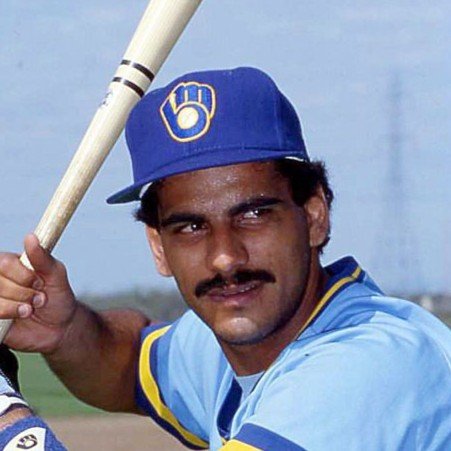 There are many baseball gods, but one of the more obscure is Versatilus, the patron god of utility players. Few players have worshiped at the alter of Versatilus more than former Brewer Eddie Romero , who parlayed his modest skills into a long career as a a player - and then as a coach and instructor. Edgardo Ralph Romero was born in Puerto Rico on Dec. 9, 1957. He was signed as an amateur free agent by the Brewers in 1975 at the age of 17. The slightly built infielder was installed at shortstop and began a steady climb through the minor league system. At the plate, he never scared anybody (no power and an average hit tool), but he took his walks and showed good contact, rarely striking out. In 1977, the Brewers would give the 19-year-old Romero a brief 10-game trial, but he was sent back to minors in short order, and did not return to Milwaukee until 1980. But once he established himself with the Brewers in 1980, he spent the next 11 years in the majors (seven in Milwaukee), and was a key reserve for the great Brewers clubs of the era. Romero's calling card was his versatility (unless you count his impressive mustache). He played, at some point, every position on the field except pitcher and catcher. He hit a modest .254 for the Crew and never had more than 1 HR in a season, but as noted, he limited his strikeouts and took his walks, and was ready to play wherever the club needed him. On average, he had about 200-250 at-bats in a season, the most coming in 1984 when Paul Molitor was injured. After the 1985 season, Romero was dealt to Boston for reliever Mark Clear. He spent nearly four seasons in Boston before returning to Milwaukee at the conclusion of the 1989 season. After a brief stint with Detroit in 1990, then a year in the minor leagues, he was done as a player. Upon retiring, Romero immediately went into coaching. He has served as a manager for more than a dozen minor league seasons, including several for the Brewers. He was the Astros third base coach in 2008, and bench coach the following season under former teammate Cecil Cooper. For his career, Romero had a .247 BA and produced an OPS of just .600. For Milwaukee, the numbers are .254 and .619, respectively. He wasn't a speed guy (only 9 career SBs versus being caught 10 times), and he was - at times - prone to errors (in the minors he had two seasons with more than 40 miscues). Historical stats don't see him as any sort of defensive whiz, but perhaps the constant moving around the field diminished his numbers. His poor hitting and average defense give him a WAR of -5.0 for his career. Romero lamented the perception that he was 'only' a utility player and that he never got the chance to be a full-time player. But his bat never really justified a role other than that of a reserve. His biggest plus was probably that he was viewed as a competent, trustworthy and reliable player who could step up when the need arose. There's value in that. And Eddie parlayed it into a long career which is a pretty amazing accomplishment. Romero married his high school sweetheart in 1977, and they had two children. Their son, Ed Romero, Jr., earned a law degree, and after a stint as a prosecutor, joined the Boston Red Sox organization in 2006. Today he is the team's Executive Vice President and Assistant General Manager. Share your memories of former Milwaukee Brewer utilityman Ed Romero.
 -
Hell, Matt, I would be willing to bet the Brewers didn't analyze this as well as you did. Well done!!
-
I would say in the 7-10 range. If he was expected to start in the majors, he's gotta be pretty high up.
-
Ronnie Belliard Was A Solid, Dependable Second Baseman
Michael Trzinski posted an article in History
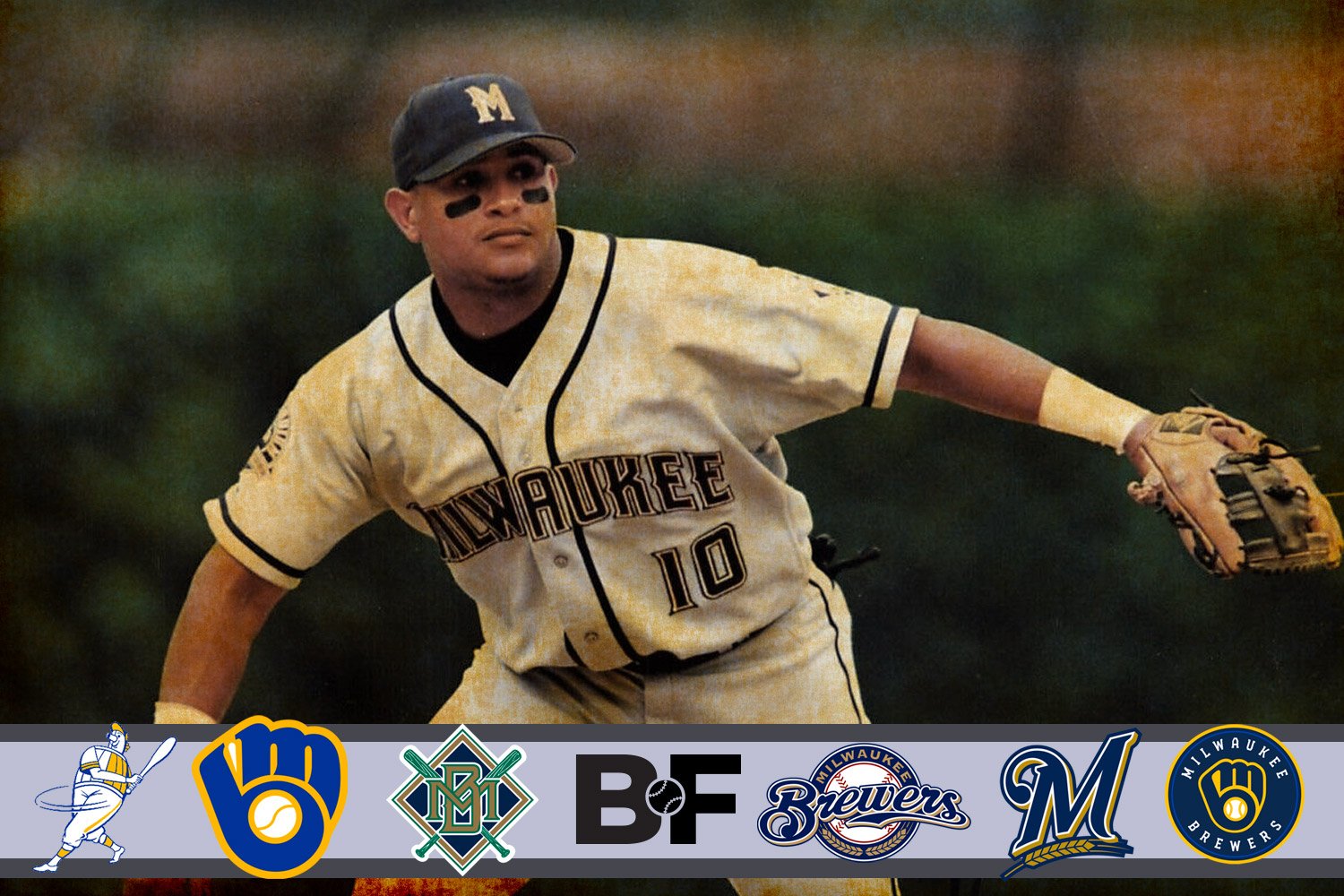 Ronald Belliard was born in 1975 in New York City. He graduated from Miami (Florida) Central High School in 1994 and was selected in that year’s MLB Amateur Draft in the eighth round by the Brewers. Belliard spent five years in the Brewers farm system before getting his first call-up to Milwaukee in September 1998, where he played in just eight games and hit .200 (1-for-5). Ronnie Belliard spent the first month at Triple-A Louisville the following year before getting called up to the Brewers in mid-June. He had a solid season, and it was surprising that he received no Rookie of the Year votes. Belliard’s slash line was .295/.379/.429 across 457 at-bats, including 29 doubles, four triples, and eight home runs. He also knocked in 58 runs and had an OPS+ of 106. In the final season at County Stadium, Belliard played in 152 games and slashed .263/.354/.389 across 571 at-bats. His nine triples led the team with 30 two-base hits and eight round-trippers. His seven steals were a career-high. The stocky (5-foot-9, 210-pound) righty swinger showed some pop in 2001 in the first season at Miller Park, slamming 30 doubles and 11 home runs into early August. But then he suffered a high right ankle sprain when White Sox third baseman Robin Ventura took out Belliard at second base on a double play attempt that caused him to miss eight weeks. His slash line across 364 at-bats was .264/.335/.453. Belliard only started 60 games in 2002 but played in 104 with 289 at-bats; his slash line was a career-low .211/.257/.287. He was granted free agency after the season and signed with the Colorado Rockies in February 2003. He had a decent season for the Rockies, slashing .277/.351/.409 across 447 at-bats. Once again, he was granted free agency after the year and was signed by the Cleveland Indians. The second baseman had two of his best seasons for the Indians in 2004-05. He earned his only All-Star nod for the AL in 1994, batting .282/.348/.426 with 12 homers and a career-high 48 doubles, good for second in the league. The following season was similar, with a batting line of .284/.325/.450 with a career-high of 17 homers and 78 RBIs. Belliard played half of the 2006 season with Cleveland but was swapped to the St. Louis Cardinals at the trading deadline. Once again, Belliard had a solid campaign, slashing .272/.322/.403 with a combined 30 doubles and 13 home runs. After the season, he was signed as a free agent by the Washington Nationals. In addition, Belliard was the victim of an attempted extortion scam where an Illinois man tried to get money from Belliard in exchange for silence in a case where the player allegedly impregnated the man’s daughter. The man was found guilty of a felony fraud count. In 2007, Belliard played every infield spot but made 113 starts at second base. His batting line was .290/.332/.427 across 511 at-bats. He banged out 35 two-base hits and 11 homers. The following season saw Belliard miss a month early in the season due to a left calf strain and another month at the end of the campaign with a strained groin. His final numbers showed a slash line of .287/.372/.473 in 296 ABs. He banged out 22 doubles and 11 homers. Belliard was traded to the Los Angeles Dodgers mid-season in 2008. He played well in 24 games with the Dodgers, slashing .351/.398/.636 across 77 at-bats, including seven doubles, five home runs, and 17 RBIs. Belliard played one more year in Los Angeles, but it didn’t go as well, and his .216/.295/.327 slash line saw him released in September. 2011 Belliard played in the Yankees and Phillies organizations, but after 53 games at Triple-A Lehigh Valley, he announced his retirement in June 2011. His final stat line showed 1,377 hits with 328 doubles, 114 home runs, and a slash line of .273/.338/.415 across 5,045 at-bats. Feel free to add comments and thanks for reading!
 -
Yeah, Ronnie Belliard wasn't the greatest fielder in the world. In 2000, he 'led' all NL second baseman with 19 miscues. But on the flip side, he led the NL in range factor and Total Zone Runs in 2001. At the plate, Belliard was a solid hitter who batted over .290 three times in his career. Harold Hutchison's piece in 2023 listed Belliard as one of the top five second basemen in Brewers history. Ronald Belliard was born in 1975 in New York City. He graduated from Miami (Florida) Central High School in 1994 and was selected in that year’s MLB Amateur Draft in the eighth round by the Brewers. Belliard spent five years in the Brewers farm system before getting his first call-up to Milwaukee in September 1998, where he played in just eight games and hit .200 (1-for-5). Ronnie Belliard spent the first month at Triple-A Louisville the following year before getting called up to the Brewers in mid-June. He had a solid season, and it was surprising that he received no Rookie of the Year votes. Belliard’s slash line was .295/.379/.429 across 457 at-bats, including 29 doubles, four triples, and eight home runs. He also knocked in 58 runs and had an OPS+ of 106. In the final season at County Stadium, Belliard played in 152 games and slashed .263/.354/.389 across 571 at-bats. His nine triples led the team with 30 two-base hits and eight round-trippers. His seven steals were a career-high. The stocky (5-foot-9, 210-pound) righty swinger showed some pop in 2001 in the first season at Miller Park, slamming 30 doubles and 11 home runs into early August. But then he suffered a high right ankle sprain when White Sox third baseman Robin Ventura took out Belliard at second base on a double play attempt that caused him to miss eight weeks. His slash line across 364 at-bats was .264/.335/.453. Belliard only started 60 games in 2002 but played in 104 with 289 at-bats; his slash line was a career-low .211/.257/.287. He was granted free agency after the season and signed with the Colorado Rockies in February 2003. He had a decent season for the Rockies, slashing .277/.351/.409 across 447 at-bats. Once again, he was granted free agency after the year and was signed by the Cleveland Indians. The second baseman had two of his best seasons for the Indians in 2004-05. He earned his only All-Star nod for the AL in 1994, batting .282/.348/.426 with 12 homers and a career-high 48 doubles, good for second in the league. The following season was similar, with a batting line of .284/.325/.450 with a career-high of 17 homers and 78 RBIs. Belliard played half of the 2006 season with Cleveland but was swapped to the St. Louis Cardinals at the trading deadline. Once again, Belliard had a solid campaign, slashing .272/.322/.403 with a combined 30 doubles and 13 home runs. After the season, he was signed as a free agent by the Washington Nationals. In addition, Belliard was the victim of an attempted extortion scam where an Illinois man tried to get money from Belliard in exchange for silence in a case where the player allegedly impregnated the man’s daughter. The man was found guilty of a felony fraud count. In 2007, Belliard played every infield spot but made 113 starts at second base. His batting line was .290/.332/.427 across 511 at-bats. He banged out 35 two-base hits and 11 homers. The following season saw Belliard miss a month early in the season due to a left calf strain and another month at the end of the campaign with a strained groin. His final numbers showed a slash line of .287/.372/.473 in 296 ABs. He banged out 22 doubles and 11 homers. Belliard was traded to the Los Angeles Dodgers mid-season in 2008. He played well in 24 games with the Dodgers, slashing .351/.398/.636 across 77 at-bats, including seven doubles, five home runs, and 17 RBIs. Belliard played one more year in Los Angeles, but it didn’t go as well, and his .216/.295/.327 slash line saw him released in September. 2011 Belliard played in the Yankees and Phillies organizations, but after 53 games at Triple-A Lehigh Valley, he announced his retirement in June 2011. His final stat line showed 1,377 hits with 328 doubles, 114 home runs, and a slash line of .273/.338/.415 across 5,045 at-bats. Feel free to add comments and thanks for reading! View full article
-
Ronald Belliard was born in 1975 in New York City. He graduated from Miami (Florida) Central High School in 1994 and was selected in that year’s MLB Amateur Draft in the eighth round by the Brewers. Belliard spent five years in the Brewers farm system before getting his first call-up to Milwaukee in September 1998, where he played in just eight games and hit .200 (1-for-5) The following year, Belliard spent the first month at Triple-A Louisville before getting called up to the Brewers in mid-June. He had a solid season, and it was surprising that he received no ROY votes. Belliard’s slash line was .295/.379/.429 across 457 at-bats, including 29 doubles, four triples, and eight home runs. He also knocked in 58 runs and had an OPS+ of 106. In the final season at County Stadium, Belliard played in 152 games and slashed .263/.354/.389 across 571 at-bats. His nine triples led the team, and he also had 30 two-base hits and eight round-trippers. His seven steals were a career high. The stocky (5-foot-9, 210 pound) righty swinger showed some pop in 2001 in the first season at Miller Park, slamming 30 doubles and 11 home runs into early August. But then he suffered a high right ankle sprain when White Sox third baseman Robin Ventura took out Belliard at second base on a double play attempt that caused him to miss eight weeks. His slash line across 364 at-bats was .264/.335/.453. Belliard only started 60 games in 2002 but played in 104 with 289 at-bats, His slash line was a career-low .211/.257/.287. He was granted free agency after the season and signed with the Colorado Rockies in February 2003. He had a decent season for the Rockies, slashing .277/.351/.409 across 447 at-bats. Once again, he was granted free agency after the year and was signed by the Cleveland Indians. The second baseman had two of his best seasons for the Indians in 2004-05. He earned his only All-Star nod for the AL in 1994, batting .282/.348/.426 with 12 homers and a career-high 48 doubles, good for second in the league. The following season was similar with a batting line of .284/.325/.450 with a career-high of 17 homers and 78 RBIs. Belliard played half of the 2006 season with Cleveland but was swapped to the St. Louis Cardinals at the trading deadline. Once again Belliard had a solid campaign, slashing .272/.322/.403 with a combined 30 doubles and 13 home runs. After the season he was signed as a free agent by the Washington Nationals. In addition, Belliard was the victim of an attempted extortion scam where an Illinois man tried to get money from Belliard in exchange for silence in a case where the player allegedly impregnated the man’s daughter. The man was found guilty of a felony fraud count. In 2007, Belliard played every infield spot, but made 113 starts at second base. His batting line was .290/.332/.427 across 511 at-bats. He banged out 35 two-base hits and 11 homers. The following season saw Belliard miss a month early in the season due to a left calf strain and another month at the end of the campaign with a strained groin. His final numbers showed a slash line of .287/.372/.473 in 296 ABs. He banged out 22 doubles and 11 homers. Belliard was traded mid-season in 2008 to the Los Angeles Dodgers. He played well in 24 games with the Dodgers, slashing .351/.398/.636 across 77 at-bats, including seven doubles, five home runs, and 17 RBIs. Belliard played one more year in Los Angeles, but it didn’t go as well, and his .216/.295/.327 slash line saw him get released in September. In 2011 Belliard played in the Yankees and Phillies organization but after 53 games at Triple-A Lehigh Valley, announced his retirement in June 2011. His final stat line showed 1,377 hits with 328 doubles, 114 home runs, and a slash line of .273/.338/.415 across 5,045 at-bats. View full player
-
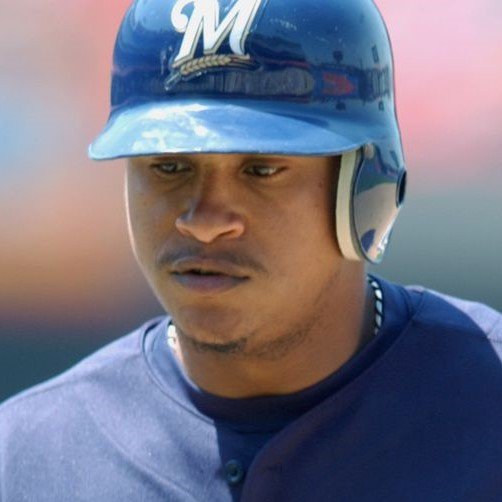 Ronald Belliard was born in 1975 in New York City. He graduated from Miami (Florida) Central High School in 1994 and was selected in that year’s MLB Amateur Draft in the eighth round by the Brewers. Belliard spent five years in the Brewers farm system before getting his first call-up to Milwaukee in September 1998, where he played in just eight games and hit .200 (1-for-5) The following year, Belliard spent the first month at Triple-A Louisville before getting called up to the Brewers in mid-June. He had a solid season, and it was surprising that he received no ROY votes. Belliard’s slash line was .295/.379/.429 across 457 at-bats, including 29 doubles, four triples, and eight home runs. He also knocked in 58 runs and had an OPS+ of 106. In the final season at County Stadium, Belliard played in 152 games and slashed .263/.354/.389 across 571 at-bats. His nine triples led the team, and he also had 30 two-base hits and eight round-trippers. His seven steals were a career high. The stocky (5-foot-9, 210 pound) righty swinger showed some pop in 2001 in the first season at Miller Park, slamming 30 doubles and 11 home runs into early August. But then he suffered a high right ankle sprain when White Sox third baseman Robin Ventura took out Belliard at second base on a double play attempt that caused him to miss eight weeks. His slash line across 364 at-bats was .264/.335/.453. Belliard only started 60 games in 2002 but played in 104 with 289 at-bats, His slash line was a career-low .211/.257/.287. He was granted free agency after the season and signed with the Colorado Rockies in February 2003. He had a decent season for the Rockies, slashing .277/.351/.409 across 447 at-bats. Once again, he was granted free agency after the year and was signed by the Cleveland Indians. The second baseman had two of his best seasons for the Indians in 2004-05. He earned his only All-Star nod for the AL in 1994, batting .282/.348/.426 with 12 homers and a career-high 48 doubles, good for second in the league. The following season was similar with a batting line of .284/.325/.450 with a career-high of 17 homers and 78 RBIs. Belliard played half of the 2006 season with Cleveland but was swapped to the St. Louis Cardinals at the trading deadline. Once again Belliard had a solid campaign, slashing .272/.322/.403 with a combined 30 doubles and 13 home runs. After the season he was signed as a free agent by the Washington Nationals. In addition, Belliard was the victim of an attempted extortion scam where an Illinois man tried to get money from Belliard in exchange for silence in a case where the player allegedly impregnated the man’s daughter. The man was found guilty of a felony fraud count. In 2007, Belliard played every infield spot, but made 113 starts at second base. His batting line was .290/.332/.427 across 511 at-bats. He banged out 35 two-base hits and 11 homers. The following season saw Belliard miss a month early in the season due to a left calf strain and another month at the end of the campaign with a strained groin. His final numbers showed a slash line of .287/.372/.473 in 296 ABs. He banged out 22 doubles and 11 homers. Belliard was traded mid-season in 2008 to the Los Angeles Dodgers. He played well in 24 games with the Dodgers, slashing .351/.398/.636 across 77 at-bats, including seven doubles, five home runs, and 17 RBIs. Belliard played one more year in Los Angeles, but it didn’t go as well, and his .216/.295/.327 slash line saw him get released in September. In 2011 Belliard played in the Yankees and Phillies organization but after 53 games at Triple-A Lehigh Valley, announced his retirement in June 2011. His final stat line showed 1,377 hits with 328 doubles, 114 home runs, and a slash line of .273/.338/.415 across 5,045 at-bats.
 -
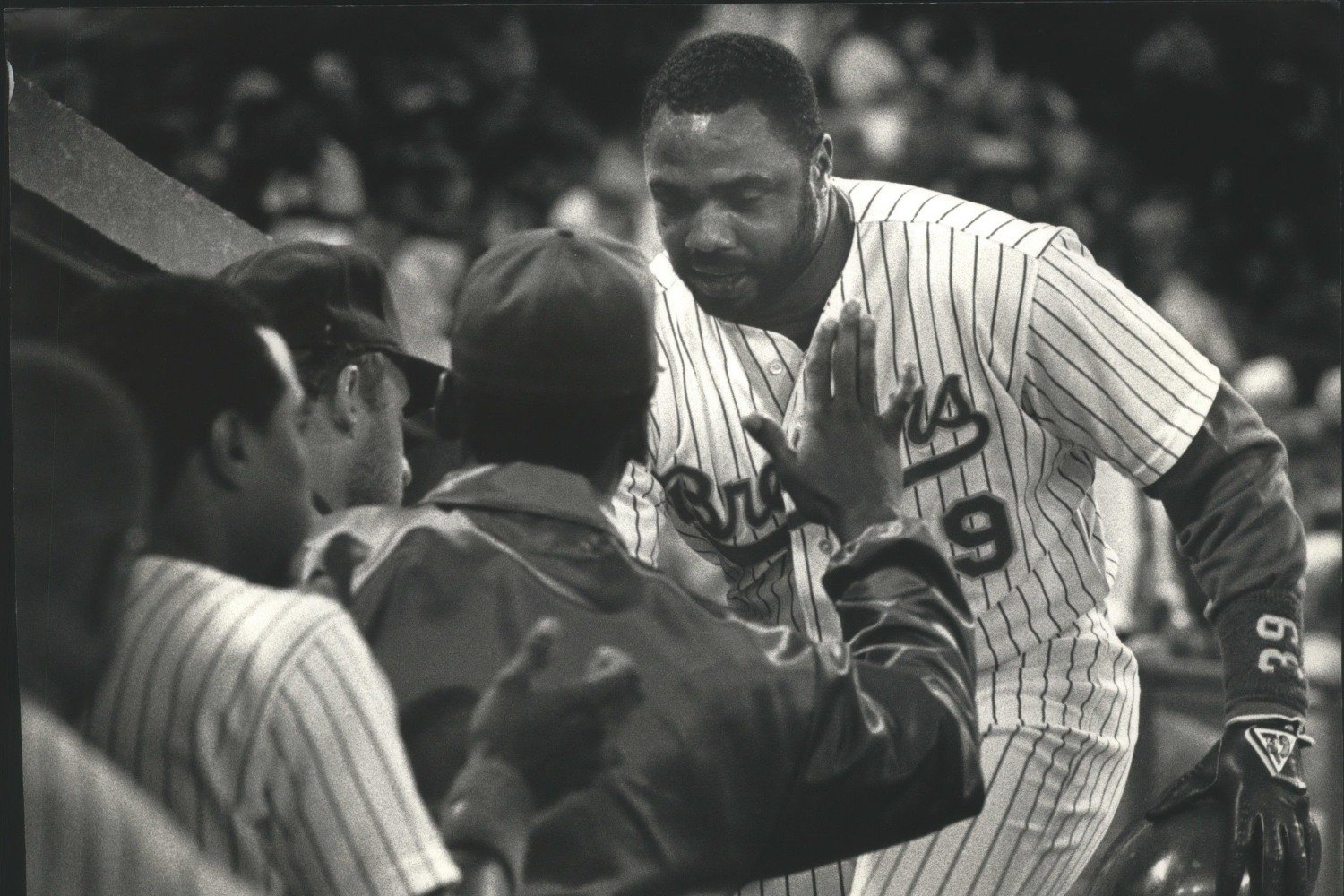 Back in the 1970s, David Gene Parker was one of the elite players in Major League Baseball. In 1977, Parker won his first NL batting title and a Gold Glove; became an All-Star for the first time; and finished third in the NL Most Valuable Player race. In 1978, Parker won his second batting title, another Gold Glove, and the MVP award in the National League. Parker finished in the top 10 in MVP voting two other times in that time frame, won another Gold Glove and made the NL All-Star team three more times. In other words, Parker was one of the best players in baseball for six or seven years. Today, Dave Parker is a Hall of Famer. Parker, along with the late slugging infielder Dick Allen, was elected to the National Baseball Hall of Fame via the Classic Baseball Era Committee process on Sunday. Parker was named on 14 of 16 ballots. Notable players who failed to receive enough votes were Tommy John, Ken Boyer, Steve Garvey, and Luis Tiant. After missing out on the BBWAA voting and the Veterans Committee, the third time was a charm for the 73-year-old Parker. Nicknamed the “Cobra,” the 6-foot-5, 230-pound left-handed batter struck fear into opposing pitchers. In addition to the laurels listed above, he was a member of two World Series-winning teams: the 1979 ‘We Are Family’ Pittsburgh Pirates and the 1989 ‘Earthquake Series’ Oakland Athletics. Parker was also known as a cannon-armed right fielder, who once threw out an amazing 26 runners in one season and ended with 143 assists in 19 years. Drafted by the Pirates in the 14th round of the 1970 MLB Amateur Draft, he reached the big leagues for good in 1973. He played for the Pirates for 11 years before signing with the Cincinnati Reds prior to the 1984 season. Parker led the NL in doubles (42) and RBIs (125) in 1985 and played in a pair of All-Star games during his four-year stint with the Reds. Parker was traded to Oakland after the 1987 season and played in the Bay Area for two years, before signing with the Brewers for the 1990 season. After two subpar seasons with the A’s, Parker renewed his career in Brew City at age 39, earning his seventh and final All-Star nod while playing almost exclusively as the designated hitter. Parker led the Brewers with 176 hits, 30 doubles, 92 RBIs, and 275 total bases. He was named the Milwaukee Brewers Most Valuable Player after the season. The Cobra played one more season, splitting time with the California Angels and Toronto Blue Jays. Fittingly, Parker doubled in his last big-league at-bat on Oct. 2, 1991, in a 6-5 win over California. For his career, Parker had a slash line of .290/.339/.471 with 2,712 hits, which included 526 doubles, 75 triples, 339 home runs, and 1,493 RBIs. It would be a long three decades between that day and this ultimate acknowledgment of his legacy, but he finally received it, and his final great season with the Crew is a part of that story. We at Brewer Fanatic applaud Dave Parker for his Hall of Fame election.
 -
At the end of a long and illustrious career, one of the great sluggers of the 1970s and 1980s began the 1990s in a Brewers uniform. Now, he's been rewarded for his longevity and talent with the game of baseball's highest honor. Image courtesy of © Tom Lynn/Milwaukee Journal via Imagn Content Services, LLC Back in the 1970s, David Gene Parker was one of the elite players in Major League Baseball. In 1977, Parker won his first NL batting title and a Gold Glove; became an All-Star for the first time; and finished third in the NL Most Valuable Player race. In 1978, Parker won his second batting title, another Gold Glove, and the MVP award in the National League. Parker finished in the top 10 in MVP voting two other times in that time frame, won another Gold Glove and made the NL All-Star team three more times. In other words, Parker was one of the best players in baseball for six or seven years. Today, Dave Parker is a Hall of Famer. Parker, along with the late slugging infielder Dick Allen, was elected to the National Baseball Hall of Fame via the Classic Baseball Era Committee process on Sunday. Parker was named on 14 of 16 ballots. Notable players who failed to receive enough votes were Tommy John, Ken Boyer, Steve Garvey, and Luis Tiant. After missing out on the BBWAA voting and the Veterans Committee, the third time was a charm for the 73-year-old Parker. Nicknamed the “Cobra,” the 6-foot-5, 230-pound left-handed batter struck fear into opposing pitchers. In addition to the laurels listed above, he was a member of two World Series-winning teams: the 1979 ‘We Are Family’ Pittsburgh Pirates and the 1989 ‘Earthquake Series’ Oakland Athletics. Parker was also known as a cannon-armed right fielder, who once threw out an amazing 26 runners in one season and ended with 143 assists in 19 years. Drafted by the Pirates in the 14th round of the 1970 MLB Amateur Draft, he reached the big leagues for good in 1973. He played for the Pirates for 11 years before signing with the Cincinnati Reds prior to the 1984 season. Parker led the NL in doubles (42) and RBIs (125) in 1985 and played in a pair of All-Star games during his four-year stint with the Reds. Parker was traded to Oakland after the 1987 season and played in the Bay Area for two years, before signing with the Brewers for the 1990 season. After two subpar seasons with the A’s, Parker renewed his career in Brew City at age 39, earning his seventh and final All-Star nod while playing almost exclusively as the designated hitter. Parker led the Brewers with 176 hits, 30 doubles, 92 RBIs, and 275 total bases. He was named the Milwaukee Brewers Most Valuable Player after the season. The Cobra played one more season, splitting time with the California Angels and Toronto Blue Jays. Fittingly, Parker doubled in his last big-league at-bat on Oct. 2, 1991, in a 6-5 win over California. For his career, Parker had a slash line of .290/.339/.471 with 2,712 hits, which included 526 doubles, 75 triples, 339 home runs, and 1,493 RBIs. It would be a long three decades between that day and this ultimate acknowledgment of his legacy, but he finally received it, and his final great season with the Crew is a part of that story. We at Brewer Fanatic applaud Dave Parker for his Hall of Fame election. View full article
-
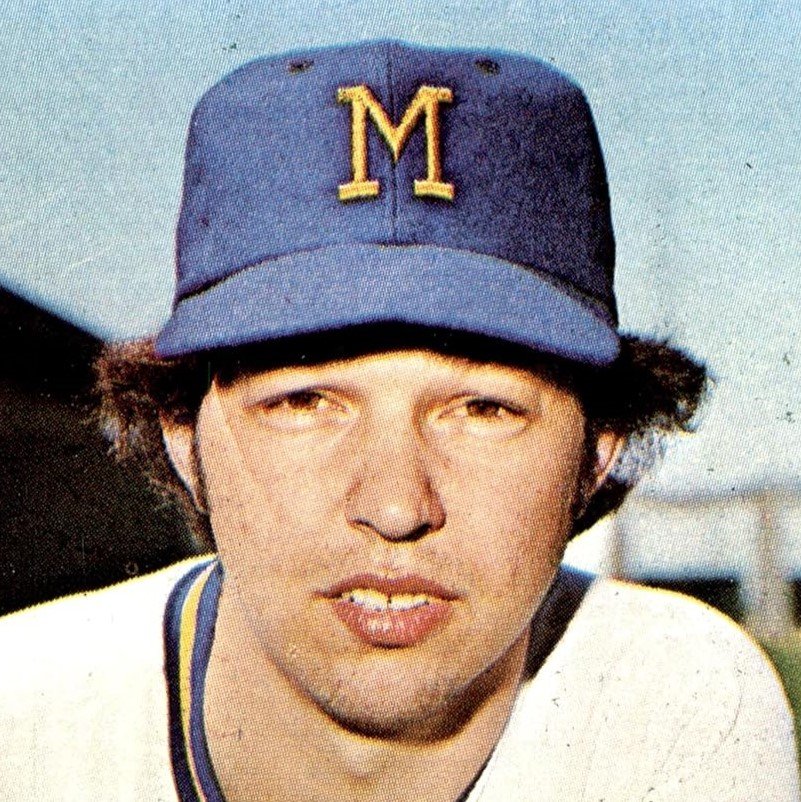 "It's a break-a-ball." And with that, we turn the spotlight on former Brewer left-handed pitcher - and Wisconsin native - Jerry Augustine. Gerald Lee "Jerry" Augustine was born in 1952 in Kewaunee, Wisconsin. He grew up in Kewaunee as well, and stayed in state for college, heading to UW-La Crosse. The Brewers drafted Augie in the 15th round of the 1974 draft. He spent only 28 games in the minors before being brought up to the Big Leagues in 1975, becoming a fixture on the Brewers staff, first as a starter, then as a reliever, until 1984. Augustine had a promising rookie campaign in '76, making the all-rookie team when he posted a 3.30 ERA and produced a 2.8 bWAR. But that was Augie's high-water mark. He spent a couple of more years as a starter, throwing a career high 209 innings in 1977 (while losing 18 games), but ultimately prove himself to be a remarkably average pitcher. He simply gave up too many hits, walked too many guys, and didn't strike enough batters. As the Crew improved in the late 70s, Augustine was shifted to the bullpen, having a nice year in 1979 (1.4 bWAR). But subsequent campaigns saw Augie's numbers gradually decline, and after the 1984 season he was let go by Milwaukee. He bounced around in the minors for a couple of more seasons before finally retiring at age 33. Jerry Augustine was never a particularly good pitcher, going 55-59 and producing a 4.23 ERA over parts of 10 seasons. Being a left-handed pitcher undoubtedly extended Augustine's career, but he never really was a key element of the club. For his career, he walked almost as many batters (340) as he struck out (348). He accumulated 4.1 WAR during his playing days. But Augie's status in Brewer lore is not really measured by his numbers. He was a Wisconsin guy. He talked like a Wisconsin guy. He grew up in Wisconsin, went to college in Wisconsin, and spent his entire major league career in Wisconsin. After retiring, he opened up his own insurance agency in West Allis - Jerry Augustine Agency, Inc. He further cemented his ties to the state by coaching the UW-Milwaukee baseball team for 12 seasons before joining Fox Sports Wisconsin as an analyst - a position he holds to this day. Wisconsin-La Crosse inducted Augustine into its Wall of Fame in 1984, and the Brewers added him on their Wall of Honor in 2014.
 -
"It's a break-a-ball." And with that, we turn the spotlight on former Brewer left-handed pitcher - and Wisconsin native - Jerry Augustine. Gerald Lee "Jerry" Augustine was born in 1952 in Kewaunee, Wisconsin. He grew up in Kewaunee as well, and stayed in state for college, heading to UW-La Crosse. The Brewers drafted Augie in the 15th round of the 1974 draft. He spent only 28 games in the minors before being brought up to the Big Leagues in 1975, becoming a fixture on the Brewers staff, first as a starter, then as a reliever, until 1984. Augustine had a promising rookie campaign in '76, making the all-rookie team when he posted a 3.30 ERA and produced a 2.8 bWAR. But that was Augie's high-water mark. He spent a couple of more years as a starter, throwing a career high 209 innings in 1977 (while losing 18 games), but ultimately prove himself to be a remarkably average pitcher. He simply gave up too many hits, walked too many guys, and didn't strike enough batters. As the Crew improved in the late 70s, Augustine was shifted to the bullpen, having a nice year in 1979 (1.4 bWAR). But subsequent campaigns saw Augie's numbers gradually decline, and after the 1984 season he was let go by Milwaukee. He bounced around in the minors for a couple of more seasons before finally retiring at age 33. Jerry Augustine was never a particularly good pitcher, going 55-59 and producing a 4.23 ERA over parts of 10 seasons. Being a left-handed pitcher undoubtedly extended Augustine's career, but he never really was a key element of the club. For his career, he walked almost as many batters (340) as he struck out (348). He accumulated 4.1 WAR during his playing days. But Augie's status in Brewer lore is not really measured by his numbers. He was a Wisconsin guy. He talked like a Wisconsin guy. He grew up in Wisconsin, went to college in Wisconsin, and spent his entire major league career in Wisconsin. After retiring, he opened up his own insurance agency in West Allis - Jerry Augustine Agency, Inc. He further cemented his ties to the state by coaching the UW-Milwaukee baseball team for 12 seasons before joining Fox Sports Wisconsin as an analyst - a position he holds to this day. Wisconsin-La Crosse inducted Augustine into its Wall of Fame in 1984, and the Brewers added him on their Wall of Honor in 2014. View full player
-
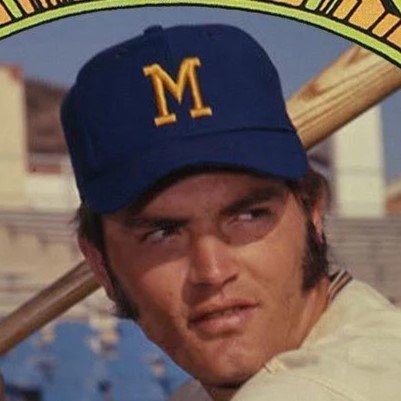 Gorman Thomas. He was scruffy and disheveled. He looked like he had had a few too many beers and eaten a few too many cheeseburgers. On any given night you could count on him running into a wall, striking out, or hitting a home run. It was the glory years of Brewer baseball, and Thomas became one of the most beloved players in franchise history. Gorman Thomas was born in 1950 in South Carolina. He was drafted in the first round (21st overall) of the 1969 draft - the first pick of the fledgling Pilots/Brewer franchise. A shortstop in high school, Thomas quickly emerged as a low average, high power, high strikeout player. After shifting between shortstop and third base for a couple of years, Thomas settled in as a center fielder, where he showed a strong arm and good range. Thomas reached Milwaukee in 1973, but struggled in limited action. Then, in 1974 he hammered 51 HR at AAA, netting him a position on the 1975 squad. Unfortunately, Thomas played poorly, hitting under .200 the next two seasons as a part time player. At age 26, he found himself back at AAA. He performed well, hitting .322 with 36 HR, but was traded to Texas shortly after the season. At age 27, Thomas could have easily ended up a AAAA type player, but luckily for him, Milwaukee decided they wanted to have him back. In February of 1978, the Brewers bought Thomas back from the Rangers. He seized the opportunity, not only making the club, but working himself into the regular lineup. In 137 games, he slugged 32 home runs, and became a cornerstone of 'Bambie's Bombers' - the powerful lineup trotted out by new manager Geroge Bamberger. Brewer coach Frank Howard gave Thomas the nickname of Stormin' Gorman. Over the next five years Thomas hit 175 HR, leading the league twice. (He also led the league in strikeouts twice as well.) He drove in over a 100 runs three times during those years. His batter average floated in the .240-250 range, but the power and plus defense made him an indispensable part of the late 70s/early 80s Brewer teams. In 1983, the 32-year-old Thomas struggled out of the gate, hitting only .182 in 46 games. Injuries and age had taken a toll on Thomas, not to mention his hard living. Seeking to shake up the club, the Brewers dealt Thomas to Cleveland for outfielder Rick Manning. Thomas was crushed by the trade. He had developed folk legend status in Milwaukee, and the deal had ended his fairy tale ride. The Indians dealt Thomas after the season to Seattle, where he floundered before succumbing to rotator cuff surgery. Thomas had one last good year in 1985, hitting 32 HR as DH for the Mariners and winning the AL Comeback Player of the Year Award. But the success was short lived. He struggled the next season, and in a (mostly) PR move, the Brewers reacquired the aging slugger. He played 44 games for the Crew, hitting a tepid .179 with a paltry 6 HR. Milwaukee released the 35-year-old Thomas after the season, and his career was over. Thomas spent parts of 11 seasons with Milwaukee (although only five as a full time starter). He averaged about 4.0 WAR from 1978-82, participate in an all star game (1981) and the 1982 World Series. He hit 208 HR, drove in 605 runs, walked 501 times, struck out 1033 times, and hit .230. He was three true outcomes before three true outcomes existed. But Gorman Thomas' influence was never measured in just numbers. For Brewer fans, he was a folk hero, and he has essentially fashioned a second career around this status. He was the quintessential Brewer. He played hard and he partied hard. Fans celebrated his larger than life persona - and Gorman was happy to live it up with them. He was known for stopping by tailgates after games and drinking beers with fans. Along with teammate Pete Vukovich, Thomas opened a bar near the stadium called Stormin' and Vukes'. Over the years, Thomas has remained in the Brewer family working in a variety of capacities, including helping out at spring training, participating in fantasy camps, and doing personal appearances. He also lent his name to Gorman's Grill at Miller Park. He still resides in the Milwaukee area, hunting, fishing and golfing in his retirement. Thomas was inducted into both the South Carolina and Wisconsin Athletic Halls of Fame as well as the Brewers Wall of Fame.
 -
Gorman Thomas. He was scruffy and disheveled. He looked like he had had a few too many beers and eaten a few too many cheeseburgers. On any given night you could count on him running into a wall, striking out, or hitting a home run. It was the glory years of Brewer baseball, and Thomas became one of the most beloved players in franchise history. Gorman Thomas was born in 1950 in South Carolina. He was drafted in the first round (21st overall) of the 1969 draft - the first pick of the fledgling Pilots/Brewer franchise. A shortstop in high school, Thomas quickly emerged as a low average, high power, high strikeout player. After shifting between shortstop and third base for a couple of years, Thomas settled in as a center fielder, where he showed a strong arm and good range. Thomas reached Milwaukee in 1973, but struggled in limited action. Then, in 1974 he hammered 51 HR at AAA, netting him a position on the 1975 squad. Unfortunately, Thomas played poorly, hitting under .200 the next two seasons as a part time player. At age 26, he found himself back at AAA. He performed well, hitting .322 with 36 HR, but was traded to Texas shortly after the season. At age 27, Thomas could have easily ended up a AAAA type player, but luckily for him, Milwaukee decided they wanted to have him back. In February of 1978, the Brewers bought Thomas back from the Rangers. He seized the opportunity, not only making the club, but working himself into the regular lineup. In 137 games, he slugged 32 home runs, and became a cornerstone of 'Bambie's Bombers' - the powerful lineup trotted out by new manager Geroge Bamberger. Brewer coach Frank Howard gave Thomas the nickname of Stormin' Gorman. Over the next five years Thomas hit 175 HR, leading the league twice. (He also led the league in strikeouts twice as well.) He drove in over a 100 runs three times during those years. His batter average floated in the .240-250 range, but the power and plus defense made him an indispensable part of the late 70s/early 80s Brewer teams. In 1983, the 32-year-old Thomas struggled out of the gate, hitting only .182 in 46 games. Injuries and age had taken a toll on Thomas, not to mention his hard living. Seeking to shake up the club, the Brewers dealt Thomas to Cleveland for outfielder Rick Manning. Thomas was crushed by the trade. He had developed folk legend status in Milwaukee, and the deal had ended his fairy tale ride. The Indians dealt Thomas after the season to Seattle, where he floundered before succumbing to rotator cuff surgery. Thomas had one last good year in 1985, hitting 32 HR as DH for the Mariners and winning the AL Comeback Player of the Year Award. But the success was short lived. He struggled the next season, and in a (mostly) PR move, the Brewers reacquired the aging slugger. He played 44 games for the Crew, hitting a tepid .179 with a paltry 6 HR. Milwaukee released the 35-year-old Thomas after the season, and his career was over. Thomas spent parts of 11 seasons with Milwaukee (although only five as a full time starter). He averaged about 4.0 WAR from 1978-82, participate in an all star game (1981) and the 1982 World Series. He hit 208 HR, drove in 605 runs, walked 501 times, struck out 1033 times, and hit .230. He was three true outcomes before three true outcomes existed. But Gorman Thomas' influence was never measured in just numbers. For Brewer fans, he was a folk hero, and he has essentially fashioned a second career around this status. He was the quintessential Brewer. He played hard and he partied hard. Fans celebrated his larger than life persona - and Gorman was happy to live it up with them. He was known for stopping by tailgates after games and drinking beers with fans. Along with teammate Pete Vukovich, Thomas opened a bar near the stadium called Stormin' and Vukes'. Over the years, Thomas has remained in the Brewer family working in a variety of capacities, including helping out at spring training, participating in fantasy camps, and doing personal appearances. He also lent his name to Gorman's Grill at Miller Park. He still resides in the Milwaukee area, hunting, fishing and golfing in his retirement. Thomas was inducted into both the South Carolina and Wisconsin Athletic Halls of Fame as well as the Brewers Wall of Fame. View full player
-
 Mitchel Blake Stetter was born in 1981 in Huntingburg, Indiana. Growing up in hoops country, it was only natural that Stetter was a star player on the Southridge High School basketball team and averaged 15 PPG as a sharp-shooting 6-foot-4 guard. He attended Indiana State University and after graduation was drafted by the Brewers in the 2003 MLB Amateur Draft in the 16th round, getting a $1,000 signing bonus. The southpaw pitcher worked his way through the minor league system, earning a 2007 call-up to Milwaukee in his fifth pro season. In his short September stint, Stetter made six appearances and had an ERA+ of 132. The following season, Stetter shuttled between Milwaukee and Triple-A Nashville and finished the season with an ERA+ of 134 and an ERA of 3.20 in 30 outings. Against the Philadelphia Phillies in the NLDS, Stetter faced four batters across three games and struck out two of them, in each case slugger Ryan Howard. In 2009, Stetter finally spent the whole season in the majors, pitching in 71 games. Between May 27 and July 8, Stetter appeared 17 times, allowing zero runs and five hits in 14.2 innings while striking out 24. His totals for the season included four wins, one save, and an ERA+ of 115. Stetter struggled in 2010 and spent most of the season in Nashville after compiling a disappointing ERA of 14.73 and ERA+ of 30 in nine games for Milwaukee. Stetter pitched well to start the 2011 season, posting an ERA of 2.84 through his first 13 appearances. But then he was limited to six minor league appearances before having surgery on his left hip. After a failed trial in the Texas Rangers organization in 2012, Stetter signed a minor league deal with the Brewers and pitched well in 41 games but never got a call-up. He finished his pro career after spending a couple months in the Los Angeles Angels farm system in 2013.

