



Michael Trzinski
-
Posts
923 -
Joined
-
Last visited
-
Days Won
1
Content Type
Profiles
Forums
Blogs
Events
News
2026 Milwaukee Brewers Top Prospects Ranking
Milwaukee Brewers Videos
2022 Milwaukee Brewers Draft Picks
Milwaukee Brewers Free Agent & Trade Rumors, Notes, & Tidbits
Guides & Resources
2023 Milwaukee Brewers Draft Picks
2024 Milwaukee Brewers Draft Picks
The Milwaukee Brewers Players Project
2025 Milwaukee Brewers Draft Pick Tracker
2026 Milwaukee Brewers Draft Tracker: Picks & Bonuses
Store
Downloads
Gallery
Everything posted by Michael Trzinski
-
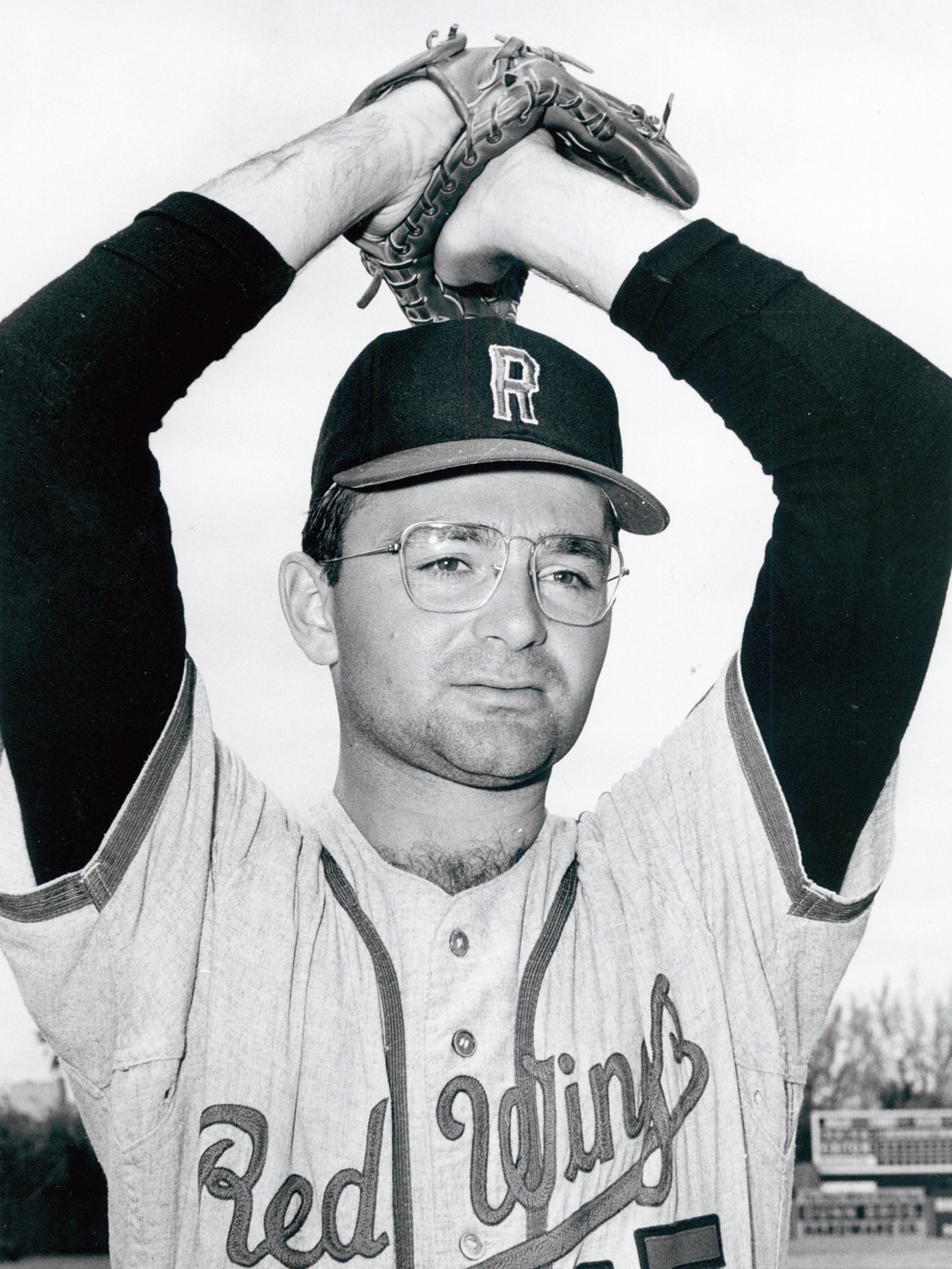
The 2025 version of Steve Dalkowski?? (Pic courtesy of SABR.)
-
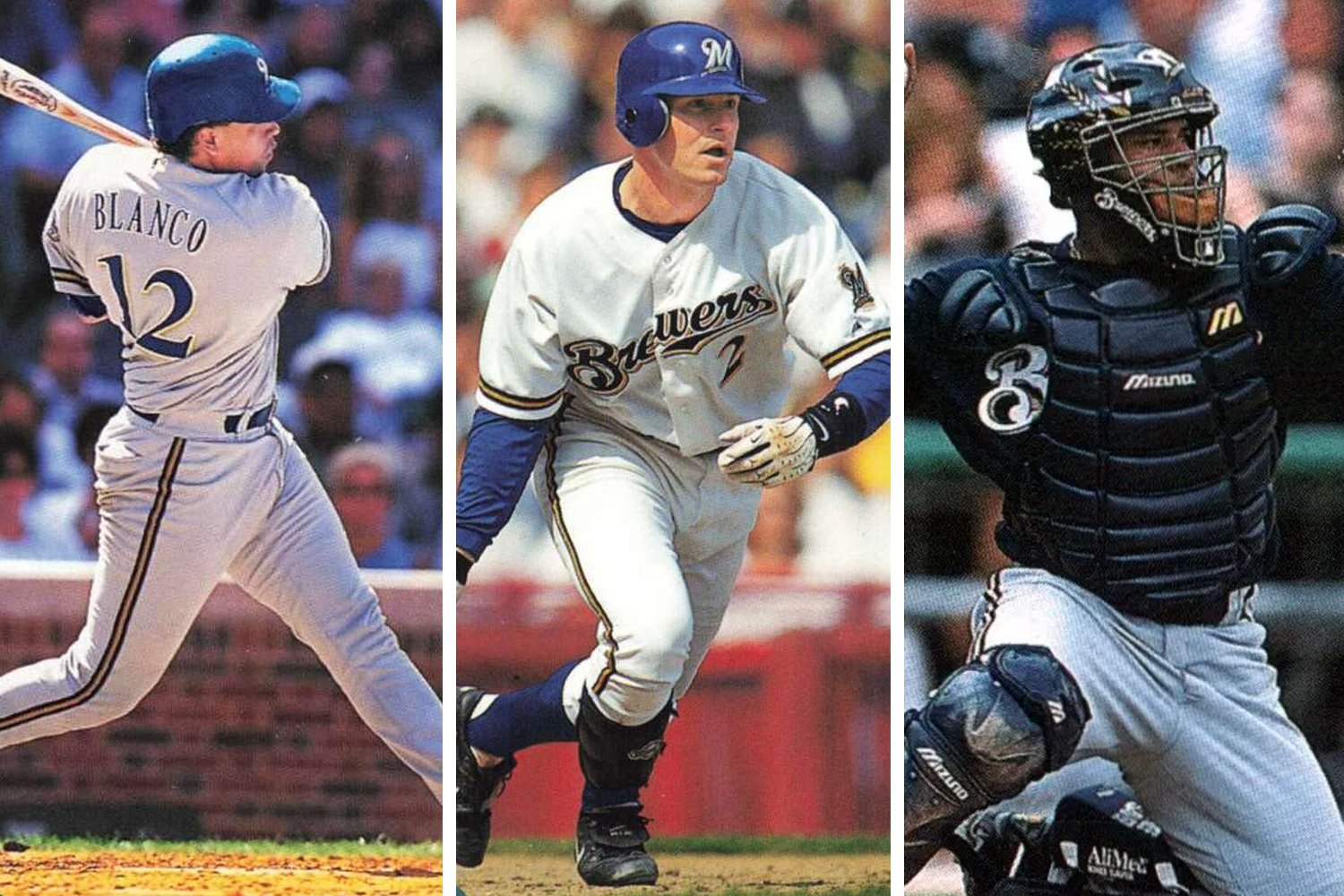 The three bios tied into this front-page piece were not only catchers but played together in 2000-2002. Henry Blanco, Raúl Casanova, and Tyler Houston squatted behind the dish during the final days at County Stadium and the first two years at Miller Park. Blanco and Casanova were full-time catchers, while Houston only caught 23 games for Milwaukee but played at several other positions. Henry Blanco Blanco was primarily known as a ‘defensive’ catcher, but he did have some pop in his bat, hitting 72 home runs during his 16-year career. In just under 600 AB for the Brewers, he hit 13 homers but showed gap power with 42 doubles. Although his oWAR dragged him down, he did post a 1.7 and 1.0 dWAR in 2000 and 2001, respectively. Blanco threw out about 50% of runners in those two years, including an NL-best of 58.2% in 2000. Blanco split time with Casanova during those two seasons. Raúl Casanova Casanova hit a bit more for average than Blanco and showed some power, hitting 35 homers in nine big-league seasons. Casanova only threw out 23% of runners trying to steal while with Milwaukee, which was well below the league average of 32.5%. Casanova was released in September 2002 after only slashing .184/.273/.230 and was signed by Baltimore. After playing two games for the Orioles, he was released. He played in six organizations between 2003 and 2006, all in the minors. He played for the White Sox, Devil Rays, and Mets between 2005 and 2008. Tyler Houston The Las Vegas native was a rare player who was a better hitter in the majors than in the minors. His minor league OPS over 2,385 at-bats was .650, while his OPS in the majors was .735 over 1,805 at-bats. He was a catcher in high school and spent the first few years in the minors behind the plate, but he played primarily at third base in the big leagues. He also played at catcher and first base and played a few games at each other's positions except for center field. Houston batted at least .300 in over 100 at-bats in three seasons and was third on the Brewers in 2001 with an OPS+ of 111.
 -
Since Thanksgiving, we have been working on adding bios to the Players Project and with the three bios posted below, we now have over 100 player bios on Brewer Fanatic. The three bios tied into this front-page piece were not only catchers but played together in 2000-2002. Henry Blanco, Raúl Casanova, and Tyler Houston squatted behind the dish during the final days at County Stadium and the first two years at Miller Park. Blanco and Casanova were full-time catchers, while Houston only caught 23 games for Milwaukee but played at several other positions. Henry Blanco Blanco was primarily known as a ‘defensive’ catcher, but he did have some pop in his bat, hitting 72 home runs during his 16-year career. In just under 600 AB for the Brewers, he hit 13 homers but showed gap power with 42 doubles. Although his oWAR dragged him down, he did post a 1.7 and 1.0 dWAR in 2000 and 2001, respectively. Blanco threw out about 50% of runners in those two years, including an NL-best of 58.2% in 2000. Blanco split time with Casanova during those two seasons. Raúl Casanova Casanova hit a bit more for average than Blanco and showed some power, hitting 35 homers in nine big-league seasons. Casanova only threw out 23% of runners trying to steal while with Milwaukee, which was well below the league average of 32.5%. Casanova was released in September 2002 after only slashing .184/.273/.230 and was signed by Baltimore. After playing two games for the Orioles, he was released. He played in six organizations between 2003 and 2006, all in the minors. He played for the White Sox, Devil Rays, and Mets between 2005 and 2008. Tyler Houston The Las Vegas native was a rare player who was a better hitter in the majors than in the minors. His minor league OPS over 2,385 at-bats was .650, while his OPS in the majors was .735 over 1,805 at-bats. He was a catcher in high school and spent the first few years in the minors behind the plate, but he played primarily at third base in the big leagues. He also played at catcher and first base and played a few games at each other's positions except for center field. Houston batted at least .300 in over 100 at-bats in three seasons and was third on the Brewers in 2001 with an OPS+ of 111. View full article
-
I envy the writers that are so well informed about our future Milwaukee Brewers. I am good at writing about the past; you all are pretty damned good at writing about the future. I salute you!
-
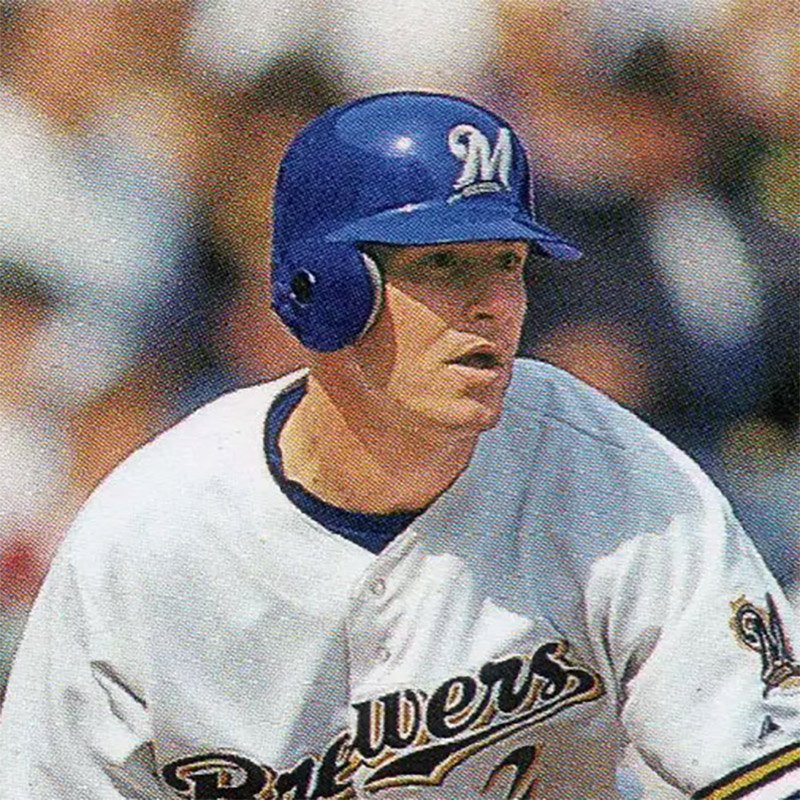 Tyler Sam Houston was born in Las Vegas, Nevada in 1971. Houston was drafted second overall behind pitcher Ben McDonald in the 1989 MLB Amateur Draft by the Atlanta Braves. It took Houston seven years to make his big-league debut. He opened the 1996 season with the Braves and played 33 games without a start. In late June, he was traded to the Chicago Cubs. The lefty swinger had a great finish to the season, hitting .339/.382/.452 across 115 at-bats. Houston spent 1997 and 1998 with the Cubs, playing a total of 167 games. The following year Houston played 100 games with Chicago before being traded to Cleveland at the end of August. After playing 13 games in September for the Indians, he was given his release. The Brewers signed him in early 2000. Henry Blanco (32 starts), Raúl Casanova (16), and Houston (16) were a three-headed catching monster through mid-June, but after infielder Sean Berry was released, Houston played mostly at the corner infield spots. Houston caught on September 12 and would never don the ‘tools of ignorance’ again in his major league career. Houston hit a career-high 18 homers and 43 RBI while hitting .250/.292/.493 across 284 at-bats. In 2001, Houston was having a nice season, hitting .298/.347/.489 in mid-July when he went down with a stress fracture in his right foot and missed almost all the rest of the season. His final hitting line was .289/.343/.472 with 12 home runs across 235 at-bats. Houston got the vast majority of playing time at third base in 2002 and was hitting .302/.347/.459 in 76 games when he was traded to the Dodgers in late July in what essentially was a ‘salary dump’ for Milwaukee. Houston played 35 games for Los Angeles and was released after the season. He was signed by the Philadelphia Phillies and played just 54 games in an injury-riddled season. He retired from baseball with a hitting line of .265/.312/.423 across 1,805 at-bats with 84 doubles and 63 home runs.
 -
Tyler Sam Houston was born in Las Vegas, Nevada in 1971. Houston was drafted second overall behind pitcher Ben McDonald in the 1989 MLB Amateur Draft by the Atlanta Braves. It took Houston seven years to make his big-league debut. He opened the 1996 season with the Braves and played 33 games without a start. In late June, he was traded to the Chicago Cubs. The lefty swinger had a great finish to the season, hitting .339/.382/.452 across 115 at-bats. Houston spent 1997 and 1998 with the Cubs, playing a total of 167 games. The following year Houston played 100 games with Chicago before being traded to Cleveland at the end of August. After playing 13 games in September for the Indians, he was given his release. The Brewers signed him in early 2000. Henry Blanco (32 starts), Raúl Casanova (16), and Houston (16) were a three-headed catching monster through mid-June, but after infielder Sean Berry was released, Houston played mostly at the corner infield spots. Houston caught on September 12 and would never don the ‘tools of ignorance’ again in his major league career. Houston hit a career-high 18 homers and 43 RBI while hitting .250/.292/.493 across 284 at-bats. In 2001, Houston was having a nice season, hitting .298/.347/.489 in mid-July when he went down with a stress fracture in his right foot and missed almost all the rest of the season. His final hitting line was .289/.343/.472 with 12 home runs across 235 at-bats. Houston got the vast majority of playing time at third base in 2002 and was hitting .302/.347/.459 in 76 games when he was traded to the Dodgers in late July in what essentially was a ‘salary dump’ for Milwaukee. Houston played 35 games for Los Angeles and was released after the season. He was signed by the Philadelphia Phillies and played just 54 games in an injury-riddled season. He retired from baseball with a hitting line of .265/.312/.423 across 1,805 at-bats with 84 doubles and 63 home runs. View full player
-
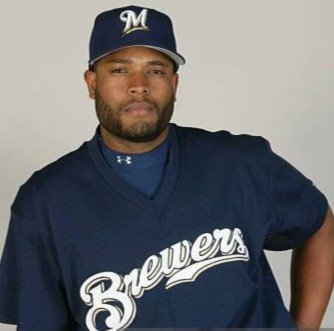 Raúl Casanova was born in Humacao, Puerto Rico in 1972. He was drafted by the New York Mets in the eighth round of the 1990 MLB Amateur Draft. The switch-hitting backstop played at the lower levels of the Mets chain for three years before being the PTBNL in a trade with the San Diego Padres in December 1992. Casanova stayed on the three-year plan, playing at Single-A and Double-A in the Padres organization before getting traded to the Detroit Tigers in March 1996. He made his major league debut with the Tigers on May 24 and went 0-for-4 as the DH. After going hitless in his next six at-bats, Casanova singled off Kansas City hurler Tim Belcher in his fourth game for his first big-league knock. In late June, Casanova broke a bone in his left wrist, requiring surgery. He returned in August and then was a September call-up for Detroit. Casanova no doubt impressed the Tigers brass, slashing .286/.375/.429 with one homer in 28 at-bats. Despite starting the following season in Triple-A Toledo, Casanova set career highs for games (101), at-bats (304), and hits (74) with the Tigers. Dogged by injuries in 1998, Casanova spent most of the year in the minors and only played 16 games for the Tigers. Casanova underwent surgery for a broken rib in 1999 and after playing just 50 games in the minors, was released after the season. The Rockies signed him as a free agent but released him in March before he played a game for them. The next day, the Brewers signed him as a free agent. Casanova started the season at Triple-A Indianapolis but was called up in mid-April when Henry Blanco went on the disabled list. Casanova was red-hot in late June, slashing .441/.486/.823 with three homers in 34 at-bats. He set career bests with 13 doubles, three triples, and 36 RBI. Casanova had a nice season in 2001 but missed the last six weeks of the season after knee surgery. He had a career-high 11 homers and an OPS+ of 102. The next season, Casanova struggled and was released at the end of the season. He played part of three seasons with the White Sox, Tampa Bay, and the Mets. Casanova played in the Mexican League and some winters leagues for three years and retired in 2011.
 -
Raúl Casanova was born in Humacao, Puerto Rico in 1972. He was drafted by the New York Mets in the eighth round of the 1990 MLB Amateur Draft. The switch-hitting backstop played at the lower levels of the Mets chain for three years before being the PTBNL in a trade with the San Diego Padres in December 1992. Casanova stayed on the three-year plan, playing at Single-A and Double-A in the Padres organization before getting traded to the Detroit Tigers in March 1996. He made his major league debut with the Tigers on May 24 and went 0-for-4 as the DH. After going hitless in his next six at-bats, Casanova singled off Kansas City hurler Tim Belcher in his fourth game for his first big-league knock. In late June, Casanova broke a bone in his left wrist, requiring surgery. He returned in August and then was a September call-up for Detroit. Casanova no doubt impressed the Tigers brass, slashing .286/.375/.429 with one homer in 28 at-bats. Despite starting the following season in Triple-A Toledo, Casanova set career highs for games (101), at-bats (304), and hits (74) with the Tigers. Dogged by injuries in 1998, Casanova spent most of the year in the minors and only played 16 games for the Tigers. Casanova underwent surgery for a broken rib in 1999 and after playing just 50 games in the minors, was released after the season. The Rockies signed him as a free agent but released him in March before he played a game for them. The next day, the Brewers signed him as a free agent. Casanova started the season at Triple-A Indianapolis but was called up in mid-April when Henry Blanco went on the disabled list. Casanova was red-hot in late June, slashing .441/.486/.823 with three homers in 34 at-bats. He set career bests with 13 doubles, three triples, and 36 RBI. Casanova had a nice season in 2001 but missed the last six weeks of the season after knee surgery. He had a career-high 11 homers and an OPS+ of 102. The next season, Casanova struggled and was released at the end of the season. He played part of three seasons with the White Sox, Tampa Bay, and the Mets. Casanova played in the Mexican League and some winters leagues for three years and retired in 2011. View full player
-
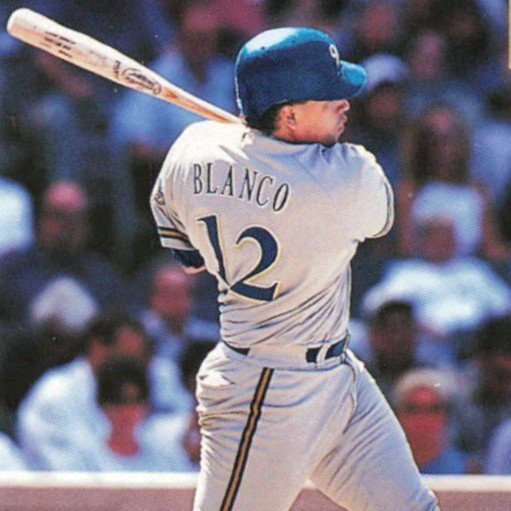 Henry Ramón Blanco was born in 1971 in Caracas, Venezuela and was signed as a free agent by the Los Angeles Dodgers in November 1989. Blanco was a third baseman in his first six seasons as a Dodgers farmhand, playing 587 games at third base, along with 36 games at first. At the end of the 1995 season, Blanco appeared in one game at catcher for Double-A San Antonio. That was the genesis of his catching career. The stocky (5-foot-11, 220-pound) Blanco made his big-league debut on July 25, 1997 as a pinch-hitter and singled on the first pitch he saw from Philadelphia pitcher Scott Ruffcorn in an 8-1 Los Angeles win. Blanco hit his first big-league homer off Colorado’s John Thomson in the last game of the year. After recovering from shoulder surgery and later a broken hand, Blanco played only 55 games at two minor league stops in 1998 and was granted free agency after the season. After signing with Colorado, Blanco was the main catcher for the 1999 season before getting traded to Milwaukee in December in a three-way deal that included Jamey Wright, Jeff Cirillo, Scott Karl, Justin Miller, and Jimmy Haynes. Blanco split time with Raúl Casanova for two years, slashing a combined .222/.303/.368 with 42 doubles and 13 home runs across 598 at-bats. Known mostly as a defensive star, Blanco threw out 50% of 138 runners over two seasons, including the 2000 season in which he caught an NL-leading 58.2%. The Brewers traded Blanco to the Atlanta Braves during spring training 2002. The veteran backstop would go on to play 12 more seasons with nine teams. His career numbers include a slash line of .223/.288/.361 over 2,761 at-bats, including 145 two-base hits and 72 HRs. Blanco has been a part of the coaching staffs for the Diamondbacks, Cubs, and Nationals. He received a World Championship ring with the Cubs in 2016.
 -
Henry Ramón Blanco was born in 1971 in Caracas, Venezuela and was signed as a free agent by the Los Angeles Dodgers in November 1989. Blanco was a third baseman in his first six seasons as a Dodgers farmhand, playing 587 games at third base, along with 36 games at first. At the end of the 1995 season, Blanco appeared in one game at catcher for Double-A San Antonio. That was the genesis of his catching career. The stocky (5-foot-11, 220-pound) Blanco made his big-league debut on July 25, 1997 as a pinch-hitter and singled on the first pitch he saw from Philadelphia pitcher Scott Ruffcorn in an 8-1 Los Angeles win. Blanco hit his first big-league homer off Colorado’s John Thomson in the last game of the year. After recovering from shoulder surgery and later a broken hand, Blanco played only 55 games at two minor league stops in 1998 and was granted free agency after the season. After signing with Colorado, Blanco was the main catcher for the 1999 season before getting traded to Milwaukee in December in a three-way deal that included Jamey Wright, Jeff Cirillo, Scott Karl, Justin Miller, and Jimmy Haynes. Blanco split time with Raúl Casanova for two years, slashing a combined .222/.303/.368 with 42 doubles and 13 home runs across 598 at-bats. Known mostly as a defensive star, Blanco threw out 50% of 138 runners over two seasons, including the 2000 season in which he caught an NL-leading 58.2%. The Brewers traded Blanco to the Atlanta Braves during spring training 2002. The veteran backstop would go on to play 12 more seasons with nine teams. His career numbers include a slash line of .223/.288/.361 over 2,761 at-bats, including 145 two-base hits and 72 HRs. Blanco has been a part of the coaching staffs for the Diamondbacks, Cubs, and Nationals. He received a World Championship ring with the Cubs in 2016. View full player
-
I don't disagree, but I think he is ready to take another step forward. I'd like to see another five HRs and SB, and another 10 points onto his slash line. And a Gold Glove would be nice!
-
For any team shy of juggernaut status, the outcome of the season can swing wildly and unexpectedly, based on the performance of a few high-variance, highly important players. With their erstwhile shortstop now in San Francisco, the Brewers have one such player stepping into his shoes. Image courtesy of © Charles LeClaire-Imagn Images / © Michael McLoone-Imagn Images Joey Ortiz came over to the Brewers—along with pitcher DL Hall—in the blockbuster trade that sent pitcher Corbin Burnes to the Baltimore Orioles late last offseason. Much was expected of Ortiz, and in fact, this writer predicted that Ortiz would win the third base job and perform well in Milwaukee in what was essentially his rookie campaign. It didn't happen right away or all at once, but that turned out to be mostly right. What Went Wrong In 2024? Ortiz started well in Milwaukee, at first under some protection from right-handed pitchers and in a manageable role—then in an increasingly full-time gig. He was hitting .275/.380/.455 over 211 at-bats in late June, and was looking every bit the Rookie of the Year candidate that the Brewers front office had hoped for when they acquired him. Alas, neck inflammation sent him to the 10-day injured list on Jul. 2. When he returned the weekend before the All-Star break, he was not the same hitter. Ortiz slashed .158/.222/.211 and did not hit a homer in July. He was scarcely better in August, with a line of .195/.290/.345. He played every game down the stretch and finished with a slash line of .239/.329/.398 for the year, with 11 homers and 11 stolen bases. He was not Mr. October in the Wild Card Series against the Mets, either, going 0-for-11 with two strikeouts. The neck injury torpedoed the season, even though he led the team with six triples, and finished in the top five with 25 doubles and 56 walks. What Can Go Right In 2025? With the departure of shortstop Willy Adames via free agency, it is all but a fait accompli that Ortiz will move over to the ‘6’, returning to the spot that he called home for most of his minor-league career. Even though Ortiz ranked third in MLB with 8 Defensive Runs Saved (DRS) at the hot corner, moving him was a no-brainer: he has the tools for shortstop, and no other internal option would have been better. Offensively, the projections show him with 11-13 home runs, 10-12 stolen bases, and a slash line around .250/.320/.400. In other words, they expect him to play like last year, with a little higher batting average. I would suggest that Ortiz can perform better still, with something more like 15 homers, 15 steals, and a .750 OPS. He'll be a year more experienced, he'll probably be healthier, and he might even be a little more comfortable in the field, back at his natural position. Ortiz will not replace the power numbers of Adames, but his defense should be much better. How Will This Impact The 2025 Brewers? The question, in my mind, depends on who steps up and takes the third base position. At this point, the Brewers have six players in camp who will be battling for playing time at the hot corner. The leaders in that not-quite-competition figure to be Oliver Dunn, Caleb Durbin and Andruw Monasterio, who could certainly share time at the position, rather than one of them winning it outright. There are other longshots hanging around, too, though. If none of those three seizes their chance and (as expected) Tyler Black is unable to hack it at the hot corner defensively, maybe Ortiz gets moved back there and the team slides Brice Turang to short, with the diminutive Durbin at second. Maybe they platoon two or three of this varied group, and Ortiz stays at short. No matter what, we know Ortiz is capable of putting up big offensive numbers, and we know he has a chance to be a very good defender even at his new, old position. Time will tell. When it does, Ortiz's results will play a large role in determining the Brewers', for good or ill. View full article
-
Make-or-Break Players on the 2025 Milwaukee Brewers: Joey Ortiz
Michael Trzinski posted an article in Brewers
 Joey Ortiz came over to the Brewers—along with pitcher DL Hall—in the blockbuster trade that sent pitcher Corbin Burnes to the Baltimore Orioles late last offseason. Much was expected of Ortiz, and in fact, this writer predicted that Ortiz would win the third base job and perform well in Milwaukee in what was essentially his rookie campaign. It didn't happen right away or all at once, but that turned out to be mostly right. What Went Wrong In 2024? Ortiz started well in Milwaukee, at first under some protection from right-handed pitchers and in a manageable role—then in an increasingly full-time gig. He was hitting .275/.380/.455 over 211 at-bats in late June, and was looking every bit the Rookie of the Year candidate that the Brewers front office had hoped for when they acquired him. Alas, neck inflammation sent him to the 10-day injured list on Jul. 2. When he returned the weekend before the All-Star break, he was not the same hitter. Ortiz slashed .158/.222/.211 and did not hit a homer in July. He was scarcely better in August, with a line of .195/.290/.345. He played every game down the stretch and finished with a slash line of .239/.329/.398 for the year, with 11 homers and 11 stolen bases. He was not Mr. October in the Wild Card Series against the Mets, either, going 0-for-11 with two strikeouts. The neck injury torpedoed the season, even though he led the team with six triples, and finished in the top five with 25 doubles and 56 walks. What Can Go Right In 2025? With the departure of shortstop Willy Adames via free agency, it is all but a fait accompli that Ortiz will move over to the ‘6’, returning to the spot that he called home for most of his minor-league career. Even though Ortiz ranked third in MLB with 8 Defensive Runs Saved (DRS) at the hot corner, moving him was a no-brainer: he has the tools for shortstop, and no other internal option would have been better. Offensively, the projections show him with 11-13 home runs, 10-12 stolen bases, and a slash line around .250/.320/.400. In other words, they expect him to play like last year, with a little higher batting average. I would suggest that Ortiz can perform better still, with something more like 15 homers, 15 steals, and a .750 OPS. He'll be a year more experienced, he'll probably be healthier, and he might even be a little more comfortable in the field, back at his natural position. Ortiz will not replace the power numbers of Adames, but his defense should be much better. How Will This Impact The 2025 Brewers? The question, in my mind, depends on who steps up and takes the third base position. At this point, the Brewers have six players in camp who will be battling for playing time at the hot corner. The leaders in that not-quite-competition figure to be Oliver Dunn, Caleb Durbin and Andruw Monasterio, who could certainly share time at the position, rather than one of them winning it outright. There are other longshots hanging around, too, though. If none of those three seizes their chance and (as expected) Tyler Black is unable to hack it at the hot corner defensively, maybe Ortiz gets moved back there and the team slides Brice Turang to short, with the diminutive Durbin at second. Maybe they platoon two or three of this varied group, and Ortiz stays at short. No matter what, we know Ortiz is capable of putting up big offensive numbers, and we know he has a chance to be a very good defender even at his new, old position. Time will tell. When it does, Ortiz's results will play a large role in determining the Brewers', for good or ill.
 -
My wife was checking on her Prime account and she tells me that 'apparently,' Fan Duel is not available as an add-on...yet. Any truth to that, or are we just missing something?
-
2025 Brewers Prospect Preview: Braylon Payne
Michael Trzinski replied to Jamie Cameron's topic in Brewers Minor League Talk
We can only hope. Crawford was an All-Star at age 22 and led the AL in triples and steals that year. If Payne is 3/4 of the player that Crawford was, we have a good catch! -
With Opening Day finally in sight, it’s only fitting that we look back at some of the memorable home openers in Milwaukee Brewers history. Image courtesy of © MARK HOFFMAN/MILWAUKEE JOURNAL SENTINEL / USA TODAY NETWORK Since the first Opening Day in 1970, the Brewers have had four ‘blow-out’ victories, a game in which they scored more than 10 runs and won by at least eight tallies. Here is a brief recap of that quartet of contests in which Milwaukee got the last laugh. 1978 (11-3 over Baltimore) The 1978 season will be remembered as the genesis of the team that would come to be known as Bambi’s Bombers, after skipper George Bamberger, who was making his big-league managerial debut. The 1978 version won 90+ (93) games for the first time and four years after that would appear in the World Series for the first time. Paul Molitor also made his major league debut in this game, going 1-for-5 and getting his first big league hit, an RBI single off southpaw Mike Flanagan. After a rainout the previous day, 47,824 fans came out on a sunny 60-degree day to see the new manager and the young phenom known as ‘Mollie.’ The fans got their money’s worth, and it started in the second inning as the Brewers scored three times, highlighted by a two-run double by Andy Etchebarren and the RBI single by Molitor. The Brewers made it 4-0 the next inning with an RBI single by Cecil Cooper. Two innings later Larry Hisle hit a two-run blast to increase the lead to 6-0. Hisle, a free agent signed in the off-season, also had a double to cap off a 2-for-3 day in his Brewer debut. In the bottom of the seventh, Sixto Lezcano slammed a grand slam homer to increase the lead to 10-0. Don Money added a groundout-RBI the next inning to account for the 11-0 score. Meanwhile, left-handed Brewer starter Jerry Augustine had cruised through eight innings, allowing only six singles and a walk and was aided by his infield, who turned a trio of double plays in the first seven innings. The ninth inning was a different story, as ‘Augie’ got the first out and then gave up the following: home run, walk, single, single, walk. At that point, Eduardo Rodriguez came in and got the final two outs in the 11-3 victory. 1995 (12-3 over Chicago White Sox) The season after the 1994 (and part of 1995) work stoppage saw only 31,426 fans attend the home opener, which was played on April 26. It was the smallest Opening Day crowd since only 13,883 showed up in 1973. The 1995 Brewers were in the midst of a 12-year drought in which the team failed to reach the .500 mark. The Brewers scored early and often off White Sox pitcher Alex Fernandez, a former first round pick of the Brewers in 1988, who chose not to sign with Milwaukee. Revenge came in the form of eight runs (four earned) on five hits and five walks in just 2.2 innings off the offerings of Fernandez. In what was becoming a recurring theme, John Jaha blasted a grand slam in the home opener in the first inning to make it 4-1. Milwaukee pitcher Ricky Bones gave up one run in the first as the home team held an 8-1 lead after three frames had been completed. It was 8-2 when the Brewers tacked on a pair of runs in both the fifth and sixth innings, courtesy of RBI singles by Pat Listach and Darryl Hamilton in the fifth and a two-run jack by Turner Ward in the sixth. Chicago got a ‘too little, too late’ tally in the top of the eighth to end the scoring in the 12-3 win. Listach went 3-for-3 in his return from an injury-plagued 1994 that saw his season end with surgery on his left knee. Bones was removed with one out in the fifth after issuing his fourth base on balls, leaving him just short of qualifying for the easy win. Angel Miranda and Mark Kiefer gave up a combined one run on two hits in the final 4.2 innings. 2008 (13-4 over San Francisco) The spanking delivered by the Brewers over the Giants on Opening Day was a prelude to the year that Milwaukee returned to the post-season for the first time since 1982. Milwaukee beat up three of the four Giants pitchers, beginning with three runs in the home first. Prince Fielder had an RBI single before getting knocked in by a Bill Hall home run that riled up the crowd of 45,212 at Miller Park. The Brewers broke the contest wide open with five runs in the fifth inning. Gabe Kapler and Fielder each had RBI singles, but the big hit was a three-run home run by Hall, his second of the game to stretch the lead to 8-0. The Giants scored two runs in the top of the sixth off Brewers starter Carlos Villanueva, but Milwaukee quickly got it back with five more in the bottom half of the sixth. Jason Kendall and Fielder each had run-scoring doubles, while Kapler, Hall, and Corey Hart all had RBI singles to make the score 13-2. Reliever Salomon Torres got roughed up by his former team for two runs in the seventh but persevered through the end of the game to notch his first of 28 saves on the year, which would be the final of 12 campaigns for the diminutive righty reliever. Rickie Weeks scored at least one run for the 17th consecutive game, tying a National League record held by Rogers Hornsby (1921) and Ted Kluszewski (1954). His three runs, two hits, and a stolen base led Milwaukee, along with three hits each by Kapler, Fielder, and Hall, who also had six RBIs. Weeks’ streak would end the next day. 2023 (10-0 over New York Mets) A crowd of 42,017 saw the fifth shutout in home Opening Day history, the only one in which Milwaukee scored 10 runs and won by a similar number. Freddy Peralta started for the Brewers and pitched six scoreless innings before being removed in favor of Bryse Wilson, who finished the whitewashing. The game was scoreless as the Brewers came to bat in the bottom of the third. Brice Turang walked and then stole second. With two outs, Jesse Winker singled to score the first Brewers run. In the bottom of the fourth, Brian Anderson hit a two-run homer to make the score 3-0. The Brewers scored a ‘touchdown’ in the fifth to put the game out of reach. Willy Adames and Anerson each had RBI singles, while William Contreras had an RBI groundout. Three batters later with the bases loaded, Turang smashed a grand slam to account for the final score. The home run was the first of Turang’s career. Turang had four RBIs while Anderson knocked home three. Peralta earned the victory while allowing two hits and three walks while striking out seven batters. Wilson got the three inning save, giving up one hit and three walks while whiffing a pair of Mets. The Brewers would shut out the Mets 9-0 the following night, led by Anderson’s two home runs and six RBIs. Grand Slams Galore The Brewers have hit five grand slams in home openers. Sixto Lezcano had two of them in a three-year span, including a walk-off in a 9-5 win over Boston in 1980. Catcher Mike Matheny hit a granny in a 5-3 win over Texas in 1997. The complete list: Sixto Lezcano, 1978 Sixto Lezcano, 1980 (w/o) John Jaha, 1995 Mike Matheny, 1997 Brice Turang, 2023 Opening Day Excitement Opening Day is the day that baseball fans live for. It signals the end of winter and the beginning of baseball. In the jam-packed parking lots at Miller Park (AmFamField), grills are fired up, the beer is flowing, kids are playing catch, and the atmosphere gets cranked up in anticipation of the first game of baseball since the previous October. Batter up! View full article
-
Him too...lol
-
You must remember Jeff Suppan 😎
-
Seems like it would be a great idea to get to know the prospects at an earlier age in an effort to build a good relationship, which could help the Brewers down the road.
-
Yeah, there were more for sure, but these three just stuck out to me. Lind had been a pretty solid power bat with Toronto but was coming off a 2014 season which was limited due to a broken foot. He had the highest bWAR on the team with 3.6 in 2015. Parra only played four months with the Brewers until he got traded to Baltimore. To show what a monster July he had? He raised his batting average 30 points before he was traded! 'Blazer' had the best year of his career and was a dependable component of the 'pen.
-
The 2015 version of the Milwaukee Brewers was not a good club, limping to a 68-94 mark, 32 games behind the St. Louis Cardinals in the NL Central. Manager Ron Roenicke was canned after a 7-18 start and was replaced by Craig Counsell. The trio of players featured in this piece were among the best players on that team. Image courtesy of © Benny Sieu-Imagn Images Adam Lind Adam Lind joined the Brewers in November 2014 in exchange for pitcher Marco Estrada. The team was looking for a power bat, and the 31-year-old provided that in 2015. Lind ranked third on the team with 20 home runs, 32 doubles, 87 RBIs, 66 walks, and 11 intentional passes. He also ranked in the top three in five other categories. In October, David Stearns took over as the Brewers GM and went to work wheeling and dealing, doing his best to re-stock the Brewers somewhat empty cupboard. One trade saw Lind and his $8 million millstone traded to the Seattle Mariners for three minor league pitchers: Daniel Missaki, Carlos Herrera, and a guy named Freddy Peralta. Gerardo Parra Gerardo Parra was traded to Milwaukee before the 2014 trading deadline in exchange for pitcher Anthony Banda and outfielder Mitch Haniger. Parra--a two-time Gold Glove winner--split time at all three garden spots the last two months of the season, slashing .268/.318/.390 over 123 at-bats. The following season, Parra once again played outfielder utilityman and had 75 starts among 89 games in 'the corn.' After a red-hot July in which Parra had a 14-game hitting streak and was batting .435/.495/.718, he was traded to the Baltimore Orioles in exchange for minor league pitcher Zach Davies. In 100 games for Milwaukee, Parra slashed .328/.369/.517 over 323 at-bats. Michael Blazek Michael Blazek spent two full seasons and parts of two others with the Brewers as a right-handed reliever, but the 2015 was his best. He came to the Brewers from the St. Louis Cardinals in a PTBNL trade for pitcher John Axford. After a September sip of Starbucks, Blazek spent the entire 2014 season at Triple-A Nashville, where he worked out of the pen and in the rotation. His 2015 season saw him post career highs with 45 games, 55.2 innings, 47 strikeouts, 164 ERA+, 3.17 FIP, and 2.42 ERA. Blazek's 1.2 bWAR ranked fifth on the team for pitchers. After a disappointing 2016 (76 ERA+, 5.71 FIP), he only appeared in five games with Milwaukee in July 2017 before getting released. He did set a major league record, though: he allowed five home runs in one inning against the Washington Nationals on July 27. Lind, Parra, and Blazek had solid seasons for the Brewers in 2015. Although they weren't the brightest stars in the Brewers universe, they had some of the best years of their careers during that otherwise dismal 2015 campaign. View full article
-
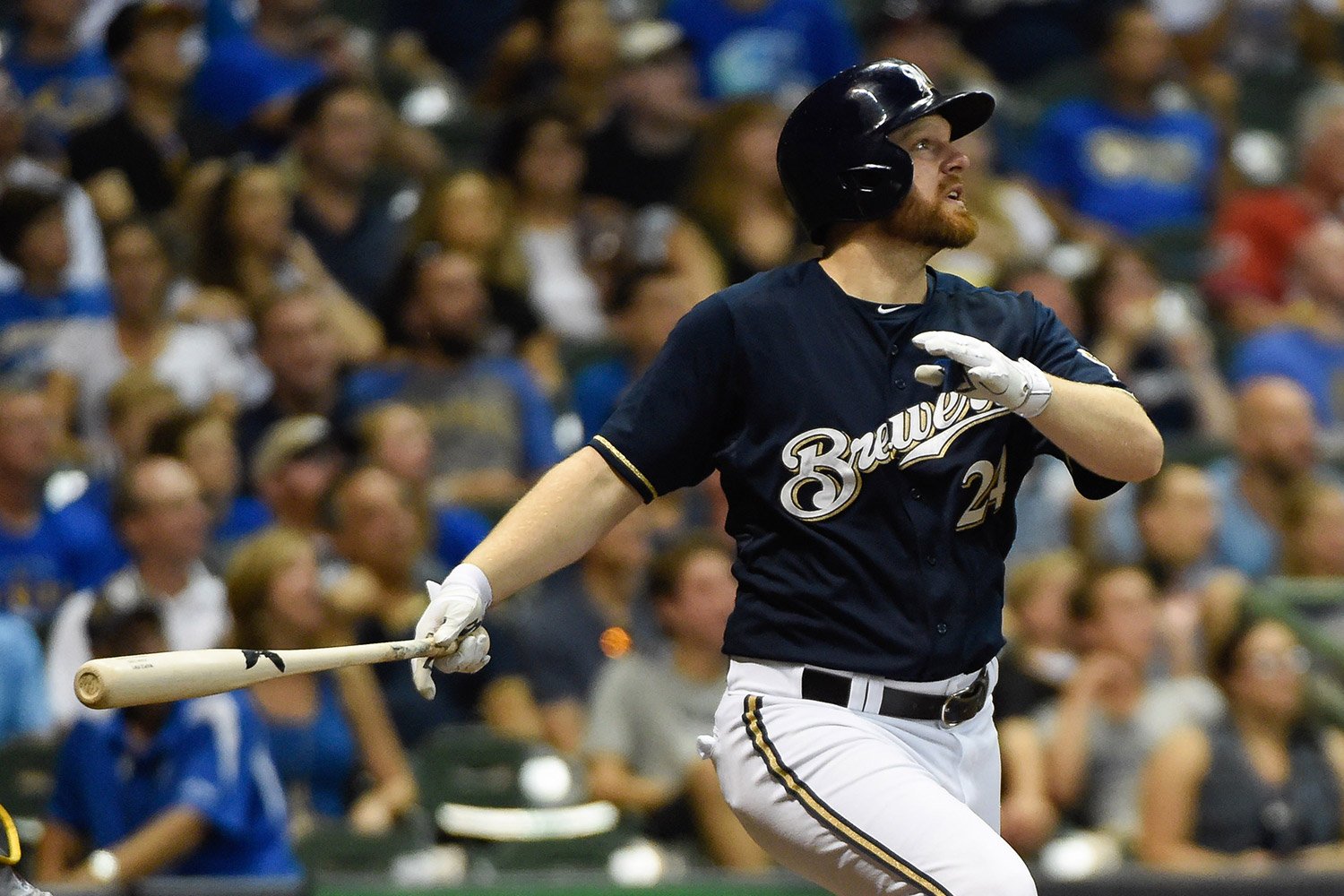 Adam Lind Adam Lind joined the Brewers in November 2014 in exchange for pitcher Marco Estrada. The team was looking for a power bat, and the 31-year-old provided that in 2015. Lind ranked third on the team with 20 home runs, 32 doubles, 87 RBIs, 66 walks, and 11 intentional passes. He also ranked in the top three in five other categories. In October, David Stearns took over as the Brewers GM and went to work wheeling and dealing, doing his best to re-stock the Brewers somewhat empty cupboard. One trade saw Lind and his $8 million millstone traded to the Seattle Mariners for three minor league pitchers: Daniel Missaki, Carlos Herrera, and a guy named Freddy Peralta. Gerardo Parra Gerardo Parra was traded to Milwaukee before the 2014 trading deadline in exchange for pitcher Anthony Banda and outfielder Mitch Haniger. Parra--a two-time Gold Glove winner--split time at all three garden spots the last two months of the season, slashing .268/.318/.390 over 123 at-bats. The following season, Parra once again played outfielder utilityman and had 75 starts among 89 games in 'the corn.' After a red-hot July in which Parra had a 14-game hitting streak and was batting .435/.495/.718, he was traded to the Baltimore Orioles in exchange for minor league pitcher Zach Davies. In 100 games for Milwaukee, Parra slashed .328/.369/.517 over 323 at-bats. Michael Blazek Michael Blazek spent two full seasons and parts of two others with the Brewers as a right-handed reliever, but the 2015 was his best. He came to the Brewers from the St. Louis Cardinals in a PTBNL trade for pitcher John Axford. After a September sip of Starbucks, Blazek spent the entire 2014 season at Triple-A Nashville, where he worked out of the pen and in the rotation. His 2015 season saw him post career highs with 45 games, 55.2 innings, 47 strikeouts, 164 ERA+, 3.17 FIP, and 2.42 ERA. Blazek's 1.2 bWAR ranked fifth on the team for pitchers. After a disappointing 2016 (76 ERA+, 5.71 FIP), he only appeared in five games with Milwaukee in July 2017 before getting released. He did set a major league record, though: he allowed five home runs in one inning against the Washington Nationals on July 27. Lind, Parra, and Blazek had solid seasons for the Brewers in 2015. Although they weren't the brightest stars in the Brewers universe, they had some of the best years of their careers during that otherwise dismal 2015 campaign.
 -
Most--well, all--Brewers fans know that Bob Uecker was born in Milwaukee and lived in Wisconsin most of his life. To honor him, the three players in this piece were born in this great state and played ball for the Brewers. Not only that, but they also all played their college ball in Wisco. Enjoy!! Image courtesy of © Mark J. Rebilas-Imagn Images Vinny Rottino Vinny Rottino was born in Racine, 35 miles south of County Stadium/Miller Park/Am Fam Field. He wasn't drafted out of high school, but after four great seasons at UW-La Crosse, he was signed as a free agent by the Brewers in 2003. Rottino didn't get much playing time at catcher behind Damian Miller, Johnny Estrada, and Jason Kendall, so he played a few games at first, third, and left field. The college batting star didn't get a chance to prove his worth, playing only 62 games combined with the Brewers, Marlins, Indians, and Mets. Rottino entered the broadcast industry and became a Brewers Bally Sports Network TV analyst. J.P. Feyereisen J.P. Feyereisen was born in Stillwater, Minnesota but grew up in River Falls, western Wisconsin, not far from the Wisconsin/Minnesota border. He attended UW-Stevens Point for three years and played one season in the collegiate Northwoods League with my hometown team, the Wisconsin Rapids Rafters. When this guy was on fire, he was on fire! In his first one-plus seasons in Low-A and A-ball, he threw 31 consecutive scoreless innings. In 2021, with the Brewers, he went 16 innings without allowing a run. After being traded to Tampa Bay, he went a whole season (22 games, 24.1 innings) without allowing an earned run. His FIP was a minuscule 1.67. Damian Miller Damian Miller was born in La Crosse and played college ball at Viterbo College, located in LaX. Of our threesome from today's piece, he spent the most time in the bigs and easily played the most games. He played in the infamous All-Star Game at Miller Park in 2002, which ended in a 7-7 tie because the teams ran out of pitchers after 11 innings. Miller played 11 big-league seasons for the Twins, Brewers, Cubs, Athletics, and Diamondbacks. After the 2008 season, he received calls from the Yankees and Padres but chose to retire, saying, “If I came back now, it would be only for the money, and if you play baseball, that’s not why you should do it." He said he would only return for one team: the Brewers. Like our friend Bob Uecker, these players were born in the Badger State and played for the home team. We celebrate them as we celebrate Ueck. Thanks for the memories! View full article
-
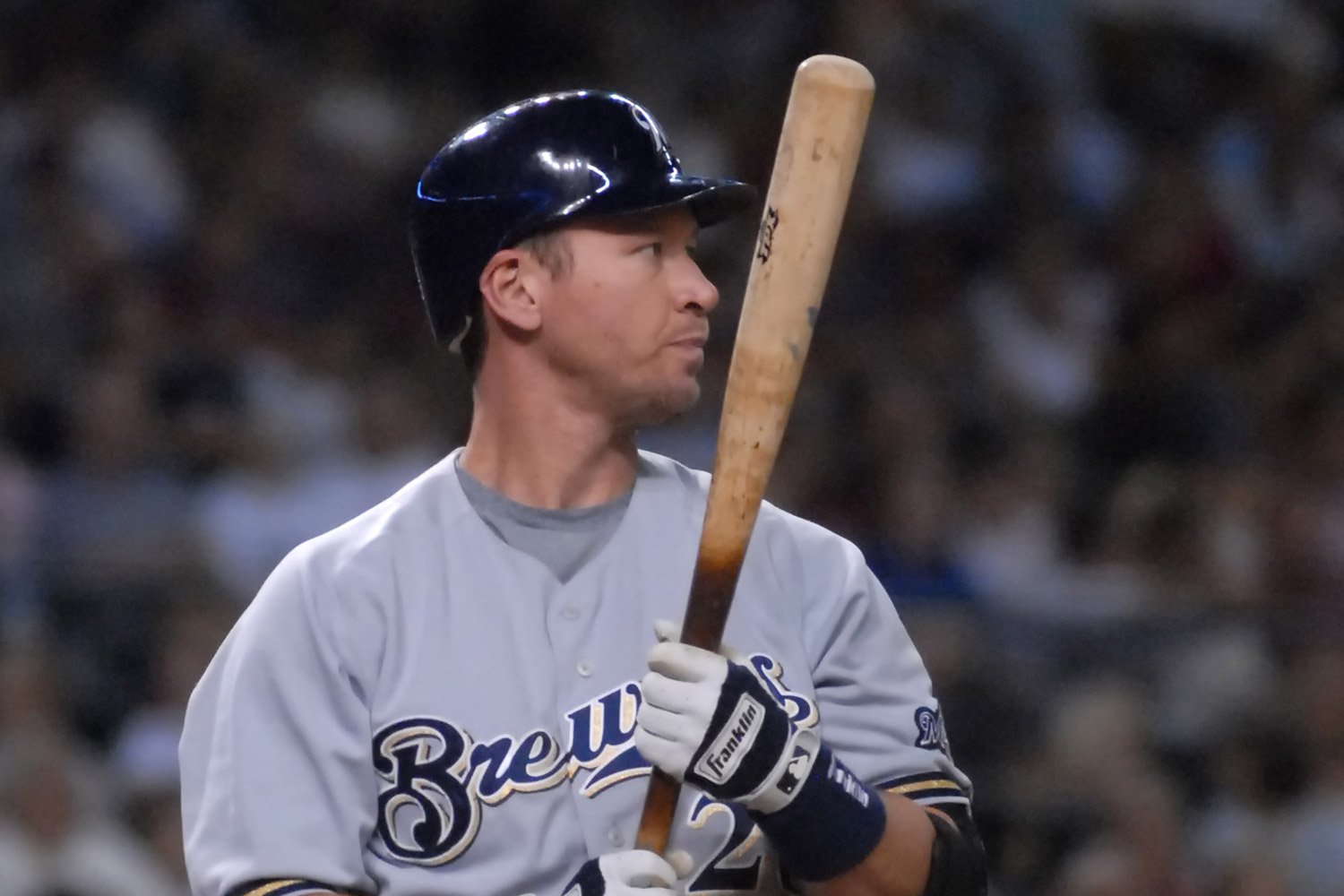 Vinny Rottino Vinny Rottino was born in Racine, 35 miles south of County Stadium/Miller Park/Am Fam Field. He wasn't drafted out of high school, but after four great seasons at UW-La Crosse, he was signed as a free agent by the Brewers in 2003. Rottino didn't get much playing time at catcher behind Damian Miller, Johnny Estrada, and Jason Kendall, so he played a few games at first, third, and left field. The college batting star didn't get a chance to prove his worth, playing only 62 games combined with the Brewers, Marlins, Indians, and Mets. Rottino entered the broadcast industry and became a Brewers Bally Sports Network TV analyst. J.P. Feyereisen J.P. Feyereisen was born in Stillwater, Minnesota but grew up in River Falls, western Wisconsin, not far from the Wisconsin/Minnesota border. He attended UW-Stevens Point for three years and played one season in the collegiate Northwoods League with my hometown team, the Wisconsin Rapids Rafters. When this guy was on fire, he was on fire! In his first one-plus seasons in Low-A and A-ball, he threw 31 consecutive scoreless innings. In 2021, with the Brewers, he went 16 innings without allowing a run. After being traded to Tampa Bay, he went a whole season (22 games, 24.1 innings) without allowing an earned run. His FIP was a minuscule 1.67. Damian Miller Damian Miller was born in La Crosse and played college ball at Viterbo College, located in LaX. Of our threesome from today's piece, he spent the most time in the bigs and easily played the most games. He played in the infamous All-Star Game at Miller Park in 2002, which ended in a 7-7 tie because the teams ran out of pitchers after 11 innings. Miller played 11 big-league seasons for the Twins, Brewers, Cubs, Athletics, and Diamondbacks. After the 2008 season, he received calls from the Yankees and Padres but chose to retire, saying, “If I came back now, it would be only for the money, and if you play baseball, that’s not why you should do it." He said he would only return for one team: the Brewers. Like our friend Bob Uecker, these players were born in the Badger State and played for the home team. We celebrate them as we celebrate Ueck. Thanks for the memories!



