



Bashopolis
-
Posts
108 -
Joined
-
Last visited
Content Type
Profiles
Forums
Blogs
Events
News
2026 Milwaukee Brewers Top Prospects Ranking
Milwaukee Brewers Videos
2022 Milwaukee Brewers Draft Picks
Milwaukee Brewers Free Agent & Trade Rumors, Notes, & Tidbits
Guides & Resources
2023 Milwaukee Brewers Draft Picks
2024 Milwaukee Brewers Draft Picks
The Milwaukee Brewers Players Project
2025 Milwaukee Brewers Draft Pick Tracker
2026 Milwaukee Brewers Draft Tracker: Picks & Bonuses
Store
Downloads
Gallery
Everything posted by Bashopolis
-
Moving catchers back a foot could be a bit much. Some compromise might be shortening the back of the batters box by 3” and then insert a catcher box front line at 6” back from that. And while we are at it, why not move the pitchers mound out a 6”. Pitchers are 6” taller than in 1920. They changed the size of bases and baseball purists still survived. It is time to look at the other dimensions that may not have kept up with the evolution of the players.
-
Is Brice Turang Taking That "Quantum Leap"?
Bashopolis replied to Jake McKibbin's topic in Brewer Fanatic Front Page News
The outlying stats last year, when compared to his minor league career, were the whiffs and strike outs. So it isn’t surprising that he is making adjustments to reduce these issues. They didn’t fit his minor league profile so he has a history of being able to adjust and correct to make contact. I wonder if the Brewers hitting coaches are less likely to push launch angle to everyone this year? -
If Major League Baseball really wants to stop pitchers from throwing at batters, they need to adjust the penalties for this offense. Image courtesy of © Wendell Cruz-USA TODAY Sports In the seventh inning of Saturday’s game between the Brewers and the Mets, Mets pitcher Yohan Ramírez “accidentally” threw a neck-high fastball behind Rhys Hoskins, who was at the center of Friday’s fracas between the teams and with whom the Mets have had issues for years. Hoskins was 3-for-3 with a home run and 4 RBIs for the game when he came to bat and found himself ducking. Ramírez said it was an accident after the game. But the umpires didn’t see it that way during the heat of the action. They were pretty sure it was intentional; so was everyone watching the game. They ejected Ramírez from the game. Was this justice for the Brewers? Well, they got to face a new pitcher and got ball one called on the pitch, because it was just a bit inside. New hurler Jorge López got to take as long as he needed to warm up. The team, perhaps, made a few extra beer sales as the fans went and got a cold one during those warm-up pitches. There may be additional fines or suspensions against Ramírez; but those will likely be reduced by appeal, and all the discipline will happen in a week or more, when the Mets might be playing the Brewers’ division rivals. They play the Reds next week, for instance. The Brewers get no justice. The Reds could get to face the Mets during any resulting suspension. This is like your neighbors chopping down a tree and it falling on your house. You win a lawsuit for damages; but the judge tells the neighbor to pay your other neighbor—the one whose dog keeps relieving himself on your lawn. There is no justice here for the Brewers, and really not much deterrent against the Mets. If Major League Baseball really wants to discourage bean balls, the penalty needs to be immediate and impactful in the game in which the incident occurred. At very least, an ejection for throwing at a batter should also include one base being awarded to the batter. If the pitcher is ejected for throwing at a batter and hits him, the batter should be awarded second base: first base for getting hit, and second base for the ejection. If the pitcher throws at a batter and misses, the batter should be awarded first base. If it is ball four, the batter should be awarded first base for the walk and second base for the ejection. Any runners on base get to move up one base as well. Will this entirely stop pitchers from throwing at batters? Maybe not by itself. Suspensions could be made longer. Fines could be greater. But at least, if there is an immediate one-base penalty, the team that was getting thrown at gets some real value for pain and suffering. Will MLB change this rule to dole out an immediate penalty for throwing at a batter? Probably not. Bean balls add excitement. They get fans engaged. The league may want to appear to want to stop bean balls, but they only go so far. Butts in seats and eyes on screens may weigh more heavily in the MLB court of law than making sure justice is served. Ball one isn’t justice, though, and everyone knows it. This is why retaliation happens. View full article
-
Do Ejections Adequately Punish Pitchers Who Throw at Opposing Batters?
Bashopolis posted an article in Brewers
 In the seventh inning of Saturday’s game between the Brewers and the Mets, Mets pitcher Yohan Ramírez “accidentally” threw a neck-high fastball behind Rhys Hoskins, who was at the center of Friday’s fracas between the teams and with whom the Mets have had issues for years. Hoskins was 3-for-3 with a home run and 4 RBIs for the game when he came to bat and found himself ducking. Ramírez said it was an accident after the game. But the umpires didn’t see it that way during the heat of the action. They were pretty sure it was intentional; so was everyone watching the game. They ejected Ramírez from the game. Was this justice for the Brewers? Well, they got to face a new pitcher and got ball one called on the pitch, because it was just a bit inside. New hurler Jorge López got to take as long as he needed to warm up. The team, perhaps, made a few extra beer sales as the fans went and got a cold one during those warm-up pitches. There may be additional fines or suspensions against Ramírez; but those will likely be reduced by appeal, and all the discipline will happen in a week or more, when the Mets might be playing the Brewers’ division rivals. They play the Reds next week, for instance. The Brewers get no justice. The Reds could get to face the Mets during any resulting suspension. This is like your neighbors chopping down a tree and it falling on your house. You win a lawsuit for damages; but the judge tells the neighbor to pay your other neighbor—the one whose dog keeps relieving himself on your lawn. There is no justice here for the Brewers, and really not much deterrent against the Mets. If Major League Baseball really wants to discourage bean balls, the penalty needs to be immediate and impactful in the game in which the incident occurred. At very least, an ejection for throwing at a batter should also include one base being awarded to the batter. If the pitcher is ejected for throwing at a batter and hits him, the batter should be awarded second base: first base for getting hit, and second base for the ejection. If the pitcher throws at a batter and misses, the batter should be awarded first base. If it is ball four, the batter should be awarded first base for the walk and second base for the ejection. Any runners on base get to move up one base as well. Will this entirely stop pitchers from throwing at batters? Maybe not by itself. Suspensions could be made longer. Fines could be greater. But at least, if there is an immediate one-base penalty, the team that was getting thrown at gets some real value for pain and suffering. Will MLB change this rule to dole out an immediate penalty for throwing at a batter? Probably not. Bean balls add excitement. They get fans engaged. The league may want to appear to want to stop bean balls, but they only go so far. Butts in seats and eyes on screens may weigh more heavily in the MLB court of law than making sure justice is served. Ball one isn’t justice, though, and everyone knows it. This is why retaliation happens.
 -
I tend to agree that the season could swing on Gasser delivering 150+ innings of competent (4.00 EFA) starting pitching. If they get this from him, they have enough other pieces that could individually get to 100 to 120 innings so they can cycle through a few folks trying to see who works out. The other thing that may need to click is for the Brewers to be able to put together 3 or 4 . 750 OPS guys in the batting order on any given night. (It may be different players based on some platooning.) It doesn't have to be homeruns but it does have to be a sequence of players that will make the other team's pitcher uncomfortable. They need to have the offense they had in September 2023 beginning in April 2024.
- 7 replies
-
- 1
-

-
- freddy peralta
- aaron ashby
- (and 5 more)
-
I don’t think they were ever planning on Miley being in the rotation on opening day. He isn’t going to get 150 innings. They may as well save those innings and explore their depth.
-
Very likely Miley starts on the I L to cut down on his total innings and help with the rostering of folks w/o options. Ashby may also or start on a rehab in AAA. In such a case your starting bulk guys the first 2 weeks are Peralta, Ray, Hall, Ross and Wilson. During the first 13 game stretch they rotate Miley, Gasser and Ashby in with Hall going to the minors, Miller goes to piggyback and an injury occurs. During second 13 game stretch they rotate Gasser back out for Hall and use some other options to manage work loads. There may be some unusual options like Ray with he whole goal of maintaining depth while managing workloads. I would foresee not a traditional six man rotation but something much more fluid with inning management and roster adjustments.
-
I’m more concerned about his future than these comments. How certain can we be that 6 eeeks of rest will solve this issue or that it won’t reoccur once he starts trying to throw fastballs and air benders again? it
-
Don't Forget the Milwaukee Brewers' Forgotten Man in the Infield Mix
Bashopolis posted an article in Brewers
 Andruw Monasterio must be feeling like he is invisible. The Brewers seem to be looking for every solution to their infield problems but him. This isn’t surprising; he has been overlooked by the Brewers (and the rest of the league) before. Monasterio wasn’t included in the Freshman promotion blitz prior to the 2023 season; he wasn’t expected to be a part of the mix at all. Now, he is likely wondering if the Brewers remember that he was the very competent starting third baseman for a good chunk of 2023. Over the winter, the Brewers have spoken about giving Tyler Black a chance to win the job at third base. They have added Joey Ortiz, Vinny Capra, and Oliver Dunn to the options box. And now we find out that Sal Frelick has been preparing to play the two positions at which Monastario most often played last year. All this could make a person question if the Brewers have any confidence in Monasterio even being on the MLB roster. Monasterio has been overlooked since he began his baseball career, having signed out of the Venezuelan Development Leagues in 2014. During his minor-league time, he was traded twice. The Brewers signed him as a minor-league free agent in Nov. 2021, after a solid season with Cleveland’s top two farm clubs. In the Milwaukee system in 2022, Monasterio had some initial difficulties transitioning into Triple-A ball, but by 2023, he improved his slugging percentage over 70 points and got the promotion to the big leagues. Last May, Monasterio came up to the Brewers and provided solid production at second and third base. This follows a trend from his time in the minors; he continually rose to the challenge whenever promoted. Throughout his minor-league career, he has kept his OBP solidly in the .360 range, while adding a bit more pop over the last two years to move his slugging percentage over .400. After starting with a May hot streak, he finished with a solid last couple of months of the season—all while contributing slightly above-average defense at second and third base. In 2023, Andruw Monasterio contributed 1.3 WAR in 92 games. Projecting this production over 162 games, he would have achieved 2.3 WAR. That would be solid production, compared to MLB’s average WAR of 2.5 at second and 2.1 at third. Should the Brewers be expecting a monumental collapse by Monasterio in 2024? Probably not. Although his production throughout 2023 had some ups and downs, he was on an upward trend in some important categories, including increasing hard-hit and fly-ball rates through the second half of the season. His swing is compact and consistent, without any significant holes. Unlike some of the other freshmen who had regression during the season and/or have serious red flags concerning contact rate, there aren’t holes in Monasterio’s profile other than his lack of power. There also isn’t much reason to anticipate a breakout season. That isn’t the way Monasterio rolls. He incrementally improves production. This should give the Brewers a bit more confidence in relying on him to take 400 at-bats in a versatile infield role during 2024. The Crew have purposely overstocked the team to protect against regression or injuries. Perhaps that is what they are doing by having Frelick get some reps on the dirt. Still, don’t be surprised to see Monasterio get a majority of the at-bats at an infield position during 2024. It is much more likely that Frelick slots into the outfield, where other players come with more significant question marks. It also seems possible that Turang, Ortiz or Black gets some more time in the minors to hone their game. In the end, the Brewers will make decisions based on performance. If there isn’t a big breakout season from one of the other young players, the Brewers and their fans will once again recognize the steady production on offense and defense that Monasterio brings to the team.
 -
The Milwaukee Brewers have worked hard to create depth and upside on the infield. Have they underestimated one of last year's key contributors in the process? Image courtesy of © Michael McLoone-USA TODAY Sports Andruw Monasterio must be feeling like he is invisible. The Brewers seem to be looking for every solution to their infield problems but him. This isn’t surprising; he has been overlooked by the Brewers (and the rest of the league) before. Monasterio wasn’t included in the Freshman promotion blitz prior to the 2023 season; he wasn’t expected to be a part of the mix at all. Now, he is likely wondering if the Brewers remember that he was the very competent starting third baseman for a good chunk of 2023. Over the winter, the Brewers have spoken about giving Tyler Black a chance to win the job at third base. They have added Joey Ortiz, Vinny Capra, and Oliver Dunn to the options box. And now we find out that Sal Frelick has been preparing to play the two positions at which Monastario most often played last year. All this could make a person question if the Brewers have any confidence in Monasterio even being on the MLB roster. Monasterio has been overlooked since he began his baseball career, having signed out of the Venezuelan Development Leagues in 2014. During his minor-league time, he was traded twice. The Brewers signed him as a minor-league free agent in Nov. 2021, after a solid season with Cleveland’s top two farm clubs. In the Milwaukee system in 2022, Monasterio had some initial difficulties transitioning into Triple-A ball, but by 2023, he improved his slugging percentage over 70 points and got the promotion to the big leagues. Last May, Monasterio came up to the Brewers and provided solid production at second and third base. This follows a trend from his time in the minors; he continually rose to the challenge whenever promoted. Throughout his minor-league career, he has kept his OBP solidly in the .360 range, while adding a bit more pop over the last two years to move his slugging percentage over .400. After starting with a May hot streak, he finished with a solid last couple of months of the season—all while contributing slightly above-average defense at second and third base. In 2023, Andruw Monasterio contributed 1.3 WAR in 92 games. Projecting this production over 162 games, he would have achieved 2.3 WAR. That would be solid production, compared to MLB’s average WAR of 2.5 at second and 2.1 at third. Should the Brewers be expecting a monumental collapse by Monasterio in 2024? Probably not. Although his production throughout 2023 had some ups and downs, he was on an upward trend in some important categories, including increasing hard-hit and fly-ball rates through the second half of the season. His swing is compact and consistent, without any significant holes. Unlike some of the other freshmen who had regression during the season and/or have serious red flags concerning contact rate, there aren’t holes in Monasterio’s profile other than his lack of power. There also isn’t much reason to anticipate a breakout season. That isn’t the way Monasterio rolls. He incrementally improves production. This should give the Brewers a bit more confidence in relying on him to take 400 at-bats in a versatile infield role during 2024. The Crew have purposely overstocked the team to protect against regression or injuries. Perhaps that is what they are doing by having Frelick get some reps on the dirt. Still, don’t be surprised to see Monasterio get a majority of the at-bats at an infield position during 2024. It is much more likely that Frelick slots into the outfield, where other players come with more significant question marks. It also seems possible that Turang, Ortiz or Black gets some more time in the minors to hone their game. In the end, the Brewers will make decisions based on performance. If there isn’t a big breakout season from one of the other young players, the Brewers and their fans will once again recognize the steady production on offense and defense that Monasterio brings to the team. View full article
-
A vote for Clevinger. 2023 was a decent year. His results were very good through August and then it seemed like he hit a bit of a wall. He isn't ancient and could be the right handed version of Wade Miley.
- 8 replies
-
- 2
-

-
- michael lorenzen
- mike clevinger
- (and 3 more)
-
This is likely part of it. The expectation is a little higher. And with that and their less than stellar performance so far as MLB players, there is more upside potential. A break out by any one of the outfield bats would be awesome!
-
I tend to agree that there is more of an opportunity/likelihood that Frelick gets most of his playing time in the outfield. The outfield players seem to have a few more question marks than those lining up to play infield.
-
This is where all the cool kids hang now.
-
Considering the contract, Chourio will have to play his way off the opening day roster this spring rather than play his way onto it. I'm not sure that is the right call, but likely the reality. I would have liked to have seen the Brewers provide Chourio the opportunity to mash at AAA. Hitting has a lot to do with confidence and being one of the top 10 hitters at AAA for two or three months could have helped Chourio's confidence going into the majors. My real concern is that the Brewers haven't produced an above average hitter out of their farm system in a very long time. I don't have great confidence that they have adequately prepared Chourio. Many recent prospects have come to the majors with a major hole or deficiency. (there is no way Weimer should have made it through the system with that swing.) Chourio may be the unusual talent that overcomes the deficiencies the Brewers have in producing above average hitters. But I would prefer the Brewers are careful considering their track record. Chourio can be a generational player IF the Brewers get this right. And for this year, there are other options to be sorted in the outfield in April and May. So delaying Chourio for a couple of months could make sense.
-
If this was the NBA we would call this load management. Wade Miley isn’t going to be available 162 games. The Brewers want to see other pitchers in April.
-
I’m not sure why we should expect Monasterio to falter. His game has the least holes of any freshmen. He isn’t an all star but his production tends to reflect his underlying stats
-
It really might depend on whether you end up adding a service or dumping a different one and adding Amazon. We recently dumped Spectrum and will pick up Fubu cause they have Bally -- there is a bit of savings there. If it goes to Amazon, then I could see dumping Fubu and just doing NetFlix and Amazon Prime -- in that case we would save a lot of money. The good is that you can pick your watching options based on specifically what you want. The big question I have is whether this diminishes the ability to attract new fans or engage the casual fan. Boxing went totally towards pay per view and dropped out of the public conversation and ends up being replaced by MMA. Is the move away from broadcast tv going to further marginalize baseball? Considering that the fan base skews towards older white guys, this could be a problem for MLB.
-
Who Is The Brewers' Fifth Starter? Is There One, Does It Matter?
Bashopolis posted an article in Brewers
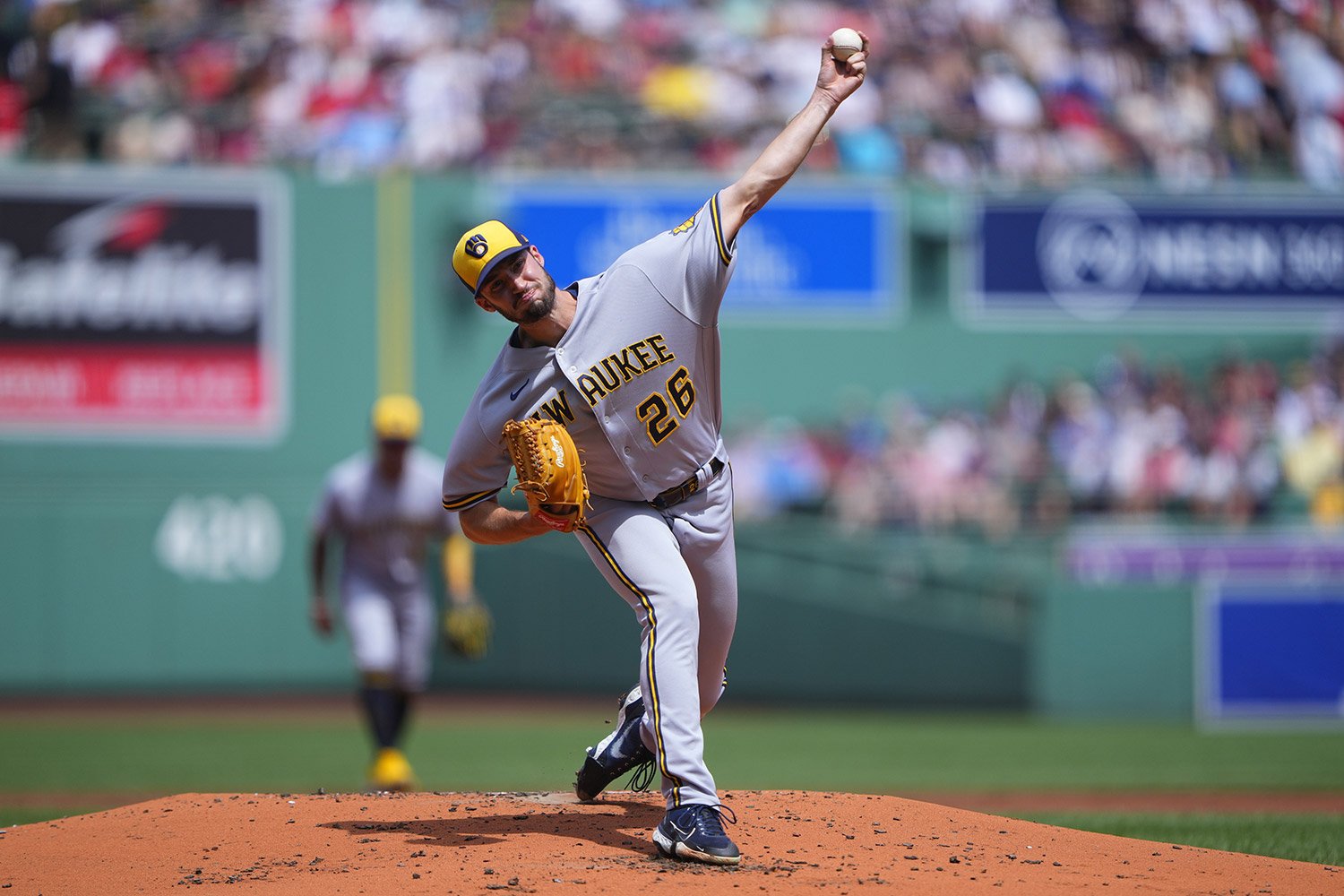 There isn’t a battle for the fifth starter in Spring Training this year because the Brewers plan to use pitchers less conventionally. The plan will focus on using a group of bulk inning pitchers to achieve the best outcomes by limiting injury risk and exposure multiple times through a lineup, in part because the current set of pitchers tends to have problems when facing a batter a third time in a game. Also, the Brewers will need to do this because they have several multi-inning pitchers who cannot be expected to take the ball every five days and go six or seven innings for 30 or more starts. Instead, the Brewers often use back-to-back bulk inning pitchers to get through the first six or seven innings in a game and have set themselves up by building a deep staff of five-inning pitchers. This depth is balanced with left- and right-handed pitchers to put other teams at a platoon disadvantage throughout the middle innings of games. The Brewers' goal is to have positive outcomes in over 55% of the games; a positive outcome is being in the lead or tied at the end of the sixth inning. The first six innings of 162 games is 972 innings. How will the Brewers get through 972 innings in a winnable position 55% of the time? By using pitchers in a way that highlights their strengths while diminishing the risk of injury or ineffectiveness. With this goal in mind, the Brewers would categorize pitchers like this: The Stalwart: Freddie Peralta (160 innings) This season, Peralta may be the only pitcher to fill a traditional starting pitcher role. The Brewers will look for him to start 30 games and consistently reach the fifth or sixth inning with the potential of going three times through an entire lineup during a good start. Everyone else may be handled a bit less traditionally: The Fifth Day Starters: Aaron Ashby, Wade Miley, Joe Ross, Colin Rea ( Average 100 to 120 innings each) Due to injury history or age, this pitcher will more likely get the ball at the beginning of games but will often leave a game before facing a hitter a third time. Each pitcher could be expected to be on the injured list or in the minors for approximately 25% of the season to limit total innings and be fresh at the end of the season. Also, to limit innings and exposure, they may get “piggybacked” as early as the third or fourth inning in a particular game if there are other bulk inning pitchers who have had adequate rest. The Workhorses: Bryse Wilson, Jakob Junis, Robert Gasser (Average 80 - 120 innings each, depending upon if they are called on to fill in for a fifth-day starter) This pitcher may get many outings but will more often pitch two or three innings in a game in relief of the fifth-day starters. If they go only two or three innings, they may pitch every third day, but if they go four or five innings, they will get rest more like a traditional starter. Workhorses will be deployed based on rest, how the pitcher performs, and how to provide the Brewers with the best chance of winning the most games. Much like teams use A and B bullpens, the Brewers will attempt to use the workhorses that are pitching the best to augment winnable games. When one of the fifth-day starters is injured, or the Brewers go to a six-man rotation, the workhorses will take the mound at the beginning of the game. Bryse Wilson was a workhorse for the Brewers last year. Jakob Junis filled this role for the San Francisco Giants last year. Between the Stalwart, Fifth Day Starters, and Workhorses, these pitchers will cover 800 to 1,000 innings. But it will also be augmented by rookies available during the season. The Potentials: DL Hall, Jacob Misiorowski, Carlos Rodriguez (60 – 120 innings) These players will likely join the team in 2024. They will more likely fill workhorse roles but could start if there are several injuries. Additional injuries and performance issues will occur among the Fifth Day starters and the Workhorses. This will provide opportunities for these pitchers with the potential to be called up from the minors. Implementing the Plan: With this plan, the Brewers can cover as many as 1,360 innings. This is 30% over the 972 innings that need to be covered and provides extra insurance in case of injury or regression. How do the Brewers make this work when there are eleven pitchers in the plan and thirteen pitchers on an MLB roster? There will have to be some creativity. Using Options: Ashby and Gasser still have options available, and there may be a need to use those at the onset of the season to keep the depth. DL Hall also has options or could start in the single-inning bullpen use group if needed. Players will be optioned at the beginning of the season to maintain depth on the roster. Using the Injured List: Any pitcher age twenty-five or over has some nagging injury. The Brewers will use these to manage their workload creatively. Miley and Ross may even start the season on the injured list as the Brewers comb through their other bulk inning pitchers to see where each one fits. Players will rotate onto the MLB roster from the minors or the Injured List throughout the season. The injured list can include rehab opportunities and trips to the pitching lab to reset and explore pitch shape and mix changes. With this perspective on bulk inning pitching, the Brewers won’t be holding a competition in spring training to determine the five best-starting pitchers. Instead, they will focus on which pitcher fits into a specific role and then set an opening-day roster to maintain the depth necessary to get through a long season. There is no traditional battle for the fifth starter position on this roster. What could go wrong? For one thing, a significant injury to Peralta could have a considerable impact. But beyond that, what could go wrong? Will the Brewers engage in a more fluid view of bulk pitcher usage? Will it work?
- 5 comments
-
- 1
-
-
- aaron ashby
- freddy peralta
- (and 5 more)
-
The first six innings of 162 games is 972 innings. How are the Brewers going to manage those 972 innings? Unconventionally. Image courtesy of © Gregory Fisher-USA TODAY Sports There isn’t a battle for the fifth starter in Spring Training this year because the Brewers plan to use pitchers less conventionally. The plan will focus on using a group of bulk inning pitchers to achieve the best outcomes by limiting injury risk and exposure multiple times through a lineup, in part because the current set of pitchers tends to have problems when facing a batter a third time in a game. Also, the Brewers will need to do this because they have several multi-inning pitchers who cannot be expected to take the ball every five days and go six or seven innings for 30 or more starts. Instead, the Brewers often use back-to-back bulk inning pitchers to get through the first six or seven innings in a game and have set themselves up by building a deep staff of five-inning pitchers. This depth is balanced with left- and right-handed pitchers to put other teams at a platoon disadvantage throughout the middle innings of games. The Brewers' goal is to have positive outcomes in over 55% of the games; a positive outcome is being in the lead or tied at the end of the sixth inning. The first six innings of 162 games is 972 innings. How will the Brewers get through 972 innings in a winnable position 55% of the time? By using pitchers in a way that highlights their strengths while diminishing the risk of injury or ineffectiveness. With this goal in mind, the Brewers would categorize pitchers like this: The Stalwart: Freddie Peralta (160 innings) This season, Peralta may be the only pitcher to fill a traditional starting pitcher role. The Brewers will look for him to start 30 games and consistently reach the fifth or sixth inning with the potential of going three times through an entire lineup during a good start. Everyone else may be handled a bit less traditionally: The Fifth Day Starters: Aaron Ashby, Wade Miley, Joe Ross, Colin Rea ( Average 100 to 120 innings each) Due to injury history or age, this pitcher will more likely get the ball at the beginning of games but will often leave a game before facing a hitter a third time. Each pitcher could be expected to be on the injured list or in the minors for approximately 25% of the season to limit total innings and be fresh at the end of the season. Also, to limit innings and exposure, they may get “piggybacked” as early as the third or fourth inning in a particular game if there are other bulk inning pitchers who have had adequate rest. The Workhorses: Bryse Wilson, Jakob Junis, Robert Gasser (Average 80 - 120 innings each, depending upon if they are called on to fill in for a fifth-day starter) This pitcher may get many outings but will more often pitch two or three innings in a game in relief of the fifth-day starters. If they go only two or three innings, they may pitch every third day, but if they go four or five innings, they will get rest more like a traditional starter. Workhorses will be deployed based on rest, how the pitcher performs, and how to provide the Brewers with the best chance of winning the most games. Much like teams use A and B bullpens, the Brewers will attempt to use the workhorses that are pitching the best to augment winnable games. When one of the fifth-day starters is injured, or the Brewers go to a six-man rotation, the workhorses will take the mound at the beginning of the game. Bryse Wilson was a workhorse for the Brewers last year. Jakob Junis filled this role for the San Francisco Giants last year. Between the Stalwart, Fifth Day Starters, and Workhorses, these pitchers will cover 800 to 1,000 innings. But it will also be augmented by rookies available during the season. The Potentials: DL Hall, Jacob Misiorowski, Carlos Rodriguez (60 – 120 innings) These players will likely join the team in 2024. They will more likely fill workhorse roles but could start if there are several injuries. Additional injuries and performance issues will occur among the Fifth Day starters and the Workhorses. This will provide opportunities for these pitchers with the potential to be called up from the minors. Implementing the Plan: With this plan, the Brewers can cover as many as 1,360 innings. This is 30% over the 972 innings that need to be covered and provides extra insurance in case of injury or regression. How do the Brewers make this work when there are eleven pitchers in the plan and thirteen pitchers on an MLB roster? There will have to be some creativity. Using Options: Ashby and Gasser still have options available, and there may be a need to use those at the onset of the season to keep the depth. DL Hall also has options or could start in the single-inning bullpen use group if needed. Players will be optioned at the beginning of the season to maintain depth on the roster. Using the Injured List: Any pitcher age twenty-five or over has some nagging injury. The Brewers will use these to manage their workload creatively. Miley and Ross may even start the season on the injured list as the Brewers comb through their other bulk inning pitchers to see where each one fits. Players will rotate onto the MLB roster from the minors or the Injured List throughout the season. The injured list can include rehab opportunities and trips to the pitching lab to reset and explore pitch shape and mix changes. With this perspective on bulk inning pitching, the Brewers won’t be holding a competition in spring training to determine the five best-starting pitchers. Instead, they will focus on which pitcher fits into a specific role and then set an opening-day roster to maintain the depth necessary to get through a long season. There is no traditional battle for the fifth starter position on this roster. What could go wrong? For one thing, a significant injury to Peralta could have a considerable impact. But beyond that, what could go wrong? Will the Brewers engage in a more fluid view of bulk pitcher usage? Will it work? View full article
- 5 replies
-
- 1
-
-
- aaron ashby
- freddy peralta
- (and 5 more)
-
One negative of a free agent deadline, is that it could actually create the super team dynamic that happens in the NBA. Players choose teams and set parameters. The Dodgers could be that type of super team as they are all ready over the salary limit and really don't care. How it could help the Brewers, is teams are going to have to prioritize their choices. If Snell isn't going to sign until the end of the free agent deadline than that team that thinks they might sign Snell isn't going to offer Sanchez a contract so the Brewers may be able to get Sanchez for less... If the Brewers can get Sanchez. If Sanchez exists? If Sanchez is able to use a pen? Or show up? Where is Sanchez anyways?
-
I could totally see Ashby starting in the minors... on a sort of "rehab"/ control the number of innings he pitches type of placement. The Brewers won't be expecting 150+ innings out of him; I could also see DL Hall spend some time at the beginning of the season in the minors if they feel he needs to work on specific items to be a successful starter. As far as relievers, it will depend a lot upon who does well in the Spring, but the Brewers will exercise caution to try to retain as much depth in the minors that they can. I wouldn't expect that the best pitchers will break camp. But rather those that show the potential to be contributors during the season and are the most at risk of being lost because they are out of options.
- 23 replies
-
- 2
-
-
- bryan hudson
- elvis peguero
- (and 4 more)
-
The key to the Brewers season may be if one of Frelick, Black, Chourio, or Mitchel can give the team a consistent .360 or above OBP. If one of the young players can do this, or at least do this against righthanded pitching, I could see them moving into the lead off spot and moving others down the line up. This can provide a block of hitters that can produce positive outcomes. It would be better to see Contreras move down to third in the line up if another player, a faster player, and Yelich can get on base enough while also showing at least extra base power. The other concern is: does Yelich regress? It was great to see him return to being at least an above average player, but is this change sustainable? And why for two years was his production significantly worse? If this is health related, Yelich is on the other side of peak, so that could be concerning.
-
It seems really unlikely that an extension will happen. Especially for a catcher extending into his early thirties really diminishes over all earning potential. An extension through age 32 is generally a bad idea for a player and even a worse idea for a catcher. At age 30, Contreras could get a 4 or 5 year free agent deal. At 32 he is more likely to be going year to year. But if he is willing, an extension doesn’t preclude trading him later so the Brewers should consider it.
-
Is Bryse Wilson's 2023 Success Sustainable?
Bashopolis replied to Jason Wang's topic in Brewer Fanatic Front Page News
Every year, at least one relief pitcher suffers significant regression and isn't part of the MLB team by about July. Last year it was Stryzelecki. Hopefully, it is only one this year, but considering how the Brewers bullpen performed so well last year, with a number of unheralded players, there may be more than one this year. If it is only one, having that one be Bryse Wilson wouldn't be a worse thing. The Brewers have a lot of coverage in the long relief/spot starter position on the roster. The Brewers would likely rather have Wilson regress rather than Payamps or Peguero.


