



Jack Stern
-
Posts
764 -
Joined
-
Last visited
-
Days Won
2
Content Type
Profiles
Forums
Blogs
Events
News
2026 Milwaukee Brewers Top Prospects Ranking
Milwaukee Brewers Videos
2022 Milwaukee Brewers Draft Picks
Milwaukee Brewers Free Agent & Trade Rumors, Notes, & Tidbits
Guides & Resources
2023 Milwaukee Brewers Draft Picks
2024 Milwaukee Brewers Draft Picks
The Milwaukee Brewers Players Project
2025 Milwaukee Brewers Draft Pick Tracker
2026 Milwaukee Brewers Draft Tracker: Picks & Bonuses
Store
Downloads
Gallery
Everything posted by Jack Stern
-
 The latest division-winning Brewers team featured a new manager and a revamped roster, both of which deserve credit for this year's success. However, an excellent coaching staff and front office that remained intact from previous seasons also lie at the center of the organization's sustainability. Image courtesy of © Benny Sieu-Imagn Images The latest division-winning Brewers team featured a new manager and a revamped roster, both of which deserve credit for this year's success. However, an excellent coaching staff and front office that remained intact from previous seasons also lie at the center of the organization's sustainability. The Brewers secured their third division title in four years, after an offseason of turnover. Brandon Woodruff ultimately re-upped on a two-year deal, but his recovery from shoulder surgery ruled him out for the entire season. Corbin Burnes was traded to the Orioles two weeks before pitchers and catchers reported for spring training. Perhaps the most noteworthy change, however, was to the team’s leadership in the dugout. Craig Counsell departed Milwaukee, traveling 90 minutes south to join the division-rival Chicago Cubs on a record contract for a big-league manager. Pat Murphy assumed the mantle of skipper after serving as Counsell’s bench coach for eight seasons, and Rickie Weeks joined the staff as associate manager. While much of the personnel changed, the quality of the on-field product did not. The Brewers figure to cross the 90-win threshold in the regular season’s waning dayss and will play a postseason game for the sixth time in seven years. In hindsight, no one should be surprised. The Brewers are a well-oiled machine, and despite the front-facing turnover, nearly all of that machine’s most integral pieces remained intact. The Brewers lost their two best starting pitchers. They lost Counsell. The lineup underwent a makeover. Most of the individuals responsible for assembling, organizing, and guiding the roster were the same people who filled those roles last year. Counsell’s entire coaching staff remained in Milwaukee after his departure, and they proved indispensable to Murphy in his first full season as a big-league manager. “I knew the whole coaching staff for the most part,” Murphy said minutes after the Cubs lost on Wednesday afternoon to secure his team’s division title. “We made three or four changes. I think they’re unsung heroes.” Hitting coaches Connor Dawson and Ozzie Timmons have continued to work with a lineup that’s been among the team’s best in the last decade. First-base coach Quintin Berry has advised a group of smart baserunners who have stolen 197 bases this year, the third-most in baseball. The fruits of continuity are perhaps felt most on the run-prevention side. Berry continues to instruct a group of rangy young outfielders who convert would-be extra-base hits into outs. Meanwhile, a pitching brain trust led by Chris Hook, Jim Henderson, and Walker McKinven has optimized a hodgepodge of castoff arms in front of that defense. Pundits perceived the Brewers’ pitching staff as a weakness after losing Burnes and Woodruff (and Devin Williams for the entire first half due to stress fractures in his back). It currently boasts the fourth-lowest ERA in baseball. Much of that is due to that elite defense, which is helping the group overperform a 4.20 FIP that ranks 22nd in the sport. However, the pitching department also excels at making pitchers with unremarkable arsenals – Colin Rea, Tobias Myers, Frankie Montas, and Aaron Civale are all examples – as deceptive as possible. Achieving that deception takes different forms based on each pitcher’s abilities and mix. Sometimes, it means mixing three fastball variations to keep hitters off-balance. Other times, it means resurrecting an old breaking ball to close a gap in pitch shapes. It could be a simple mechanical tweak that makes the ball harder for hitters to read out of the hand. The Brewers do not have a spotless hit rate with their pitching projects, but their track record is quite impressive. What many perceived as a weakness remains Milwaukee’s greatest strength. The continuity extends to the front office, where Matt Arnold continued to supply his roster with a productive mix of diamonds in the rough, reliable veterans, and young talent. “Arnold will never take any credit, but he’s been here how many years doing it,” Murphy said. “He’s been a huge cog in this whole thing, not just since he’s been running it, but he’s been a huge cog the whole time. “I think the guys in the front office are never going to get the credit they deserve,” he added. Above all else, the players earned a playoff berth with their performance on the field. Murphy earned it by skillfully shepherding an inexperienced group with more public detractors than believers. However, a significant amount of credit is due to the less visible coordinators who identified these players, developed them into the best versions of themselves, and put them in positions to succeed. That system is likely to continue succeeding long-term. The Brewers have built a deeply ingrained winning culture that spans the front office and coaching staffs across all levels of the organization. The team will, inevitably, lose some of its current coaches as time progresses, but it should be able to weather those subtractions due to how deeply its models of leadership, player development, and strategy are embedded into its being. It’s how they’ve kept chugging along after losing Derek Johnson, David Stearns, and now Counsell. “It doesn’t happen overnight,” said Christian Yelich, who has seen that sustained culture develop over his seven years in Milwaukee. “It doesn’t take one year or two years for that to become your identity as an organization or the team. It takes a lot of talented people. It takes a lot of the right people. It takes a lot of consistency from ownership on down, throughout the organization, you know? It’s not all because of one person.” It’s no coincidence that the Brewers find themselves here yet again. Few organizations boast the level of cohesion and efficiency present in Milwaukee. The rest of baseball ought to be on notice. View full article
 -
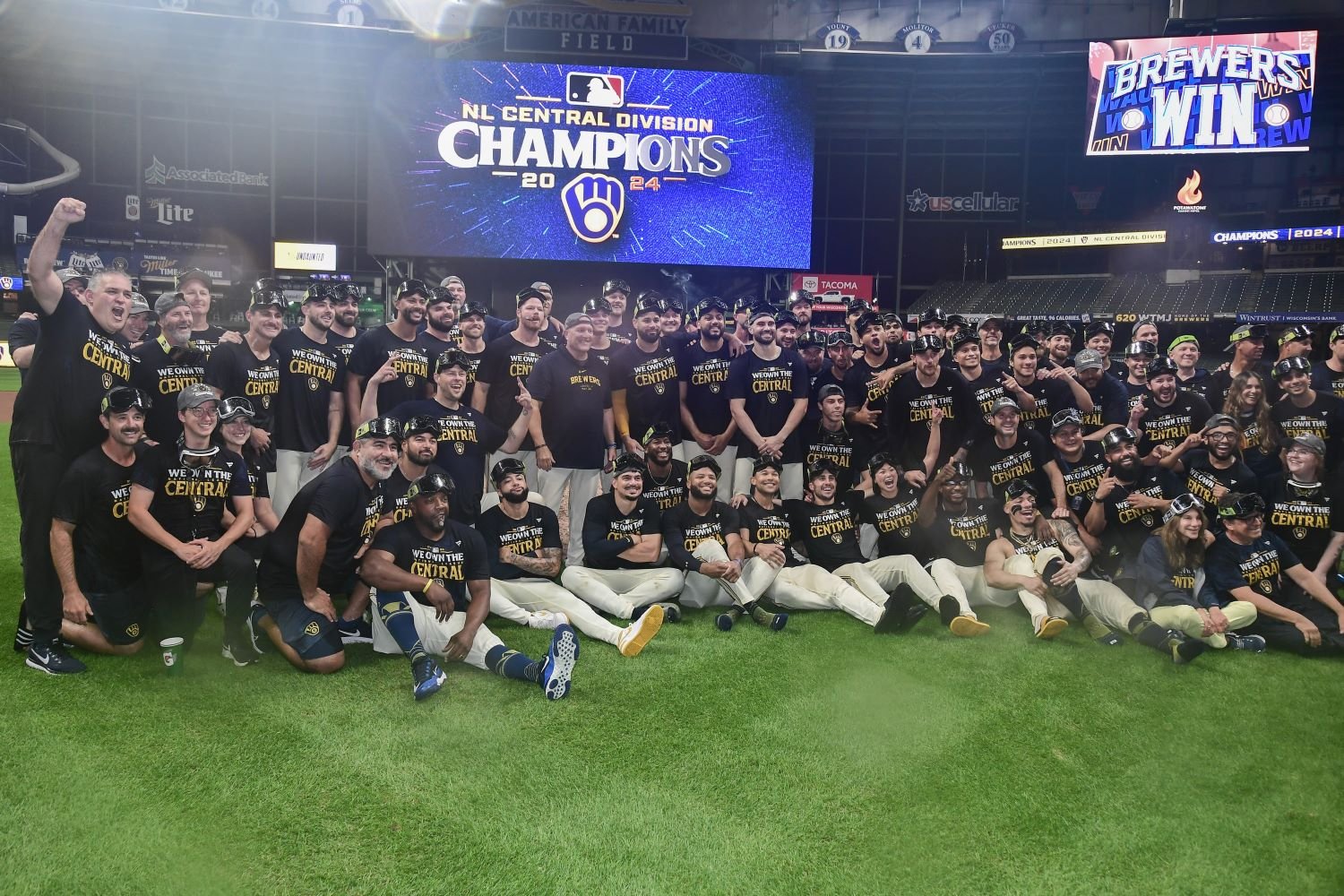 The Brewers secured their third division title in four years, after an offseason of turnover. Brandon Woodruff ultimately re-upped on a two-year deal, but his recovery from shoulder surgery ruled him out for the entire season. Corbin Burnes was traded to the Orioles two weeks before pitchers and catchers reported for spring training. Perhaps the most noteworthy change, however, was to the team’s leadership in the dugout. Craig Counsell departed Milwaukee, traveling 90 minutes south to join the division-rival Chicago Cubs on a record contract for a big-league manager. Pat Murphy assumed the mantle of skipper after serving as Counsell’s bench coach for eight seasons, and Rickie Weeks joined the staff as associate manager. While much of the personnel changed, the quality of the on-field product did not. The Brewers figure to cross the 90-win threshold in the regular season’s waning dayss and will play a postseason game for the sixth time in seven years. In hindsight, no one should be surprised. The Brewers are a well-oiled machine, and despite the front-facing turnover, nearly all of that machine’s most integral pieces remained intact. The Brewers lost their two best starting pitchers. They lost Counsell. The lineup underwent a makeover. Most of the individuals responsible for assembling, organizing, and guiding the roster were the same people who filled those roles last year. Counsell’s entire coaching staff remained in Milwaukee after his departure, and they proved indispensable to Murphy in his first full season as a big-league manager. “I knew the whole coaching staff for the most part,” Murphy said minutes after the Cubs lost on Wednesday afternoon to secure his team’s division title. “We made three or four changes. I think they’re unsung heroes.” Hitting coaches Connor Dawson and Ozzie Timmons have continued to work with a lineup that’s been among the team’s best in the last decade. First-base coach Quintin Berry has advised a group of smart baserunners who have stolen 197 bases this year, the third-most in baseball. The fruits of continuity are perhaps felt most on the run-prevention side. Berry continues to instruct a group of rangy young outfielders who convert would-be extra-base hits into outs. Meanwhile, a pitching brain trust led by Chris Hook, Jim Henderson, and Walker McKinven has optimized a hodgepodge of castoff arms in front of that defense. Pundits perceived the Brewers’ pitching staff as a weakness after losing Burnes and Woodruff (and Devin Williams for the entire first half due to stress fractures in his back). It currently boasts the fourth-lowest ERA in baseball. Much of that is due to that elite defense, which is helping the group overperform a 4.20 FIP that ranks 22nd in the sport. However, the pitching department also excels at making pitchers with unremarkable arsenals – Colin Rea, Tobias Myers, Frankie Montas, and Aaron Civale are all examples – as deceptive as possible. Achieving that deception takes different forms based on each pitcher’s abilities and mix. Sometimes, it means mixing three fastball variations to keep hitters off-balance. Other times, it means resurrecting an old breaking ball to close a gap in pitch shapes. It could be a simple mechanical tweak that makes the ball harder for hitters to read out of the hand. The Brewers do not have a spotless hit rate with their pitching projects, but their track record is quite impressive. What many perceived as a weakness remains Milwaukee’s greatest strength. The continuity extends to the front office, where Matt Arnold continued to supply his roster with a productive mix of diamonds in the rough, reliable veterans, and young talent. “Arnold will never take any credit, but he’s been here how many years doing it,” Murphy said. “He’s been a huge cog in this whole thing, not just since he’s been running it, but he’s been a huge cog the whole time. “I think the guys in the front office are never going to get the credit they deserve,” he added. Above all else, the players earned a playoff berth with their performance on the field. Murphy earned it by skillfully shepherding an inexperienced group with more public detractors than believers. However, a significant amount of credit is due to the less visible coordinators who identified these players, developed them into the best versions of themselves, and put them in positions to succeed. That system is likely to continue succeeding long-term. The Brewers have built a deeply ingrained winning culture that spans the front office and coaching staffs across all levels of the organization. The team will, inevitably, lose some of its current coaches as time progresses, but it should be able to weather those subtractions due to how deeply its models of leadership, player development, and strategy are embedded into its being. It’s how they’ve kept chugging along after losing Derek Johnson, David Stearns, and now Counsell. “It doesn’t happen overnight,” said Christian Yelich, who has seen that sustained culture develop over his seven years in Milwaukee. “It doesn’t take one year or two years for that to become your identity as an organization or the team. It takes a lot of talented people. It takes a lot of the right people. It takes a lot of consistency from ownership on down, throughout the organization, you know? It’s not all because of one person.” It’s no coincidence that the Brewers find themselves here yet again. Few organizations boast the level of cohesion and efficiency present in Milwaukee. The rest of baseball ought to be on notice.
 -
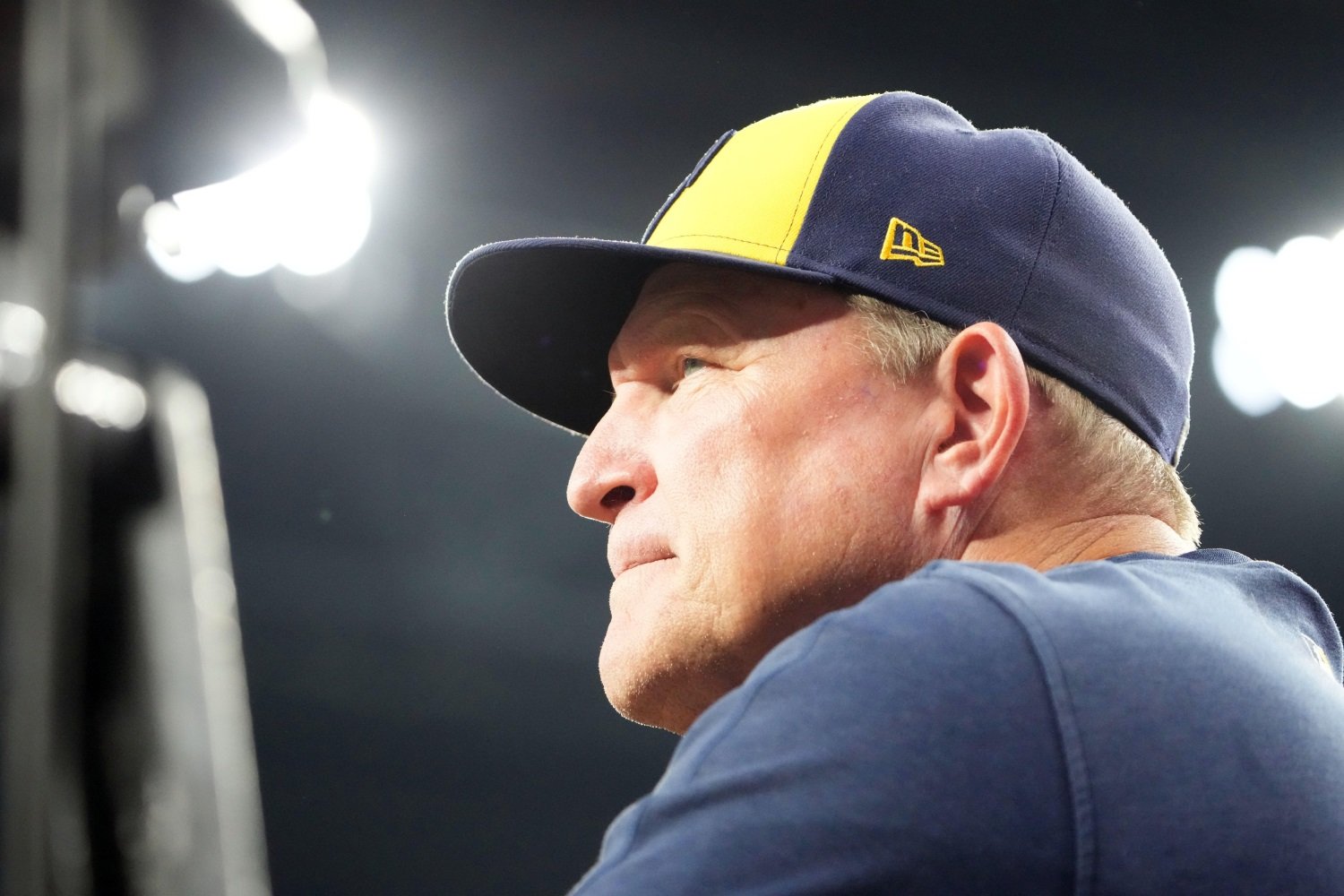 An eventful series between the Brewers and Diamondbacks concluded with a wild and baffling finale on Sunday, as the managers traded confusing decisions in the late innings of an eventual Arizona walk-off win. The questionable management from the road dugout began on the offensive side. Pat Murphy called for a sacrifice bunt twice in the final four innings, which hurt his team’s chances of scoring both times. In the seventh inning, Joey Ortiz stepped to the plate with a 7-5 Brewers lead, runners on first and second, and no outs. Ortiz attempted a sacrifice on a sinker several inches off the plate inside. Ryan Thompson collected the roller to the mound and initiated a 1-5-3 double play. Ortiz and lead runner Rhys Hoskins were both retired, leaving only Jake Bauers on second base with two outs. When Sal Frelick led off the 10th inning of the then-tied game, the Brewers asked him to sacrifice the placed runner from second to third. Frelick squared and popped a 100-mph fastball to third base for the inning’s first out. The Brewers ultimately scored in both innings, but that does not justify the process behind the sacrifice attempts. The Brewers will and should play more small ball than most teams due to the makeup of their roster, but they do their offense a disservice when they overemphasize it in situations warranting a more aggressive and straightforward approach to scoring. When Ortiz came to bat, the Brewers had an opportunity to blow the game open in the late innings. They chose to forgo that opportunity by playing small ball. Considering where the Brewers were in their lineup, Ortiz was arguably the best hitter to turn the frame into a big inning. He entered the game with a solid 109 wRC+ and a .308/.400/.513 slash line in September. Behind Ortiz was Frelick, who trails Ortiz in on-base percentage, entered the game with an 89 wRC+, and rarely makes authoritative contact. A soft ground ball or fly ball was highly unlikely to score Hoskins from third. The Brewers had their shot with Ortiz. Instead, they used him to hand the Diamondbacks an out to move the runners over for a less favorable matchup. It's good to note that, on average, runners on first and second with no outs is one of the rare occasions on which the models do support laying down a bunt. Those models don't account for aspects like the fact that Ortiz is better than the hitter behind him or that the lead runner he was trying to advance is one of the slowest players in baseball, though. Similarly, immediately turning to small ball is arguably the wrong course of action for the road team in extra innings. Due to the placed runner, the home team begins the bottom half of the inning with the winning run at the plate if trailing by one. The best way for the road team to avoid starting the inning at a disadvantage is by playing for multiple runs in the top half. Leading off with a sacrifice bunt does the opposite. Not only is the bunt detrimental when not executed according to plan, but its overall utility is limited. It does not catch the opposing defense by surprise when it is familiar and expected. As a sacrifice, it rarely puts the batting team in a better position to score. Well-executed bunts for hits don't have to surprise the defense, and bunting more does sharpen the skill for most players, but the only Brewer who has shown the consistent competence to bunt well even against a ready defense is one who can't do that for them right now: the injured Christian Yelich. Too much bunting undermines an offense’s ability to do damage, a trap that the Brewers have fallen into at times throughout the season. It’s a deleteriously demanding brand of baseball that attempts to force pressure on the opponent, instead of creating it organically with quality contact and plate discipline. That is not always Murphy’s fault. In fact, he typically emphasizes ball-strike recognition and “meeting the game halfway” over employing any particular kind of offensive strategy. He has often voiced disapproval over ill-advised bunts attempted of a player’s own volition. On sacrifice bunt calls from the dugout, though, it is Murphy making the final decision to run an often counterproductive play. He clearly feels pressure, at times, to help his team produce offense, when the more prudent course is to stand back and make room for their talent, even understanding the risk that it might not come to bear in a given moment. It was Murphy’s handling of his best reliever, however, that raised the most eyebrows on Sunday. As five straight Diamondbacks reached against Jared Koenig in the 10th to erase a two-run lead, Devin Williams mysteriously alternated between warming up and sitting down. A seated Williams looked on with visible frustration as Arizona walked it off. Murphy explained that he wanted to avoid using Williams due to his recent workload amid the team’s current stretch of 13 games in as many days. Per Murphy, Williams was only available to record one out, and was warming in case that precise situation arose. However, Williams seemingly contradicted that statement with his own account of the final two innings. He initially warmed up during the ninth when the game was tied, and said he would have entered for the traditional save opportunity had the Brewers taken the lead. If Murphy truly was trying to avoid pitching Williams, who appeared in back-to-back and three of four games two days earlier, it was the right approach. However, using such a hyper-specific methodology to determine his availability undermined the load management Murphy was trying to achieve. Murphy downplayed any impact of the start-and-stop warmup on Williams’ availability for Monday and beyond, but the reality is that such pitches thrown in the bullpen are not empty bullets. Williams appeared hot and ready to enter the game, both physically and mentally, on multiple occasions. On a day when he and the Brewers would have benefited most from keeping him down, that energy went to waste in a game in which he was unlikely to appear. Despite Murphy’s motivational mantra of “Win tonight,” the reality is that balancing today and tomorrow is a critical part of keeping a big-league roster functional throughout a long season. Williams has been worked hard, and the Brewers need him at full strength for a seven-game homestand that could have significant implications in the National League playoff race. Murphy knows this; it’s why Williams did not pitch on Sunday. But the skipper has yet to strike that balance consistently, a challenging task at which his predecessor excelled throughout his tenure as Milwaukee’s skipper. Keeping his closer’s availability open-ended would have been far more reasonable in a playoff or regular-season elimination game. A manager has to manage for tonight when there may be no tomorrow. While Murphy was given the unenviable task of covering innings with a depleted bullpen, that did not make Sunday a fitting day to get creative with reliever availability. The stakes did not justify sending Williams through multiple warmup routines for an unlikely one-out save opportunity. He should have been off-limits entirely, leaving Koenig to finish the game one way or another. One game does not take away from Murphy’s success so far as a first-year manager, but it was a reminder that he has his weak spots as an in-game tactician. His tendency to think deeply about the game's intricacies can sometimes be his undoing, prompting him to juggle more moving pieces than necessary as he strategizes. Orchestrating a successful rally with bunting and small ball requires that several little things go right, as does a Devin Williams one-out save opportunity. Most of those things are out of Murphy’s control. In these moments, a simpler approach can be best. When there’s an opportunity to strike on offense, swing the bat. When a reliever has shouldered a heavy load and must be fresh in a few days, give him the day off. Win tonight when you can, but remember that another tonight will come tomorrow.
 -
Unnecessary bunts and a curious approach to Devin Williams's availability were reminders that overmanaging can be a problem for the Brewers' first-year skipper. Sometimes, too much nuance can be detrimental. Image courtesy of © Joe Camporeale-Imagn Images Unnecessary bunts and a curious approach to Devin Williams's availability were reminders that overmanaging can be a problem for the Brewers' first-year skipper. Sometimes, too much nuance can be detrimental. An eventful series between the Brewers and Diamondbacks concluded with a wild and baffling finale on Sunday, as the managers traded confusing decisions in the late innings of an eventual Arizona walk-off win. The questionable management from the road dugout began on the offensive side. Pat Murphy called for a sacrifice bunt twice in the final four innings, which hurt his team’s chances of scoring both times. In the seventh inning, Joey Ortiz stepped to the plate with a 7-5 Brewers lead, runners on first and second, and no outs. Ortiz attempted a sacrifice on a sinker several inches off the plate inside. Ryan Thompson collected the roller to the mound and initiated a 1-5-3 double play. Ortiz and lead runner Rhys Hoskins were both retired, leaving only Jake Bauers on second base with two outs. When Sal Frelick led off the 10th inning of the then-tied game, the Brewers asked him to sacrifice the placed runner from second to third. Frelick squared and popped a 100-mph fastball to third base for the inning’s first out. The Brewers ultimately scored in both innings, but that does not justify the process behind the sacrifice attempts. The Brewers will and should play more small ball than most teams due to the makeup of their roster, but they do their offense a disservice when they overemphasize it in situations warranting a more aggressive and straightforward approach to scoring. When Ortiz came to bat, the Brewers had an opportunity to blow the game open in the late innings. They chose to forgo that opportunity by playing small ball. Considering where the Brewers were in their lineup, Ortiz was arguably the best hitter to turn the frame into a big inning. He entered the game with a solid 109 wRC+ and a .308/.400/.513 slash line in September. Behind Ortiz was Frelick, who trails Ortiz in on-base percentage, entered the game with an 89 wRC+, and rarely makes authoritative contact. A soft ground ball or fly ball was highly unlikely to score Hoskins from third. The Brewers had their shot with Ortiz. Instead, they used him to hand the Diamondbacks an out to move the runners over for a less favorable matchup. It's good to note that, on average, runners on first and second with no outs is one of the rare occasions on which the models do support laying down a bunt. Those models don't account for aspects like the fact that Ortiz is better than the hitter behind him or that the lead runner he was trying to advance is one of the slowest players in baseball, though. Similarly, immediately turning to small ball is arguably the wrong course of action for the road team in extra innings. Due to the placed runner, the home team begins the bottom half of the inning with the winning run at the plate if trailing by one. The best way for the road team to avoid starting the inning at a disadvantage is by playing for multiple runs in the top half. Leading off with a sacrifice bunt does the opposite. Not only is the bunt detrimental when not executed according to plan, but its overall utility is limited. It does not catch the opposing defense by surprise when it is familiar and expected. As a sacrifice, it rarely puts the batting team in a better position to score. Well-executed bunts for hits don't have to surprise the defense, and bunting more does sharpen the skill for most players, but the only Brewer who has shown the consistent competence to bunt well even against a ready defense is one who can't do that for them right now: the injured Christian Yelich. Too much bunting undermines an offense’s ability to do damage, a trap that the Brewers have fallen into at times throughout the season. It’s a deleteriously demanding brand of baseball that attempts to force pressure on the opponent, instead of creating it organically with quality contact and plate discipline. That is not always Murphy’s fault. In fact, he typically emphasizes ball-strike recognition and “meeting the game halfway” over employing any particular kind of offensive strategy. He has often voiced disapproval over ill-advised bunts attempted of a player’s own volition. On sacrifice bunt calls from the dugout, though, it is Murphy making the final decision to run an often counterproductive play. He clearly feels pressure, at times, to help his team produce offense, when the more prudent course is to stand back and make room for their talent, even understanding the risk that it might not come to bear in a given moment. It was Murphy’s handling of his best reliever, however, that raised the most eyebrows on Sunday. As five straight Diamondbacks reached against Jared Koenig in the 10th to erase a two-run lead, Devin Williams mysteriously alternated between warming up and sitting down. A seated Williams looked on with visible frustration as Arizona walked it off. Murphy explained that he wanted to avoid using Williams due to his recent workload amid the team’s current stretch of 13 games in as many days. Per Murphy, Williams was only available to record one out, and was warming in case that precise situation arose. However, Williams seemingly contradicted that statement with his own account of the final two innings. He initially warmed up during the ninth when the game was tied, and said he would have entered for the traditional save opportunity had the Brewers taken the lead. If Murphy truly was trying to avoid pitching Williams, who appeared in back-to-back and three of four games two days earlier, it was the right approach. However, using such a hyper-specific methodology to determine his availability undermined the load management Murphy was trying to achieve. Murphy downplayed any impact of the start-and-stop warmup on Williams’ availability for Monday and beyond, but the reality is that such pitches thrown in the bullpen are not empty bullets. Williams appeared hot and ready to enter the game, both physically and mentally, on multiple occasions. On a day when he and the Brewers would have benefited most from keeping him down, that energy went to waste in a game in which he was unlikely to appear. Despite Murphy’s motivational mantra of “Win tonight,” the reality is that balancing today and tomorrow is a critical part of keeping a big-league roster functional throughout a long season. Williams has been worked hard, and the Brewers need him at full strength for a seven-game homestand that could have significant implications in the National League playoff race. Murphy knows this; it’s why Williams did not pitch on Sunday. But the skipper has yet to strike that balance consistently, a challenging task at which his predecessor excelled throughout his tenure as Milwaukee’s skipper. Keeping his closer’s availability open-ended would have been far more reasonable in a playoff or regular-season elimination game. A manager has to manage for tonight when there may be no tomorrow. While Murphy was given the unenviable task of covering innings with a depleted bullpen, that did not make Sunday a fitting day to get creative with reliever availability. The stakes did not justify sending Williams through multiple warmup routines for an unlikely one-out save opportunity. He should have been off-limits entirely, leaving Koenig to finish the game one way or another. One game does not take away from Murphy’s success so far as a first-year manager, but it was a reminder that he has his weak spots as an in-game tactician. His tendency to think deeply about the game's intricacies can sometimes be his undoing, prompting him to juggle more moving pieces than necessary as he strategizes. Orchestrating a successful rally with bunting and small ball requires that several little things go right, as does a Devin Williams one-out save opportunity. Most of those things are out of Murphy’s control. In these moments, a simpler approach can be best. When there’s an opportunity to strike on offense, swing the bat. When a reliever has shouldered a heavy load and must be fresh in a few days, give him the day off. Win tonight when you can, but remember that another tonight will come tomorrow. View full article
-
Saturday night's win was among the Brewers' most eventful of the year, but a first-inning catch should stand out as the latest example of their right fielder's steady greatness with the glove. Image courtesy of © Curt Hogg / USA TODAY NETWORK via Imagn Images Saturday night's win was among the Brewers' most eventful of the year, but a first-inning catch should stand out as the latest example of their right fielder's steady greatness with the glove. Before a seven-run second inning that gave the Brewers a healthy lead they would not relinquish against the Arizona Diamondbacks, Sal Frelick briefly took center stage with a tremendous catch to begin the bottom of the first inning. Corbin Carroll laced a hard fly ball that would have barely cleared the wall in right field for a game-tying home run, but Frelick tracked it over his shoulder and made a leaping grab, snatching the ball and hanging onto it as he slammed into one of the padded beams along the fence. In a way, it was fitting that several captivating moments – the lineup’s outburst, Christian Yelich’s outstanding performance in the Bally Sports Wisconsin broadcast booth, and the sudden tension when Andruw Monasterio’s nightmarish eighth inning at third base spawned a four-run frame for Arizona – quickly and repeatedly redirected spectator attention away from Frelick’s catch. Overlooked excellence in the field has been a theme of his season. Frelick has arguably been the best defensive right fielder in baseball this year. He leads right fielders with 12 Defensive Runs Saved. Playing plus defense, particularly in the outfield, is among the chief tenets fueling the Brewers’ success this year. It’s why the pitching staff ranks third in baseball in ERA (3.62) despite ranking 23rd in FIP (4.22). Milwaukee has allowed the lowest batting average on fly balls (.193), and Frelick’s ability to cover ground in right field is among the catalysts. Like Brice Turang, Frelick’s excellence in the field gives him a solid floor as a useful big-league player, despite his unremarkable offense. He owns a career 90 wRC+, but according to Baseball-Reference’s version of the metric, he has accrued 2.8 Wins Above Replacement in just over an entire season’s worth of playing time. By that measurement, he’s a solid everyday player. Defense does not always make headlines. Compared to the gaudy rate and counting stats accumulated by the best players and teams on the mound and at the plate, the value of defense is often not as readily apparent, even though it adds up similarly. Frelick has a knack for the spectacular, but it's not a matter of flash. A short guy, he uses headlong, leaping dives to extend his range at the catchpoint. He also uses fearlessness and a comfort with contact born of his time in youth hockey to make plays at the wall, despite that lack of height and a frequent need to make the play even as his body is jarred. Frelick has saved plenty of runs in the field this year. In that sense, he’s been a frequent contributor to his team’s success. His most jaw-dropping catches – including one that Willy Adames said “set the tone” on Saturday night – are periodic reminders of that. View full article
-
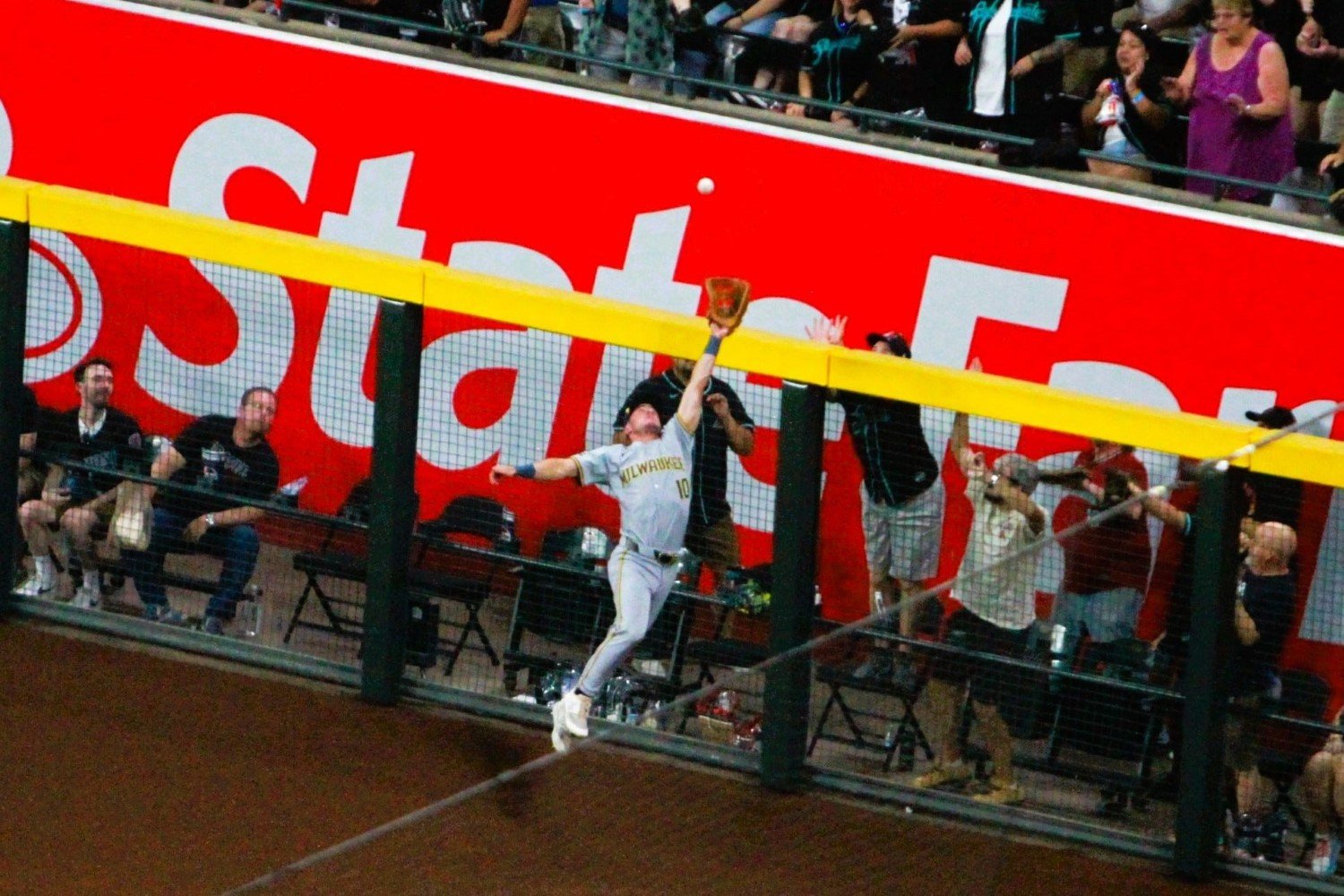 Before a seven-run second inning that gave the Brewers a healthy lead they would not relinquish against the Arizona Diamondbacks, Sal Frelick briefly took center stage with a tremendous catch to begin the bottom of the first inning. Corbin Carroll laced a hard fly ball that would have barely cleared the wall in right field for a game-tying home run, but Frelick tracked it over his shoulder and made a leaping grab, snatching the ball and hanging onto it as he slammed into one of the padded beams along the fence. In a way, it was fitting that several captivating moments – the lineup’s outburst, Christian Yelich’s outstanding performance in the Bally Sports Wisconsin broadcast booth, and the sudden tension when Andruw Monasterio’s nightmarish eighth inning at third base spawned a four-run frame for Arizona – quickly and repeatedly redirected spectator attention away from Frelick’s catch. Overlooked excellence in the field has been a theme of his season. Frelick has arguably been the best defensive right fielder in baseball this year. He leads right fielders with 12 Defensive Runs Saved. Playing plus defense, particularly in the outfield, is among the chief tenets fueling the Brewers’ success this year. It’s why the pitching staff ranks third in baseball in ERA (3.62) despite ranking 23rd in FIP (4.22). Milwaukee has allowed the lowest batting average on fly balls (.193), and Frelick’s ability to cover ground in right field is among the catalysts. Like Brice Turang, Frelick’s excellence in the field gives him a solid floor as a useful big-league player, despite his unremarkable offense. He owns a career 90 wRC+, but according to Baseball-Reference’s version of the metric, he has accrued 2.8 Wins Above Replacement in just over an entire season’s worth of playing time. By that measurement, he’s a solid everyday player. Defense does not always make headlines. Compared to the gaudy rate and counting stats accumulated by the best players and teams on the mound and at the plate, the value of defense is often not as readily apparent, even though it adds up similarly. Frelick has a knack for the spectacular, but it's not a matter of flash. A short guy, he uses headlong, leaping dives to extend his range at the catchpoint. He also uses fearlessness and a comfort with contact born of his time in youth hockey to make plays at the wall, despite that lack of height and a frequent need to make the play even as his body is jarred. Frelick has saved plenty of runs in the field this year. In that sense, he’s been a frequent contributor to his team’s success. His most jaw-dropping catches – including one that Willy Adames said “set the tone” on Saturday night – are periodic reminders of that.
 -
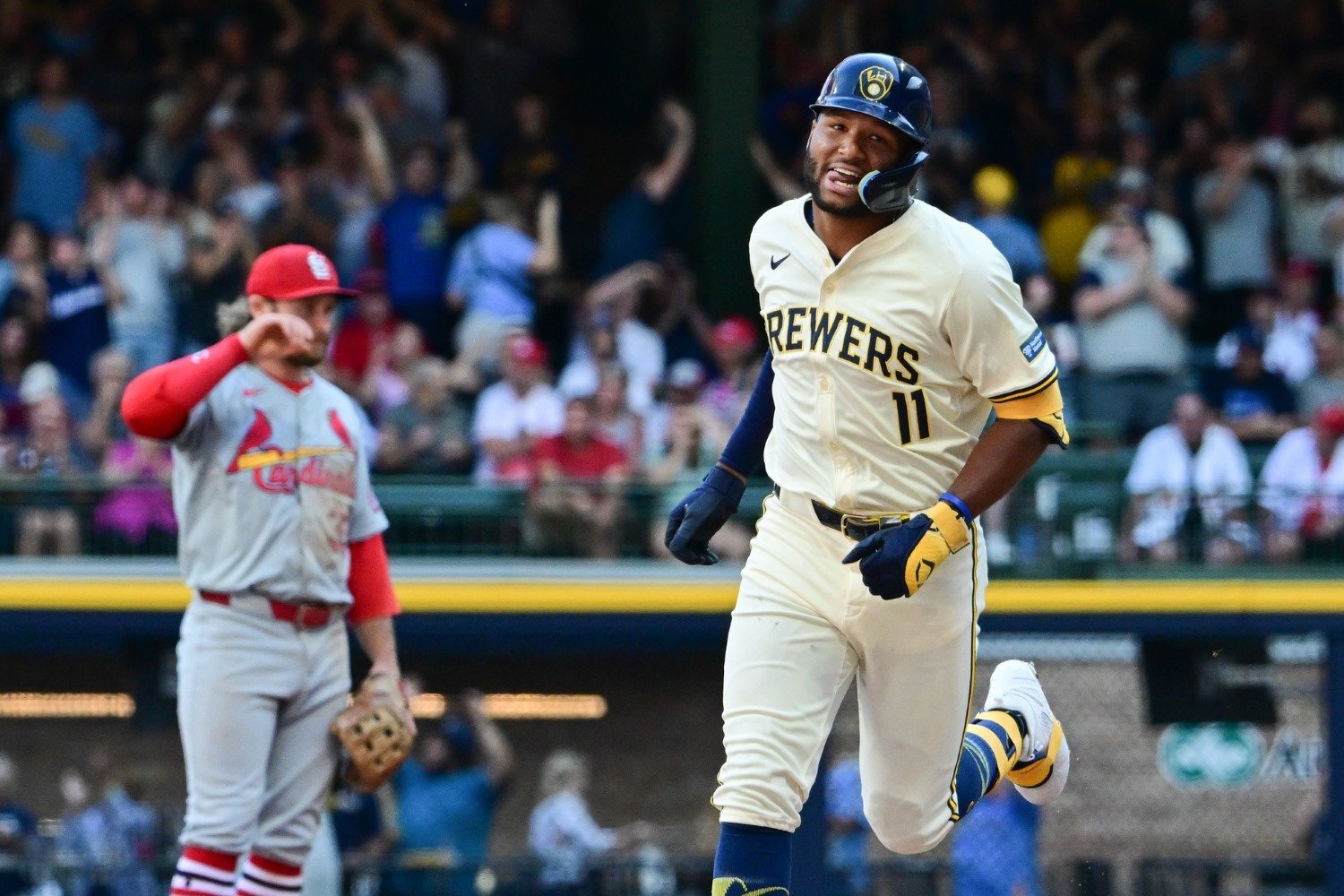
 Jackson Chourio’s rookie season gained a prominent entry in the history books on Thursday night in San Francisco, as the Brewers’ young phenom became the youngest player in MLB history to achieve a season of at least 20 home runs and 20 stolen bases. Chourio’s two-run blast in the eighth inning was another reminder of his exclusive physical prowess. His quick hands got his barrel to an up-and-in sinker and turned it around for a booming fly ball to right field. The at-bat also featured something Chourio has not seen as frequently in recent weeks: a pitch in the strike zone. Pitchers have become more cautious with the red-hot rookie. In his last 17 games (75 plate appearances), only 46.3% of the pitches he’s seen have been in the strike zone. For most of July and August, that figure was over 50%. The Cardinals intentionally walked him in consecutive games last week. Receiving fewer pitches to hit is the latest test of Chourio’s adaptability, and his initial response has been encouraging. Instead of expanding his attack zone to continue doing damage, he’s chasing less. Chourio struggled with overly aggressive swing decisions through May, but his chase rate during this stretch sits a tick below the league average at 26.9%. He has drawn eight unintentional walks. When he gets a pitch in the strike zone, he is still doing more damage than ever. During this 17-game stretch, Chourio is slugging .800 on pitches in the zone, the eighth-highest mark in baseball. He’s hit five home runs and seven doubles. This is the definition of a confident hitter taking what the pitcher gives him. When pitchers work around Chourio, he’s content with taking pitches and reaching base. The moment they come back over the plate, he returns to attacking the ball and drives it. His final at-bat on Thursday was a prime example. Chourio took a first-pitch sinker off the outside corner for a ball. Ahead in the count 1-0, he was prepared to ambush the first pitch he saw in the strike zone. It’s a promising sign for both Chourio and the Brewers. He is currently their most dangerous hitter. Unless he shows substantial signs of slowing down, opponents will likely treat him as such down the stretch and into the postseason. So long as Chourio continues to play the cards he’s dealt pitch-to-pitch, he can remain a driving force in Milwaukee’s offense despite seeing fewer pitches to punish.
 -
Opponents are starting to pitch around Jackson Chourio. He's responding as well as one could hope as a 20-year-old who struggled to remain patient earlier in the year. Image courtesy of © Michael McLoone-Imagn Images Opponents are starting to pitch around Jackson Chourio. He's responding as well as one could hope as a 20-year-old who struggled to remain patient earlier in the year. Jackson Chourio’s rookie season gained a prominent entry in the history books on Thursday night in San Francisco, as the Brewers’ young phenom became the youngest player in MLB history to achieve a season of at least 20 home runs and 20 stolen bases. Chourio’s two-run blast in the eighth inning was another reminder of his exclusive physical prowess. His quick hands got his barrel to an up-and-in sinker and turned it around for a booming fly ball to right field. The at-bat also featured something Chourio has not seen as frequently in recent weeks: a pitch in the strike zone. Pitchers have become more cautious with the red-hot rookie. In his last 17 games (75 plate appearances), only 46.3% of the pitches he’s seen have been in the strike zone. For most of July and August, that figure was over 50%. The Cardinals intentionally walked him in consecutive games last week. Receiving fewer pitches to hit is the latest test of Chourio’s adaptability, and his initial response has been encouraging. Instead of expanding his attack zone to continue doing damage, he’s chasing less. Chourio struggled with overly aggressive swing decisions through May, but his chase rate during this stretch sits a tick below the league average at 26.9%. He has drawn eight unintentional walks. When he gets a pitch in the strike zone, he is still doing more damage than ever. During this 17-game stretch, Chourio is slugging .800 on pitches in the zone, the eighth-highest mark in baseball. He’s hit five home runs and seven doubles. This is the definition of a confident hitter taking what the pitcher gives him. When pitchers work around Chourio, he’s content with taking pitches and reaching base. The moment they come back over the plate, he returns to attacking the ball and drives it. His final at-bat on Thursday was a prime example. Chourio took a first-pitch sinker off the outside corner for a ball. Ahead in the count 1-0, he was prepared to ambush the first pitch he saw in the strike zone. It’s a promising sign for both Chourio and the Brewers. He is currently their most dangerous hitter. Unless he shows substantial signs of slowing down, opponents will likely treat him as such down the stretch and into the postseason. So long as Chourio continues to play the cards he’s dealt pitch-to-pitch, he can remain a driving force in Milwaukee’s offense despite seeing fewer pitches to punish. View full article
-
 After his offense recorded 23 consecutive outs in the closing contest of a lackluster six-game homestand, Pat Murphy began his postgame remarks to the media with a frank assessment. “That’s not good.” Four Colorado Rockies arms combined to hold the Brewers to a single unearned run, but it was southpaw starter Kyle Freeland who set the tone in his six innings of work. That stood out to Murphy, who two days prior called left-handed starters his team’s “nemesis.” “Against left-handed pitching, we haven’t been great,” Murphy said after Freeland stymied Milwaukee’s lineup. In reality, the Brewers have been competent against left-handed pitching this year, after a three-year stretch of significant struggles. From 2021 through 2023, Milwaukee mustered a 93 wRC+ against lefthanders. That figure is up to a slightly above-average 103 this year. Recent showings arguably ought to allay anyone's concerns about the team handling lefties, rather than exacerbate them. The evening before Freeland’s dominance, the Brewers dinged left-hander Ty Blach for five earned runs, including three homers. They hit two long balls against Steven Matz earlier in the week, and knocked him out of the game in the fifth inning. In the interest of projecting how the Brewers stack up against southpaws the rest of the regular season and into the playoffs, here’s a more detailed breakdown of how their roster has fared against them (minimum 75 plate appearances). Player PA wRC+ wOBA xwOBA Willy Adames 153 82 .286 .313 William Contreras 146 144 .376 .331 Jackson Chourio 141 95 .305 .310 Joey Ortiz 128 122 .344 .350 Blake Perkins 125 106 .322 .276 Rhys Hoskins 109 91 .299 .321 Brice Turang 100 72 .272 .276 Christian Yelich 99 153 .391 .340 Gary Sánchez 95 103 .315 .357 Sal Frelick 76 88 .295 .250 There are some caveats to note here. Christian Yelich’s absence due to season-ending surgery weakens the lineup, regardless of the matchup. While Blake Perkins has enjoyed solid results, his quality of contact does not support a good deal of that production. On the flip side, two hitters likely profile better than indicated by their results to date. Given his known talent level and sustained post-May breakout, it’s not fair to evaluate Jackson Chourio by his season-long numbers. Since the start of June, he has posted an improved .315/.357/.435 line (117 wRC+) against southpaws. Gary Sánchez currently sports a solid but unspectacular line against lefties, but he did his best work against them in two of his previous three seasons and has looked close to that form this year. Sánchez’s batted balls against lefties have an average exit velocity of 93.6 mph, and 52.3% of them have been hard-hit. It’s hardly the most potent collection of bats, but the Brewers have a solid core that should position them to compete against lefthanders. Chourio, Sánchez, William Contreras, and Joey Ortiz all profile as reliable bats in such matchups, leaving this year’s lineup with a higher floor than those often overpowered by lefties in years past. Hitting southpaws is not this club’s greatest strength, but it is not a glaring weakness, either.
 -
Pat Murphy alluded multiple times within the last week to a perceived struggle against southpaws, but the current iteration of his righty-heavy lineup has enough reliable pieces to hold its own in such matchups. Image courtesy of © Benny Sieu-Imagn Images Pat Murphy alluded multiple times within the last week to a perceived struggle against southpaws, but the current iteration of his righty-heavy lineup has enough reliable pieces to hold its own in such matchups. After his offense recorded 23 consecutive outs in the closing contest of a lackluster six-game homestand, Pat Murphy began his postgame remarks to the media with a frank assessment. “That’s not good.” Four Colorado Rockies arms combined to hold the Brewers to a single unearned run, but it was southpaw starter Kyle Freeland who set the tone in his six innings of work. That stood out to Murphy, who two days prior called left-handed starters his team’s “nemesis.” “Against left-handed pitching, we haven’t been great,” Murphy said after Freeland stymied Milwaukee’s lineup. In reality, the Brewers have been competent against left-handed pitching this year, after a three-year stretch of significant struggles. From 2021 through 2023, Milwaukee mustered a 93 wRC+ against lefthanders. That figure is up to a slightly above-average 103 this year. Recent showings arguably ought to allay anyone's concerns about the team handling lefties, rather than exacerbate them. The evening before Freeland’s dominance, the Brewers dinged left-hander Ty Blach for five earned runs, including three homers. They hit two long balls against Steven Matz earlier in the week, and knocked him out of the game in the fifth inning. In the interest of projecting how the Brewers stack up against southpaws the rest of the regular season and into the playoffs, here’s a more detailed breakdown of how their roster has fared against them (minimum 75 plate appearances). Player PA wRC+ wOBA xwOBA Willy Adames 153 82 .286 .313 William Contreras 146 144 .376 .331 Jackson Chourio 141 95 .305 .310 Joey Ortiz 128 122 .344 .350 Blake Perkins 125 106 .322 .276 Rhys Hoskins 109 91 .299 .321 Brice Turang 100 72 .272 .276 Christian Yelich 99 153 .391 .340 Gary Sánchez 95 103 .315 .357 Sal Frelick 76 88 .295 .250 There are some caveats to note here. Christian Yelich’s absence due to season-ending surgery weakens the lineup, regardless of the matchup. While Blake Perkins has enjoyed solid results, his quality of contact does not support a good deal of that production. On the flip side, two hitters likely profile better than indicated by their results to date. Given his known talent level and sustained post-May breakout, it’s not fair to evaluate Jackson Chourio by his season-long numbers. Since the start of June, he has posted an improved .315/.357/.435 line (117 wRC+) against southpaws. Gary Sánchez currently sports a solid but unspectacular line against lefties, but he did his best work against them in two of his previous three seasons and has looked close to that form this year. Sánchez’s batted balls against lefties have an average exit velocity of 93.6 mph, and 52.3% of them have been hard-hit. It’s hardly the most potent collection of bats, but the Brewers have a solid core that should position them to compete against lefthanders. Chourio, Sánchez, William Contreras, and Joey Ortiz all profile as reliable bats in such matchups, leaving this year’s lineup with a higher floor than those often overpowered by lefties in years past. Hitting southpaws is not this club’s greatest strength, but it is not a glaring weakness, either. View full article
-
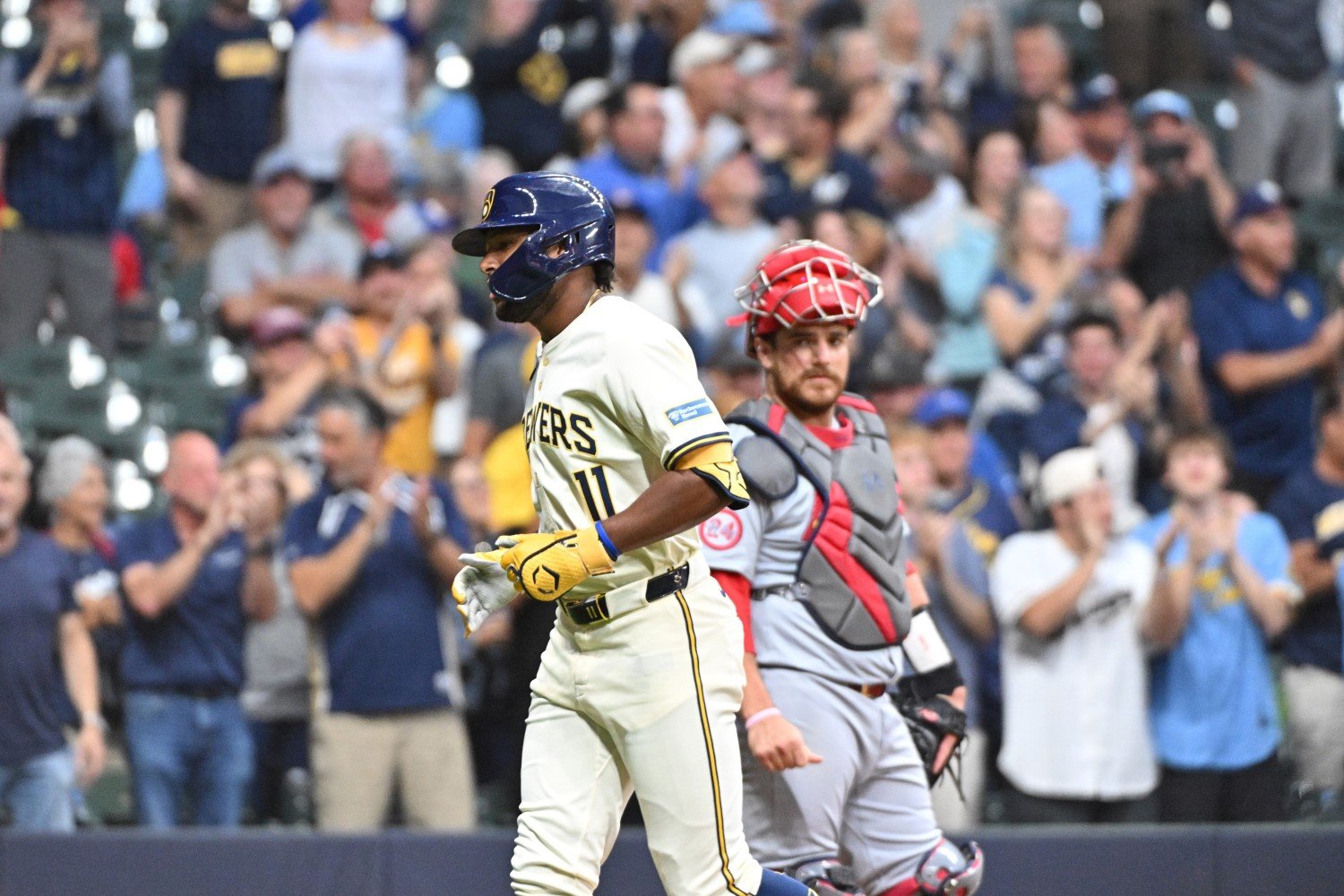 For the second straight game (and third of the last four), the Brewers fell in extra innings Wednesday, as their offense sputtered. The latest occurrence saw Milwaukee plate just two runs while going 0-for-15 with runners in scoring position. Driving in runners from second or third base is not an issue for the Brewers, overall. Neither is total scoring. They have the second-highest OPS with runners in scoring position in baseball, and rank fifth in runs per game. That does not mean struggles to score or execute with men on base never happen in small samples. It happens to every team, including baseball’s best. The New York Yankees, Baltimore Orioles, and Los Angeles Dodgers have been the top offenses in baseball by wRC+. The Yankees have had 11 streaks of scoring three or fewer runs multiple games in a row. The Orioles have 12. The Dodgers have nine. All three teams have encountered stretches of at least four straight games in which they failed to exceed three runs scored. What the Brewers are currently experiencing is not abnormal. Nor is it a symptom of a larger syndrome with their team. It is a reminder of how random baseball becomes in small samples, partially due to the natural ebbs and flows of the game. Acknowledgment of that randomness lies at the crux of the Brewers’ approach to winning a World Series. They know the playoffs are unpredictable. The hope is that by reaching the dance in as many years as possible, they’re bound to get hot at the right time and catch the necessary breaks at some point, instead of having a short-term window slammed shut by variables for which they cannot fully account. Ironically, the Brewers have been on the other end of those hot streaks and breaks, including in last year’s Wild Card Series, when the Arizona Diamondbacks swept them in two games. Small-sample struggles in the regular season are a reminder that it can easily happen again. The regular season and the playoffs are entirely different animals. Ebbs and flows even out throughout the course of the year. A couple of uncharacteristic or unlucky showings will not end a team’s season. The opposite is often true in October. The shorter the sample, the more decisive each pitch, plate appearance, and game, and the greater the randomness accompanying them. With that in mind, Milwaukee’s pursuit of the Dodgers and Phillies for one of the National League’s top two seeds is a major storyline over the regular season’s final weeks. The Brewers would not just clinch a bye or an easier matchup. They would also clinch slightly more room for error. In the best-of-five Division Series, the Brewers could survive a two-game offensive rut and still advance. In the best-of-three Wild Card Series, that brief sputter could end their season. Entering Thursday's off day, the Brewers trail the Dodgers by three games and the Phillies by 2.5. They face the latter at home for three games during the third week of September, in a series that could seriously impact National League playoff seeding. The Brewers will not just need a big showing in that series to catch the Phillies. They must also sweep, for an opportunity to seize the tiebreaker between the two teams. That would mean both clubs went 3-3 against each other in the regular season, at which point their records within their respective divisions become the tiebreaker. The Brewers play the Pittsburgh Pirates the following week in their final NL Central series. The division race may be all but settled, but if anything, the temperature is rising for Milwaukee. The remaining regular-season games – particularly the forthcoming showdown with Philadelphia – still carry tremendous implications. They could indirectly impact whether the Brewers win a playoff series, or two, or three. The team hopes it won't have to be four.
 -
The division race is all but decided, but the Brewers are still playing for the best opportunity to win their first playoff series since 2018. The chance to bypass the Wild Card Series is within their grasp with a few weeks to go, Image courtesy of © Michael McLoone-Imagn Images The division race is all but decided, but the Brewers are still playing for the best opportunity to win their first playoff series since 2018. The chance to bypass the Wild Card Series is within their grasp with a few weeks to go, For the second straight game (and third of the last four), the Brewers fell in extra innings Wednesday, as their offense sputtered. The latest occurrence saw Milwaukee plate just two runs while going 0-for-15 with runners in scoring position. Driving in runners from second or third base is not an issue for the Brewers, overall. Neither is total scoring. They have the second-highest OPS with runners in scoring position in baseball, and rank fifth in runs per game. That does not mean struggles to score or execute with men on base never happen in small samples. It happens to every team, including baseball’s best. The New York Yankees, Baltimore Orioles, and Los Angeles Dodgers have been the top offenses in baseball by wRC+. The Yankees have had 11 streaks of scoring three or fewer runs multiple games in a row. The Orioles have 12. The Dodgers have nine. All three teams have encountered stretches of at least four straight games in which they failed to exceed three runs scored. What the Brewers are currently experiencing is not abnormal. Nor is it a symptom of a larger syndrome with their team. It is a reminder of how random baseball becomes in small samples, partially due to the natural ebbs and flows of the game. Acknowledgment of that randomness lies at the crux of the Brewers’ approach to winning a World Series. They know the playoffs are unpredictable. The hope is that by reaching the dance in as many years as possible, they’re bound to get hot at the right time and catch the necessary breaks at some point, instead of having a short-term window slammed shut by variables for which they cannot fully account. Ironically, the Brewers have been on the other end of those hot streaks and breaks, including in last year’s Wild Card Series, when the Arizona Diamondbacks swept them in two games. Small-sample struggles in the regular season are a reminder that it can easily happen again. The regular season and the playoffs are entirely different animals. Ebbs and flows even out throughout the course of the year. A couple of uncharacteristic or unlucky showings will not end a team’s season. The opposite is often true in October. The shorter the sample, the more decisive each pitch, plate appearance, and game, and the greater the randomness accompanying them. With that in mind, Milwaukee’s pursuit of the Dodgers and Phillies for one of the National League’s top two seeds is a major storyline over the regular season’s final weeks. The Brewers would not just clinch a bye or an easier matchup. They would also clinch slightly more room for error. In the best-of-five Division Series, the Brewers could survive a two-game offensive rut and still advance. In the best-of-three Wild Card Series, that brief sputter could end their season. Entering Thursday's off day, the Brewers trail the Dodgers by three games and the Phillies by 2.5. They face the latter at home for three games during the third week of September, in a series that could seriously impact National League playoff seeding. The Brewers will not just need a big showing in that series to catch the Phillies. They must also sweep, for an opportunity to seize the tiebreaker between the two teams. That would mean both clubs went 3-3 against each other in the regular season, at which point their records within their respective divisions become the tiebreaker. The Brewers play the Pittsburgh Pirates the following week in their final NL Central series. The division race may be all but settled, but if anything, the temperature is rising for Milwaukee. The remaining regular-season games – particularly the forthcoming showdown with Philadelphia – still carry tremendous implications. They could indirectly impact whether the Brewers win a playoff series, or two, or three. The team hopes it won't have to be four. View full article
-
A break from pitching in games could physically benefit one of the Brewers' best relievers, but he may be past the point of recapturing that freshness this year. Image courtesy of © Darren Yamashita-Imagn Images A break from pitching in games could physically benefit one of the Brewers' best relievers, but he may be past the point of recapturing that freshness this year. The Brewers shook up their bullpen on Tuesday, and optioning Bryan Hudson to Triple-A was the club’s most noteworthy move. Hudson has been an invaluable multi-inning weapon for Pat Murphy, often functioning as a bridge between short starts and the back end of the bullpen. Of his 43 appearances, 24 have spanned more than one inning, and he owns a 1.73 ERA in 62 ⅓ innings. However, the Brewers saw signs in recent weeks that Hudson is not as crisp as he was early on, and that he could benefit from some time away. “We haven’t exactly liked everything we’ve seen about how the ball’s coming out and how he’s responding, that type of thing,” said Pat Murphy, who indicated that Hudson will get time off from throwing in games while in Nashville. “When you just look at the actual stuff that’s going on, we hope that we can get him a little refresher and get him back to where he was earlier in the season.” Hudson's run prevention has still been solid after the All-Star break, but he has not been nearly the same pitcher he was in his fresher days. His strikeout and whiff rates have plummeted, and he’s issuing more walks. Hudson is neither getting the same kind of takes nor inducing the same kind of swings as he was until mid-July. Split IP ERA FIP SIERA Whiff% CSW% K% BB% First Half 48.1 1.49 3.53 2.88 23.1% 30.0% 29.3% 6.6% Second Half 14.0 2.57 3.89 4.74 15.4% 22.1% 18.0% 10.0% Even without scouring all the numbers, watching Hudson pitch in recent weeks was enough to deduce that things were not quite right. The Brewers saw it. Hudson’s diminished fastball has garnered the most public attention. The pitch’s success stems mainly from the deceptive combination of Hudson’s funky arm slot, elite extension, and ability to locate it up in the zone, so its pure velocity is often misleading. Still, it raised eyebrows when that velocity dipped slightly leading into the break, and continued to fall when the season resumed. Hudson’s fastball averaged 89.1 mph, and dropped as low as 87.4 mph on Jul. 23 against the Cubs. He hit the injured list four days later with a minor oblique strain. The hope was that a week off would be a blessing in disguise, and Hudson would return good as new. The immediate returns looked promising, but faded quickly. Hudson’s fastball averaged 91.1 mph in his return outing, but that average dipped below 90 mph in each of the last four outings preceding his reassignment to Triple-A. Hudon’s fastball is not the primary concern, though. It’s his sweeper. Whereas his fastball has lost a couple of ticks over time, his breaking ball velocity has fallen nearly 5 mph from its peak in June. Hudson has appeared unable to throw the sweeper with full conviction for months. It was his go-to secondary offering in the first half, and the most lethal weapon in his arsenal. He has since limited his usage of the pitch, and turned to his cutter more often to compensate. When Hudson does throw his sweeper, it’s not the same pitch it was a few months ago. Its Stuff+ grade (based on physical characteristics that include velocity, movement, release point and spin) was 113 in the first half. It’s 79 in the second half. The Brewers want to get Hudson closer to his early-season form. Whether that’s genuinely attainable at this stage of the season is uncertain. While this is Hudson’s first official “refresher” of the year, it’s his third reset period since July. The first two were unsuccessful. Hudson looked worn down when the All-Star break arrived. He continued to look worn down after the break, and after his stint on the injured list. At this point, it’s fair to wonder how much Hudson has left in the tank for this year. He surpassed his innings total from last season in his most recent outing. His unusual delivery takes a toll on his large frame. Murphy has alluded multiple times to his physical struggles in recovering from appearances. The hope is that Hudson’s reset attempt in Nashville will restore him, physically, for the final weeks of the regular season and into October. It’s possible that he is past the point of recapturing that status in 2024. The Brewers will soon find out whether that’s the case, and the answer will impact how they construct their playoff bullpen. View full article
-
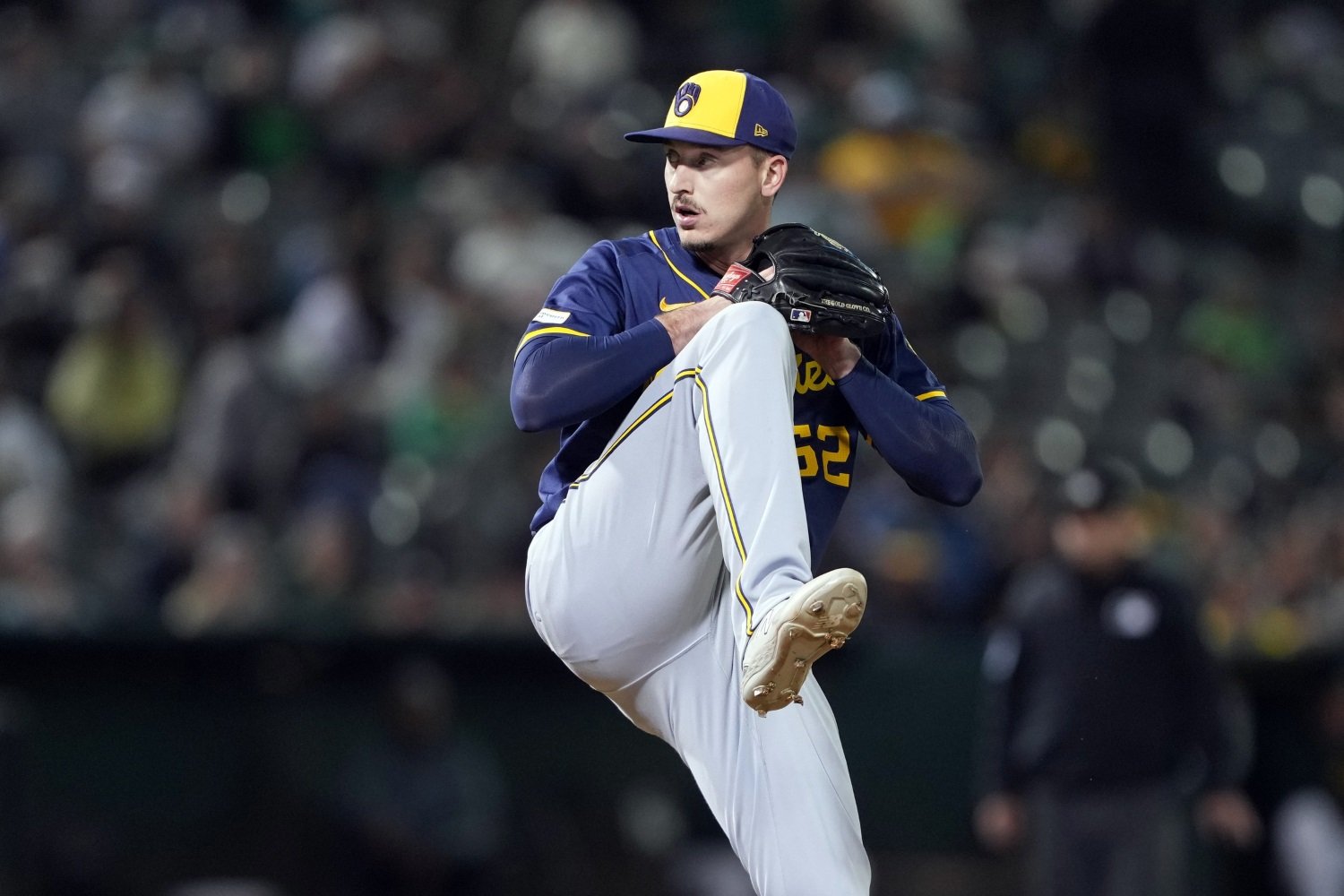 The Brewers shook up their bullpen on Tuesday, and optioning Bryan Hudson to Triple-A was the club’s most noteworthy move. Hudson has been an invaluable multi-inning weapon for Pat Murphy, often functioning as a bridge between short starts and the back end of the bullpen. Of his 43 appearances, 24 have spanned more than one inning, and he owns a 1.73 ERA in 62 ⅓ innings. However, the Brewers saw signs in recent weeks that Hudson is not as crisp as he was early on, and that he could benefit from some time away. “We haven’t exactly liked everything we’ve seen about how the ball’s coming out and how he’s responding, that type of thing,” said Pat Murphy, who indicated that Hudson will get time off from throwing in games while in Nashville. “When you just look at the actual stuff that’s going on, we hope that we can get him a little refresher and get him back to where he was earlier in the season.” Hudson's run prevention has still been solid after the All-Star break, but he has not been nearly the same pitcher he was in his fresher days. His strikeout and whiff rates have plummeted, and he’s issuing more walks. Hudson is neither getting the same kind of takes nor inducing the same kind of swings as he was until mid-July. Split IP ERA FIP SIERA Whiff% CSW% K% BB% First Half 48.1 1.49 3.53 2.88 23.1% 30.0% 29.3% 6.6% Second Half 14.0 2.57 3.89 4.74 15.4% 22.1% 18.0% 10.0% Even without scouring all the numbers, watching Hudson pitch in recent weeks was enough to deduce that things were not quite right. The Brewers saw it. Hudson’s diminished fastball has garnered the most public attention. The pitch’s success stems mainly from the deceptive combination of Hudson’s funky arm slot, elite extension, and ability to locate it up in the zone, so its pure velocity is often misleading. Still, it raised eyebrows when that velocity dipped slightly leading into the break, and continued to fall when the season resumed. Hudson’s fastball averaged 89.1 mph, and dropped as low as 87.4 mph on Jul. 23 against the Cubs. He hit the injured list four days later with a minor oblique strain. The hope was that a week off would be a blessing in disguise, and Hudson would return good as new. The immediate returns looked promising, but faded quickly. Hudson’s fastball averaged 91.1 mph in his return outing, but that average dipped below 90 mph in each of the last four outings preceding his reassignment to Triple-A. Hudon’s fastball is not the primary concern, though. It’s his sweeper. Whereas his fastball has lost a couple of ticks over time, his breaking ball velocity has fallen nearly 5 mph from its peak in June. Hudson has appeared unable to throw the sweeper with full conviction for months. It was his go-to secondary offering in the first half, and the most lethal weapon in his arsenal. He has since limited his usage of the pitch, and turned to his cutter more often to compensate. When Hudson does throw his sweeper, it’s not the same pitch it was a few months ago. Its Stuff+ grade (based on physical characteristics that include velocity, movement, release point and spin) was 113 in the first half. It’s 79 in the second half. The Brewers want to get Hudson closer to his early-season form. Whether that’s genuinely attainable at this stage of the season is uncertain. While this is Hudson’s first official “refresher” of the year, it’s his third reset period since July. The first two were unsuccessful. Hudson looked worn down when the All-Star break arrived. He continued to look worn down after the break, and after his stint on the injured list. At this point, it’s fair to wonder how much Hudson has left in the tank for this year. He surpassed his innings total from last season in his most recent outing. His unusual delivery takes a toll on his large frame. Murphy has alluded multiple times to his physical struggles in recovering from appearances. The hope is that Hudson’s reset attempt in Nashville will restore him, physically, for the final weeks of the regular season and into October. It’s possible that he is past the point of recapturing that status in 2024. The Brewers will soon find out whether that’s the case, and the answer will impact how they construct their playoff bullpen.
 -
When the Brewers acquired the veteran starter, the expectation was that they would emphasize his pitchability. They've gone a step beyond that, by helping him add another pitch to what was already a deep arsenal. Image courtesy of © benny sieu-usa today sports When the Brewers acquired the veteran starter, the expectation was that they would emphasize his pitchability. They've gone a step beyond that, by helping him add another pitch to what was already a deep arsenal. When the Brewers acquired Aaron Civale from the Tampa Bay Rays in early July, he looked like a great fit for their run-prevention system. Not only could Milwaukee’s elite defense nudge his results in a positive direction, but its pitching development crew was welcoming the kind of makeup it has repeatedly developed into sources of solid bulk innings. Civale joined the club with a six-pitch mix that featured three distinct fastballs; a pair of breaking balls with plus movement; and a splitter. Fast-forward a few months, and things are playing out as hoped. None of Civale’s peripherals have meaningfully improved, but his BABIP has dropped from .312 as a Ray to .257 as a Brewer. On the pitch mix front, the Brewers have not just emphasized his mix-and-match profile. They have also expanded it. When the team was on the road in Atlanta, Civale had what he described as an “in-depth dive” with members of Milwaukee’s pitching development team. They wanted him to reintroduce a harder, shorter slider into his arsenal. “I think it’s something that, internally, is a pitch that the Brewers’ system liked and something that can serve a purpose,” Civale said. “So it’s something that we’ve just been messing with the last few weeks. It’s not necessarily brand new, but just another thing to mix into what we’ve been working on.” Civale had thrown the shorter slider in past seasons, but seldom used it. This year with the Rays, he traded it for a bigger sweeper that became a prominent part of his arsenal. The sweeper averages 17.2 inches of horizontal break, and regularly exceeds 20 inches. It also separates itself from Civale’s curveball, which sweeps 13.4 inches laterally and drops nearly 65 inches. Both breaking balls have elite movement. The Brewers identified a drawback to only having sweeping breaking pitches to pair with Civale’s trio of fastballs. They felt his pitches were not playing off each other as well as they could due to the big movement. “He was getting so shape-oriented – ‘How big can I make it?’ – and none of his pitches tracked in the strike zone,” said pitching coach Chris Hook. “It just put him at a disadvantage.” Covering an array of shapes with a deep arsenal like Civale does is desirable, but one could argue that his big breaking balls had too much separation from his fastballs. The horizontal break on his sweeper differs more than two-and-a-half feet (nearly 32 inches) from his two-seamer and almost two feet (21.6 inches) from his cutter. When the discrepancy is that dramatic, some hitters can spot the separation and recognize the pitch earlier in its flight to the plate. The Brewers want that identification to occur as late as possible. “There’s some advantages to having great pitches that move,” Hook said, “but I think it’s a great advantage if your pitches all look the same and move in different ways. That’s the bottom line.” In that sense, the shorter slider was the missing link for Civale. It bridges the movement gap between his cutter and sweeper, and tunnels better than the sweeper with a comeback two-seamer. The pitch break graphs below visualize the slider’s impact. Notice how it fills the once-open space between Civale’s cutter and sweeper. “He’s got a short, medium, and long,” Hook said. “That’s kind of how we look at his pitches that go left, you know what I mean? It’s a short, medium, long with the cutter, the slider, and now the sweeper.” Civale unveiled the shorter slider on Aug. 9, in his first start after that discussion in Atlanta. He’s since used a balanced mix of curveballs, sweepers, and sliders. It’s too early to read heavily into the results, but the initial signs are promising. After slugging .488 with a 10.6% barrel rate against Civale’s bigger breaking balls through Aug. 3, opponents are slugging .208 with no barrels off a breaker since he added the slider. Those numbers could easily change after one outing, due to the small sample. Regardless of the long-term outcome, the change is the latest example of Milwaukee’s pitching development brass optimizing a pitcher’s strengths. Civale’s greatest attribute is mixing speeds, shapes, and locations. While the shorter slider is unlikely to become one of his most prominent pitches, showing it throughout an outing makes it even harder to cover his wide range of pitches and opens up more sequencing options. “He can do it naturally.” Hook said of Civale’s ability to manipulate the baseball. “I think he’s doing more things that look similar ... Now I feel like he’s in a better position to do that, and I think his headspace is good.” Civale is controlled through the 2025 season. Getting him to his most deceptive form could pay off for the Brewers beyond just this year. View full article
-
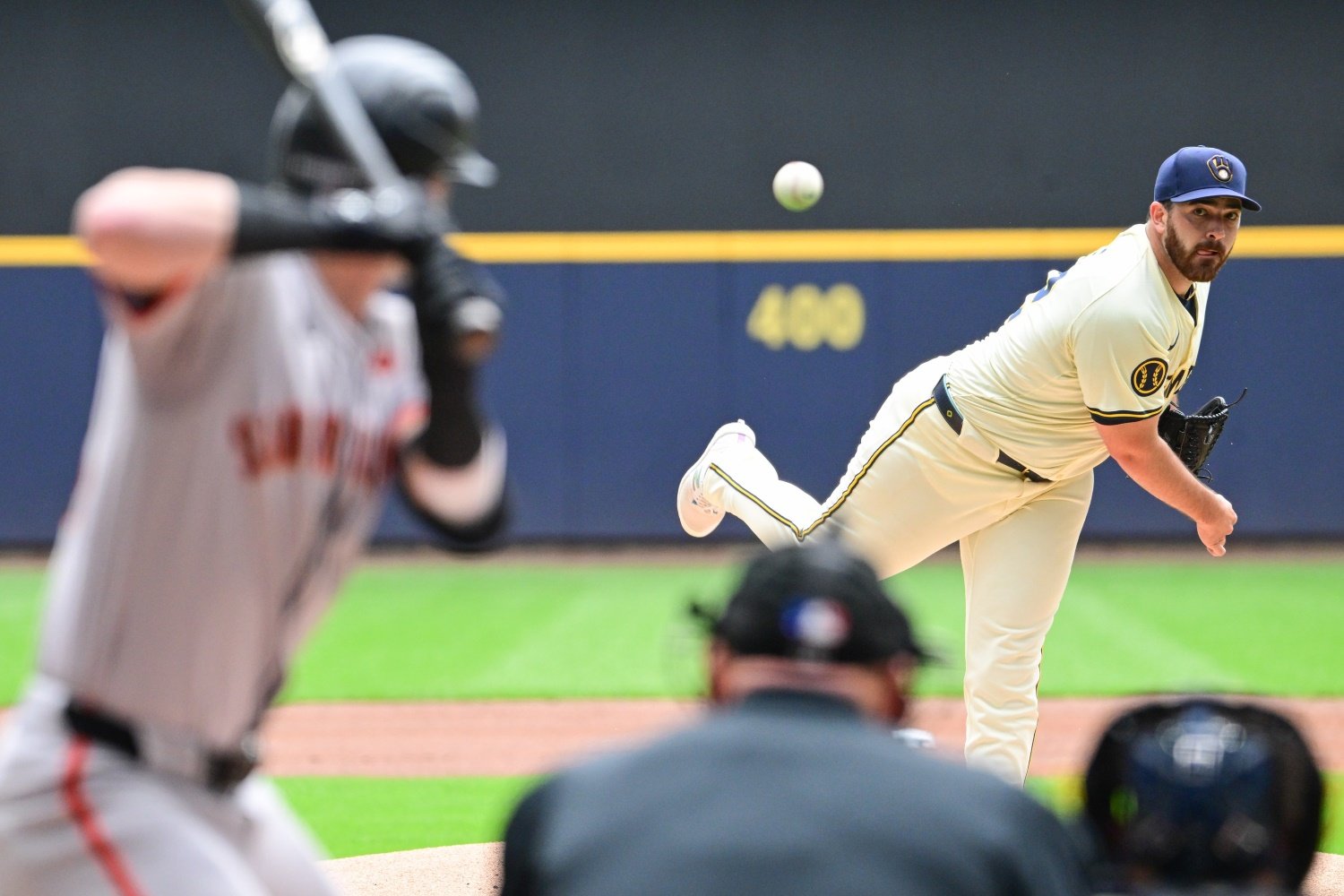 When the Brewers acquired Aaron Civale from the Tampa Bay Rays in early July, he looked like a great fit for their run-prevention system. Not only could Milwaukee’s elite defense nudge his results in a positive direction, but its pitching development crew was welcoming the kind of makeup it has repeatedly developed into sources of solid bulk innings. Civale joined the club with a six-pitch mix that featured three distinct fastballs; a pair of breaking balls with plus movement; and a splitter. Fast-forward a few months, and things are playing out as hoped. None of Civale’s peripherals have meaningfully improved, but his BABIP has dropped from .312 as a Ray to .257 as a Brewer. On the pitch mix front, the Brewers have not just emphasized his mix-and-match profile. They have also expanded it. When the team was on the road in Atlanta, Civale had what he described as an “in-depth dive” with members of Milwaukee’s pitching development team. They wanted him to reintroduce a harder, shorter slider into his arsenal. “I think it’s something that, internally, is a pitch that the Brewers’ system liked and something that can serve a purpose,” Civale said. “So it’s something that we’ve just been messing with the last few weeks. It’s not necessarily brand new, but just another thing to mix into what we’ve been working on.” Civale had thrown the shorter slider in past seasons, but seldom used it. This year with the Rays, he traded it for a bigger sweeper that became a prominent part of his arsenal. The sweeper averages 17.2 inches of horizontal break, and regularly exceeds 20 inches. It also separates itself from Civale’s curveball, which sweeps 13.4 inches laterally and drops nearly 65 inches. Both breaking balls have elite movement. The Brewers identified a drawback to only having sweeping breaking pitches to pair with Civale’s trio of fastballs. They felt his pitches were not playing off each other as well as they could due to the big movement. “He was getting so shape-oriented – ‘How big can I make it?’ – and none of his pitches tracked in the strike zone,” said pitching coach Chris Hook. “It just put him at a disadvantage.” Covering an array of shapes with a deep arsenal like Civale does is desirable, but one could argue that his big breaking balls had too much separation from his fastballs. The horizontal break on his sweeper differs more than two-and-a-half feet (nearly 32 inches) from his two-seamer and almost two feet (21.6 inches) from his cutter. When the discrepancy is that dramatic, some hitters can spot the separation and recognize the pitch earlier in its flight to the plate. The Brewers want that identification to occur as late as possible. “There’s some advantages to having great pitches that move,” Hook said, “but I think it’s a great advantage if your pitches all look the same and move in different ways. That’s the bottom line.” In that sense, the shorter slider was the missing link for Civale. It bridges the movement gap between his cutter and sweeper, and tunnels better than the sweeper with a comeback two-seamer. The pitch break graphs below visualize the slider’s impact. Notice how it fills the once-open space between Civale’s cutter and sweeper. “He’s got a short, medium, and long,” Hook said. “That’s kind of how we look at his pitches that go left, you know what I mean? It’s a short, medium, long with the cutter, the slider, and now the sweeper.” Civale unveiled the shorter slider on Aug. 9, in his first start after that discussion in Atlanta. He’s since used a balanced mix of curveballs, sweepers, and sliders. It’s too early to read heavily into the results, but the initial signs are promising. After slugging .488 with a 10.6% barrel rate against Civale’s bigger breaking balls through Aug. 3, opponents are slugging .208 with no barrels off a breaker since he added the slider. Those numbers could easily change after one outing, due to the small sample. Regardless of the long-term outcome, the change is the latest example of Milwaukee’s pitching development brass optimizing a pitcher’s strengths. Civale’s greatest attribute is mixing speeds, shapes, and locations. While the shorter slider is unlikely to become one of his most prominent pitches, showing it throughout an outing makes it even harder to cover his wide range of pitches and opens up more sequencing options. “He can do it naturally.” Hook said of Civale’s ability to manipulate the baseball. “I think he’s doing more things that look similar ... Now I feel like he’s in a better position to do that, and I think his headspace is good.” Civale is controlled through the 2025 season. Getting him to his most deceptive form could pay off for the Brewers beyond just this year.
 -
The Brewers have overcome absences from critical players all season. After perhaps its greatest loss yet, the club is surging. Image courtesy of © Rick Scuteri-USA TODAY Sports The Brewers have overcome absences from critical players all season. After perhaps its greatest loss yet, the club is surging. Hours after his three-hole hitter underwent season-ending back surgery, Pat Murphy was asked about the ripple effects Christian Yelich’s absence could have on his remaining hitters. “They feel it,” Murphy said of the pressure imparted by losing a lineup cornerstone. “You can see it every once in a while, where they’re trying to [force] it.” He steered the rest of his answer down a familiar road. Murphy likes to strip away the noise and boil his team’s mentality down to the fundamentals, no matter the context. It’s a reason why the Brewers have thrived in the face of adversity all season. “Our game works in order,” he said. “What I mean by that is, yeah, you want to be the guy to get the big hit, but if the game deals you a ball seven inches away, you got to meet it halfway and say, ‘Okay, thank you. Ball four.’ It’s really tough on those guys to not take on more than they can and just stay within themselves.” If the results are any indication, Brewers hitters have brushed aside potential added pressure and continued to meet the game halfway. Yelich last played on Jul. 23. In his absence, the Brewers have gone 22-13, and just concluded a 19-9 showing in August. The club is now a season-high 24 games above .500, and owns the highest run differential in baseball. August also happened to be Milwaukee’s best month of the year, offensively. It finished third in baseball in runs per game (5.57) and fourth in OPS (.786). The Brewers scored 10 or more runs in four games throughout the month, including a 10-run inning in Friday night’s 14-0 drubbing of the Reds. The contributions came from throughout the lineup. Four Brewers with at least 50 plate appearances in August posted an OPS north of .900: William Contreras, Willy Adames, Jackson Chourio, and Gary Sánchez. Contreras and Adames combined for 19 home runs. Chourio added five round-trippers and 14 extra-base hits, including his game-winning blast in the ninth inning in Milwaukee’s win Saturday evening. Sánchez continued to be an underrated part-time bat who seamlessly slots into the middle of the order. Others have pitched in, too. Garrett Mitchell has five extra-base hits in his last seven games. Blake Perkins has 10 hits since returning from the injured list, just over a week ago. August demonstrated that, while losing Yelich is a substantial blow, the Brewers still have a blueprint for success without his bat. Chourio has continued his post-May breakout and is now a force near the top of the lineup. Contreras and Adames have stepped up as middle-of-the-order veterans. Yelich was at the center of the offense when healthy, but he was never its only impactful bat. Part of what’s made this year’s lineup more successful than past iterations is its balanced makeup, and the willingness of its members to pass the baton to the man behind them. Those attributes have remained present in Yelich’s absence. “It can be scary,” Murphy said when Yelich’s season officially ended. “But you find a way.” View full article
-
 Hours after his three-hole hitter underwent season-ending back surgery, Pat Murphy was asked about the ripple effects Christian Yelich’s absence could have on his remaining hitters. “They feel it,” Murphy said of the pressure imparted by losing a lineup cornerstone. “You can see it every once in a while, where they’re trying to [force] it.” He steered the rest of his answer down a familiar road. Murphy likes to strip away the noise and boil his team’s mentality down to the fundamentals, no matter the context. It’s a reason why the Brewers have thrived in the face of adversity all season. “Our game works in order,” he said. “What I mean by that is, yeah, you want to be the guy to get the big hit, but if the game deals you a ball seven inches away, you got to meet it halfway and say, ‘Okay, thank you. Ball four.’ It’s really tough on those guys to not take on more than they can and just stay within themselves.” If the results are any indication, Brewers hitters have brushed aside potential added pressure and continued to meet the game halfway. Yelich last played on Jul. 23. In his absence, the Brewers have gone 22-13, and just concluded a 19-9 showing in August. The club is now a season-high 24 games above .500, and owns the highest run differential in baseball. August also happened to be Milwaukee’s best month of the year, offensively. It finished third in baseball in runs per game (5.57) and fourth in OPS (.786). The Brewers scored 10 or more runs in four games throughout the month, including a 10-run inning in Friday night’s 14-0 drubbing of the Reds. The contributions came from throughout the lineup. Four Brewers with at least 50 plate appearances in August posted an OPS north of .900: William Contreras, Willy Adames, Jackson Chourio, and Gary Sánchez. Contreras and Adames combined for 19 home runs. Chourio added five round-trippers and 14 extra-base hits, including his game-winning blast in the ninth inning in Milwaukee’s win Saturday evening. Sánchez continued to be an underrated part-time bat who seamlessly slots into the middle of the order. Others have pitched in, too. Garrett Mitchell has five extra-base hits in his last seven games. Blake Perkins has 10 hits since returning from the injured list, just over a week ago. August demonstrated that, while losing Yelich is a substantial blow, the Brewers still have a blueprint for success without his bat. Chourio has continued his post-May breakout and is now a force near the top of the lineup. Contreras and Adames have stepped up as middle-of-the-order veterans. Yelich was at the center of the offense when healthy, but he was never its only impactful bat. Part of what’s made this year’s lineup more successful than past iterations is its balanced makeup, and the willingness of its members to pass the baton to the man behind them. Those attributes have remained present in Yelich’s absence. “It can be scary,” Murphy said when Yelich’s season officially ended. “But you find a way.”
 -
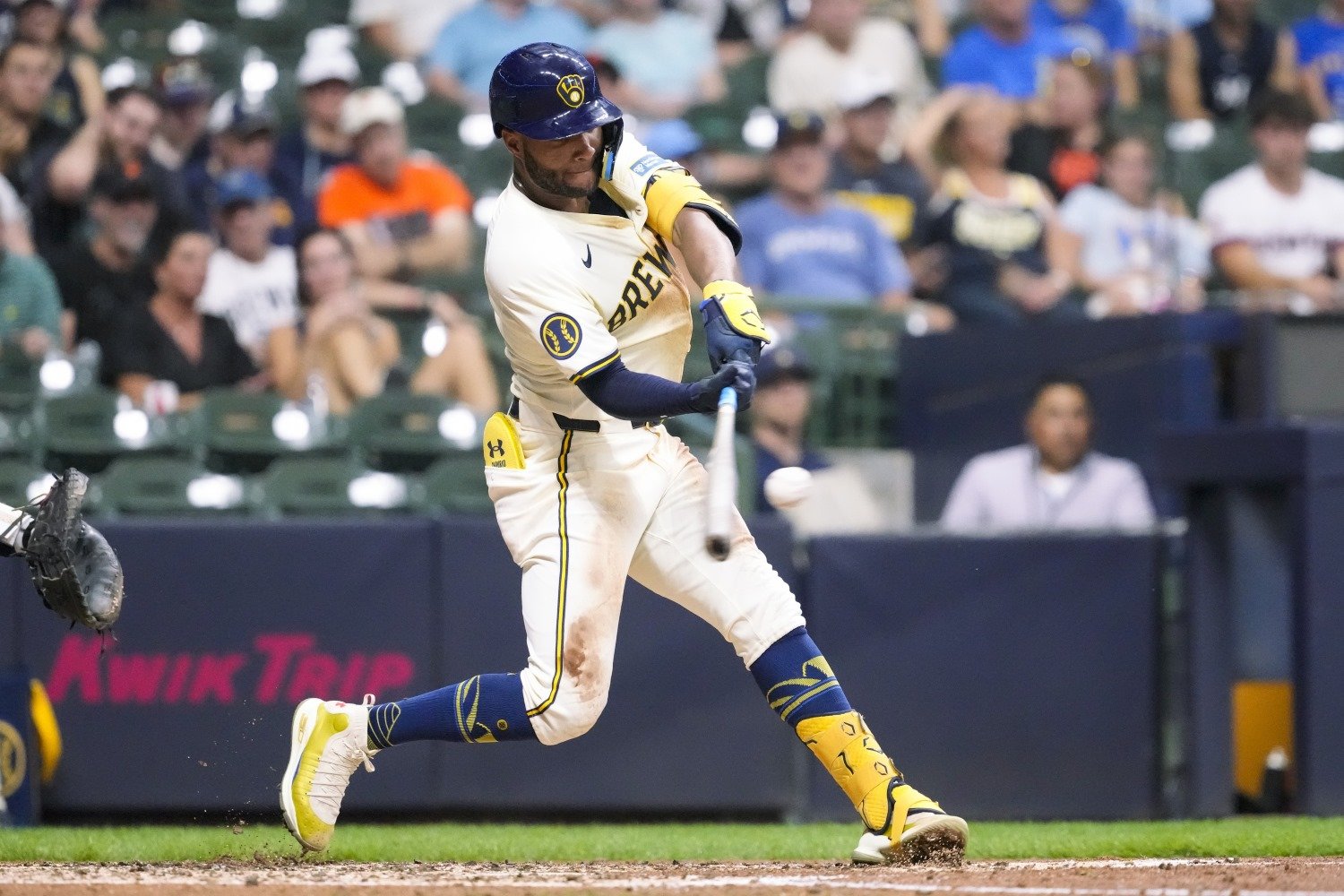 Jackson Chourio added another accolade to his explosive rookie season Tuesday night, when he crushed the Brewers’ longest home run of the season. It was a 449-foot blast off the American Family Field video board, to give his team an early lead. The pitch was a mistake by Logan Webb, who missed his target with a changeup that ended up low-and-in, rather than off the outside corner. Still, it was the latest example of just how far Chourio has come at the plate in the last few months. The home run came on a non-fastball in the lower third of the zone. Chourio has been one of baseball’s best hitters against such pitches. He has slugged .467 against them this year, the 11th-highest figure among qualified hitters. That’s impressive enough, but it’s even more remarkable given that Chourio was one of baseball’s worst hitters against low non-fastballs through the season’s first two months. Through the end of May, Chourio slugged .128 against non-fastballs in the lower third of the zone or below. Soft stuff low was not just a weak spot in his game: It incapacitated him. Pitchers quickly discovered this, and began hammering Chourio with breaking balls and changeups away, sending him into a prolonged funk. Much of Chourio’s tear since the calendar flipped to June has been fueled by an almost unfathomable turnaround against those pitches. He has slugged .733 against them since then, the second-best mark in baseball. Unsurprisingly, that 606-point swing in slugging is the greatest of any qualified hitter between those two split-spans. It’s not close, either. Ketel Marte ranks second, with a 544-point change. Vladimir Guerrero Jr. is next at 333 points. The transformation underscores Chourio’s greatest attribute as a young talent: his ability to make adjustments quickly against more experienced competition. That trait will make it challenging for pitchers to craft an effective plan of attack against Chourio. He does not merely possess a slate of elite raw tools, including his lightning-quick hands and effortless bat speed. He also has the mental and physical adaptability to harness them in a competitive setting. Three months ago, pitchers could beat Chourio by executing a soft pitch at the bottom of the zone. If they do it now, he’ll destroy it. He did not merely improve from a compromised hitter against those pitches to a capable one. He has become elite against them. Anyone who followed Chourio’s ascent through the minor leagues would be familiar with this element of his undeniable talent. He showcased it at almost every stop, including in Double-A last summer as a 19-year-old. He hit for a subpar .714 OPS (88 wRC+) during the first half, before exploding for a .917 OPS (141 wRC+) the rest of the way. Chourio’s first big-league campaign was always likely to follow a similar trajectory. It’s partially why it never made sense to option him to the minor leagues amid his early struggles. Incredibly, he flipped the switch sooner at the highest level of professional baseball than he did in Double-A. The cat-and-mouse game between pitcher and hitter is one of constant adjustments, but Chourio accelerates the speed of the game, and will force his competition to make more frequent adjustments than most hitters do. That should terrify them.
 -
In just a few months, Jackson Chourio turned one of his greatest weaknesses into one of his greatest strengths. It's a shining example of the adaptability that positions him for long-term stardom. Image courtesy of © Jeff Hanisch-USA TODAY Sports In just a few months, Jackson Chourio turned one of his greatest weaknesses into one of his greatest strengths. It's a shining example of the adaptability that positions him for long-term stardom. Jackson Chourio added another accolade to his explosive rookie season Tuesday night, when he crushed the Brewers’ longest home run of the season. It was a 449-foot blast off the American Family Field video board, to give his team an early lead. The pitch was a mistake by Logan Webb, who missed his target with a changeup that ended up low-and-in, rather than off the outside corner. Still, it was the latest example of just how far Chourio has come at the plate in the last few months. The home run came on a non-fastball in the lower third of the zone. Chourio has been one of baseball’s best hitters against such pitches. He has slugged .467 against them this year, the 11th-highest figure among qualified hitters. That’s impressive enough, but it’s even more remarkable given that Chourio was one of baseball’s worst hitters against low non-fastballs through the season’s first two months. Through the end of May, Chourio slugged .128 against non-fastballs in the lower third of the zone or below. Soft stuff low was not just a weak spot in his game: It incapacitated him. Pitchers quickly discovered this, and began hammering Chourio with breaking balls and changeups away, sending him into a prolonged funk. Much of Chourio’s tear since the calendar flipped to June has been fueled by an almost unfathomable turnaround against those pitches. He has slugged .733 against them since then, the second-best mark in baseball. Unsurprisingly, that 606-point swing in slugging is the greatest of any qualified hitter between those two split-spans. It’s not close, either. Ketel Marte ranks second, with a 544-point change. Vladimir Guerrero Jr. is next at 333 points. The transformation underscores Chourio’s greatest attribute as a young talent: his ability to make adjustments quickly against more experienced competition. That trait will make it challenging for pitchers to craft an effective plan of attack against Chourio. He does not merely possess a slate of elite raw tools, including his lightning-quick hands and effortless bat speed. He also has the mental and physical adaptability to harness them in a competitive setting. Three months ago, pitchers could beat Chourio by executing a soft pitch at the bottom of the zone. If they do it now, he’ll destroy it. He did not merely improve from a compromised hitter against those pitches to a capable one. He has become elite against them. Anyone who followed Chourio’s ascent through the minor leagues would be familiar with this element of his undeniable talent. He showcased it at almost every stop, including in Double-A last summer as a 19-year-old. He hit for a subpar .714 OPS (88 wRC+) during the first half, before exploding for a .917 OPS (141 wRC+) the rest of the way. Chourio’s first big-league campaign was always likely to follow a similar trajectory. It’s partially why it never made sense to option him to the minor leagues amid his early struggles. Incredibly, he flipped the switch sooner at the highest level of professional baseball than he did in Double-A. The cat-and-mouse game between pitcher and hitter is one of constant adjustments, but Chourio accelerates the speed of the game, and will force his competition to make more frequent adjustments than most hitters do. That should terrify them. View full article
-
Not much is known about Christian Yelich's timeline in the early stages of his recovery from season-ending back surgery, but he struck a relieved and optimistic tone in his first public comments since the operation. Image courtesy of © Ron Chenoy-USA TODAY Sports Not much is known about Christian Yelich's timeline in the early stages of his recovery from season-ending back surgery, but he struck a relieved and optimistic tone in his first public comments since the operation. A week-and-a-half removed from season-ending back surgery, Christian Yelich is back with the Brewers. Facing reporters in the Brewers dugout for the first time since the operation, Yelich provided more insight into the procedure, how it became a necessity, and his long-term outlook. Yelich said he underwent a microdiscectomy, which entailed “cleaning some stuff out that needed to go and was causing some problems” in his back. While surgery was not on the table until his latest trip to the injured list, it was not a shocking outcome. Yelich has battled recurring back pain since his days with the Miami Marlins, and the more recent flare-ups were getting worse. “The [rehab] that we tried, it was kind of a long shot,” he said. “I think I knew ultimately that [surgery] was my destination at some point.” “His body did not move well for the last four or five years,” Pat Murphy said. “When you swing with that much leverage, and you hit the ball as hard as he hit it… it takes that much torque and that much bat speed to hit that. You’re paying a price somewhere.” With nothing to lose, Yelich attempted rehab in hopes of contributing to the Brewers’ playoff push and delaying the surgery until the offseason. Changing course became an easy decision a couple of weeks ago when his back was not improving. By the time he and the Brewers decided on that route, the pain in Yelich’s back was affecting more than just his attempts to play baseball. “It was to the point where daily living sucked,” he said. “I was really uncomfortable. There was a lot of pain. It was something I just had to get taken care of, and I’m glad I did it, honestly.” He and the Brewers have yet to establish a precise recovery timeline, but Yelich threw out three months as a rough estimate. The bottom line is that he expects to have a “fairly normal” offseason and be a full go for spring training. While Yelich never declared the procedure a complete cure for his balky back, he seemed relieved afterward and spoke optimistically about its impact on his long-term health. “I think people see back surgery and think, ‘Well, that’s the end of your career.’ But honestly, in my mind, that couldn’t be any further from the truth. I think that it’s going to help me tremendously, and I think I’ll probably feel better than I have in the last few years going forward. So in that sense, it’s cool. It’s a really nice thing.” The procedure could be a turning point in Yelich’s career. There could be lasting complications that plague him beyond 2024, or he could report to camp in February moving better than he has in years. Time will tell which path his recovery follows. View full article
-
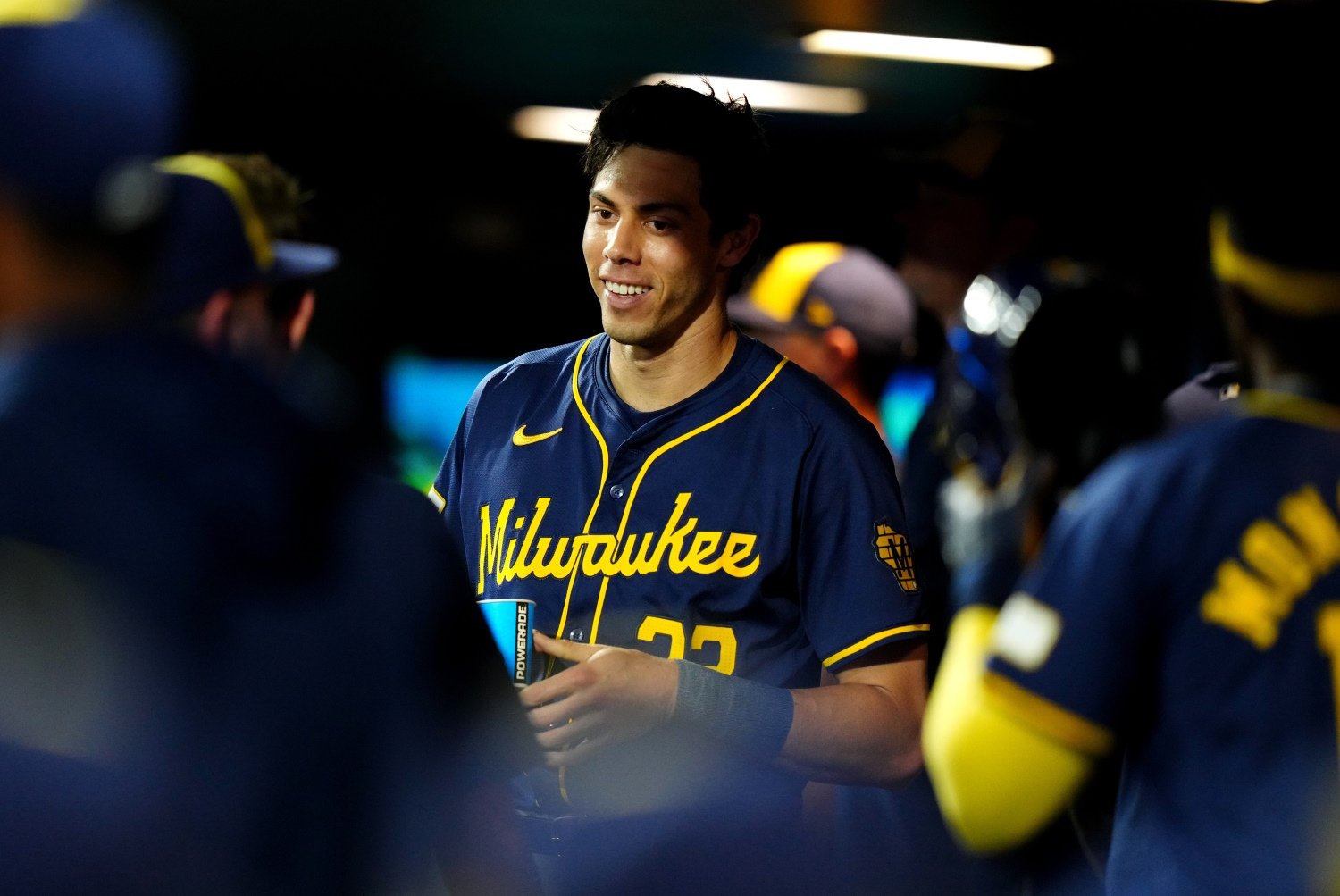 A week-and-a-half removed from season-ending back surgery, Christian Yelich is back with the Brewers. Facing reporters in the Brewers dugout for the first time since the operation, Yelich provided more insight into the procedure, how it became a necessity, and his long-term outlook. Yelich said he underwent a microdiscectomy, which entailed “cleaning some stuff out that needed to go and was causing some problems” in his back. While surgery was not on the table until his latest trip to the injured list, it was not a shocking outcome. Yelich has battled recurring back pain since his days with the Miami Marlins, and the more recent flare-ups were getting worse. “The [rehab] that we tried, it was kind of a long shot,” he said. “I think I knew ultimately that [surgery] was my destination at some point.” “His body did not move well for the last four or five years,” Pat Murphy said. “When you swing with that much leverage, and you hit the ball as hard as he hit it… it takes that much torque and that much bat speed to hit that. You’re paying a price somewhere.” With nothing to lose, Yelich attempted rehab in hopes of contributing to the Brewers’ playoff push and delaying the surgery until the offseason. Changing course became an easy decision a couple of weeks ago when his back was not improving. By the time he and the Brewers decided on that route, the pain in Yelich’s back was affecting more than just his attempts to play baseball. “It was to the point where daily living sucked,” he said. “I was really uncomfortable. There was a lot of pain. It was something I just had to get taken care of, and I’m glad I did it, honestly.” He and the Brewers have yet to establish a precise recovery timeline, but Yelich threw out three months as a rough estimate. The bottom line is that he expects to have a “fairly normal” offseason and be a full go for spring training. While Yelich never declared the procedure a complete cure for his balky back, he seemed relieved afterward and spoke optimistically about its impact on his long-term health. “I think people see back surgery and think, ‘Well, that’s the end of your career.’ But honestly, in my mind, that couldn’t be any further from the truth. I think that it’s going to help me tremendously, and I think I’ll probably feel better than I have in the last few years going forward. So in that sense, it’s cool. It’s a really nice thing.” The procedure could be a turning point in Yelich’s career. There could be lasting complications that plague him beyond 2024, or he could report to camp in February moving better than he has in years. Time will tell which path his recovery follows.
 -
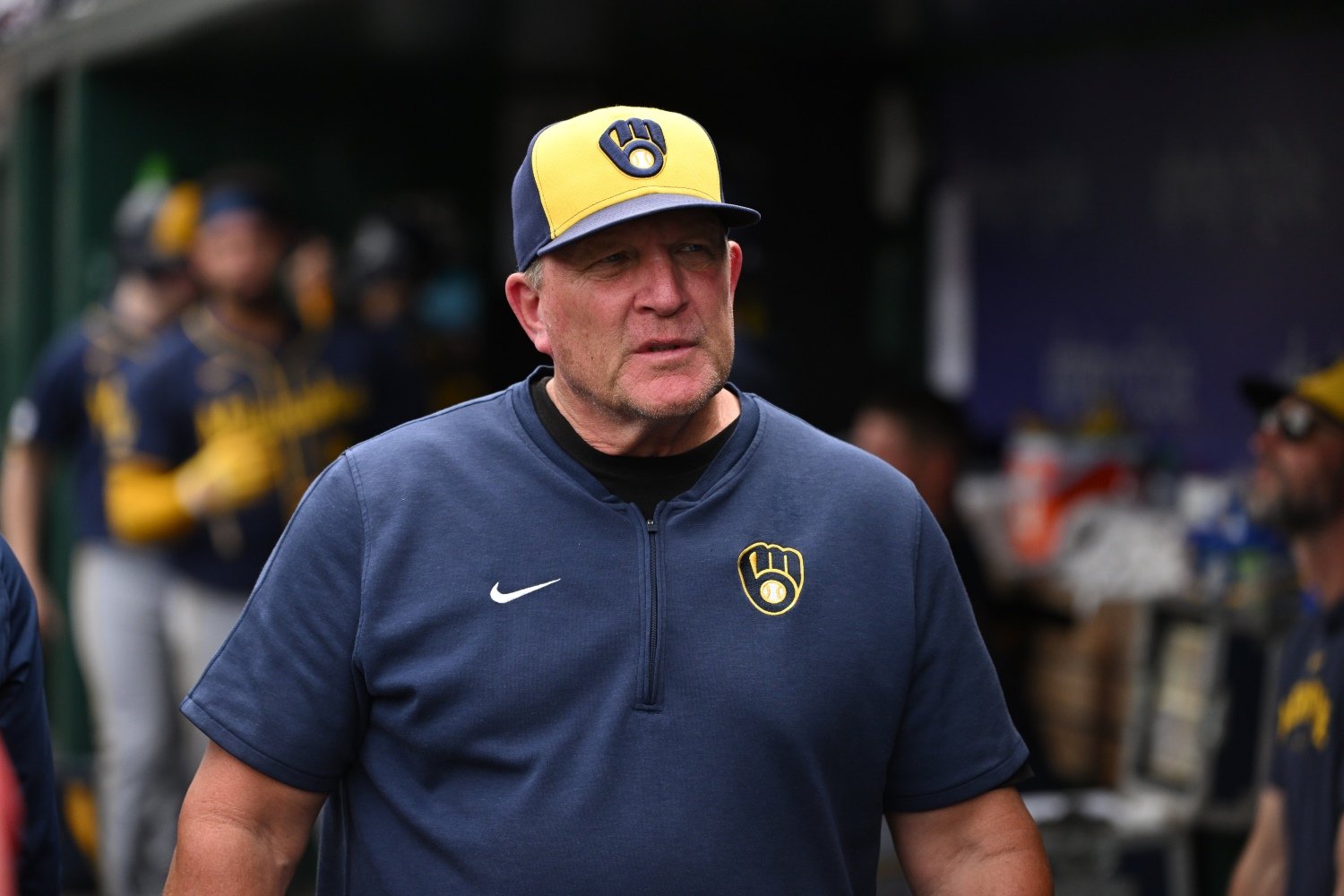 When Pat Murphy signaled to intentionally walk Brent Rooker in the seventh inning of Saturday’s win over the Oakland Athletics, it was the 22nd time the Brewers elected to send an opposing hitter directly to first base. Only four teams have issued more intentional walks. It’s a dramatic strategic shift for a team that issued a combined 19 intentional walks over the past two seasons, including just seven last year. From 2023 to 2024, Milwaukee has flipped from issuing the third-fewest intentional walks in baseball to the fifth-most. Even Murphy was surprised when informed, during the club’s last homestand, how many automatic free passes his team has issued. “I would have said five. So I could have been sleeping some of those games, because that happens.” He then called for three more in a five-game stretch when the Brewers went on the road. Teams have grown far stingier over willingly filling a base in recent years. The 2017 MLB season featured 970 intentional walks. By 2021, that figure decreased to 703. It’s dropped to 475 in 2022, 474 in 2023, and 407 this year. As modern front offices have assigned quantitative value to baserunners and outs, most teams pursue the latter in nearly every situation. Even baseball’s very best hitters reach base less than half the time. An out is both the more likely and beneficial outcome, and teams are more confident than ever in the gameplans they have even for dangerous sluggers. Under Craig Counsell, the Brewers followed the trend. In Murphy’s first season as manager, they’ve done the opposite. The front office supplies Murphy with several analytical resources to inform his in-game decision-making, including a breakdown of when putting a runner on via a walk carries the least risk. “There’s a script for it,” he said. “The people upstairs have created a probability [of] when is better.” Murphy has the final say on those decisions, though. He has issued most of the intentional walks in contexts likely deemed acceptable by those probabilities, but his true inspiration seems to be his intuition about certain hitters and game situations. Murphy emphasizes avoiding damage at the hands of an opponent’s best bats in critical moments. “In my life, every game I’ve ever been part of, I look at the lineup, and I’m like, ‘This guy ain’t beating us,’” he said. In practice, that usually means intentionally walking a batter to prevent him from driving in a potentially decisive runner in scoring position. If first base is open, placing that batter there also creates a potential double-play opportunity. “It’s the situation,” Murphy said. “But it’s usually a guy that, if he hits, can really hurt you. And it depends on who’s behind him, or sometimes it doesn’t depend on who’s behind him. It’s just the right thing to do when you got a guy on the mound that could create that ground ball.” Murphy has no qualms about filling first base when it’s unoccupied in a high-leverage moment. Of the Brewers’ 22 intentional walks, 18 have come with first base open in a late and close situation (defined by TruMedia as a plate appearance in the seventh inning or later in which the batting team is leading by one run, tied, or has the tying run on base, at bat, or on deck). No team has issued more intentional walks under such circumstances. The average club has done it about seven times. More than twice as often, Murphy’s Brewers send the batter straight to first base instead of attempting to retire him. Murphy called for all three intentional walks on the road trip with first base open in a critical situation late in the game. With runners on second and third in the ninth on Tuesday, the Brewers walked Lars Nootbaar to load the bases and create a force out at home in a one-run game. They walked Willson Contreras with the winning run on third the following night. On Saturday, they walked Brent Rooker to obtain a more favorable matchup for Jared Koenig, against JJ Bleday. The Rooker walk stands out the most, because it was the third time this season that Murphy upped the ante by walking the go-ahead run. He previously did it to Contreras on Apr. 19 and to Elly De La Cruz on Jun. 16. In all three instances, the Brewers escaped the inning without a run scoring after the walk. Overall, Milwaukee has issued an intentional walk in 19 innings this year and prevented any scoring thereafter in 14 of them. The walks have combined for -0.1 Win Probability Added in isolation. The main takeaway is that they have not been discernibly detrimental to the Brewers. One could argue that Murphy and the Brewers are too often conceding a base and bypassing opportunities to record an impactful out. He may be giving opposing hitters too much credit. At the end of the day, though, he’s simply turning to a low-risk play more than most managers. Even if Murphy is too liberal with issuing intentional walks, it’s hard to take serious issue with that inclination.
 -
Most teams pursue the upside of recording an out over mitigating the risk of an impactful hit late in games. The Brewers' first-year manager has fewer reservations about sending an RBI threat directly to first base in such situations. Image courtesy of © Rafael Suanes-USA TODAY Sports Most teams pursue the upside of recording an out over mitigating the risk of an impactful hit late in games. The Brewers' first-year manager has fewer reservations about sending an RBI threat directly to first base in such situations. When Pat Murphy signaled to intentionally walk Brent Rooker in the seventh inning of Saturday’s win over the Oakland Athletics, it was the 22nd time the Brewers elected to send an opposing hitter directly to first base. Only four teams have issued more intentional walks. It’s a dramatic strategic shift for a team that issued a combined 19 intentional walks over the past two seasons, including just seven last year. From 2023 to 2024, Milwaukee has flipped from issuing the third-fewest intentional walks in baseball to the fifth-most. Even Murphy was surprised when informed, during the club’s last homestand, how many automatic free passes his team has issued. “I would have said five. So I could have been sleeping some of those games, because that happens.” He then called for three more in a five-game stretch when the Brewers went on the road. Teams have grown far stingier over willingly filling a base in recent years. The 2017 MLB season featured 970 intentional walks. By 2021, that figure decreased to 703. It’s dropped to 475 in 2022, 474 in 2023, and 407 this year. As modern front offices have assigned quantitative value to baserunners and outs, most teams pursue the latter in nearly every situation. Even baseball’s very best hitters reach base less than half the time. An out is both the more likely and beneficial outcome, and teams are more confident than ever in the gameplans they have even for dangerous sluggers. Under Craig Counsell, the Brewers followed the trend. In Murphy’s first season as manager, they’ve done the opposite. The front office supplies Murphy with several analytical resources to inform his in-game decision-making, including a breakdown of when putting a runner on via a walk carries the least risk. “There’s a script for it,” he said. “The people upstairs have created a probability [of] when is better.” Murphy has the final say on those decisions, though. He has issued most of the intentional walks in contexts likely deemed acceptable by those probabilities, but his true inspiration seems to be his intuition about certain hitters and game situations. Murphy emphasizes avoiding damage at the hands of an opponent’s best bats in critical moments. “In my life, every game I’ve ever been part of, I look at the lineup, and I’m like, ‘This guy ain’t beating us,’” he said. In practice, that usually means intentionally walking a batter to prevent him from driving in a potentially decisive runner in scoring position. If first base is open, placing that batter there also creates a potential double-play opportunity. “It’s the situation,” Murphy said. “But it’s usually a guy that, if he hits, can really hurt you. And it depends on who’s behind him, or sometimes it doesn’t depend on who’s behind him. It’s just the right thing to do when you got a guy on the mound that could create that ground ball.” Murphy has no qualms about filling first base when it’s unoccupied in a high-leverage moment. Of the Brewers’ 22 intentional walks, 18 have come with first base open in a late and close situation (defined by TruMedia as a plate appearance in the seventh inning or later in which the batting team is leading by one run, tied, or has the tying run on base, at bat, or on deck). No team has issued more intentional walks under such circumstances. The average club has done it about seven times. More than twice as often, Murphy’s Brewers send the batter straight to first base instead of attempting to retire him. Murphy called for all three intentional walks on the road trip with first base open in a critical situation late in the game. With runners on second and third in the ninth on Tuesday, the Brewers walked Lars Nootbaar to load the bases and create a force out at home in a one-run game. They walked Willson Contreras with the winning run on third the following night. On Saturday, they walked Brent Rooker to obtain a more favorable matchup for Jared Koenig, against JJ Bleday. The Rooker walk stands out the most, because it was the third time this season that Murphy upped the ante by walking the go-ahead run. He previously did it to Contreras on Apr. 19 and to Elly De La Cruz on Jun. 16. In all three instances, the Brewers escaped the inning without a run scoring after the walk. Overall, Milwaukee has issued an intentional walk in 19 innings this year and prevented any scoring thereafter in 14 of them. The walks have combined for -0.1 Win Probability Added in isolation. The main takeaway is that they have not been discernibly detrimental to the Brewers. One could argue that Murphy and the Brewers are too often conceding a base and bypassing opportunities to record an impactful out. He may be giving opposing hitters too much credit. At the end of the day, though, he’s simply turning to a low-risk play more than most managers. Even if Murphy is too liberal with issuing intentional walks, it’s hard to take serious issue with that inclination. View full article
-
Milwaukee's No. 1 starter has struggled at times throughout the year, but has turned in four strong starts with the club's backup catcher behind the plate. Is the pairing onto something, or is it a small-sample mirage? Image courtesy of © Jayne Kamin-Oncea-USA TODAY Sports Milwaukee's No. 1 starter has struggled at times throughout the year, but has turned in four strong starts with the club's backup catcher behind the plate. Is the pairing onto something, or is it a small-sample mirage? Freddy Peralta has pitched to William Contreras in 22 of his 26 starts, but Thursday afternoon saw him paired with Gary Sánchez for the second outing in a row. It also became the third time this season that Peralta has allowed no more than one earned run in consecutive starts. After blanking the Cardinals over five innings, Peralta has now posted a 1.17 ERA in four starts with Sánchez, compared to a 4.37 ERA with Contreras. ERA often does not tell the whole story of a pitcher’s performance, though, especially in a small sample. Most evidence points toward Peralta being the same pitcher regardless of his batterymate. Peralta has pitched to a 4.17 FIP with Contreras. With Sánchez, that figure is 4.34. Furthermore, there is minimal evidence suggesting that he’s been any better pitch-to-pitch when paired with the latter. If anything, there are some signs that he has not been his best self in those starts. Sánchez follows the same blueprint that Contreras does when calling the game for Peralta. He has thrown fewer sliders and more curveballs to Sánchez, but Peralta attributed that to not having a feel for his best breaking ball in his start on Thursday. With that in mind, the breakdown is nearly identical. Unsurprisingly, using a similar mix with similar execution means Peralta’s pitch results have not substantially improved. He’s allowed less hard contact in Sánchez starts, but is also inducing fewer swings and misses and chases outside the strike zone. The real takeaway is the lack of discernible improvement to Peralta’s pitching with Sánchez beyond his shiny ERA. Most notable on that front is that his greatest weakness of failing to put hitters away more efficiently remains unchanged. Peralta is essentially averaging the same number of pitches per batter faced with Contreras and Sánchez. According to TruMedia, he’s thrown pitches in non-competitive locations (more than 18 inches away from the center of the strike zone) at a slightly higher rate when caught by the latter. The issue remained pronounced on Thursday, as Peralta reached nine three-ball counts, inflating his pitch count to 92 in those five innings. Maybe, maybe, maybe there's one thing here, if we want to get very granular. Against right-handed batters, both Sánchez and Contreras have called a similar percentage of changeups for Peralta. However, while most of those pitches have ended up on the inner third to righties with Contreras behind the plate, more of them have been away with Sánchez there. The arm side of the plate, where the majority of even right-on-right changeups have landed with Contreras and Peralta working together, is the natural place for that pitch to go. It's in the nature of a changeup to fade in that direction; that's why the pitch is usually thrown principally against opposite-handed batters. When you have a power changeup like Peralta's, it's also not a bad idea to steer it in under the bat paths of some hitters. The location differences here could be random, given how small Sánchez's sample is, and they don't automatically imply one approach being superior to the other. However, in two directly comparable moments, we can see an important difference. Here's a 2-2 changeup Peralta threw to Atlanta's Austin Riley on Jul. 31, with Sánchez behind the plate. FP to Riley w Sanchez.mp4 That's a hard-hit ball, and Willy Adames's fielding burp ensured that it didn't have a happy ending for the Brewers. Still, it's a ground ball. It's an out, most of the time. Note the way Sánchez set up for the pitch. He got low, and his mitt placement led Peralta to get the ball away from Riley. Here's a 2-0 changeup Peralta threw Riley one week later, in suburban Cobb County, Ga. FP to Riley w WC.mp4 That's a very different setup from the catcher, and a very different pitch location--with a very different result. Every pitcher has a different set of preferences about how their catcher sets targets, and not all of their preferences are rational, or even important. It can be one underrated factor in the command a pitcher demonstrates, and one small way a catcher influences a pitcher even if they call the game and frame pitches about the same way another catcher does. Even so, this is anecdotal, and it's not quite enough to say for sure that Sánchez takes a different tack with Peralta than Contreras does, for better or worse. There does not appear to be anything in particular about the Peralta and Sánchez pairing that has brought out the best version of the former. Rather, he’s performed at a similar level while enjoying better sequencing with the latter behind the plate. If Sánchez continues to team with Peralta more often, expect the results to even out. View full article



